

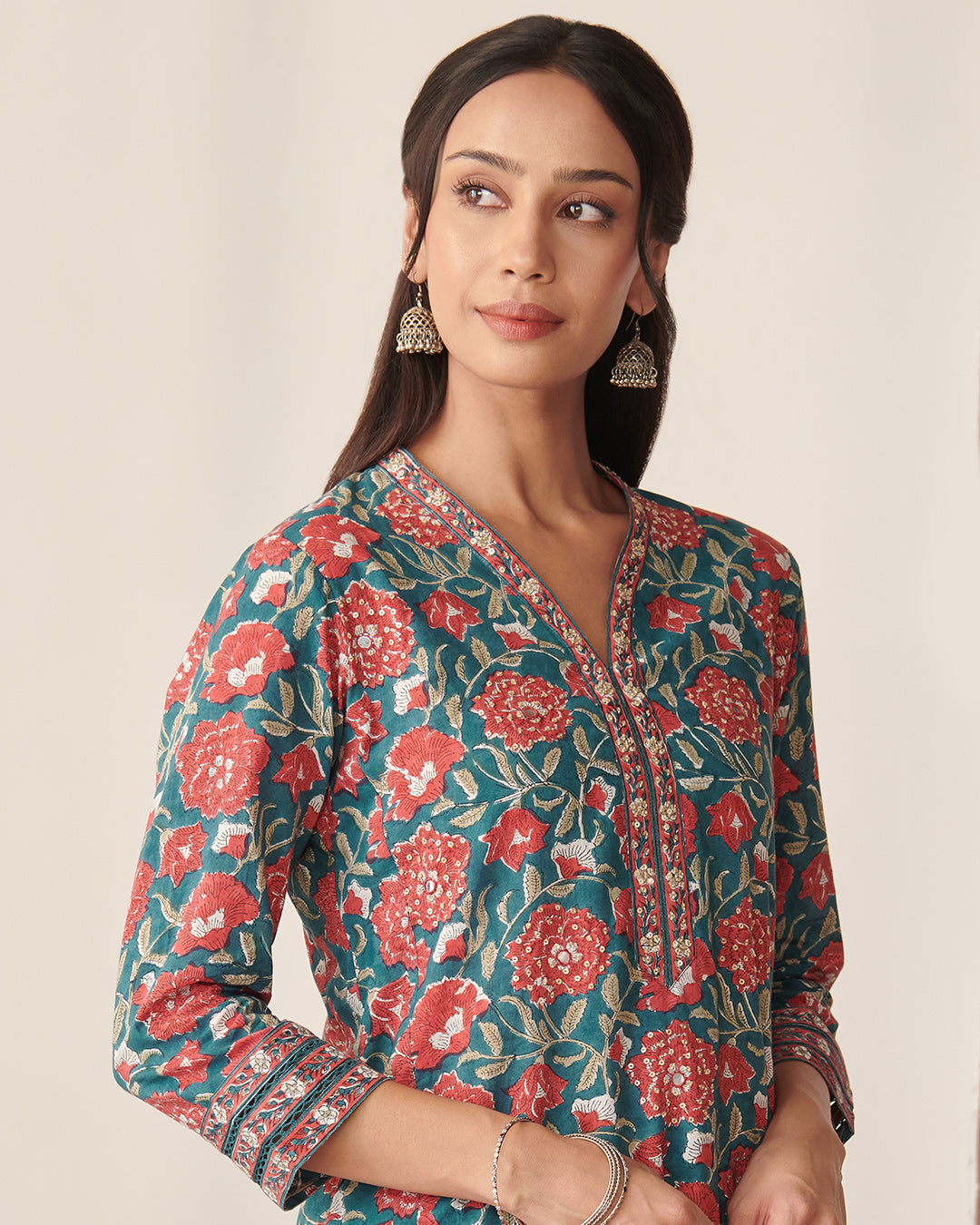
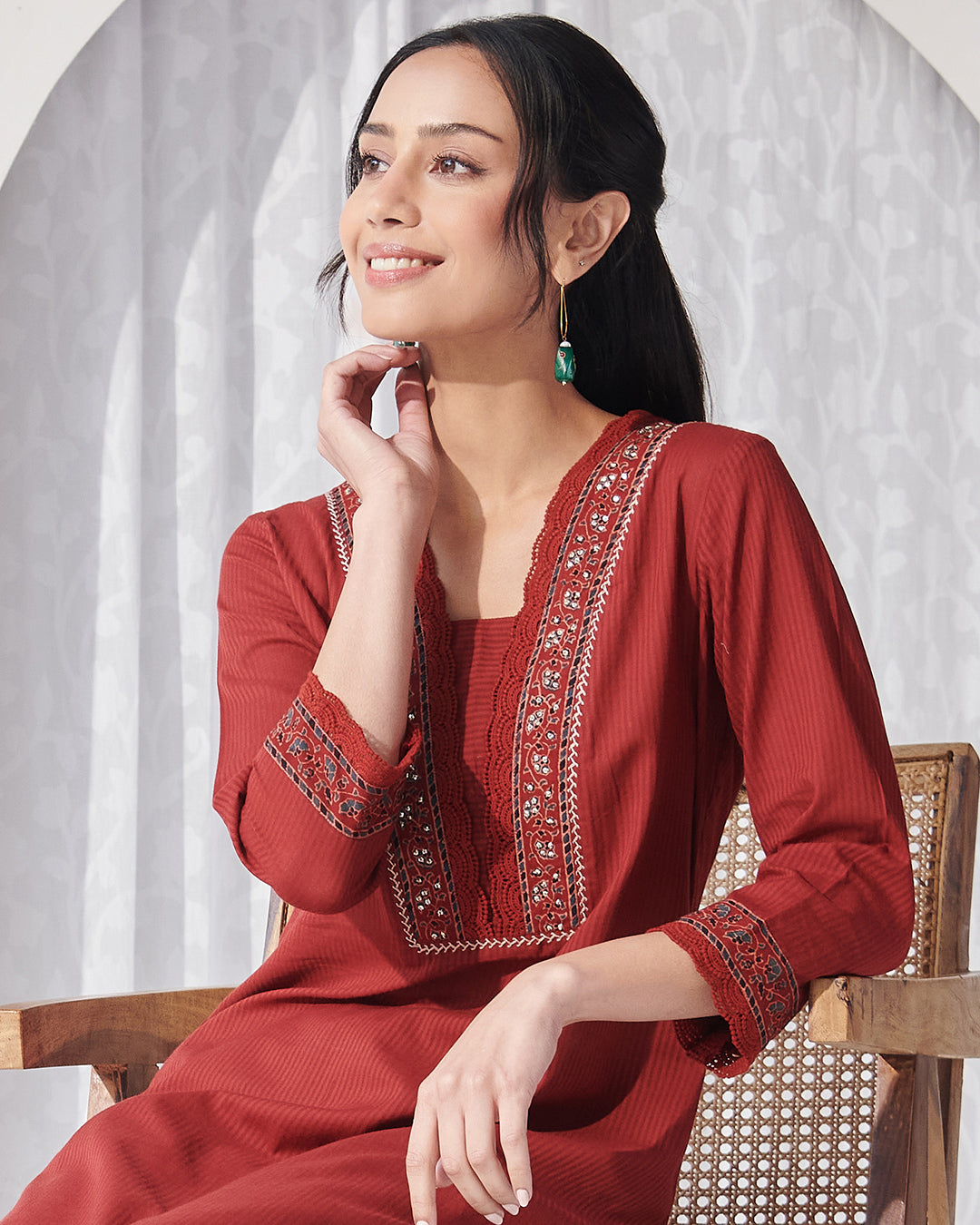
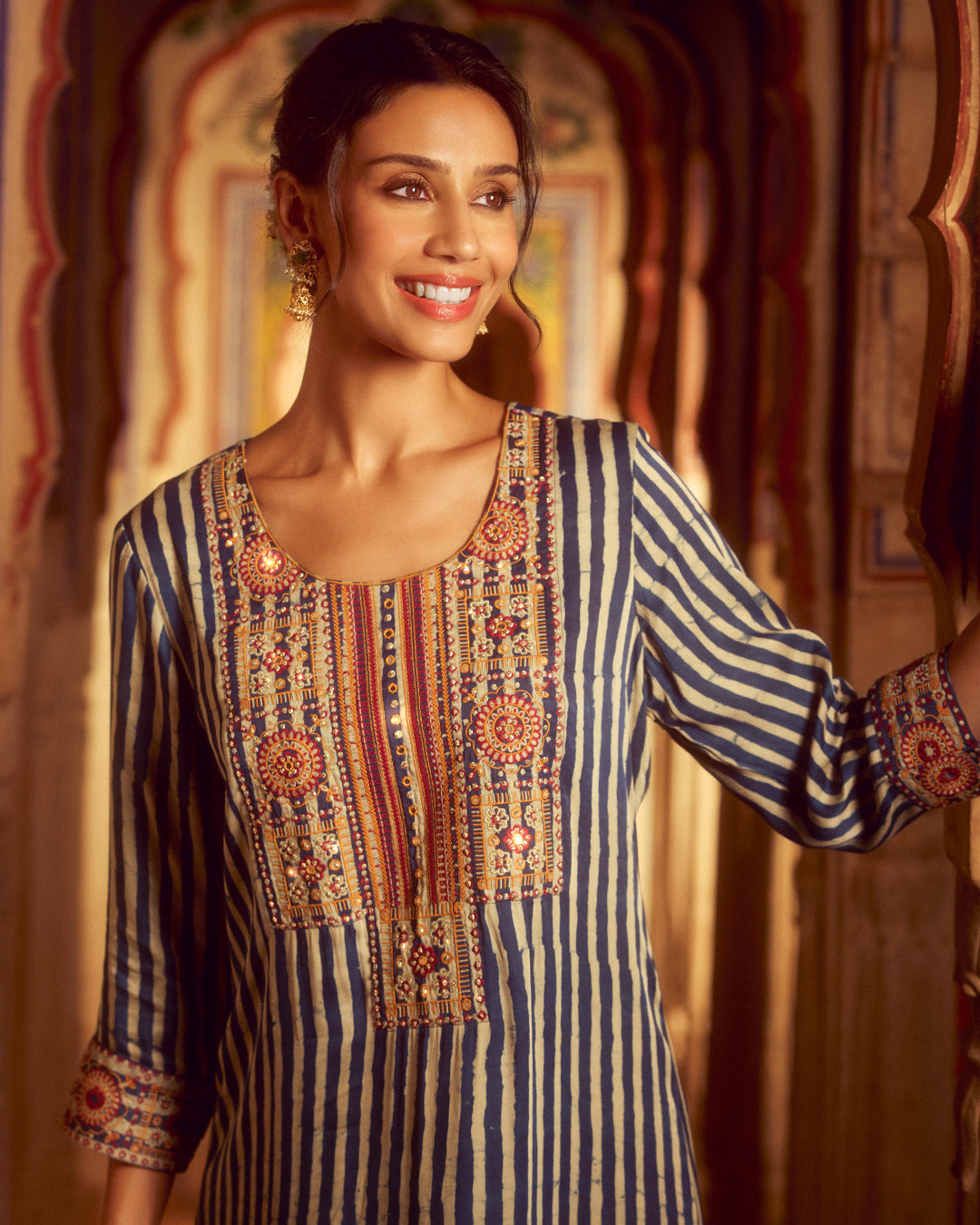
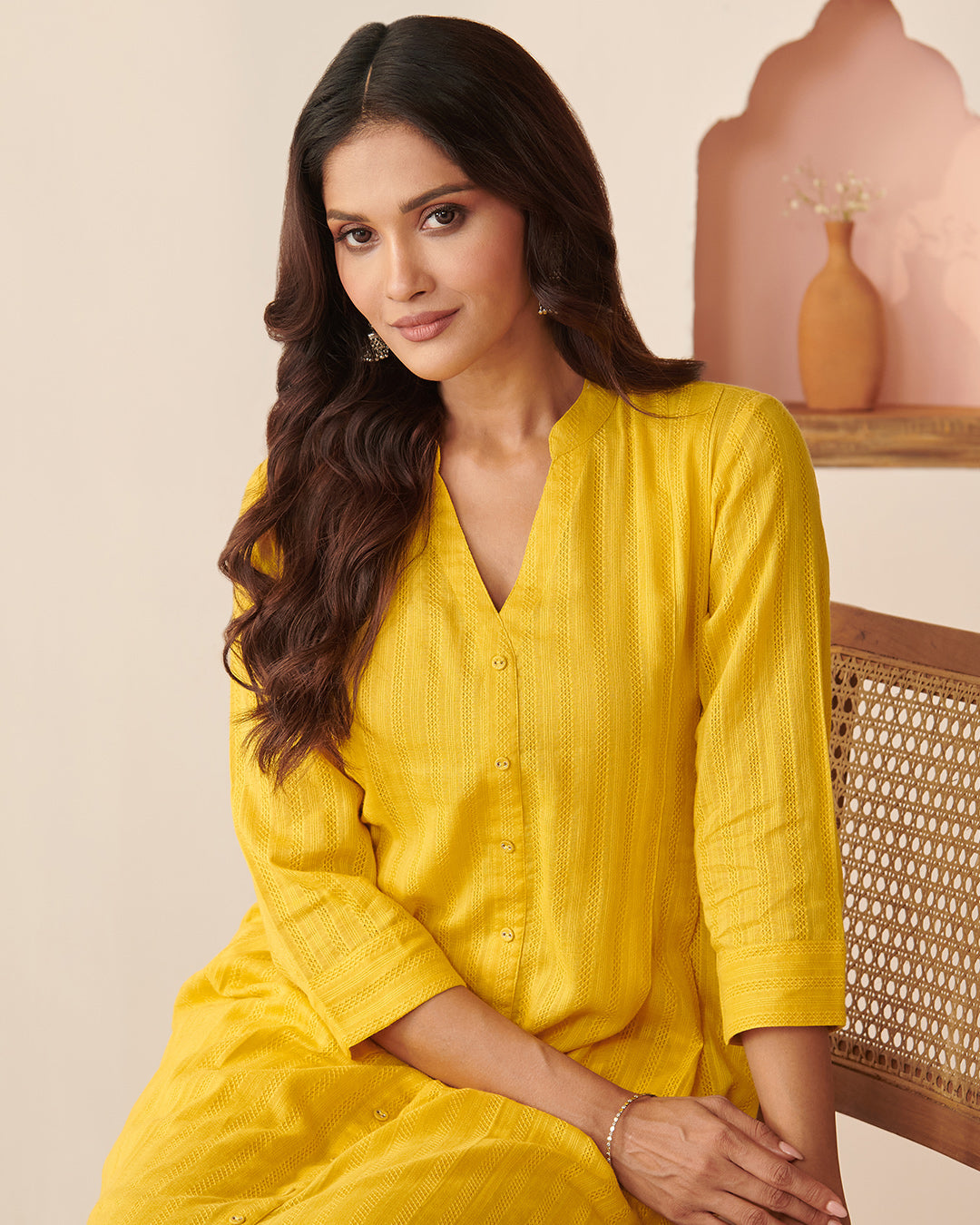



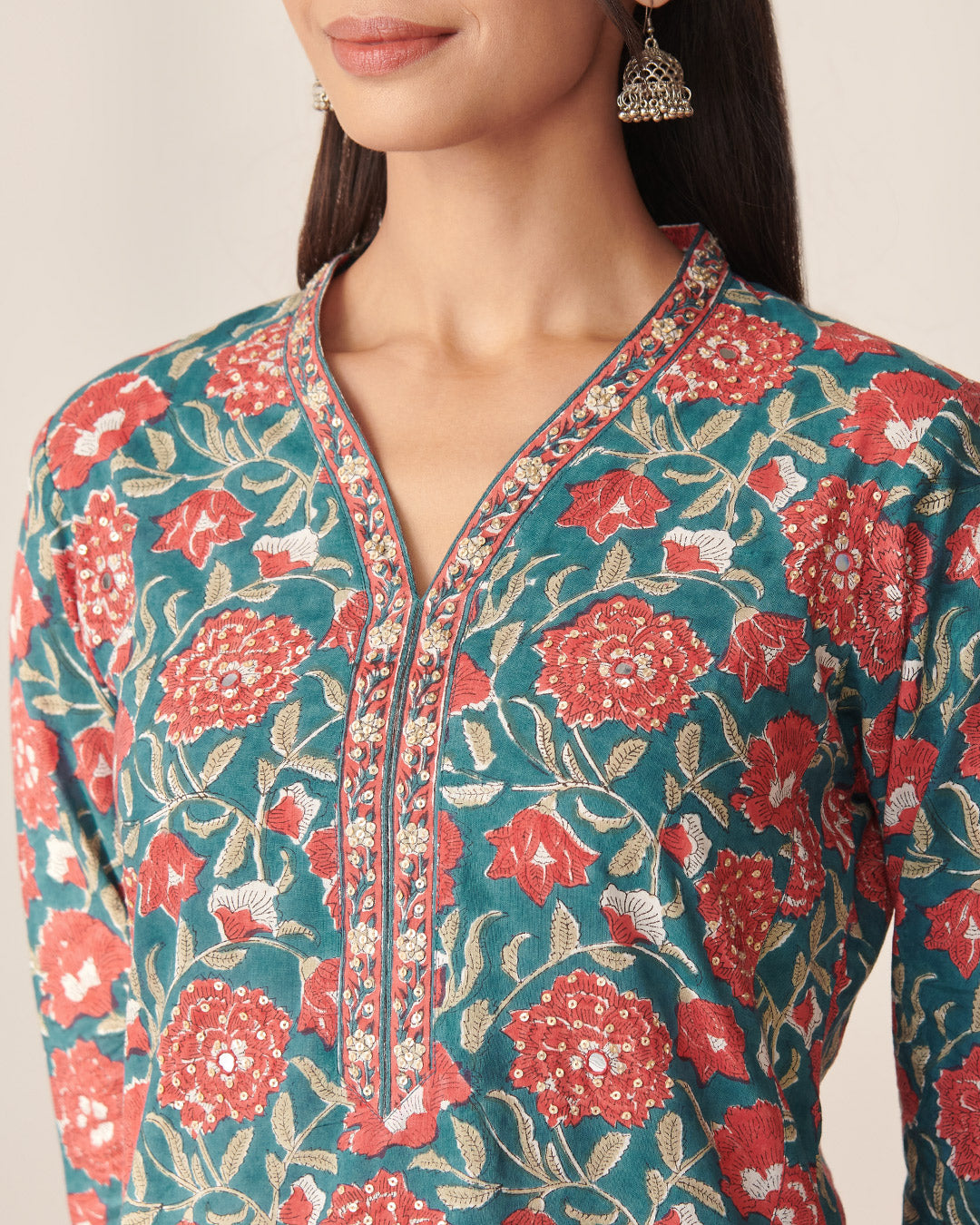
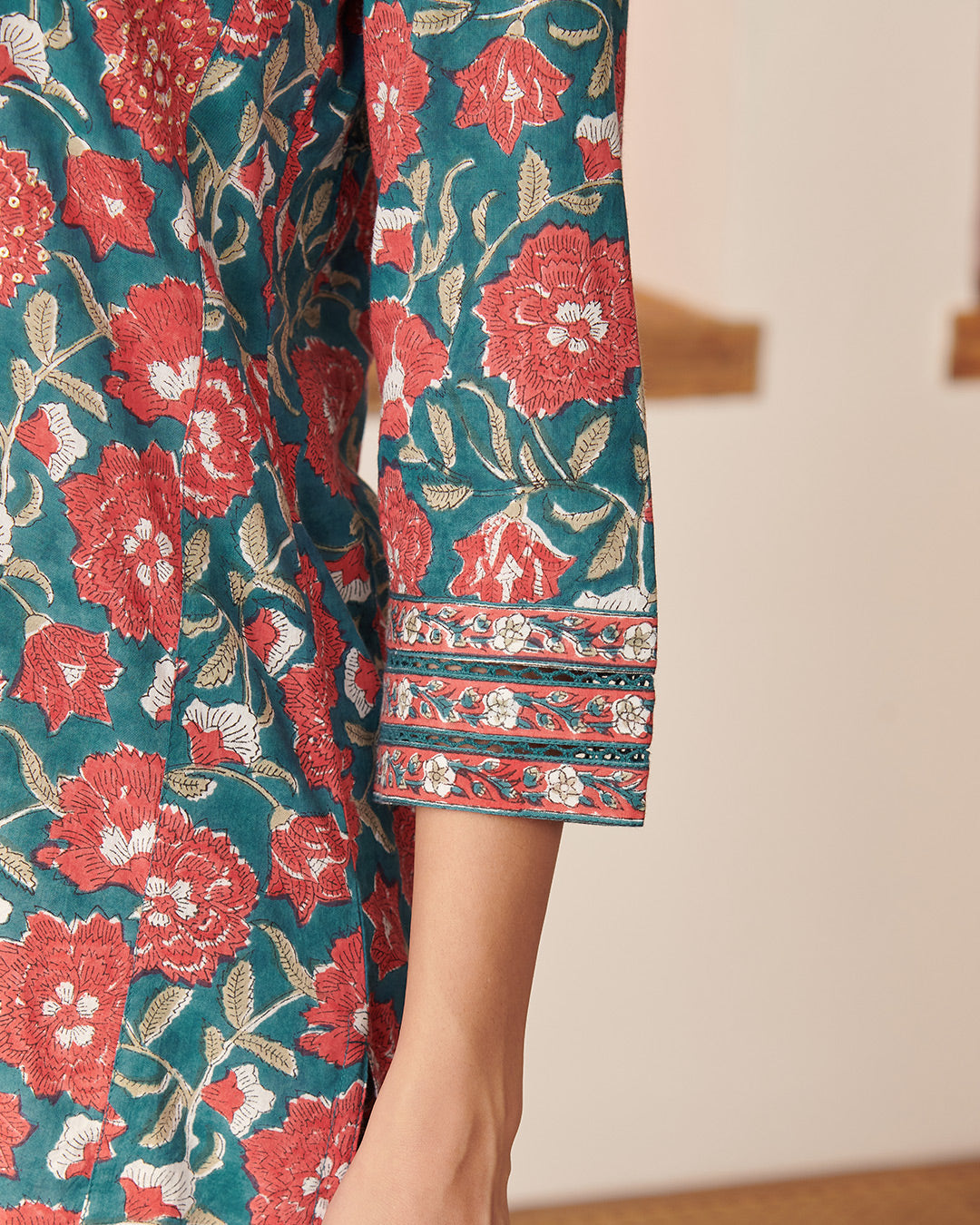
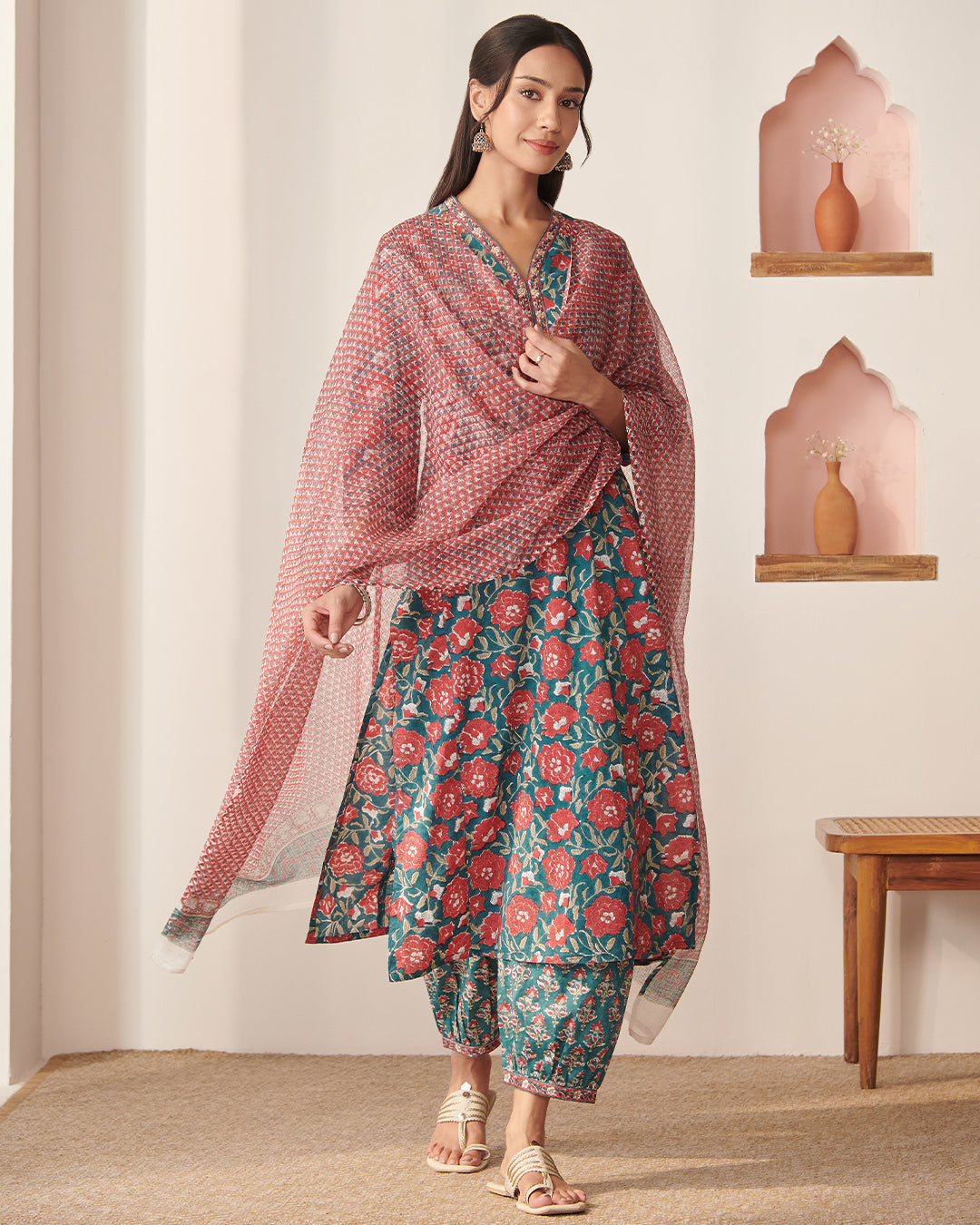
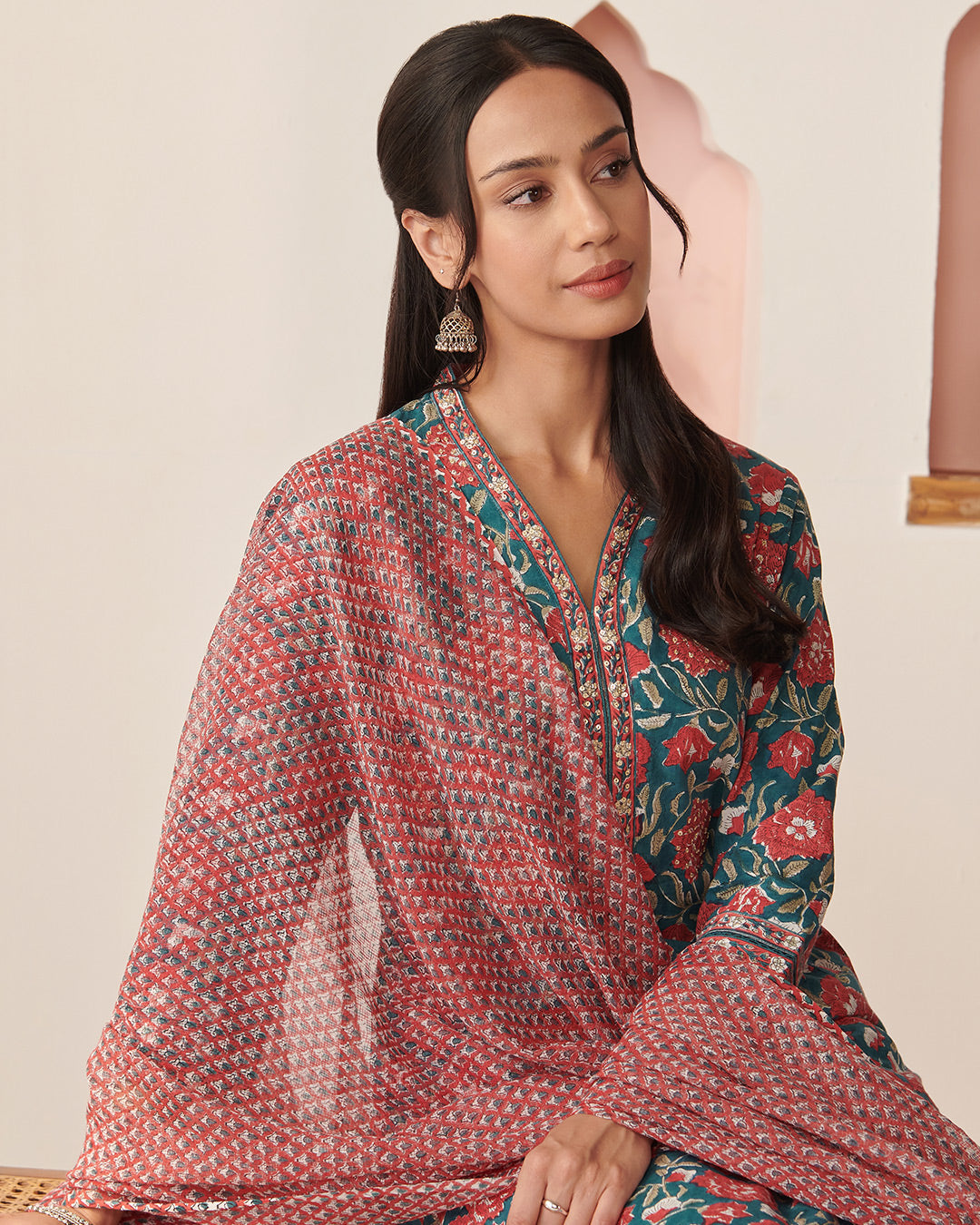
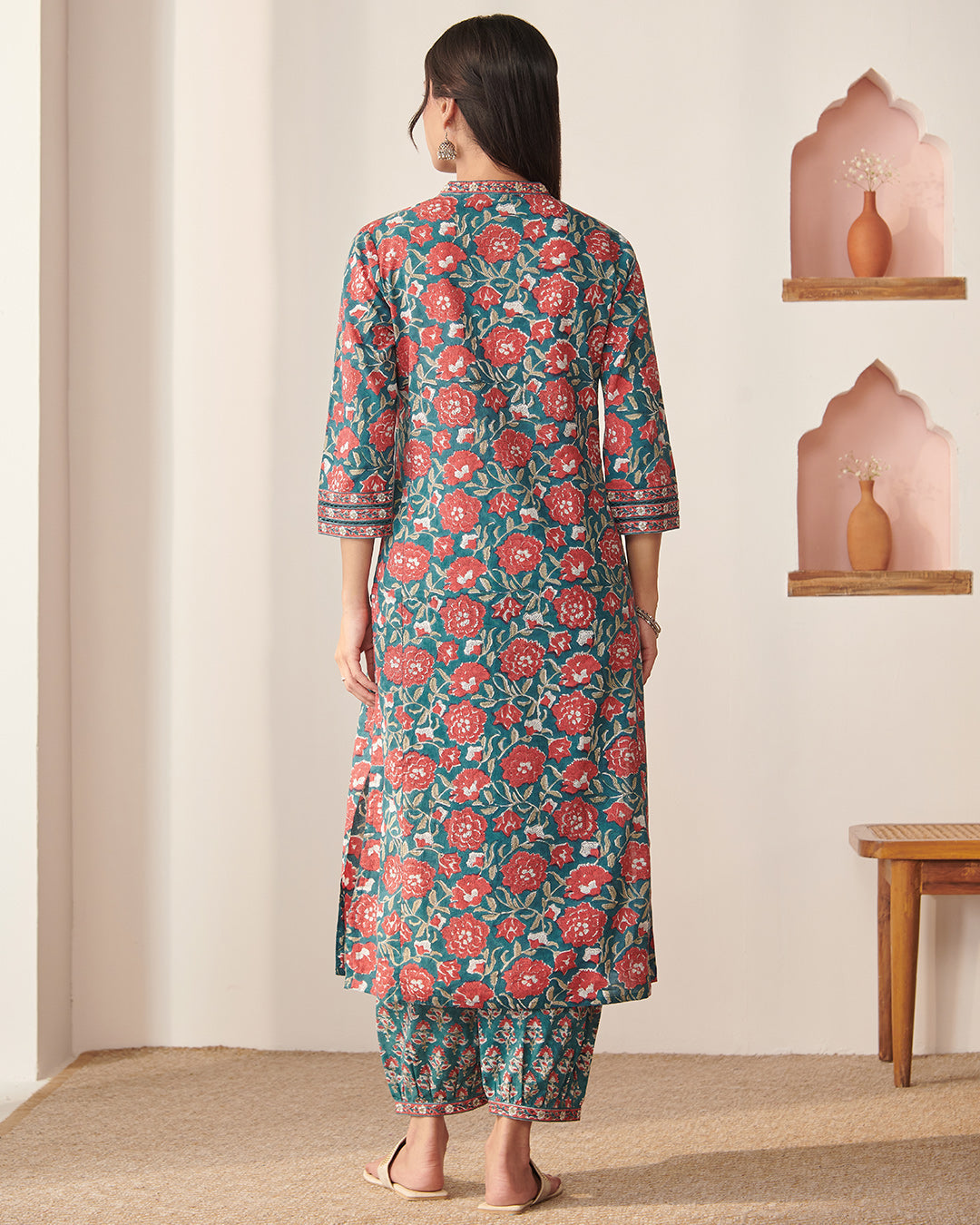
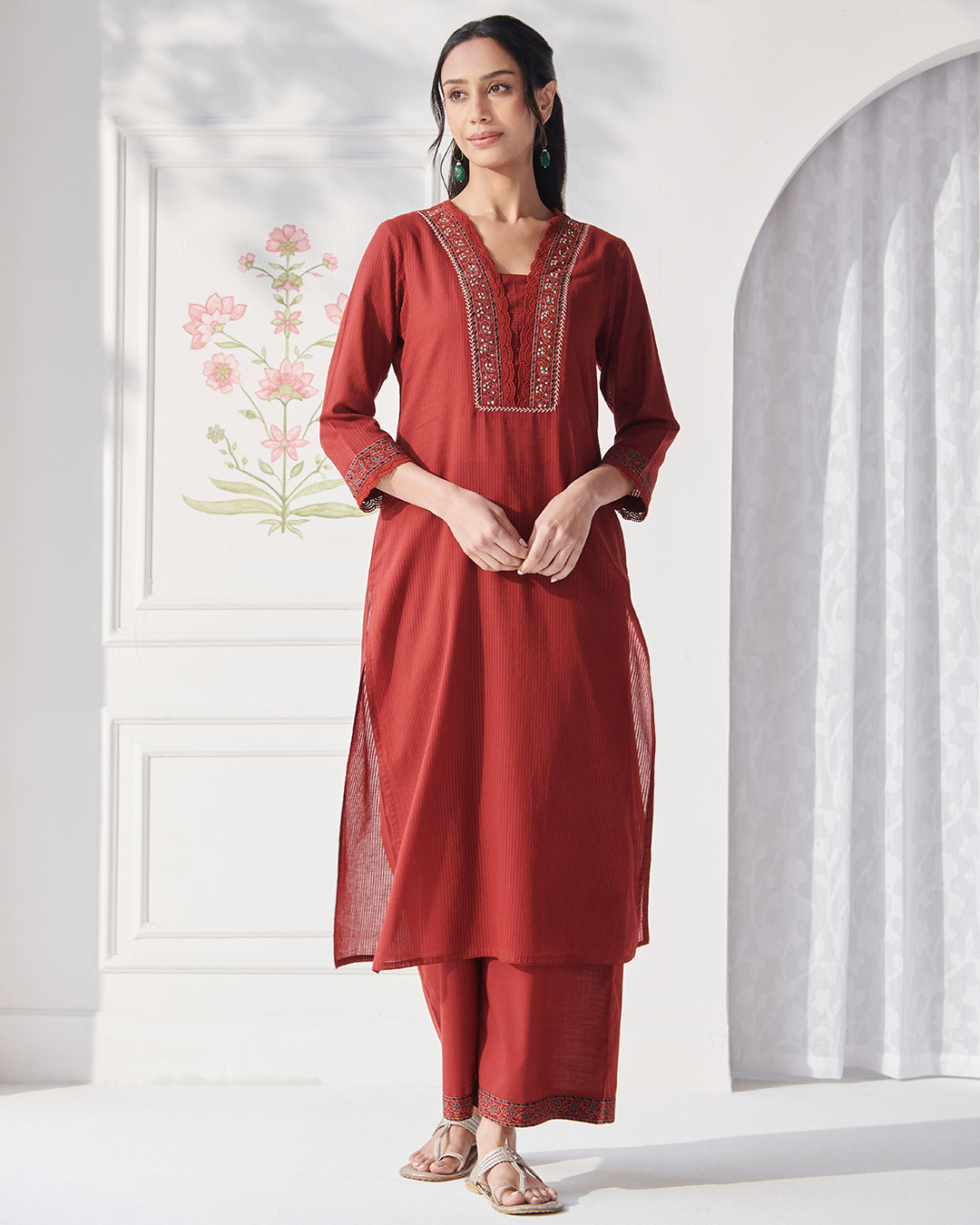
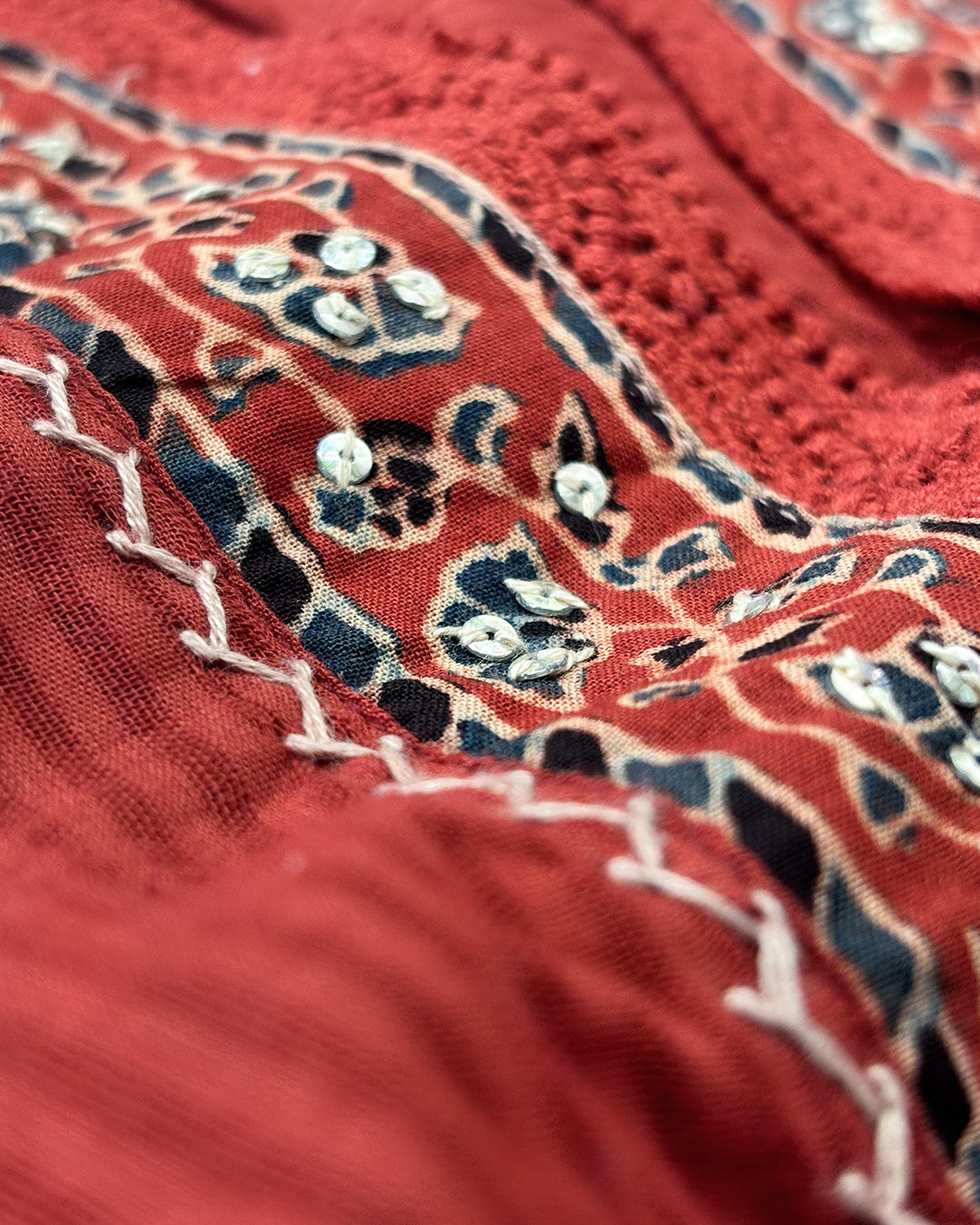
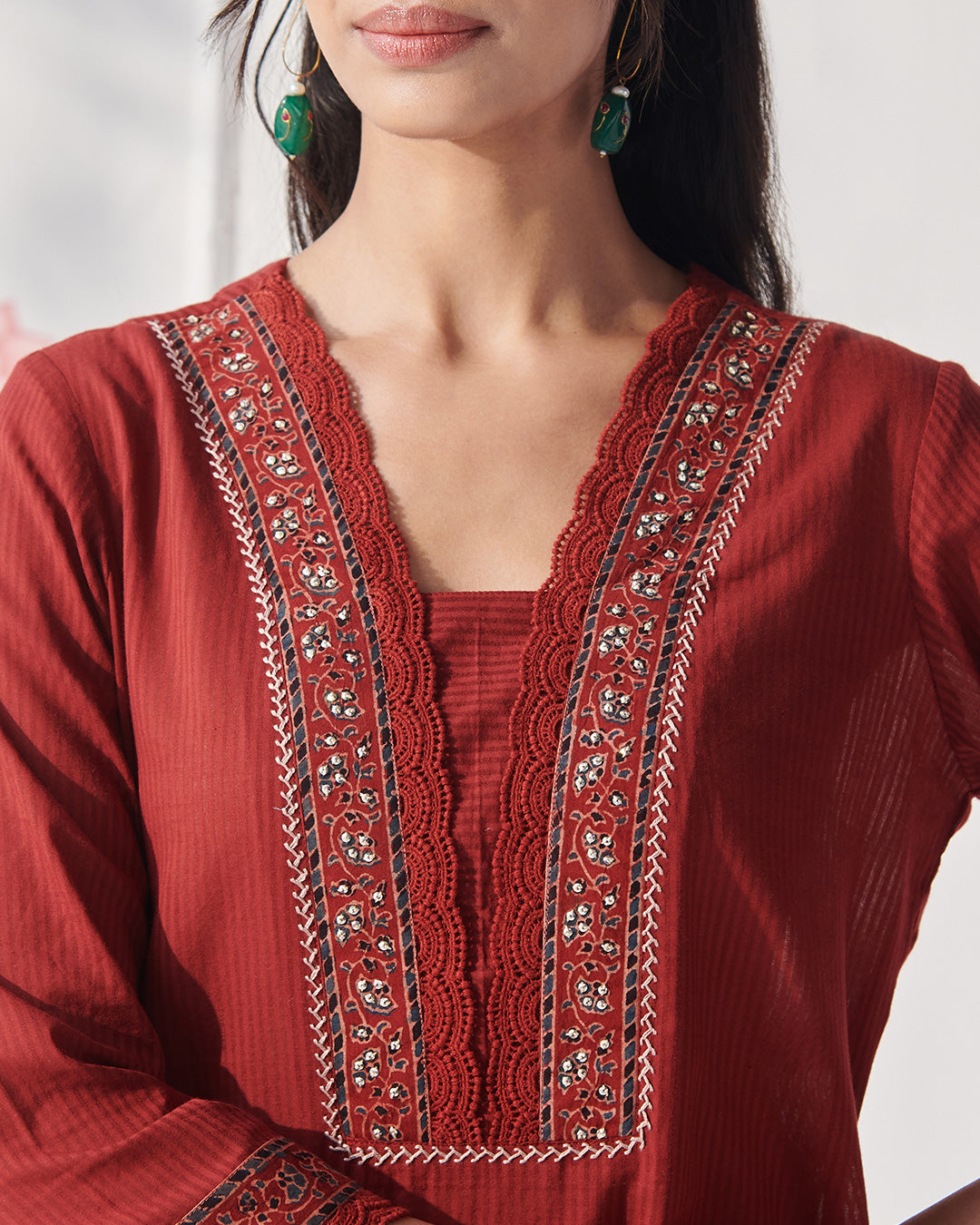
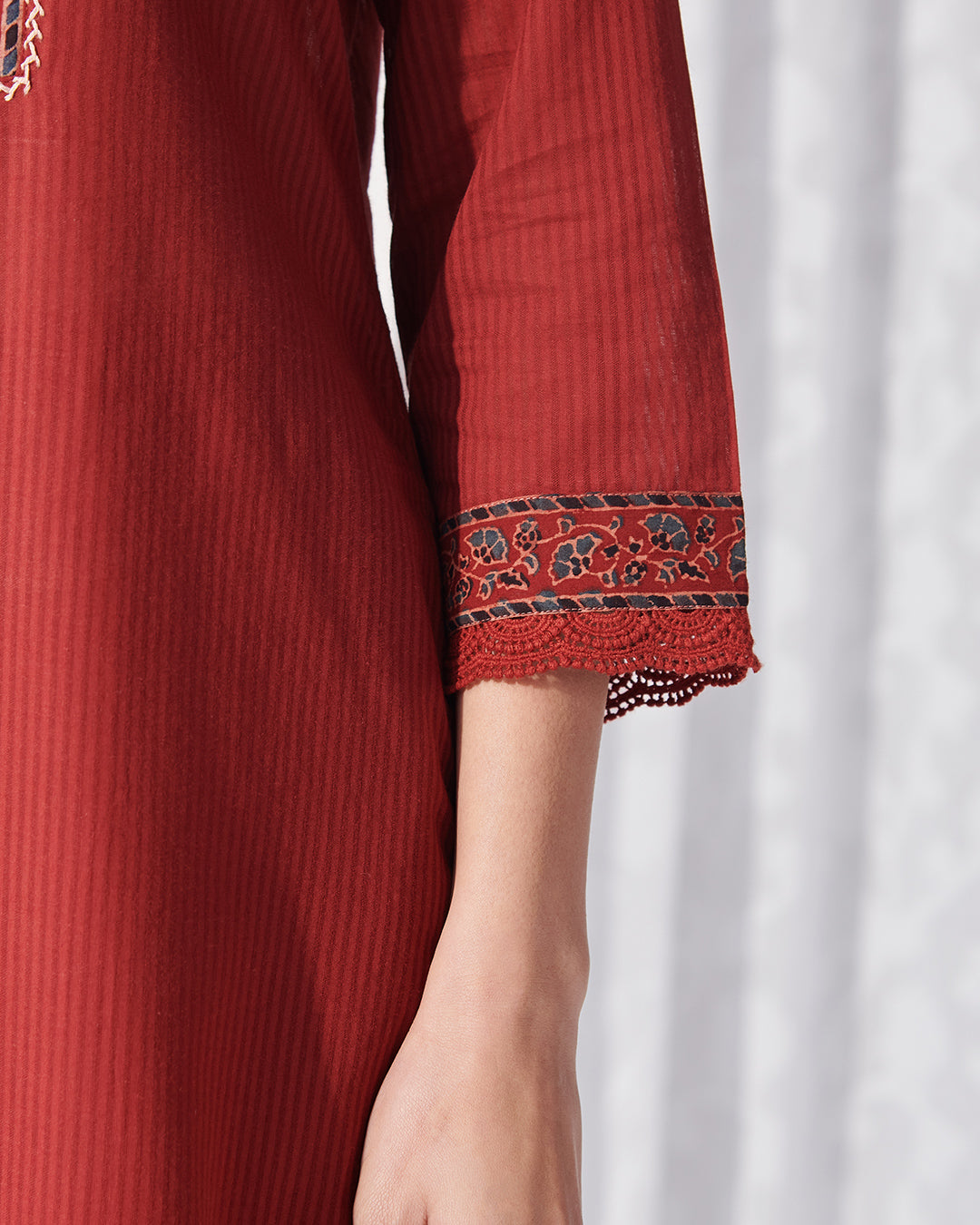
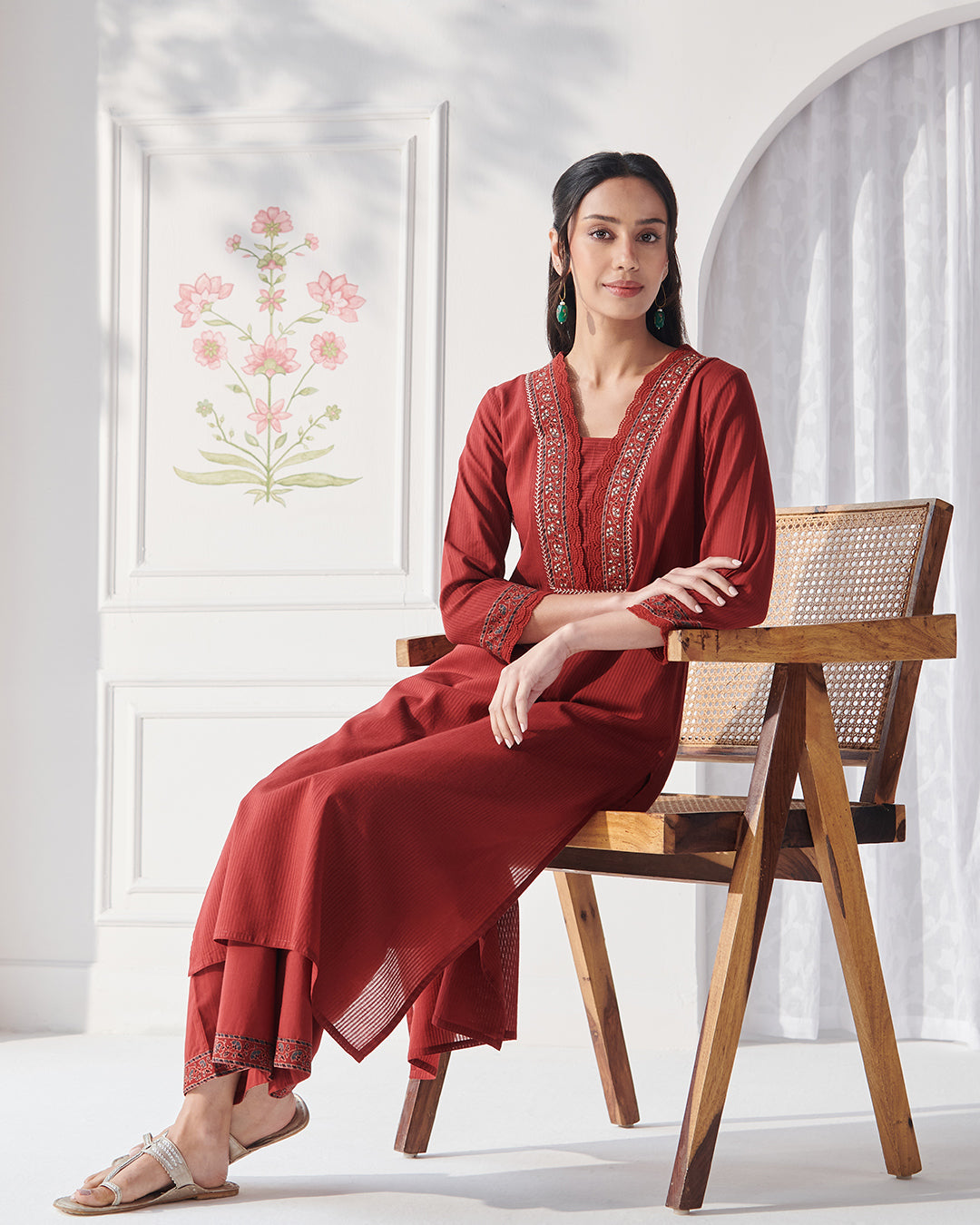
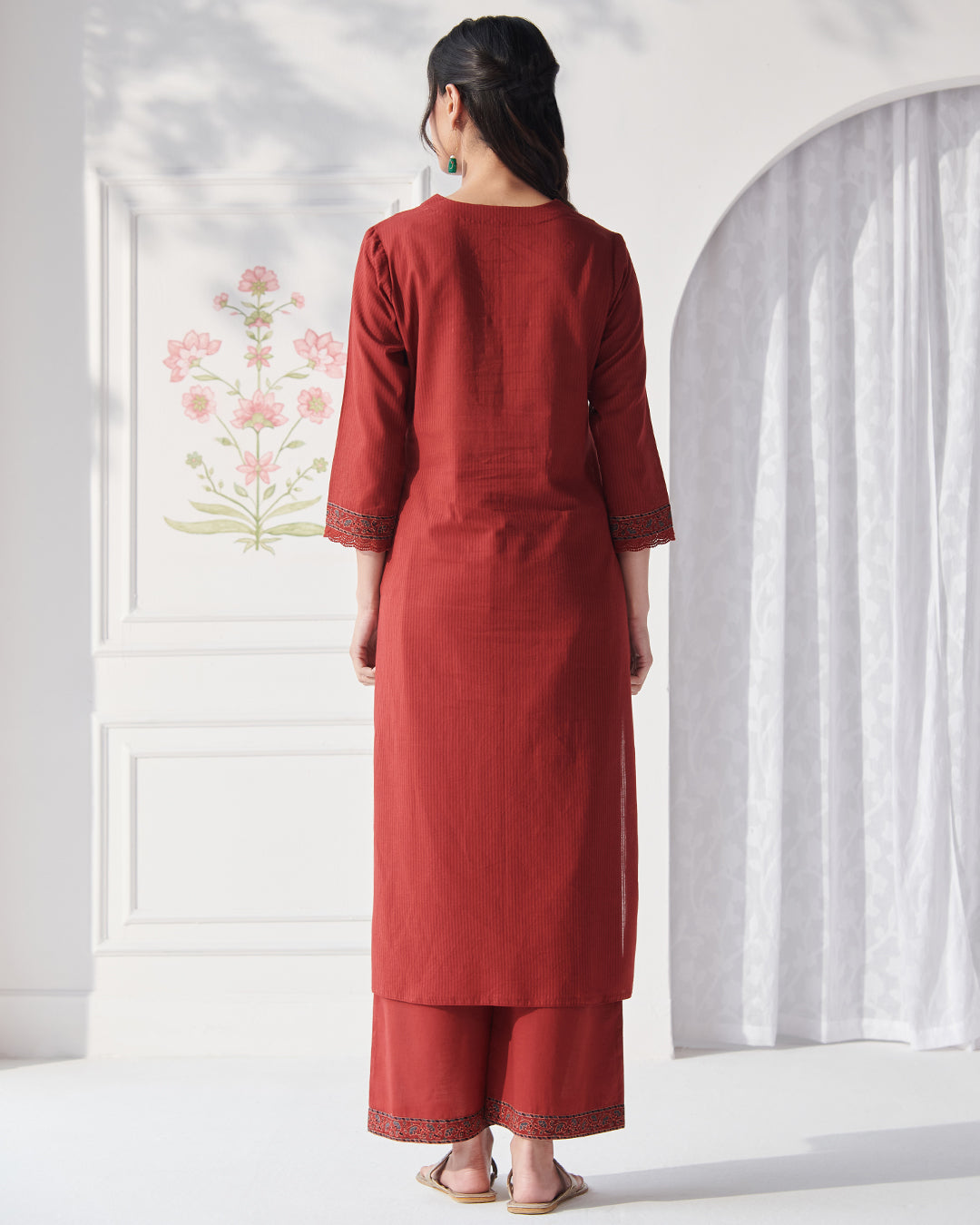
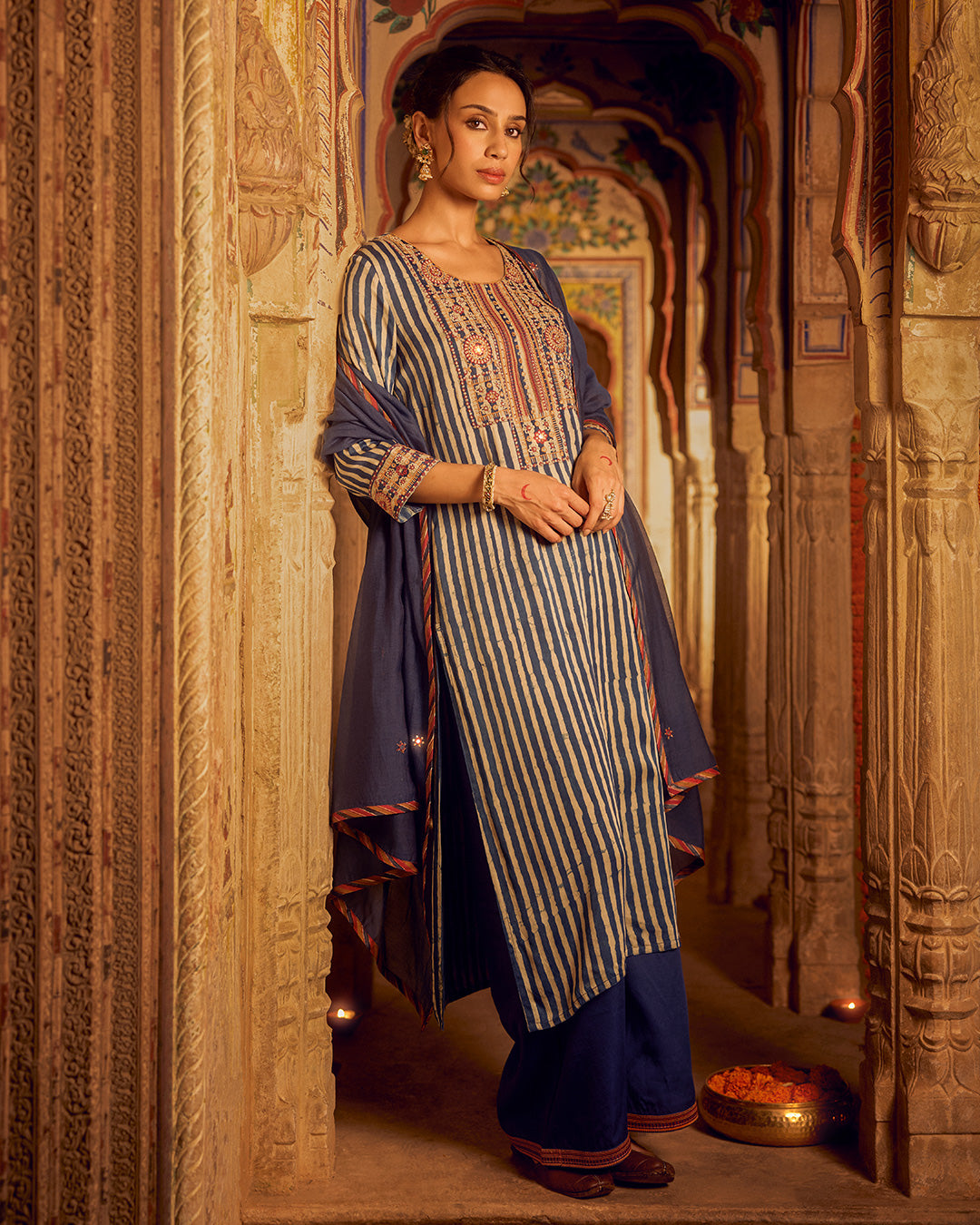
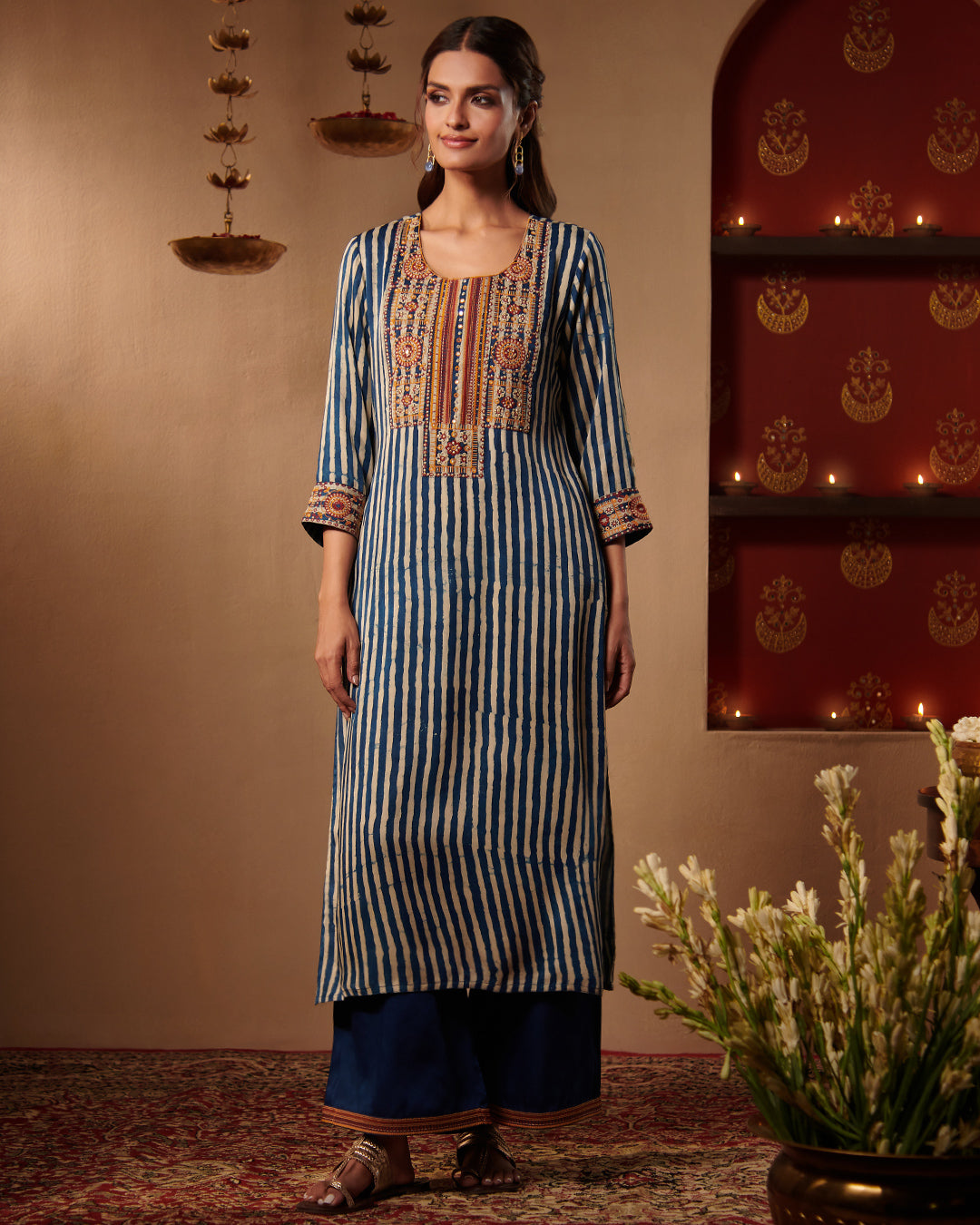
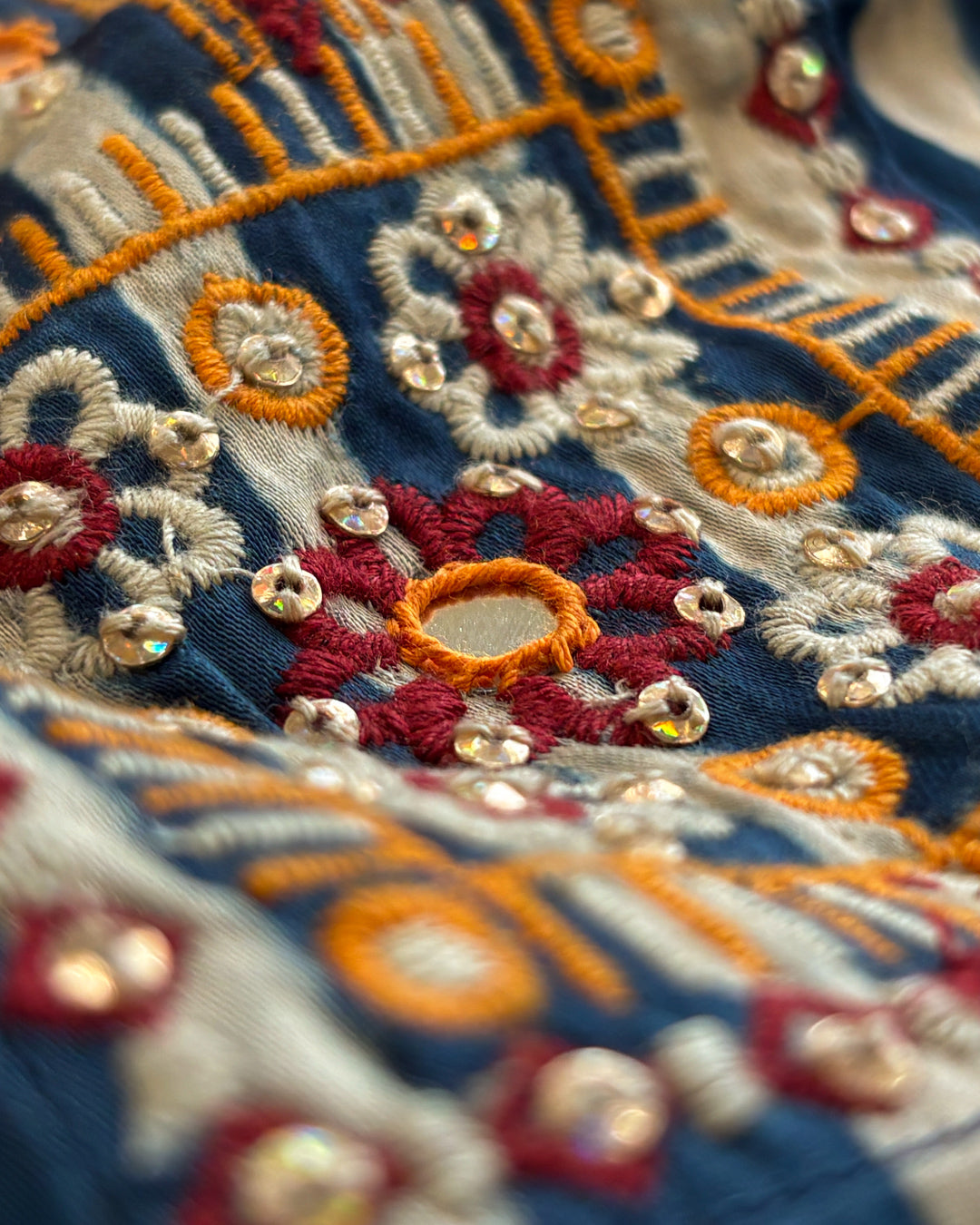
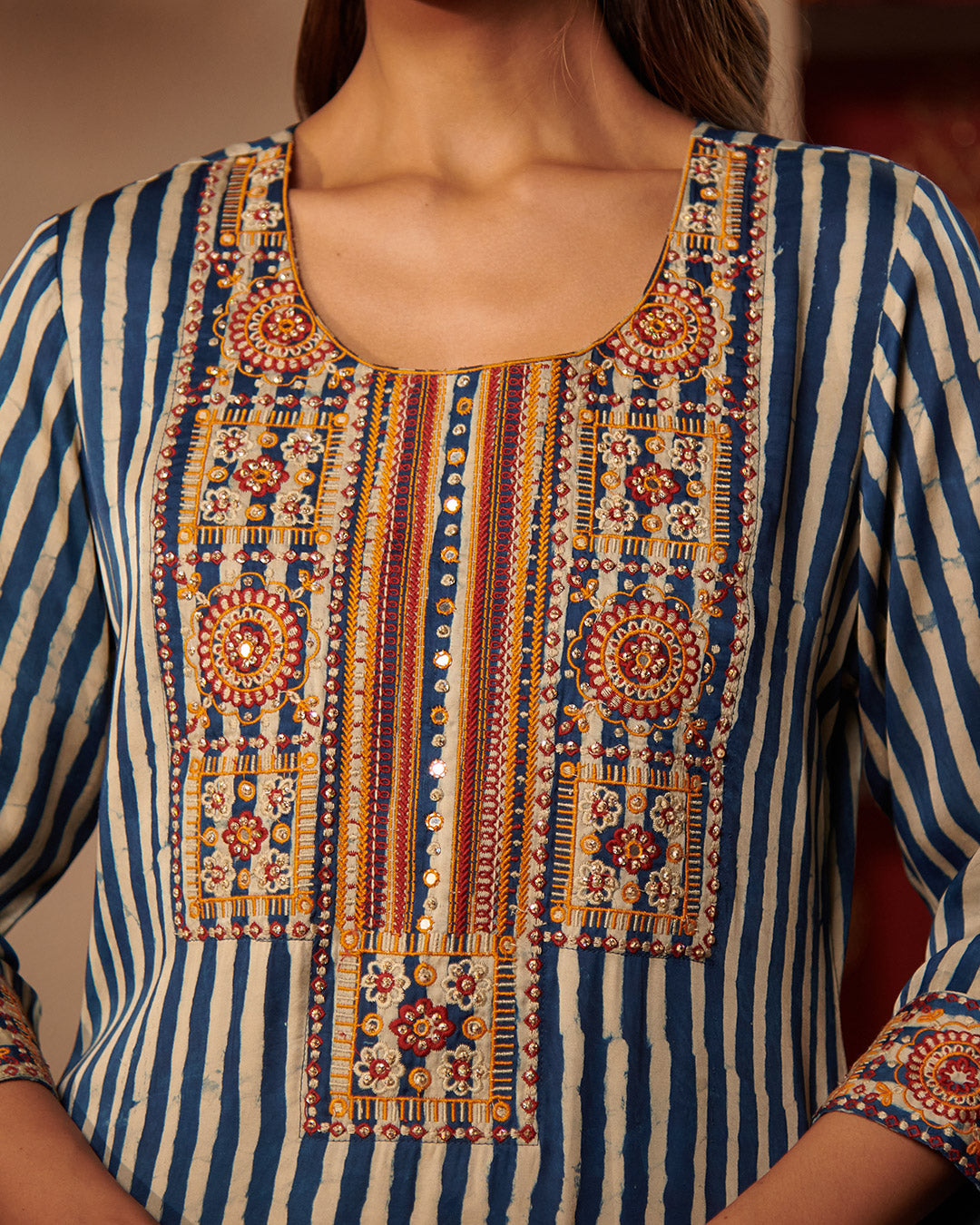
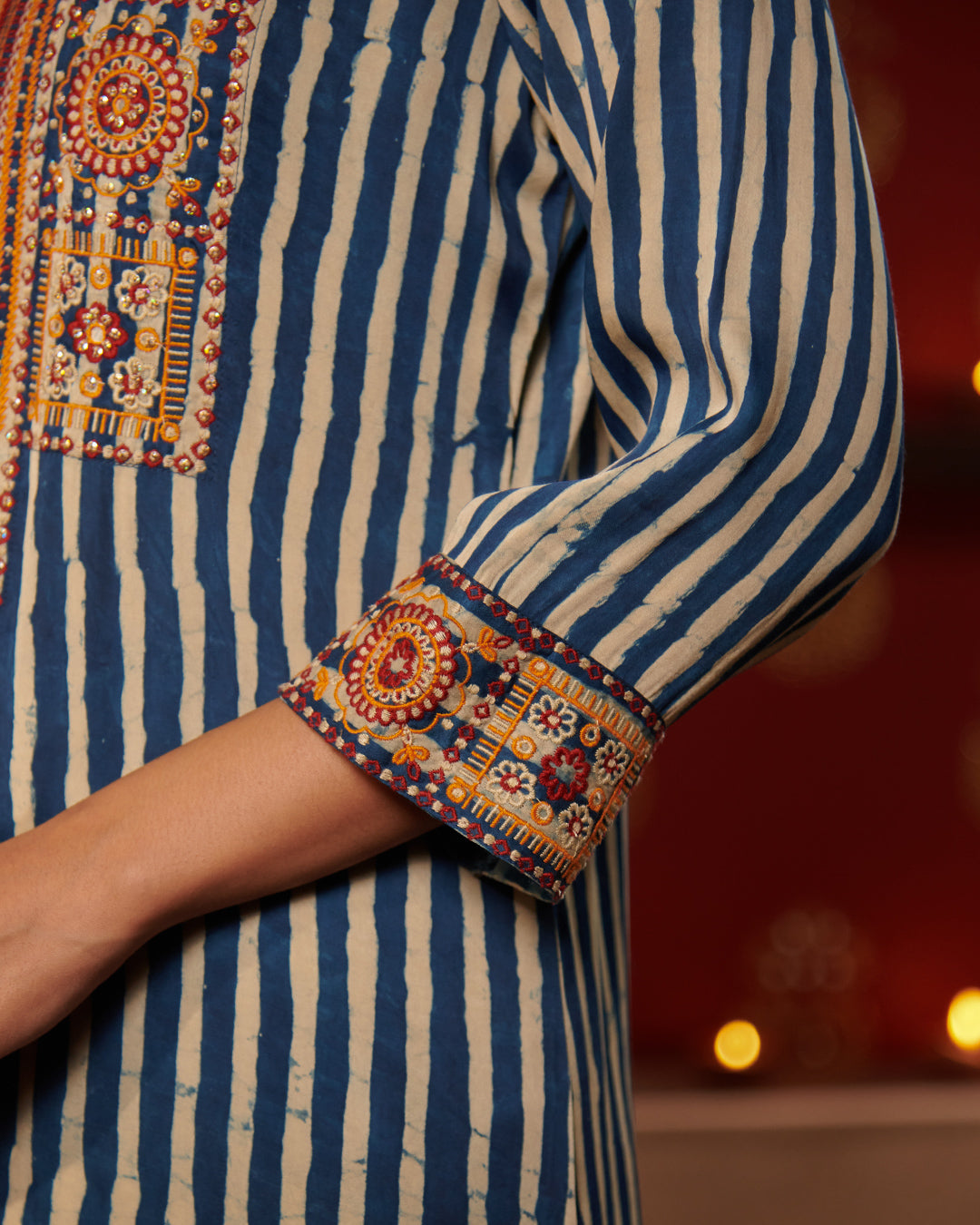
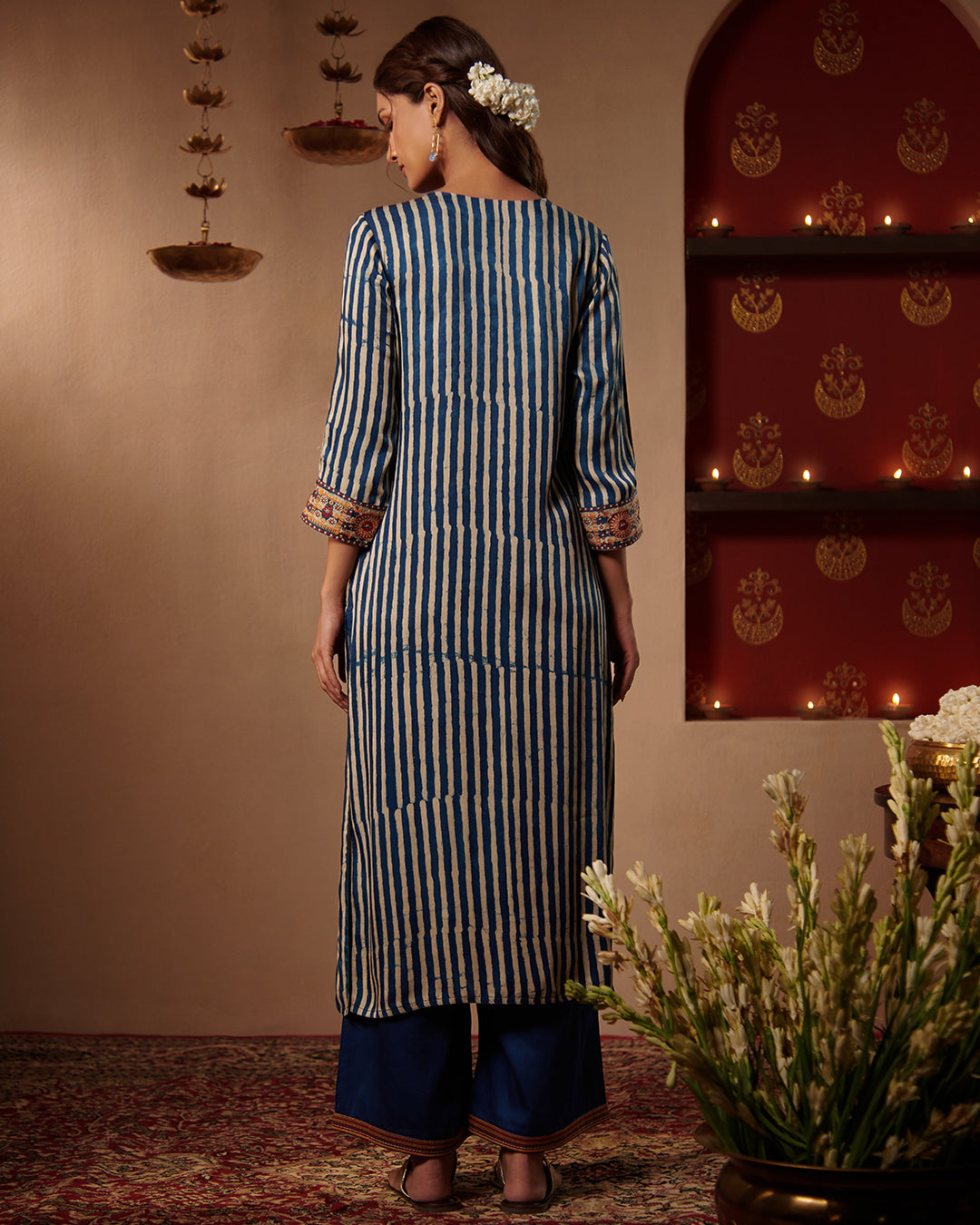
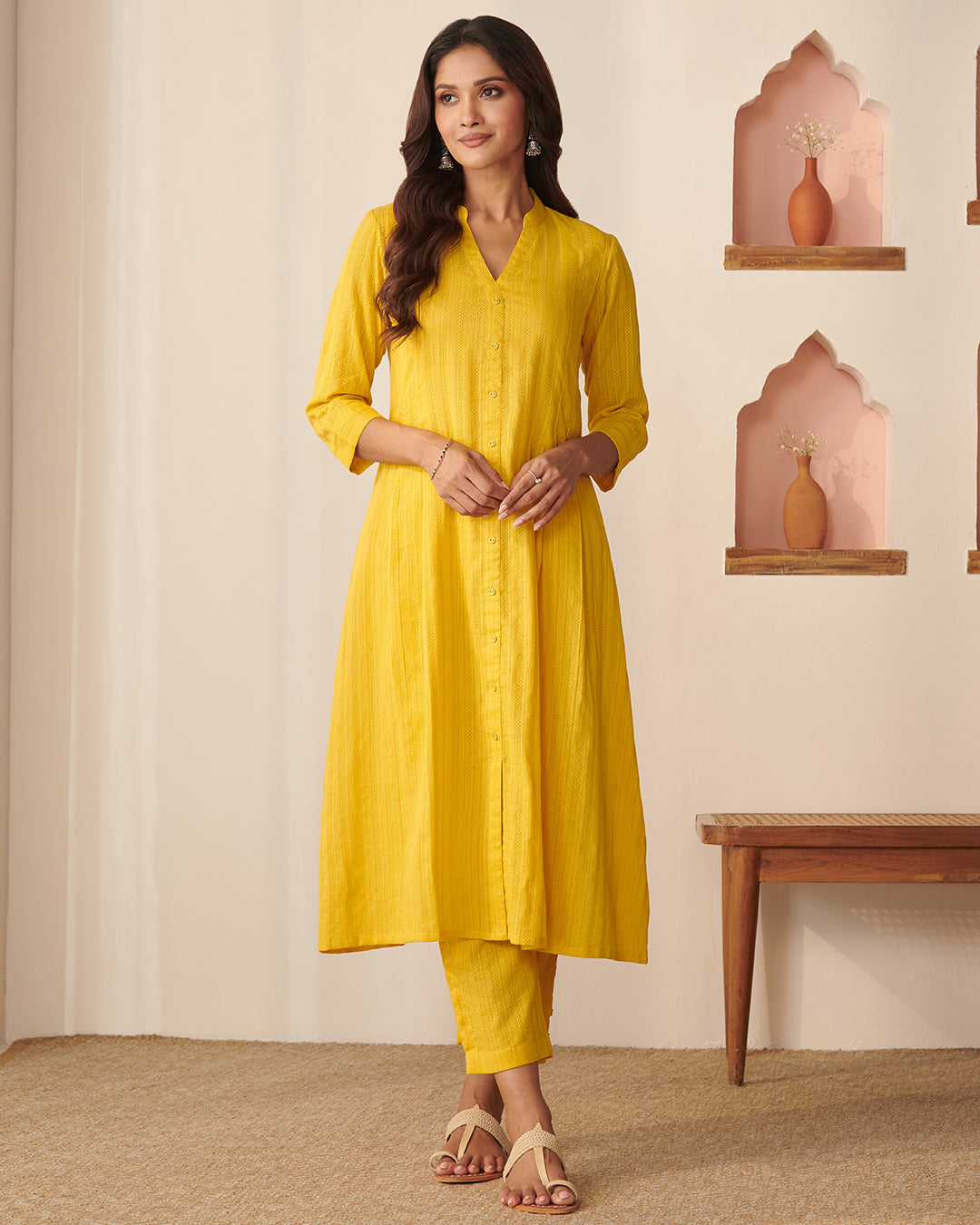
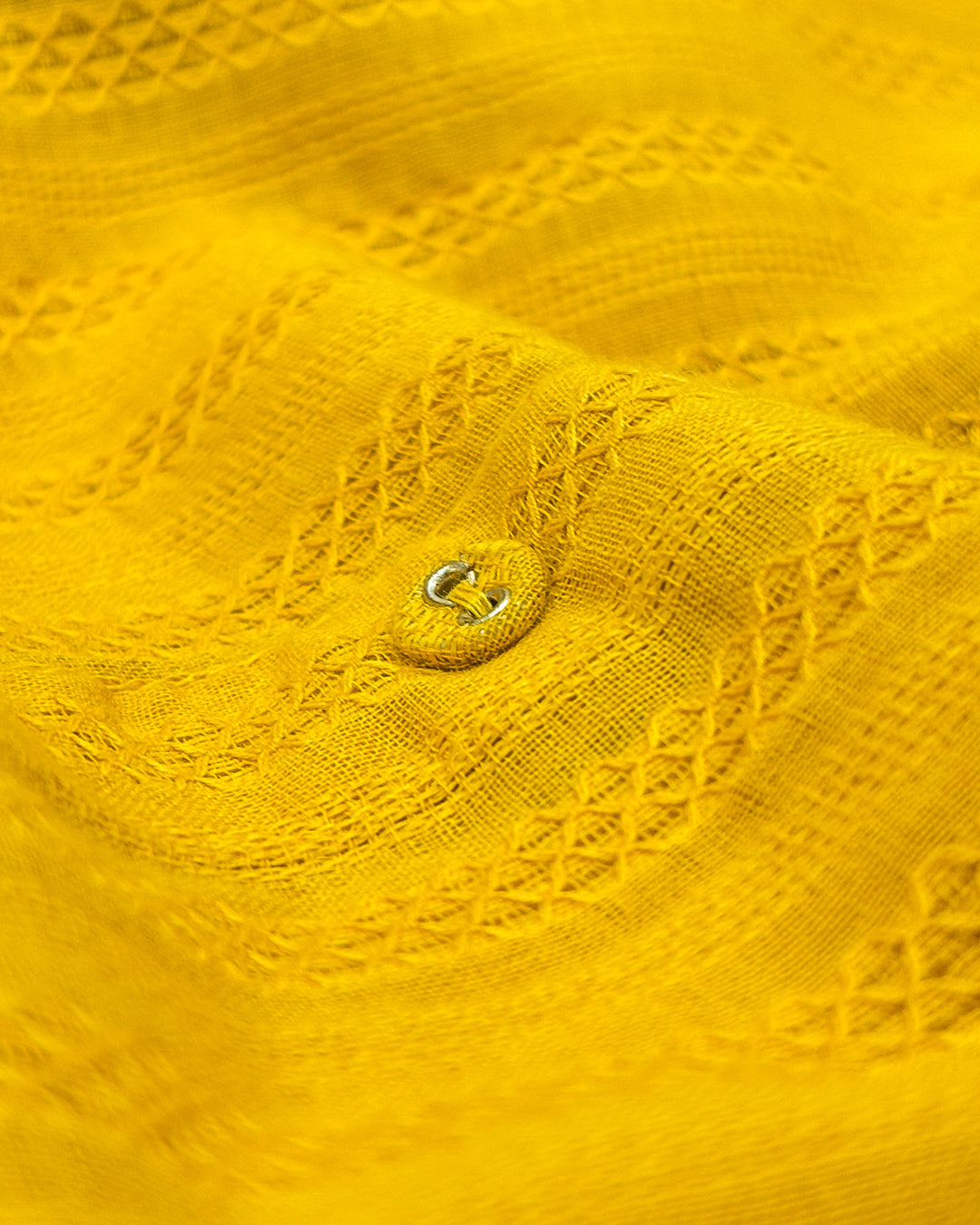
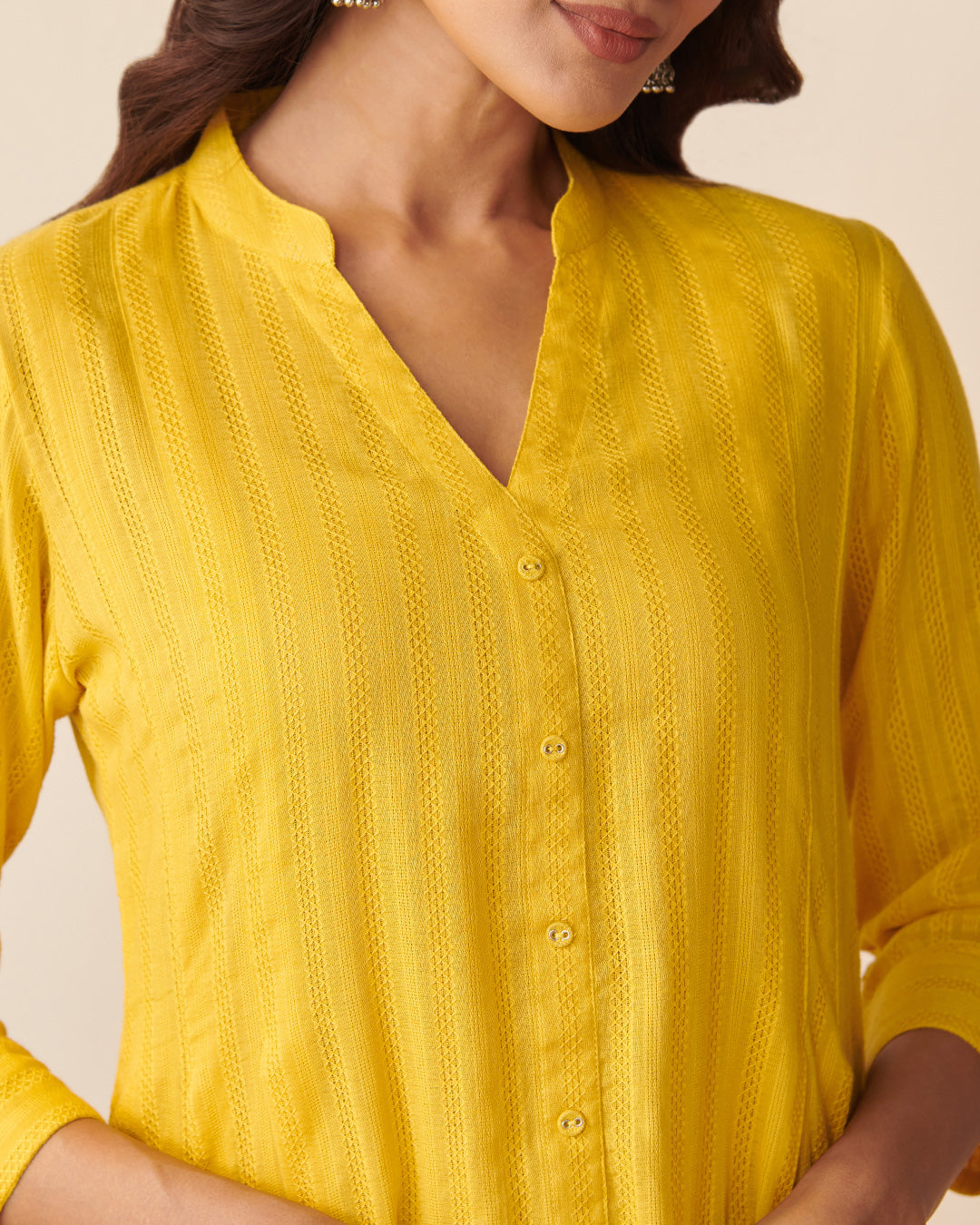
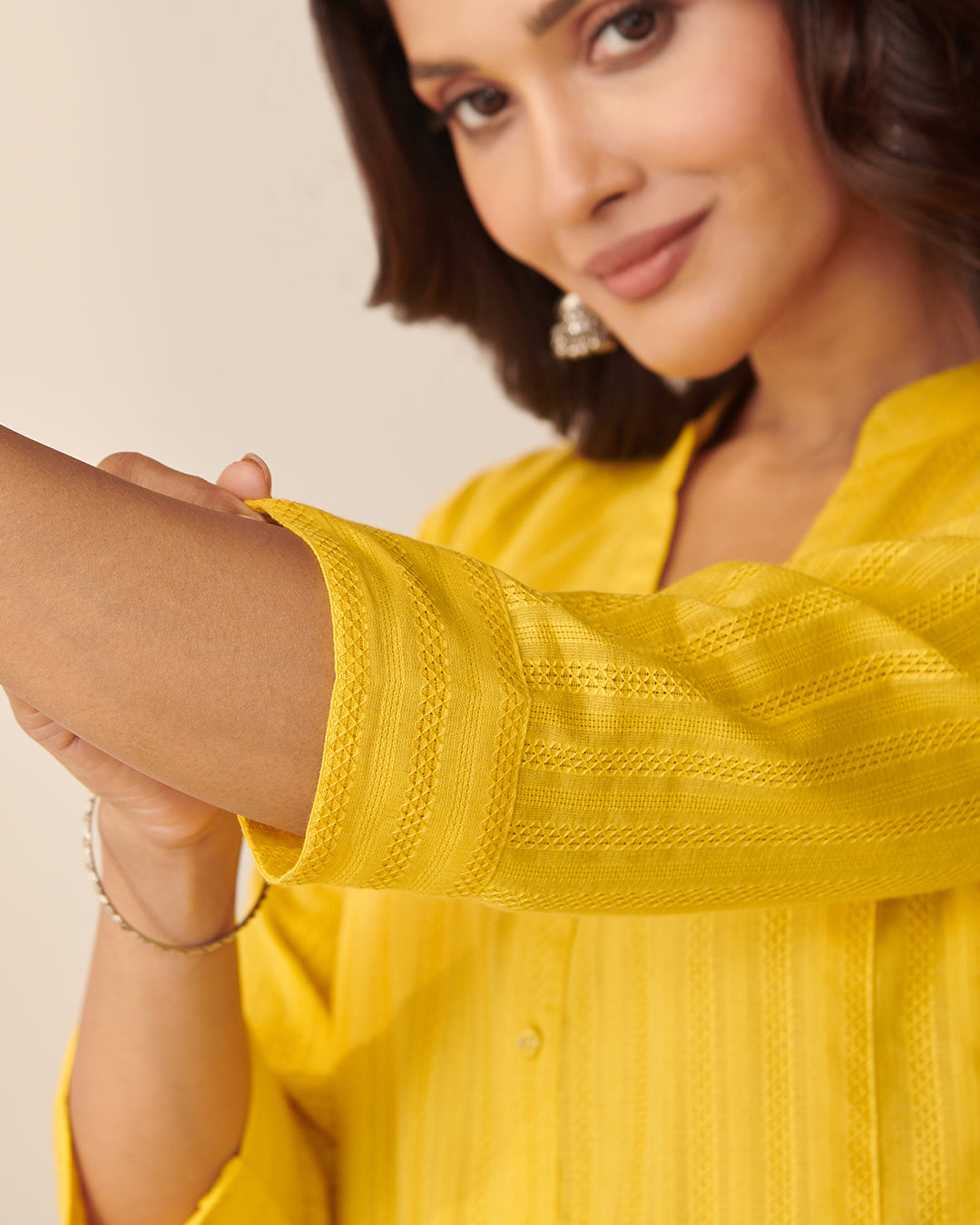
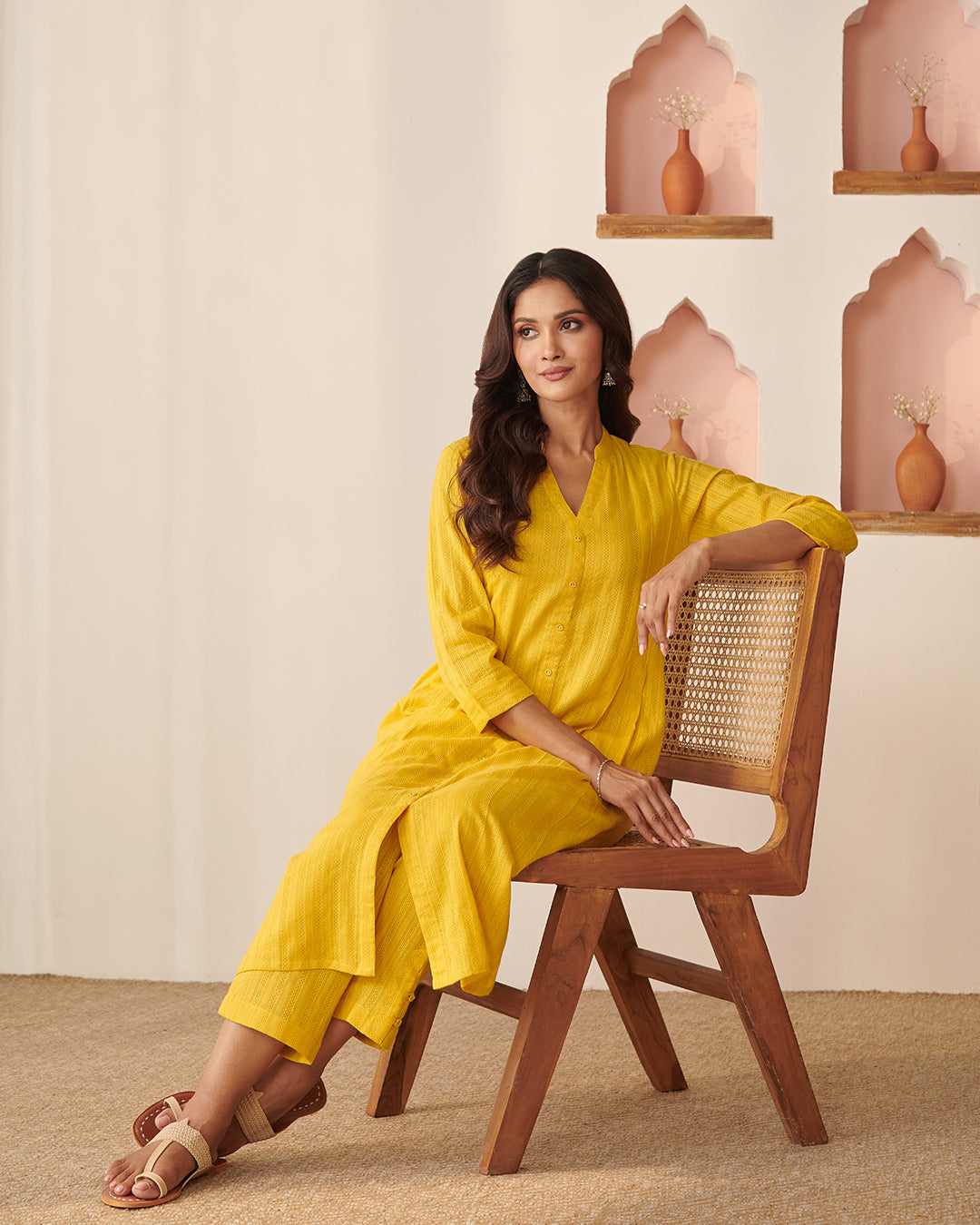
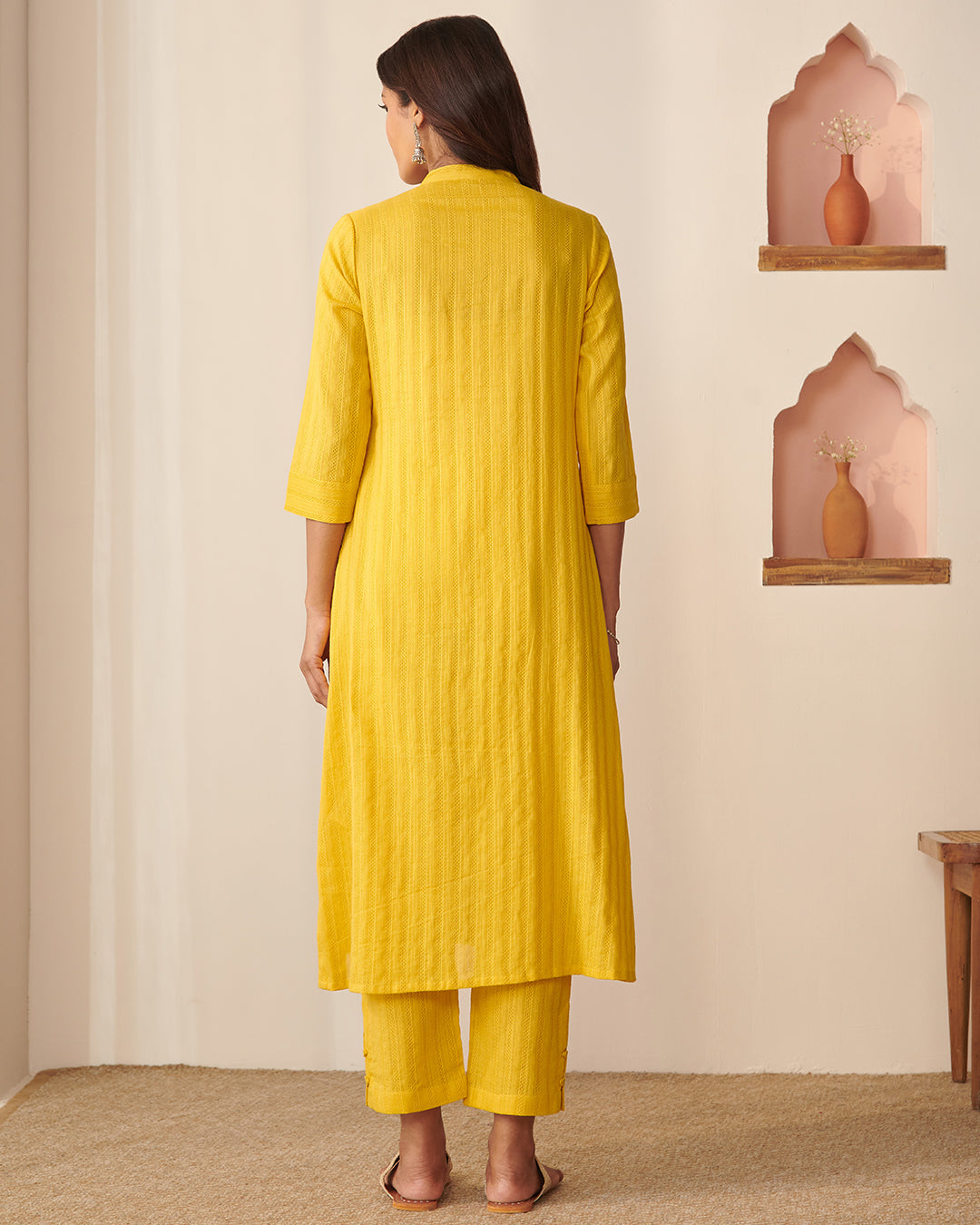
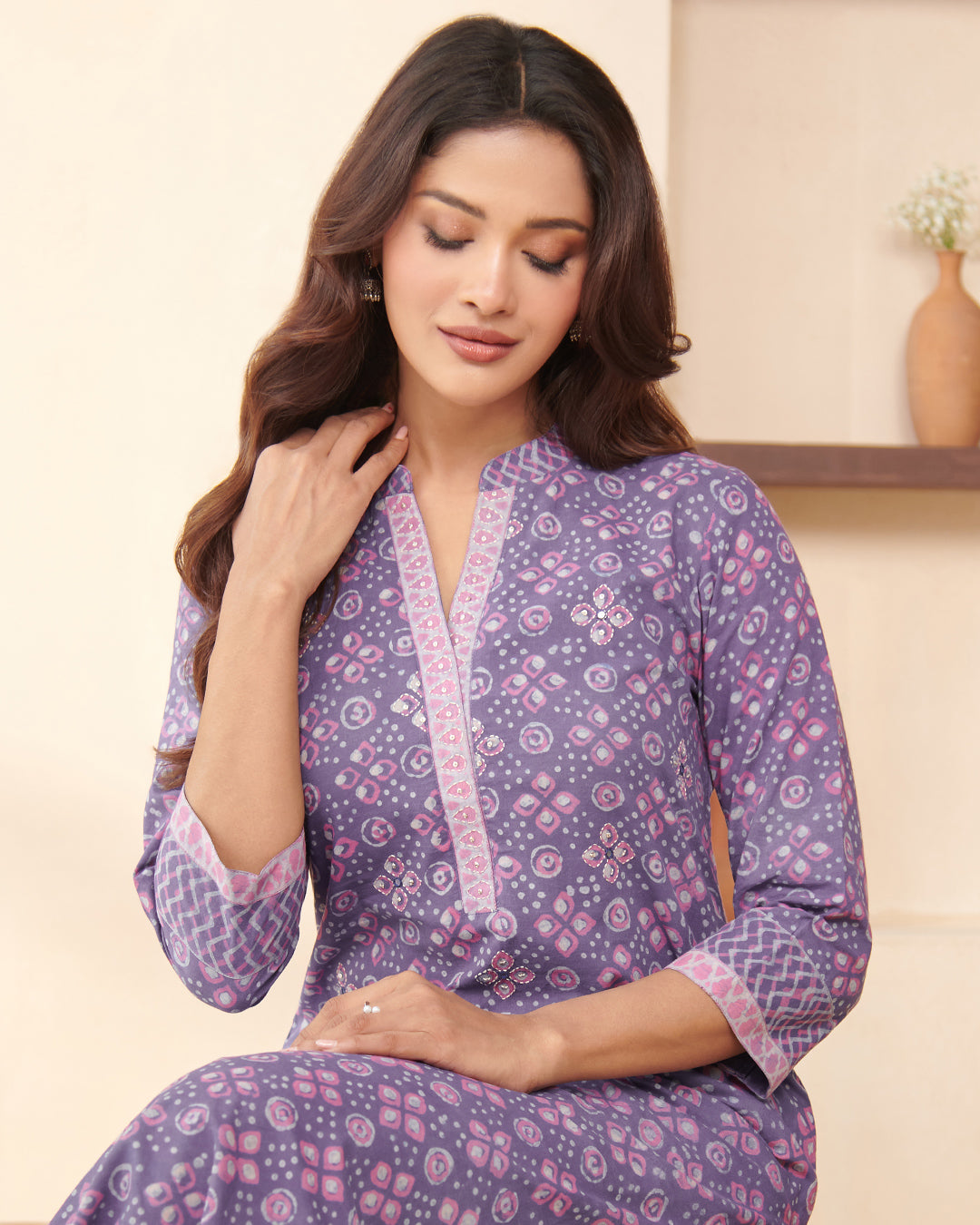
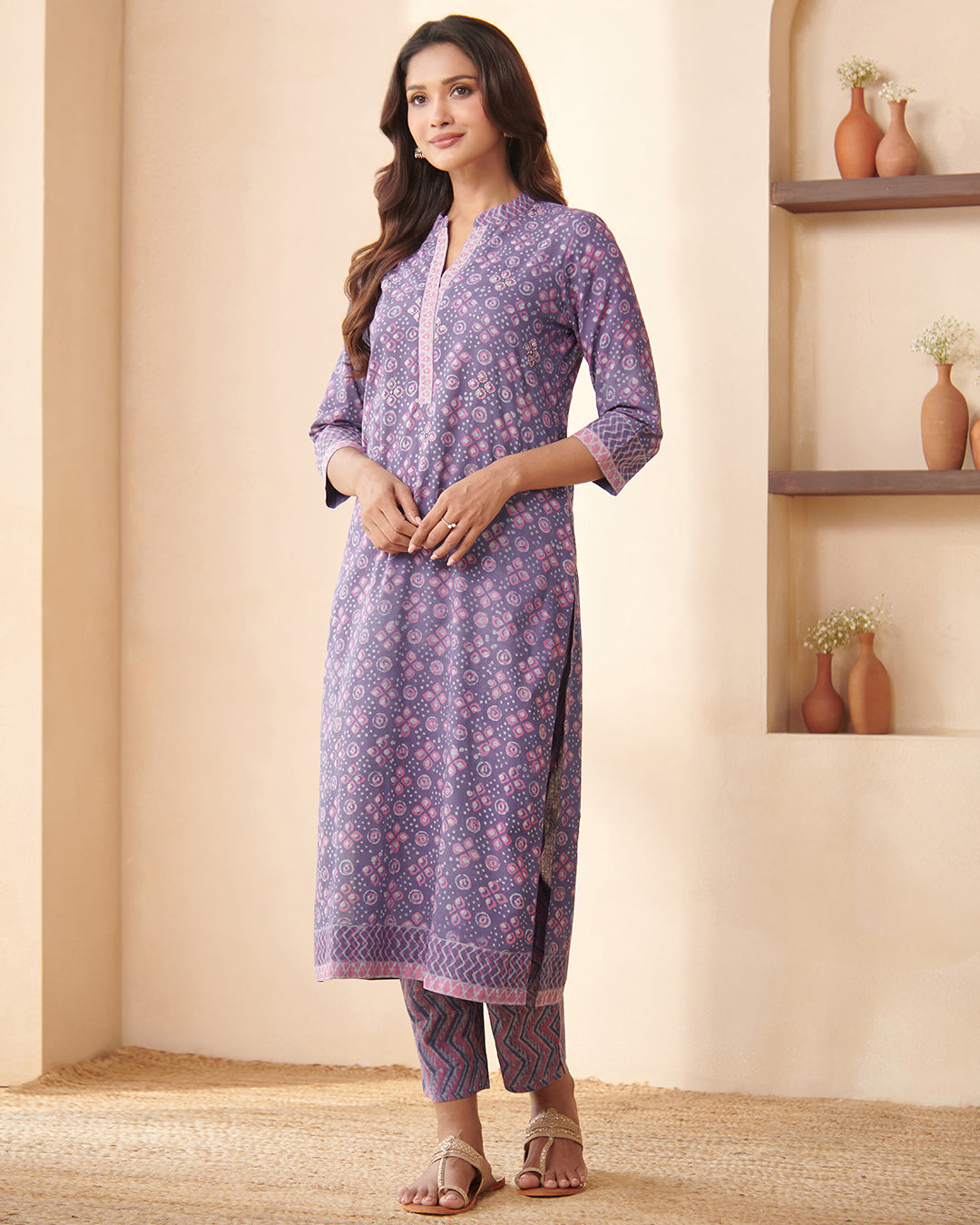
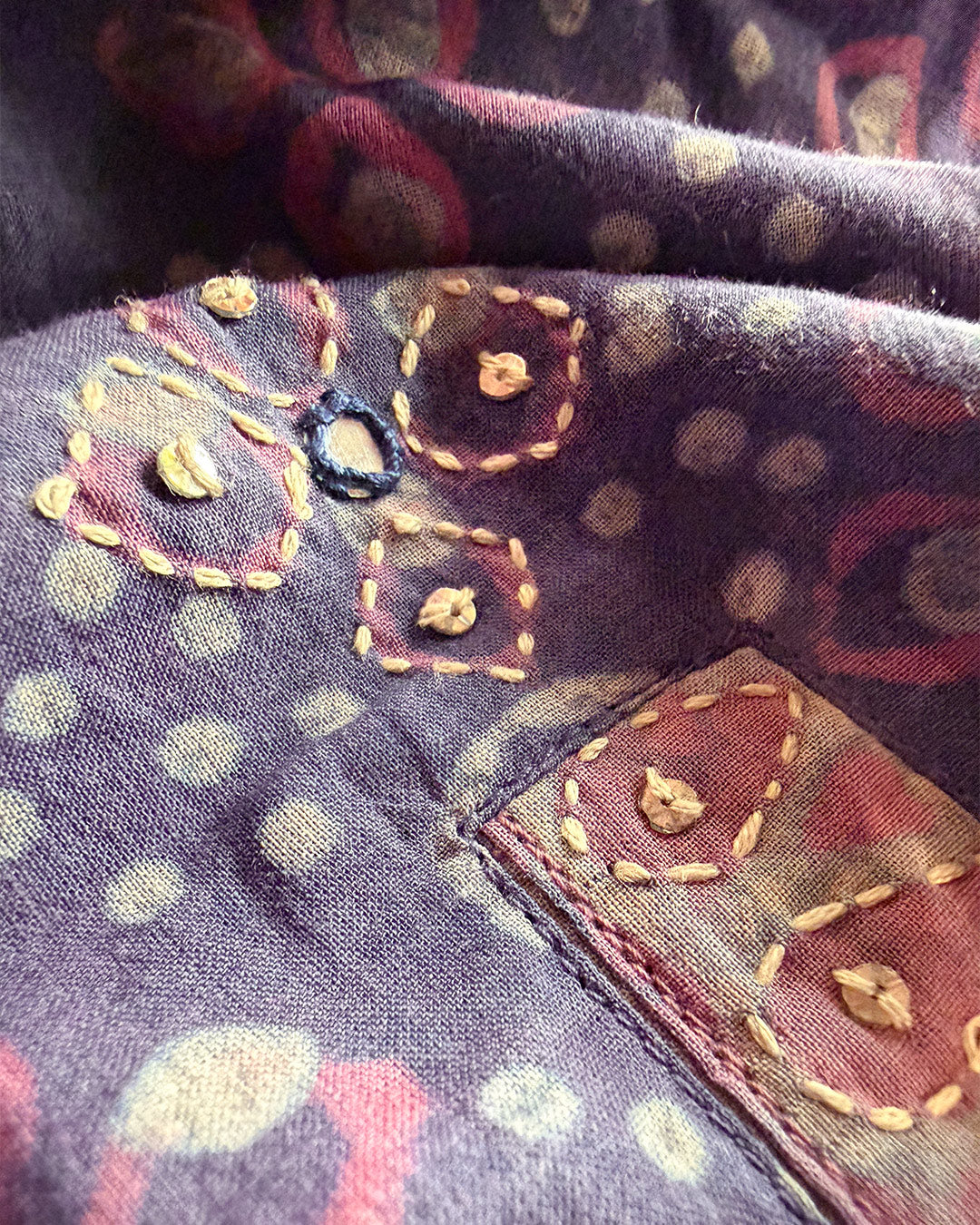
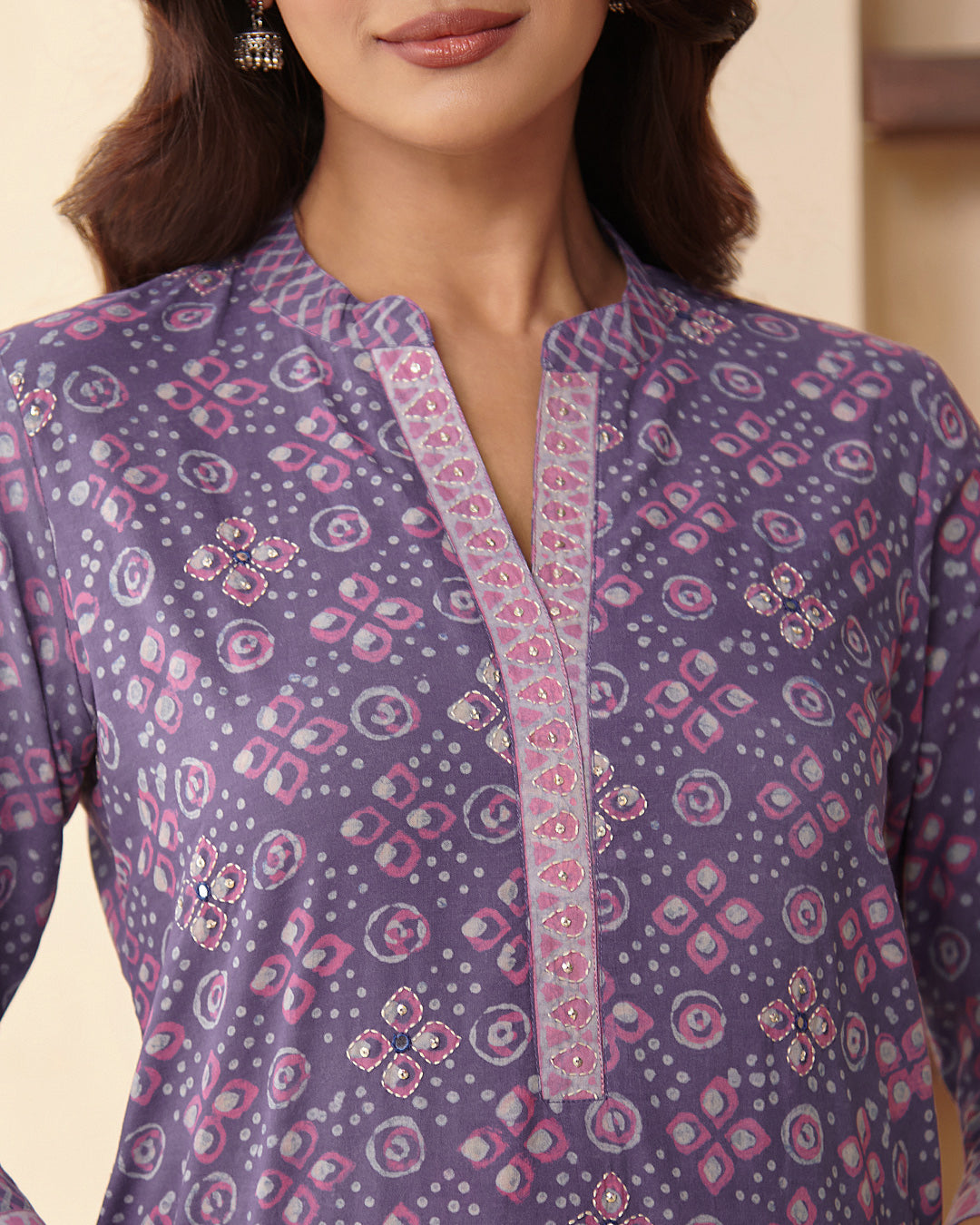
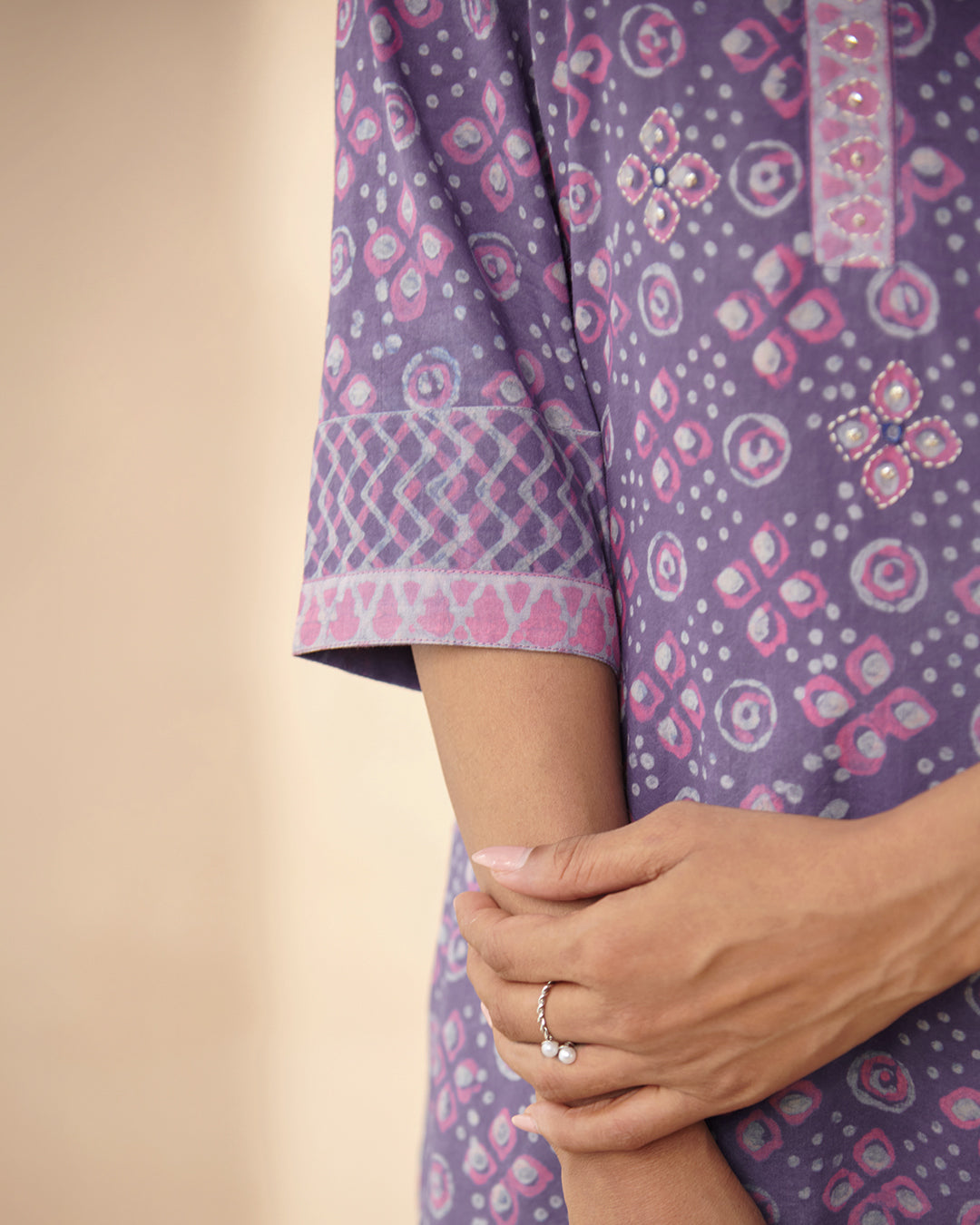
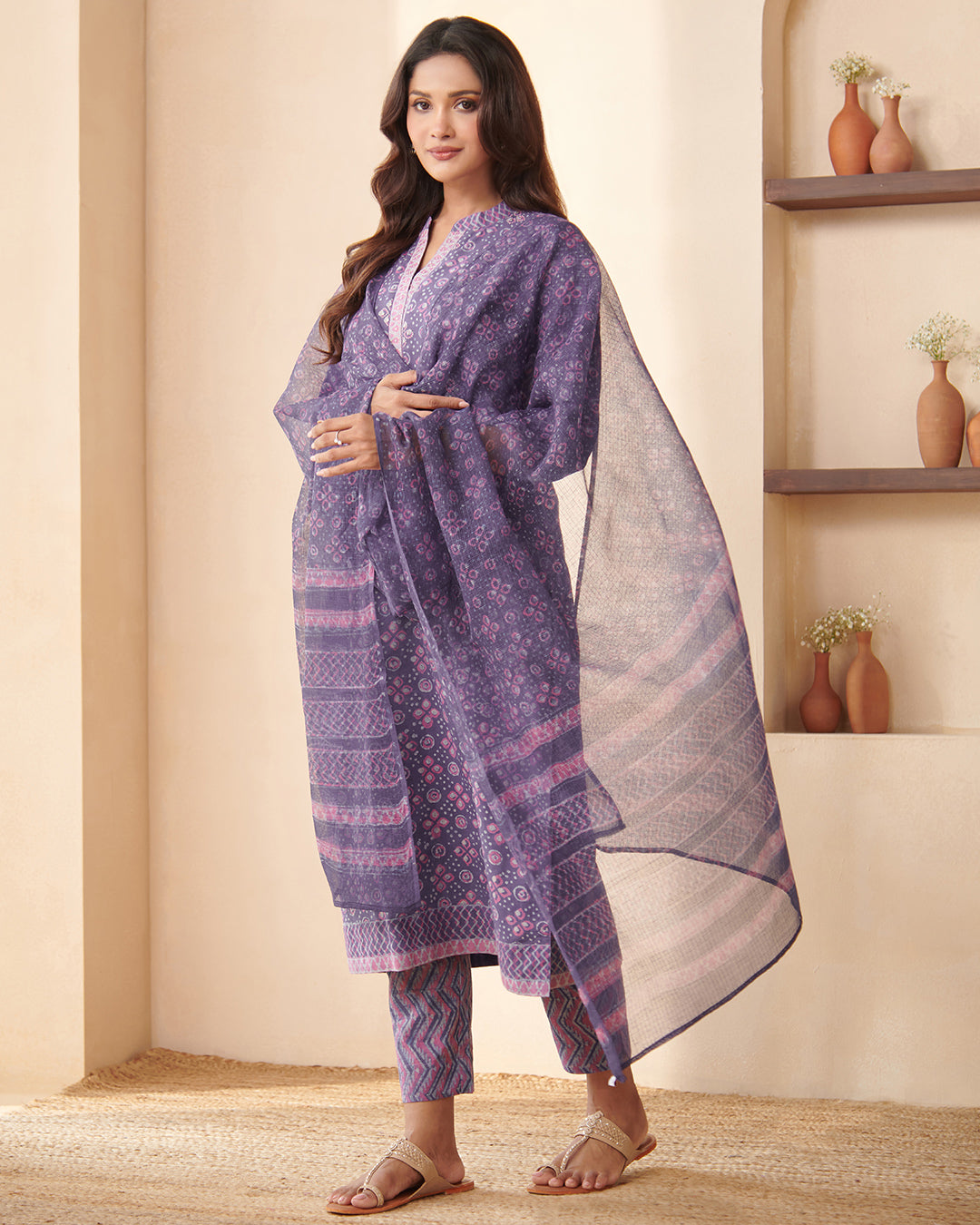
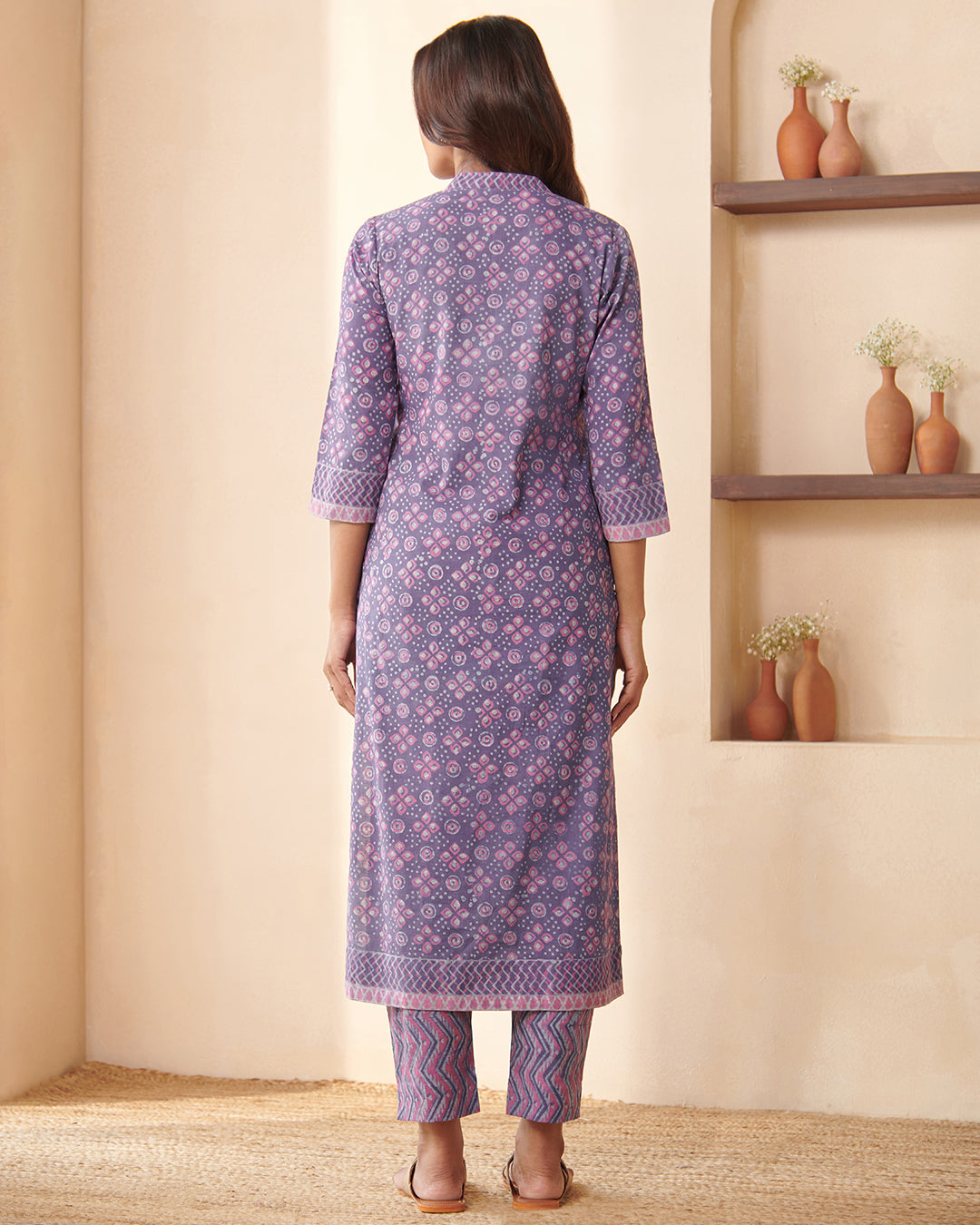
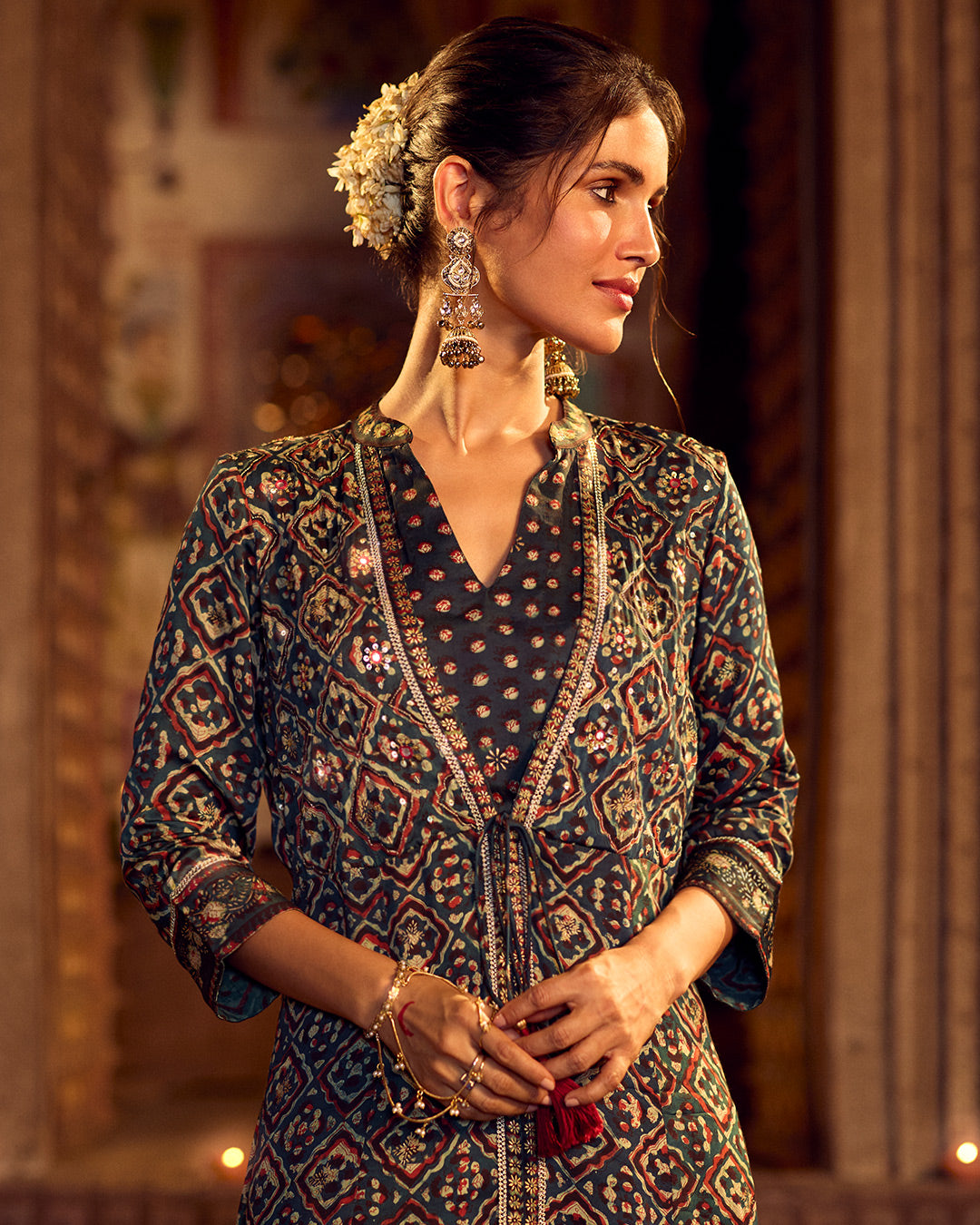
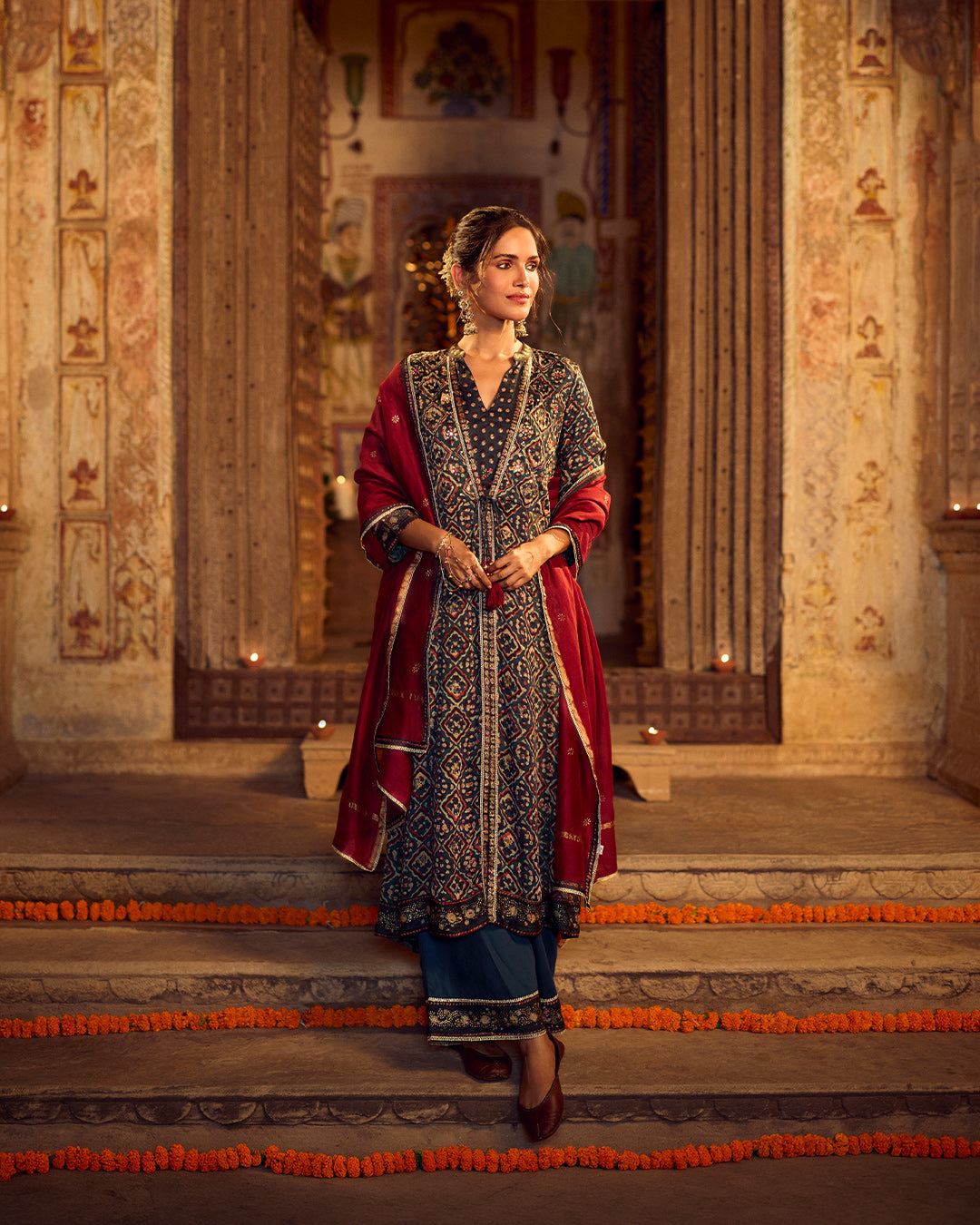
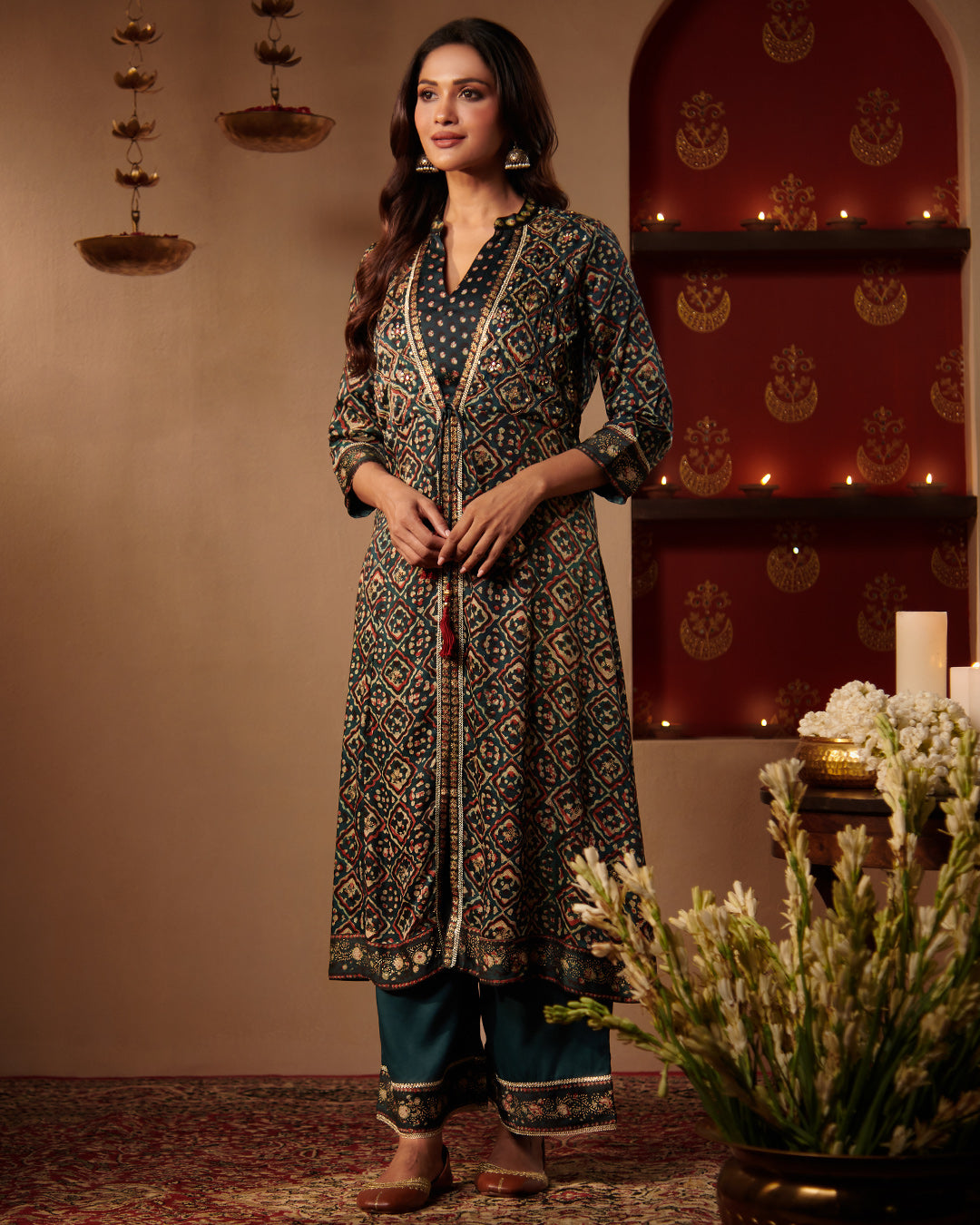
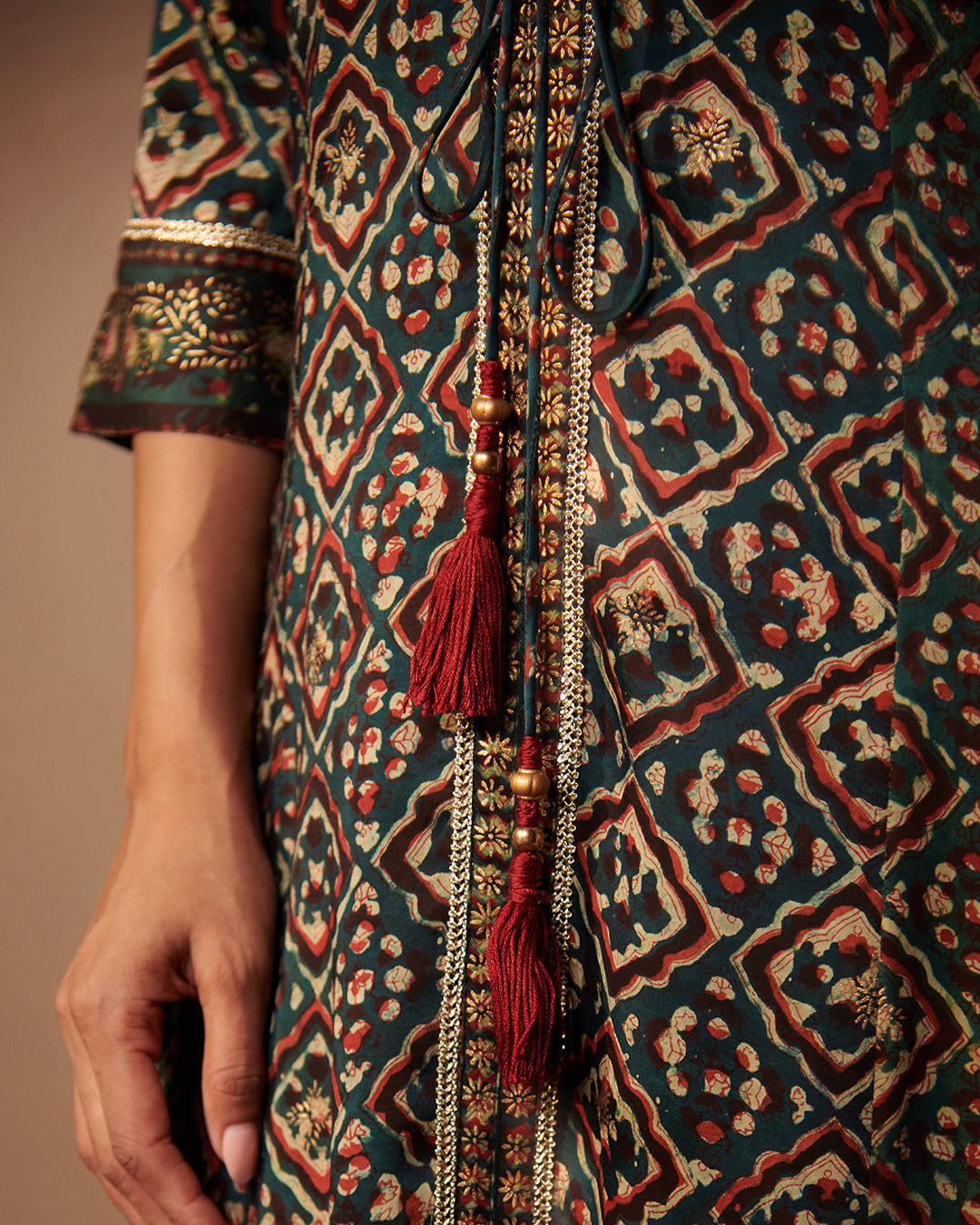
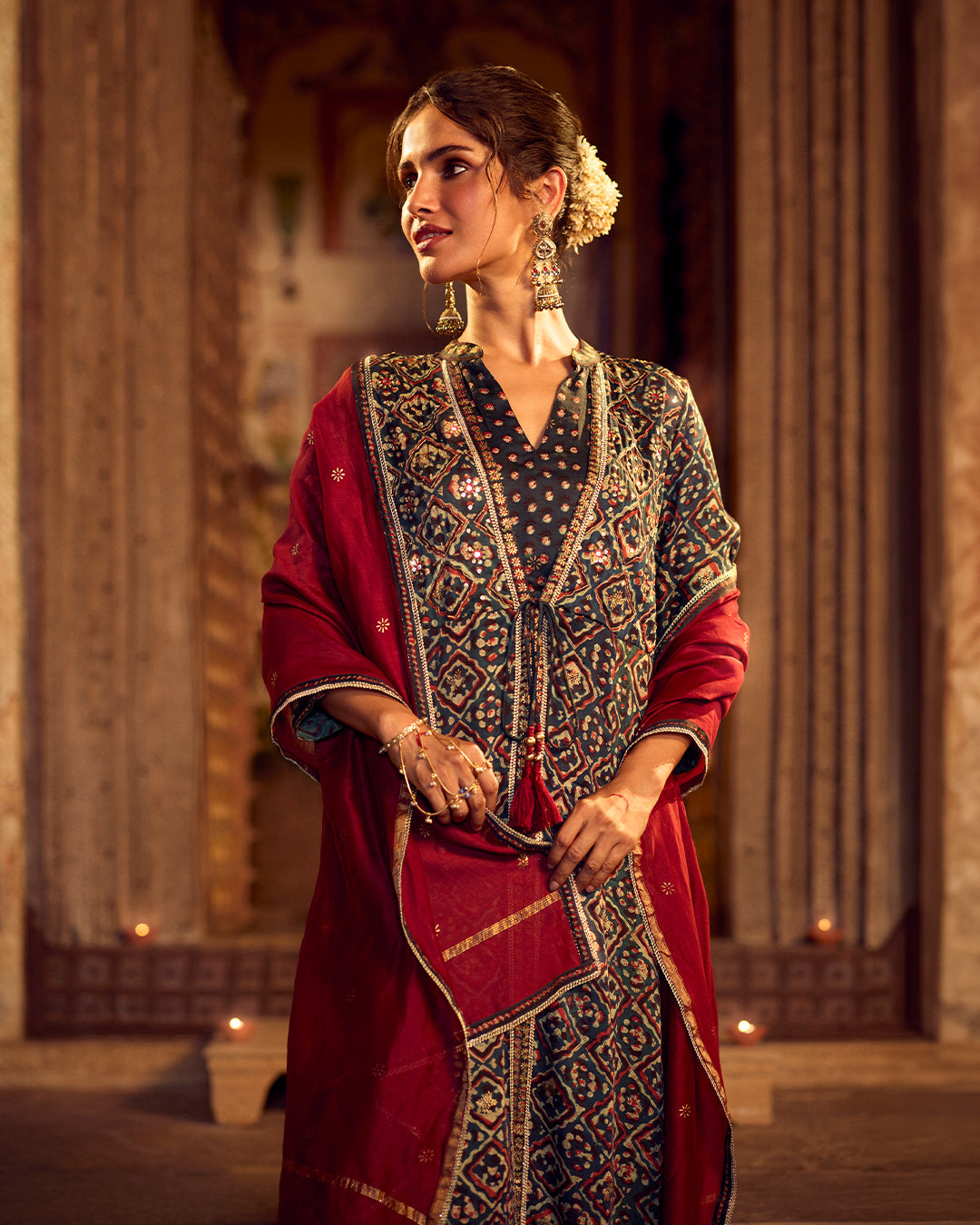
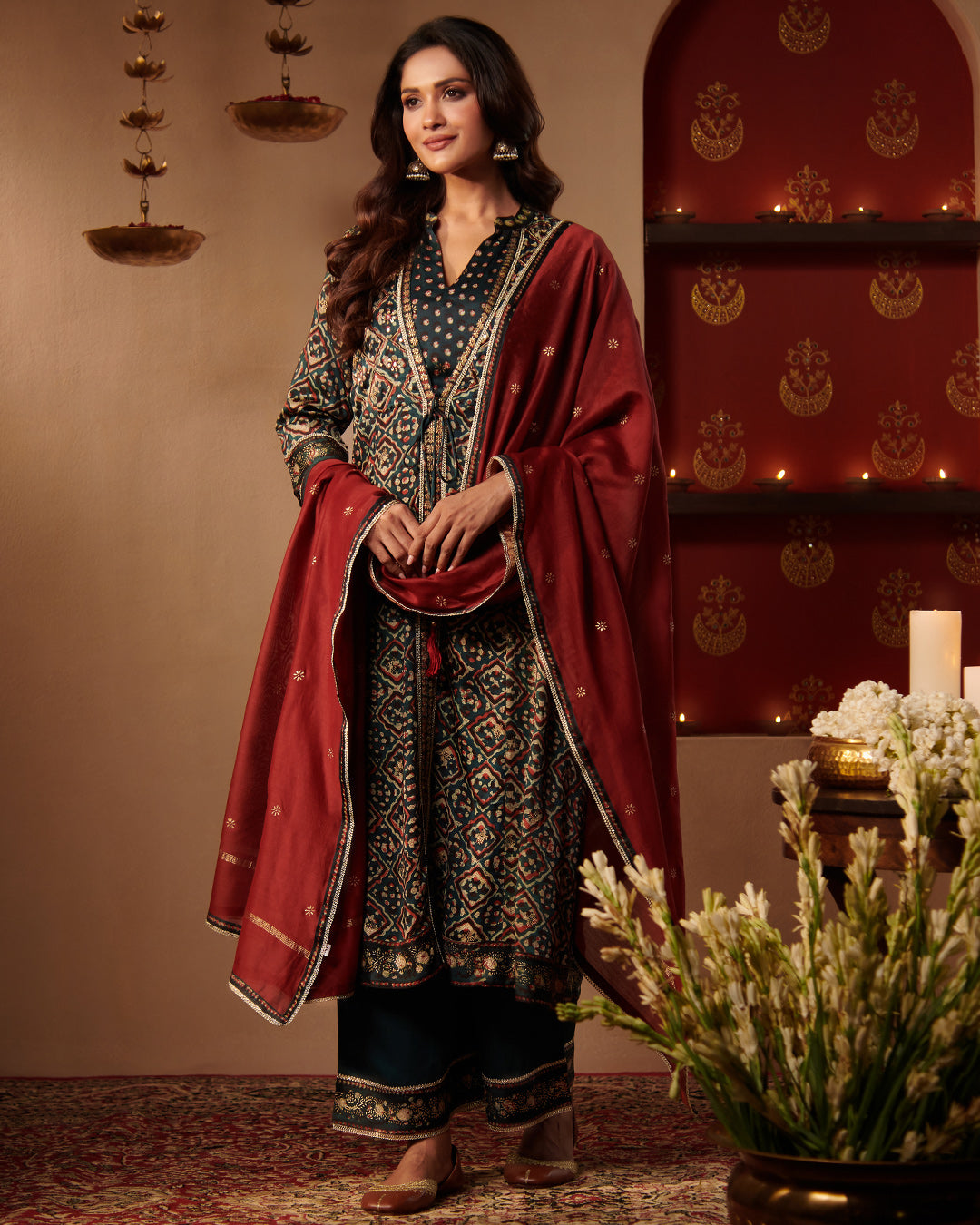
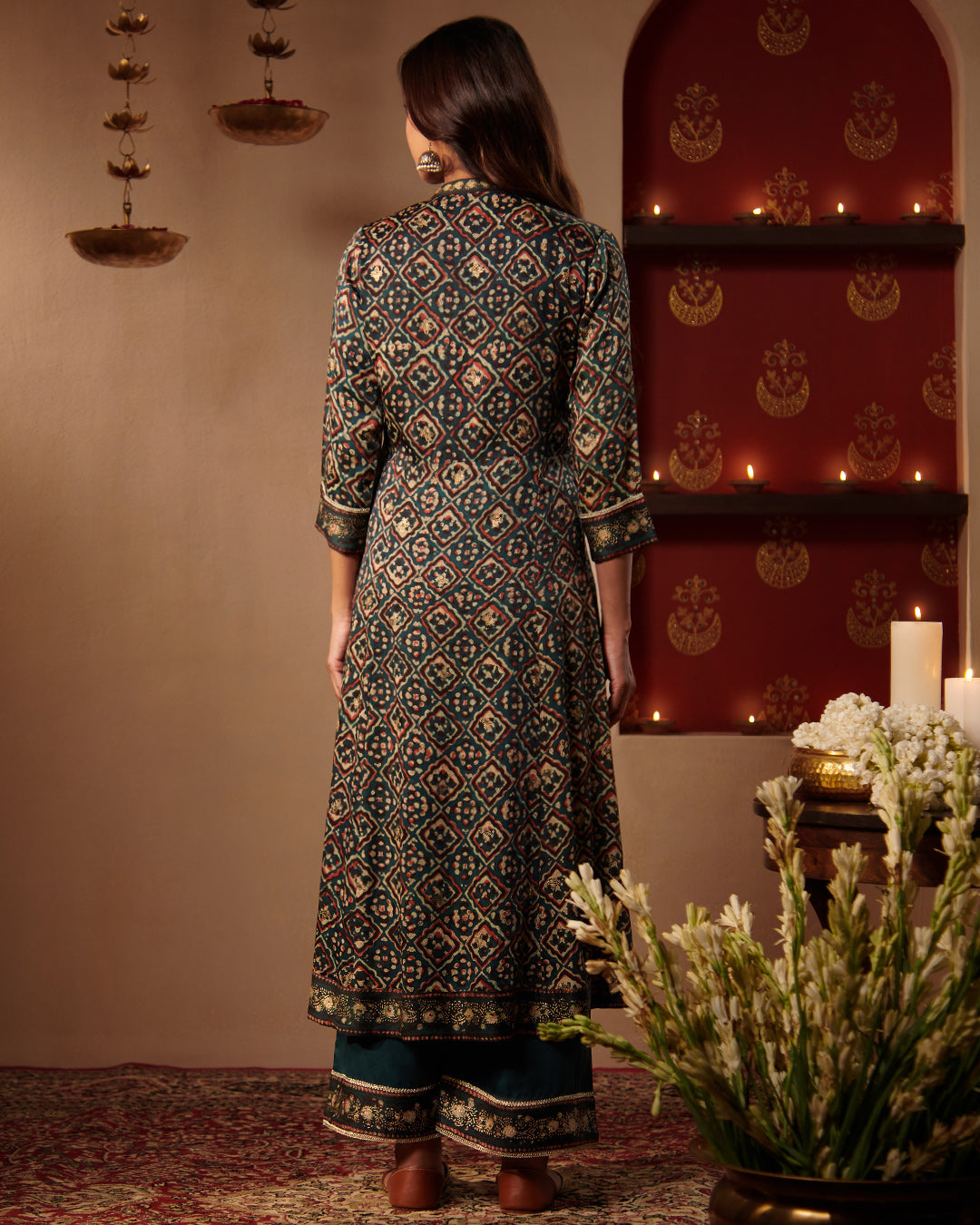
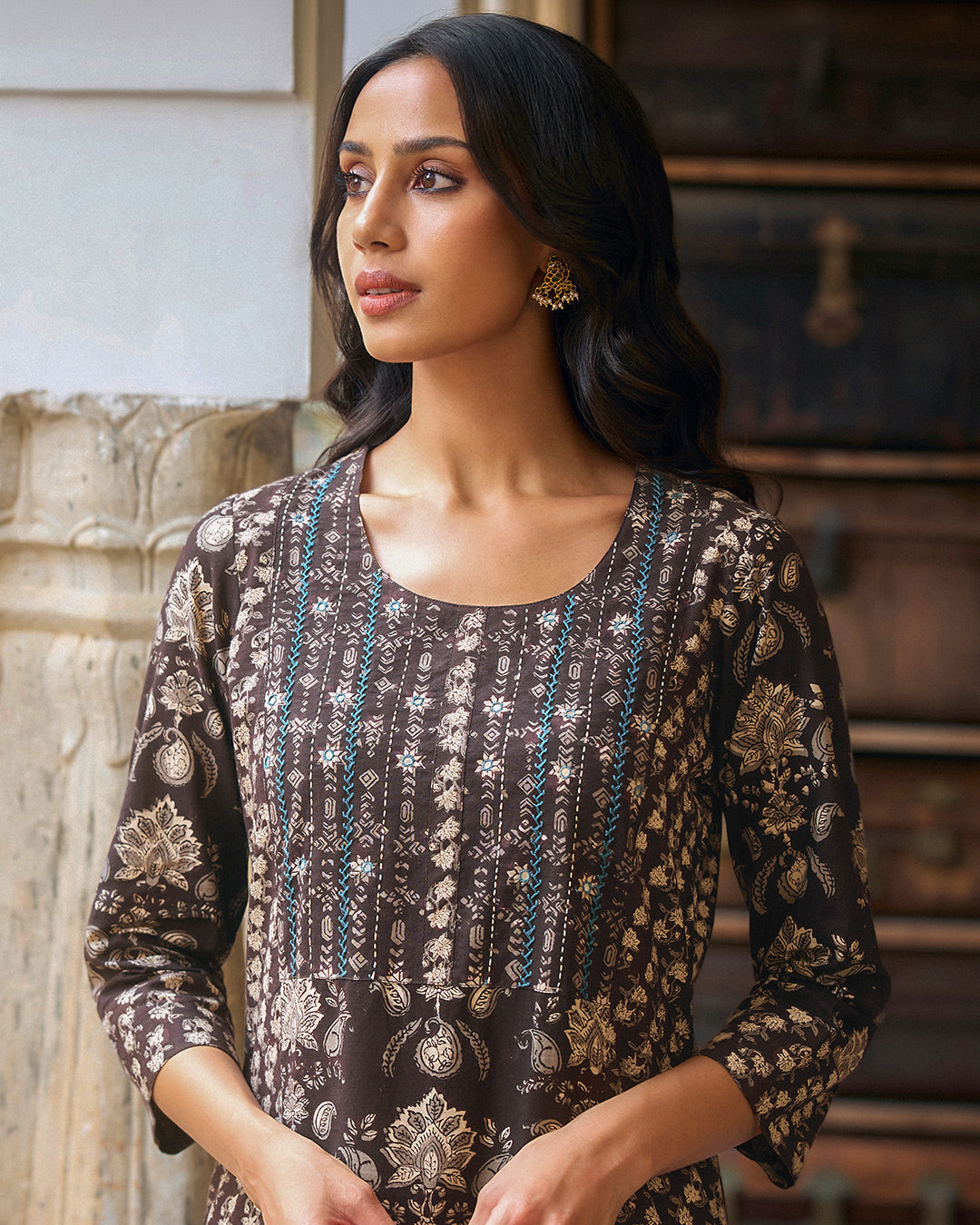
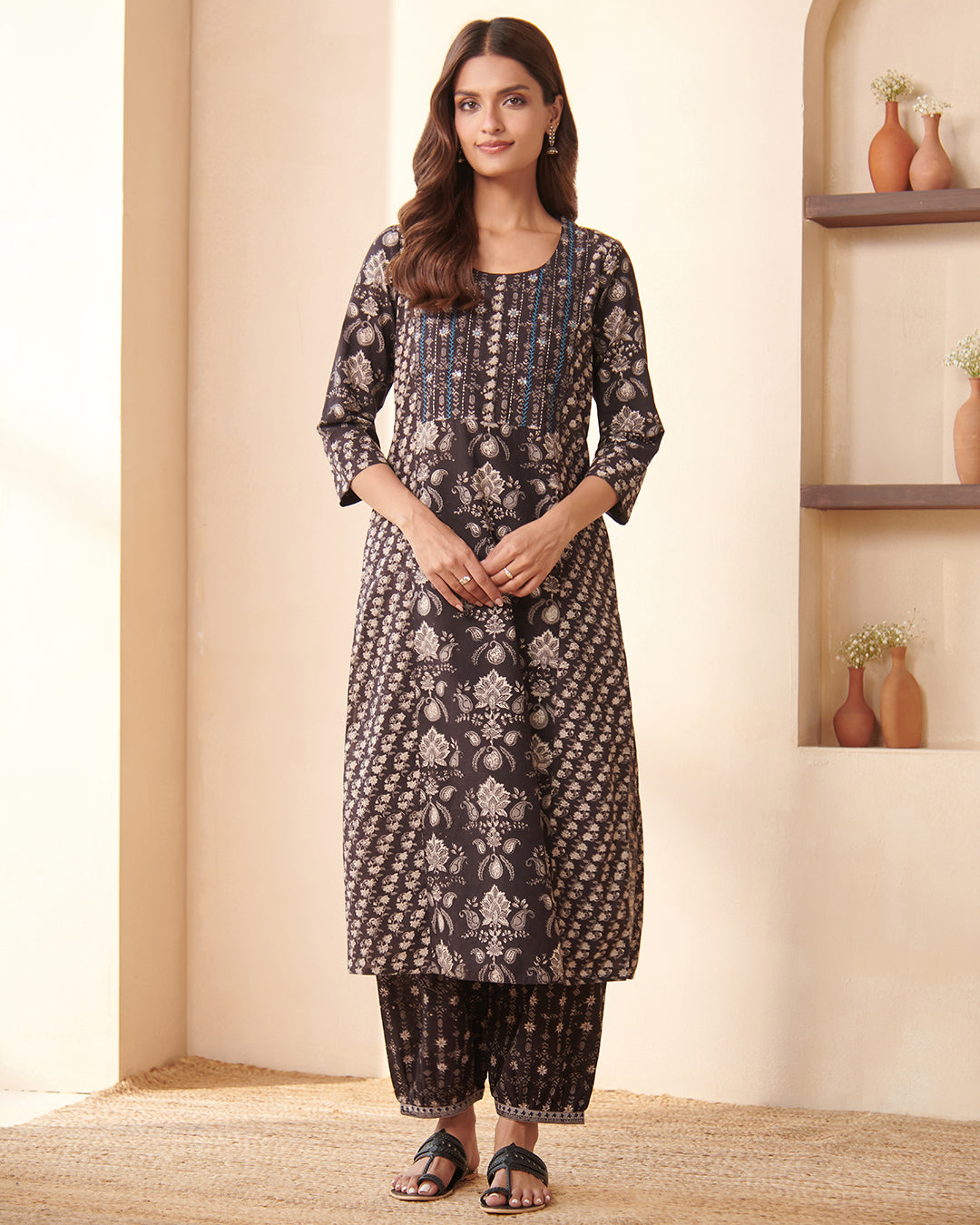
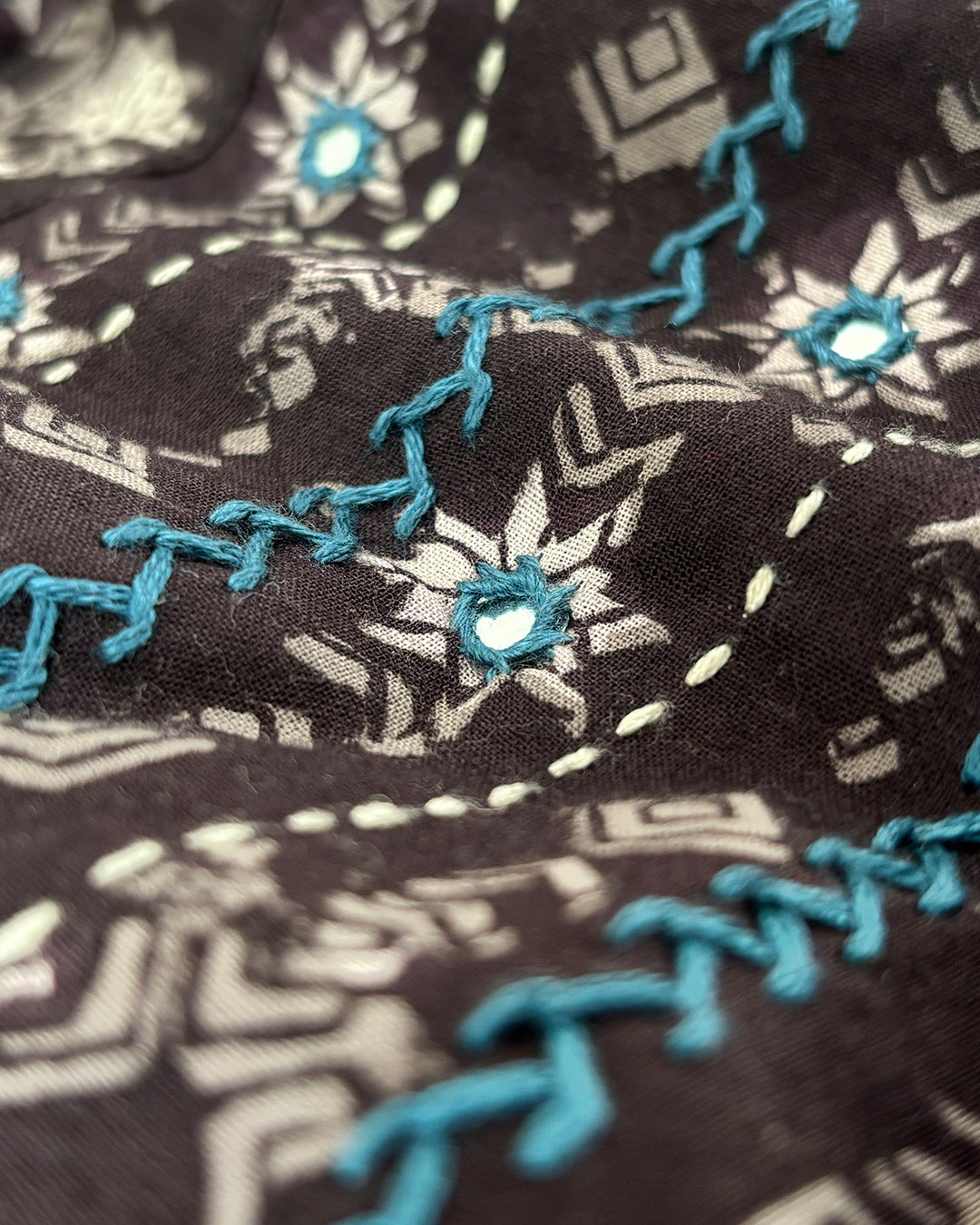
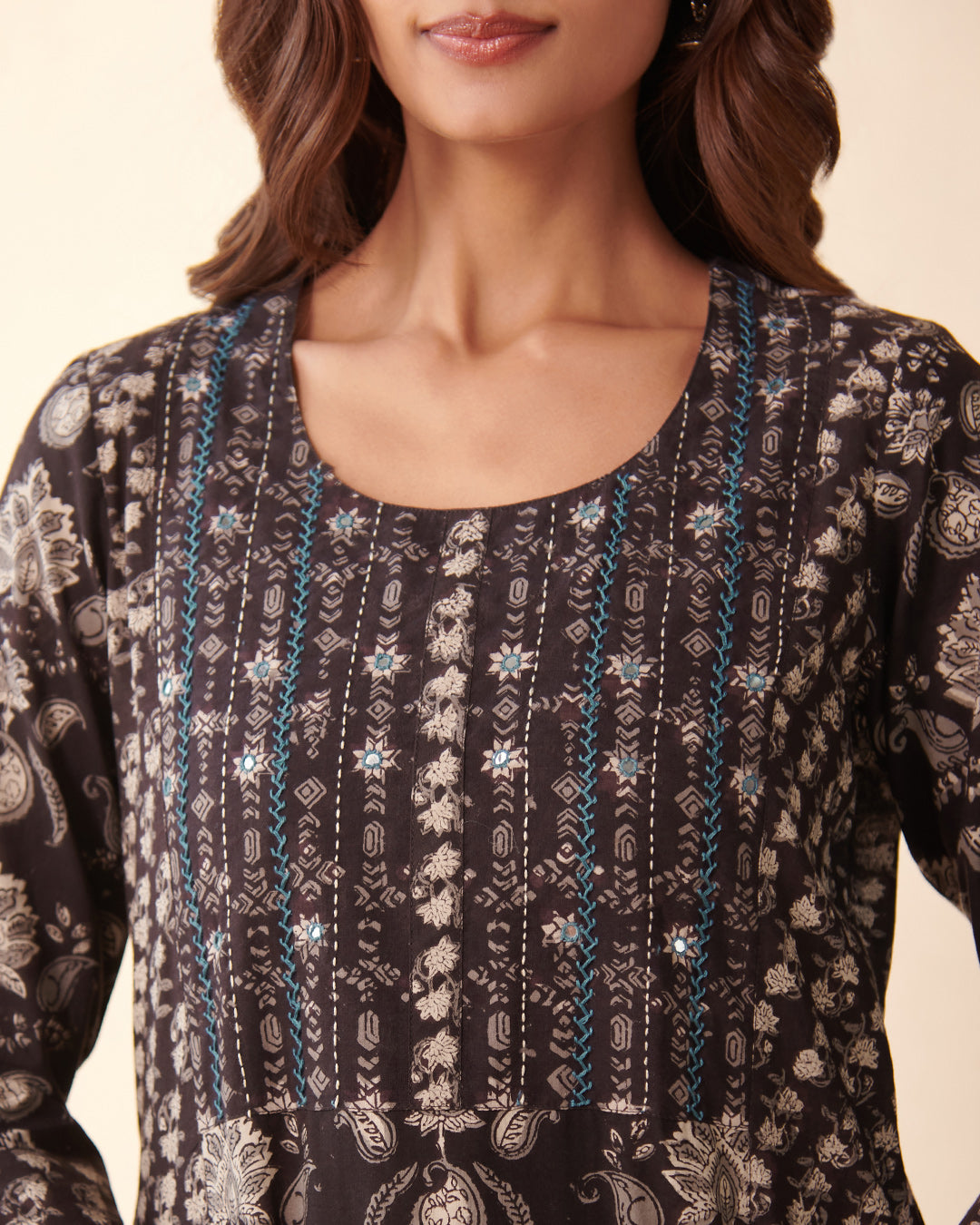
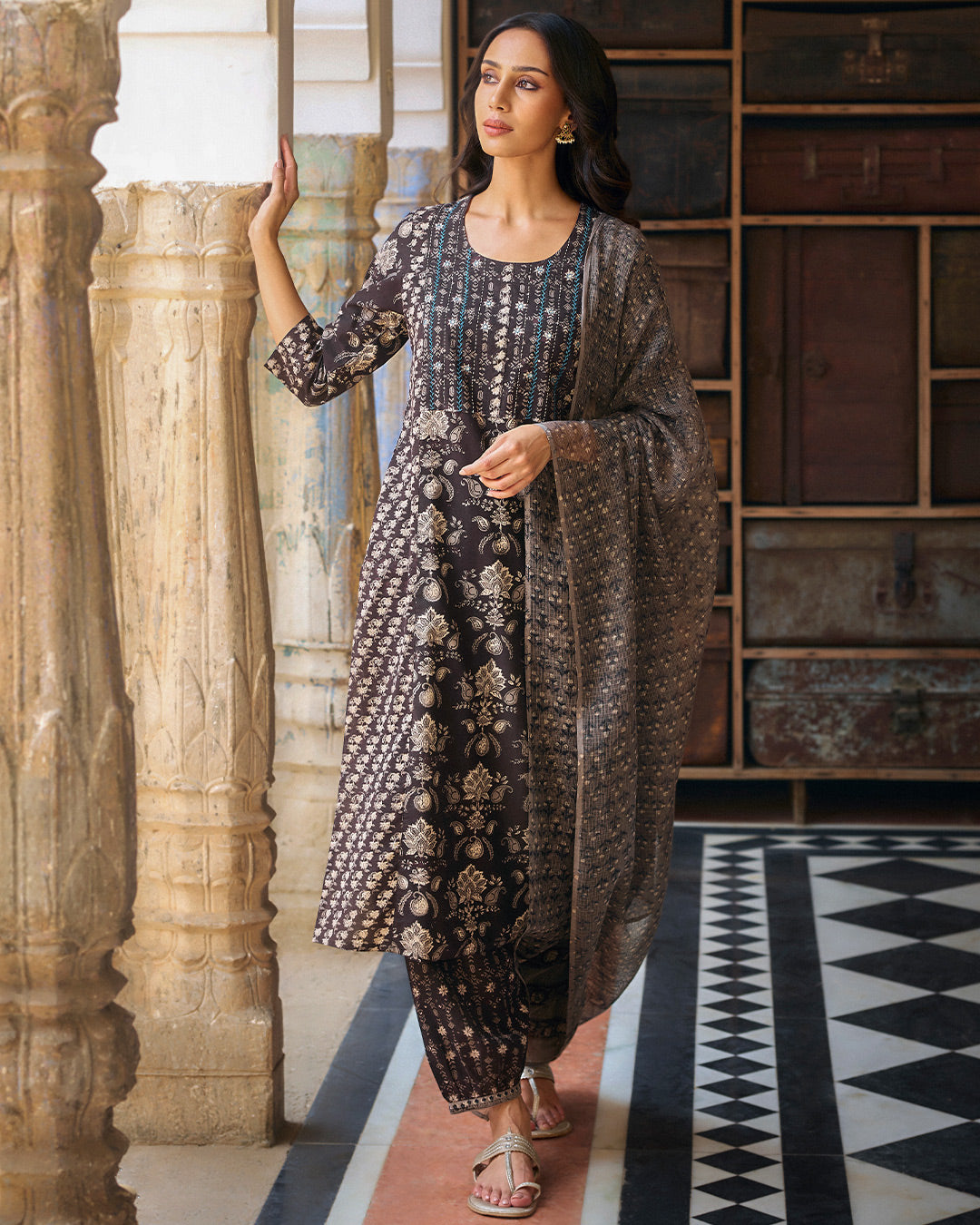
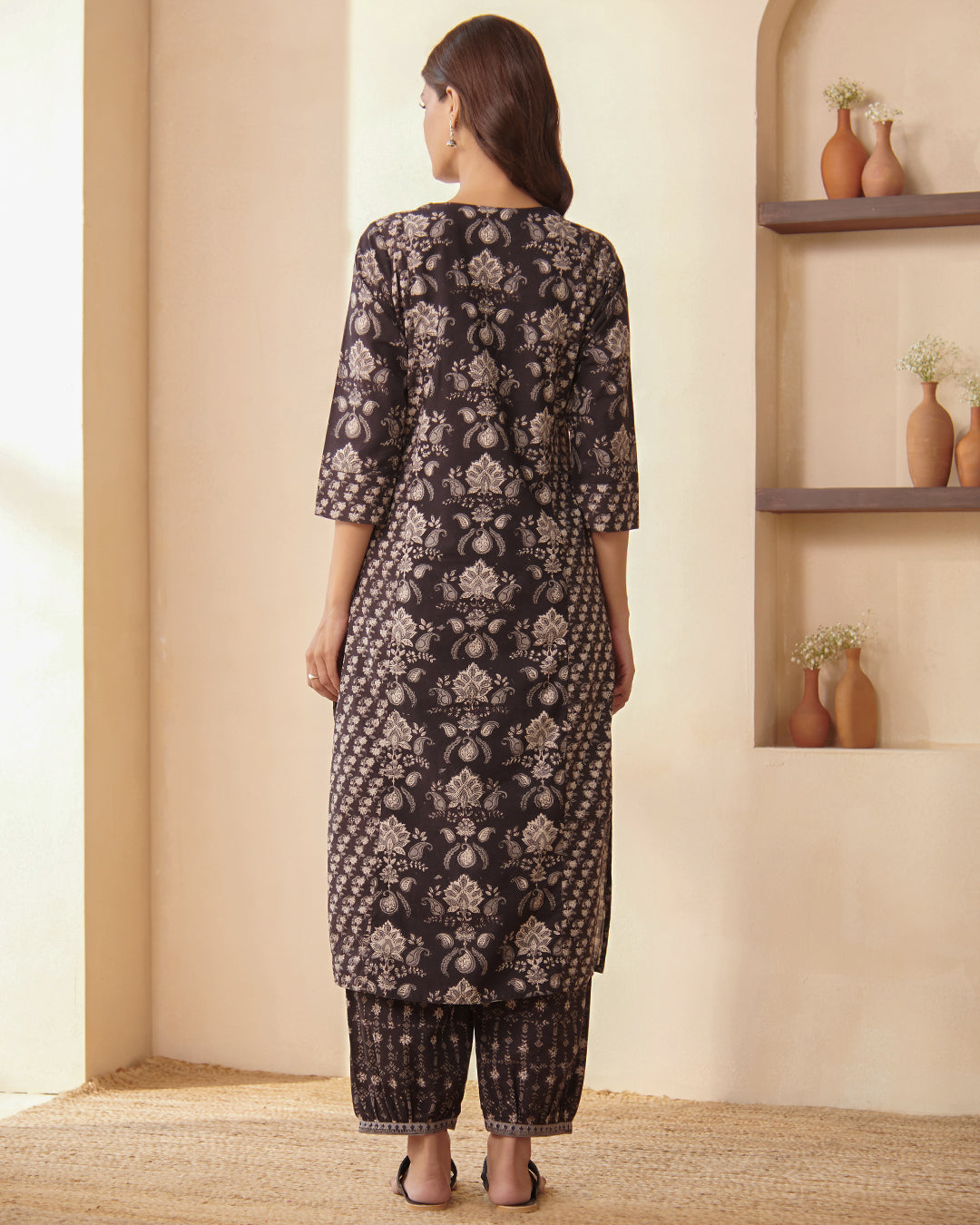

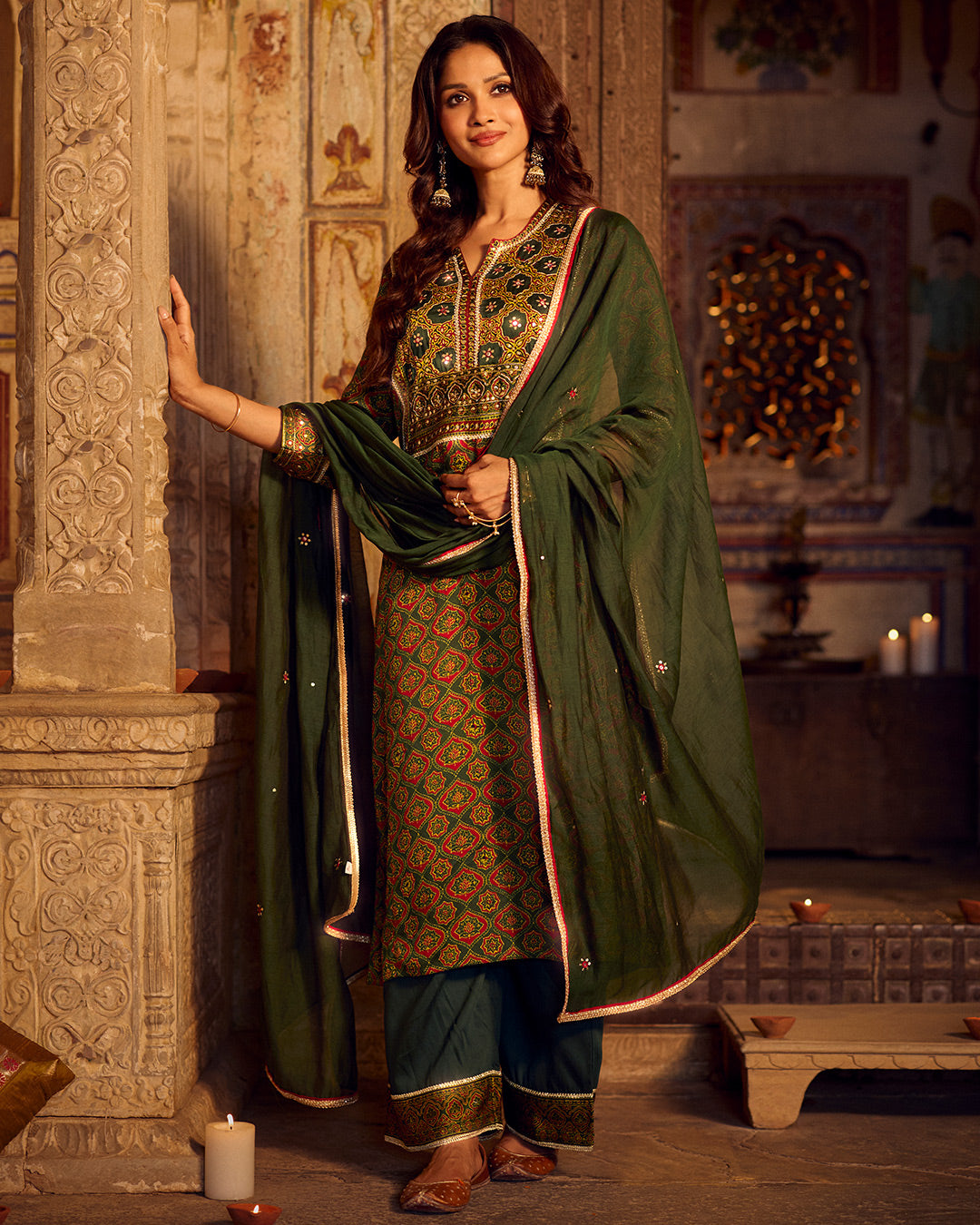
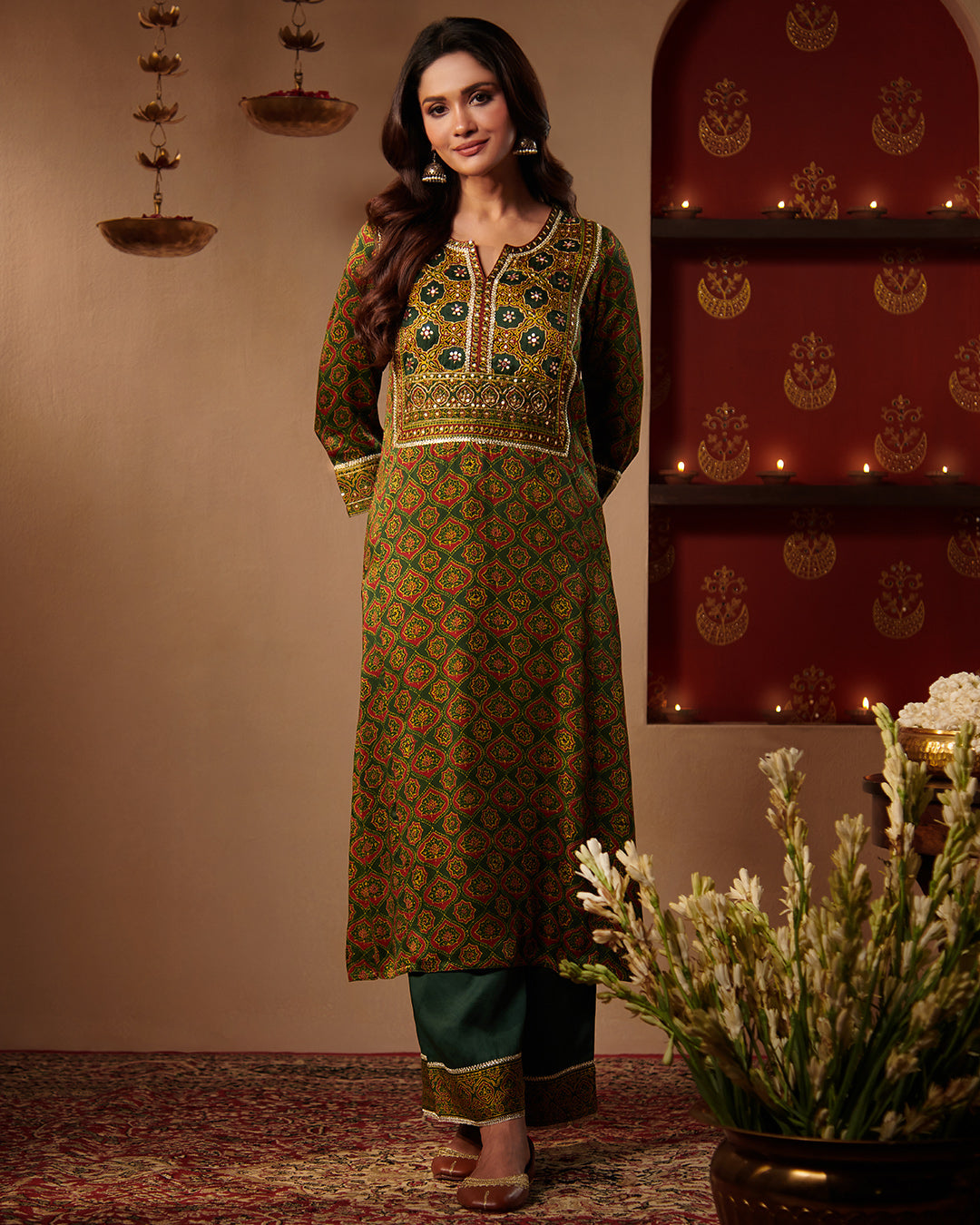
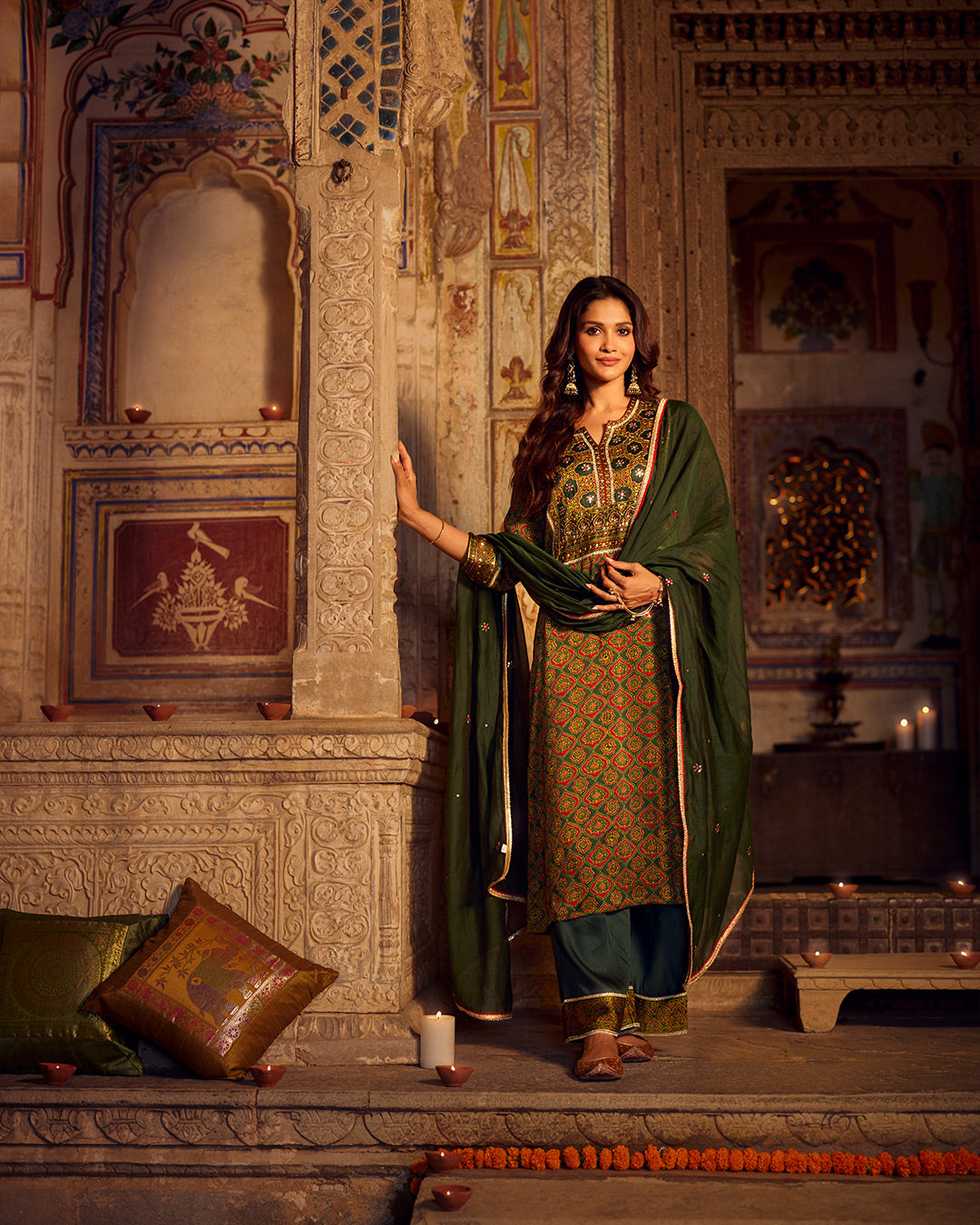
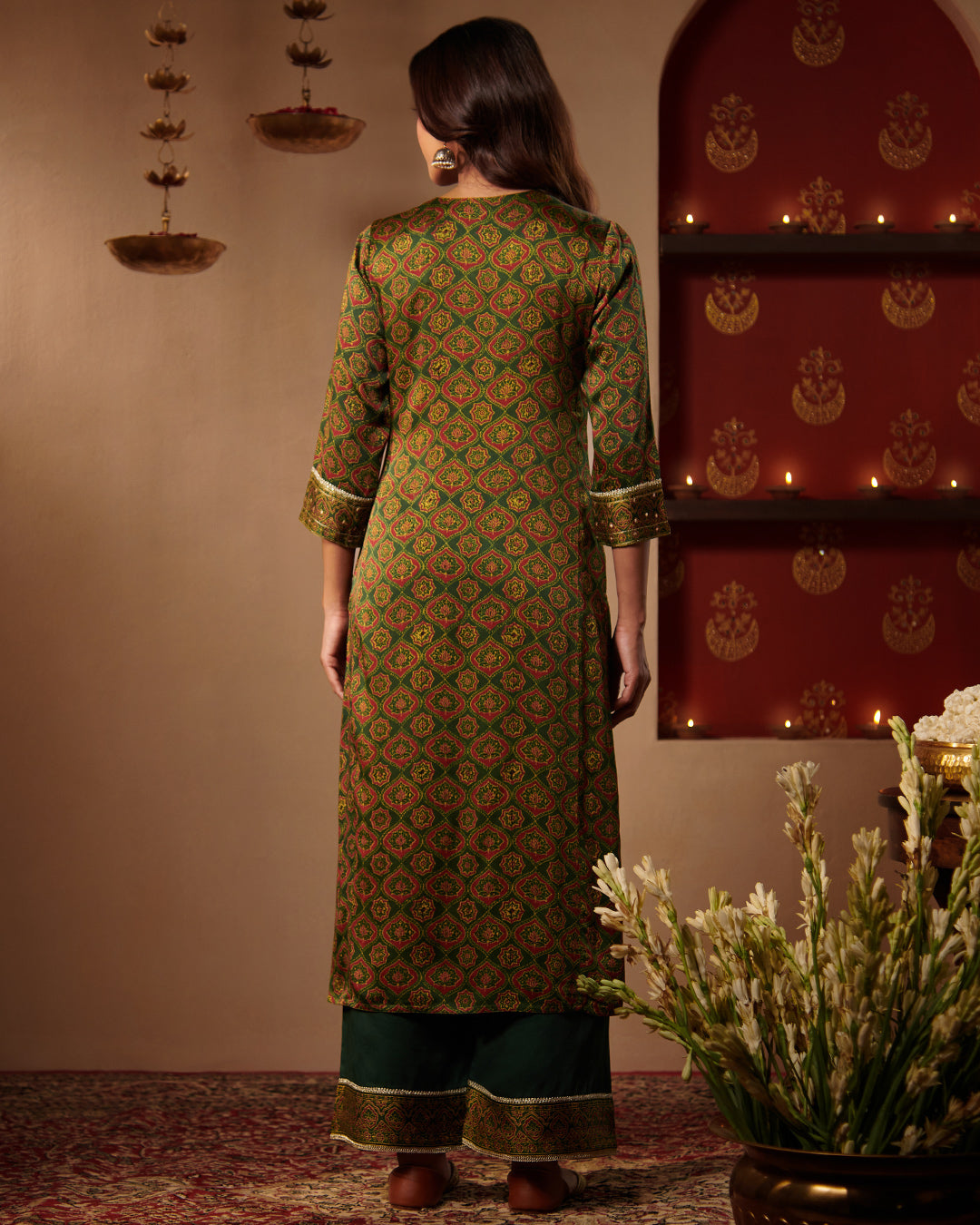
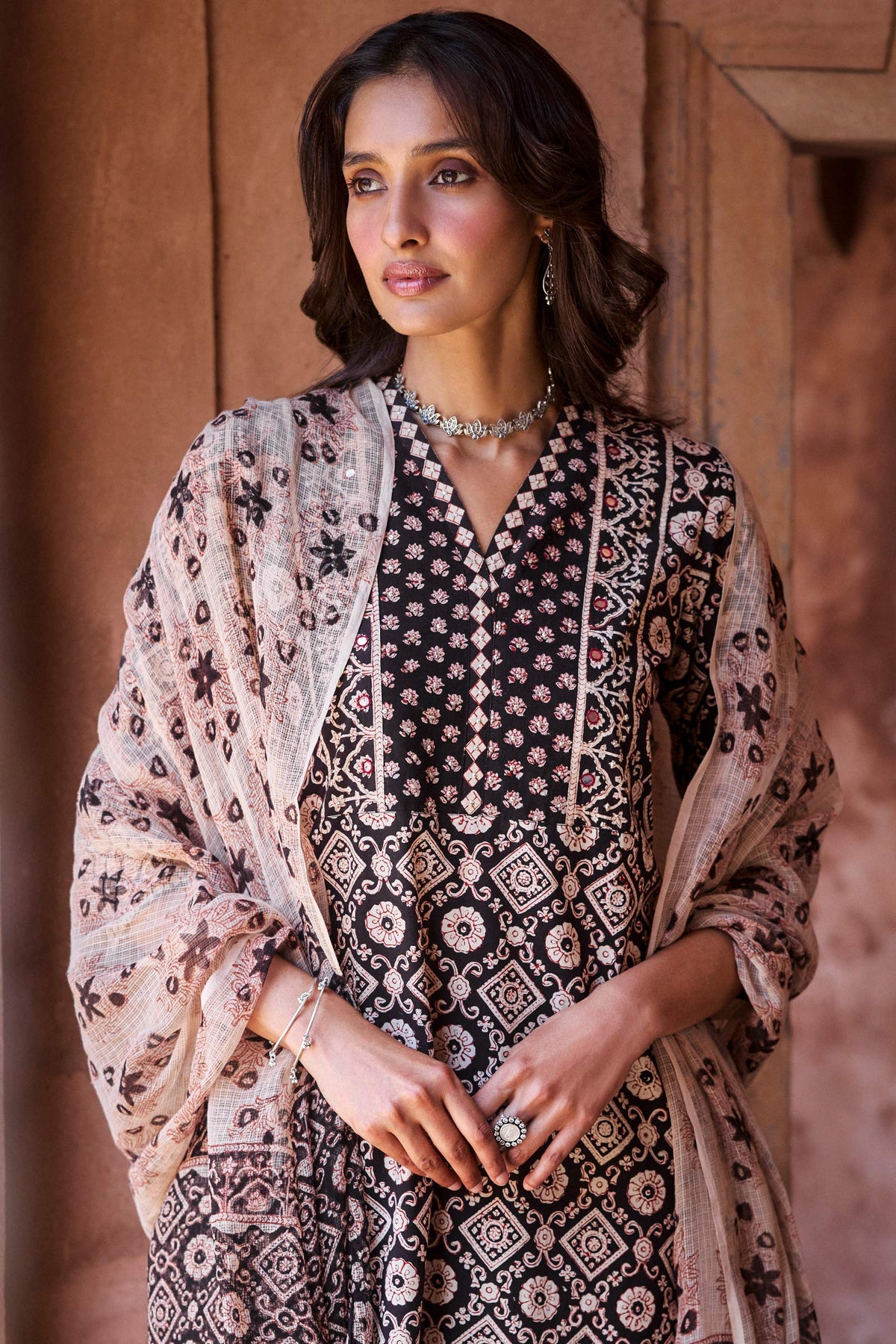
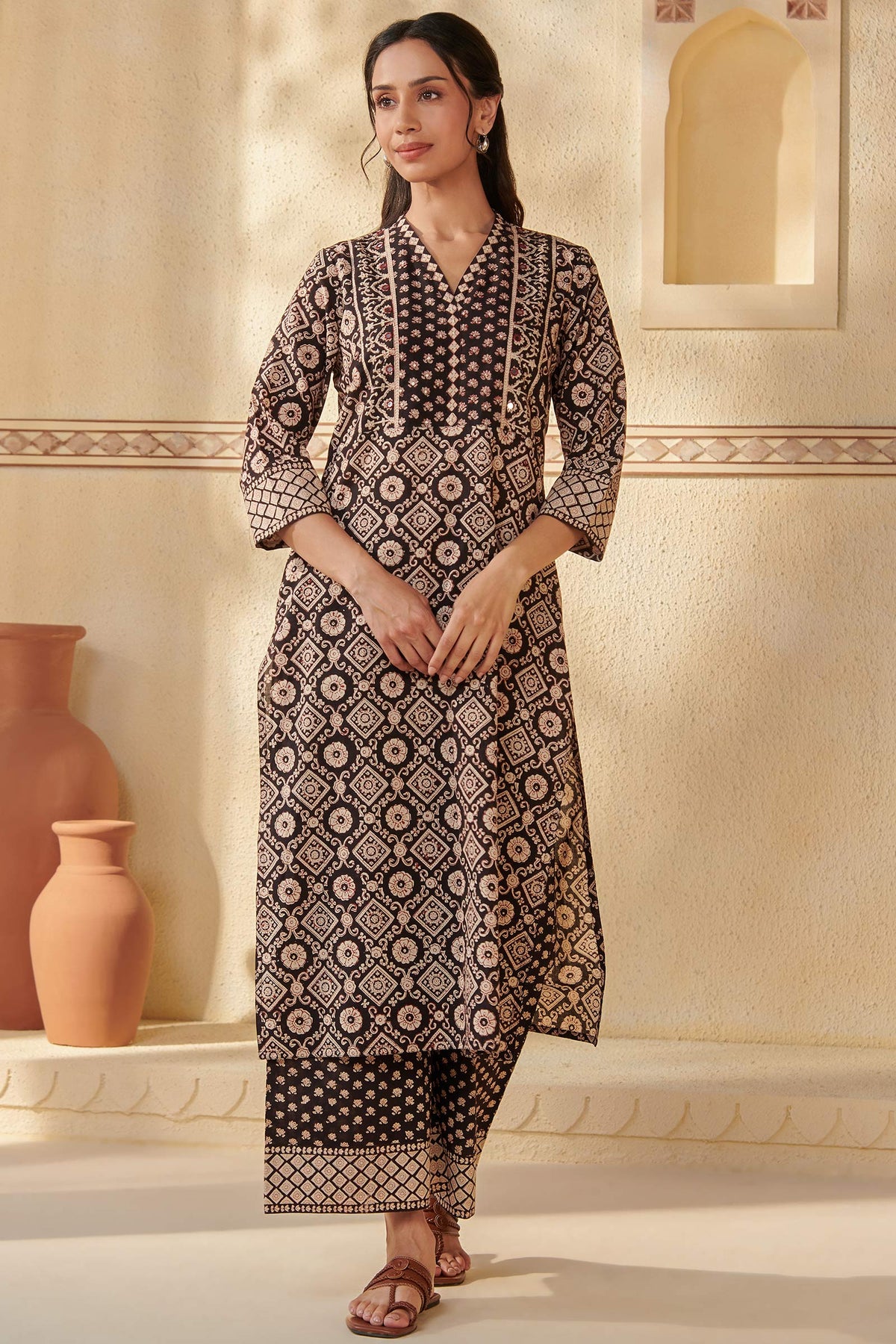
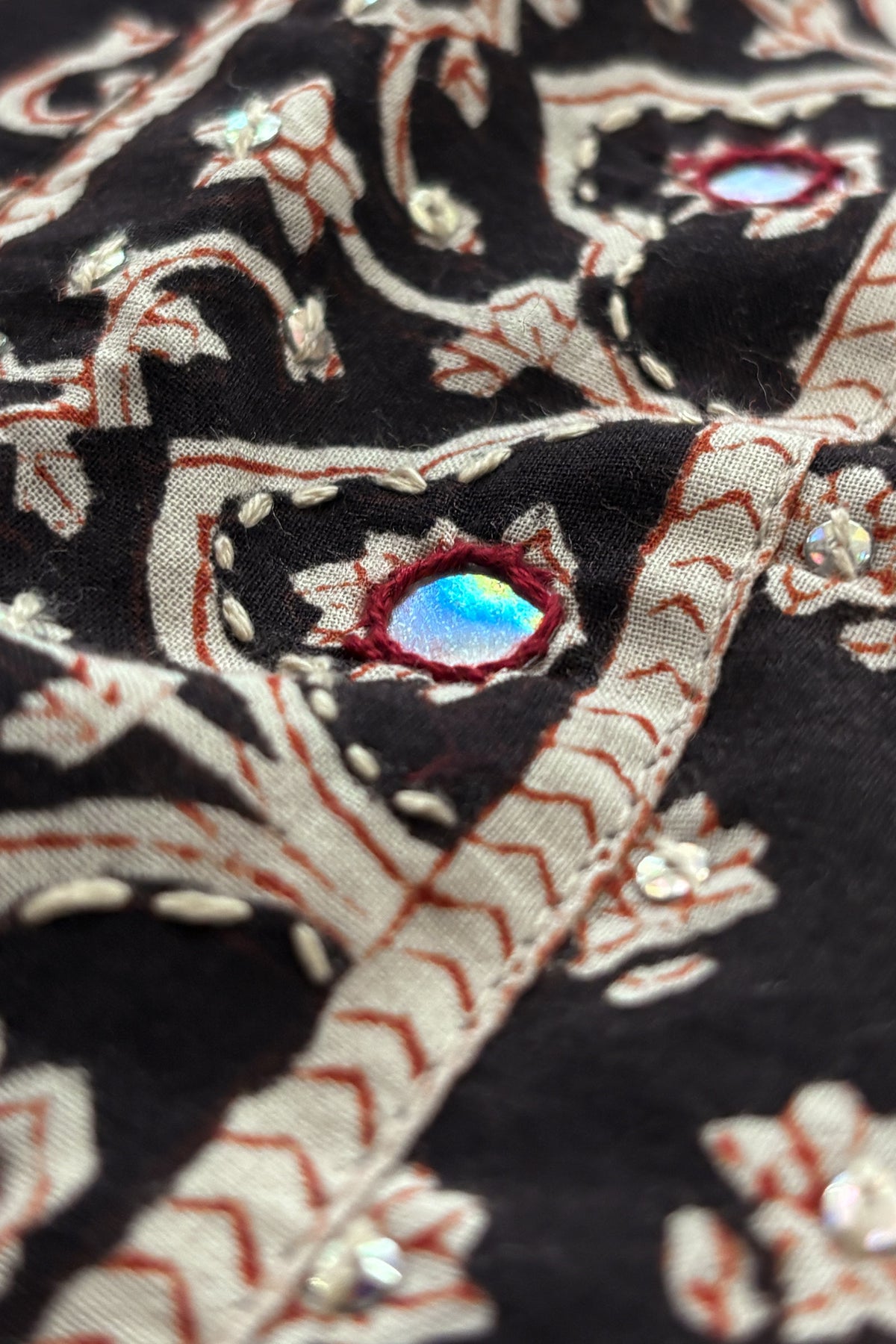
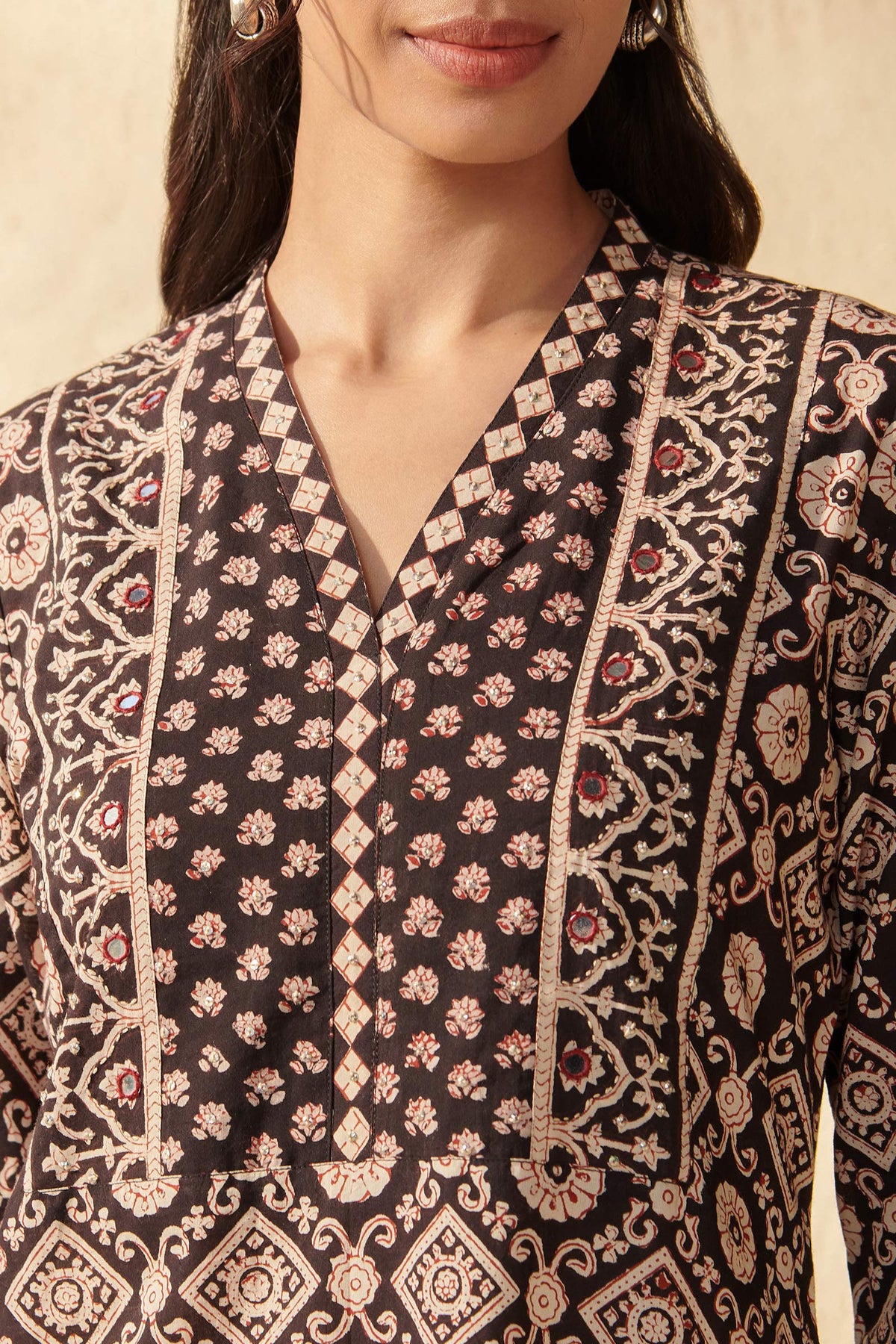
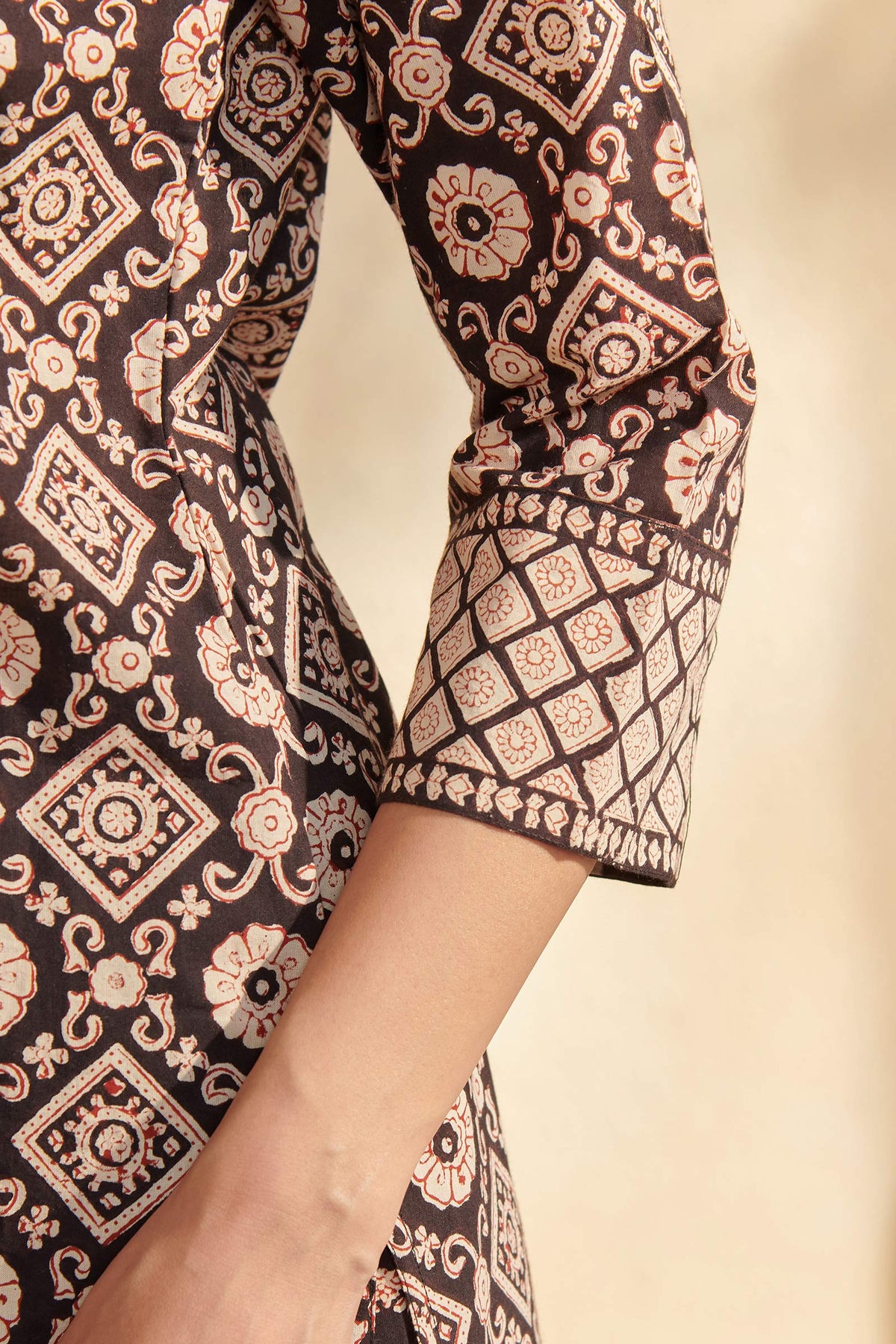
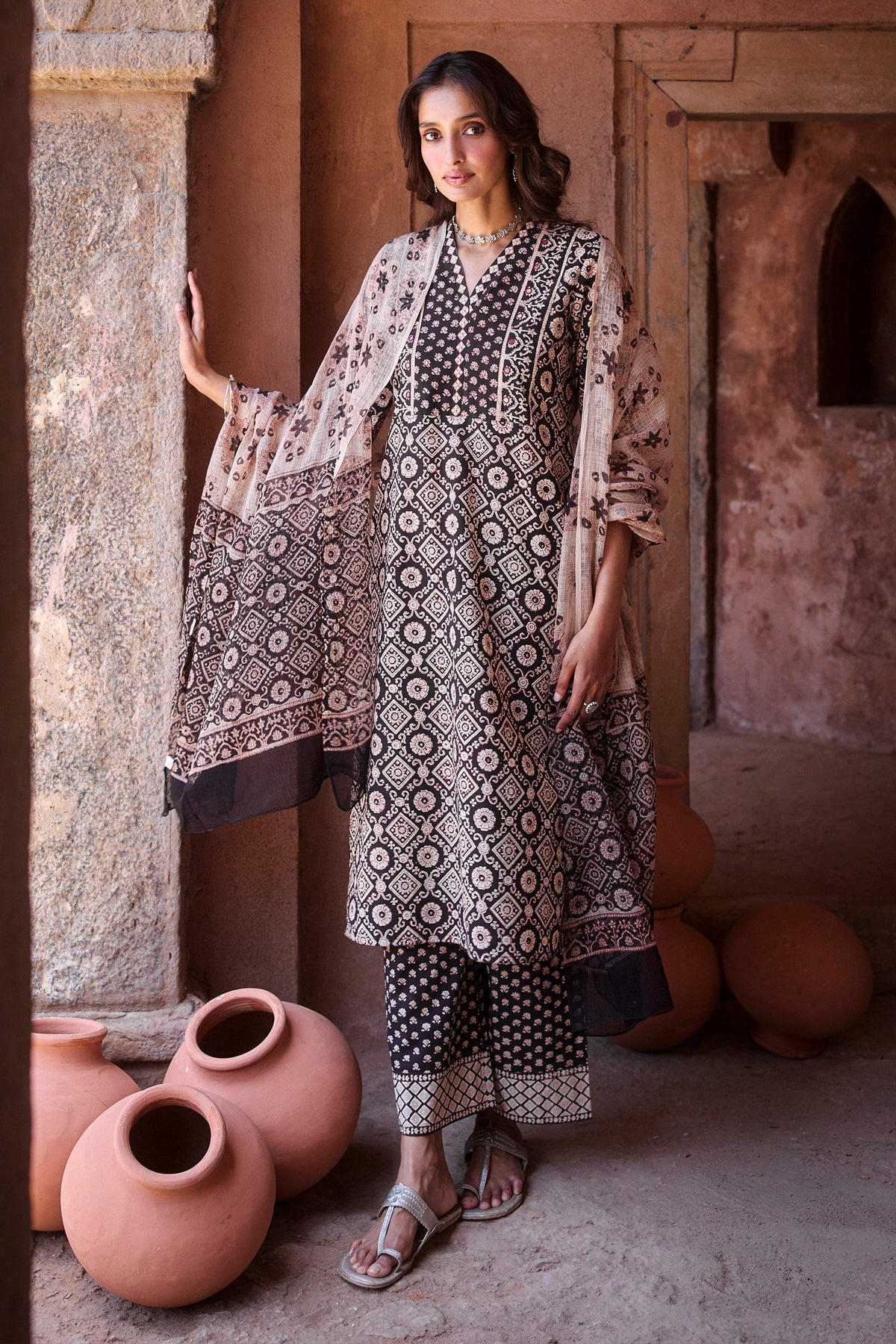
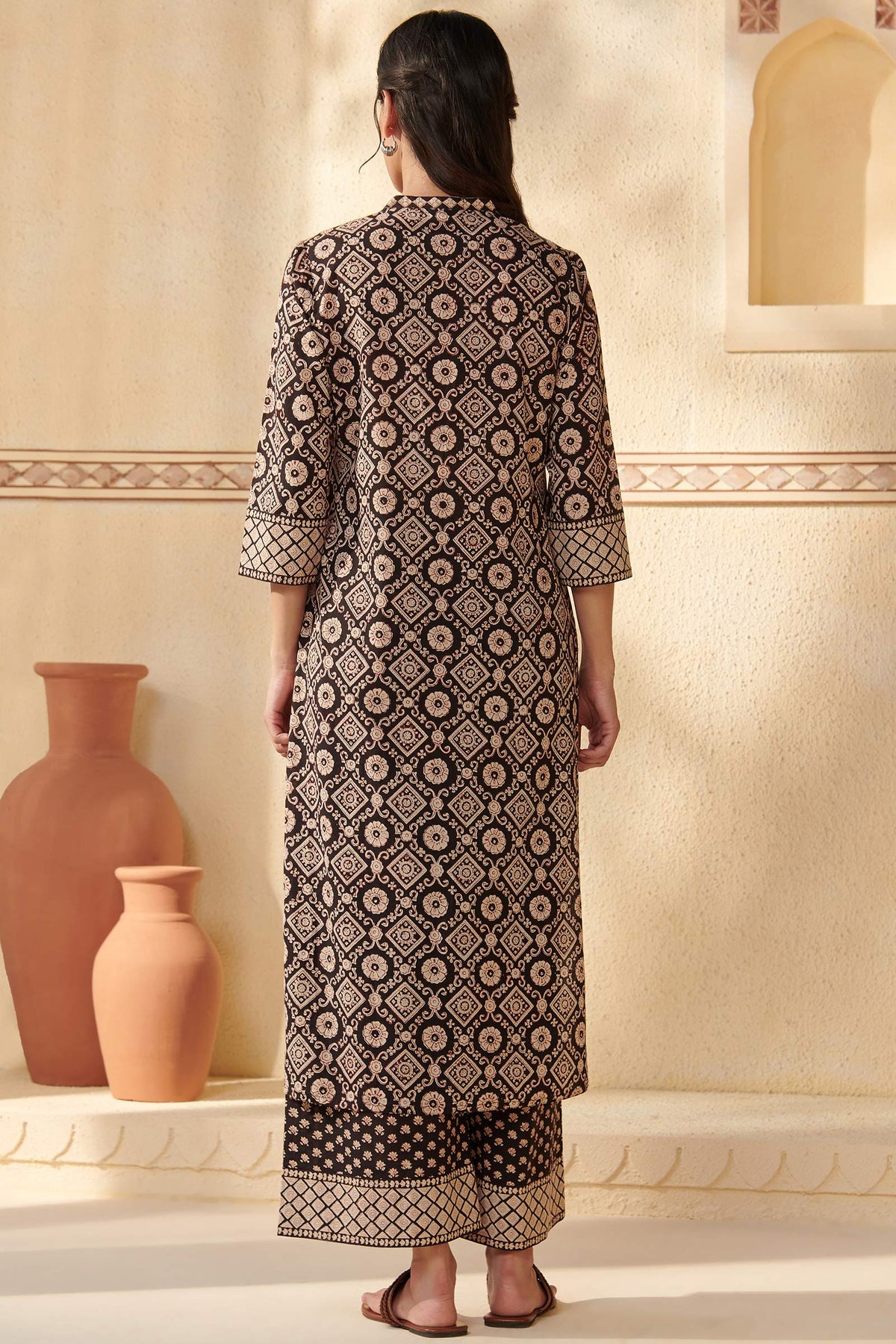
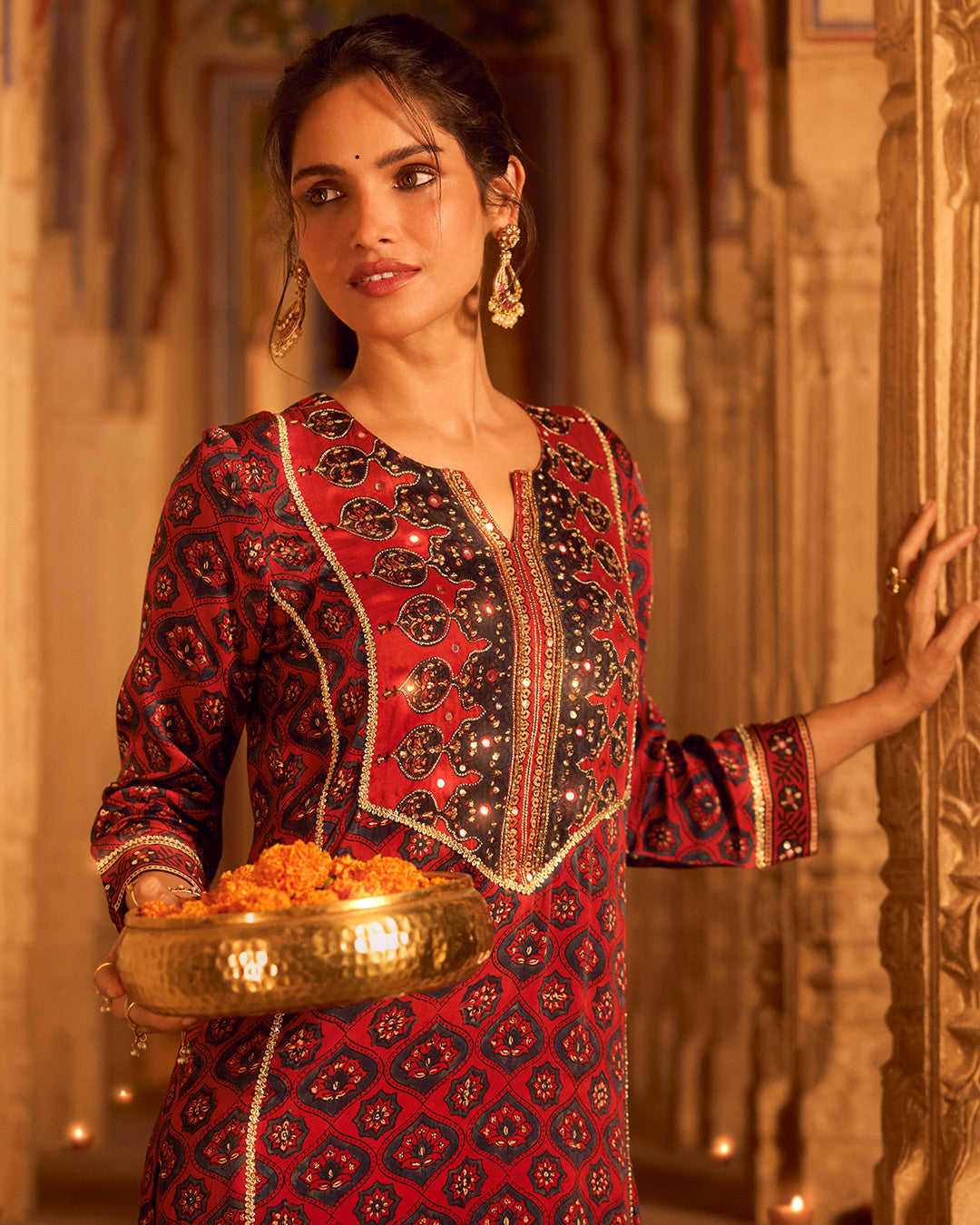
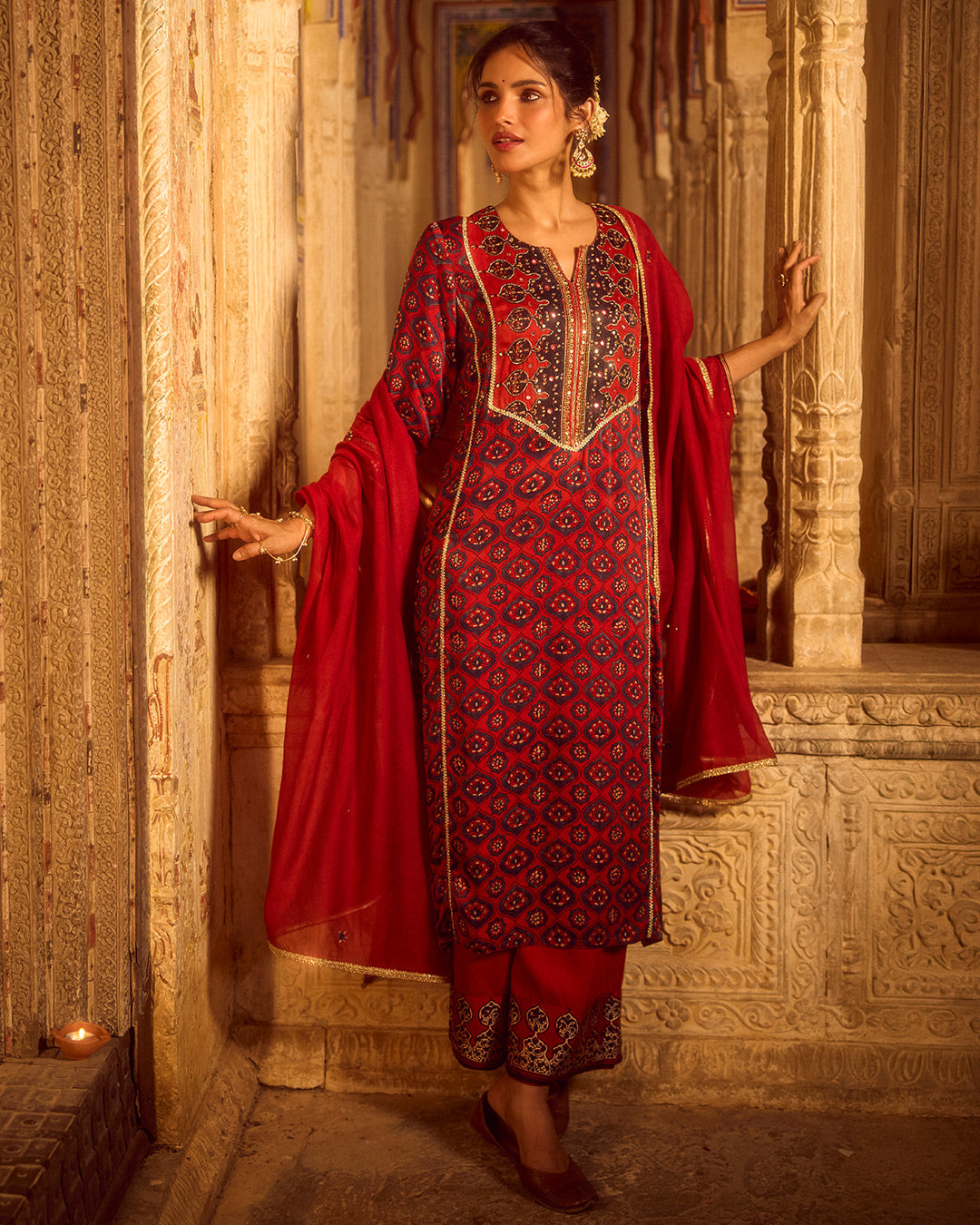
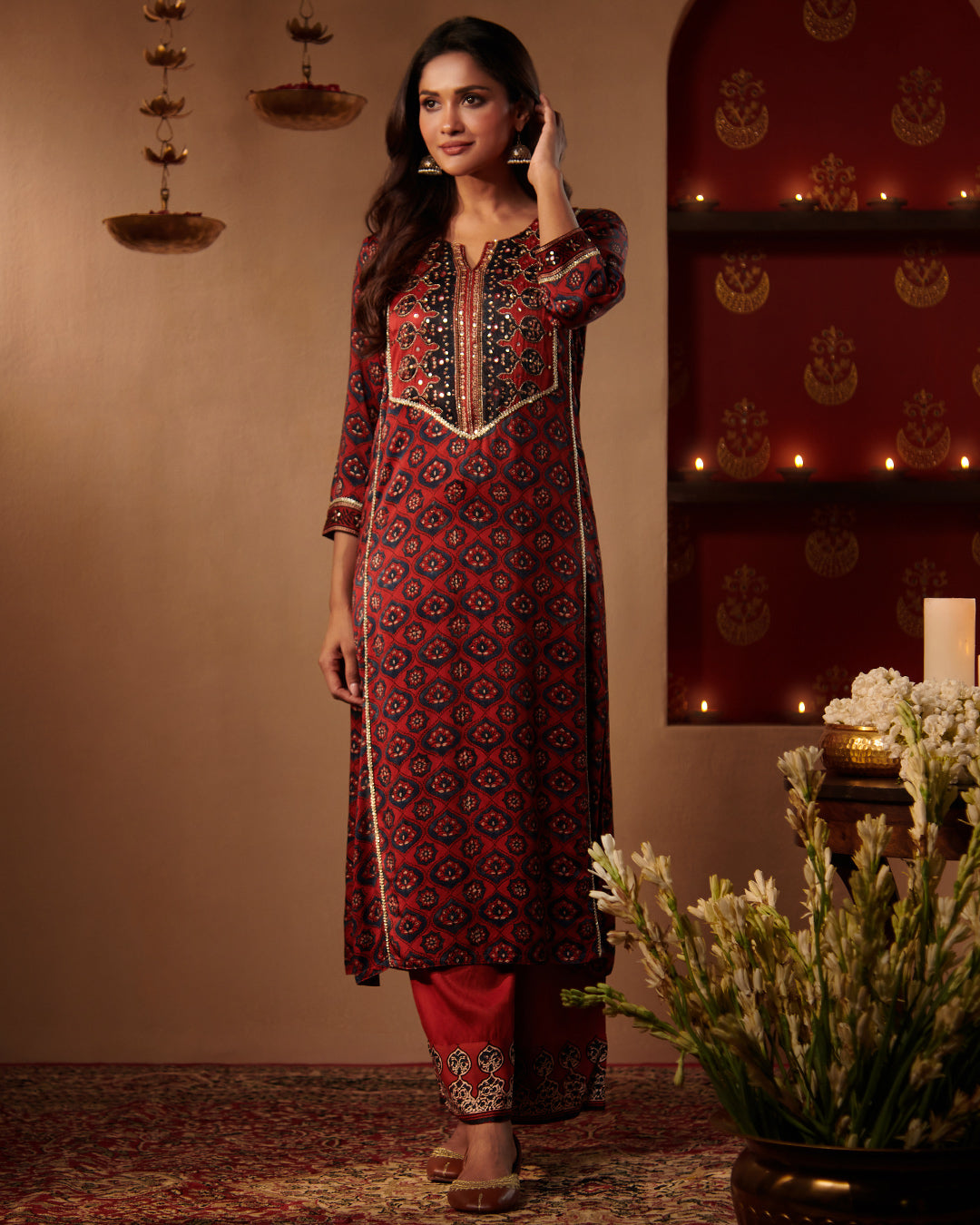
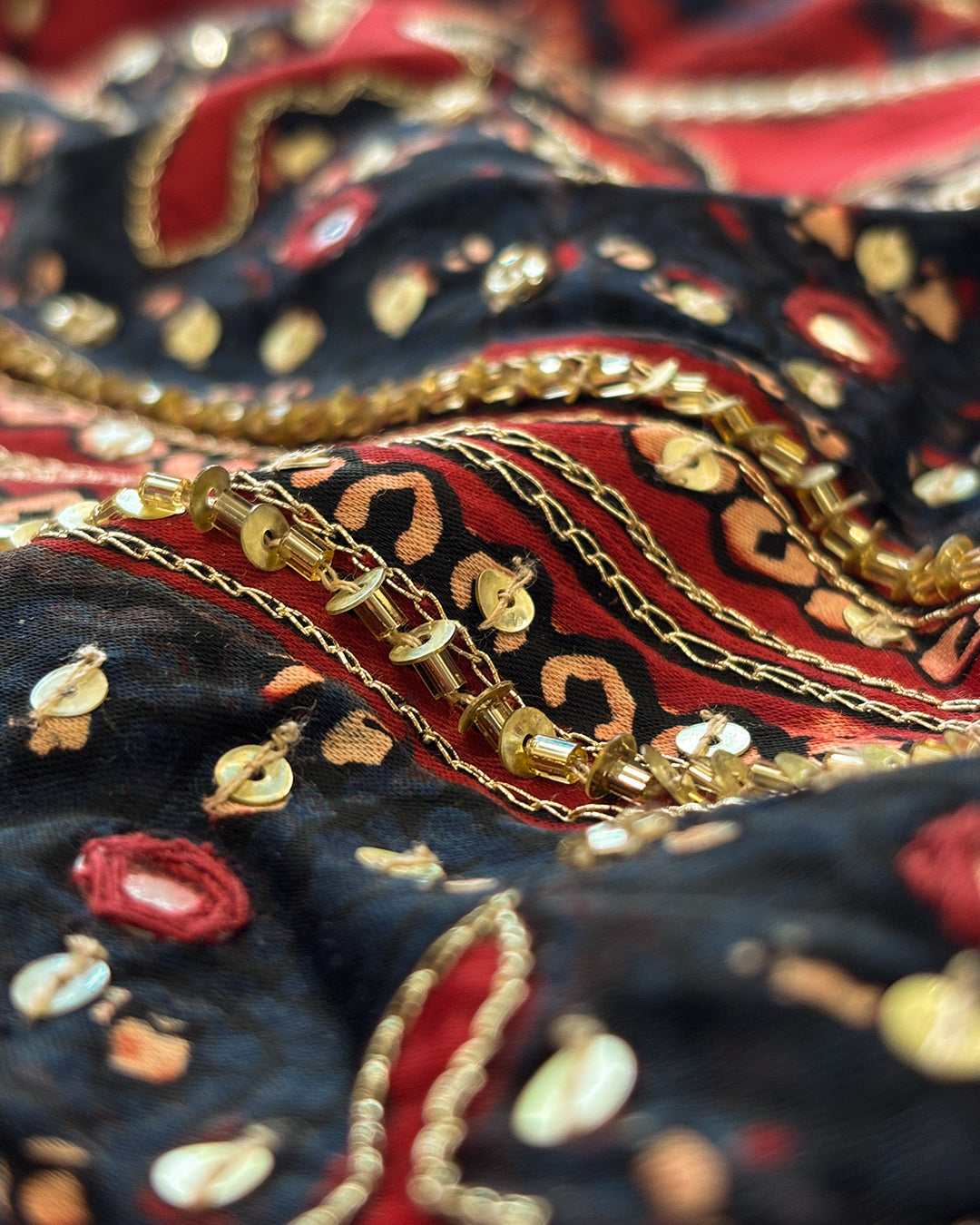
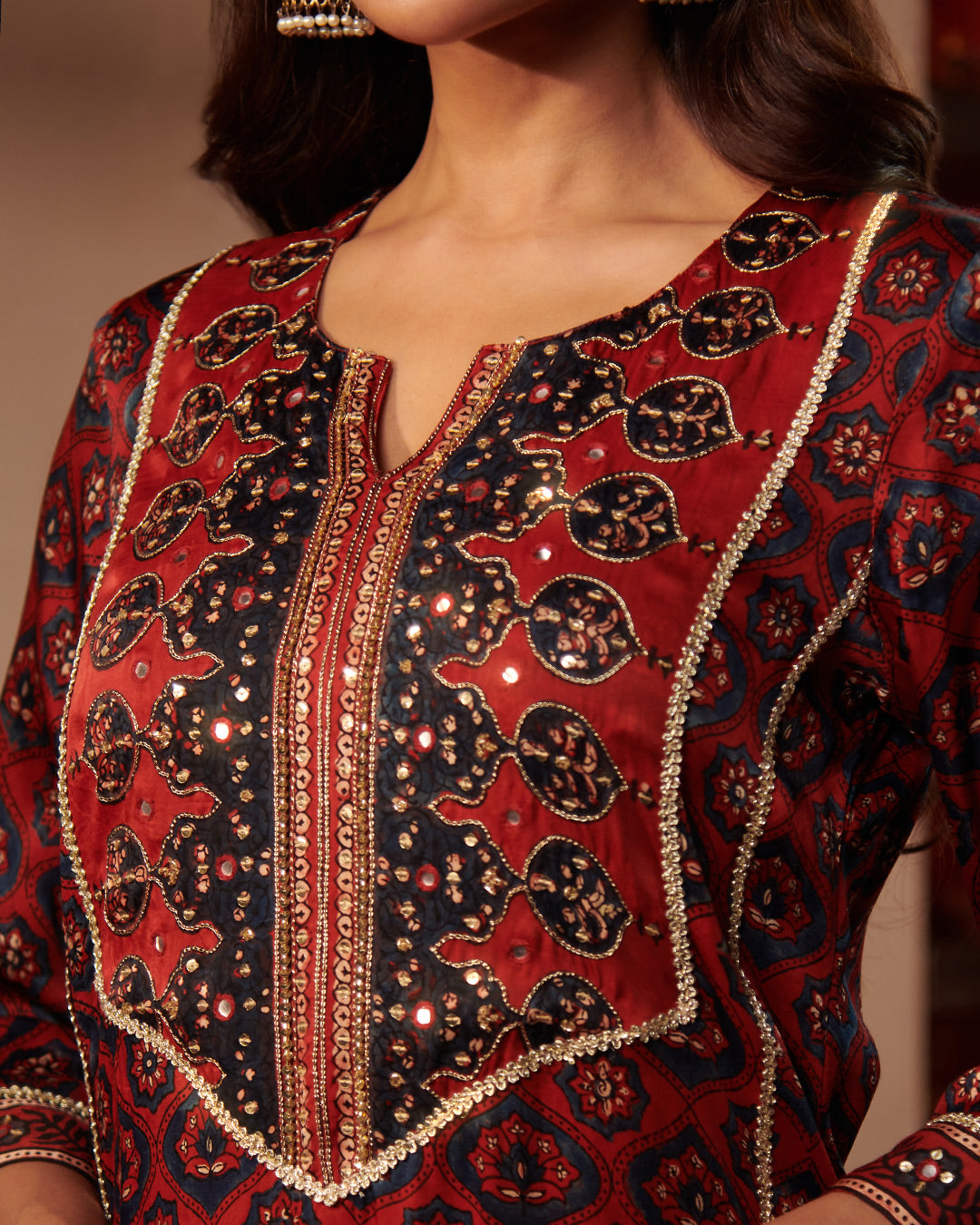
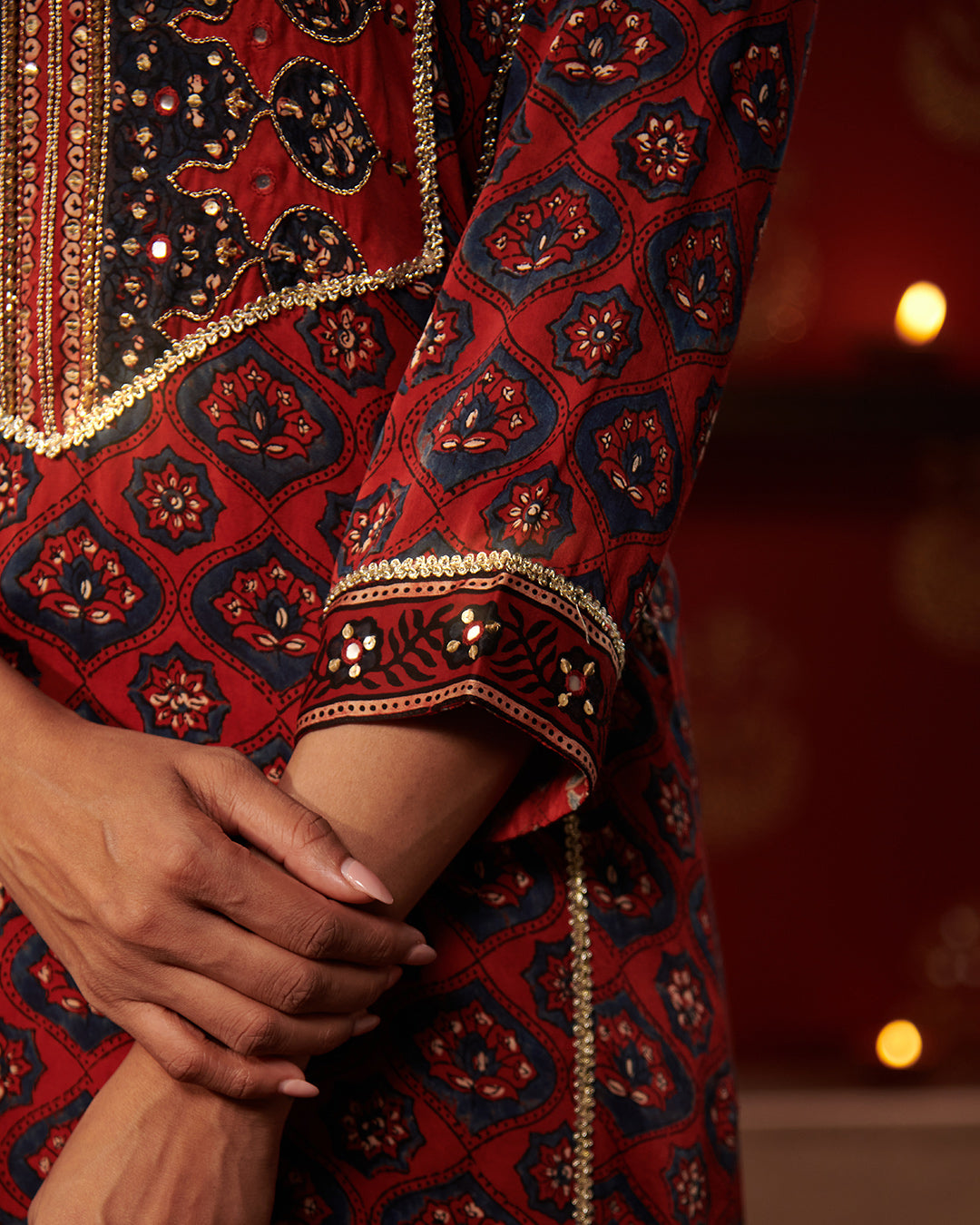
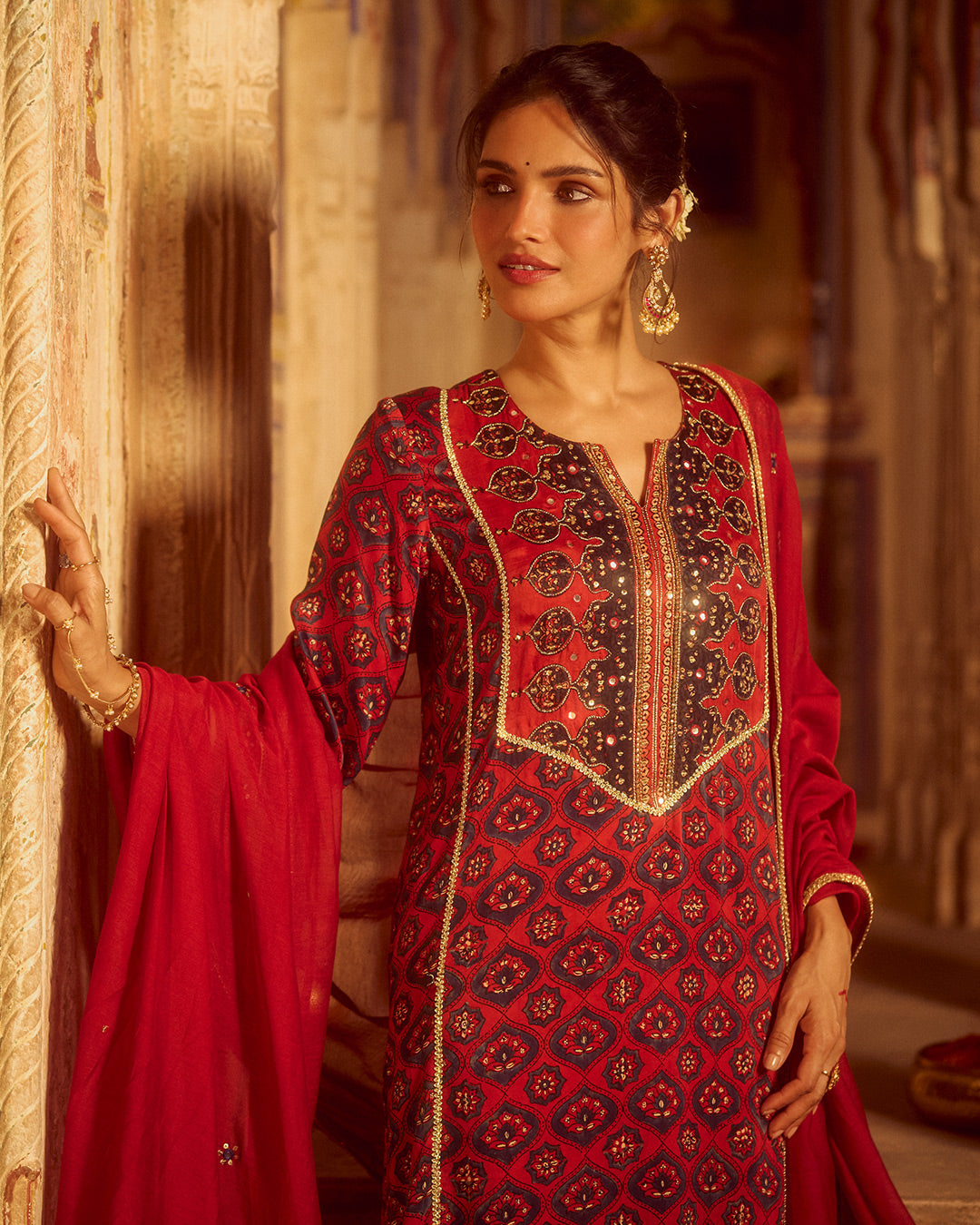
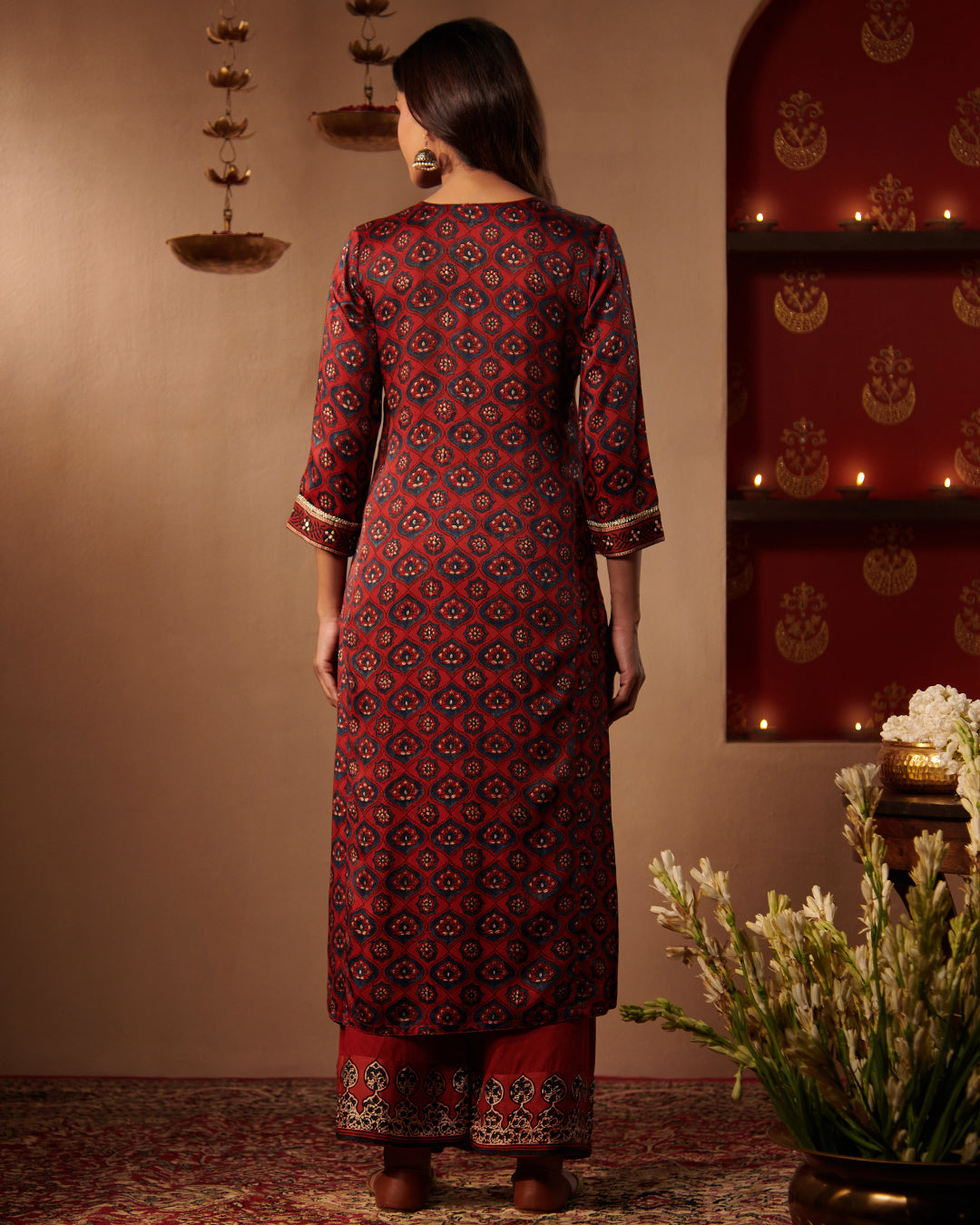
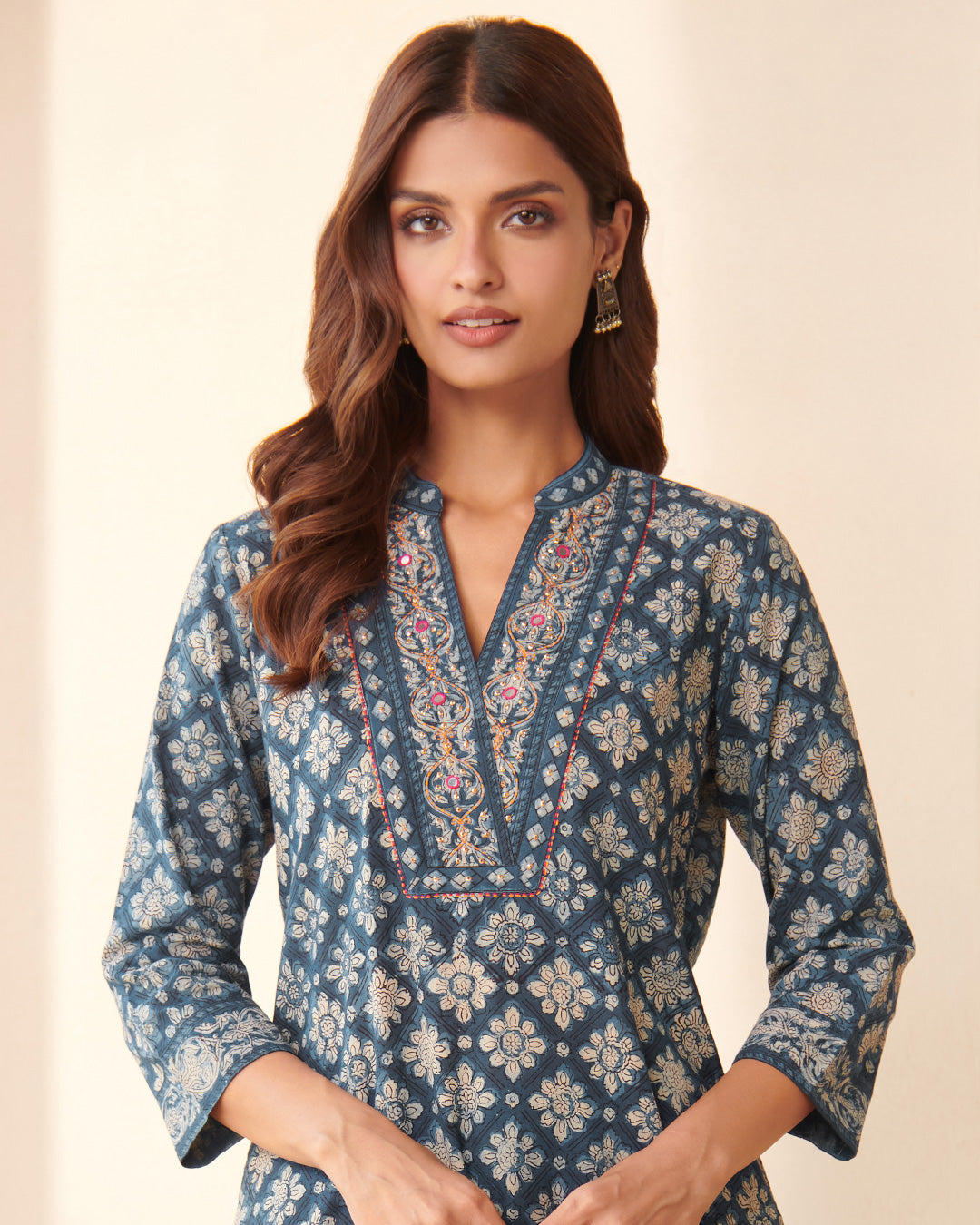
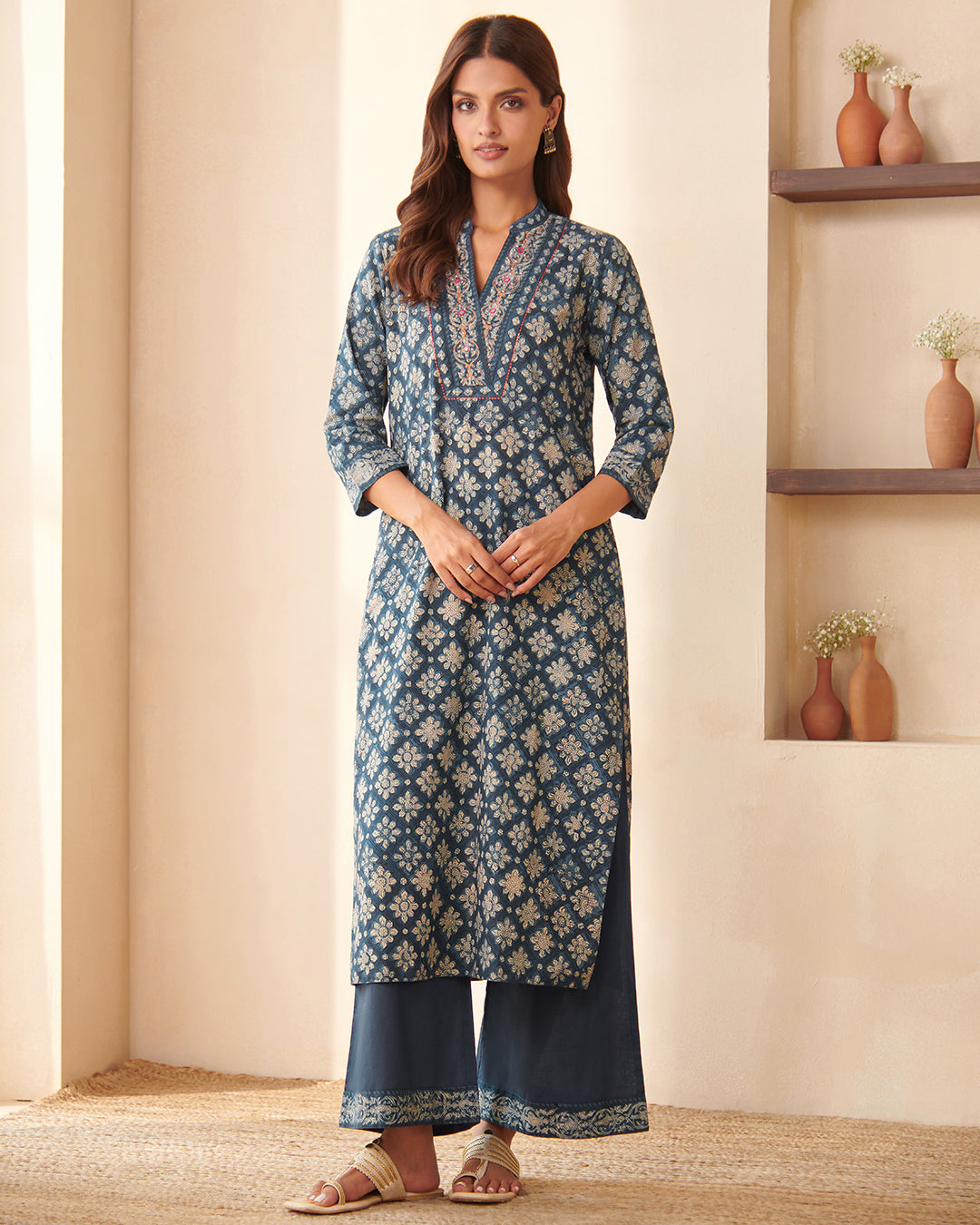
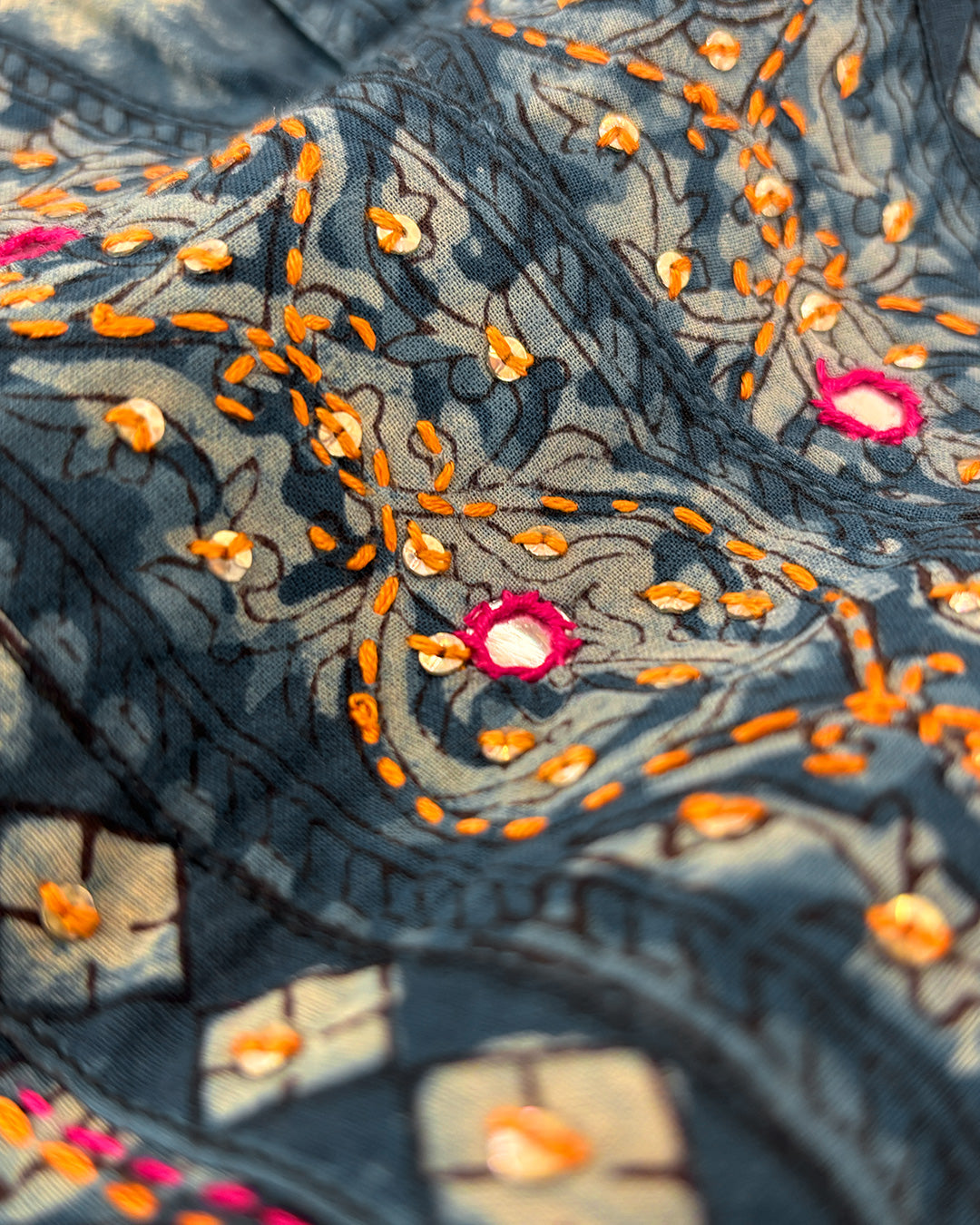
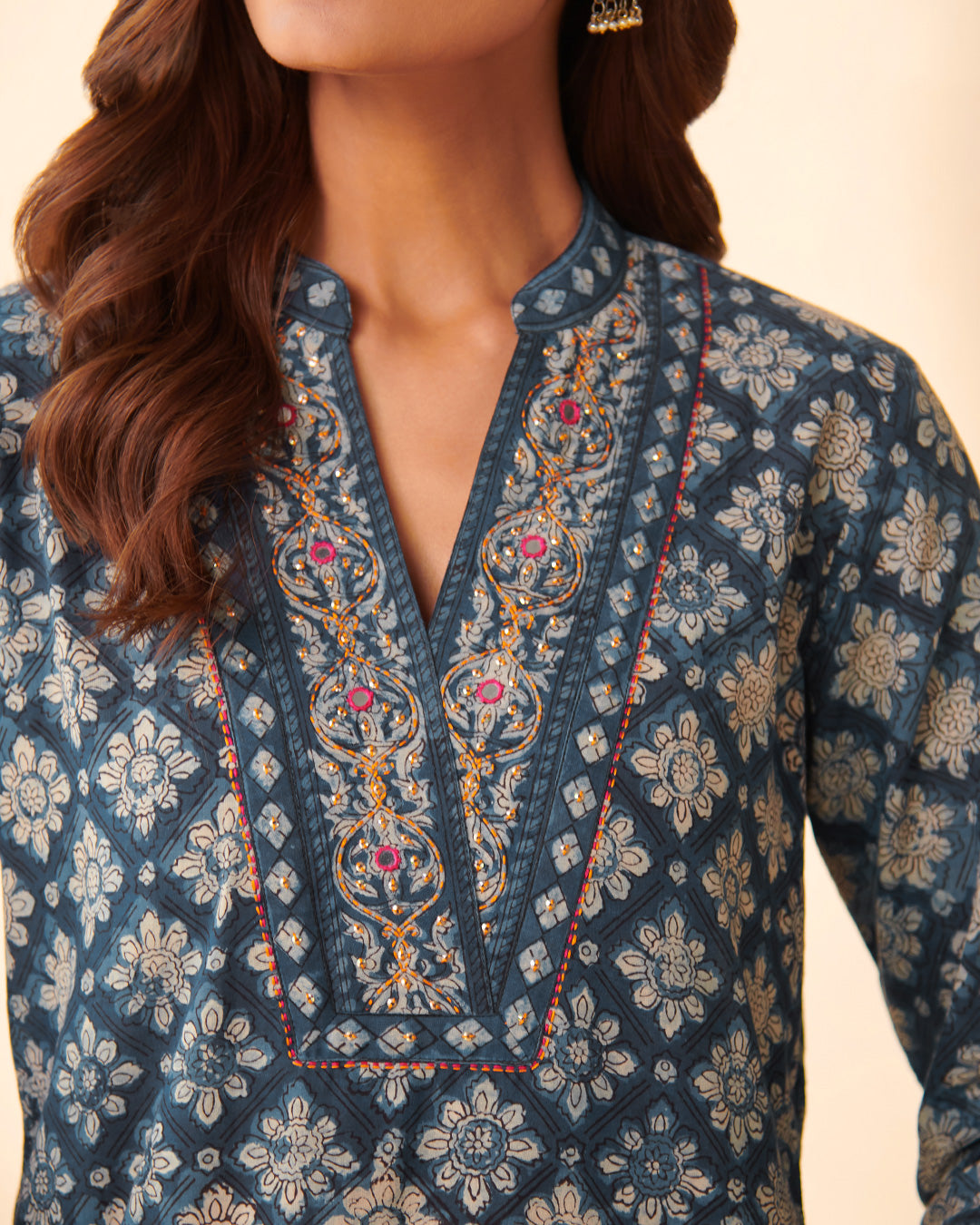
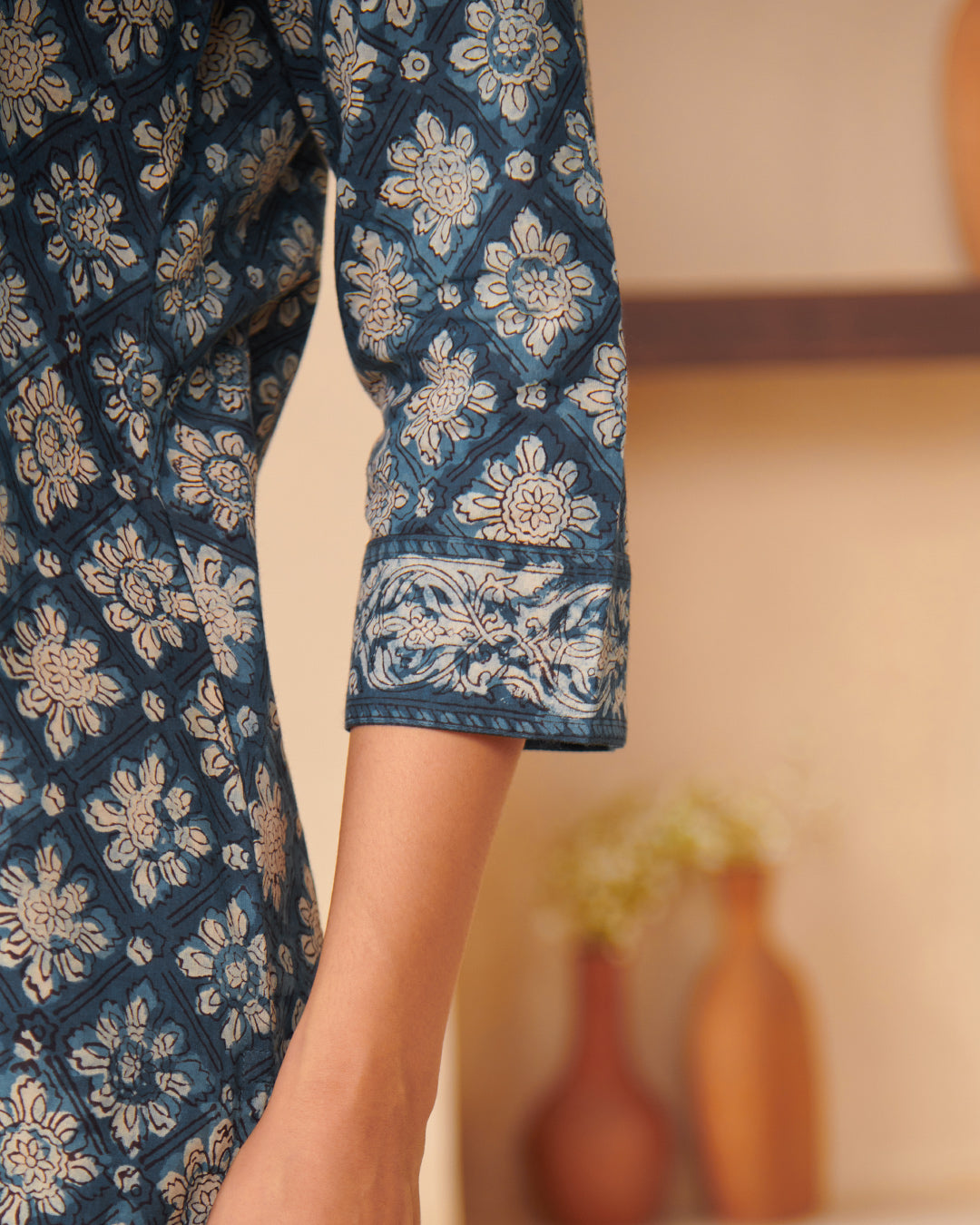

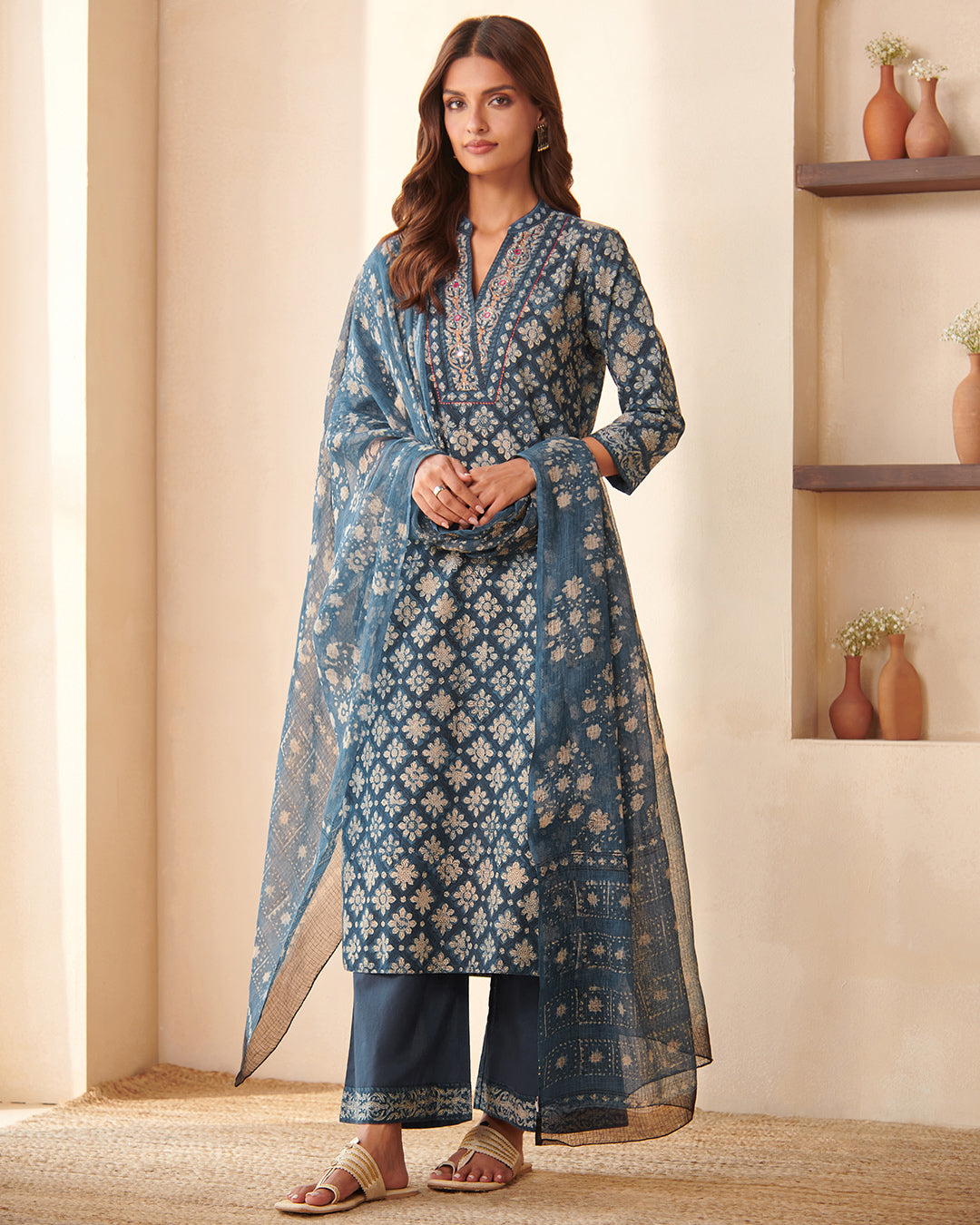
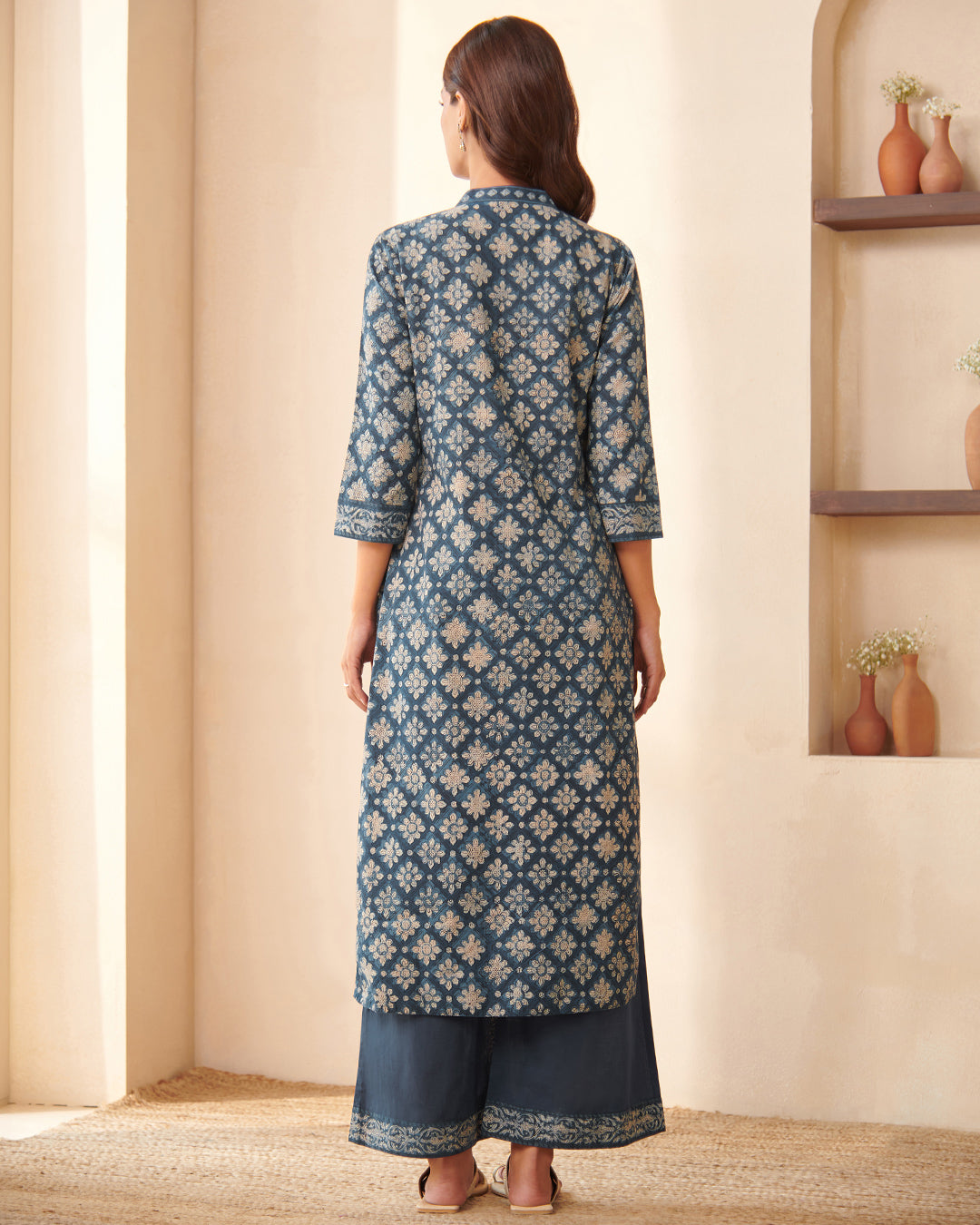


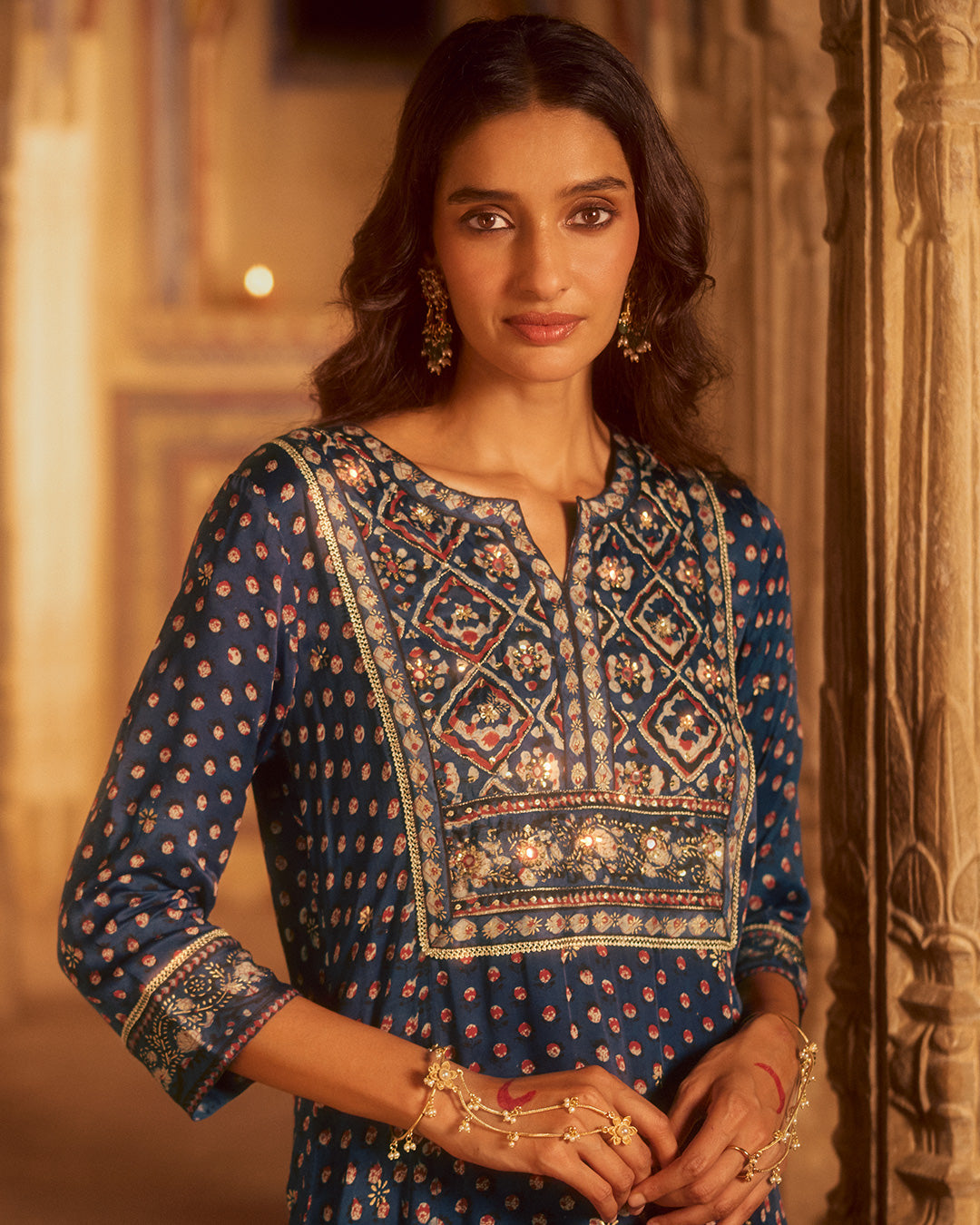
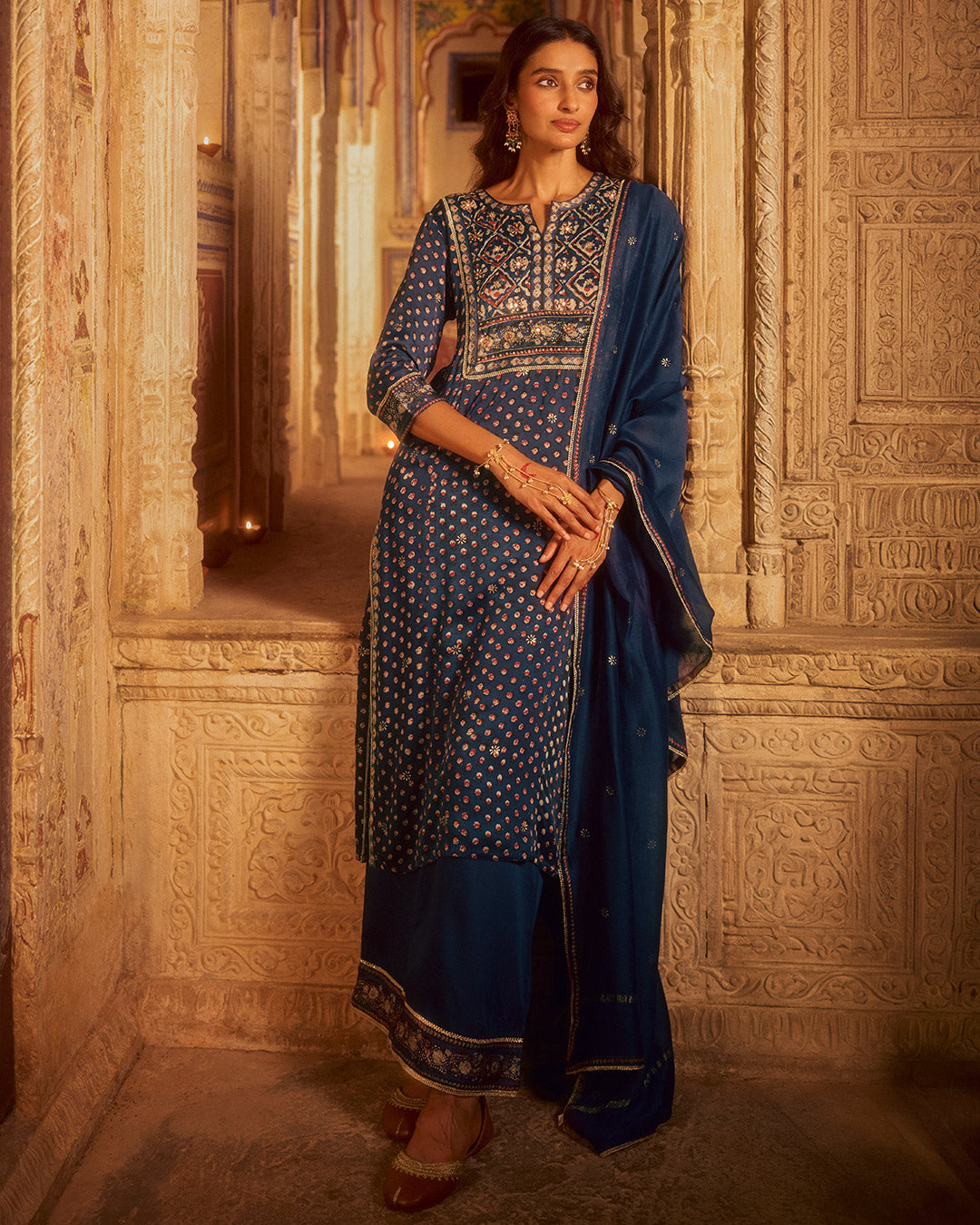
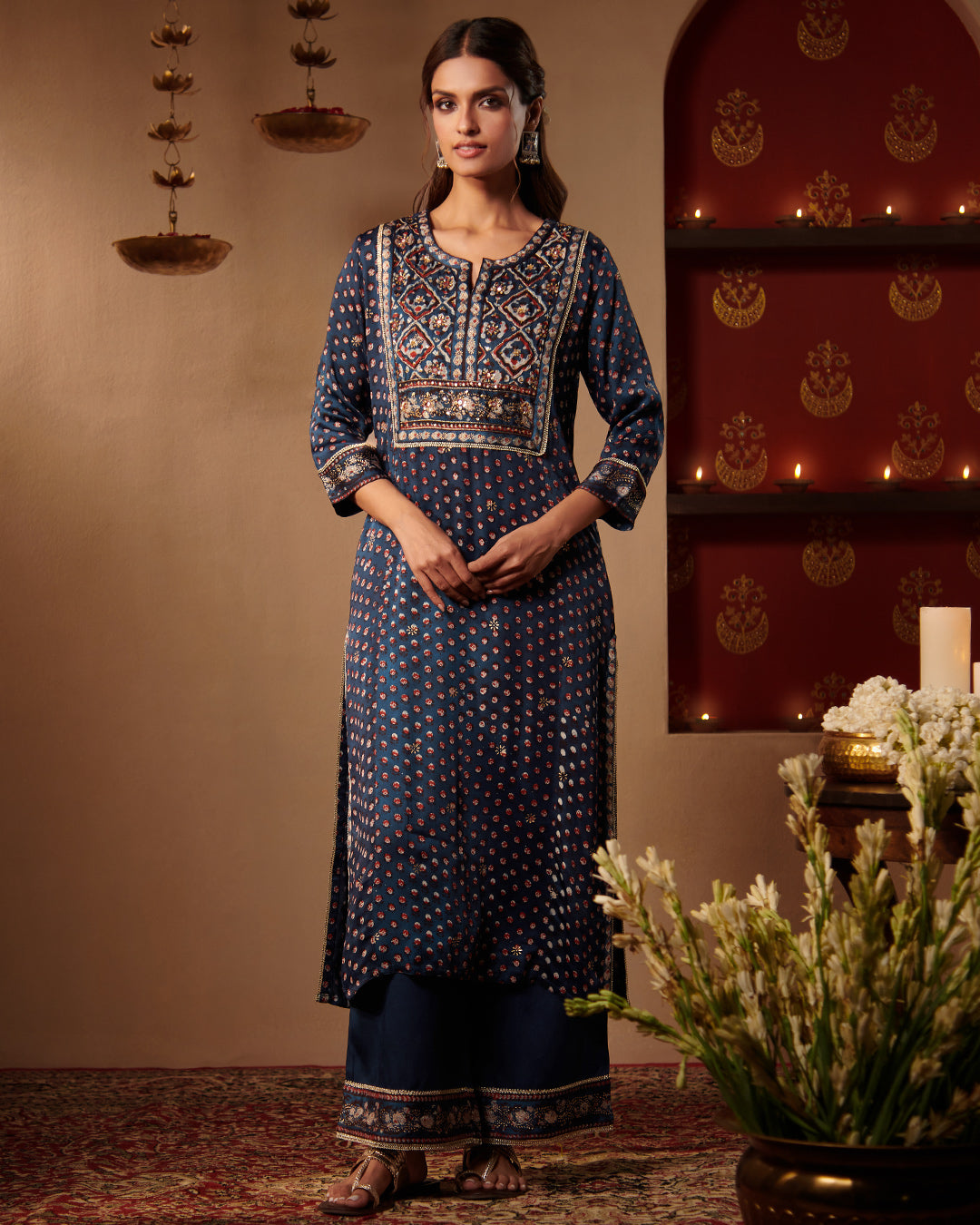
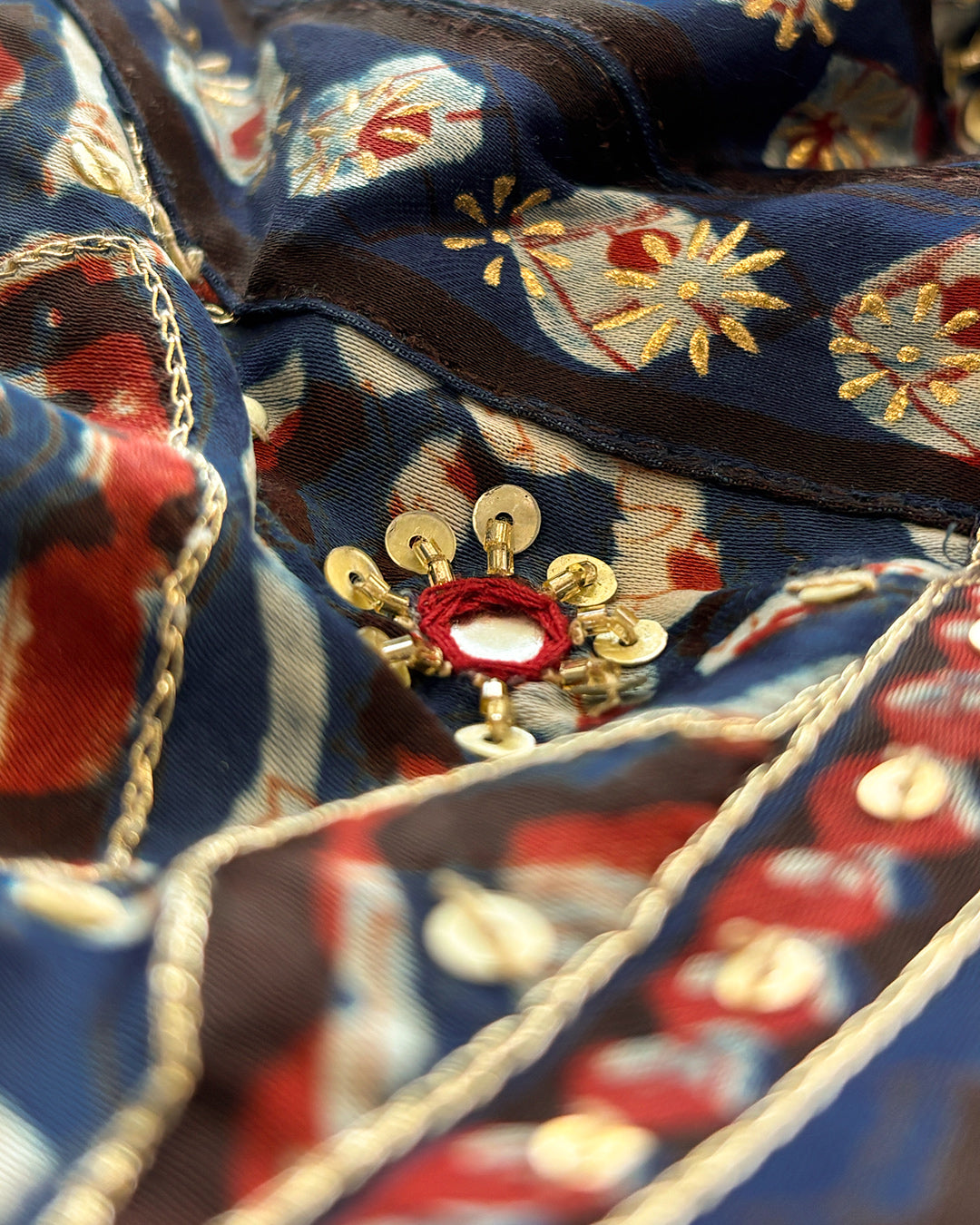
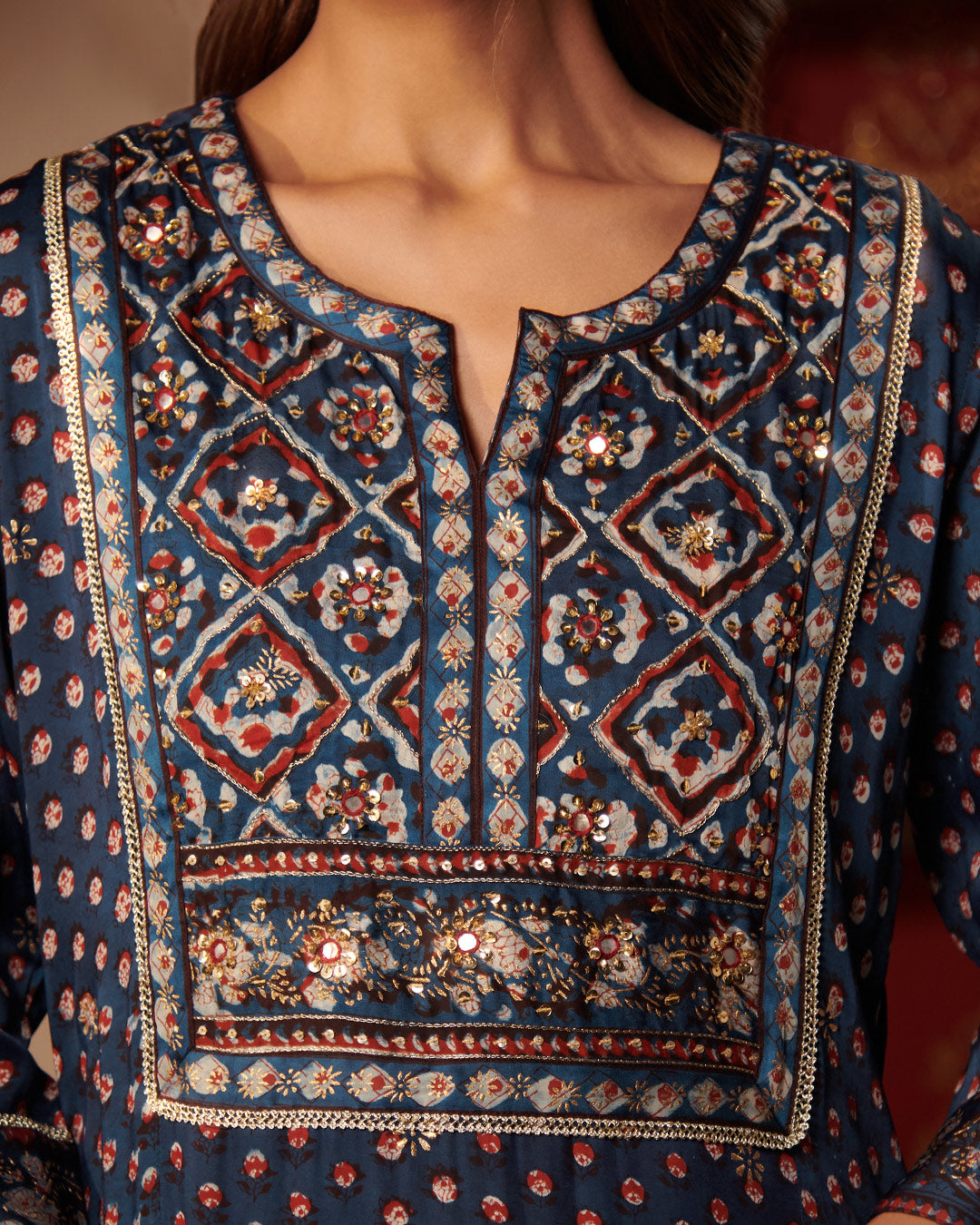
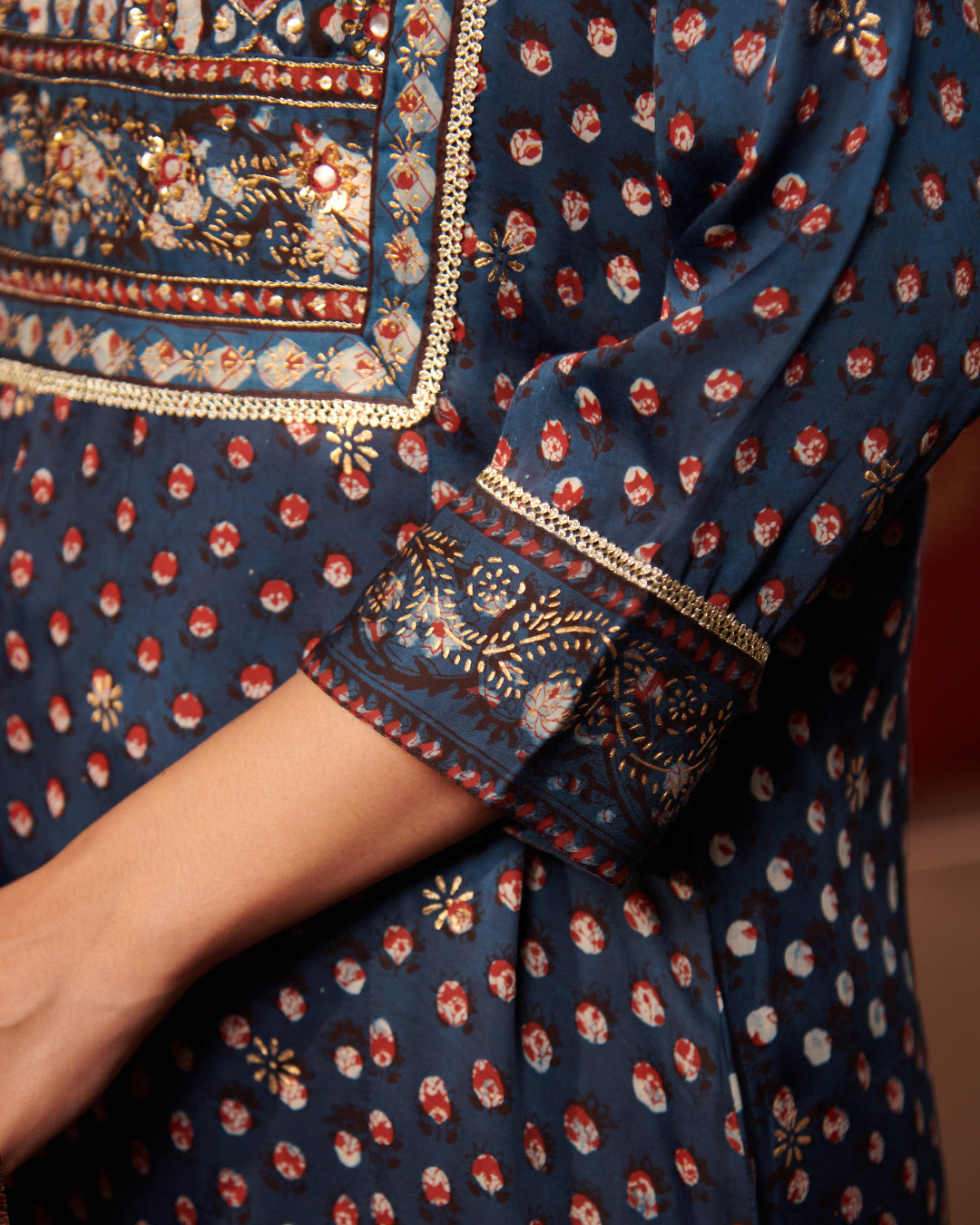
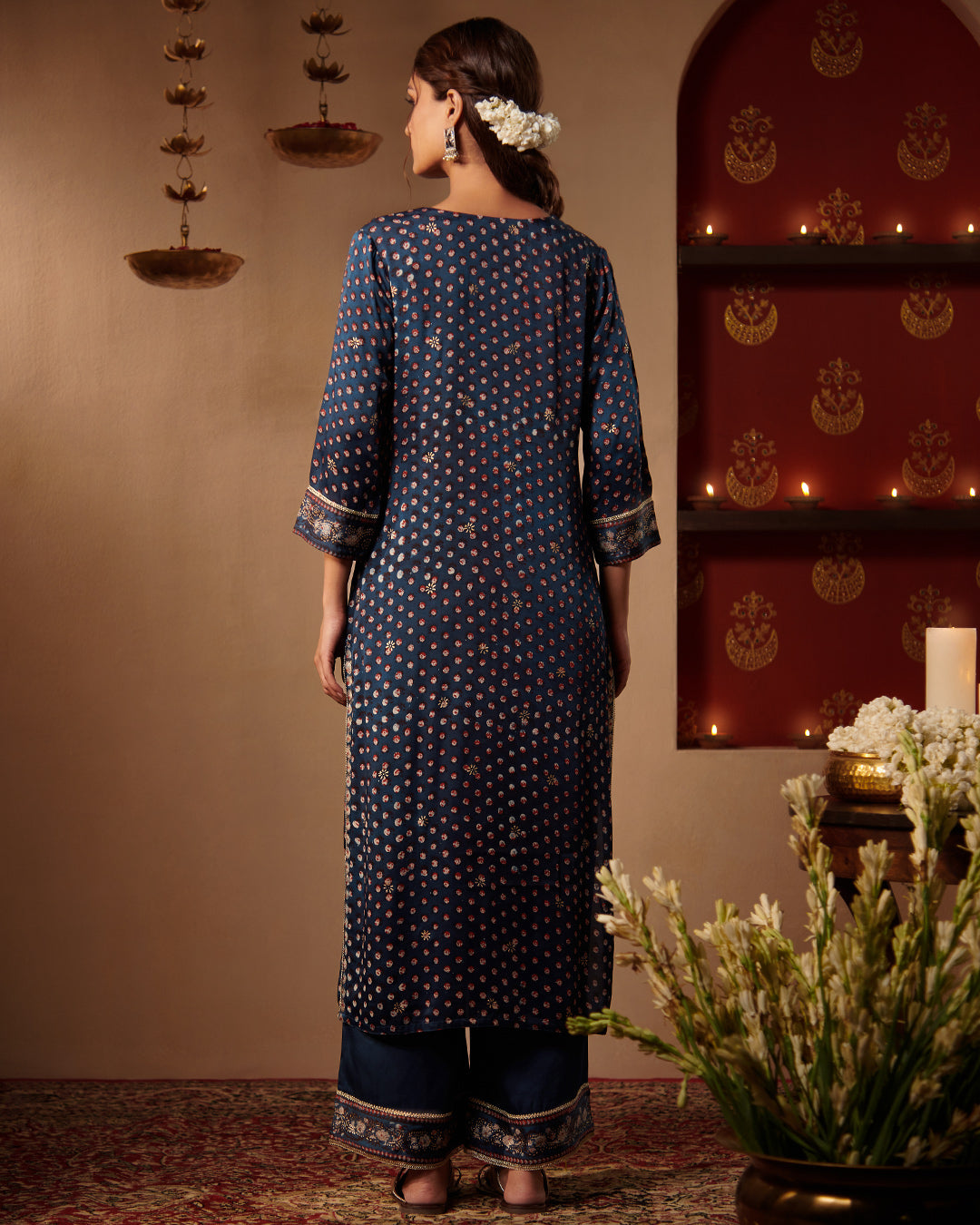
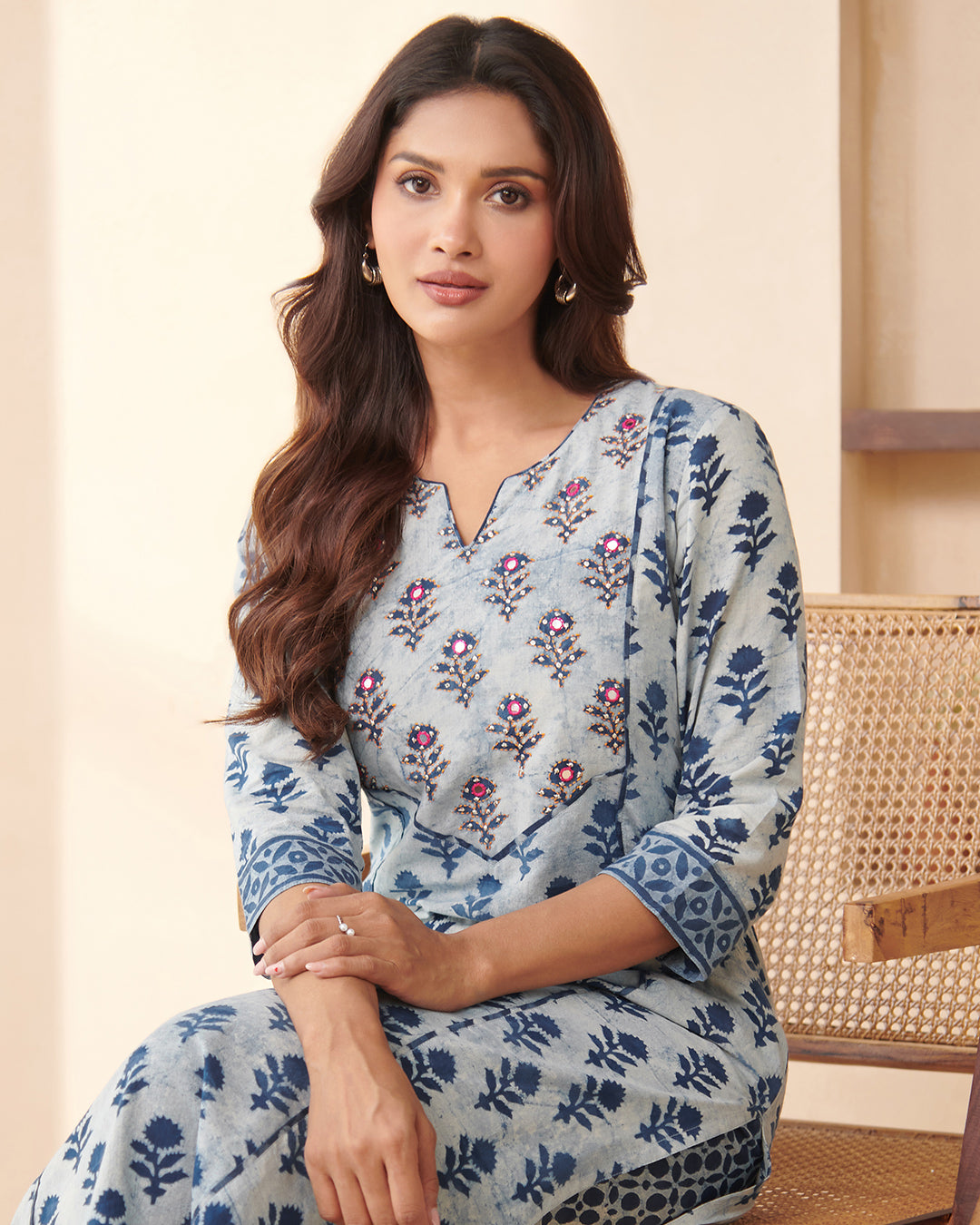
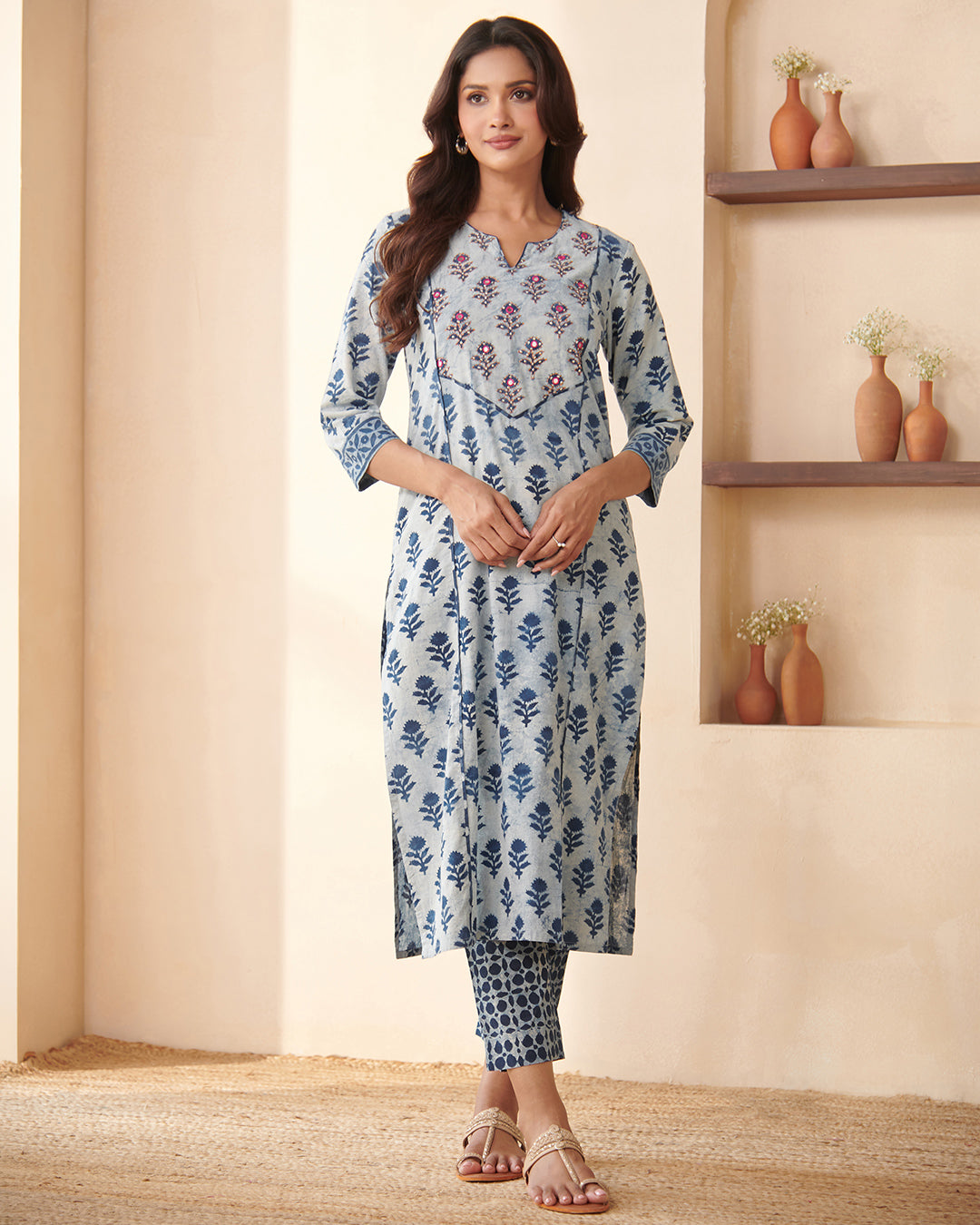
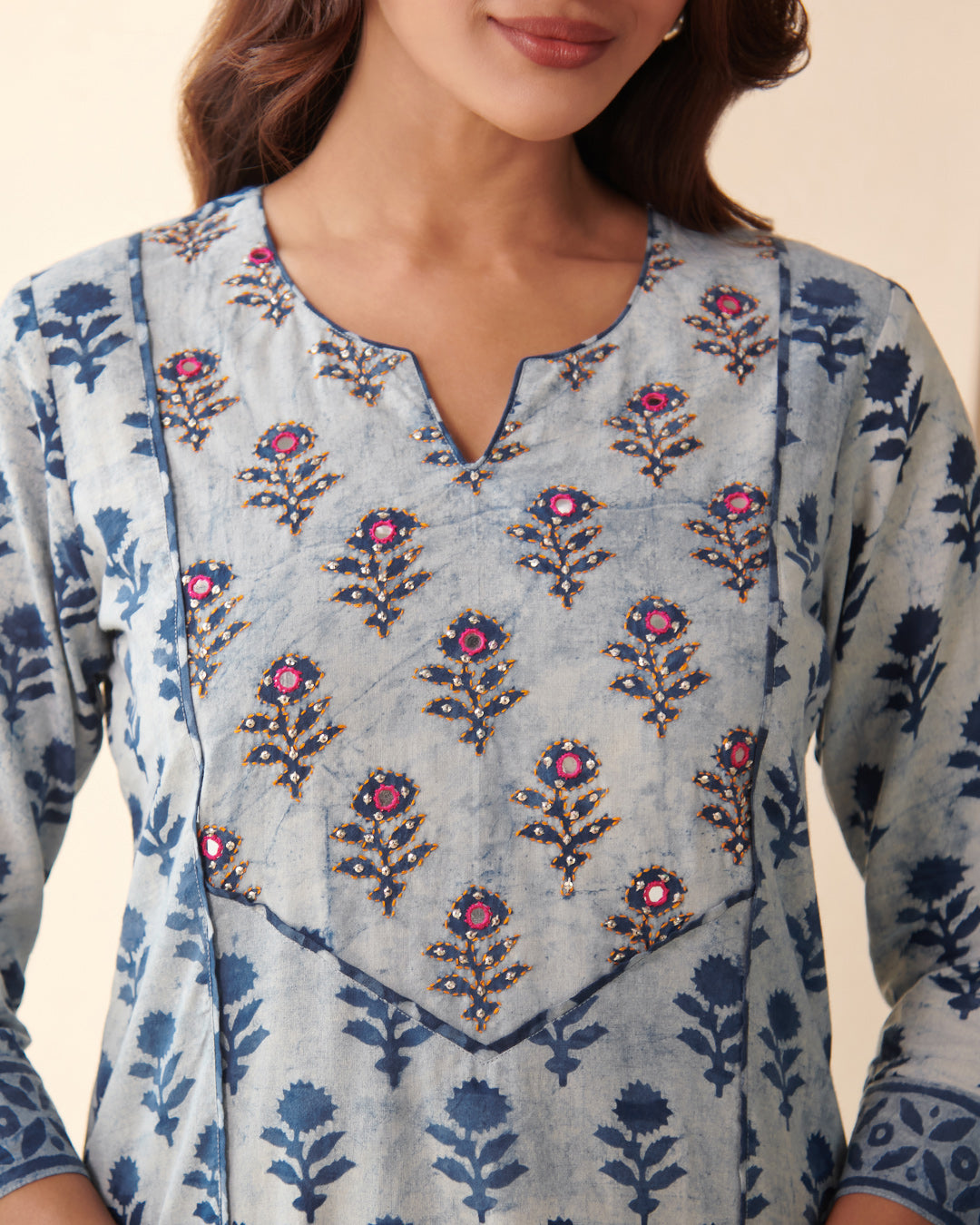
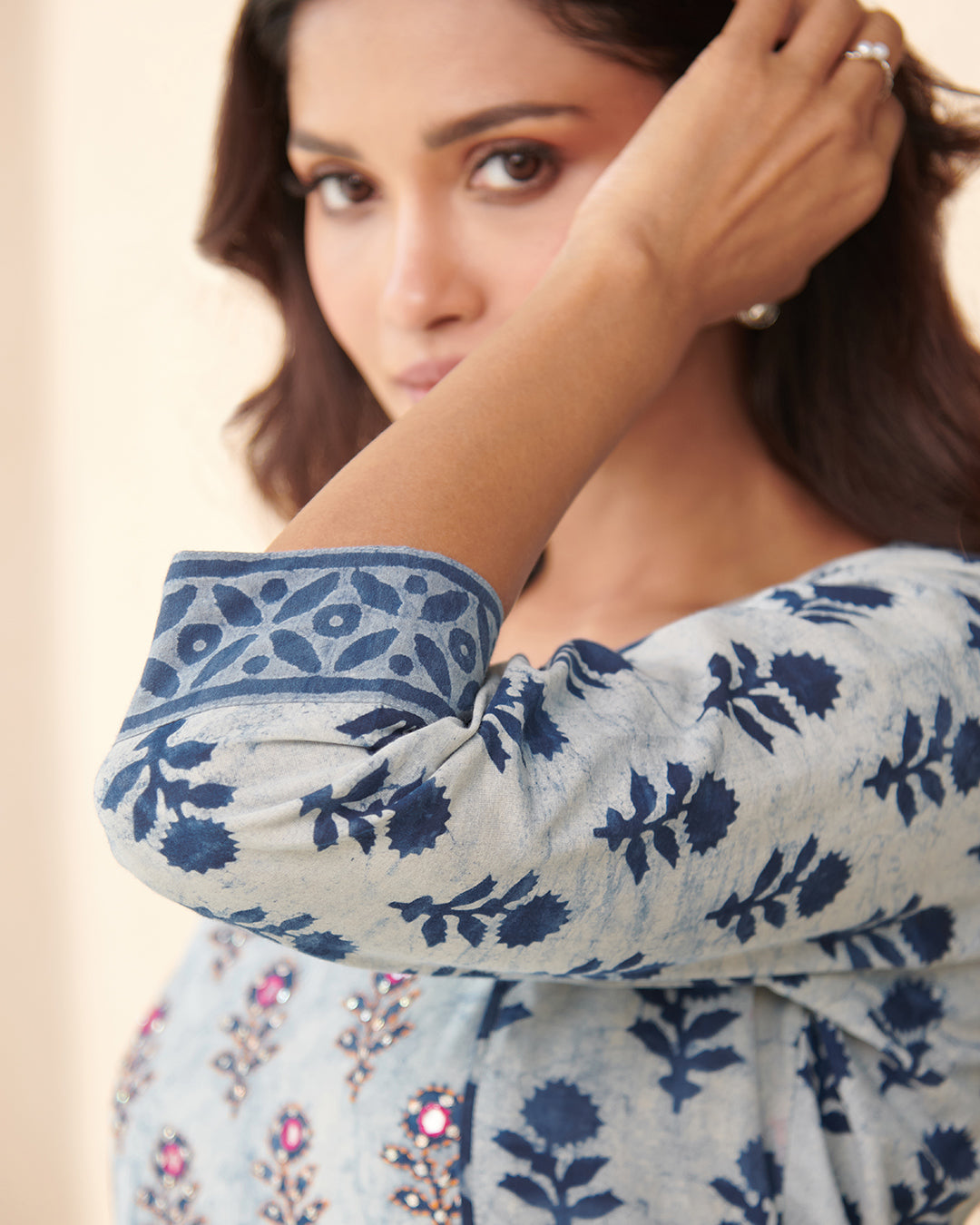
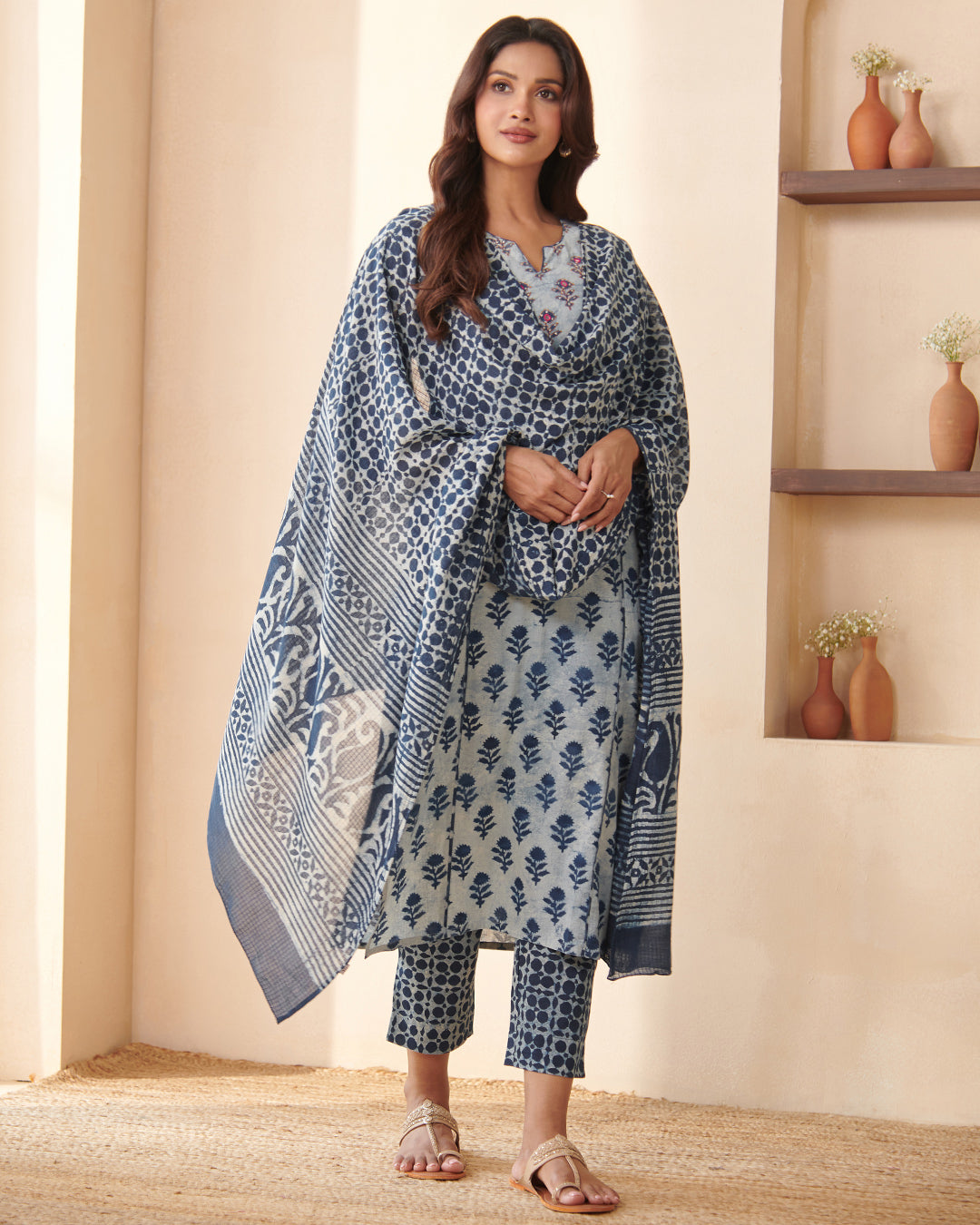
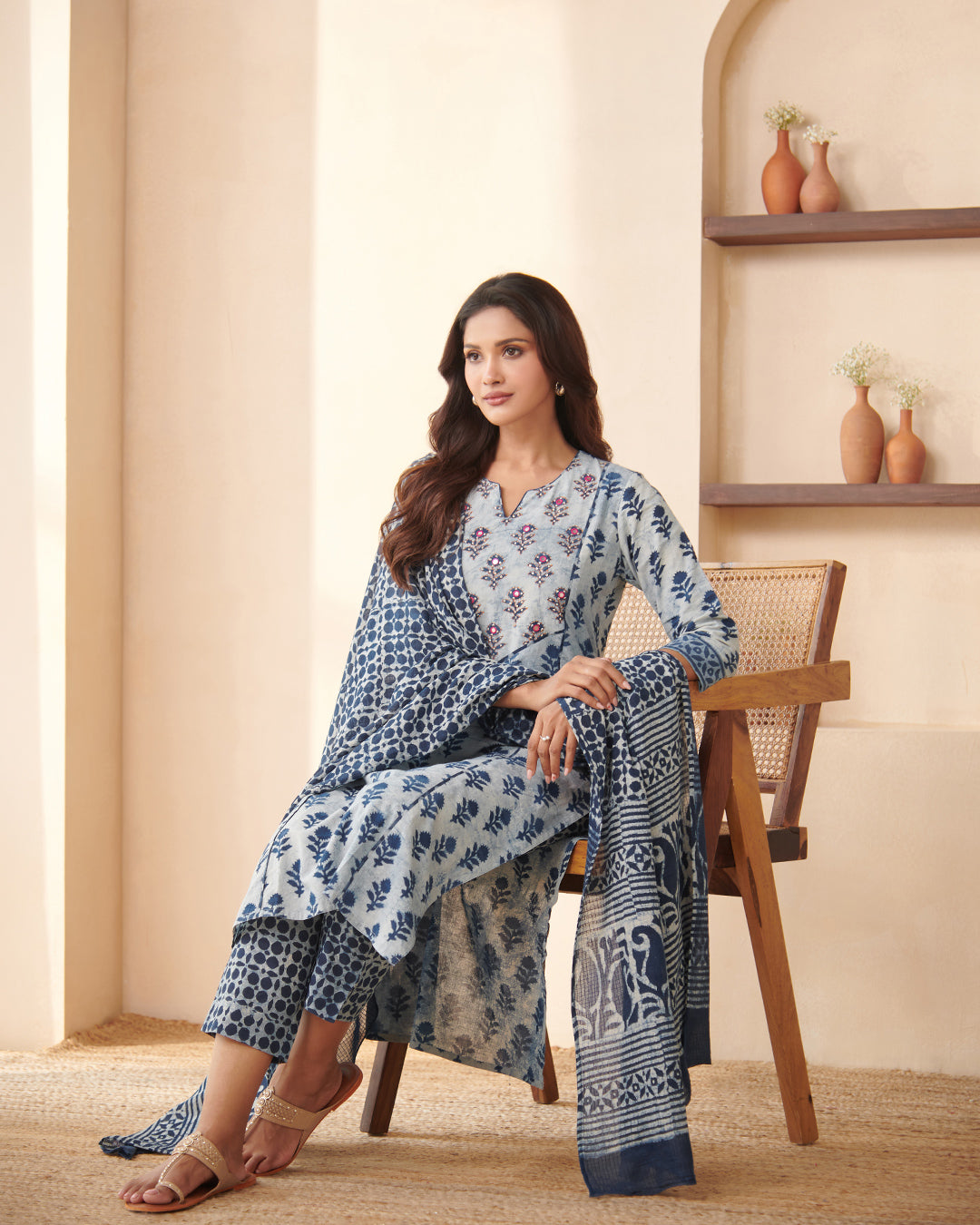
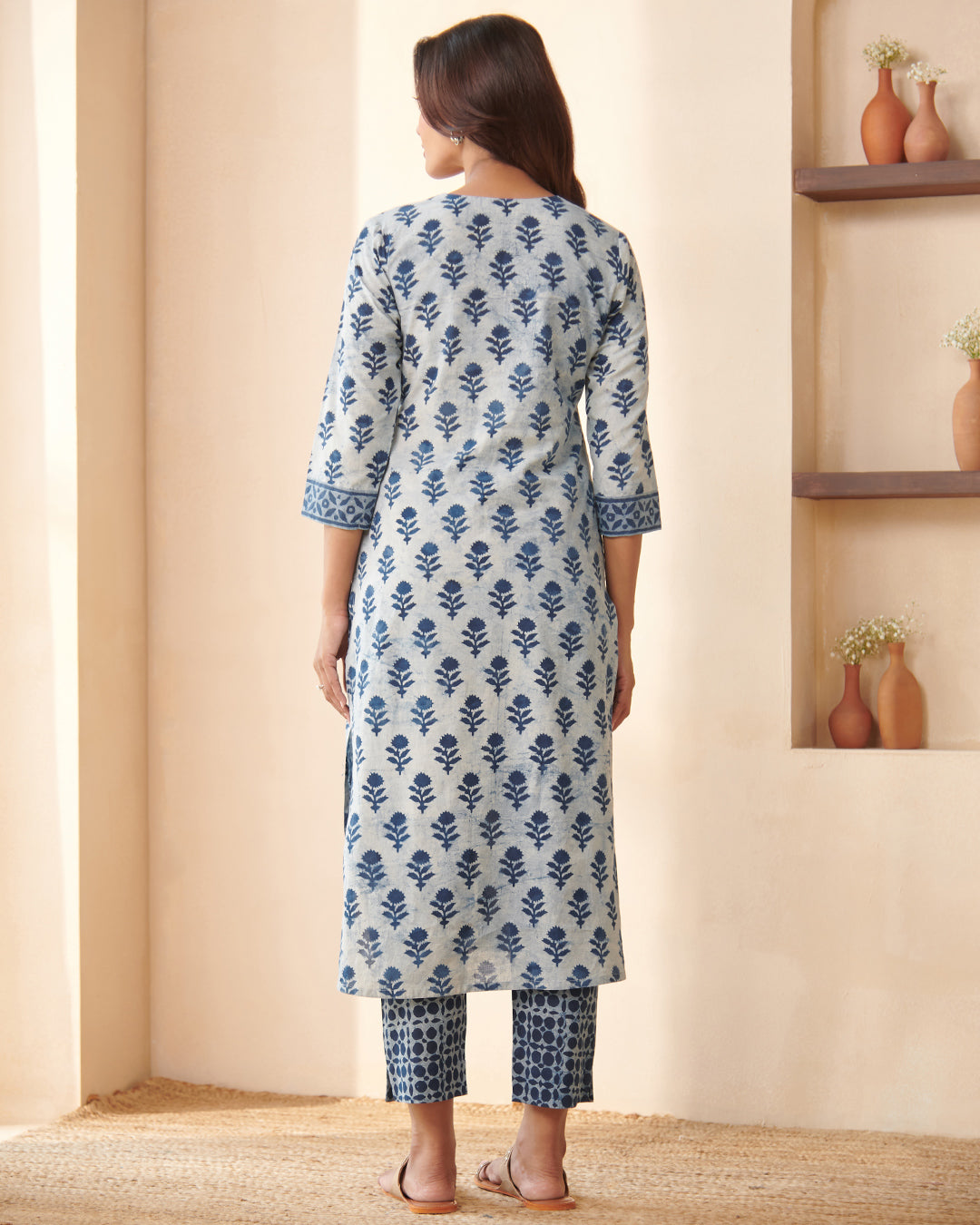
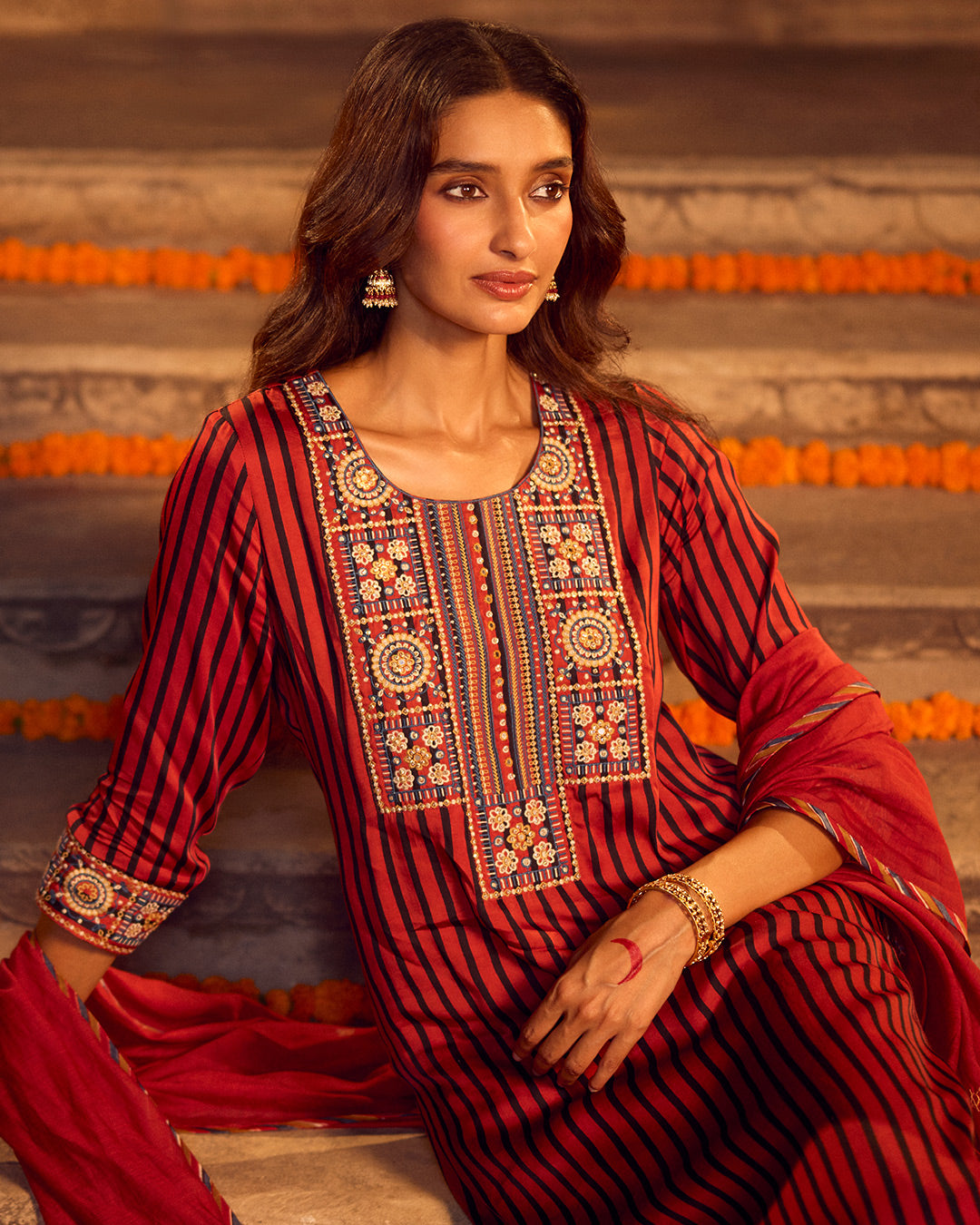
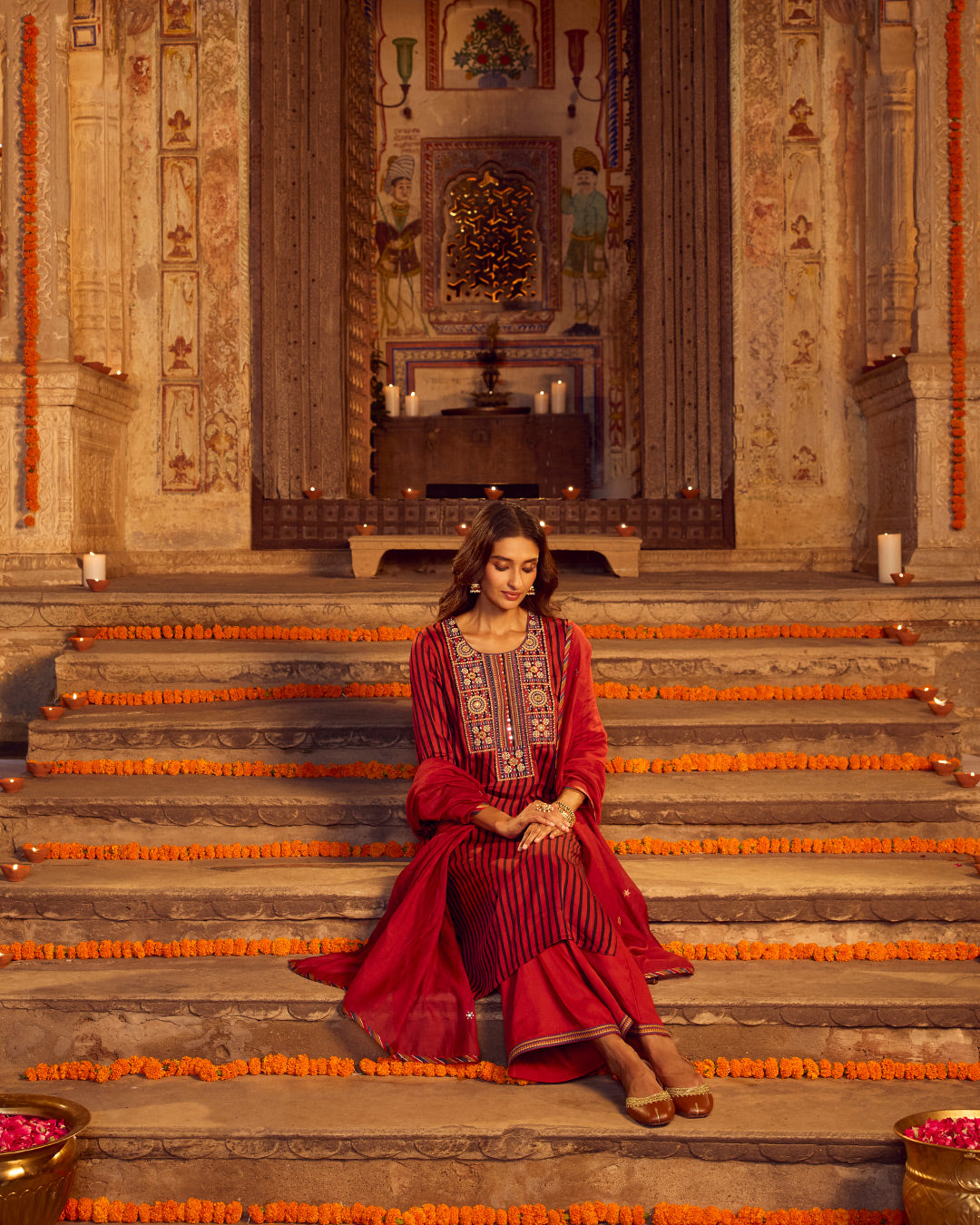
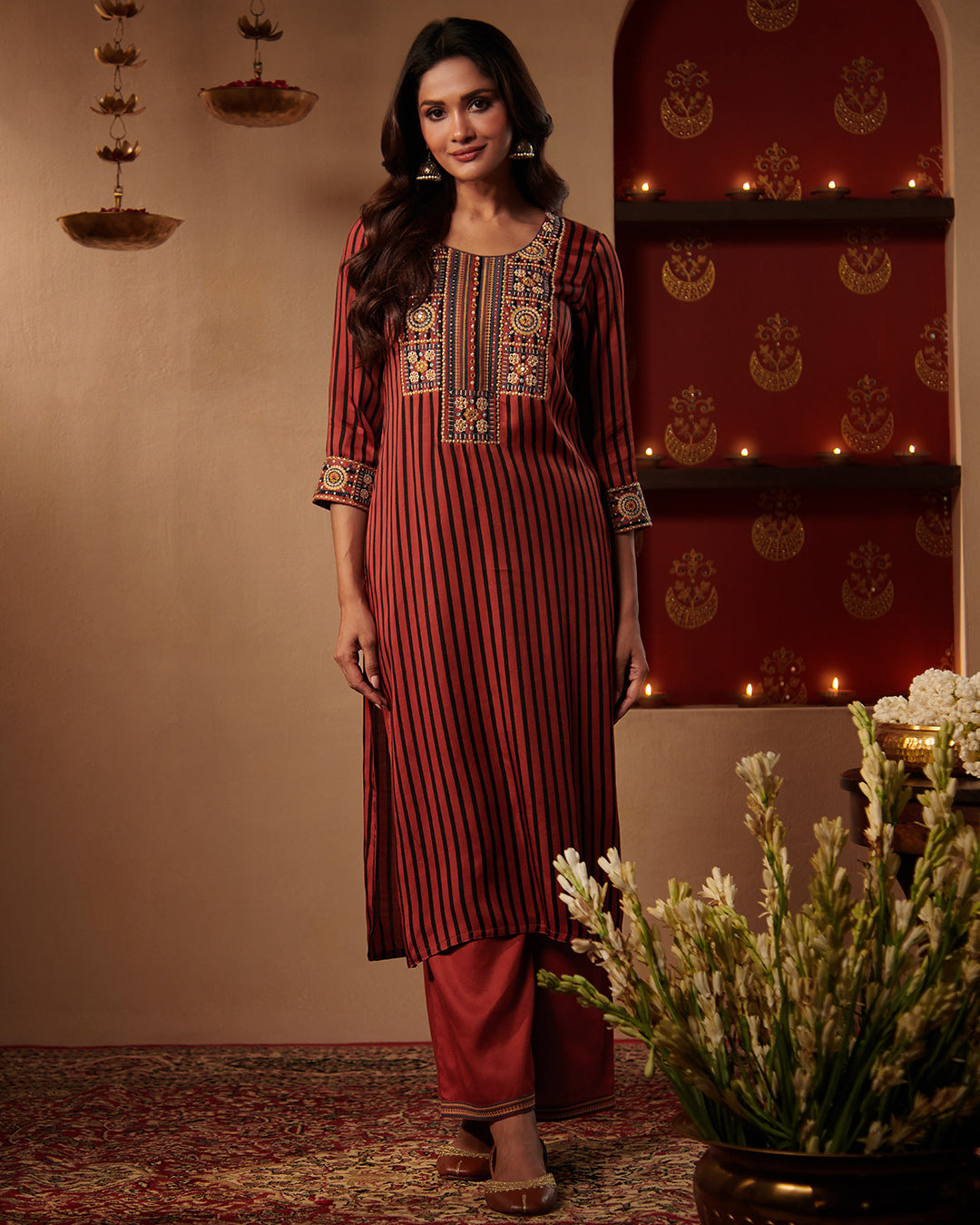
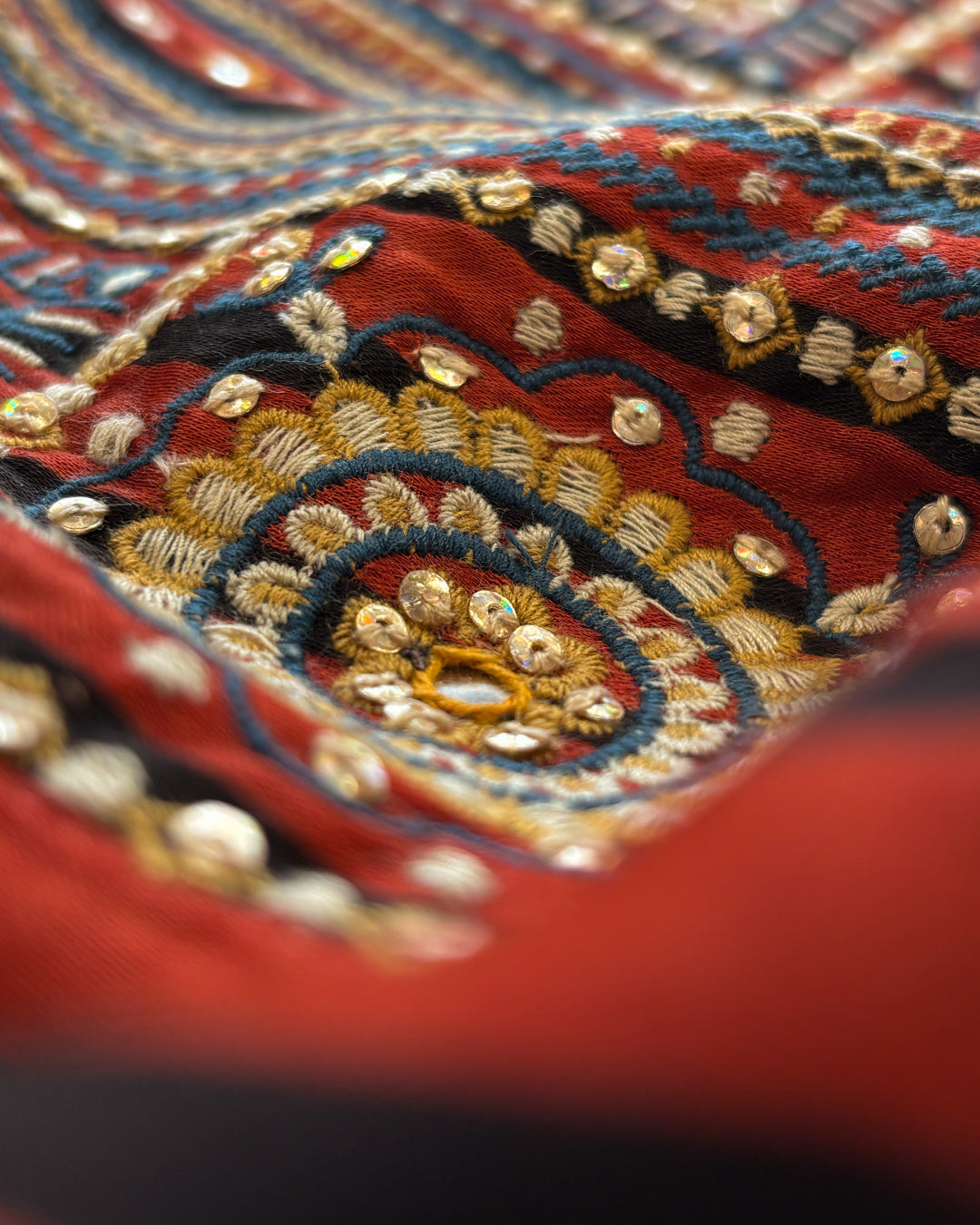
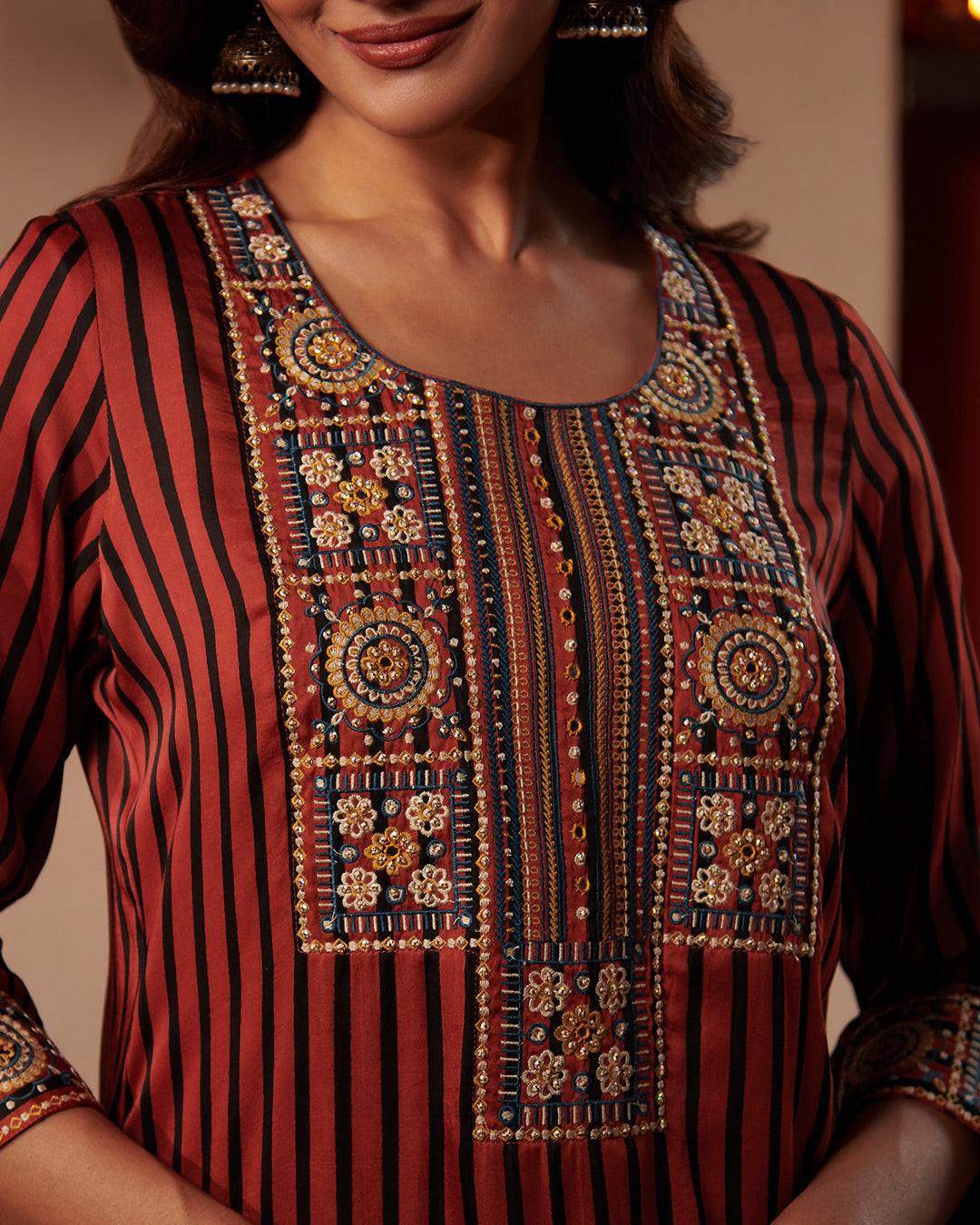
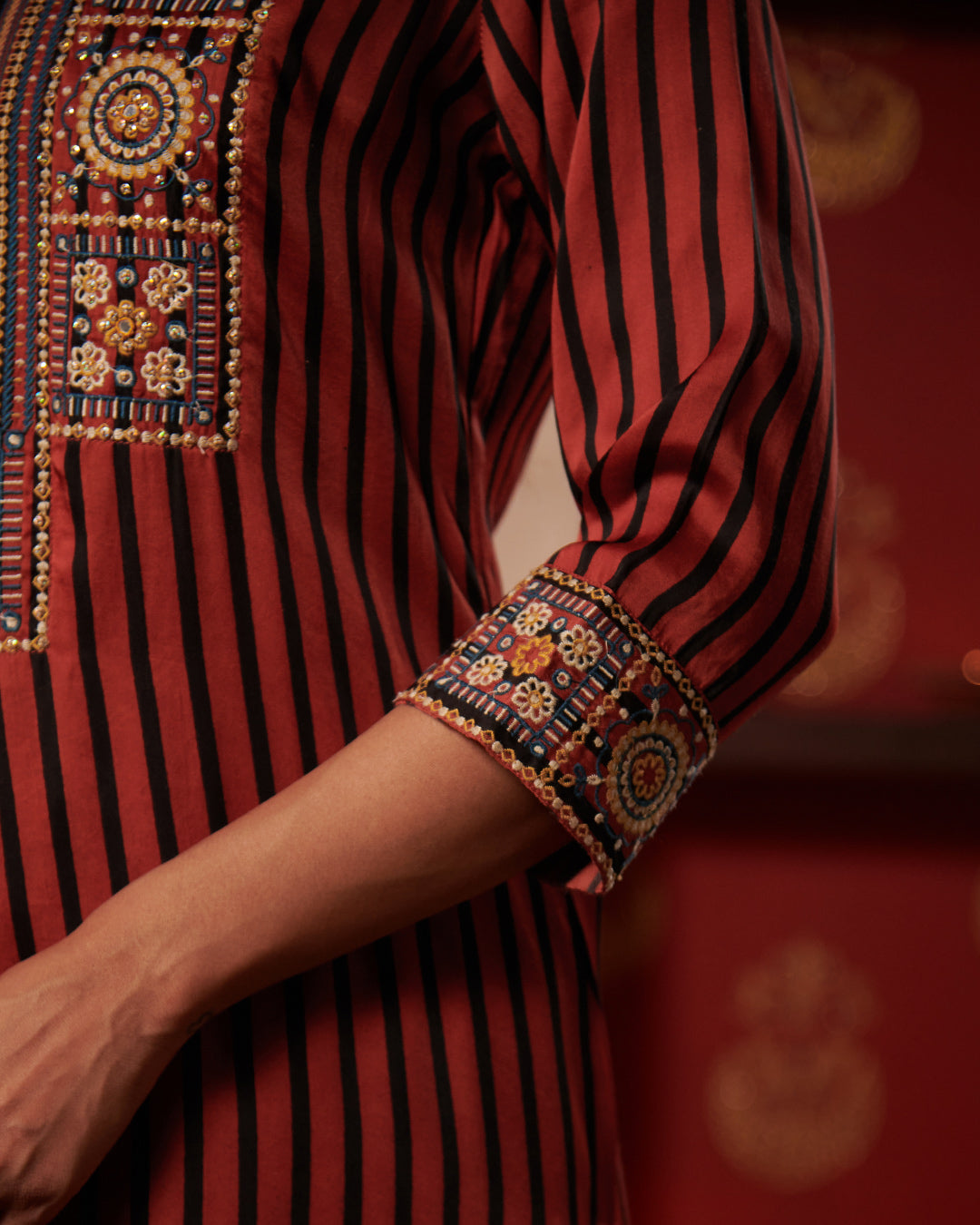
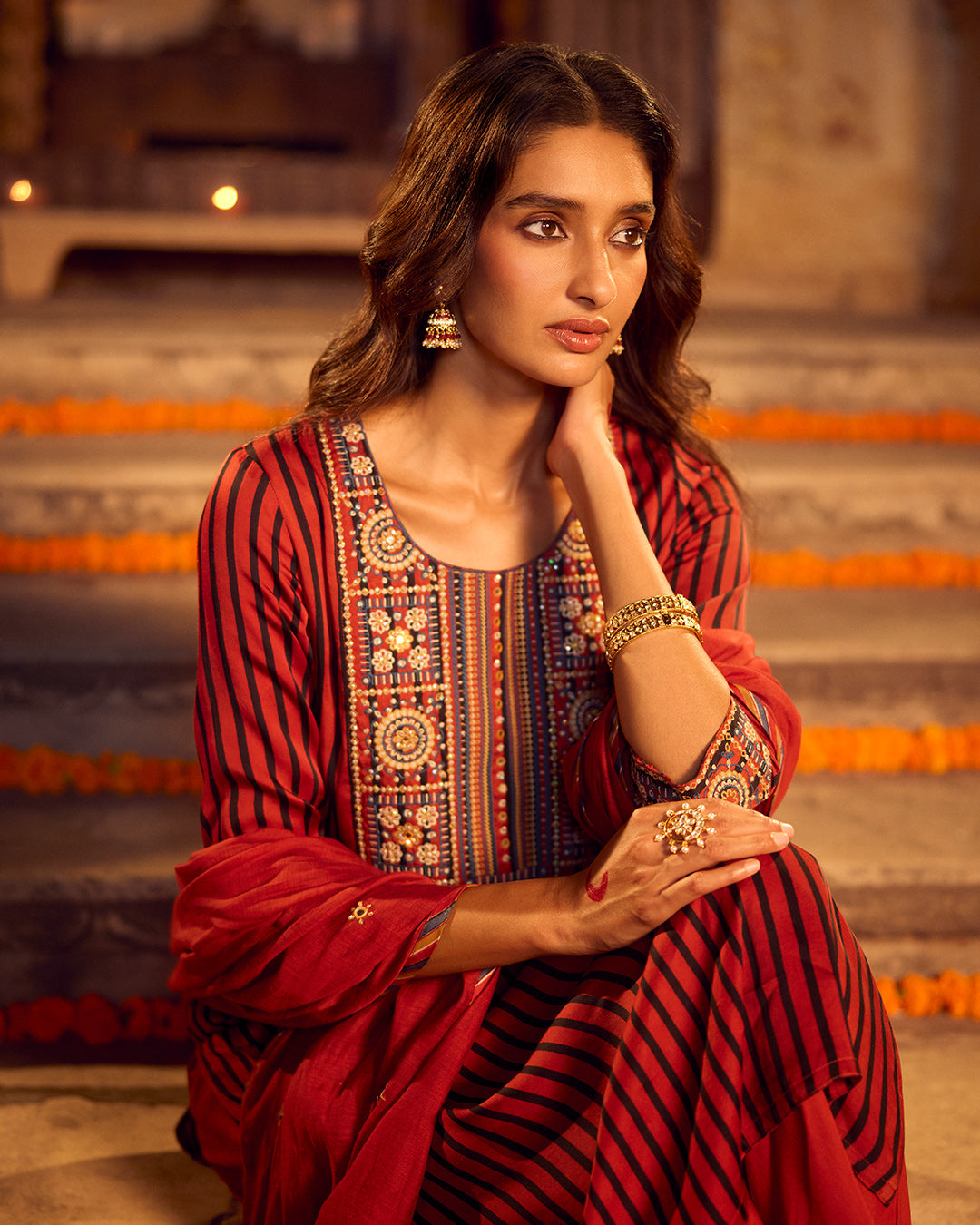
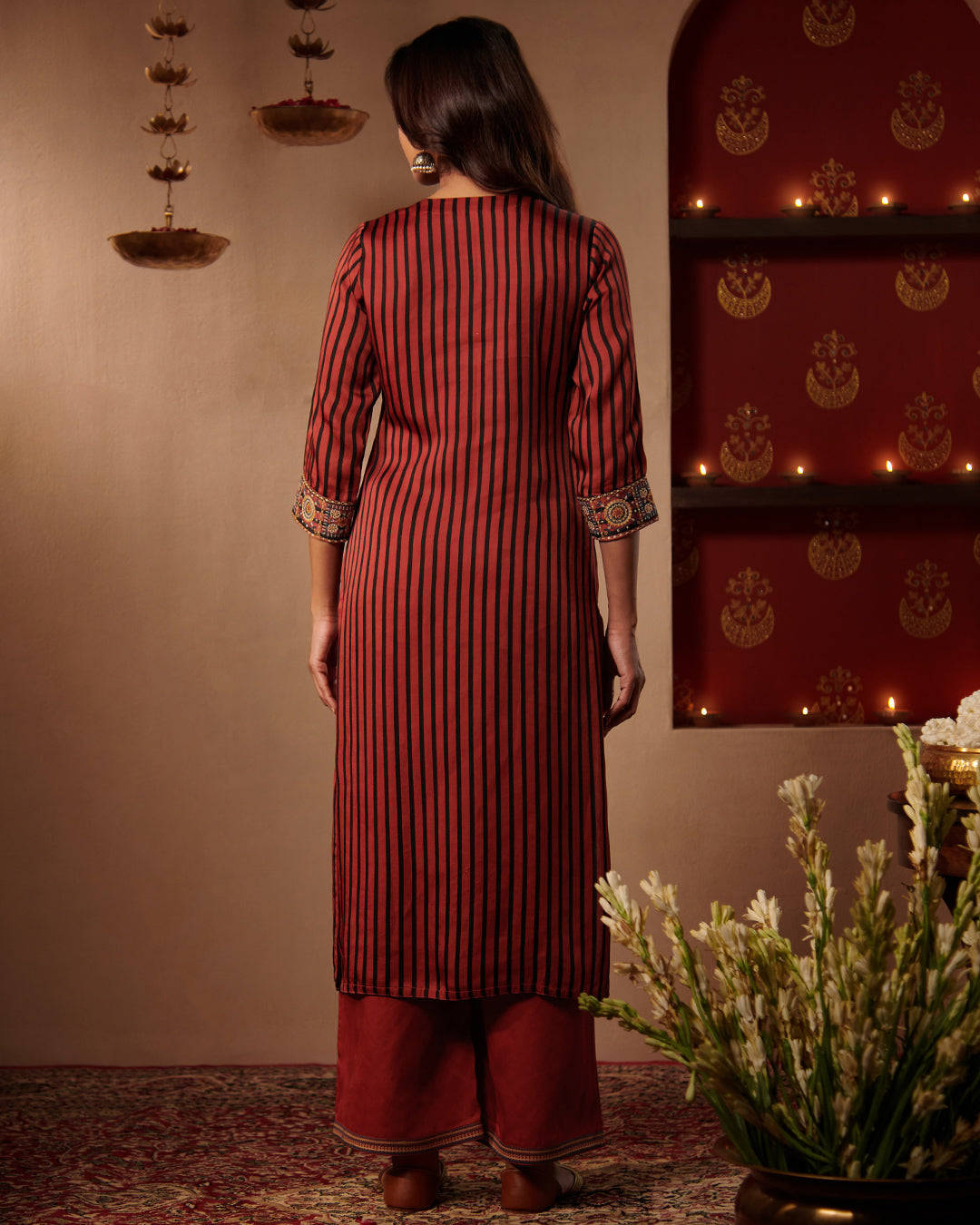
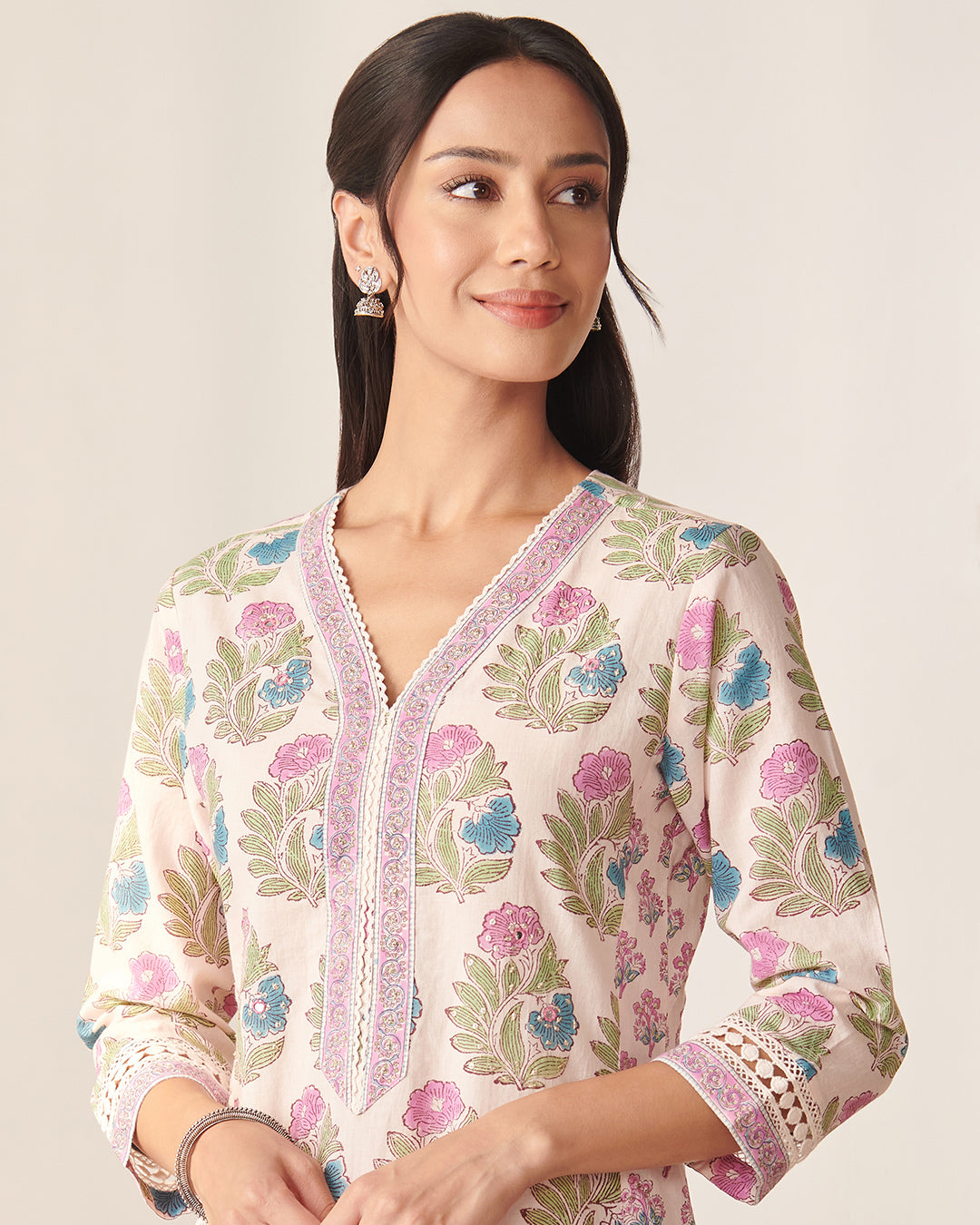
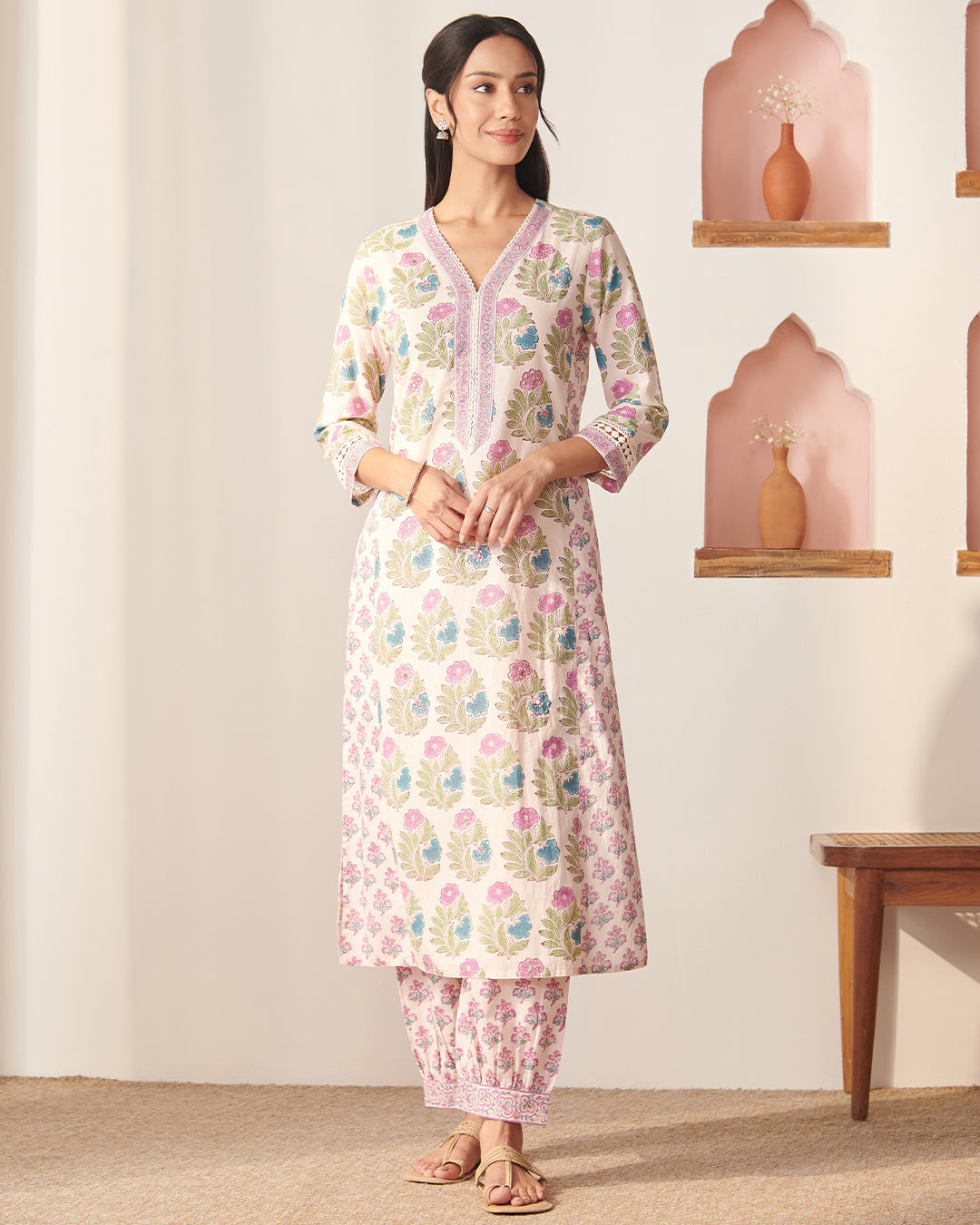
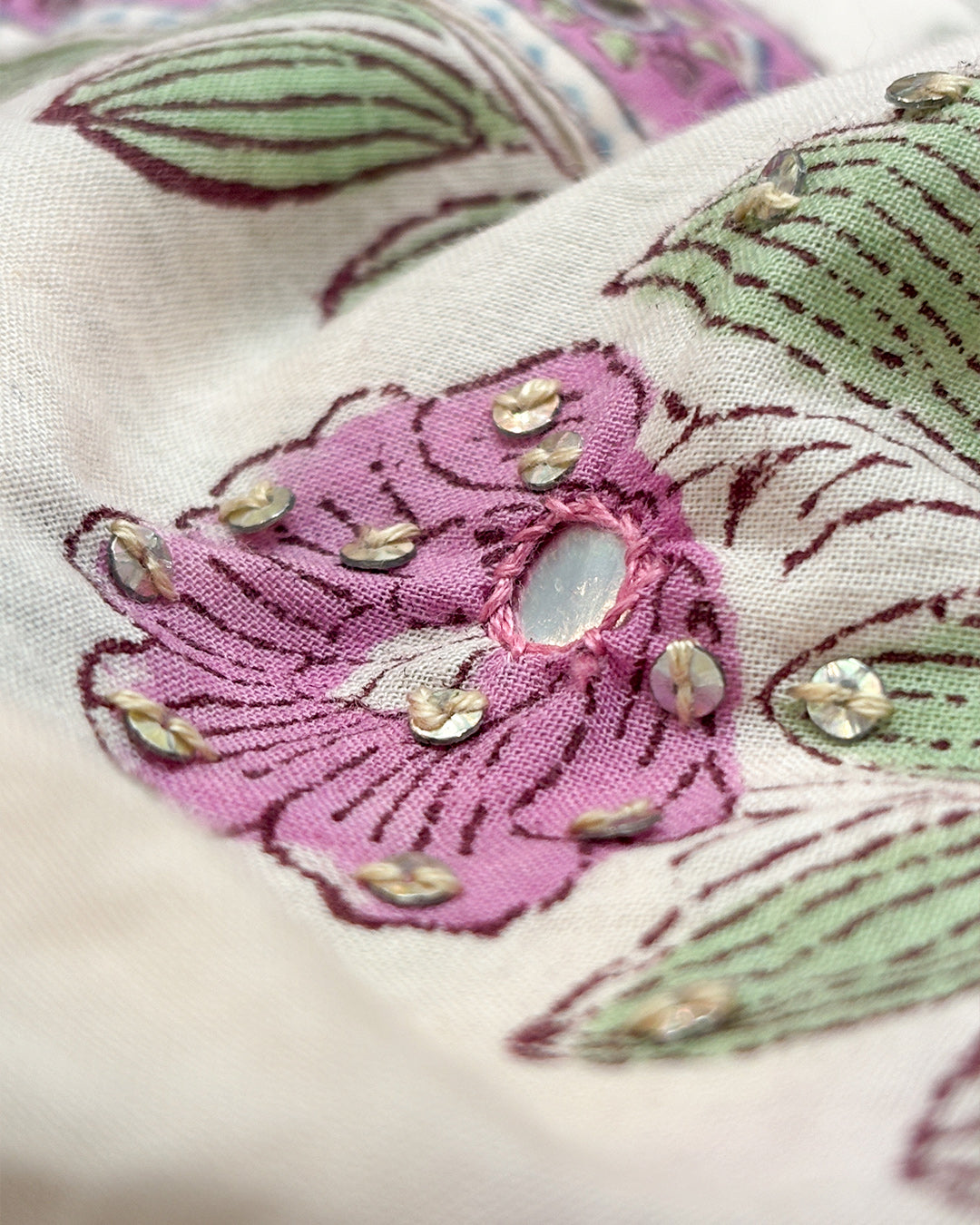
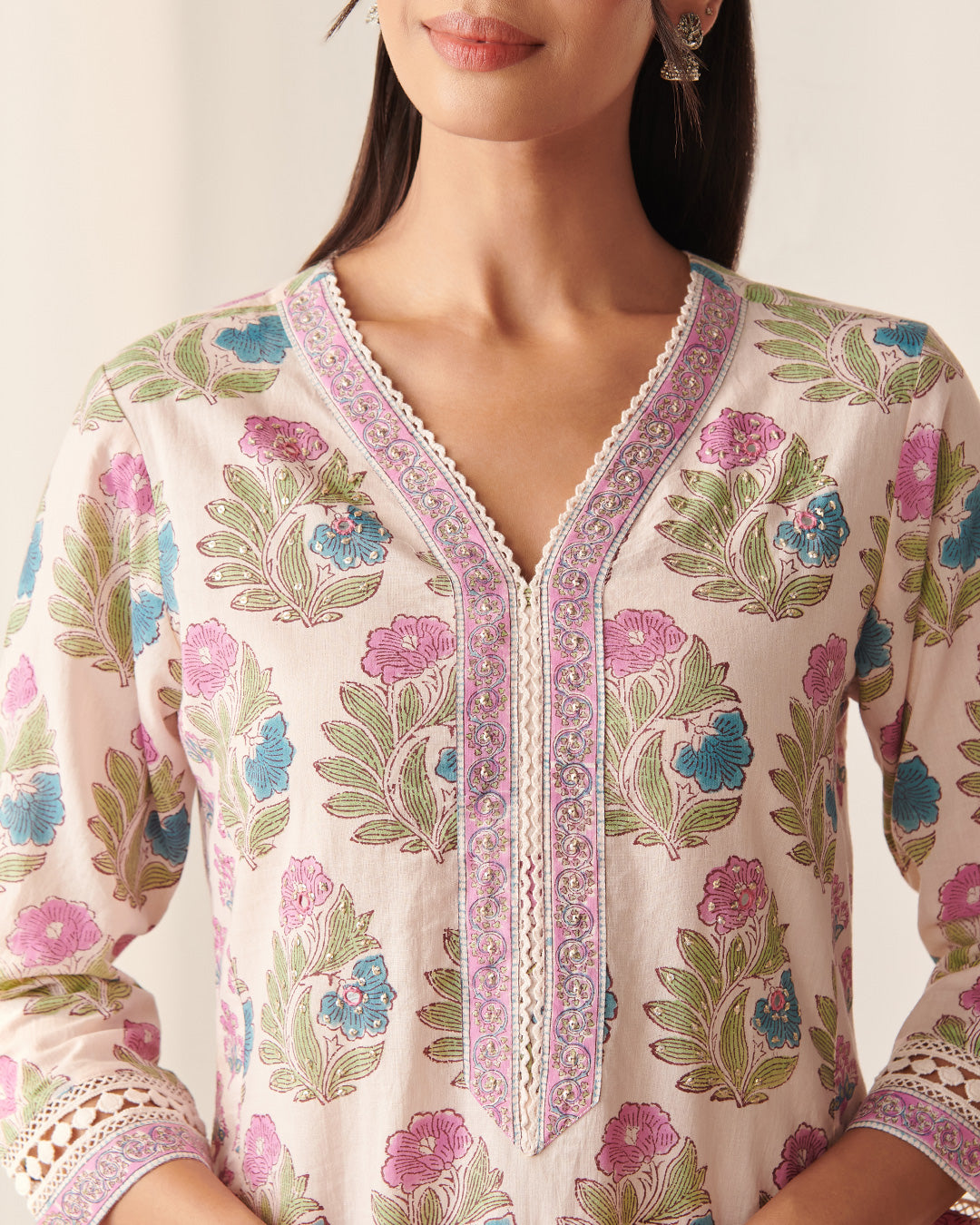
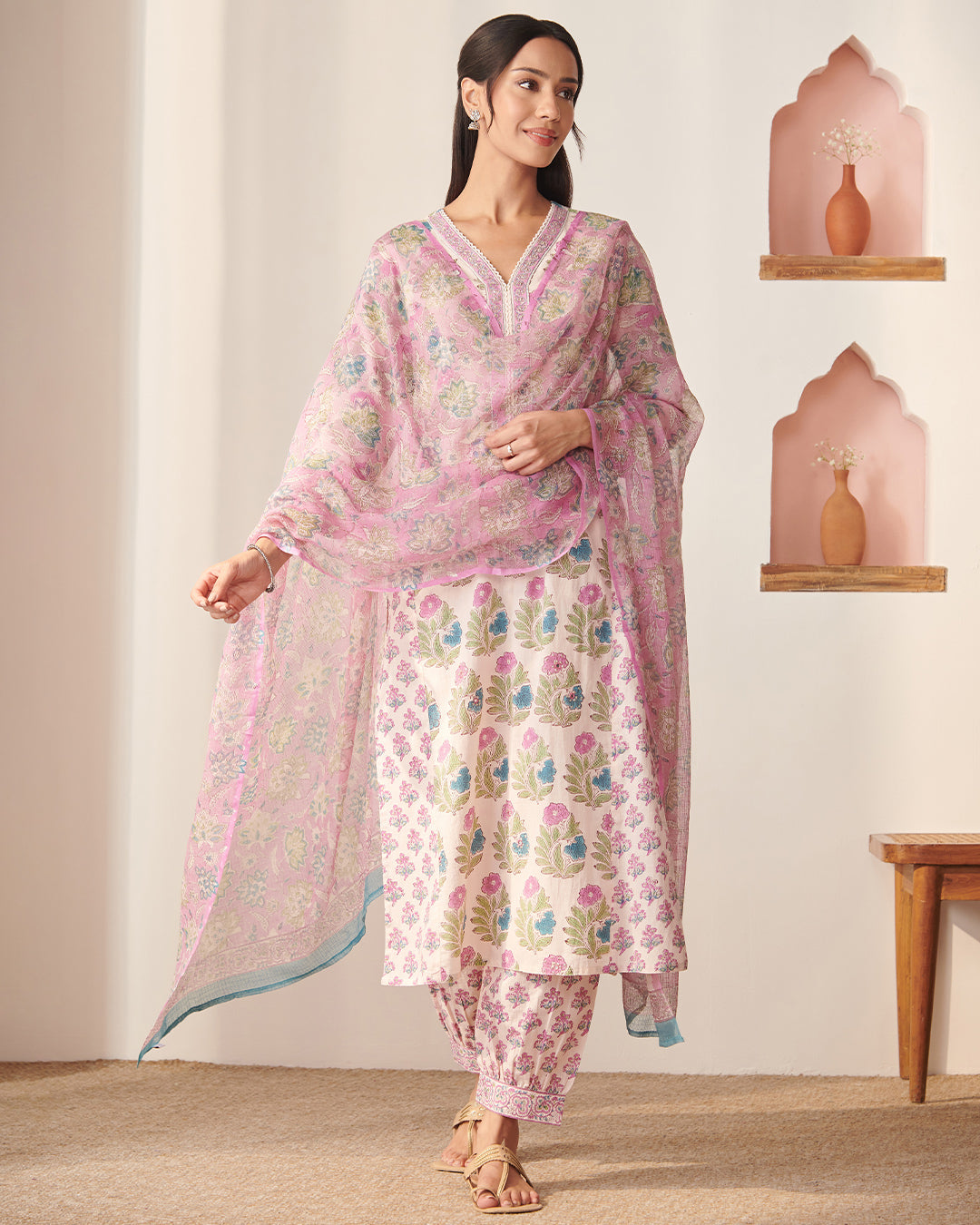
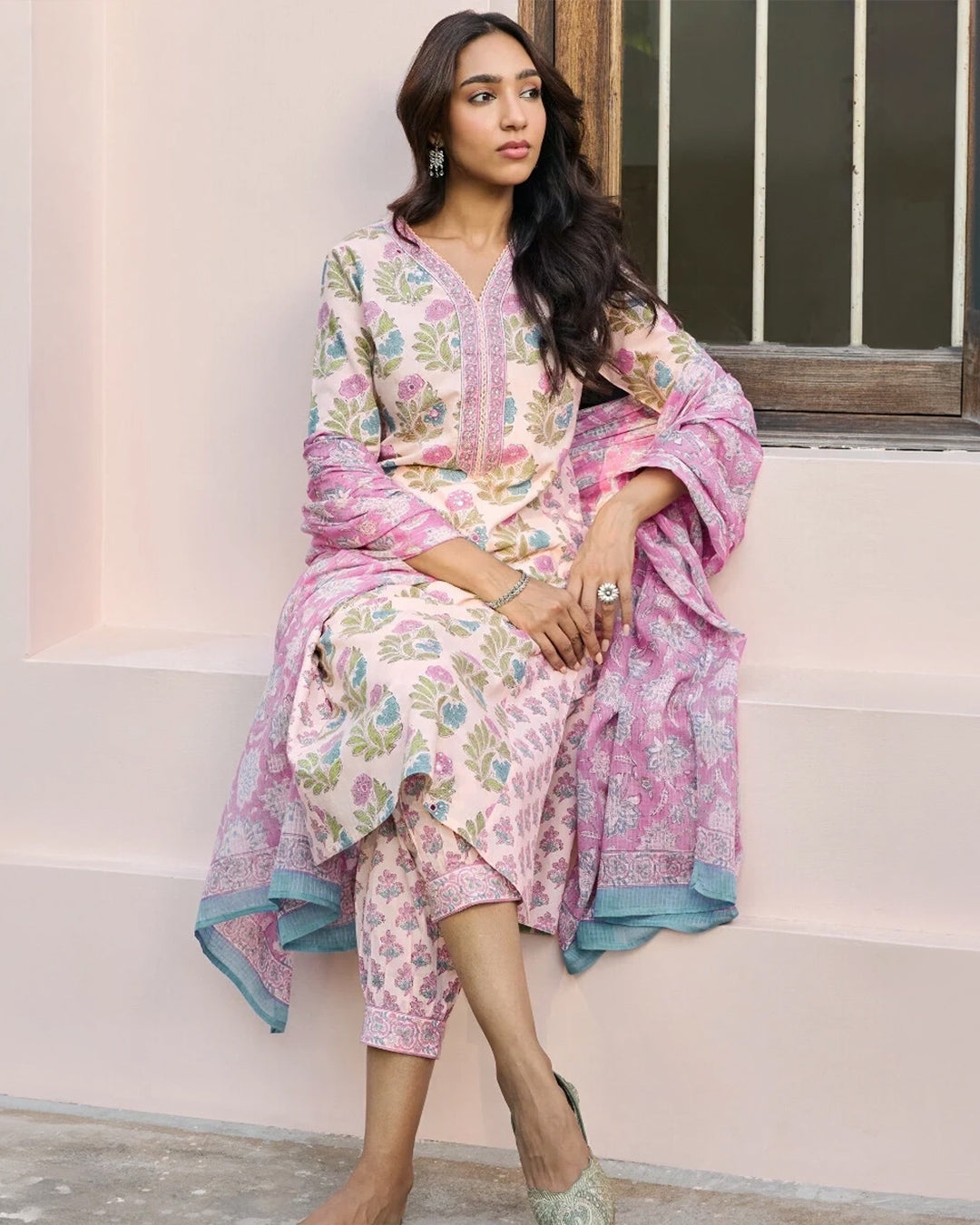
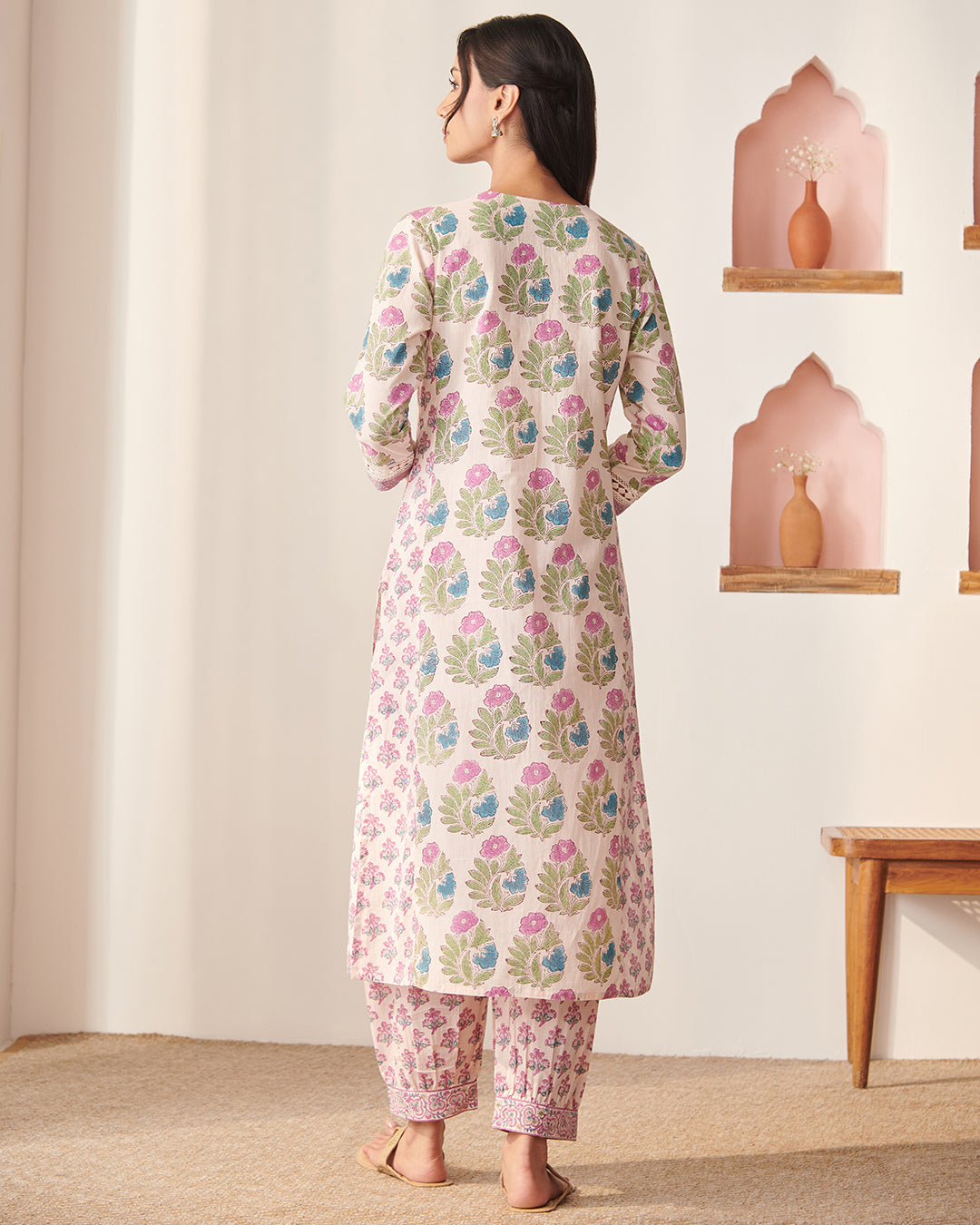
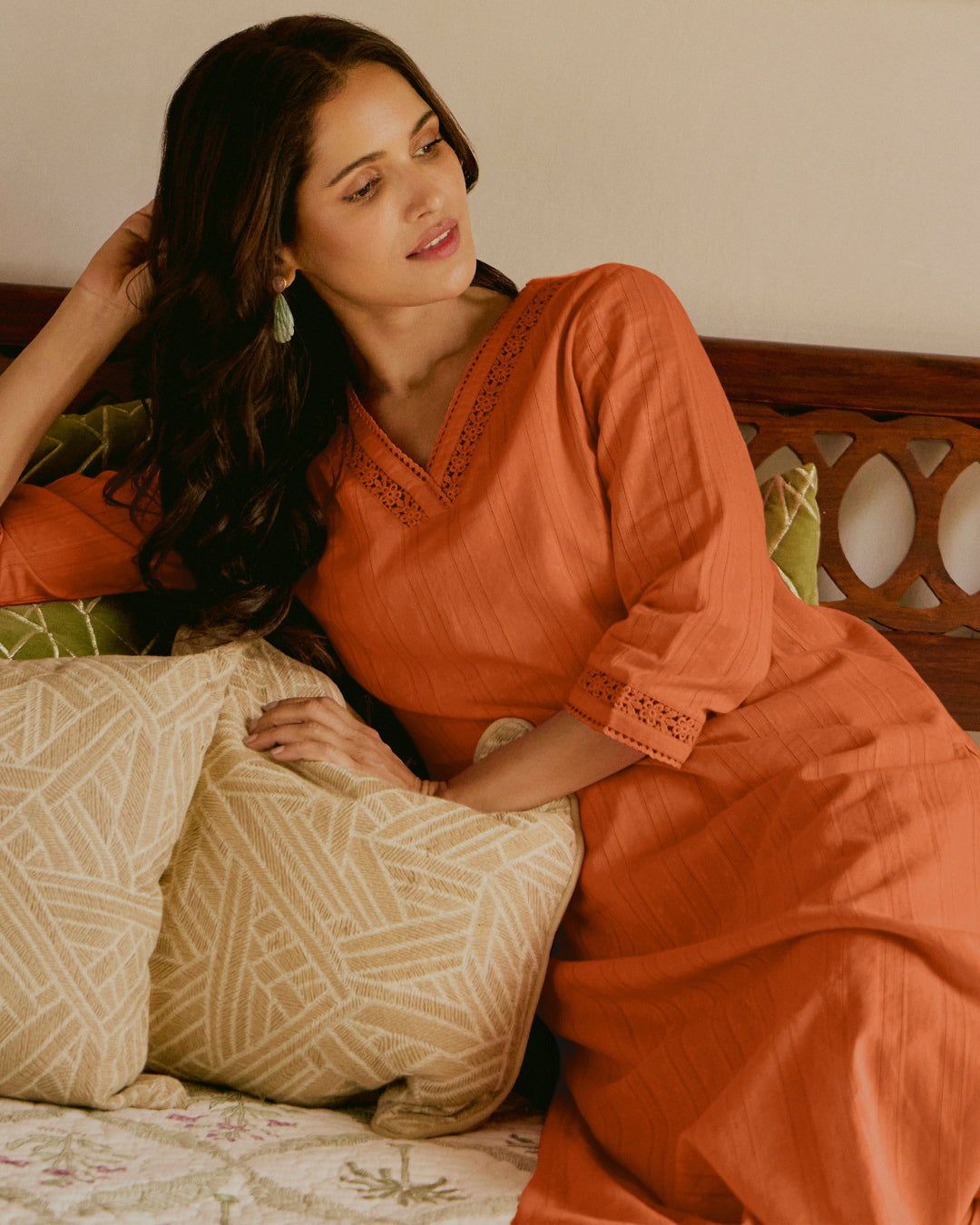
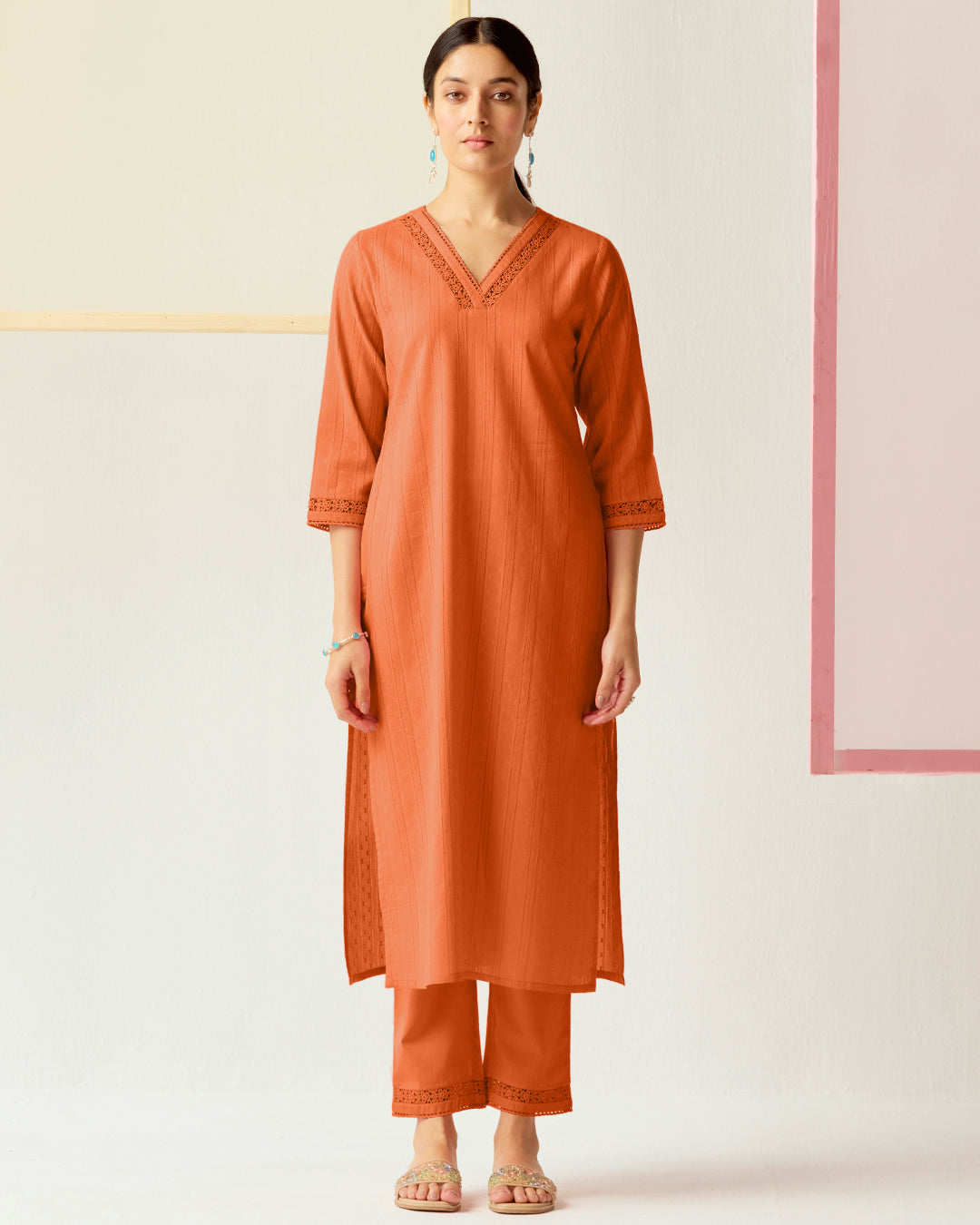
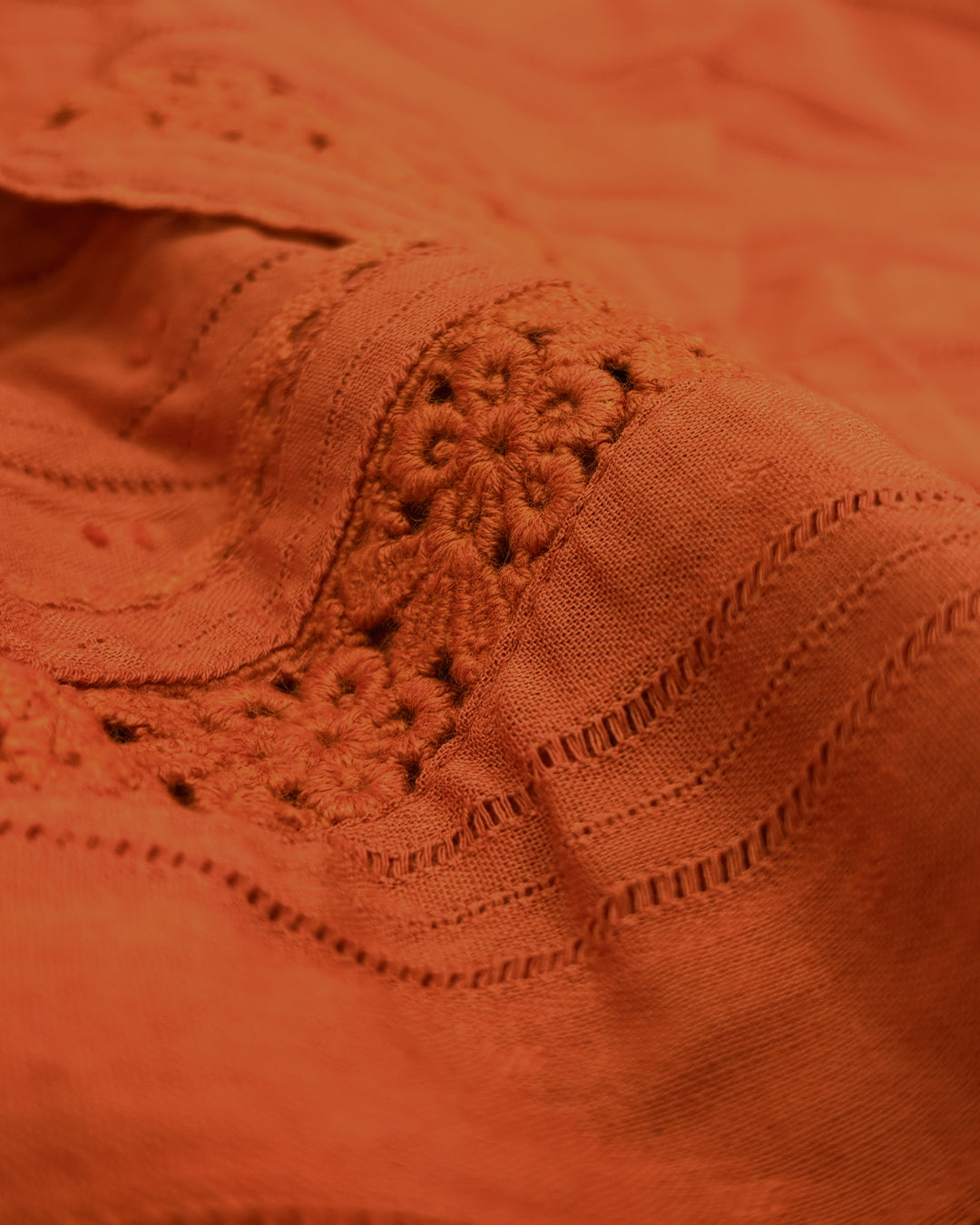
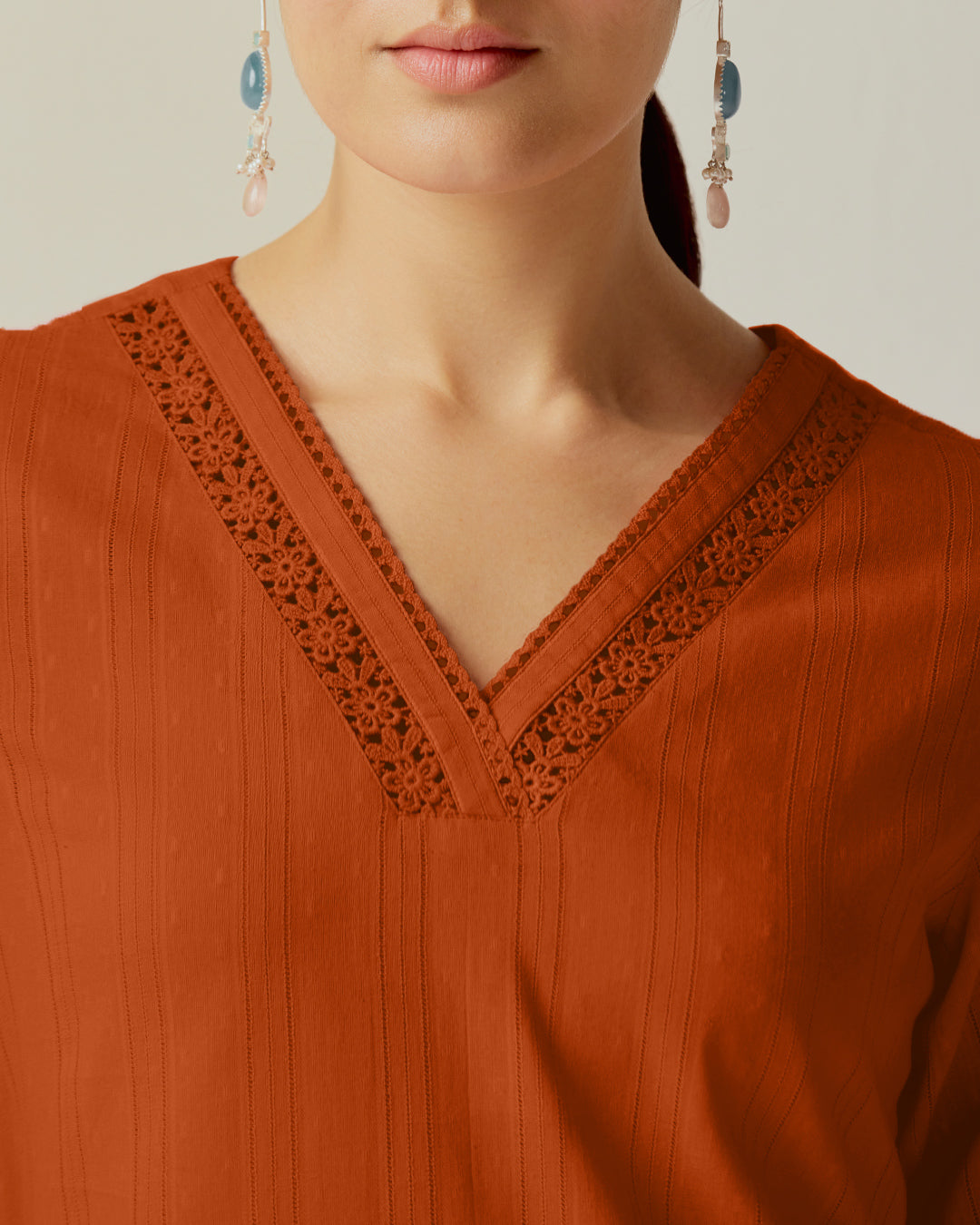
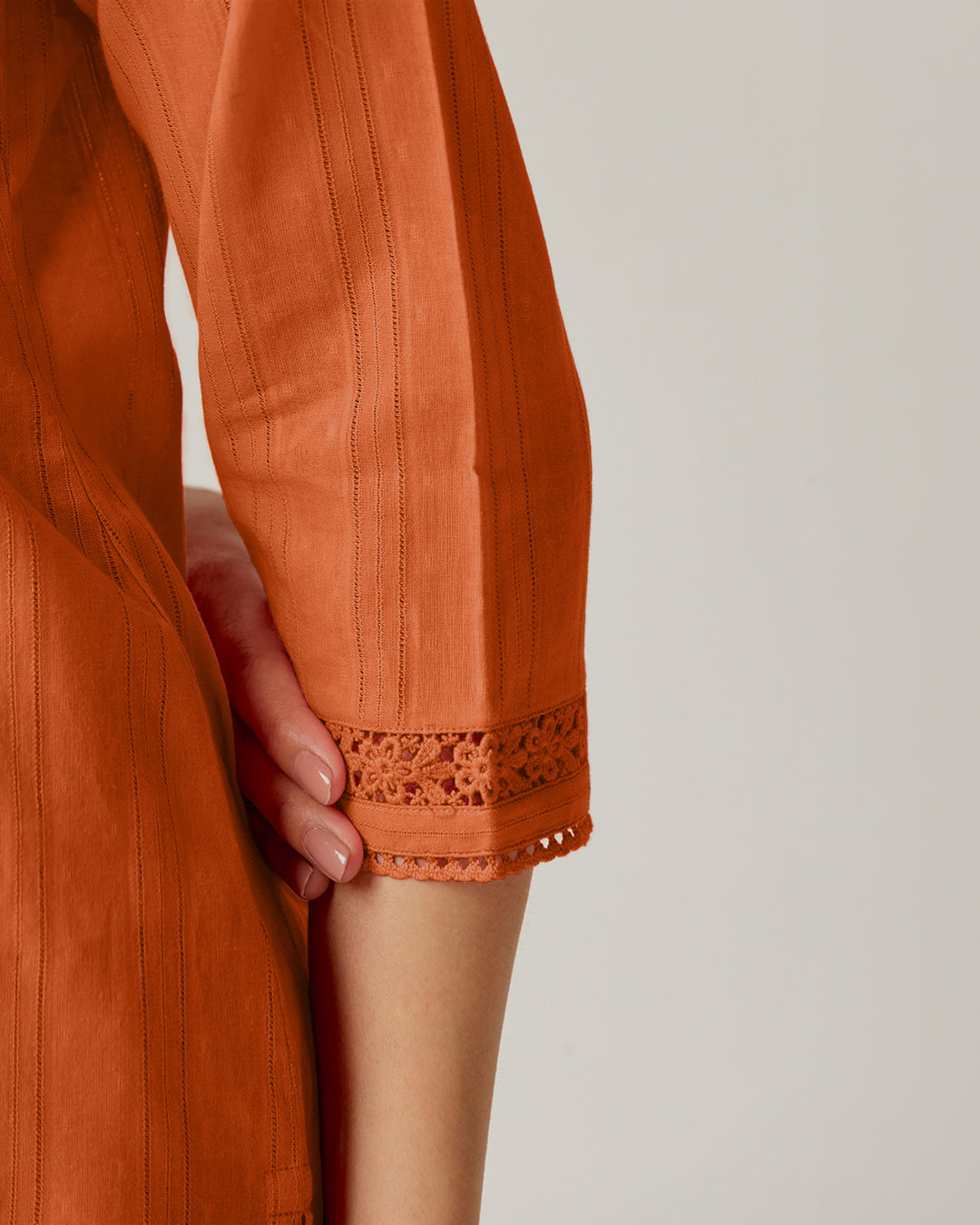
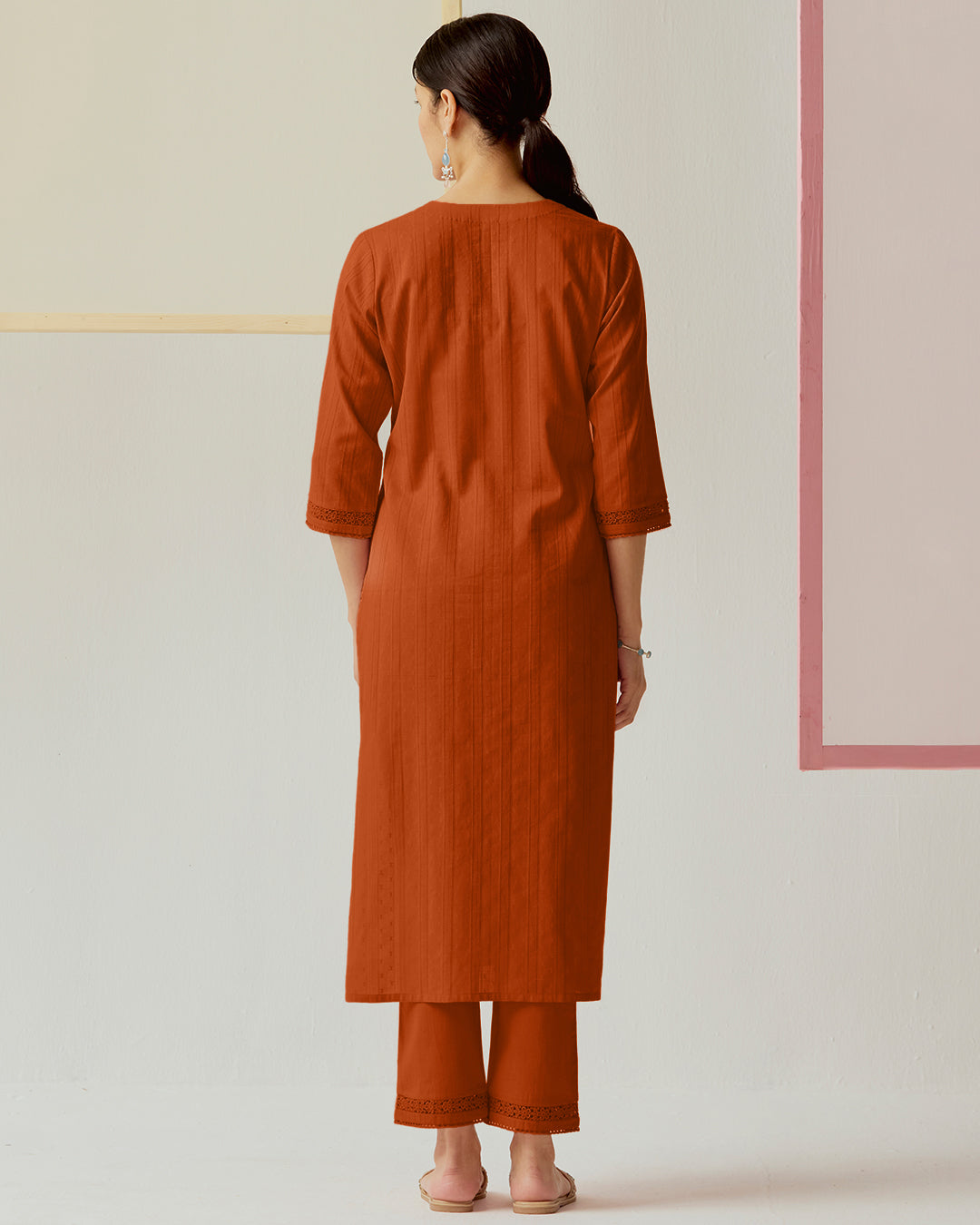
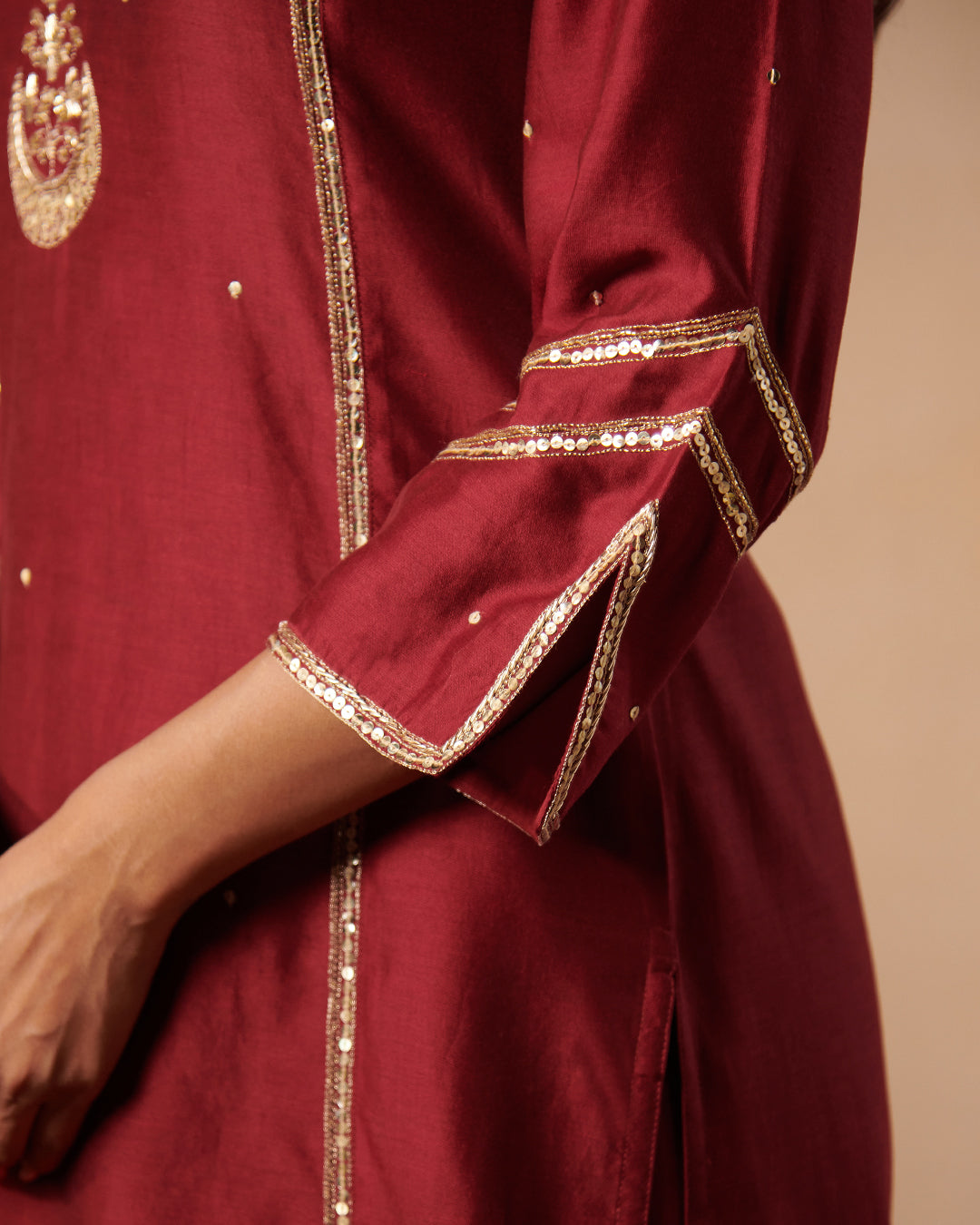
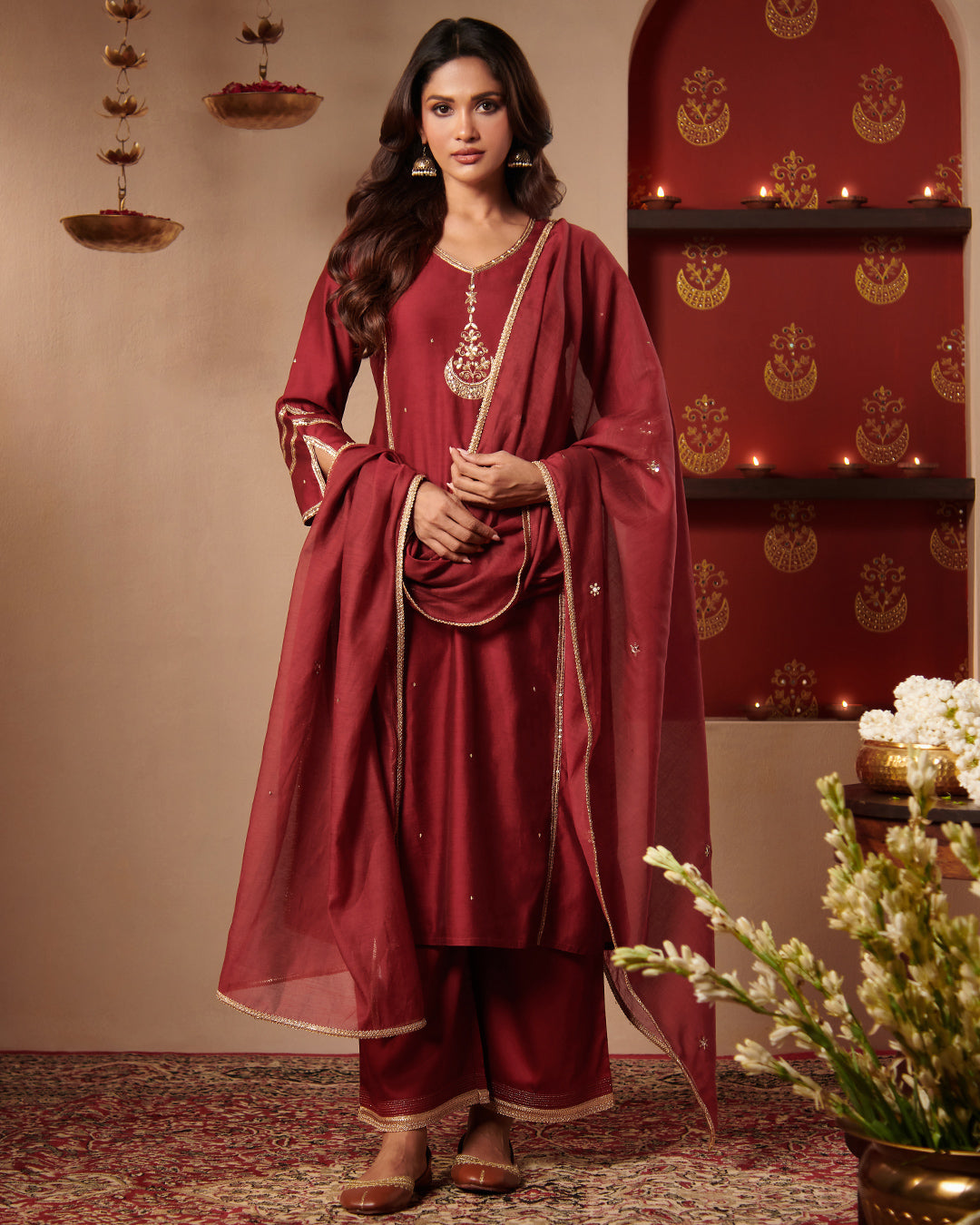
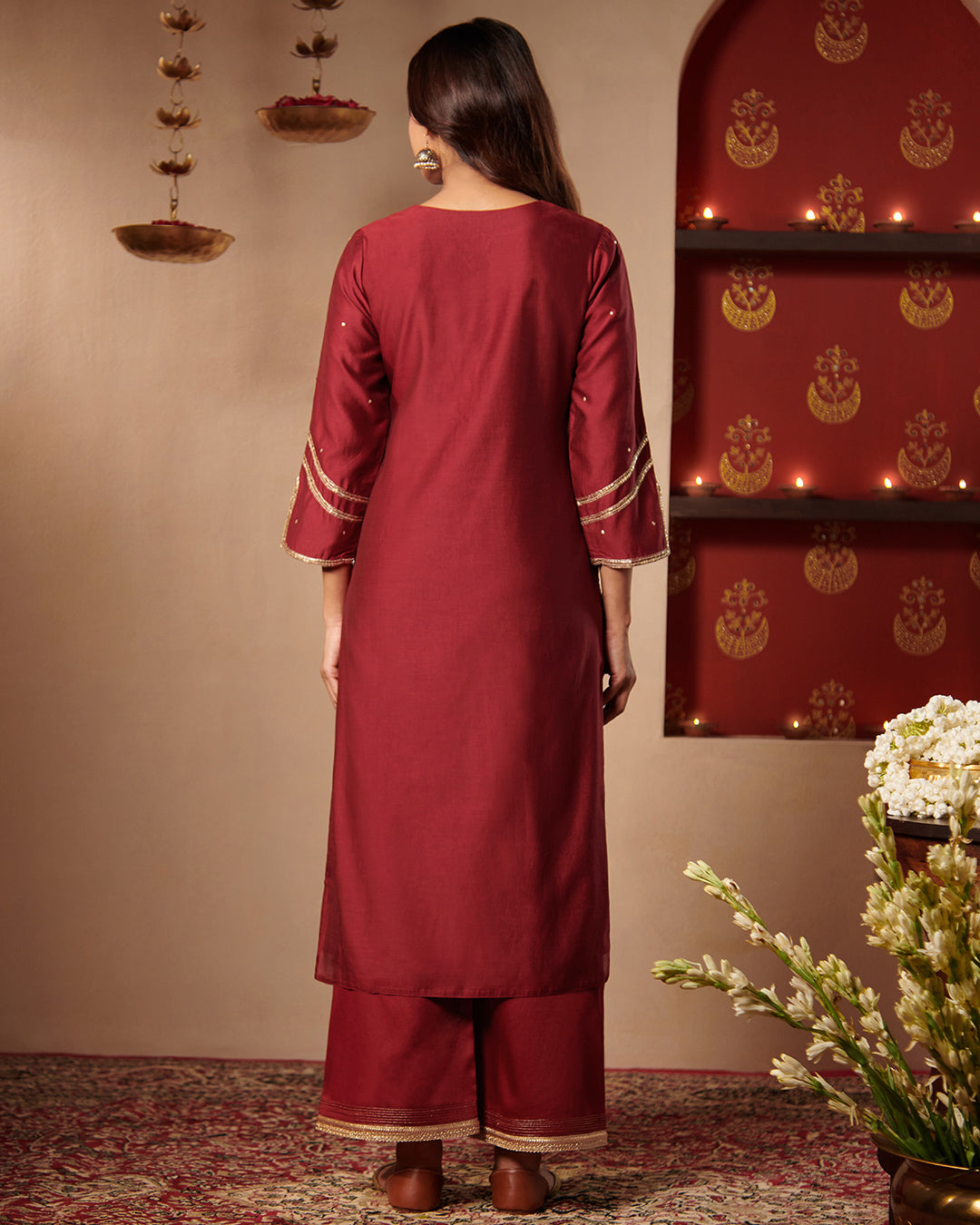
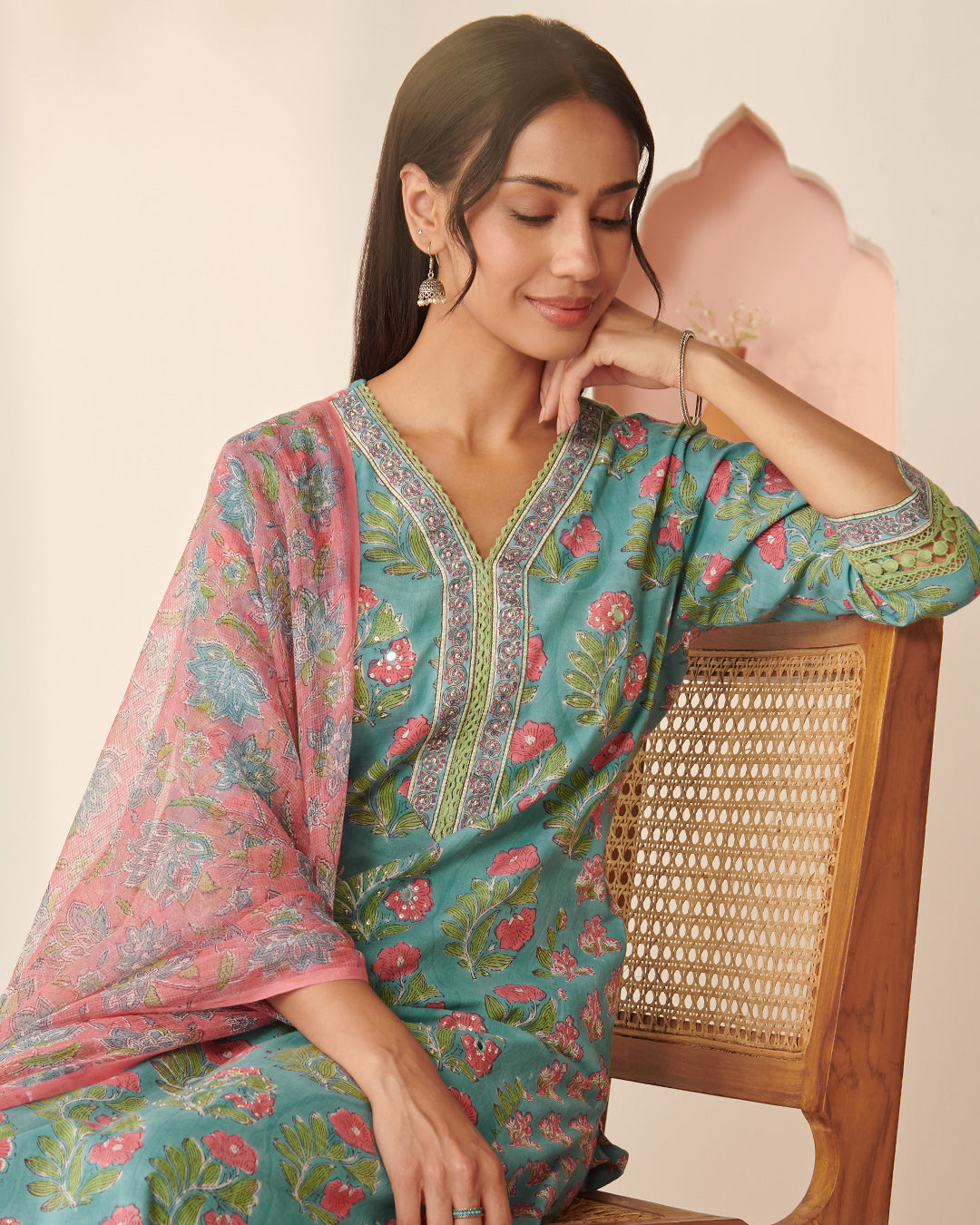
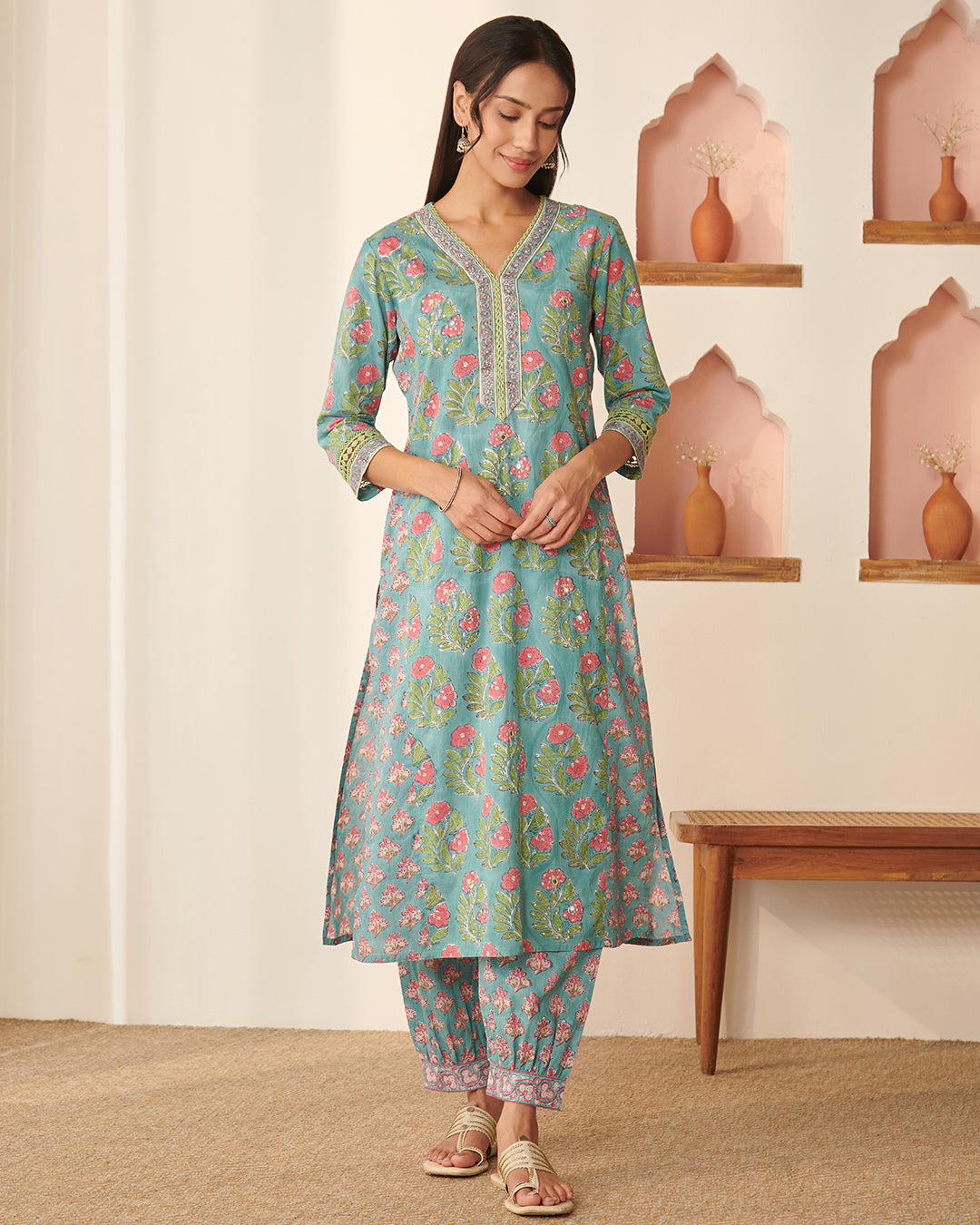
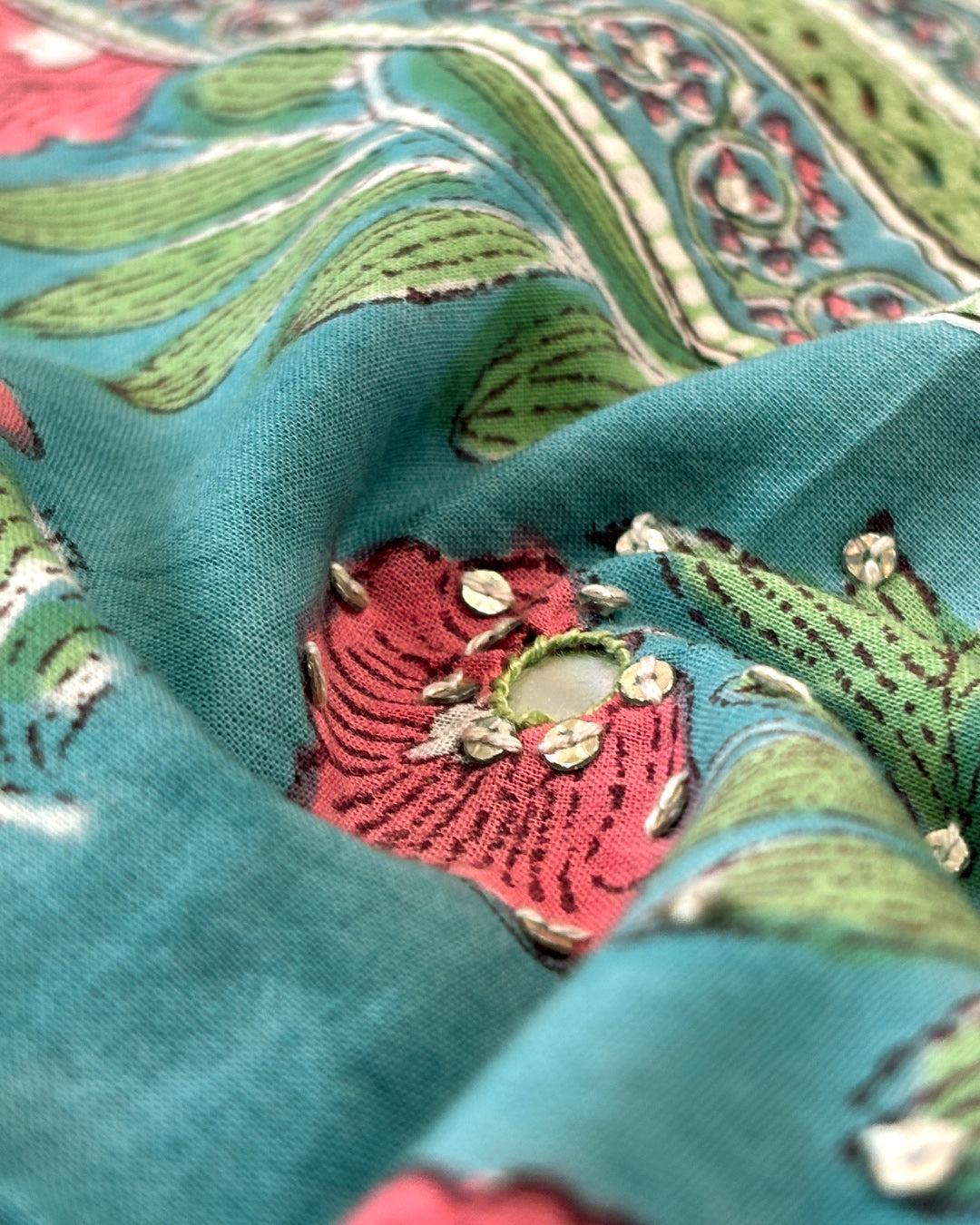
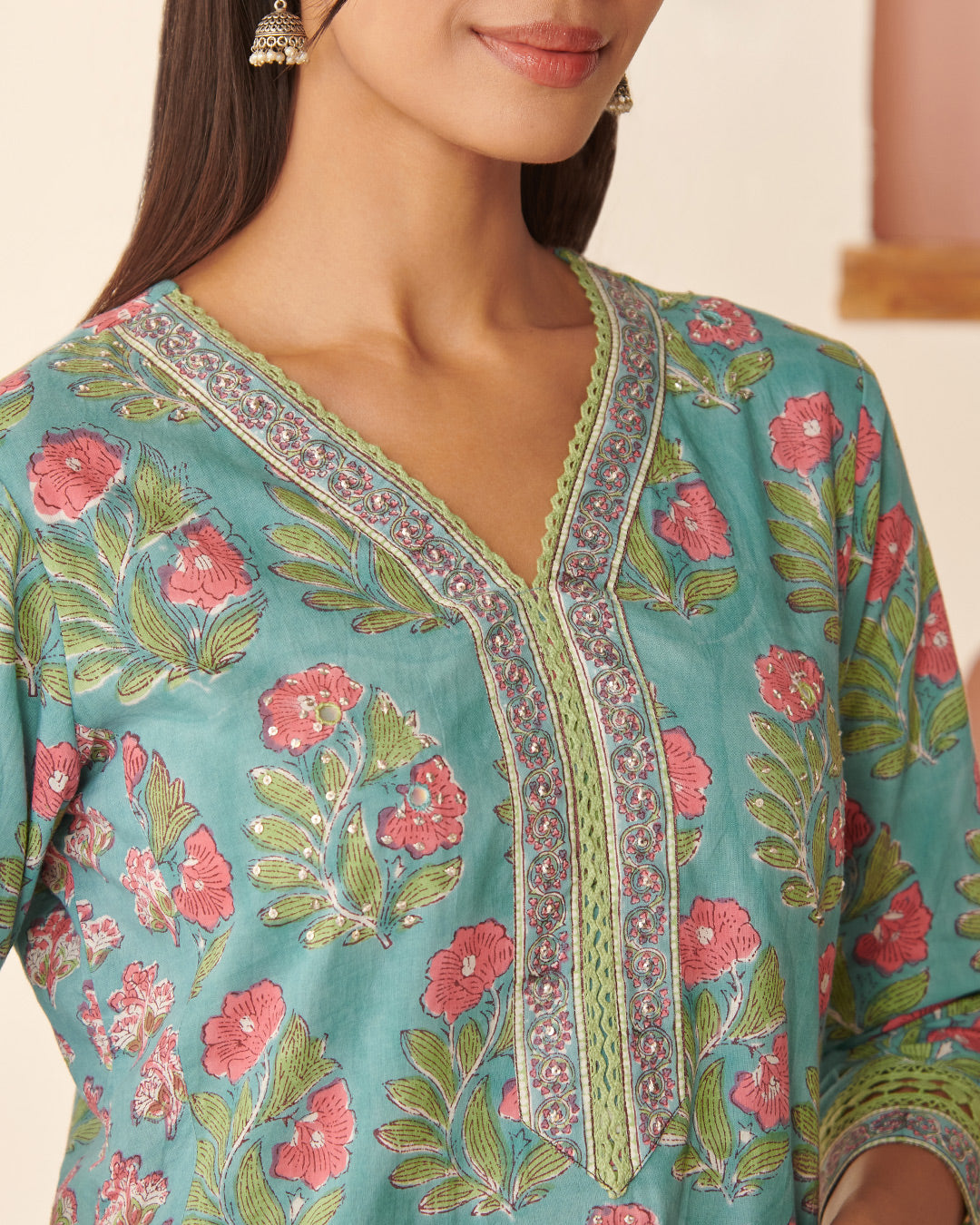
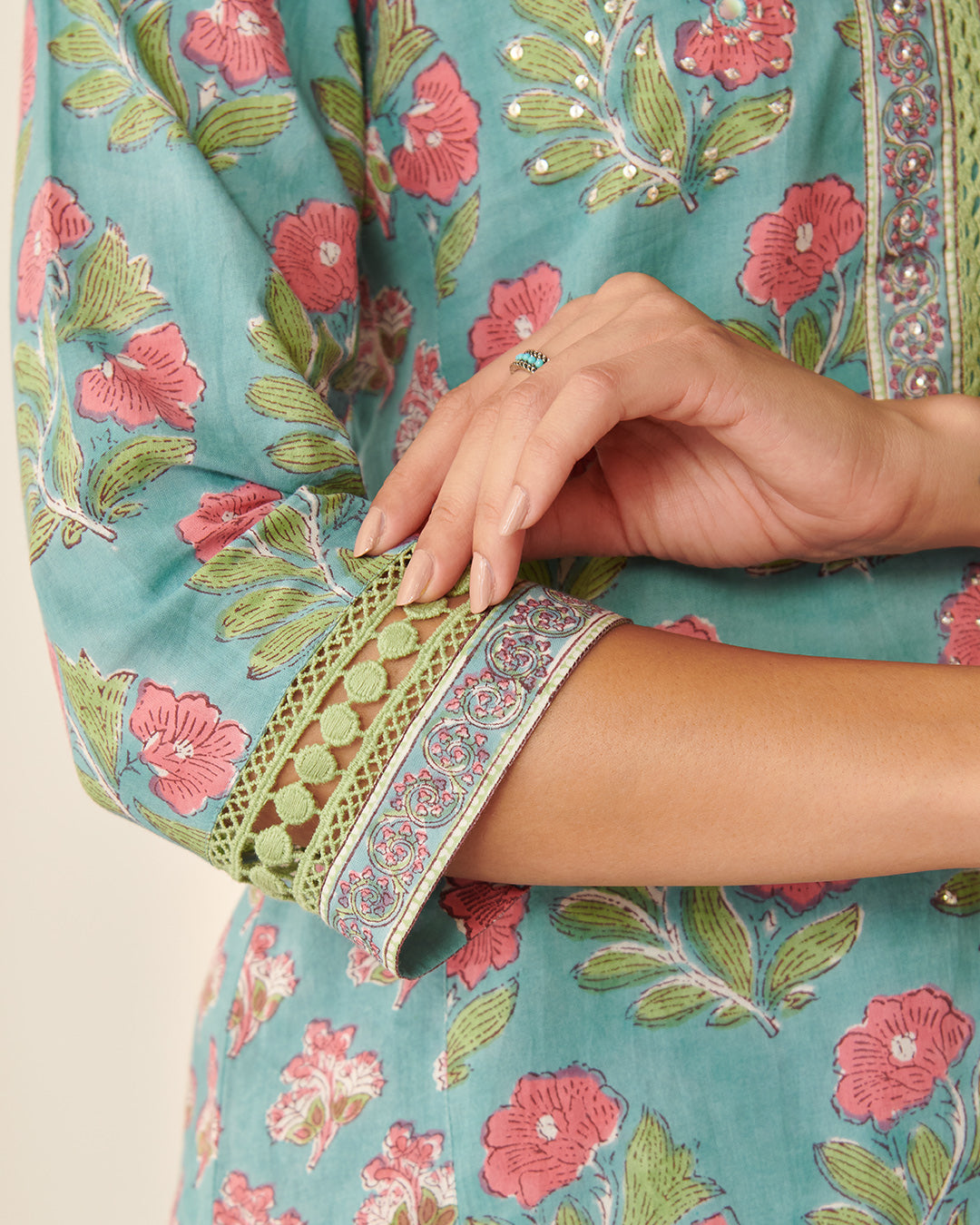
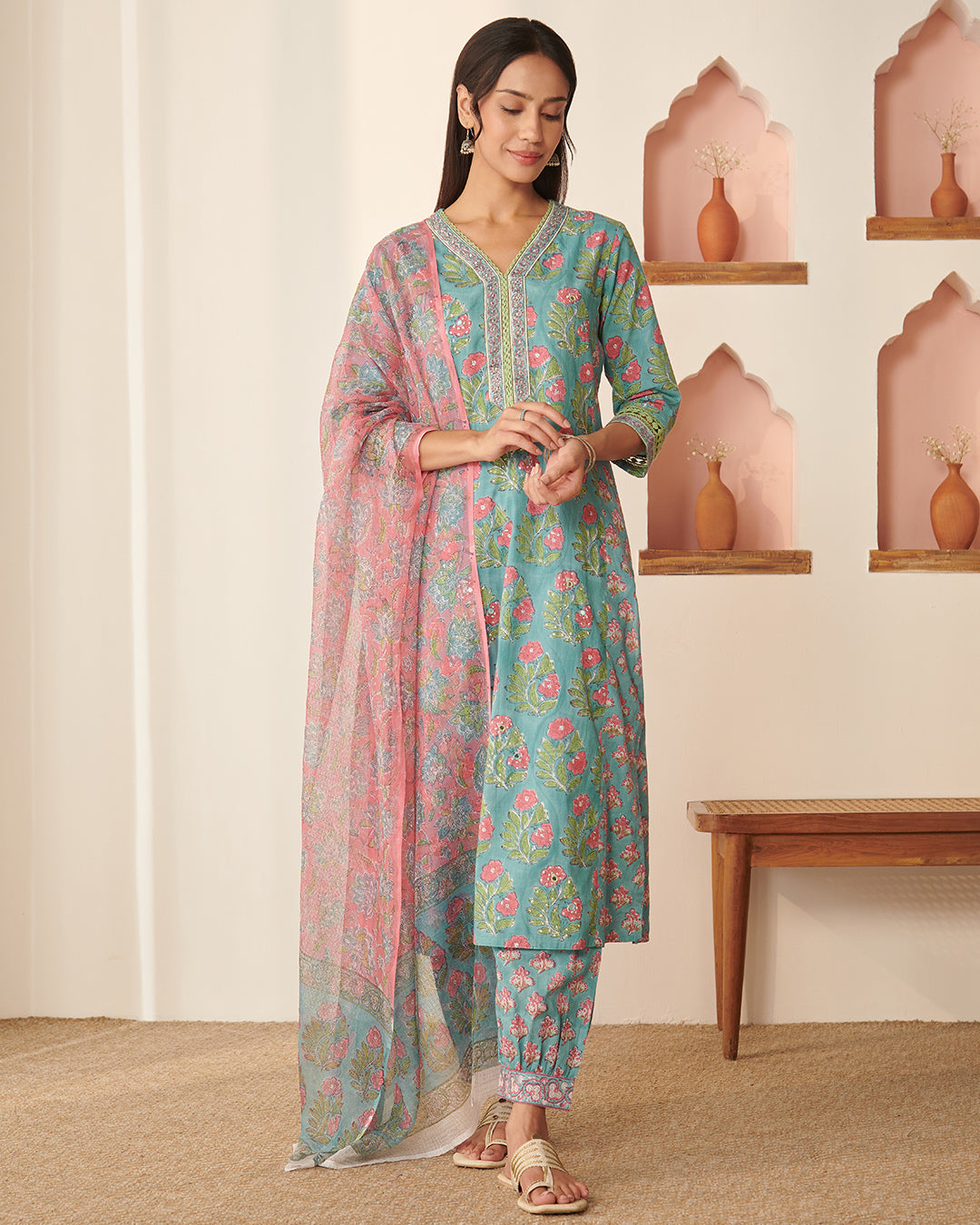
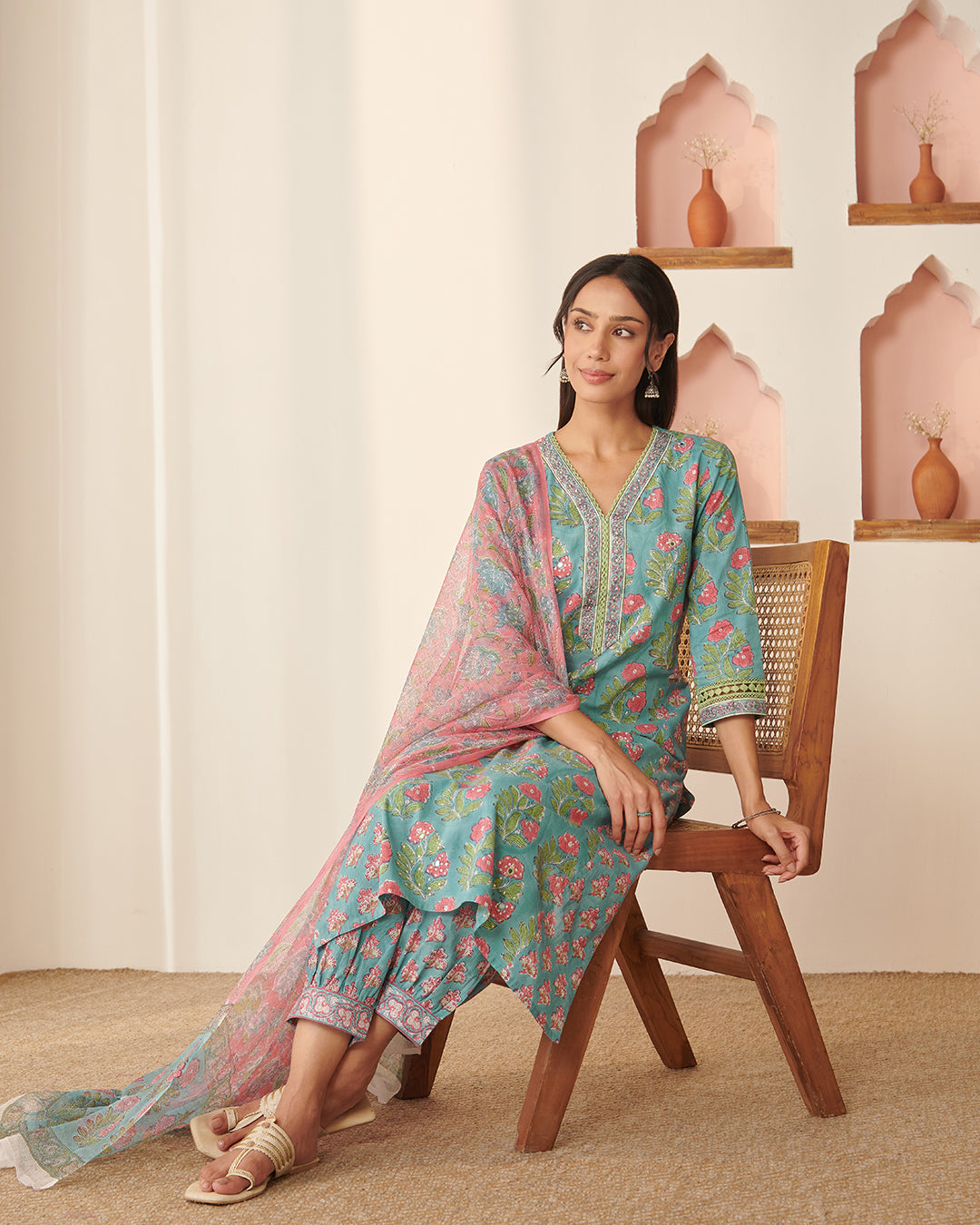
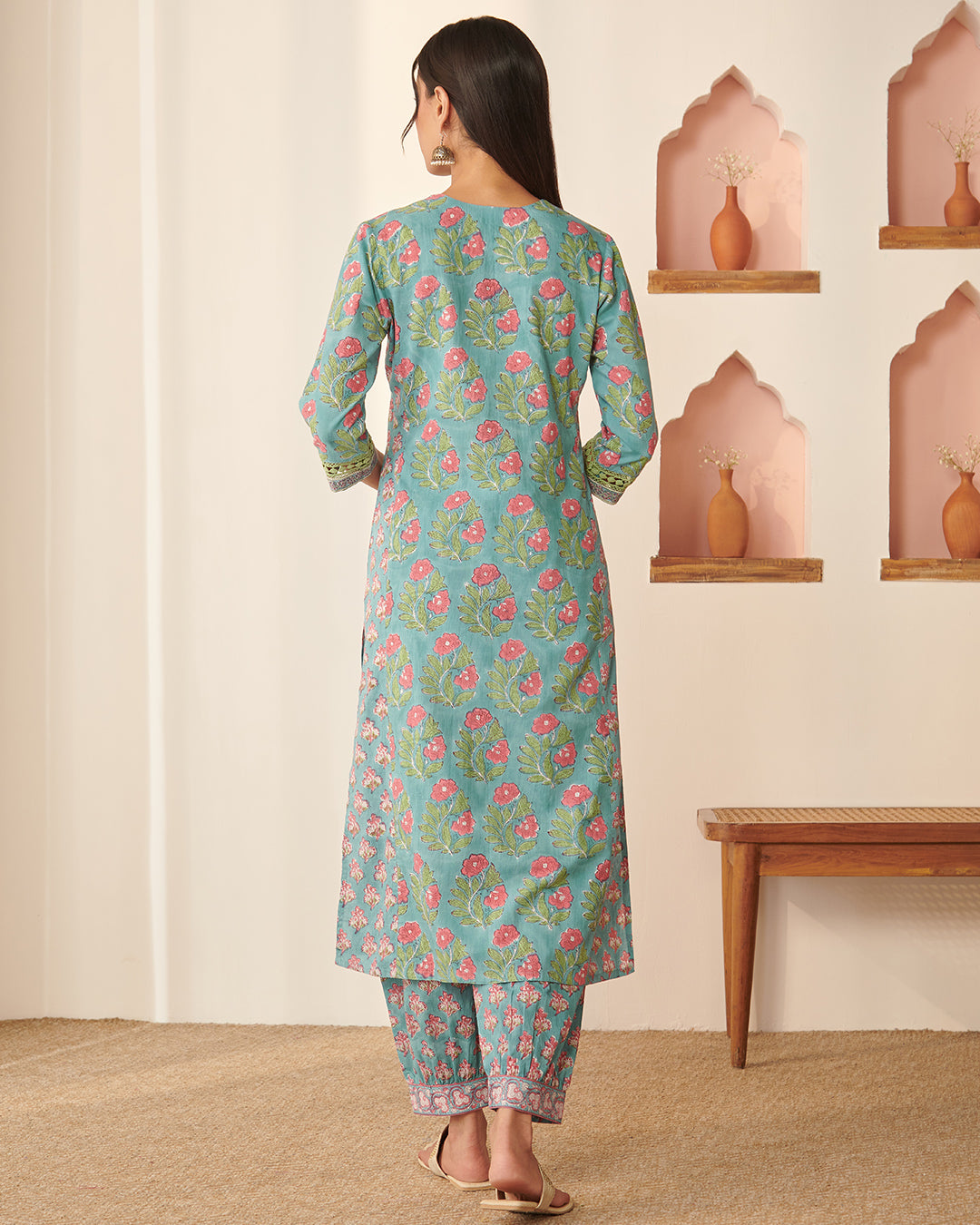
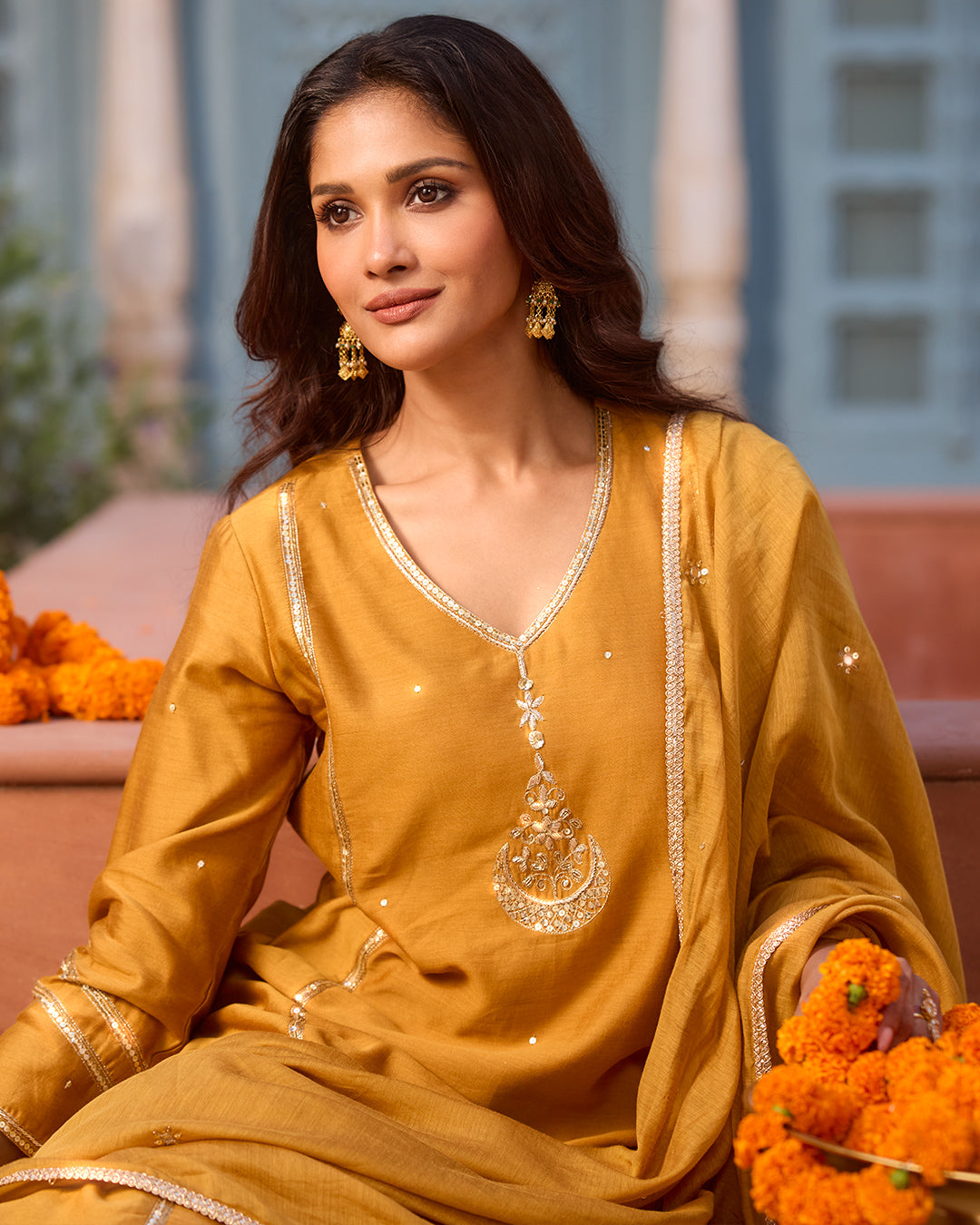
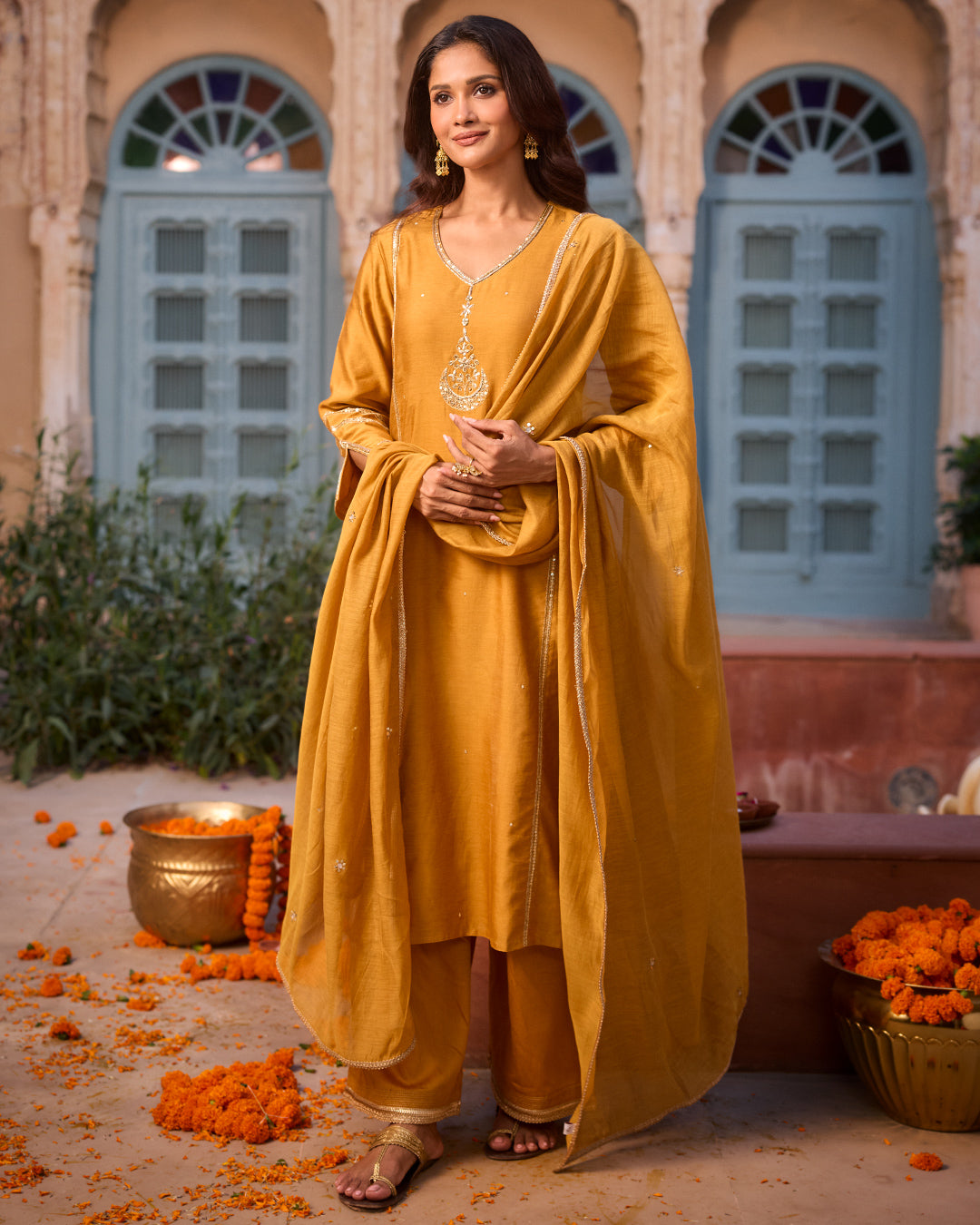
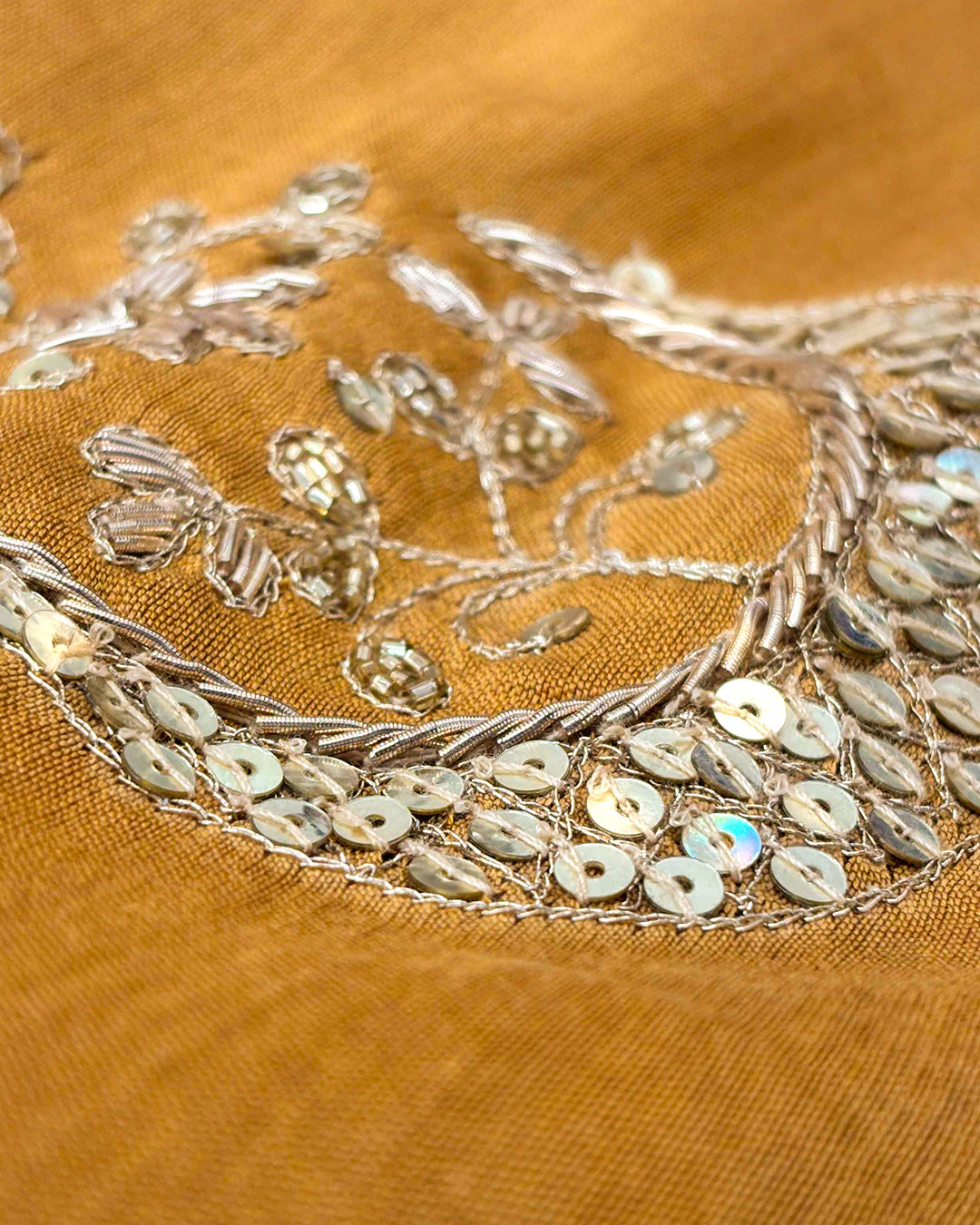
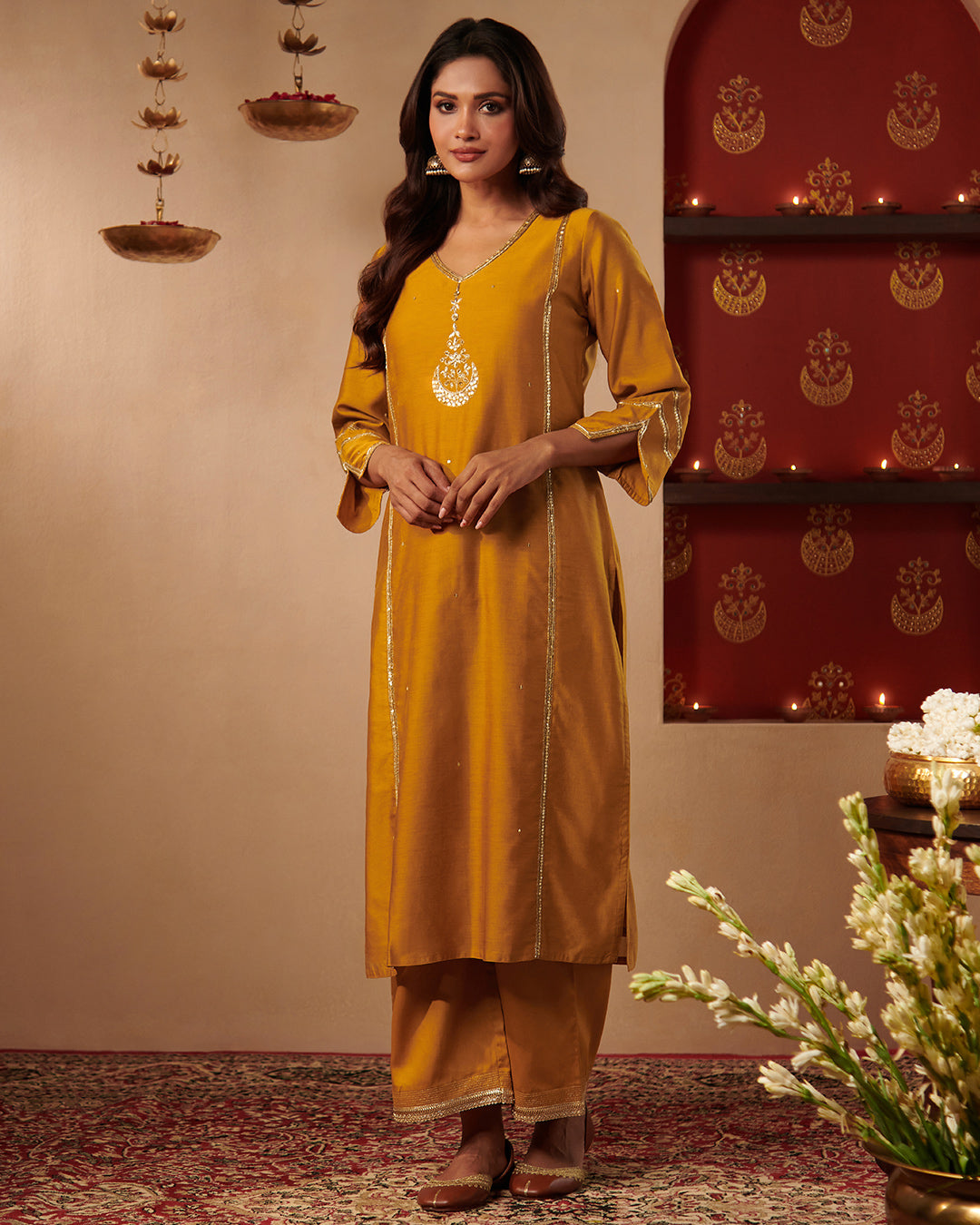
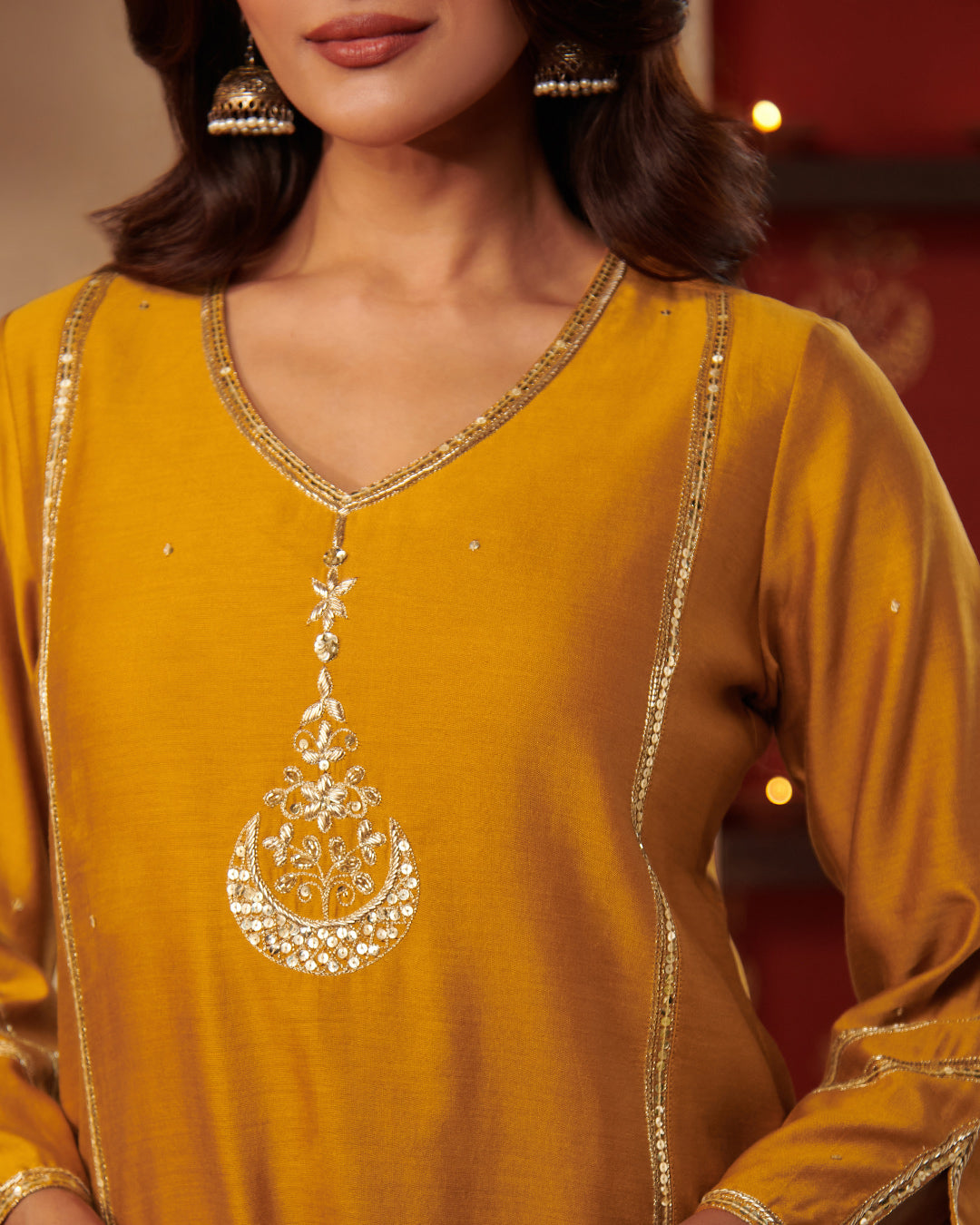
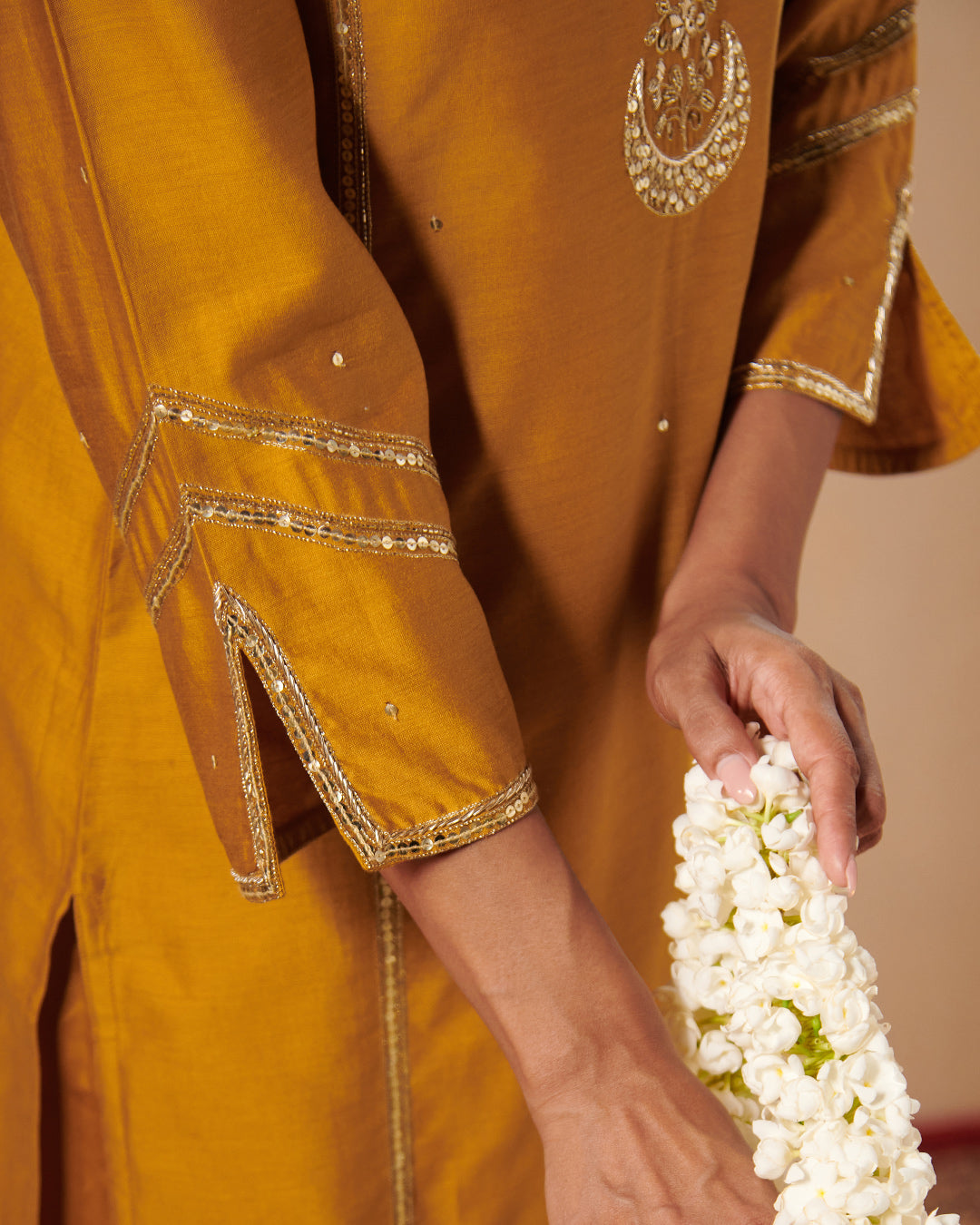
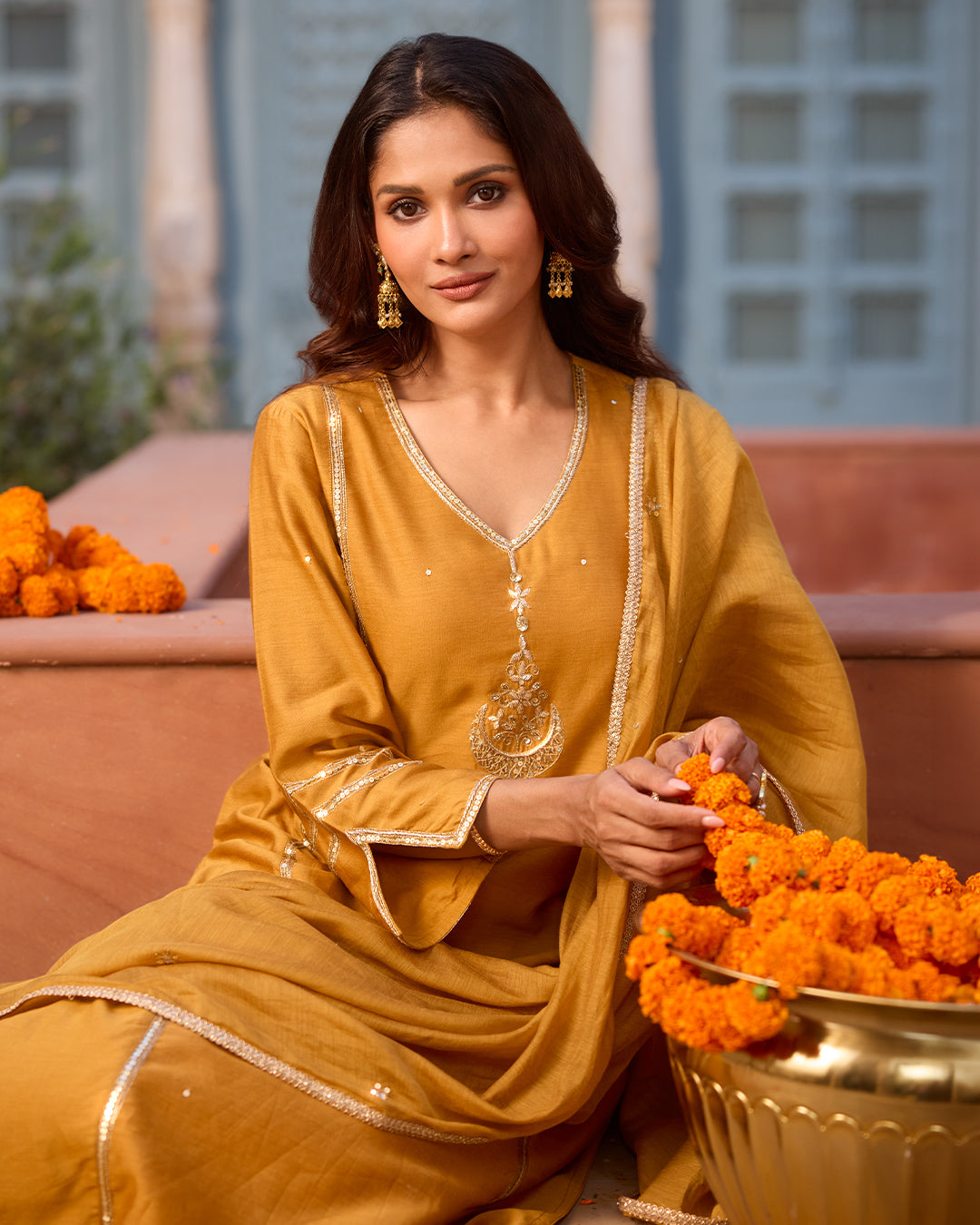
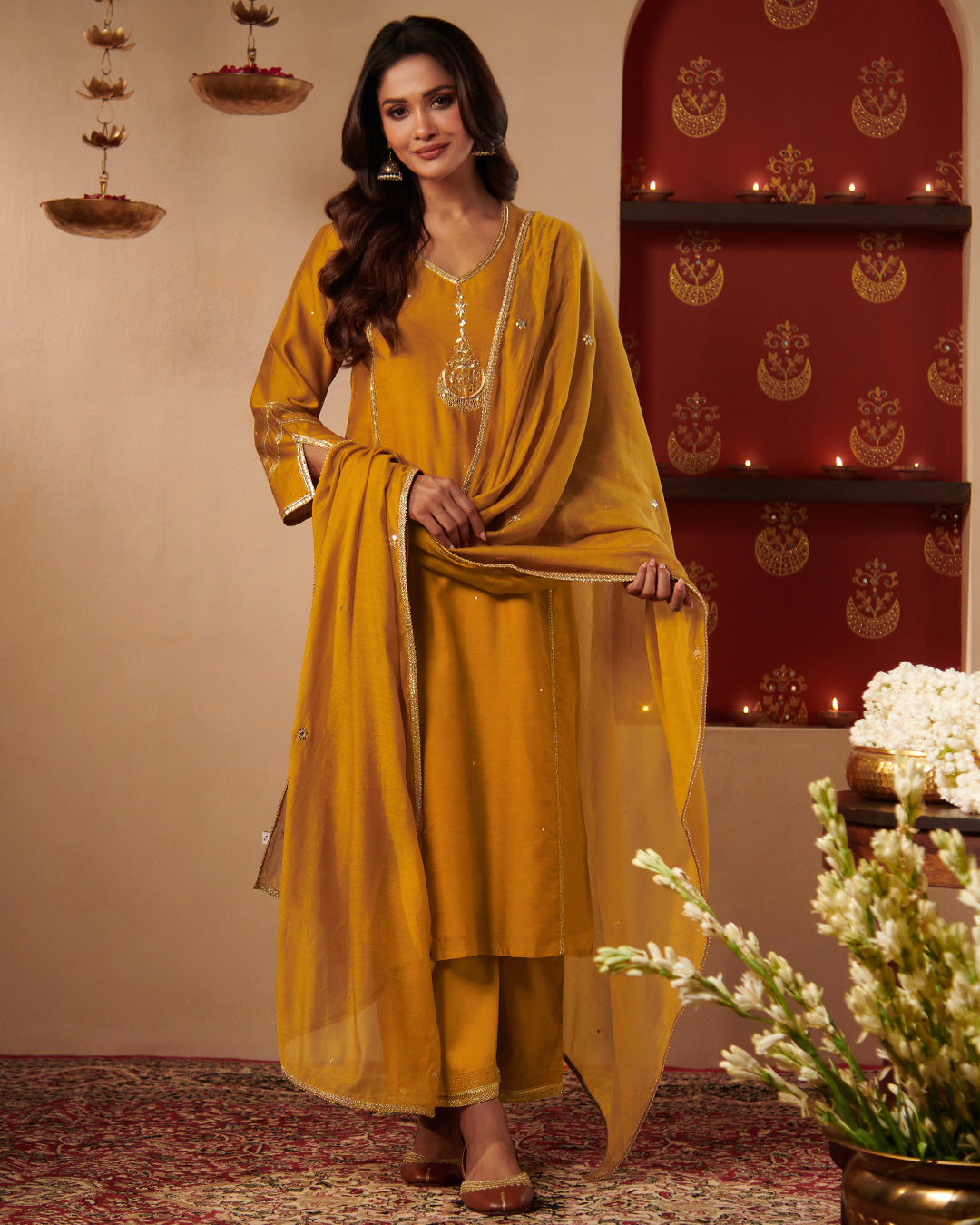
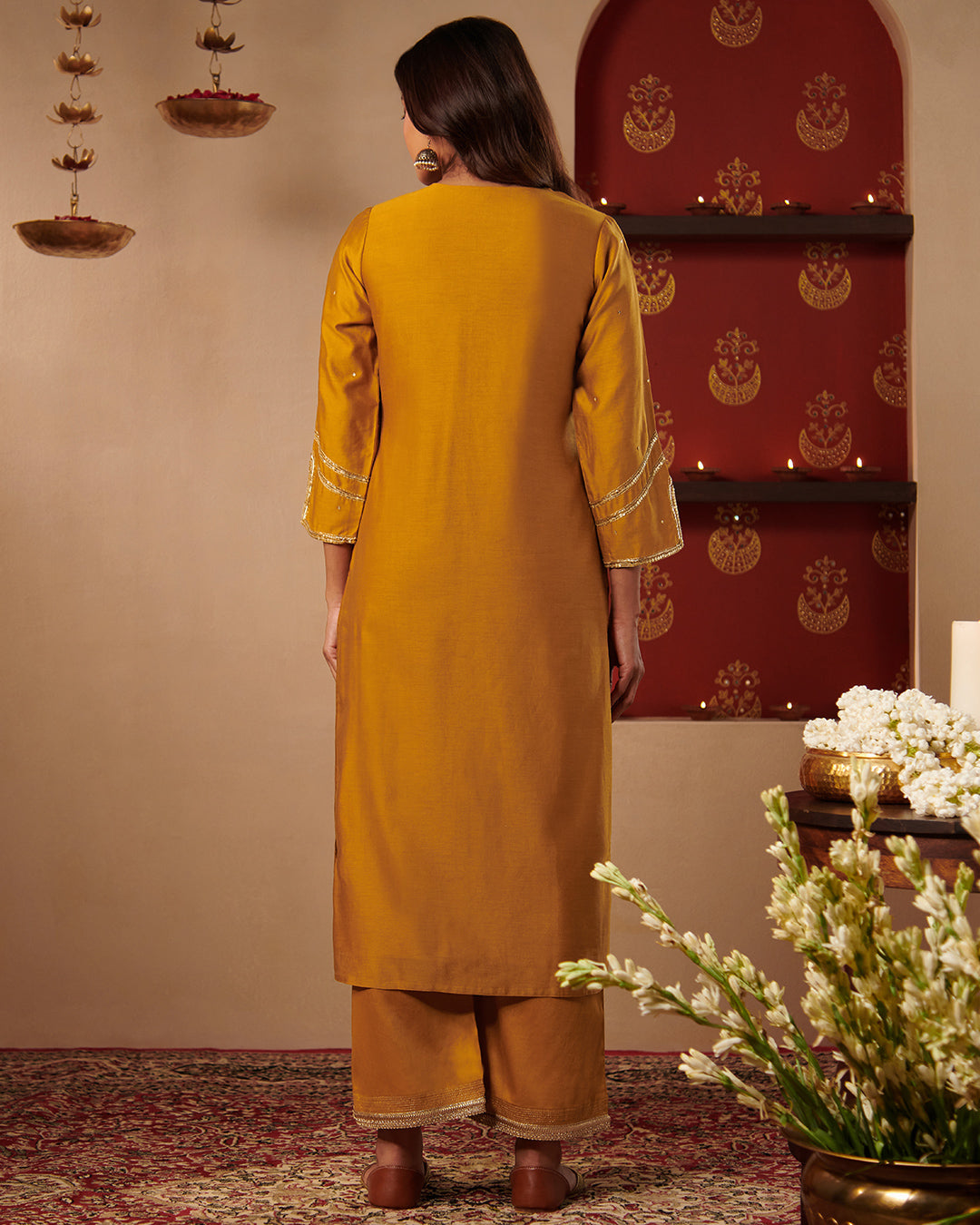
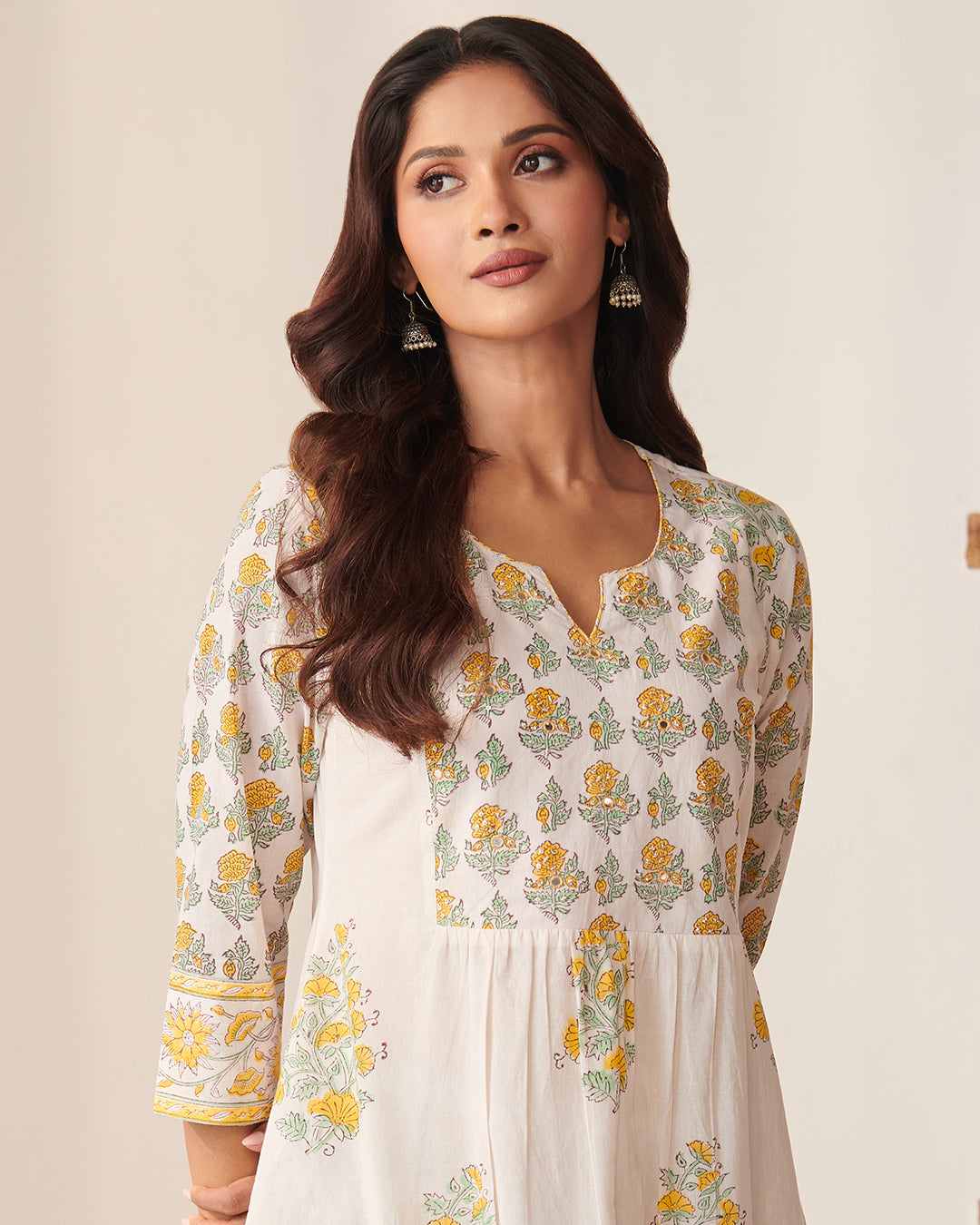
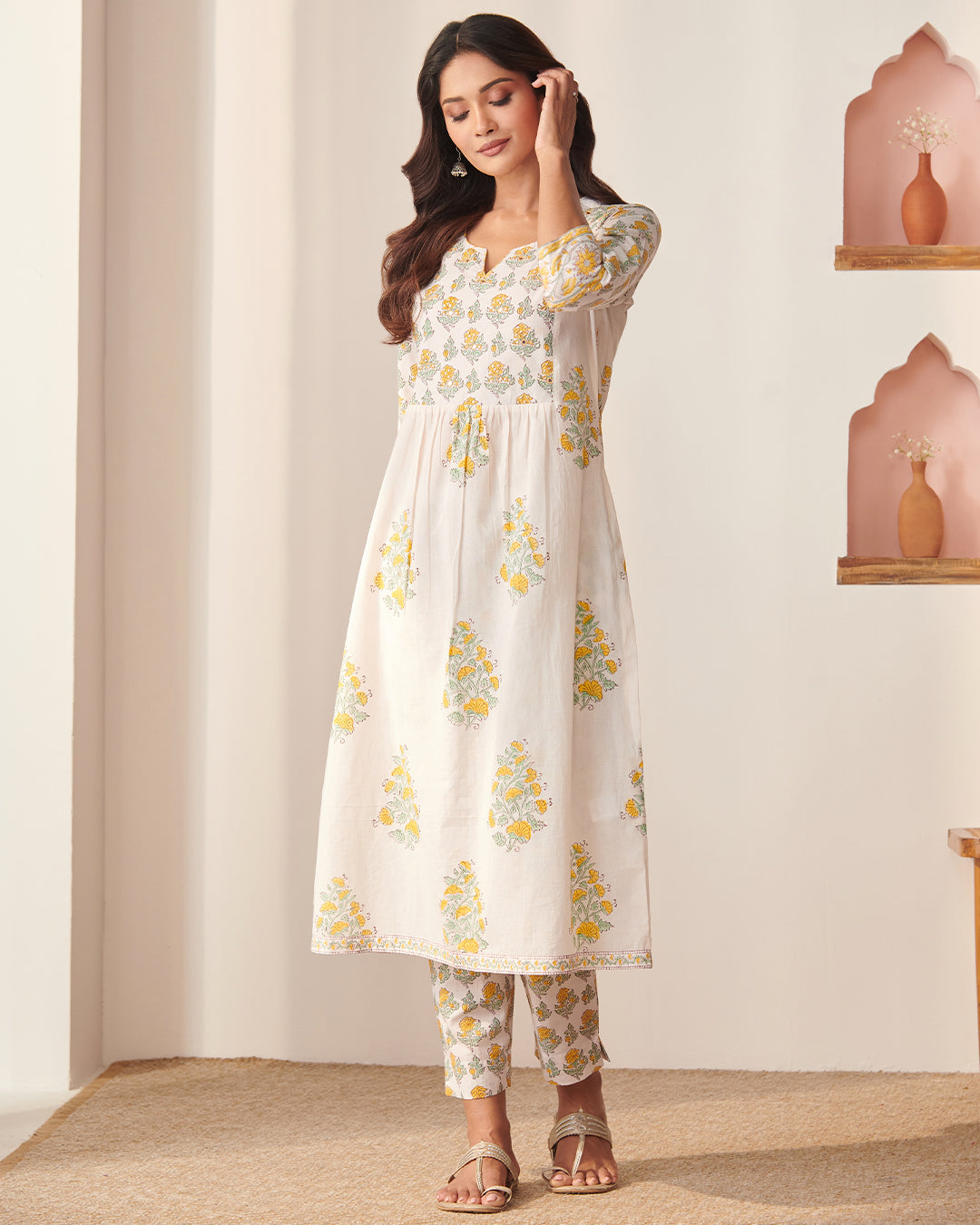
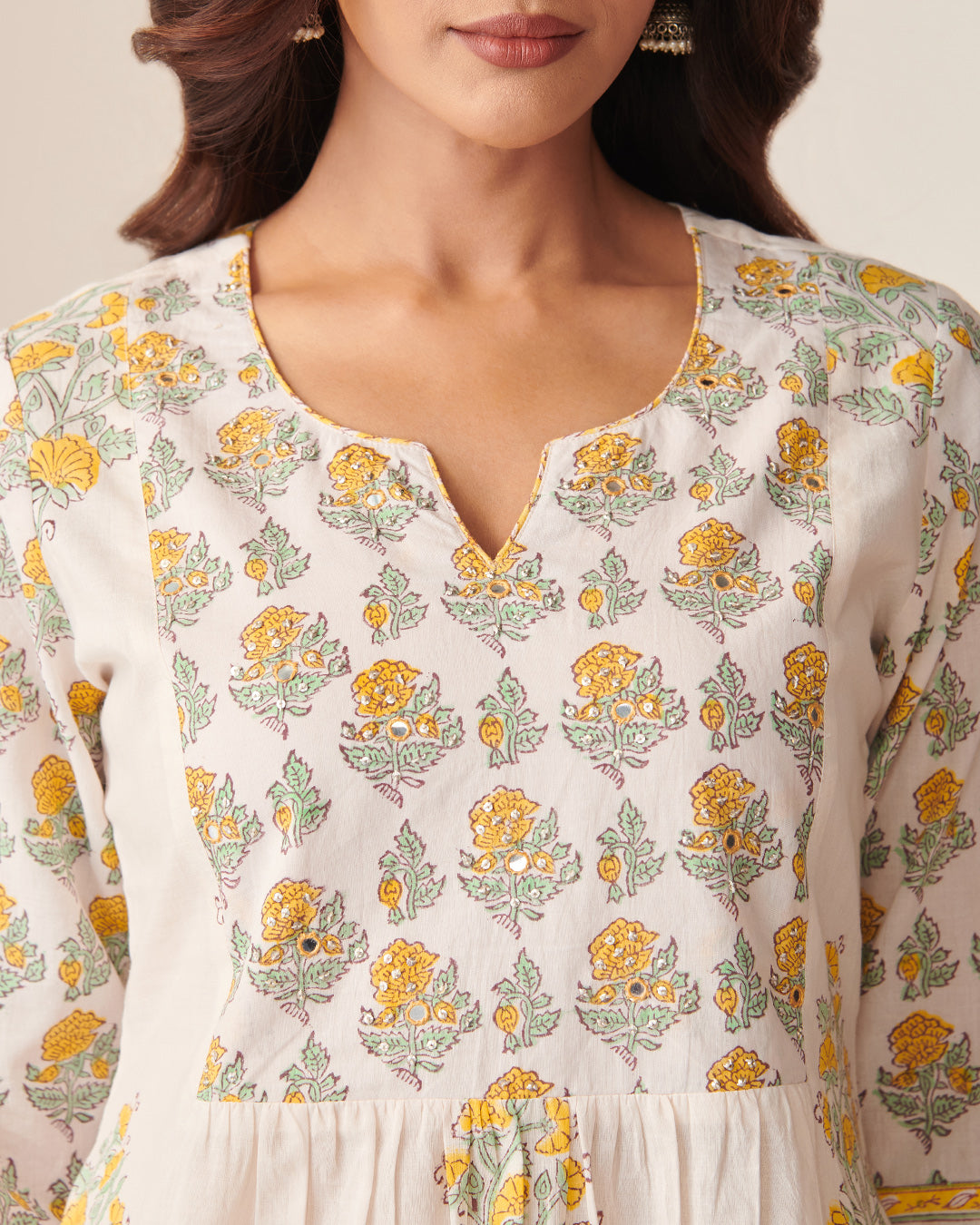


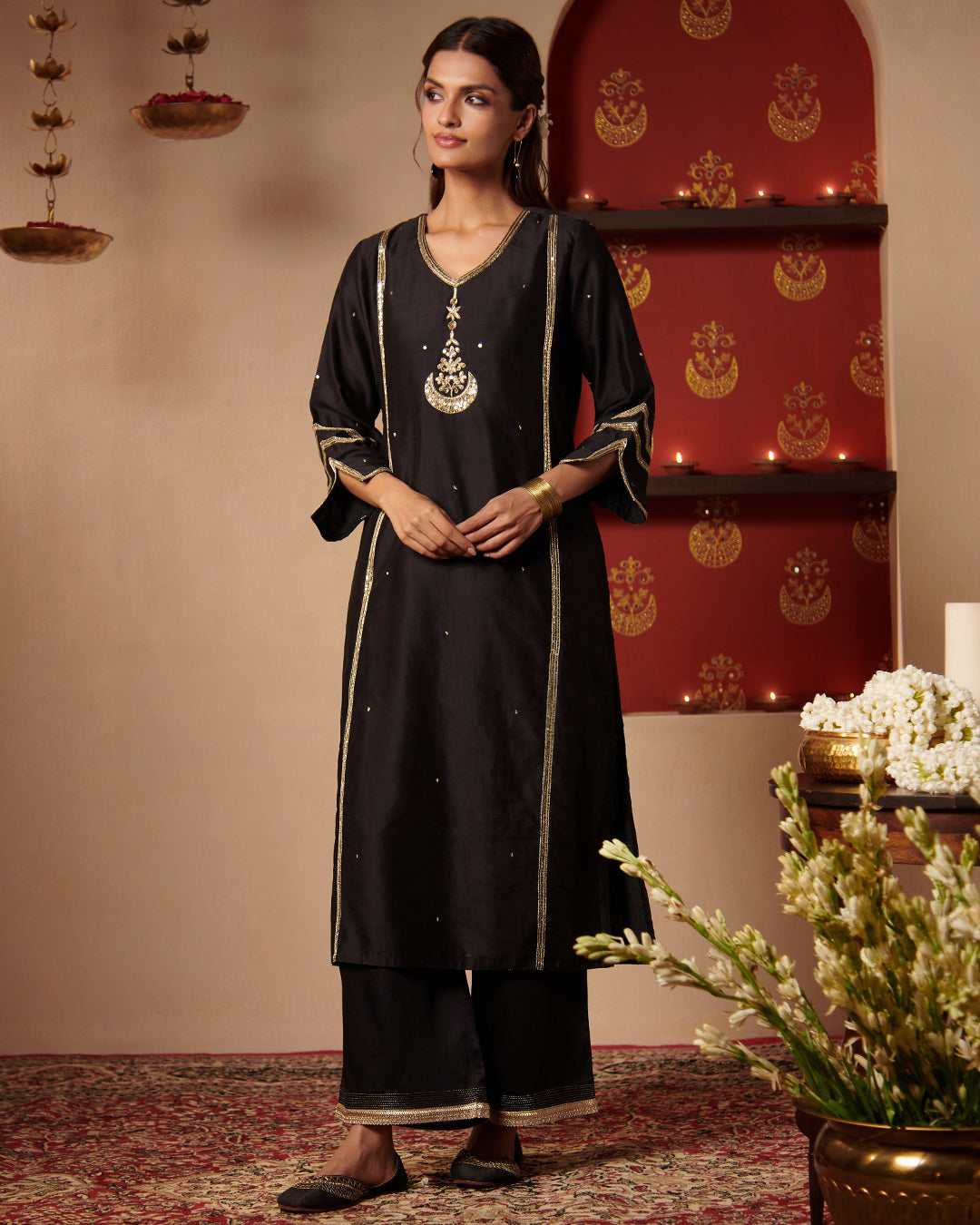
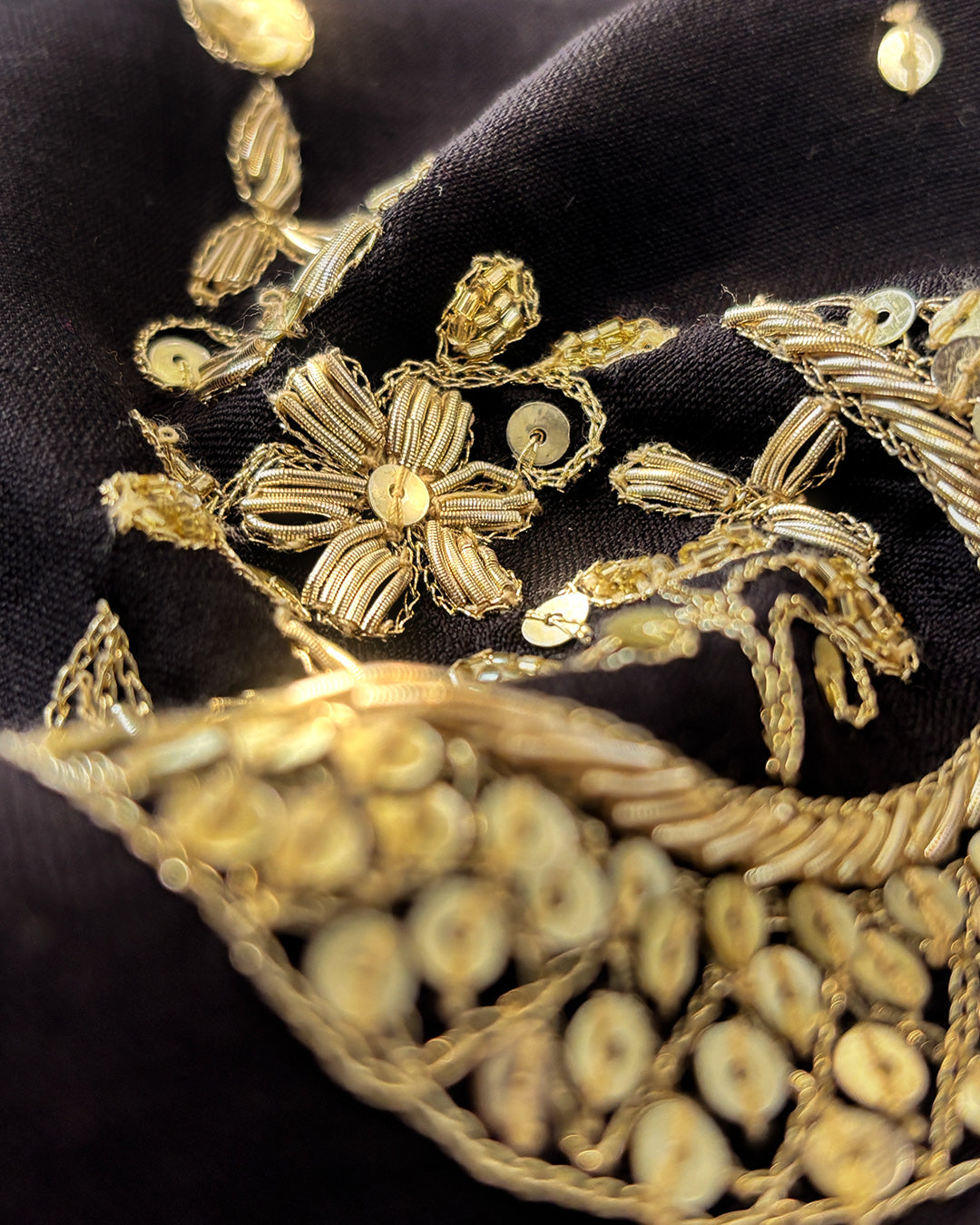
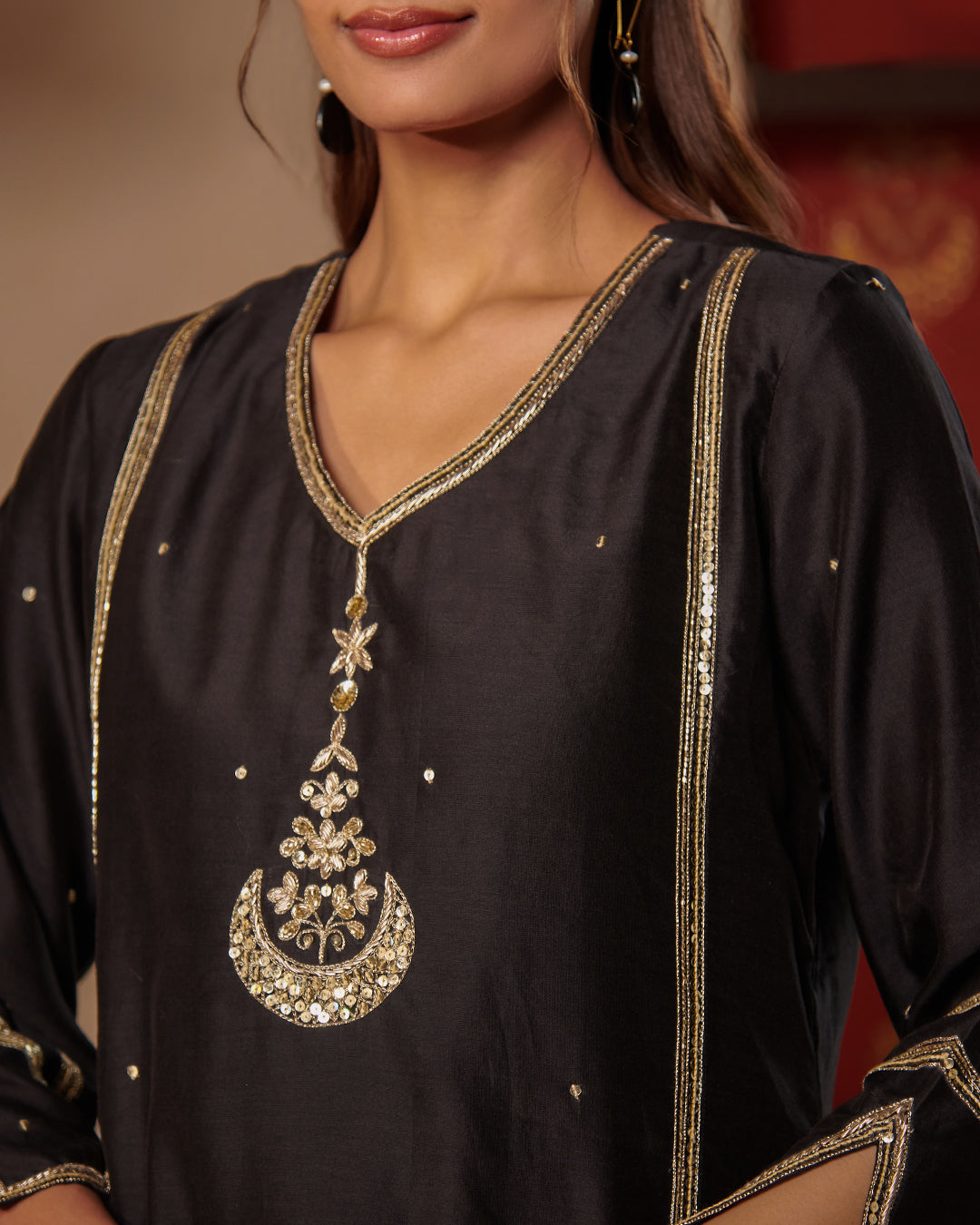
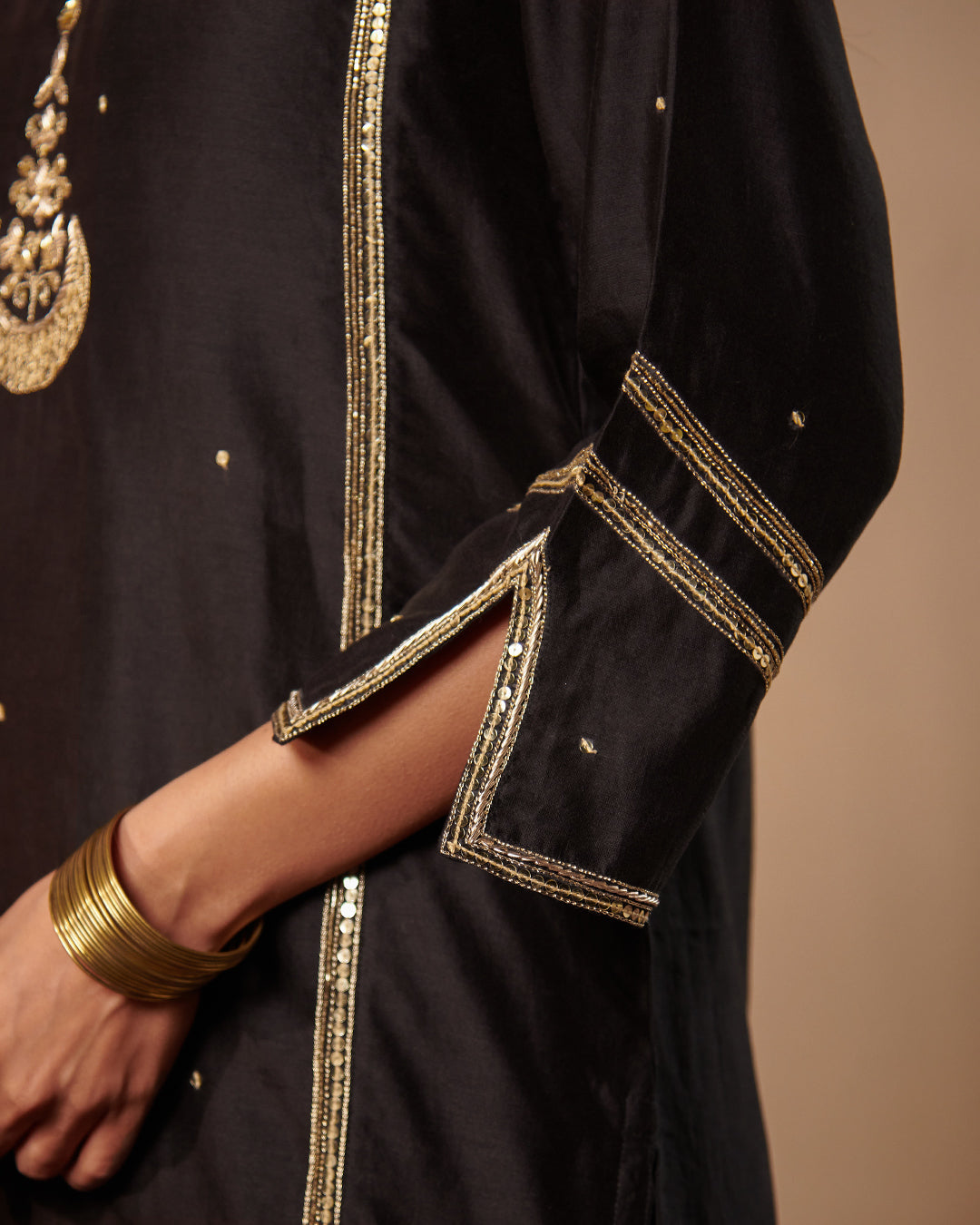
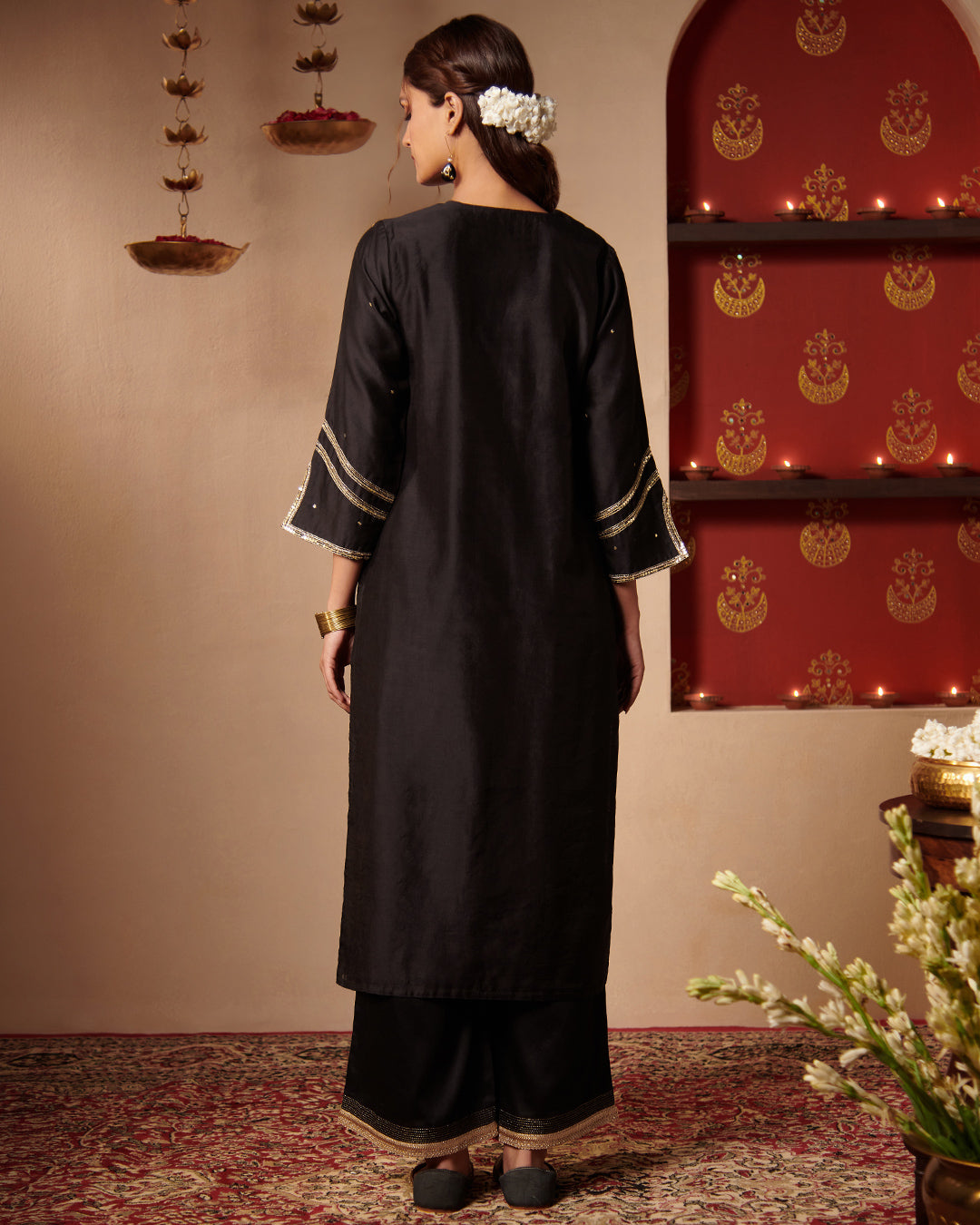
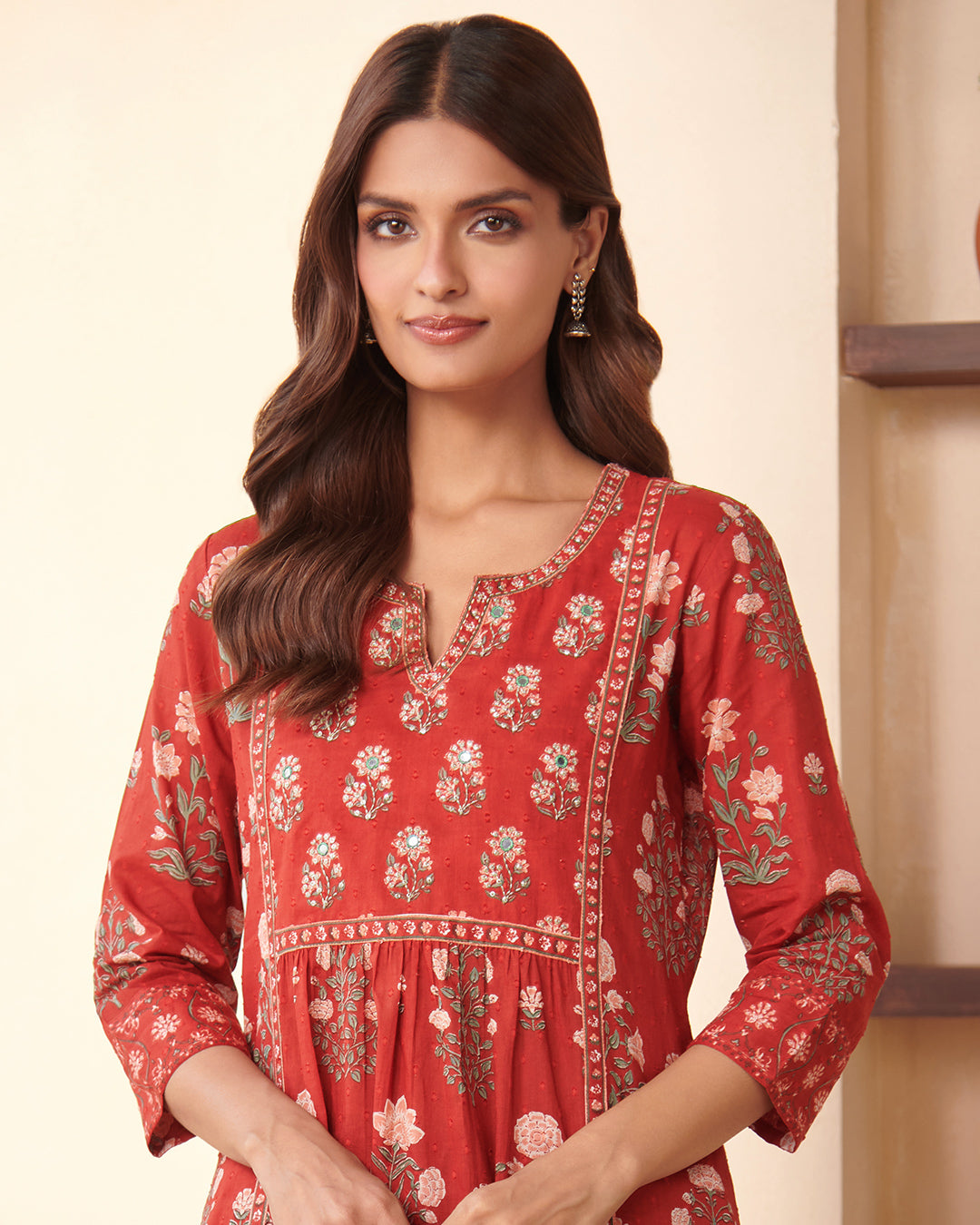
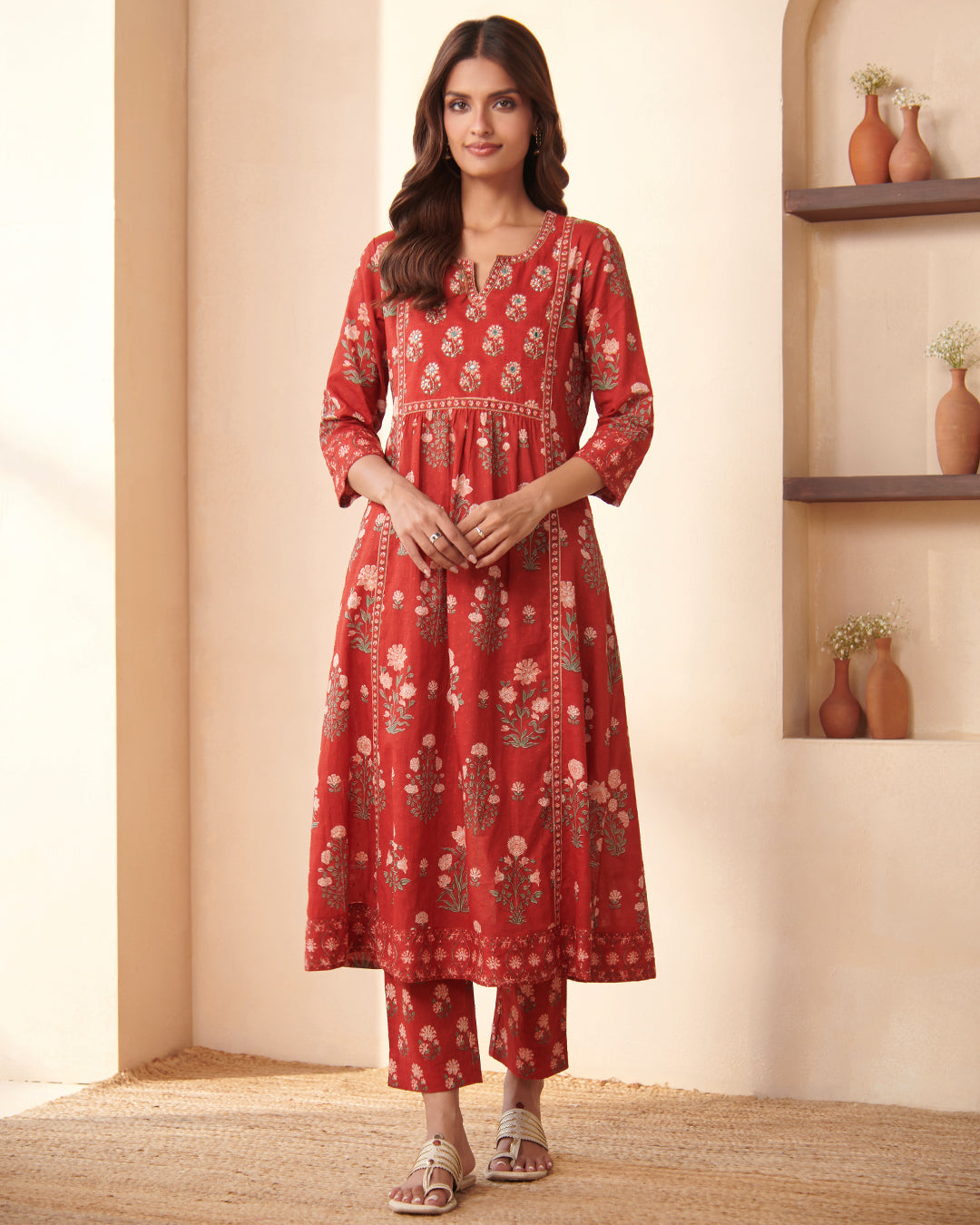
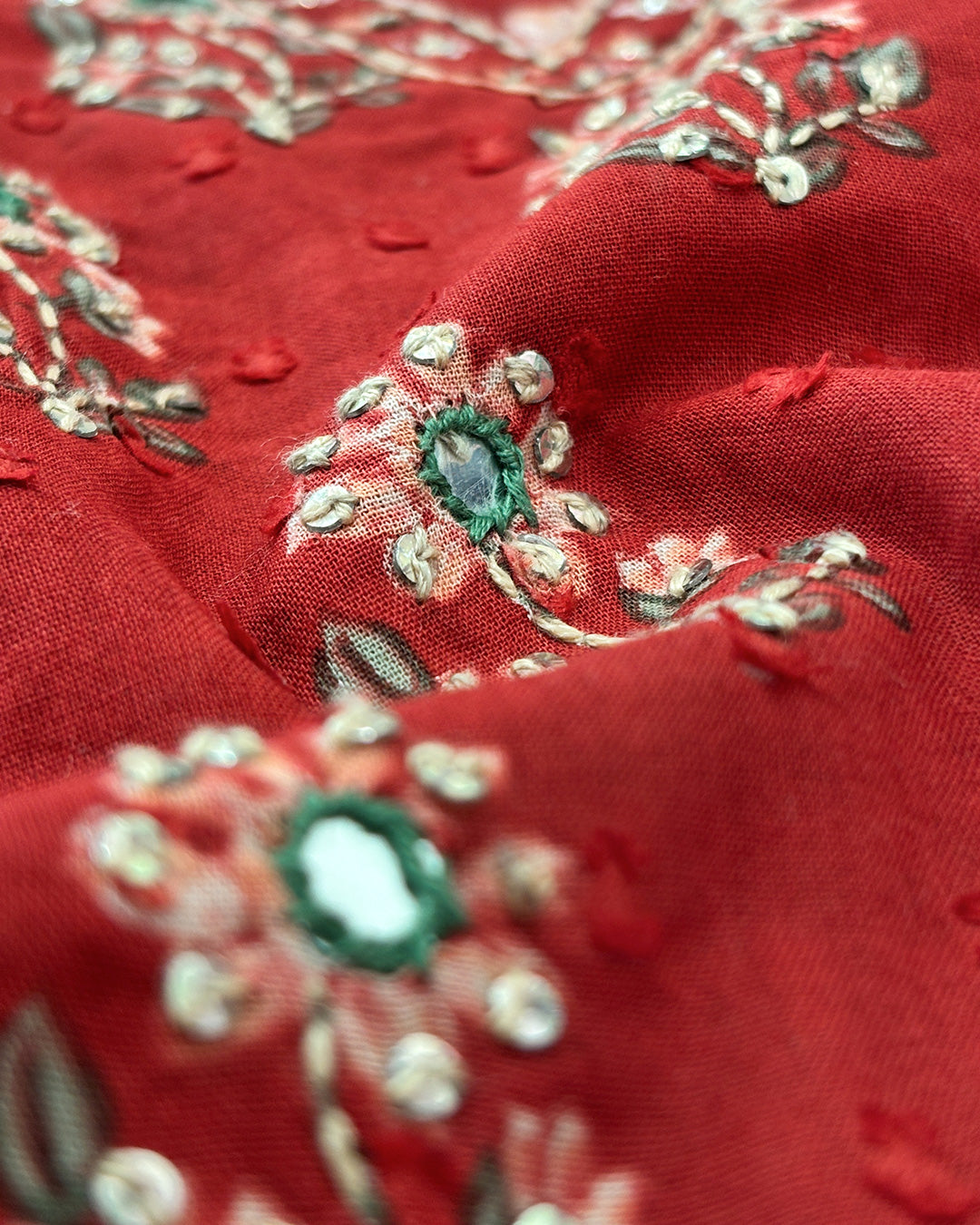
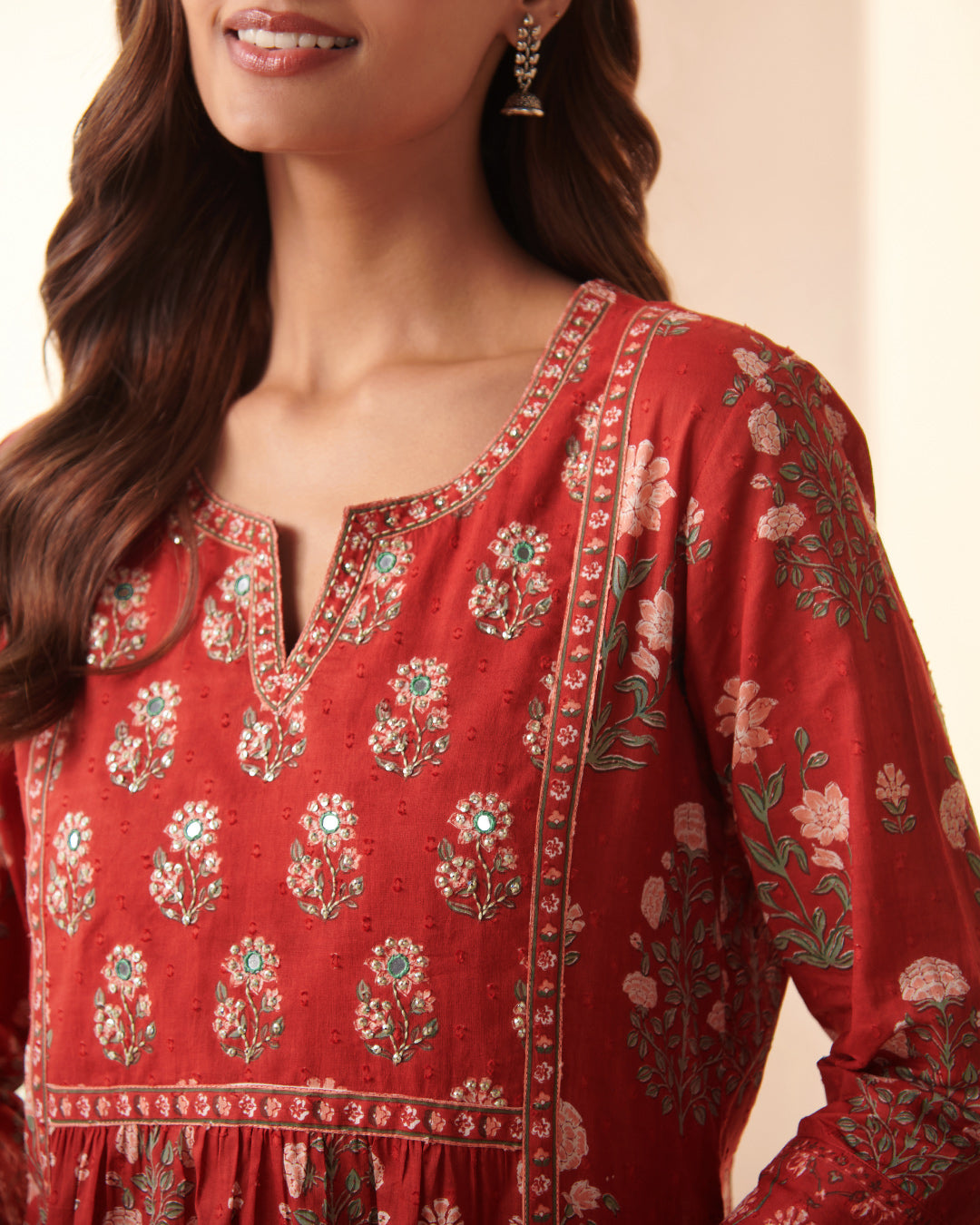
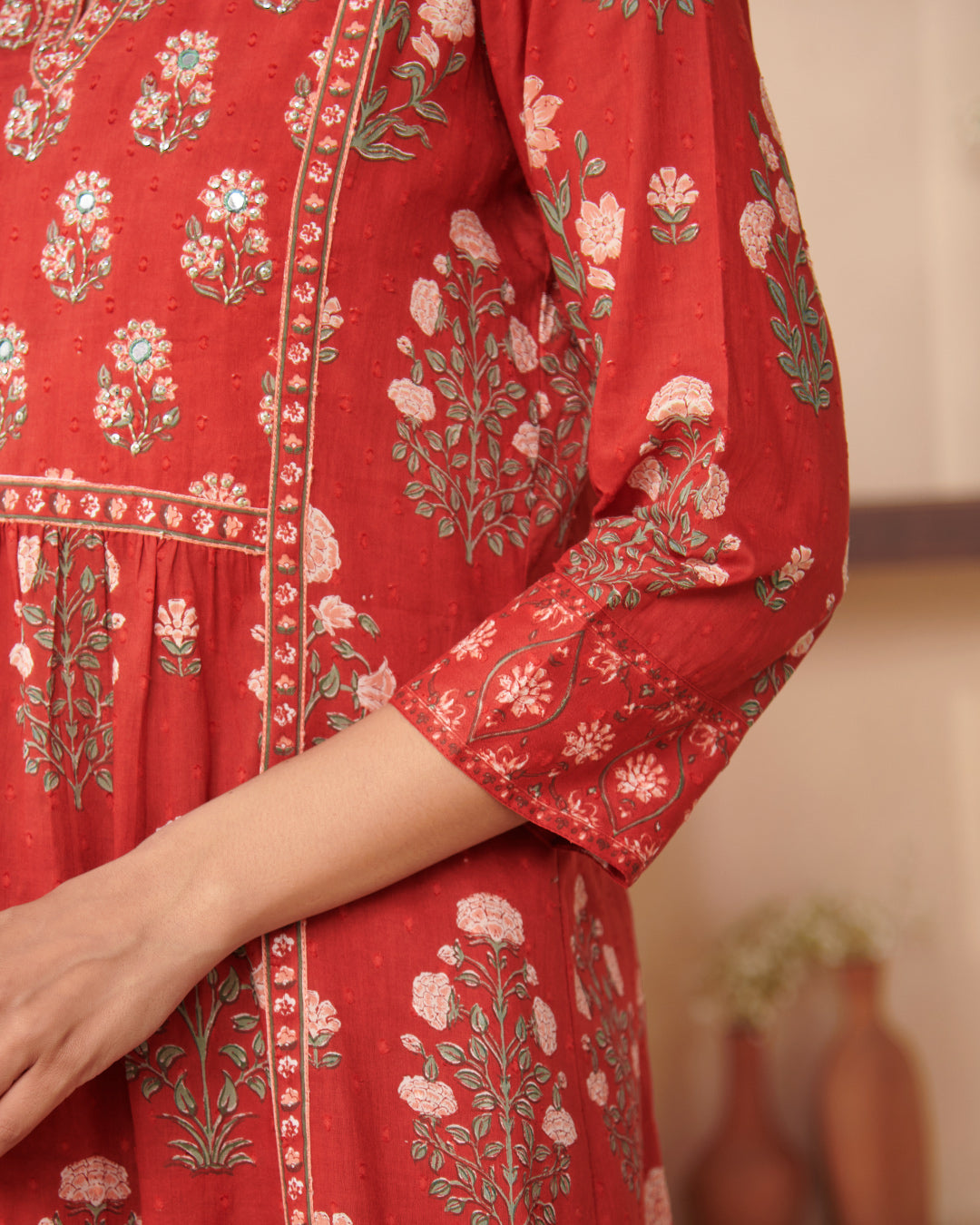
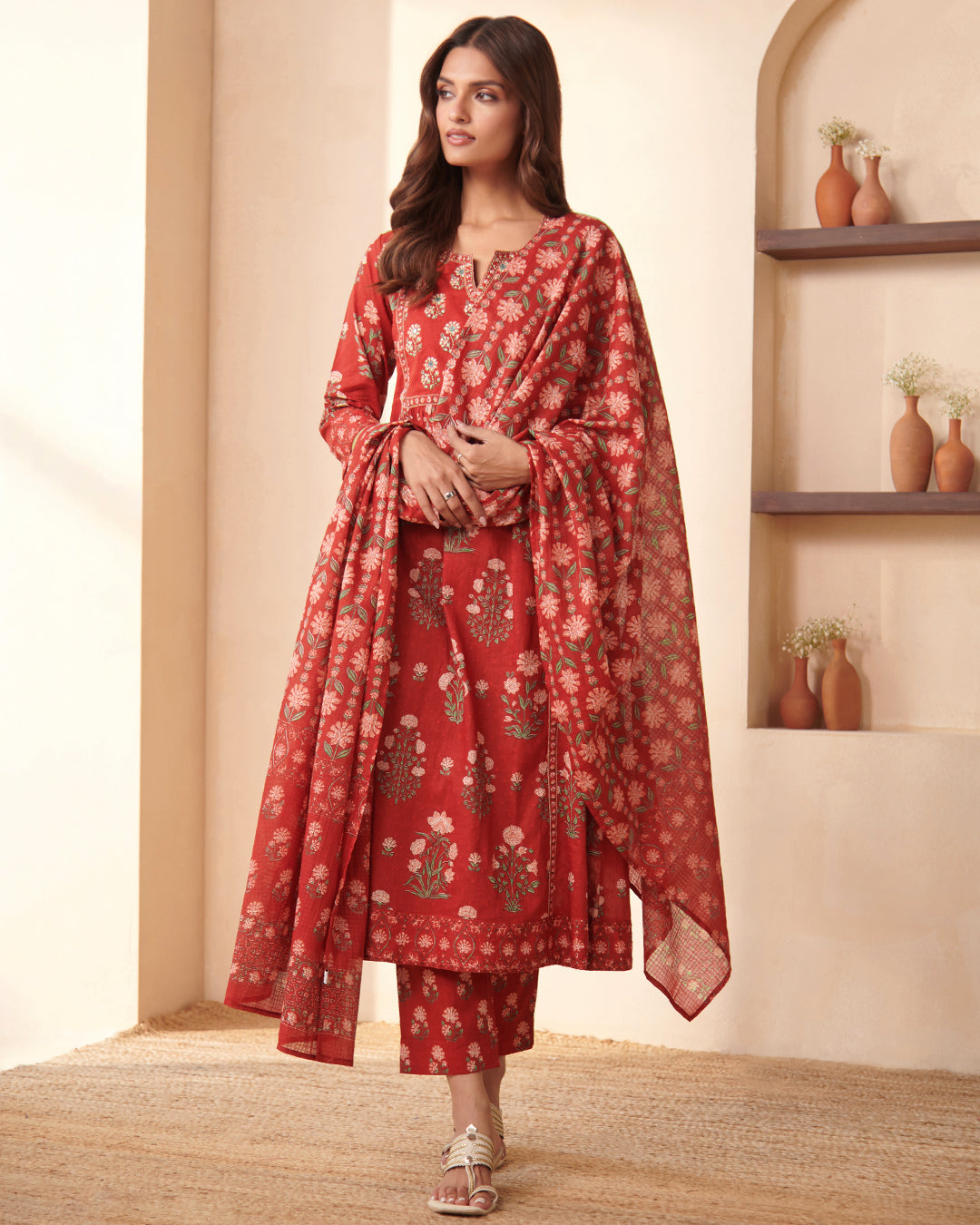
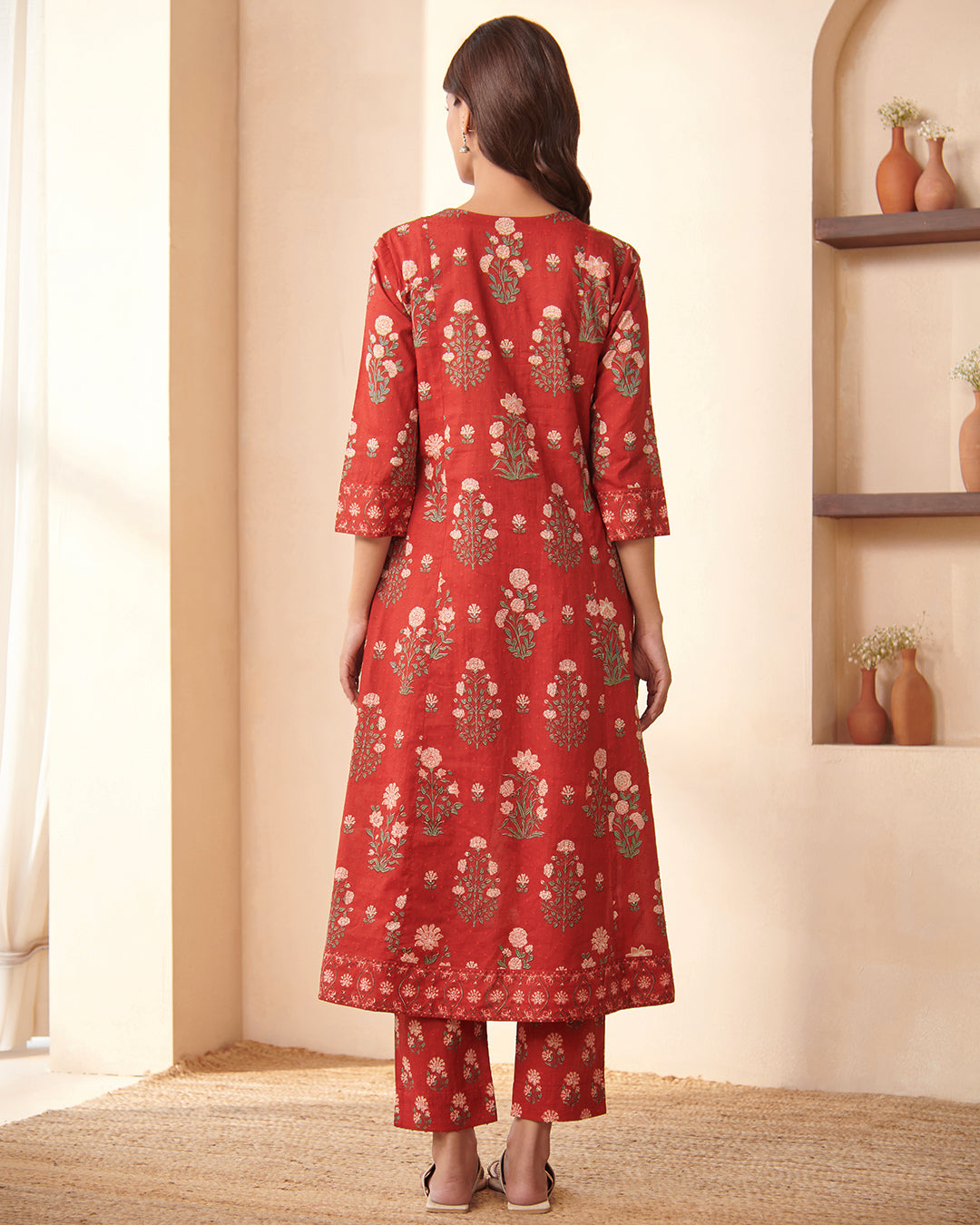
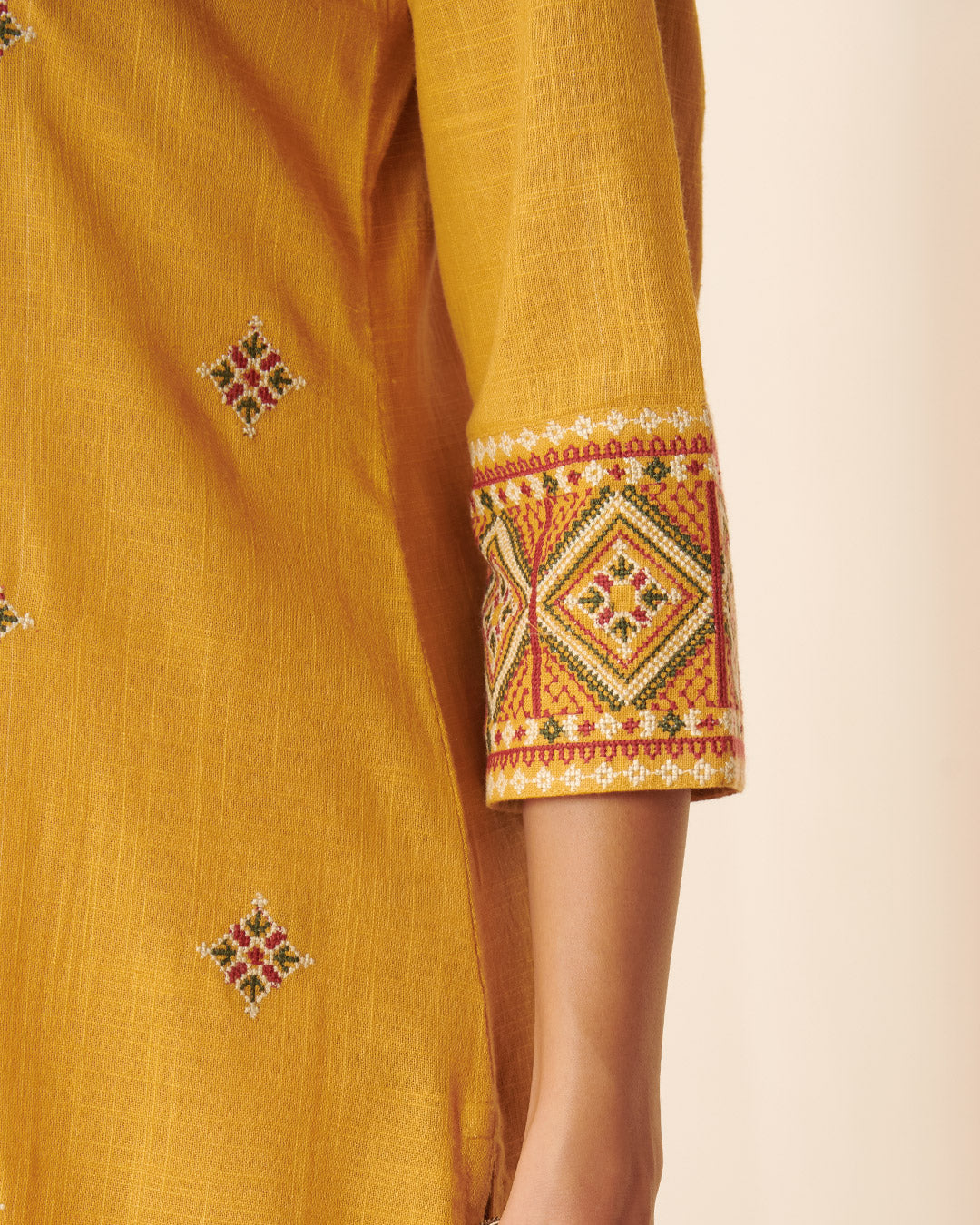
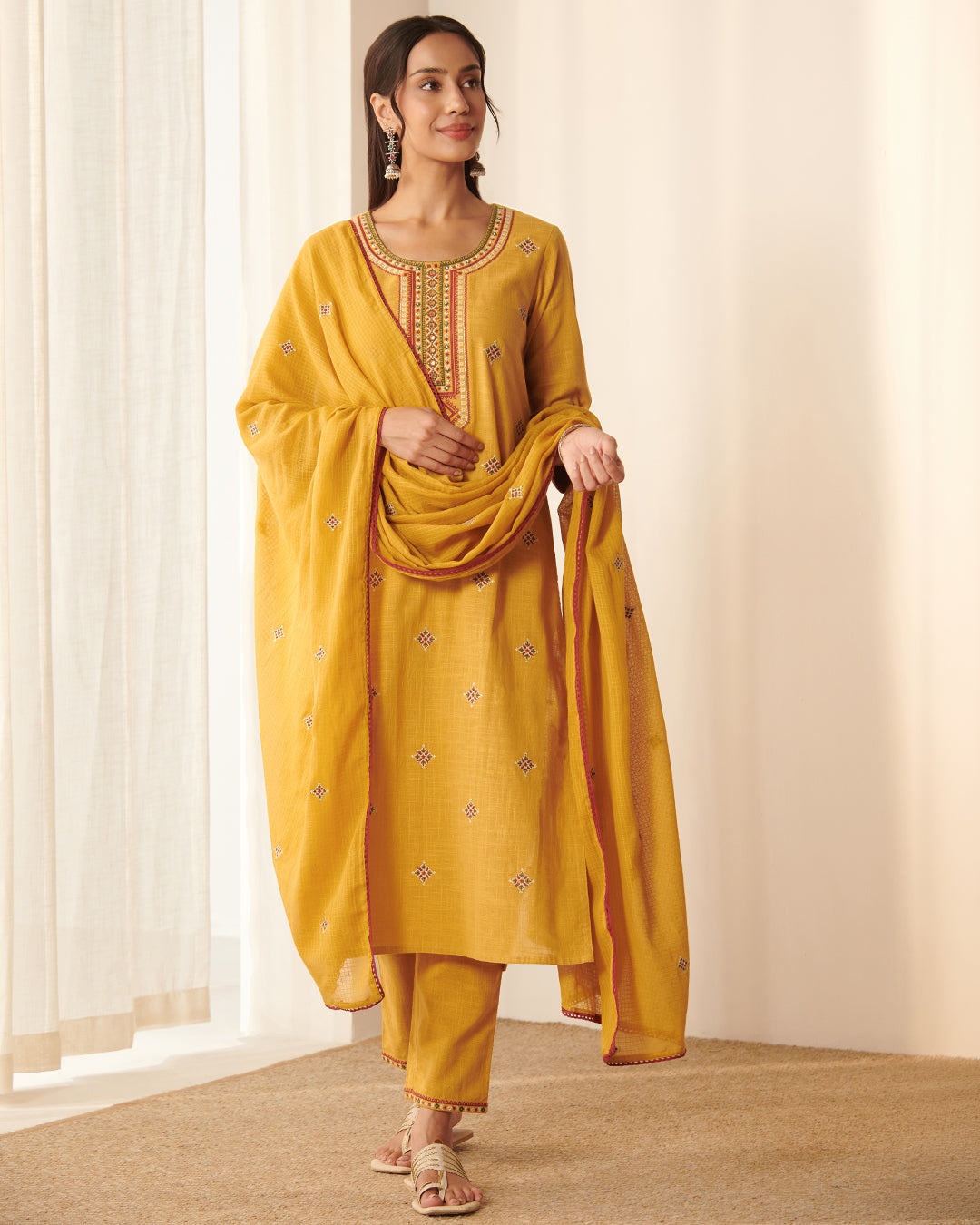
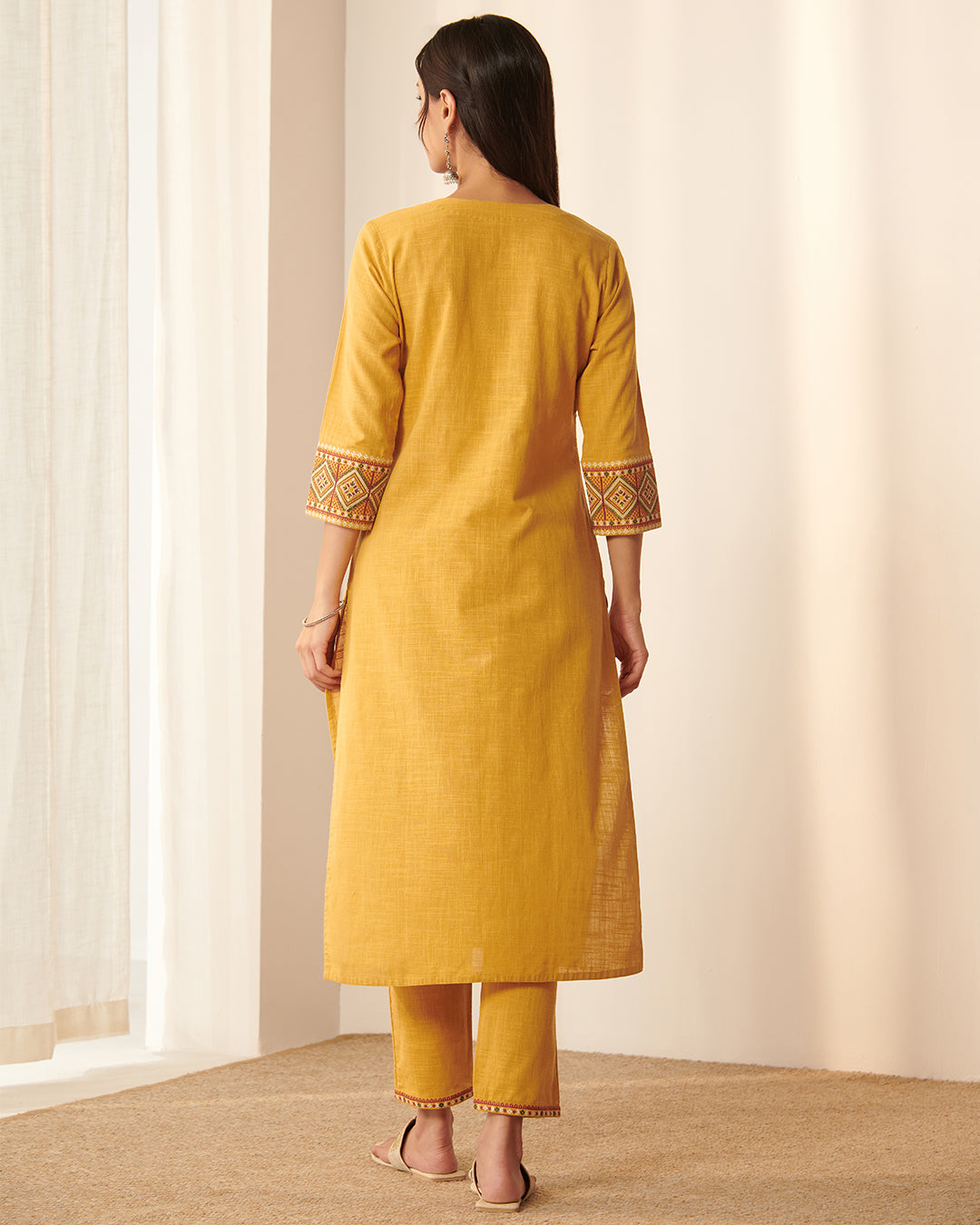
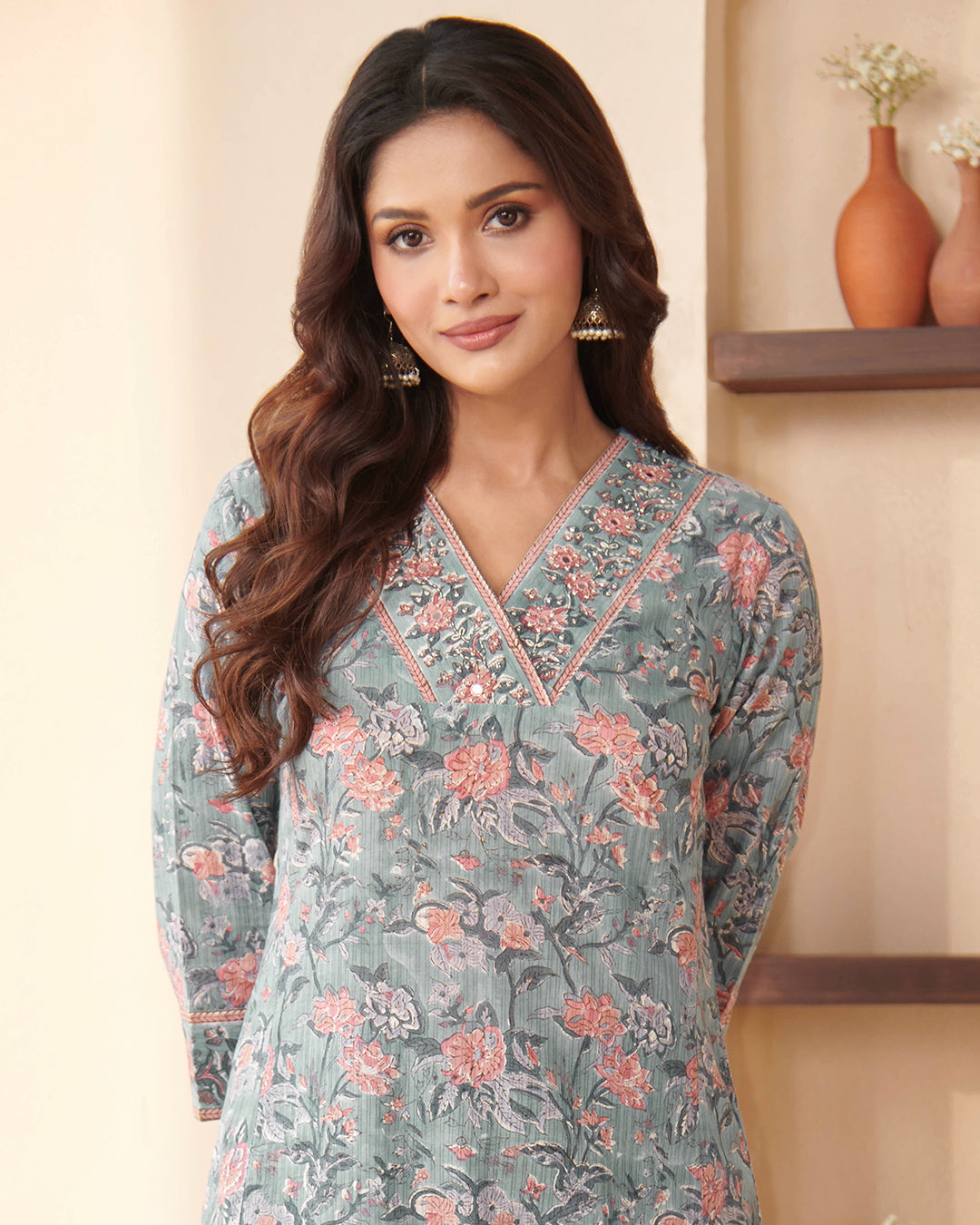
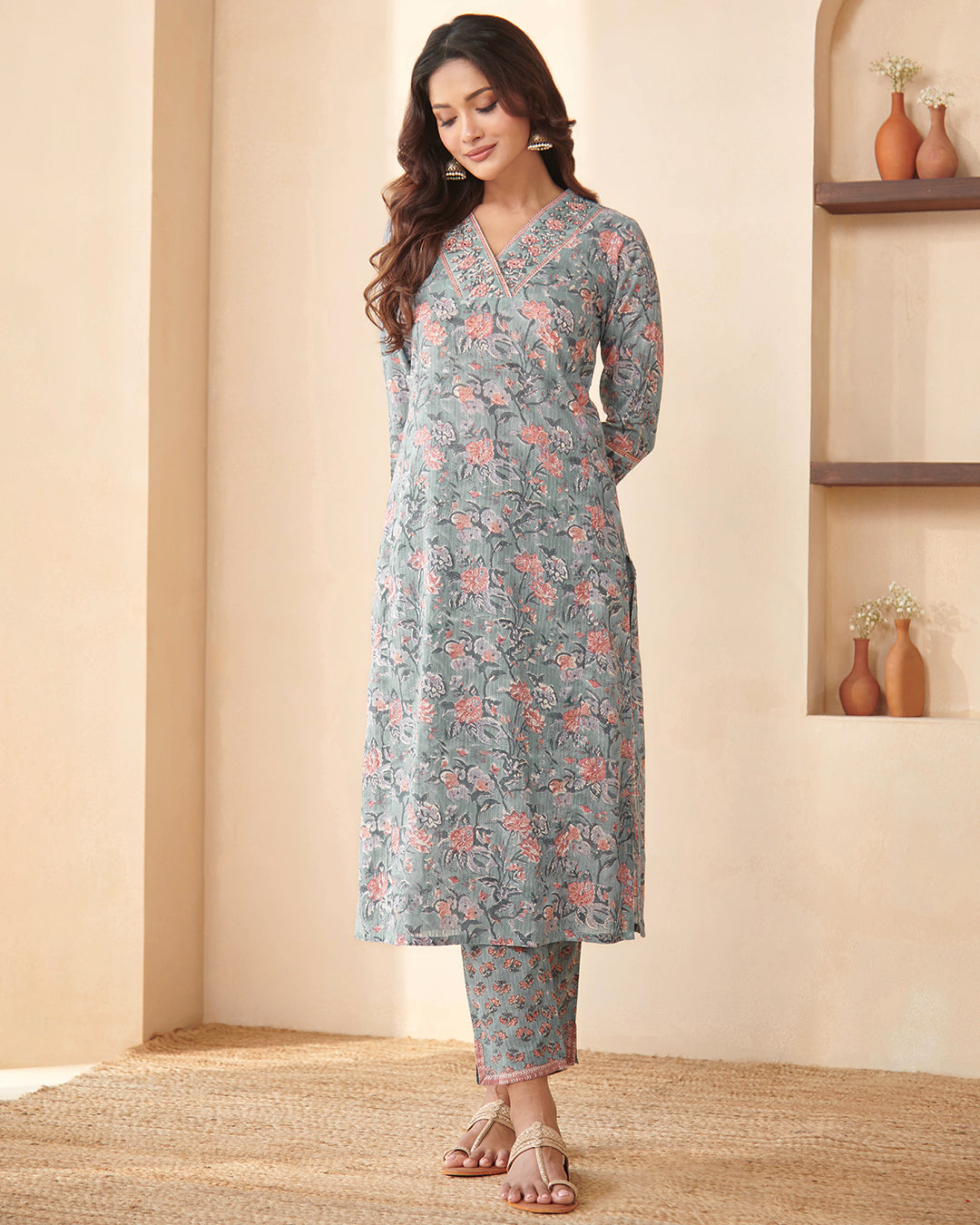
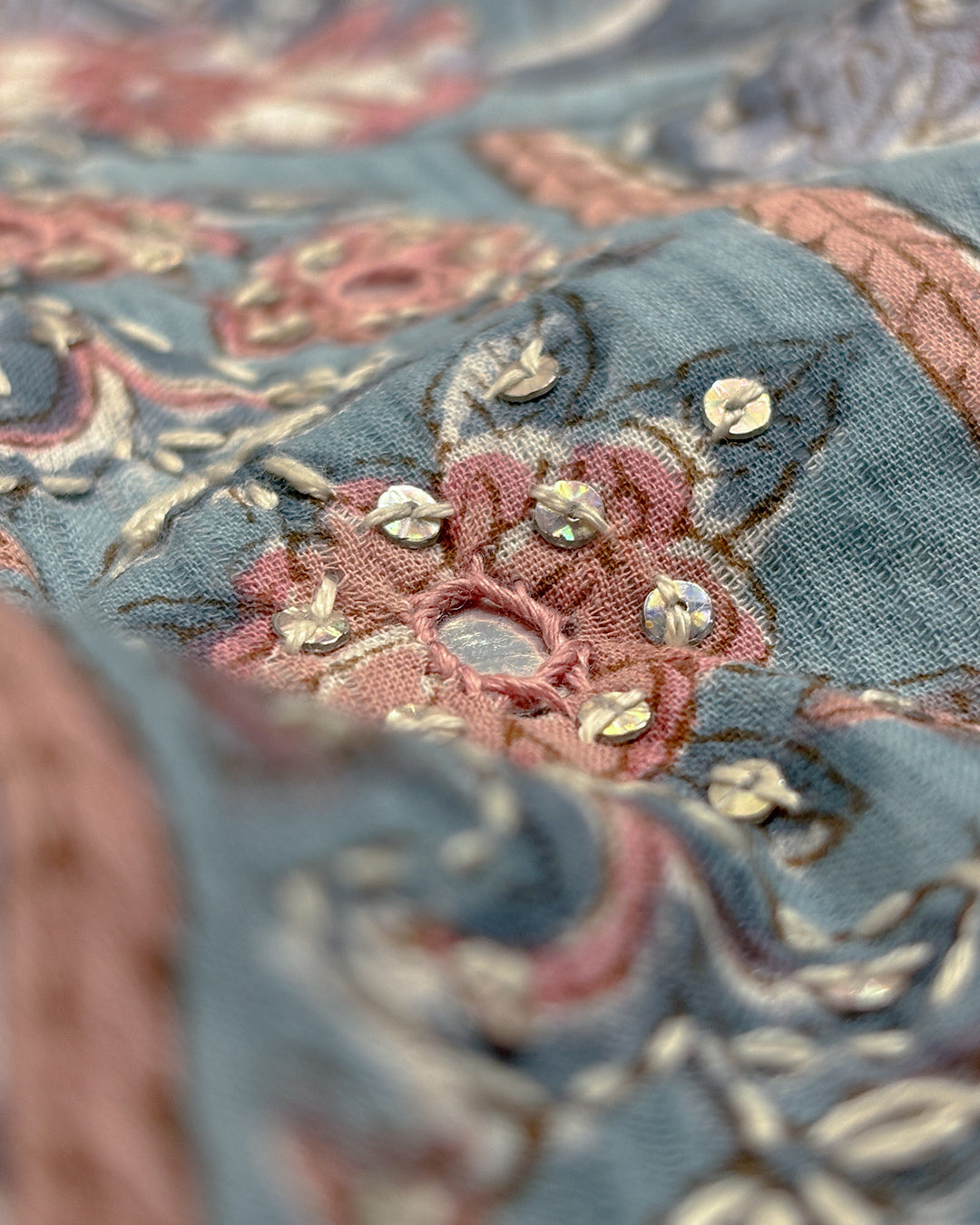
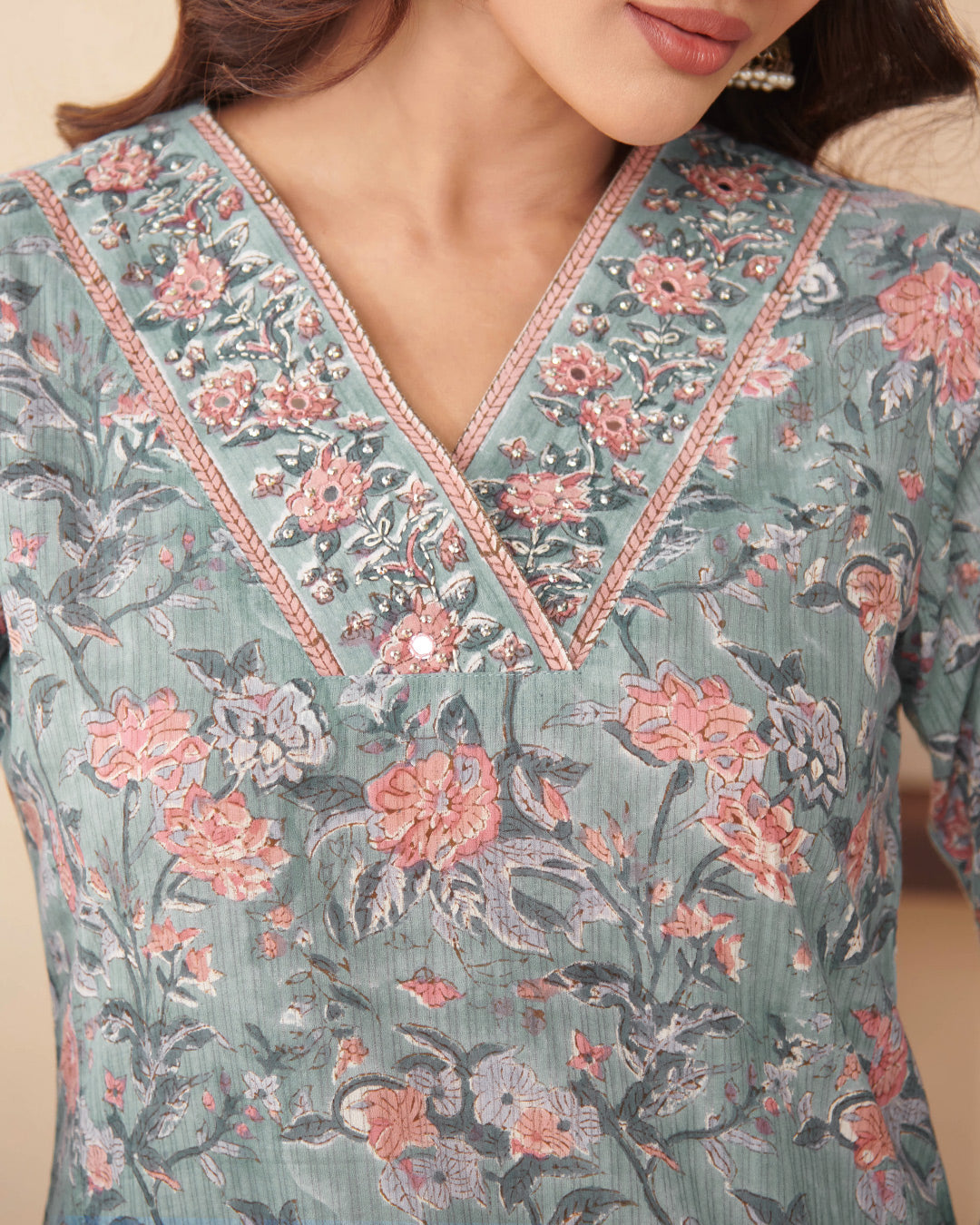
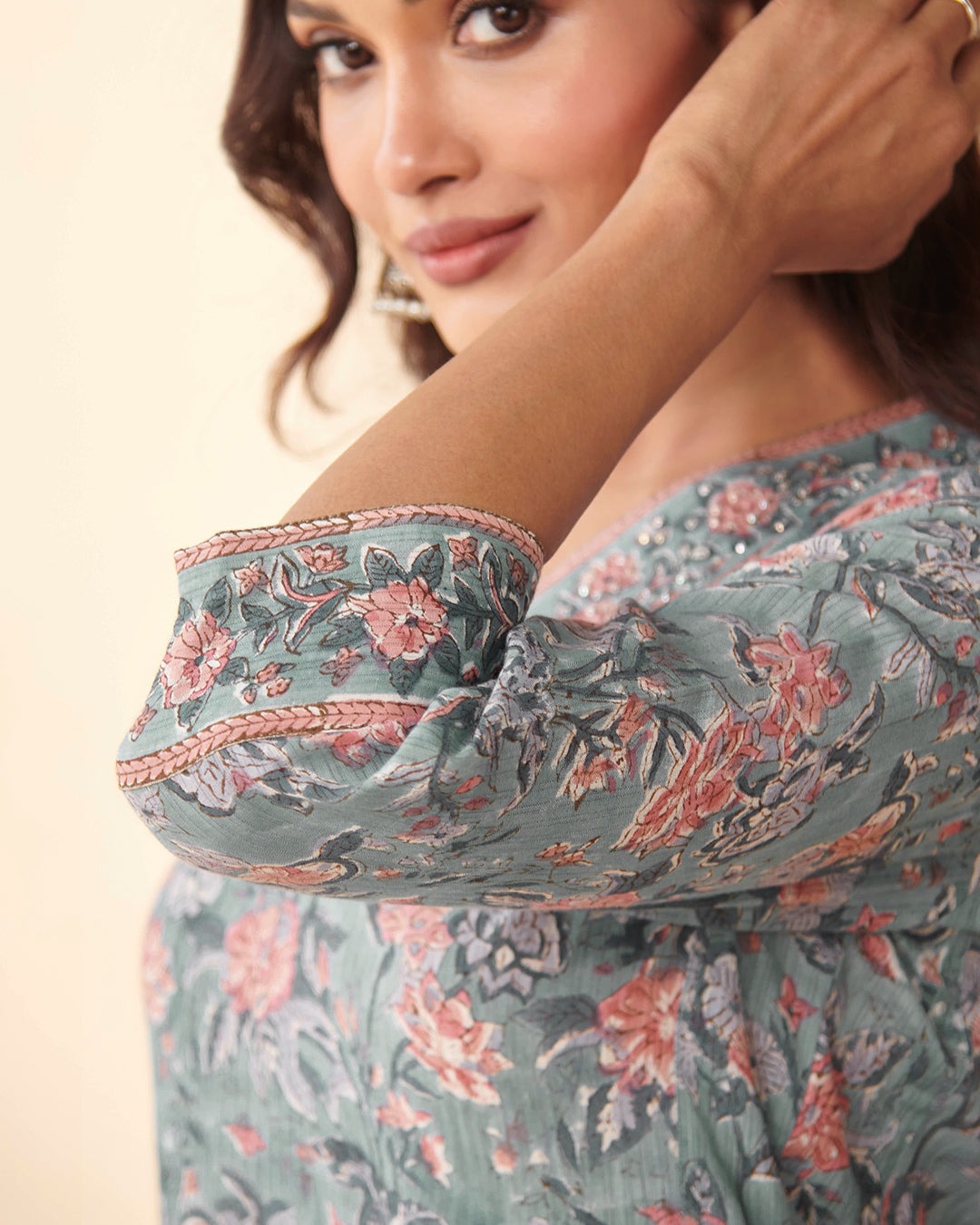
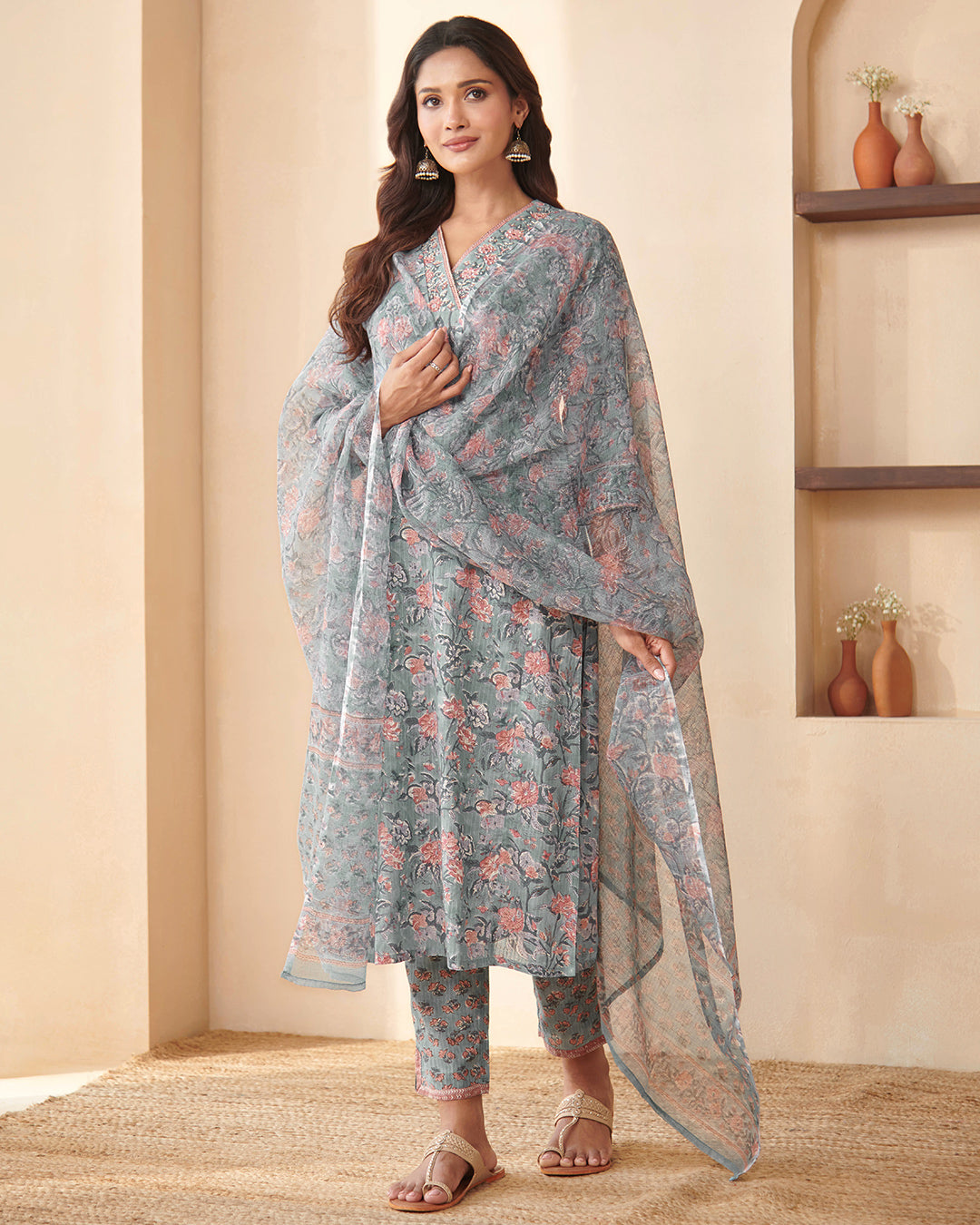
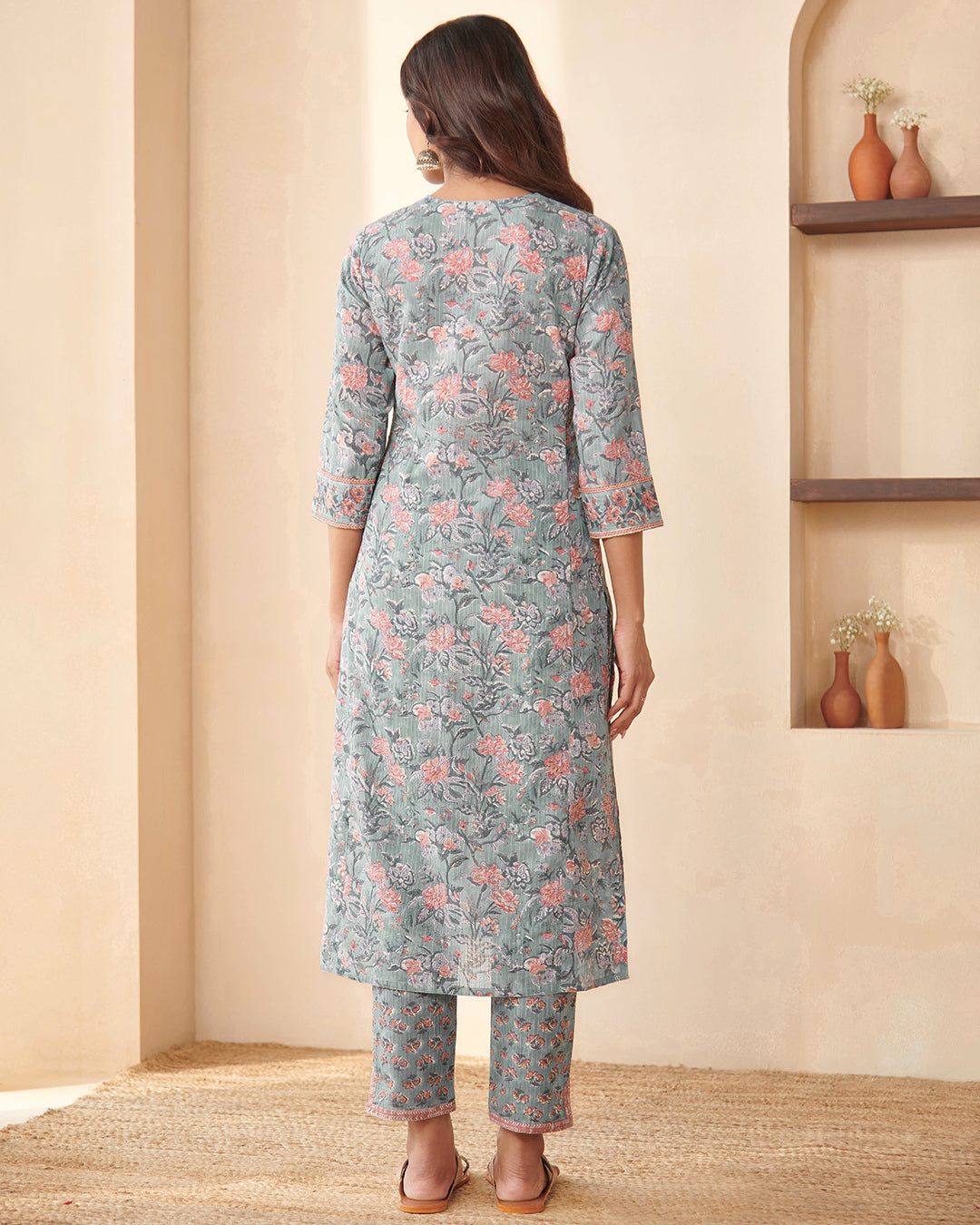
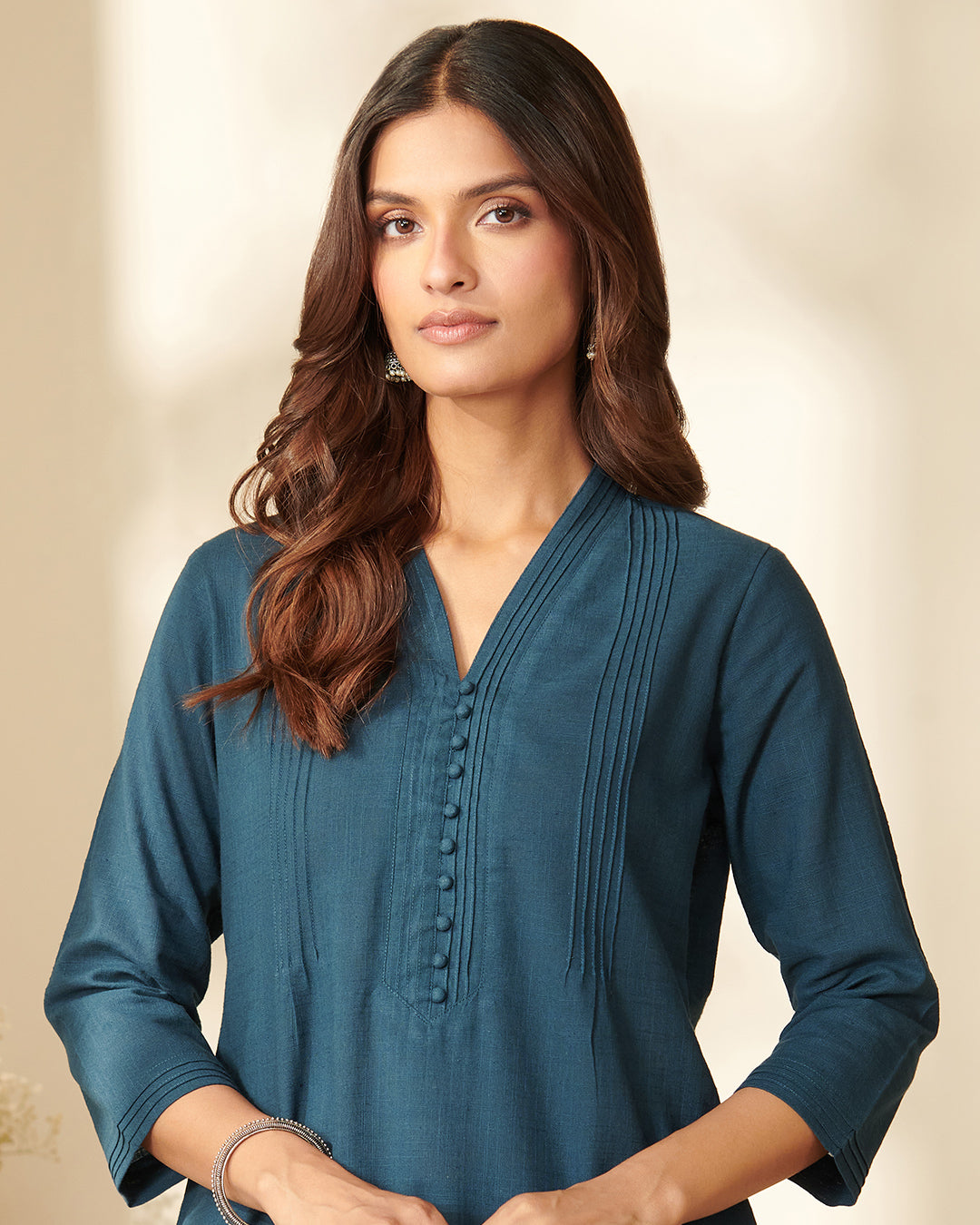
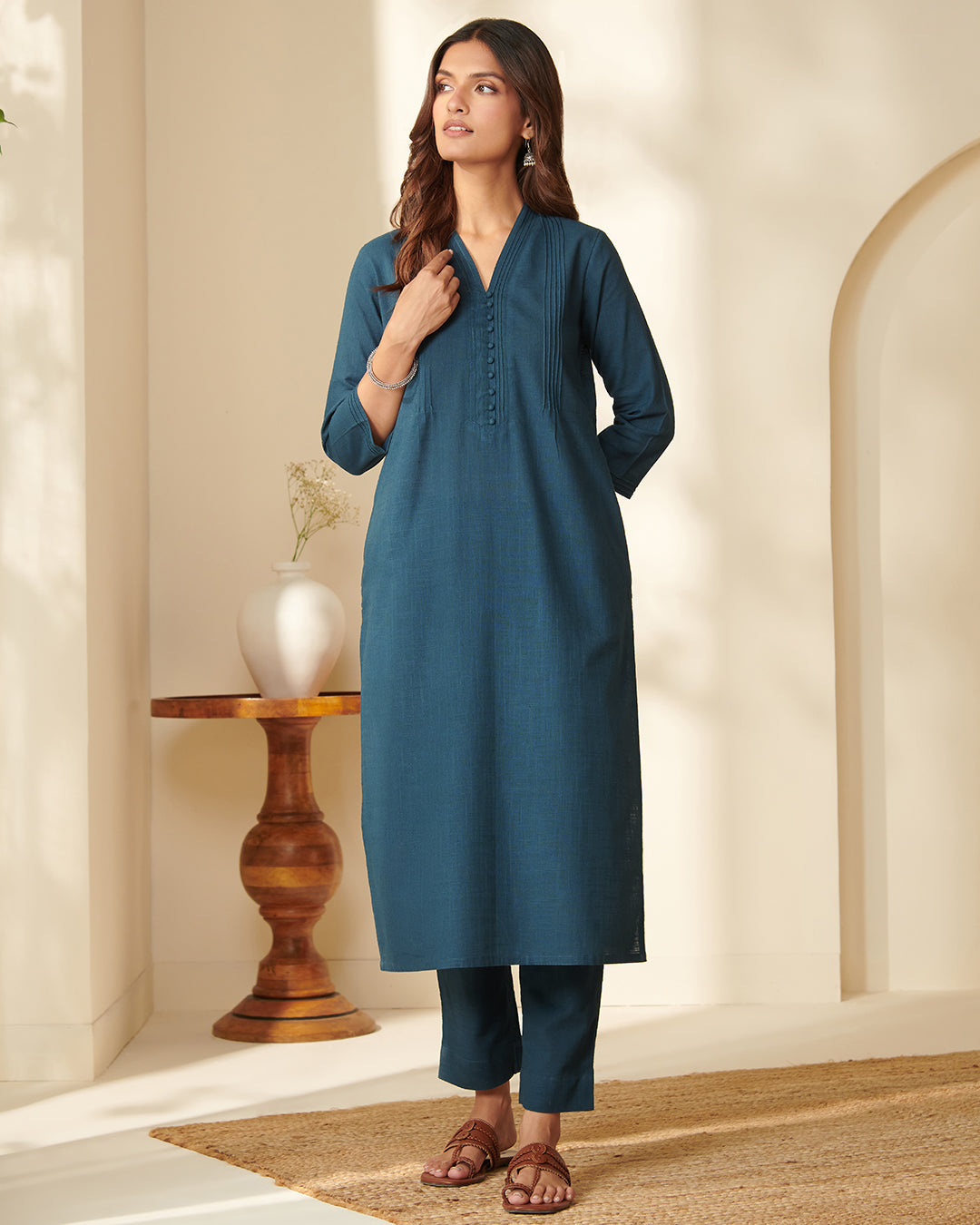
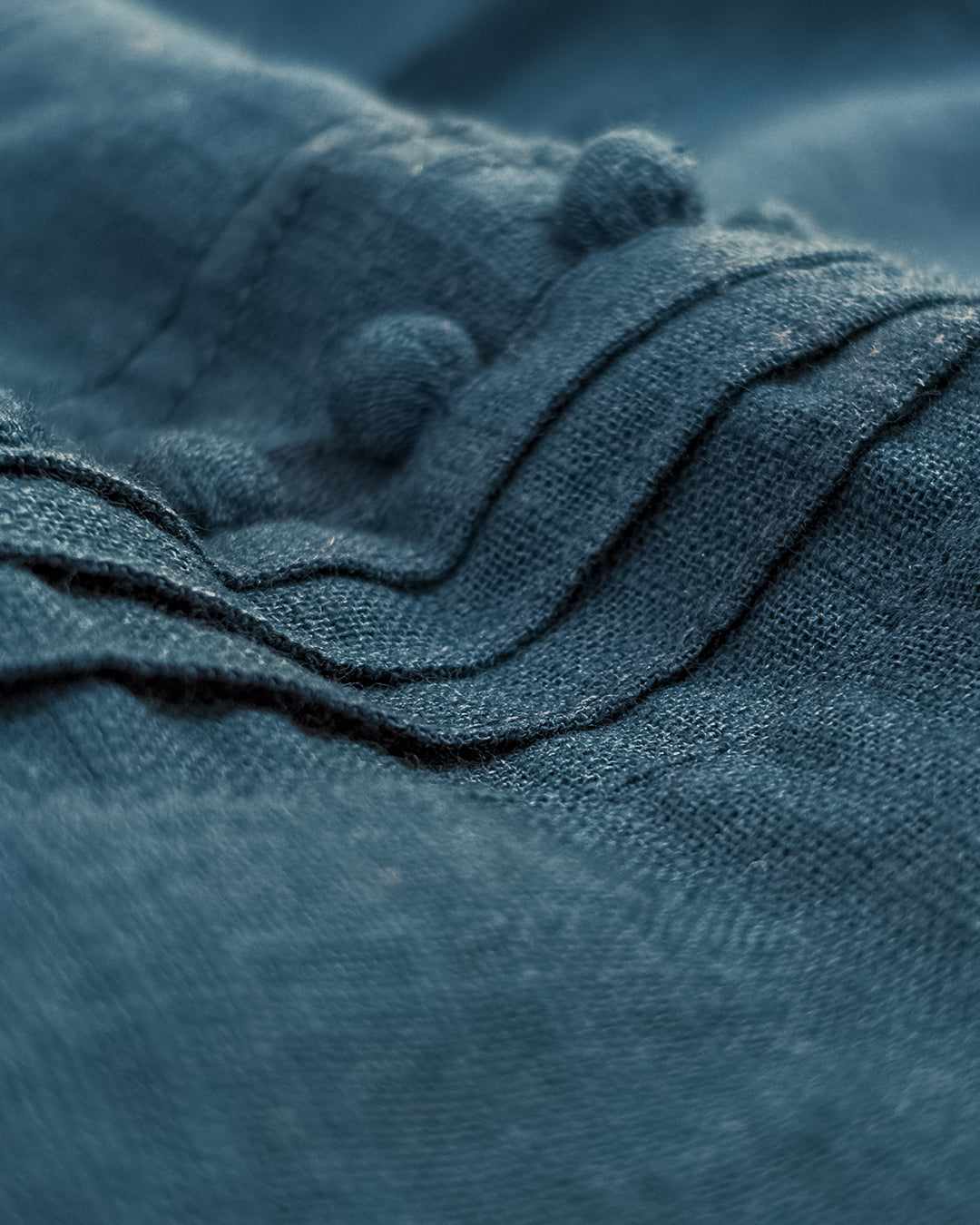
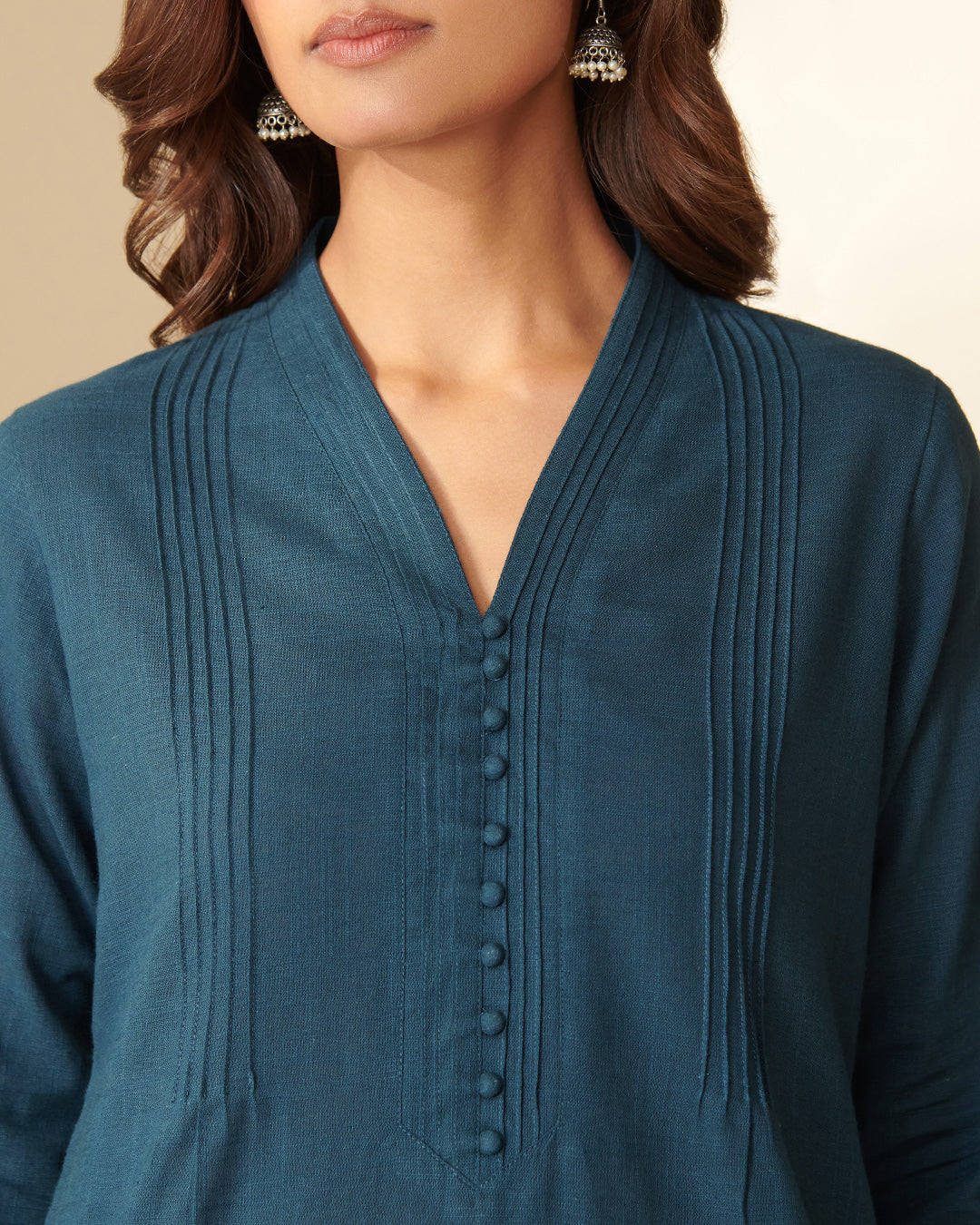

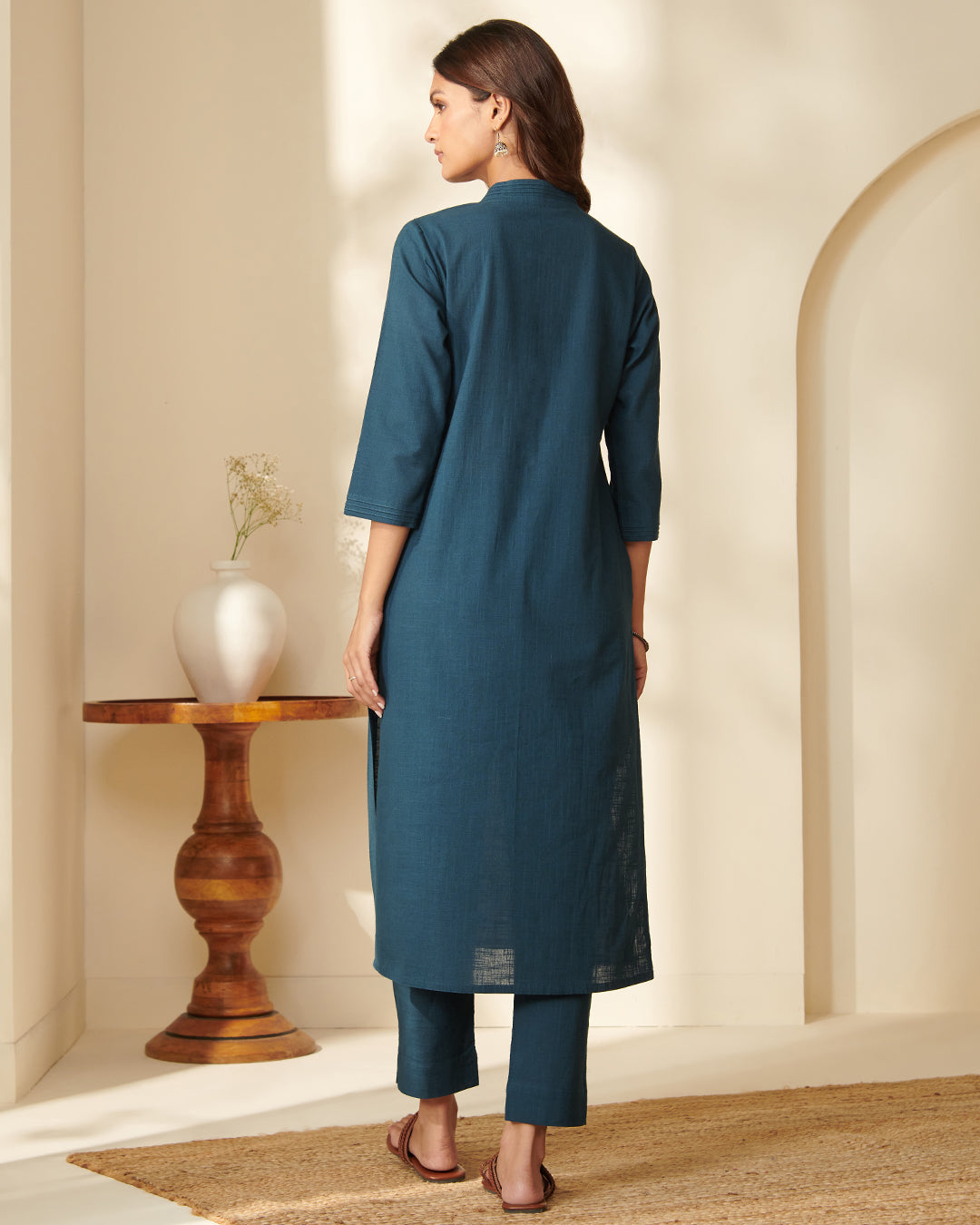
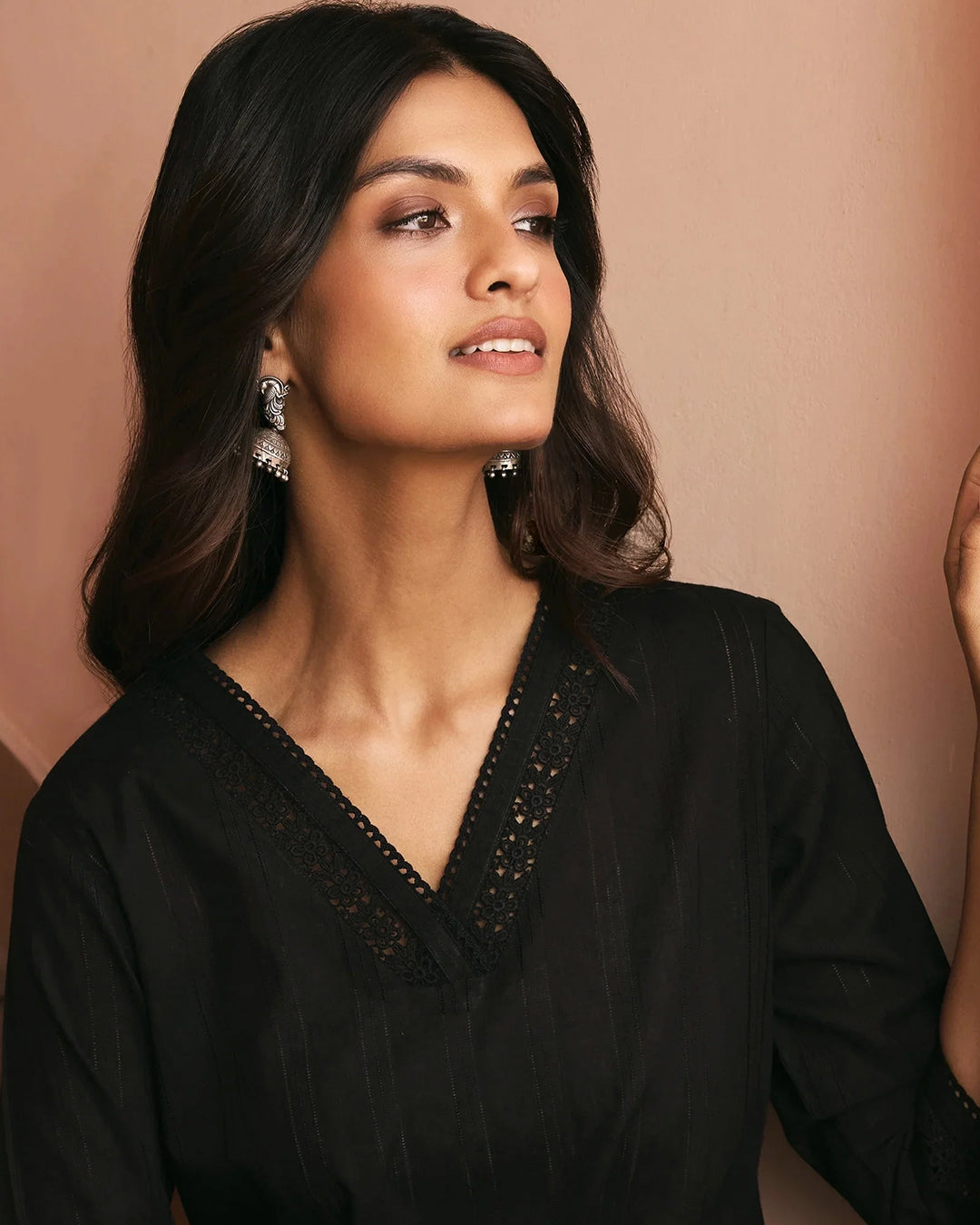
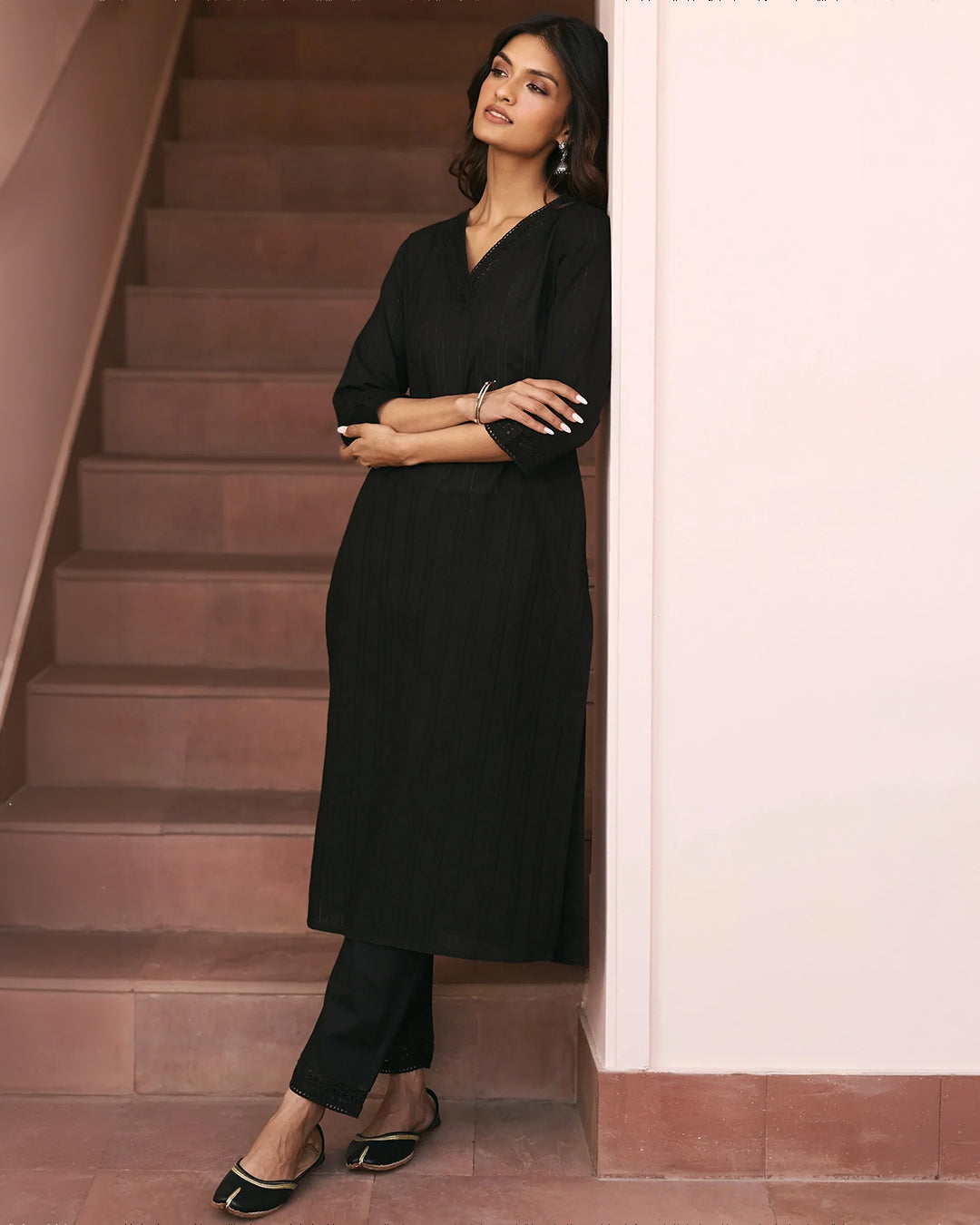
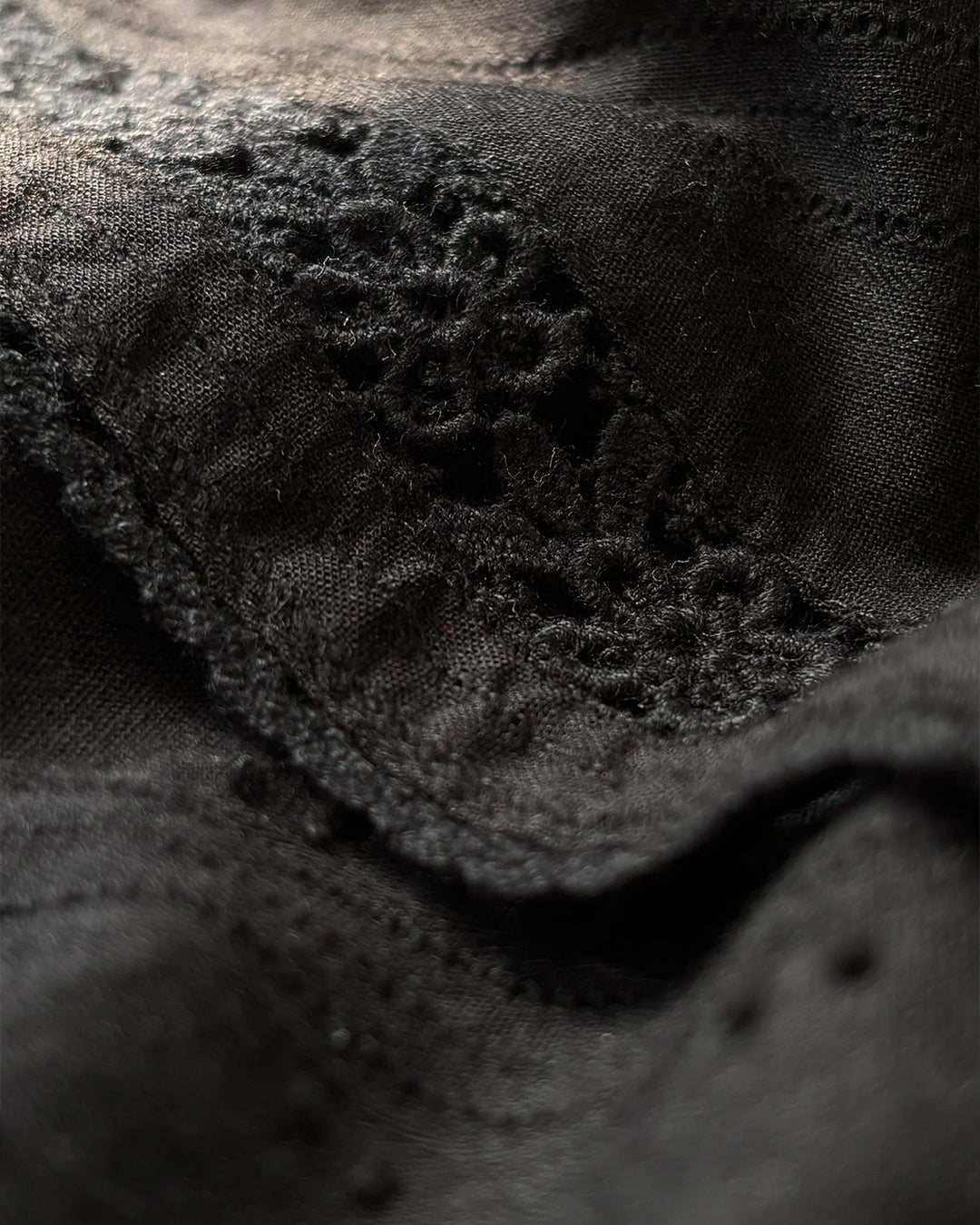
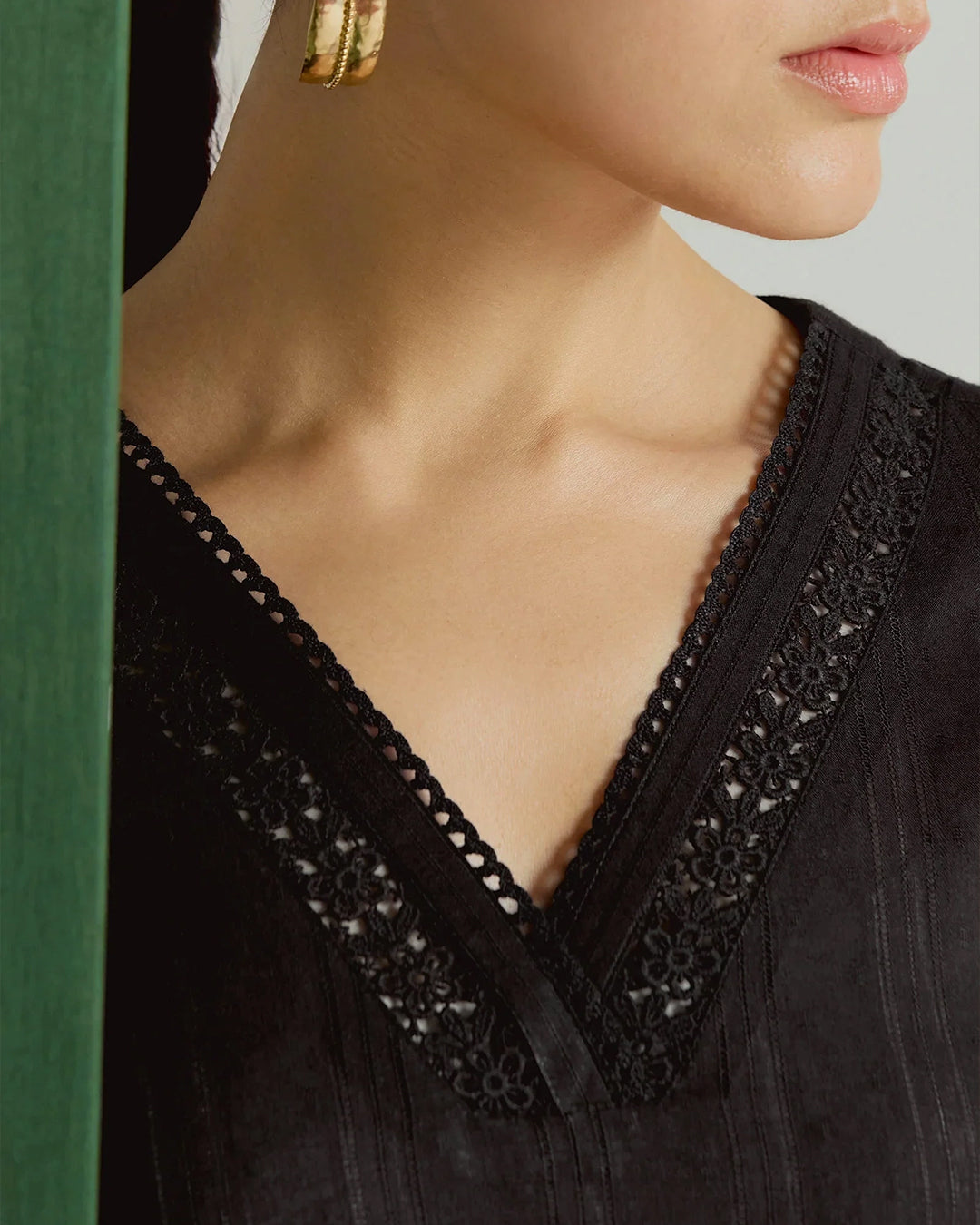
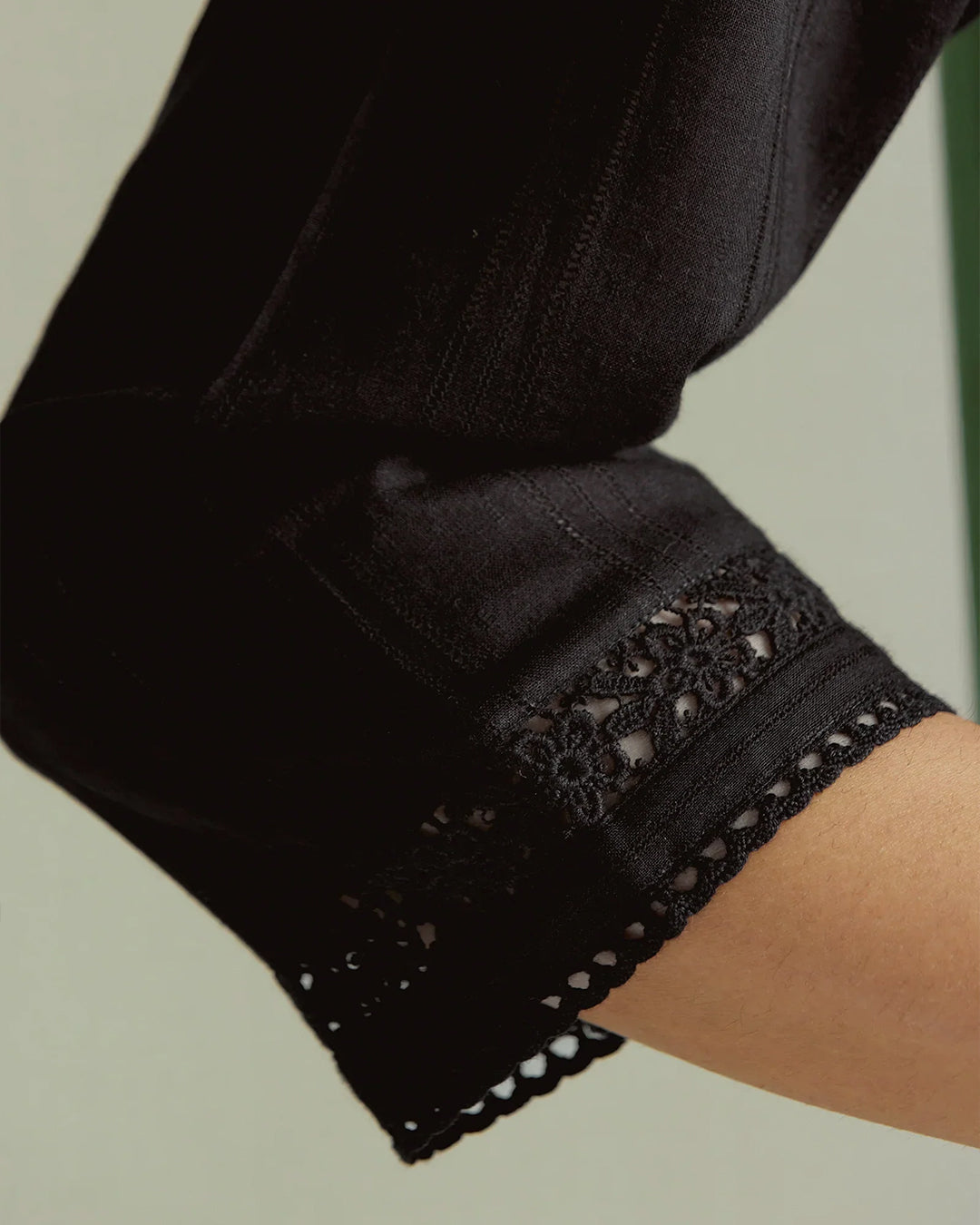
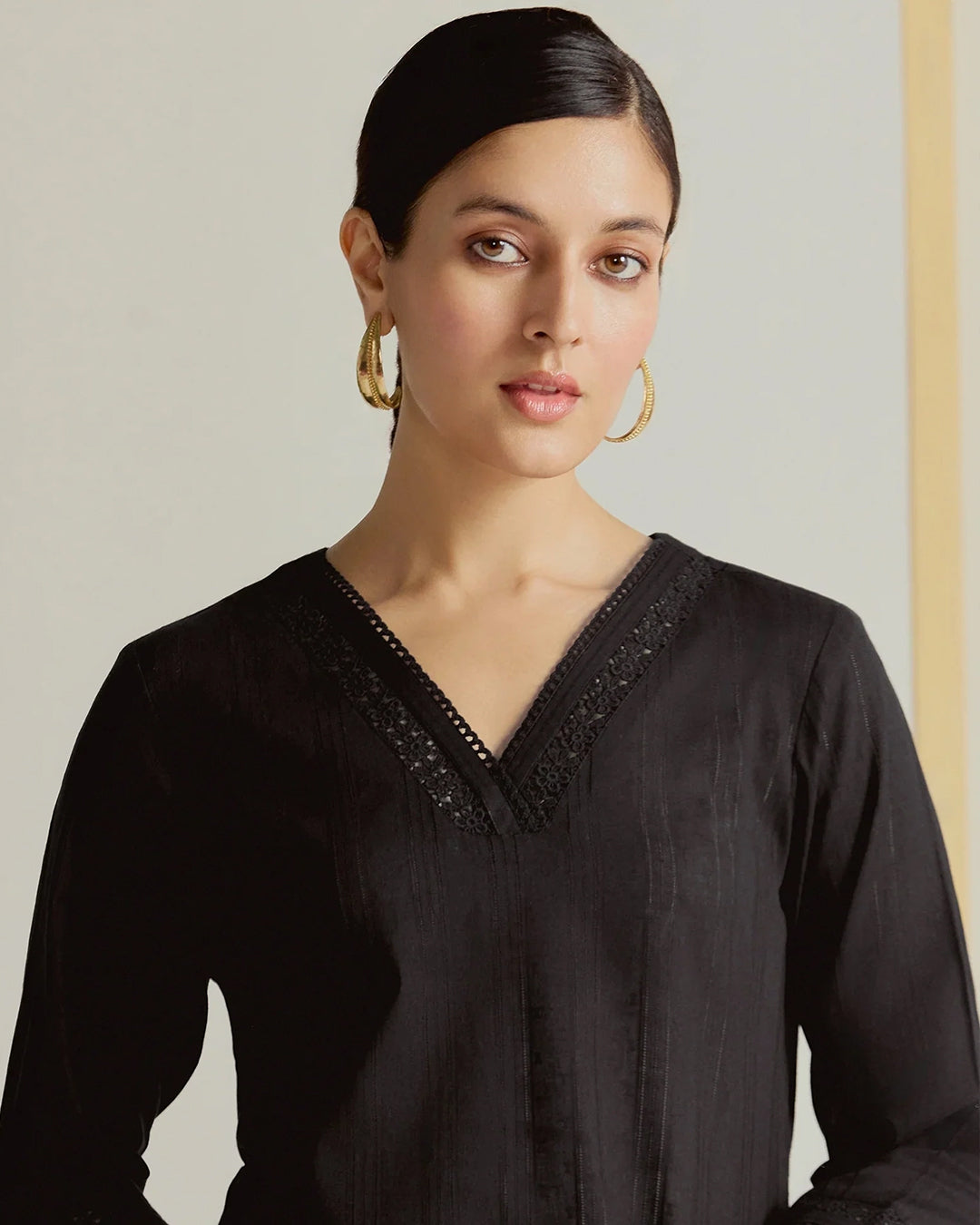
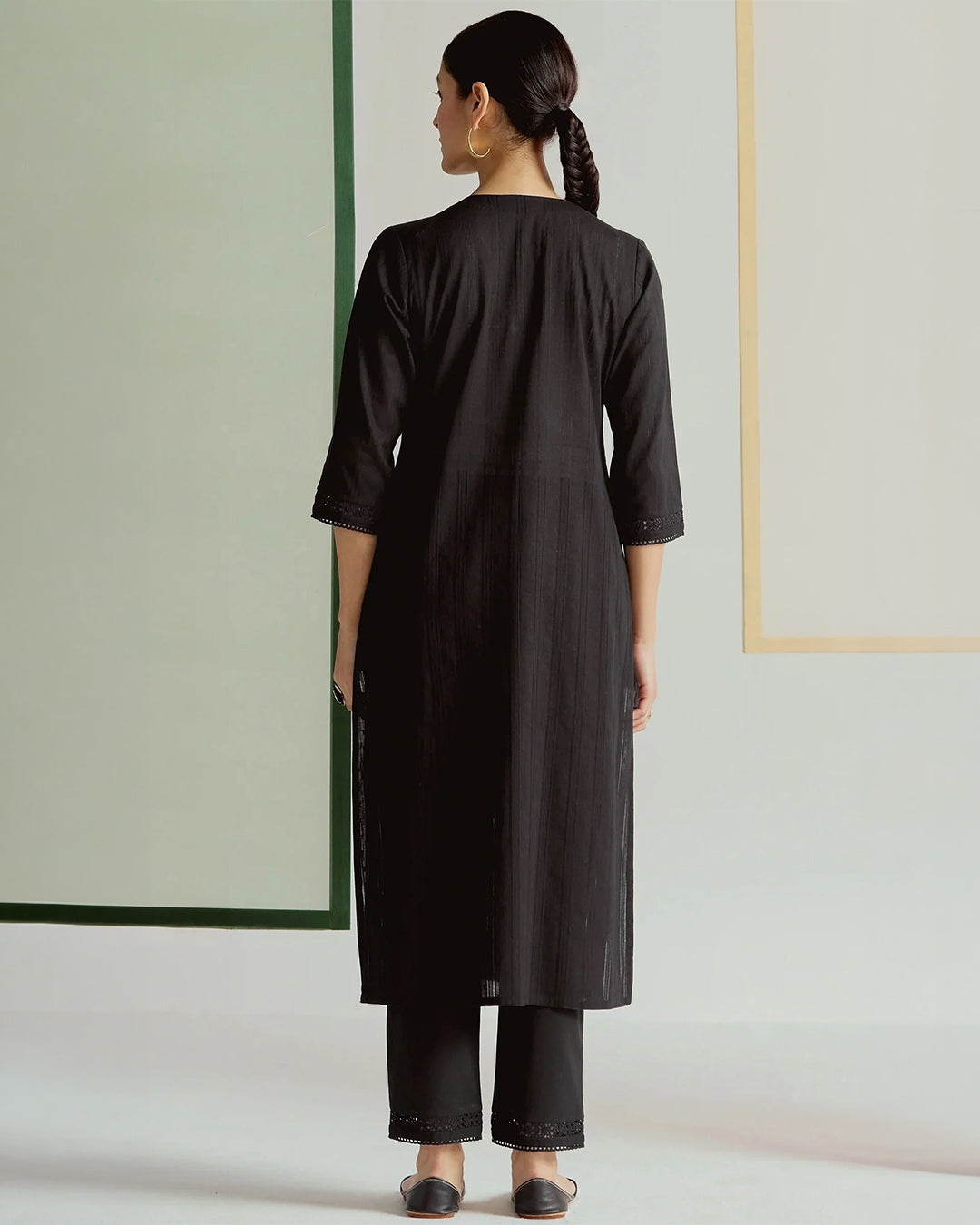
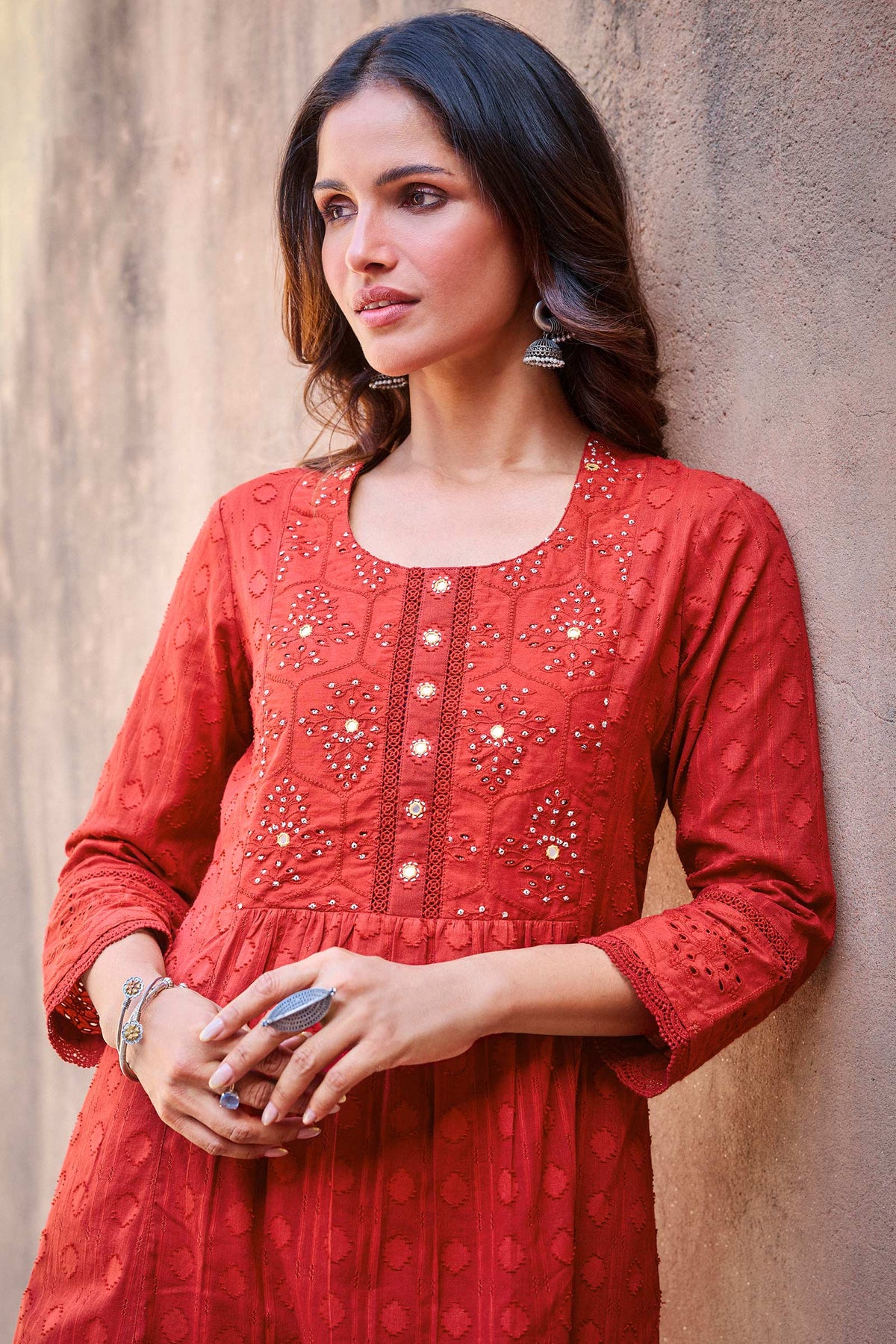
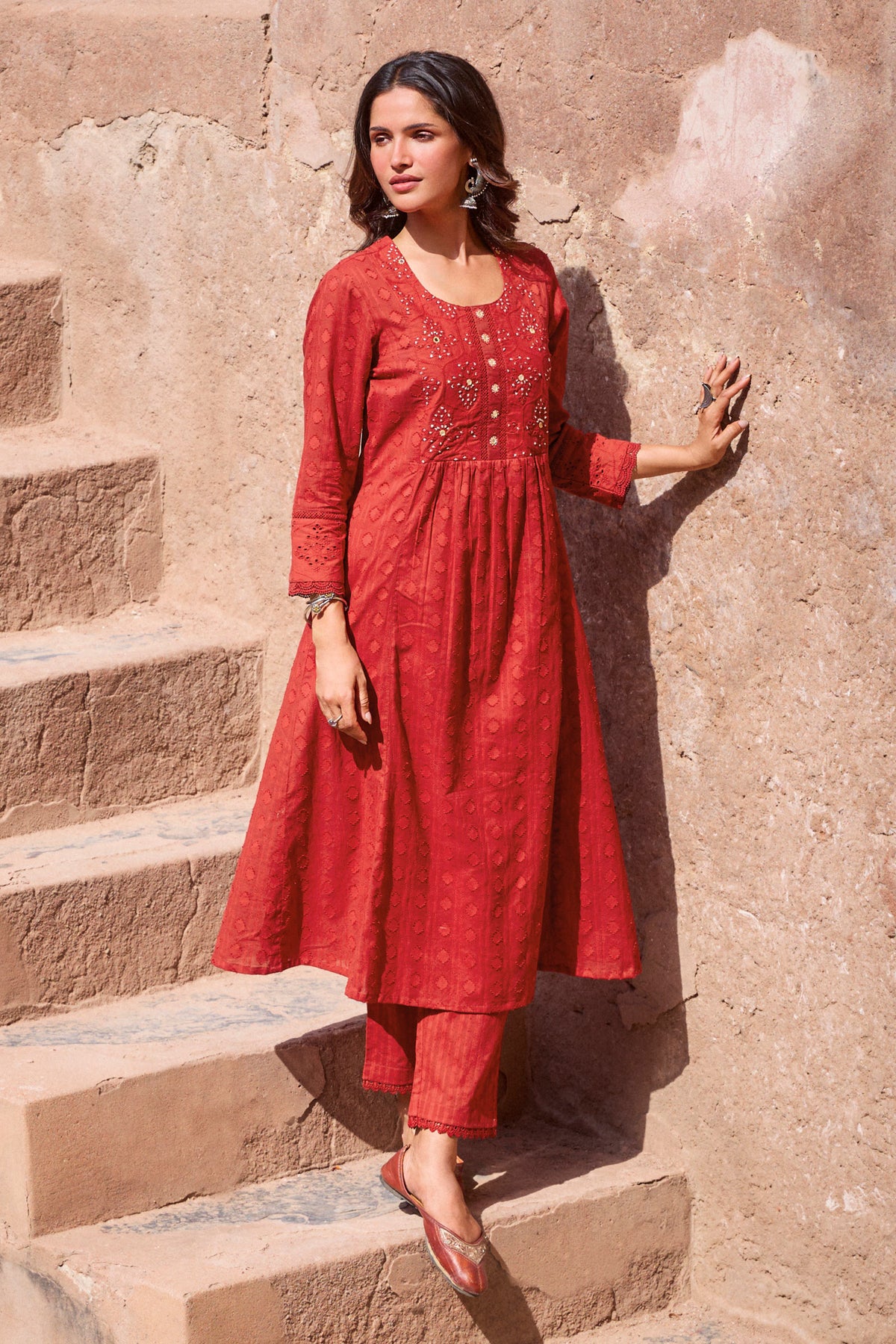
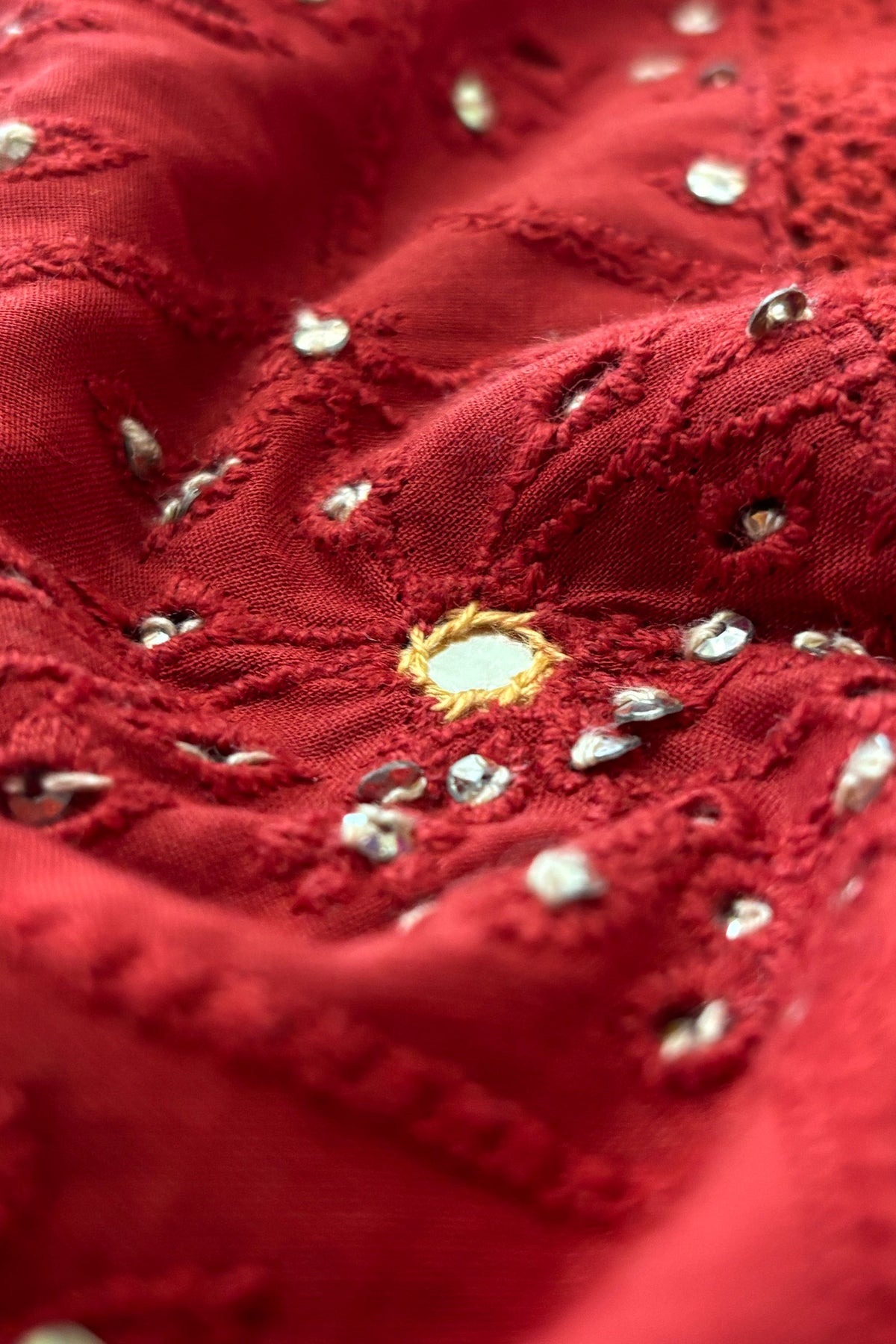
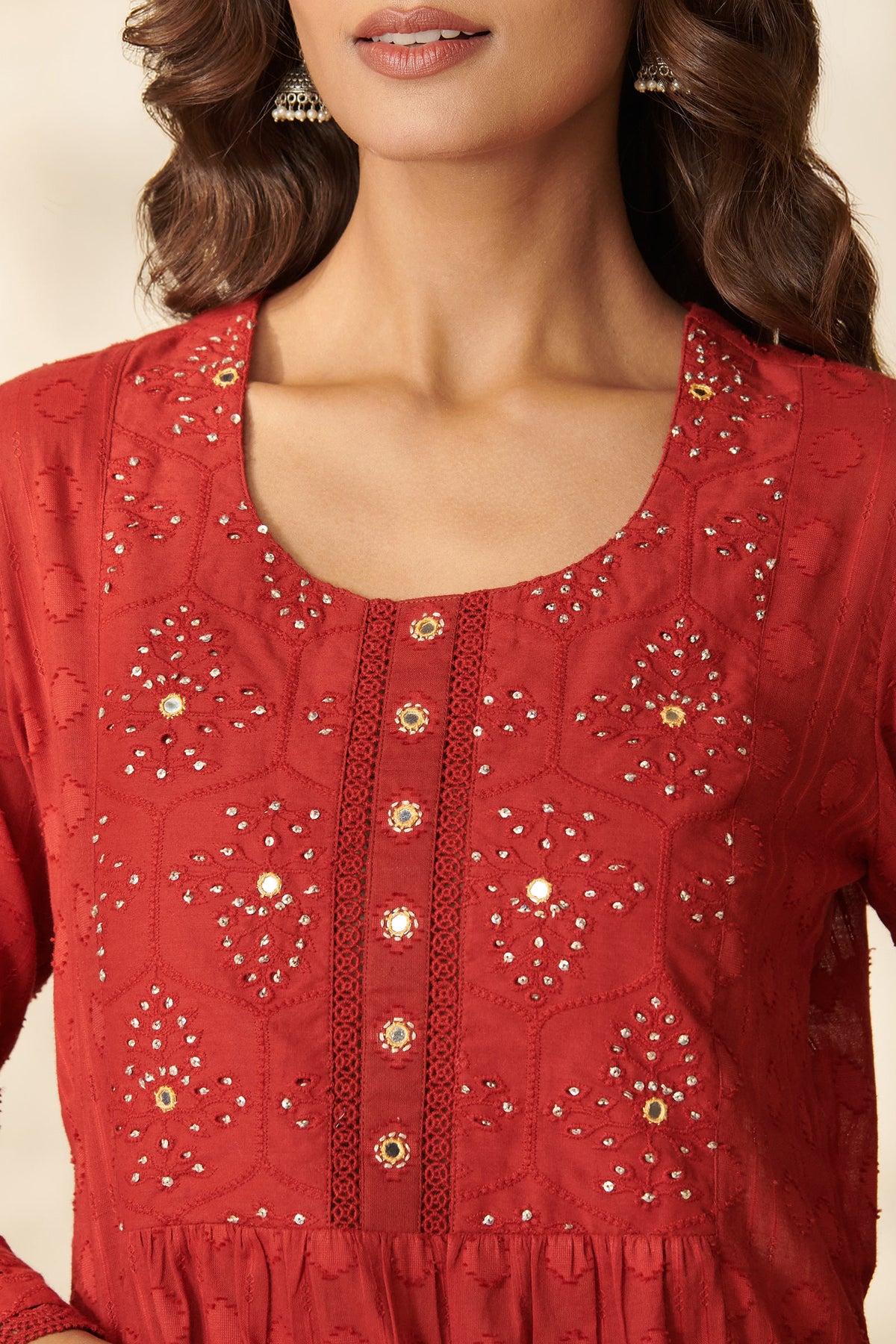
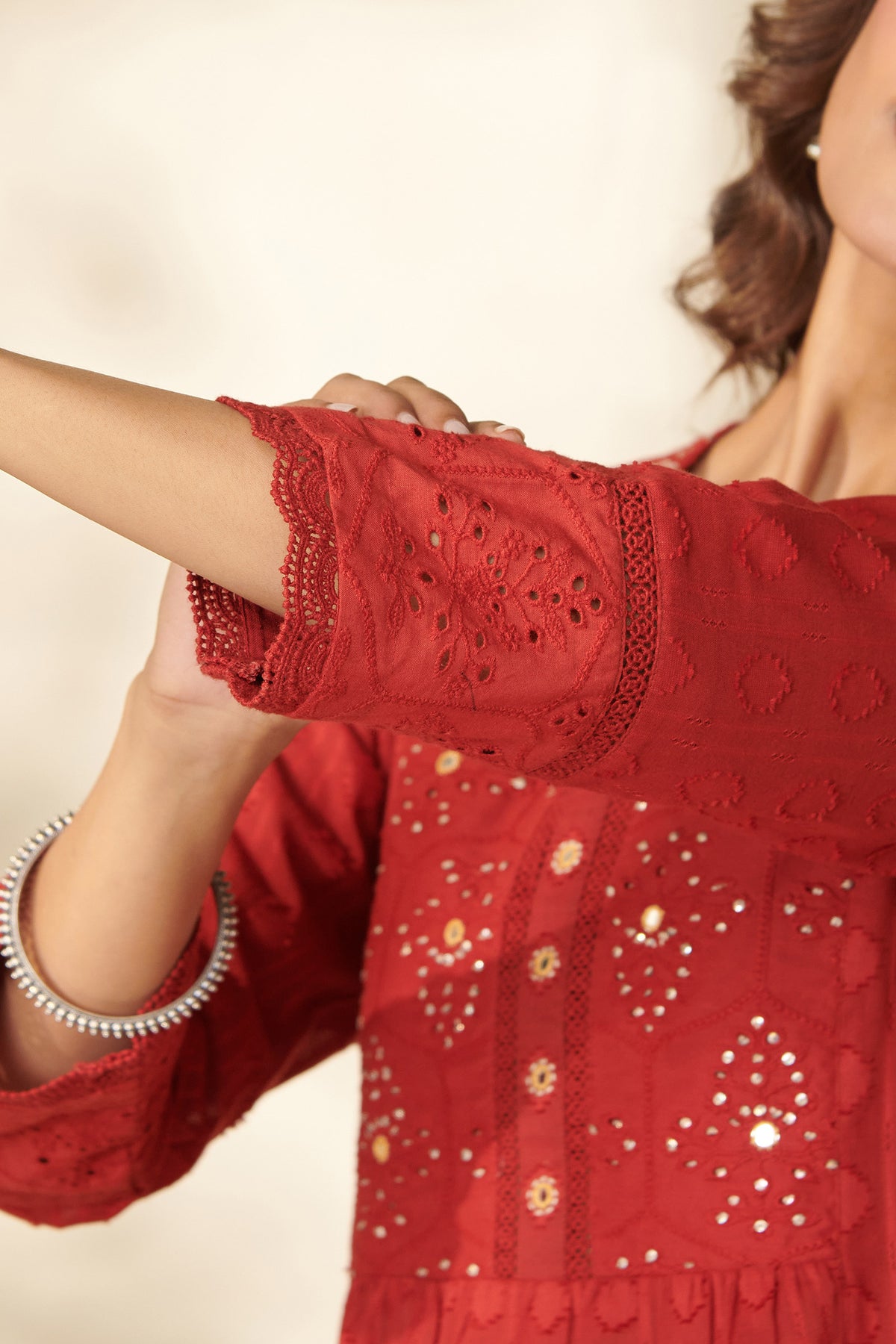
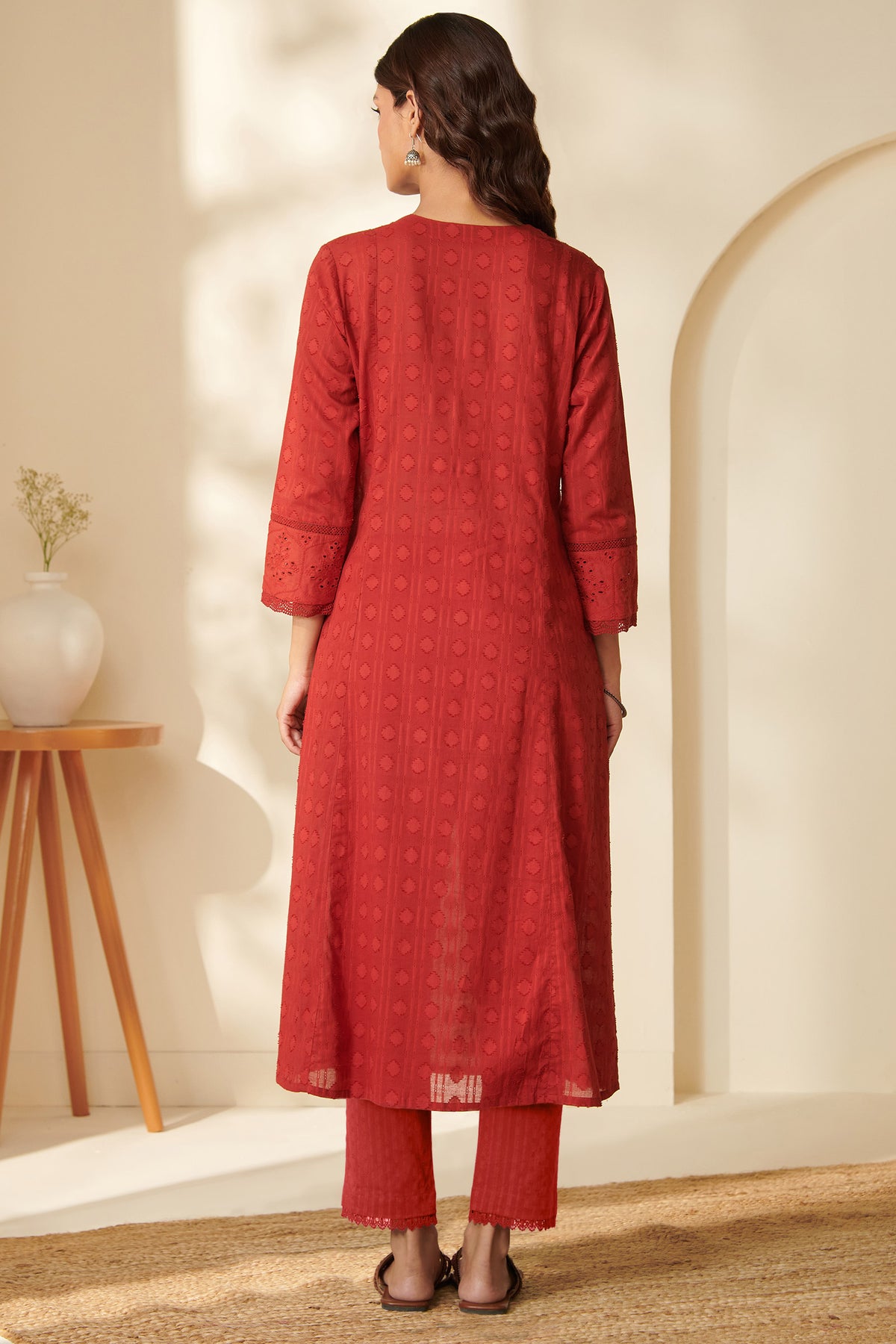
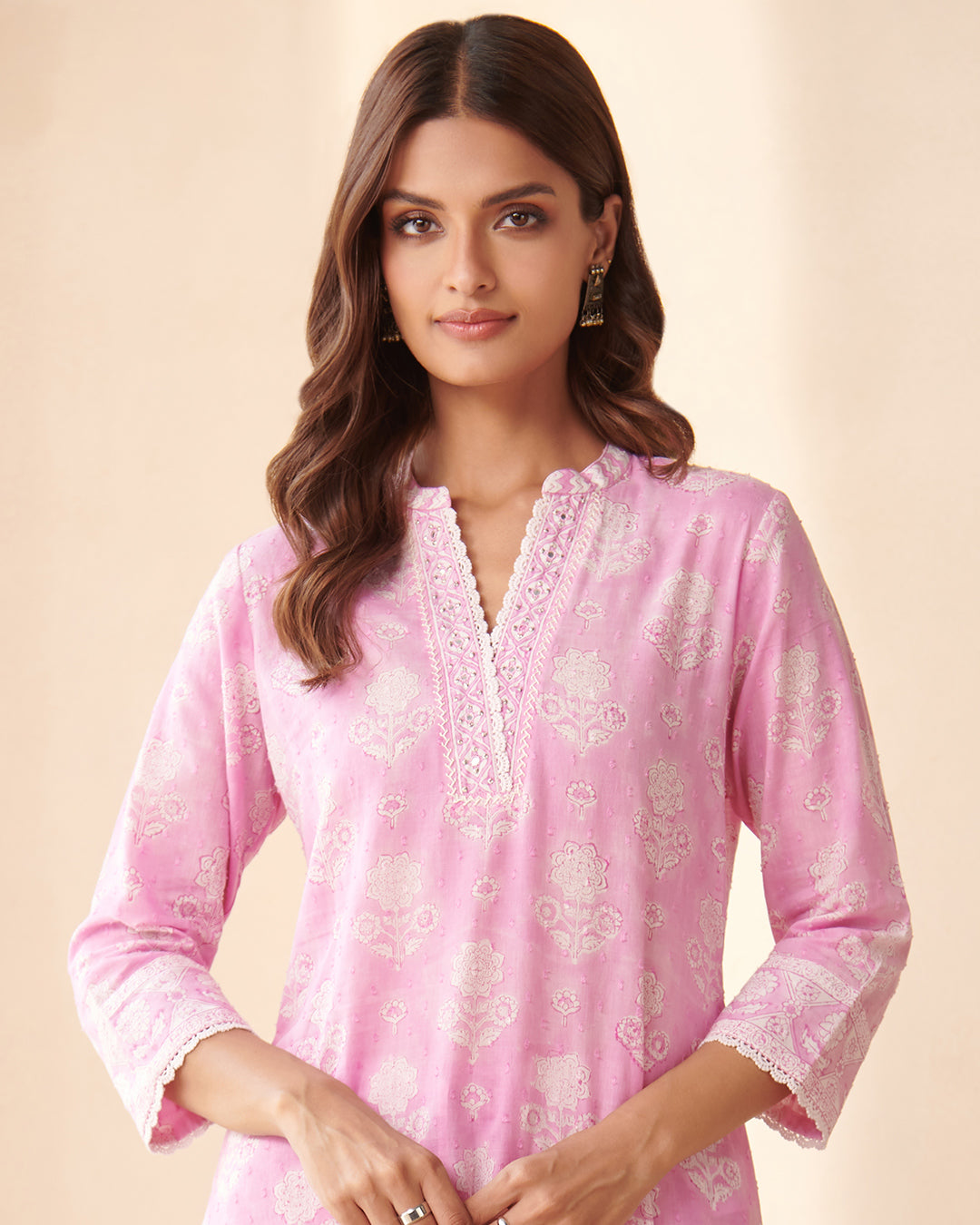
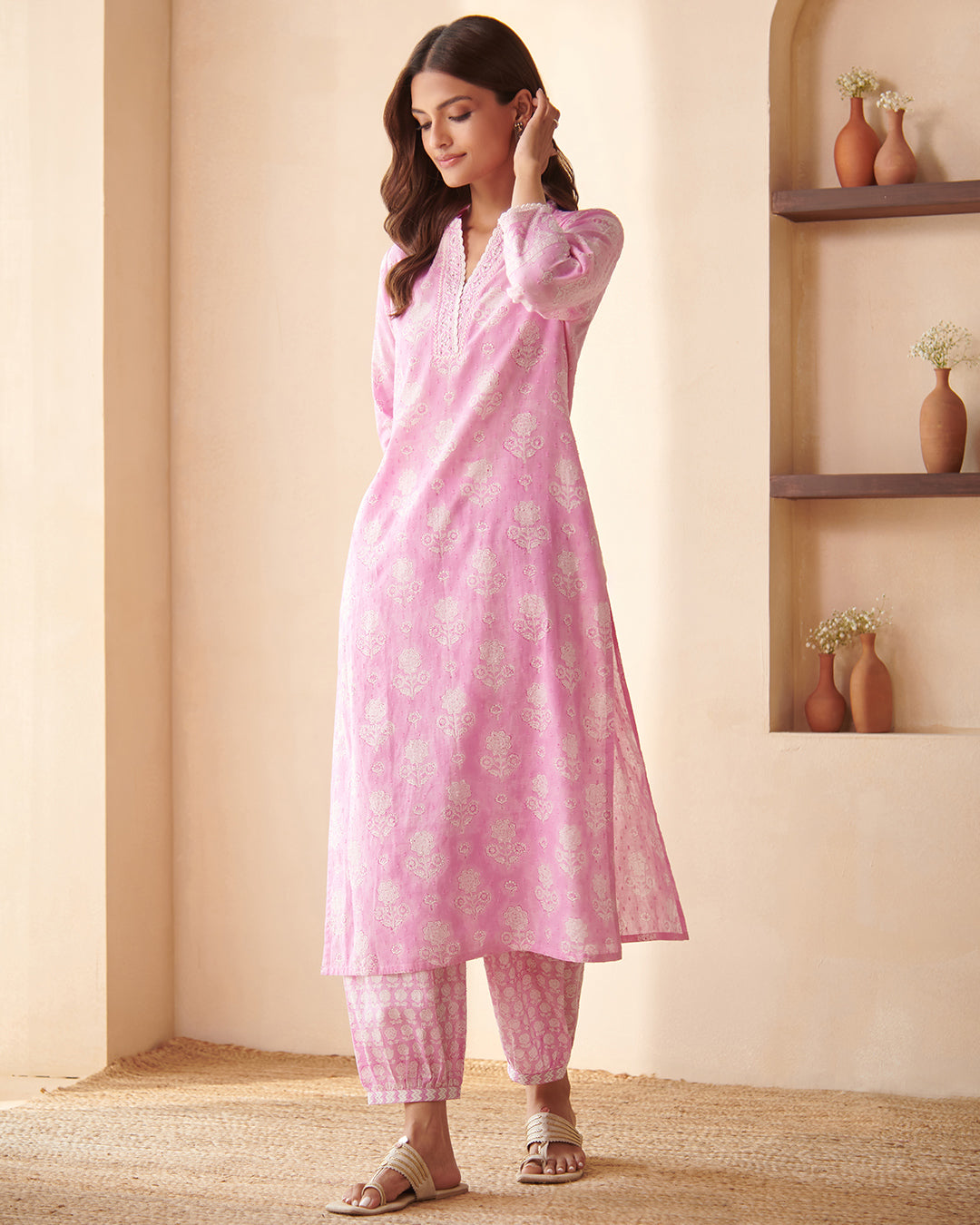
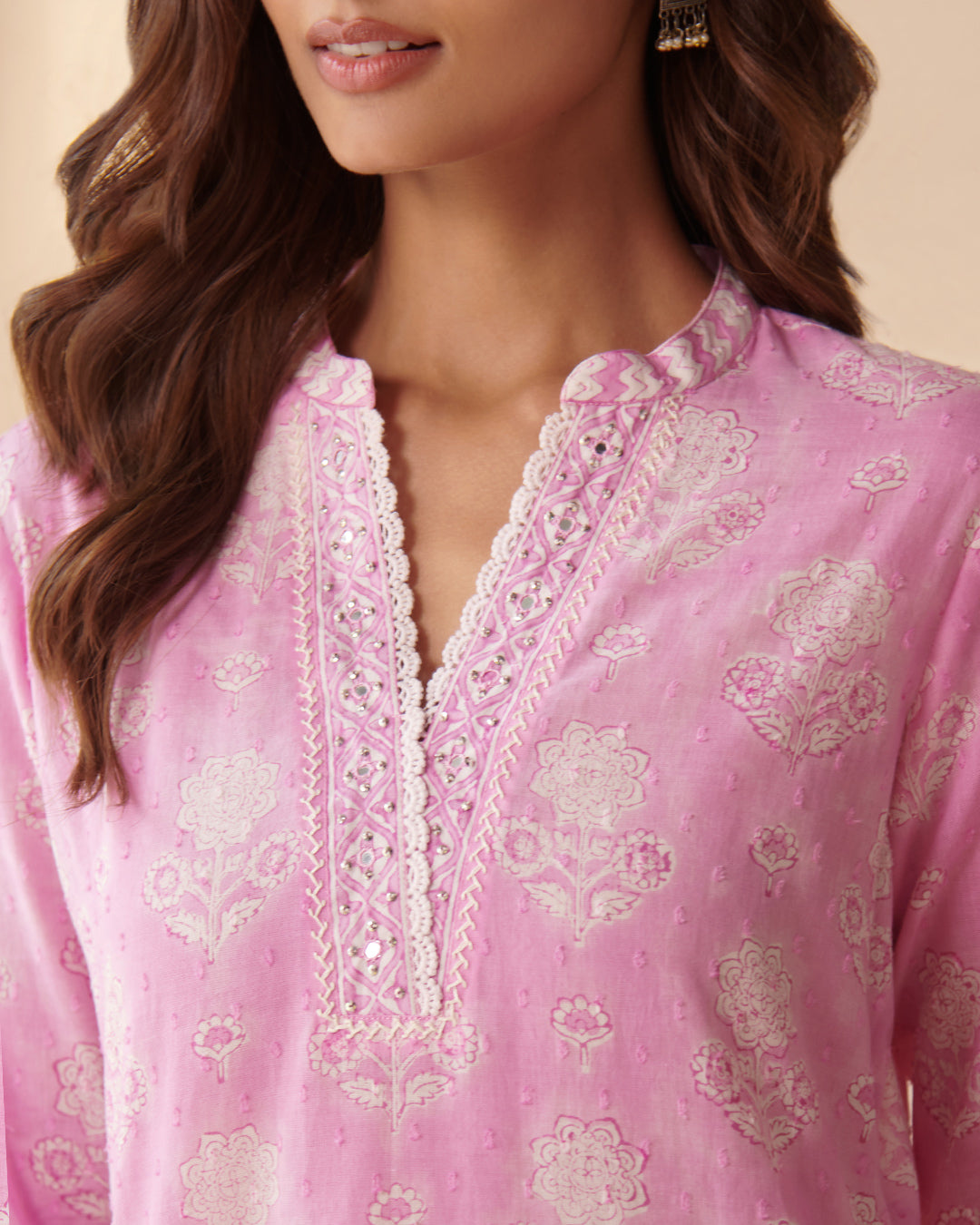
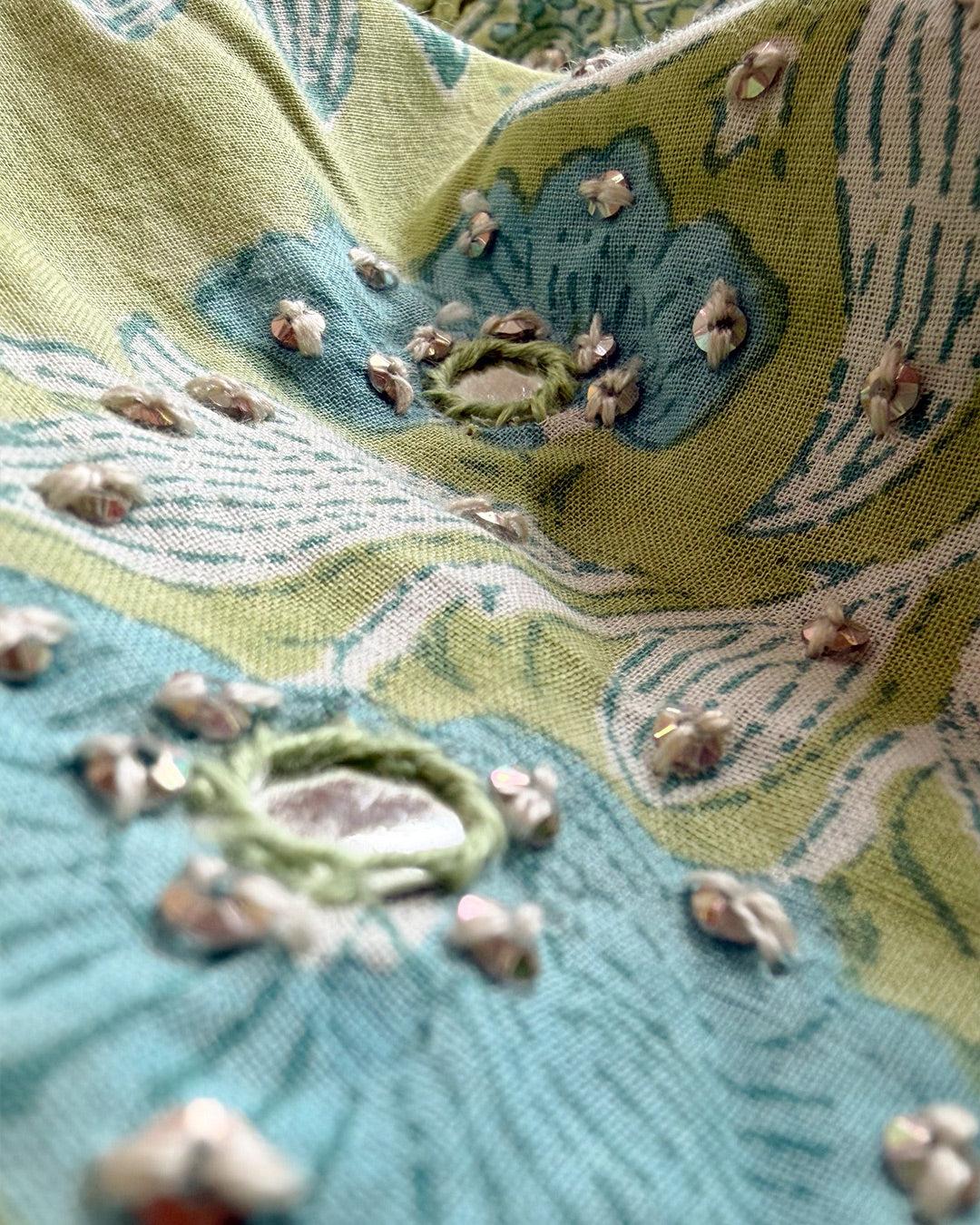
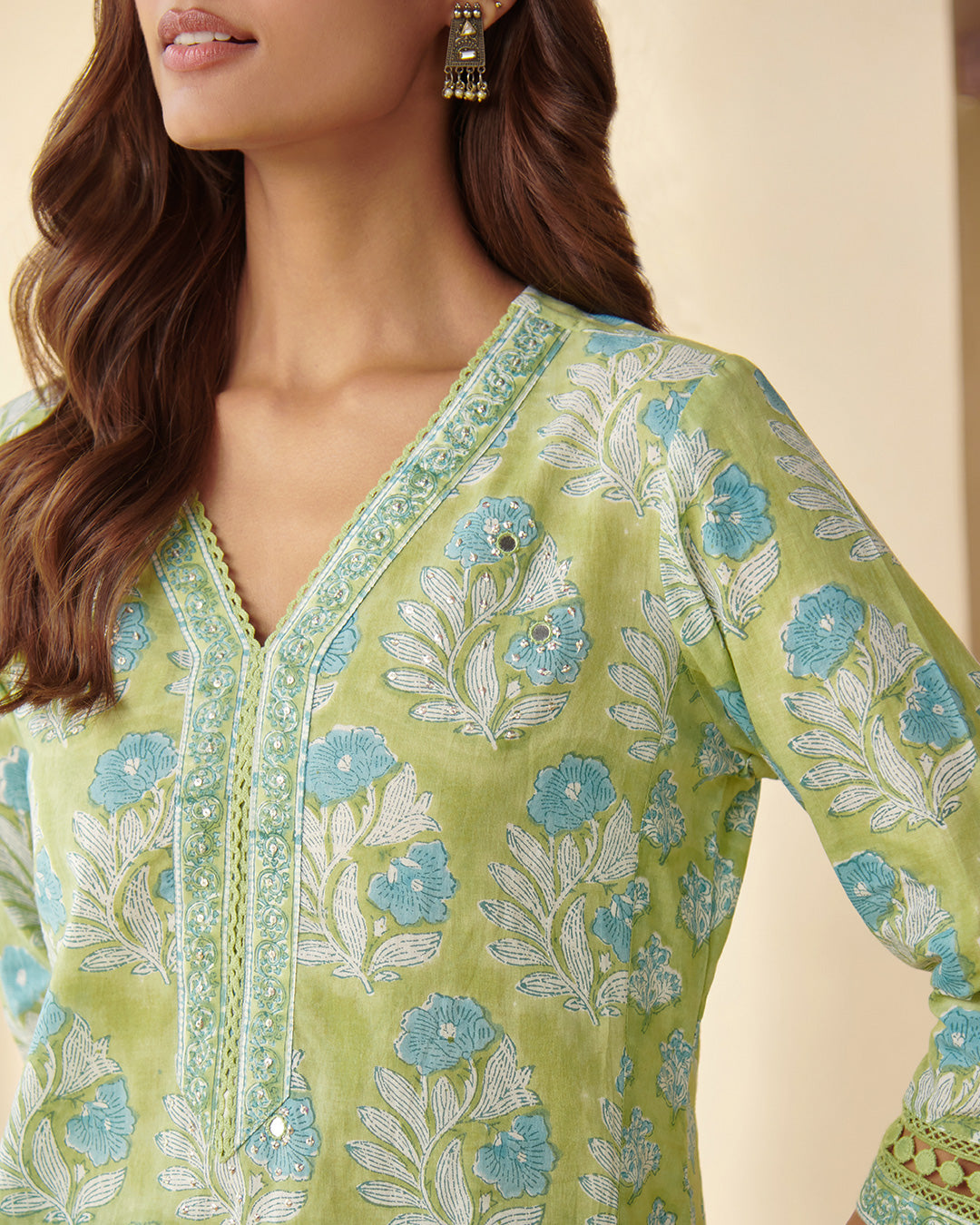
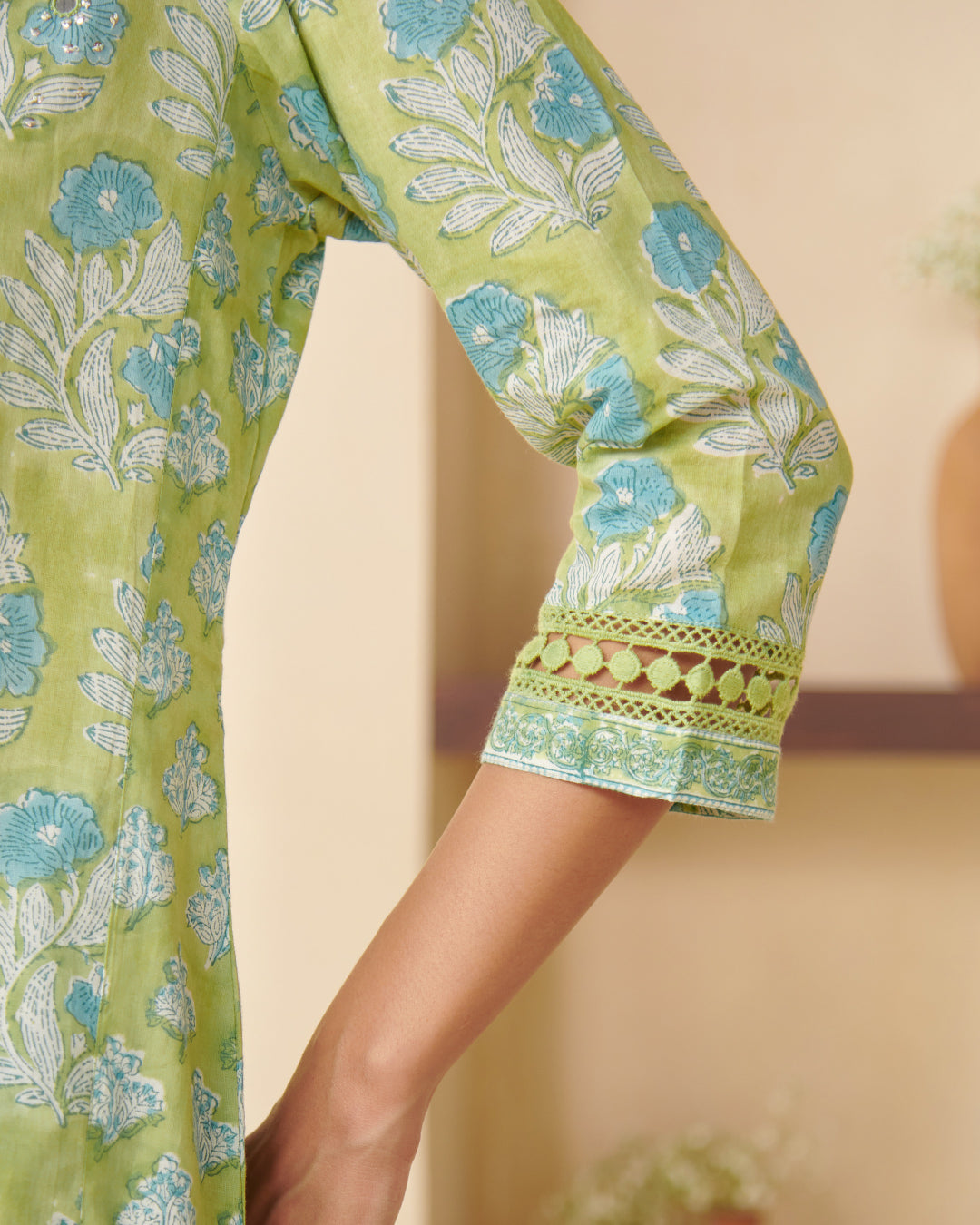
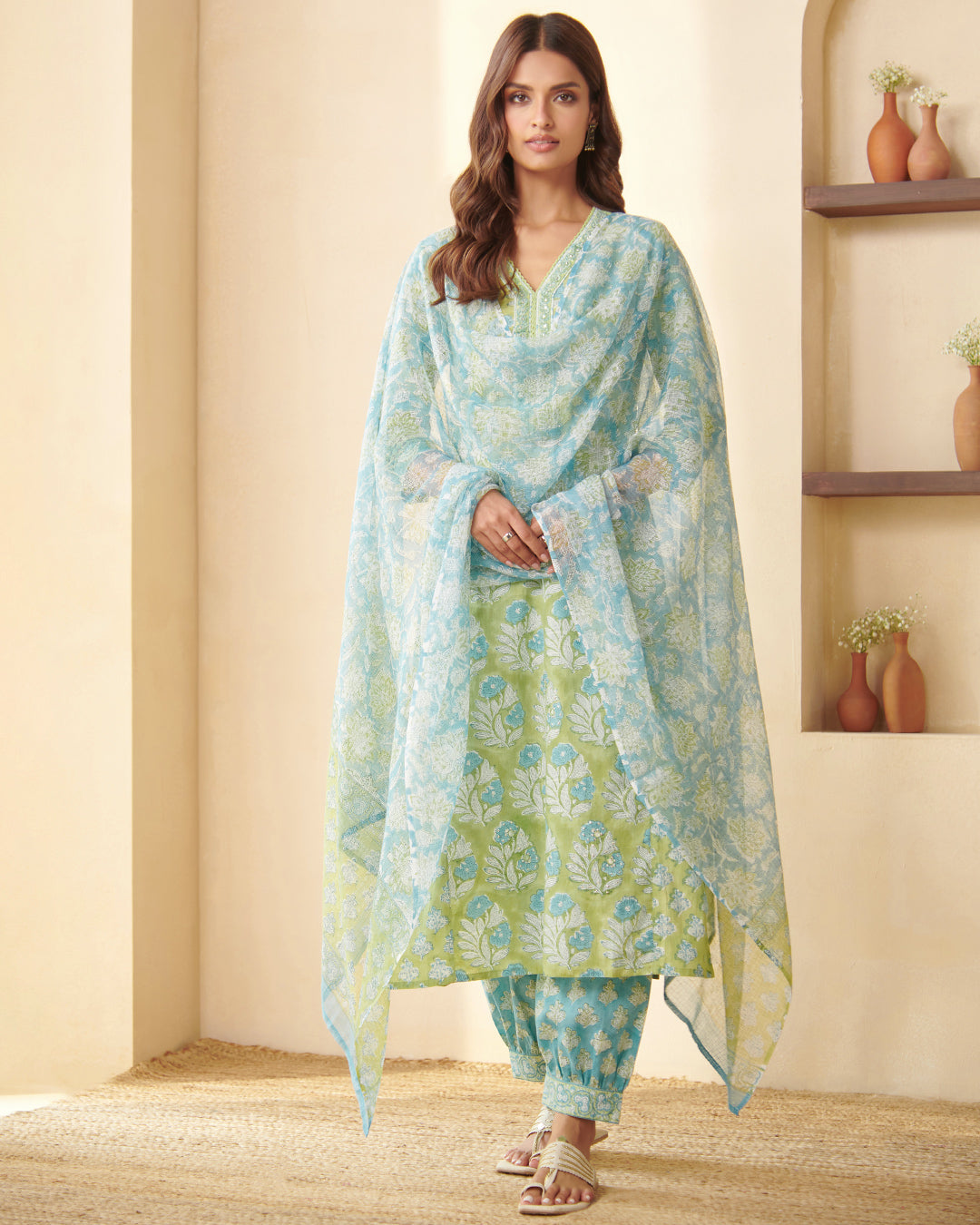
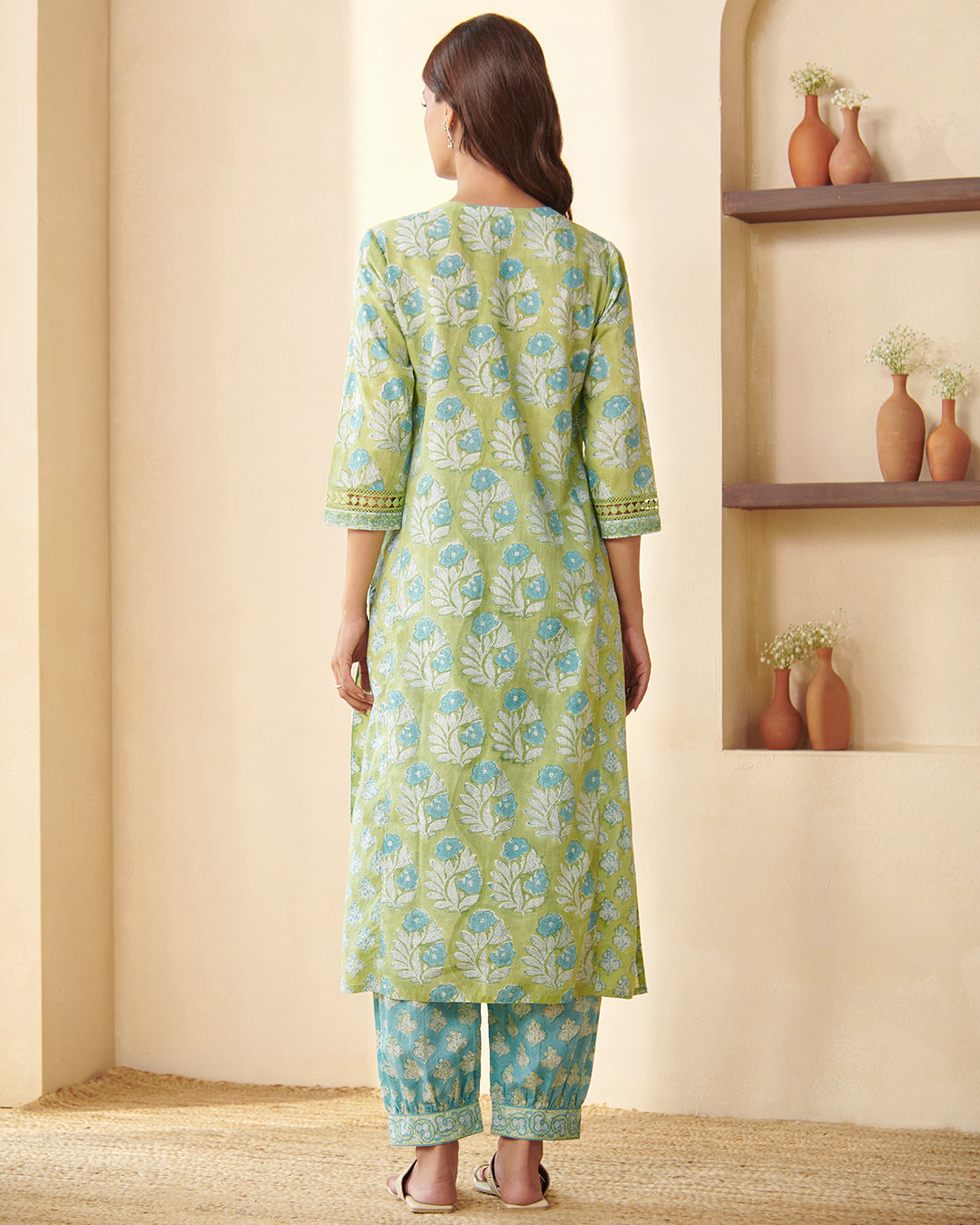
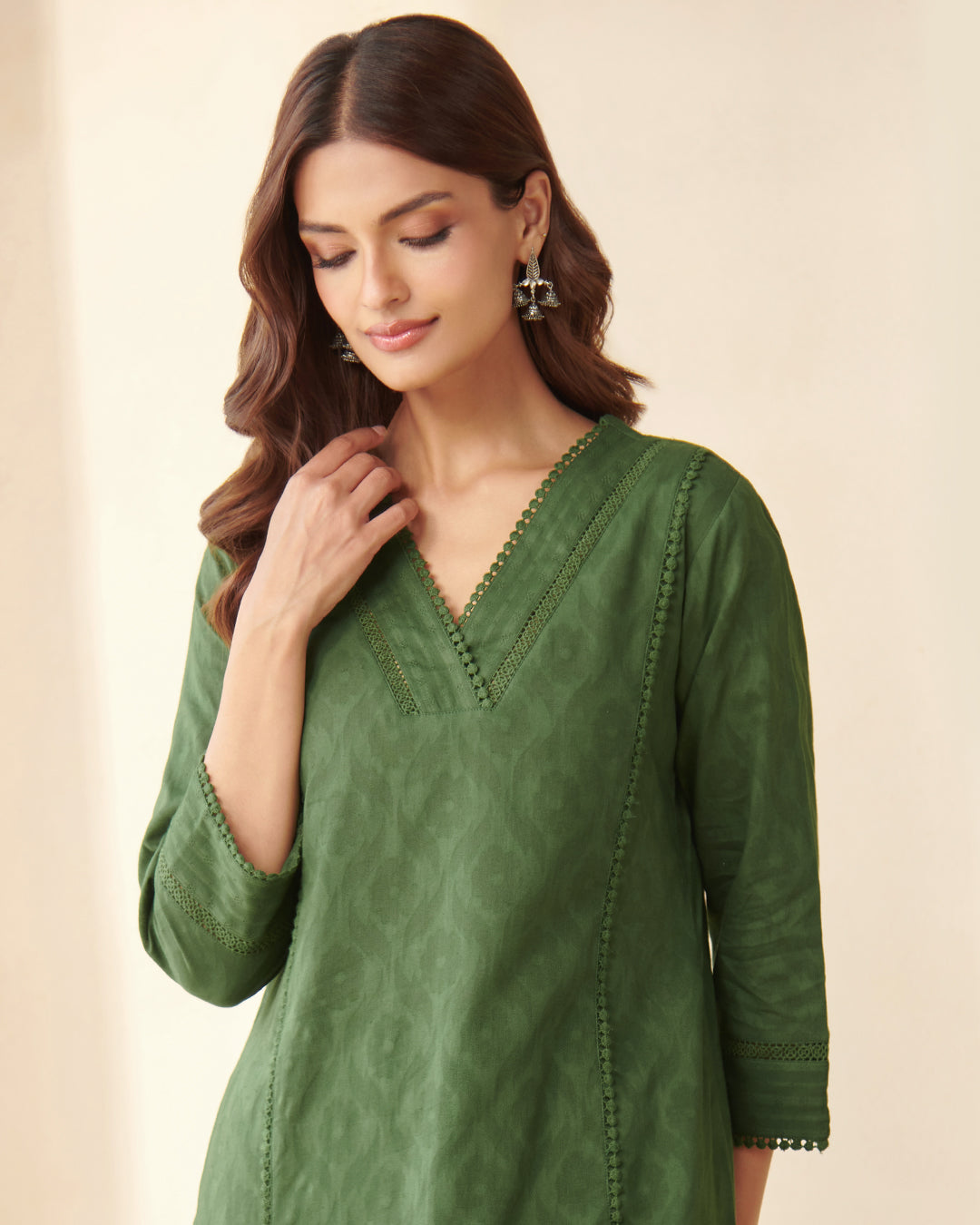
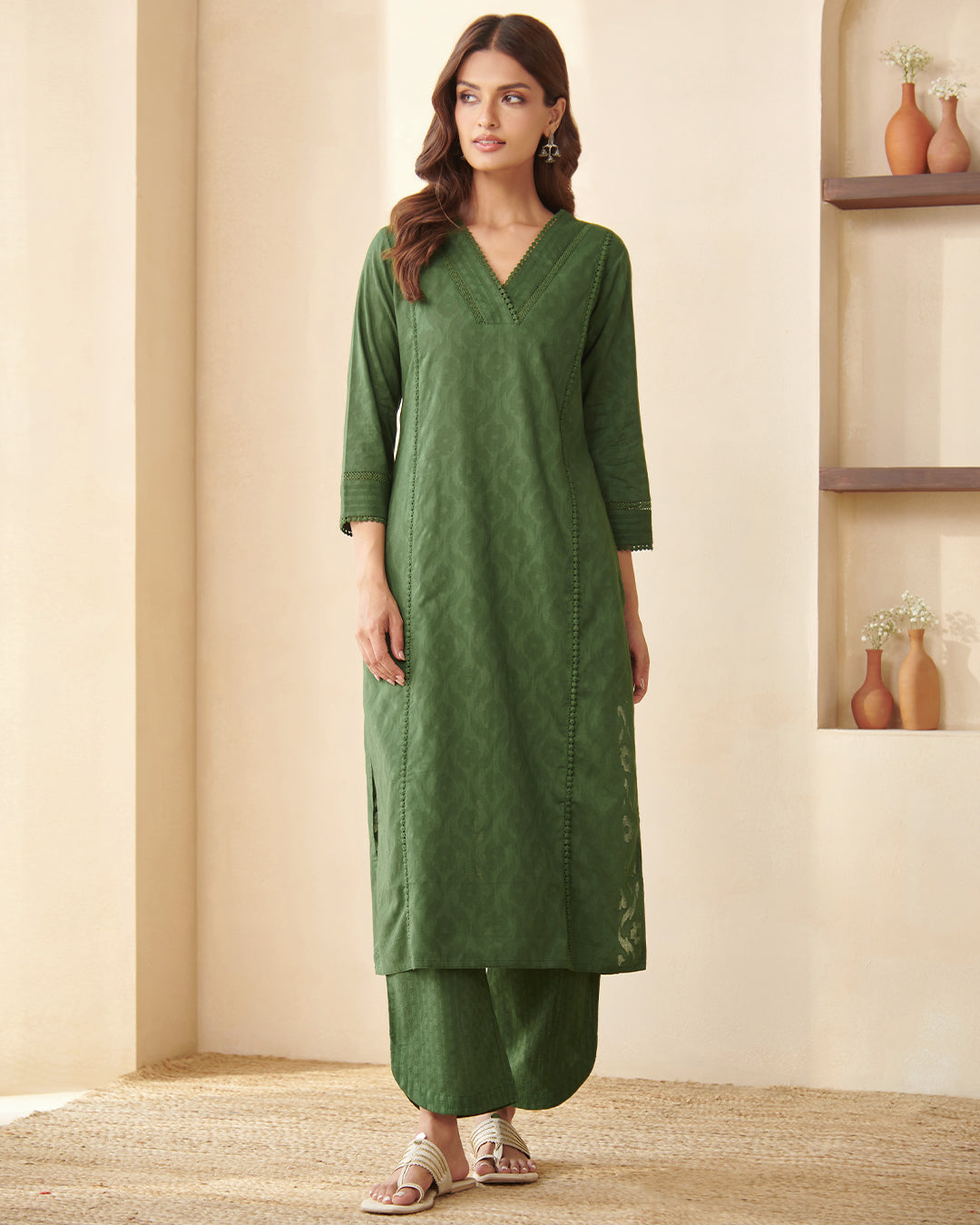
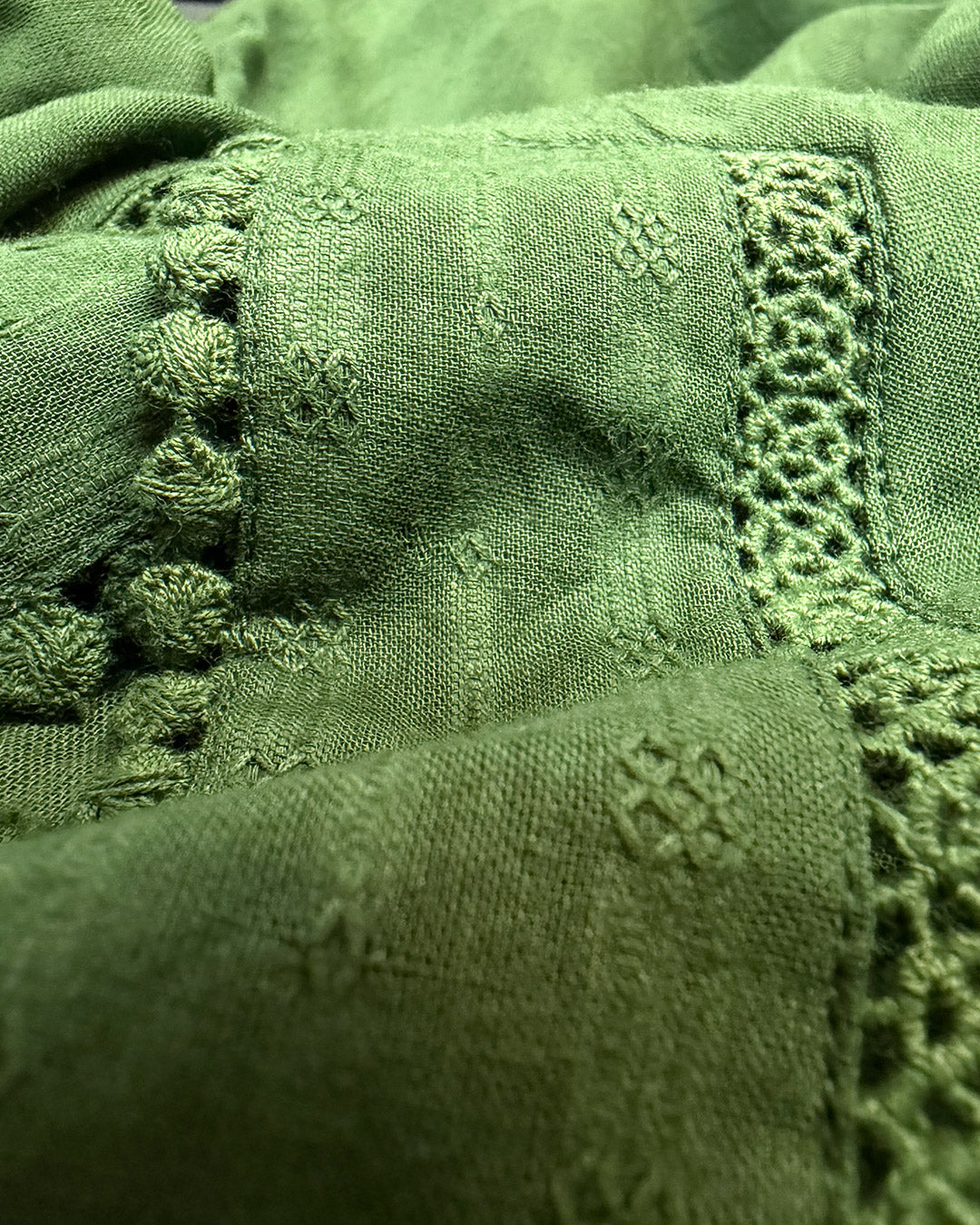
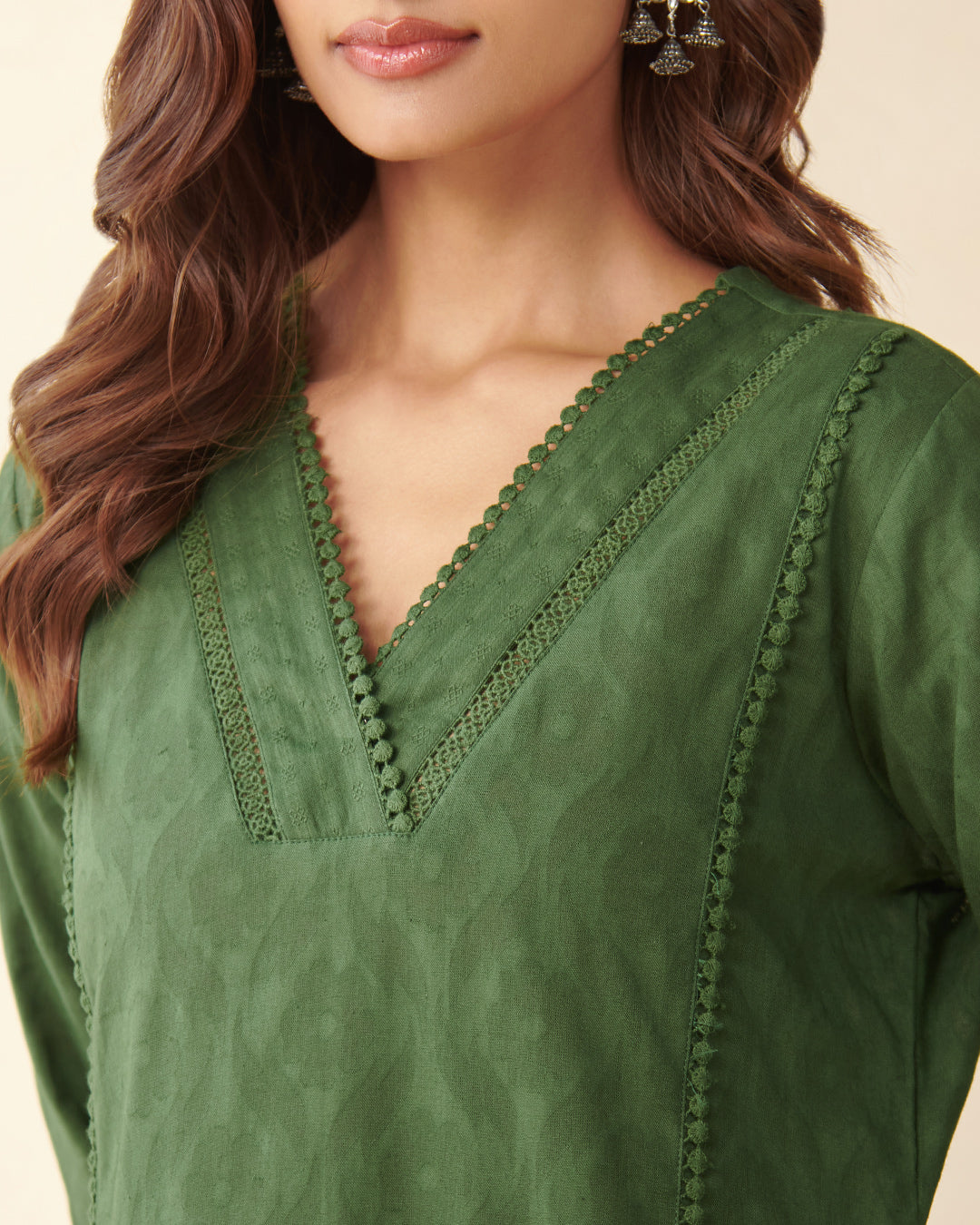
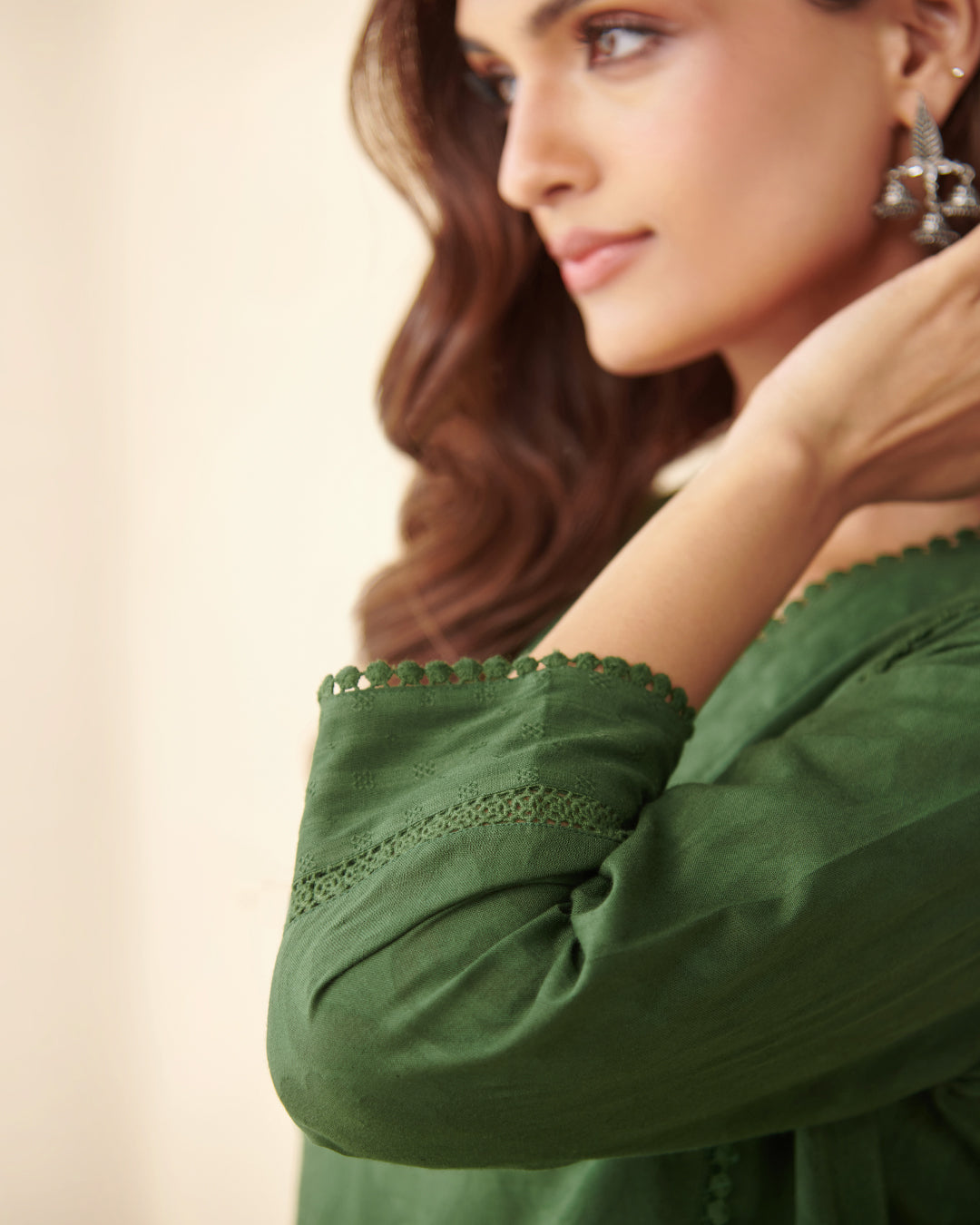
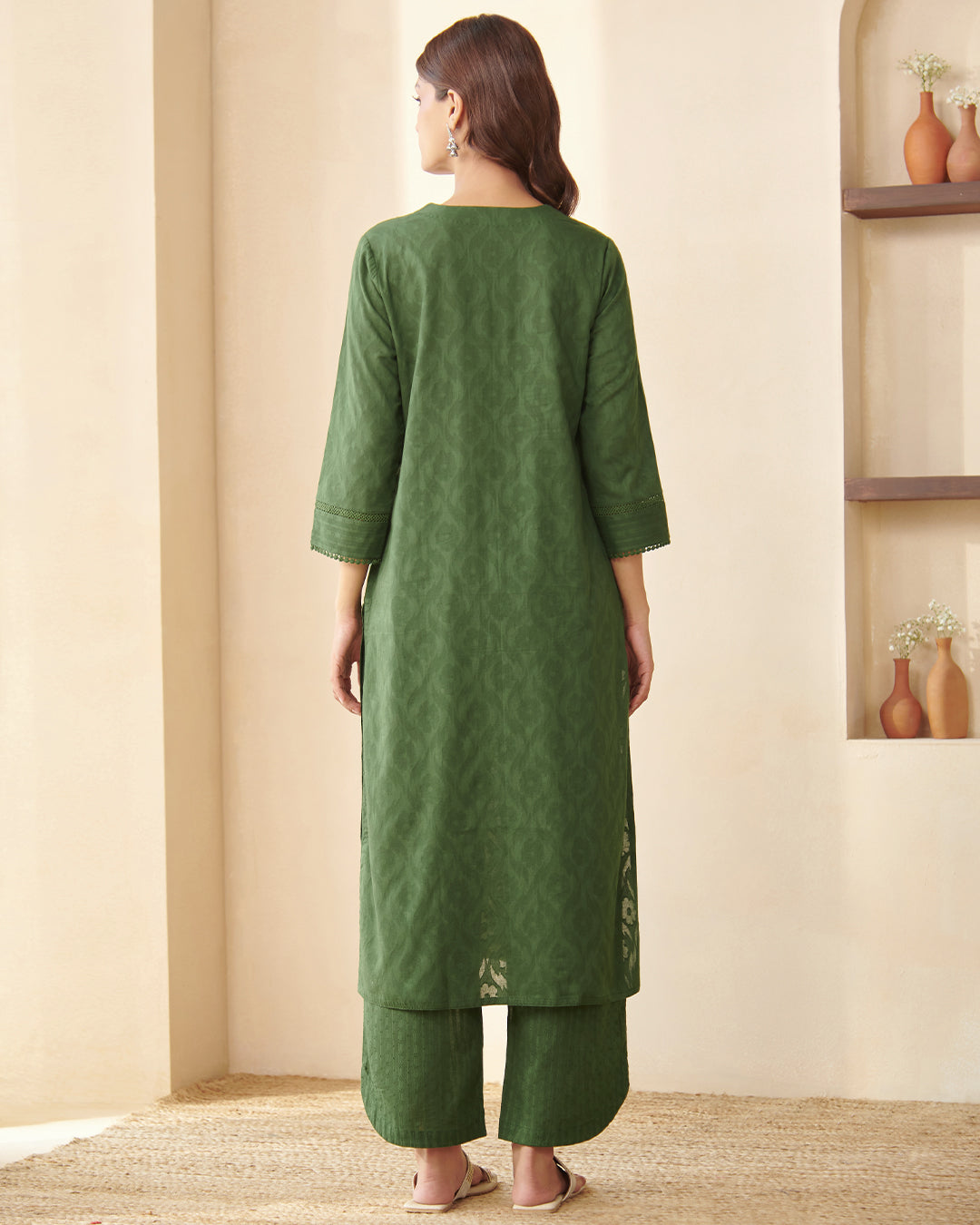
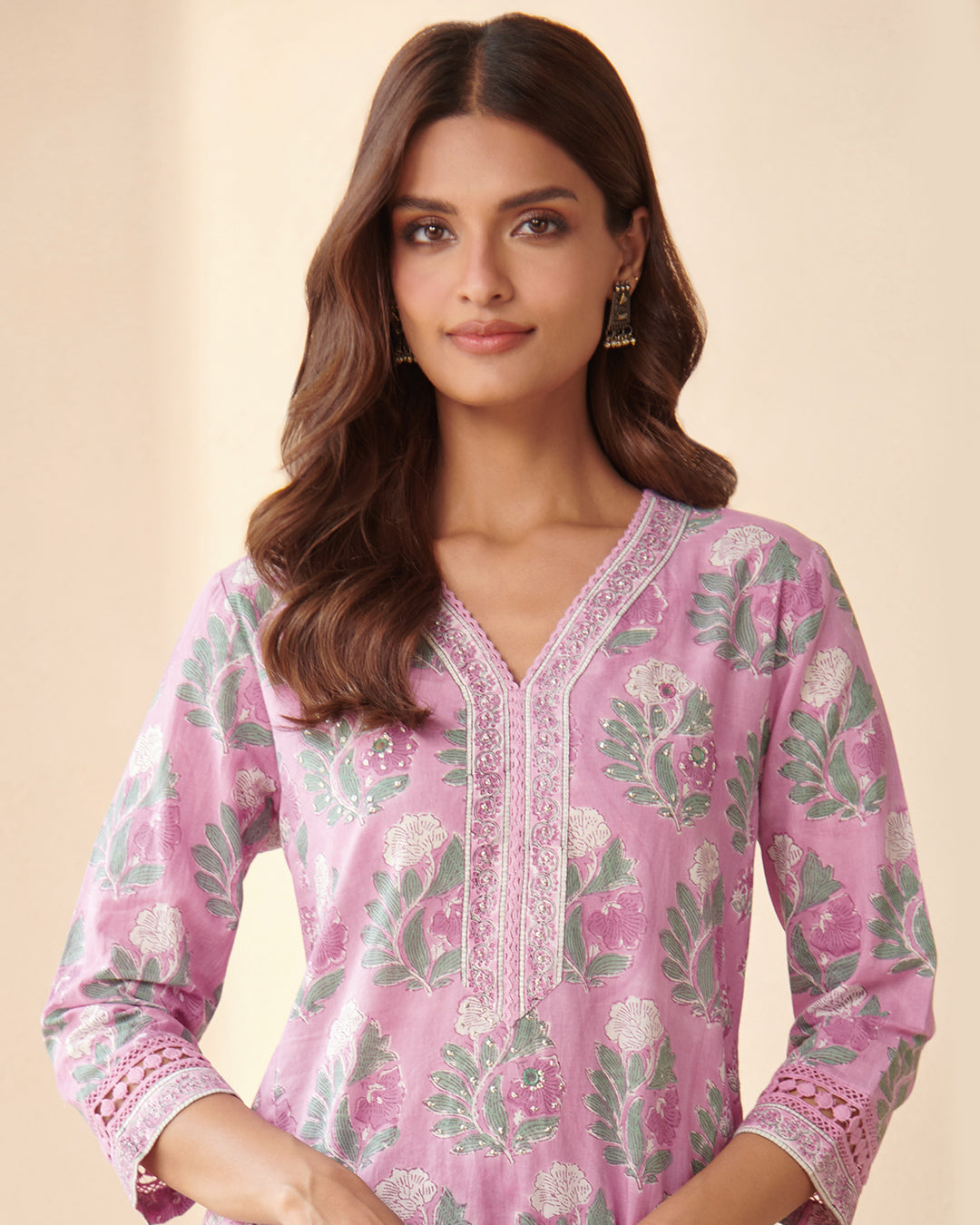
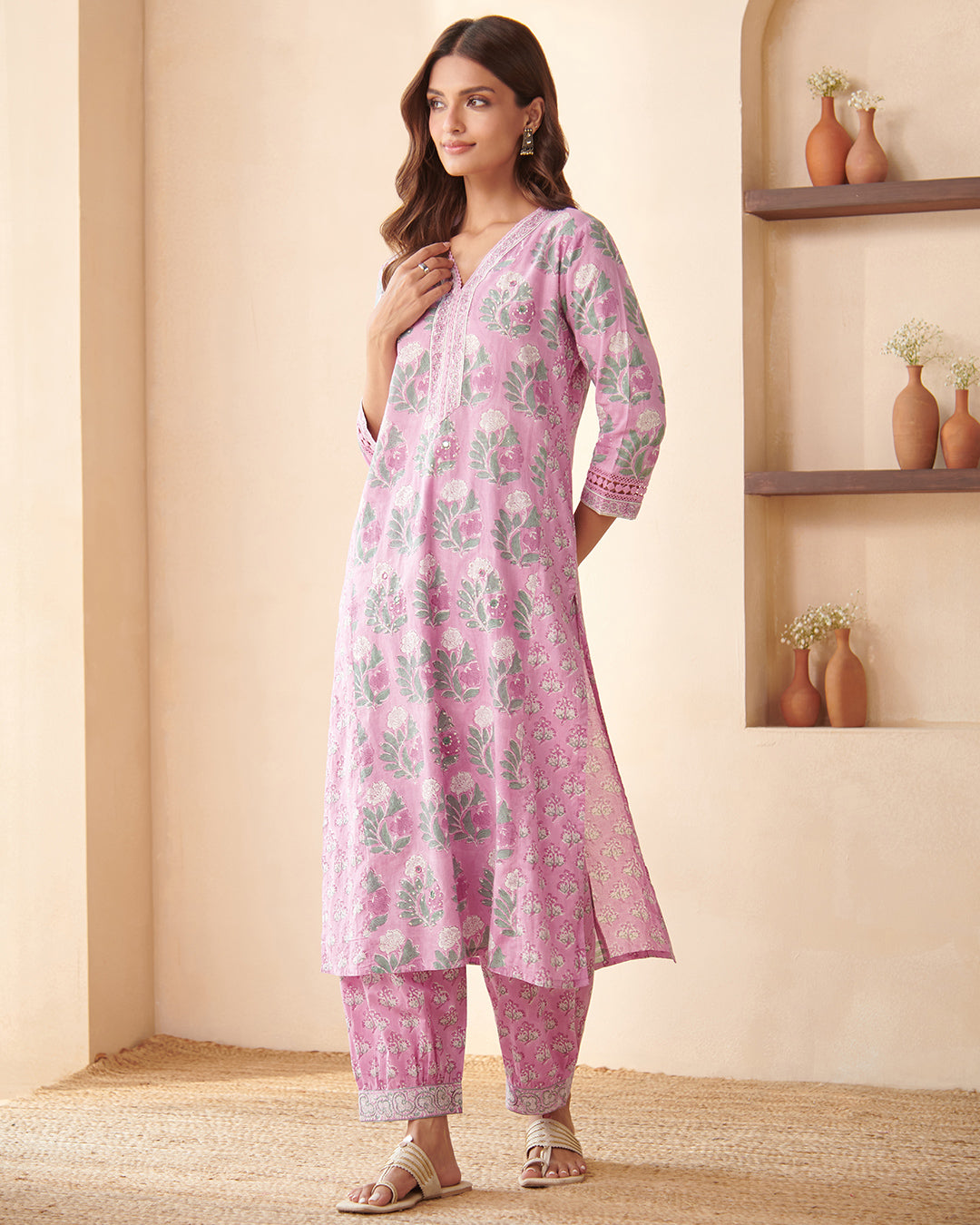
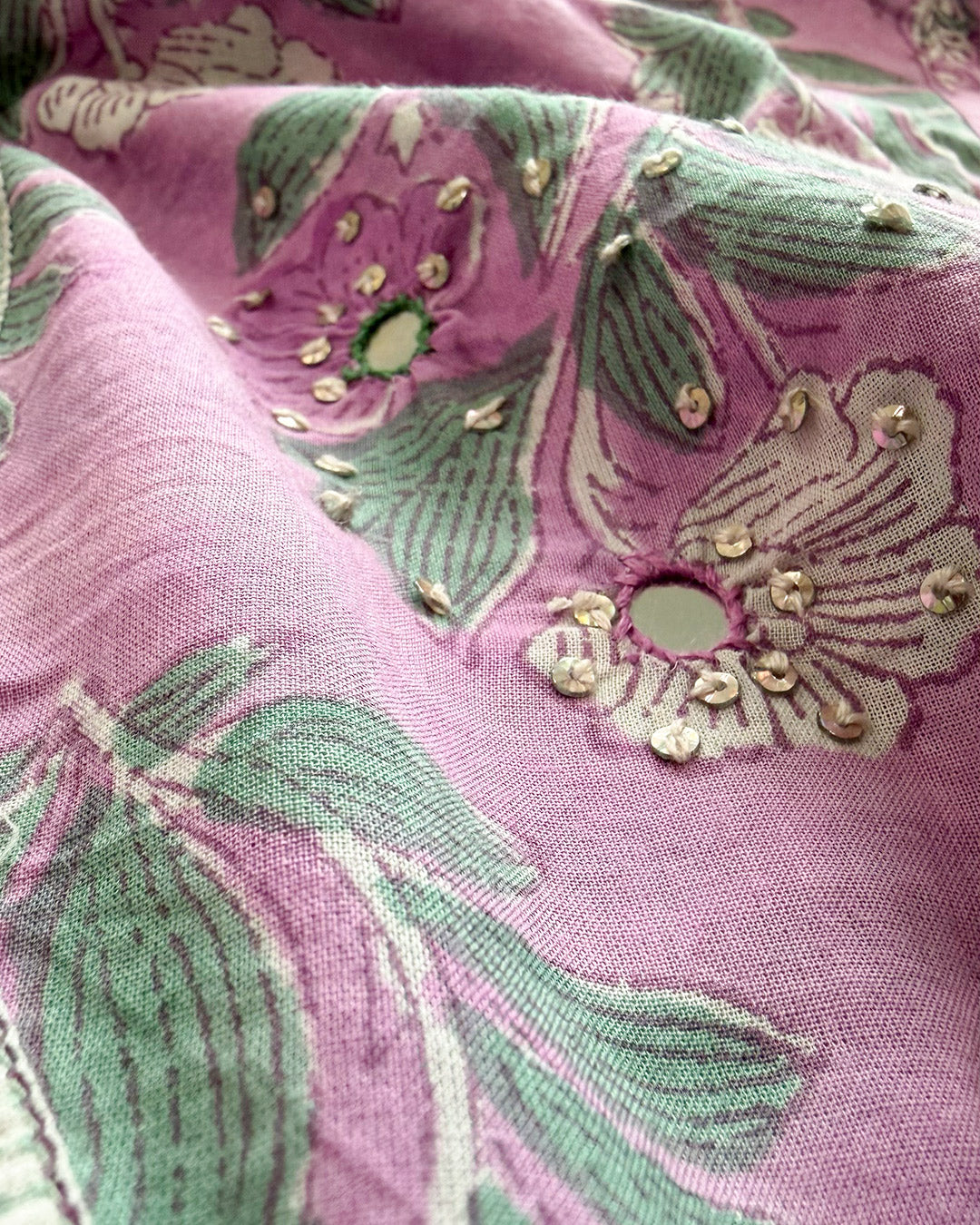
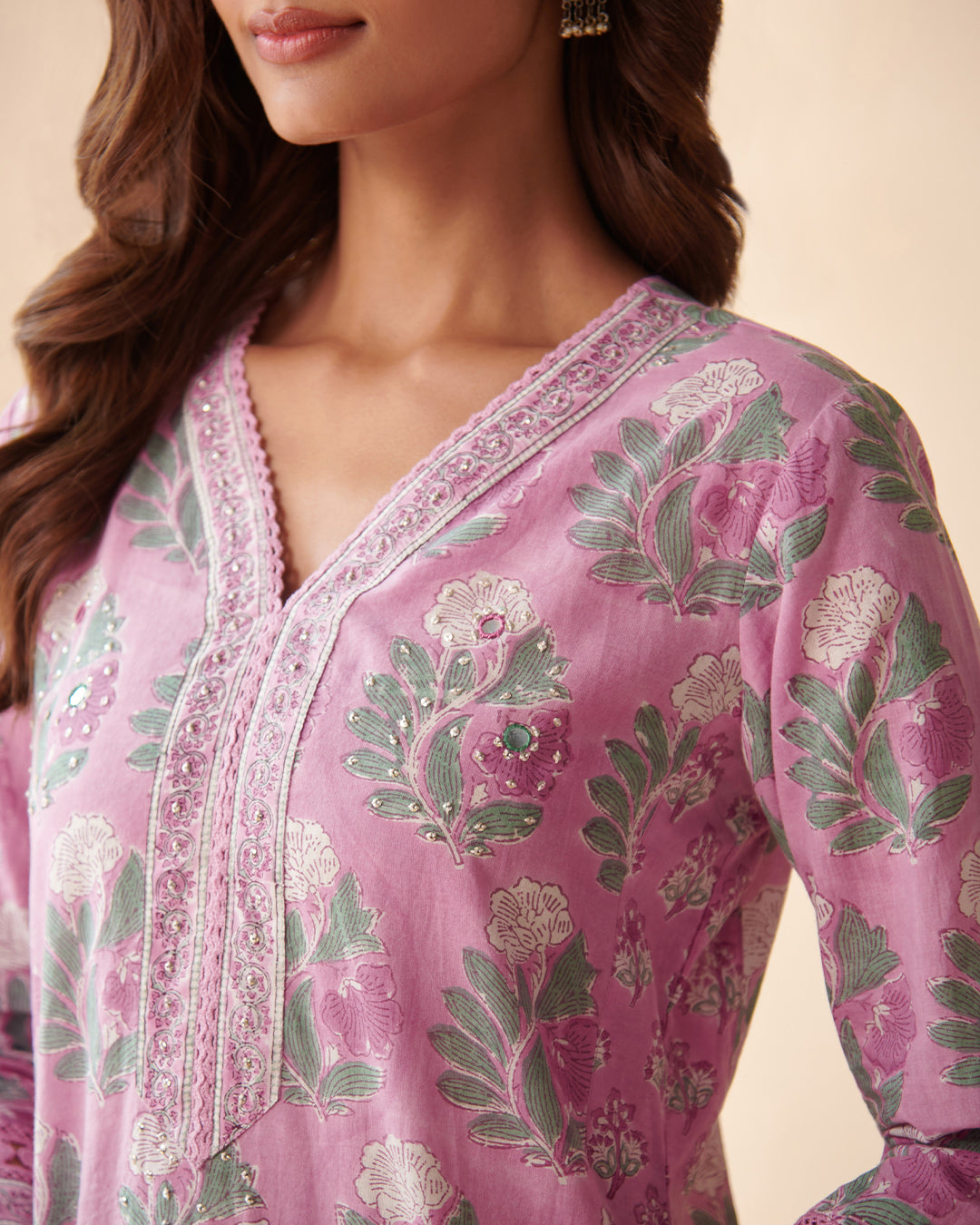
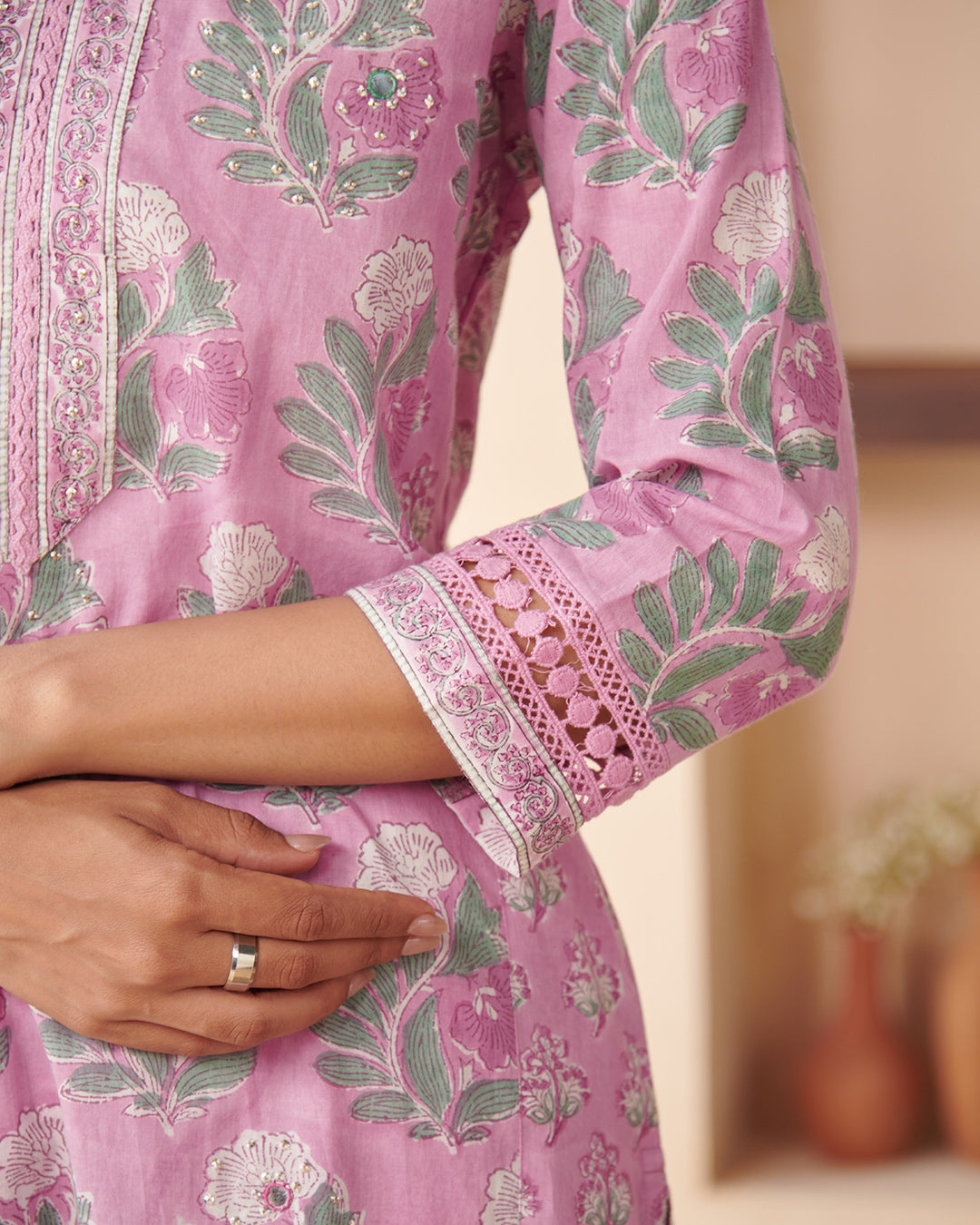
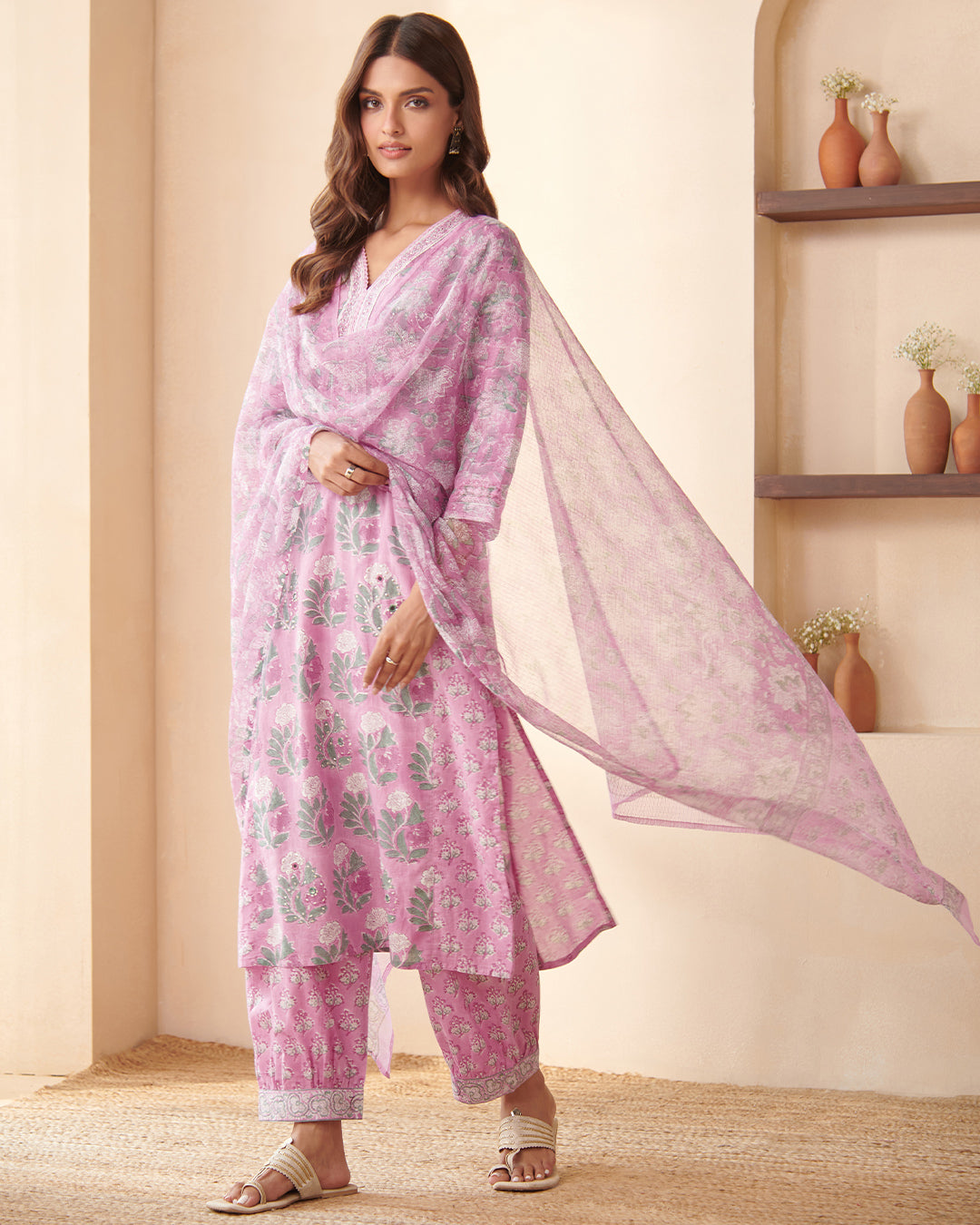
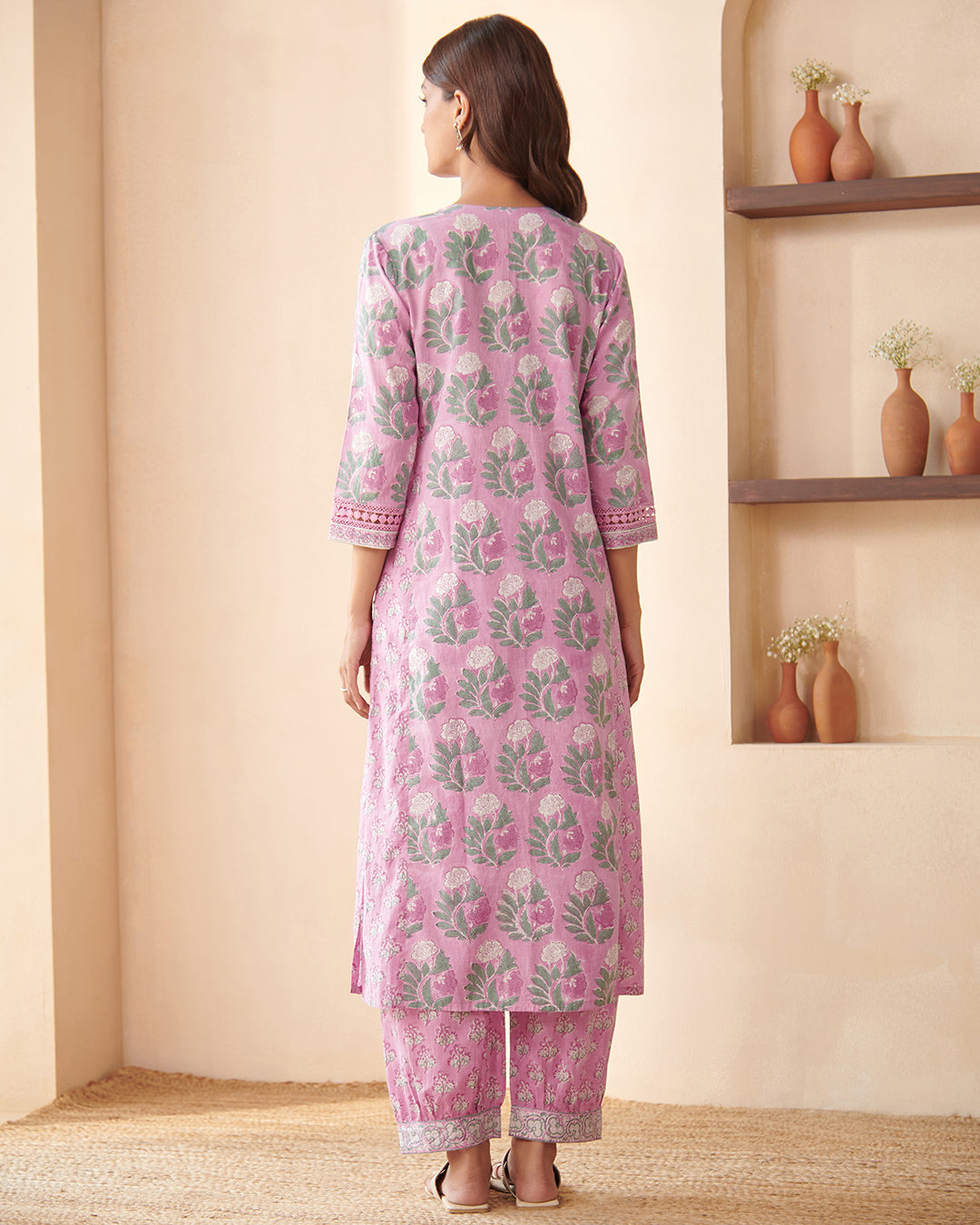
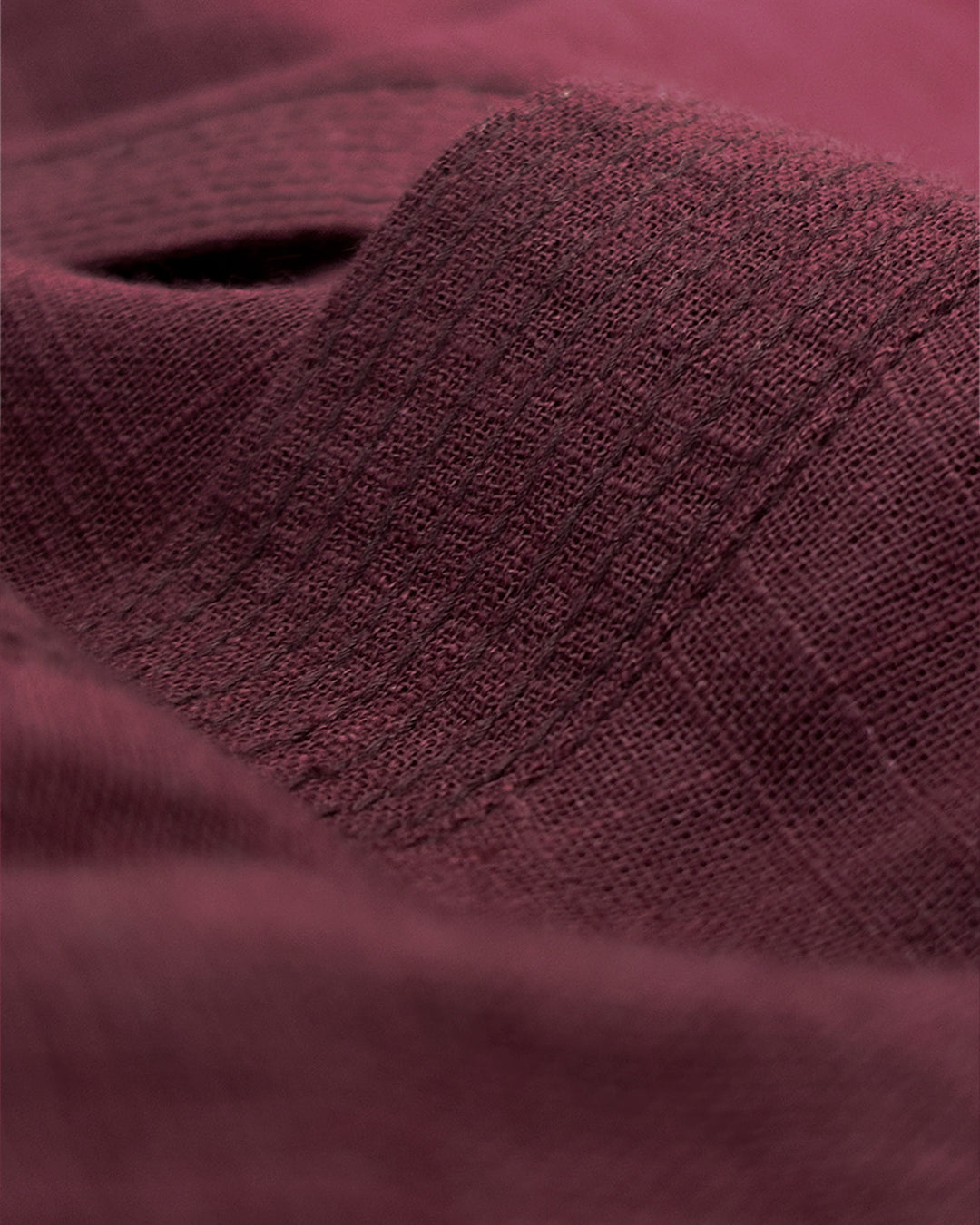
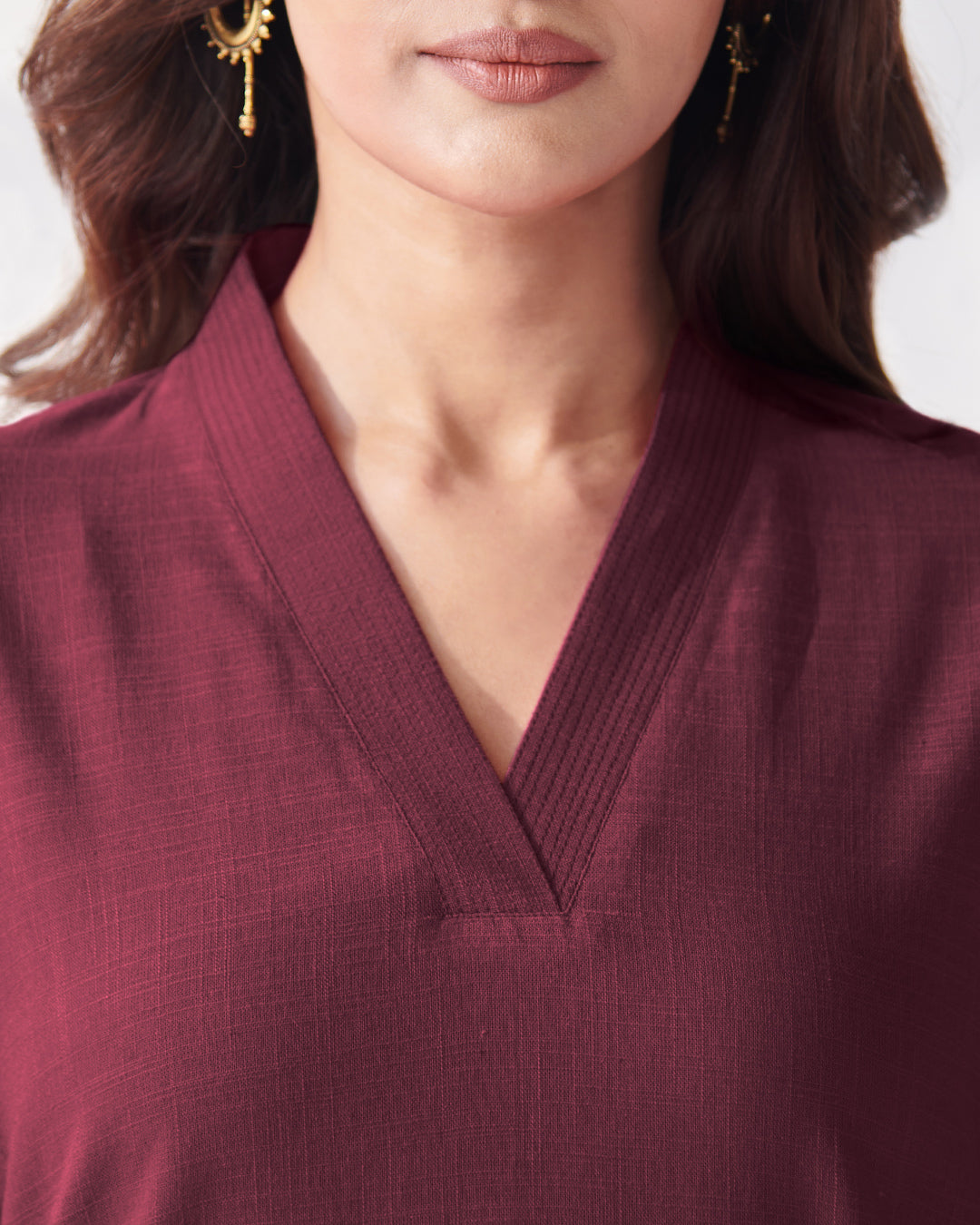
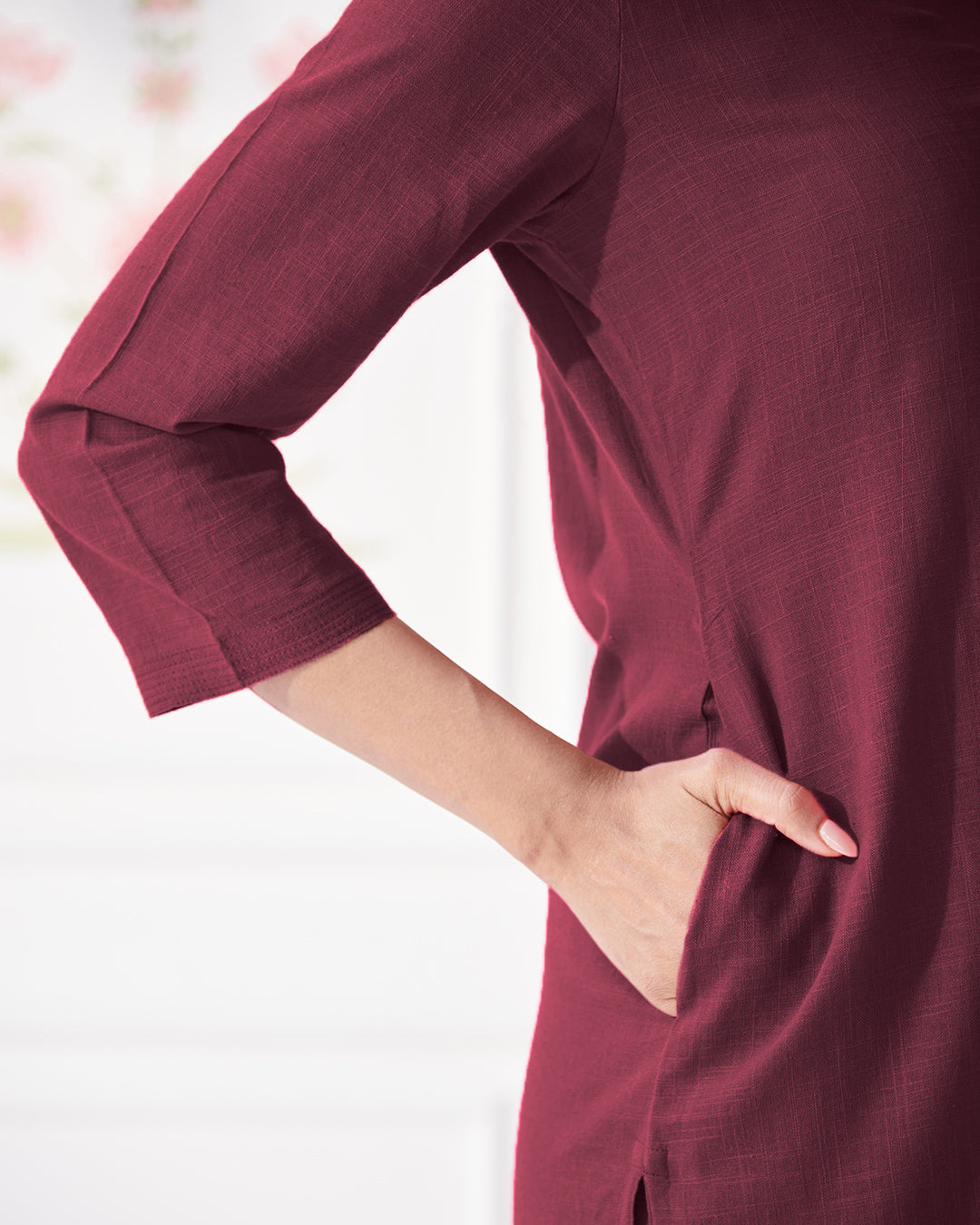
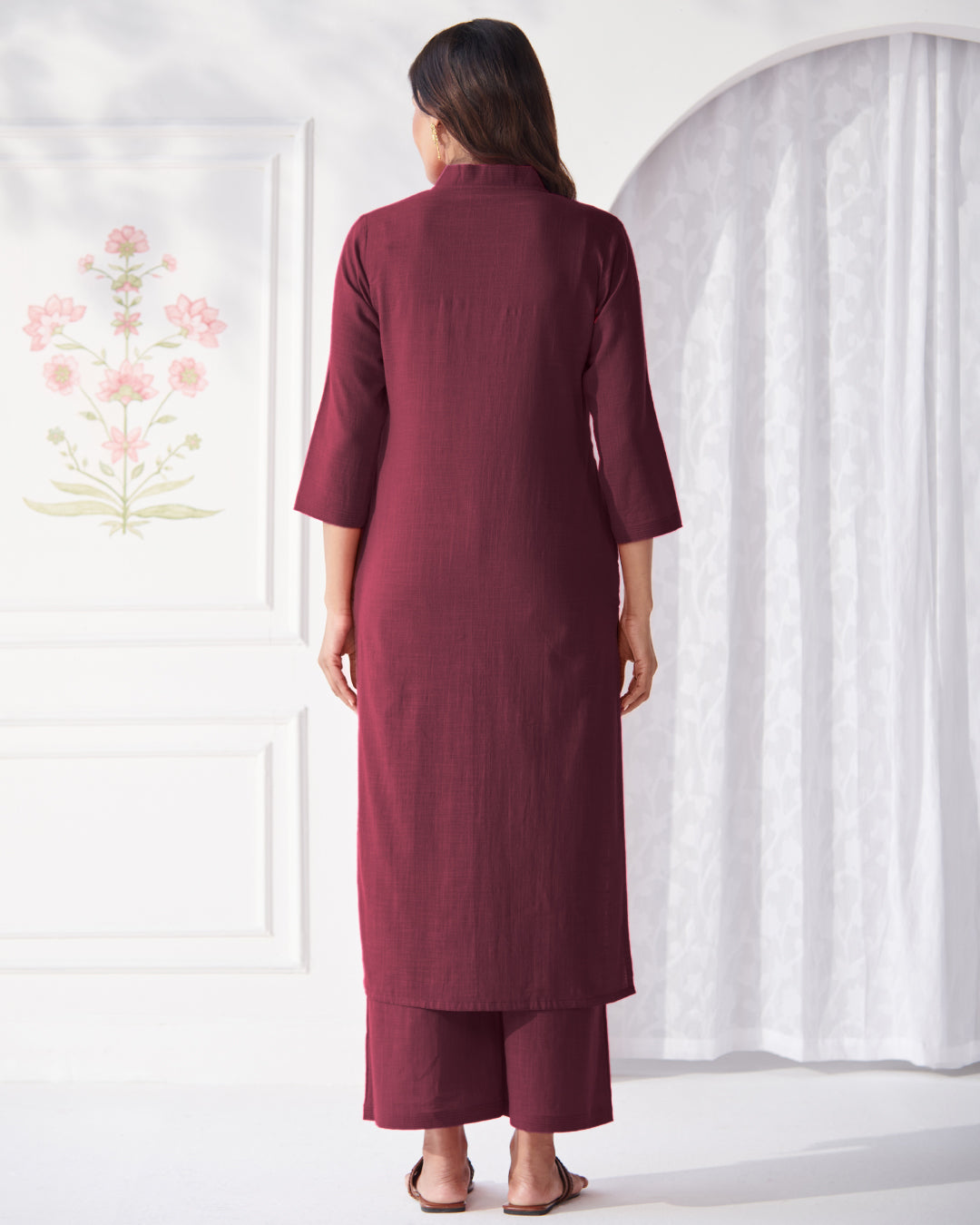
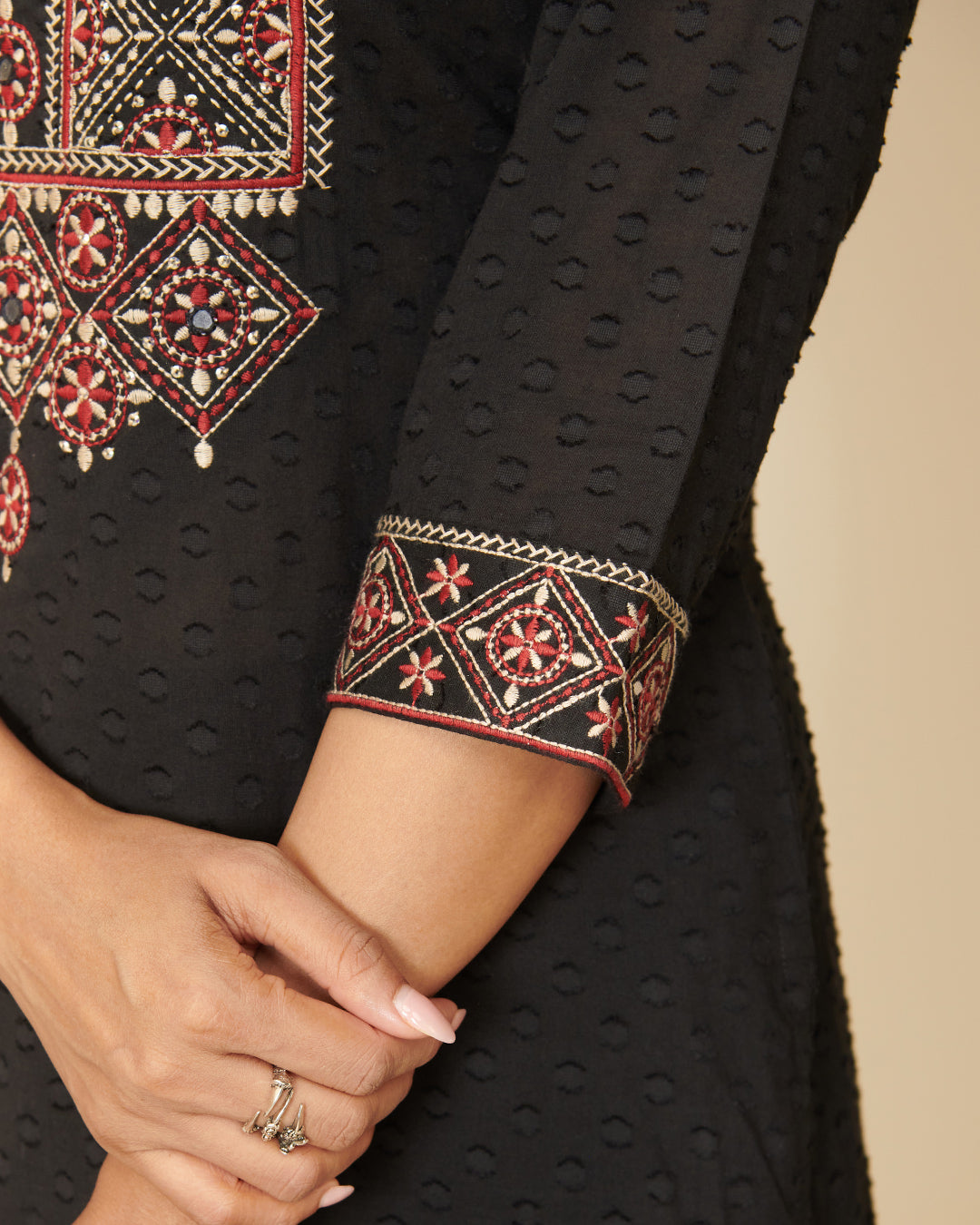
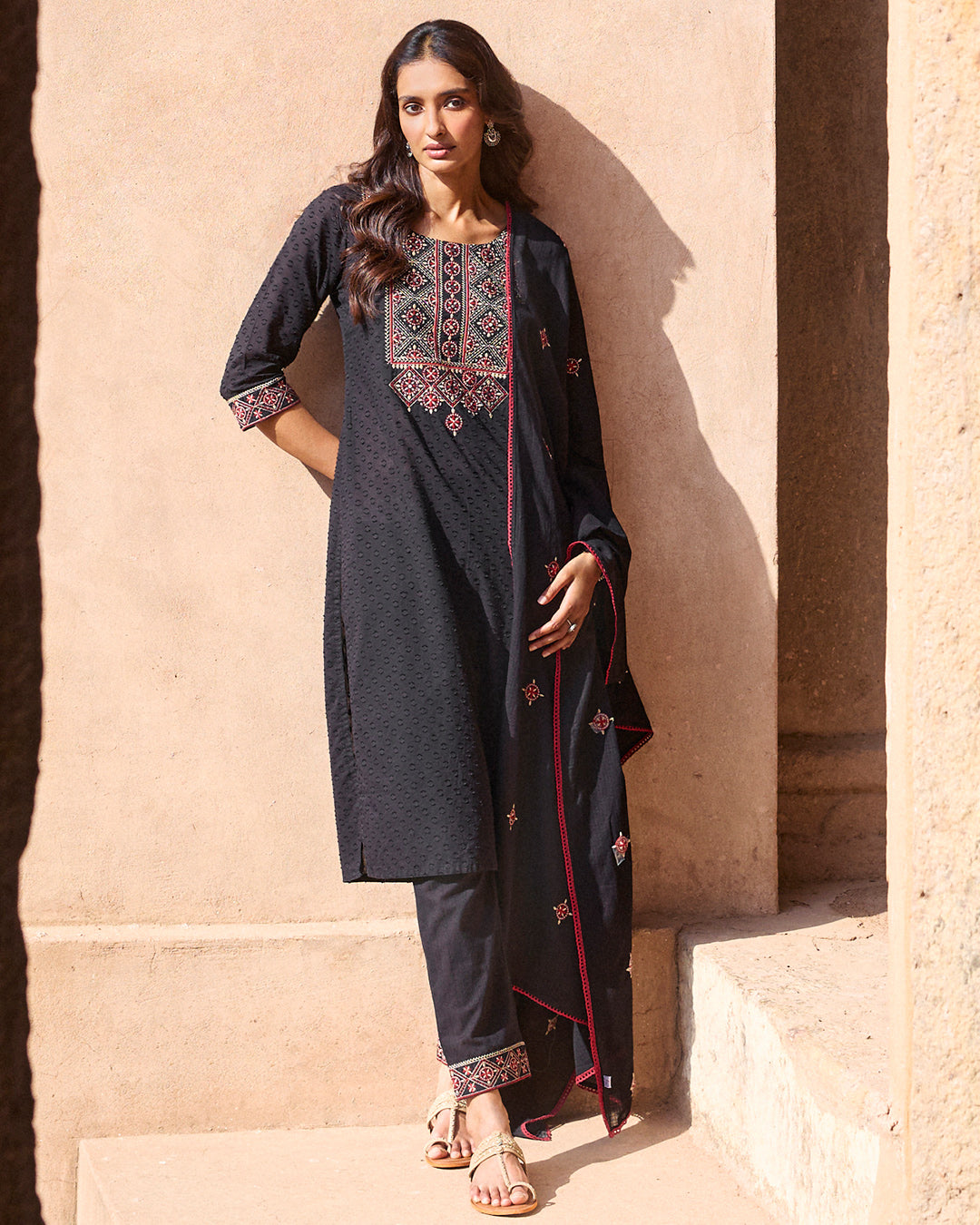
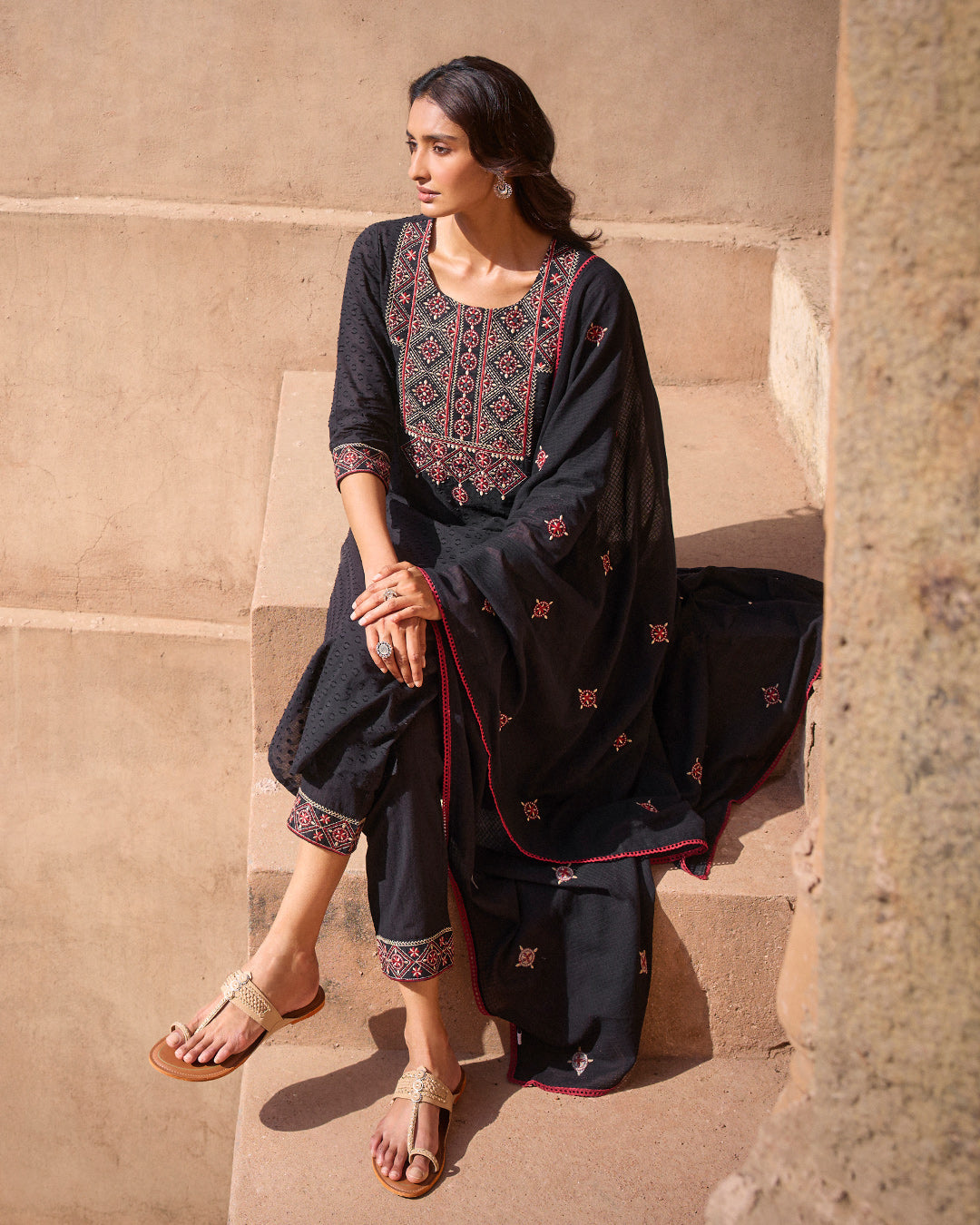
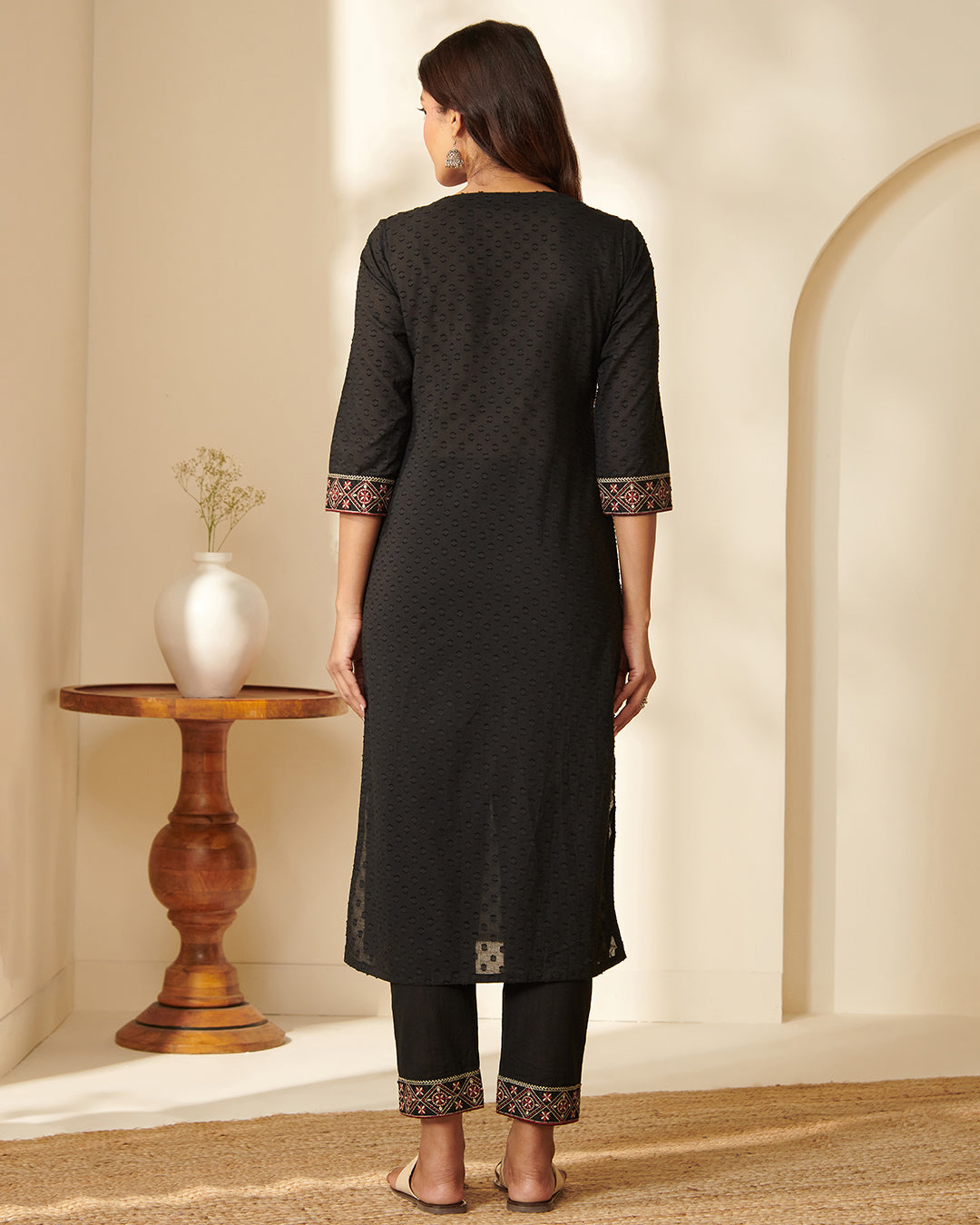
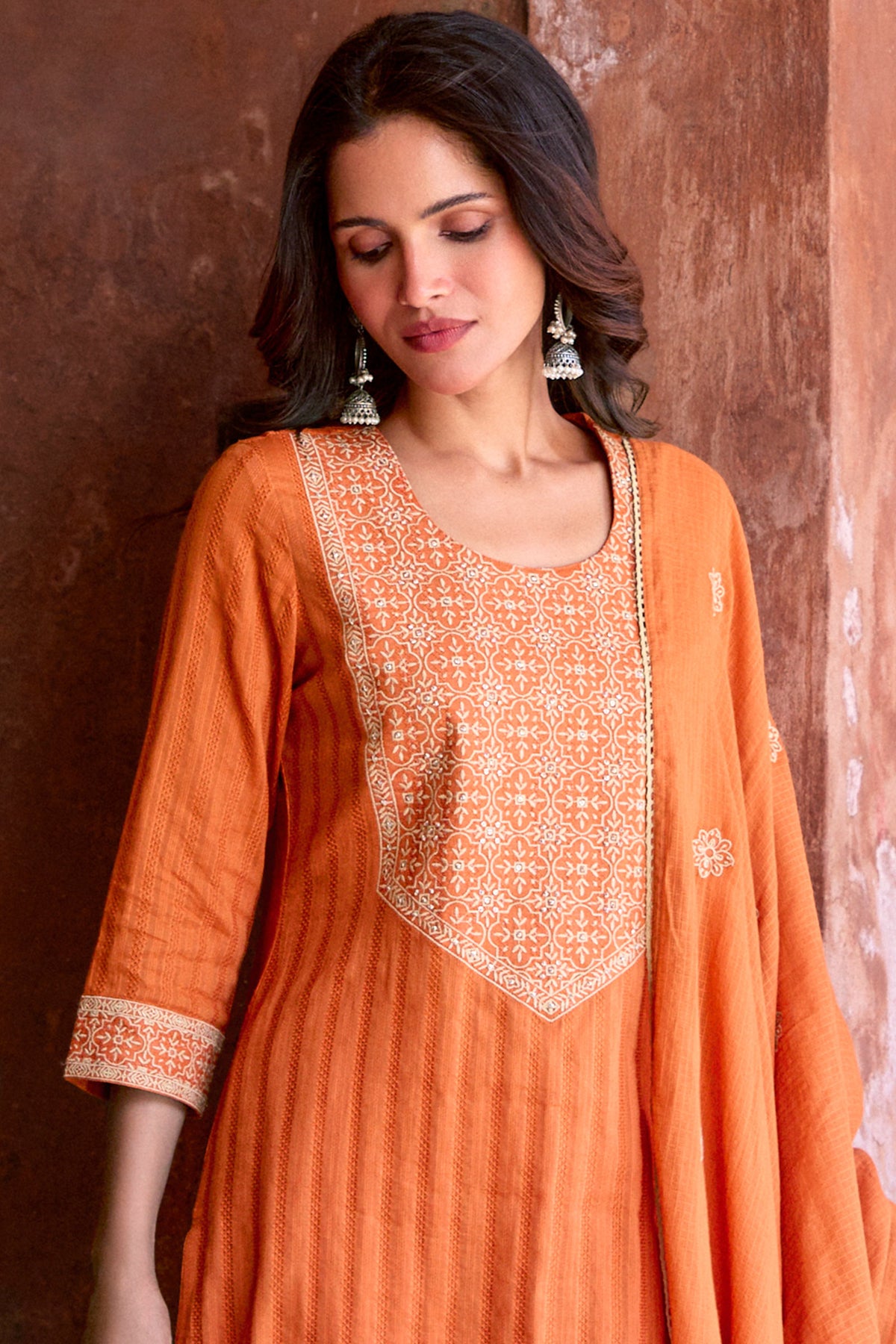
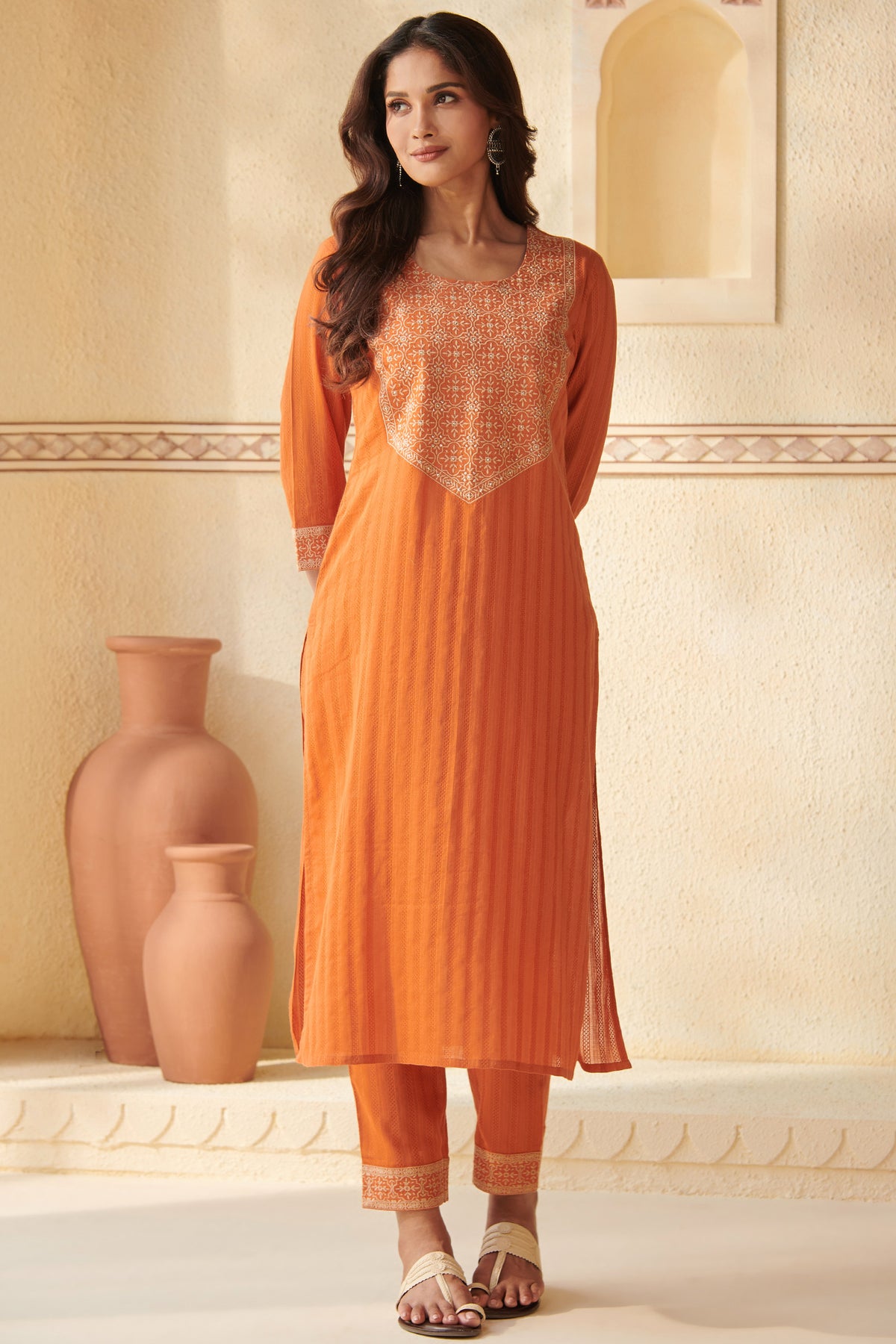
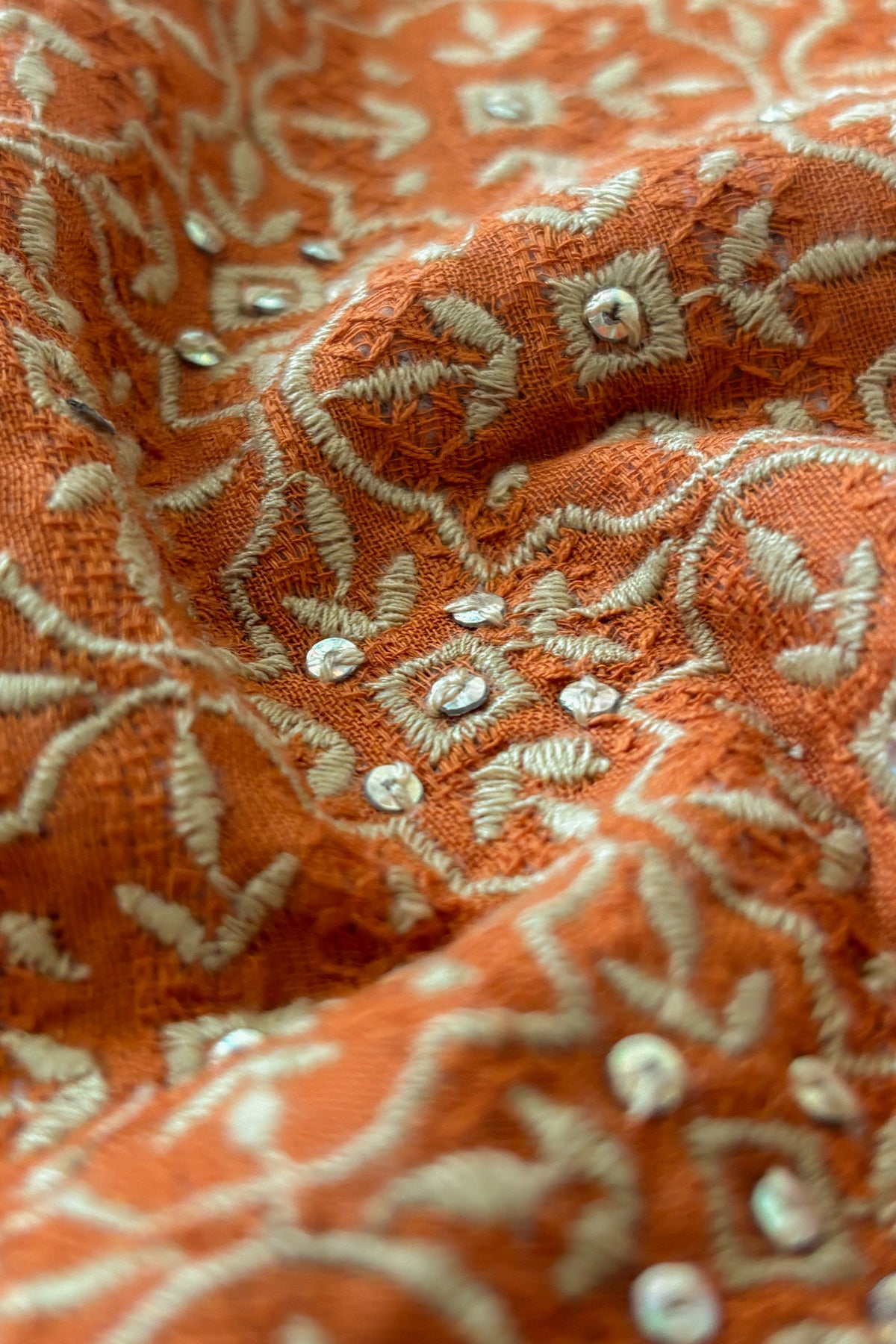
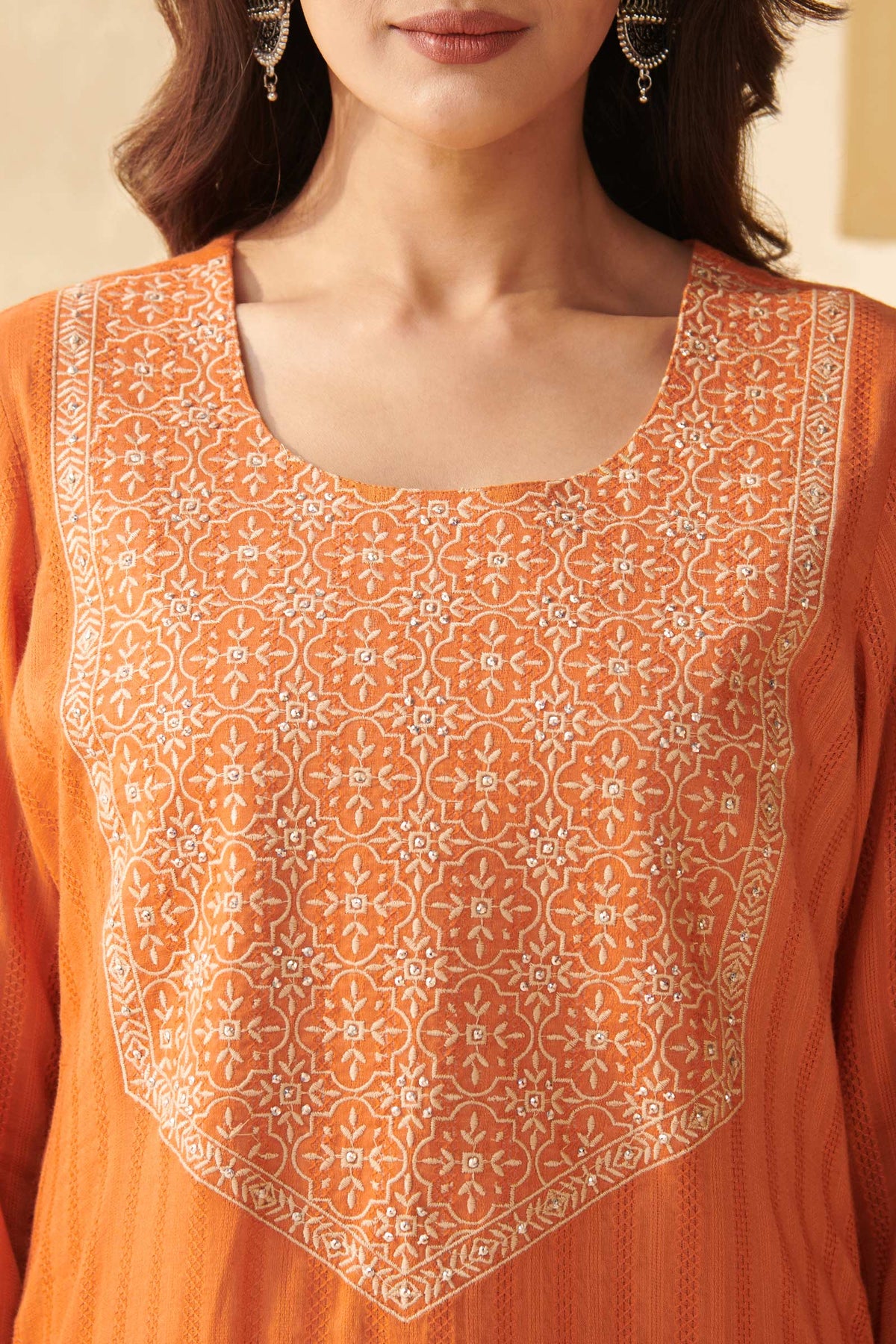
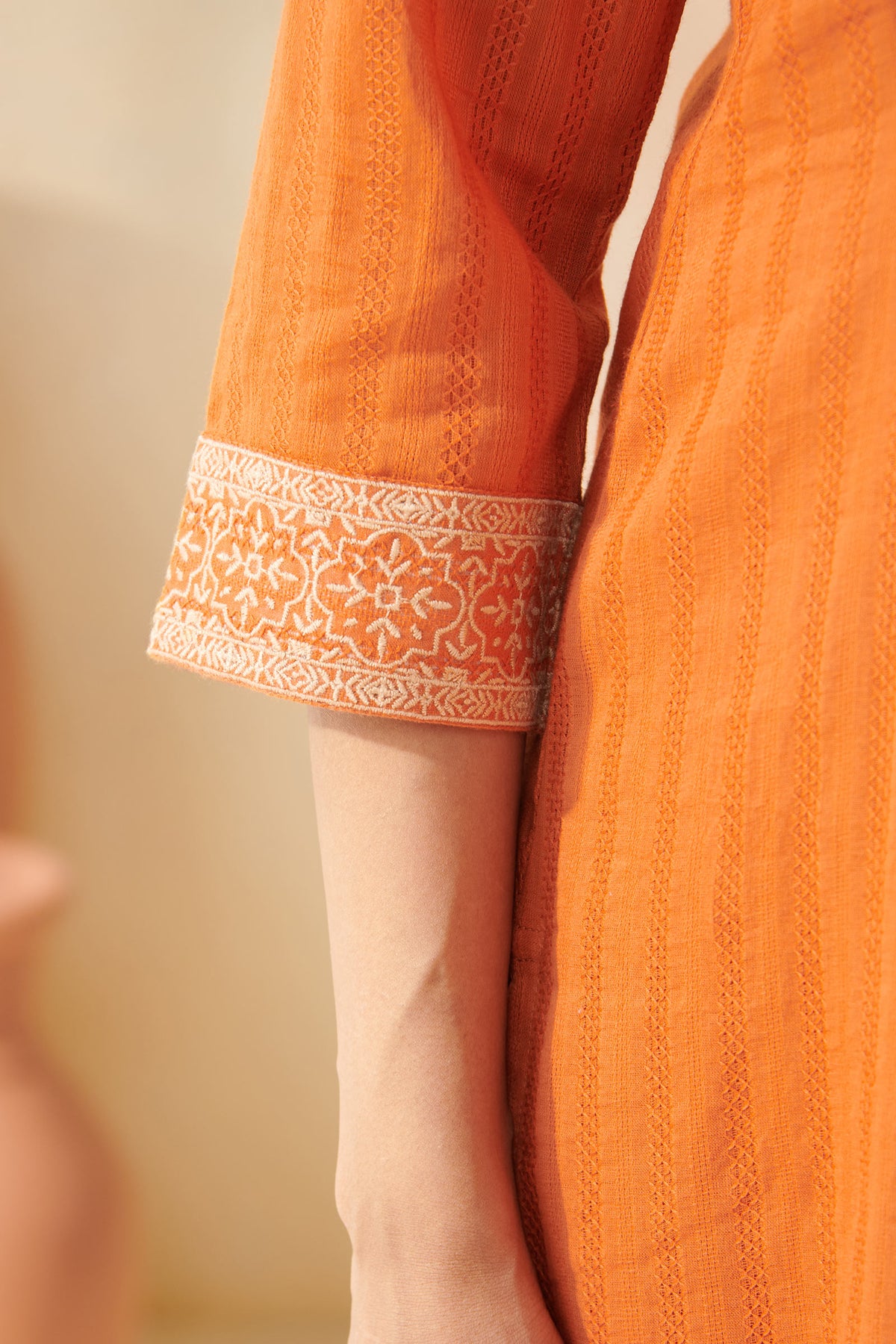
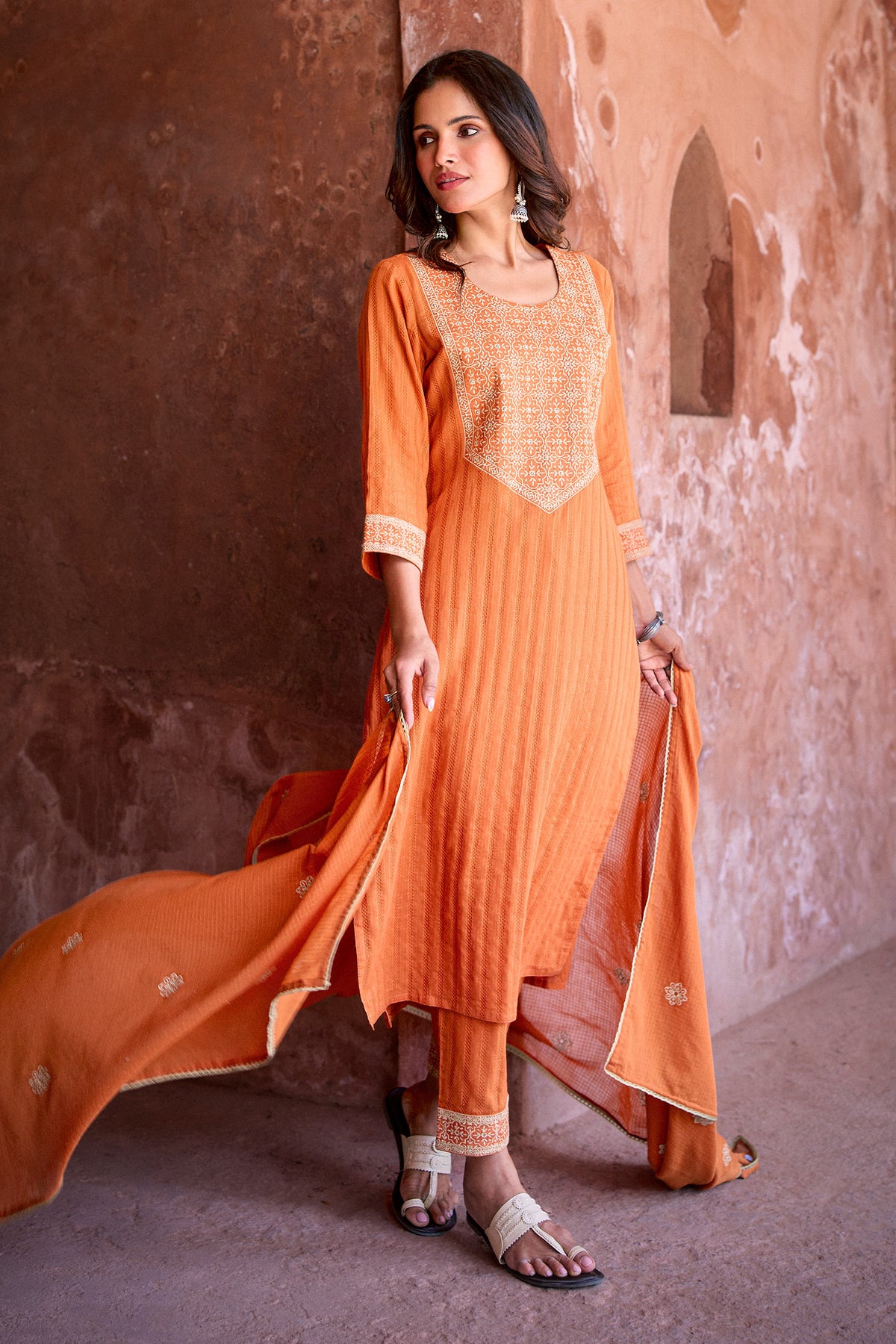
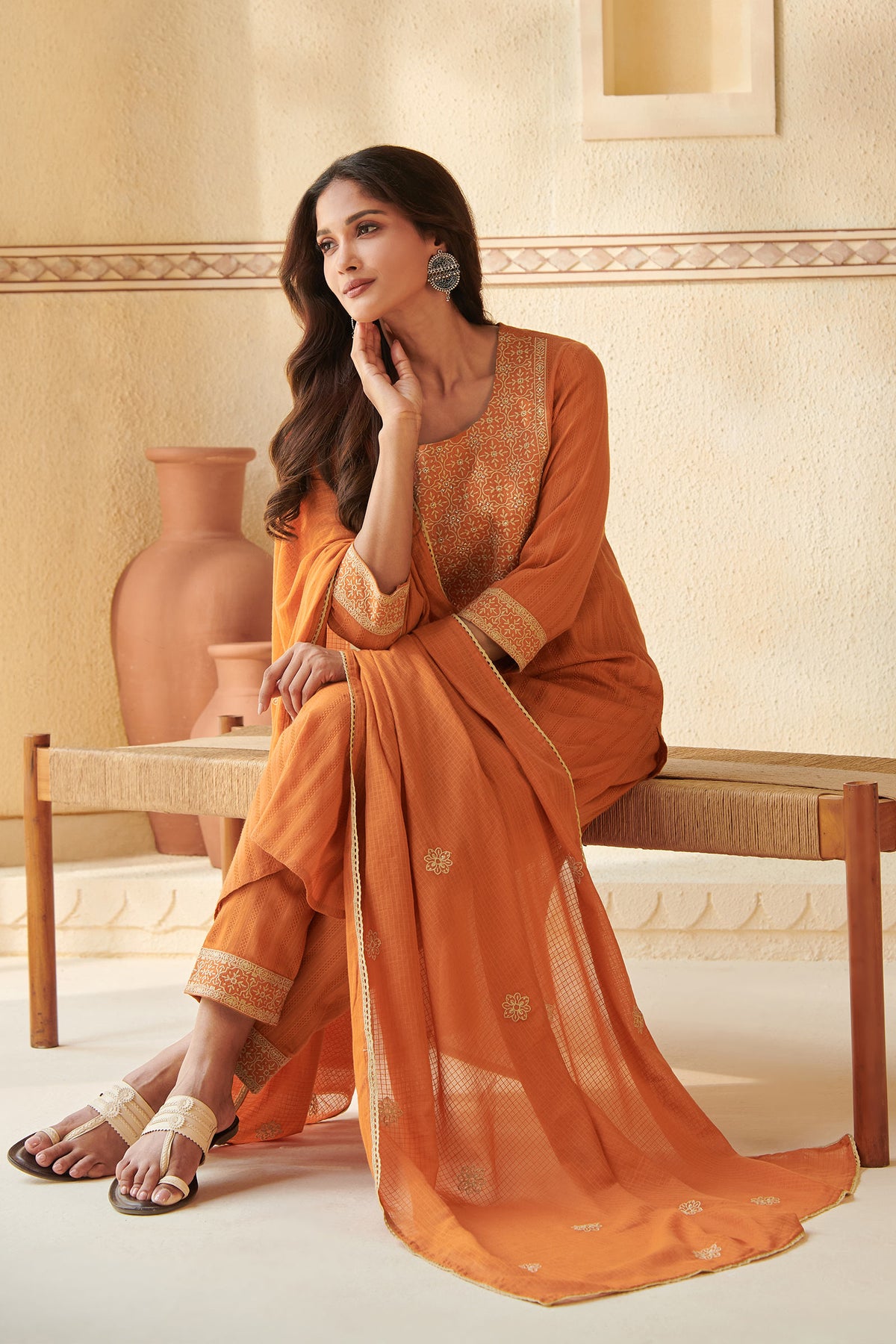
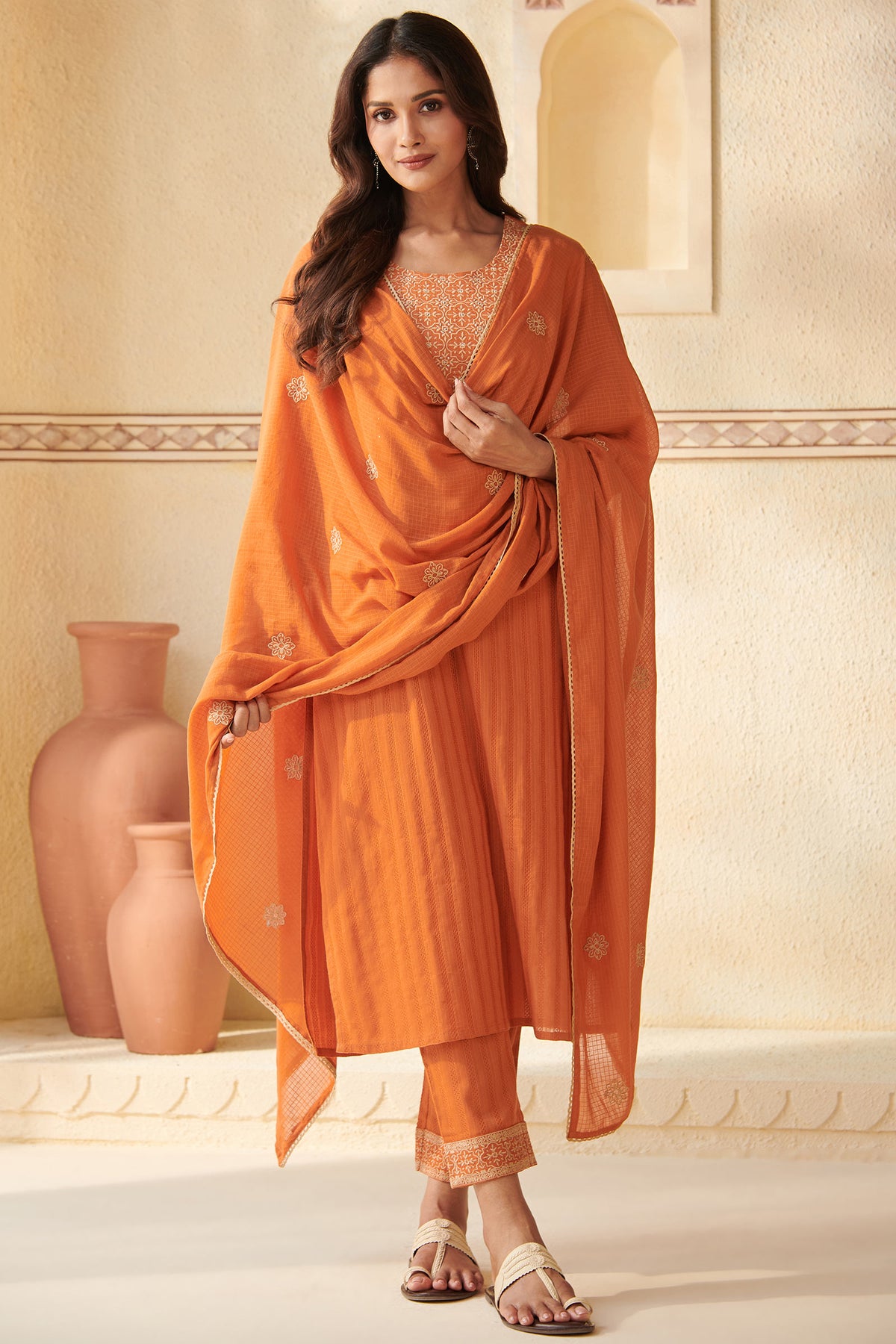
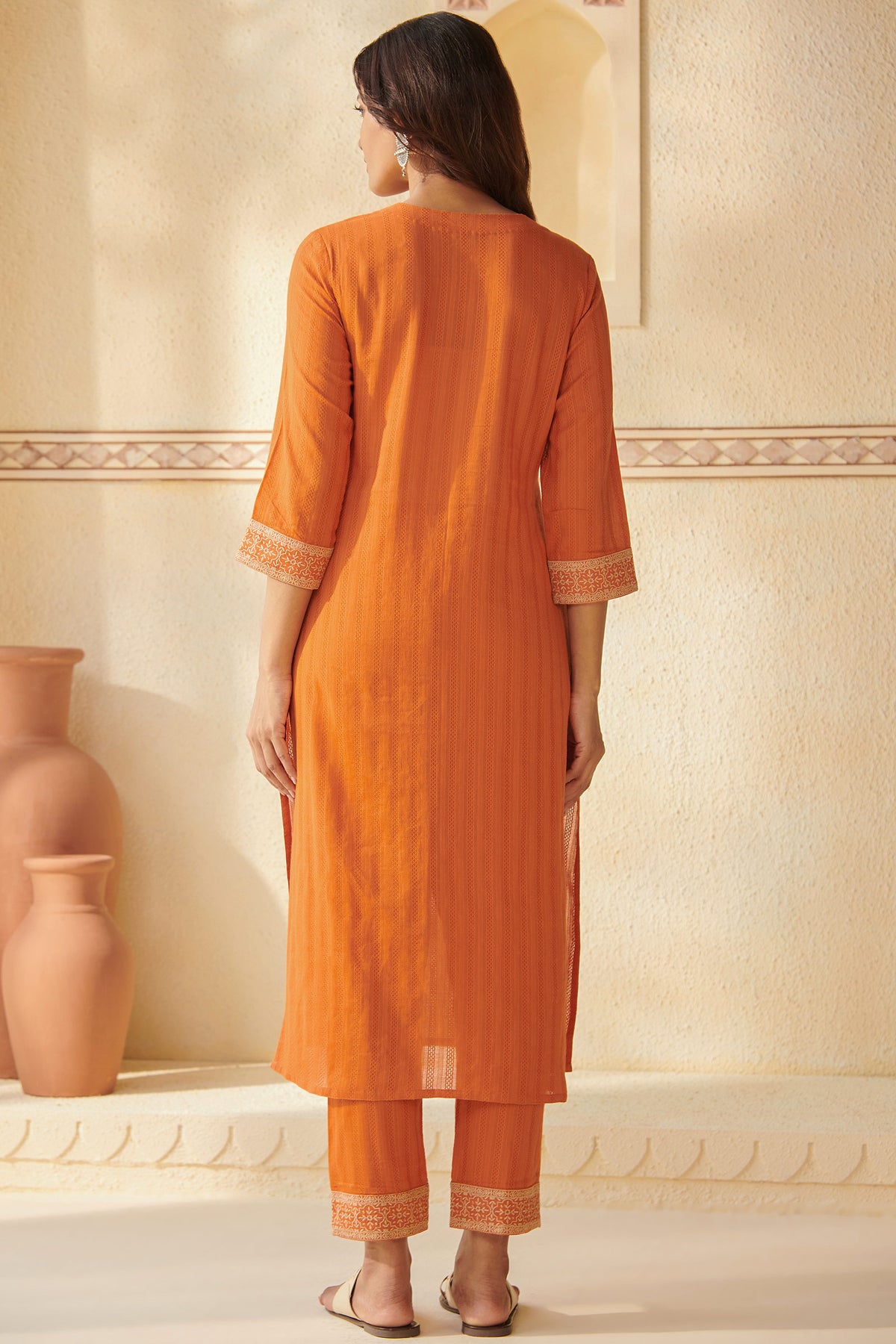

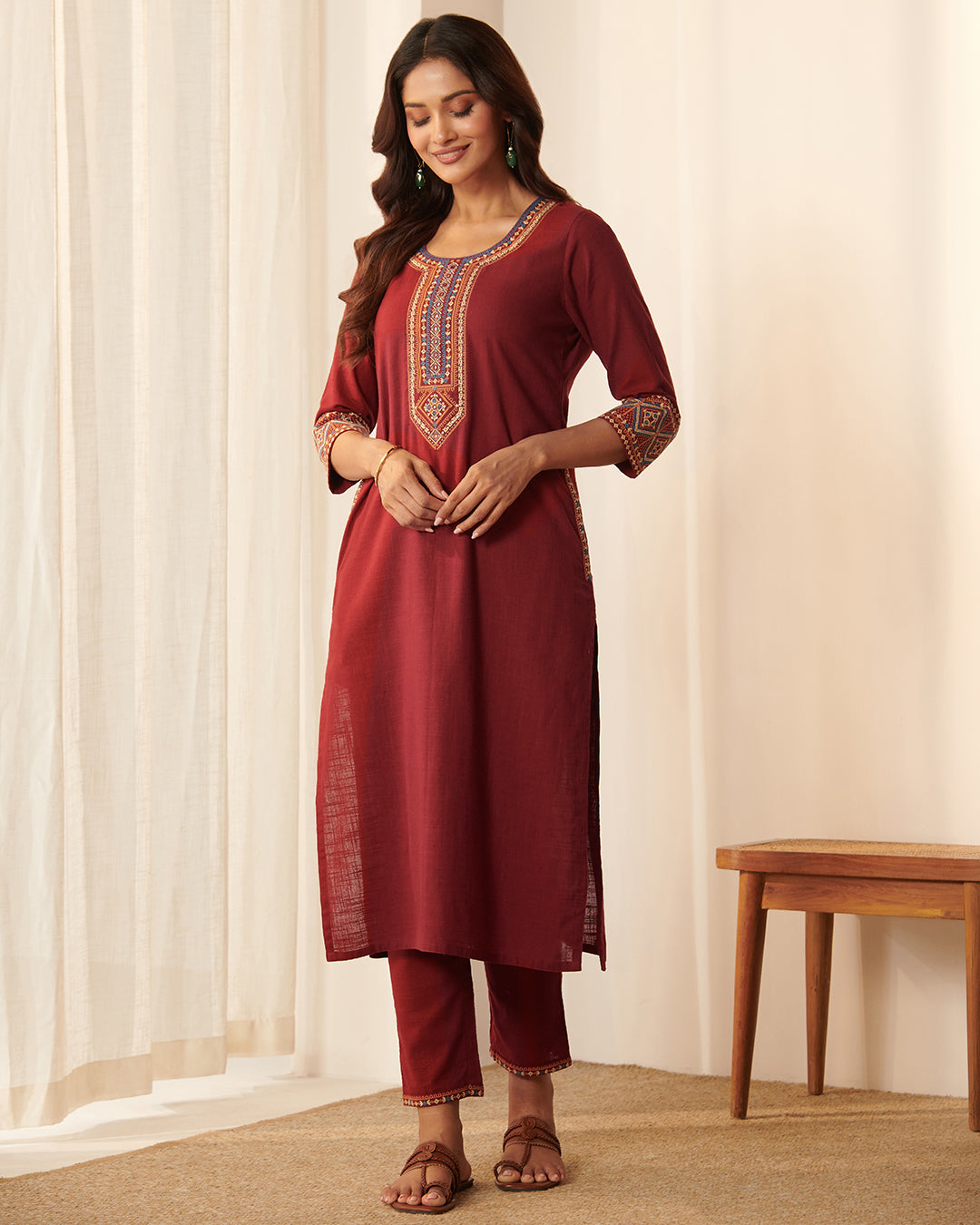


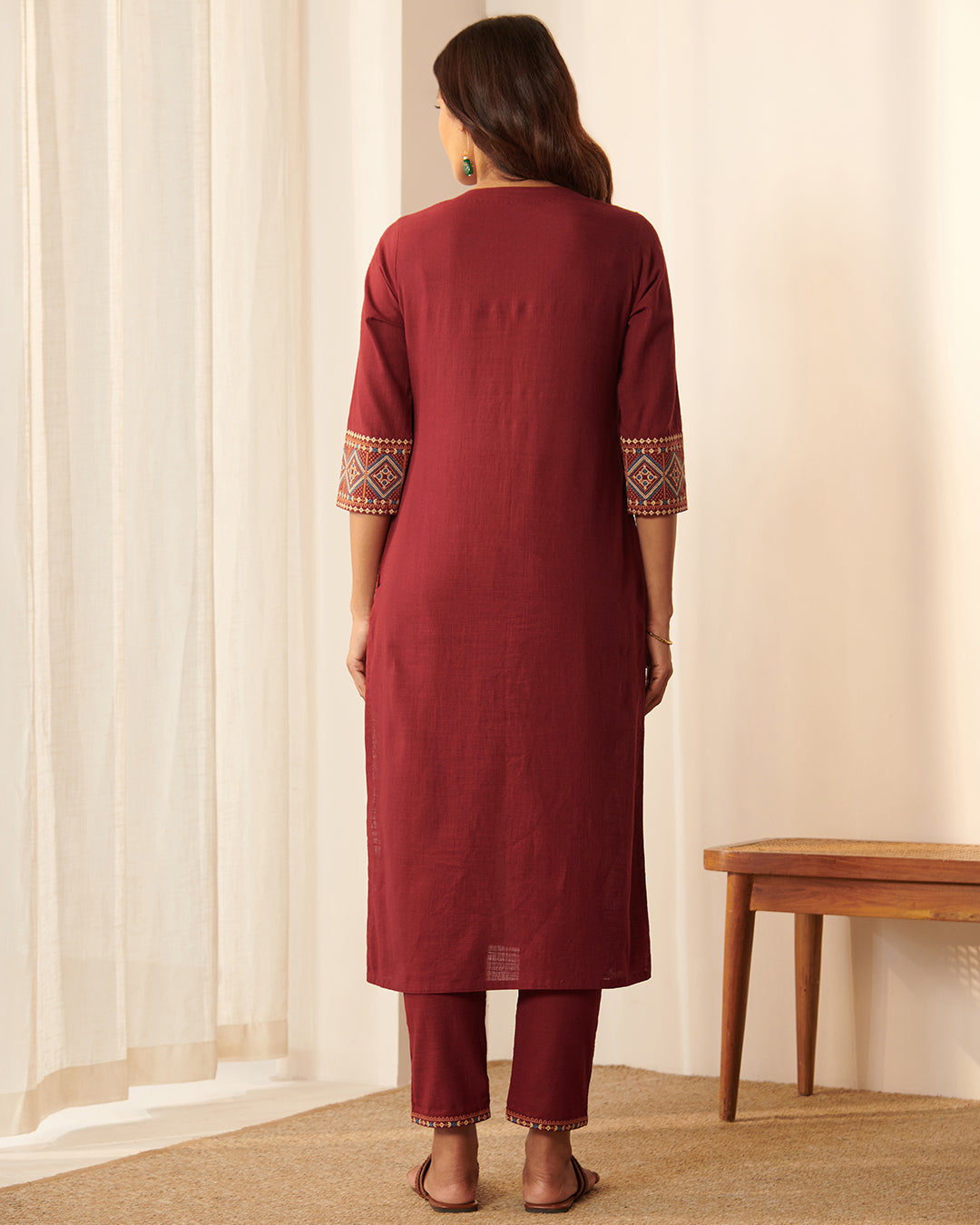
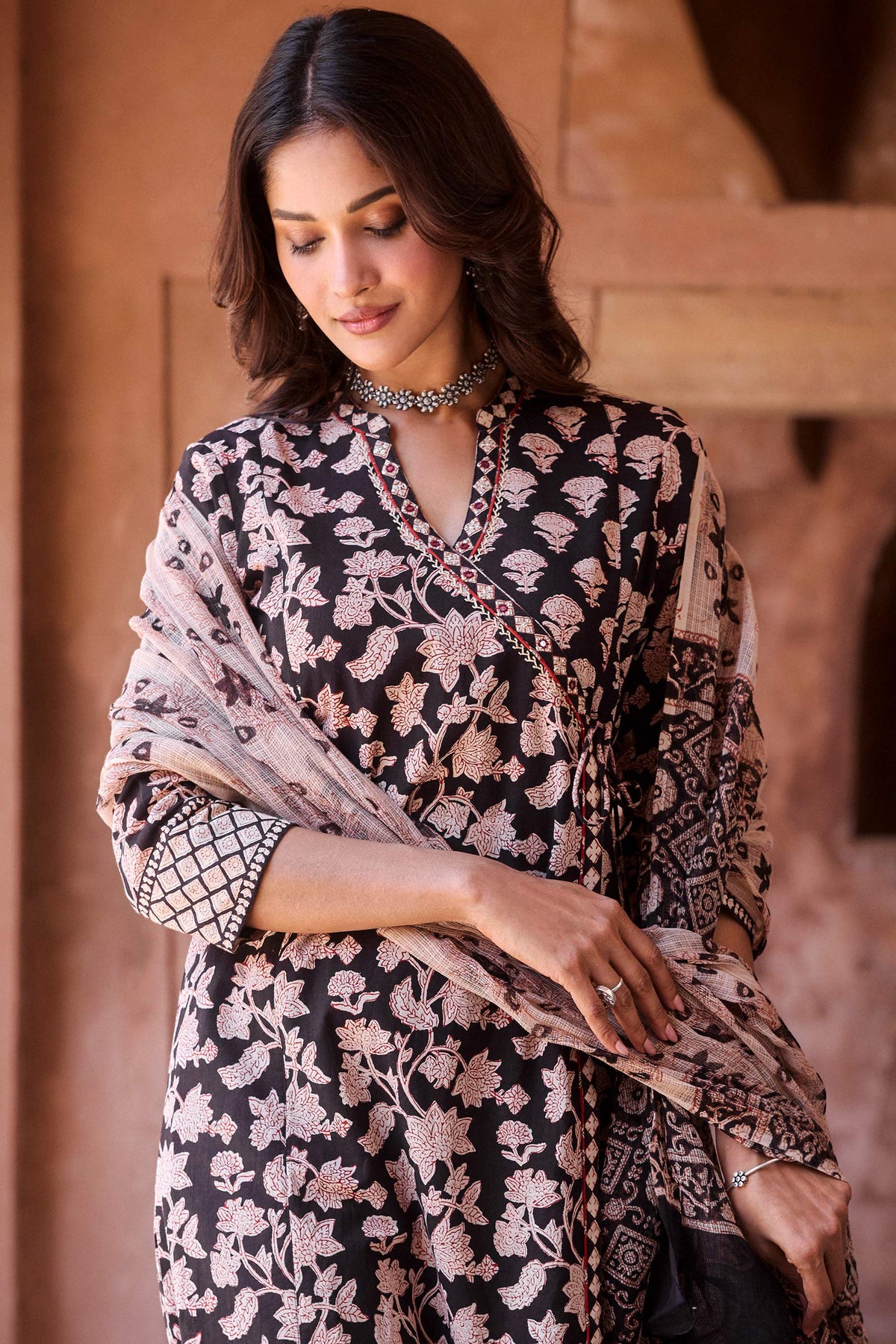
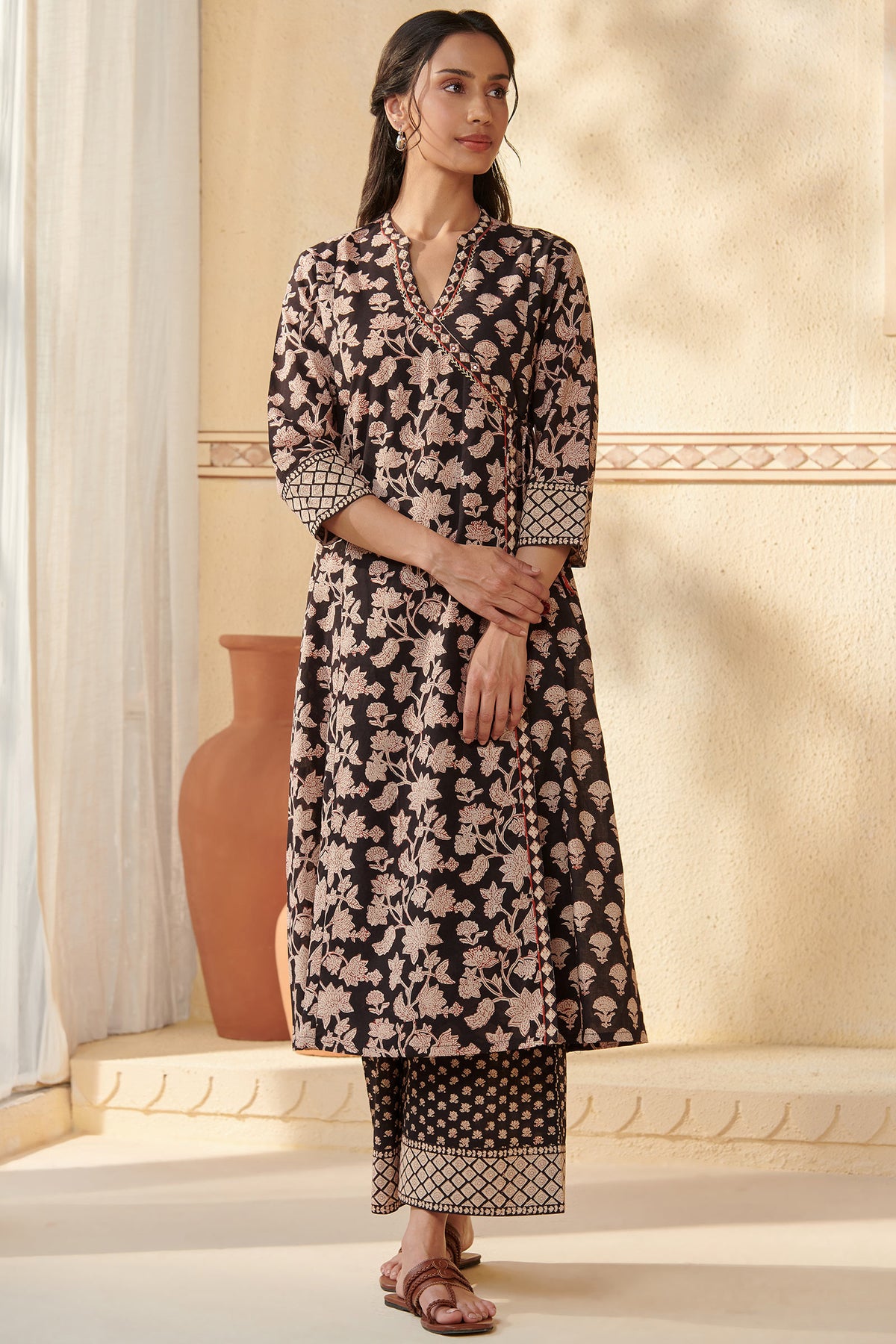
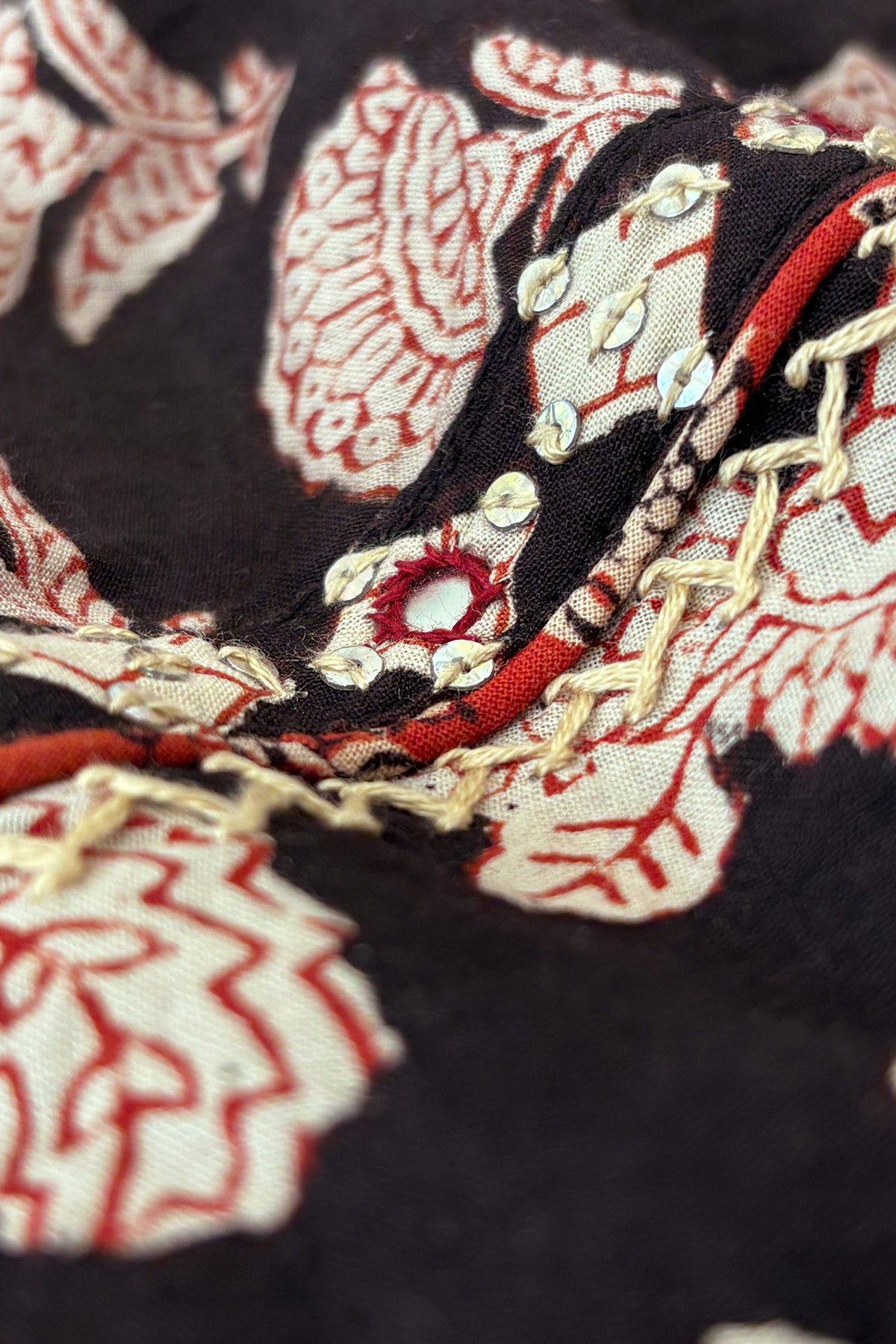
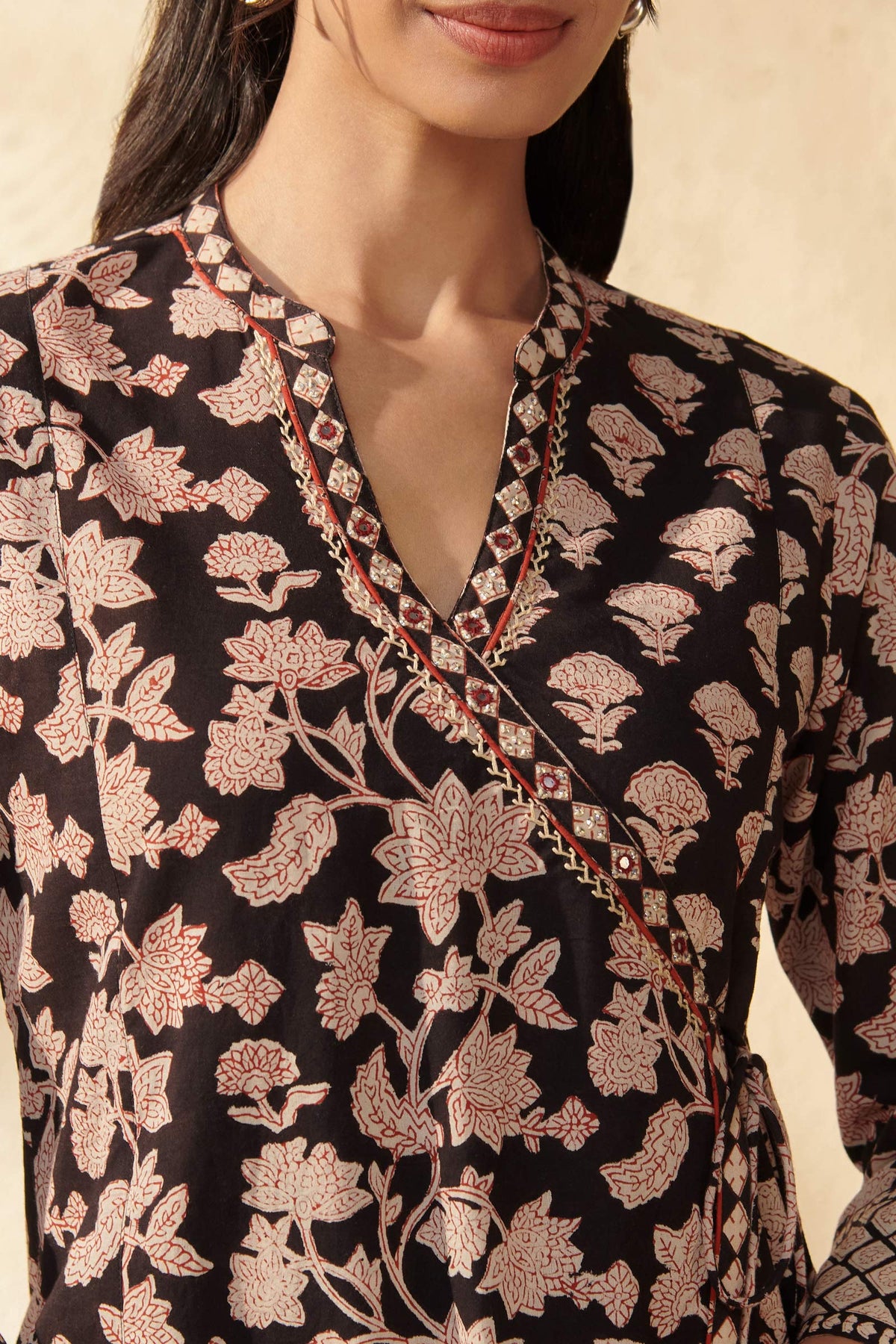
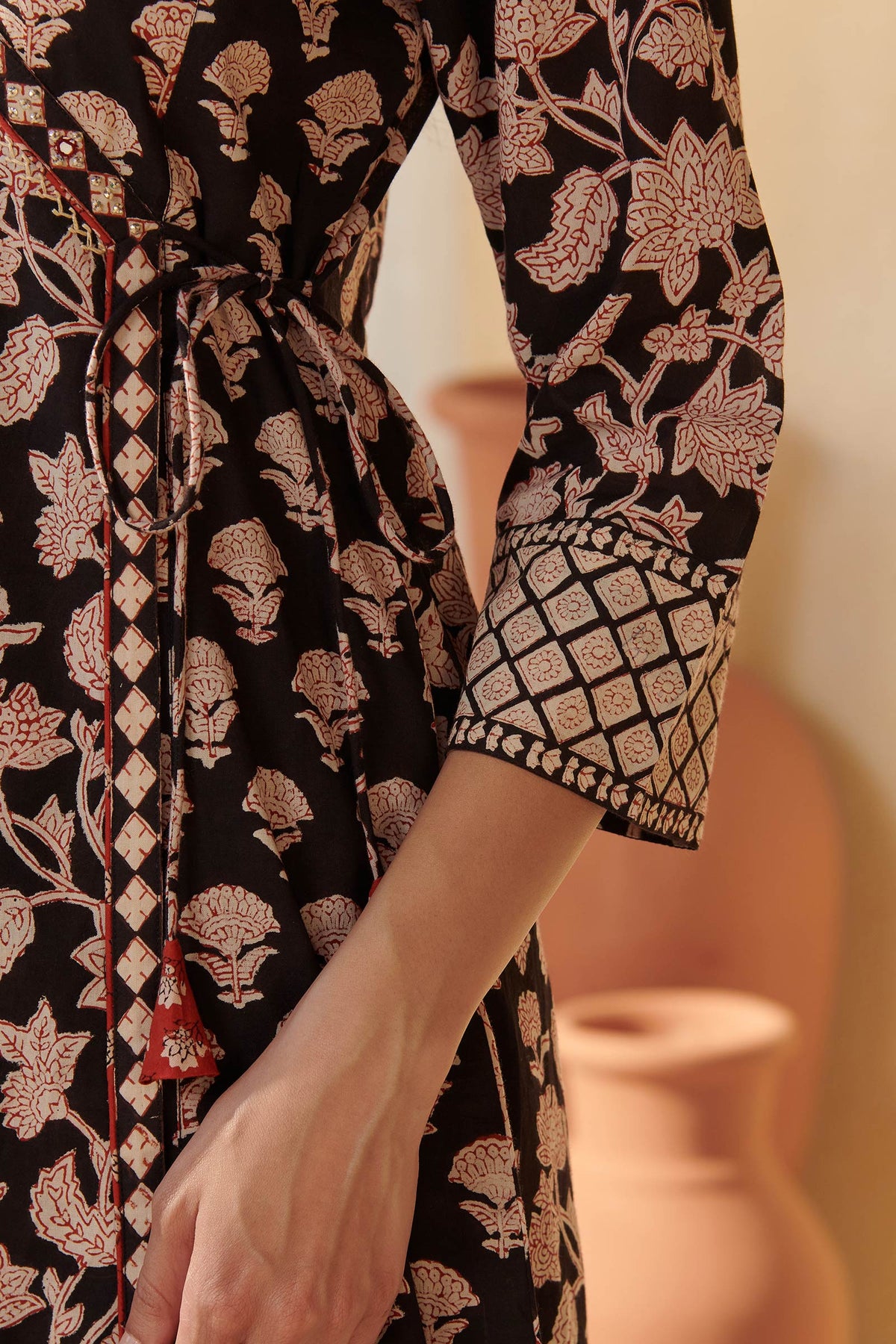
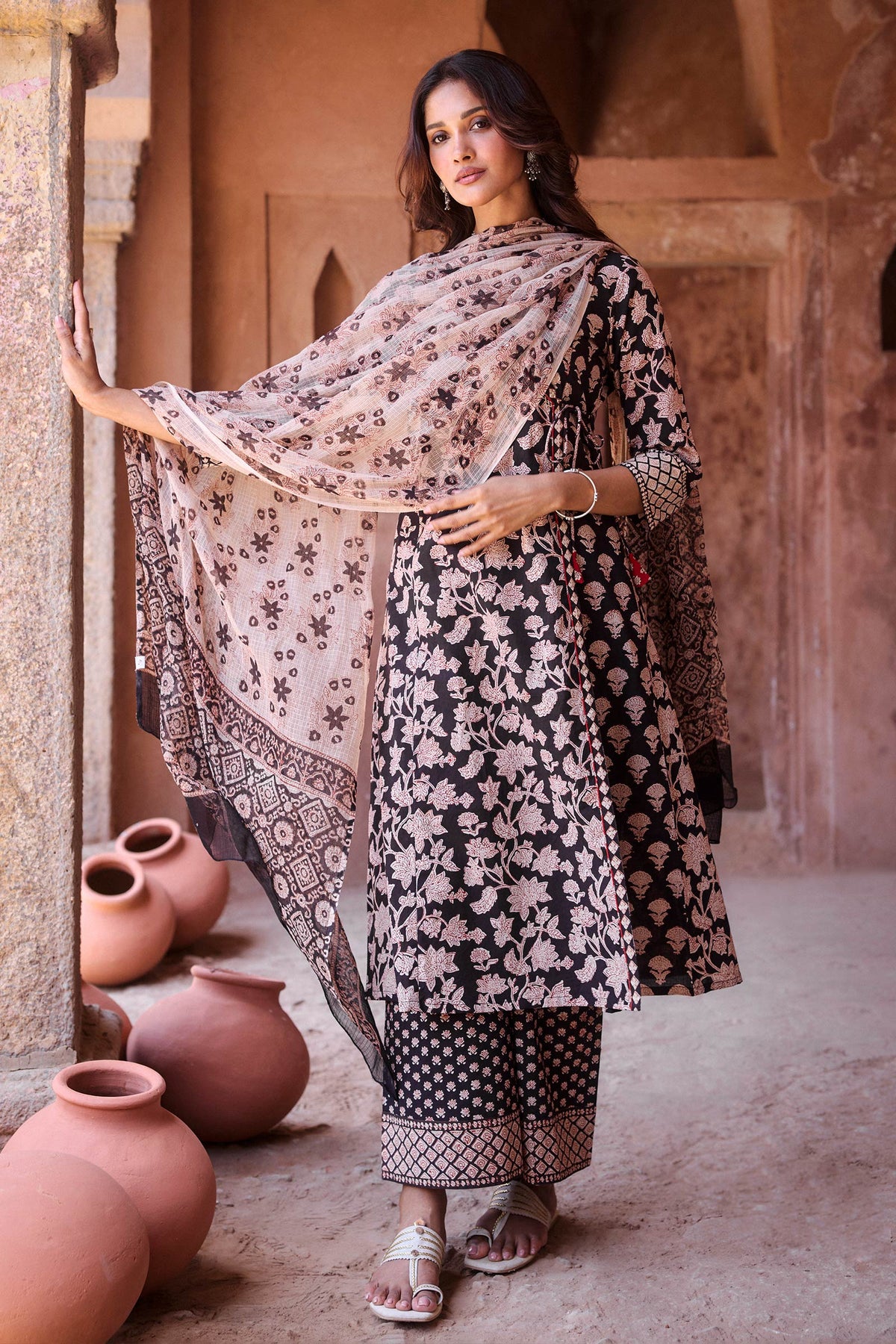
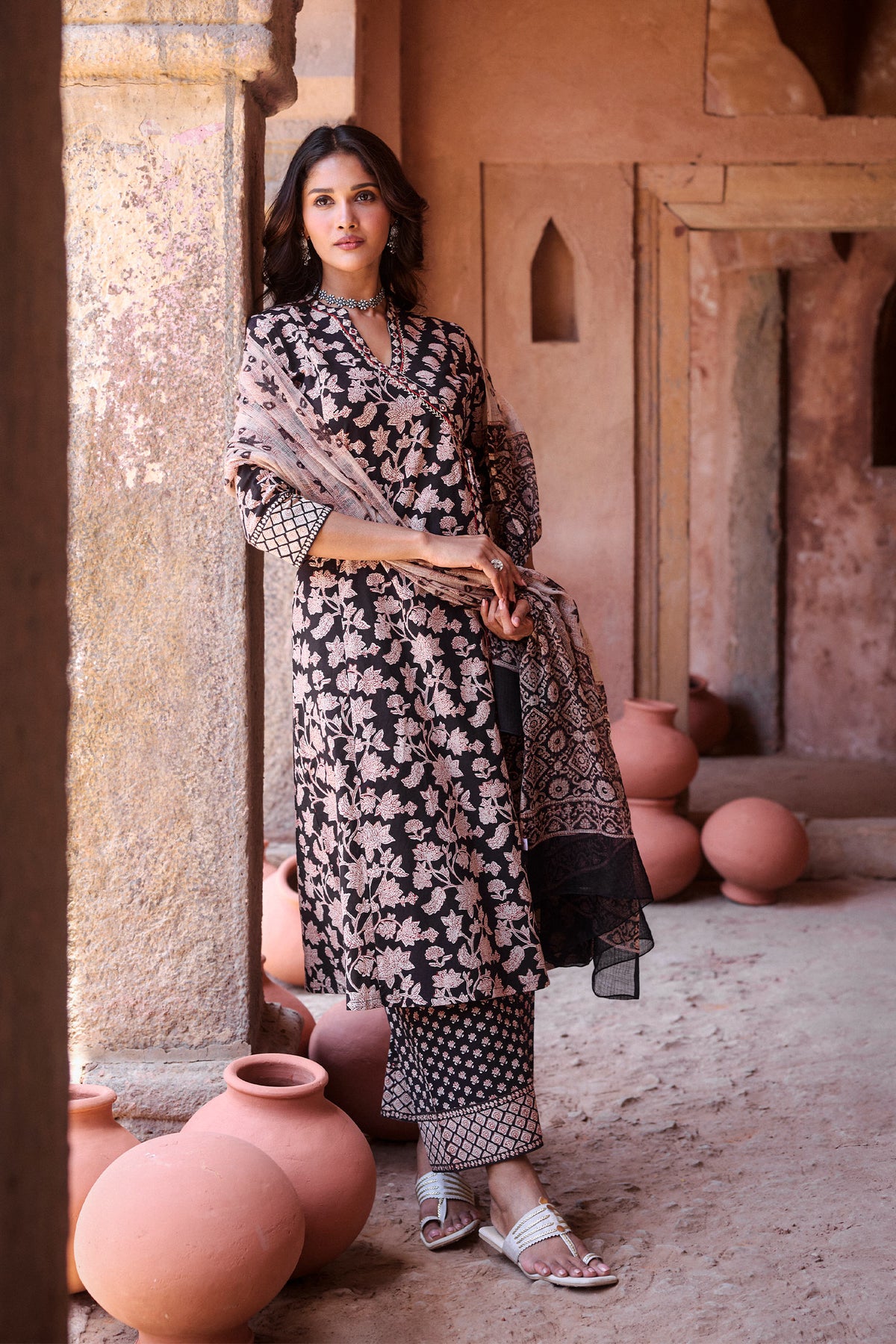
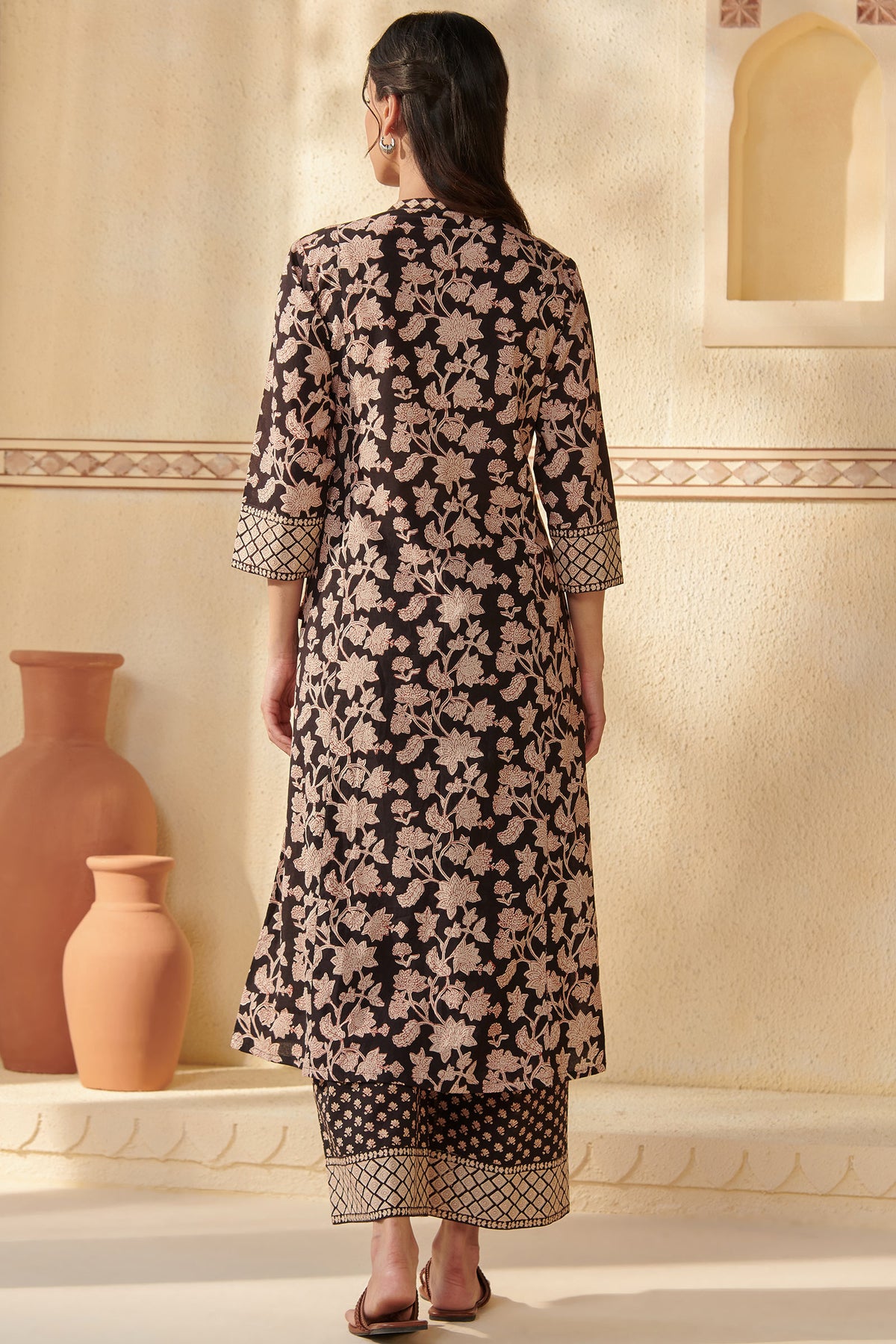
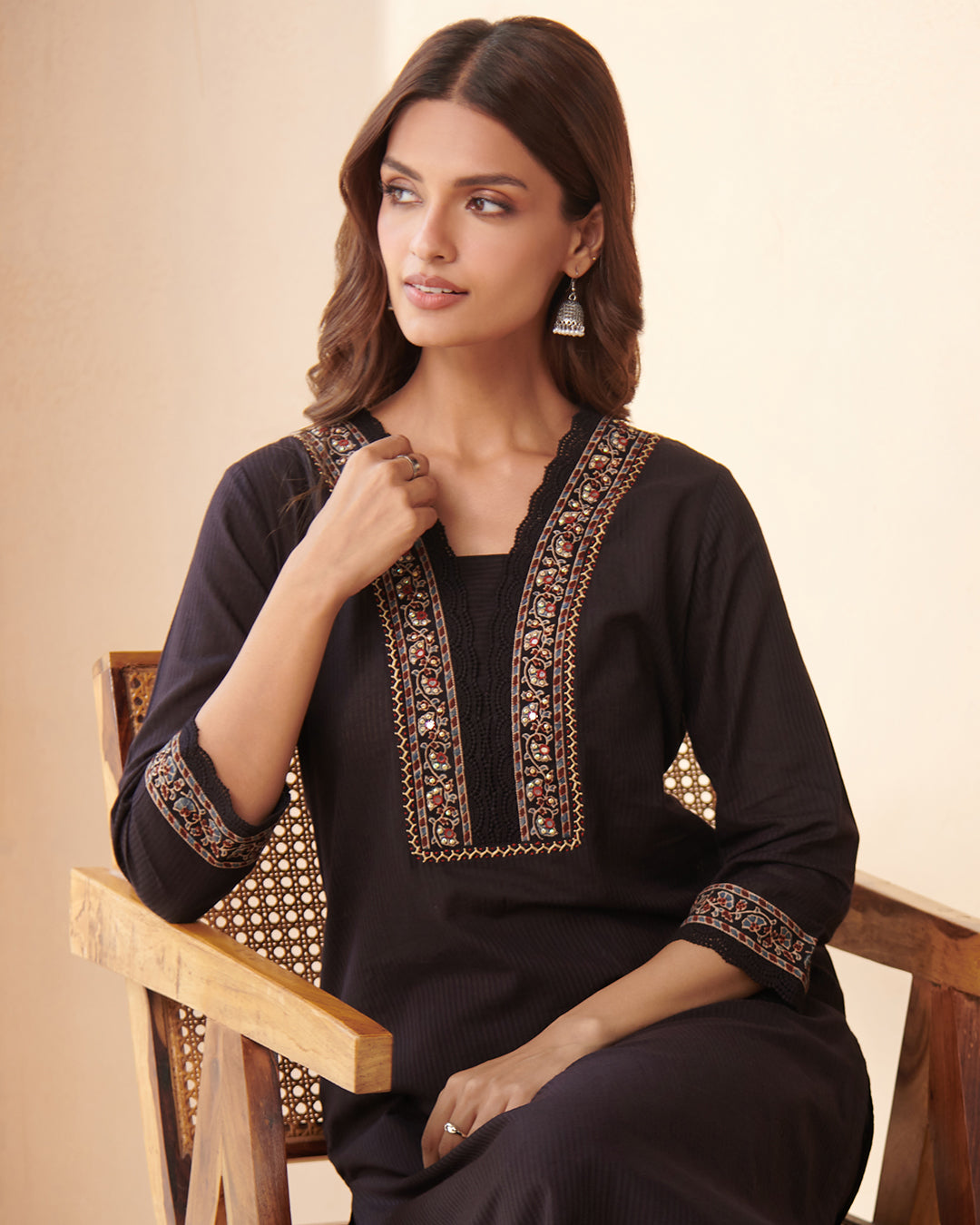
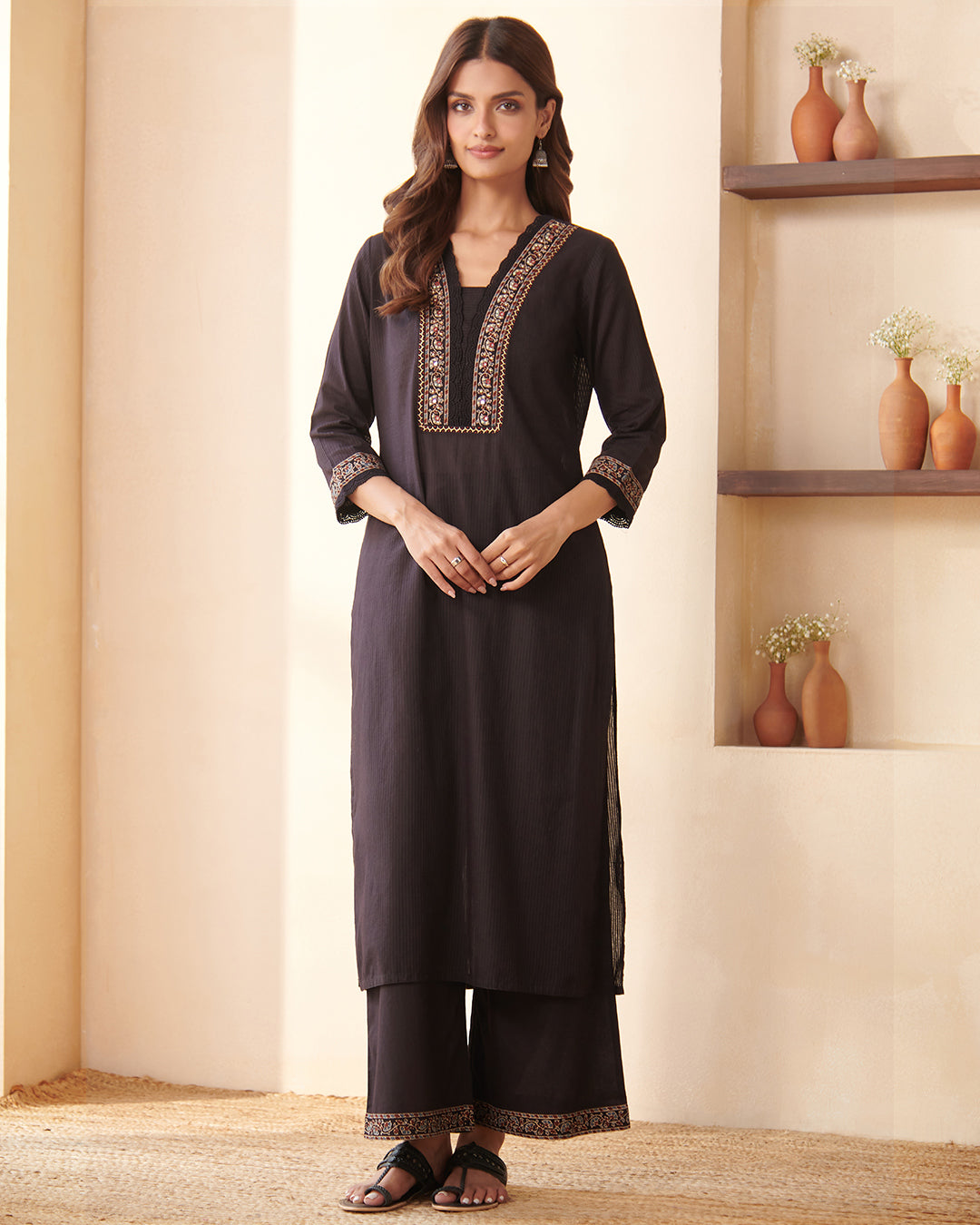
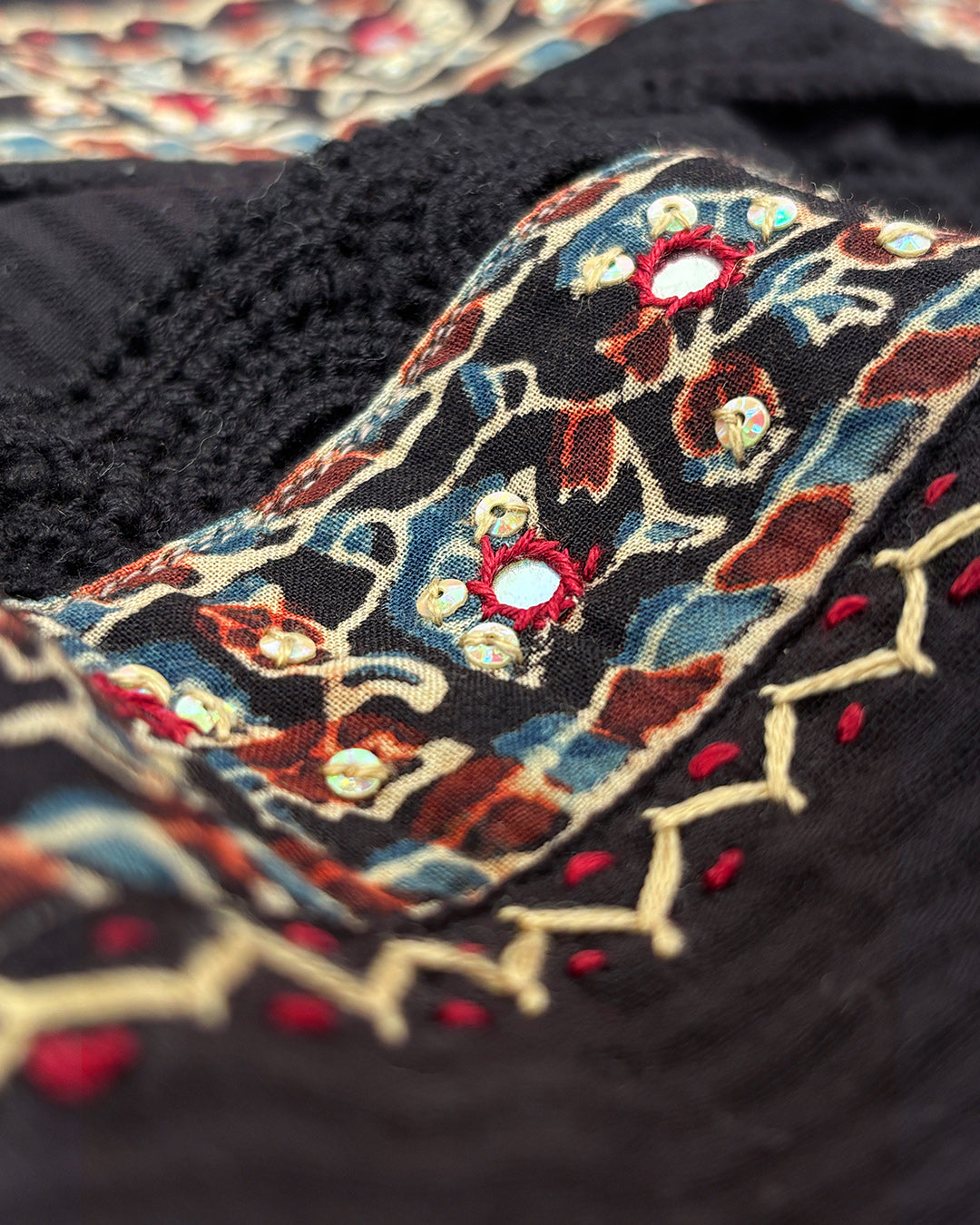
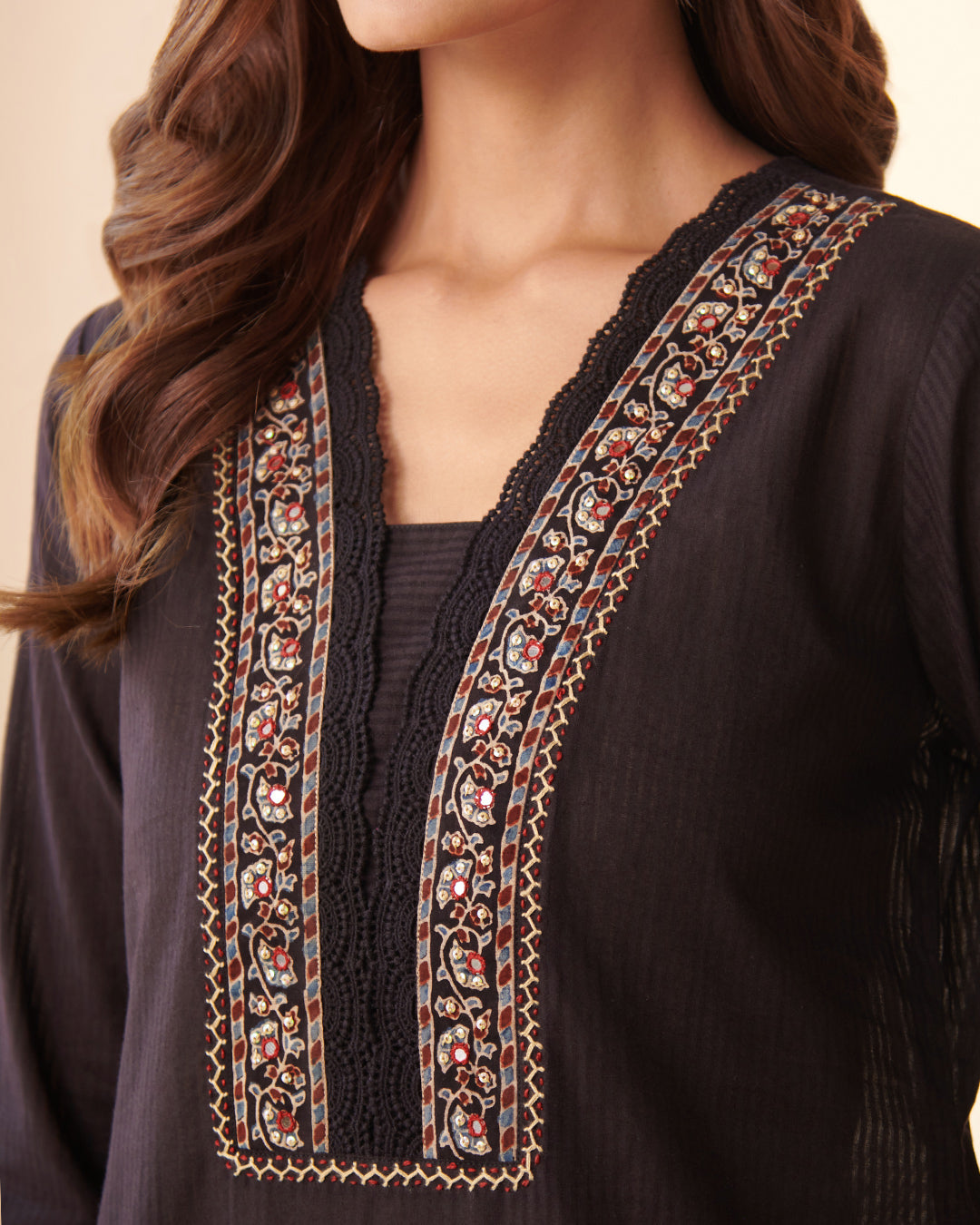
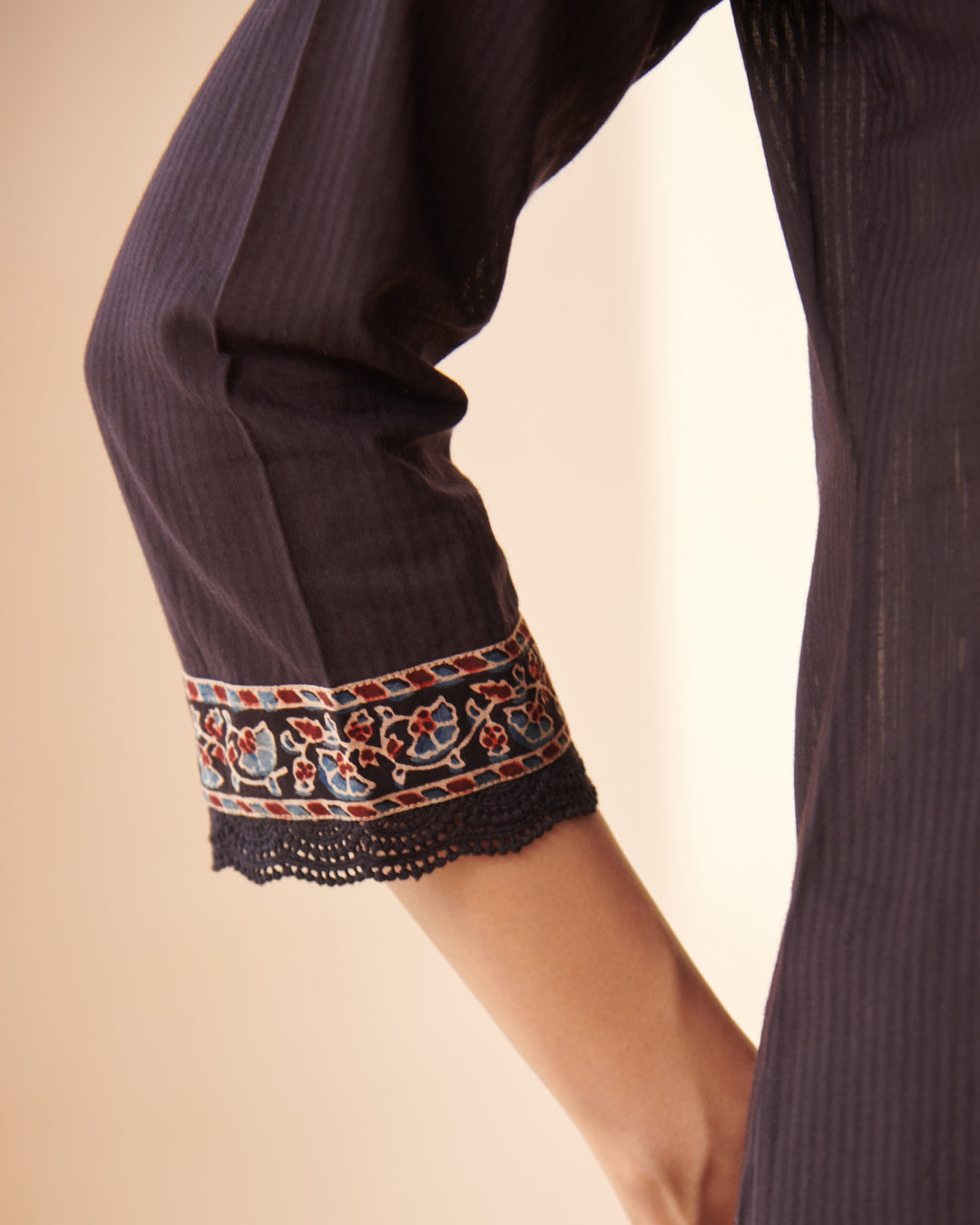

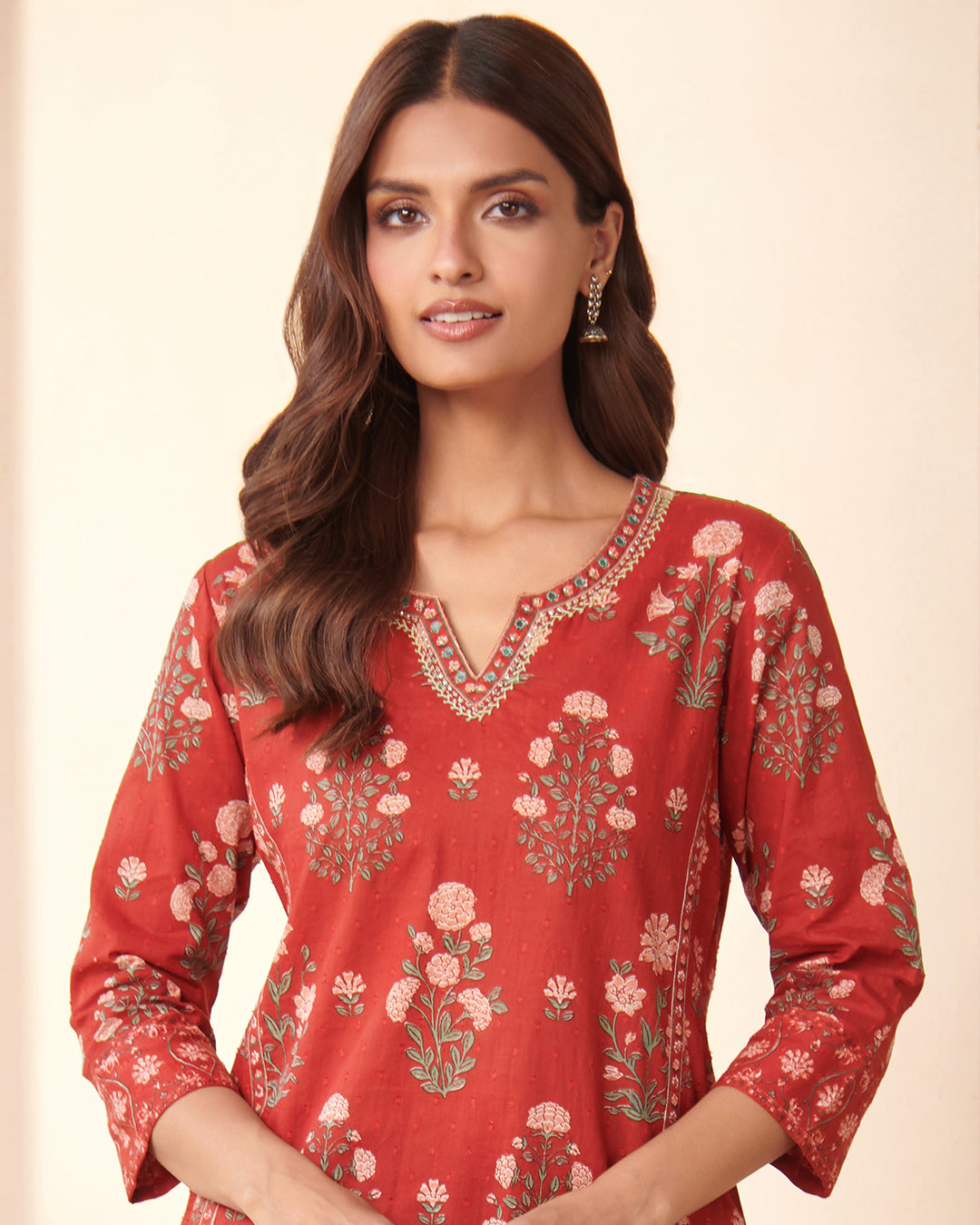
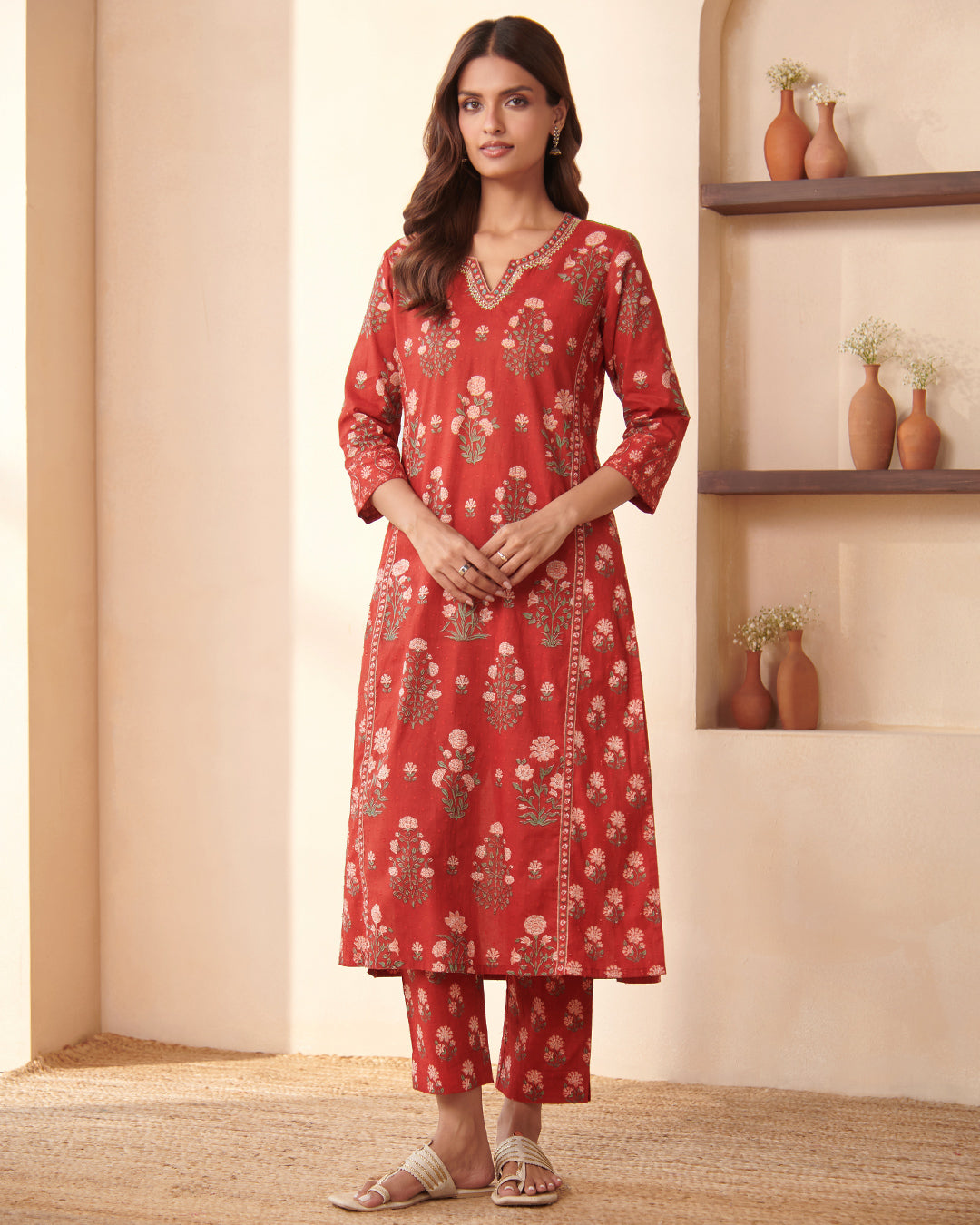
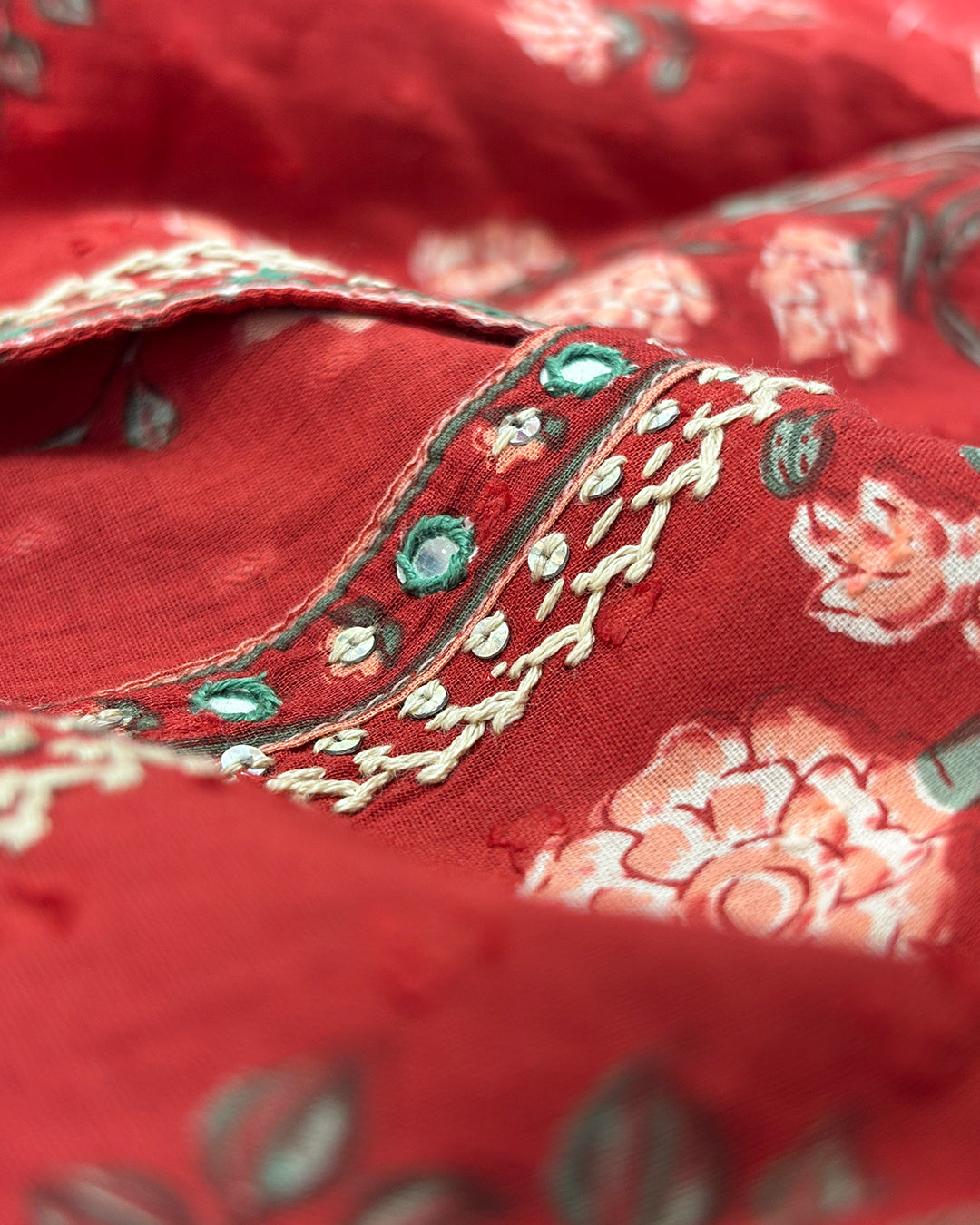
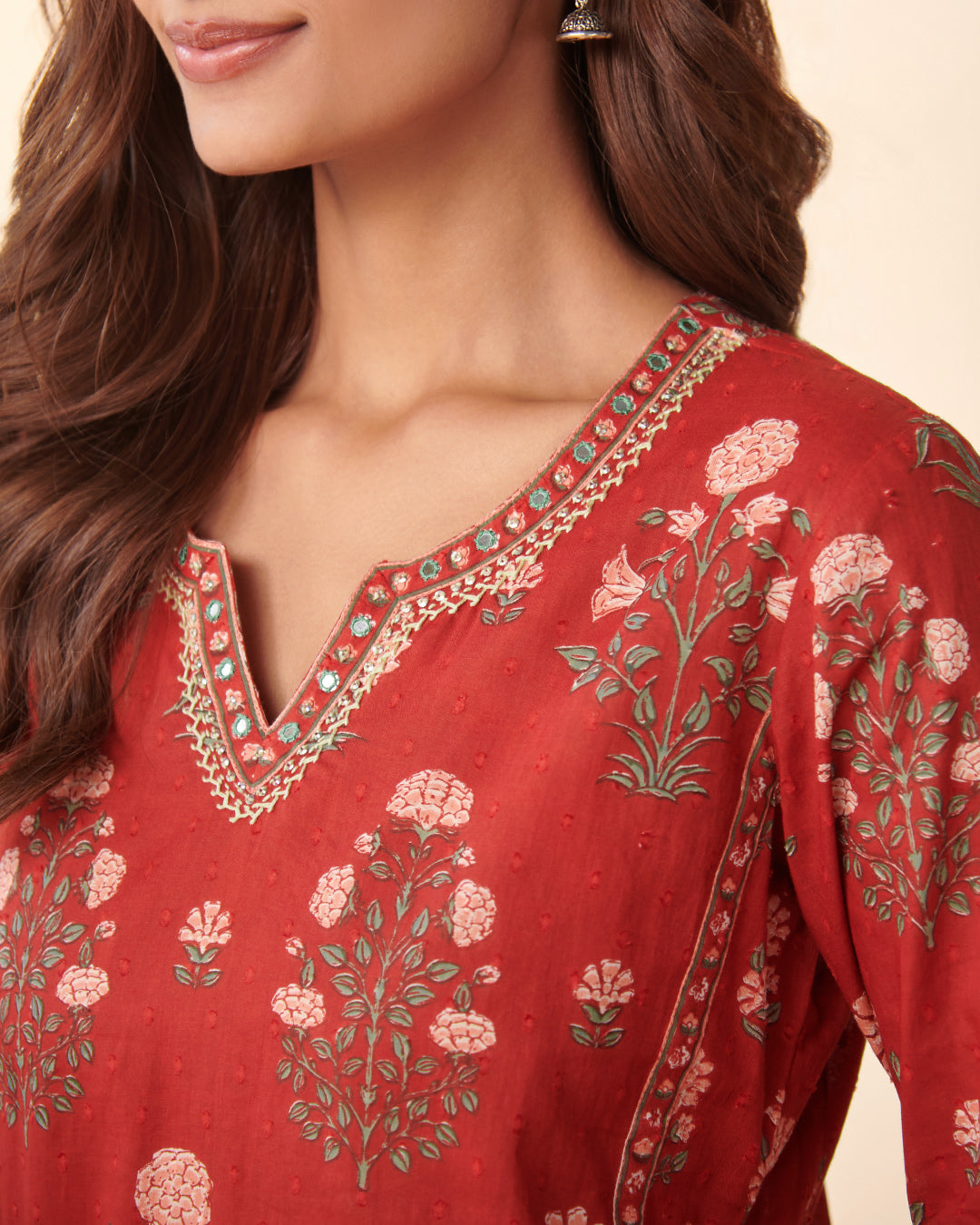
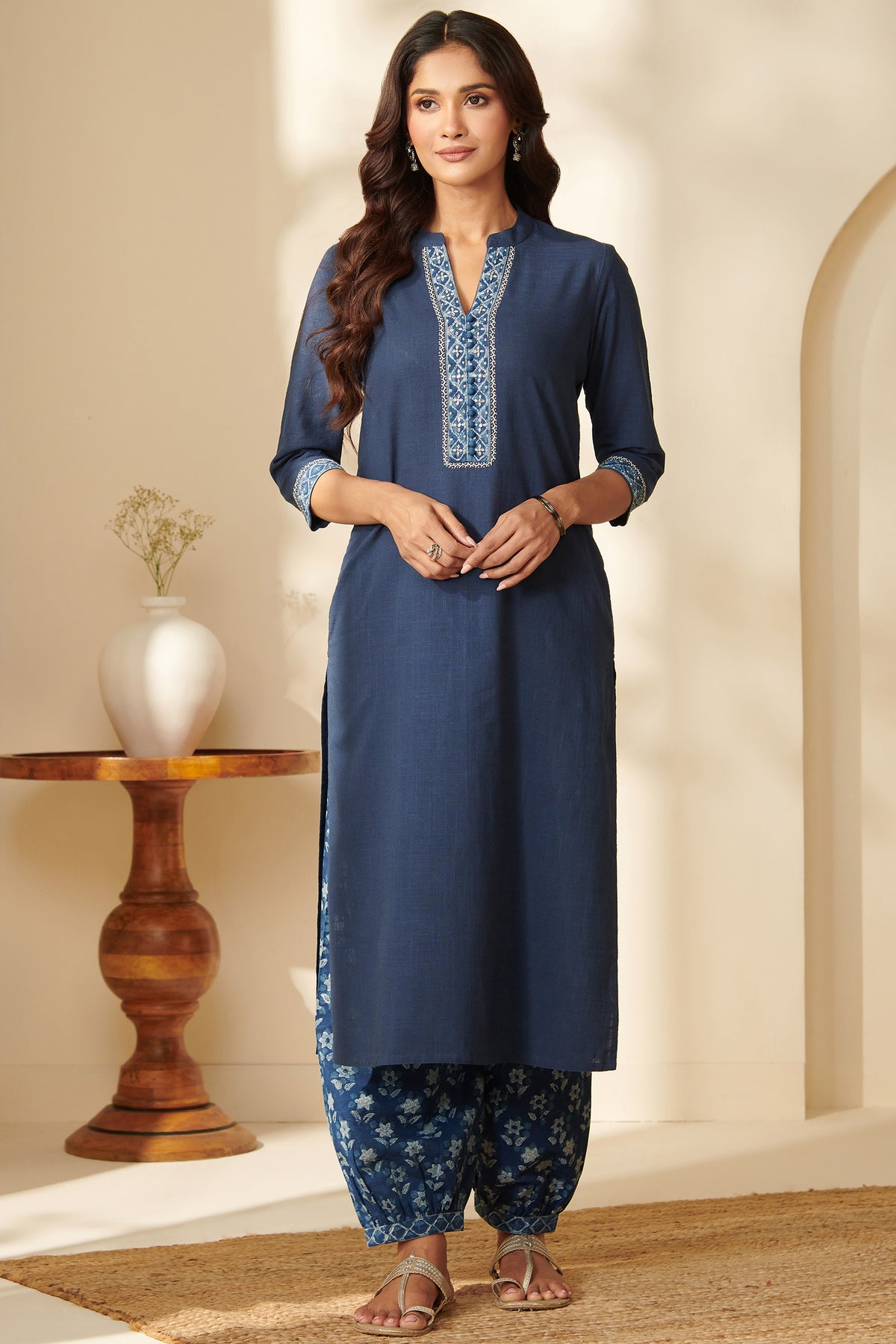
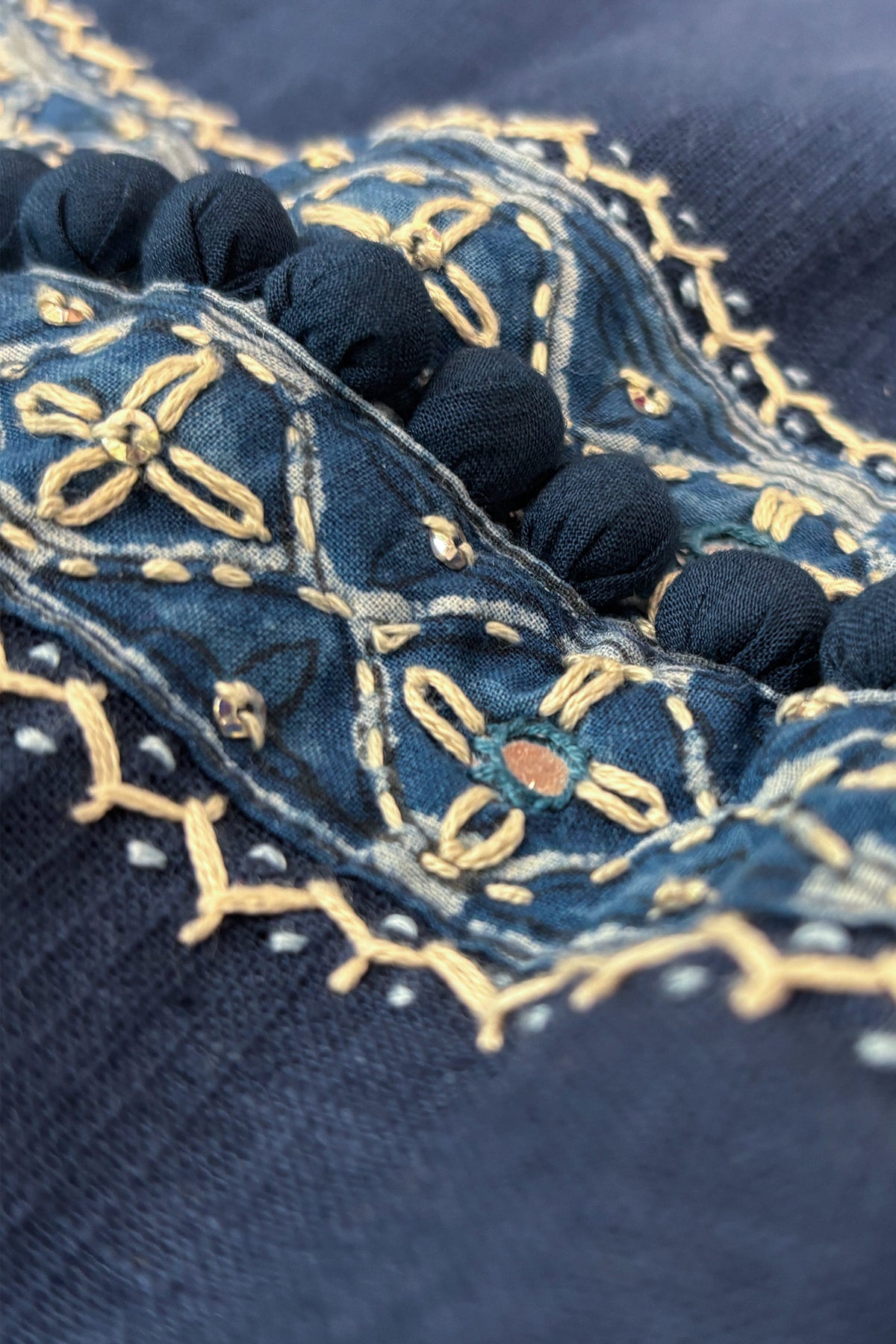
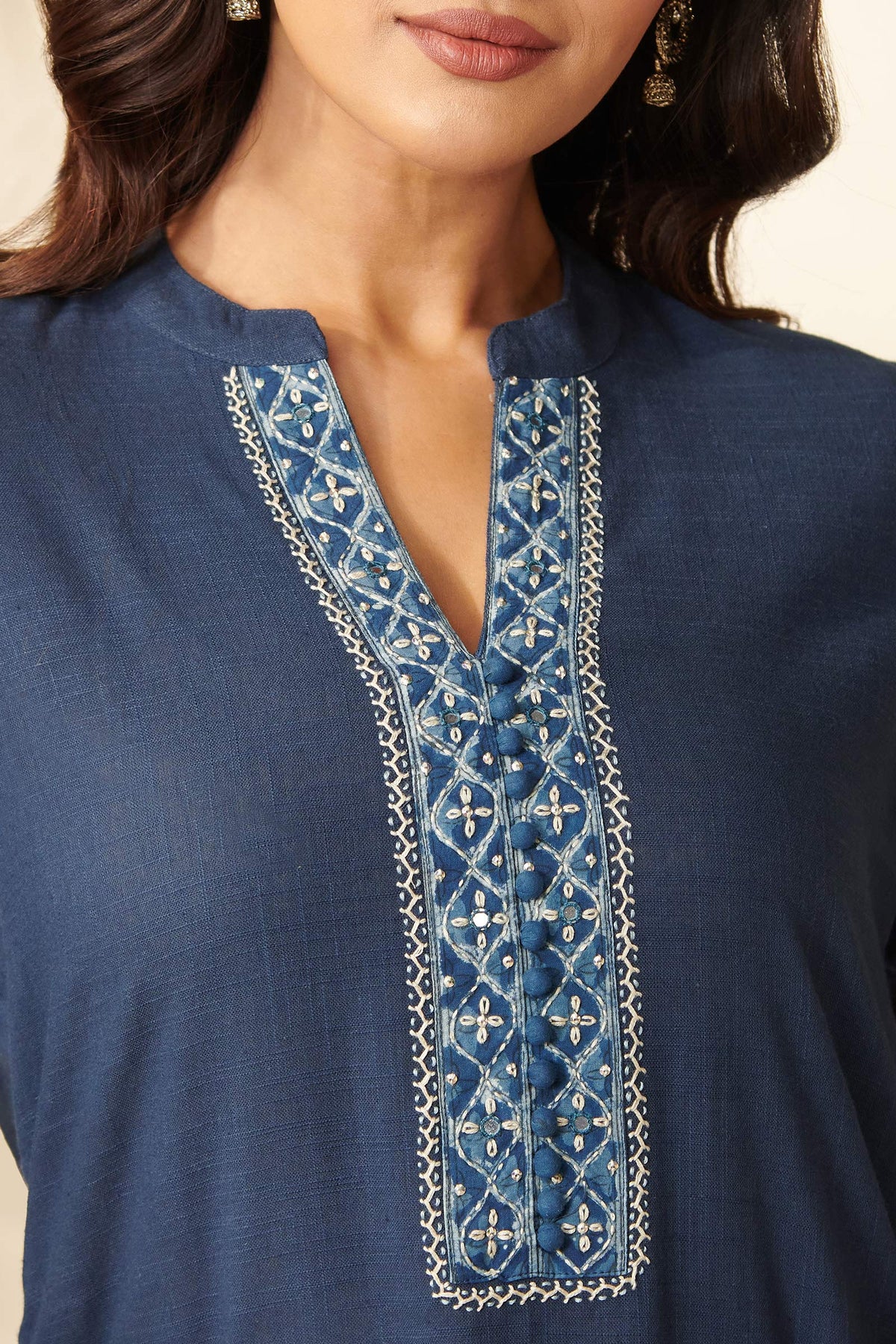
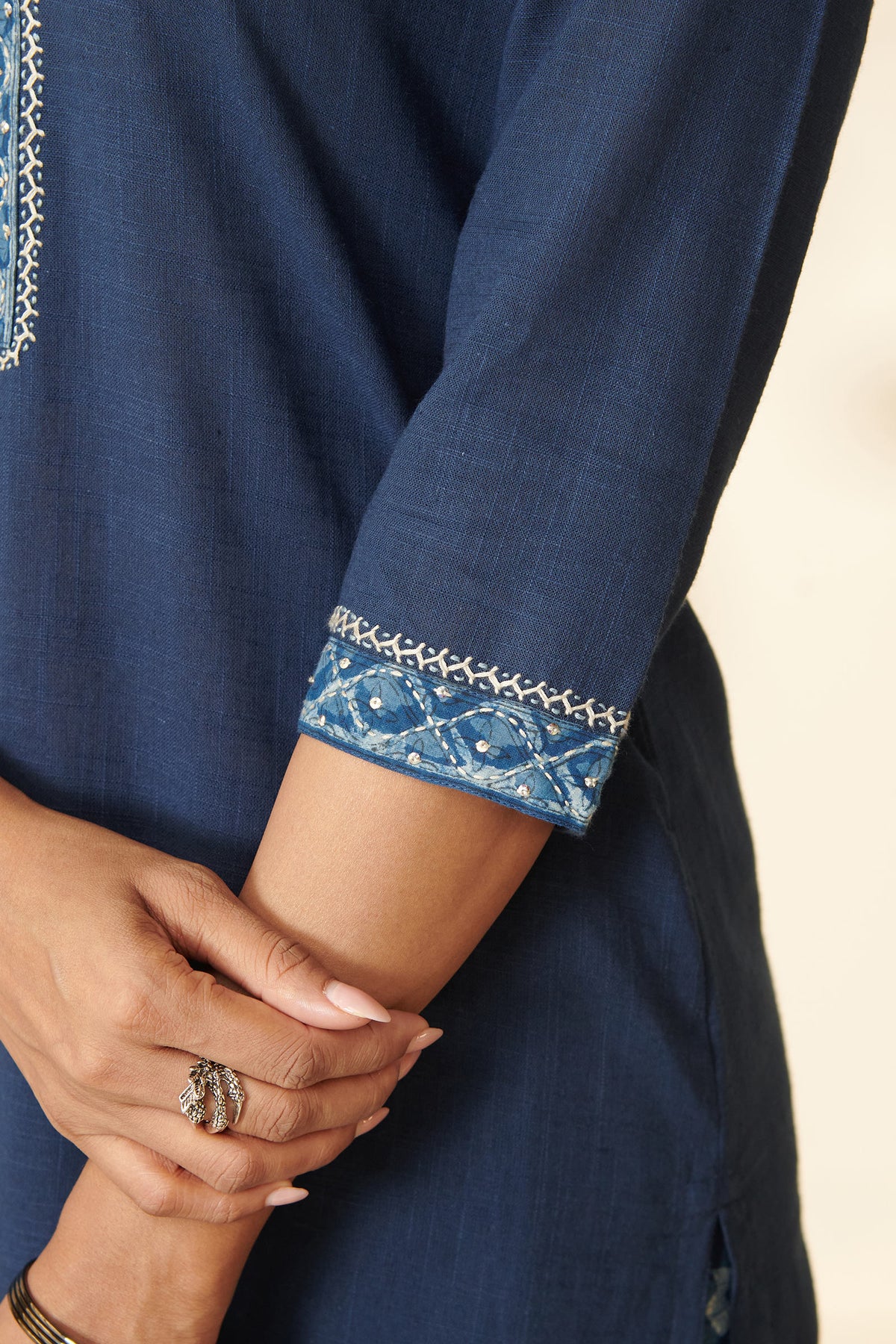
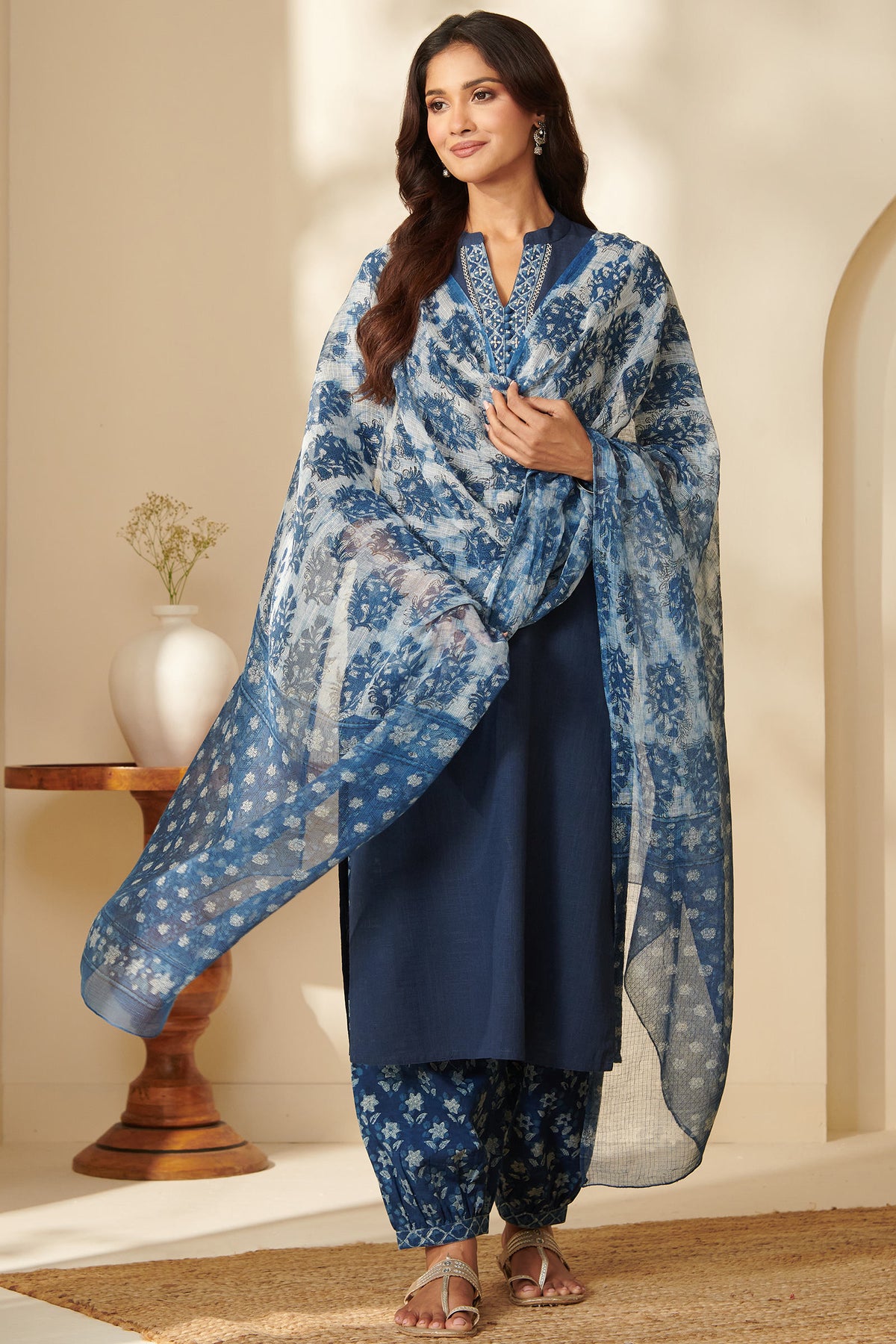
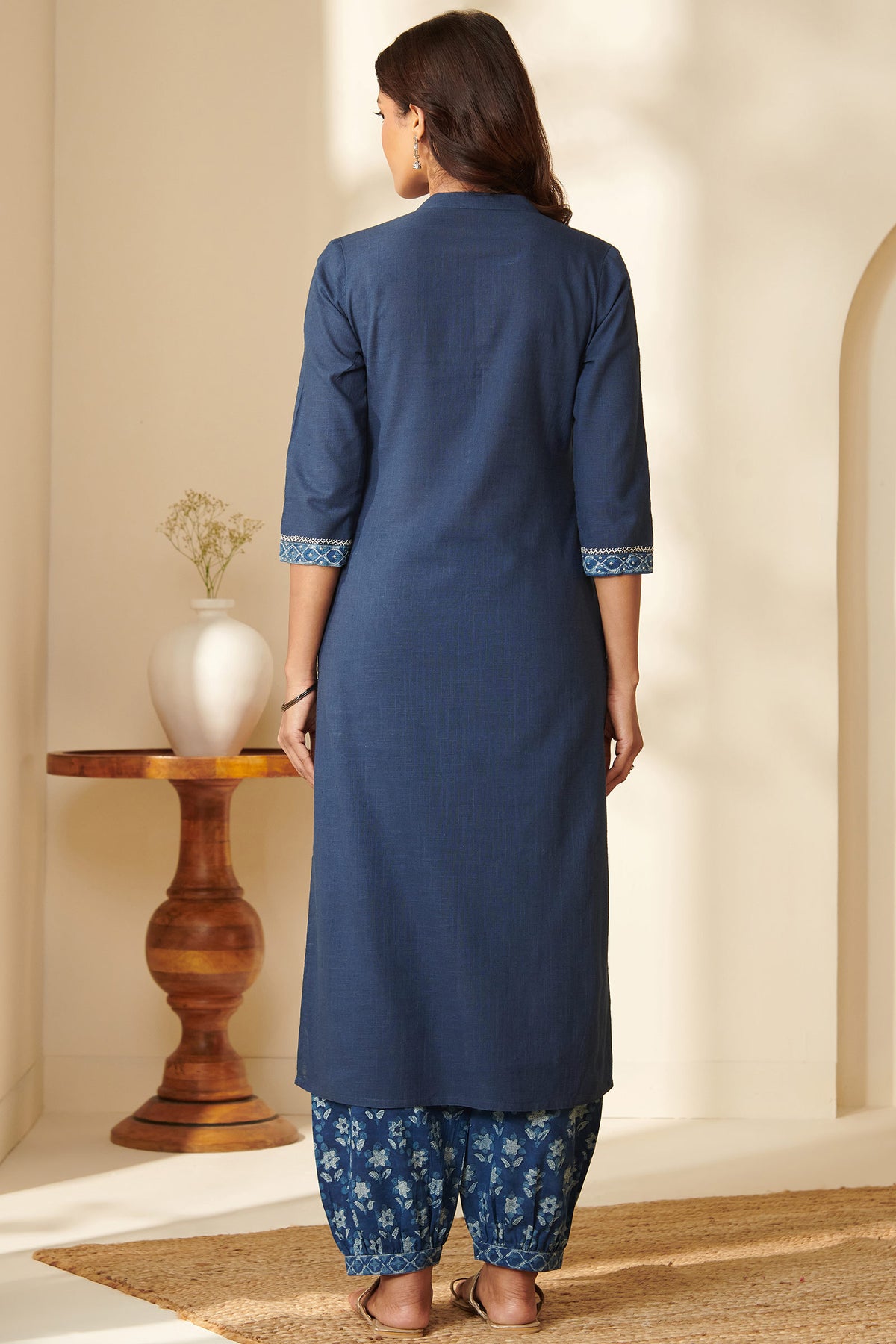
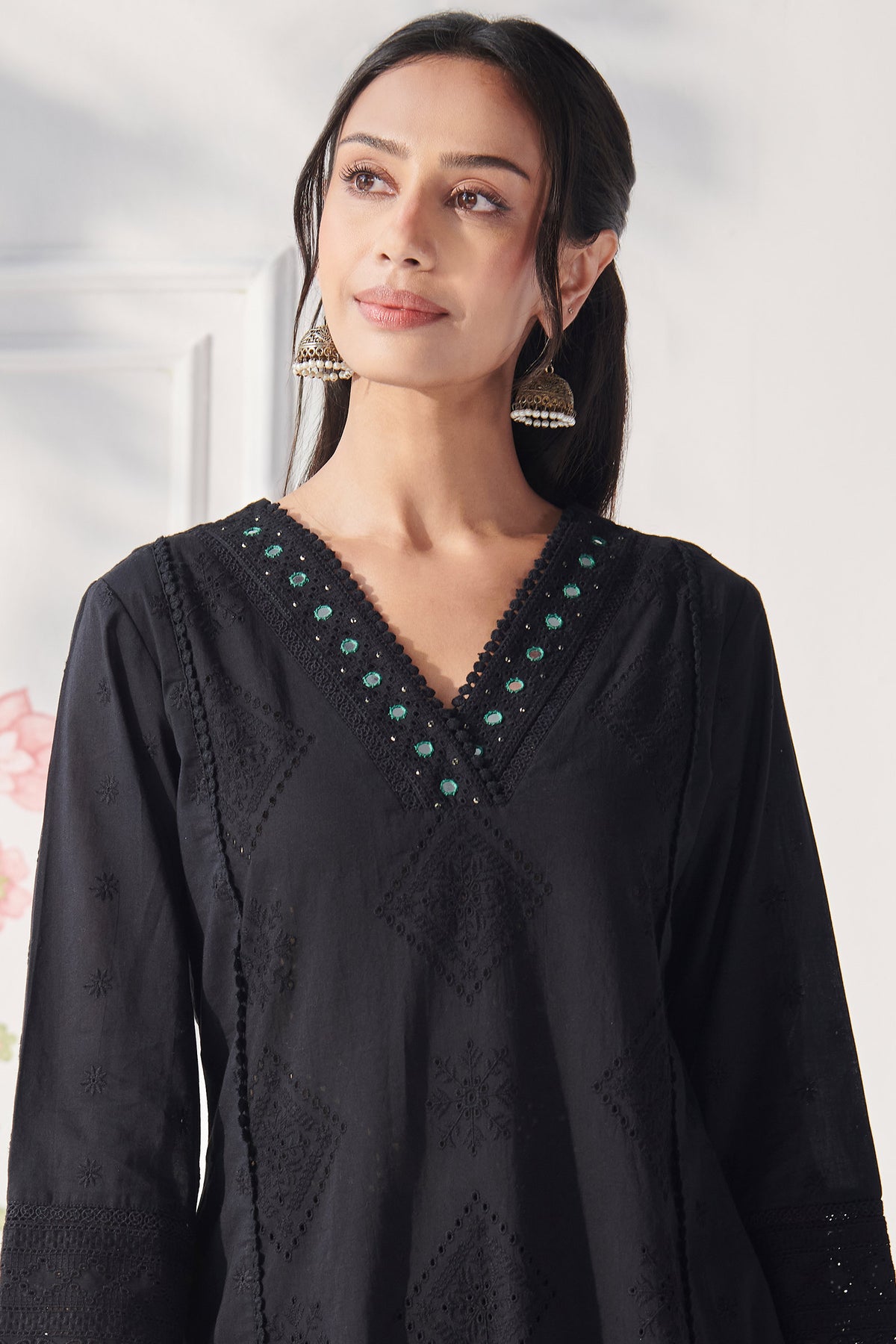
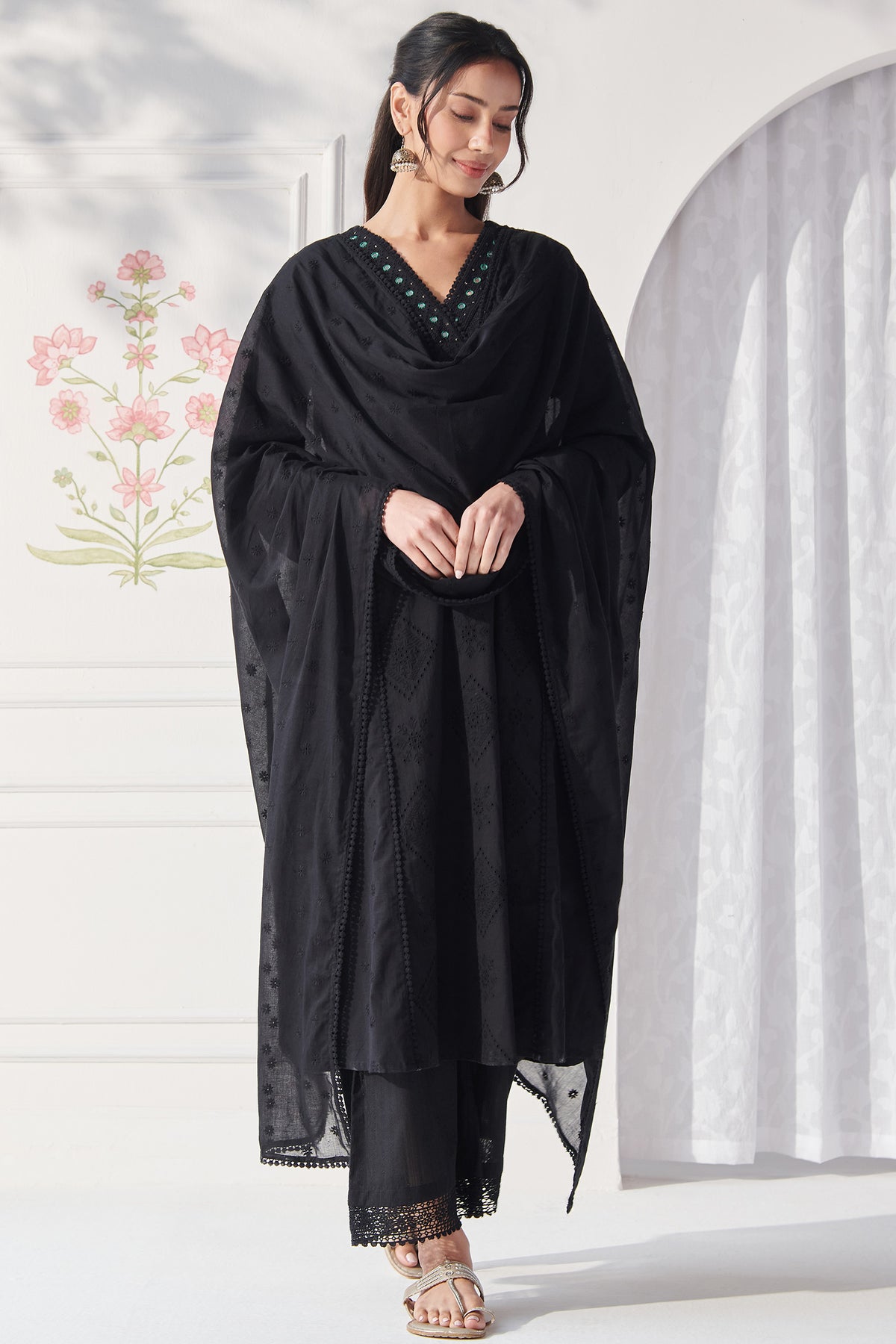
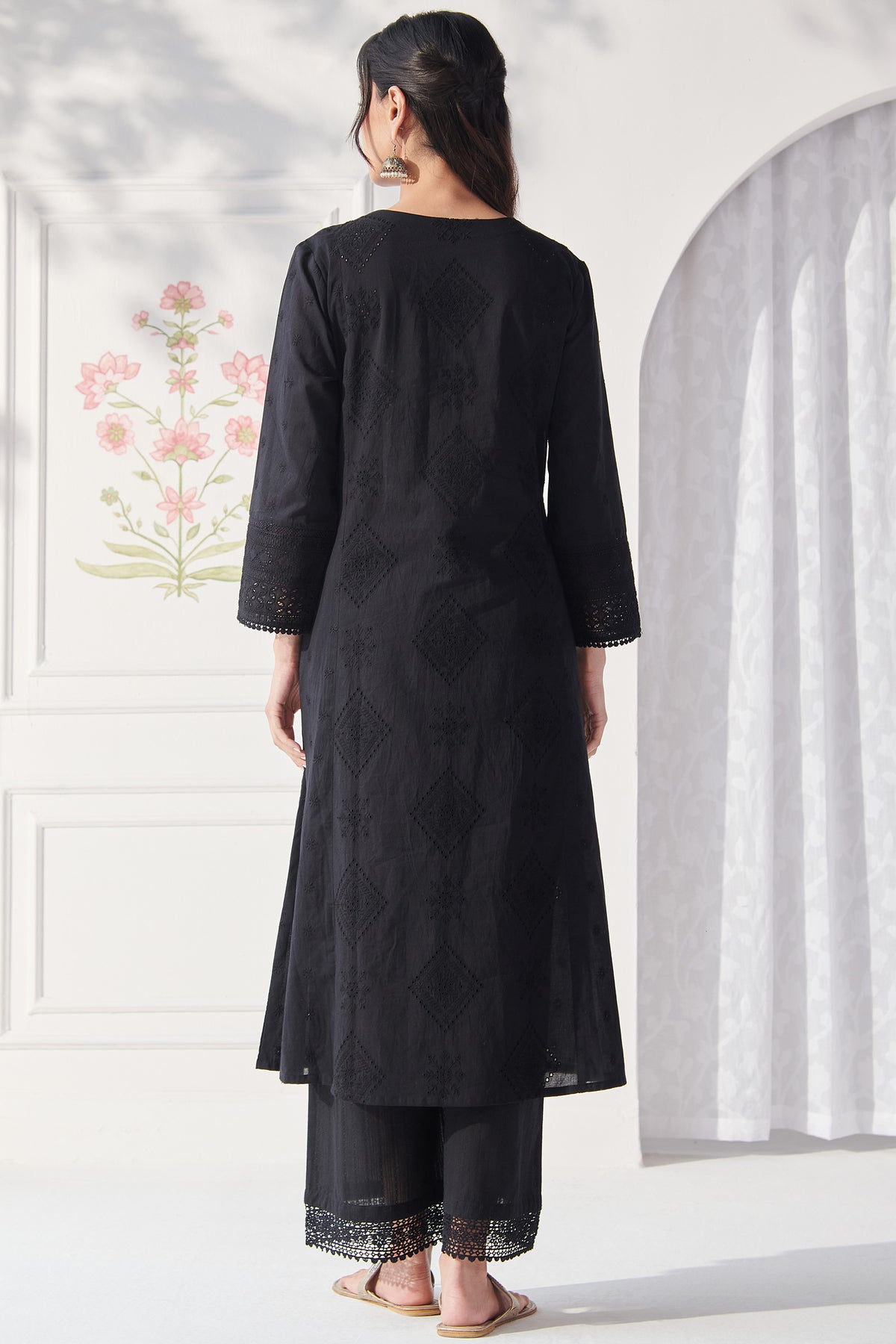


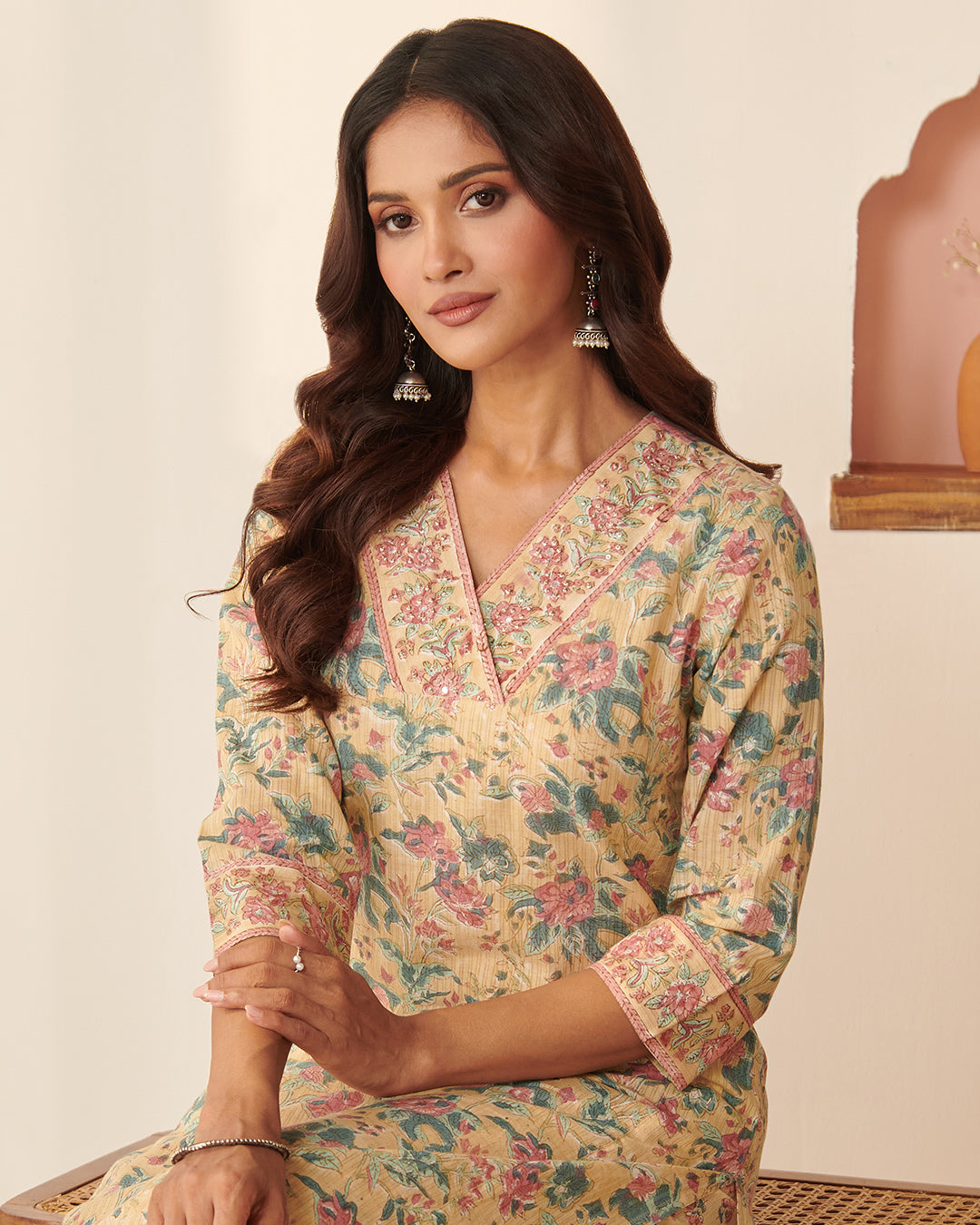
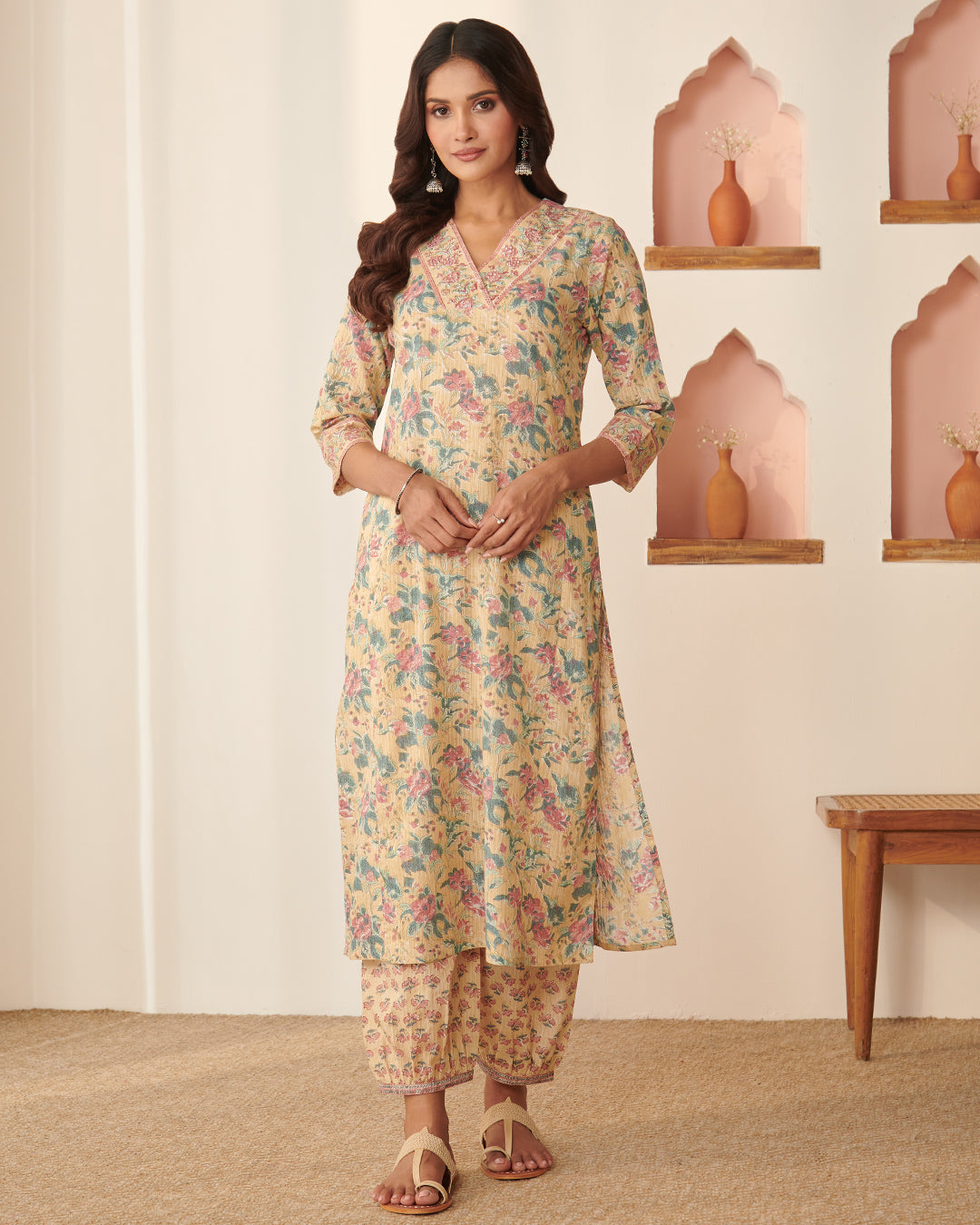
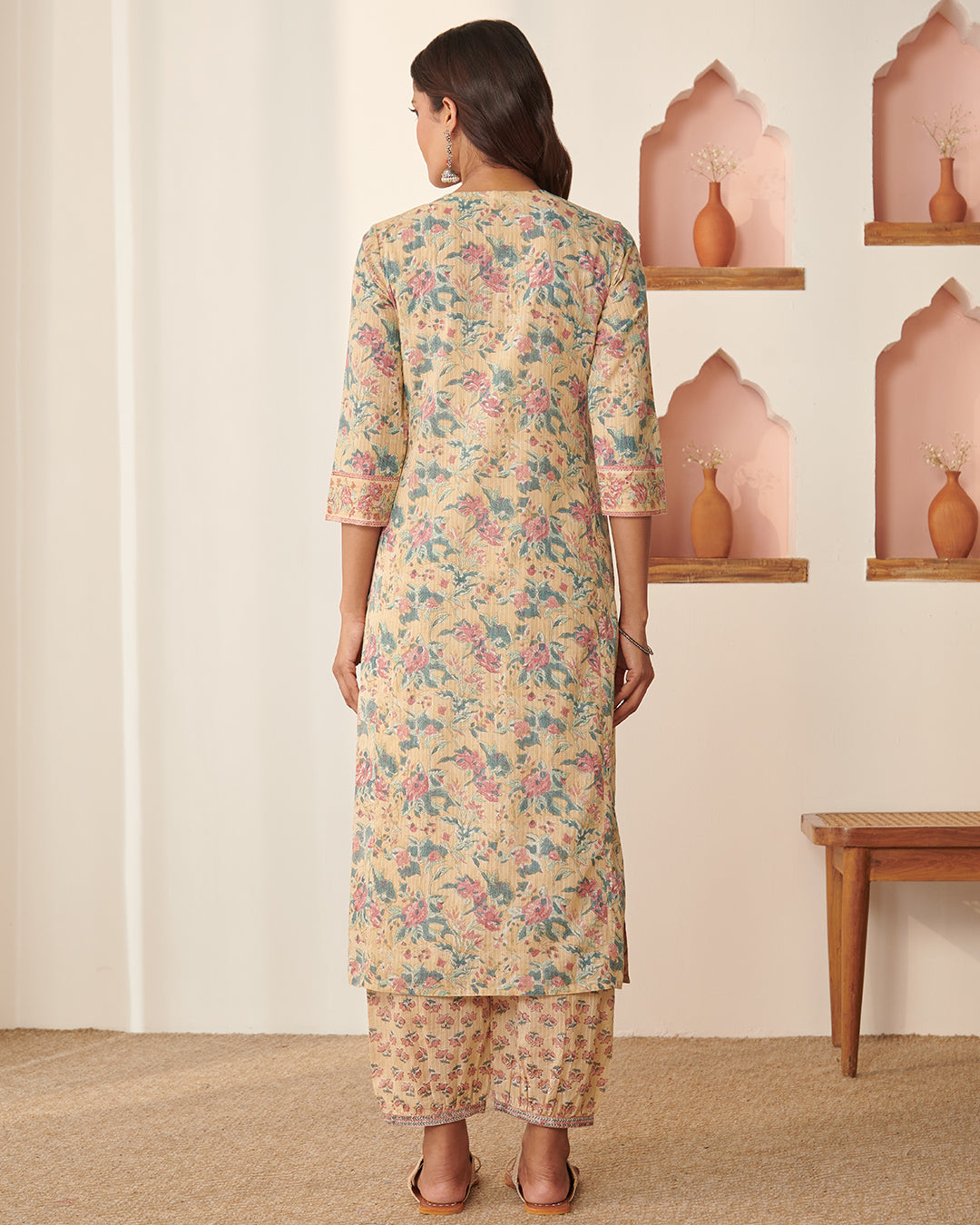
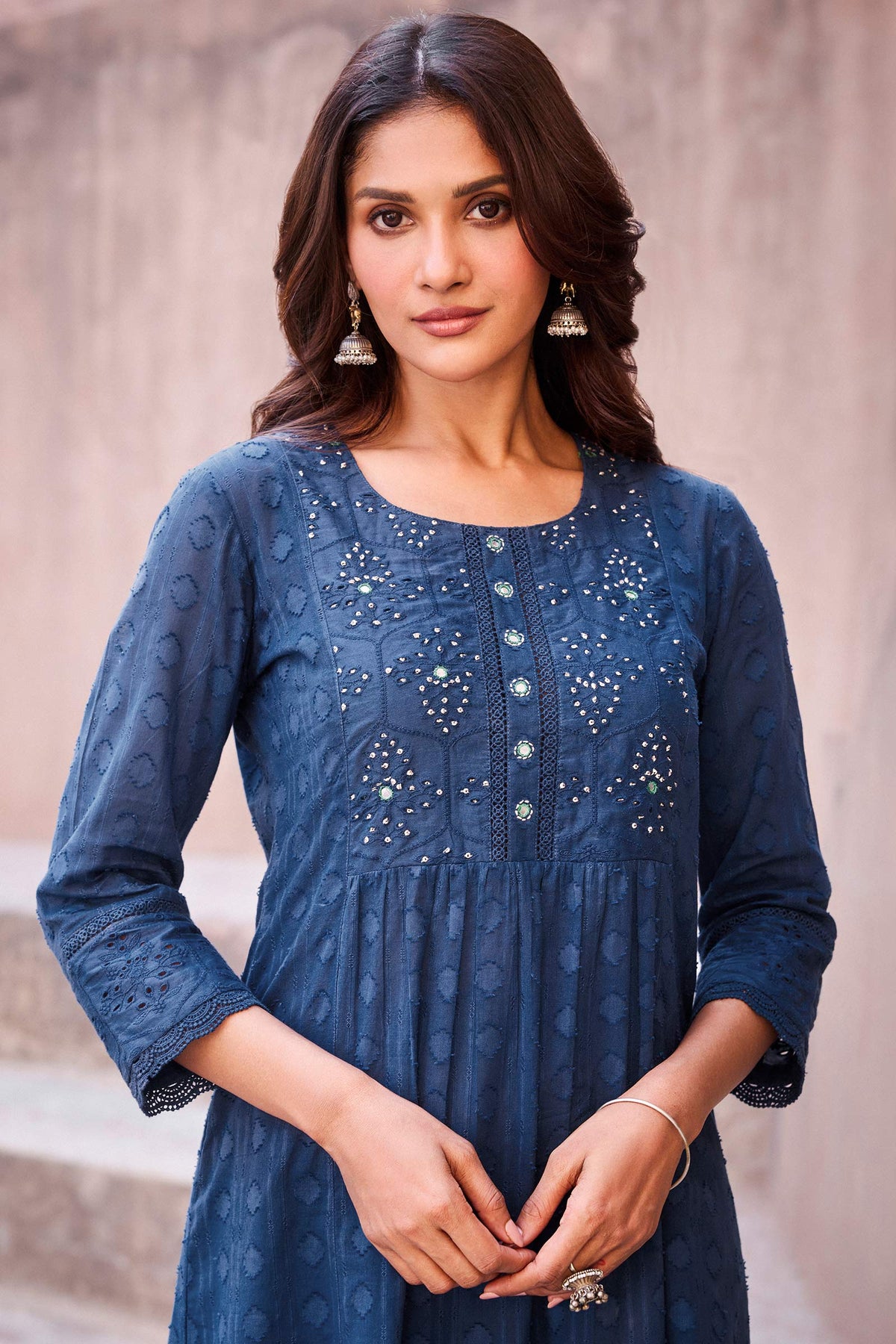
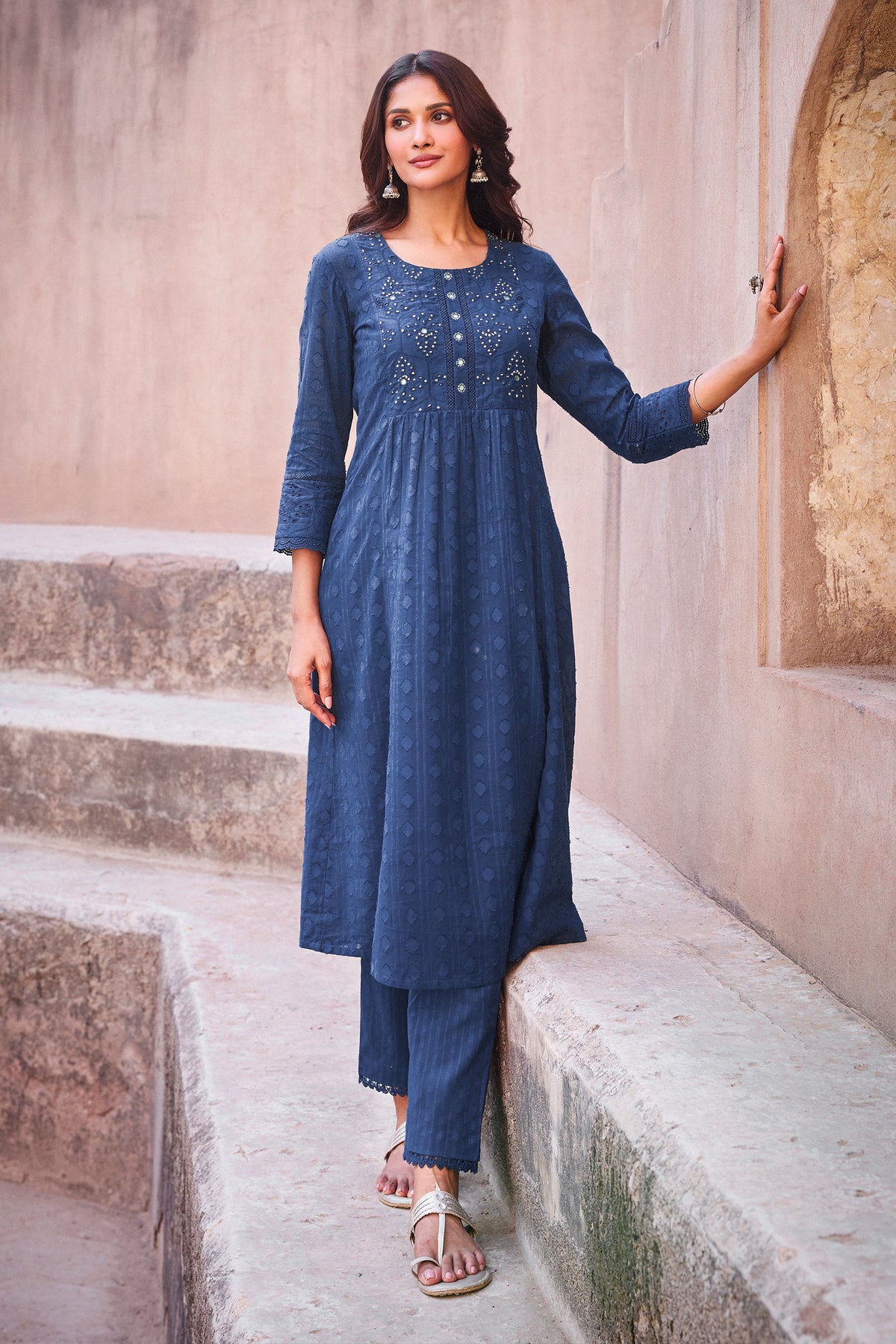
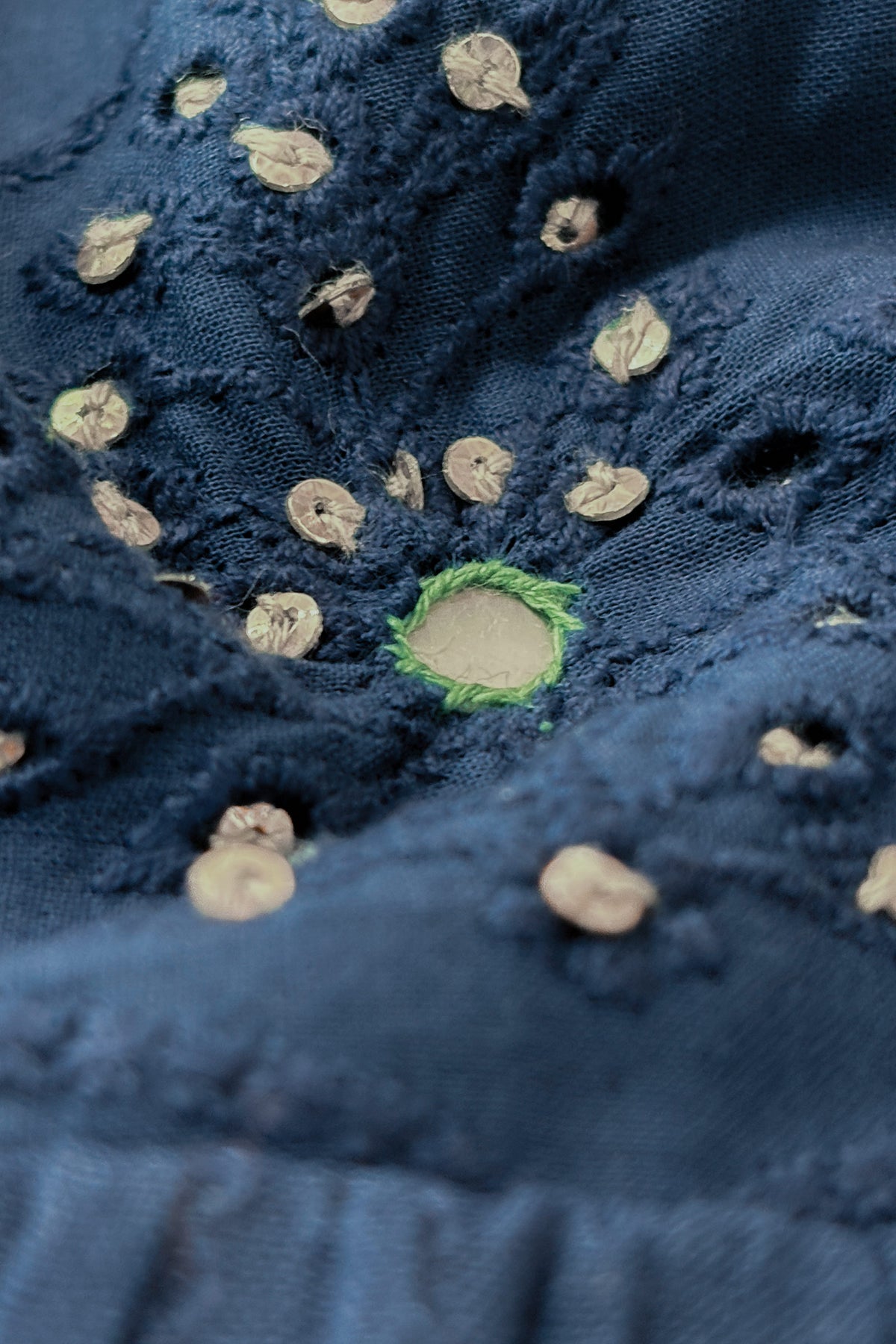
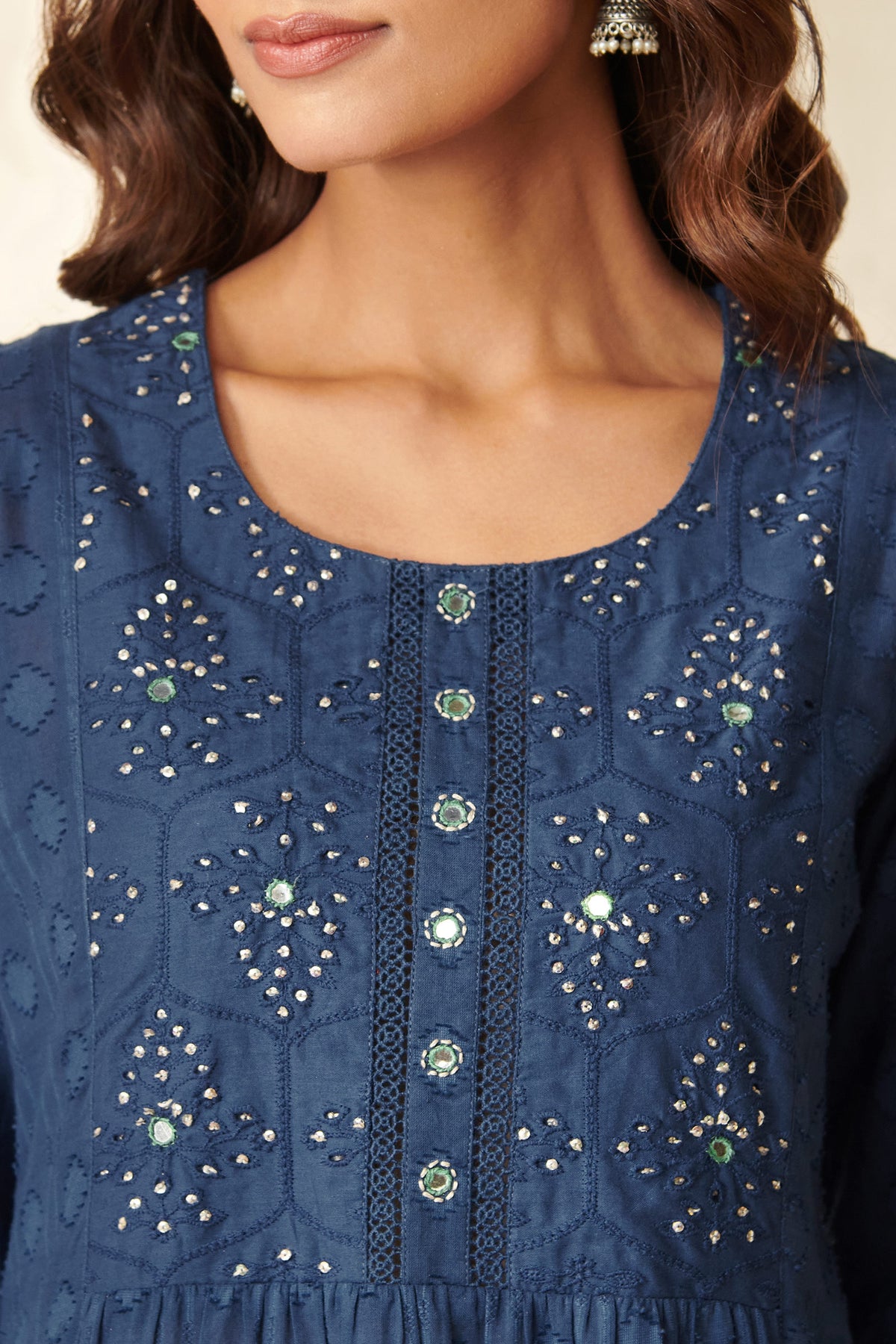
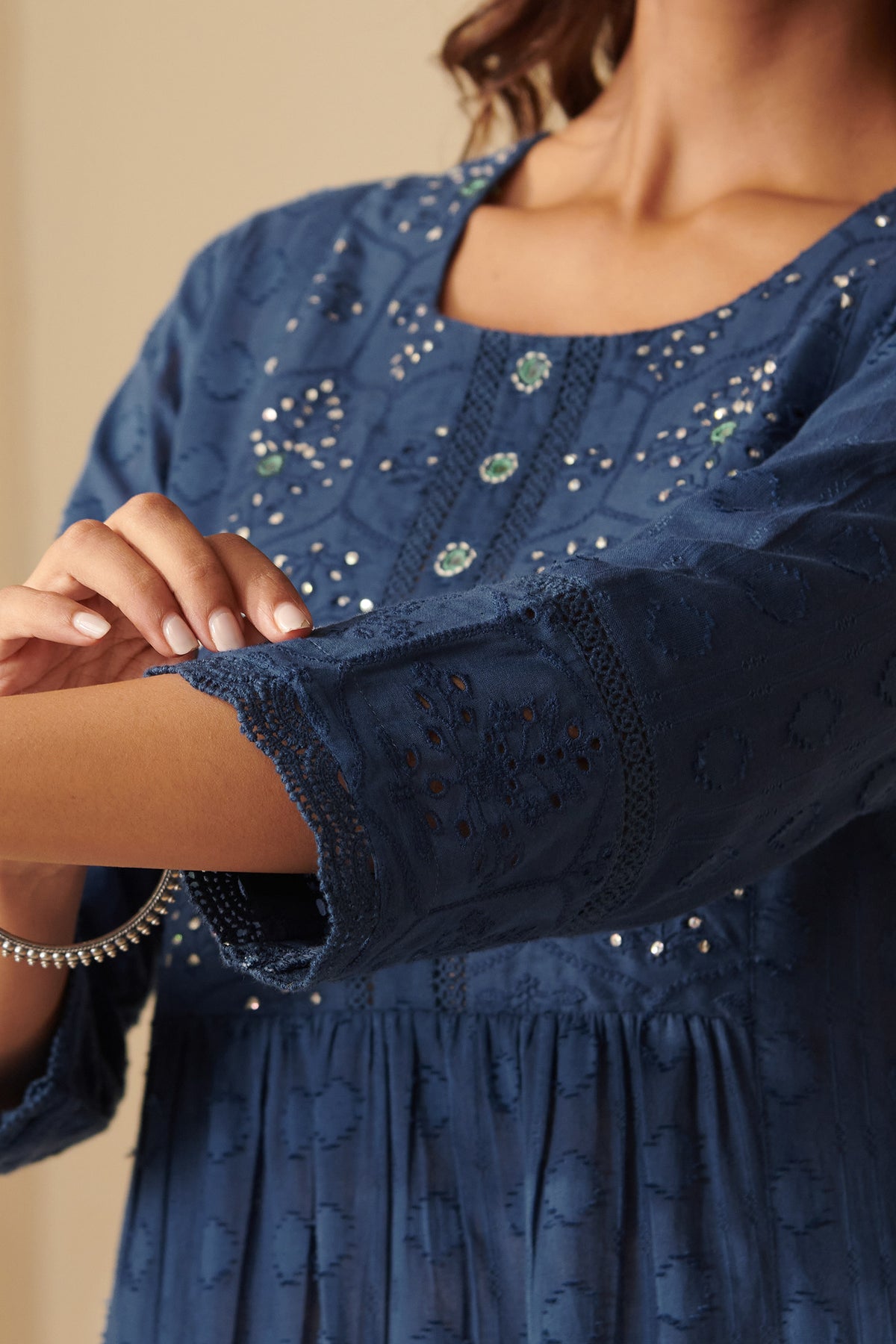
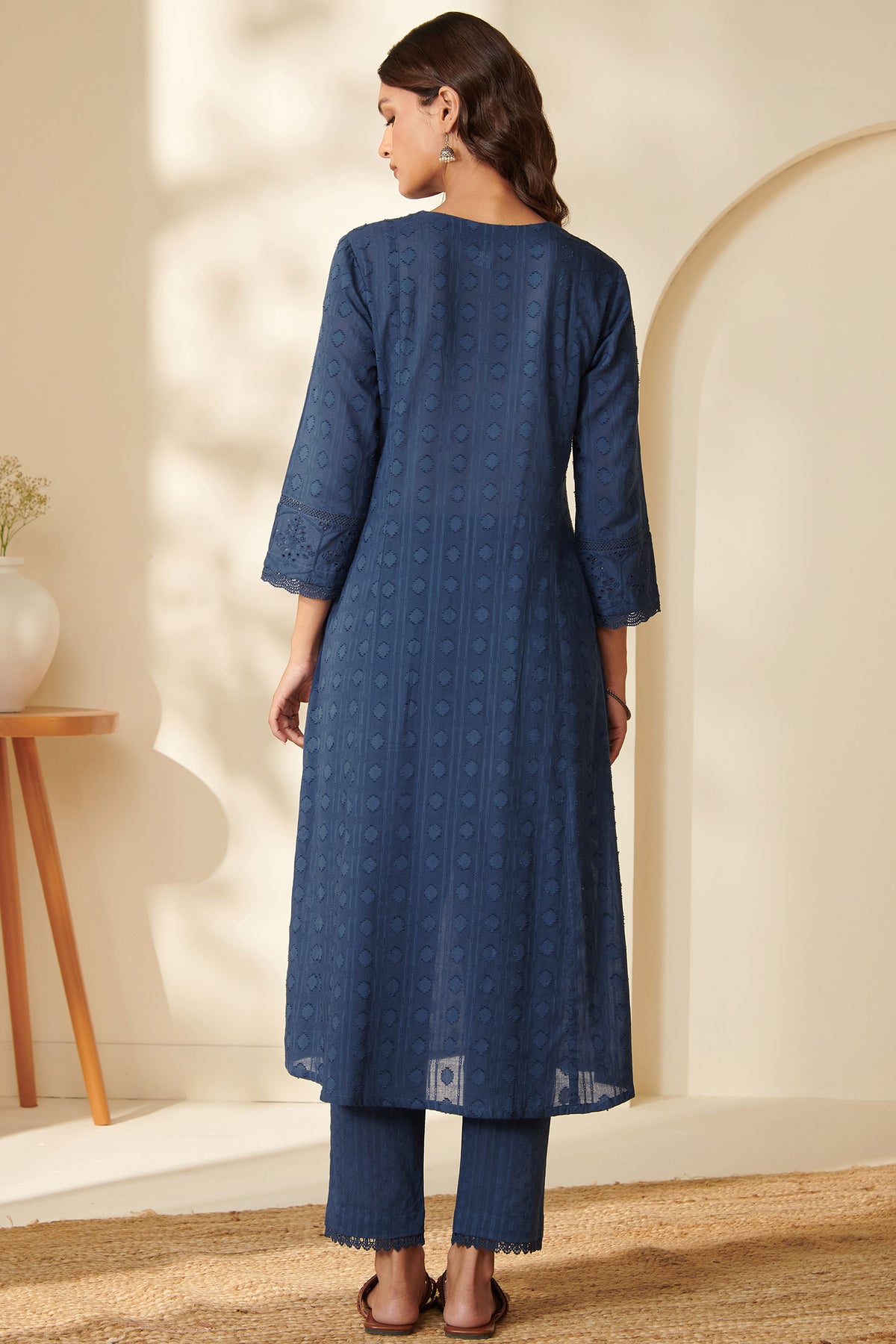
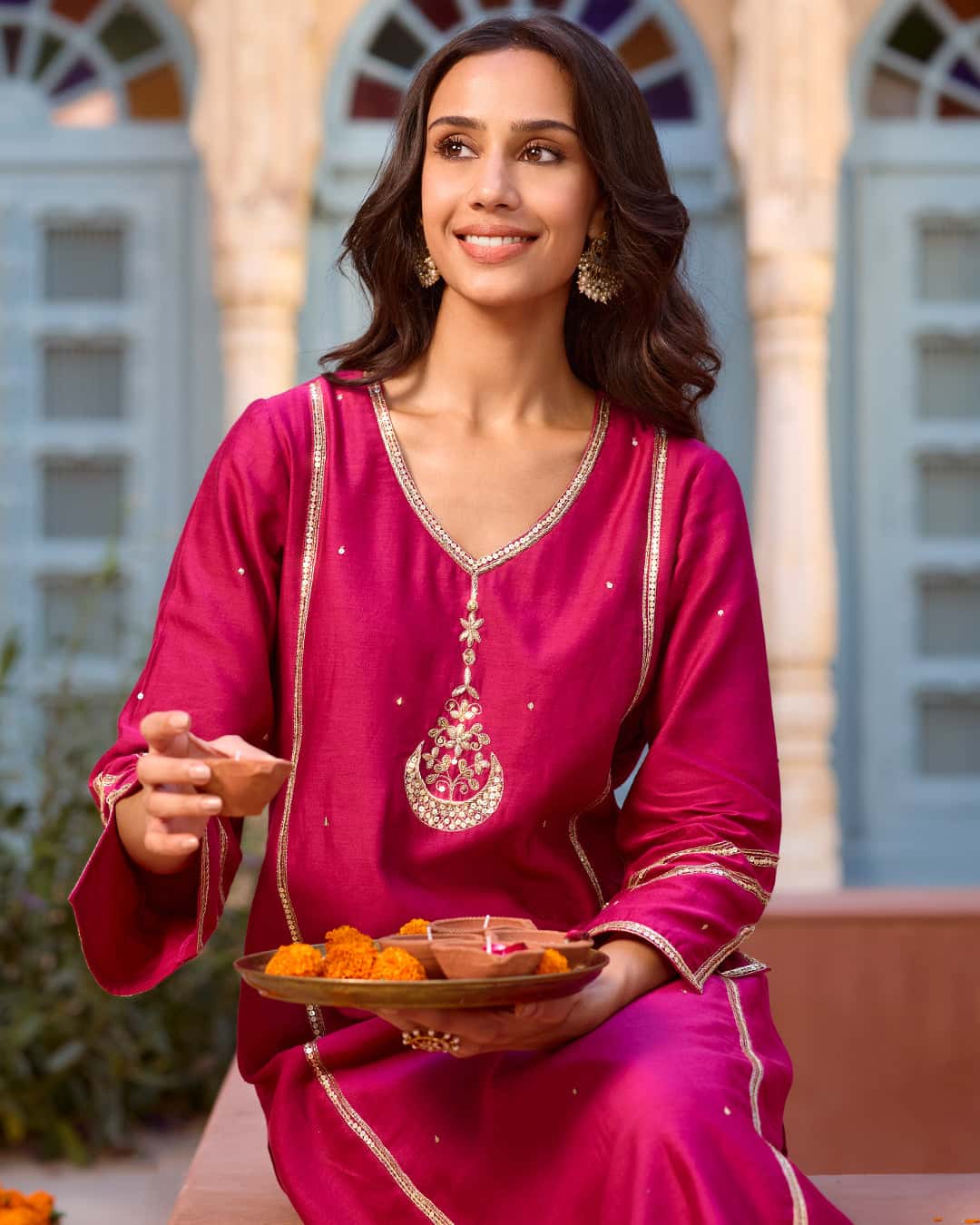
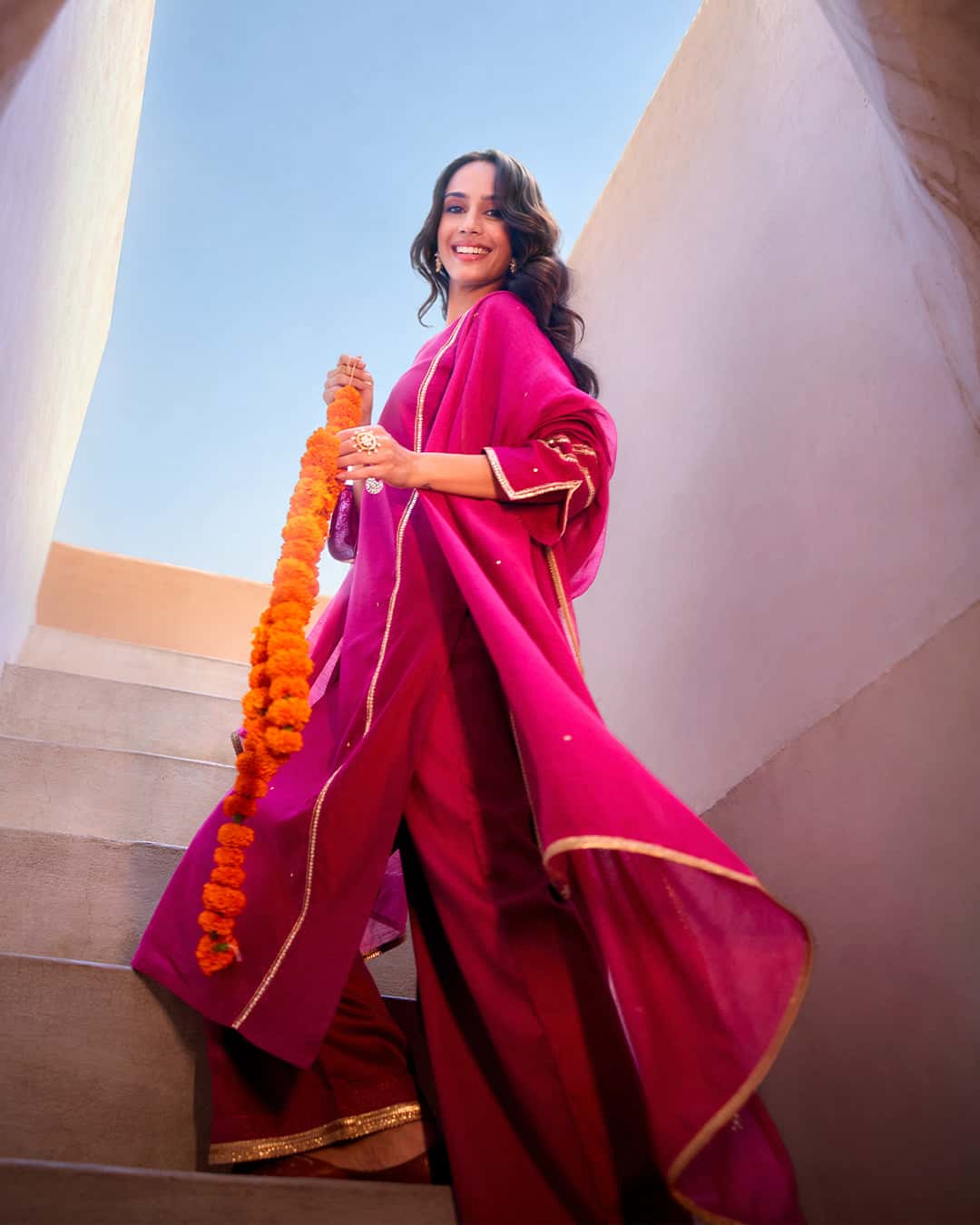
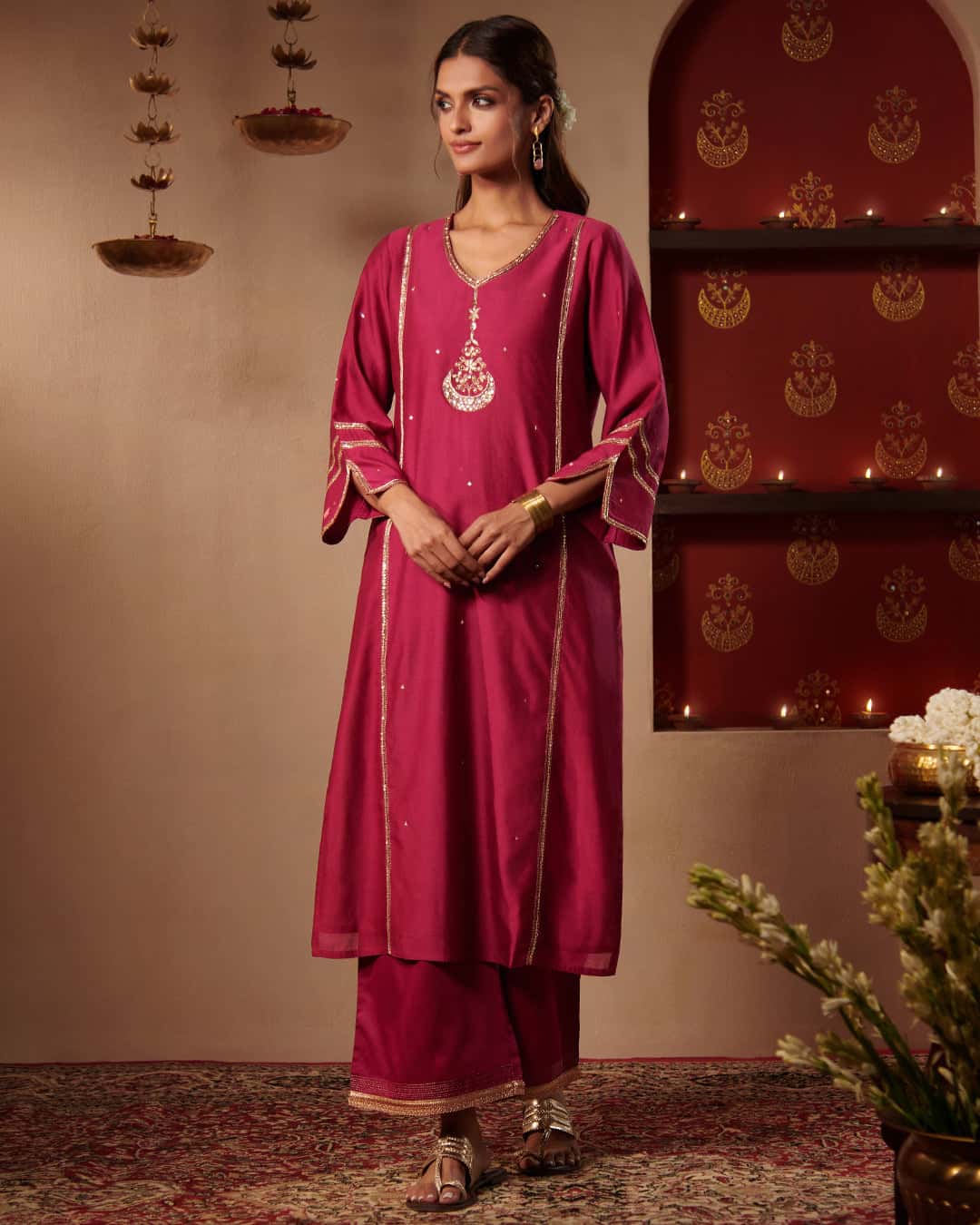
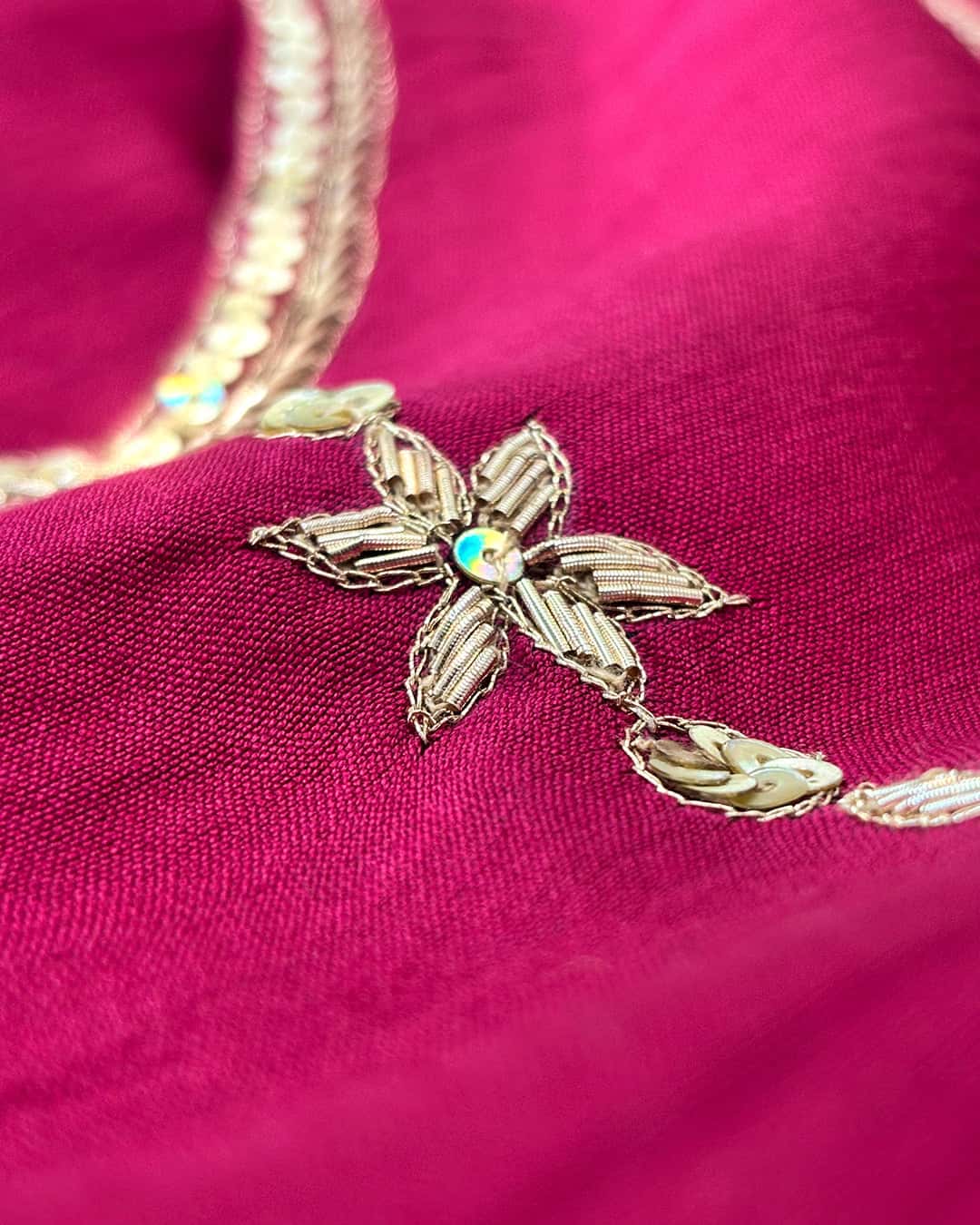
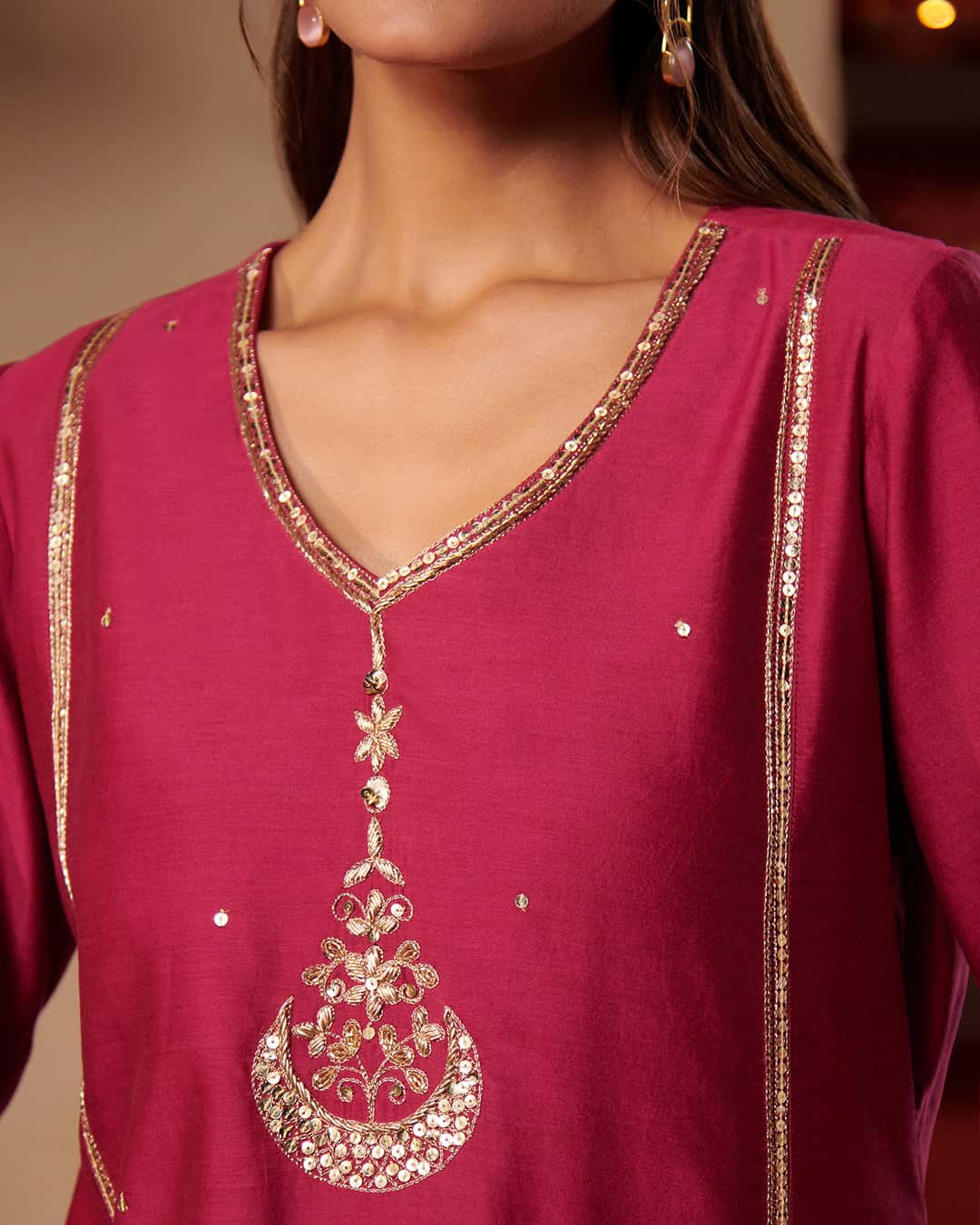
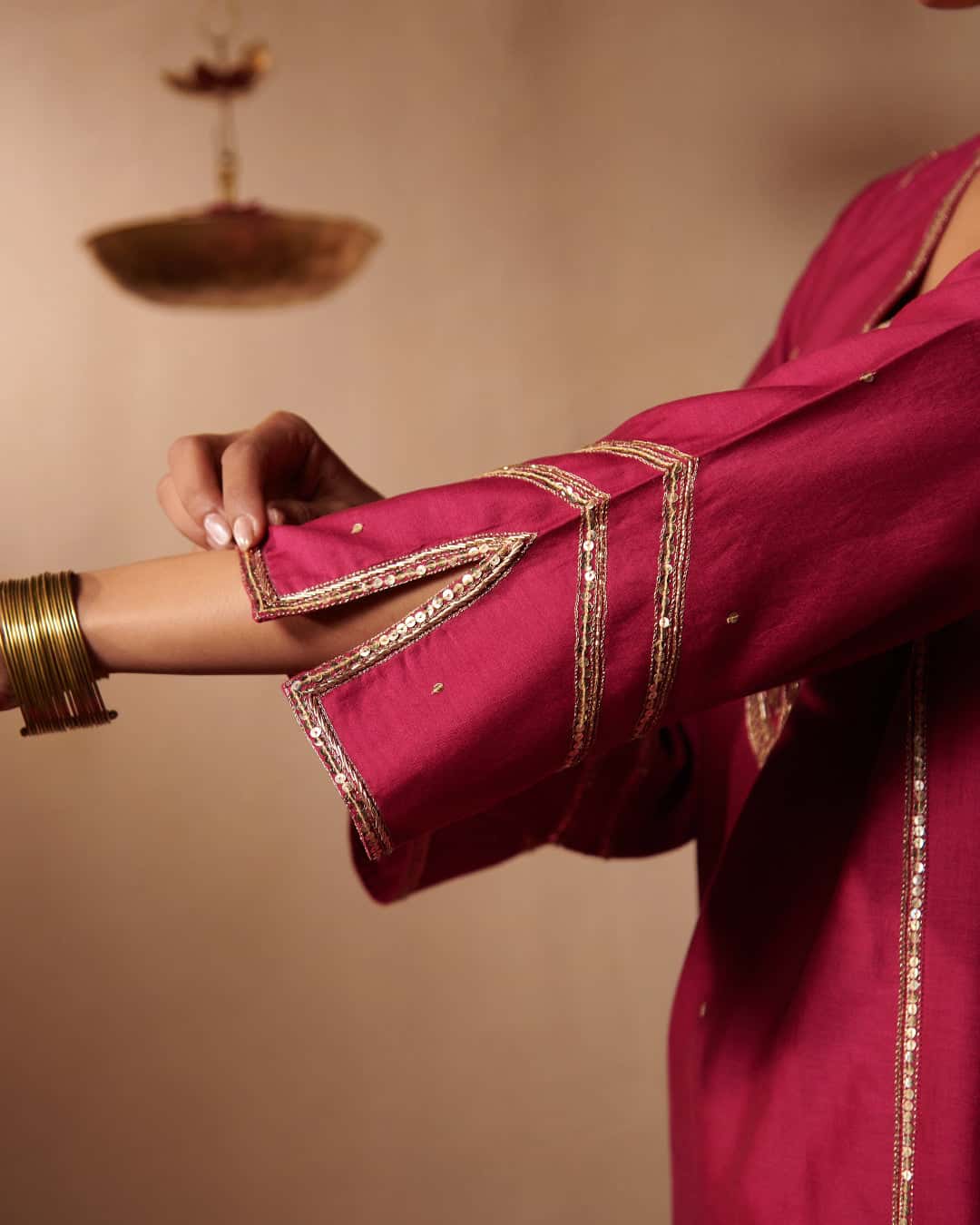
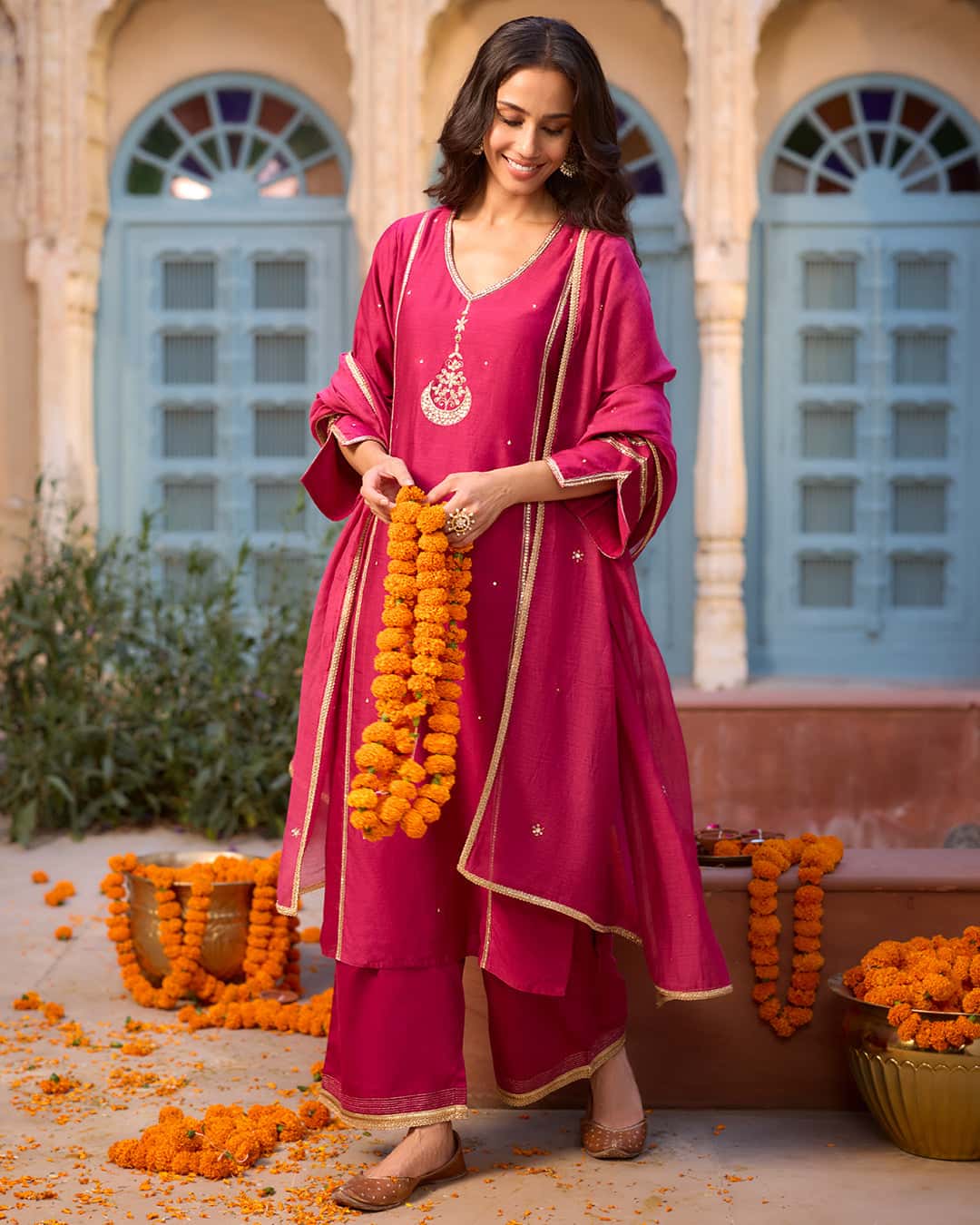
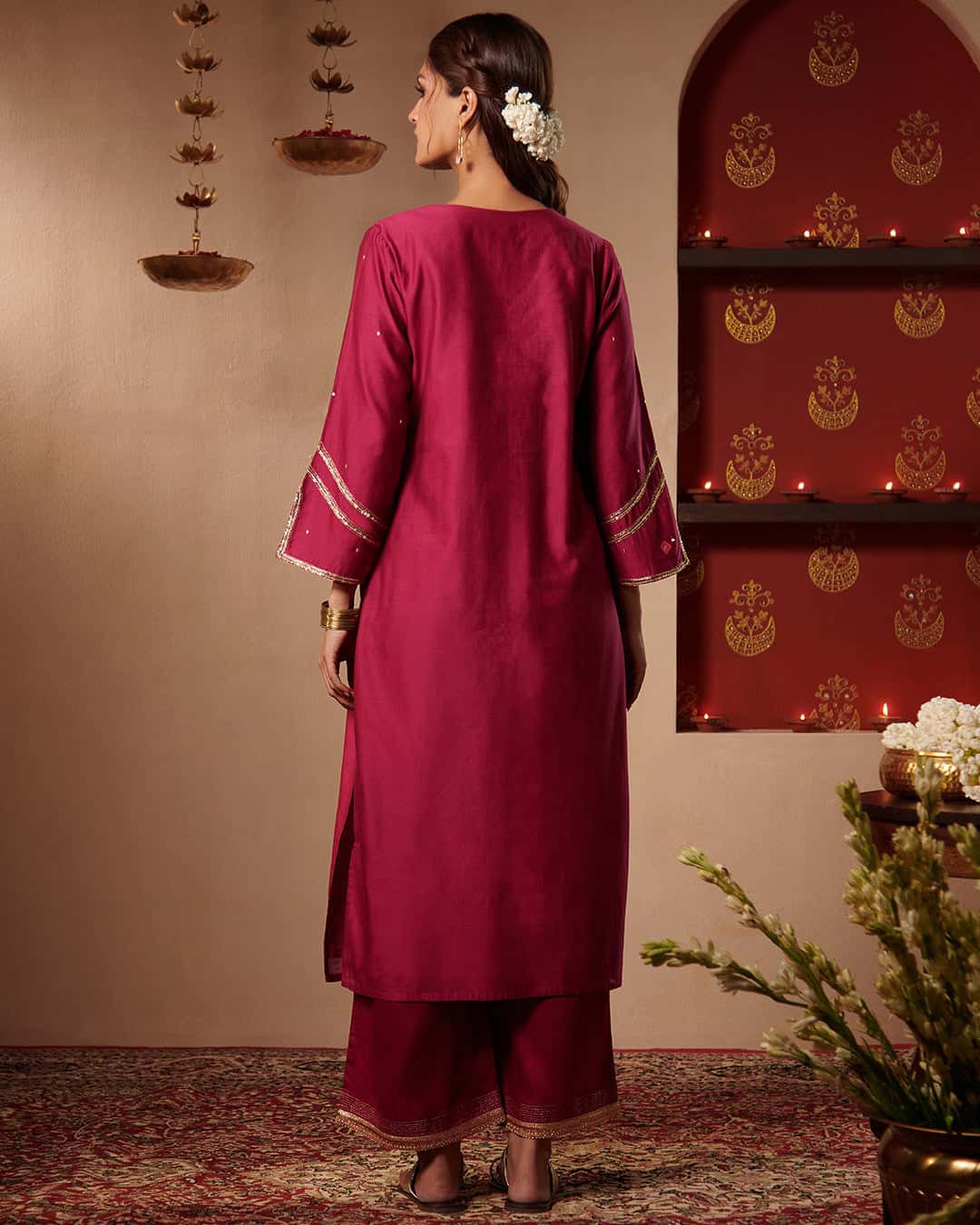
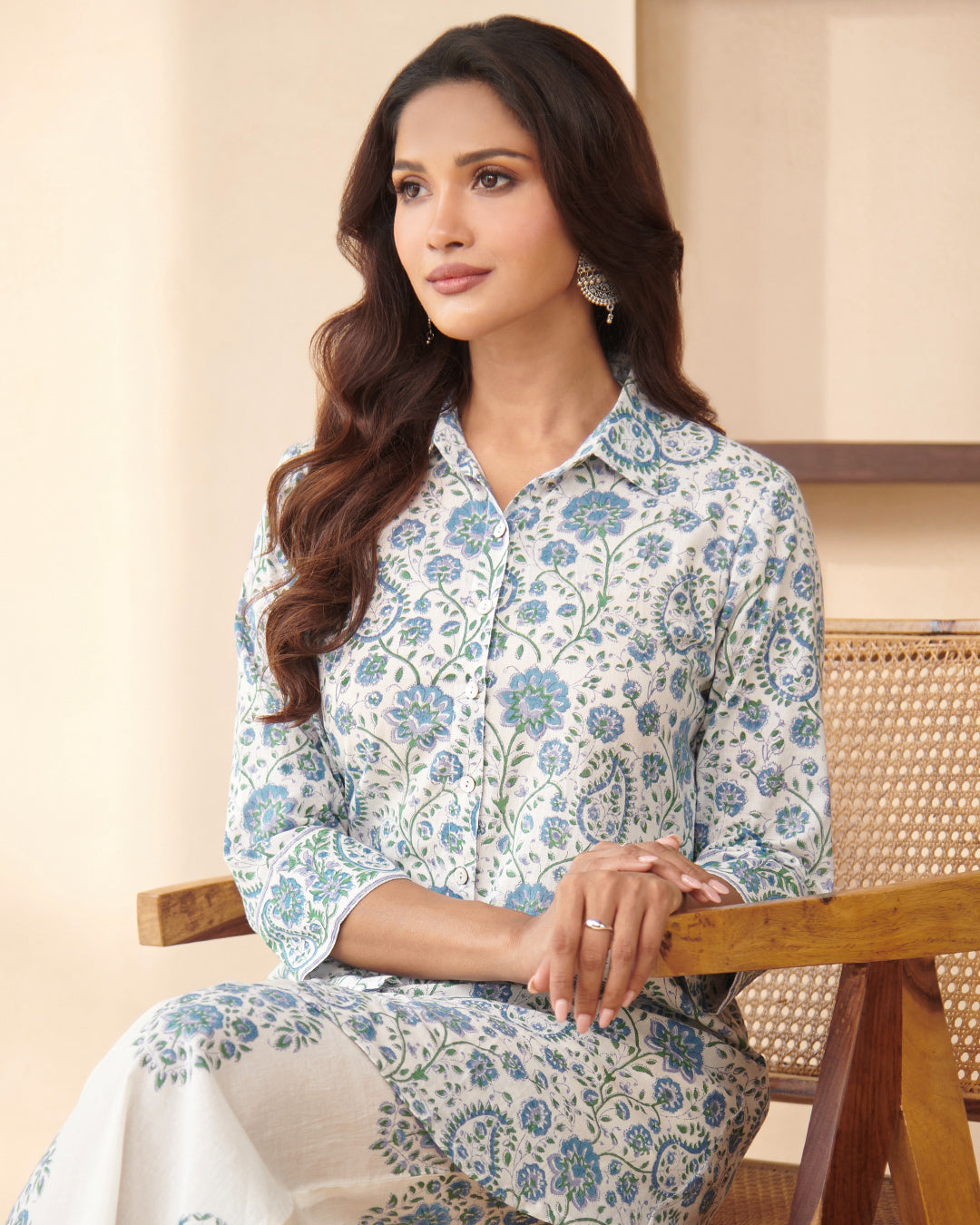
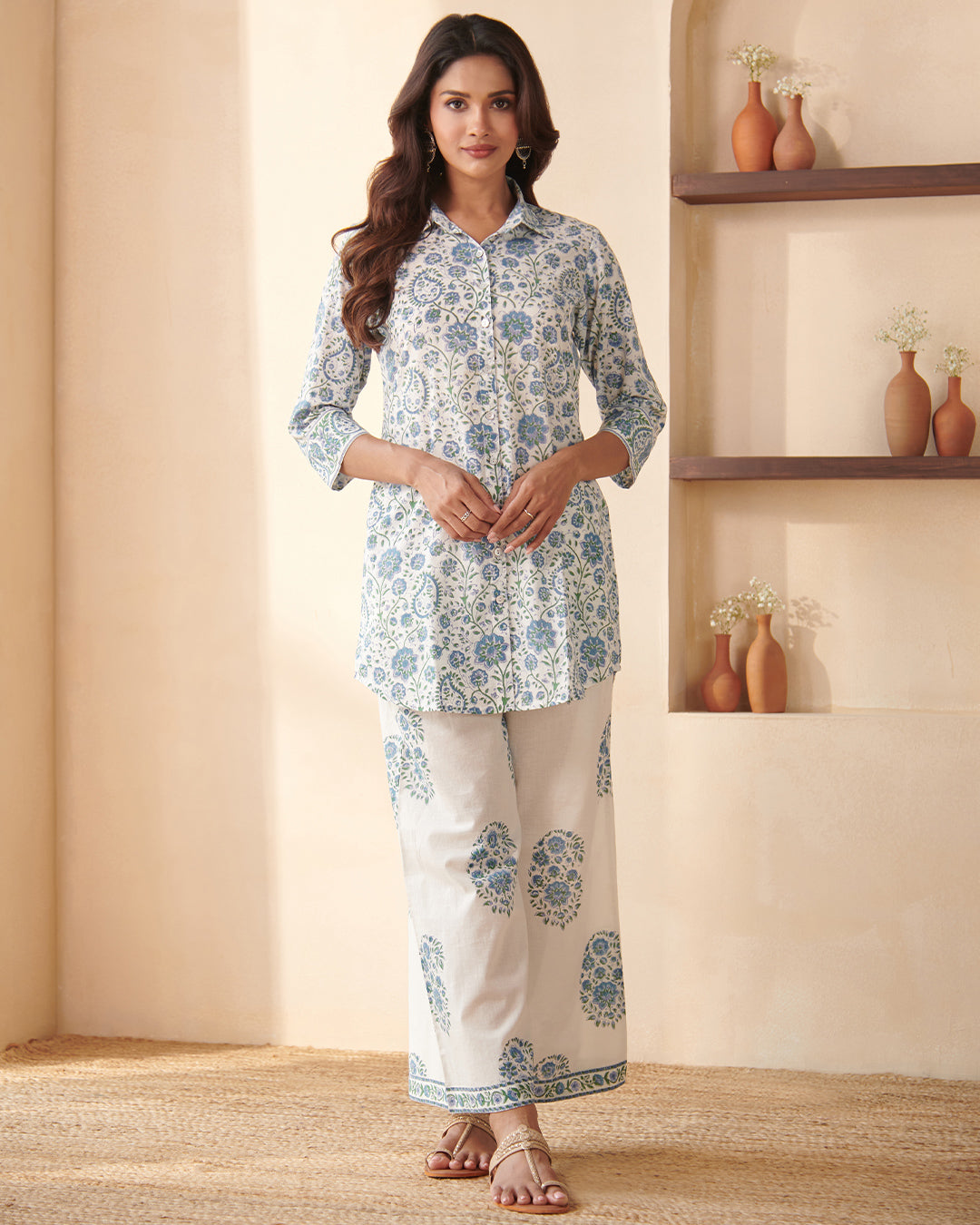
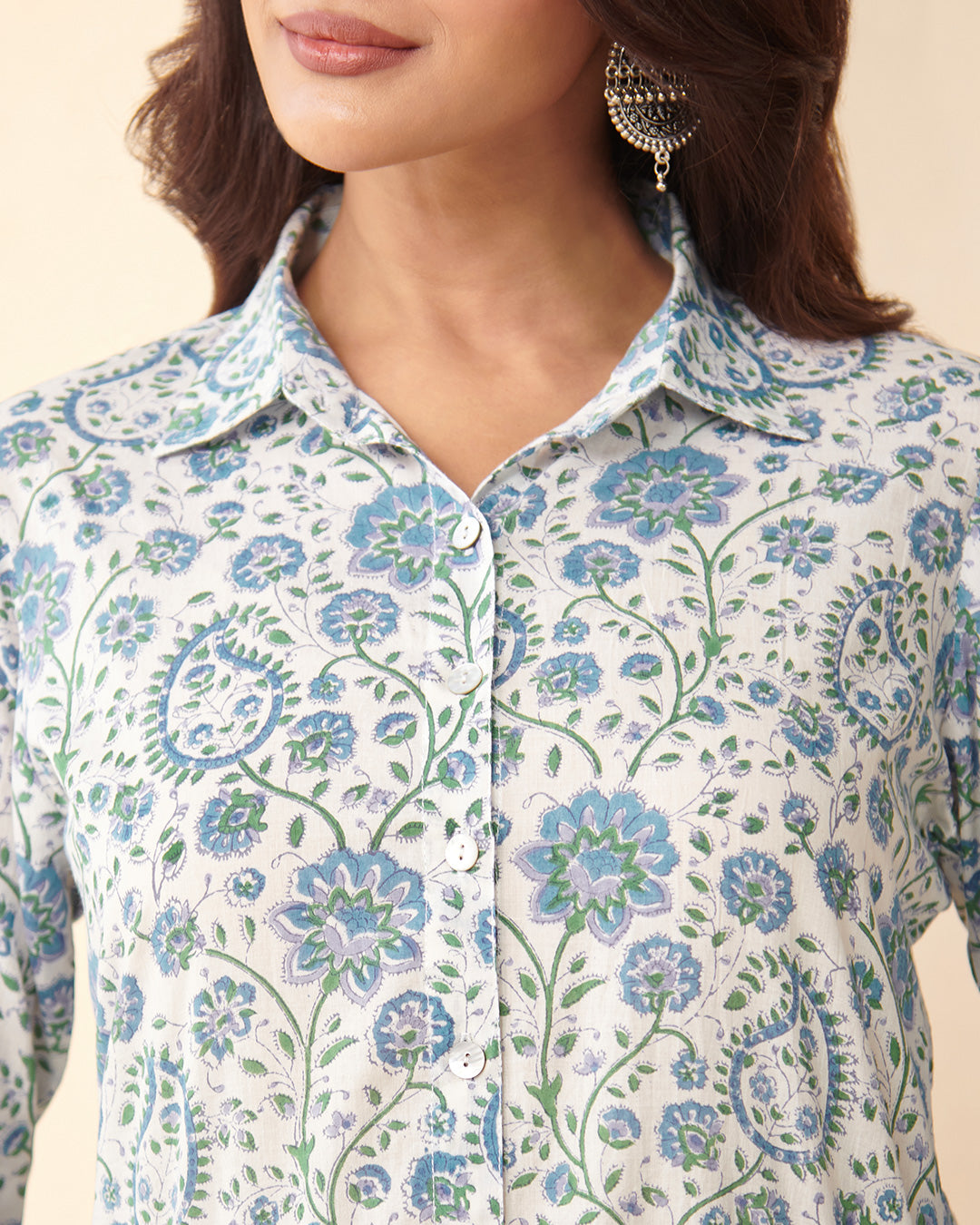
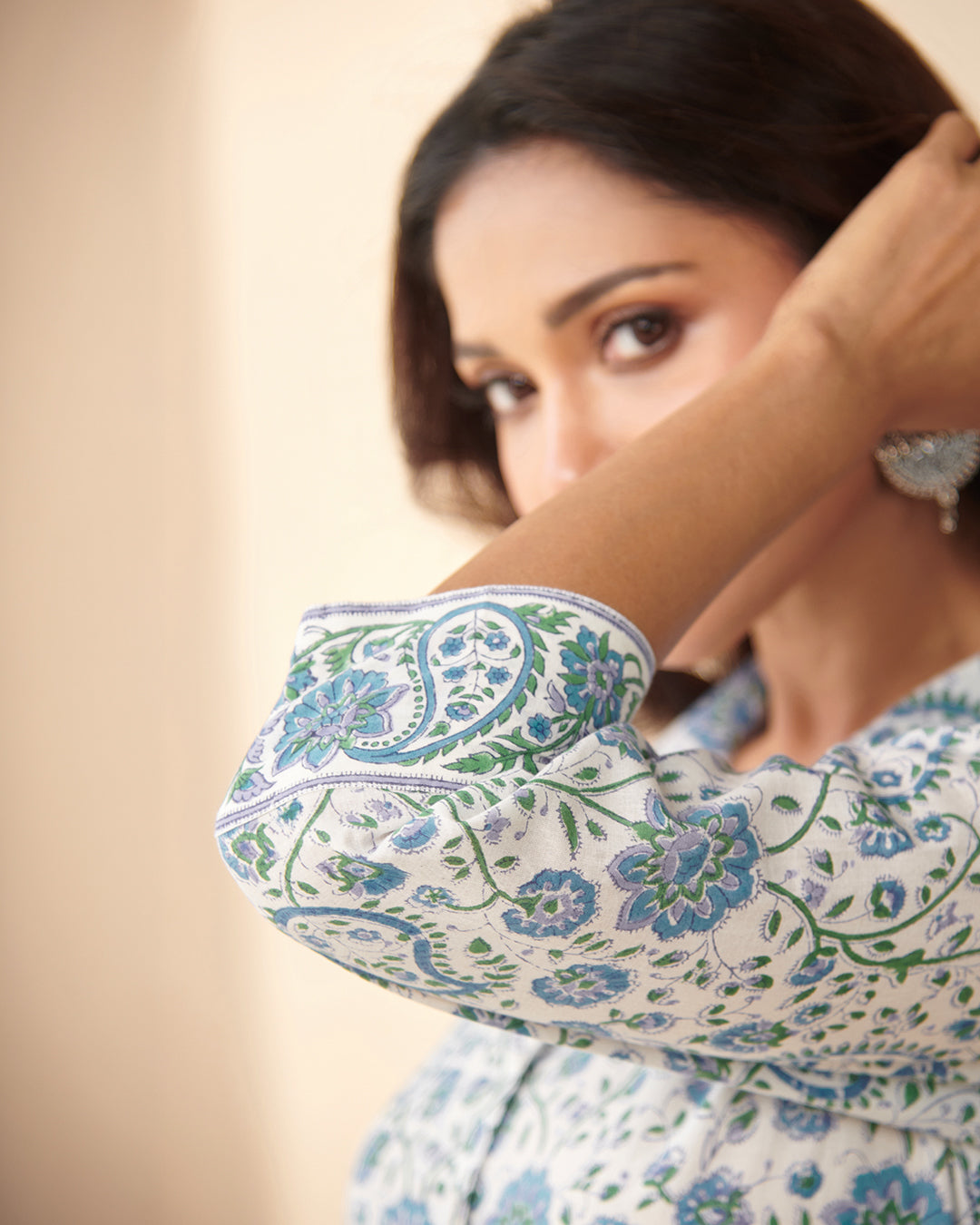
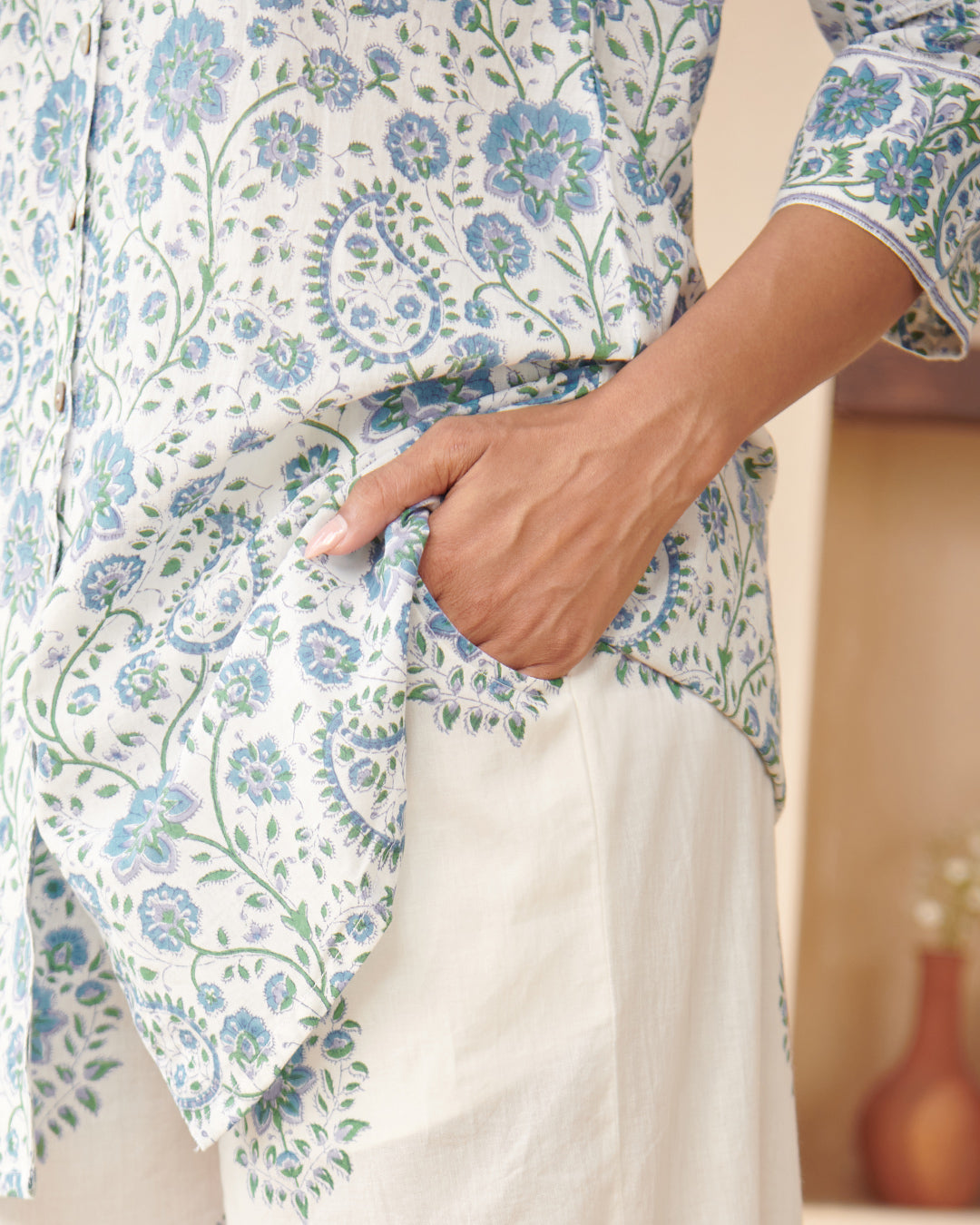
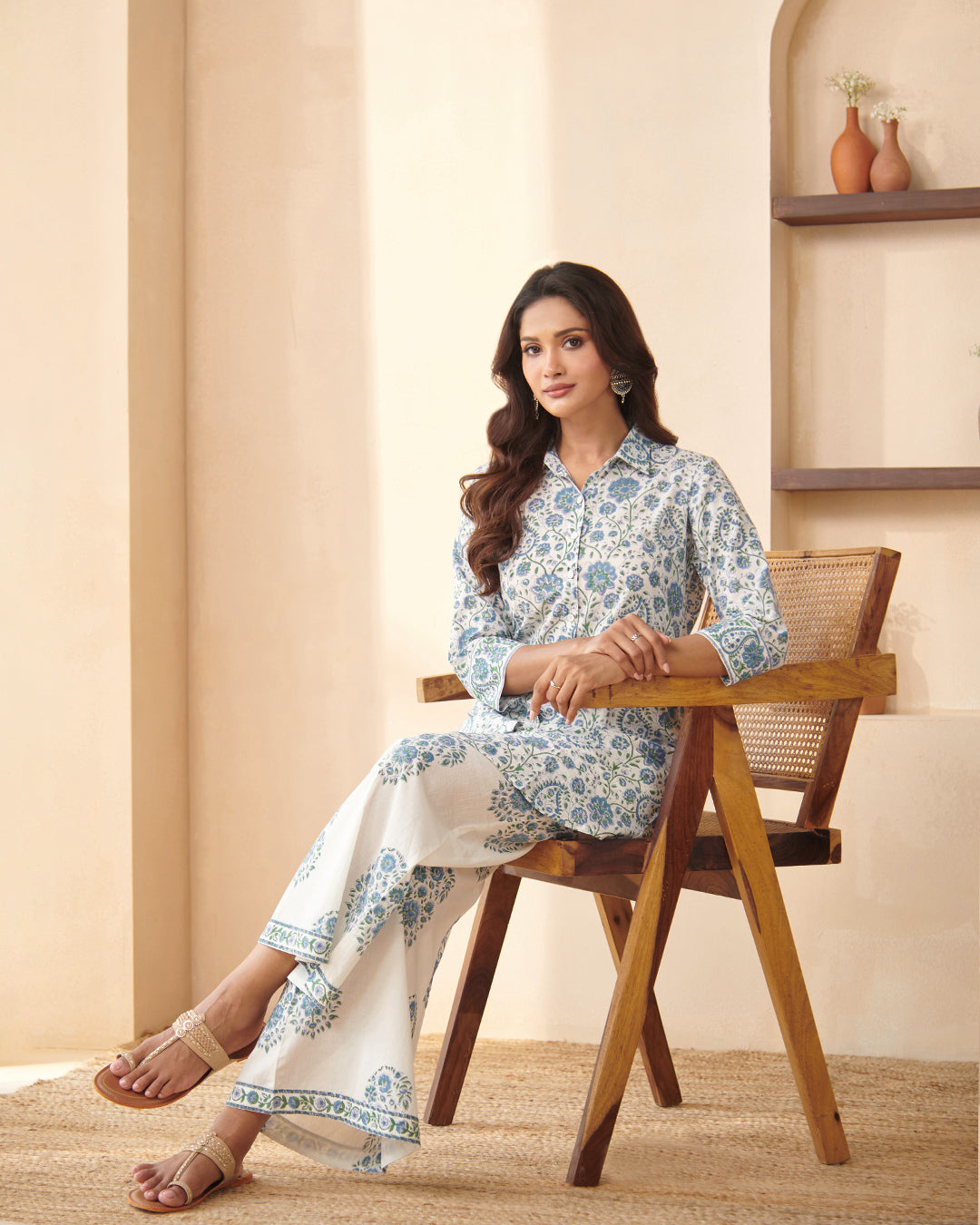
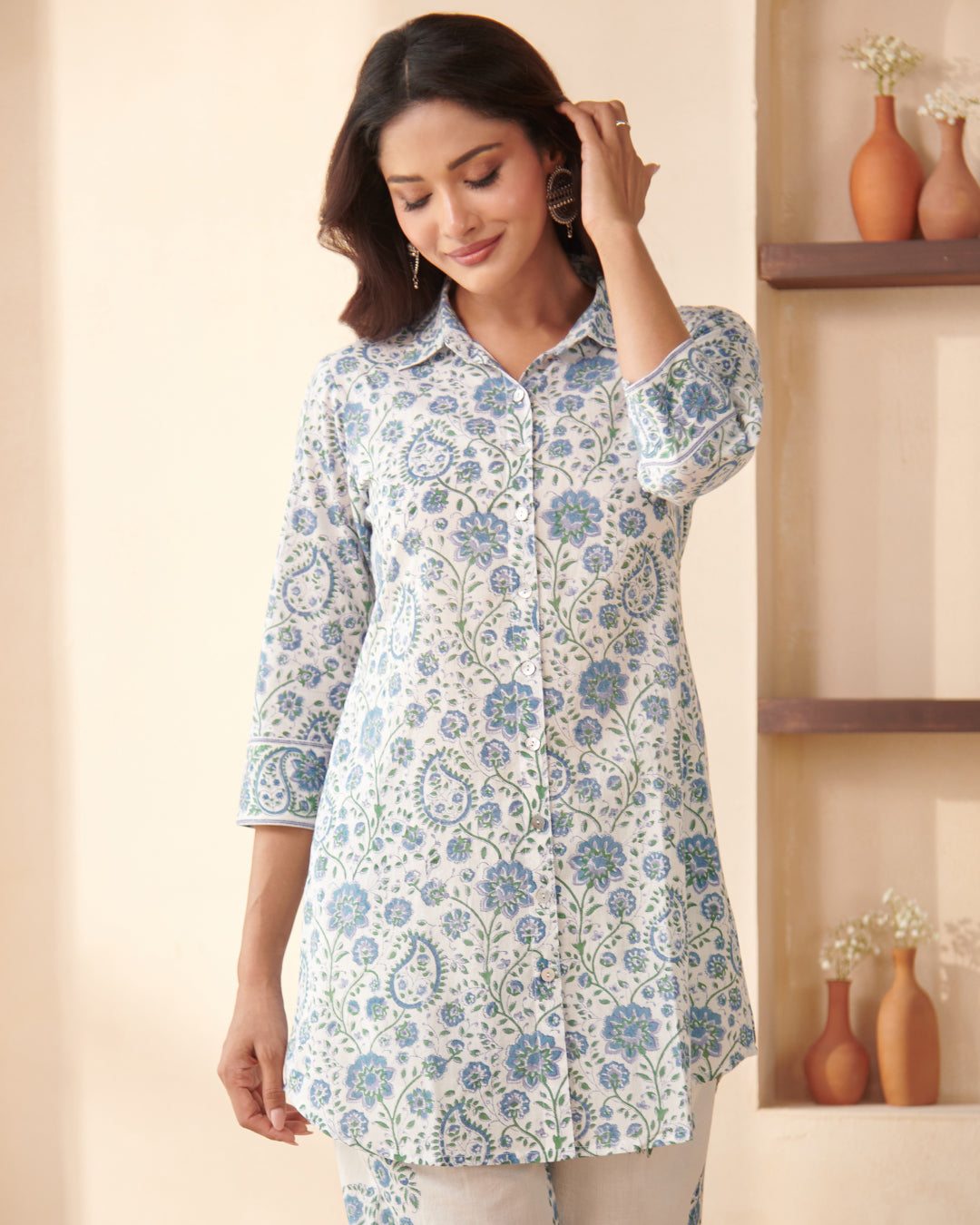
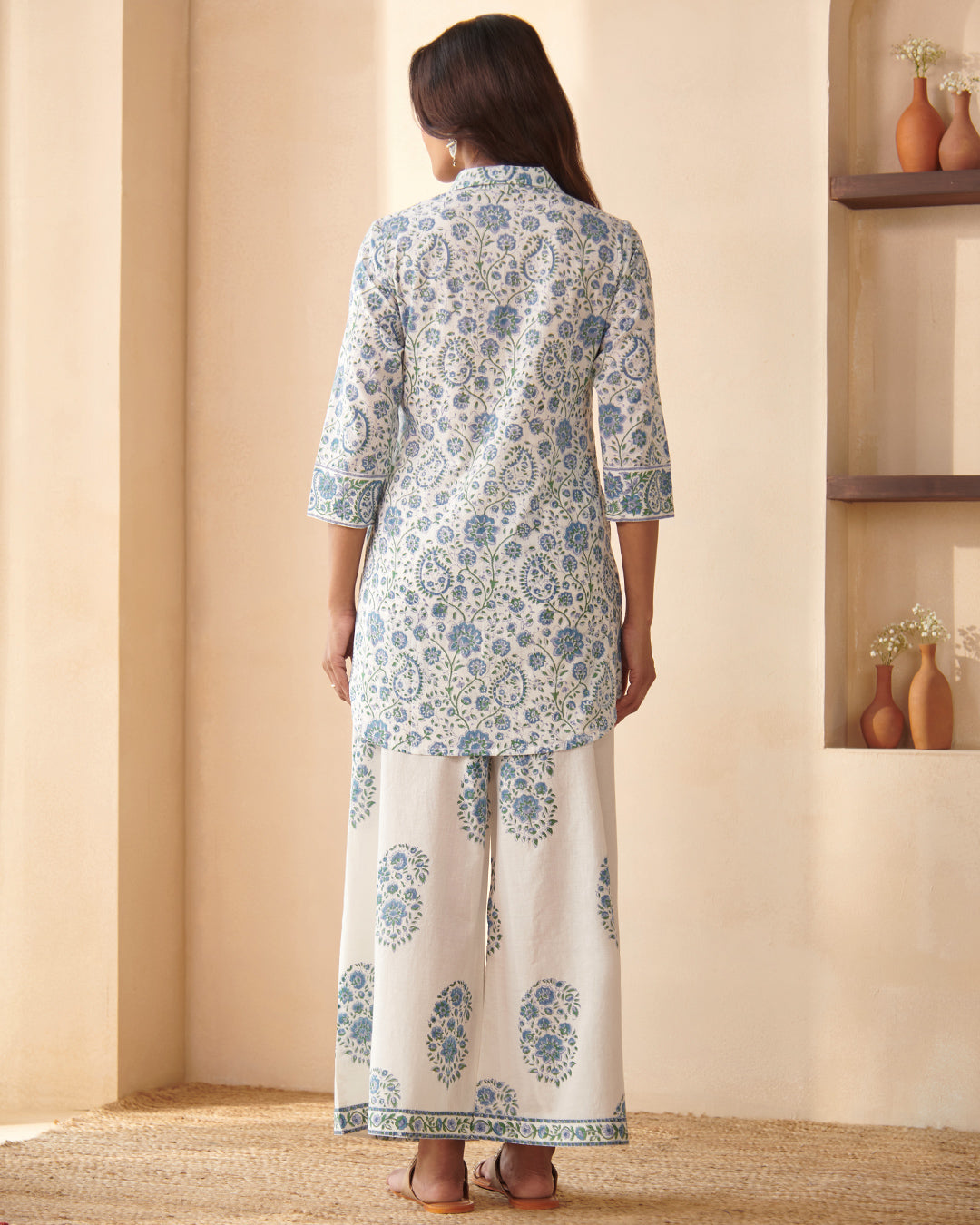
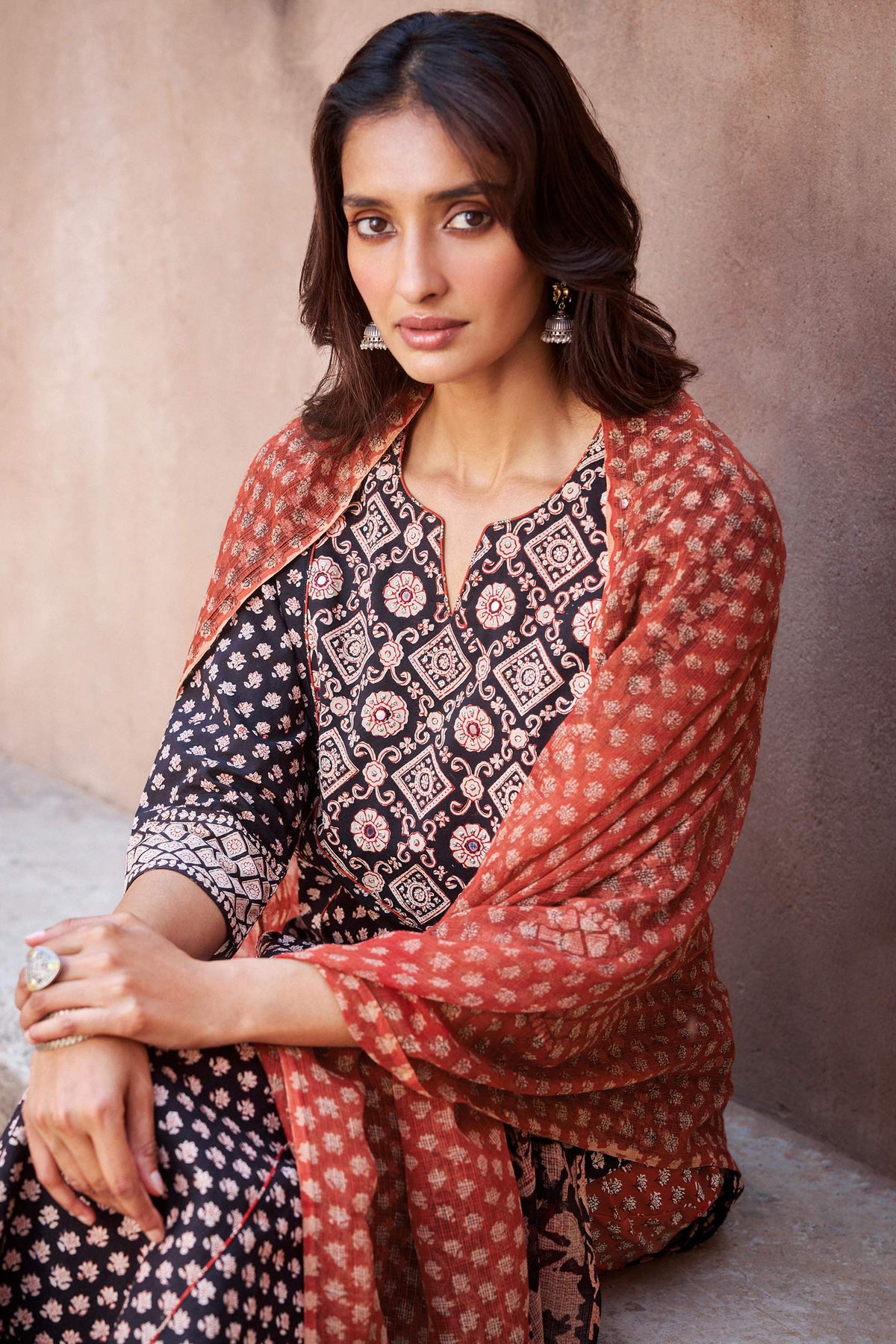
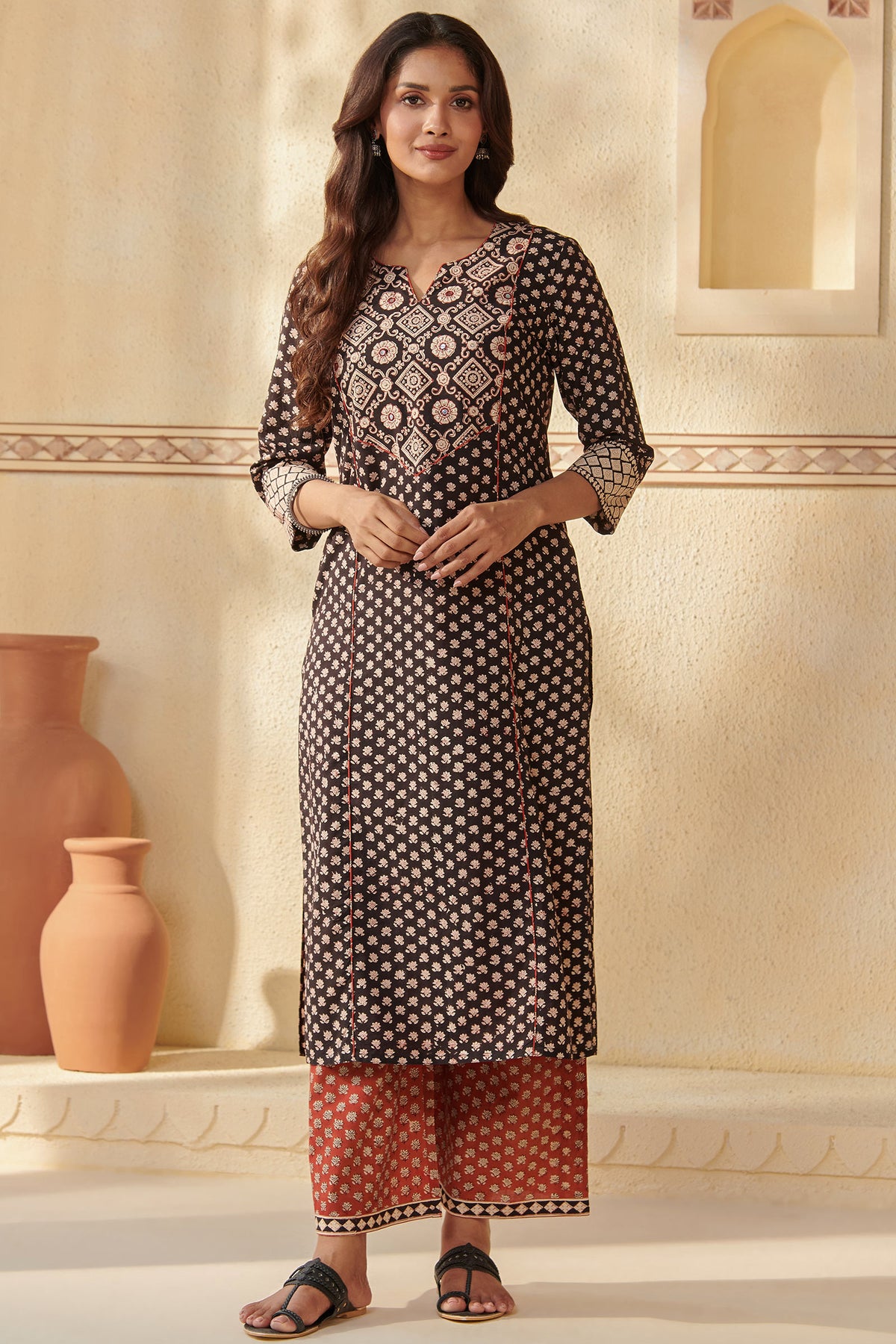
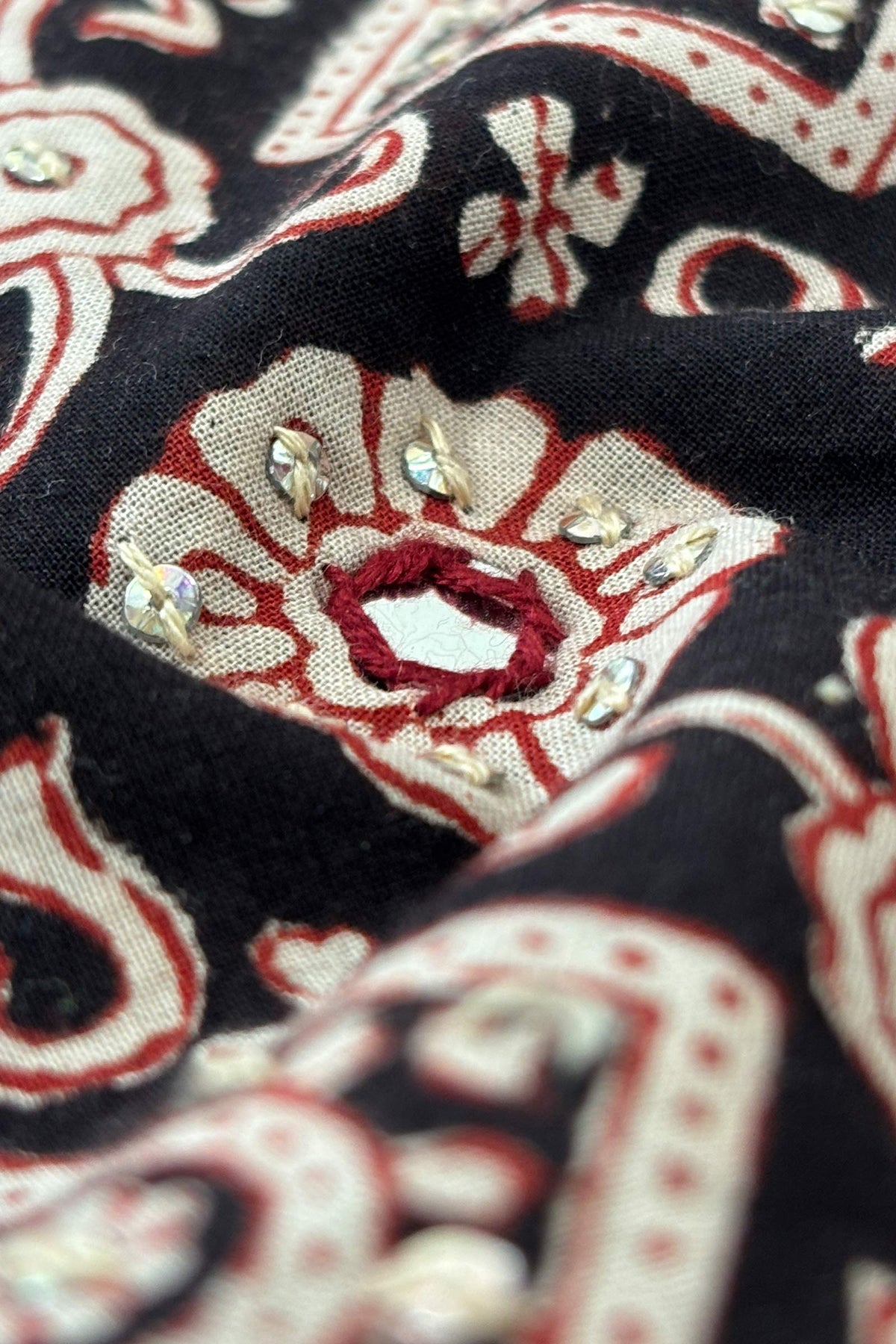
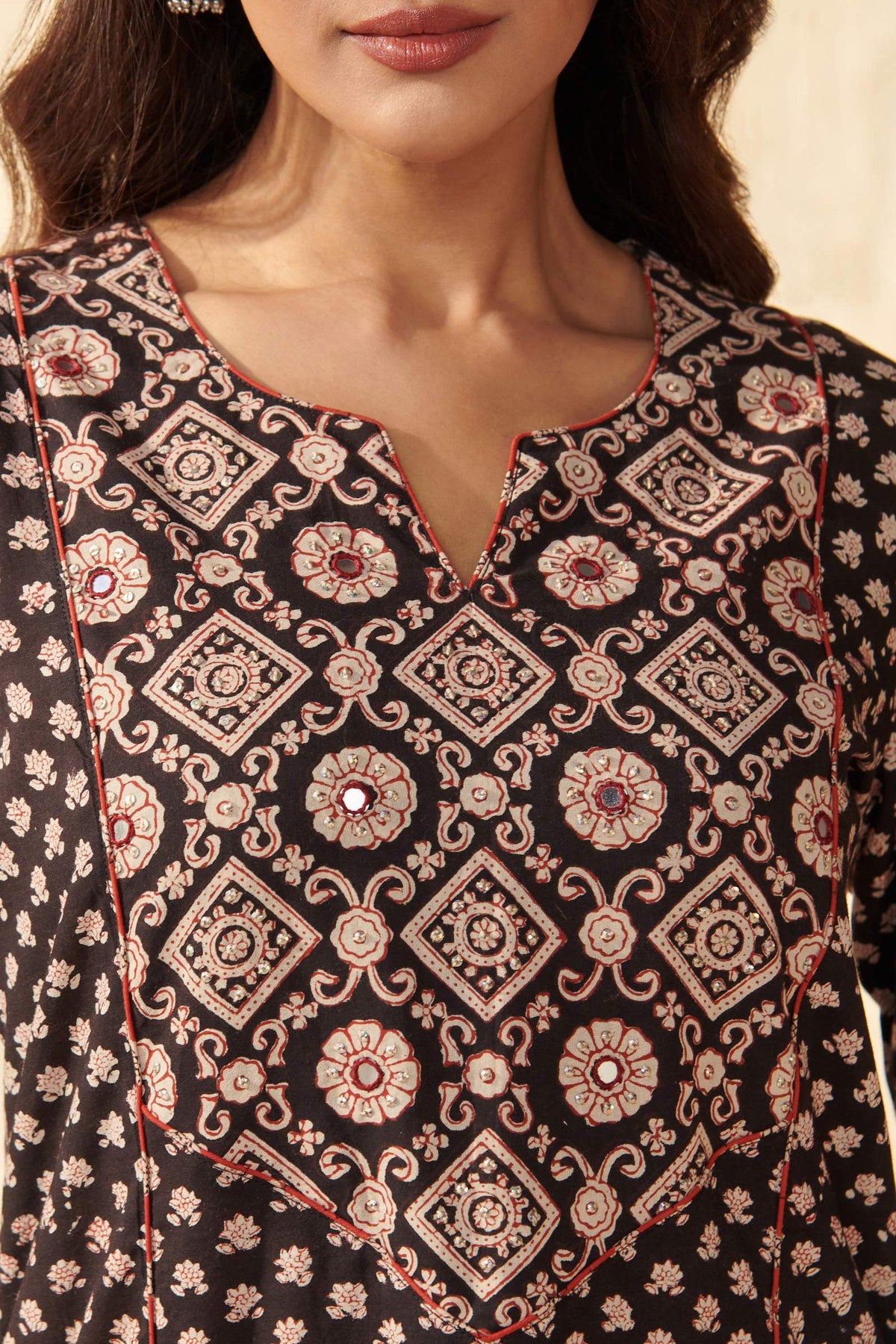
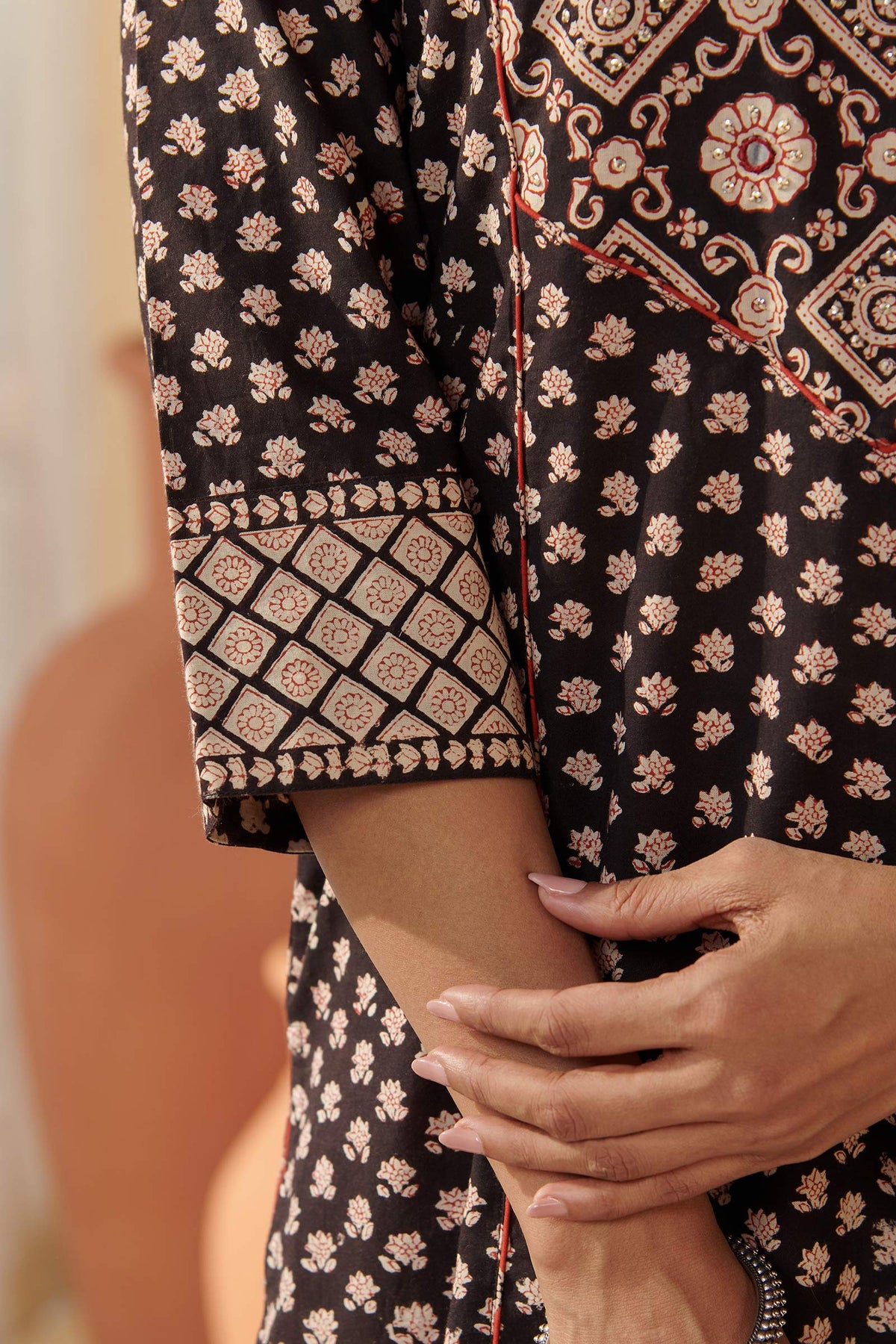
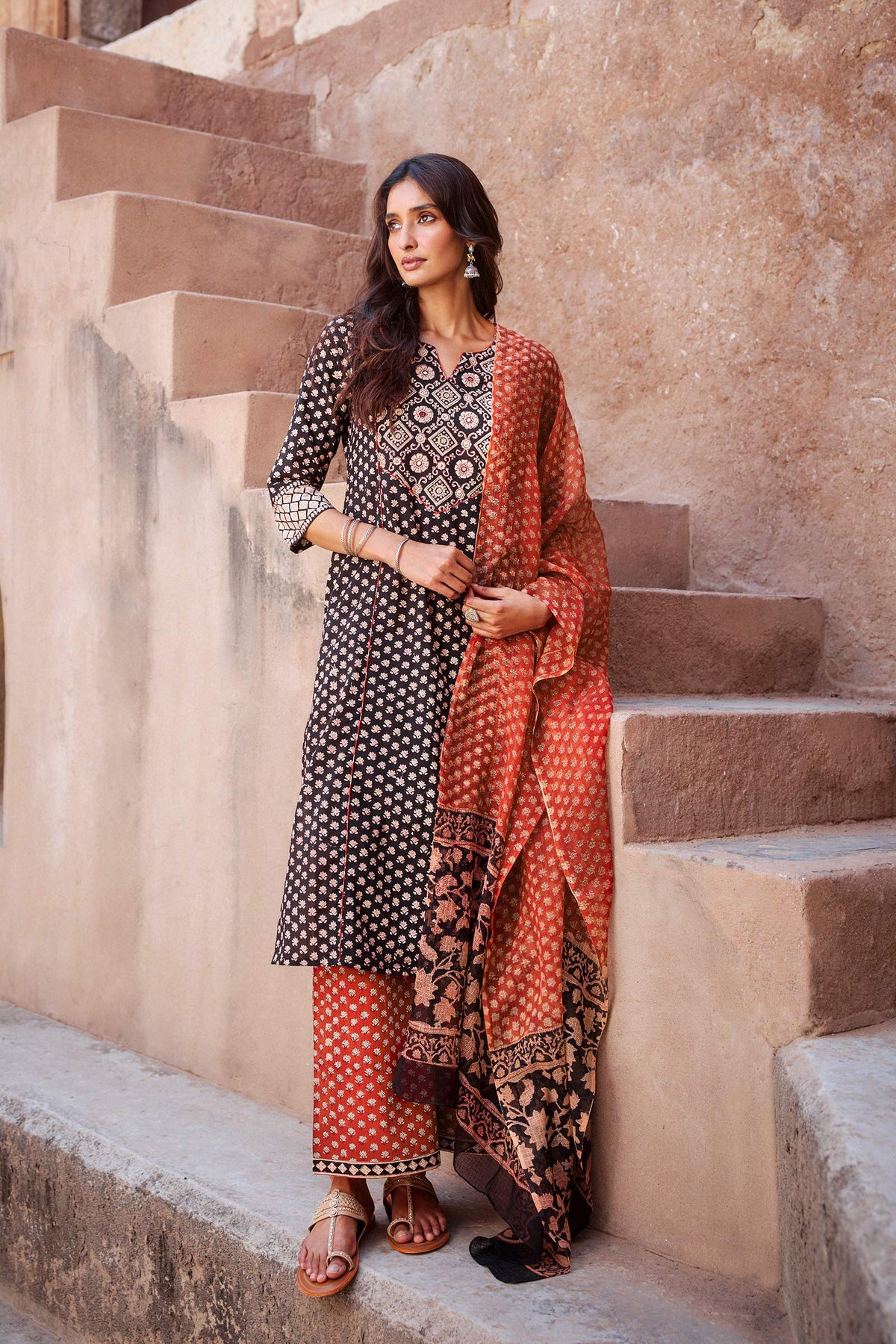

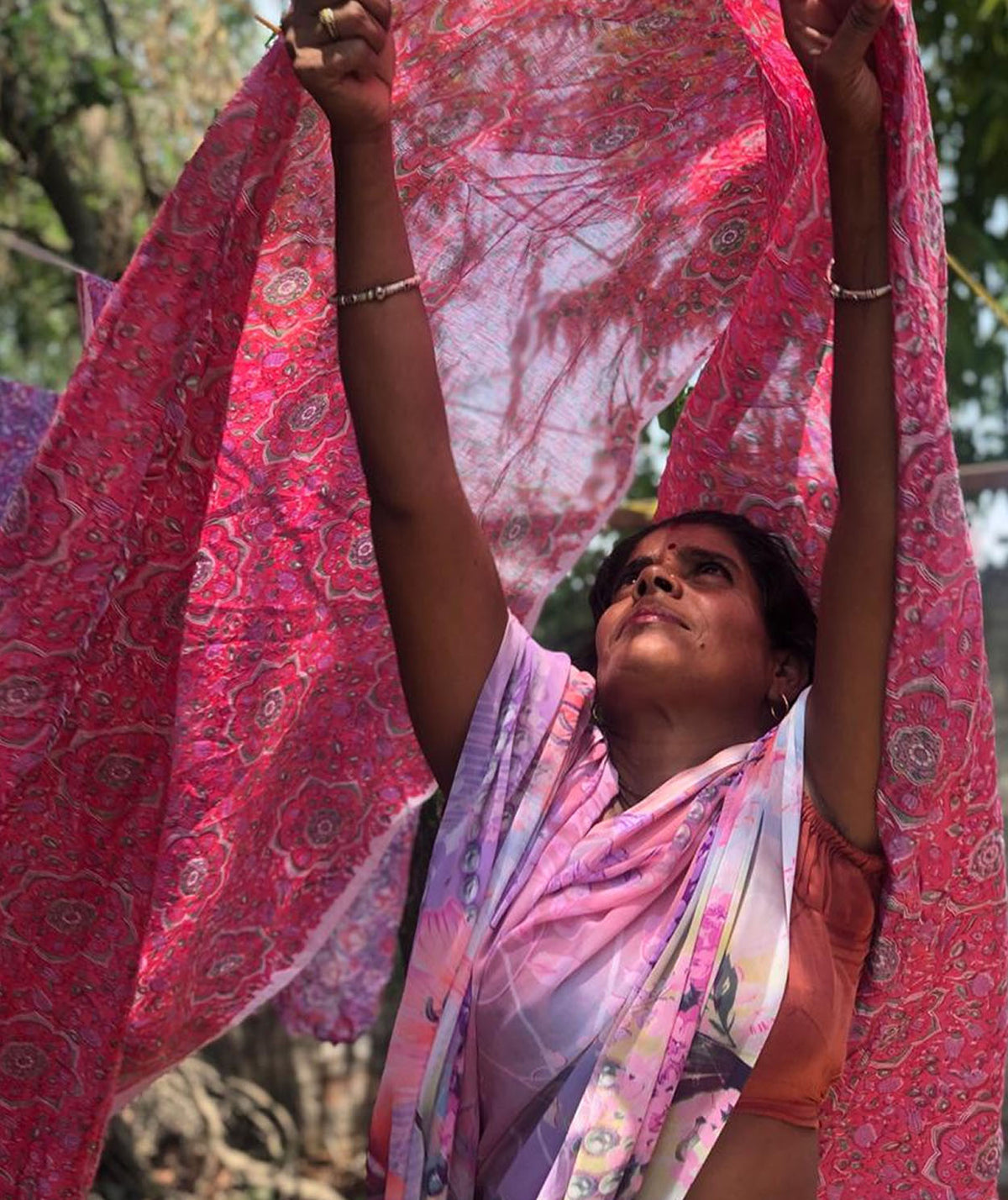
There is something deeply familiar about a hand-block print kurta. The touch of cotton against the skin. The slight irregularity in the motif. The way the print feels alive rather than placed.
For many of us, these kurtas were never trends. They were part of growing up. Worn by our mothers in the morning rush, by our grandmothers during slow afternoons, by us as we stepped into our own rhythm of work and home. A hand-block print kurta carries that continuity. It does not try to impress. It simply belongs.
In a time of fast fashion and fleeting patterns, returning to a piece shaped by human hands feels grounding. It reminds us that clothing can still hold patience, skill, and memory.
What Makes a Hand-Block Printed Kurta Special?

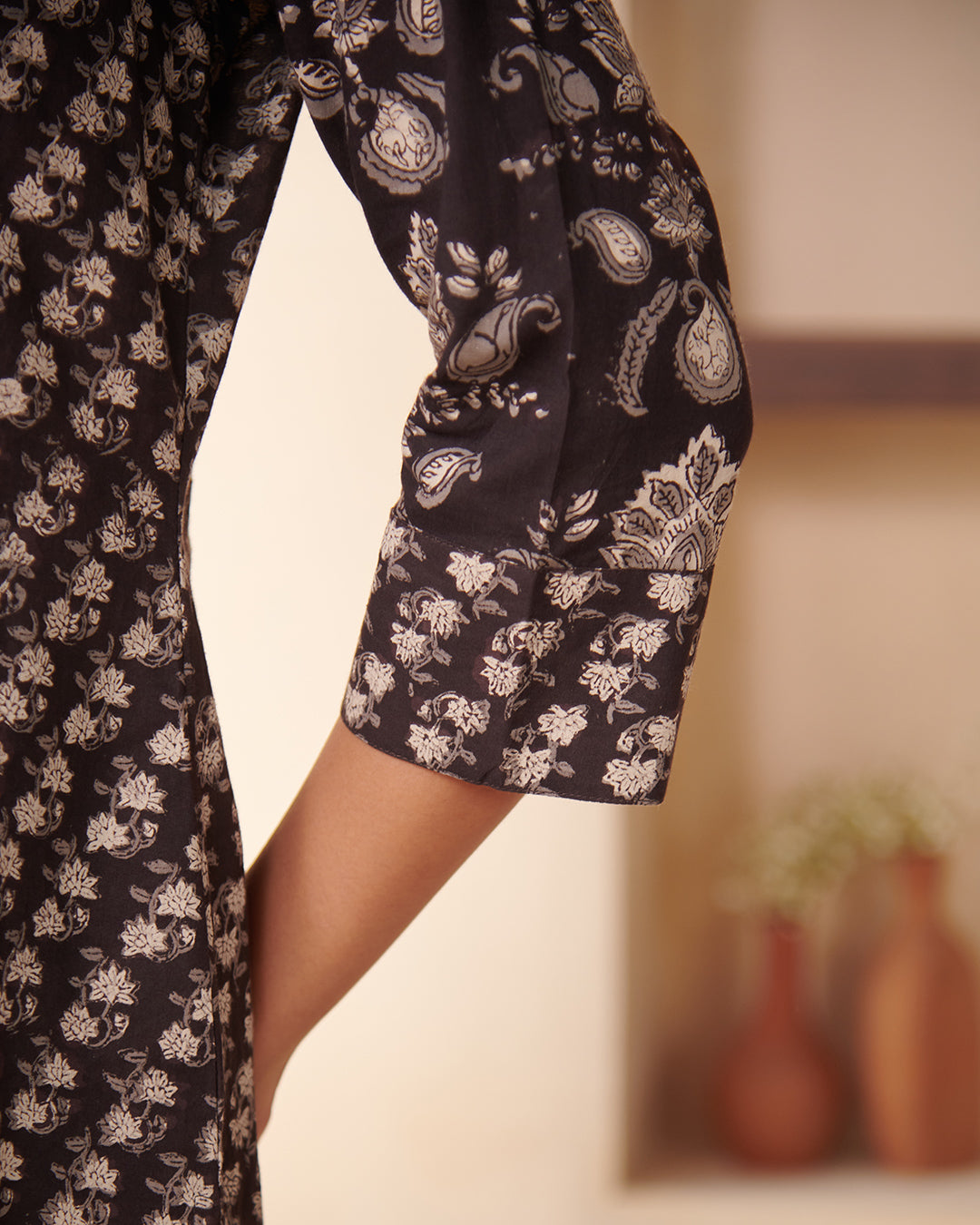
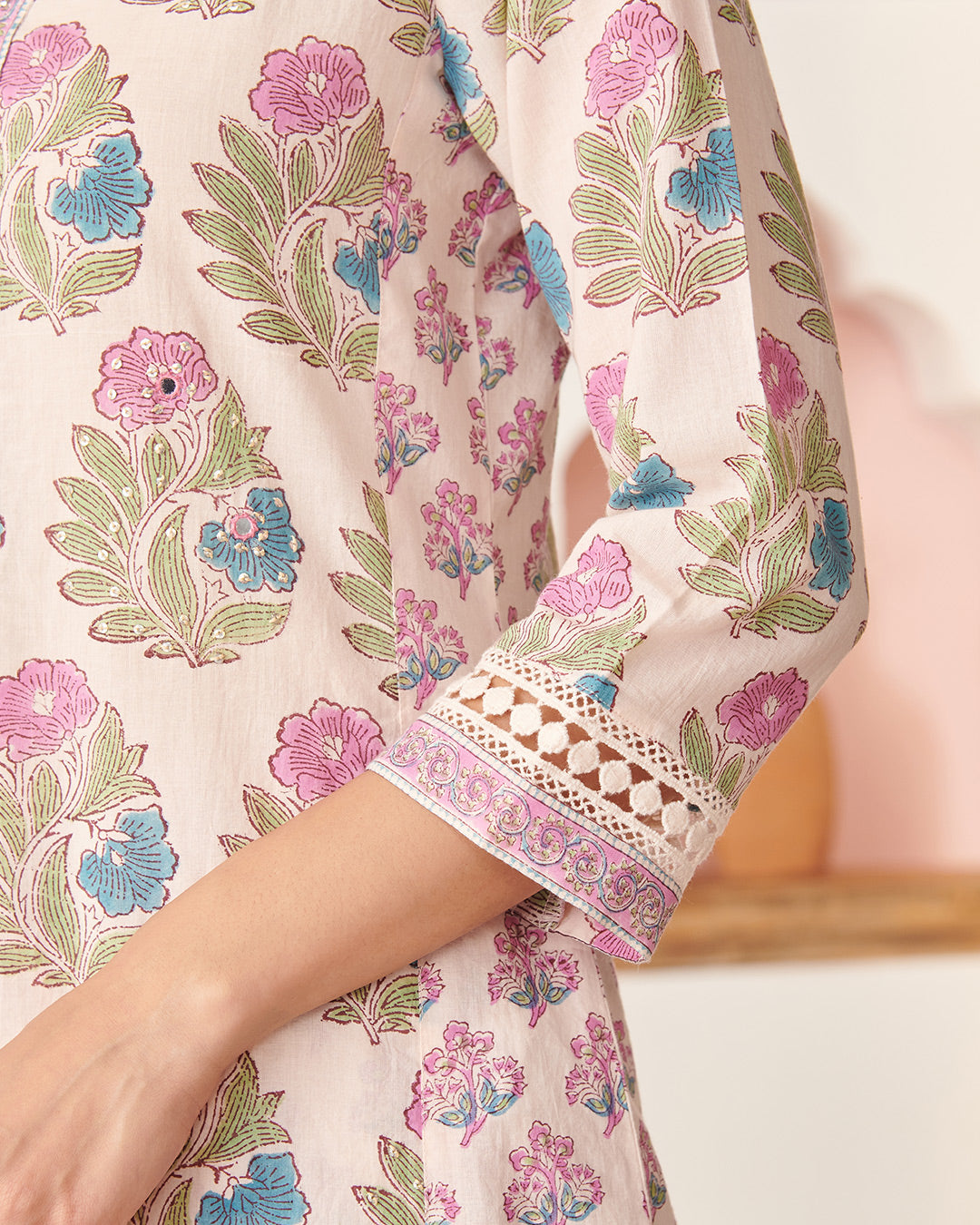
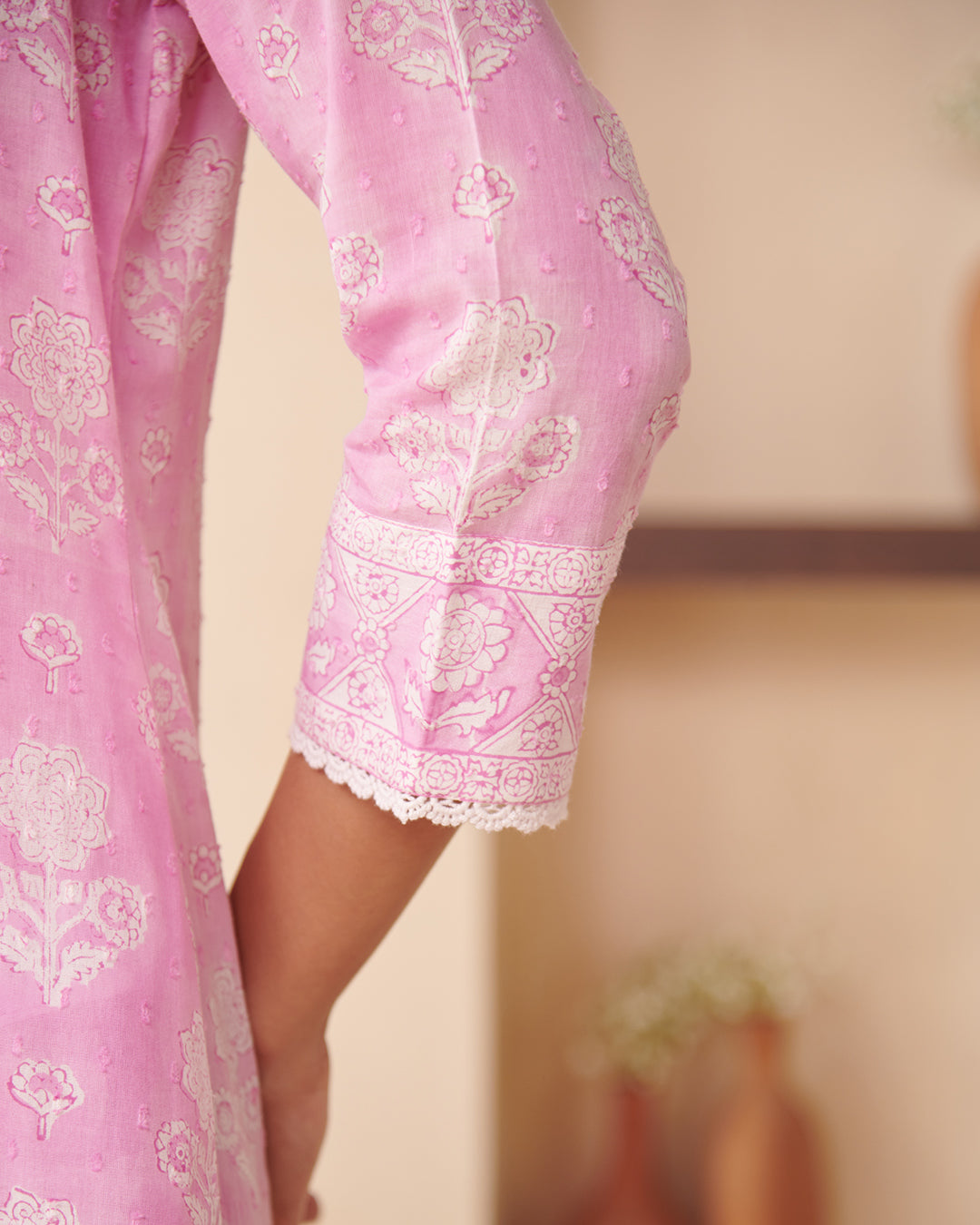
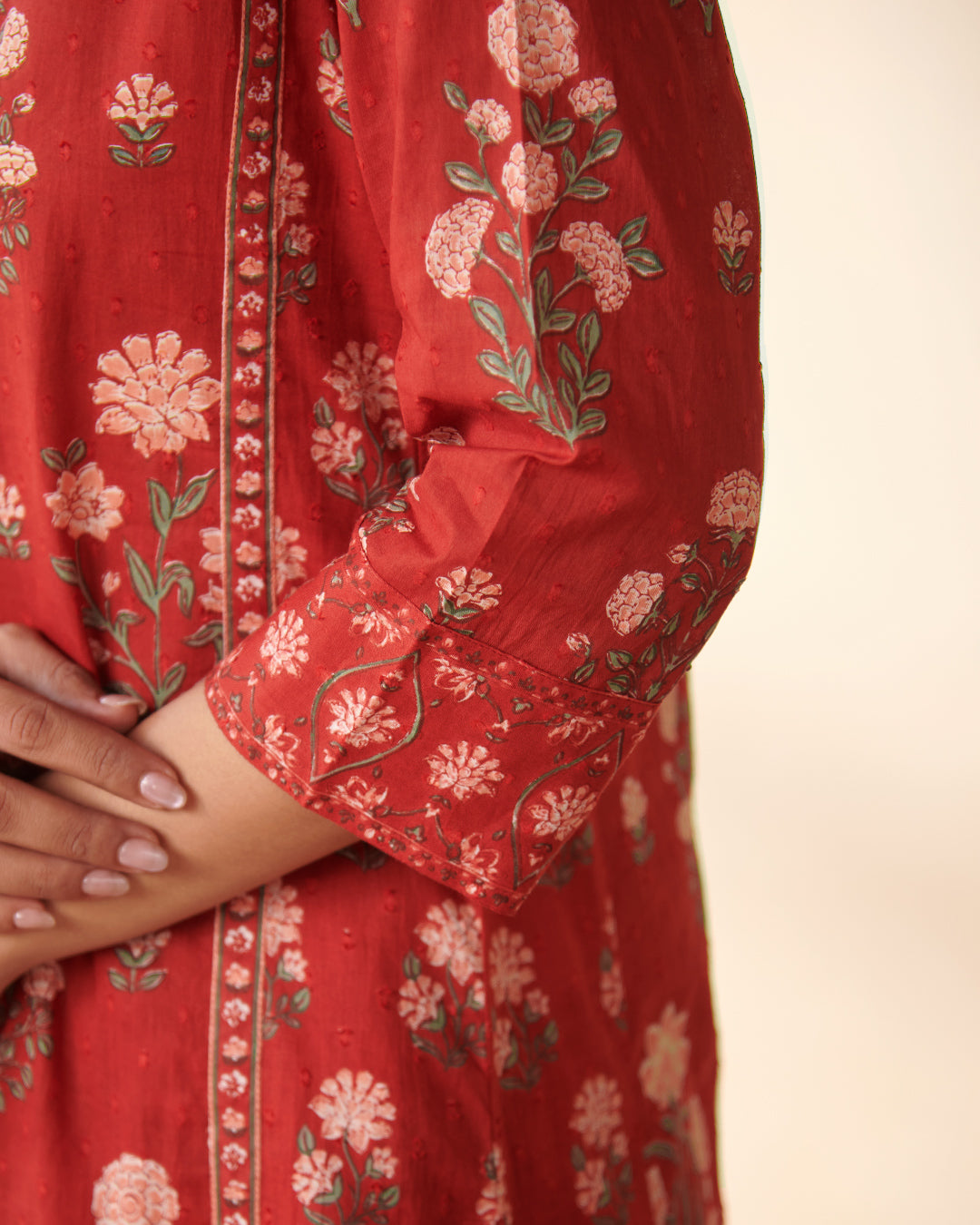
A hand-block printed kurta is not defined by loud design. Its beauty lies in the process. In the pause between each stamped motif. In the skilled hands that align wood and fabric with quiet concentration.
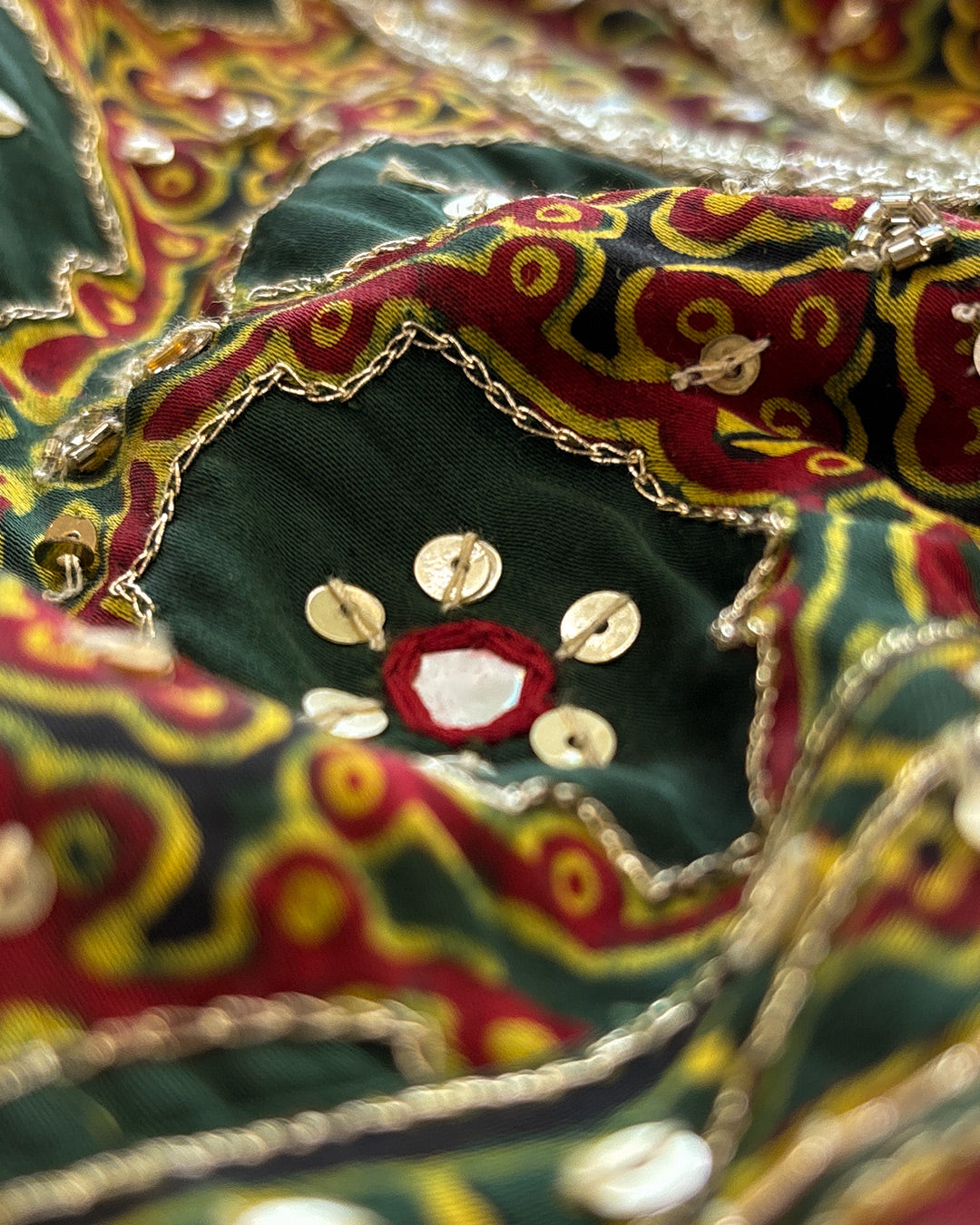
Each piece reflects the rhythm of craft. No two prints are ever perfectly identical, and that is precisely the point. The slight variations are not flaws. They are proof that someone stood over the fabric, guiding it.
The Art of Hand-Block Printing
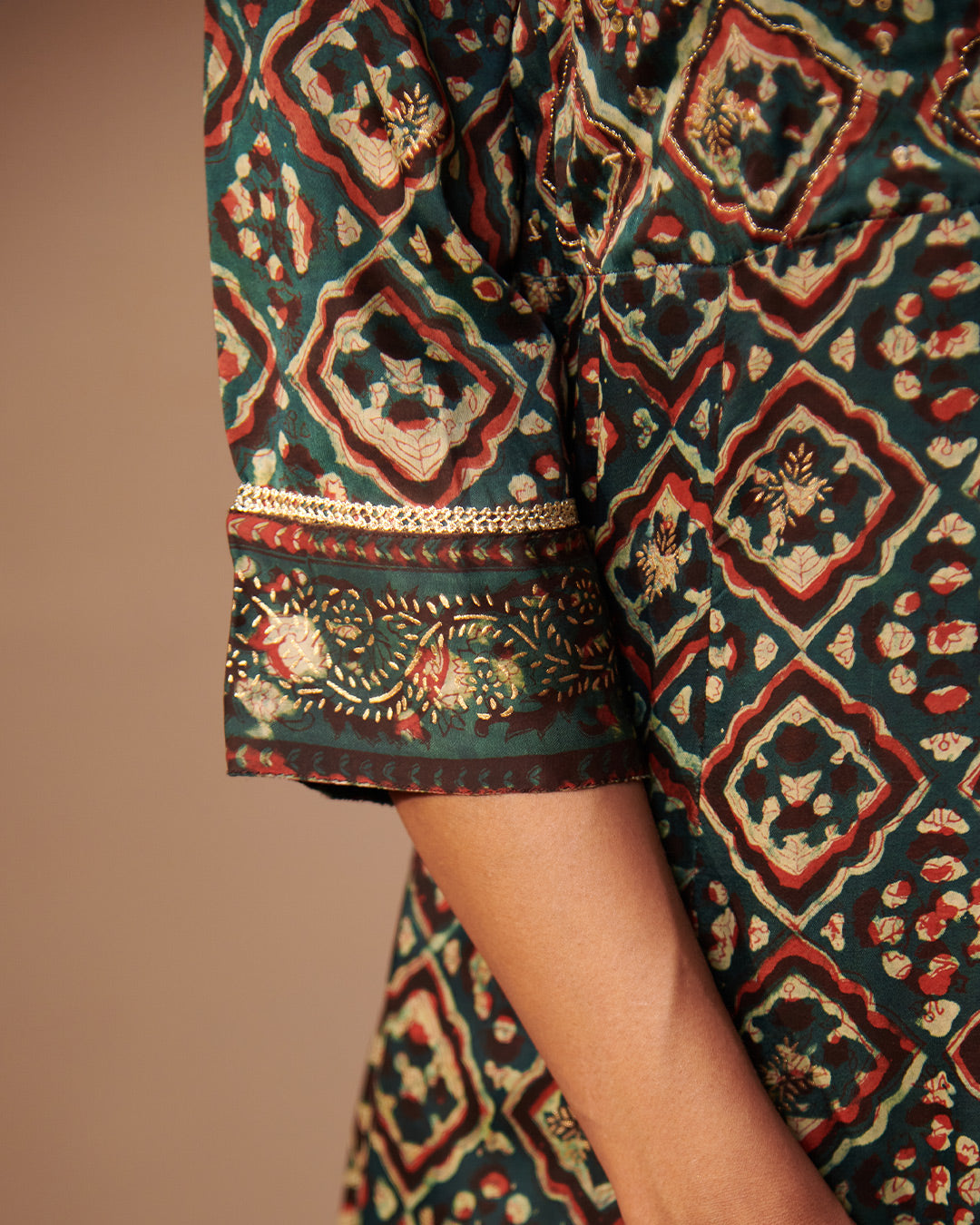
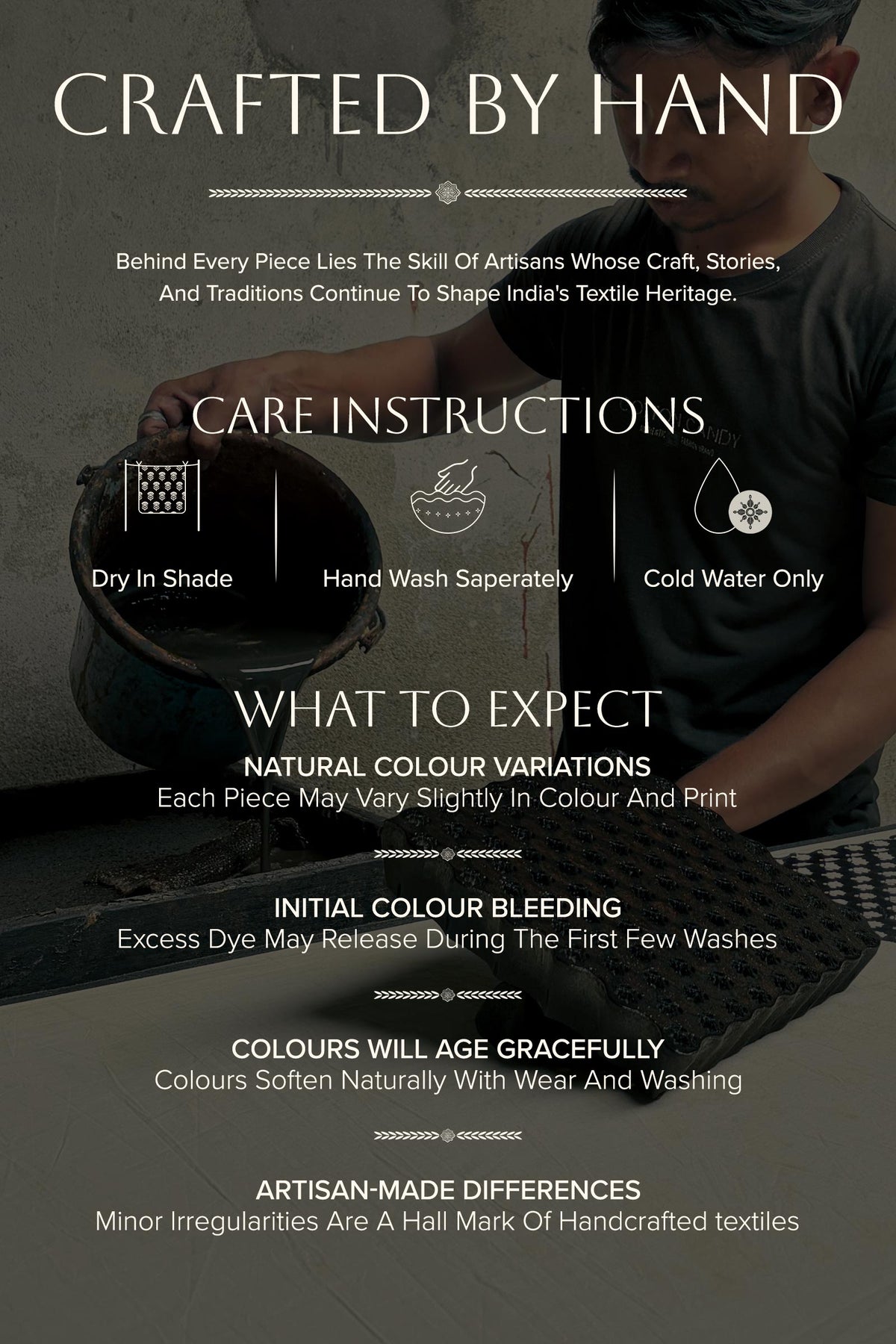
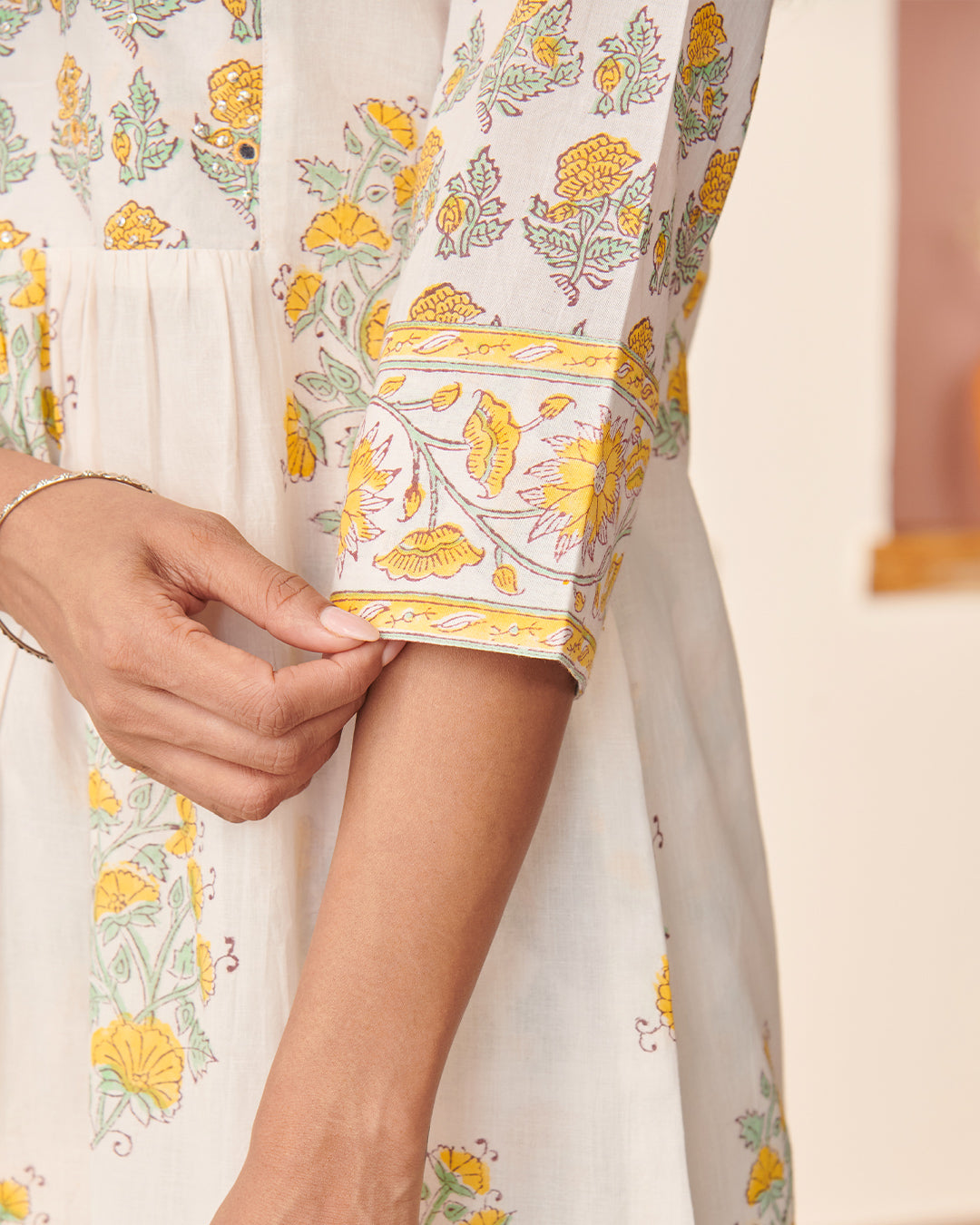
Hand-block printing begins with hand carved wooden blocks, often made from seasoned teak or durable Sheesham wood. Artisans carve intricate floral jaals, paisleys, and geometric patterns in reverse. Each block is dipped into natural or pigment dyes and pressed carefully onto fabric, one impression at a time.
It is slow work. A long kurta may require hundreds of careful placements to complete a single repeat pattern. The alignment must be precise, yet the hand remains gentle. Too much pressure and the dye spreads. Too little and the motif fades.
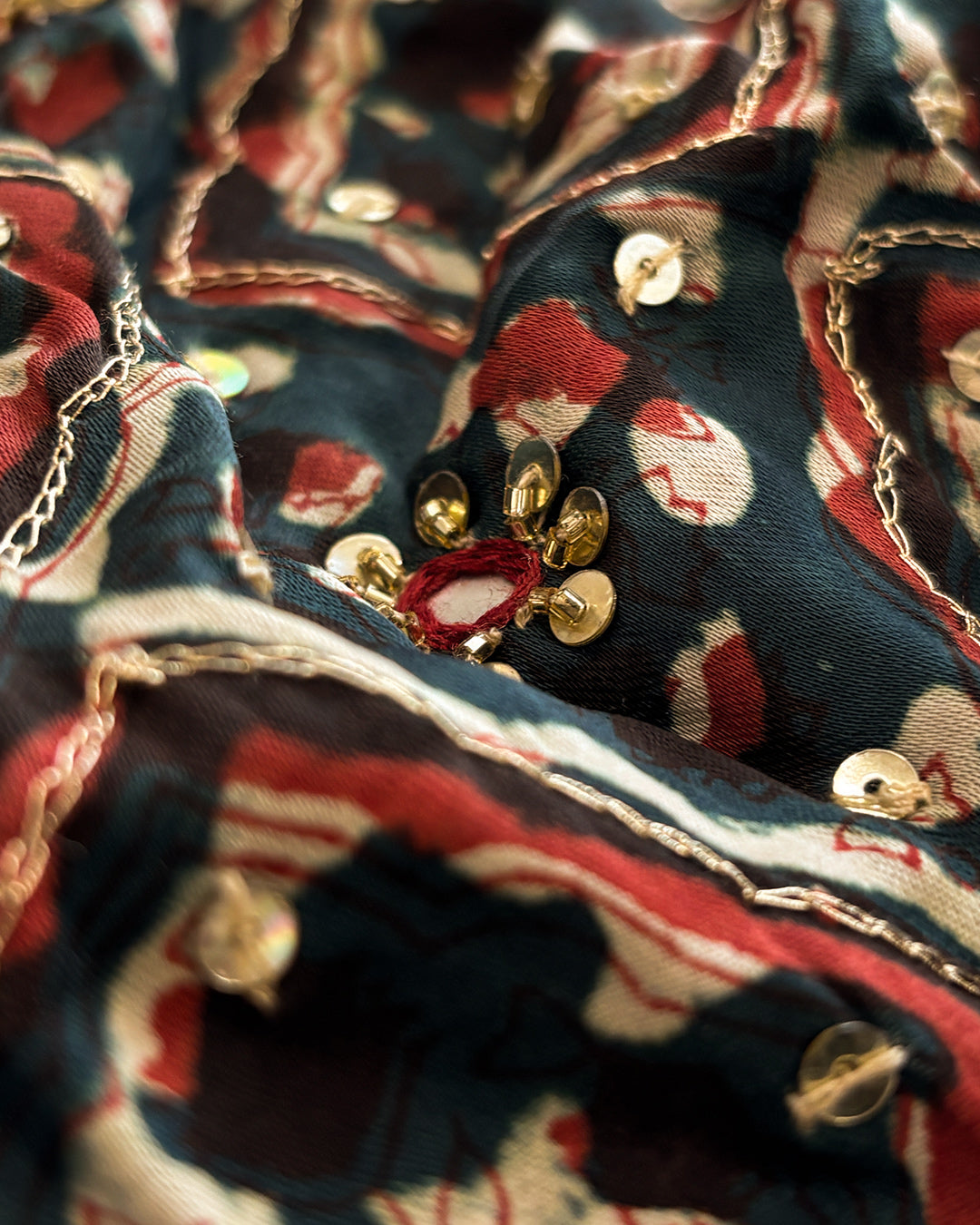
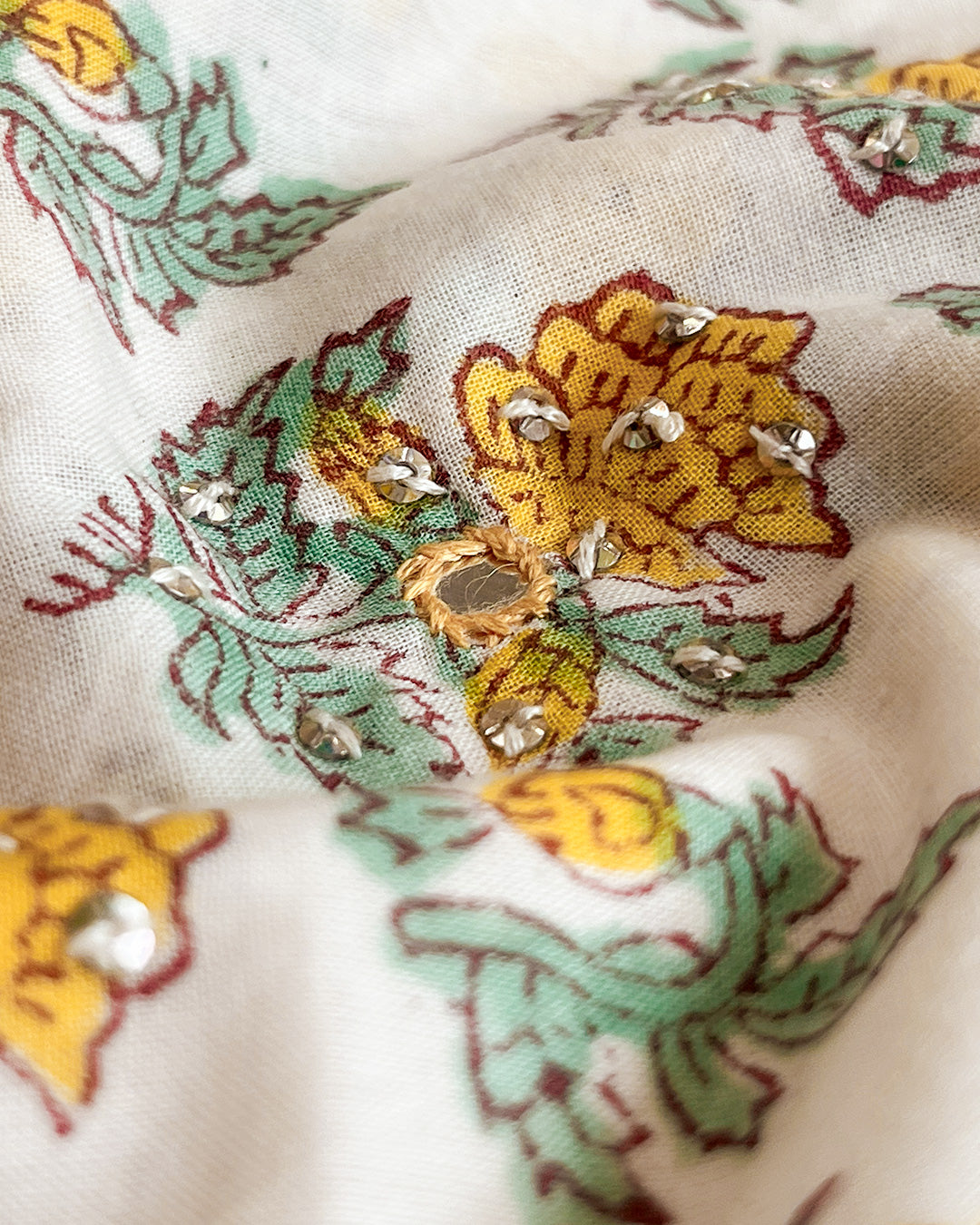
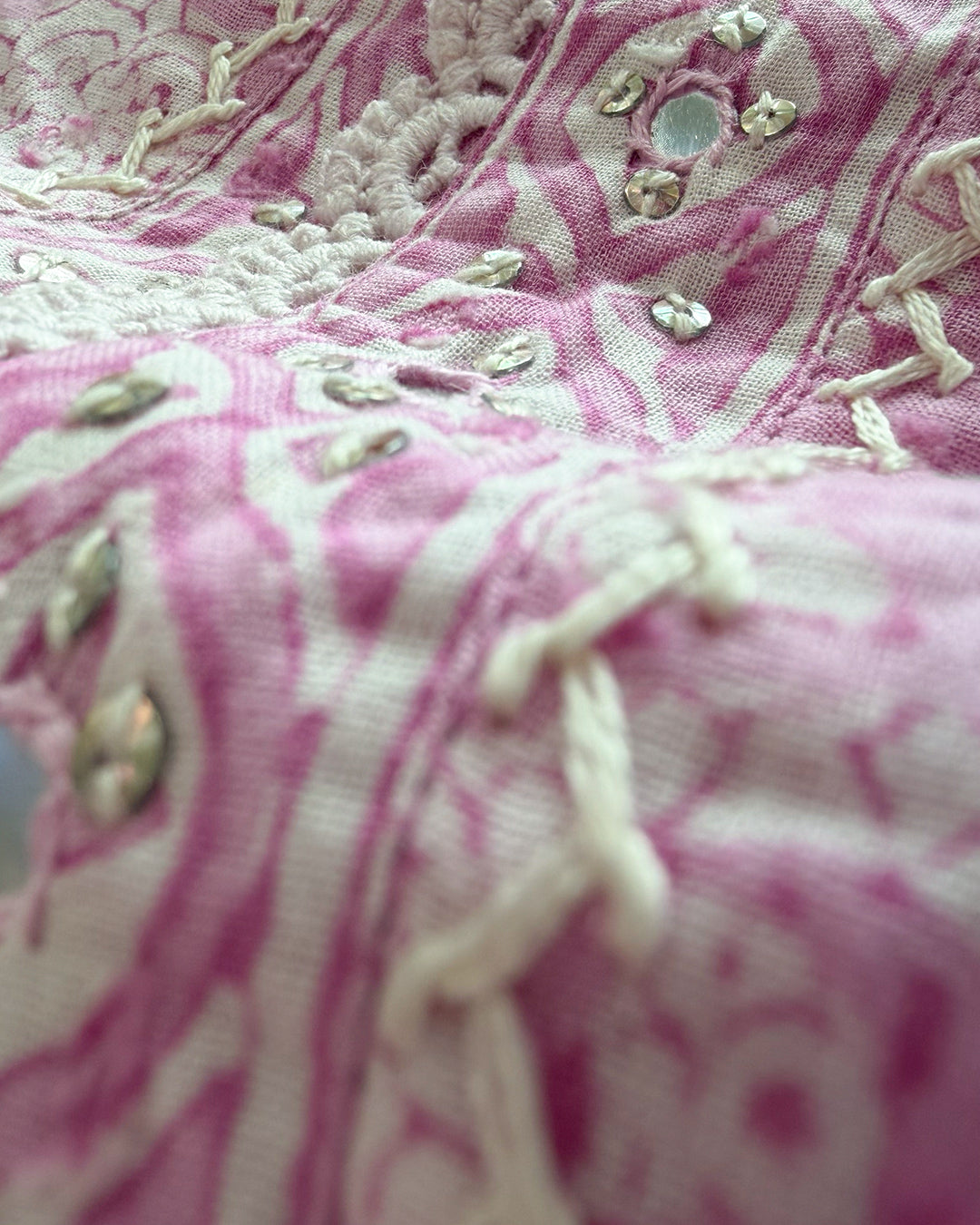
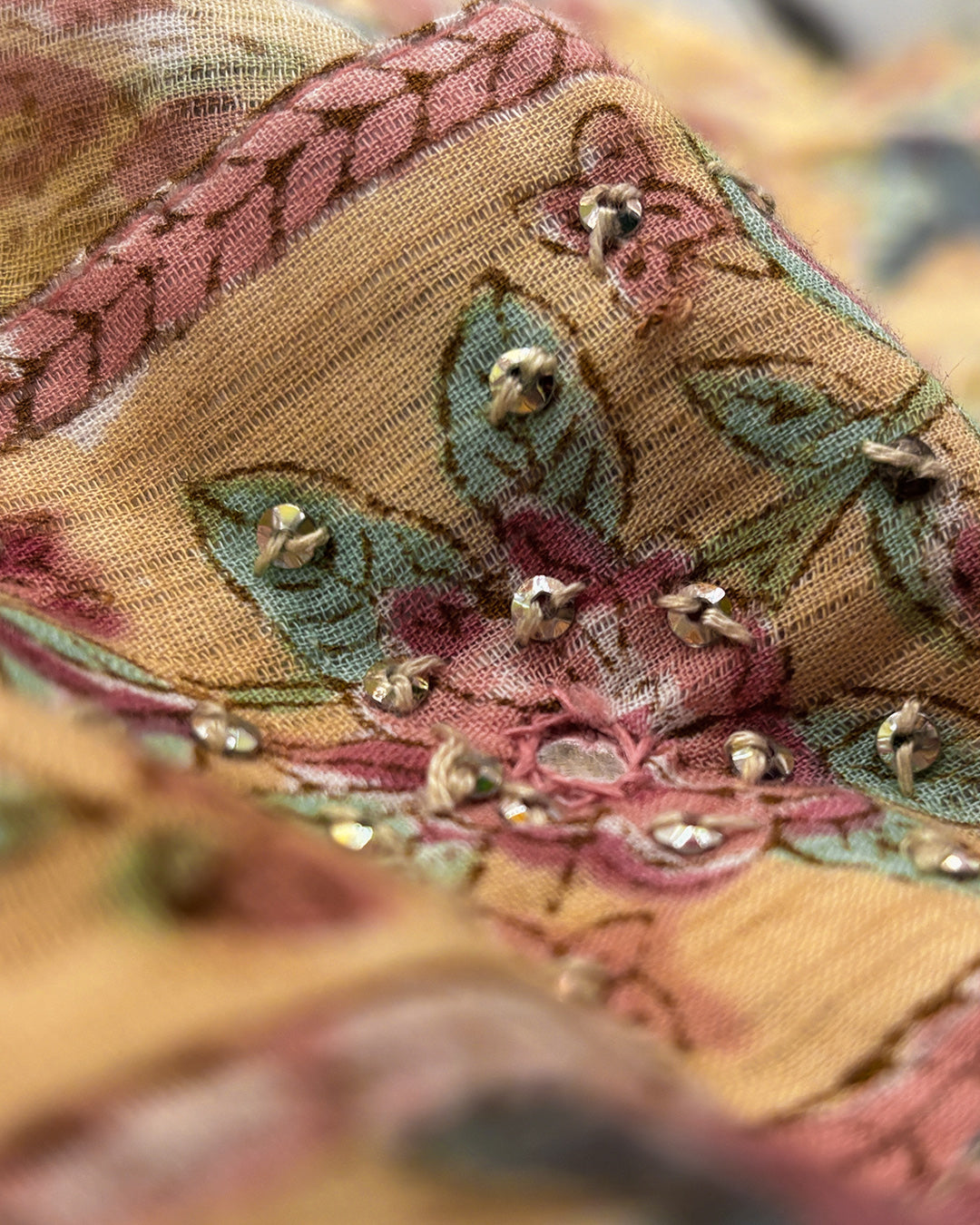
This is why a true hand-block print kurta carries depth. The colour sits softly on the surface. The fabric breathes through it. You can often see the subtle overlap where one block meets another. It feels human.
Difference Between Hand-Block Print and Machine Prints
At first glance, machine prints can appear similar. The motifs may echo traditional patterns. The colours may look vibrant. But the experience is different.
Machine prints are uniform. Every motif is identical, every line exact. The ink often sits flat and sealed on the surface. It can feel colder, less porous.
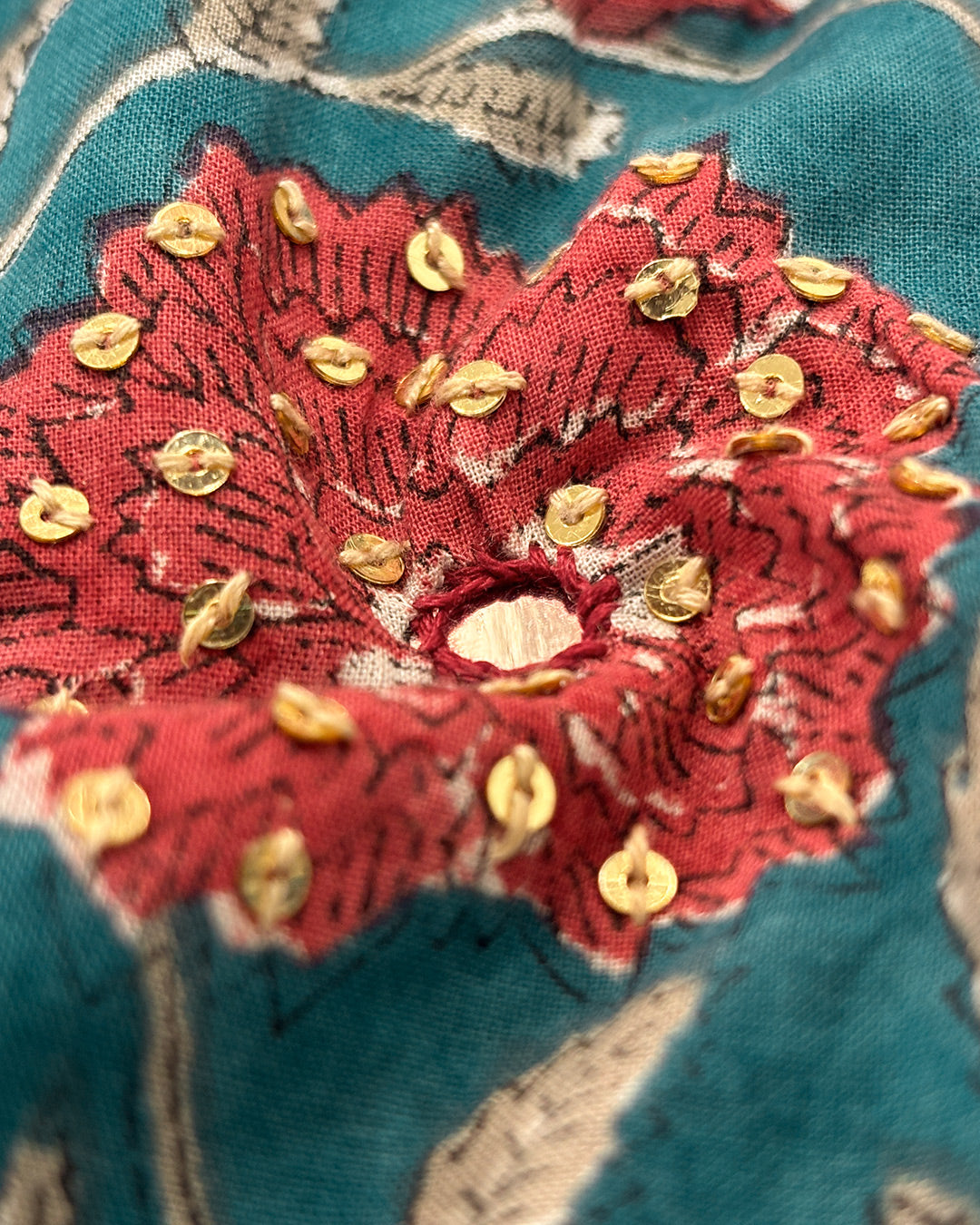
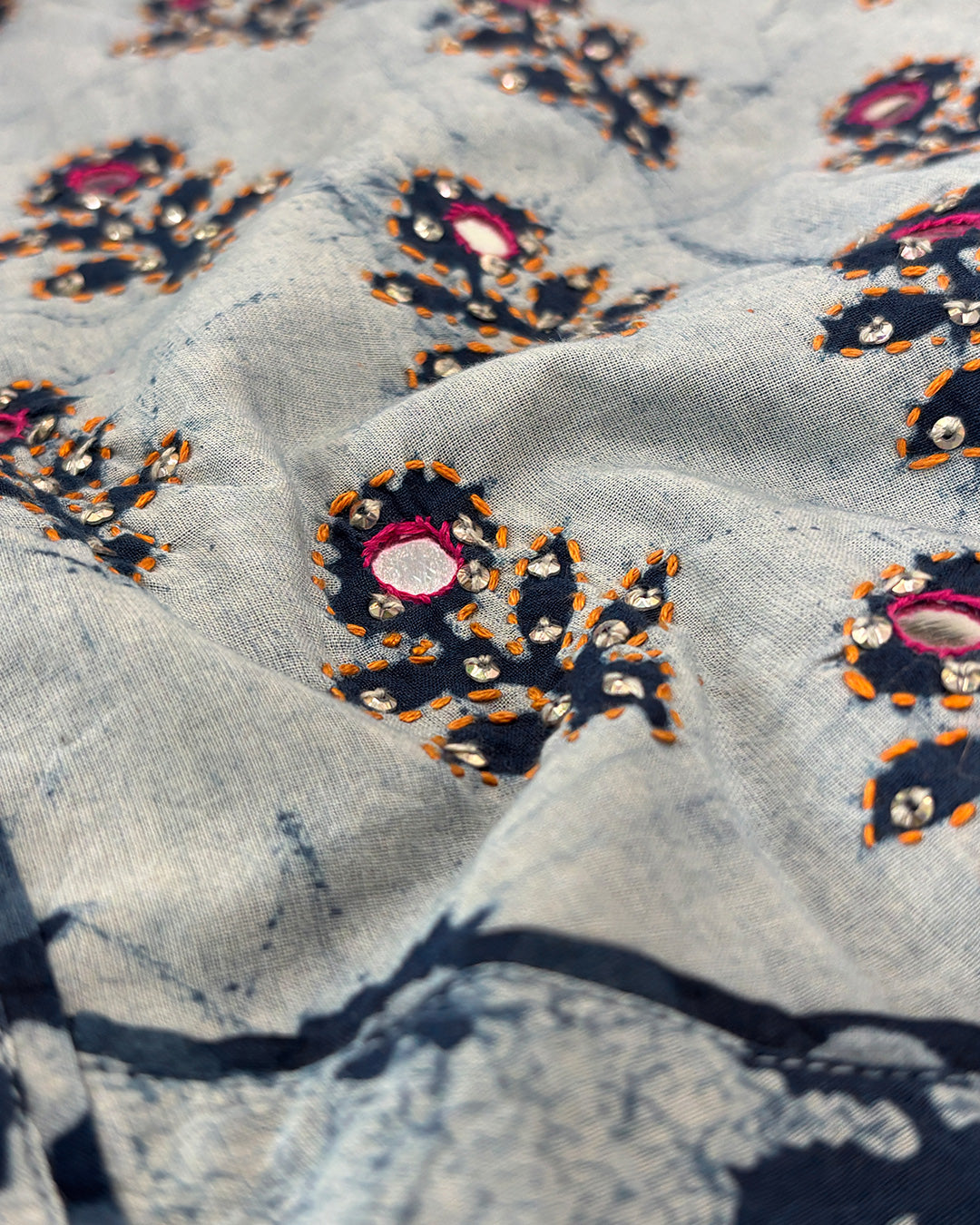
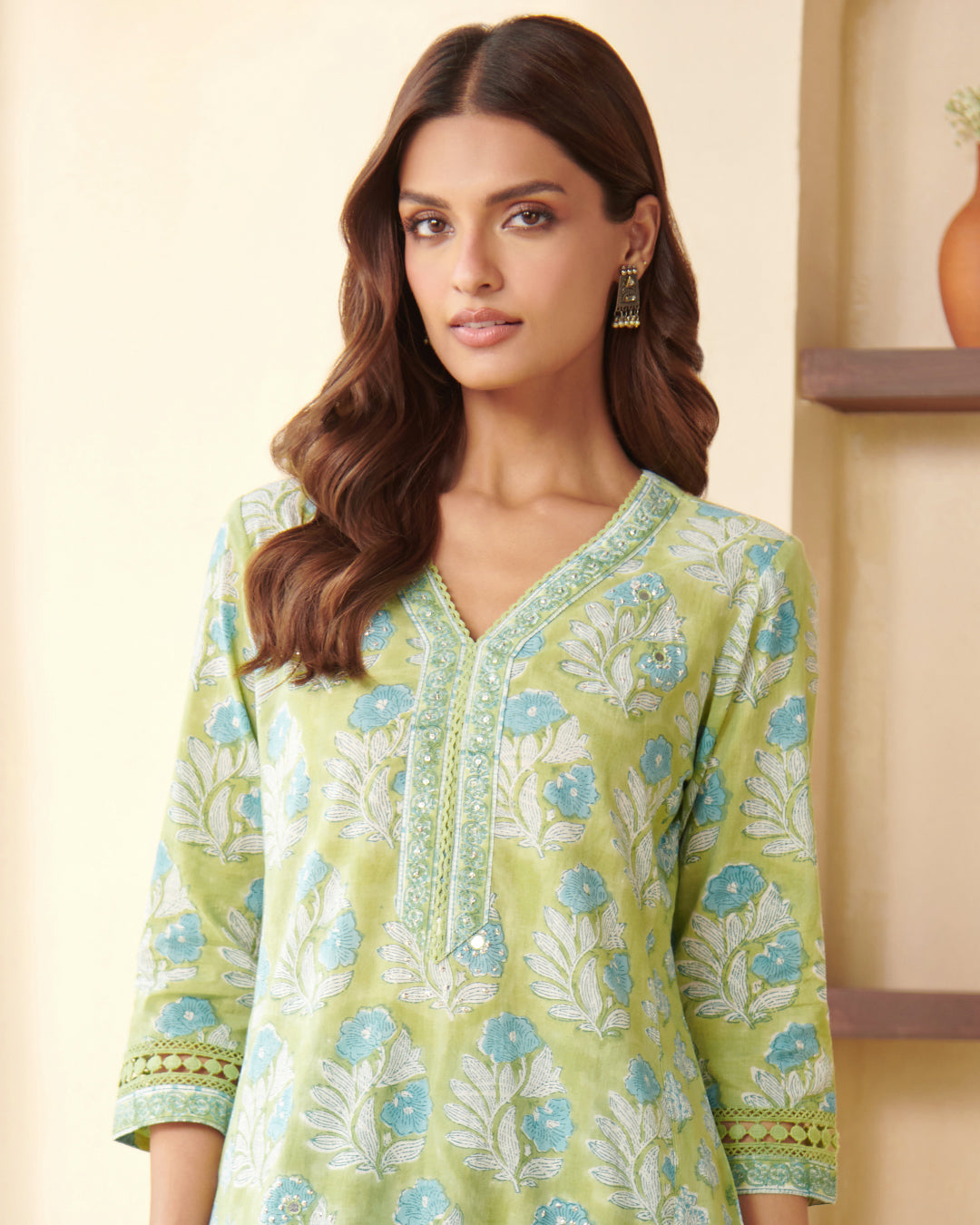
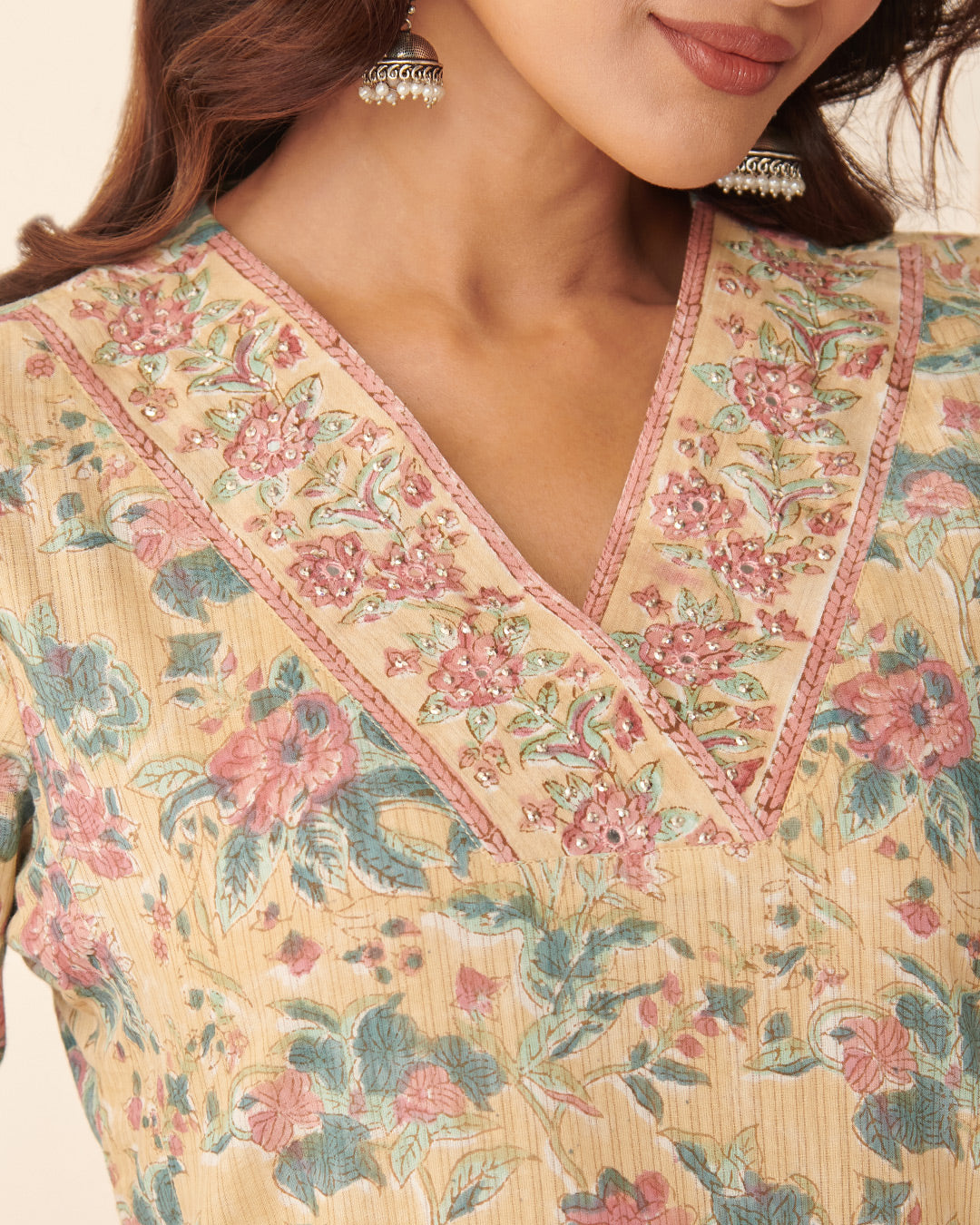
A hand-block print kurta, on the other hand, carries variation. Look closely and you will notice tiny shifts in pressure or alignment. The colour seeps gently into the weave rather than coating it. The fabric retains softness because it has not been over processed.
The difference is not only visual. It is emotional. When you wear a hand work kurta created through block printing, you are wearing hours of labour and generations of knowledge. It feels quieter, yet far more enduring.
Why Hand-Block Print Kurtas Are Comfortable All Year Round

There is a reason we keep returning to a hand-block print kurta, no matter the month on the calendar. It is not only about beauty. It is about how the fabric feels at noon in May, and how it settles softly under a shawl in December.
Comfort, in Indian clothing, has always been thoughtful. It considers heat, movement, long gatherings, travel between cities, and everyday life. A well made kurta understands all of this without needing adjustment.
Breathable Fabrics for Summer
In peak summer, nothing feels as reassuring as cotton against the skin. Most hand-block print kurtas are crafted in pure cotton or fine mulmul. These fabrics breathe easily. They absorb moisture and allow air to pass through, which makes long afternoons more bearable.
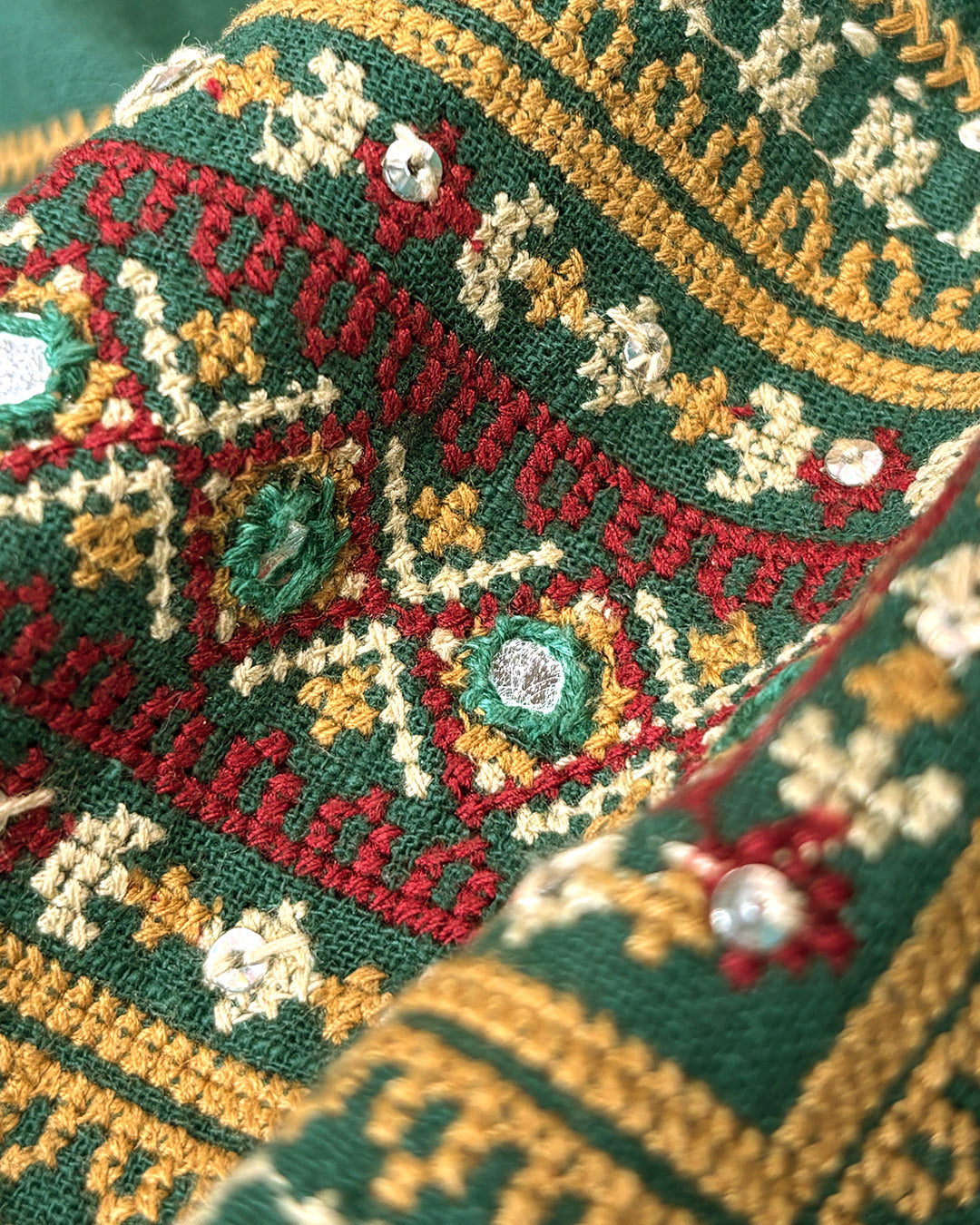
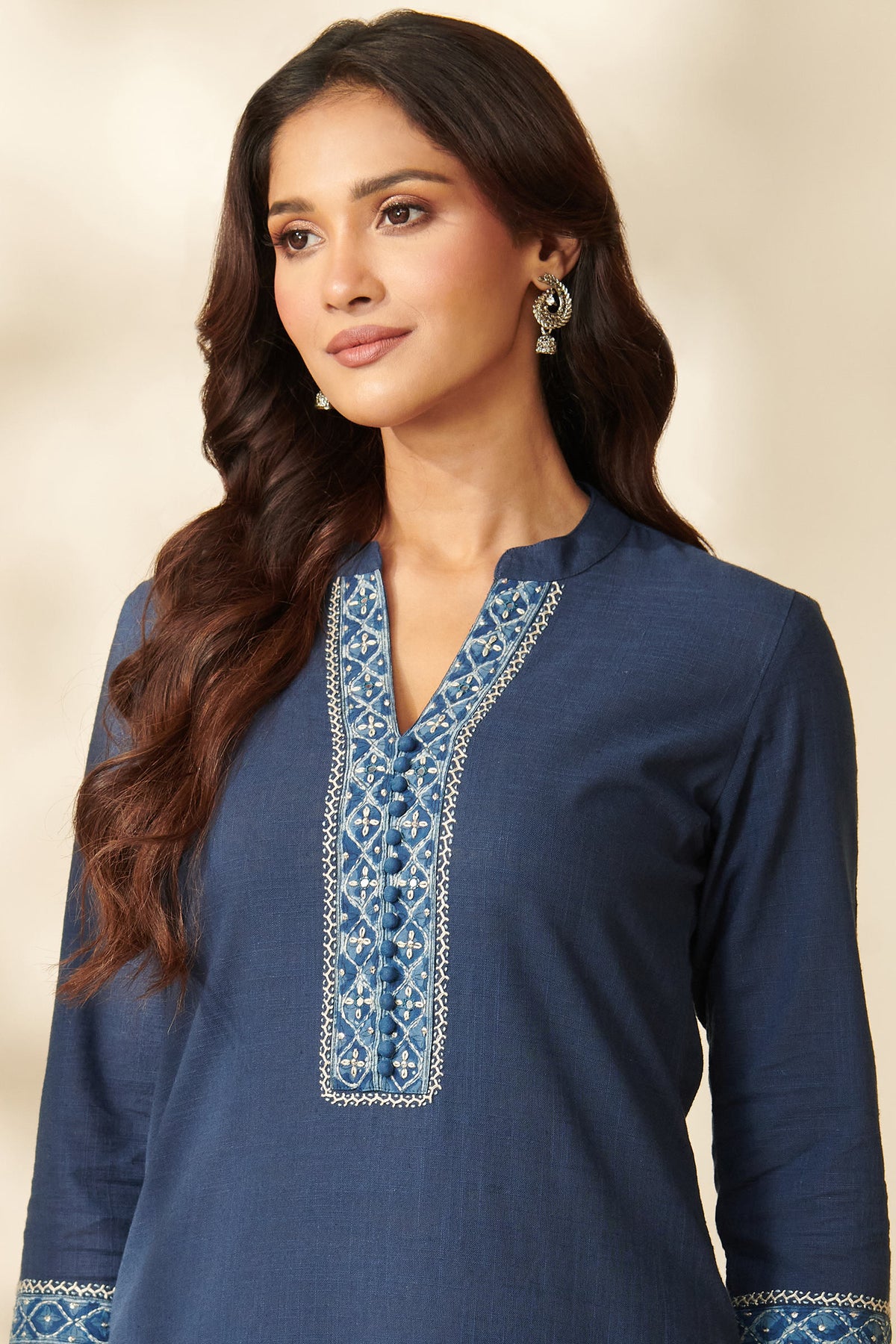
The beauty of block printing also lies in its process. The dyes are pressed gently into the fabric, not sealed under heavy synthetic layers. The cloth retains its natural softness. Even a hand work kurta with light embroidery feels airy when the base fabric is right.
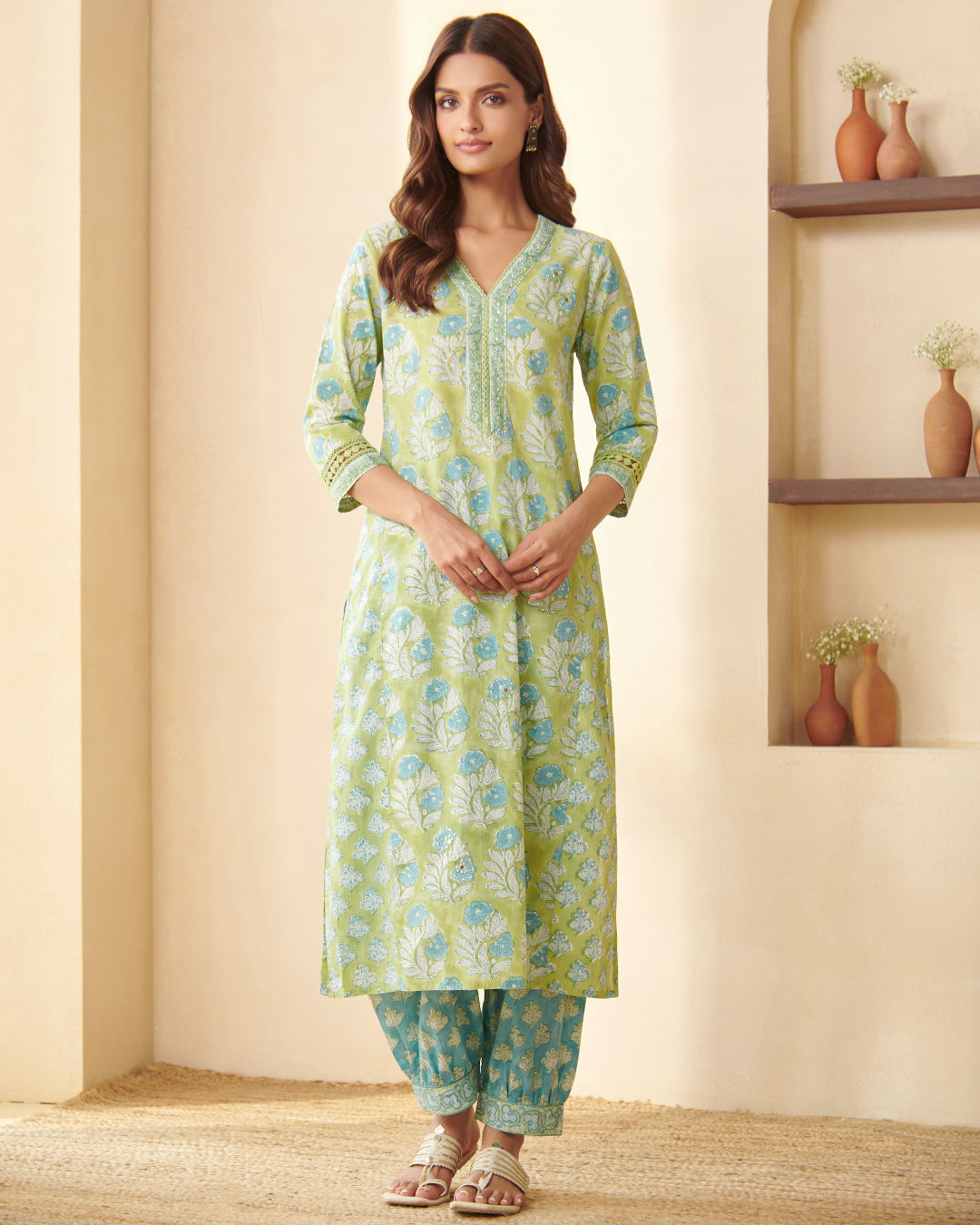
Soft florals, jaal patterns, and delicate butis in lighter shades often become summer favourites. They reflect light, feel fresh, and never weigh you down.
Easy Layering for Winter
As the weather cools, the same kurta adapts without effort. A hand-block print kurta in cotton or chanderi layers beautifully under a woollen shawl or a quilted jacket. The print continues to show, adding quiet detail beneath heavier textures.
In North India, we often pair printed kurtas with solid cardigans or long shrugs. The structure of the kurta remains intact, while the layers provide warmth. The silhouette does not bulk up easily, which keeps the look graceful even in winter.
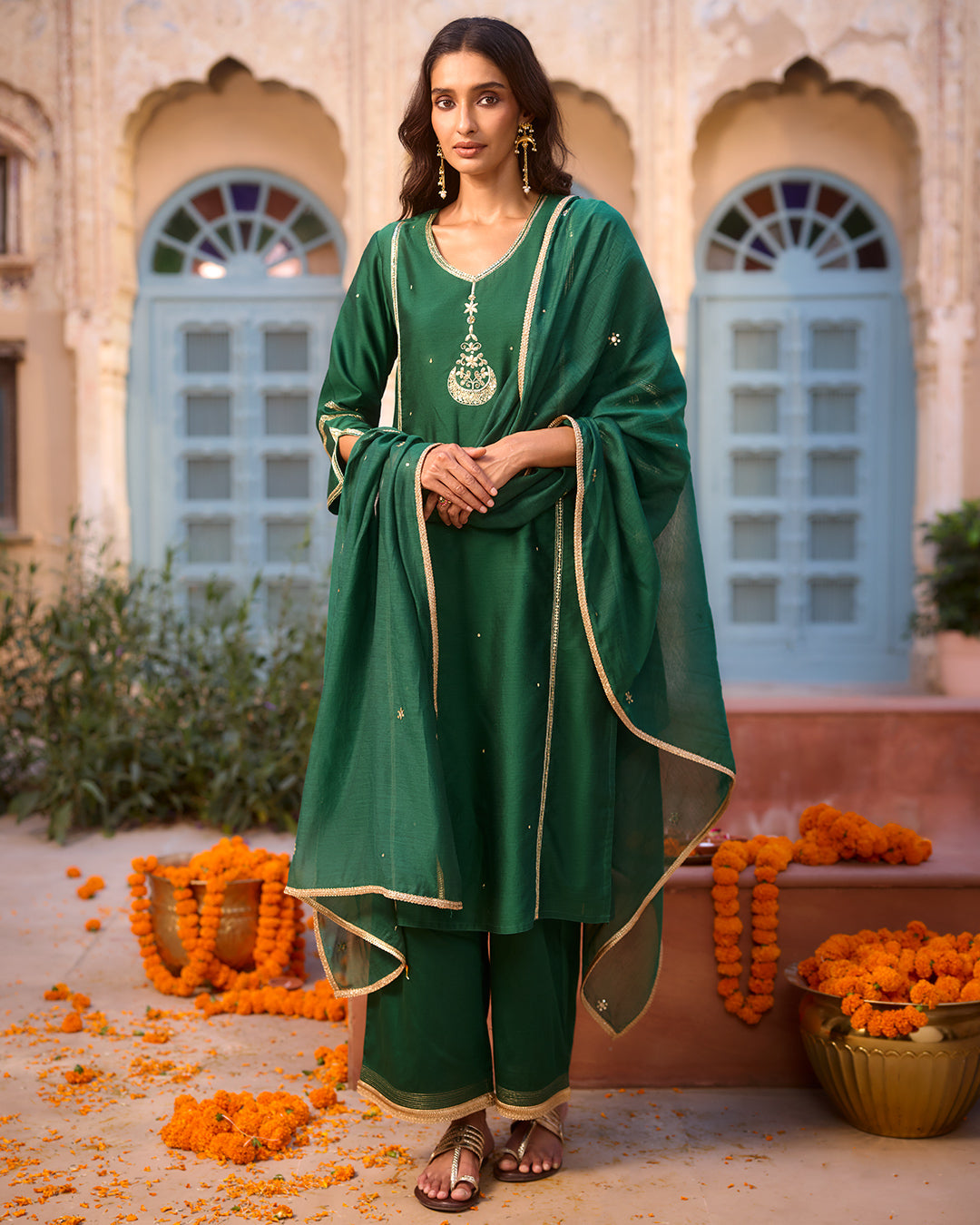
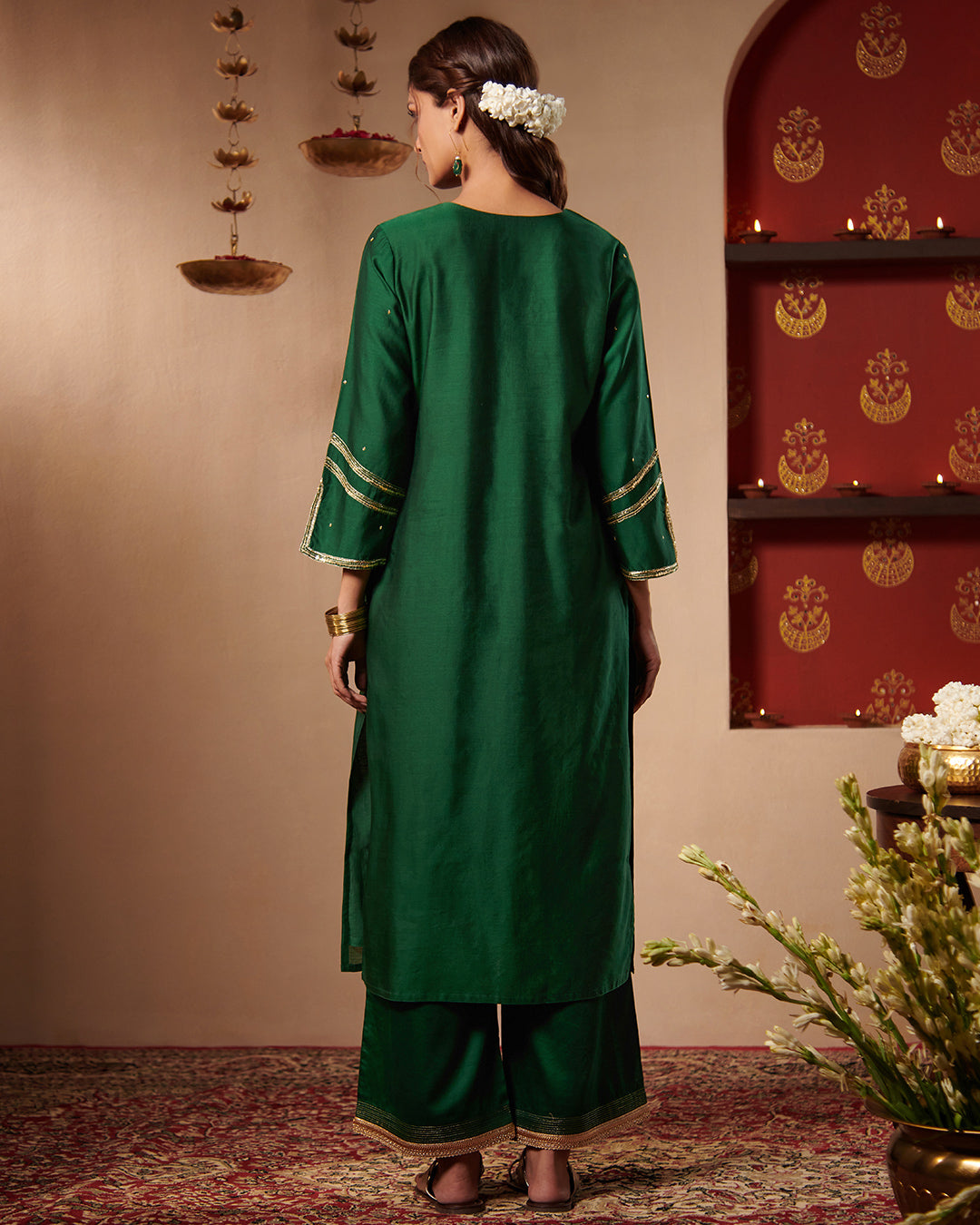
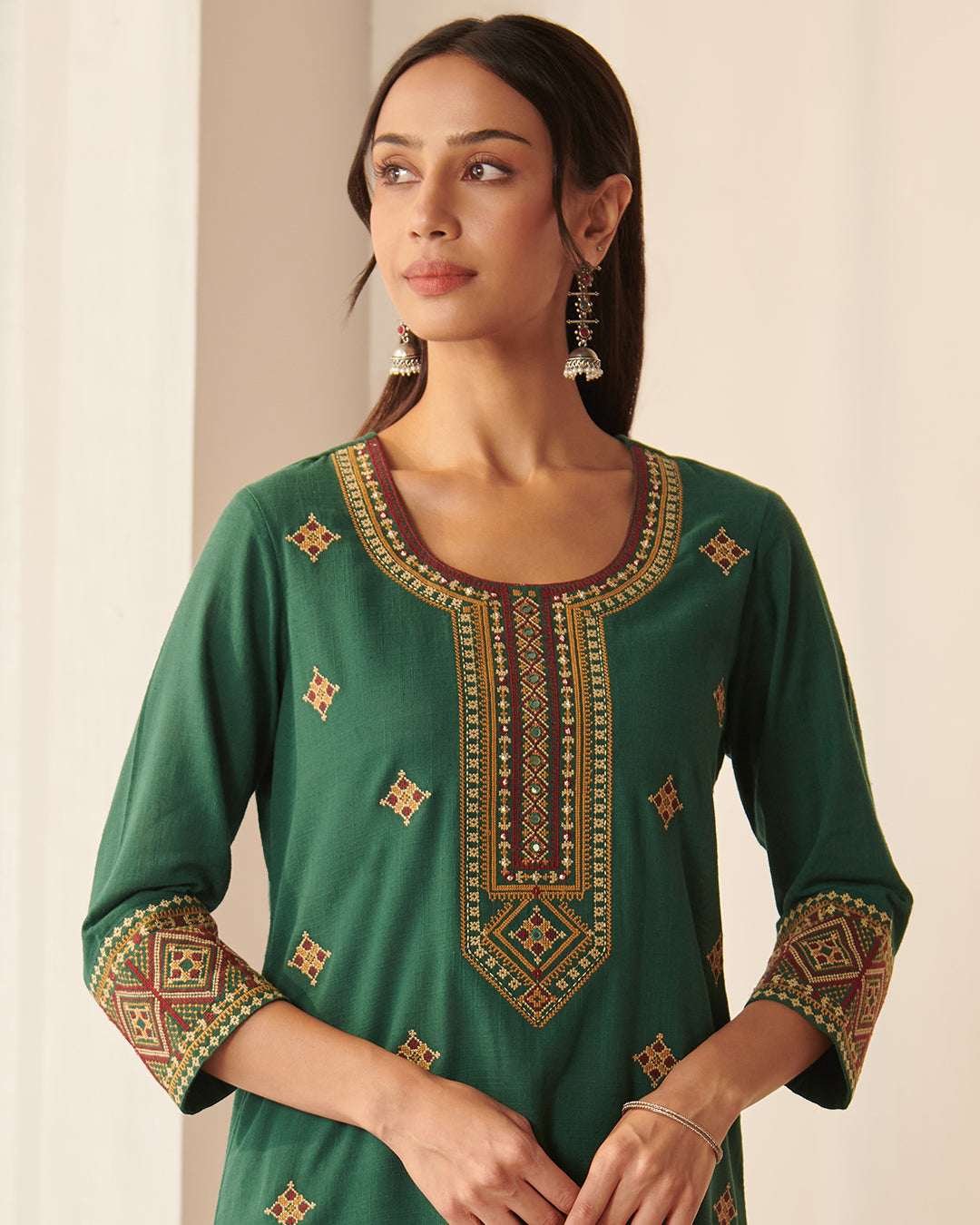
For evening gatherings, a silk blend hand work kurta can carry deeper hues, indigo, maroon, forest green, while still offering ease of movement. Warmth does not have to mean heaviness.
Perfect for Transitional Weather
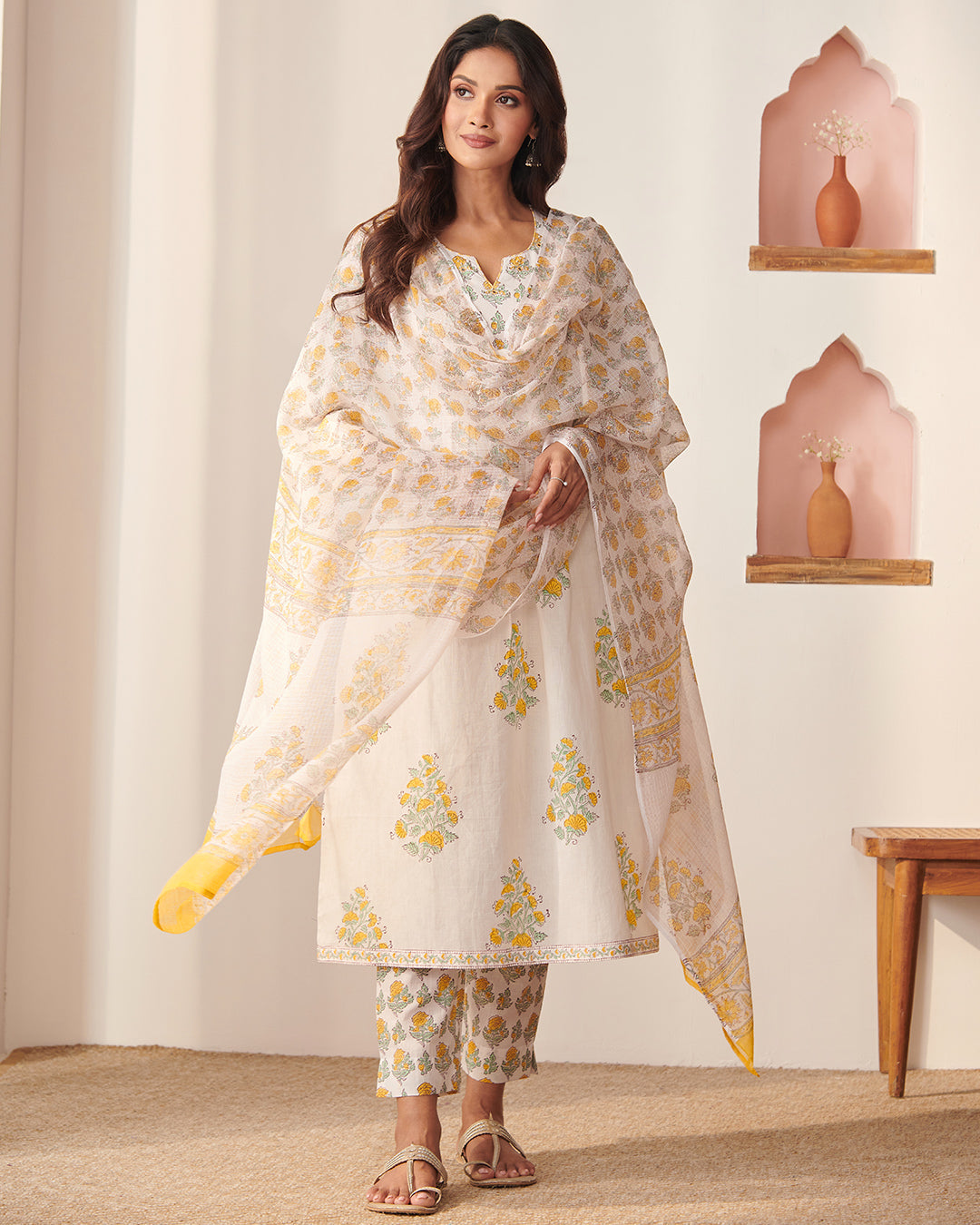
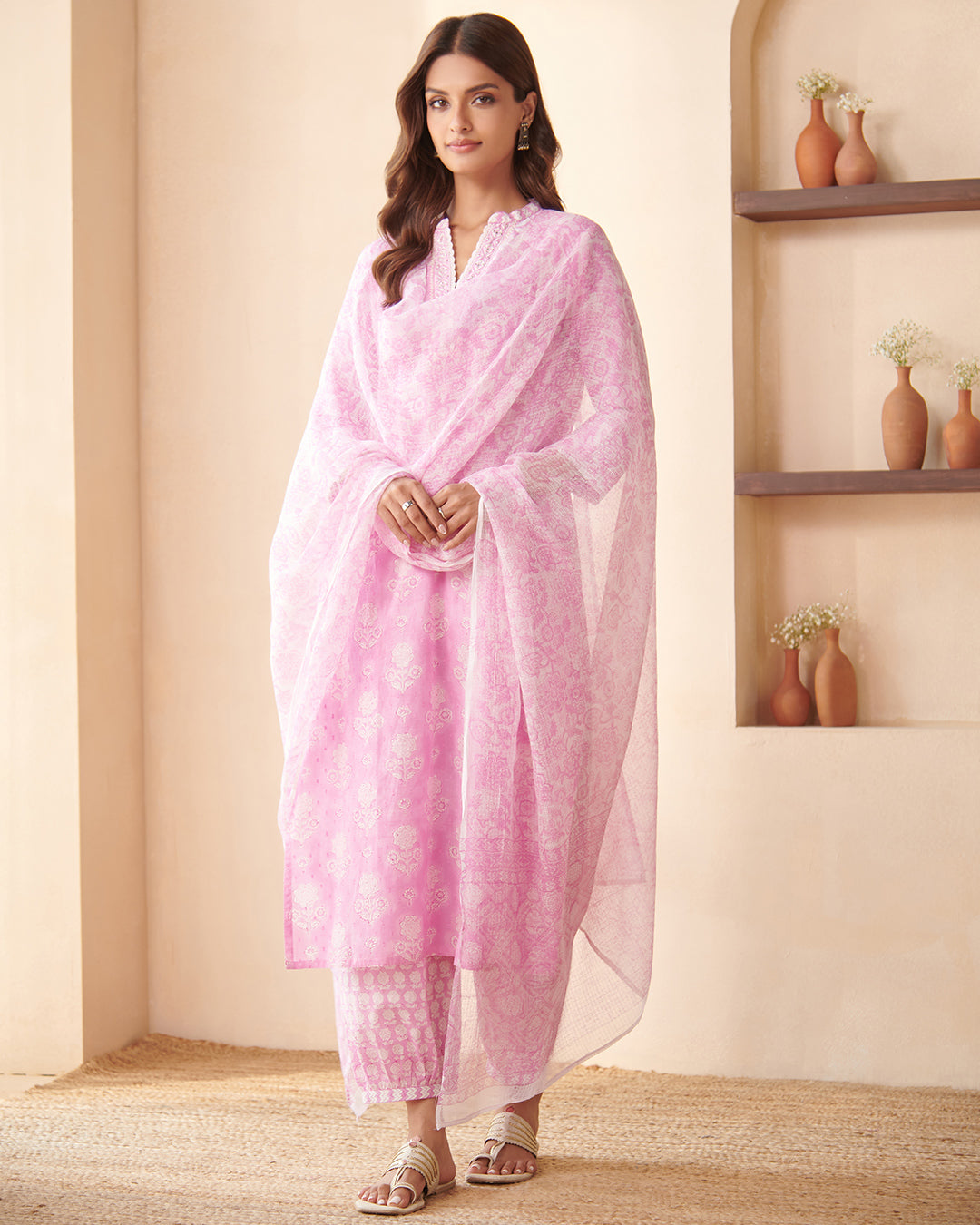
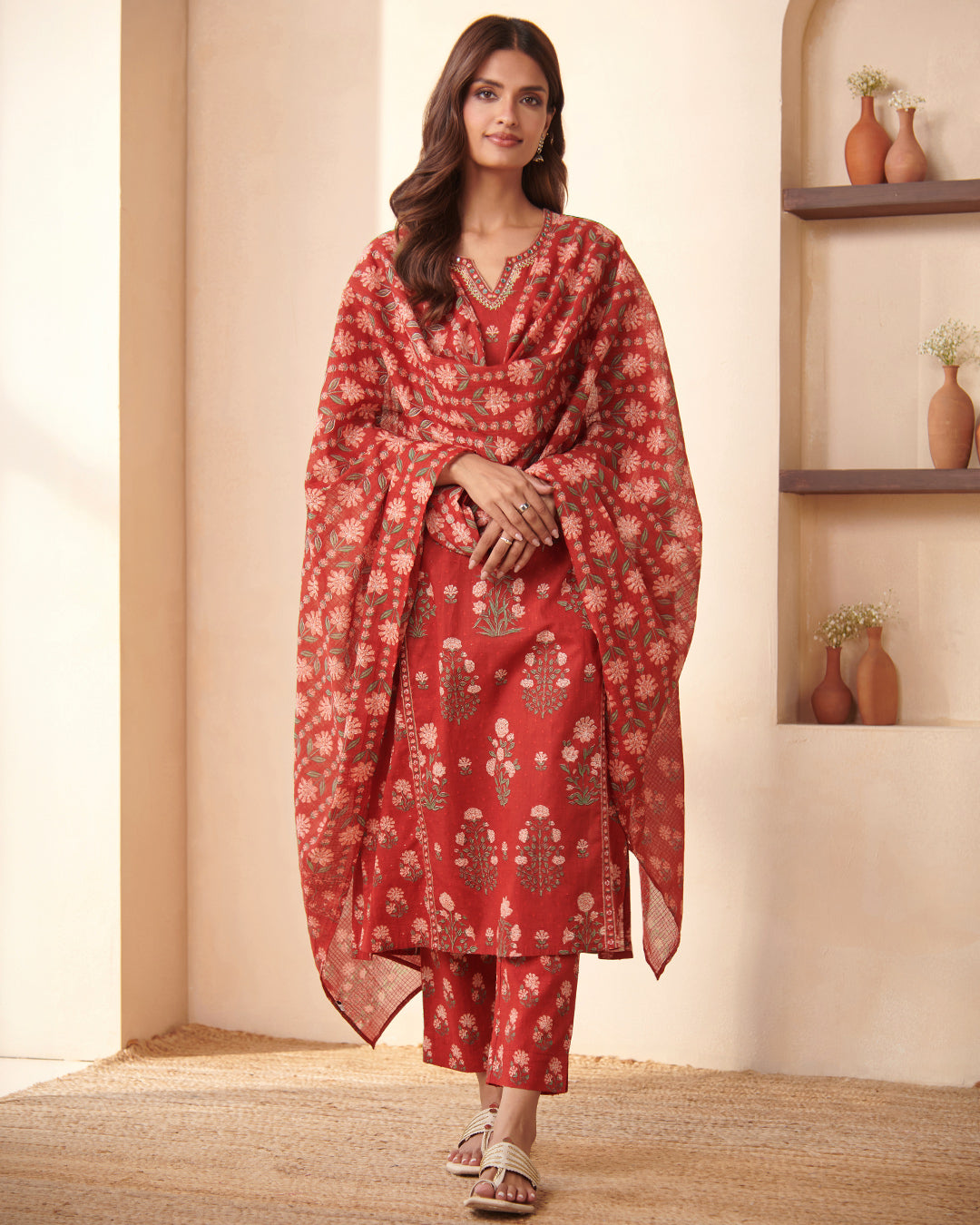
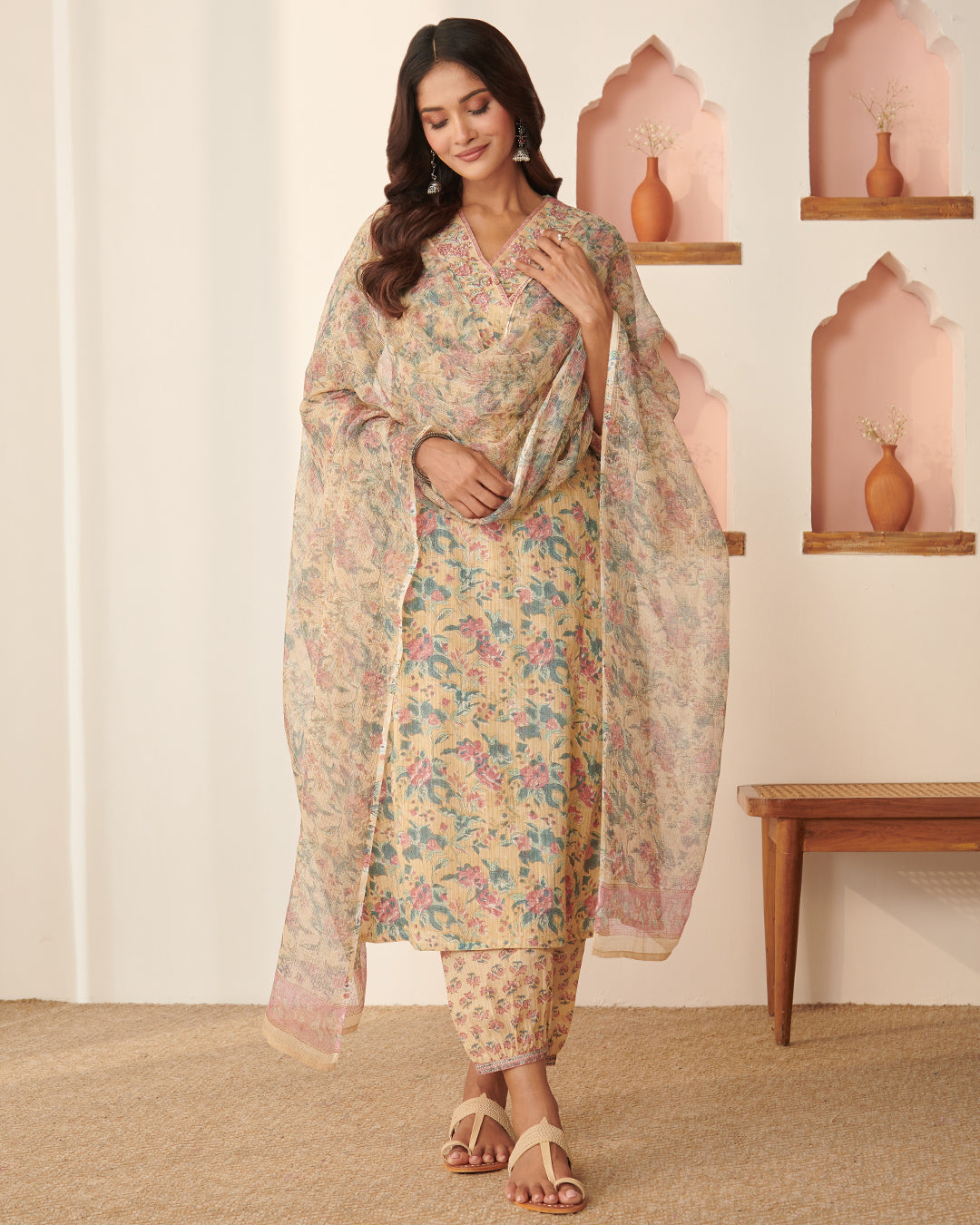
Between seasons, when mornings are cool and afternoons warm, versatility matters most. A hand-block print kurta works well with a light dupatta that can be added or removed as needed.
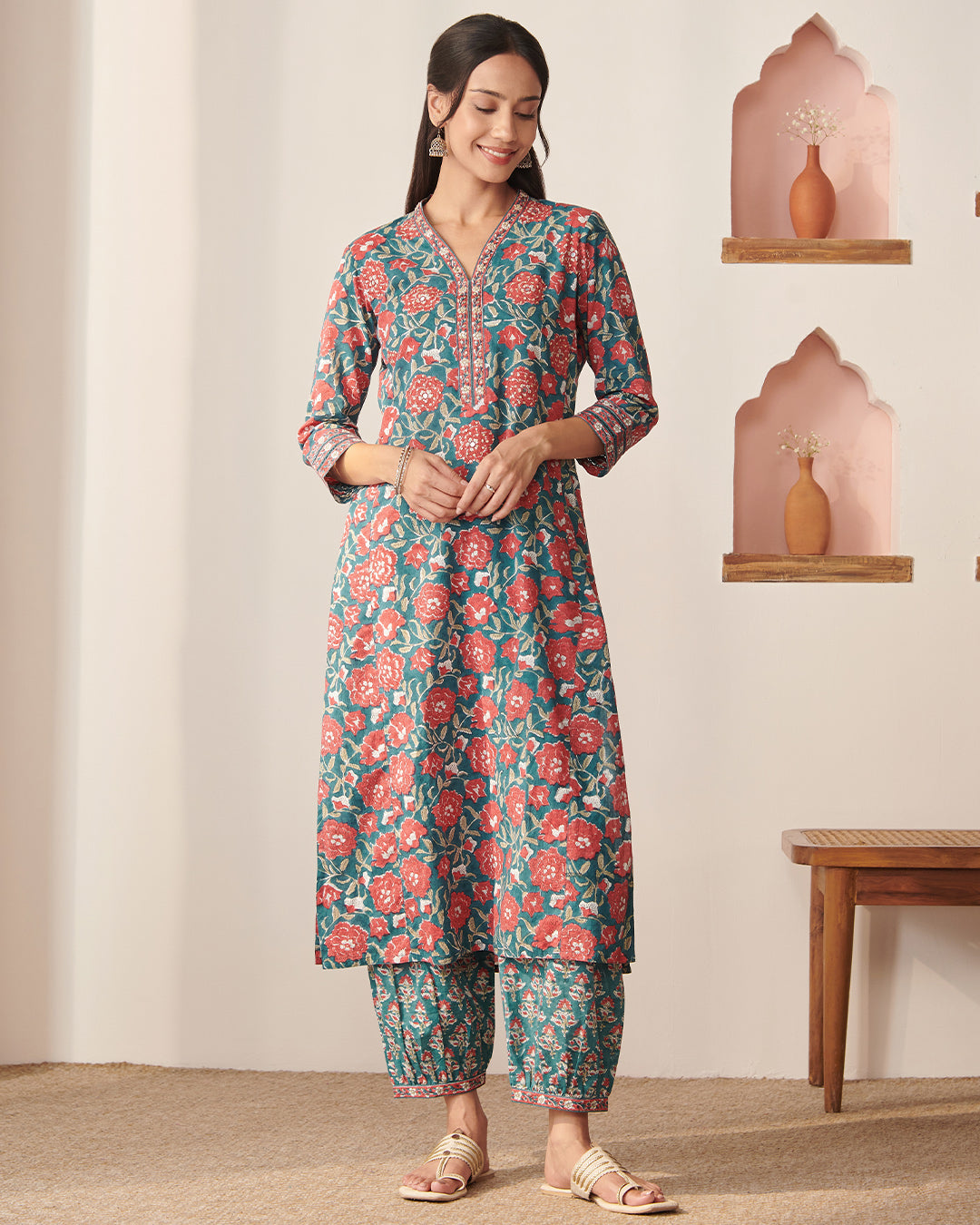
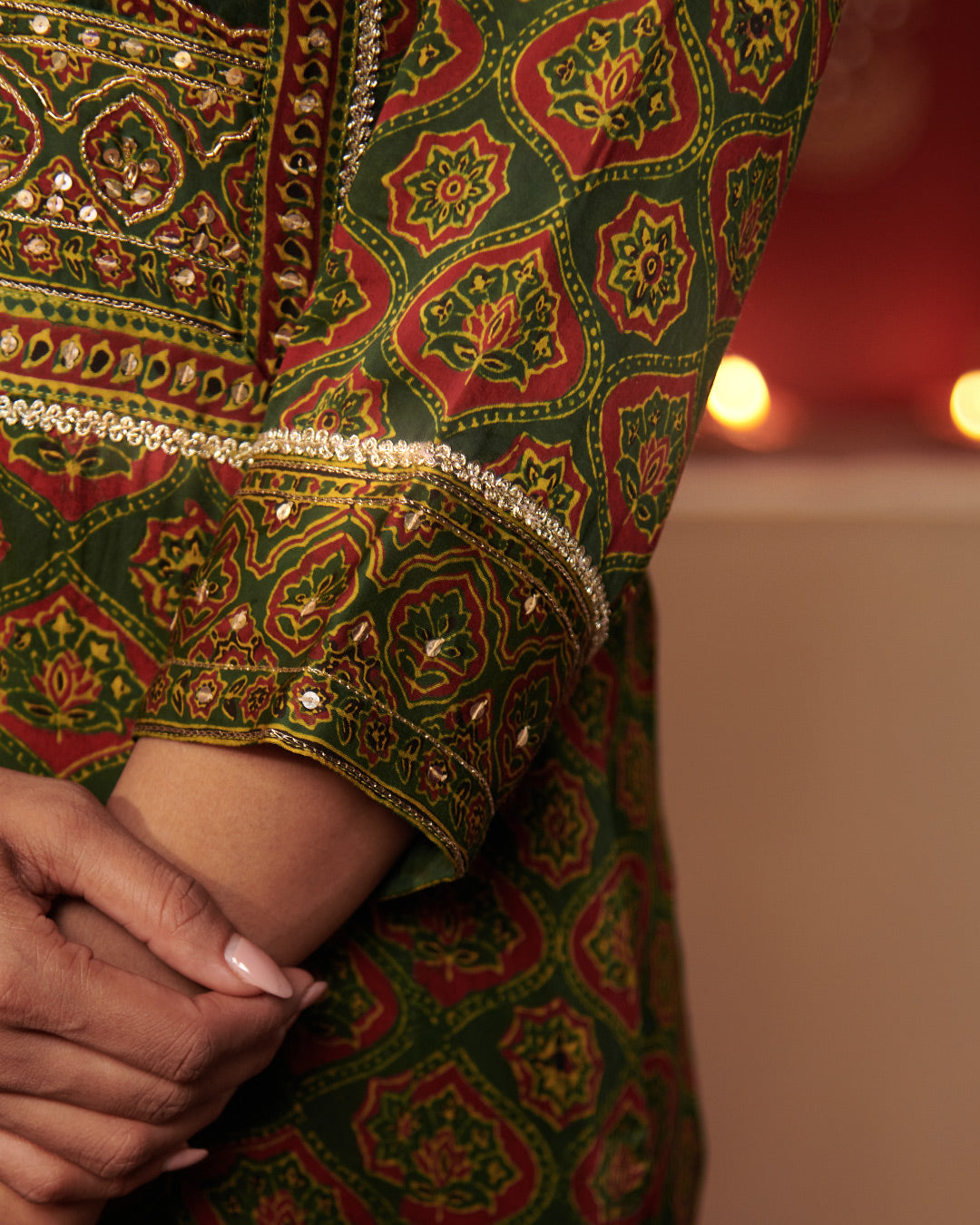
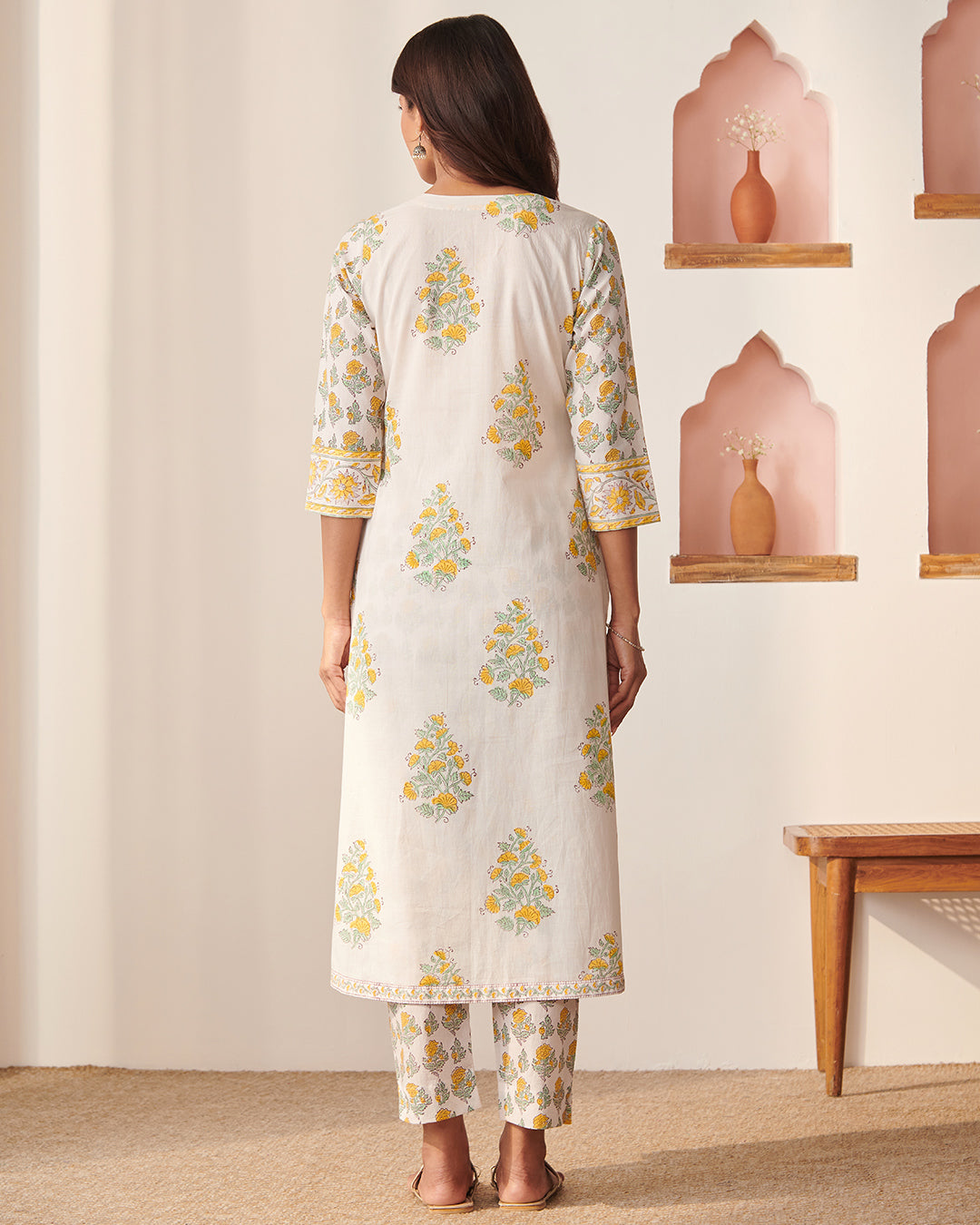
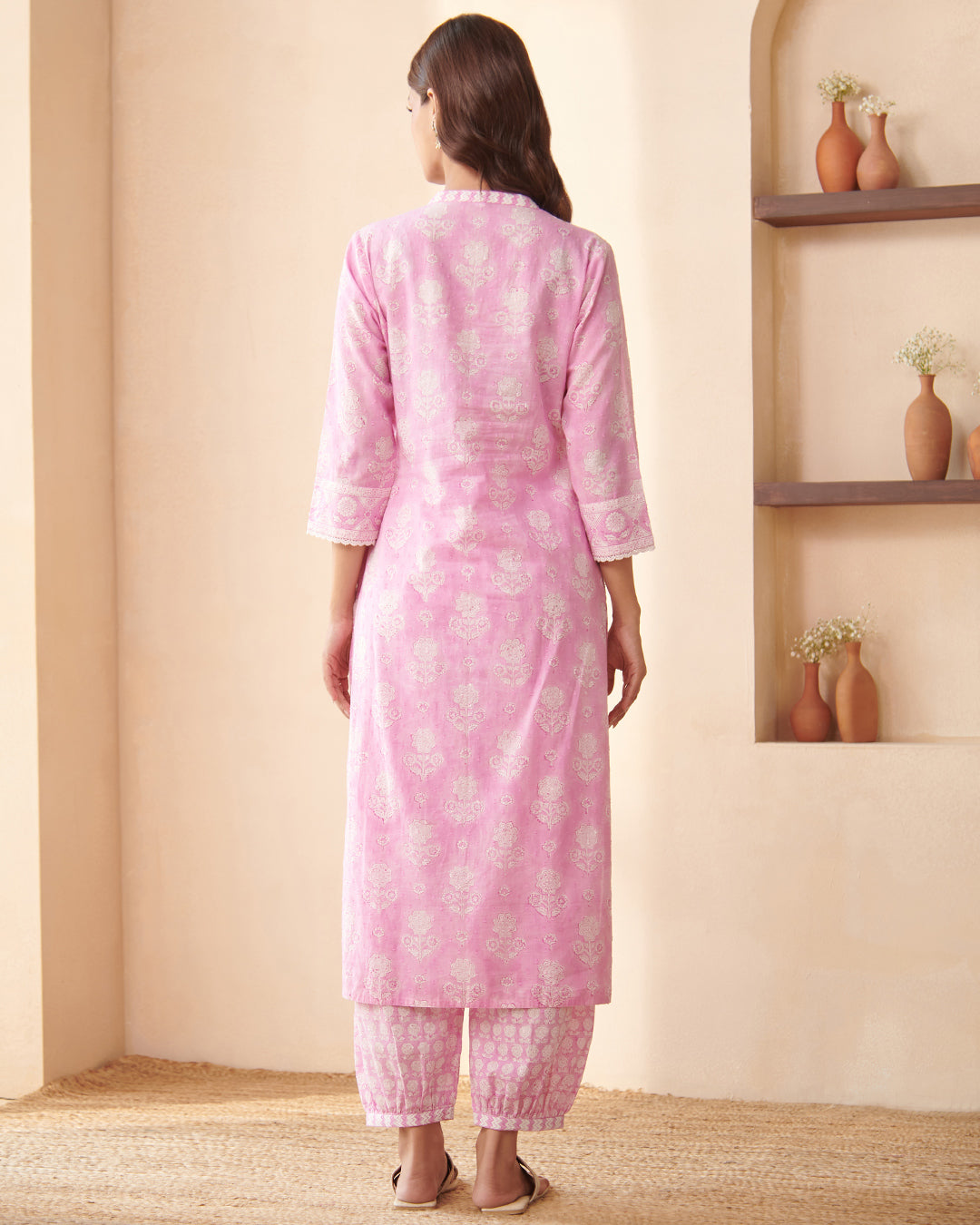
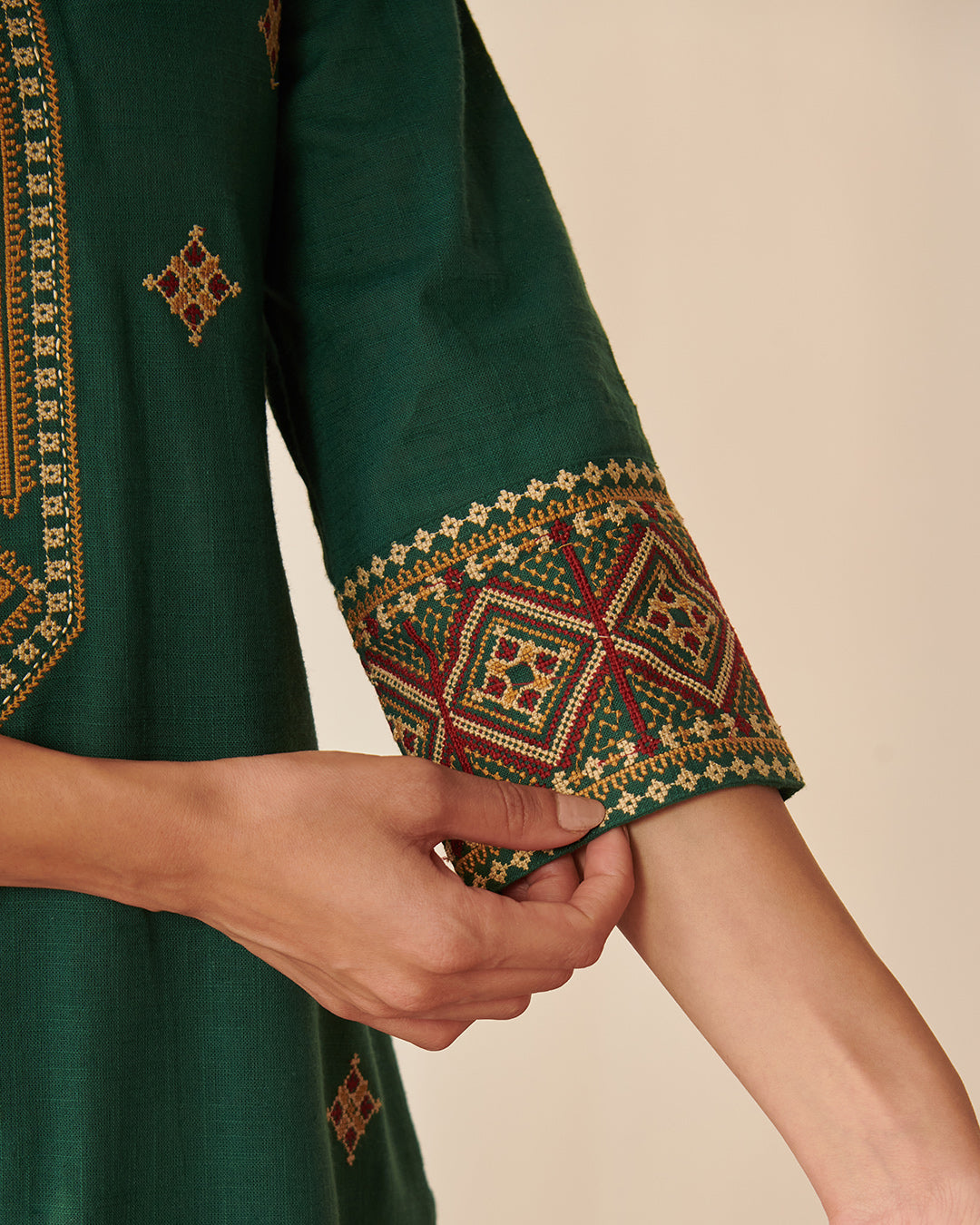
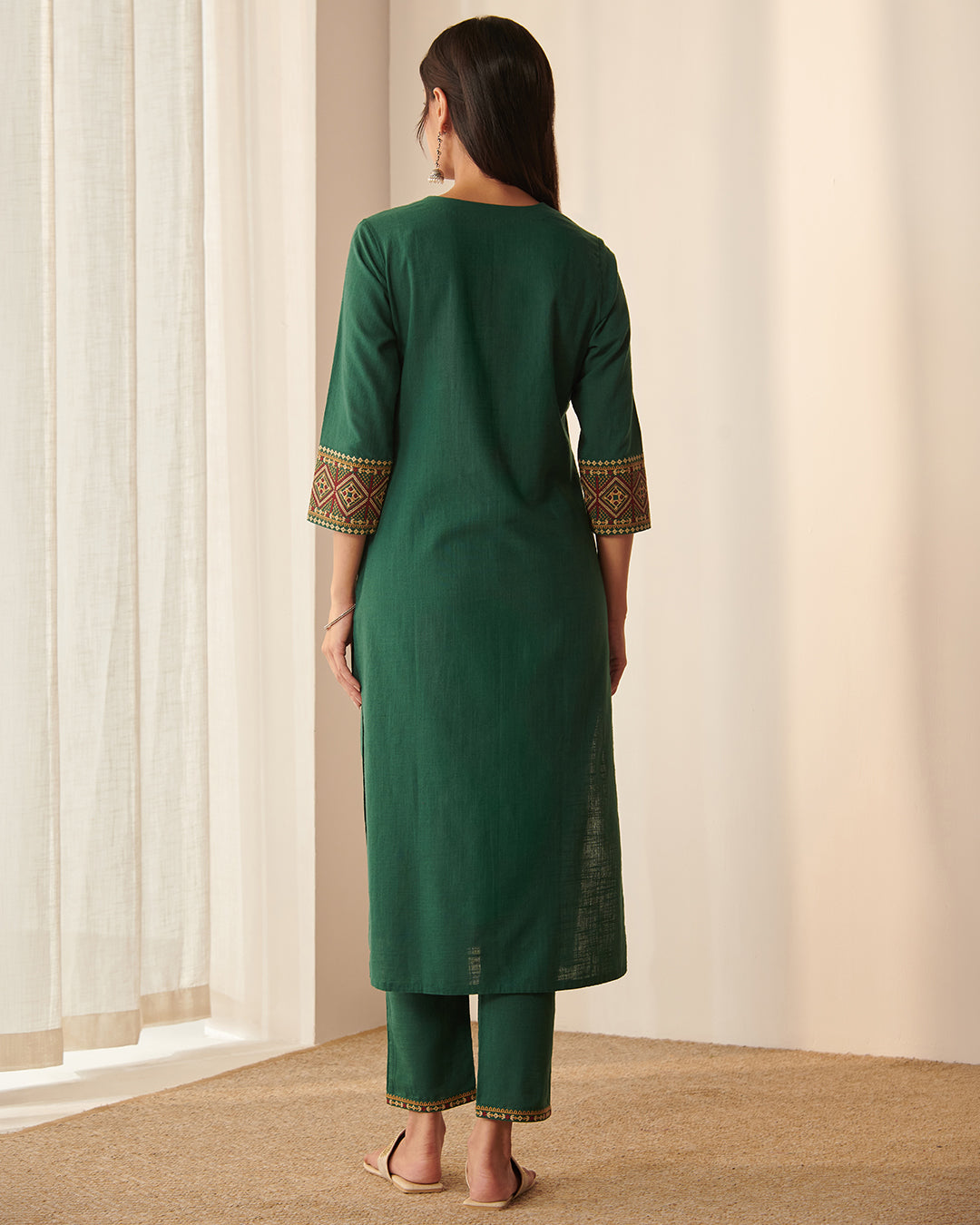
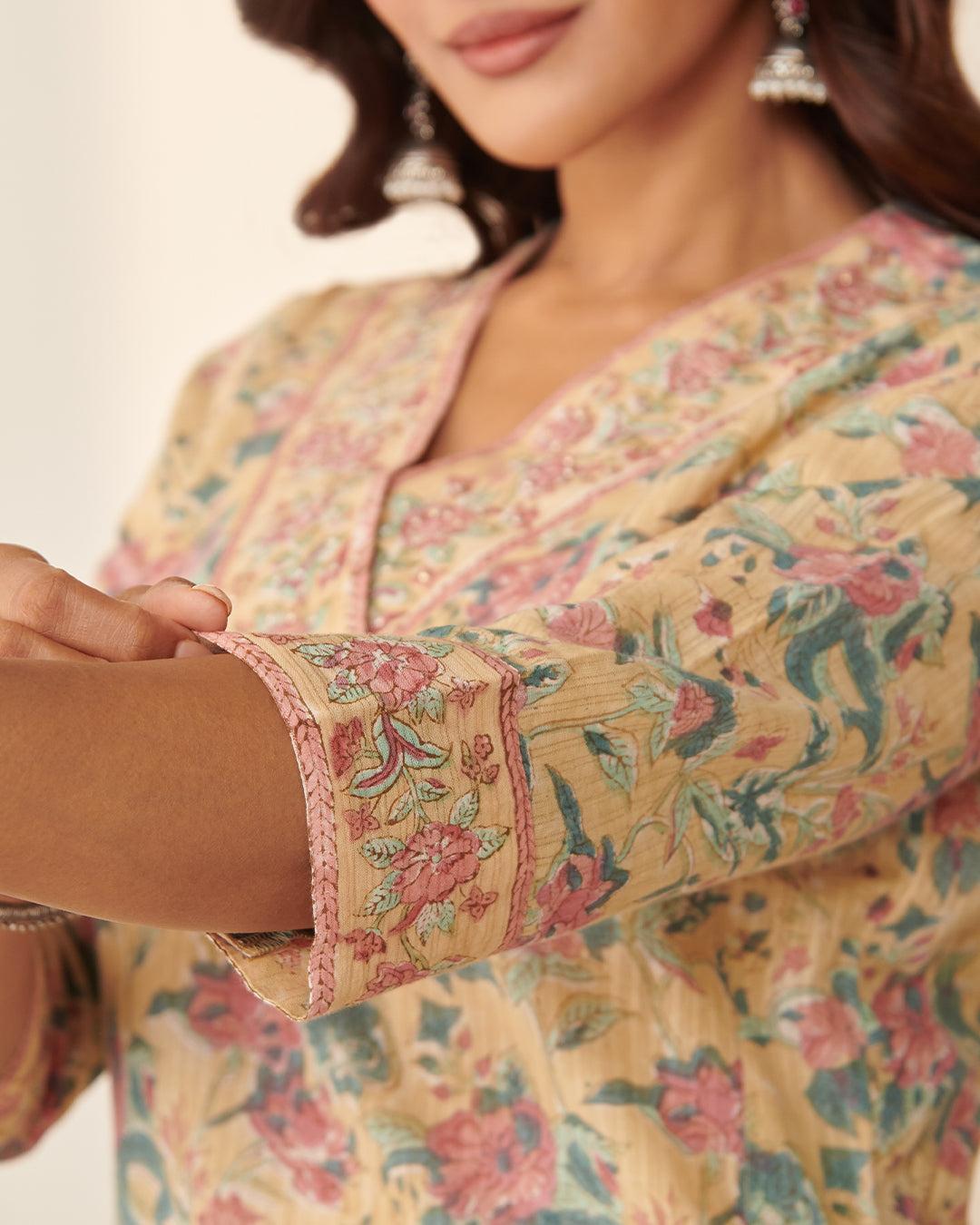
Three quarter sleeves, relaxed fits, and breathable weaves make these kurtas ideal for travel and long days outdoors. They neither cling nor feel restrictive. Instead, they adjust with you.
This adaptability is what makes many women reach for a hand-block print kurta online when building a wardrobe meant to last beyond one season.
Style That Transcends Trends

Some garments respond to fashion cycles. Others remain steady.
Rooted in Craft, Not Fashion
Hand-block printing carries centuries of tradition. The motifs are drawn from nature, architecture, and memory. They are not created for a single season. When you wear them, you are wearing a language that has existed long before trends began to change so quickly.
Understated Yet Distinct
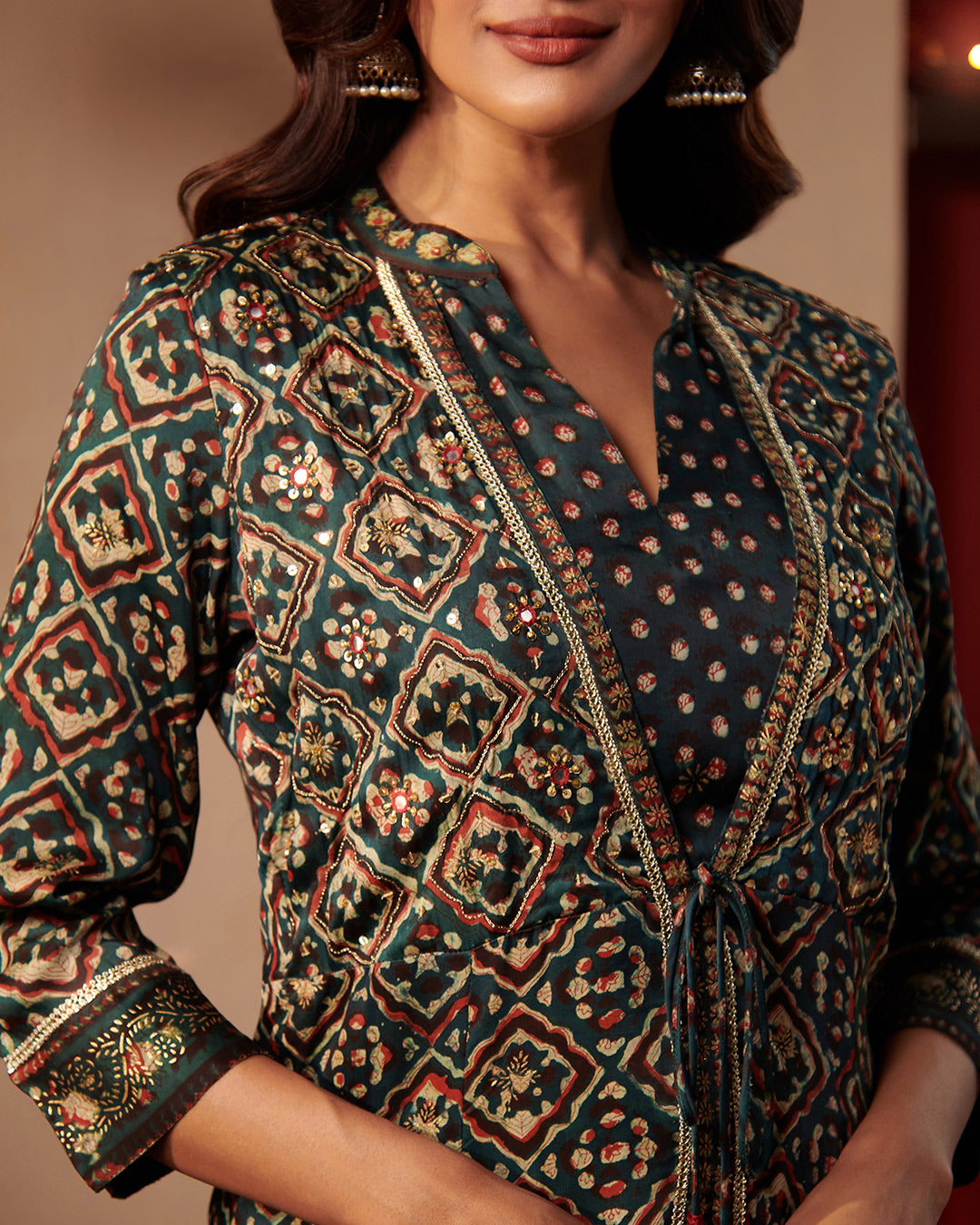
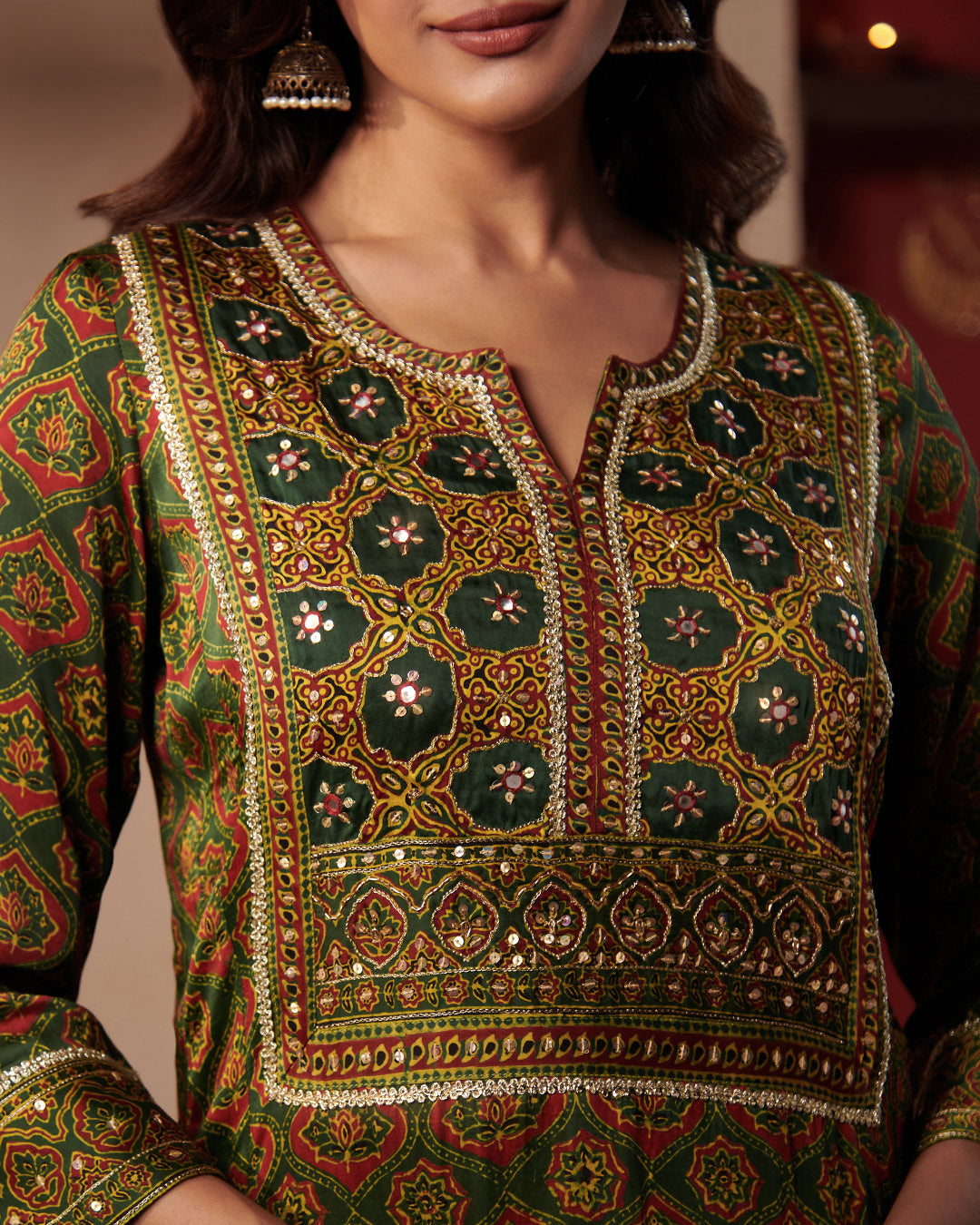
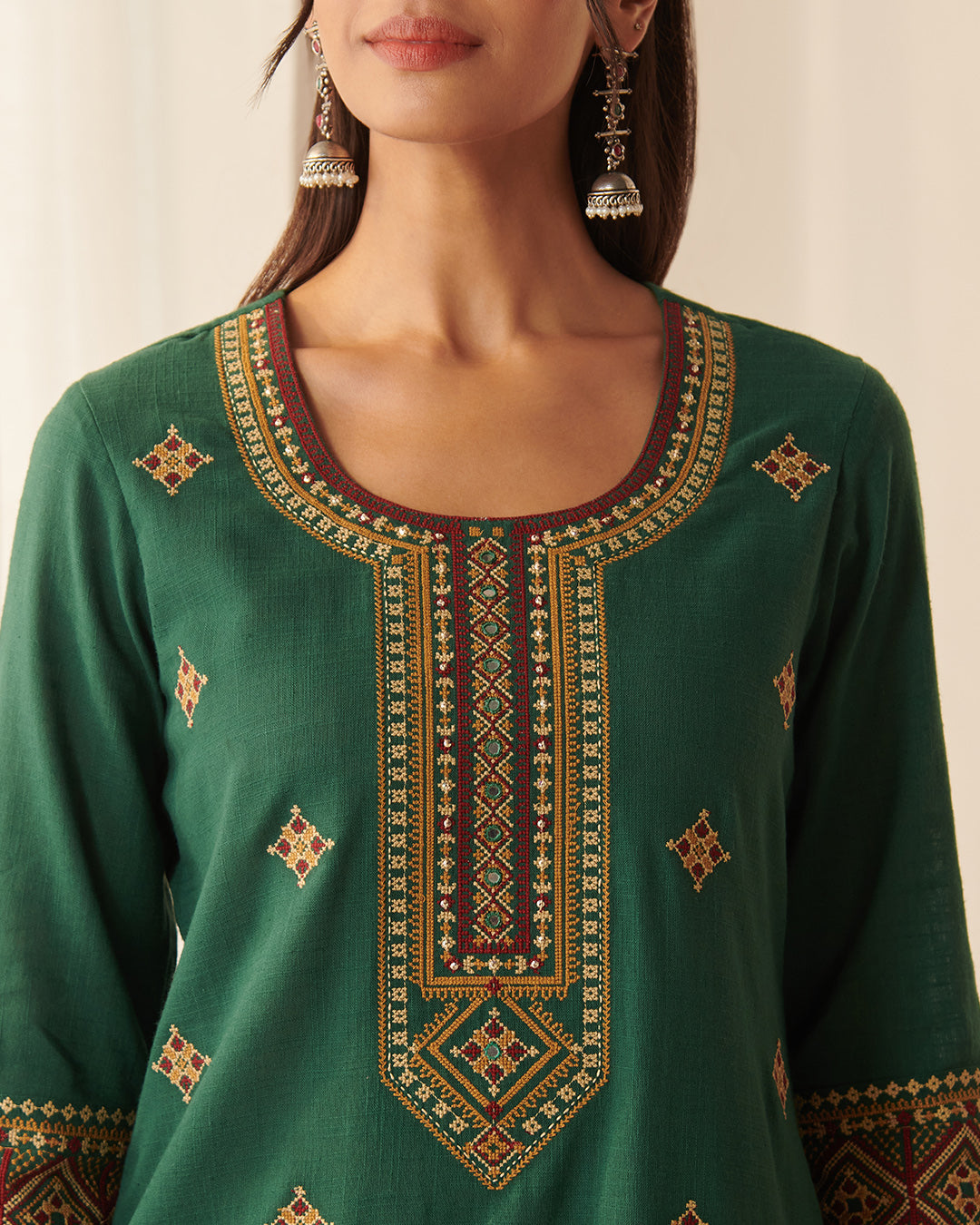
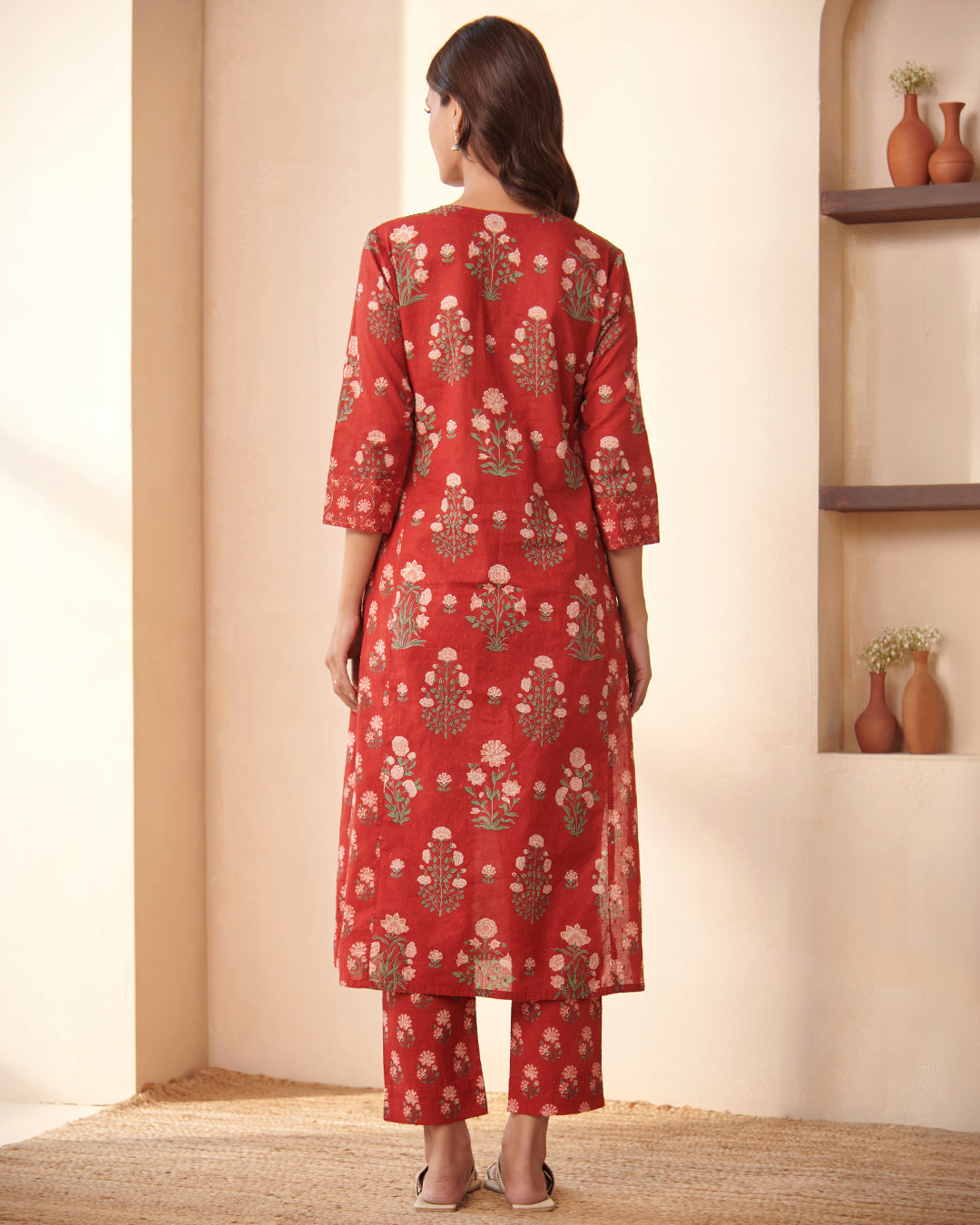
A hand-block print kurta does not demand attention. Its charm lies in detail, the slight irregularity of a stamped flower, the rhythm of a repeating pattern. This quiet distinctiveness makes it suitable for work, intimate celebrations, and everyday rituals.
Easy to Make Your Own
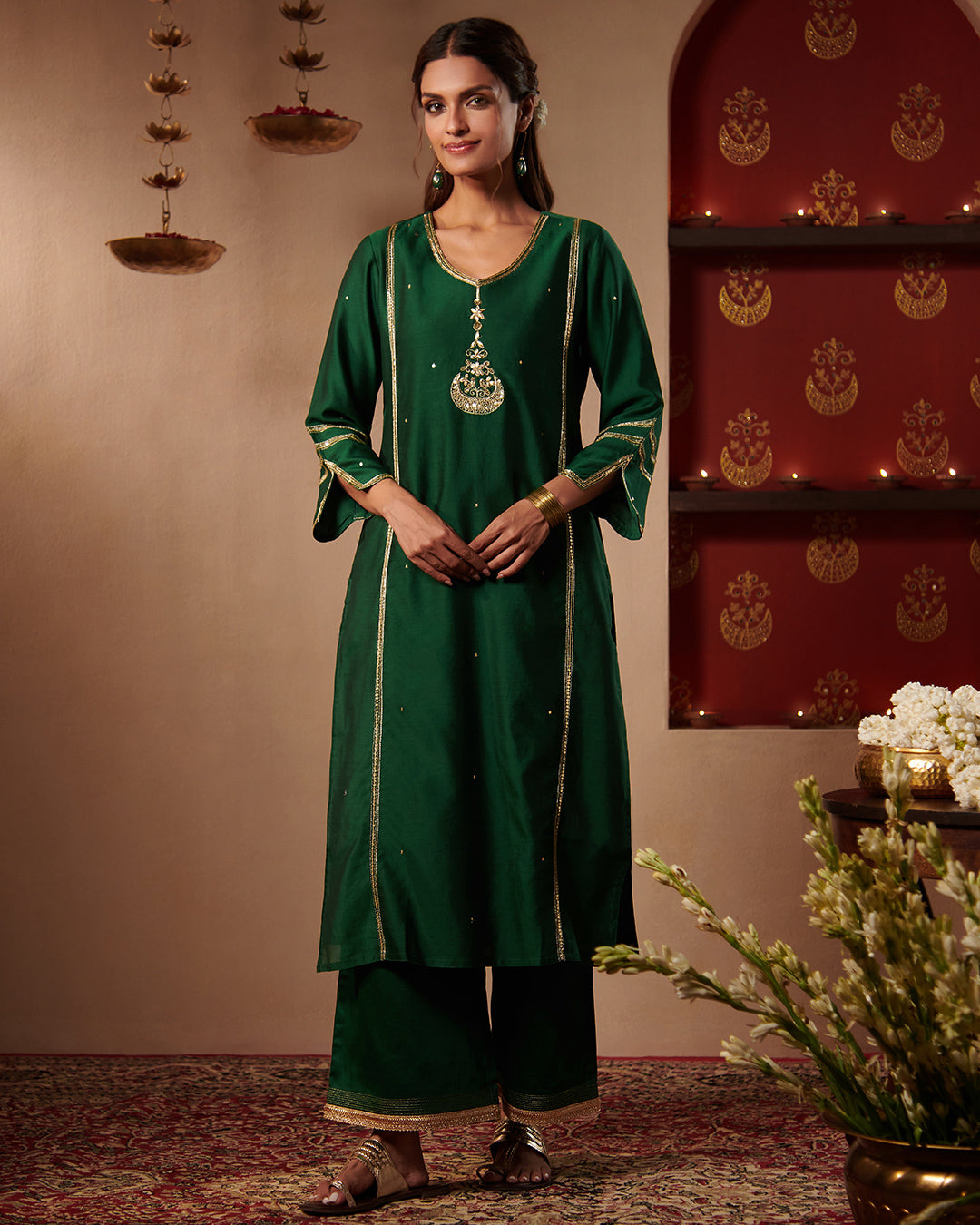
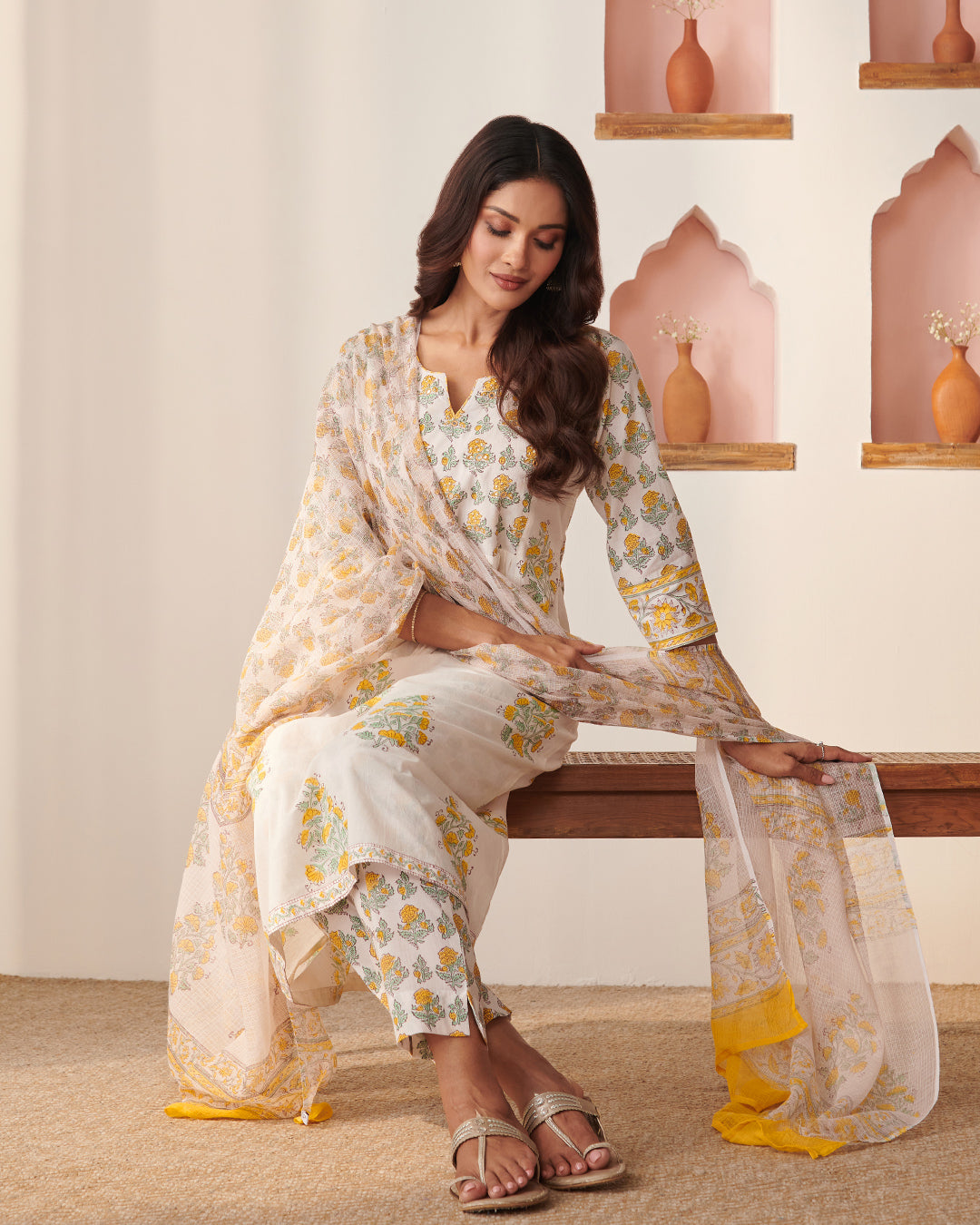
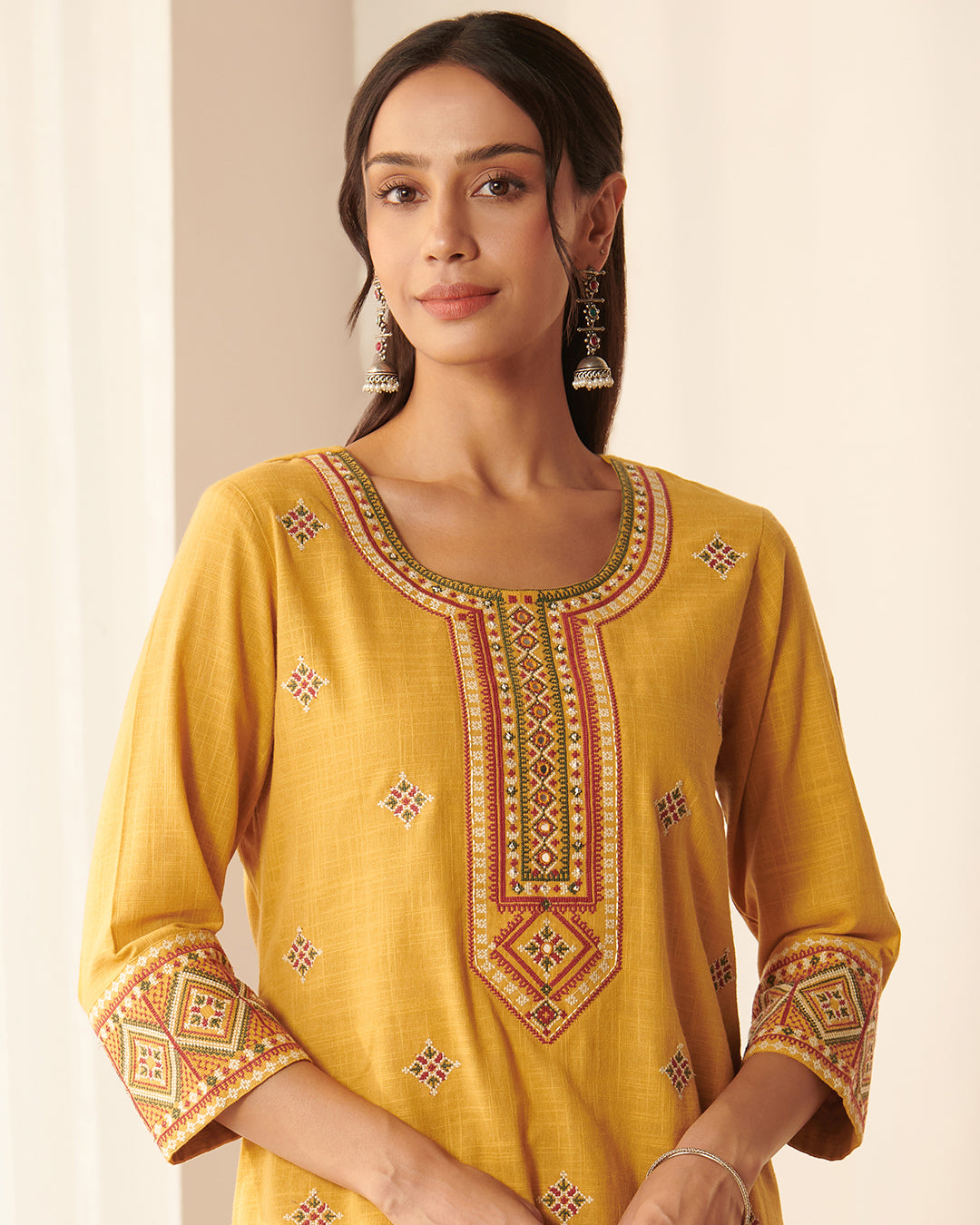
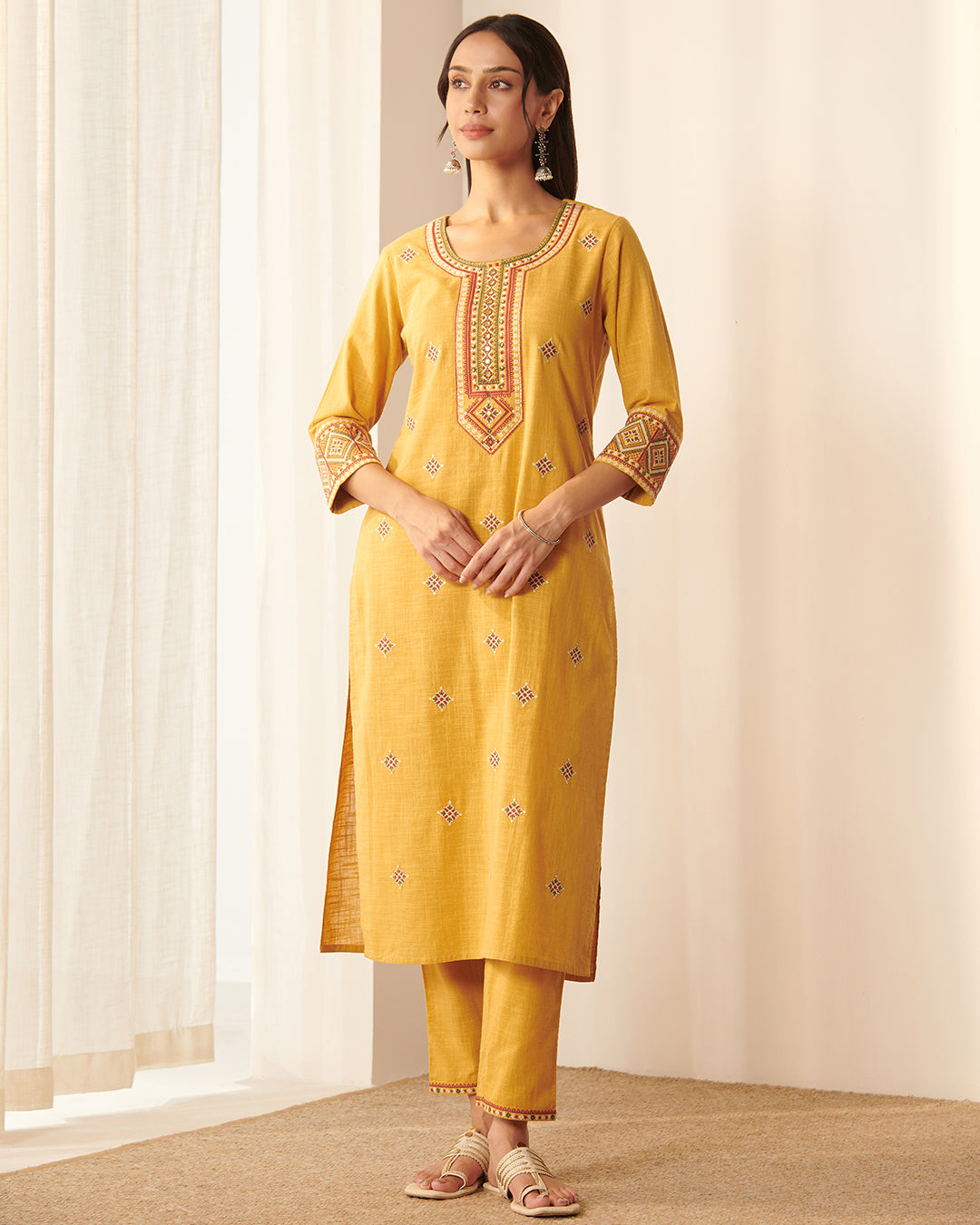
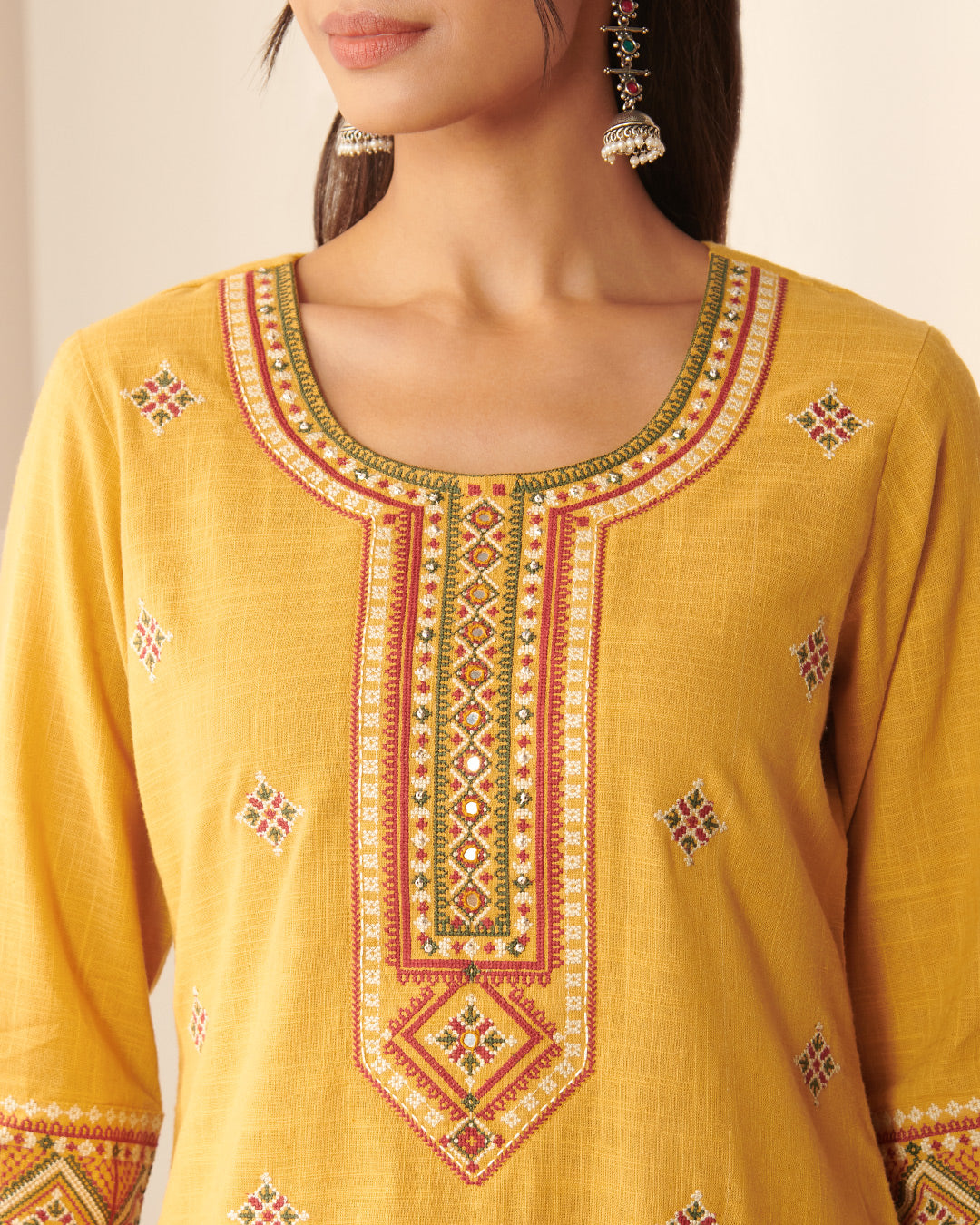
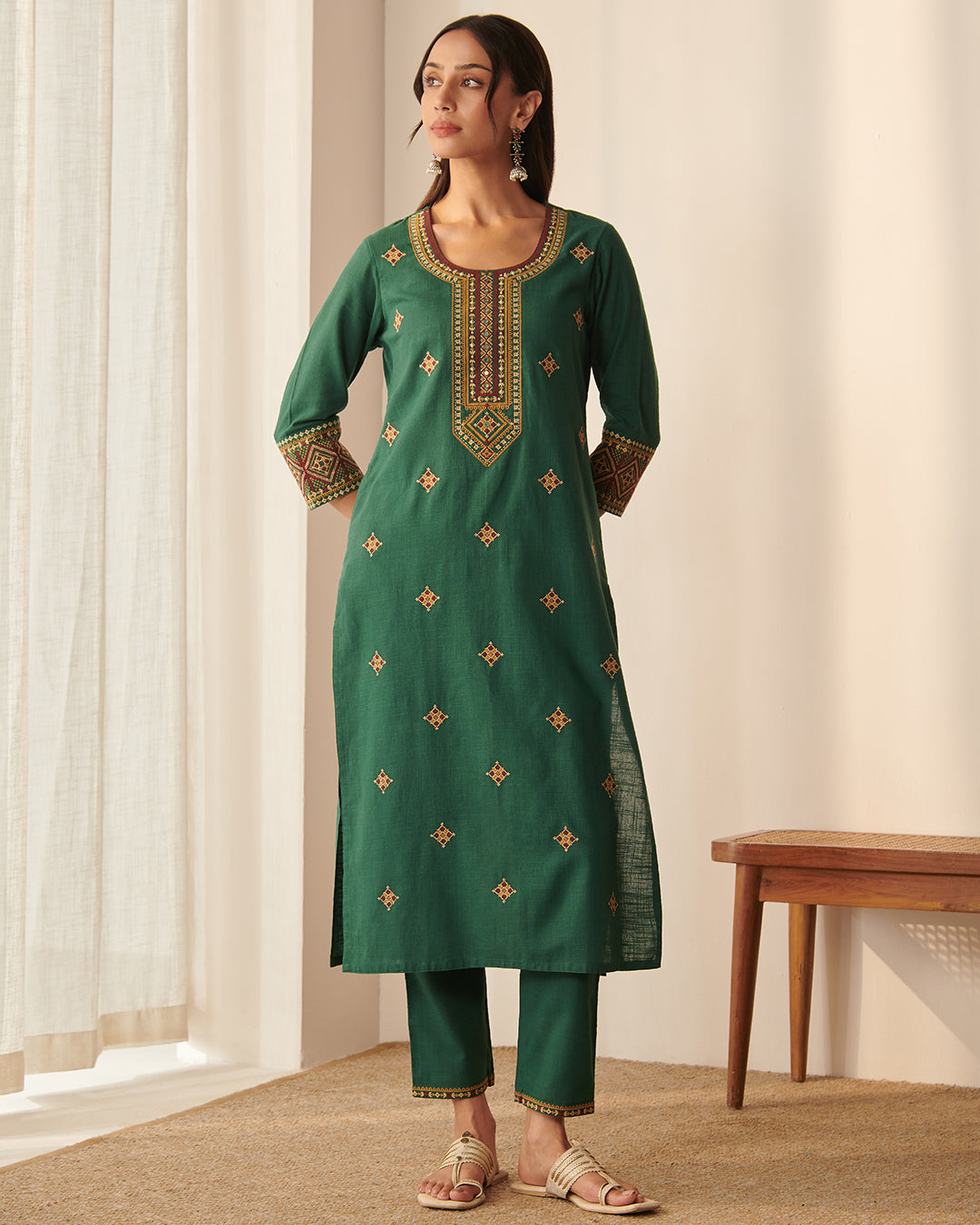
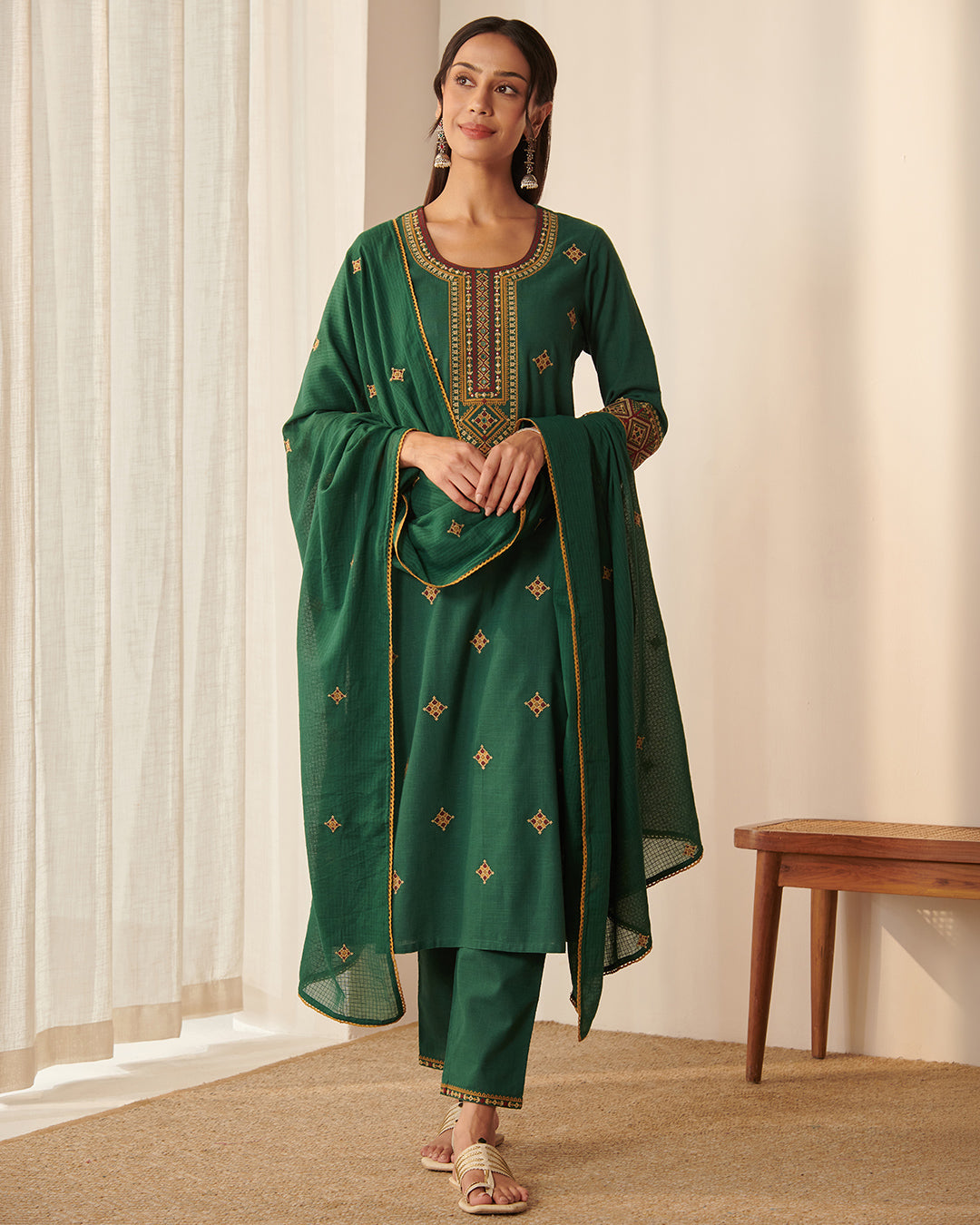
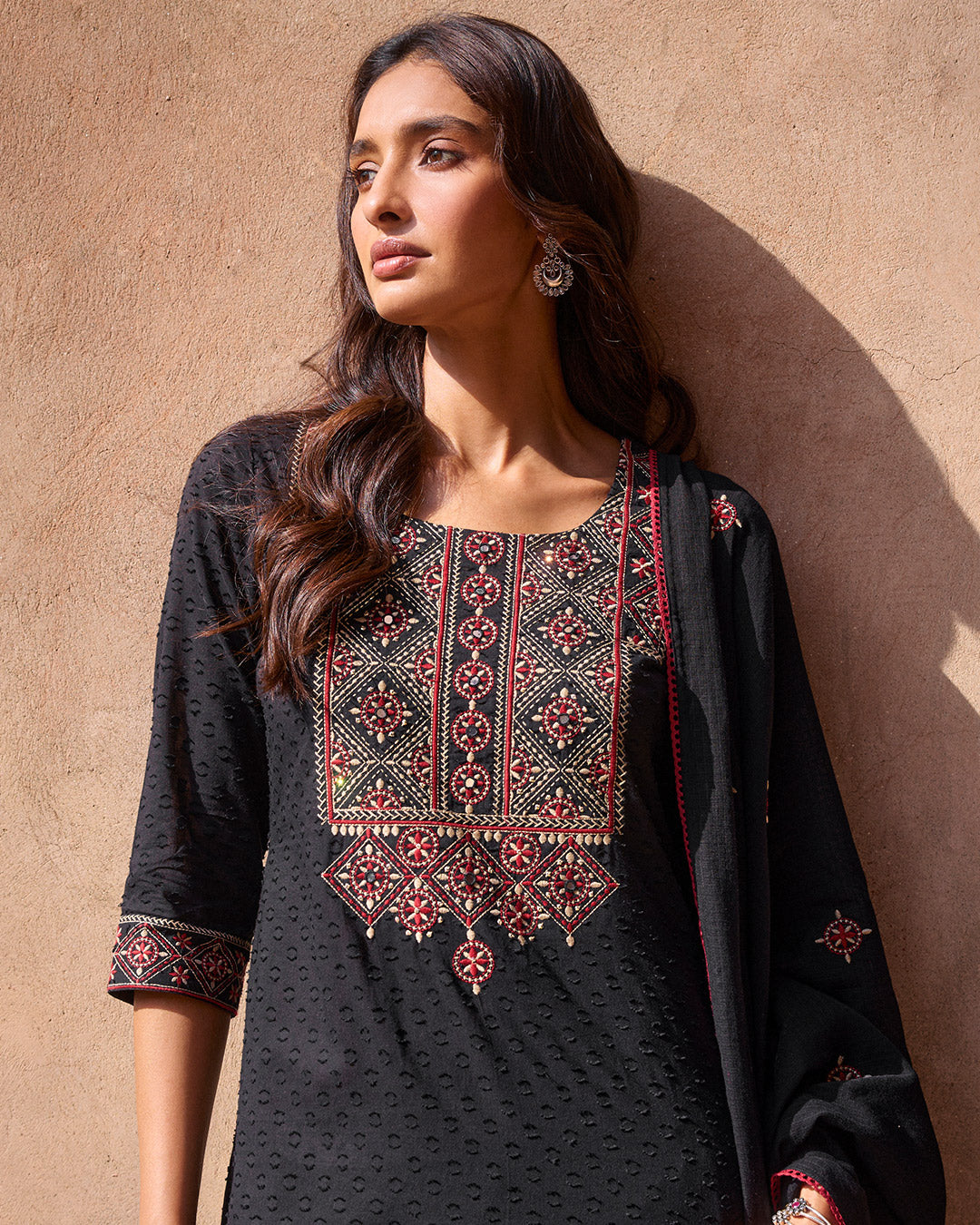
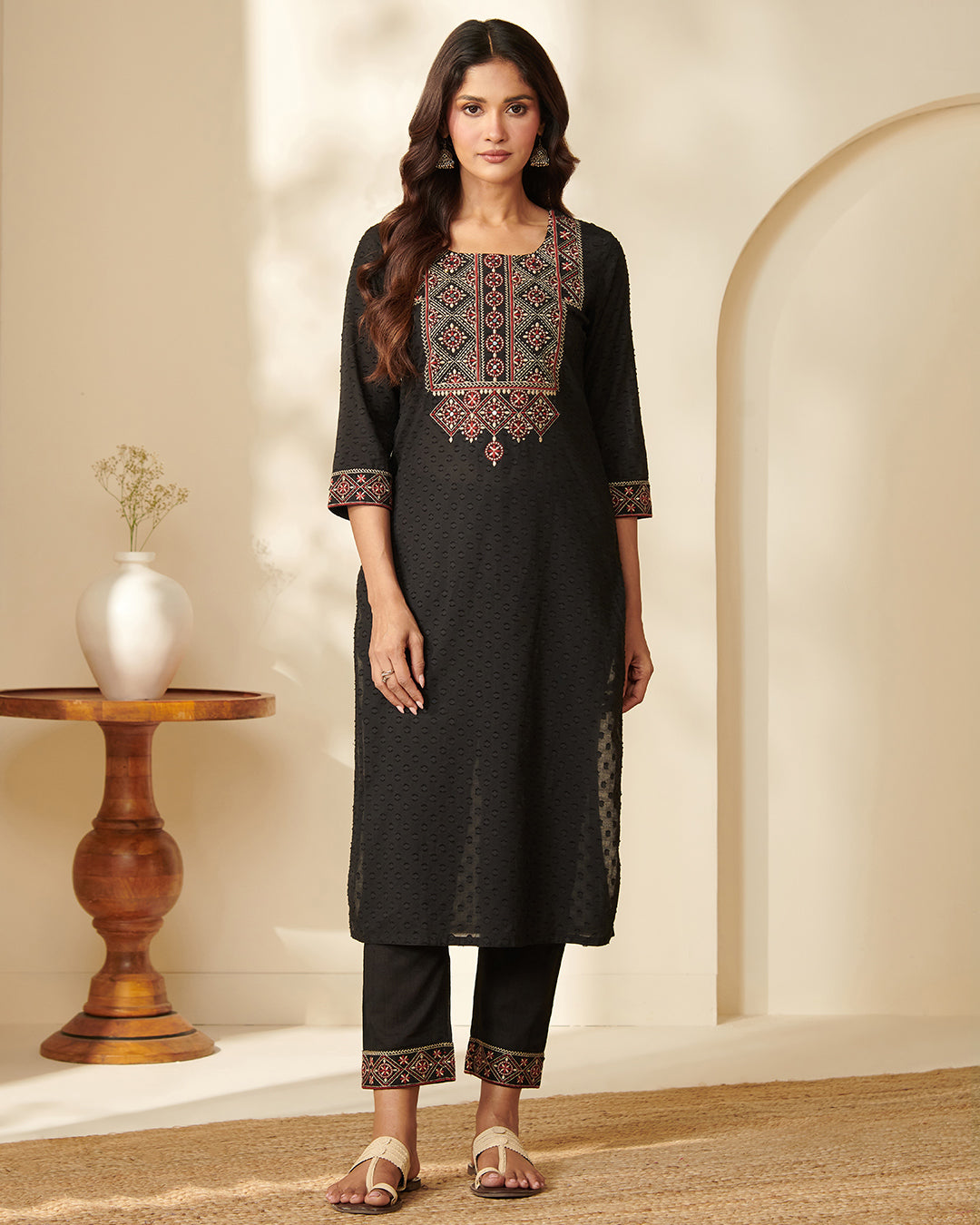
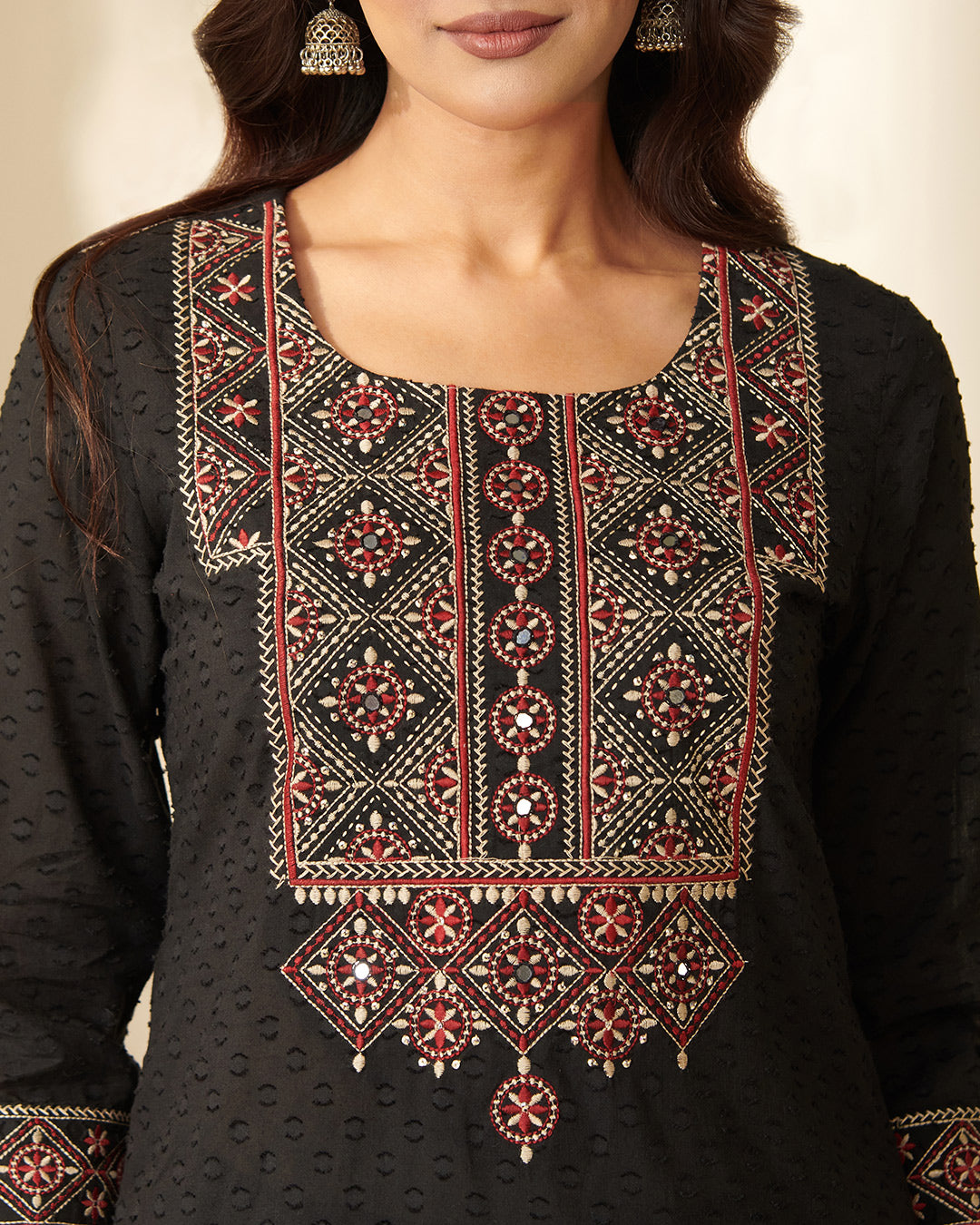
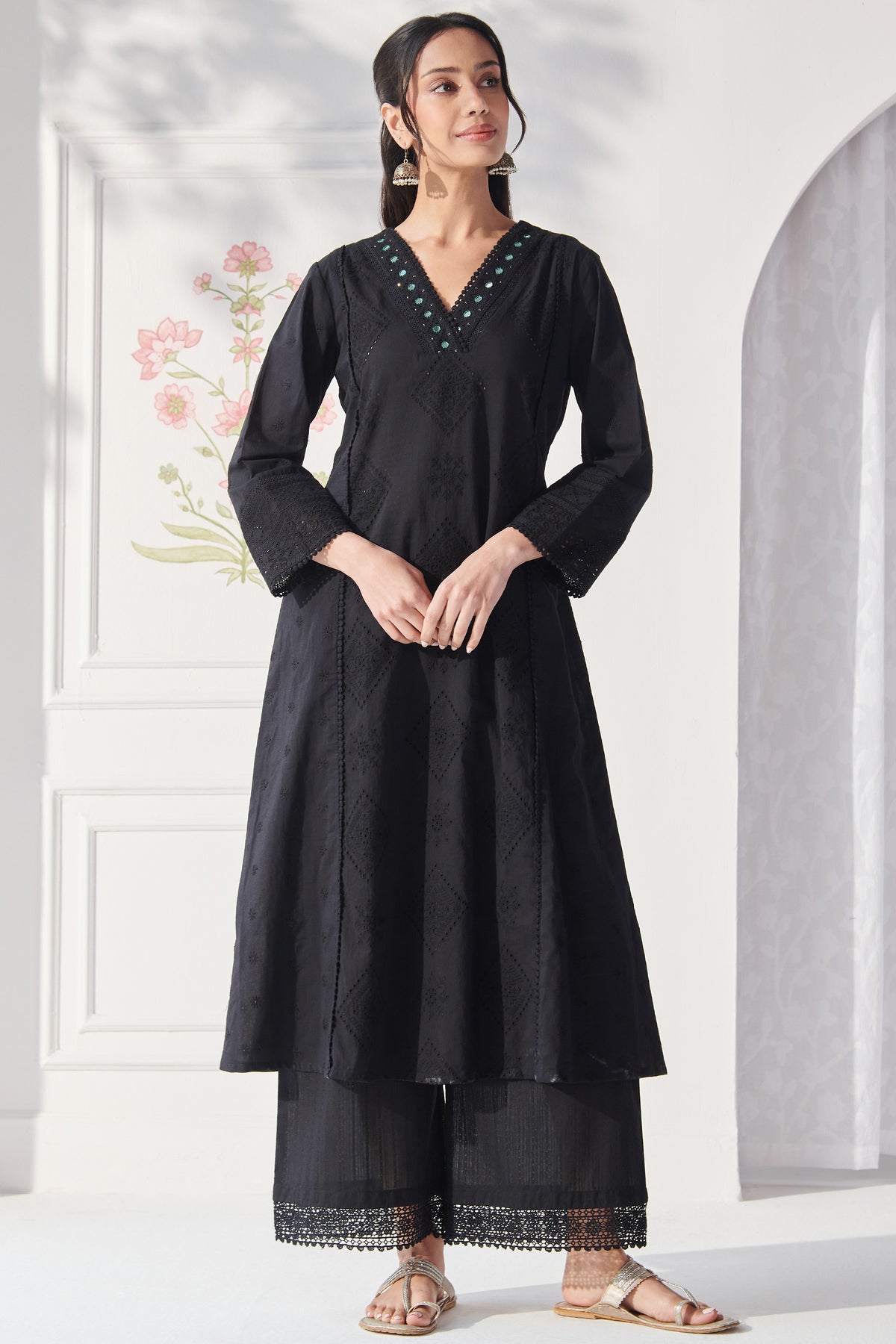
Style evolves with the woman wearing it. One day, the kurta is paired with silver jhumkas and kolhapuris. Another day, it is worn with straight pants and minimal jewellery. The base remains the same, yet the expression shifts.
That is the strength of a piece rooted in craft. It leaves room for you.
In the end, comfort and style are not separate ideas. In a well made hand-block print kurta, they live together, season after season, without asking to be replaced.
Where to Buy Authentic Hand-Block Print Kurta Online
Finding an authentic hand-block print kurta online requires a discerning eye. True block printing carries slight irregularities. The alignment may shift gently. The colour may settle differently across the fabric. These are not flaws. They are proof of the artisan’s hand.
When browsing online, look closely at the motifs. Traditional patterns draw from nature, architecture, and regional stories. The print should feel layered, not flat. The fabric should have softness and weight that suggests breathability.
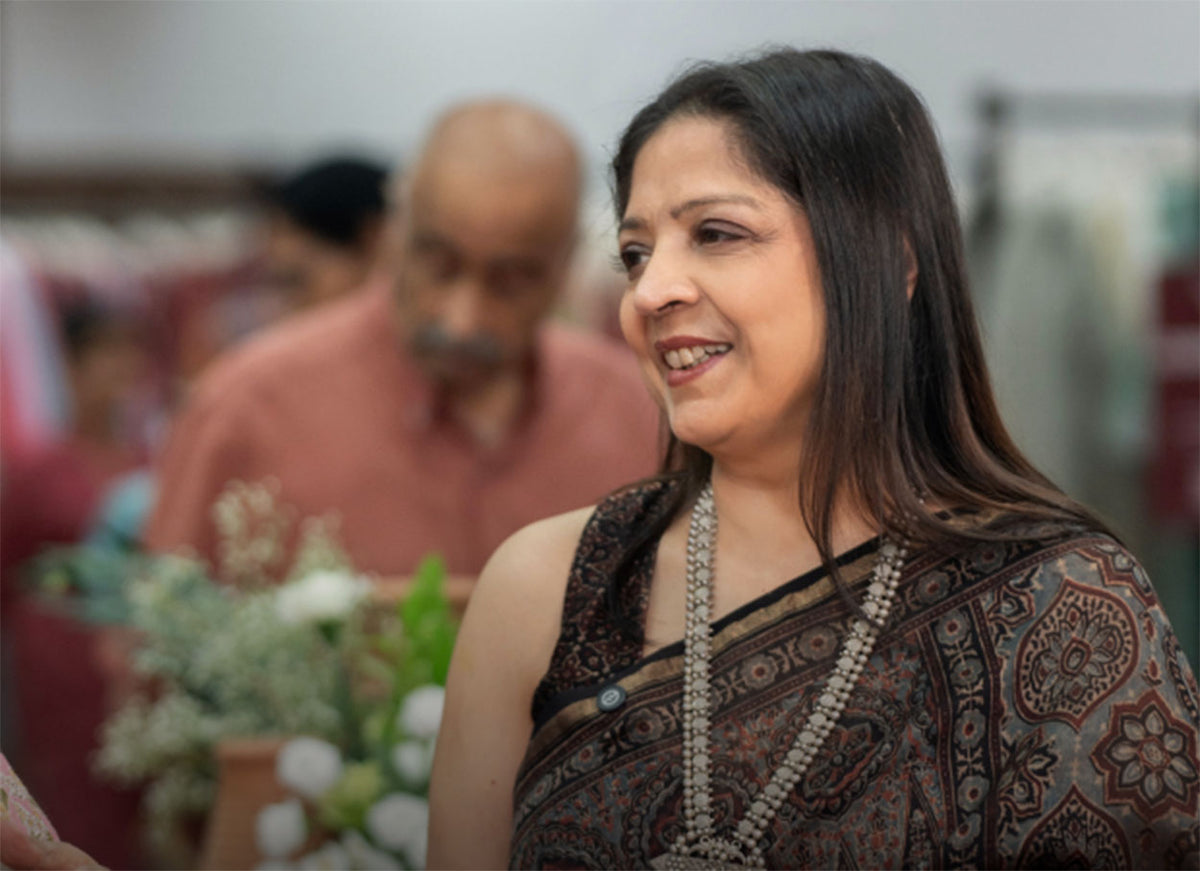
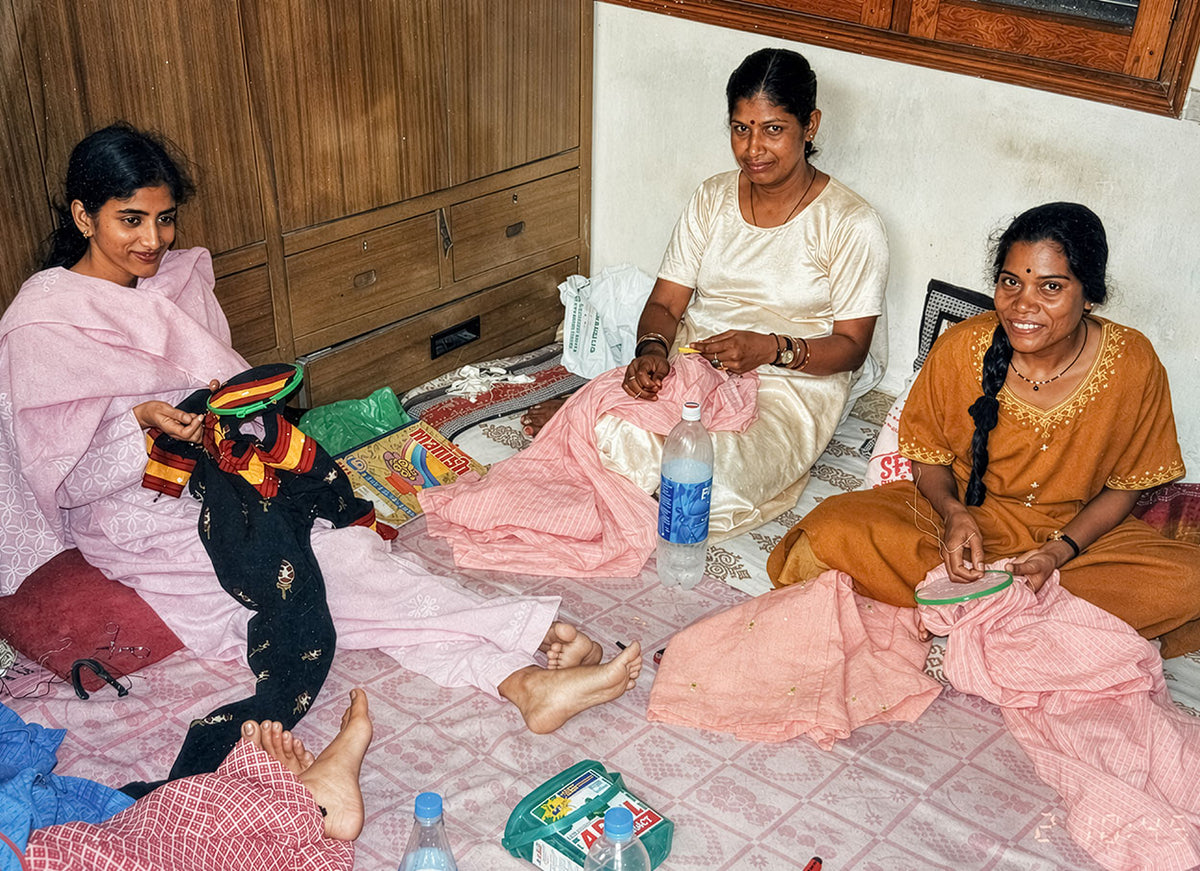
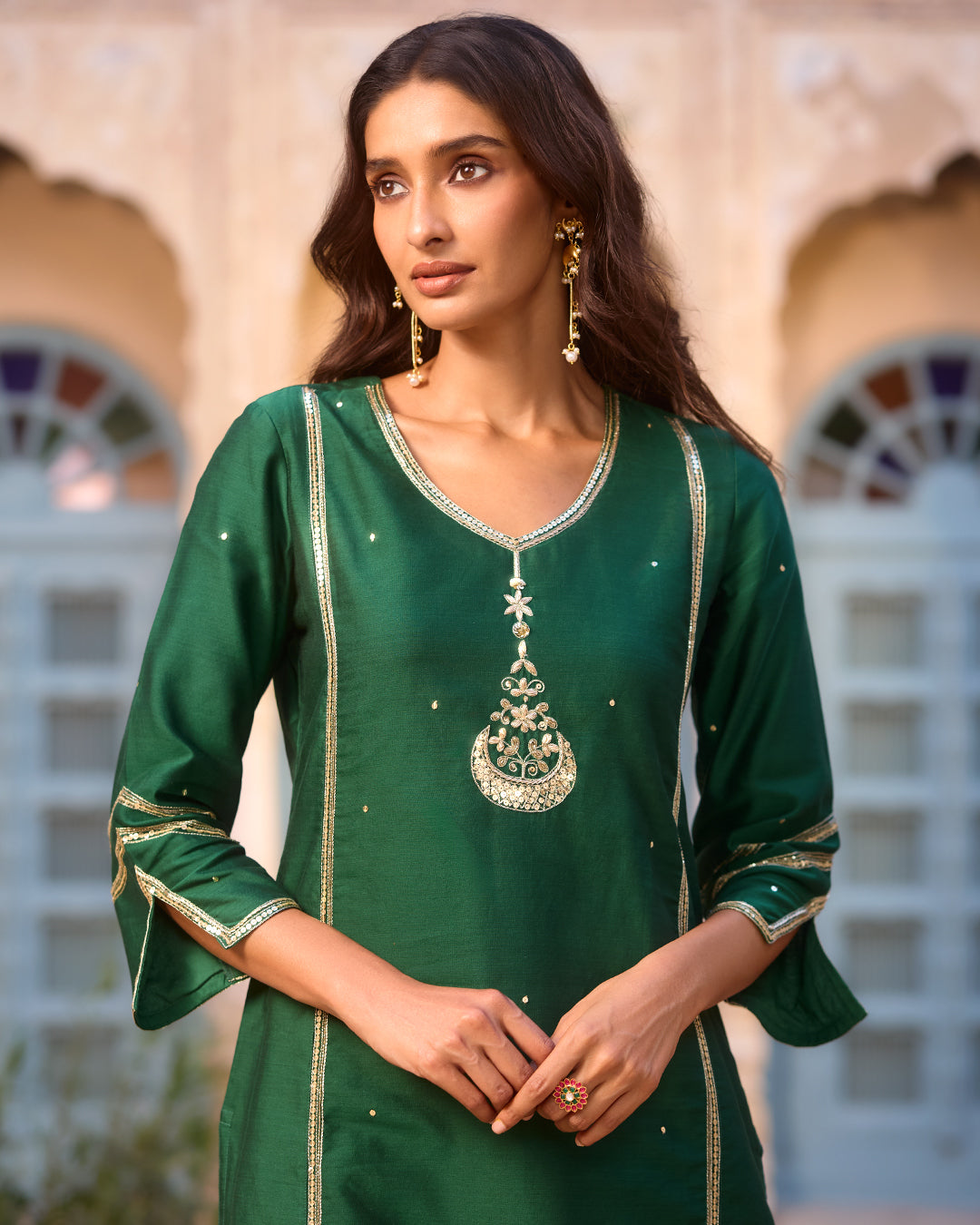
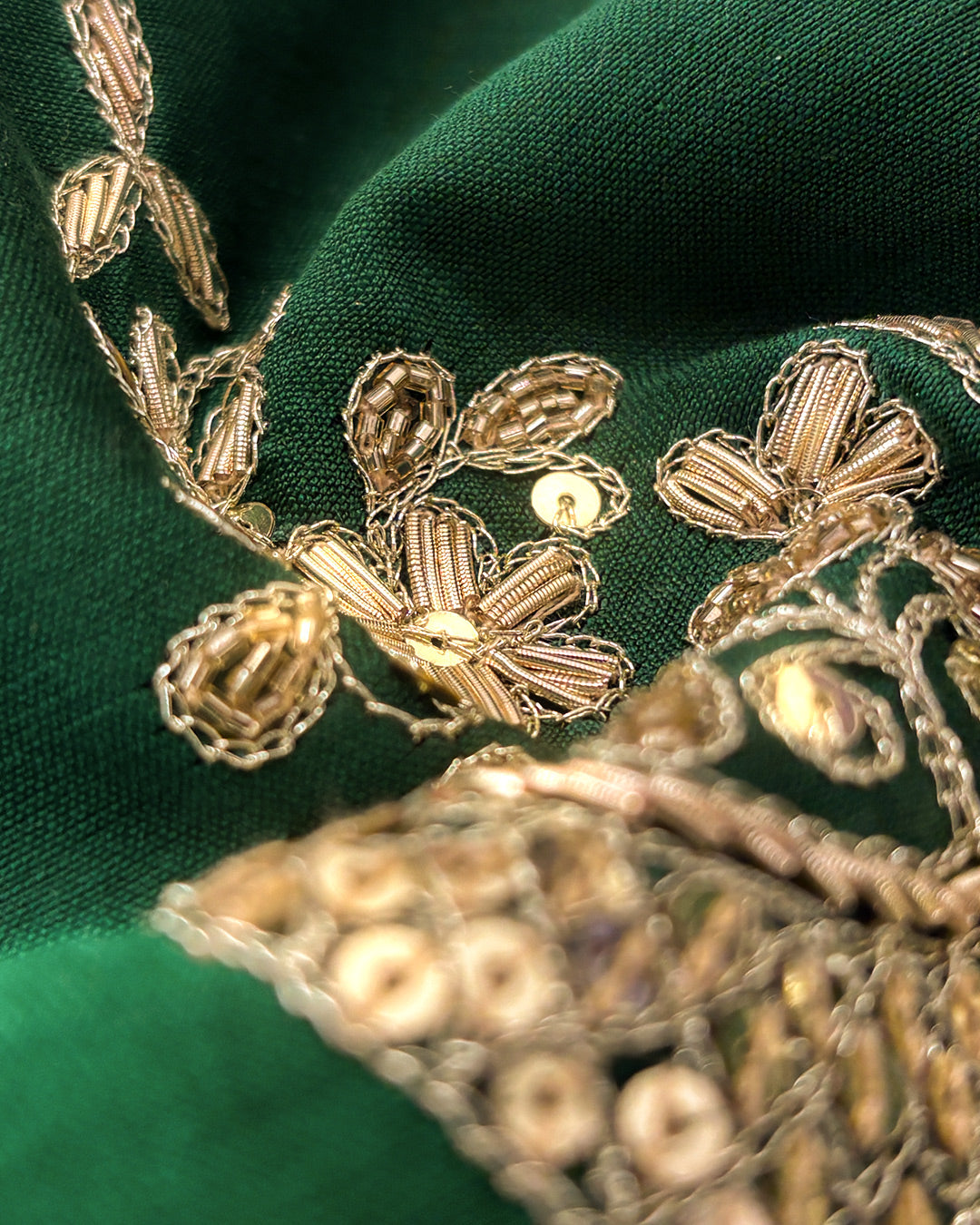
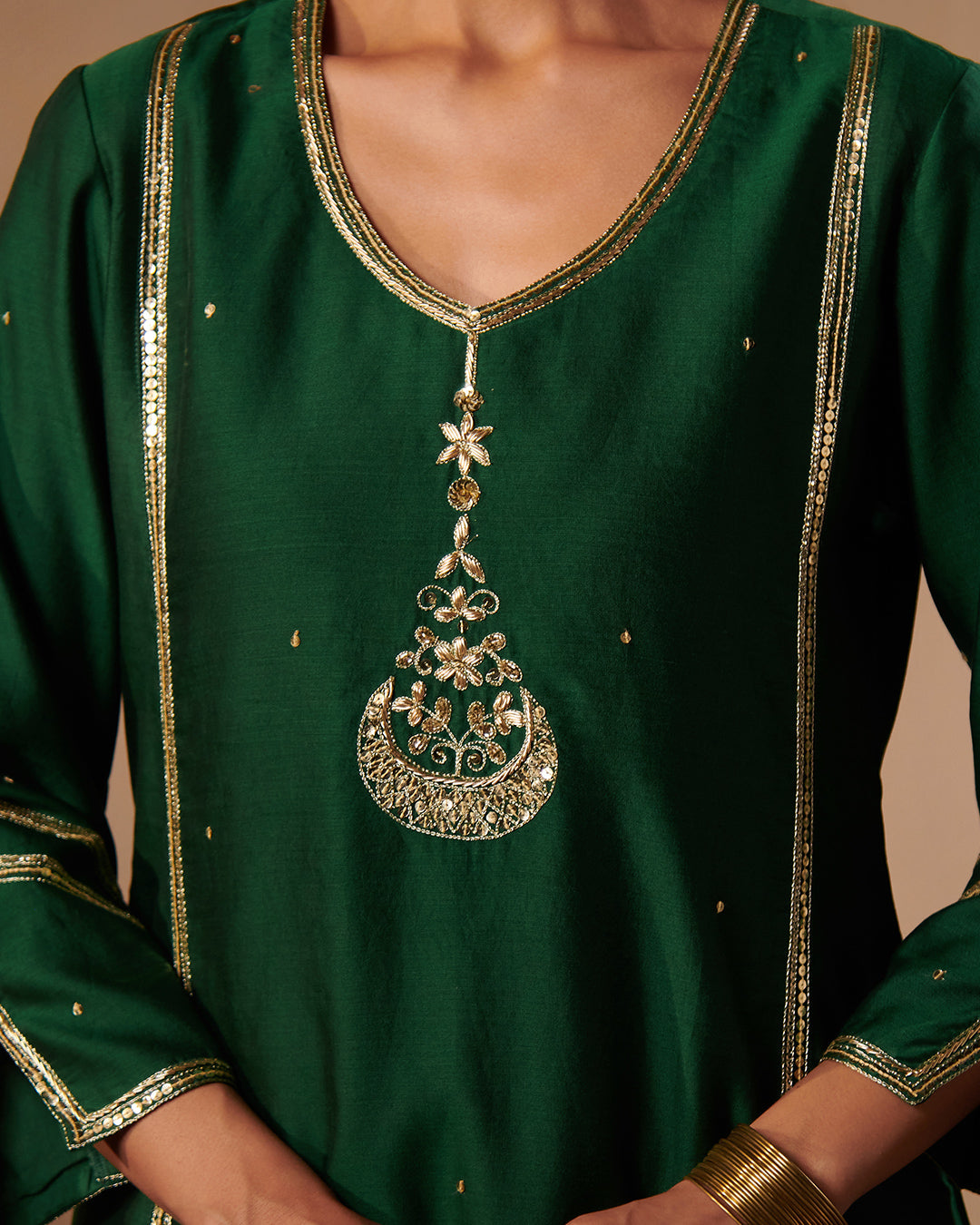
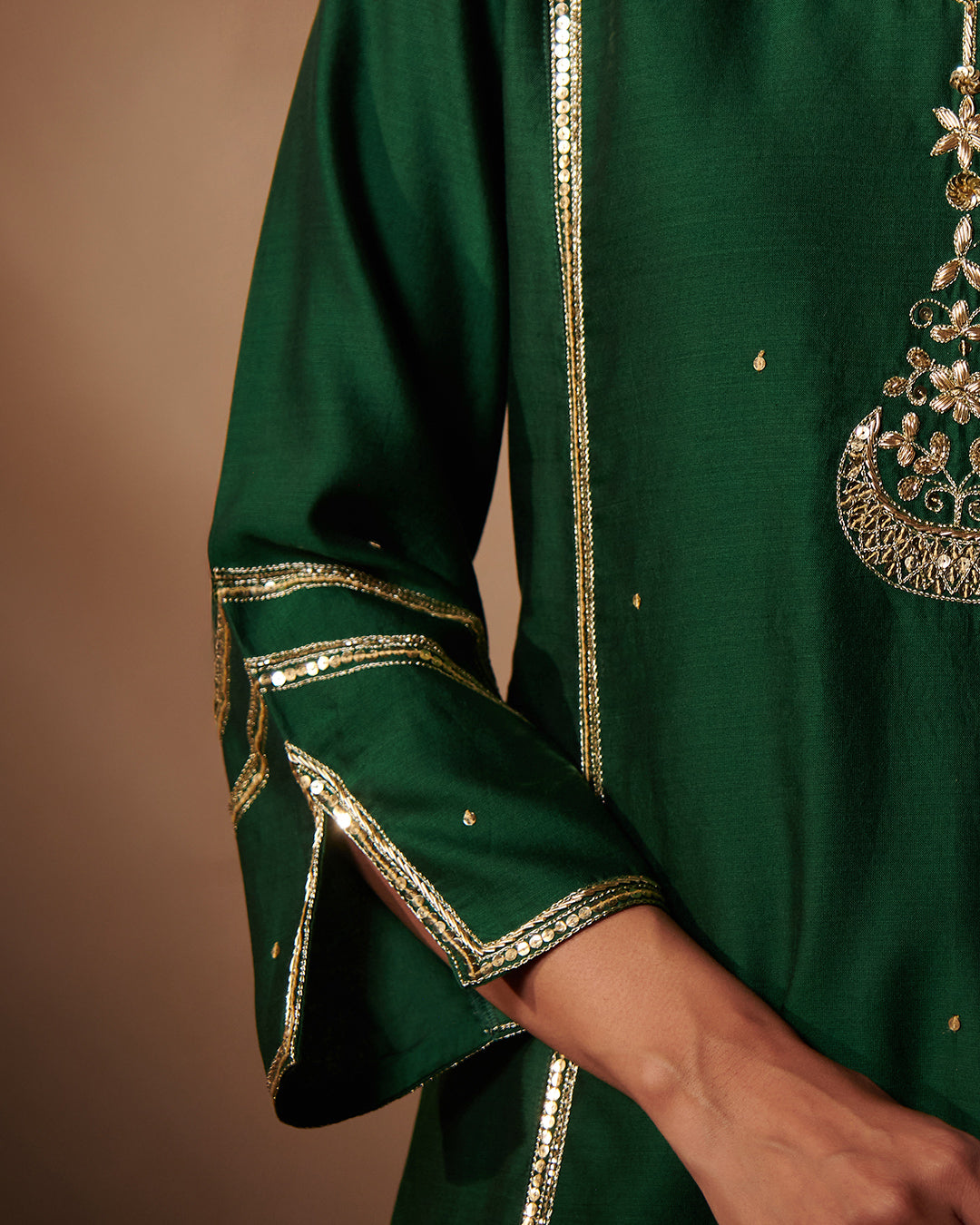
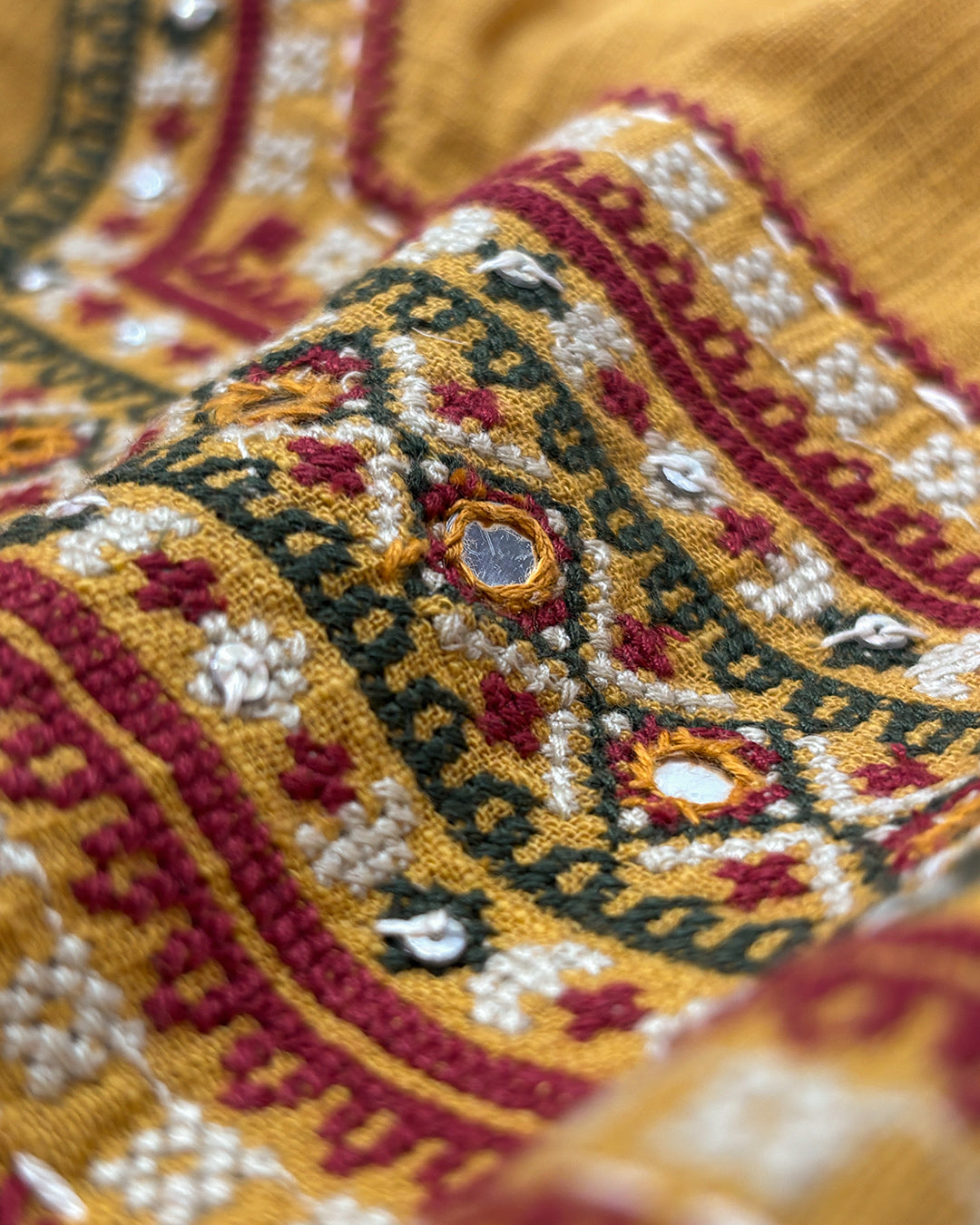
At Farida Gupta, hand-block printing is not a seasonal aesthetic. It is part of a long relationship with craft communities. The cottons are chosen for comfort. The colours are developed to age gracefully. Many pieces also carry subtle hand work, quiet details that reveal themselves slowly over time.
Buying a hand-block print kurta online should feel thoughtful, not rushed. Choose pieces that resonate with your daily life, not just a passing moment.
Caring for Your Hand-Block Print Kurta
A hand-block print kurta holds both colour and care within its threads. The way you maintain it matters.
Gentle Washing
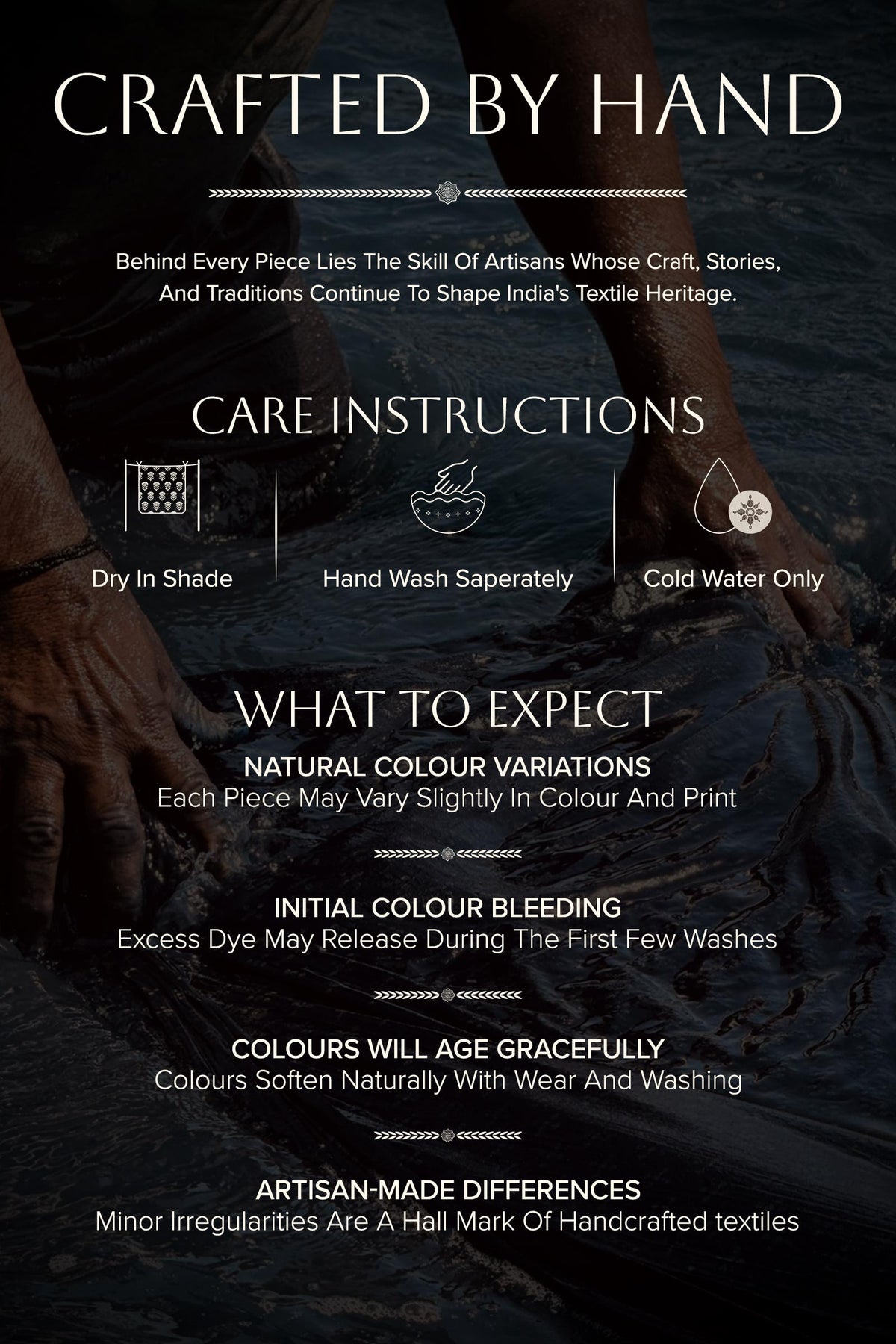
Always wash separately the first few times. Use mild detergent and cold water. Hand washing is ideal, but a delicate machine cycle can work if handled carefully. Strong chemicals can disturb natural dyes and soften the clarity of the print.
Drying with Care
Avoid harsh sunlight when drying. Shade drying helps preserve the richness of the colours. Let the fabric breathe naturally instead of wringing it tightly.
Ironing and Storage
Iron on low to medium heat, preferably inside out. Store in a cool, dry place. If the kurta carries hand work, fold it with soft tissue to prevent friction. These small habits keep the fabric and print intact for years.
With time, the cotton softens further. The motifs become familiar. The kurta begins to feel uniquely yours.
Conclusion
A hand-block print kurta is never just a garment. It carries the rhythm of carved wooden blocks, the patience of repeated stamping, and the quiet skill of the artisan.
It adapts to seasons. It pairs effortlessly with everyday routines. It remains steady even as trends shift around it.
When chosen thoughtfully and cared for gently, a hand work kurta becomes part of personal memory. The print may fade slightly. The fabric may grow softer. But the story within it stays strong. Because some prints are more than patterns. They are stories waiting to be worn.

