



























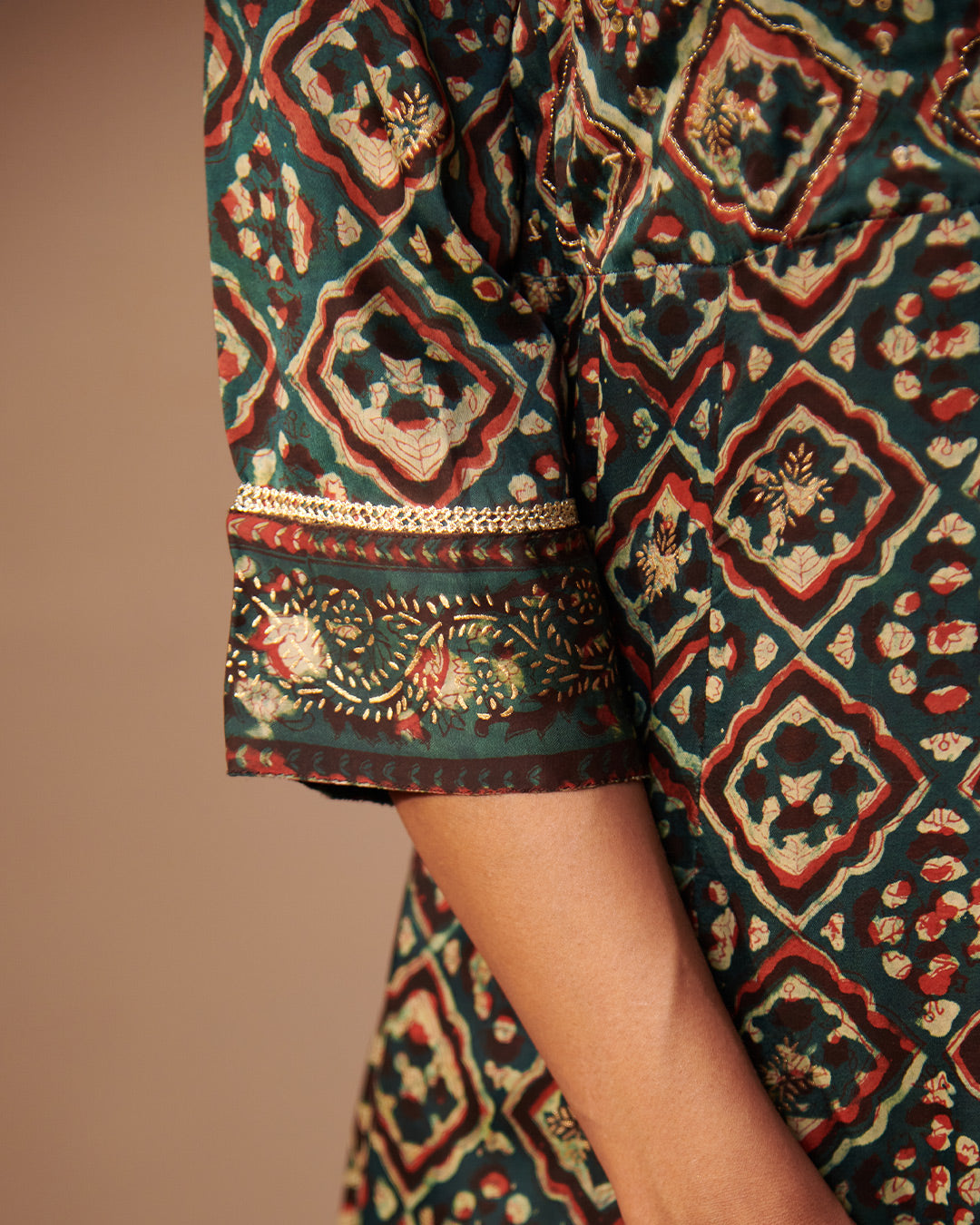
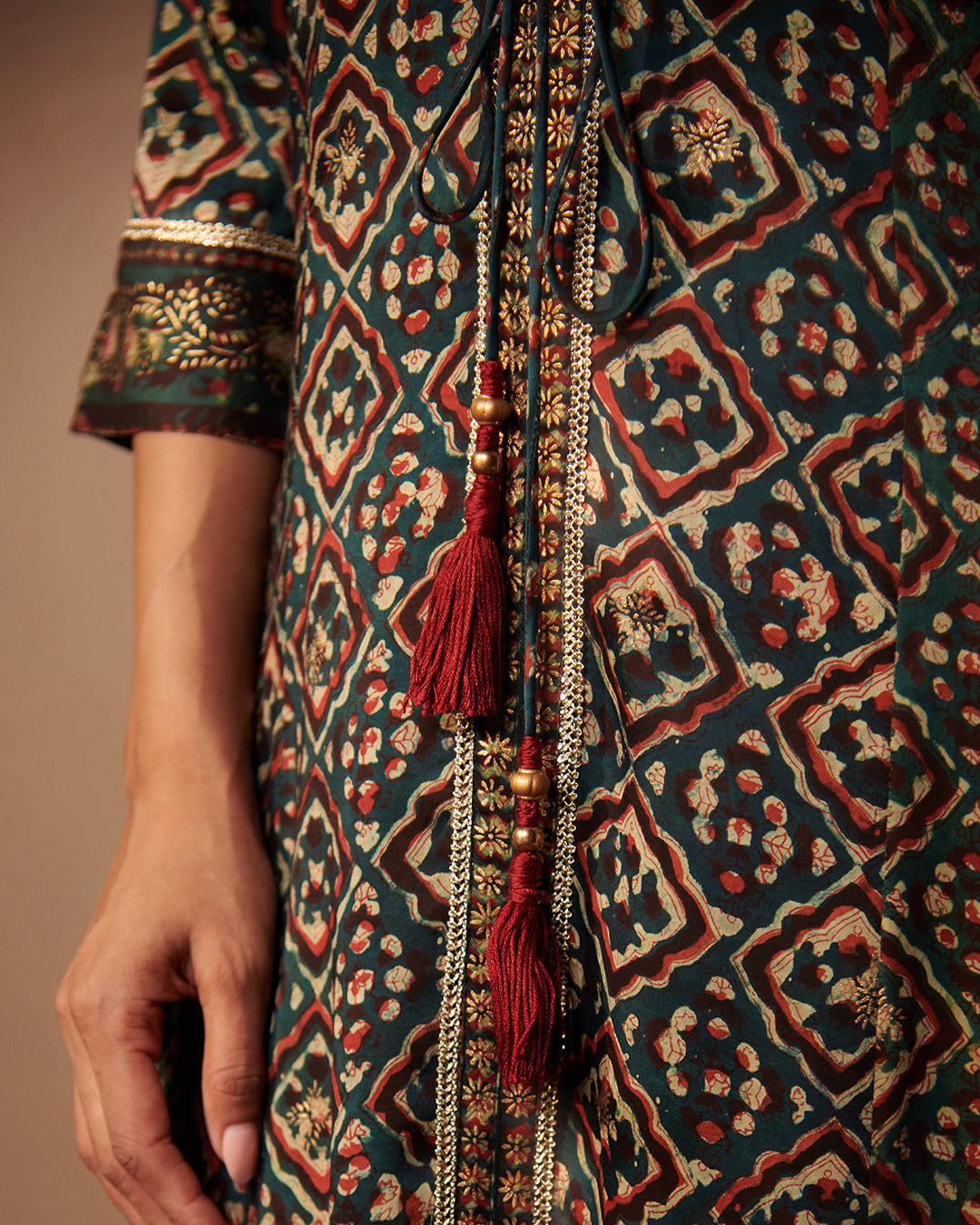




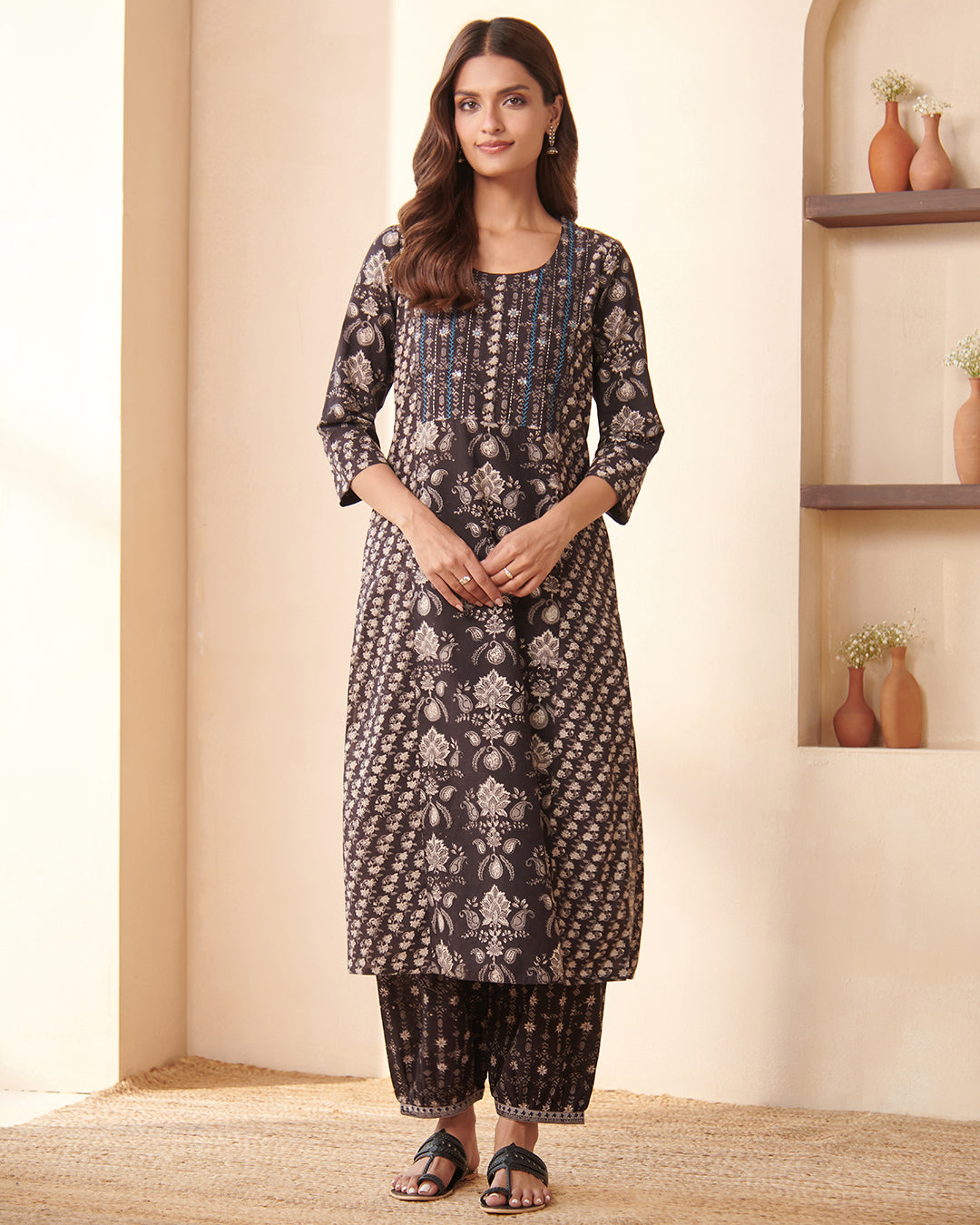
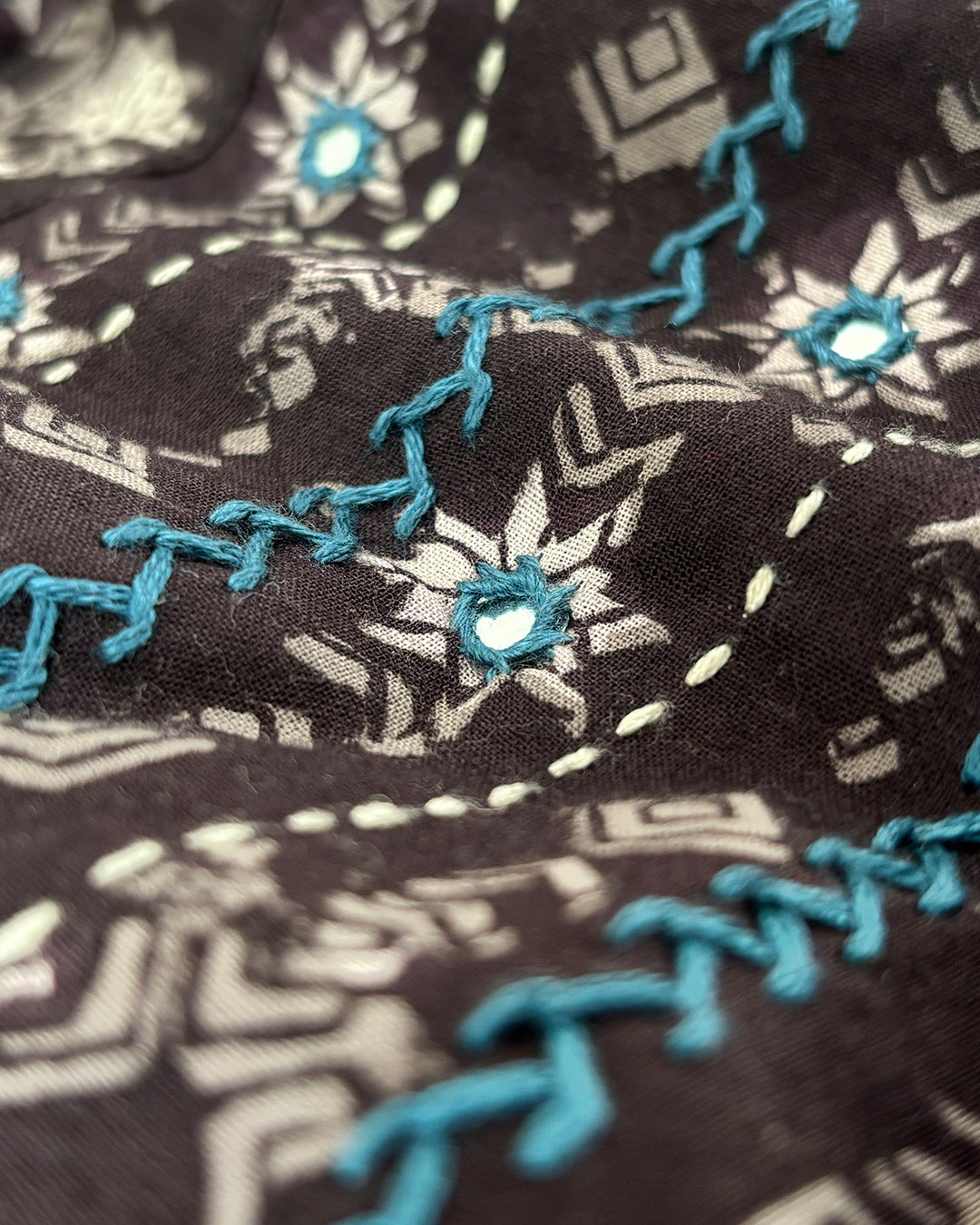


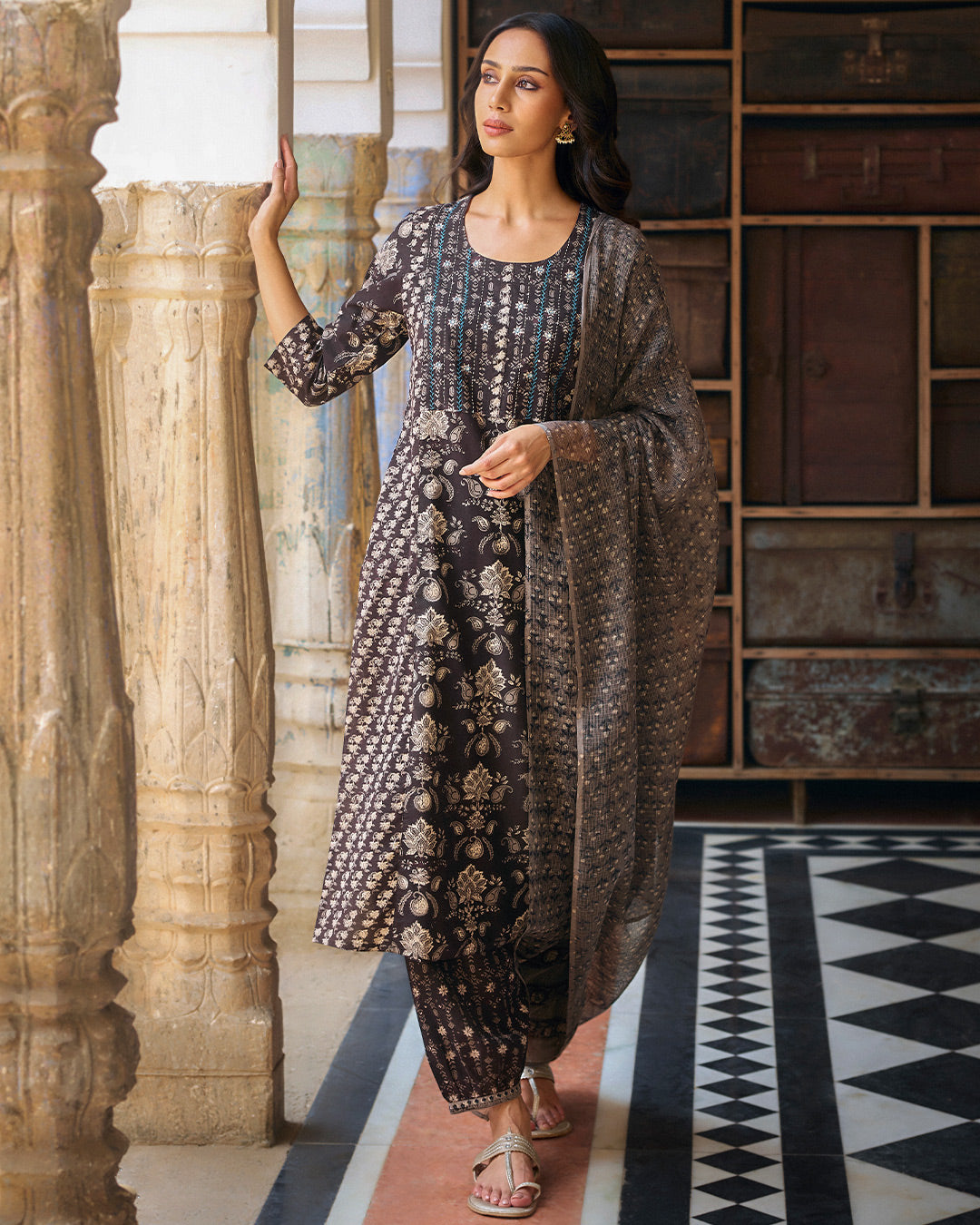
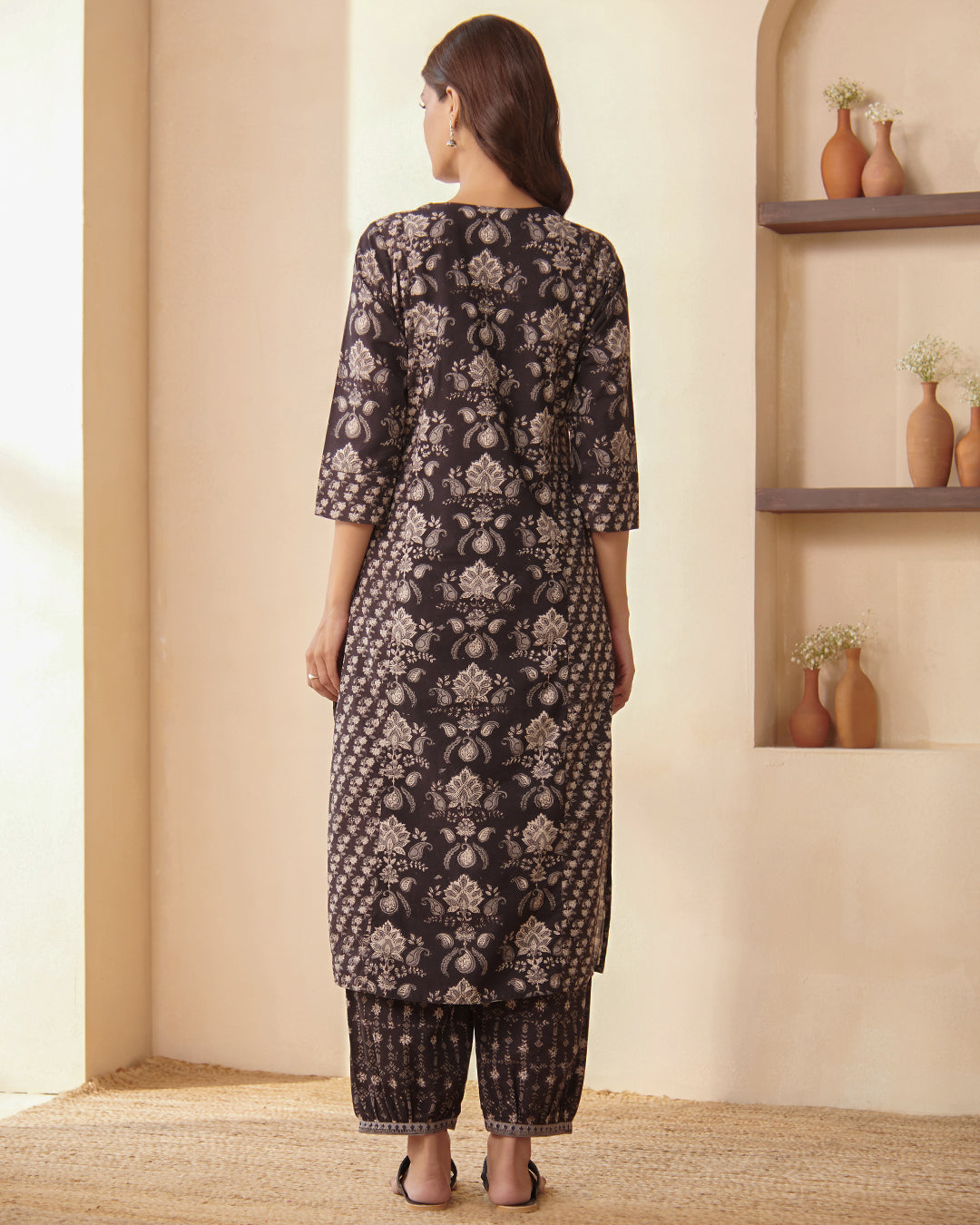


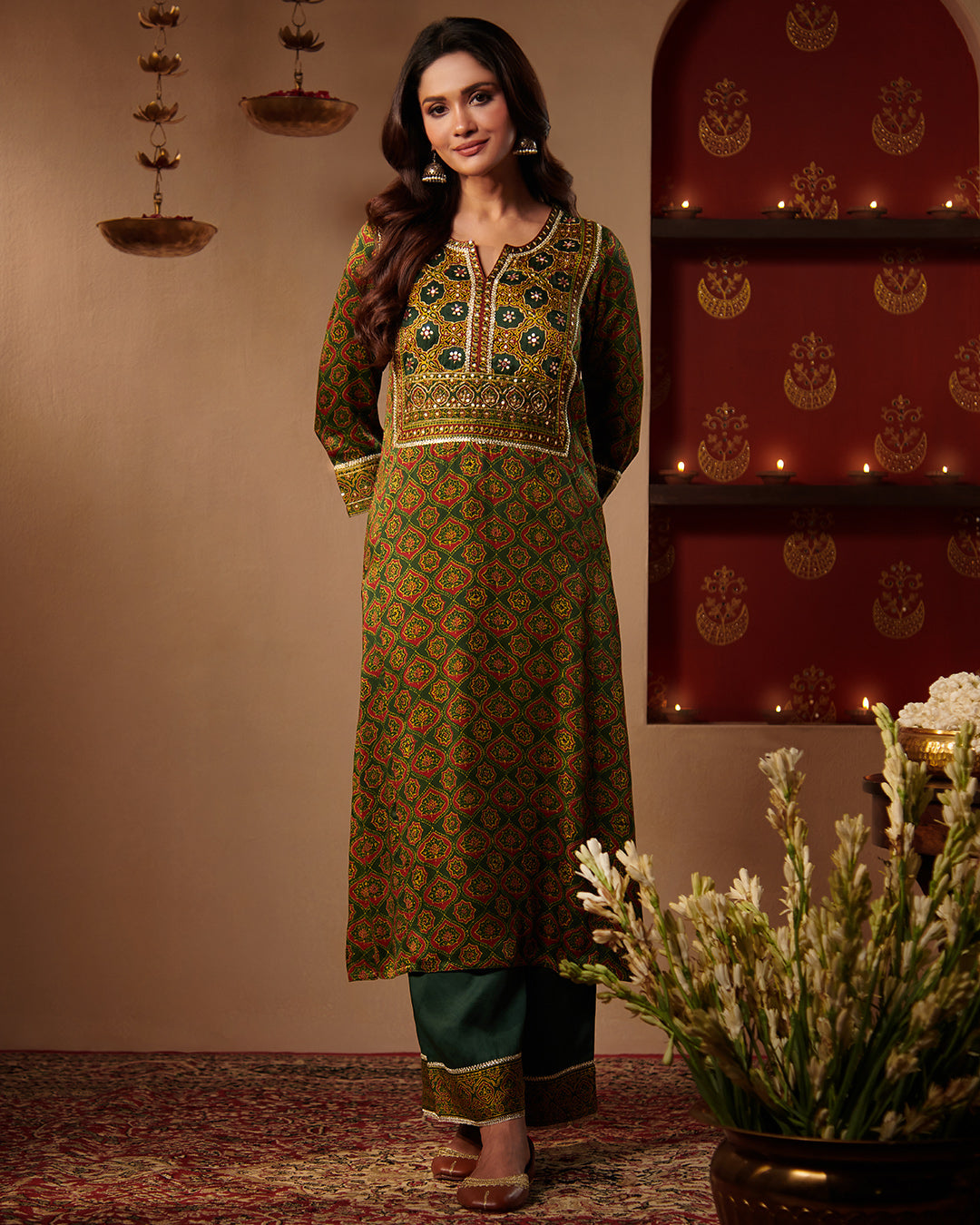
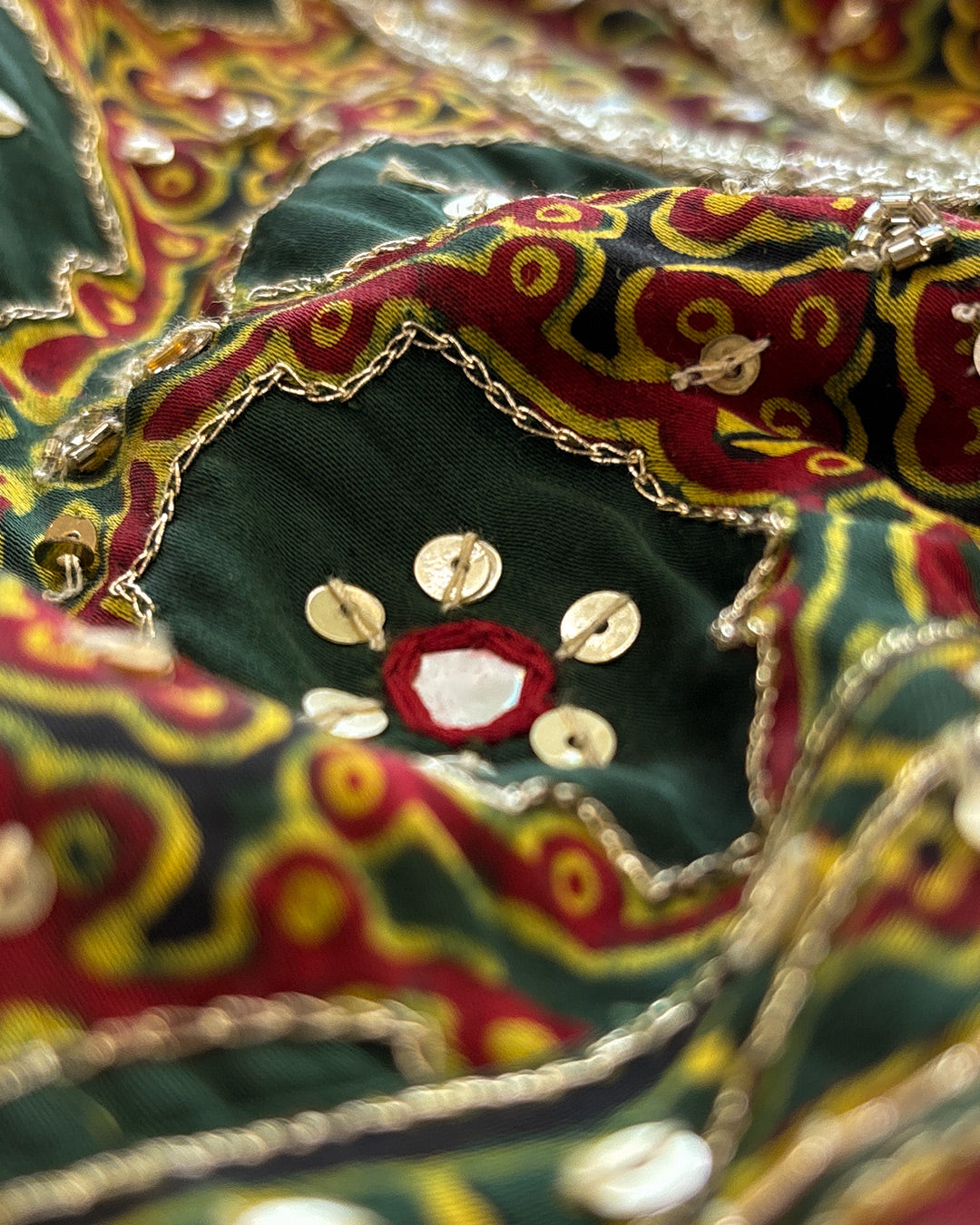





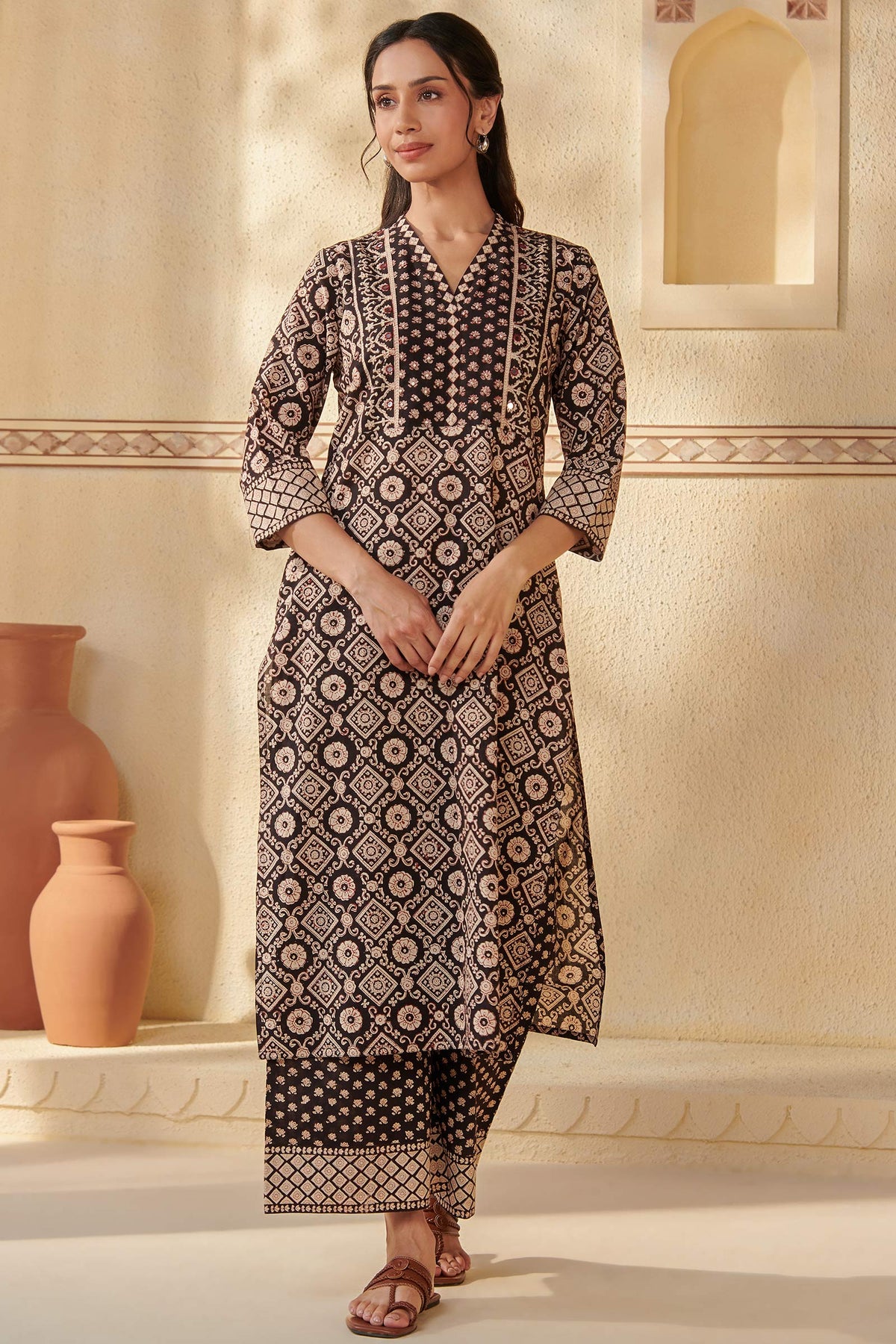

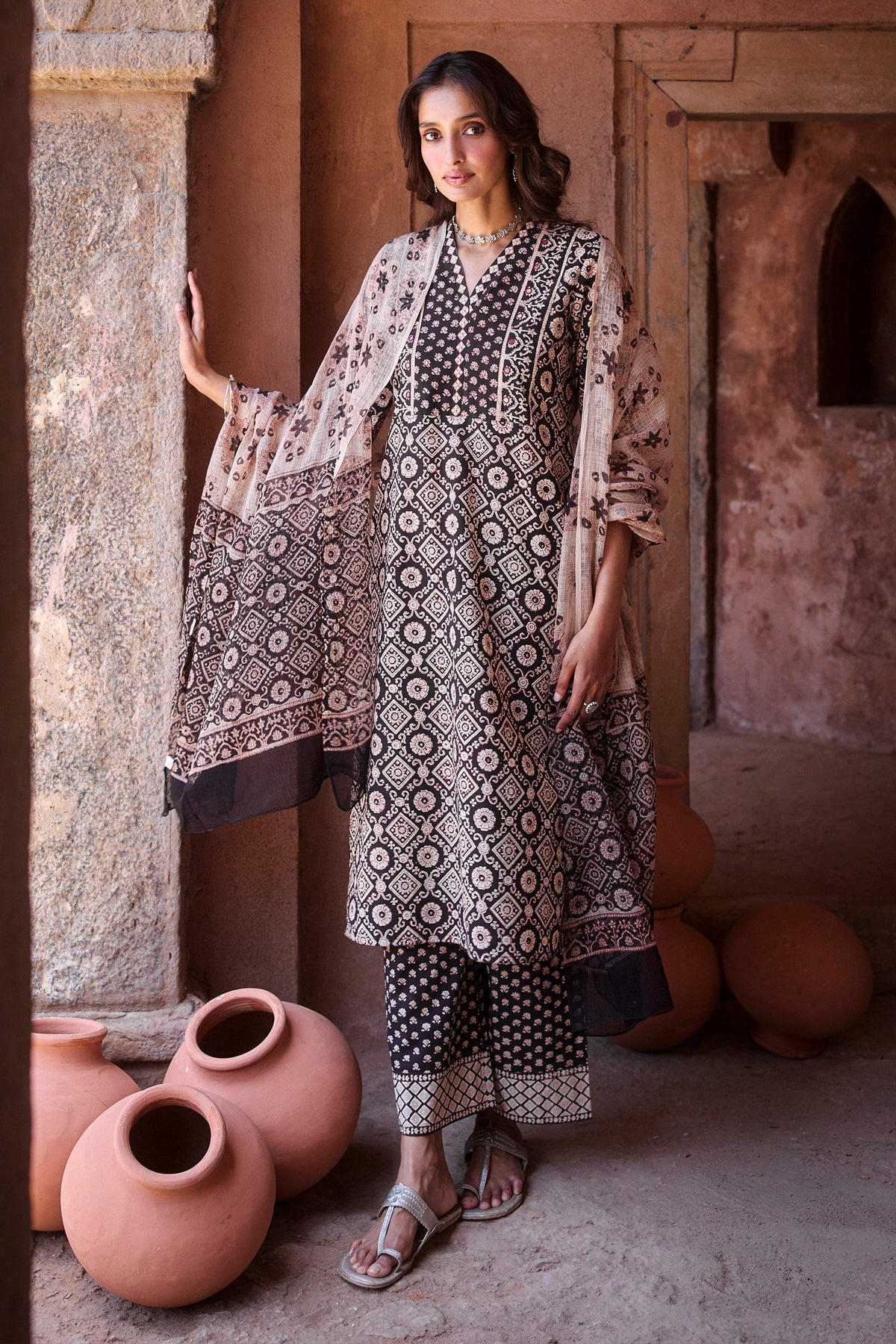


















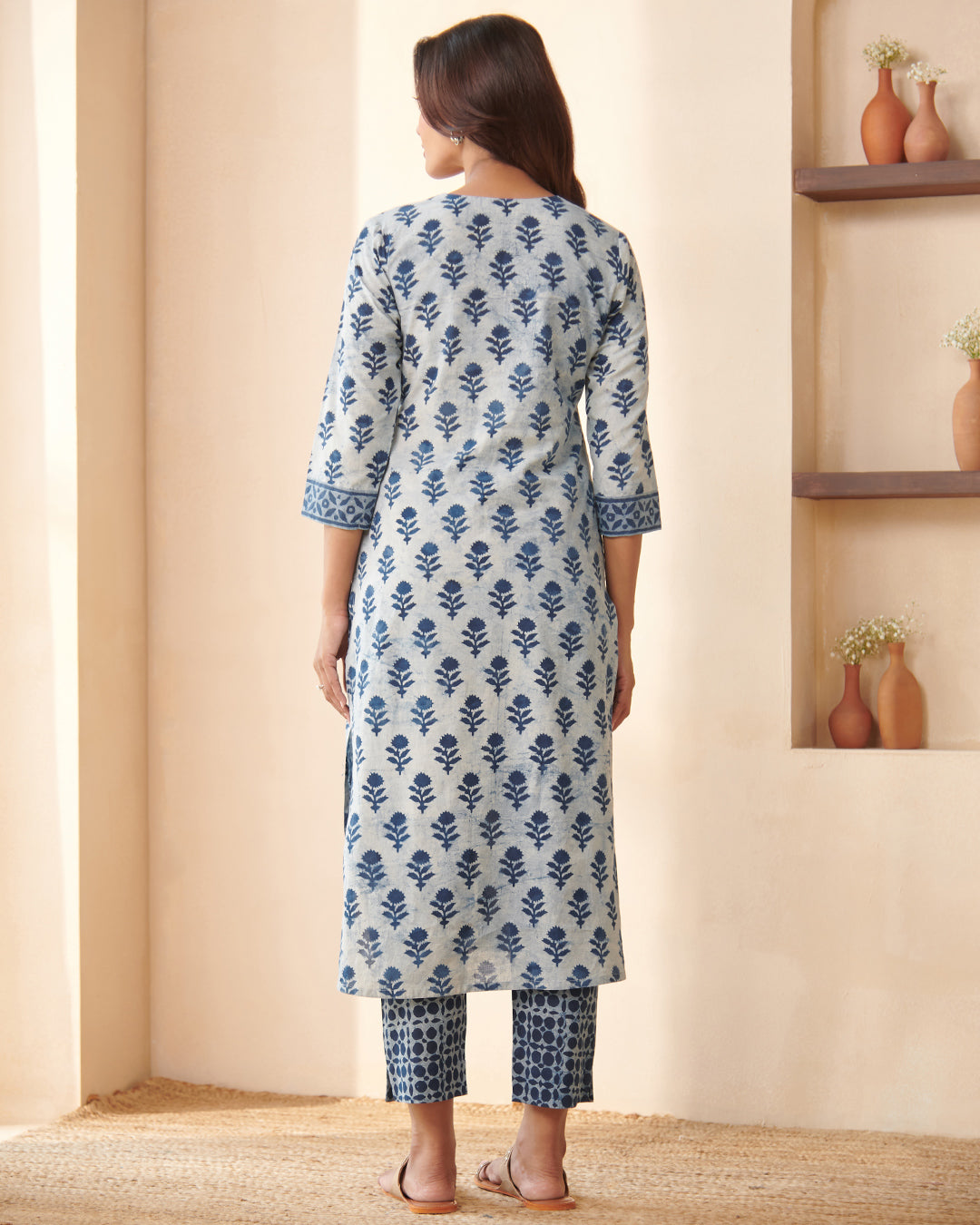



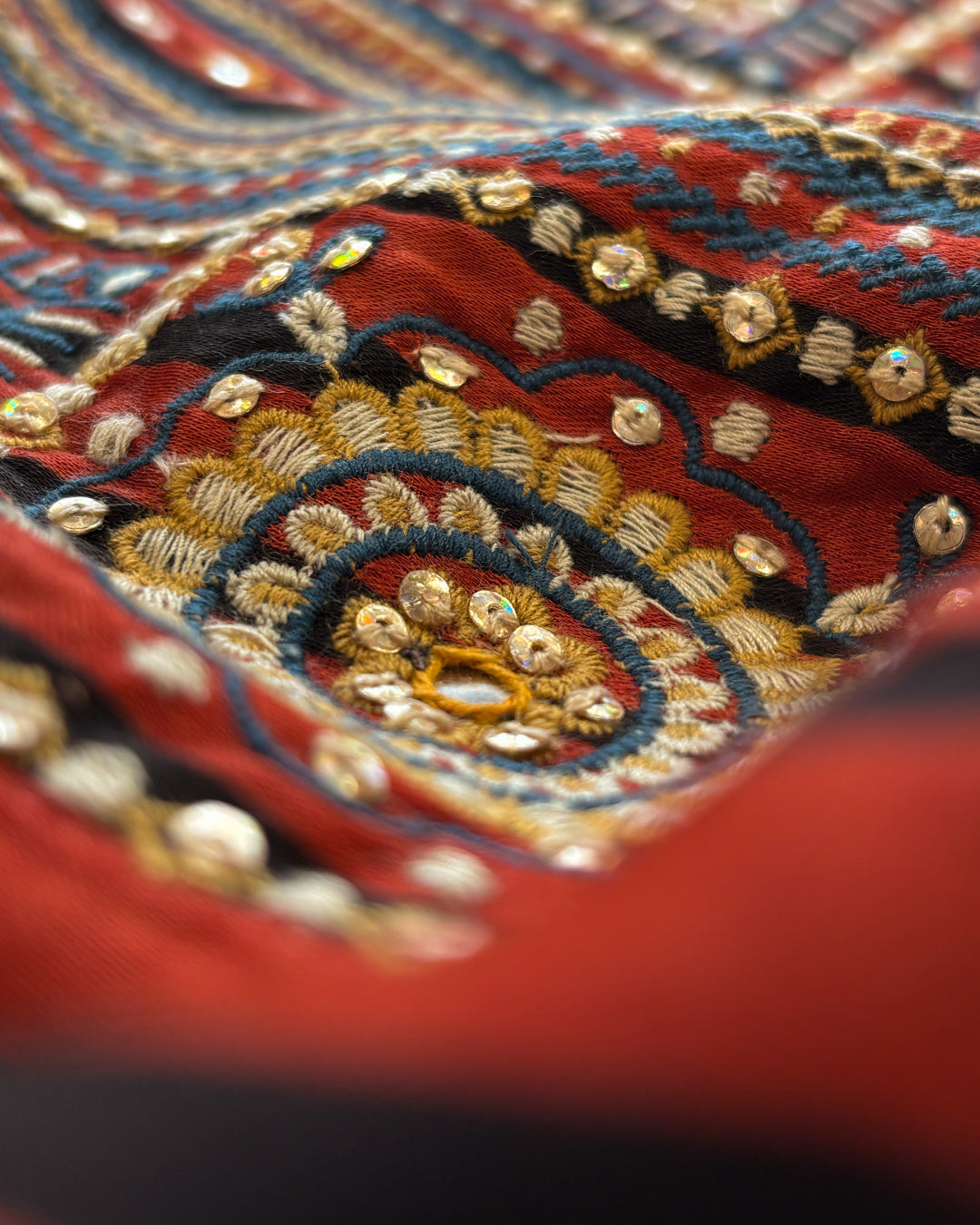

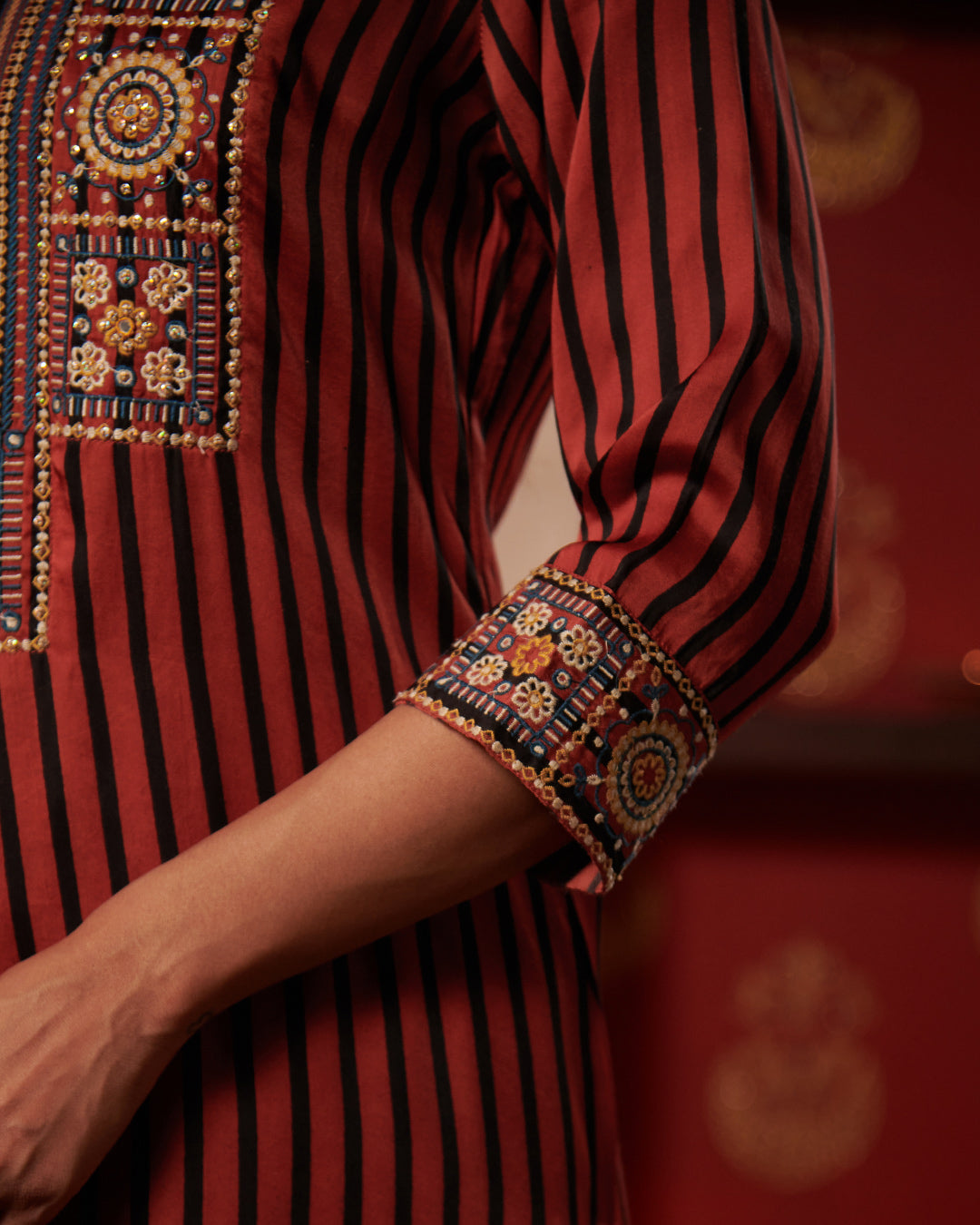



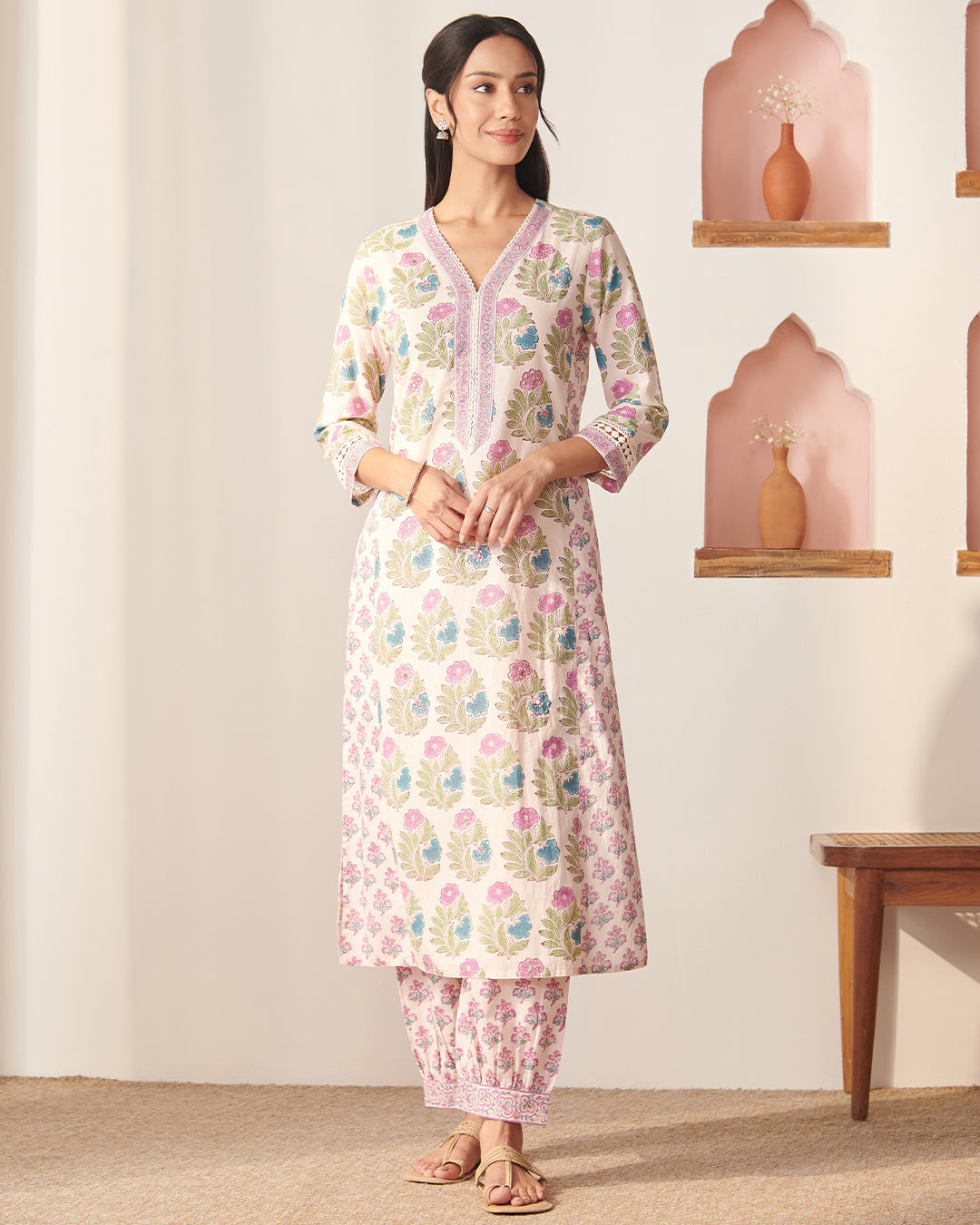

























































































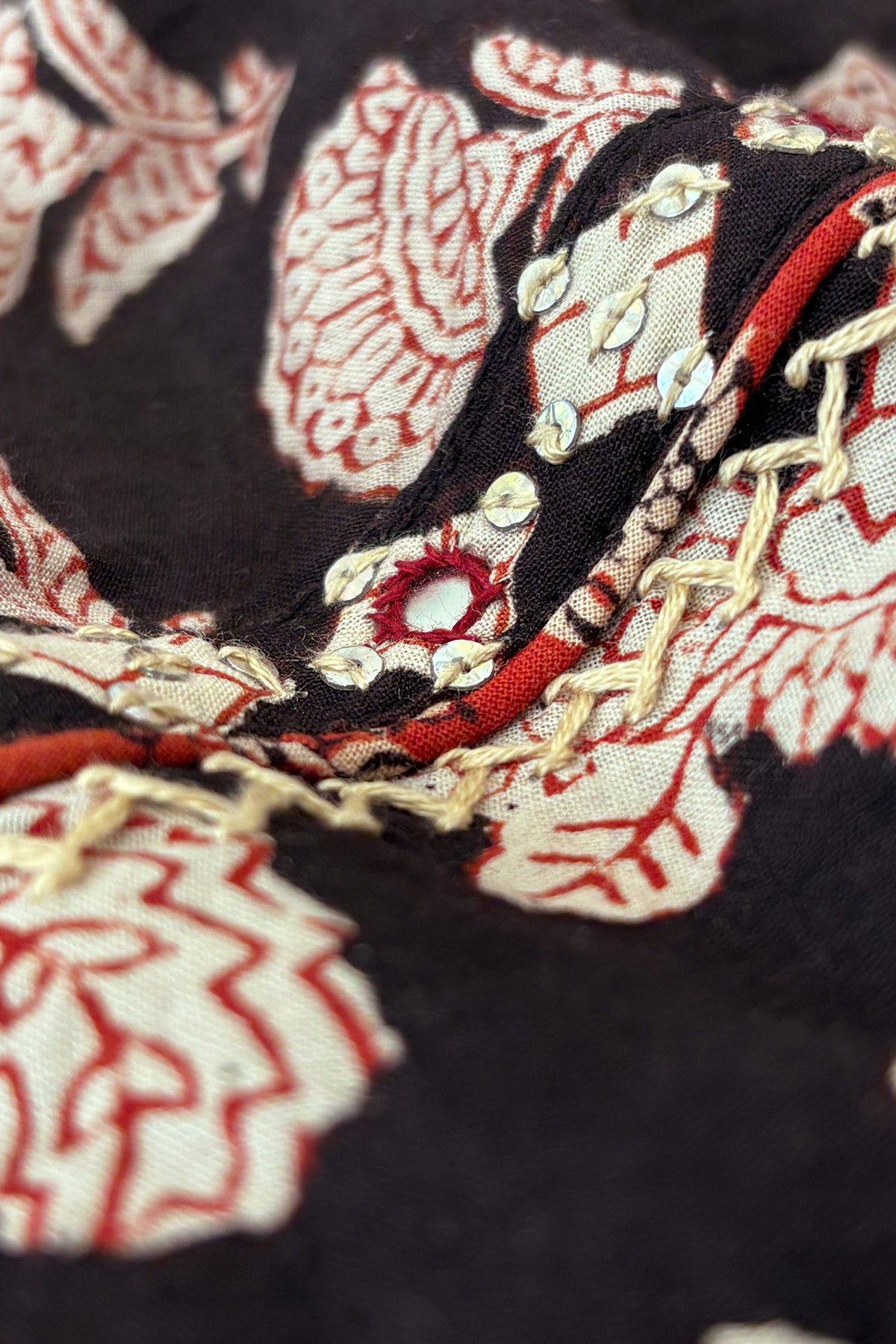
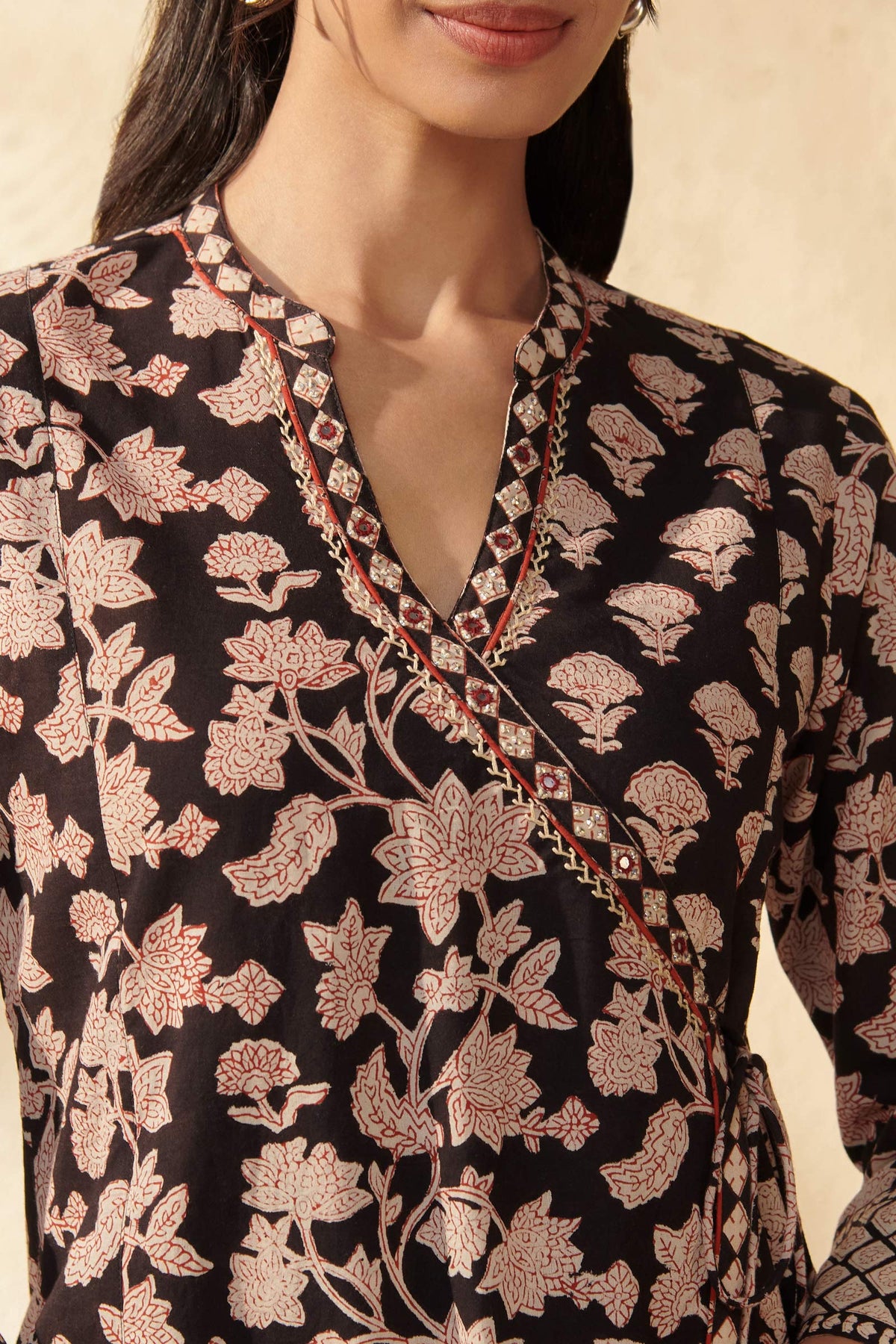
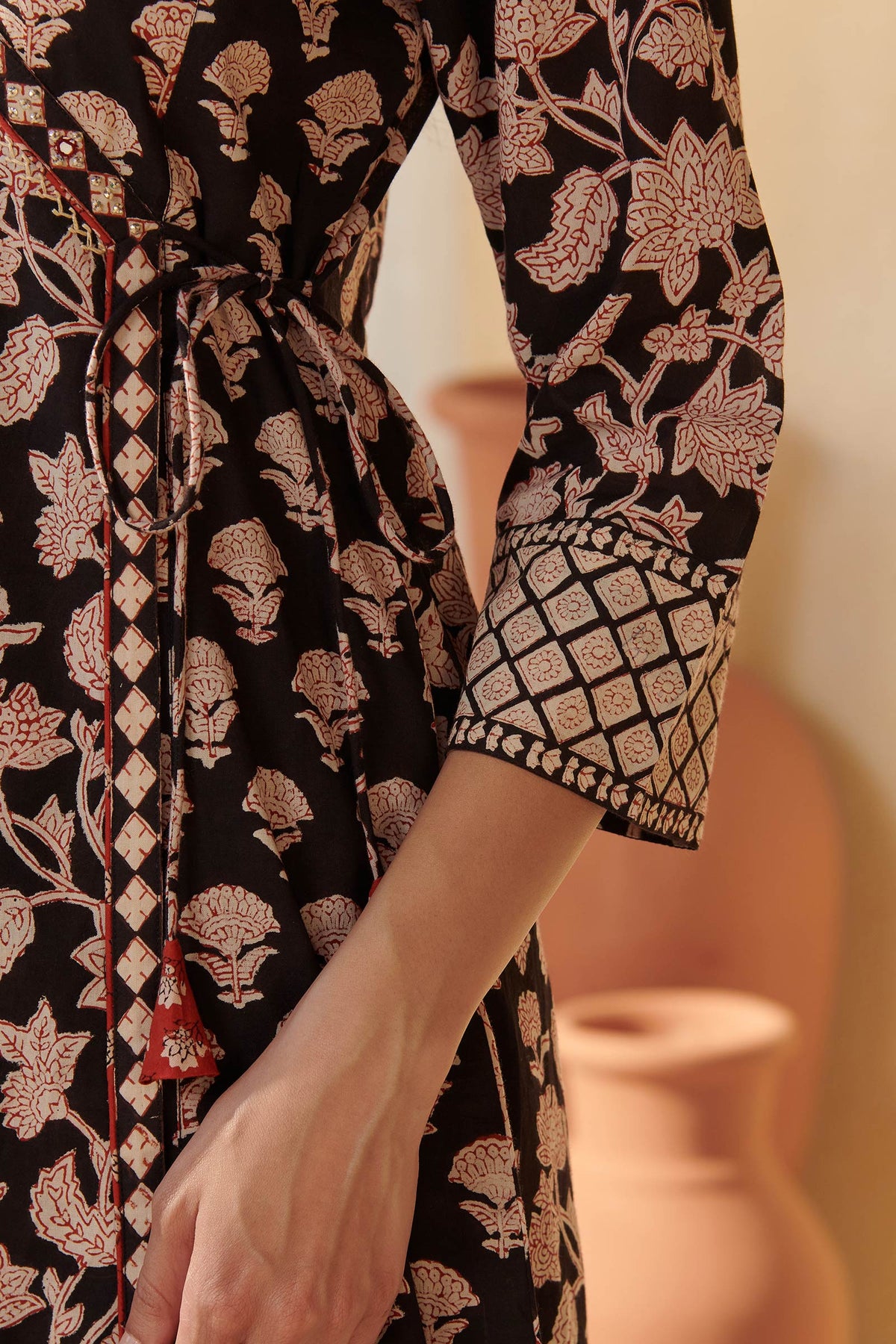
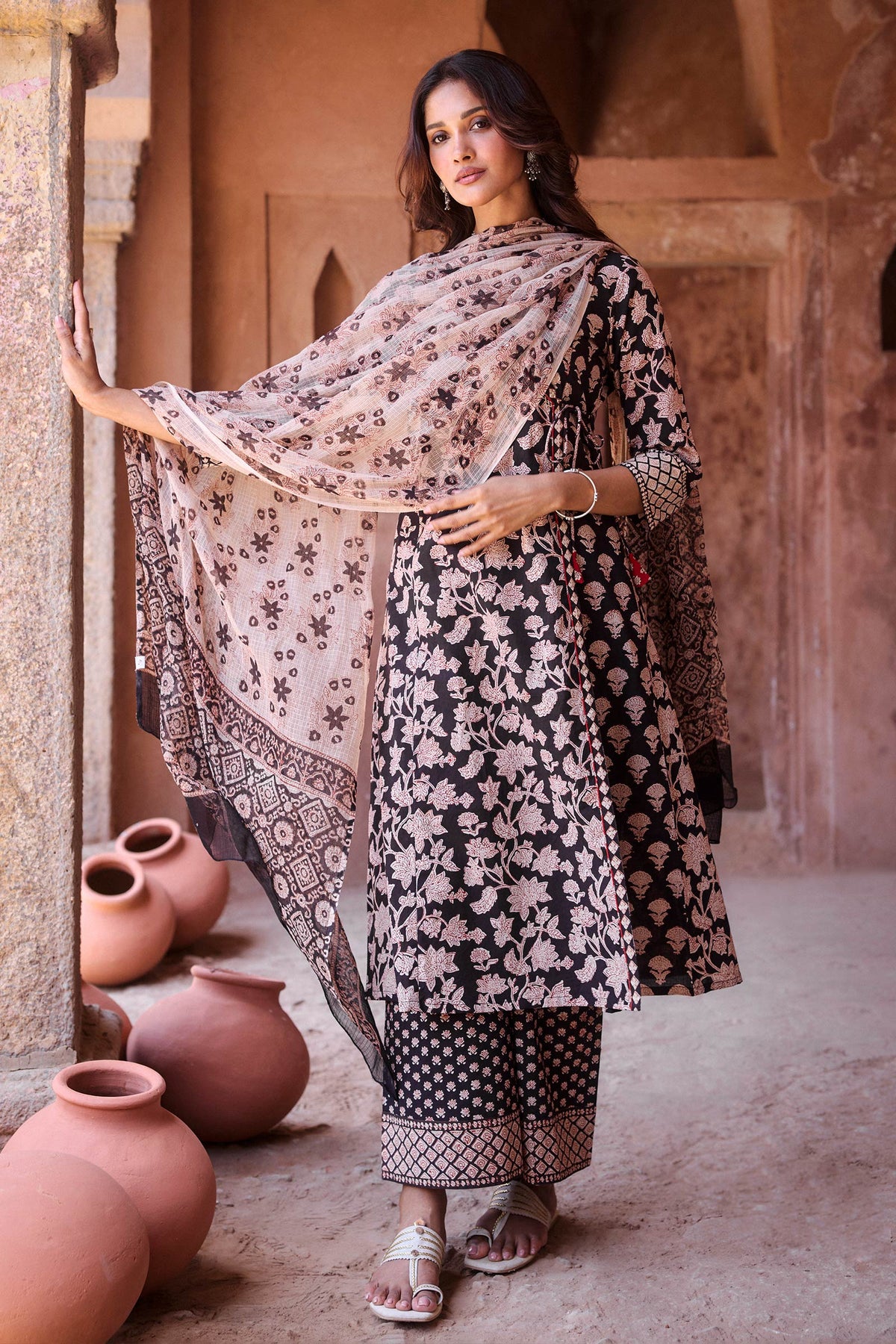


























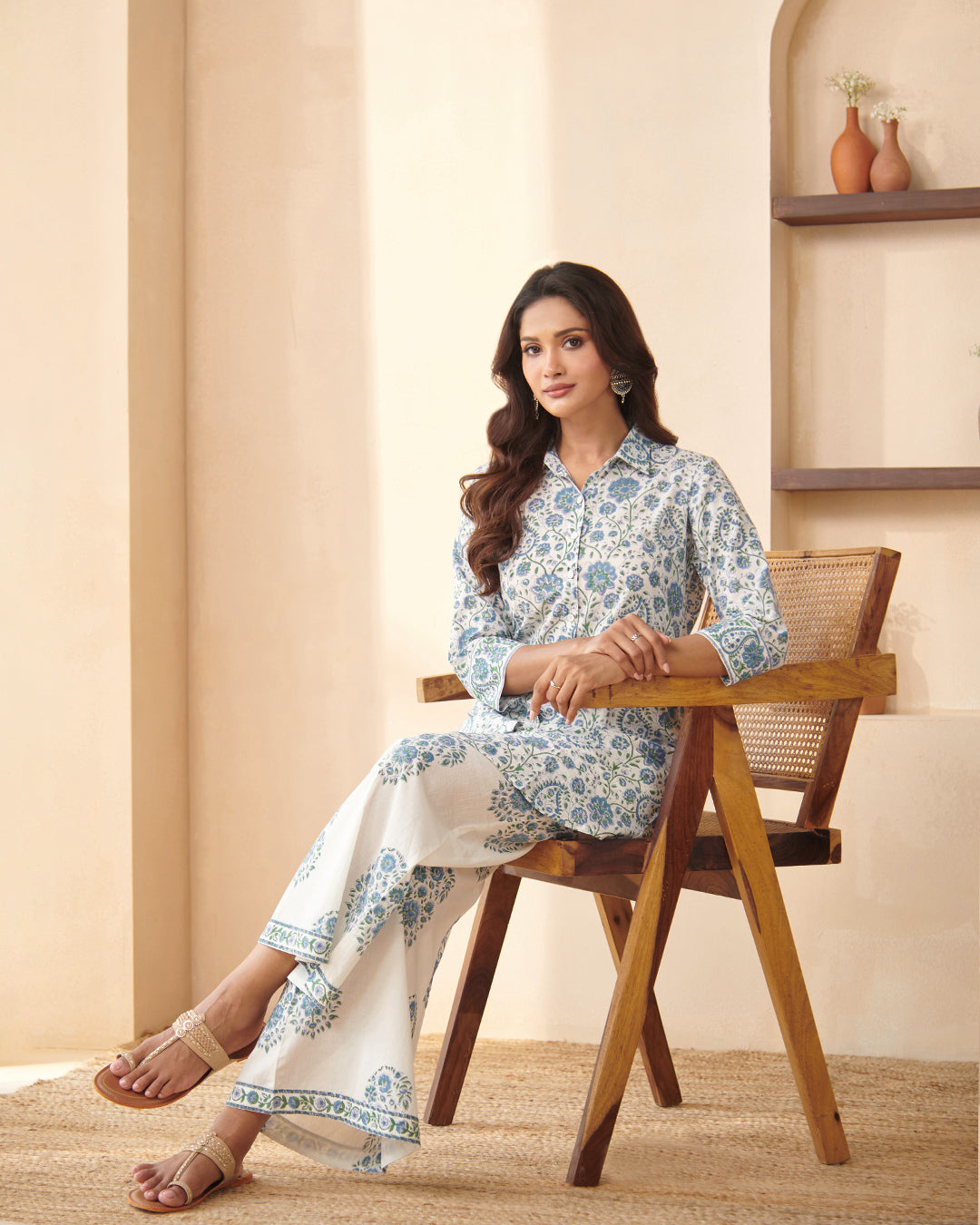

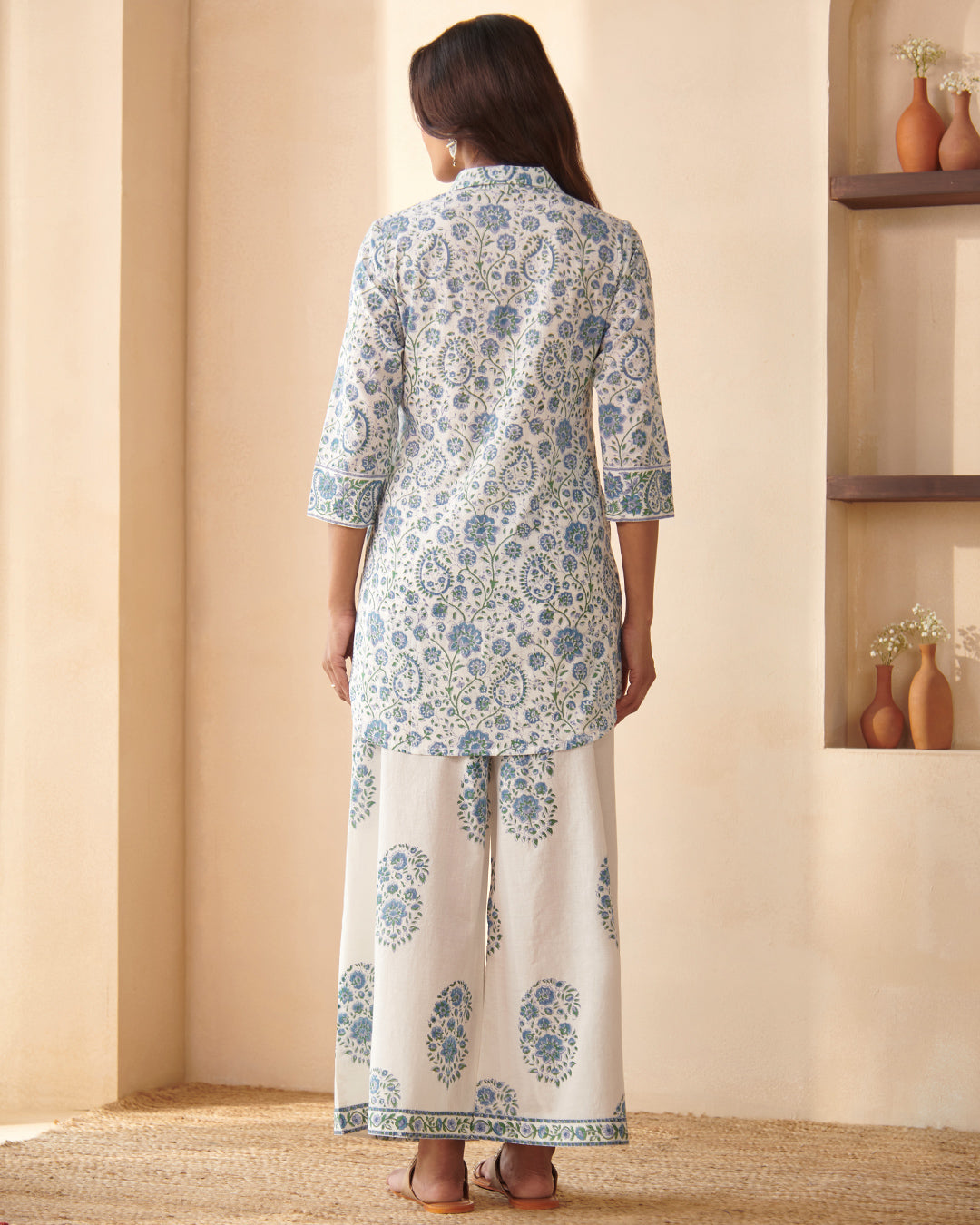

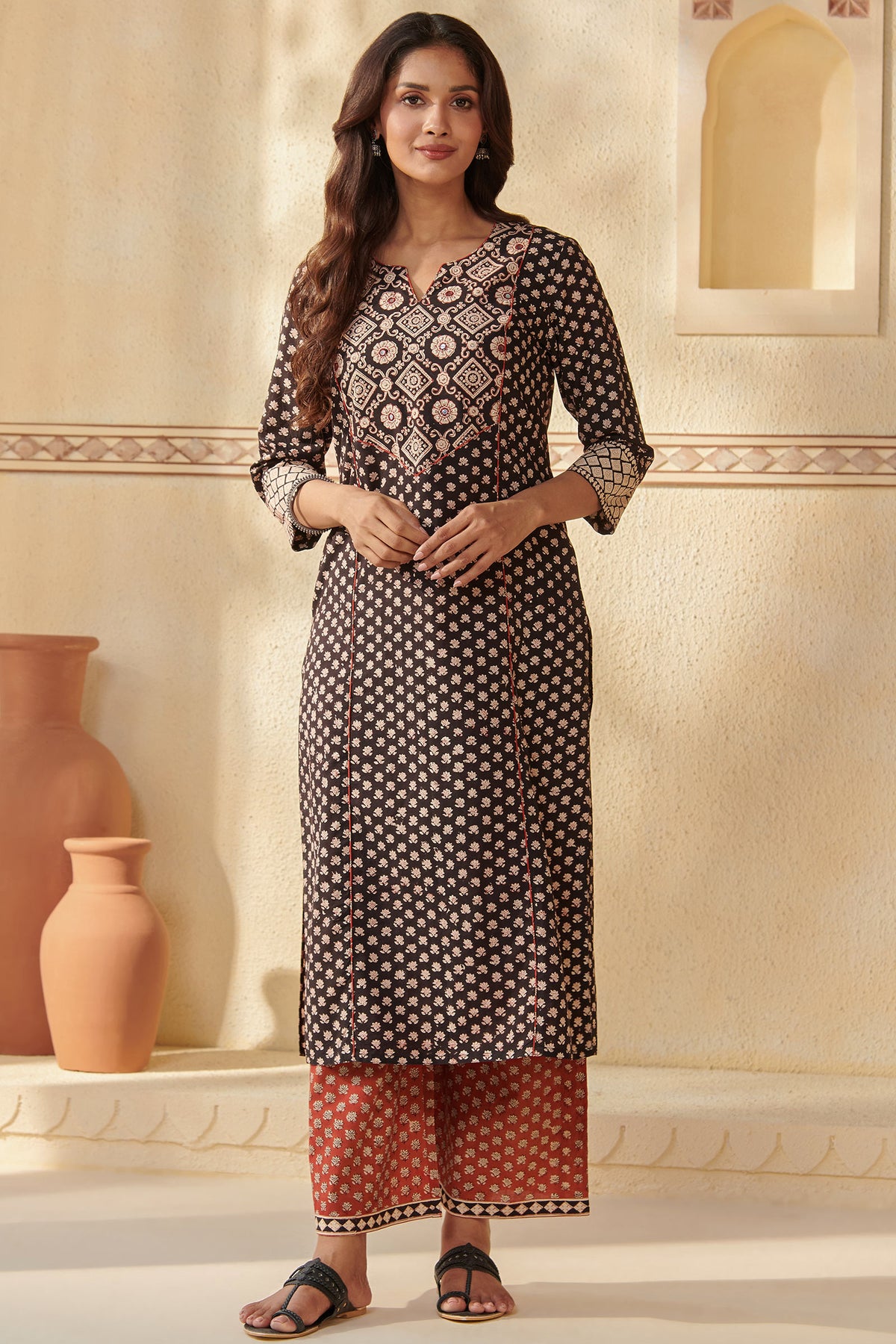
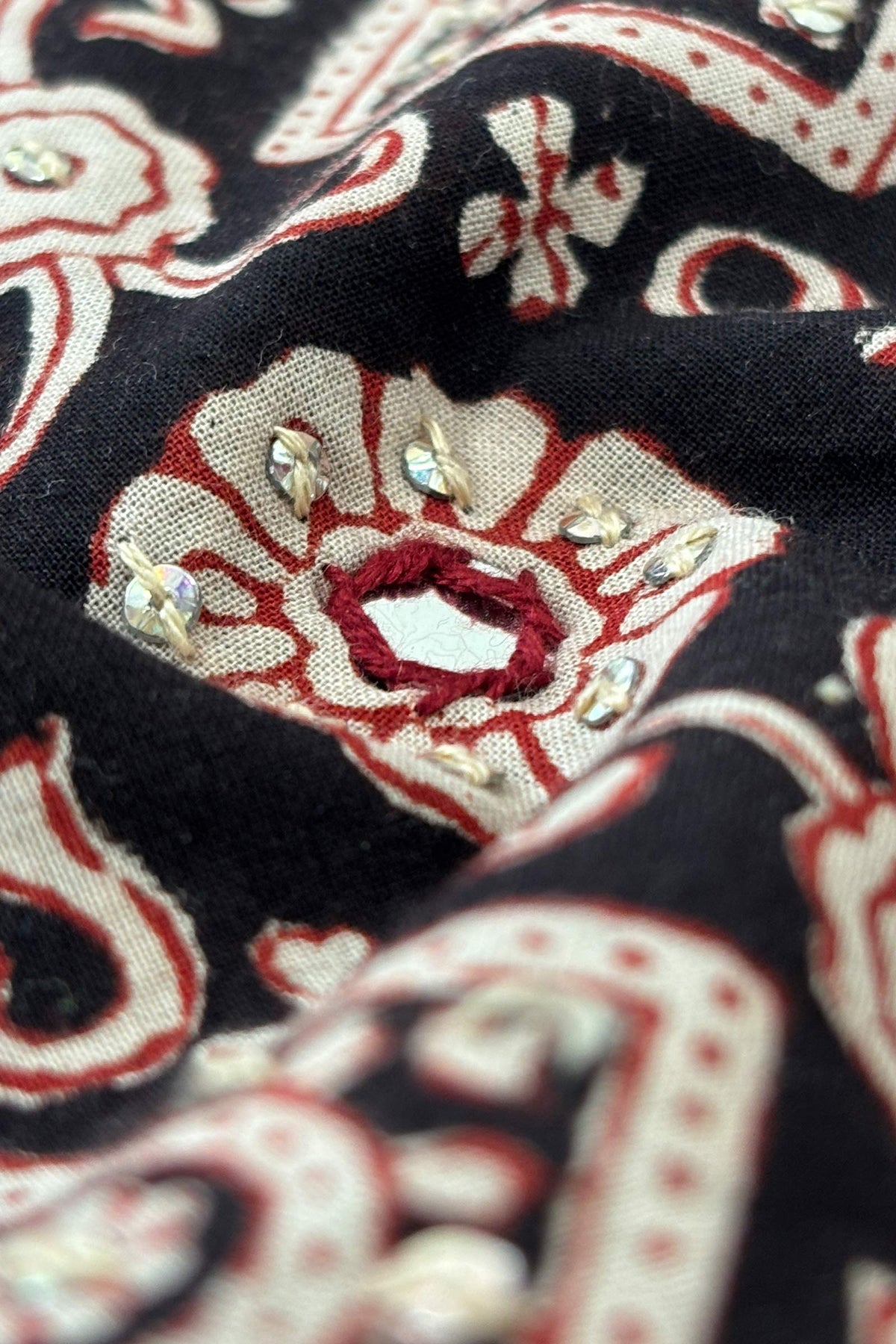


There are places in India where craft does not announce itself loudly. It lives quietly, in courtyards, in the rhythm of hands that have repeated the same movements for generations. Akola is one such place.
Tucked away in Rajasthan, Akola is not often the first name that comes to mind when we speak of textiles. And yet, its story runs deep. Here, fabric is not just printed, it is prepared, resisted, dyed, and revealed slowly. The colours are not layered on top, they emerge from within. Indigo finds its way into the cloth not as decoration, but as memory.
To understand Akola print is to step into this slower way of making. One that values patience over speed, and depth over surface.
What Is Akola Print? Understanding the Craft

Akola print, often referred to as Akola hand print, is a traditional textile practice rooted in Rajasthan. It is closely tied to the art of dabu printing, a resist dyeing technique that uses mud to create patterns on fabric.
Unlike direct printing methods where colour is applied onto cloth, Akola printing works through resistance. Certain parts of the fabric are covered with a carefully prepared mud paste, preventing dye from penetrating those areas. When the fabric is dyed, these resisted sections reveal the design.
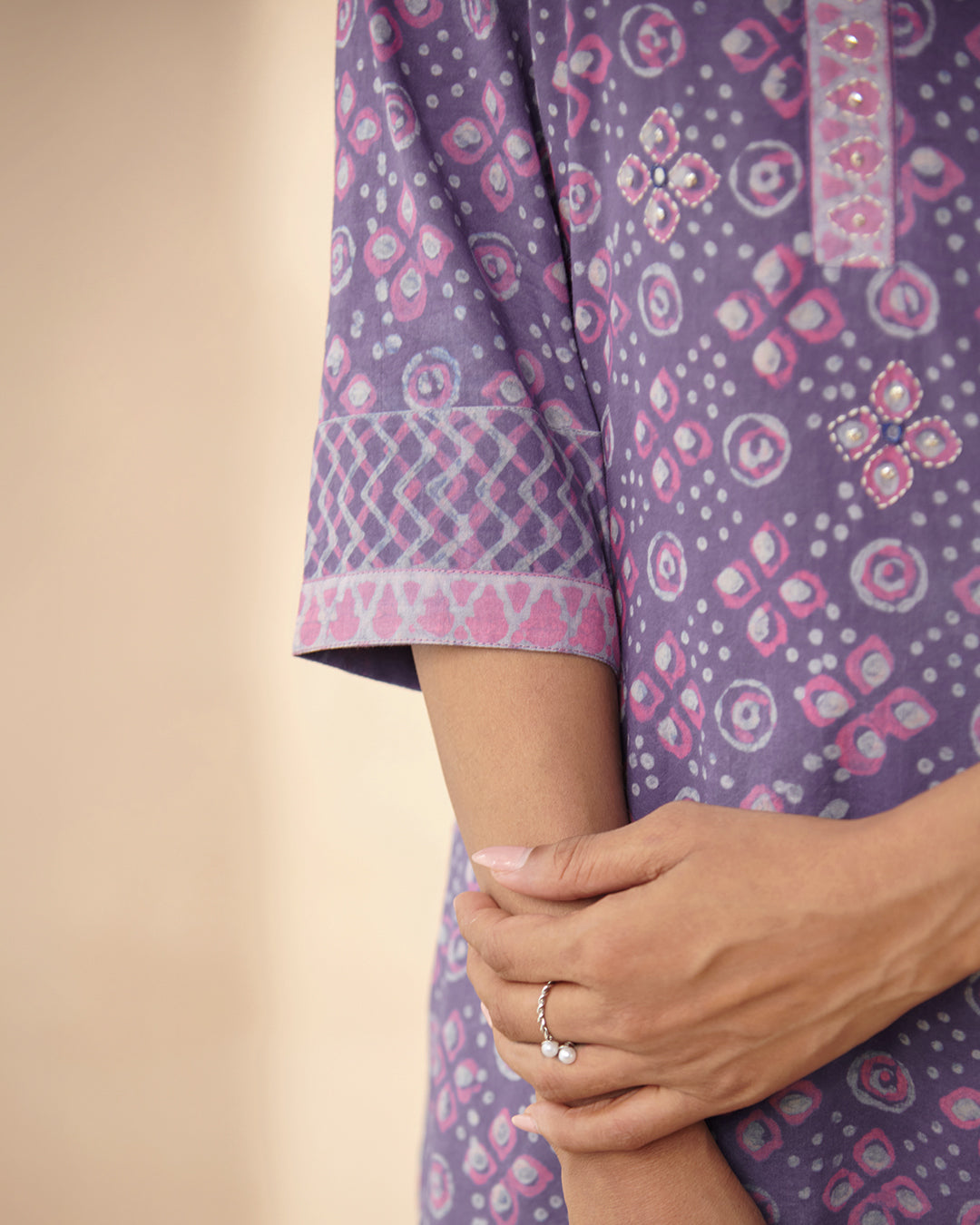
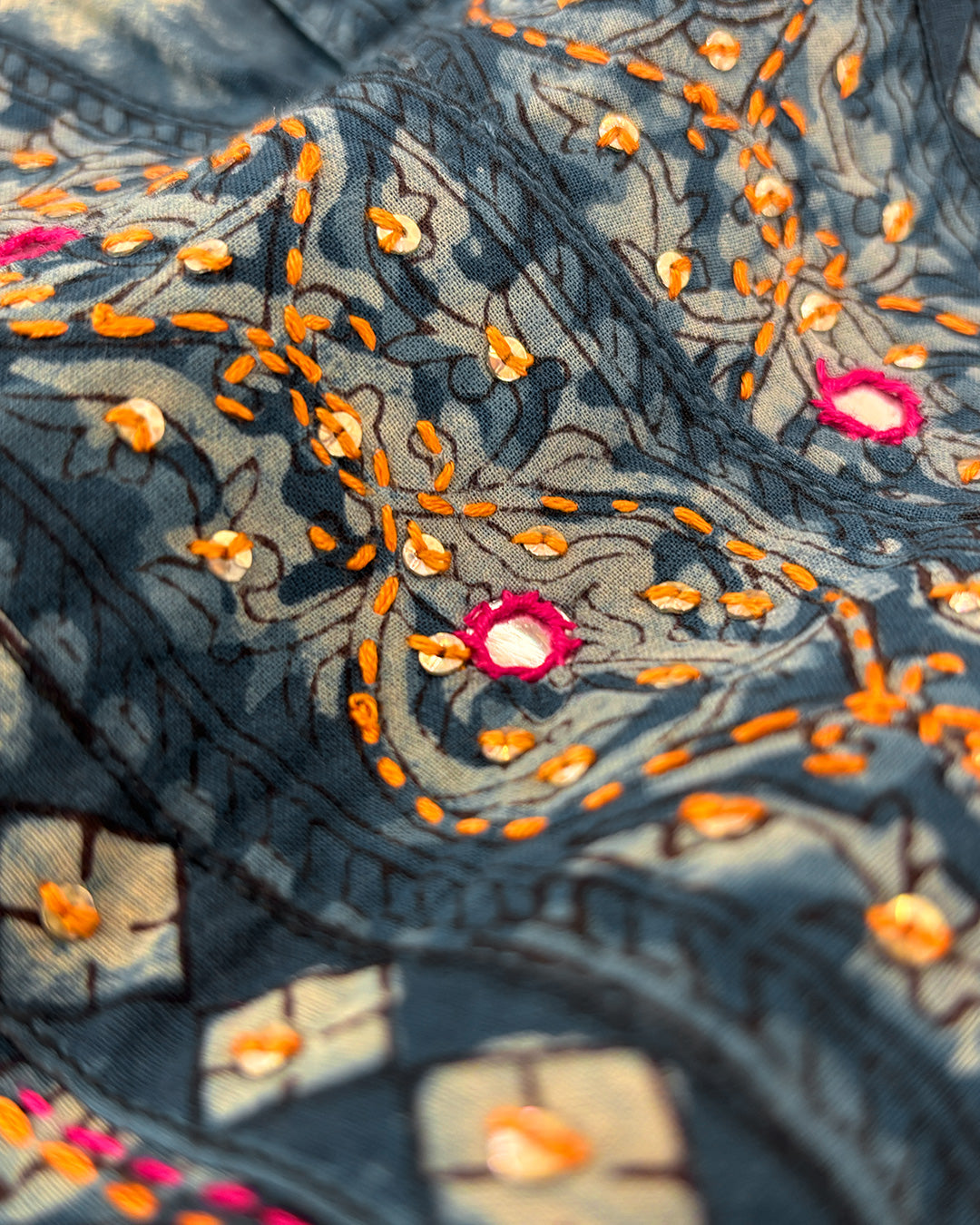
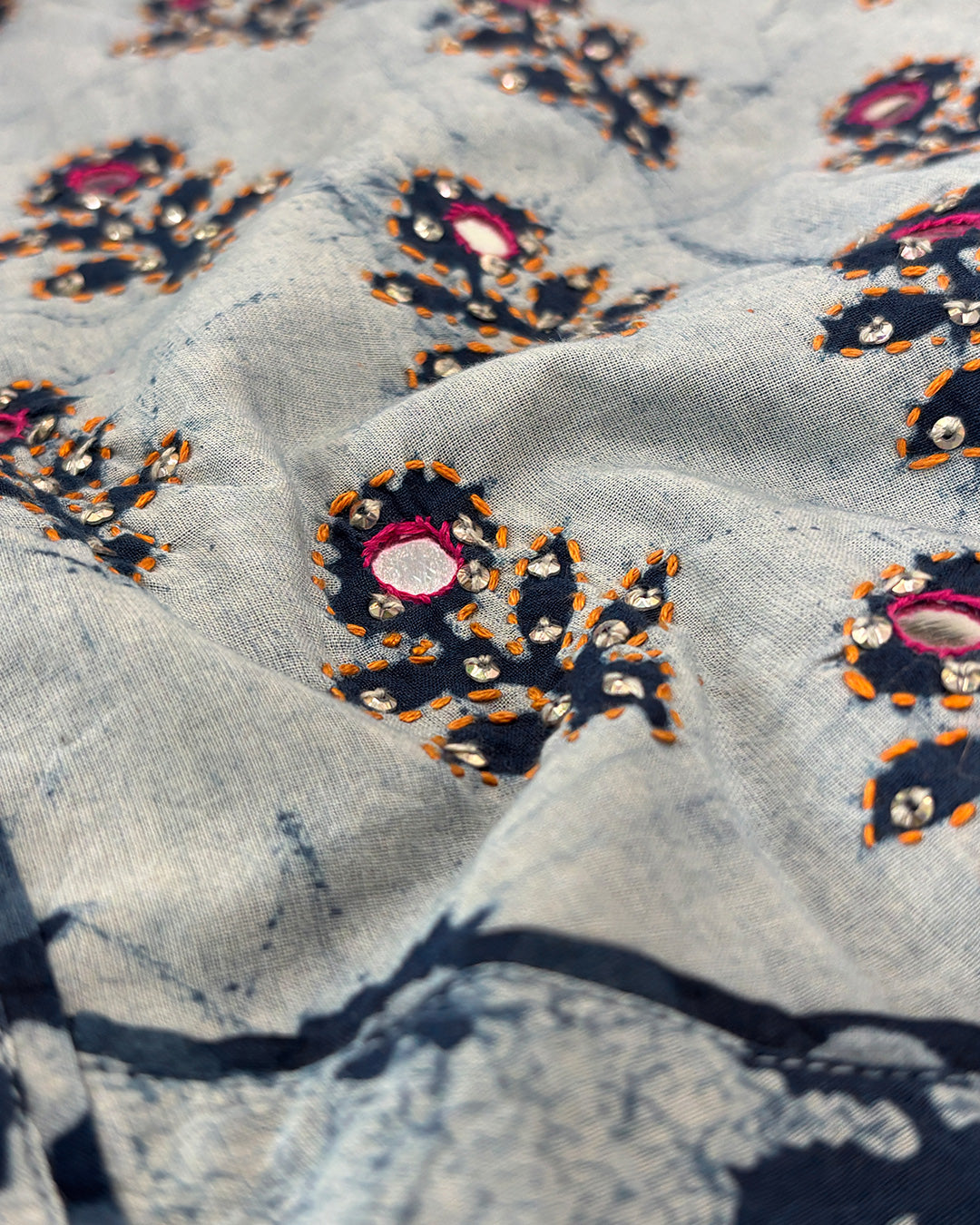
This process gives Akola print its distinct character. The patterns feel integrated into the fabric rather than sitting on top of it. There is a softness to the edges, a slight irregularity that reminds us each piece has been made by hand.
What Makes Akola Hand Print Unique

What sets Akola hand print apart is not just the technique, but the sensibility behind it.
The use of natural indigo creates a depth that synthetic dyes often cannot replicate. The blues are not flat. They shift with light, sometimes appearing almost grey, sometimes deep and inky. Alongside indigo, earthy tones emerge through natural processes, giving the fabric a grounded, lived-in feel.
There is also honesty in the finish. You may notice slight variations in print alignment or colour intensity. These are not imperfections. They are markers of the human hand, of a craft that has not been mechanised.
Most importantly, Akola printing Rajasthan carries a sense of continuity. The methods remain largely unchanged, passed down within artisan families who understand the behaviour of mud, dye, and cloth in ways that cannot be written down.
The Deep Connection Between Akola and Dabu Printing

It is difficult to speak of Akola print without speaking of dabu.
Dabu print Akola is not a variation, it is the foundation. The village of Akola has long been associated with this mud resist technique, where the paste, made from local clay, natural gum, and sometimes lime, becomes the starting point of every design.
The relationship between the two is intimate. The land itself contributes to the craft. The quality of the soil, the water, even the climate, all influence how the dabu paste behaves and how the indigo develops.
In Akola, dabu is not treated as a separate process. It is part of a larger rhythm. The artisans understand when the mud needs to rest, how long the fabric should absorb the dye, when the sun is right for drying. These decisions are intuitive, shaped by years of observation.
This is why Akola hand print feels so rooted. It is not just made in a place. It belongs to it.
The Process of Akola Hand Printing

In Akola, printing is not rushed. It follows a rhythm shaped by hand, soil, and season. Each stage carries its own patience, and together they create what we recognise as Akola hand print, quiet, detailed, and deeply rooted.
Step 1 – Preparing the Fabric
The process begins with the fabric being thoroughly washed to remove any starch or residue. This step may seem simple, but it sets the tone for everything that follows. Clean cotton absorbs colour more honestly. It allows the print to settle into the fabric, rather than sit on it.
Under the open sky, lengths of cloth are dried and stretched, ready to receive the first layer of work.
Step 2 – Applying the Dabu (Mud Resist) Paste
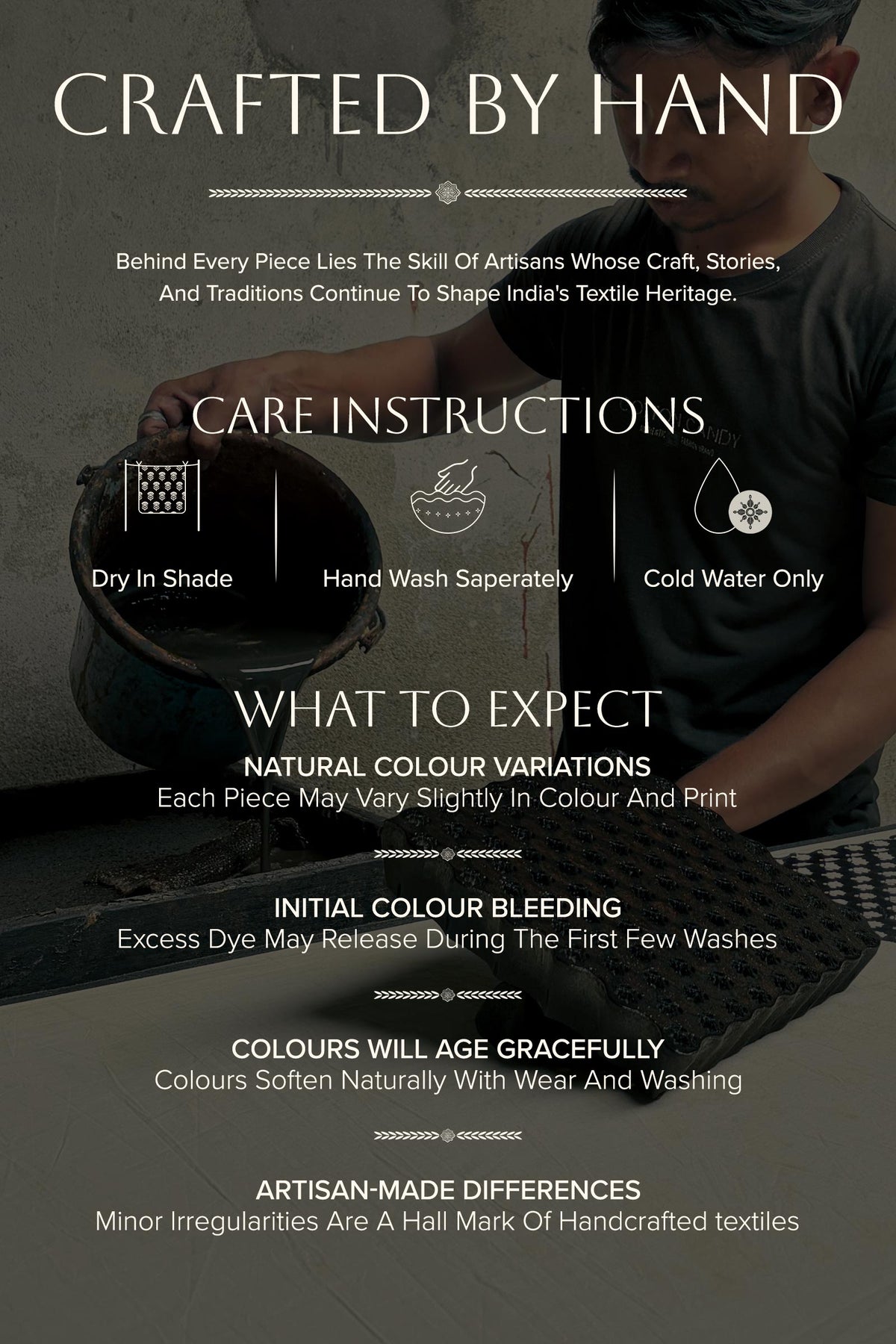
The heart of dabu print Akola lies in this stage. A carefully prepared paste made from mud, lime, and natural gum is applied to the fabric using wooden blocks.
Wherever this paste is placed, the dye will not enter. It protects the fabric beneath, creating patterns through absence rather than addition. There is a certain quiet skill here, knowing how much pressure to apply, how evenly the paste should sit.
The printed areas are then dusted with fine sawdust to prevent smudging, a small but essential detail.
Step 3 – Block Printing the Design
Once the resist paste sets, artisans begin block printing. Hand-carved wooden blocks, often passed down through generations, are dipped into natural dyes and pressed onto the fabric with steady hands.
Each placement is intentional. There are no guiding lines, only memory and practice. The repetition of motifs forms a rhythm, slight variations becoming part of the fabric’s character.
Step 4 – Indigo Dyeing Process
The fabric is then immersed in natural indigo dye baths. This is where transformation happens slowly.
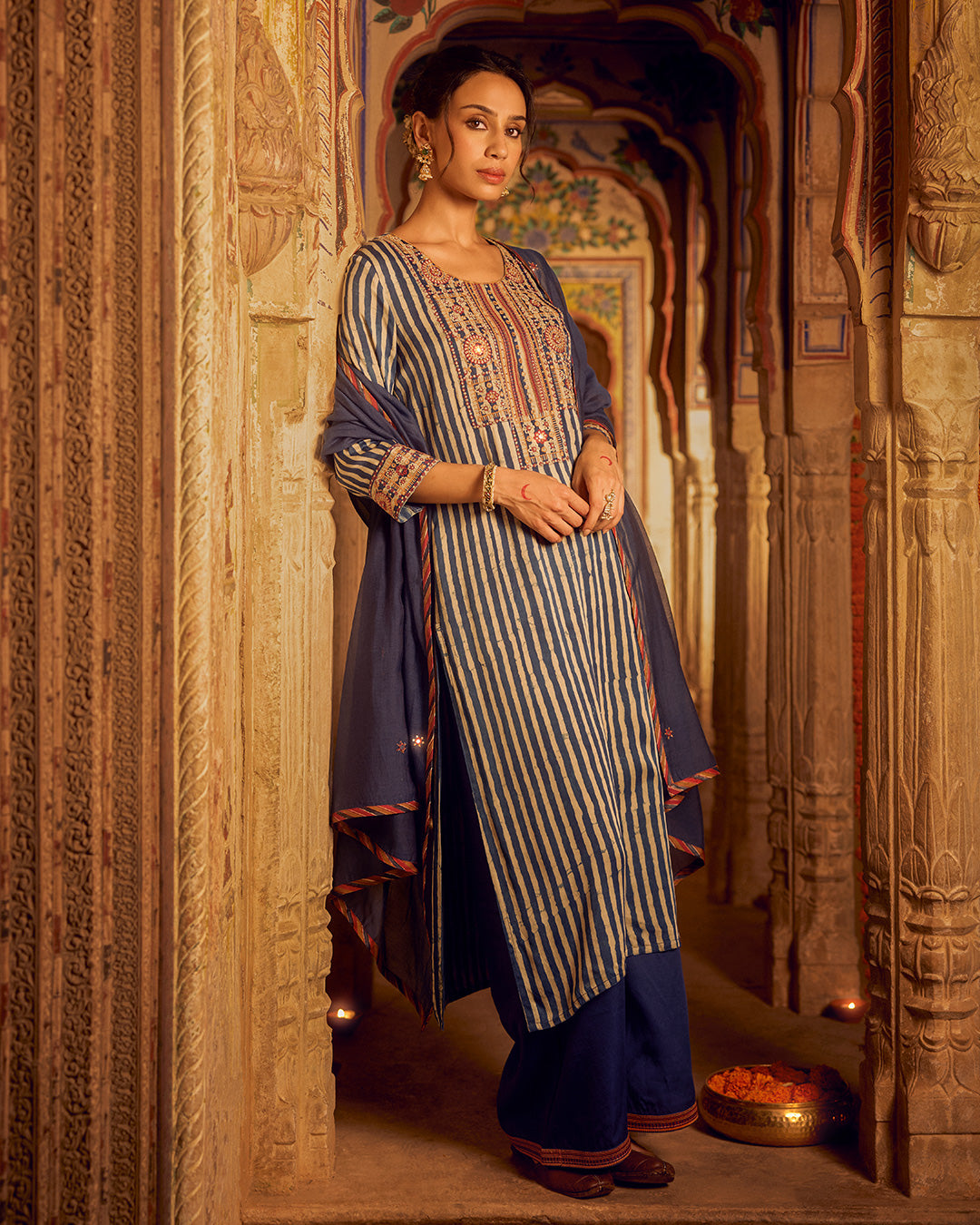
As the cloth is dipped and lifted, the colour deepens with each round. The areas covered in dabu remain untouched by the dye, preserving the original base colour. What emerges is the signature contrast of Akola printing Rajasthan, soft whites or beiges against deep indigo blues.
The air, the temperature, even the timing of each dip, all influence the final shade.
Step 5 – Washing and Finishing
After dyeing, the fabric is washed thoroughly to remove the dried mud paste. As the dabu lifts away, the patterns reveal themselves, clear yet softly edged.
The cloth is then sun-dried, allowing the colours to settle and mature. What remains is not just a printed textile, but a surface shaped by hand, water, and time.
Signature Design Elements of Akola Prints
There is a quiet distinctiveness to Akola print. It does not rely on brightness or excess. Its beauty lies in restraint, in how each element feels connected to the land it comes from.
Earthy Color Palette
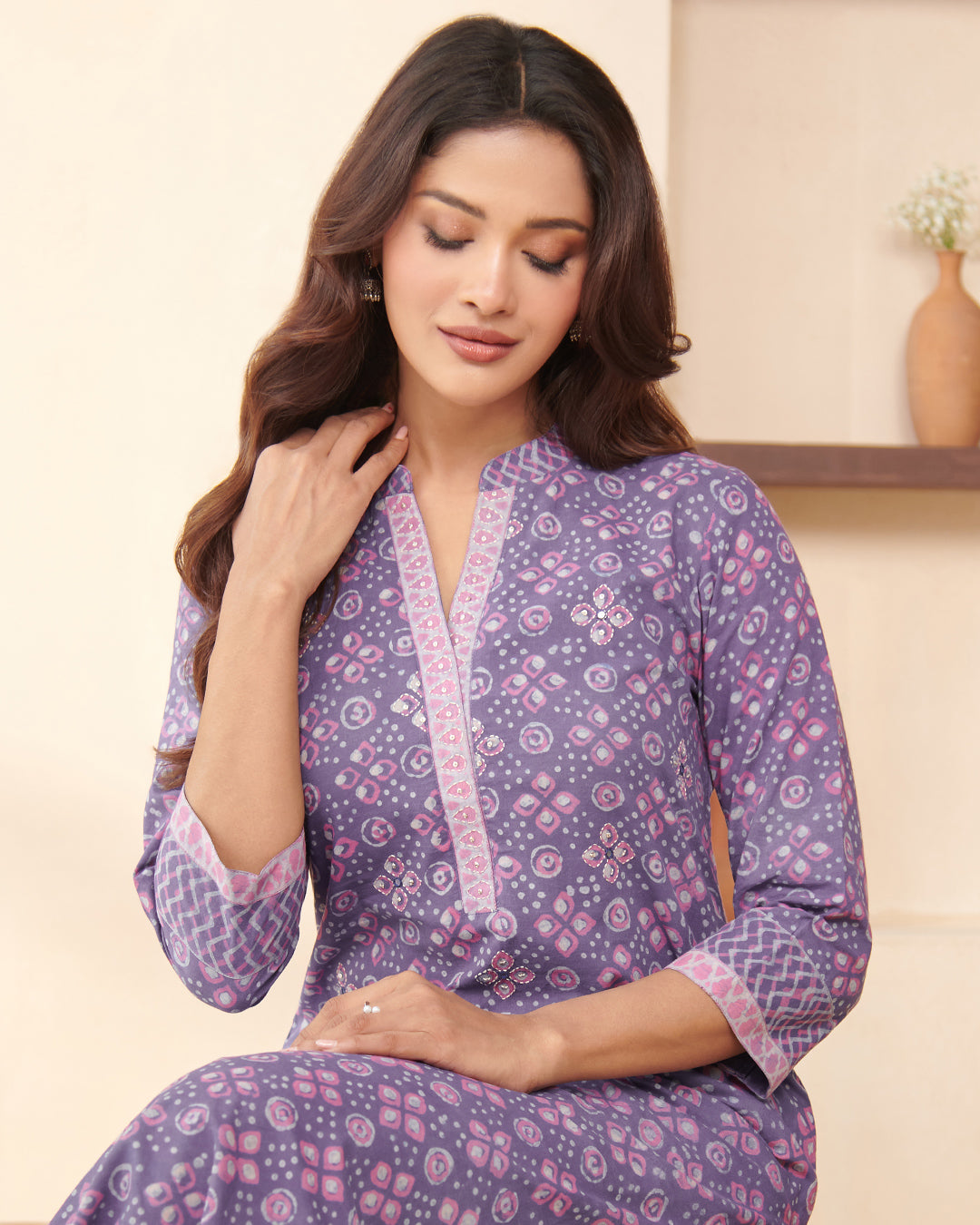
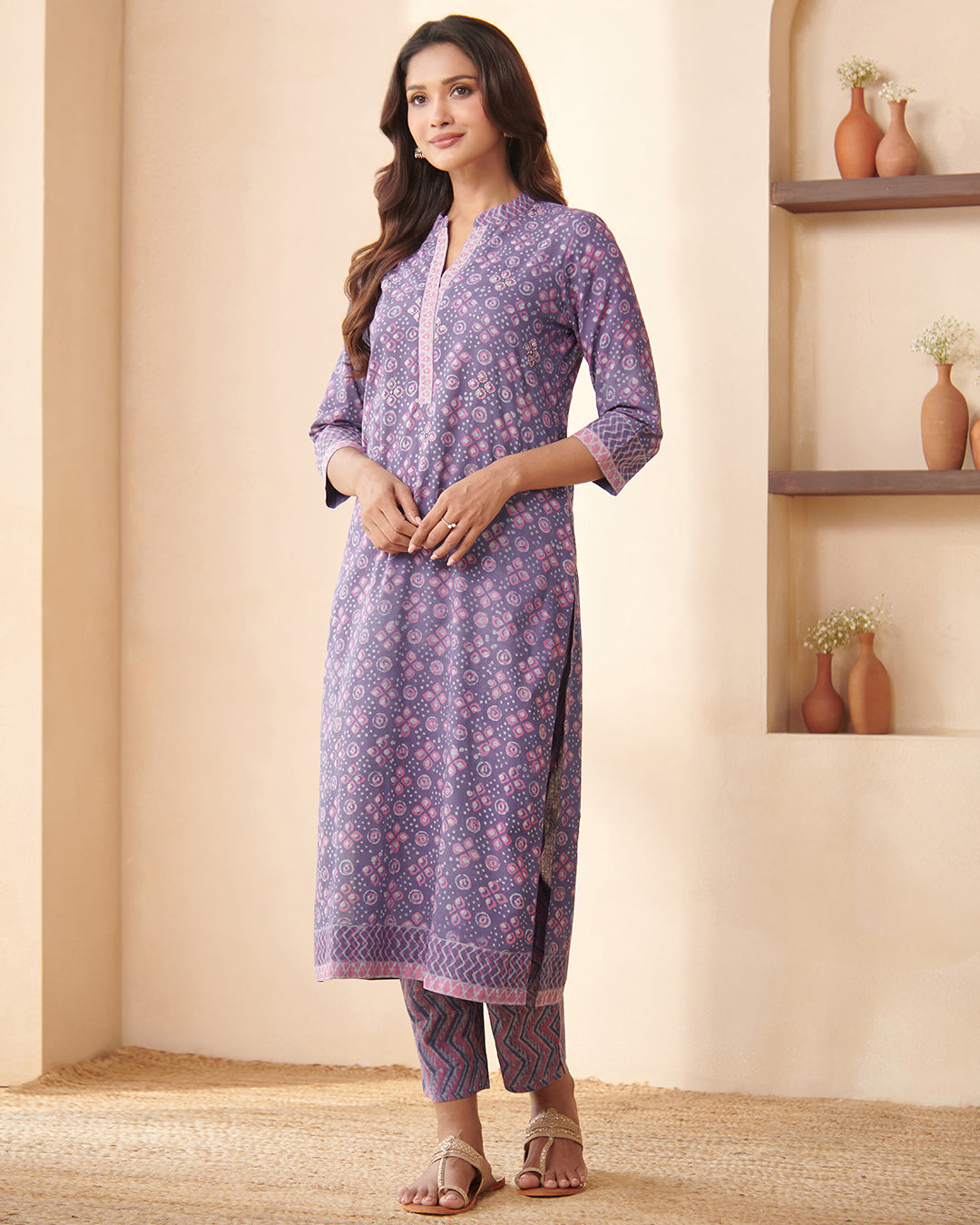
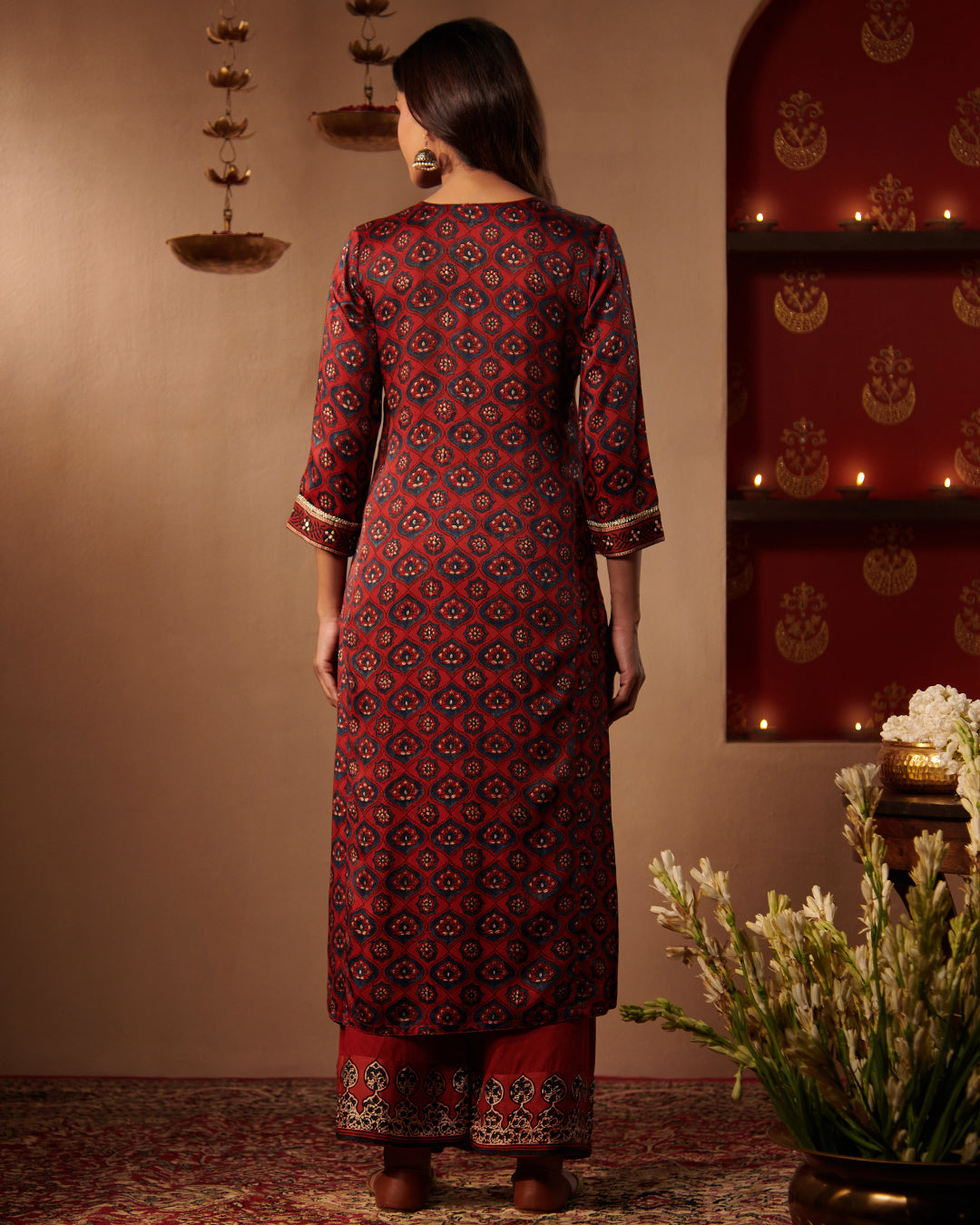
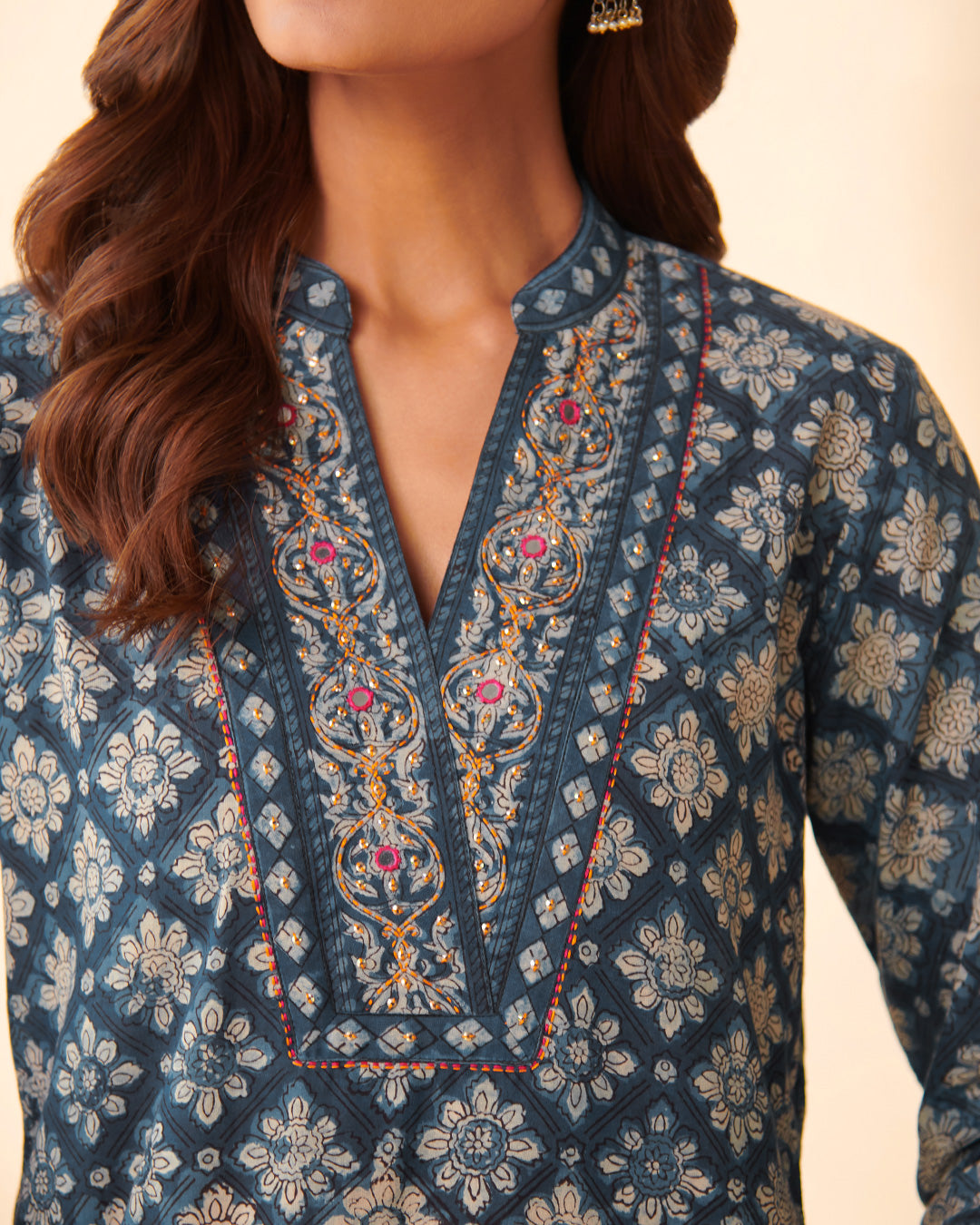
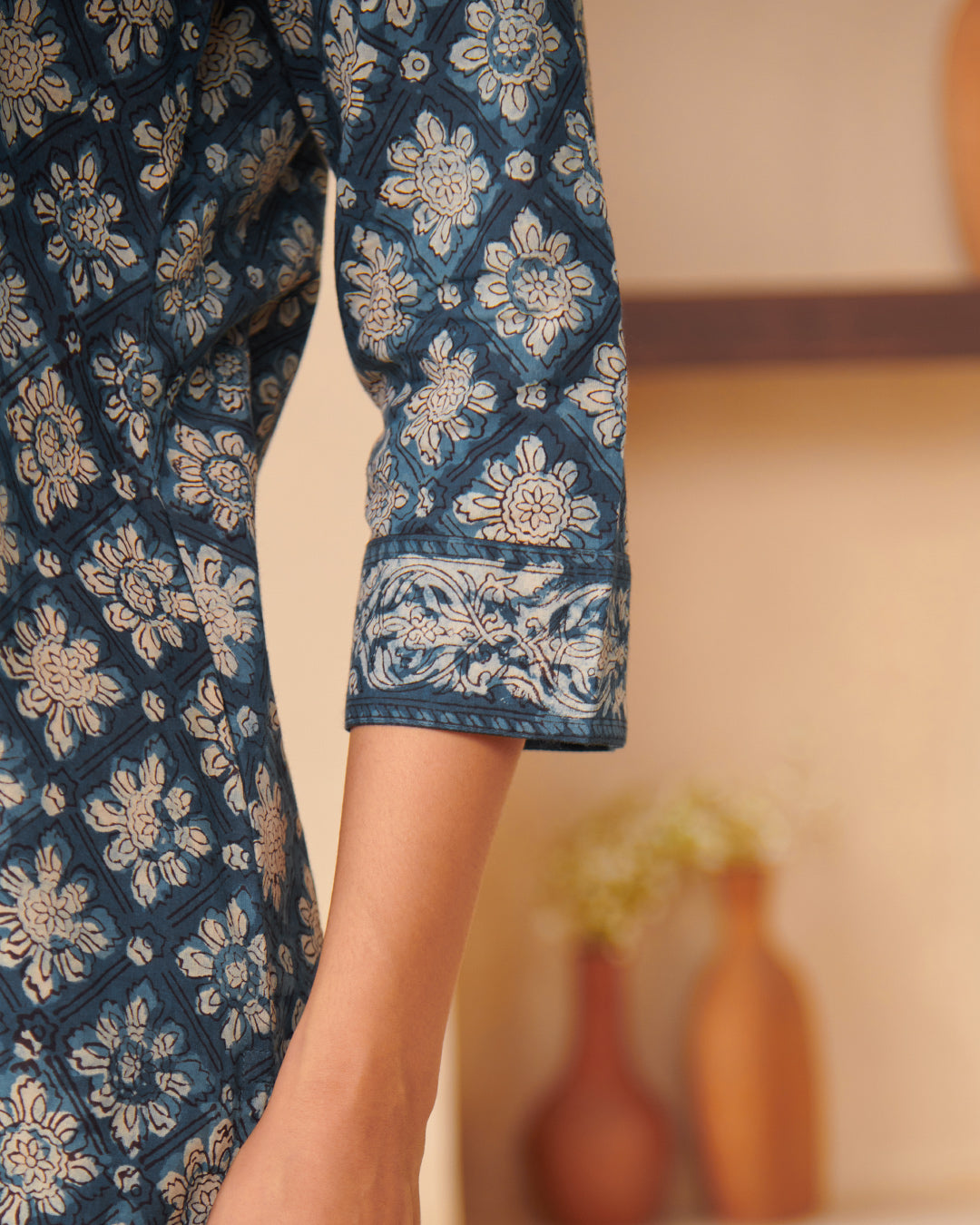
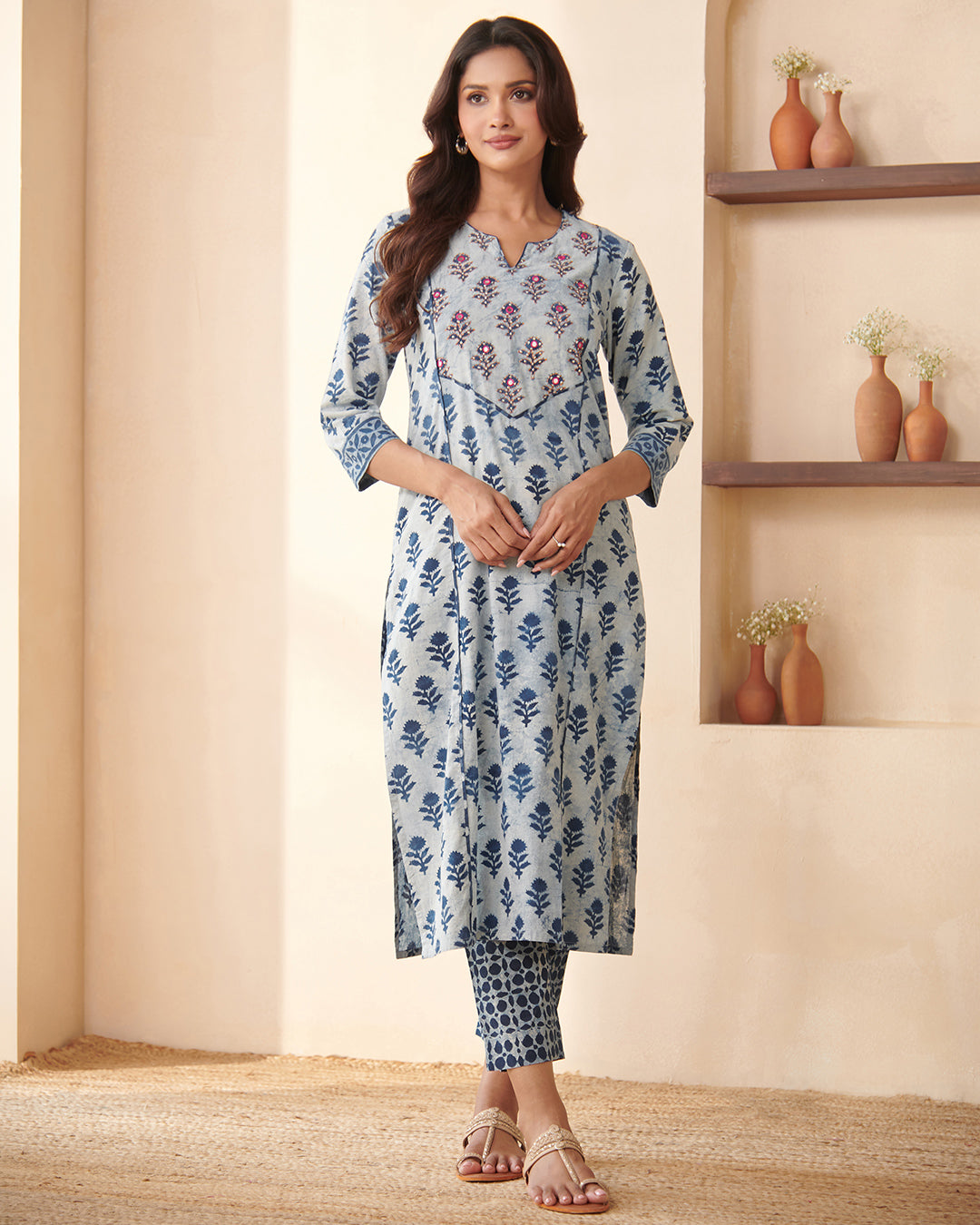
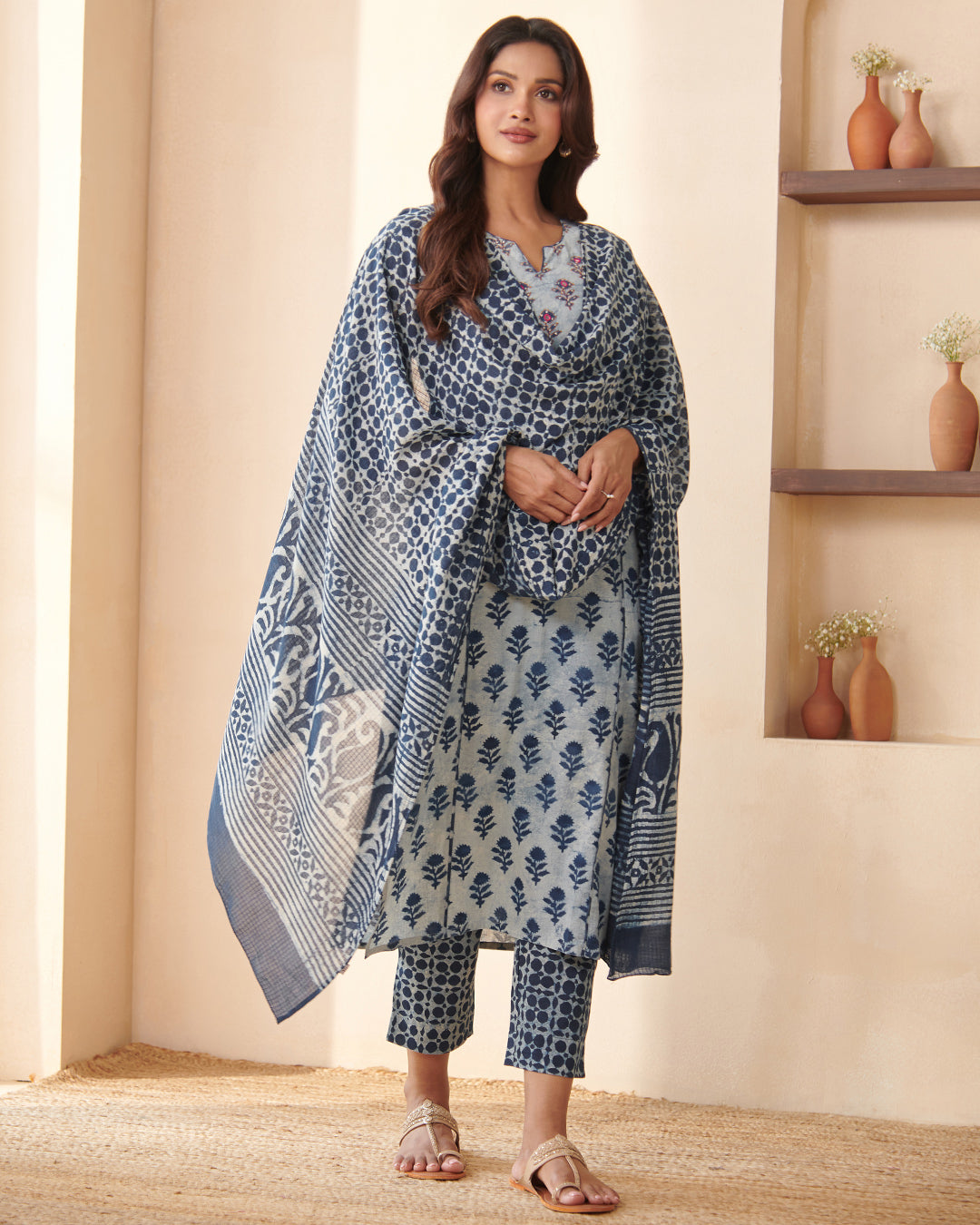
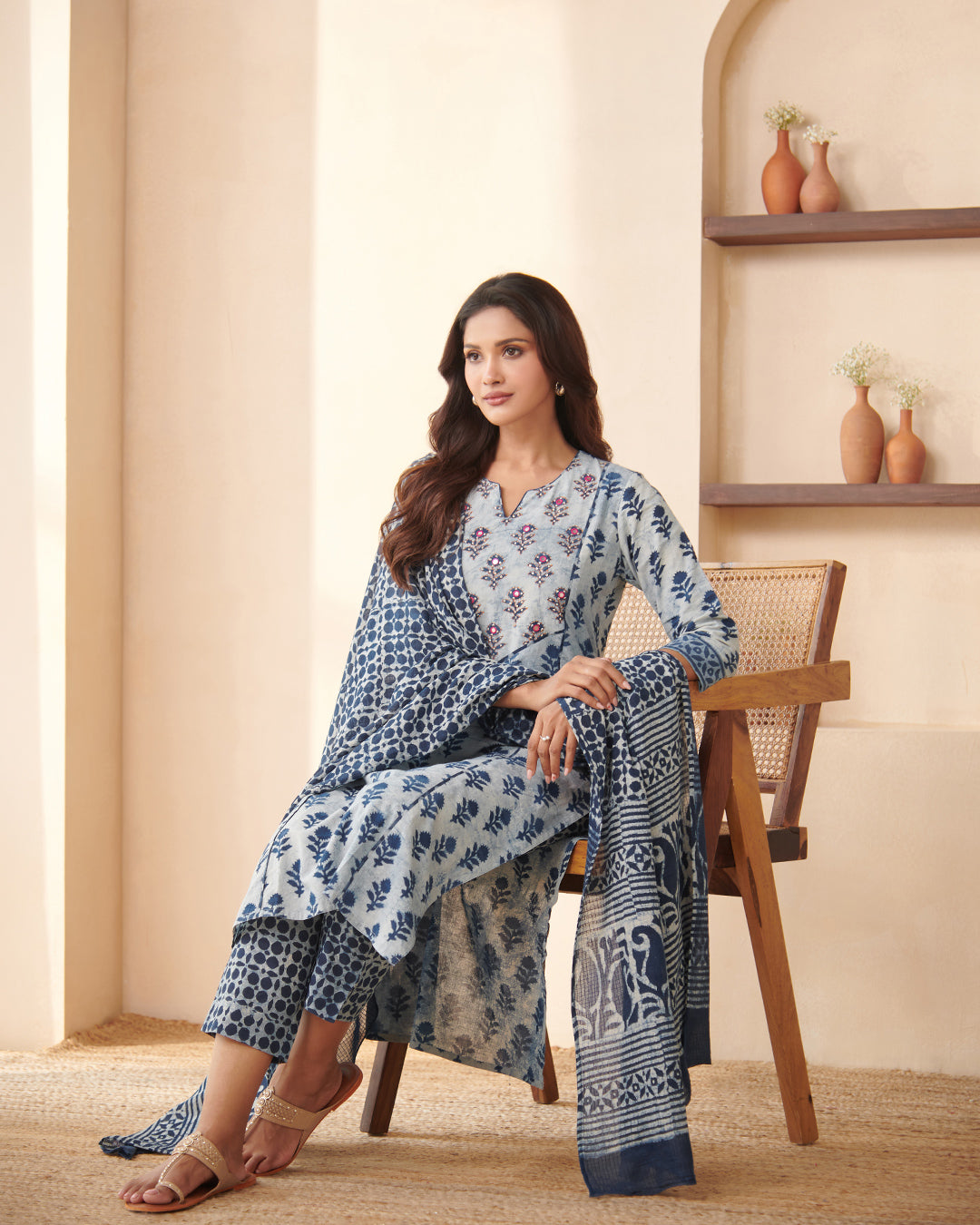
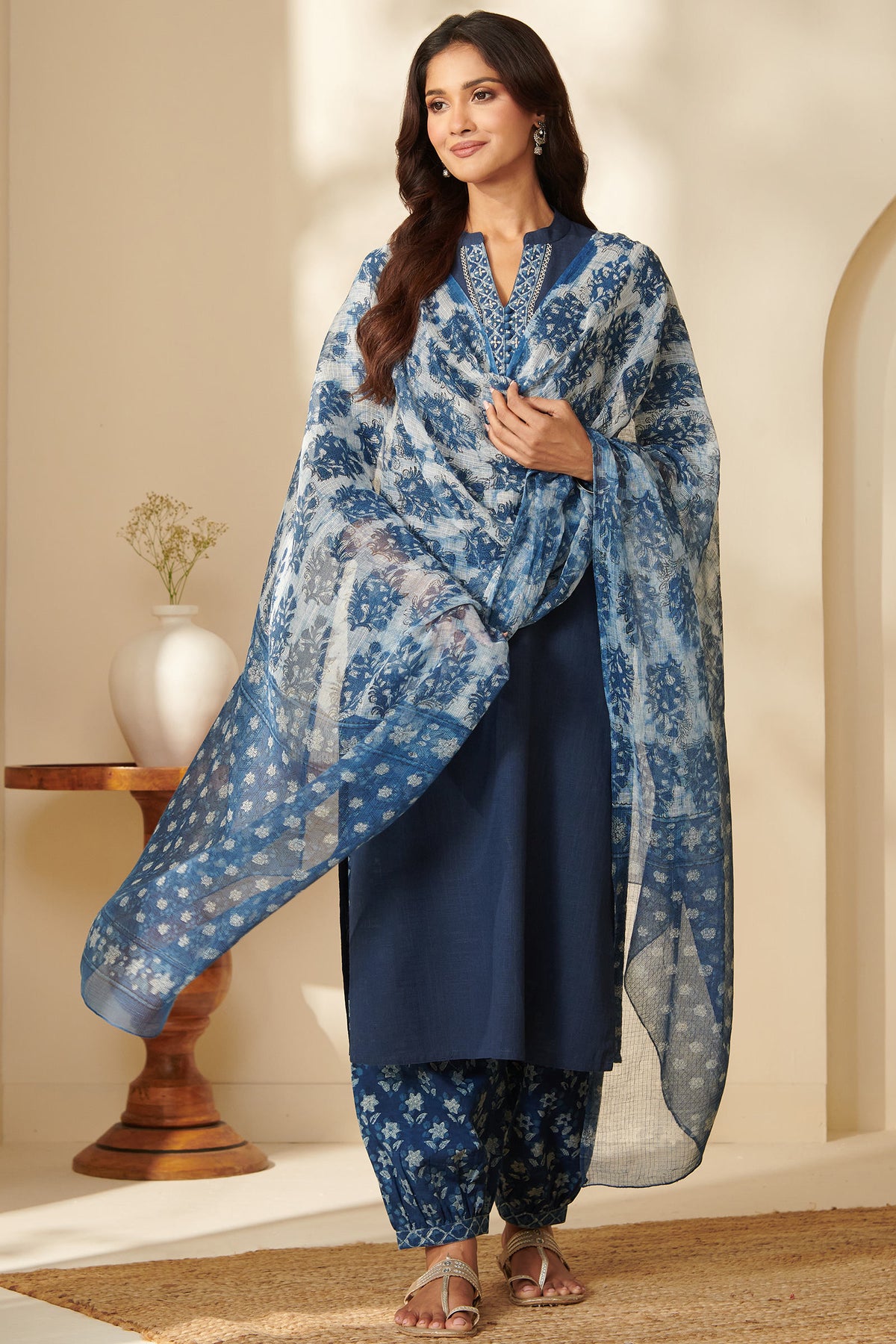
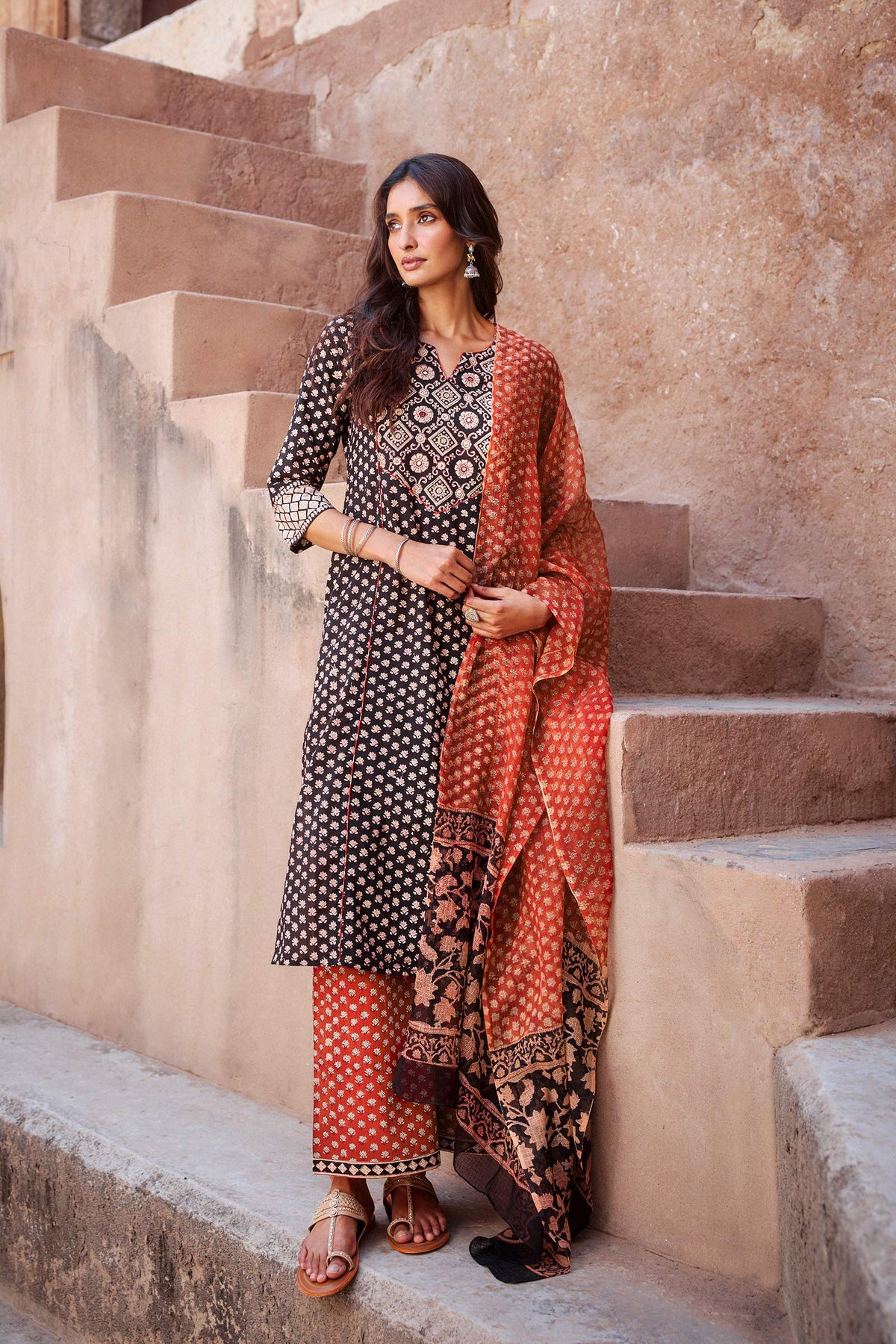
Akola prints are known for their grounded colours. Indigo remains central, often paired with off-whites, muted greys, and soft earthy tones.
These shades do not call for attention. They settle into the eye gradually, much like natural landscapes. Over time, they soften further, becoming even more personal to the wearer.
Traditional Motifs and Patterns
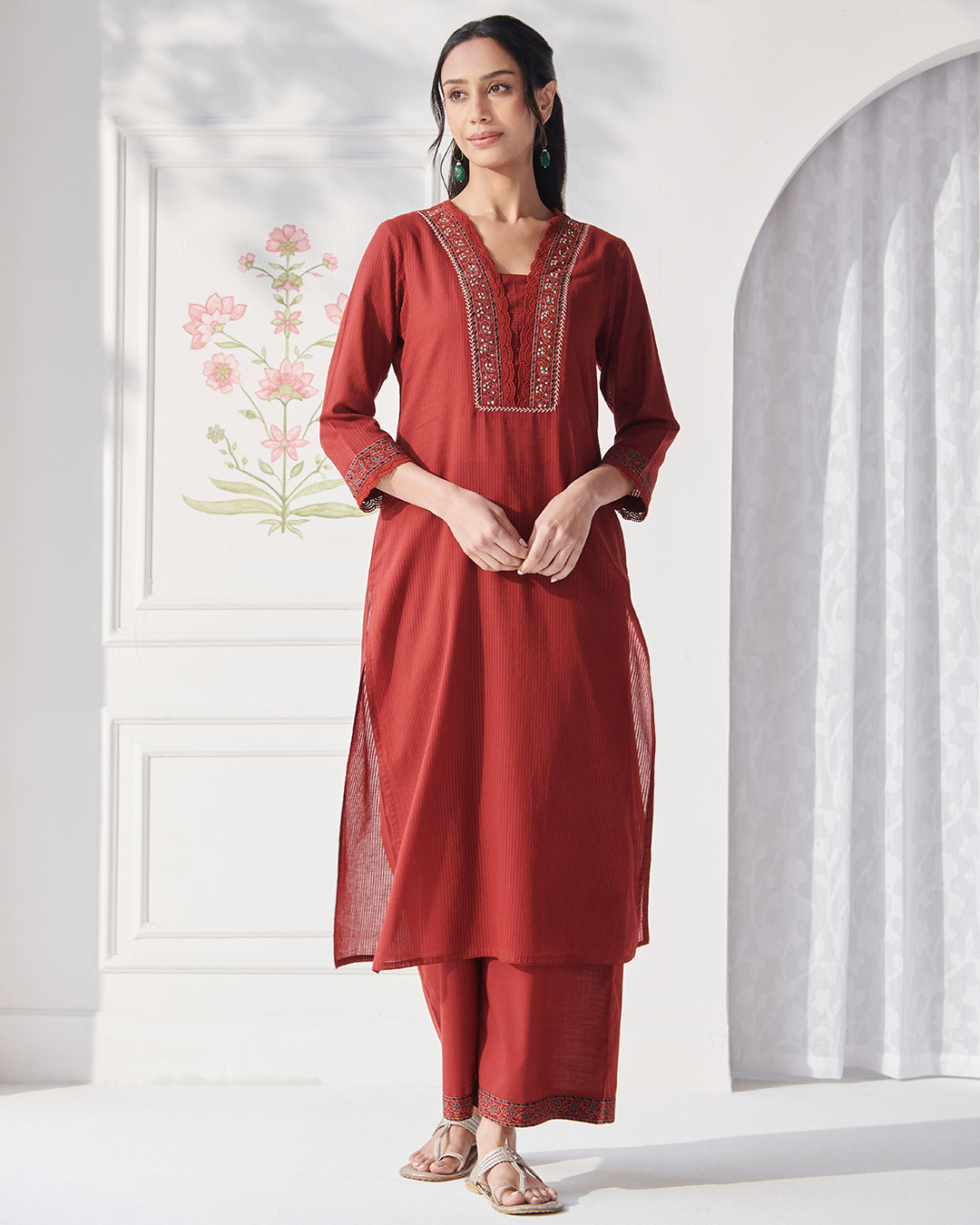
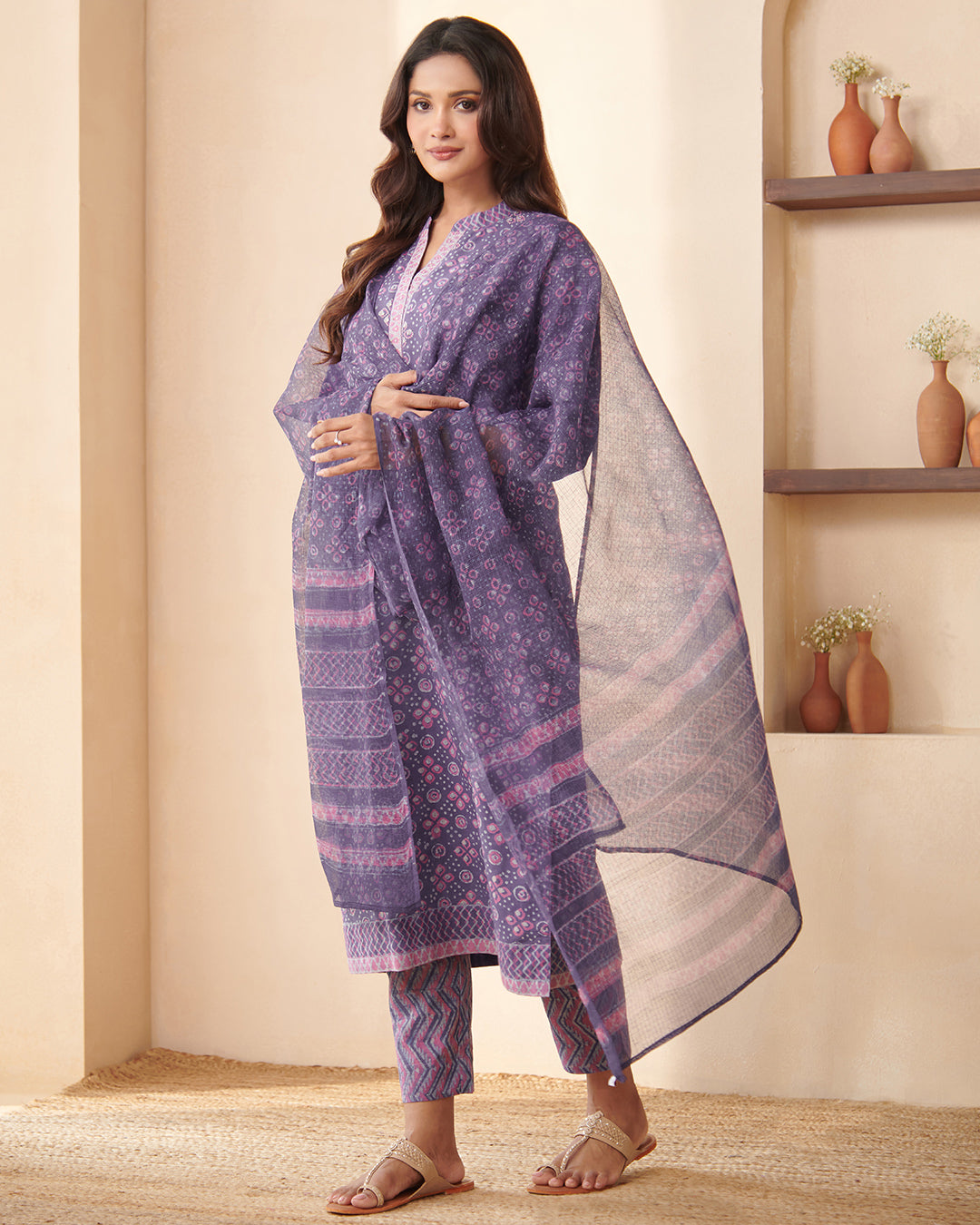
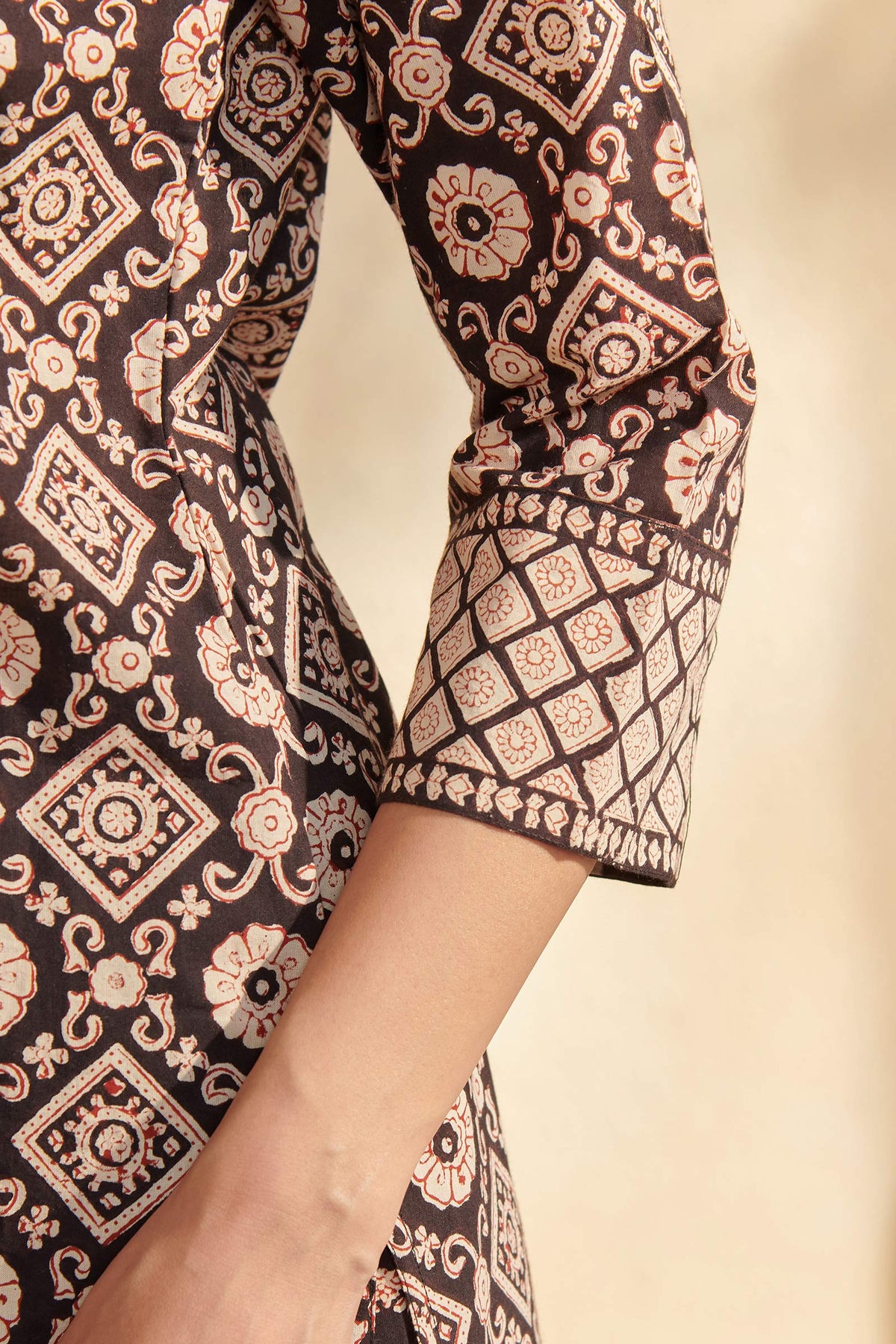
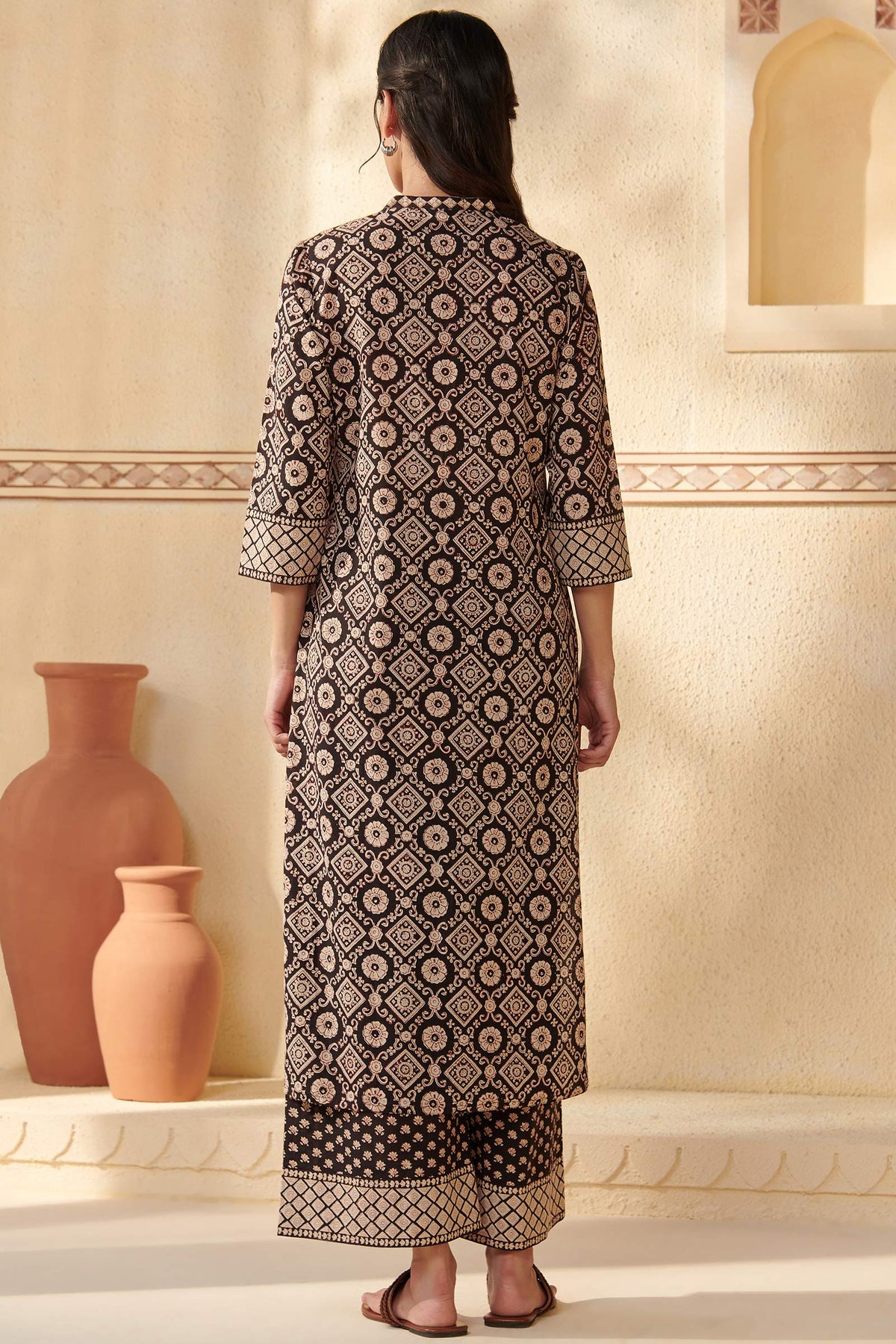
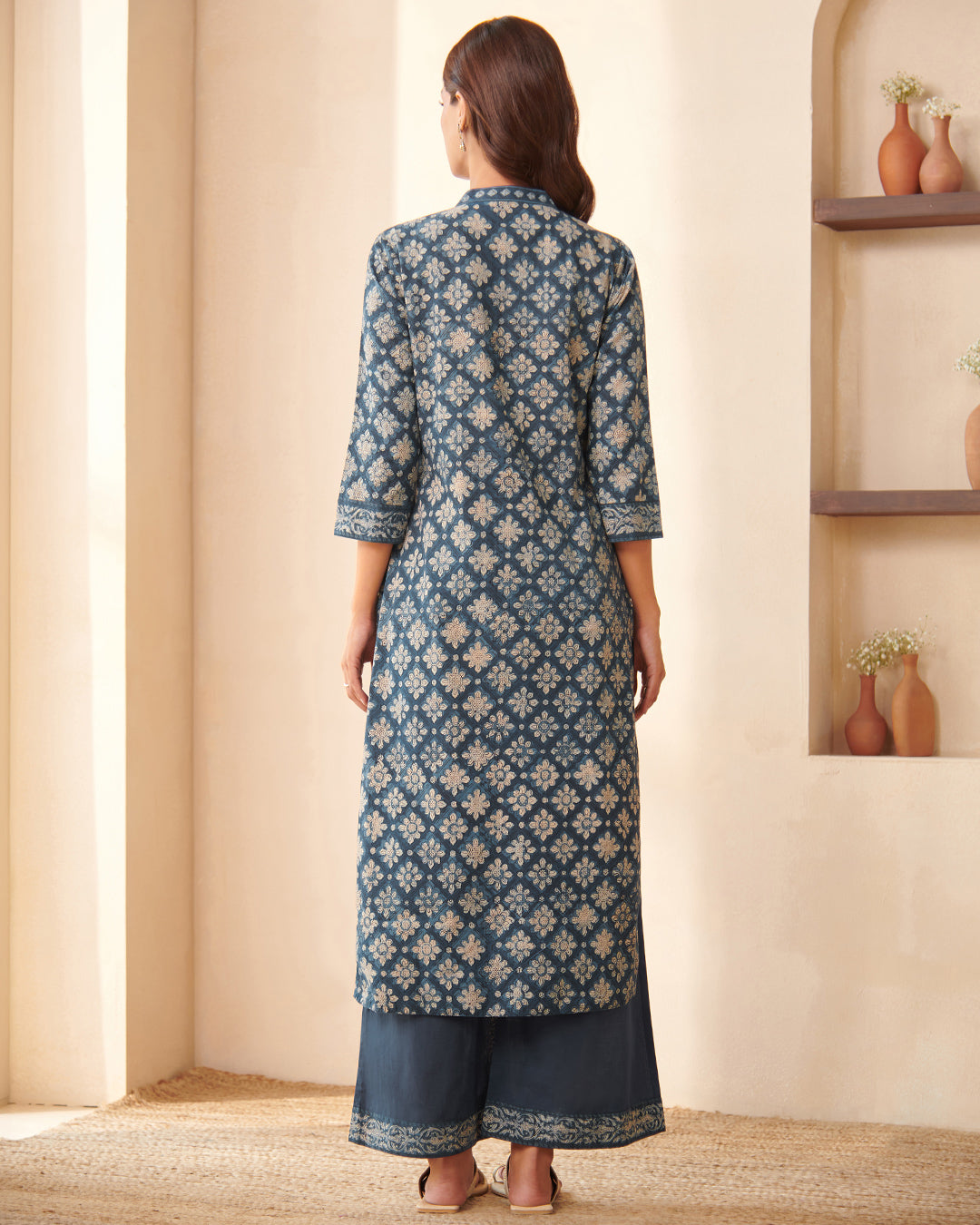
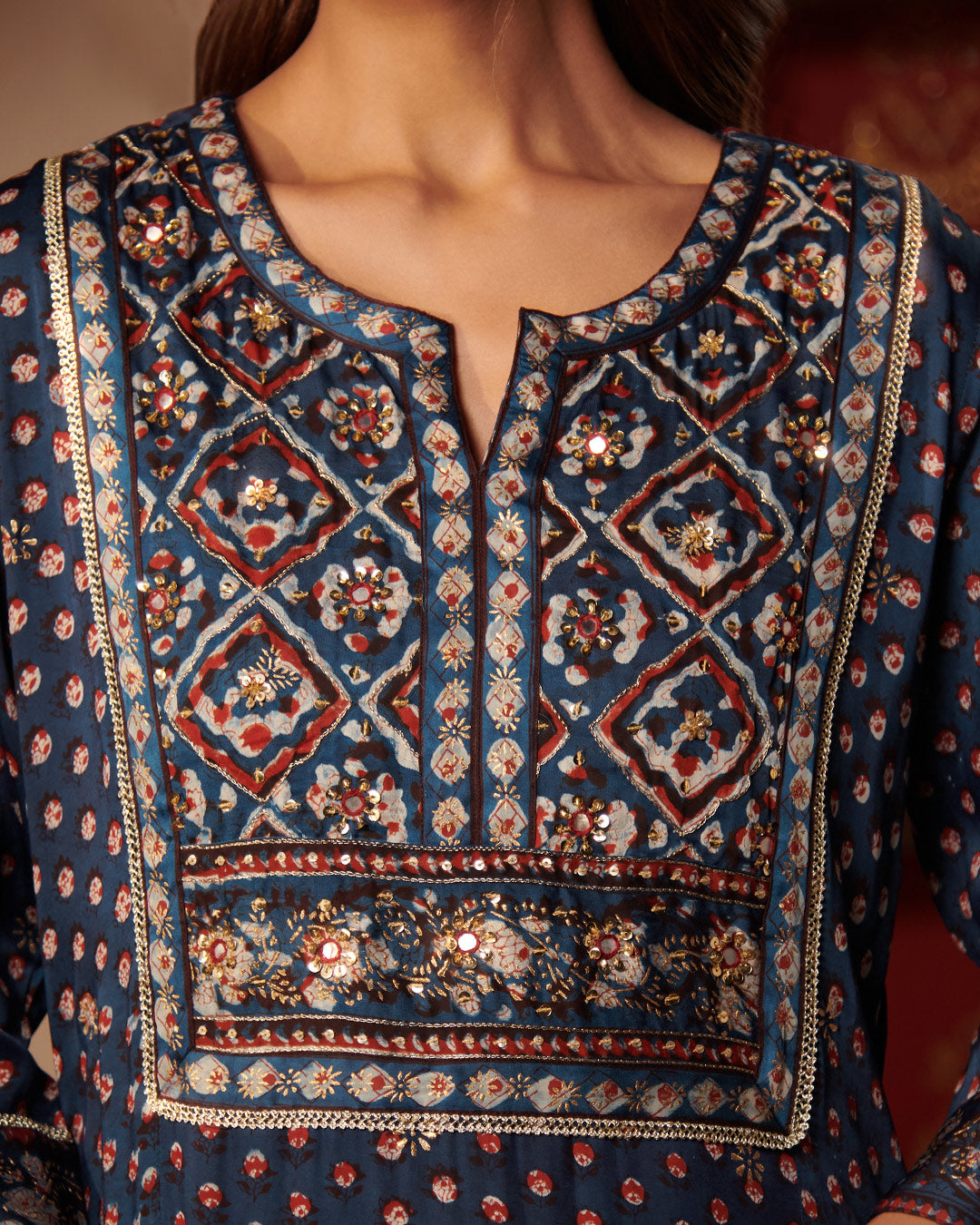
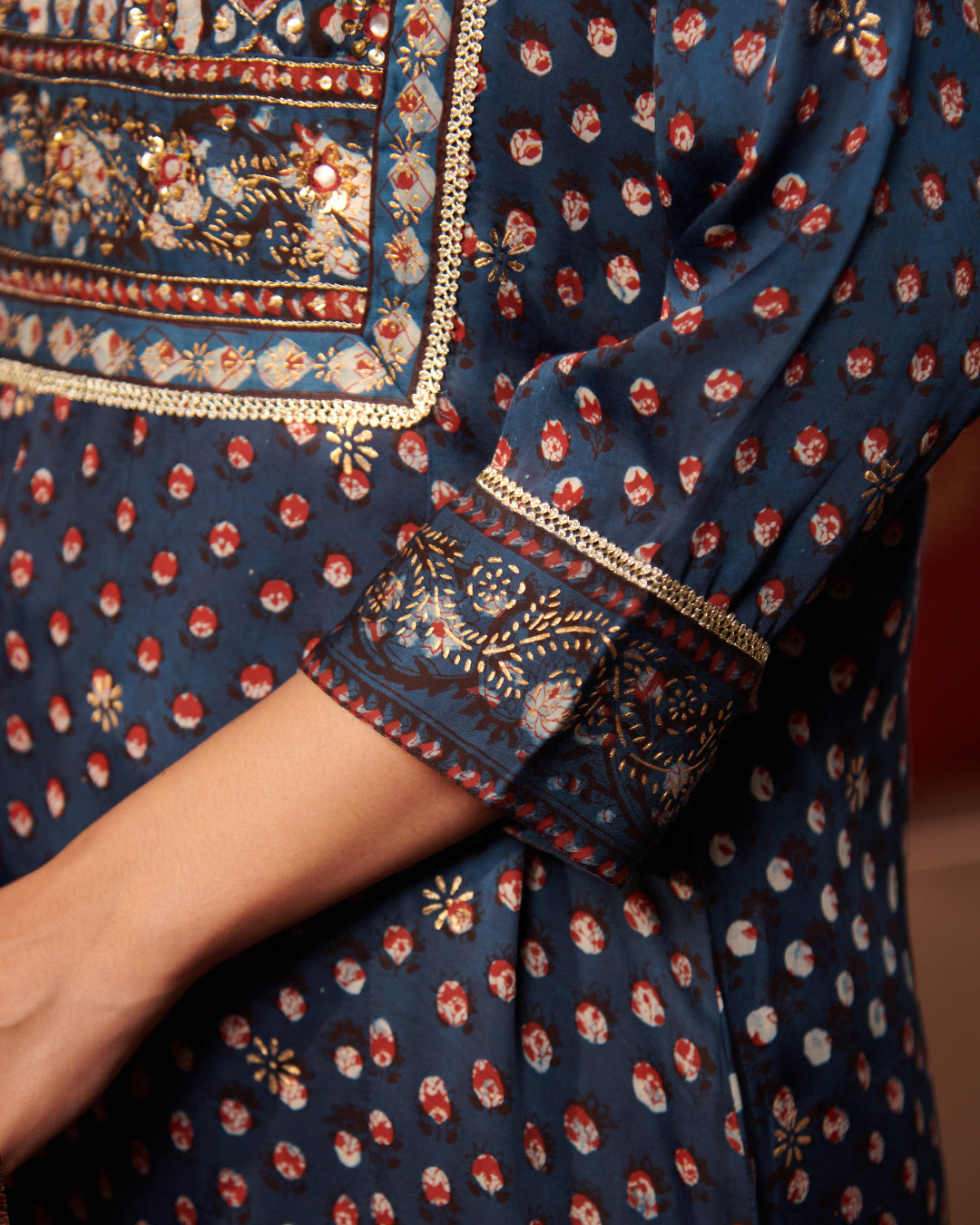
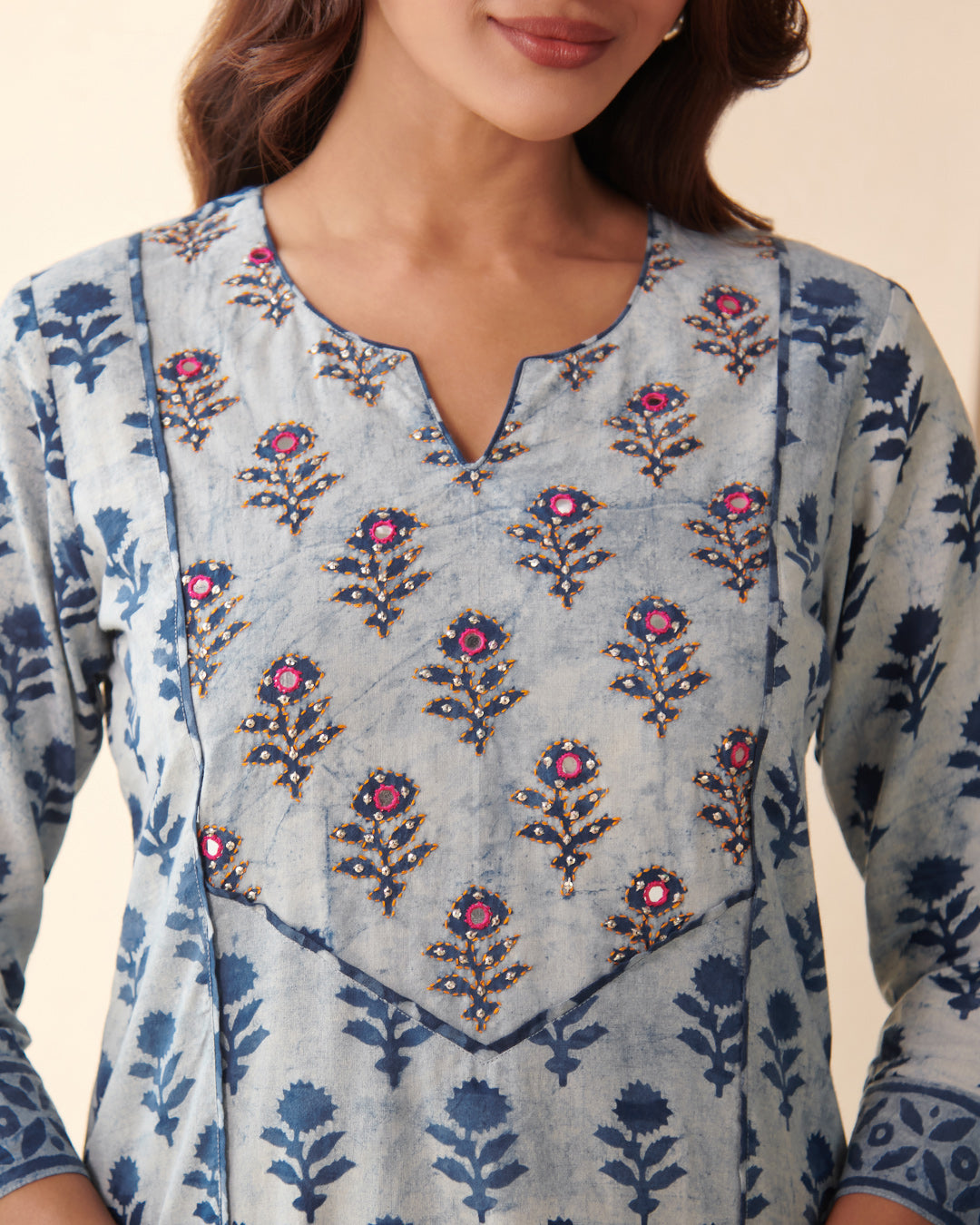
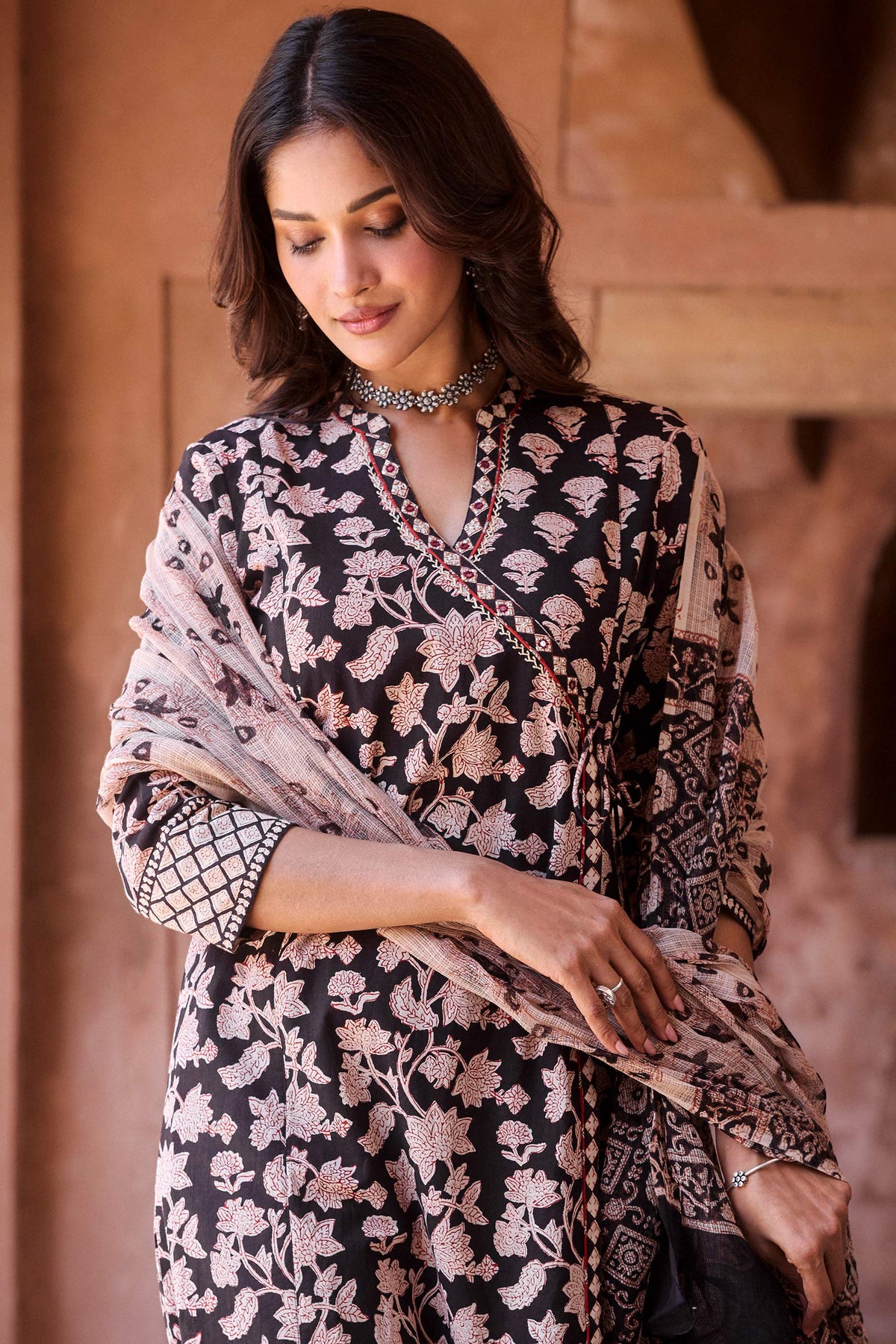
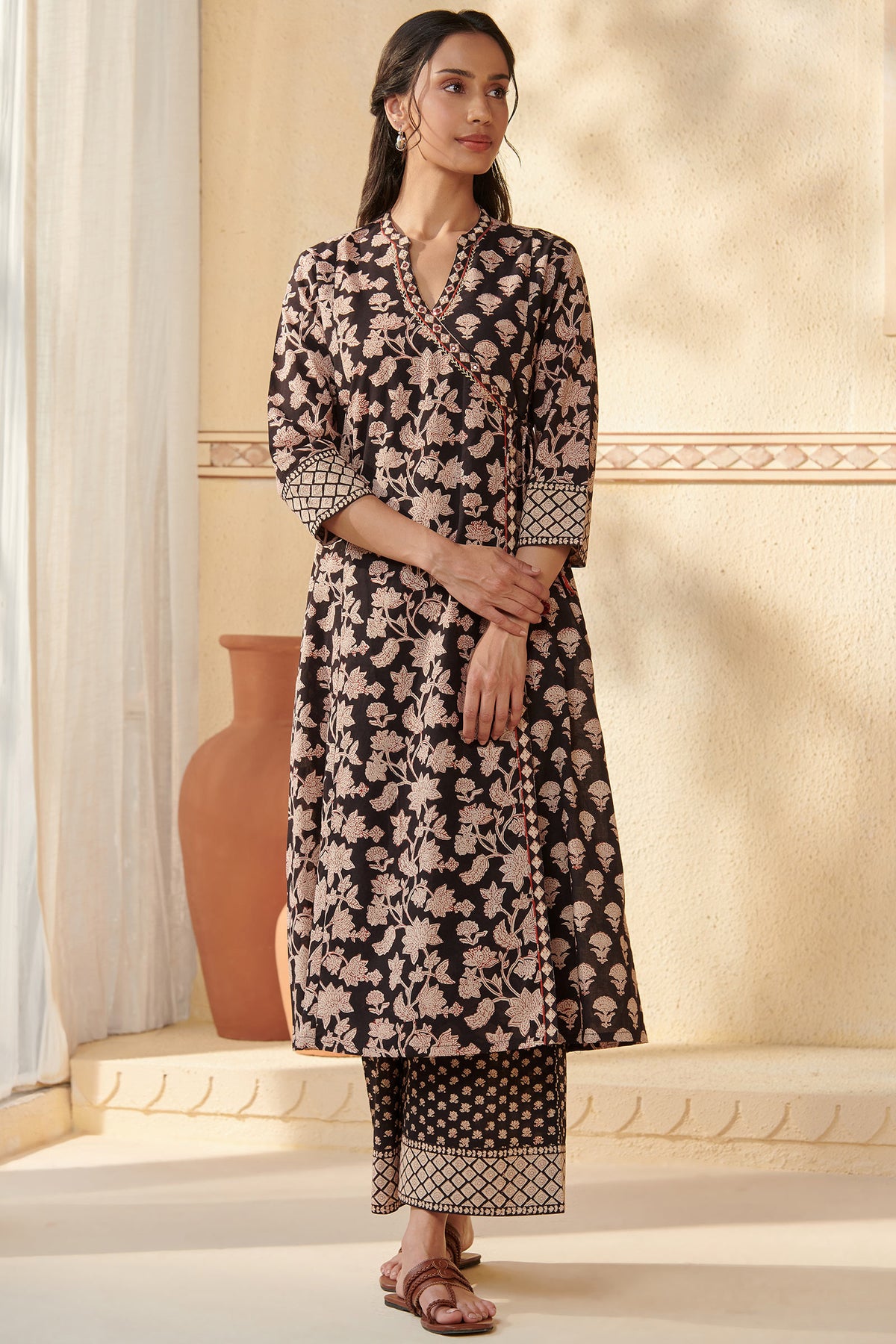
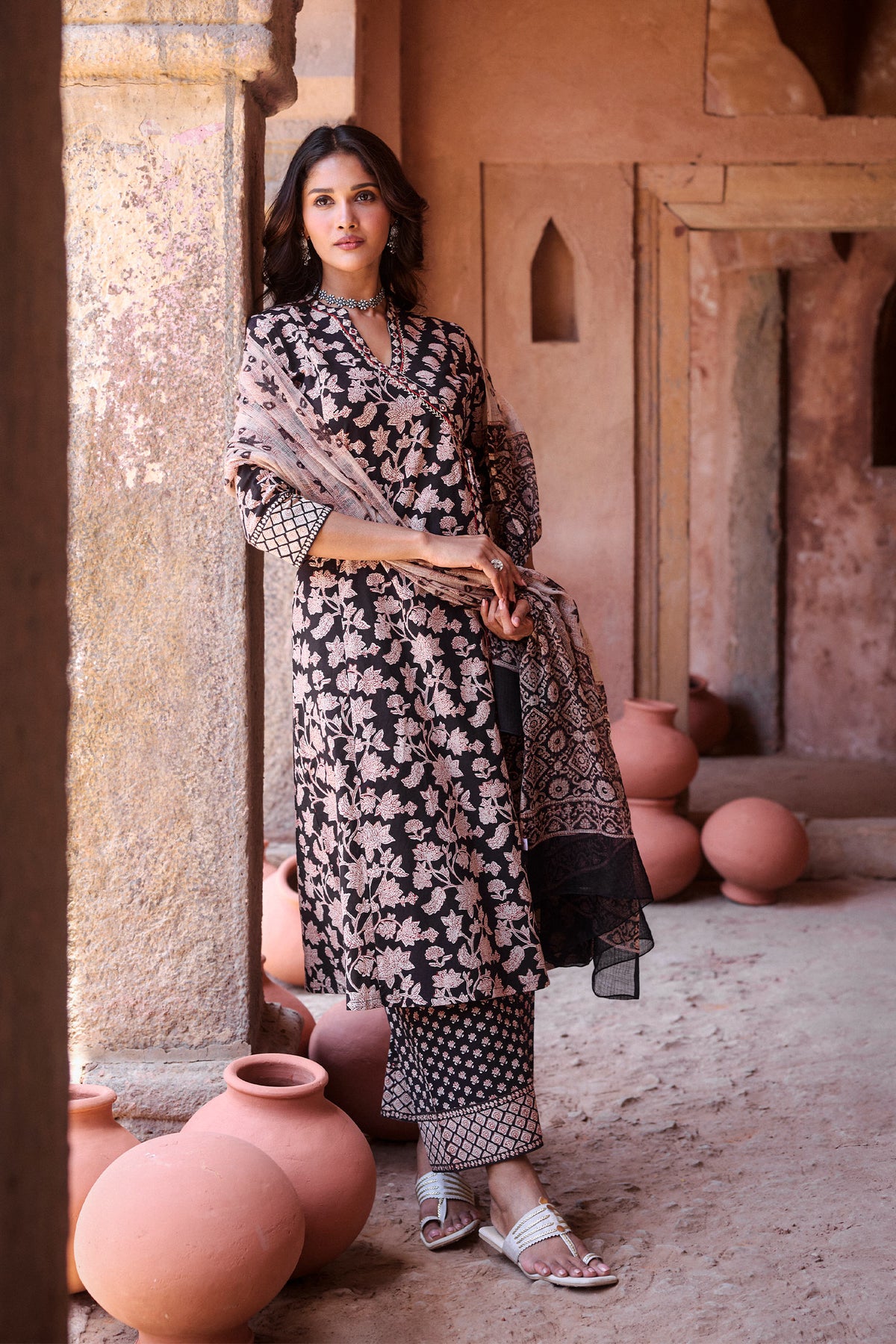
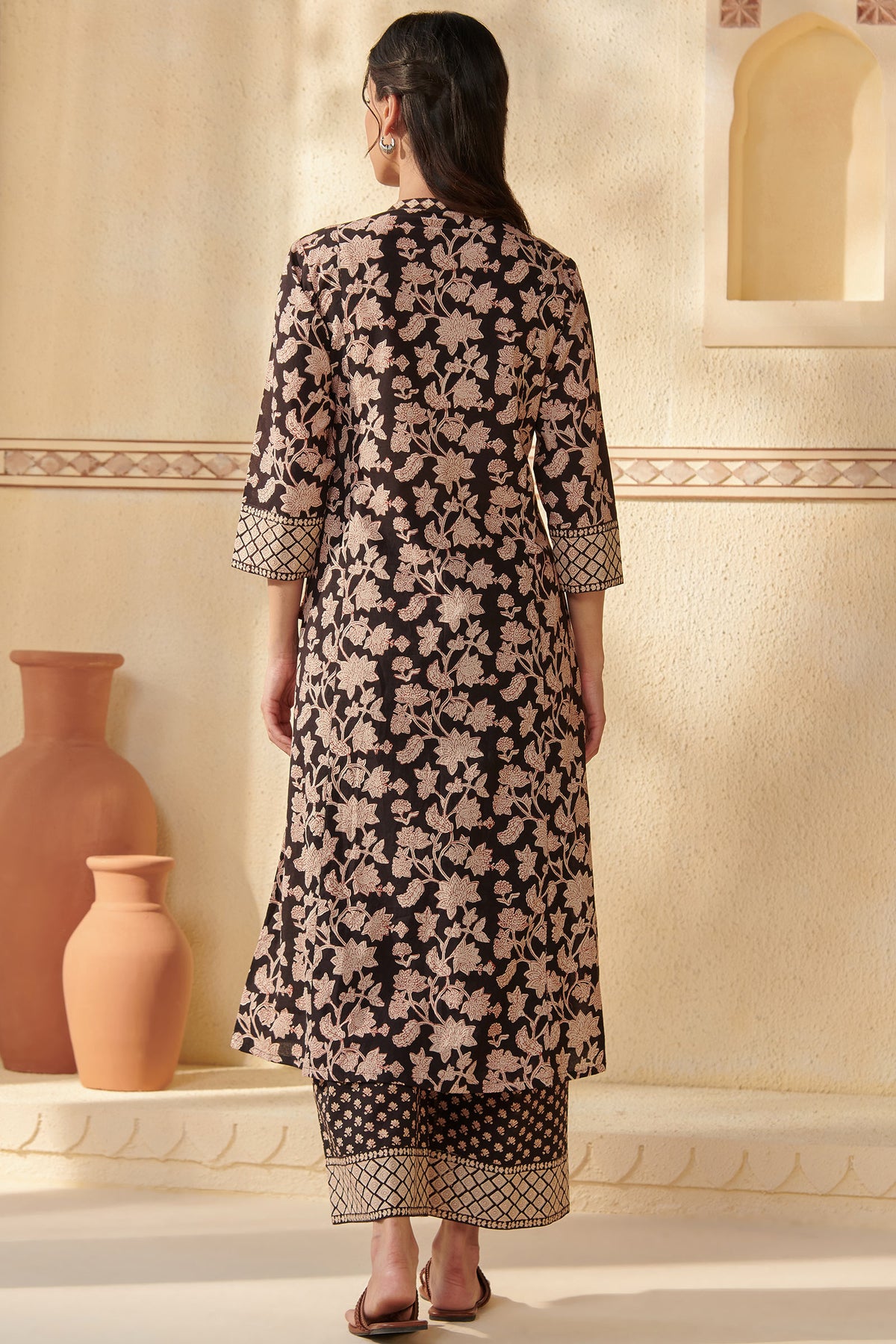
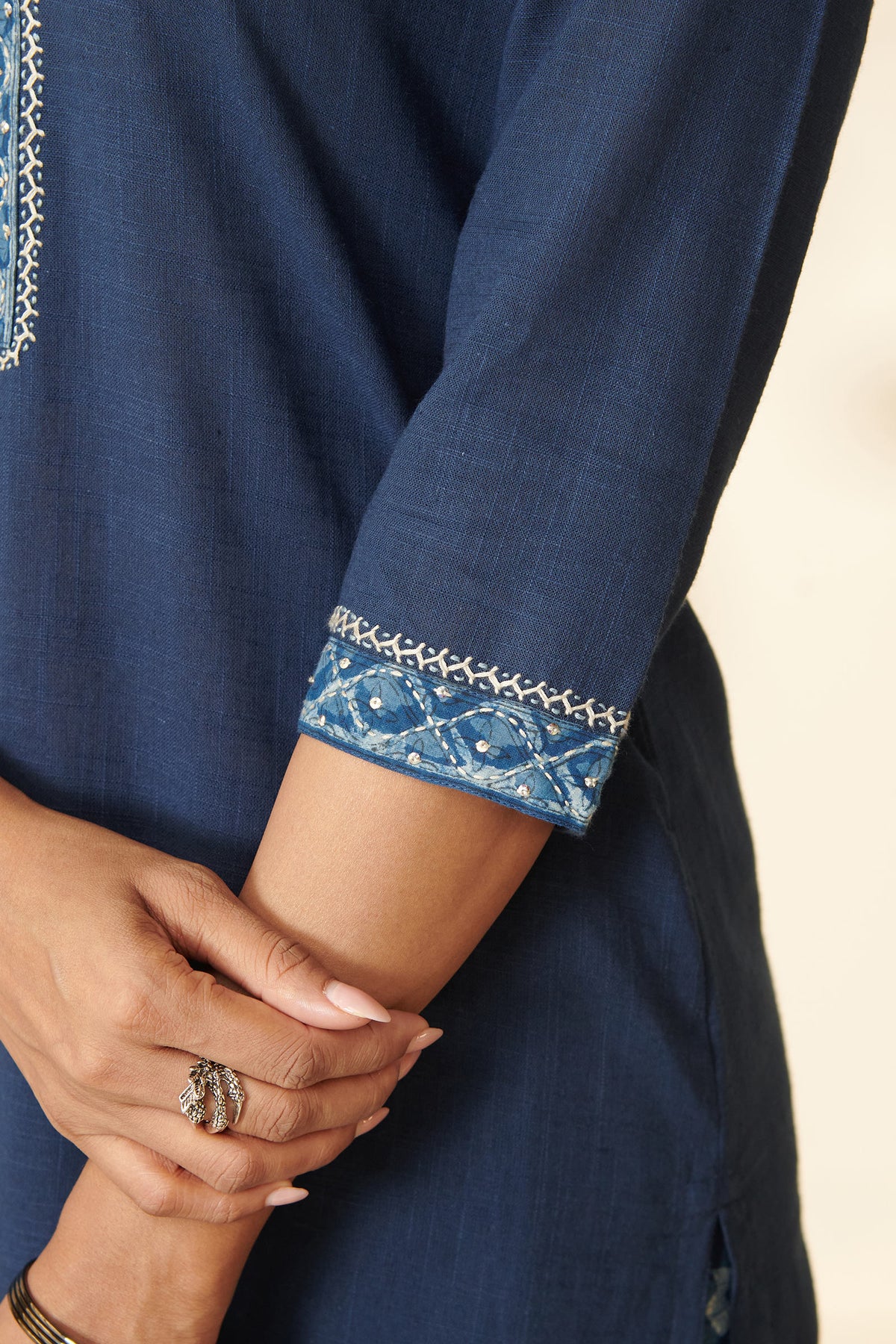
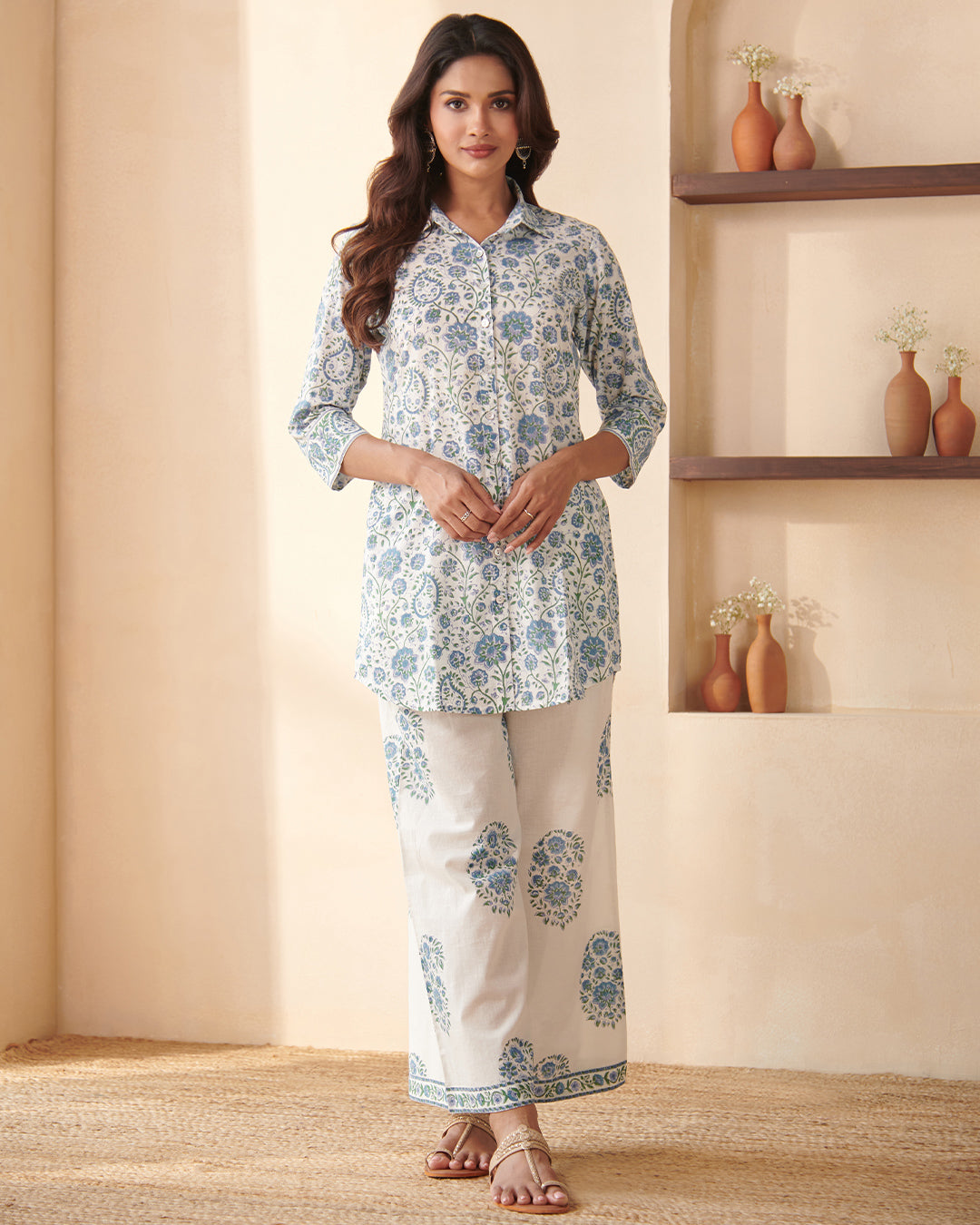
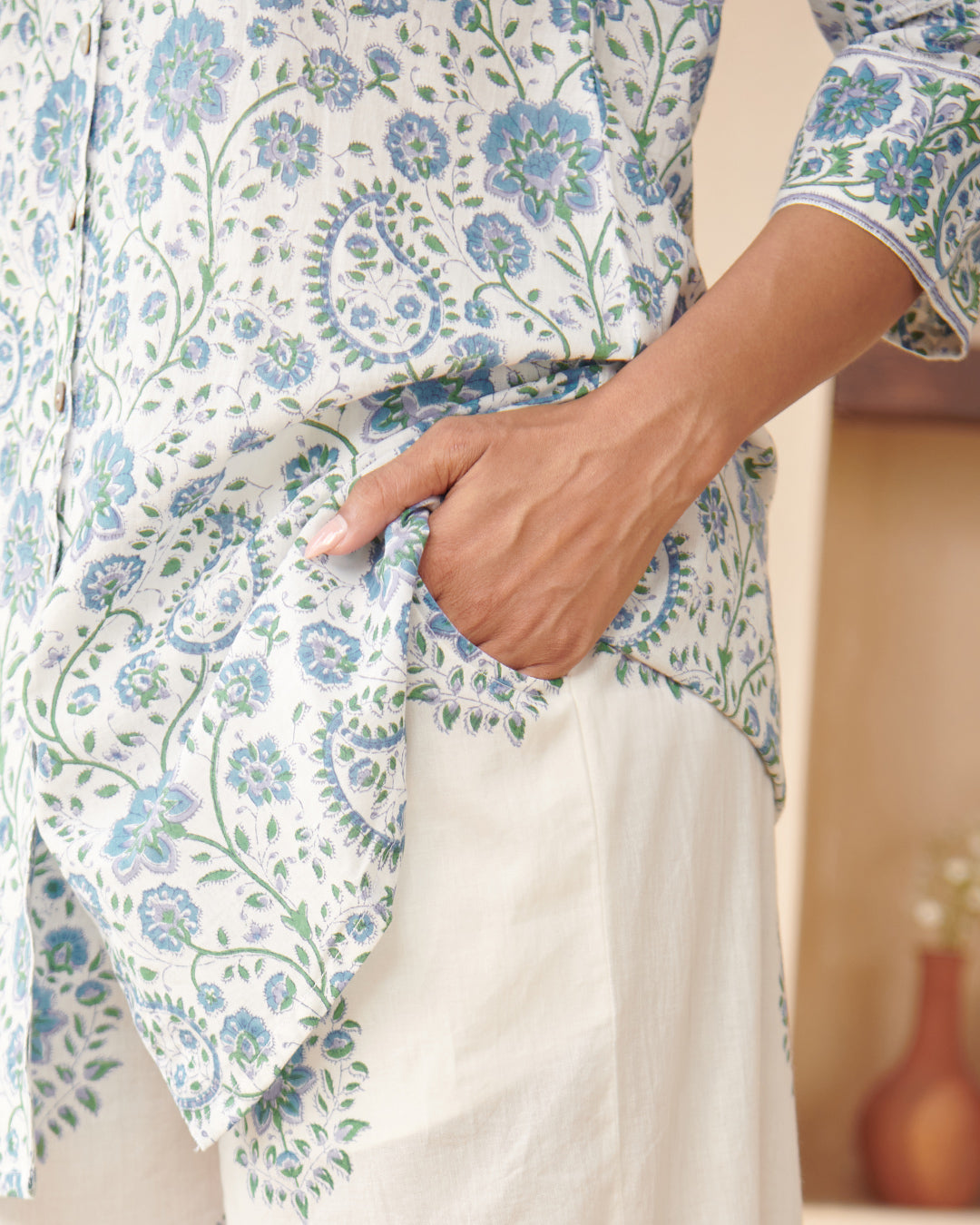
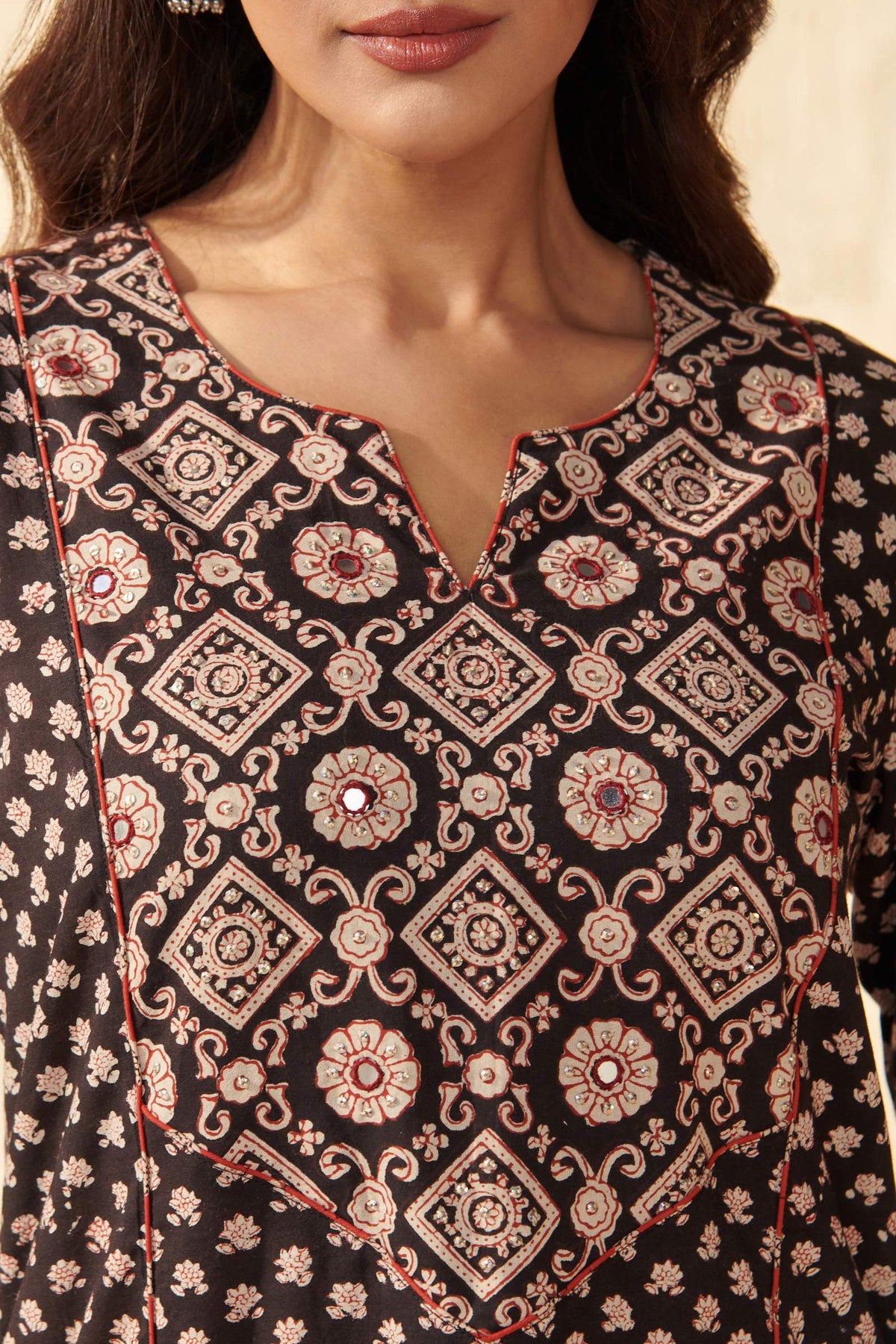
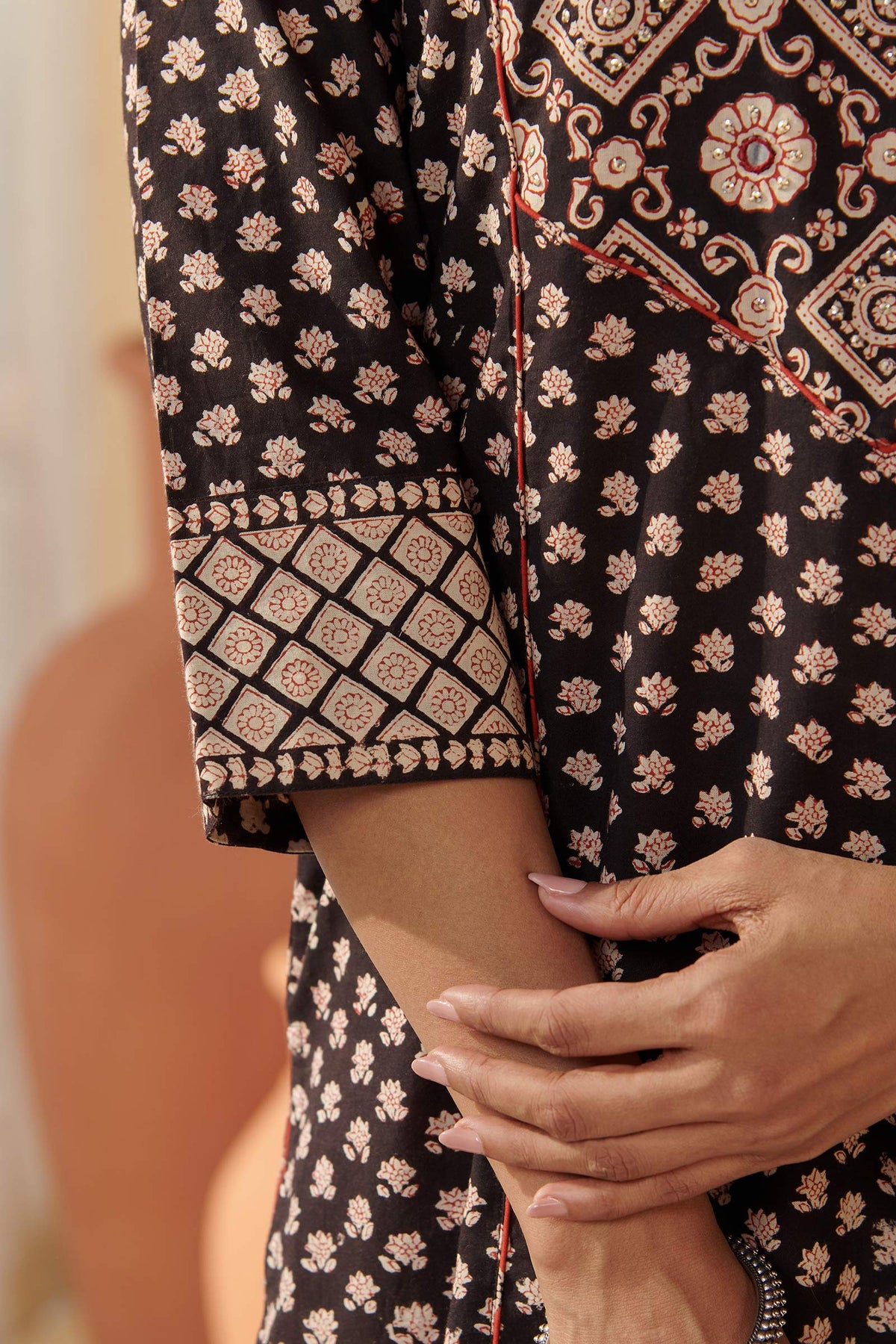
The motifs in Akola hand print are drawn from everyday surroundings, small flowers, jaal patterns, geometric borders, and forms inspired by nature.
They are rarely large or overpowering. Instead, they repeat gently across the fabric, creating a sense of continuity. Each motif carries familiarity, something that feels remembered rather than newly introduced.
Textured, Handcrafted Finish
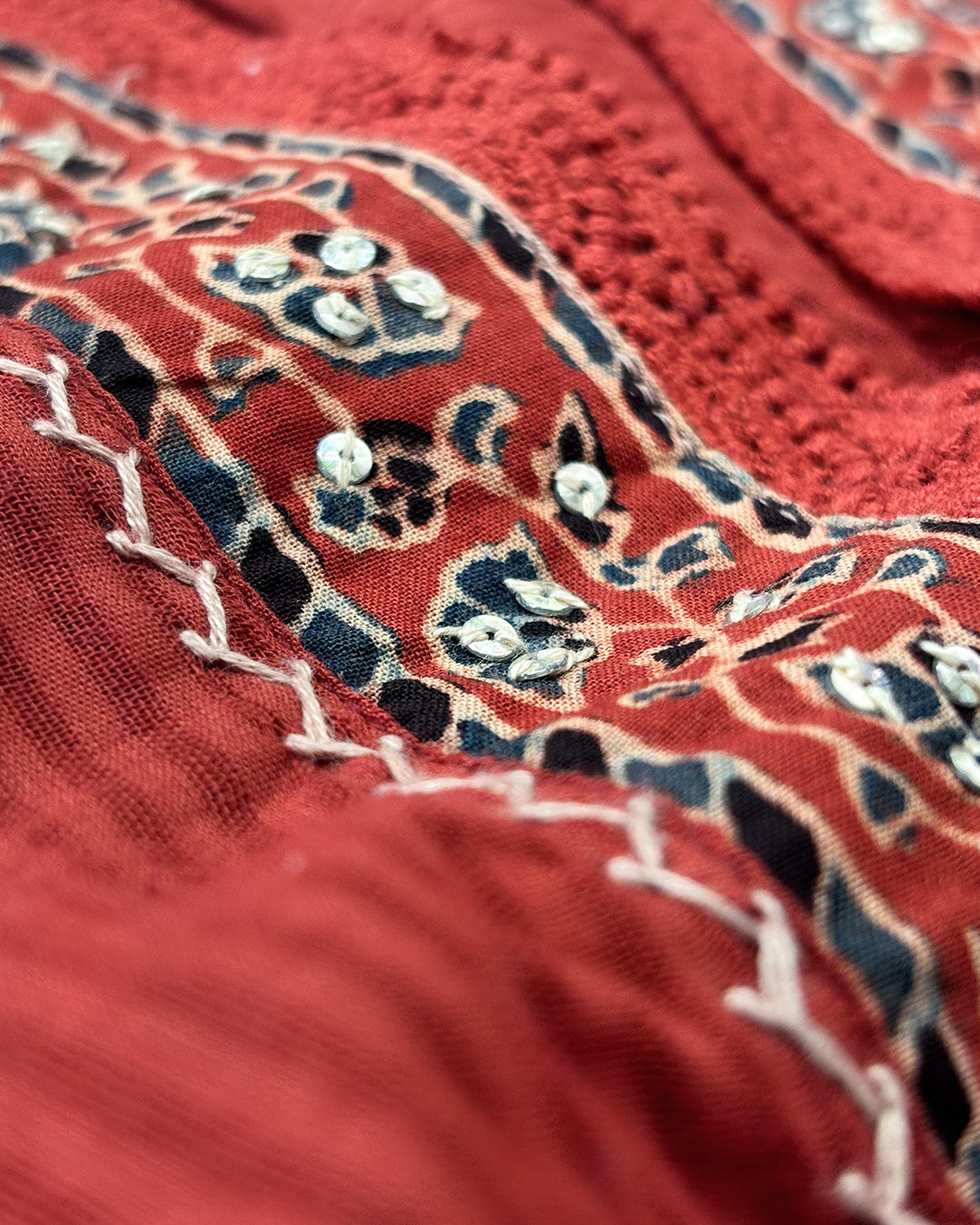
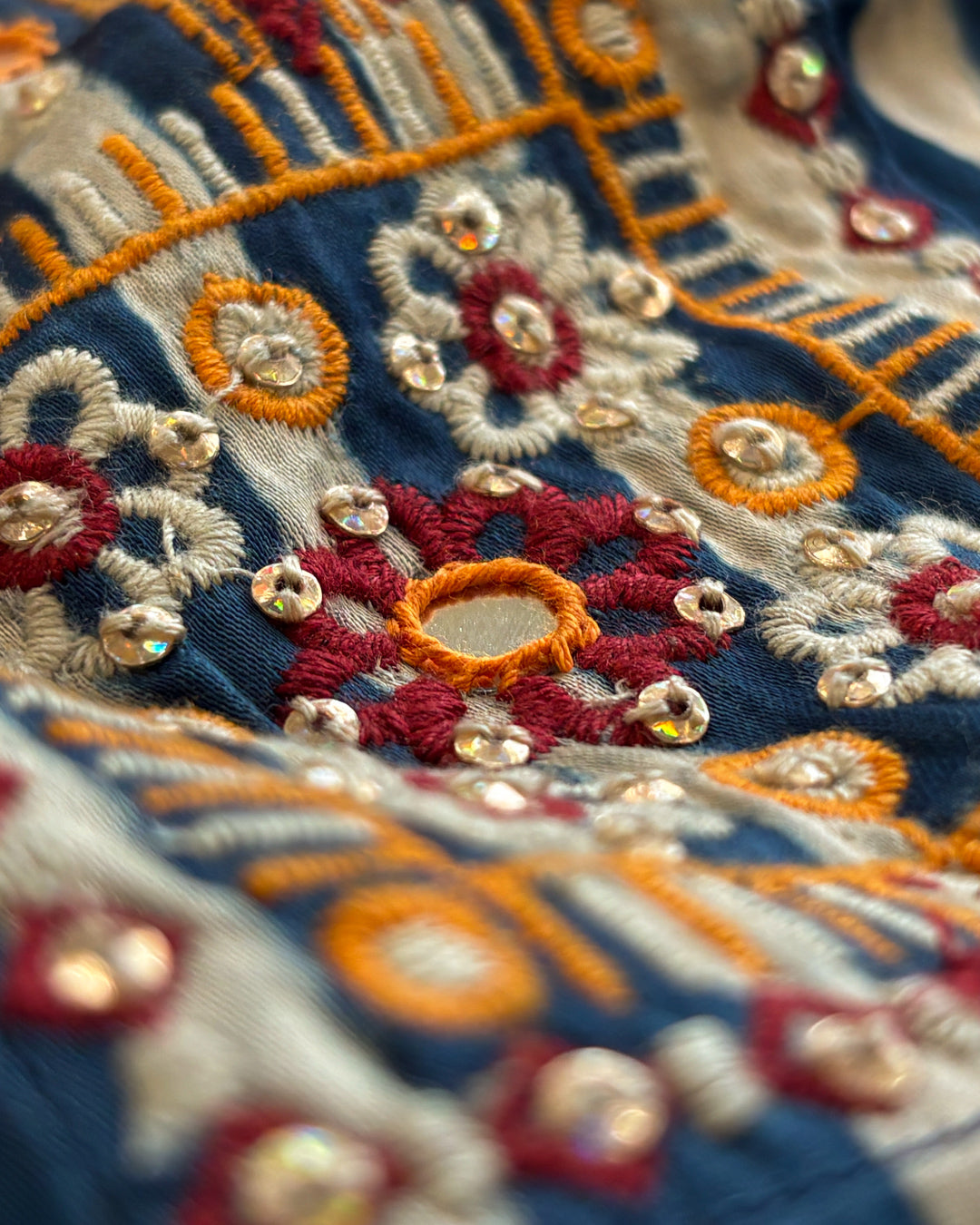
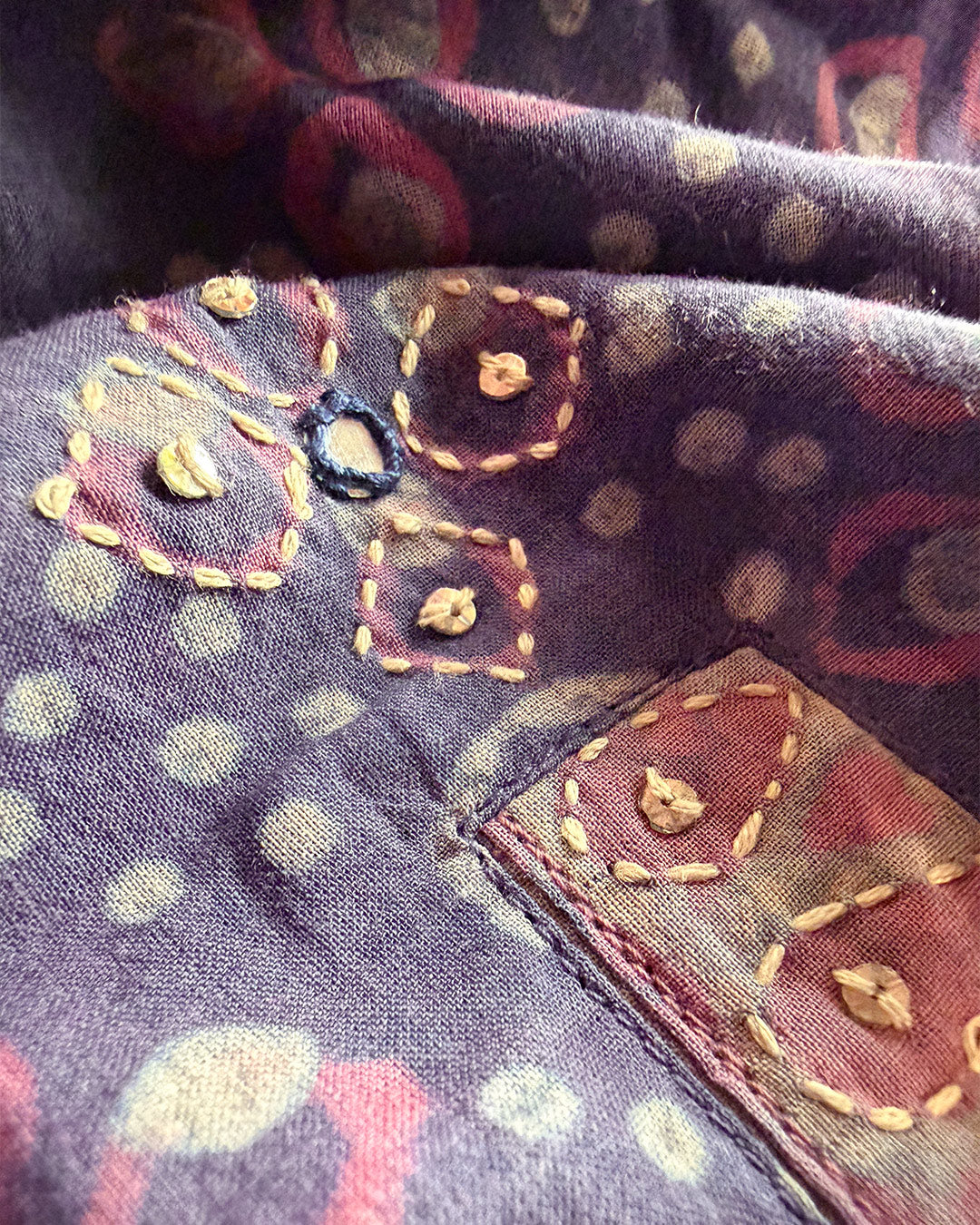
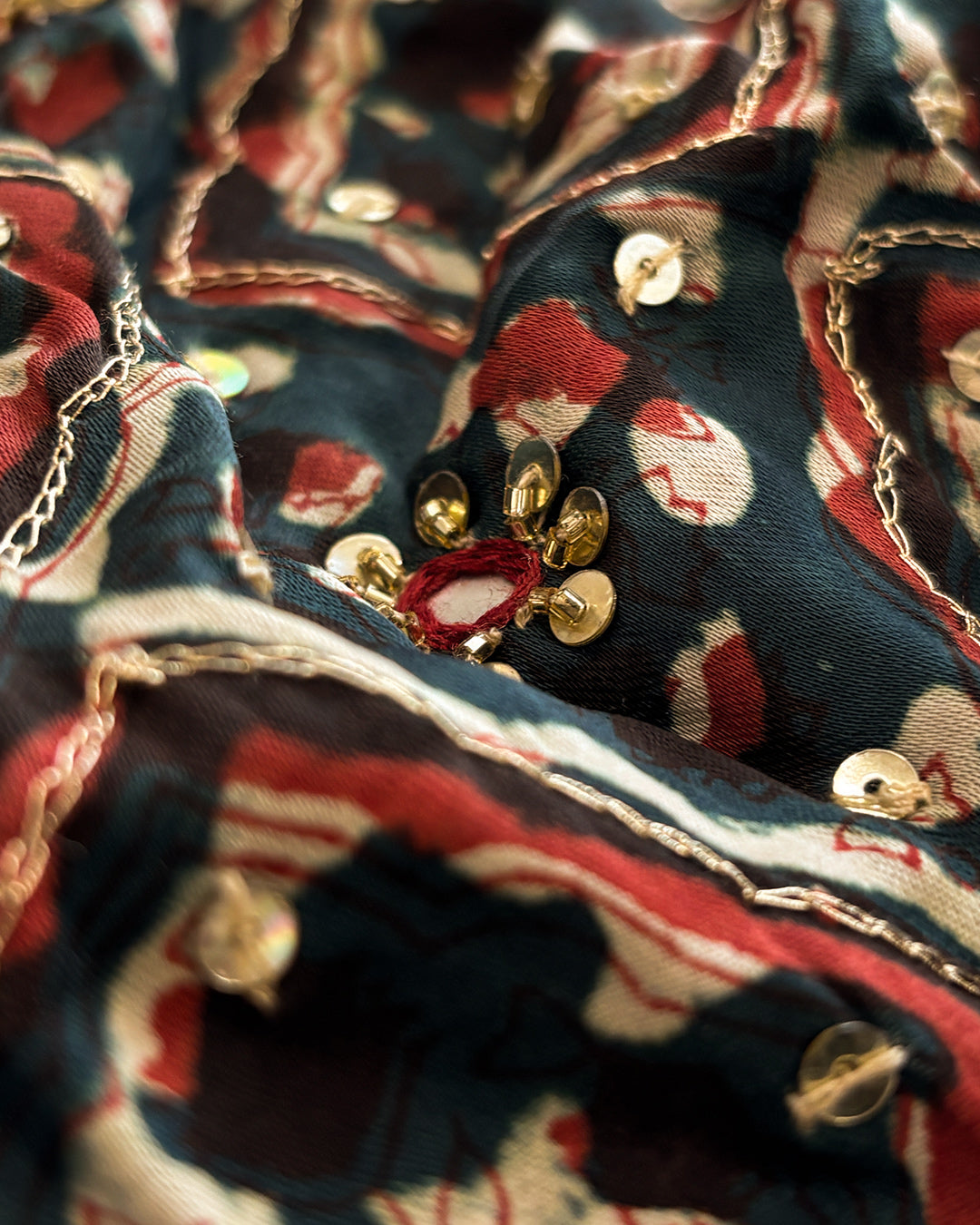
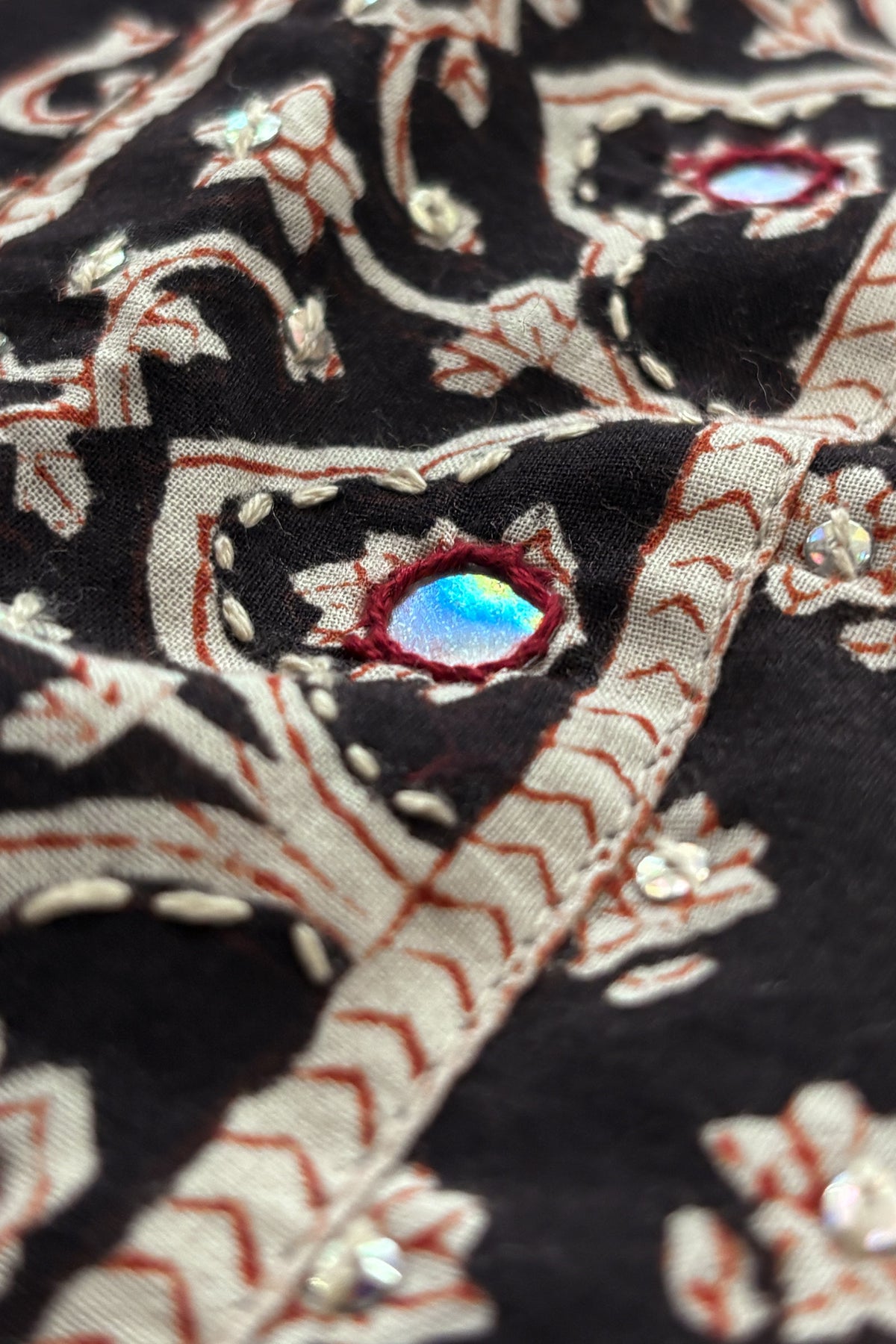
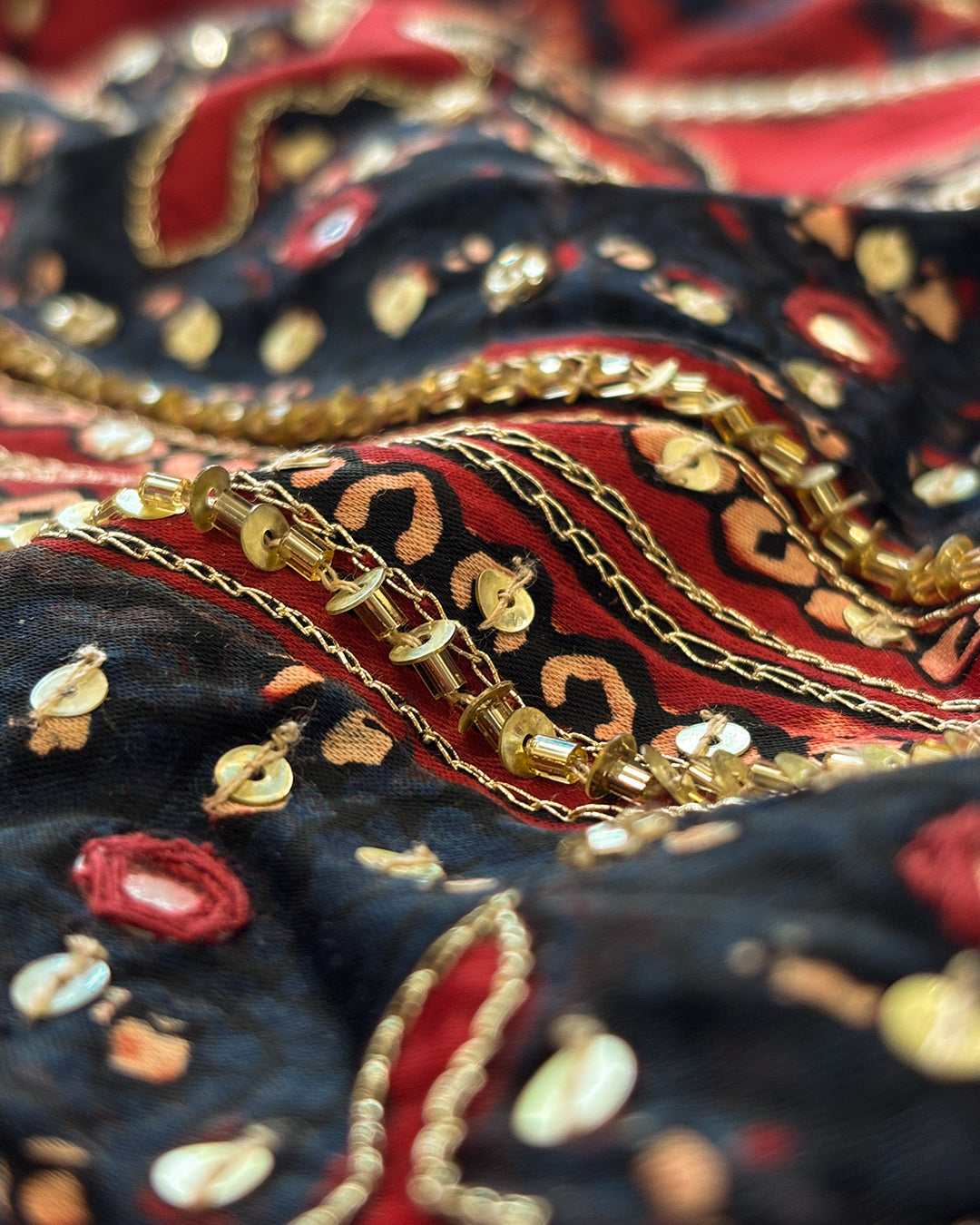
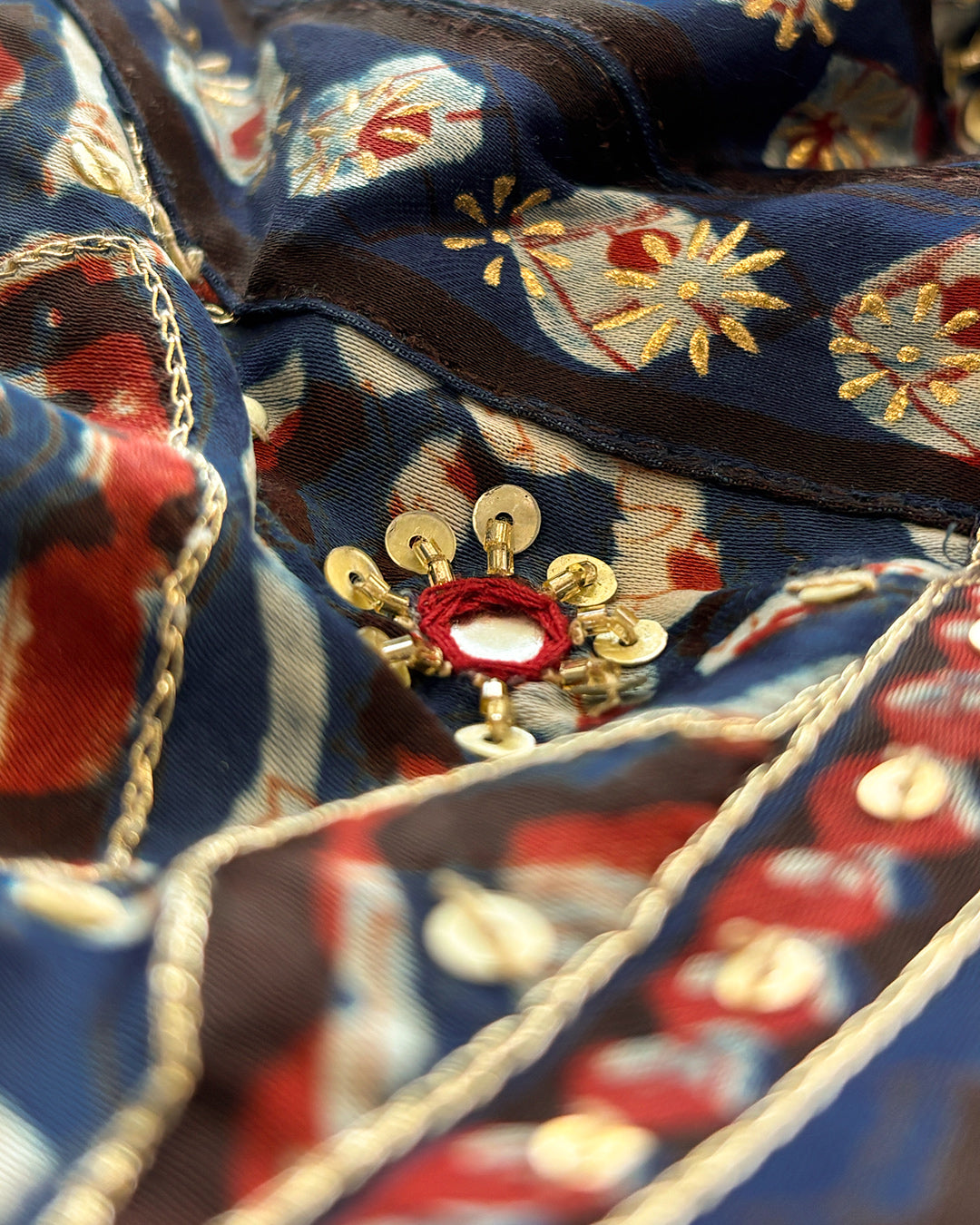
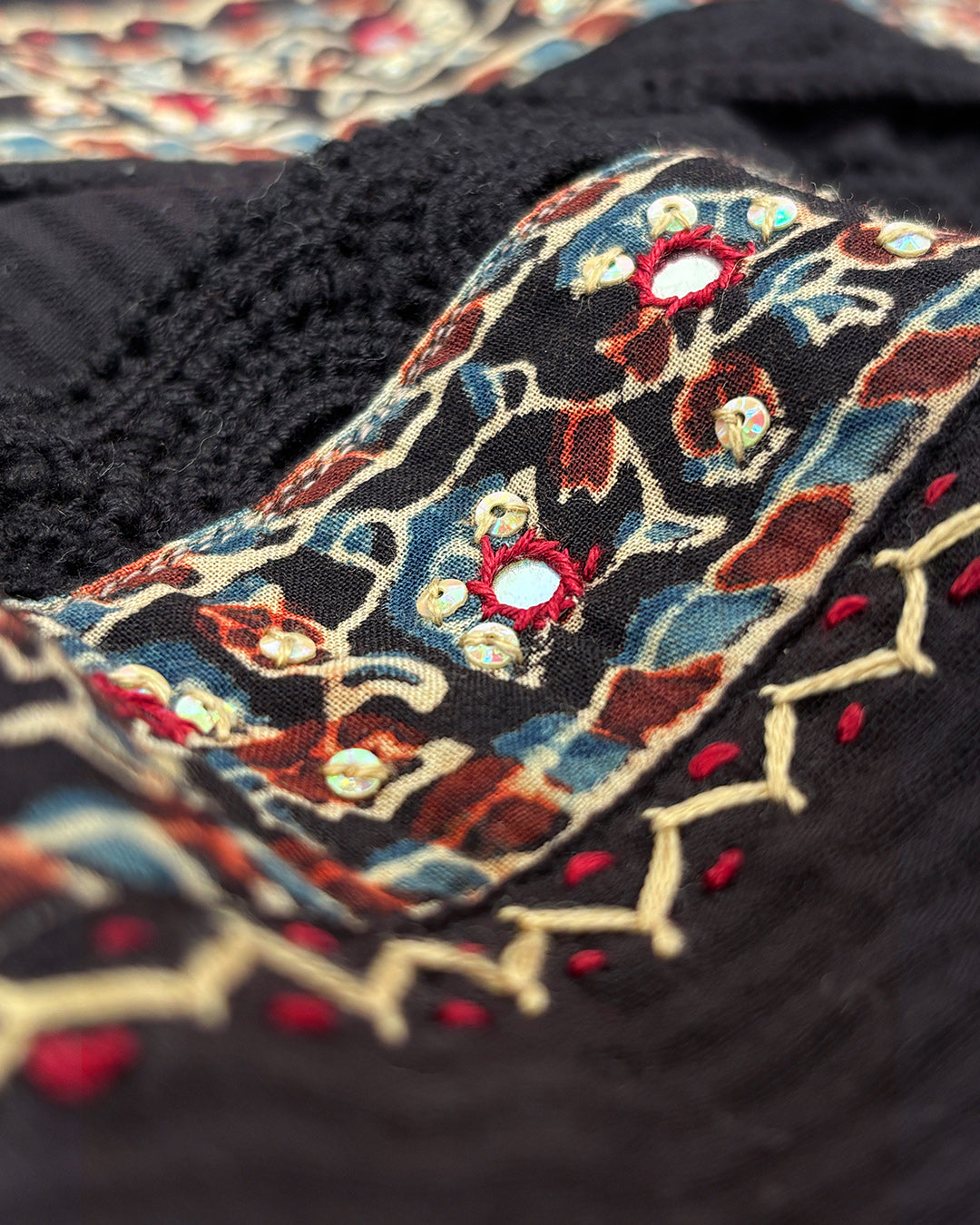
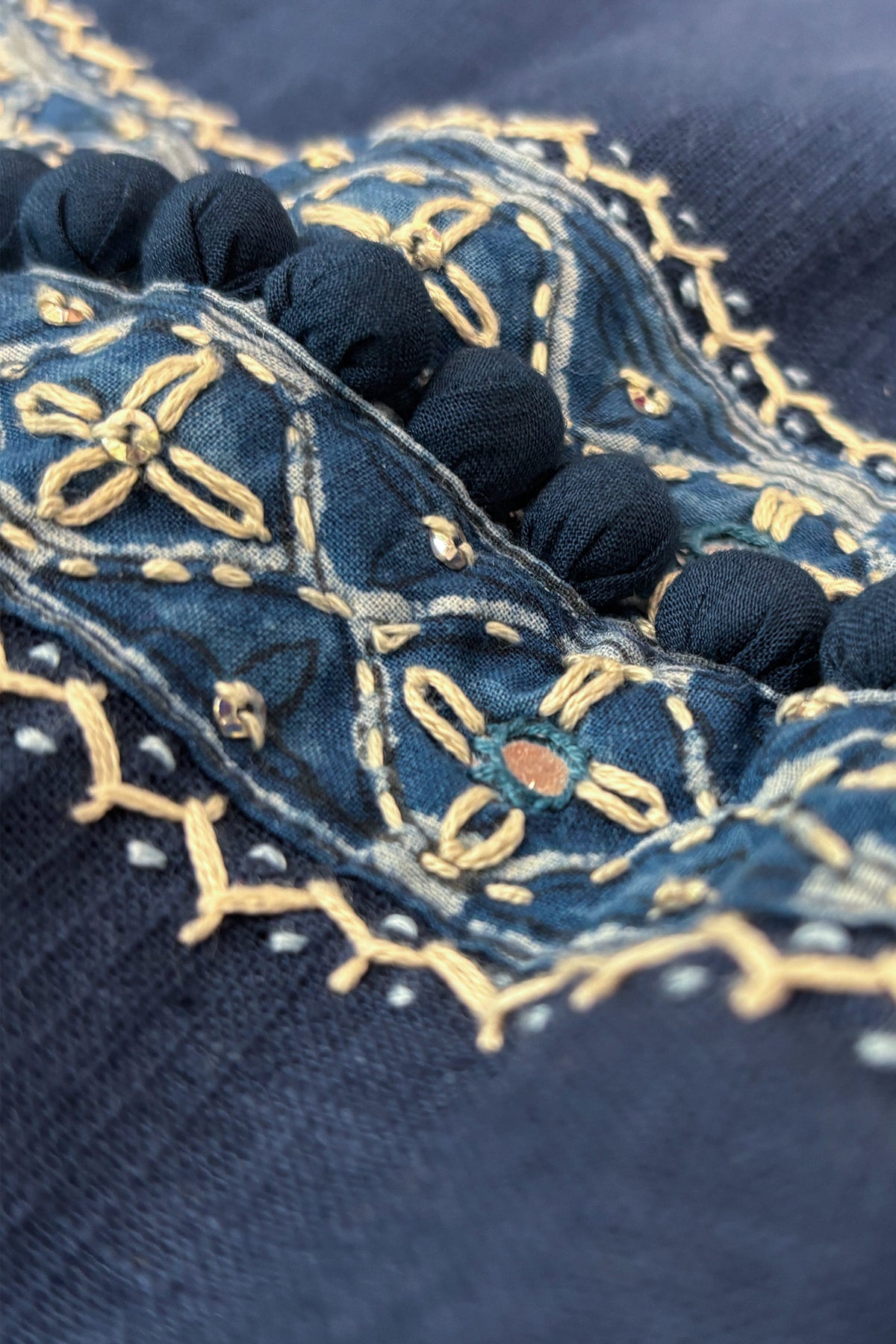
Perhaps the most defining feature of Akola printing Rajasthan is its texture. The slight unevenness of the dabu resist, the soft bleeding of dye, the visible hand pressure in each block print, all of it remains.
There is no attempt to perfect these variations. They are the identity of the craft.
Because in the end, Akola print is not about precision alone. It is about presence, of the artisan’s hand, of the material, and of time itself.
Why Akola Printing Is Considered a Hidden Gem
Akola is not a name that appears often in mainstream conversations around Indian textiles. It sits quietly within Rajasthan, away from the larger, more documented craft clusters. And perhaps that is why its work feels so untouched.
Akola print carries a certain stillness. The indigo is deeper, the resist patterns softer, the irregularities more visible, more honest. There is no rush to refine every edge. The beauty lies in what the hand leaves behind, a slight blur, a gentle crackle, a pattern that does not repeat perfectly.
Unlike more commercialised forms of dabu print, dabu print Akola retains its rawness. The process is slower, often done in smaller batches, with a deep reliance on natural materials and inherited knowledge. It does not seek attention, yet it holds it.
To come across Akola hand print is to discover something that has not been shaped for trends. It remains rooted, almost private in its expression.
Why Supporting Akola Craft Matters
Crafts like Akola printing Rajasthan survive not through scale, but through continuity. They depend on the rhythm of families who have practiced the same technique for generations, often within their own homes or small community workshops.
When we choose Akola print, we are choosing more than a textile. We are supporting a way of working that values time, patience, and skill over speed. The mud resist is still prepared by hand. The blocks are still pressed with care, one layer at a time. Indigo vats are maintained with an understanding that cannot be rushed or replicated by machines.
There is also a quiet dignity in this craft. It allows artisans to remain connected to their land and their practice, without needing to move away from it. Supporting it ensures that this knowledge does not fade into memory, but continues to live, adapt, and be worn.
Final Thoughts
Akola hand print does not demand attention. It reveals itself slowly. In the depth of its indigo, in the softness of its patterns, in the slight unevenness that reminds us of the human hand, it carries a kind of truth. One that feels increasingly rare. To wear Akola print is not just to wear something beautiful. It is to carry forward a story that has been shaped by soil, by water, and by time.

