

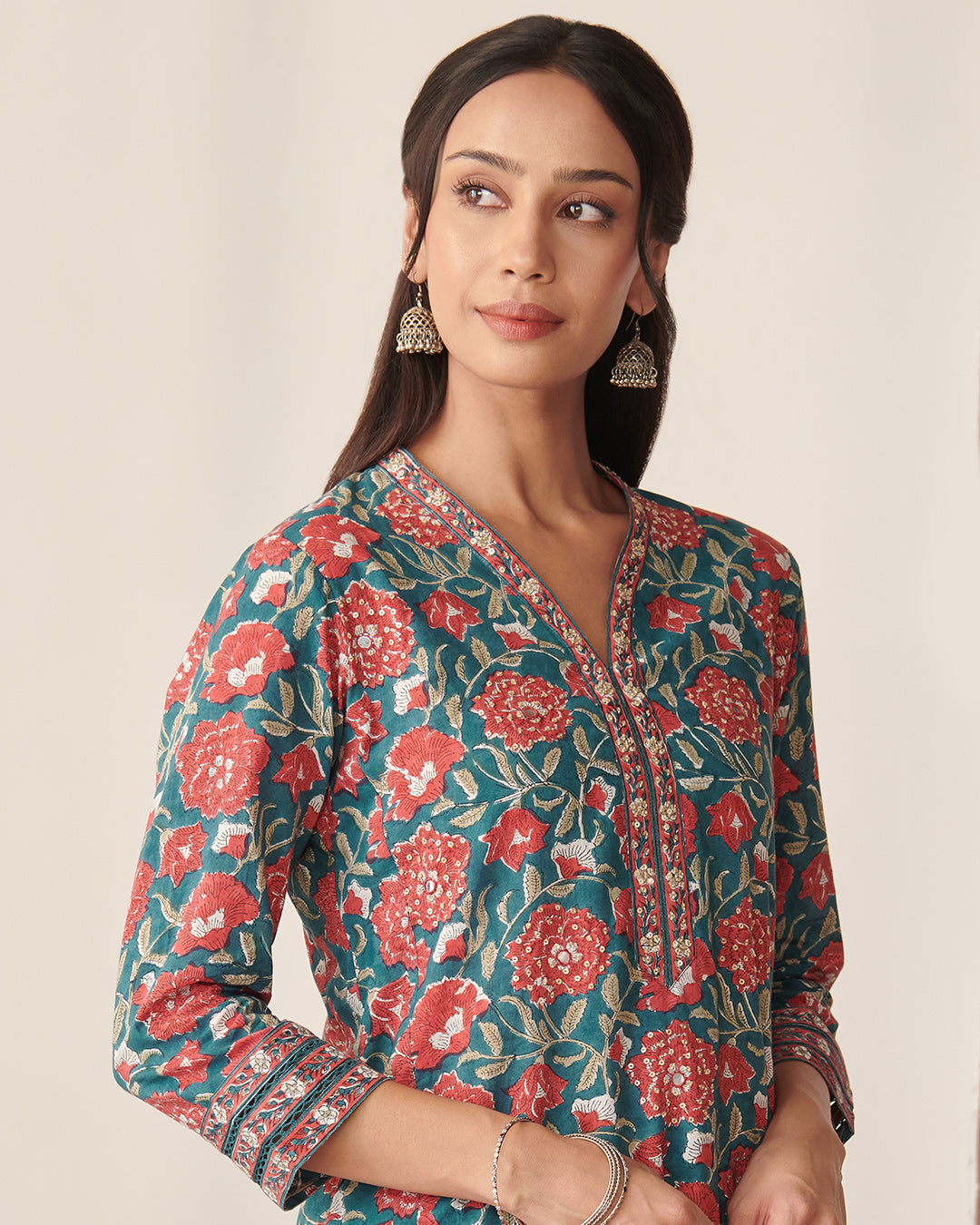
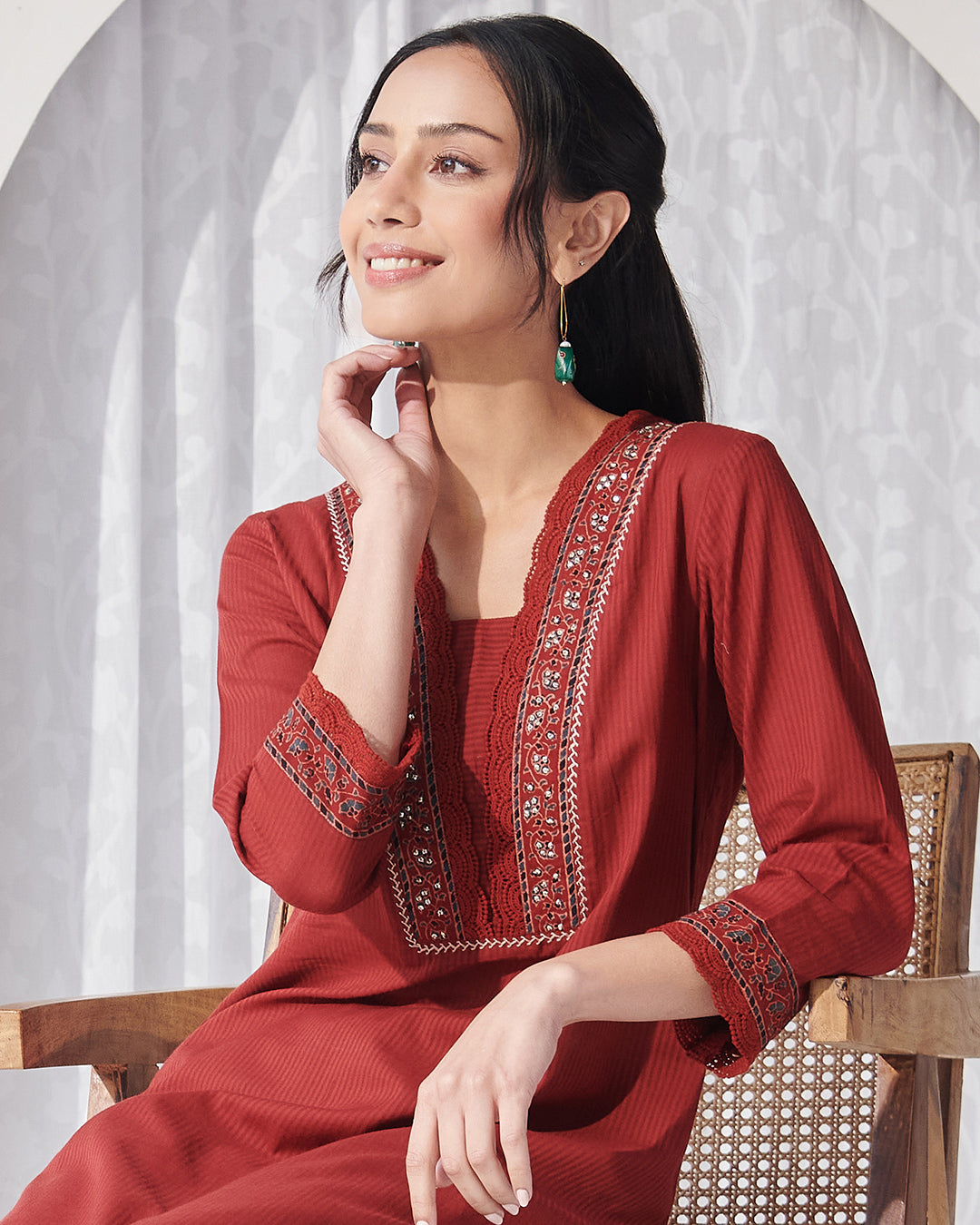
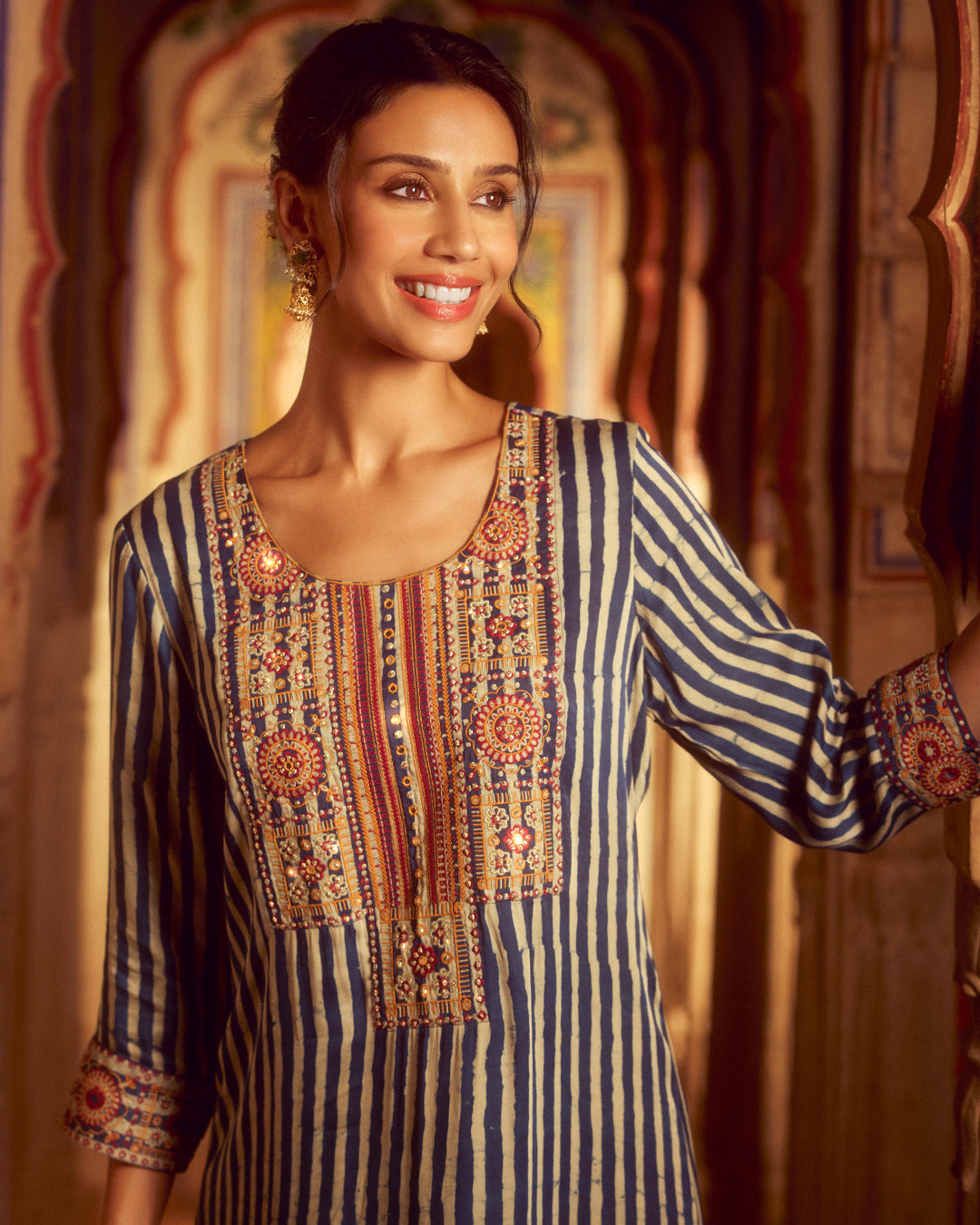
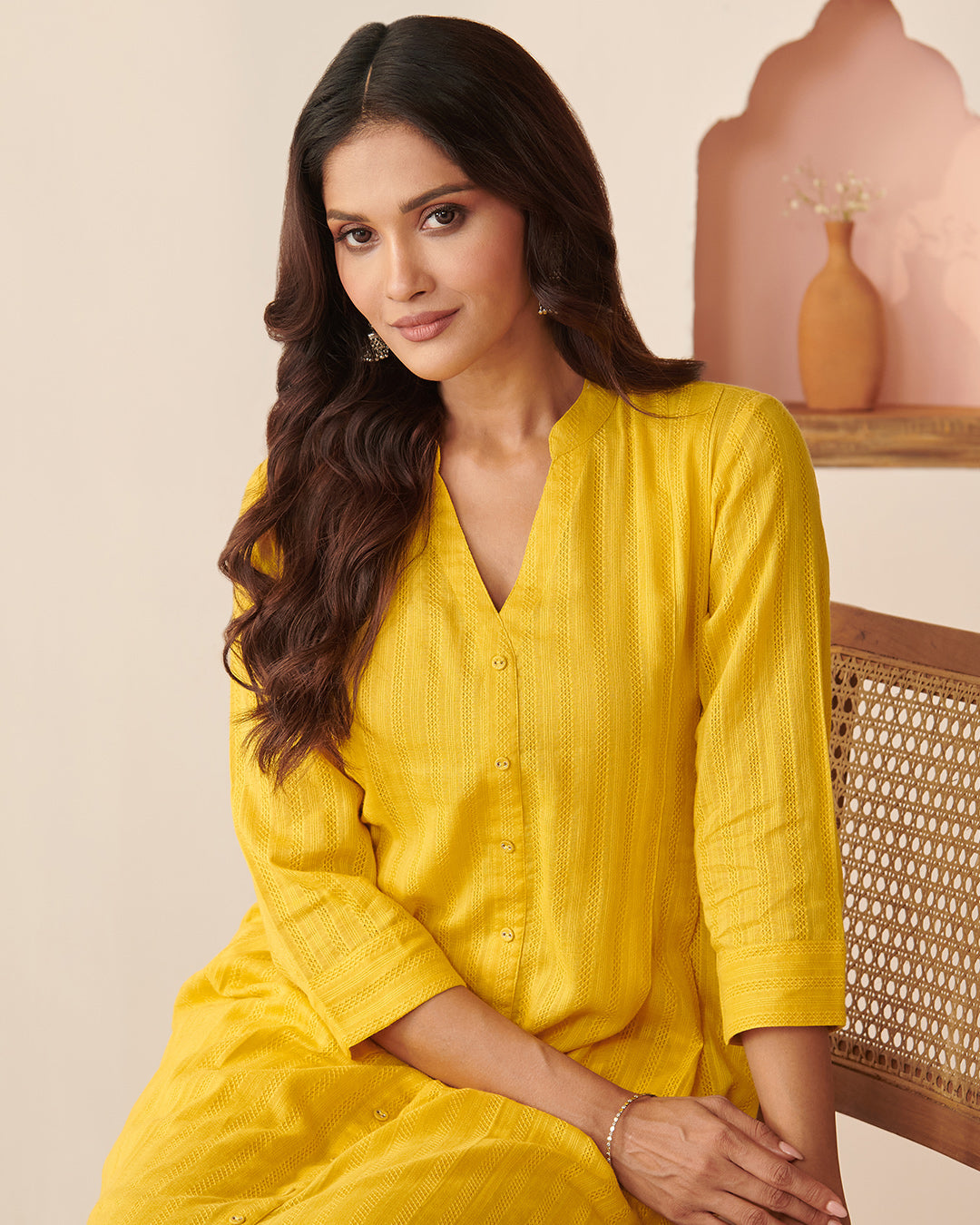



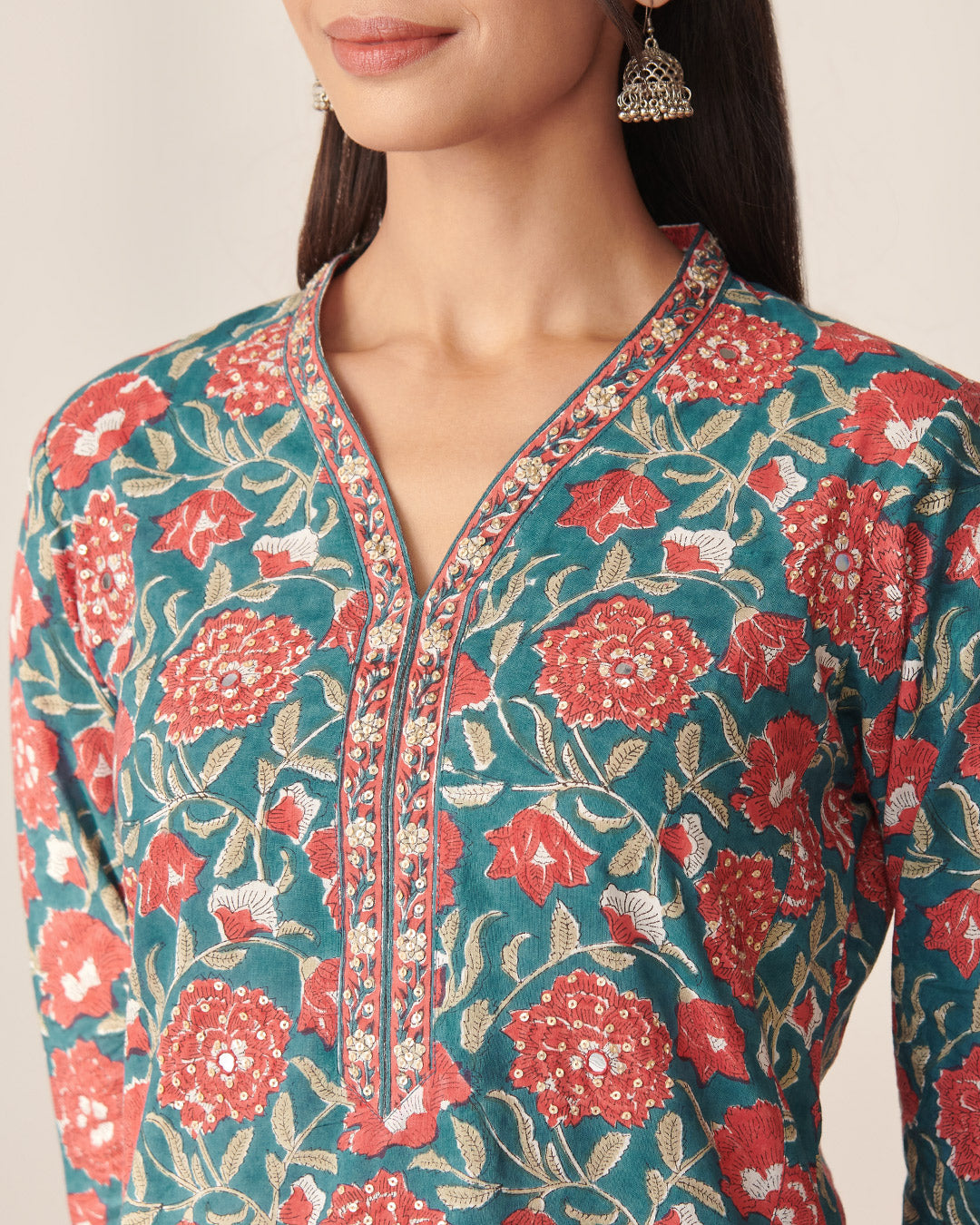
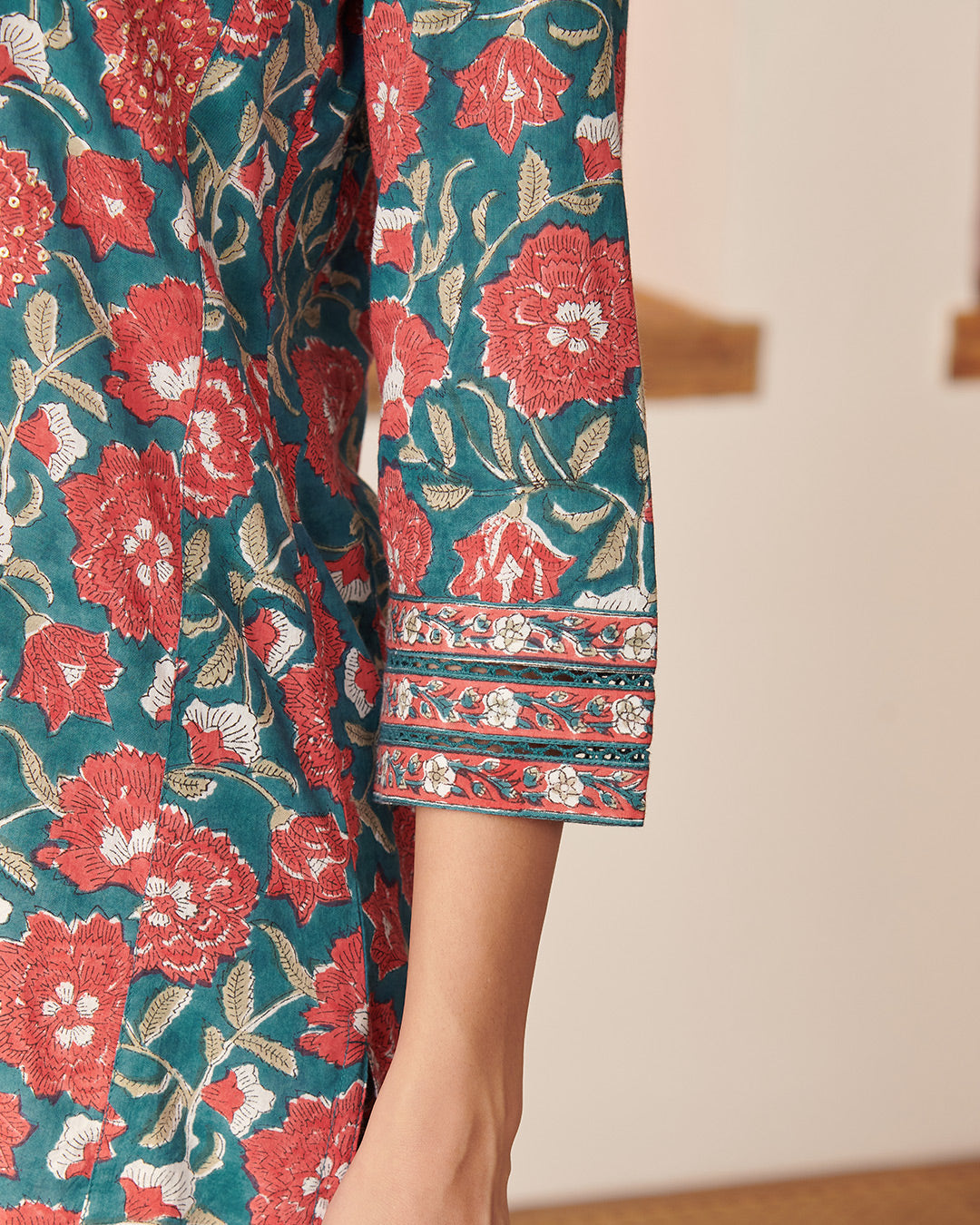
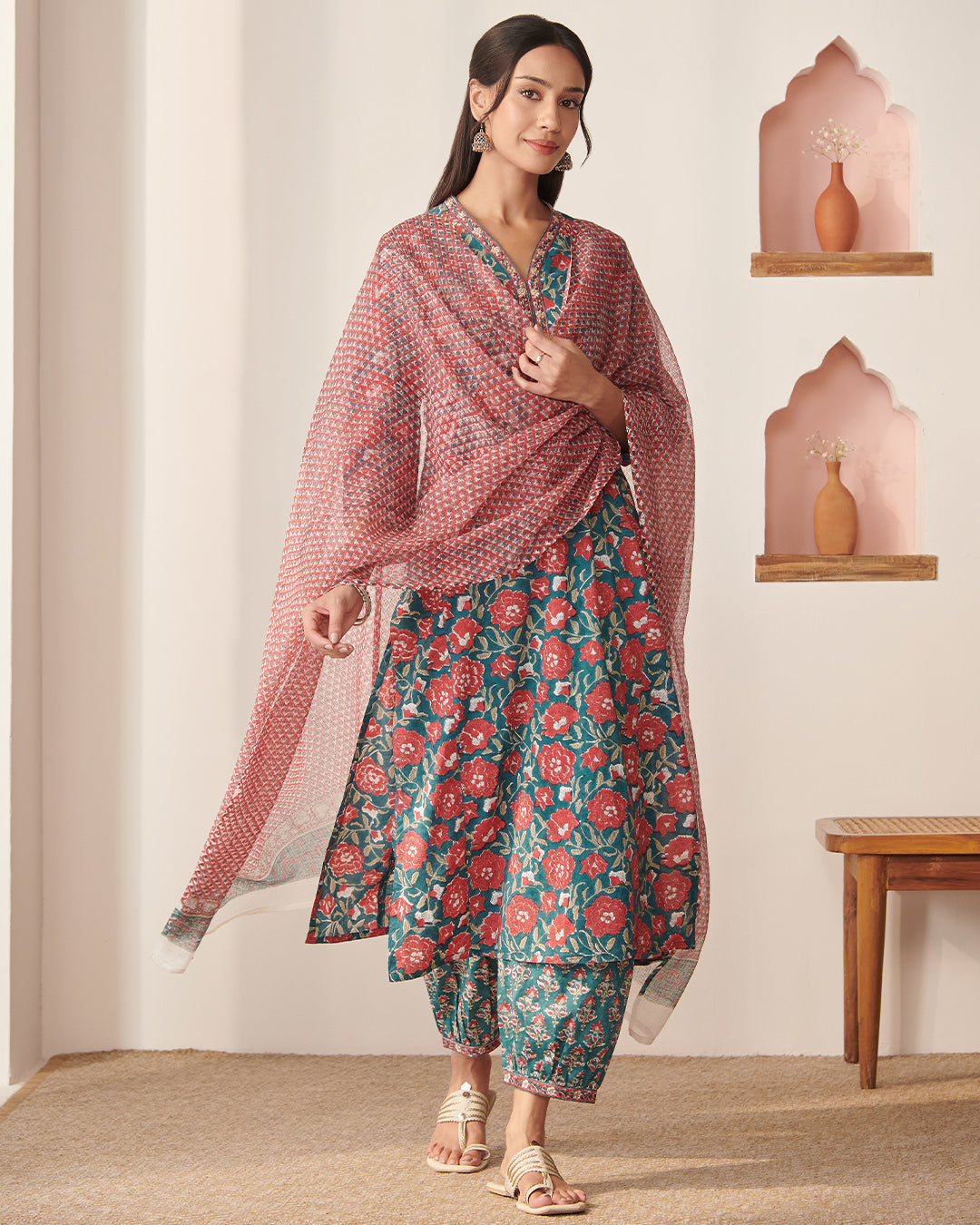
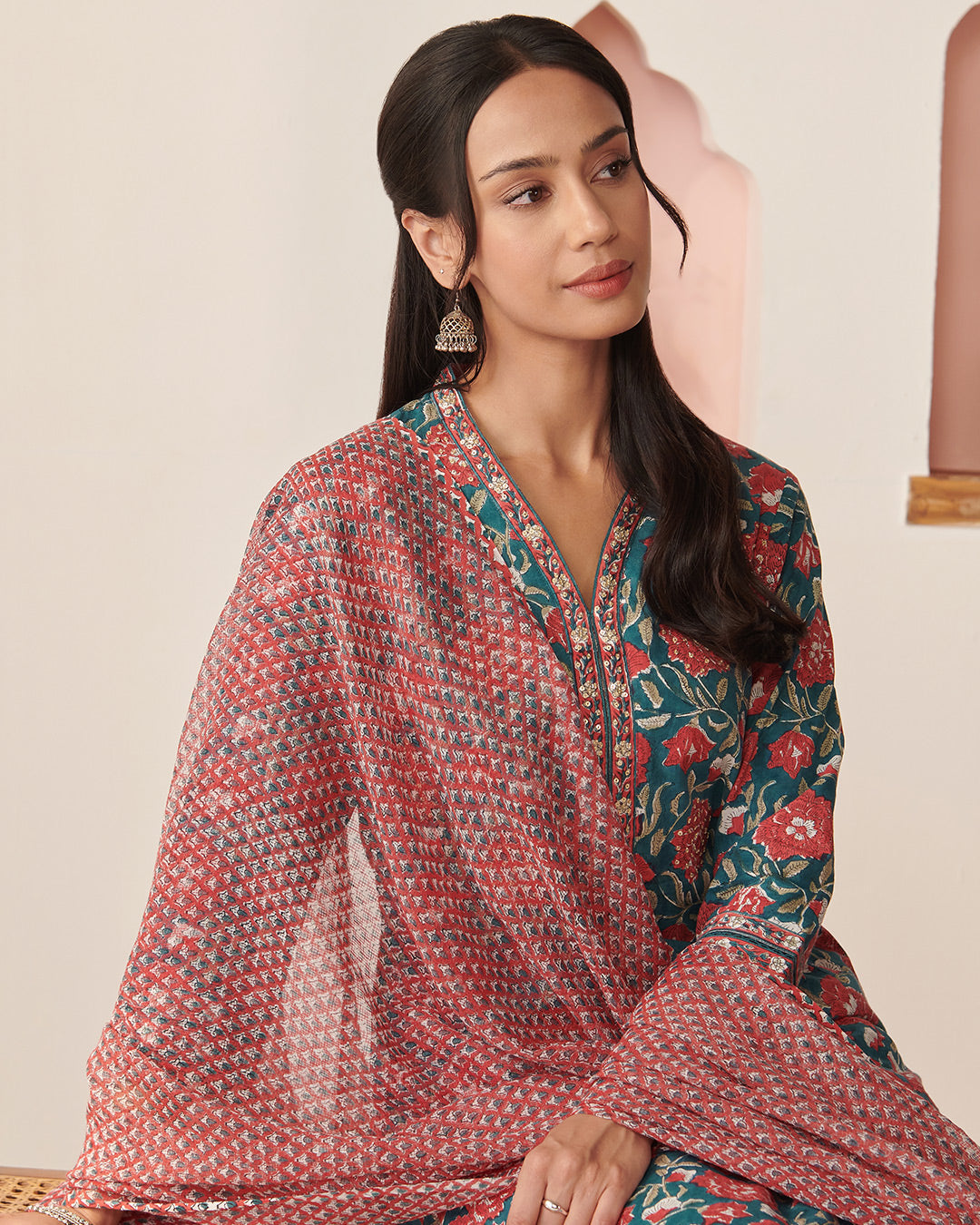
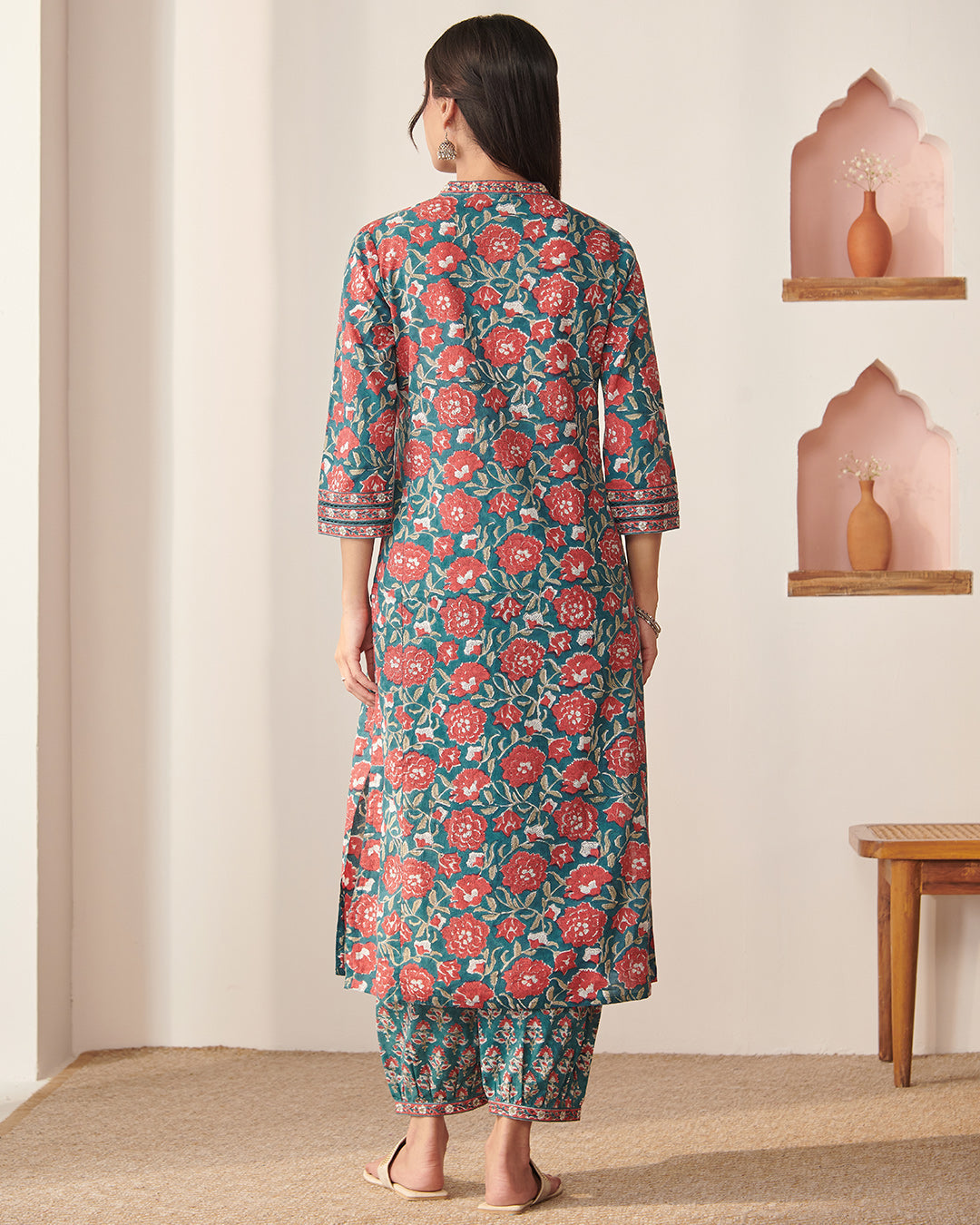
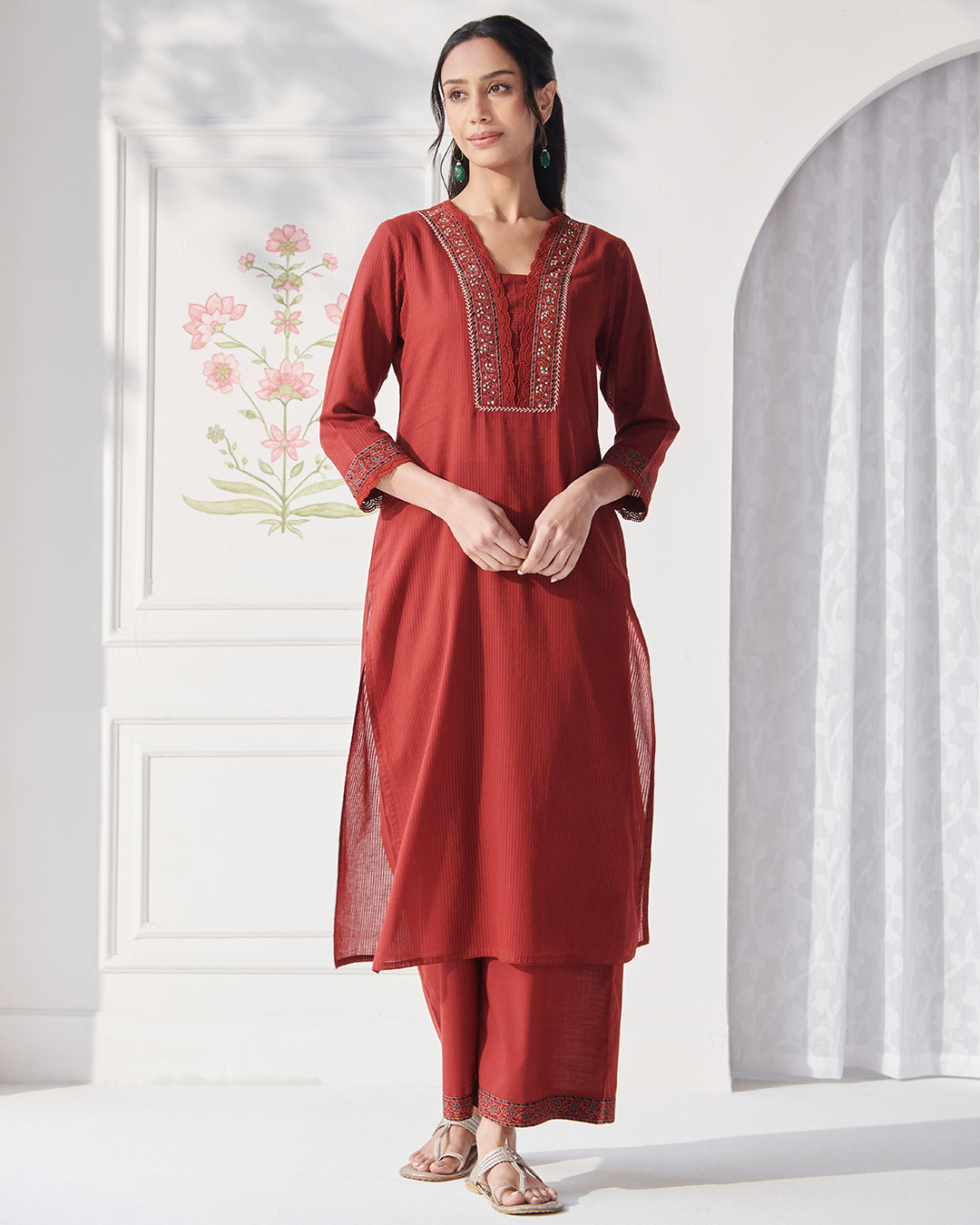
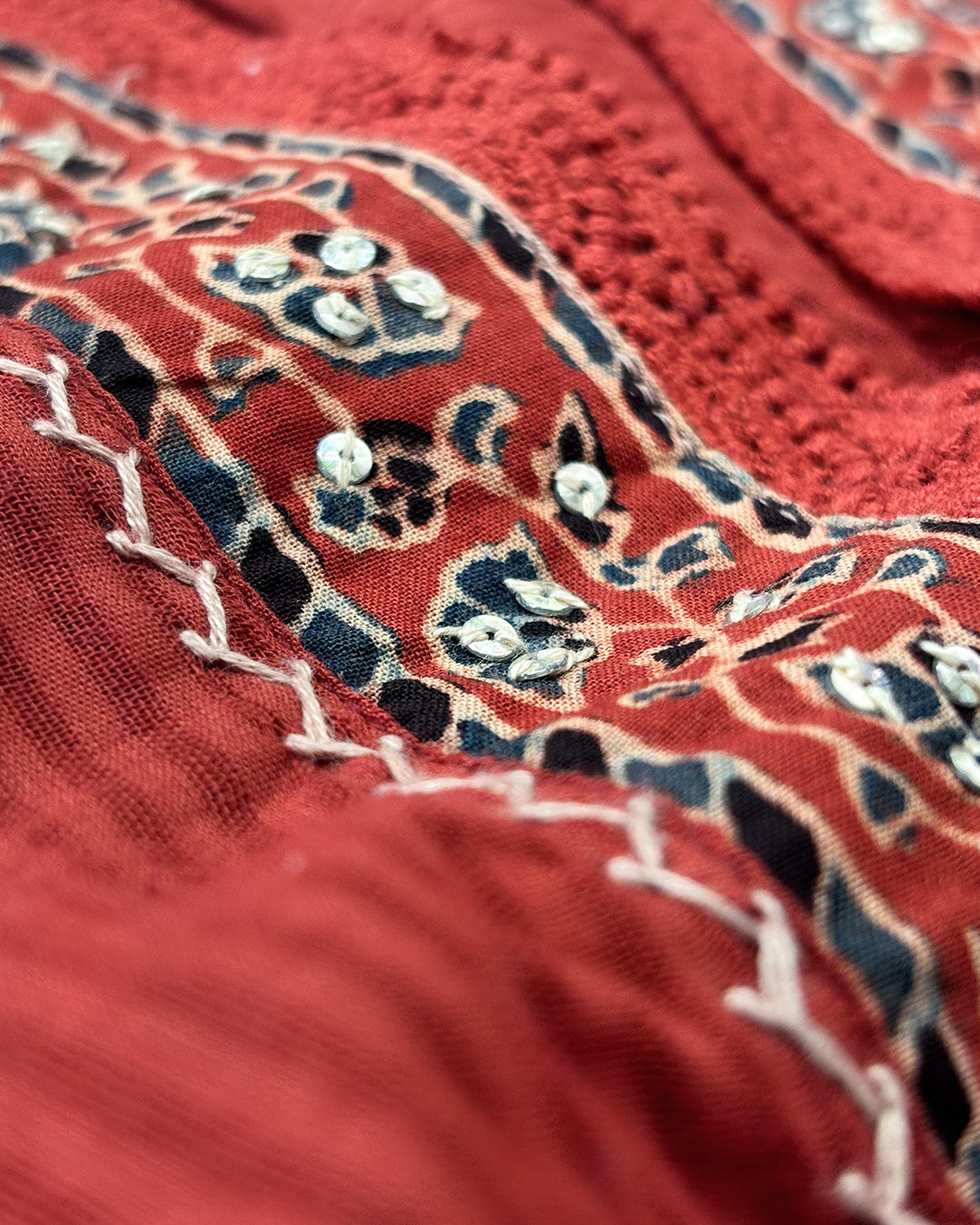
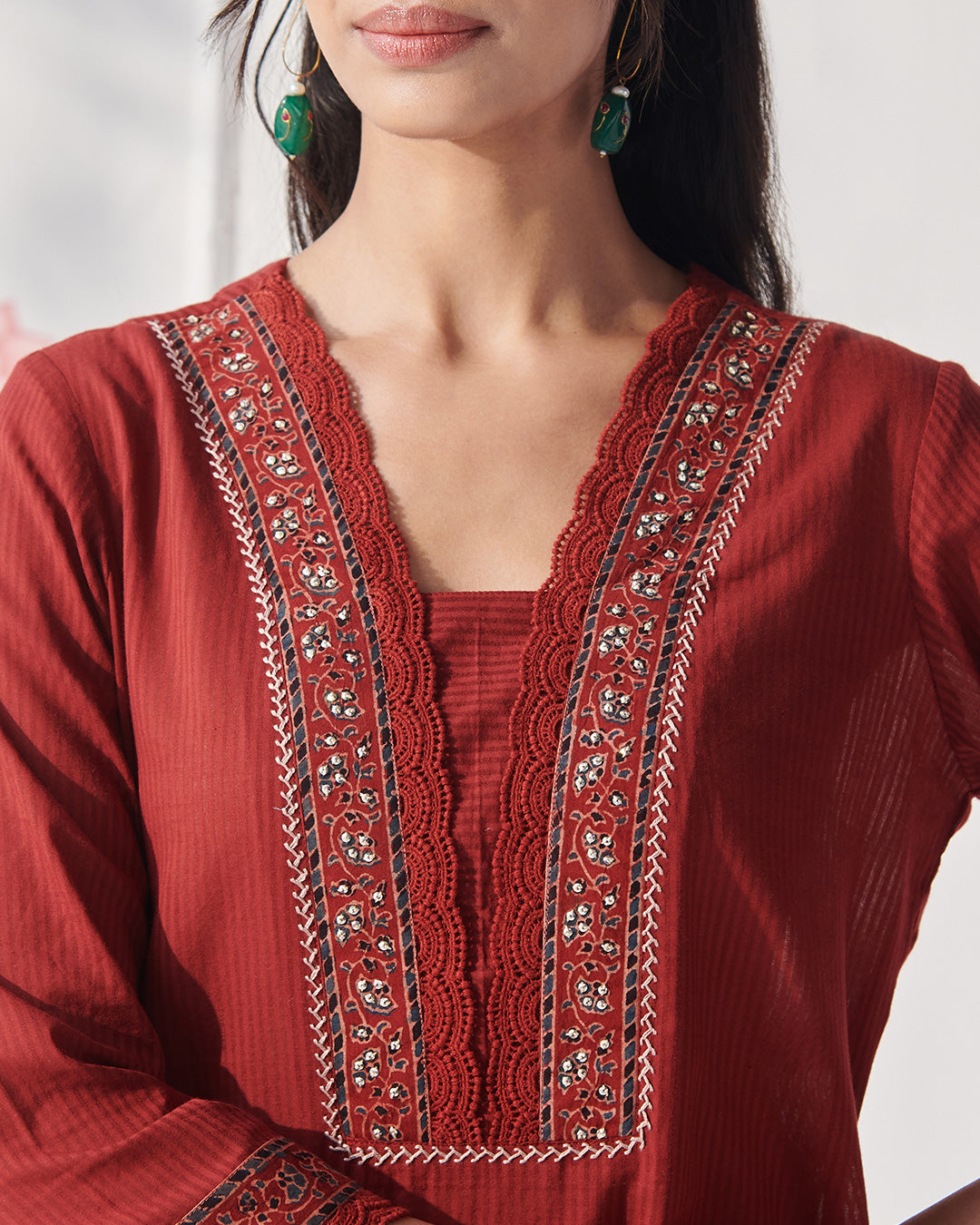
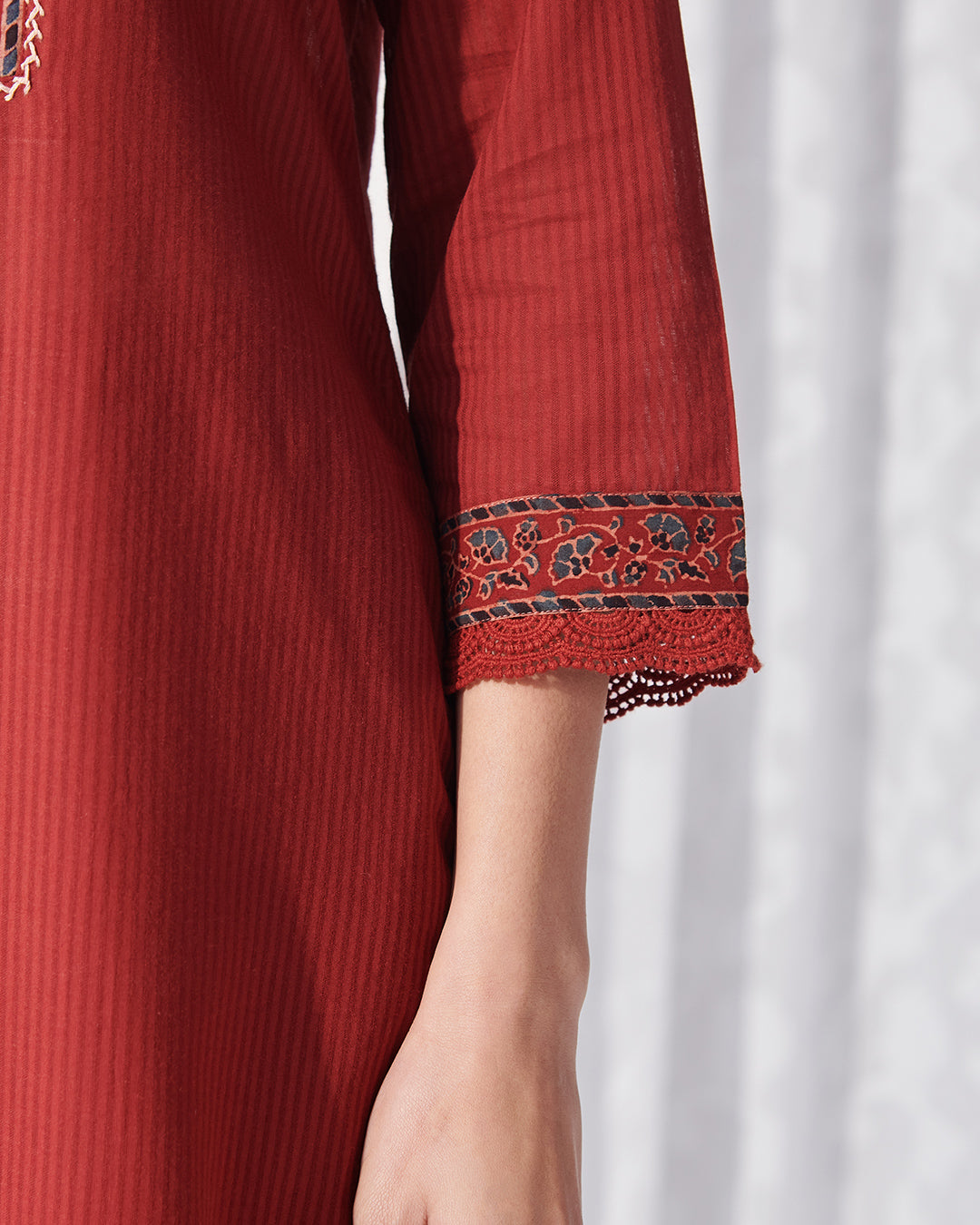
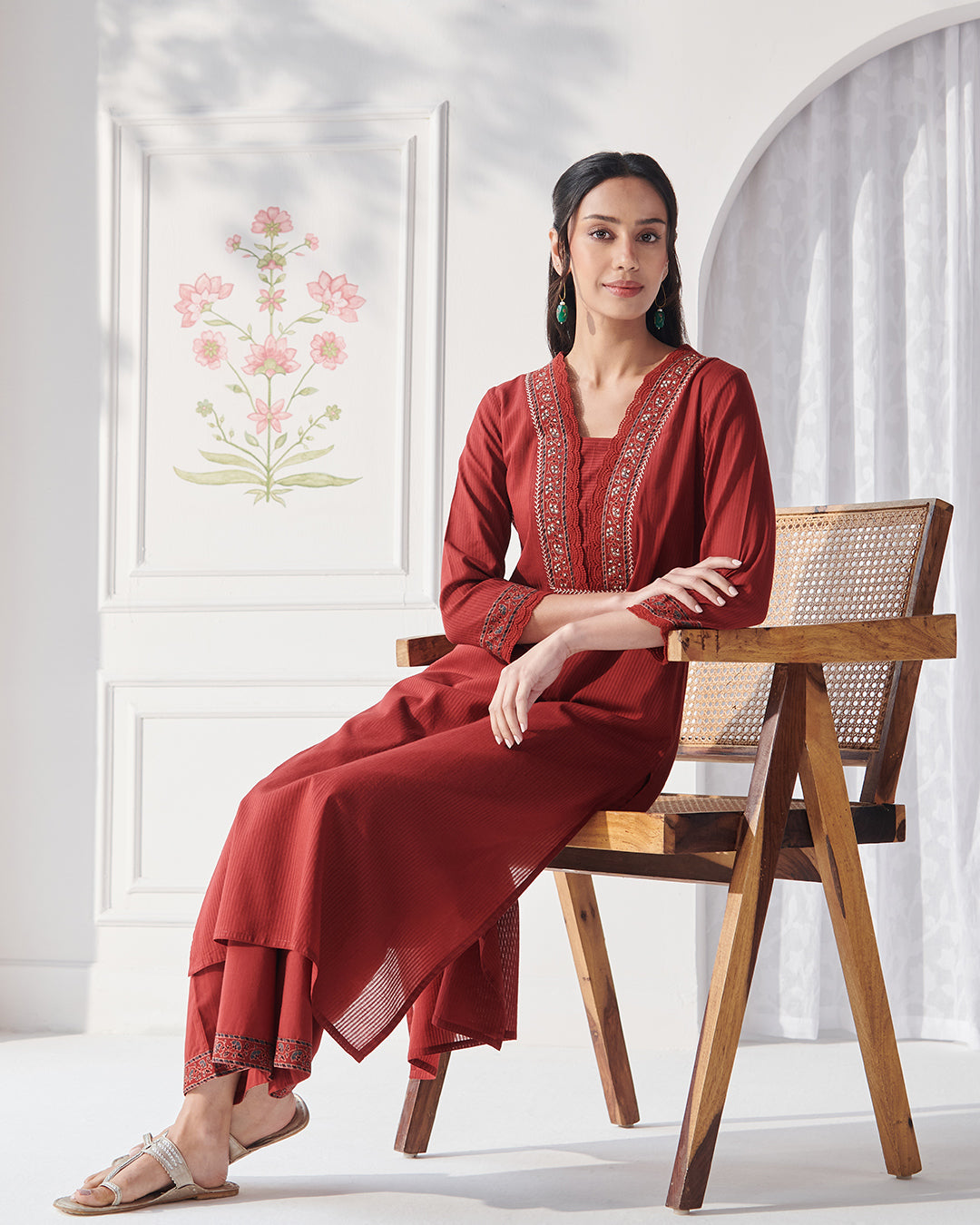
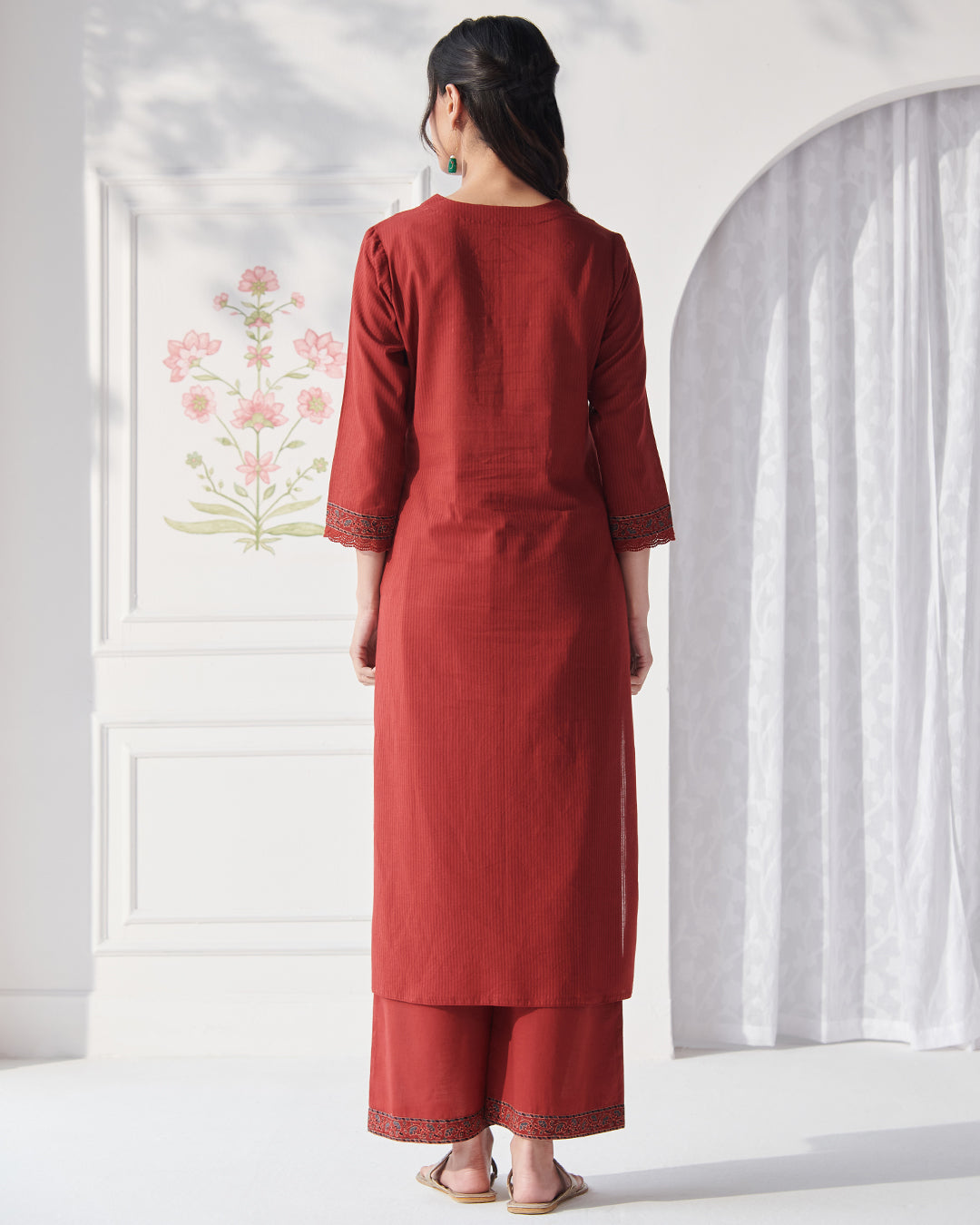
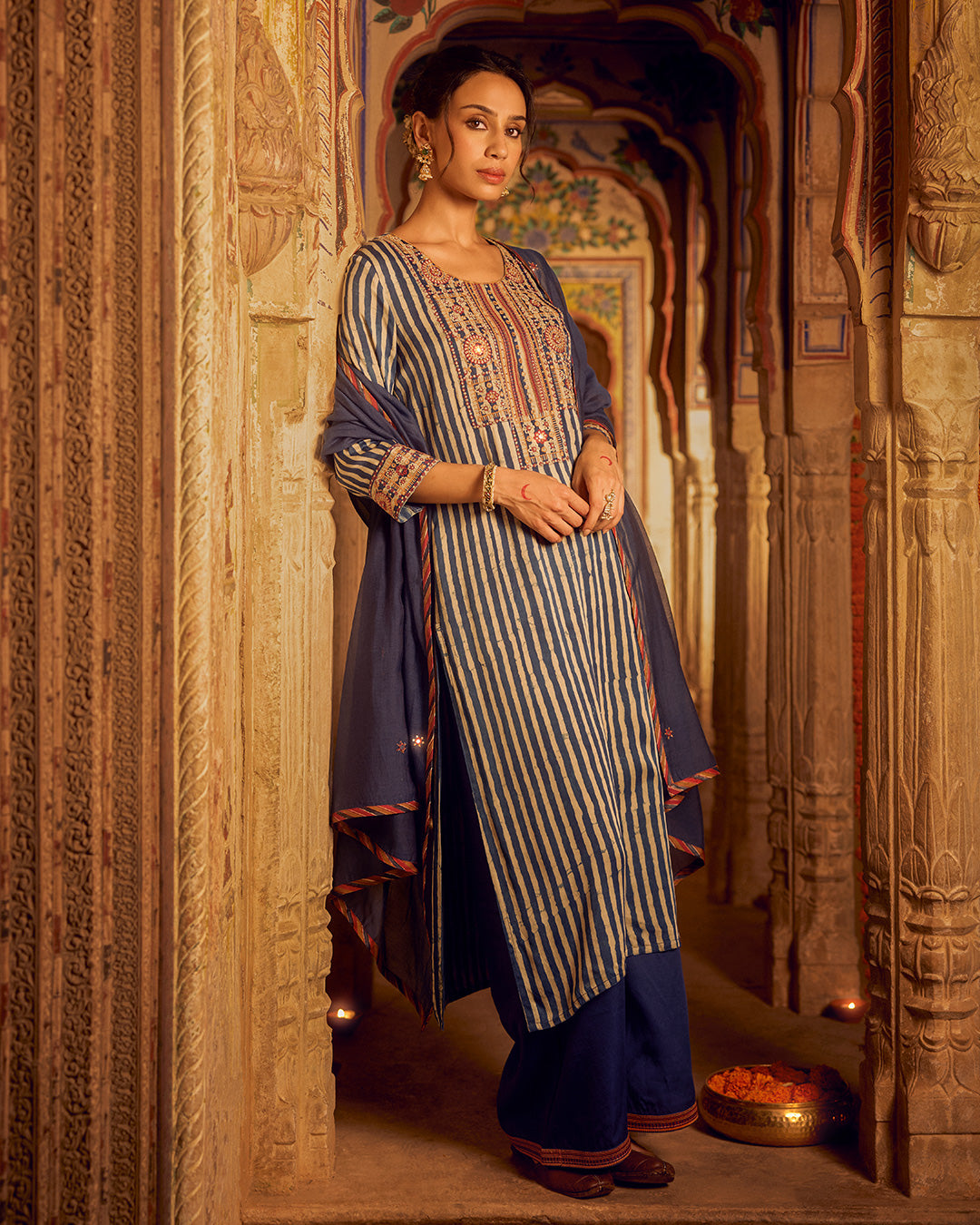
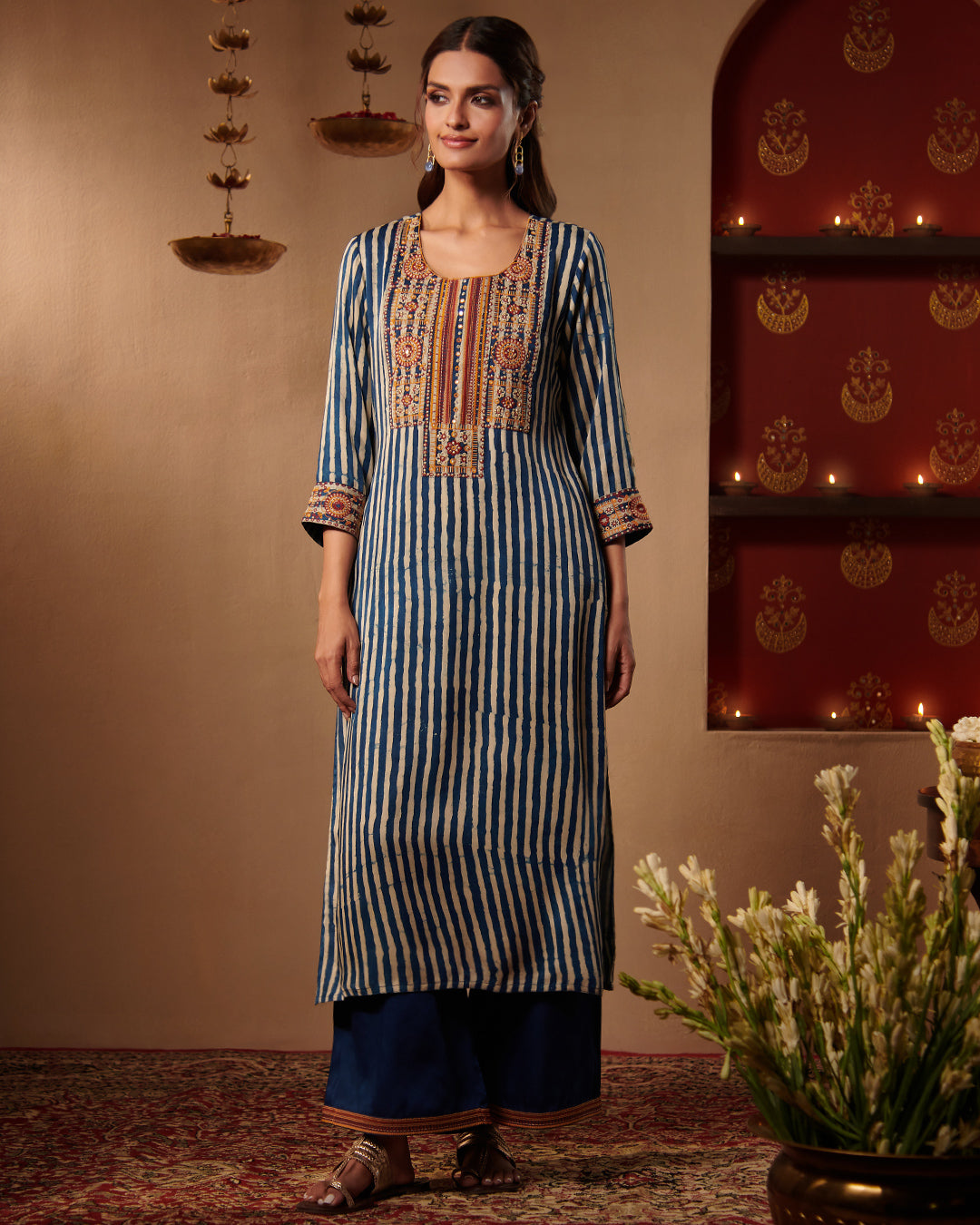
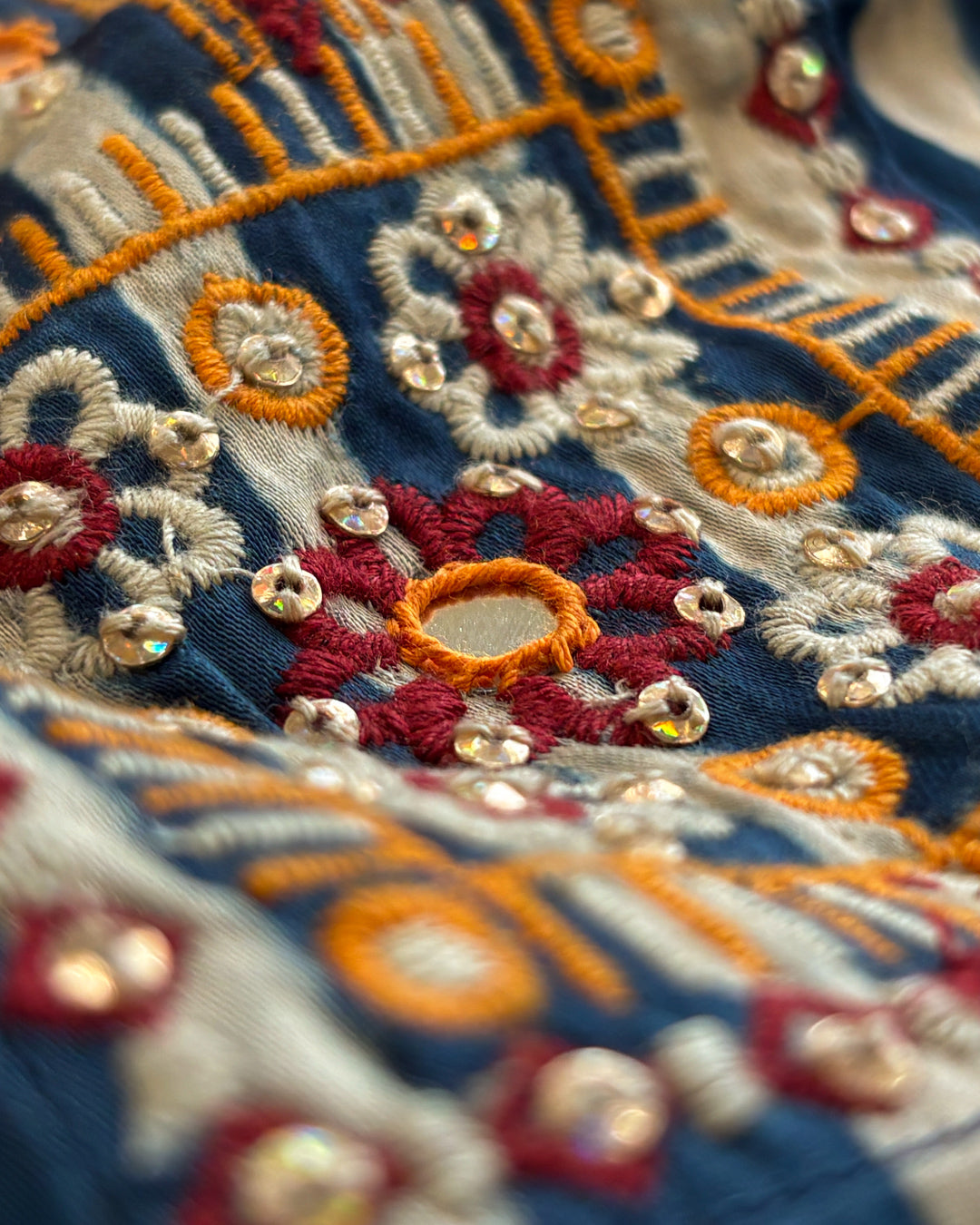
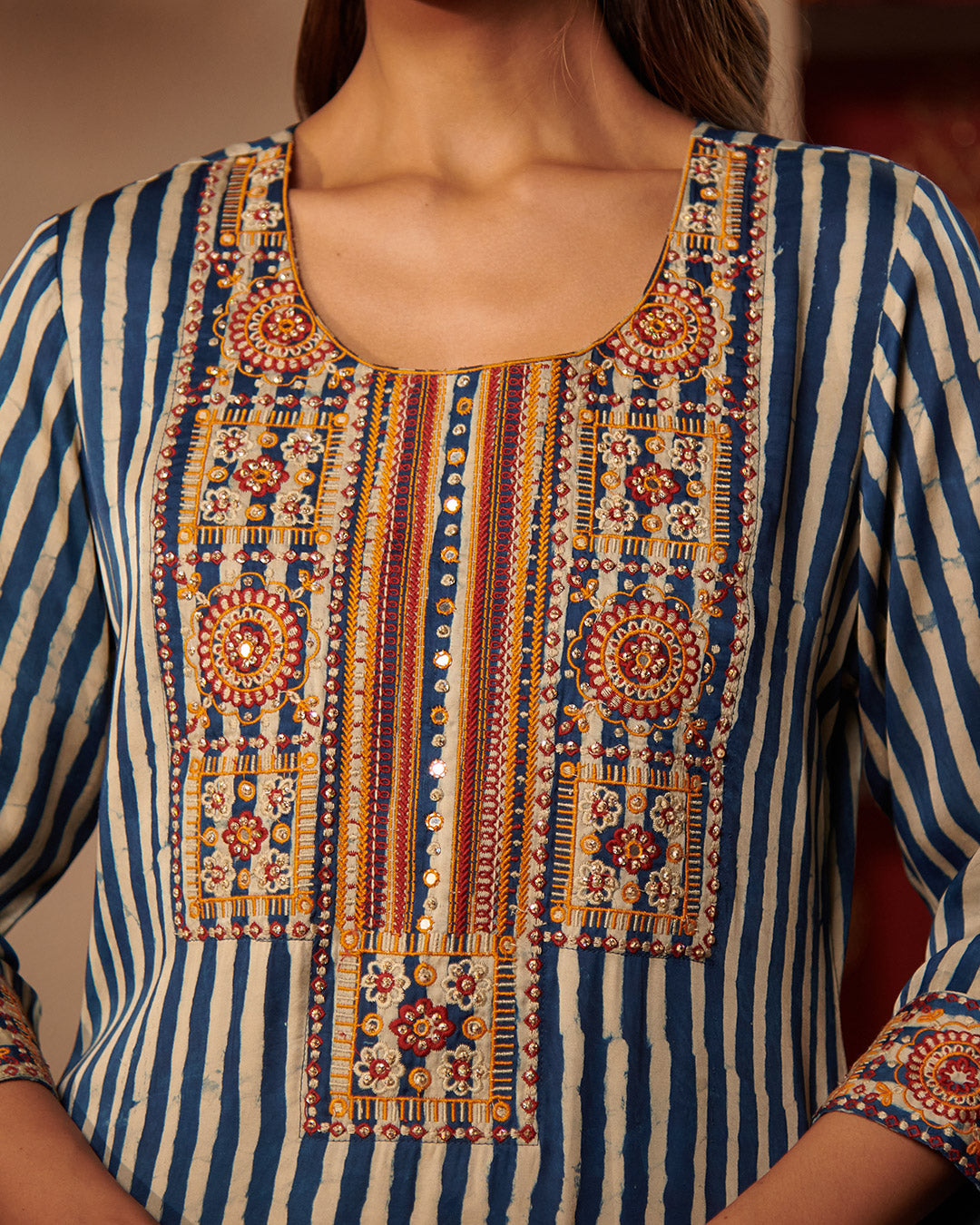
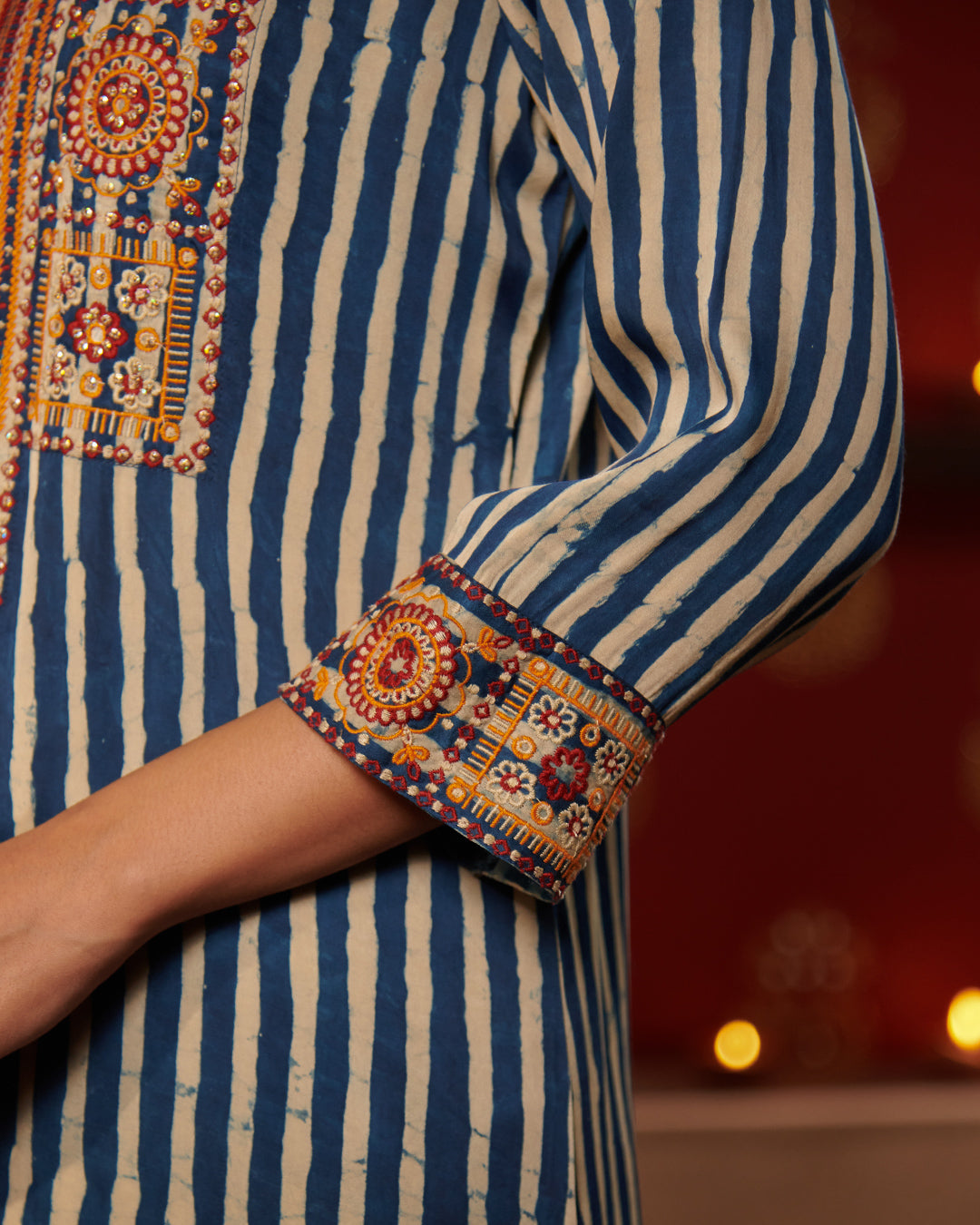
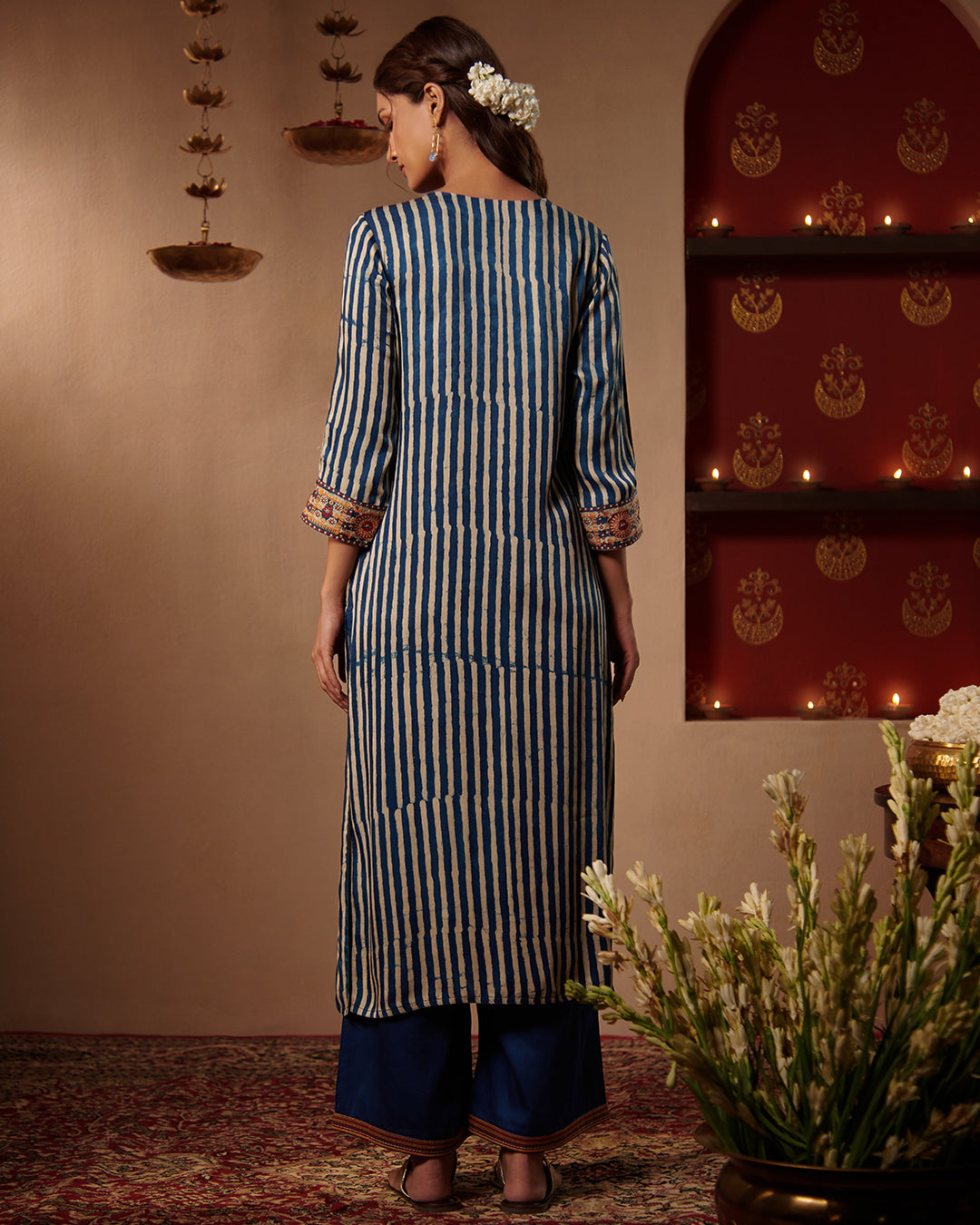
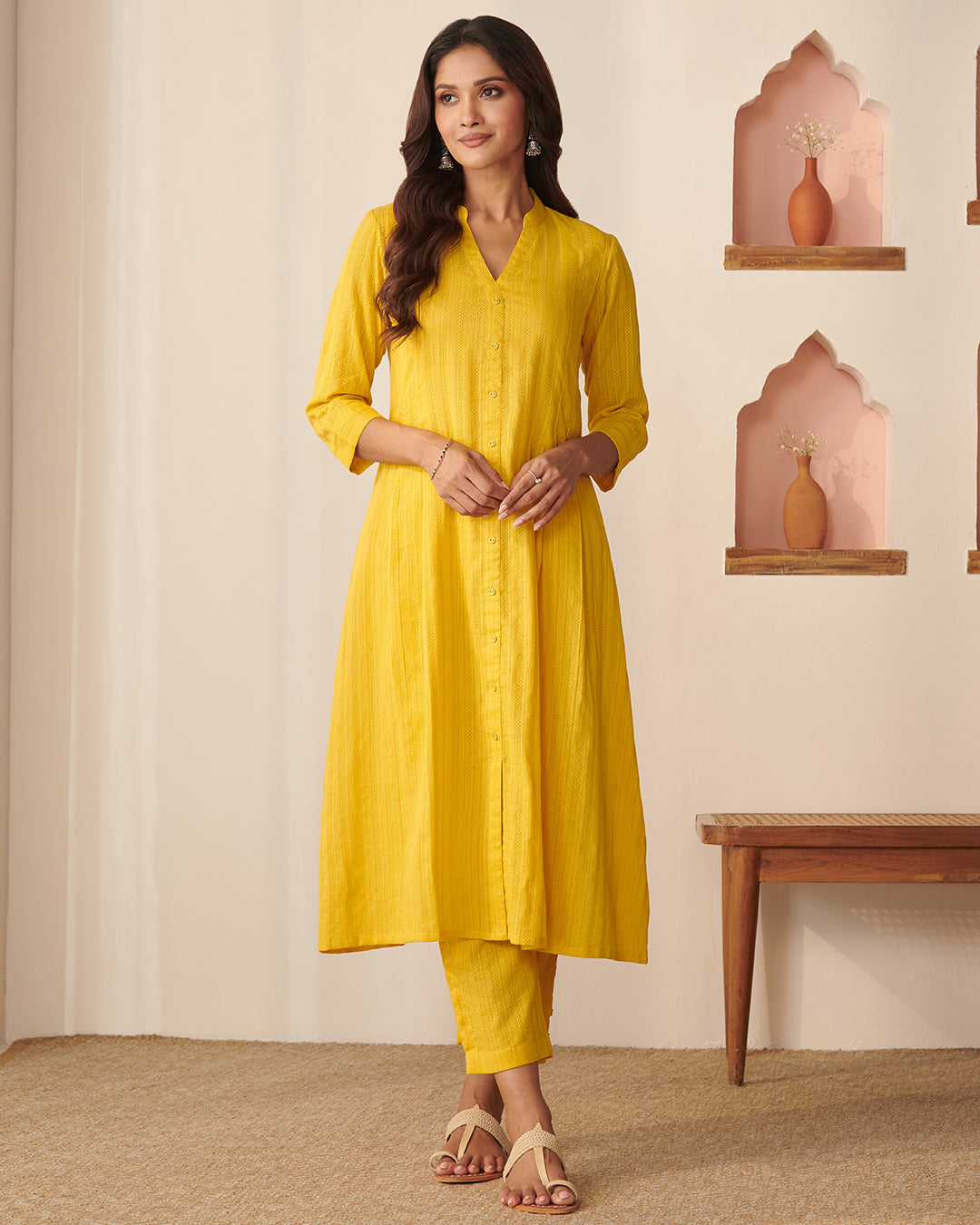
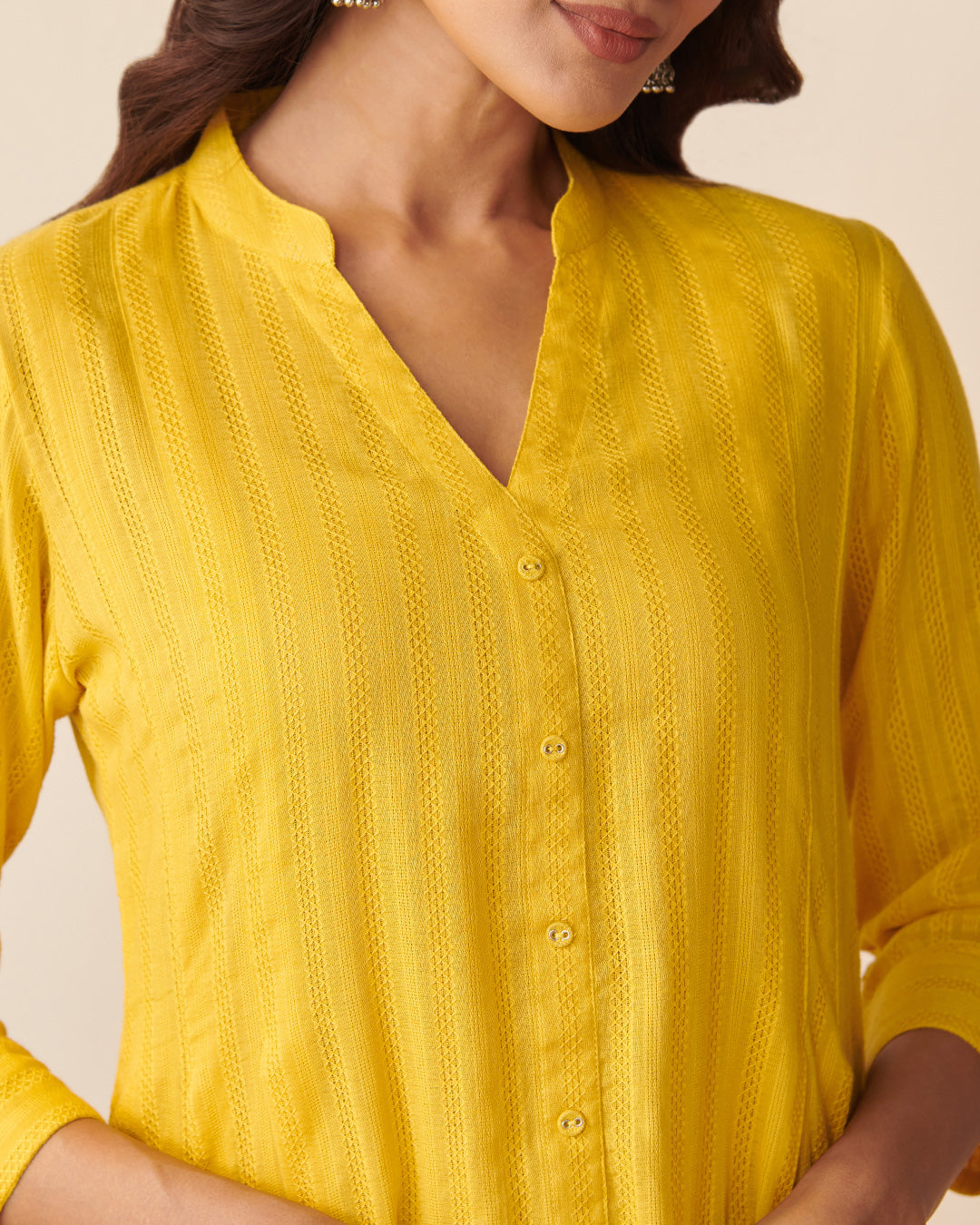

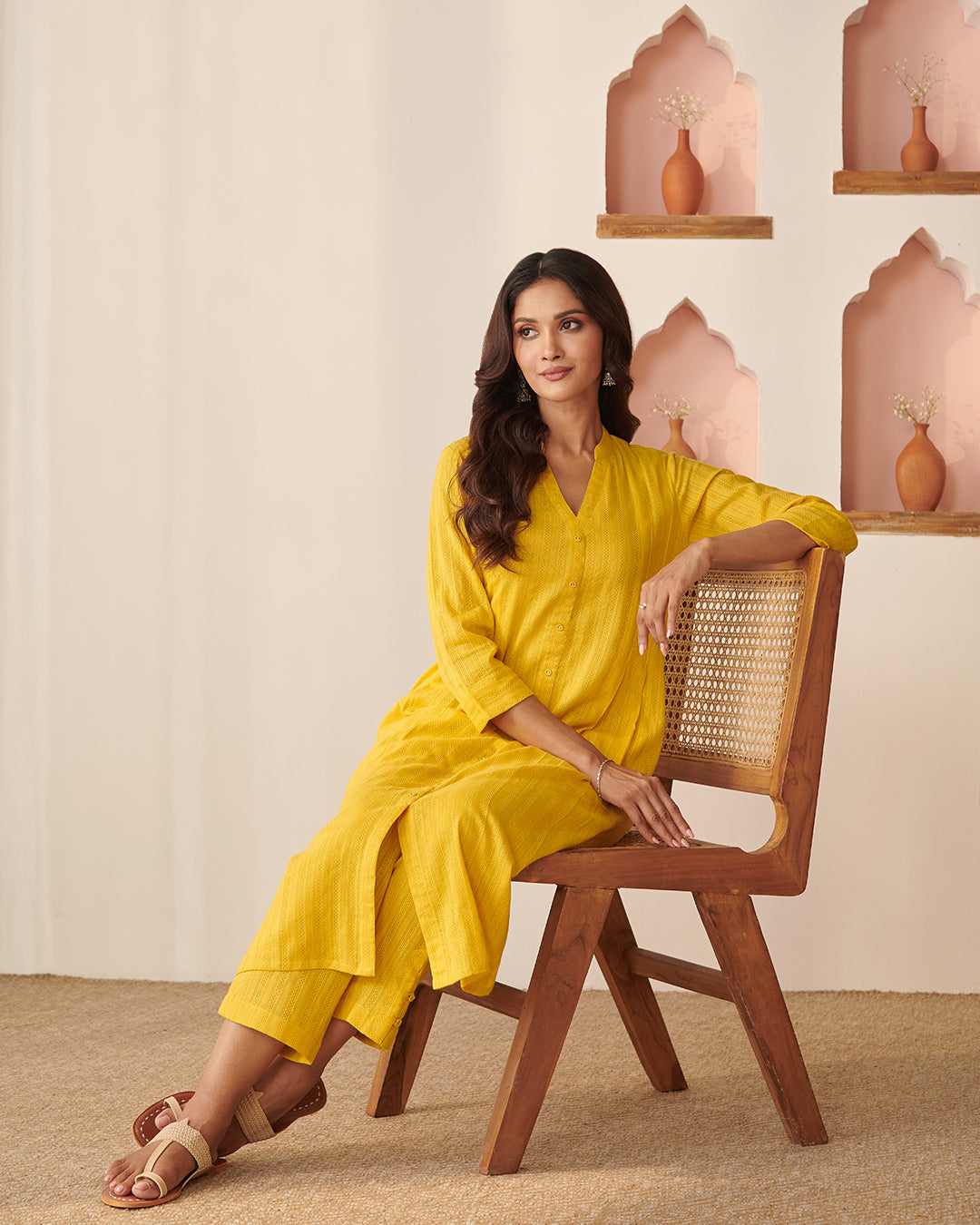
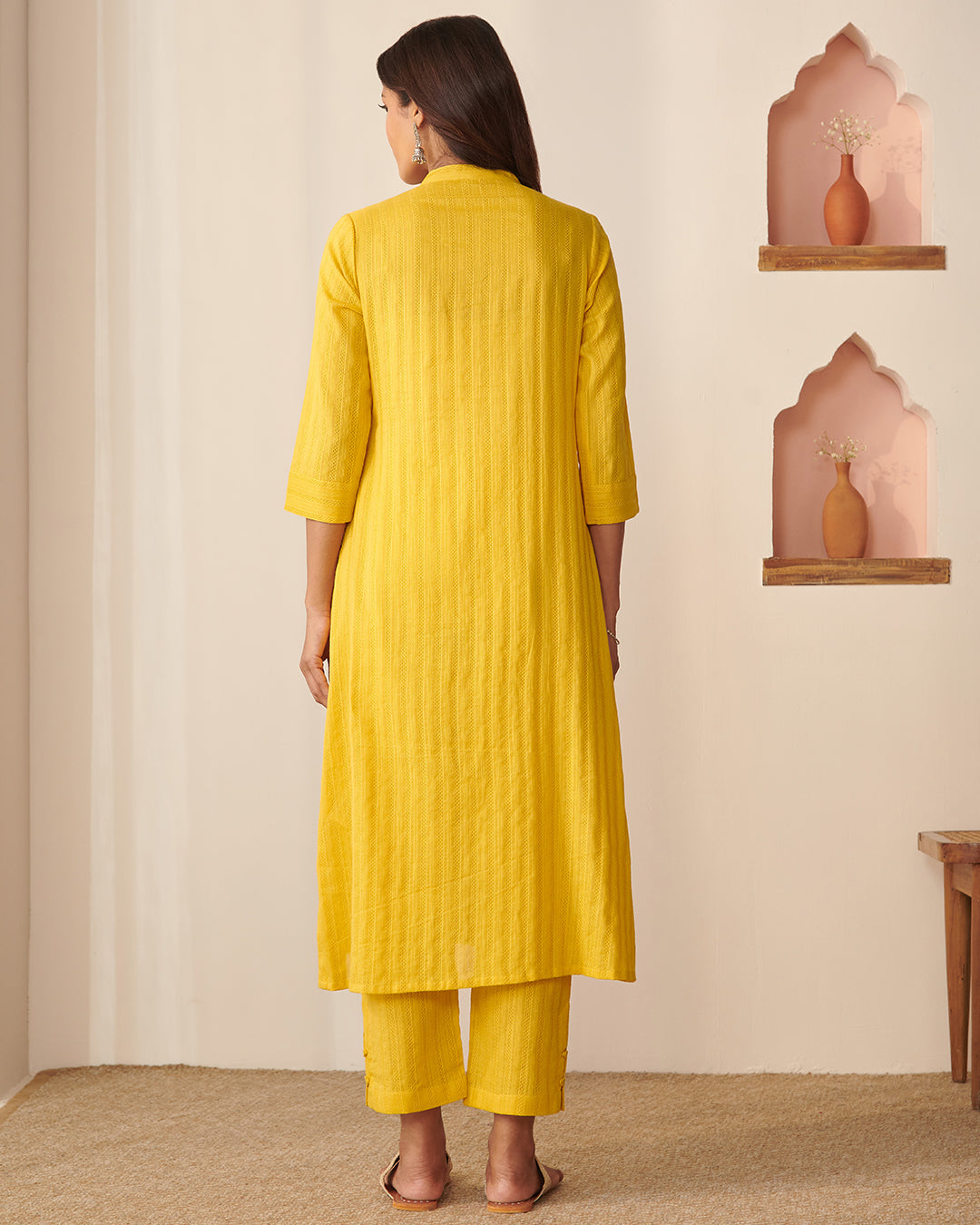
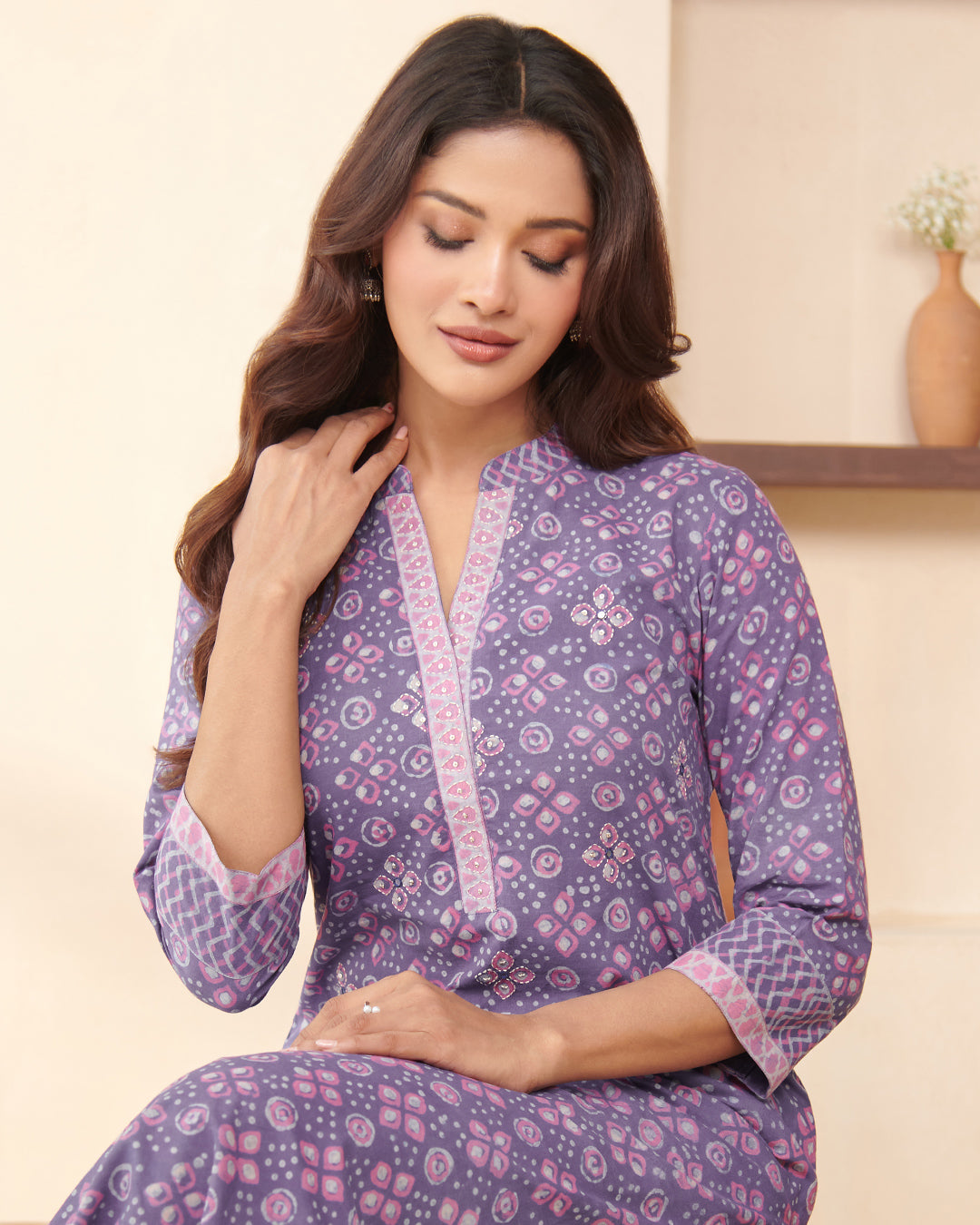
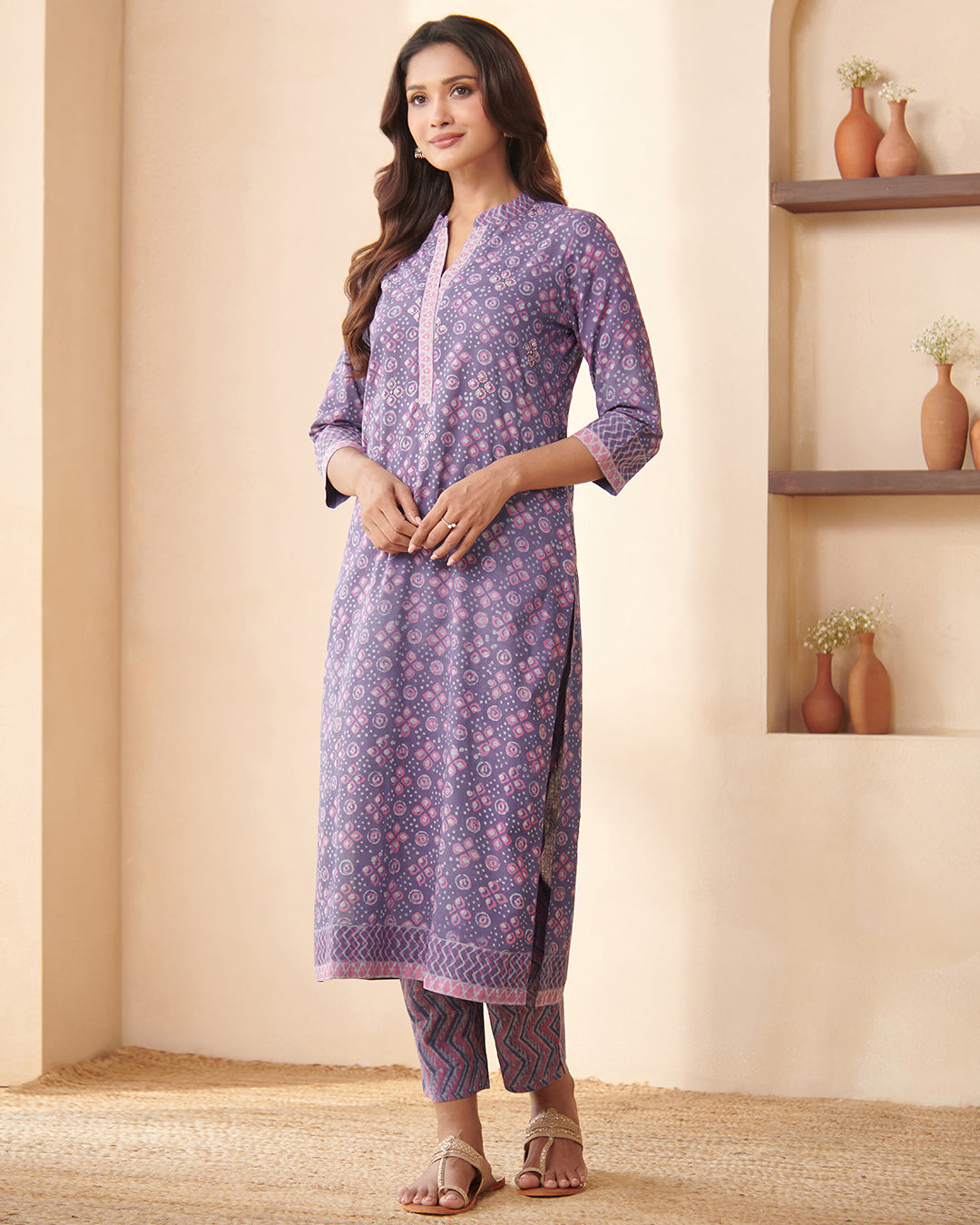
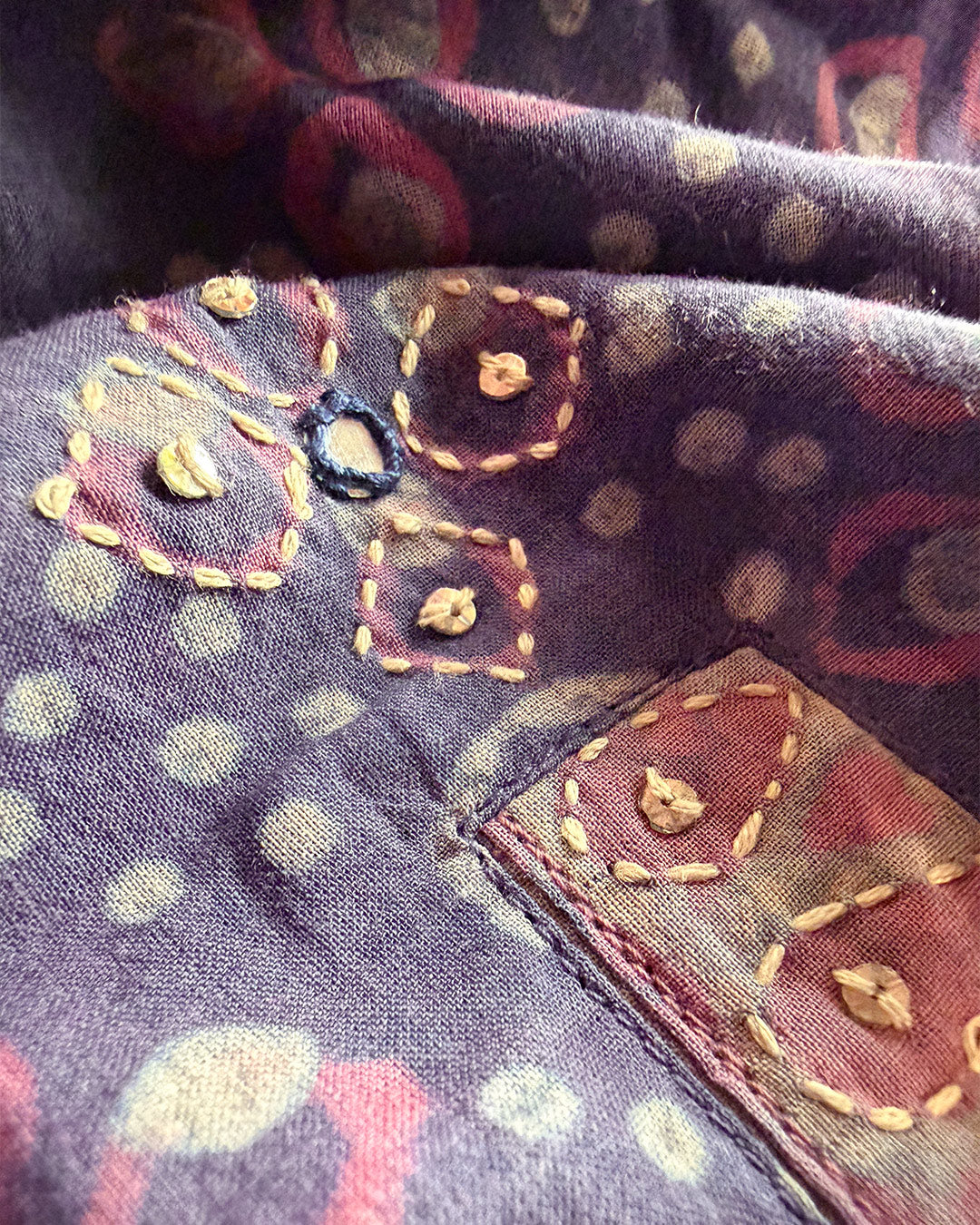
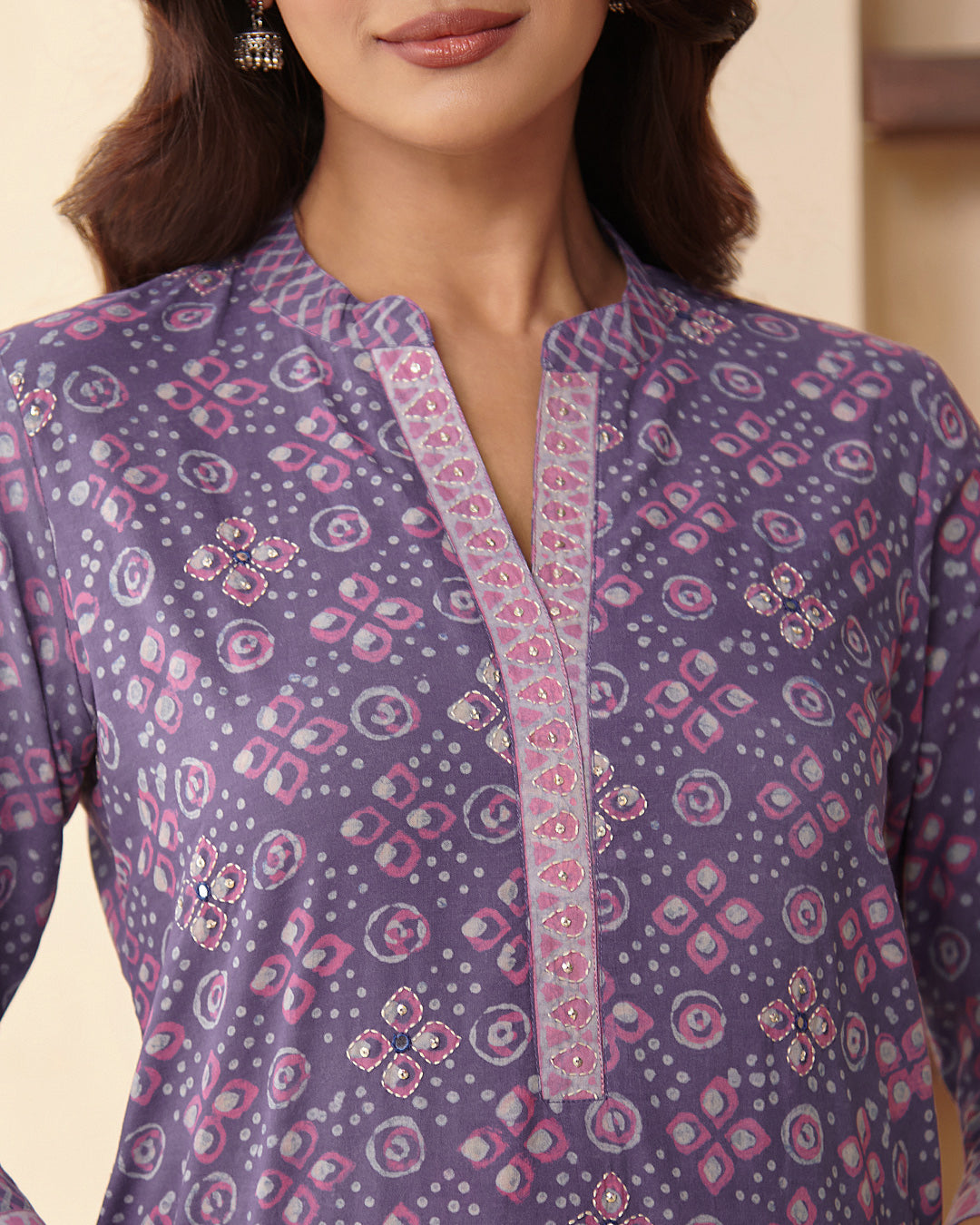
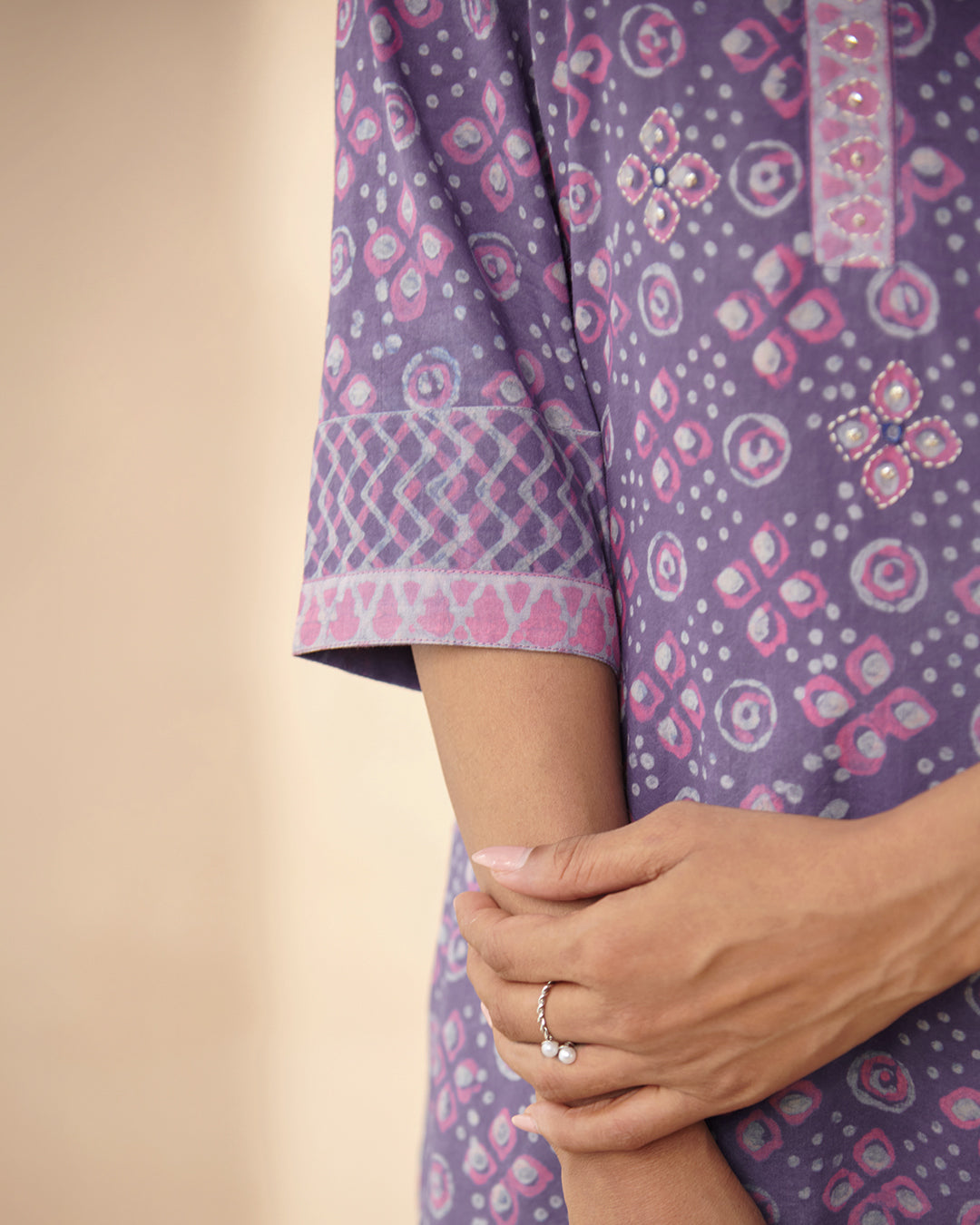
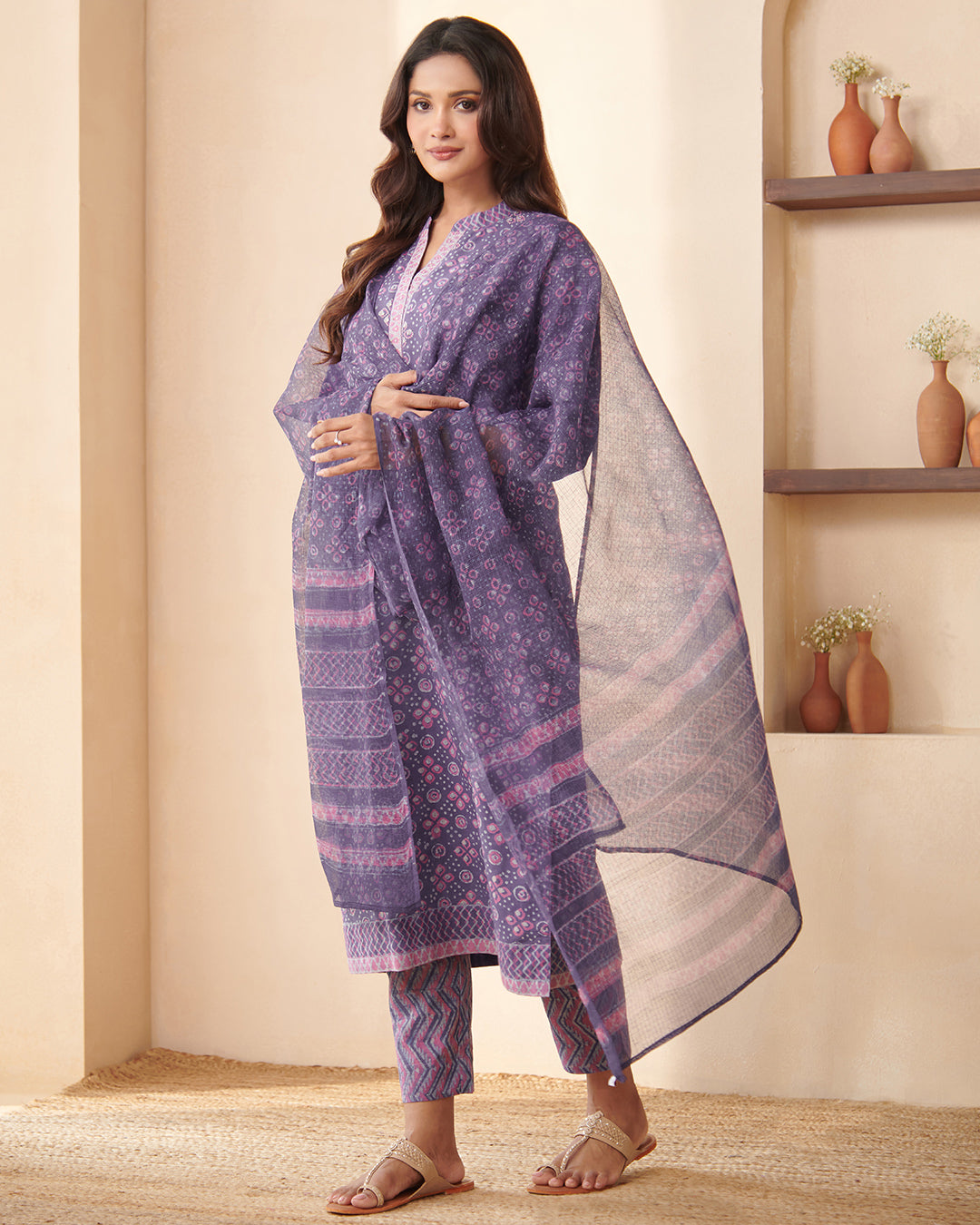
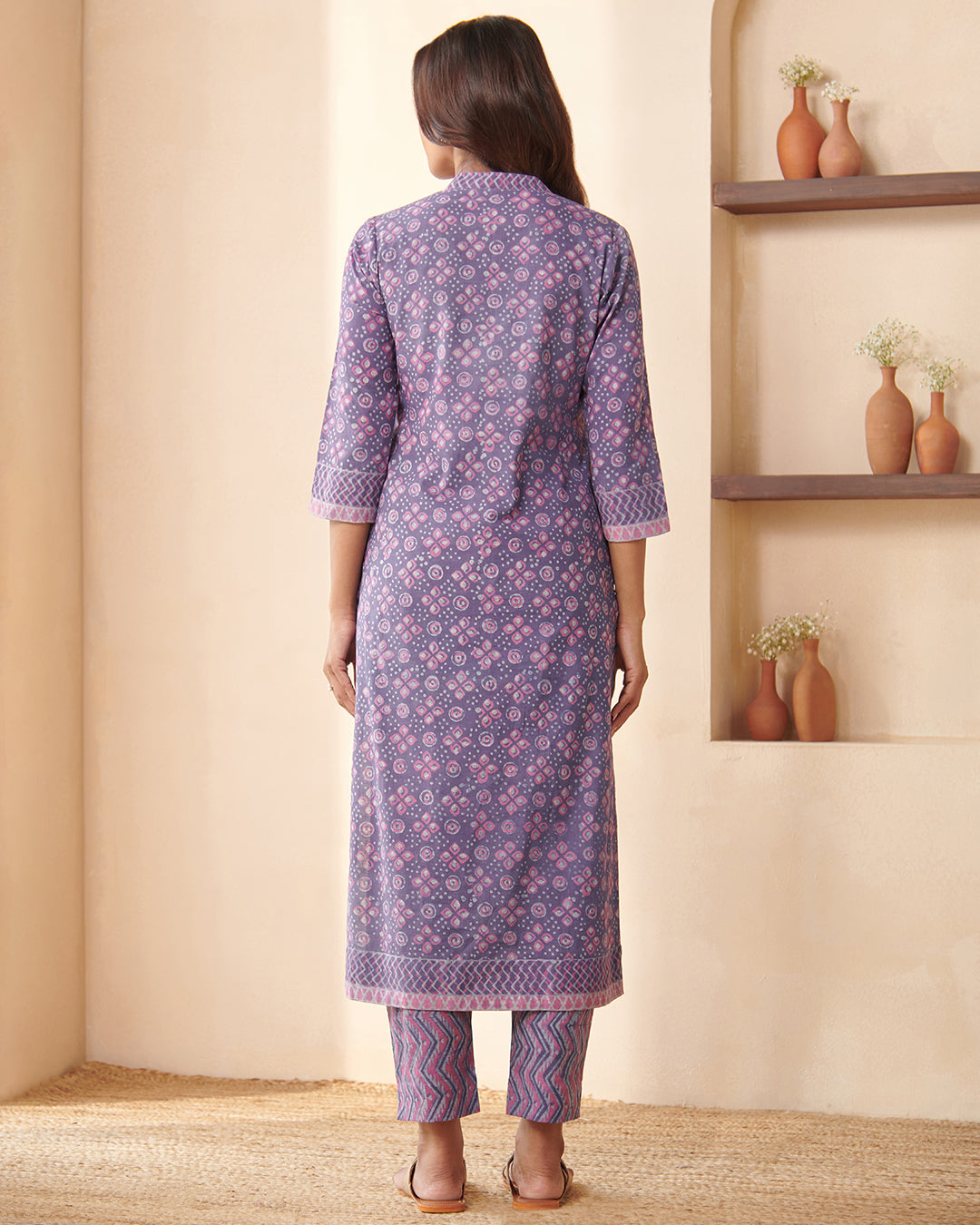
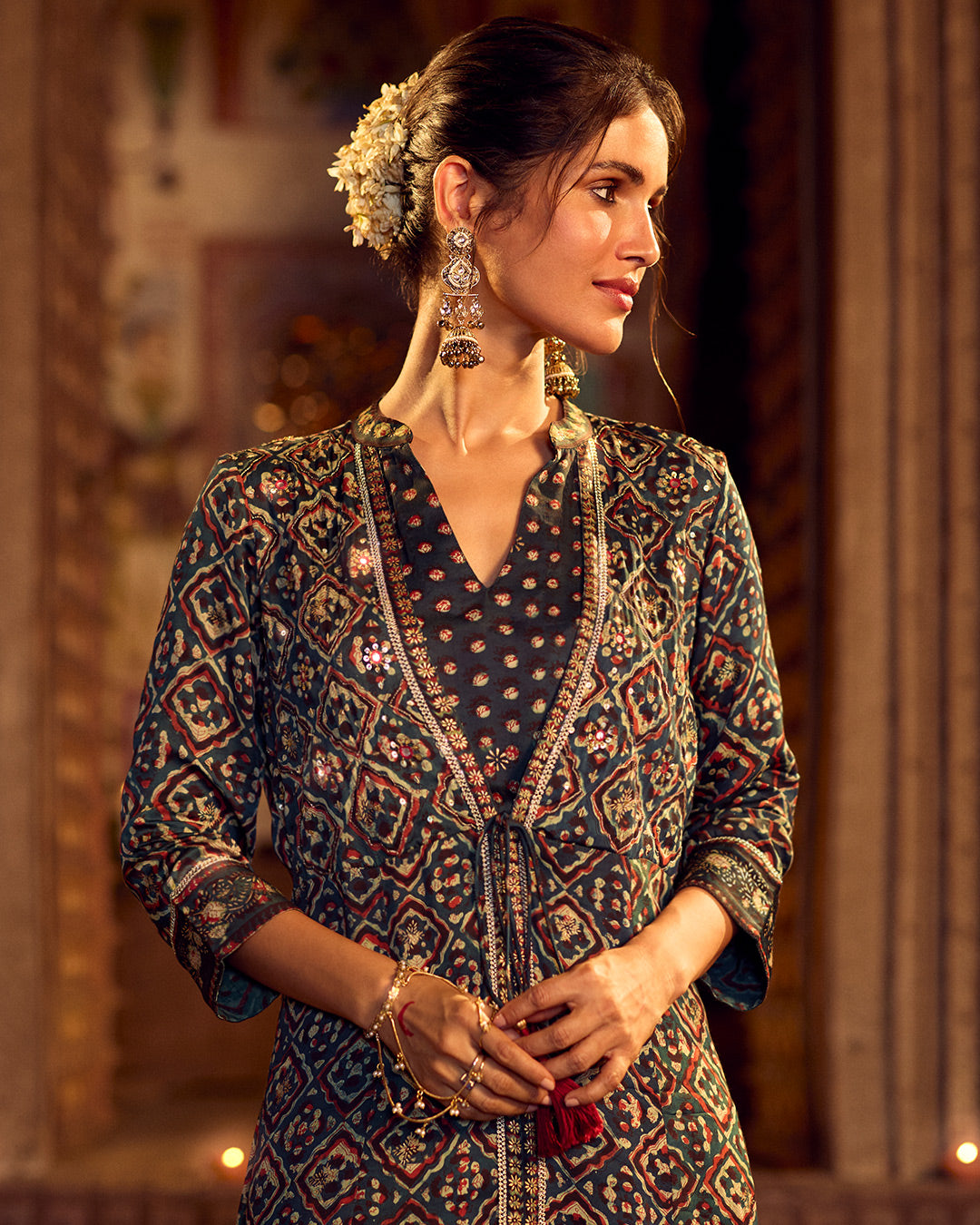
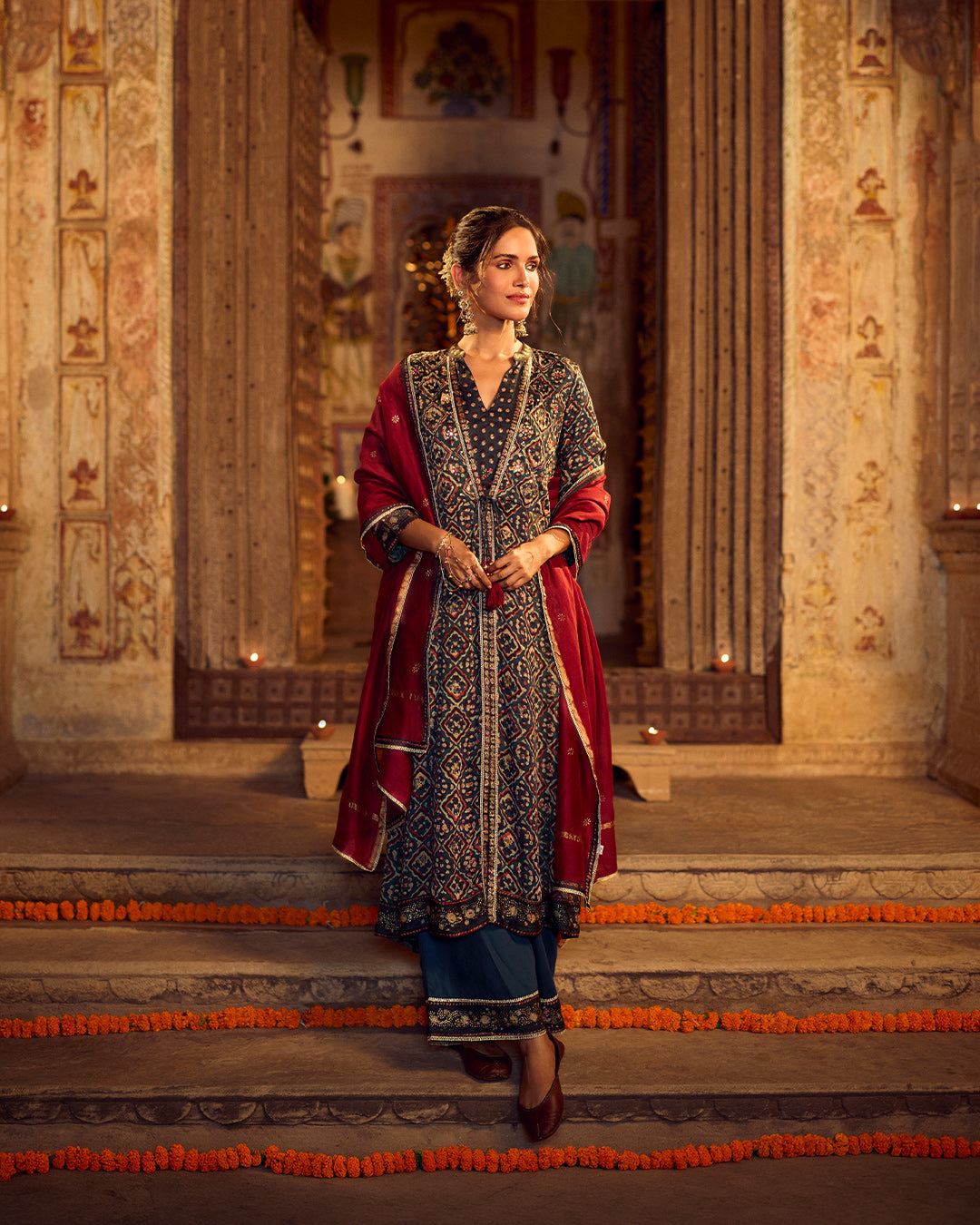
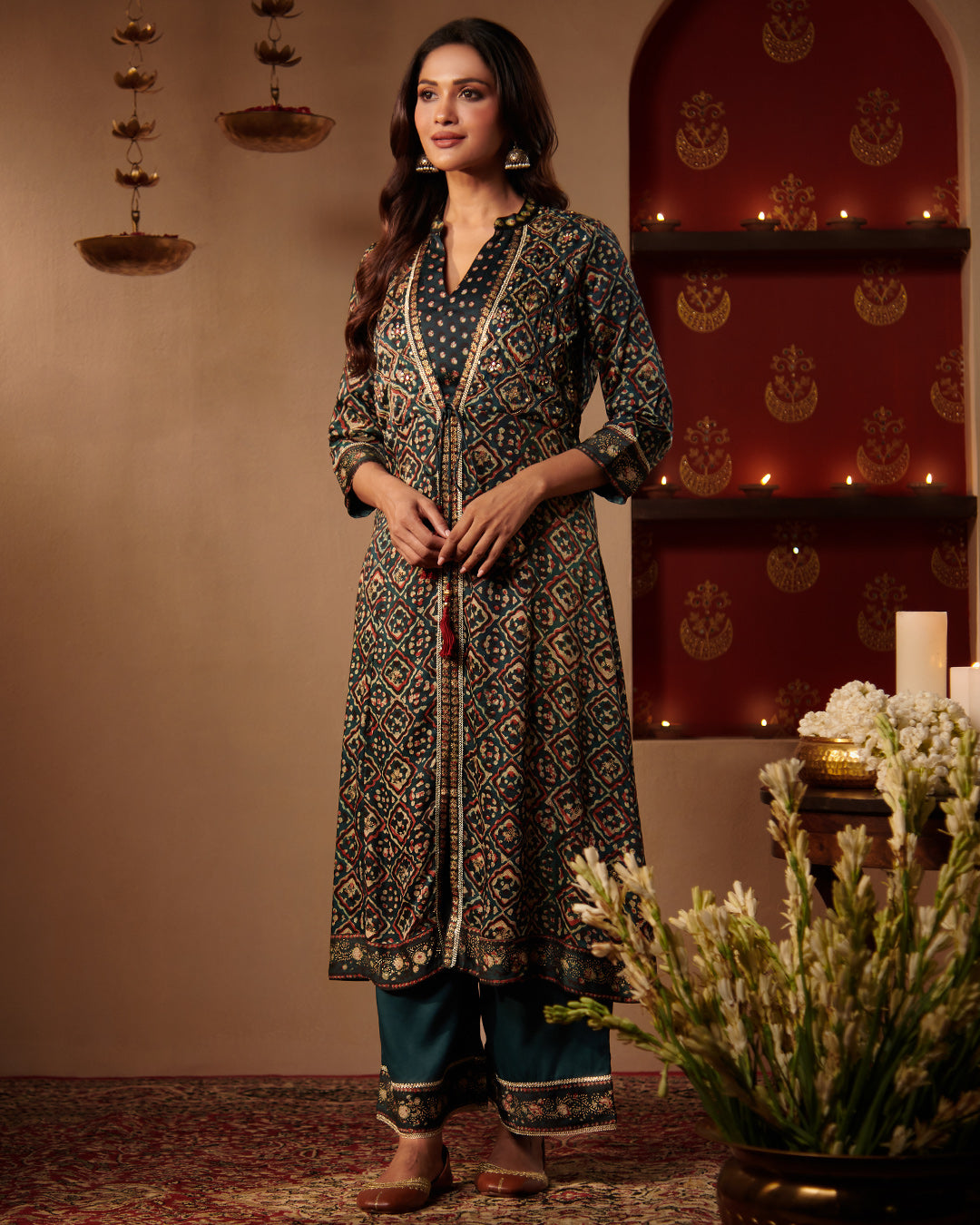
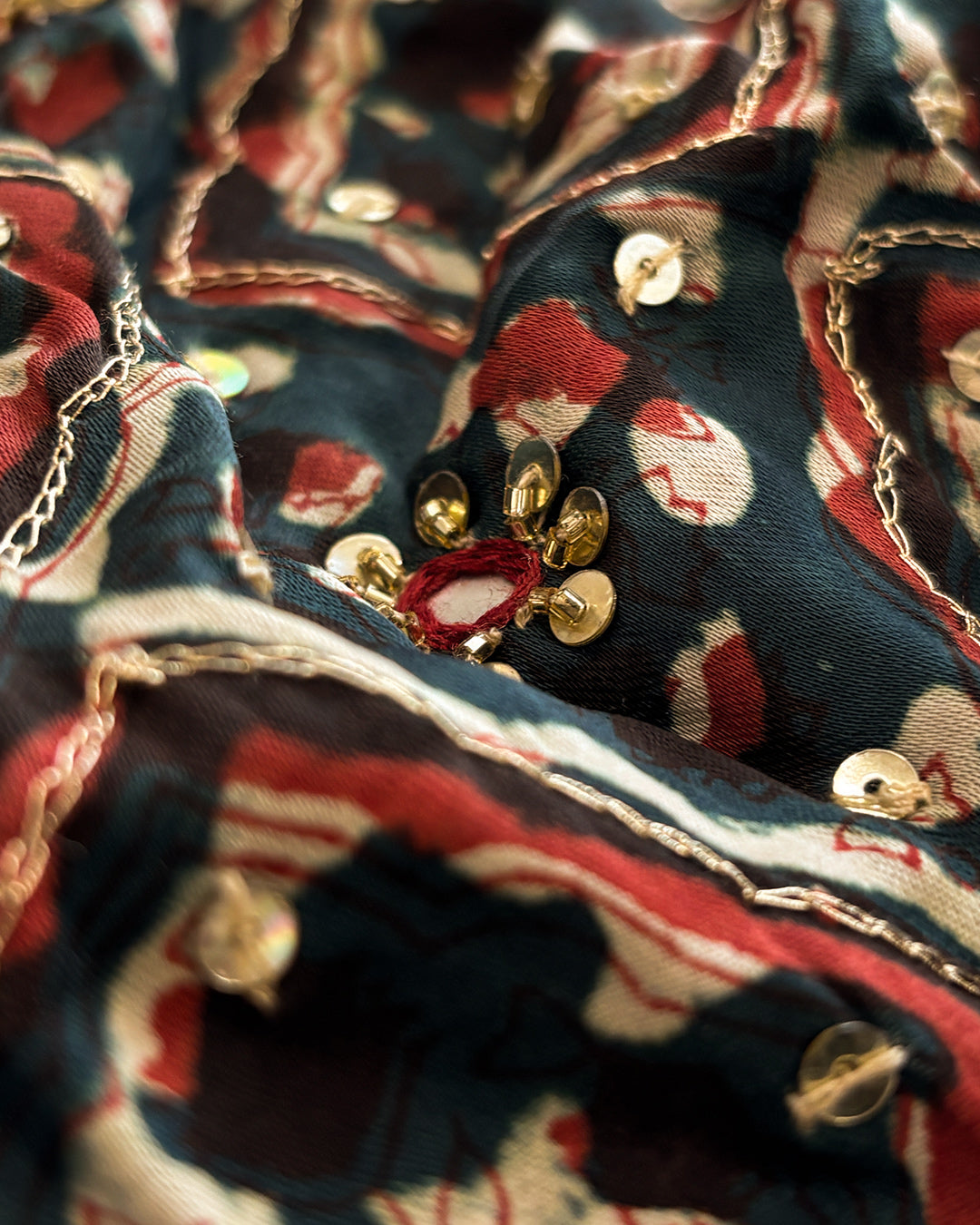
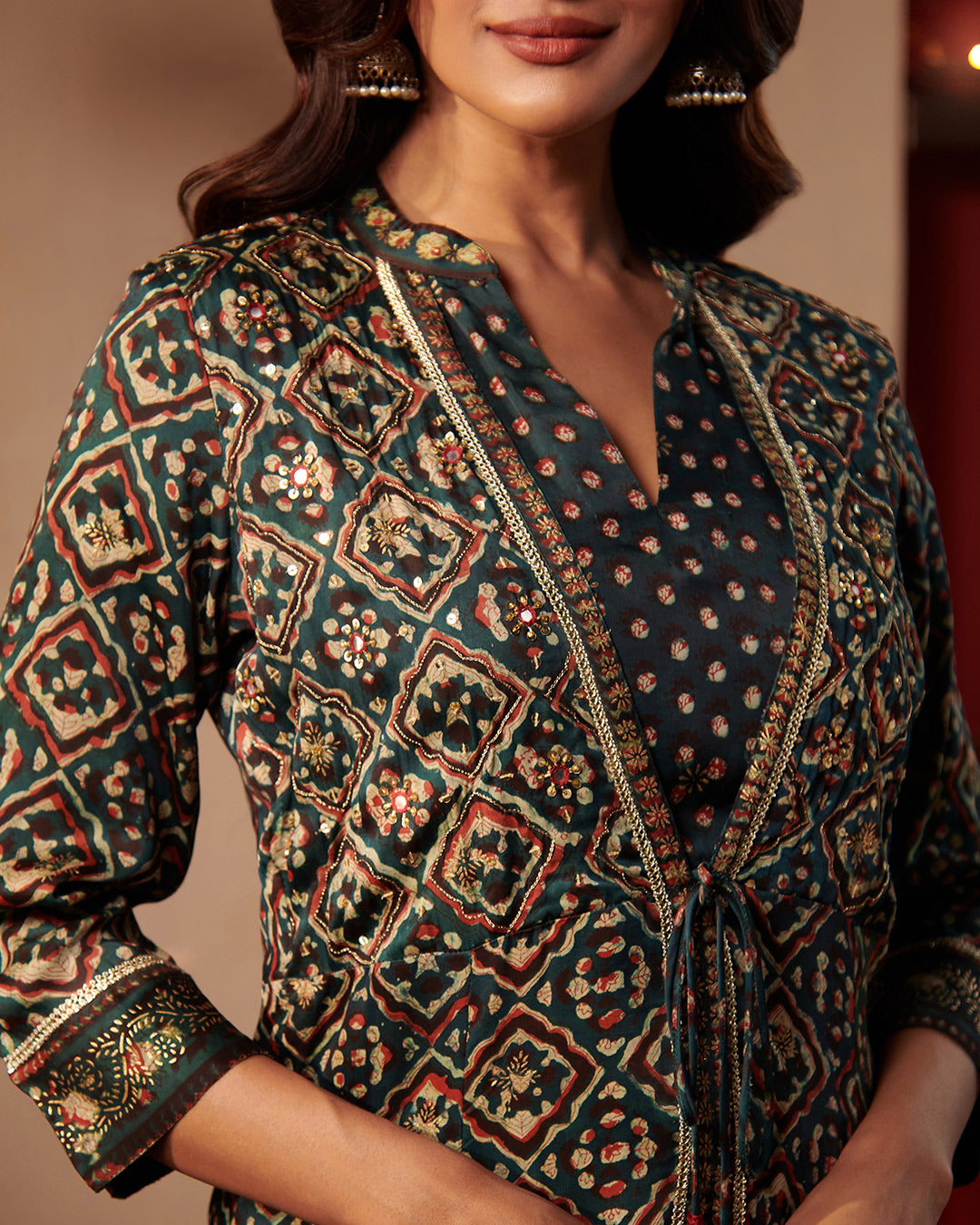
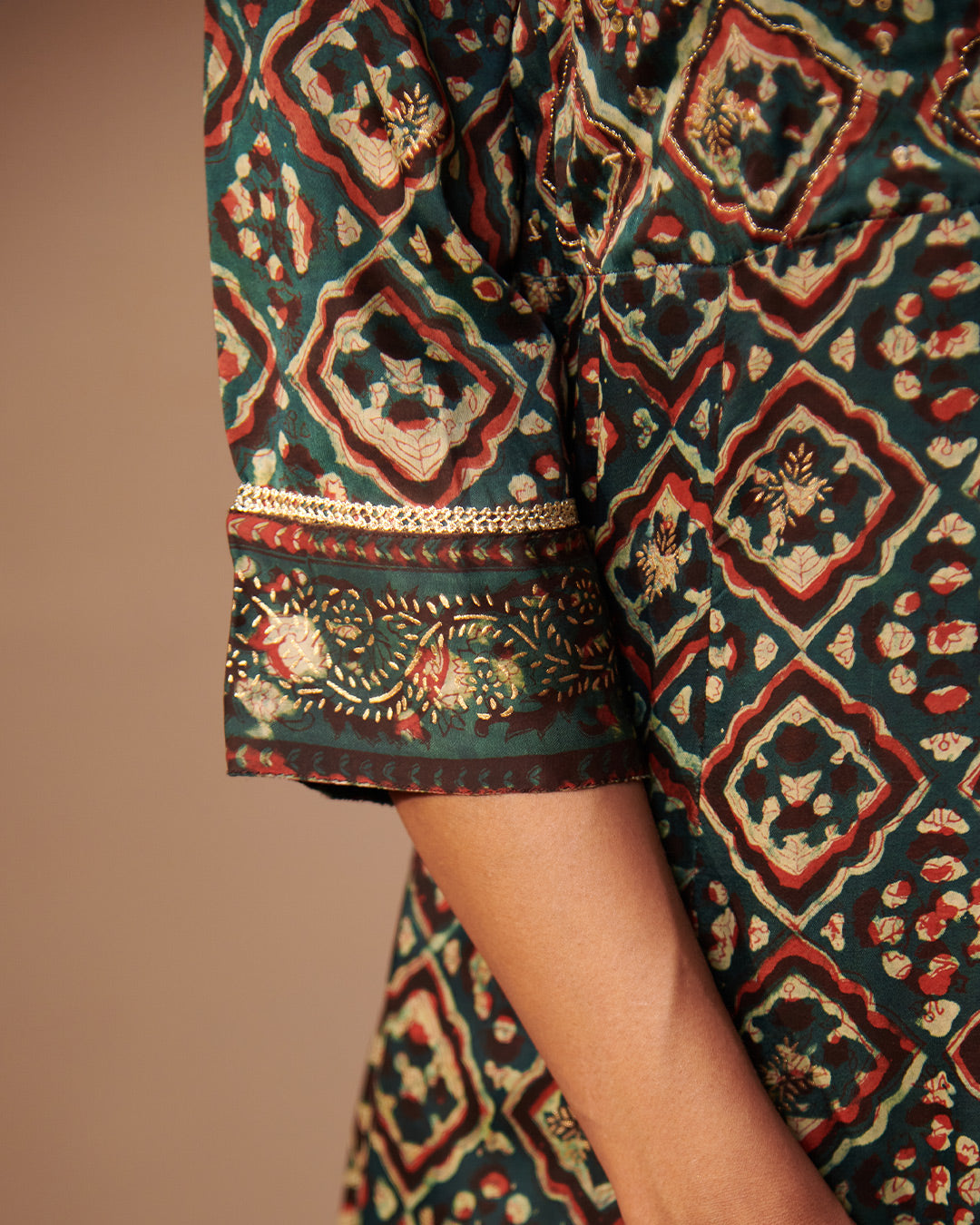
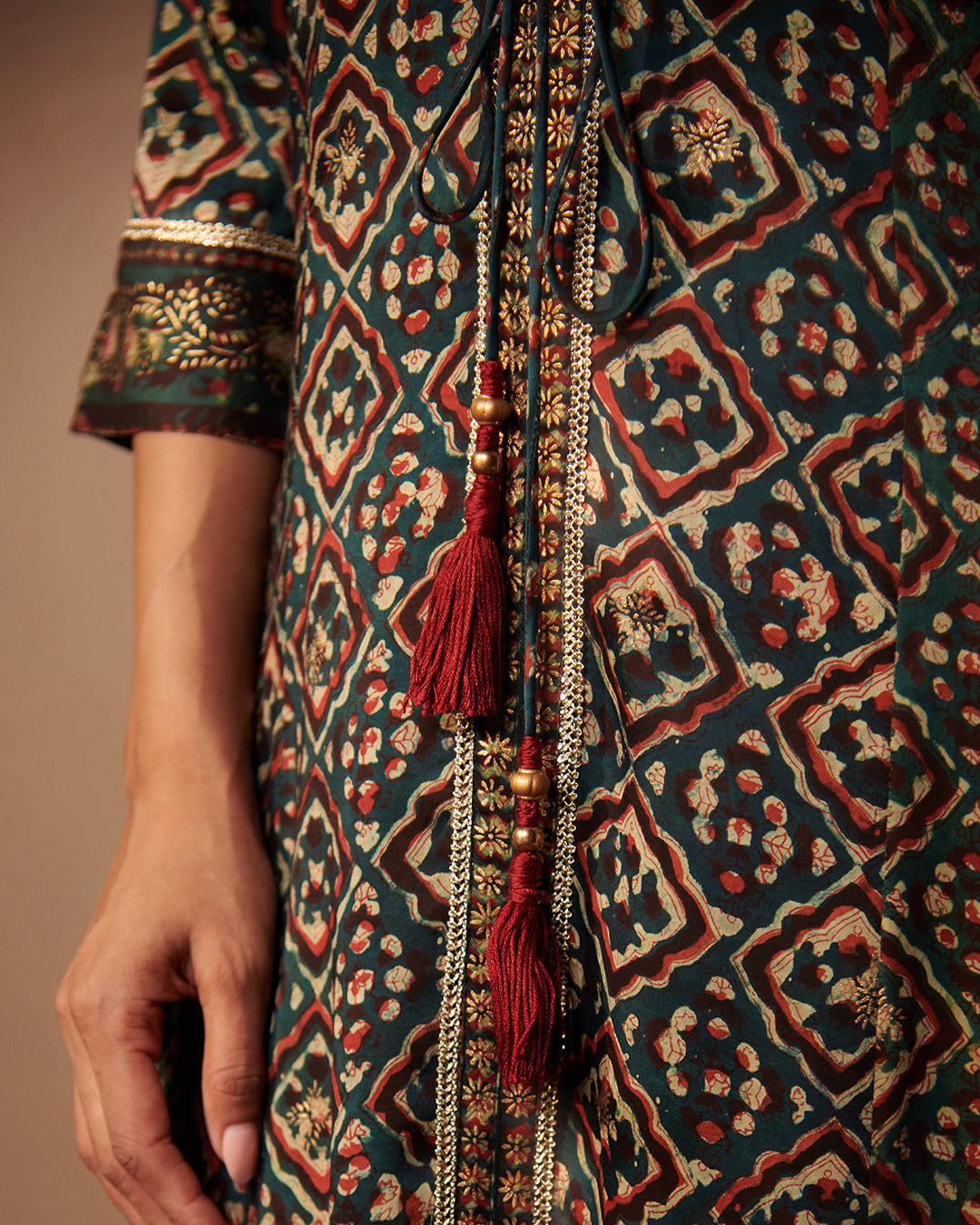
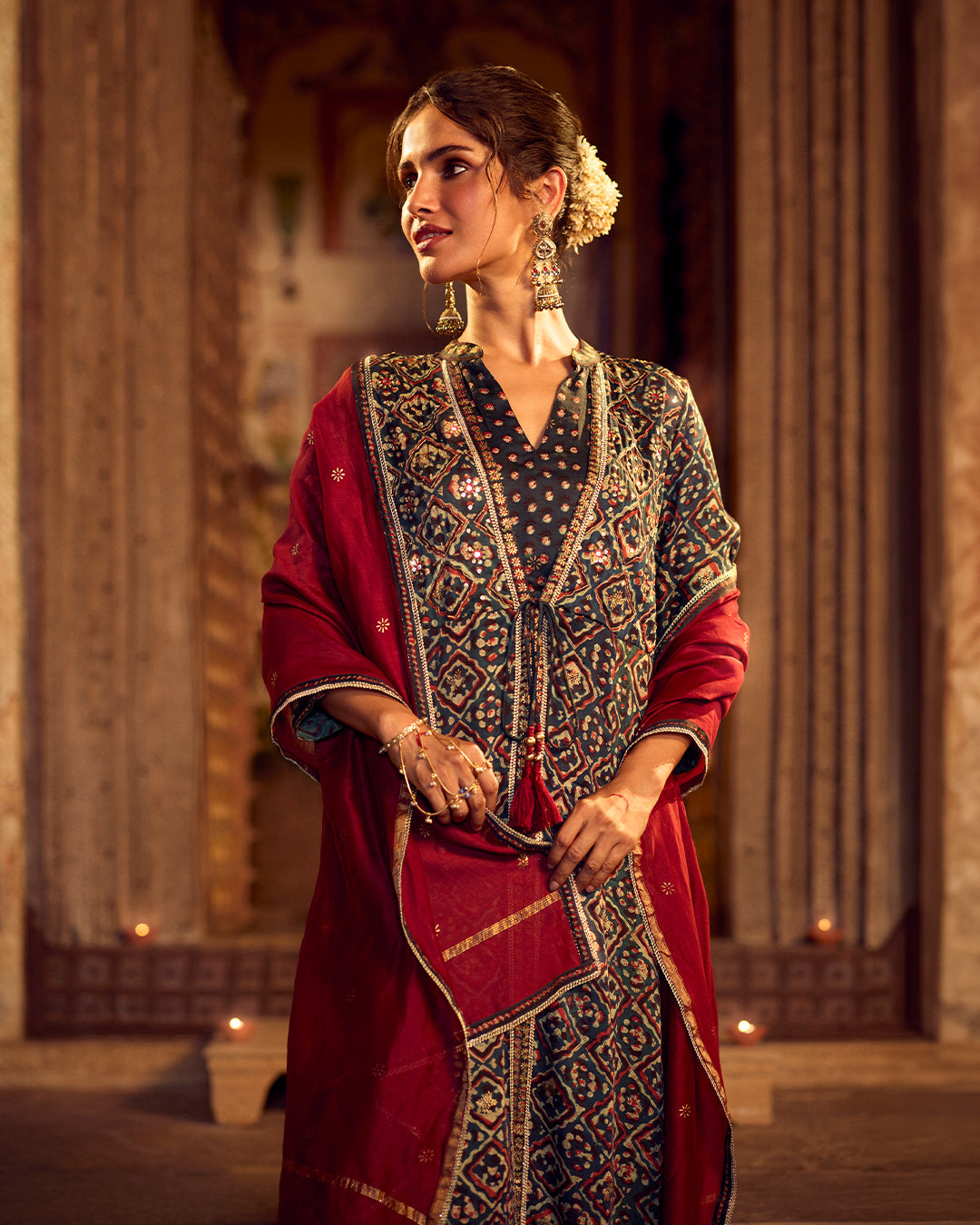
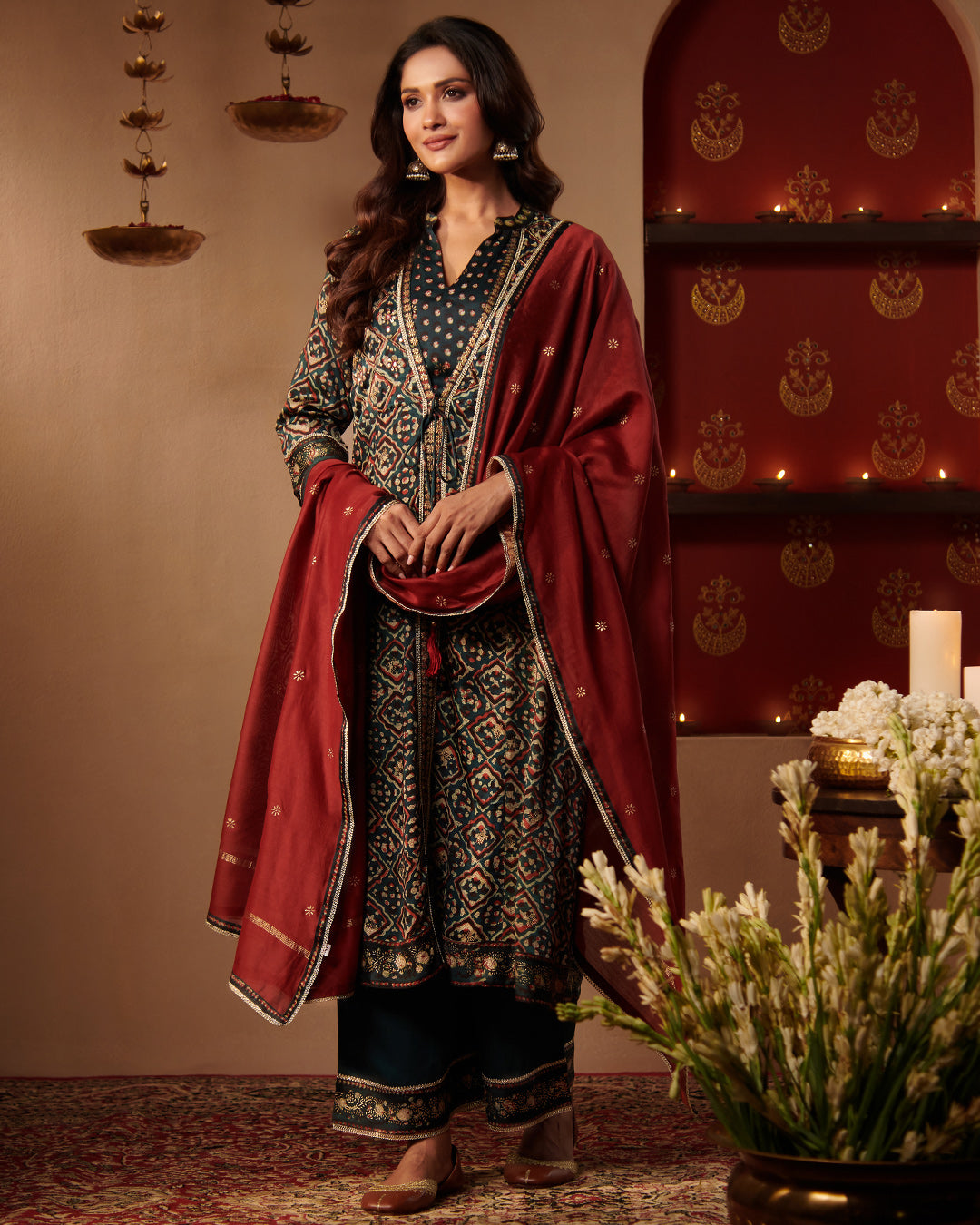
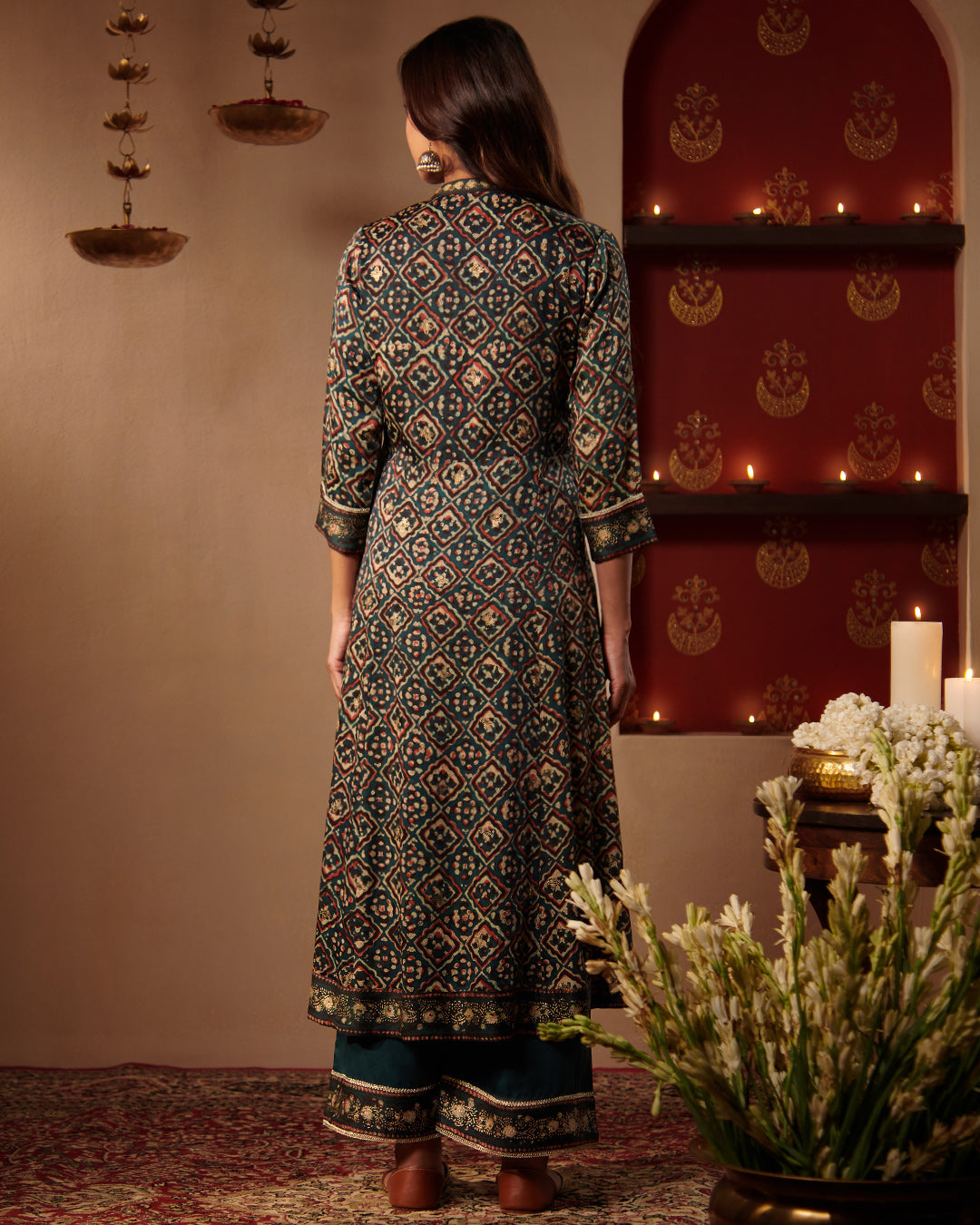
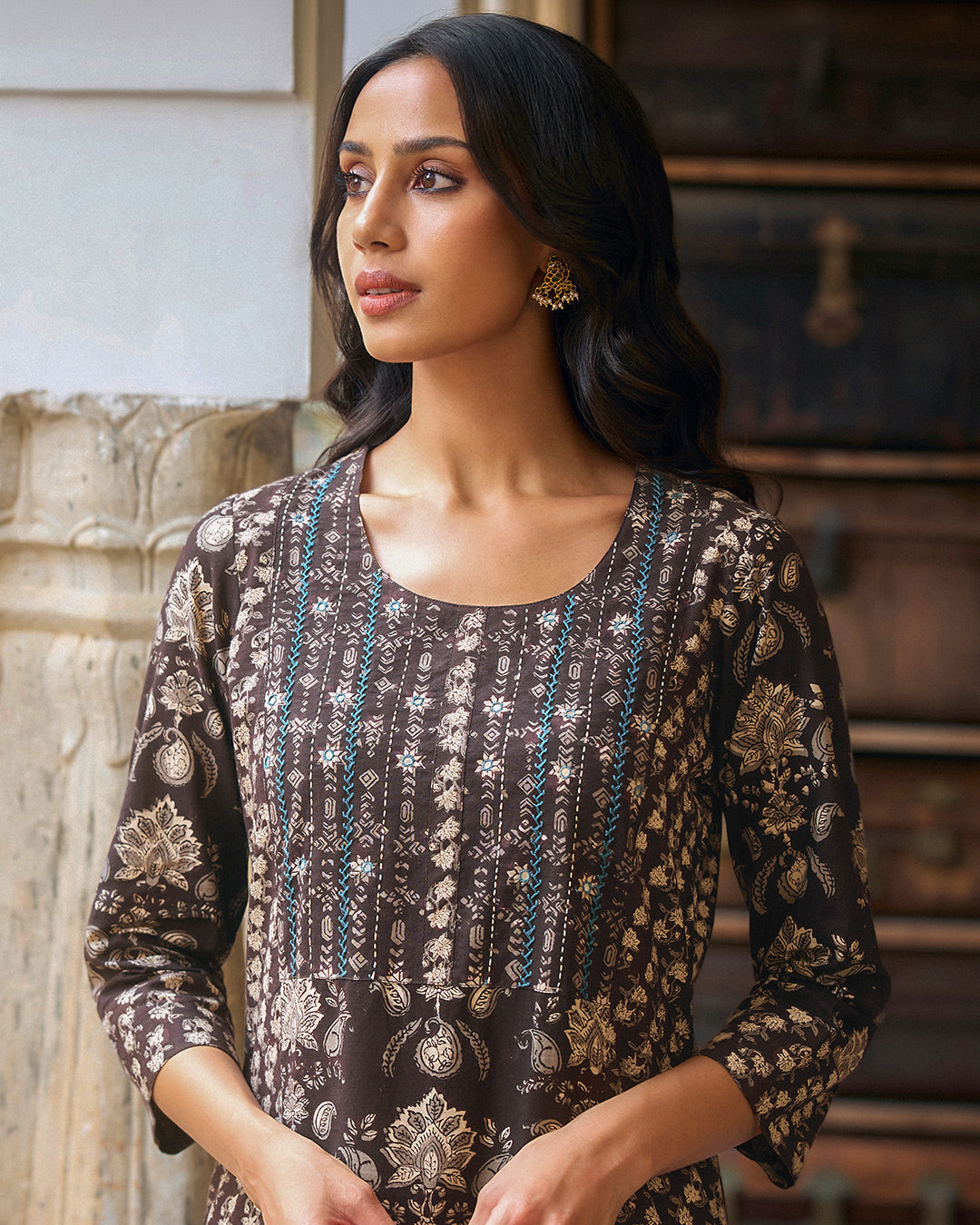
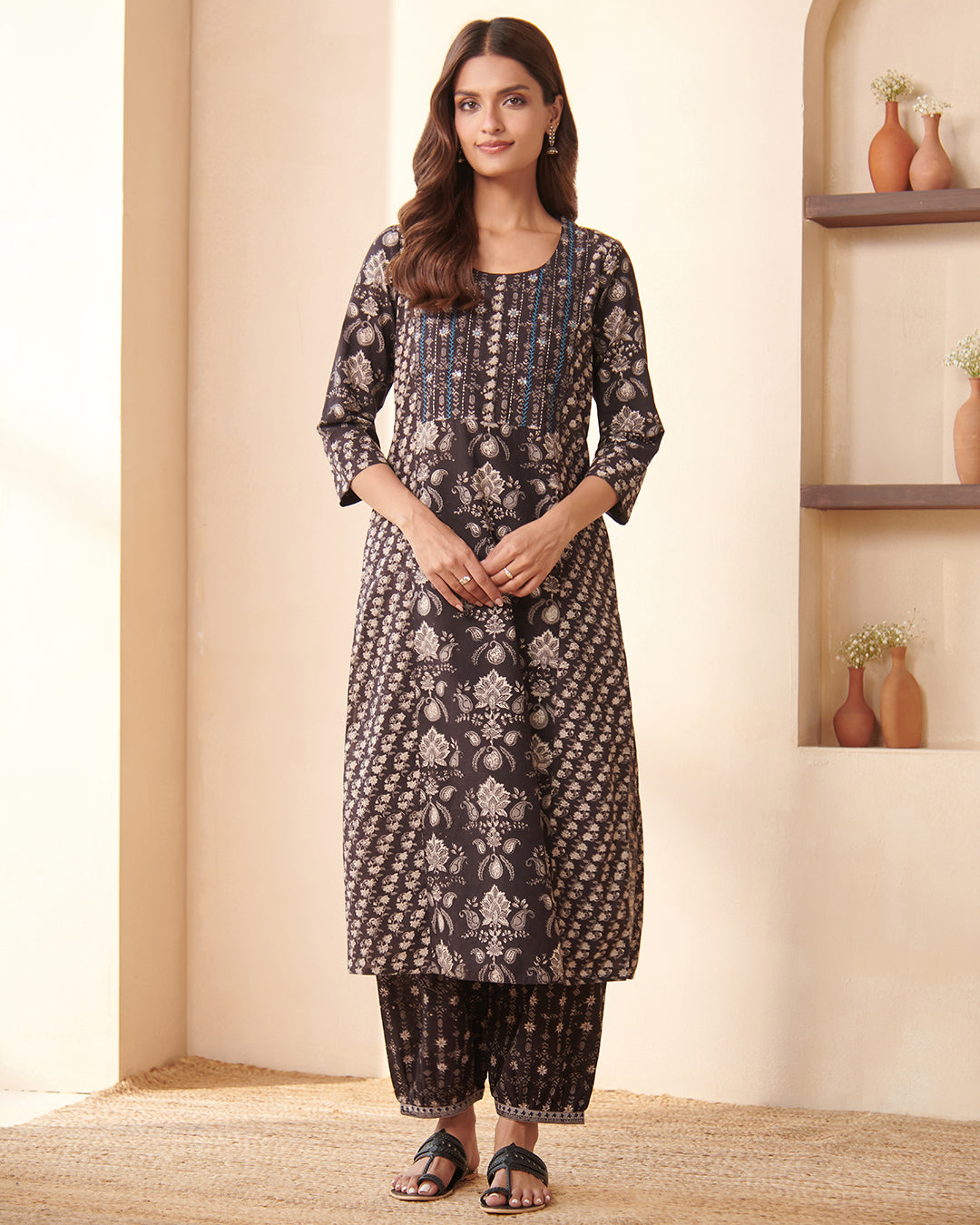
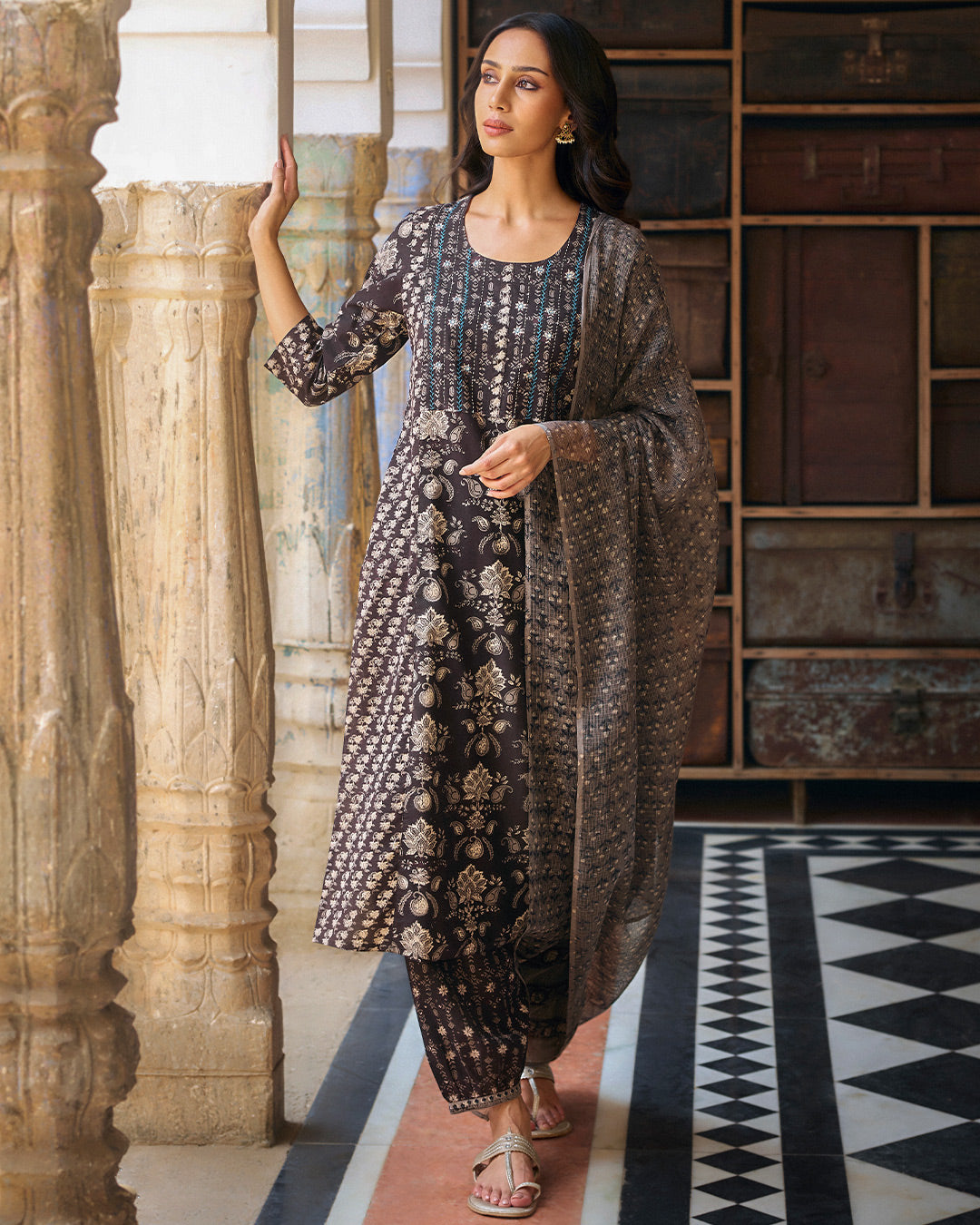
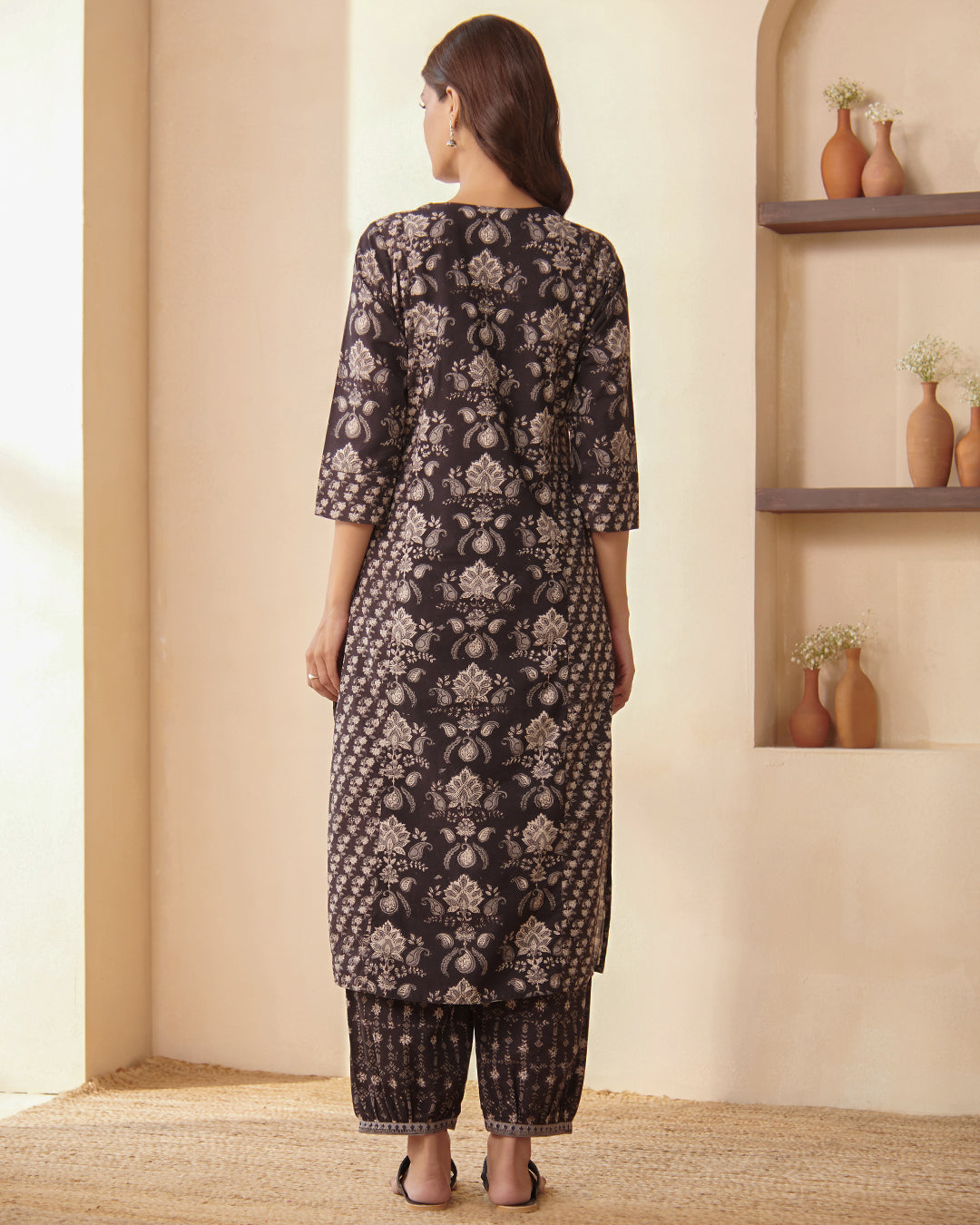

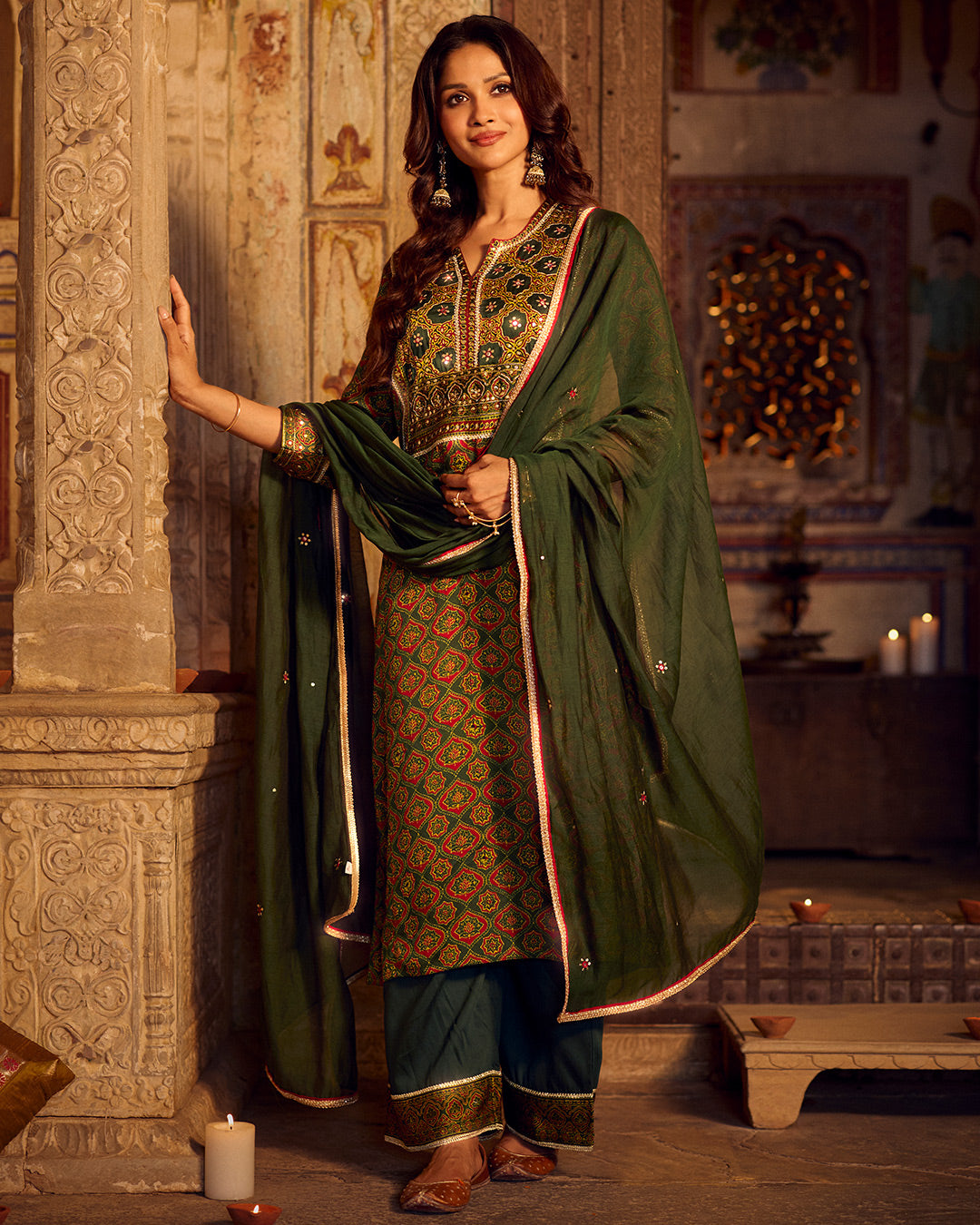
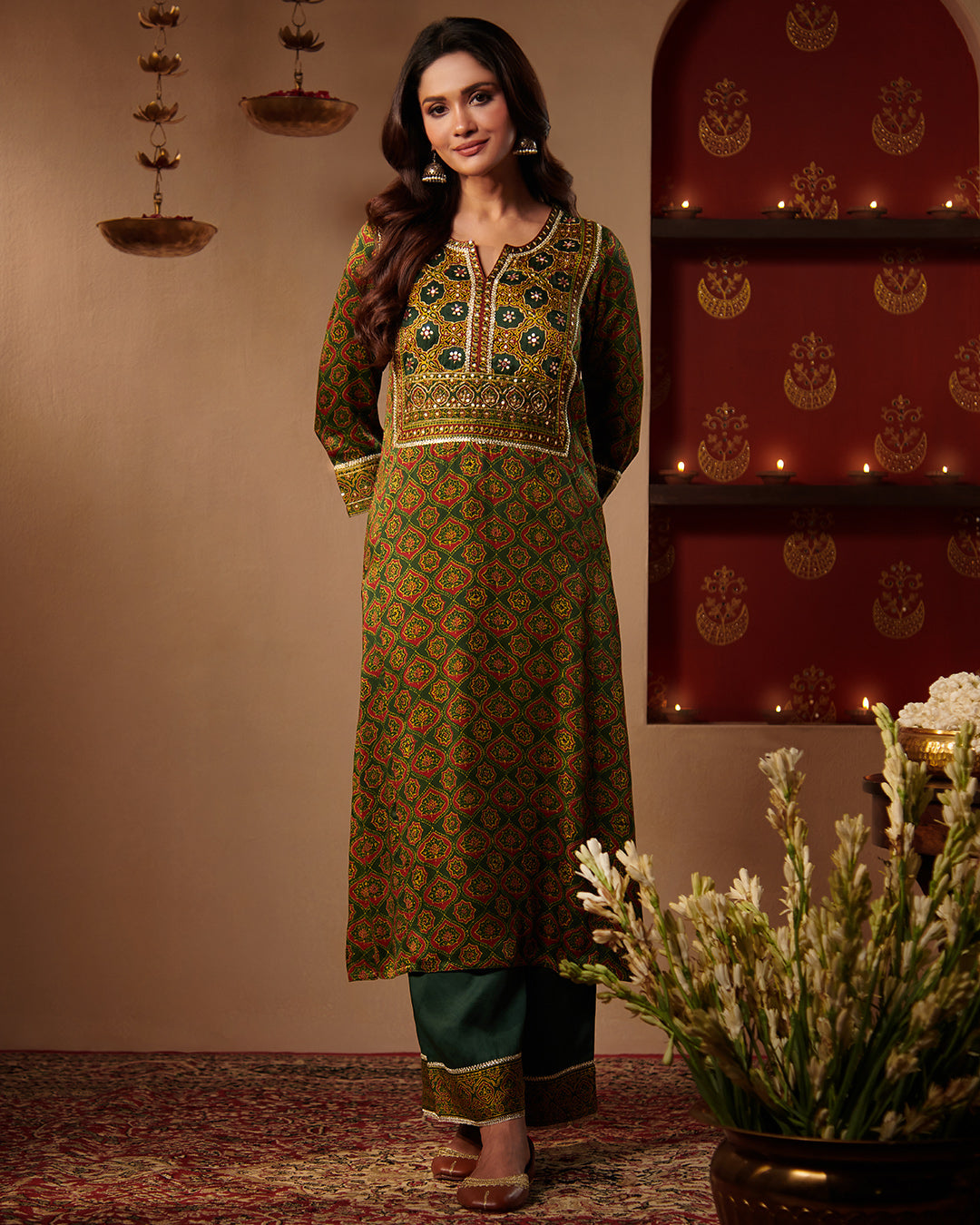
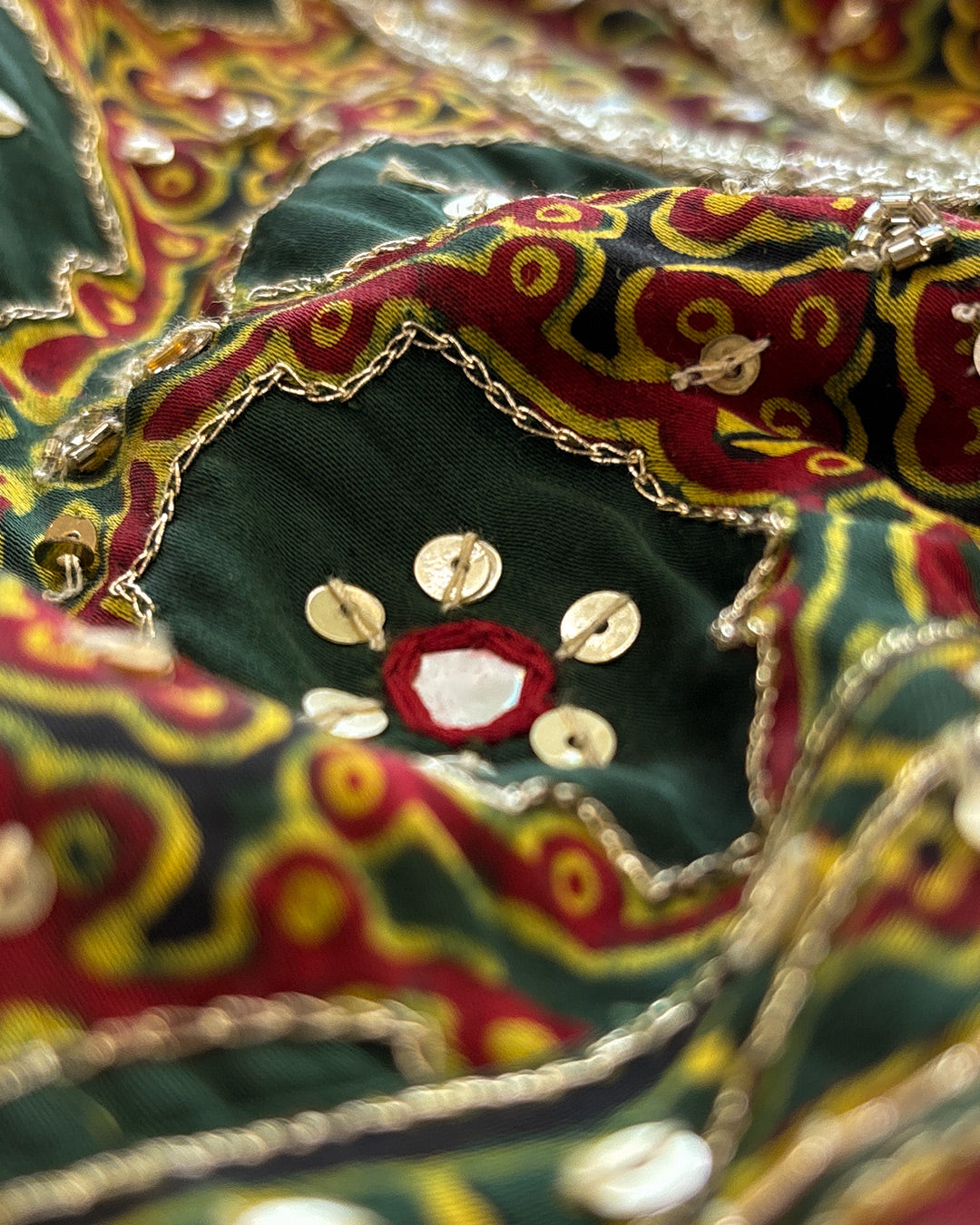
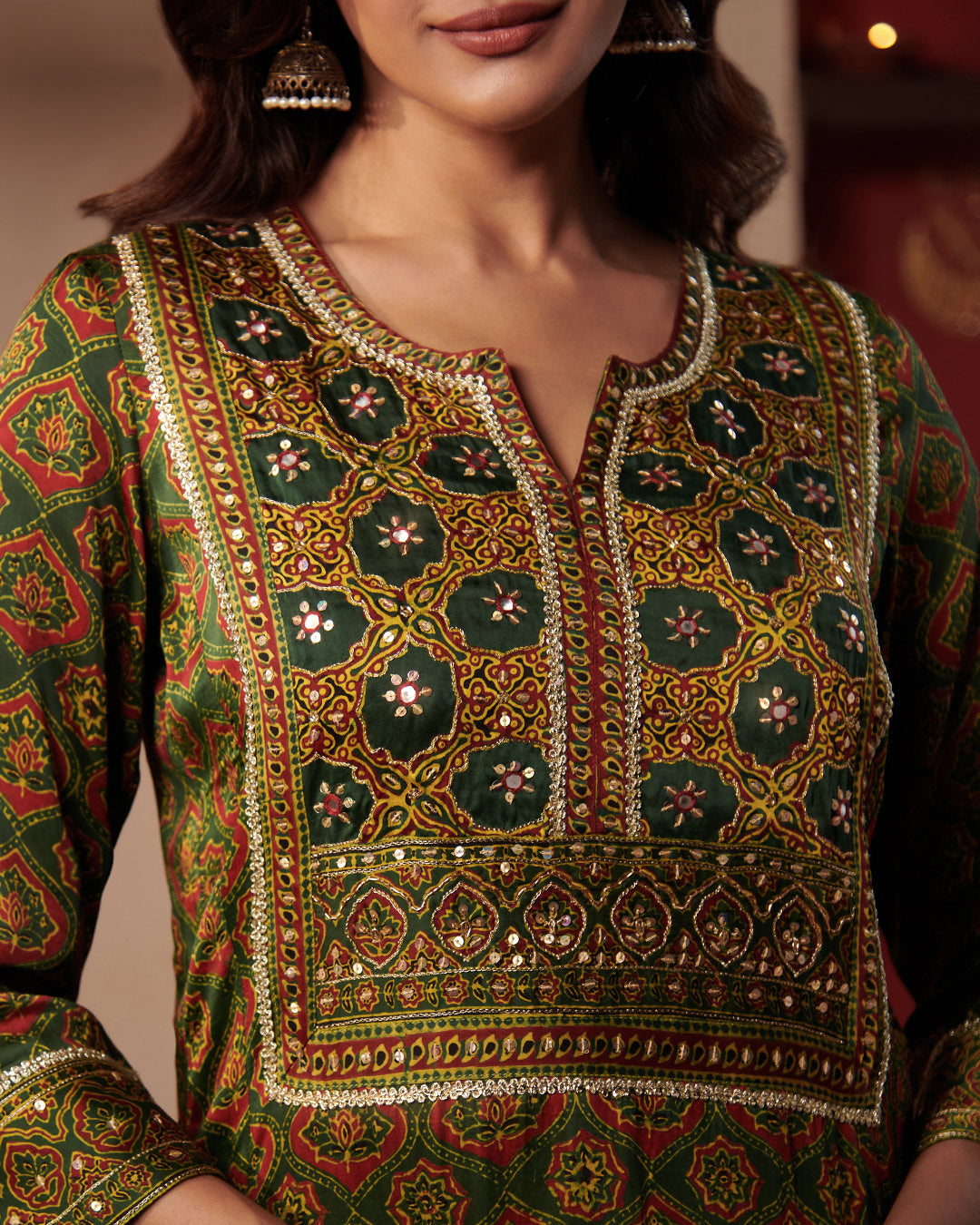
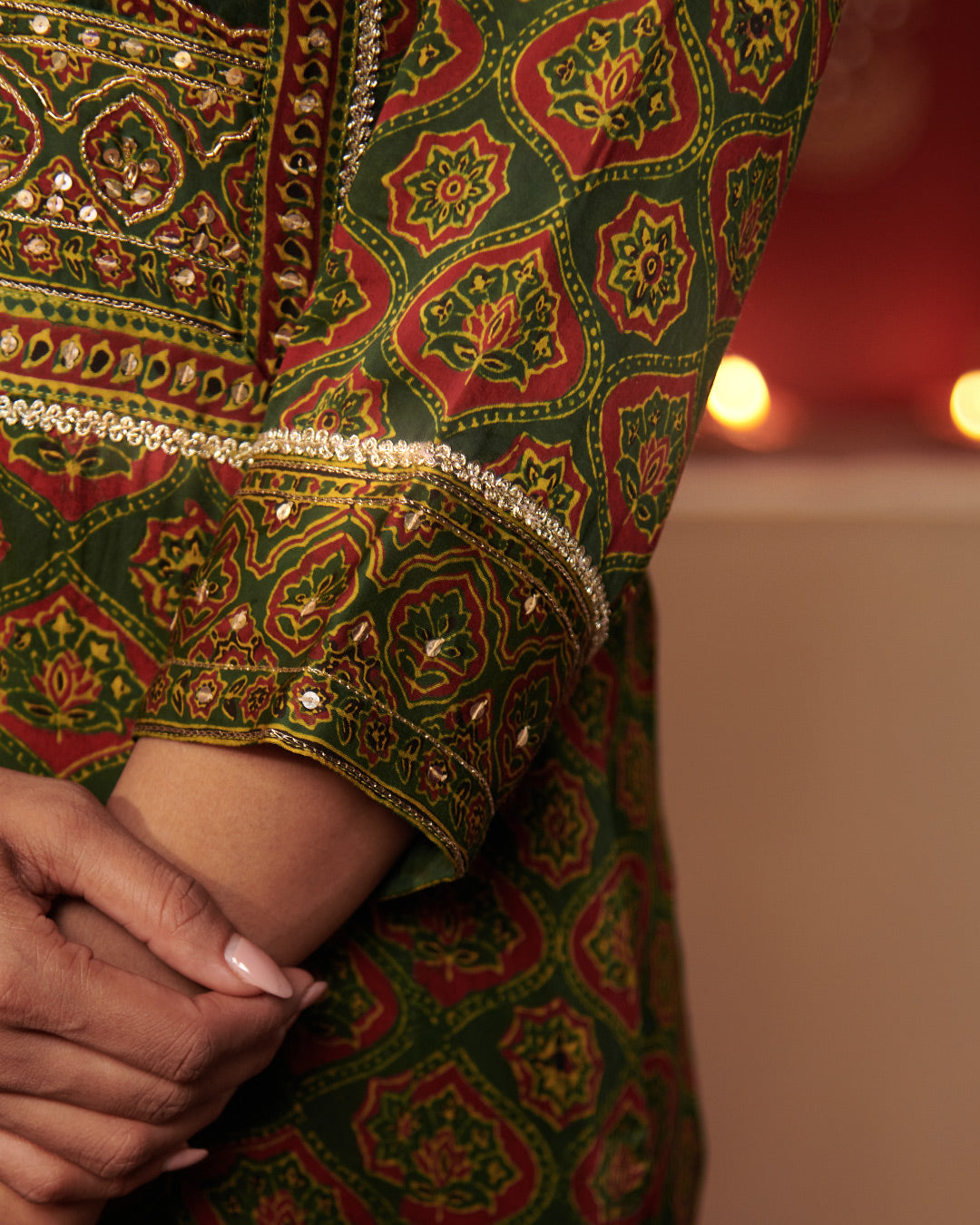
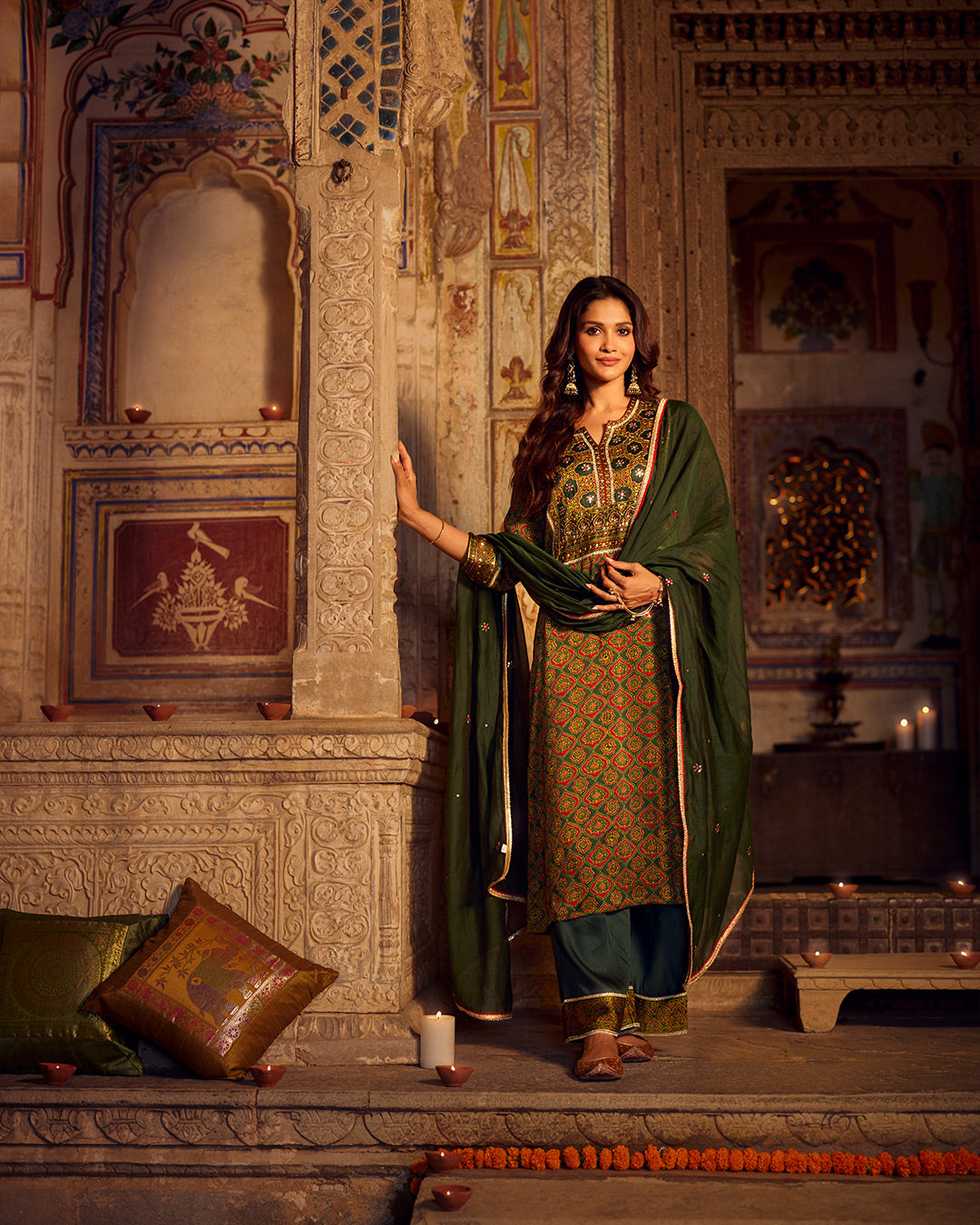
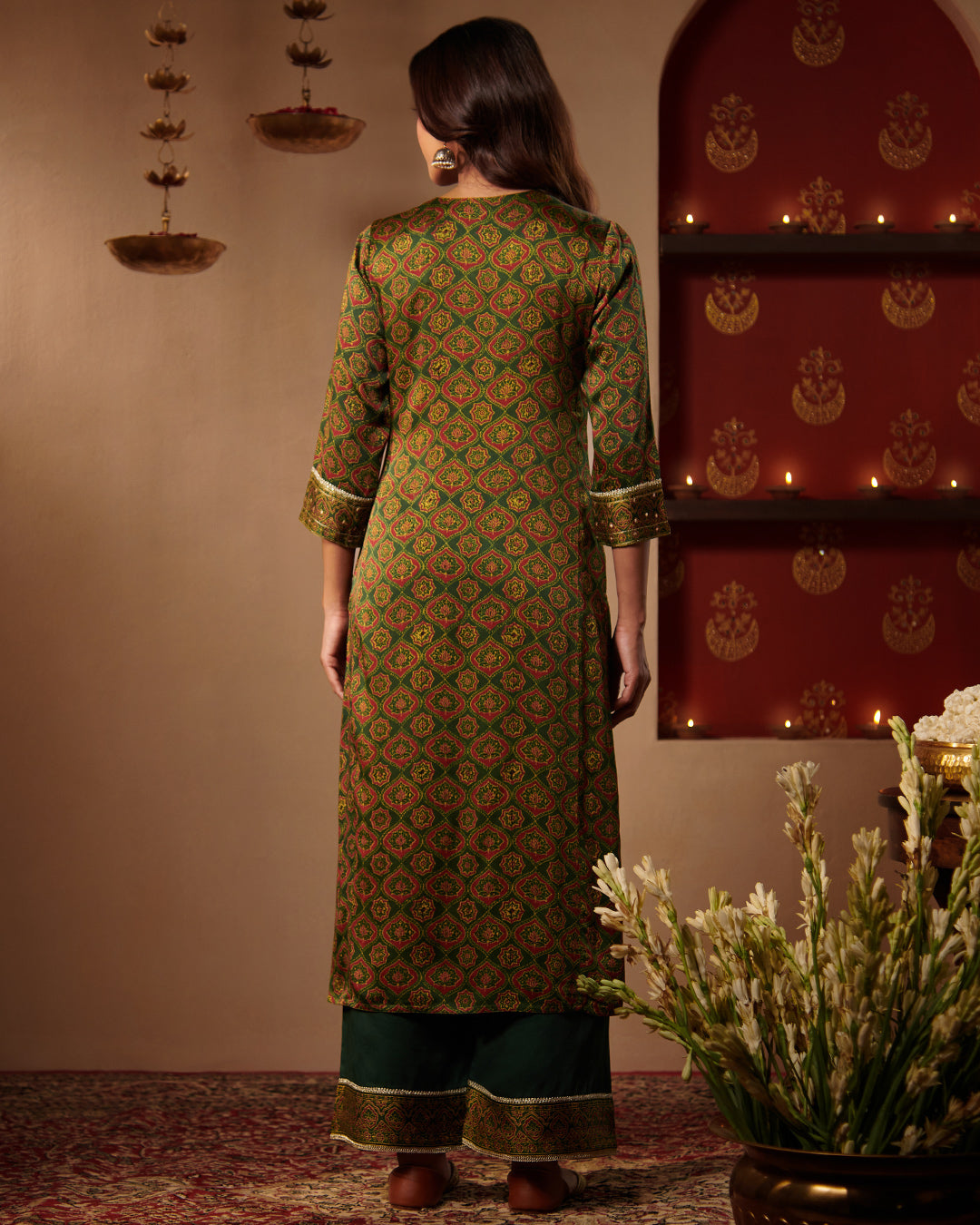
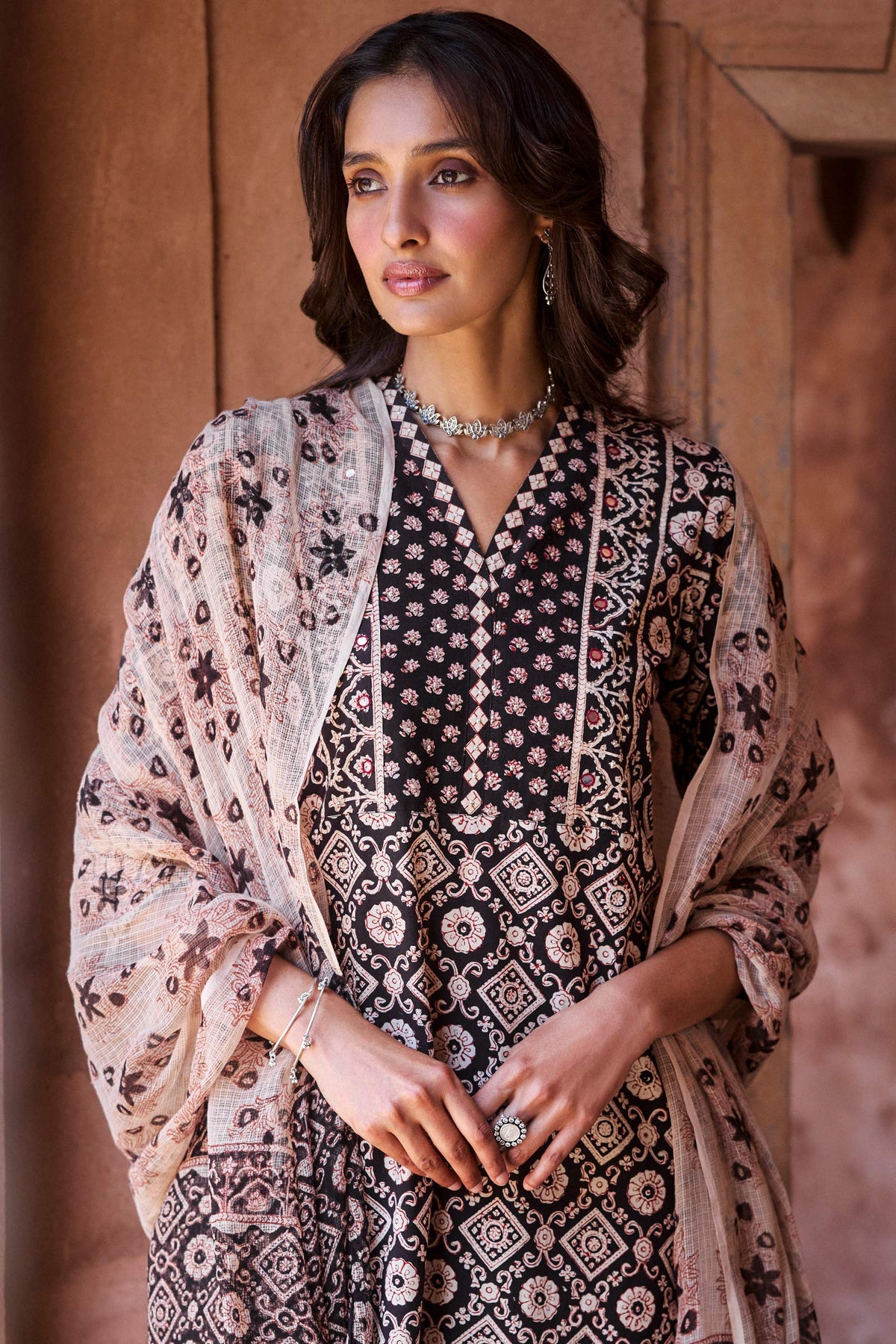
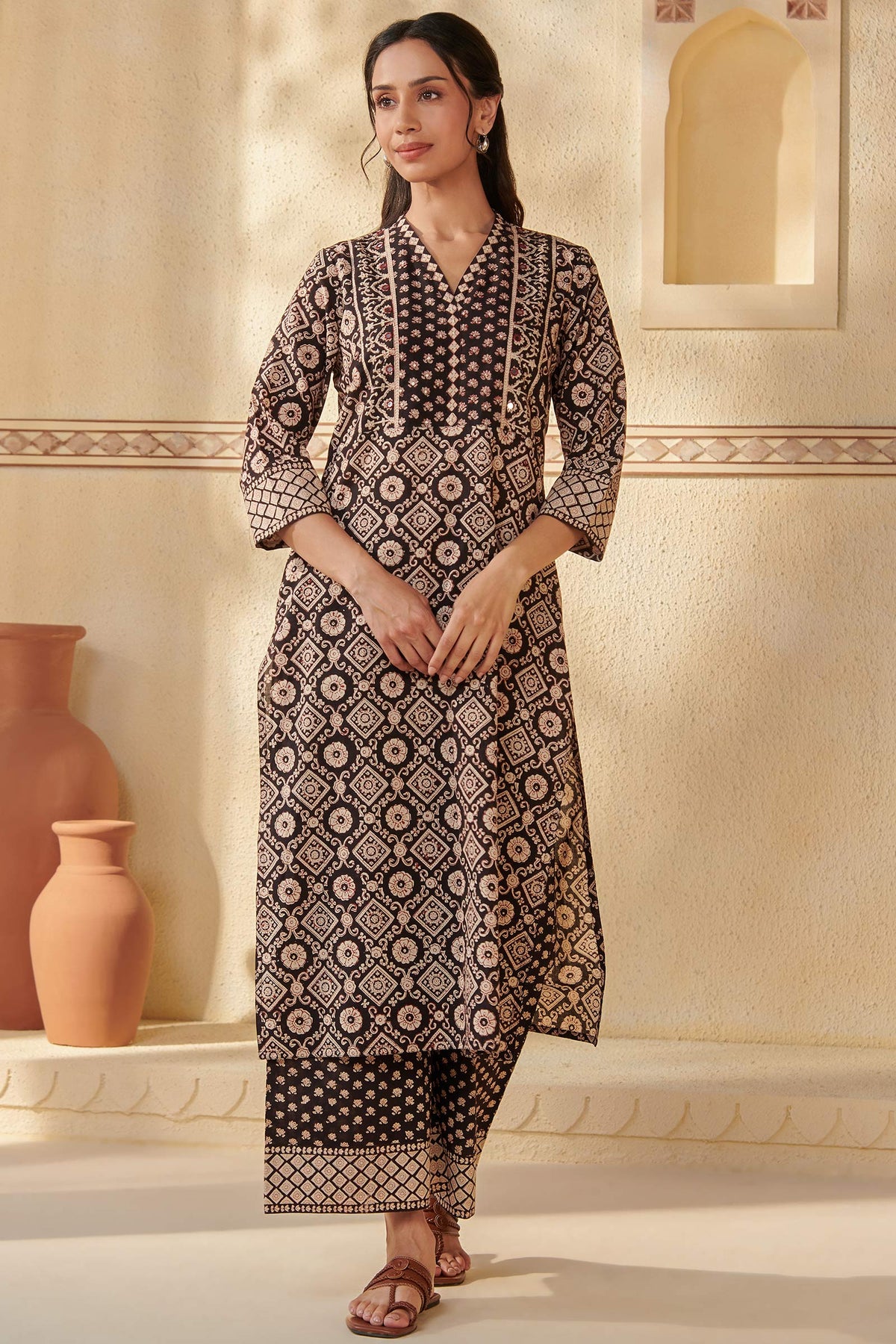
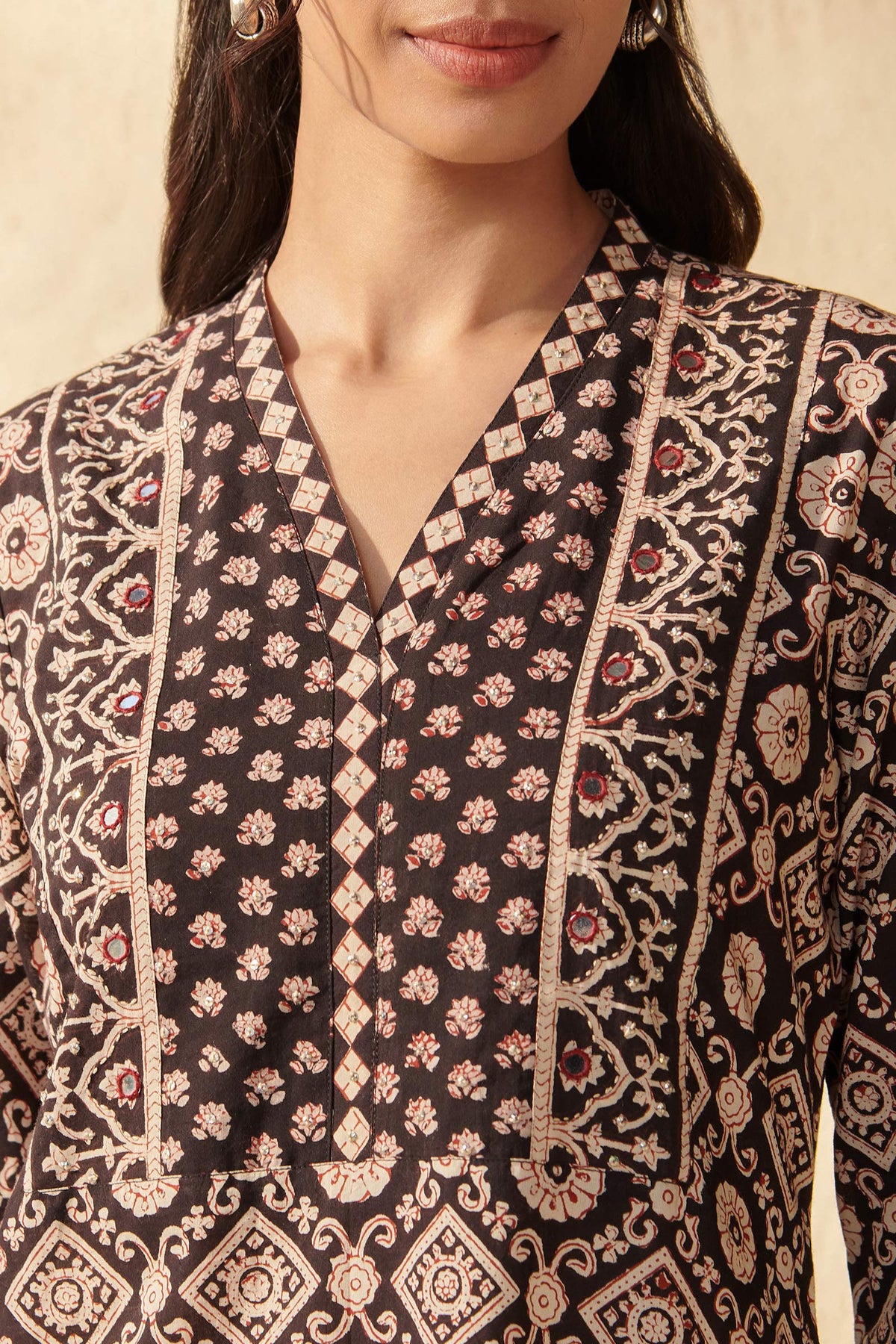
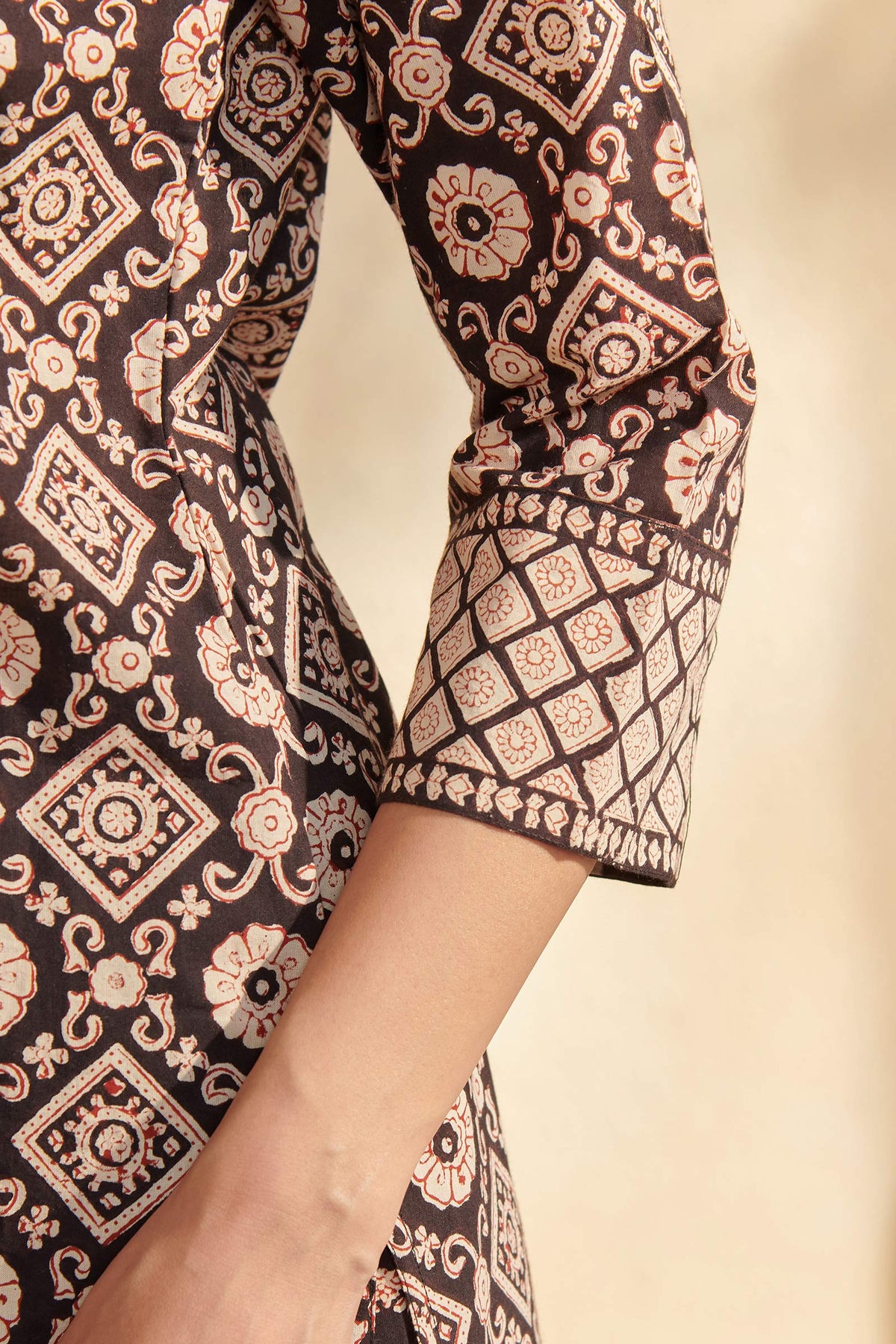
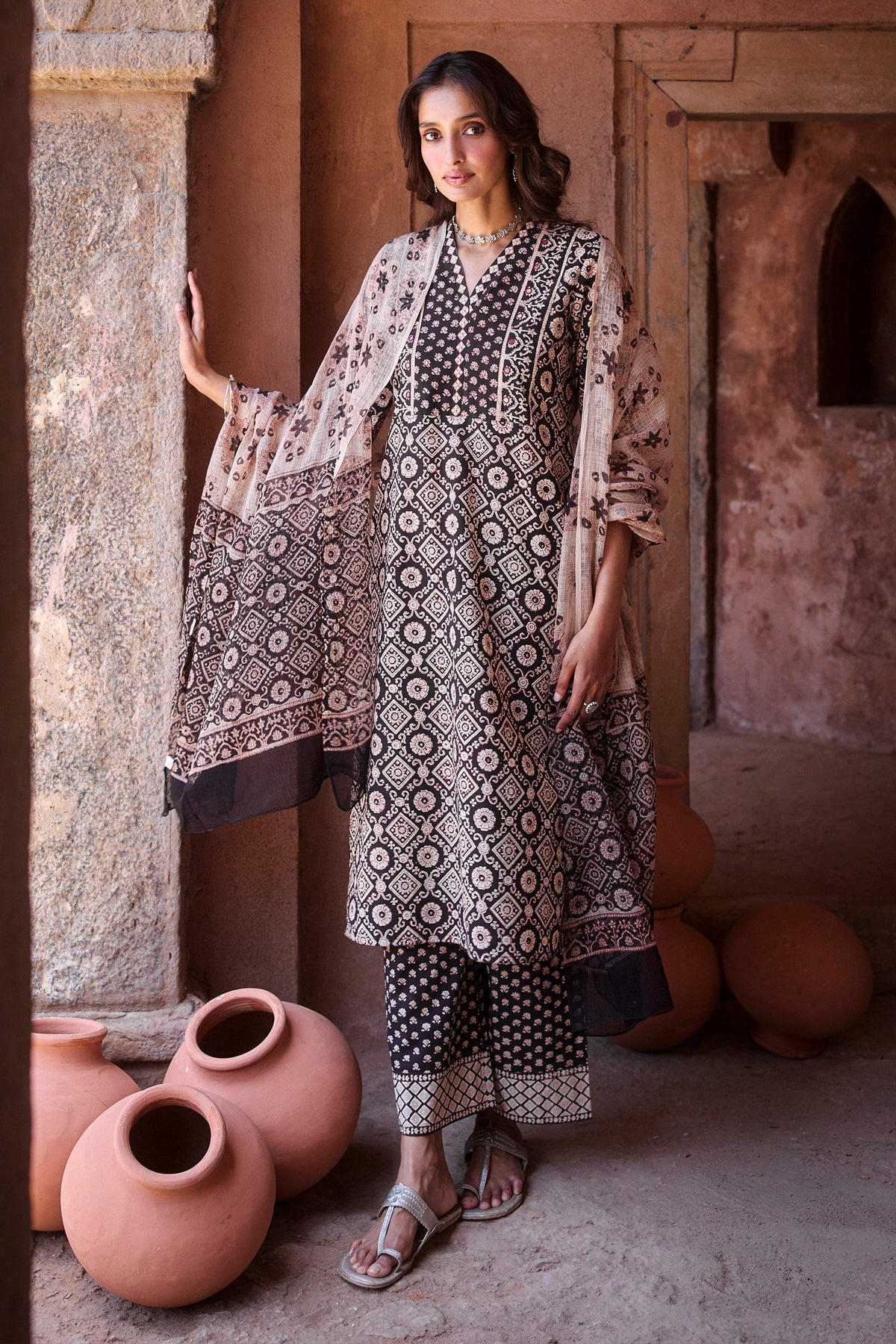
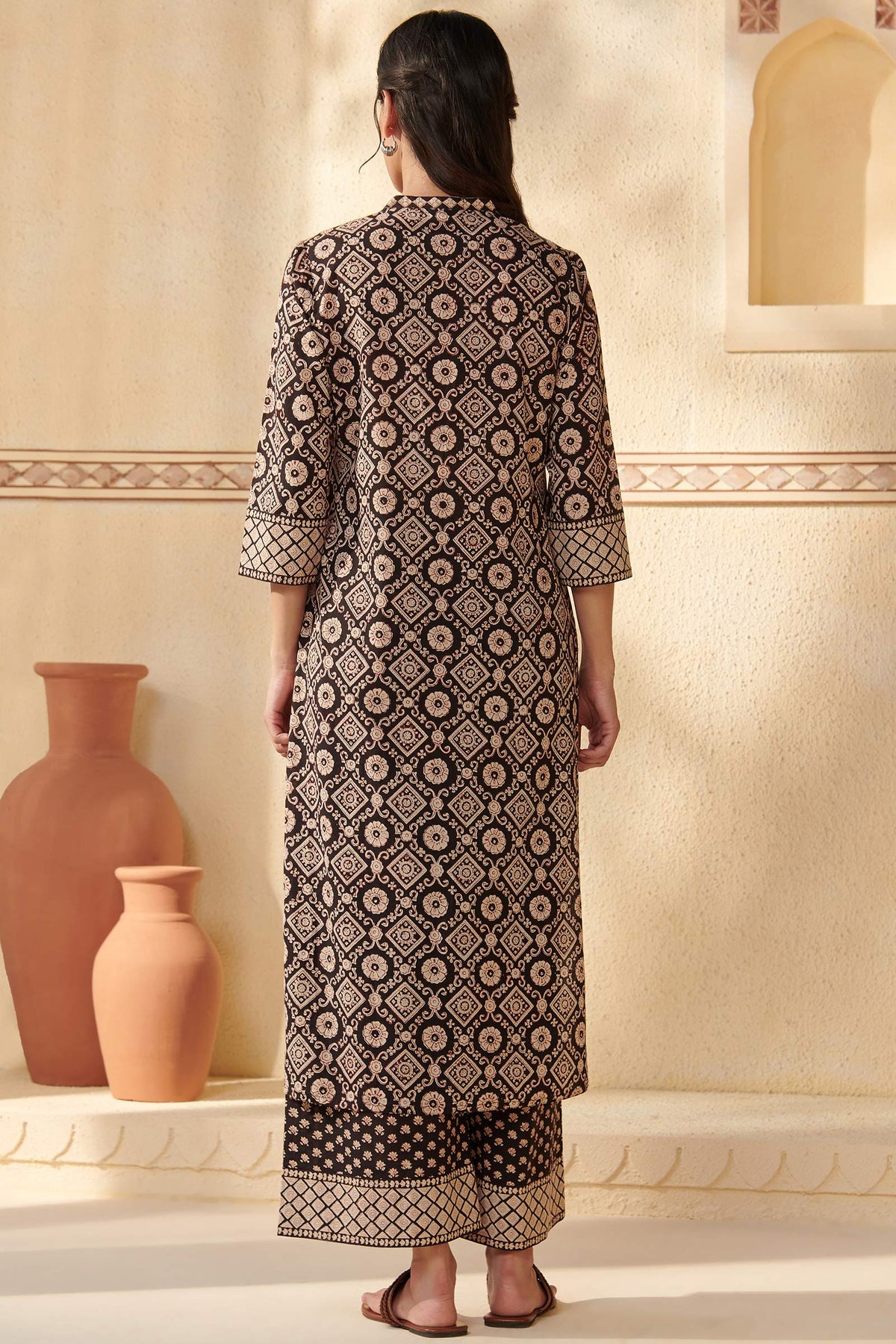
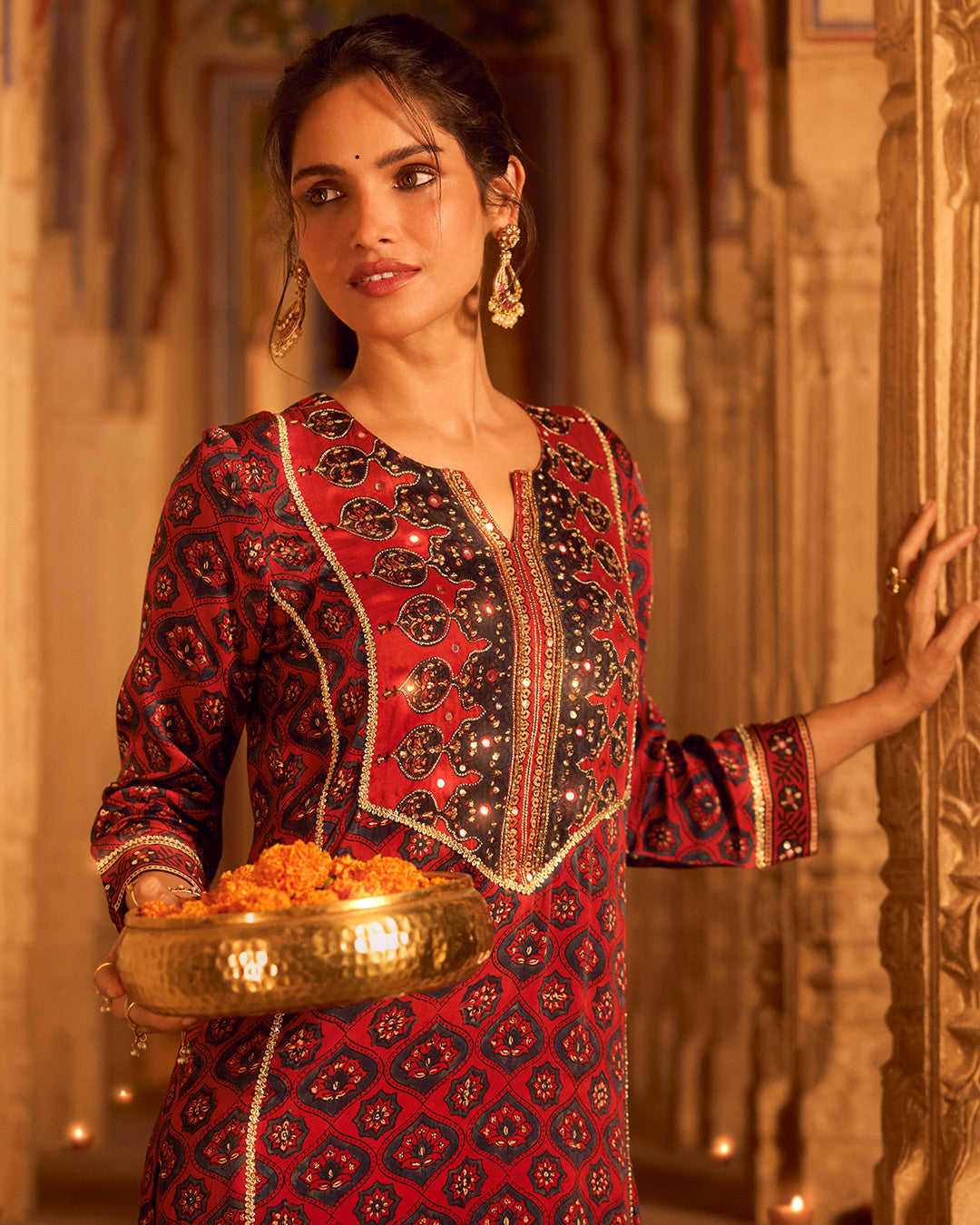
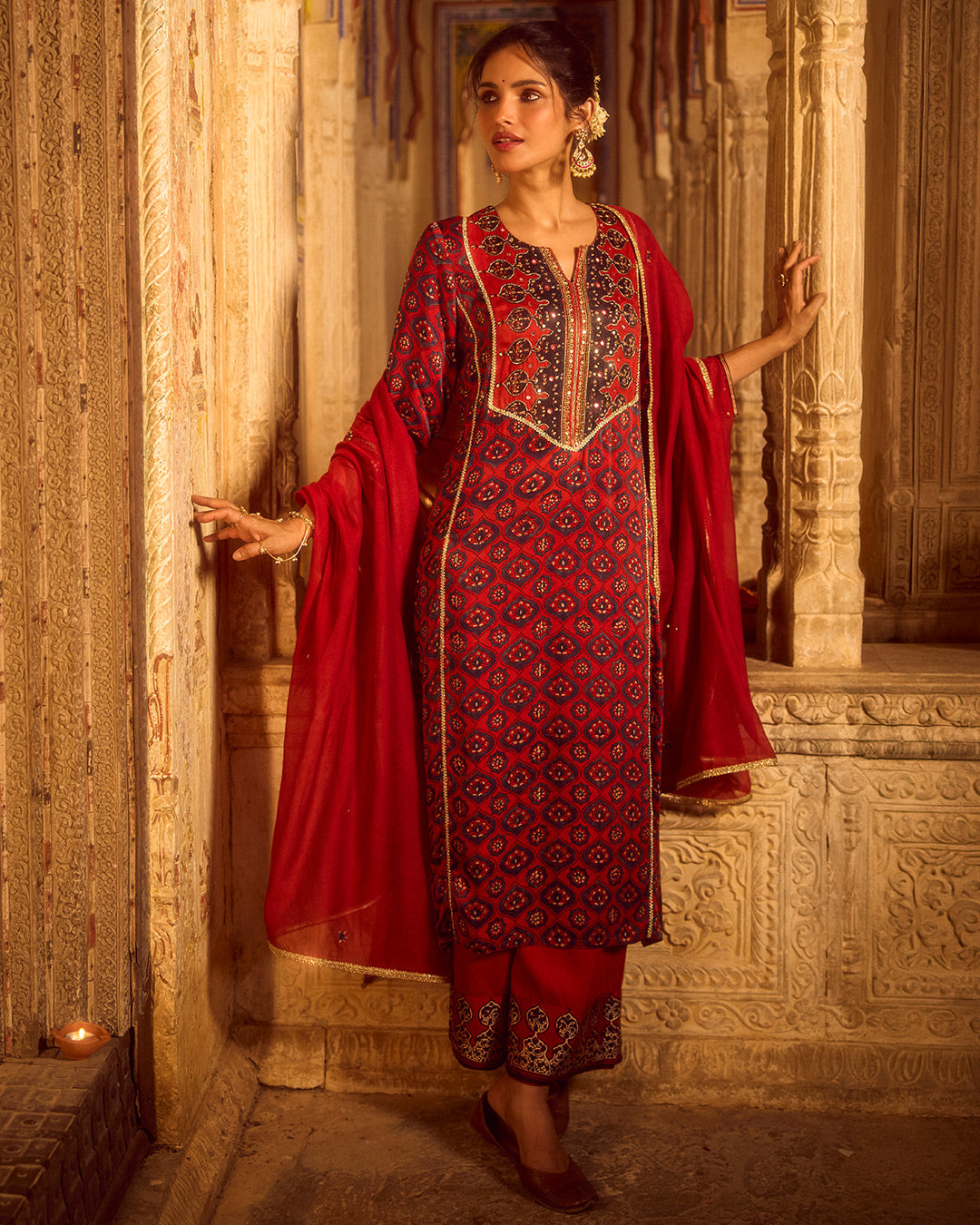
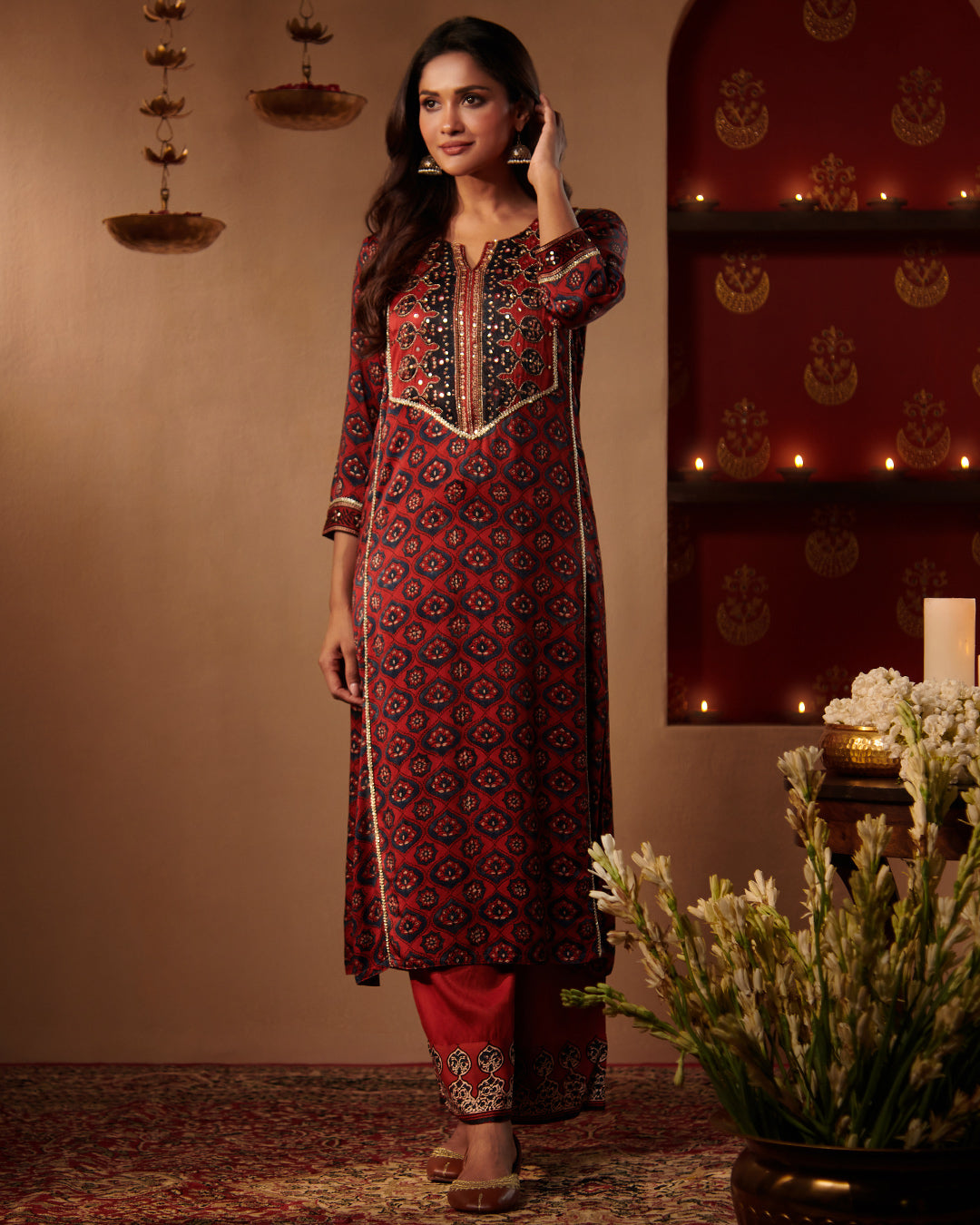
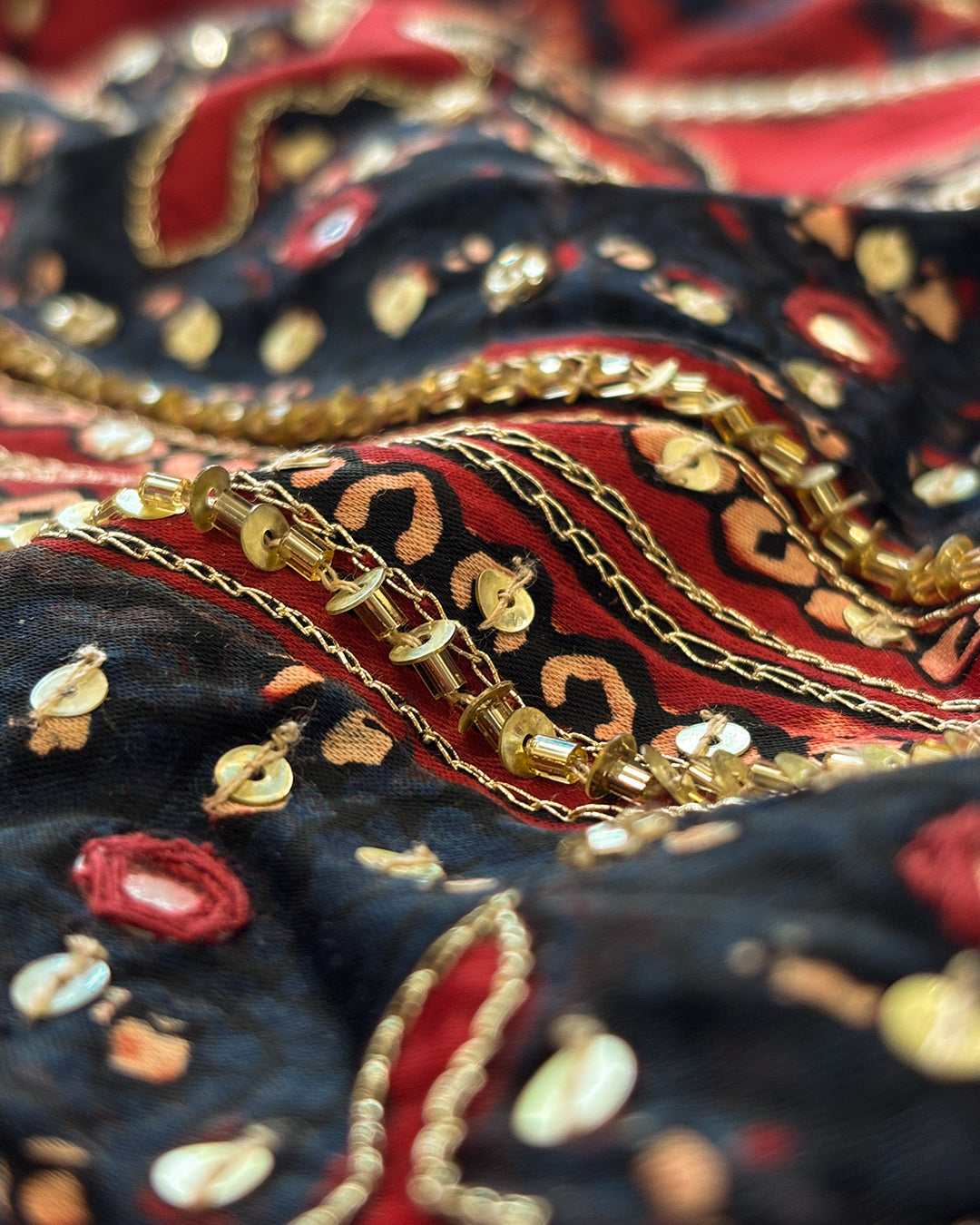
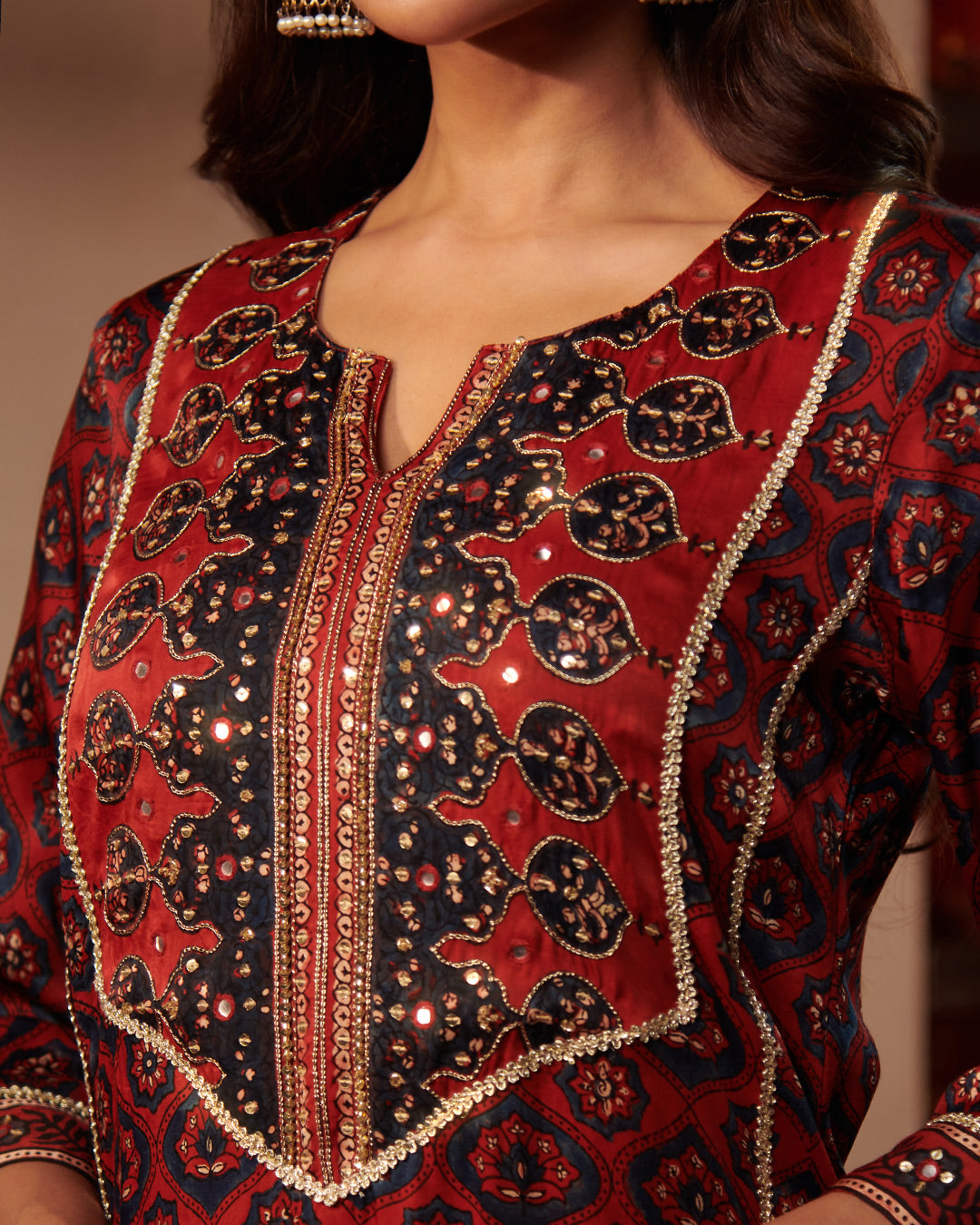
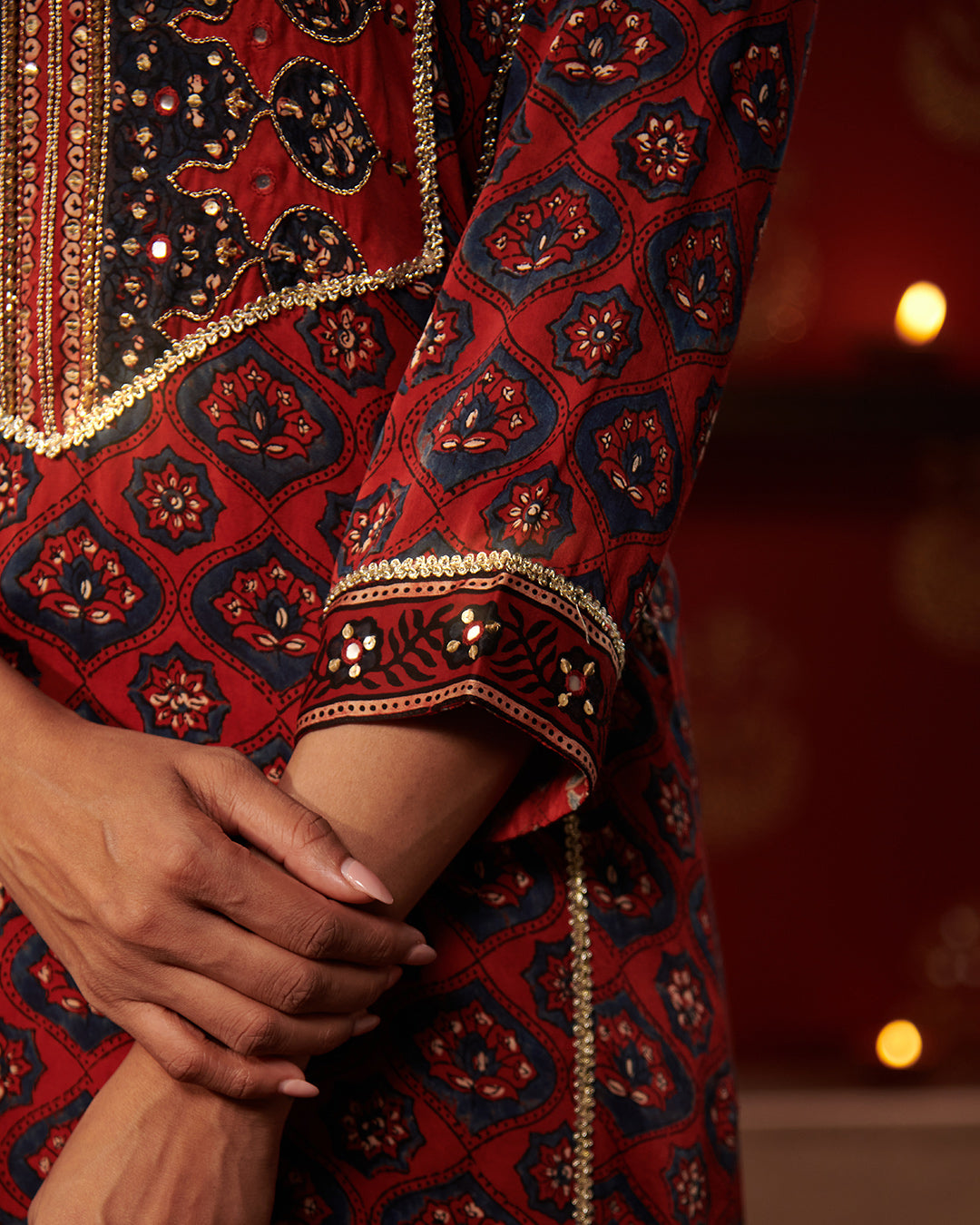
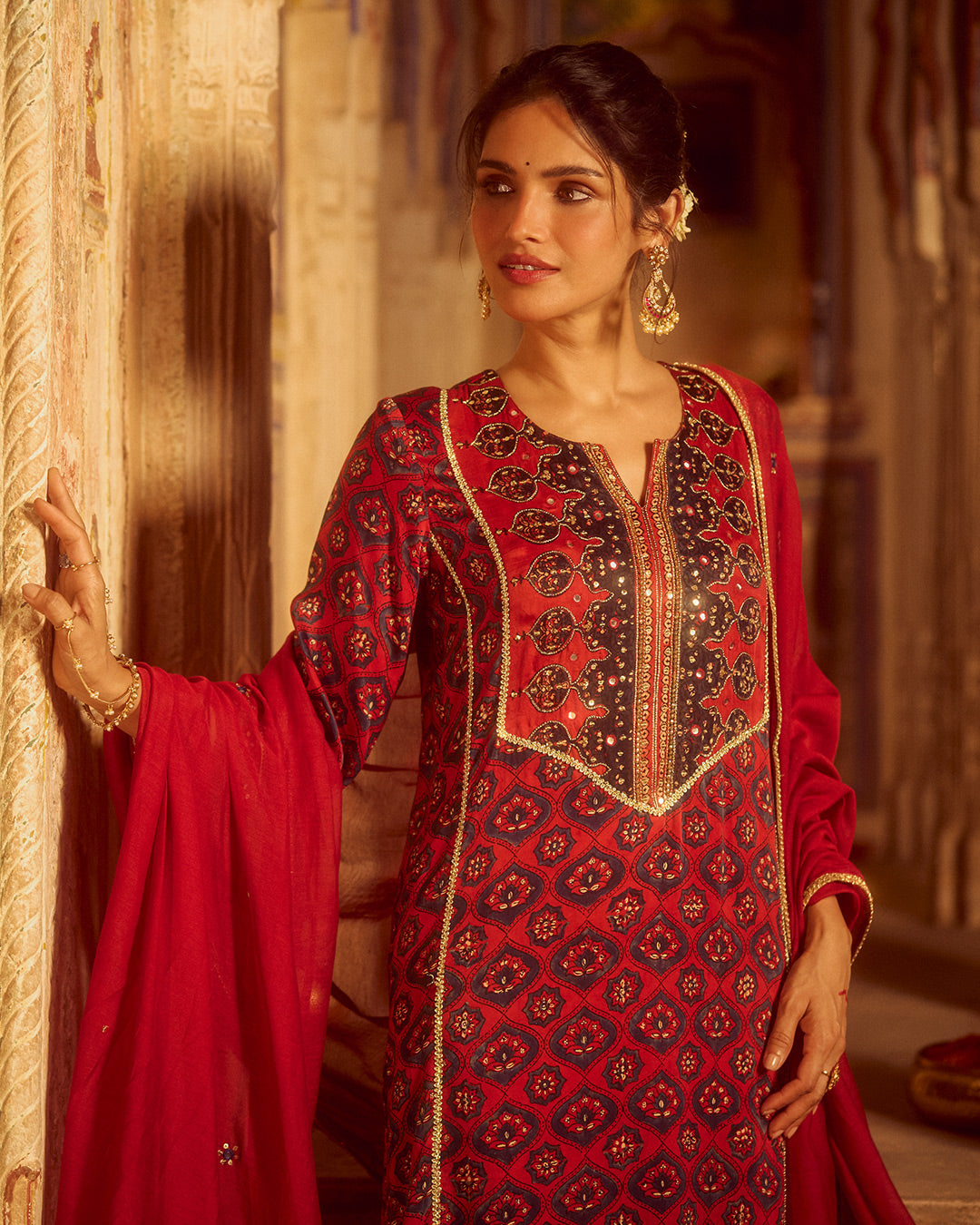
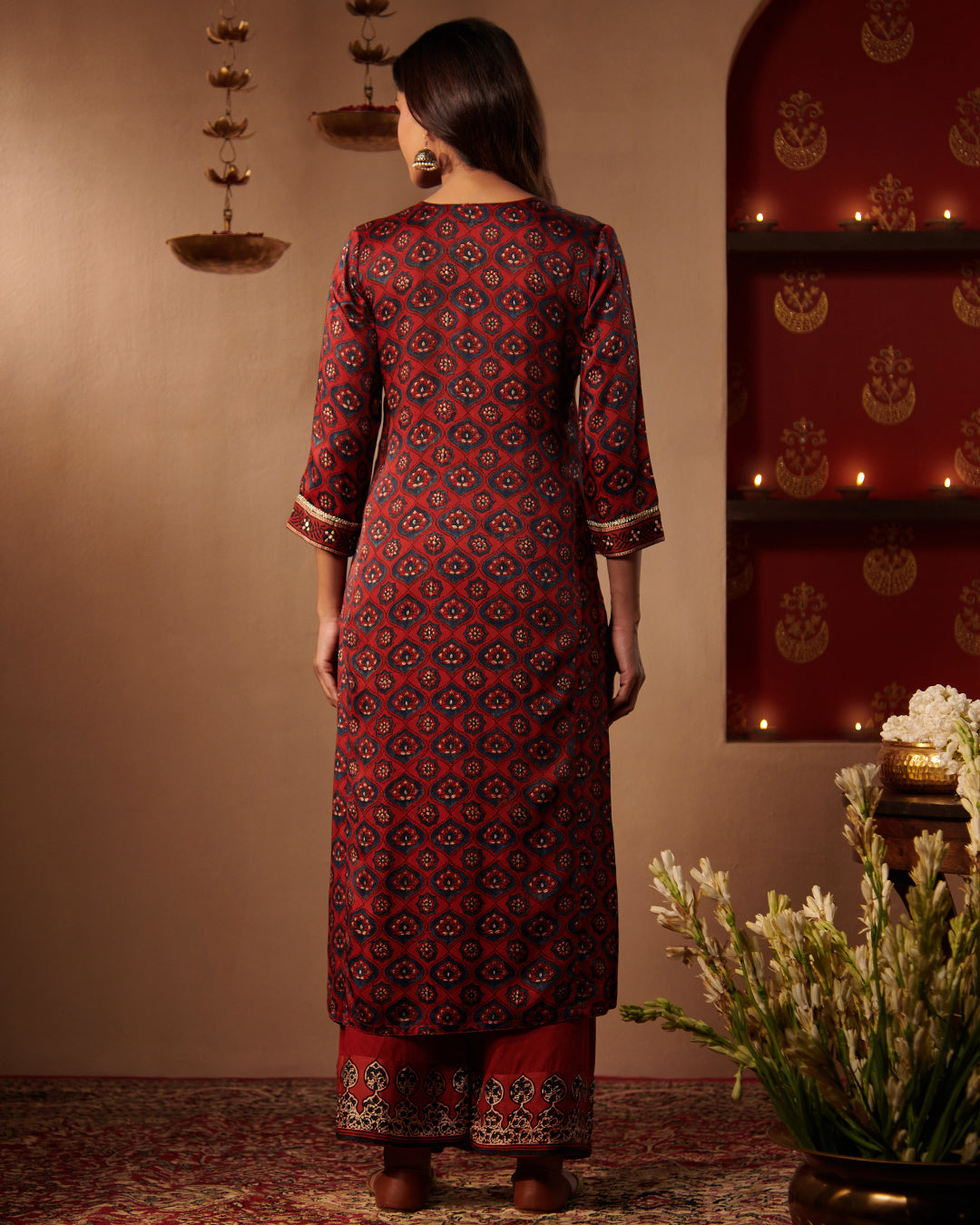
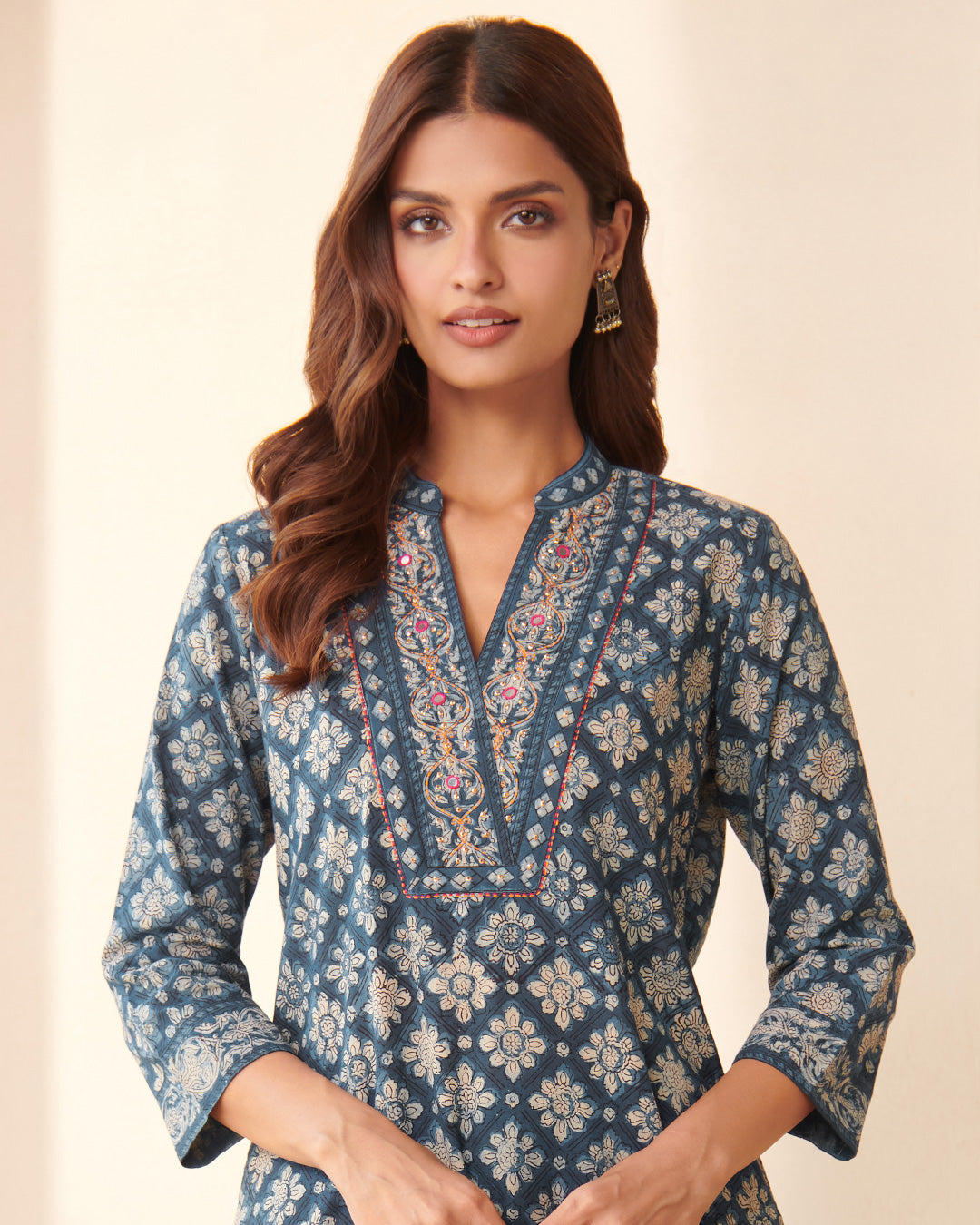
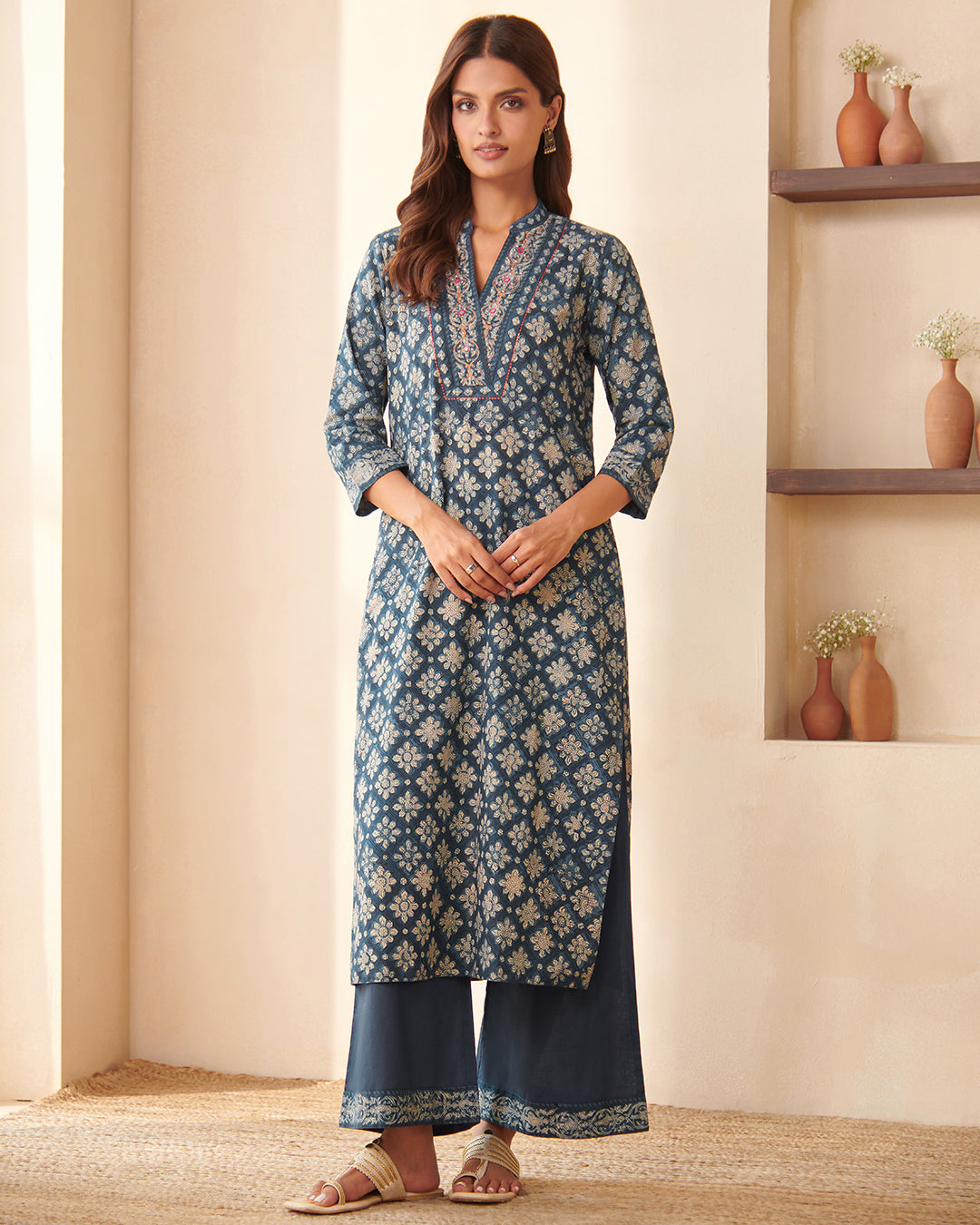
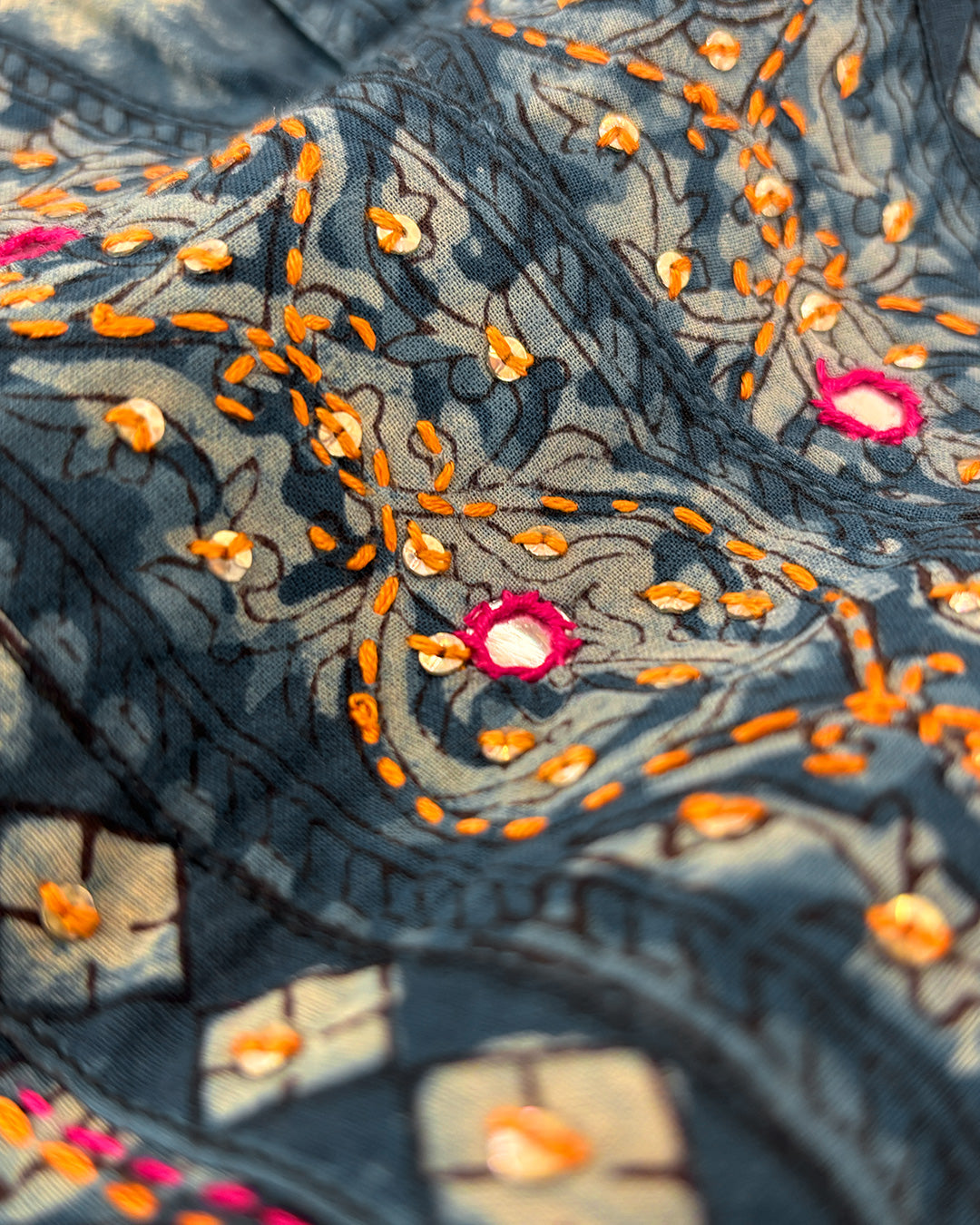
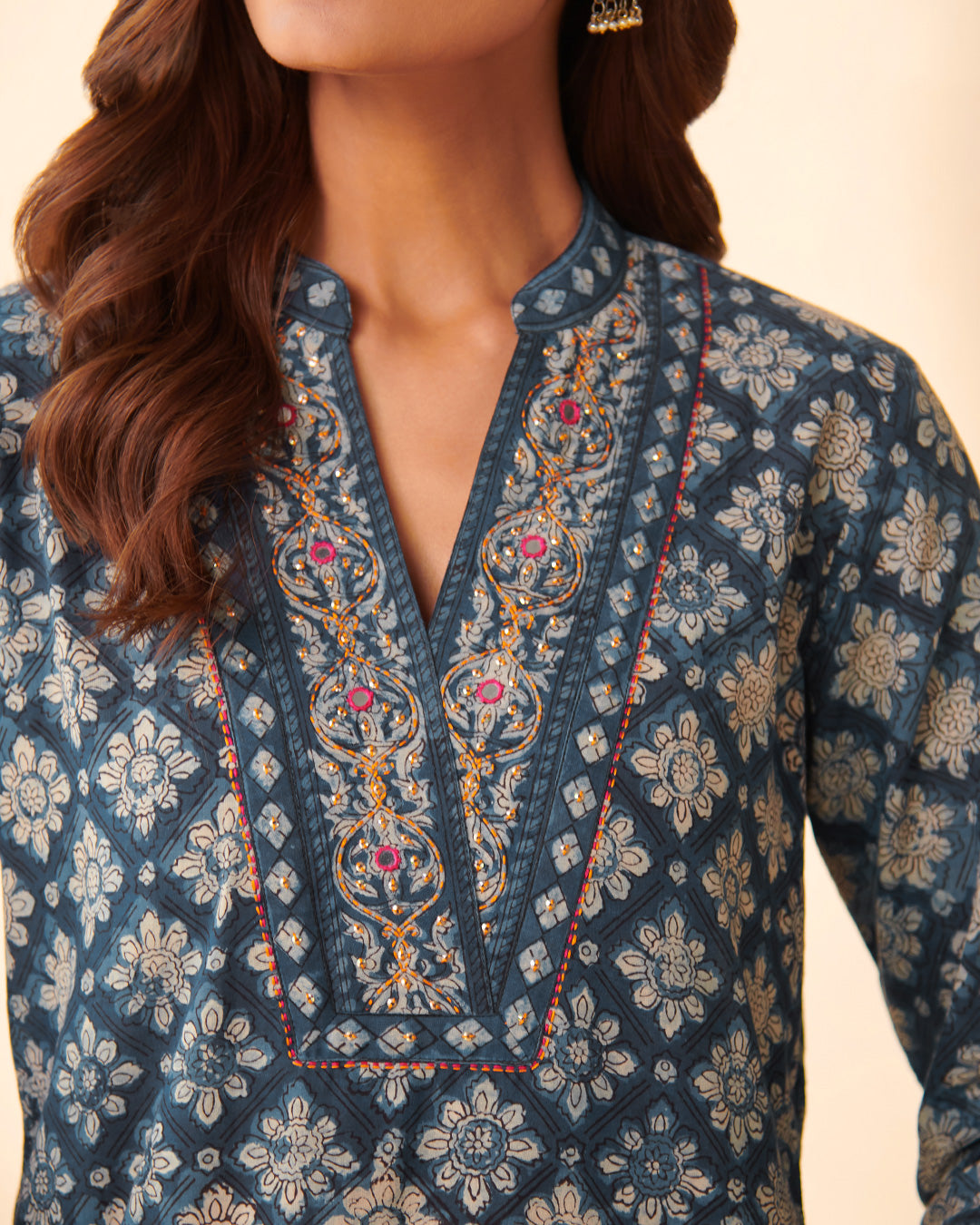
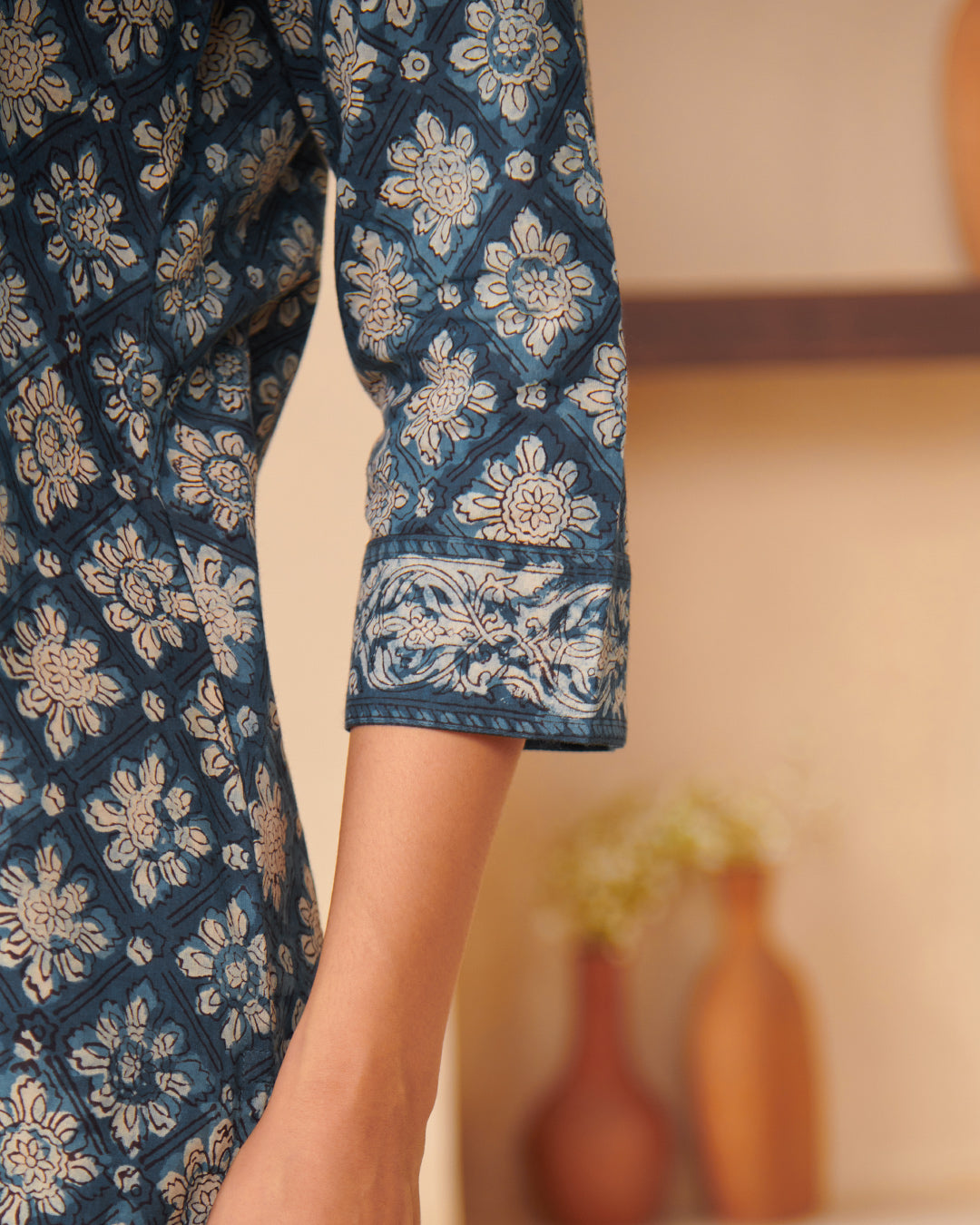

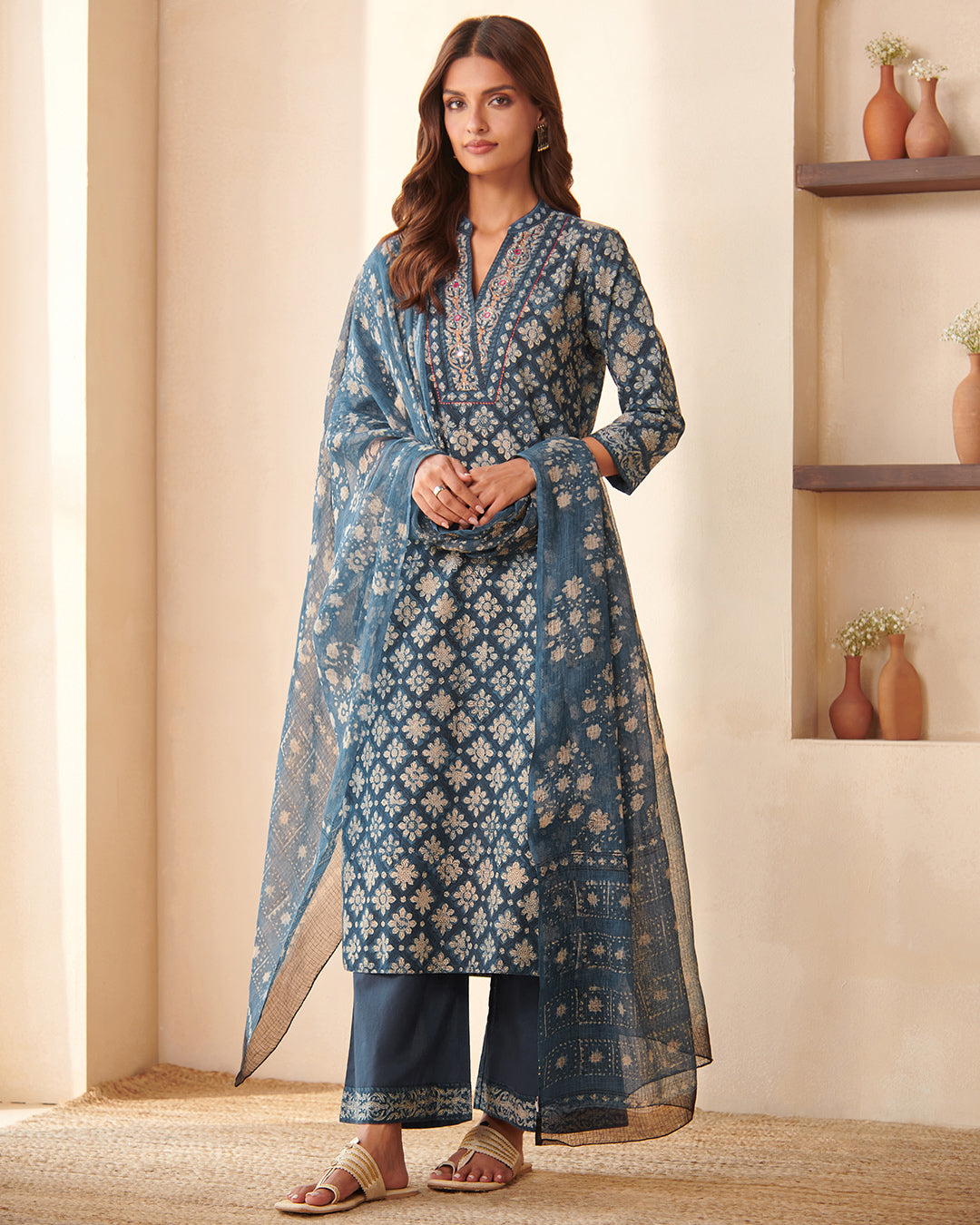
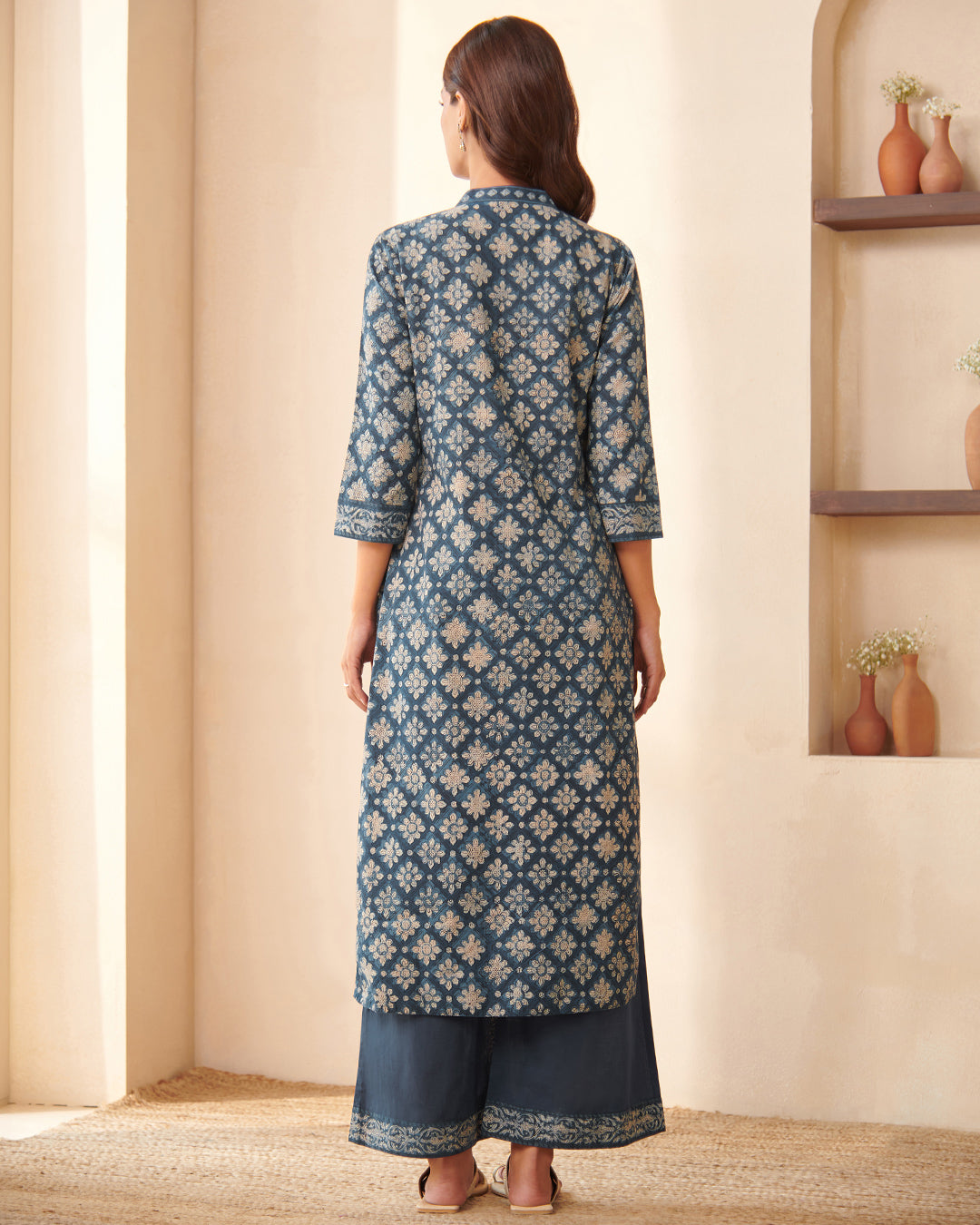


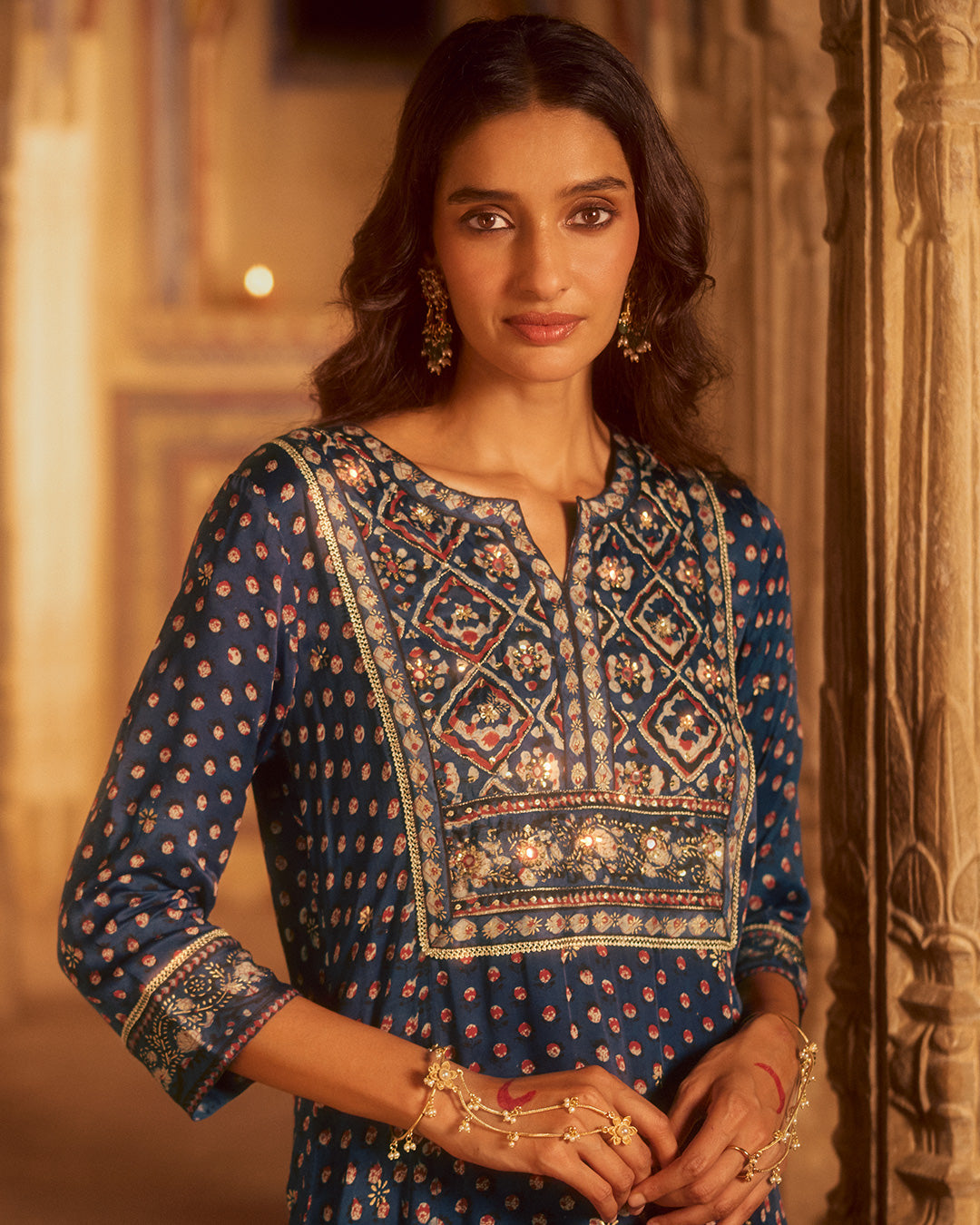
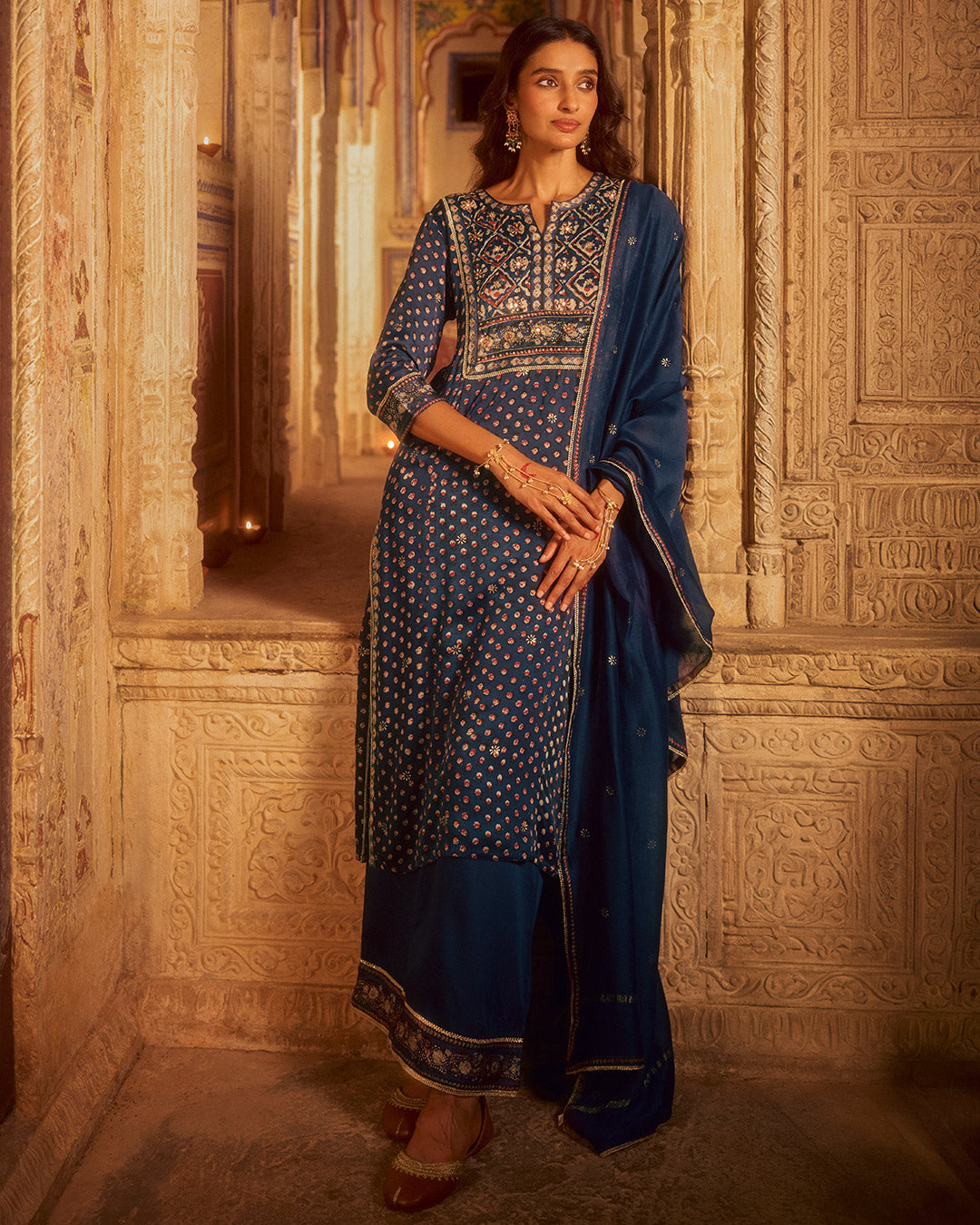
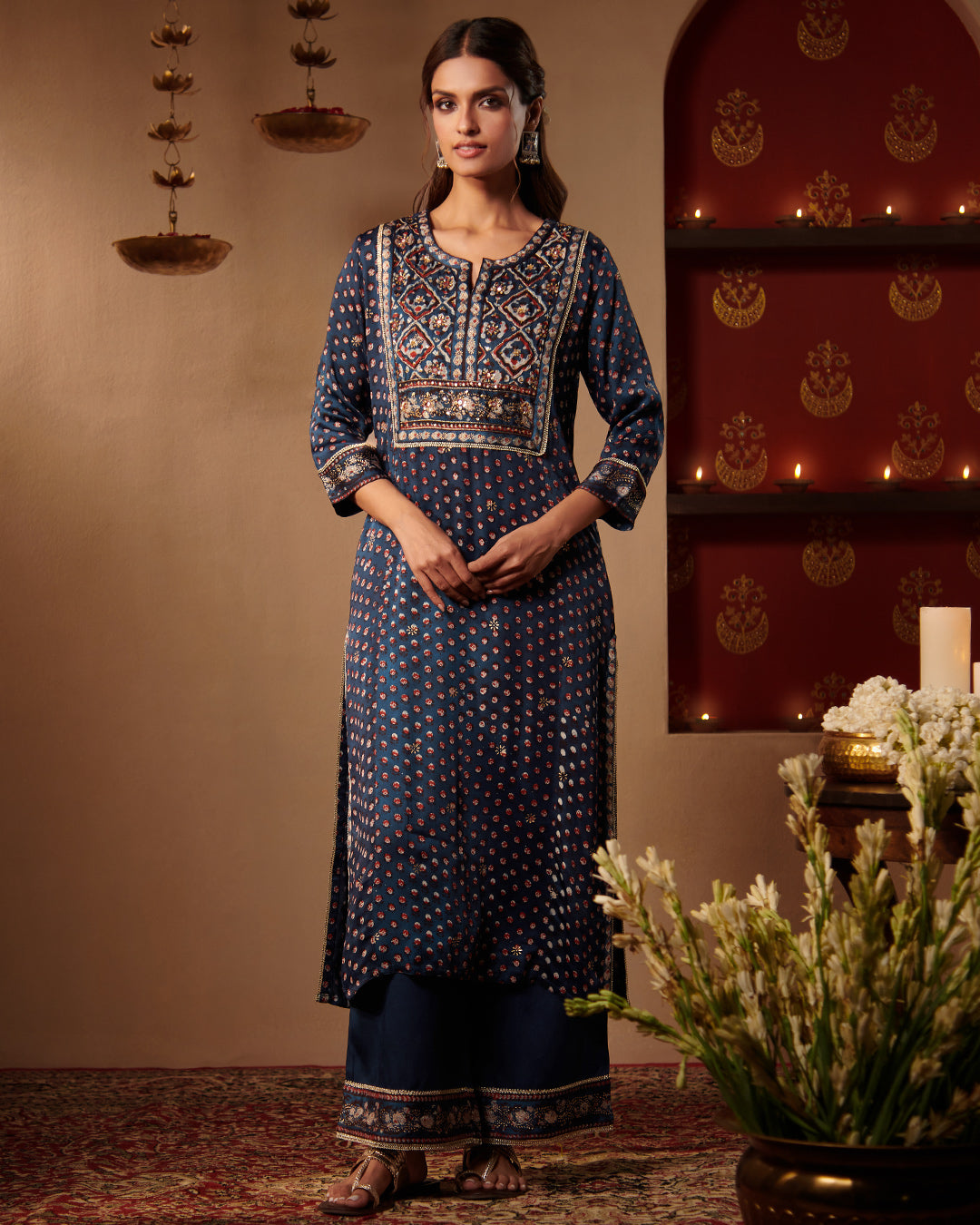
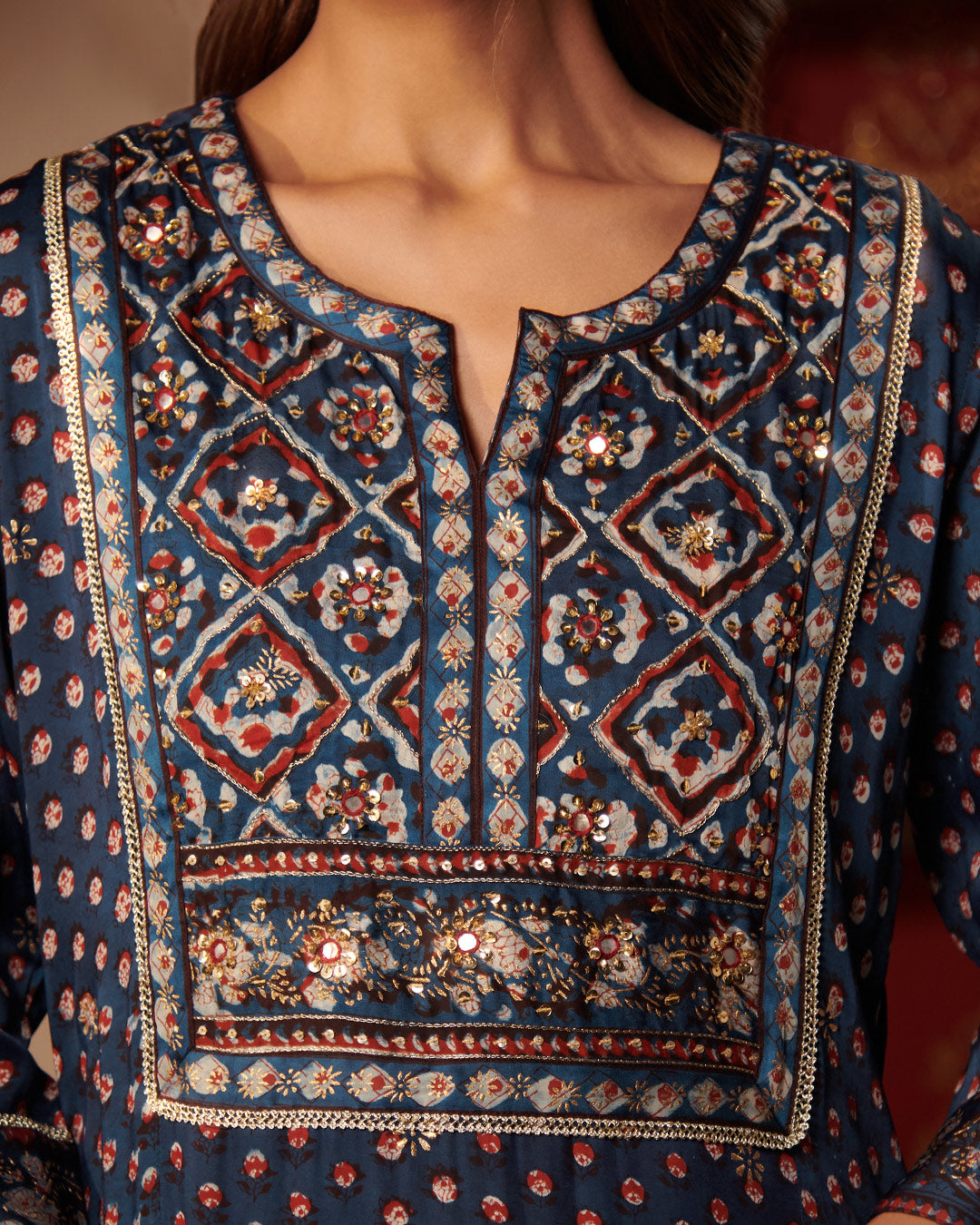
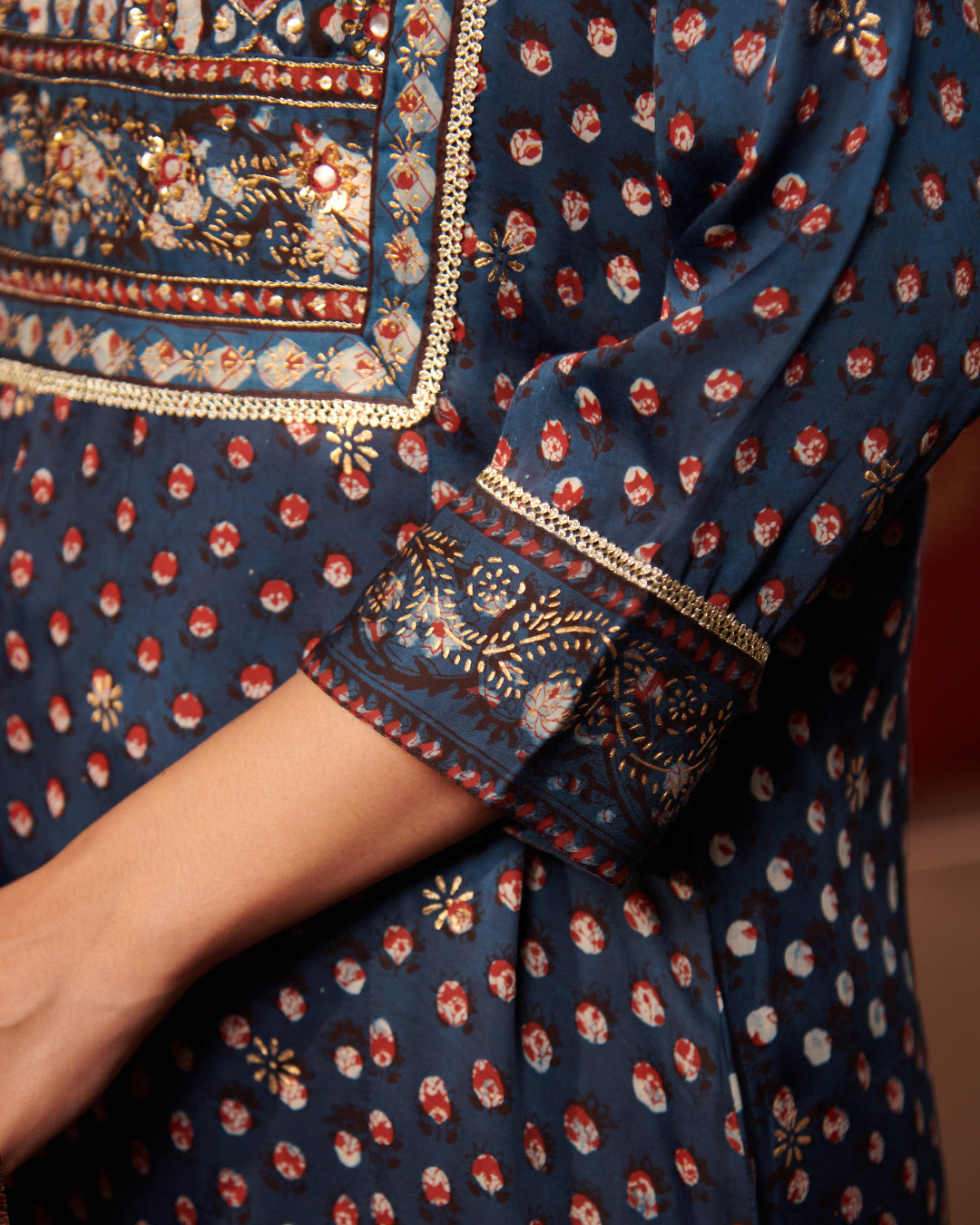
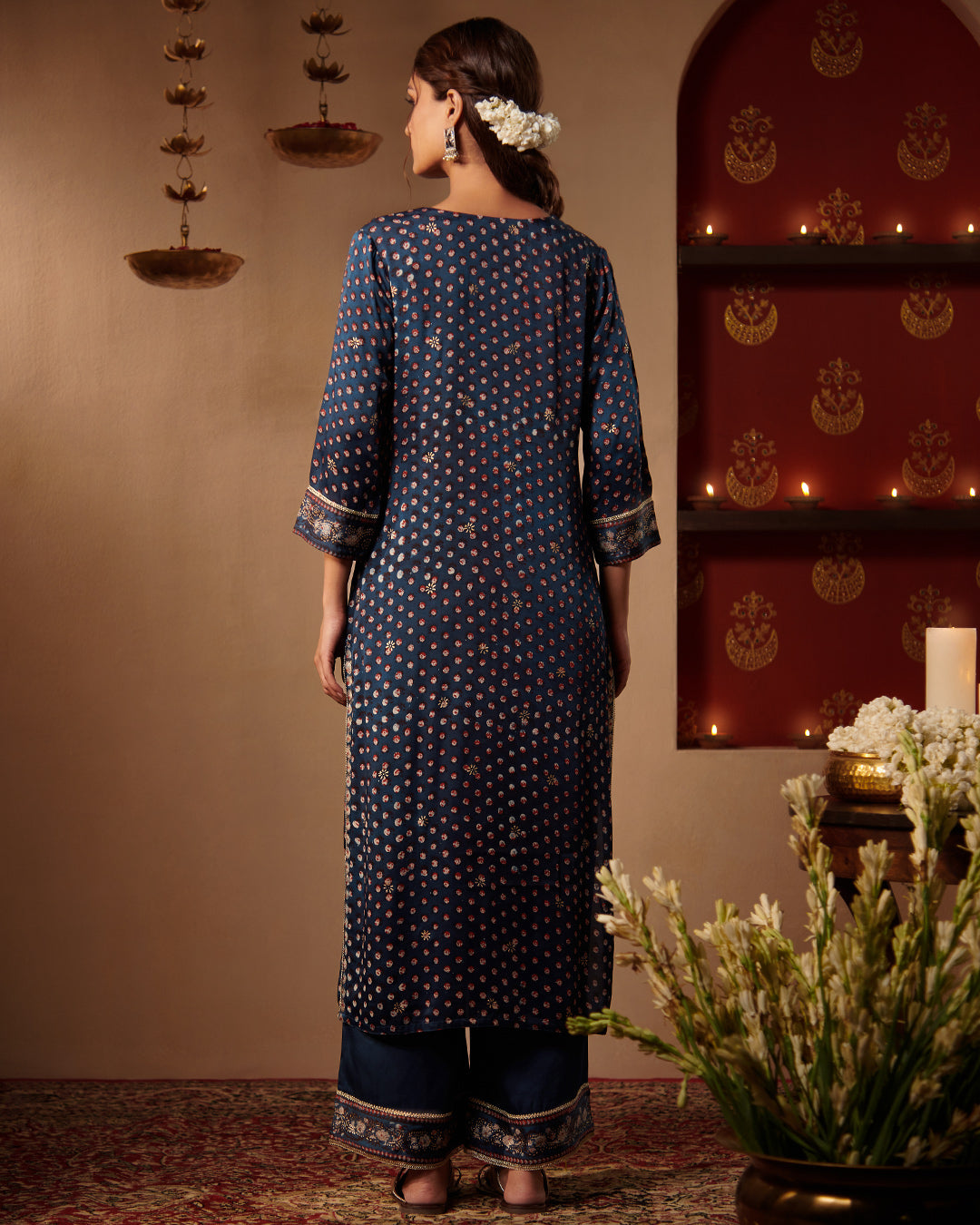
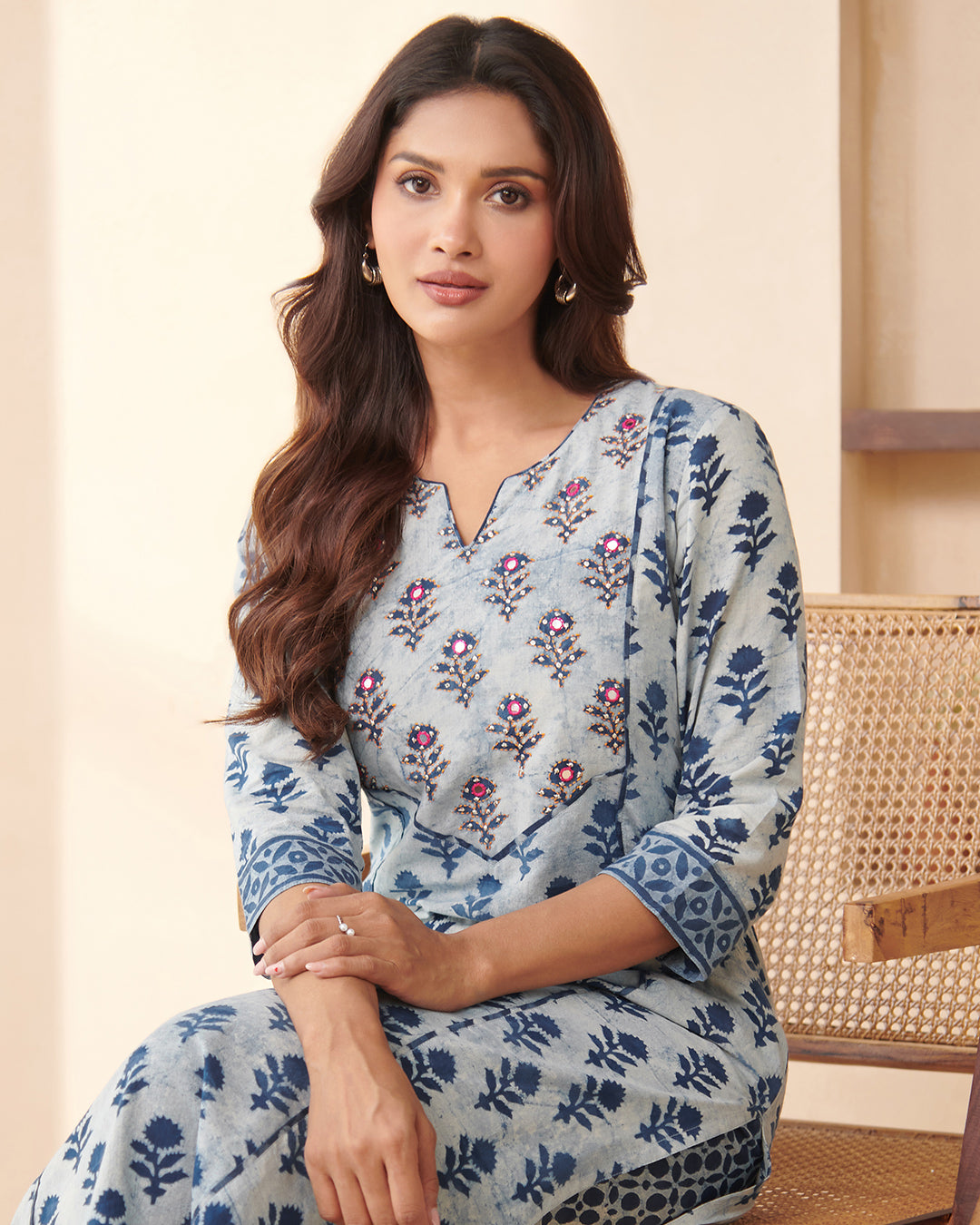
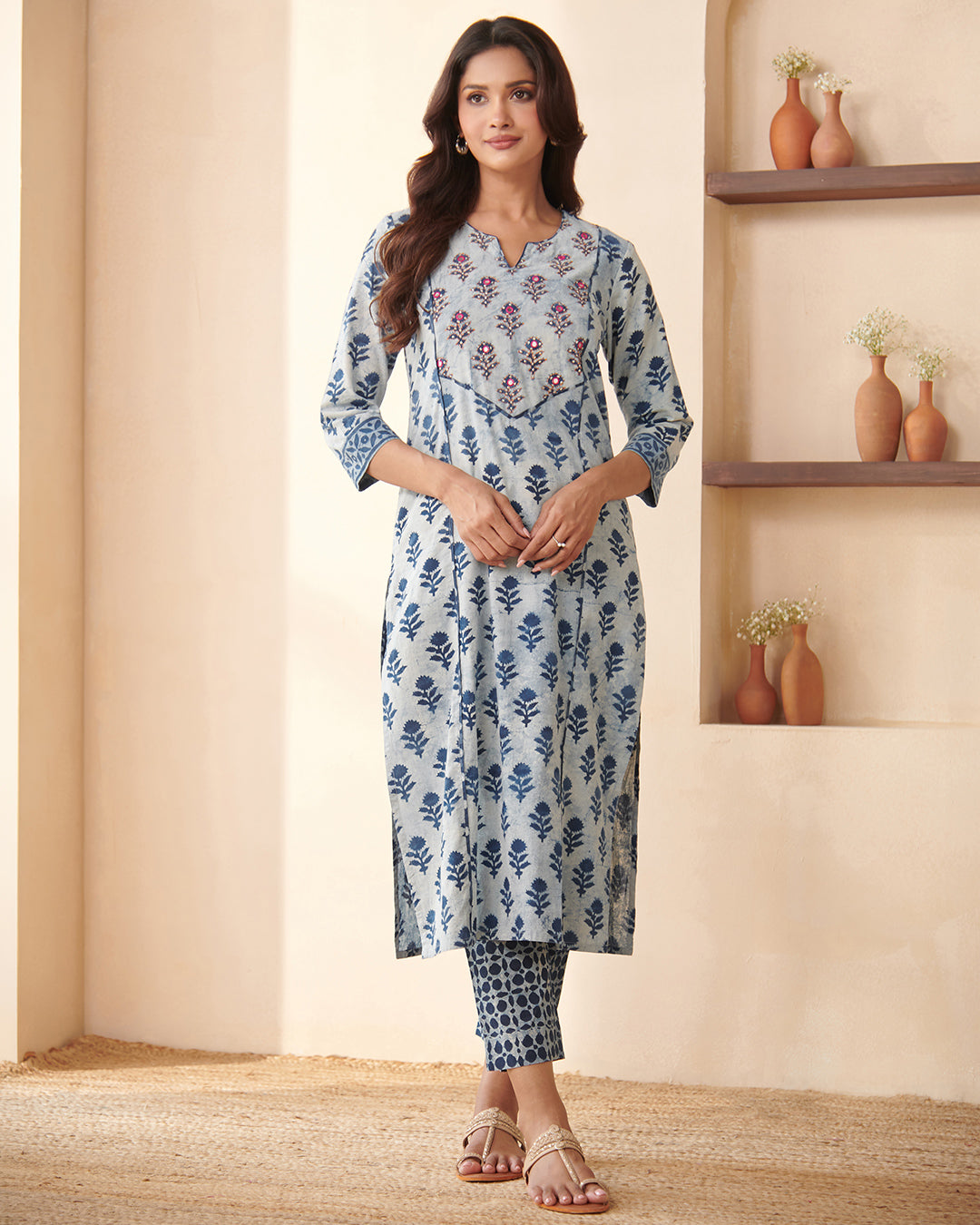
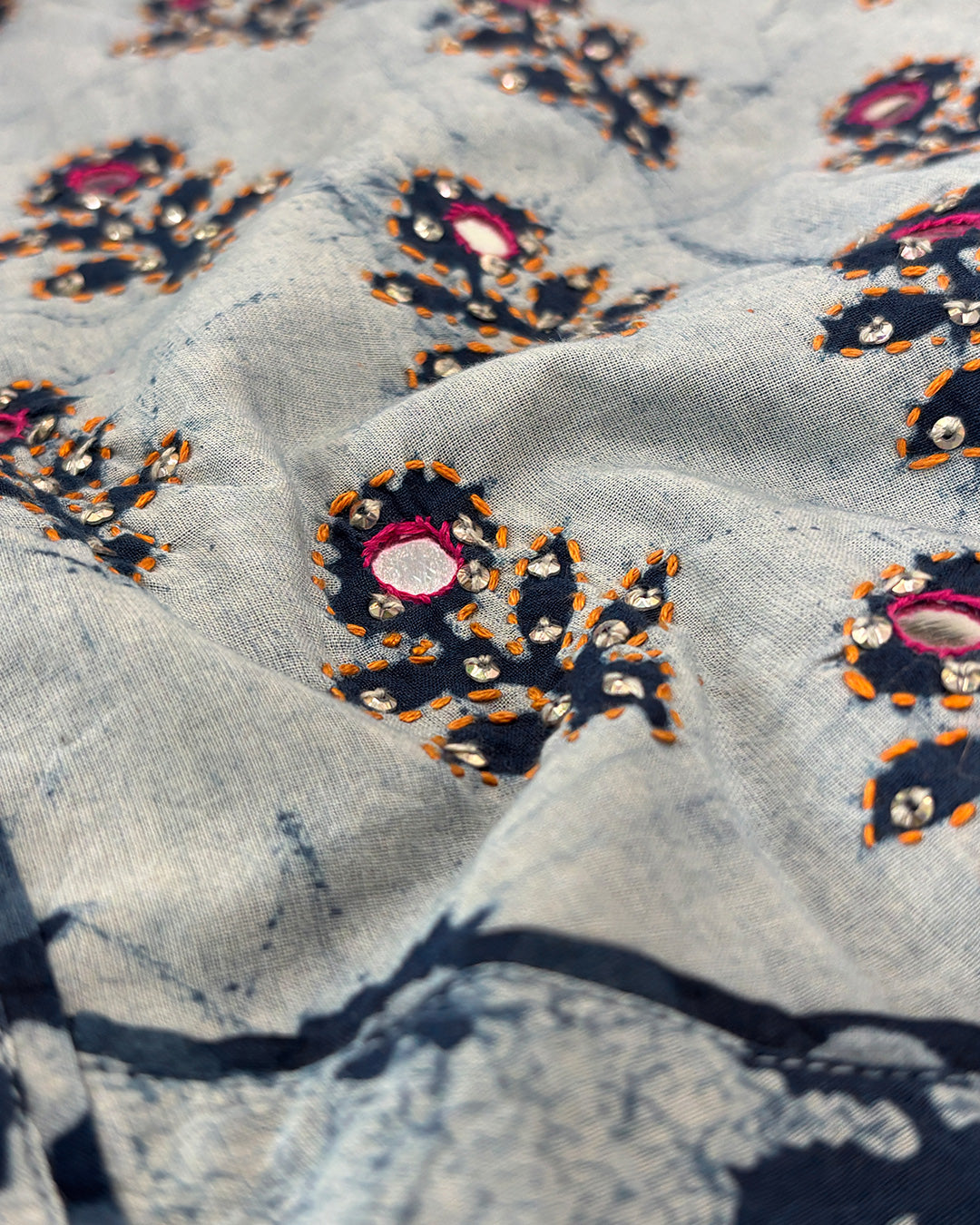
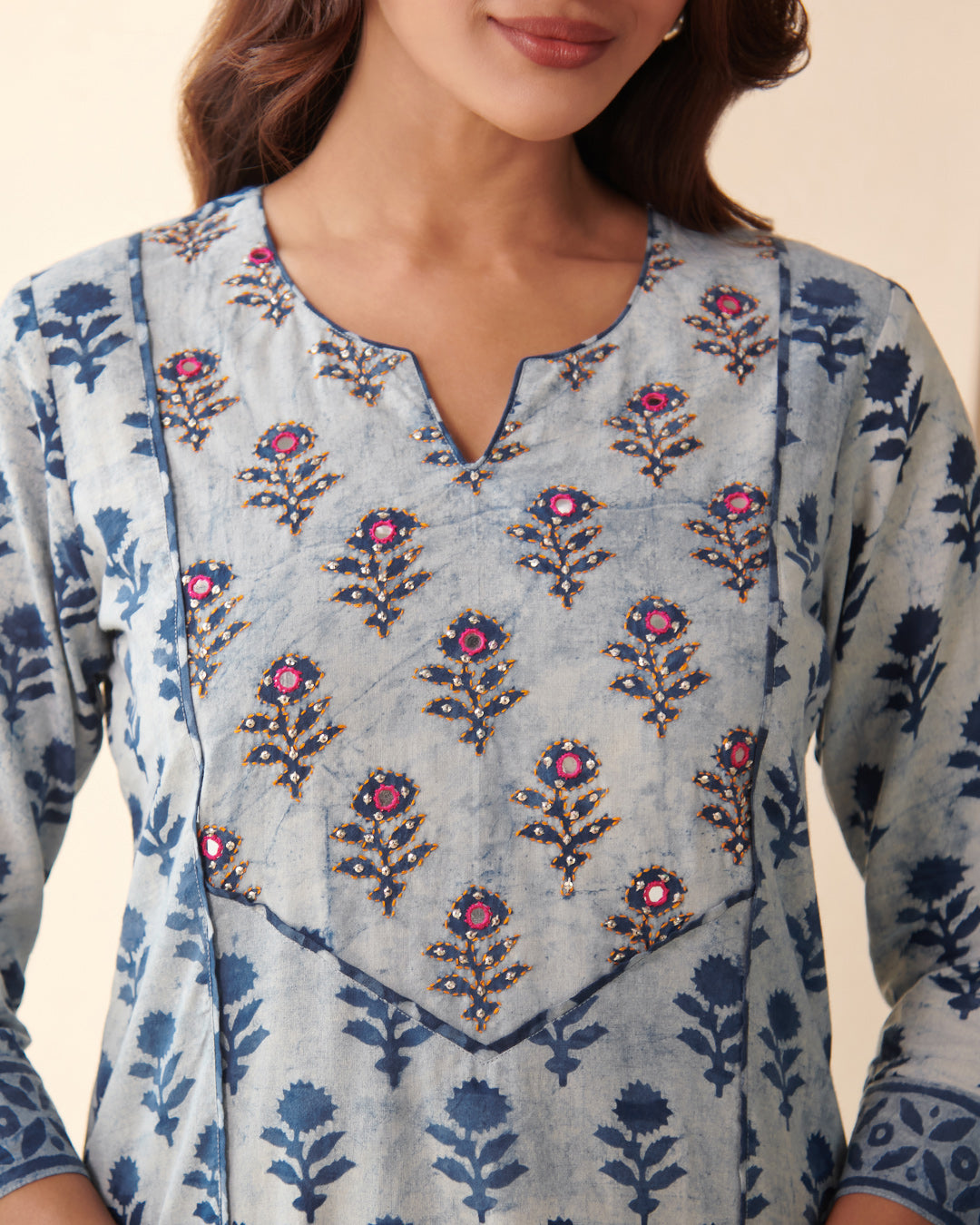
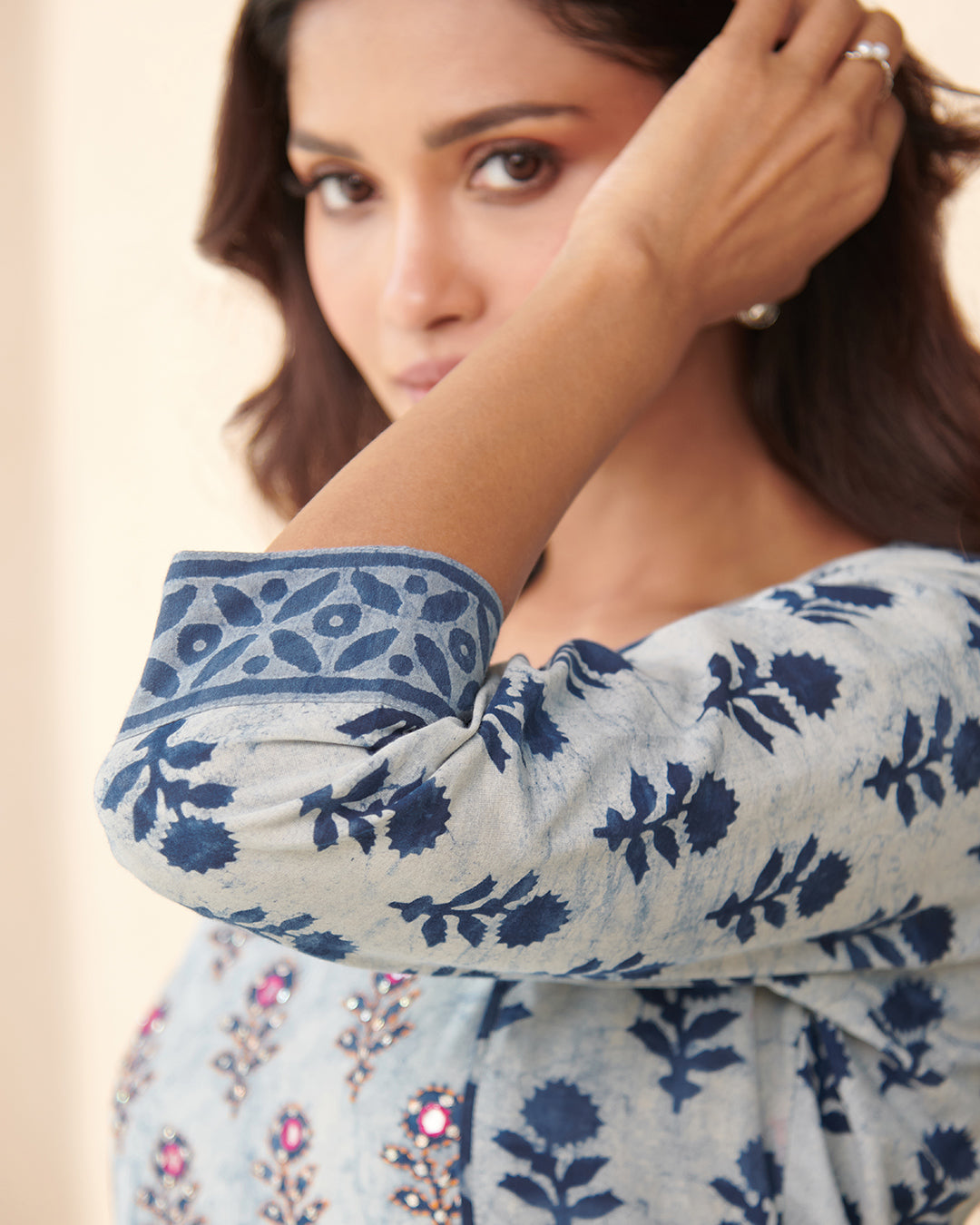
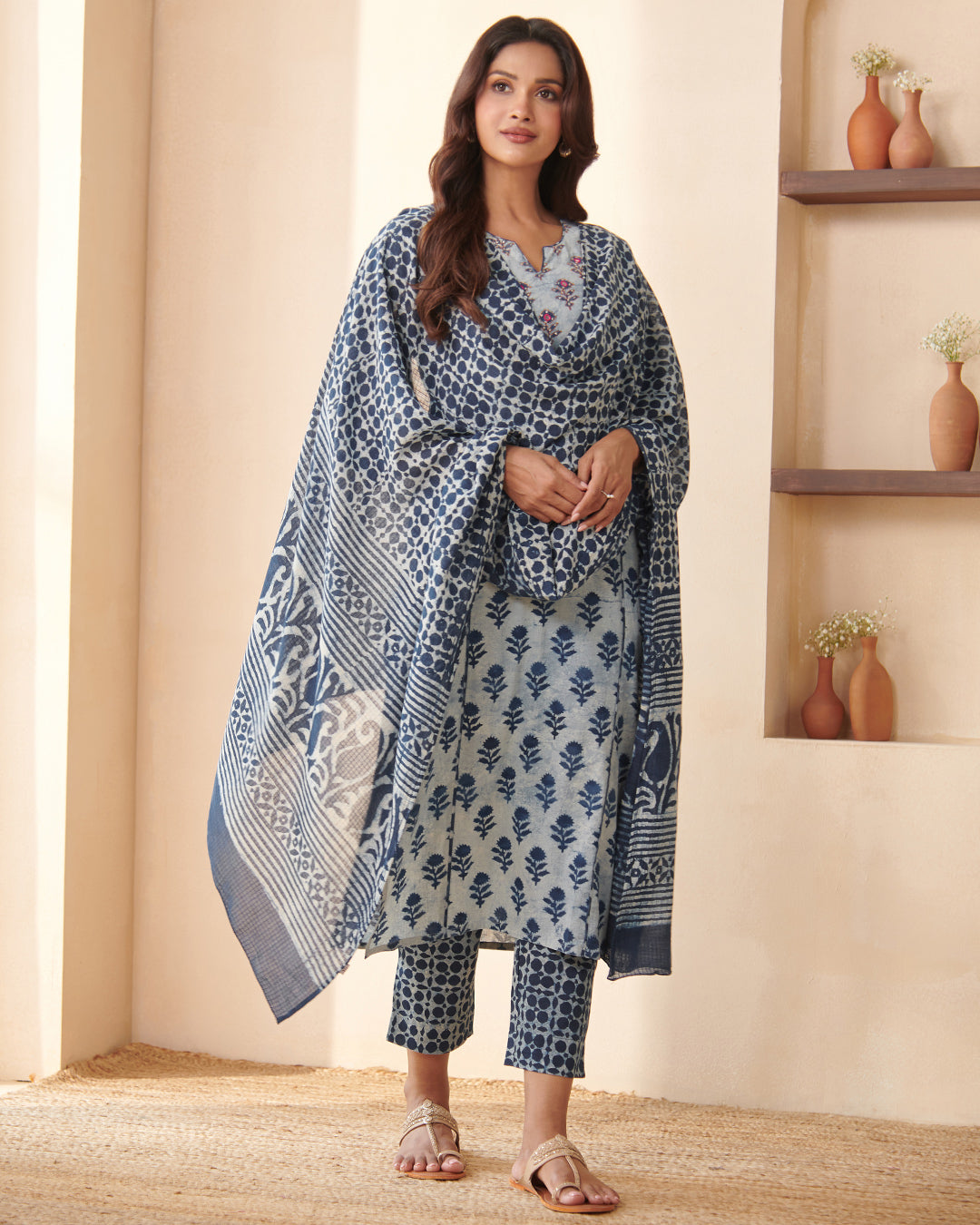
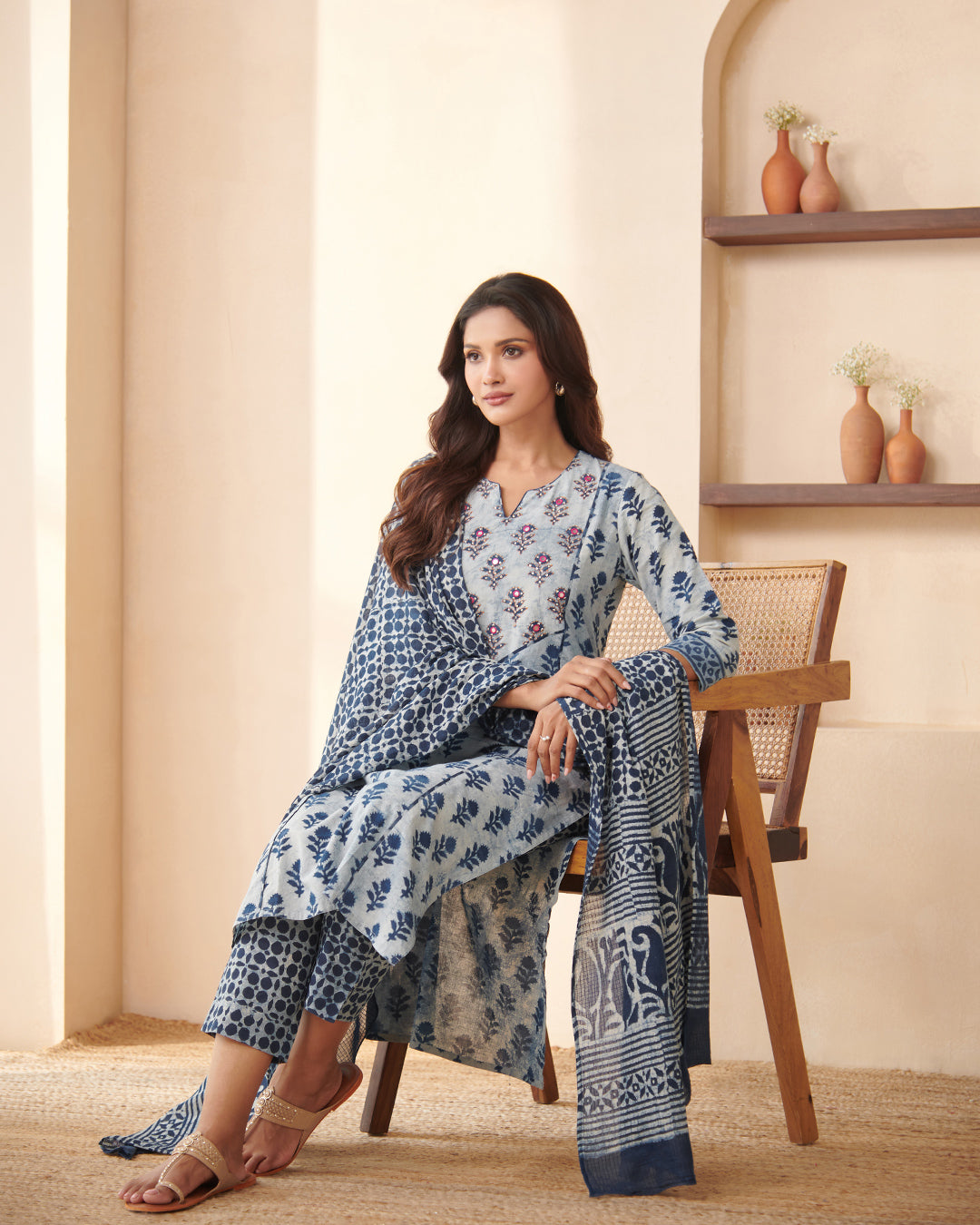
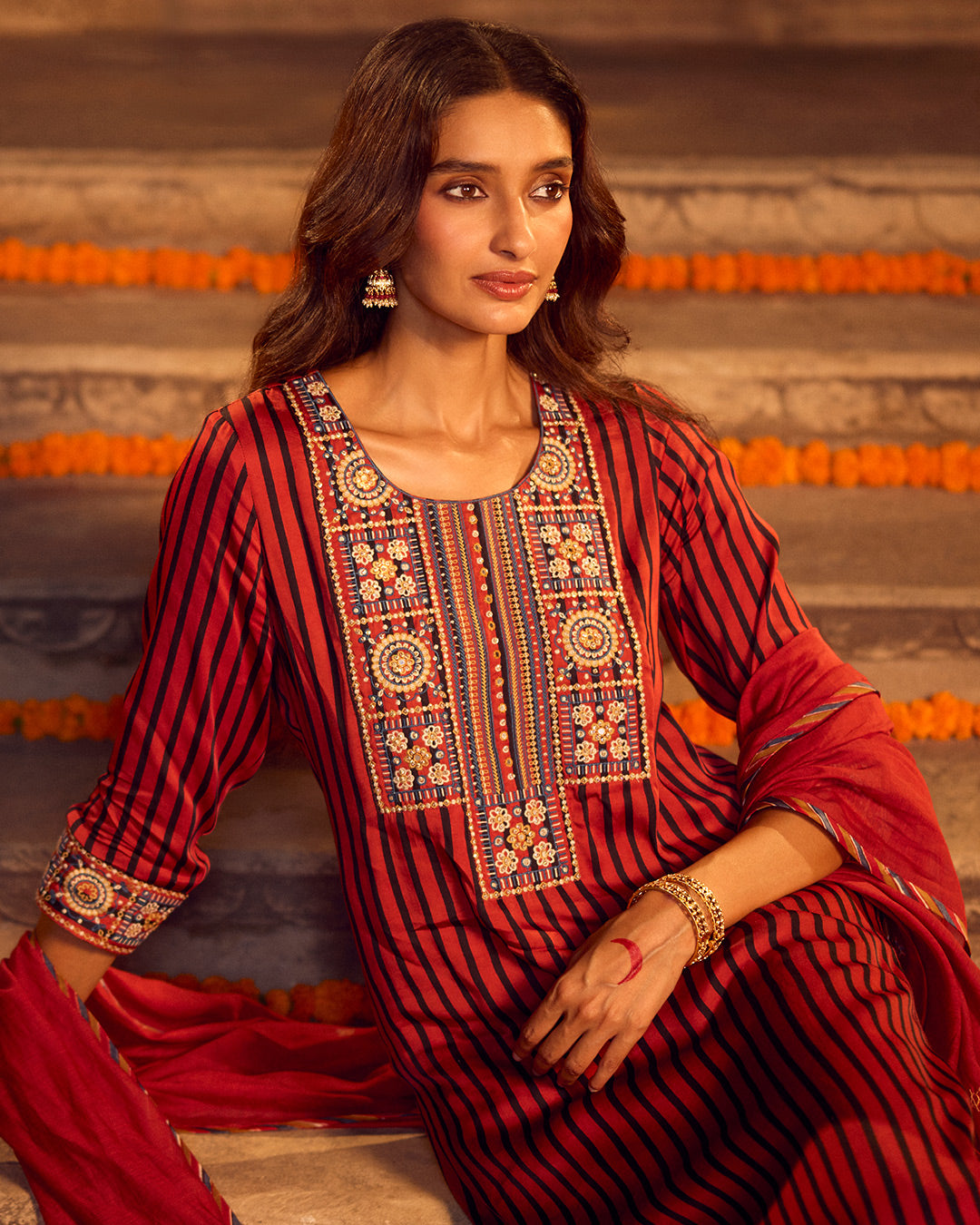
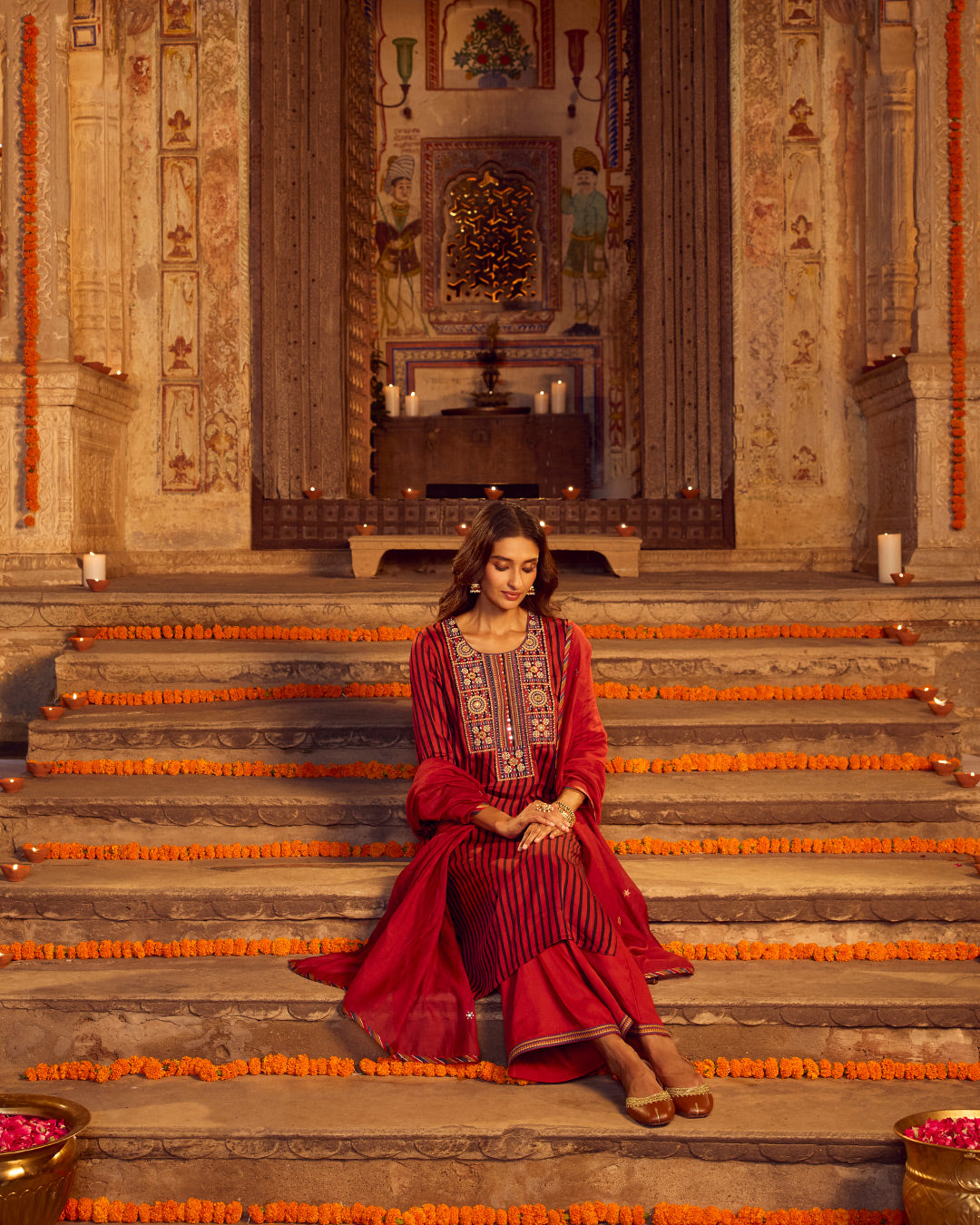
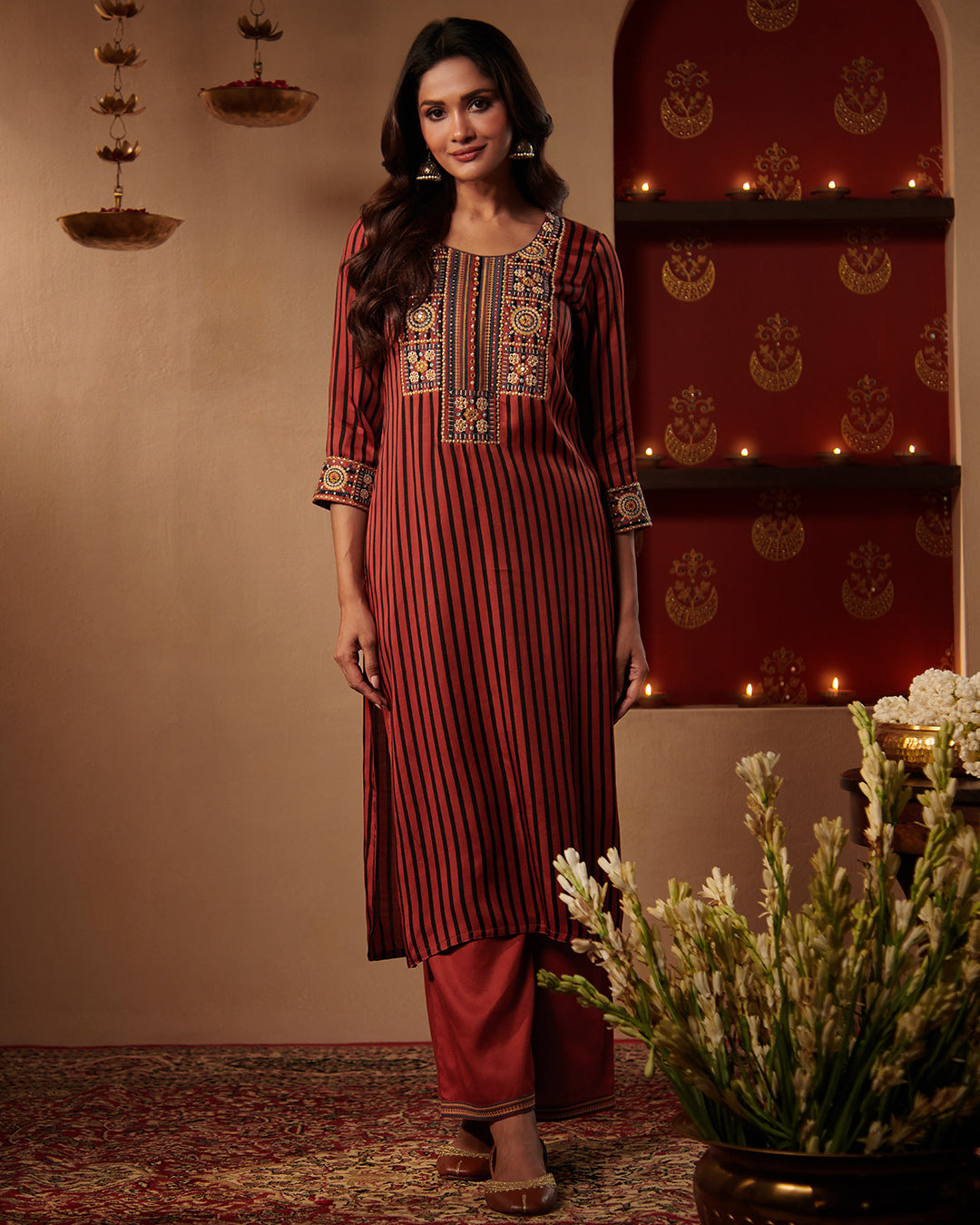
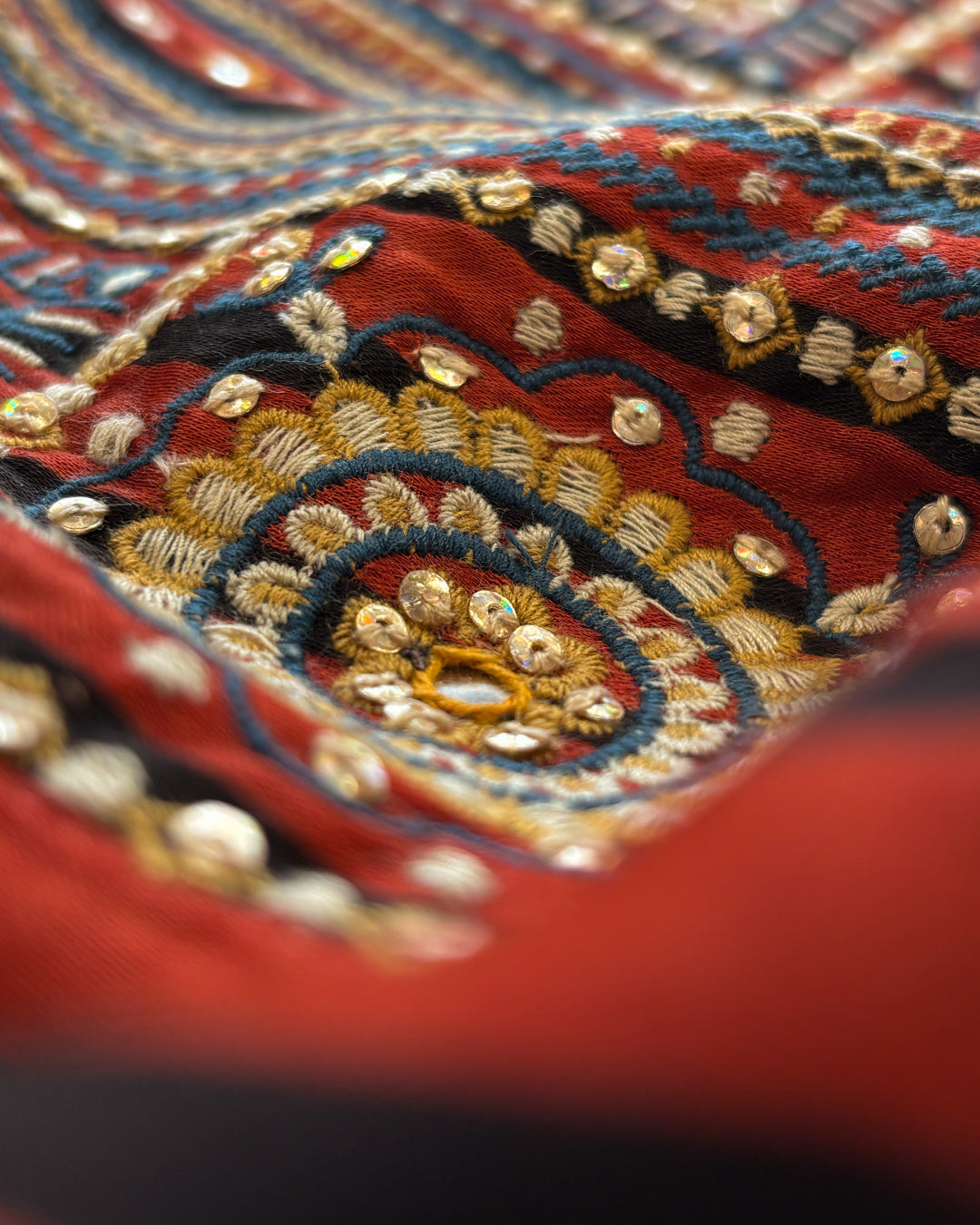
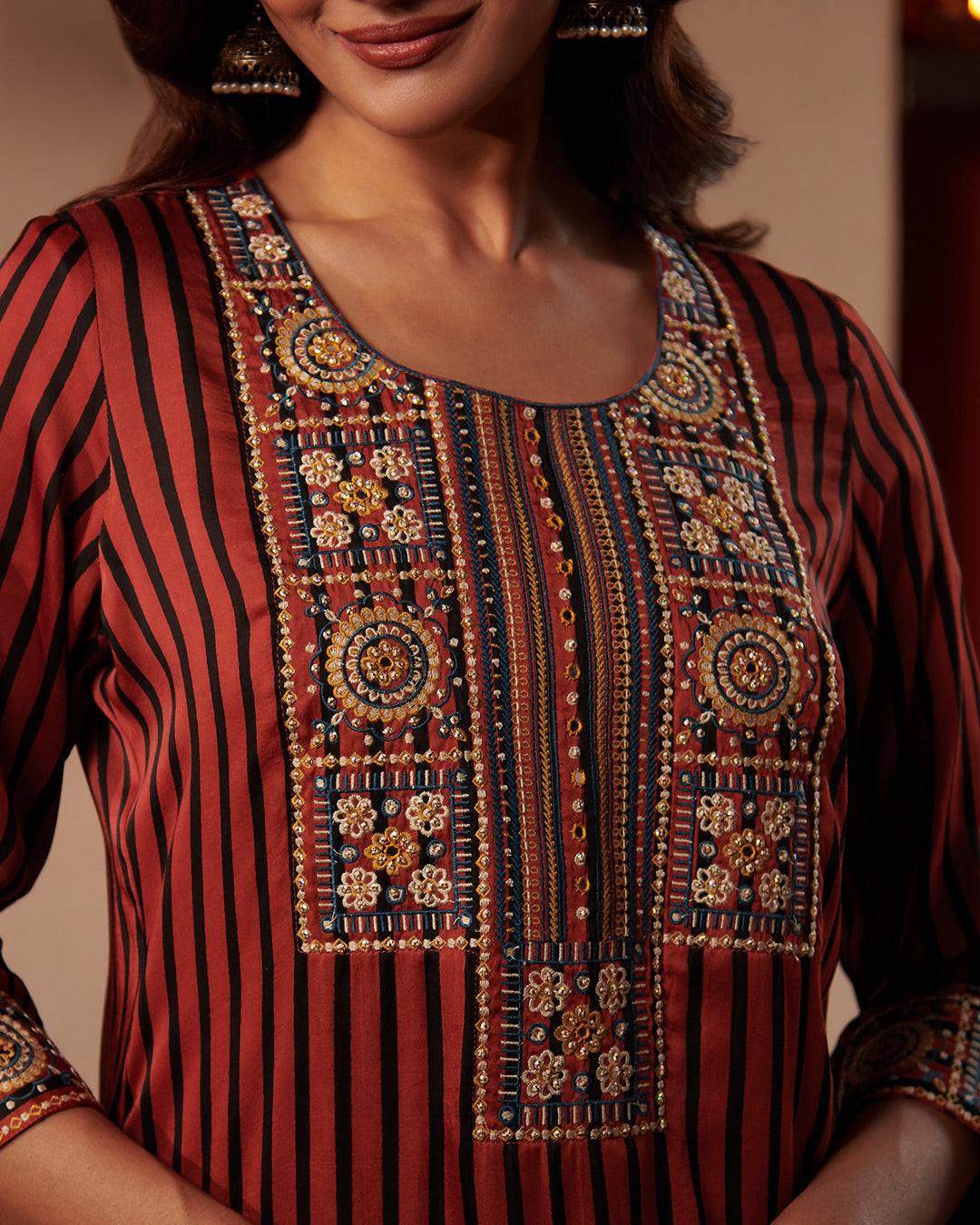
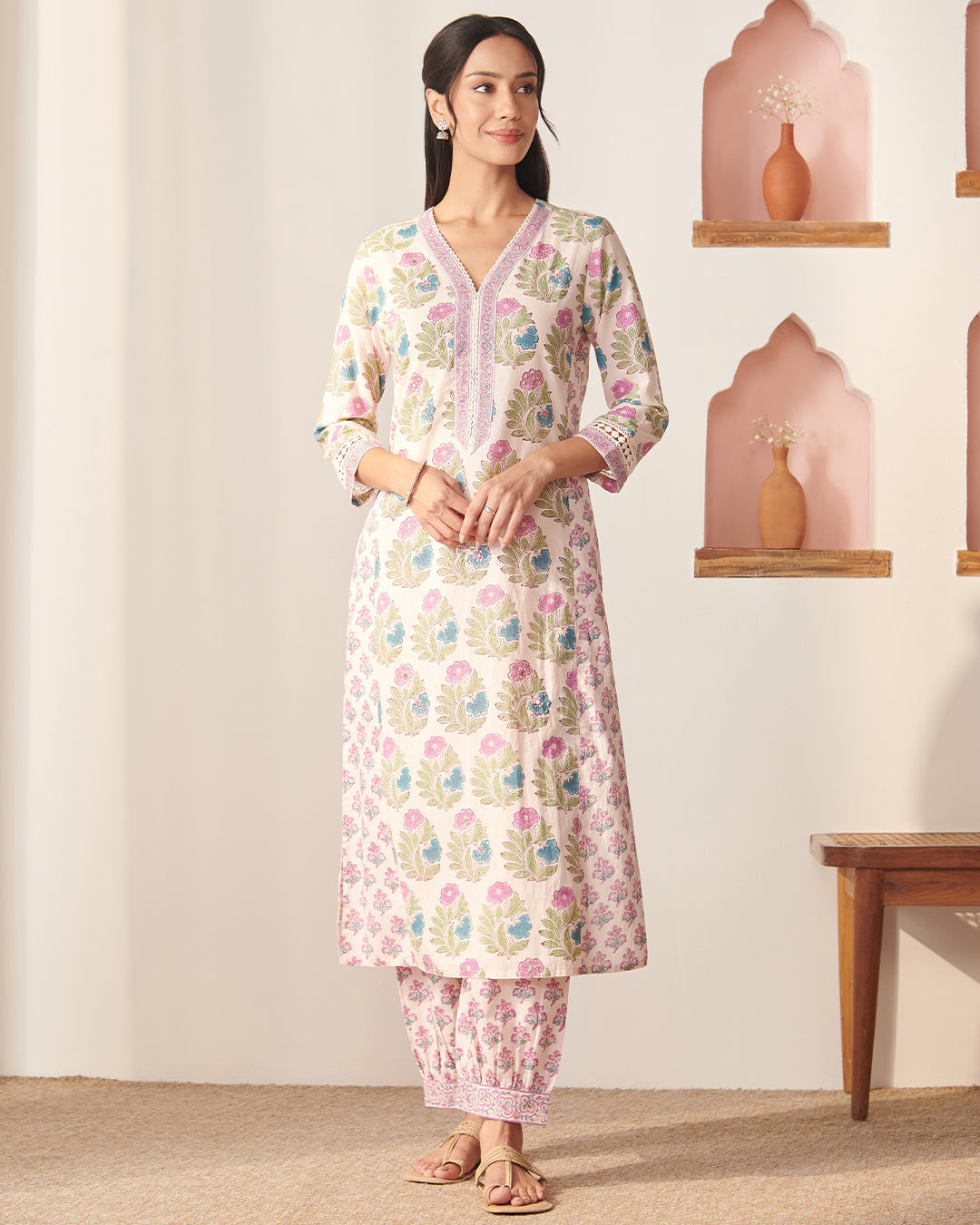
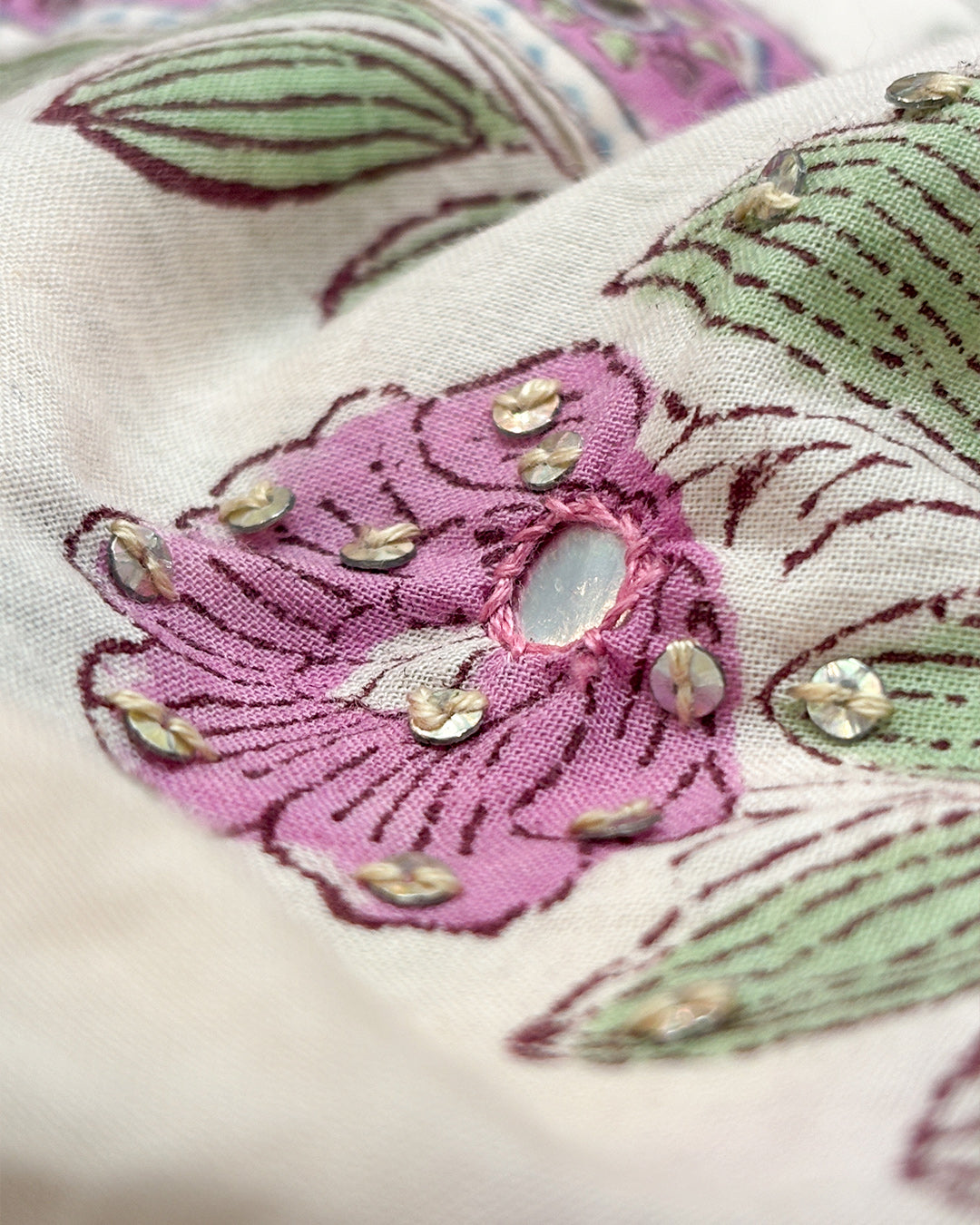
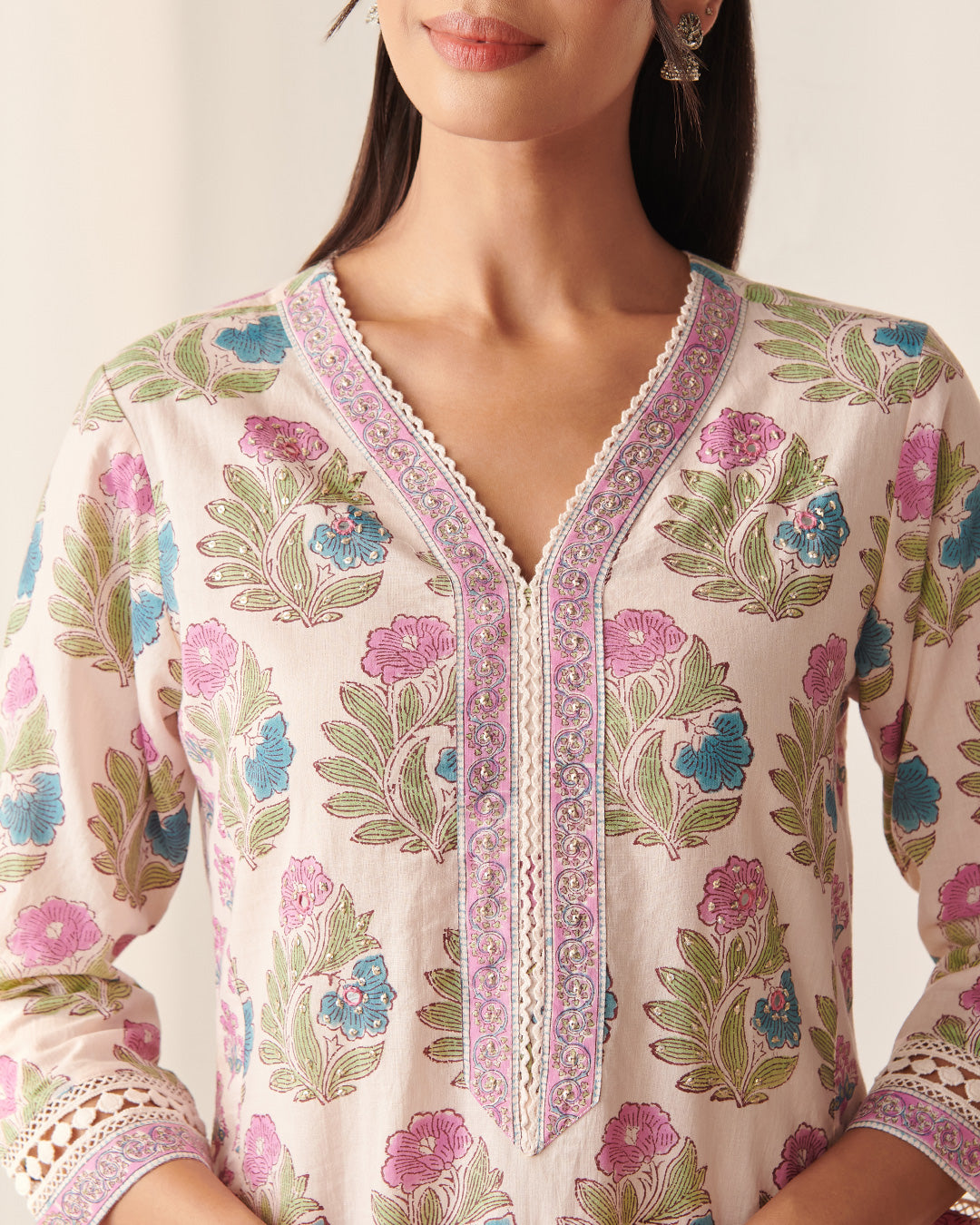
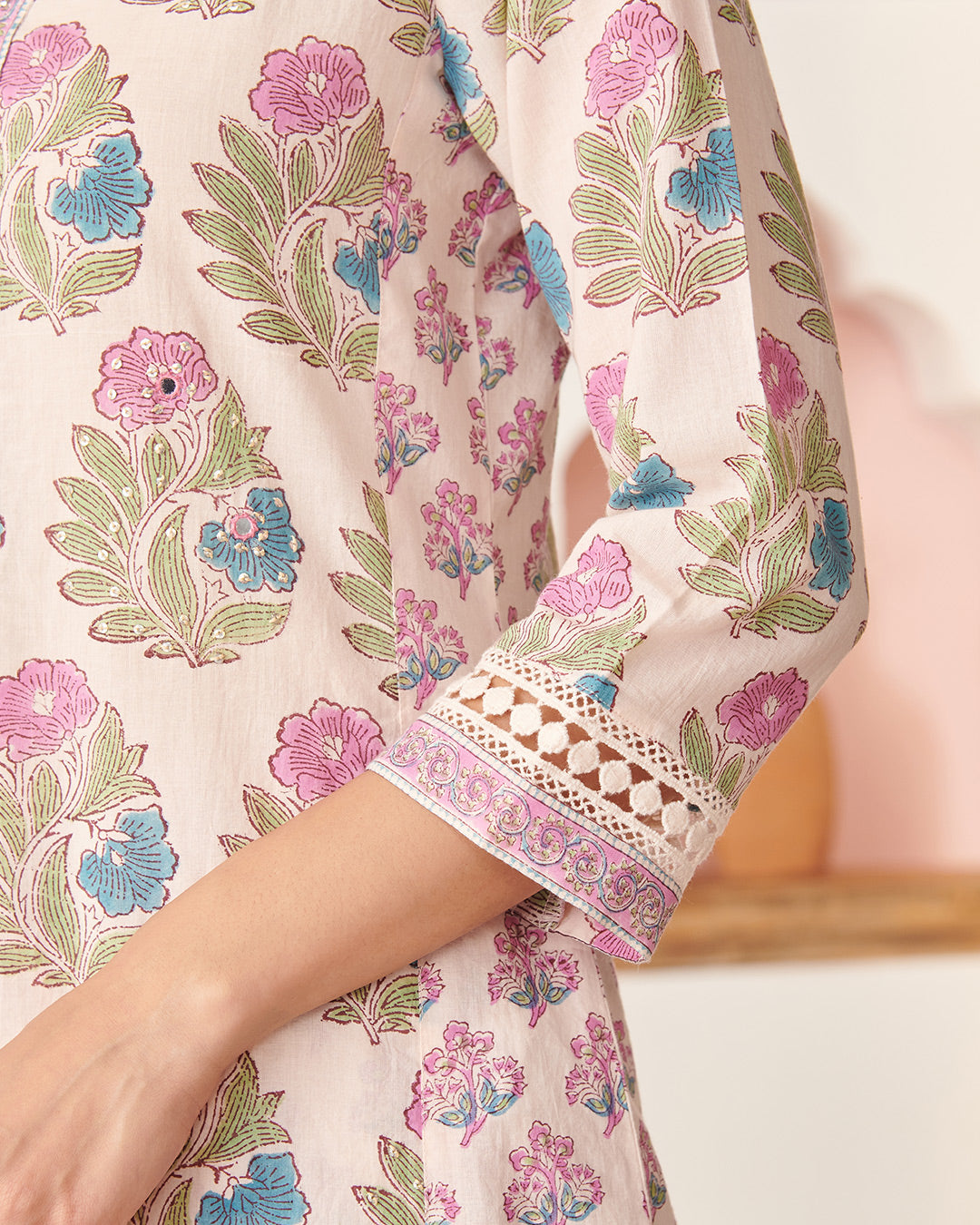
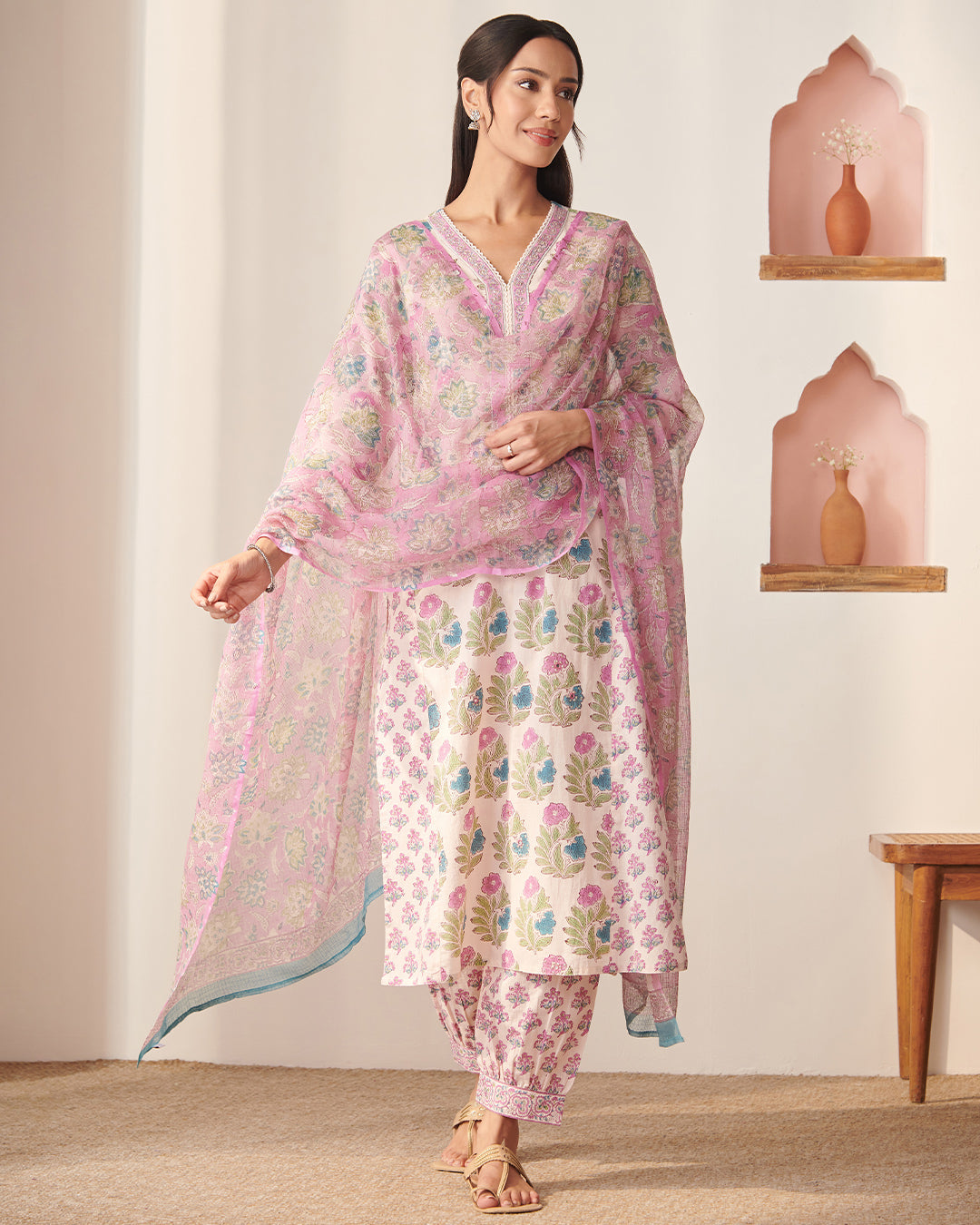
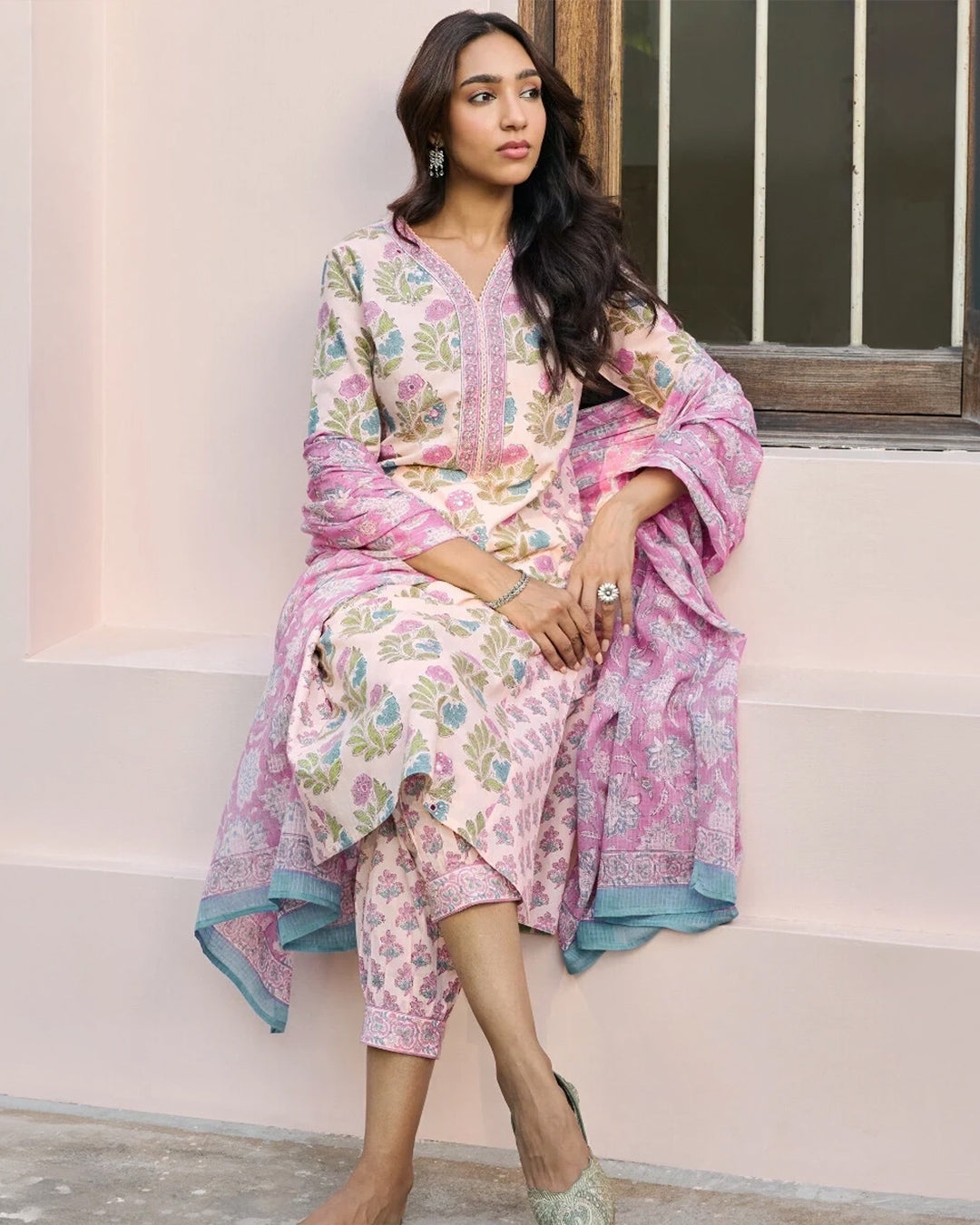
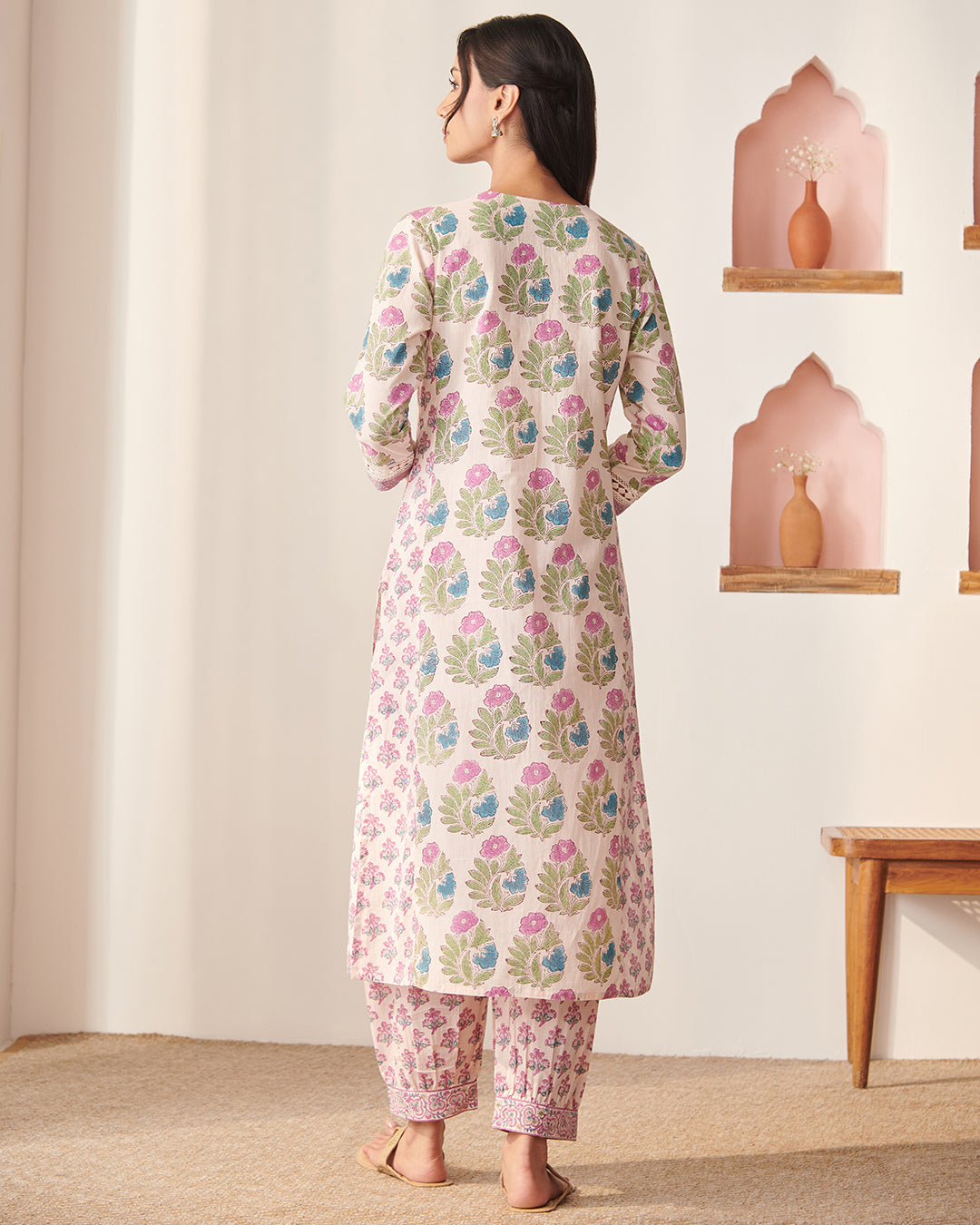
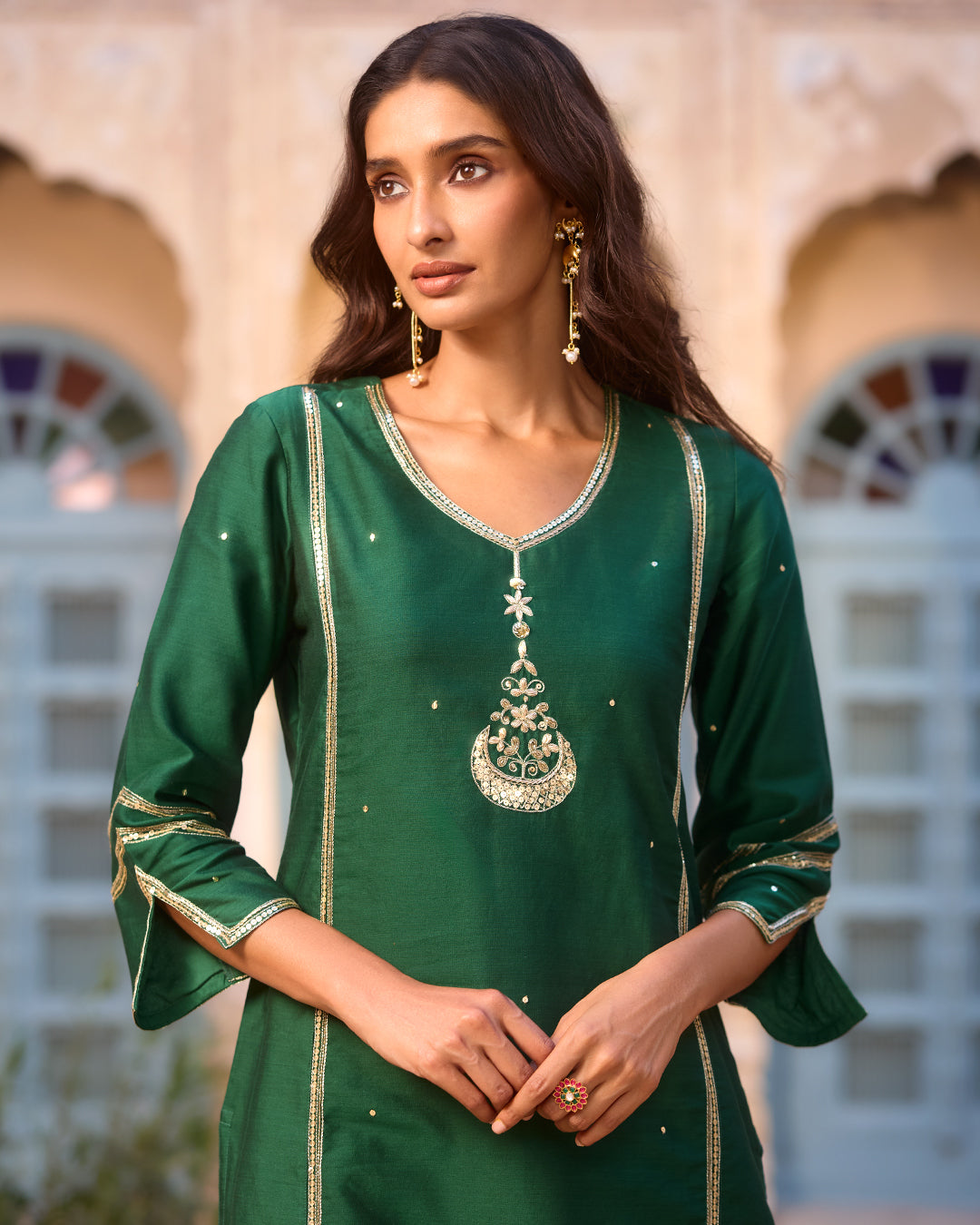
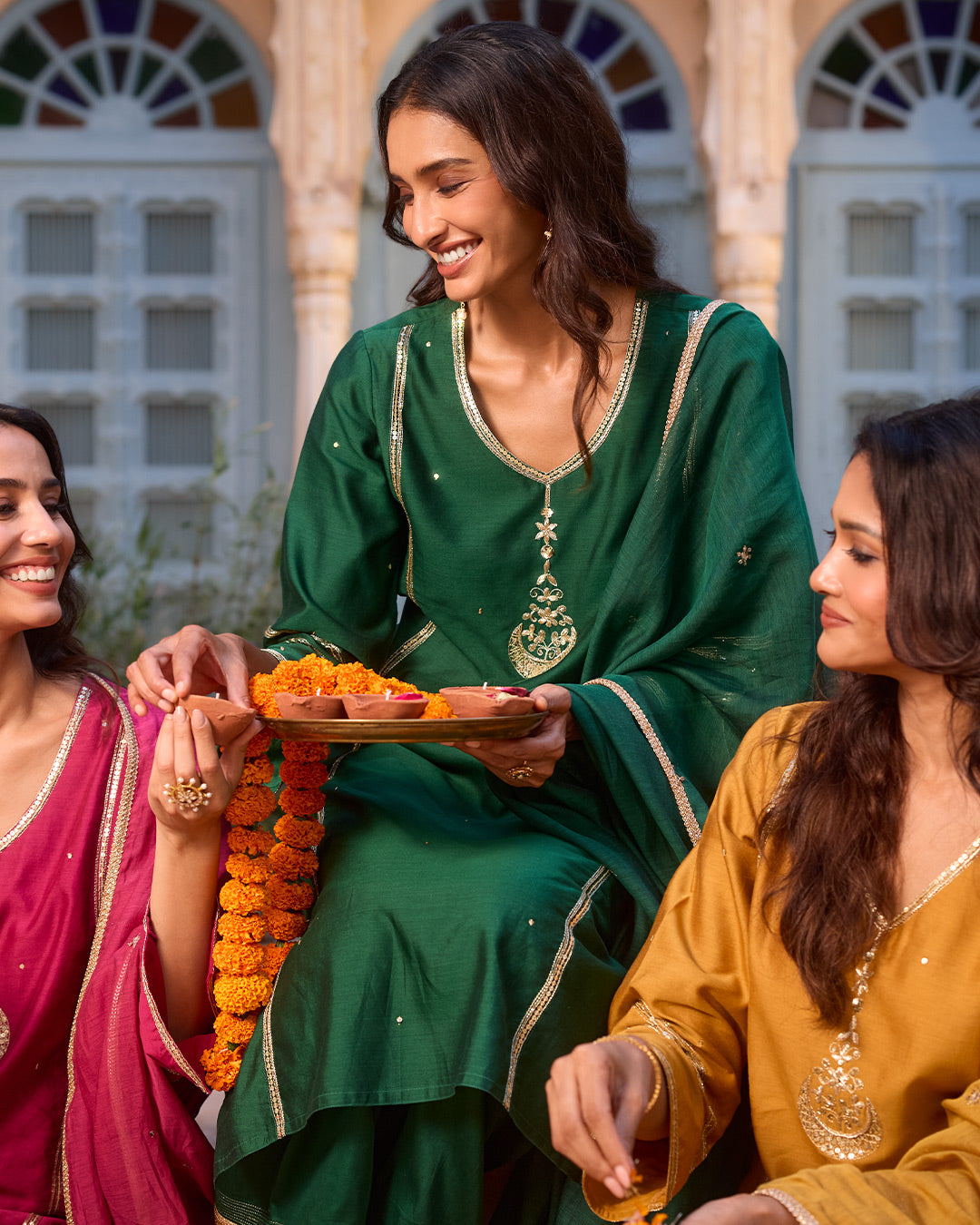
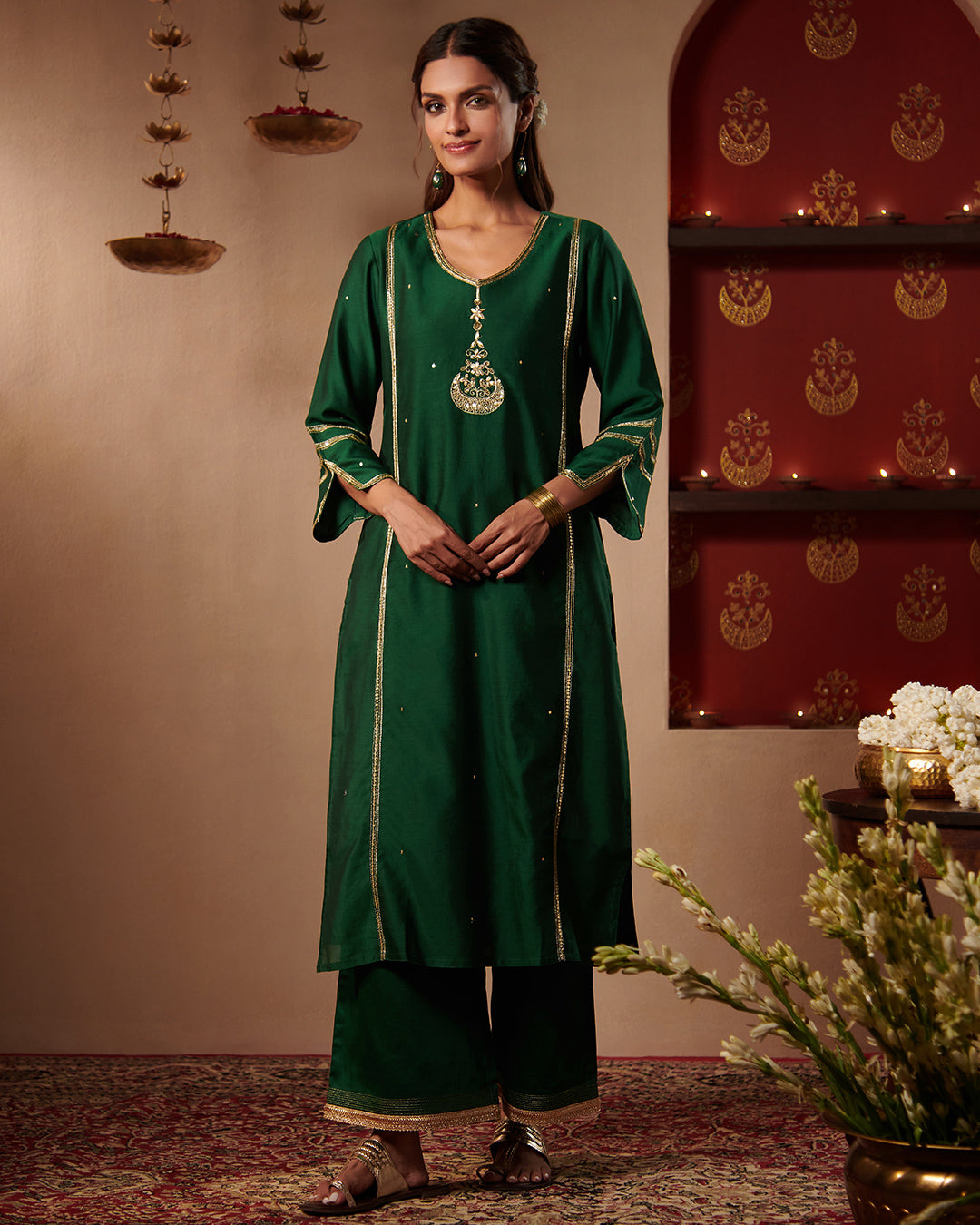
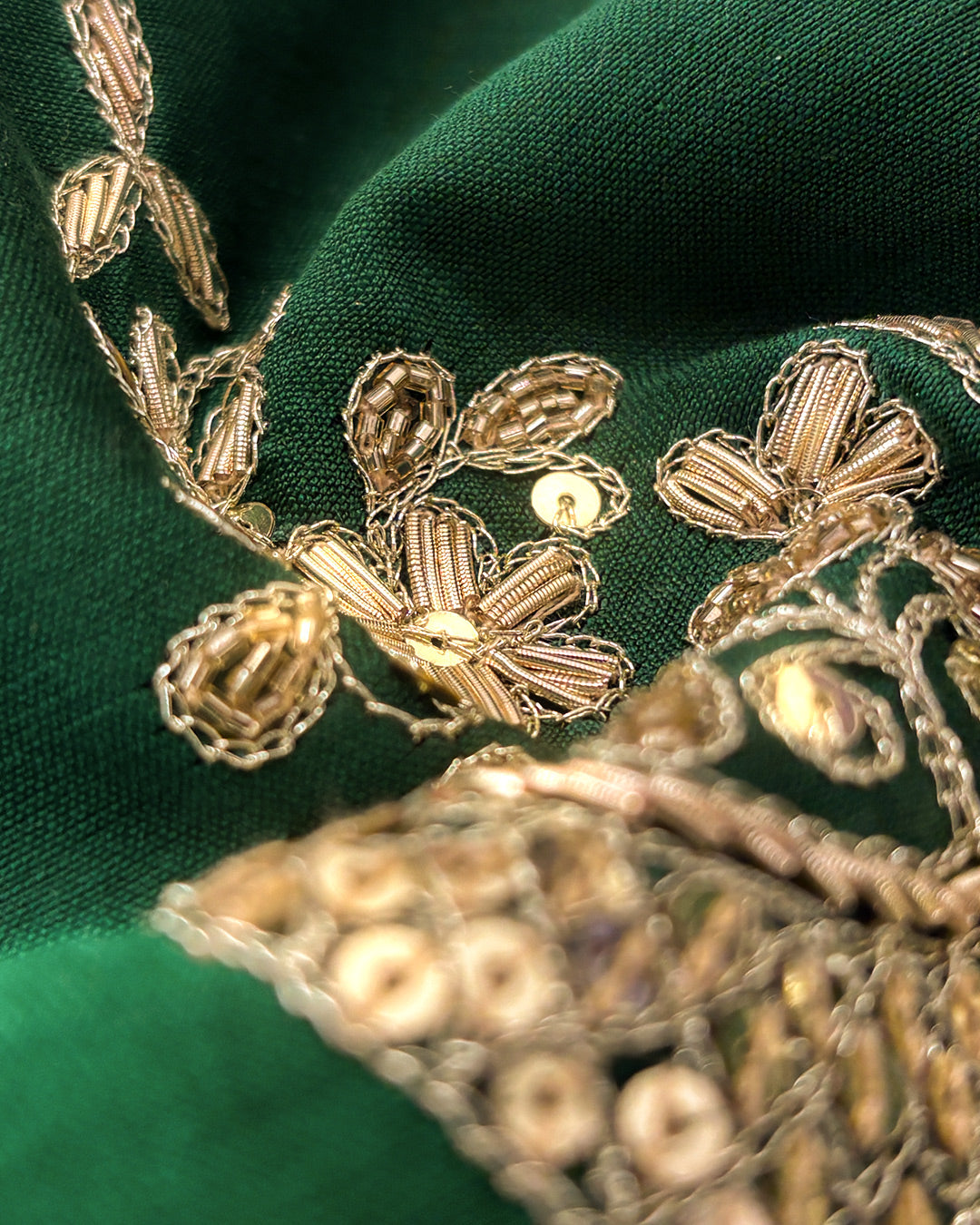
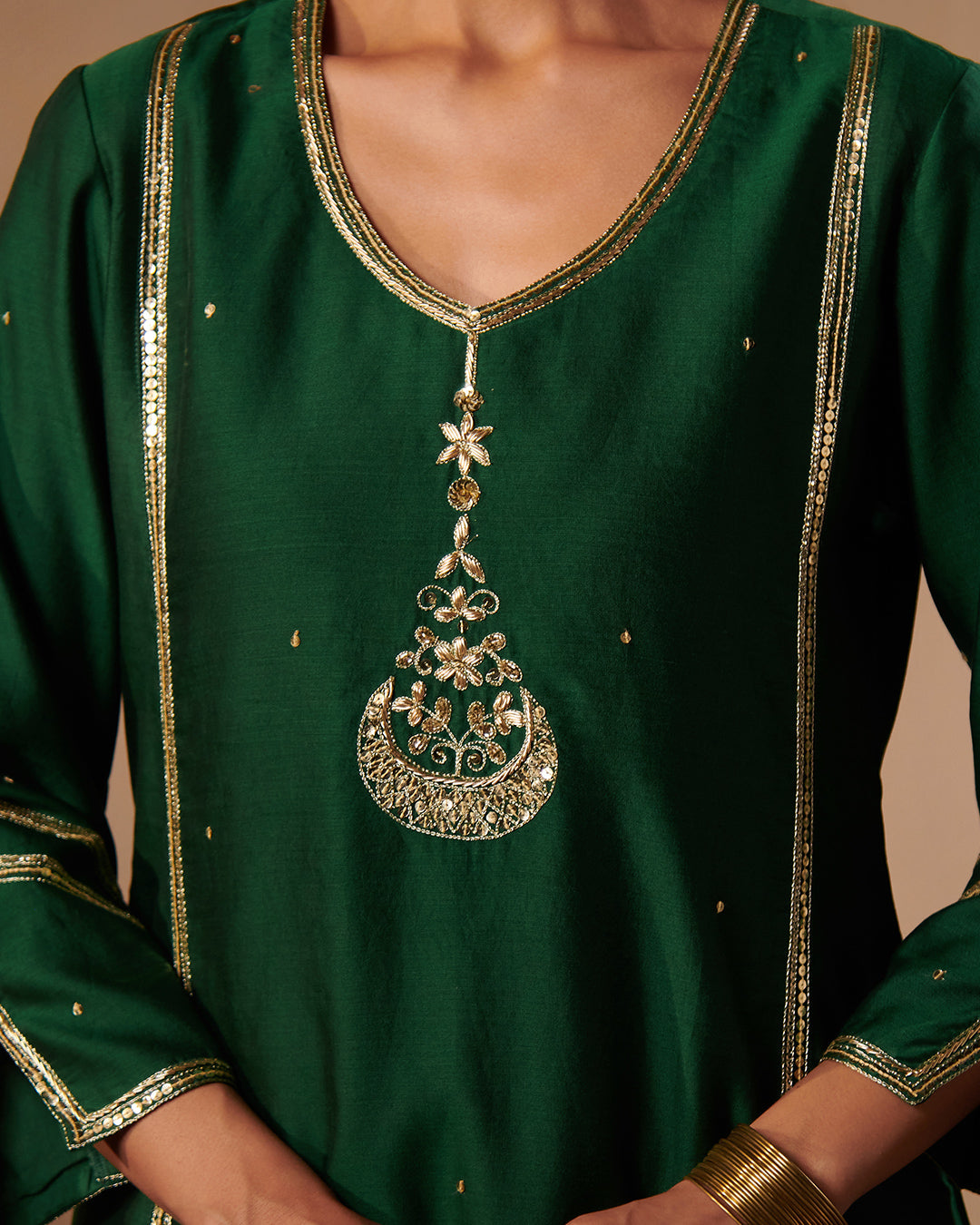
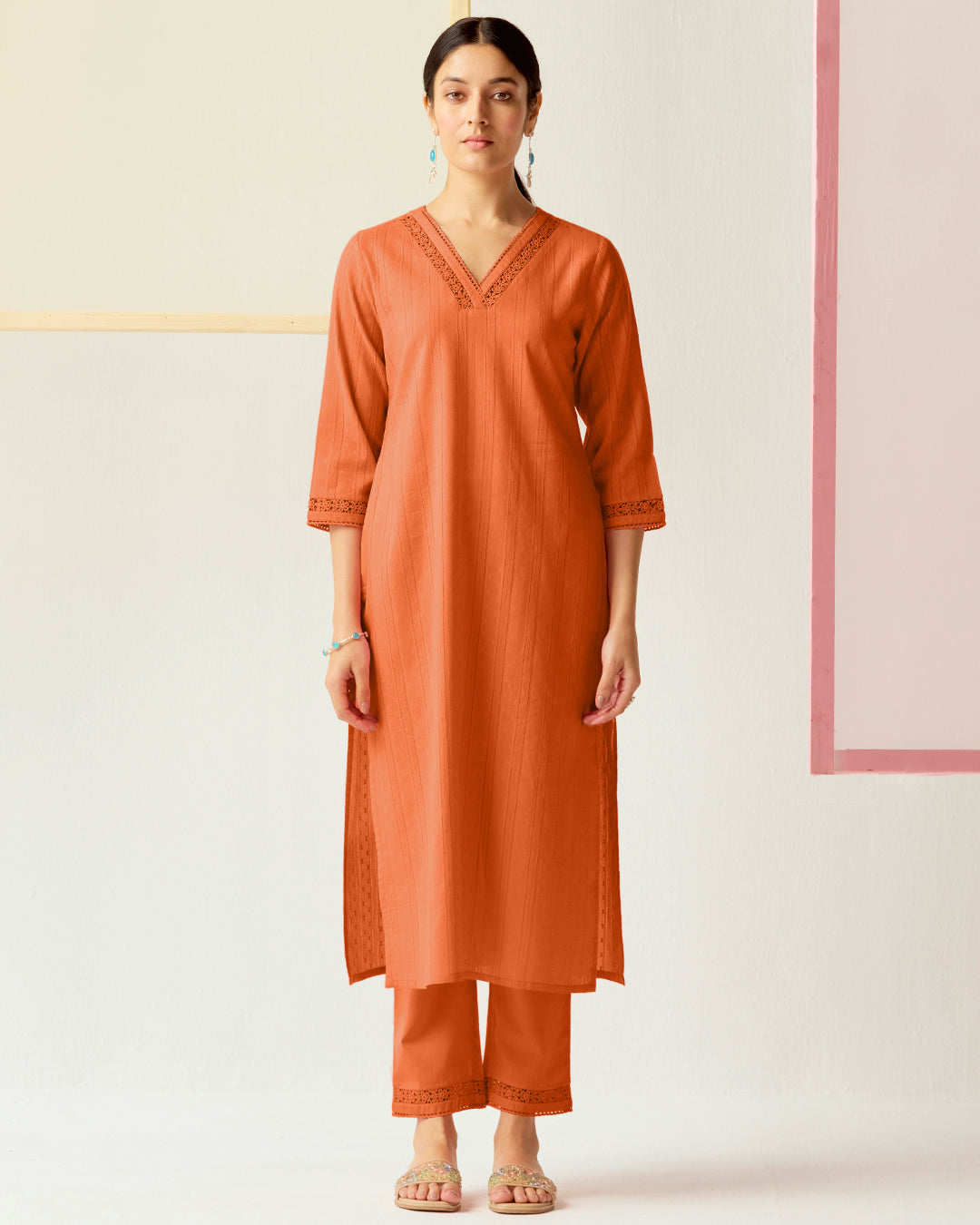
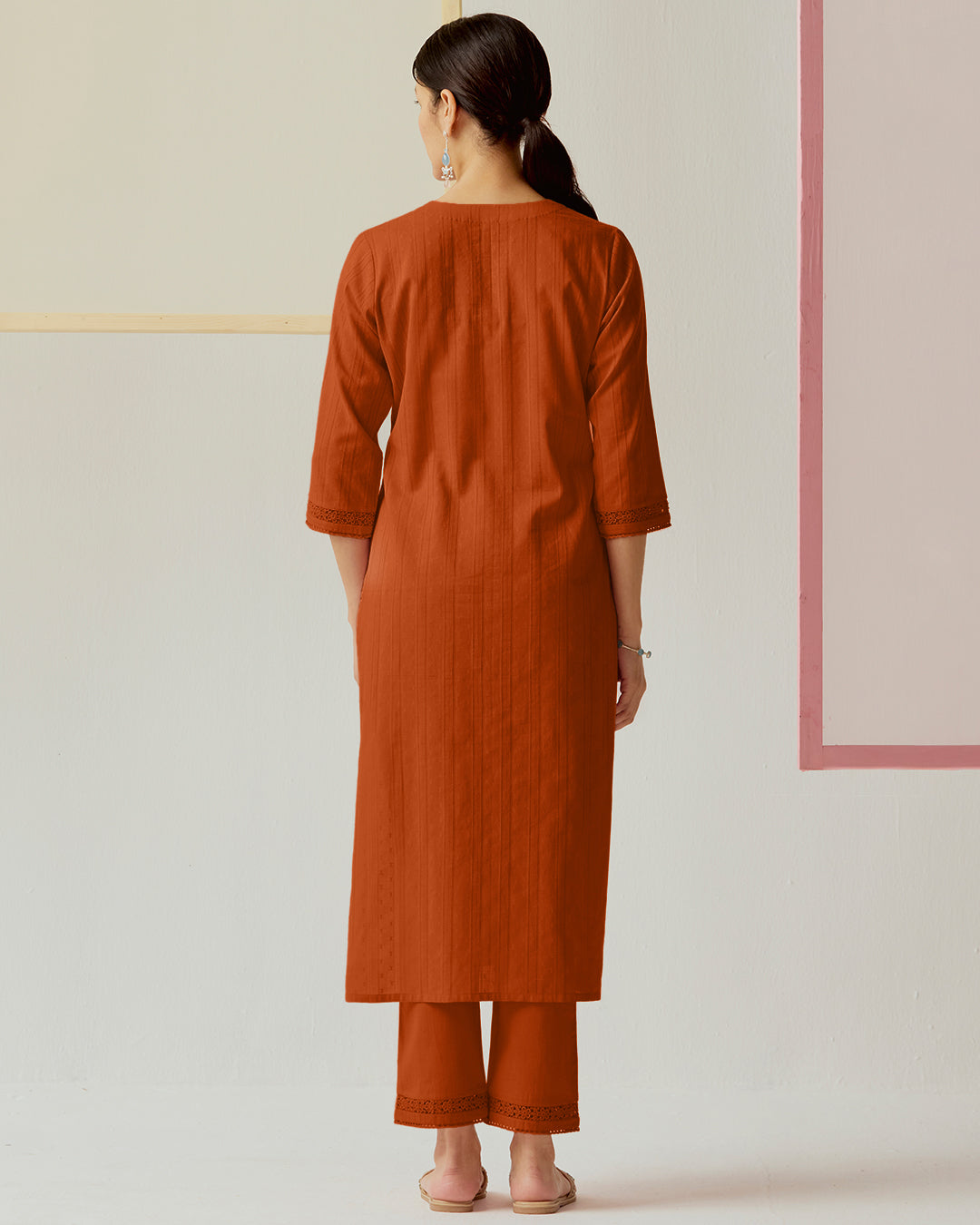
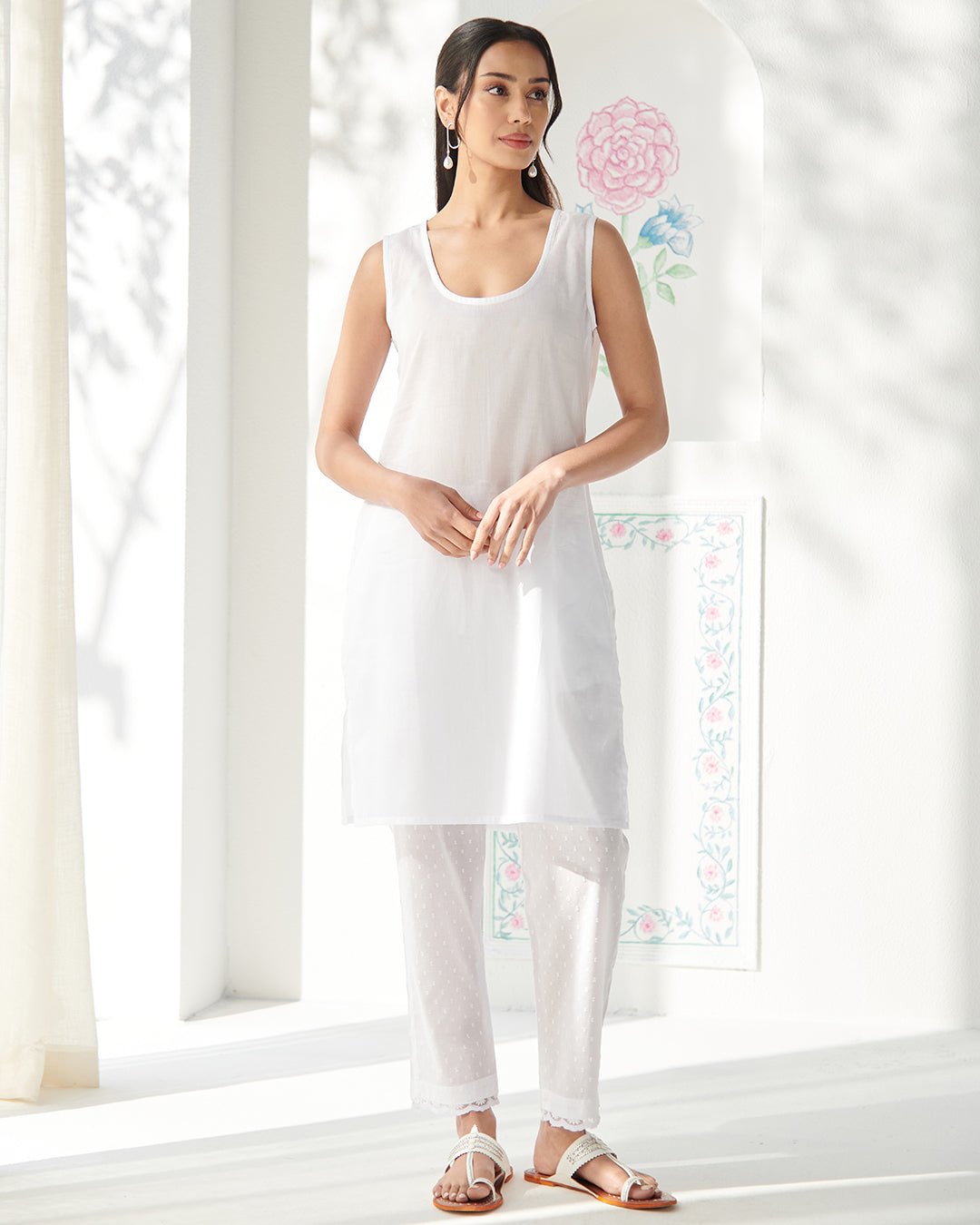
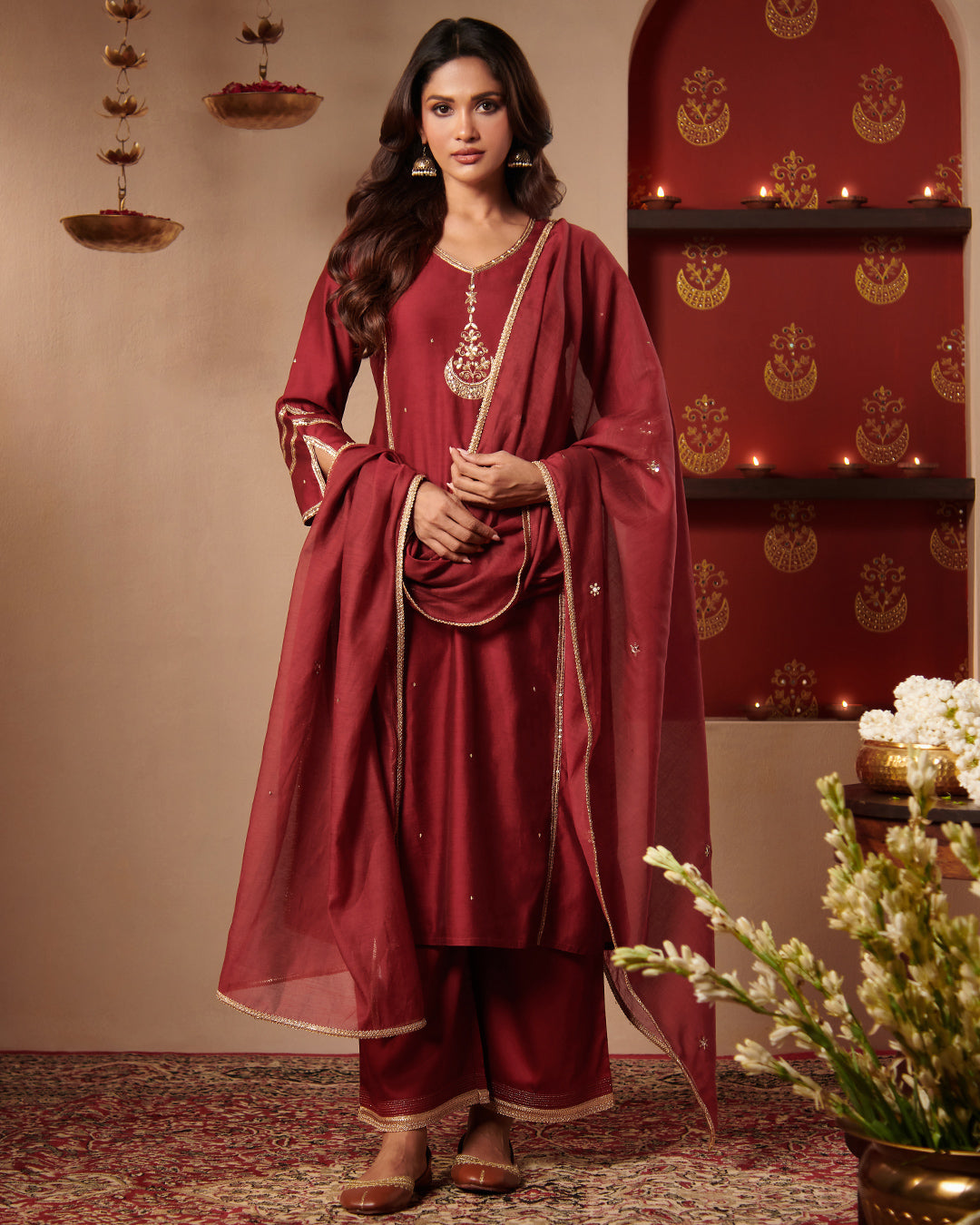
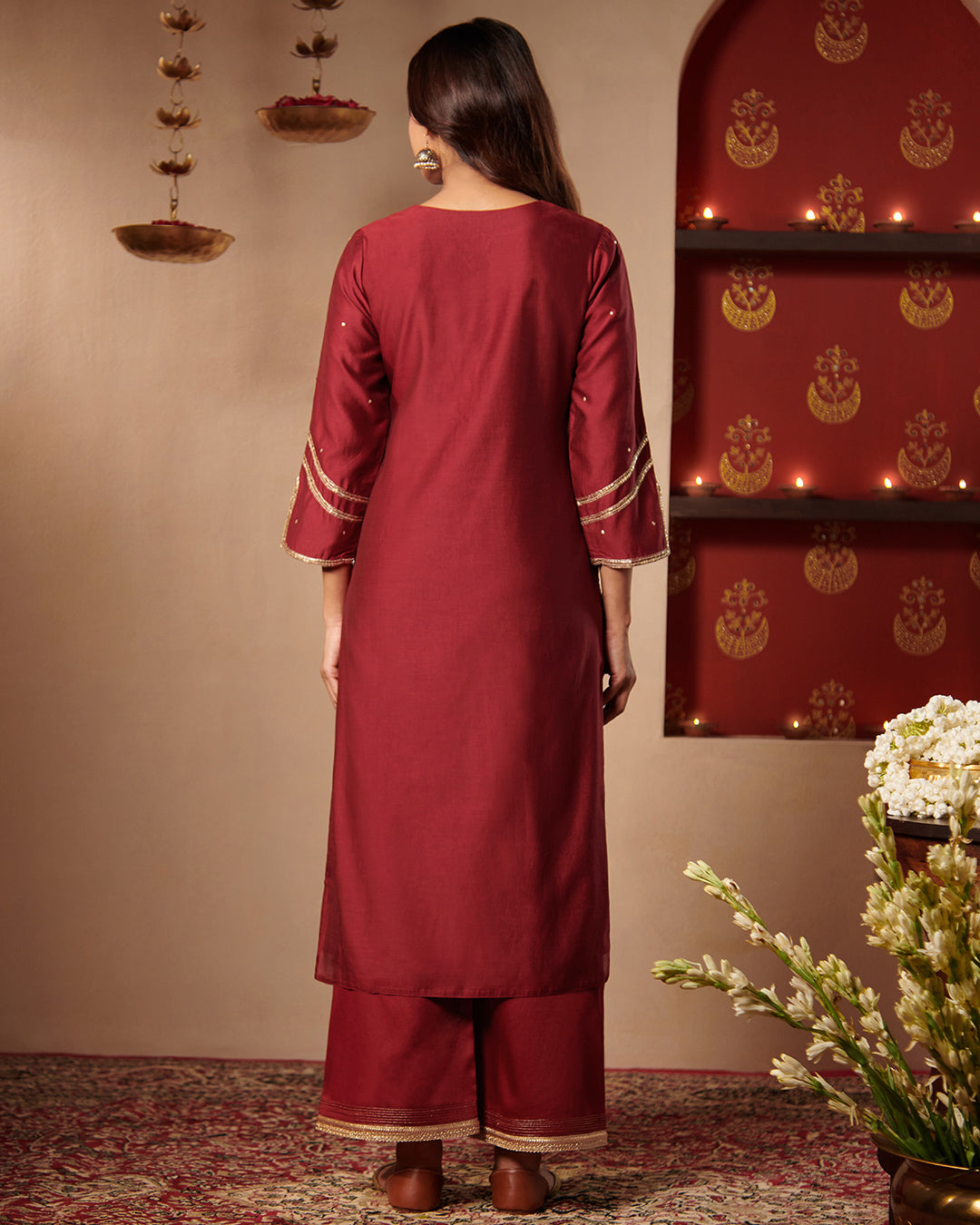
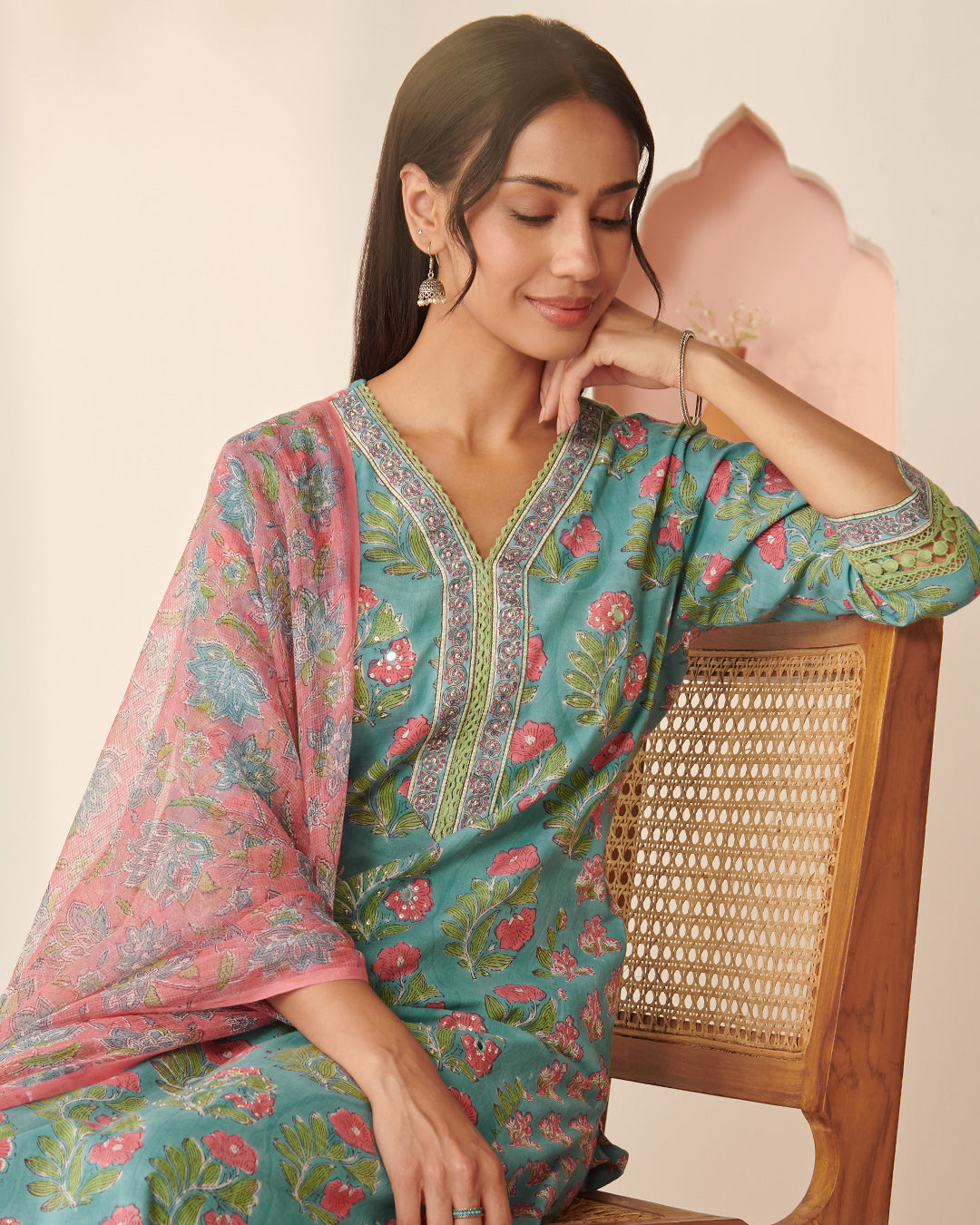
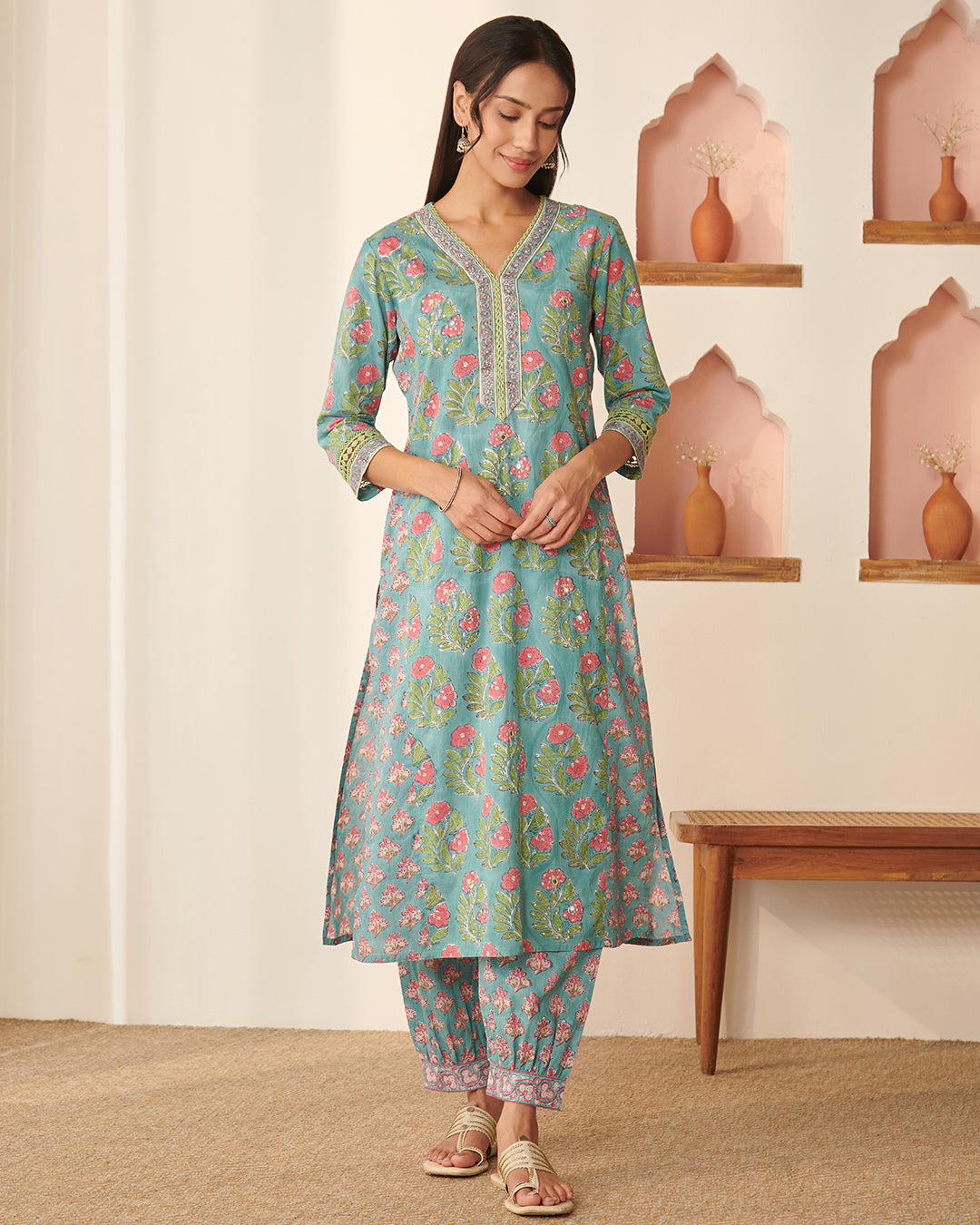
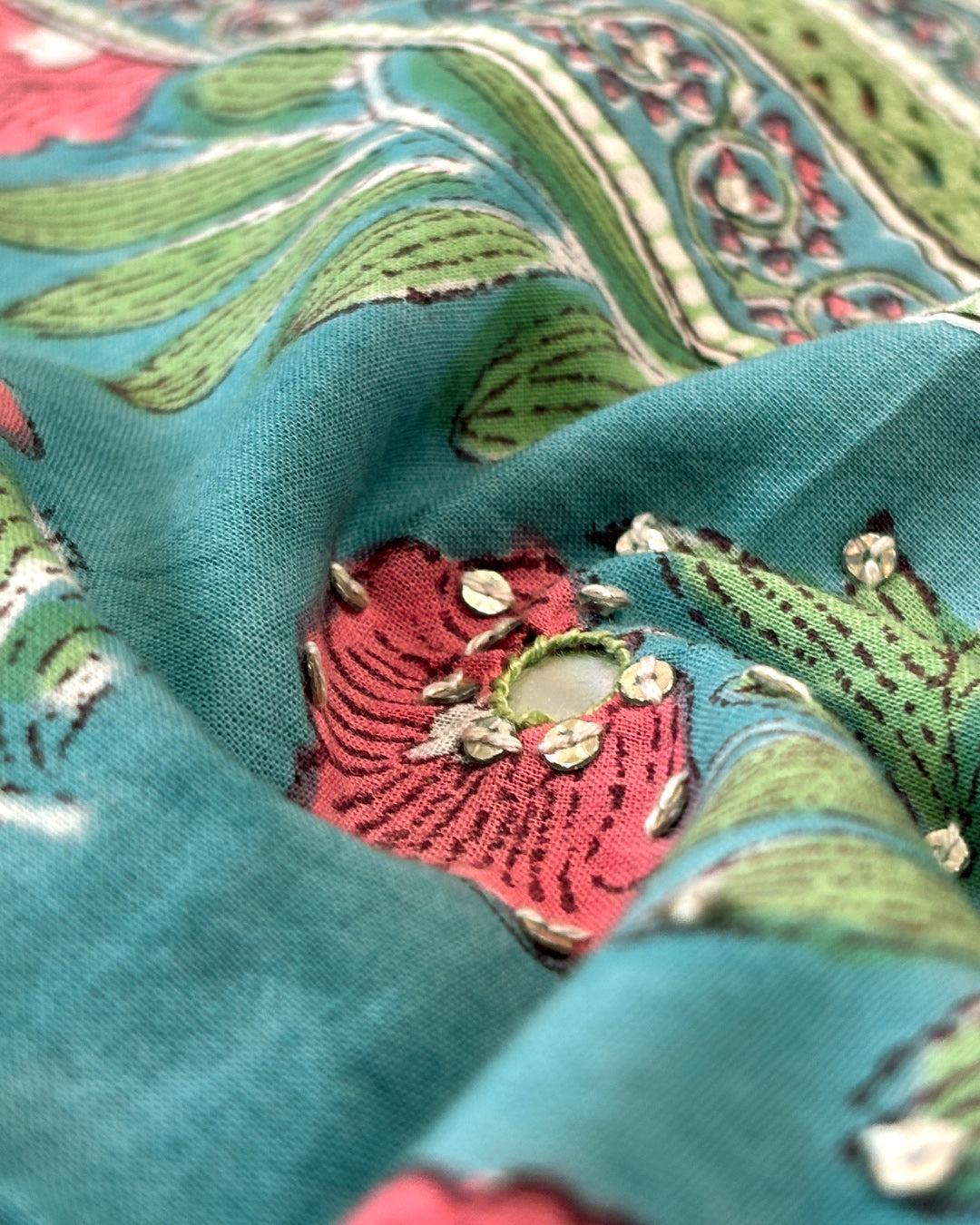
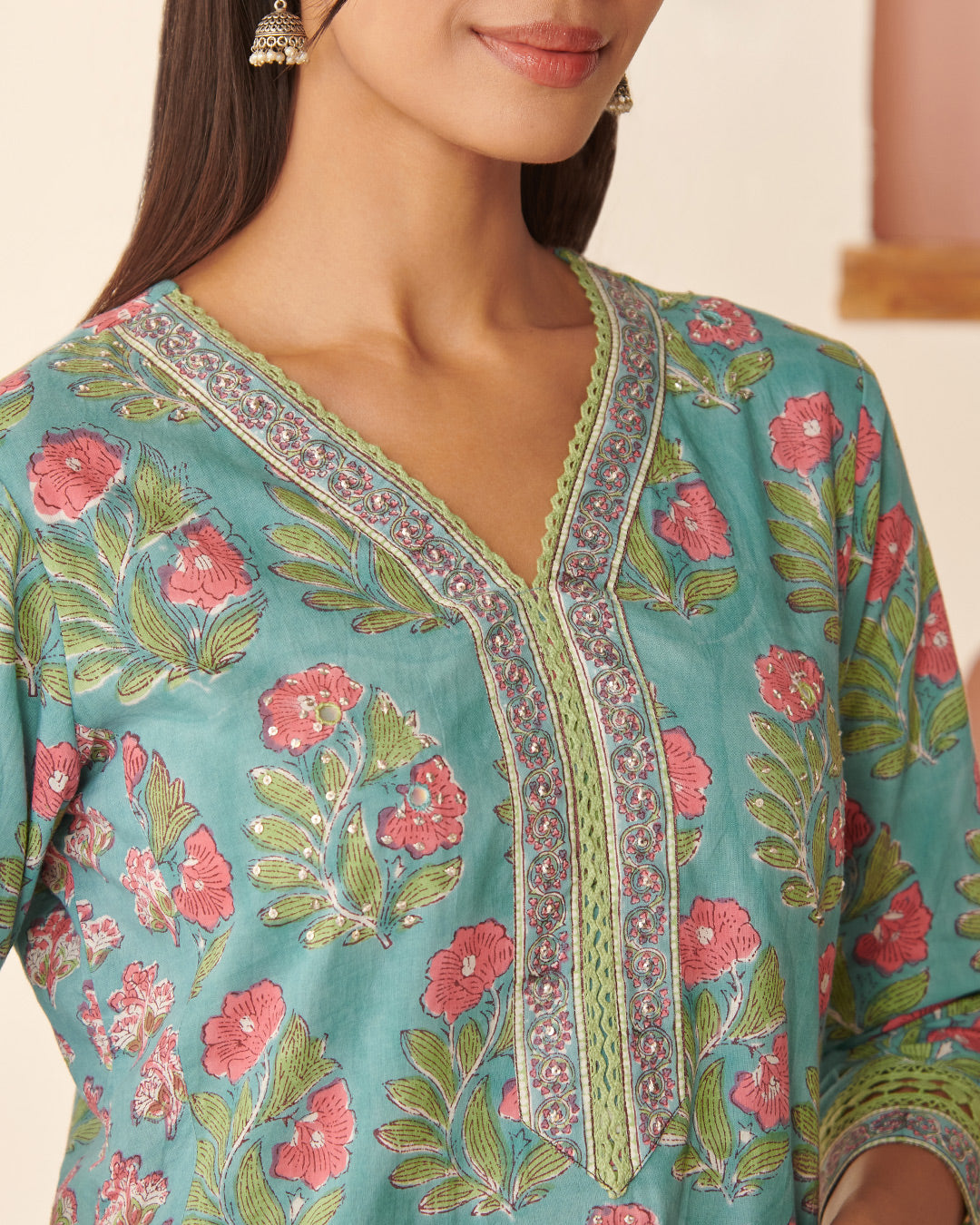
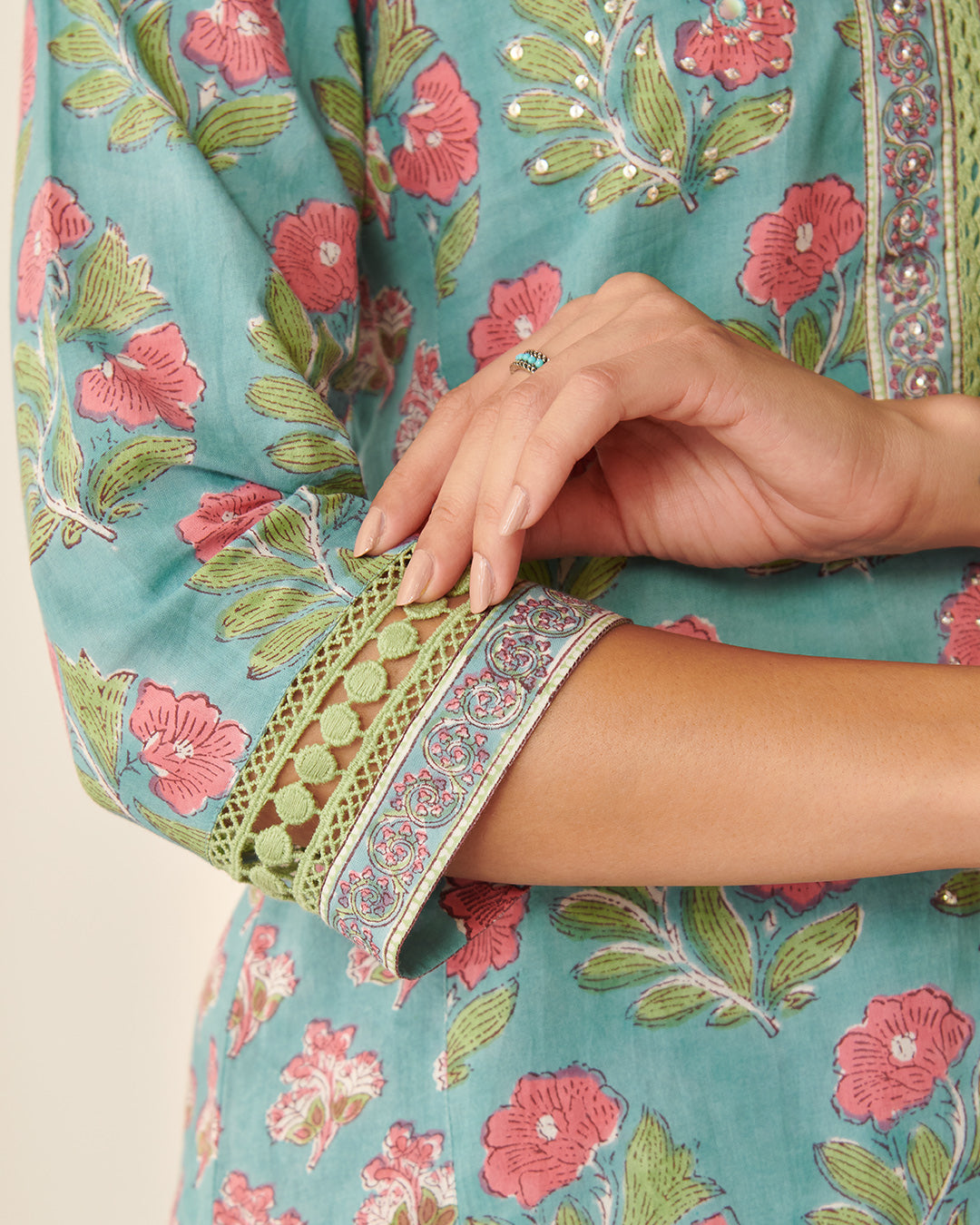
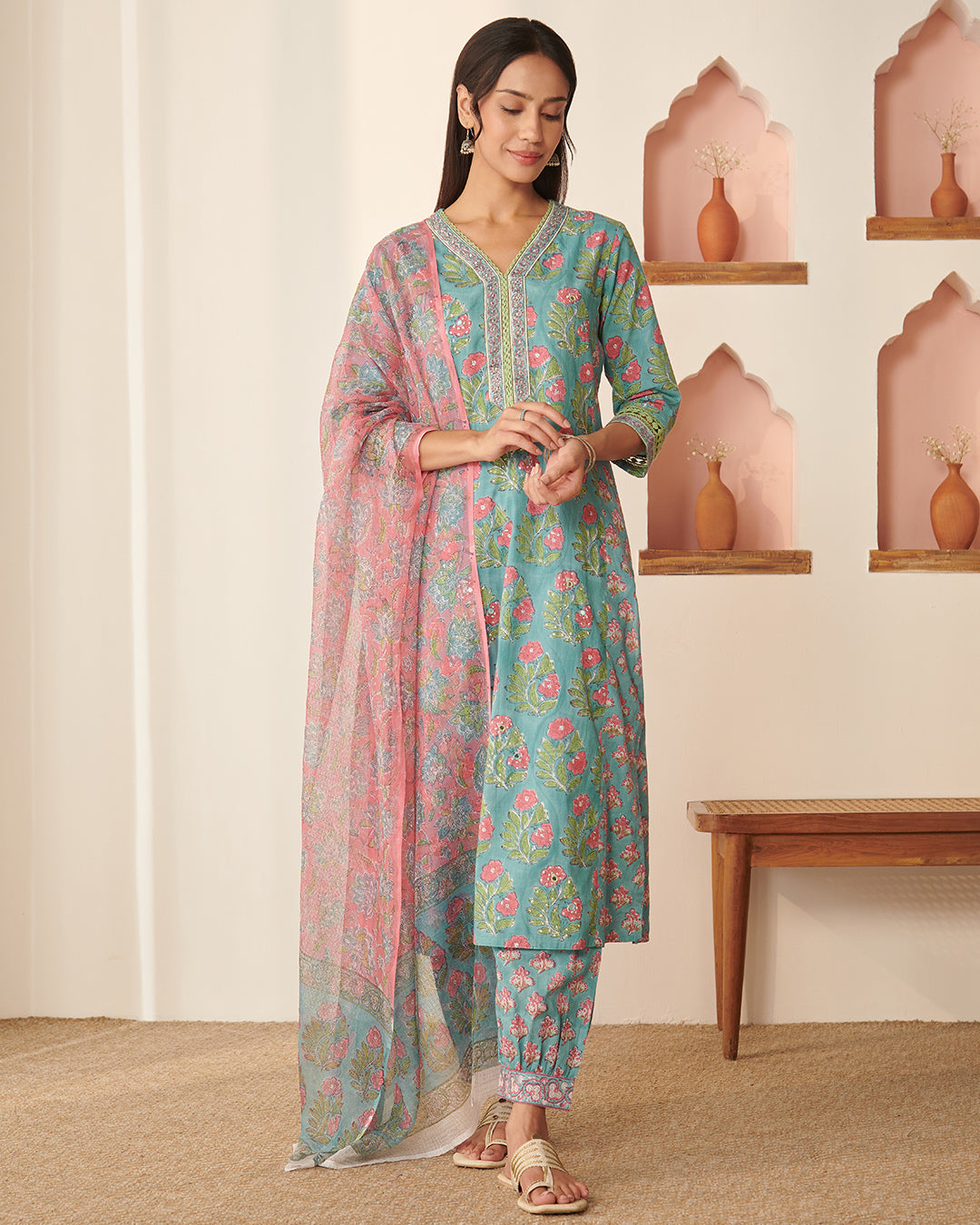
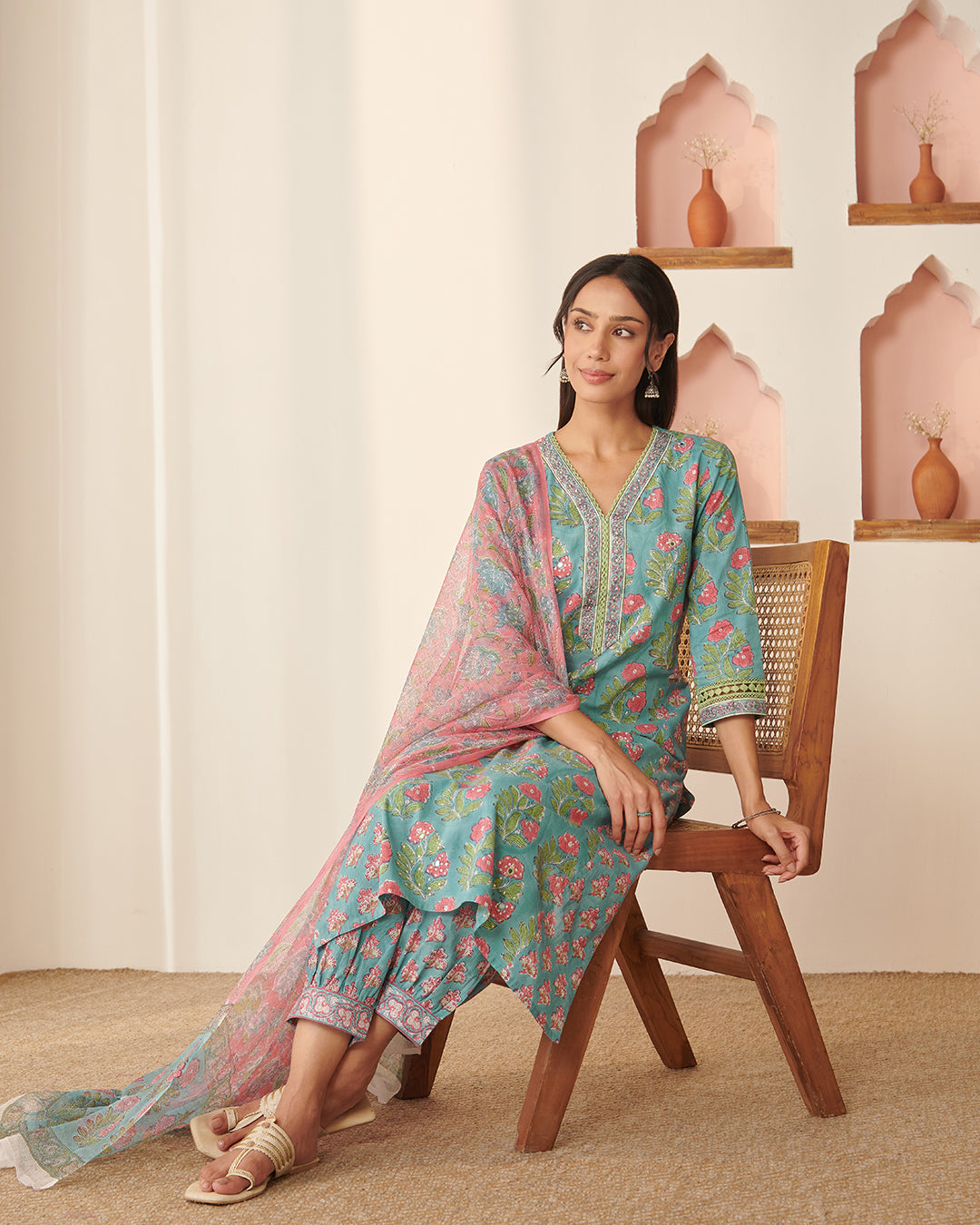
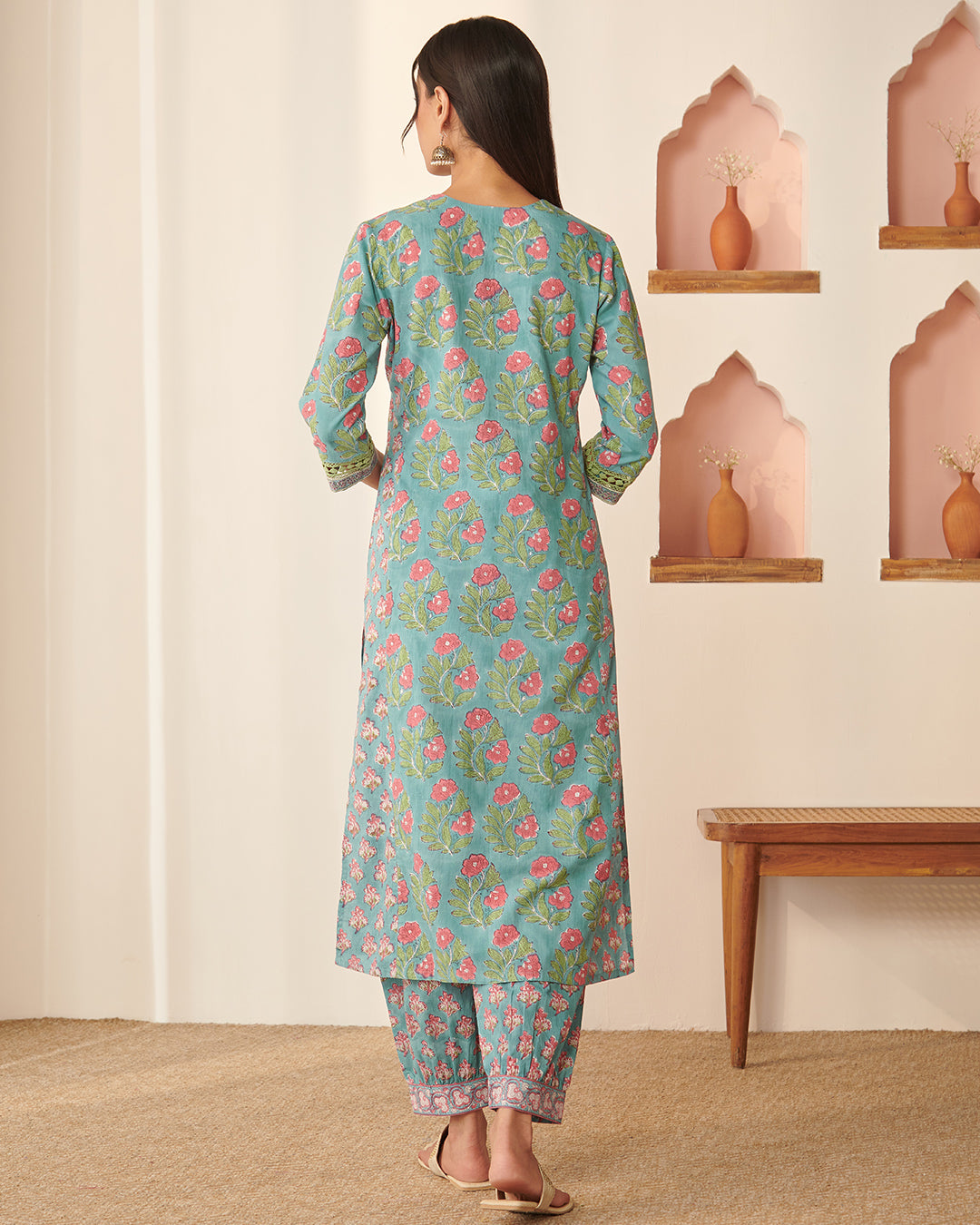
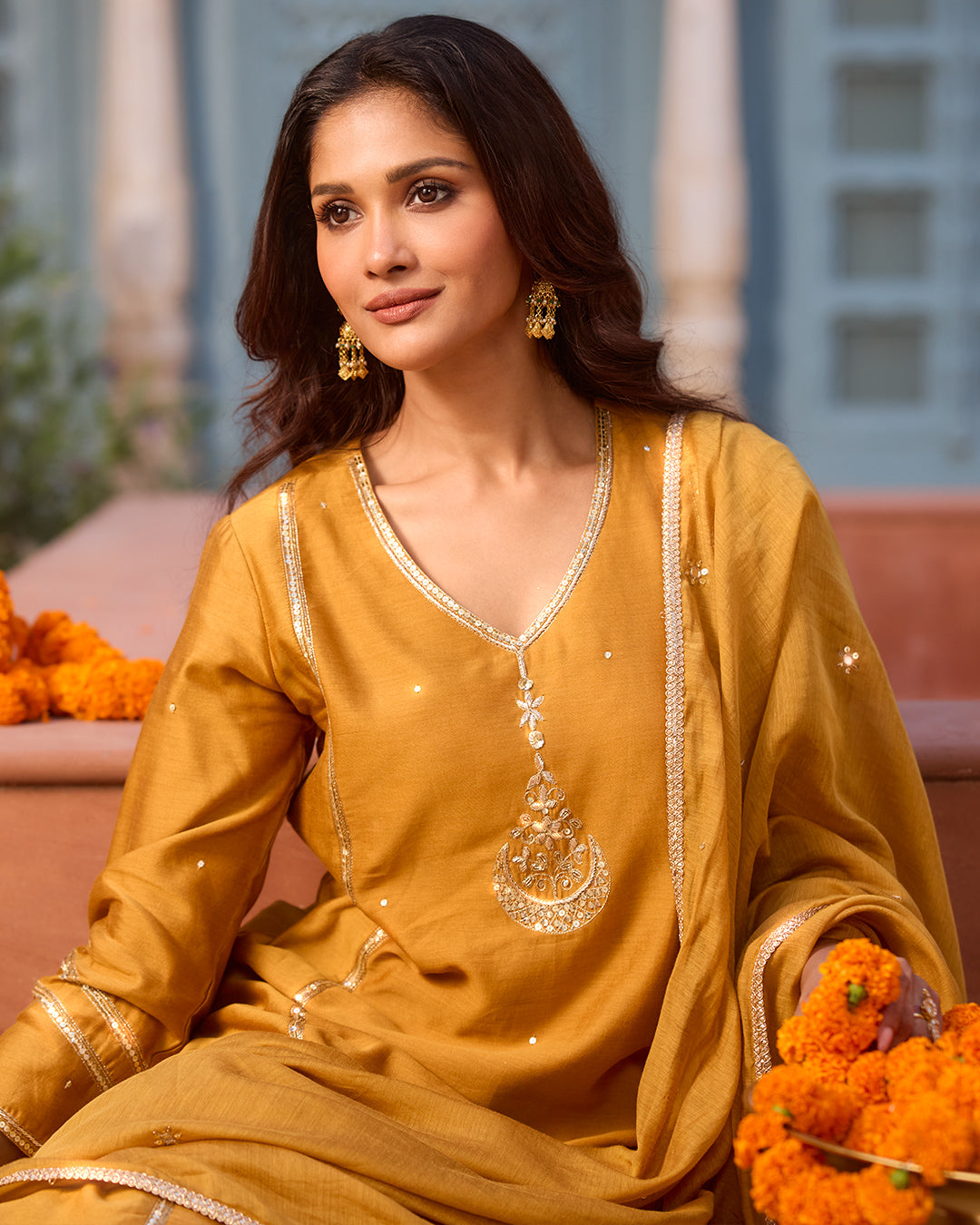
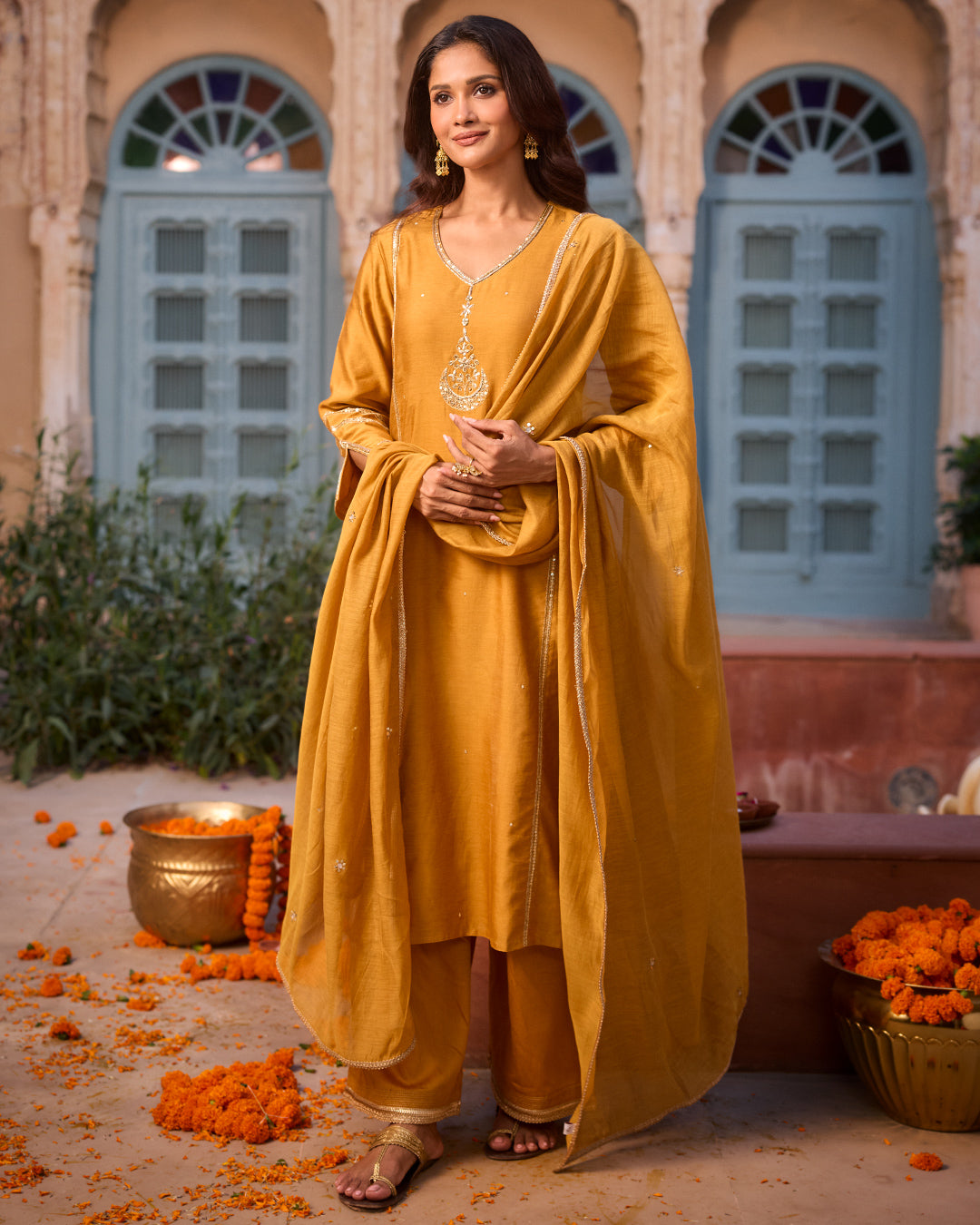
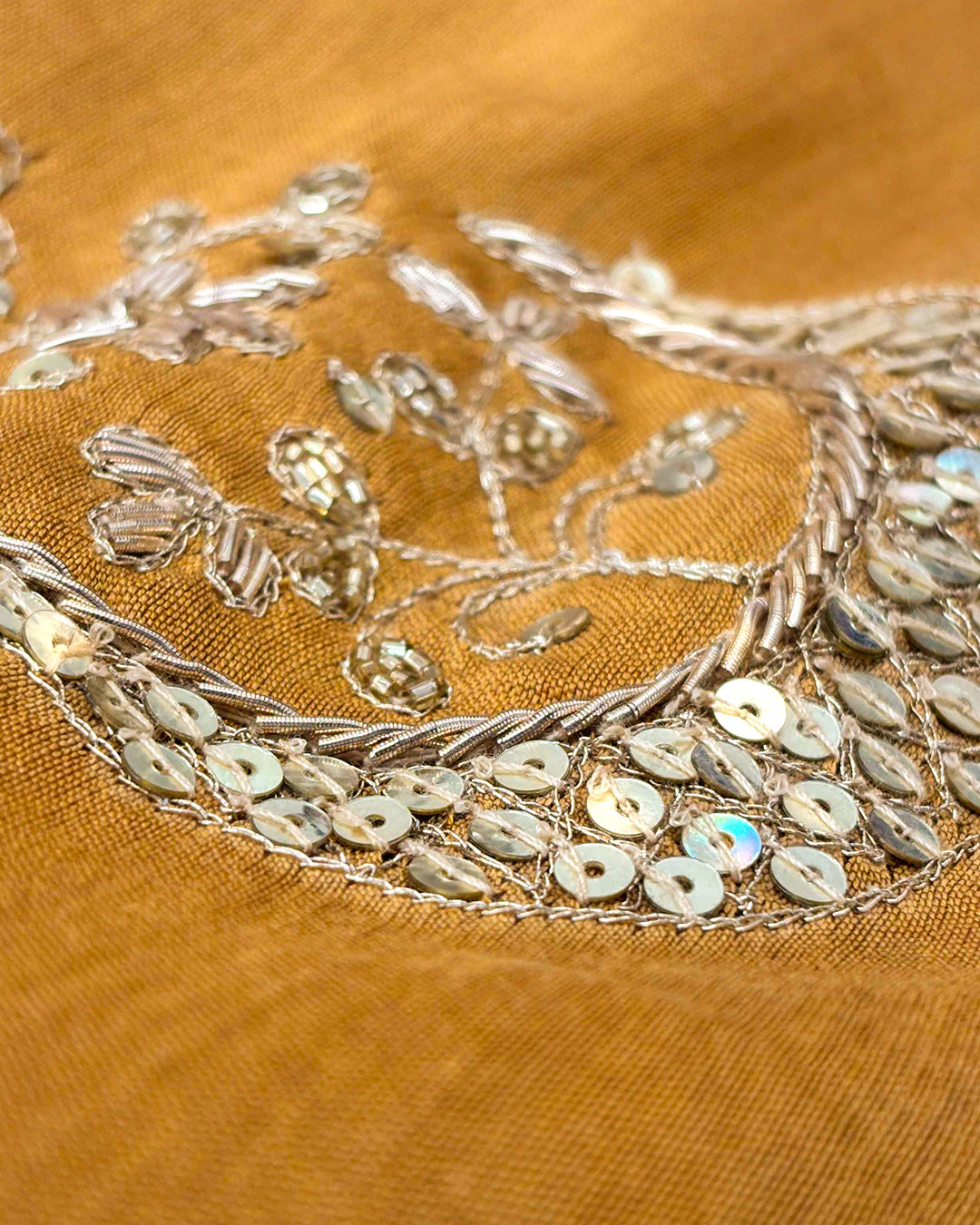
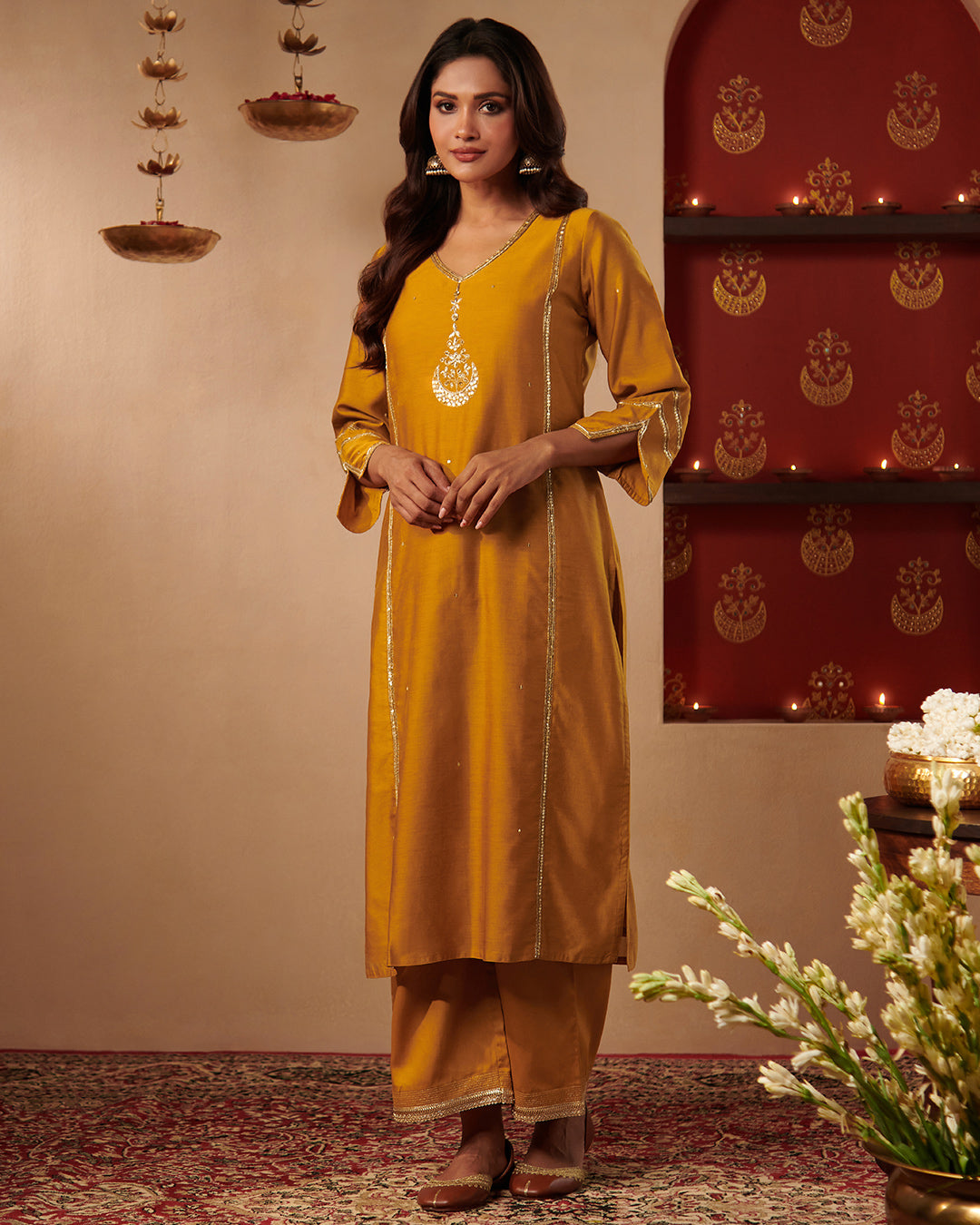
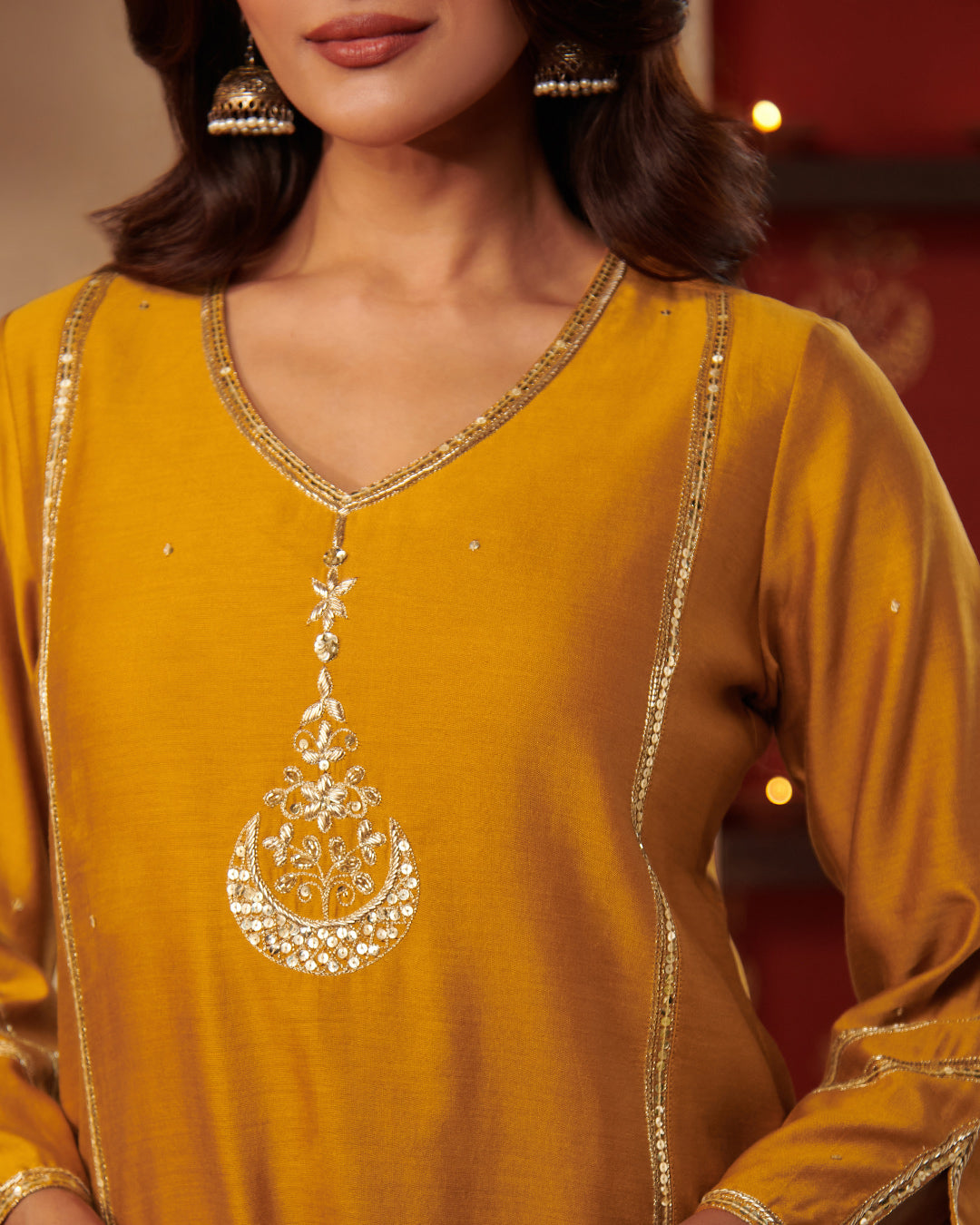
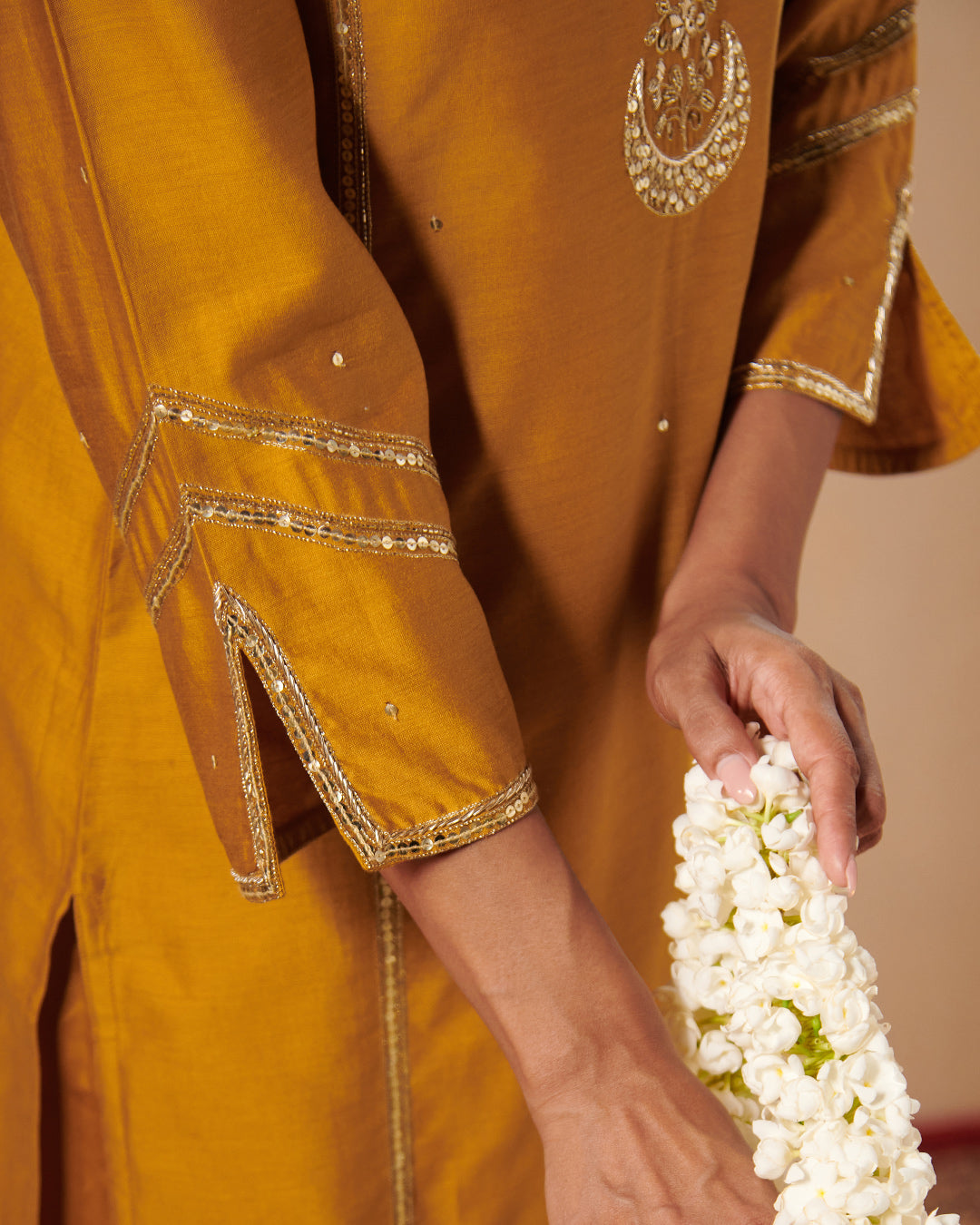
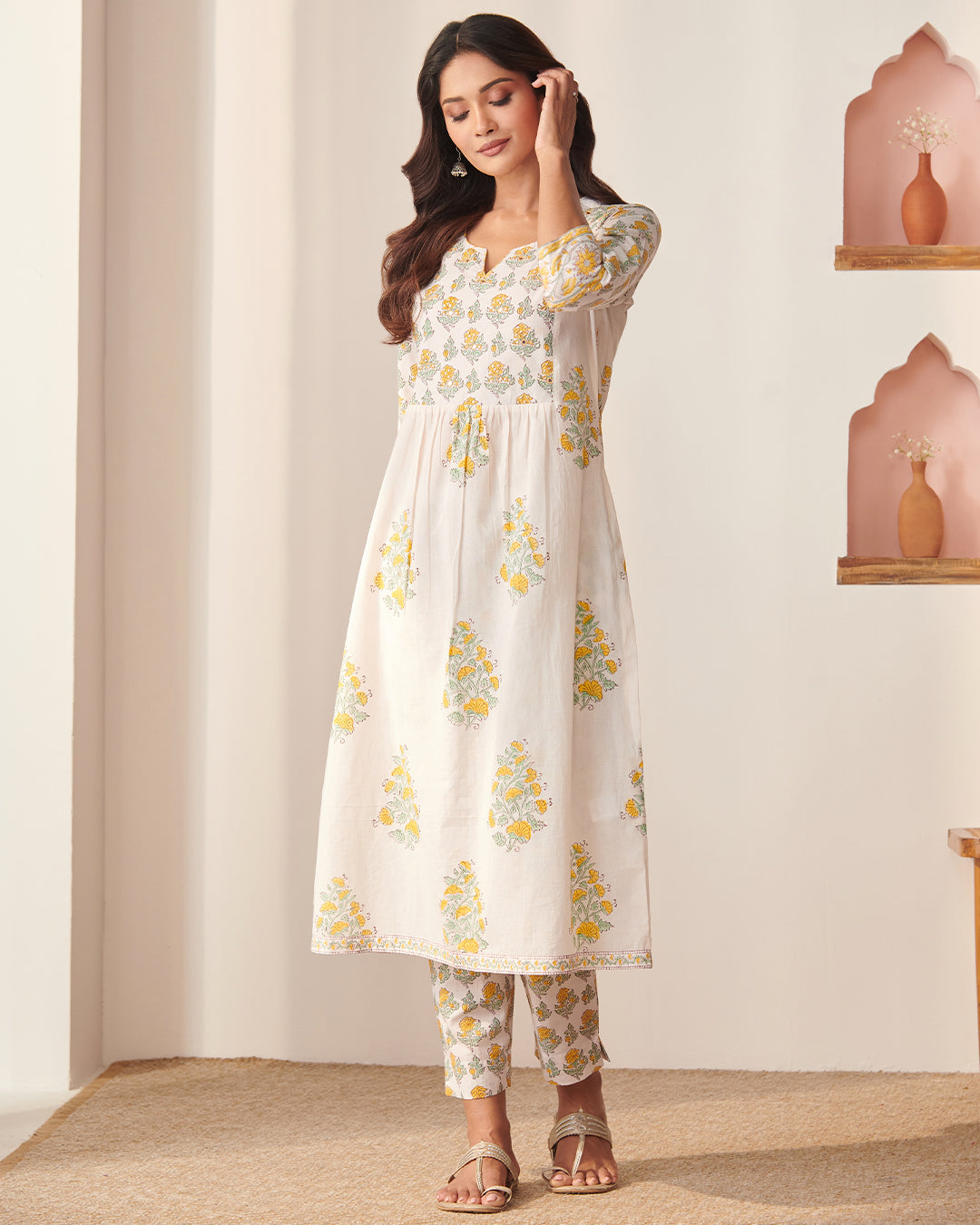
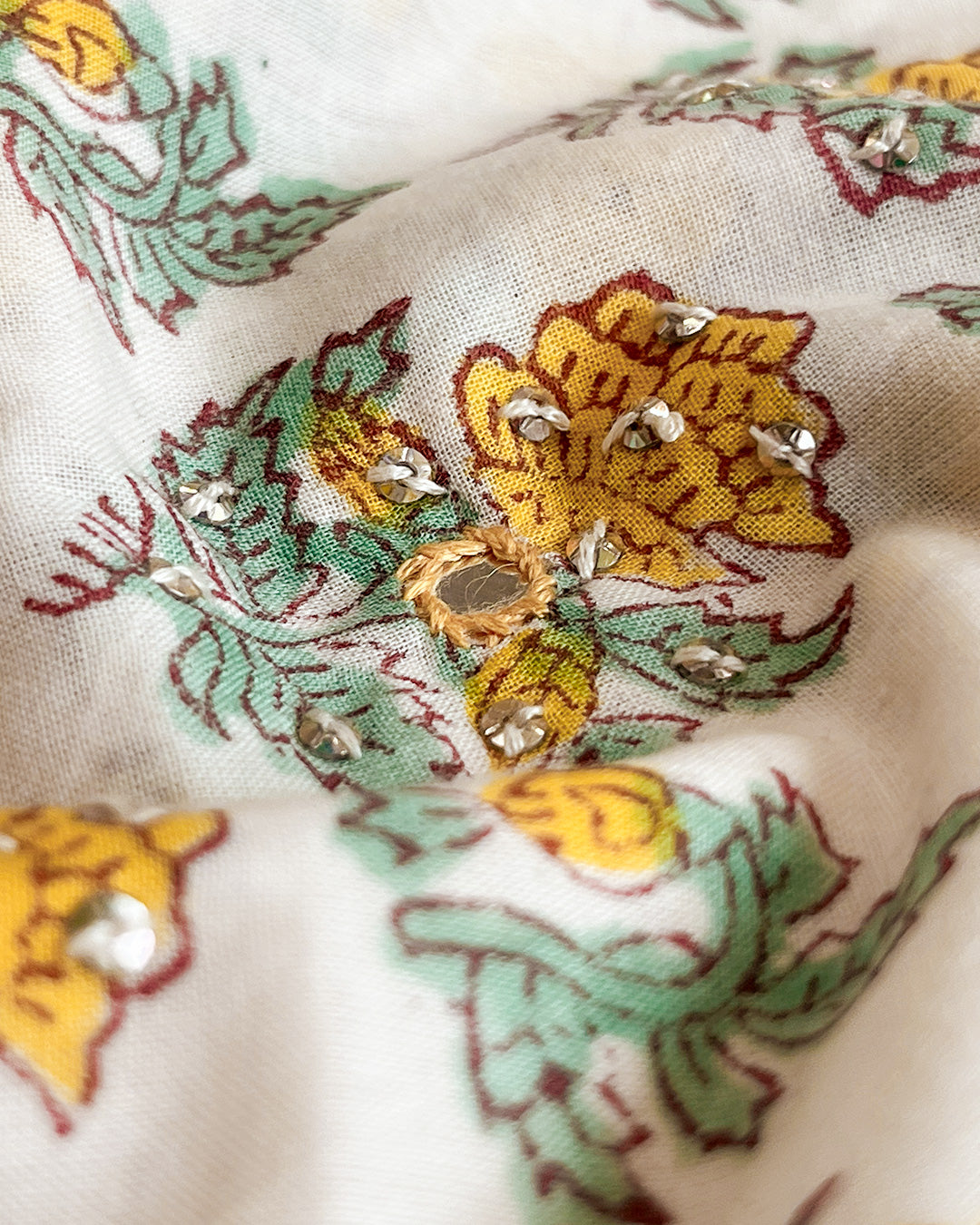
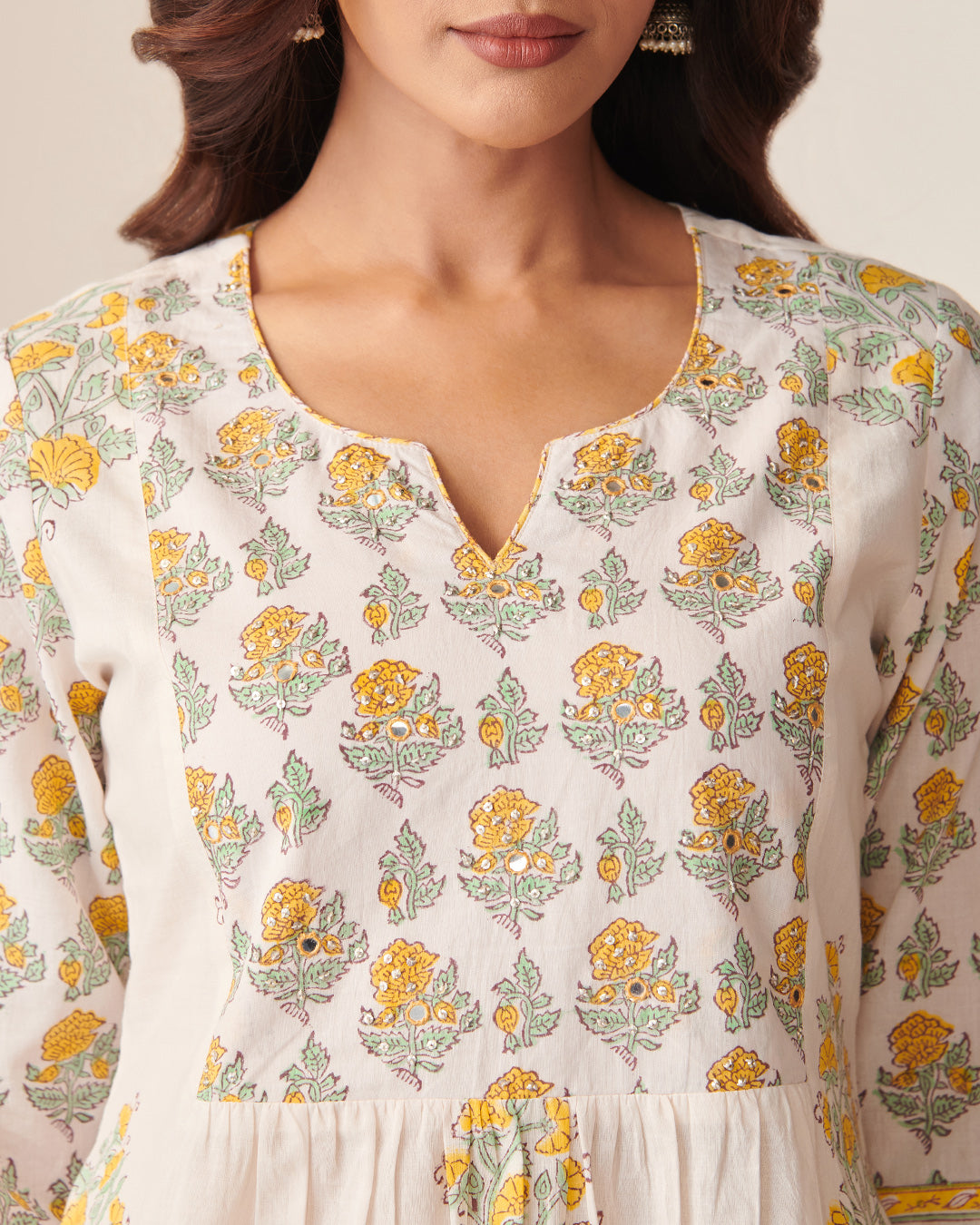
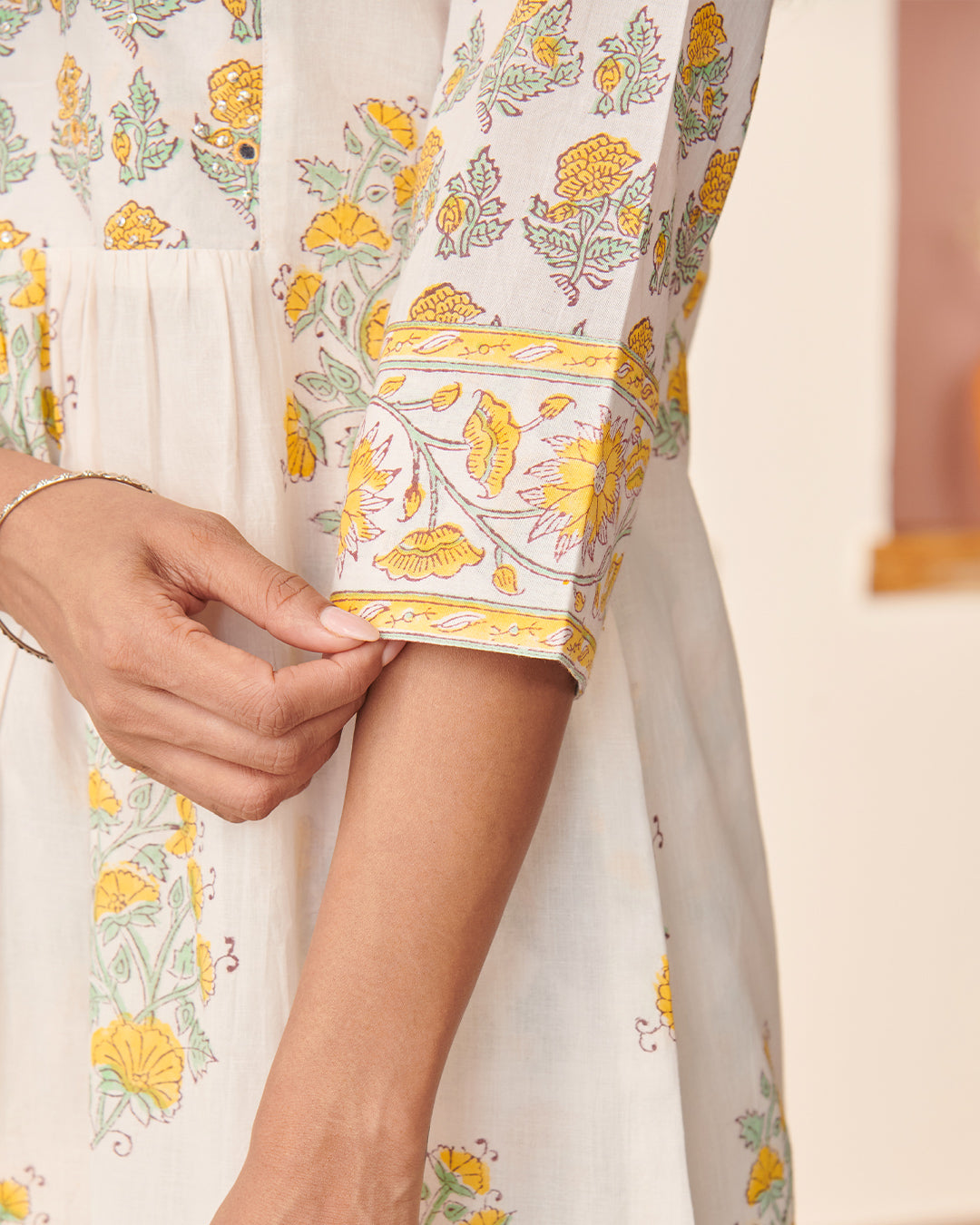
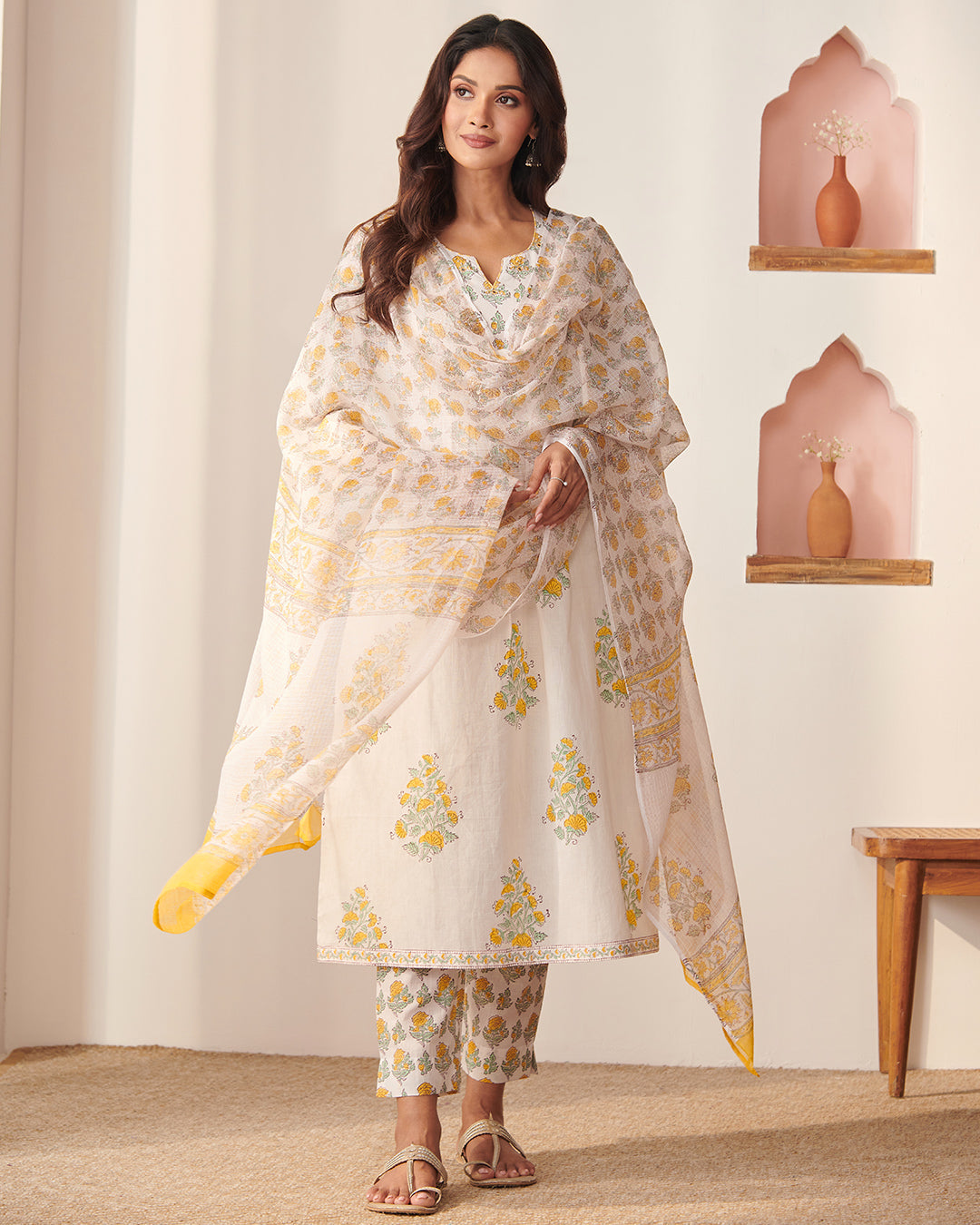
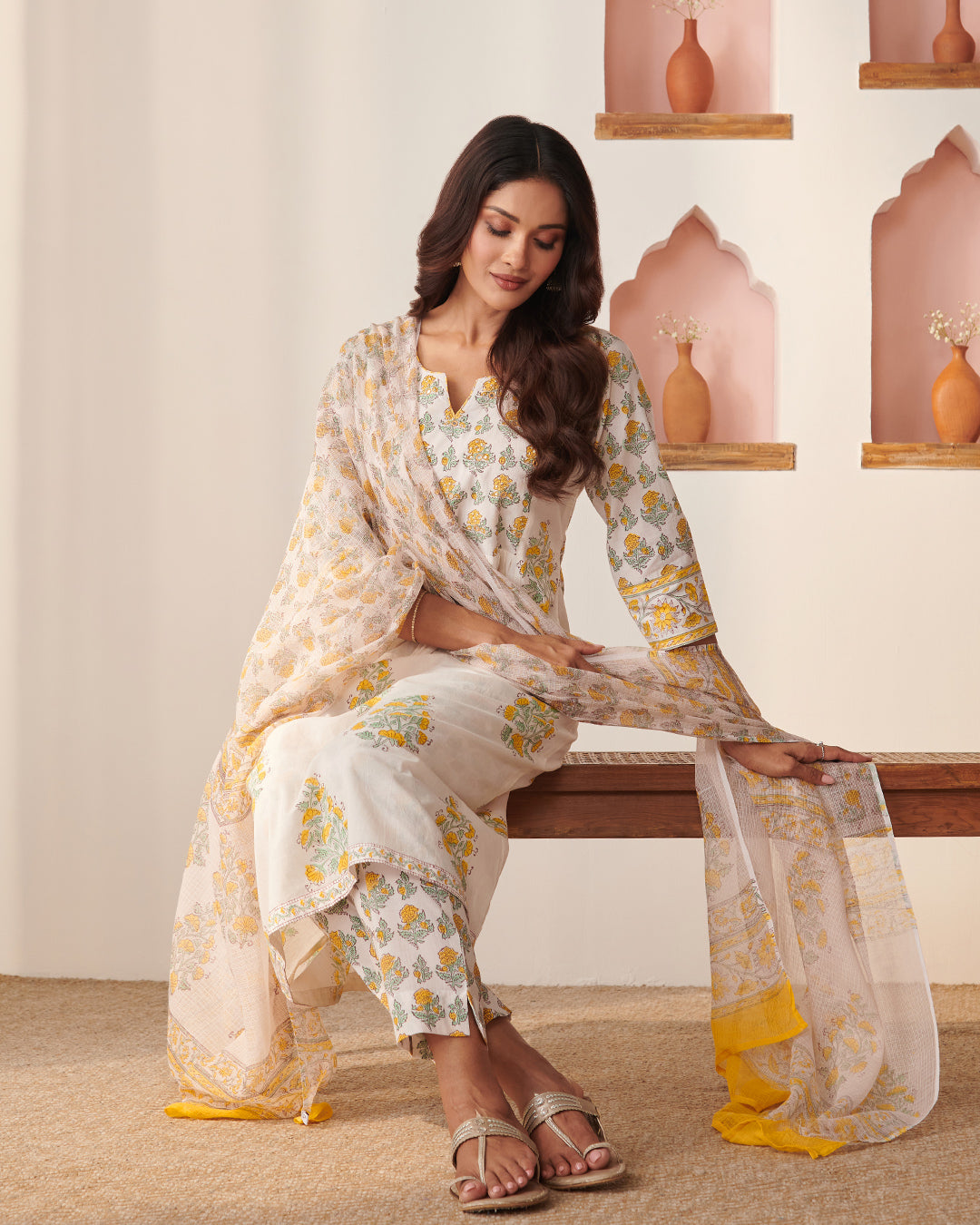
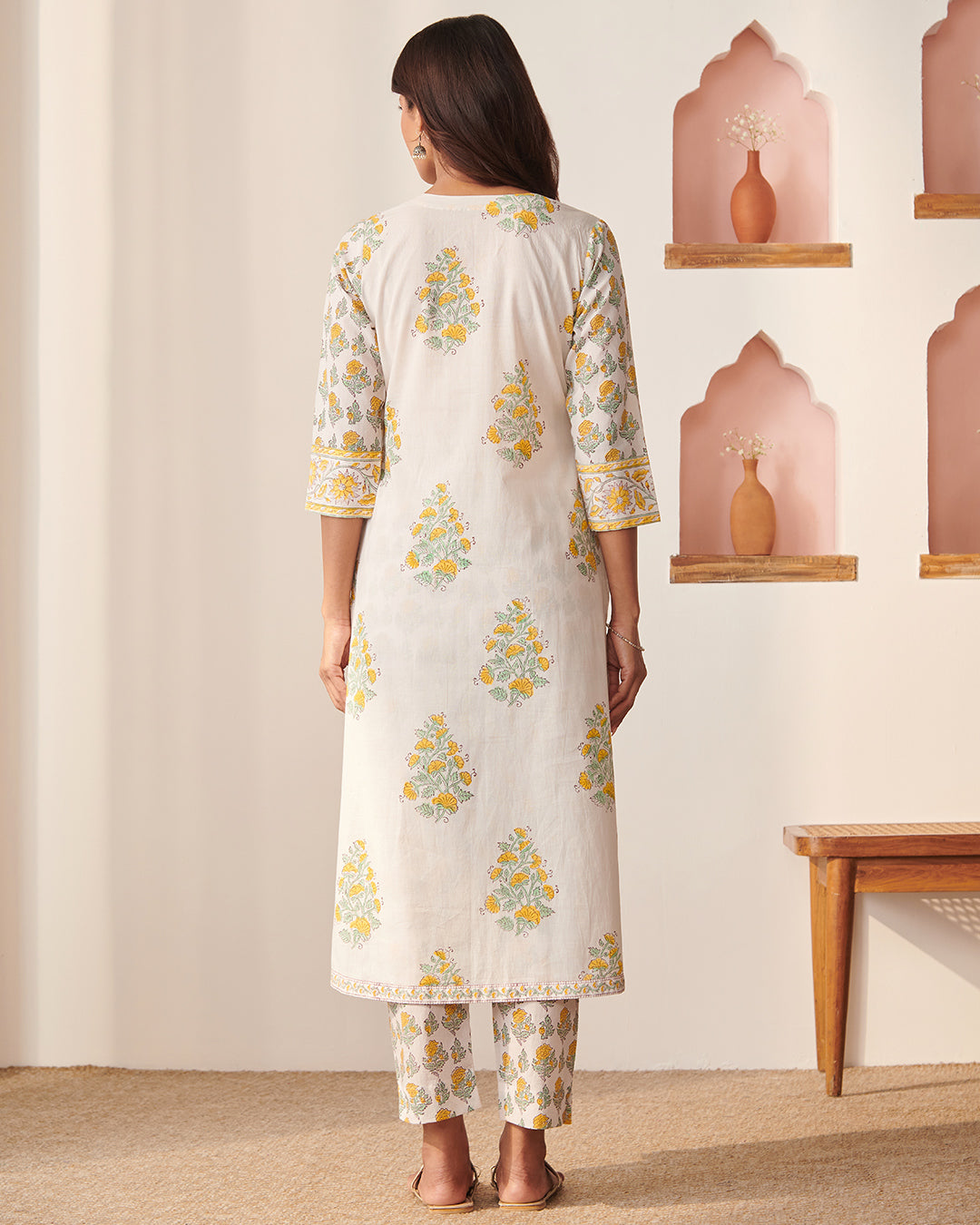


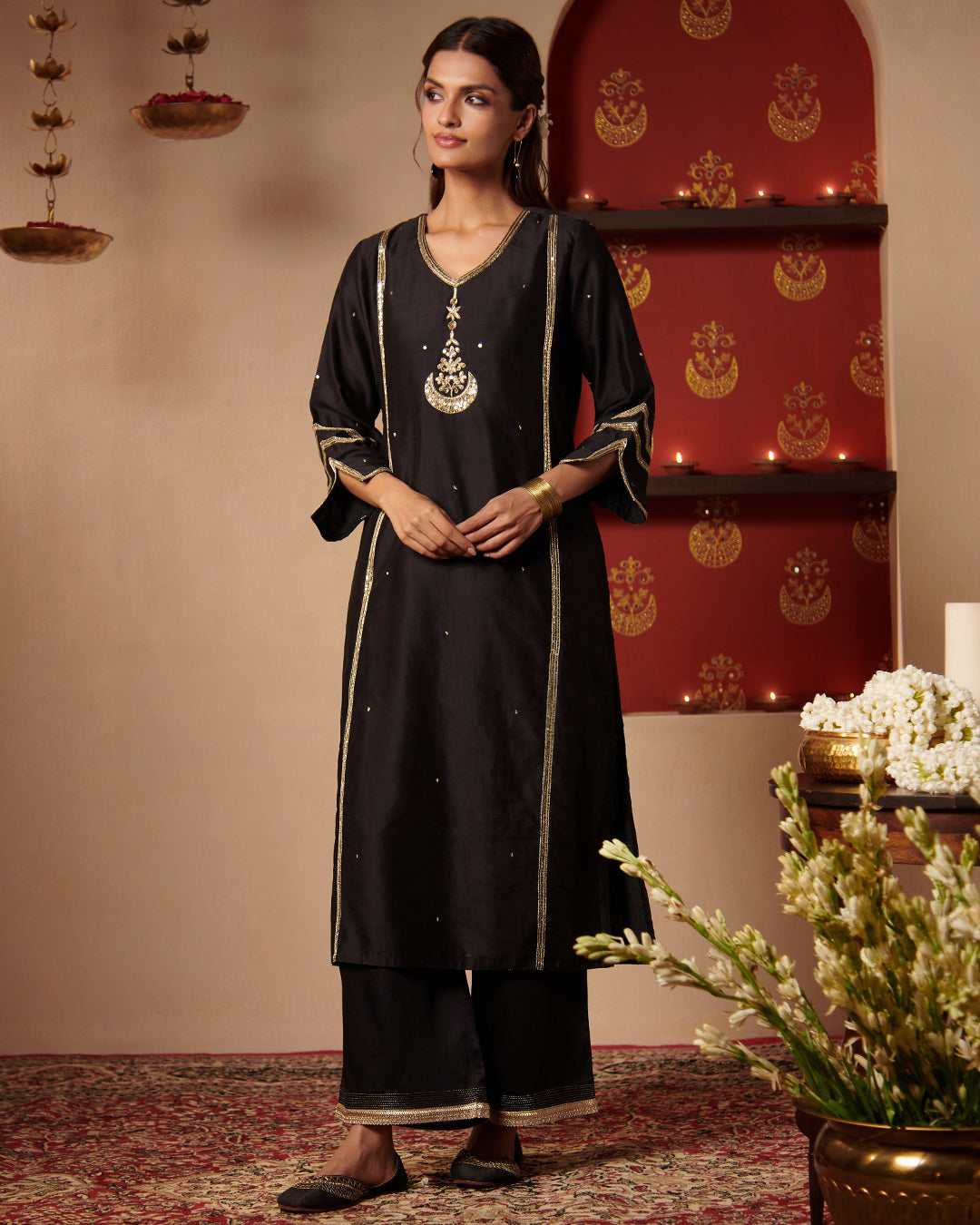
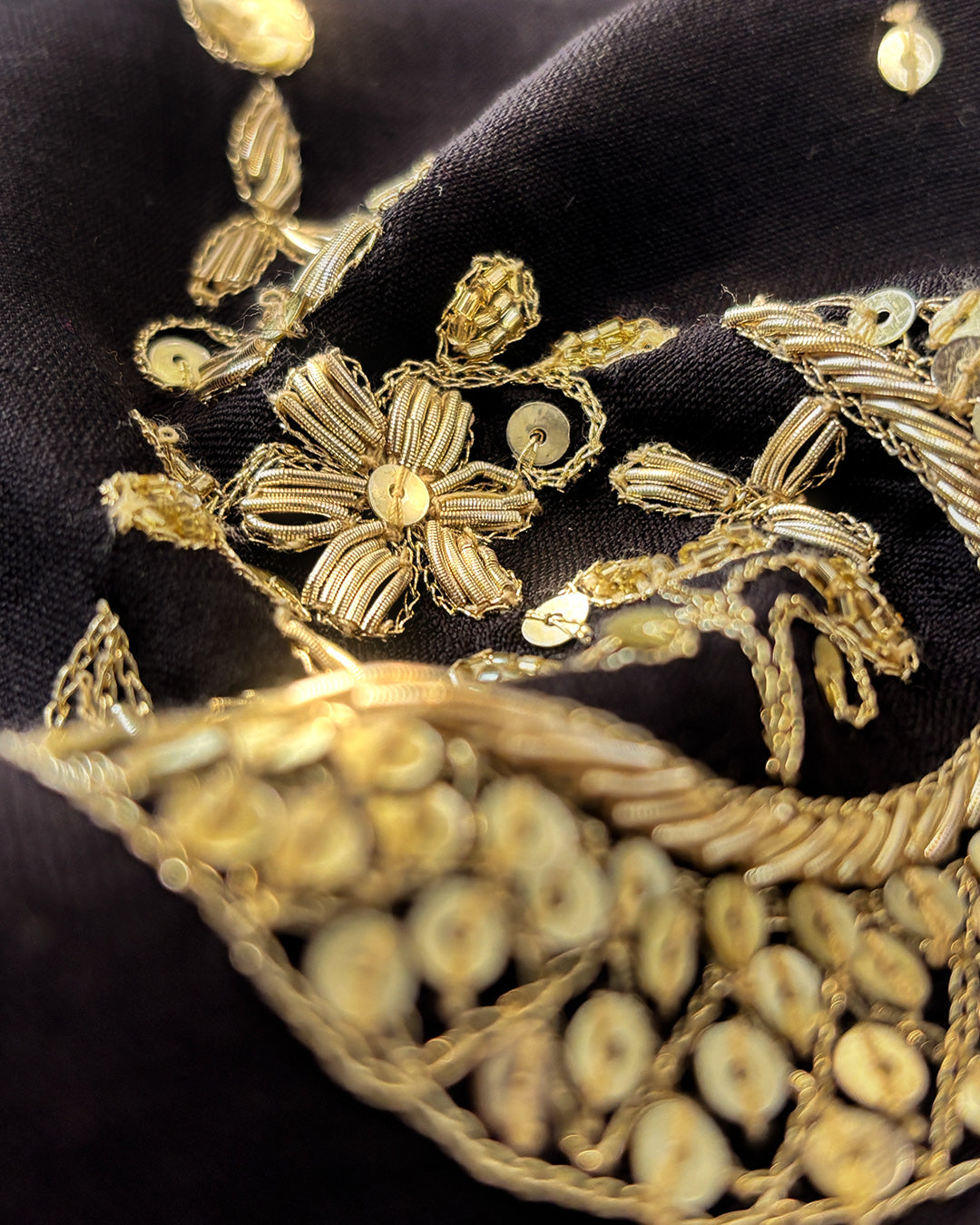
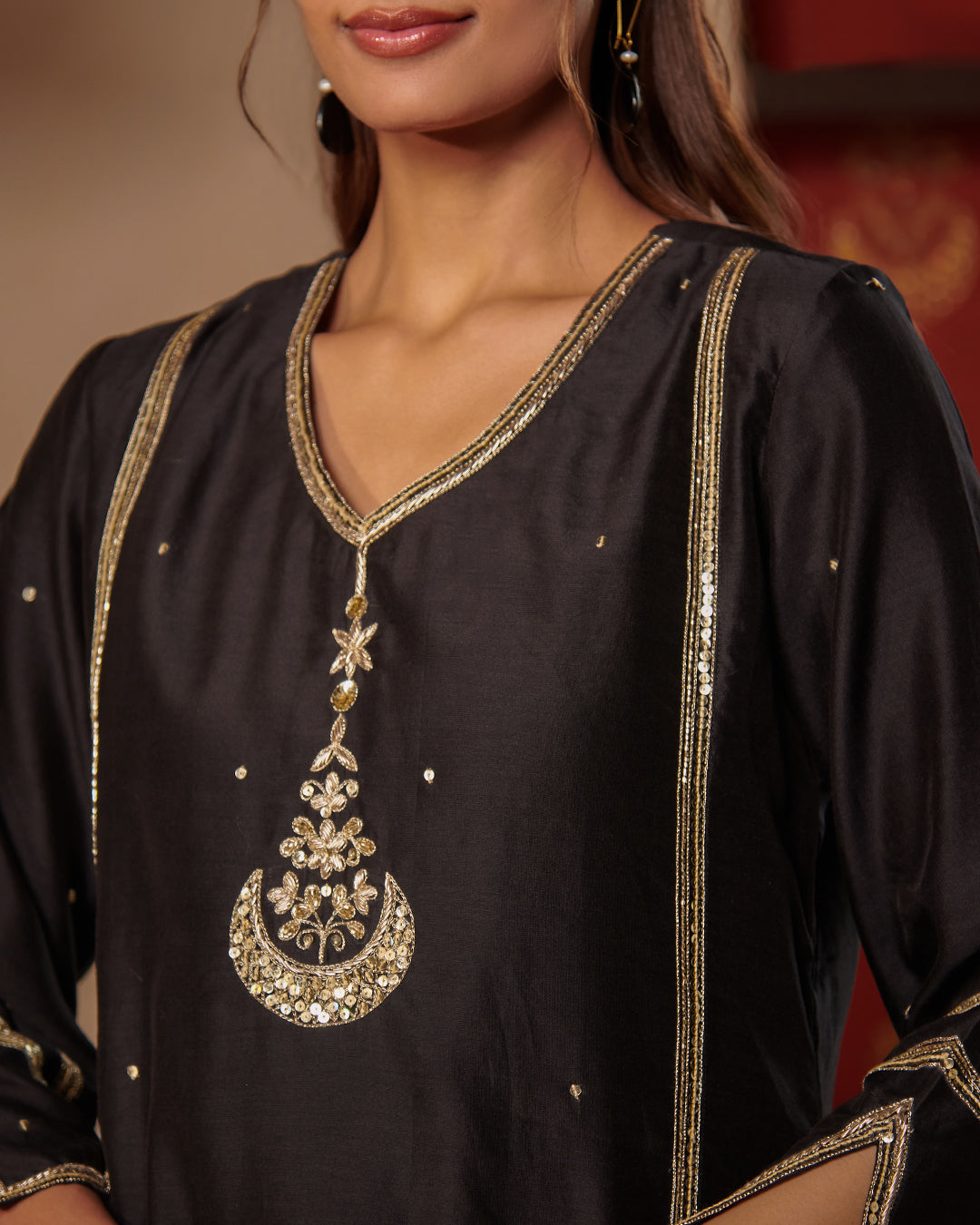
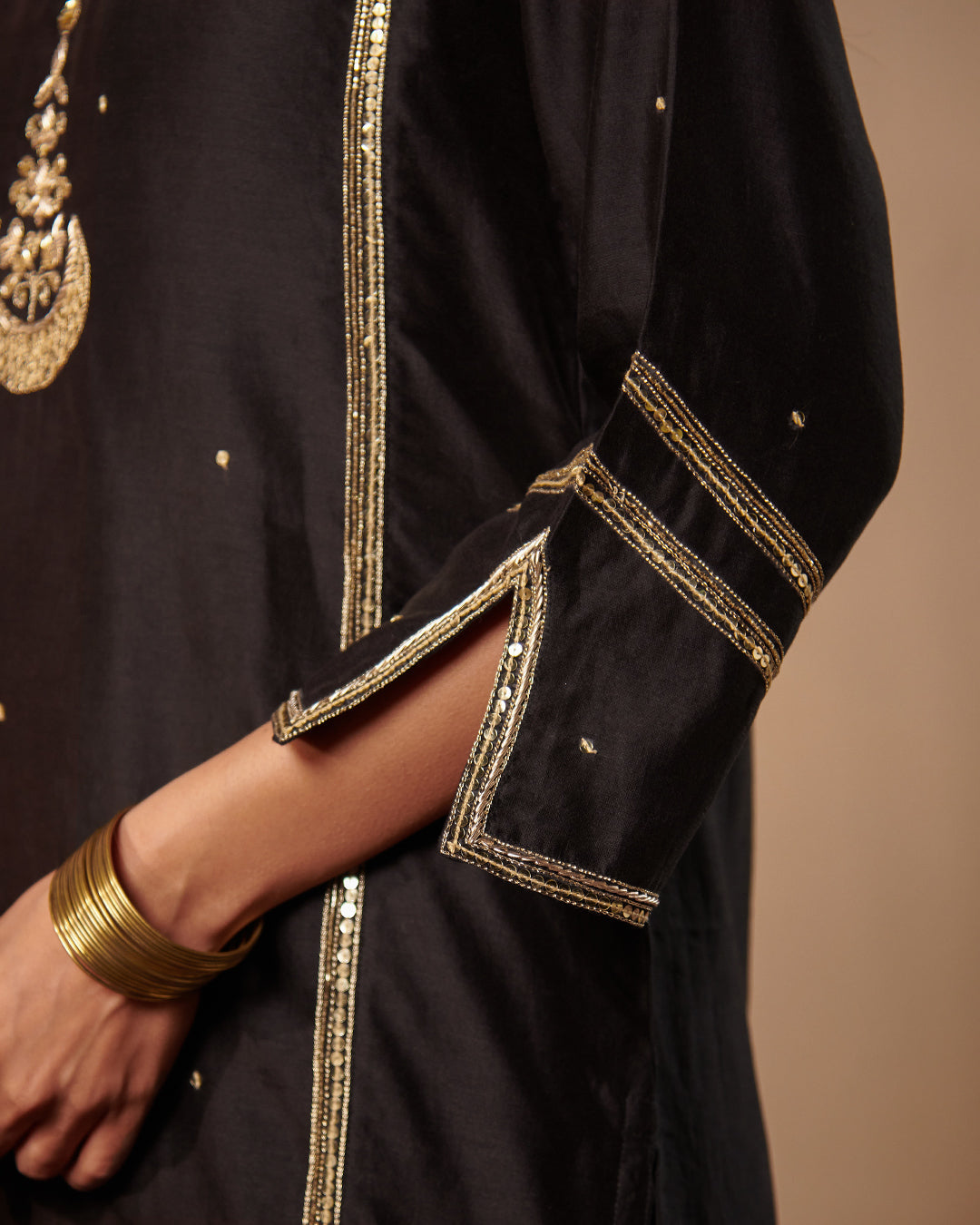
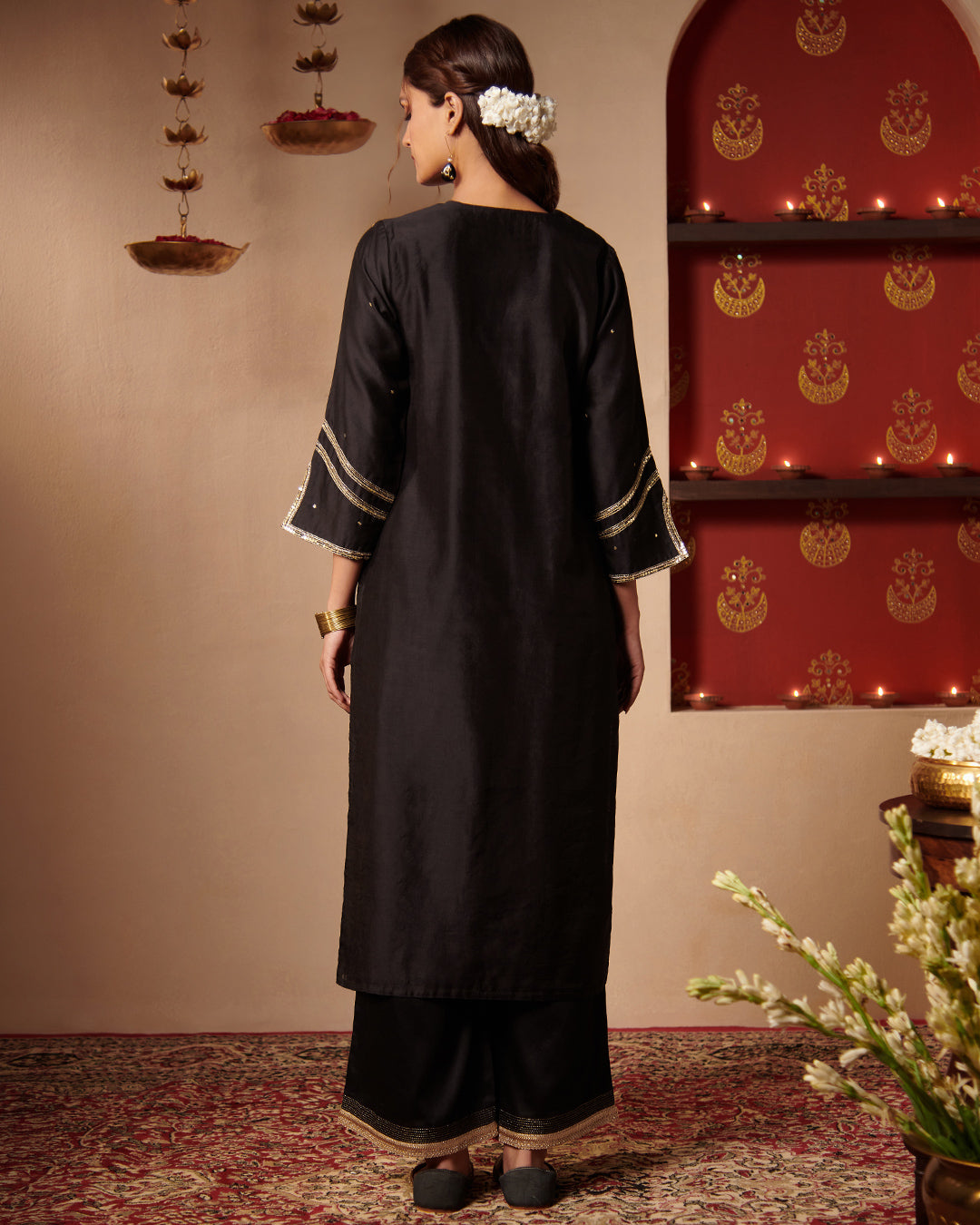
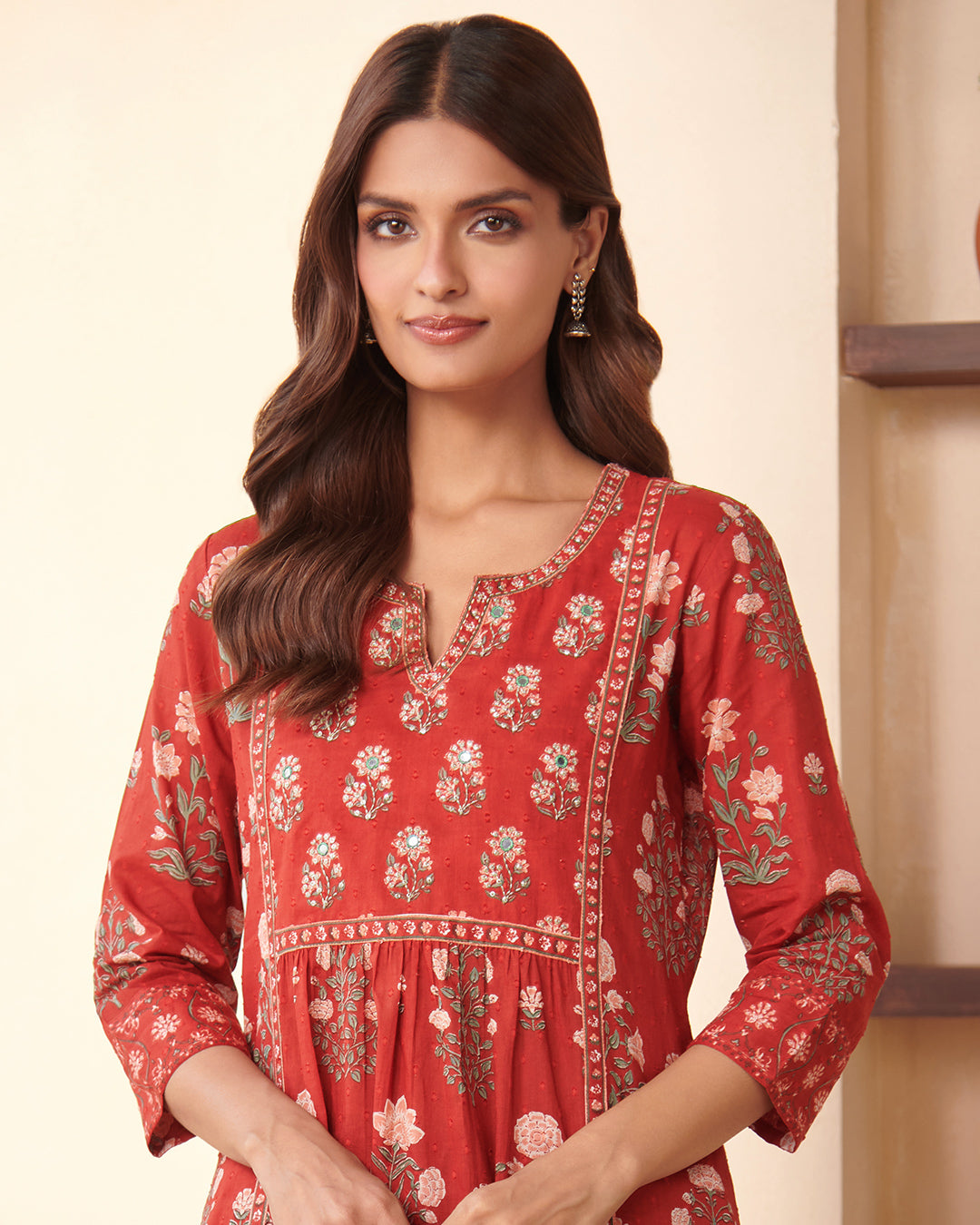
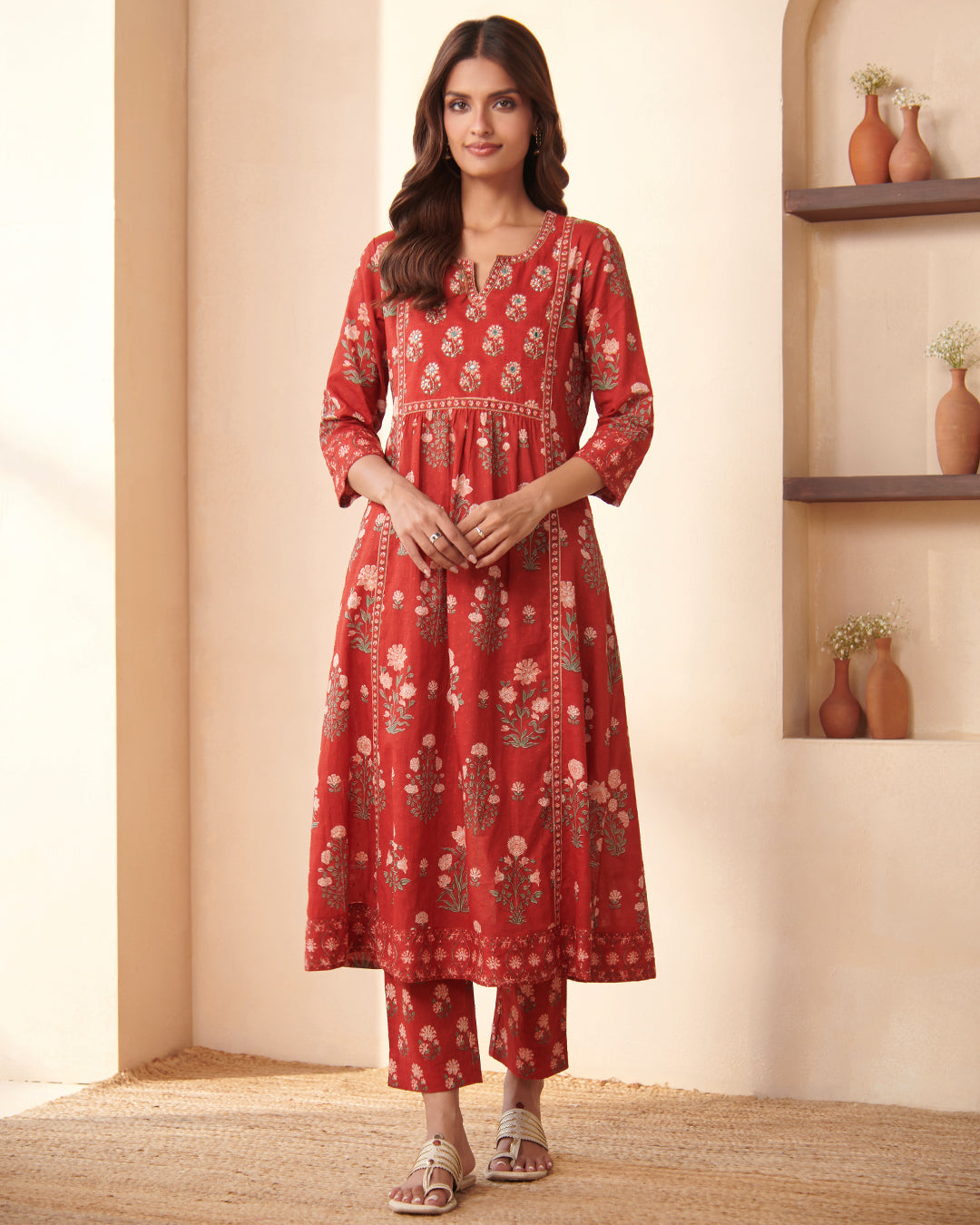
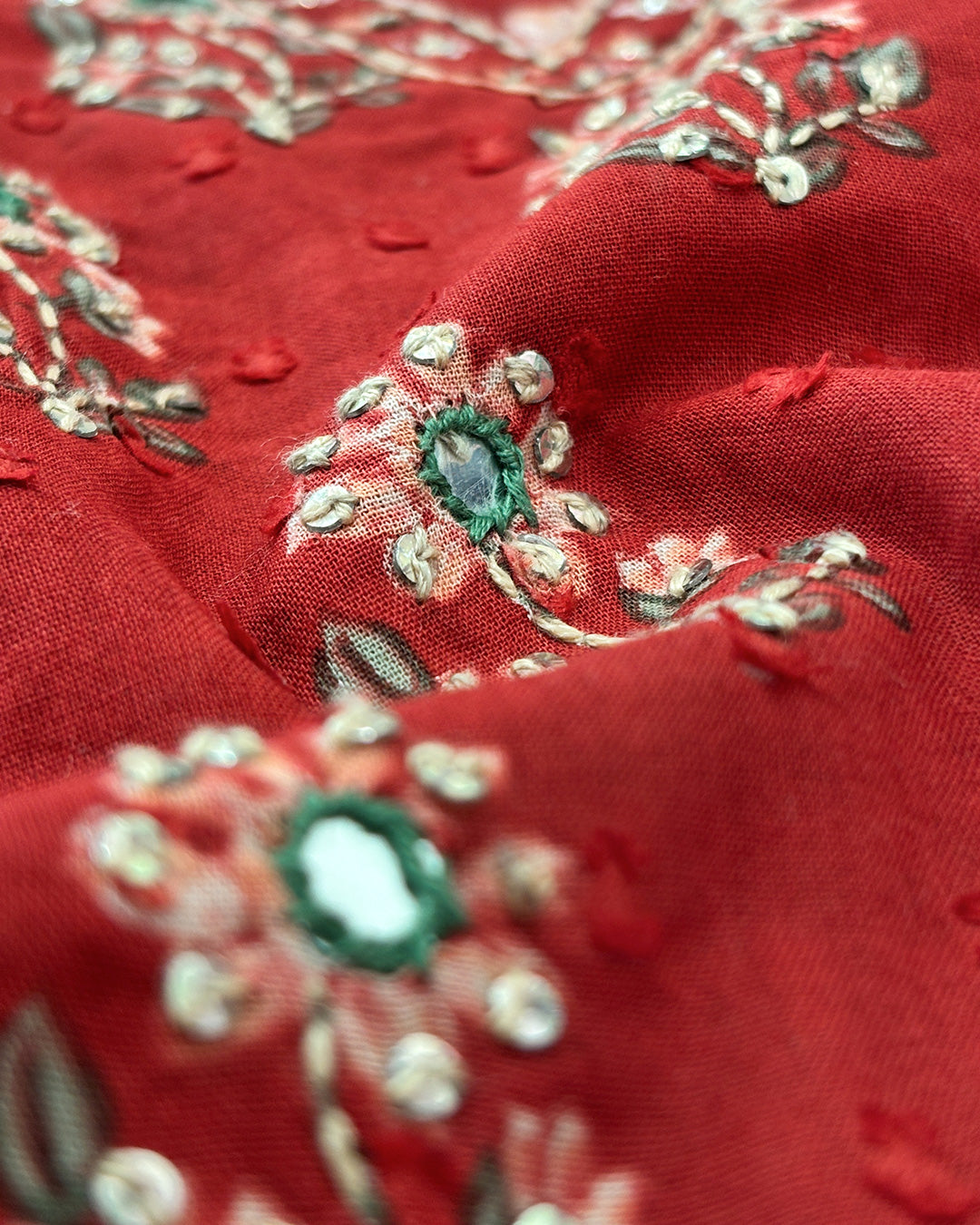
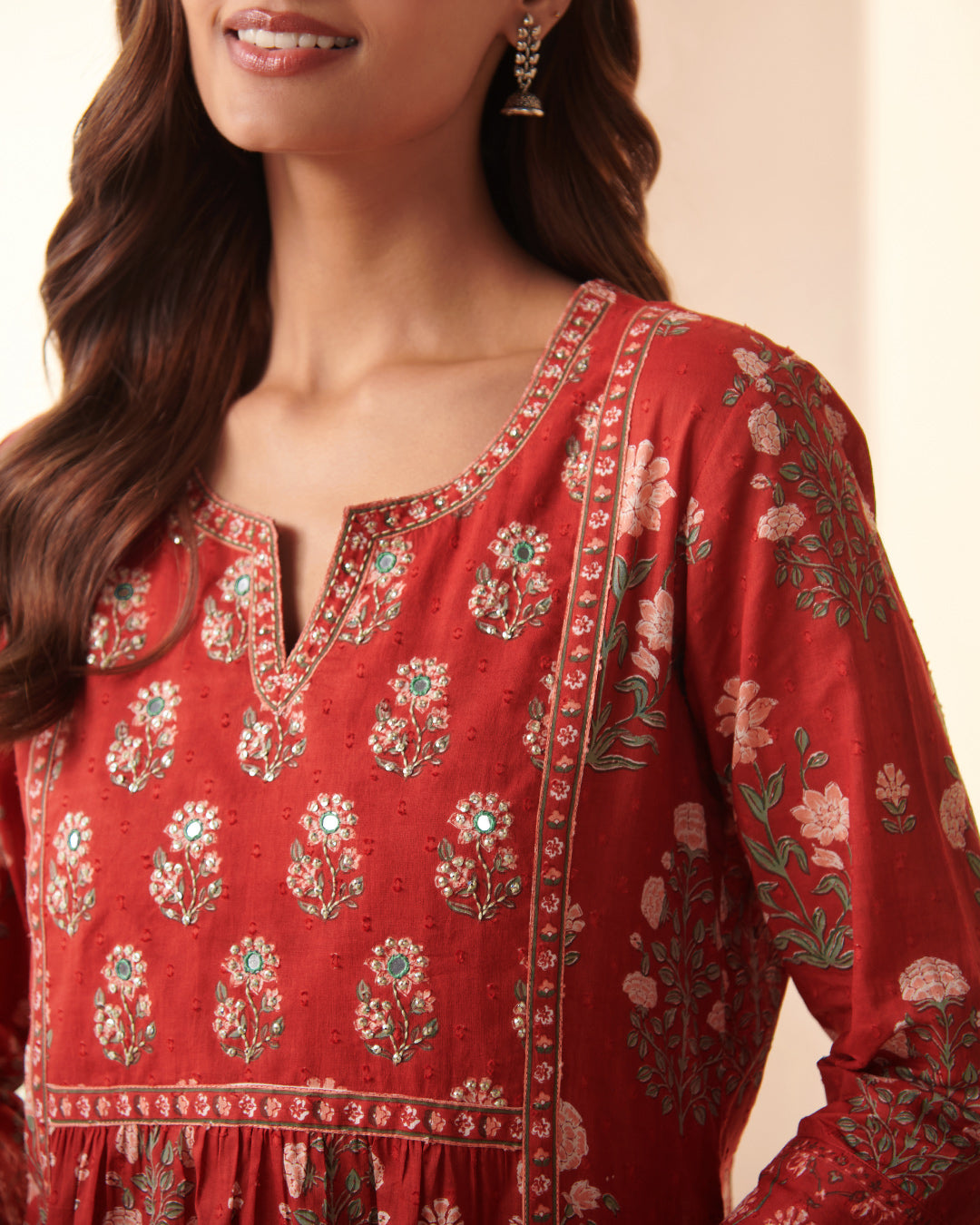
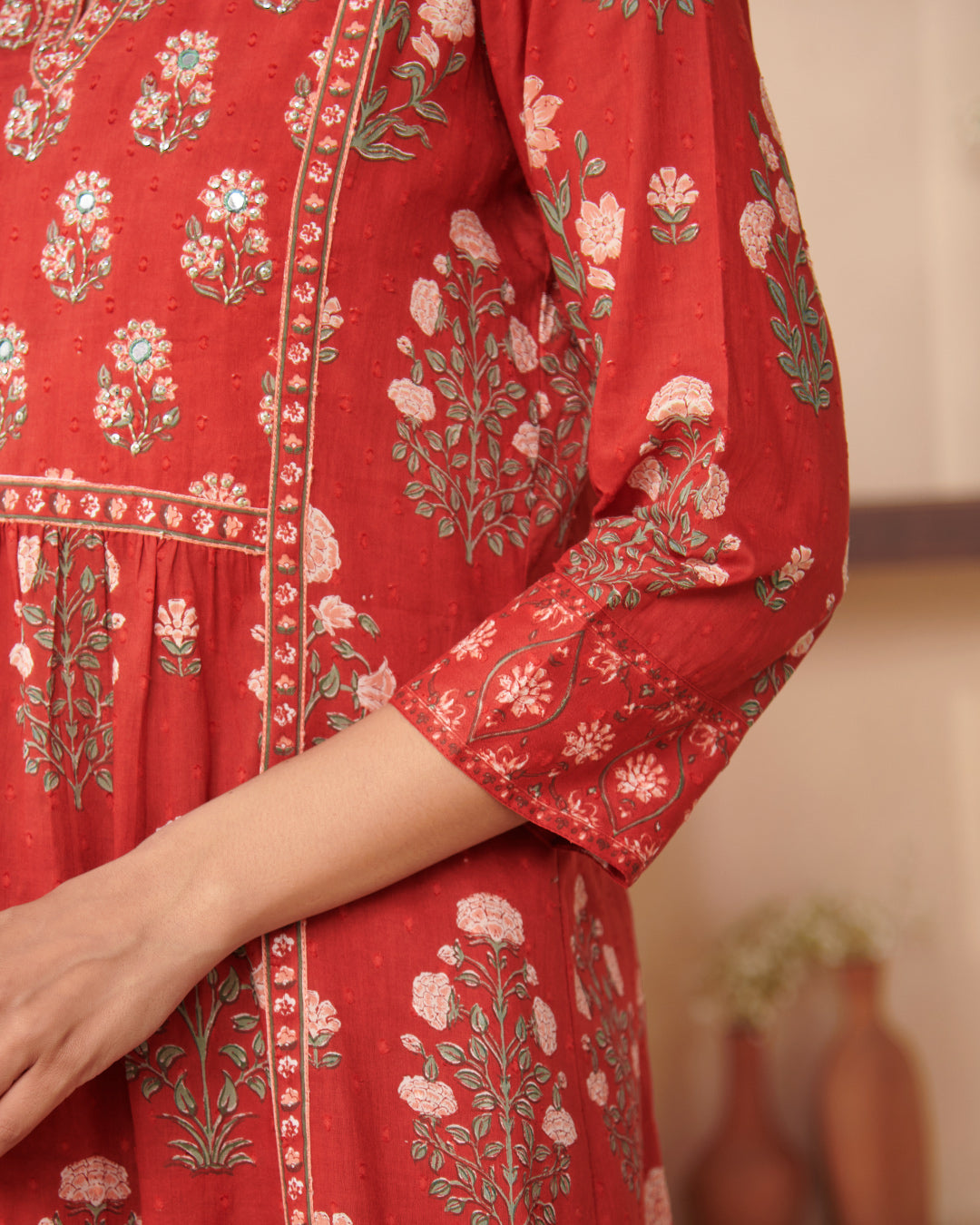
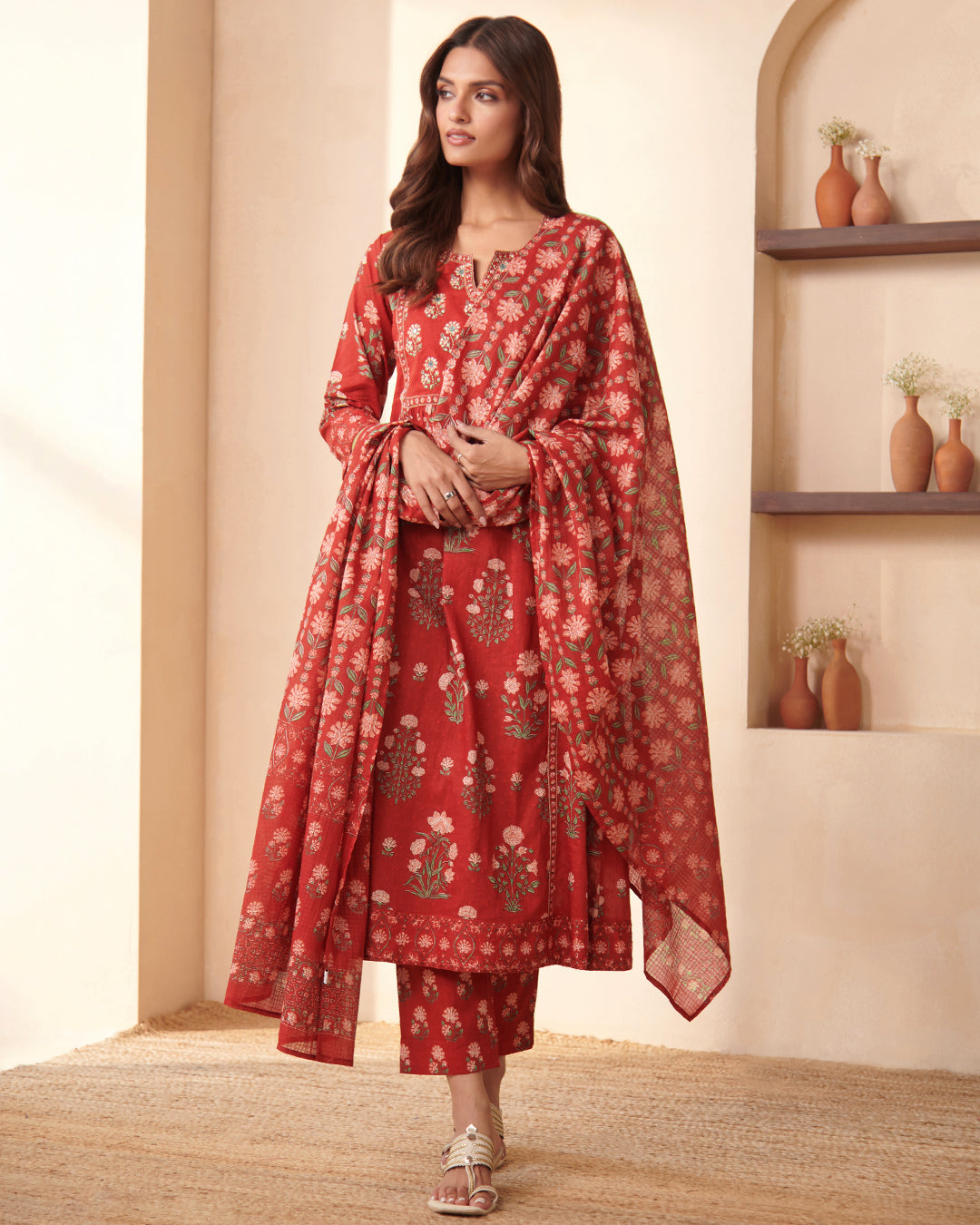
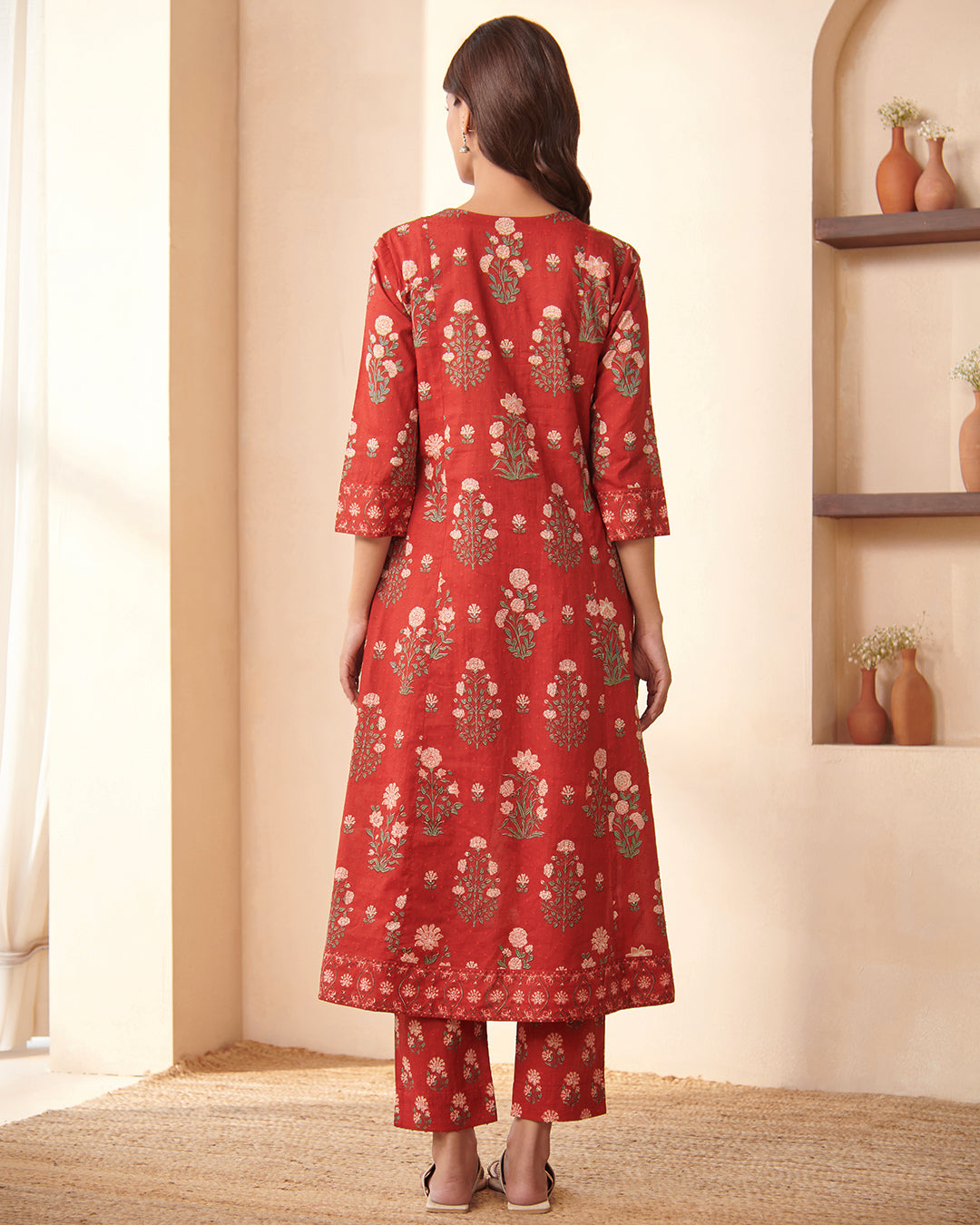
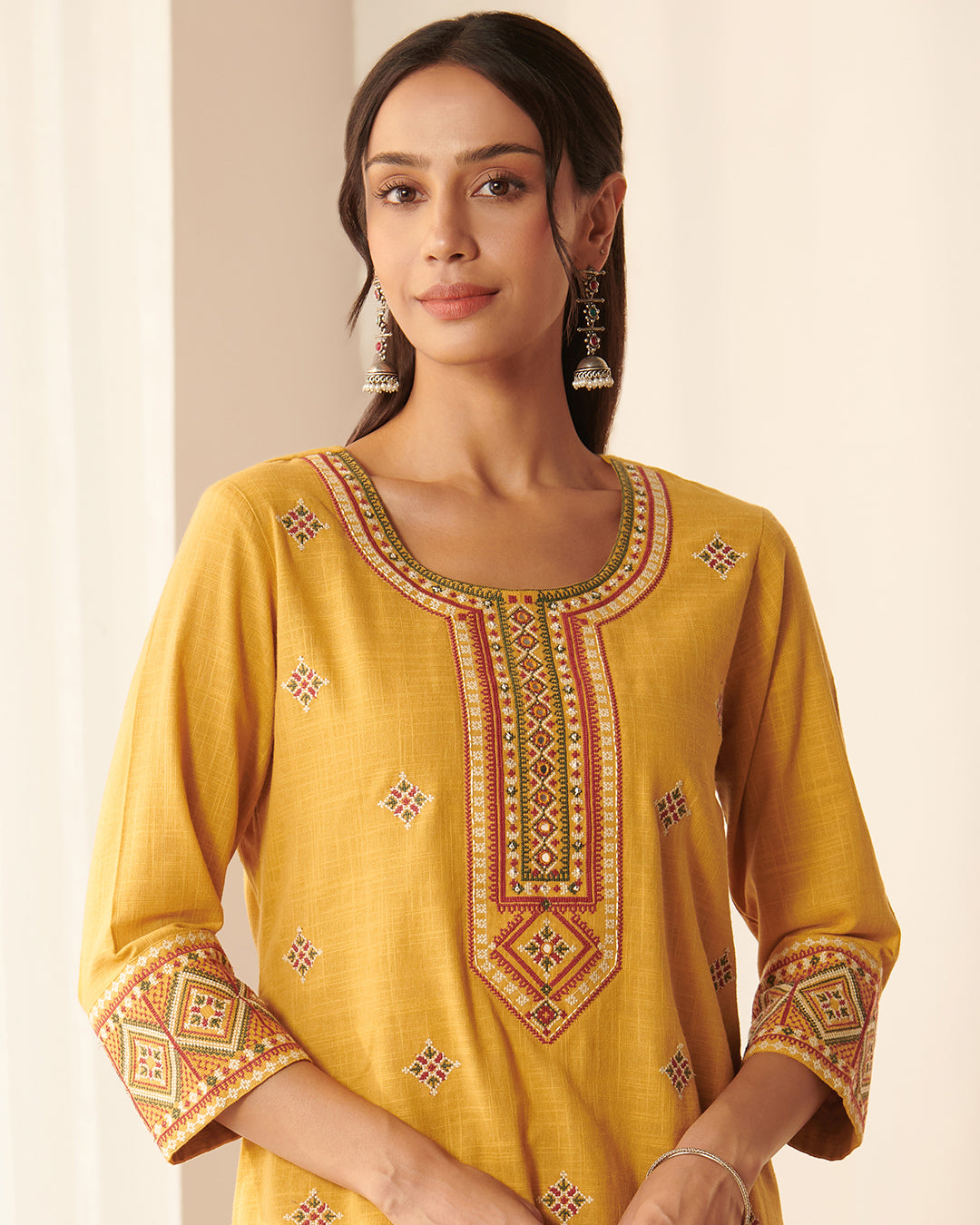
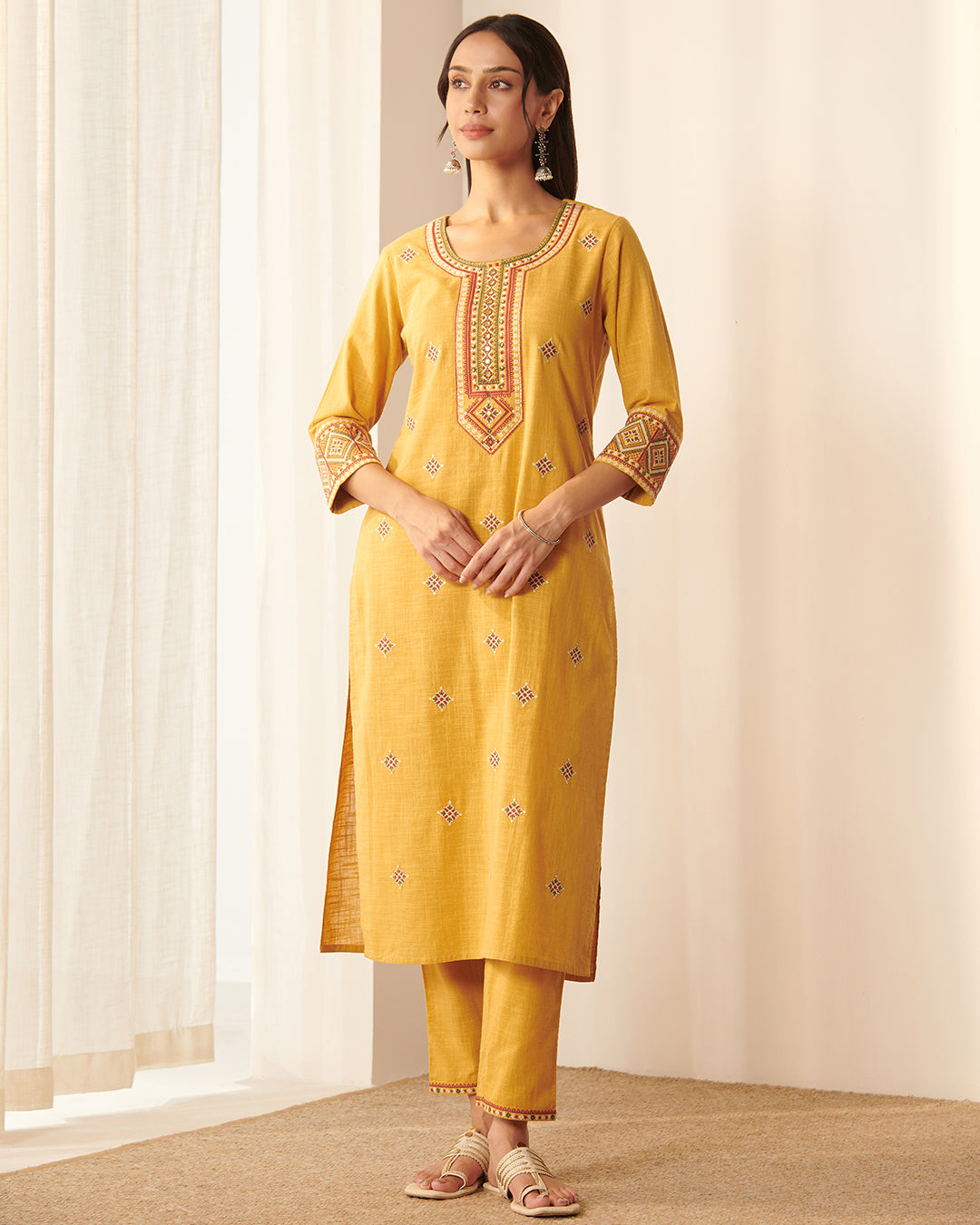
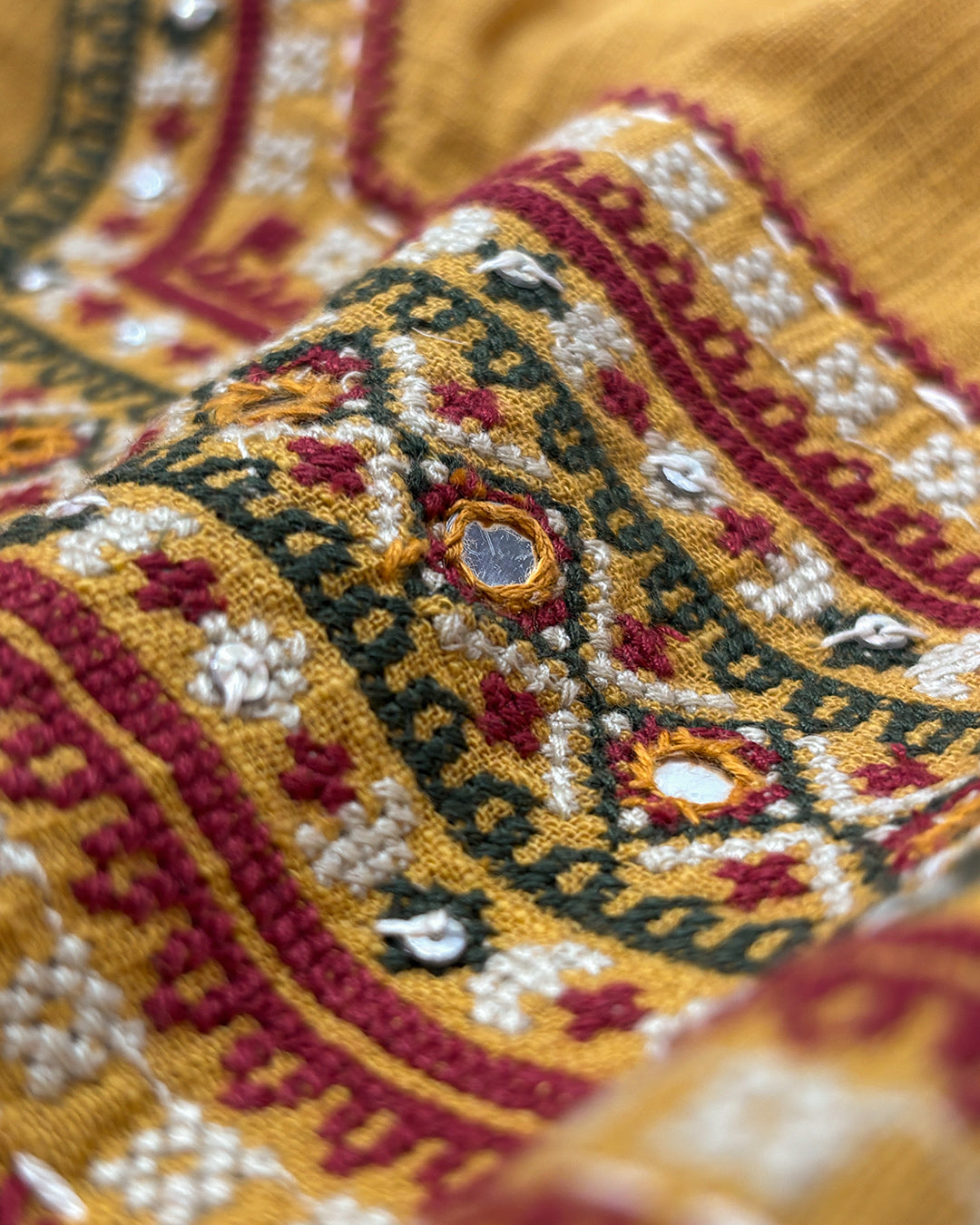
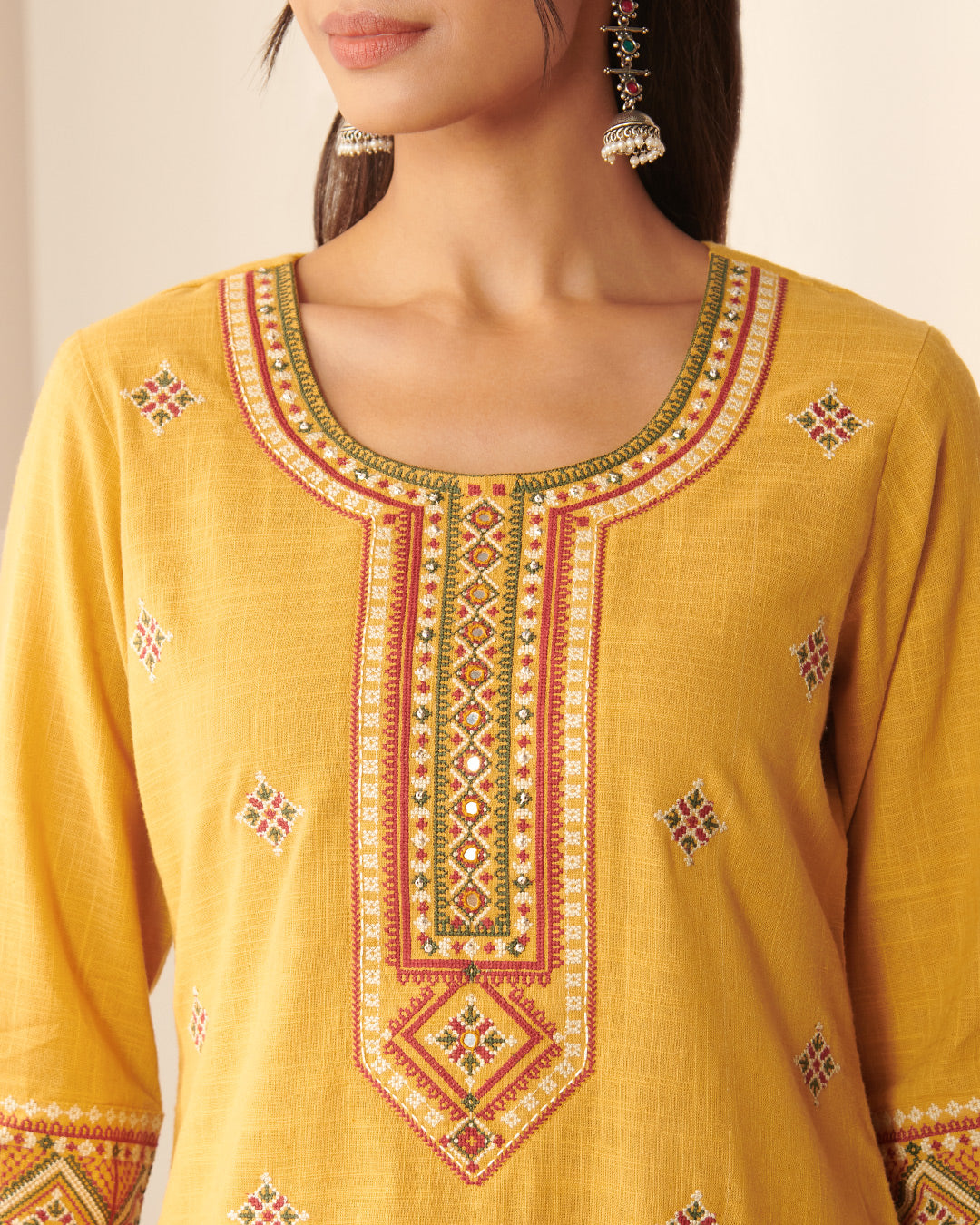
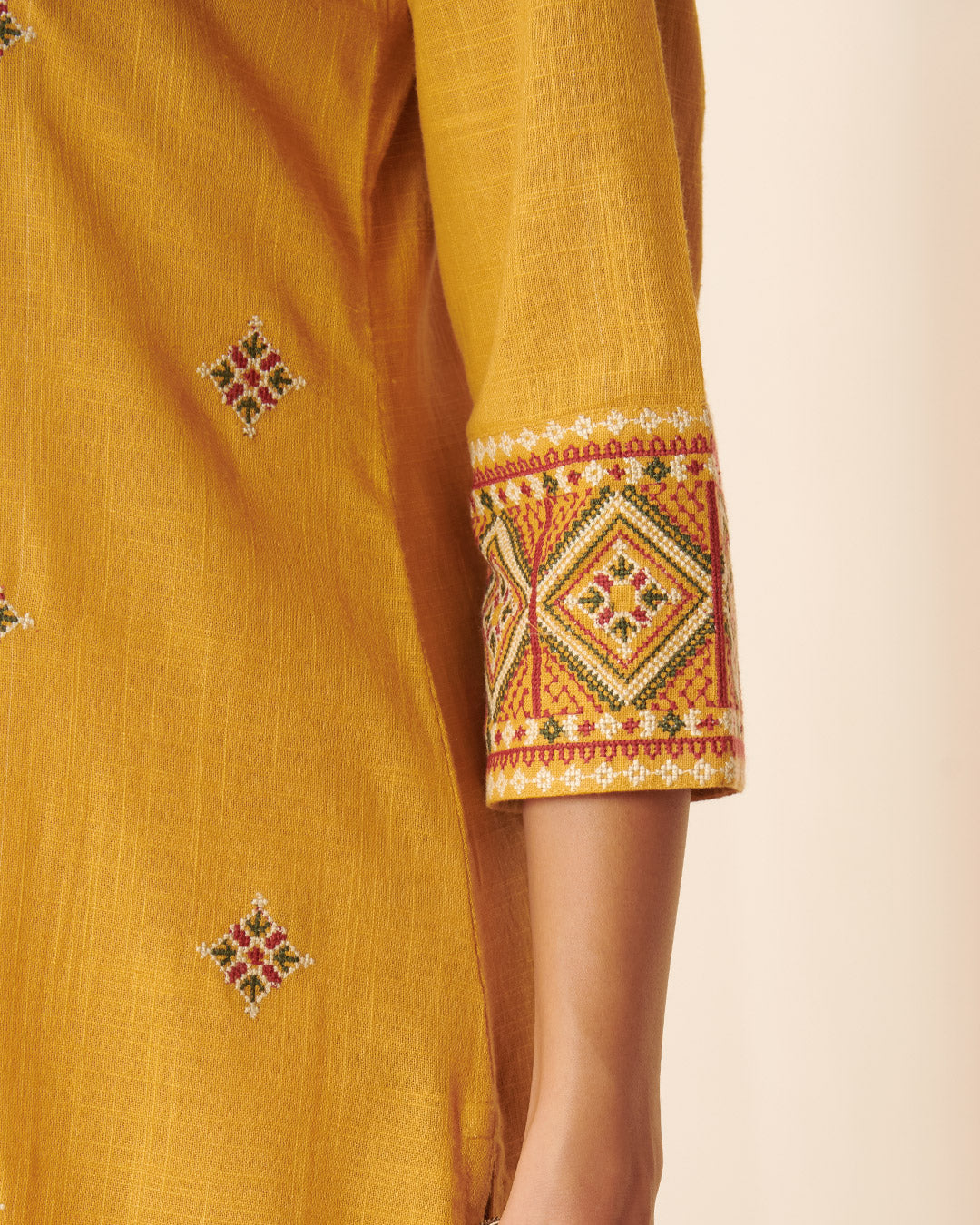
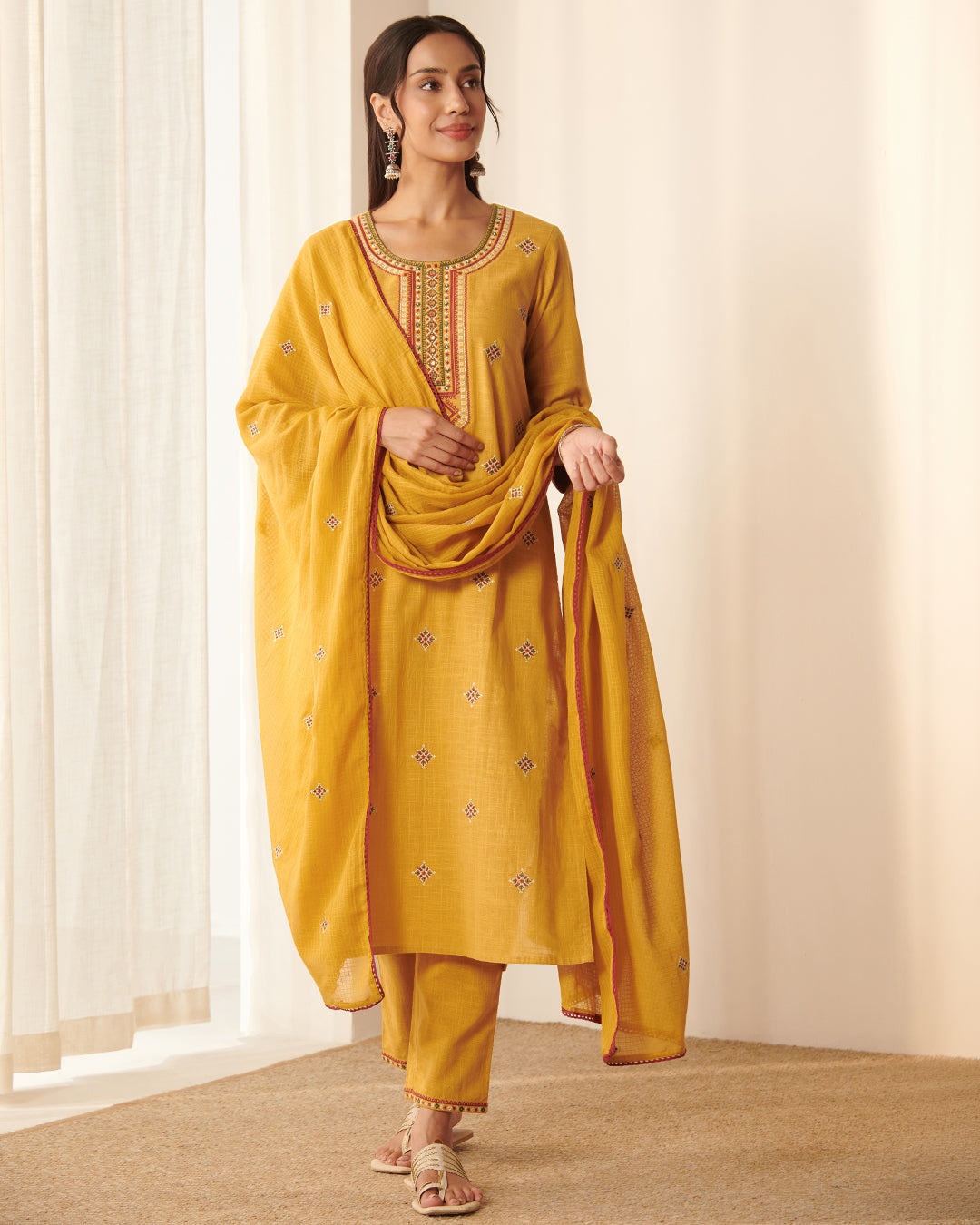
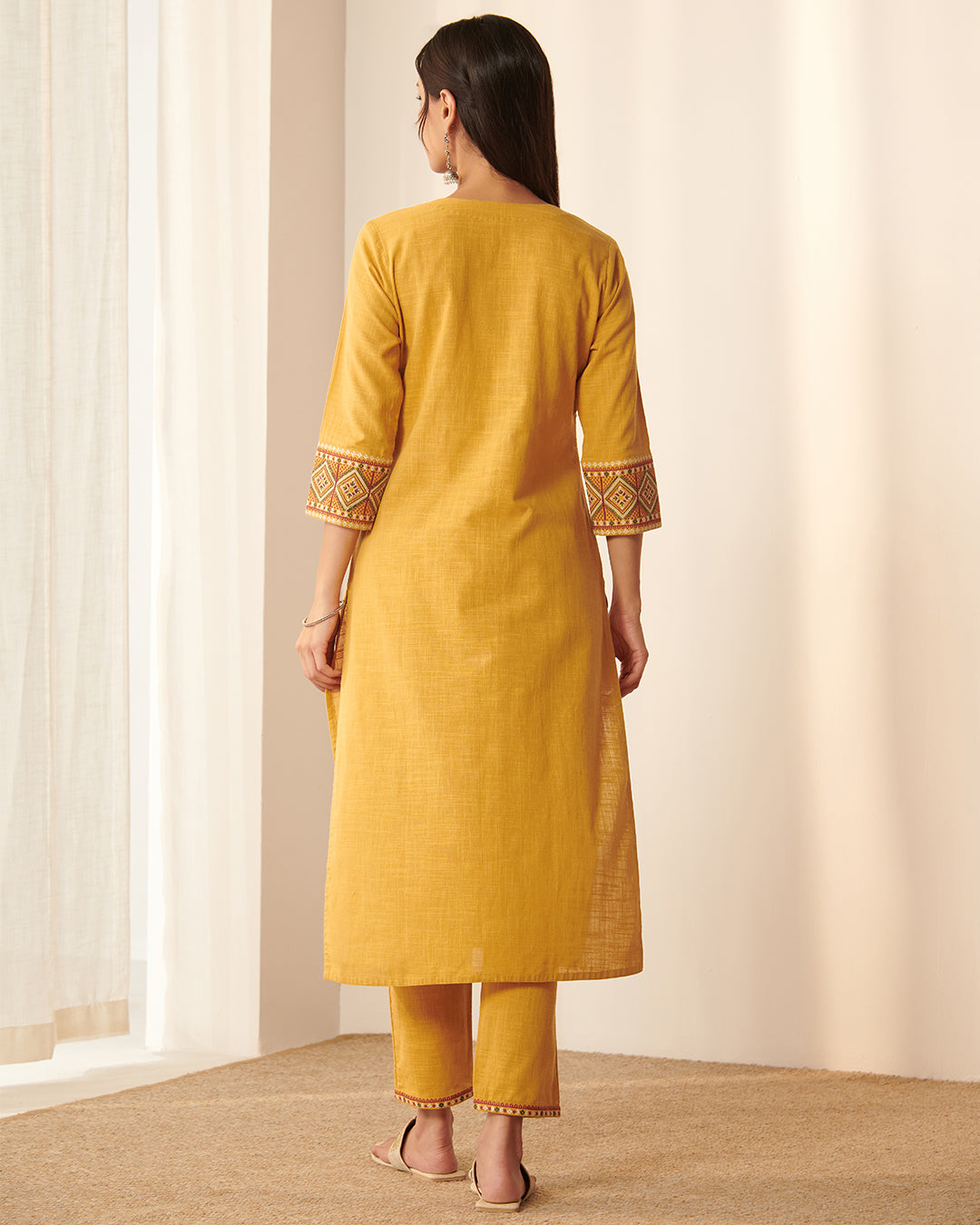
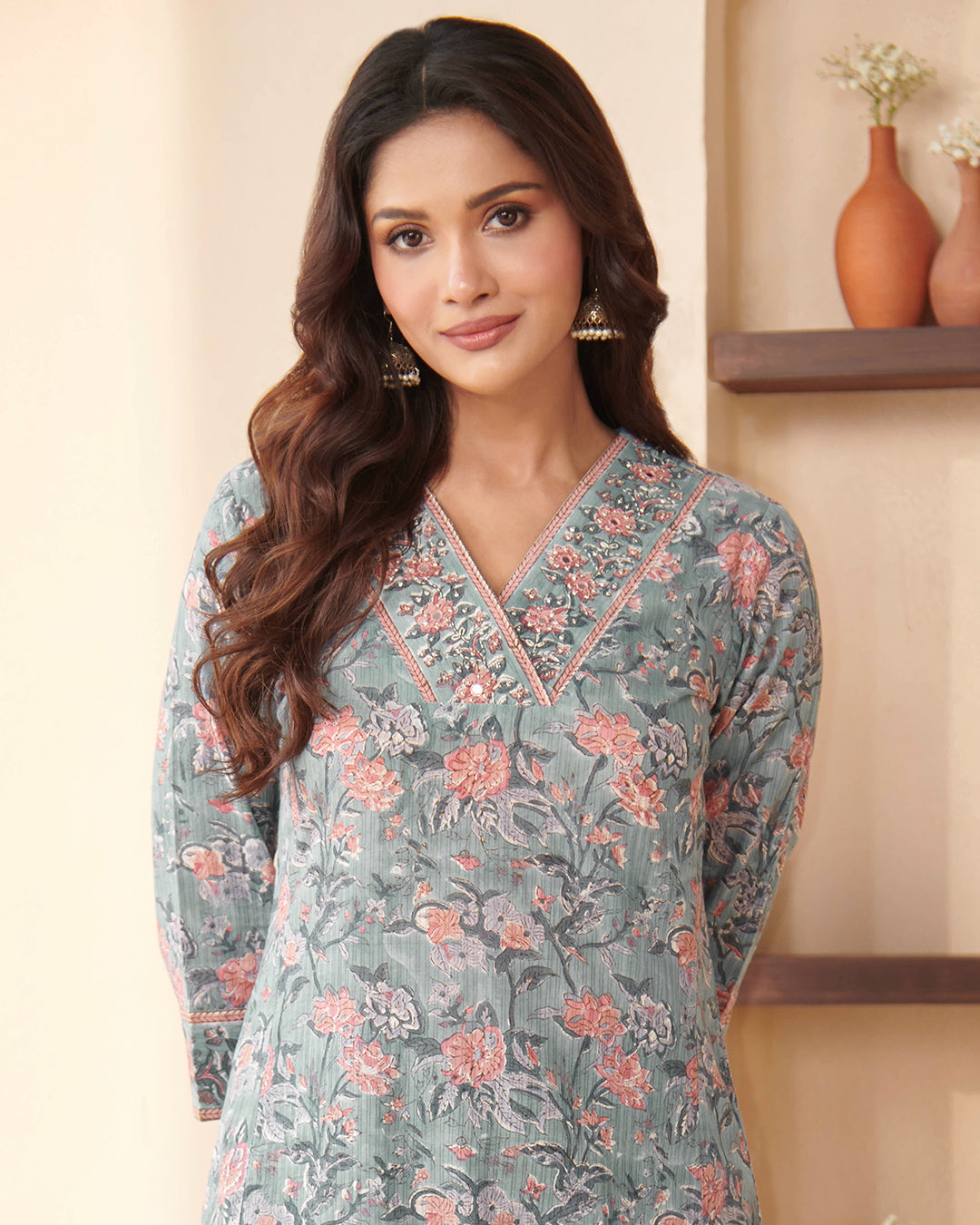
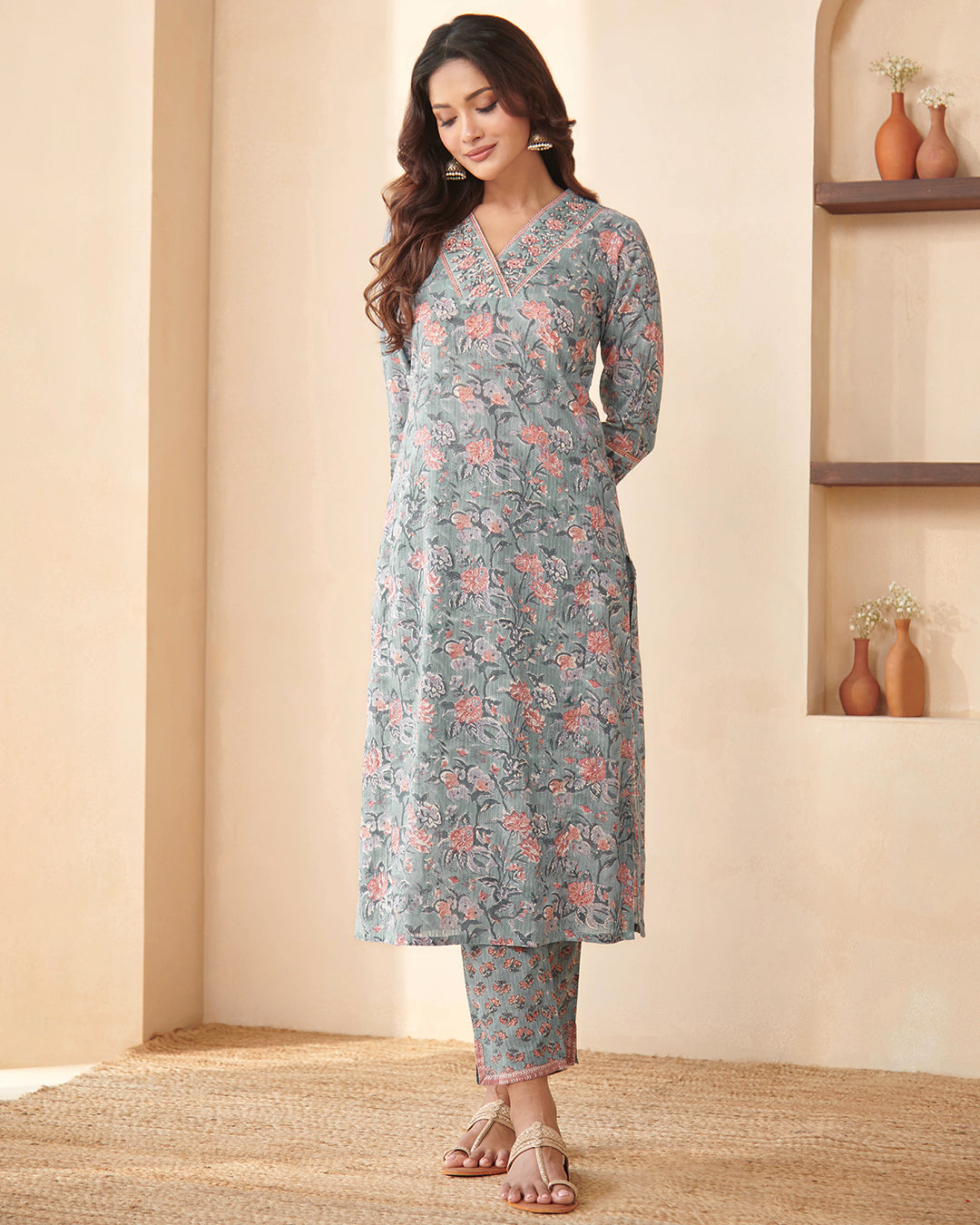
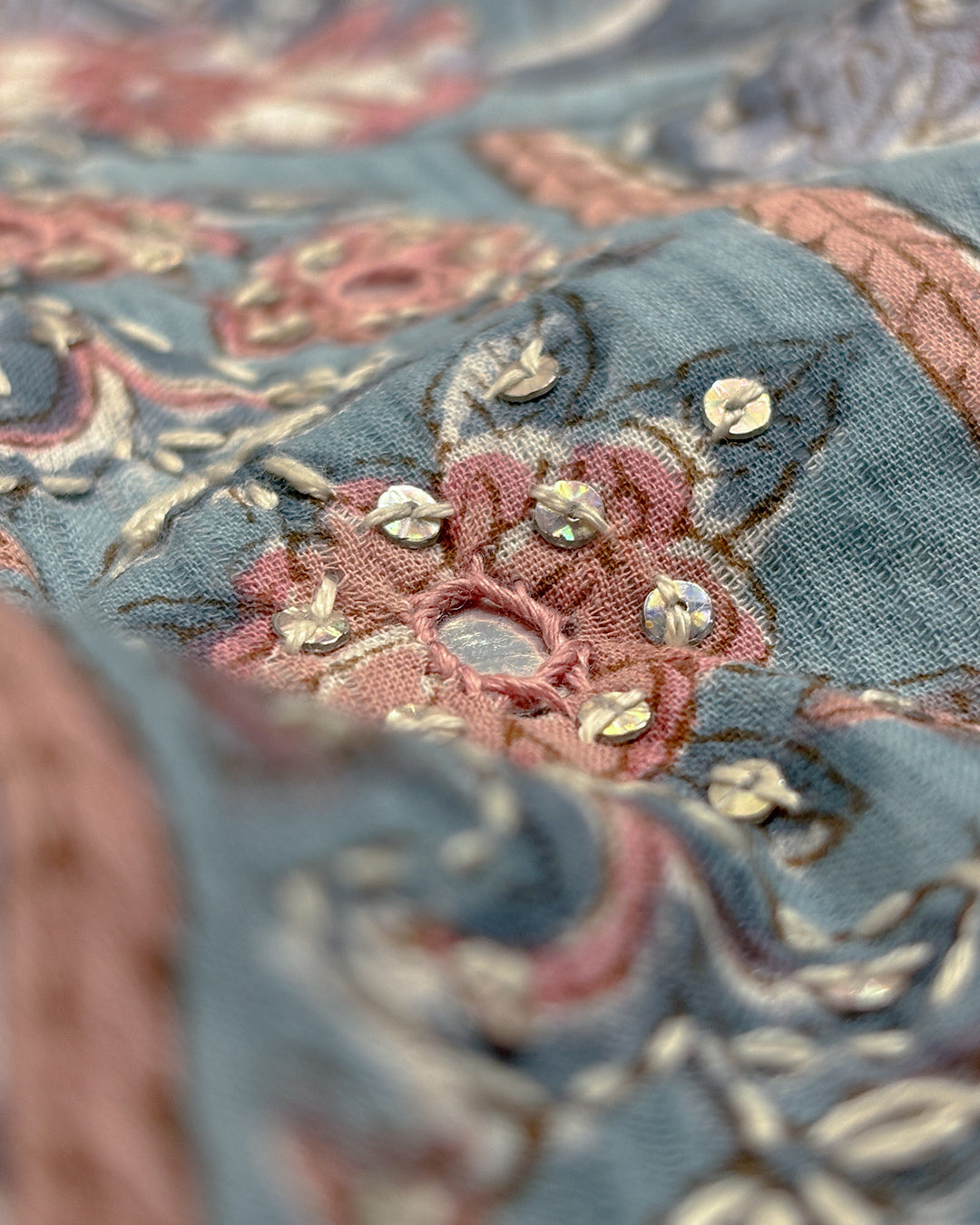
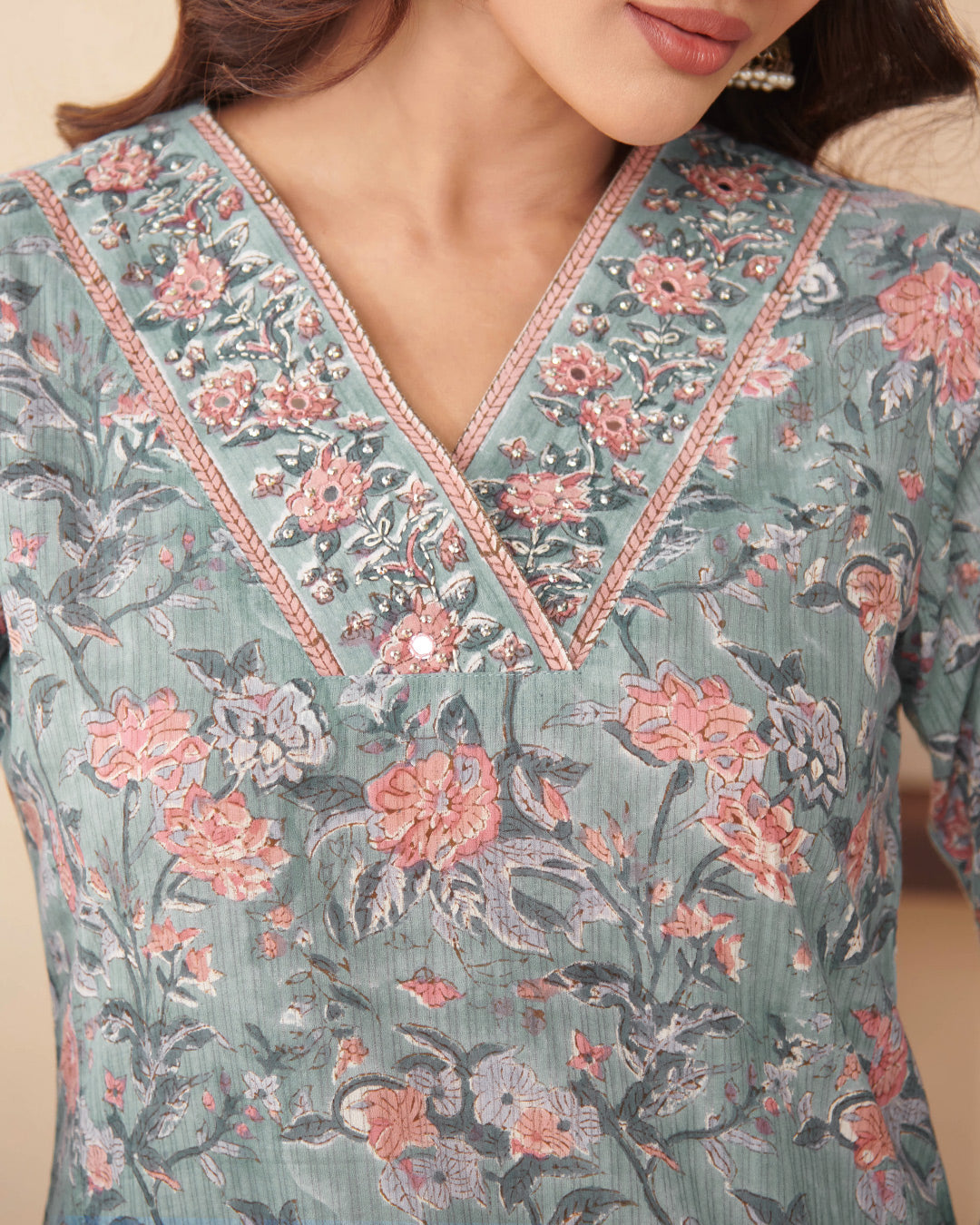
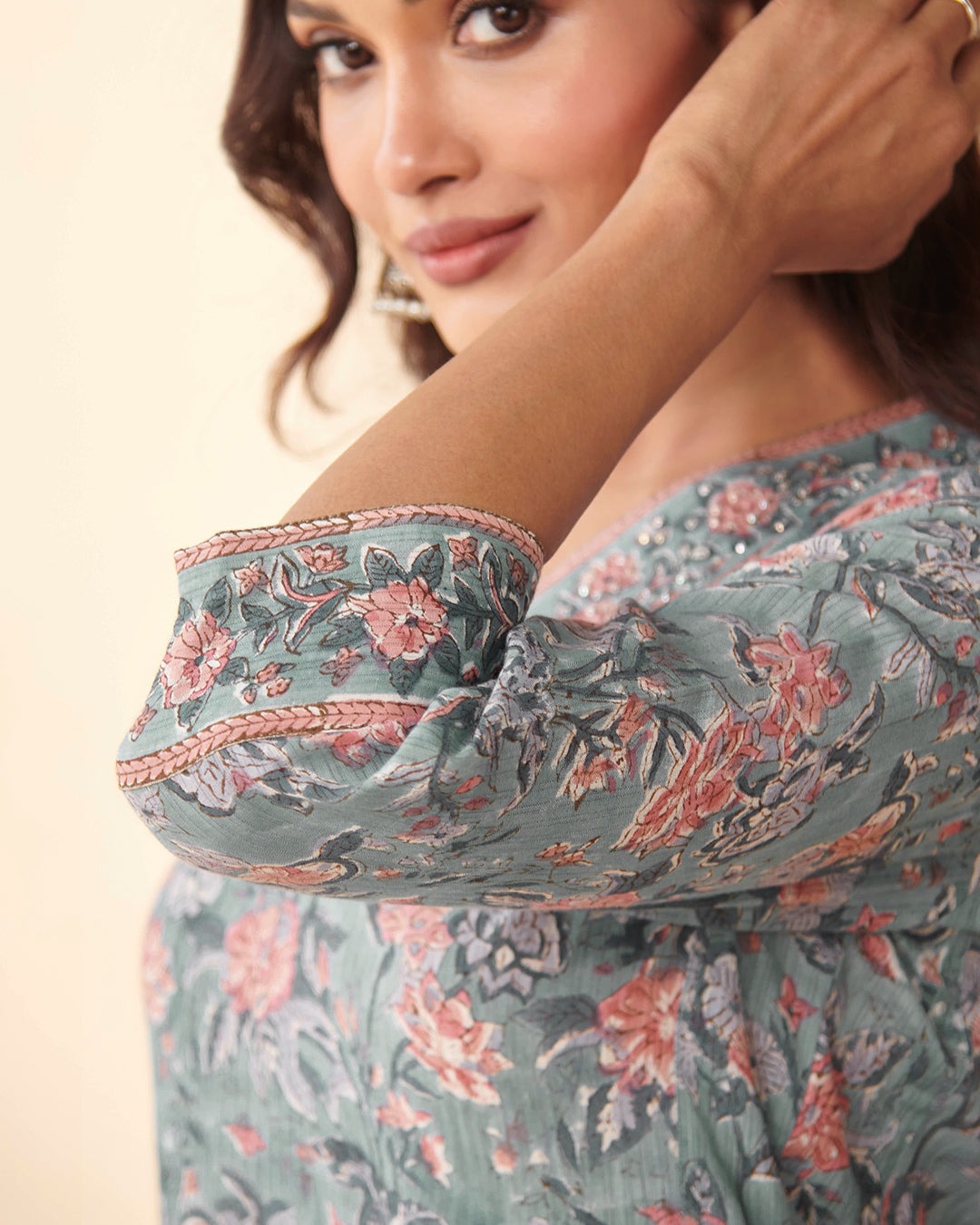
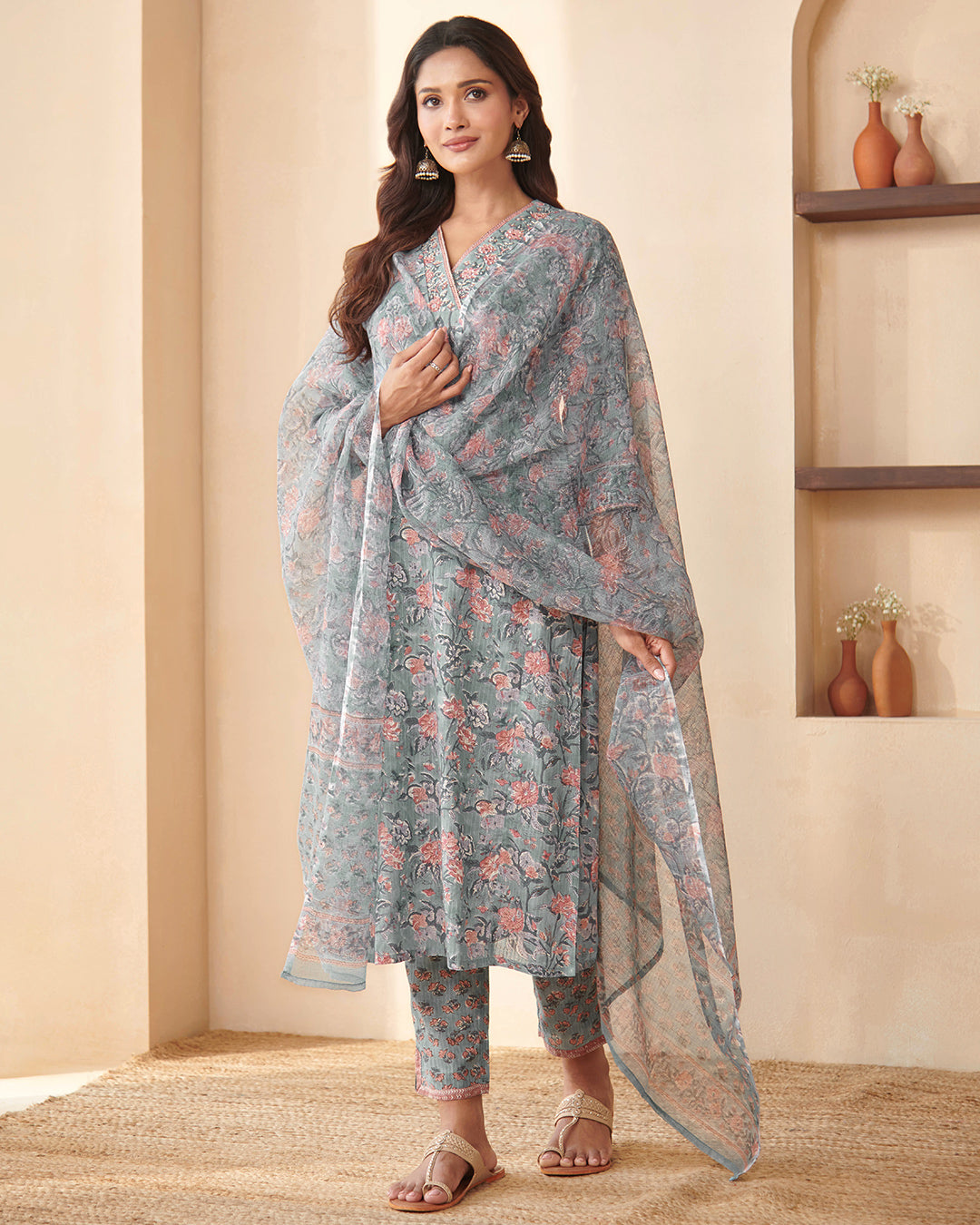
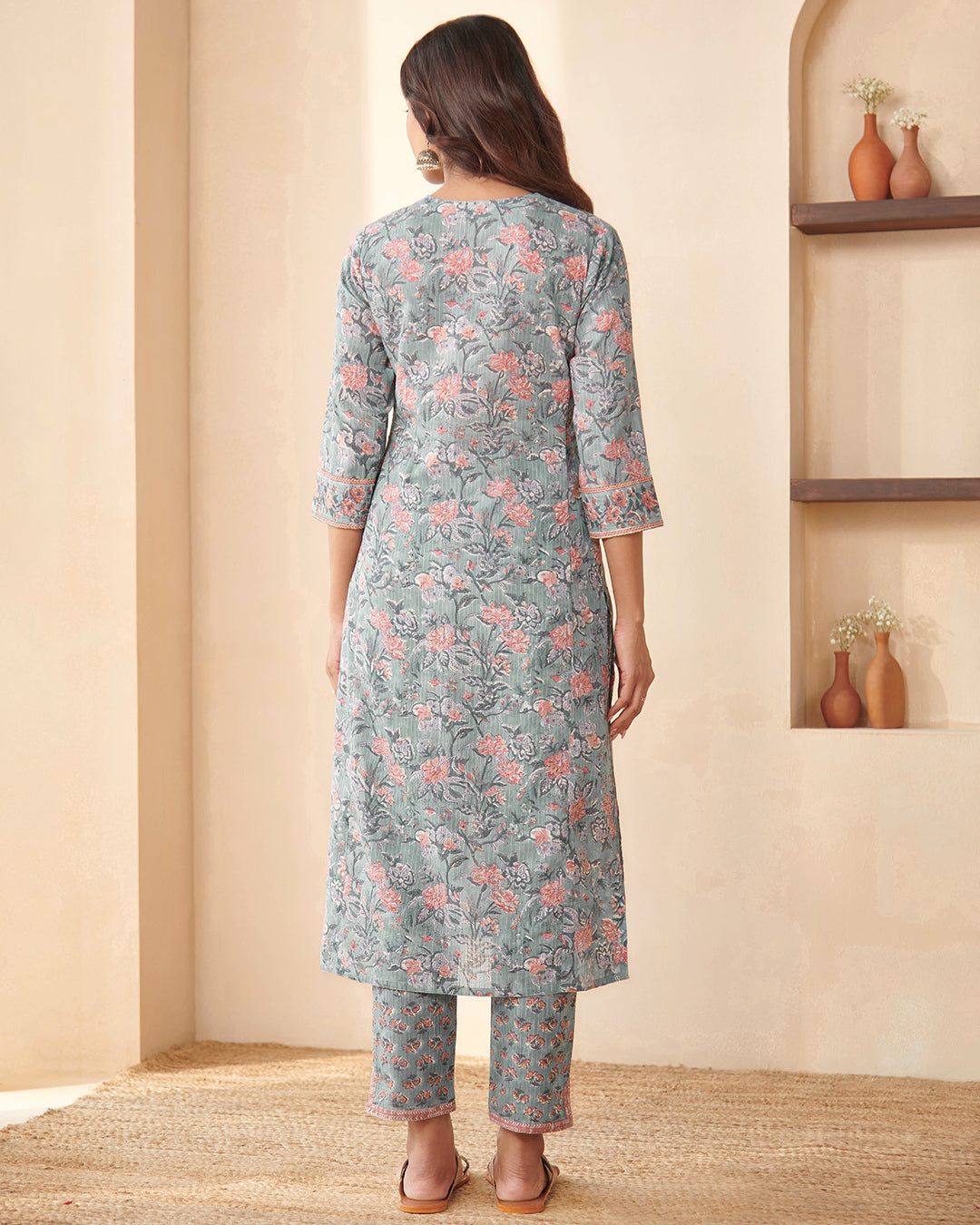
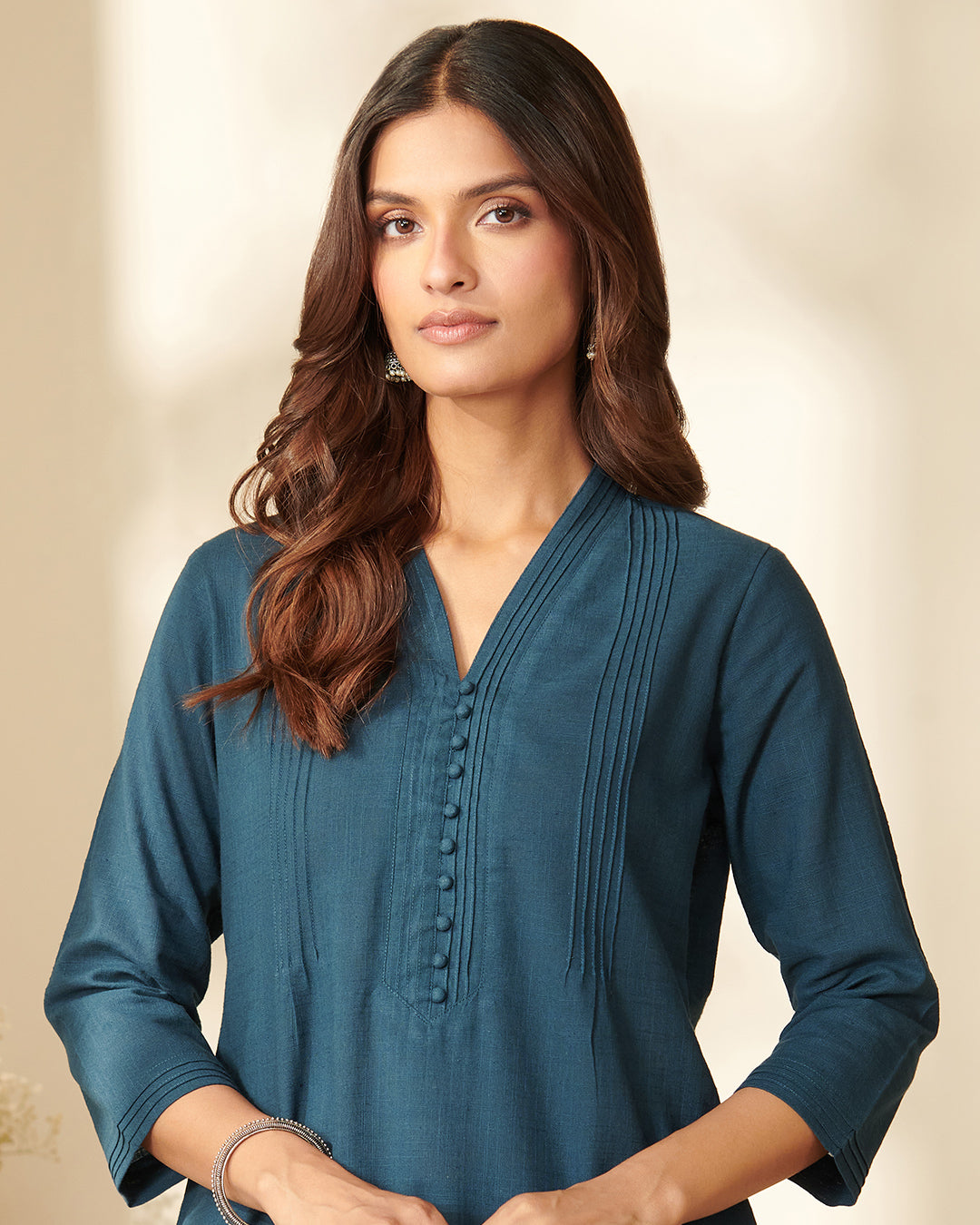
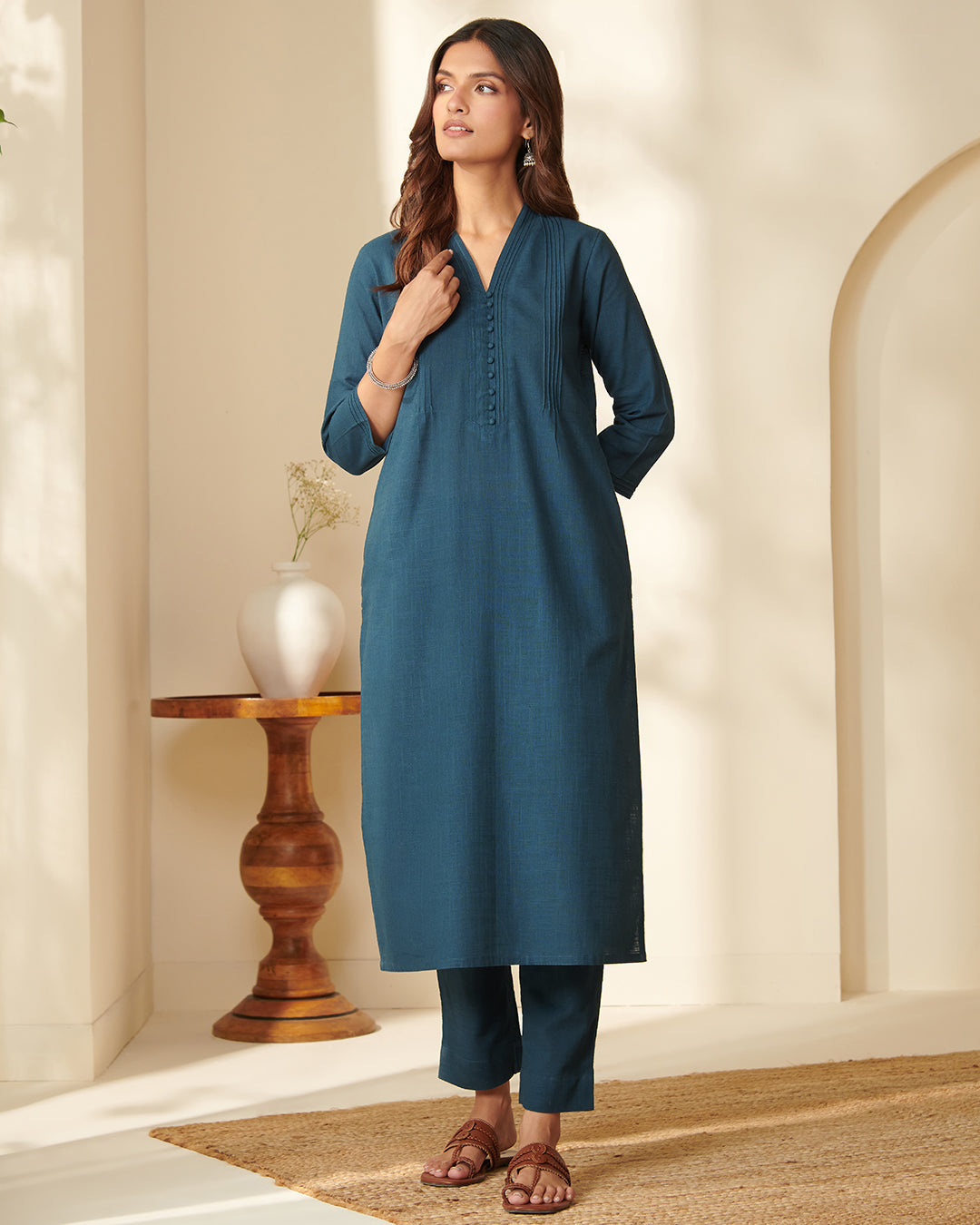
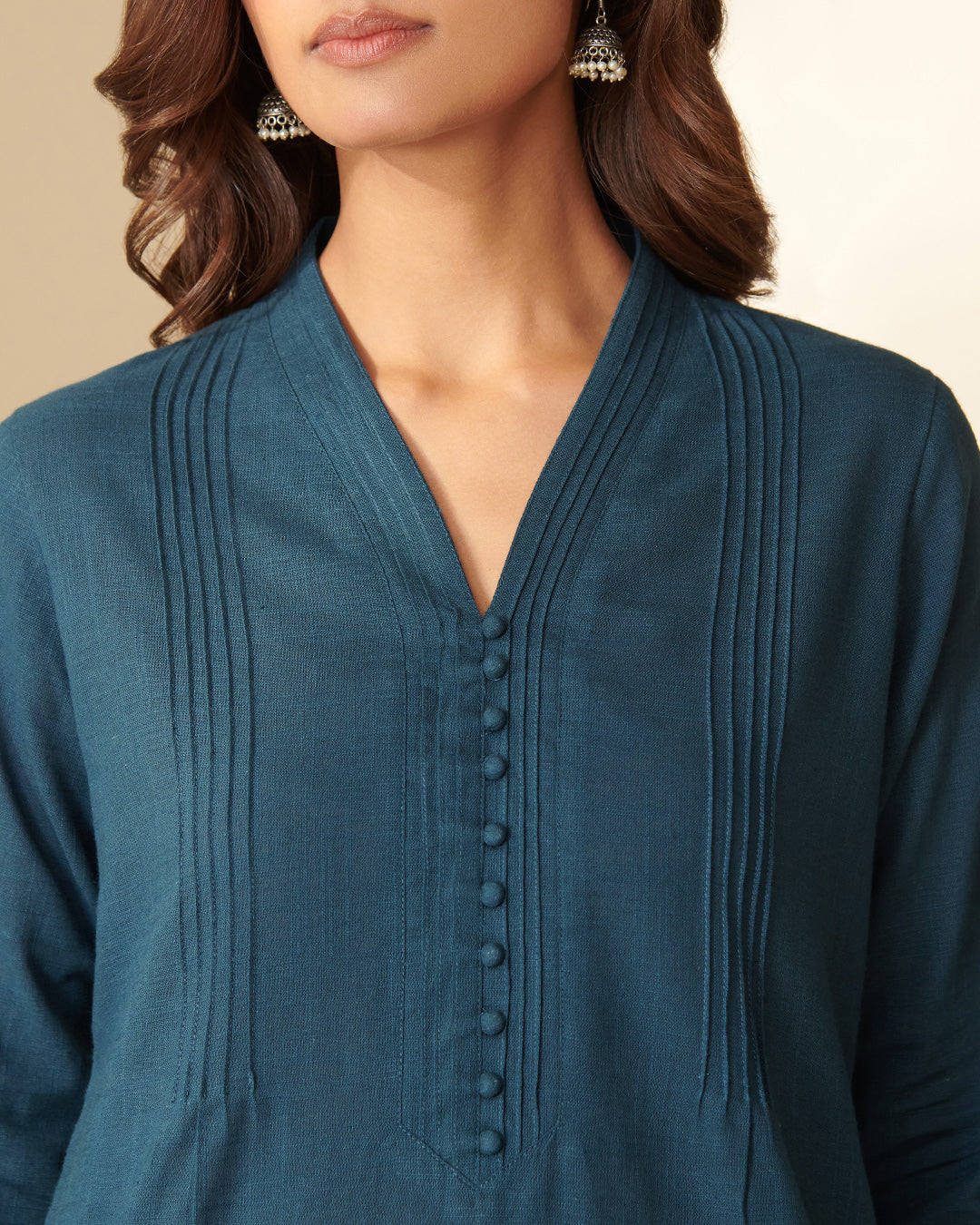

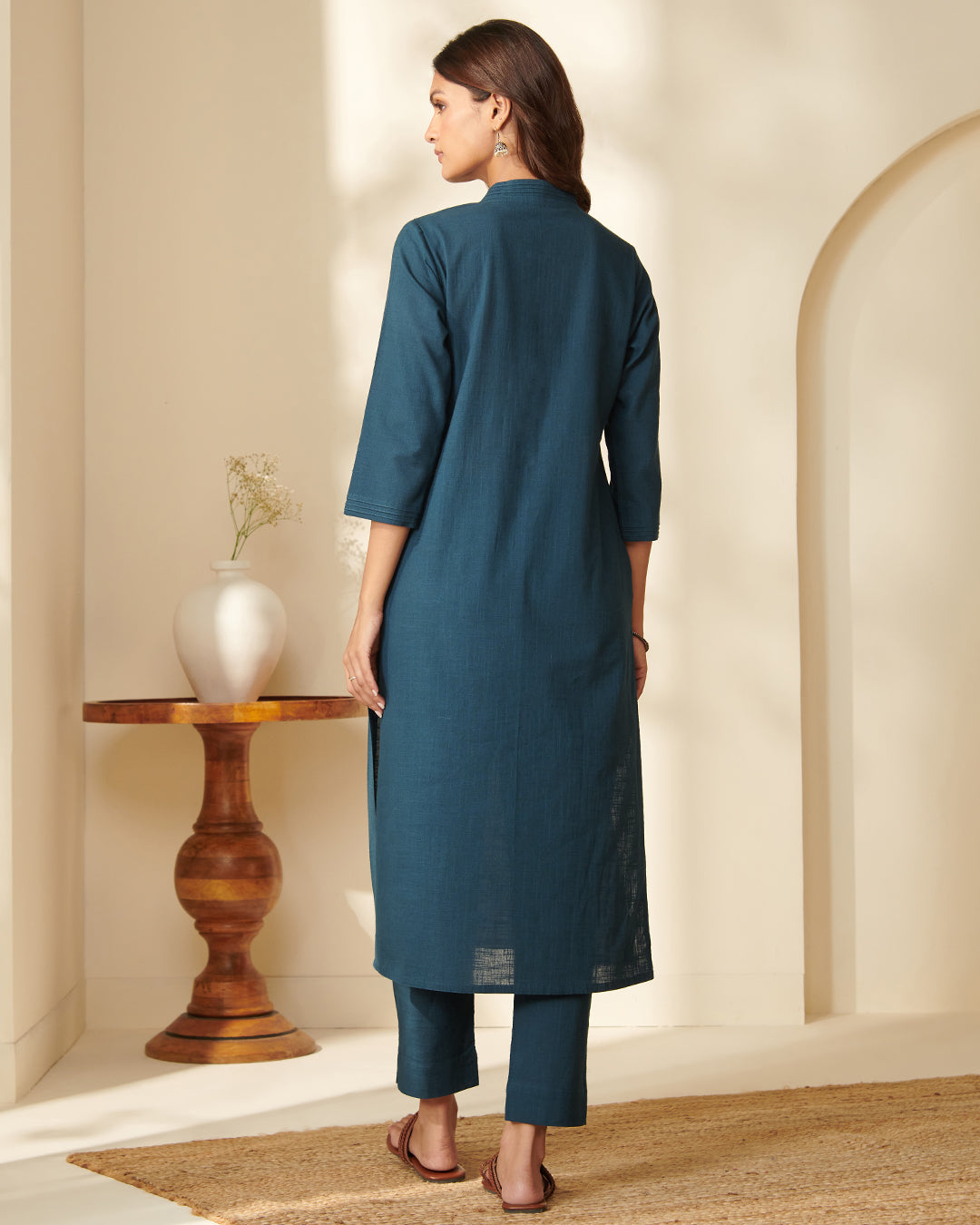
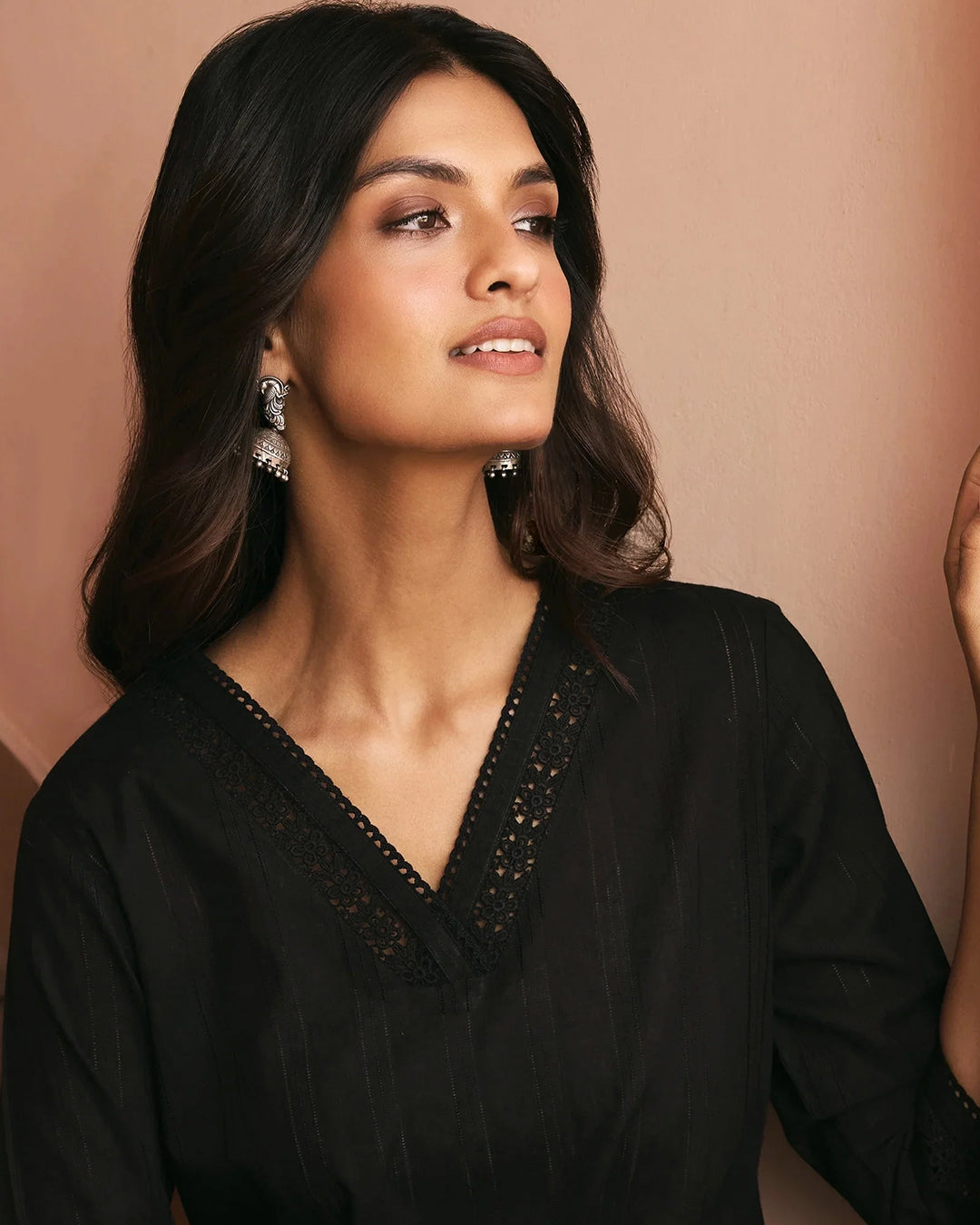
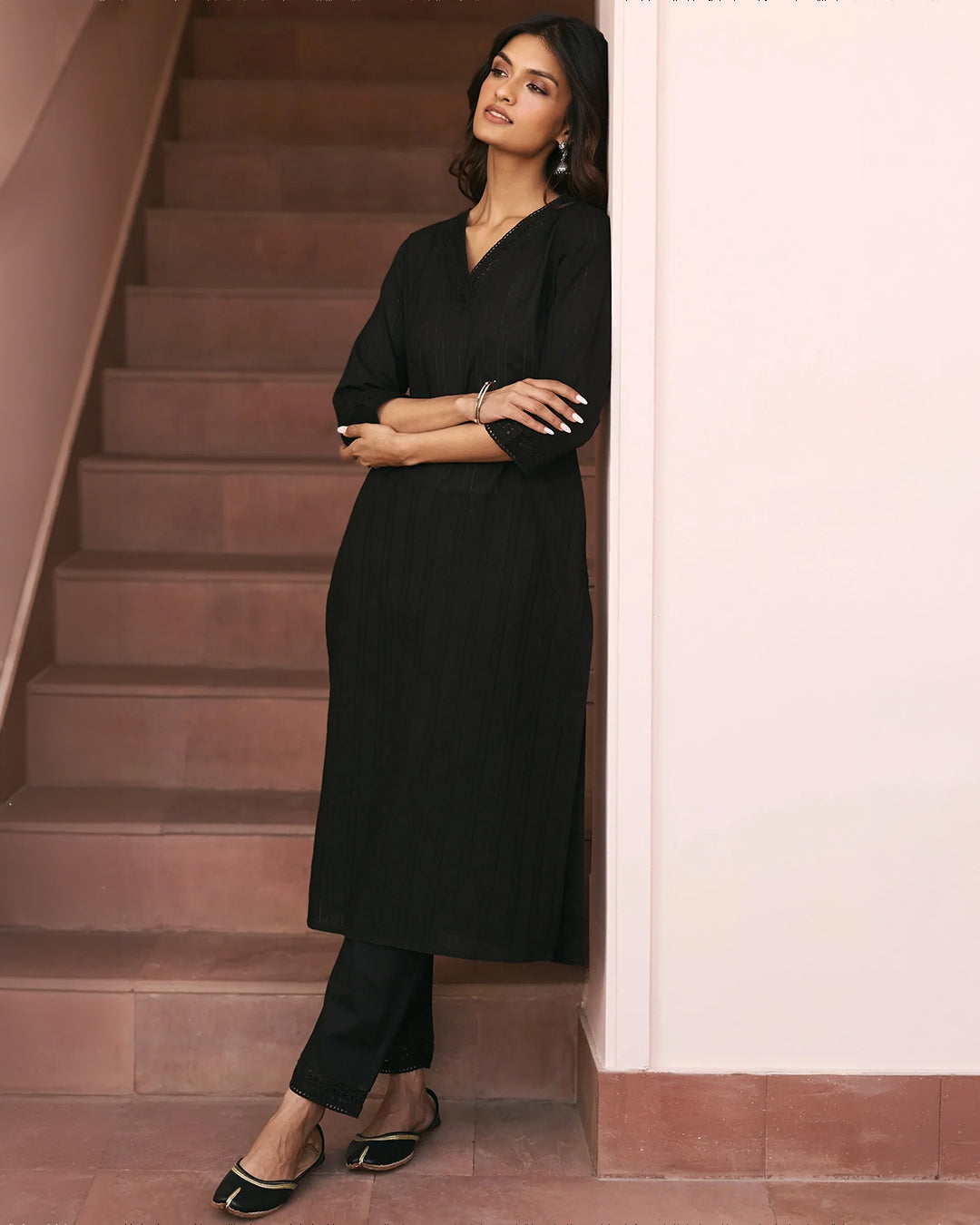
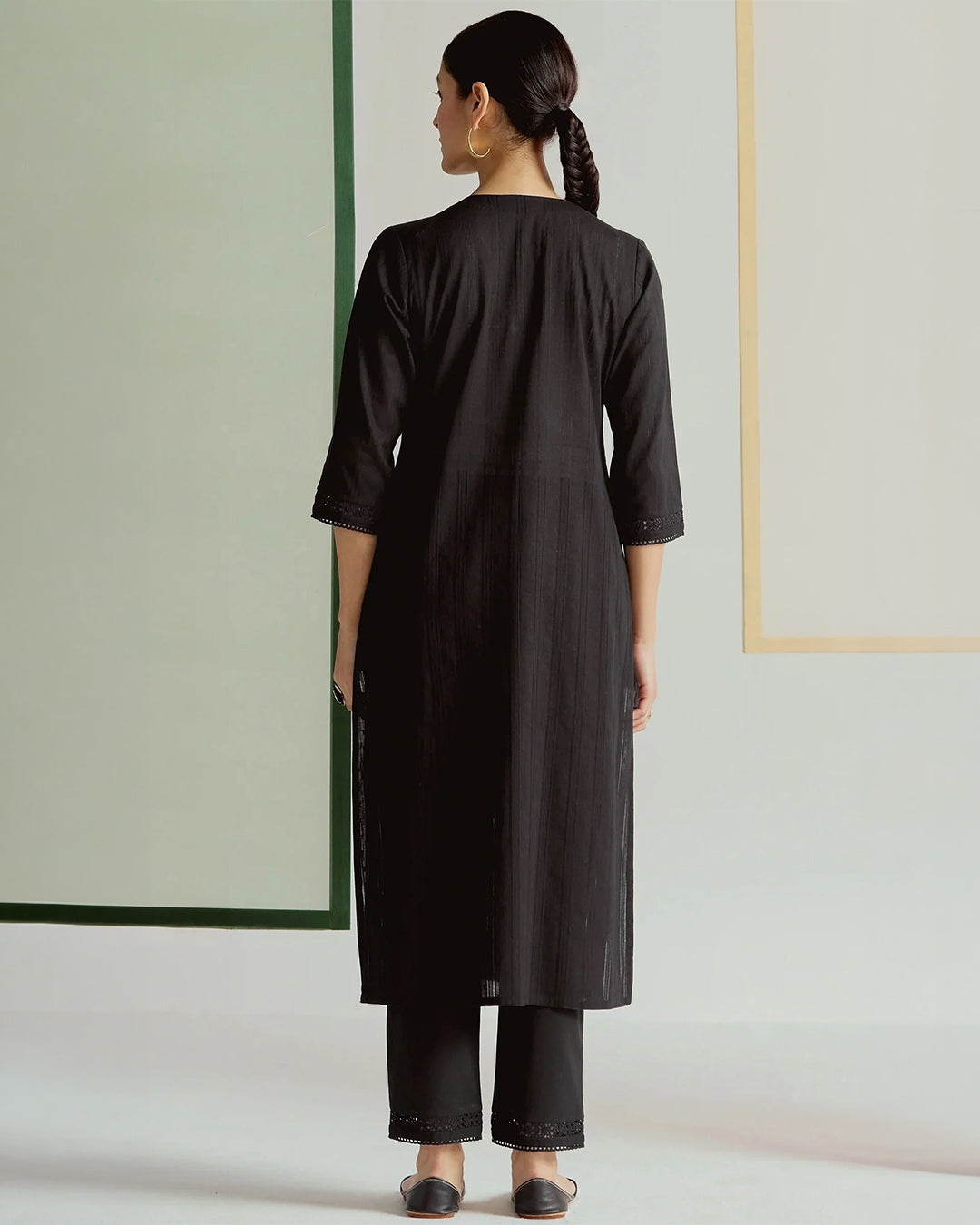
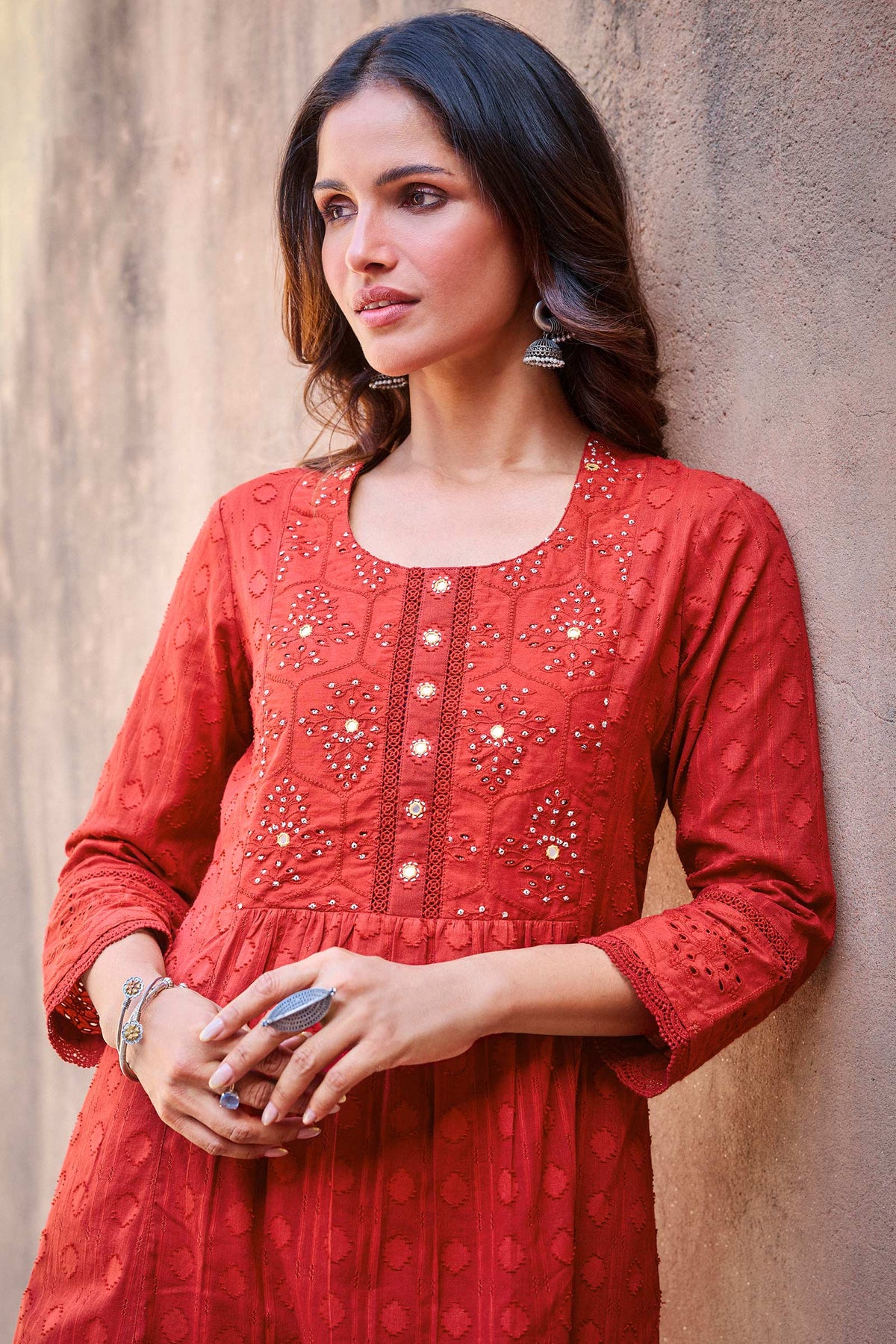
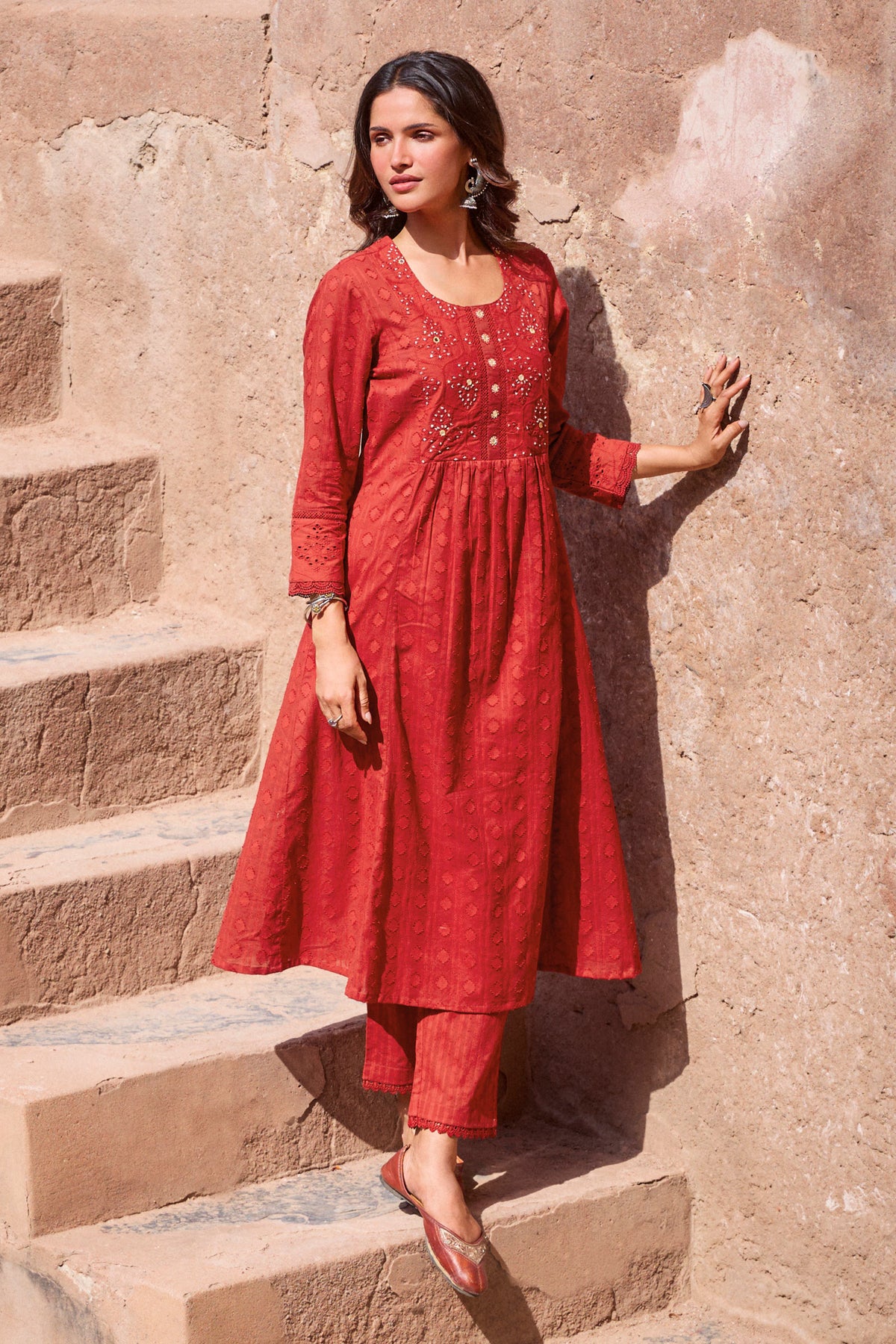
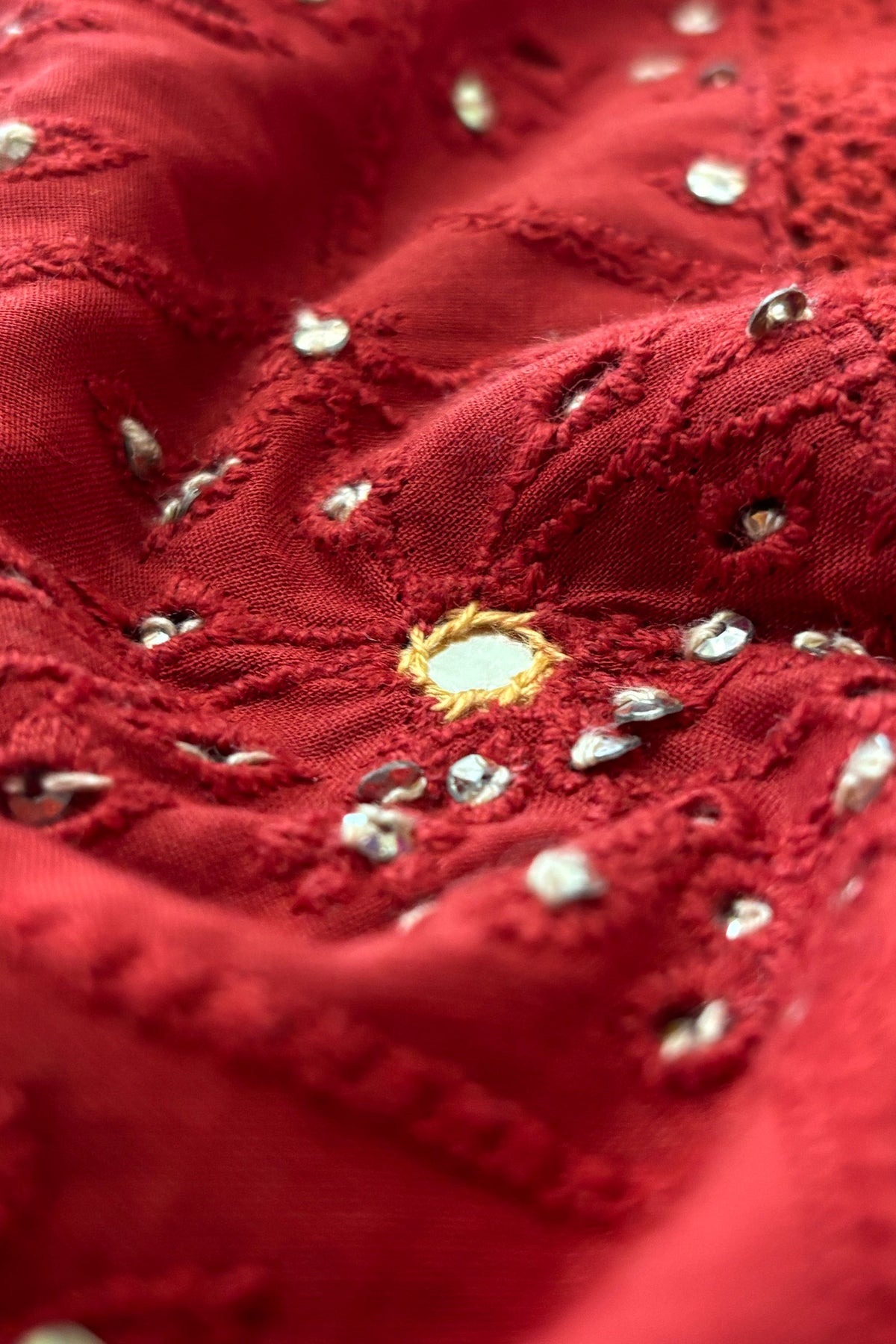
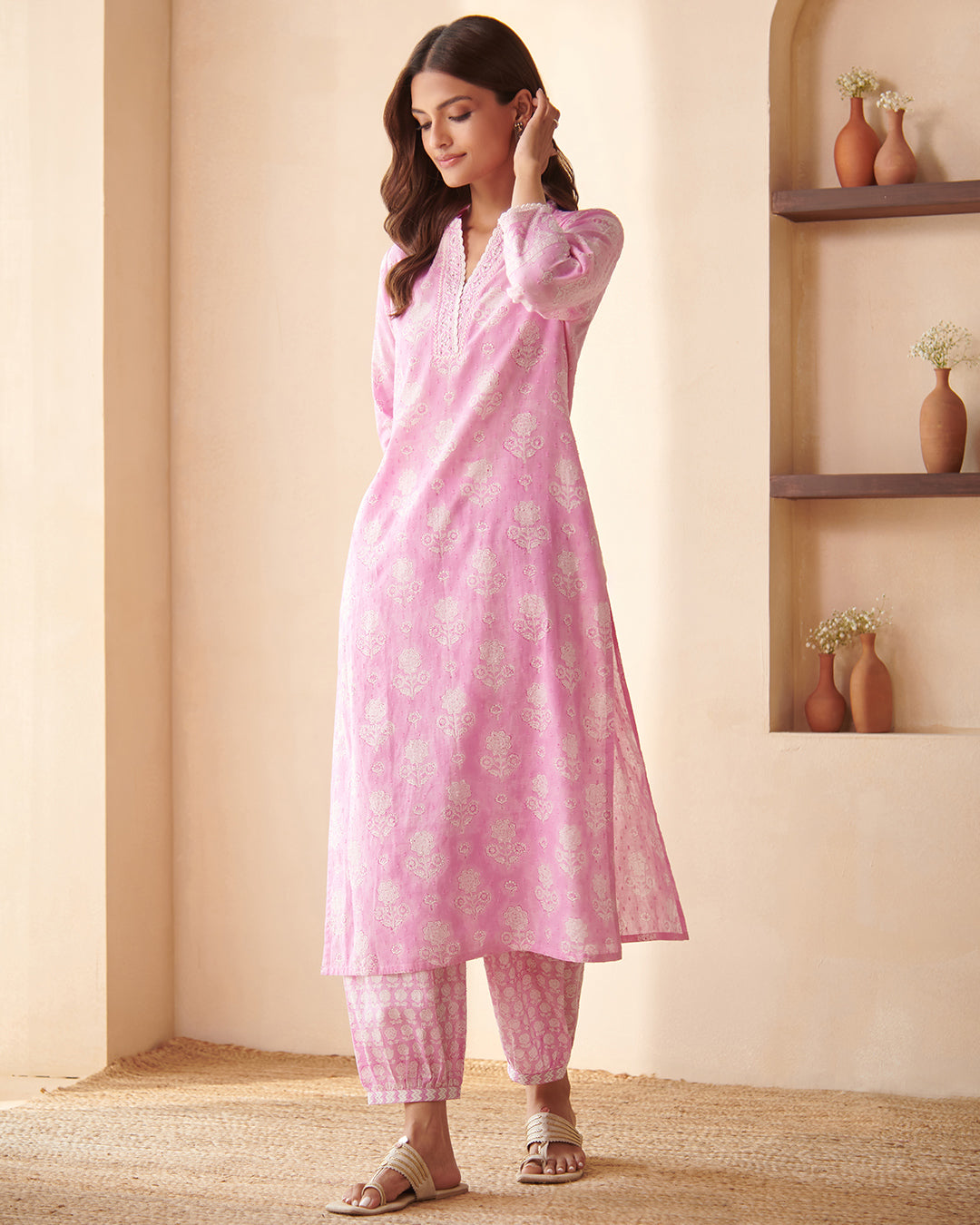
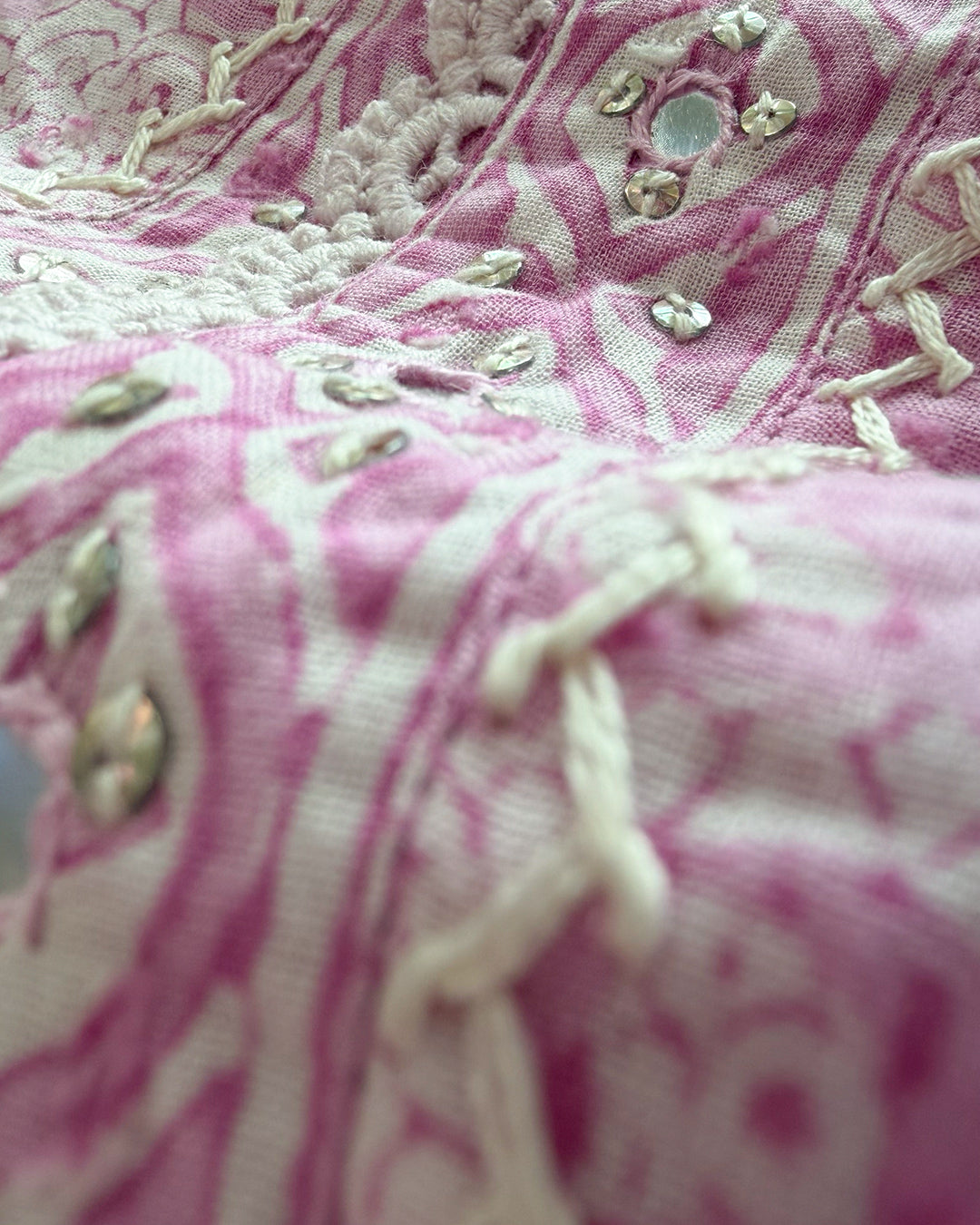
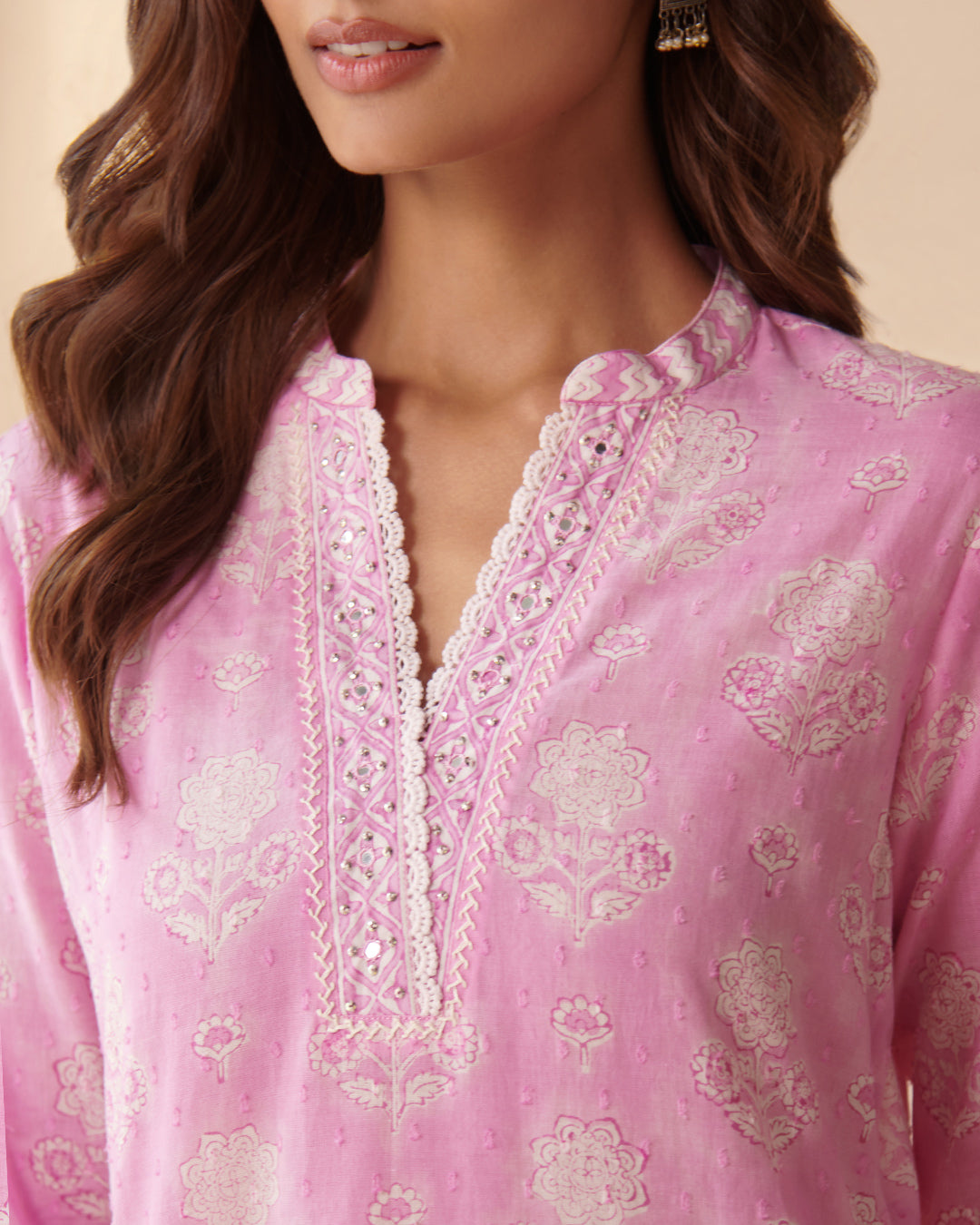
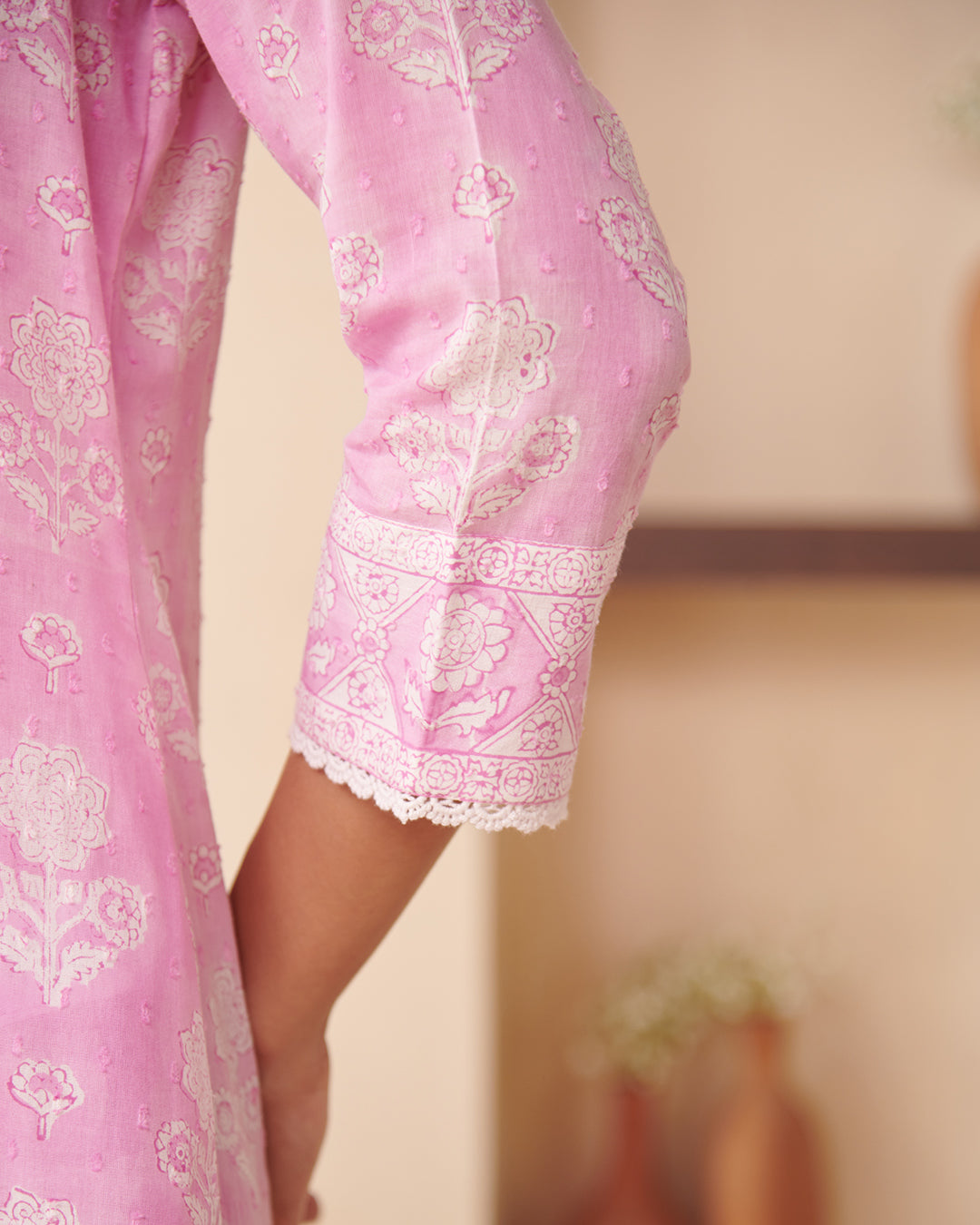
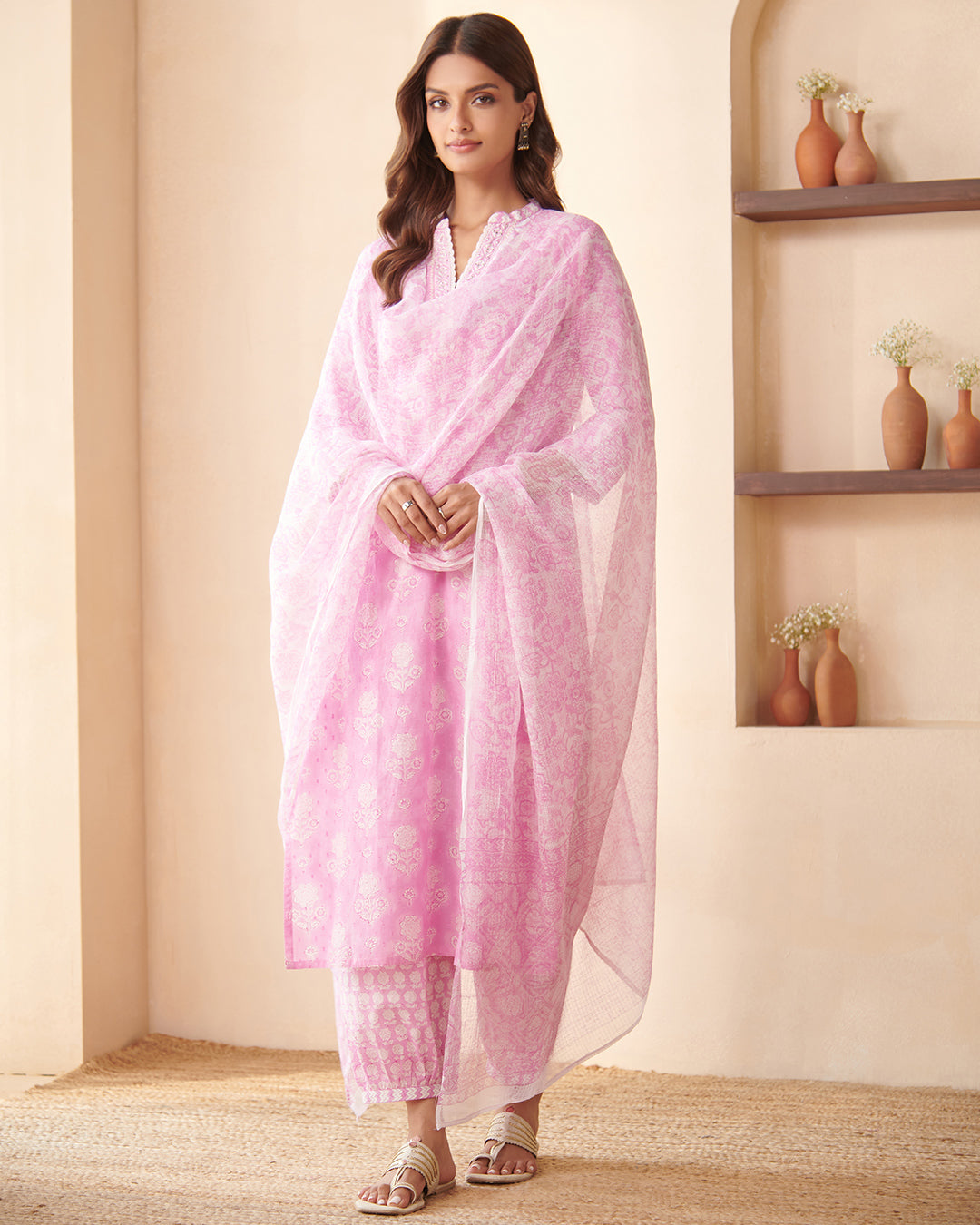
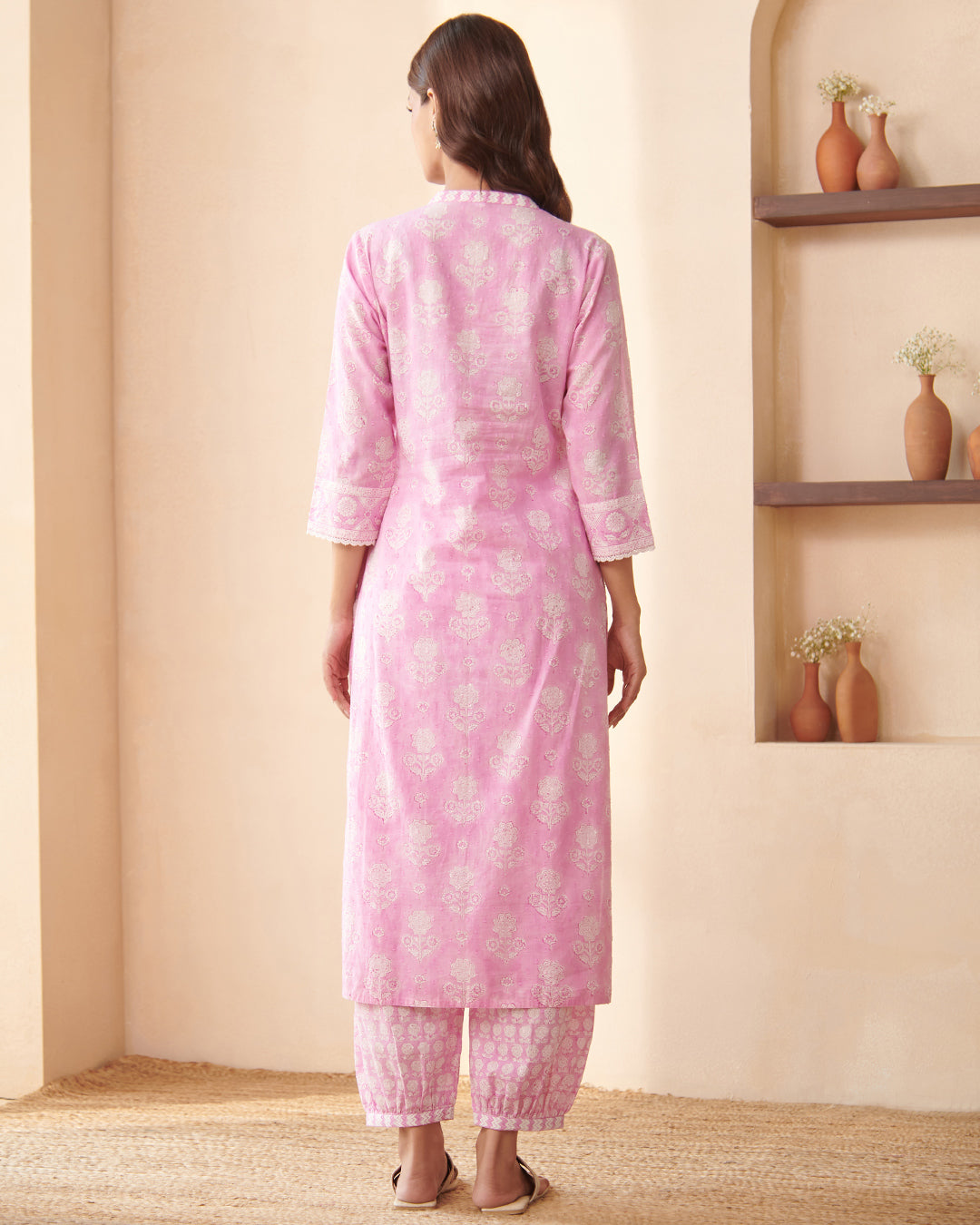
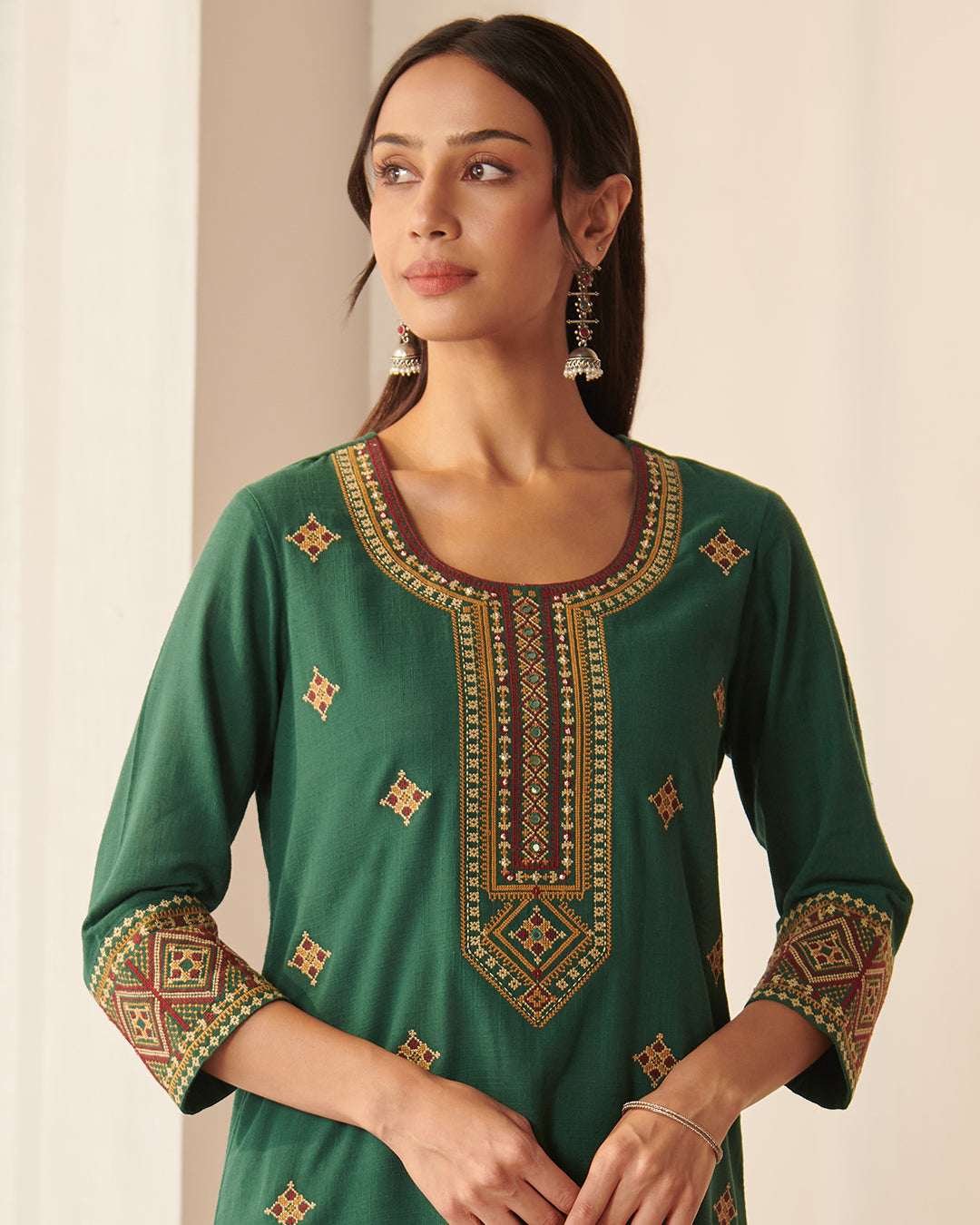
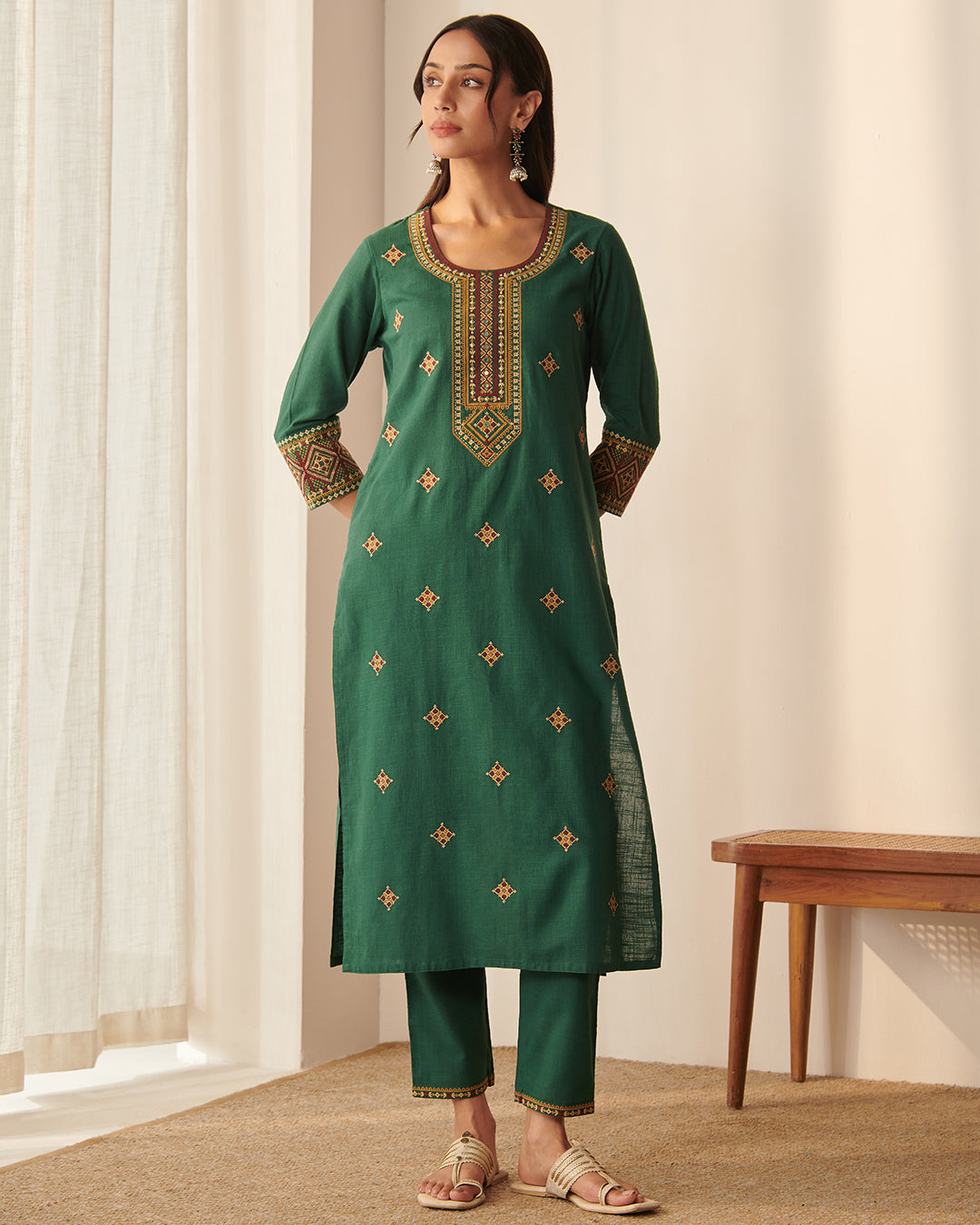
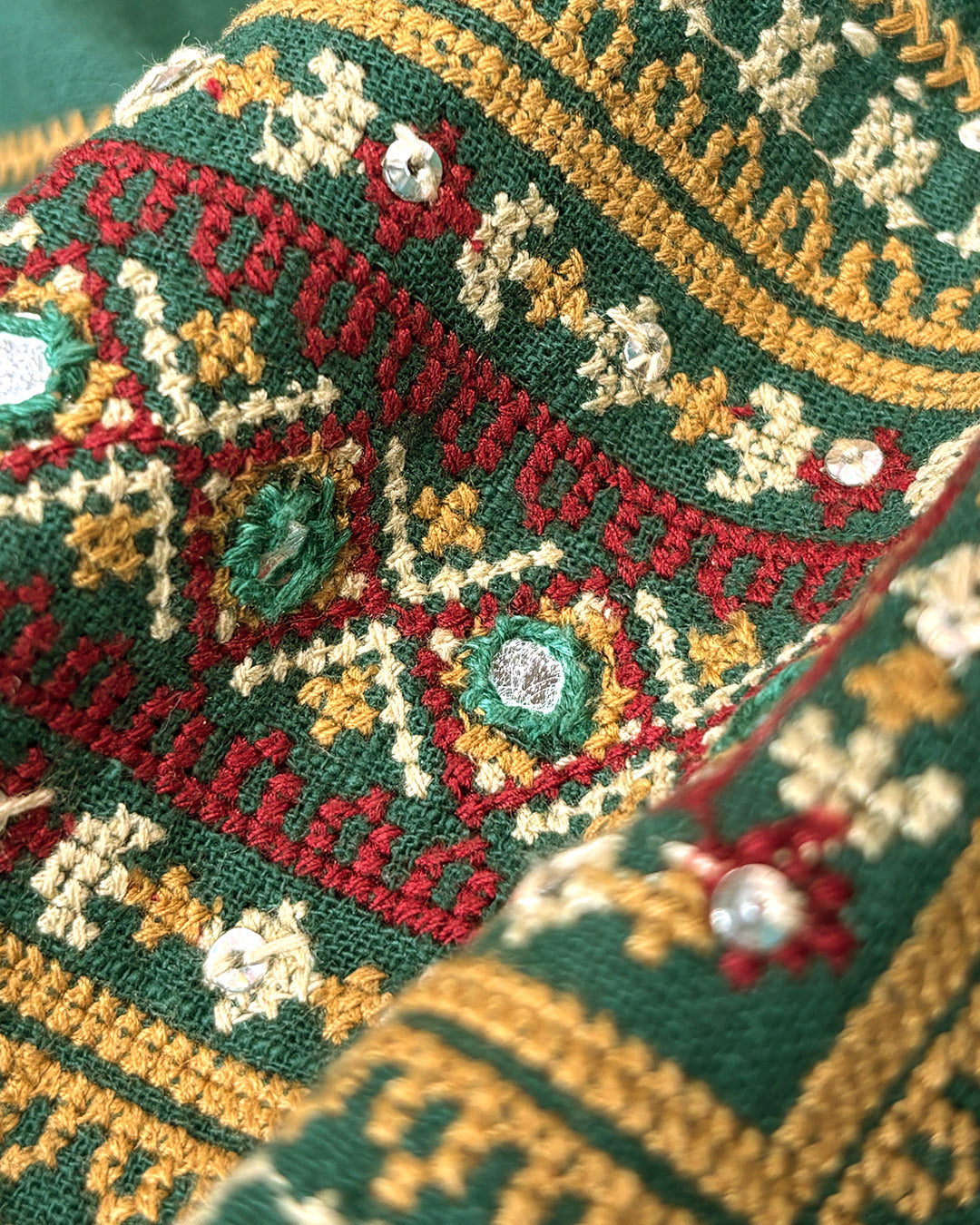
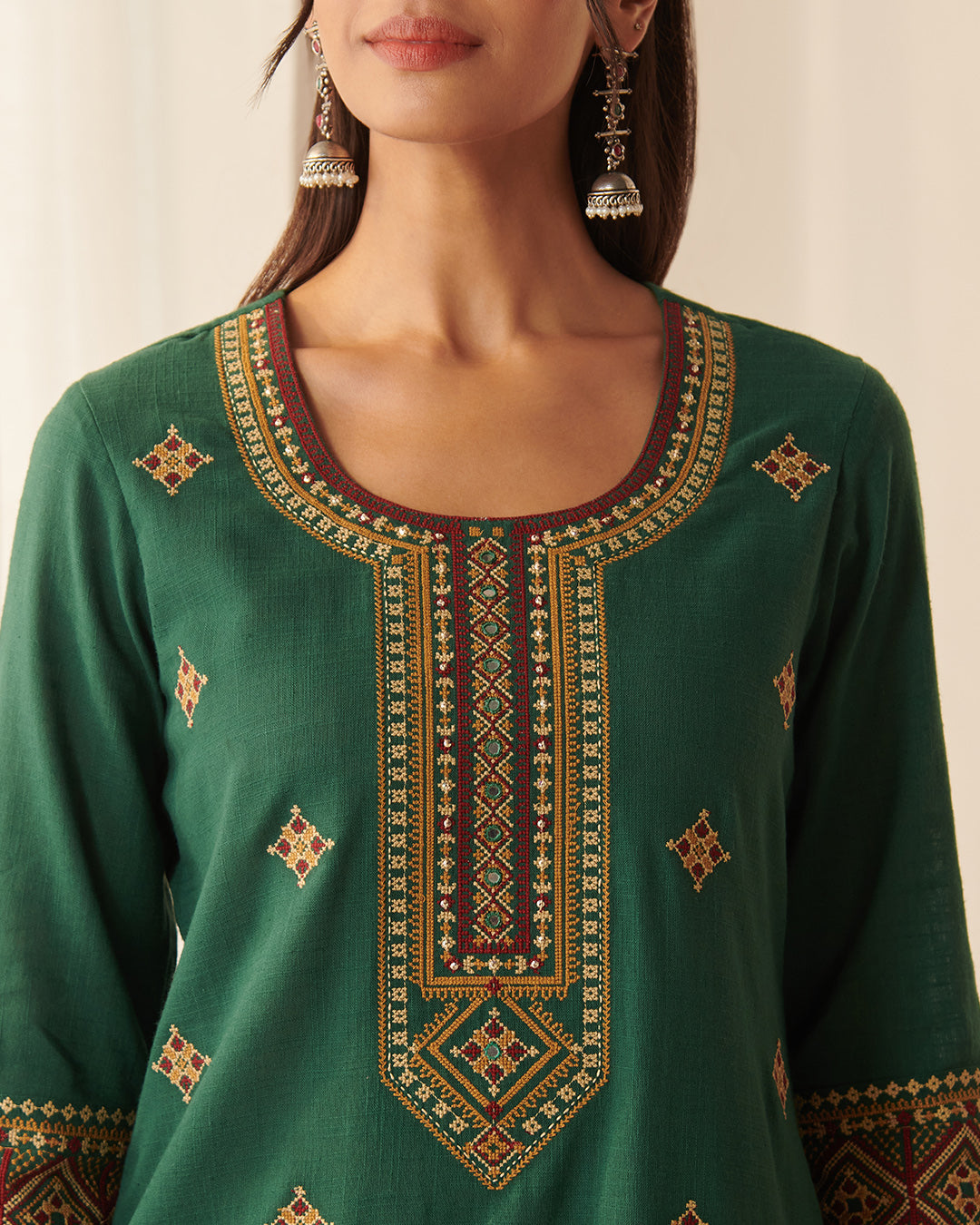
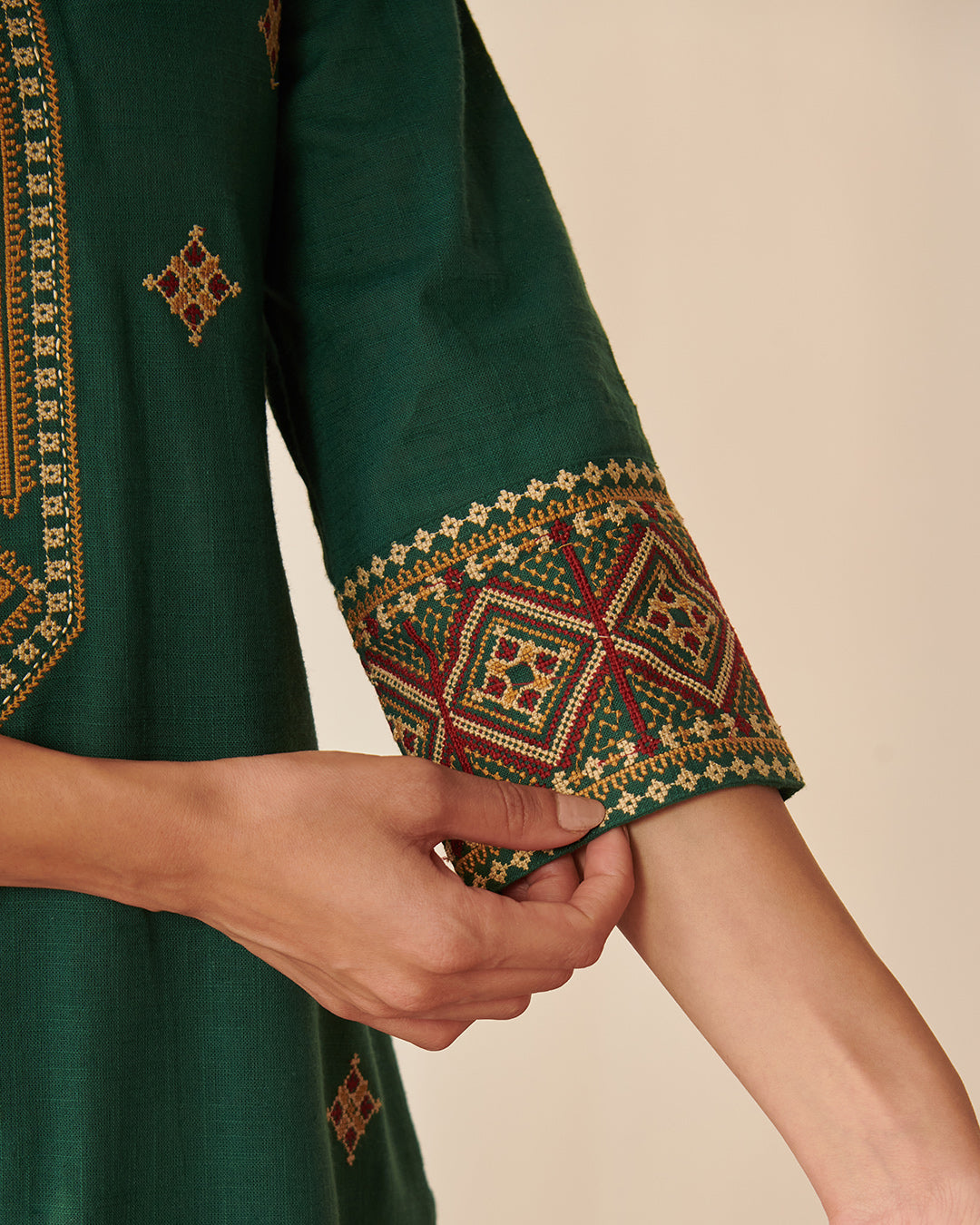
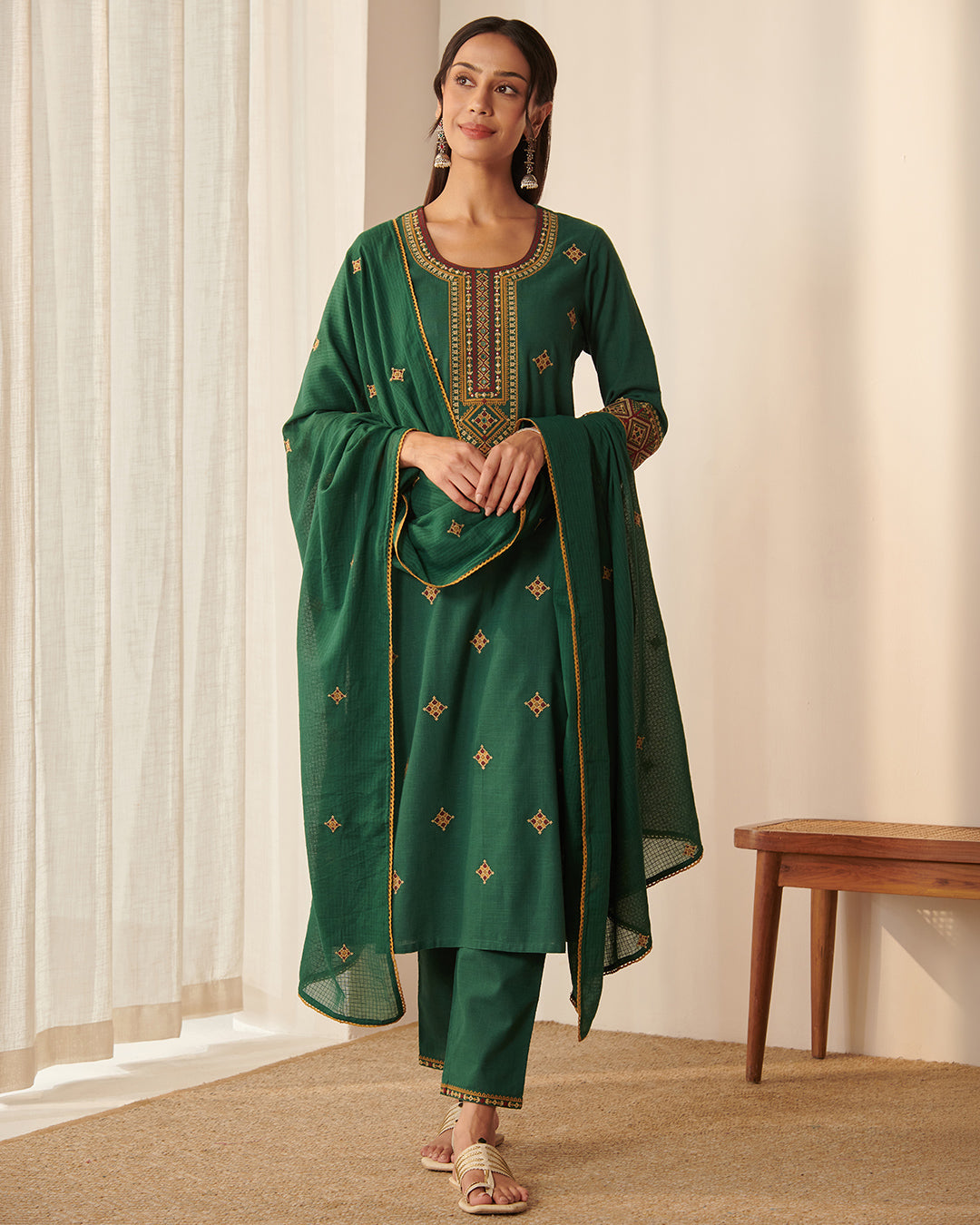
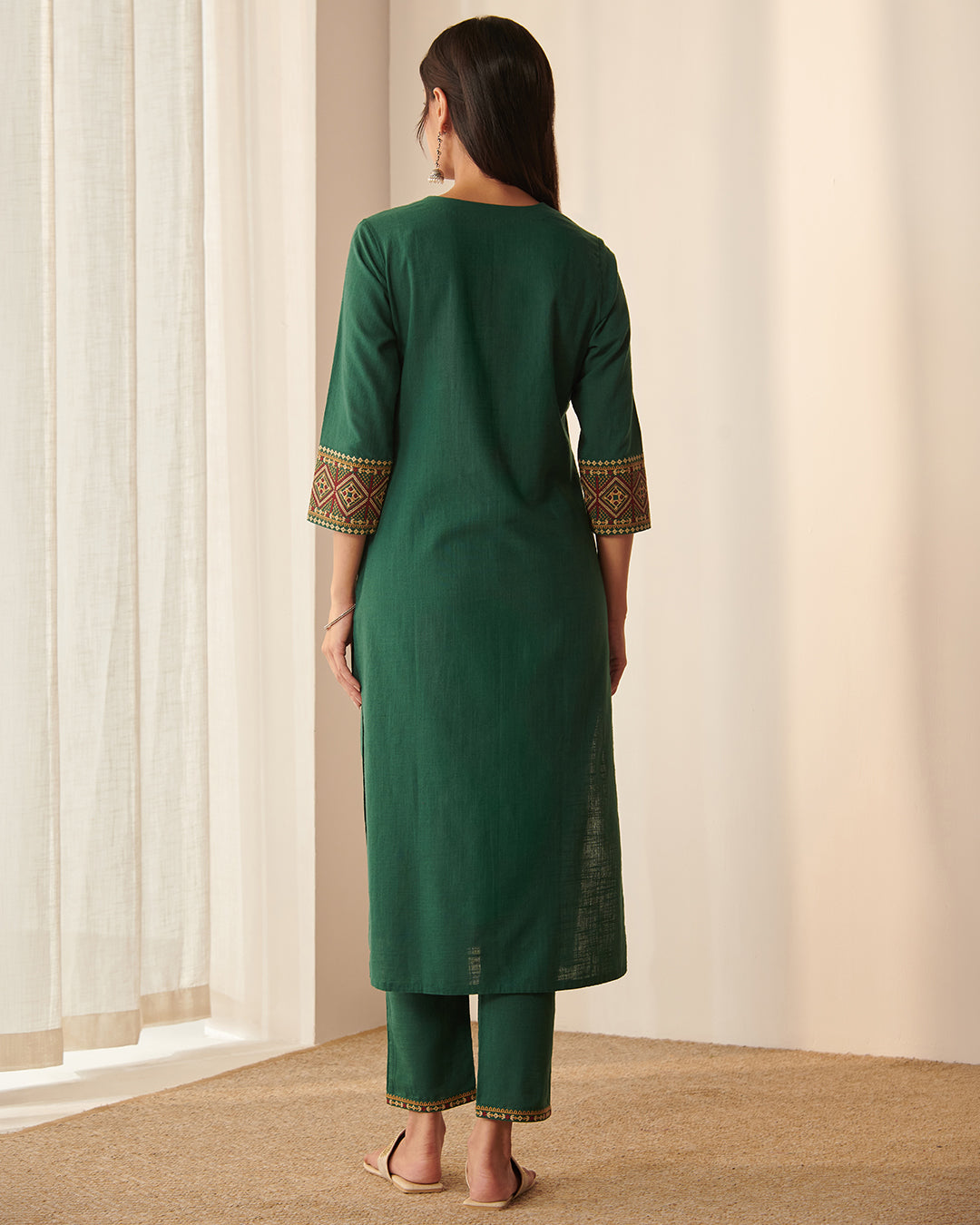
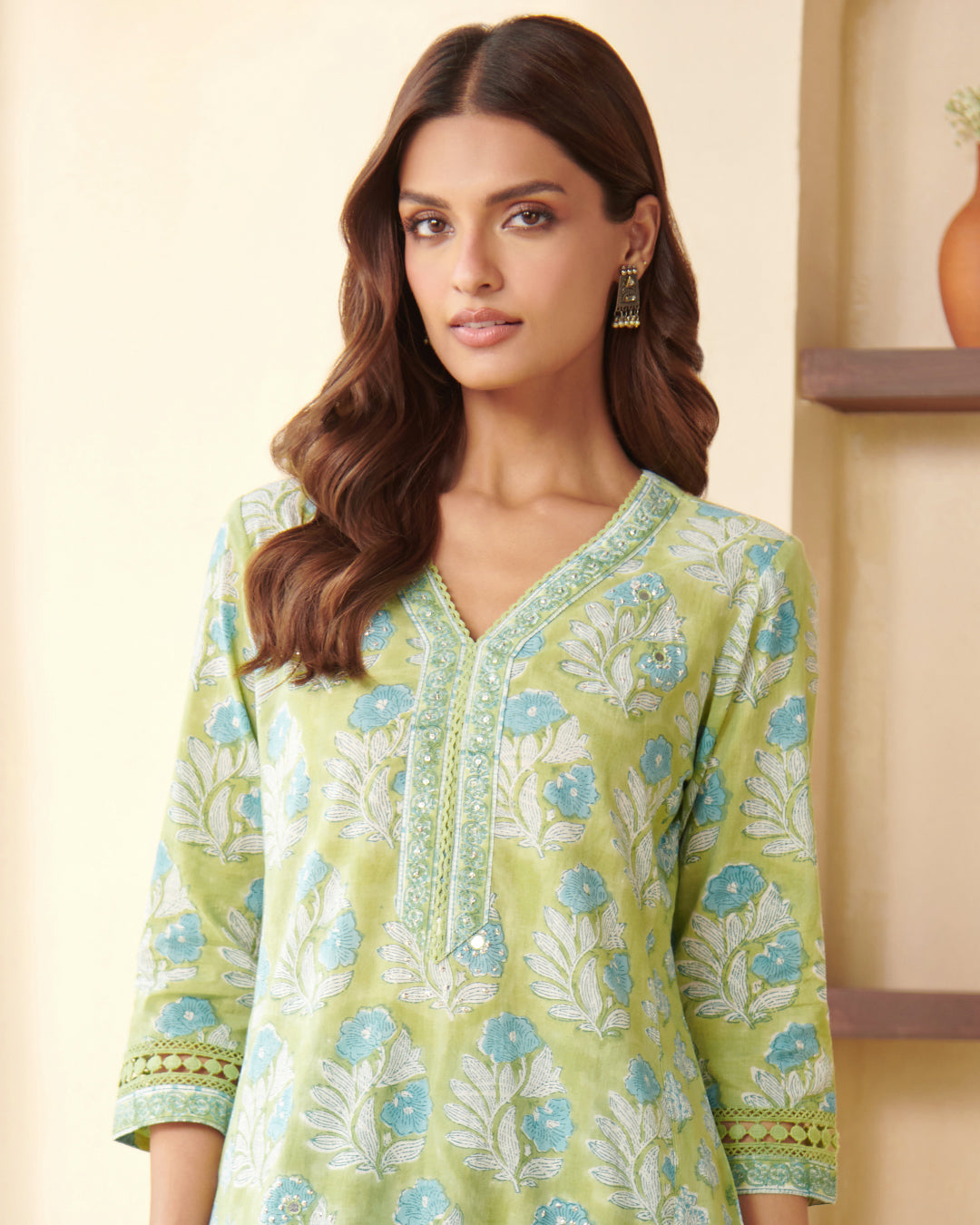
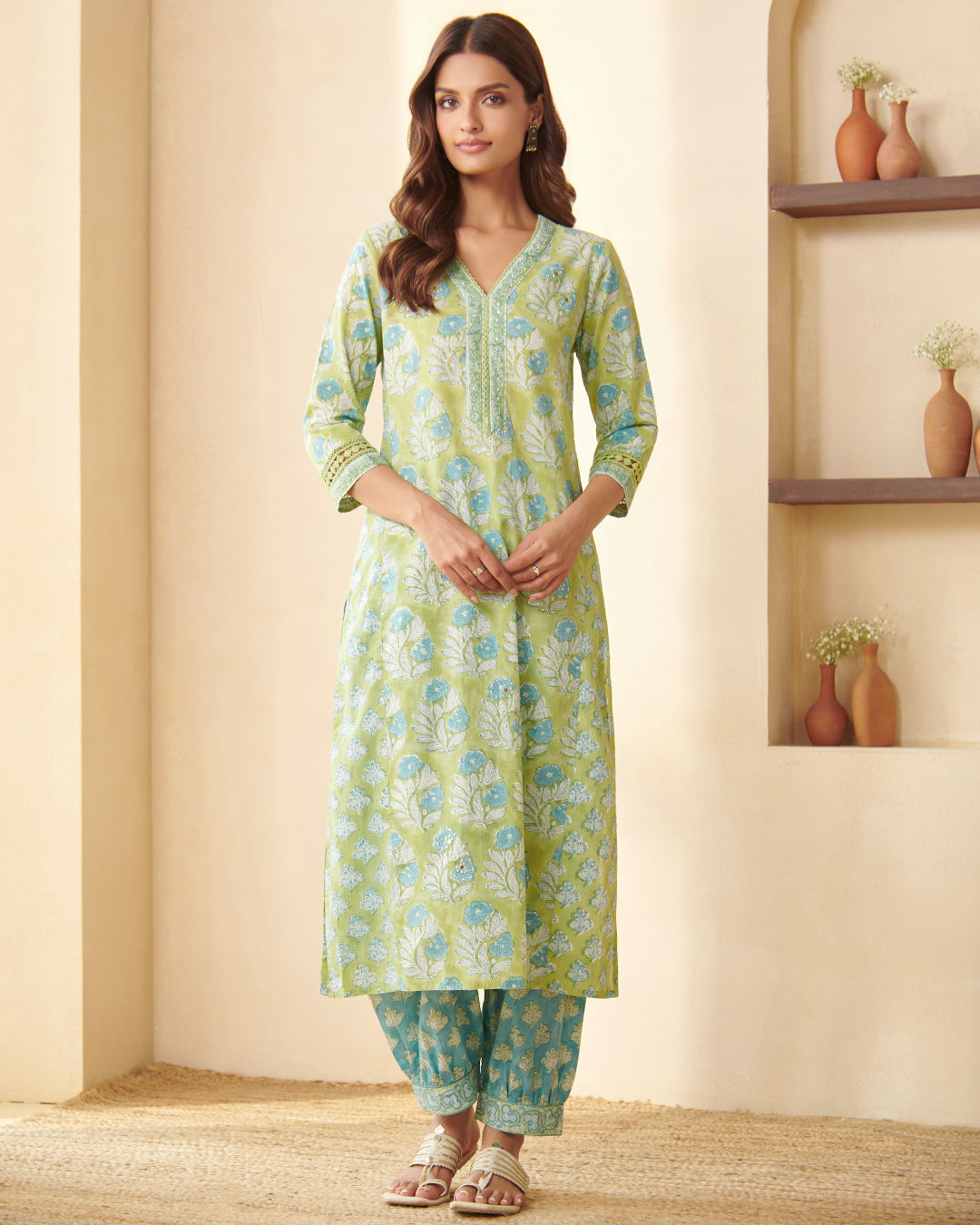
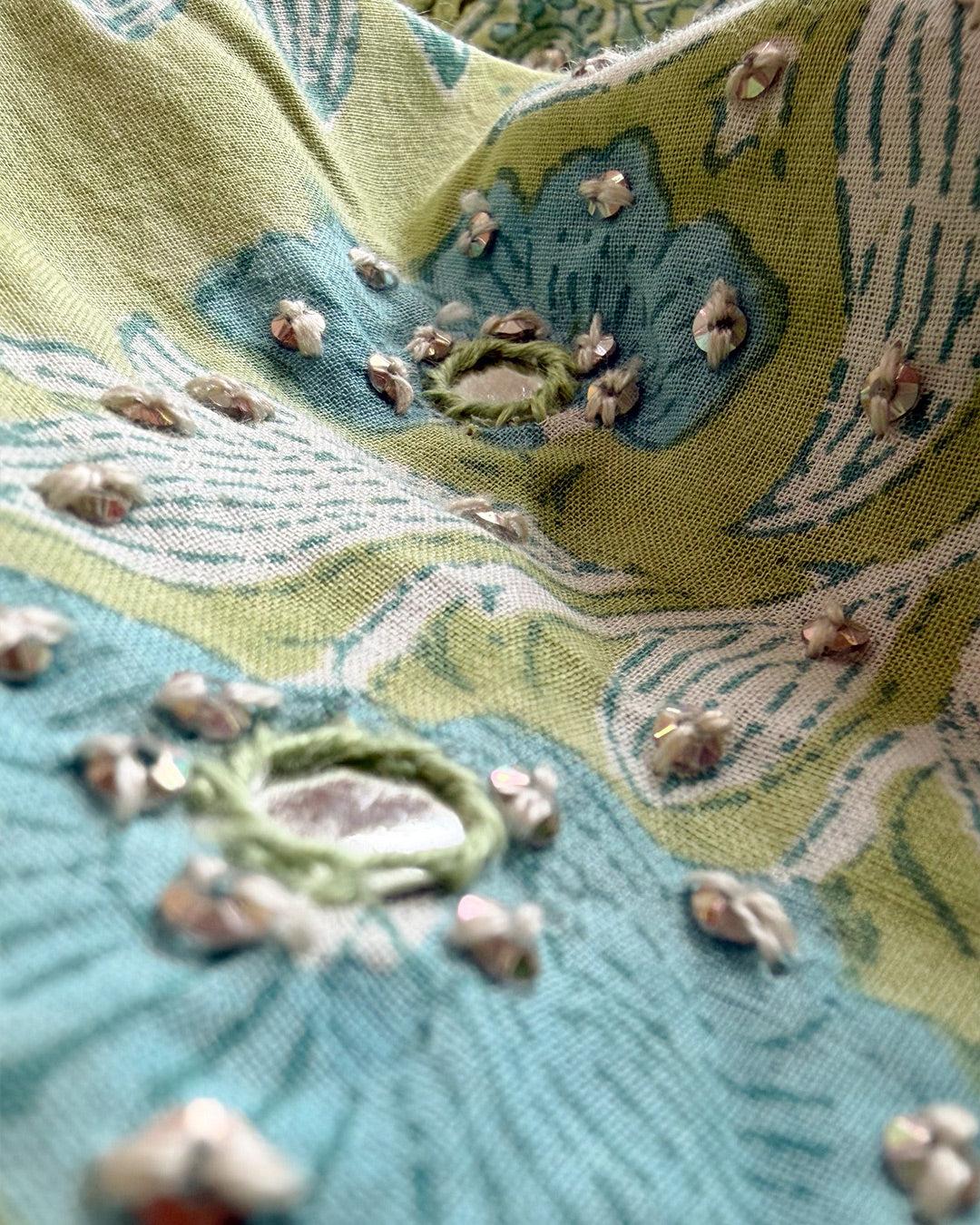
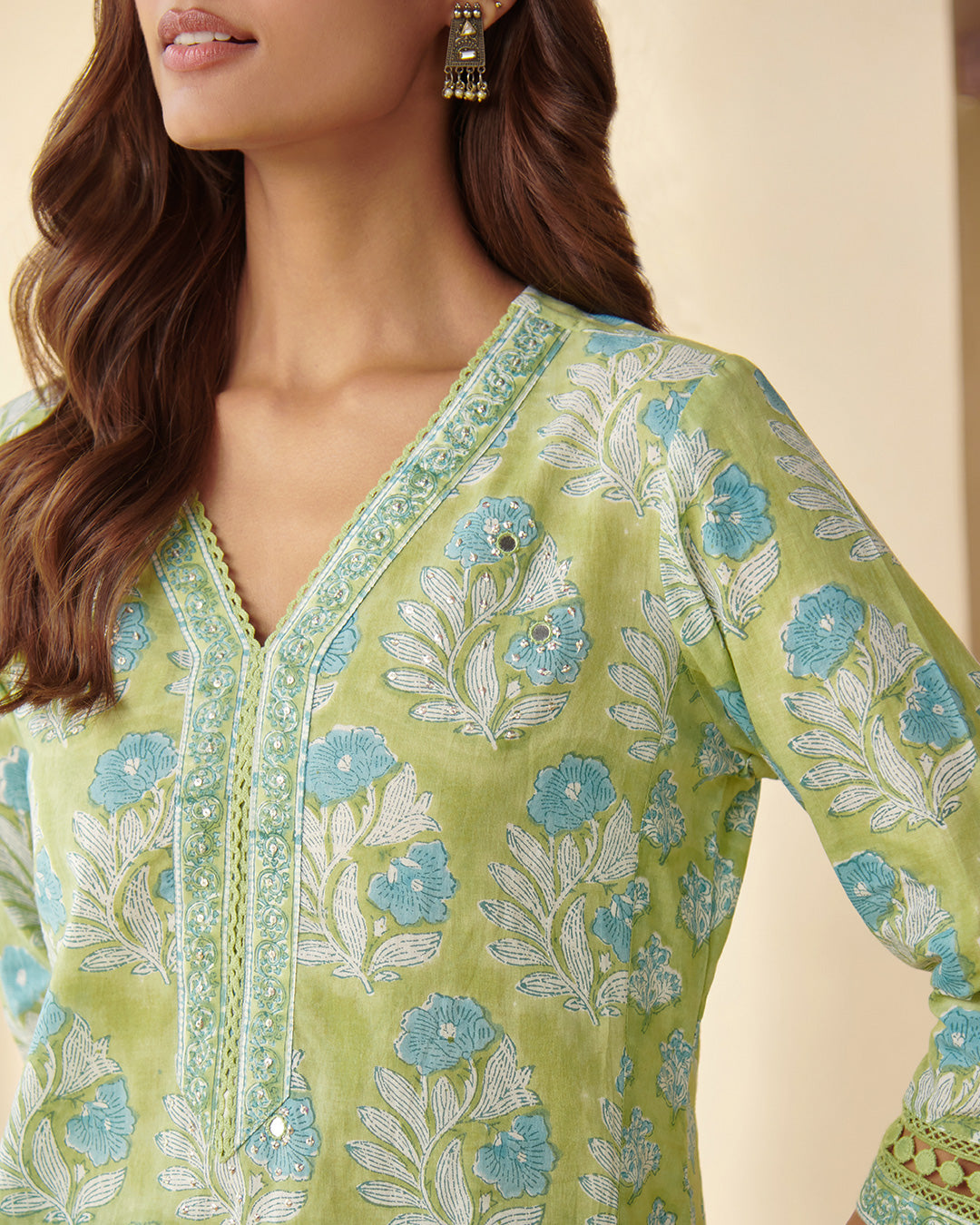
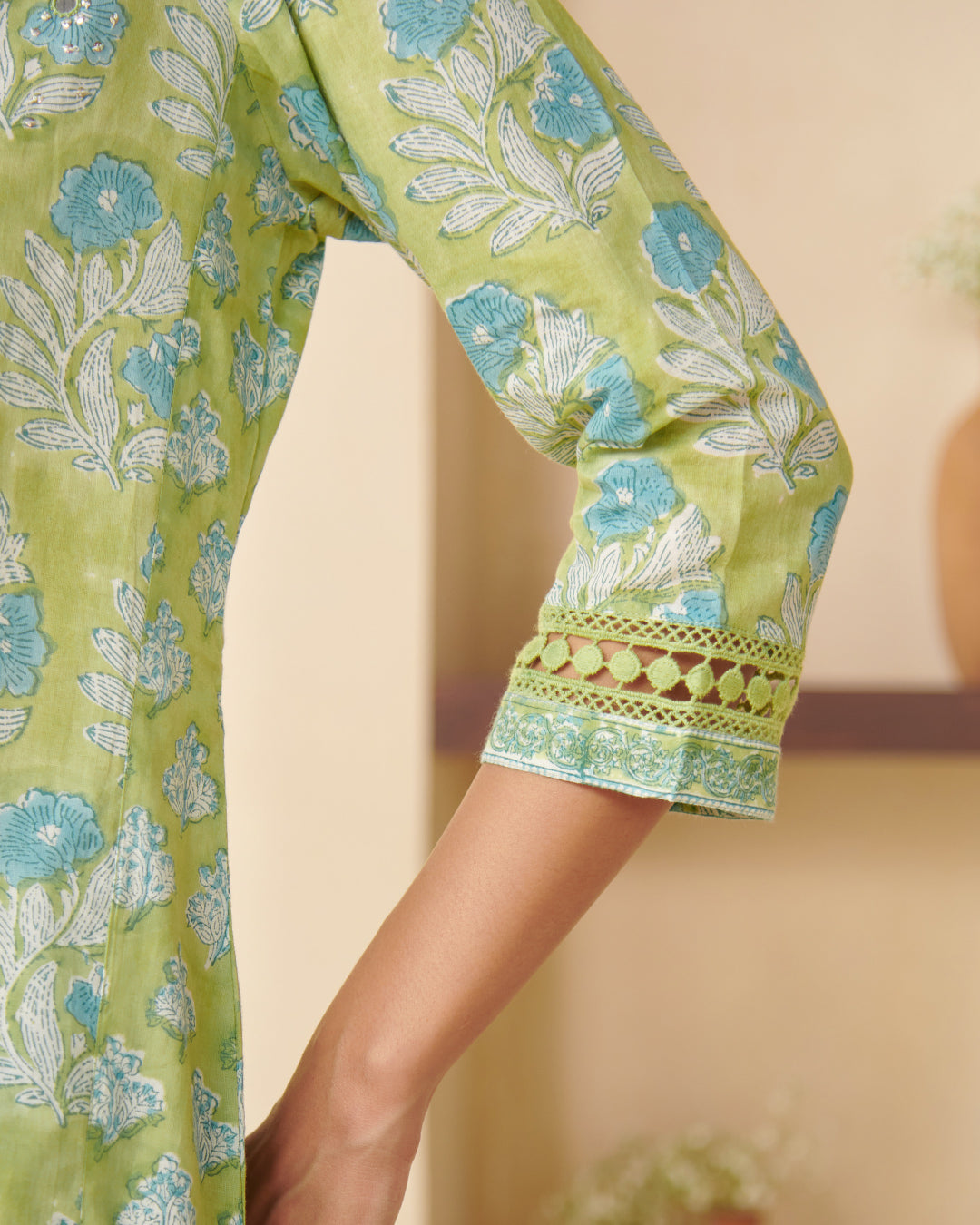
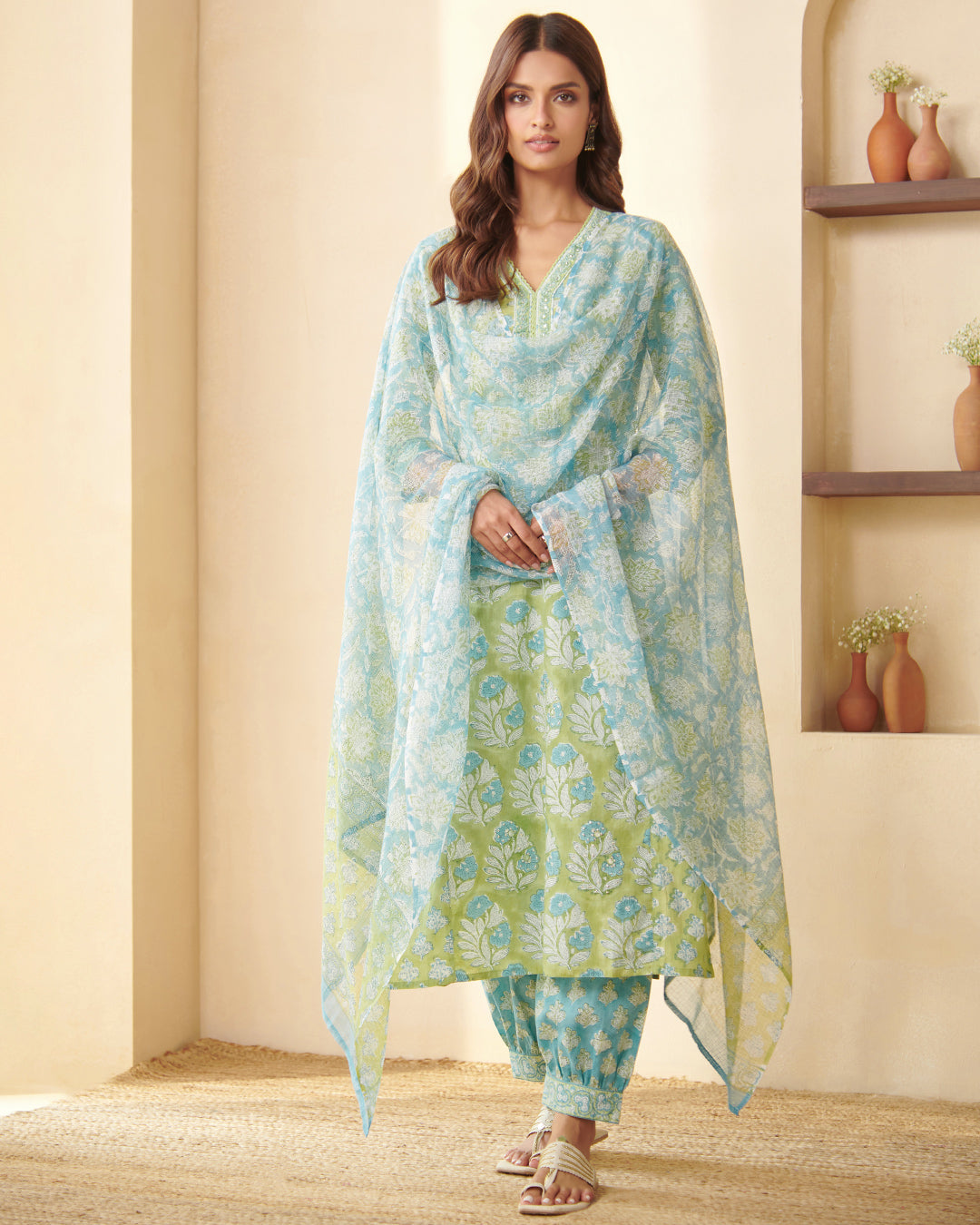
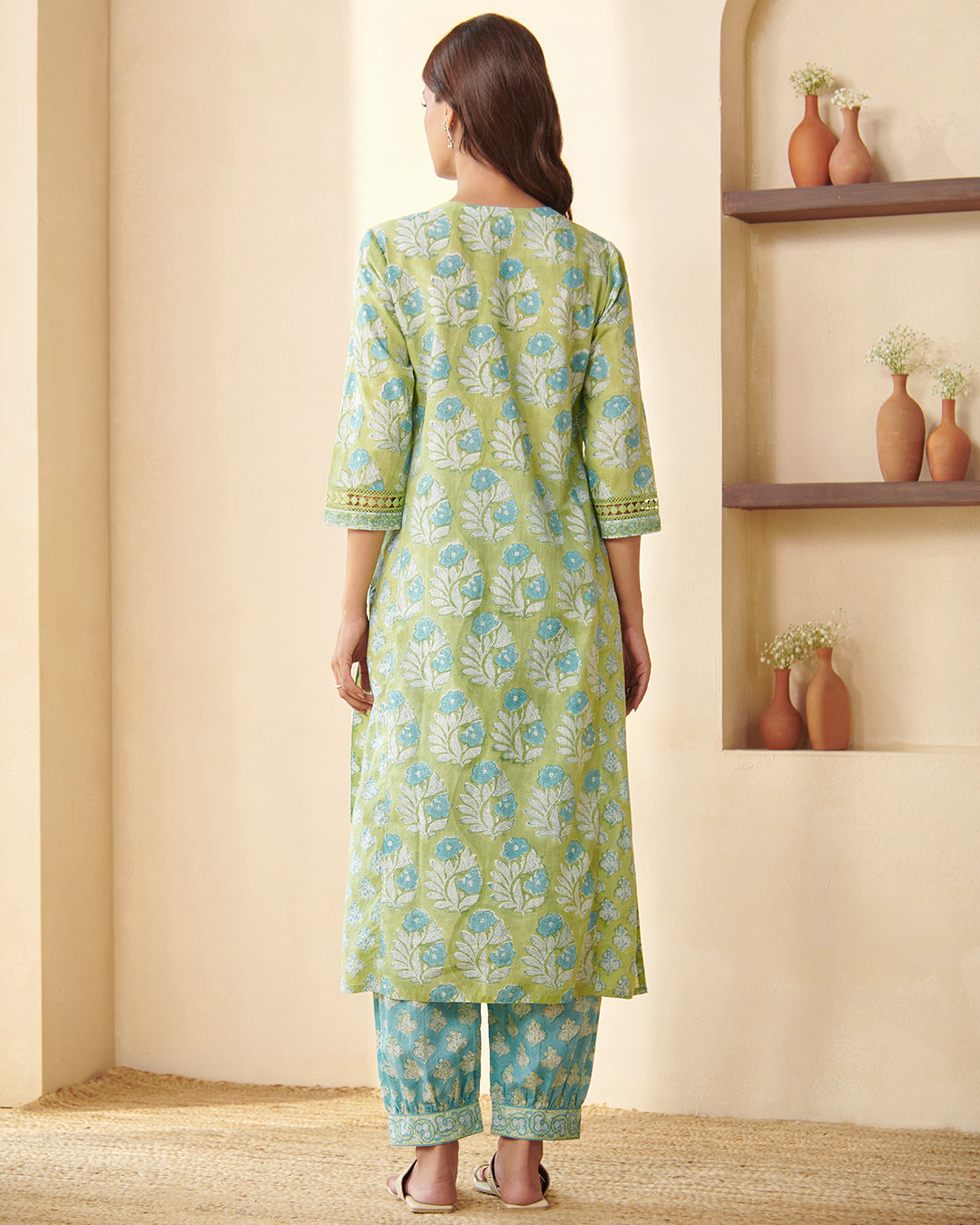
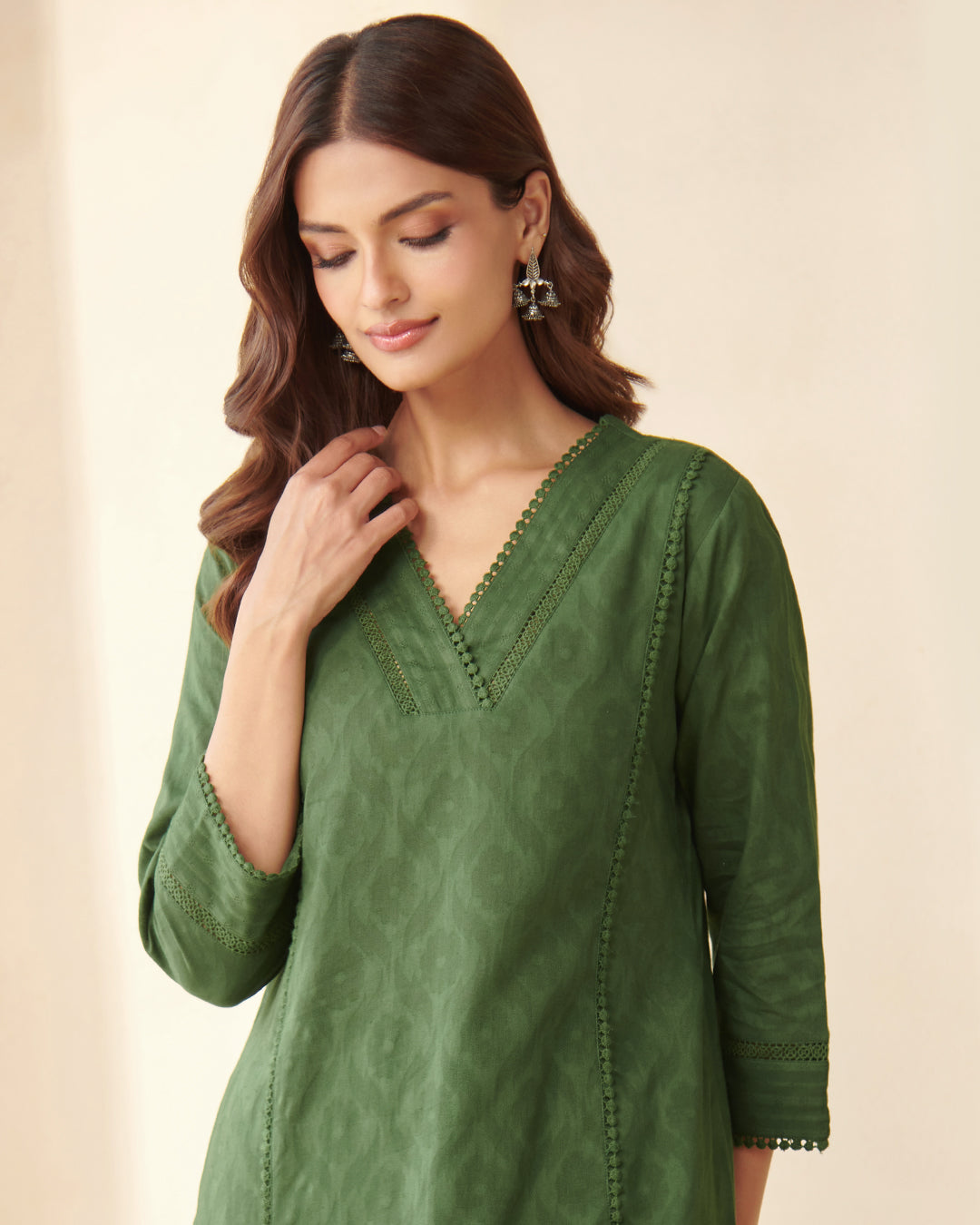
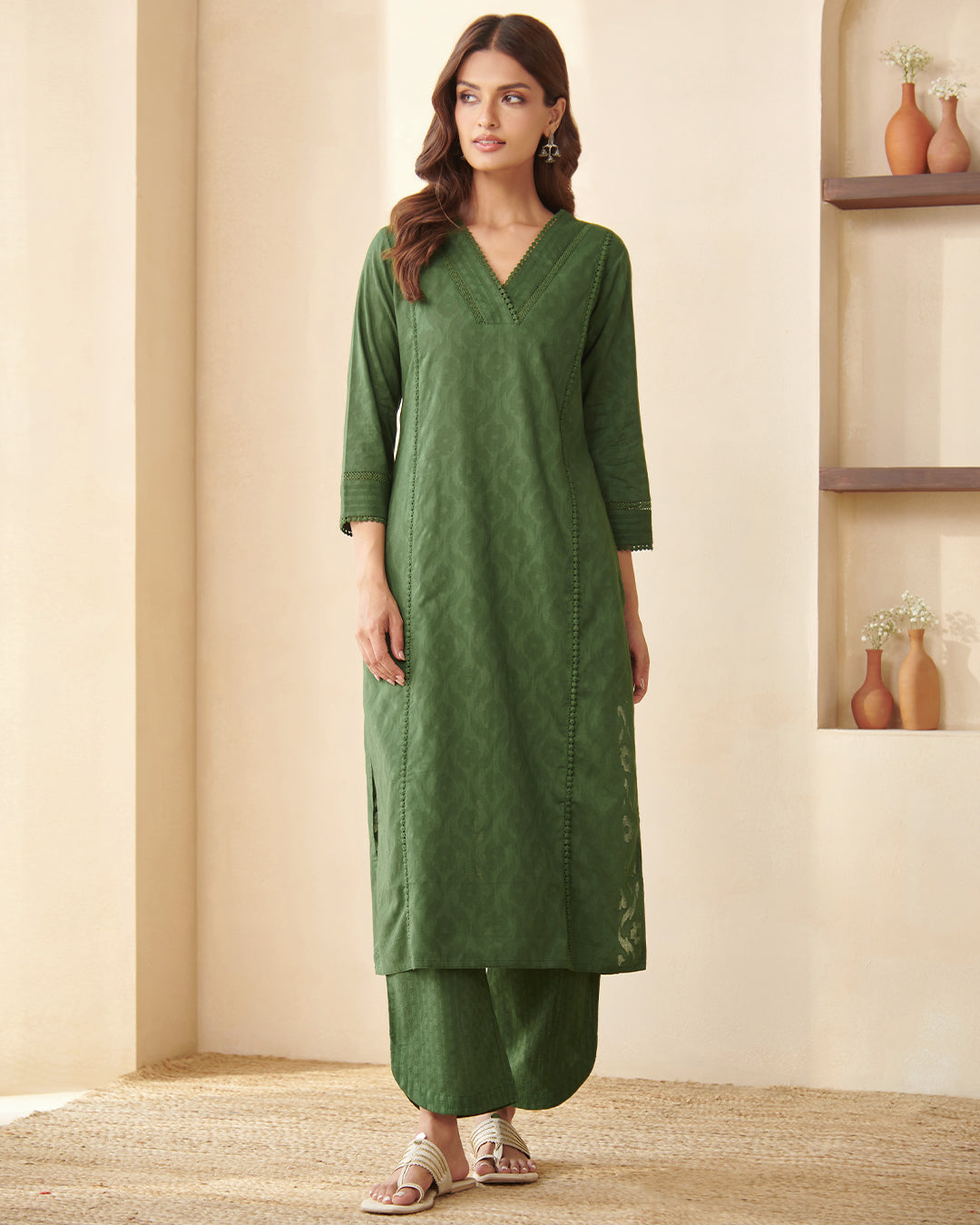
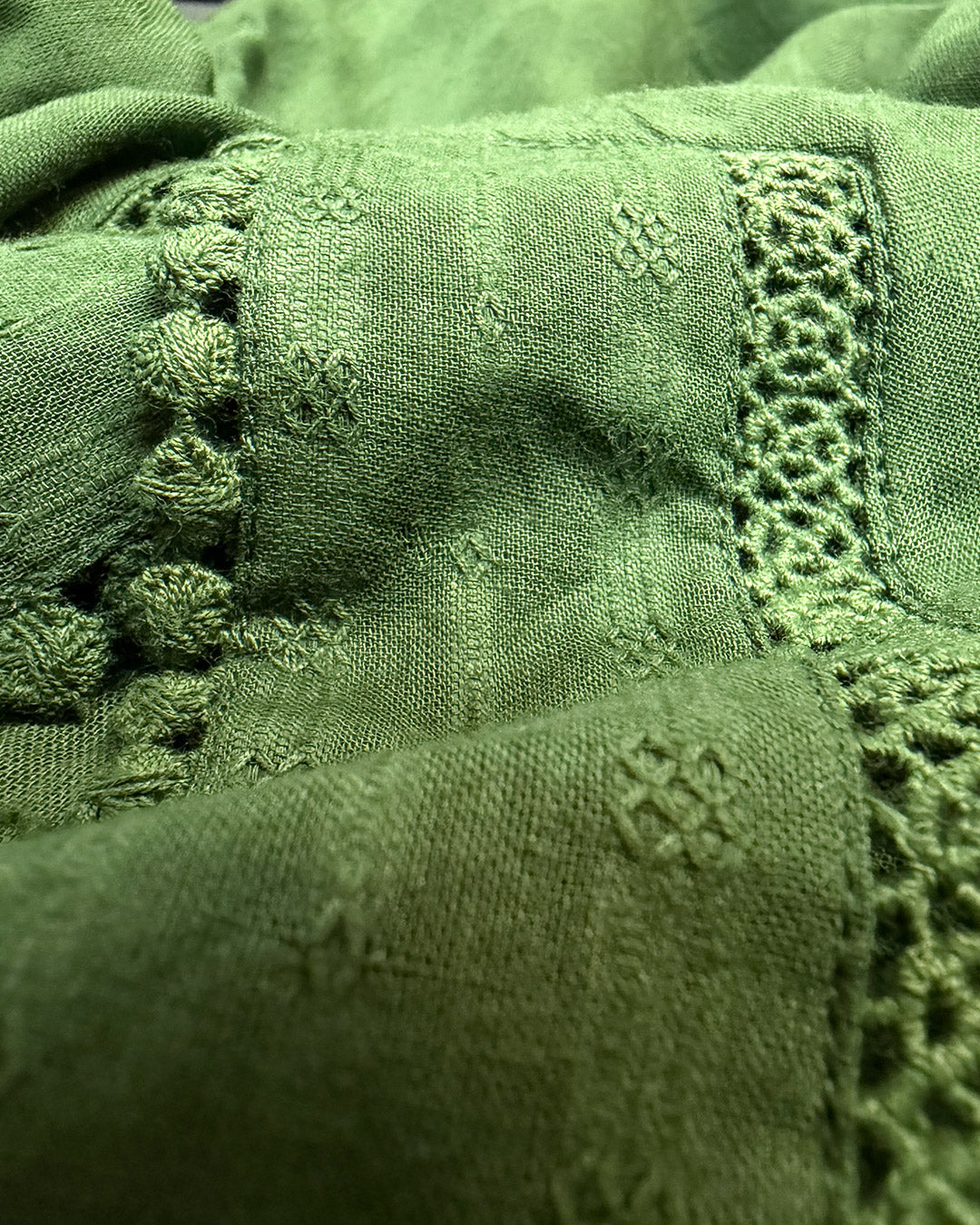
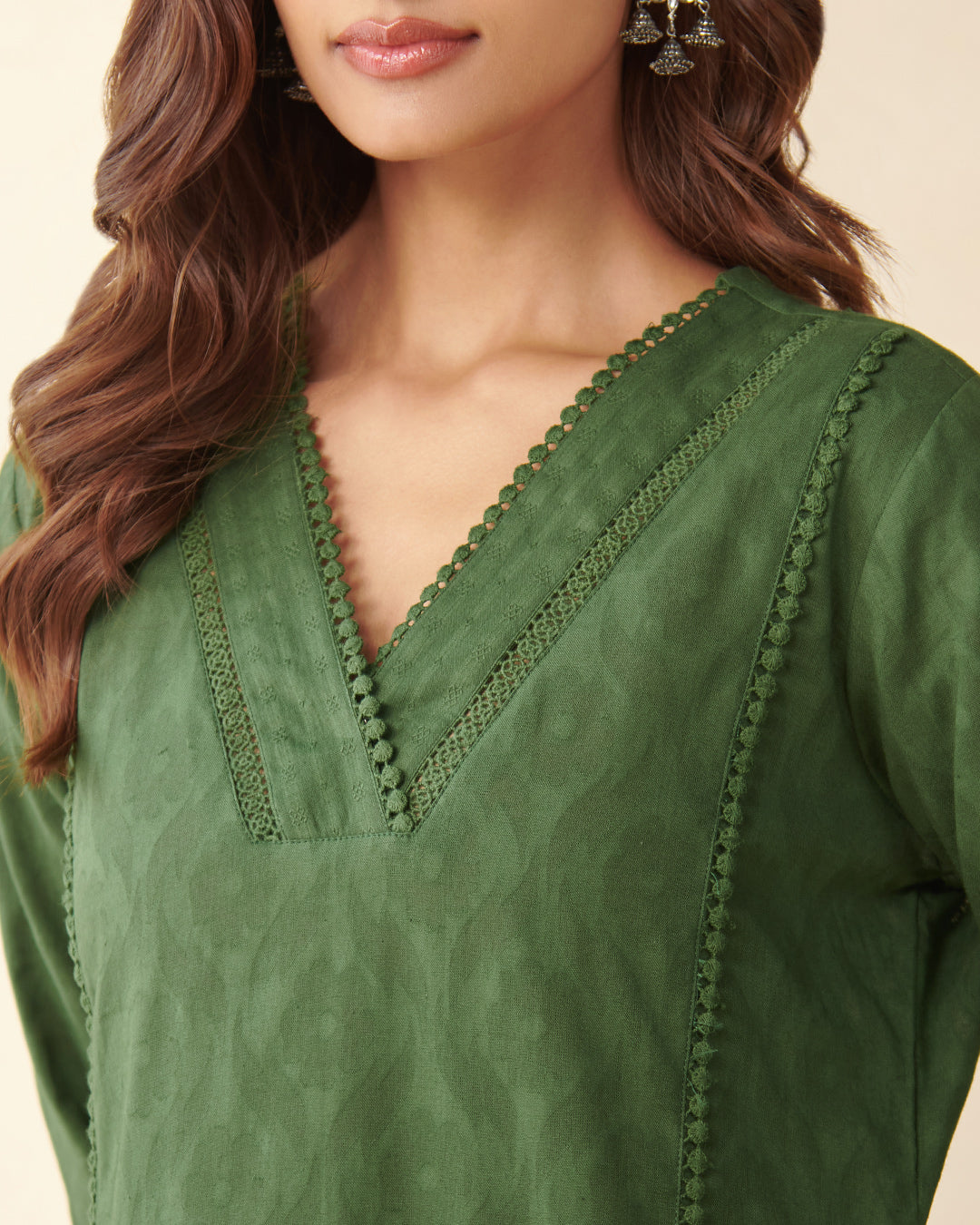
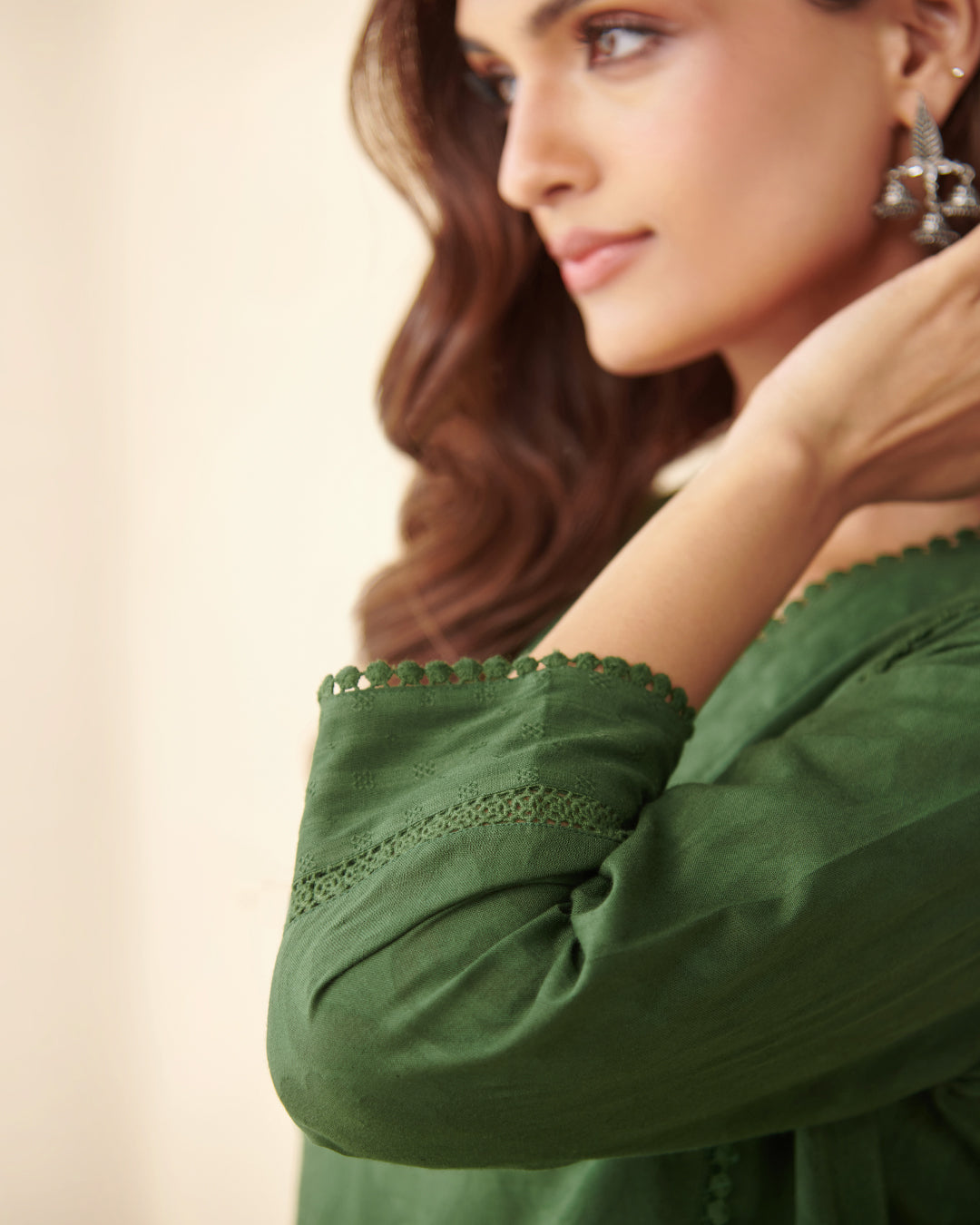
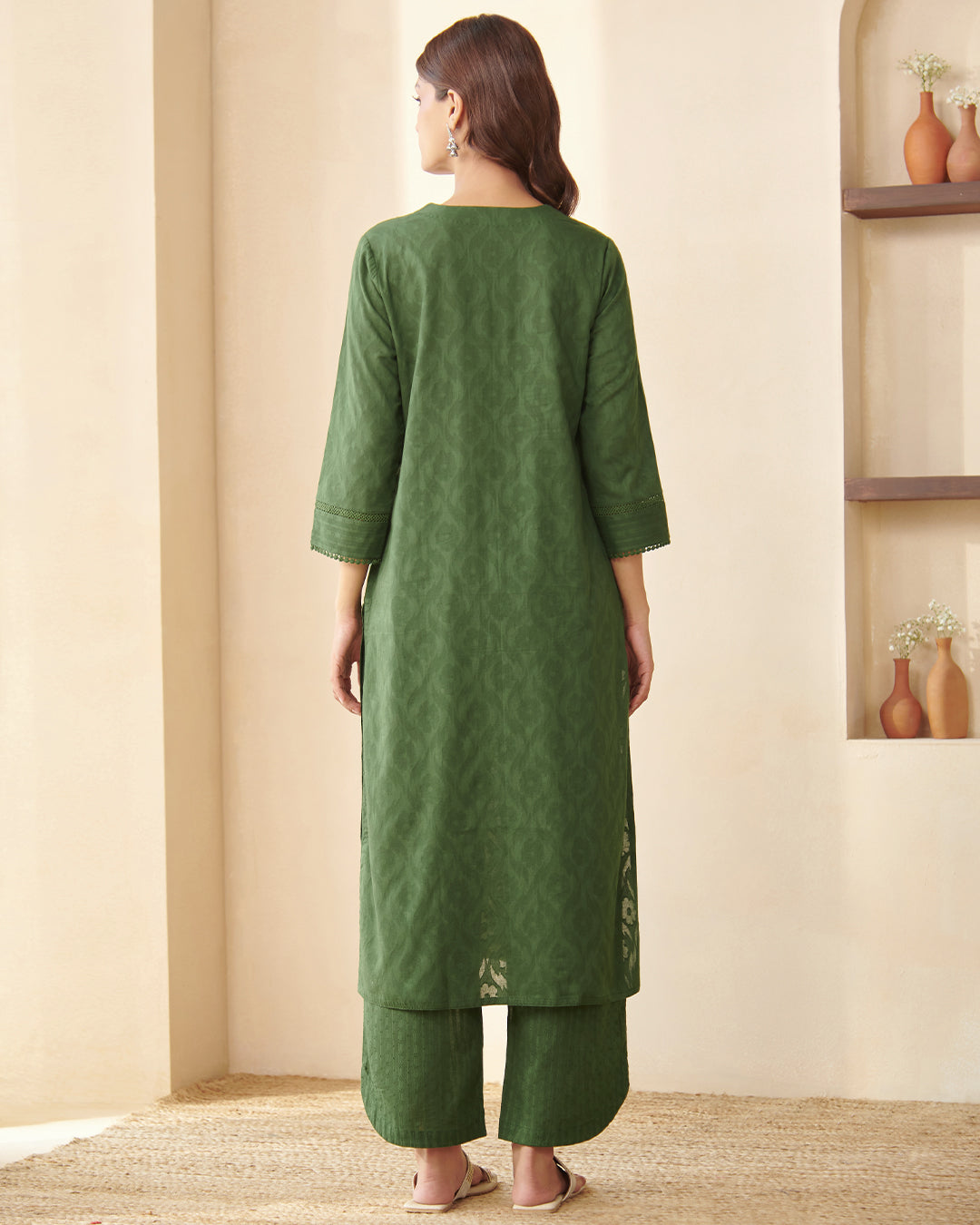
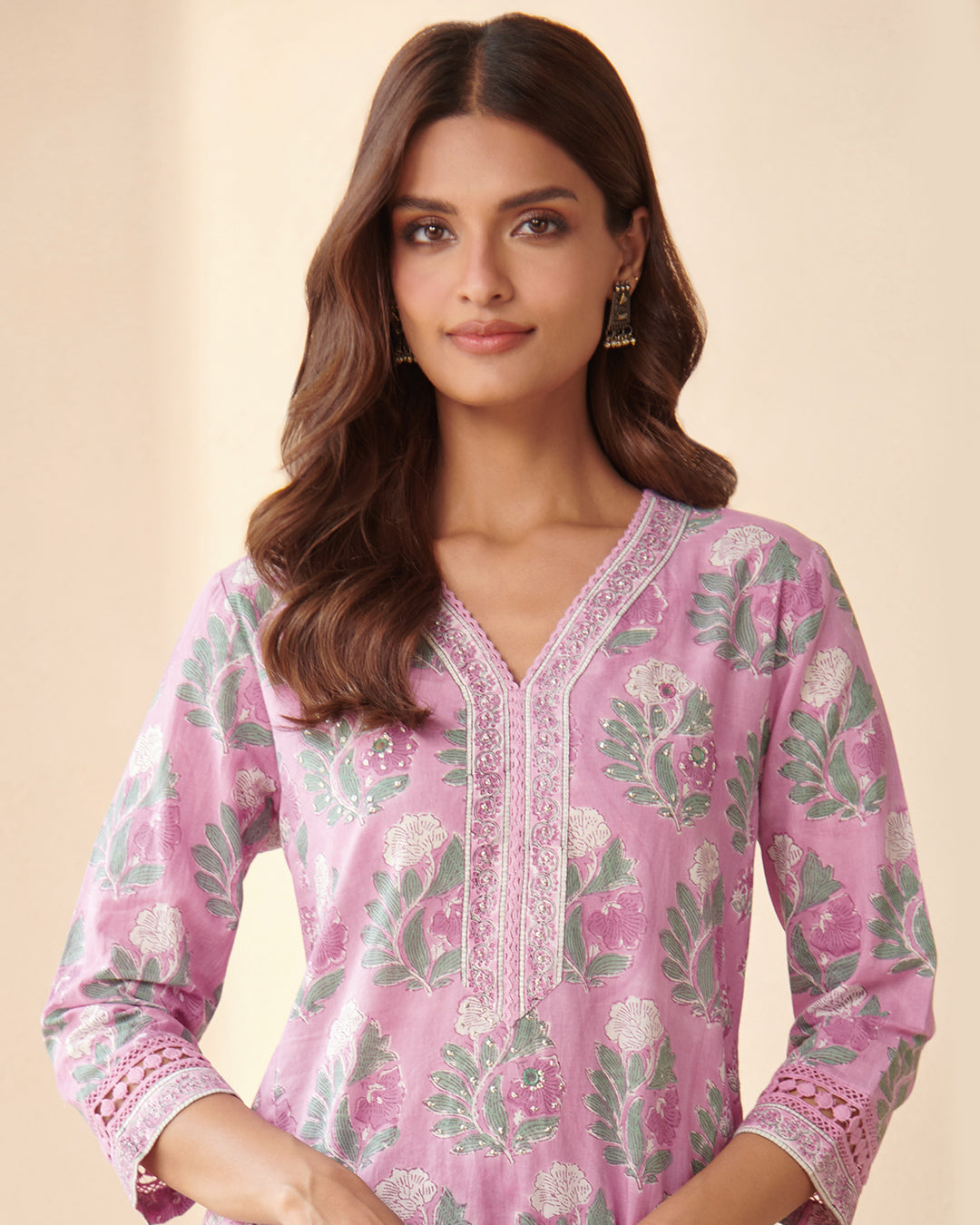
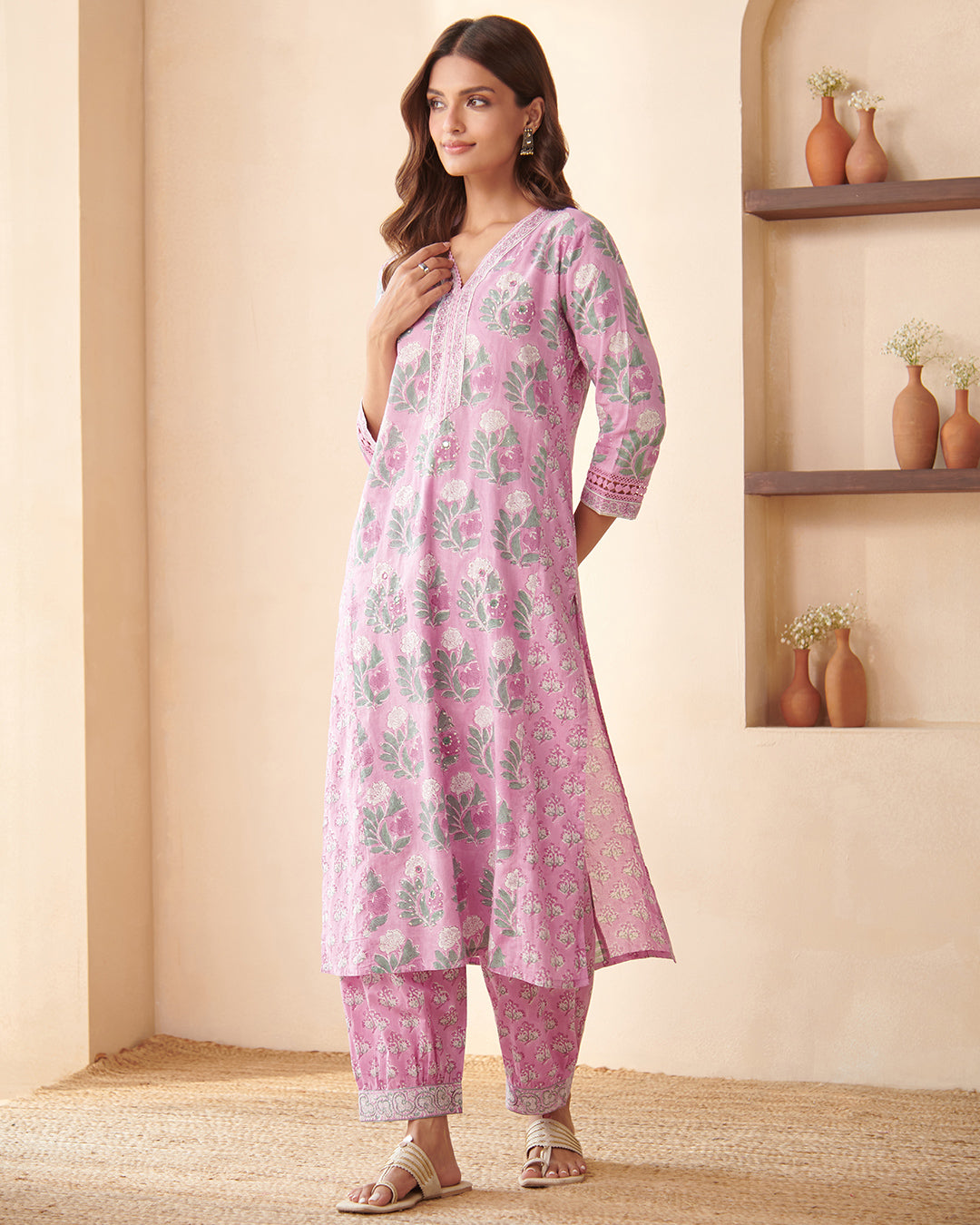
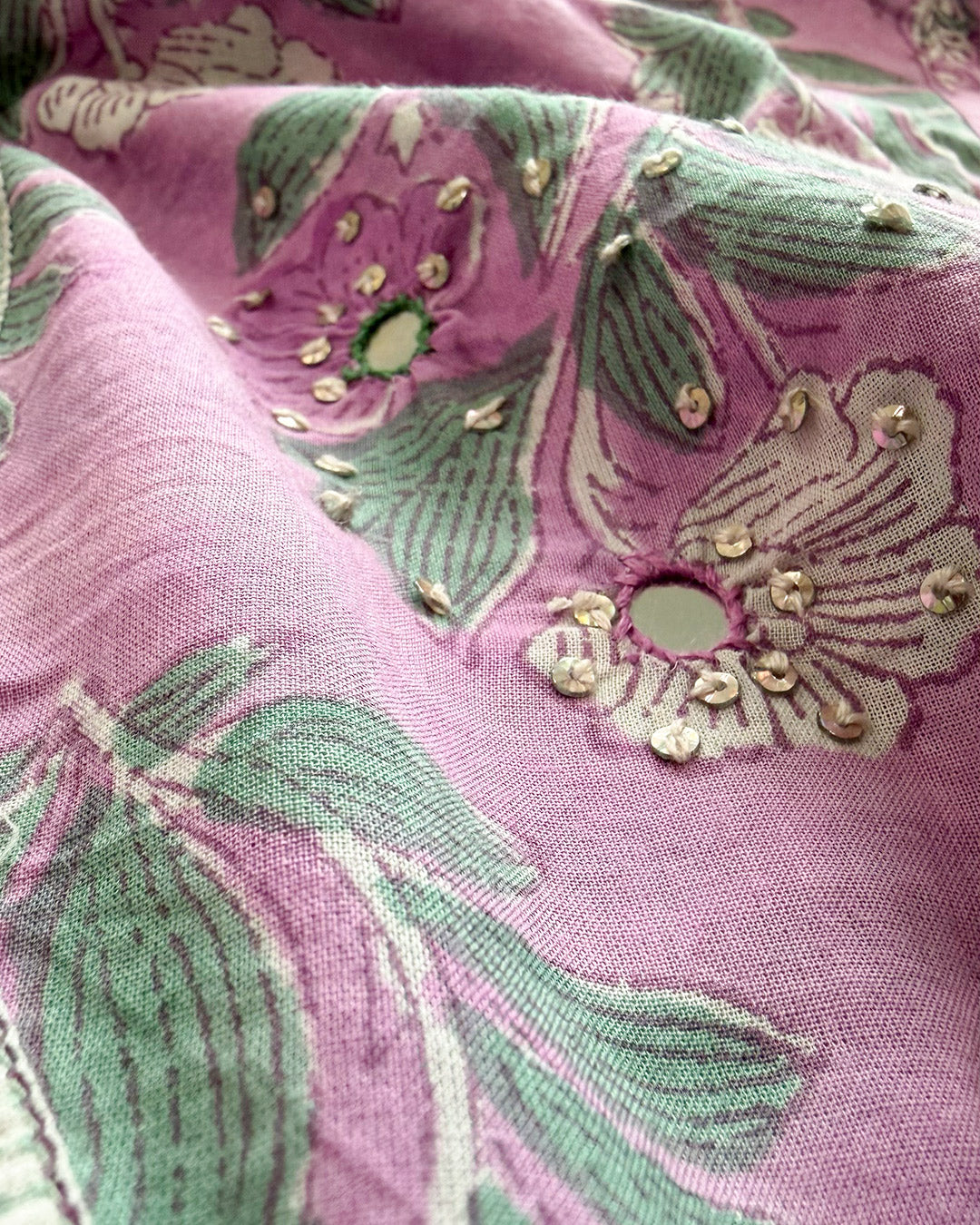
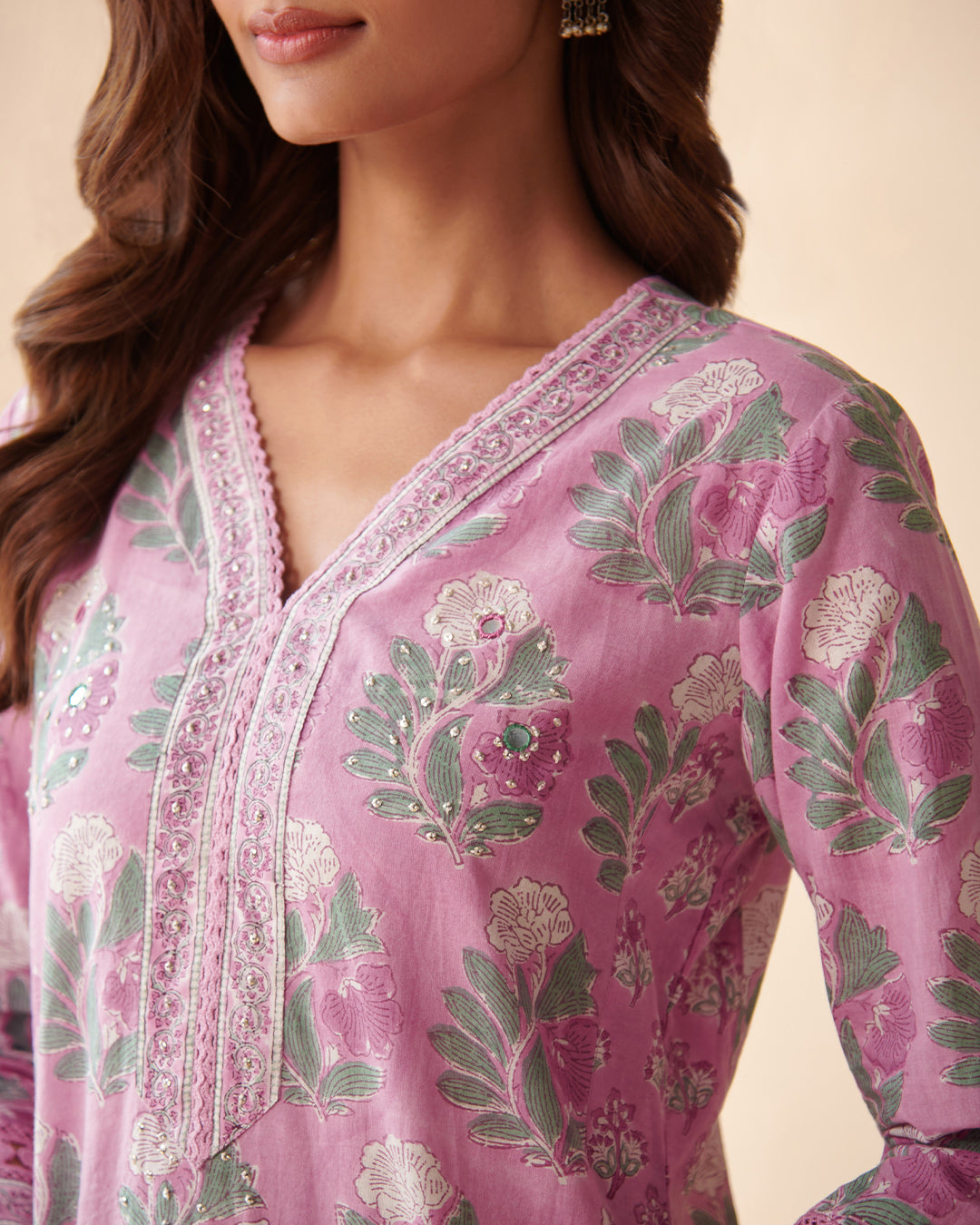
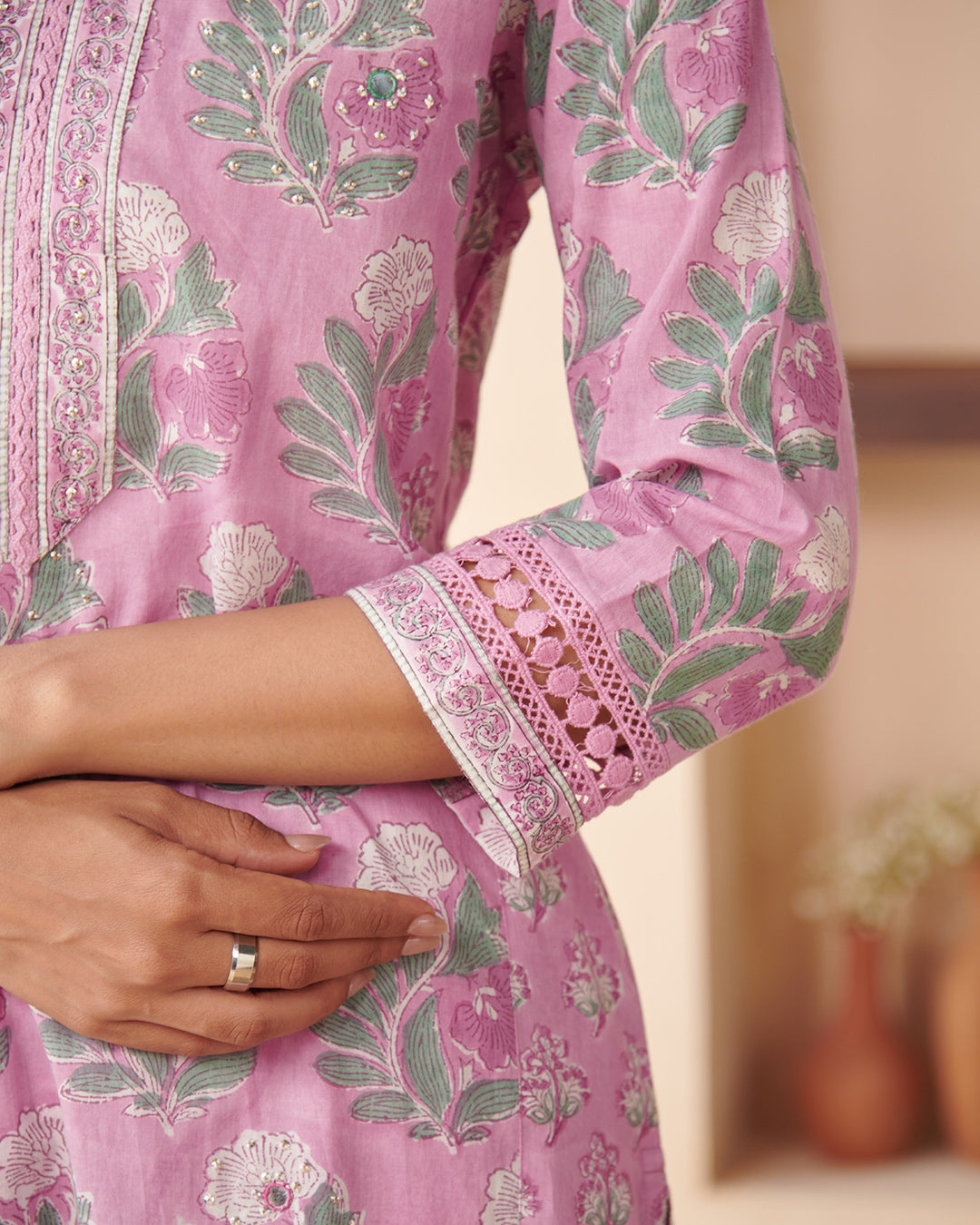
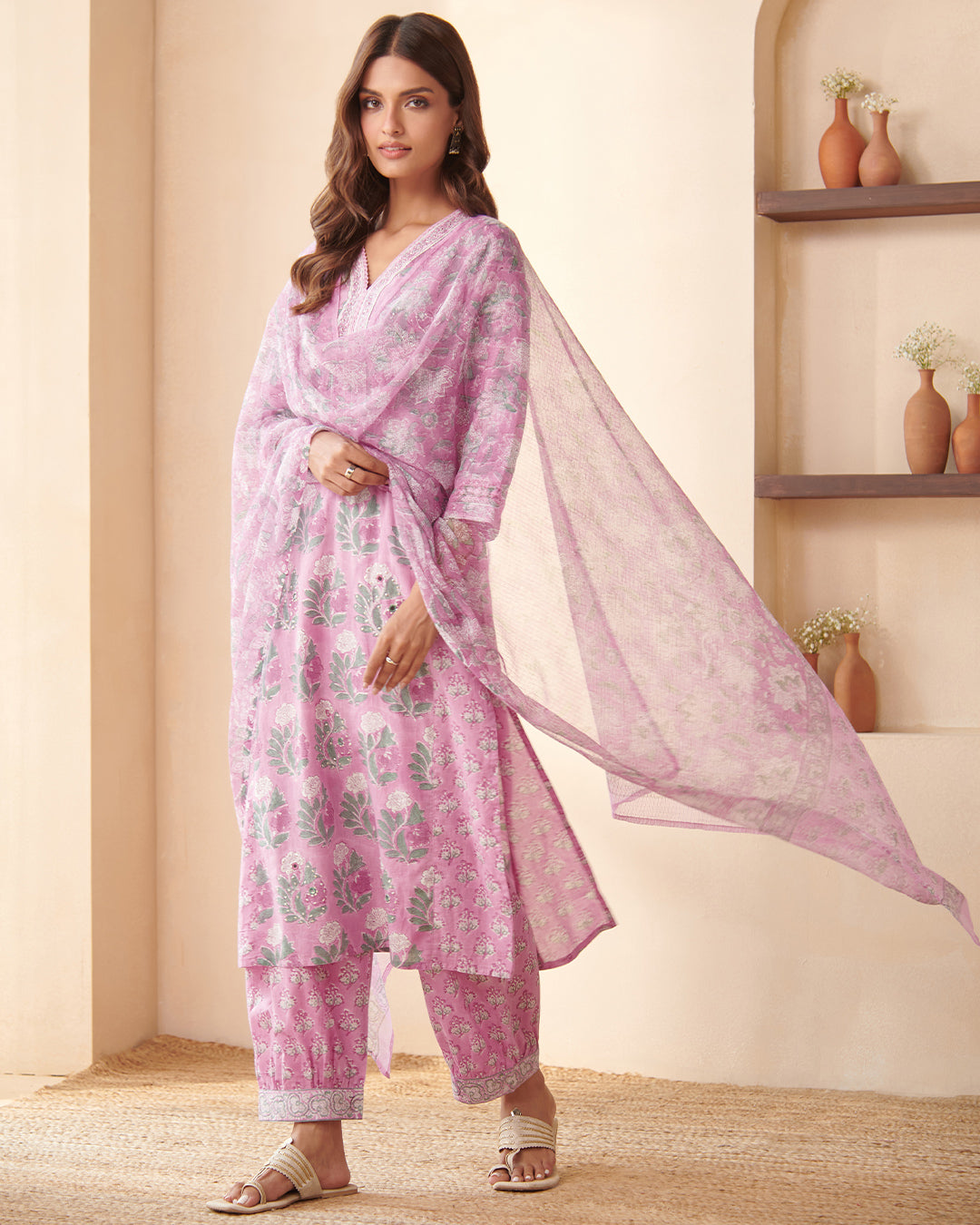
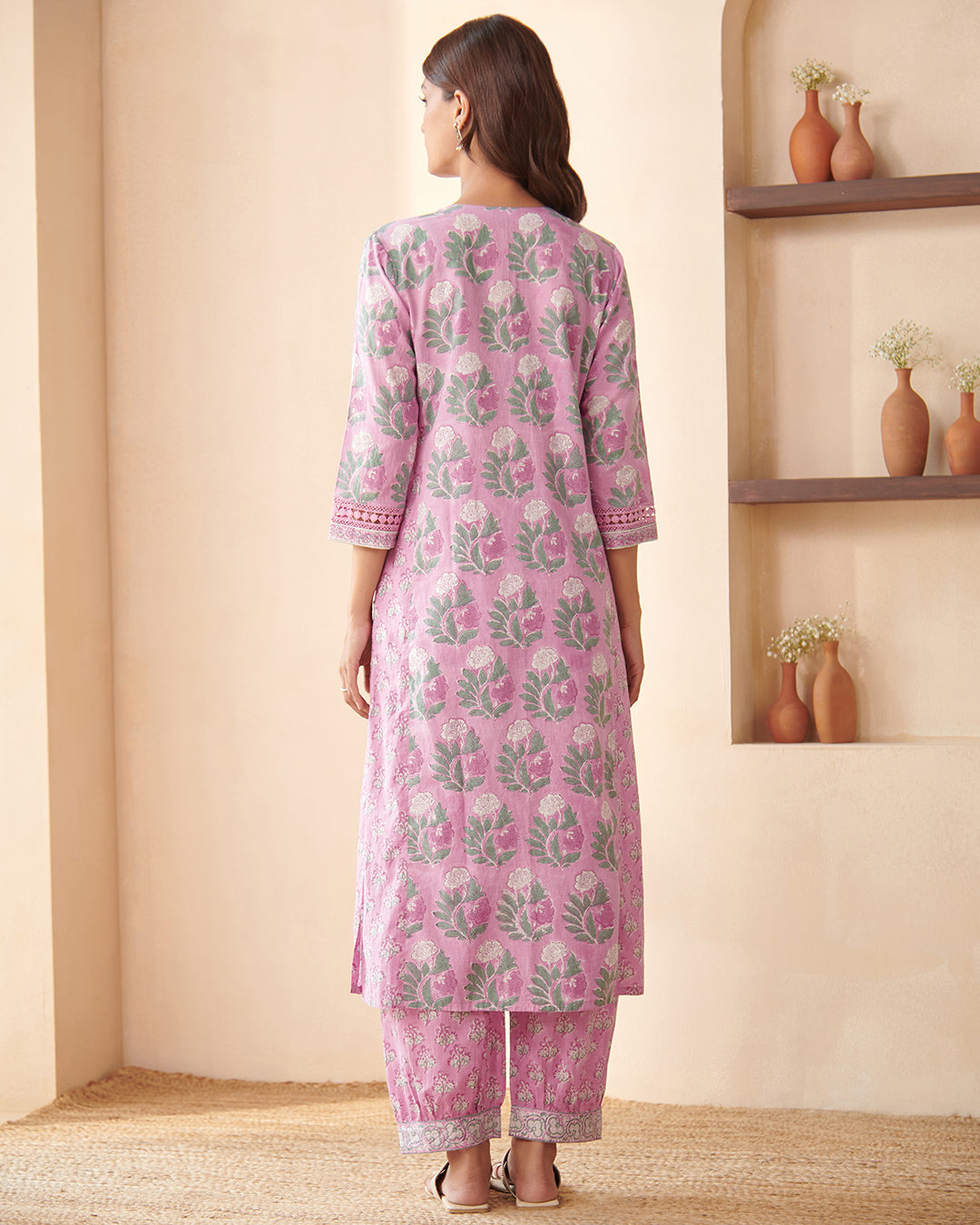
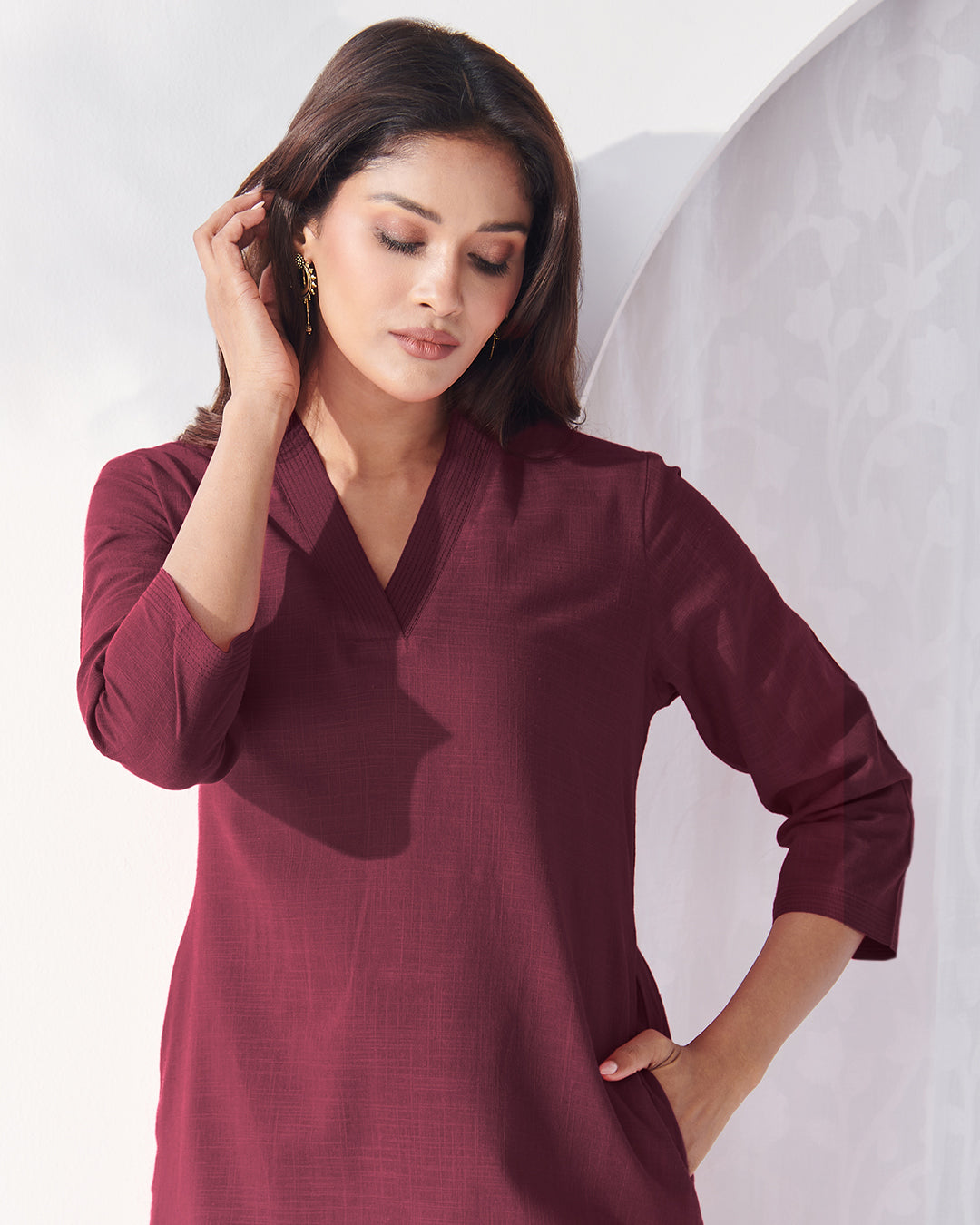
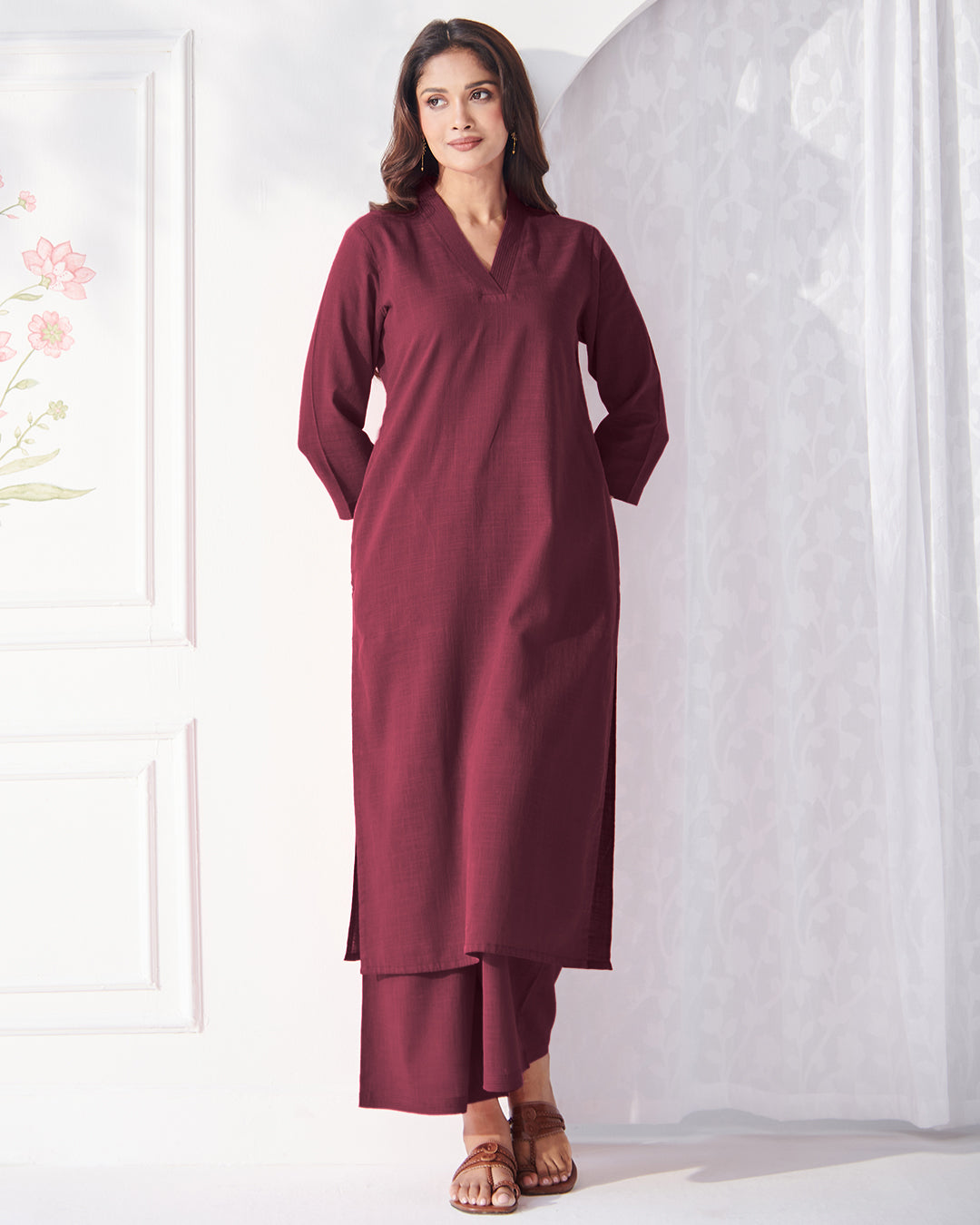
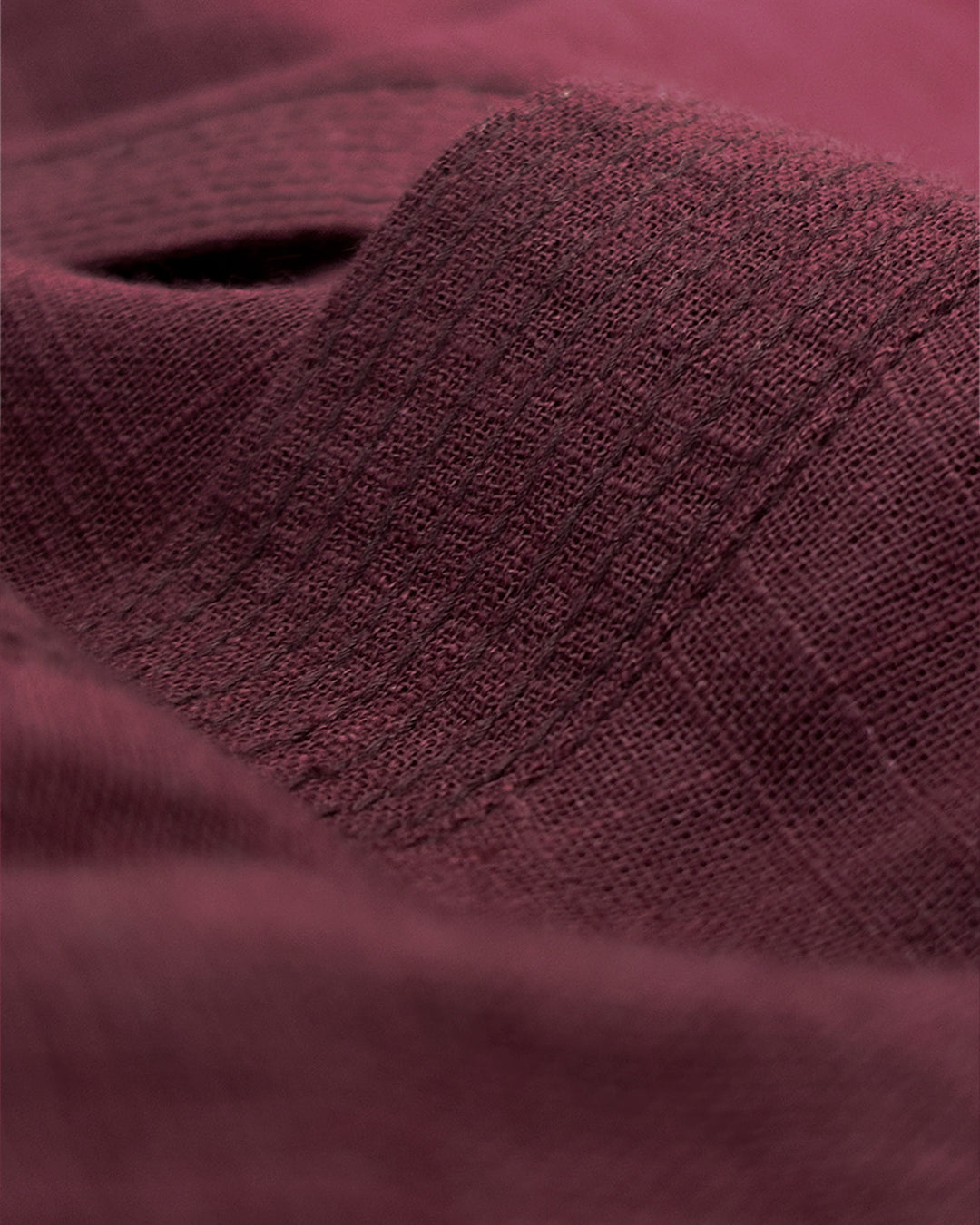
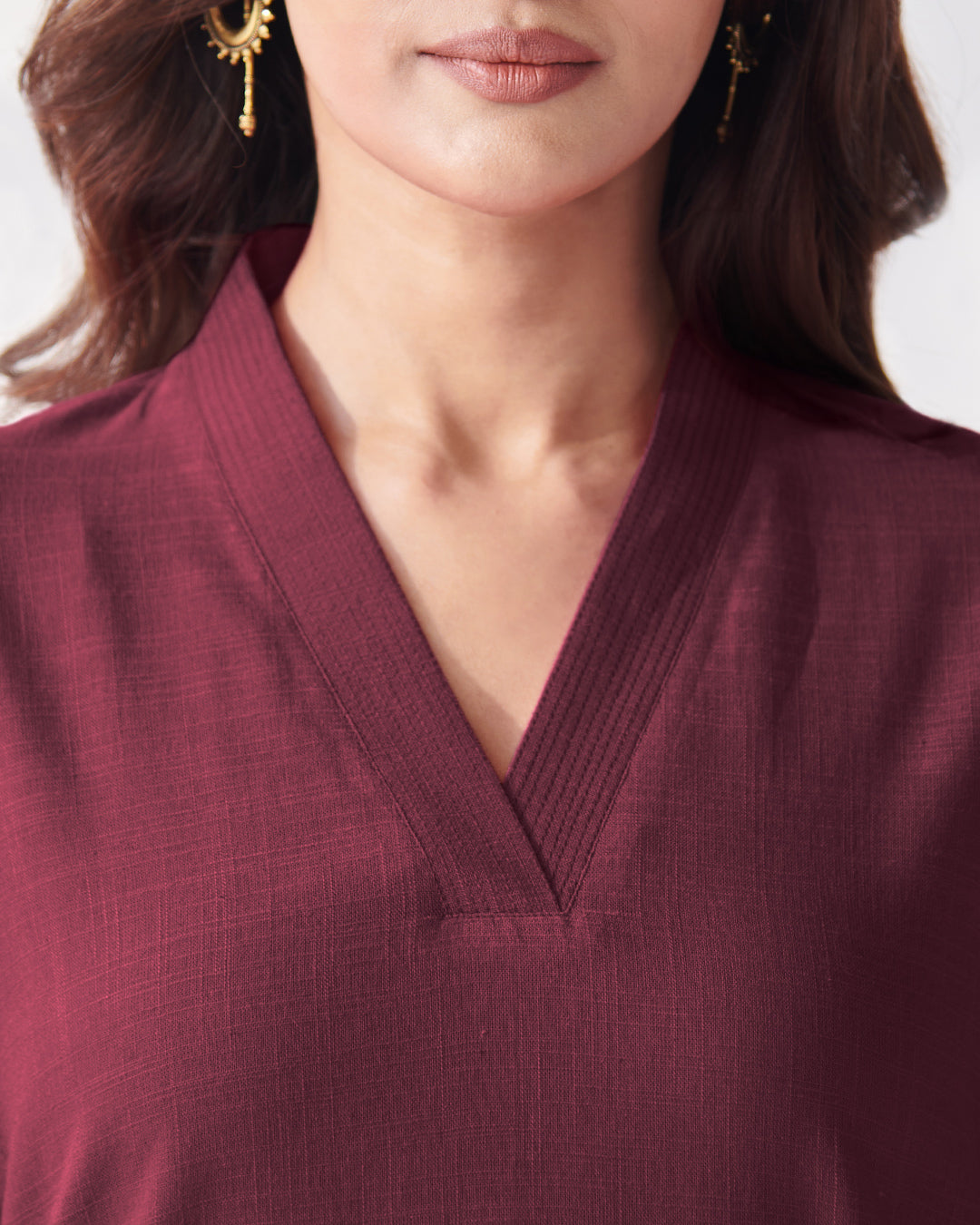

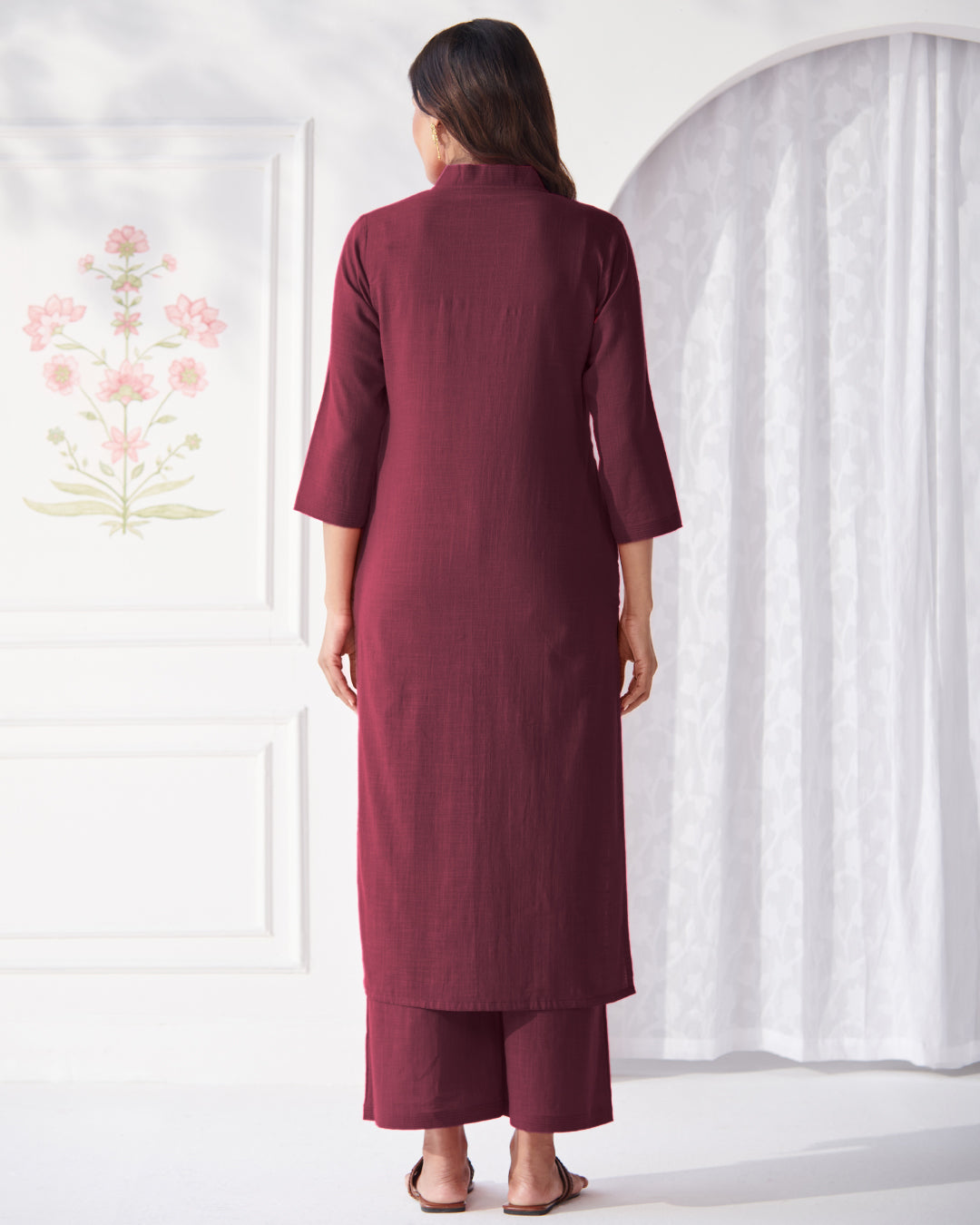
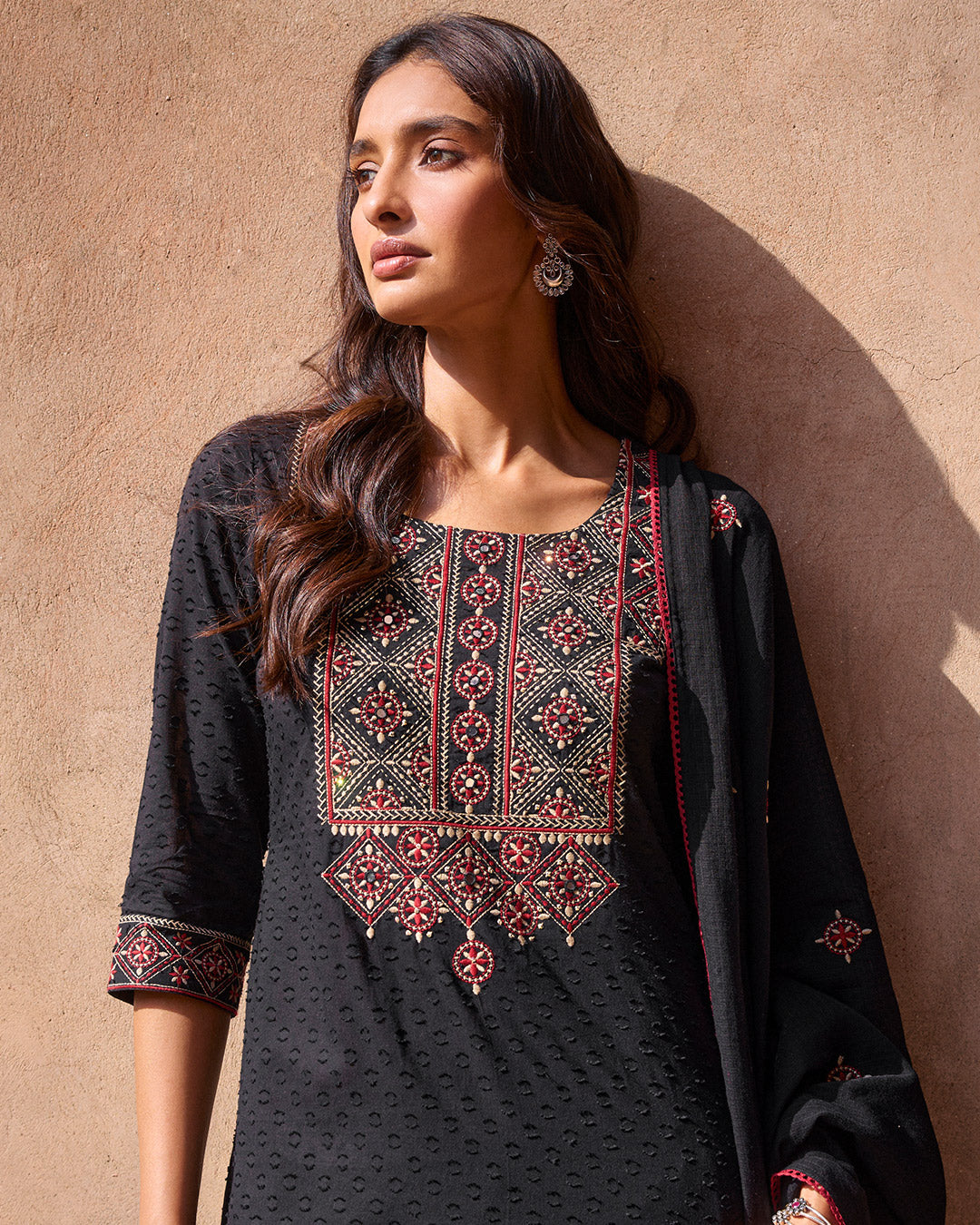
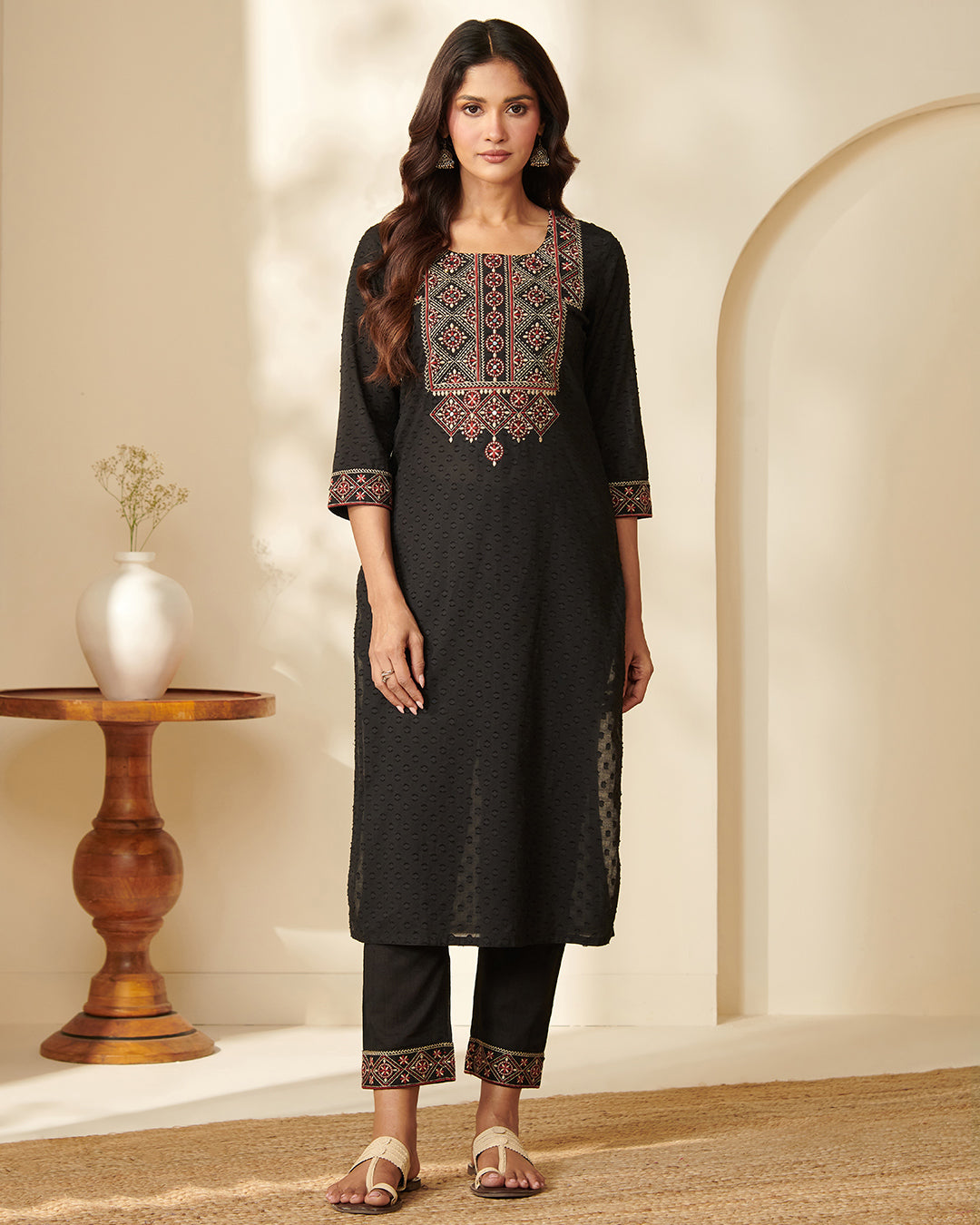
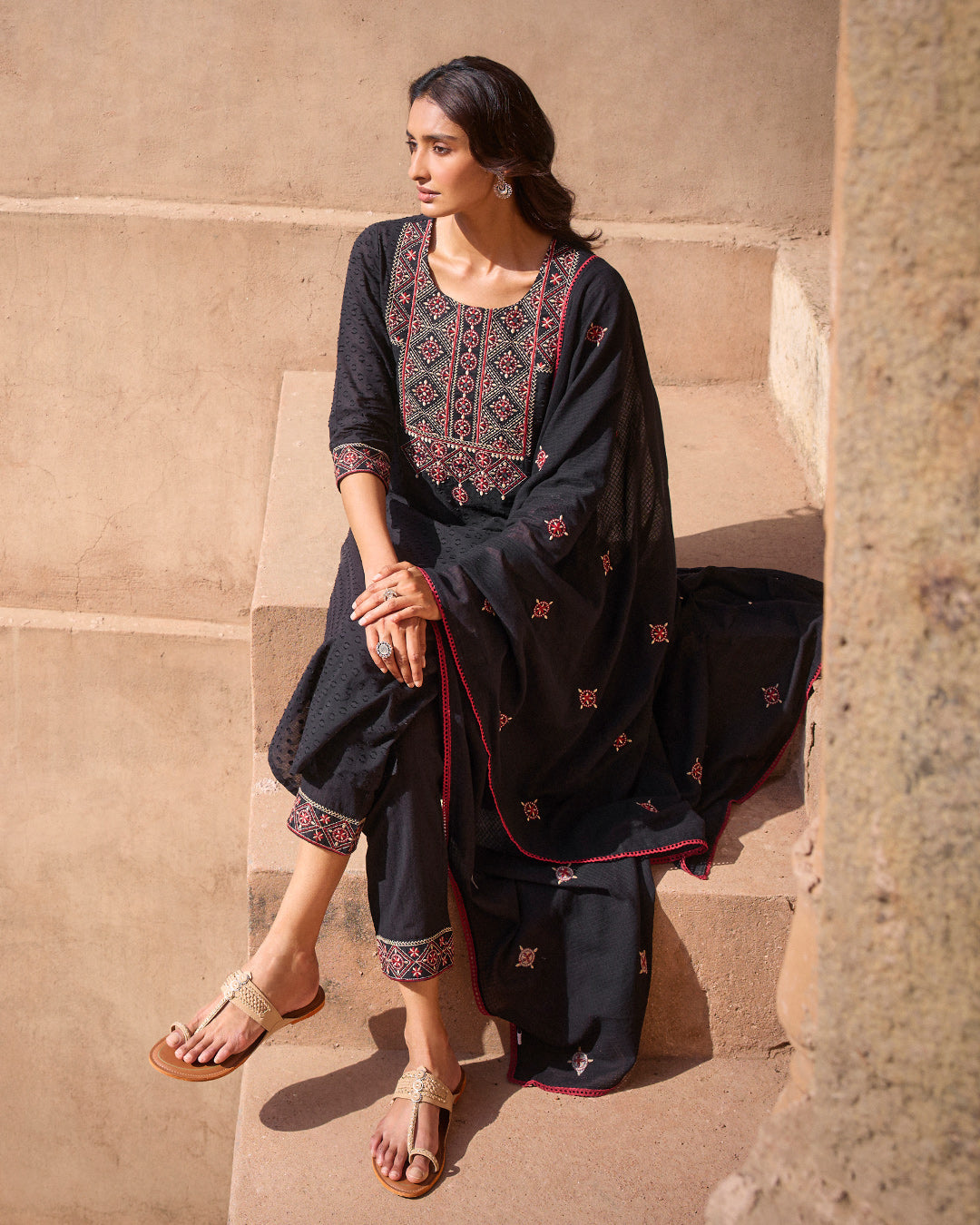
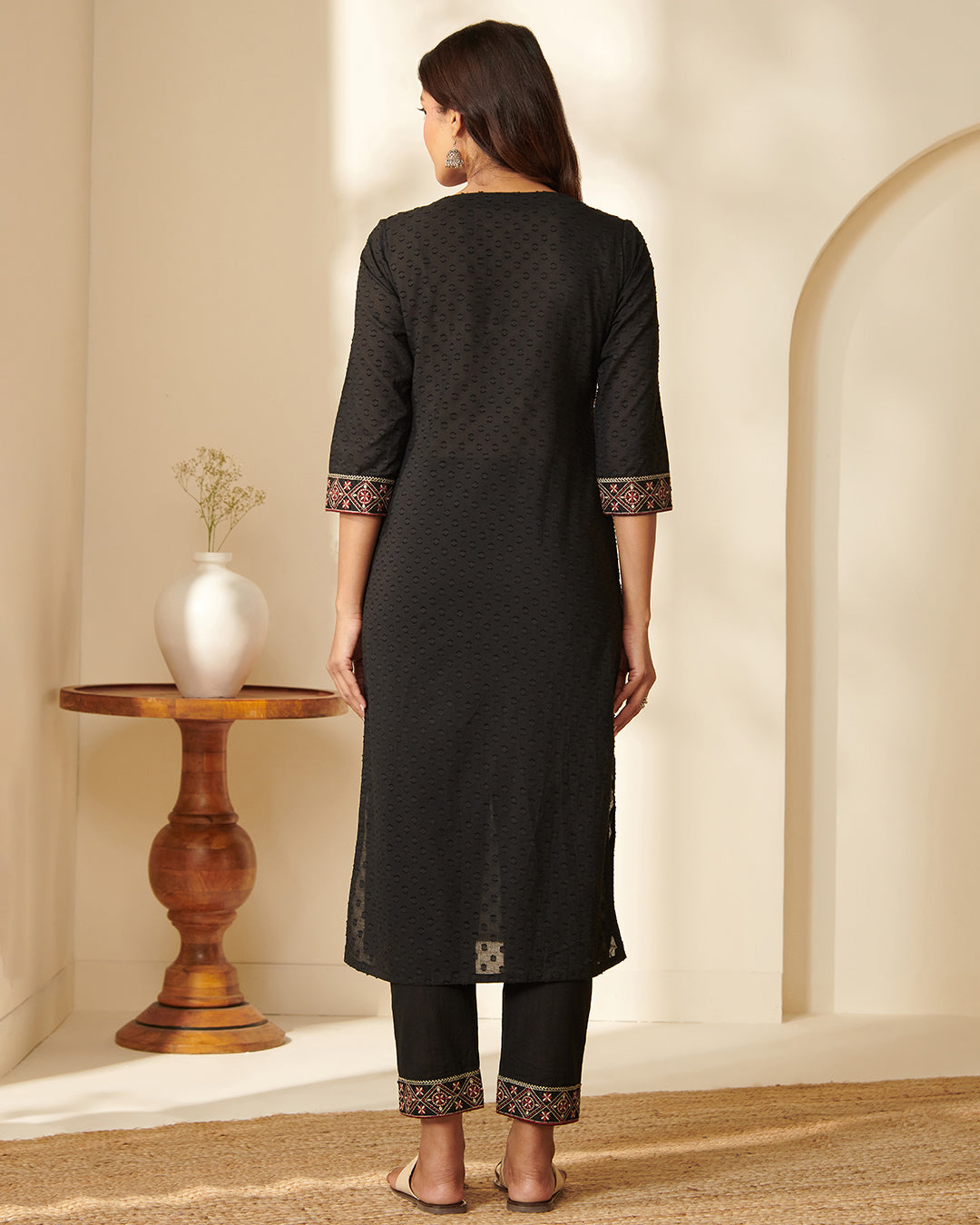
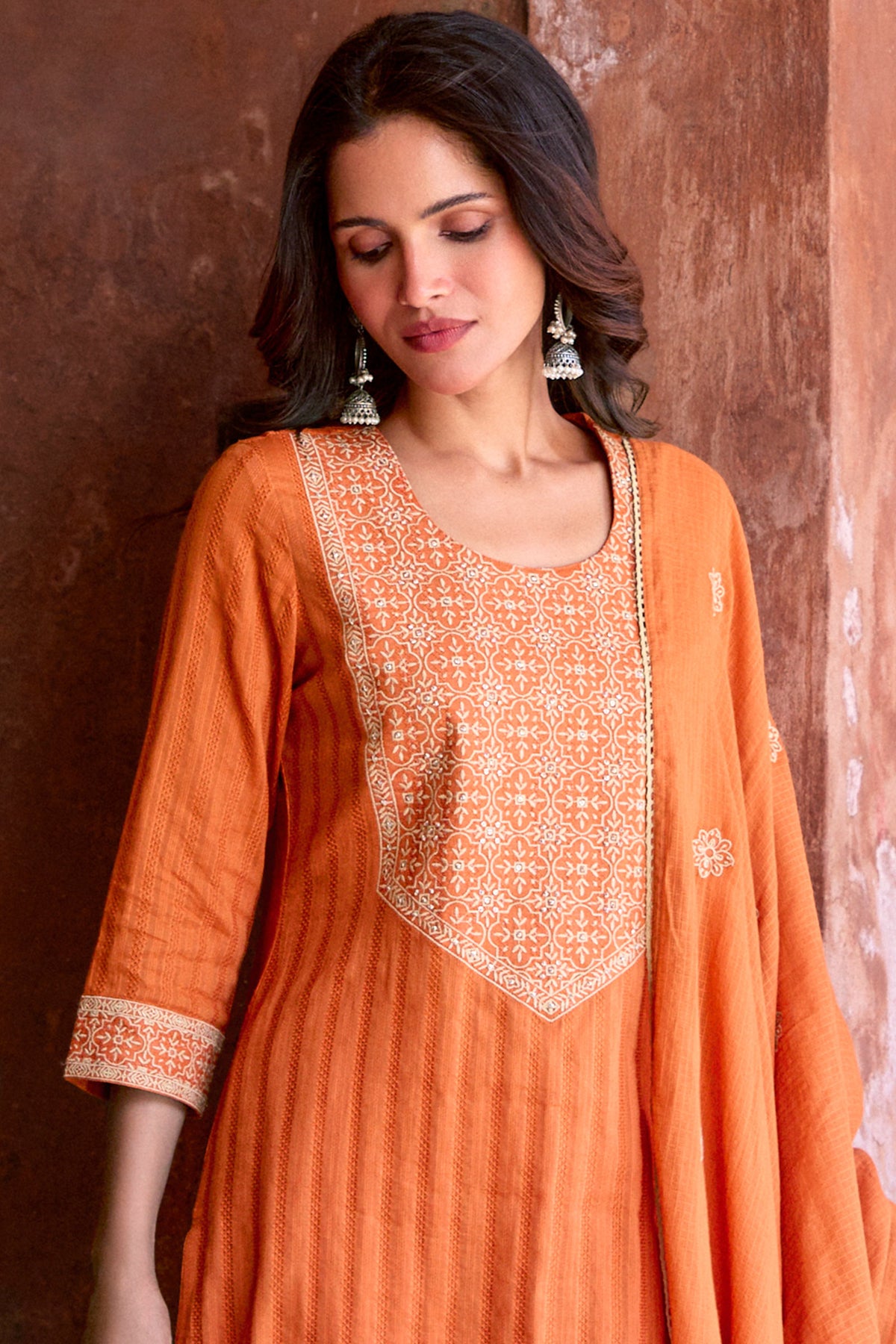
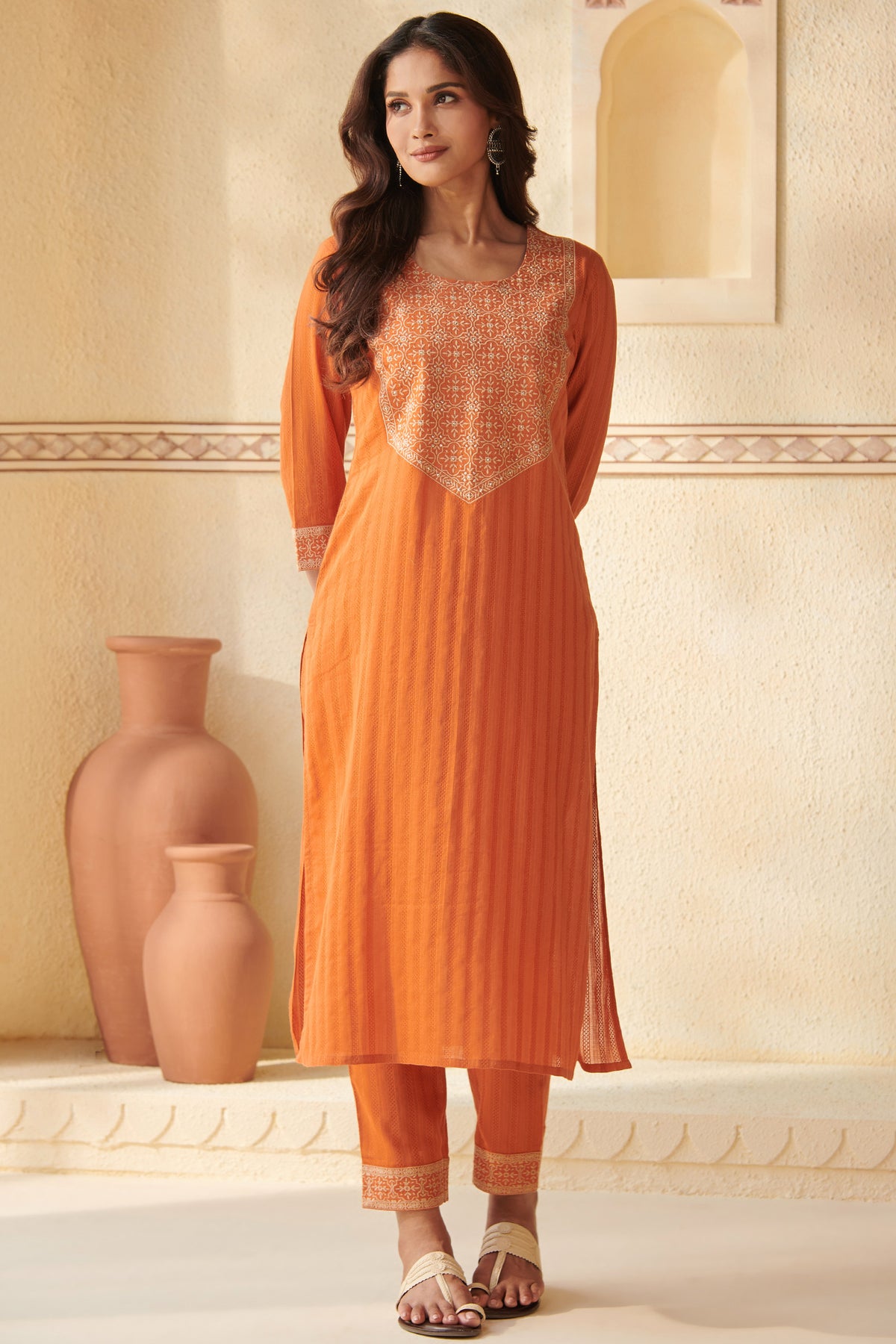
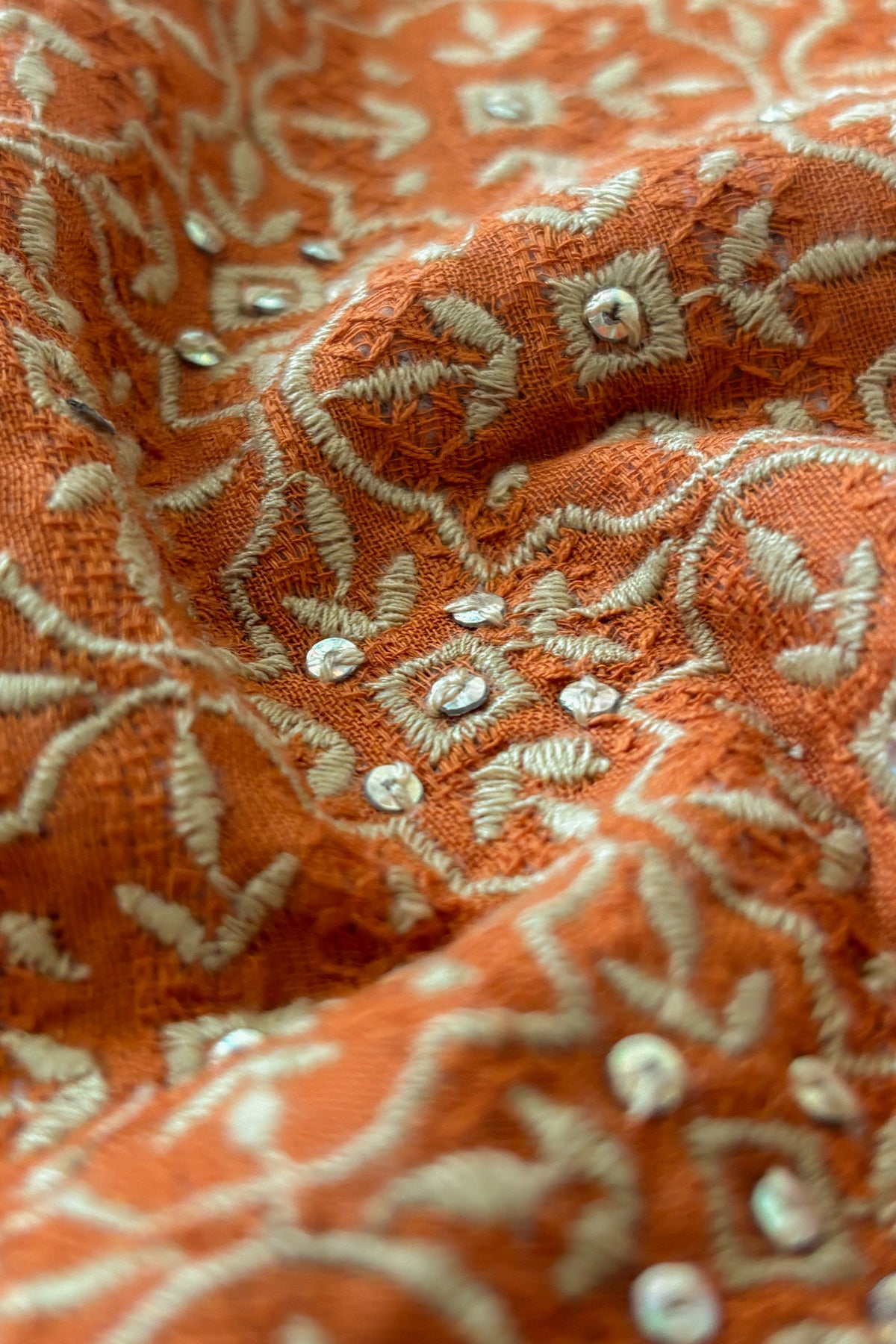
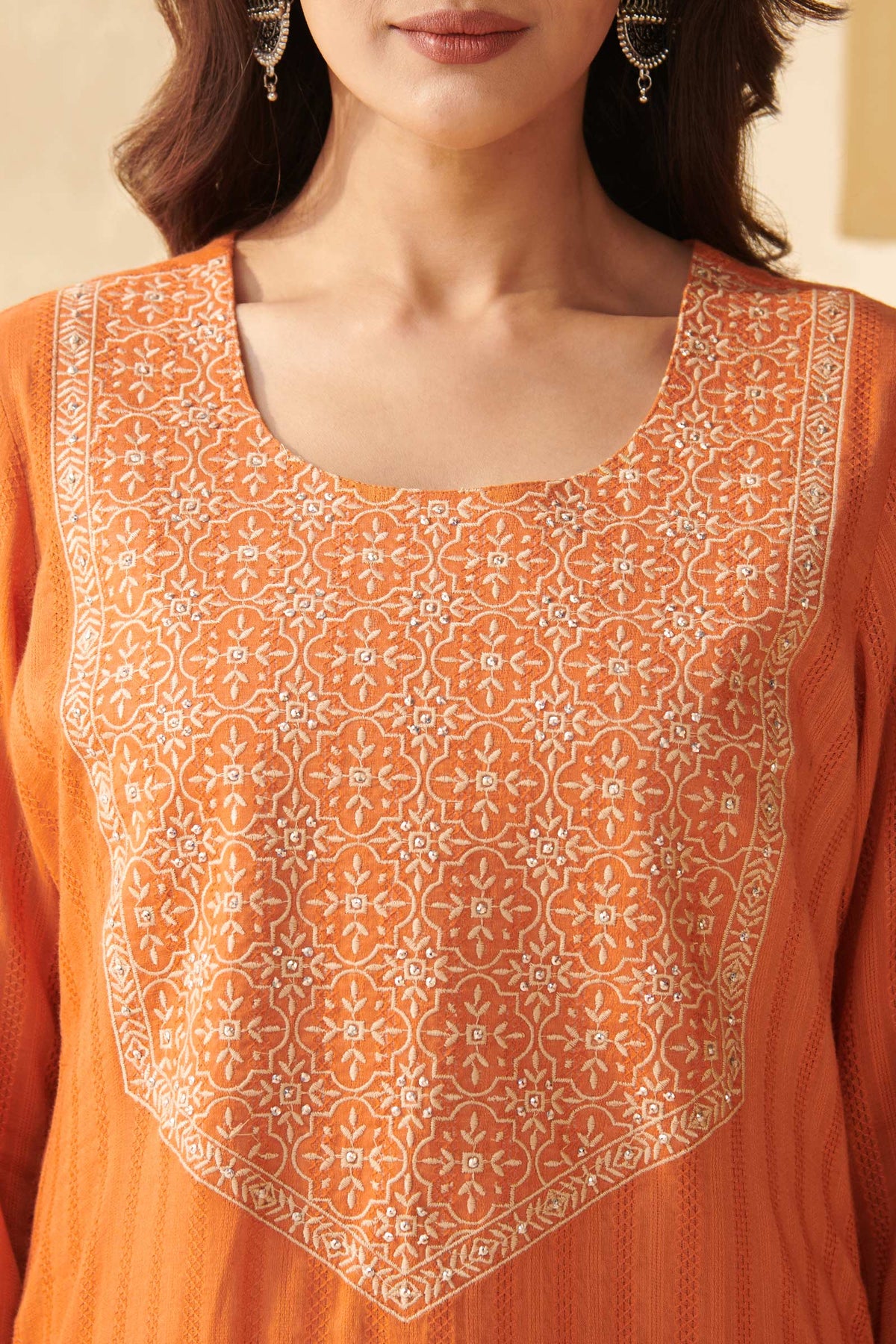
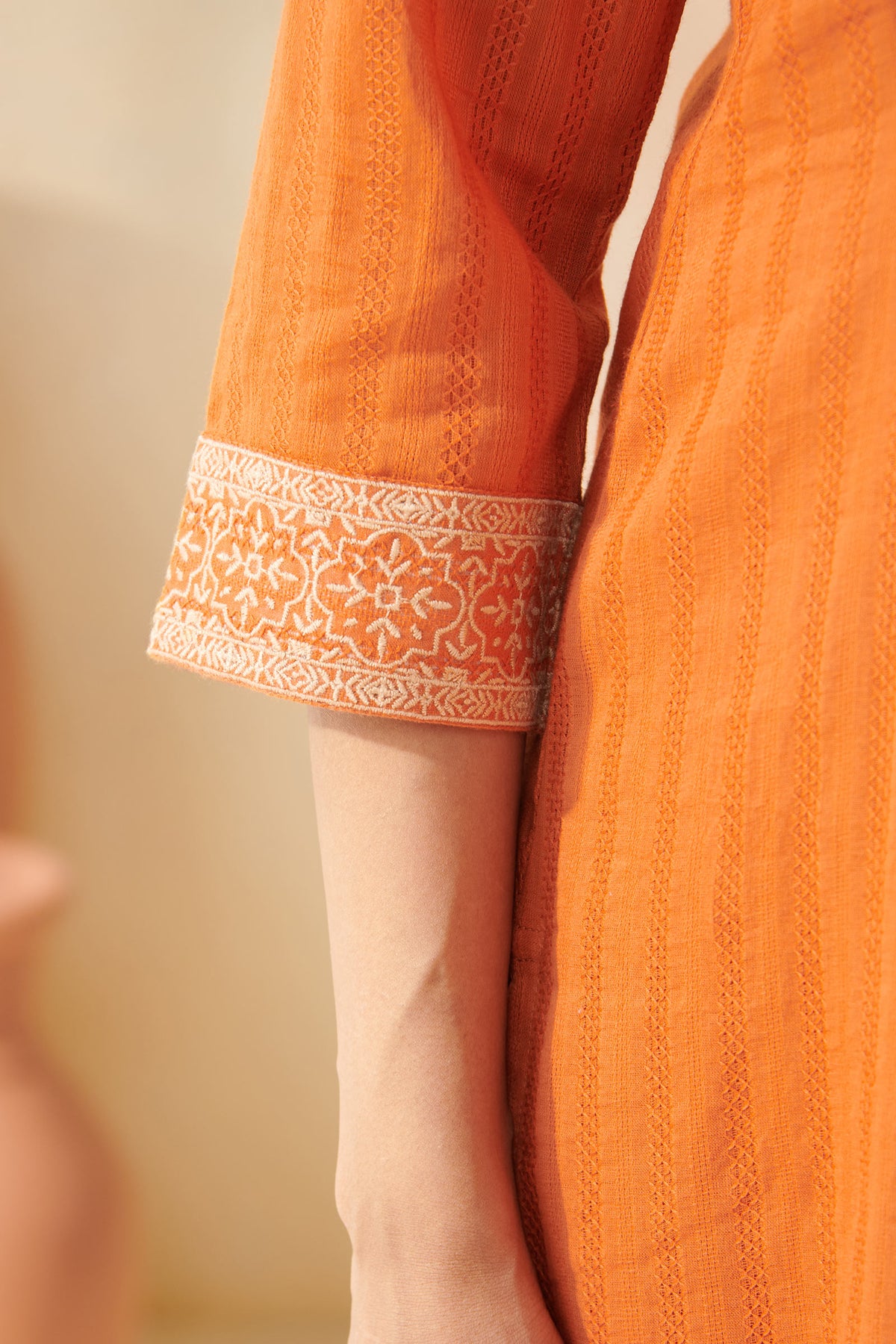
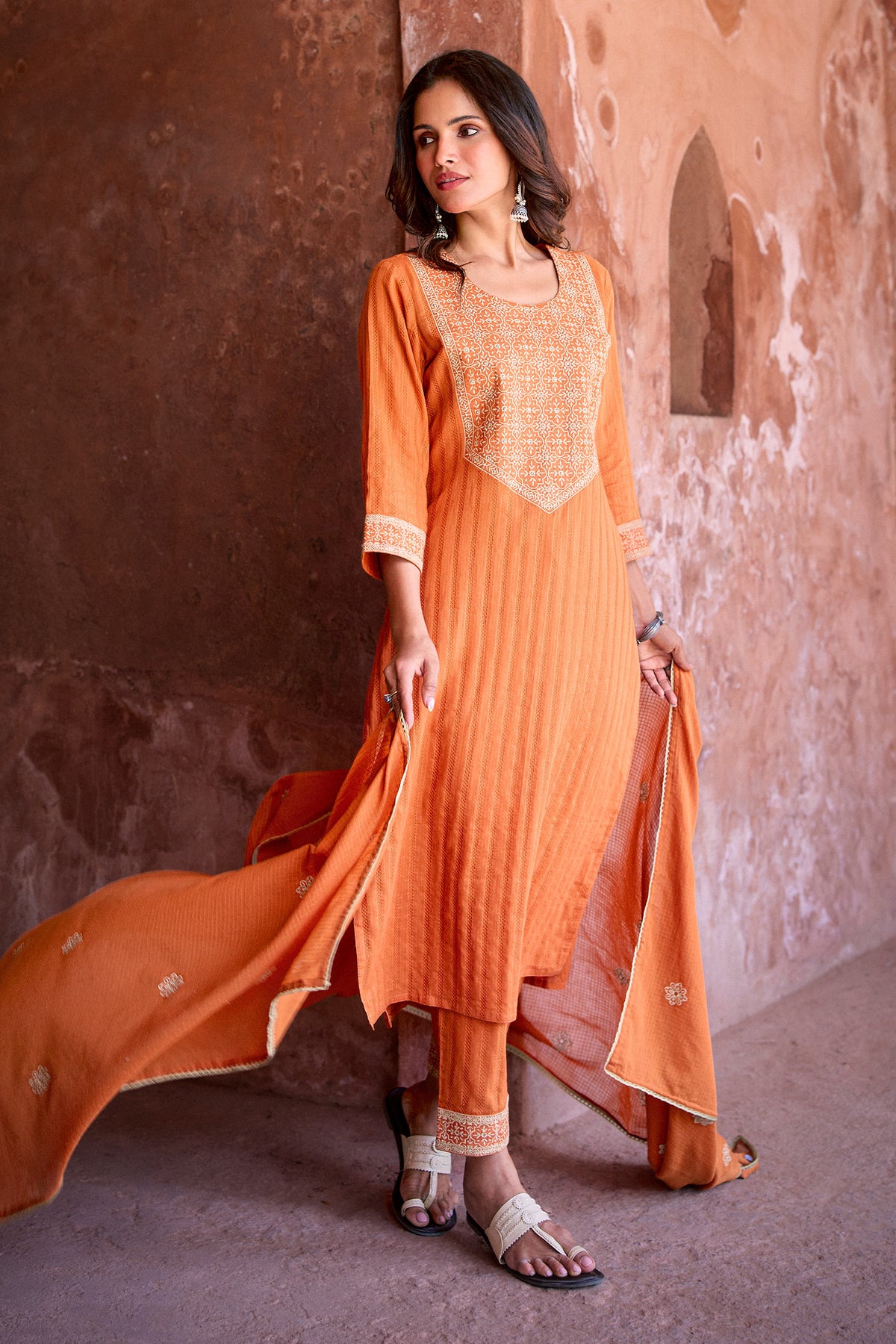
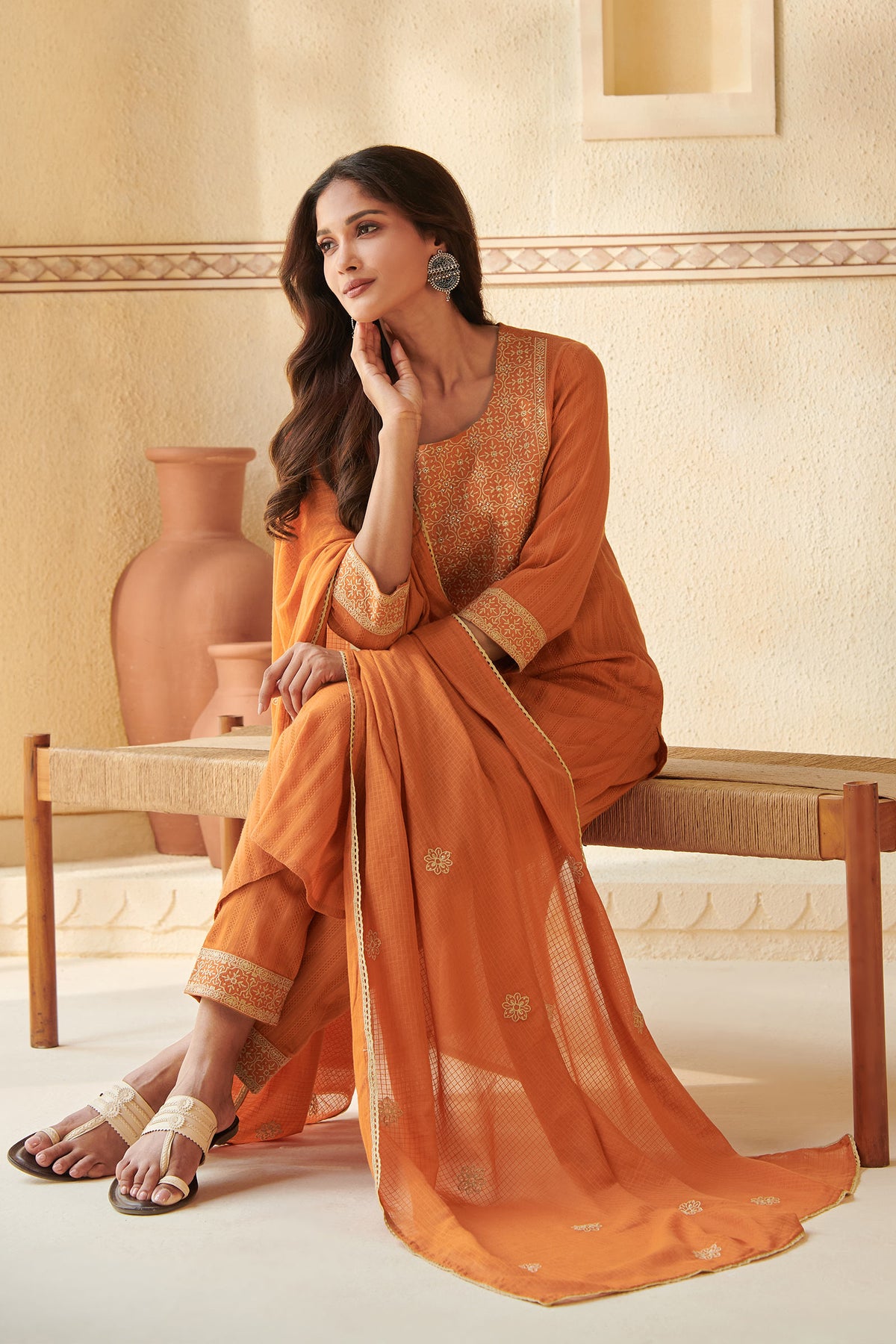
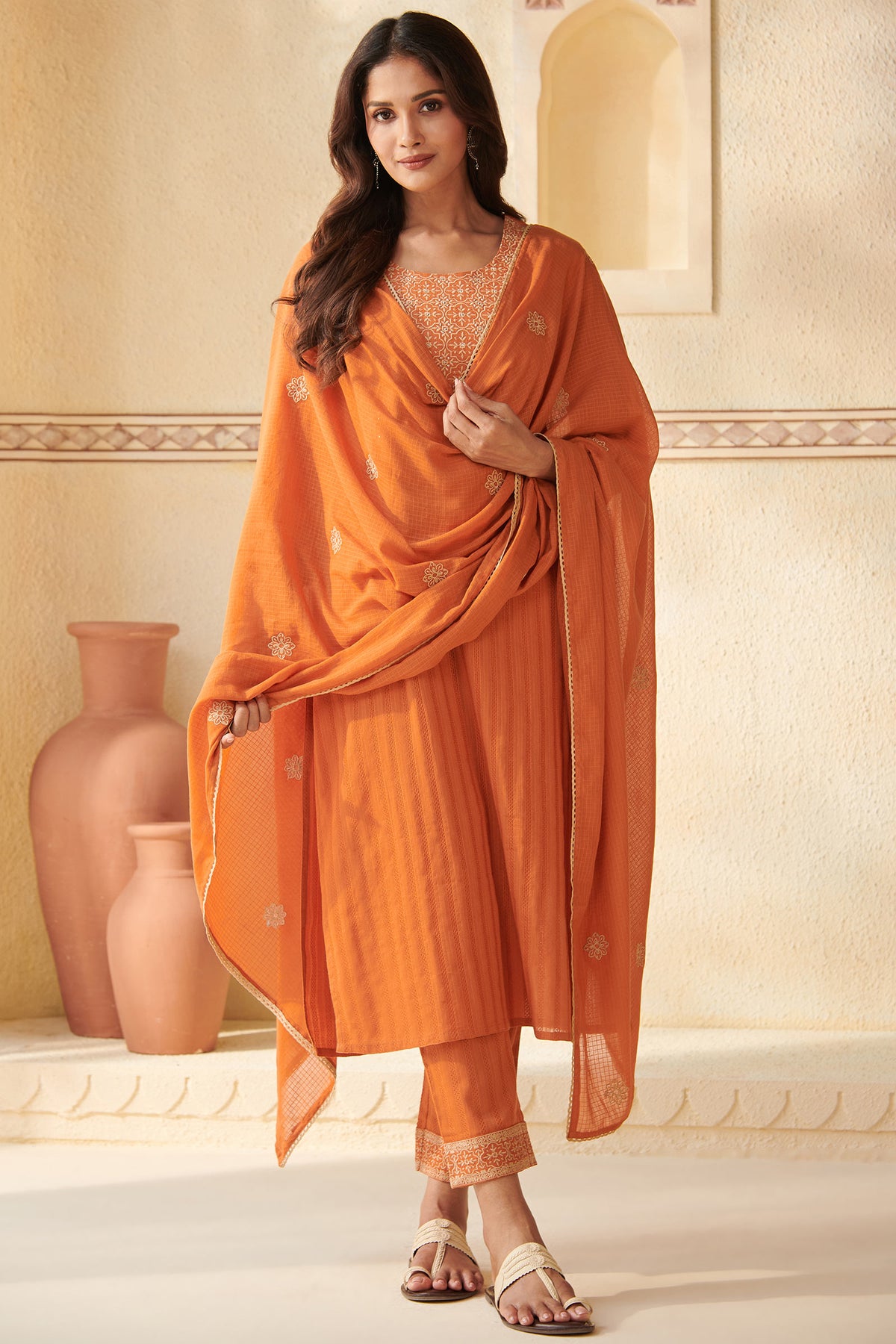
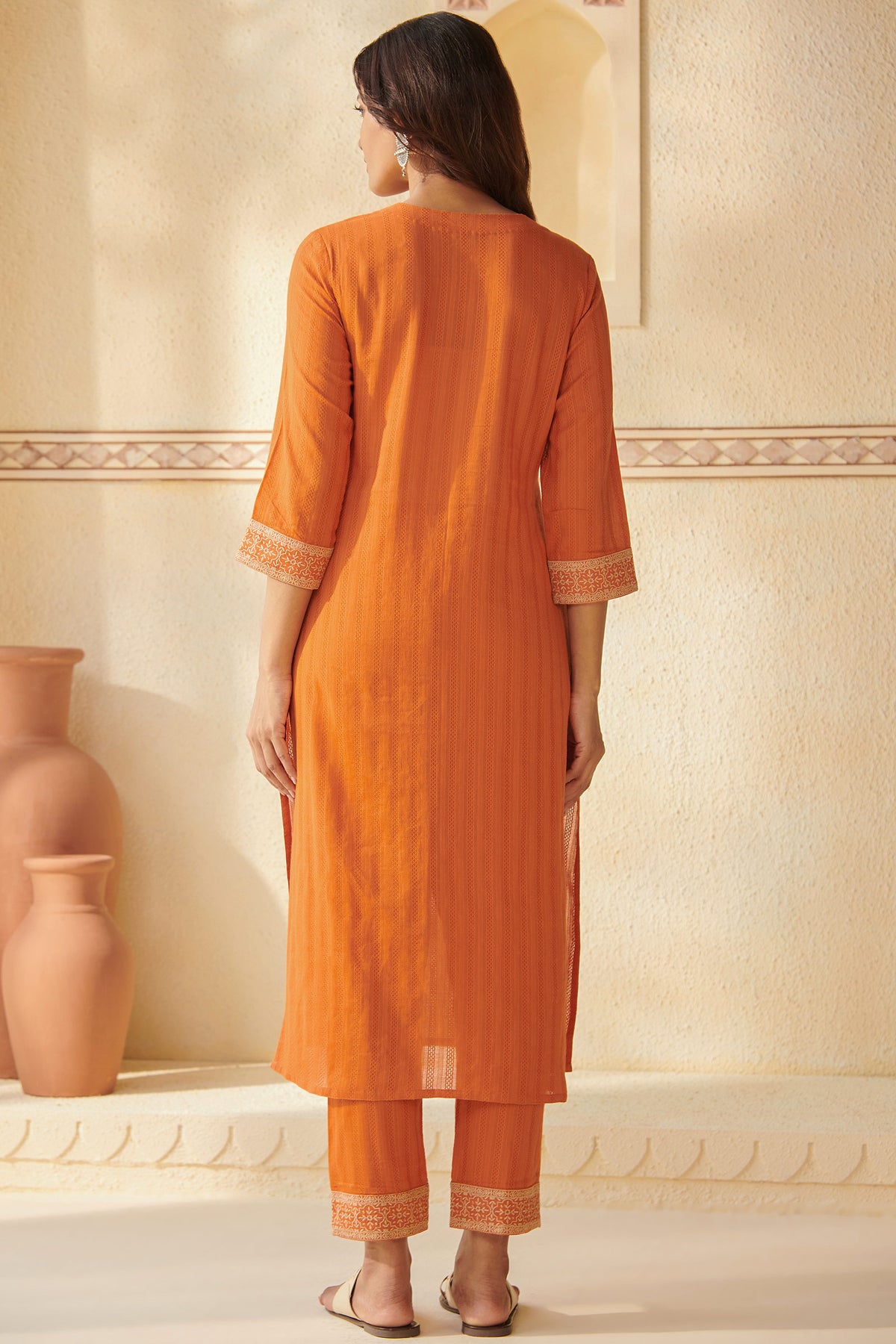

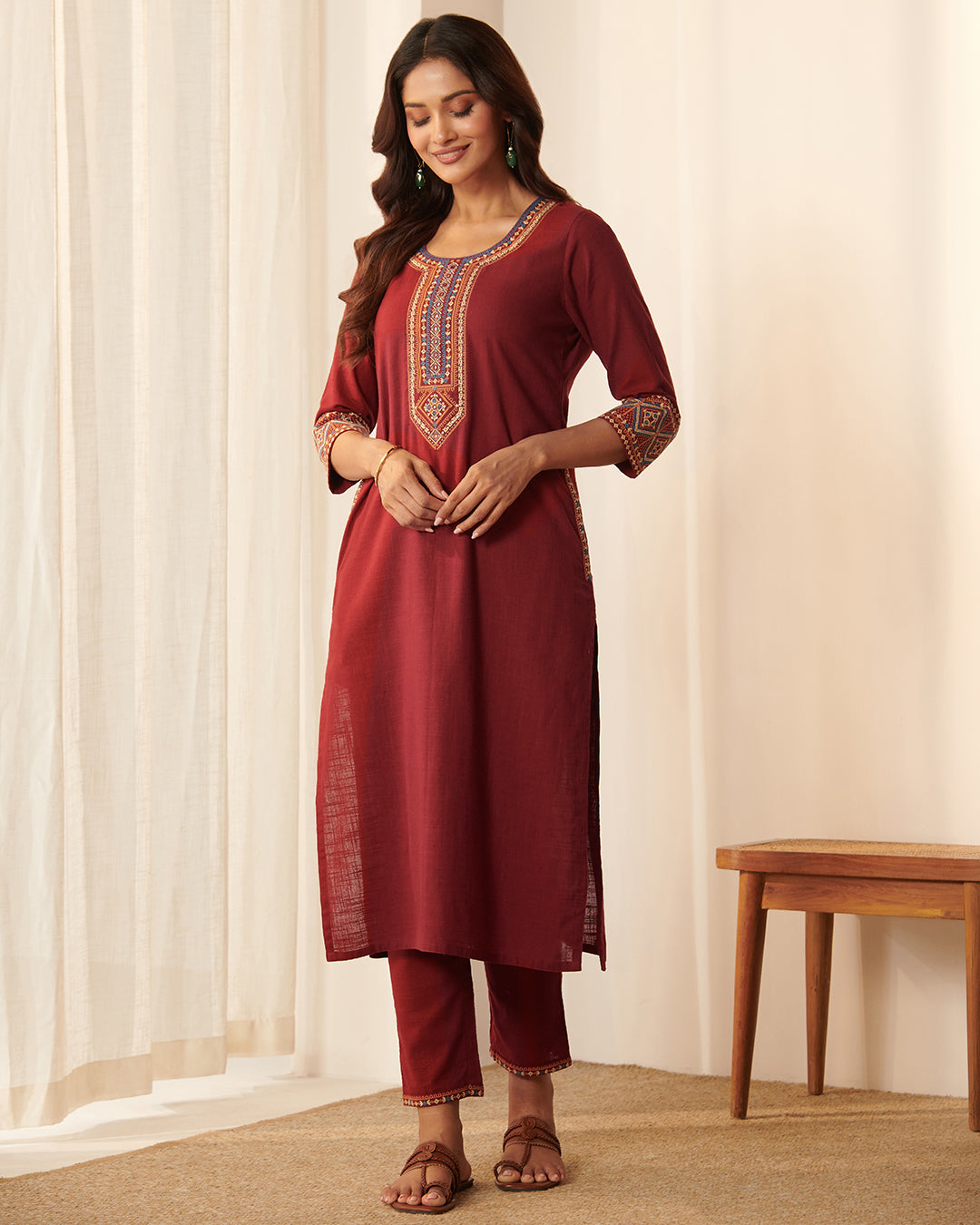


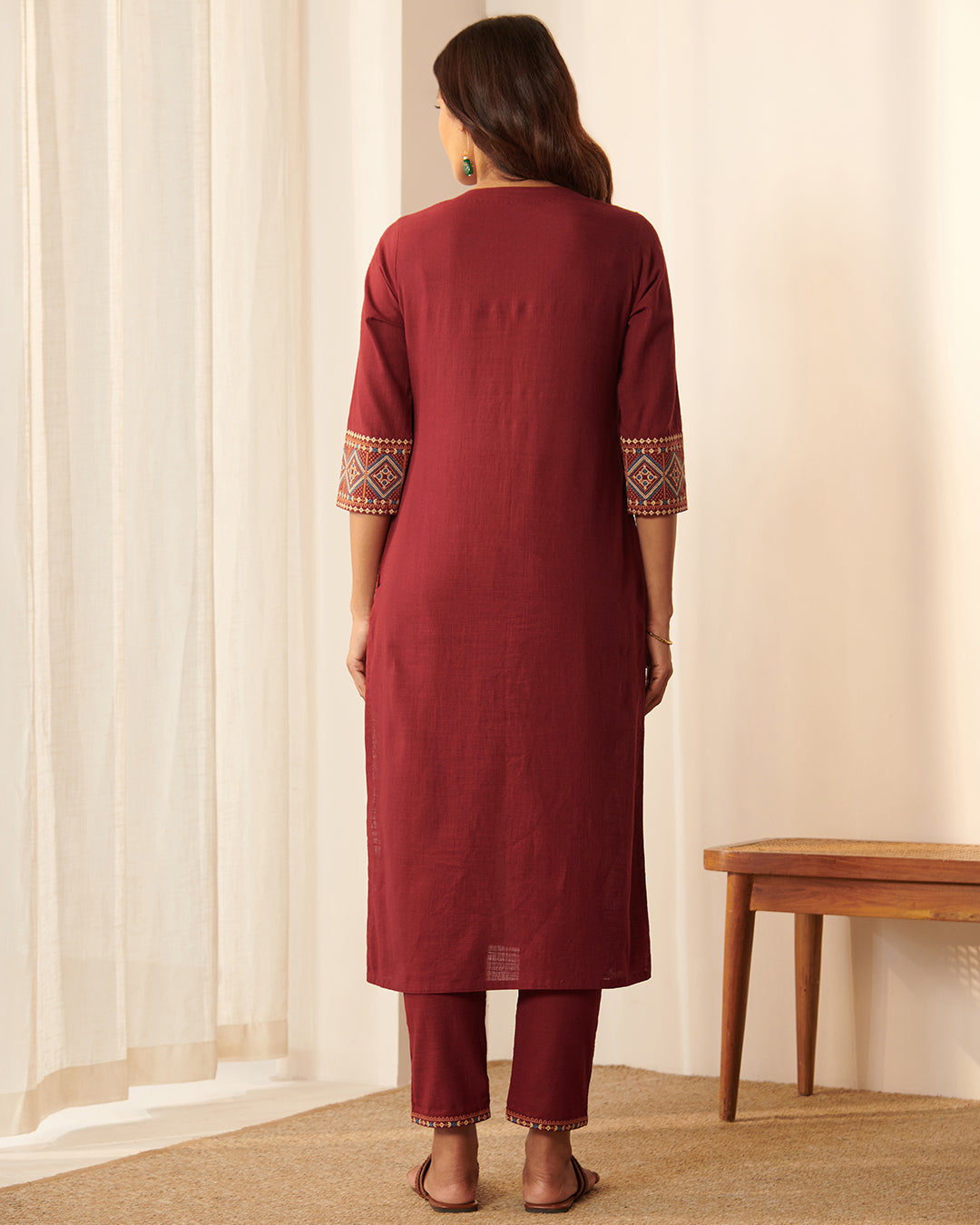
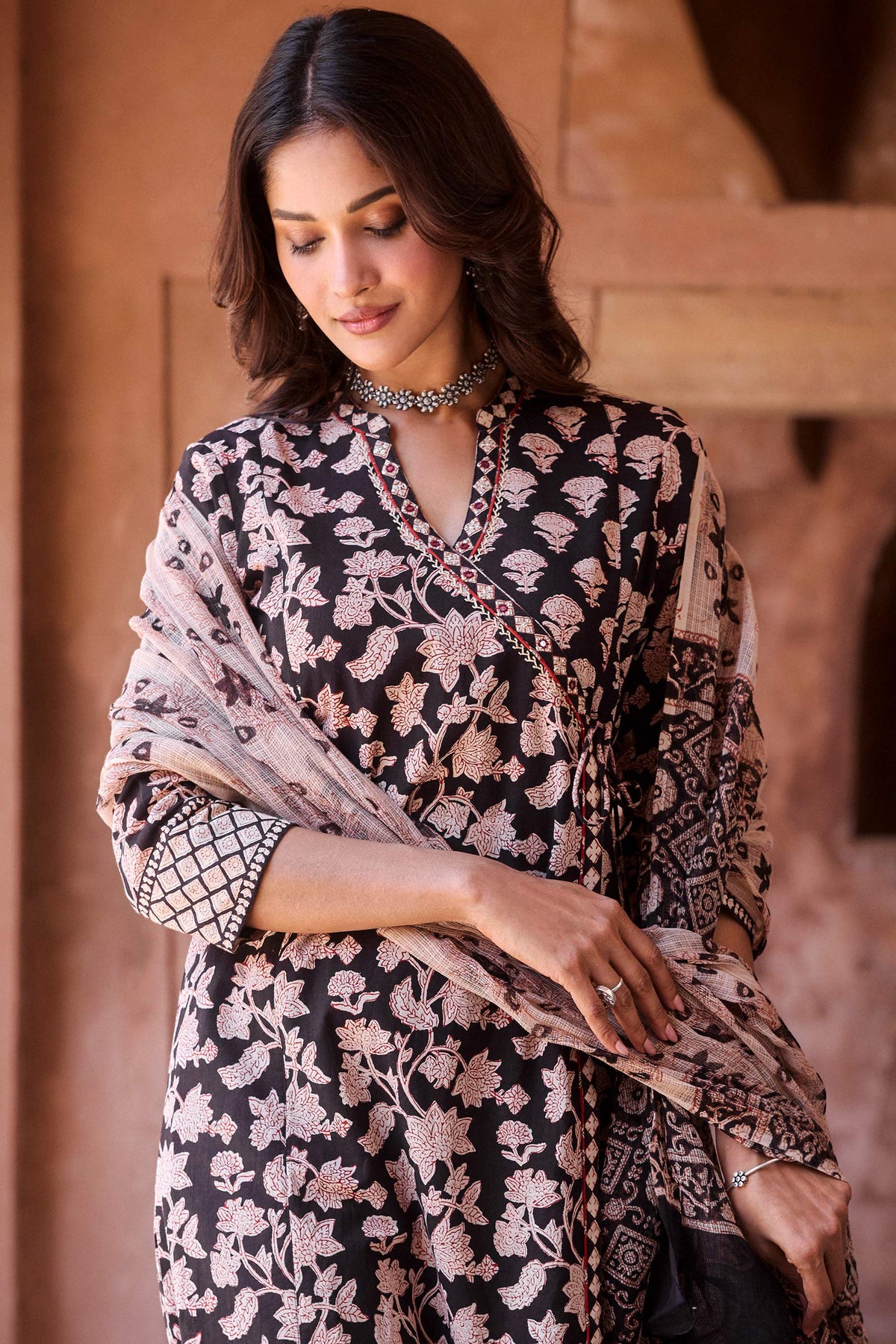
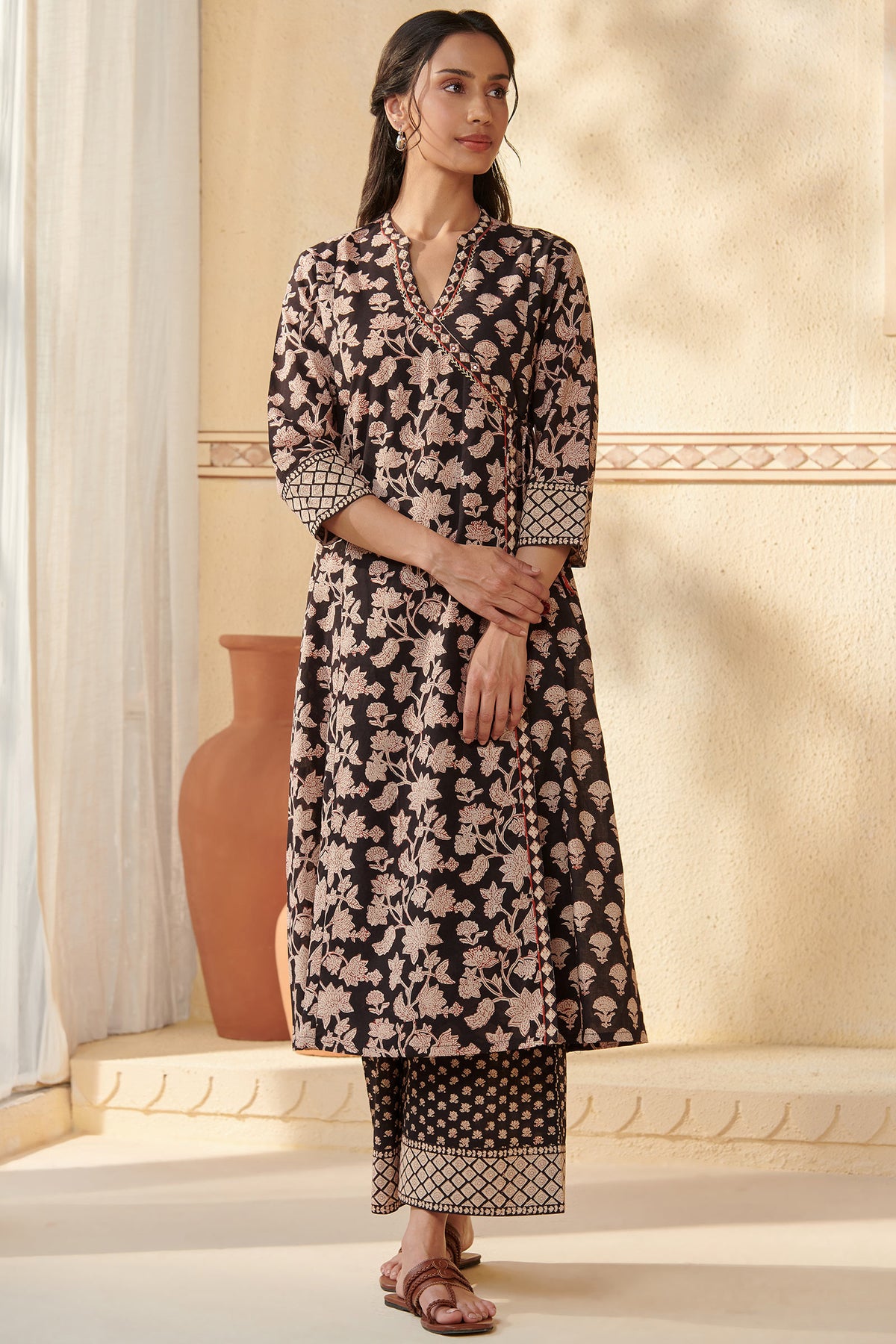
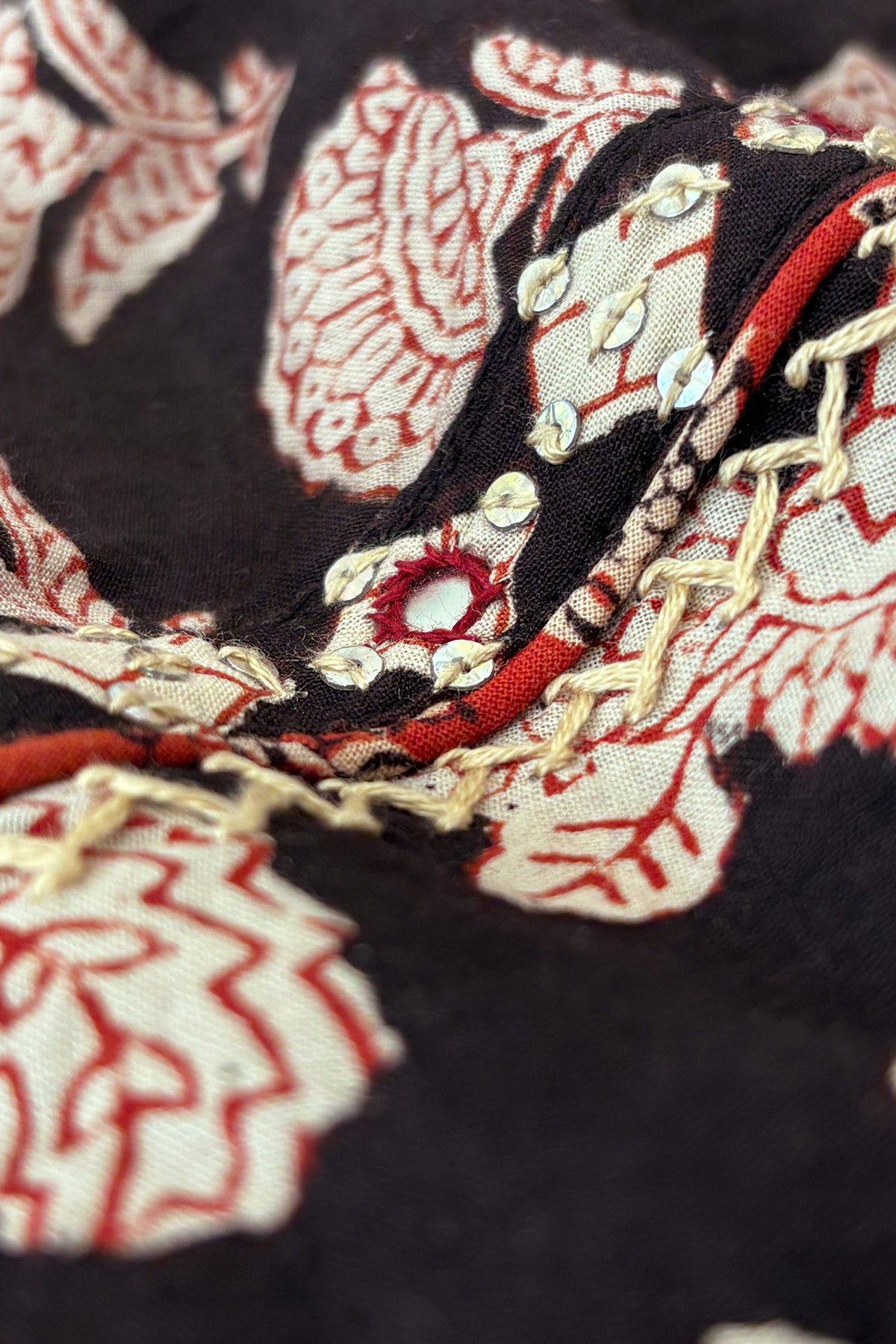
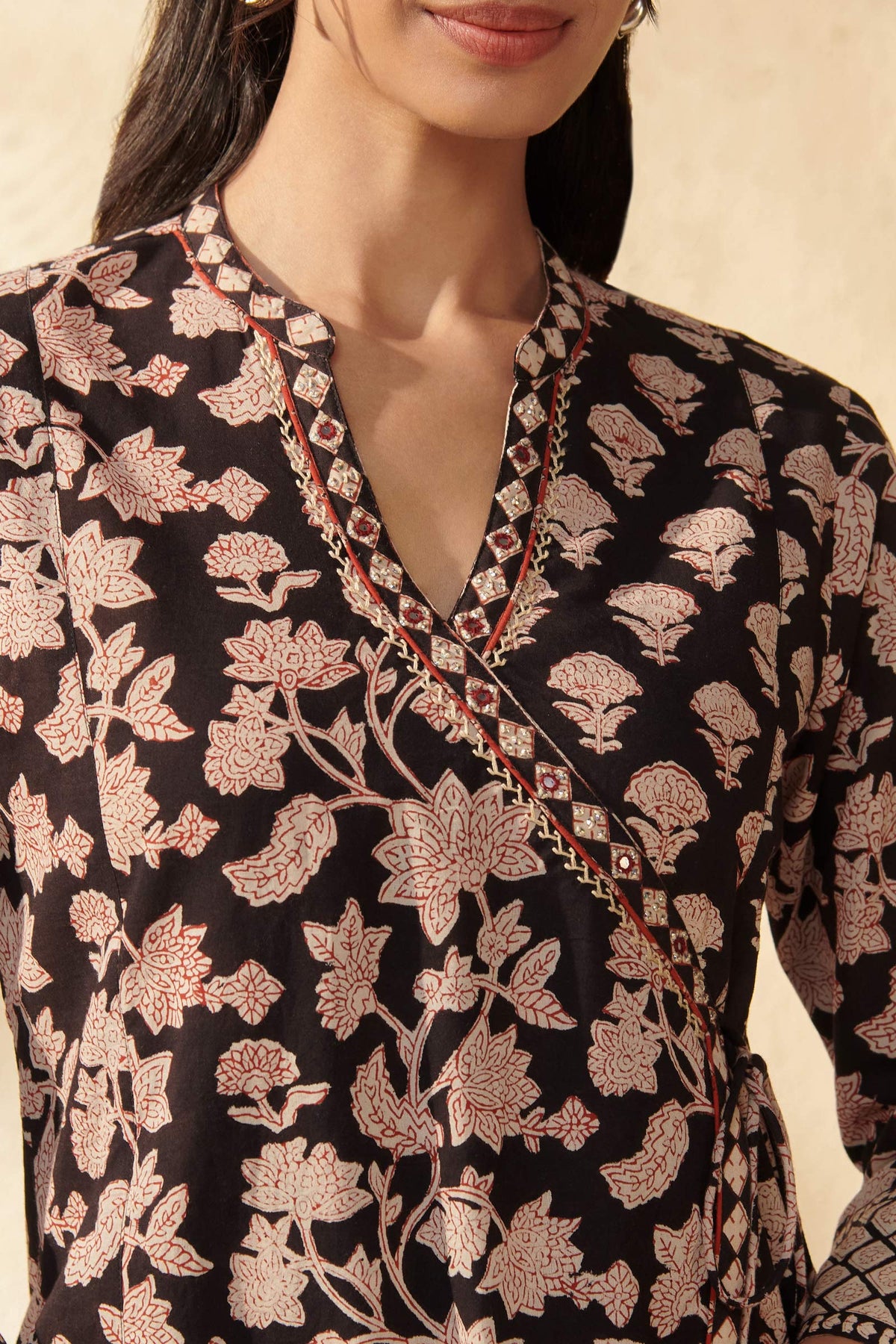
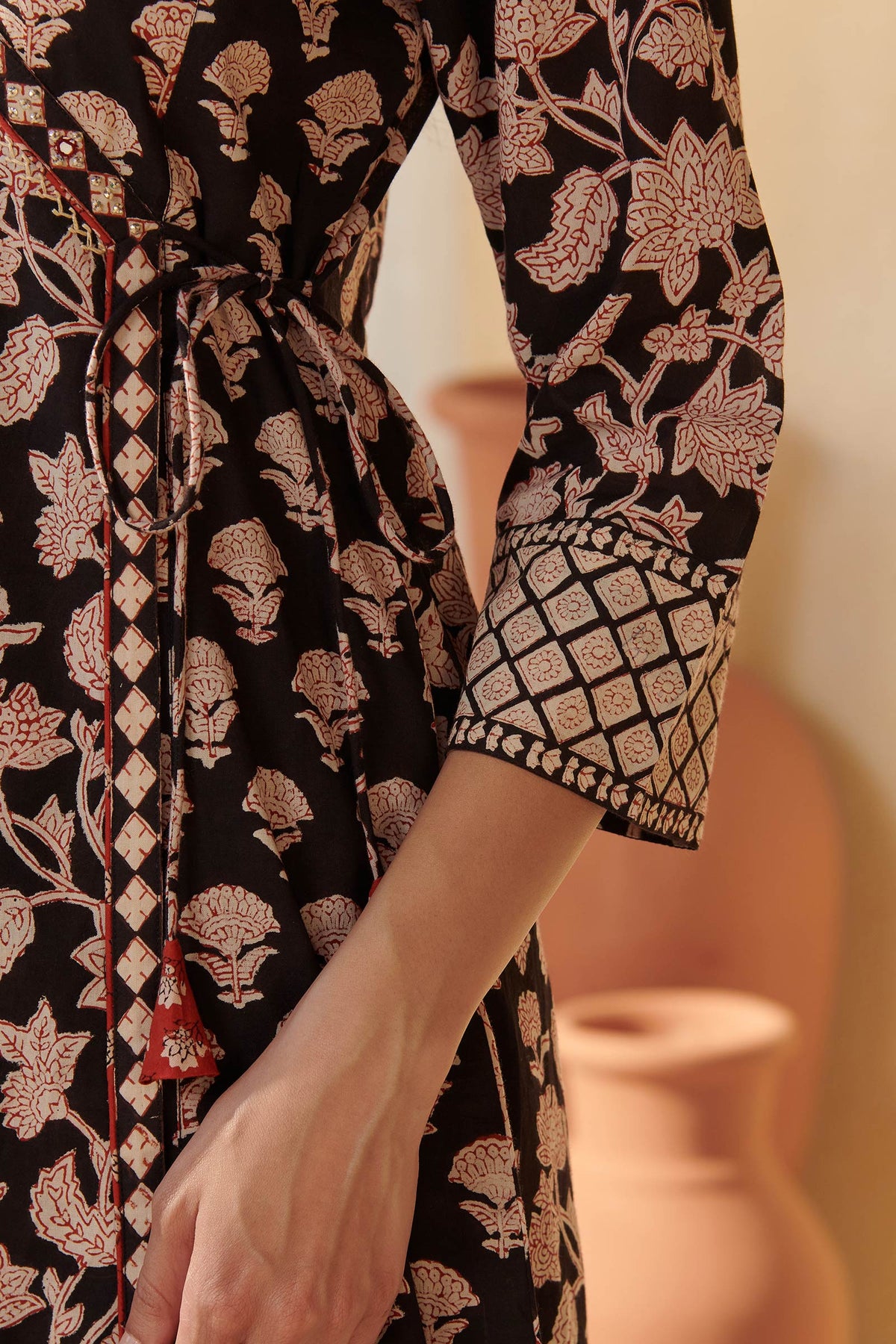
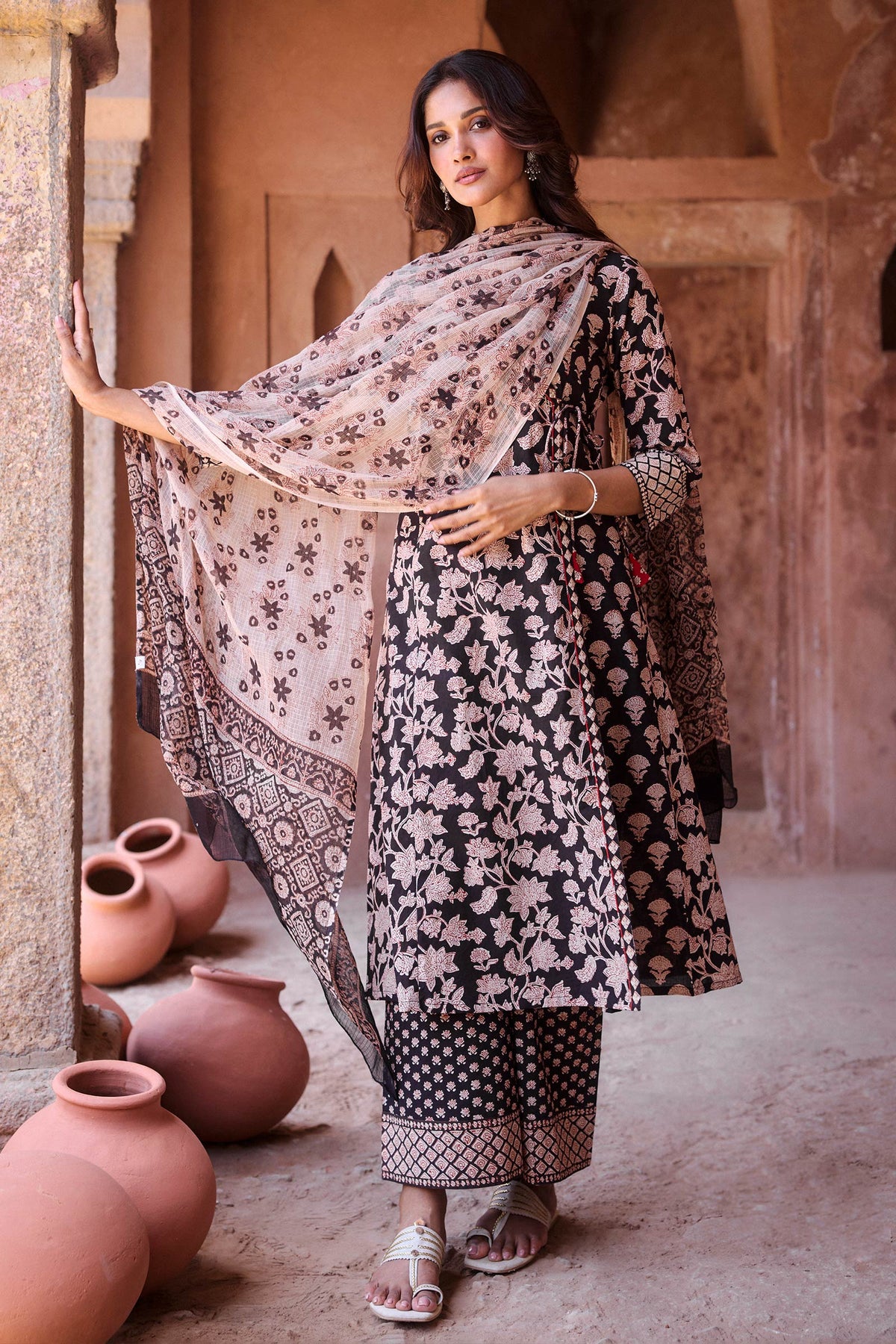
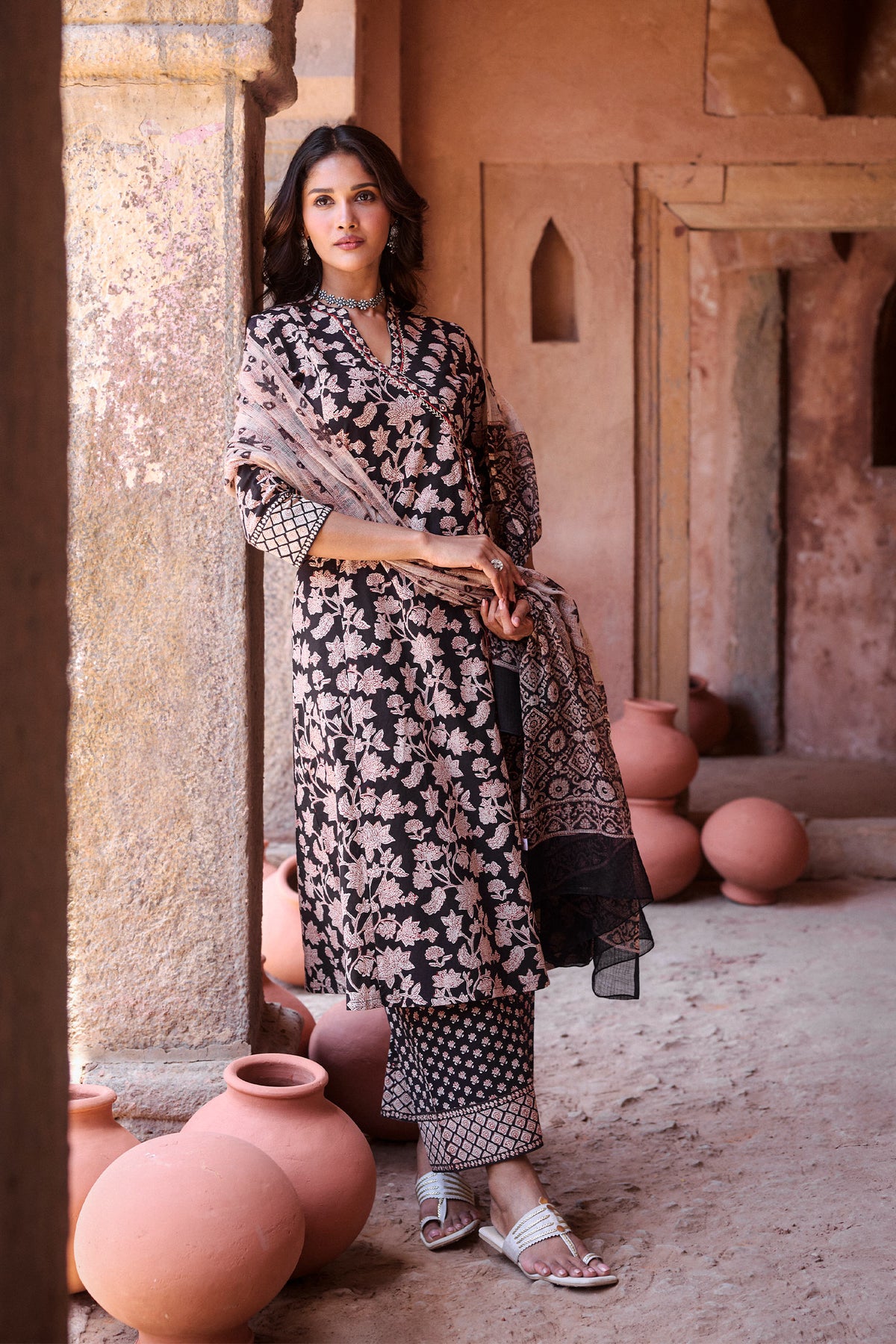
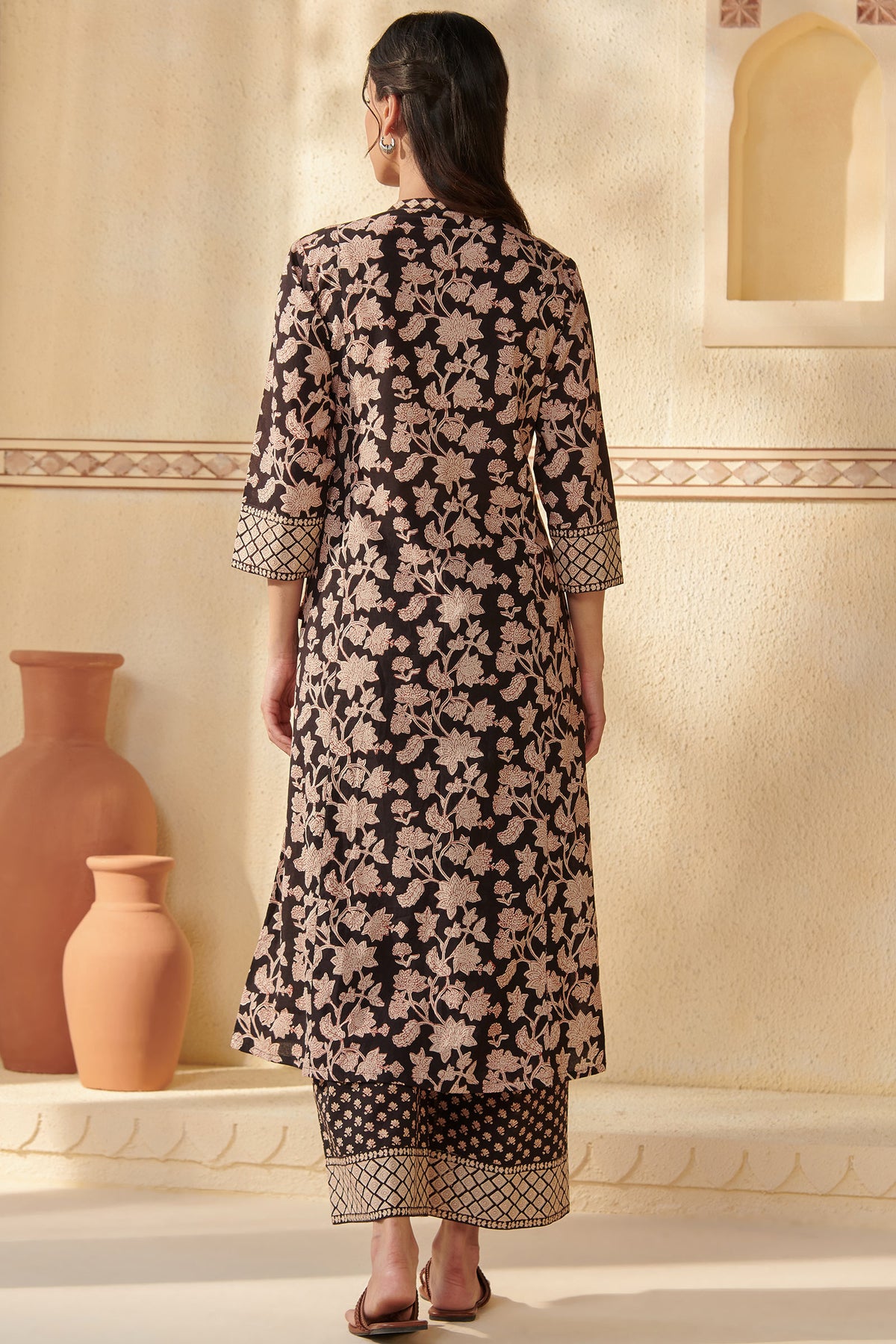
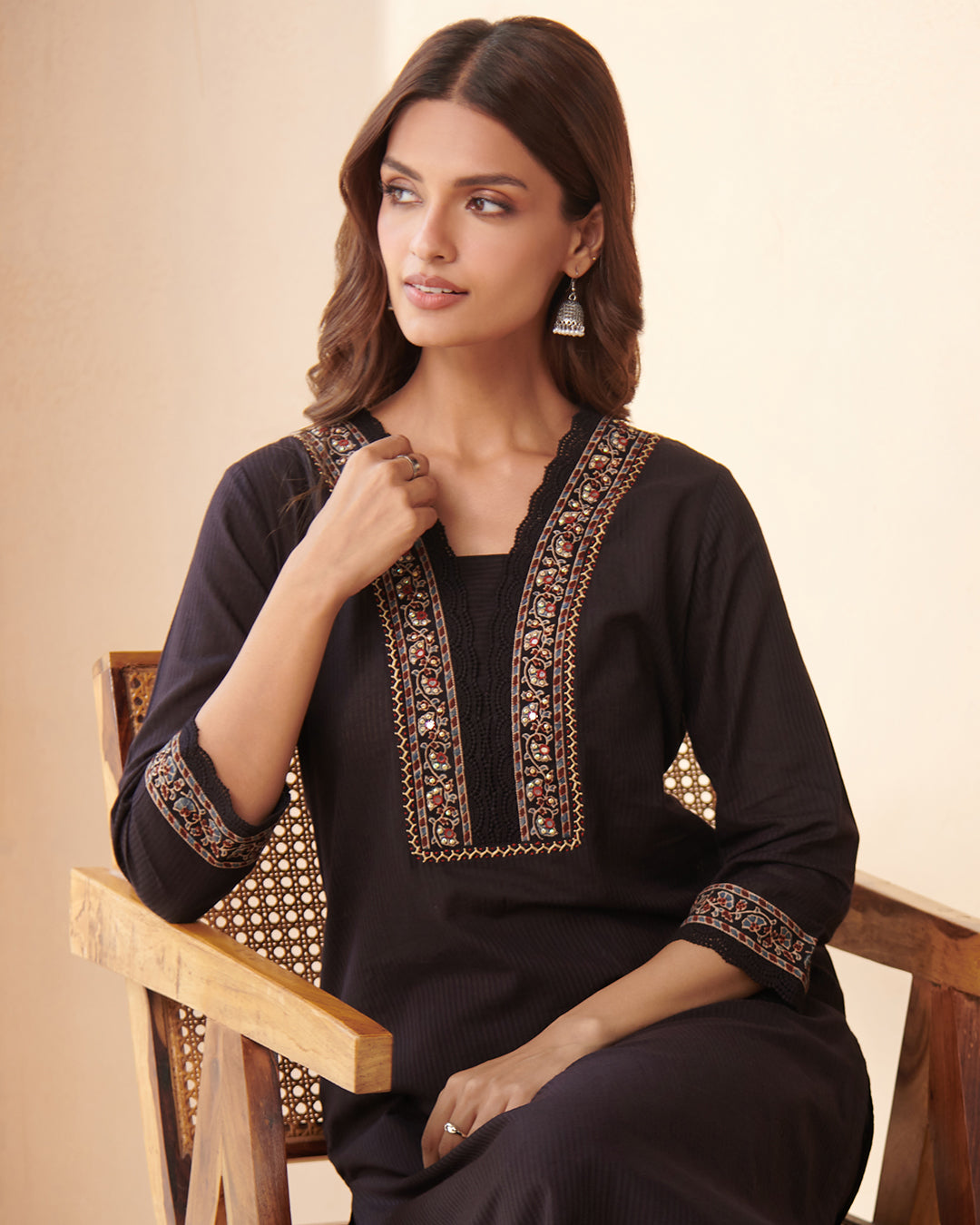
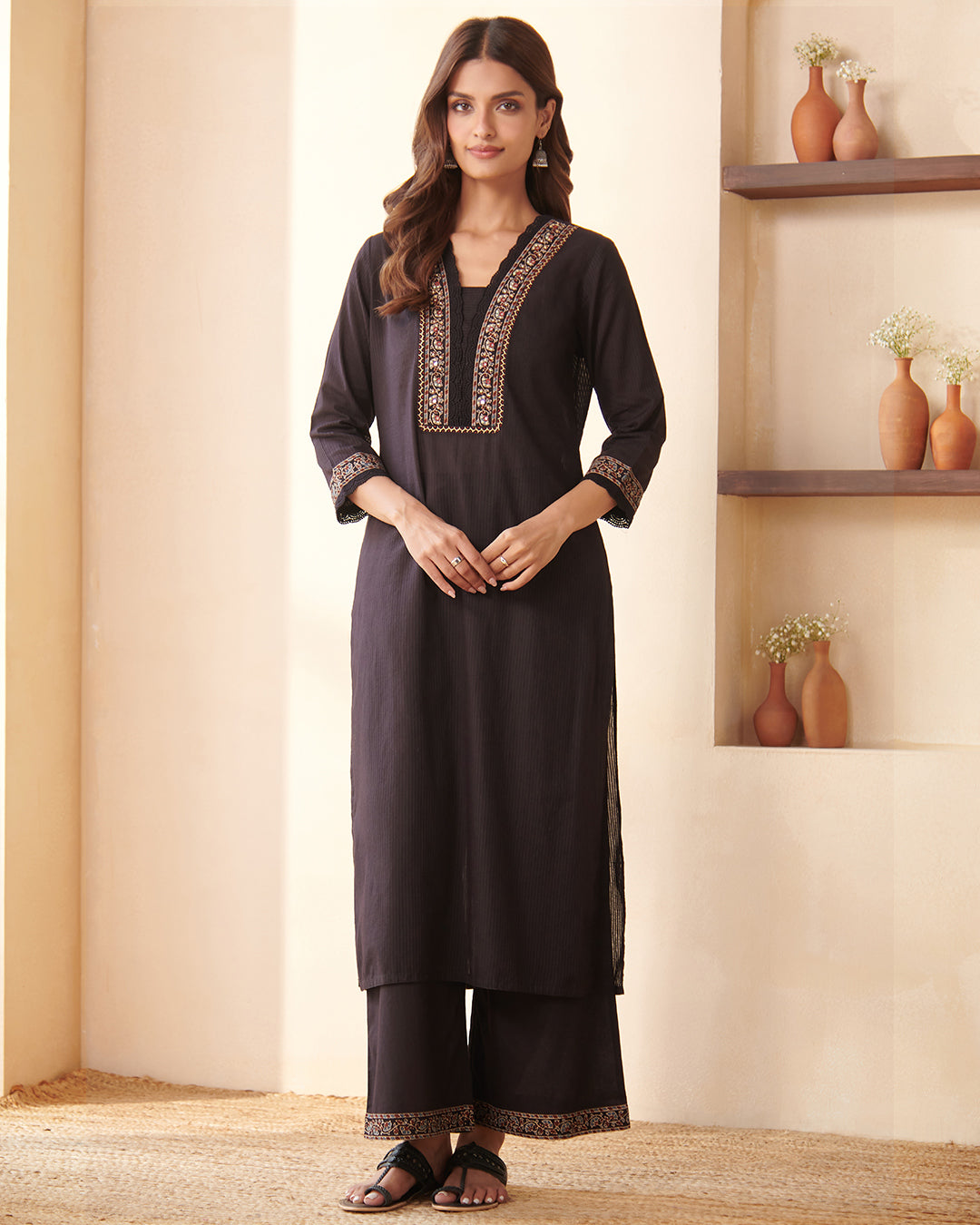
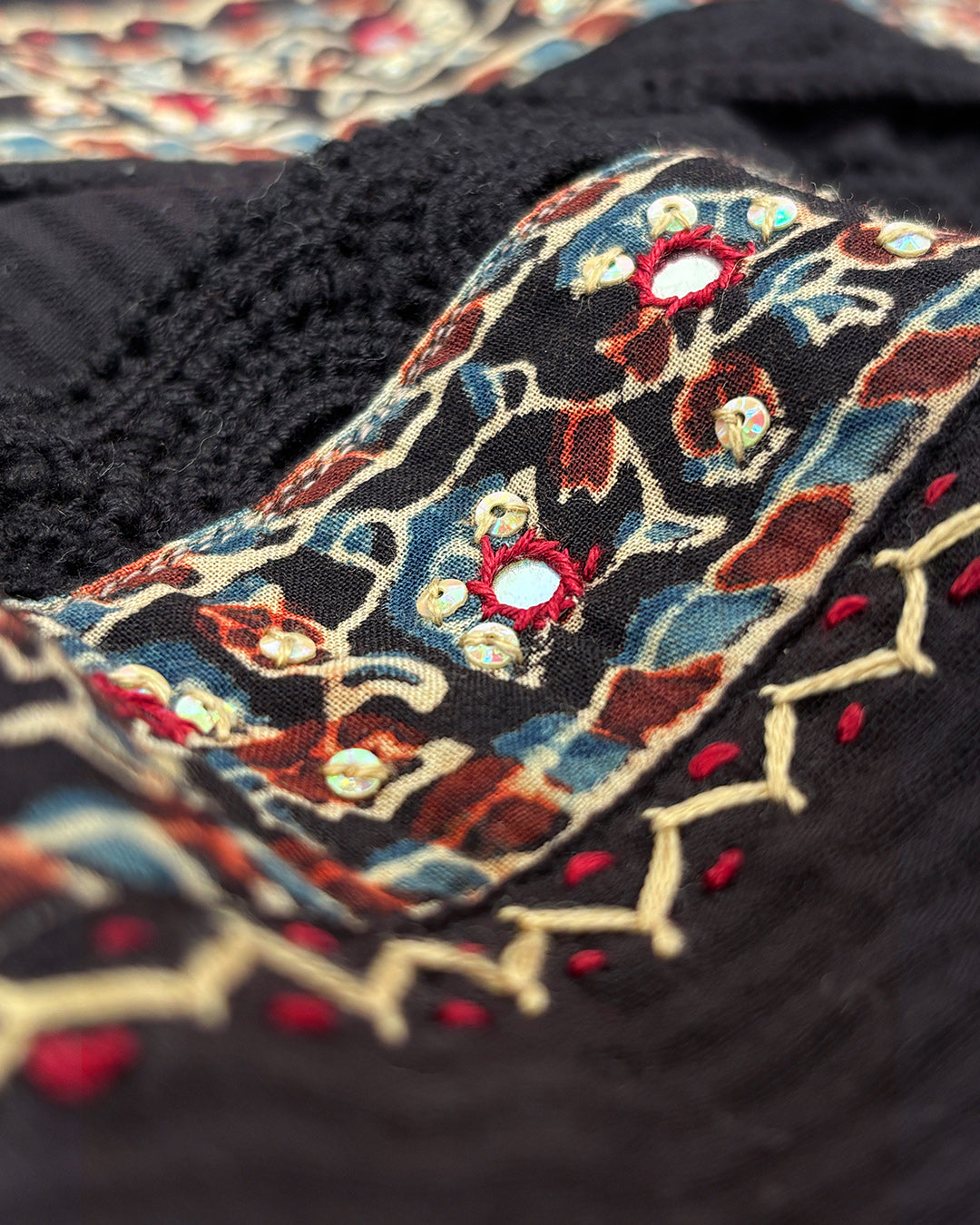
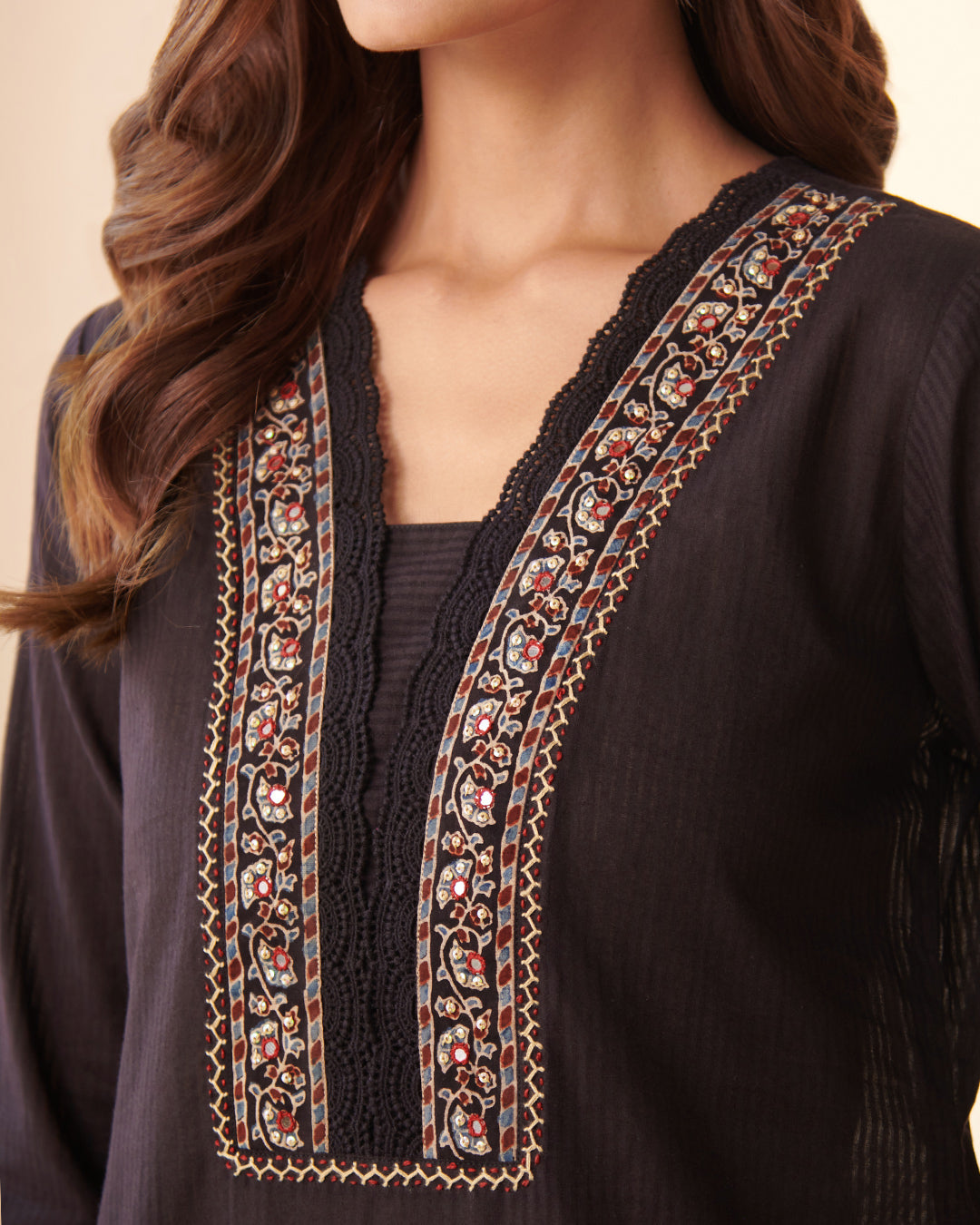
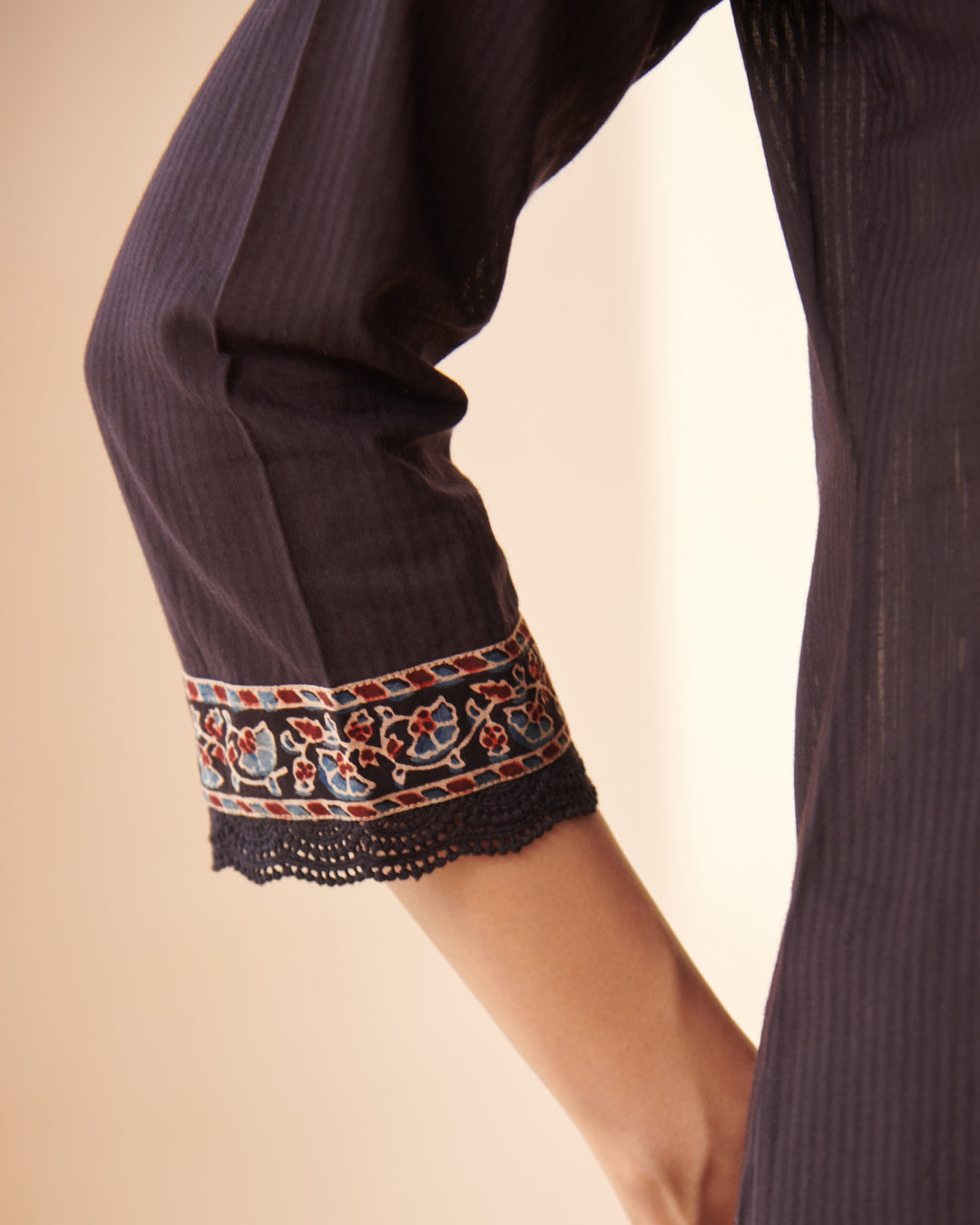

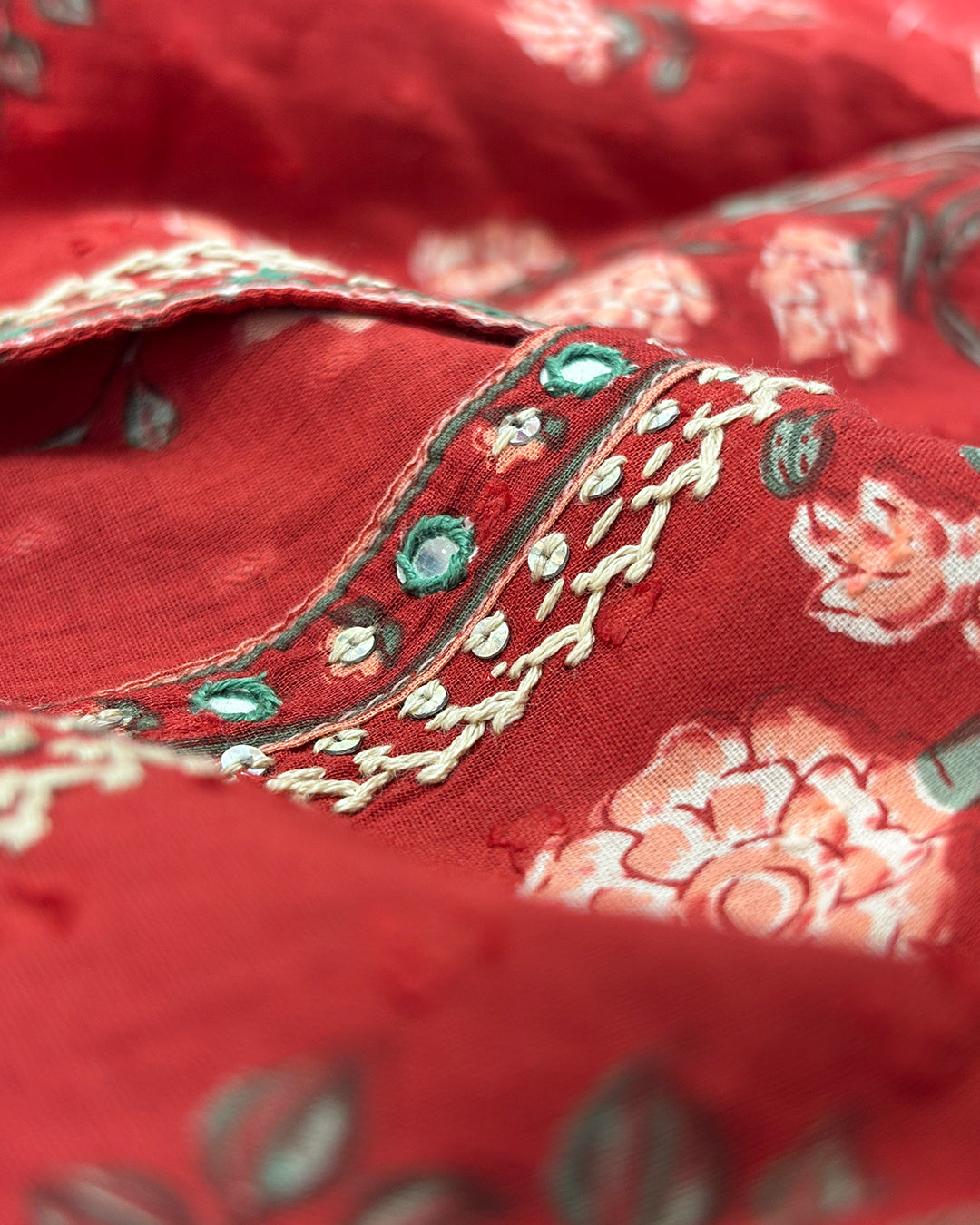
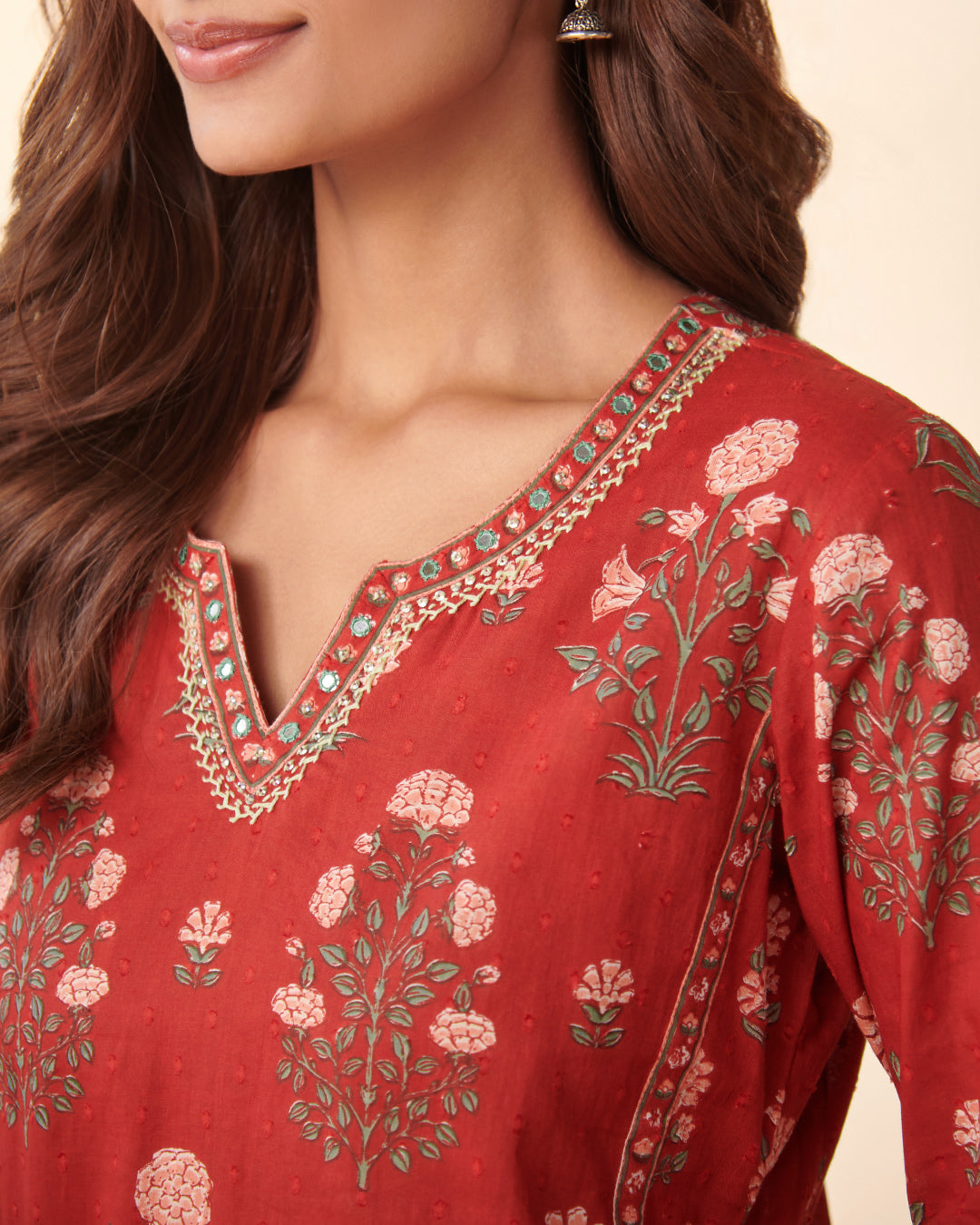
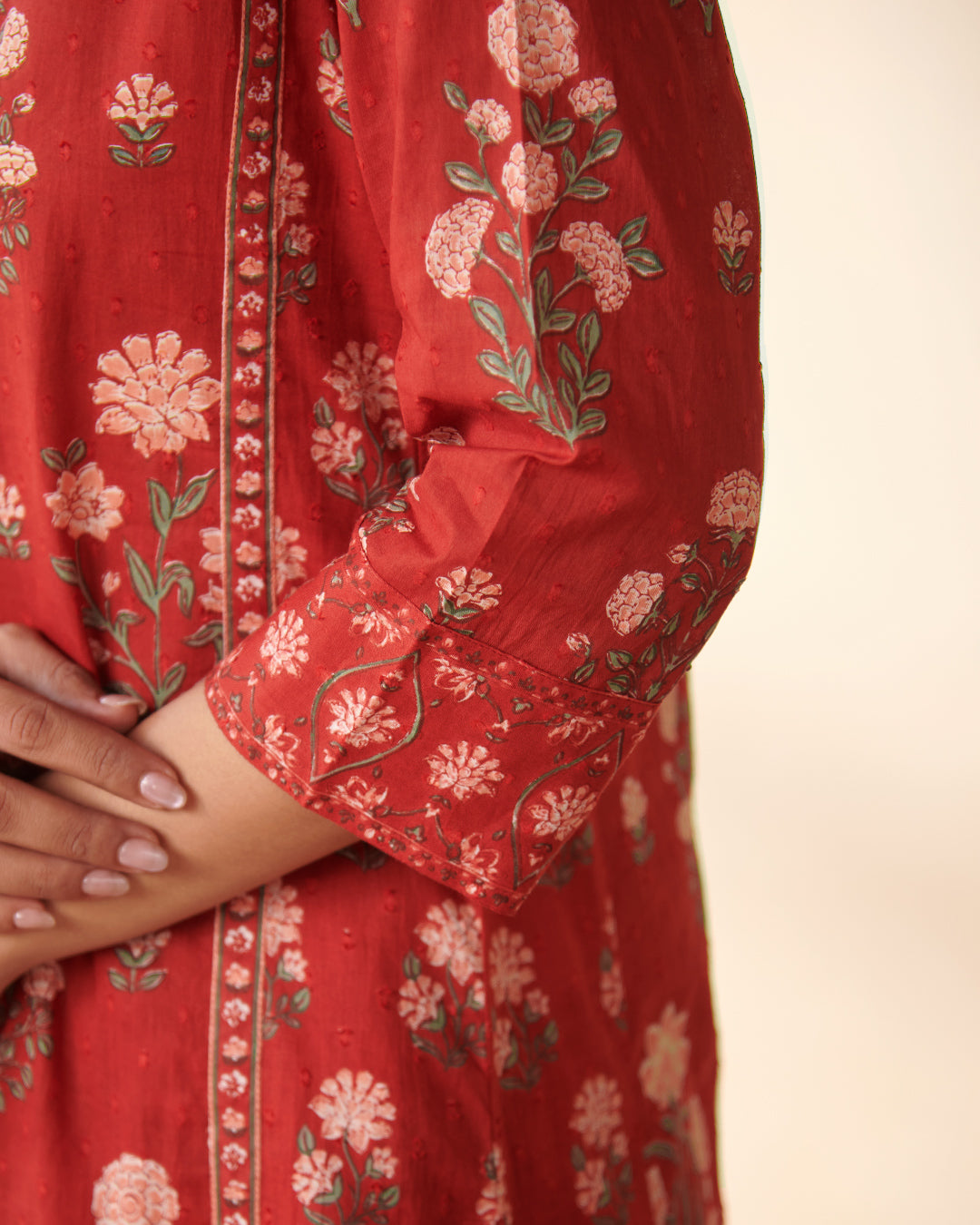
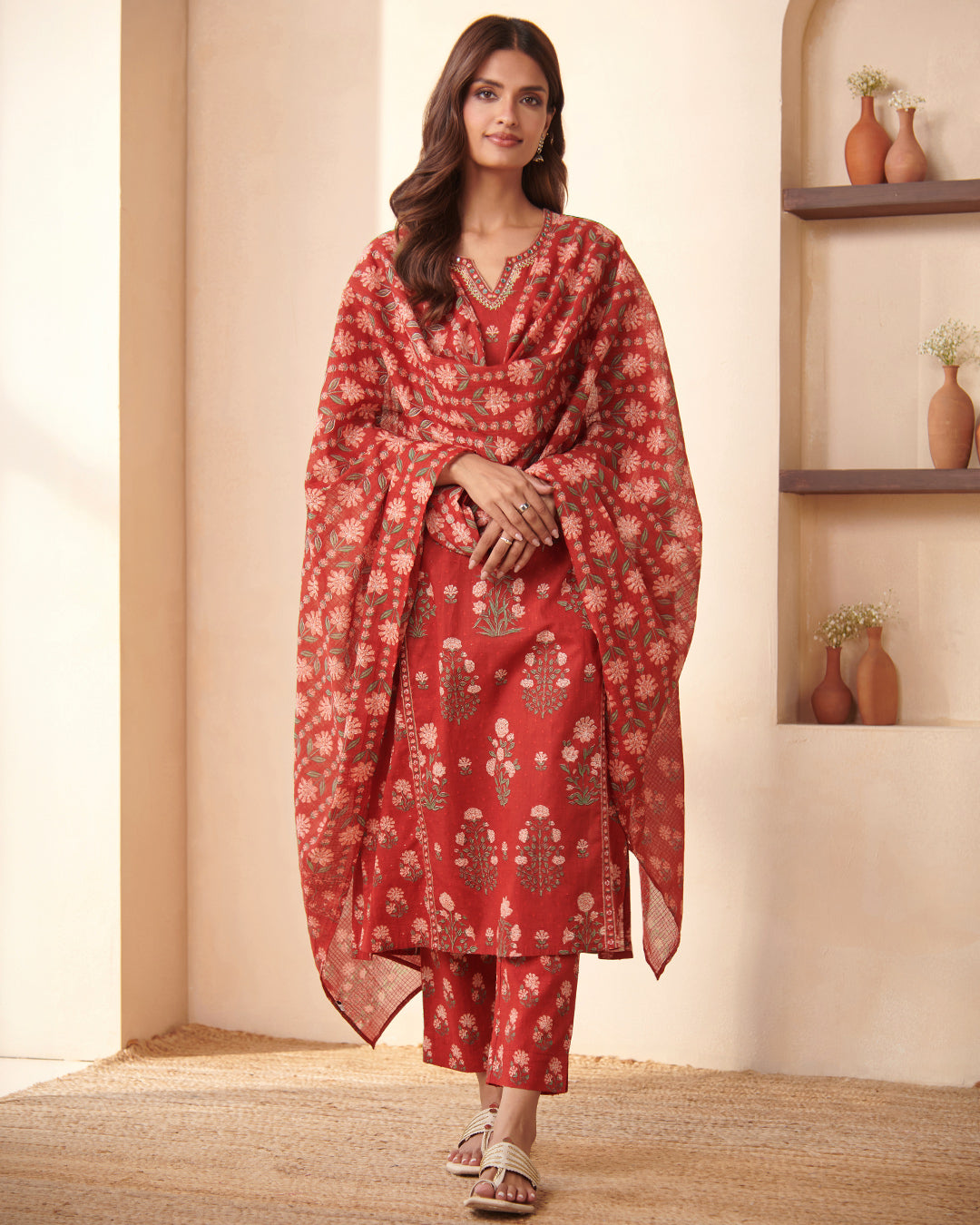
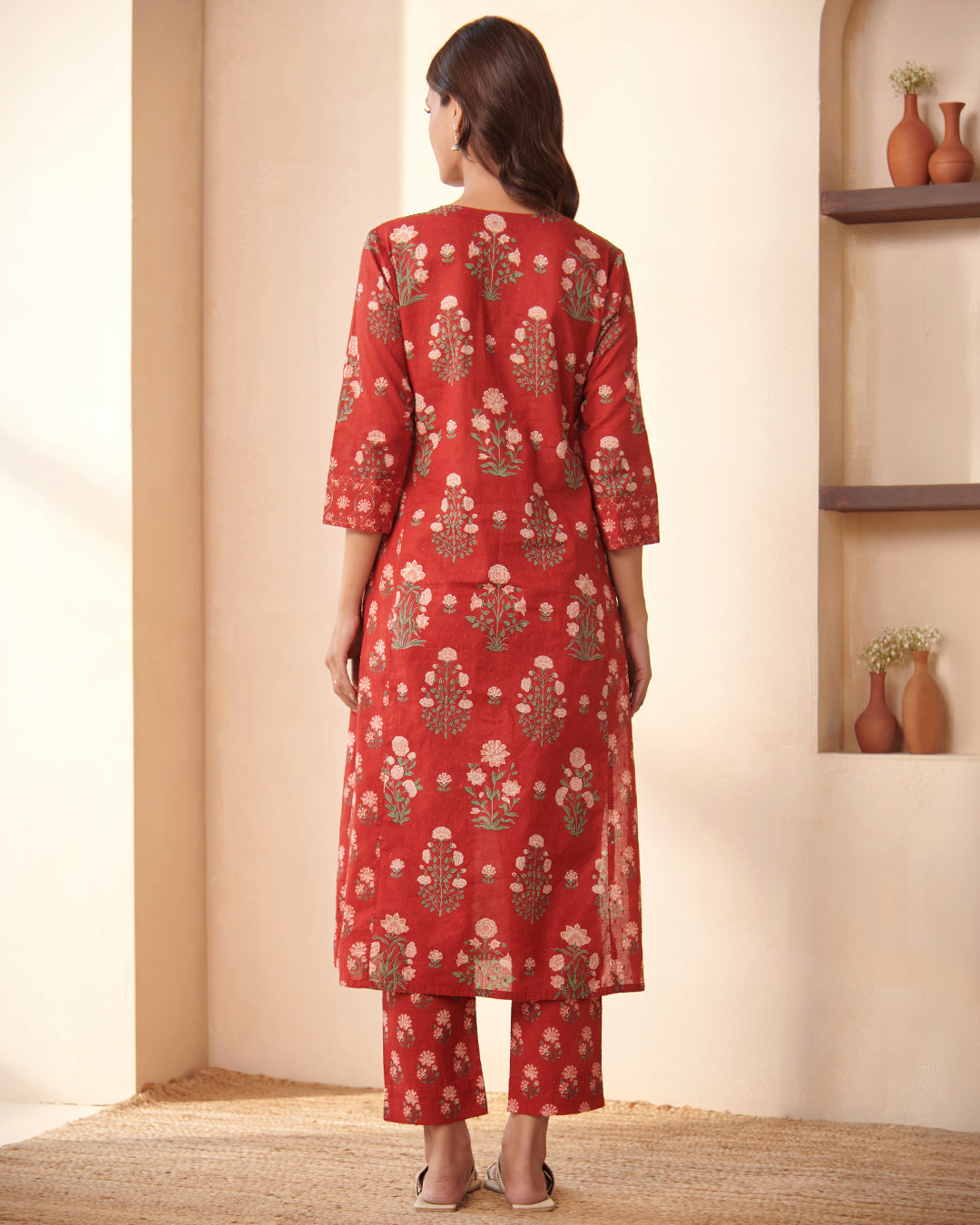
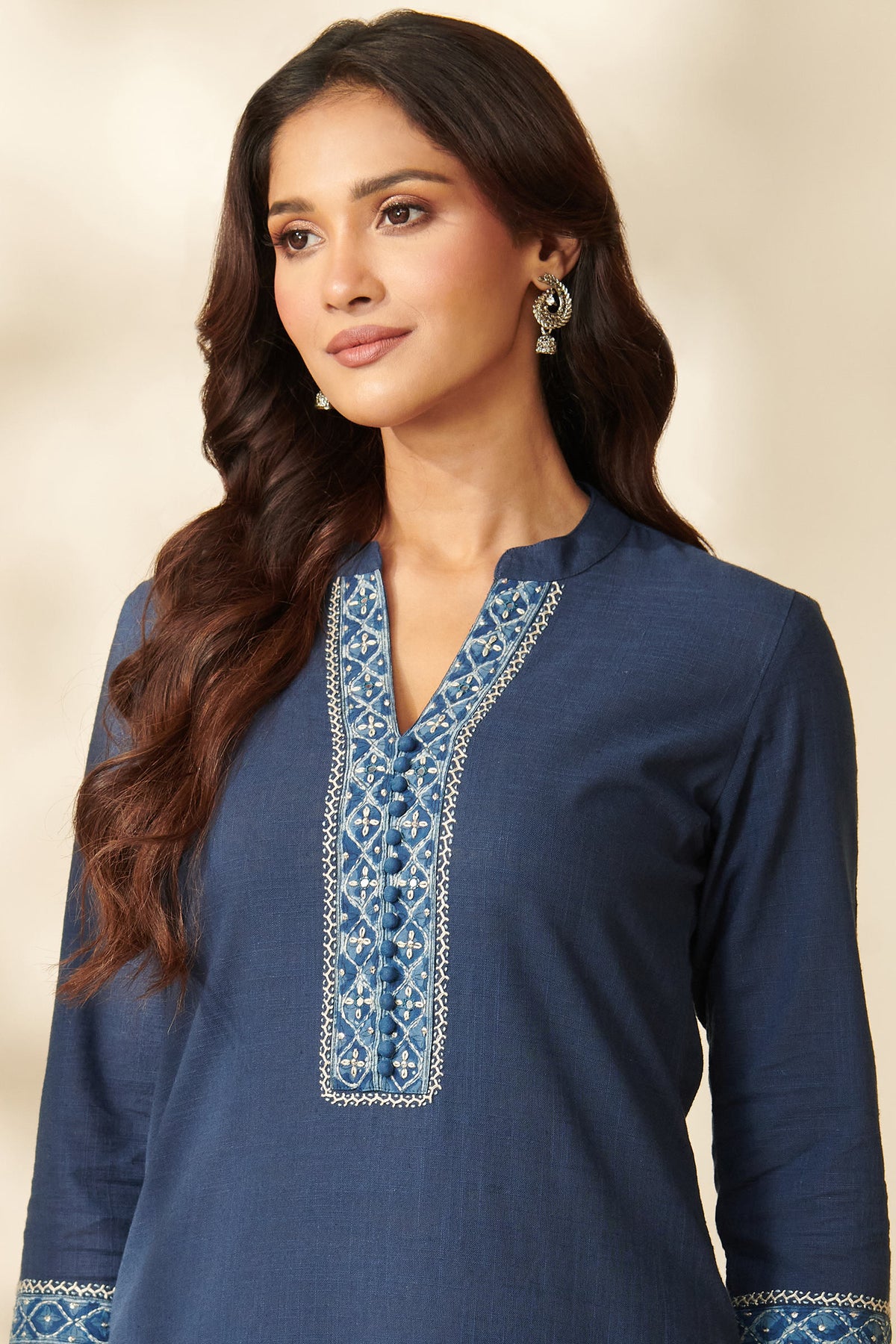
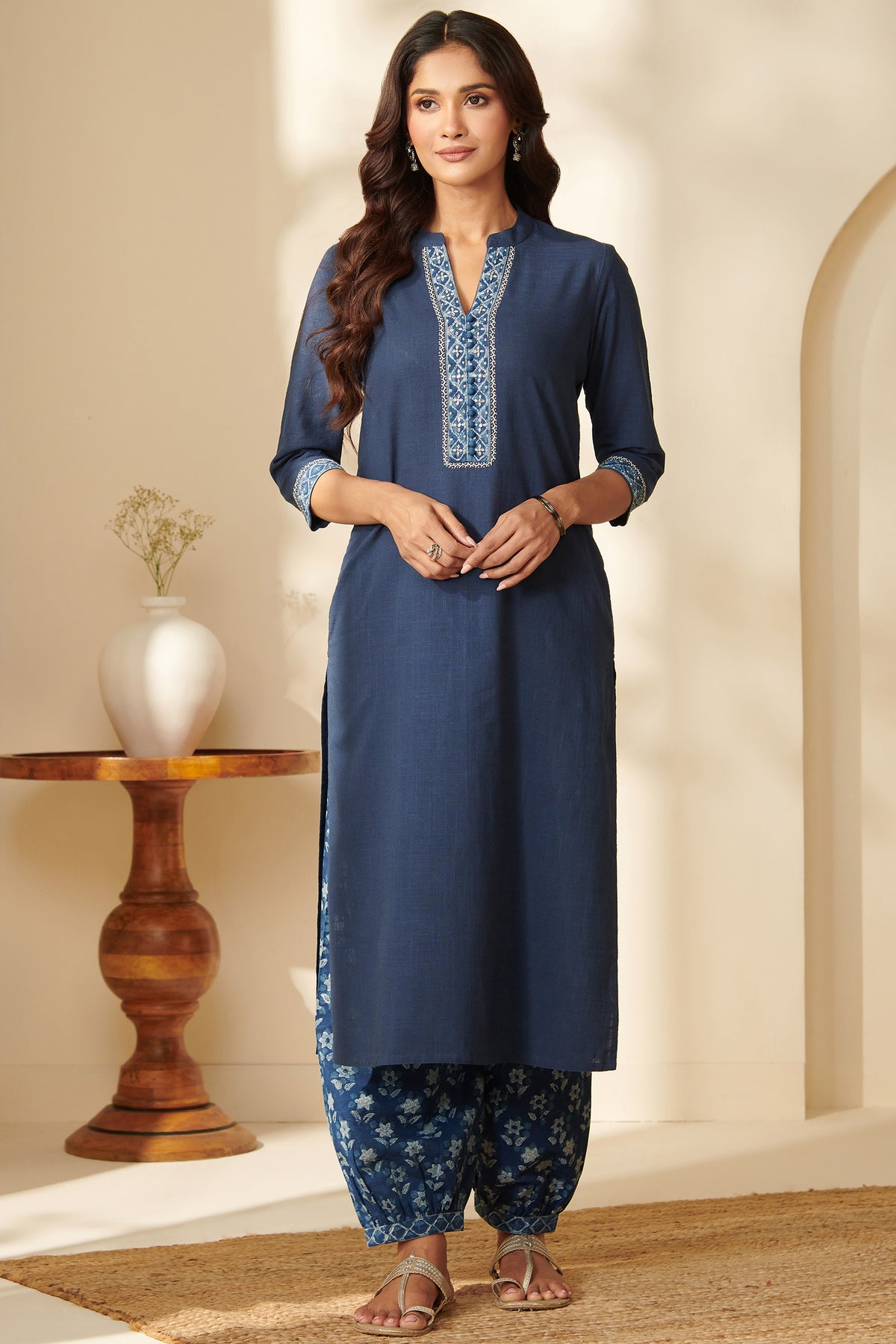
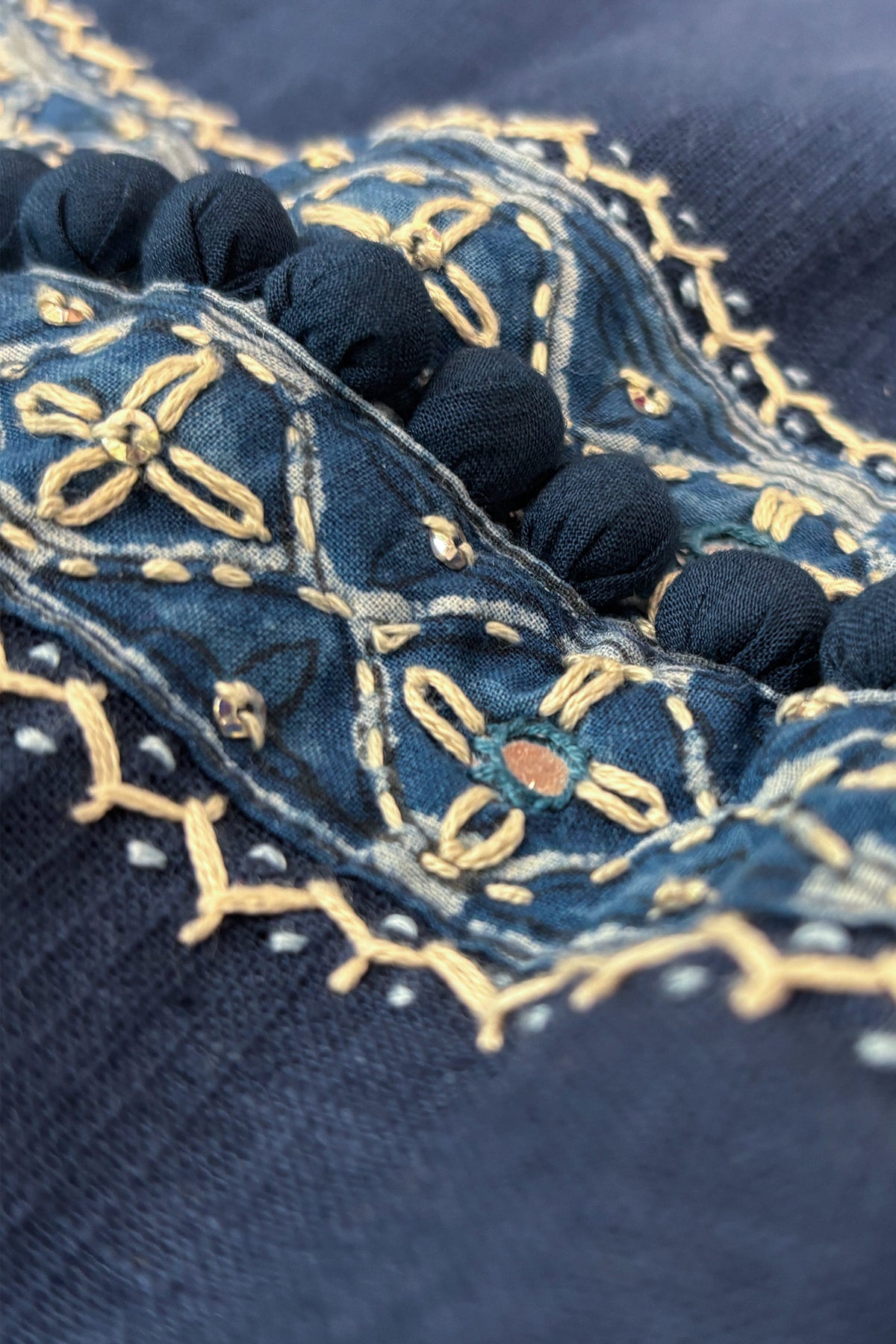
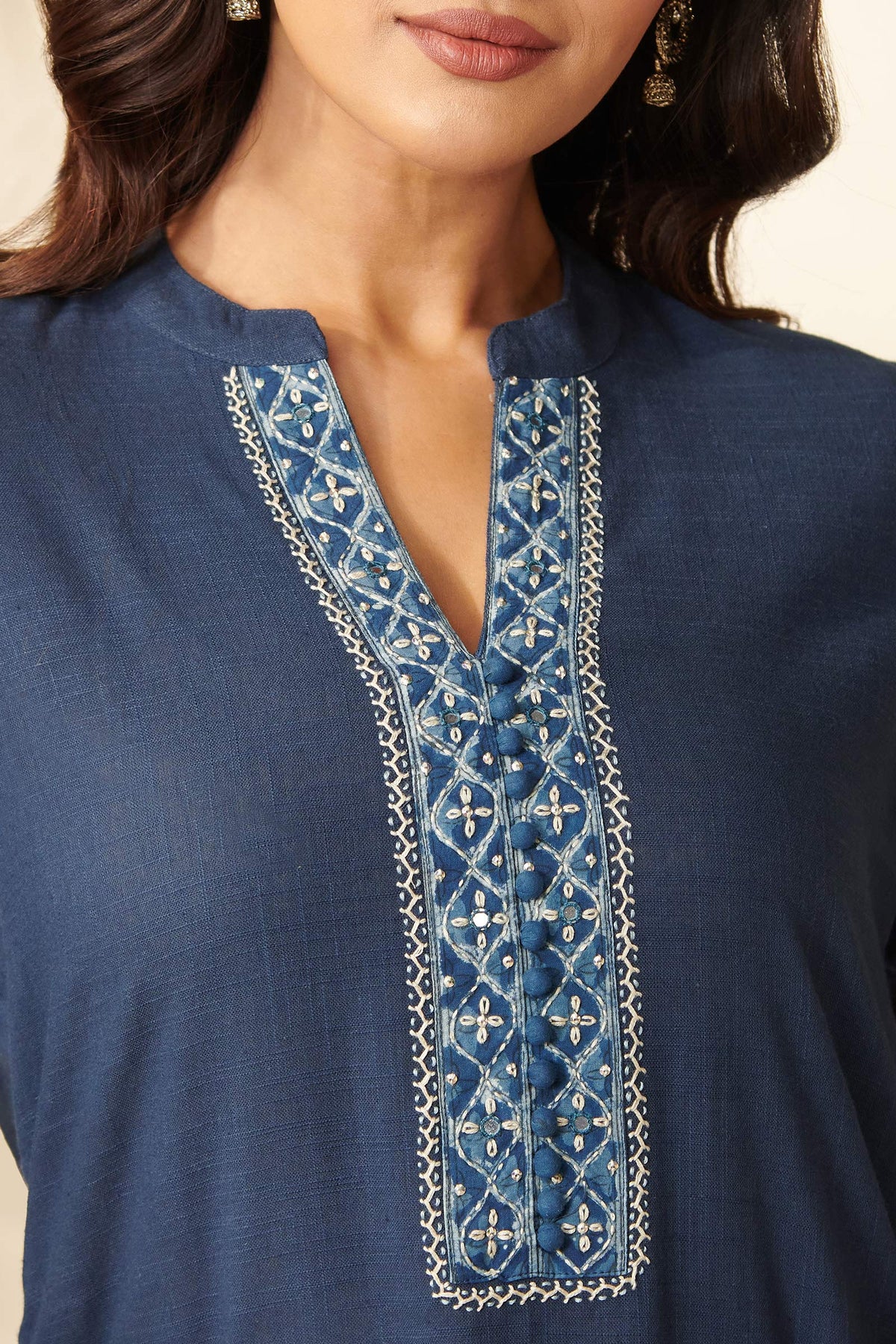
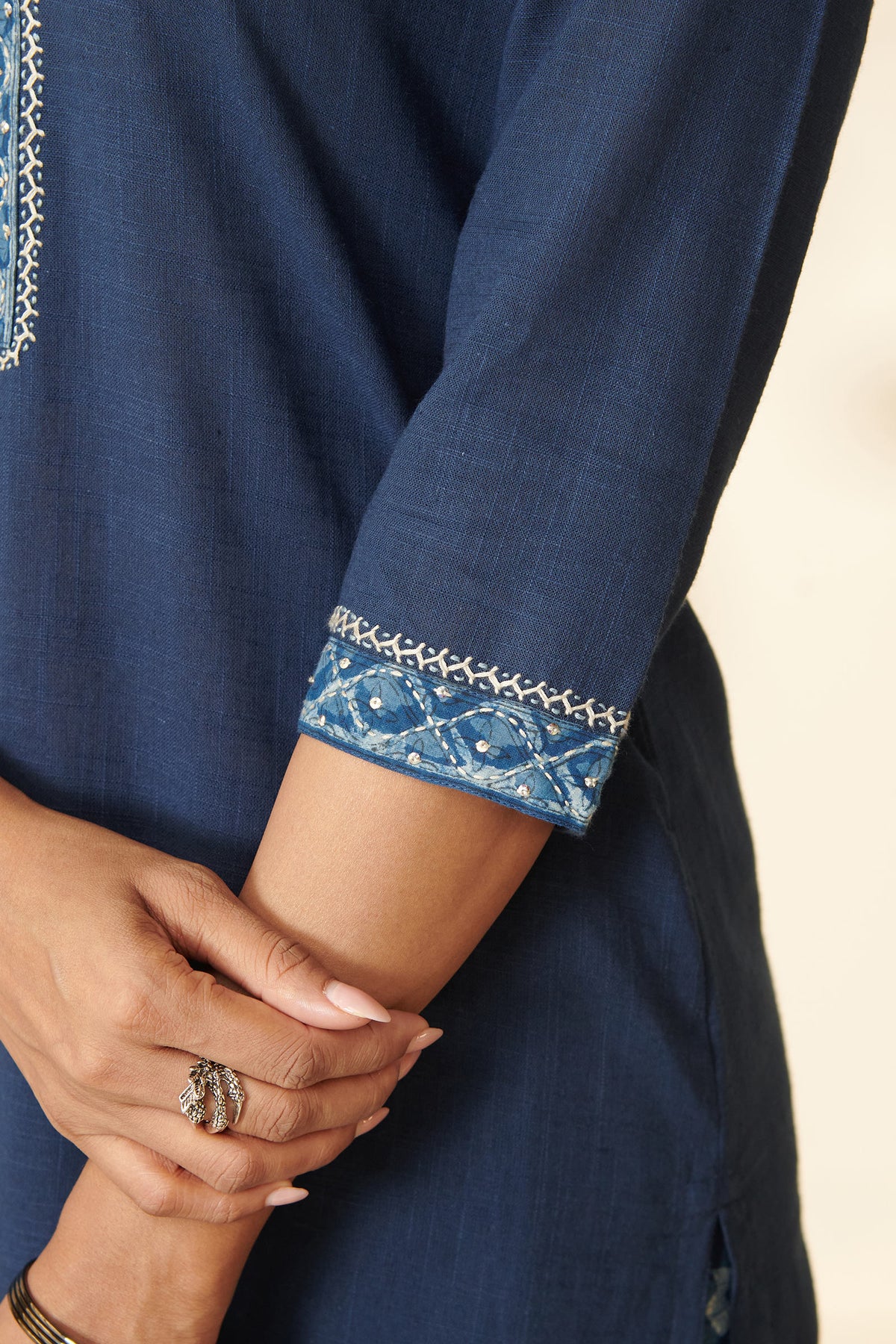
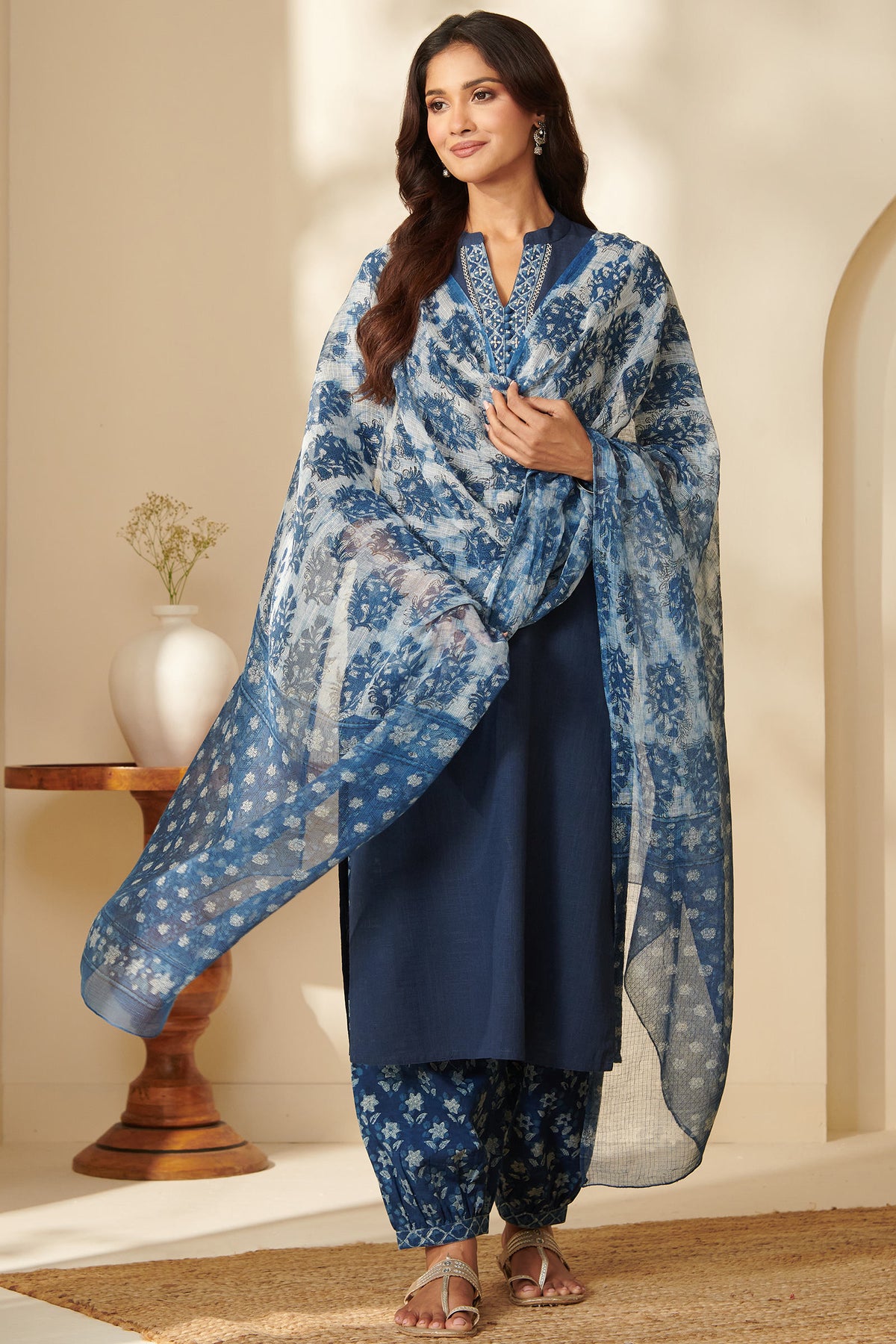
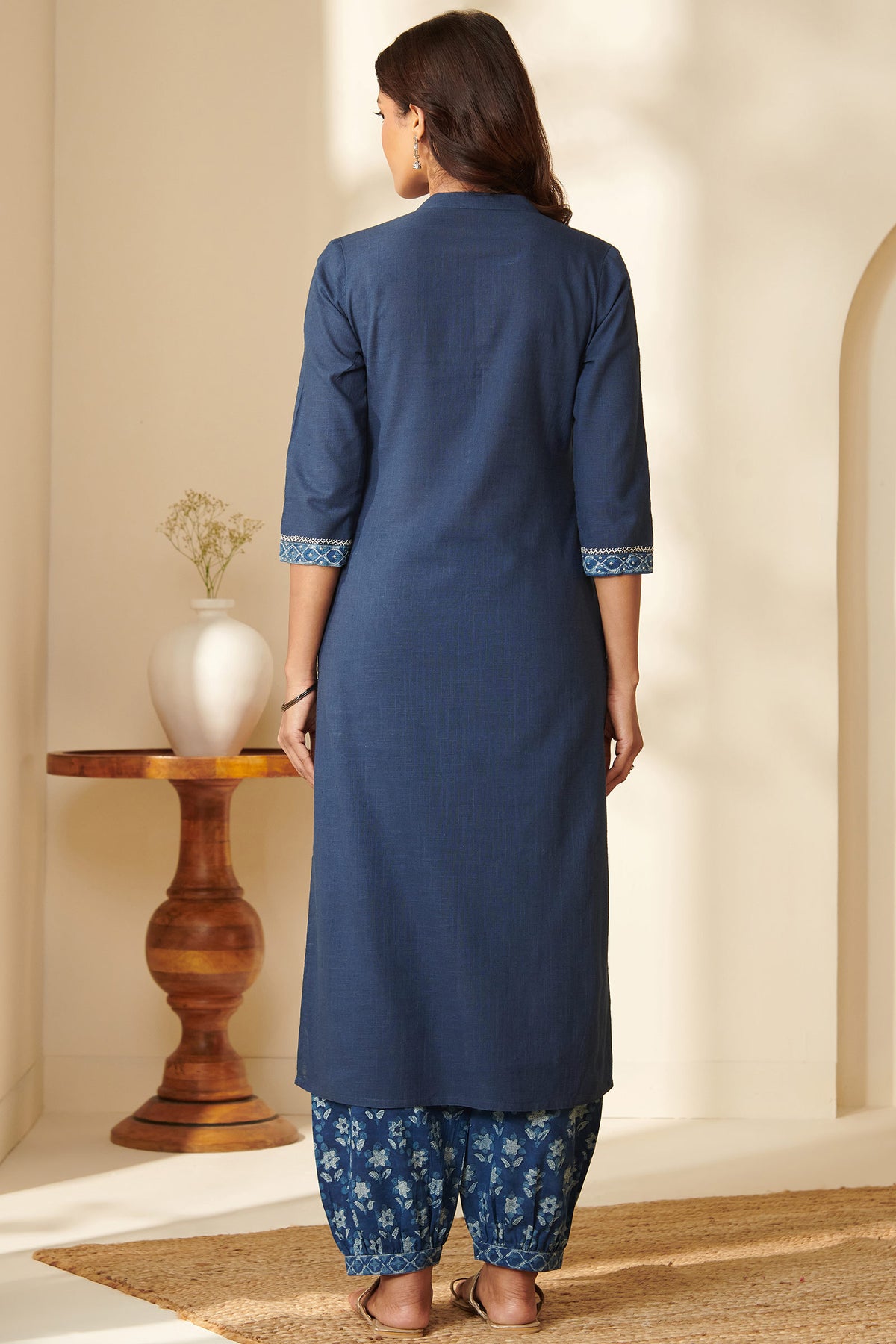
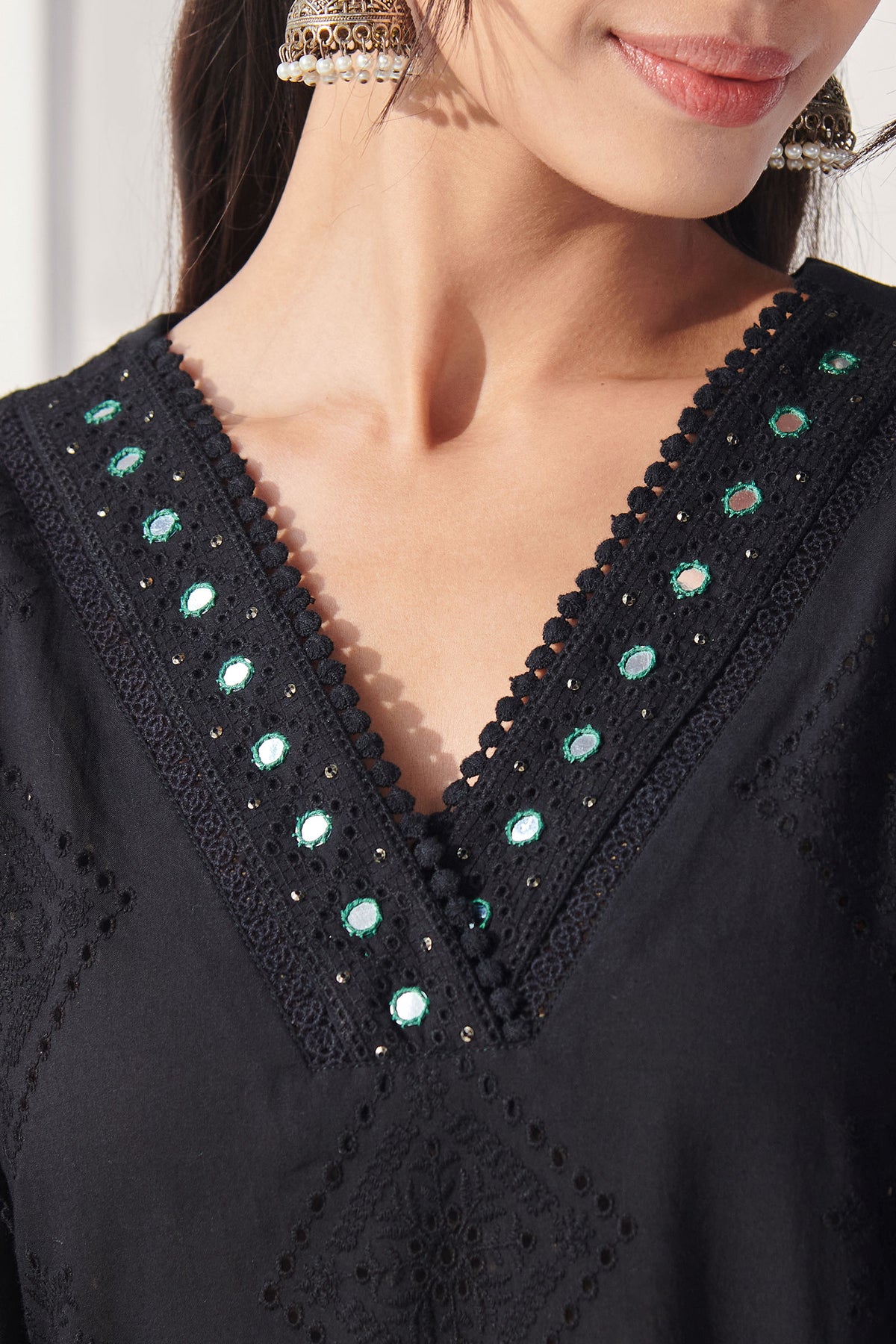
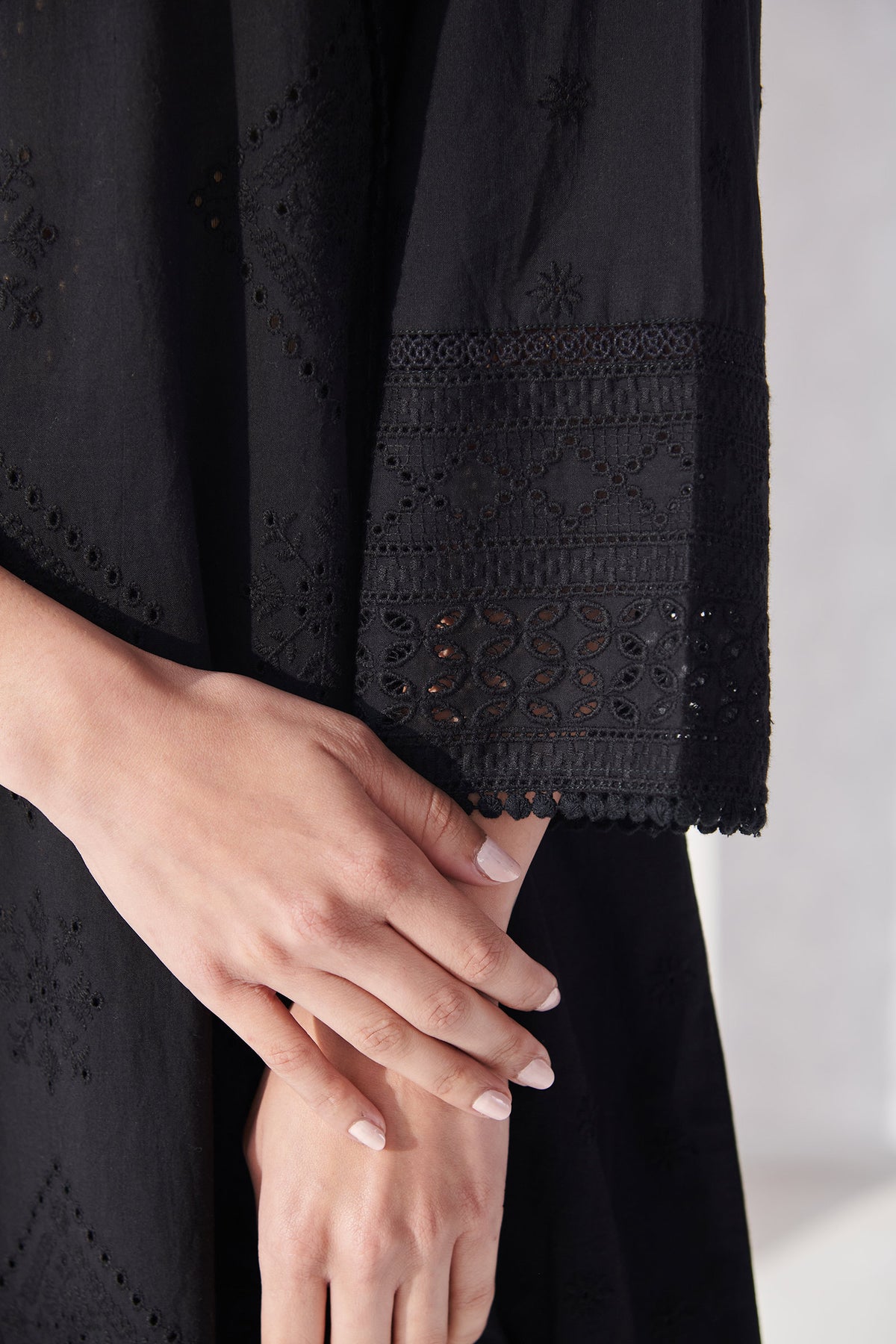
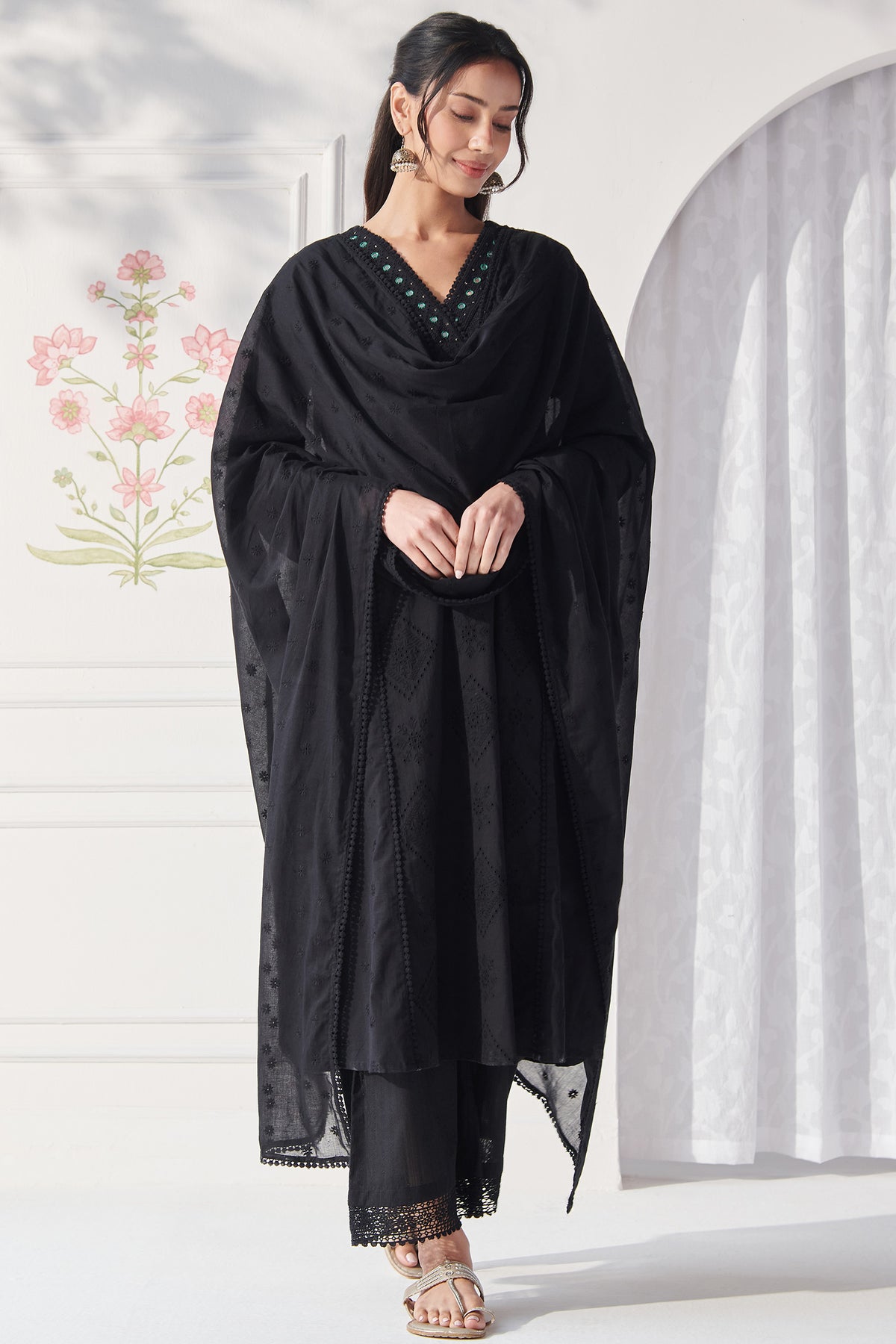
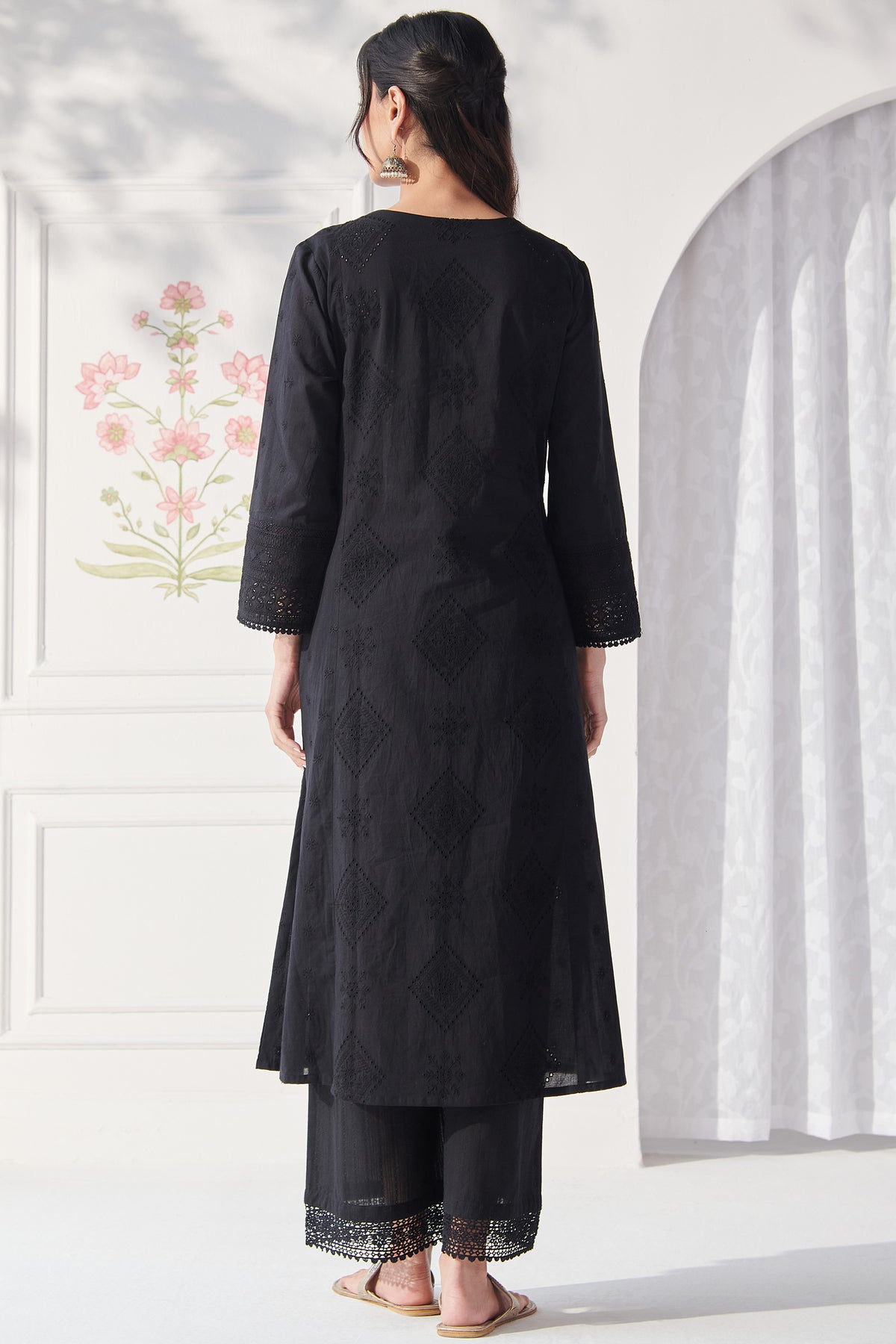


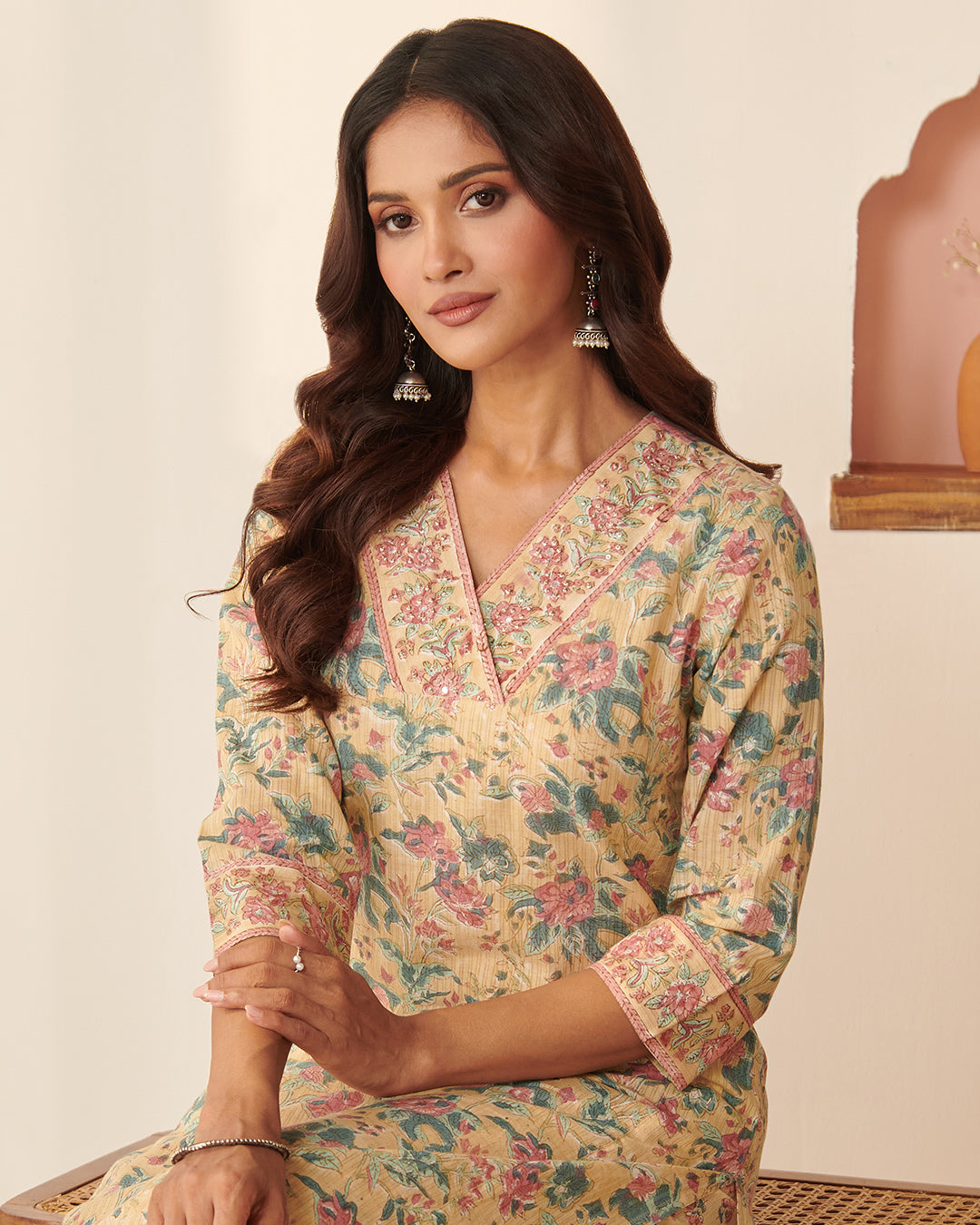
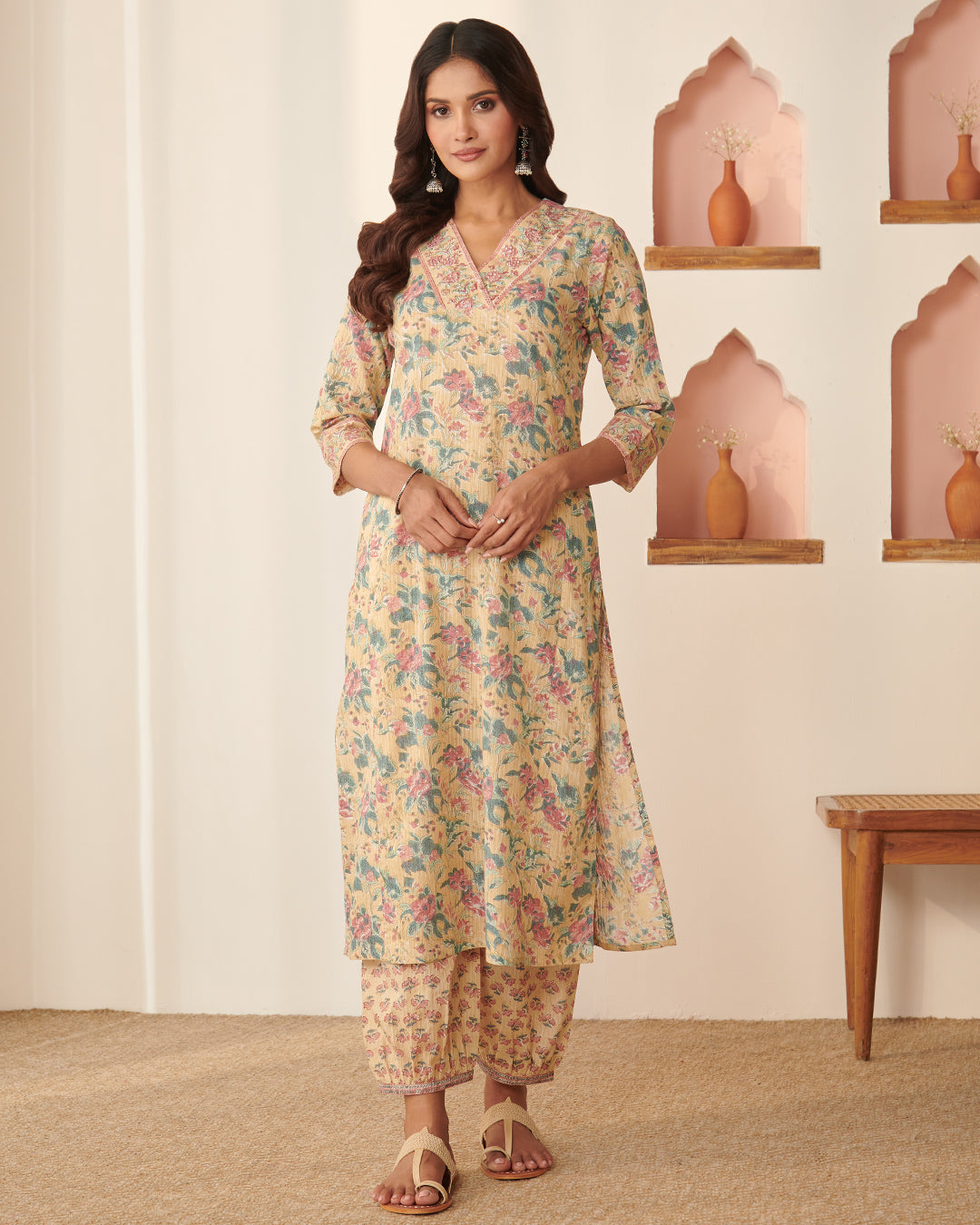
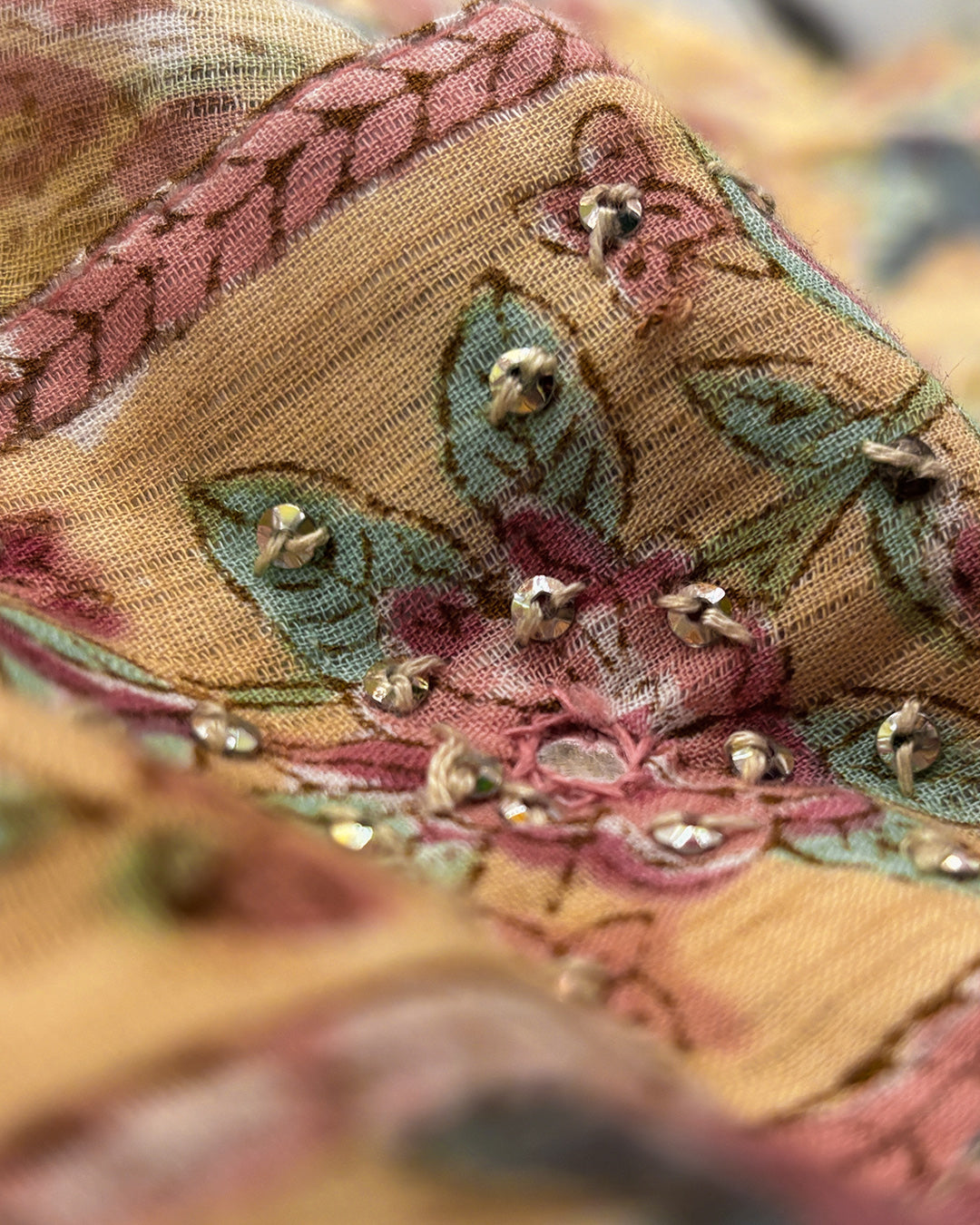
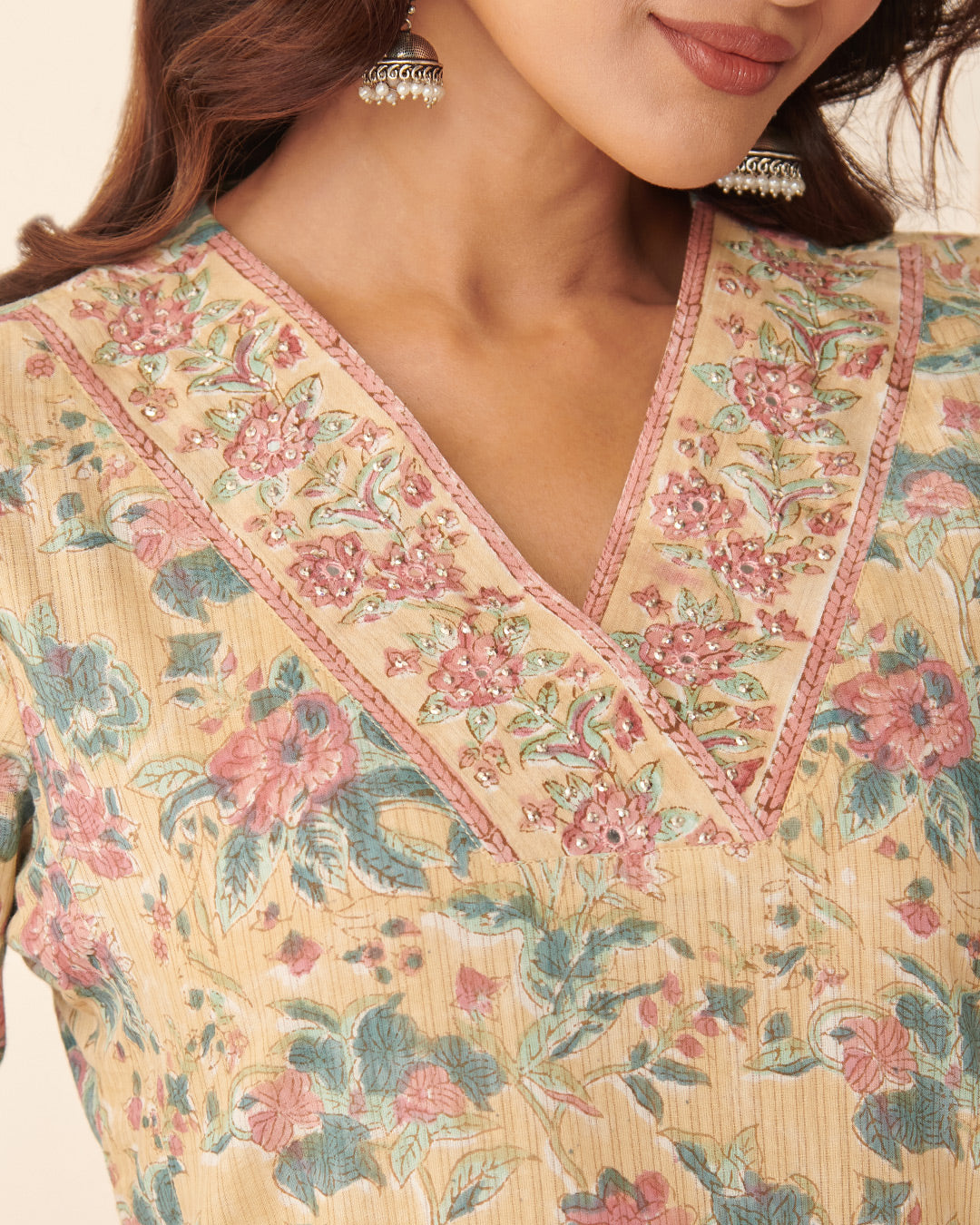
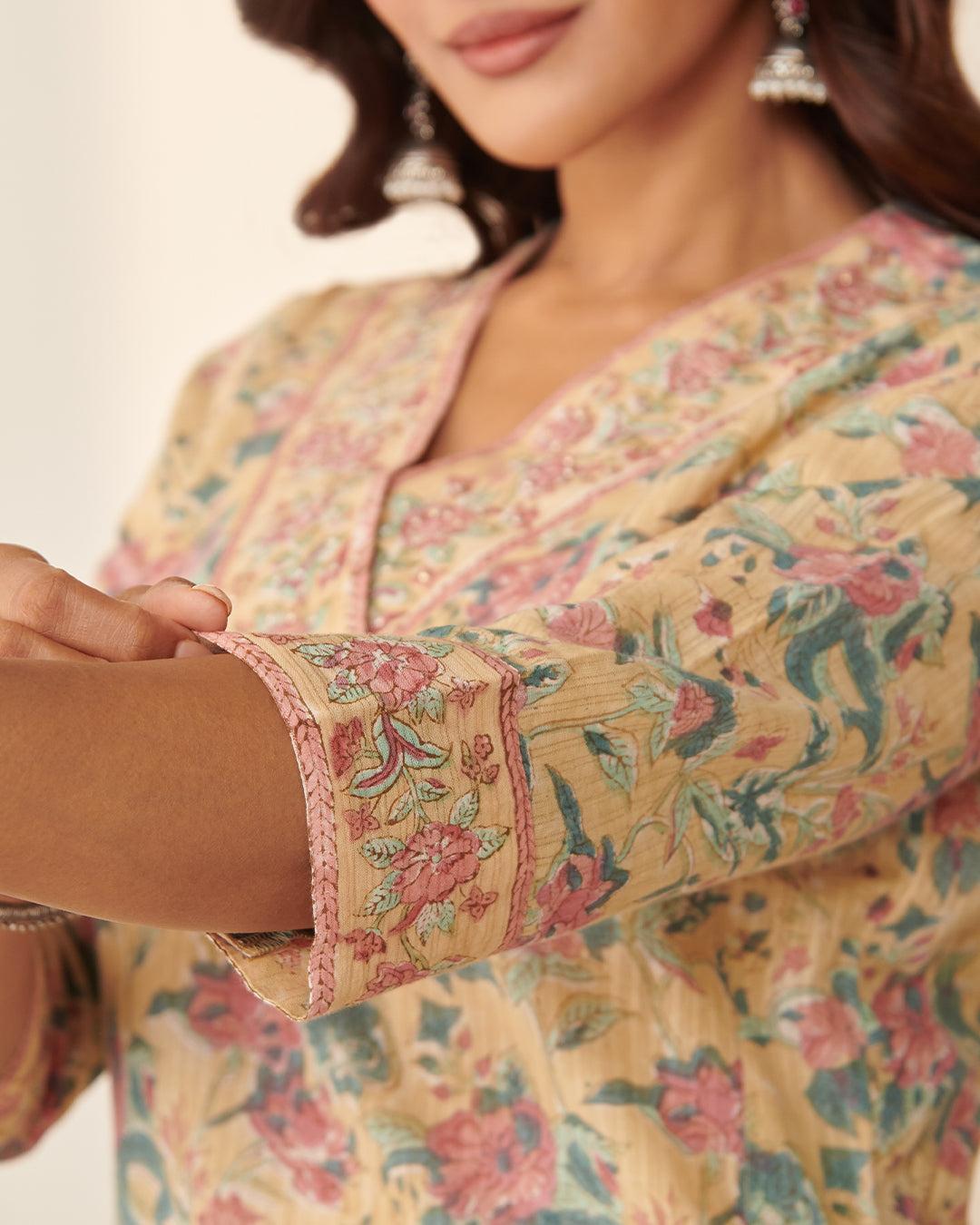
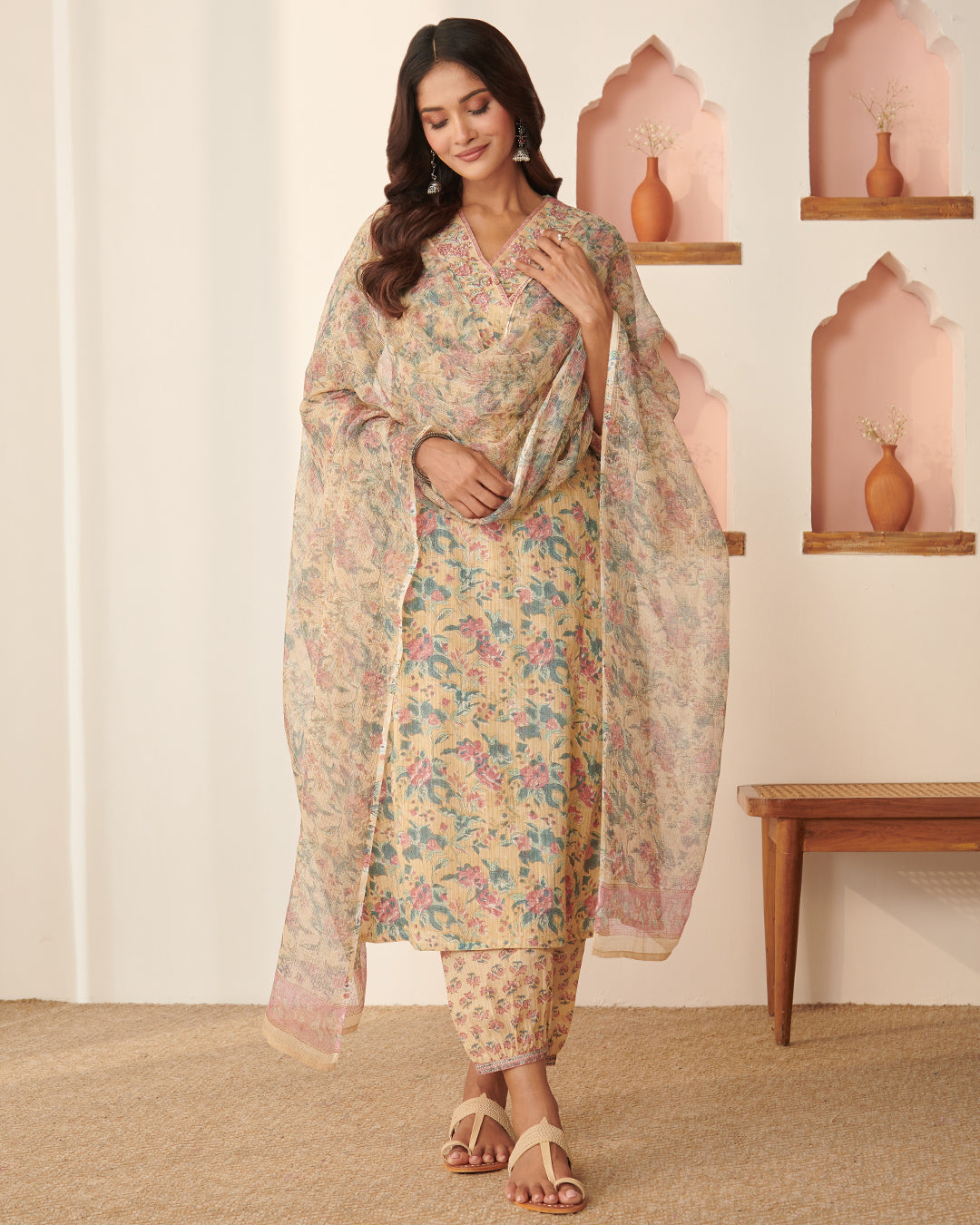
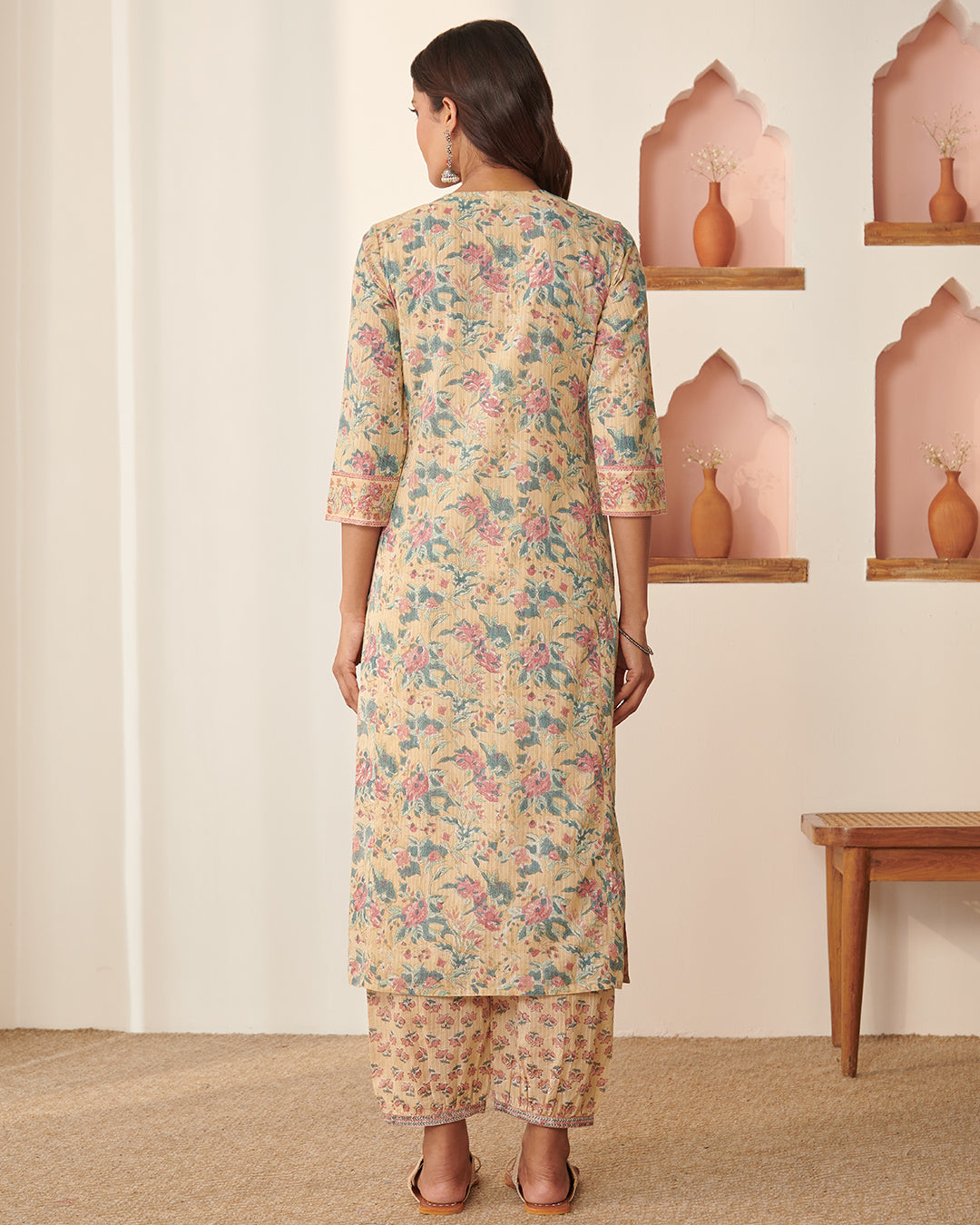
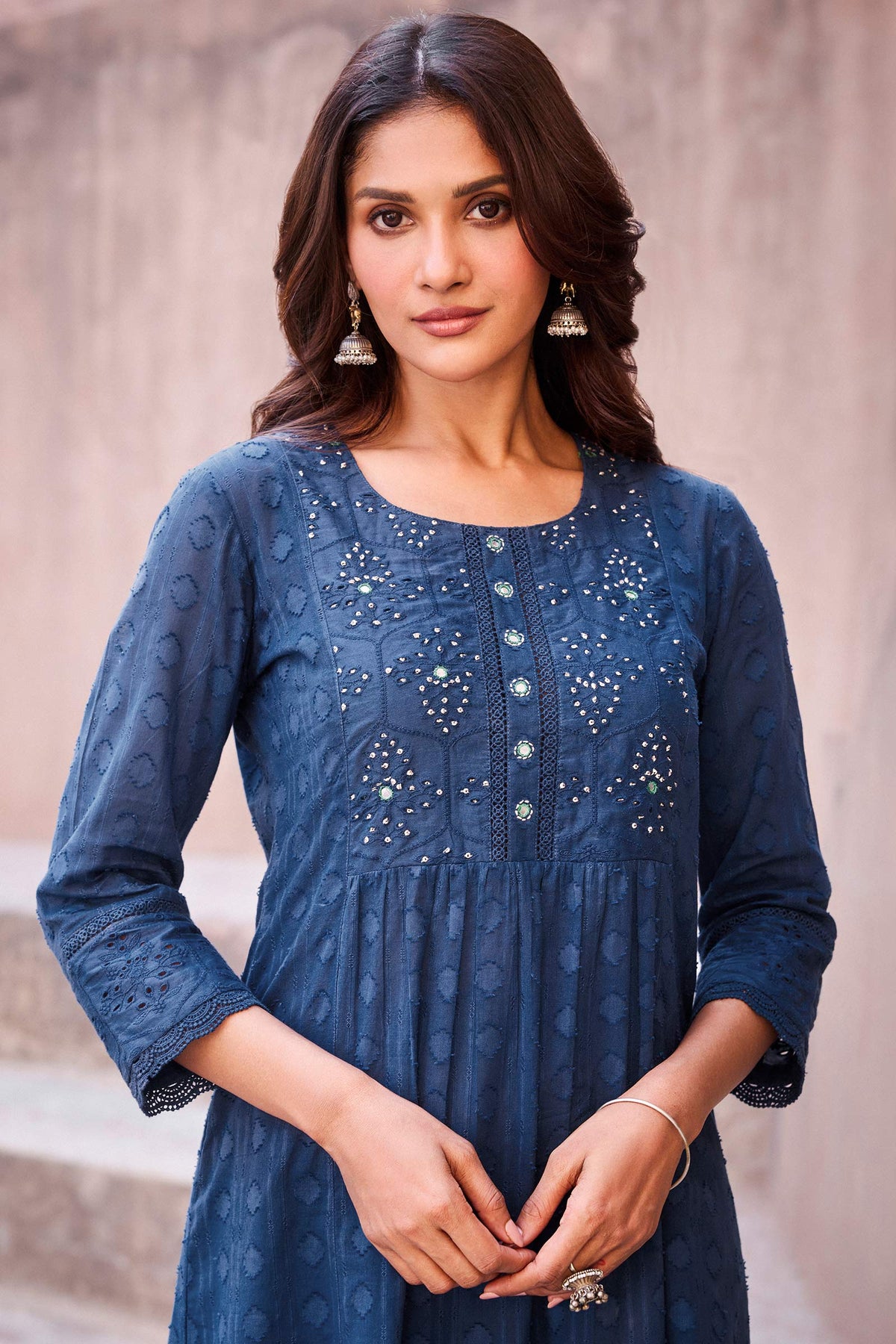
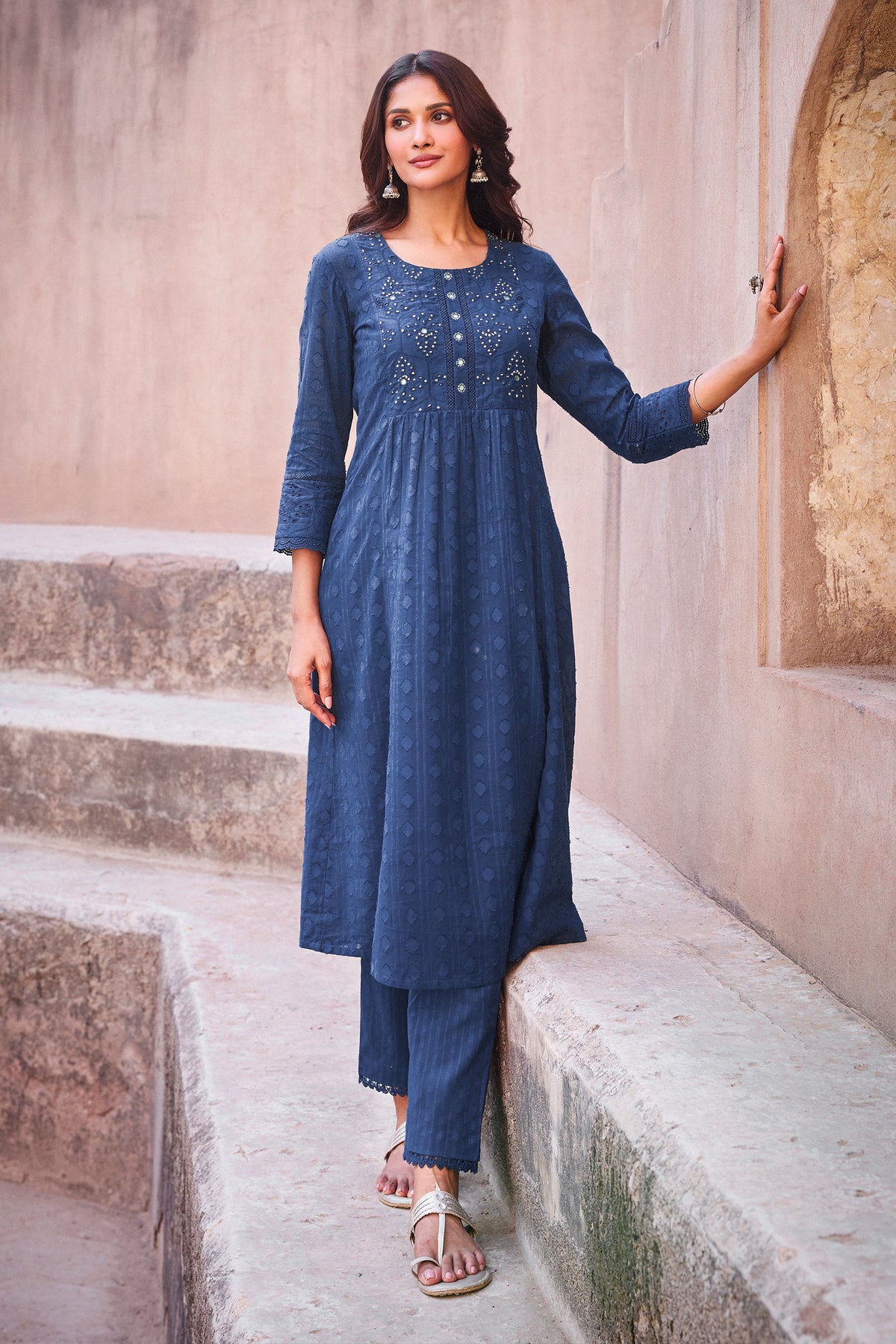
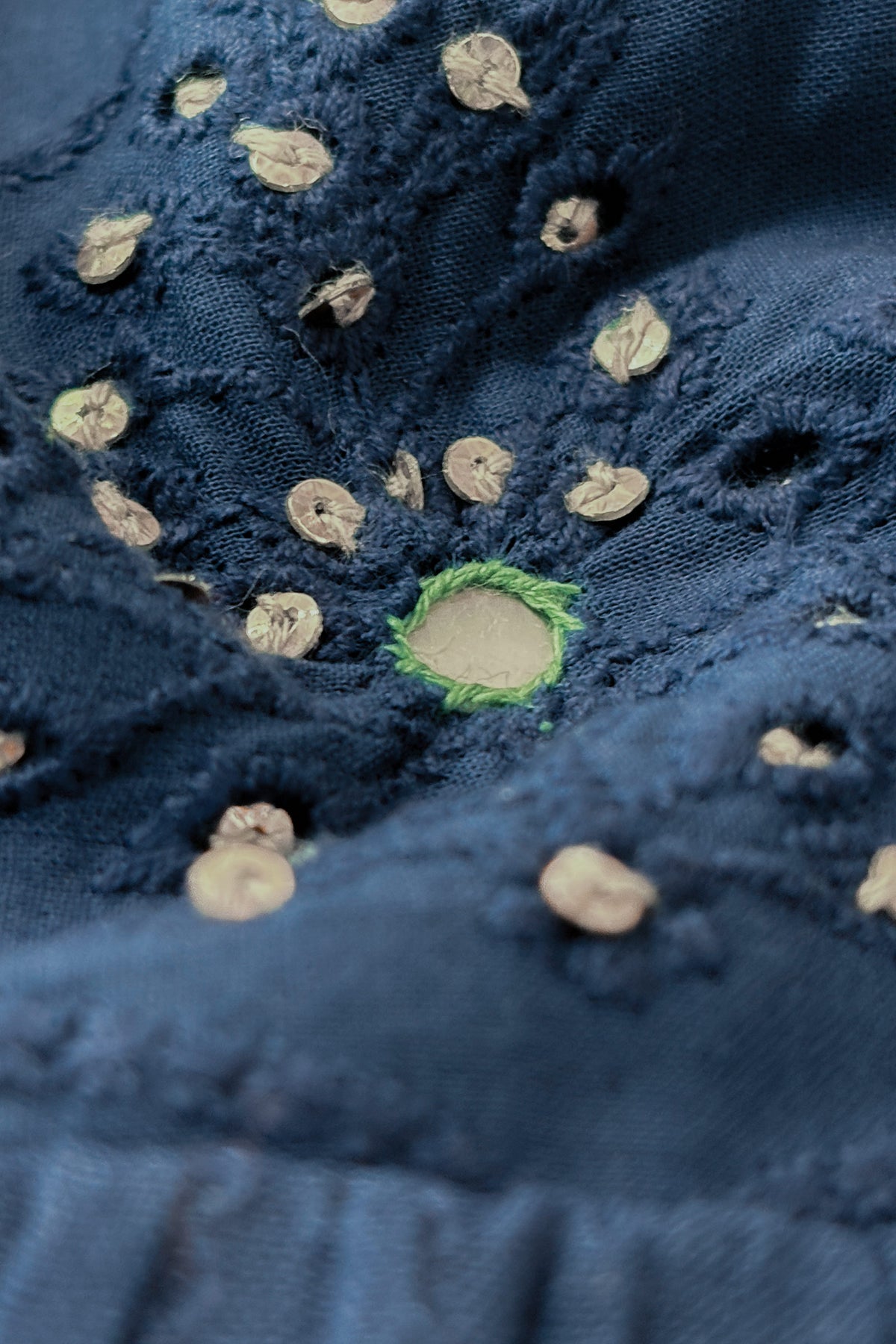
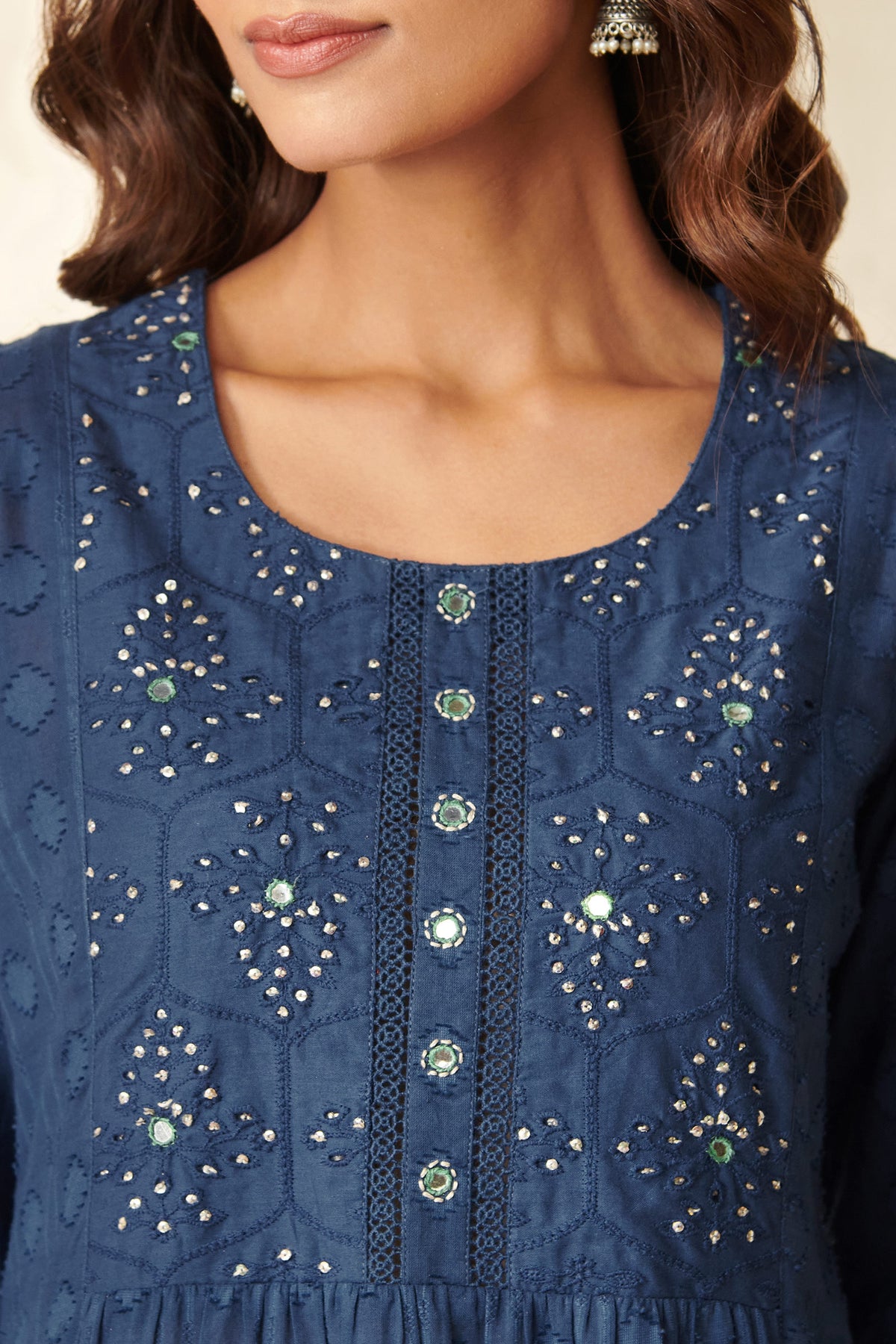
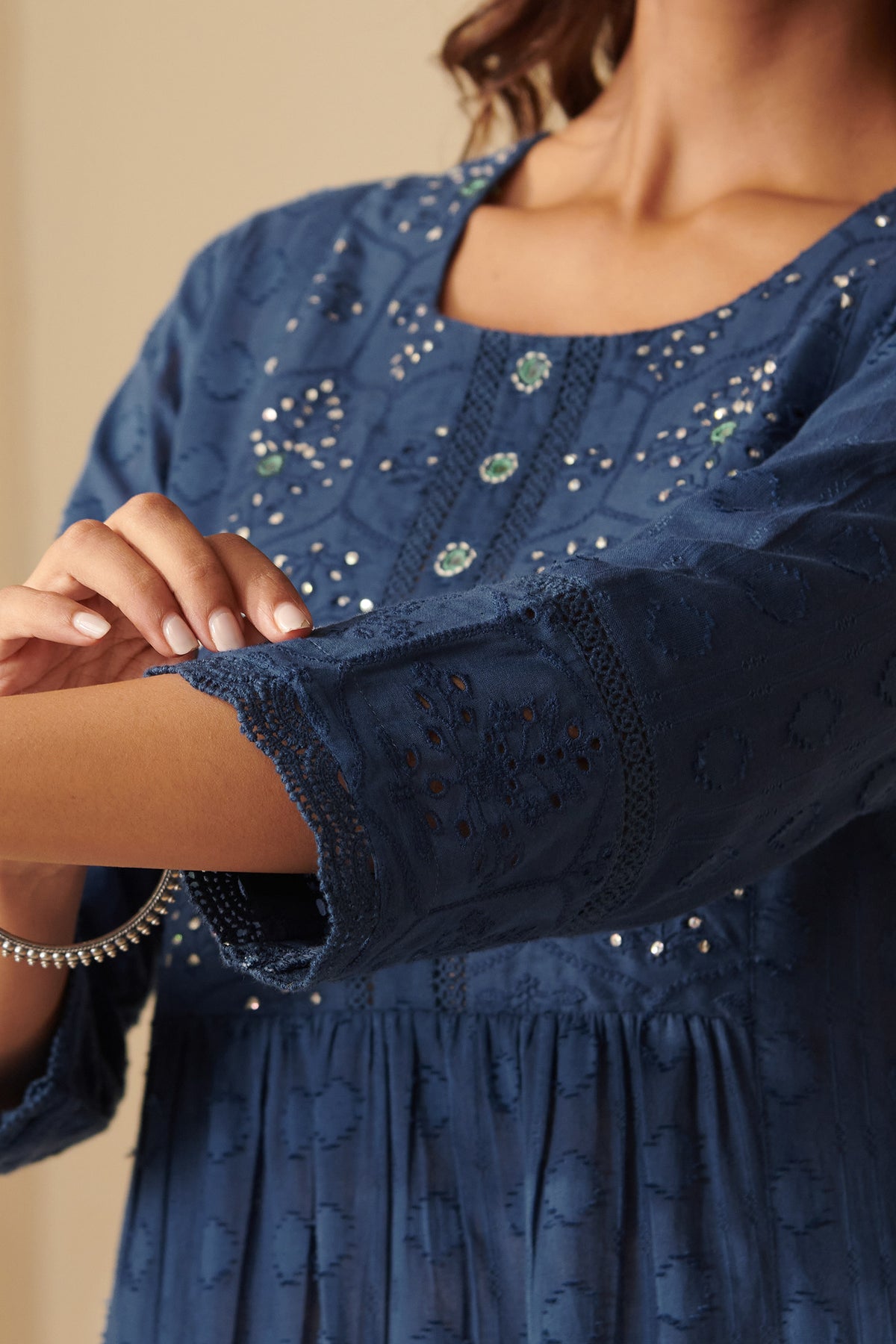
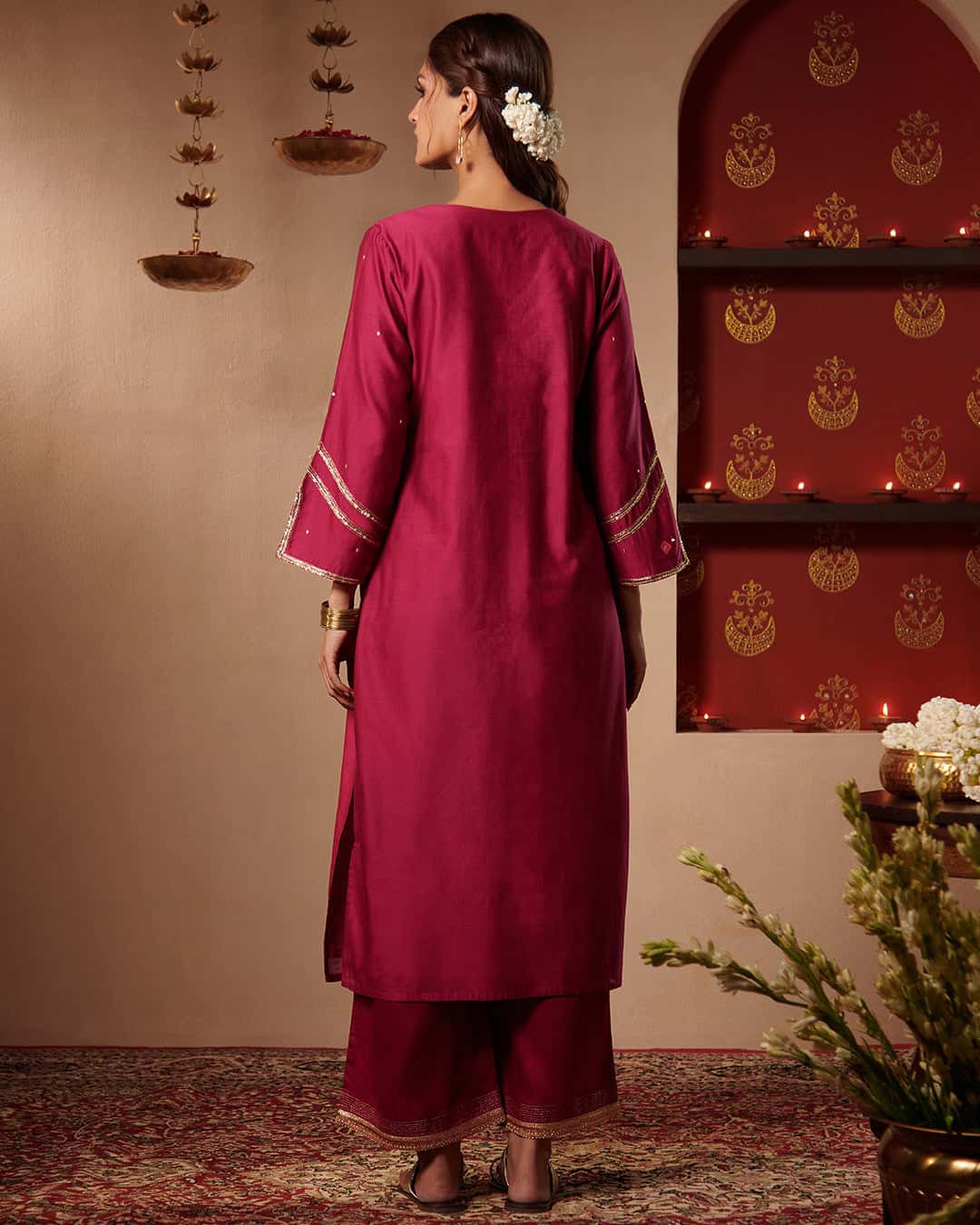
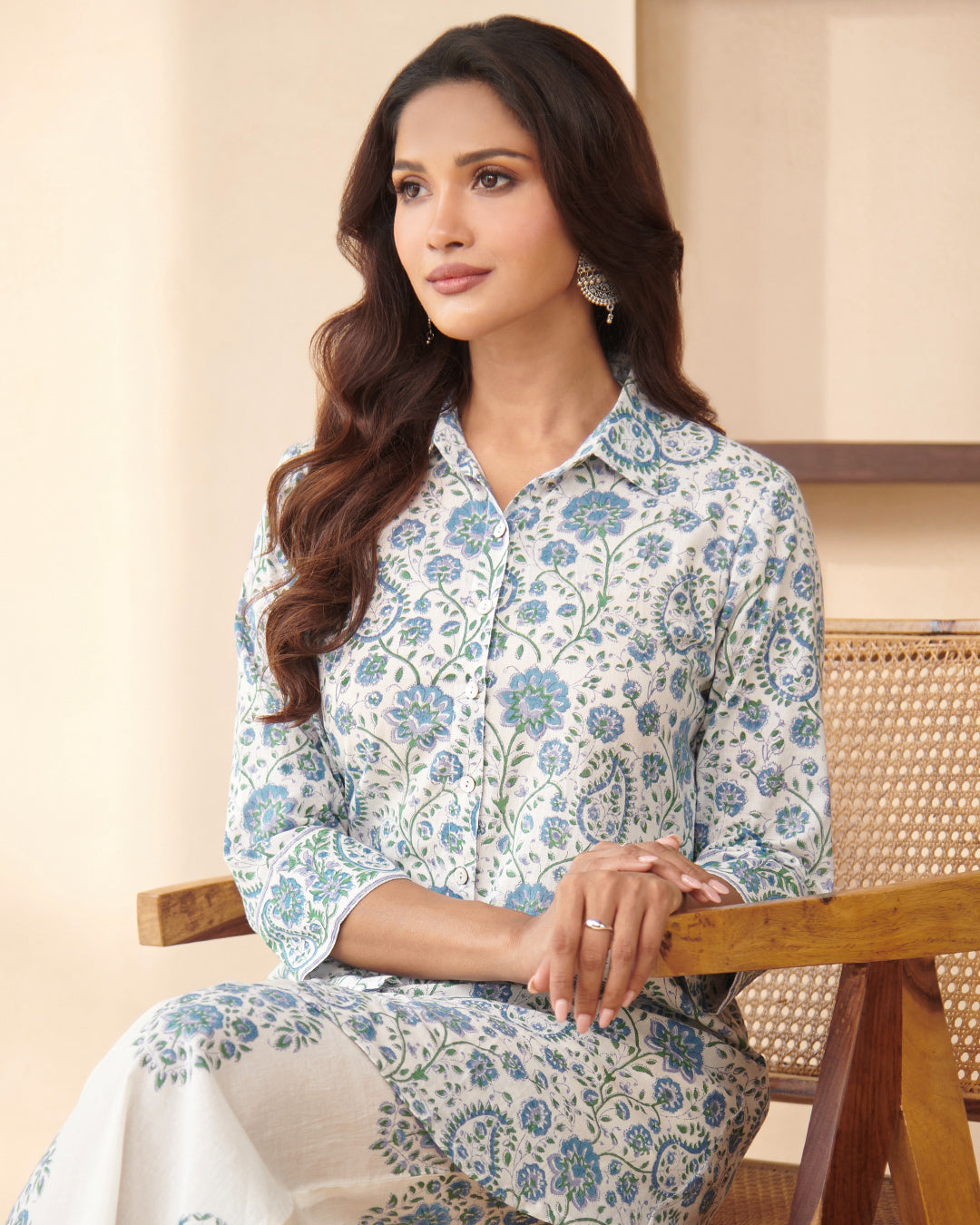
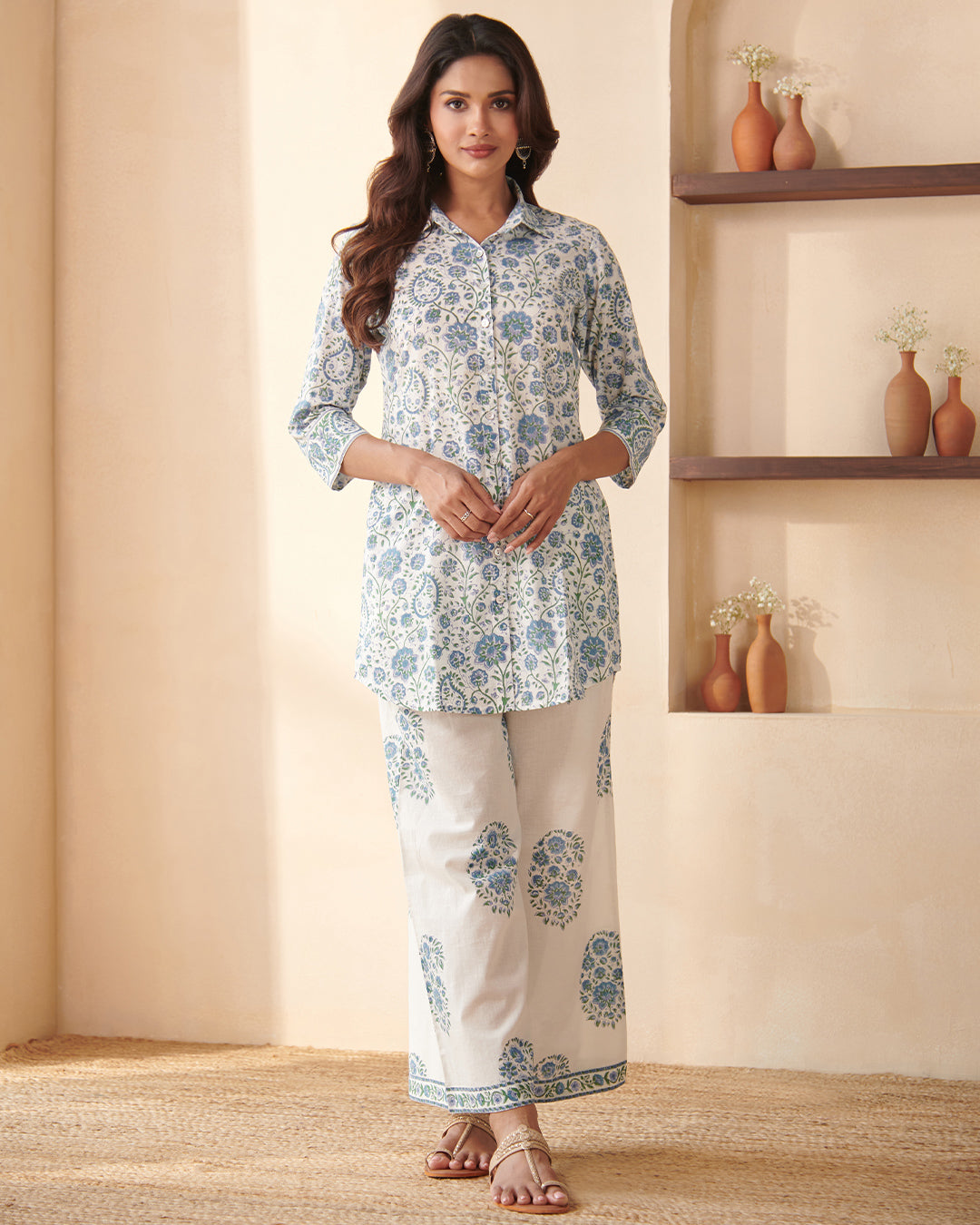
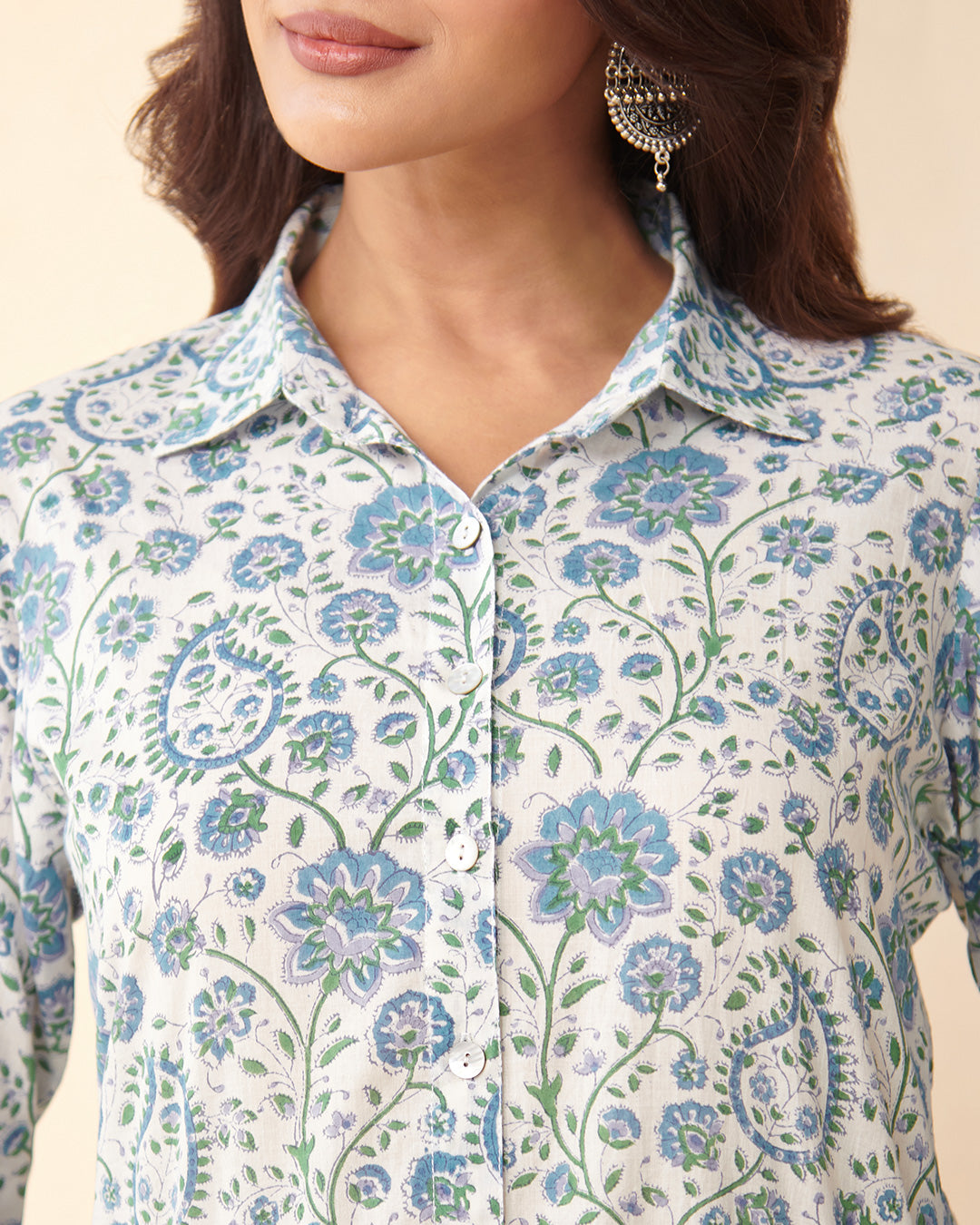
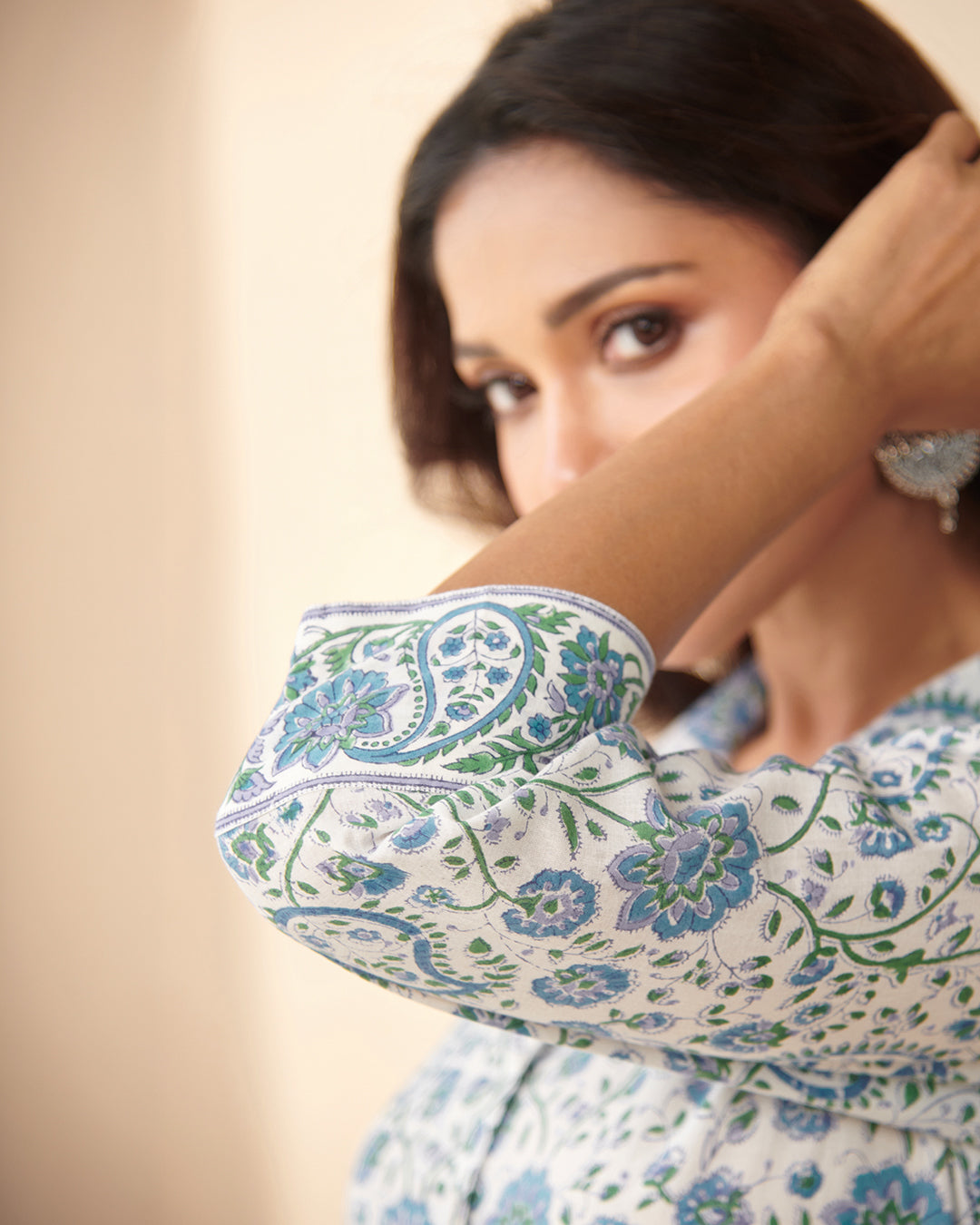
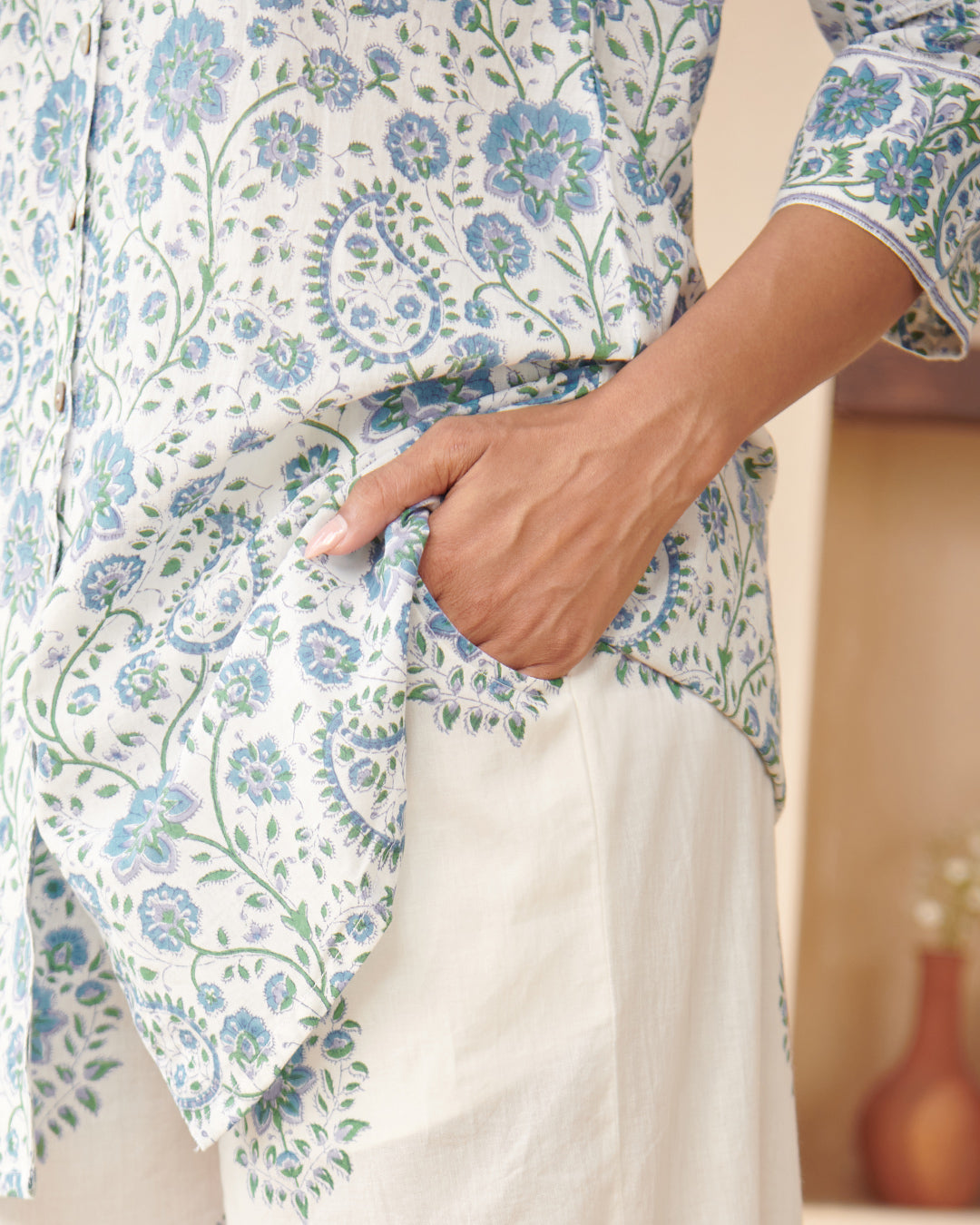
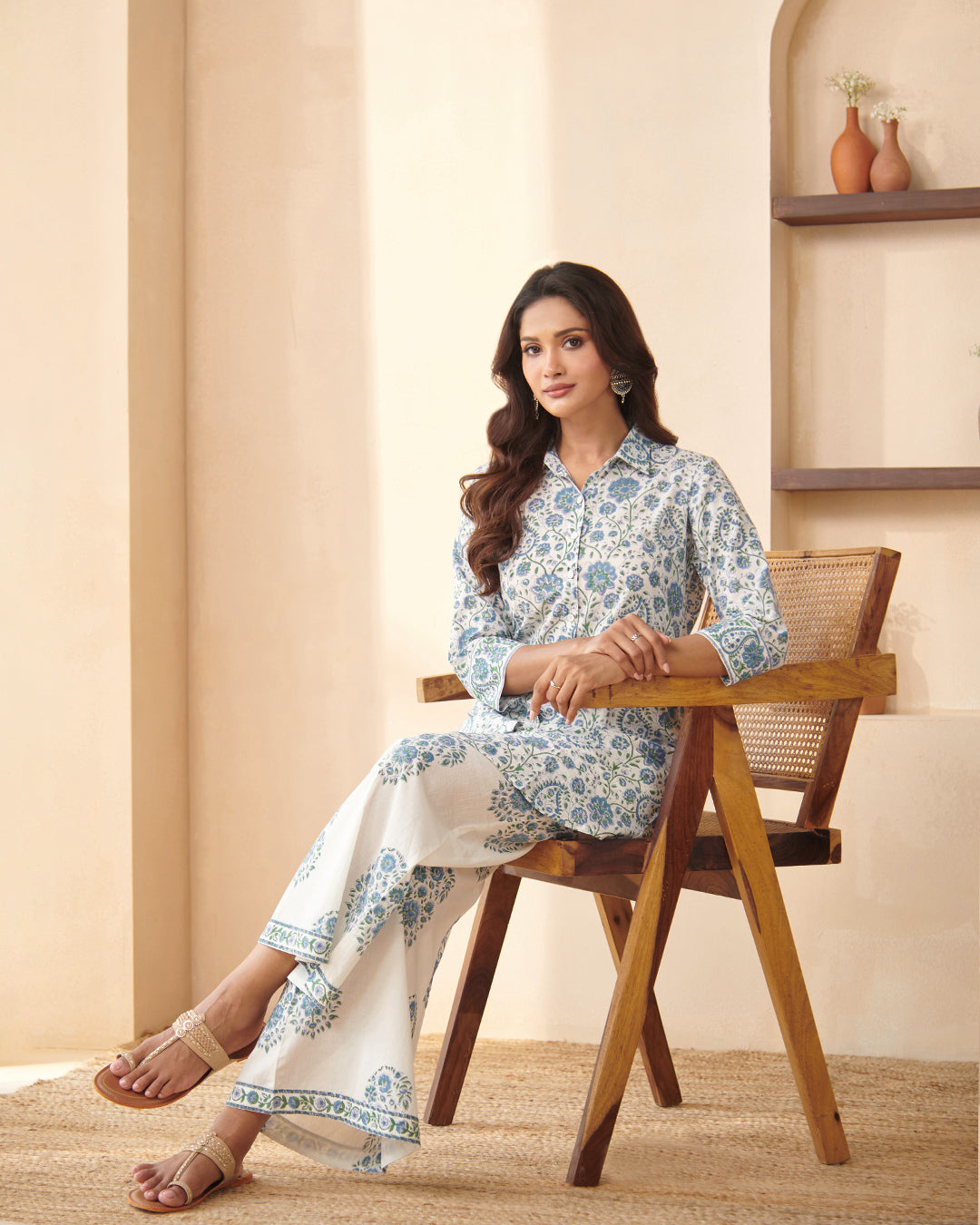
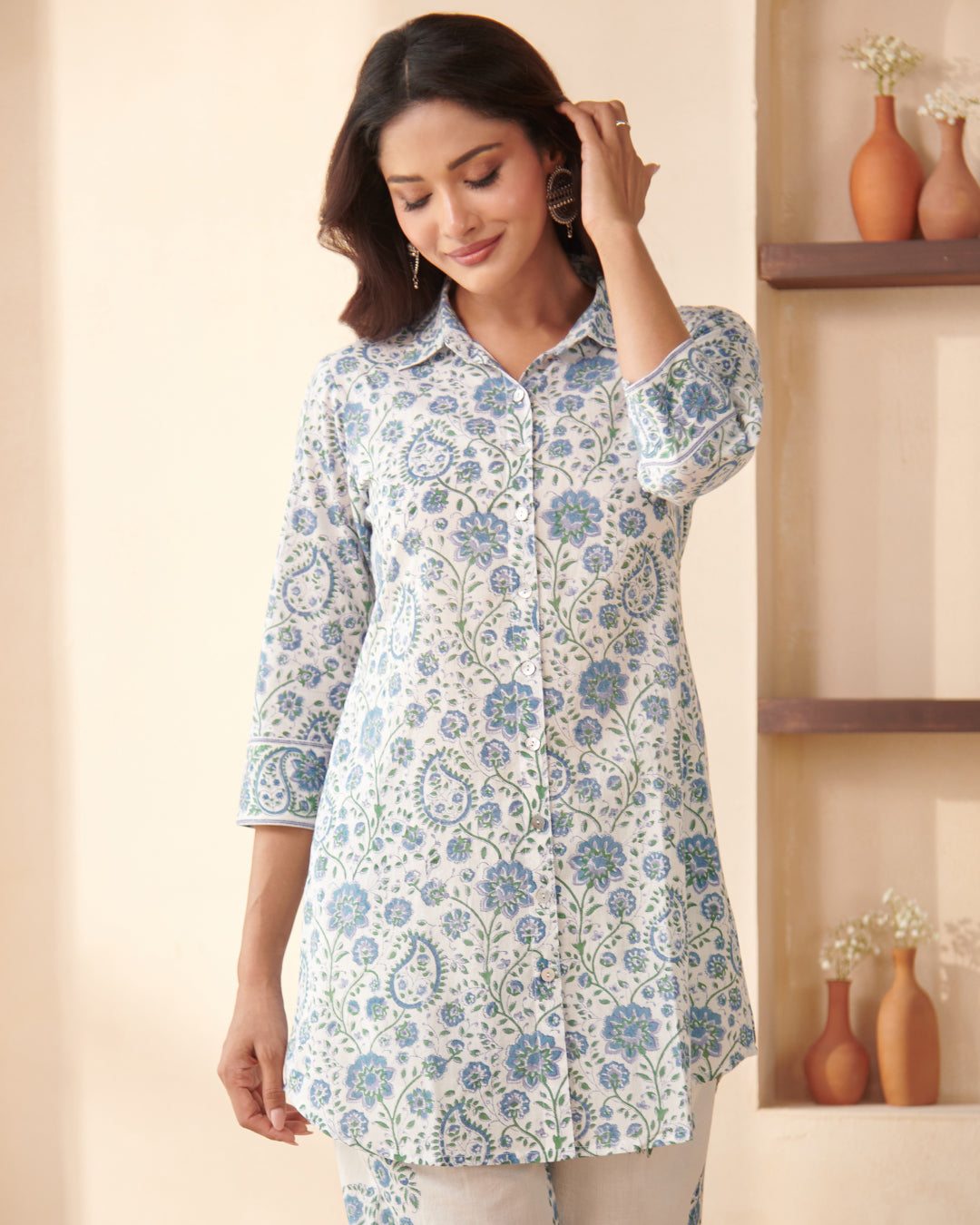
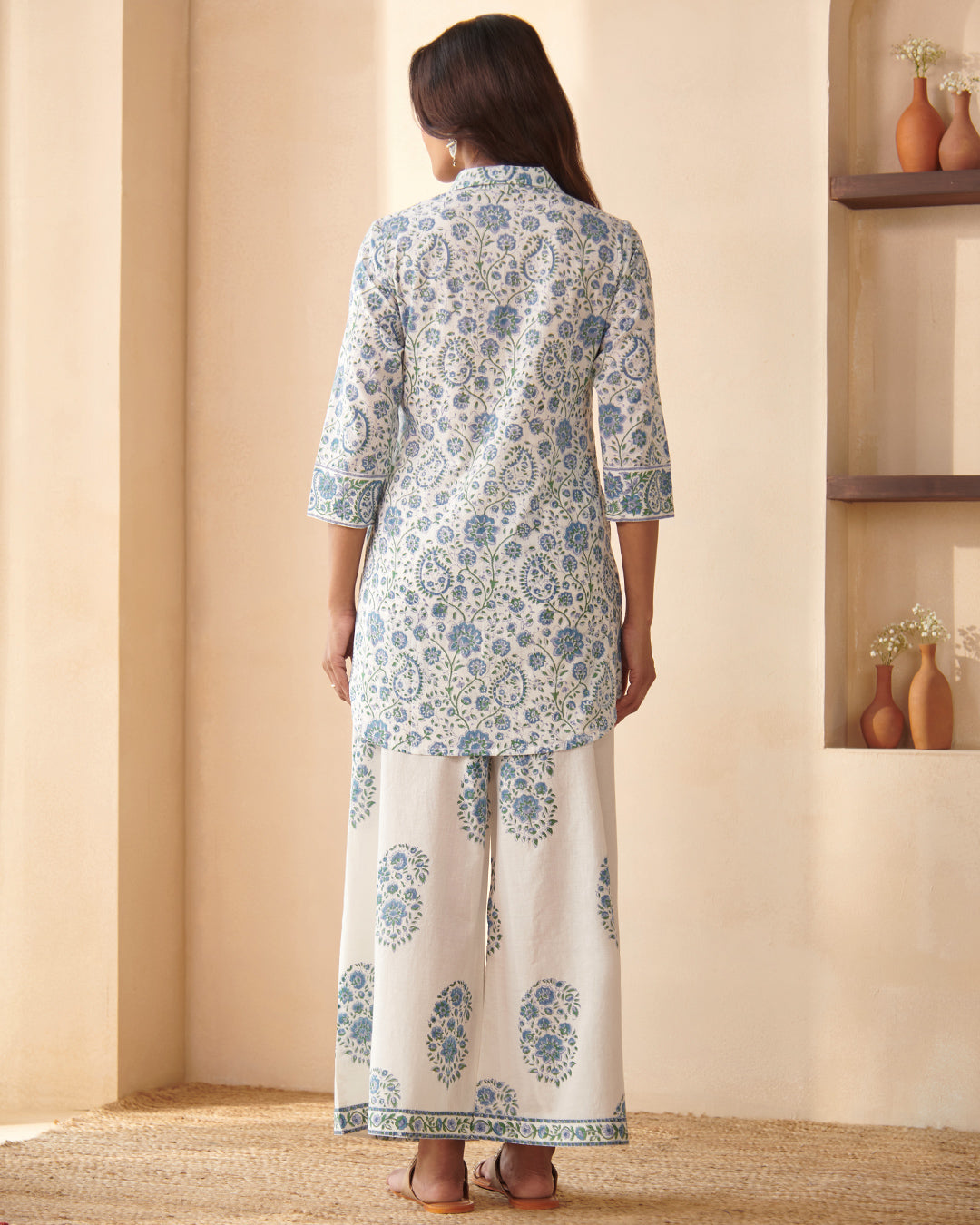
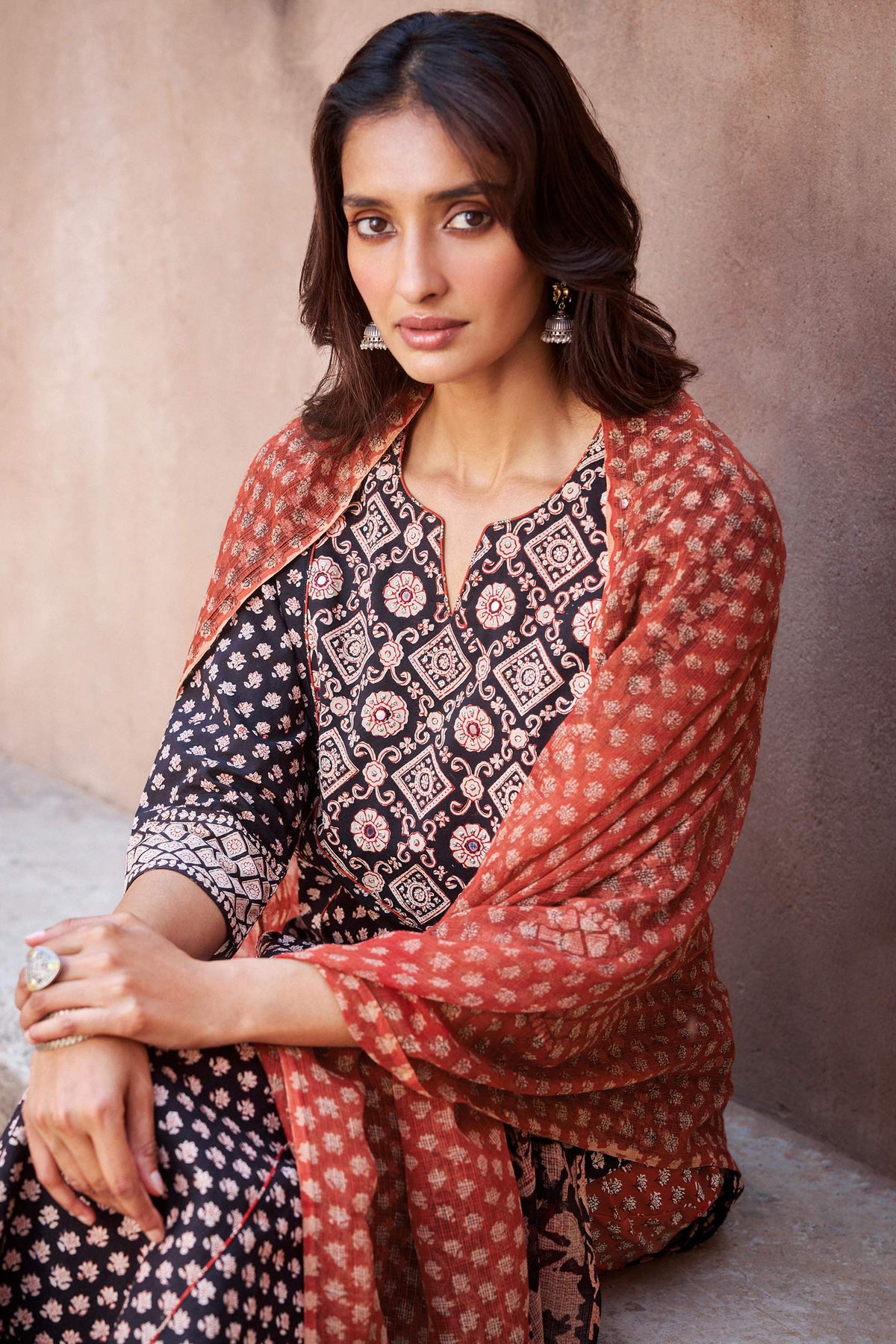
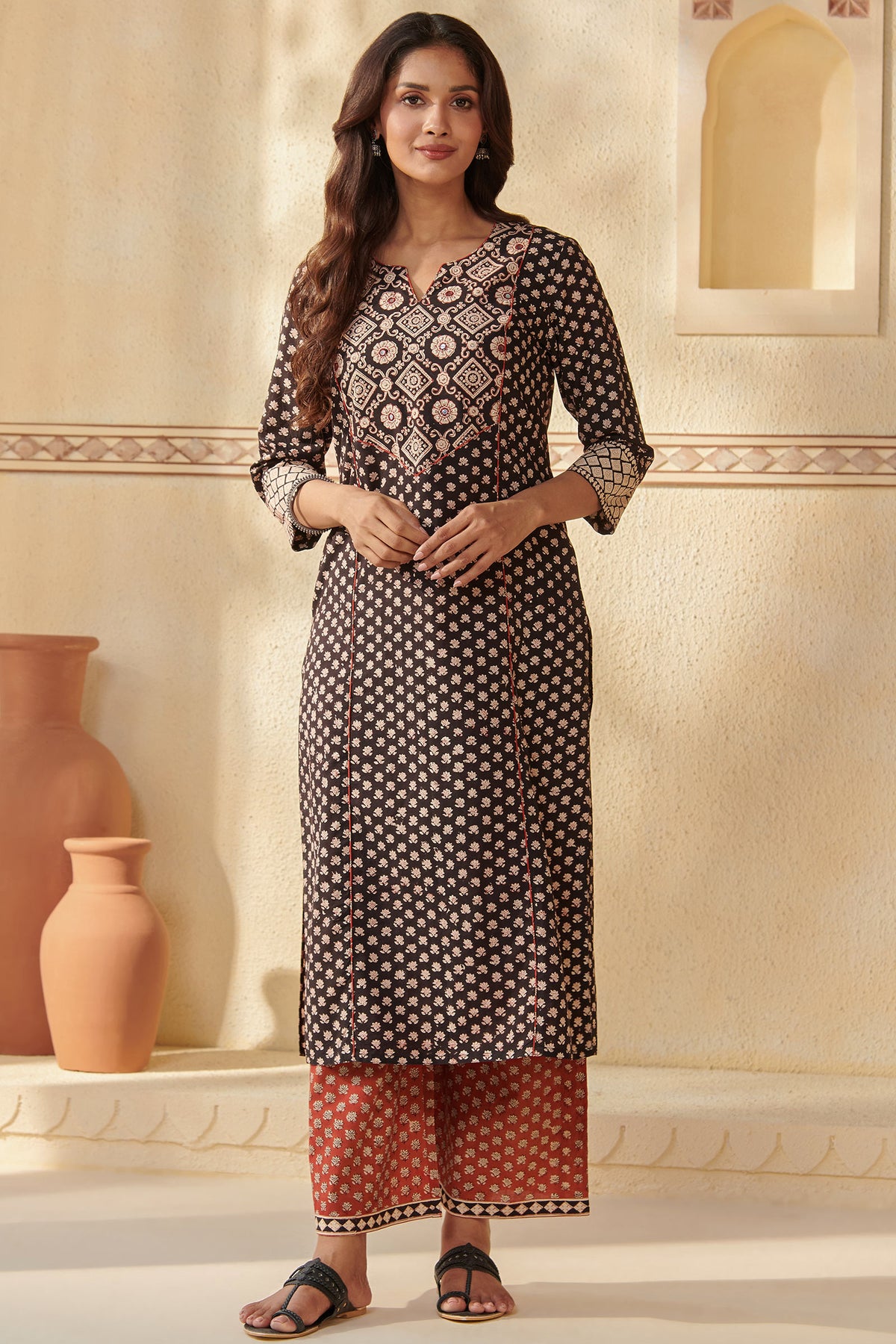
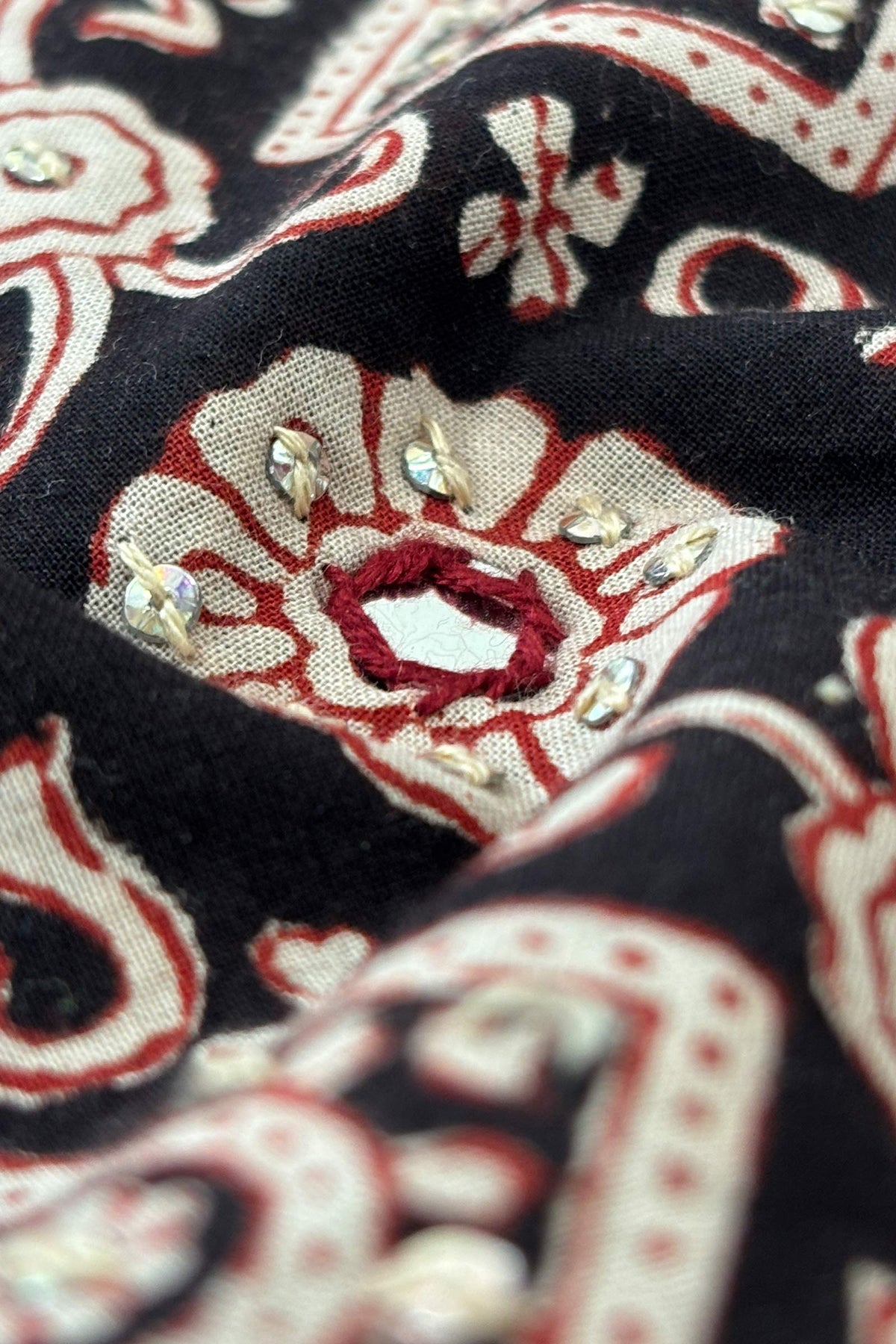
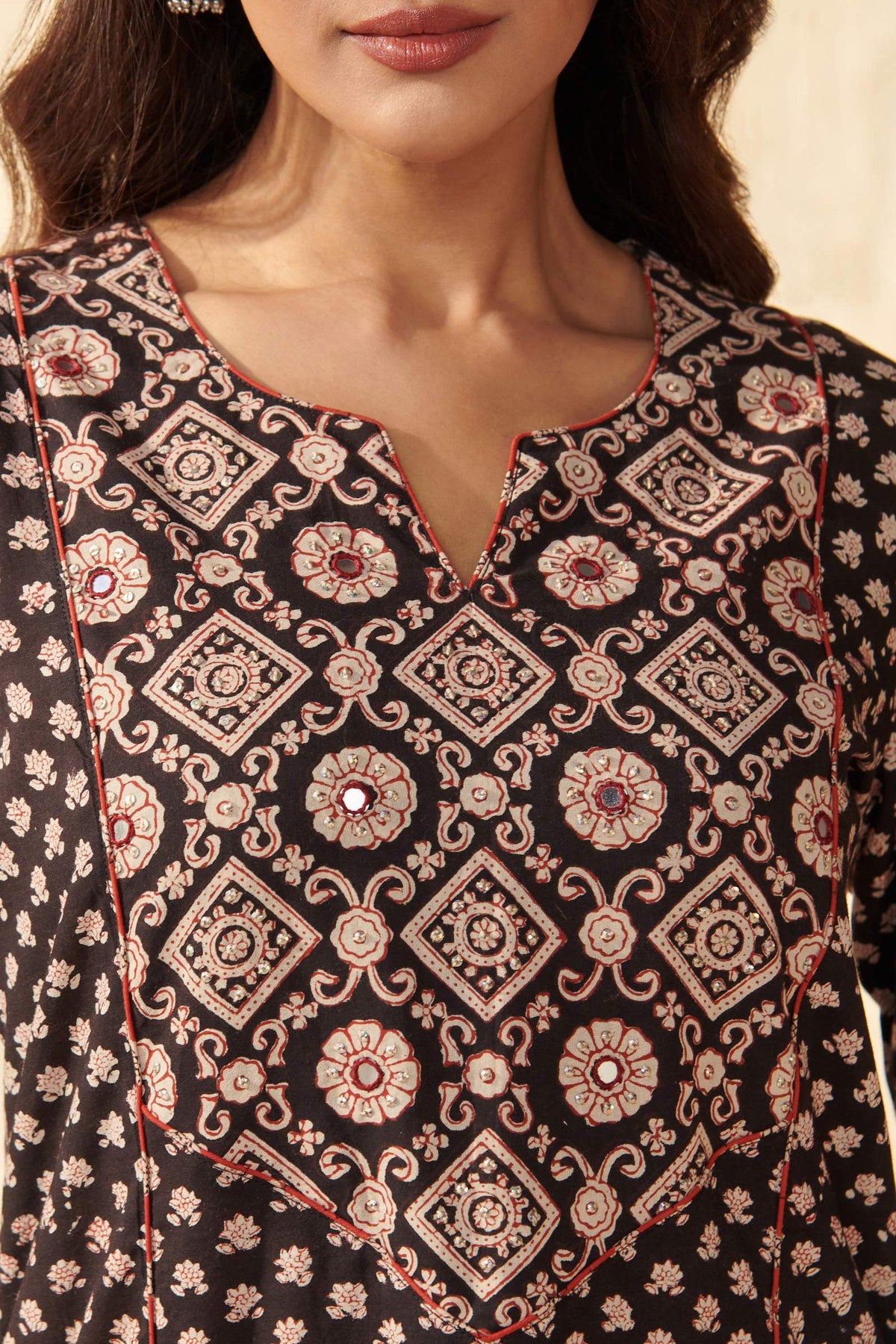
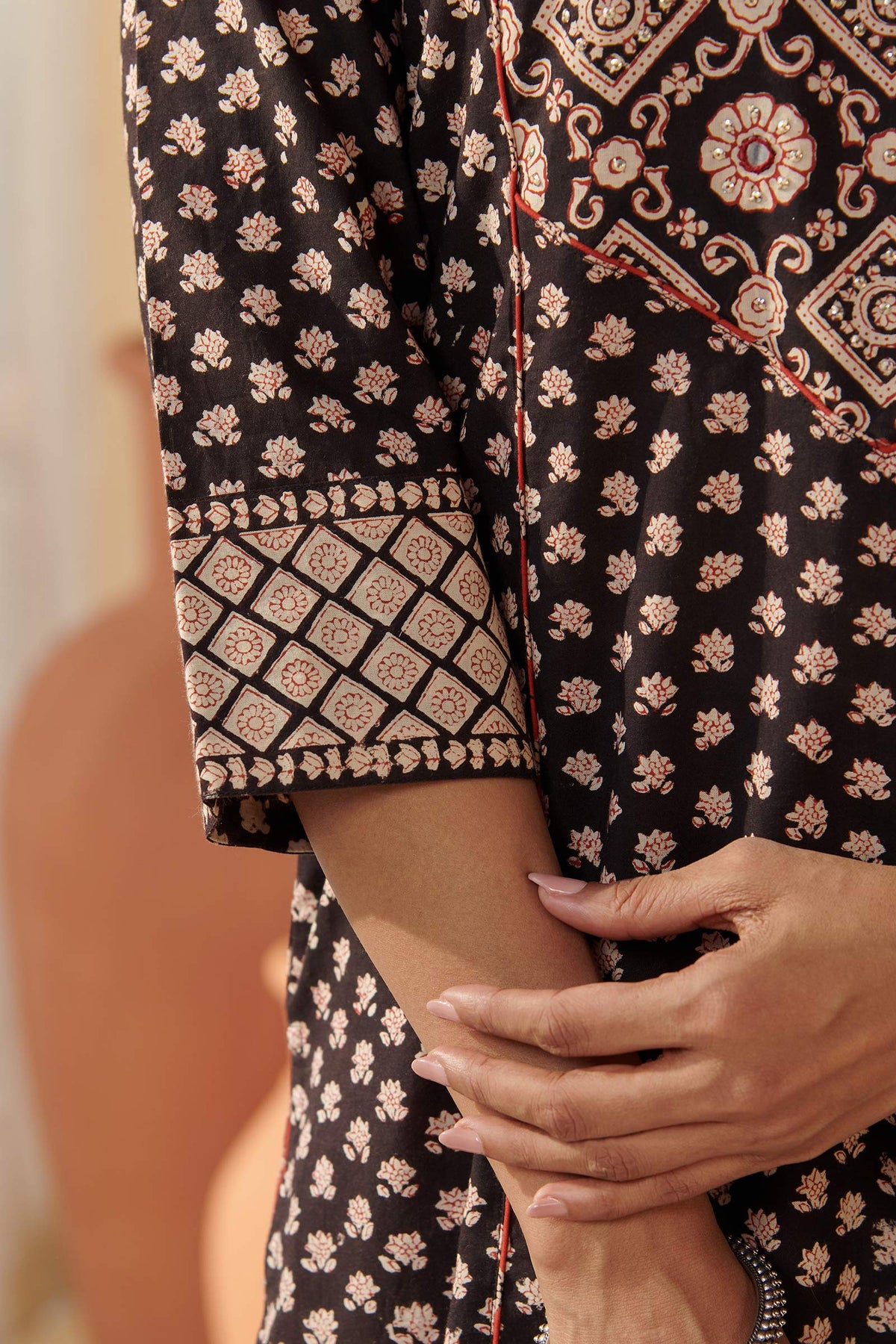
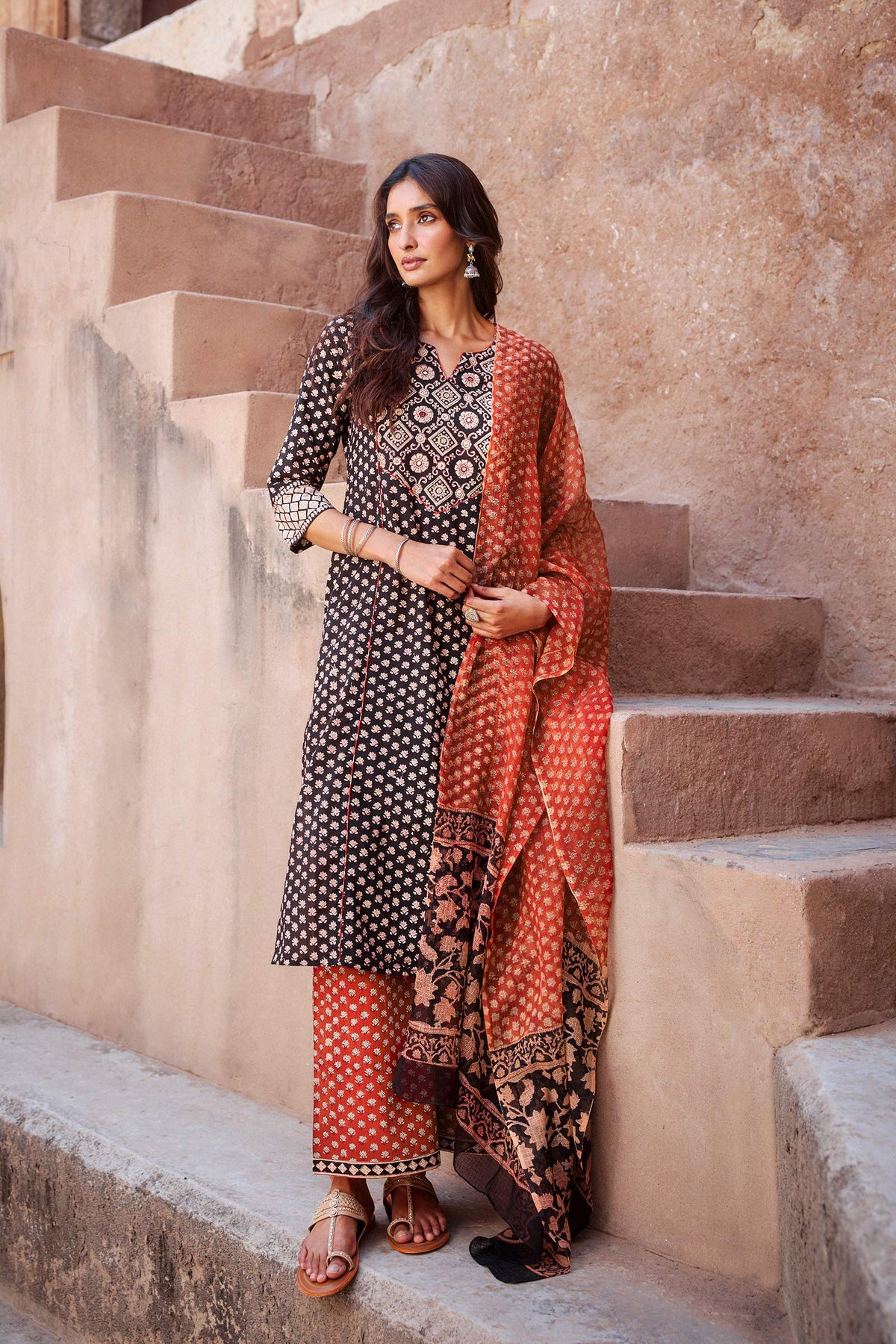

There is something about Ajrakh that feels familiar, even at first glance. The deep indigos, the bold reds, the quiet rhythm of its patterns, it does not try to impress. It settles in slowly. An Ajrakh print kurta often feels less like a purchase and more like something rediscovered, as if it has always belonged in the wardrobe.
For many of us, Ajrakh print is not just visual. It carries a certain stillness, a sense of continuity. You see it in everyday wear, in heirloom pieces folded away for years, in the effortless way it moves between generations. The beauty lies in its restraint. Nothing is excessive, yet everything feels complete.
The Cultural Roots of Ajrakh Print
Ajrakh is not a recent craft shaped by trends. It comes from a long, uninterrupted practice, carried forward by artisan families who have worked with the same methods for centuries. Each piece is built slowly, layer by layer, with time, patience, and an understanding of balance that cannot be rushed.

Origins in Sindh and Kutch
The story of Ajrakh begins in the regions of Sindh and Kutch, where the craft found its earliest expression. The communities of Khatri artisans developed a complex process of resist dyeing, using natural dyes like indigo and madder. Water, sun, and earth all play their role in this method.
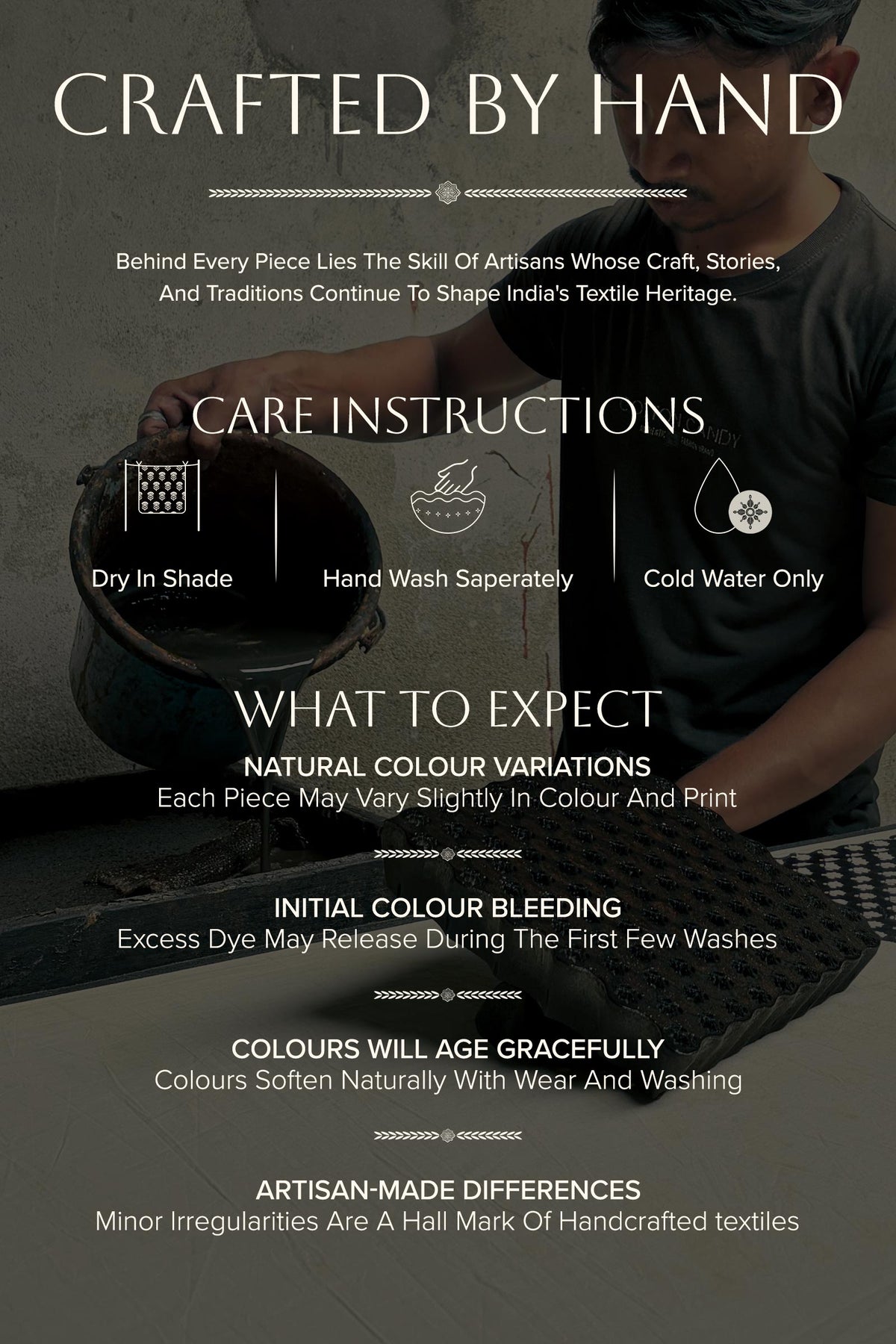
What makes it remarkable is not just the technique, but the discipline it demands. A single Ajrakh print kurta design can go through multiple stages of printing and dyeing, often taking weeks to complete. The result is fabric that carries depth, not just in colour, but in effort.
Ajrakh in Rajasthan’s Textile Heritage
Over time, Ajrakh found a natural home in Rajasthan as well. The craft adapted to the region’s aesthetic while retaining its core identity. In Rajasthan’s textile landscape, known for its richness and variety, Ajrakh holds a quieter space.
It complements rather than competes. An Ajrakh print kurti in this setting feels grounded, balanced against the more vibrant expressions of bandhani or leheriya. It offers a different kind of beauty, one that leans towards subtlety and repetition rather than brightness.
Symbolism Behind Ajrakh Patterns
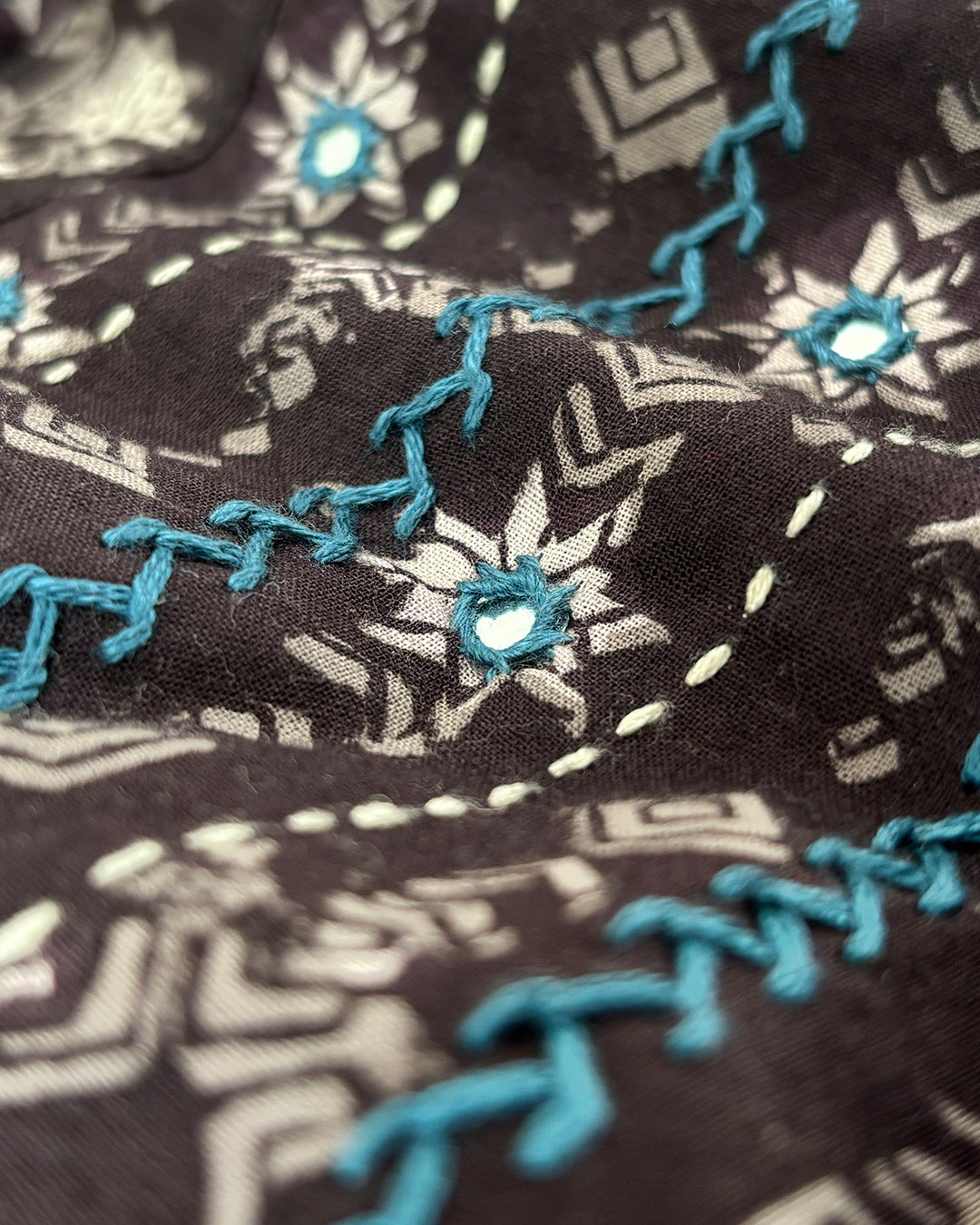
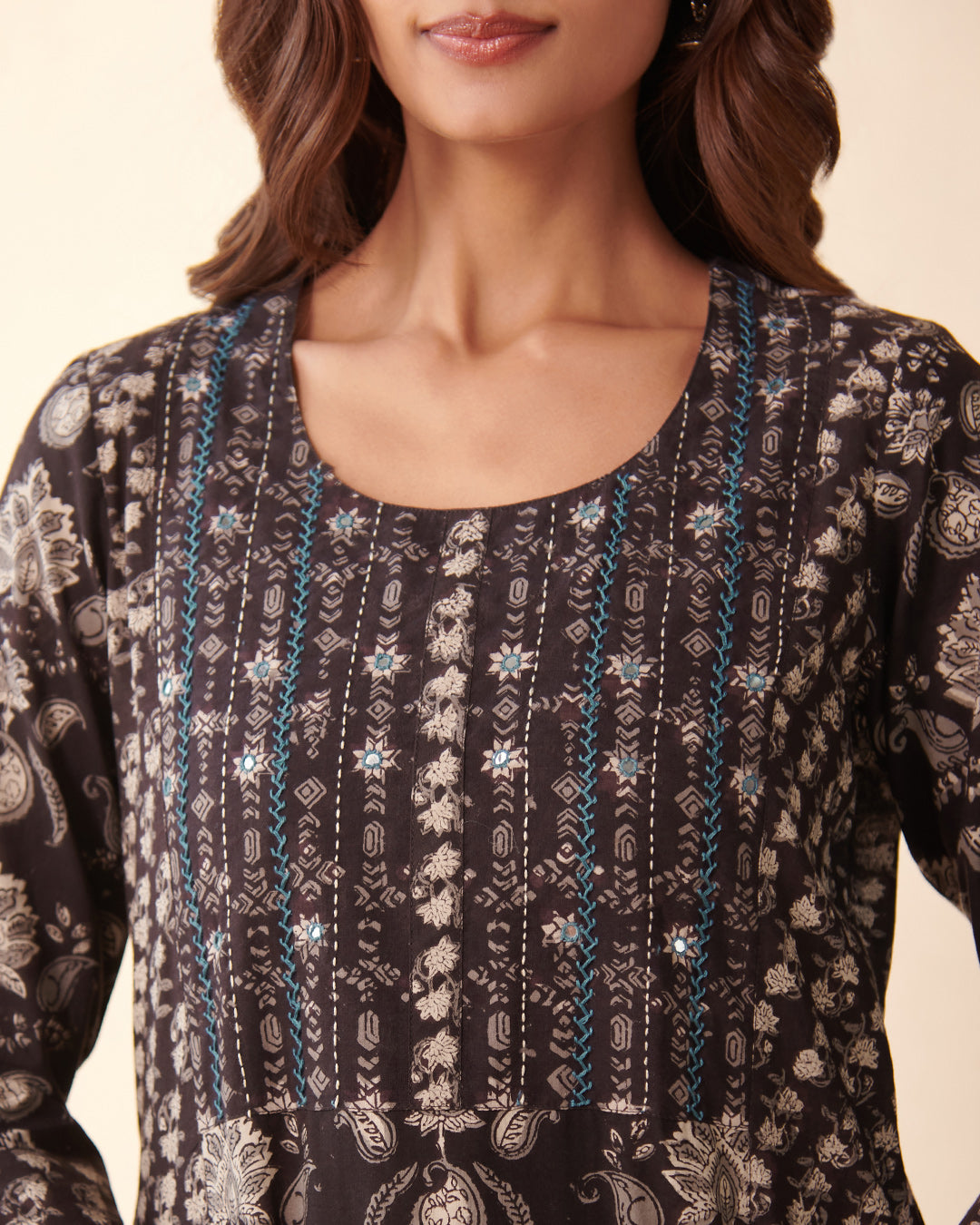
Look closely at Ajrakh, and you begin to notice its language. The patterns are often geometric, built on symmetry and repetition. Circles, stars, and grids appear not as decoration, but as structure.
These motifs are believed to reflect elements of nature and the cosmos. There is a sense of order in them, a quiet reflection of balance in the world around us. This is perhaps why Ajrakh print continues to feel relevant. It does not follow changing trends. It follows something eternal.
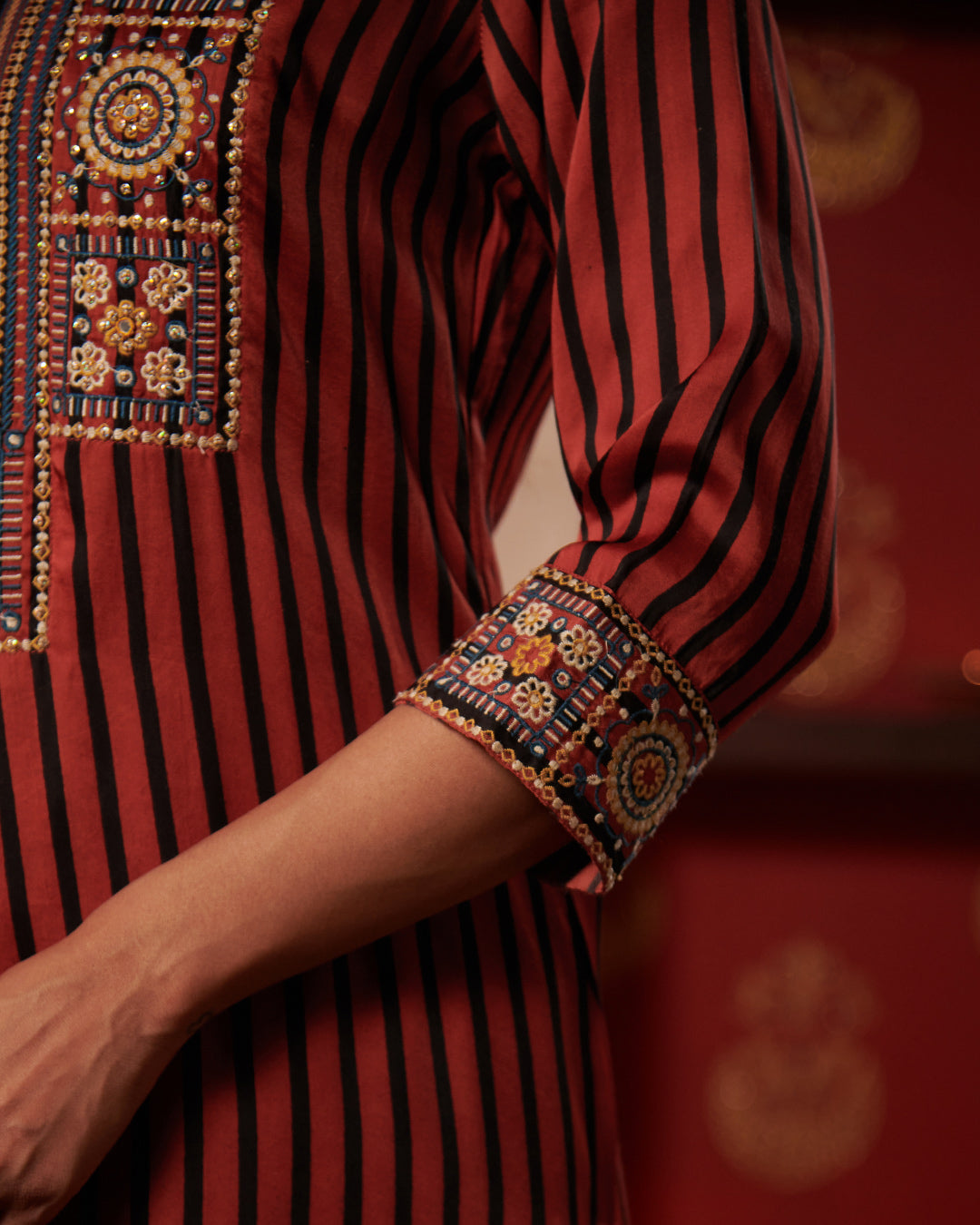
In an Ajrakh print kurta, these patterns come together gently. They do not demand attention, but they hold it. Over time, that quiet presence becomes its strength.
What Makes Ajrakh Print Unique

There is a certain stillness in Ajrakh. At first glance, it may seem like a pattern repeated with discipline. But the longer you look, the more you notice its quiet complexity.
Ajrakh print is not just about surface beauty. It is a process shaped by time, patience, and an almost meditative precision. What sets it apart is not one single element, but the way many thoughtful details come together.
Double-Sided Printing
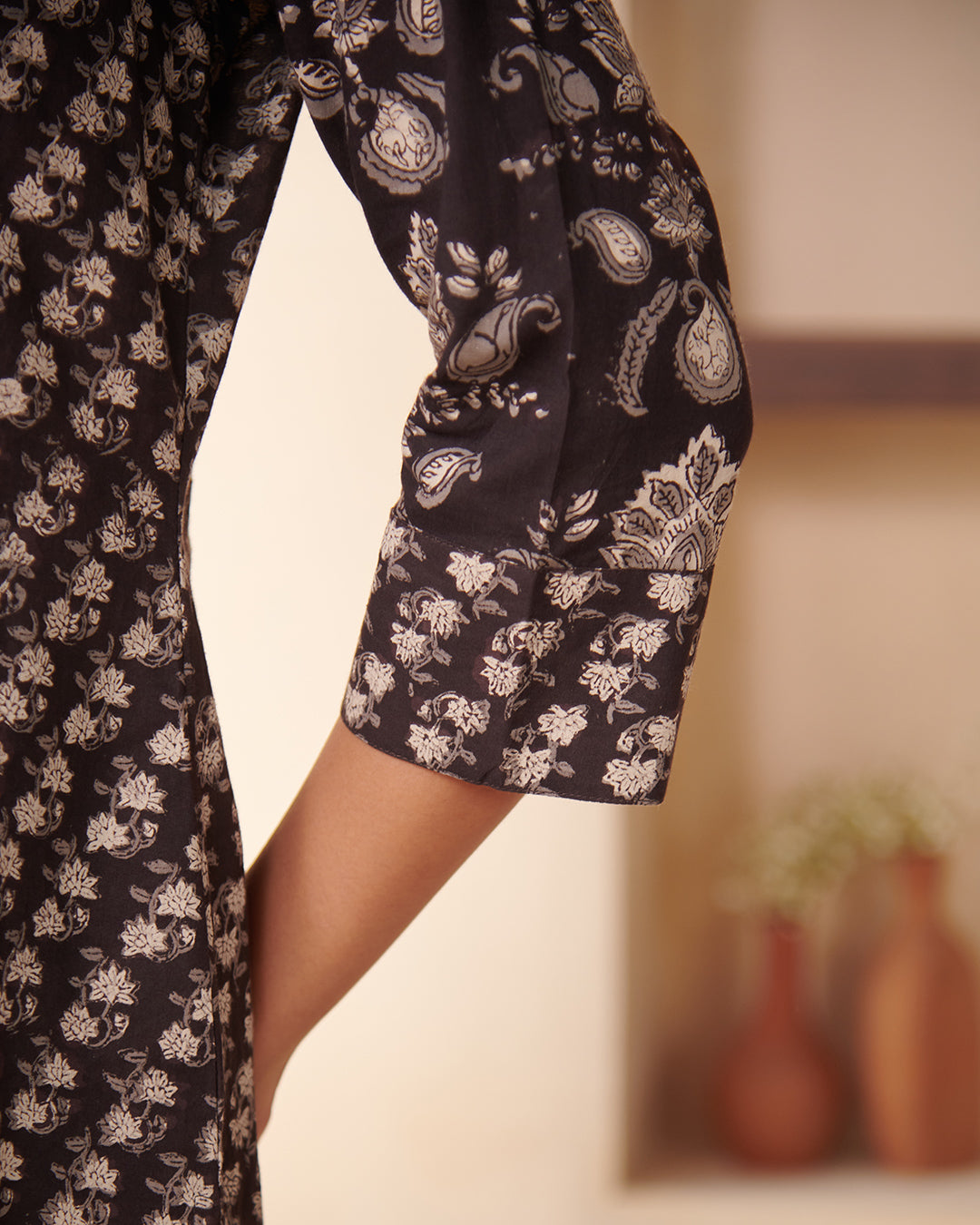
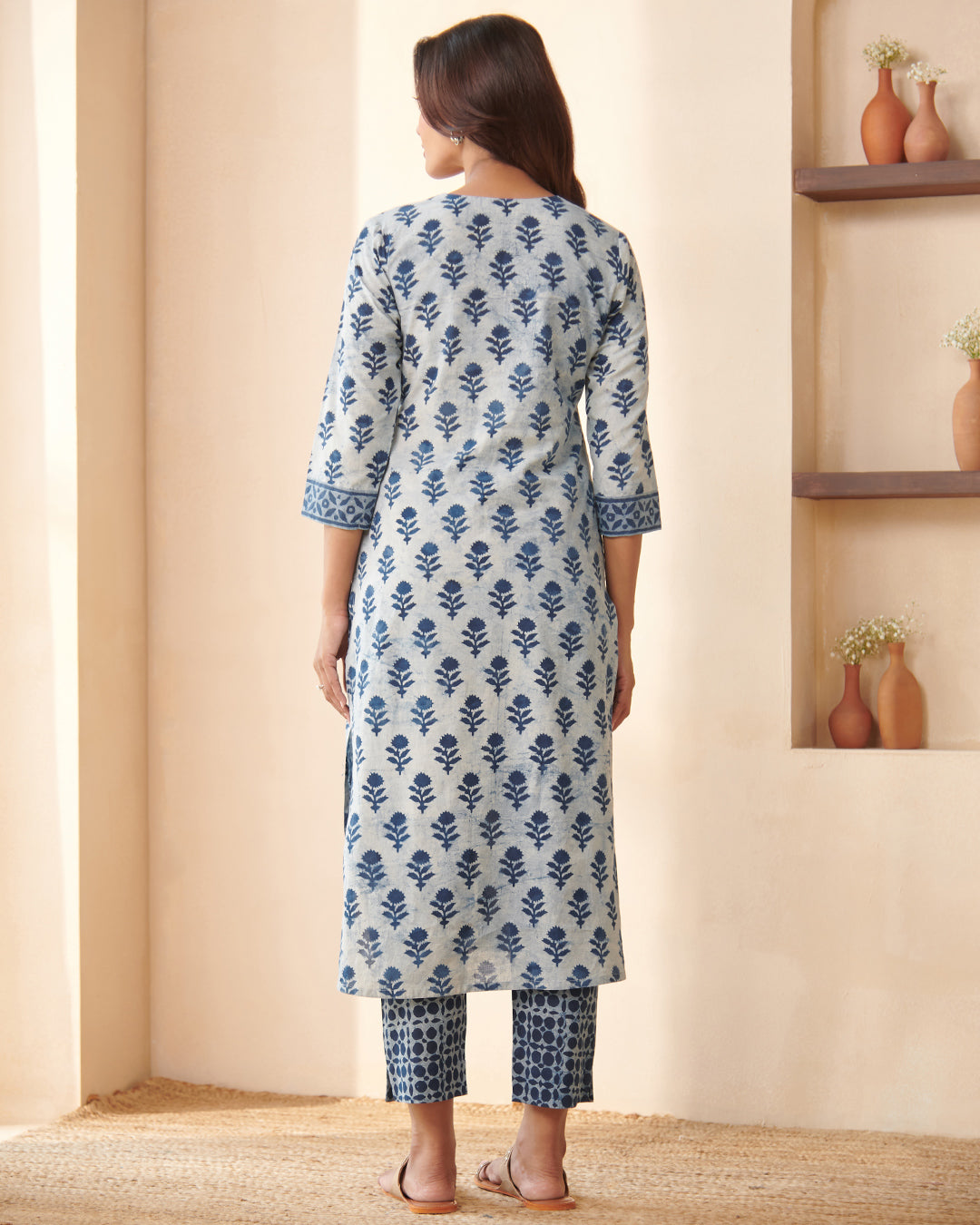
One of the most remarkable aspects of Ajrakh print is that it appears almost identical on both sides of the fabric. This is not incidental. It is the result of careful hand block printing, where each layer of dye is applied with exact alignment.
In an Ajrakh print kurta, this means the fabric holds depth rather than just colour on the surface. Even the reverse side carries the same story, slightly softer, but just as intentional. It reflects a kind of craftsmanship where nothing is treated as secondary, not even what is hidden.
Perfect Symmetry and Geometry
Ajrakh is deeply rooted in geometry. You will often find repeating stars, floral medallions, and fine grid-like structures that seem to fall into place effortlessly.
But this balance is achieved through a rigorous process. Each block must meet the other without disruption. A slight shift would break the rhythm. When done well, as seen in a thoughtfully made Ajrakh print kurti, the symmetry feels calming, almost like a visual pause.
There is a reason these patterns have endured. They mirror a sense of order that feels both cultural and instinctive.
Sustainable and Eco-Friendly Craft
Ajrakh printing has always worked in harmony with nature. Traditionally, artisans use natural dyes derived from indigo, madder, and other plant-based sources. The fabric is washed multiple times, often using flowing water, allowing the colours to settle gradually.
This slow process cannot be rushed. It respects both the material and the environment. When you wear an Ajrakh print kurta design, you are wearing something that has been created with restraint and care, not excess.
In a time where fashion often moves too quickly, Ajrakh remains grounded. It reminds us that beauty can take time, and that time is part of its value.
Ajrakh Print in Modern Fashion

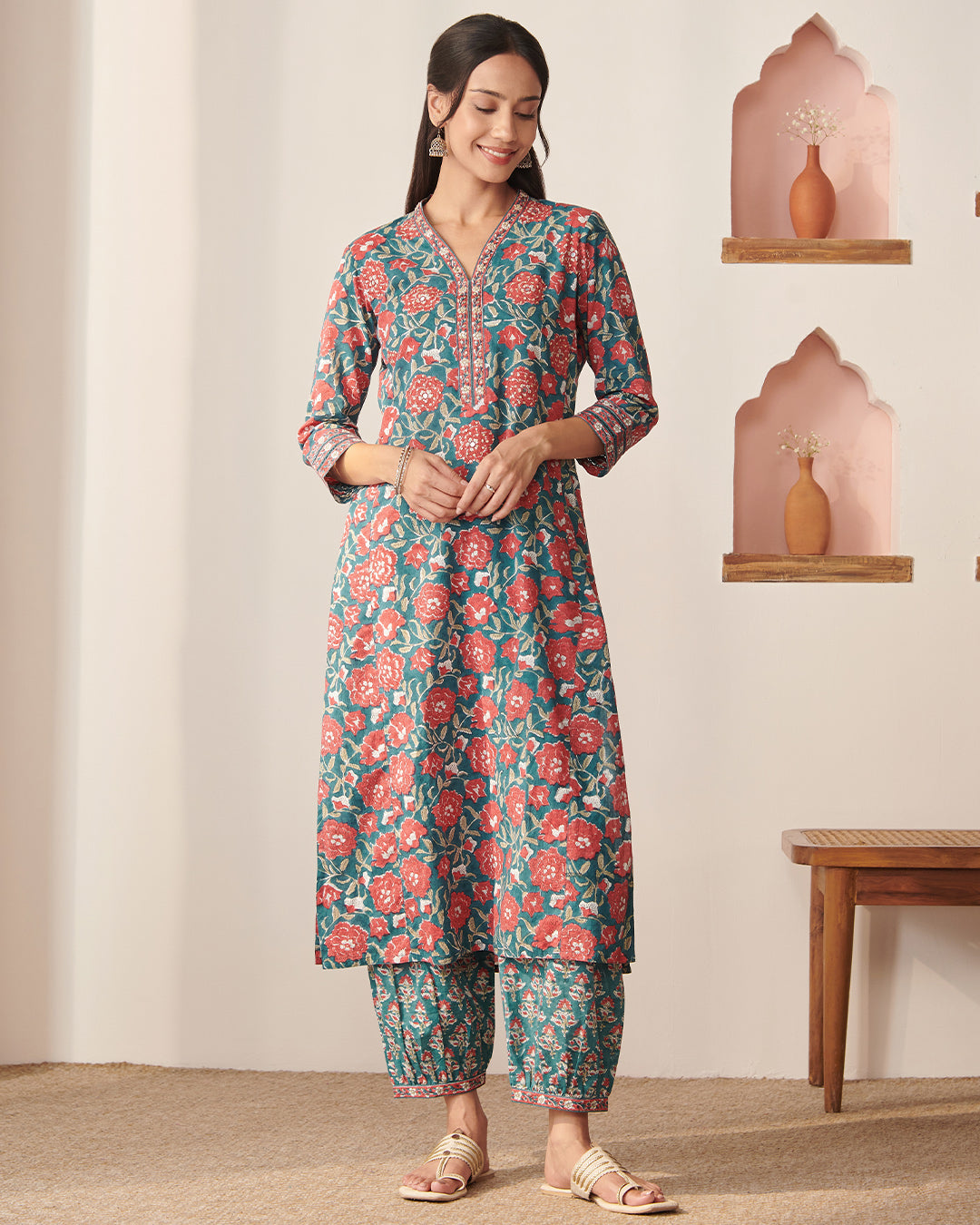
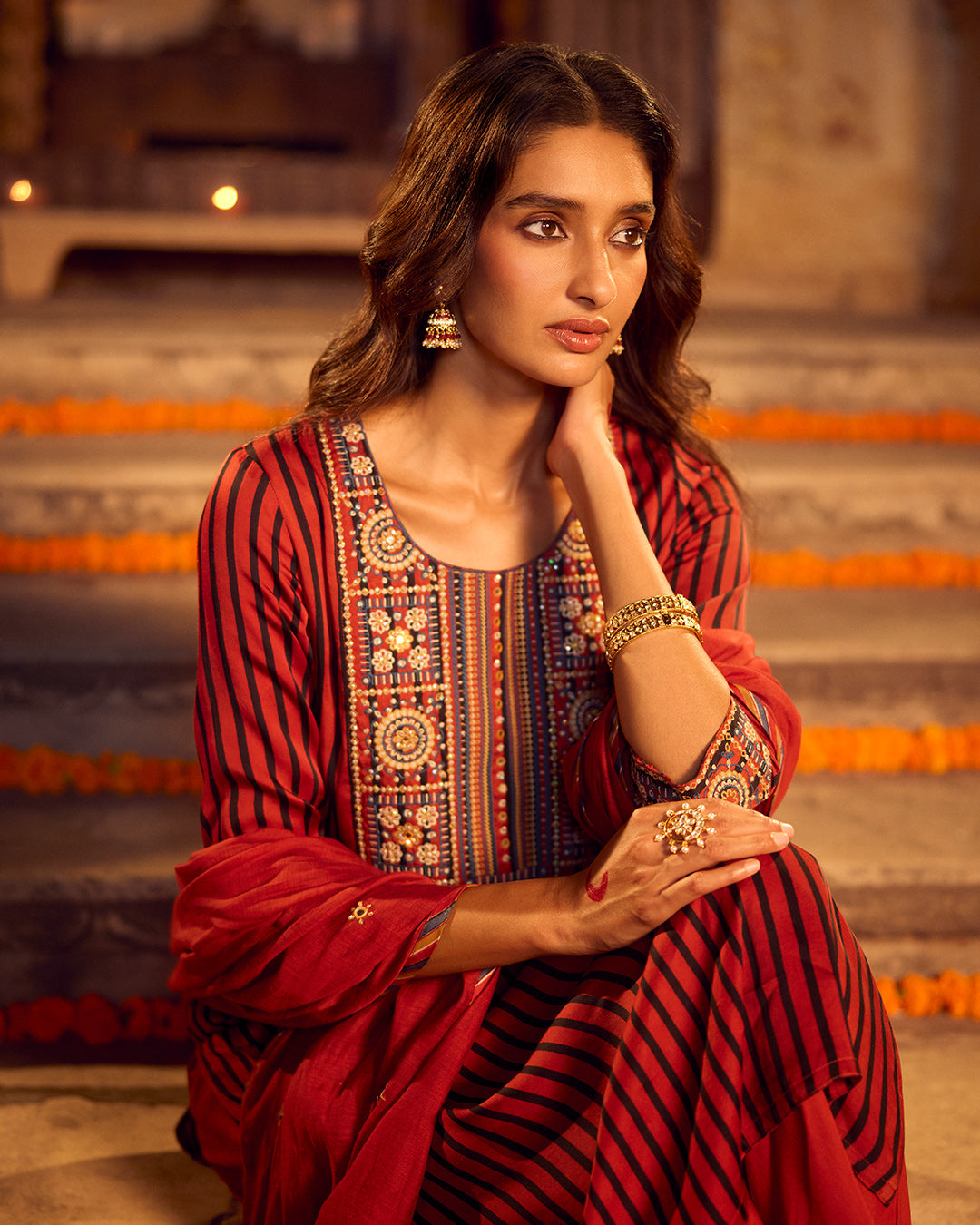
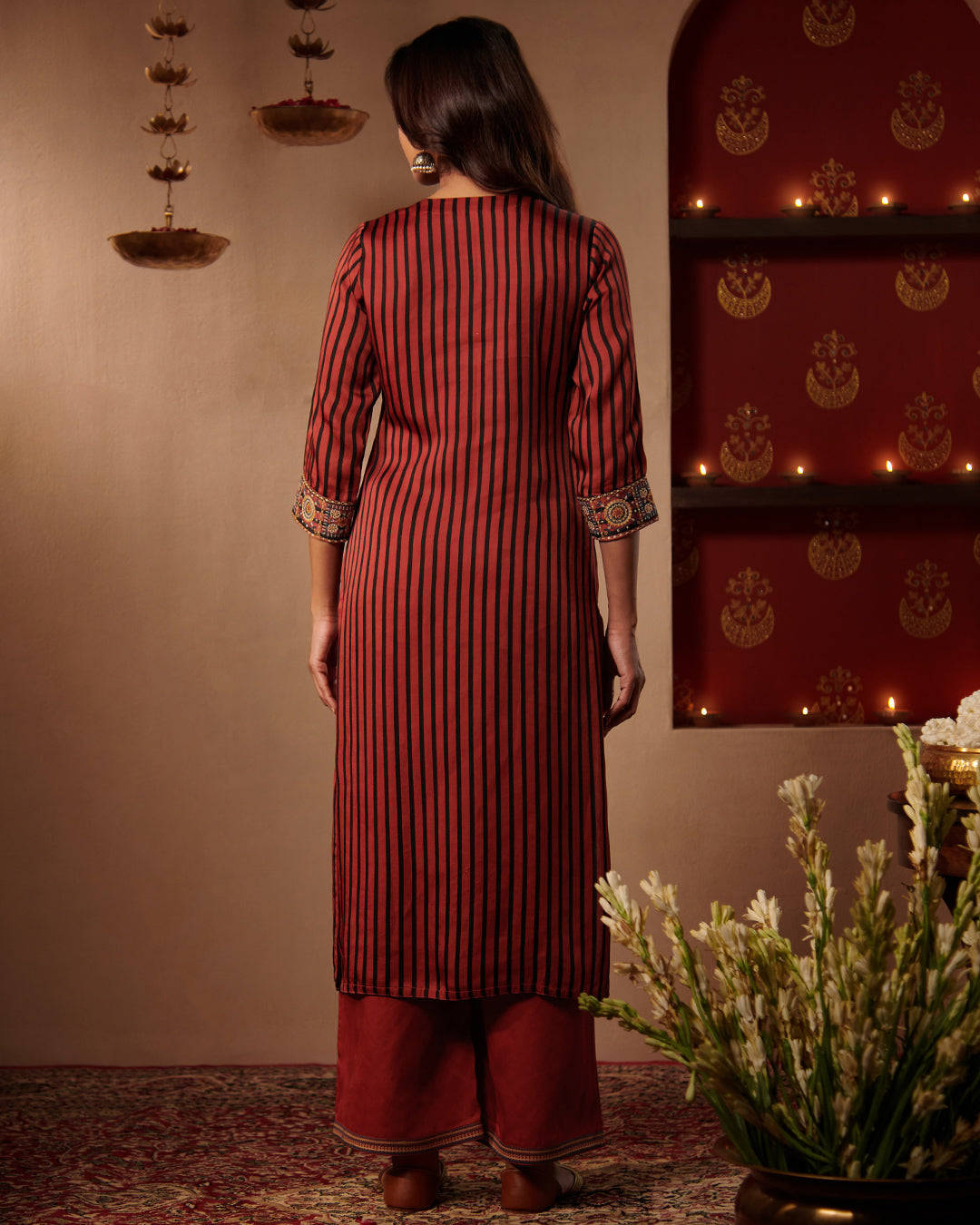
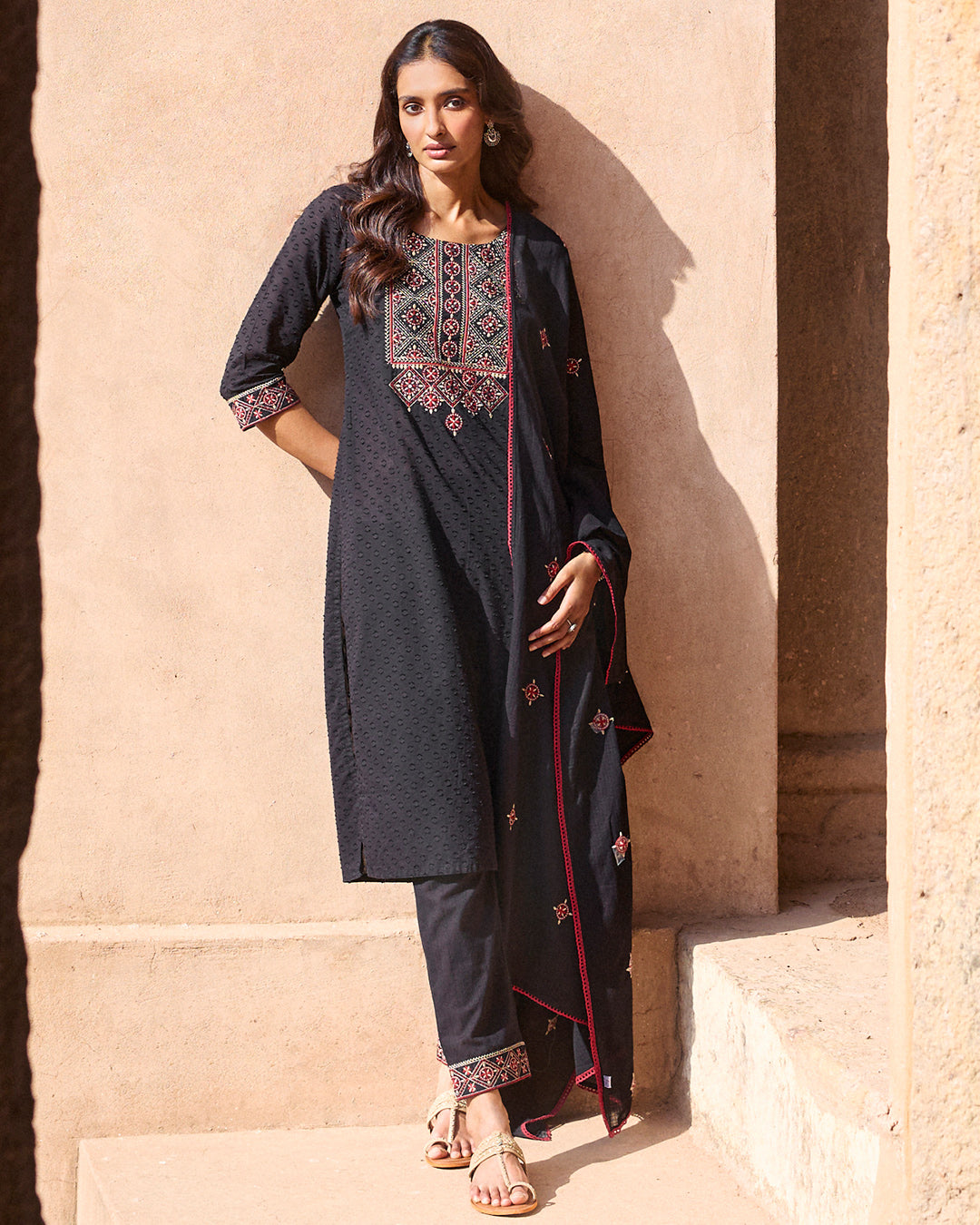
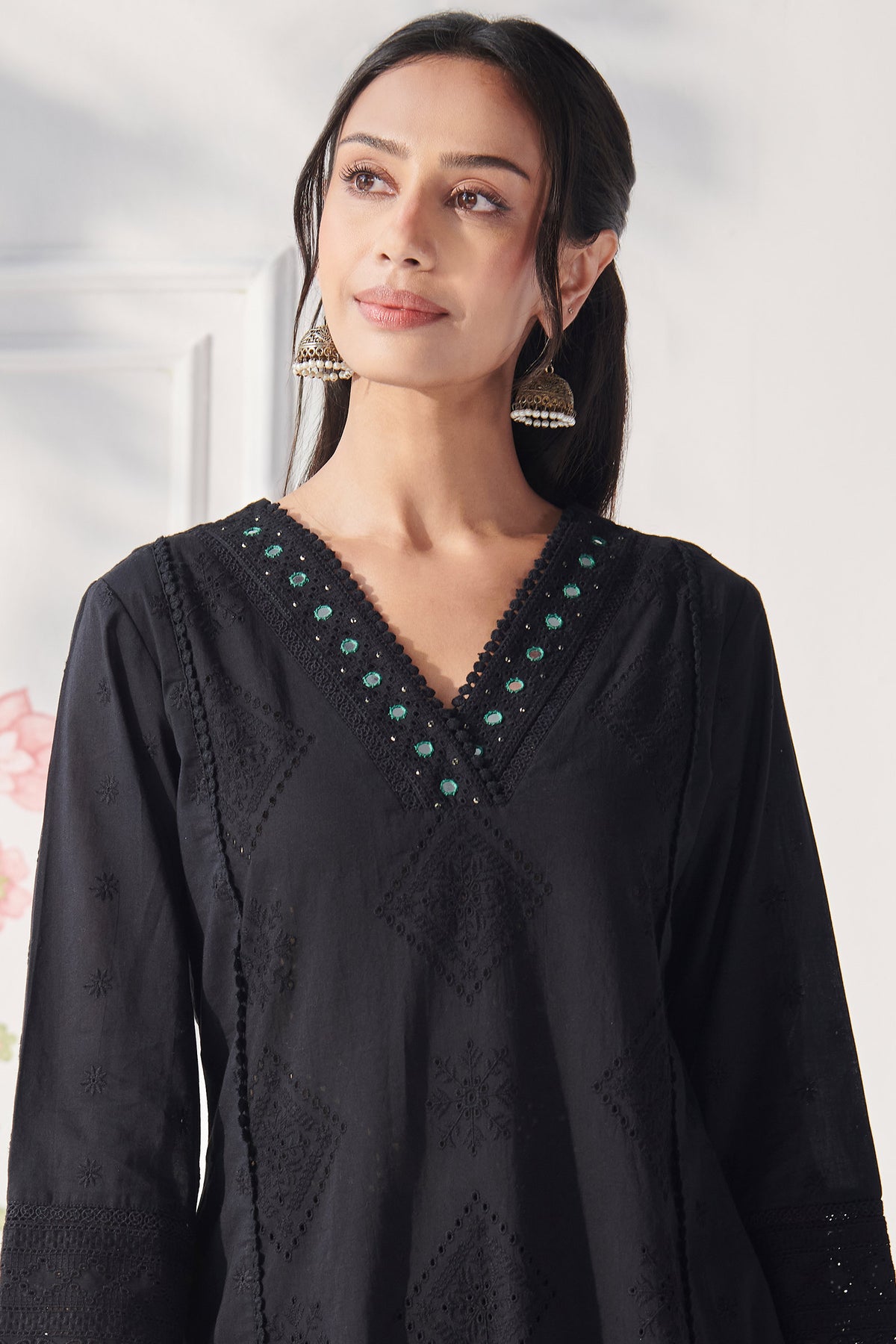
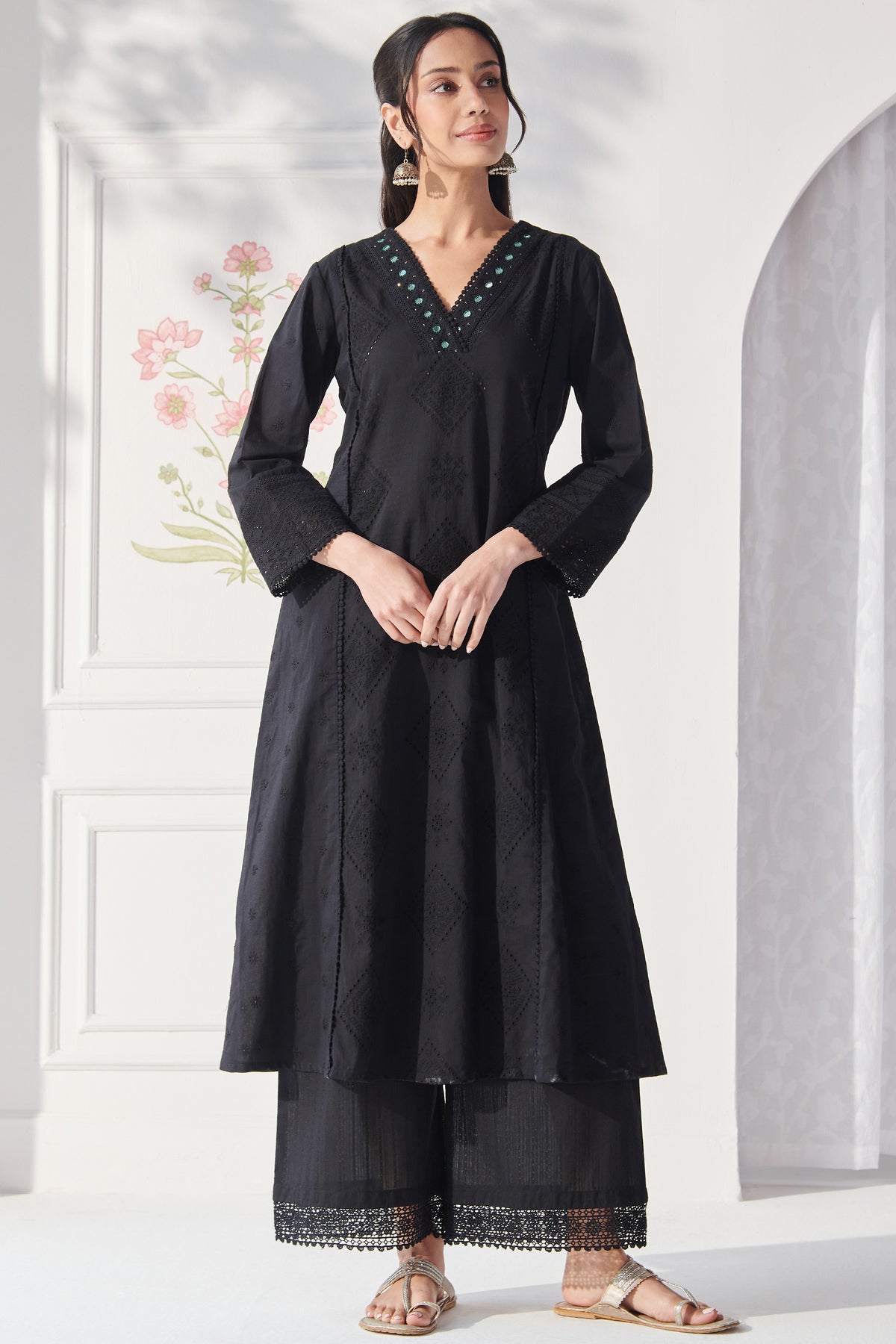
Ajrakh has never felt out of place, even as wardrobes have changed. Today, the Ajrakh print kurta moves easily between settings. It sits just as comfortably in a work meeting as it does at a small evening gathering. The patterns remain intricate, but the styling has softened. A straight Ajrakh print kurti with minimal detailing can feel quiet and composed for everyday wear. The same print, when paired with a richer fabric or deeper tones, carries itself into festive spaces without effort.
What has changed is not the craft, but how we wear it. There is less layering, more ease. The focus has shifted to letting the print breathe. Ajrakh print kurta designs today are often cleaner, allowing the geometry and natural dyes to speak without interruption.
In many ways, modern fashion has made space for traditions like Ajrakh to return to their original purpose, to be worn, lived in, and not just preserved.
Why Ajrakh Print Kurtas Are a Timeless Choice
Some textiles belong to a particular moment. Ajrakh does not. An Ajrakh print kurta holds its place across seasons and years because it is built on balance. The colours, often indigo, madder, and muted earth tones, do not fade with trends. The patterns are structured yet organic, detailed but never overwhelming.
There is also a certain familiarity to Ajrakh. It feels rooted, almost instinctive. You do not have to think too much while wearing it. It adapts to your day, whether it is slow or celebratory.
For many, an Ajrakh print kurti becomes a repeat choice. It is the piece you reach for when you want to feel put together without effort. Over time, the fabric softens, the print settles, and the garment begins to feel like it has always been yours.
How to Identify Authentic Ajrakh Print
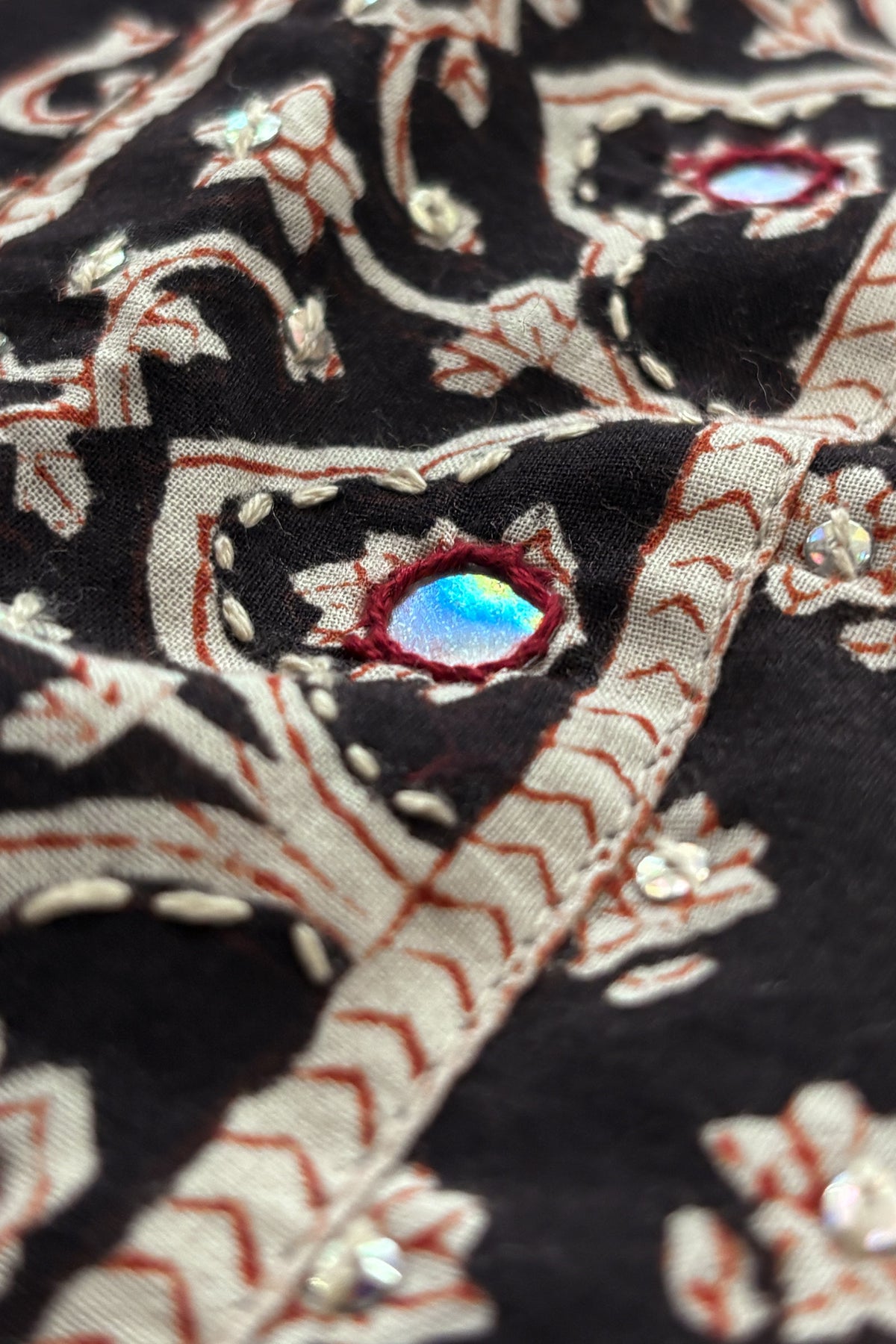
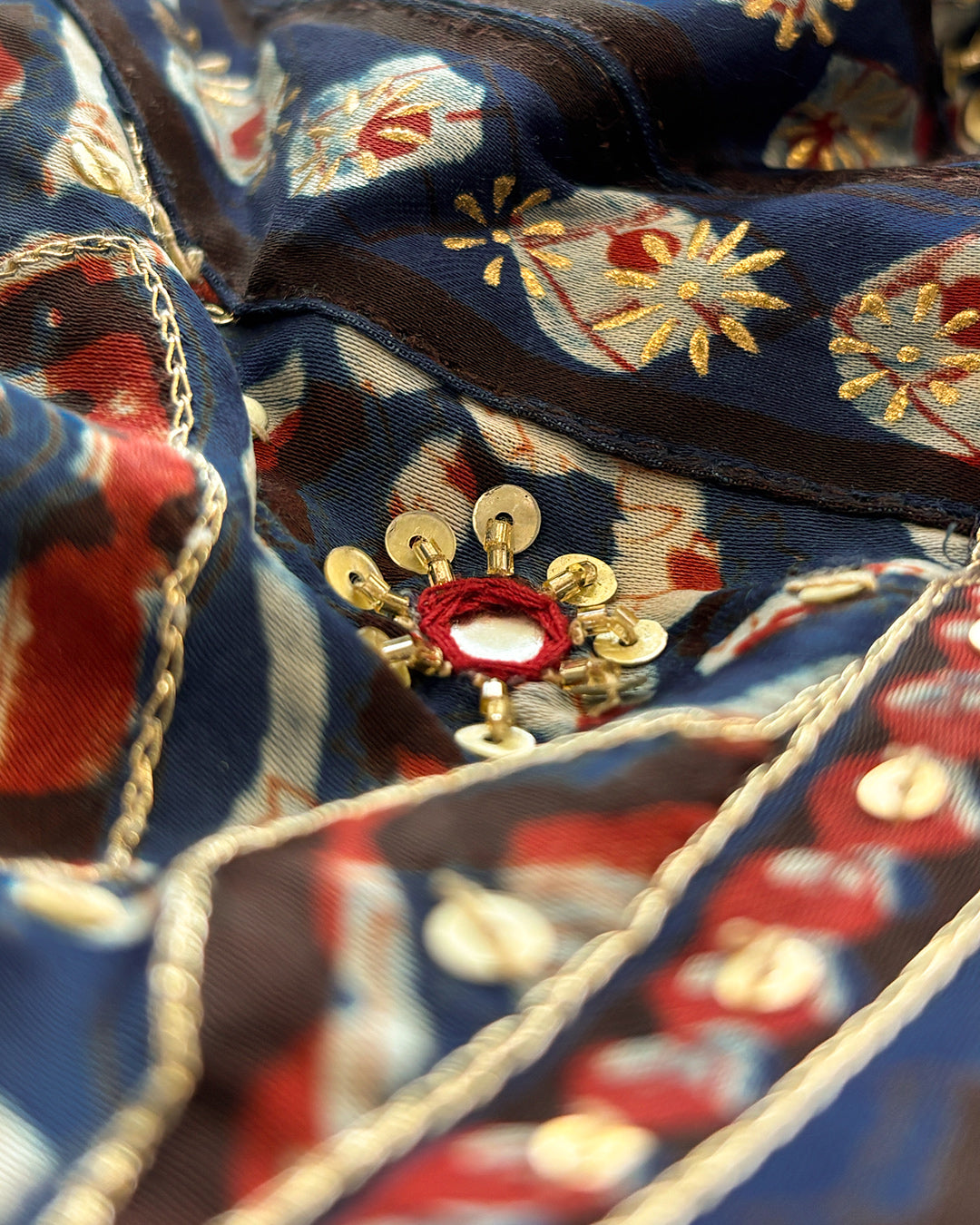
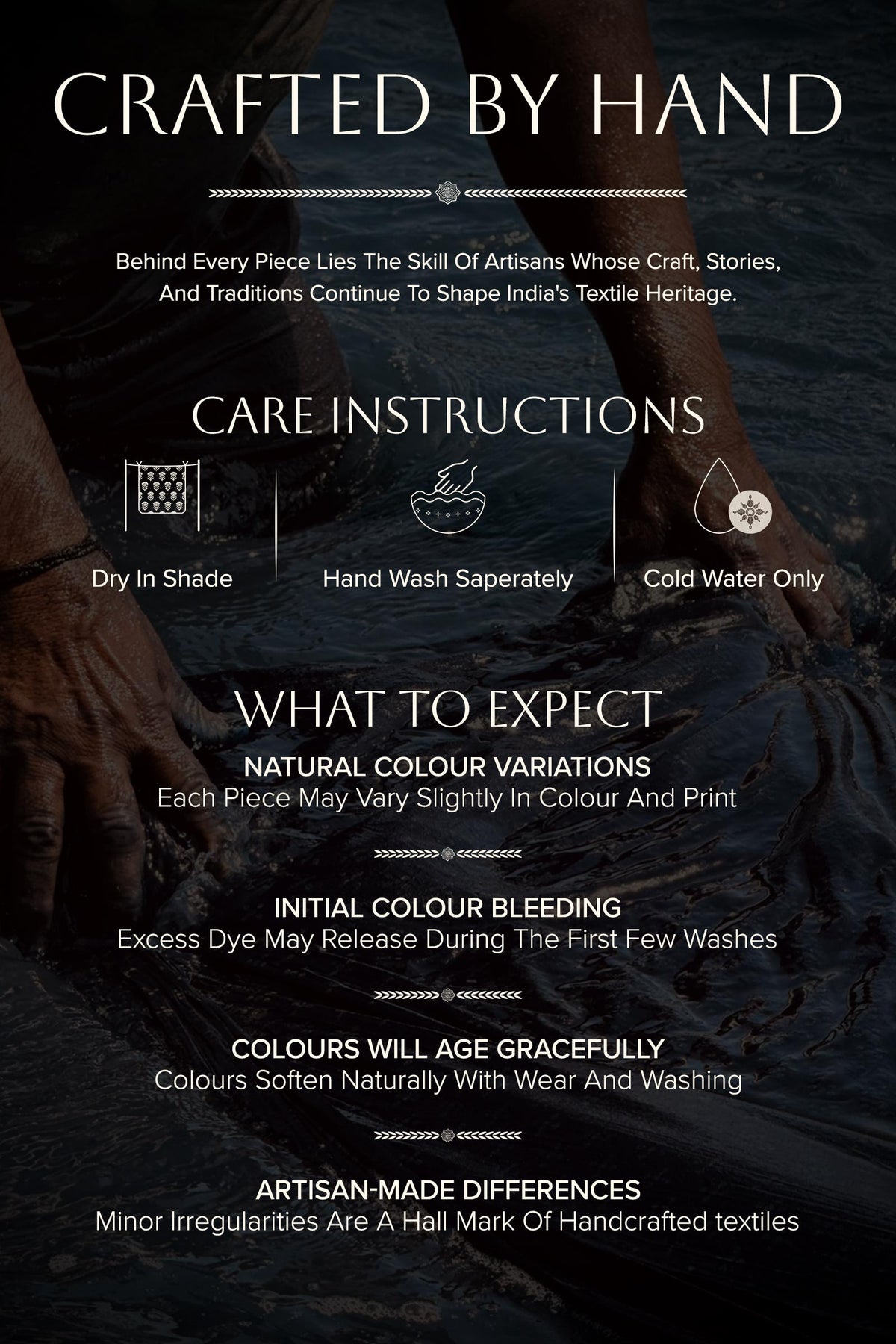
Authentic Ajrakh carries small signs of the hand that made it. The print is usually visible on both sides of the fabric, not as a faded reverse, but with equal clarity. This comes from the resist dyeing process, where the fabric is worked on layer by layer. The colours feel deep, not surface-level, because they are absorbed through natural dyes.
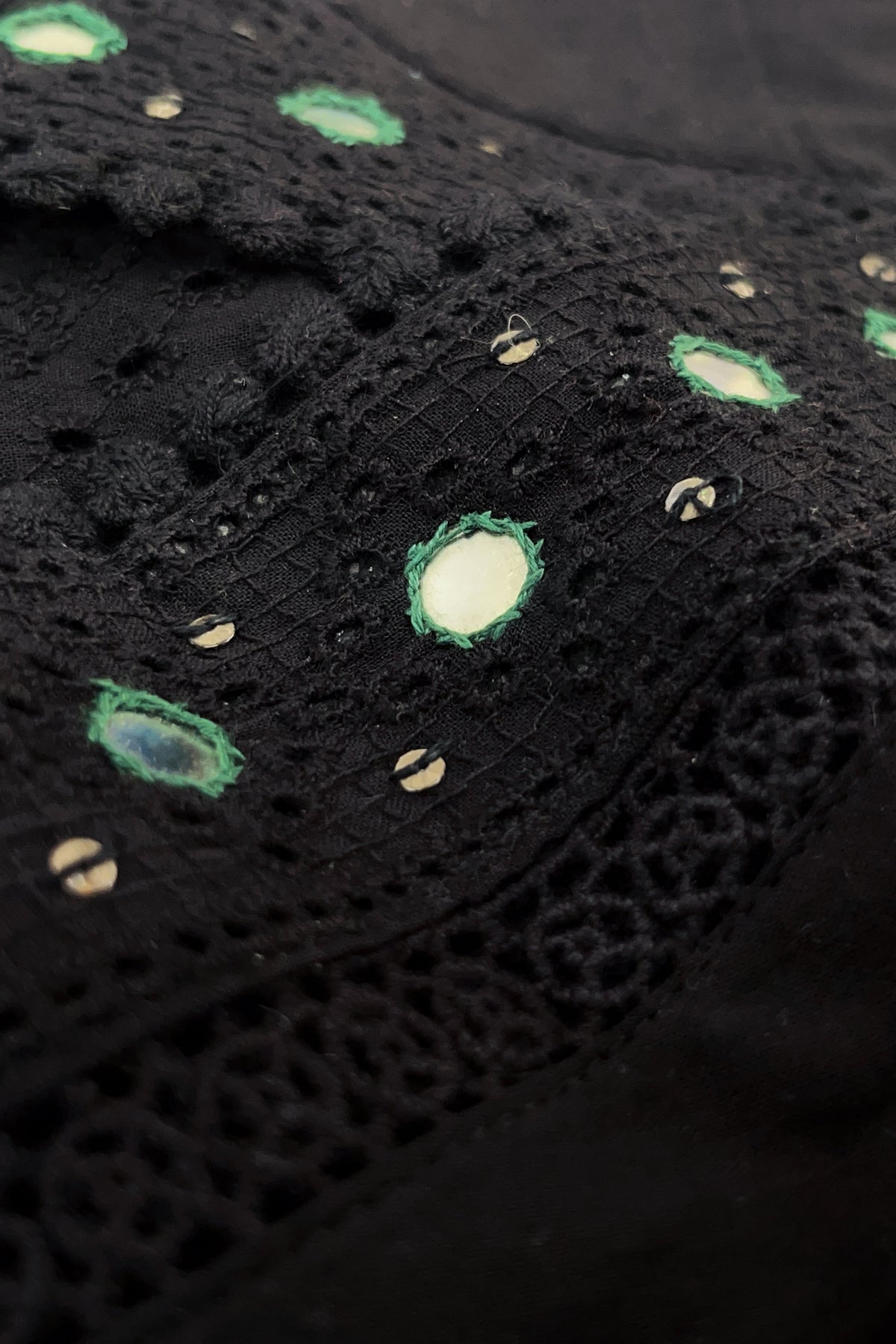
You may notice slight irregularities in the pattern. A line that shifts ever so slightly, a motif that is not perfectly identical. These are not flaws. They are reminders of the manual process behind each piece.
The fabric itself feels breathable and lived-in, never stiff or overly polished. When you hold an authentic Ajrakh print kurta, there is a certain weight of craft in it, quiet but unmistakable.
Where to Buy Ajrakh Print Kurtas Online
Finding Ajrakh print kurtas online often comes down to trust, in the craft, and in how it is presented.
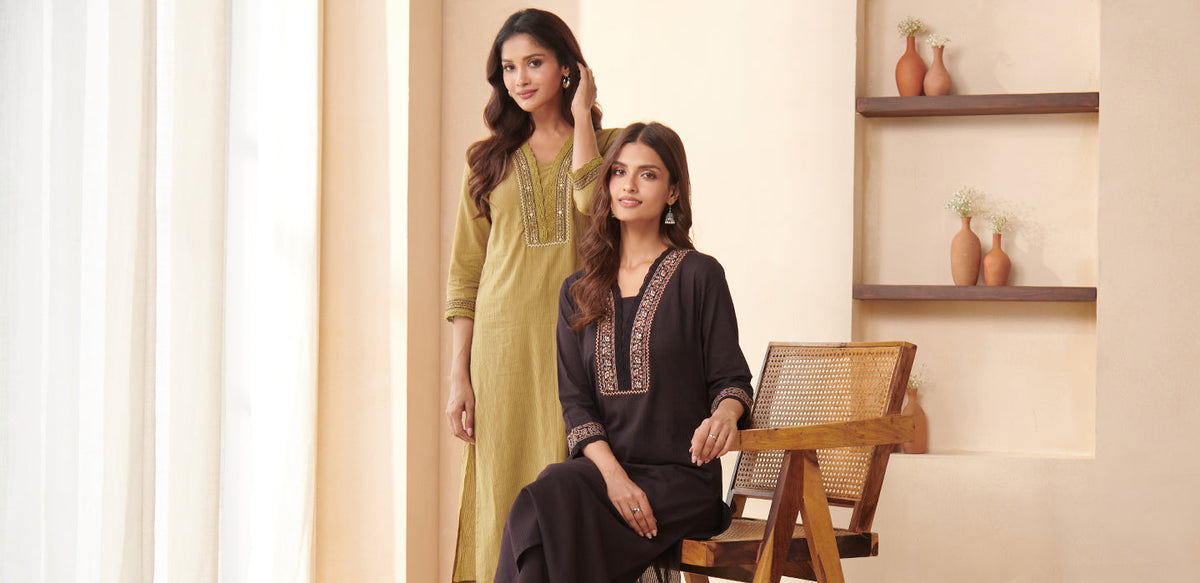
At Farida Gupta, Ajrakh is approached with care and restraint. The focus remains on preserving the integrity of the print while adapting it gently for contemporary wardrobes. You will find Ajrakh print kurta designs that are not overworked, allowing the natural rhythm of the motifs to remain intact.
The fabrics are chosen for comfort, the silhouettes for ease. Whether it is a daily wear Ajrakh print kurti or something more occasion-ready, each piece feels considered, never excessive.
It is less about offering variety, and more about offering the right kind of presence.
Final Thoughts
Ajrakh is not just a print you wear once and set aside. It stays. In your wardrobe, in your memory, in the quiet ways it becomes part of your routine. There is a certain reassurance in returning to it, knowing it will always feel relevant, always feel like itself.
In a time where fashion often moves quickly, Ajrakh asks you to slow down. To notice the detail, the dye, the rhythm of the pattern.
Because some prints are more than patterns. They are stories waiting to be worn.

