









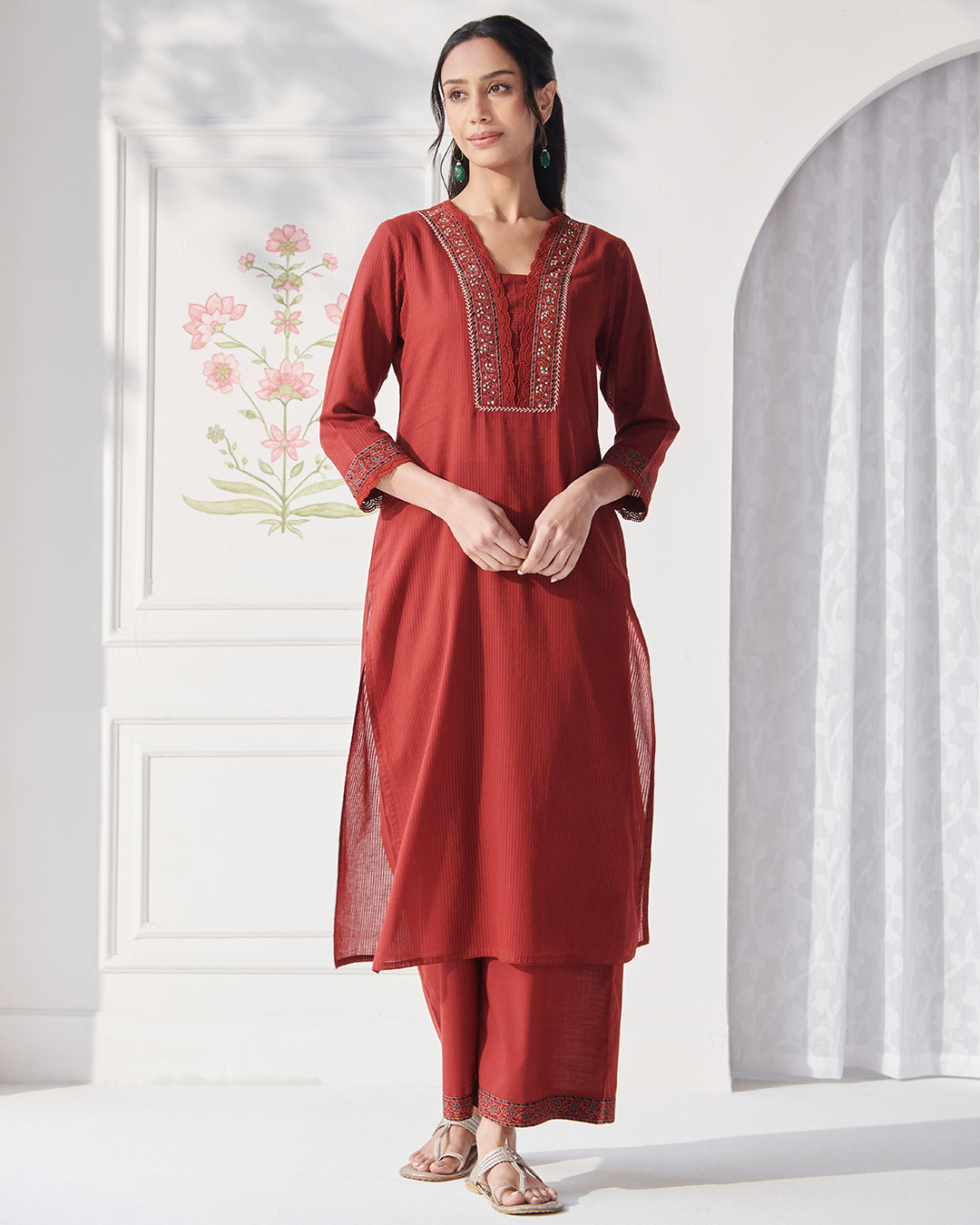
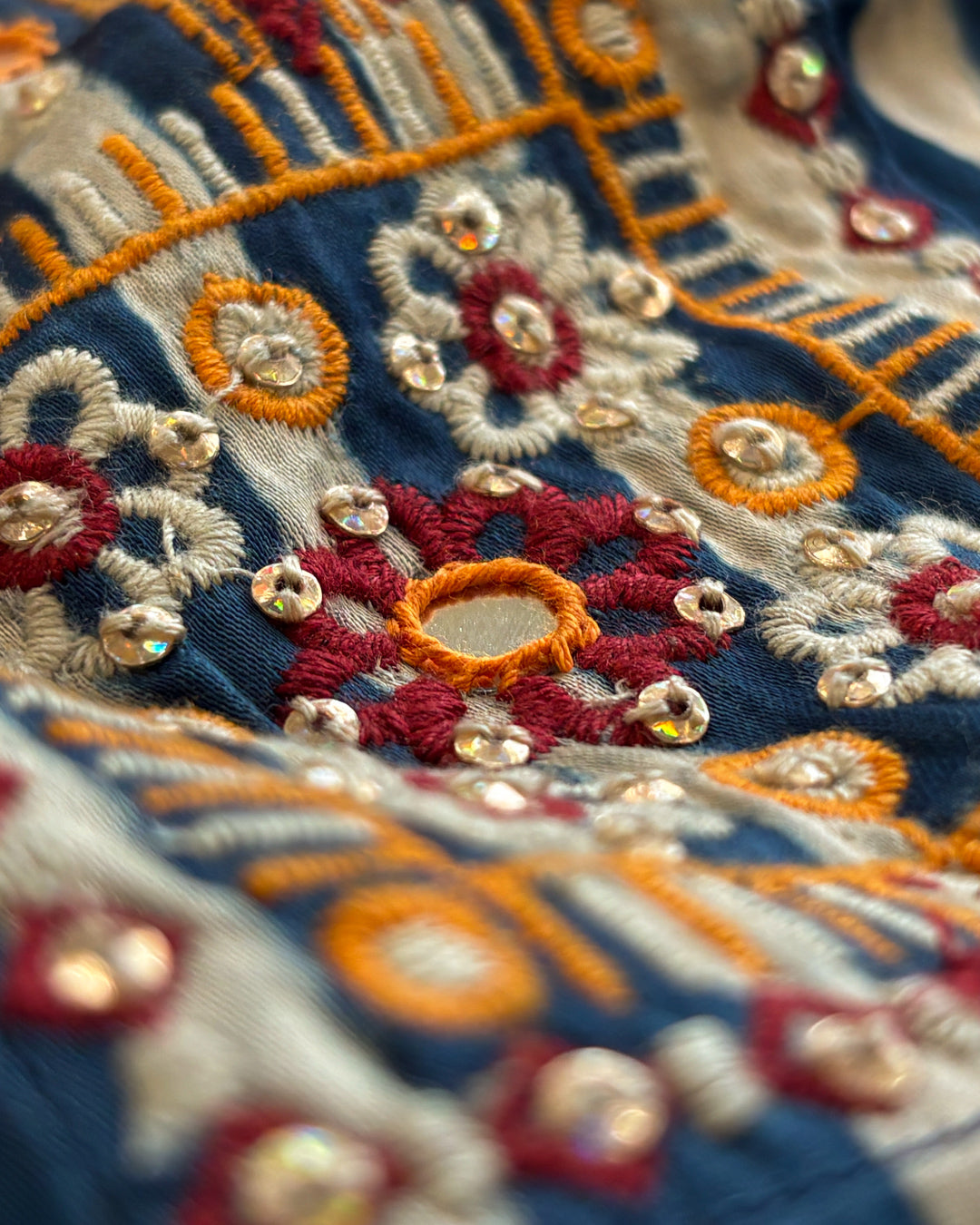
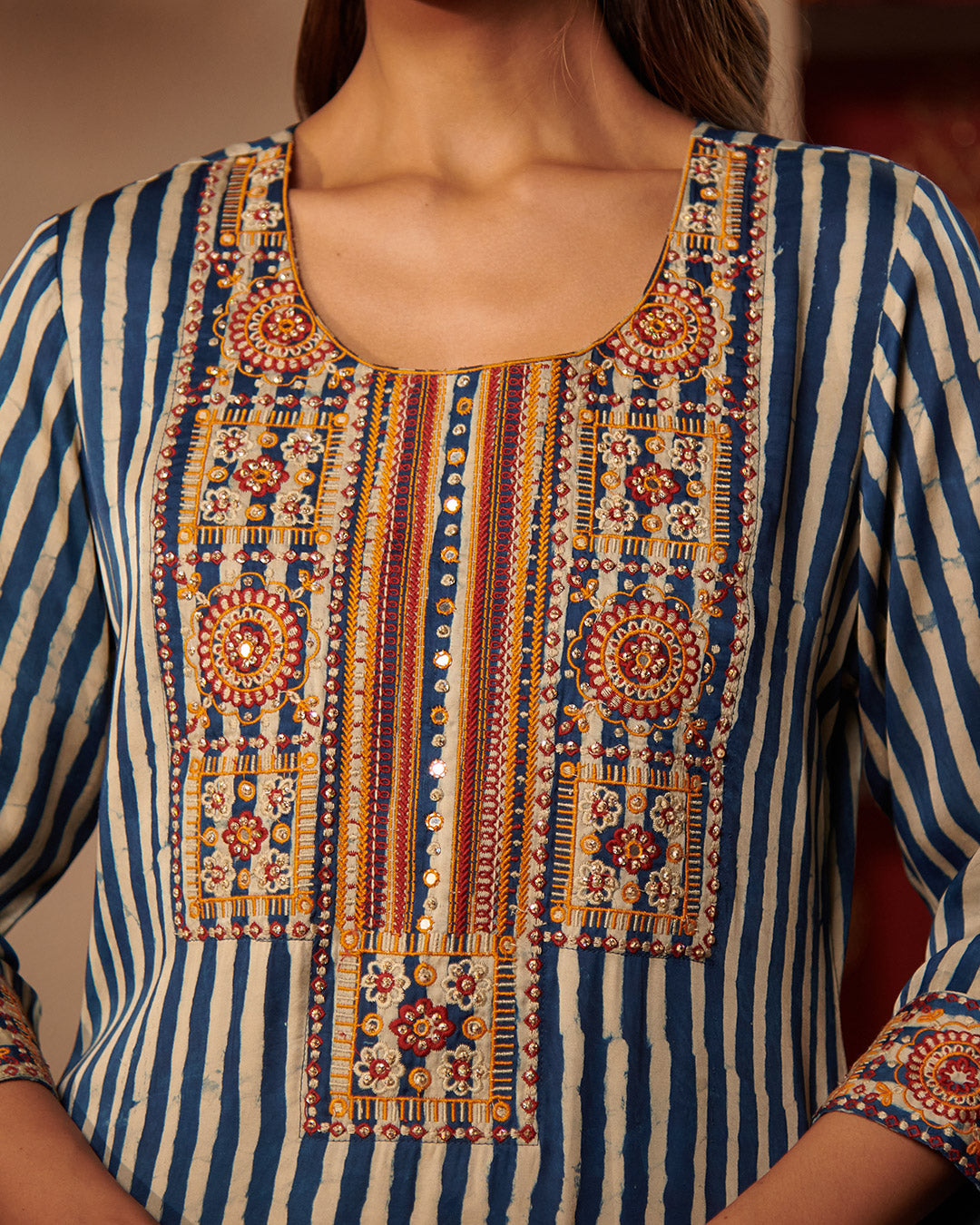
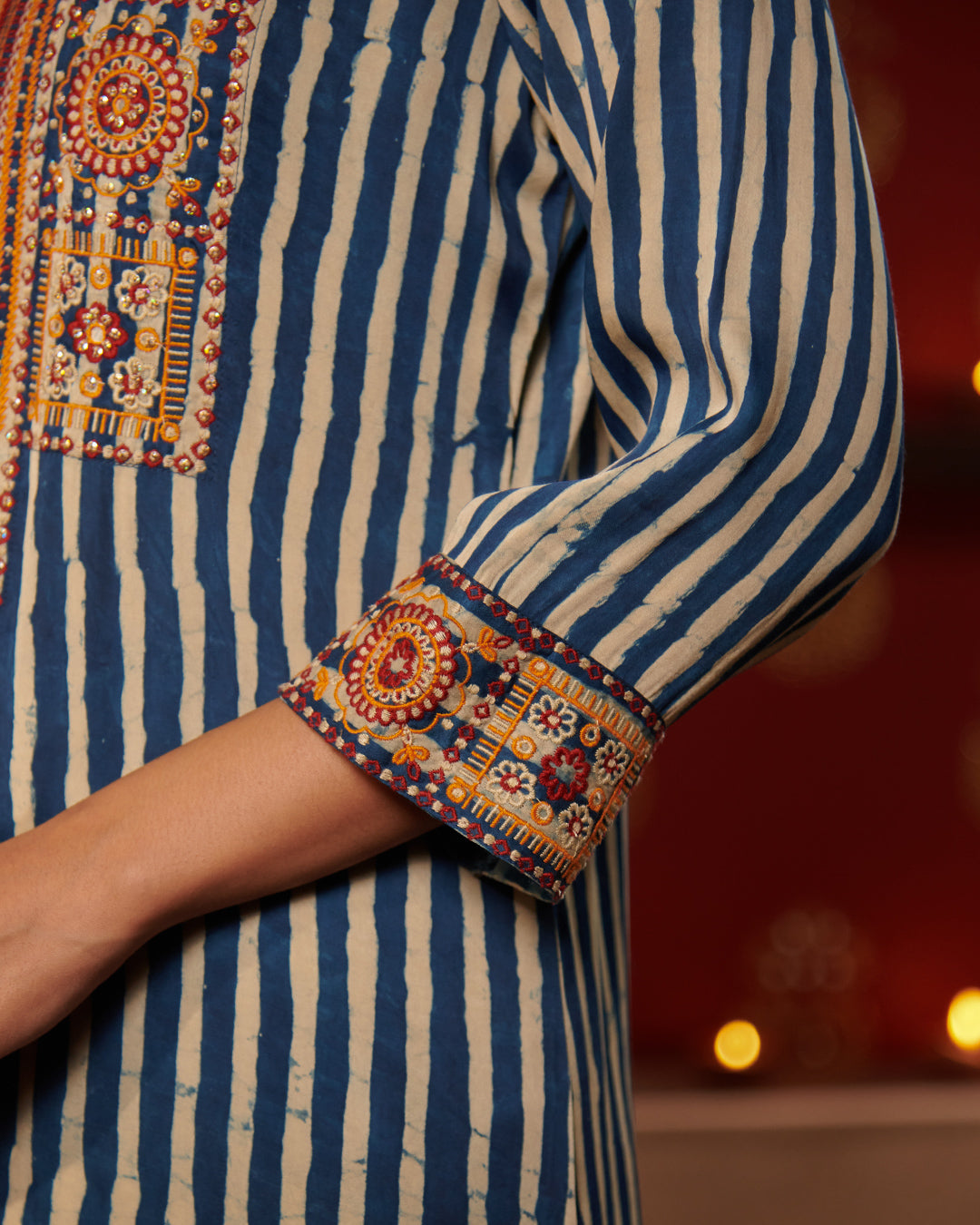
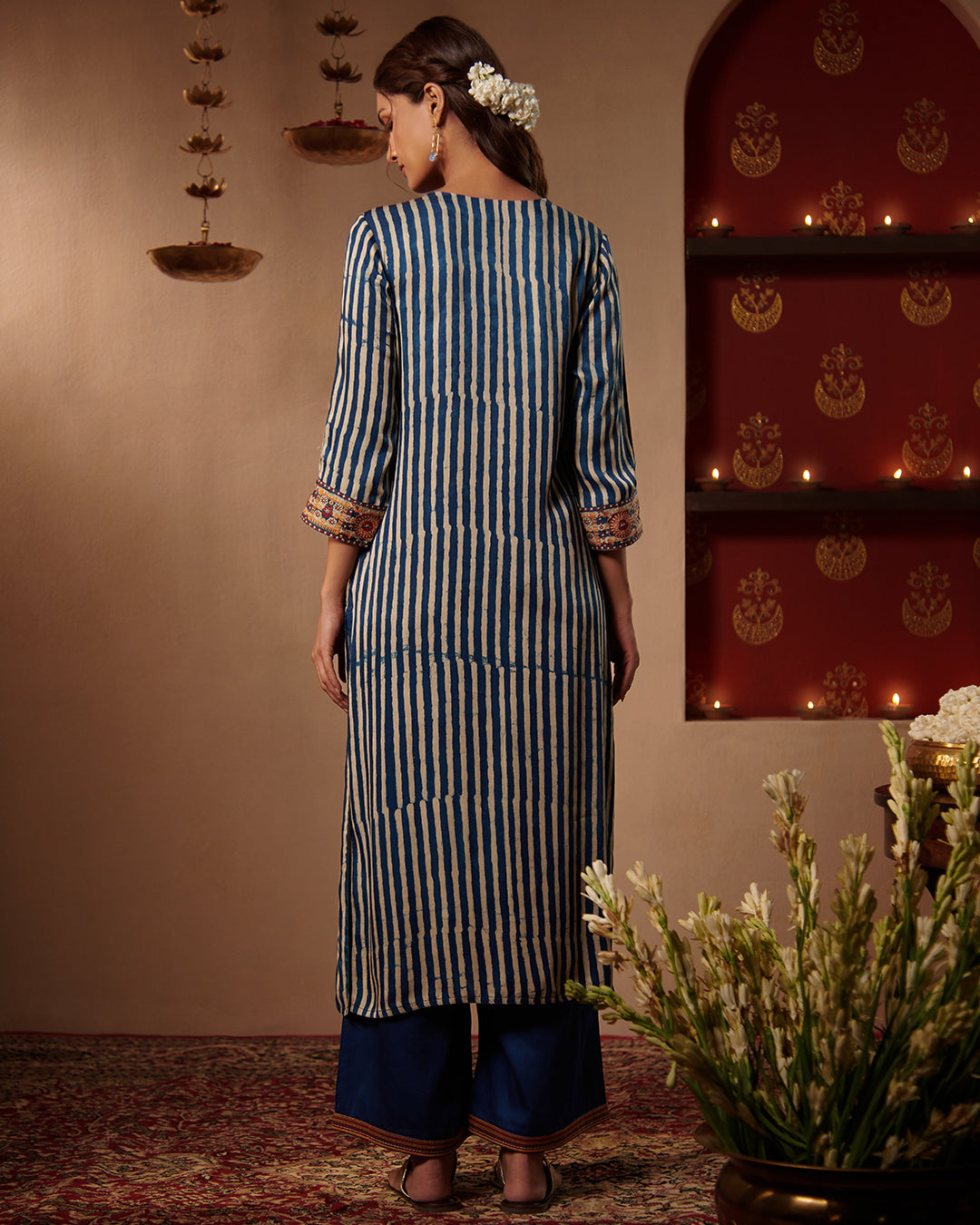




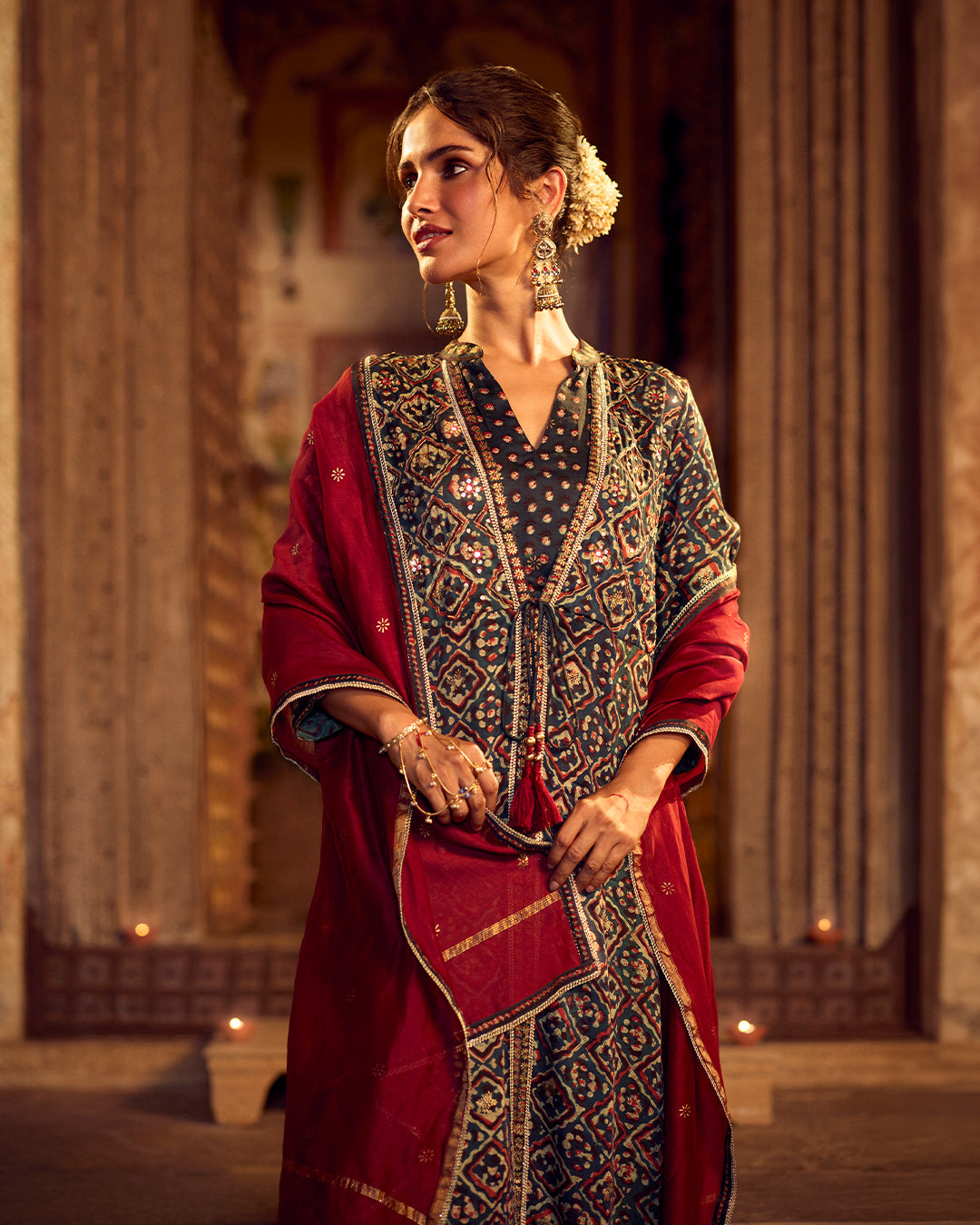
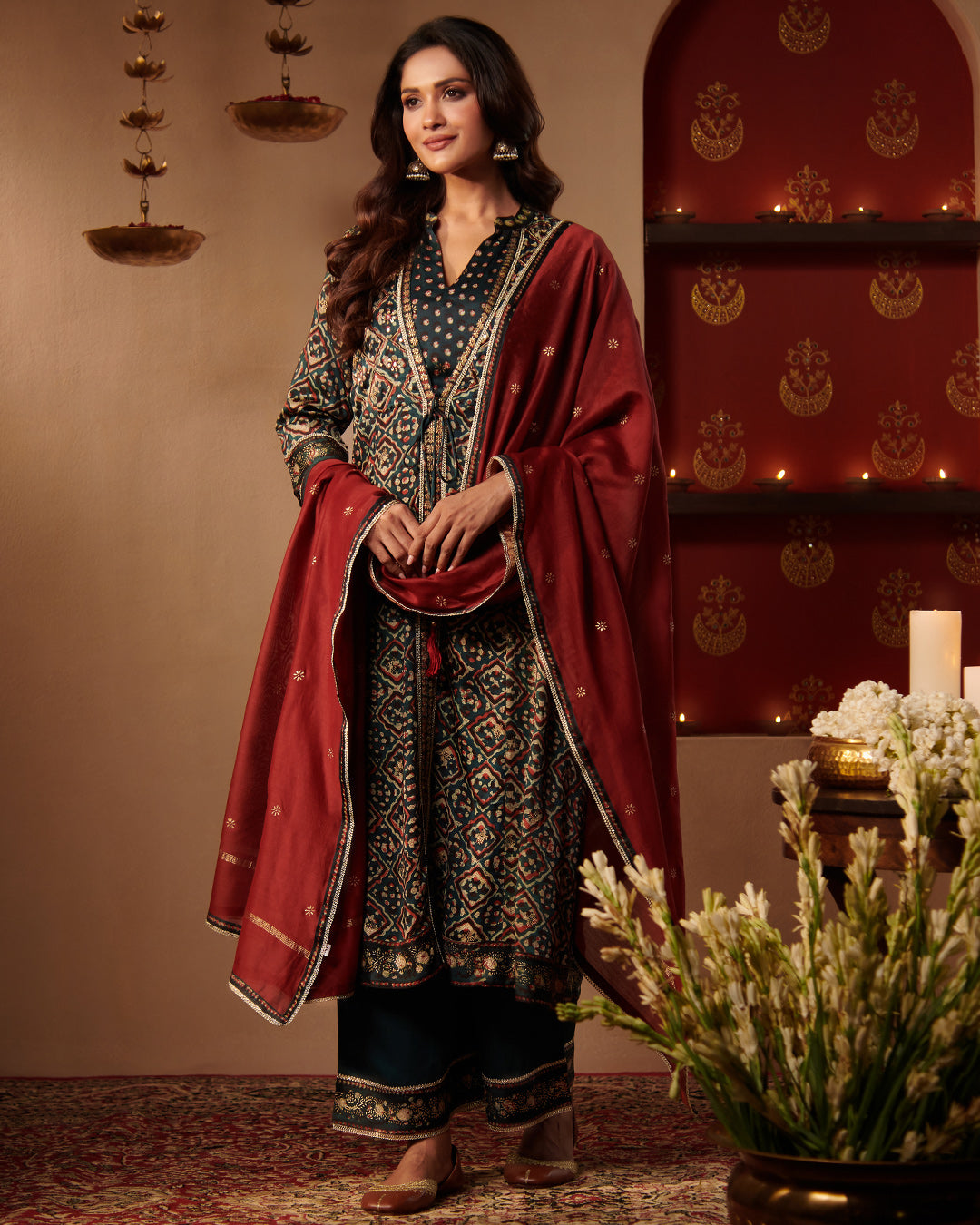
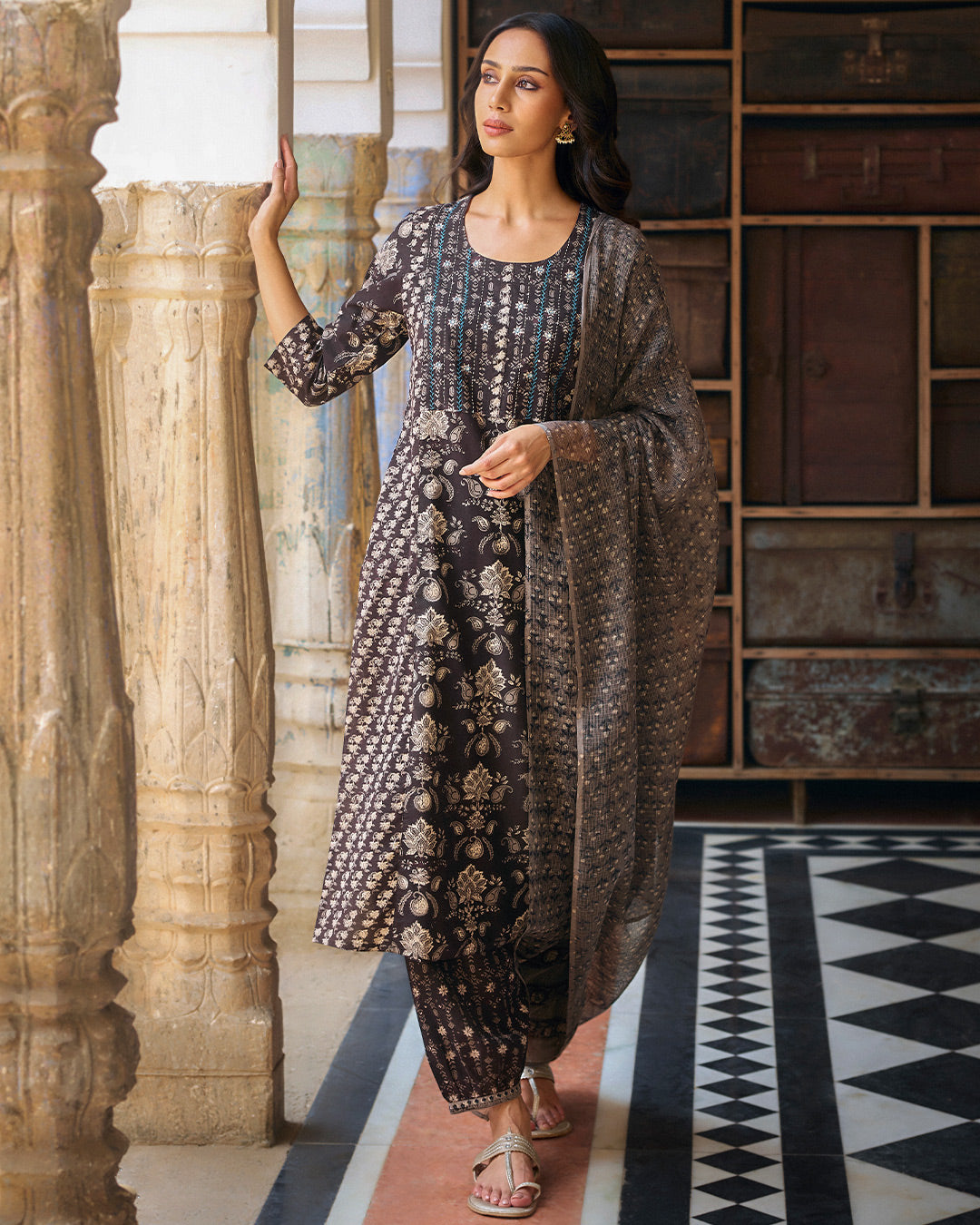
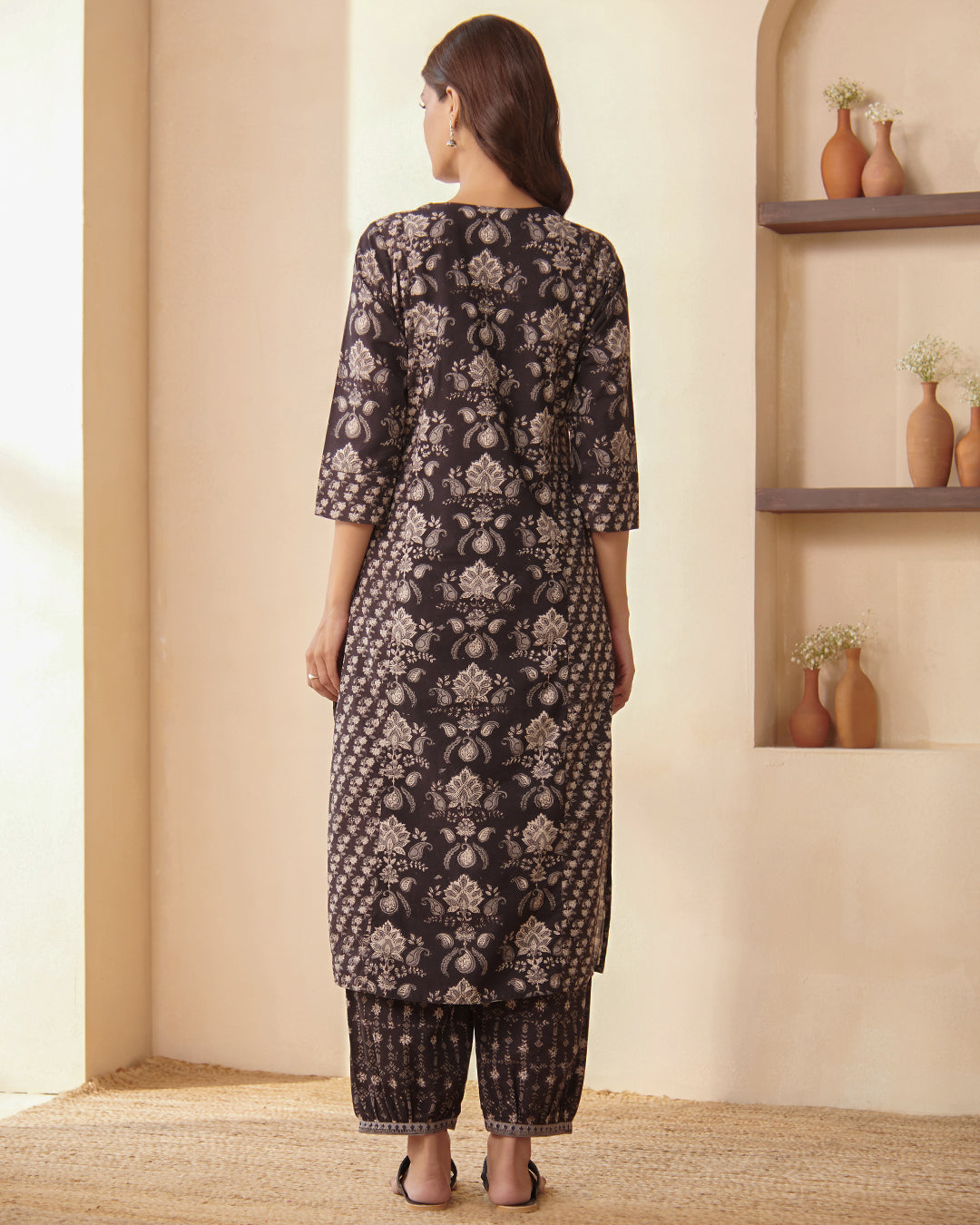


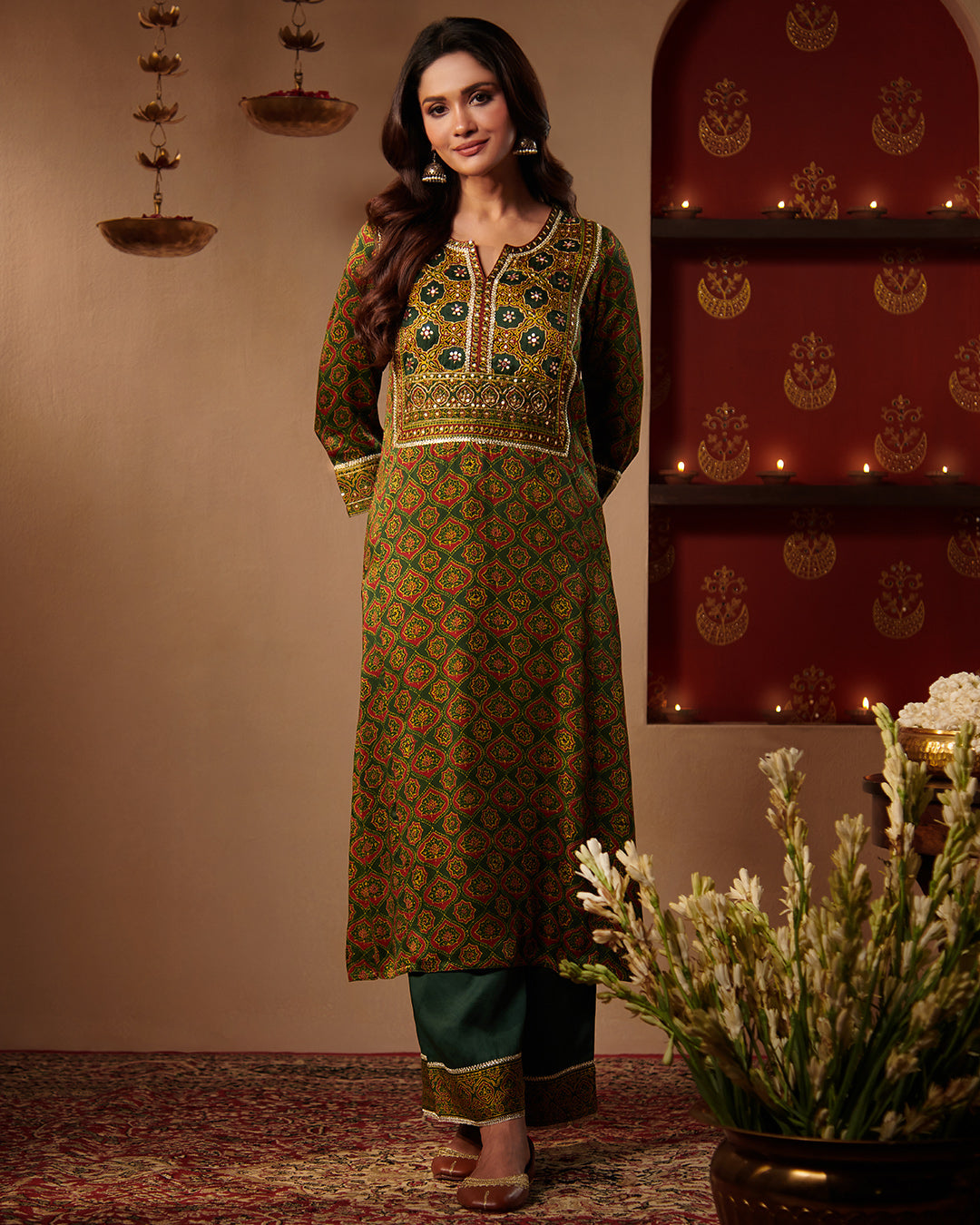
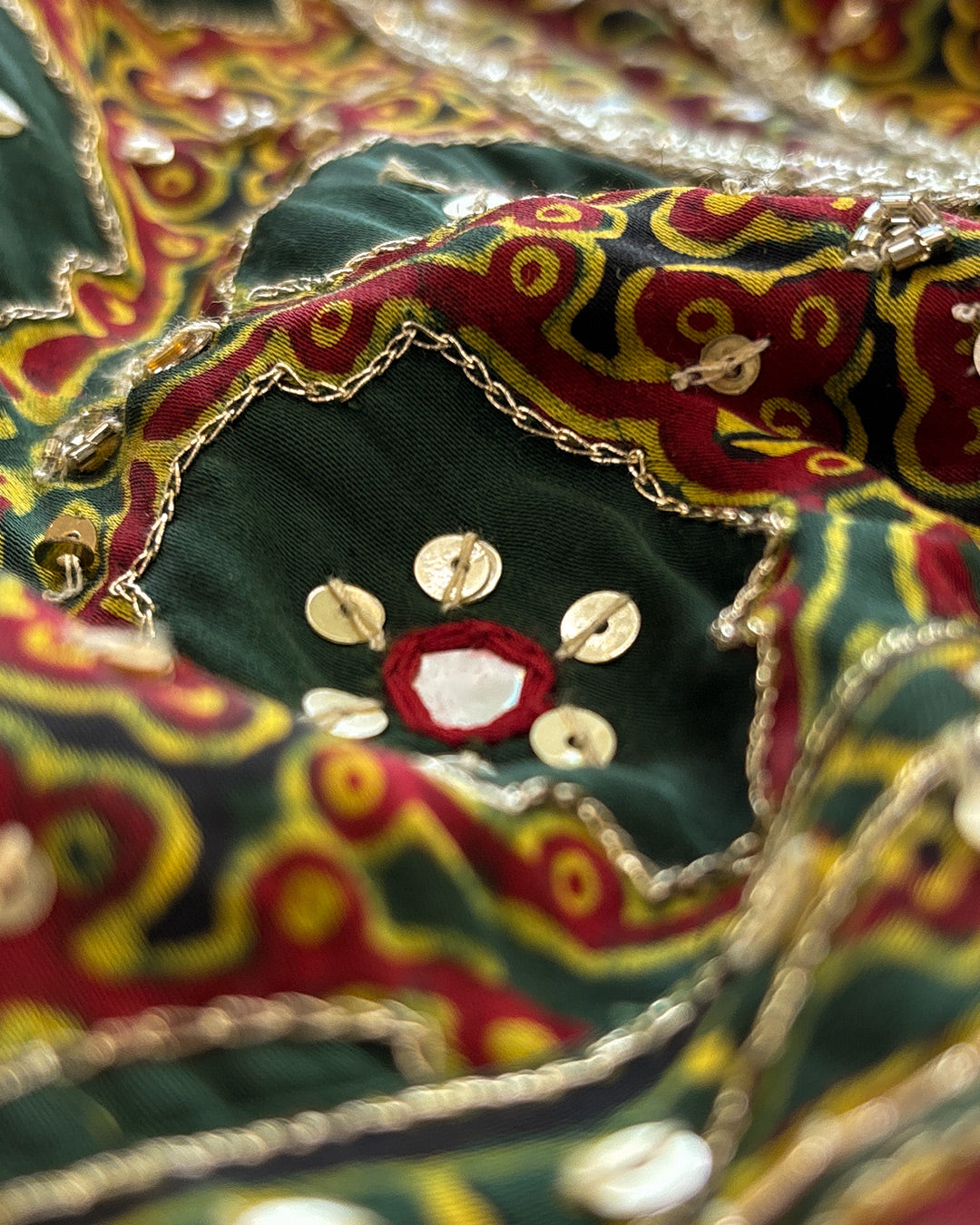
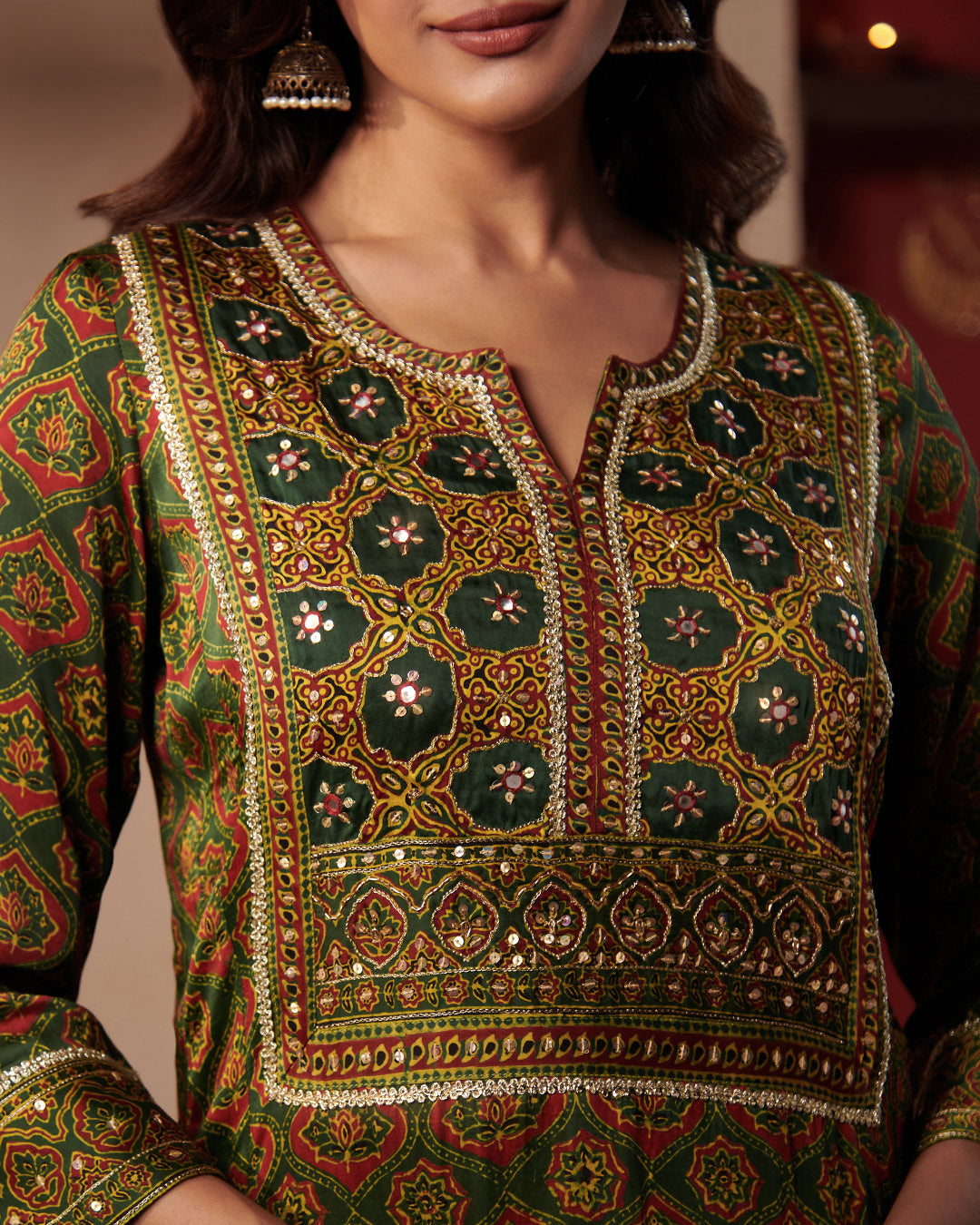
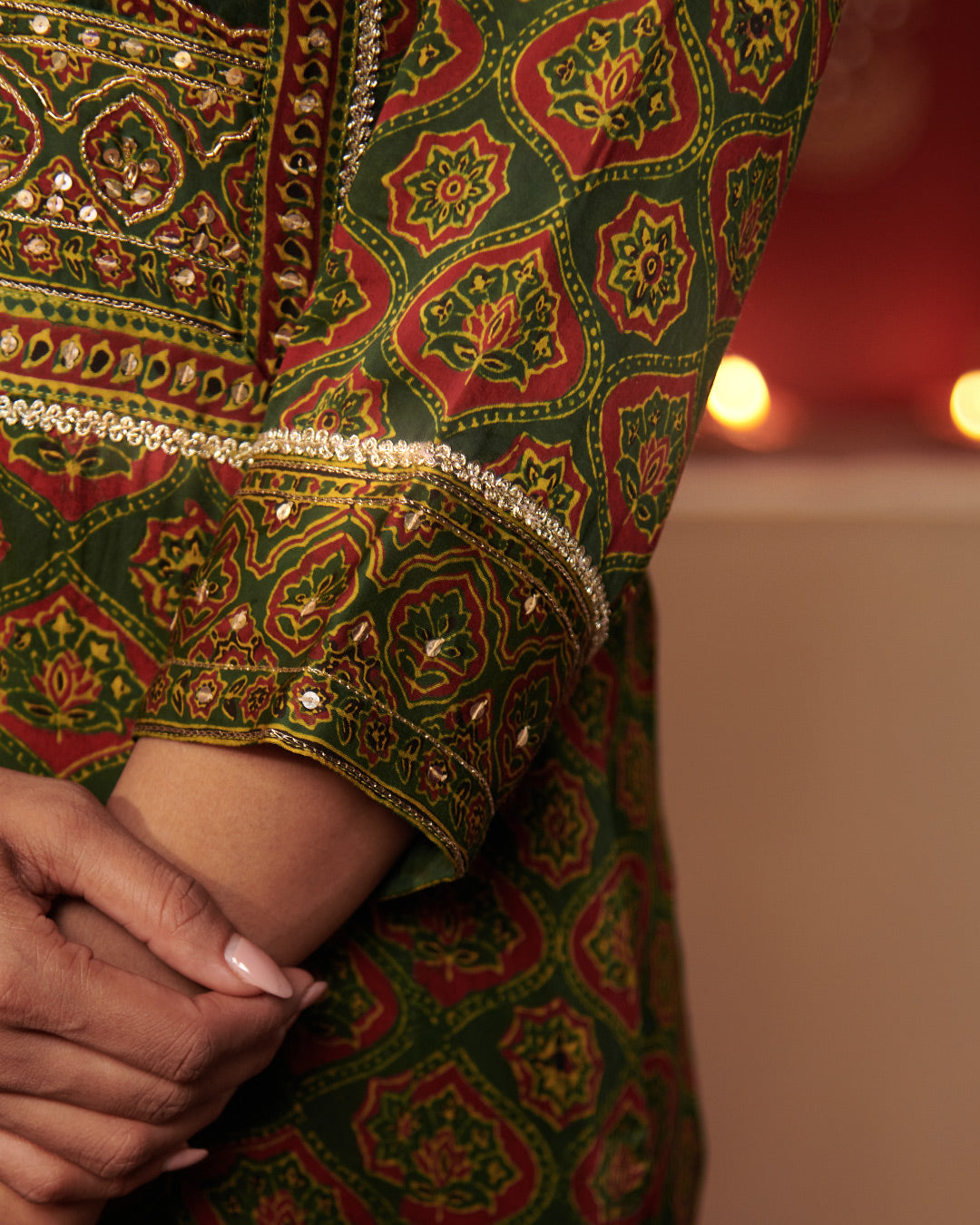
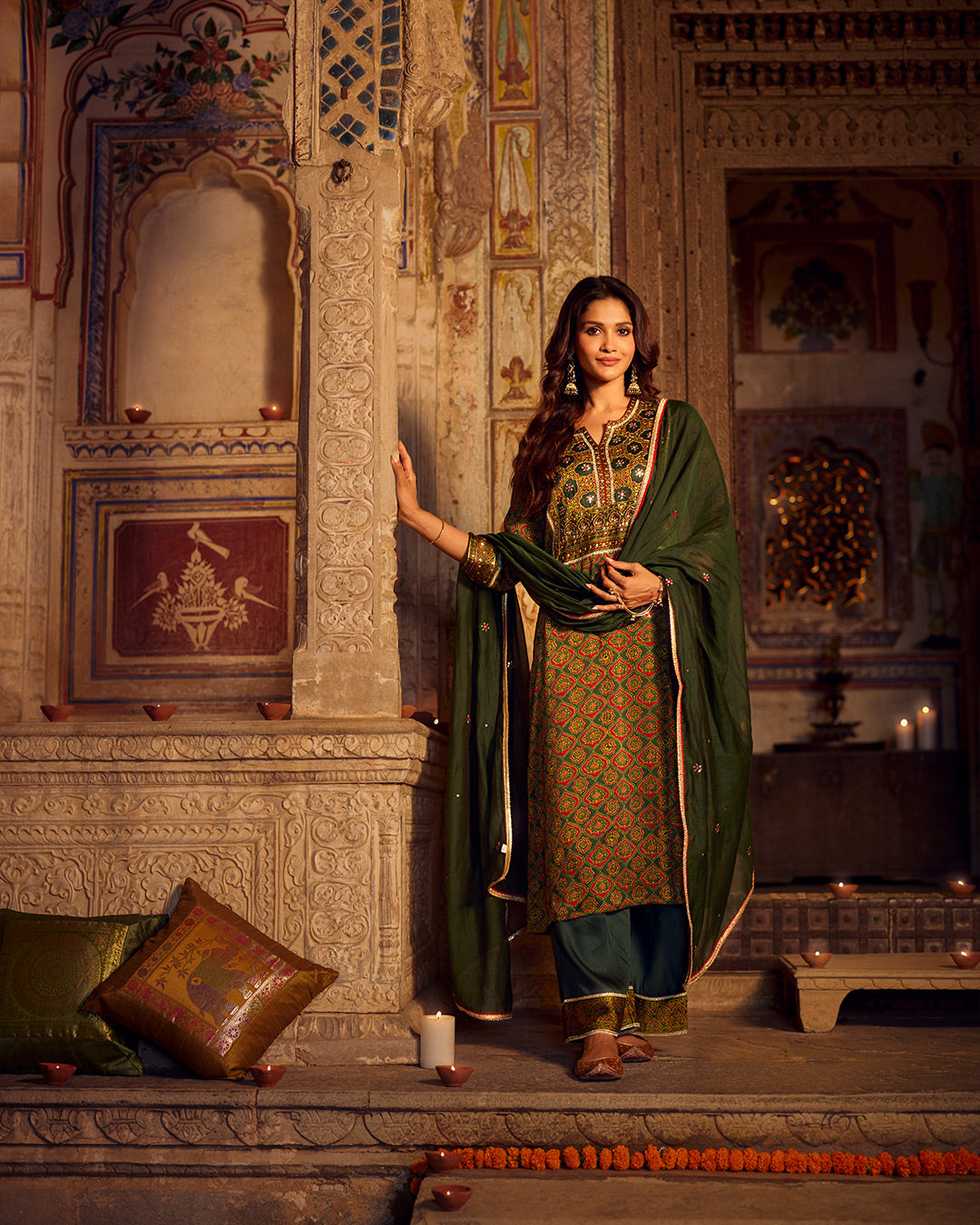
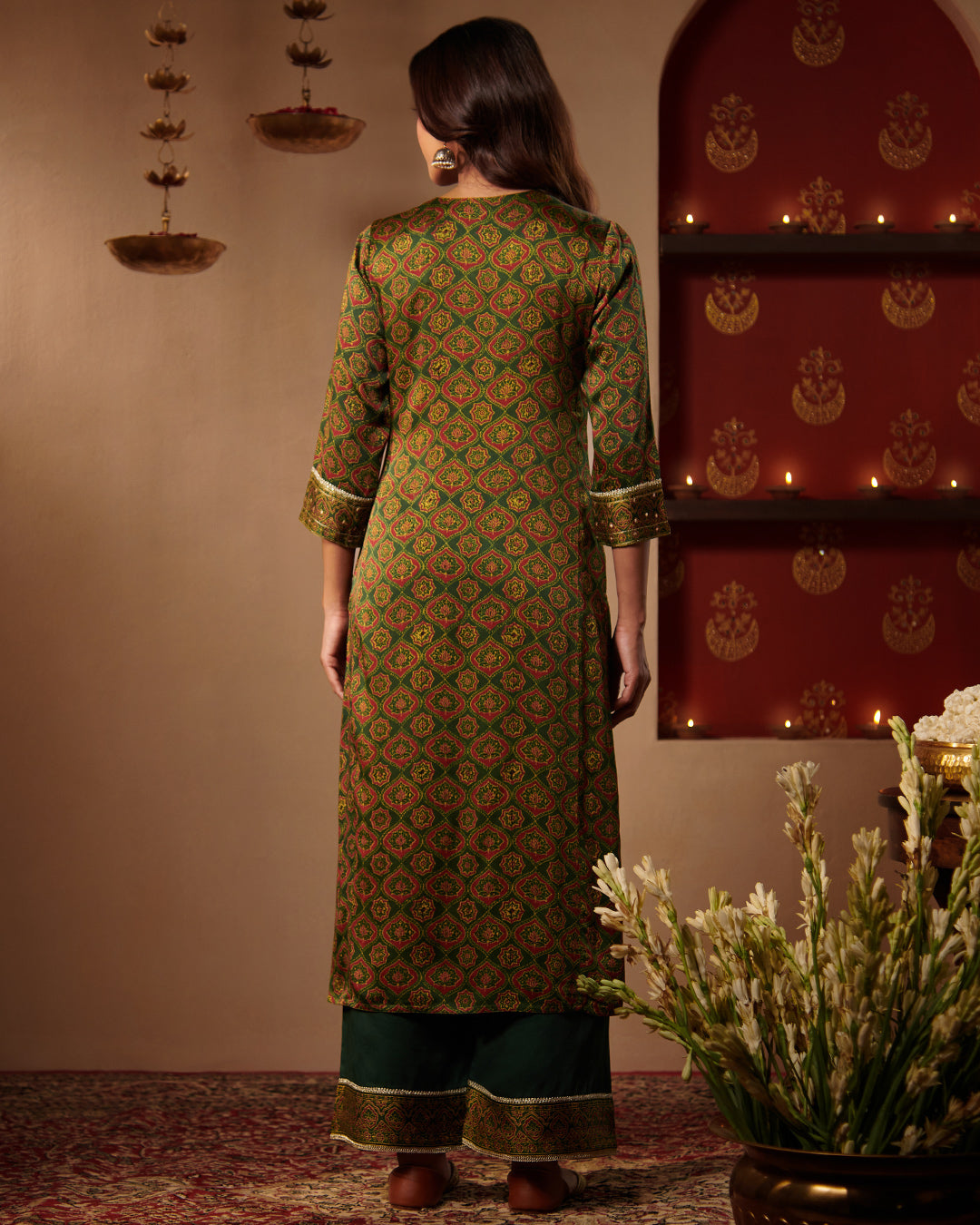
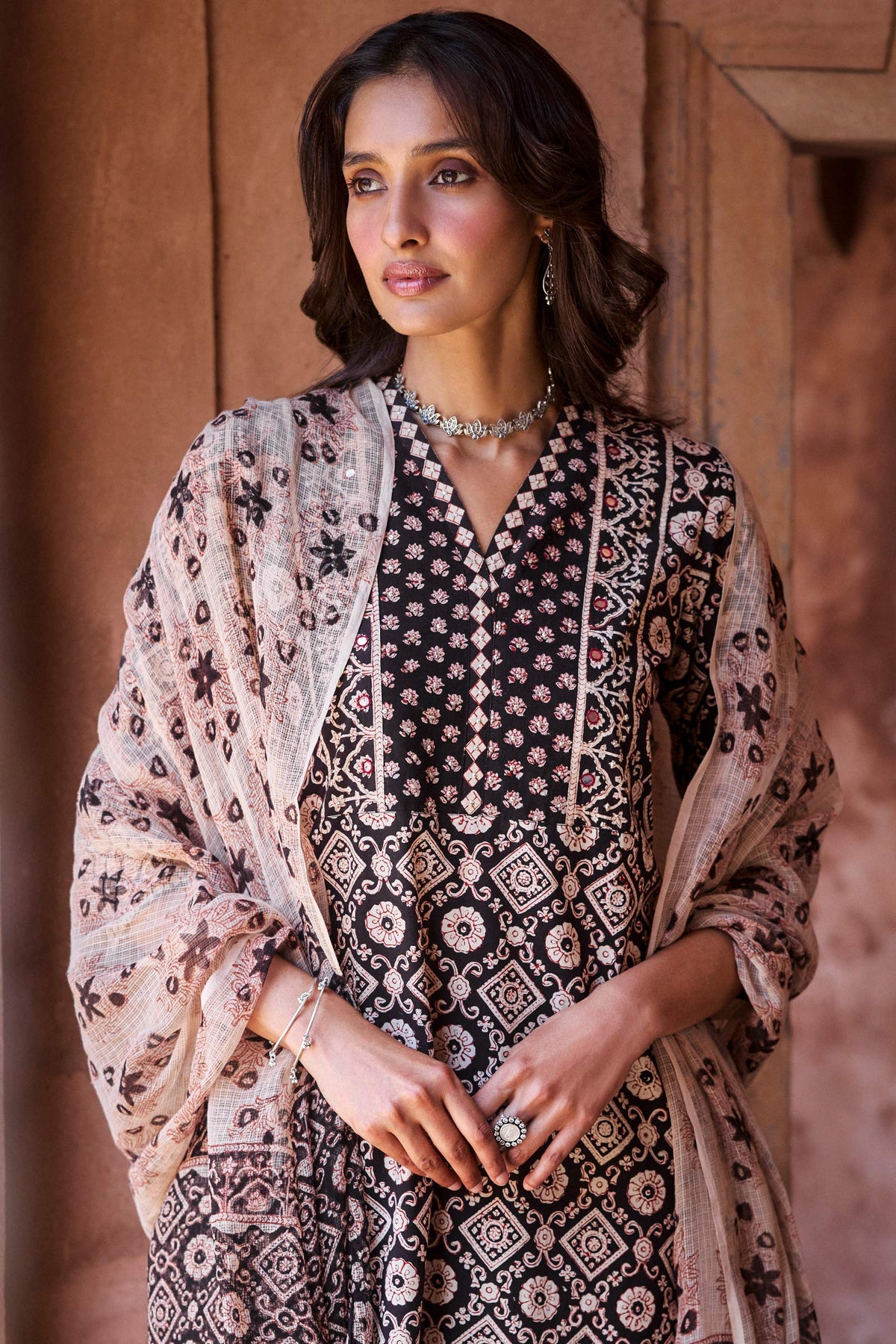
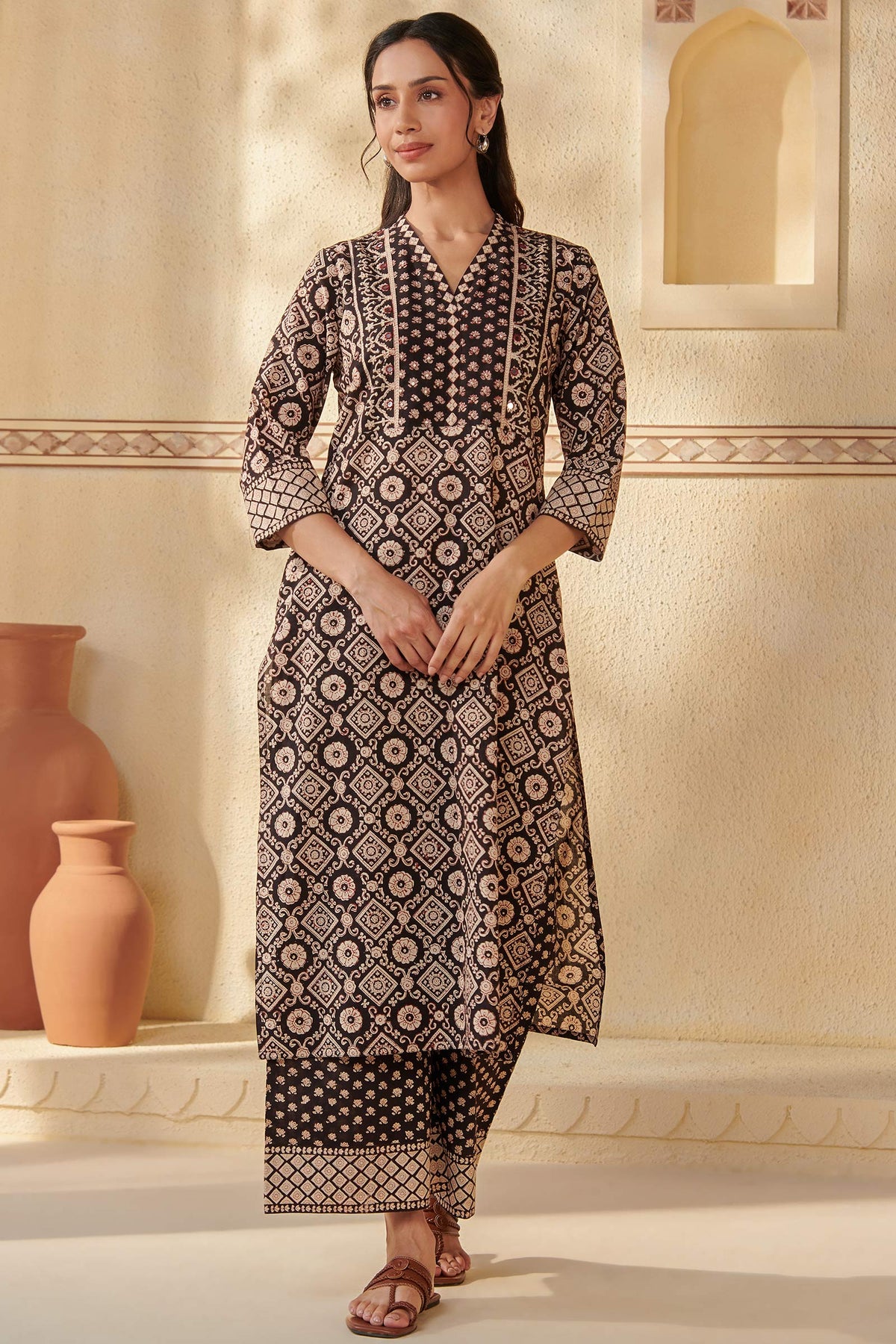

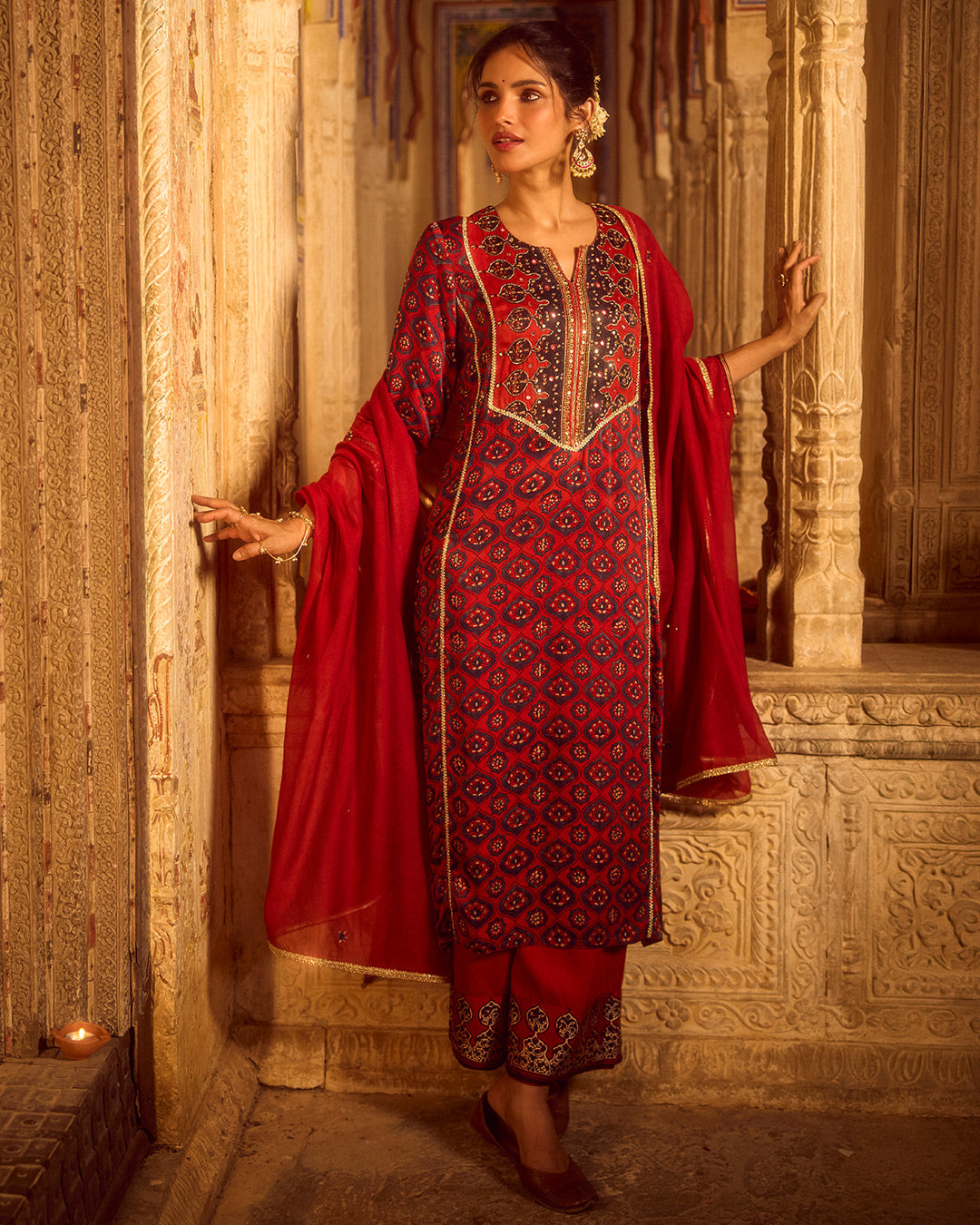
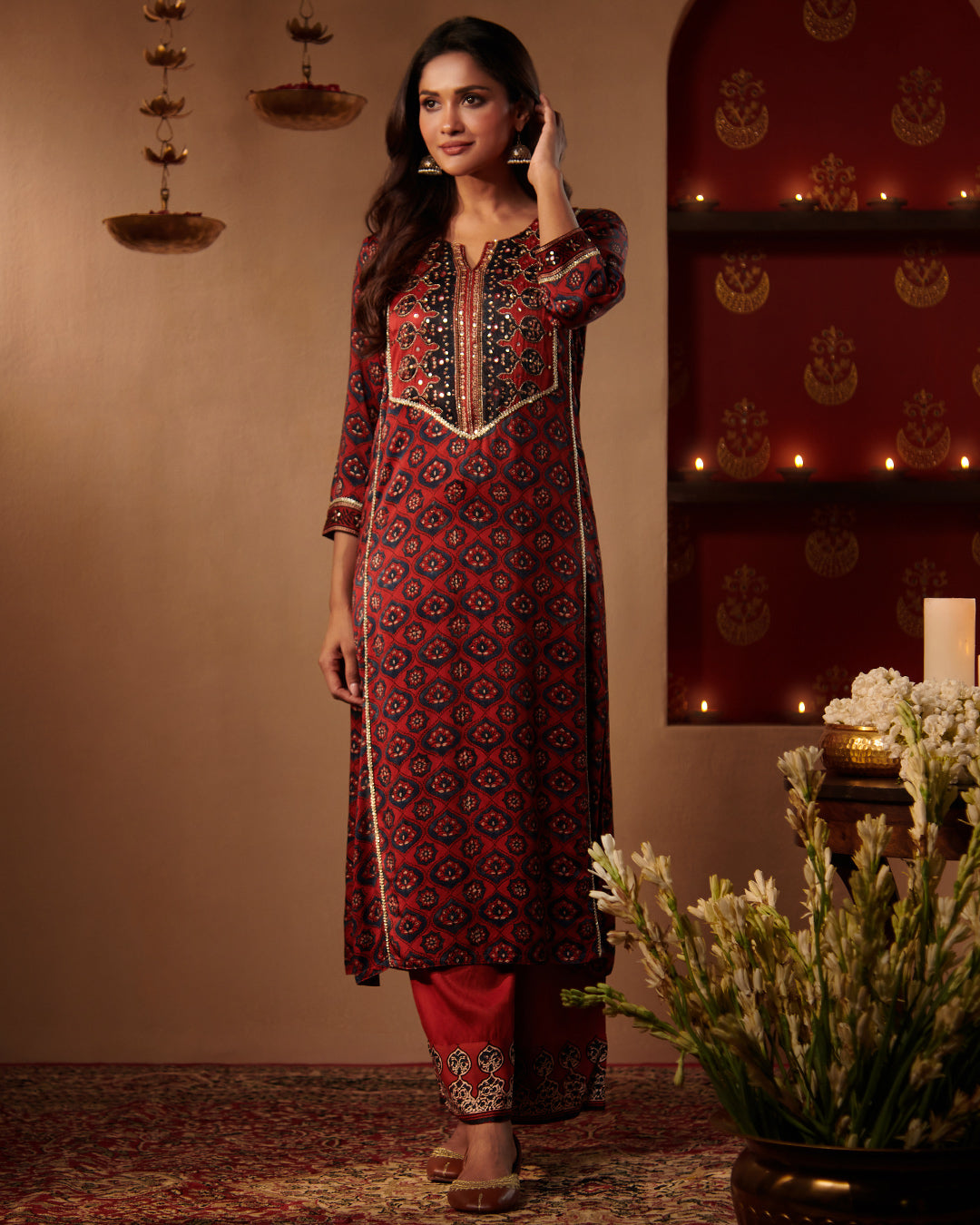








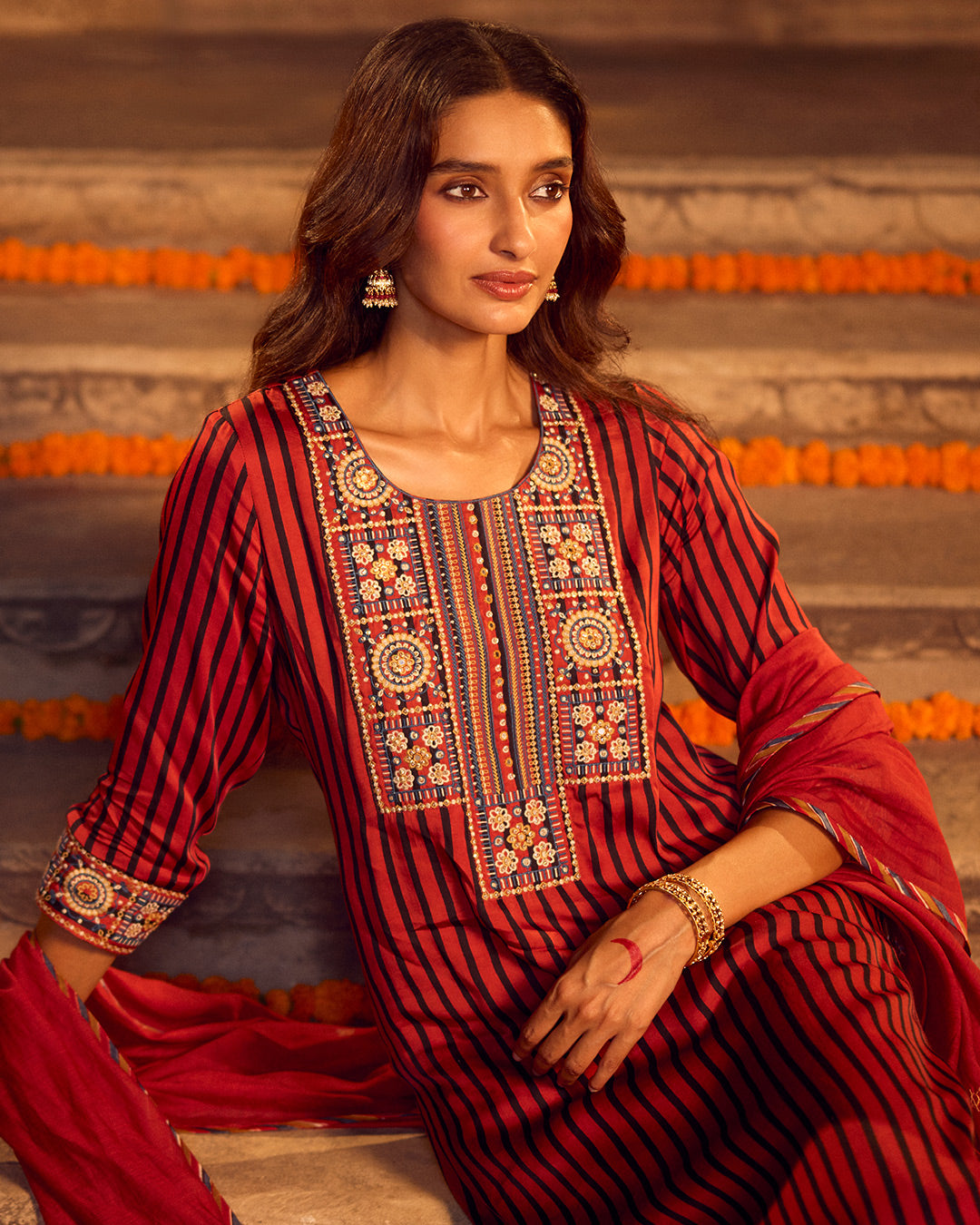
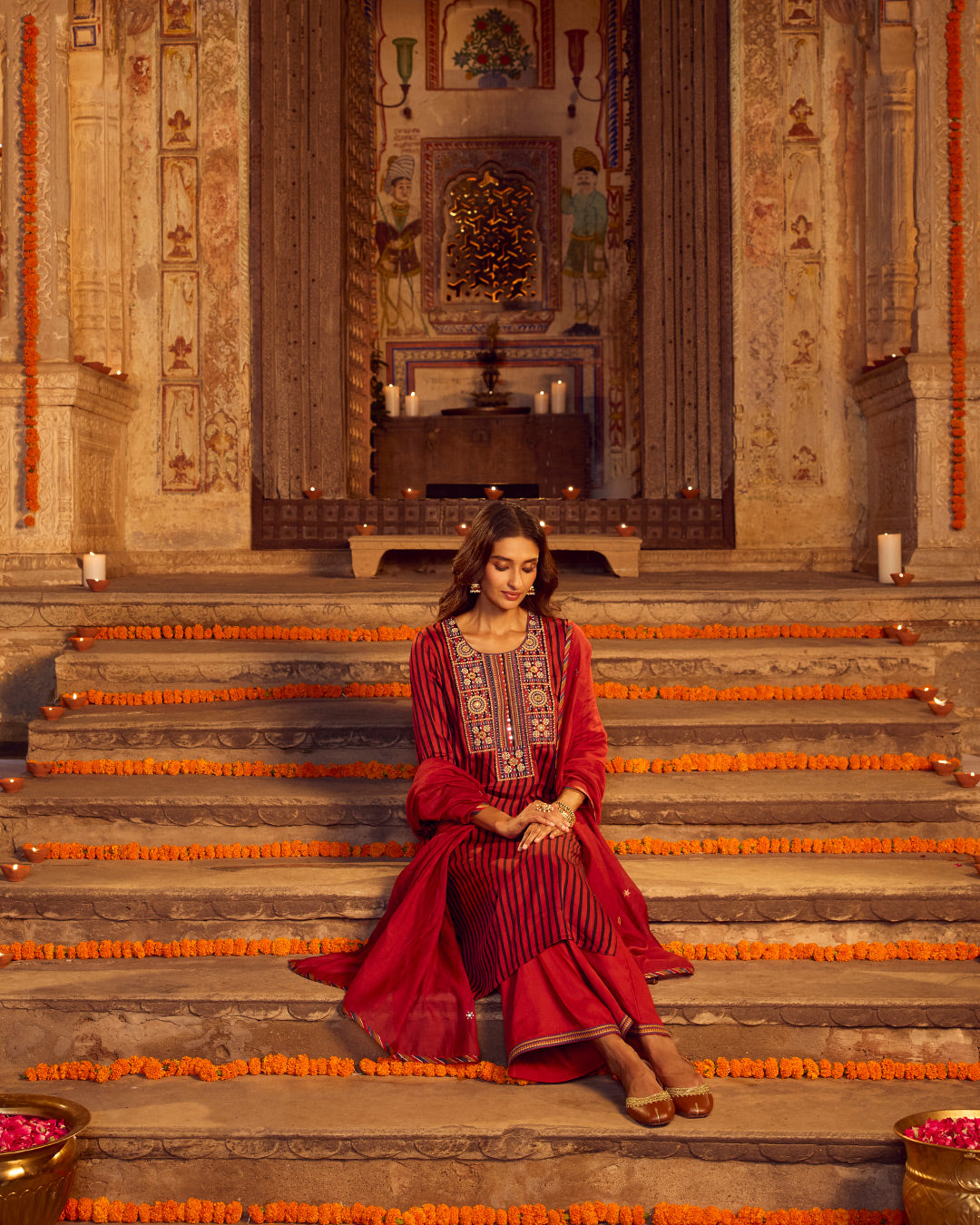
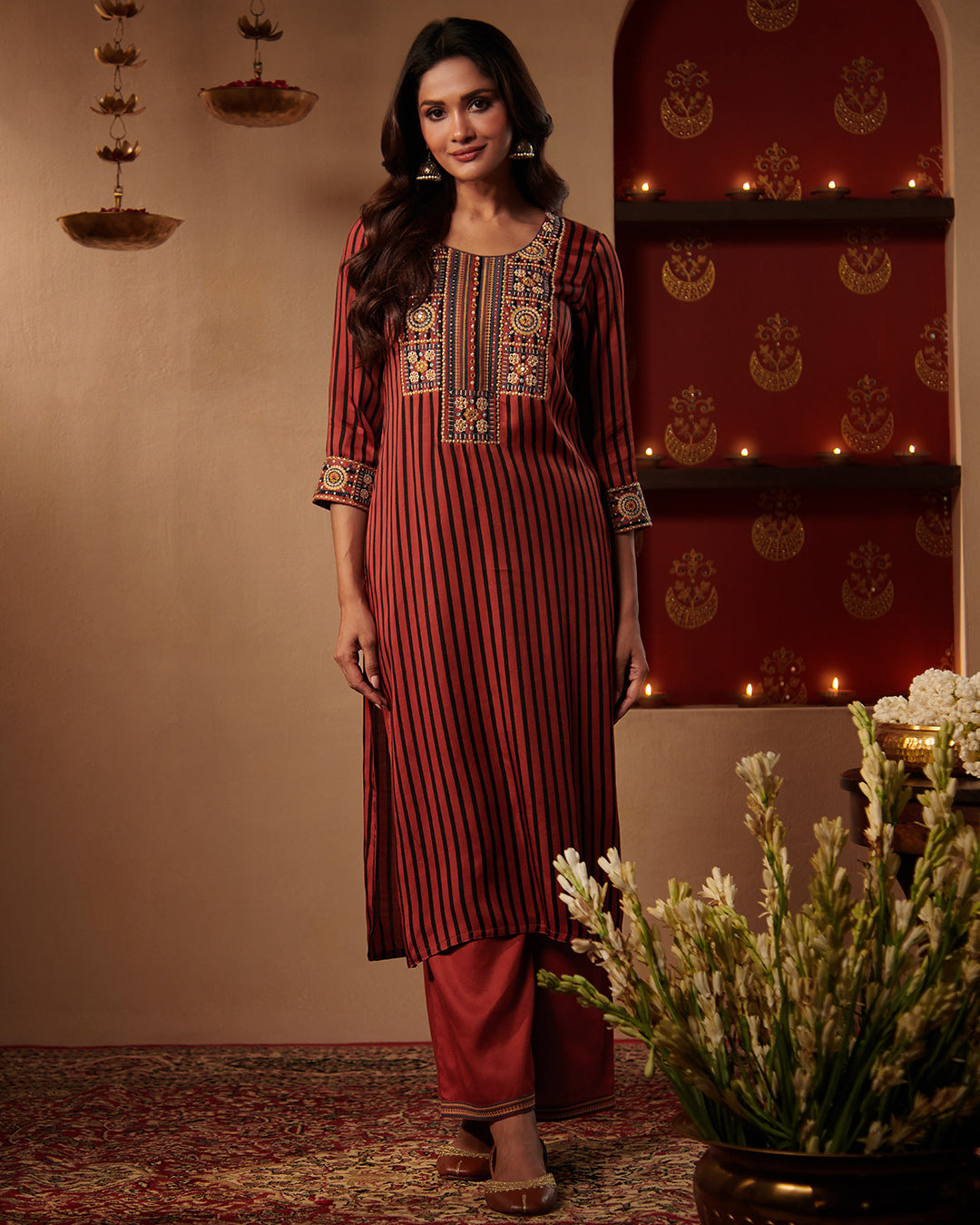
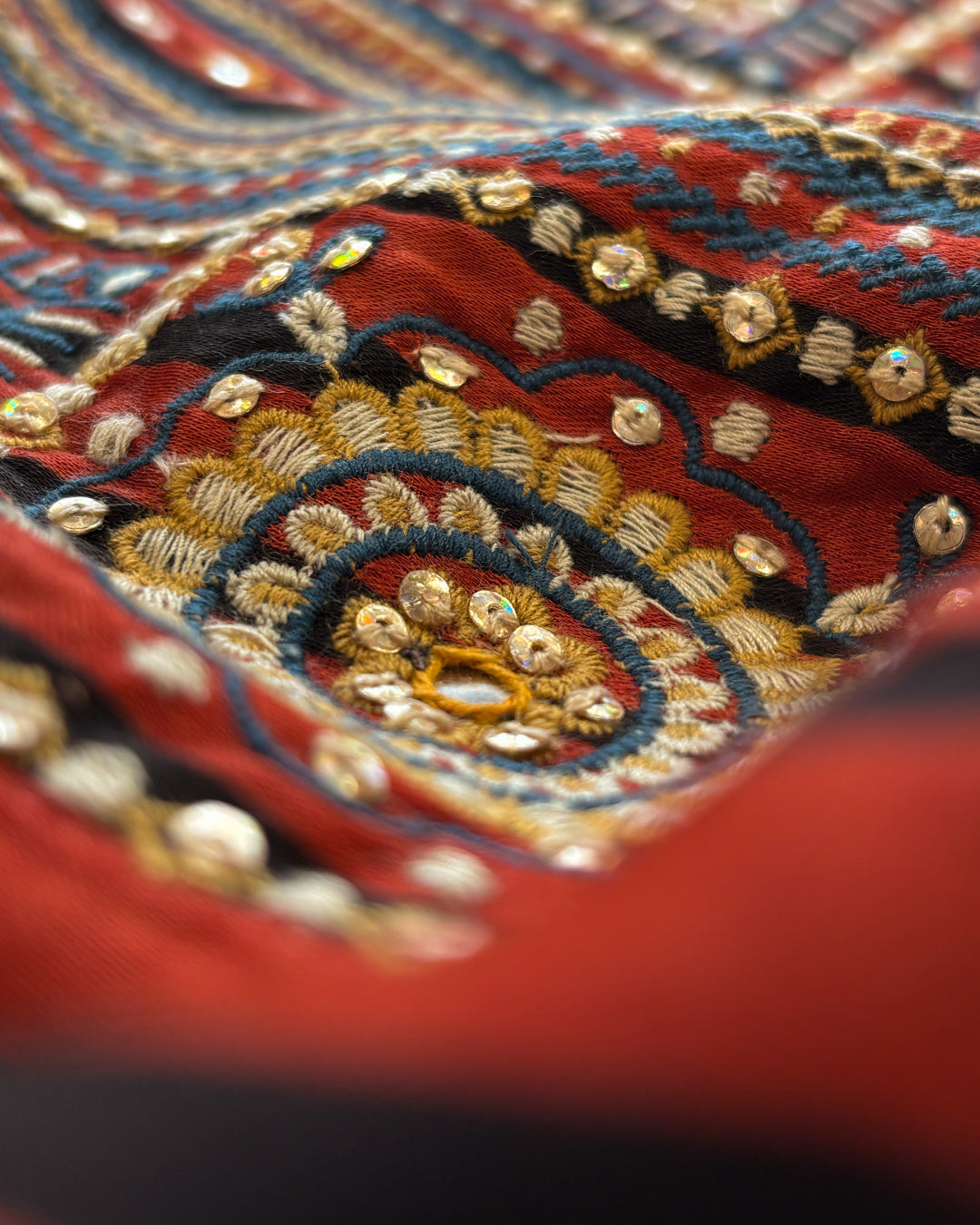
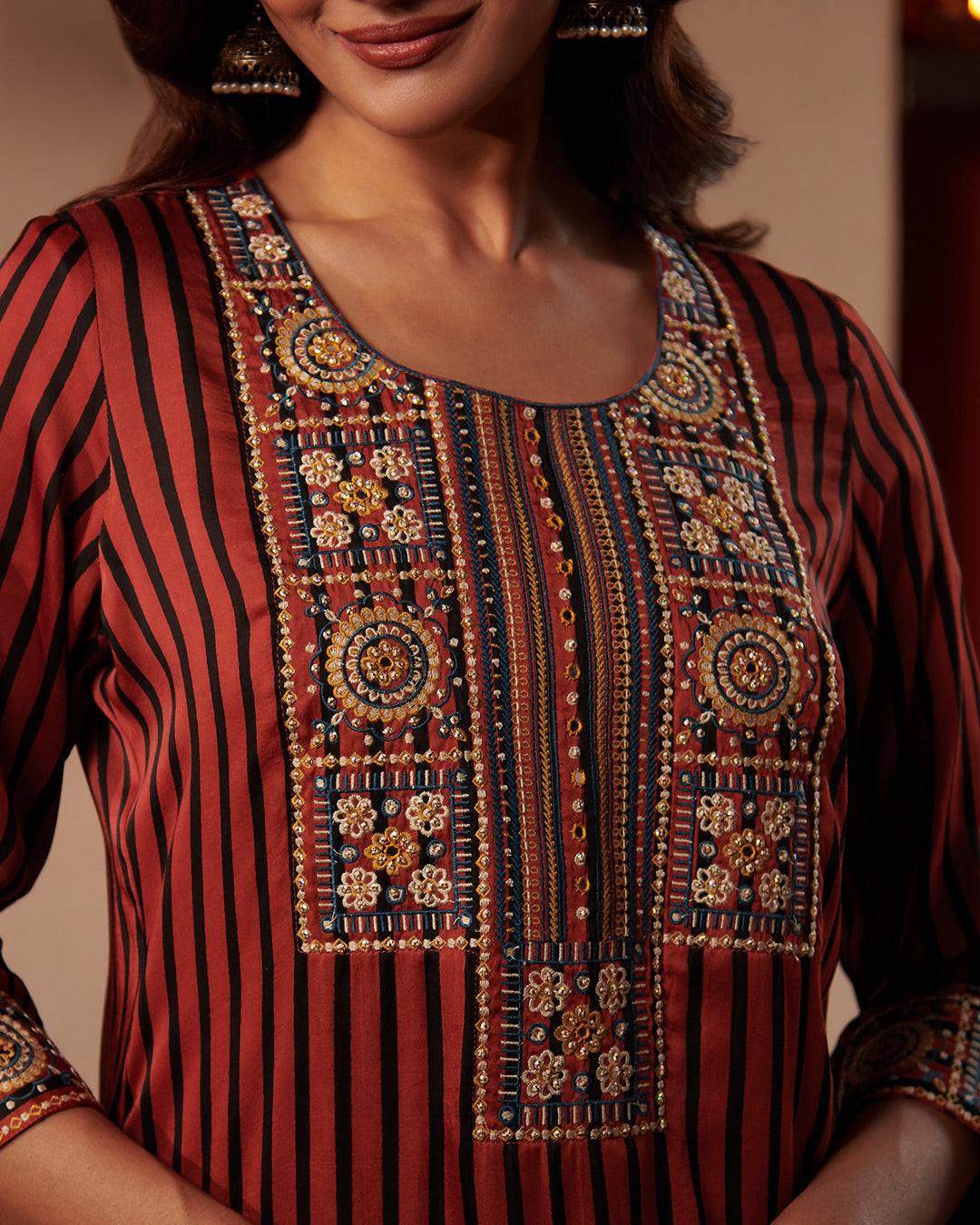
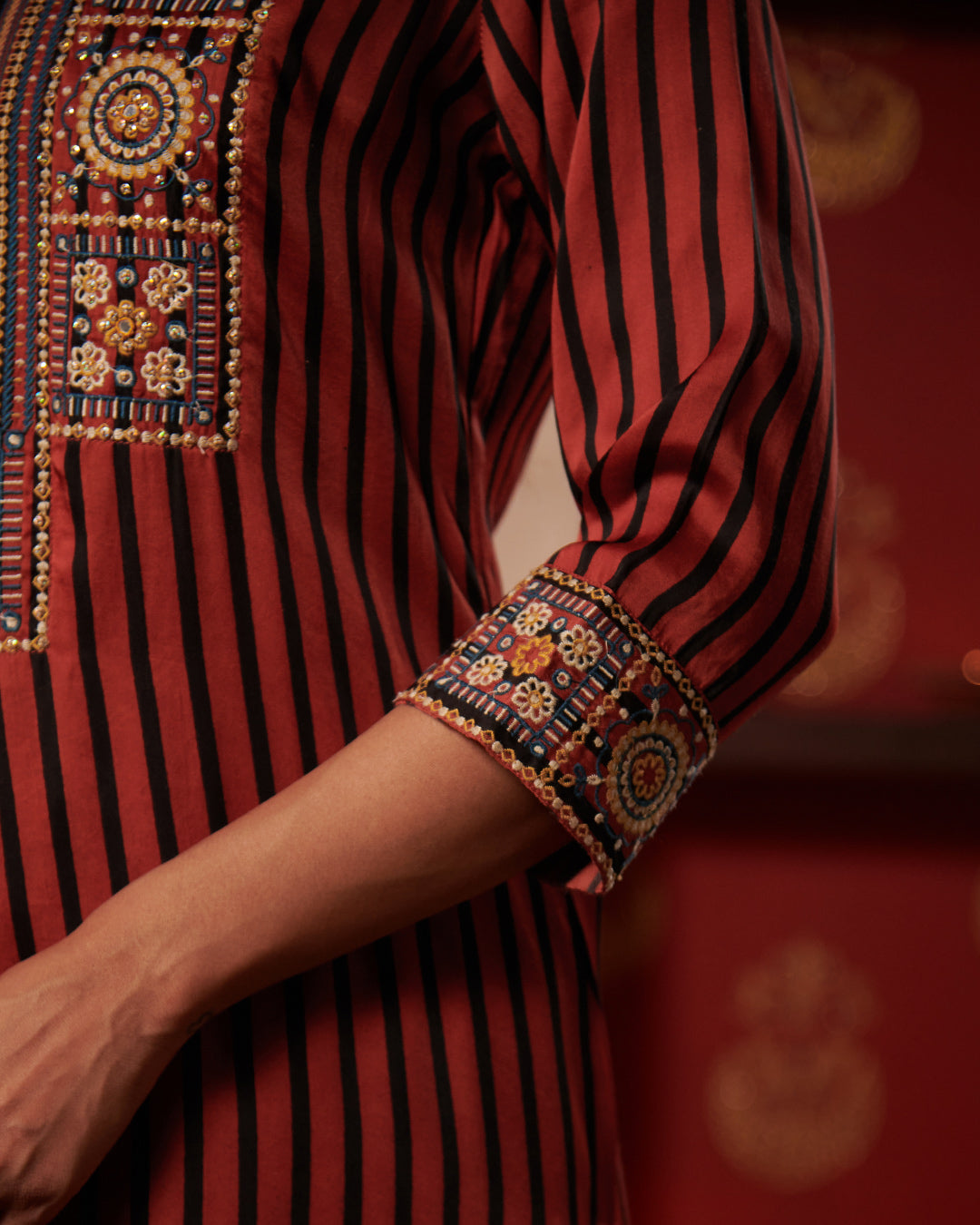
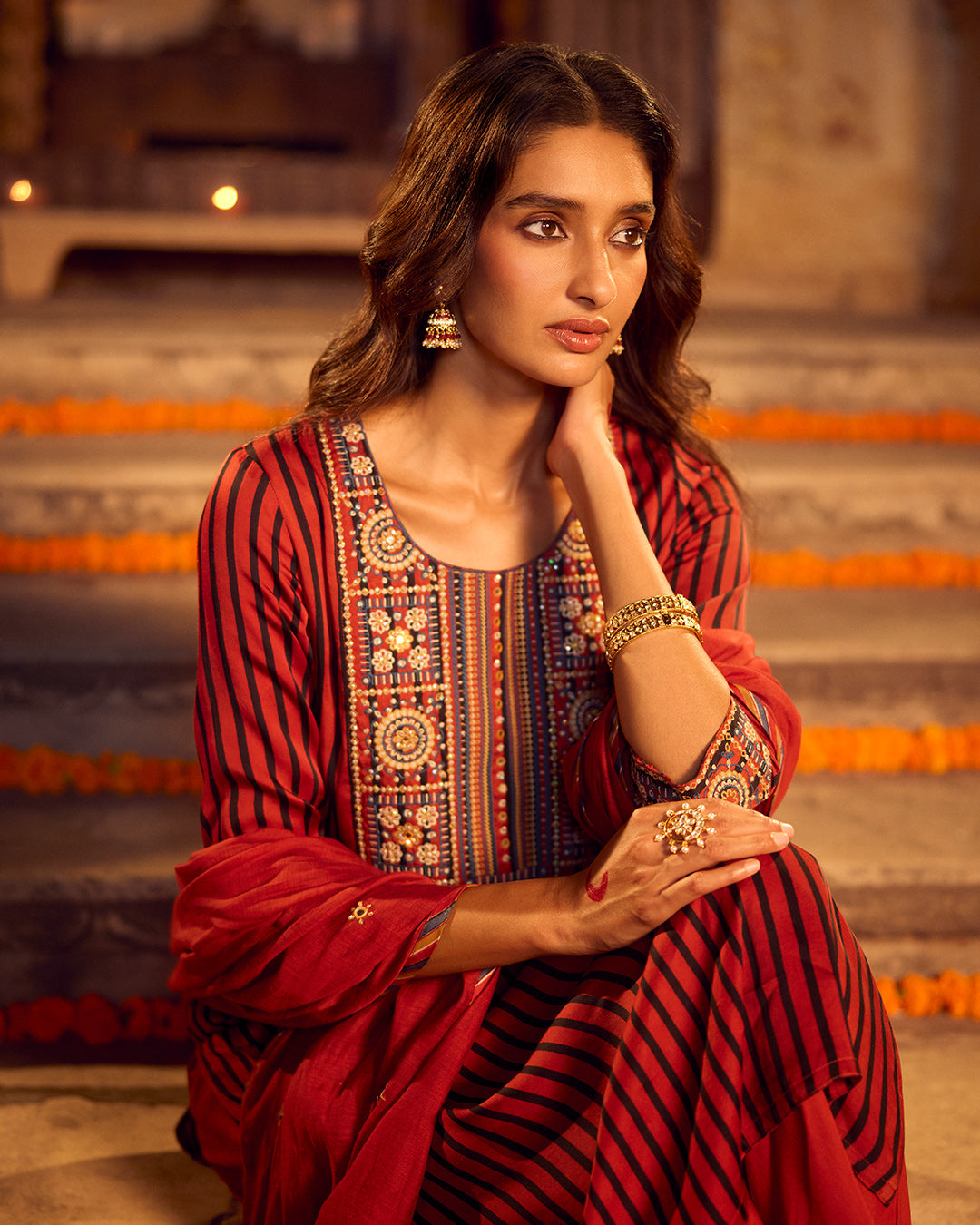
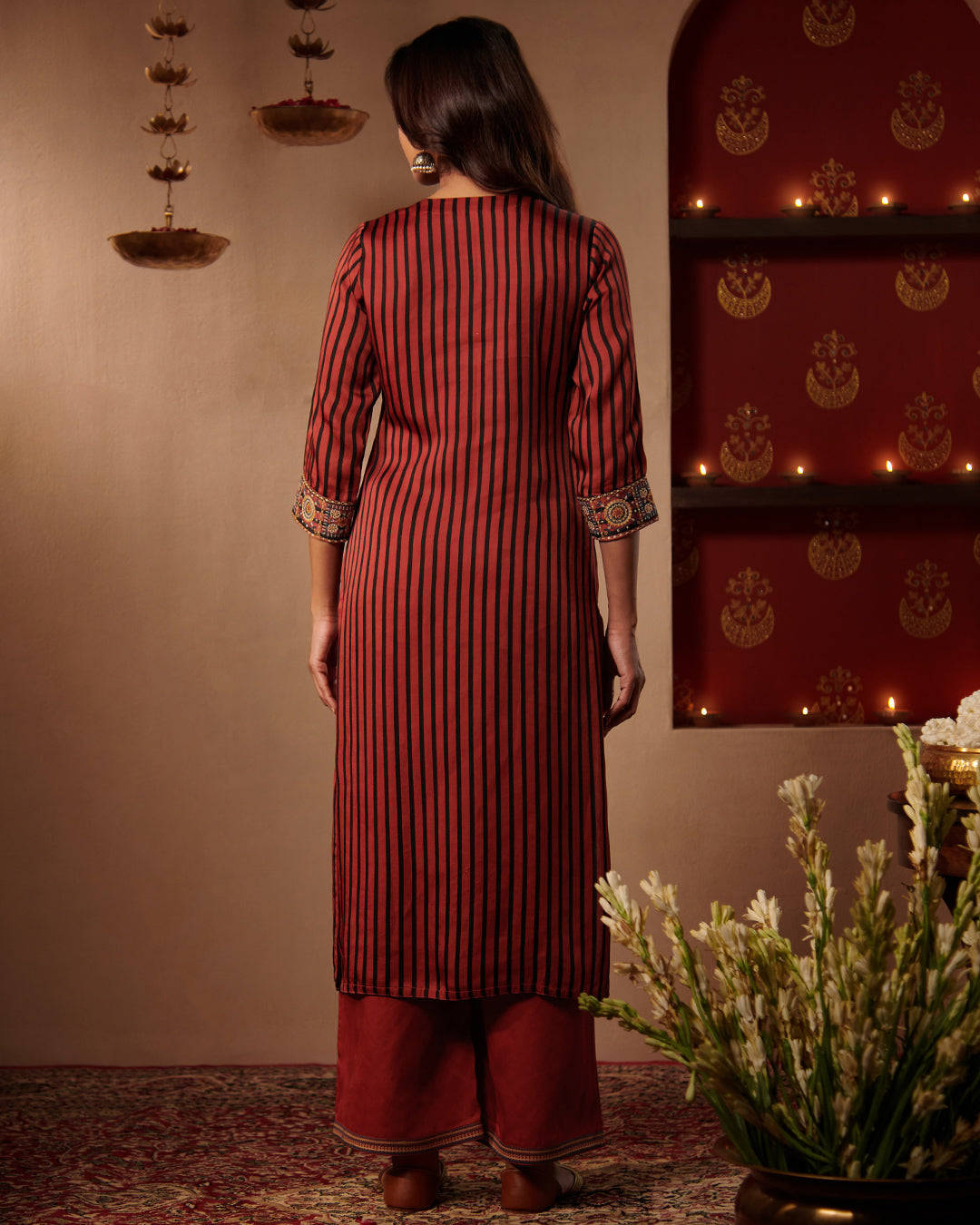

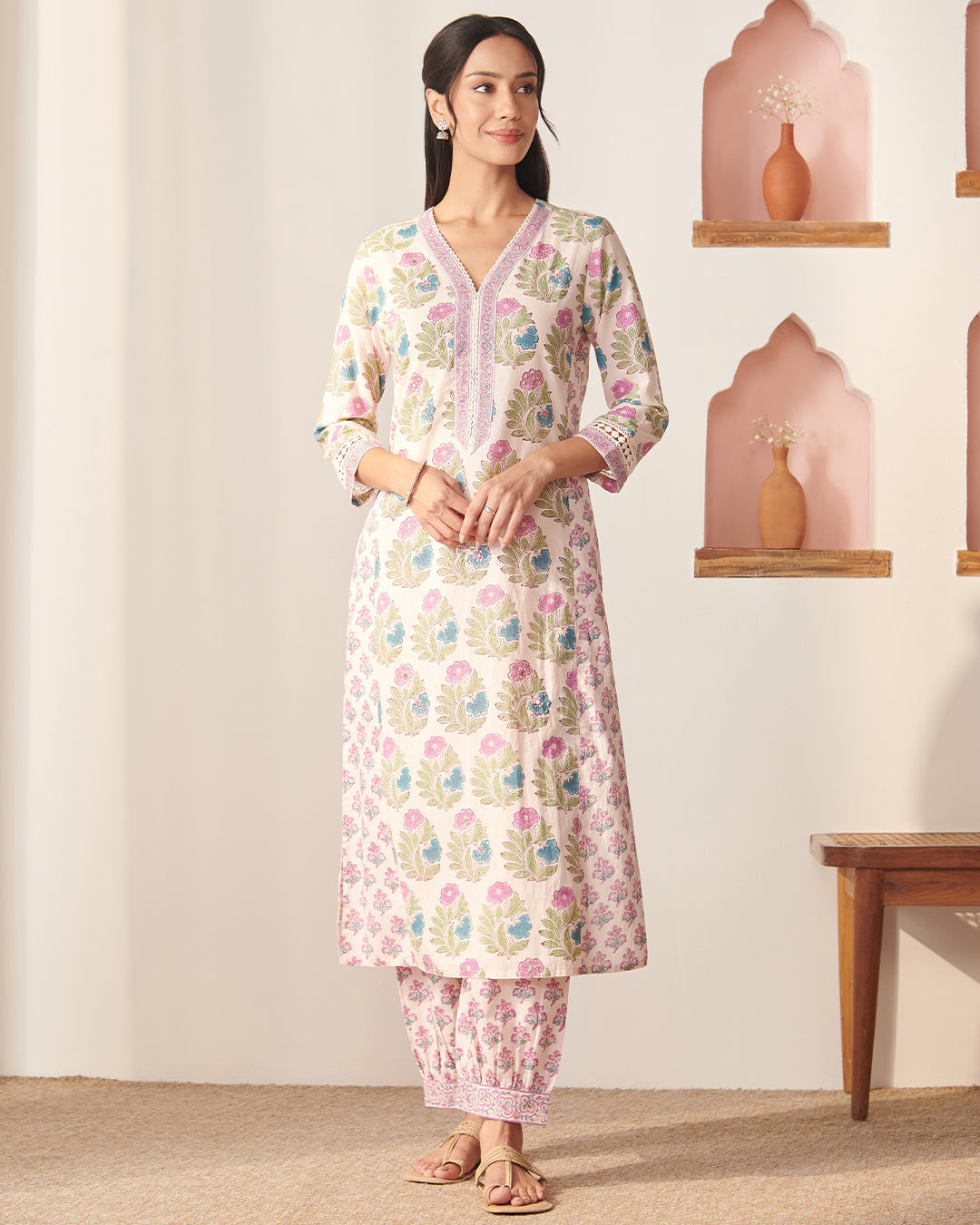
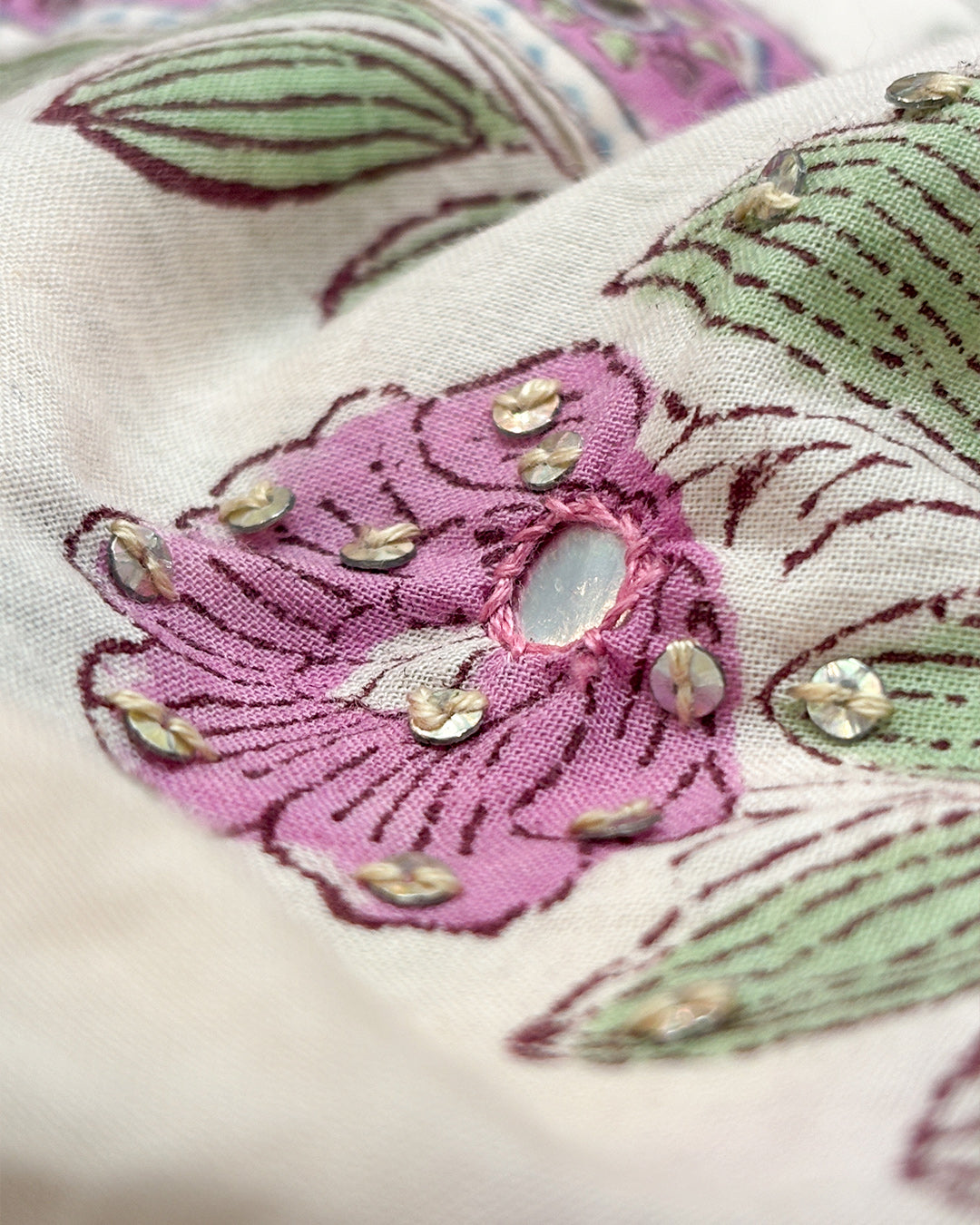
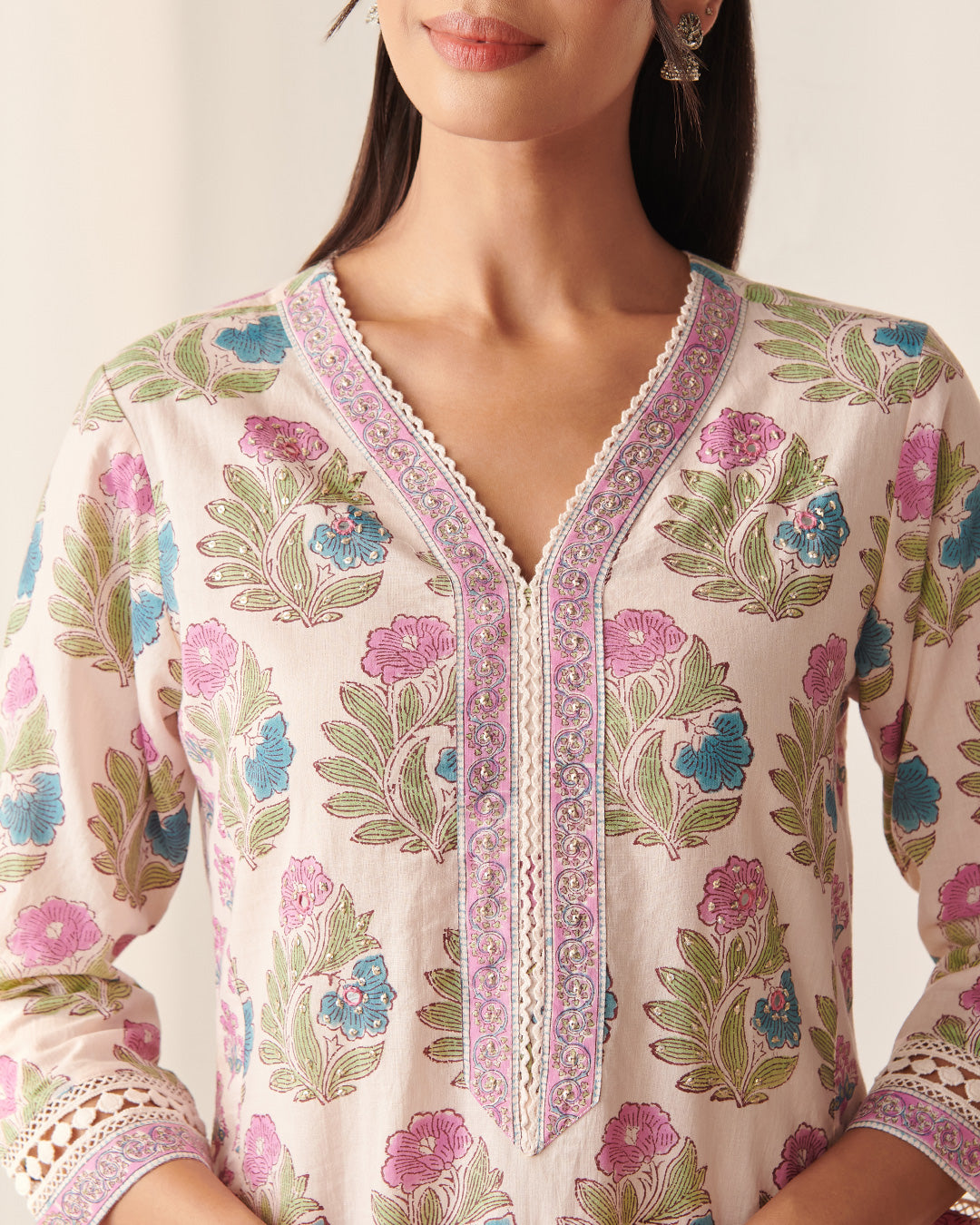
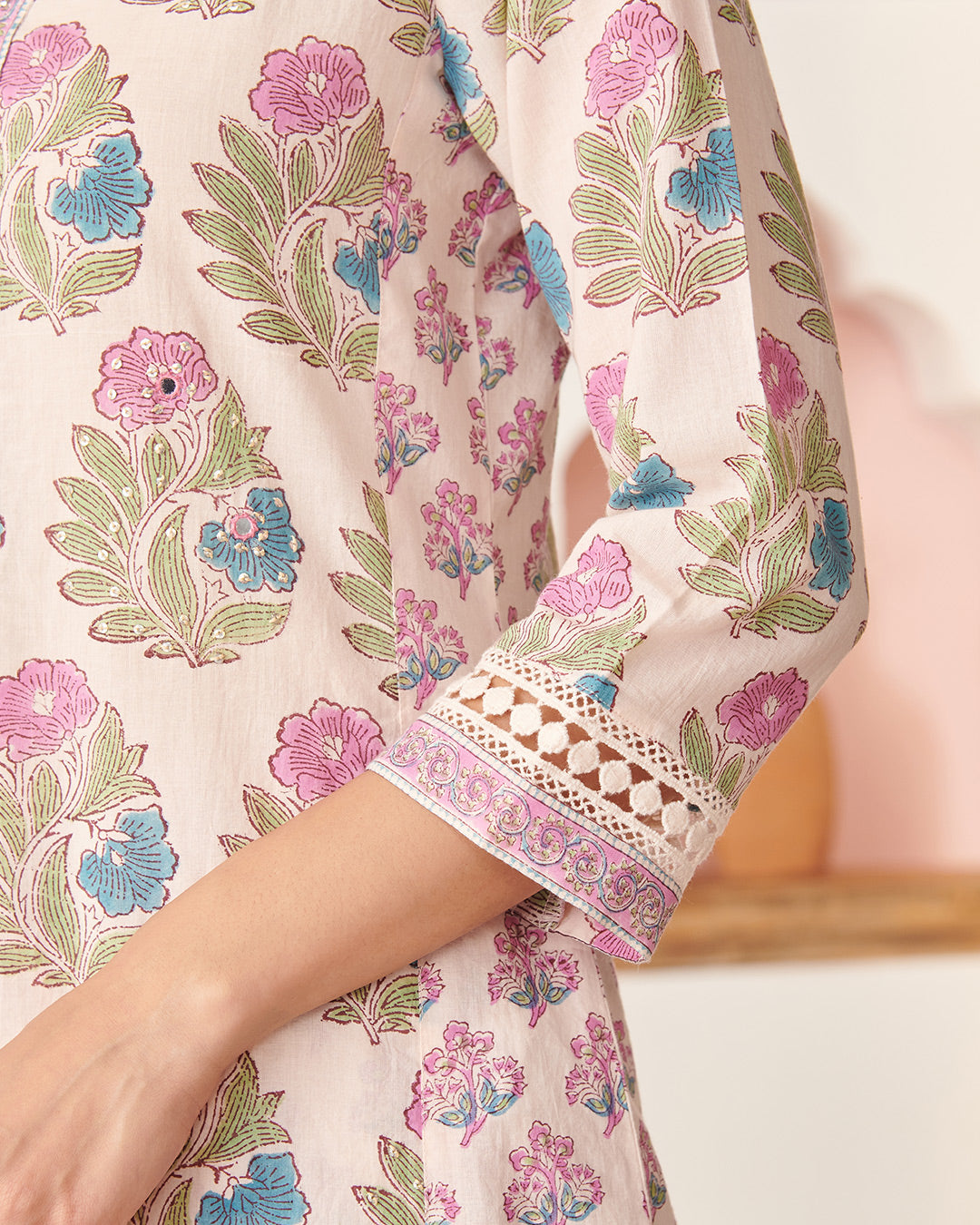
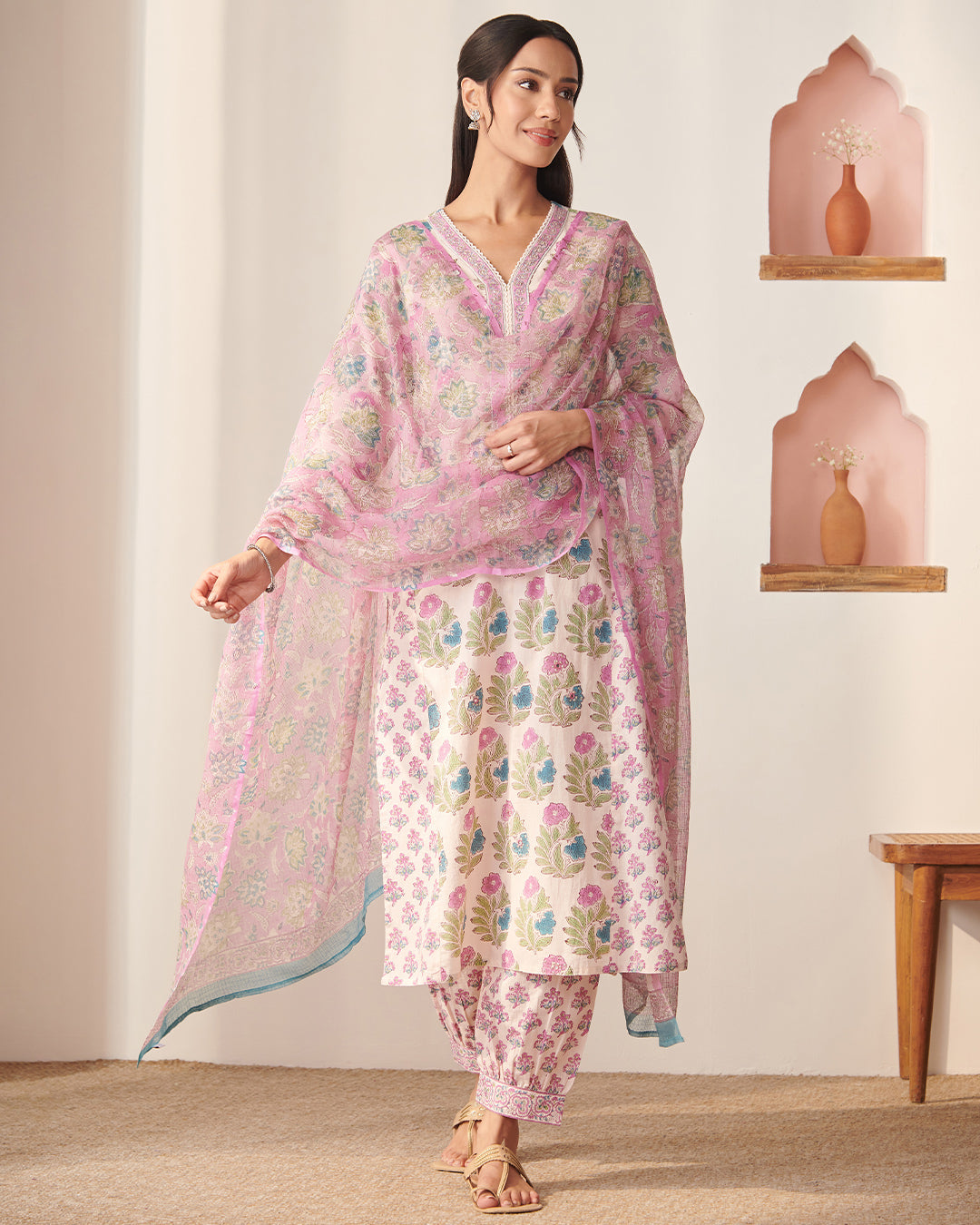

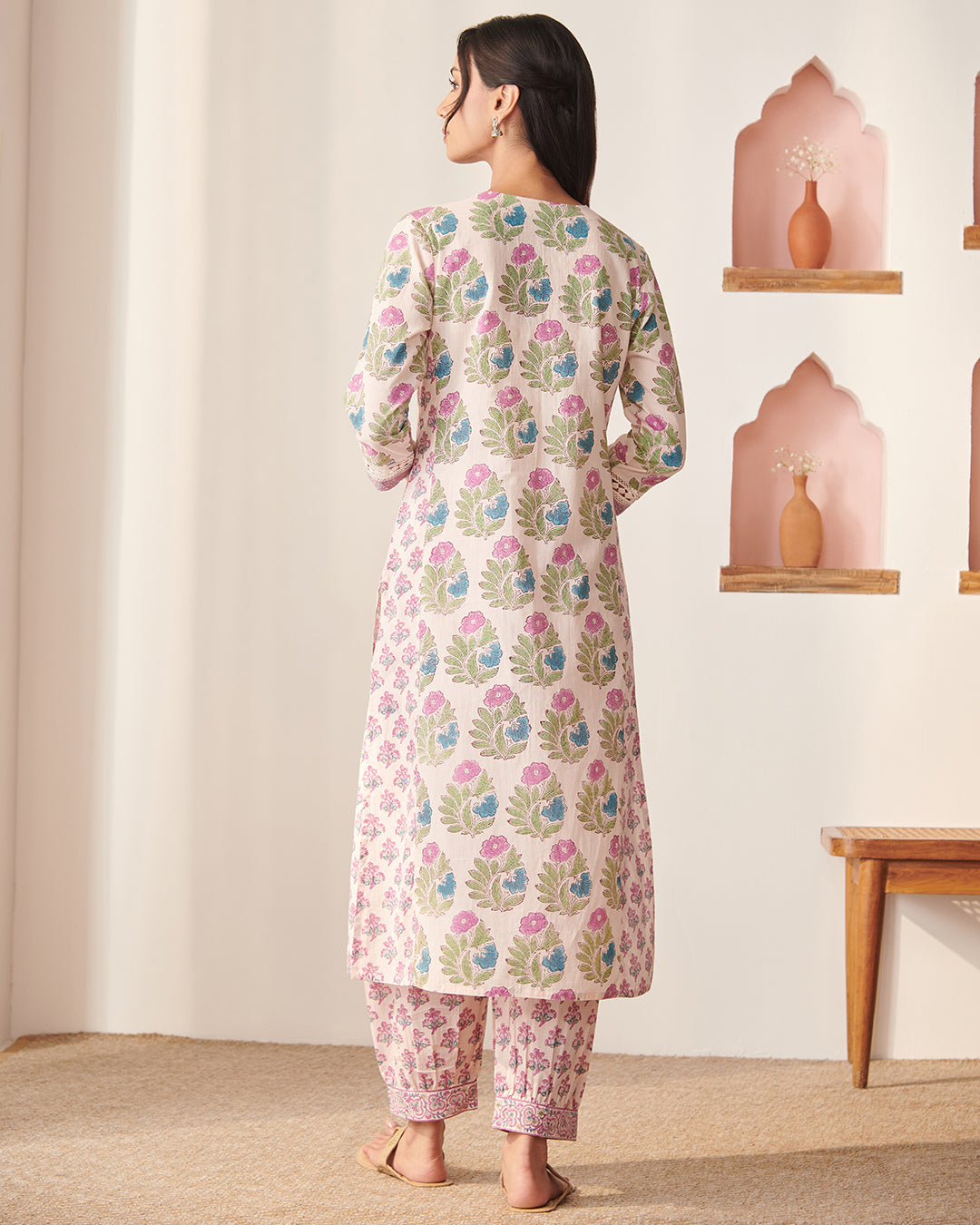


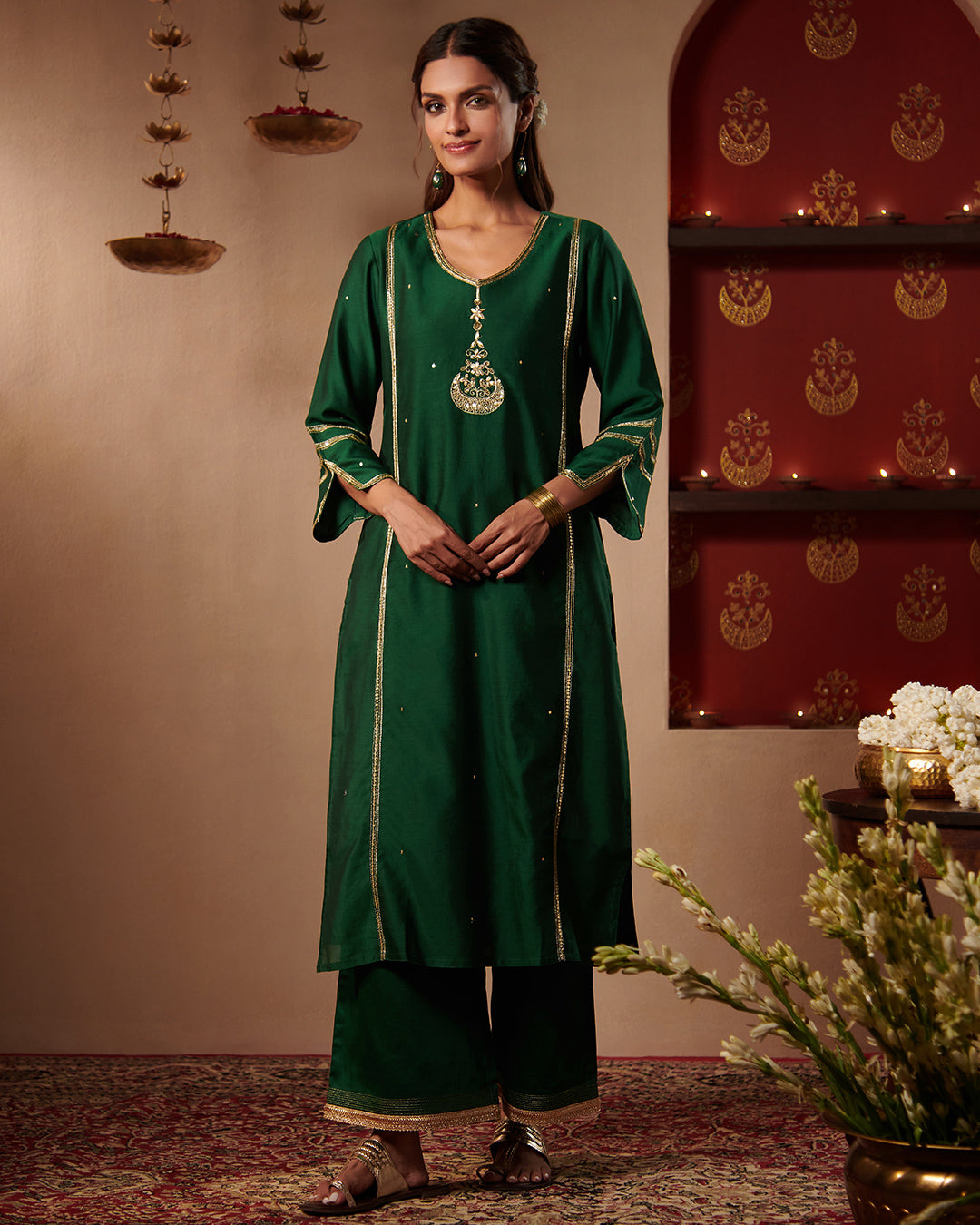
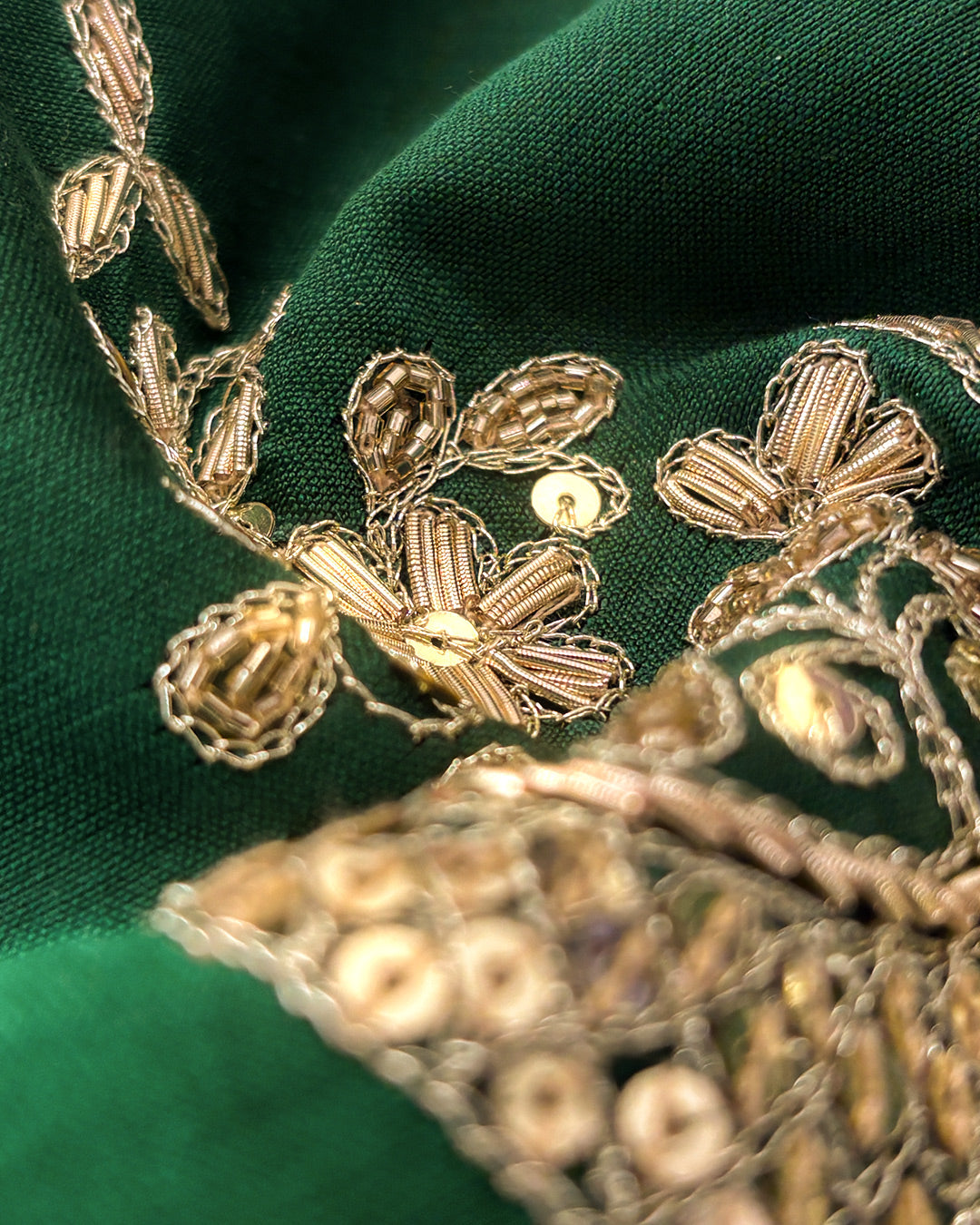









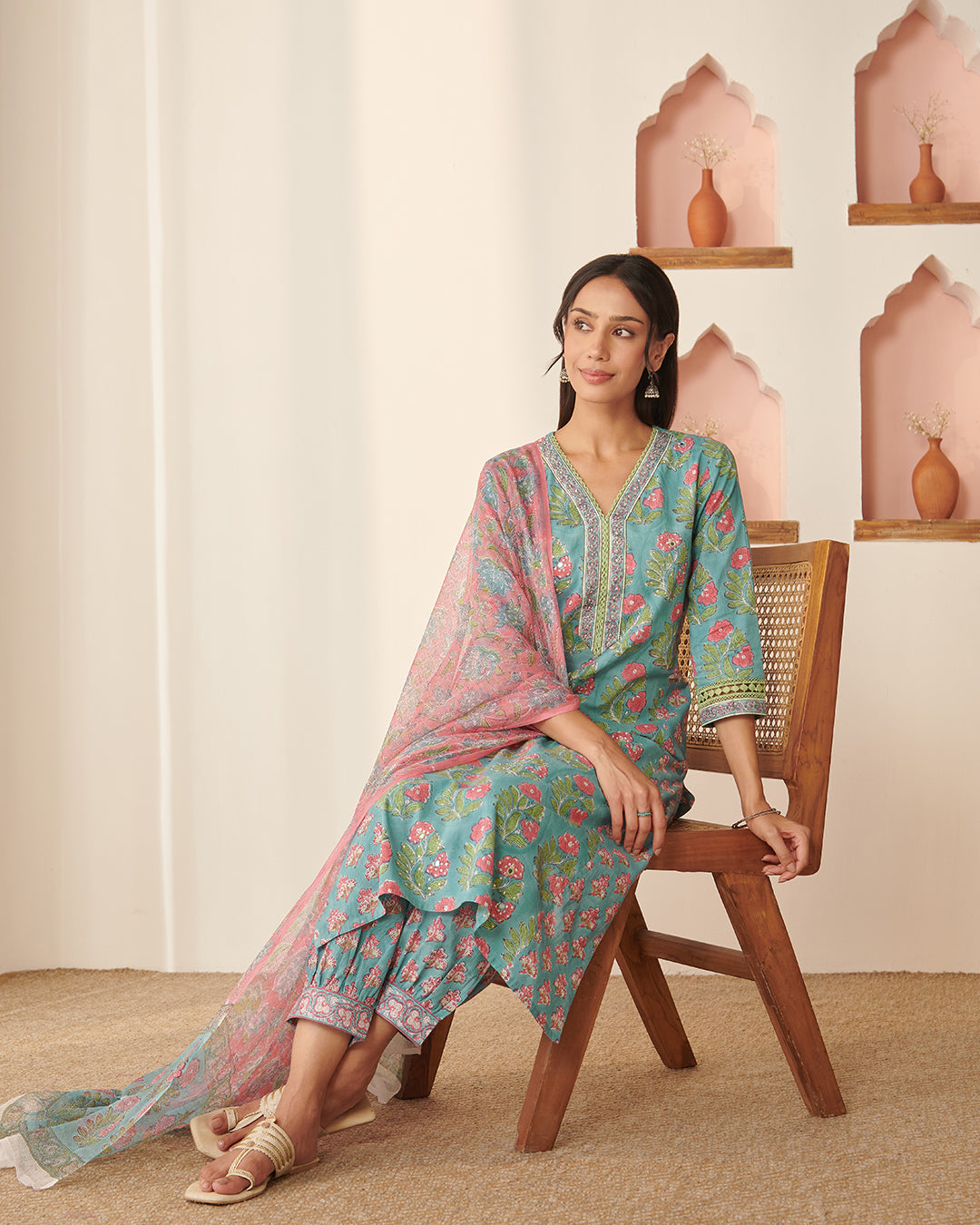
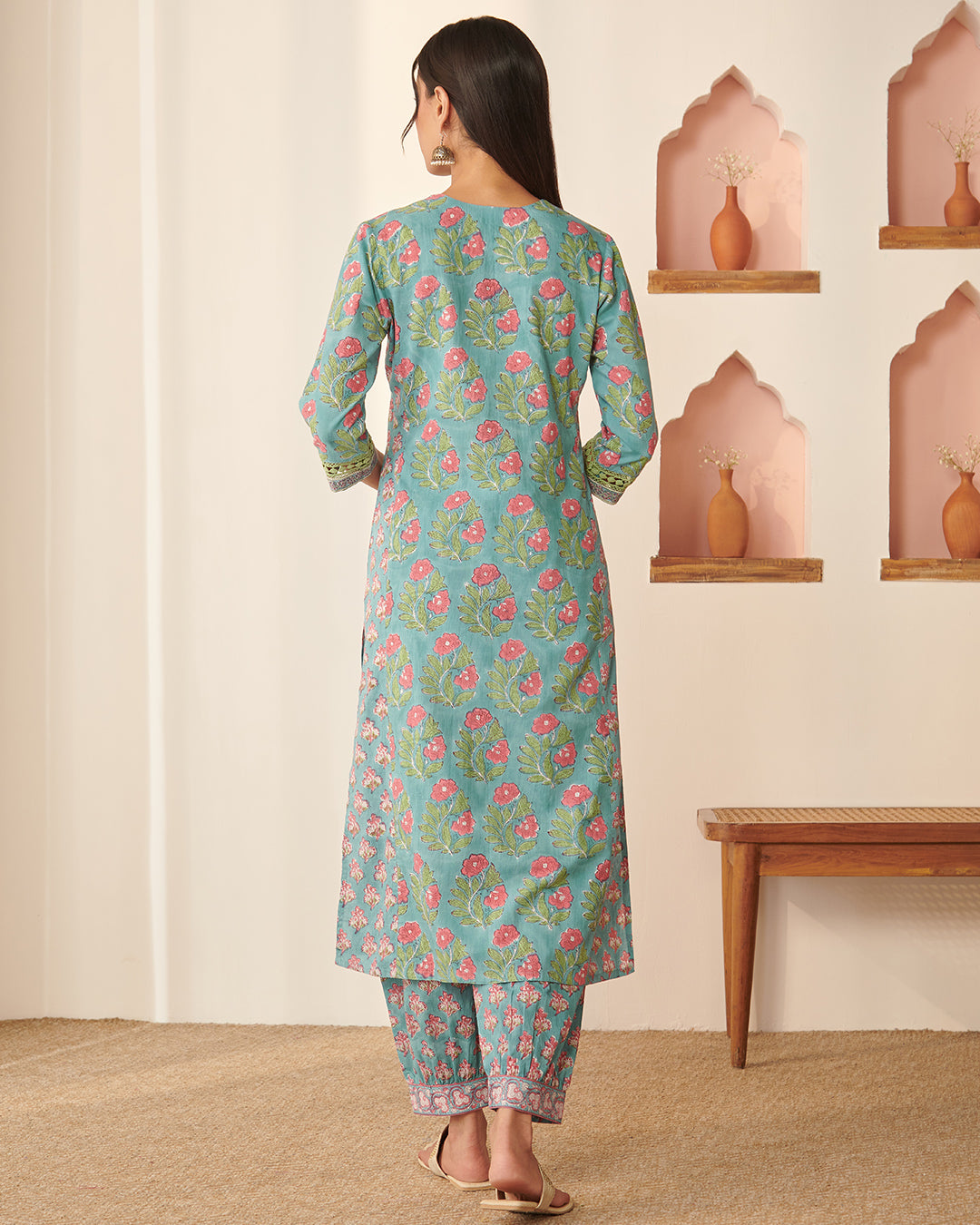

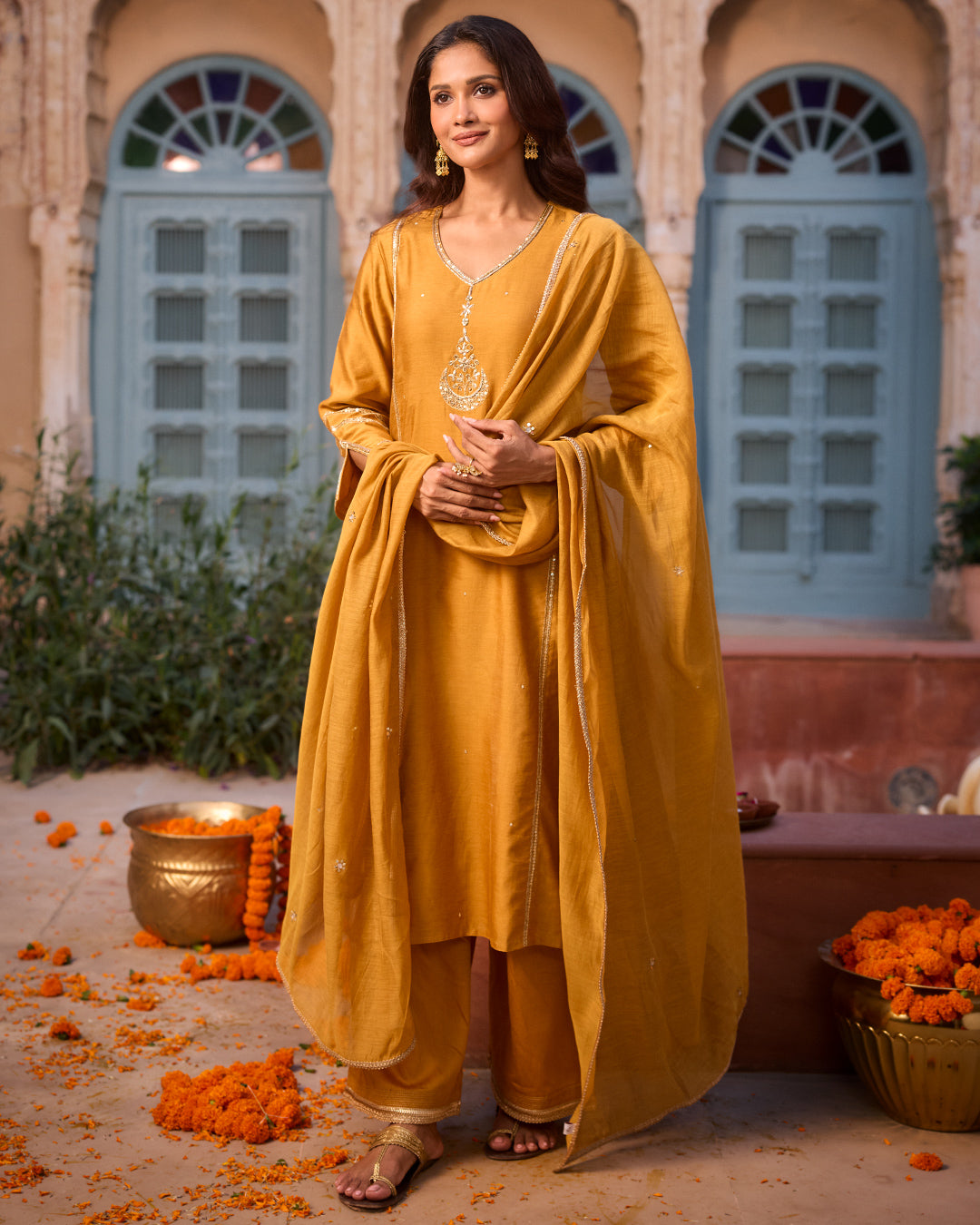
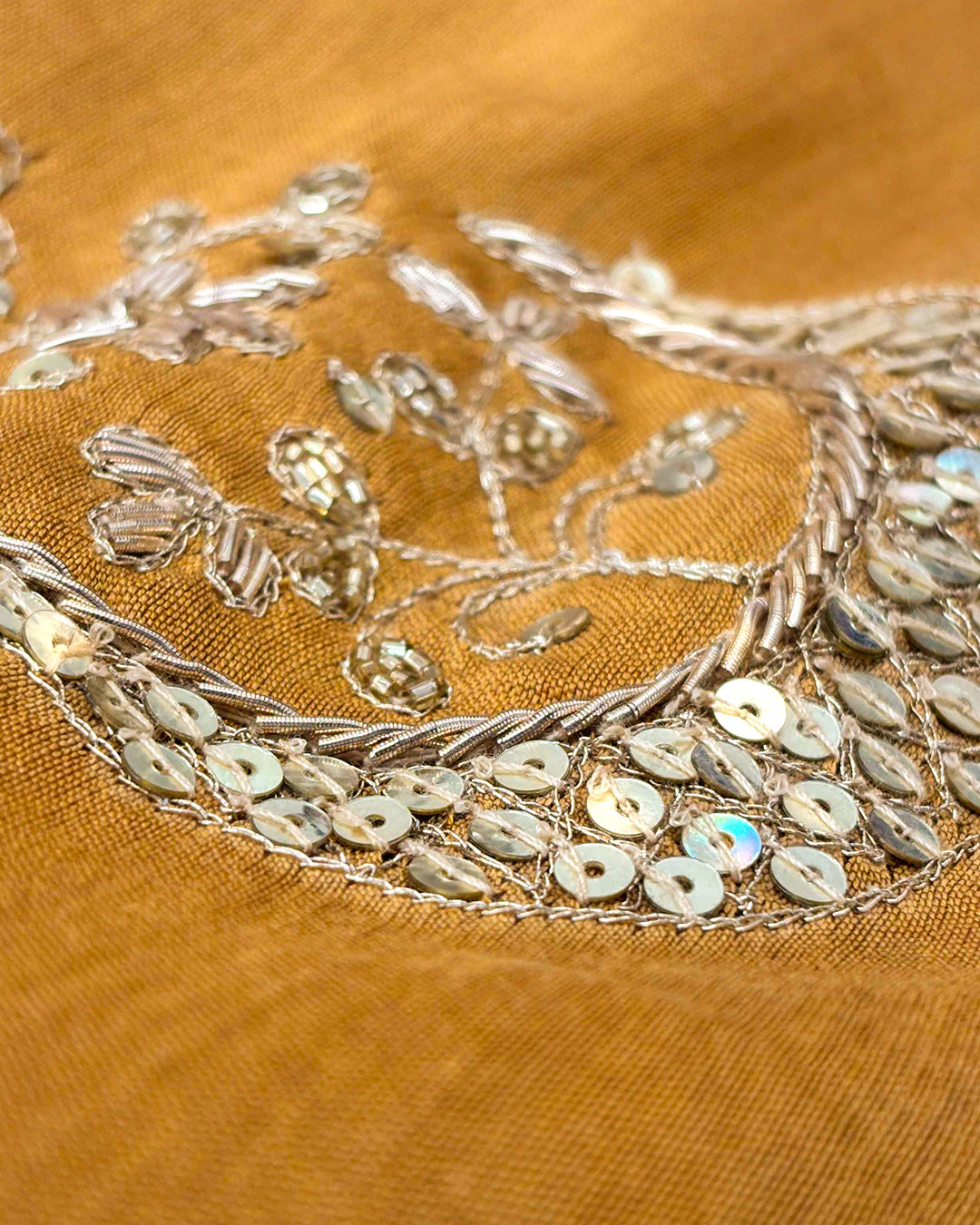



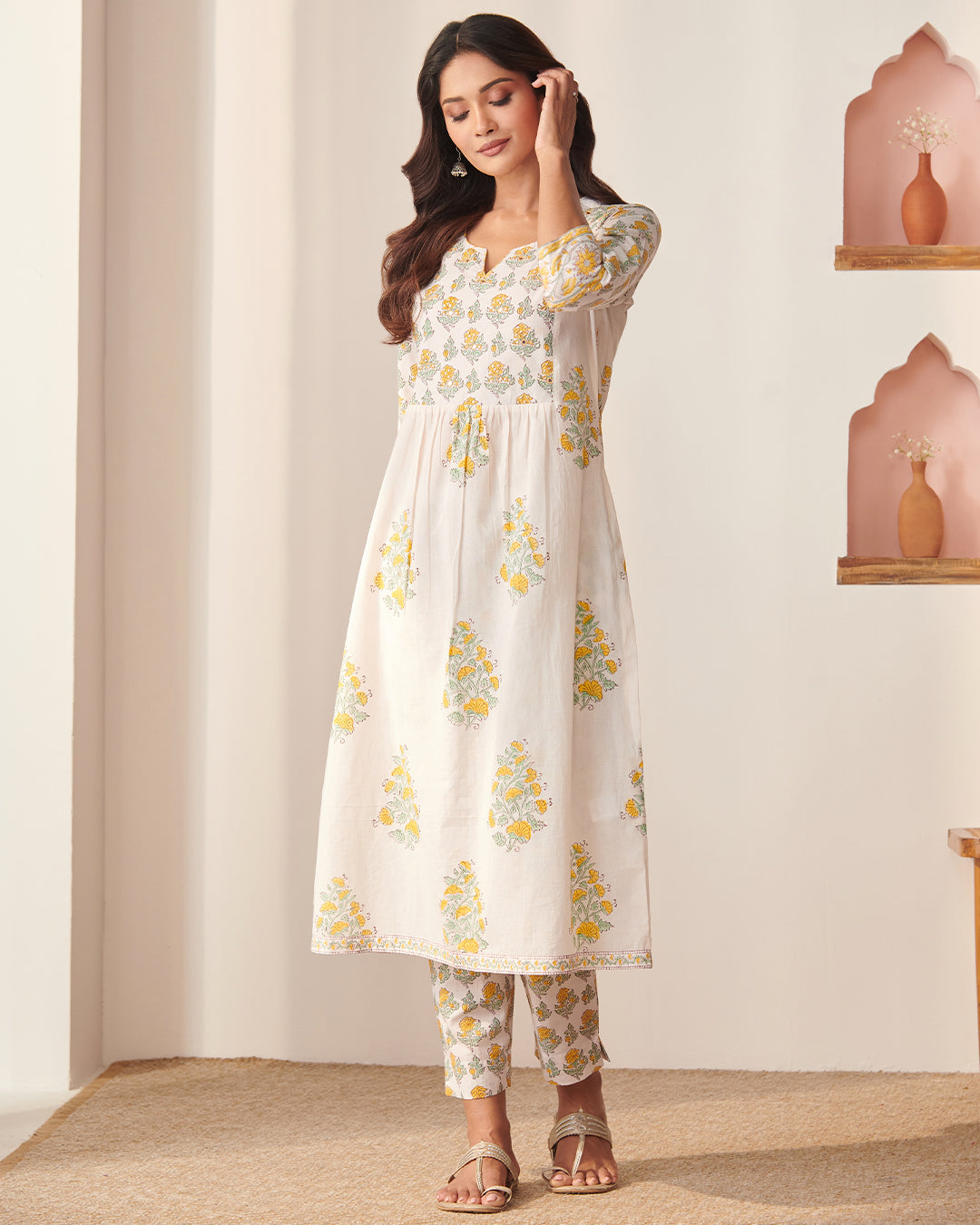
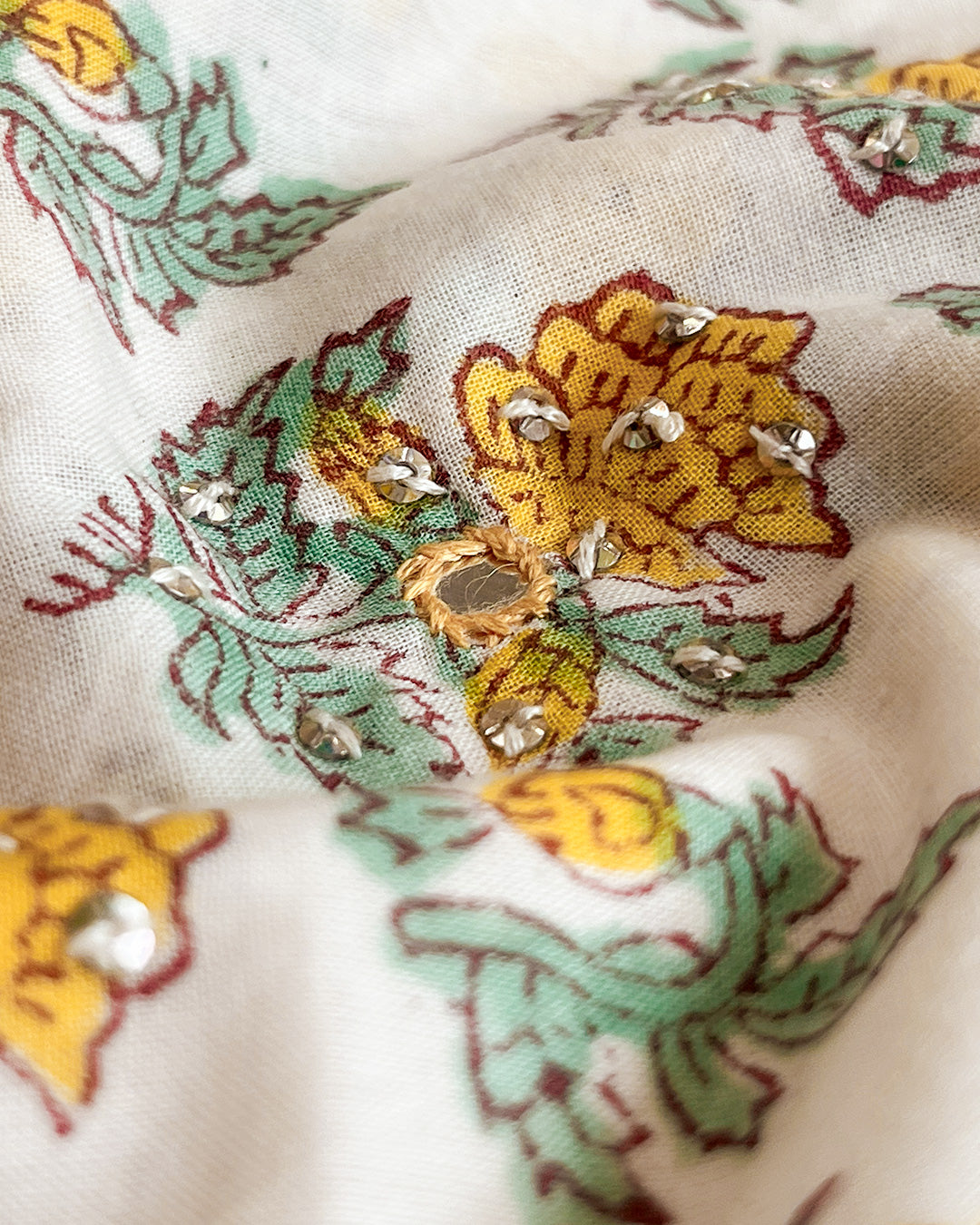
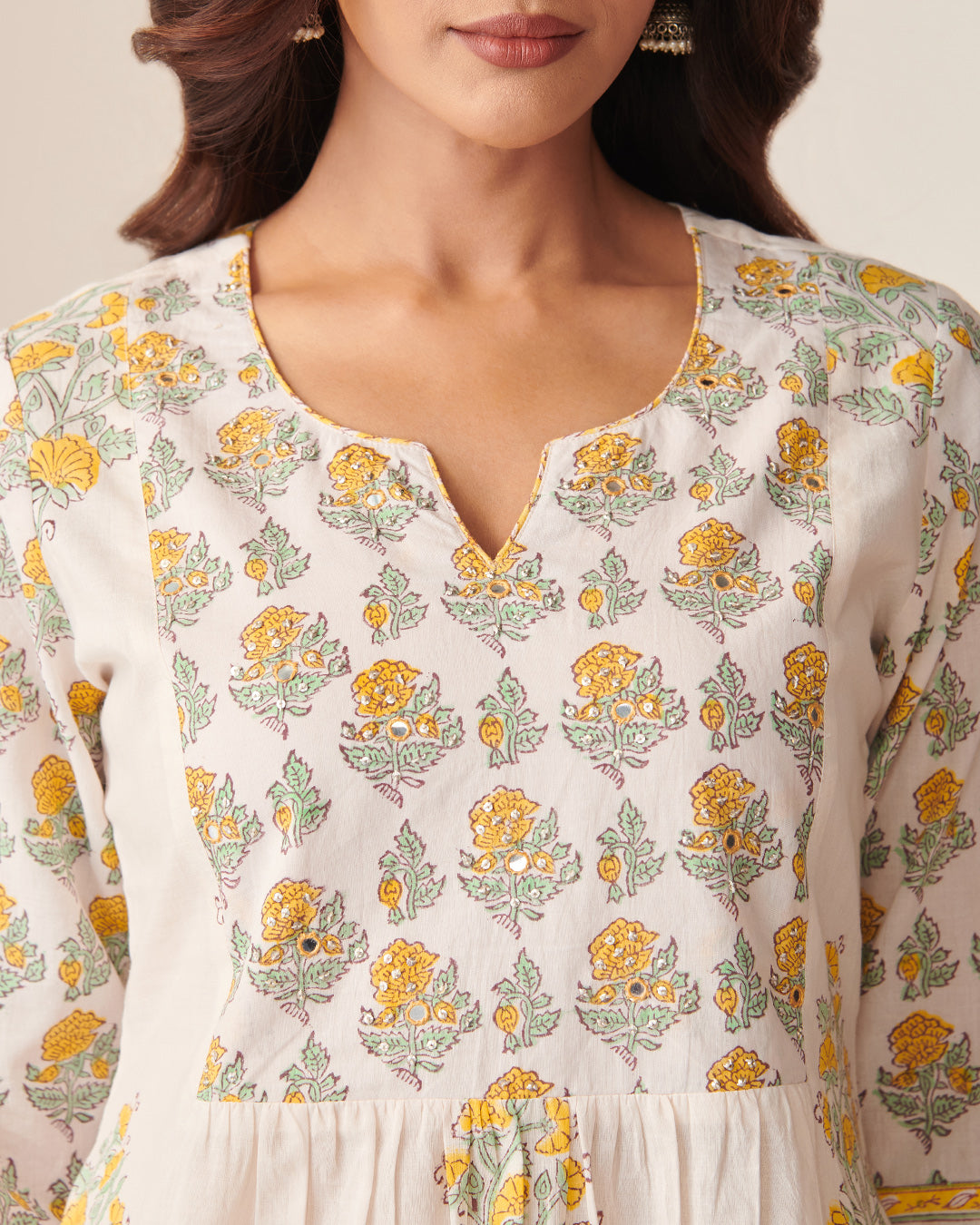
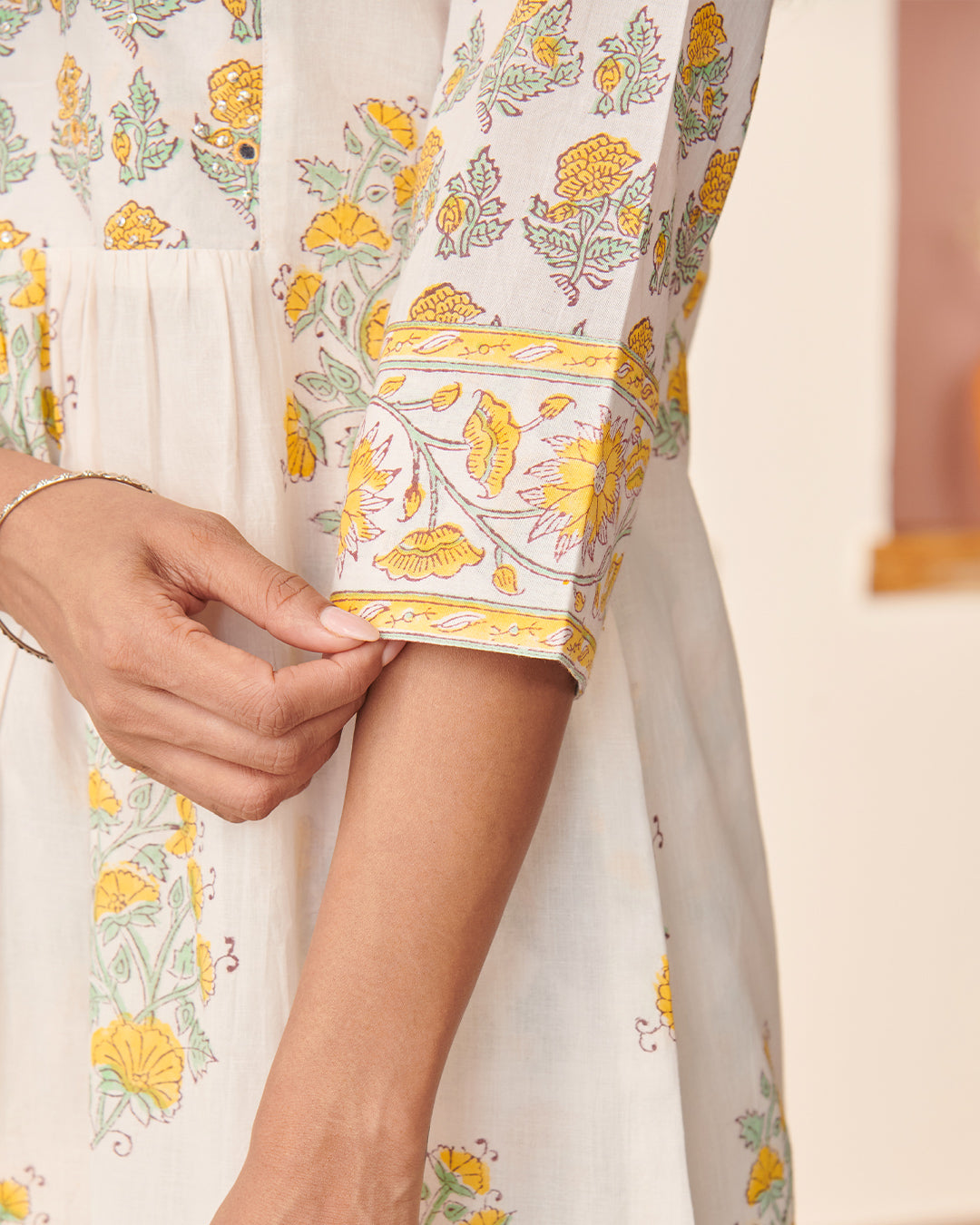
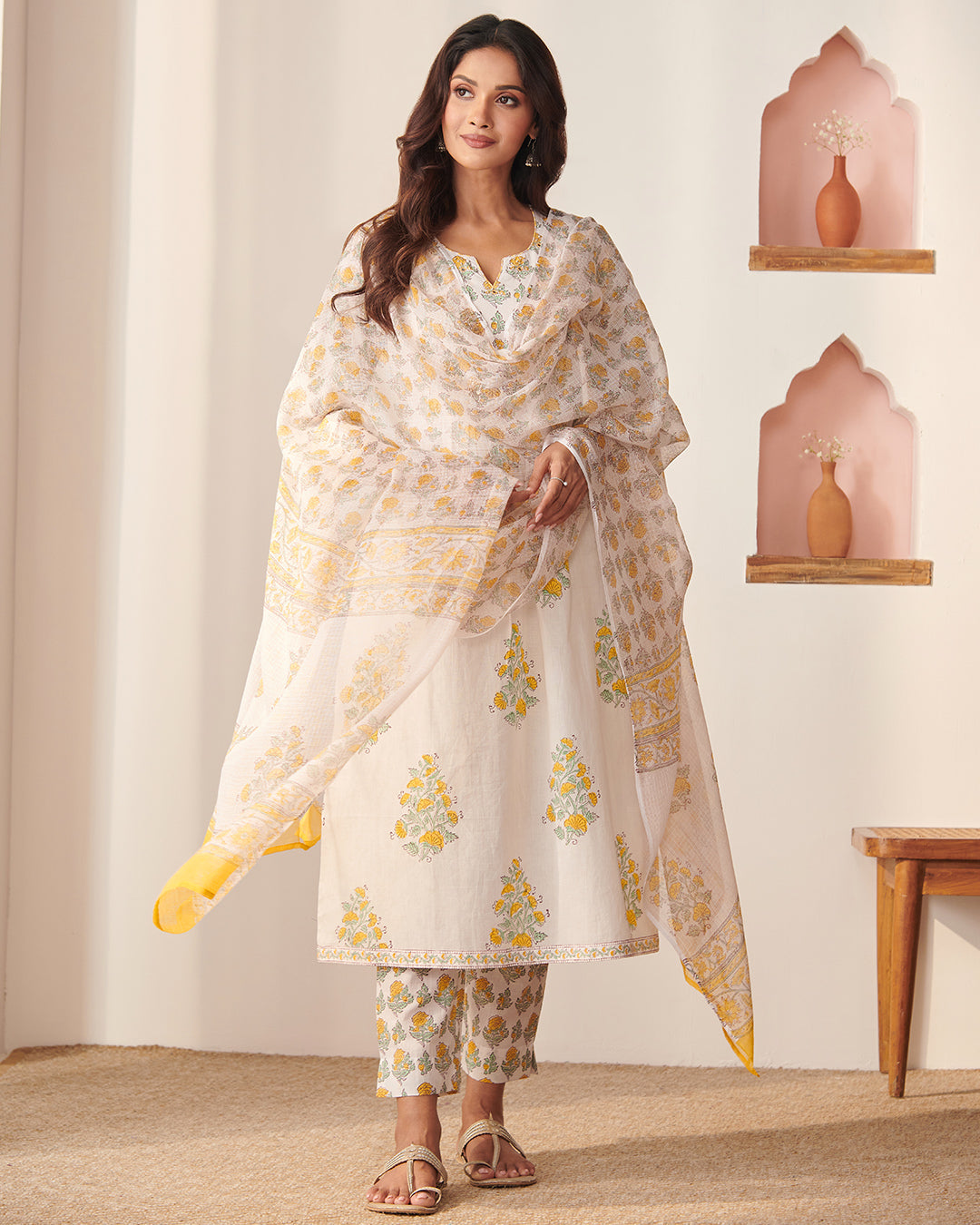
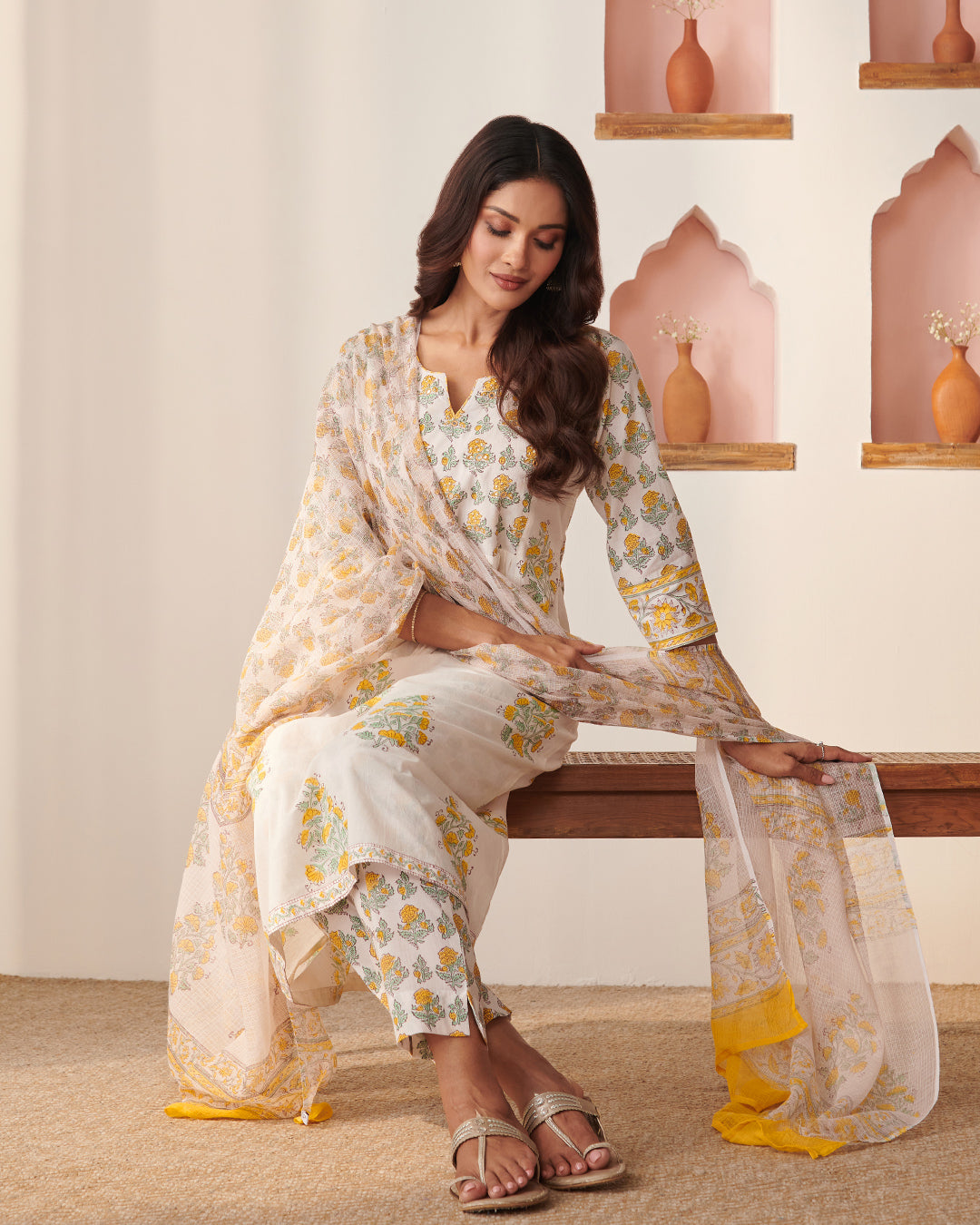
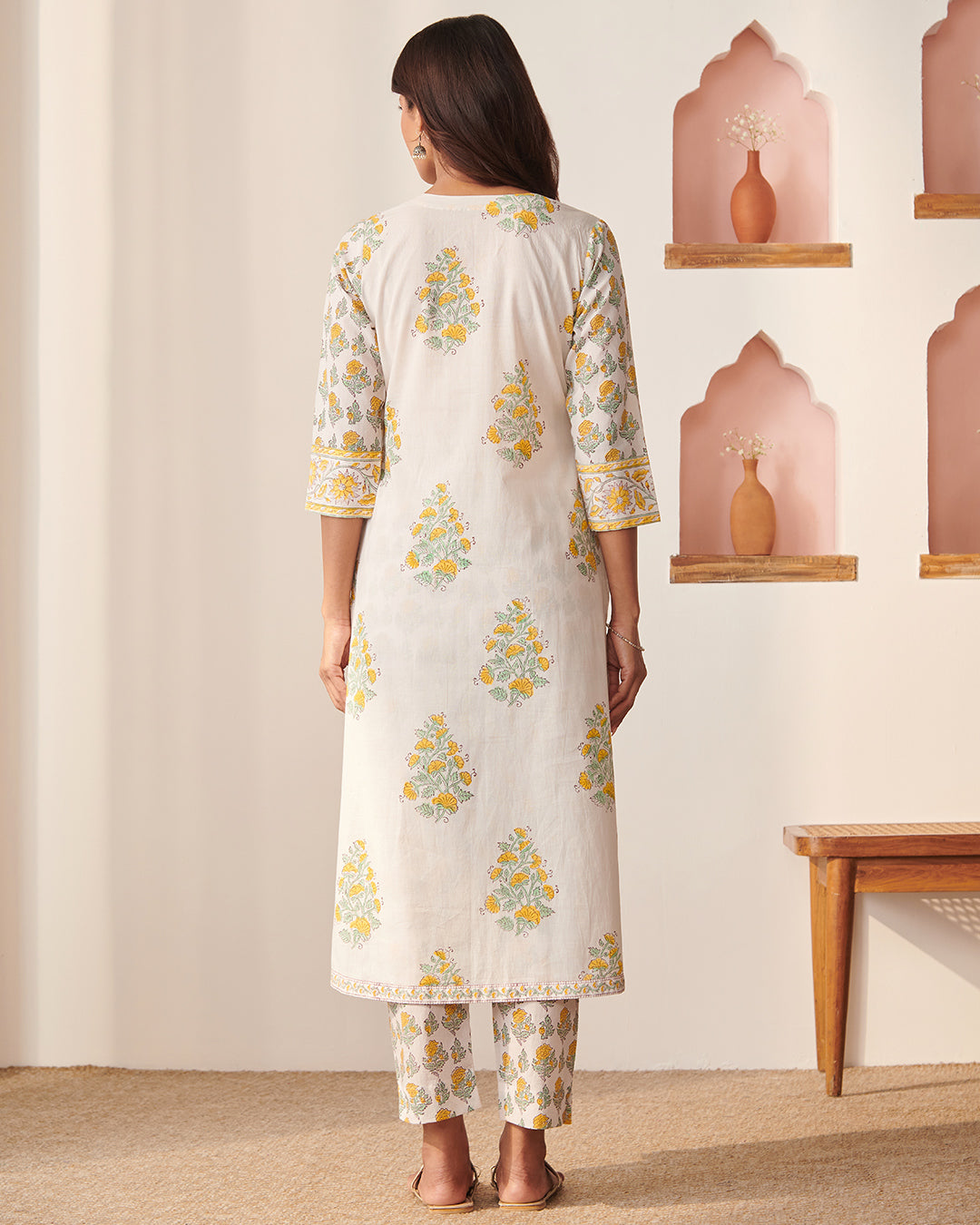


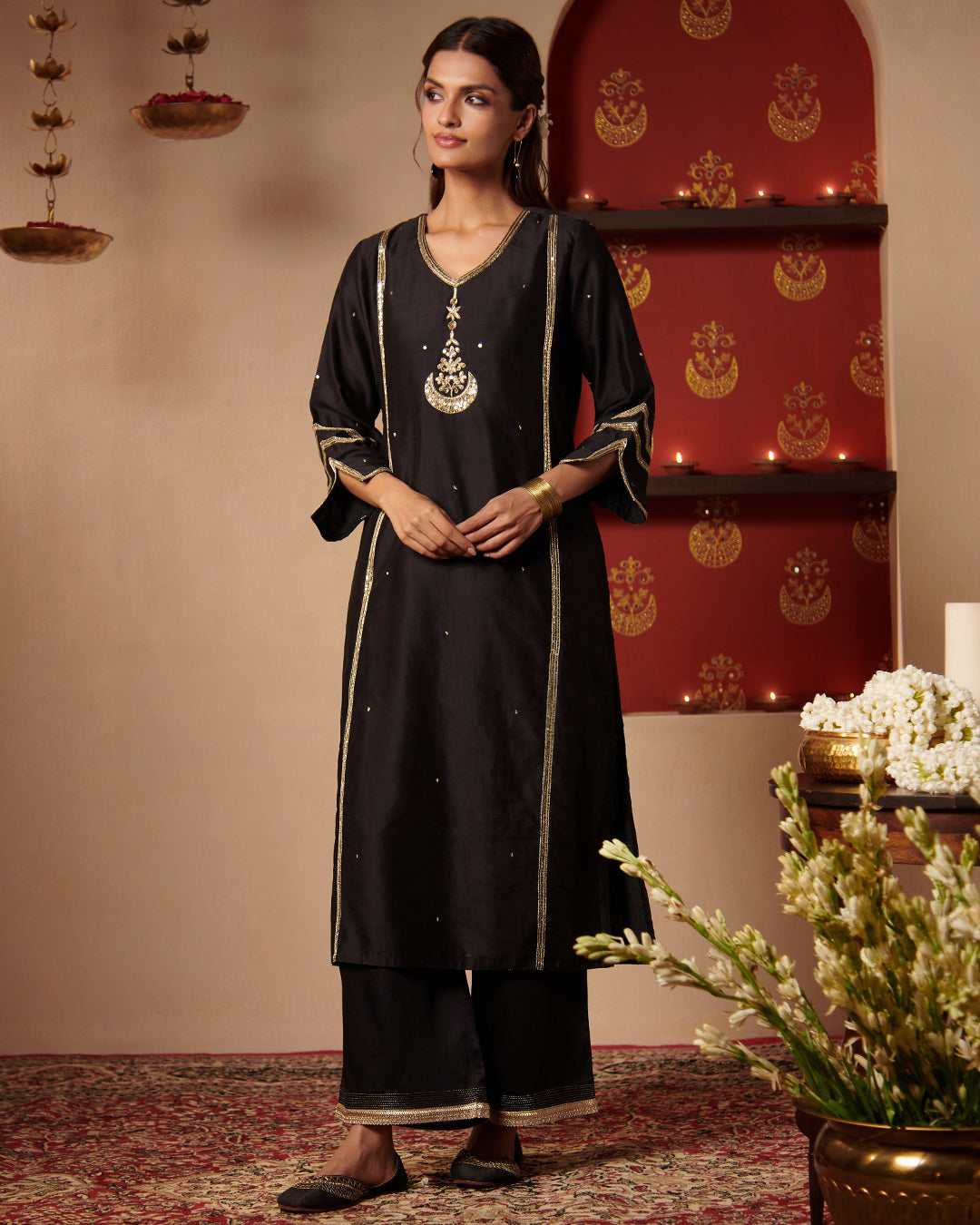

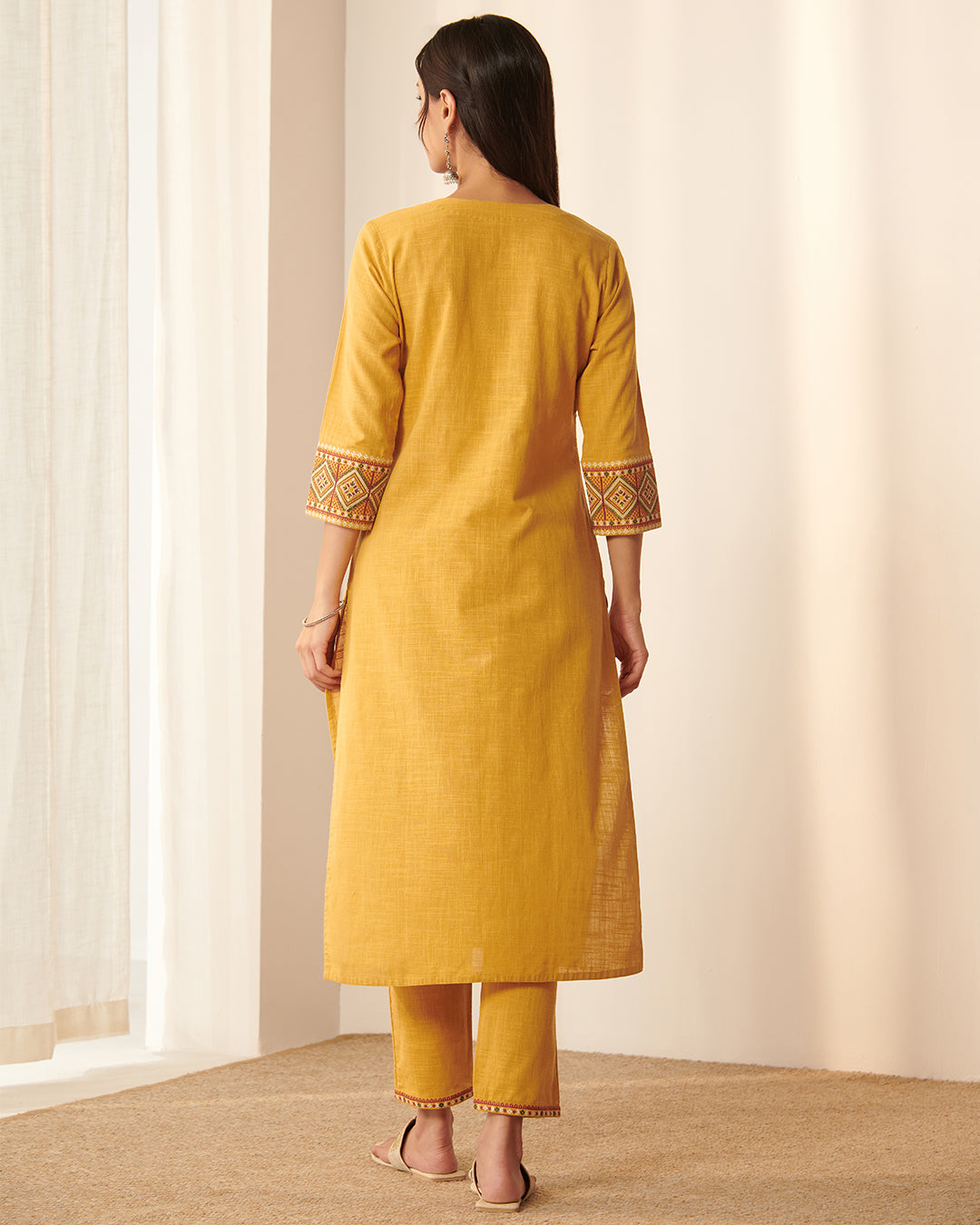

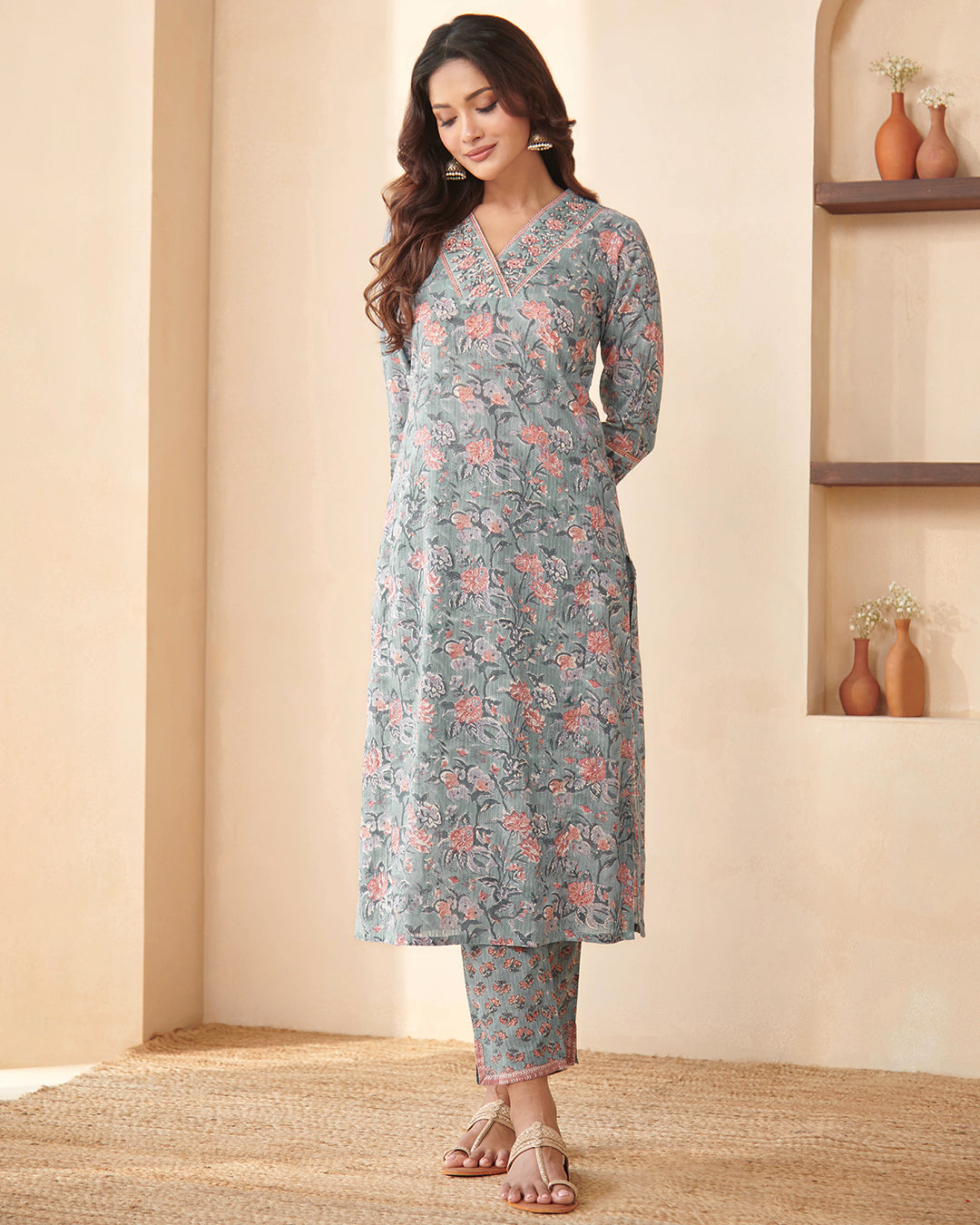
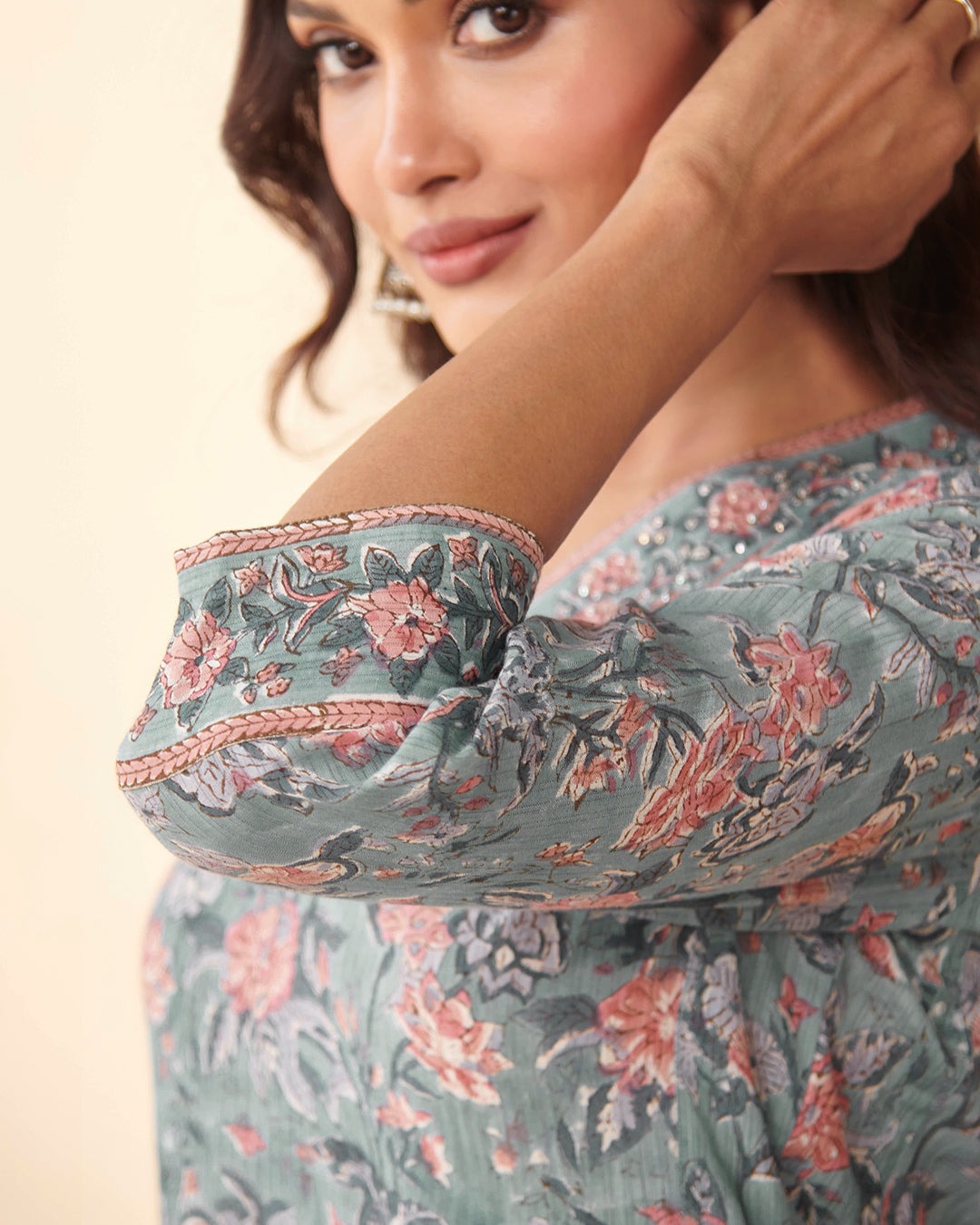
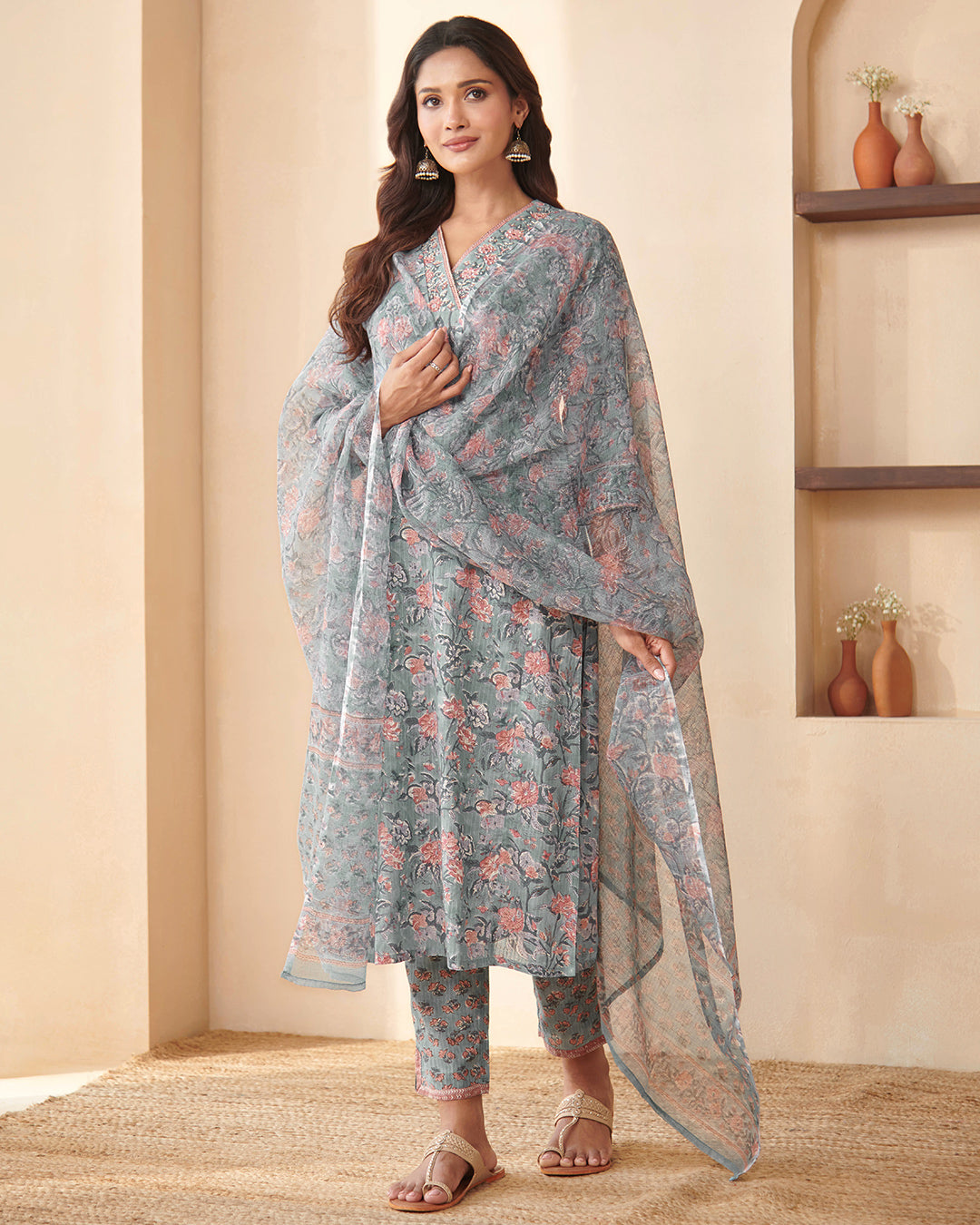
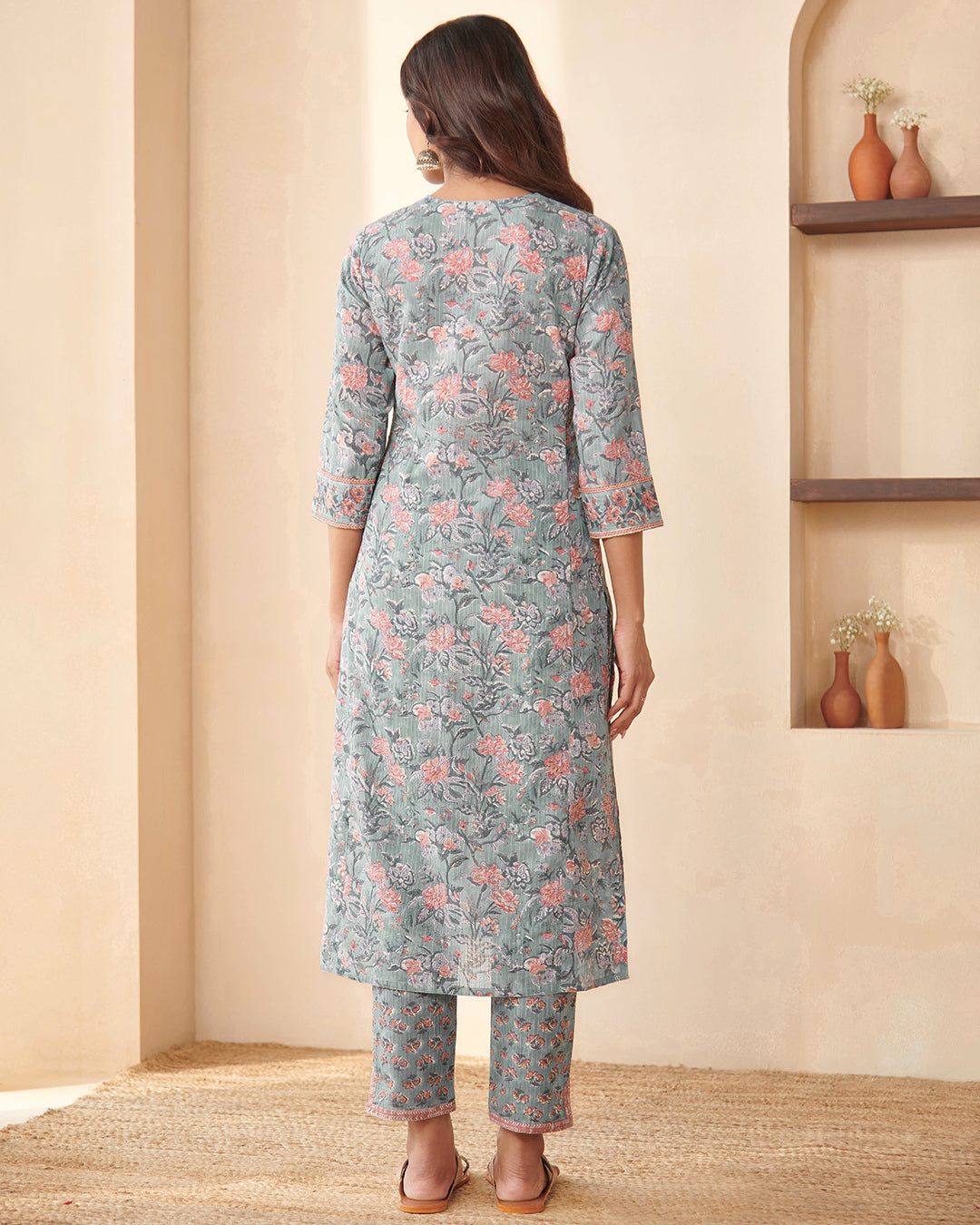

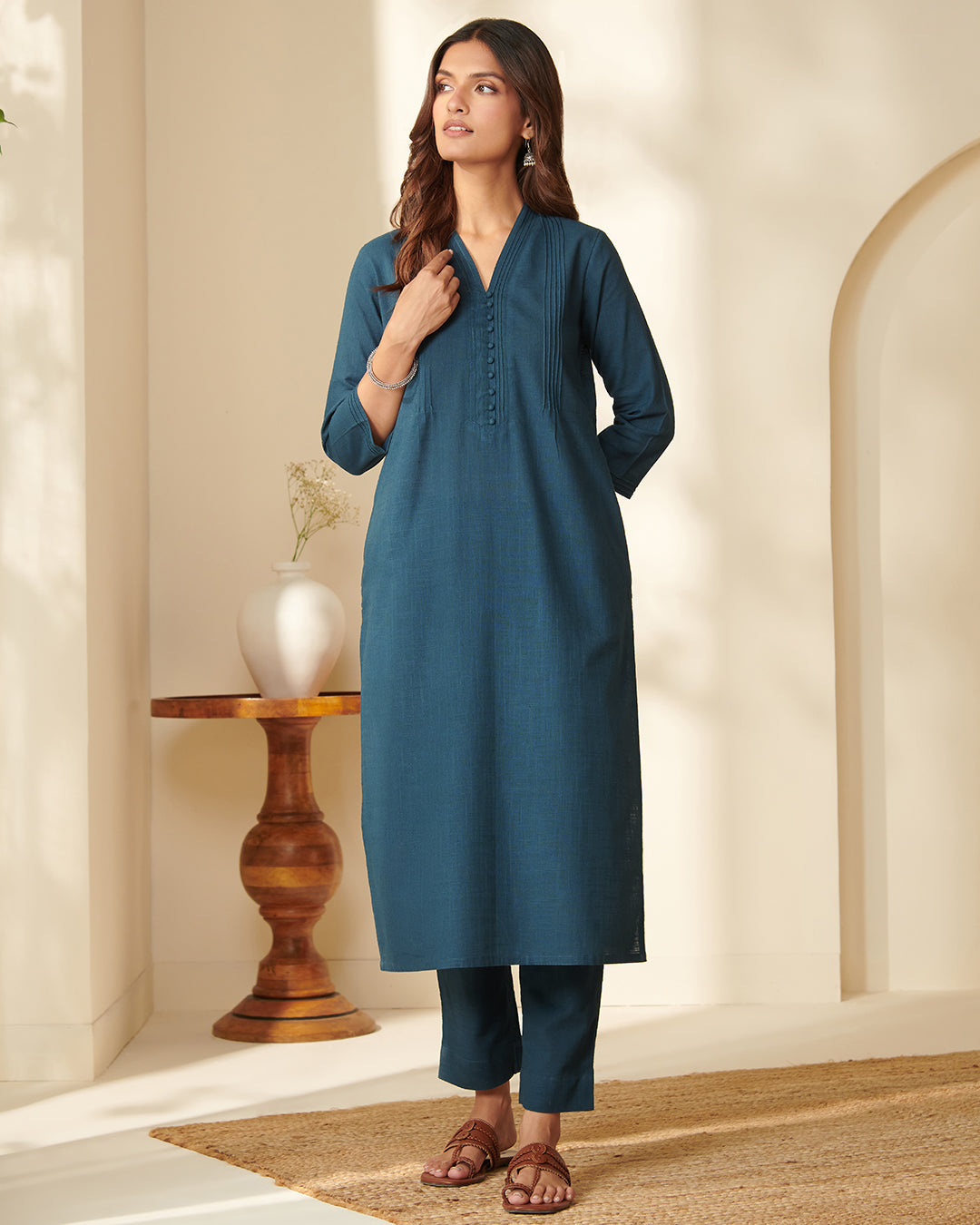



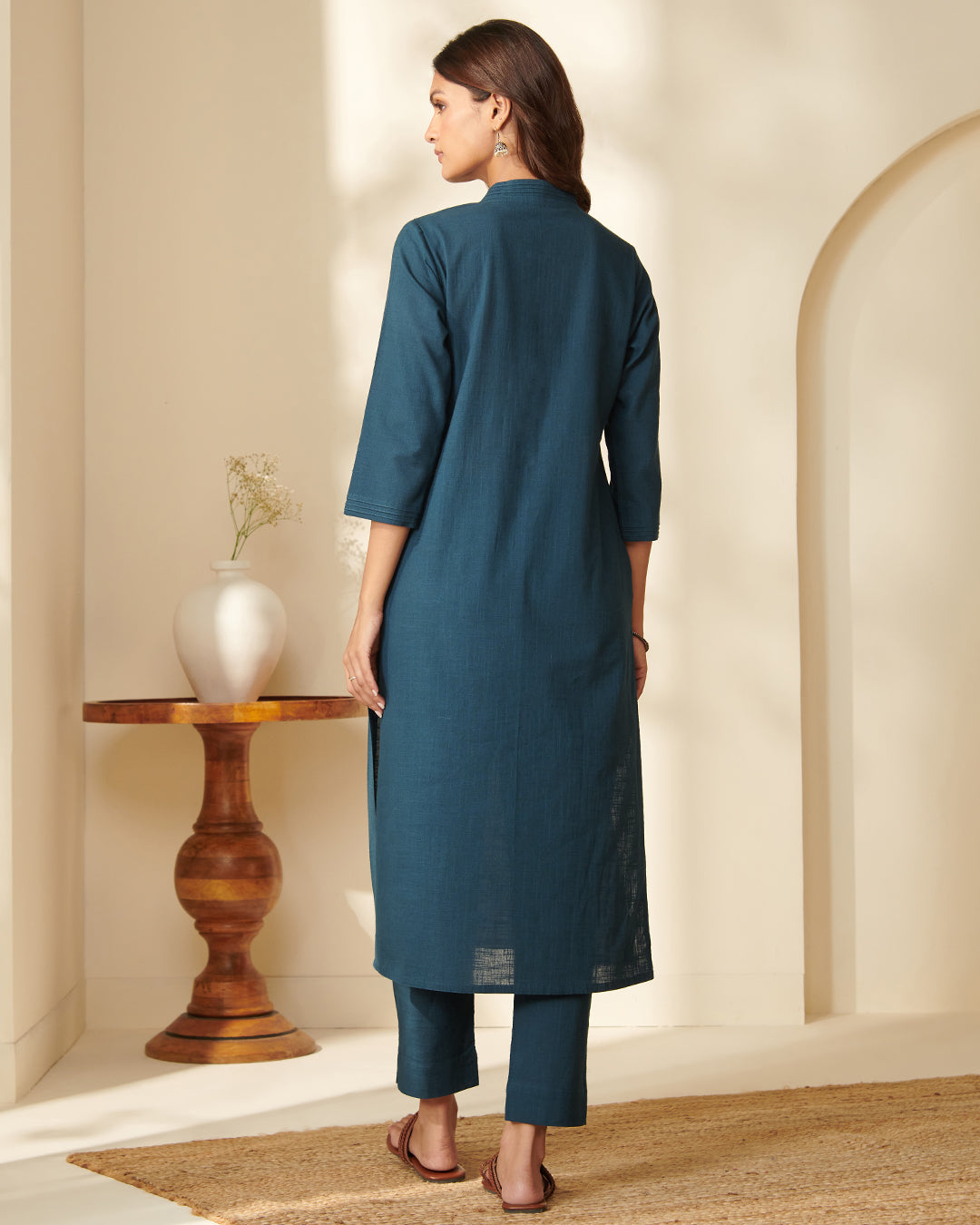


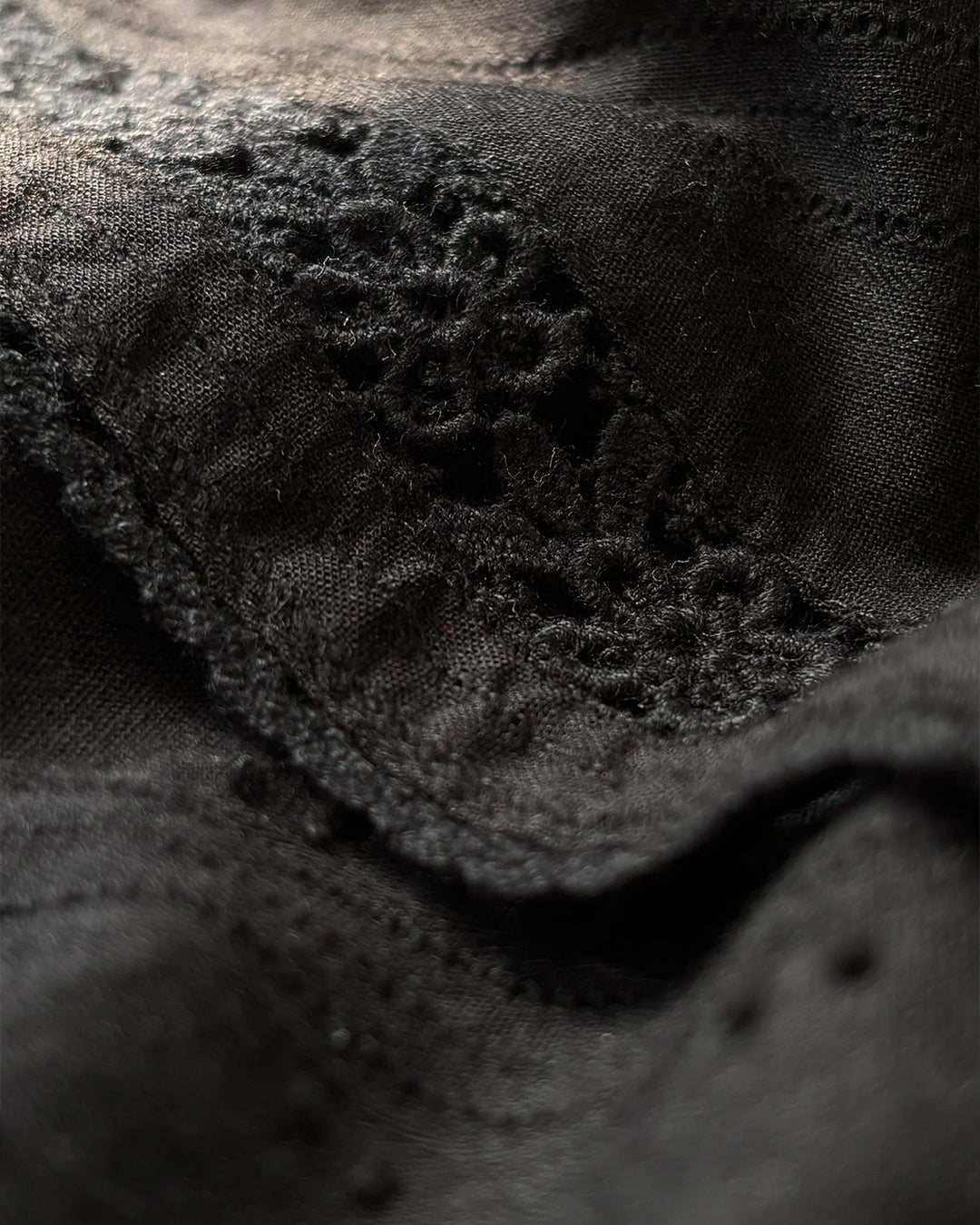

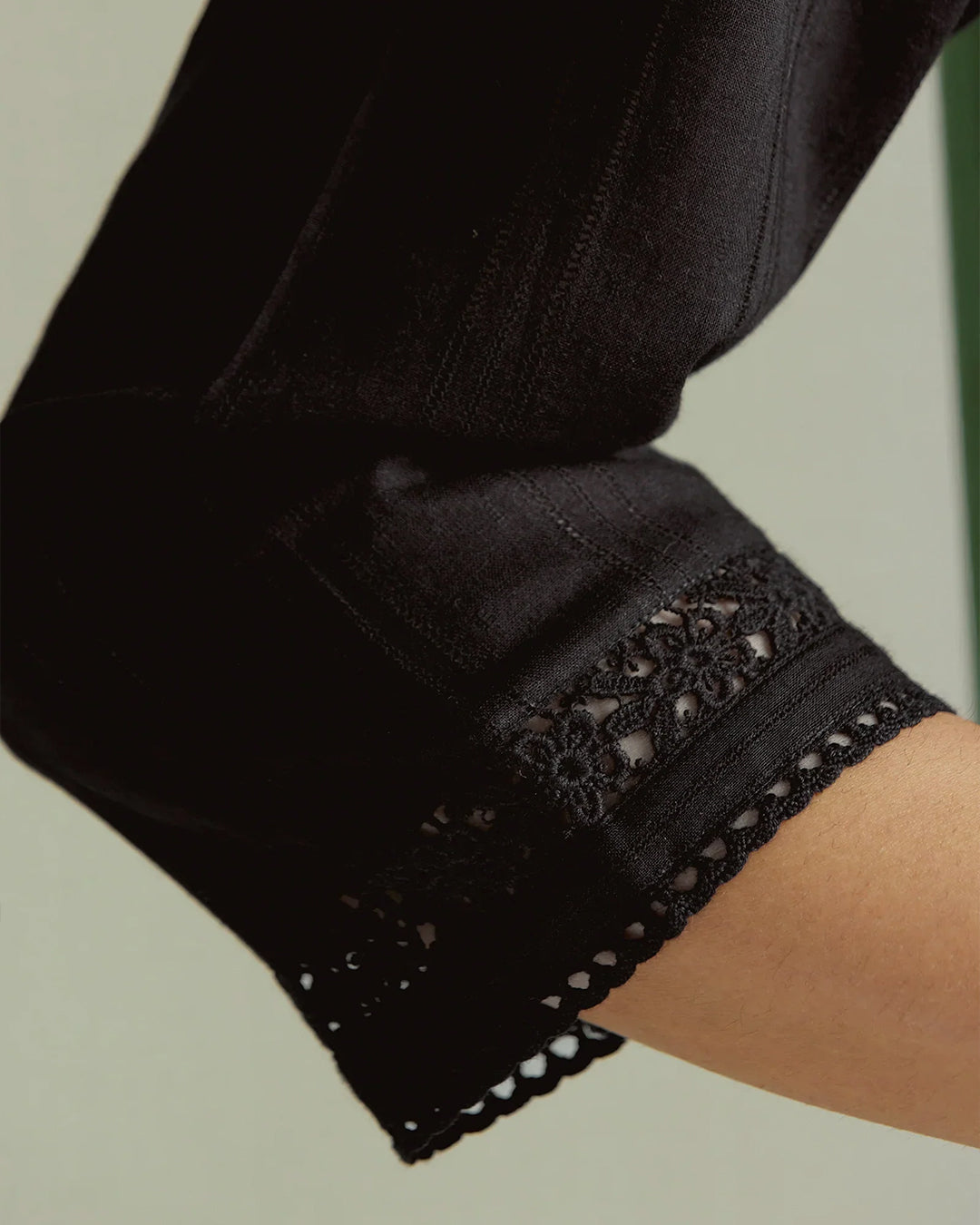

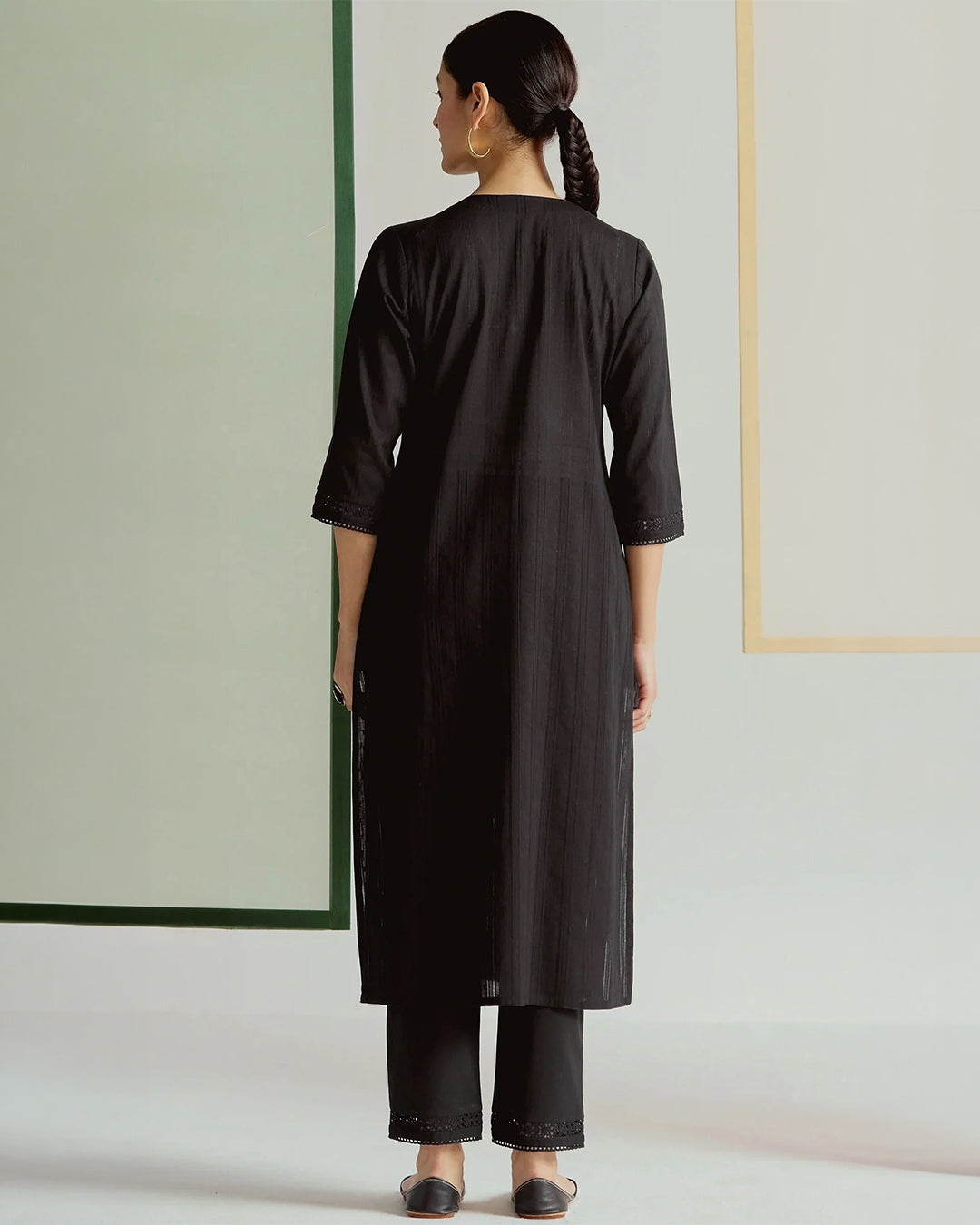

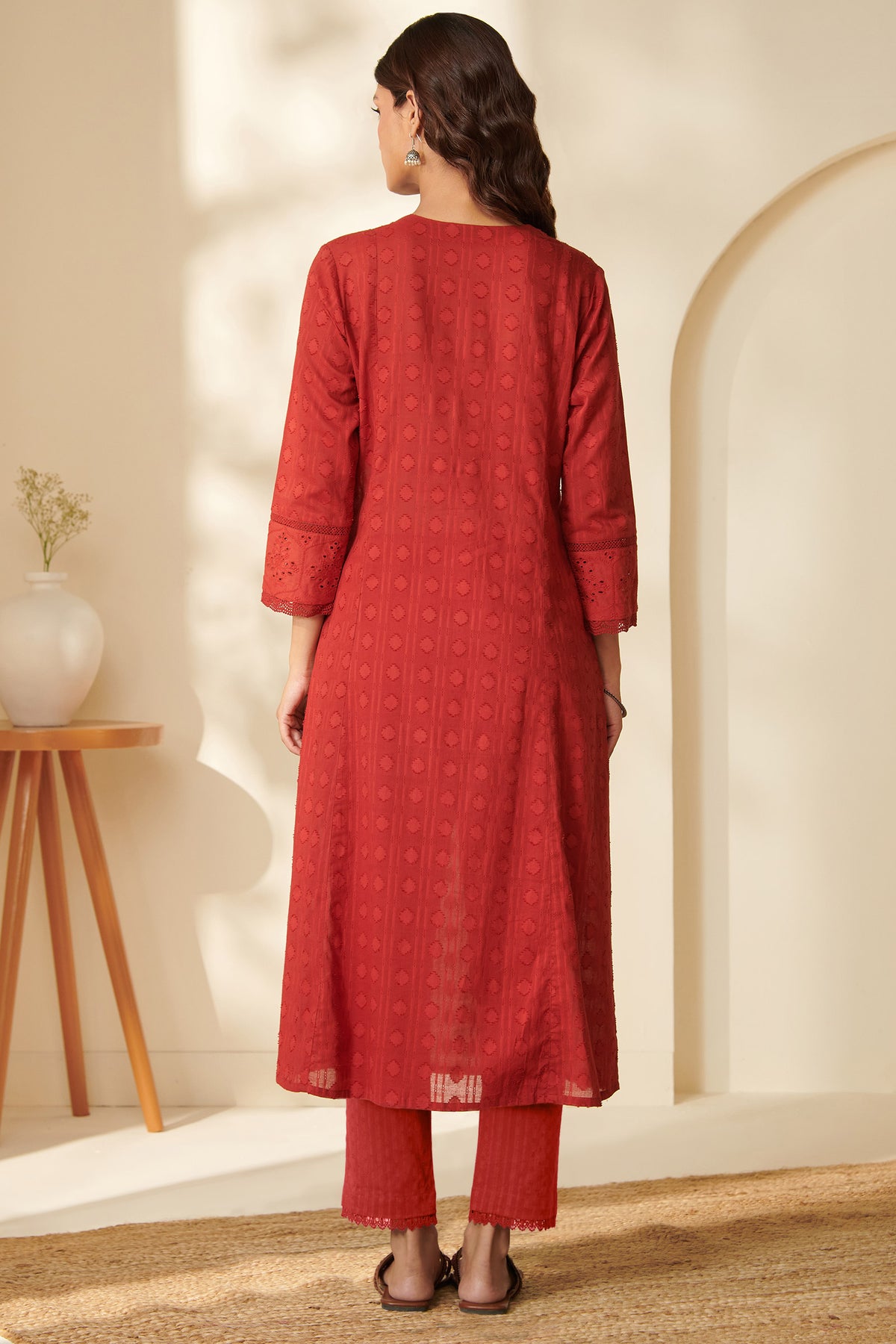
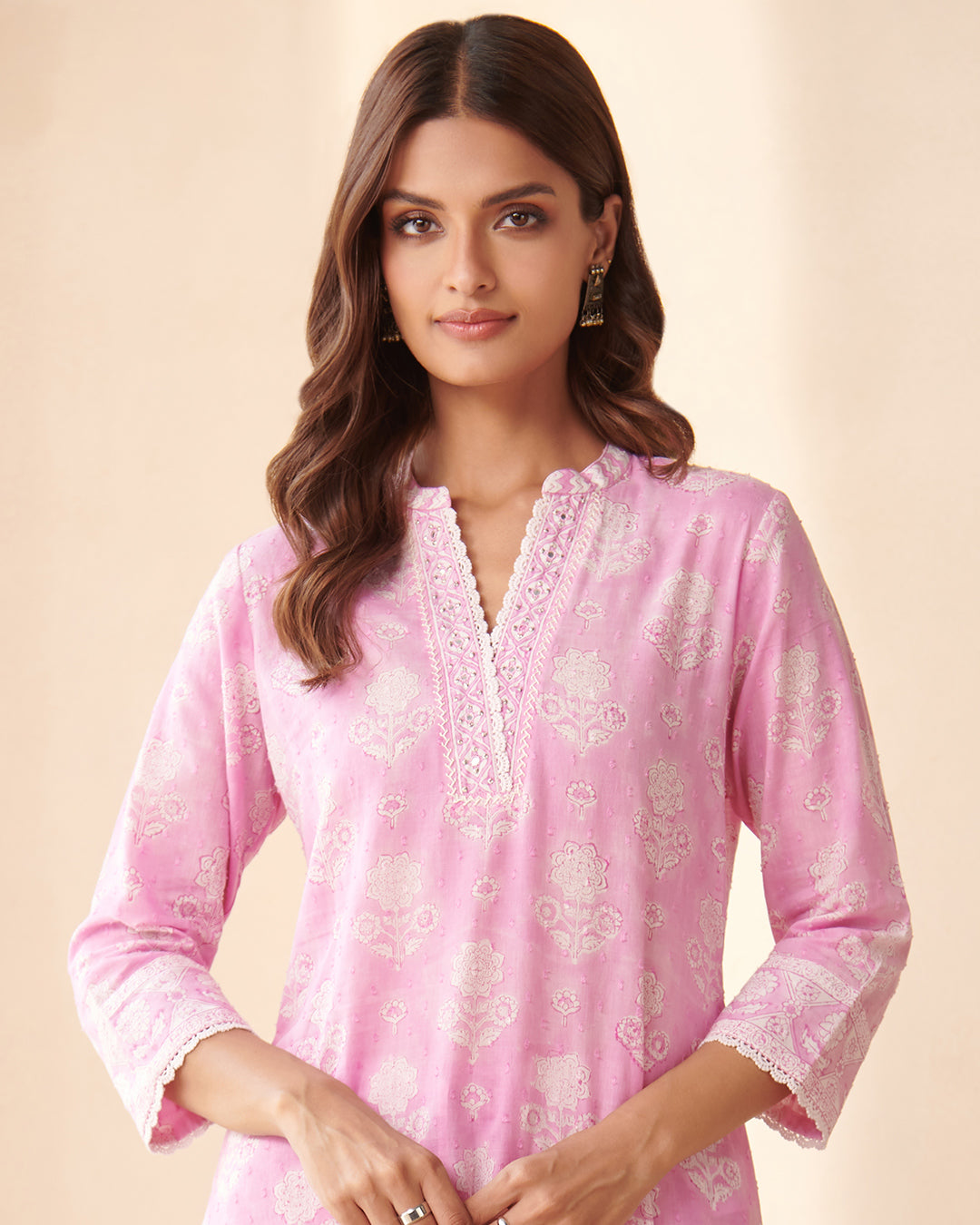
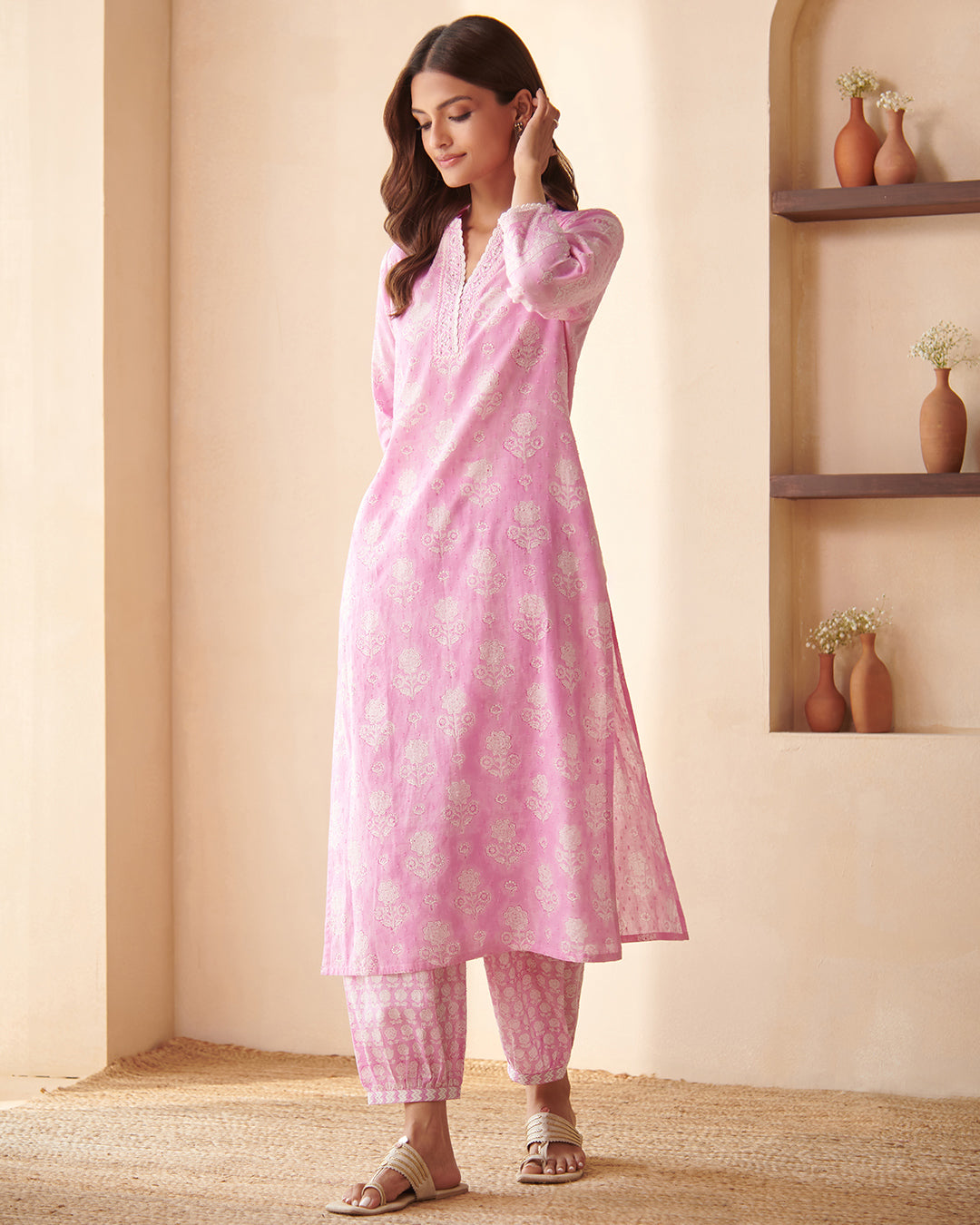
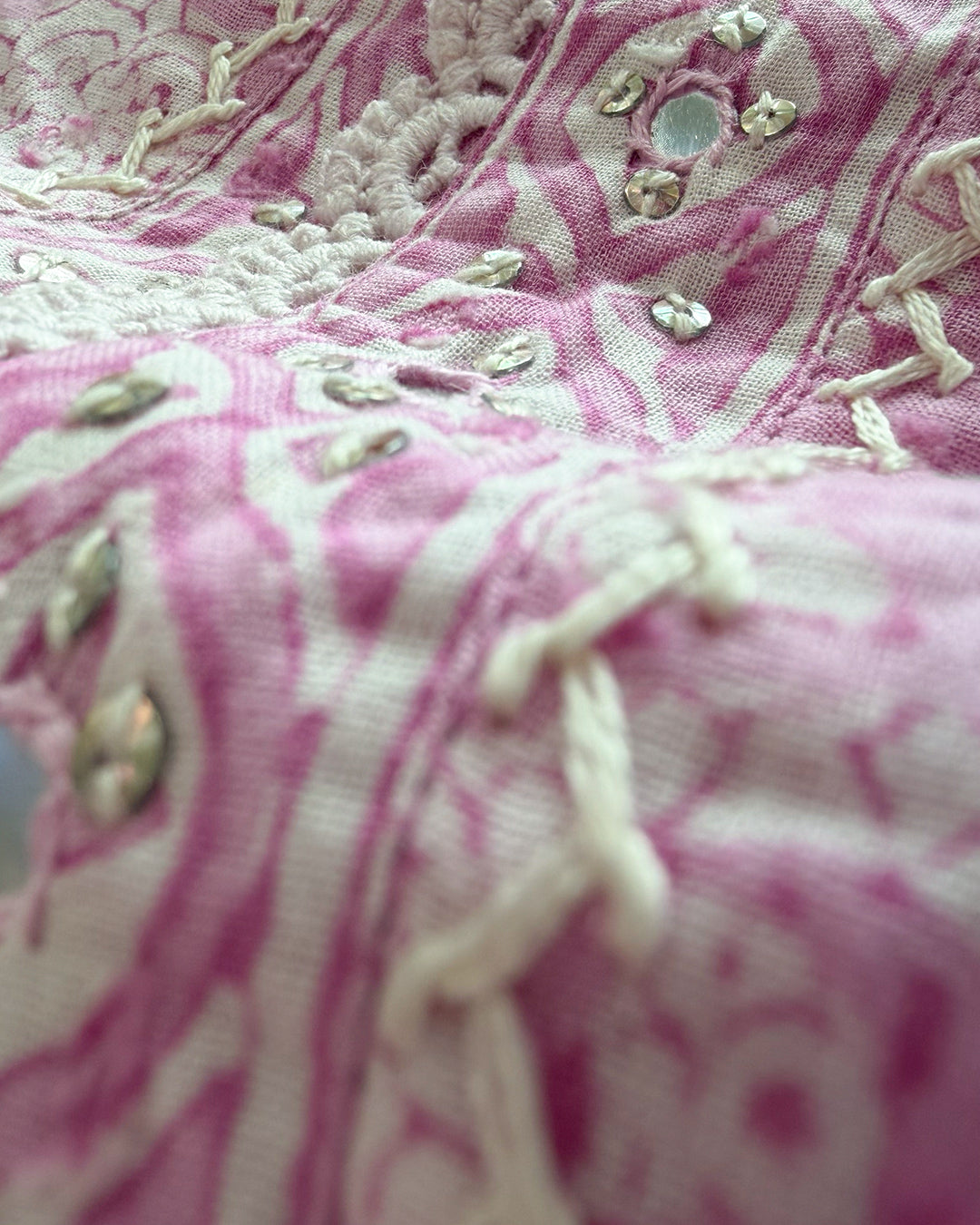

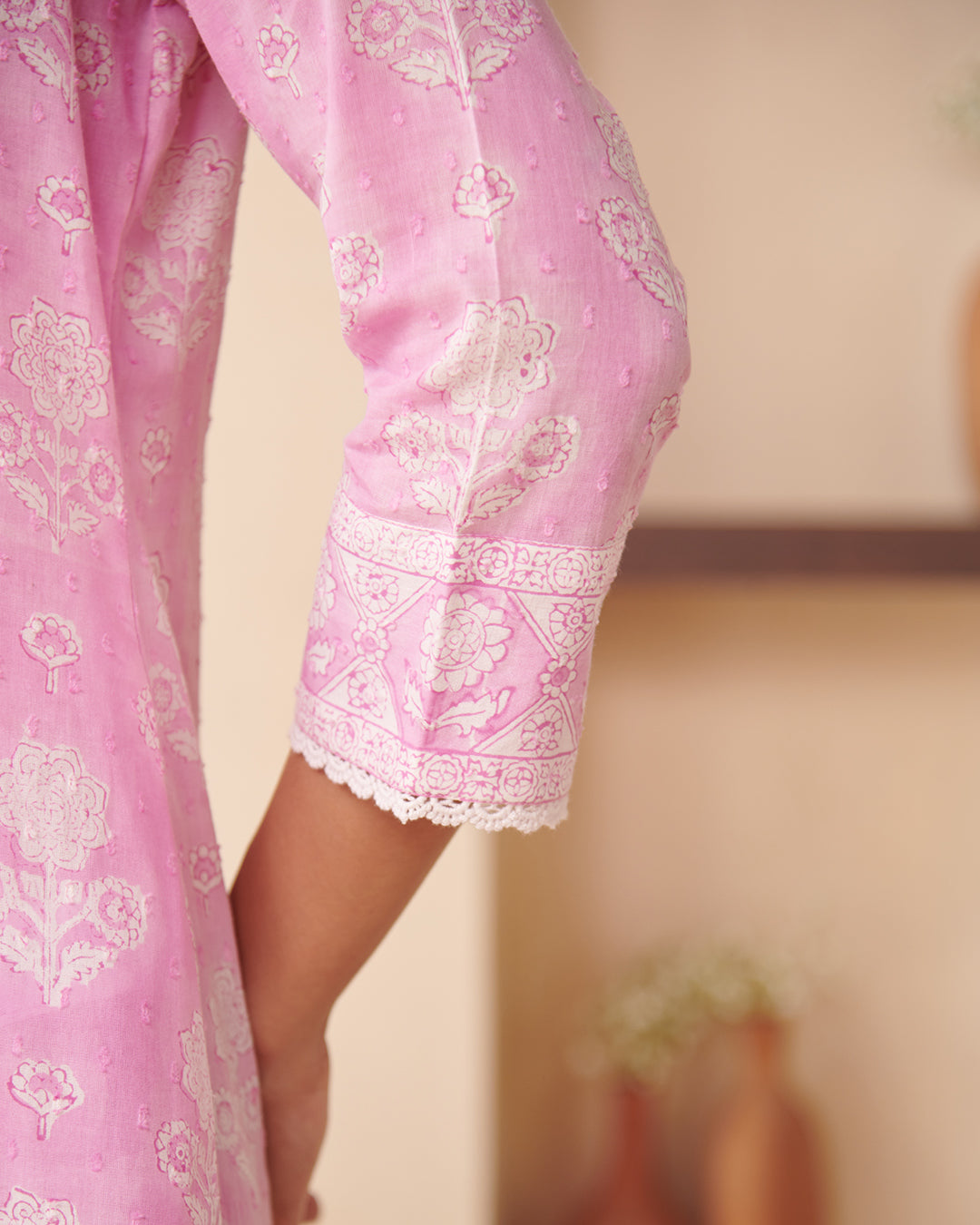
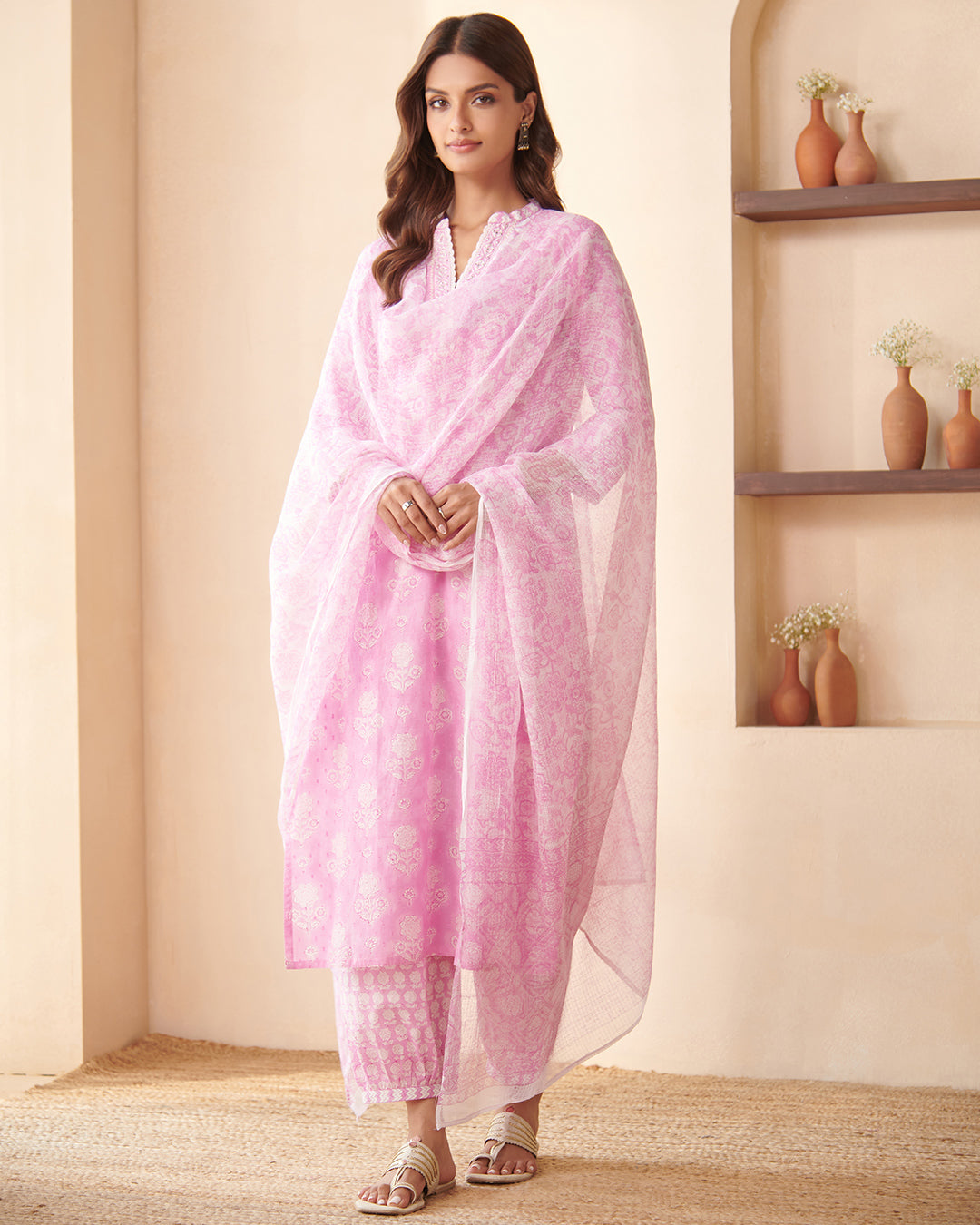
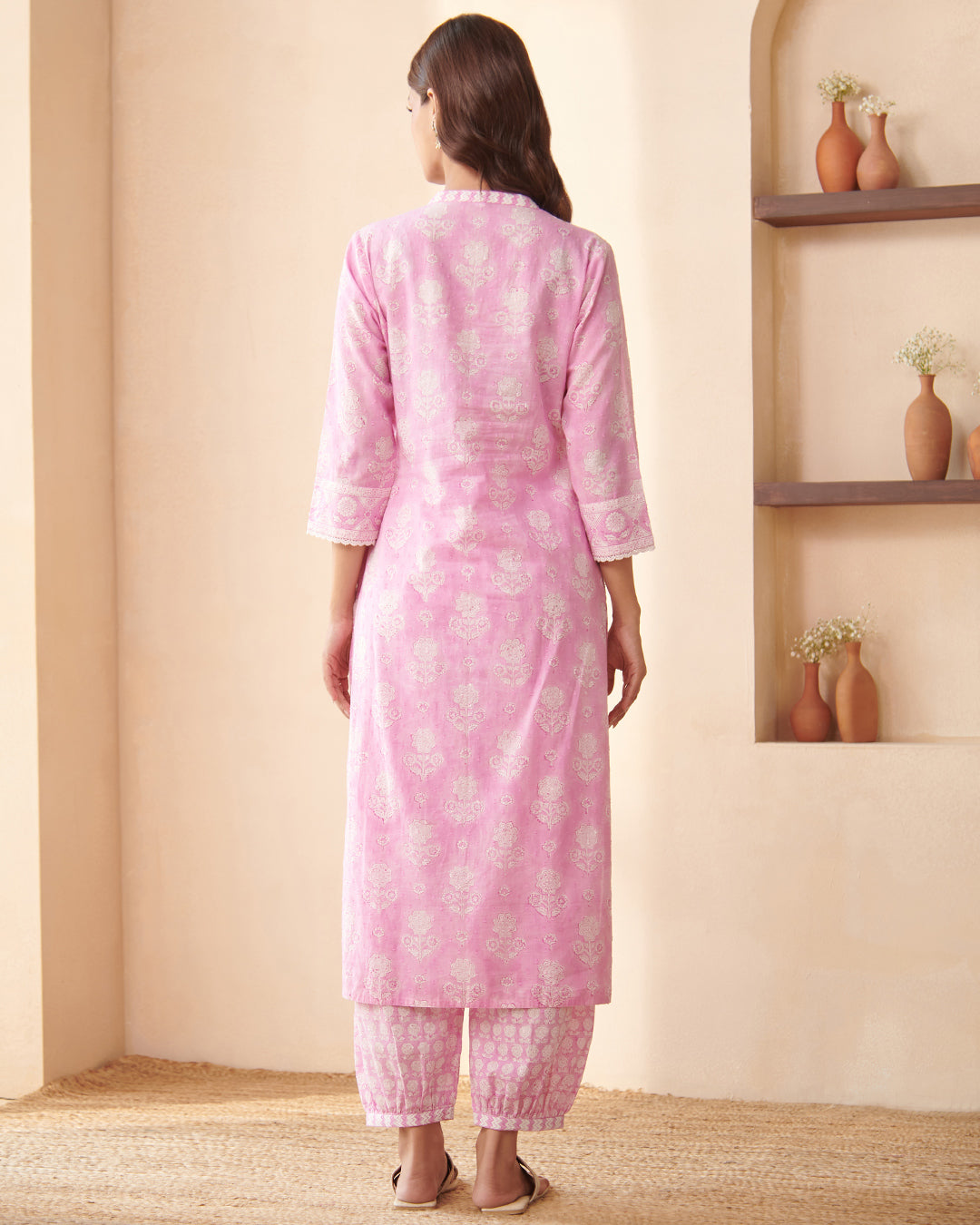

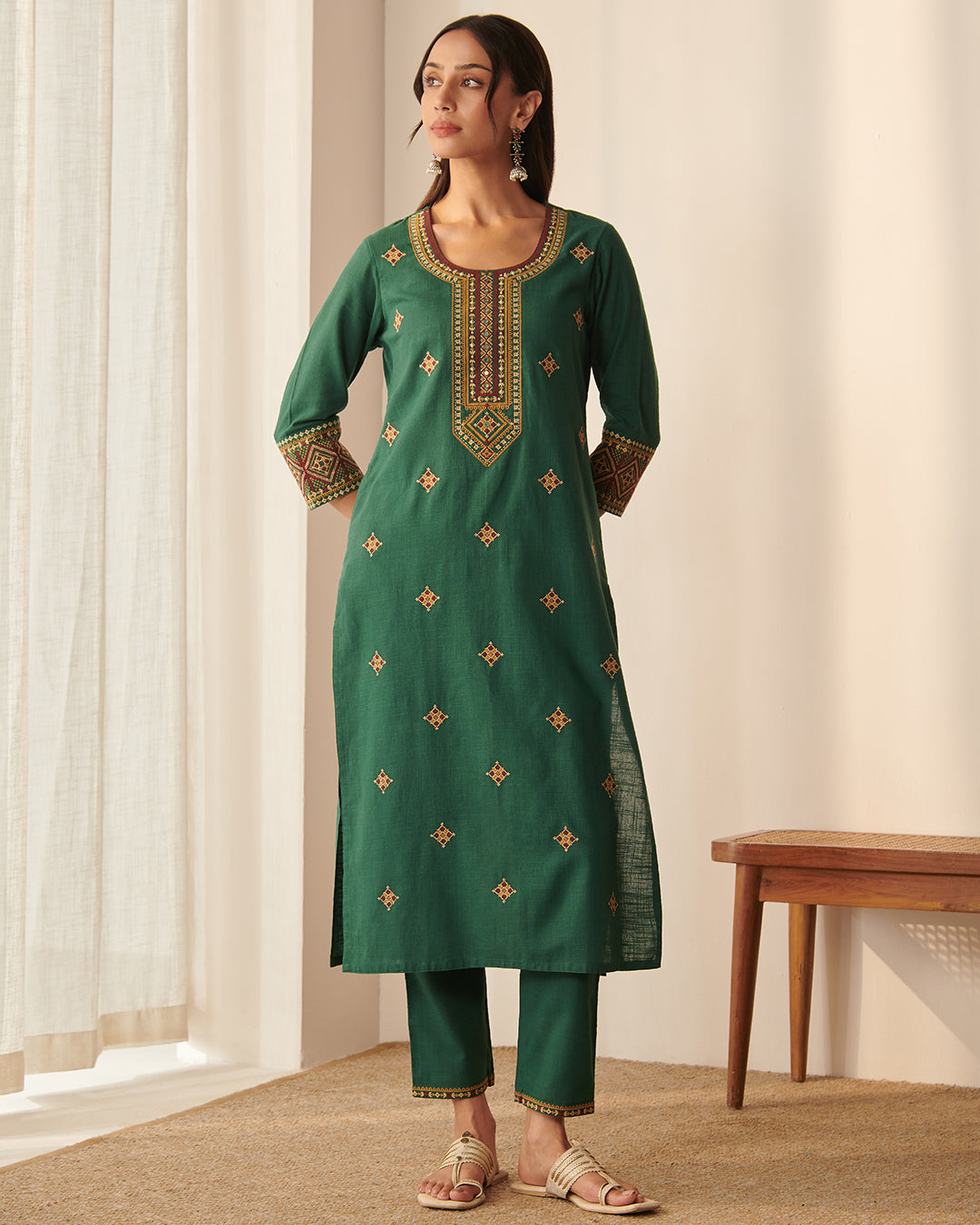



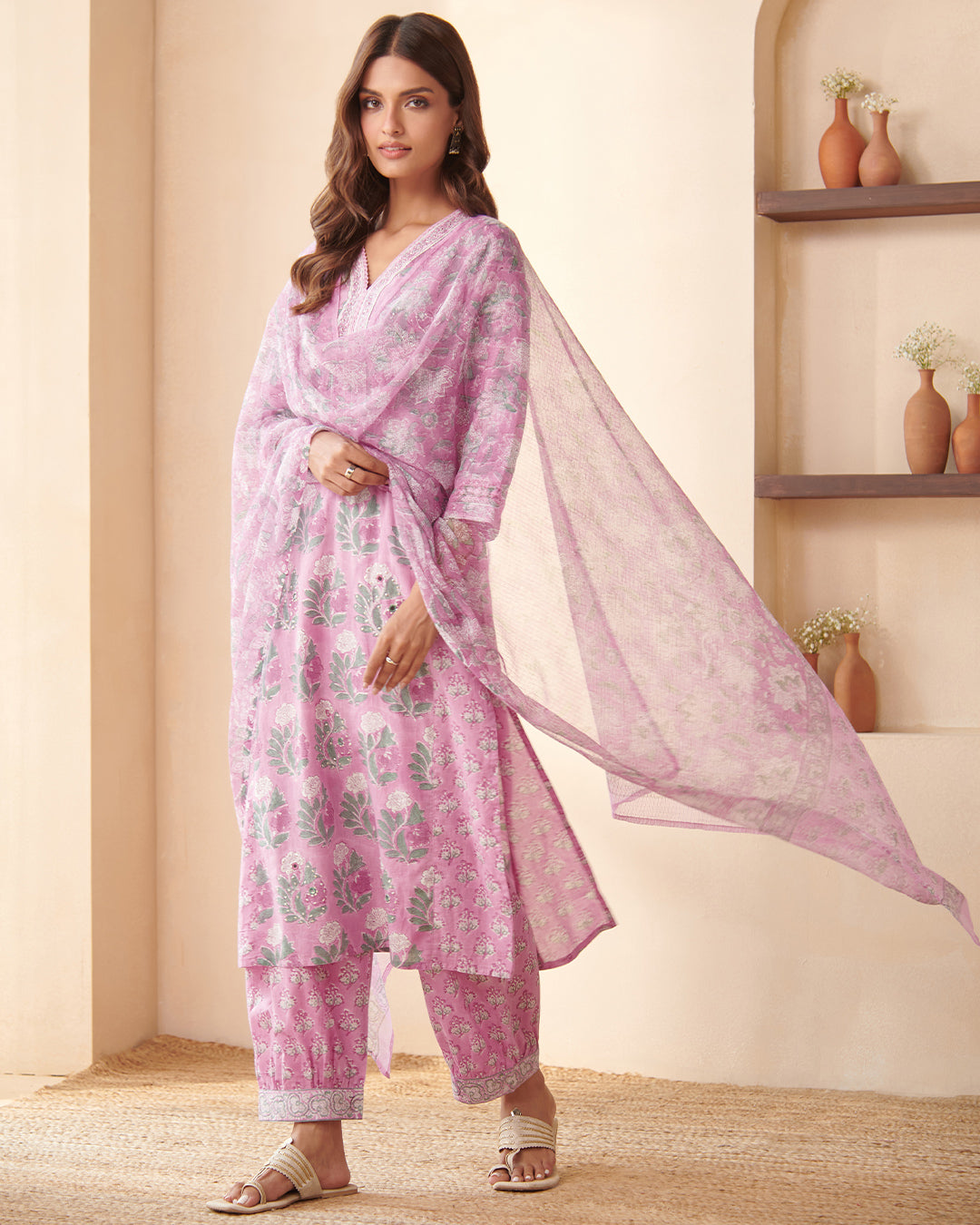
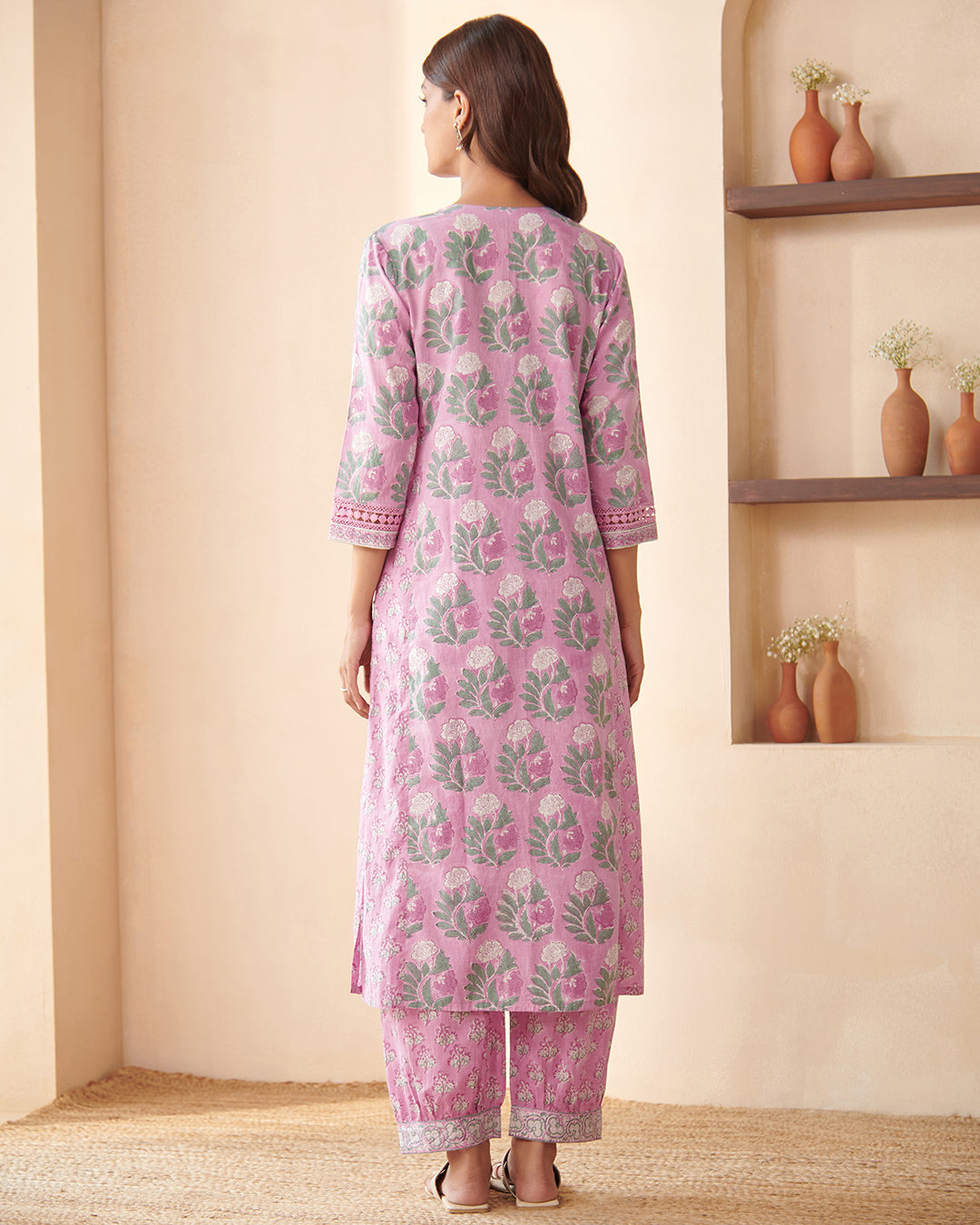


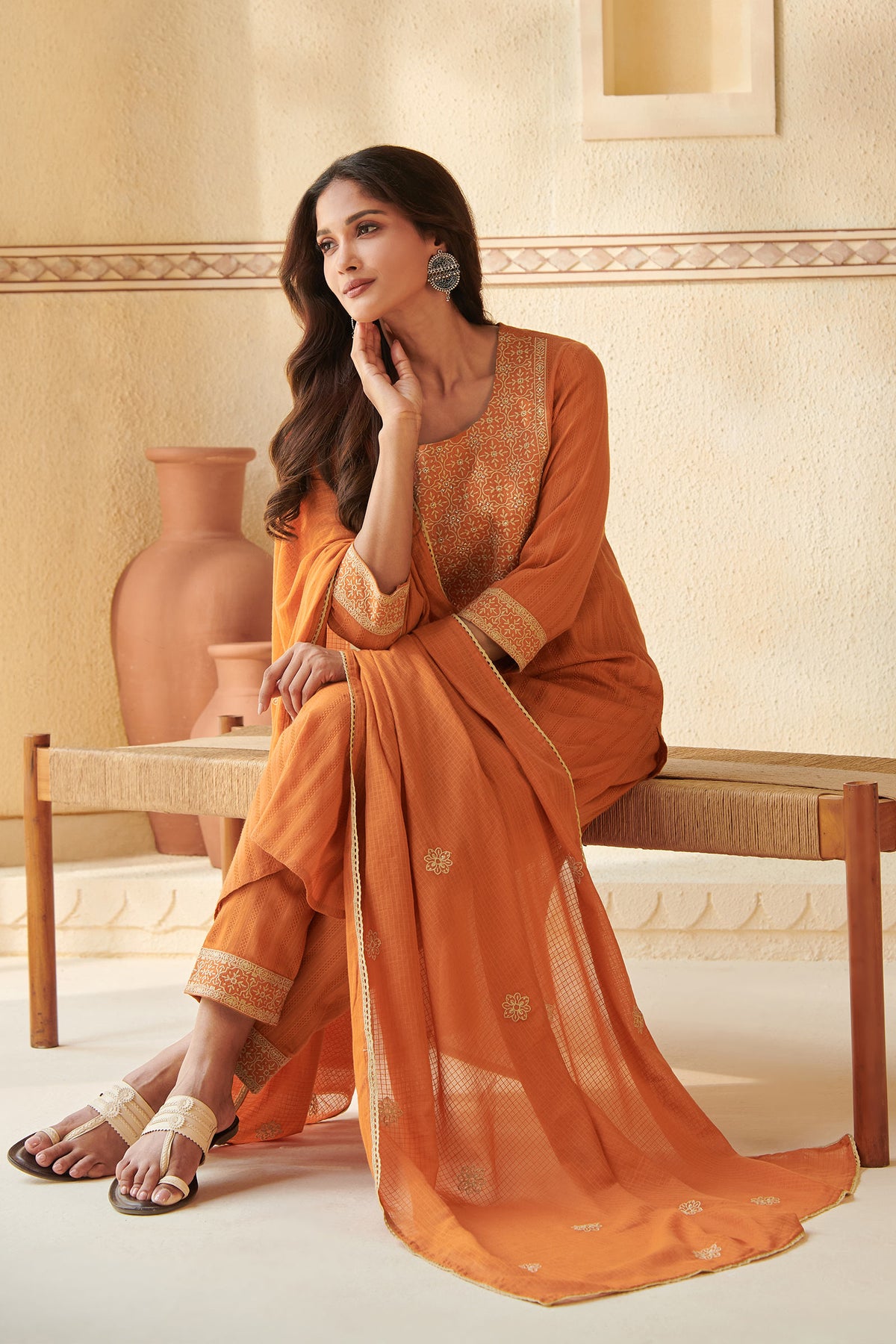
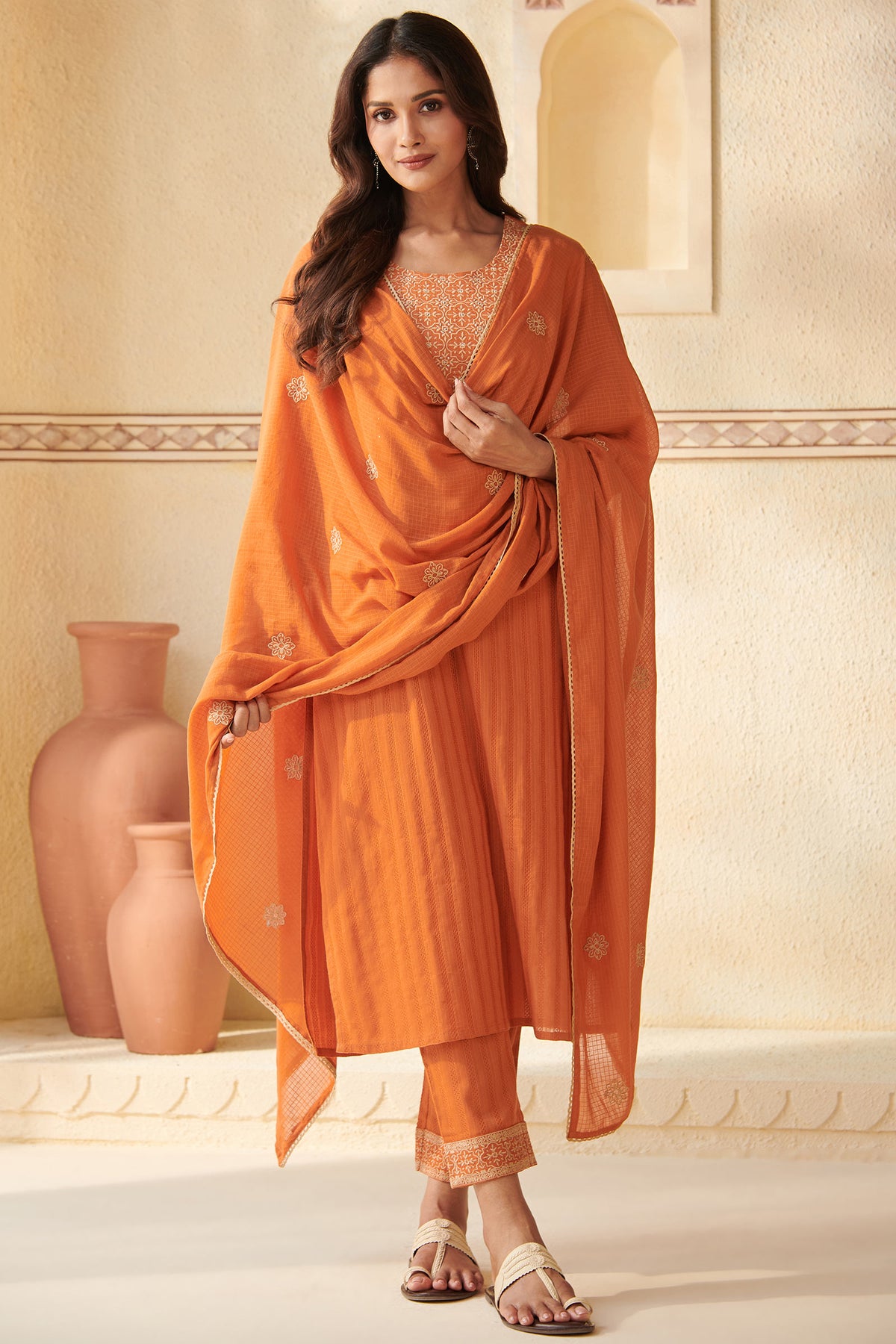
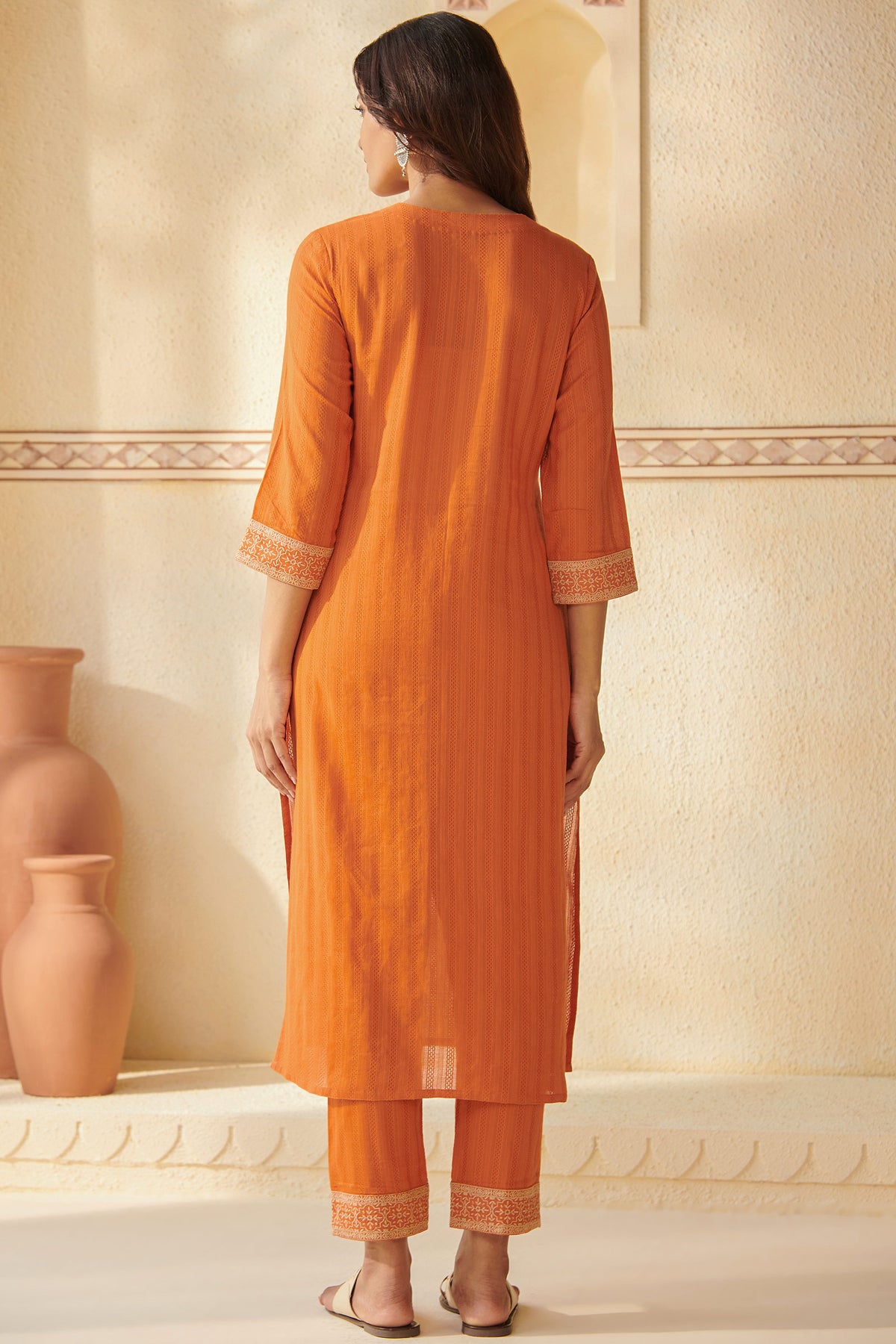

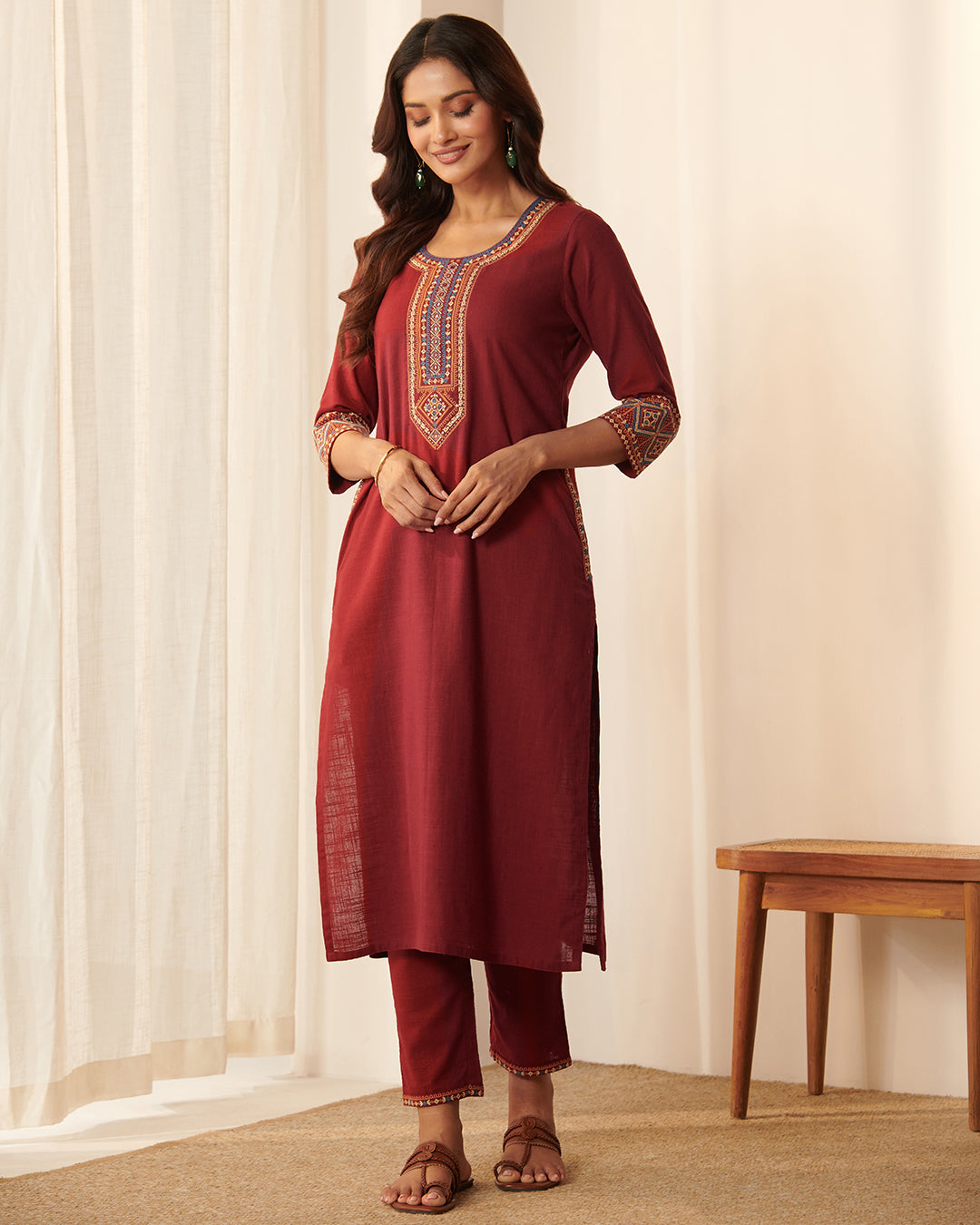


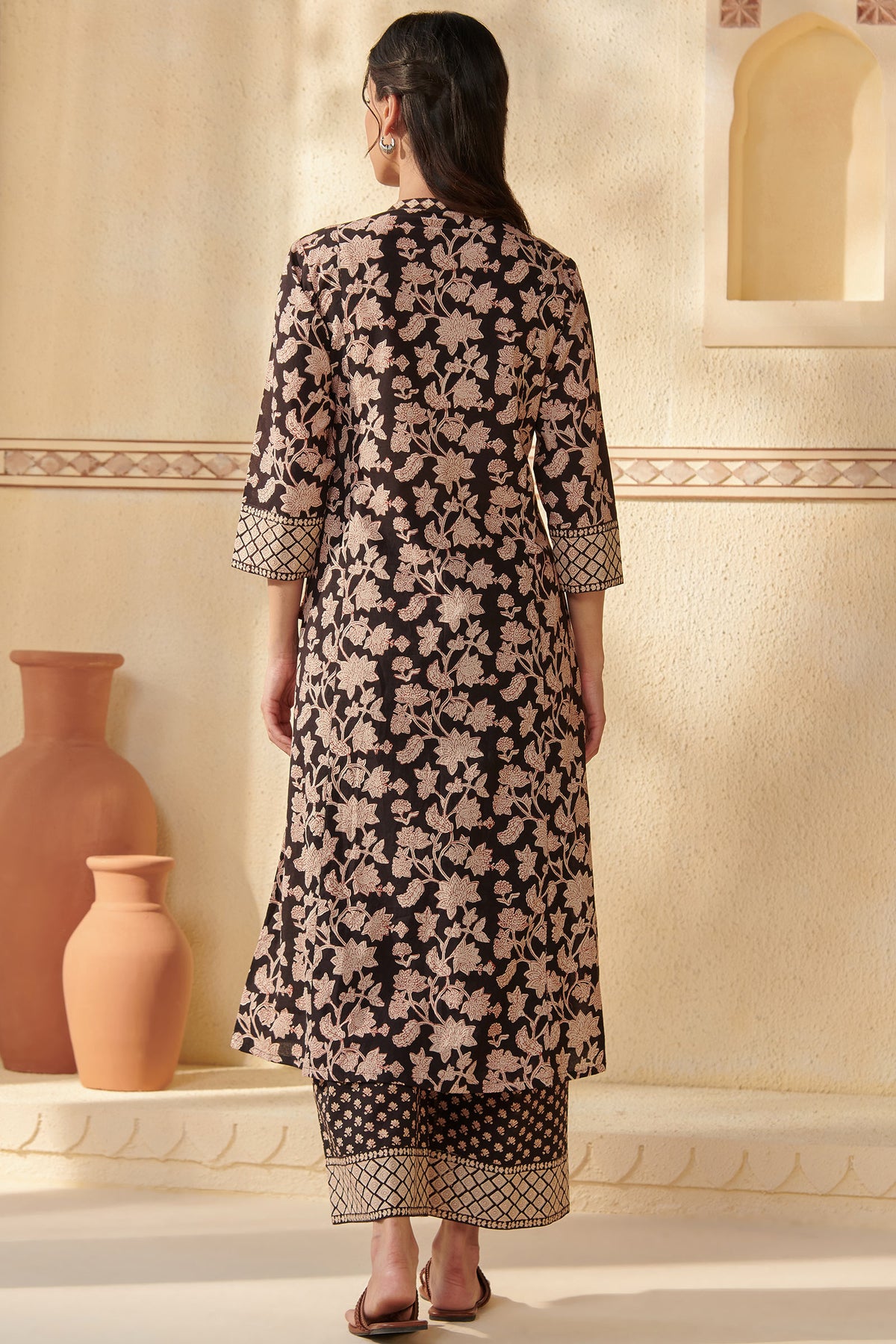
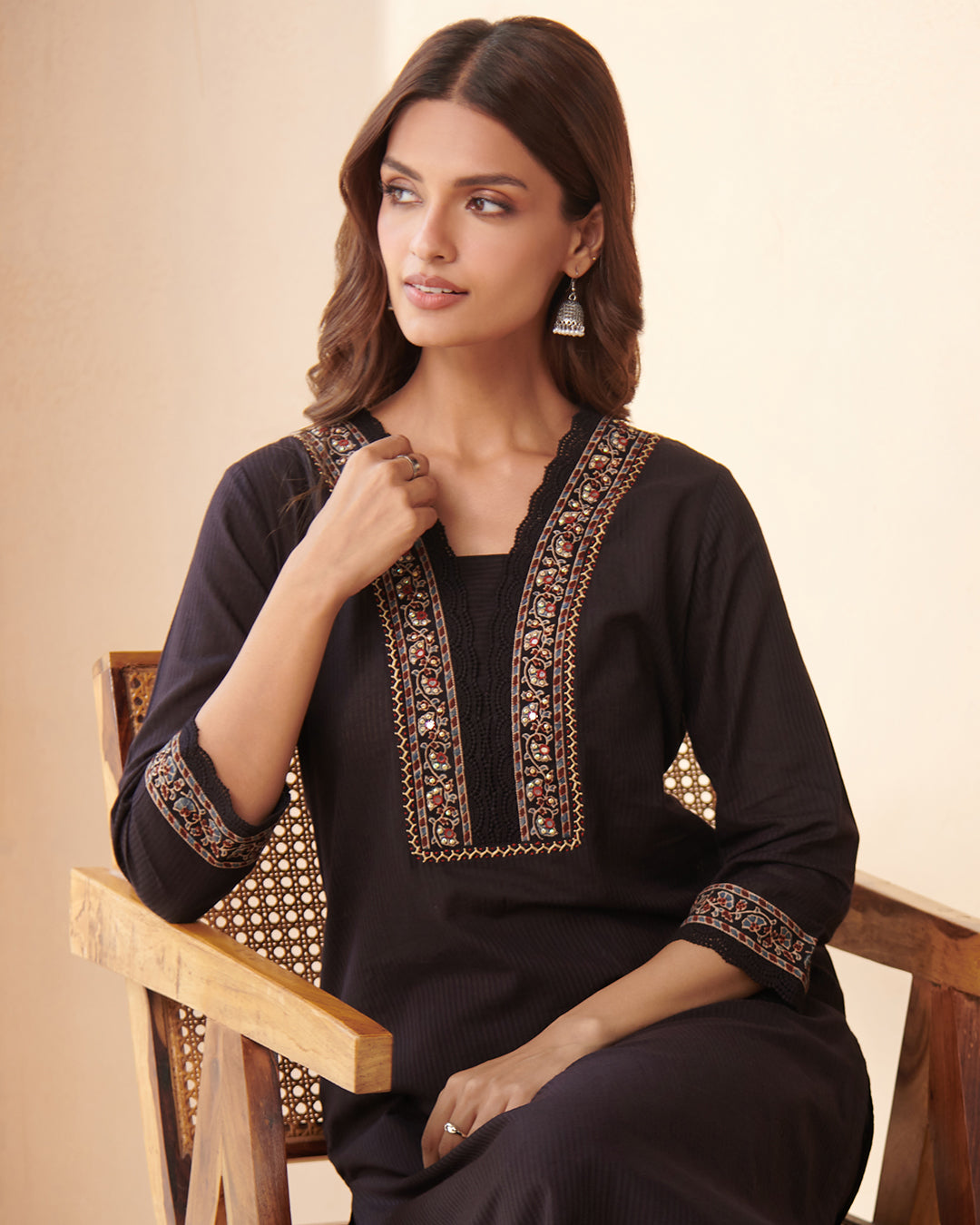

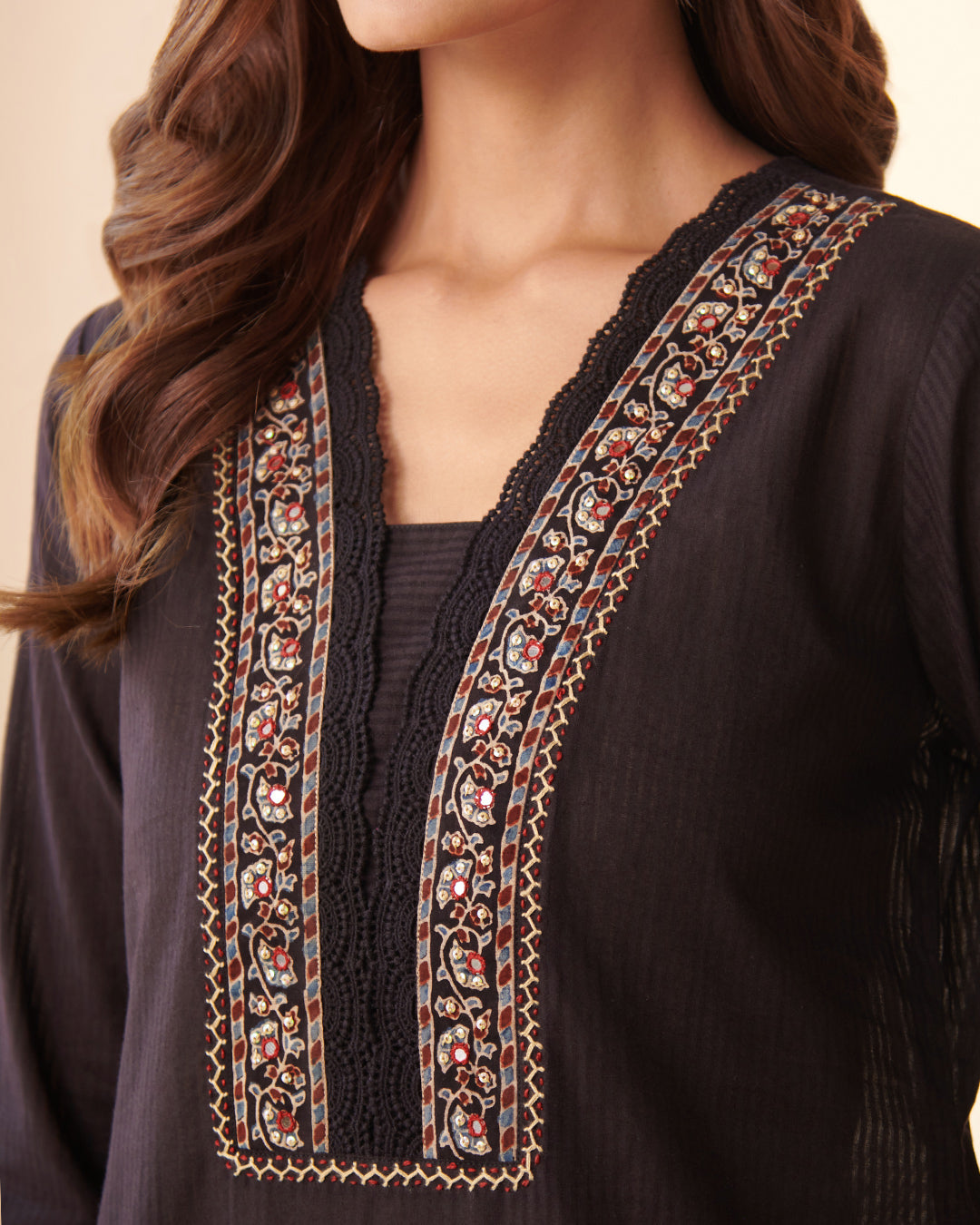



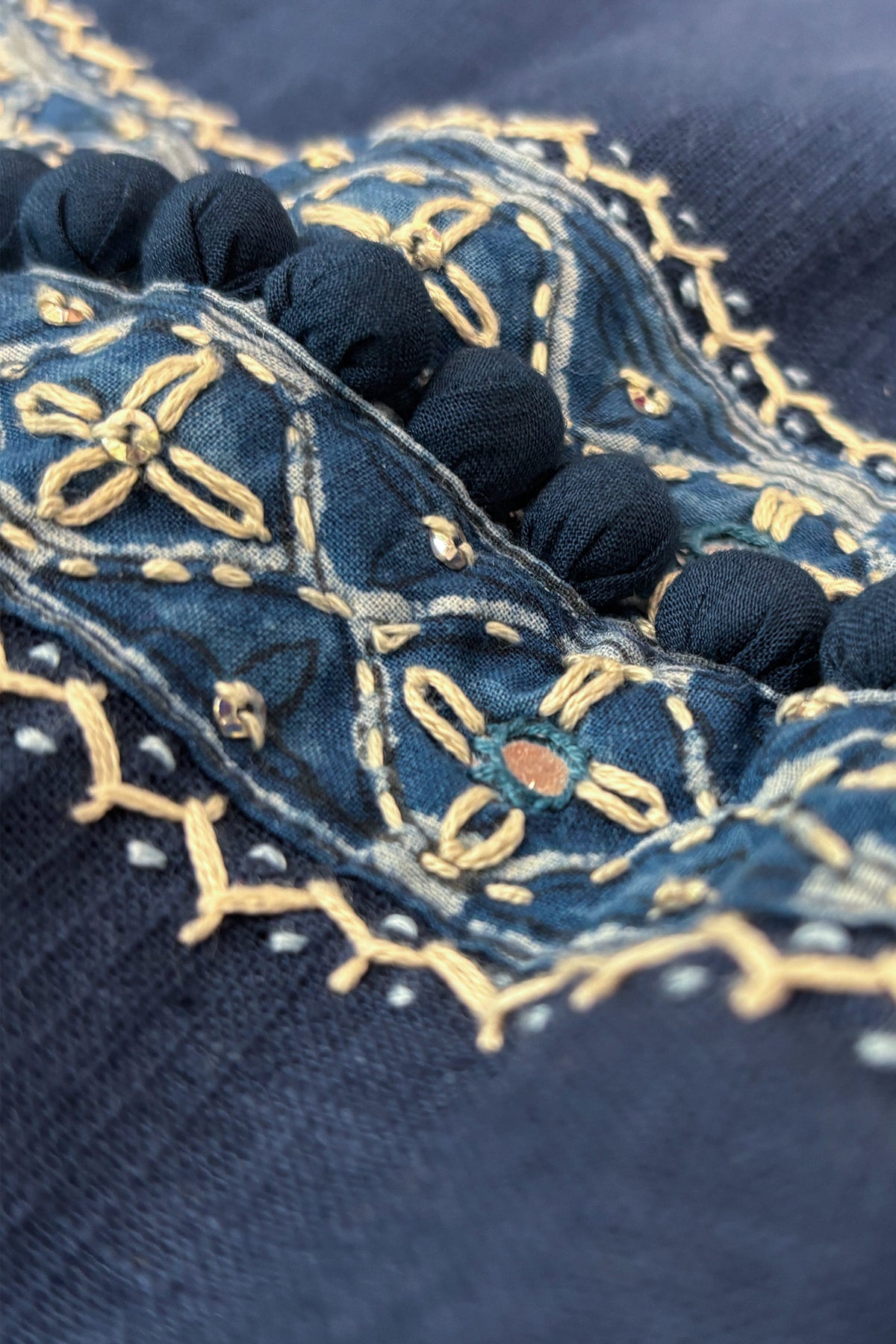
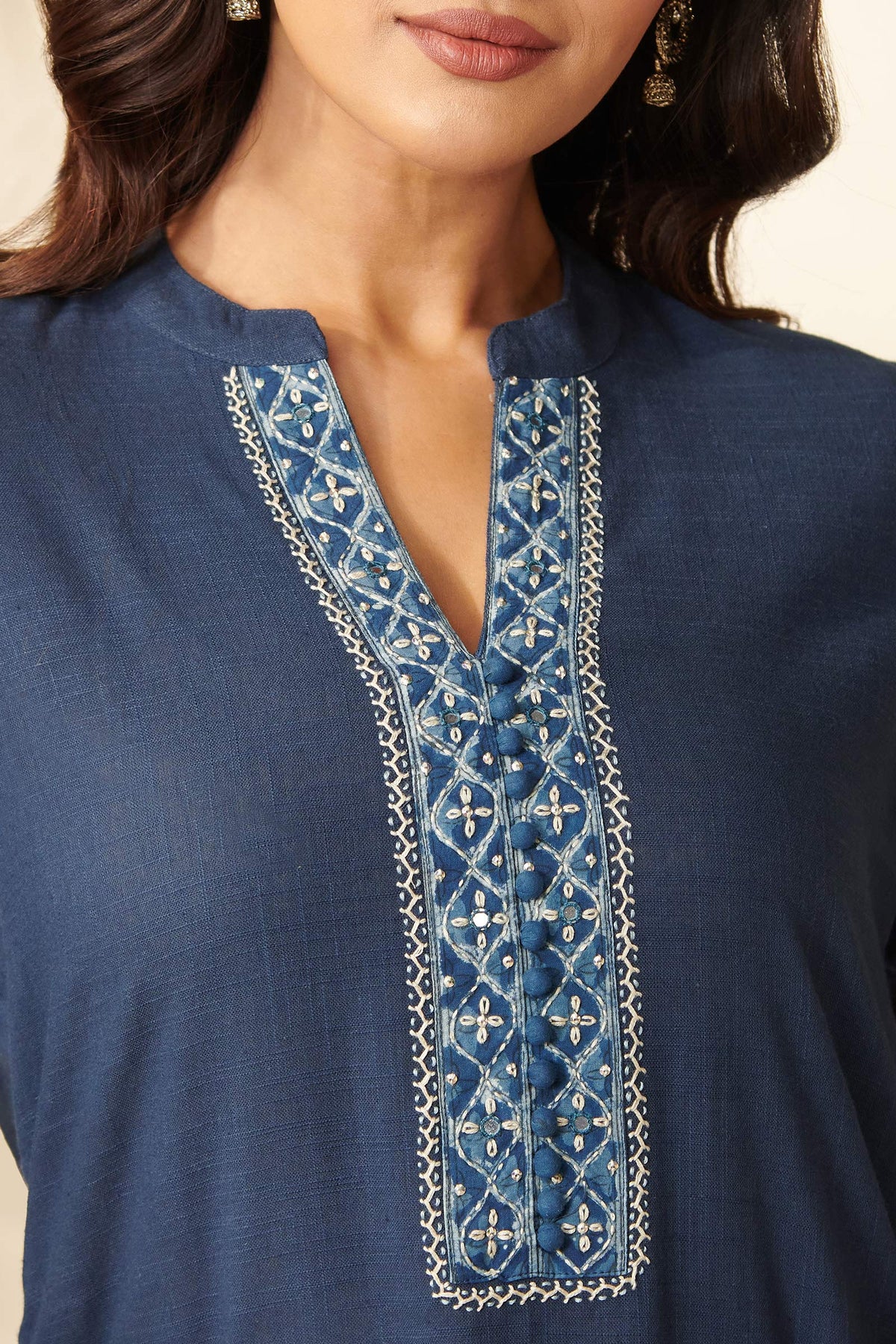
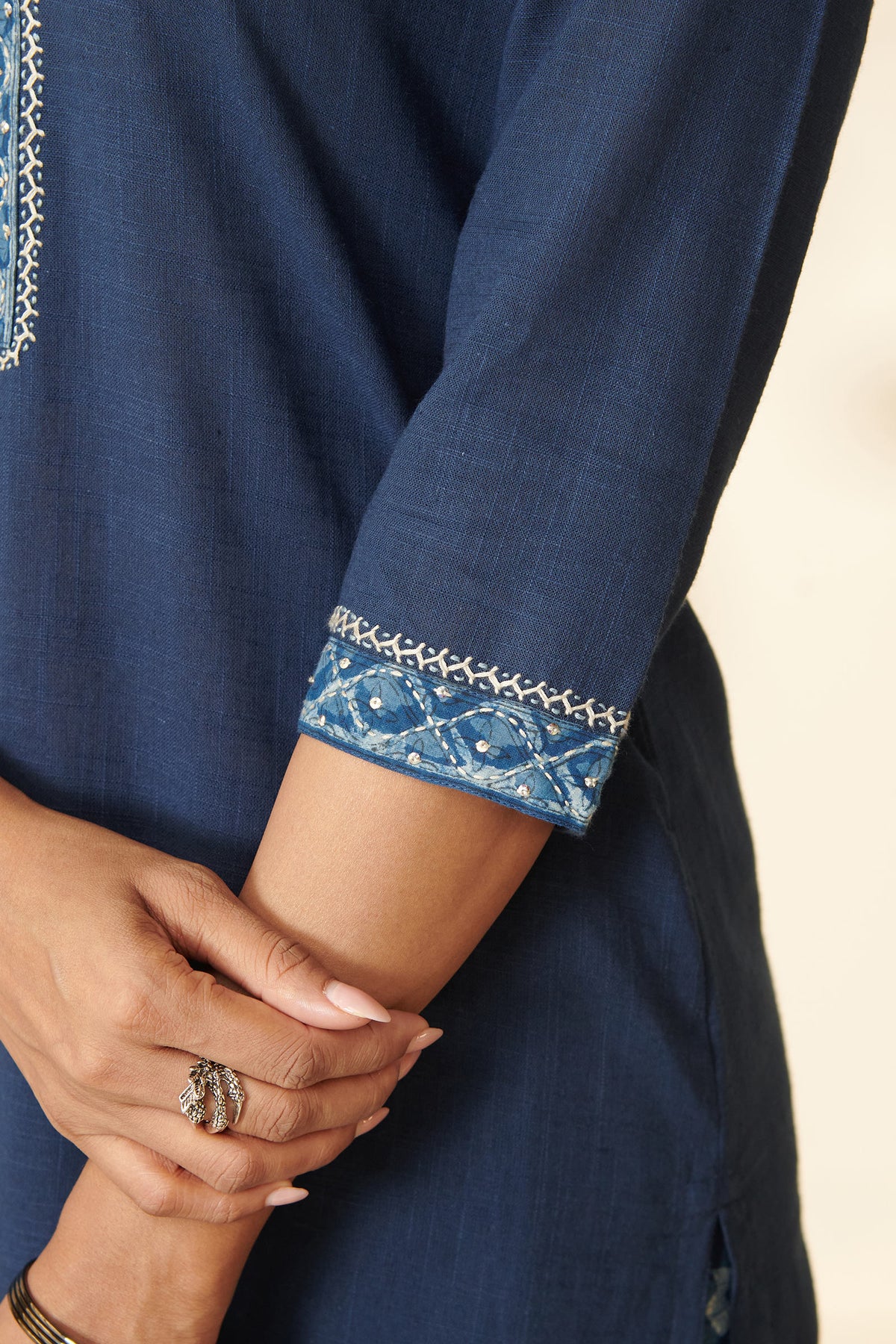
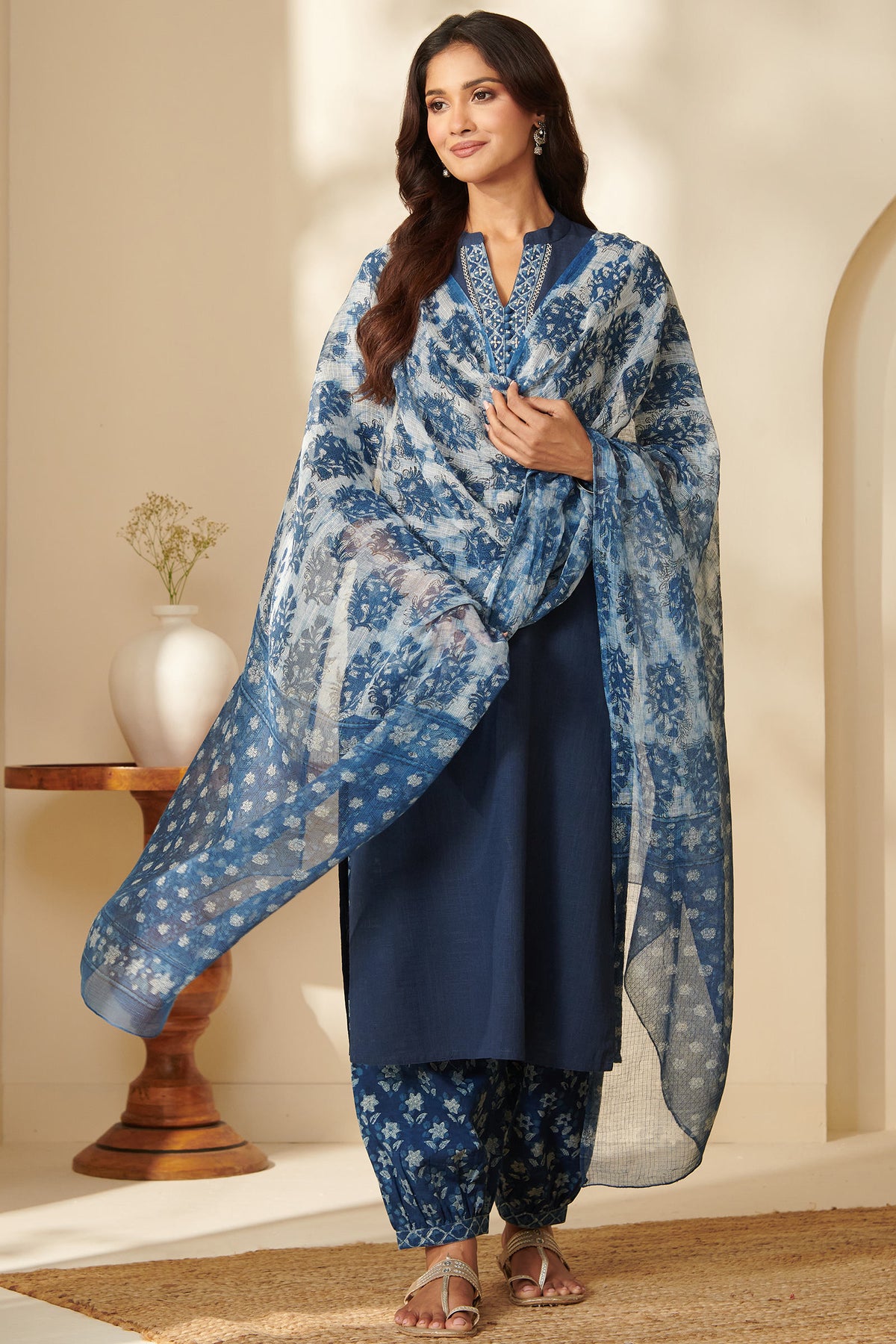




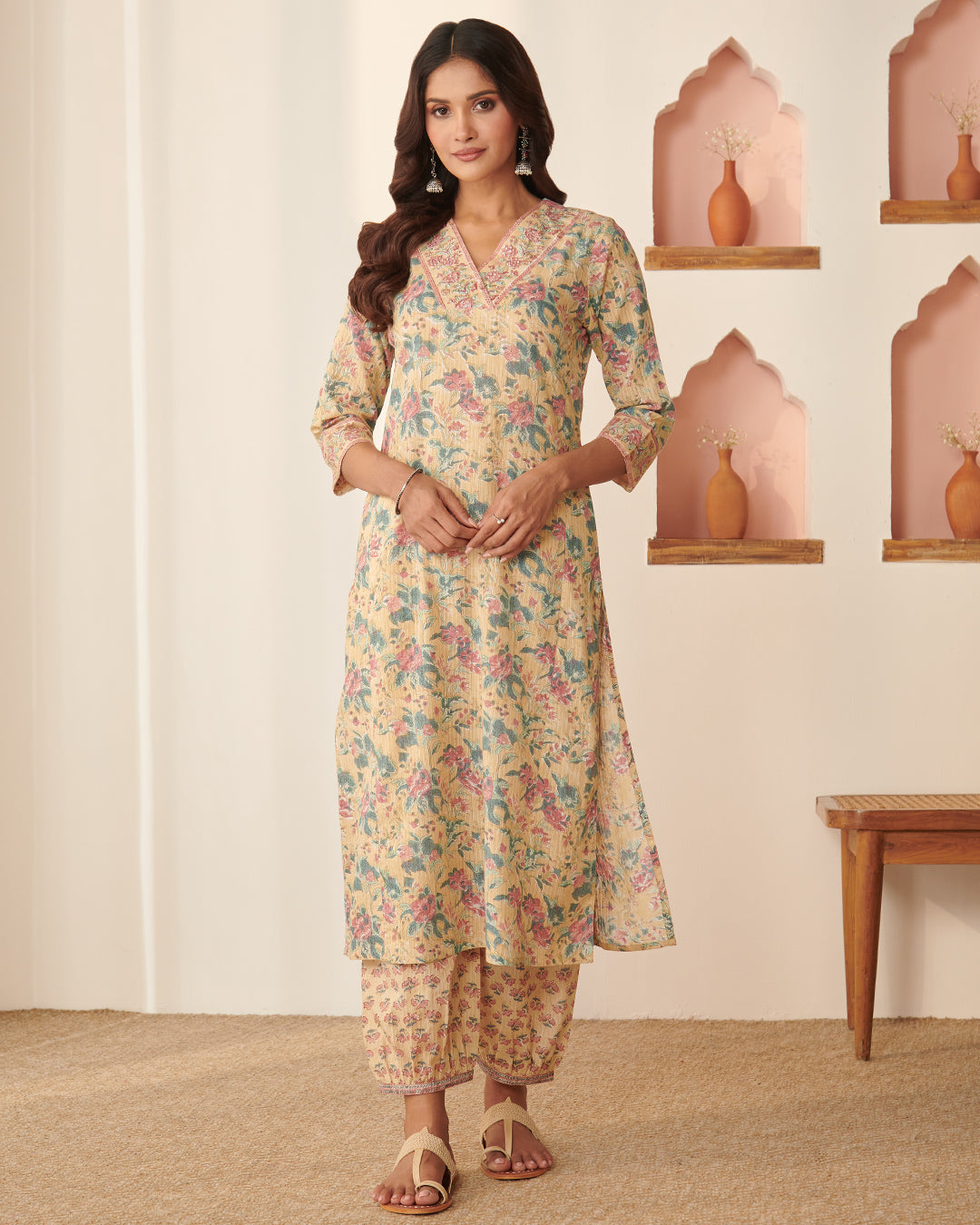
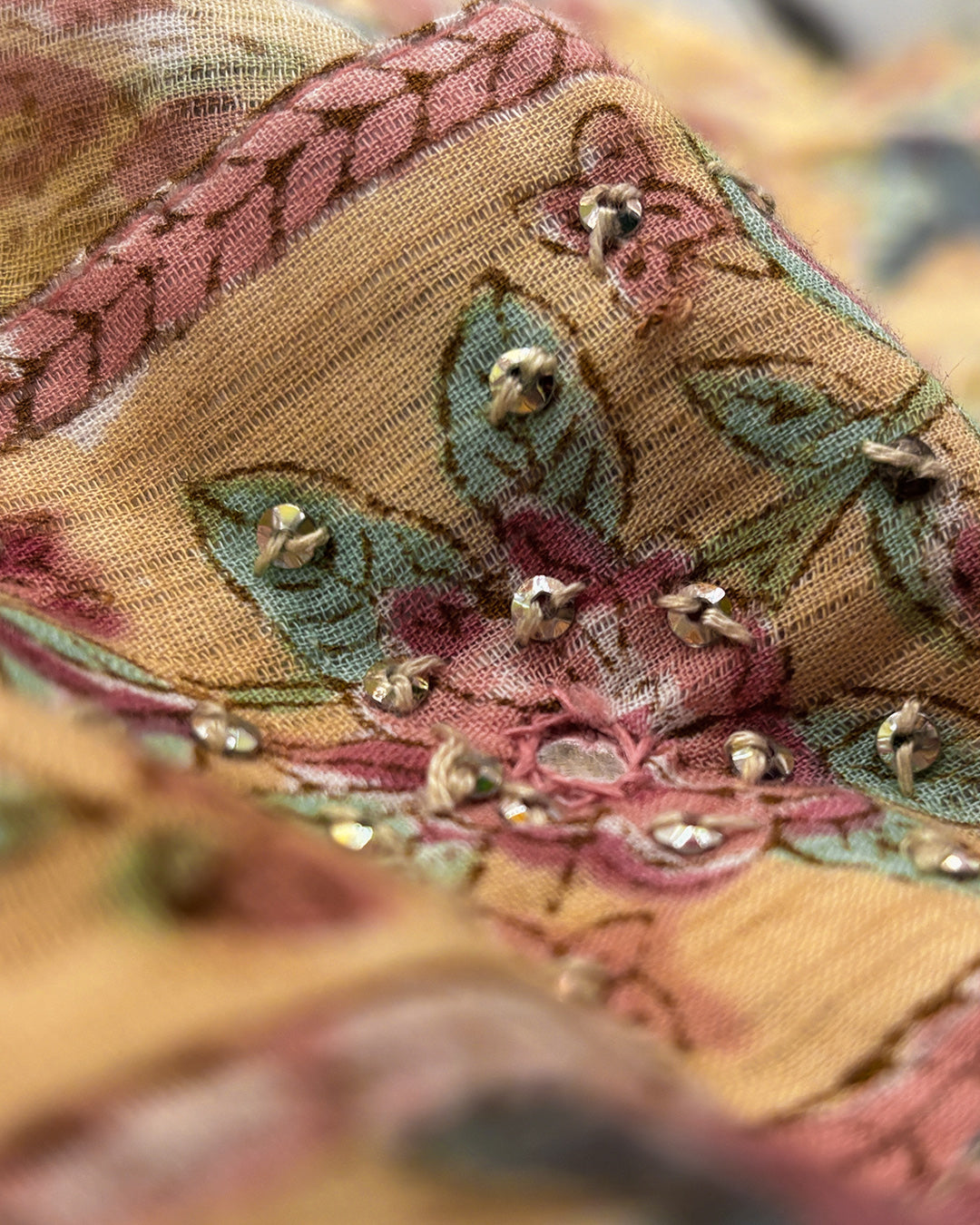
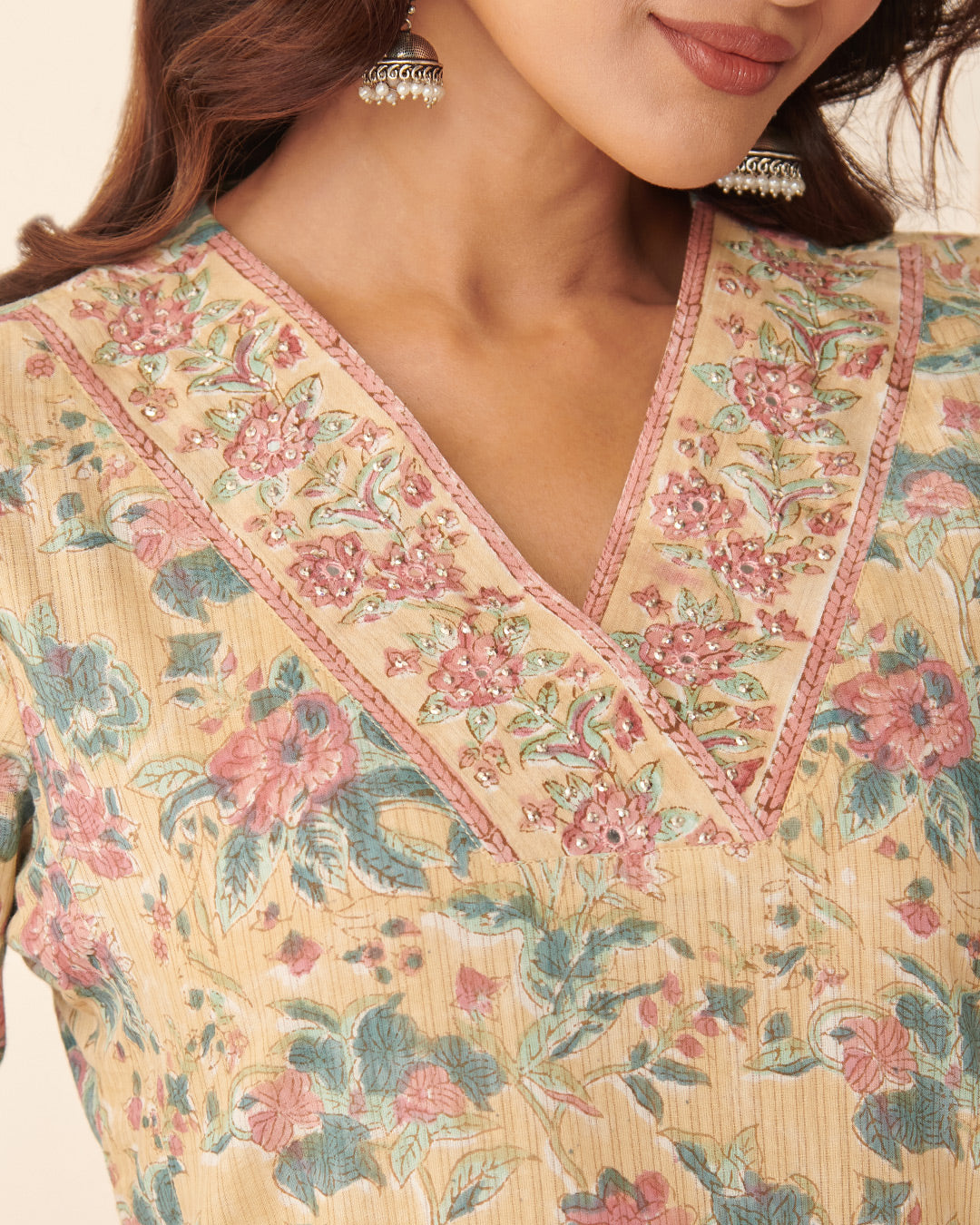
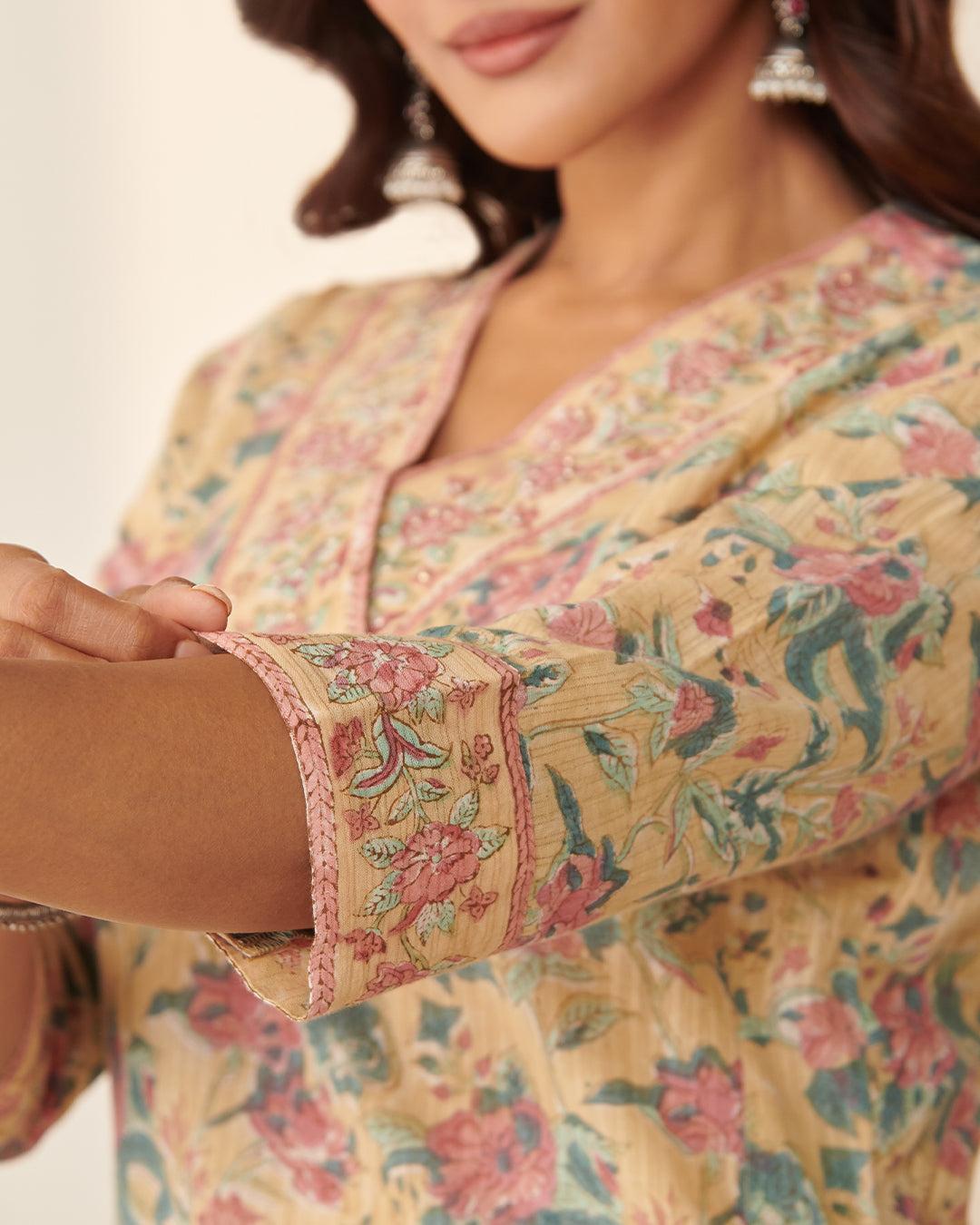
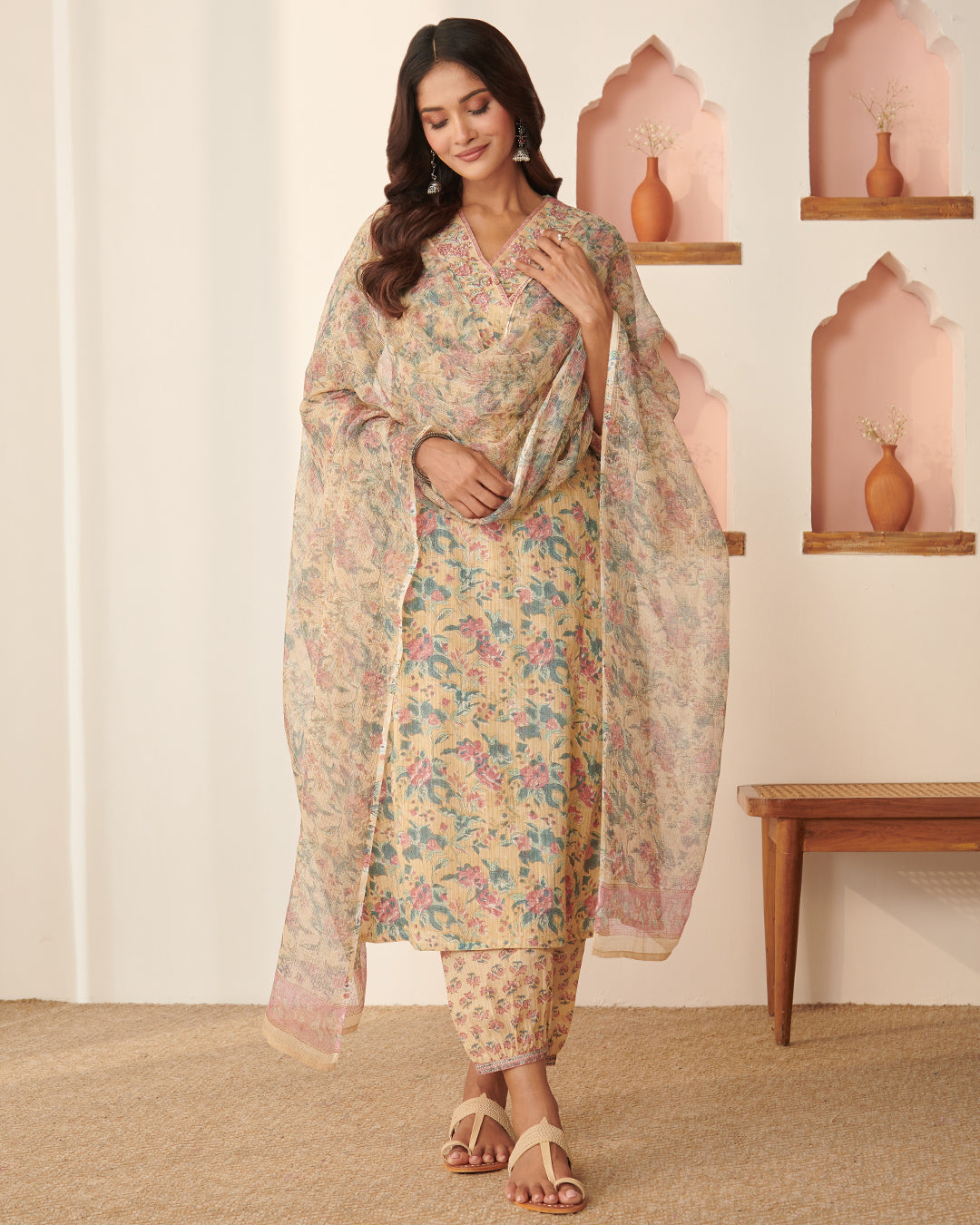
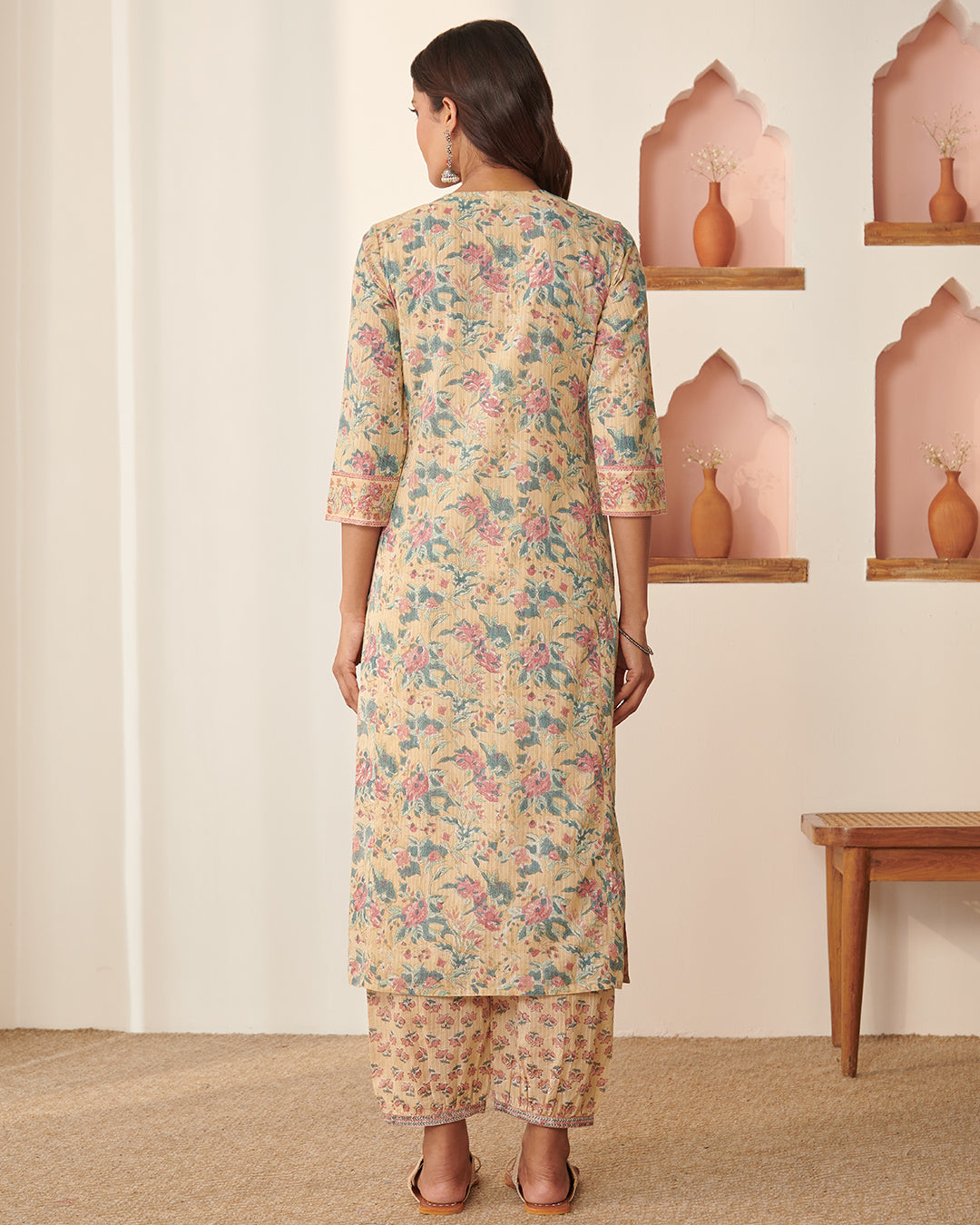

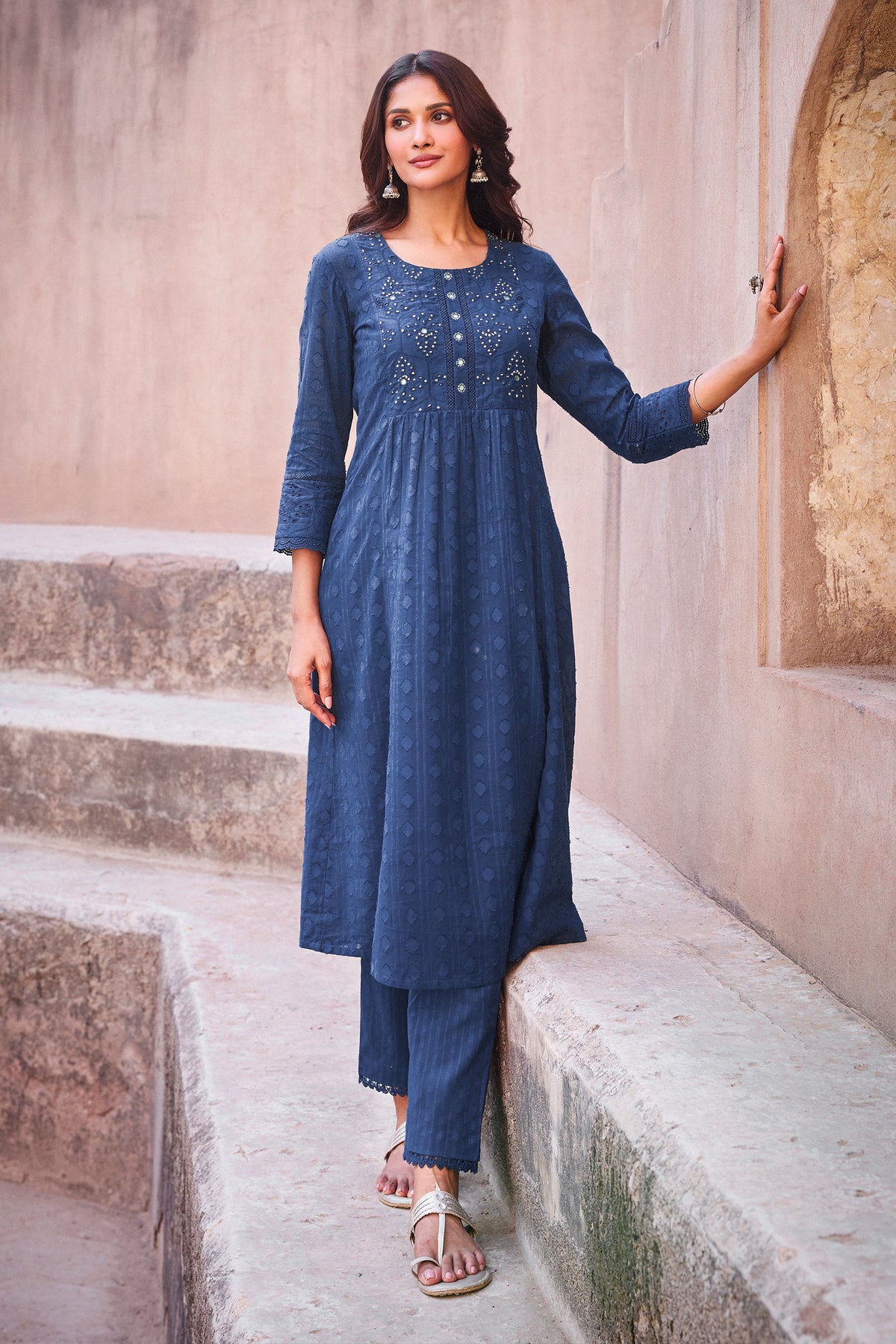
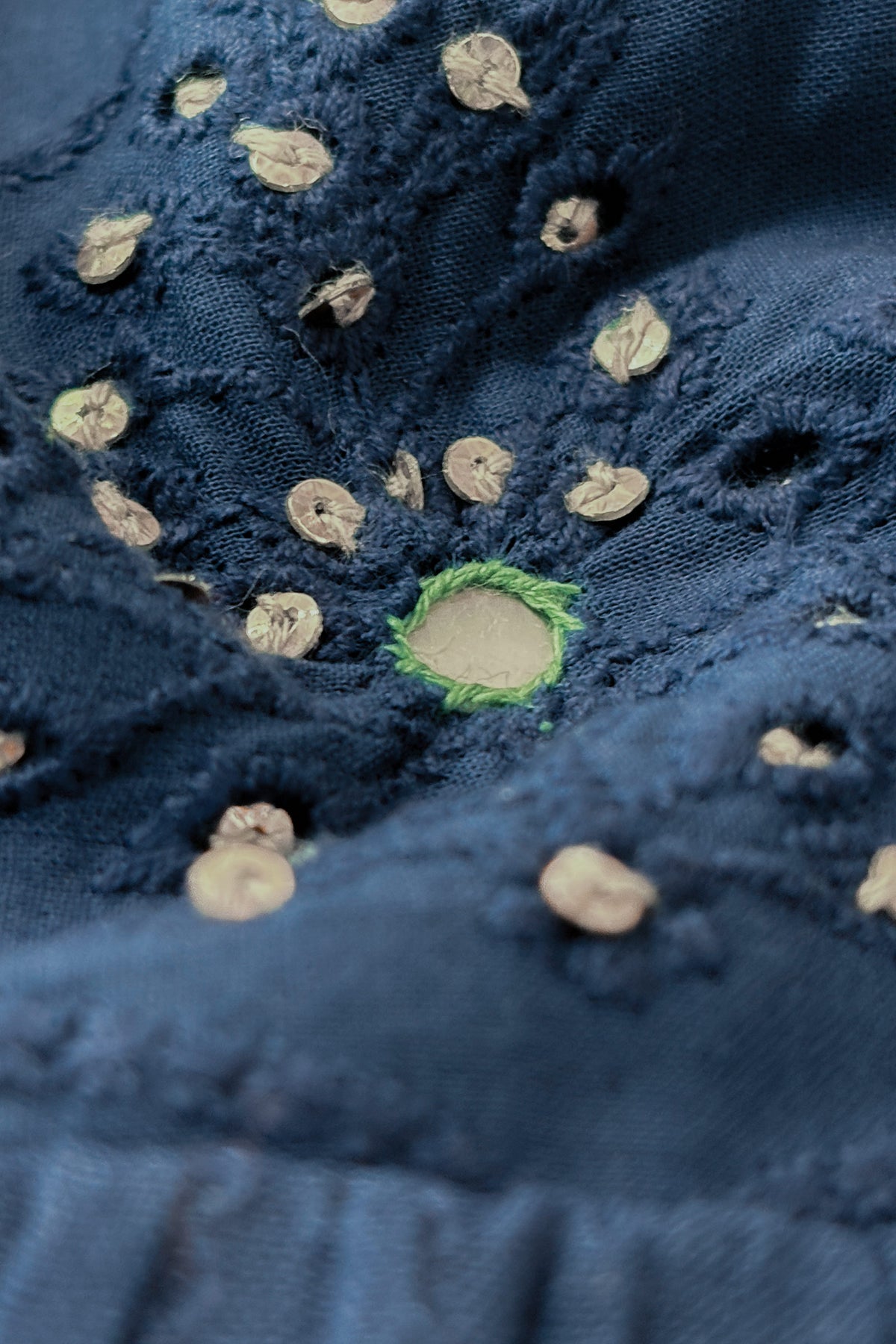


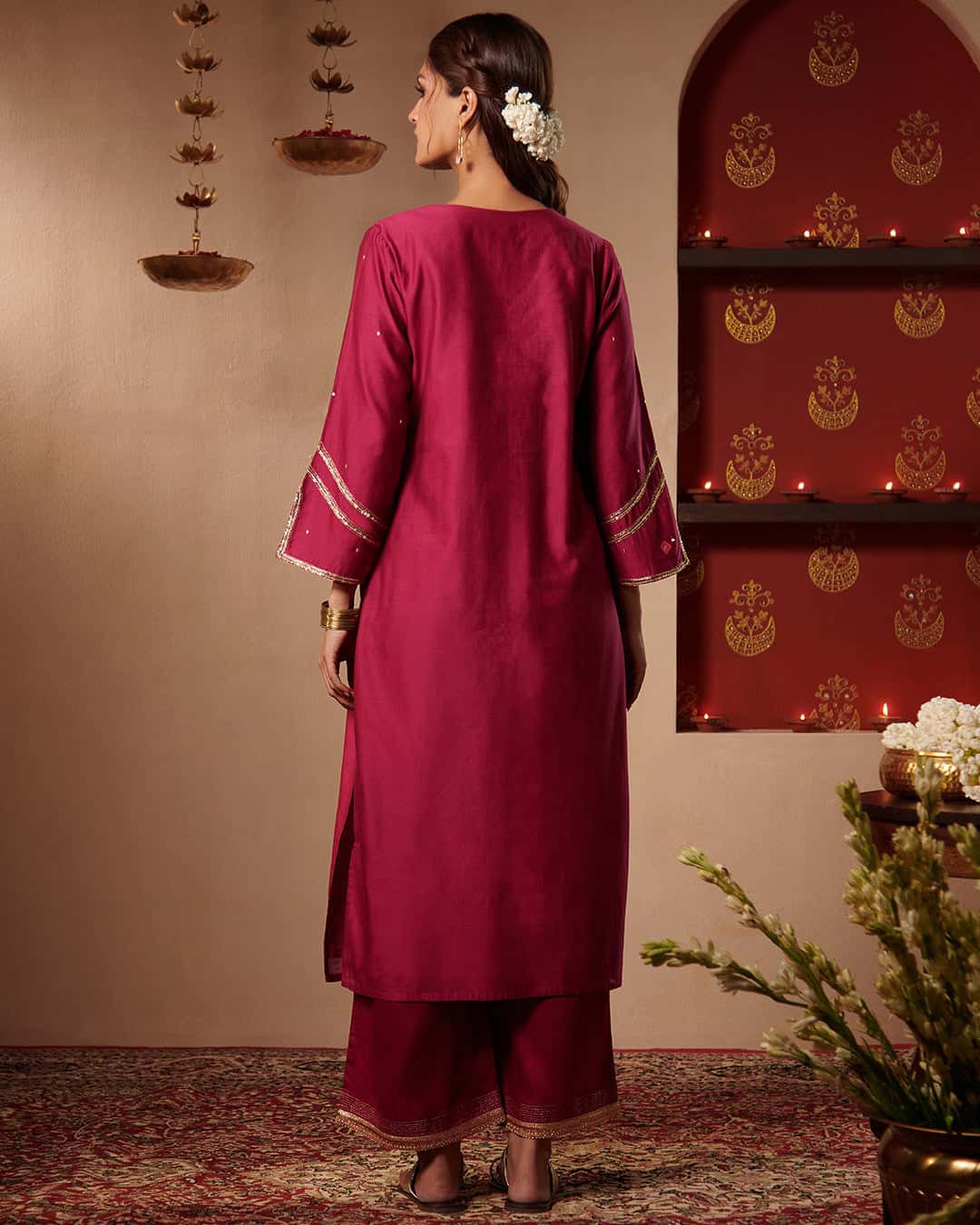

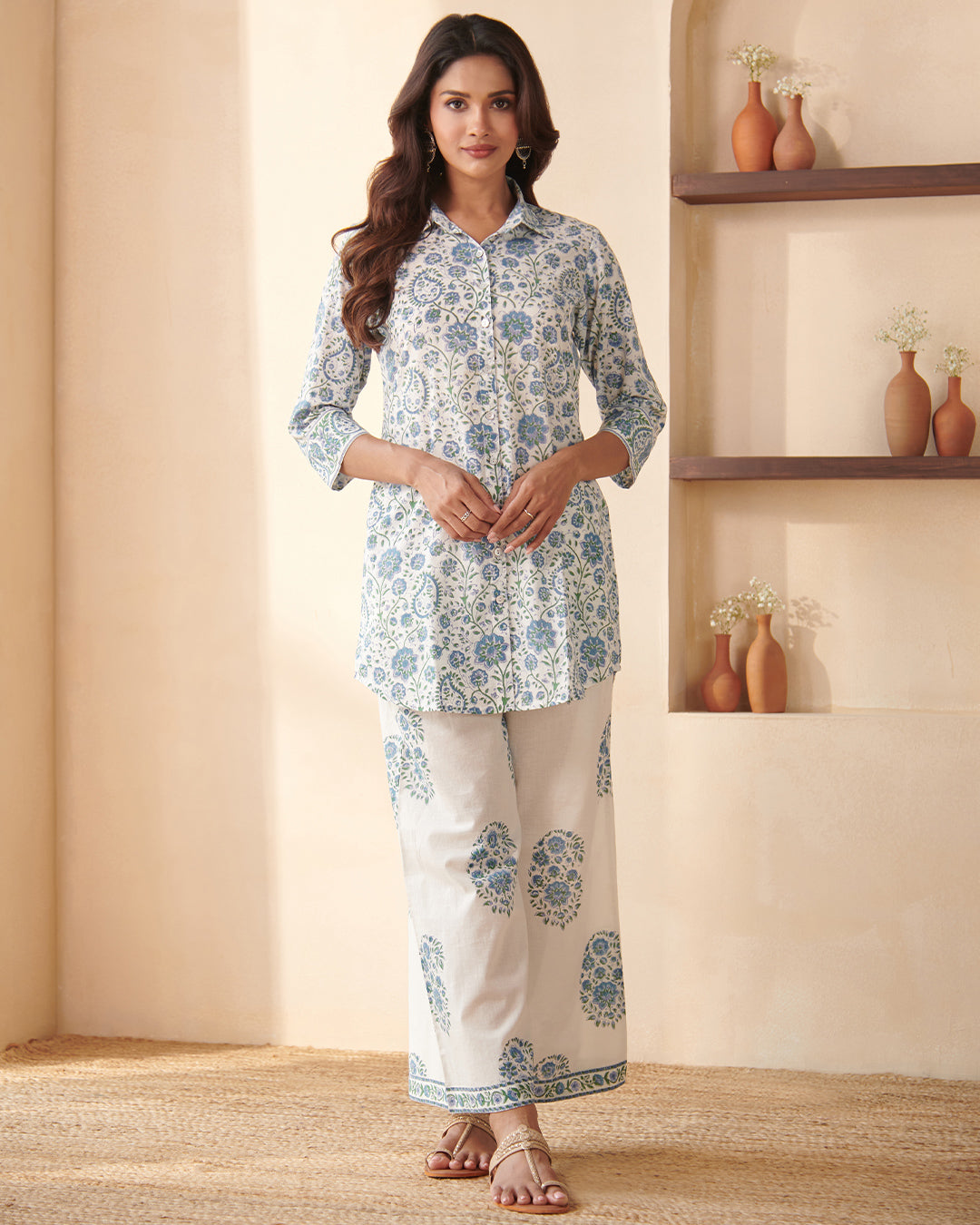

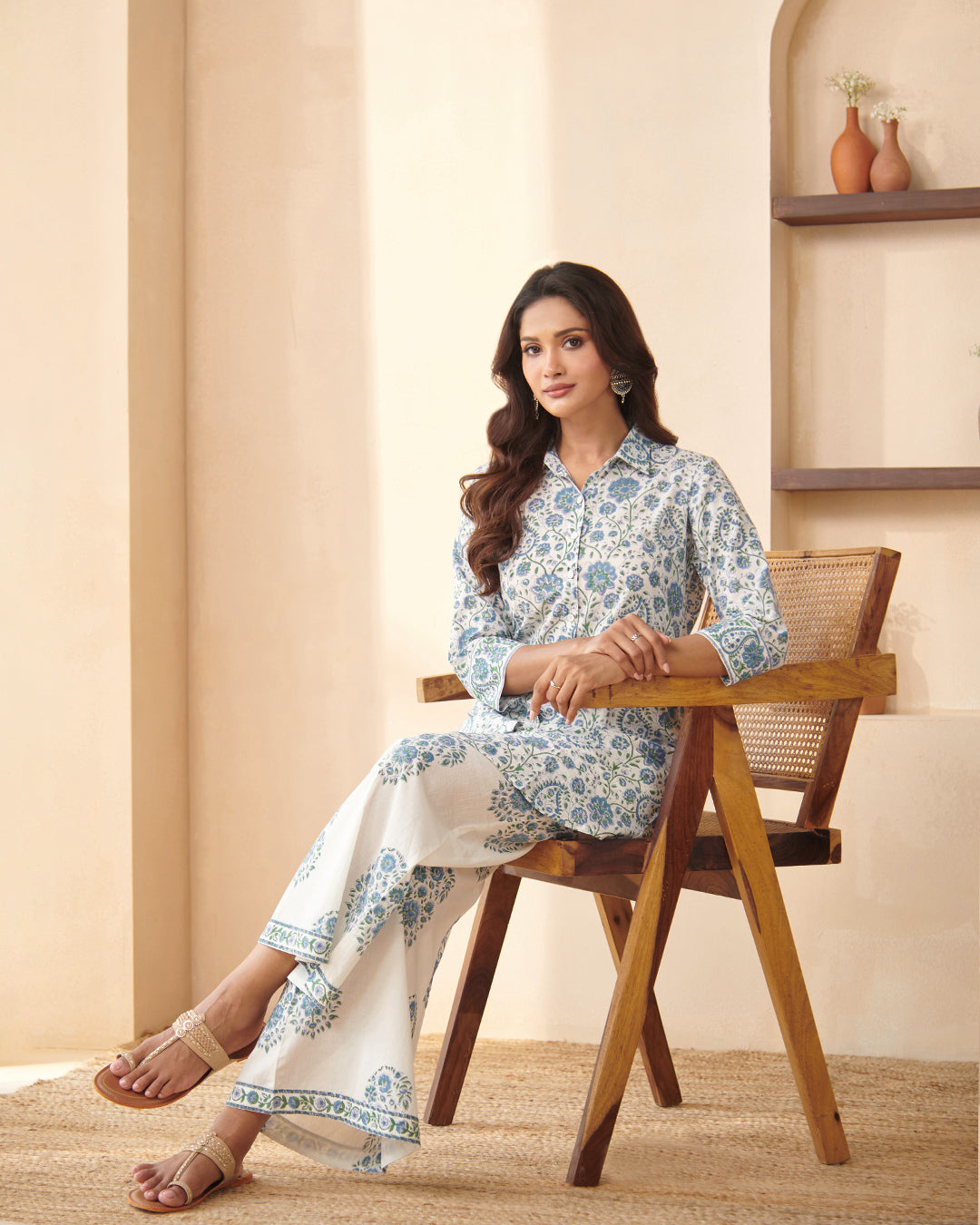
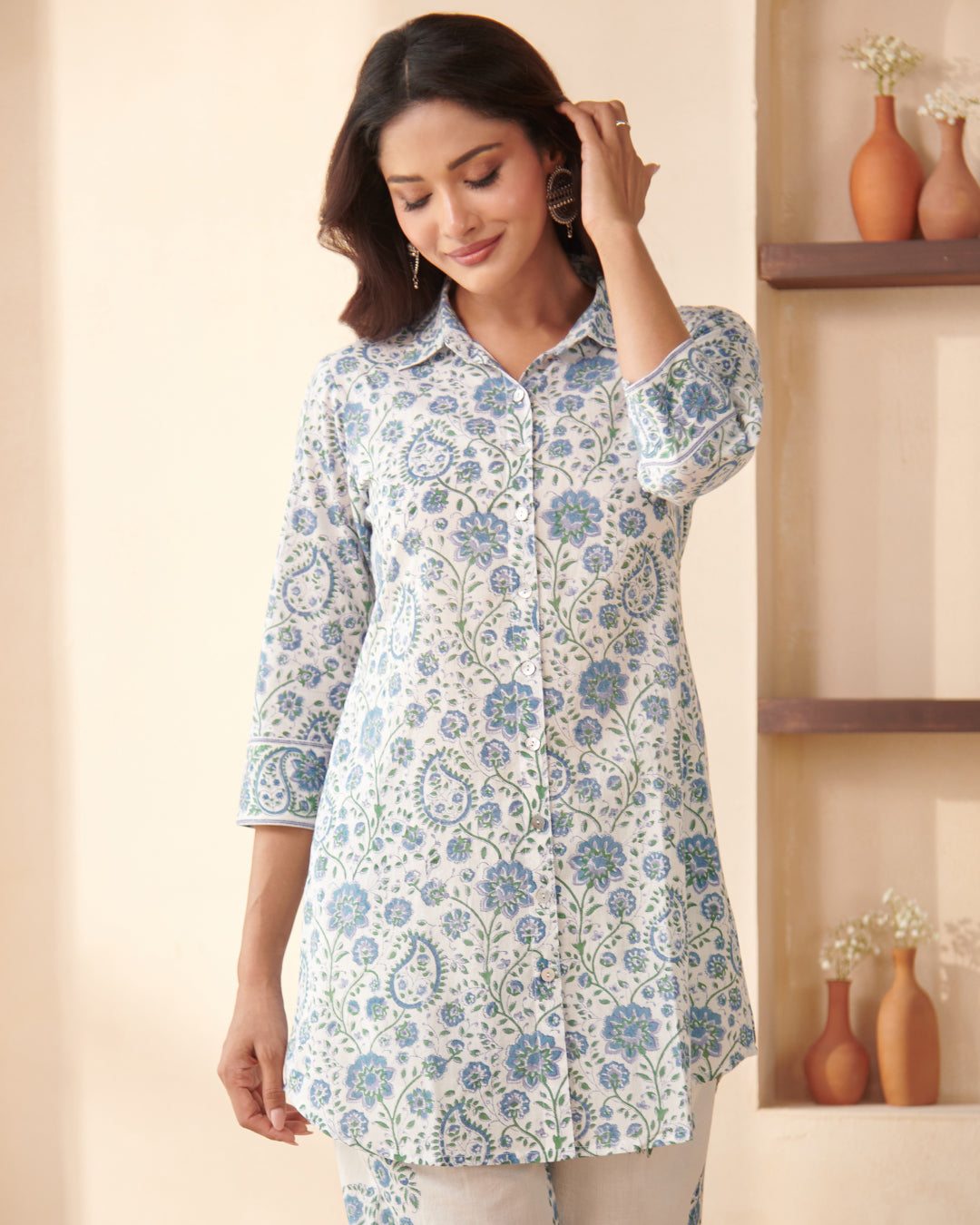
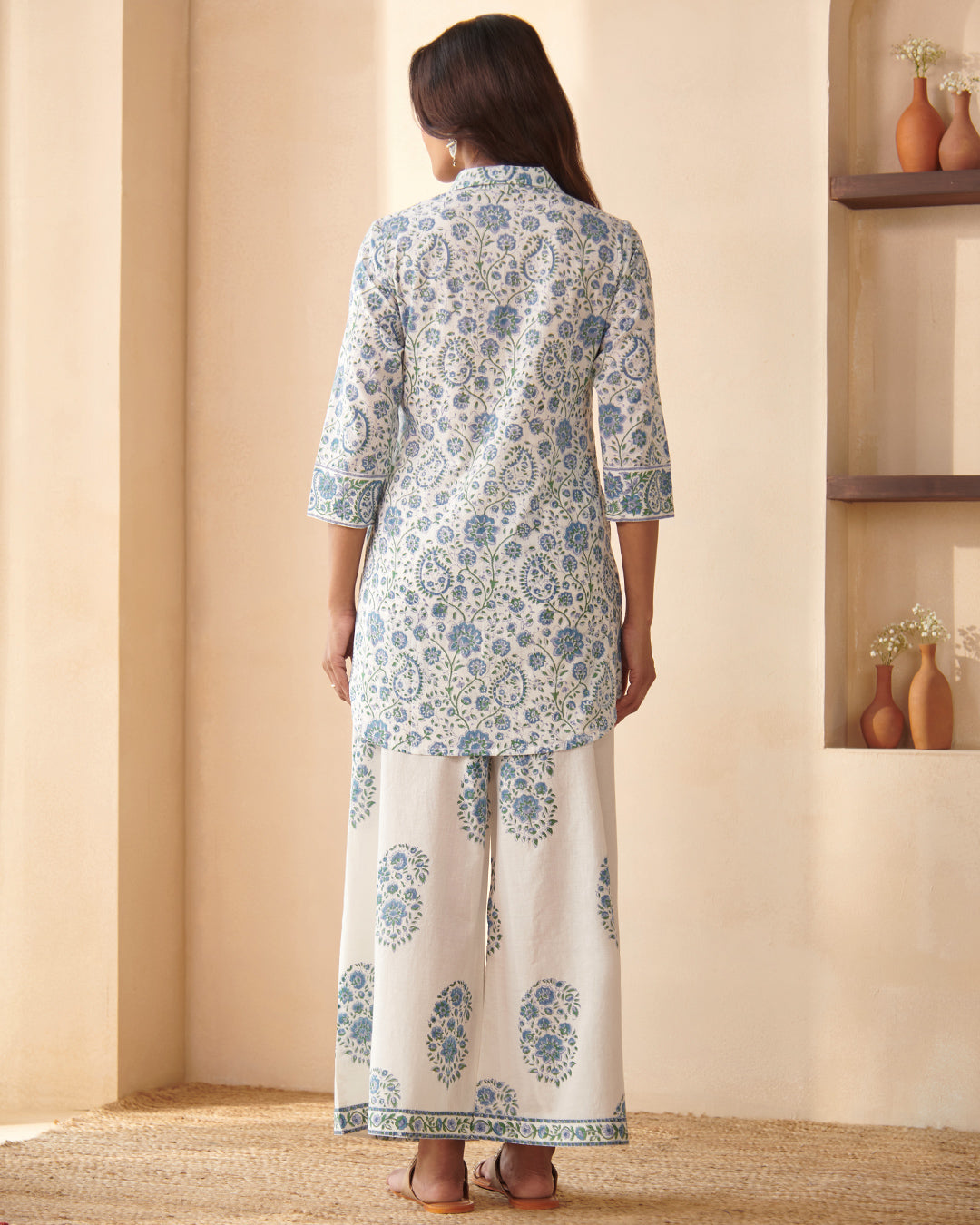

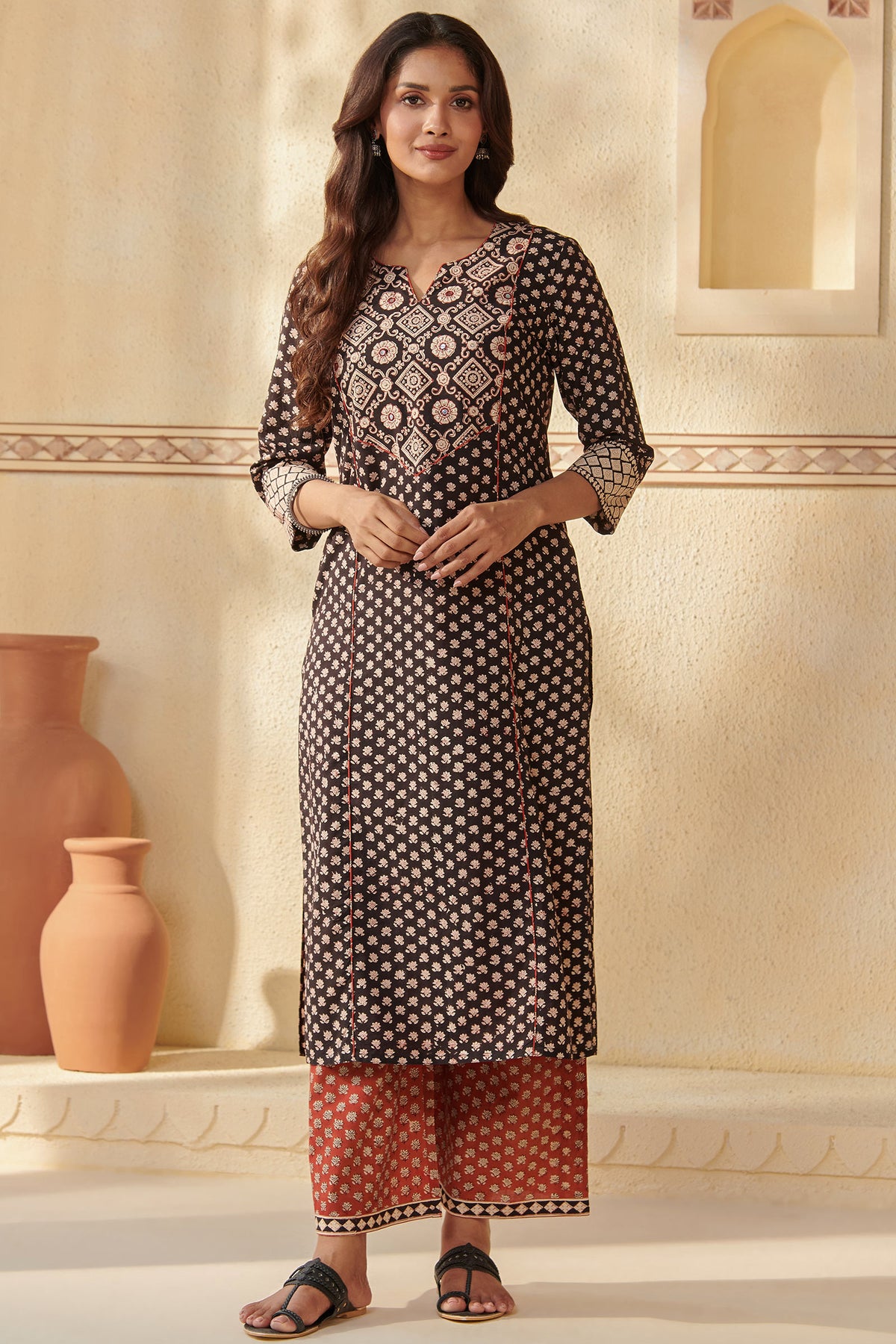
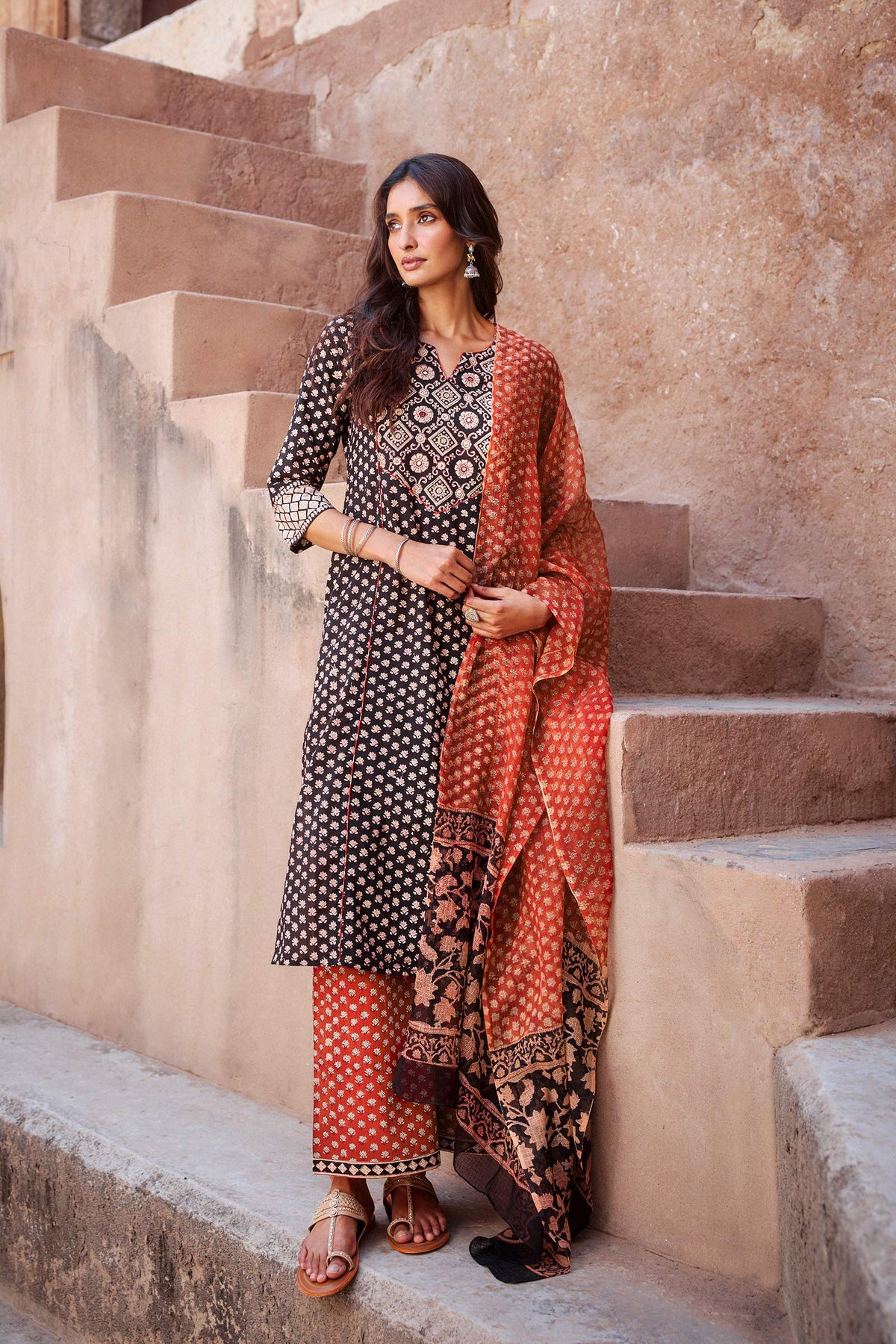

There are places in India where craft does not announce itself. It lives quietly, in courtyards, in hands that have repeated the same movement for generations. Akola, a small village in Rajasthan, is one such place.
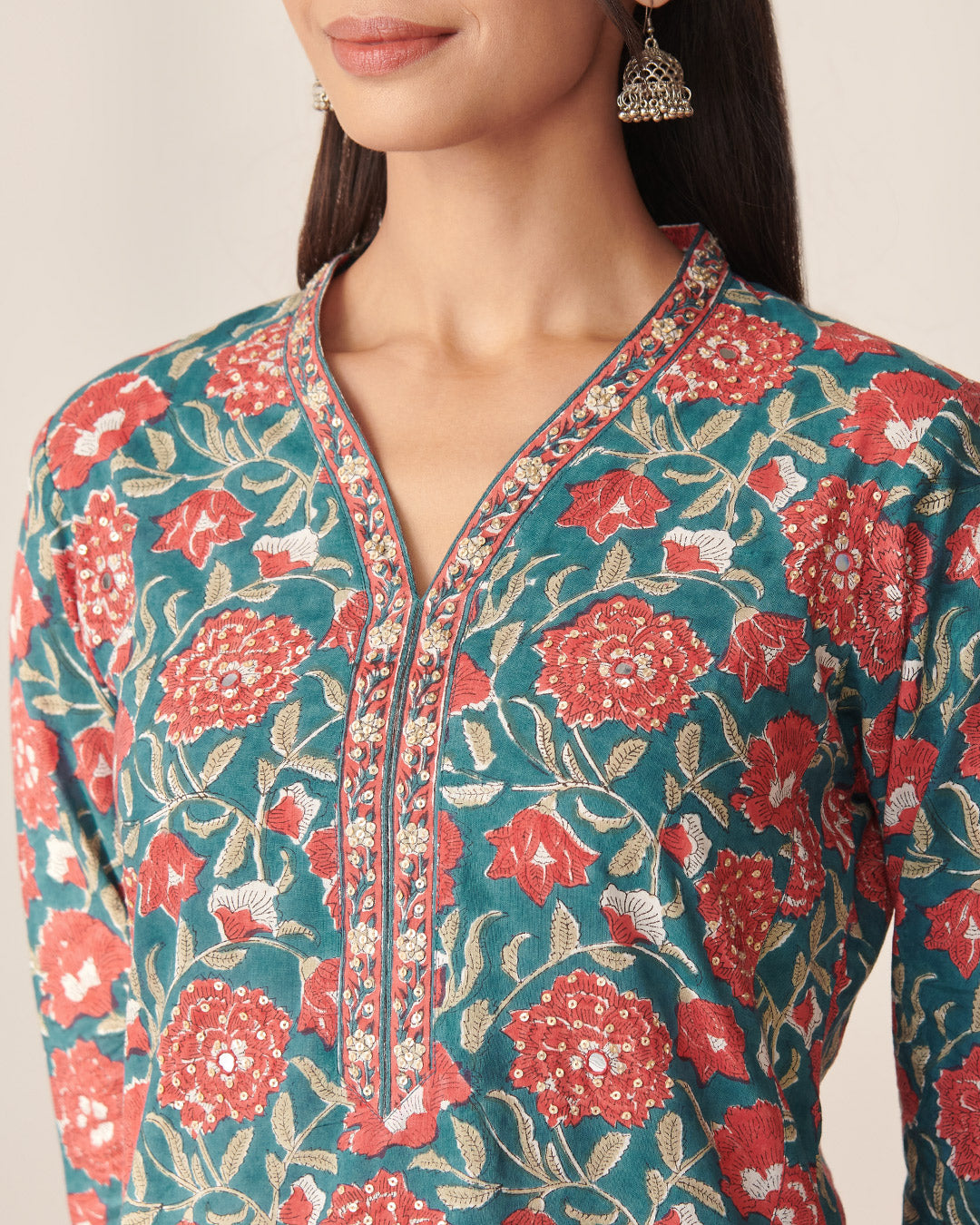
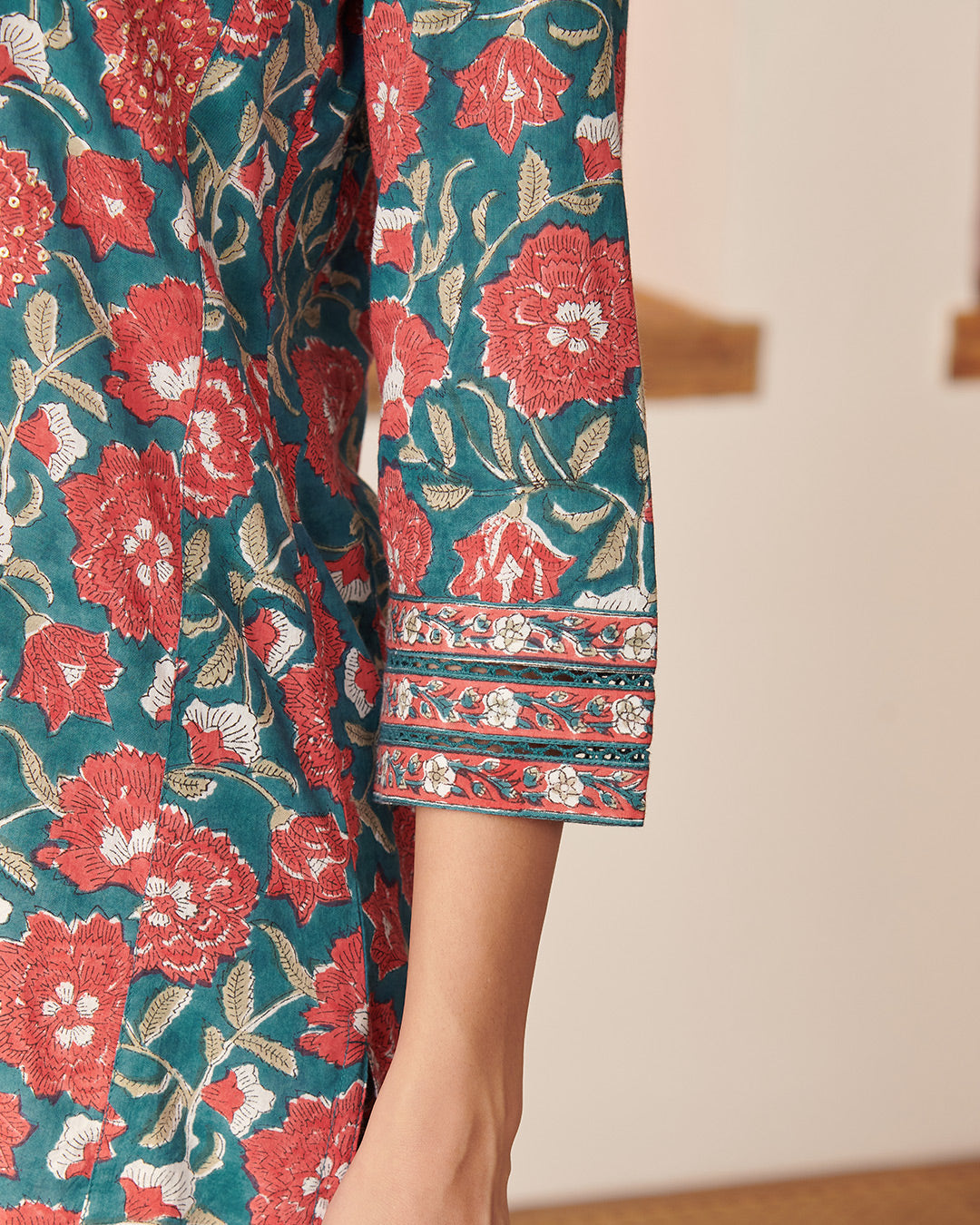
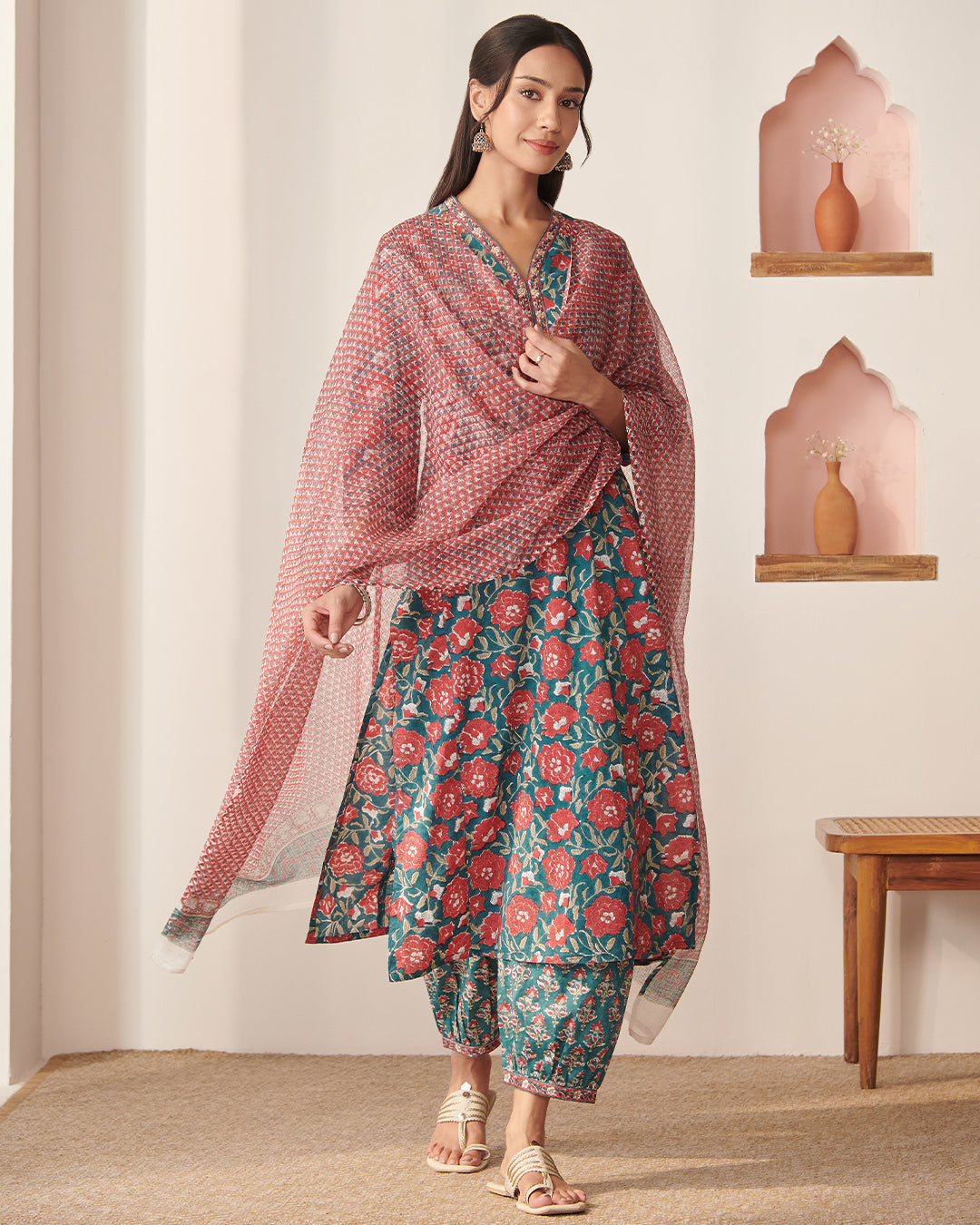
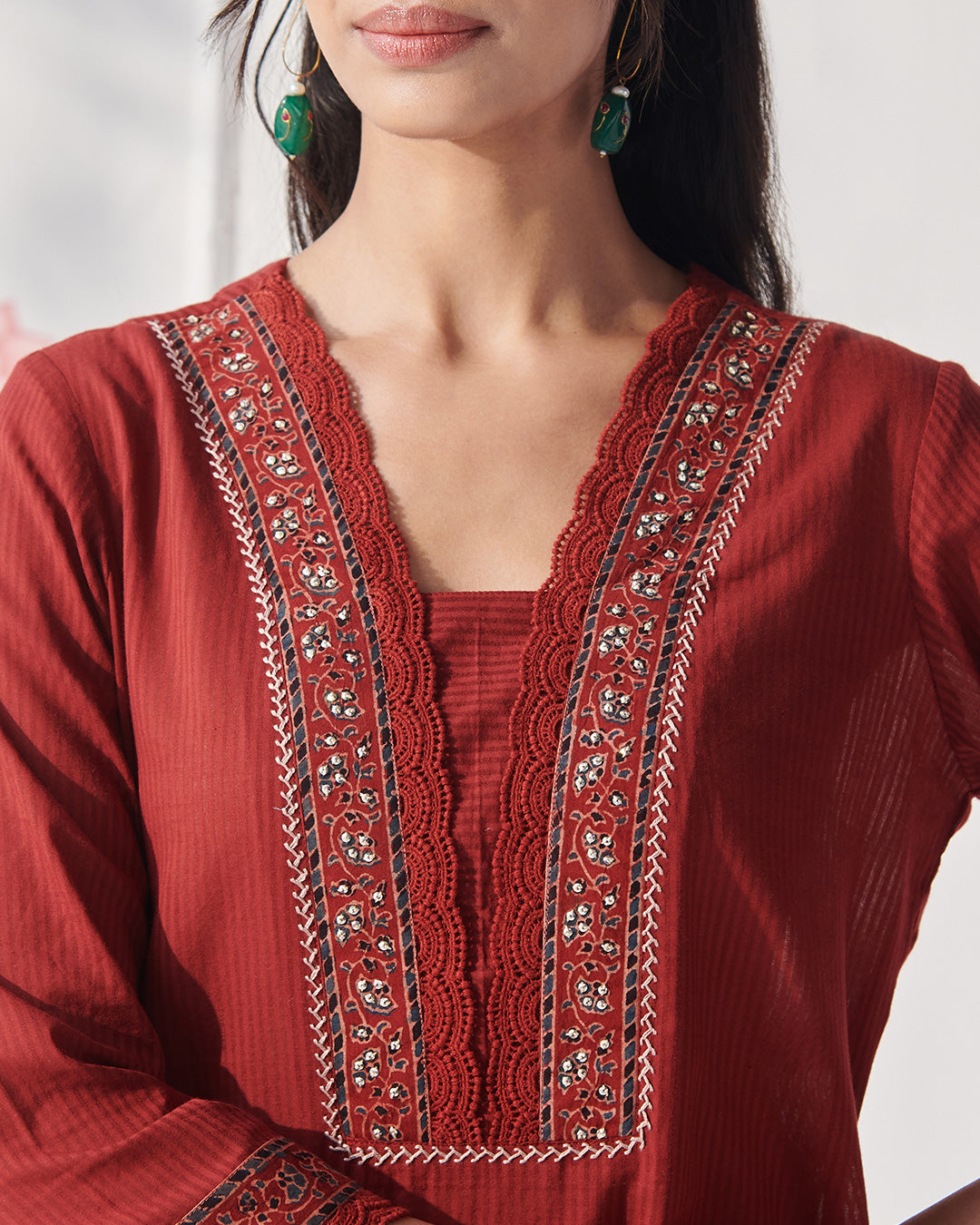
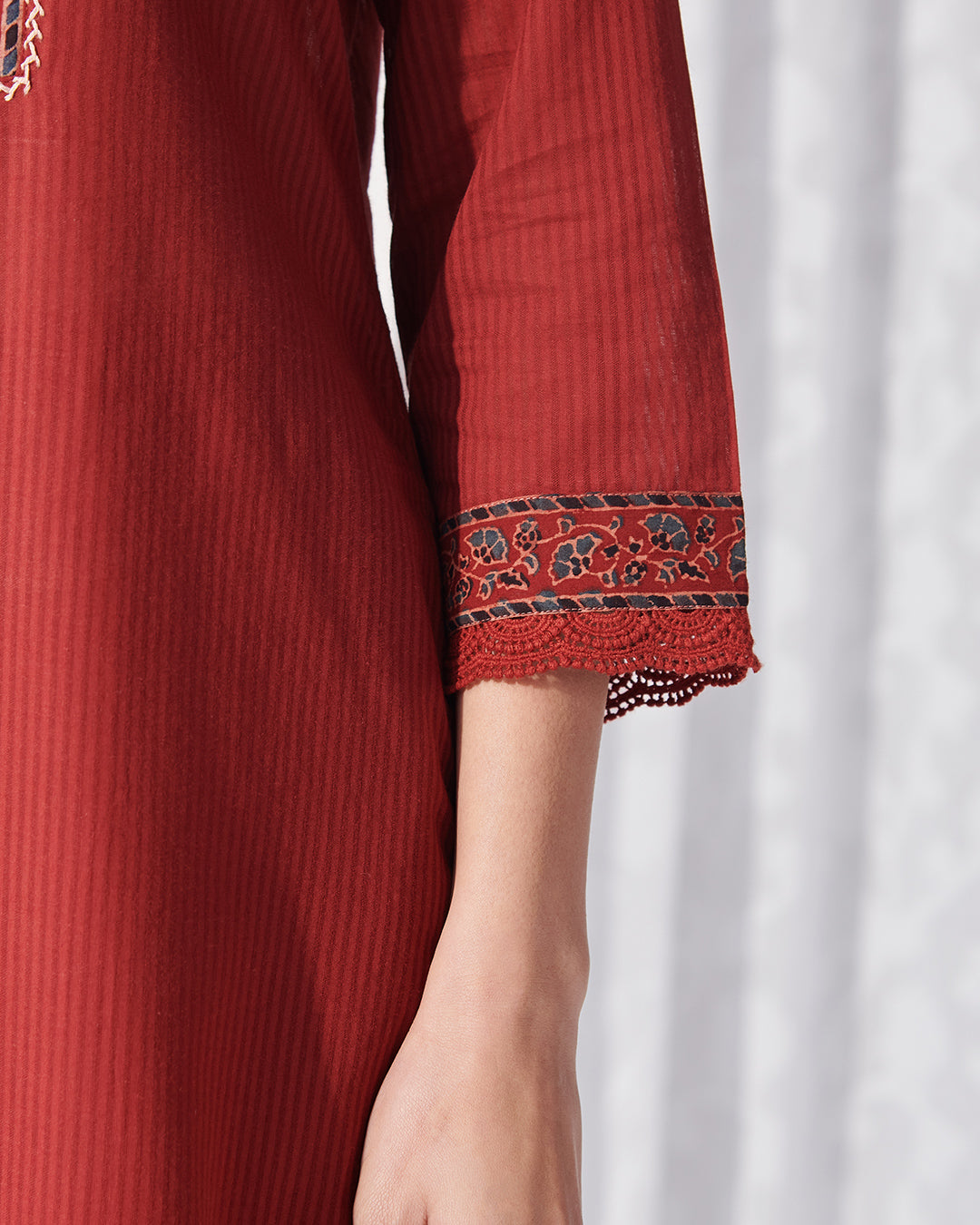
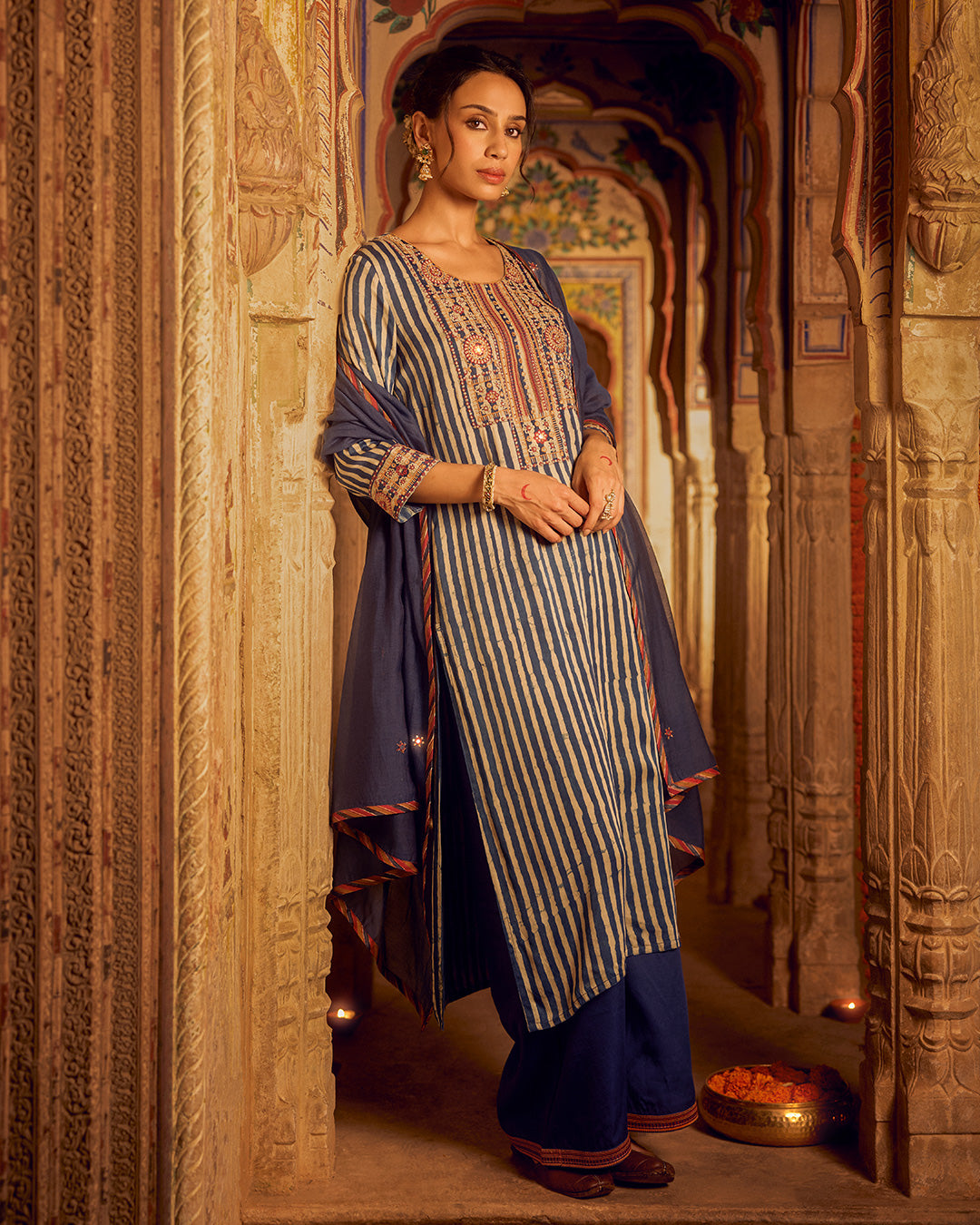
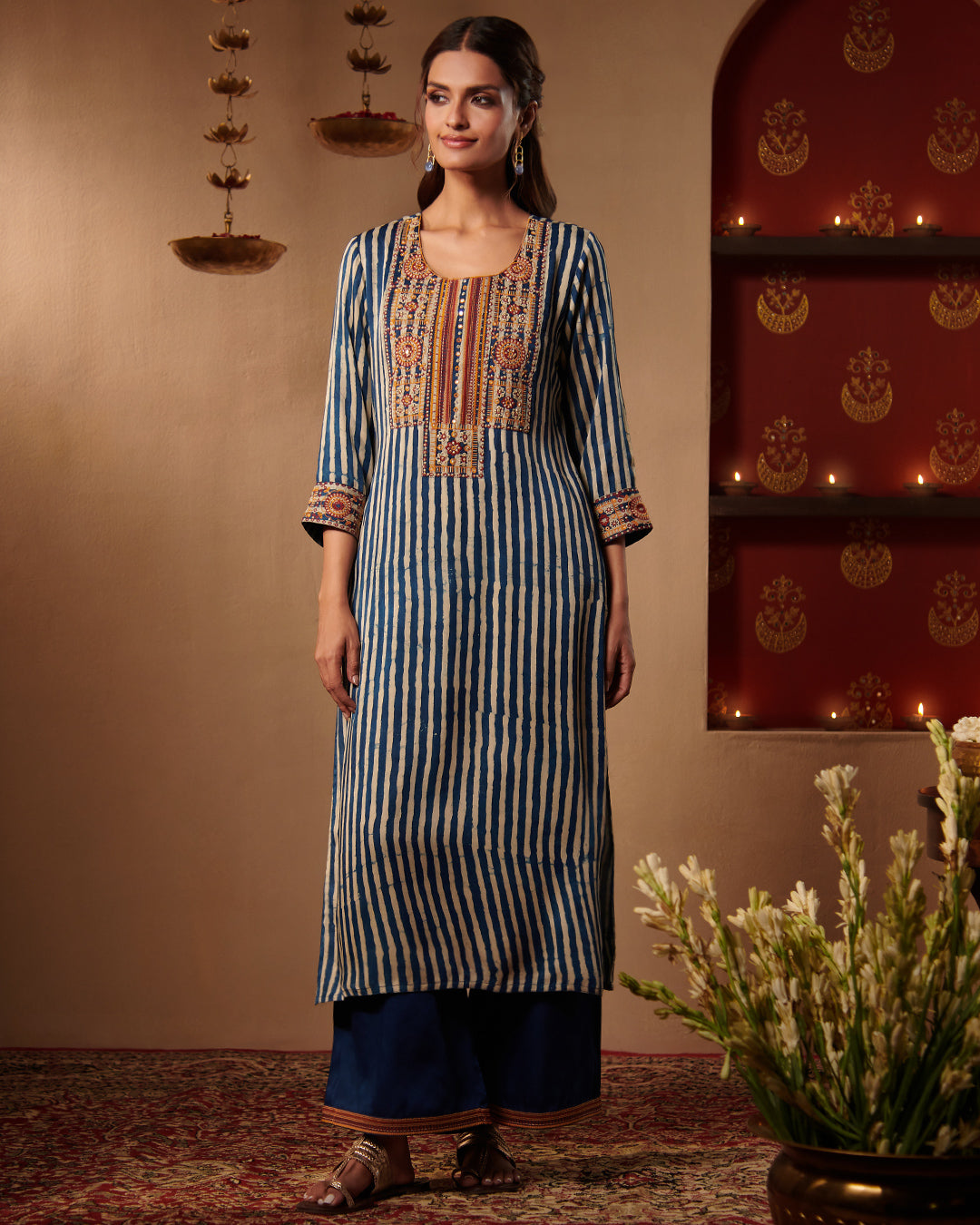
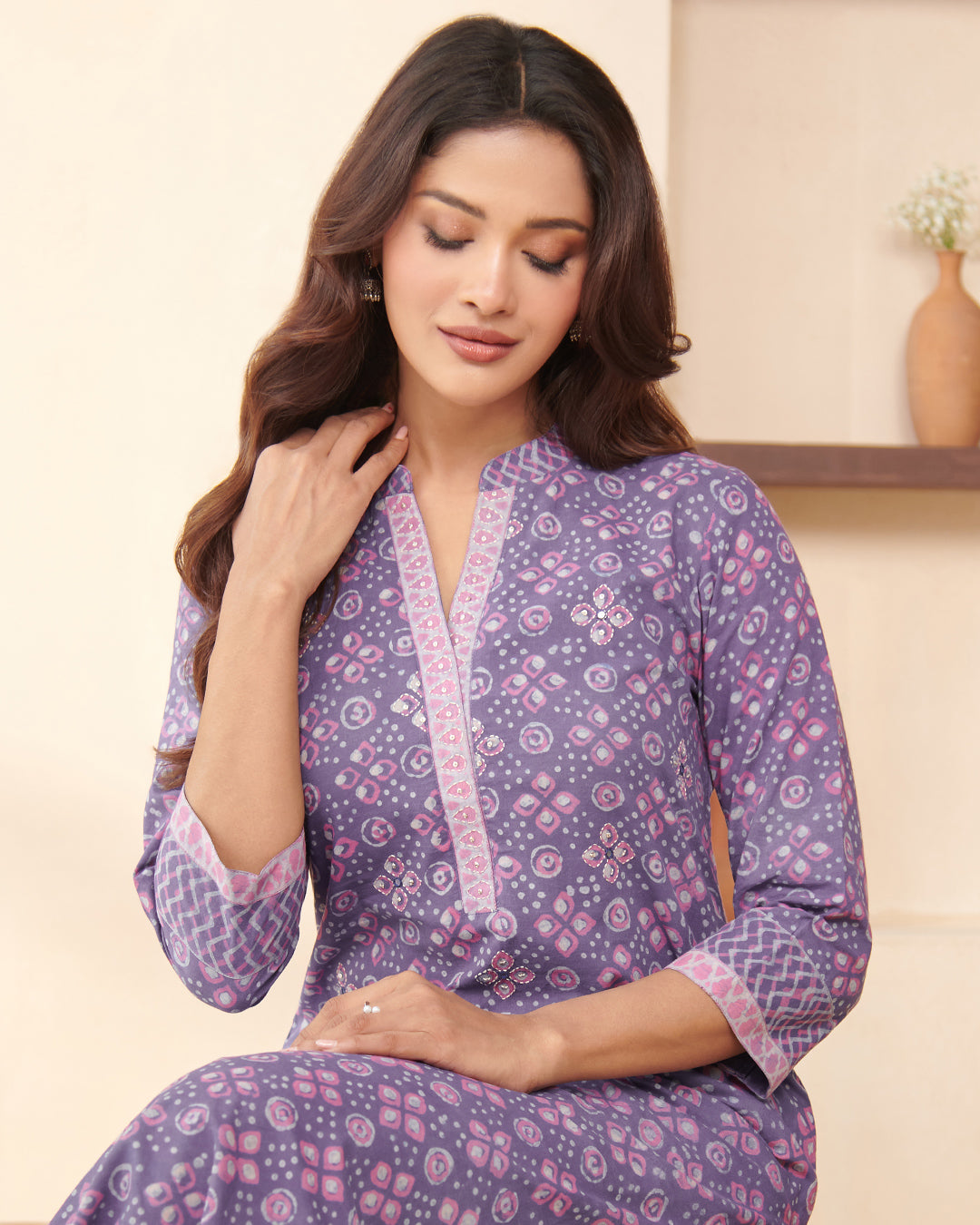
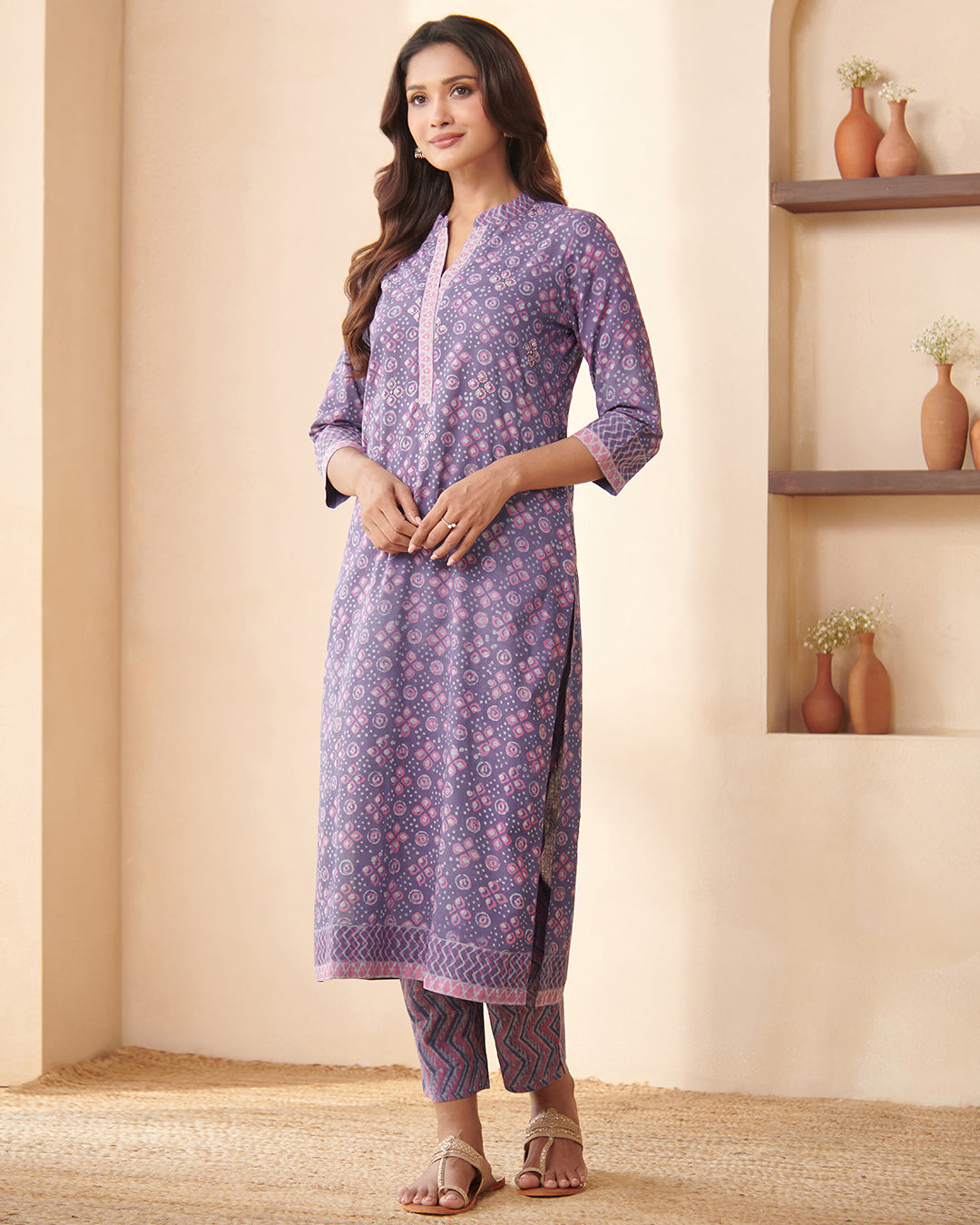
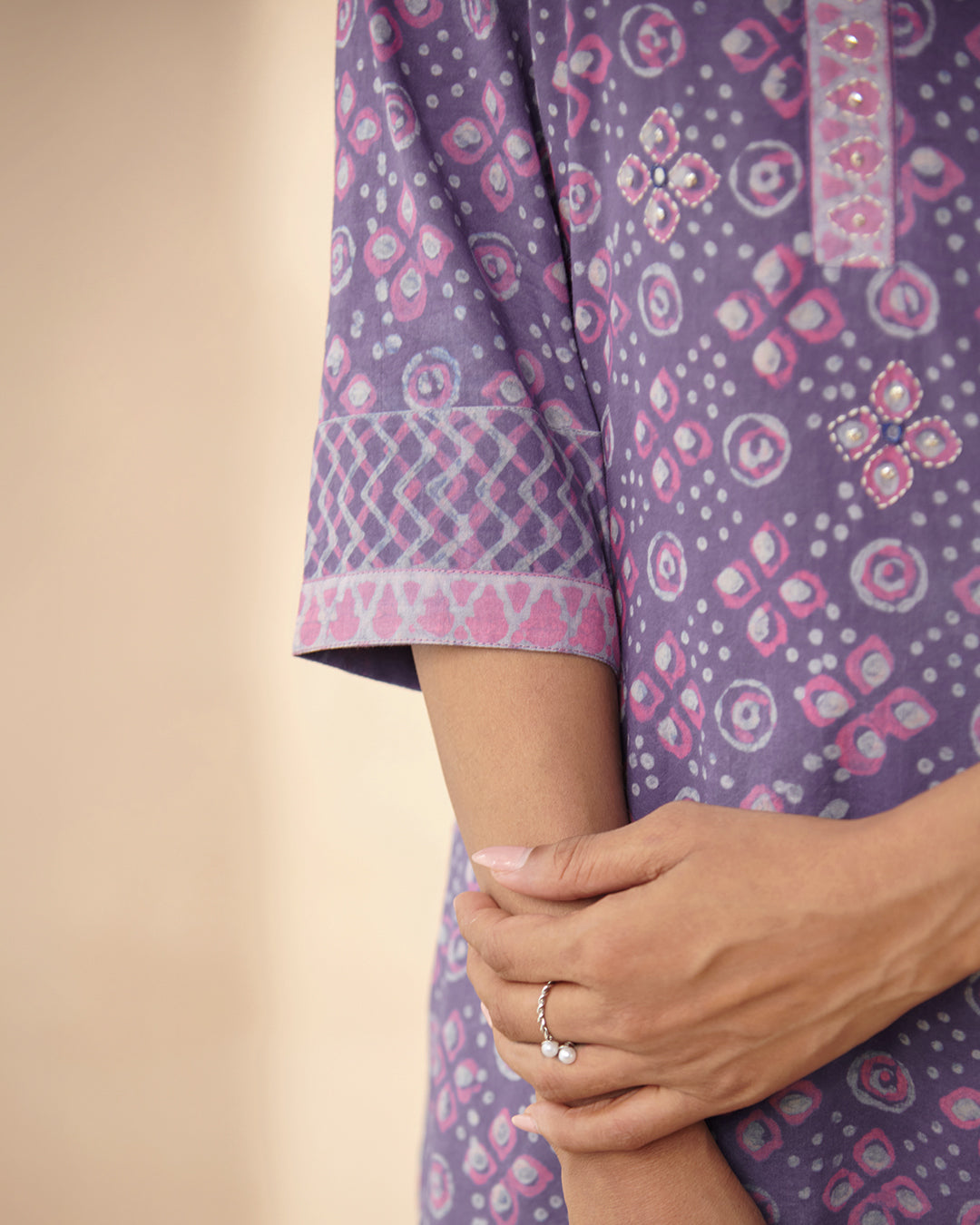
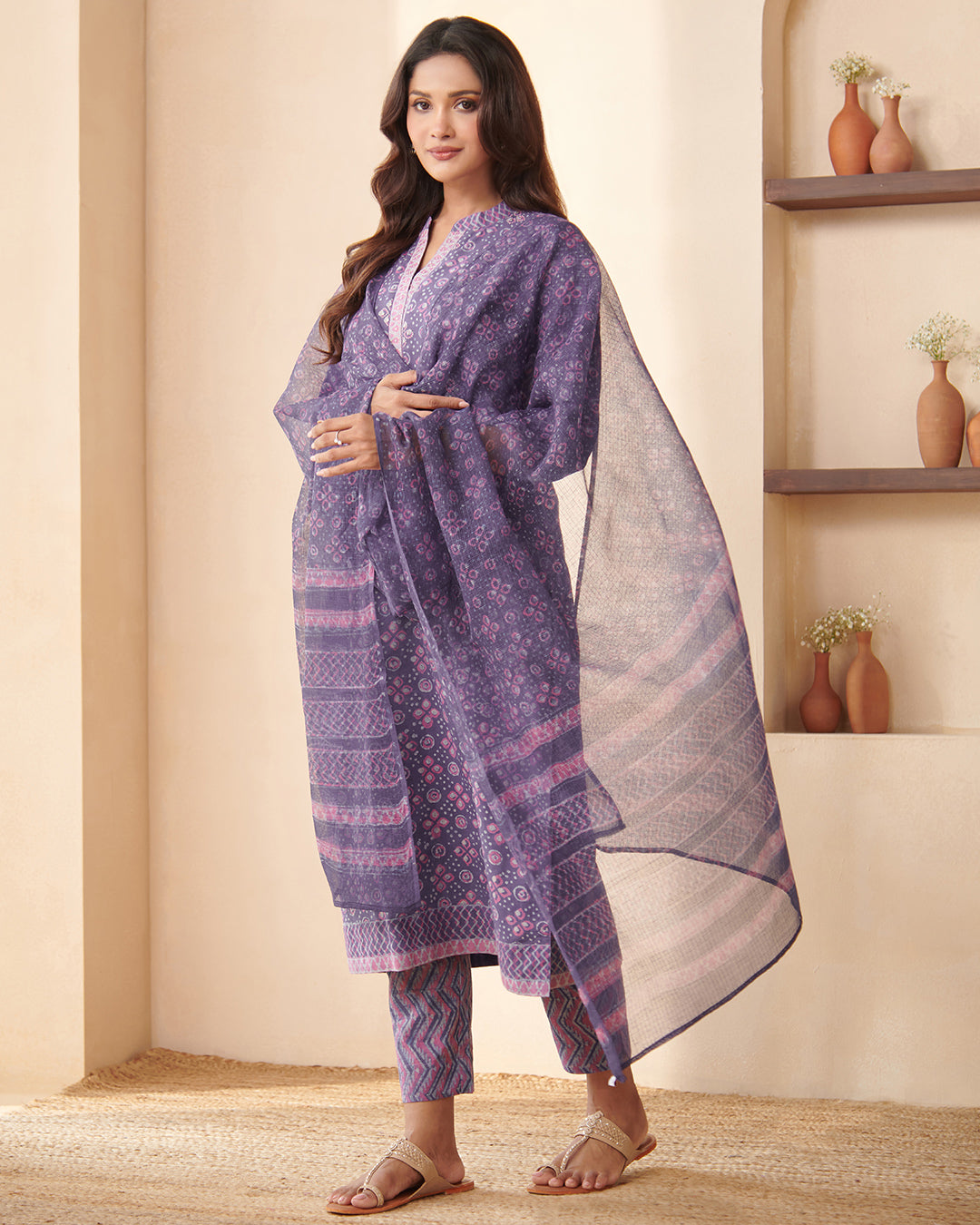
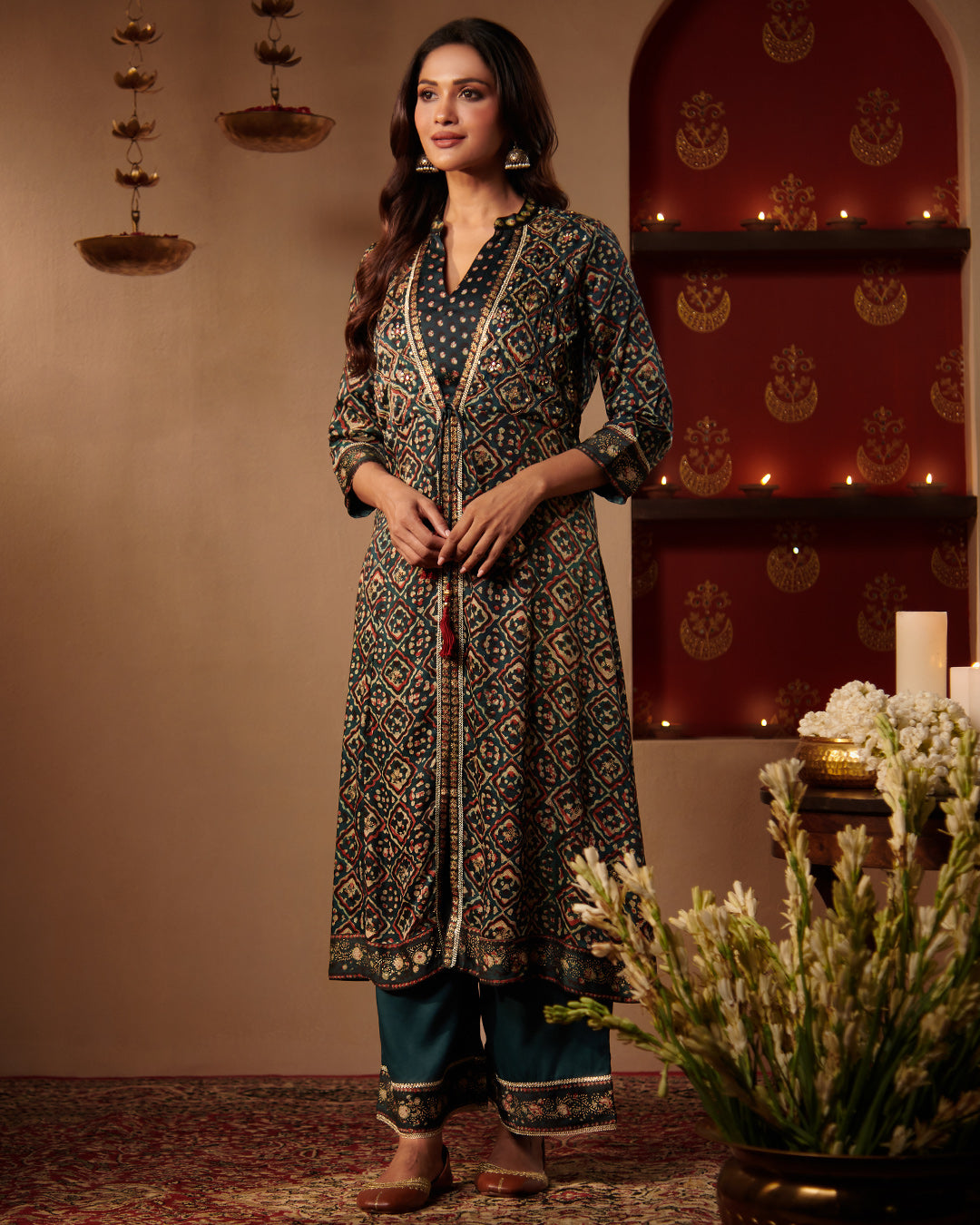
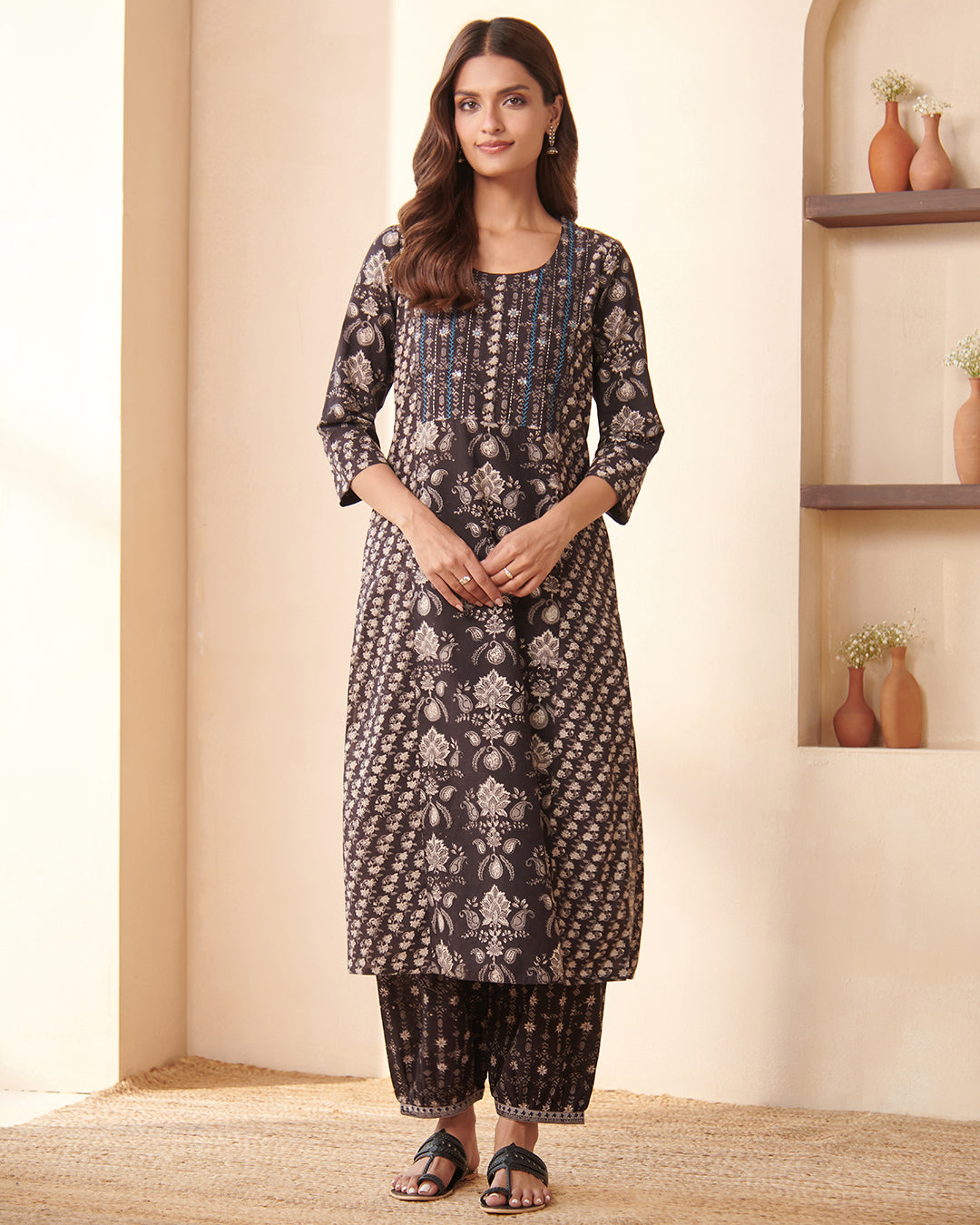
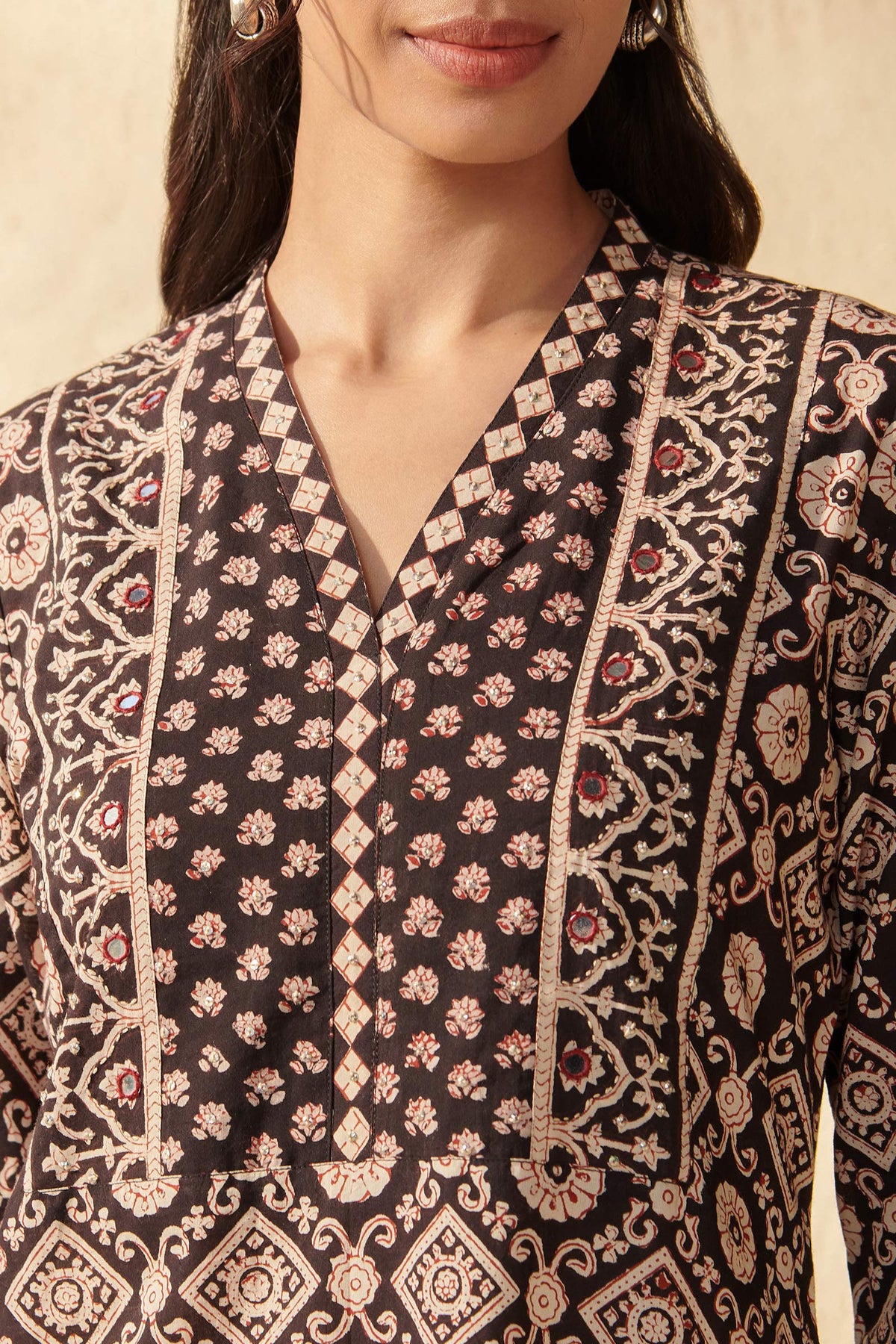
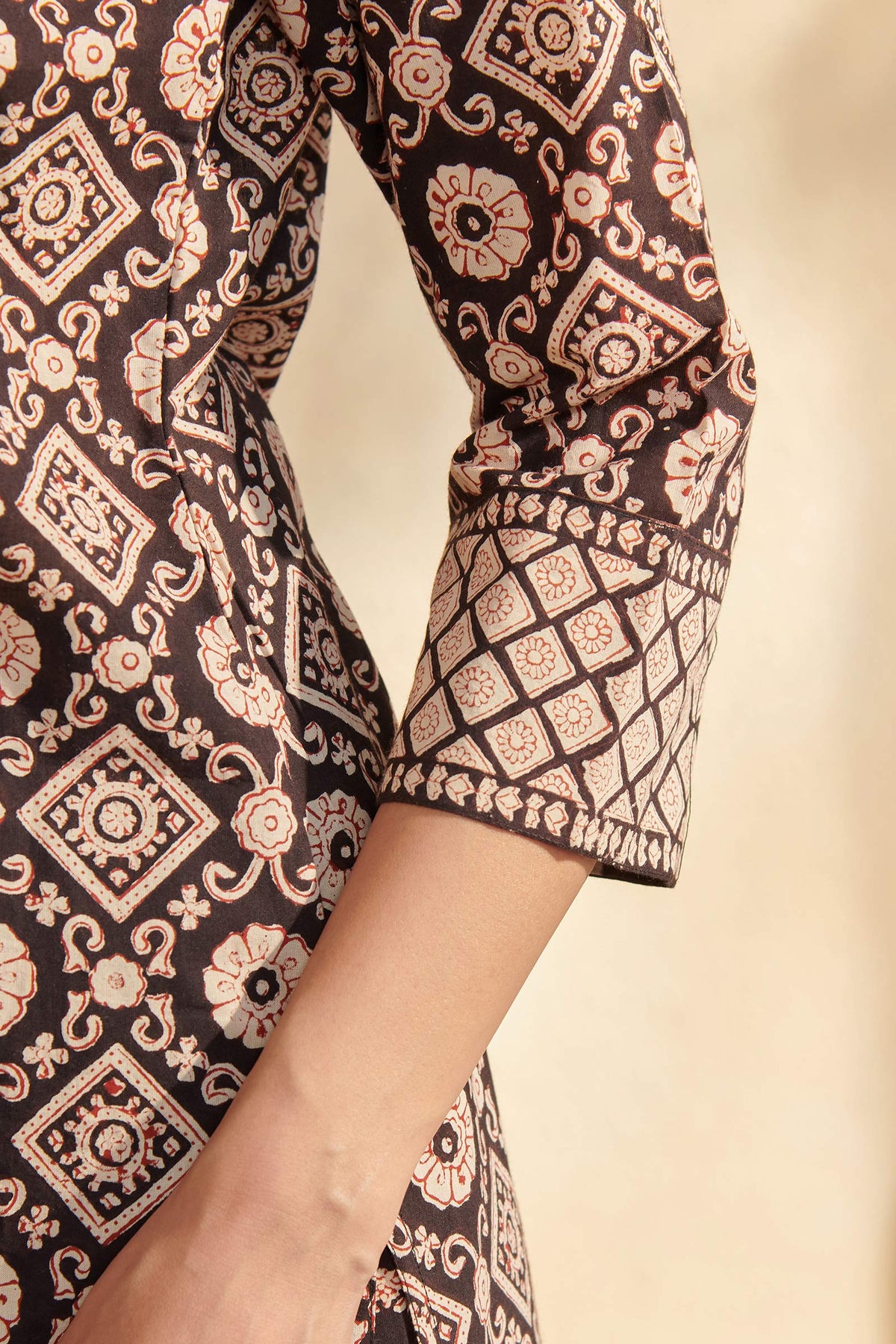
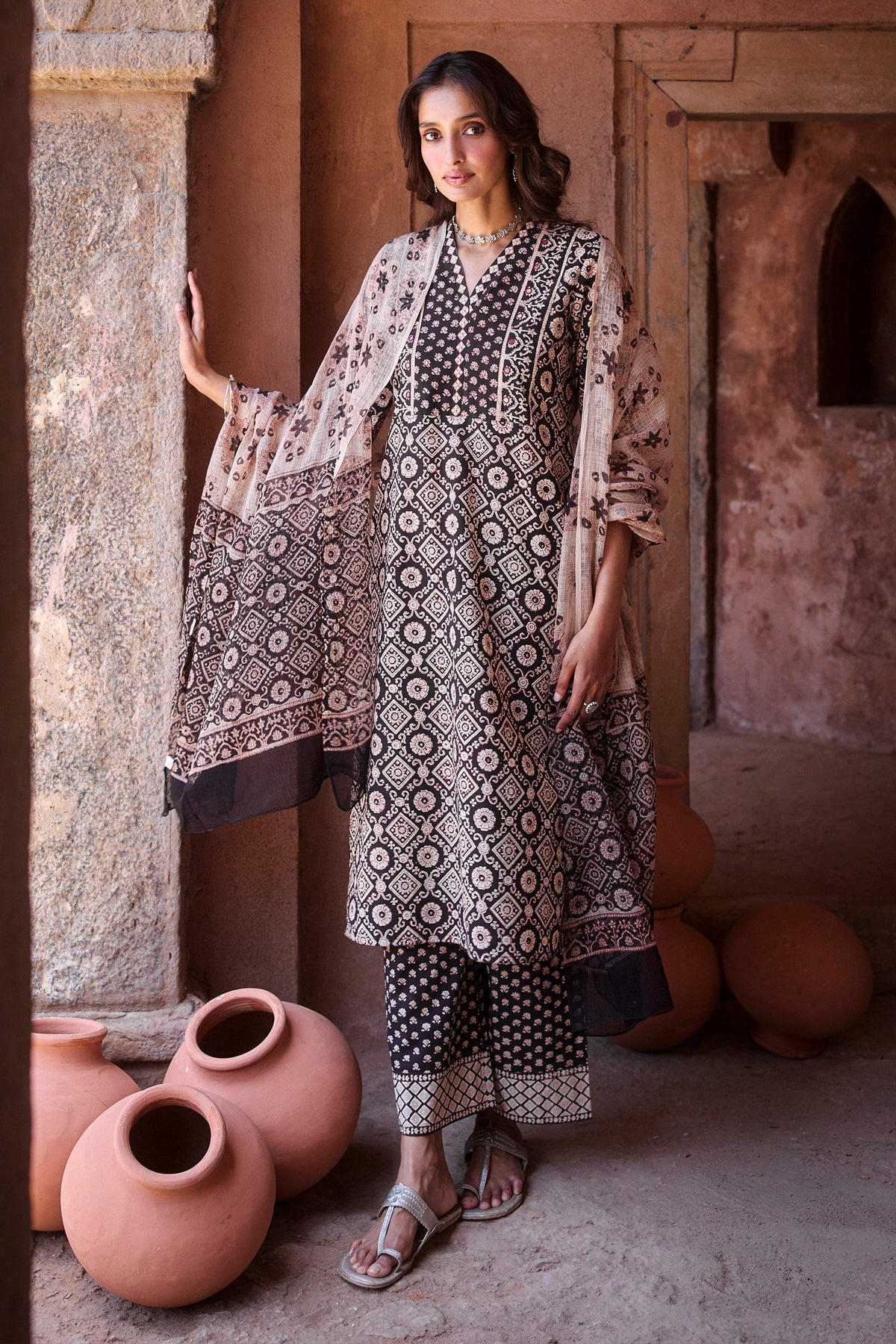
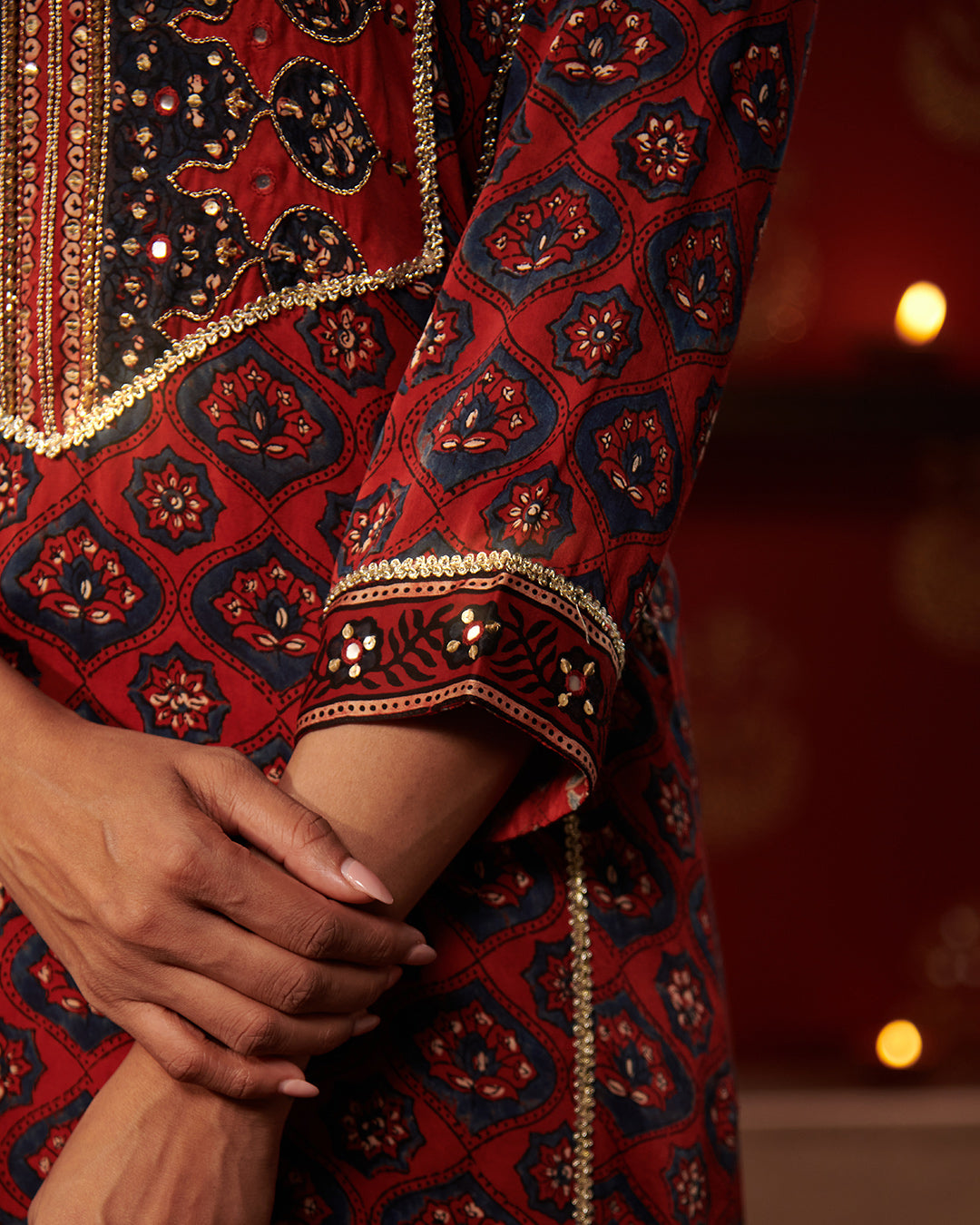
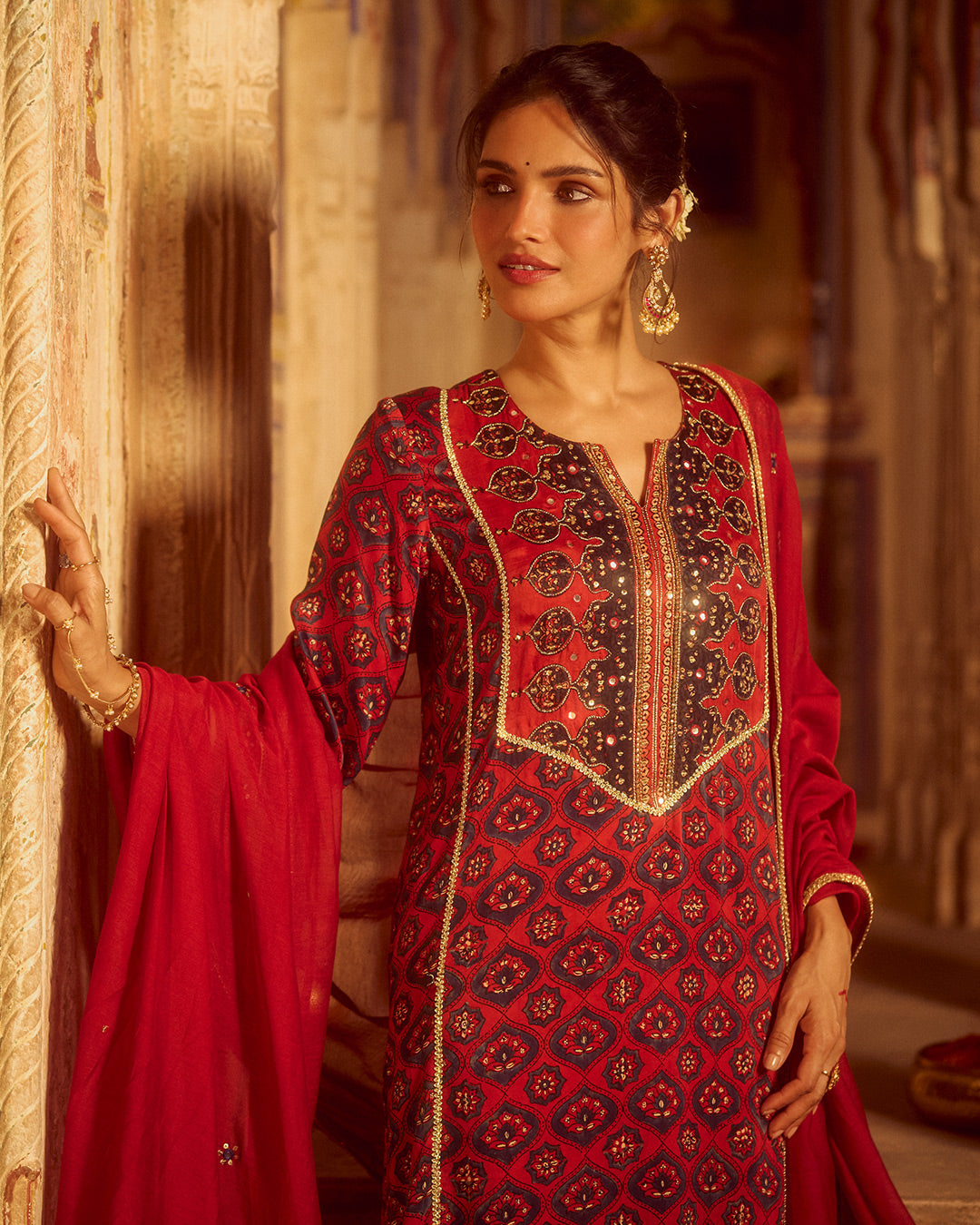
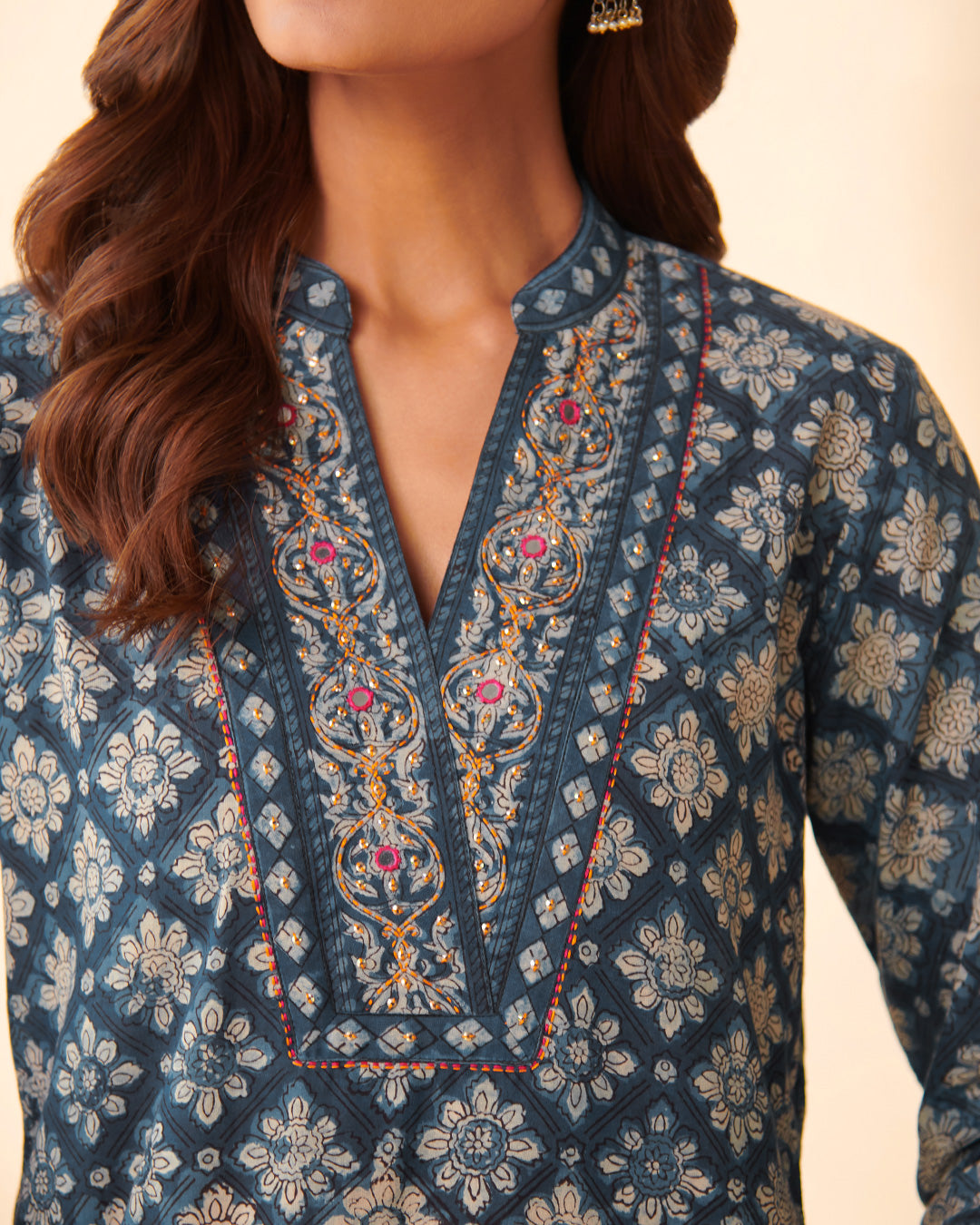
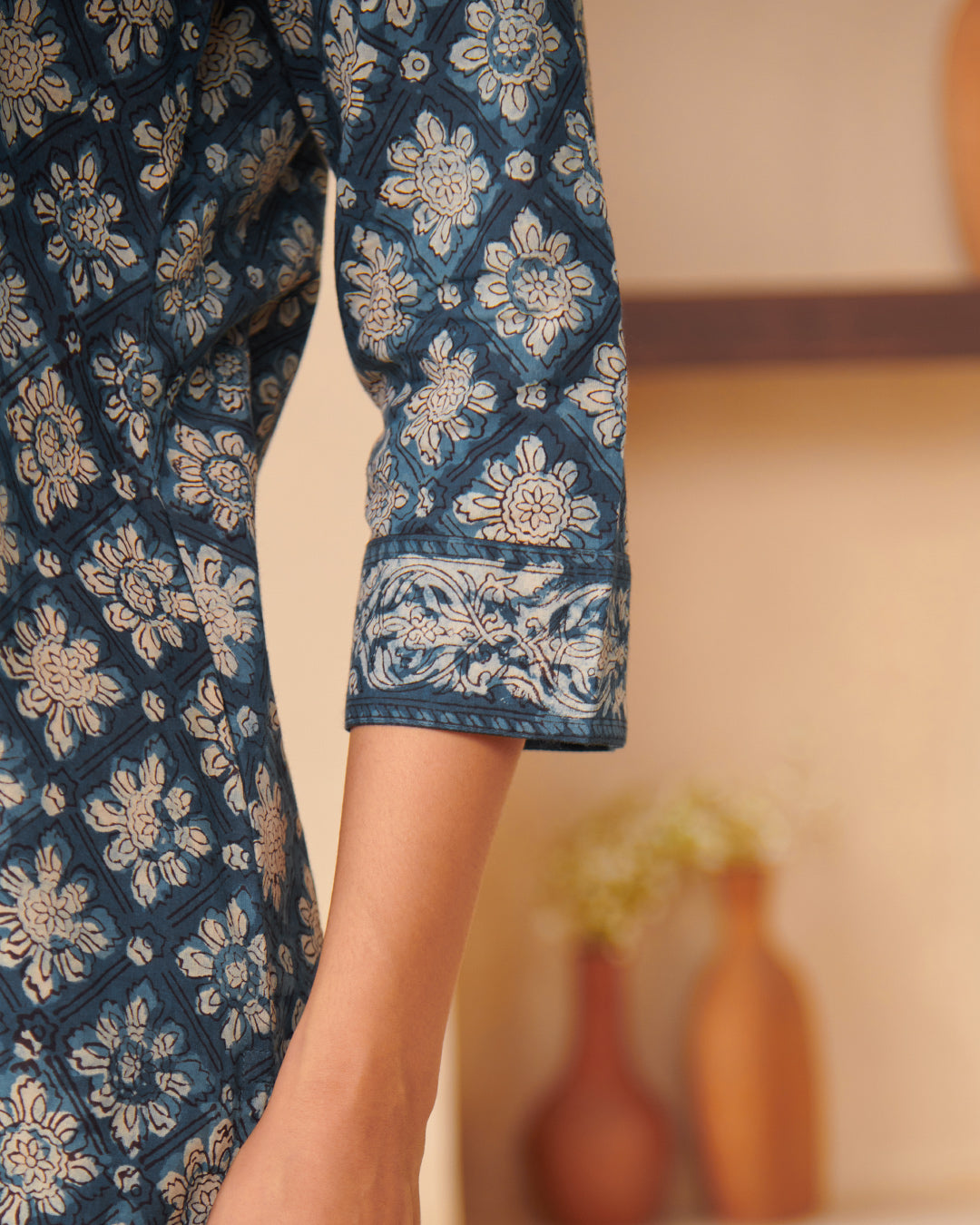
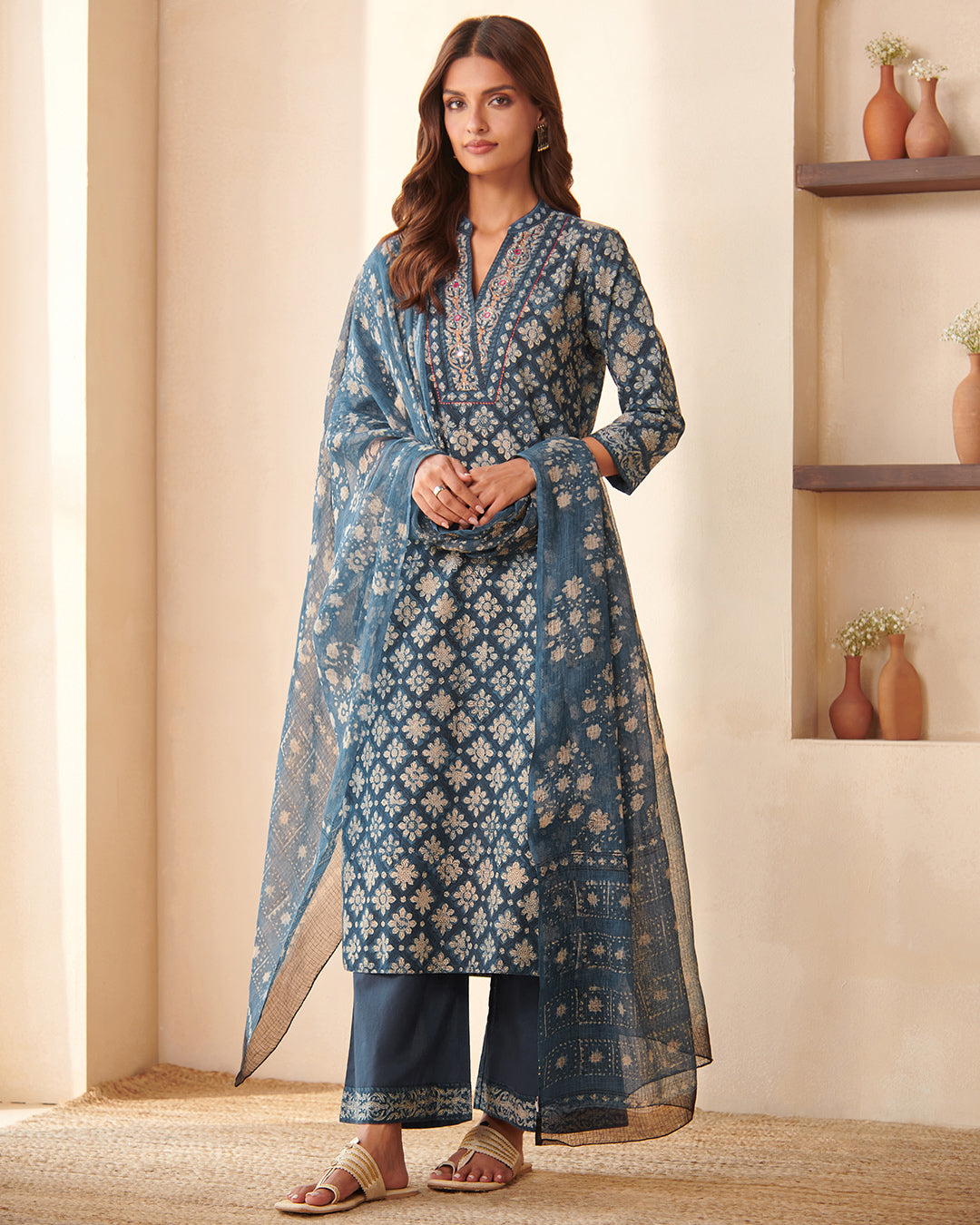
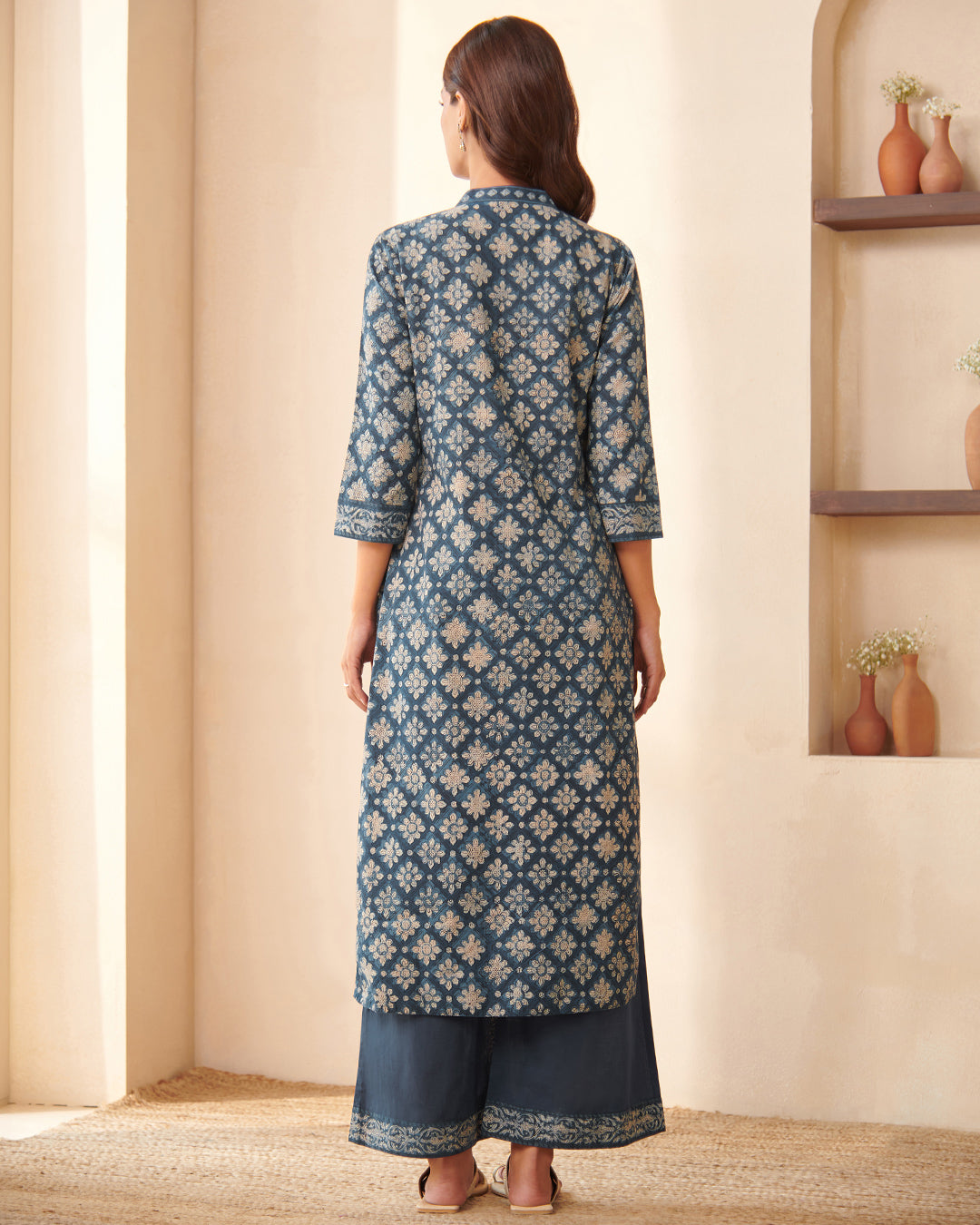
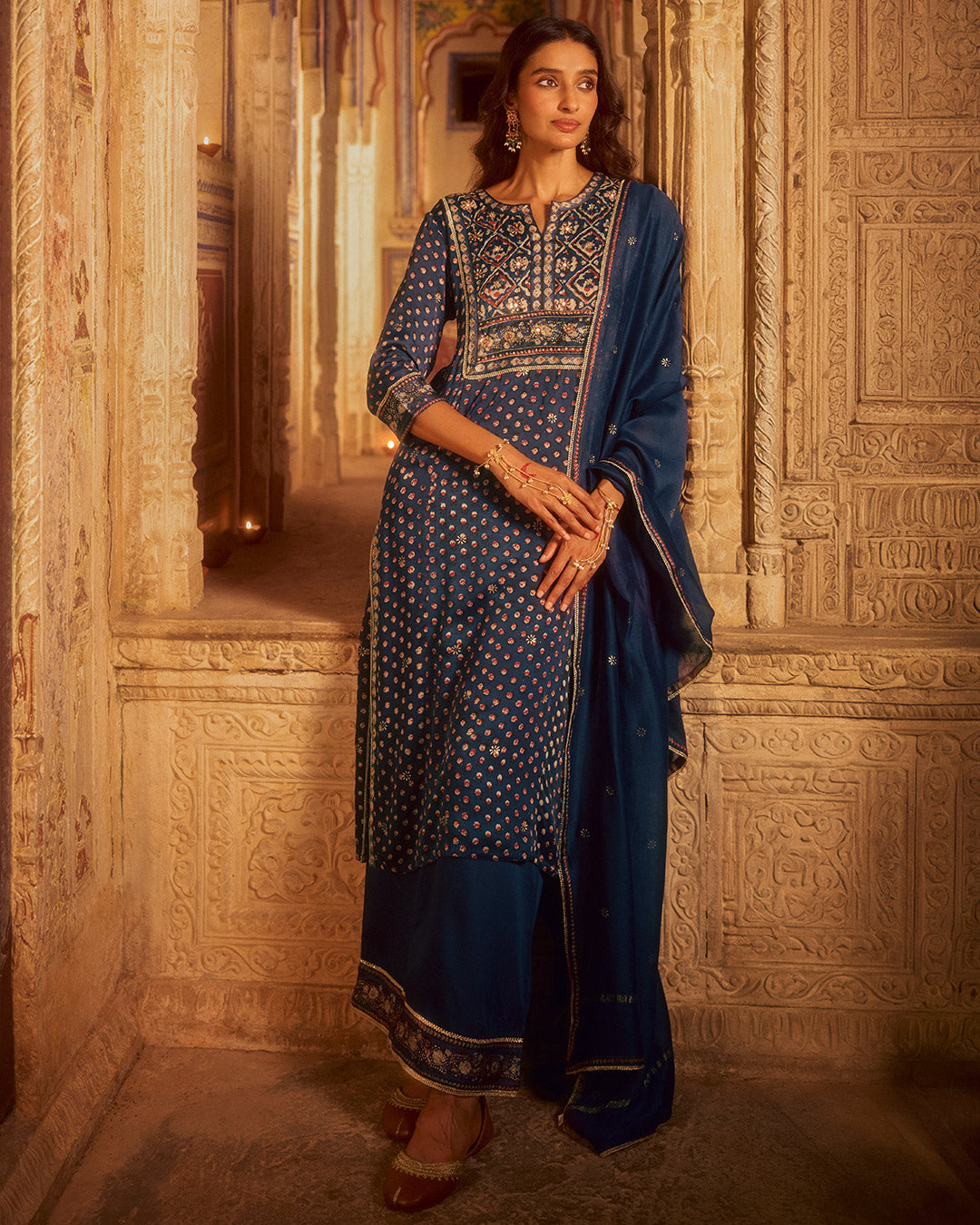
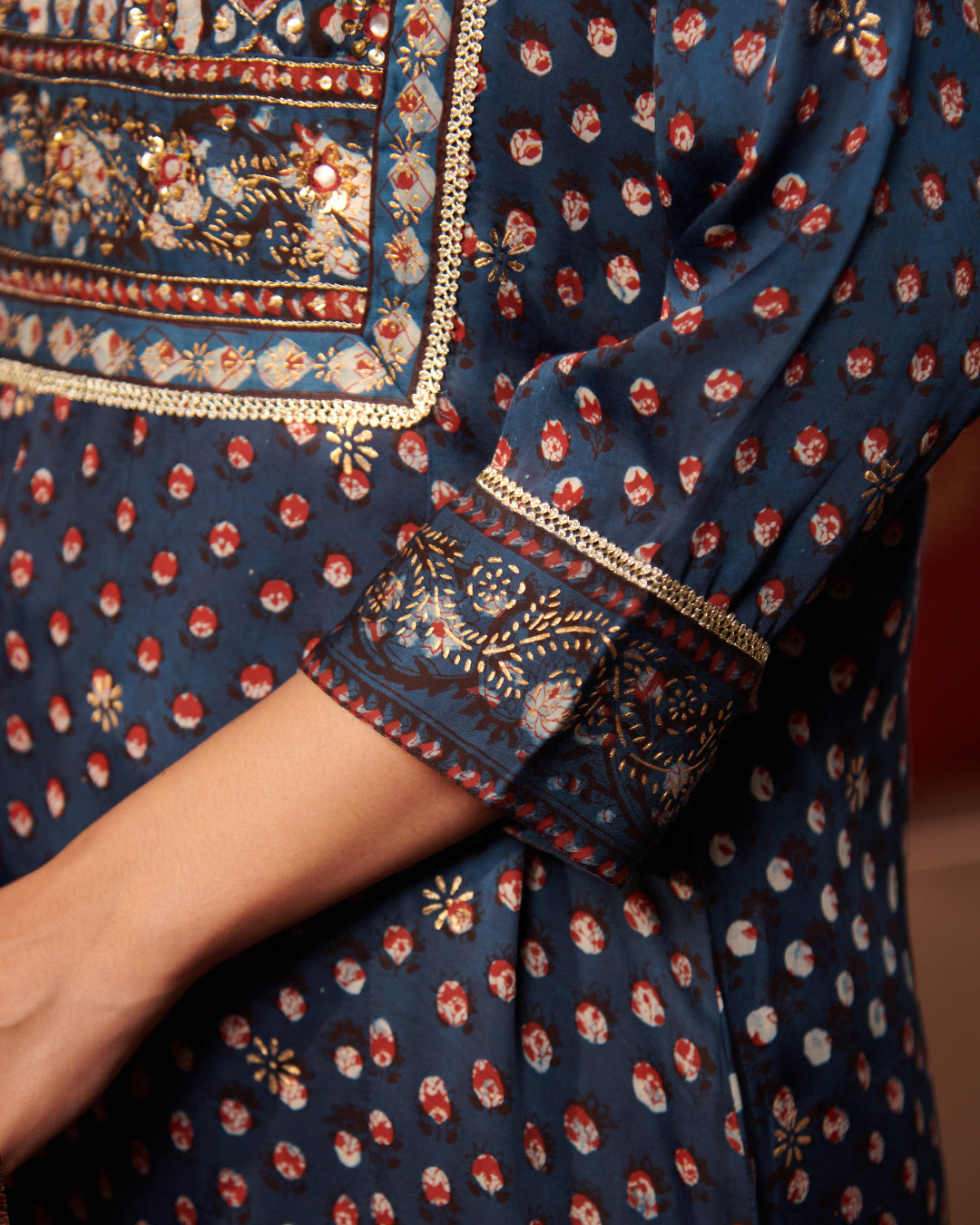
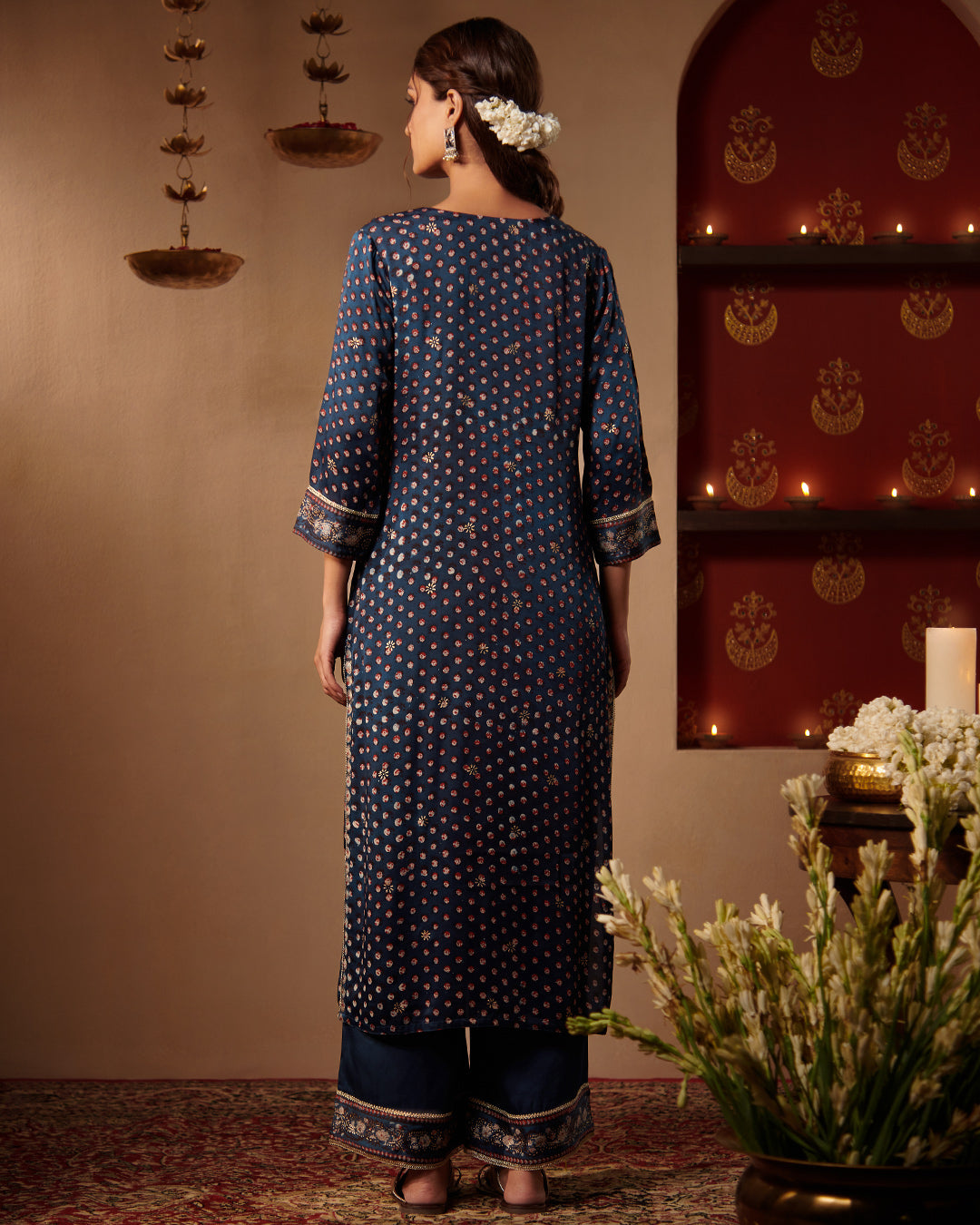
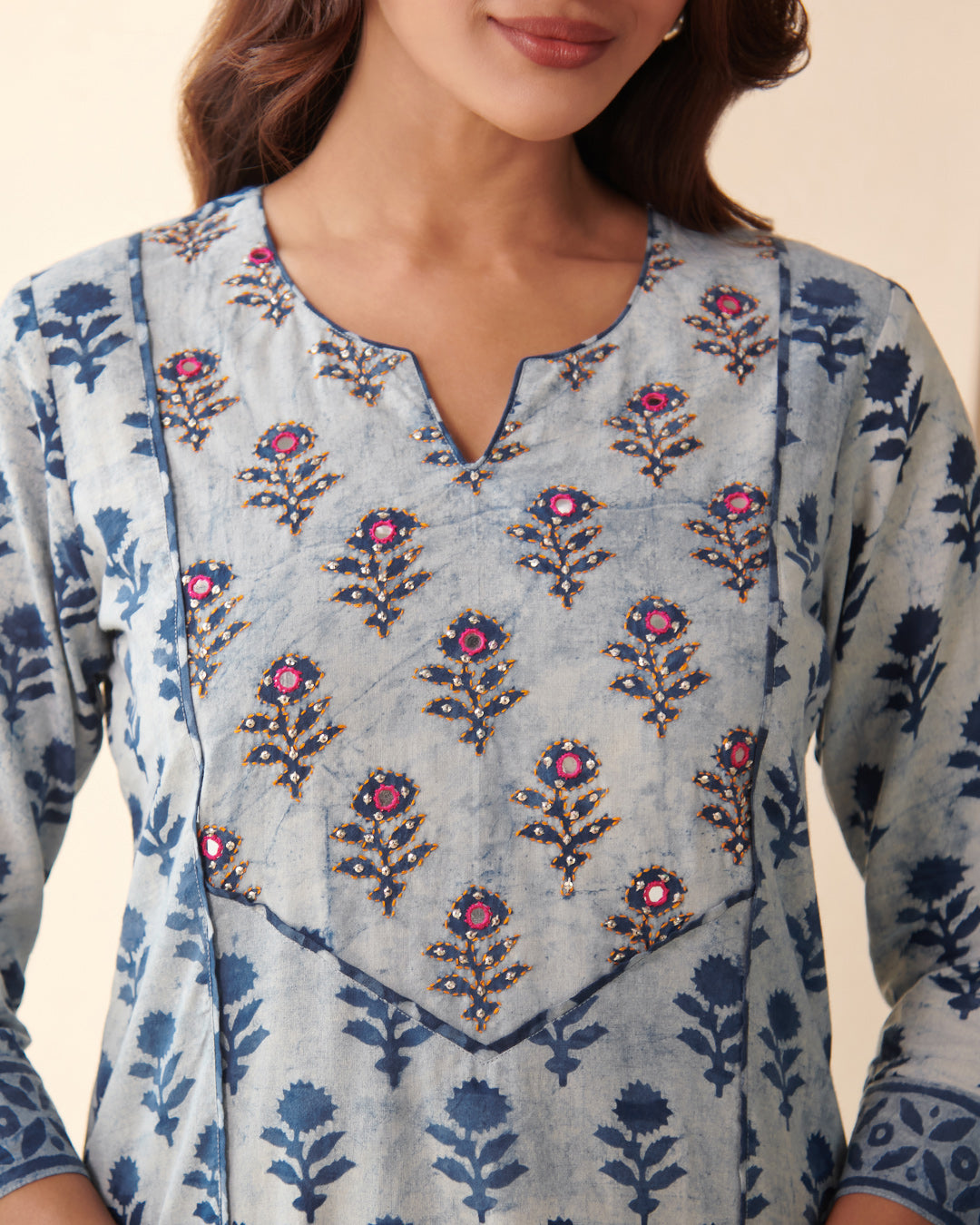
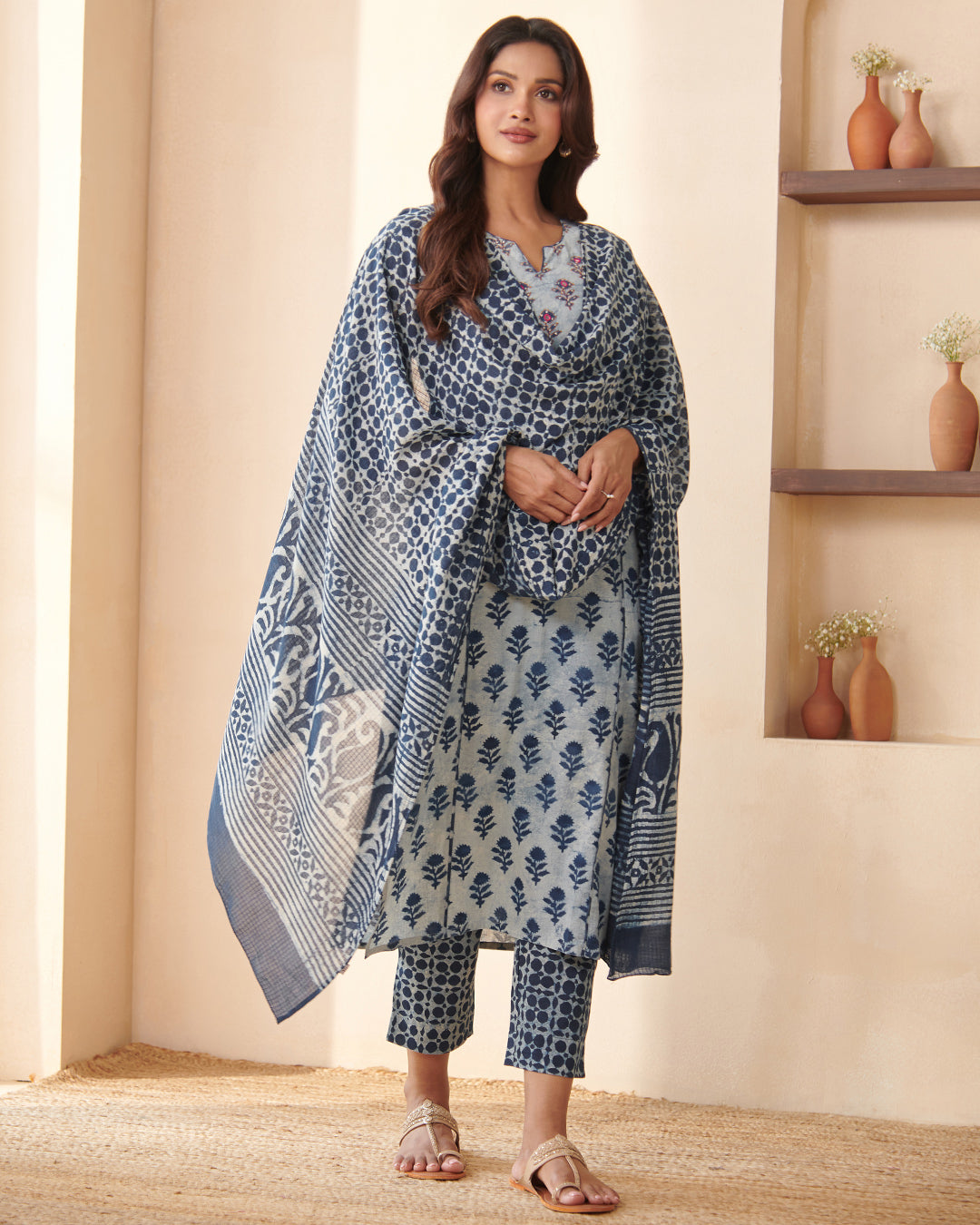
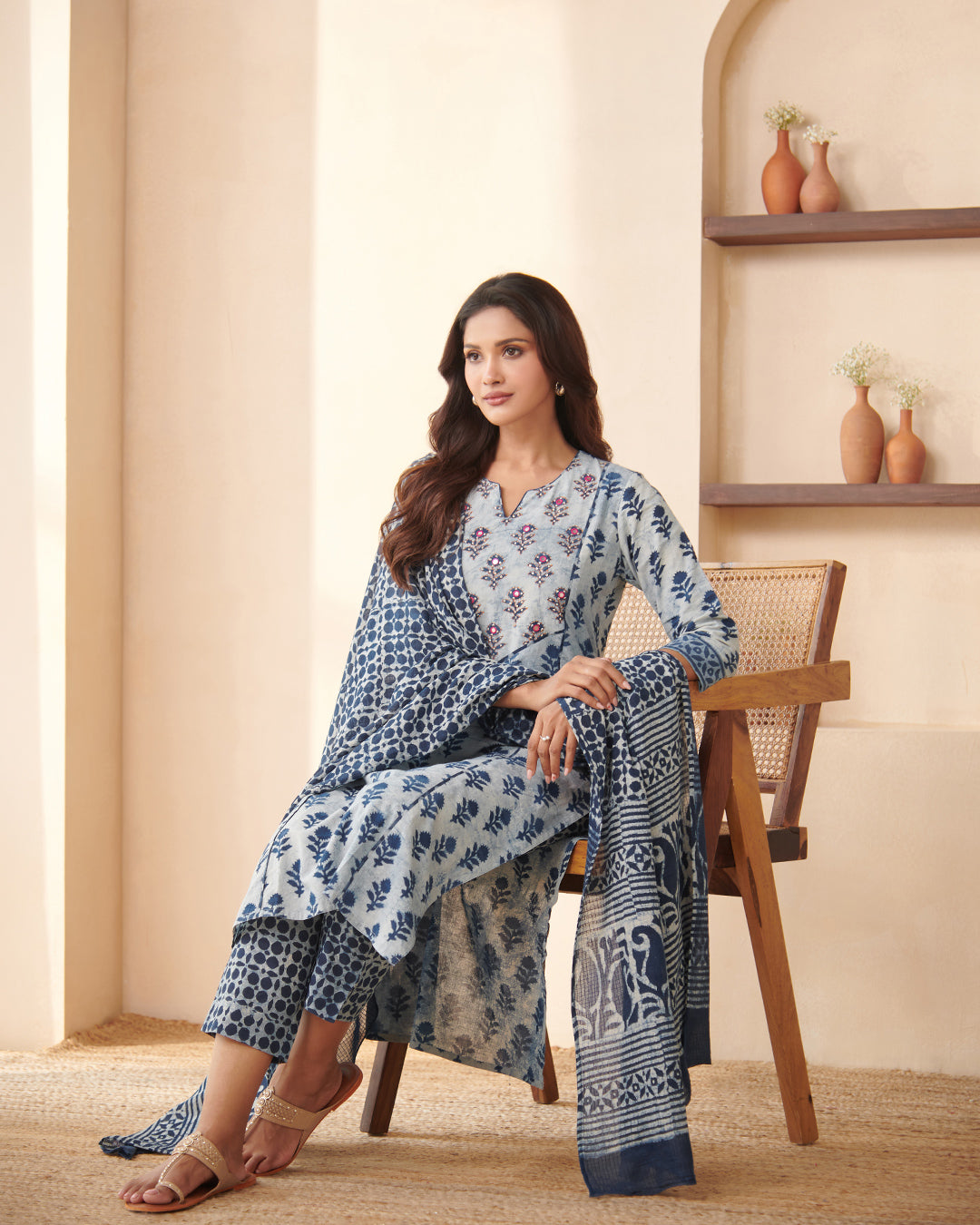
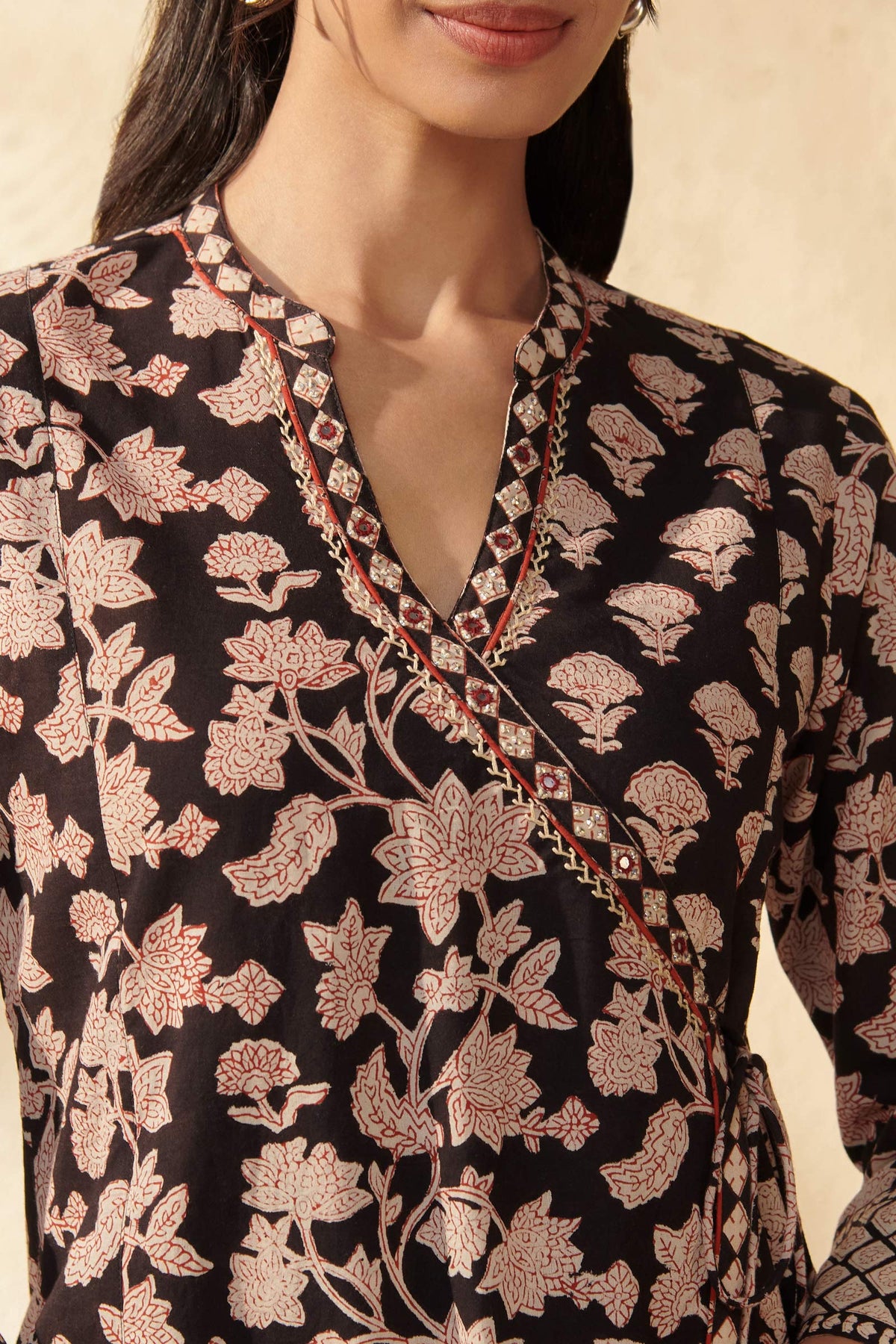
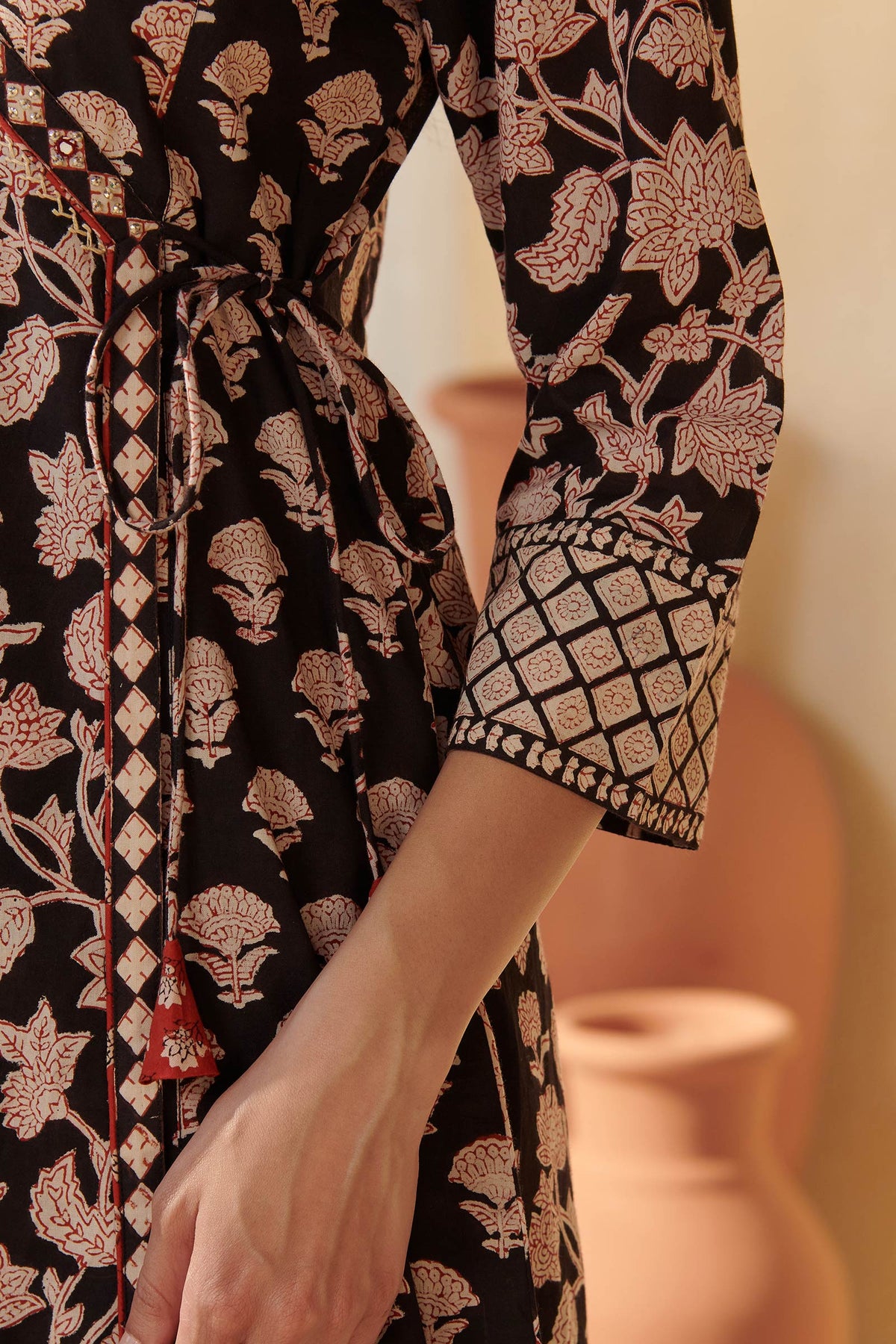
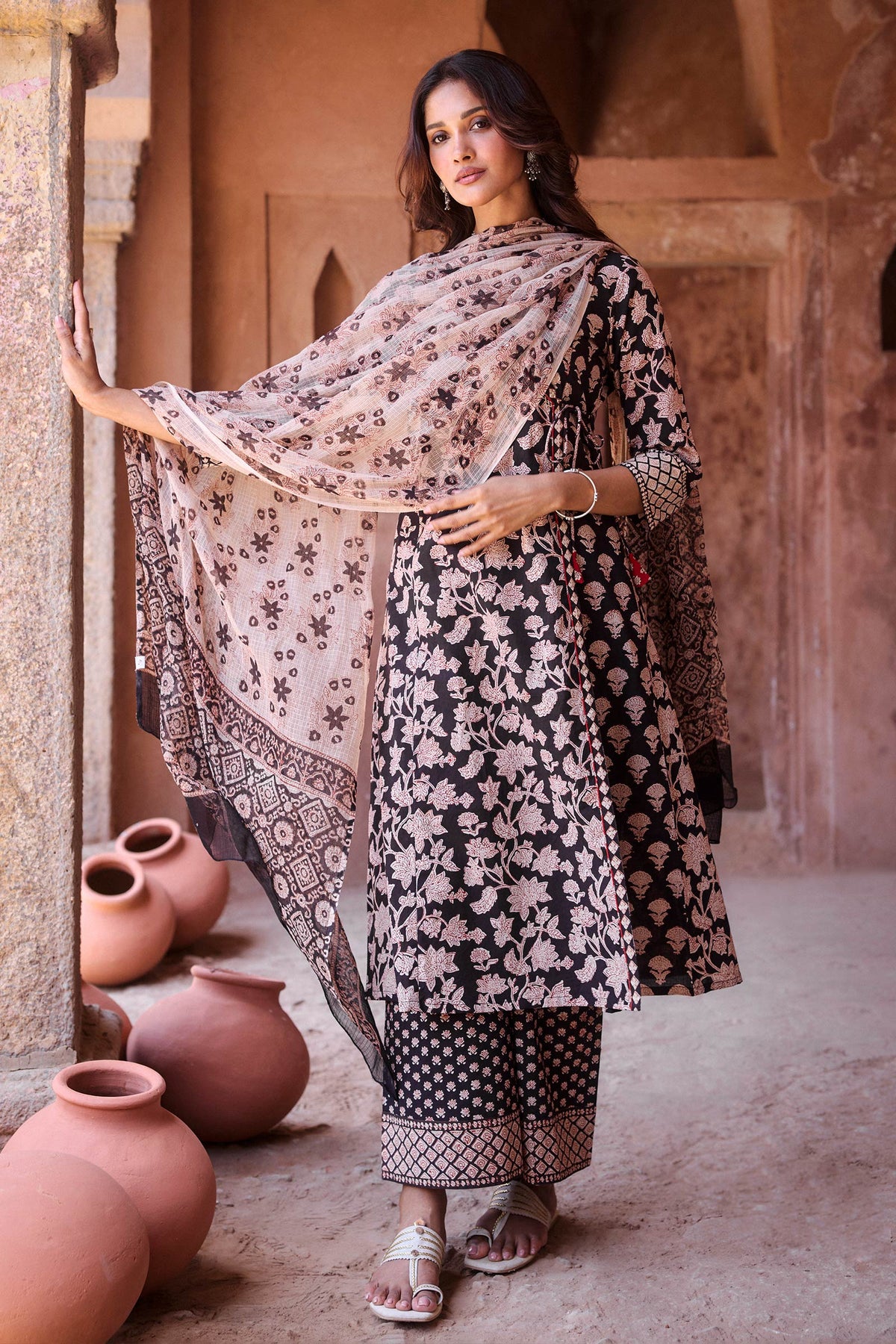
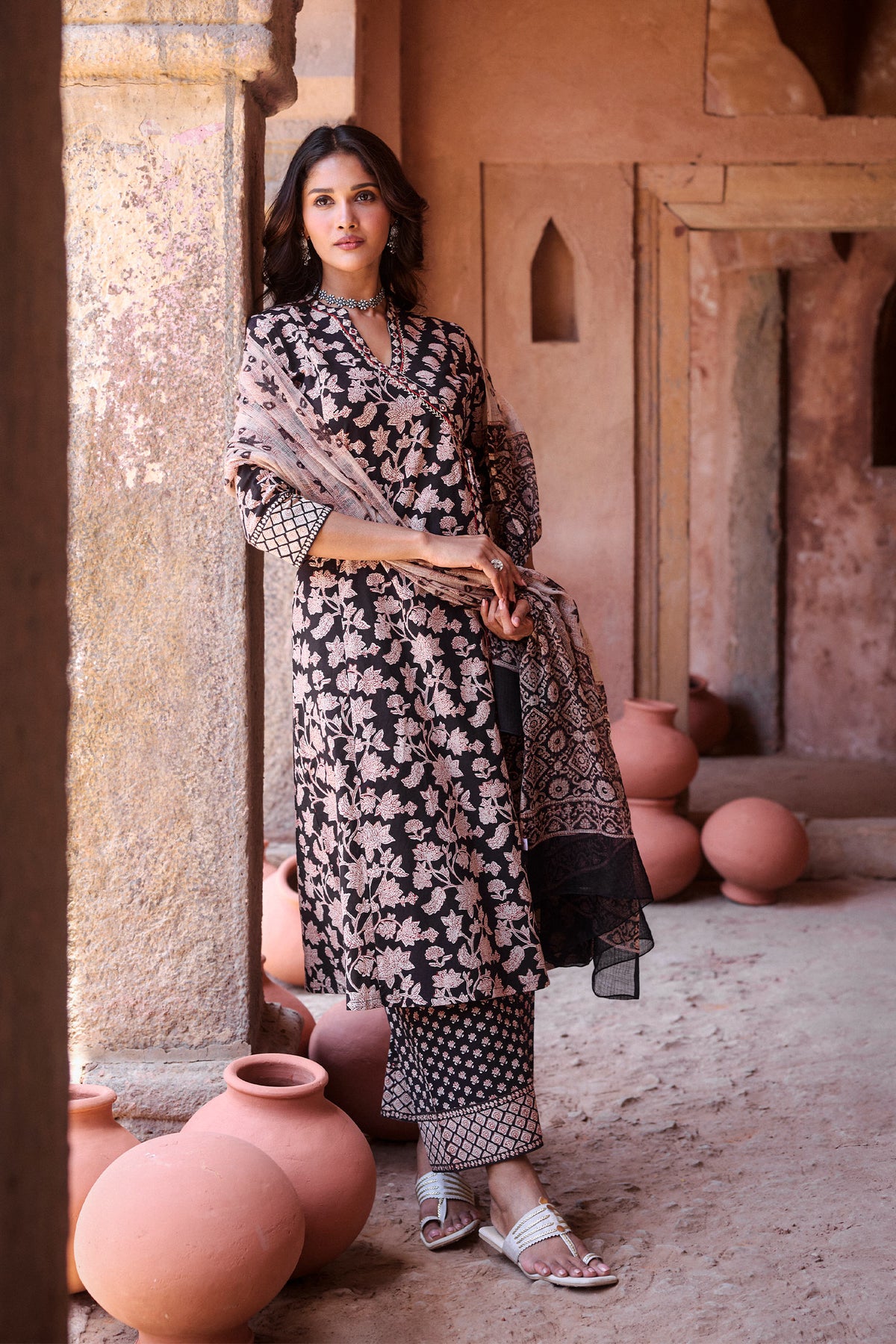
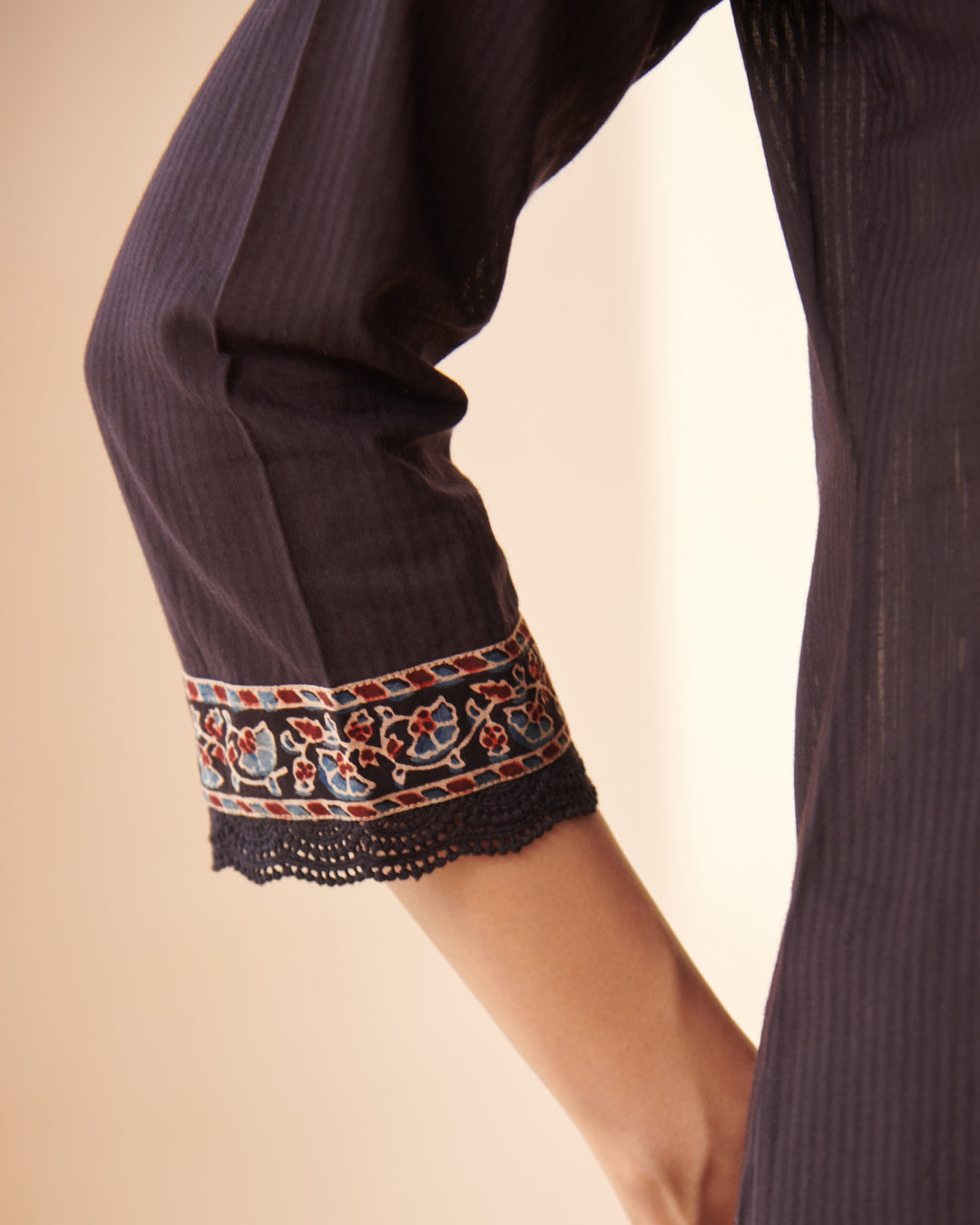
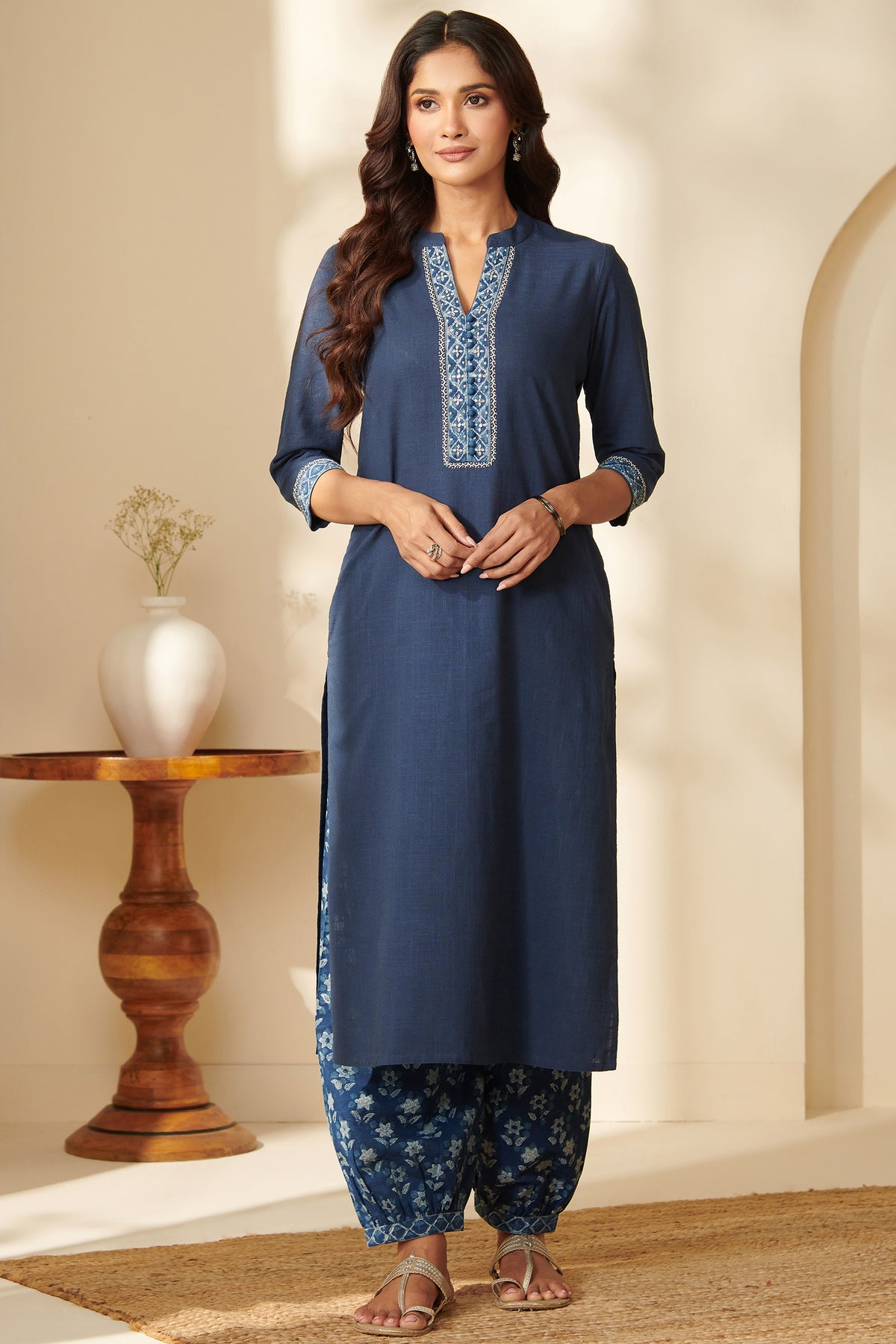
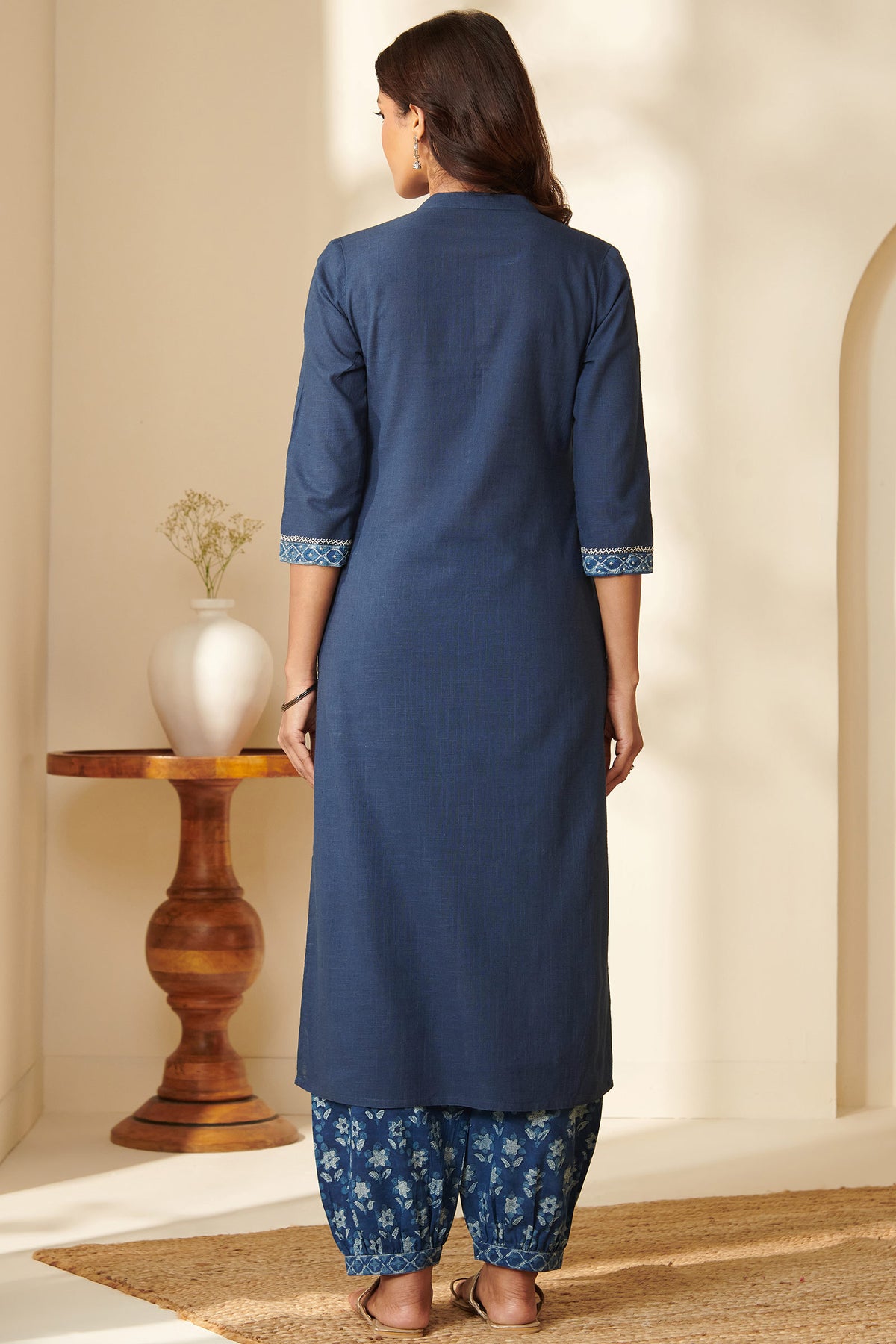
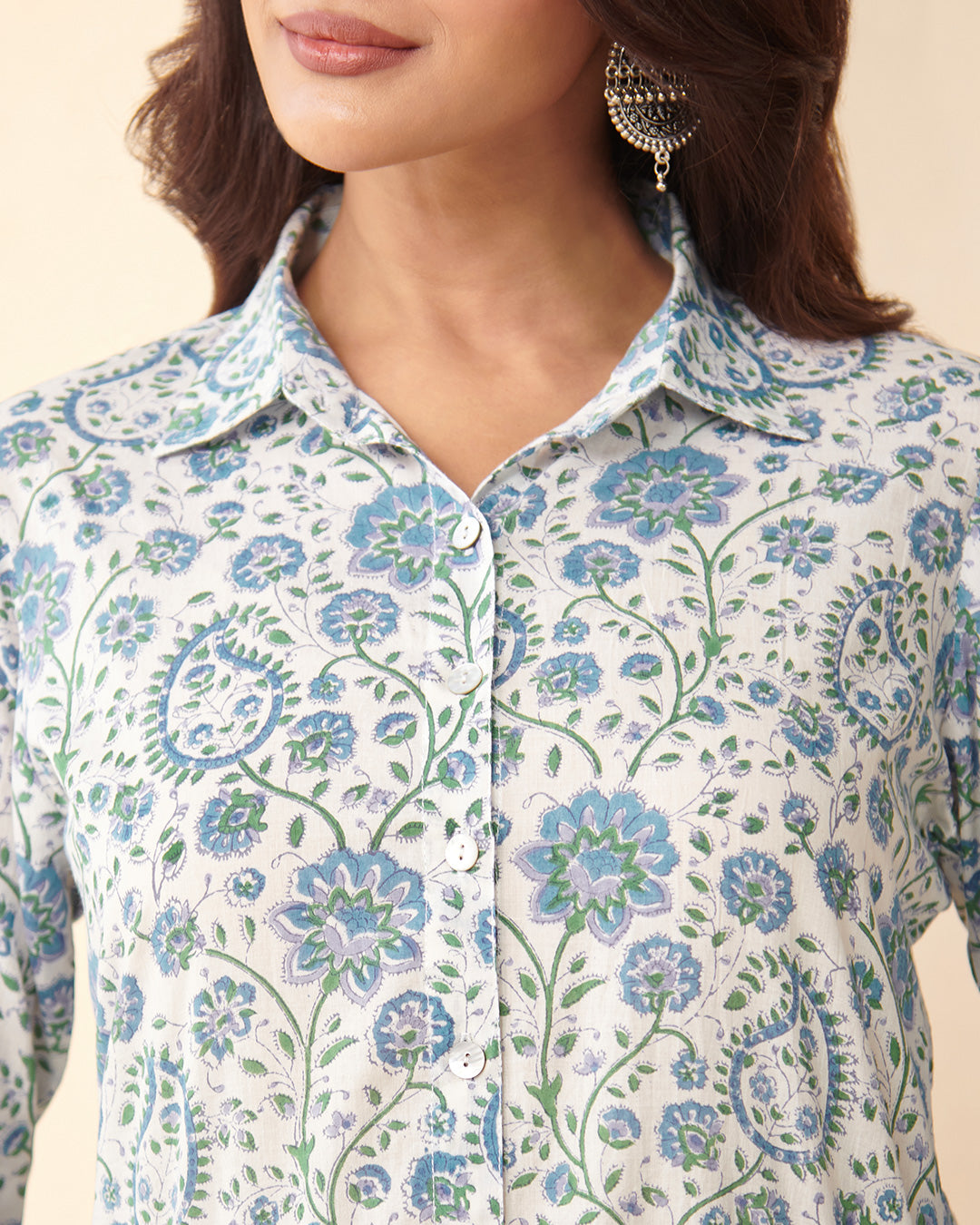
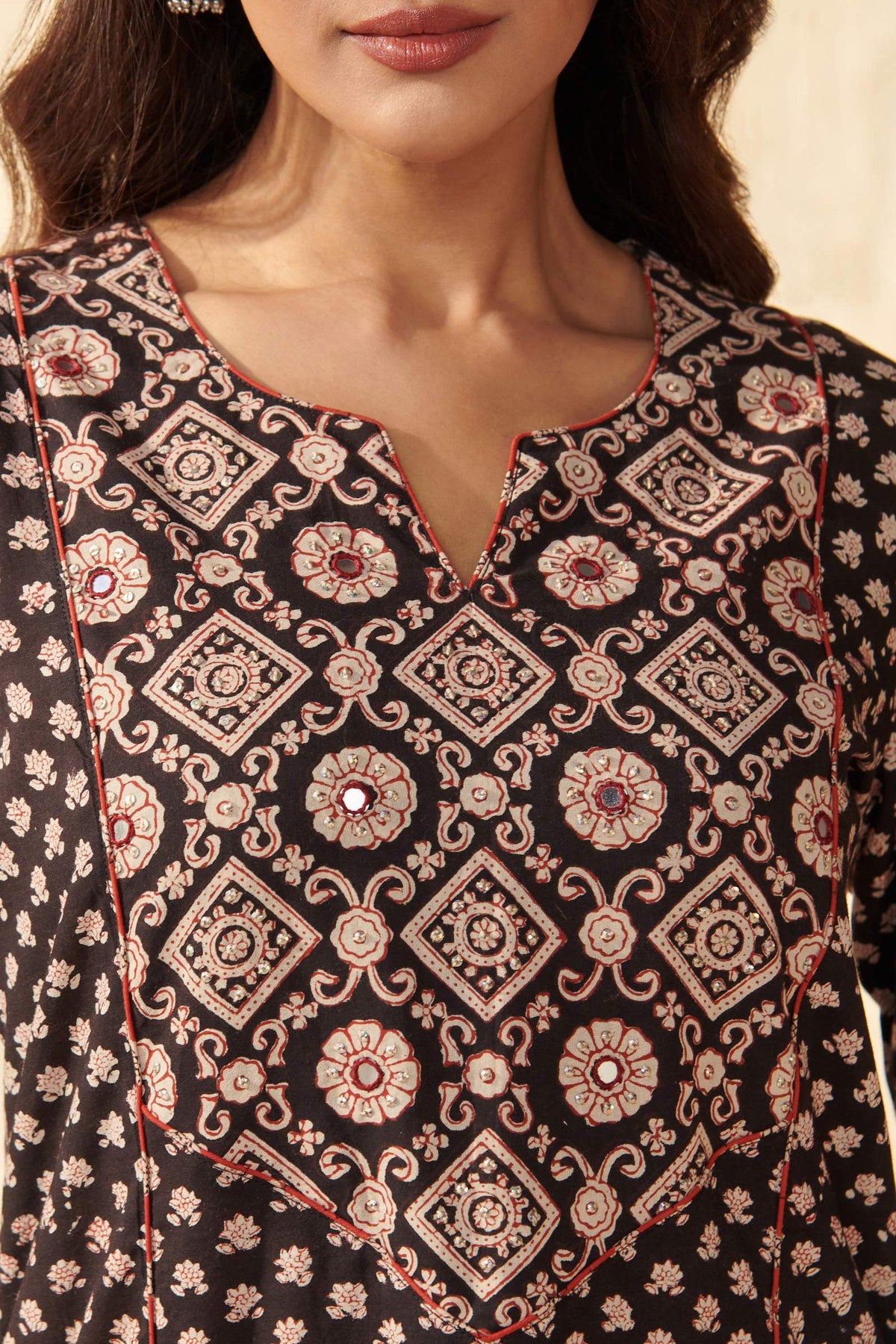
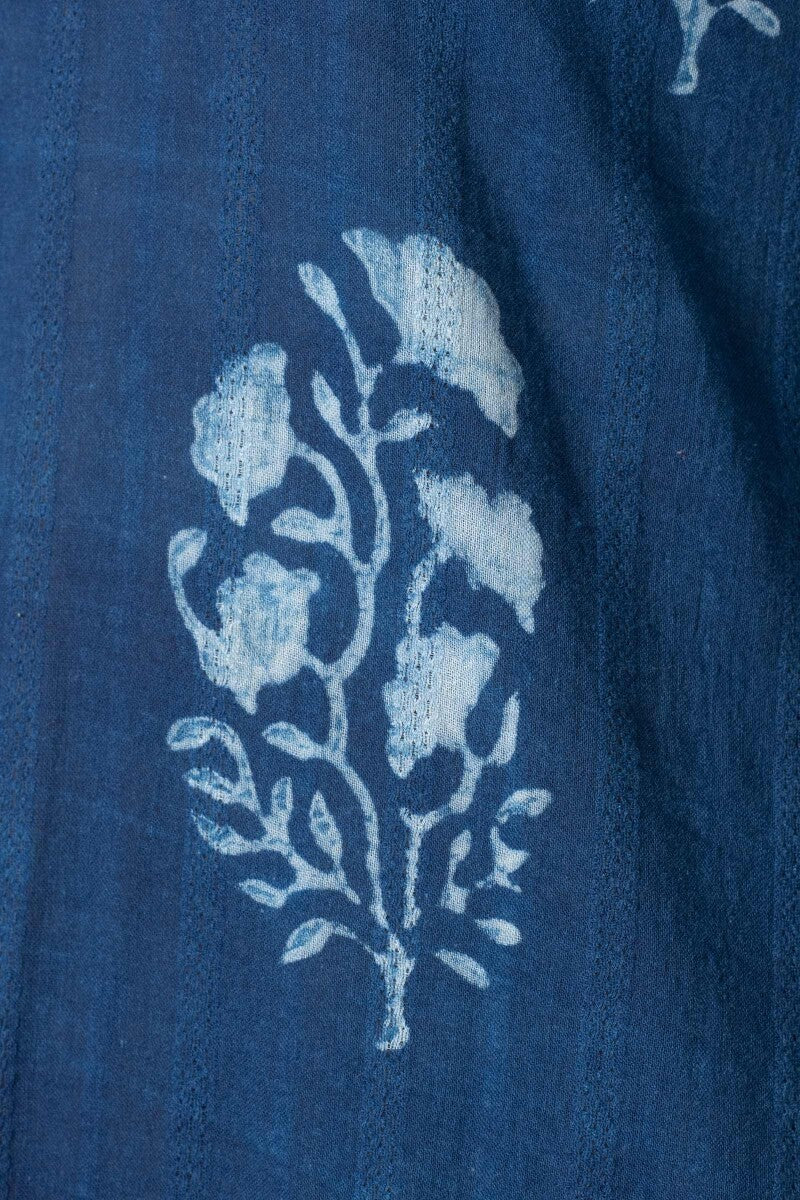
Akola printing carries the depth of time. The colours are often drawn from indigo, deep and calming, like twilight settling over the desert. The patterns are not hurried. Each motif feels placed with care, as if it belongs exactly where it rests.
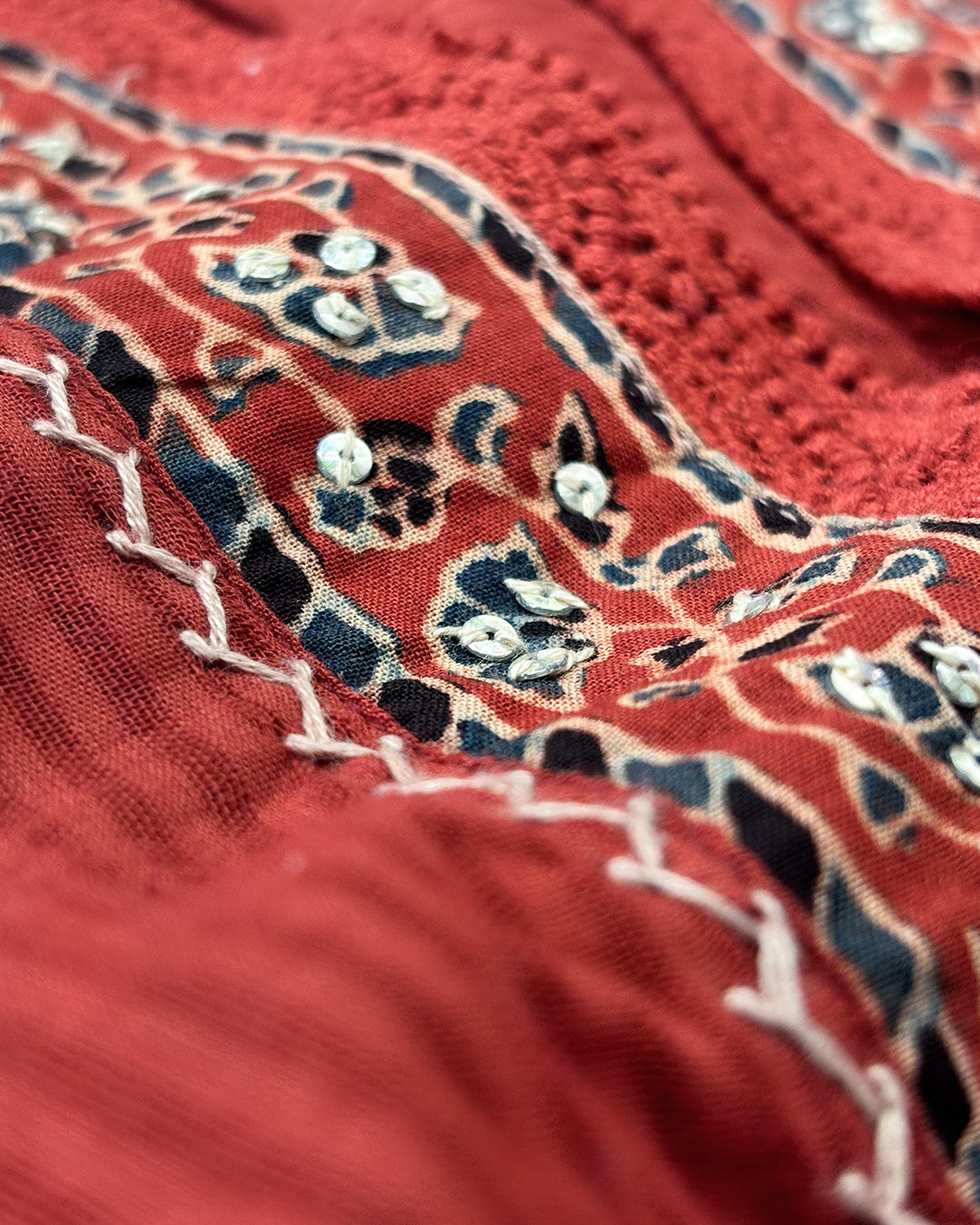
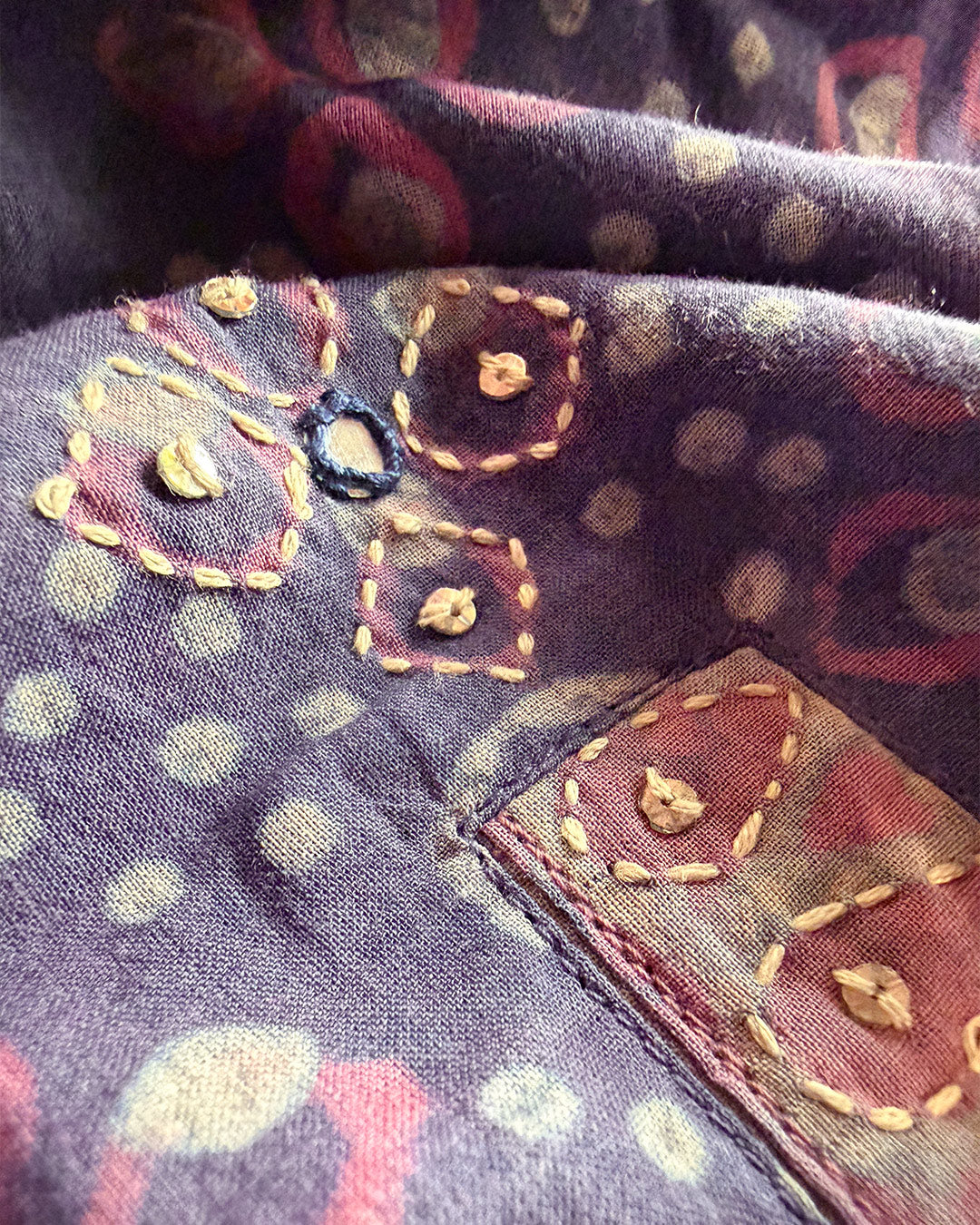
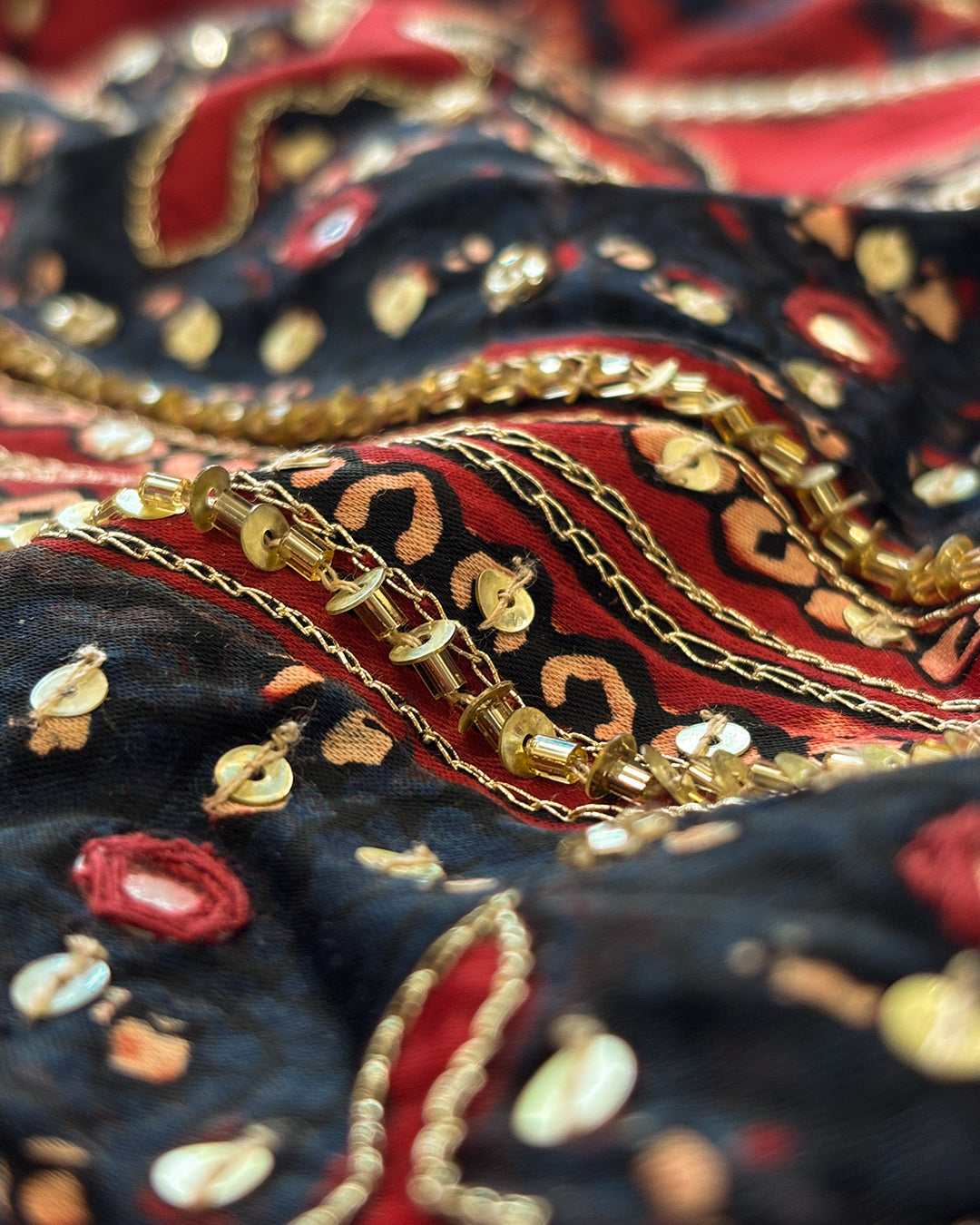
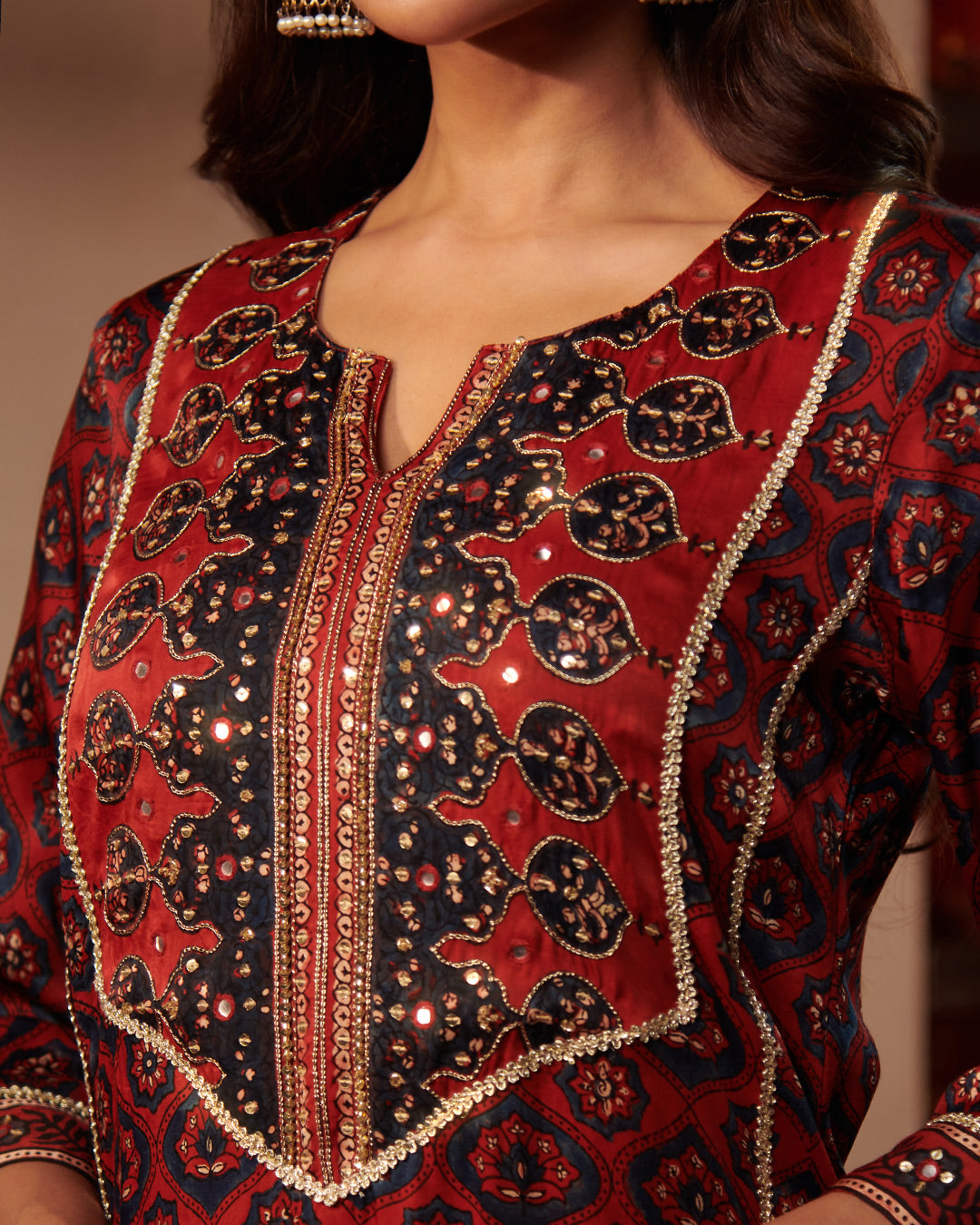
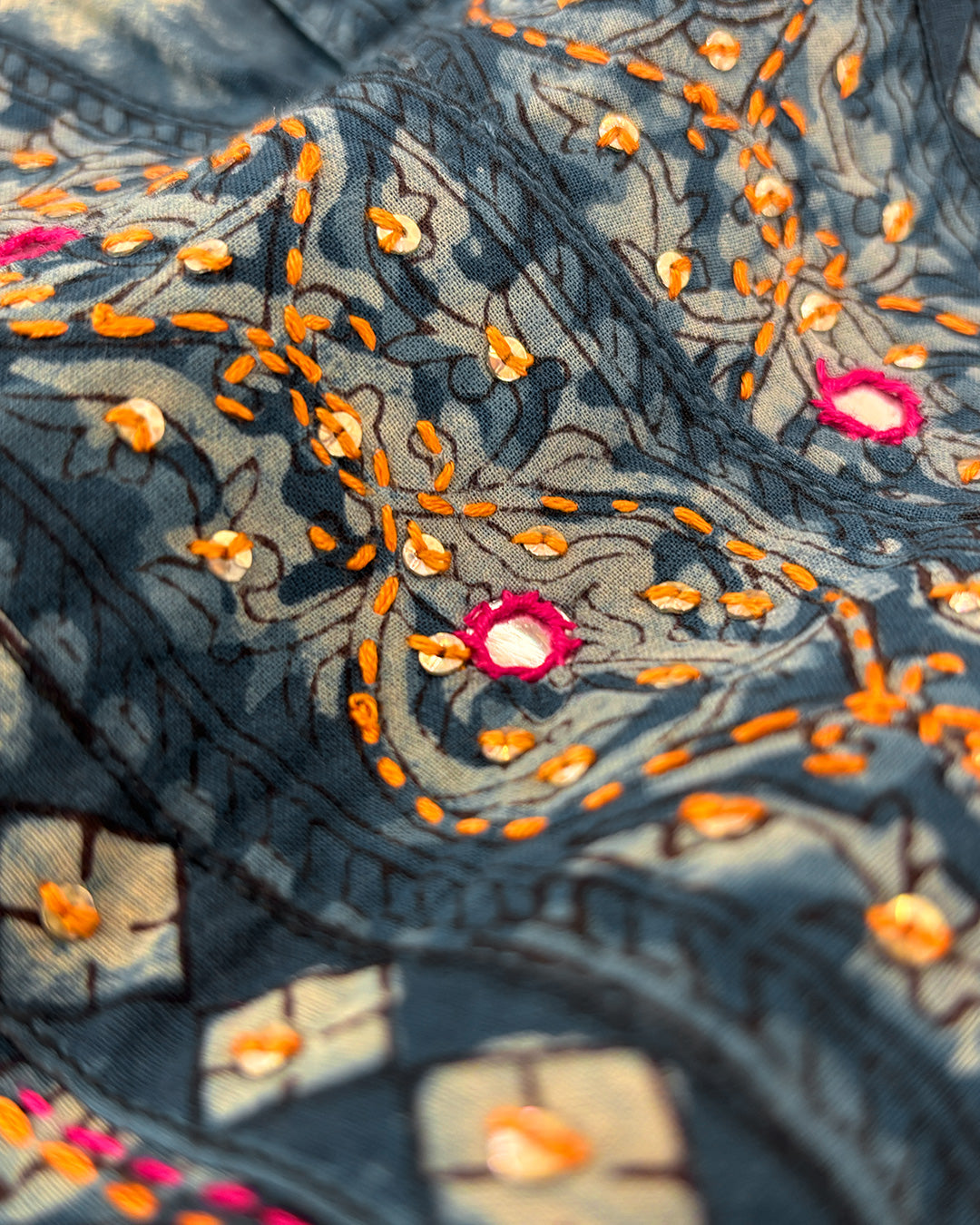
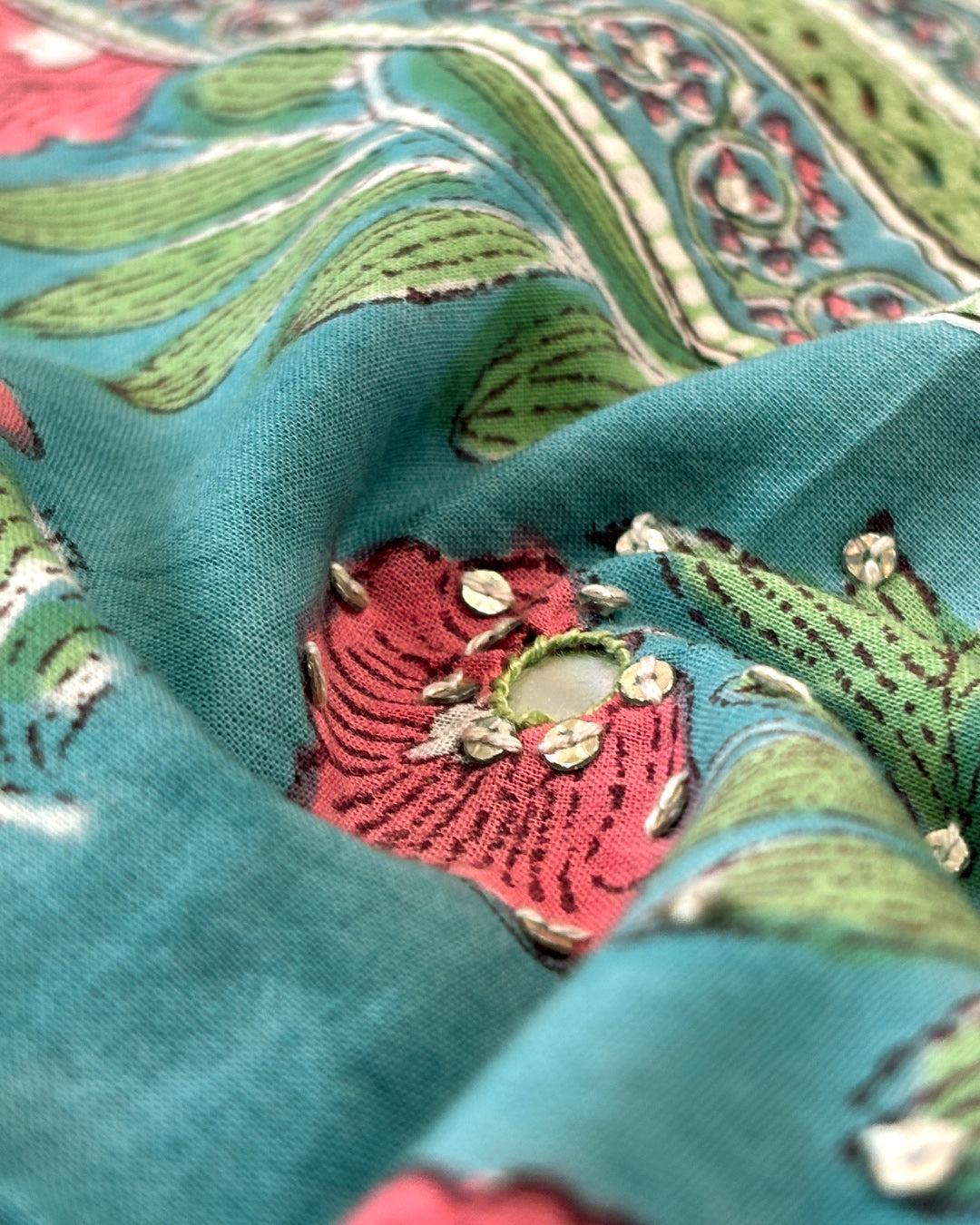
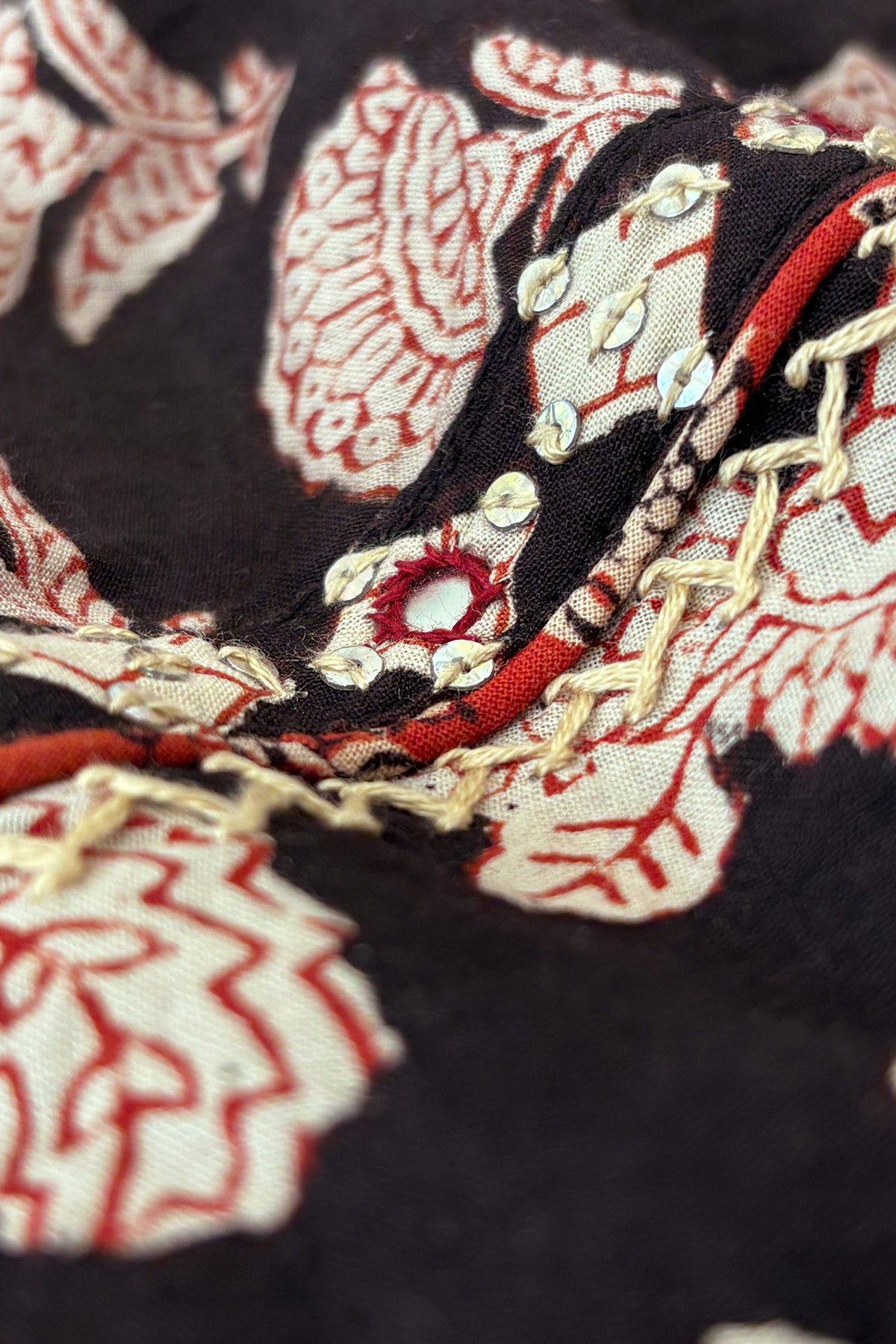
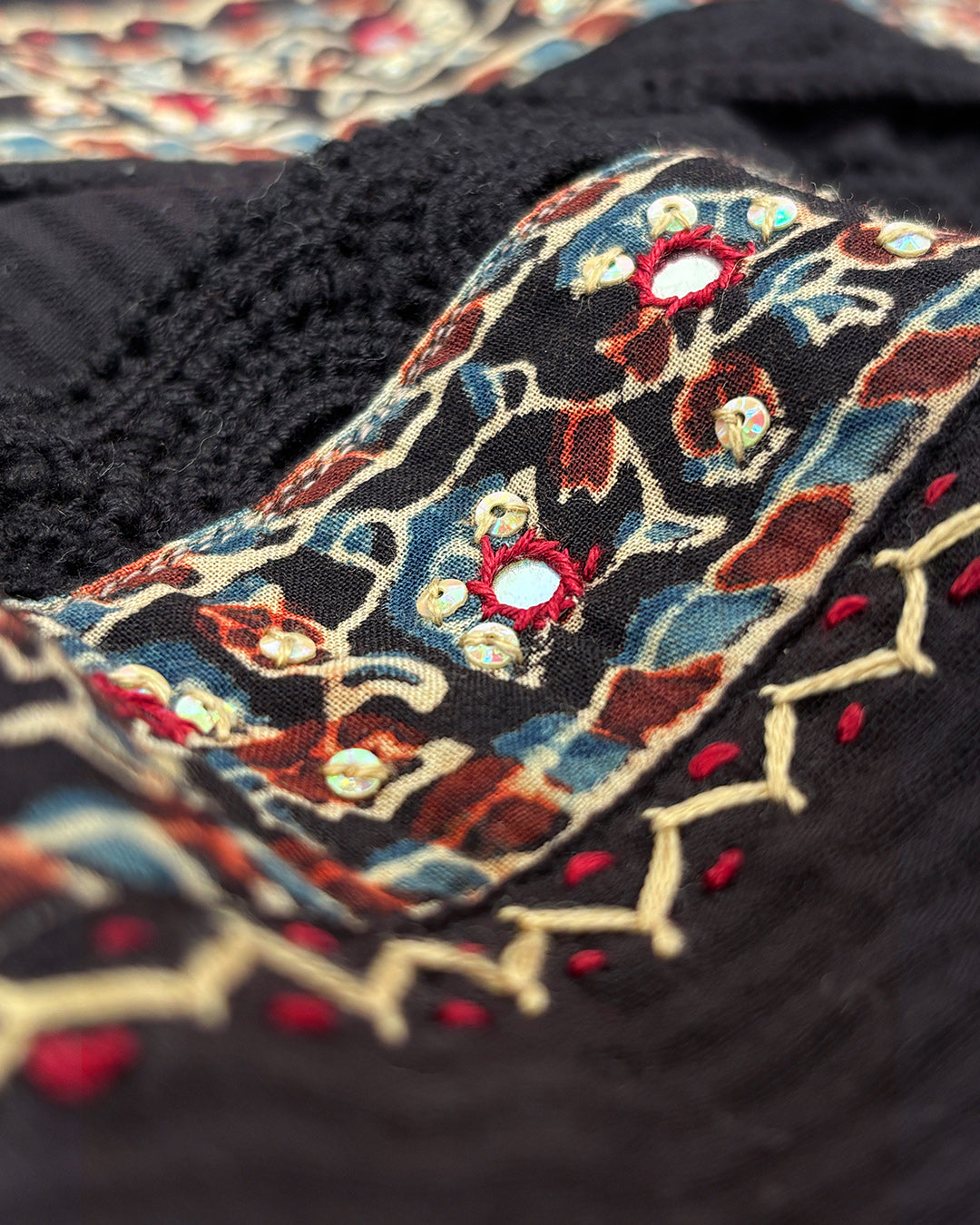
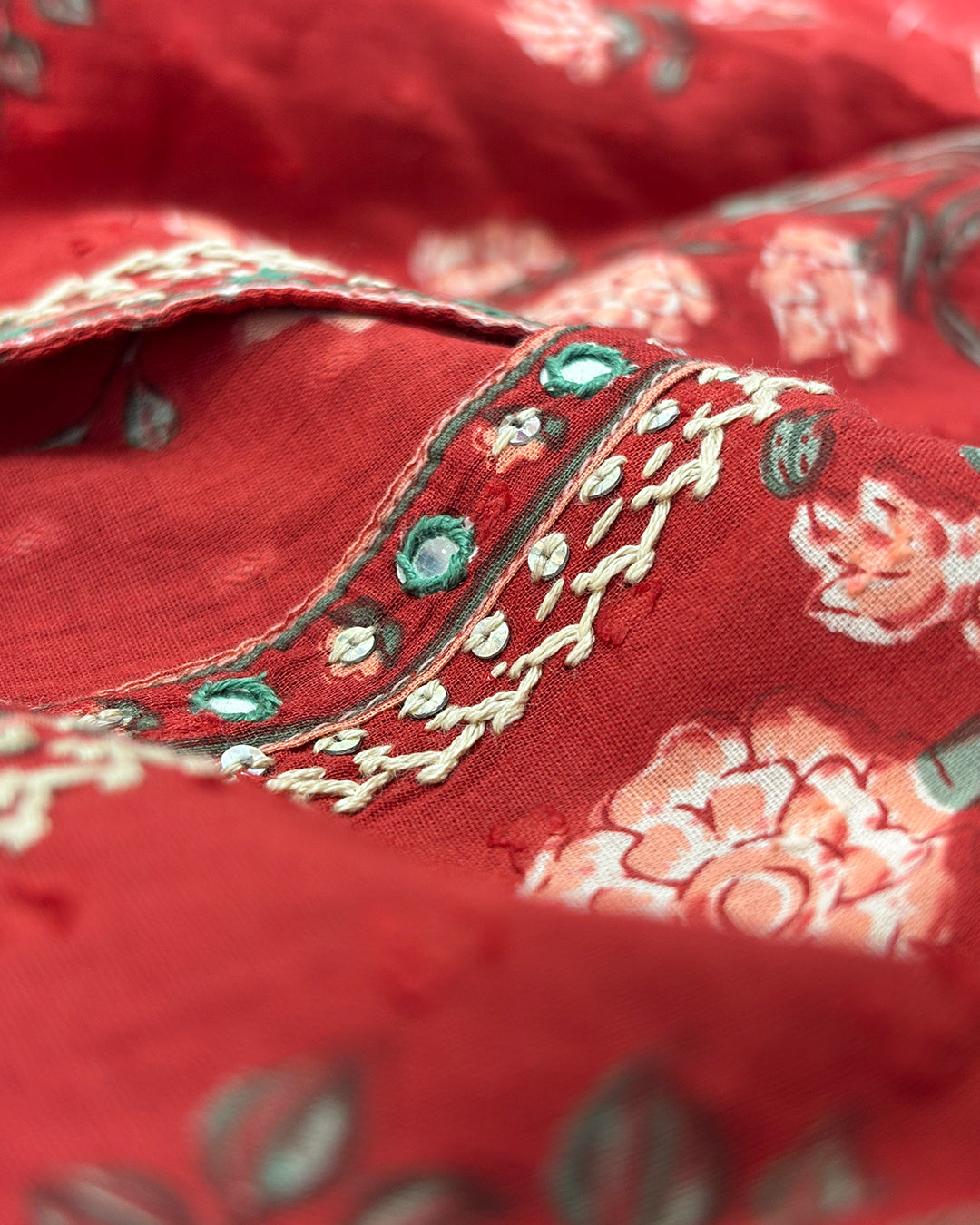
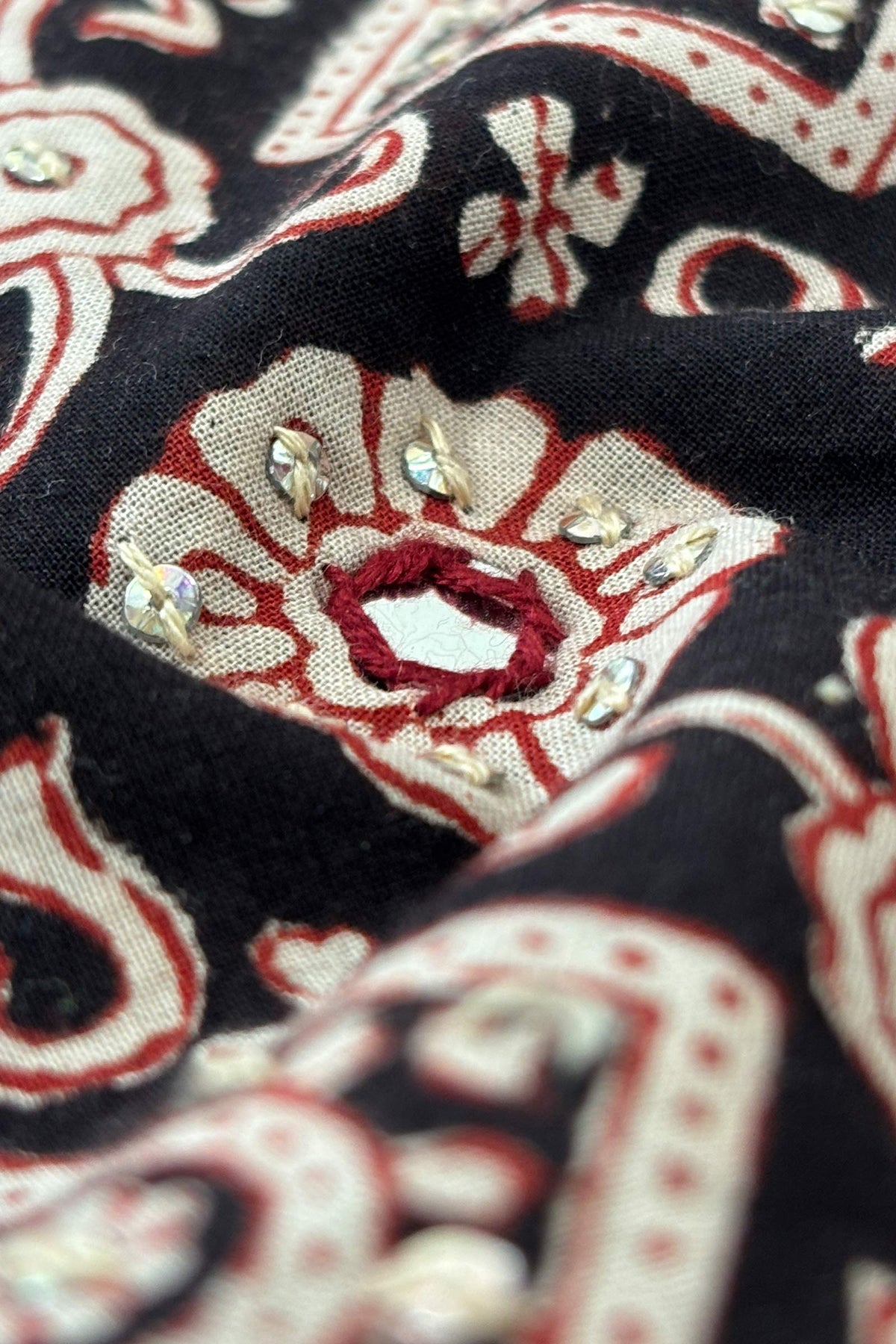
What makes Akola print special is not just its visual language, but the process behind it. The use of dabu, a resist printing technique, allows artisans to create layers, depth, and texture without excess. It is slow work. Intentional. Rooted in rhythm rather than speed. In a world of quick replication, Akola hand print remains deeply human. You can see it in the slight irregularities, the softened edges, the way no two pieces are ever identical.
Key Characteristics of Akola Print Designs

Deep Indigo and Earth Tones
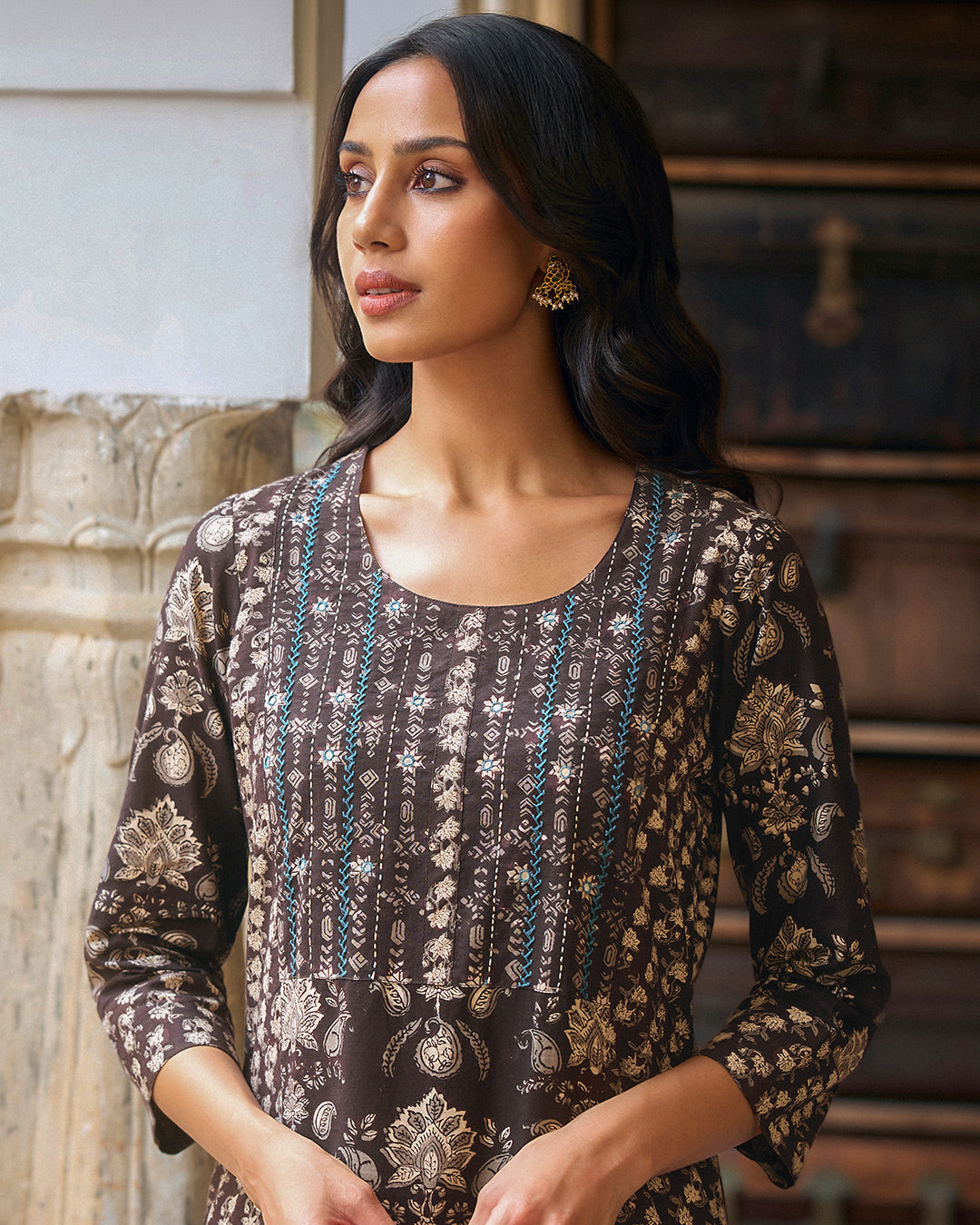
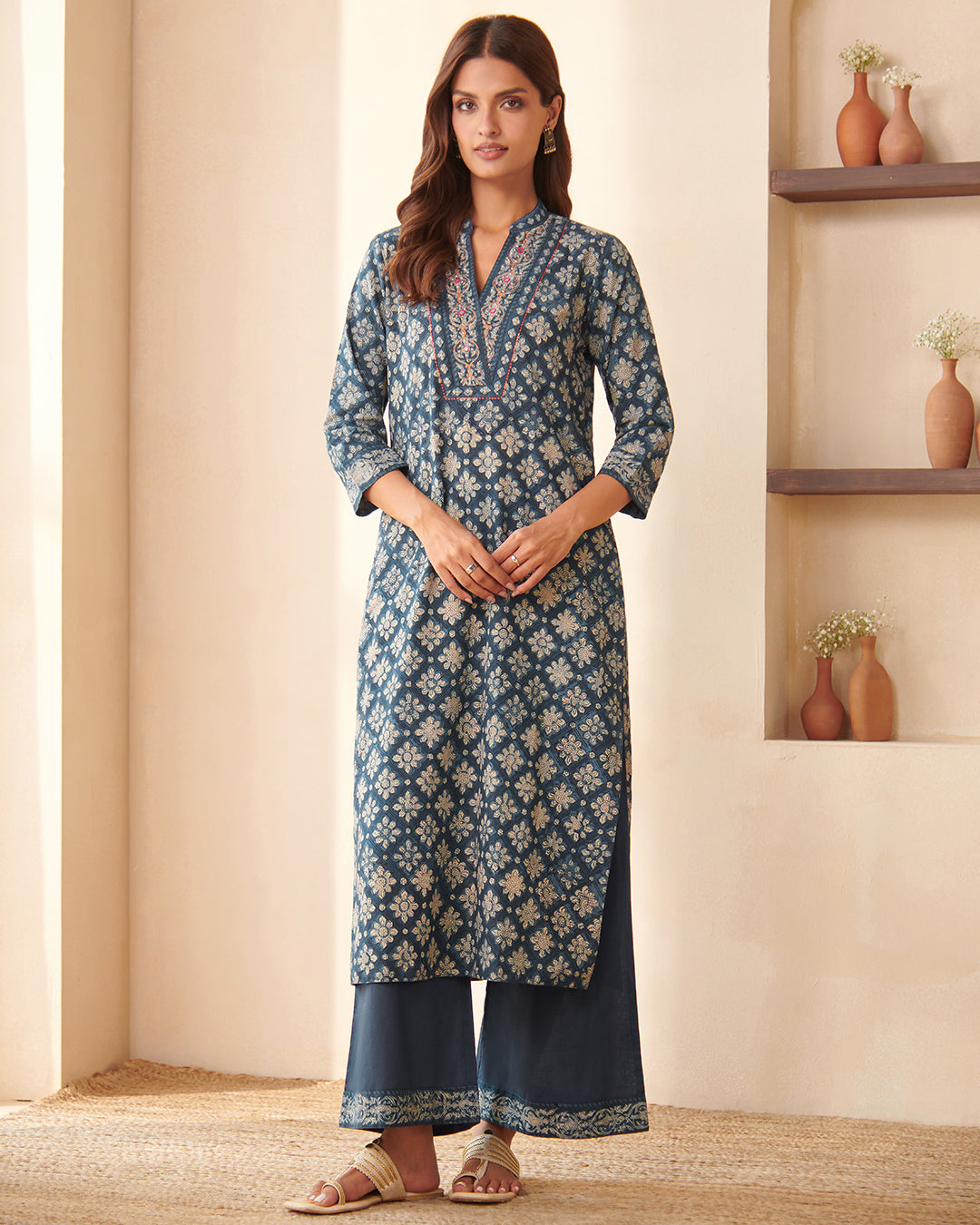
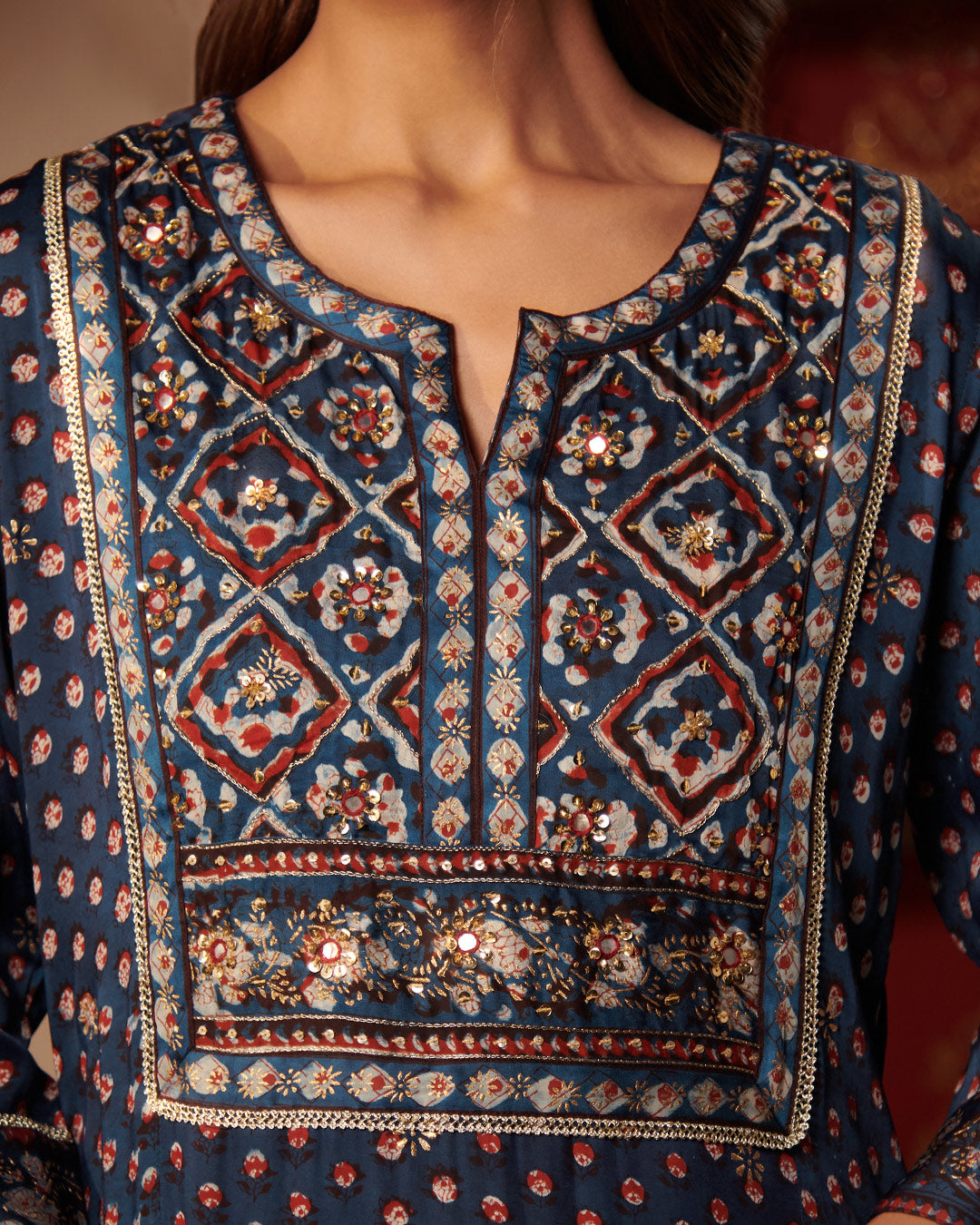
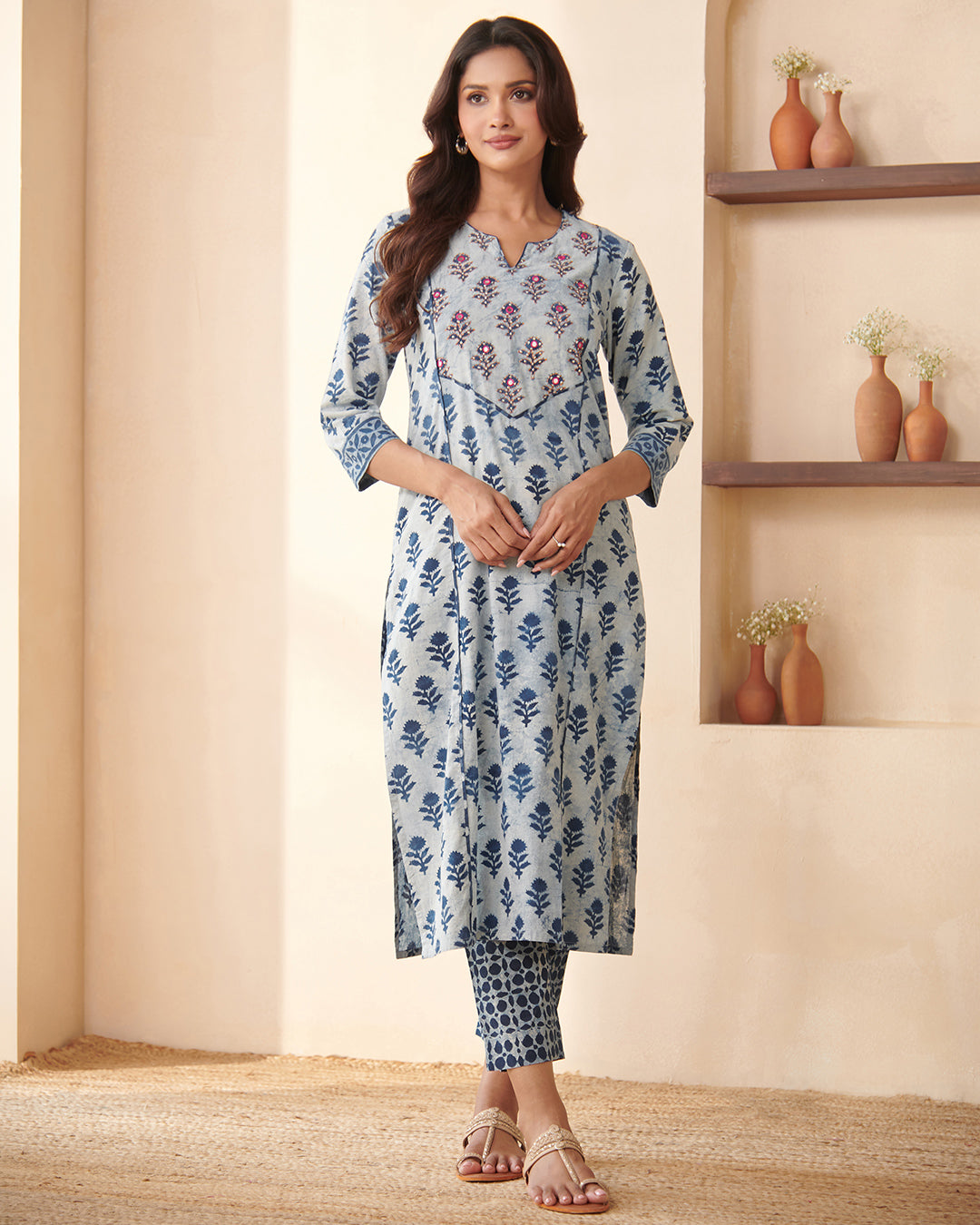
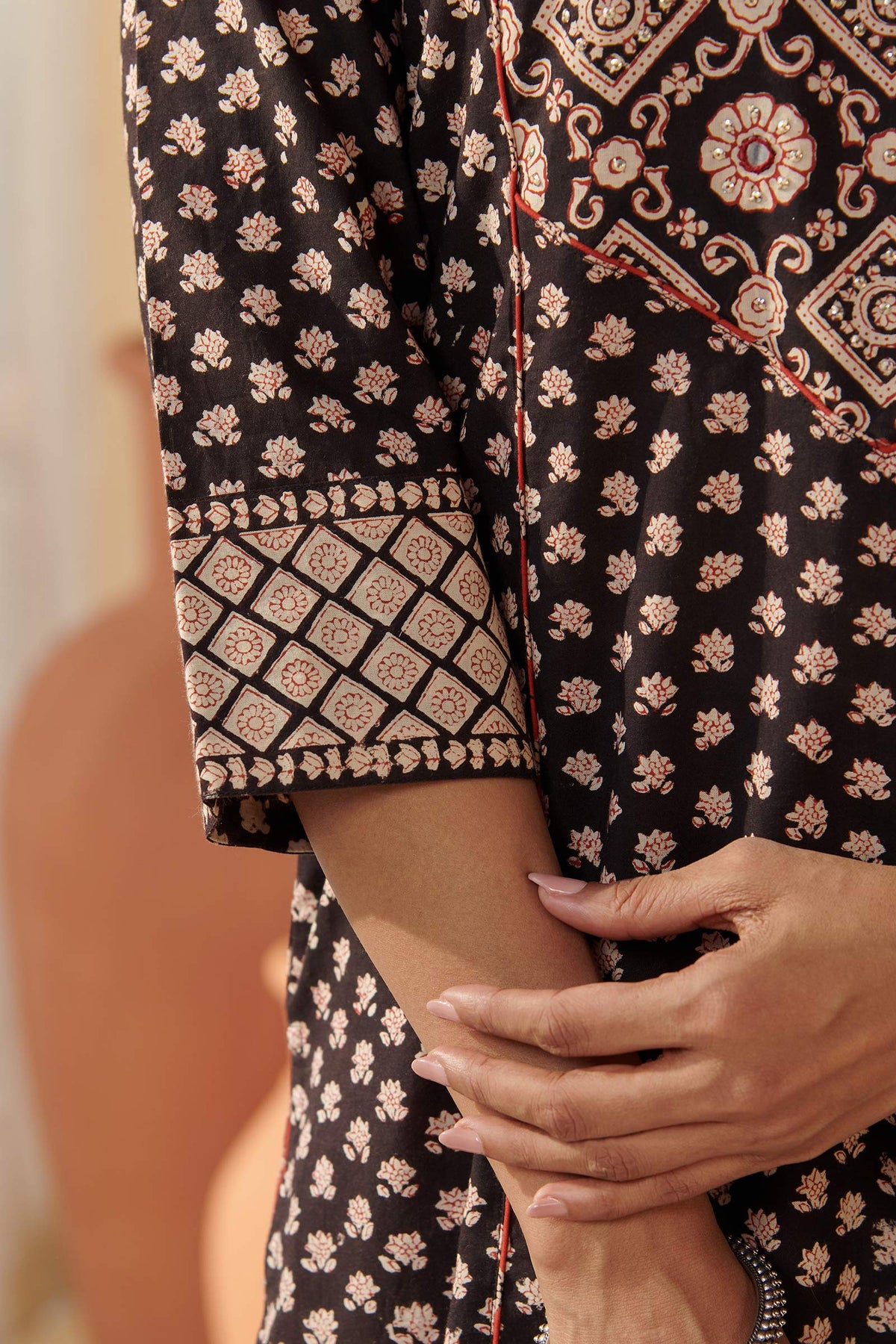
Akola printing in Rajasthan is closely tied to natural dyes, especially indigo. The blues are rich, sometimes almost inky, balanced with muted browns, off-whites, and soft blacks. These colours do not shout. They settle gently into the fabric.
Dabu Resist Technique
At the heart of dabu print Akola lies a resist process. A mud paste is applied to the fabric using hand-carved blocks. The cloth is then dyed, often multiple times. Where the mud resists the dye, patterns emerge. This creates a layered, almost weathered effect that feels organic and lived-in.
Bold Yet Grounded Motifs
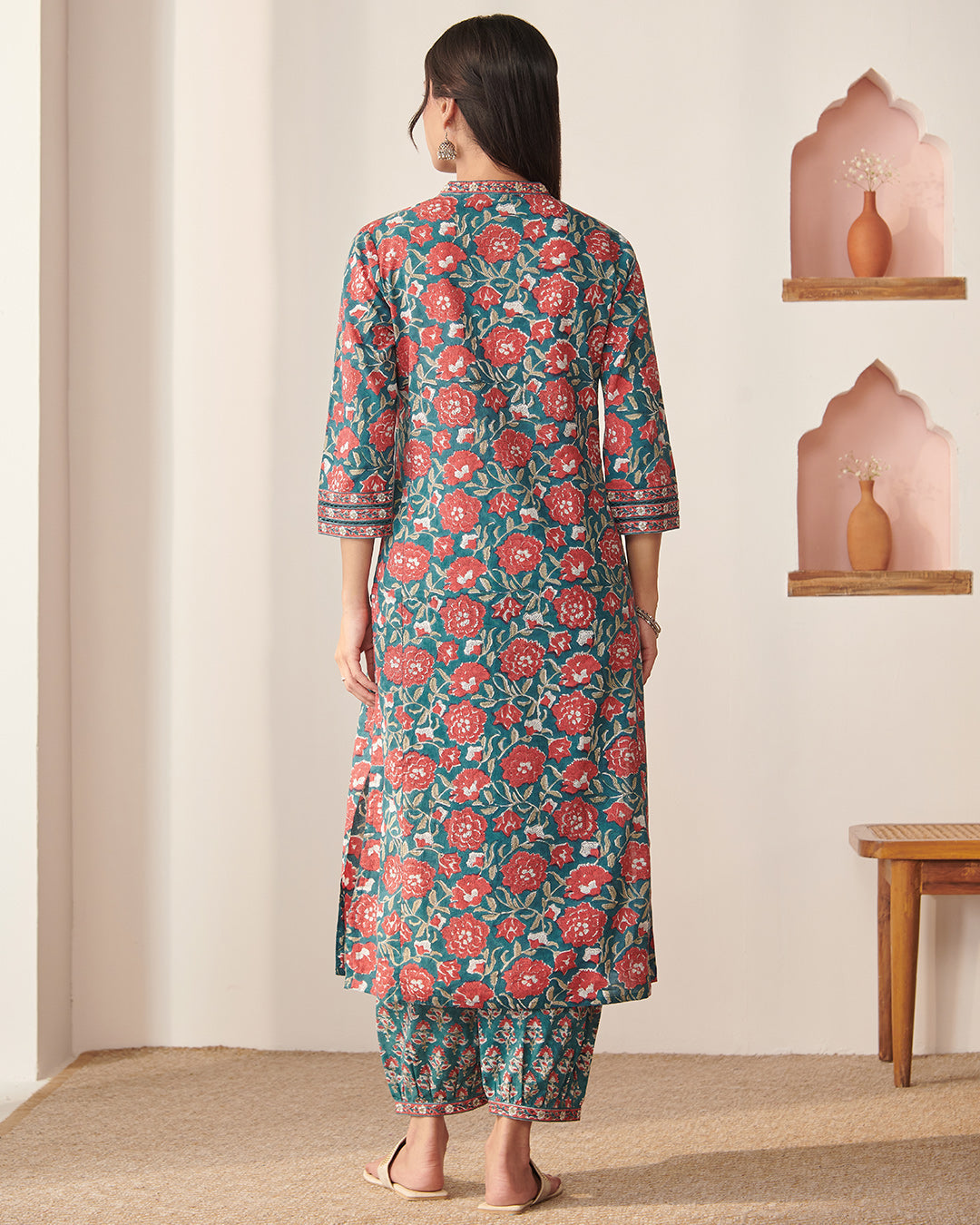
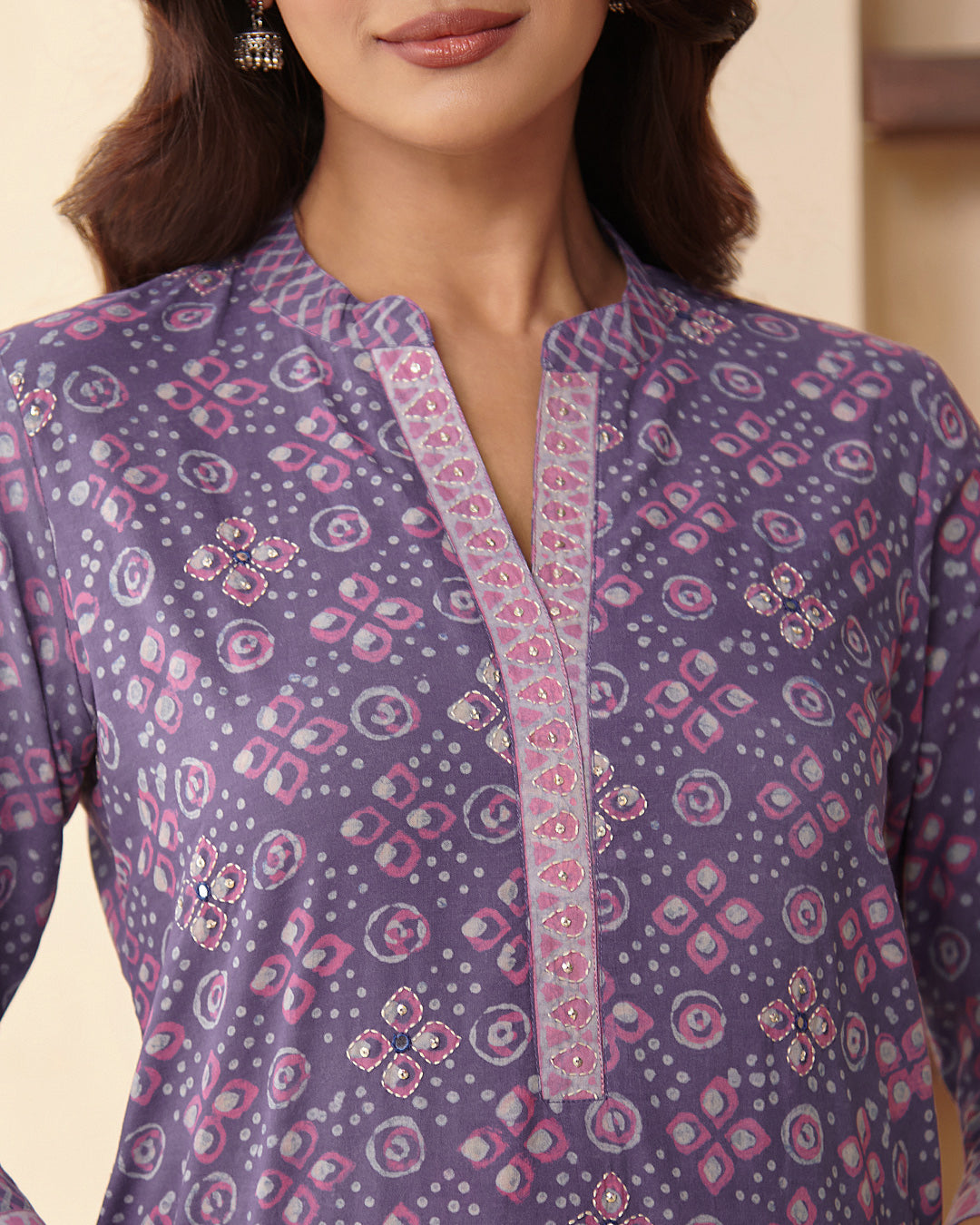
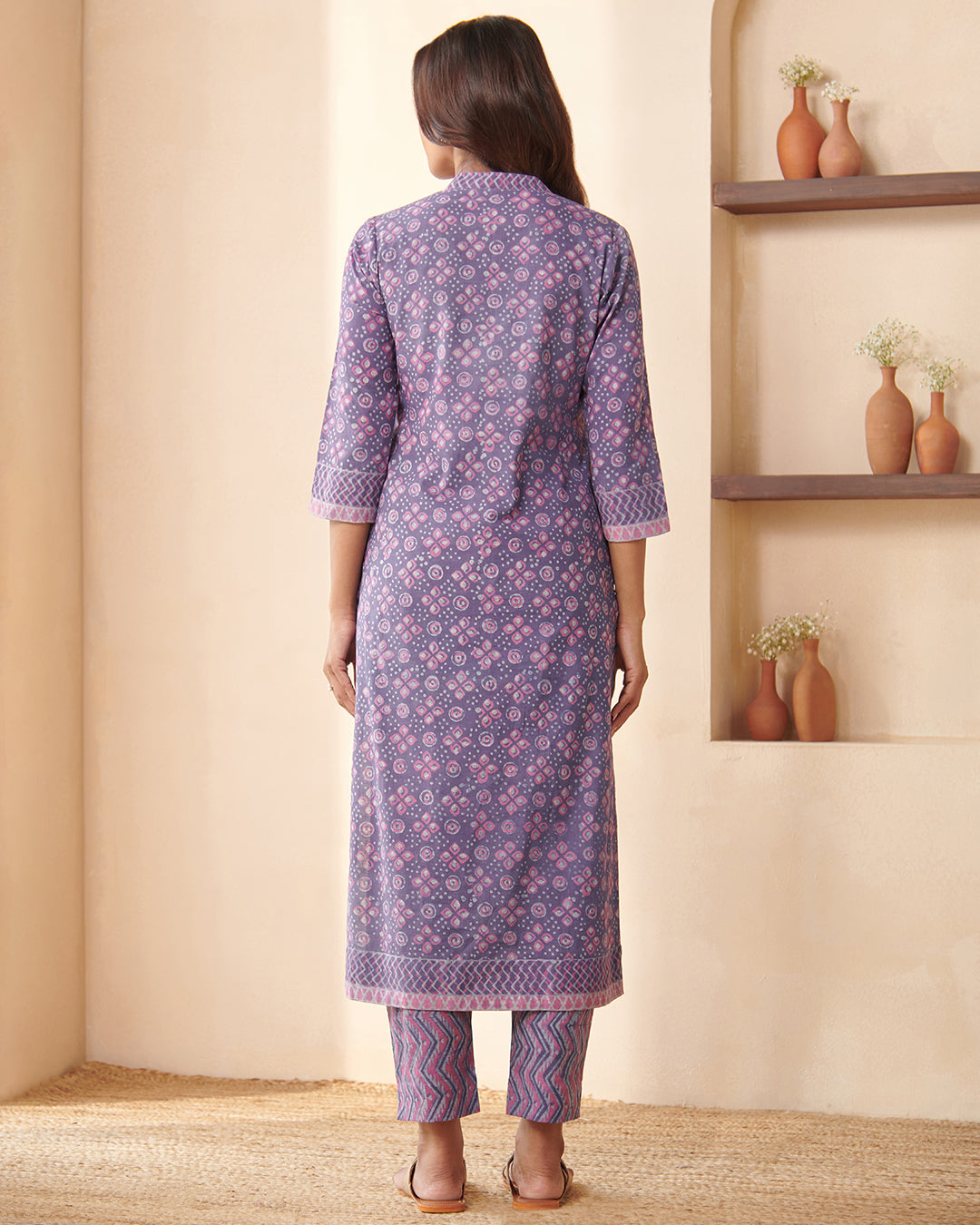
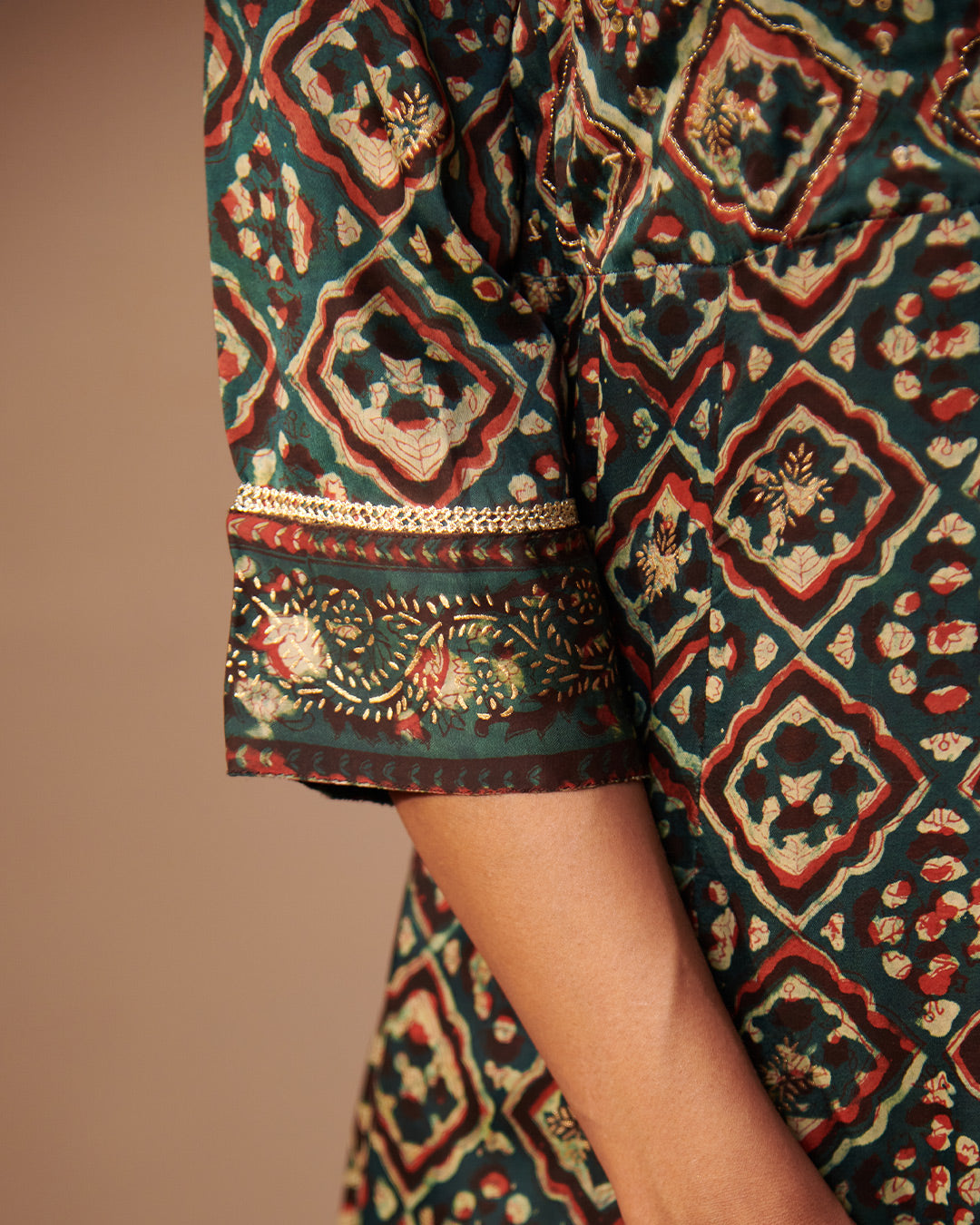
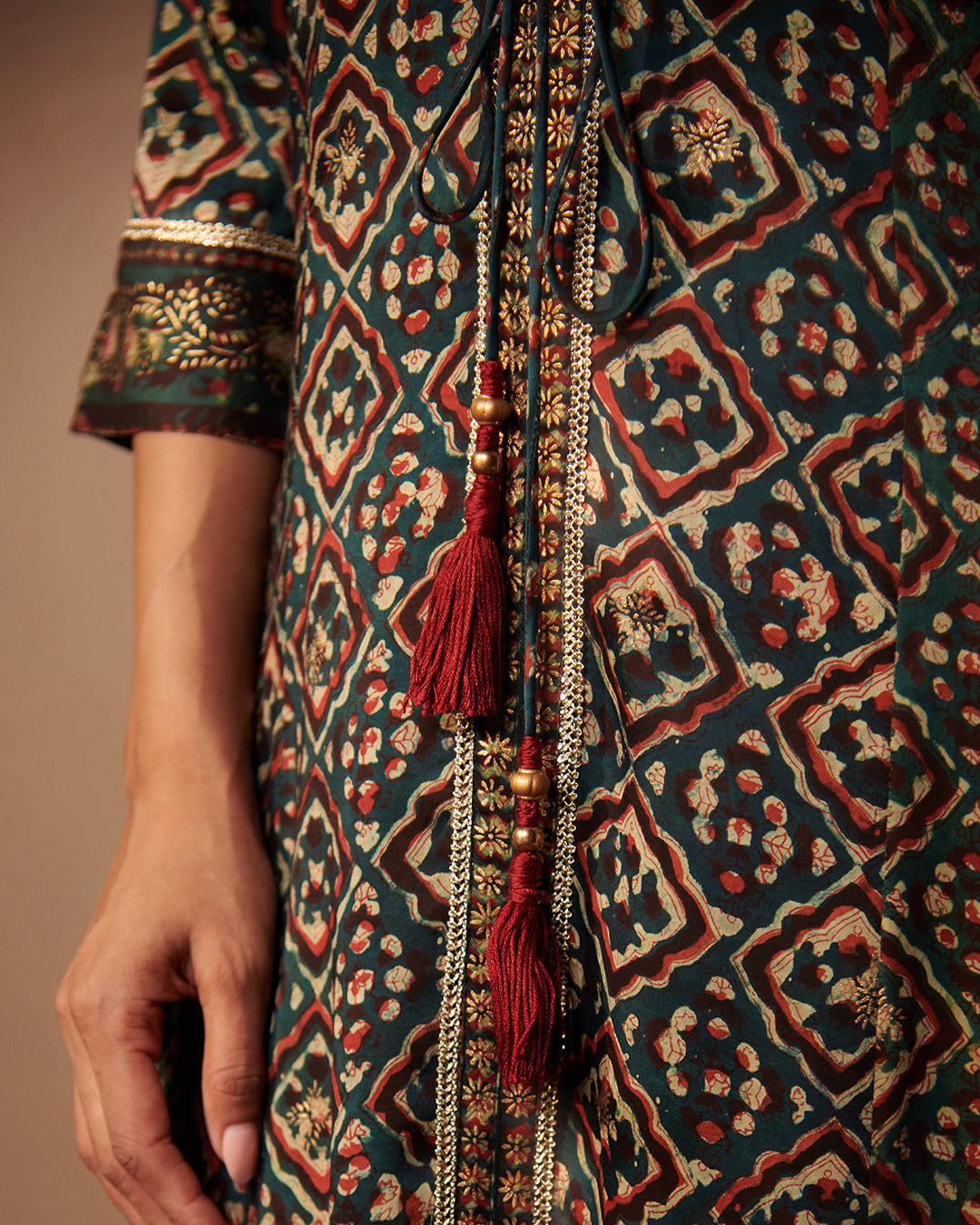
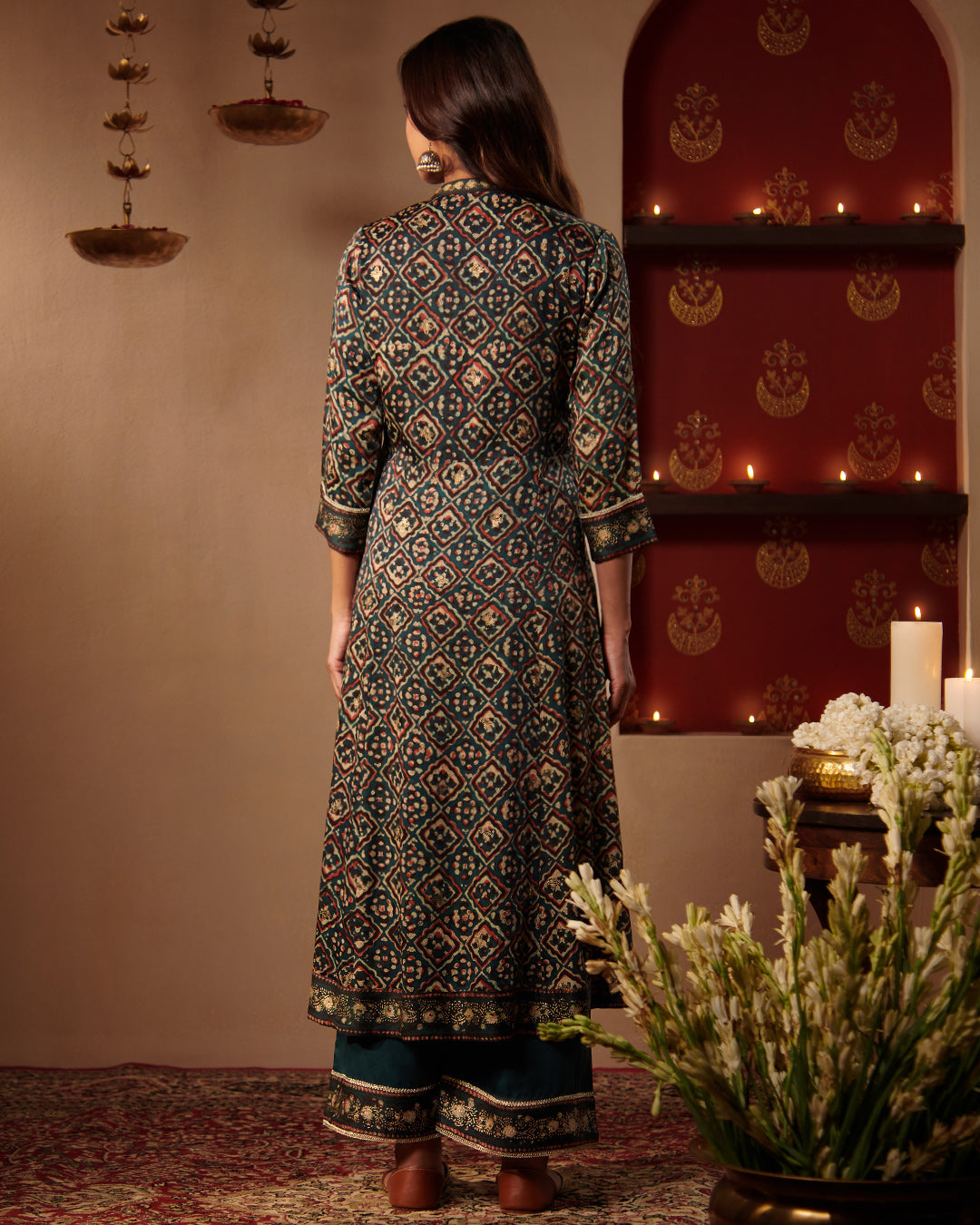
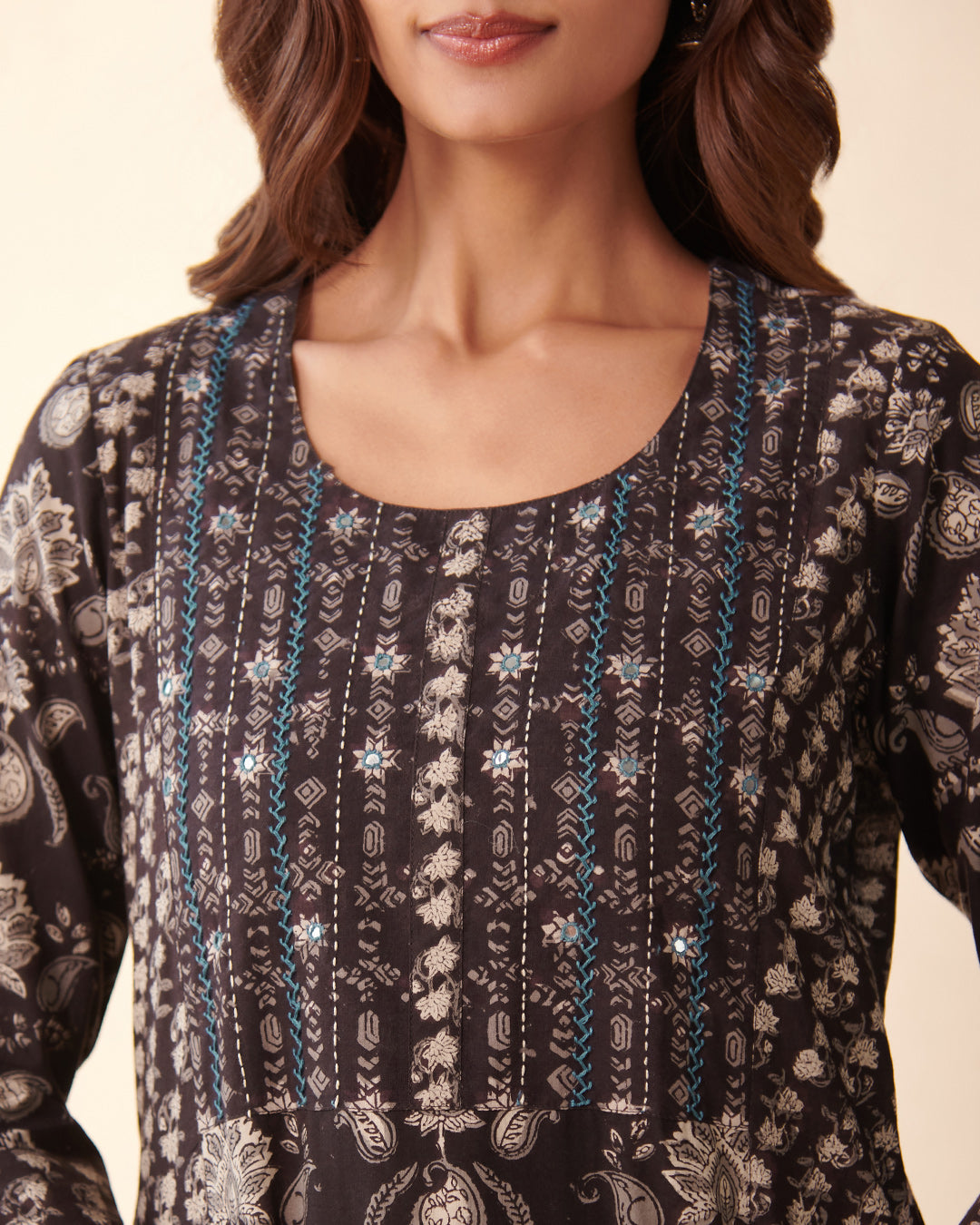
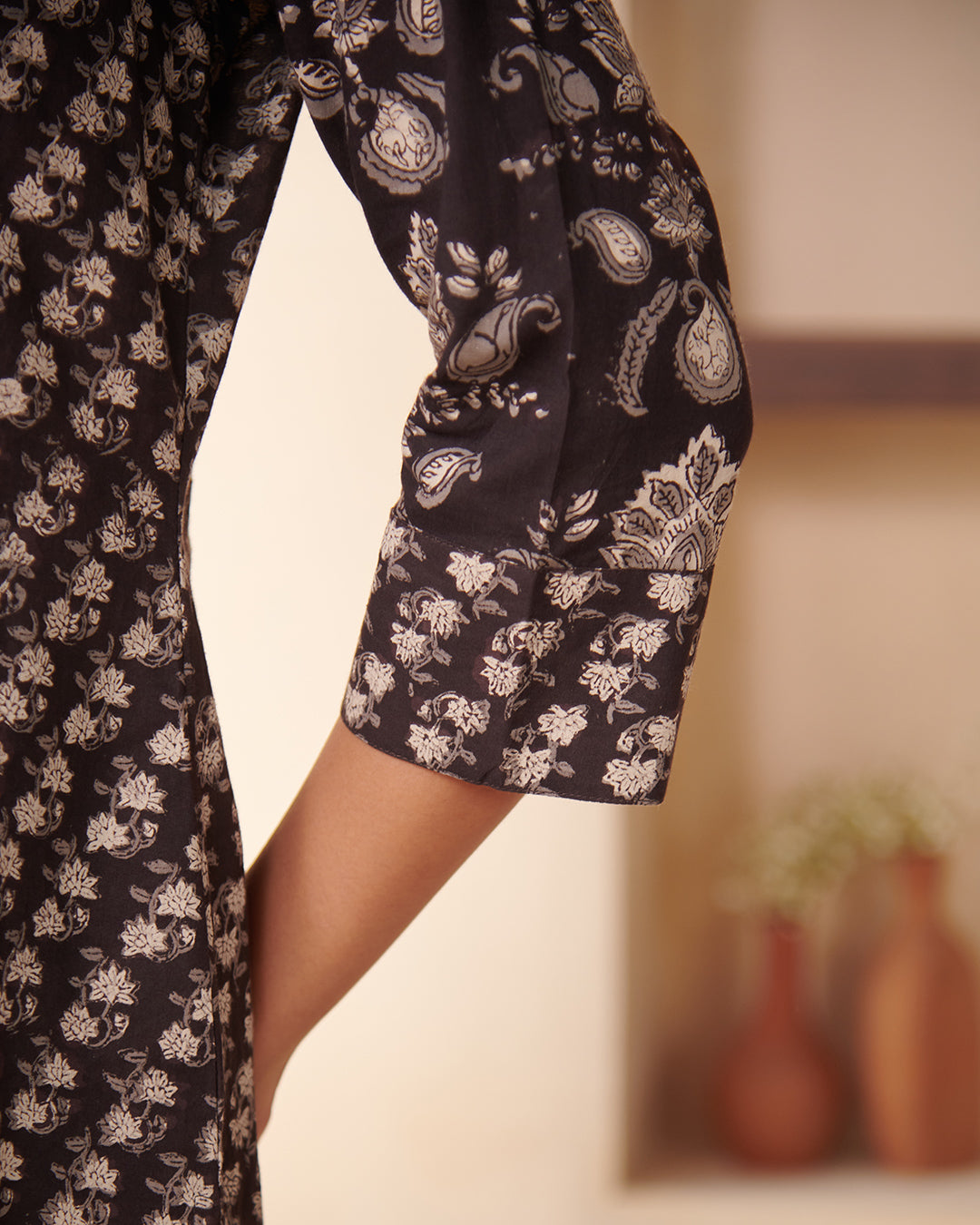
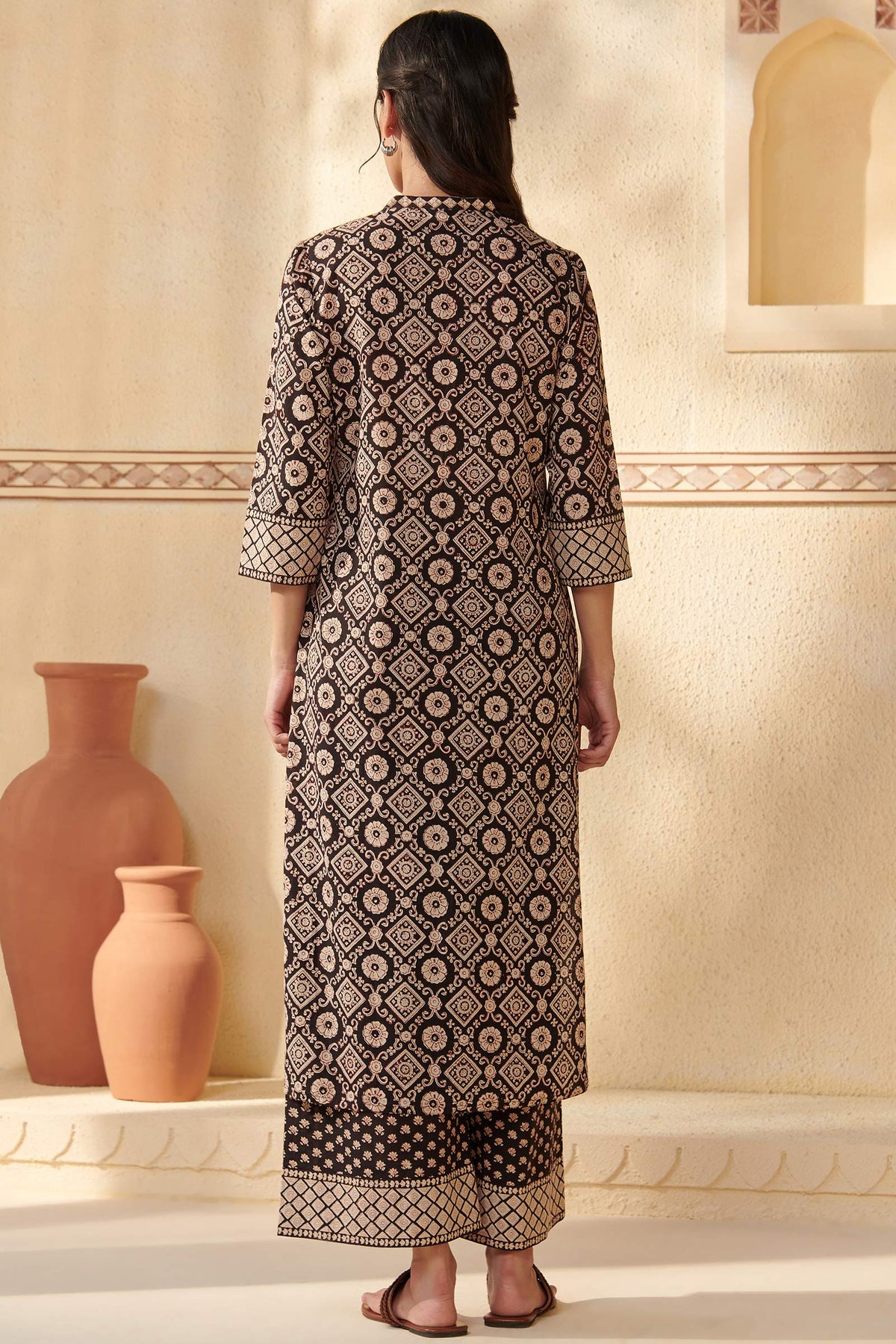
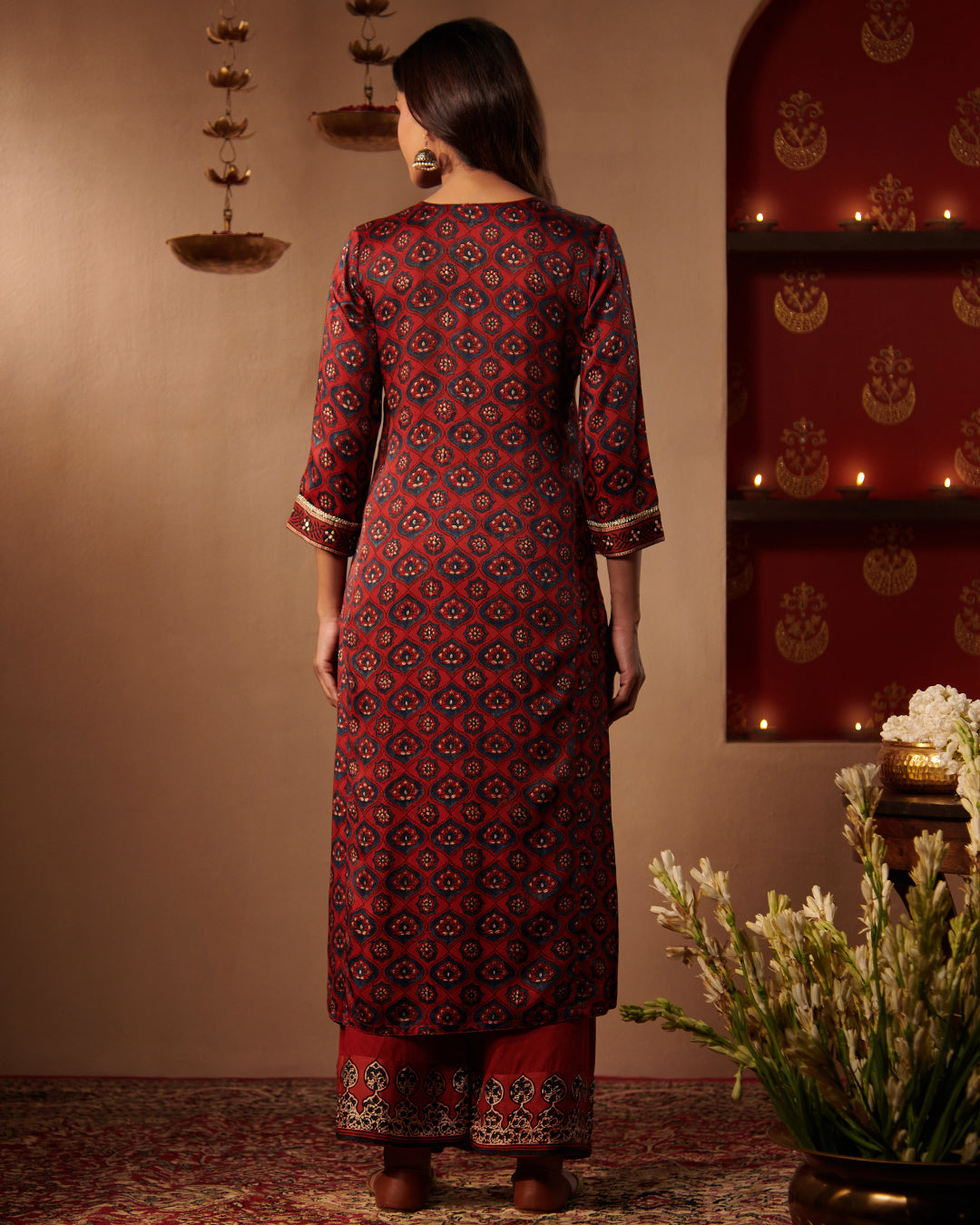
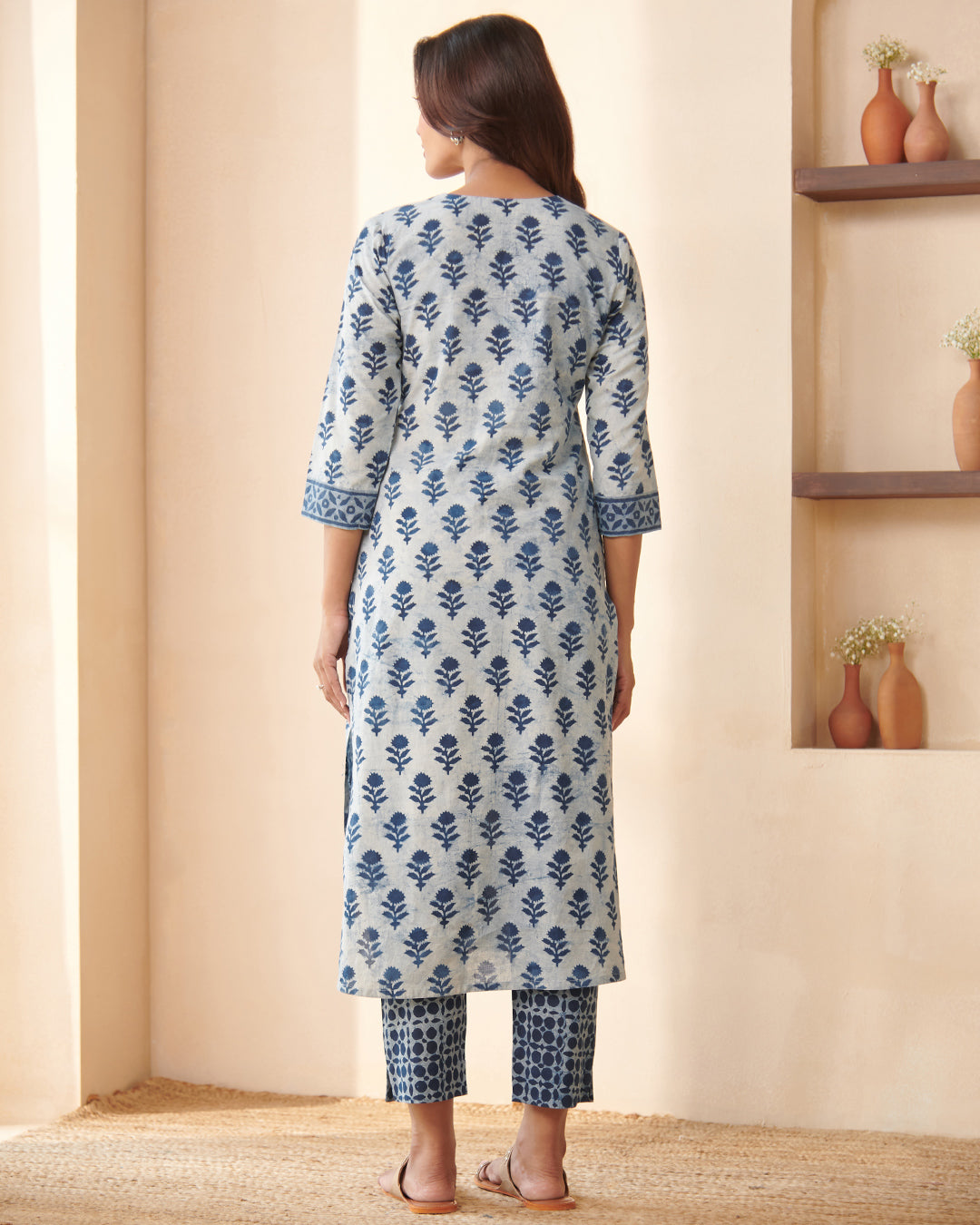
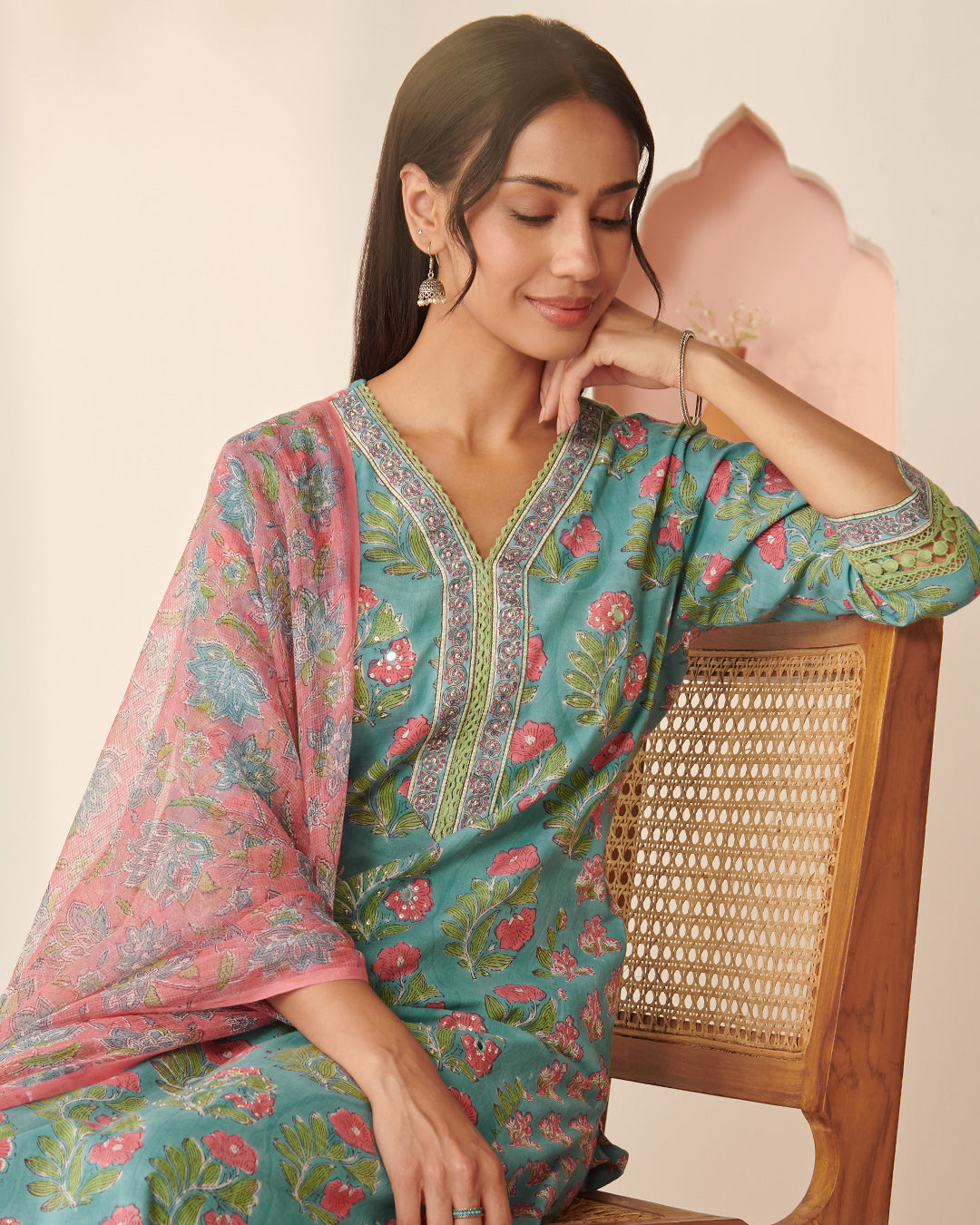
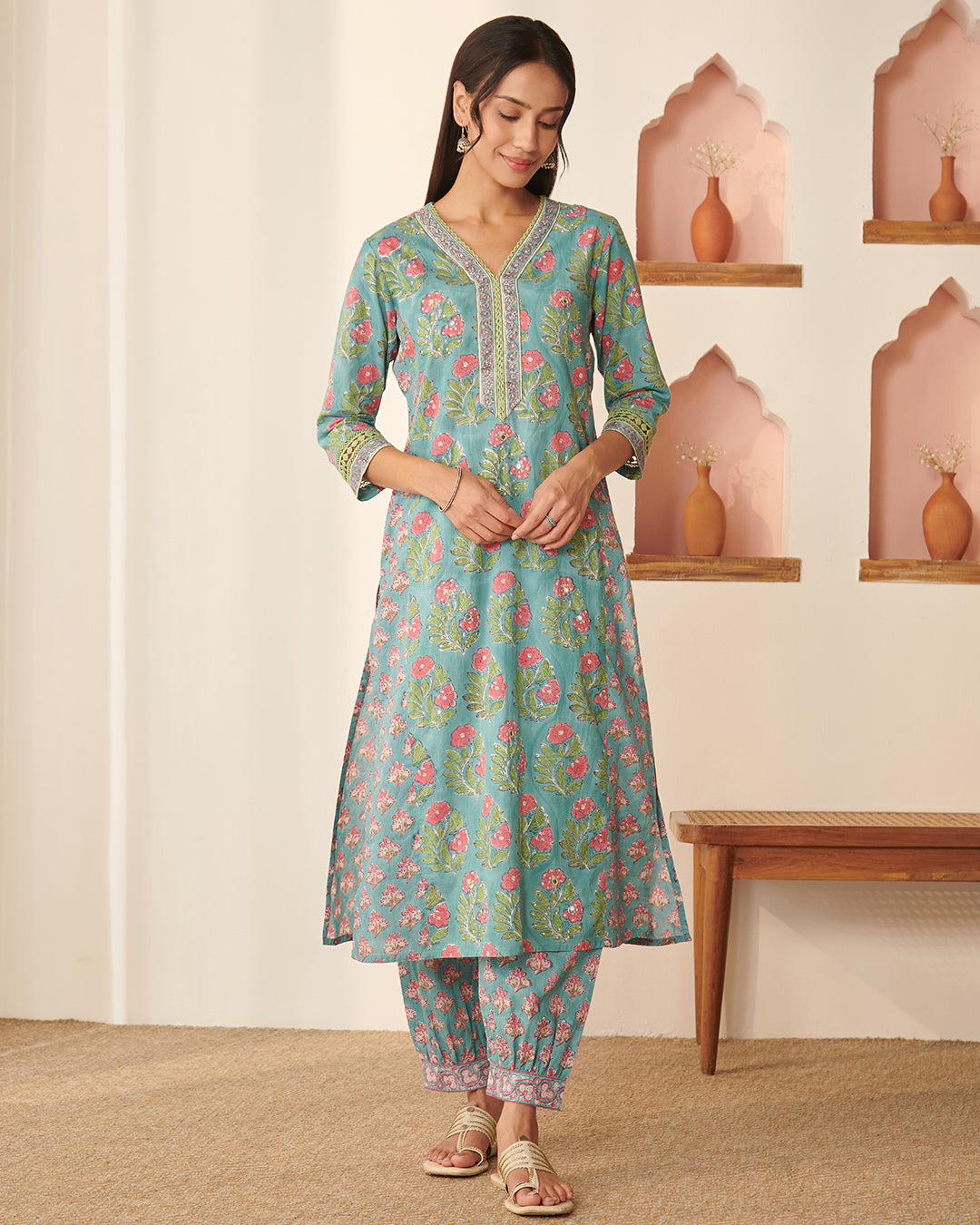
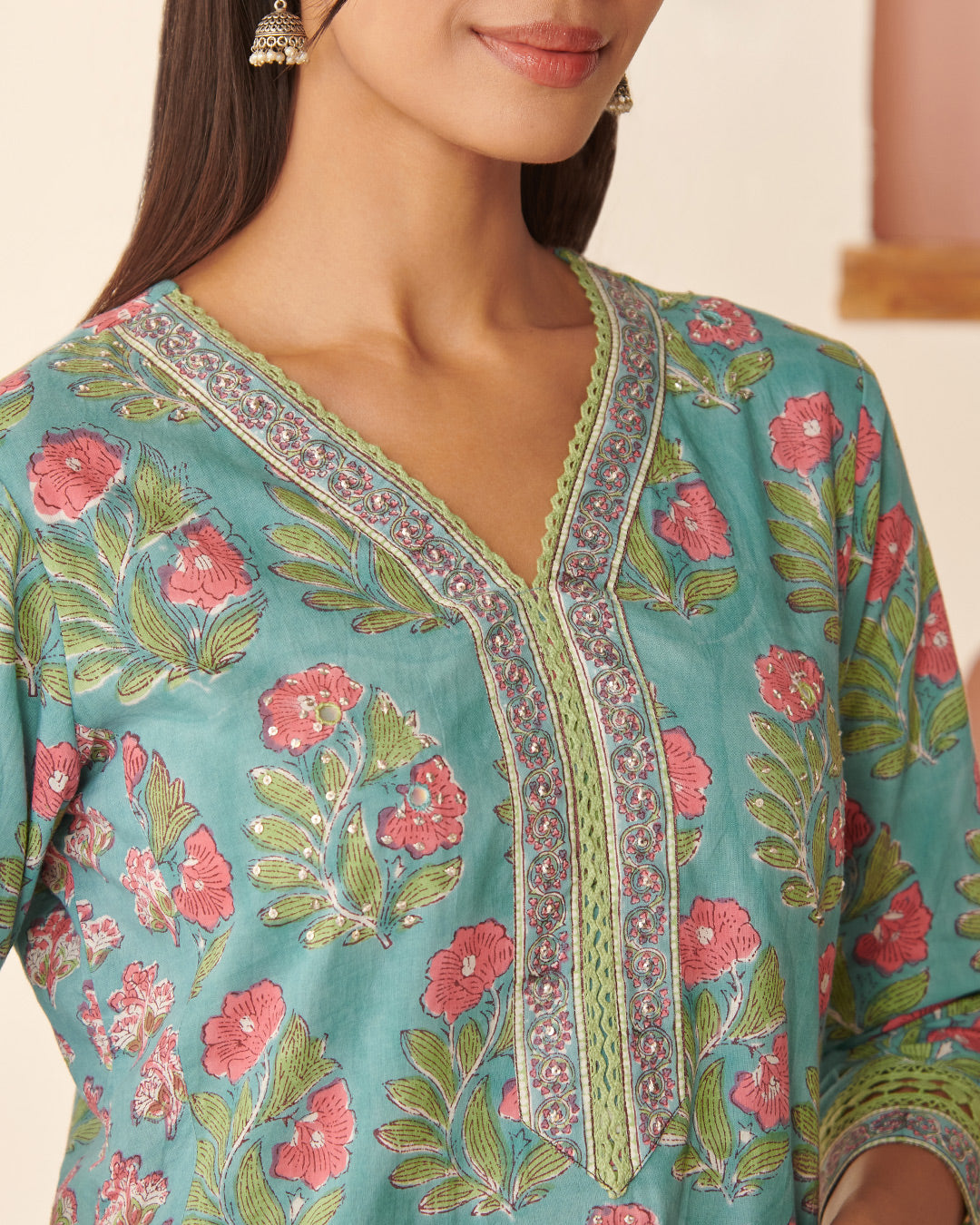
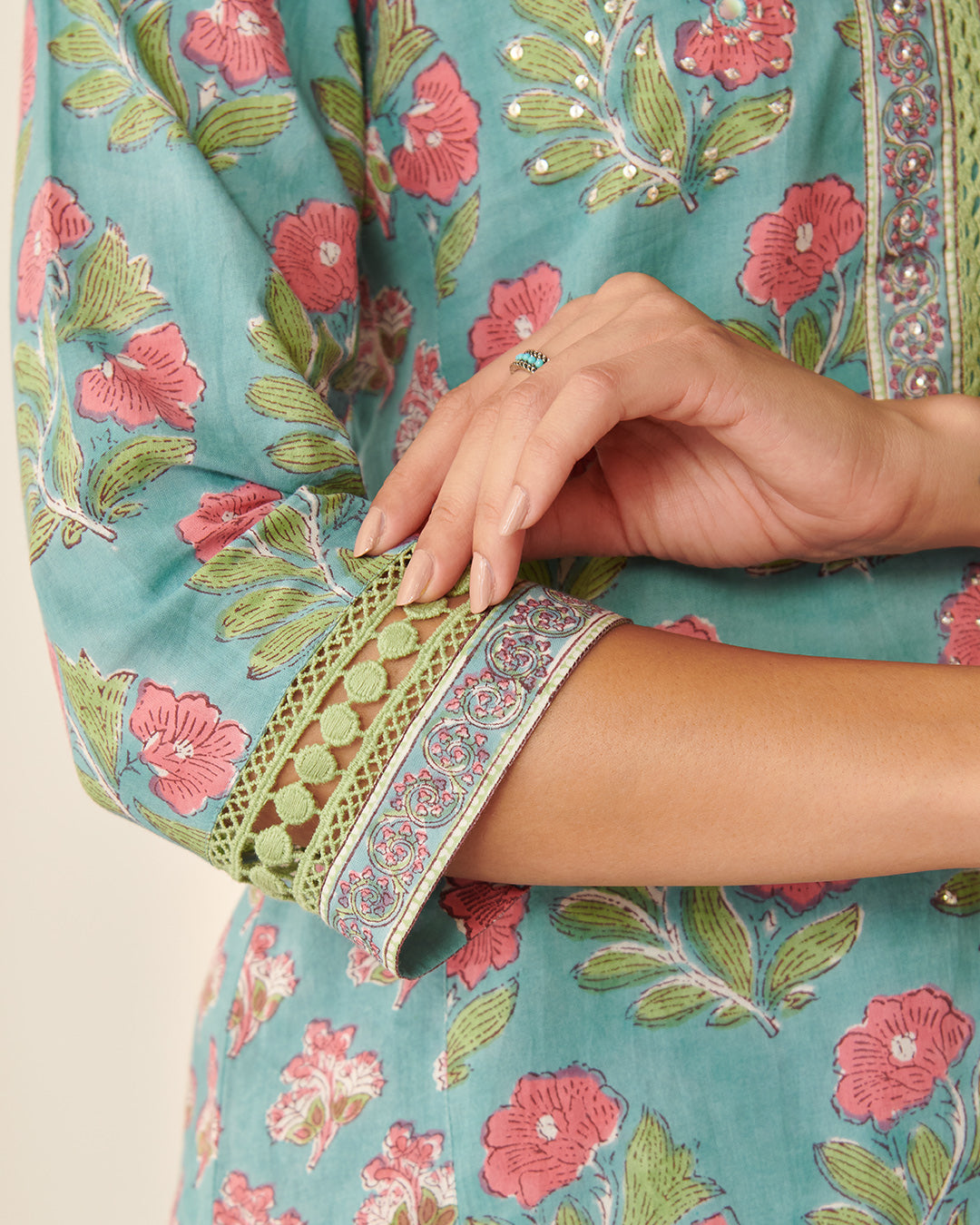
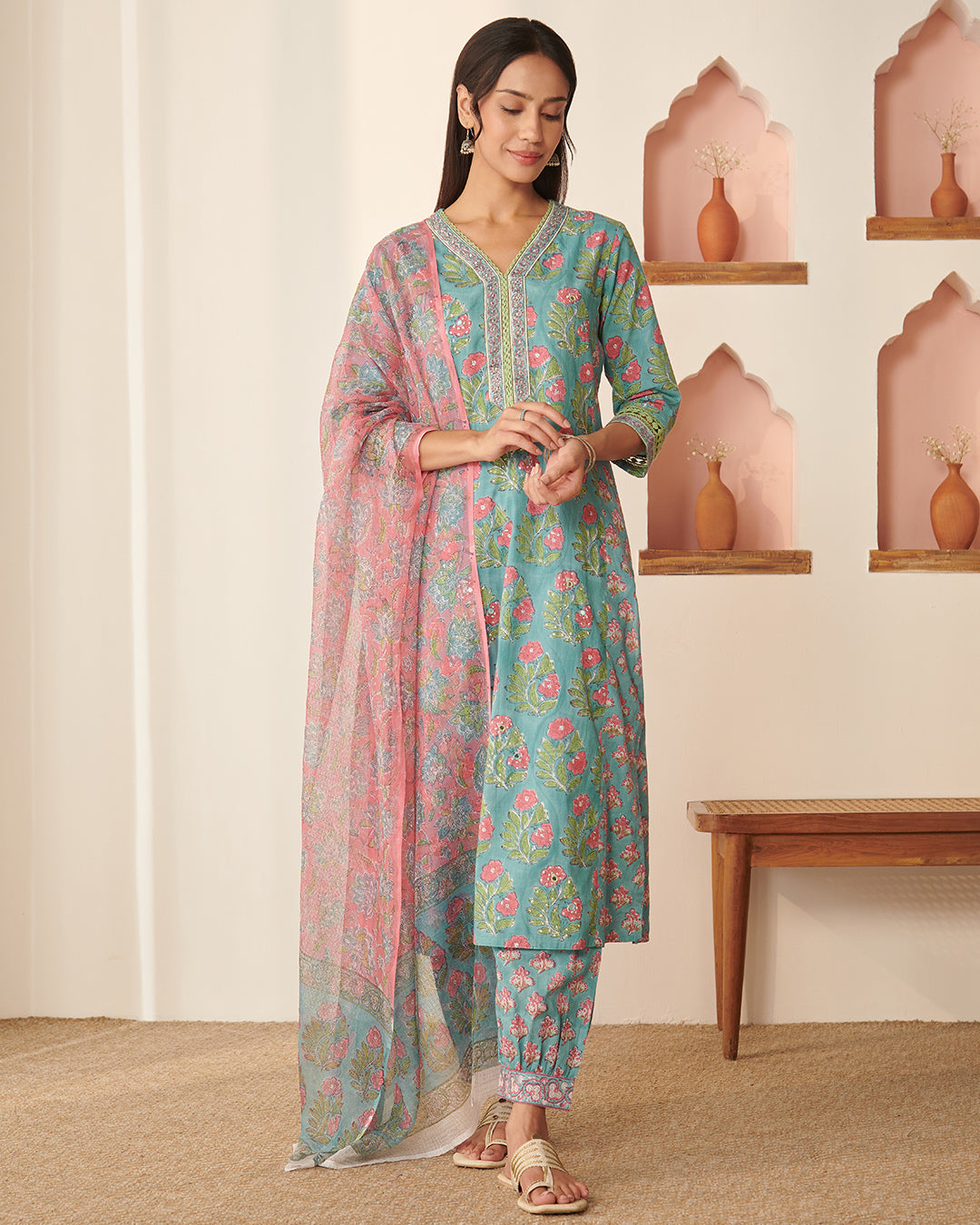
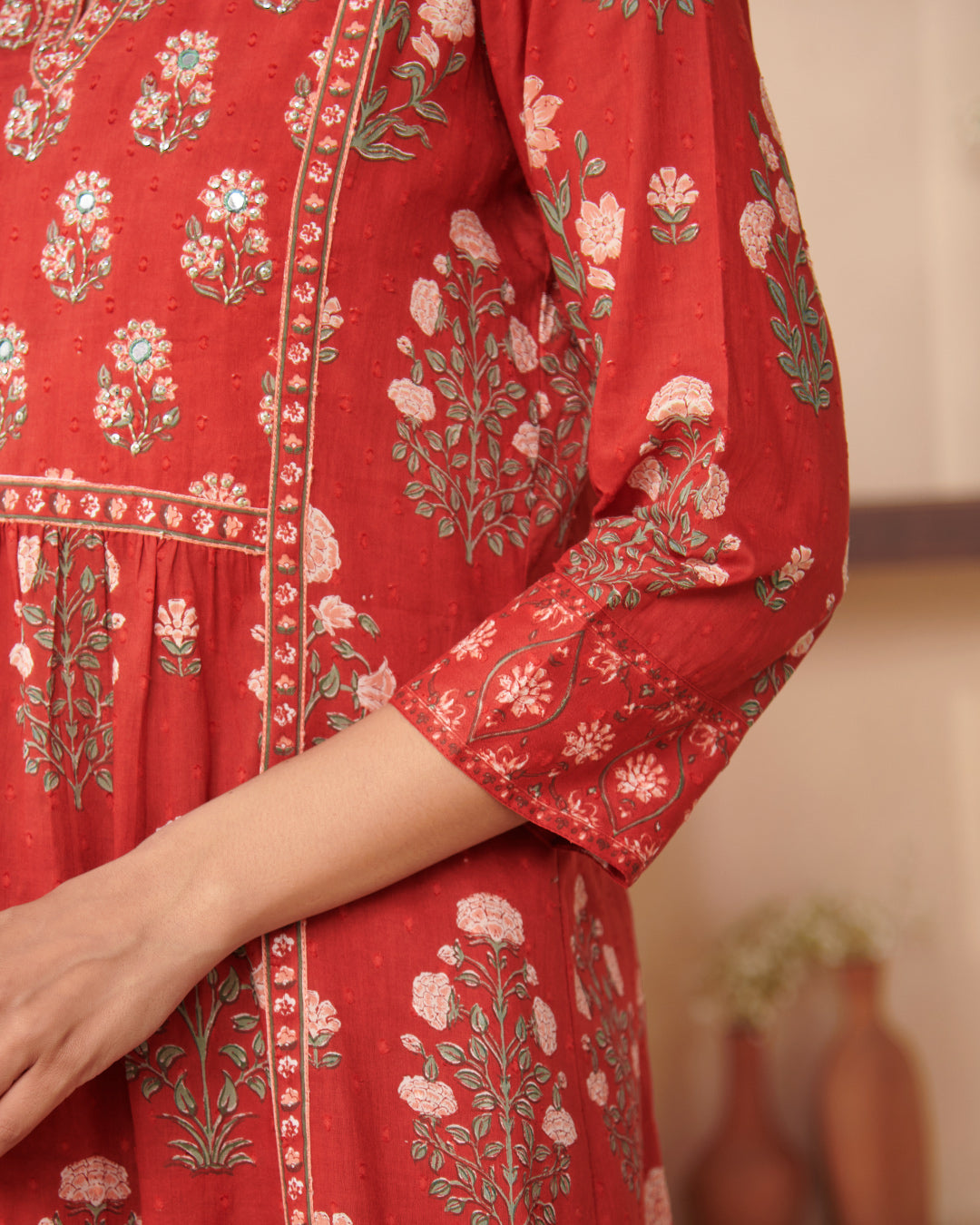
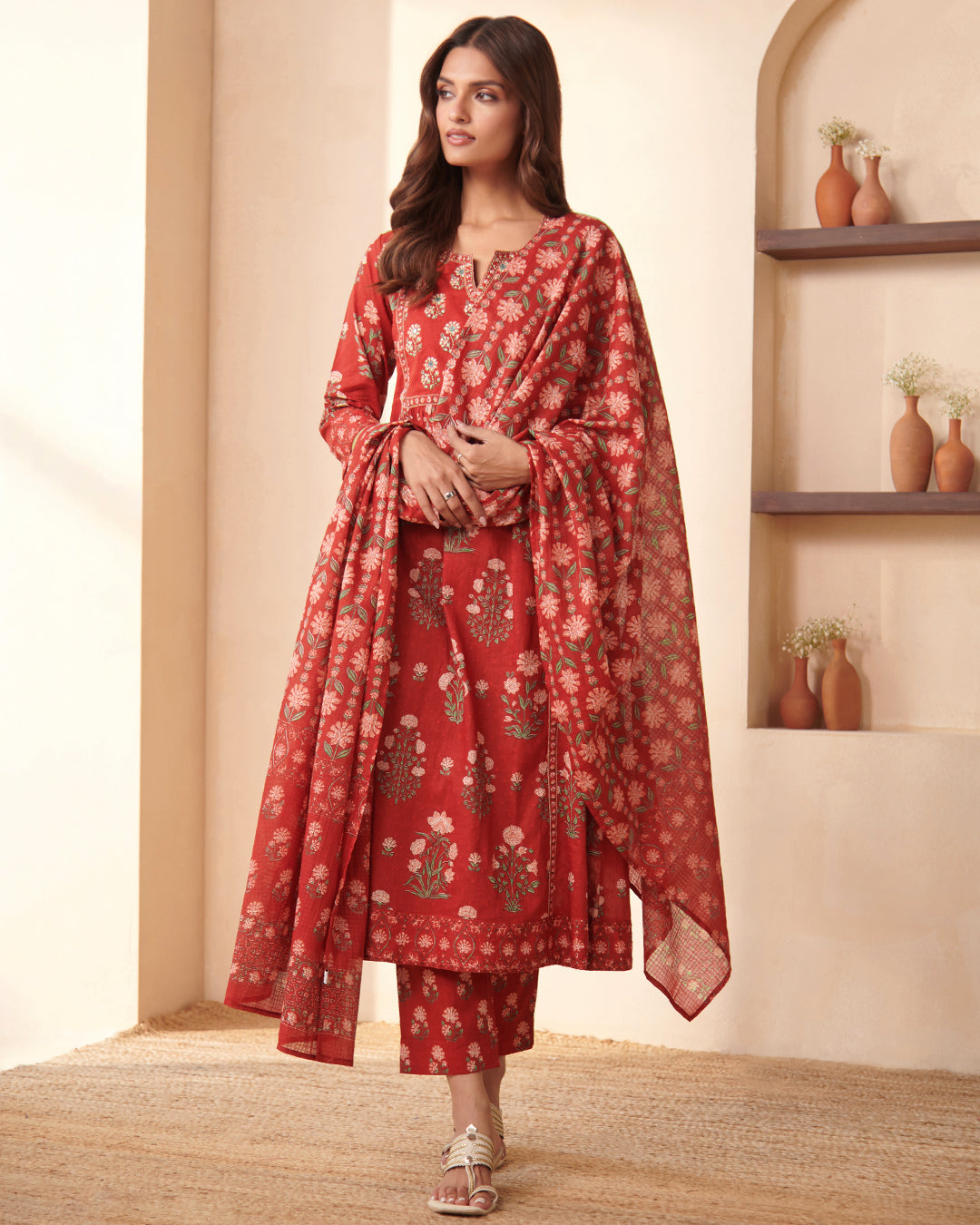
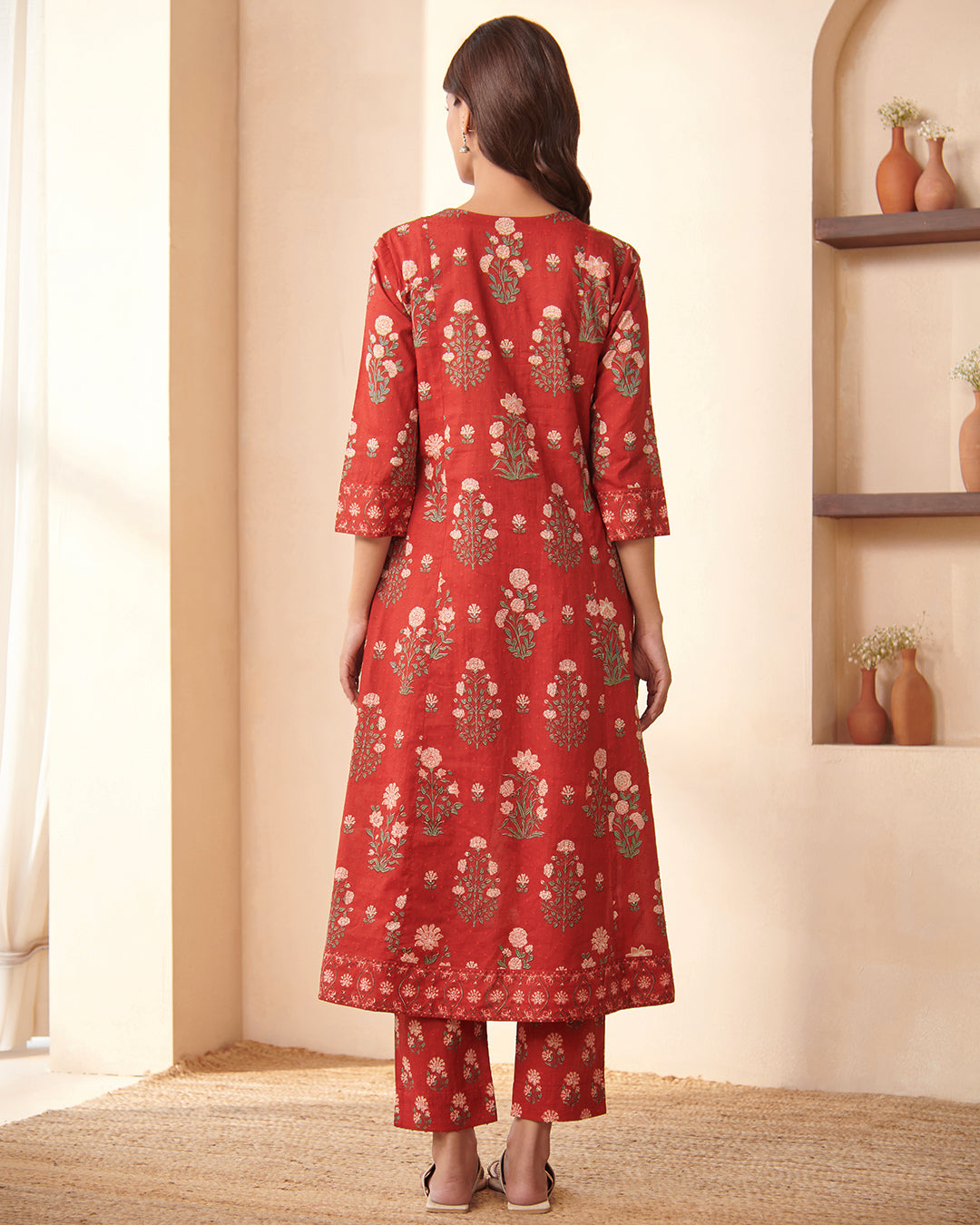
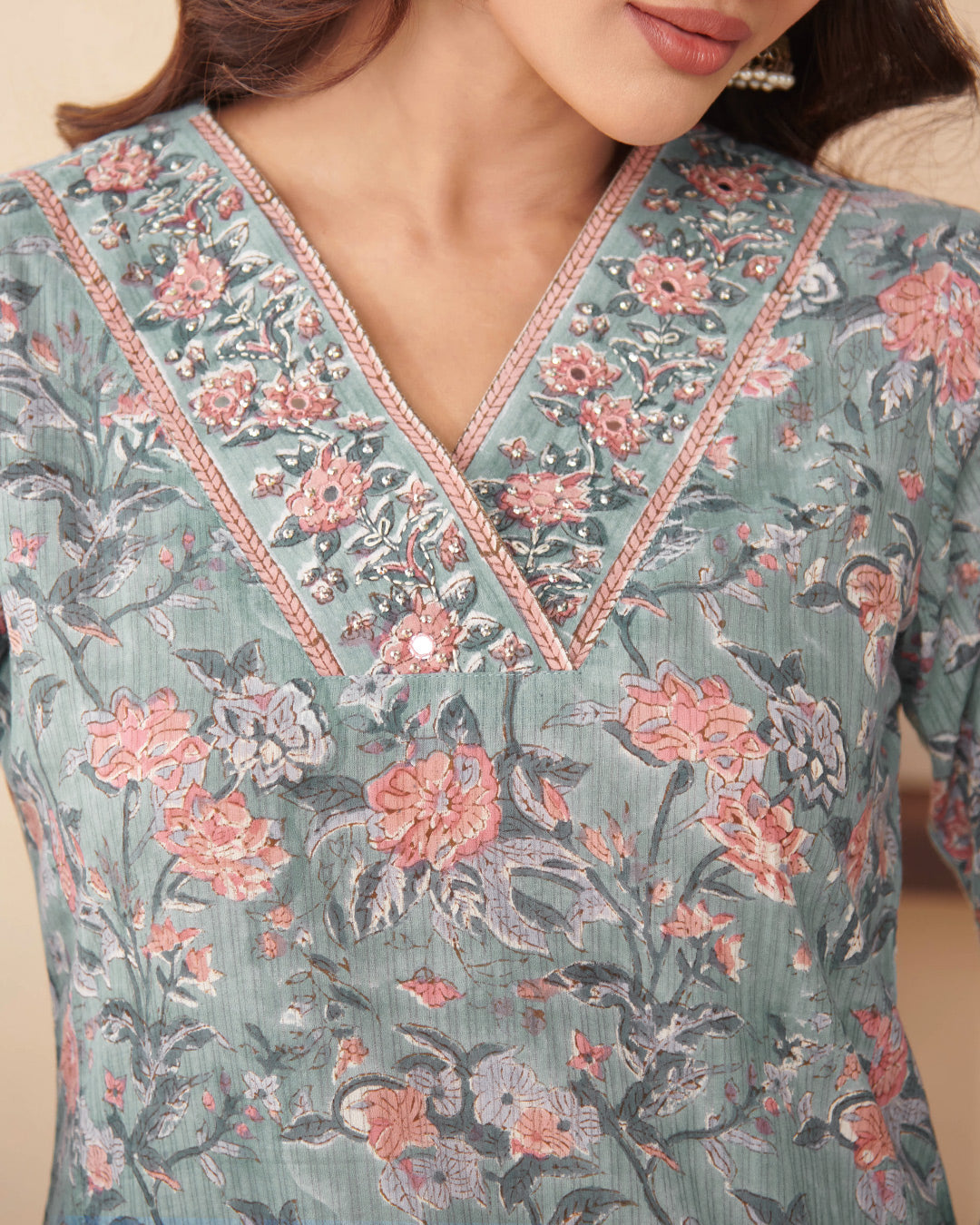
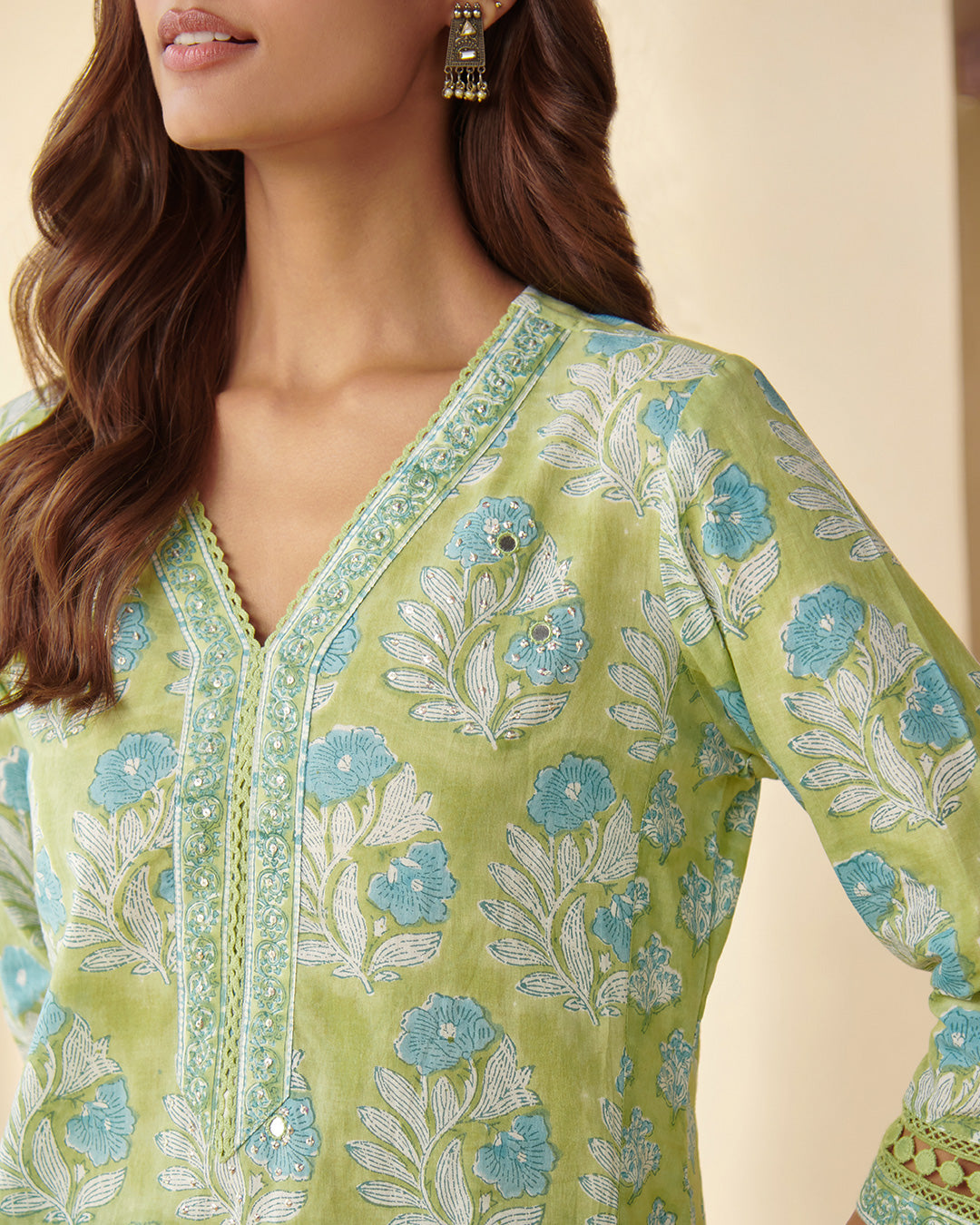
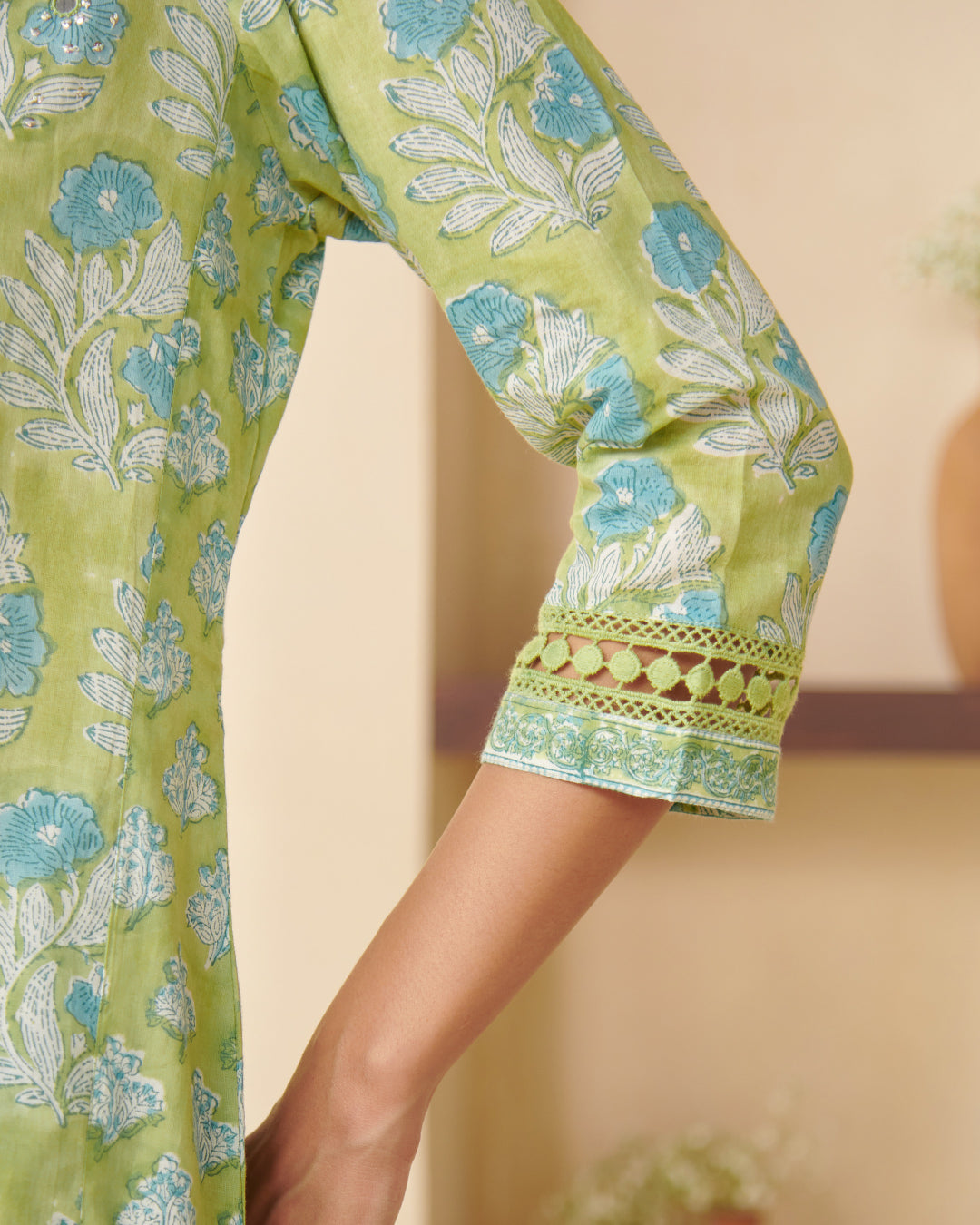
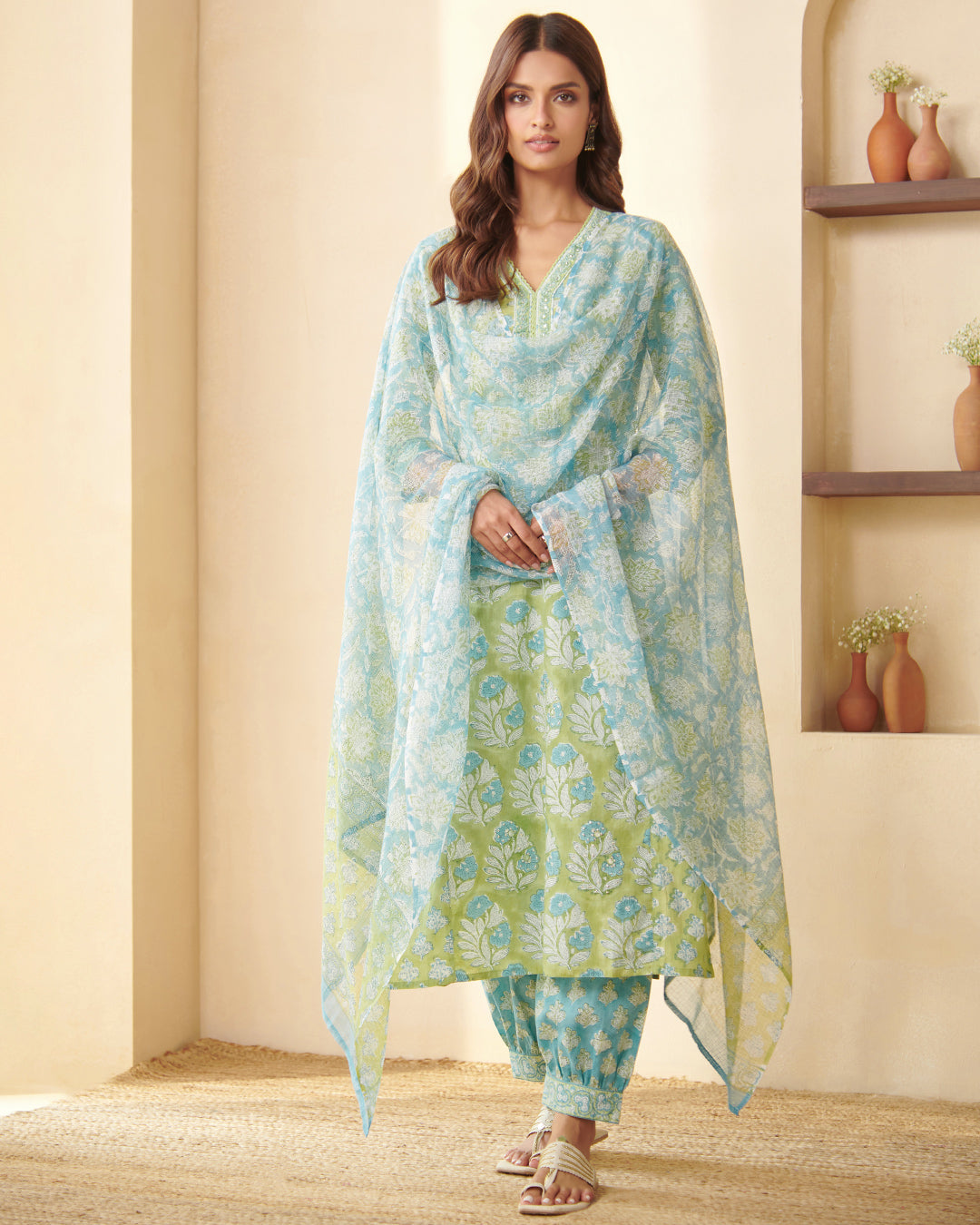
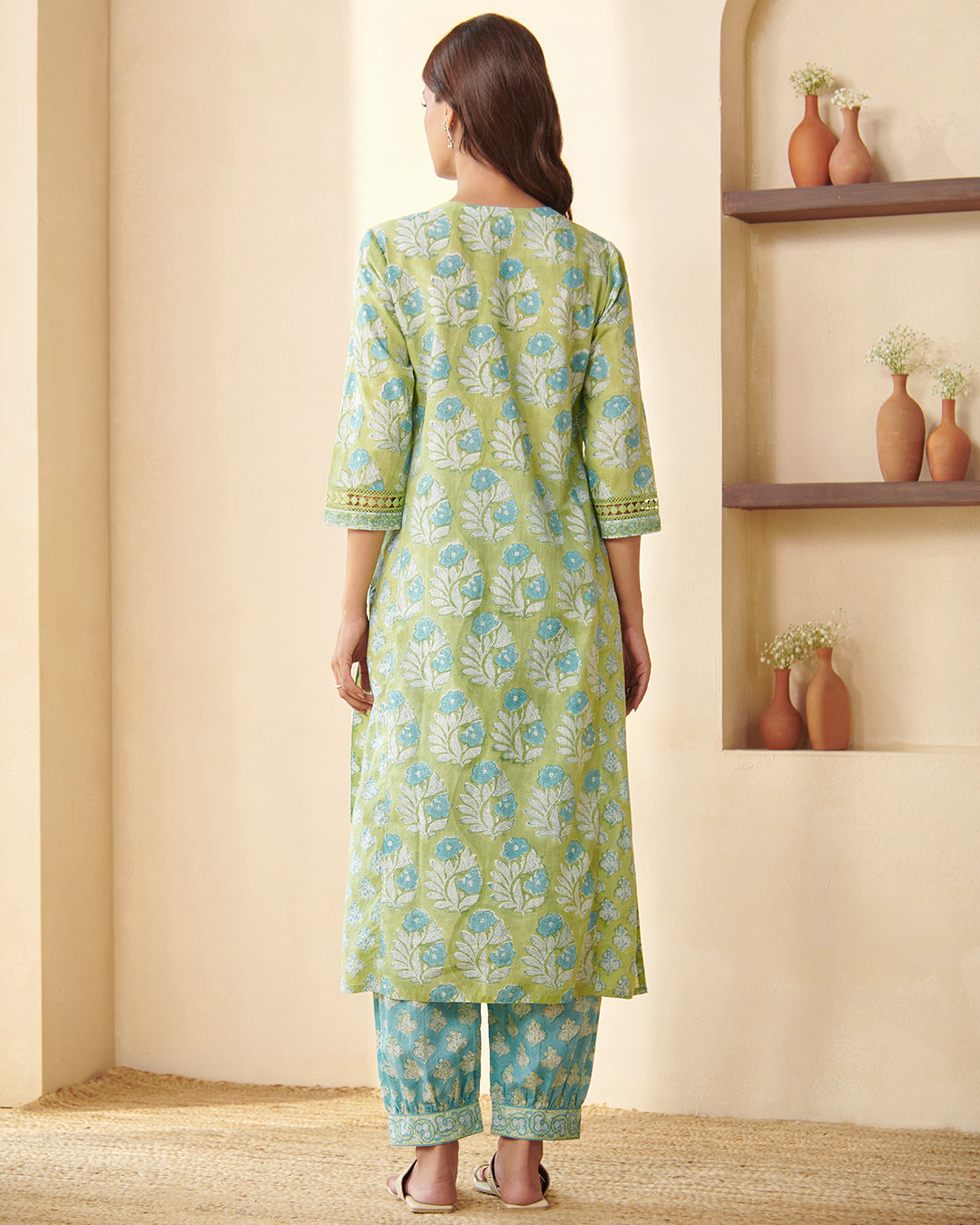
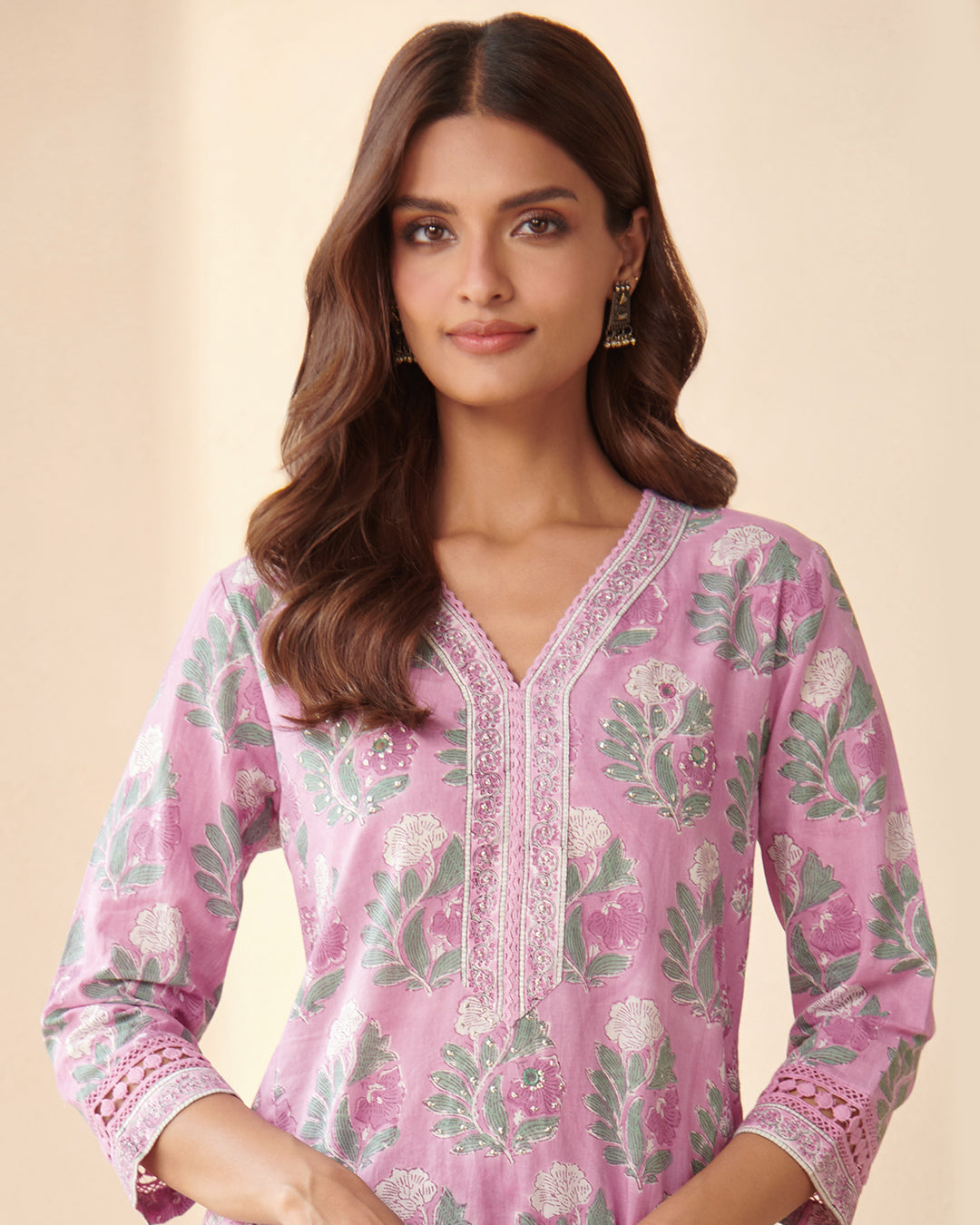
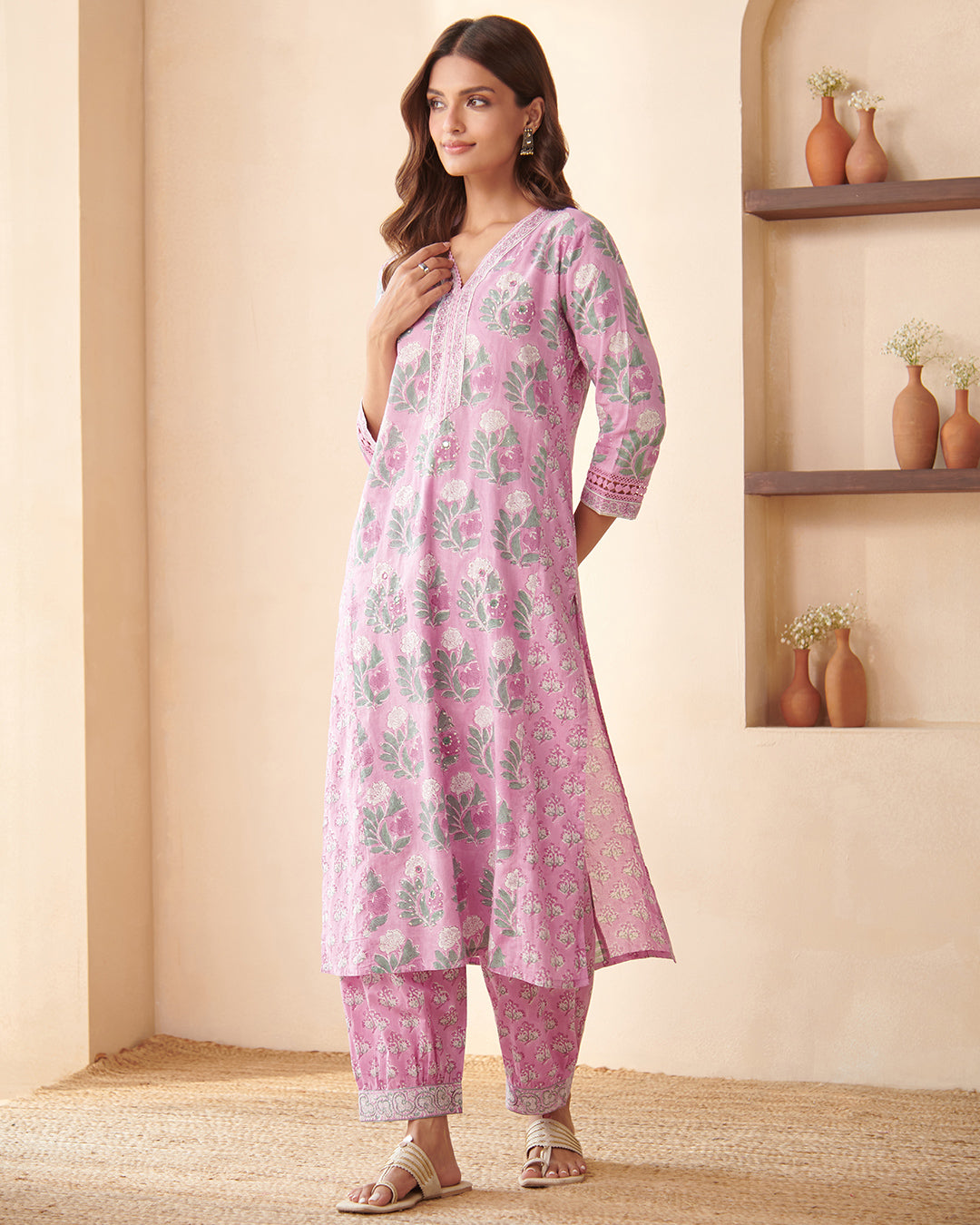
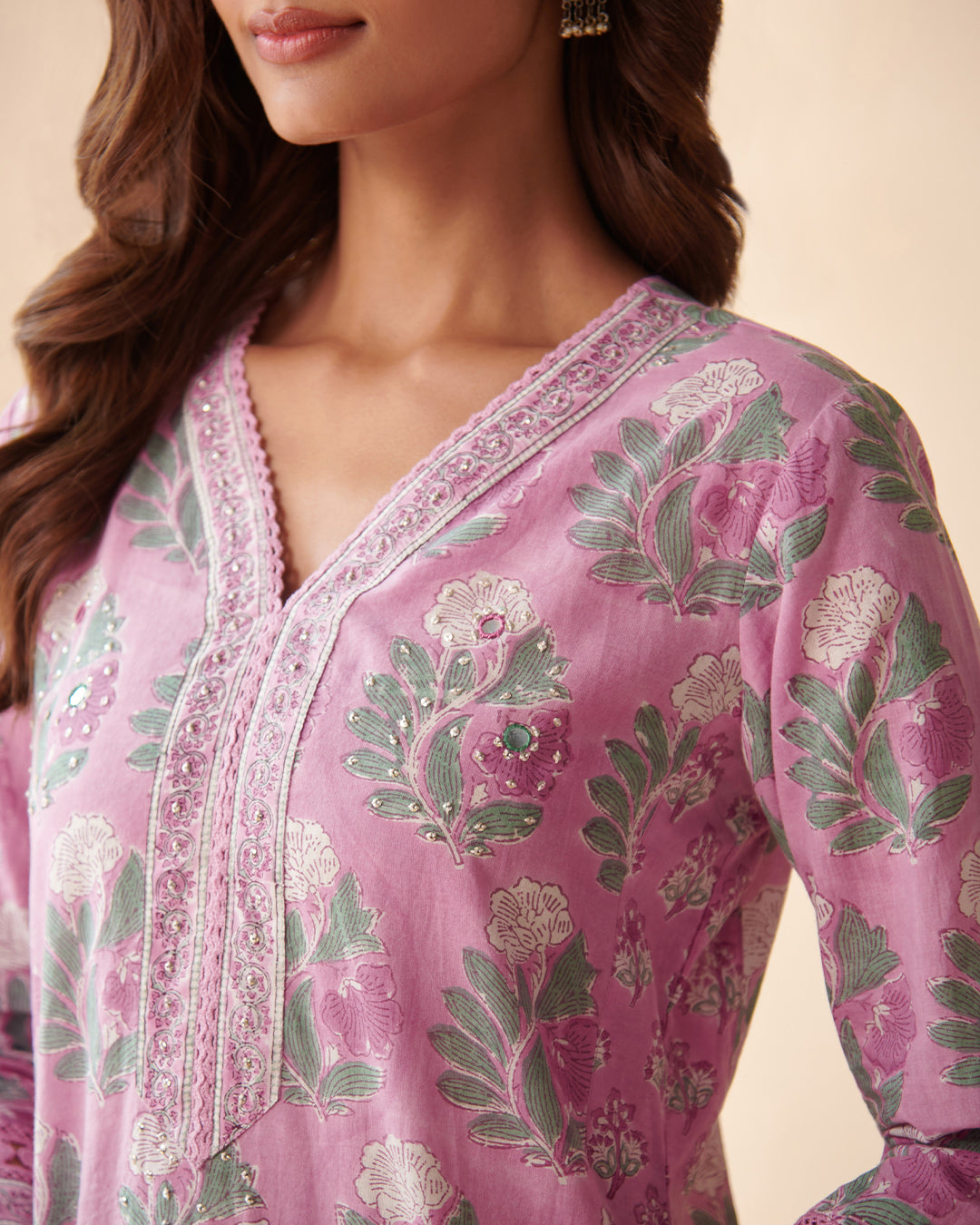
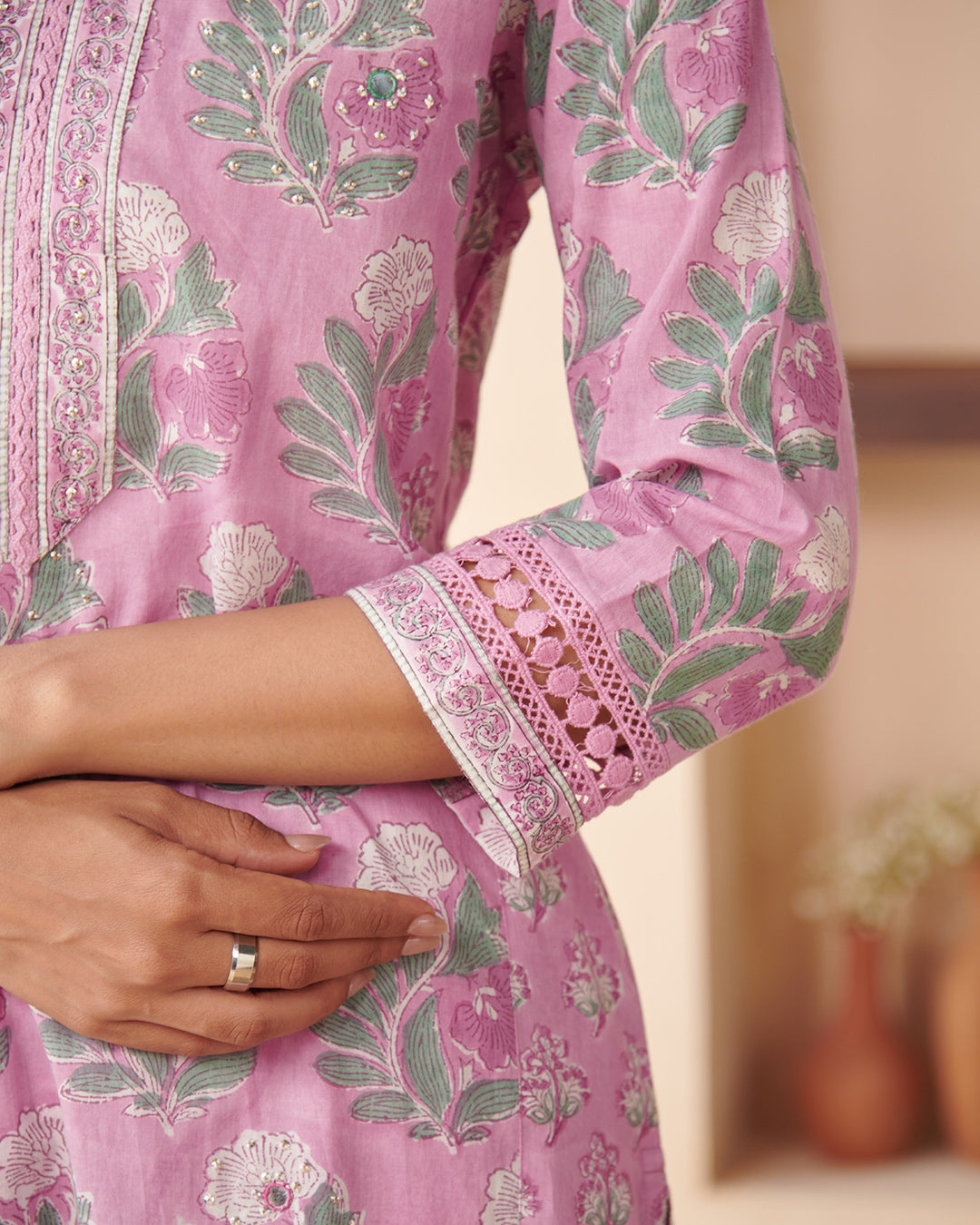
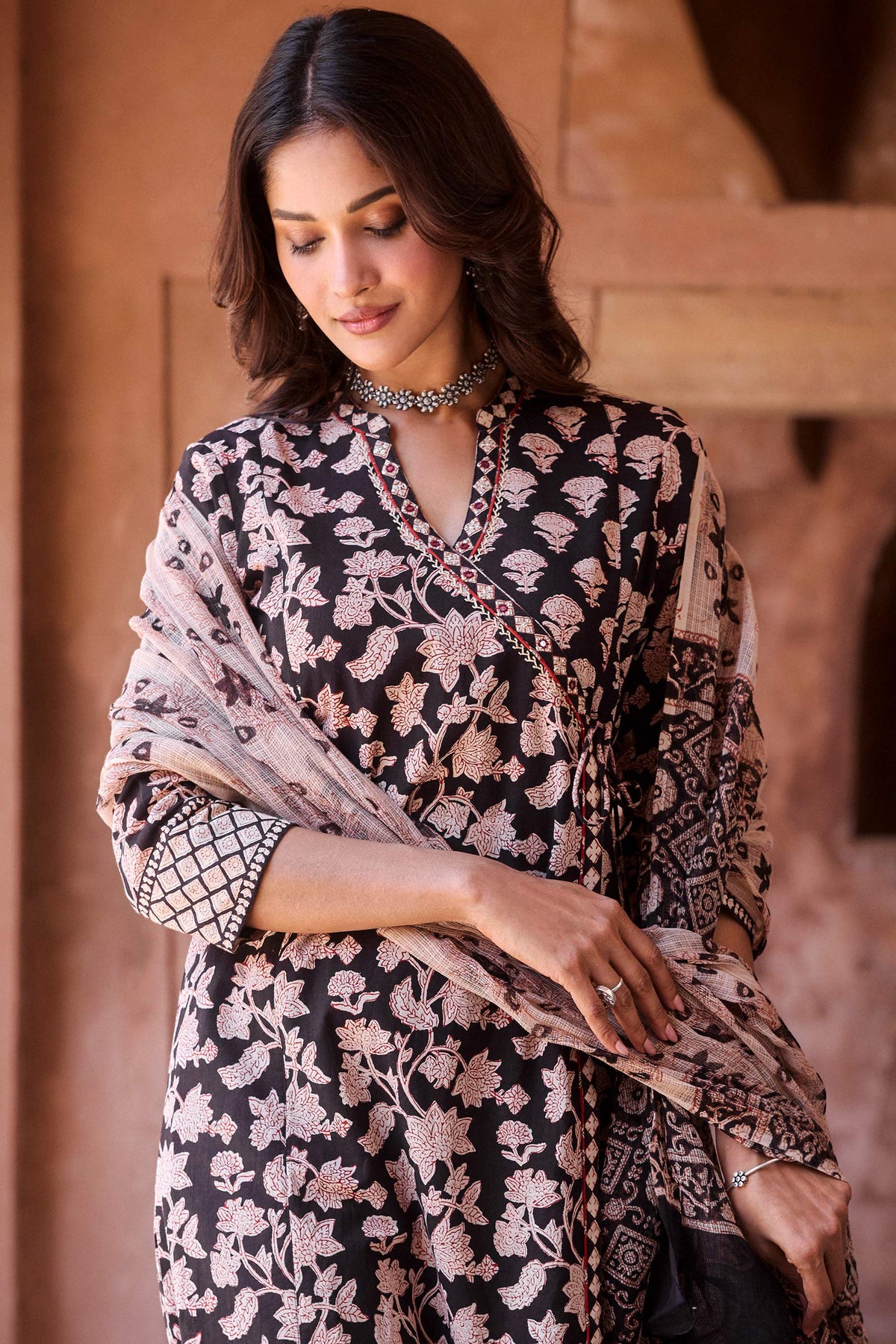
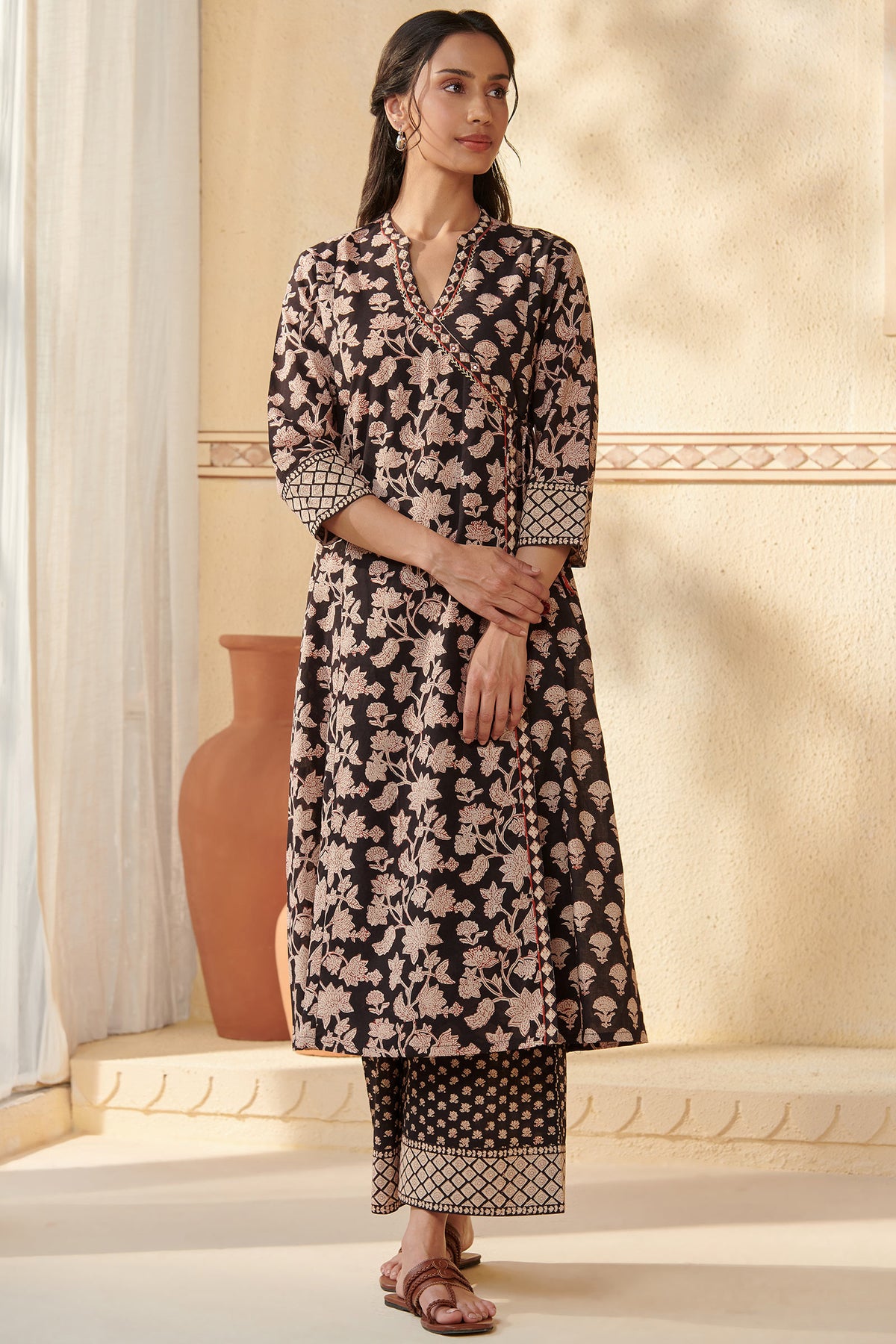
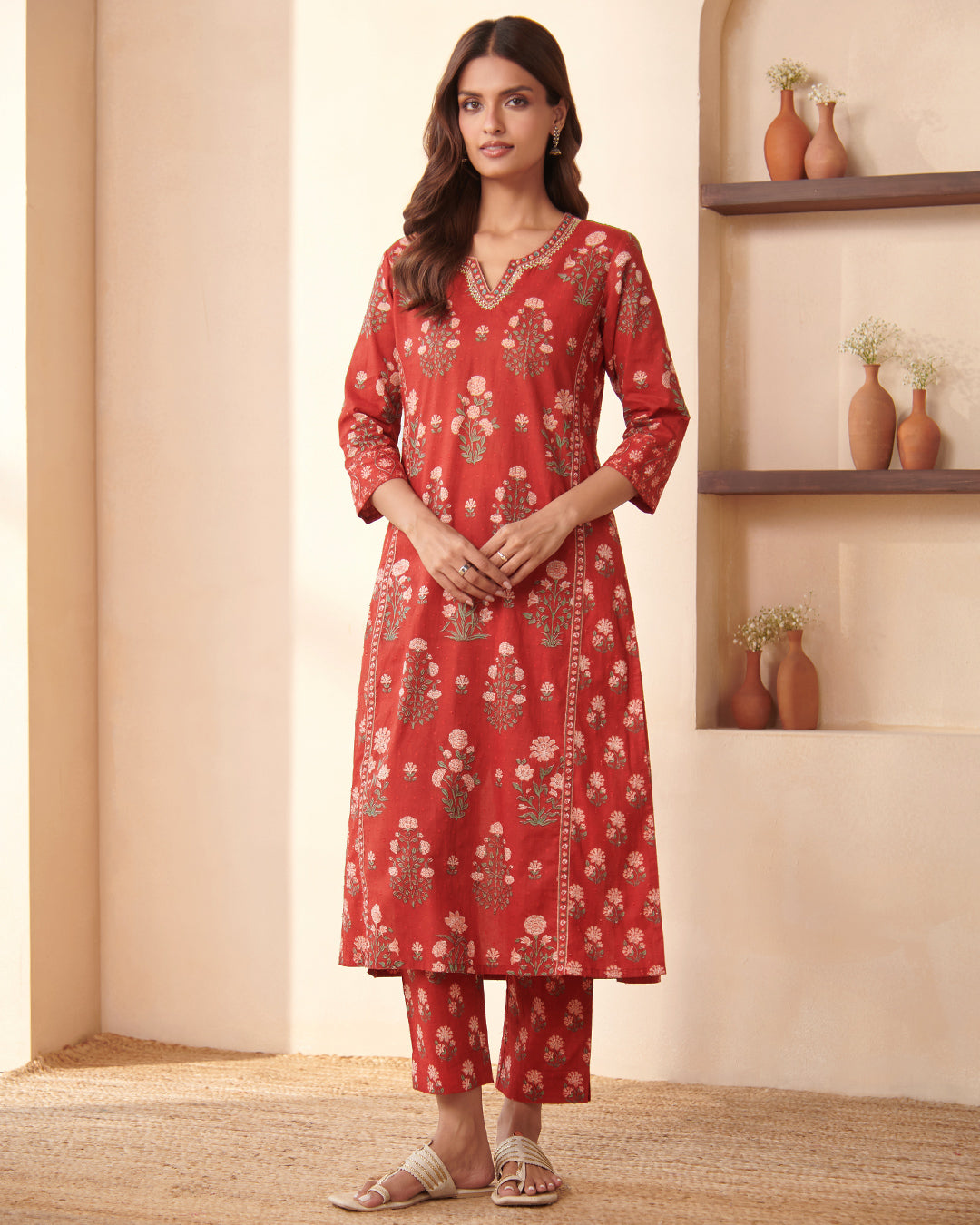
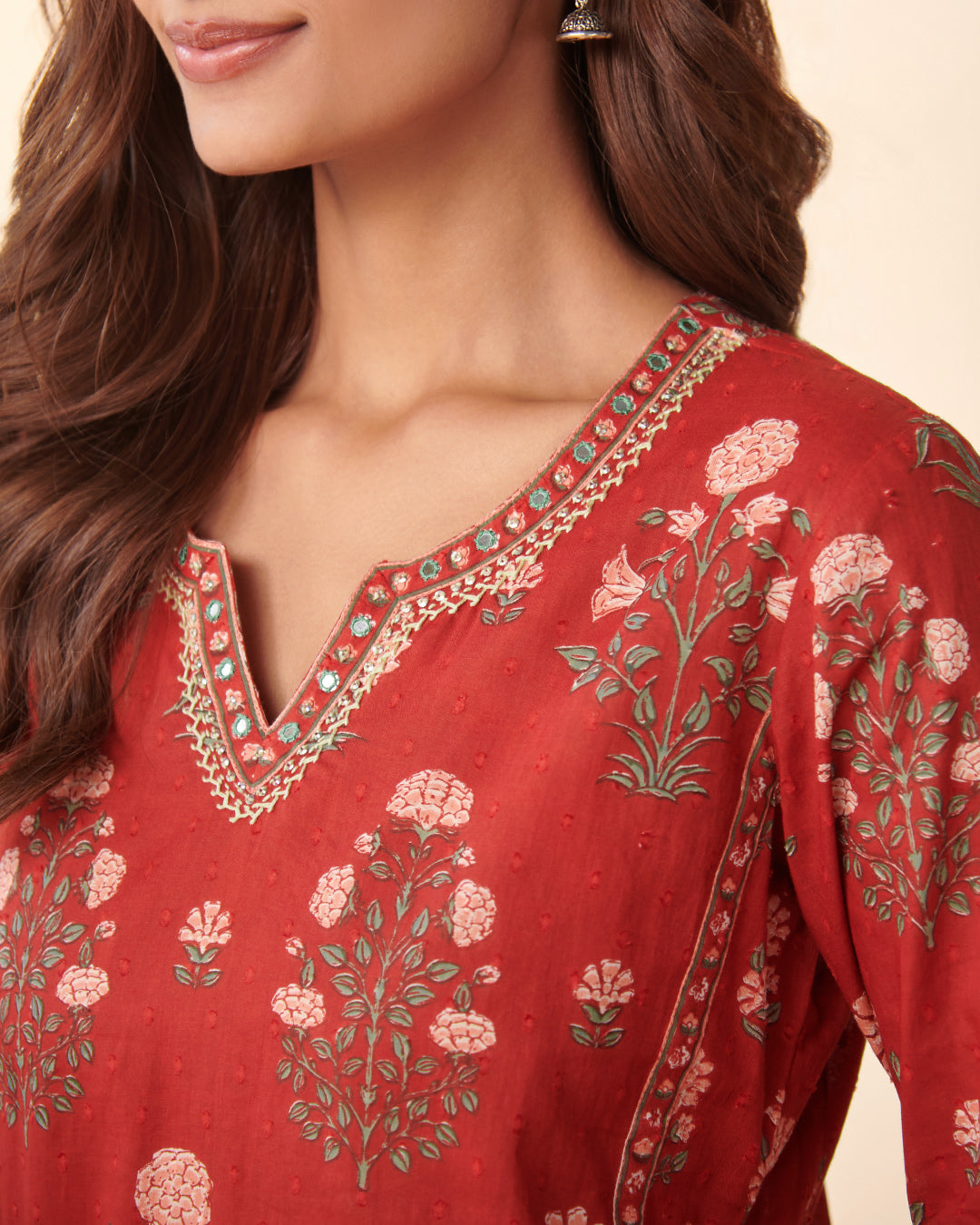
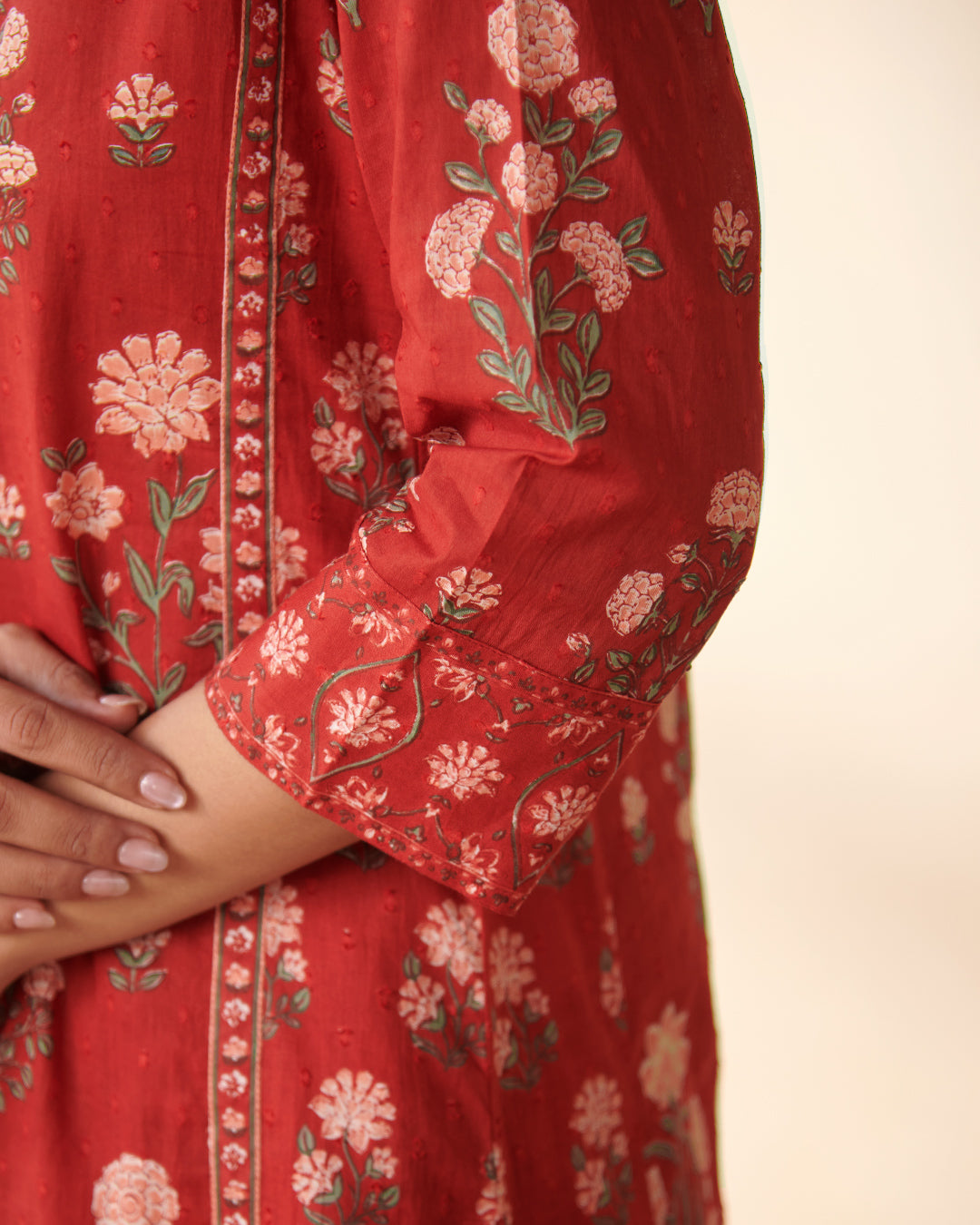
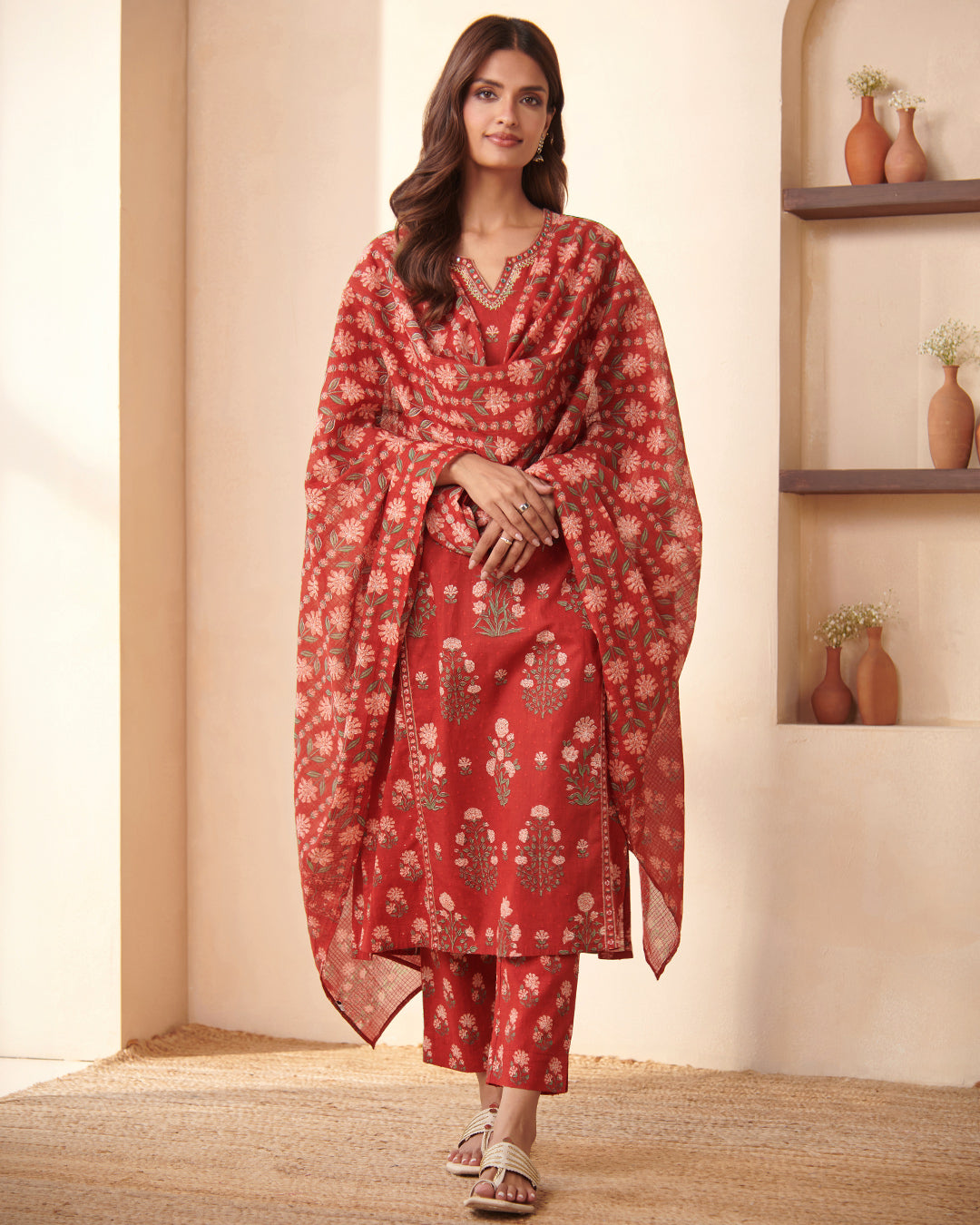
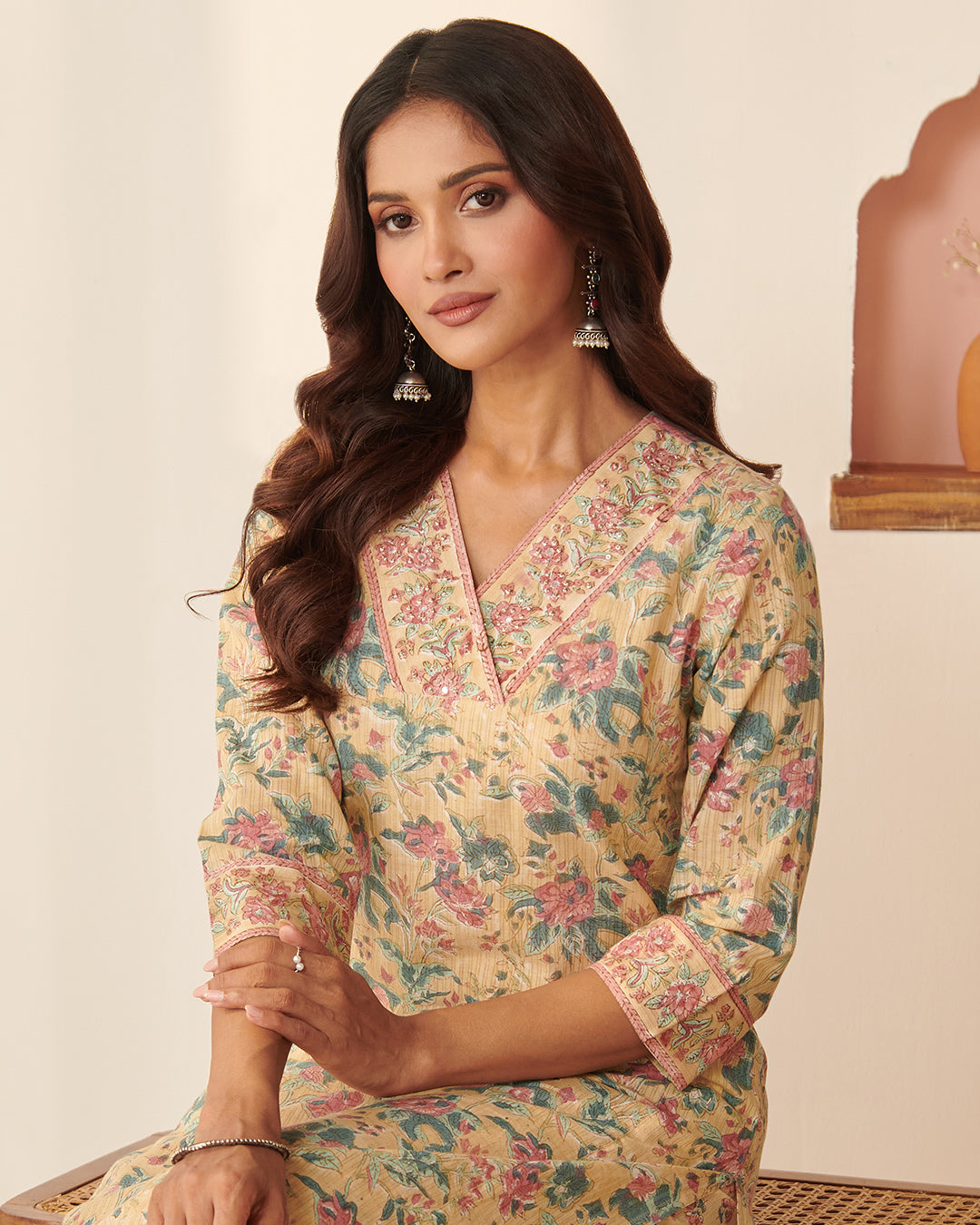
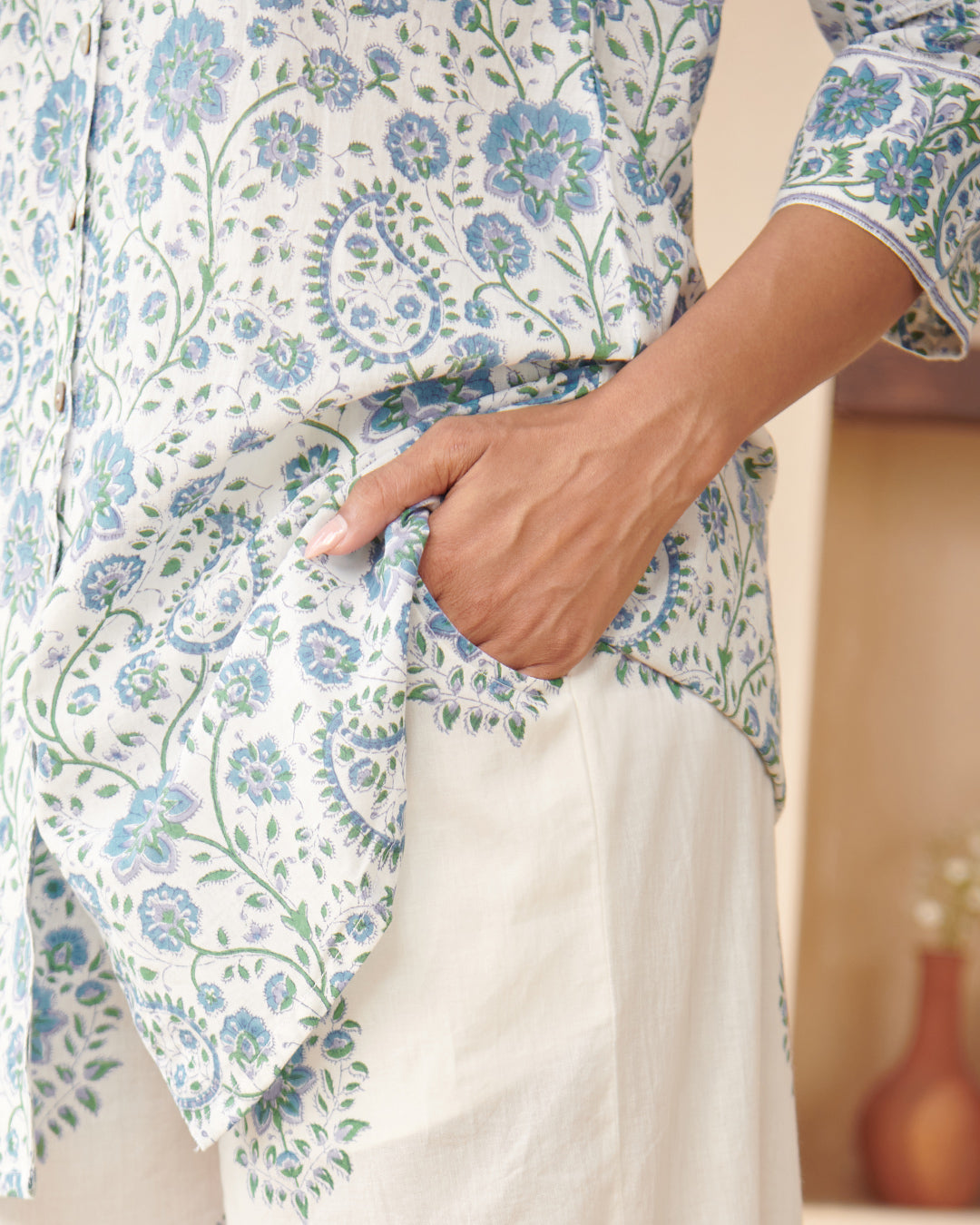
The motifs in Akola hand print are often larger and more spaced out compared to other styles. Floral but not delicate, geometric but not rigid. They carry a certain weight, a quiet presence that anchors the garment.
Textured, Lived-In Finish
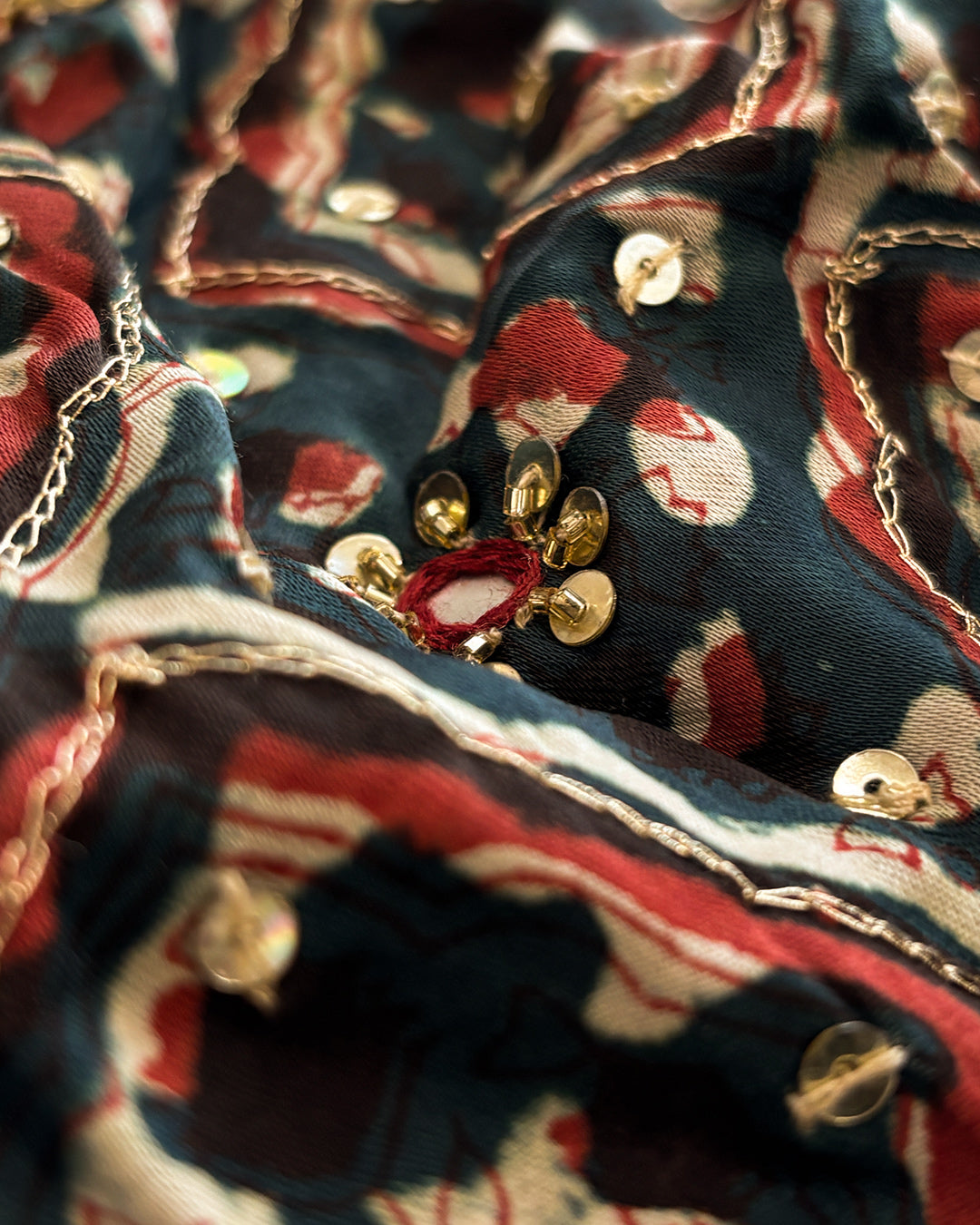
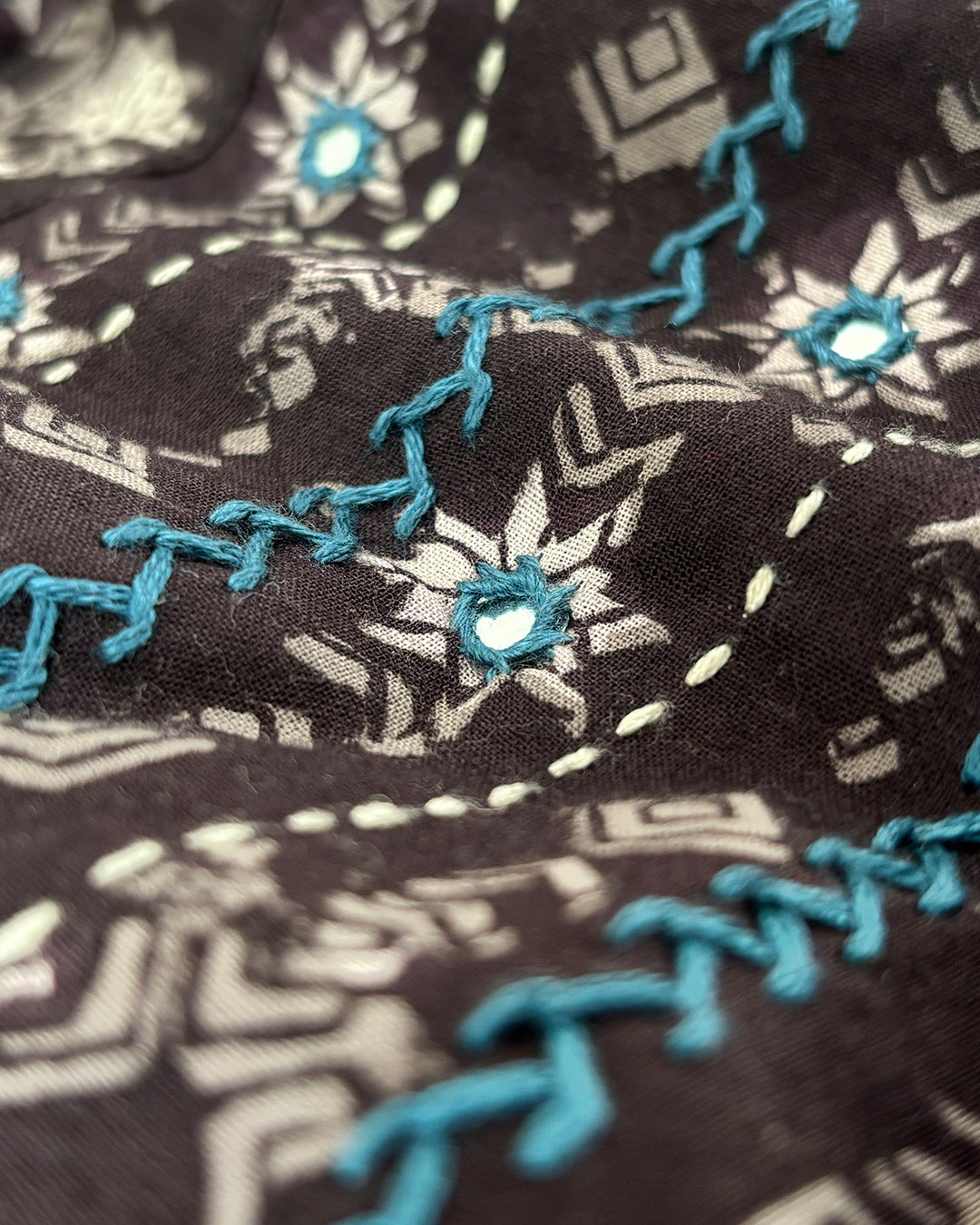
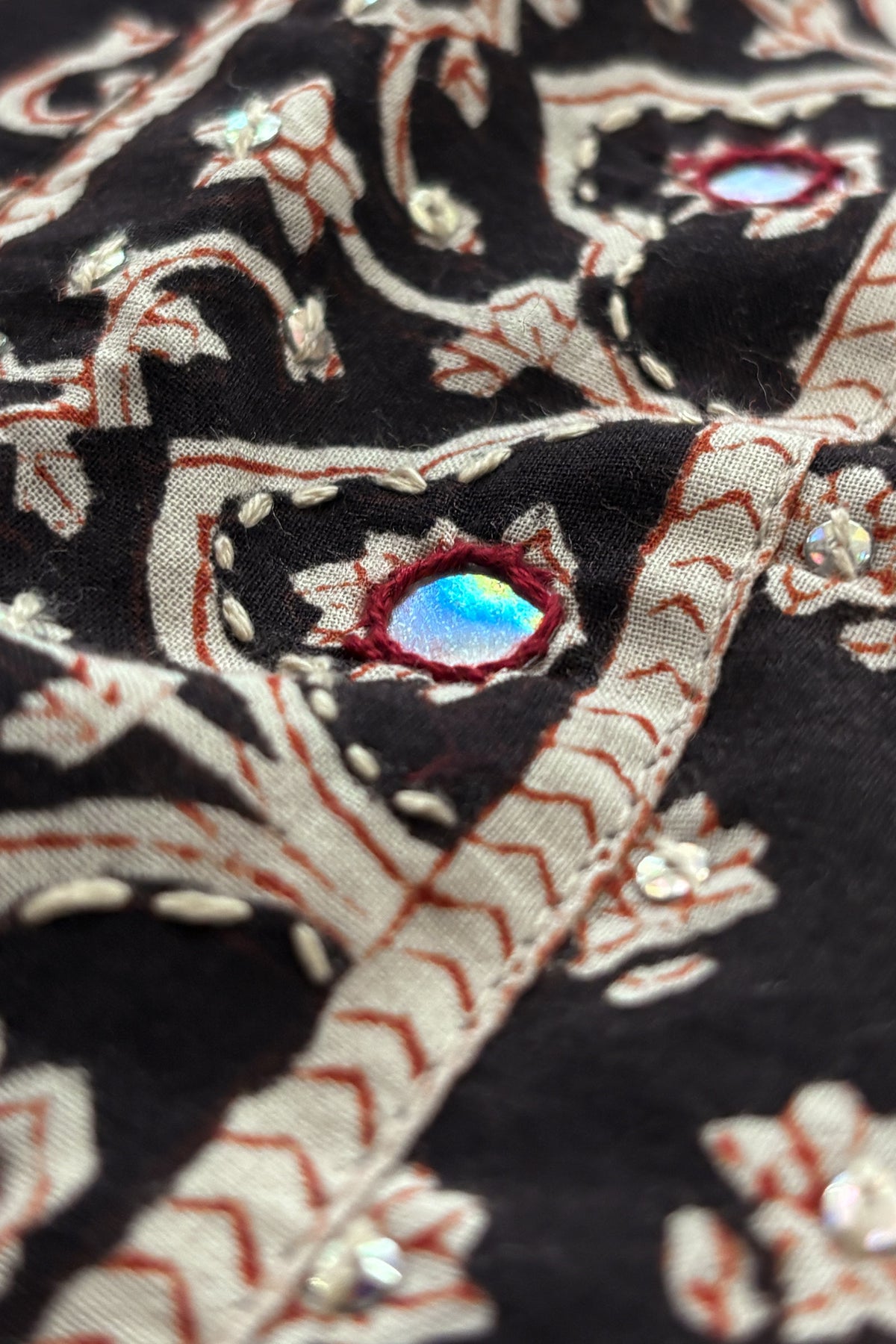
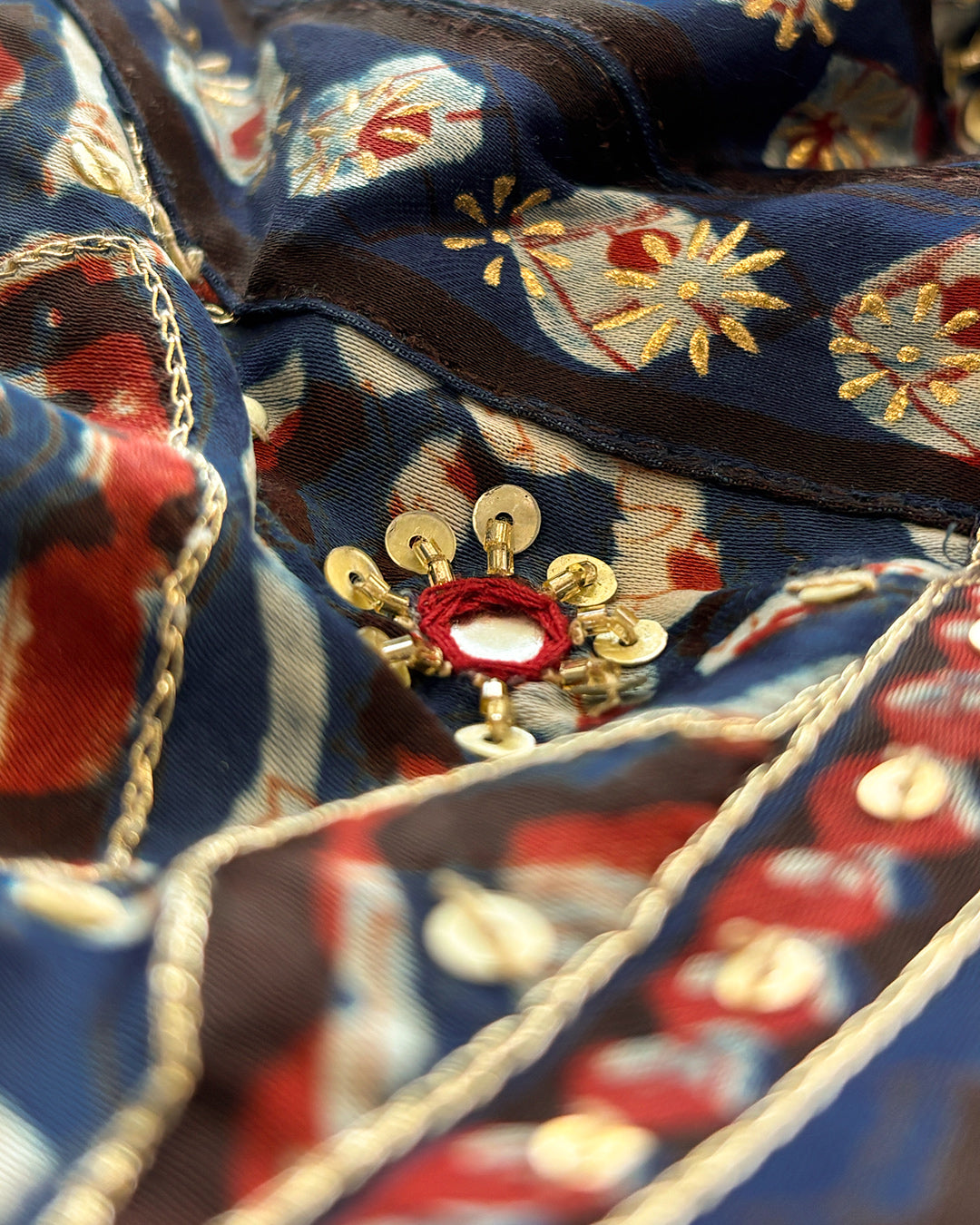
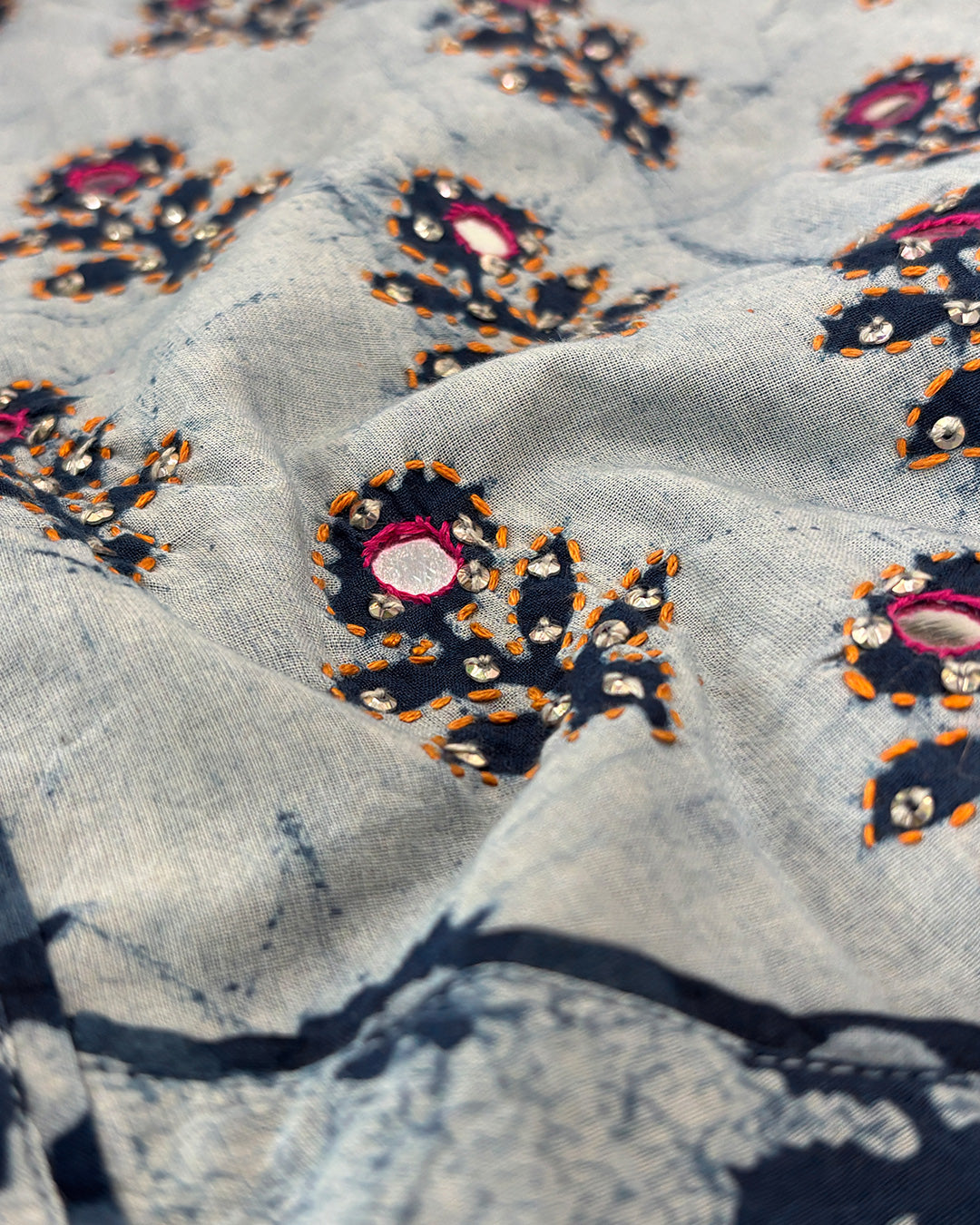
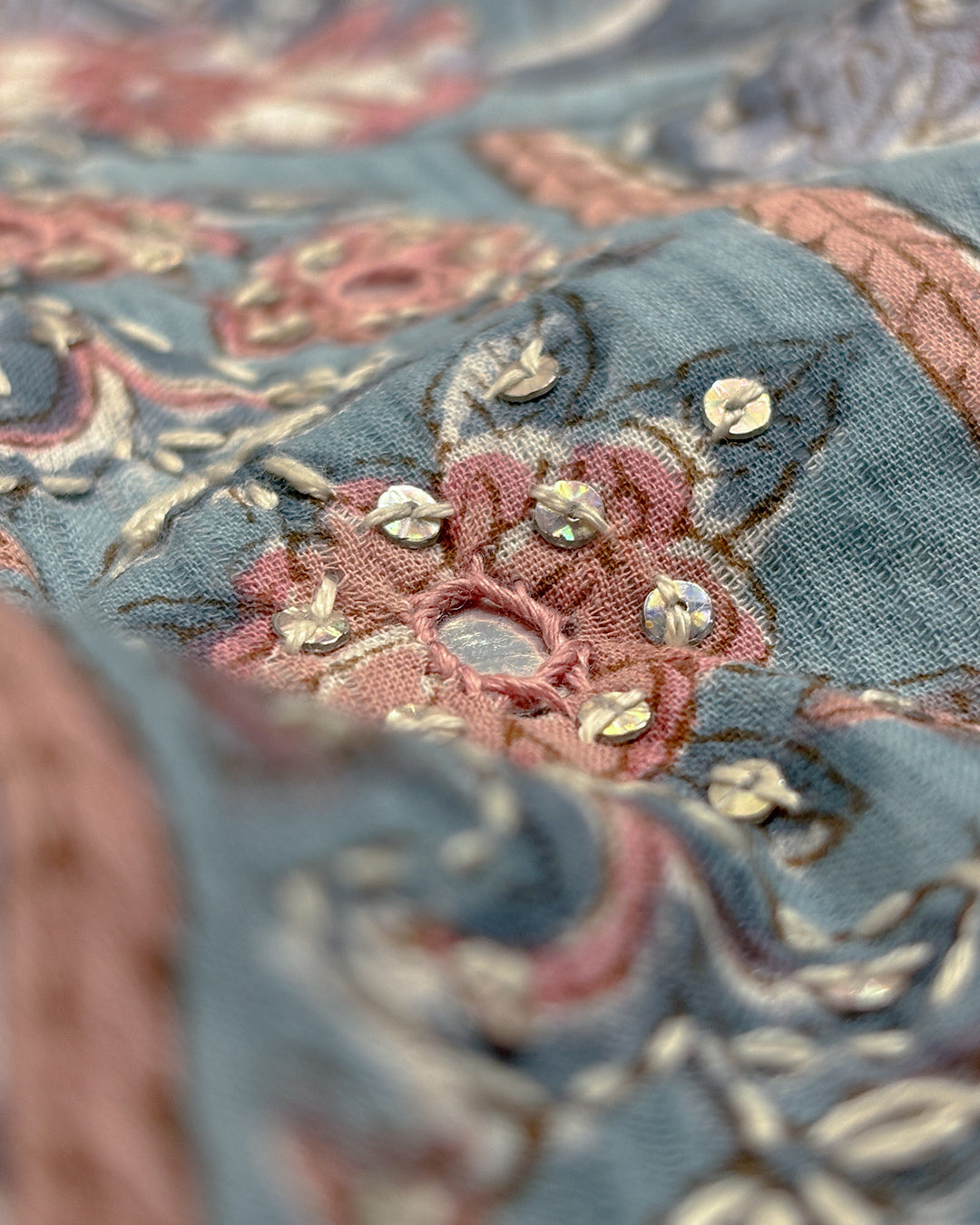
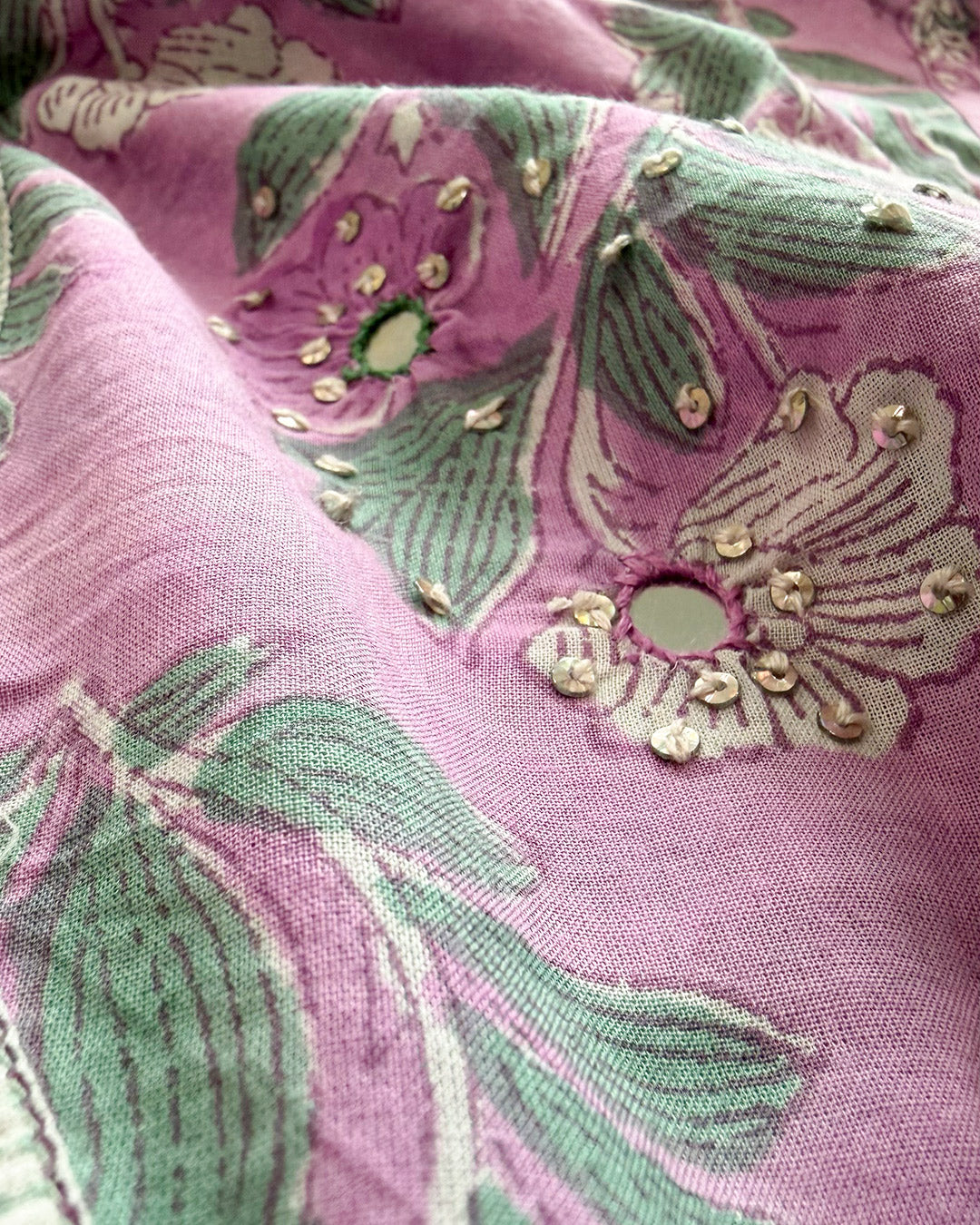
Because of the dabu process and repeated dyeing, the fabric develops a slightly textured surface. It does not feel flat or overly polished. Instead, it carries a softness that grows with wear.
Akola Print vs Other Block Printing Styles

India’s block printing traditions are vast, each region holding its own visual identity. Akola printing finds its place among them with a distinct character shaped by technique and restraint.
Akola Print vs Sanganeri Print
Sanganeri prints are known for their fine lines and intricate floral patterns. The motifs are often delicate, placed closely together, with lighter backgrounds and a sense of visual lightness.
Akola print, in contrast, feels more grounded. The patterns are bolder, the spacing more generous. Where Sanganeri can feel ornate, Akola printing leans towards simplicity and depth. The use of indigo and dabu gives it a slightly rustic, textured appearance.
Akola Print vs Bagru Print
Bagru printing shares some similarities with Akola printing, especially in the use of natural dyes and traditional methods. Both often work with earthy palettes and hand-block techniques.
The difference lies in the finish. Bagru prints tend to have sharper outlines and more defined patterns. Akola hand print, shaped by the dabu resist process, appears softer, almost diffused. The edges are not always precise, and that is part of its charm.
Role of Dabu in Akola Printing
Dabu is not just a technique in Akola printing Rajasthan. It is its foundation.
The mud resist, made from natural materials, is applied by hand, then covered with sawdust to hold its place. Once dyed, the fabric reveals patterns where the dye could not reach. This process may be repeated several times, creating layers of colour and texture.
What emerges is not just a print, but a surface that feels alive. Slight variations, uneven tones, and softened edges all speak of the human hand behind it.
In many ways, dabu print Akola teaches us to appreciate imperfection. To see beauty in what is not exact, but deeply authentic.
Read More: Exploring the Roots of Akola – A Hidden Gem for Indigo & Dabu Printing
Caring for Akola Printed Fabrics

There is a certain honesty in Akola print. The slight irregularity of a hand-block, the depth of natural dye, the quiet imprint of the artisan’s hand. Caring for it is less about maintenance, more about understanding what it carries.
Gentle Washing, Always
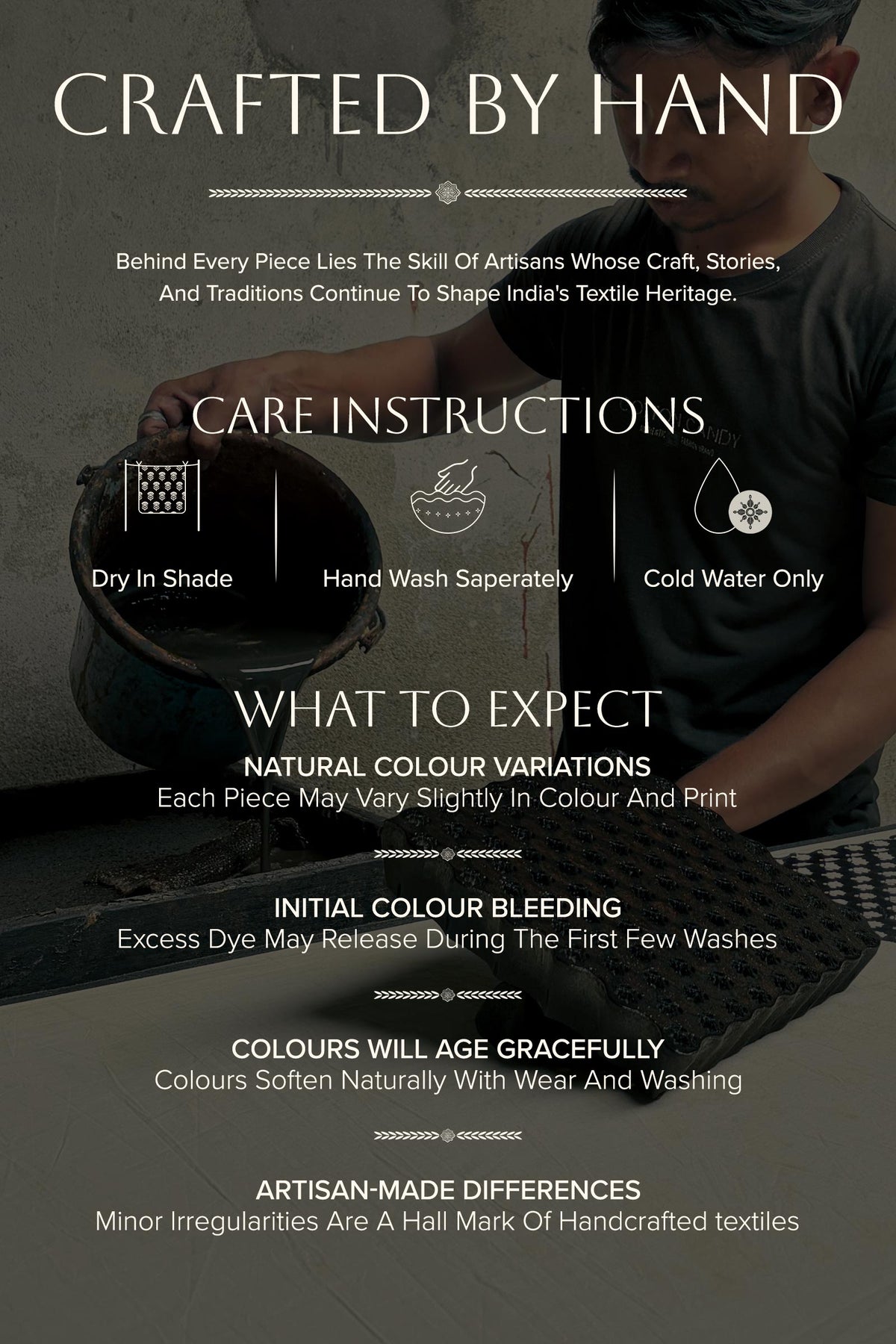
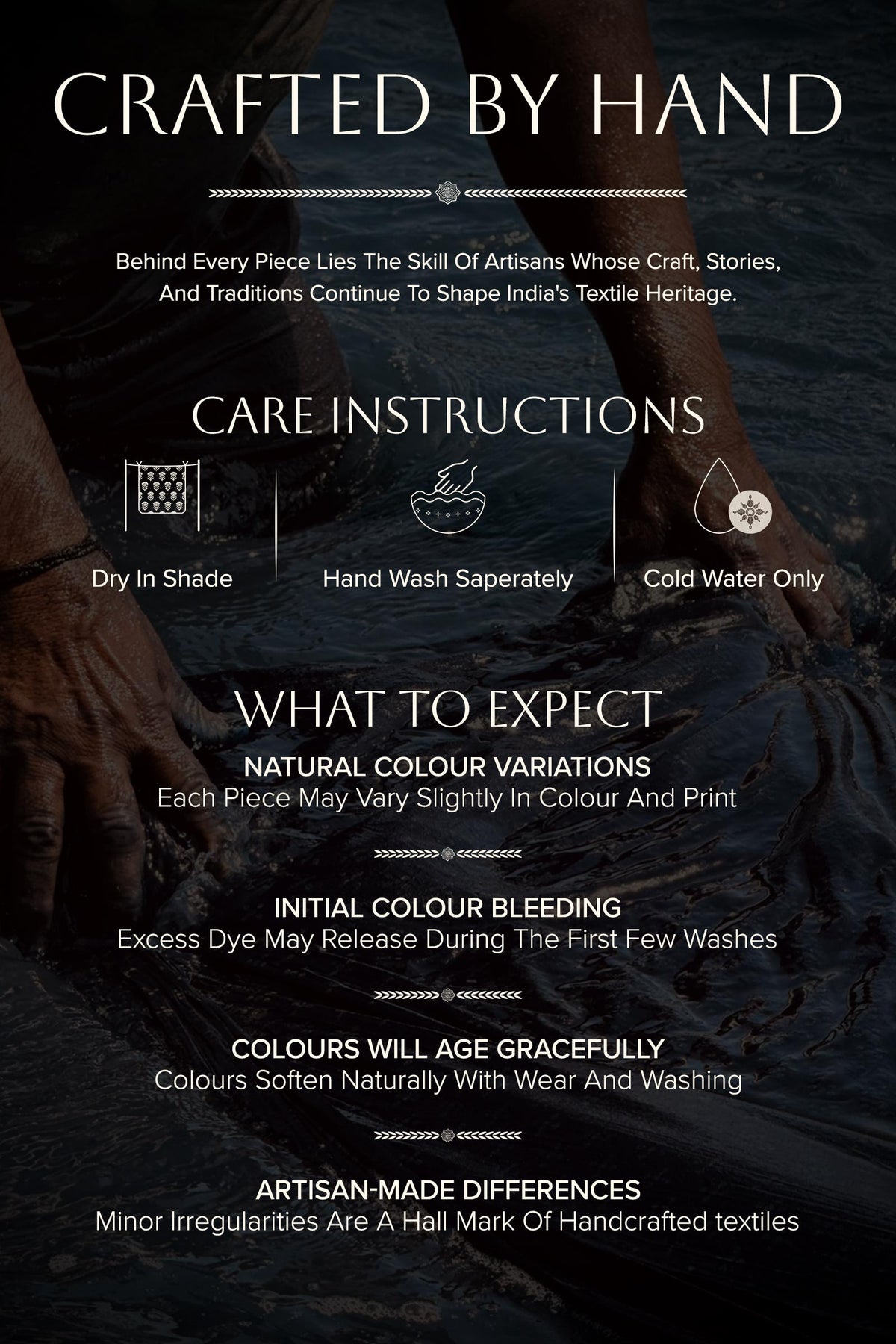
Akola hand print fabrics respond best to a light touch. A separate wash in cold water, with mild detergent, helps preserve both colour and texture. Harsh chemicals or machine cycles can disturb the resist-dyed patterns, especially in dabu print Akola pieces where layers of mud resist create depth.
Letting the Fabric Breathe
After washing, it is best to dry these garments in shade. Direct sunlight, though tempting, can soften the richness of natural dyes over time. A shaded balcony or an indoor drying space allows the fabric to retain its quiet intensity.
Ironing with Care
A medium heat setting, ideally on the reverse side, keeps the fabric smooth without stressing the printed surface. Steam can be helpful, but only when used gently. The idea is to support the fabric, not press it into submission.
Storage that Respects Craft
Akola printing Rajasthan pieces do well when stored in breathable cotton bags or folded with soft muslin. Avoid plastic covers. Natural fabrics need air, just as the processes that create them rely on it.
Final Thoughts
Akola print is not just a surface design. It is a process shaped by patience, earth, and memory. The use of dabu, the rhythm of hand-blocks, the muted palette drawn from natural sources, all come together in a way that feels both grounded and enduring.
In a world that often moves quickly, Akola hand print asks us to slow down. To notice the small variations. To value the human touch behind what we wear. And perhaps that is where its beauty truly lies. Not in perfection, but in presence.

