

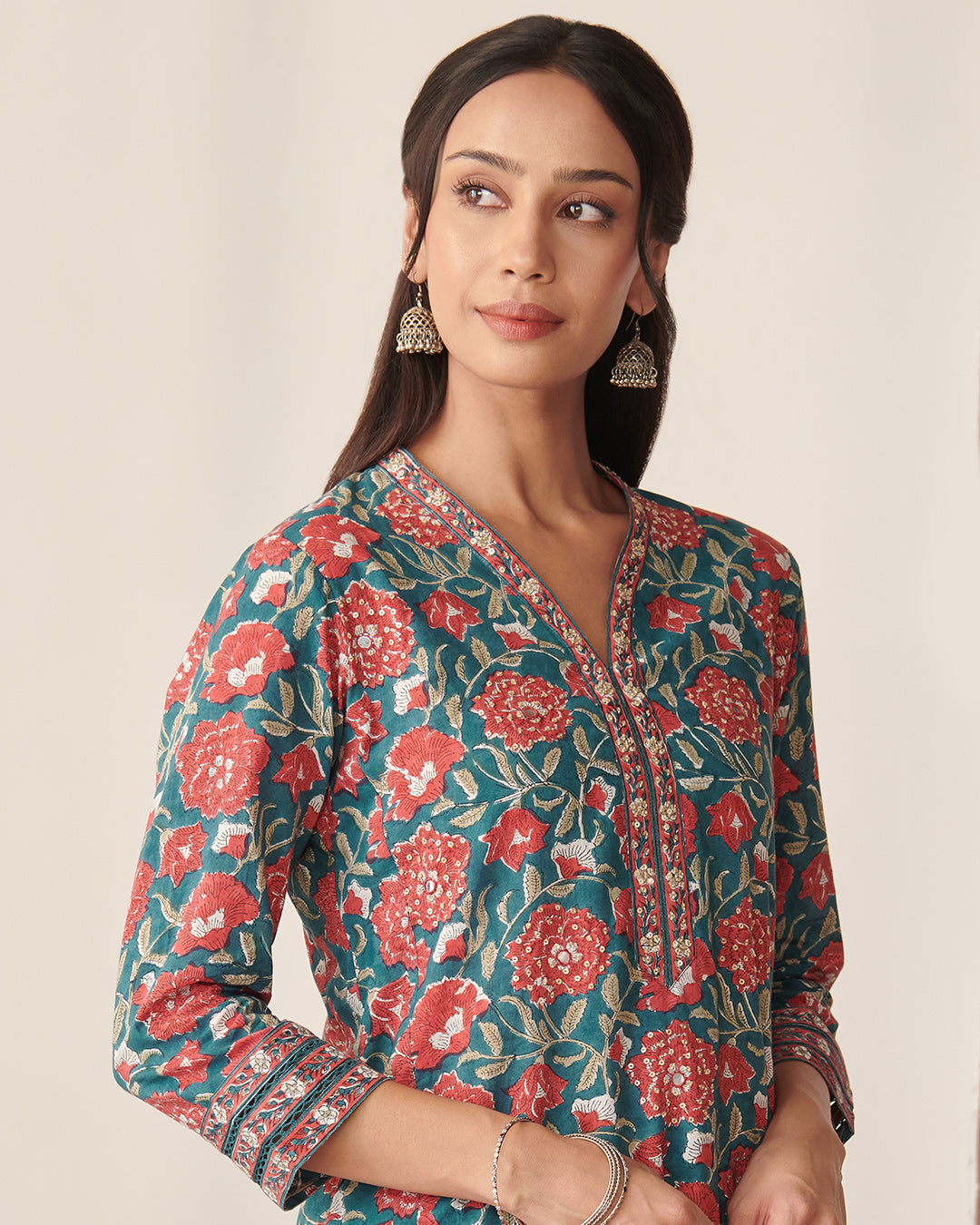
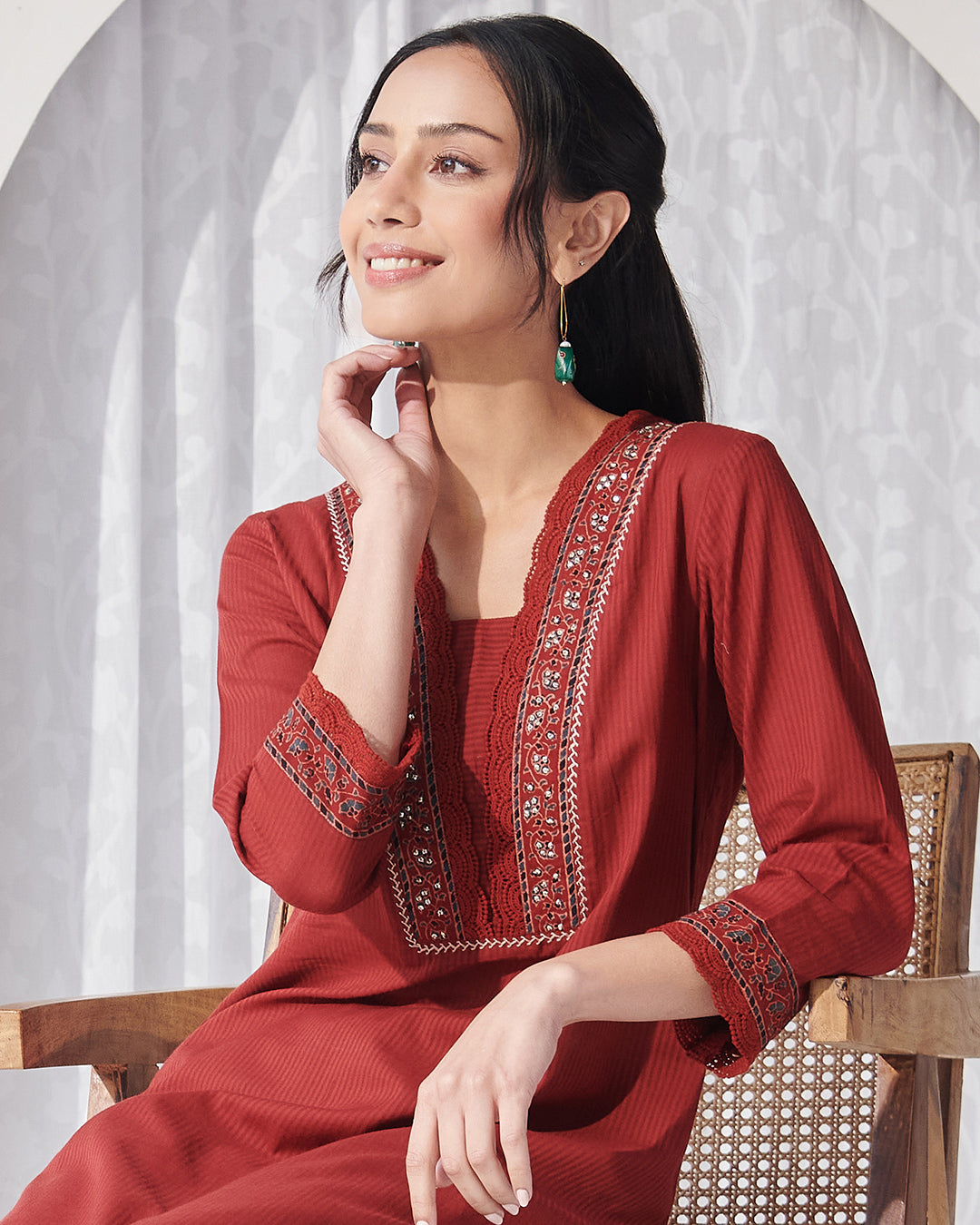
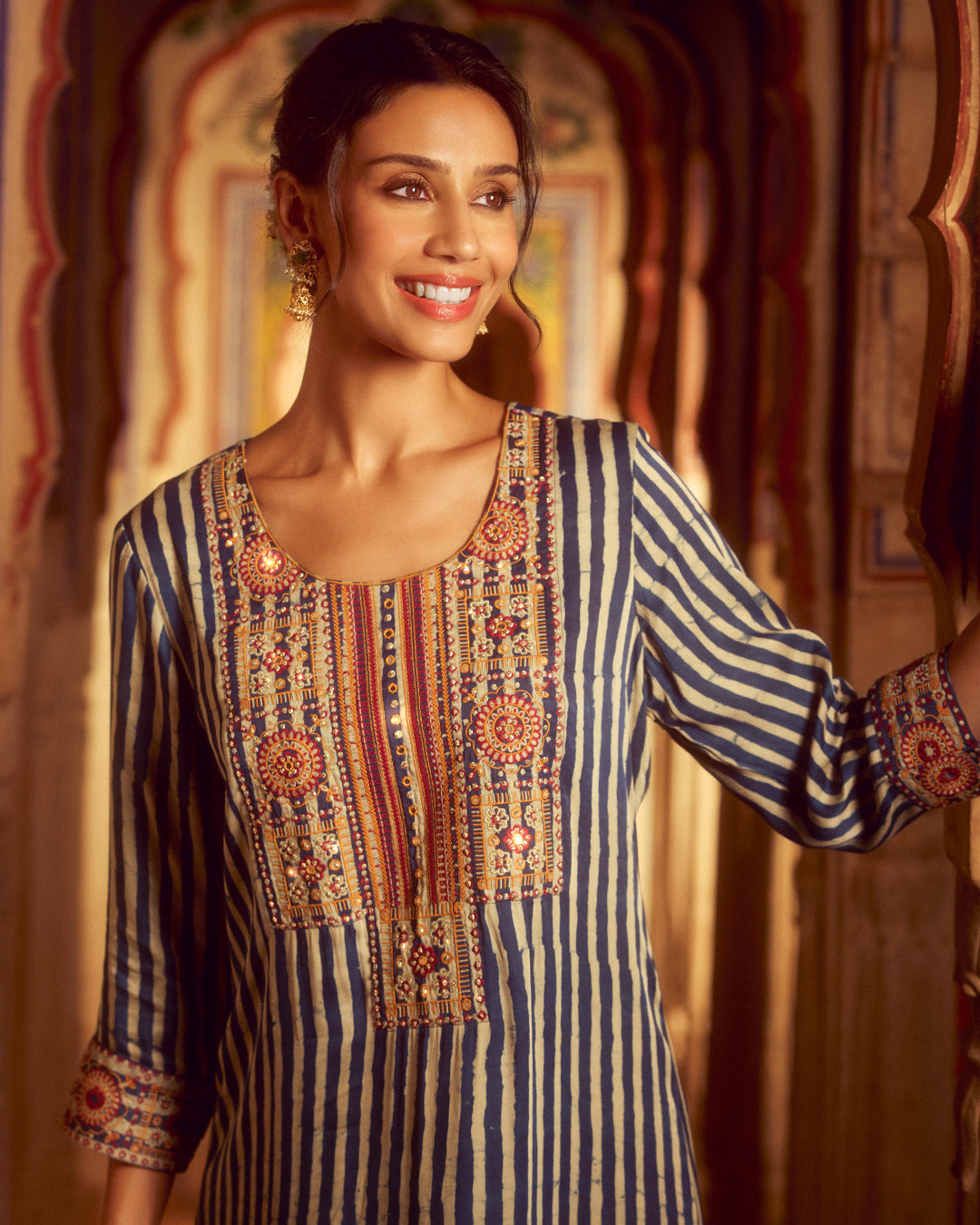



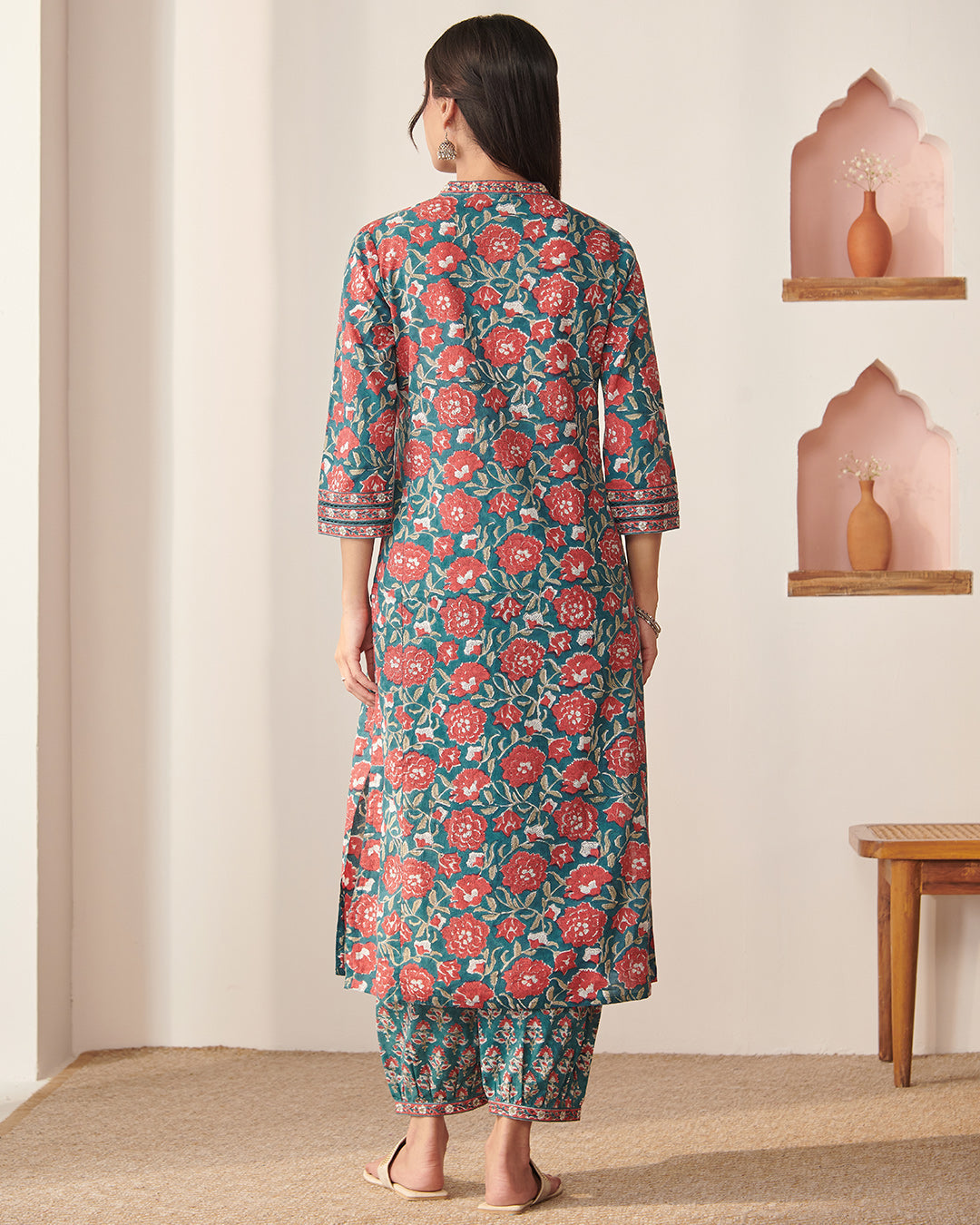
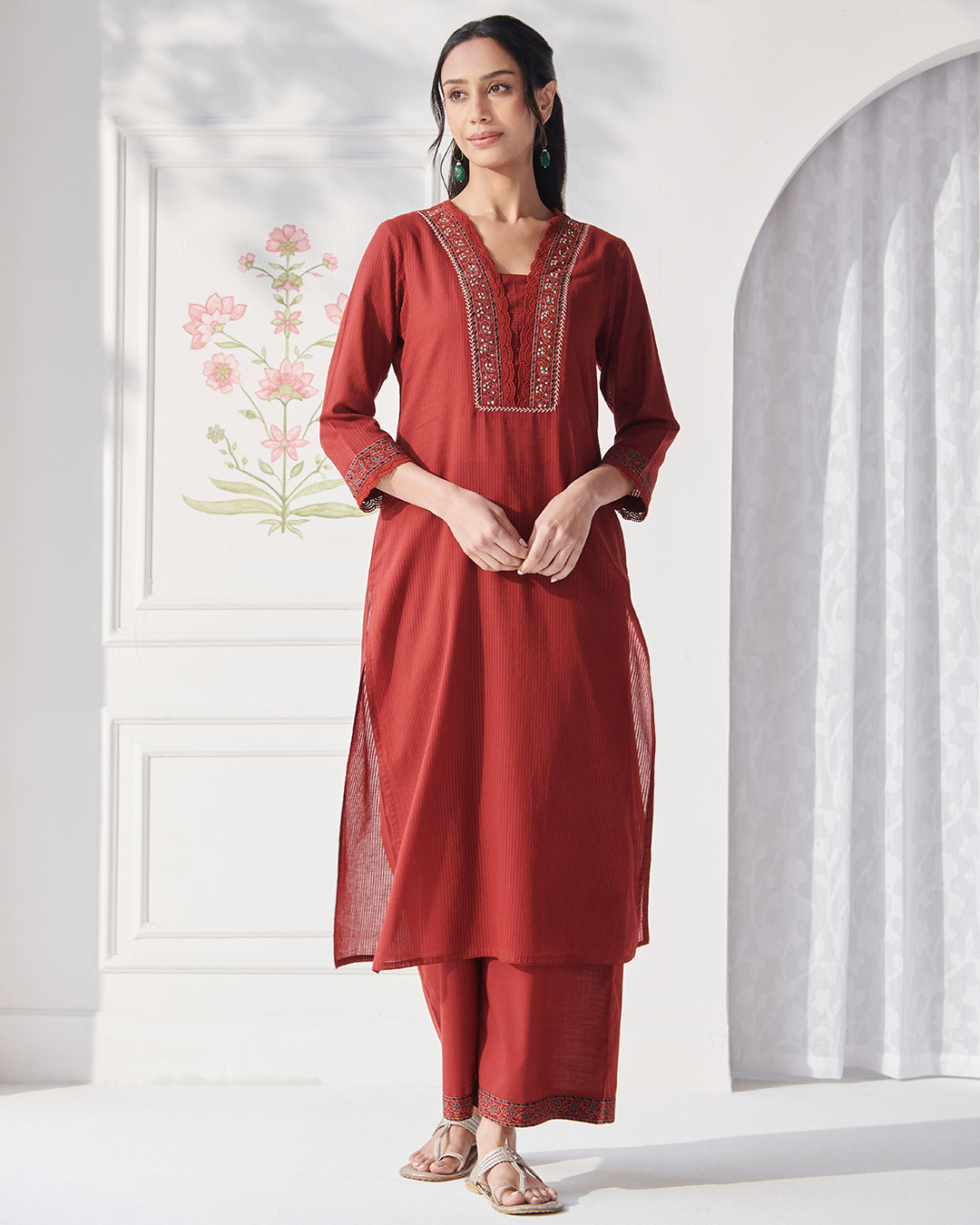
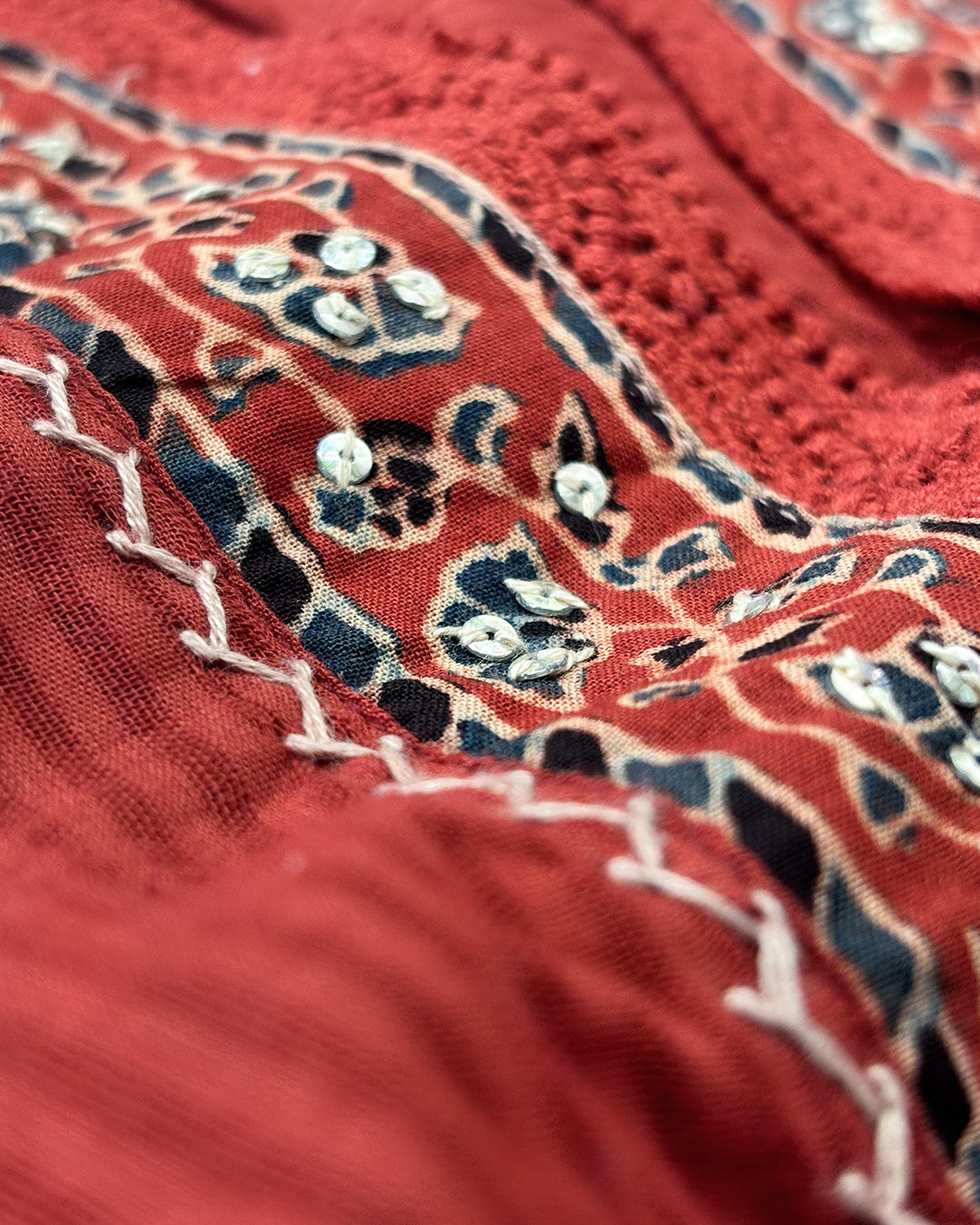
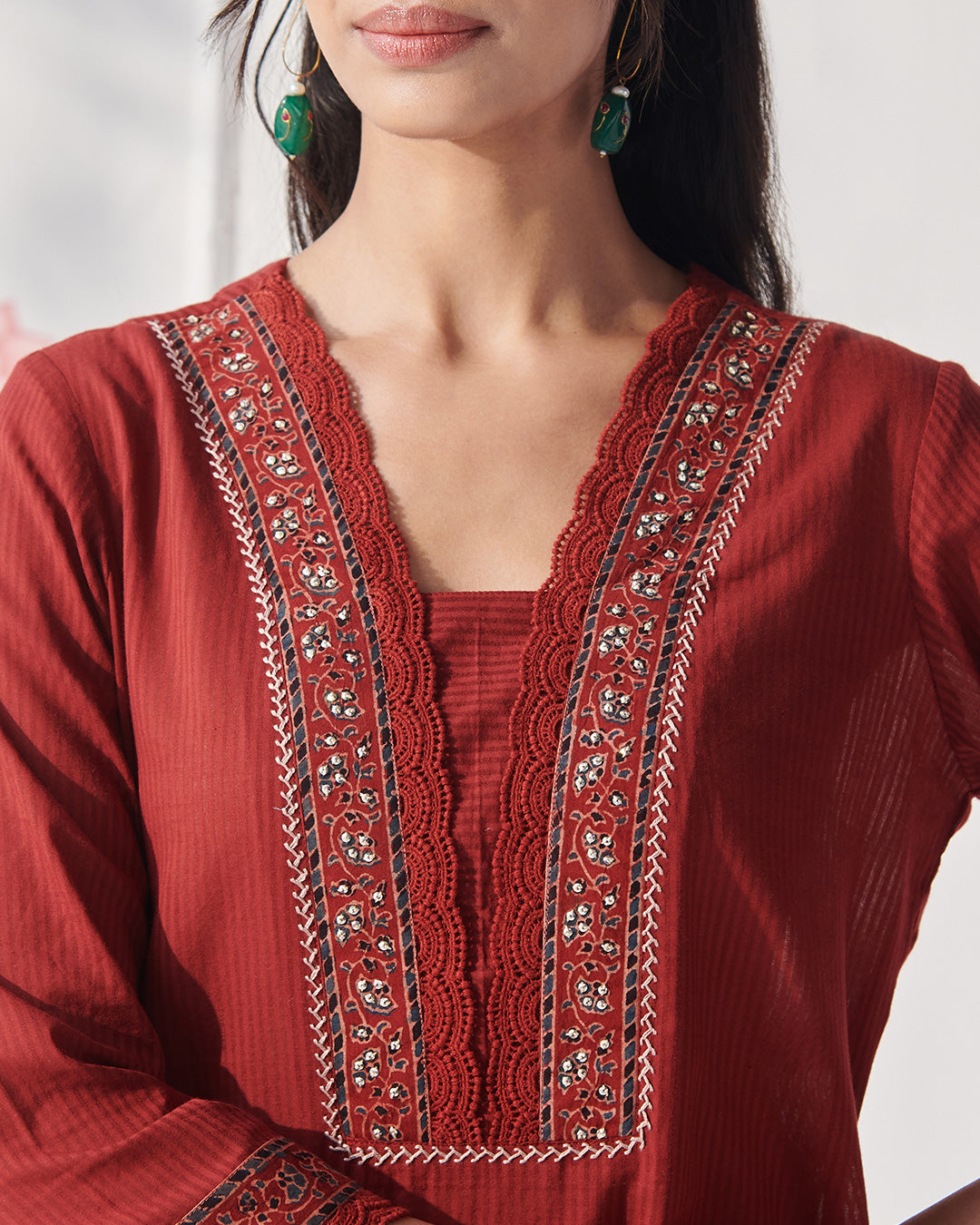
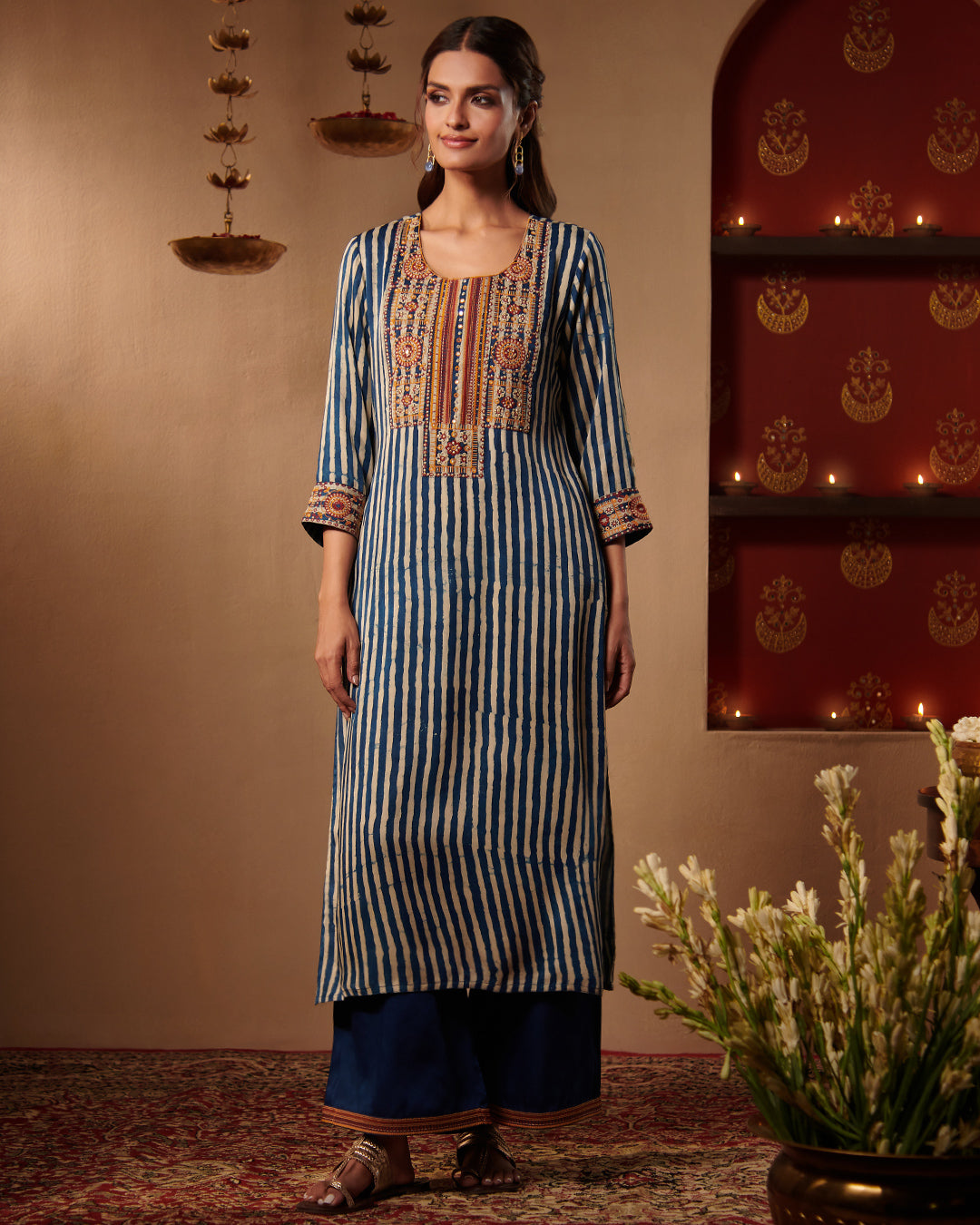
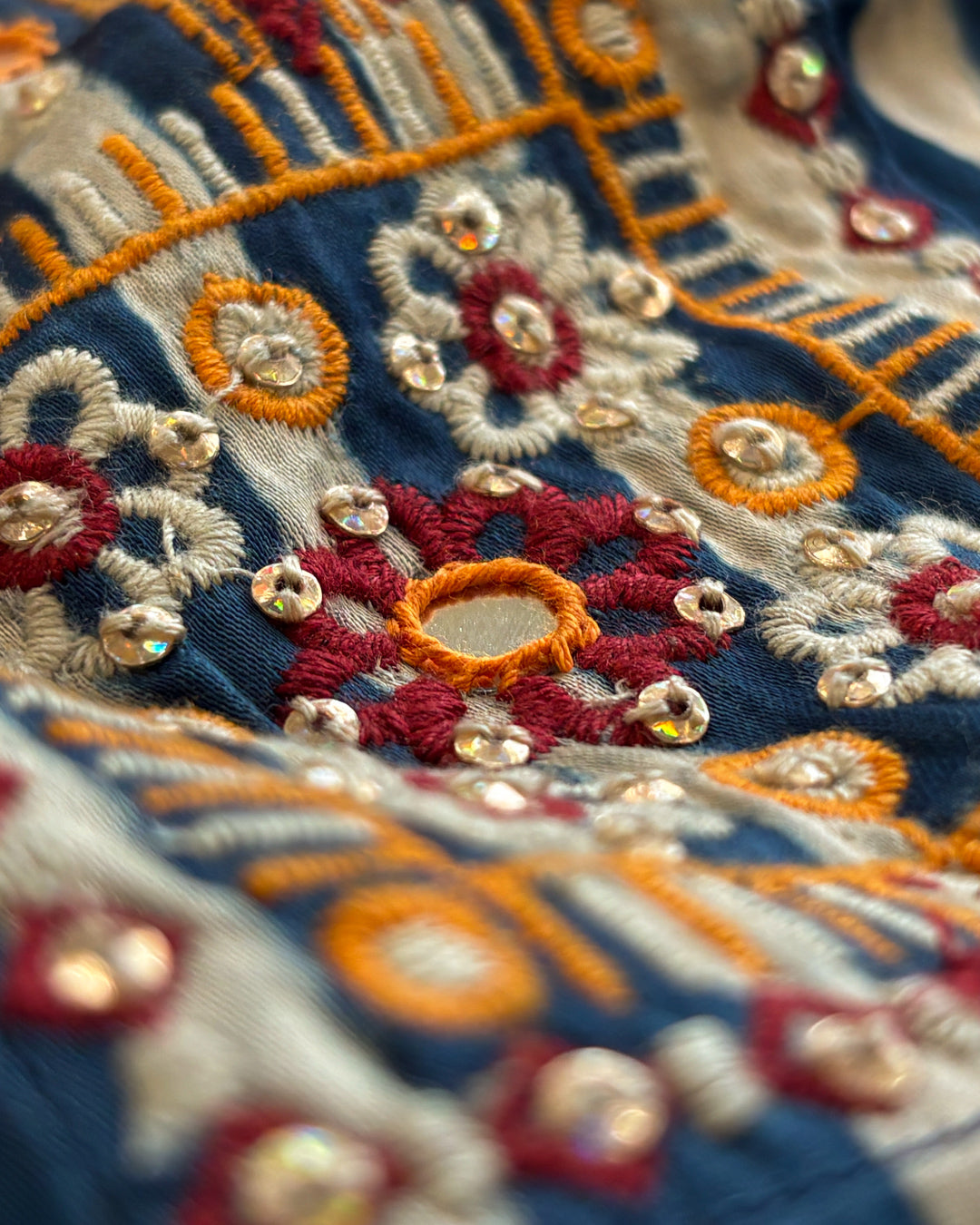
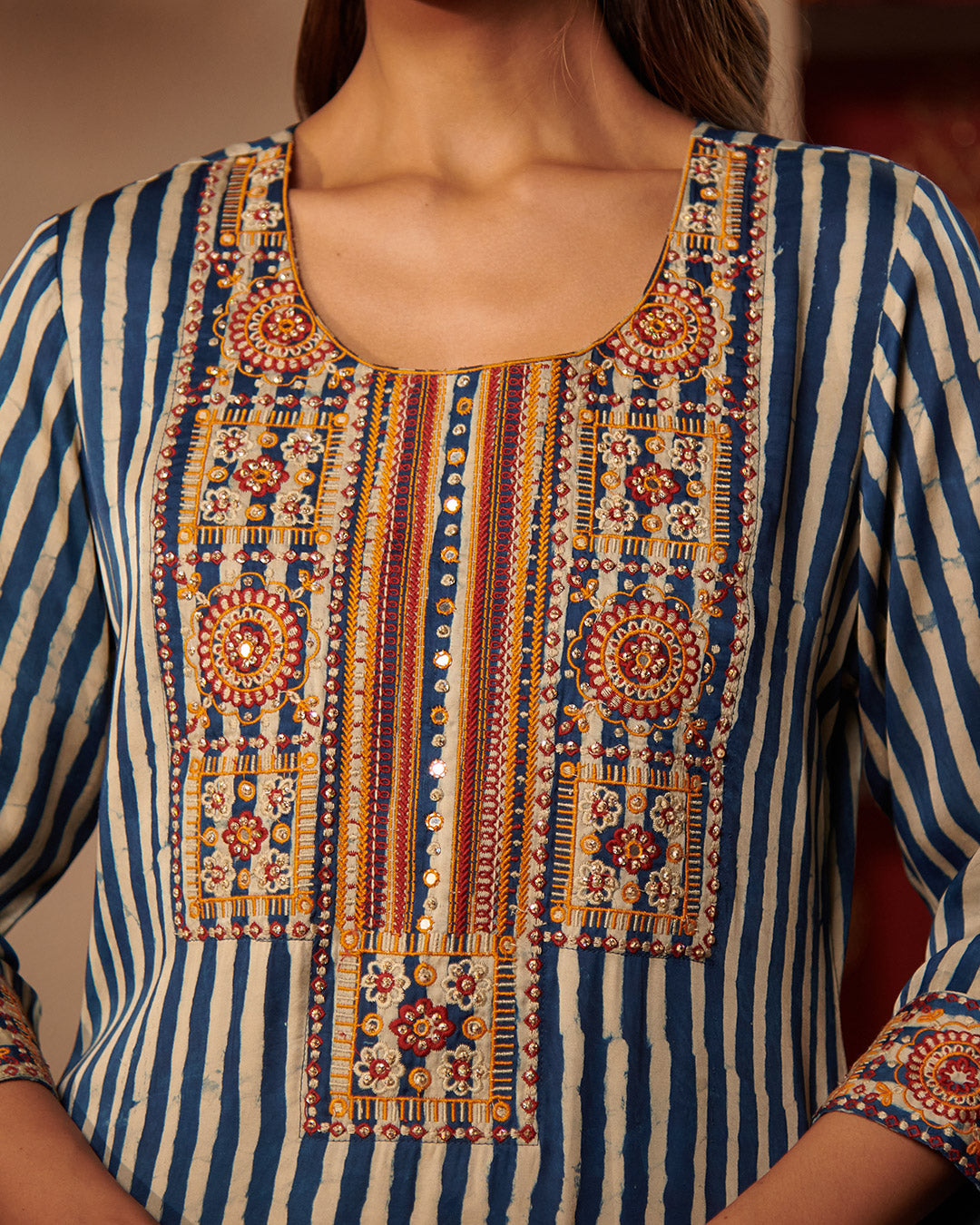
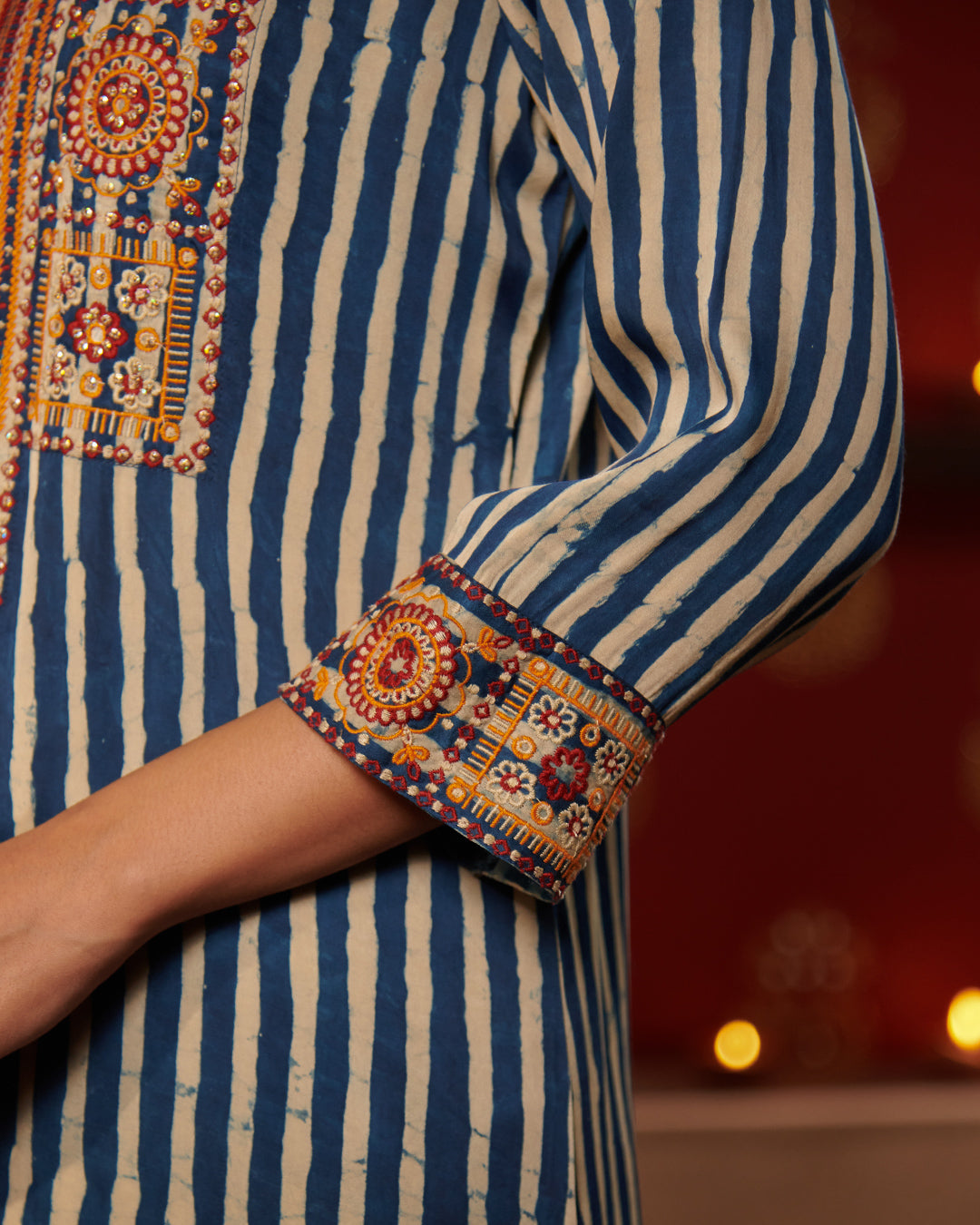

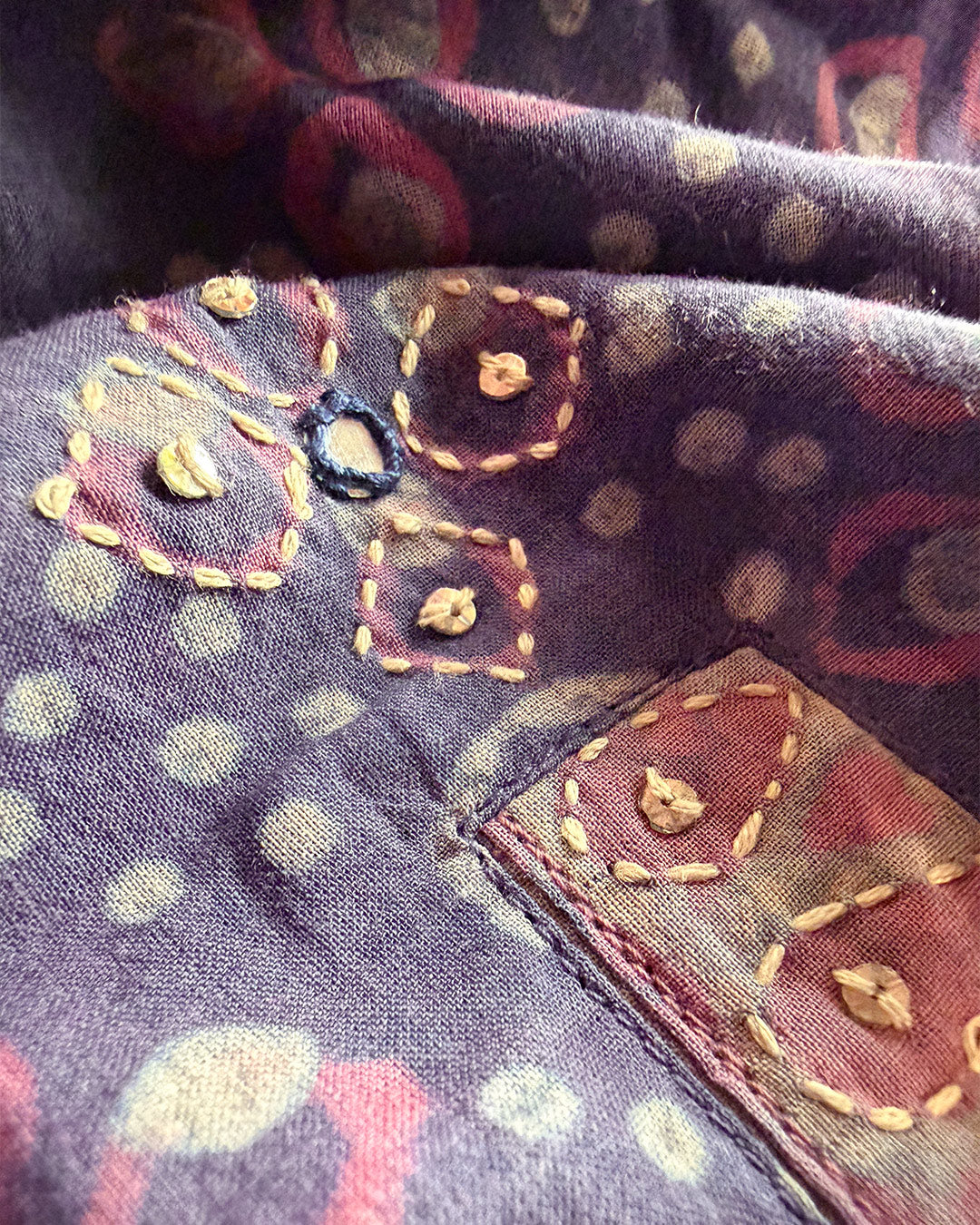
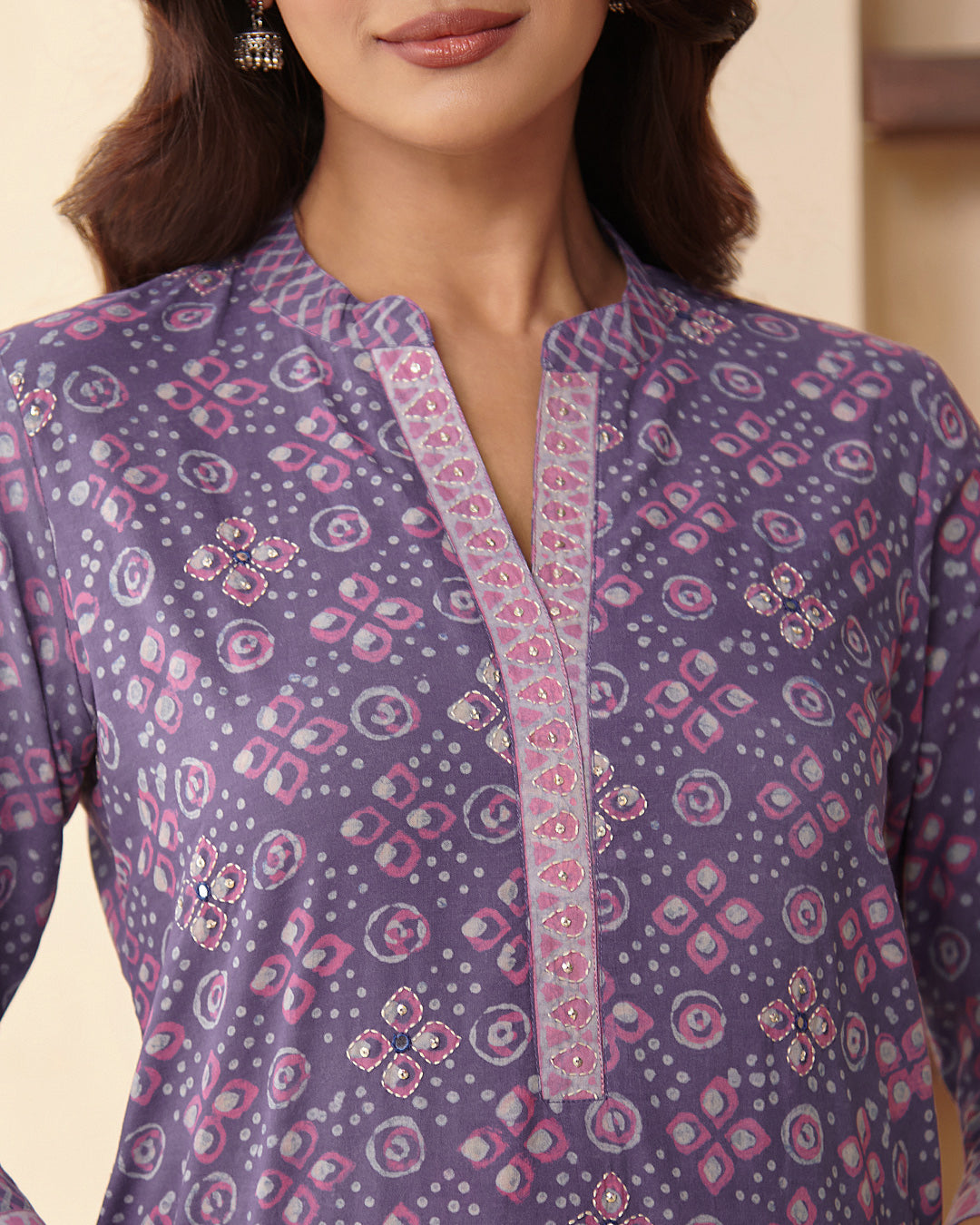
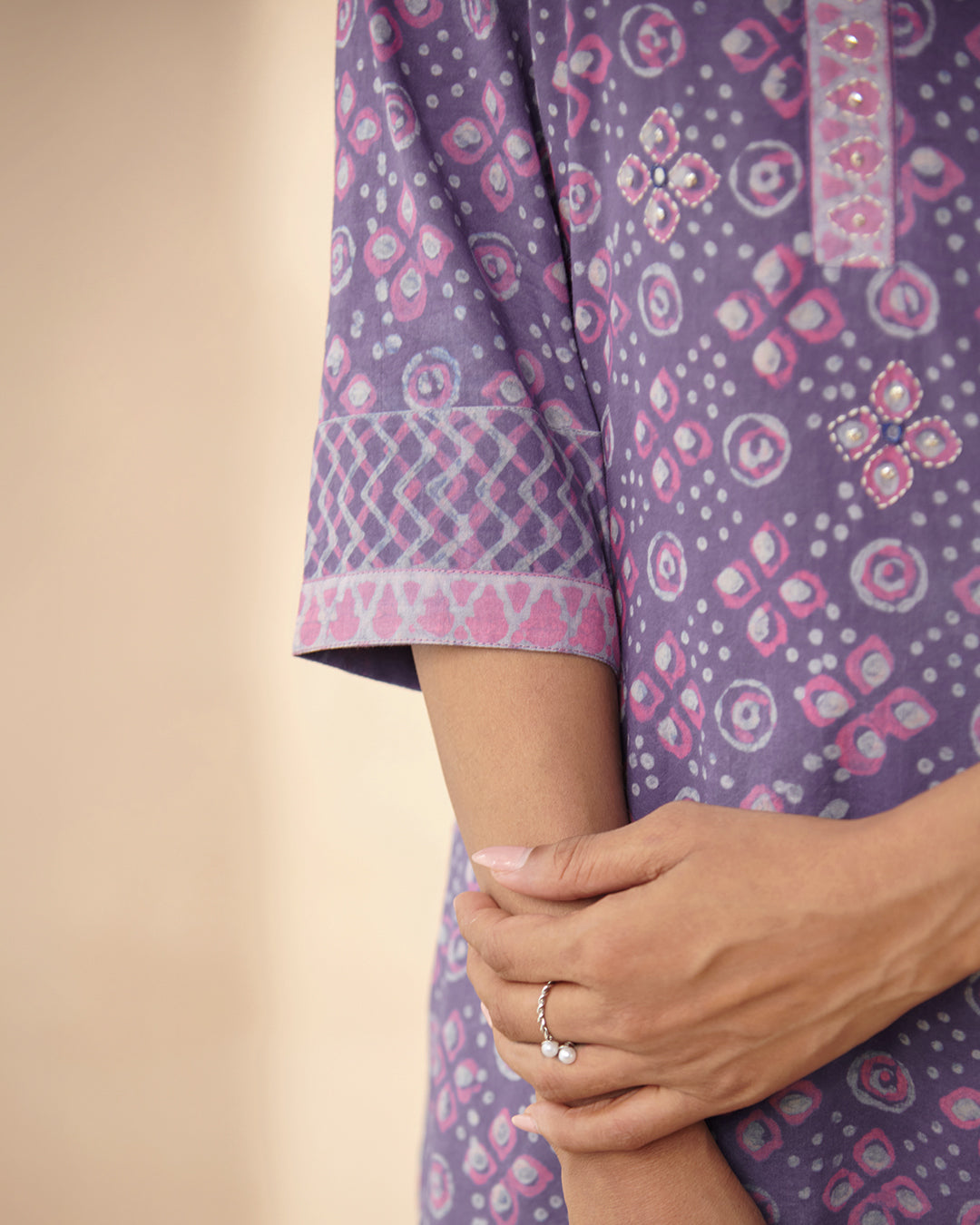
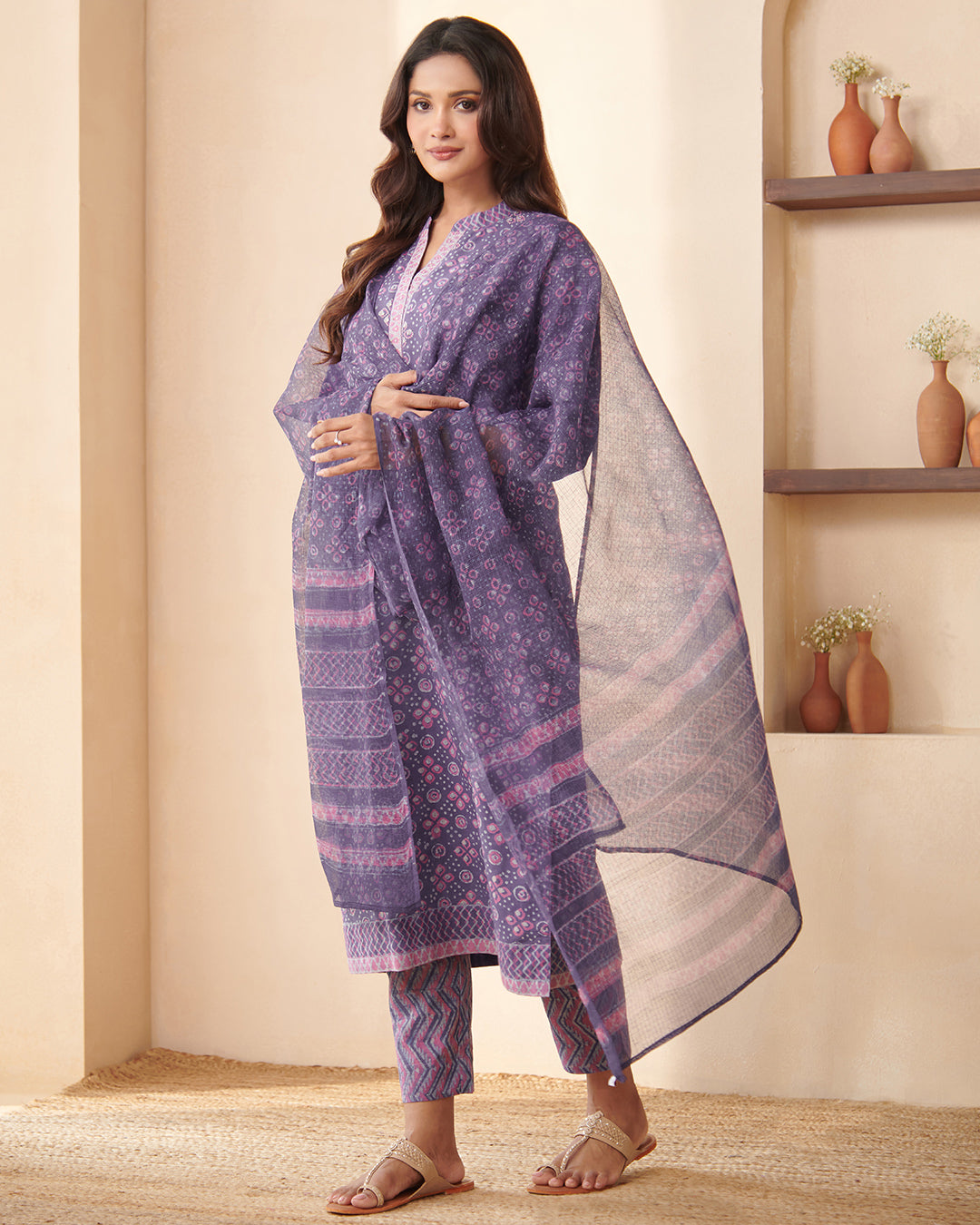
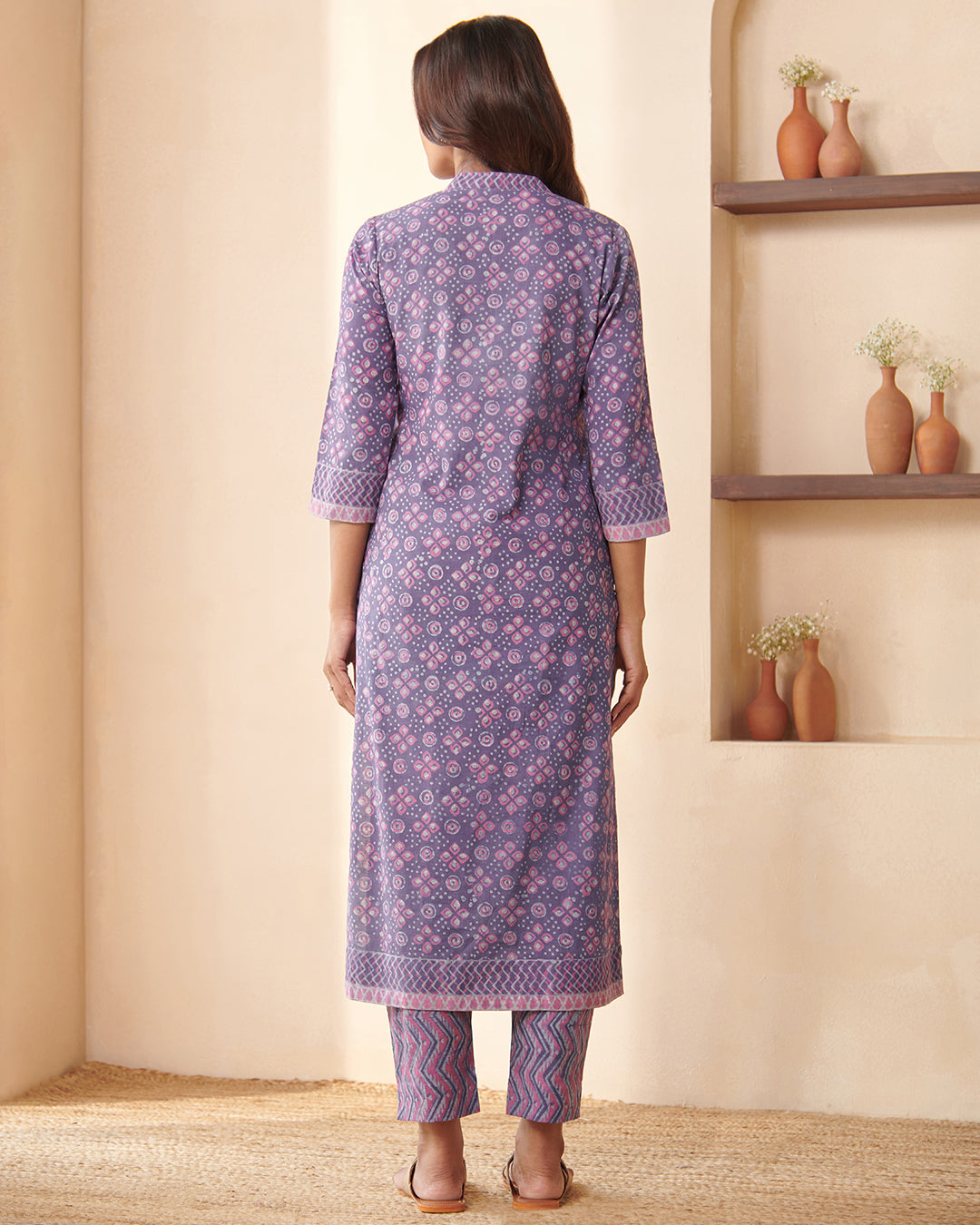
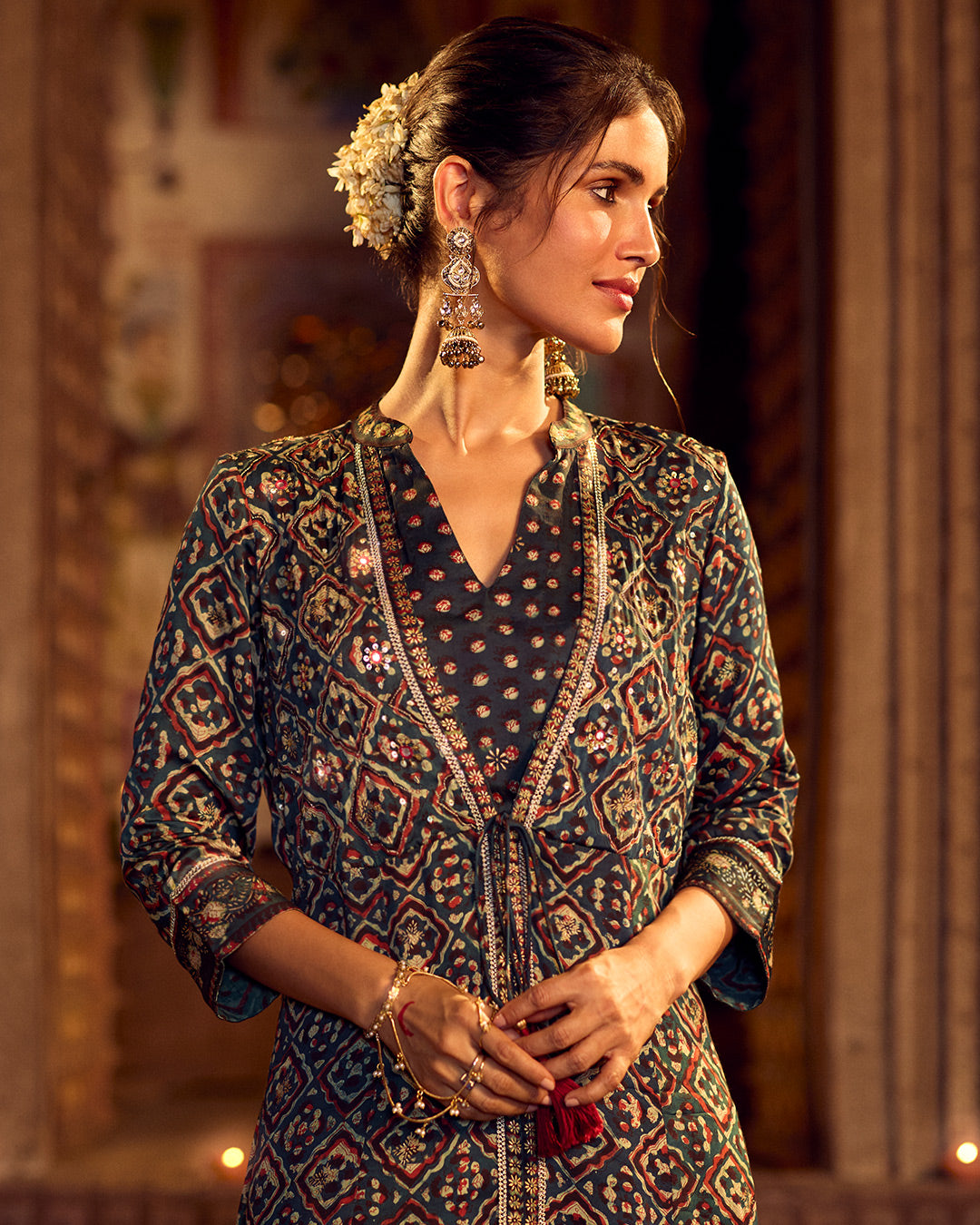
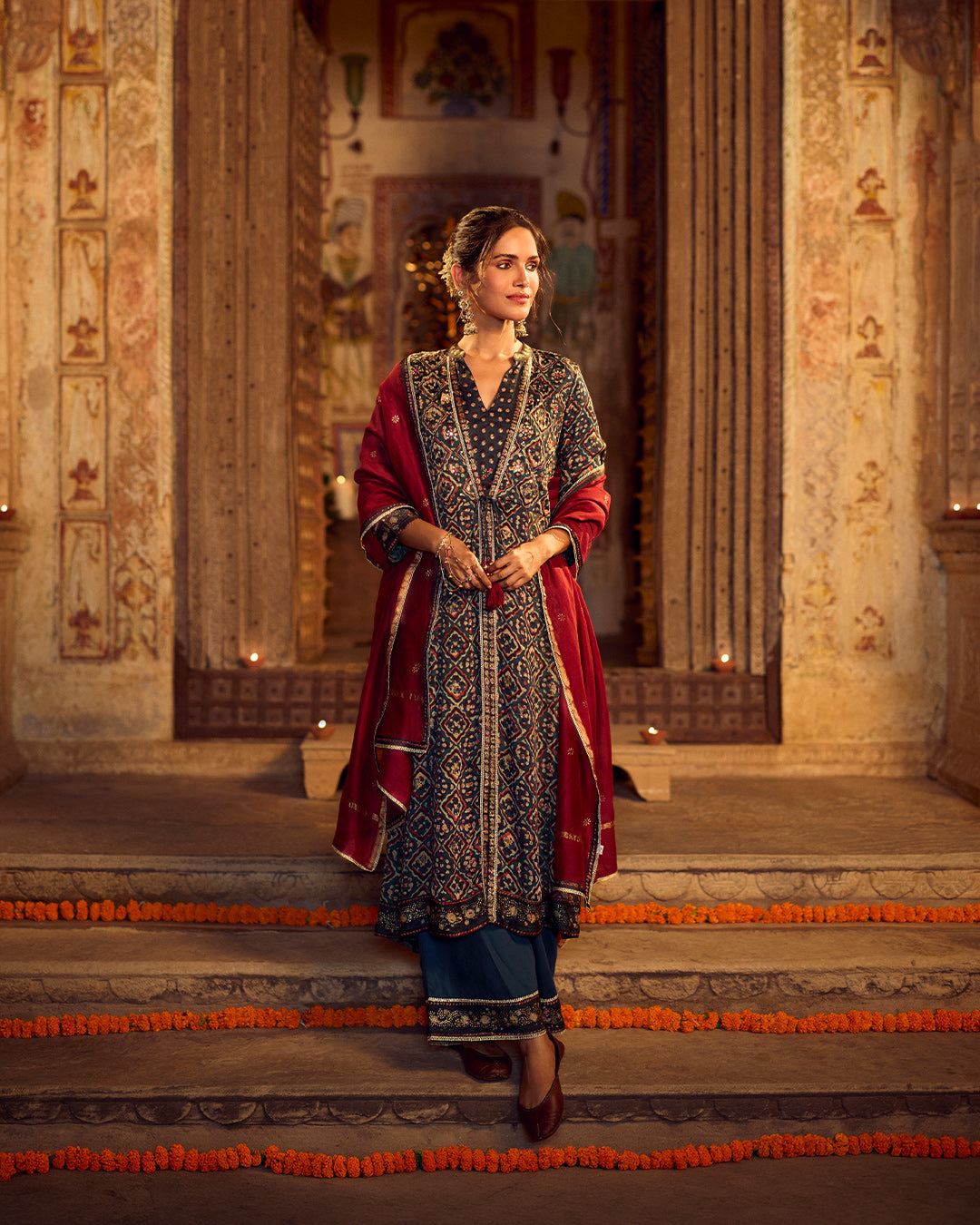
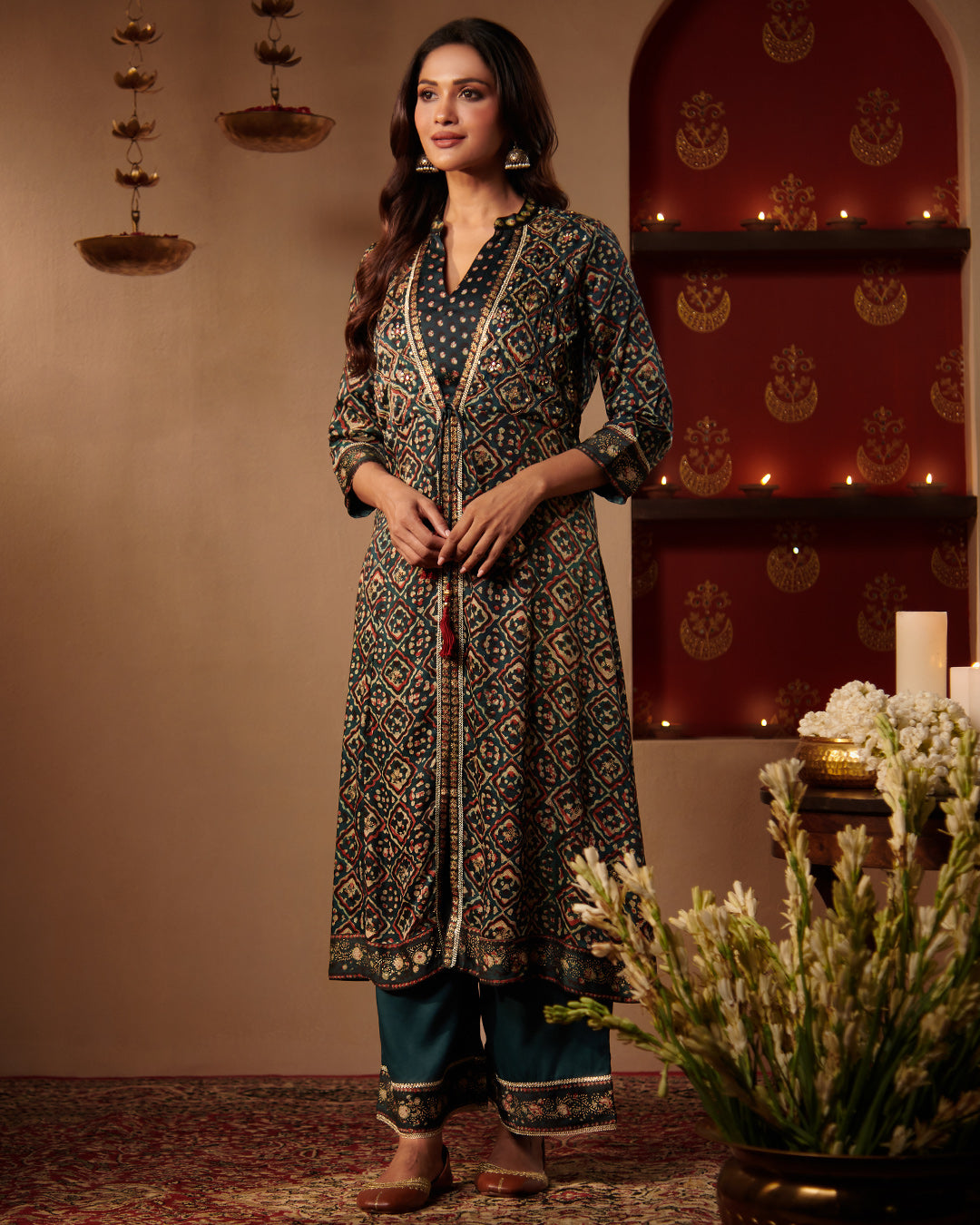
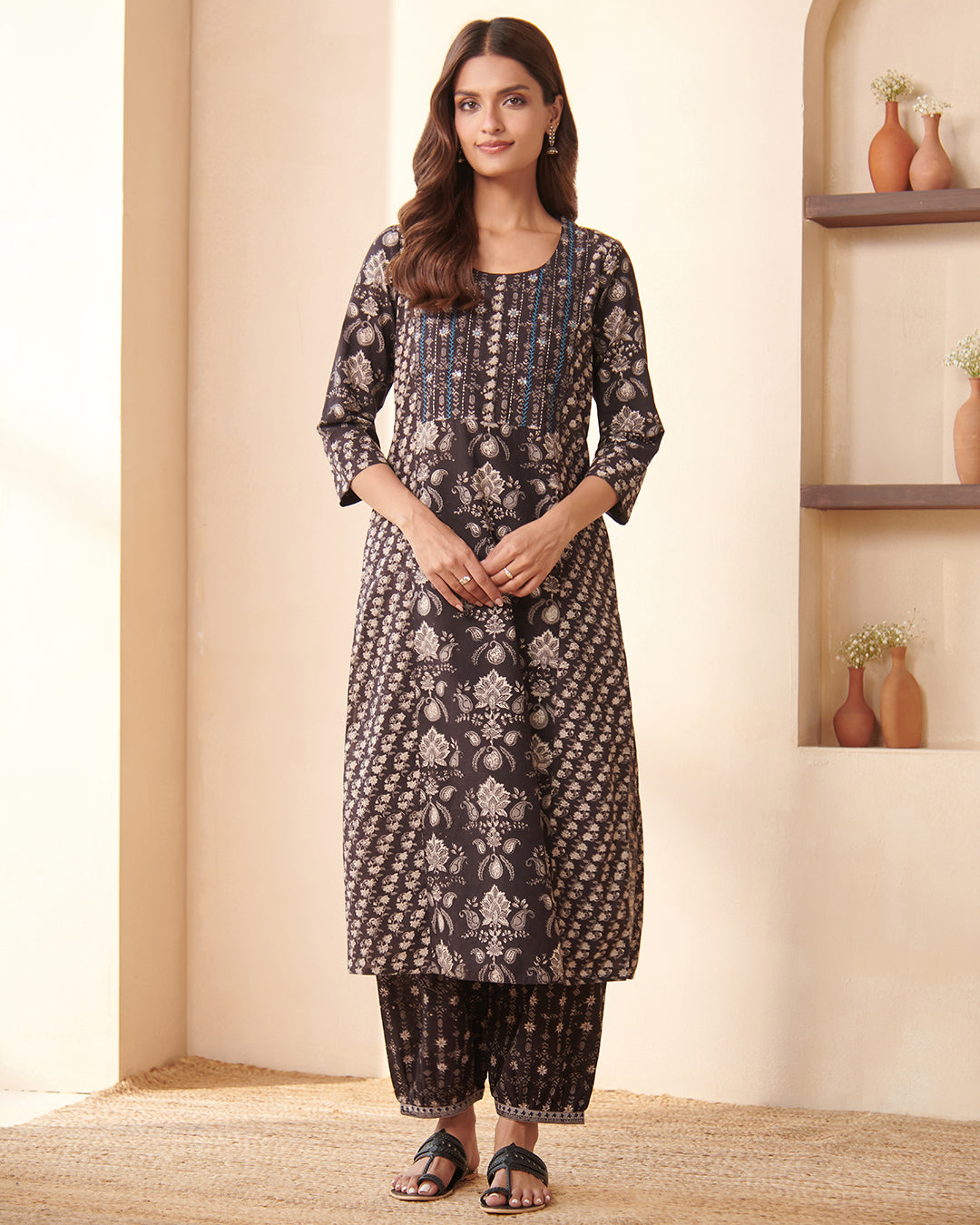
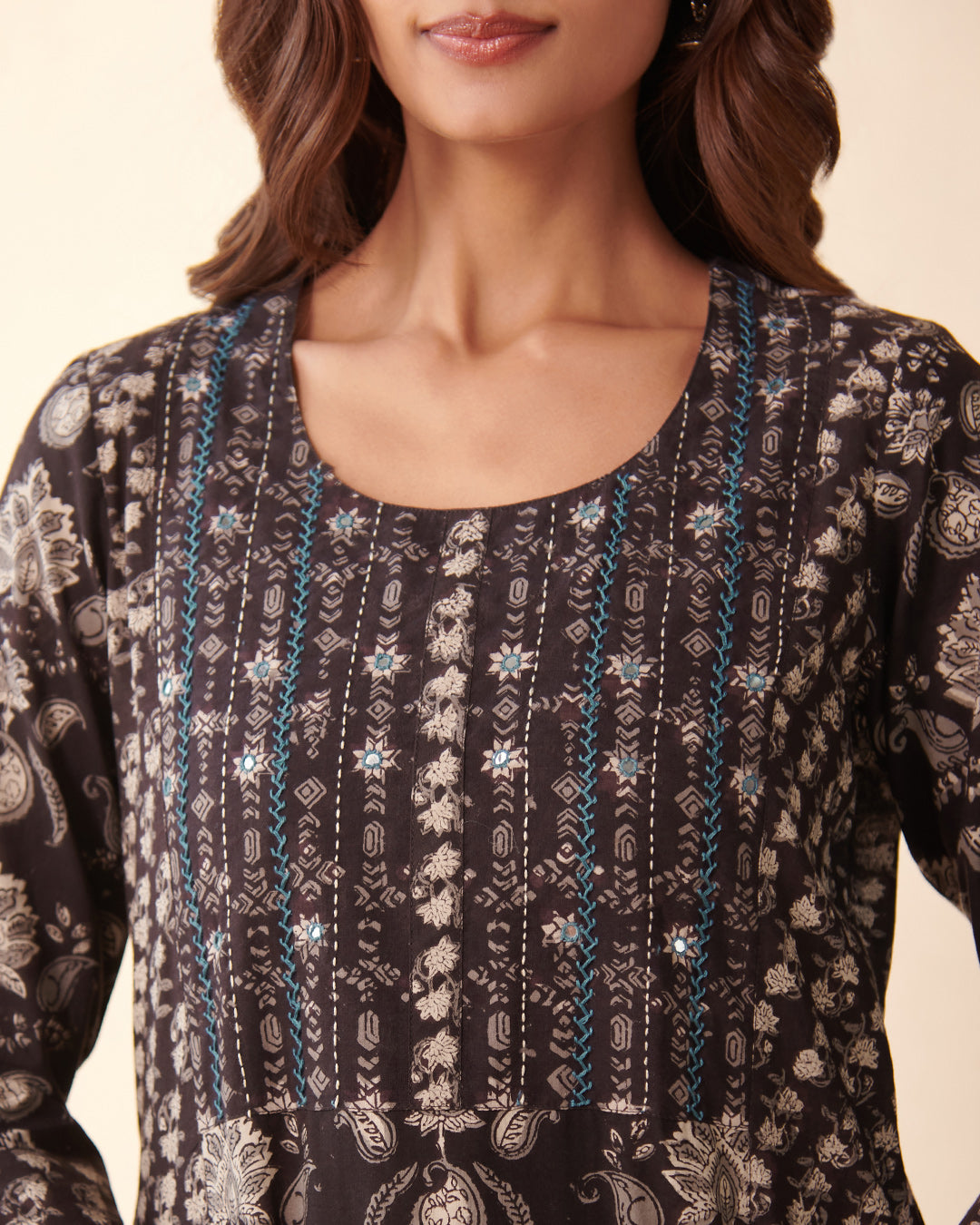
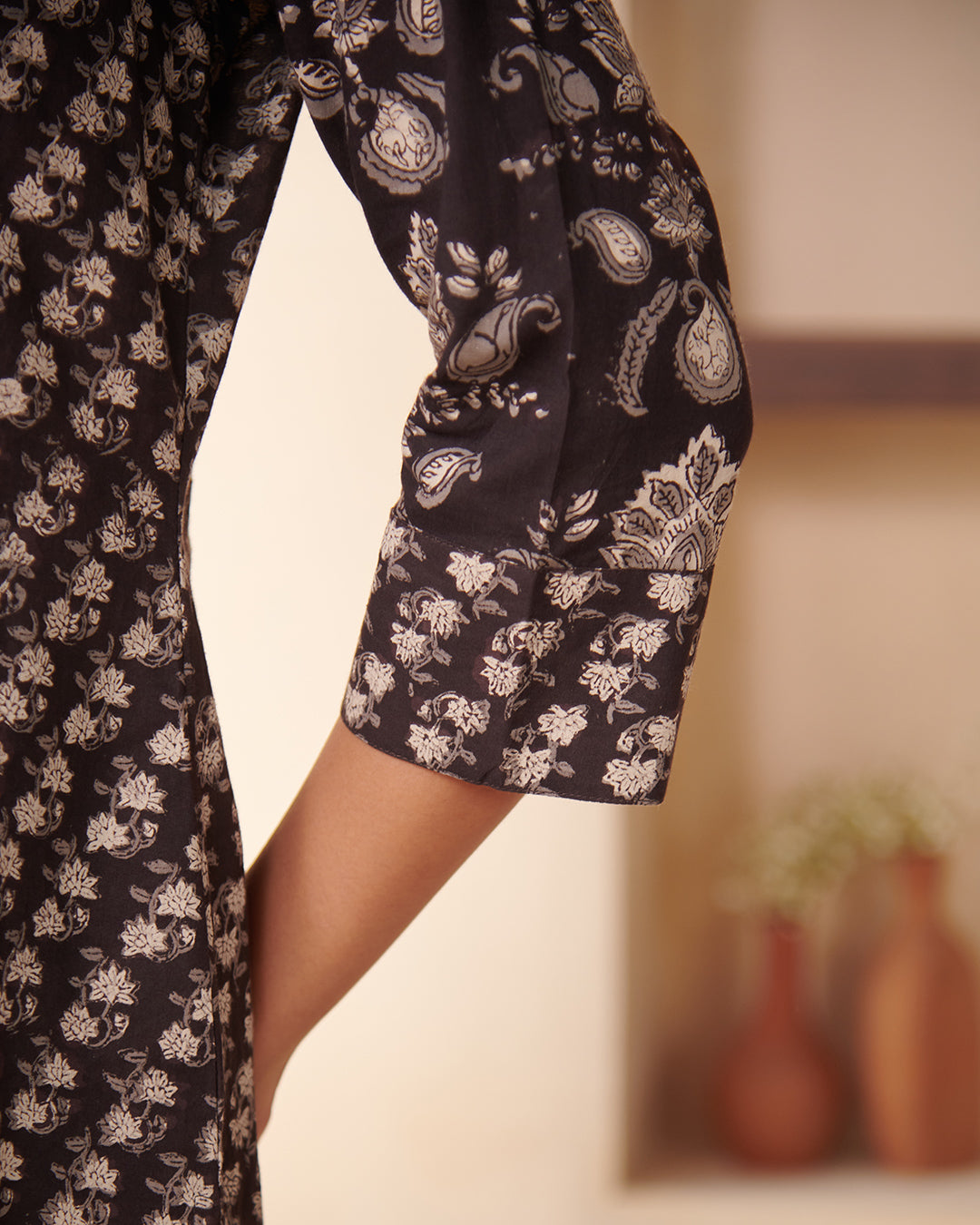
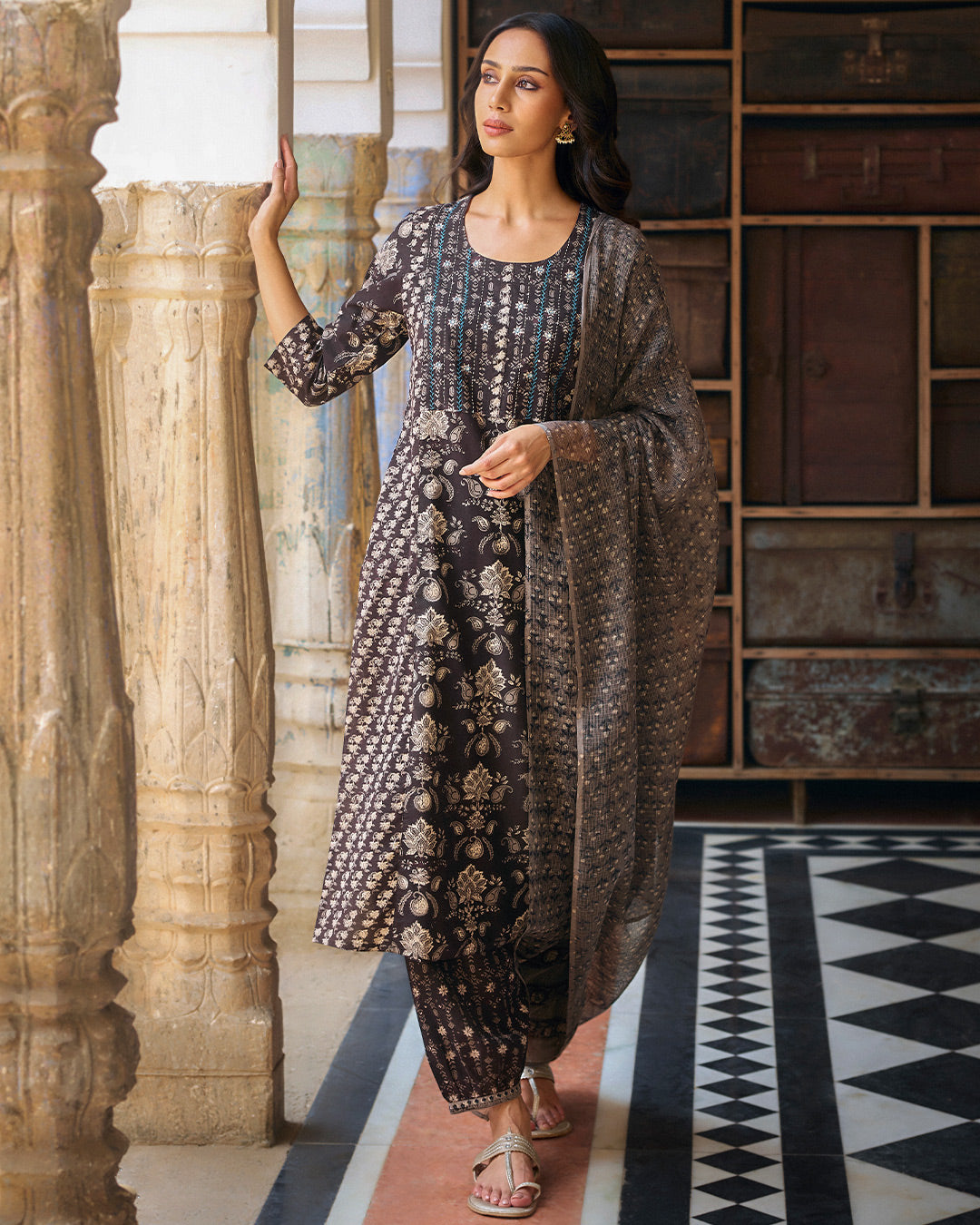
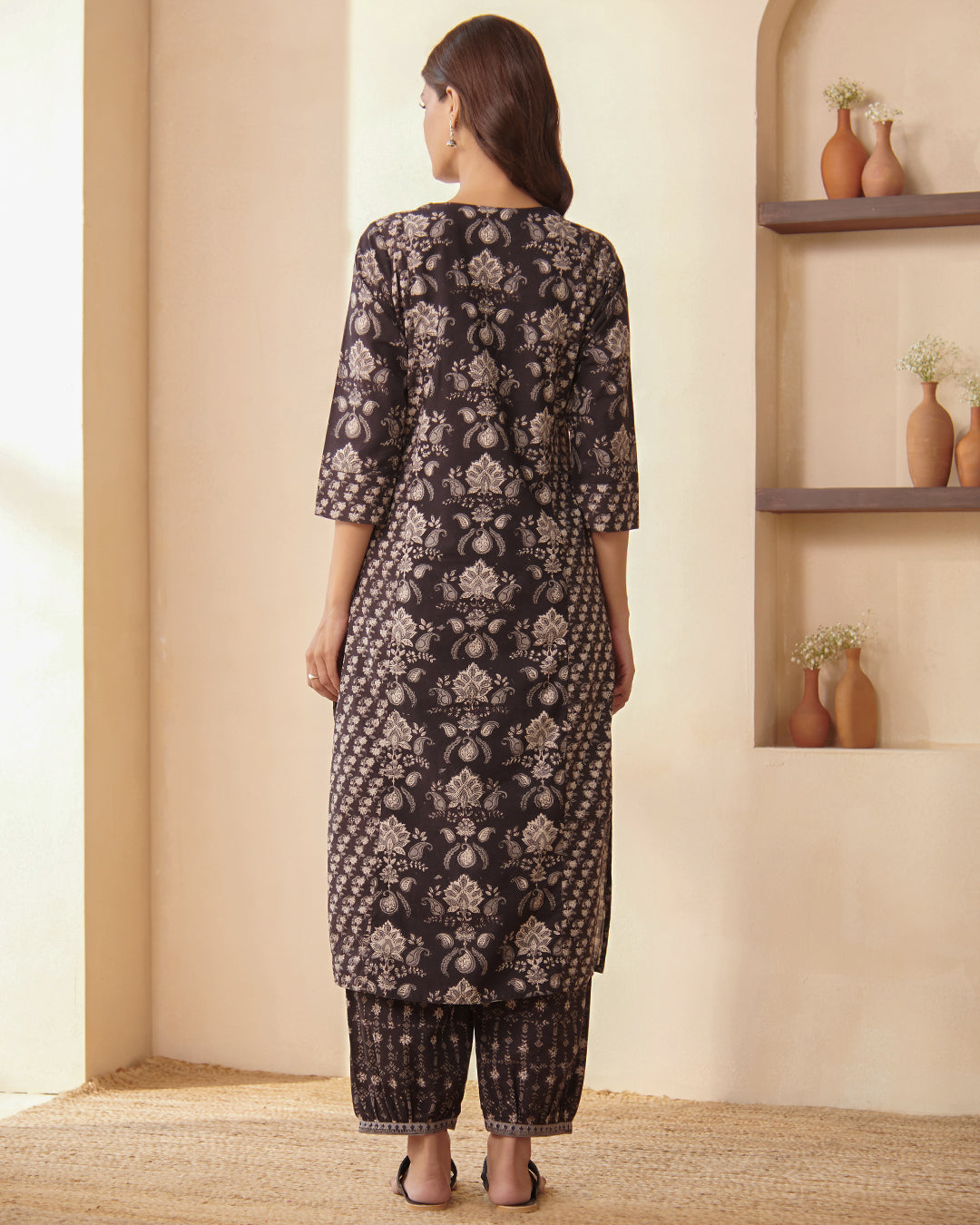

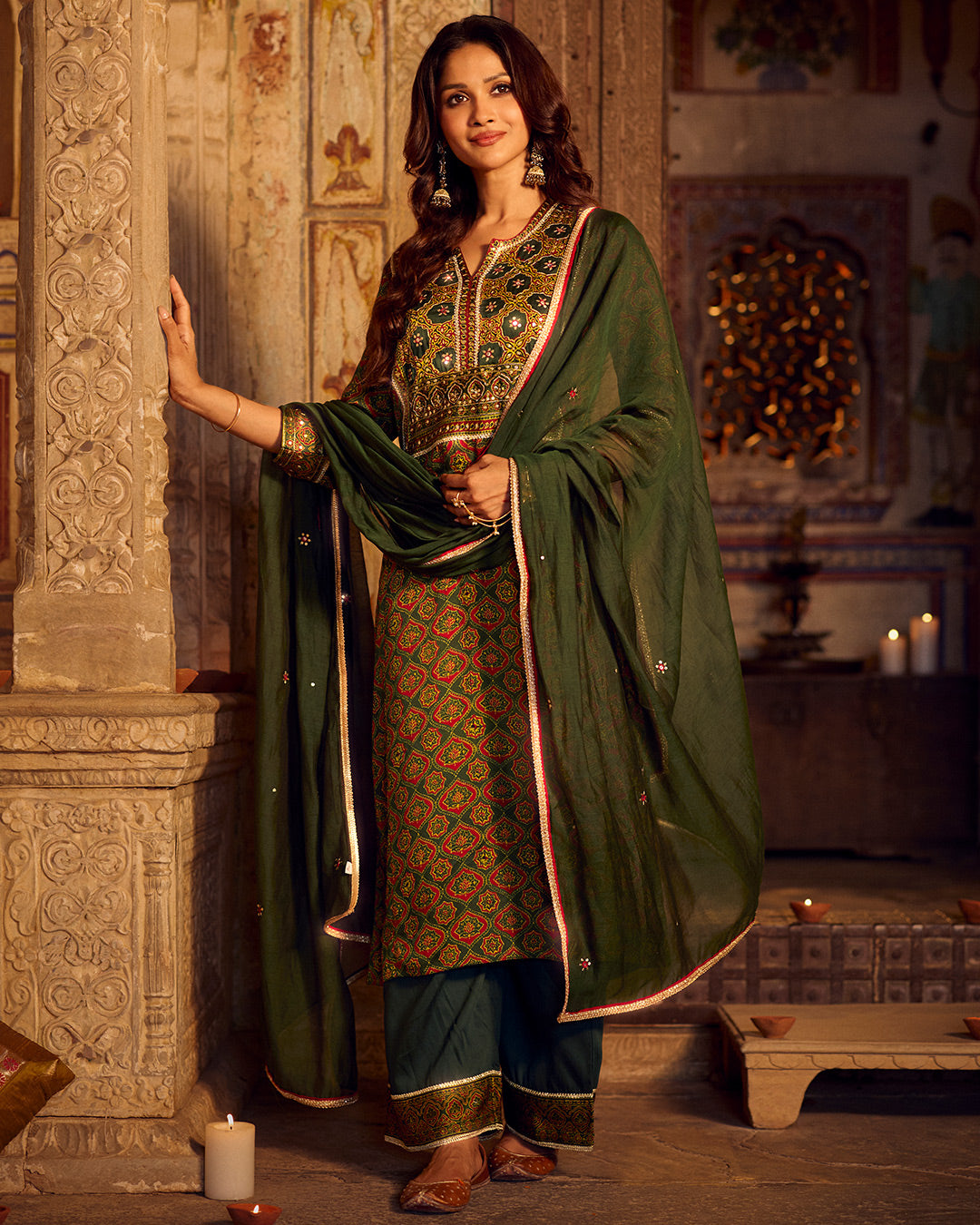
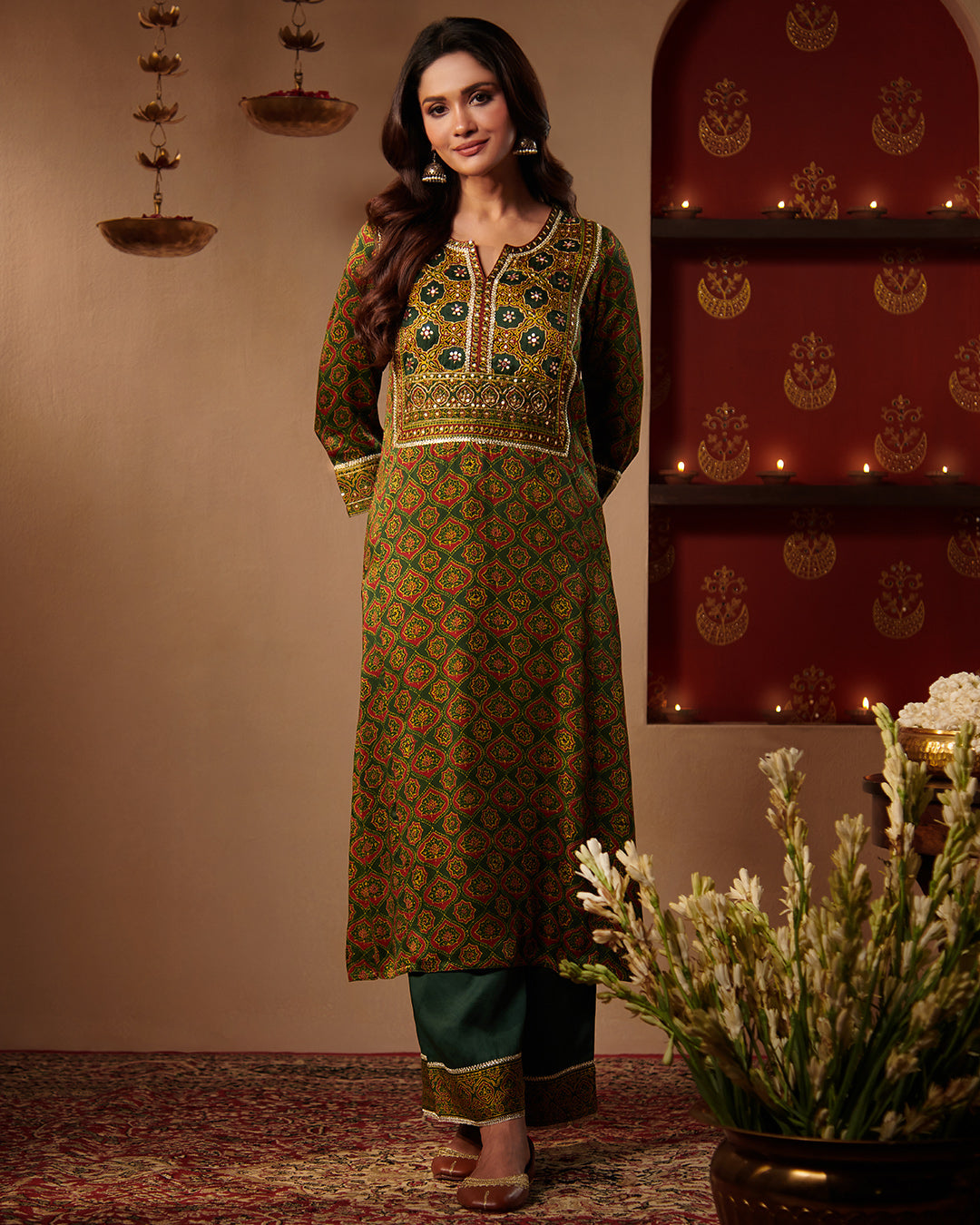
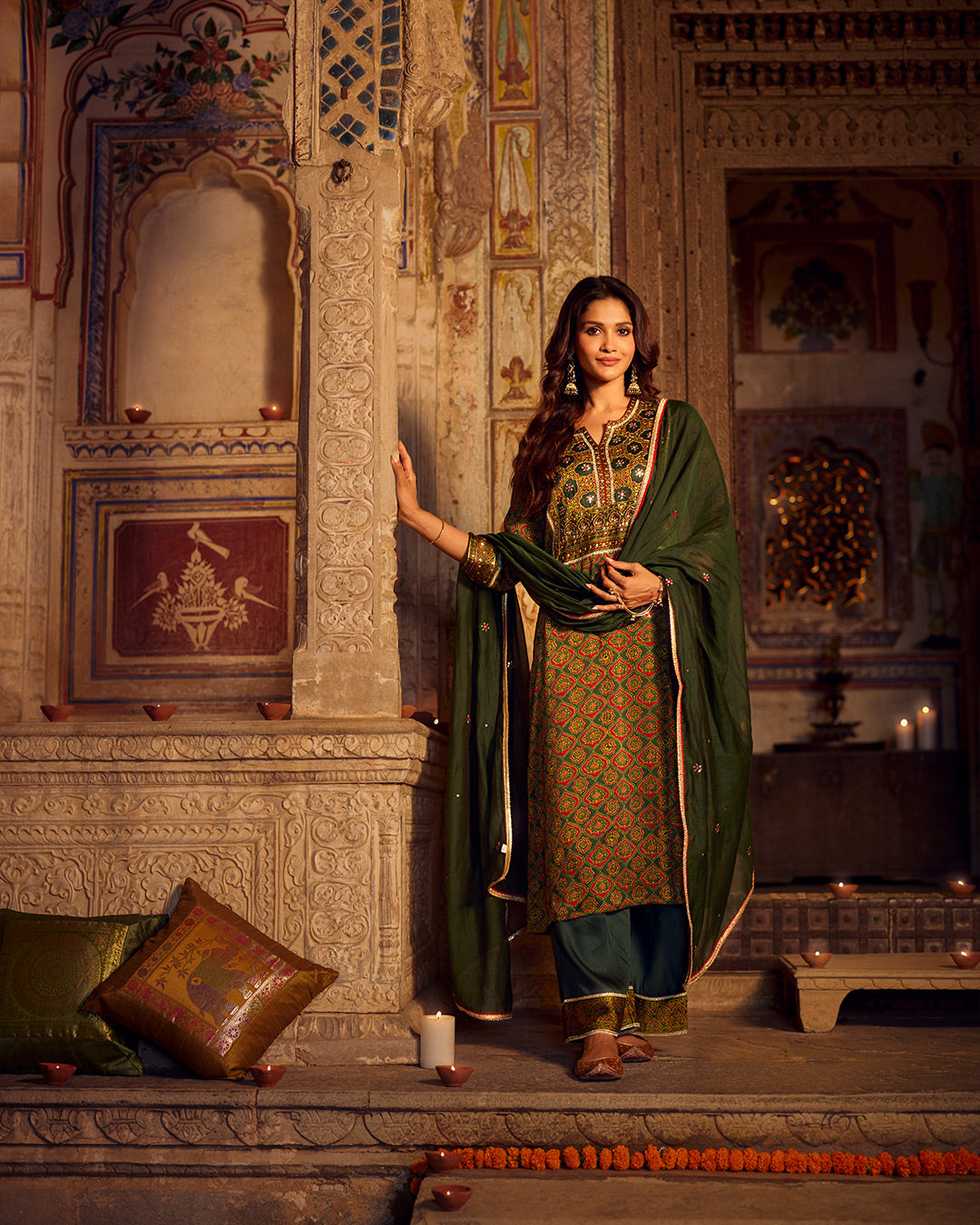
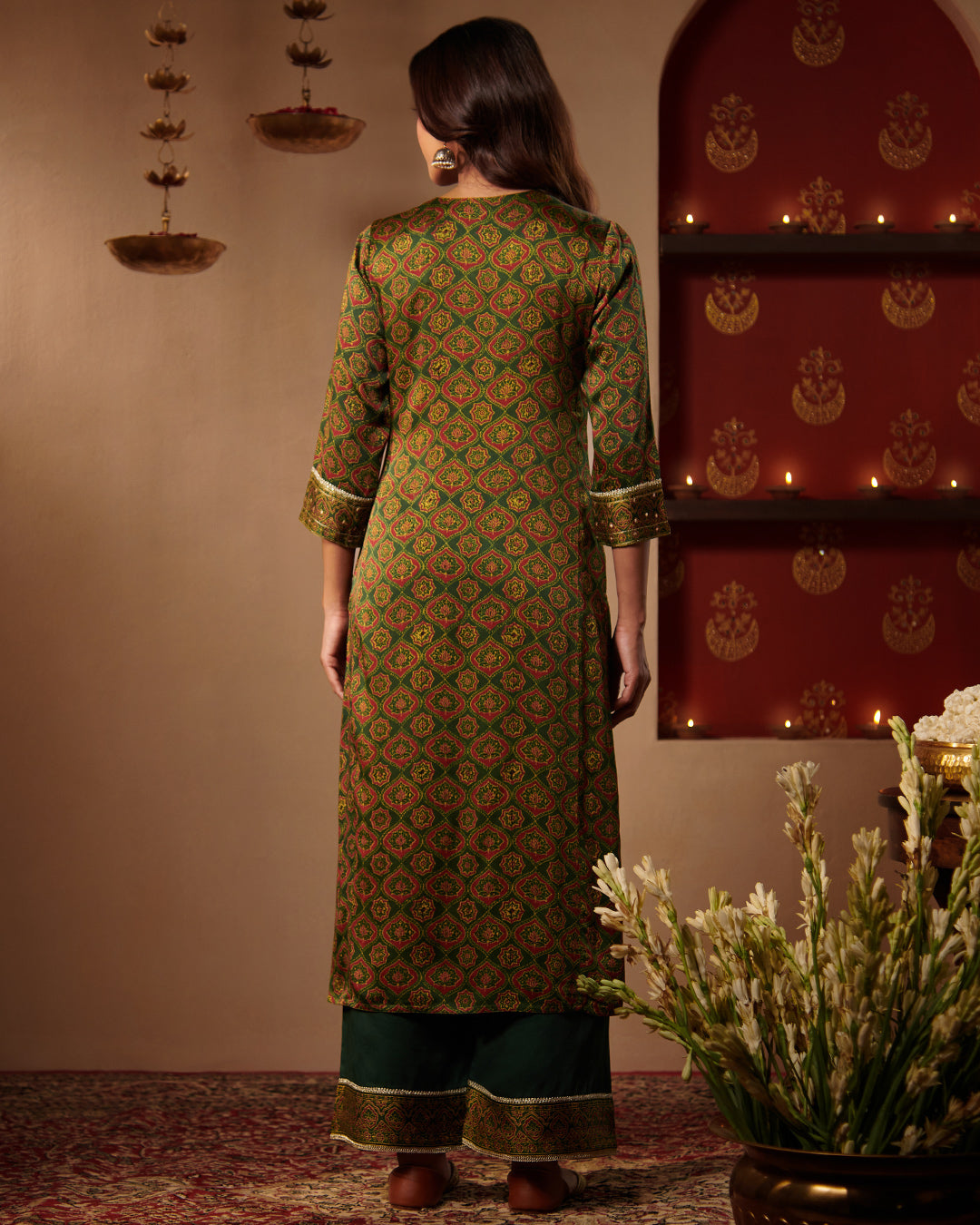
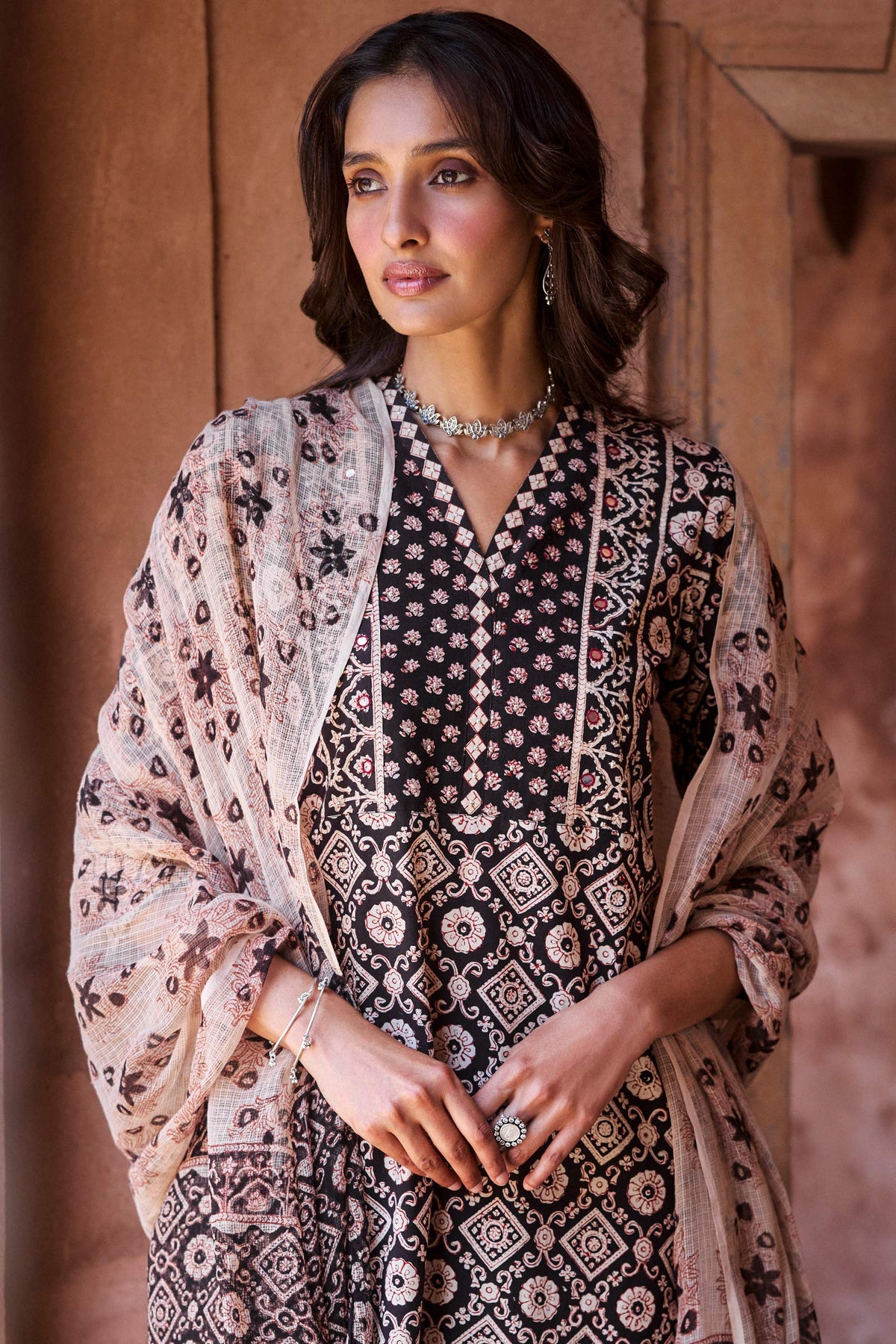
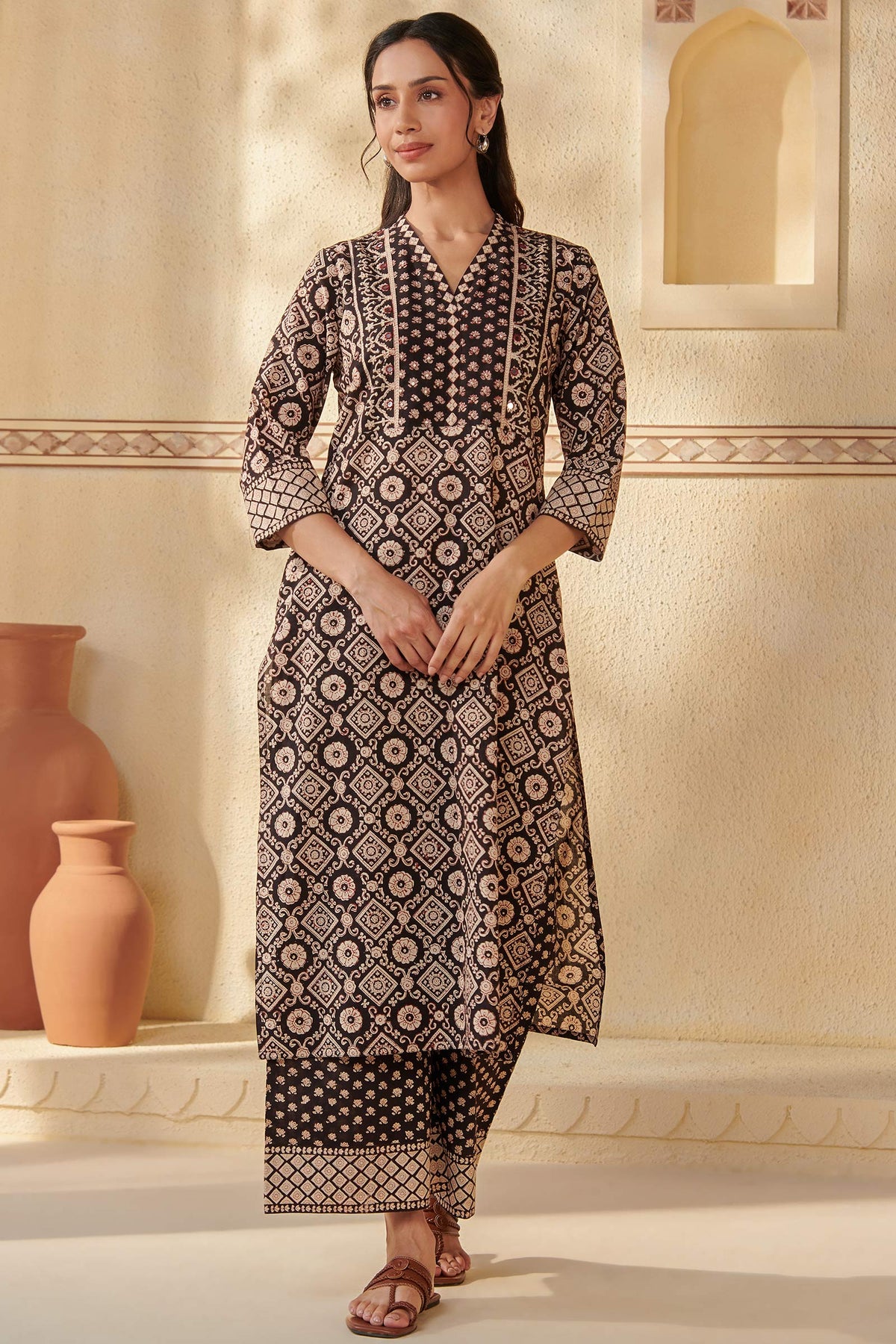
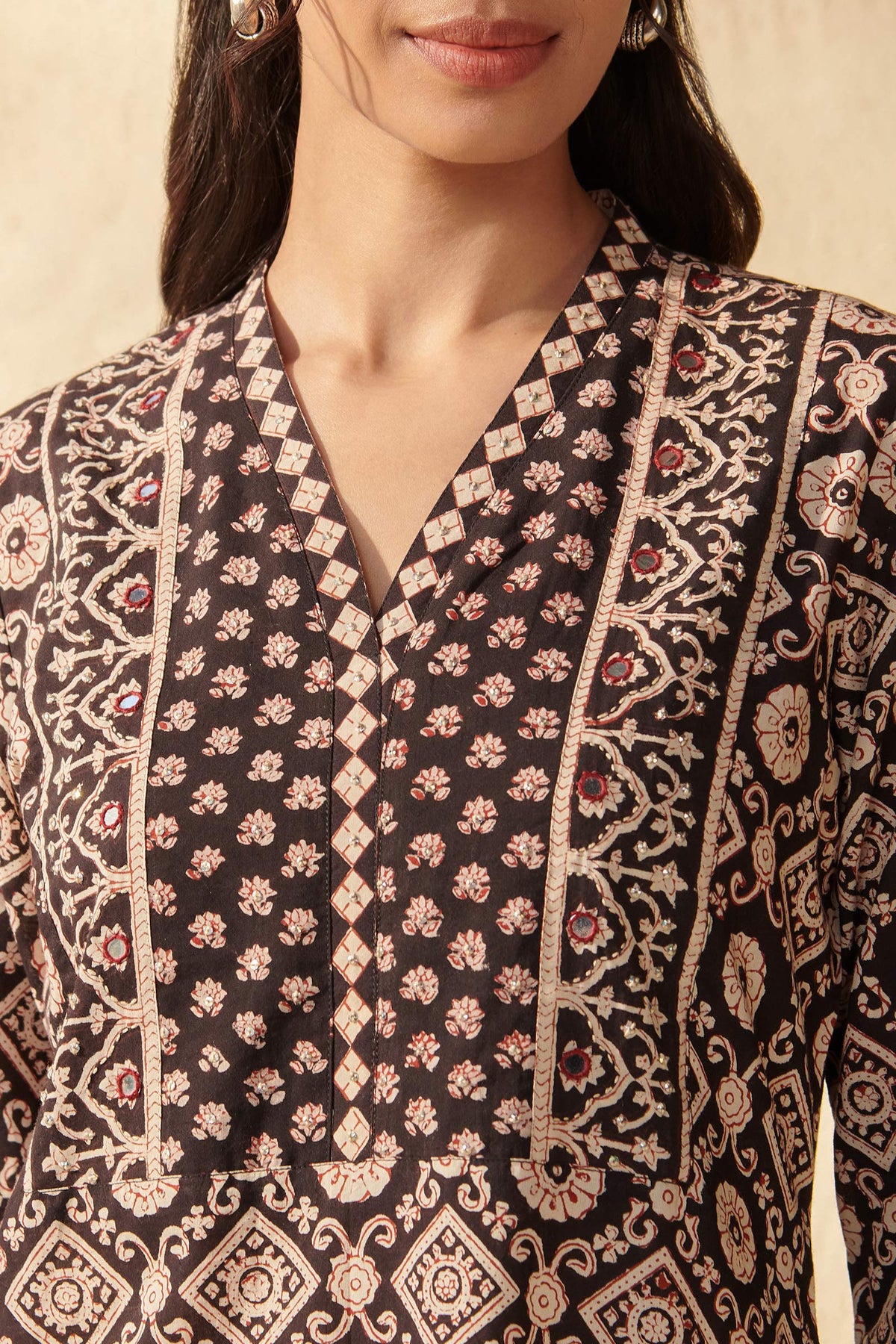
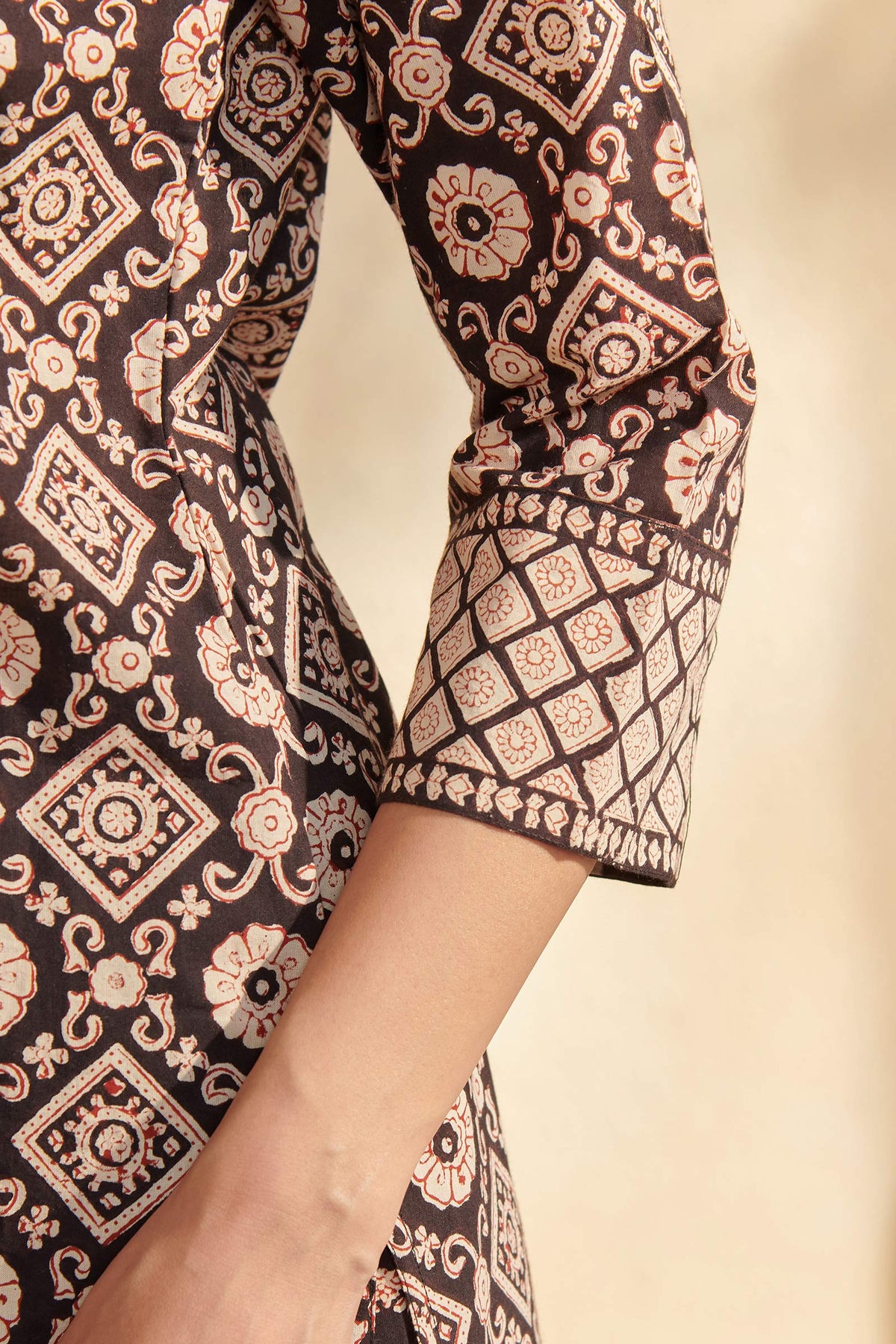
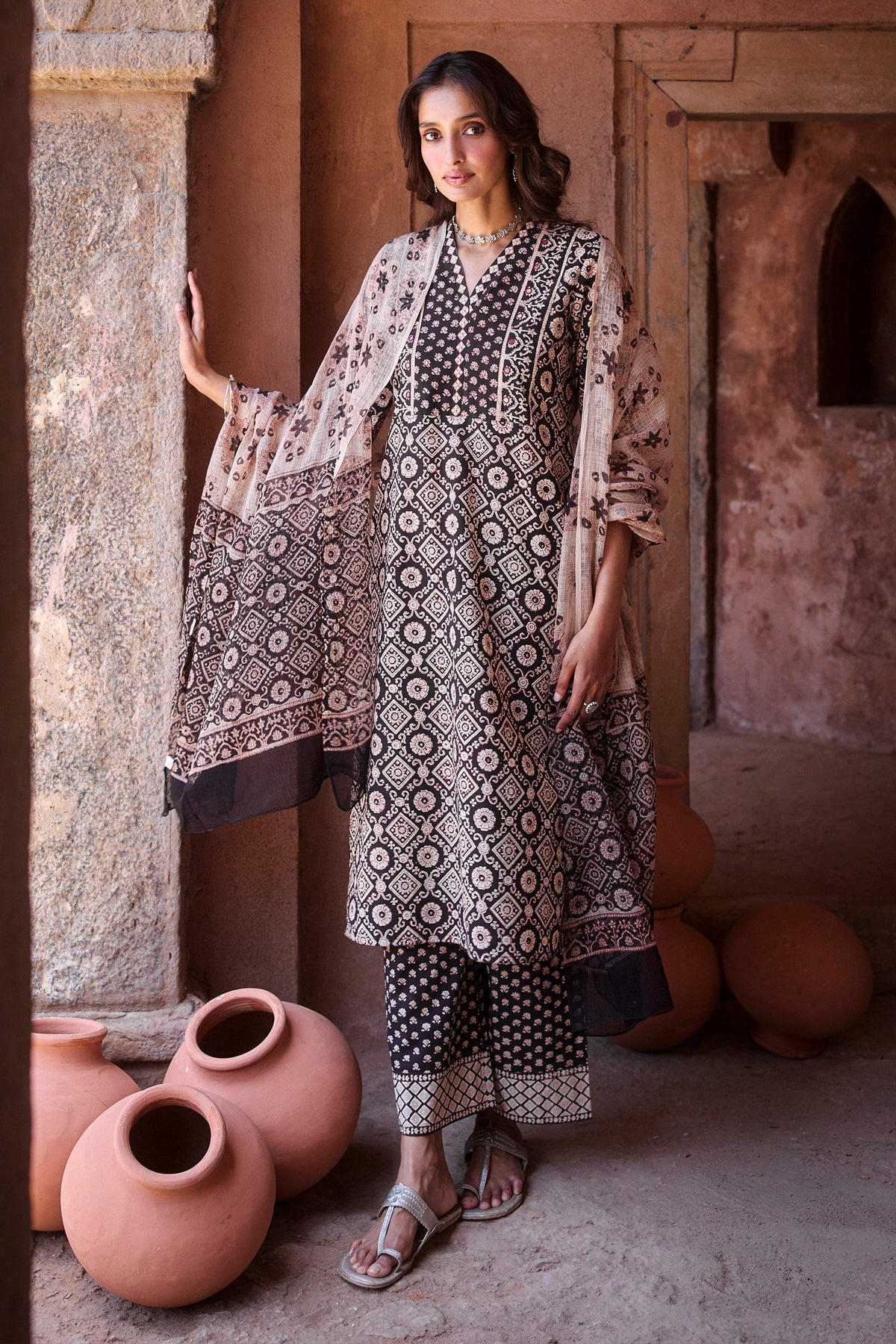
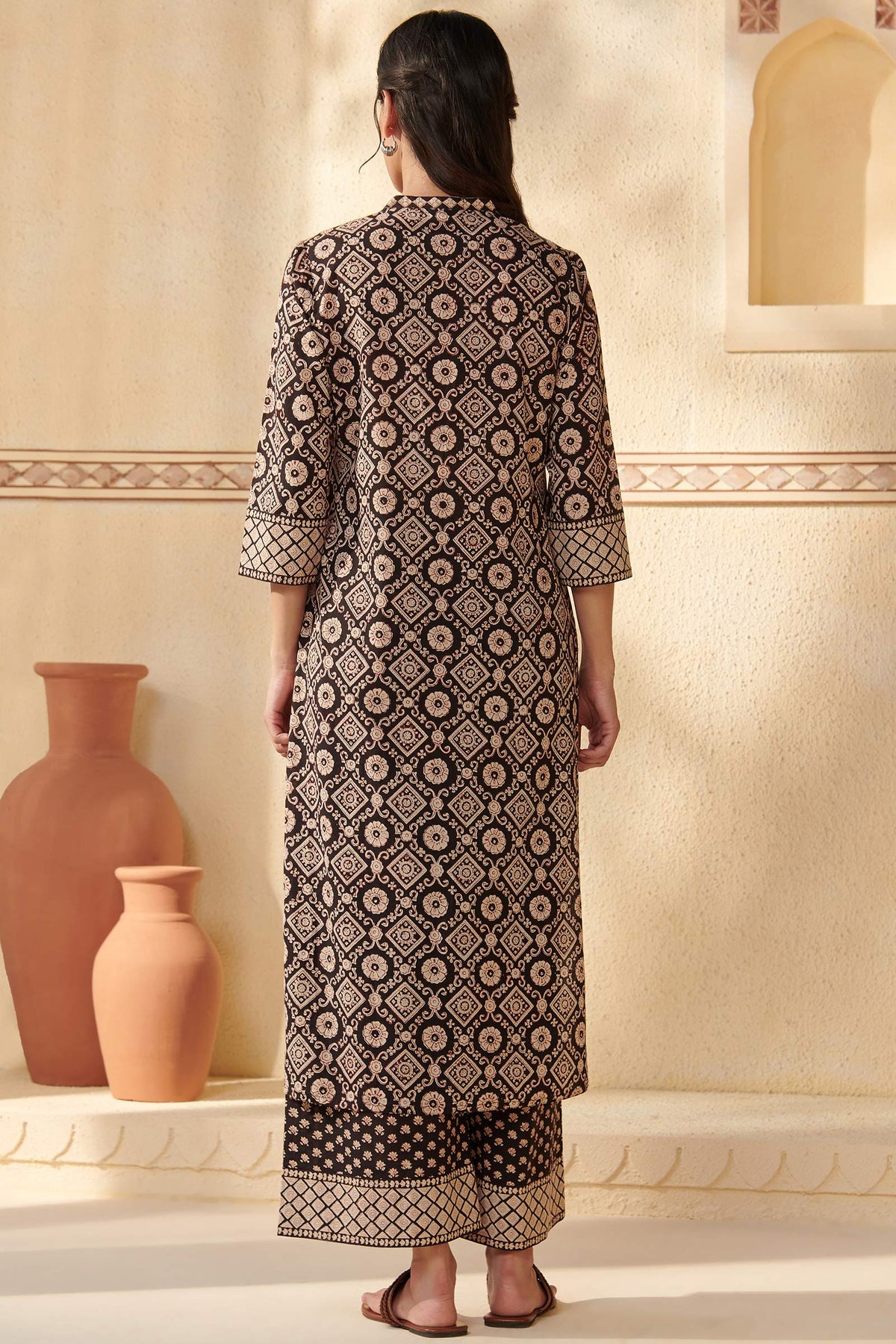
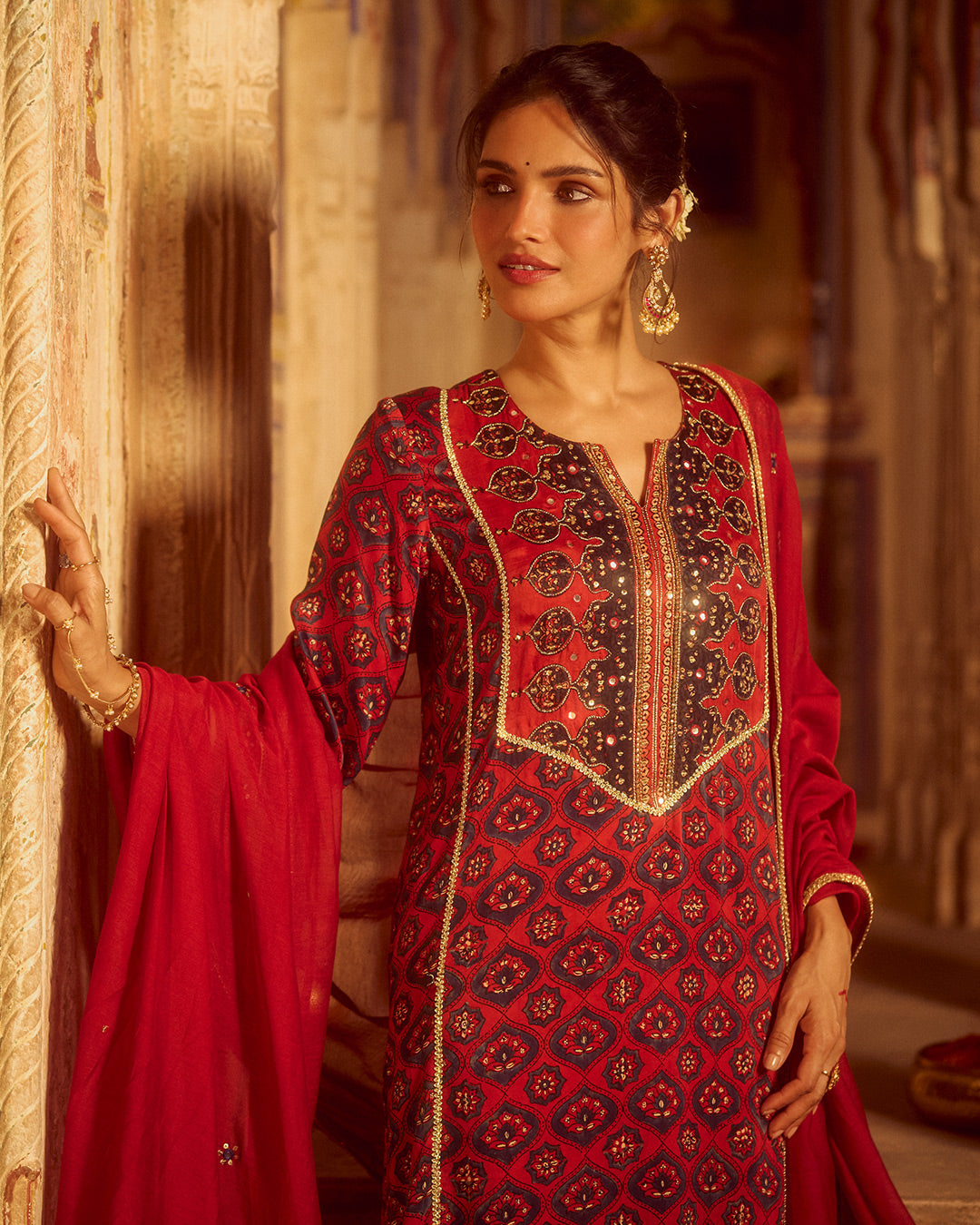

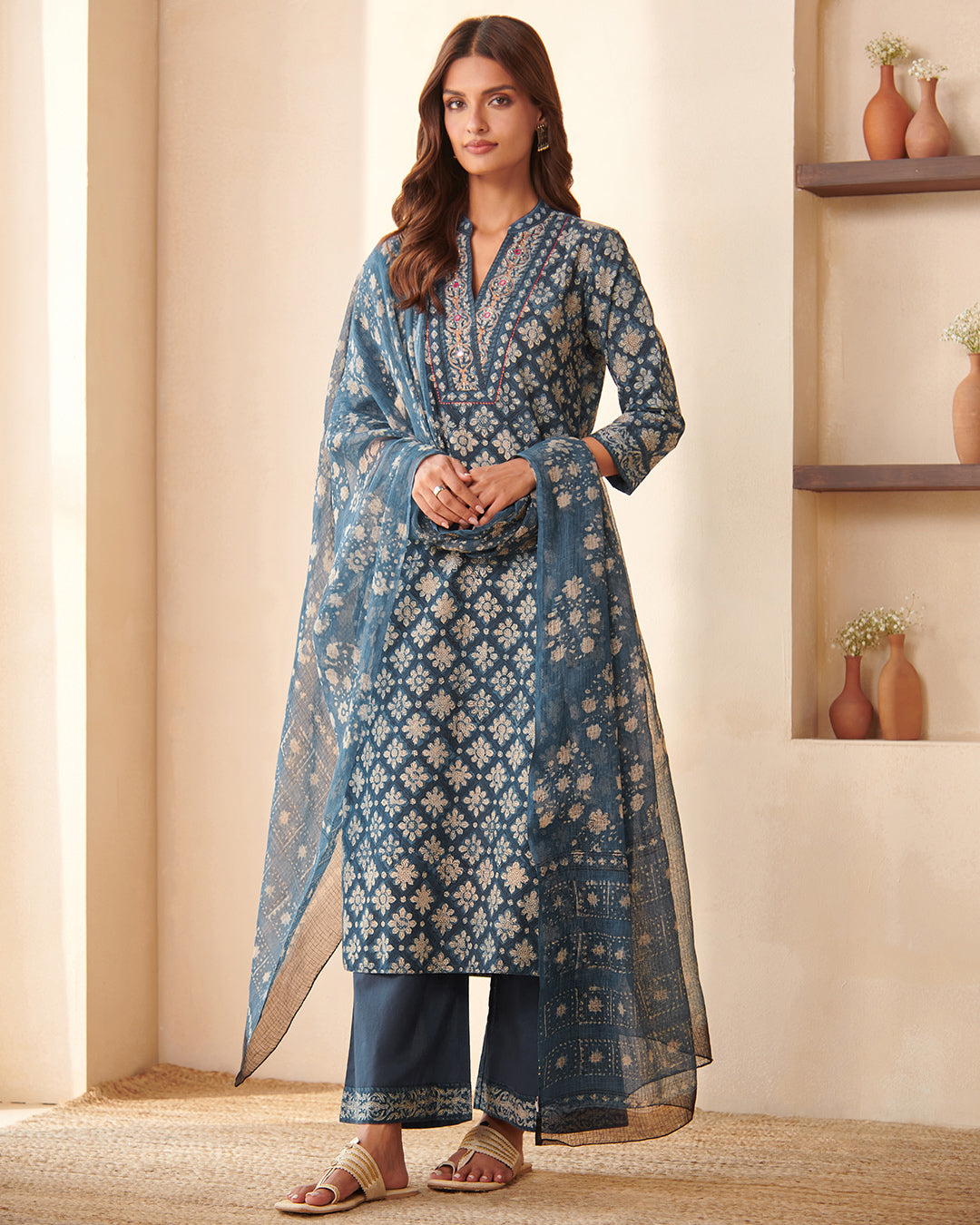
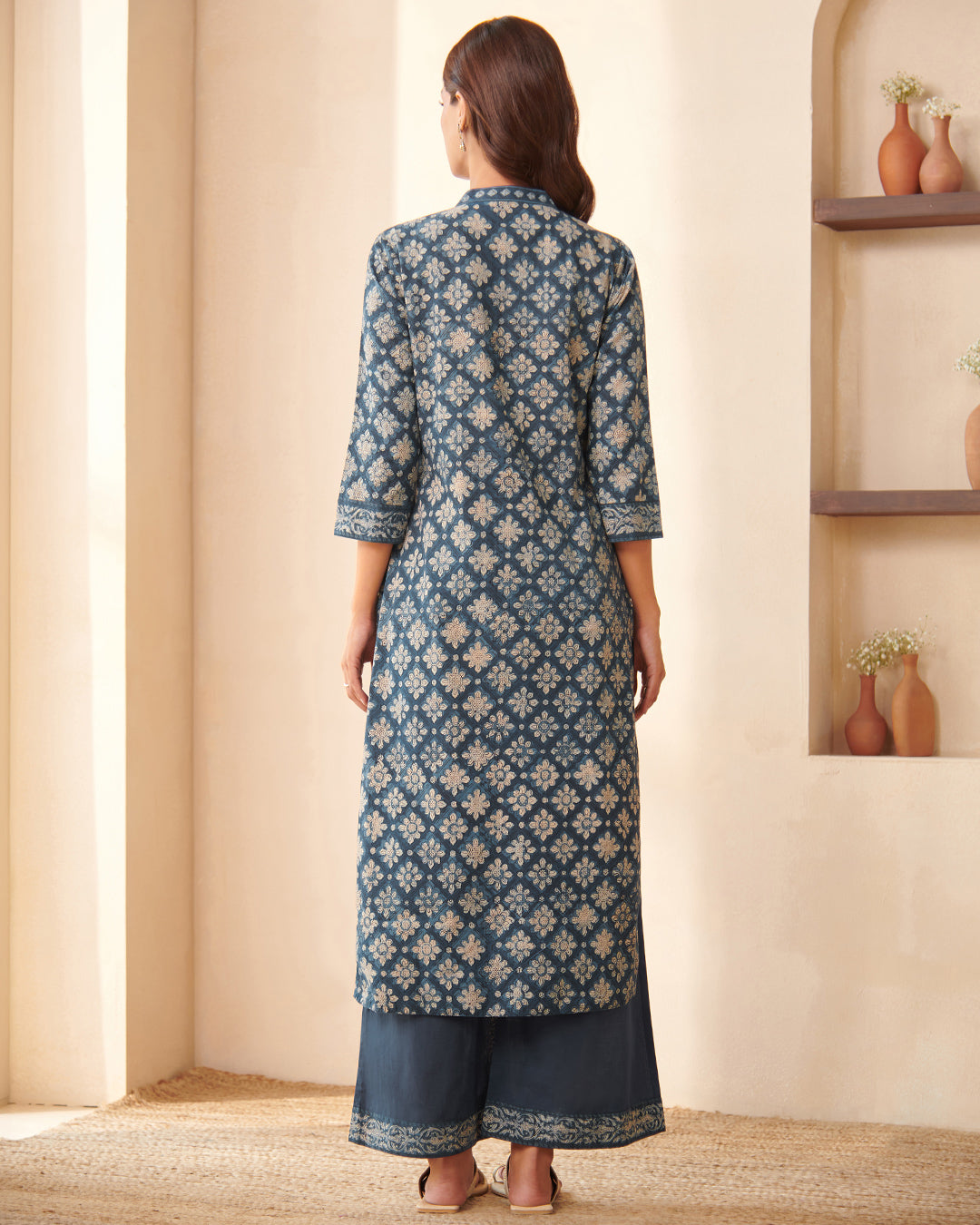


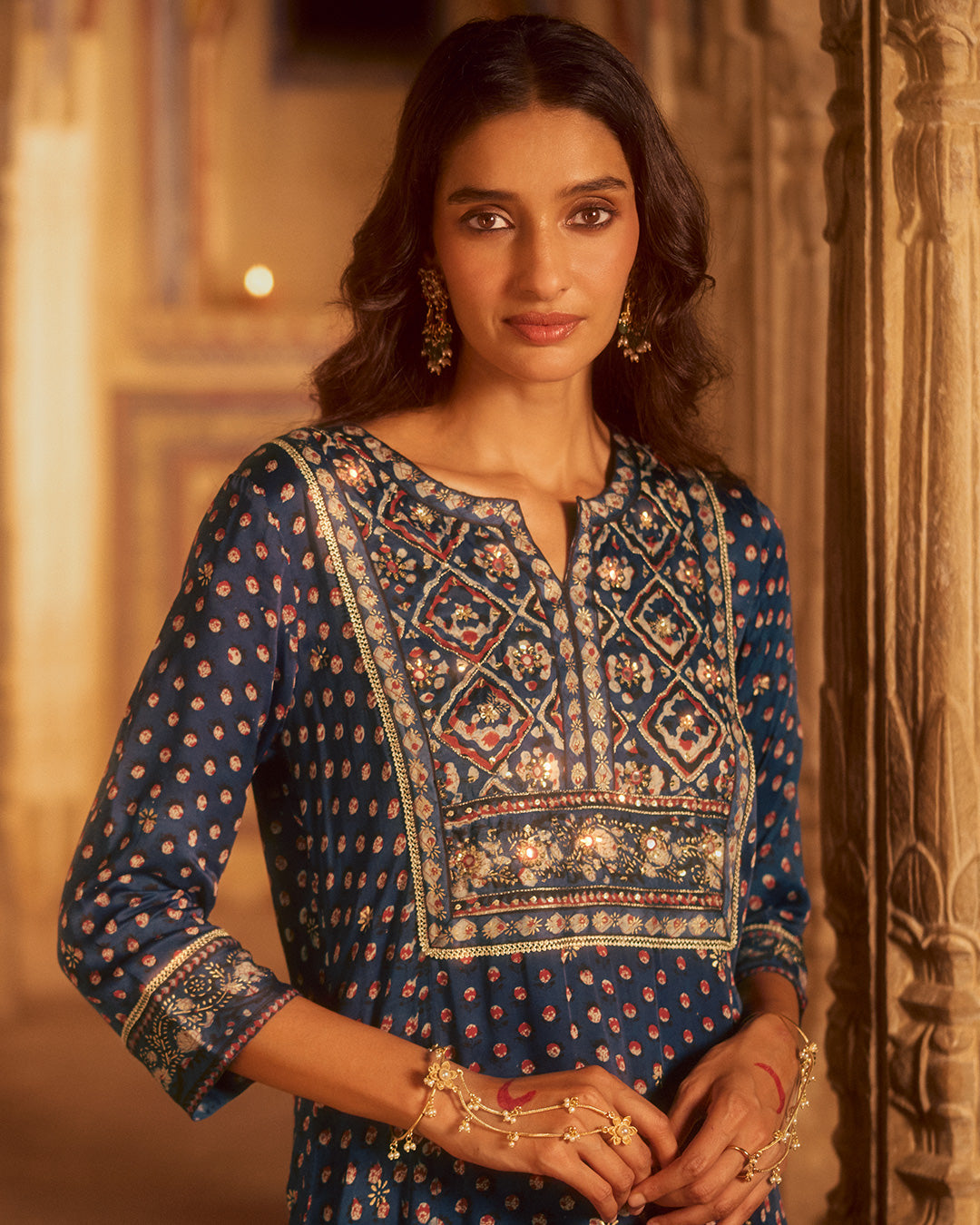
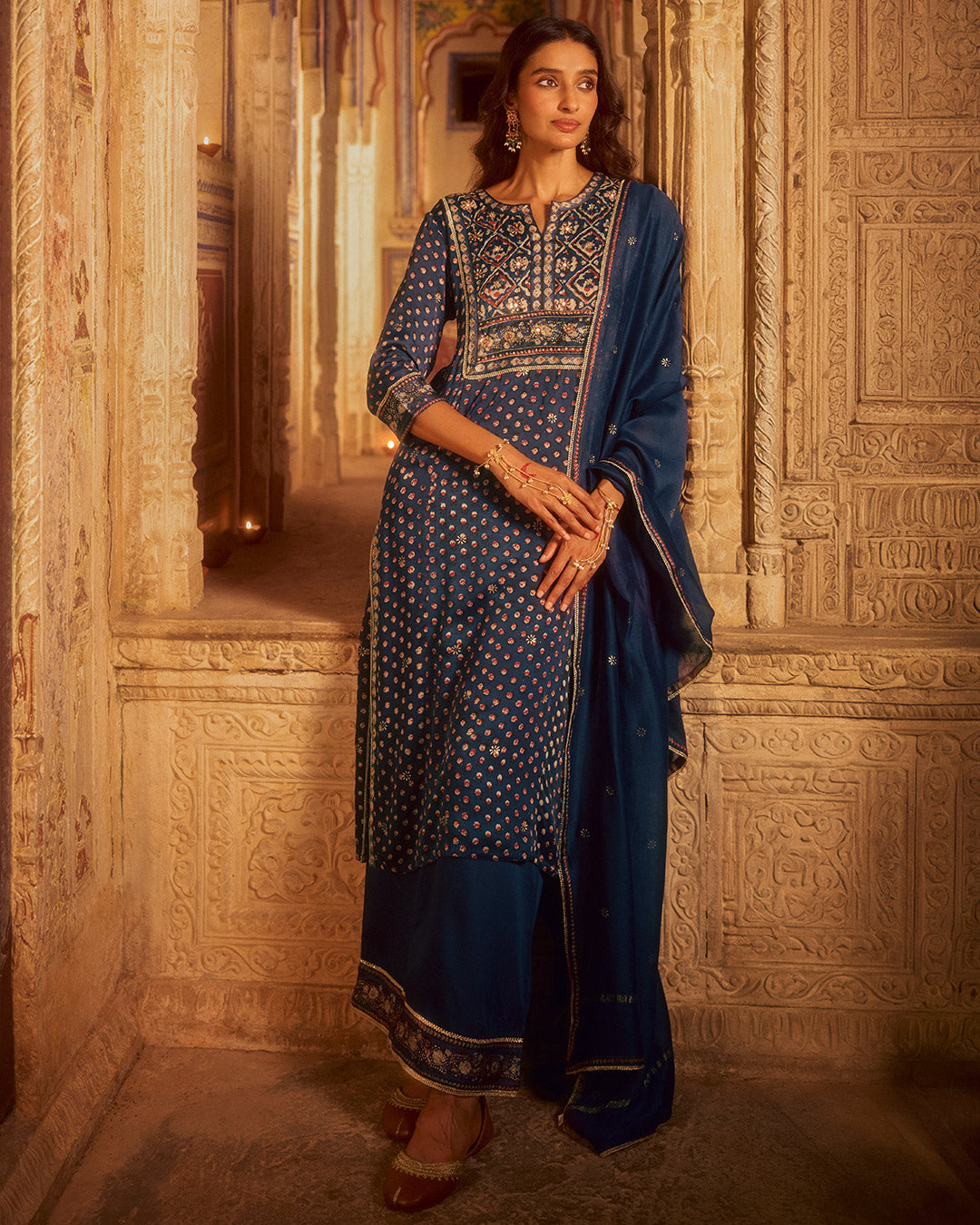
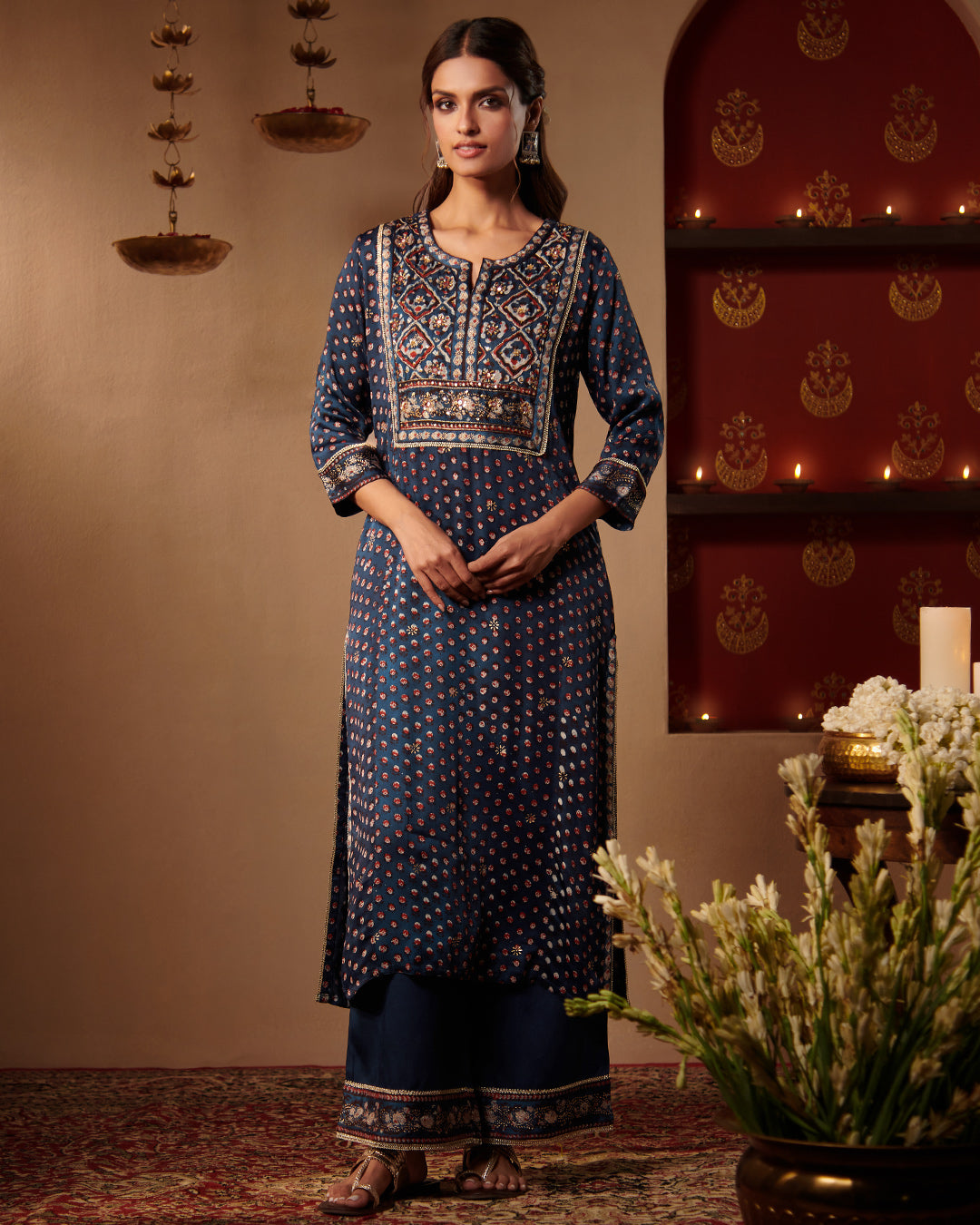
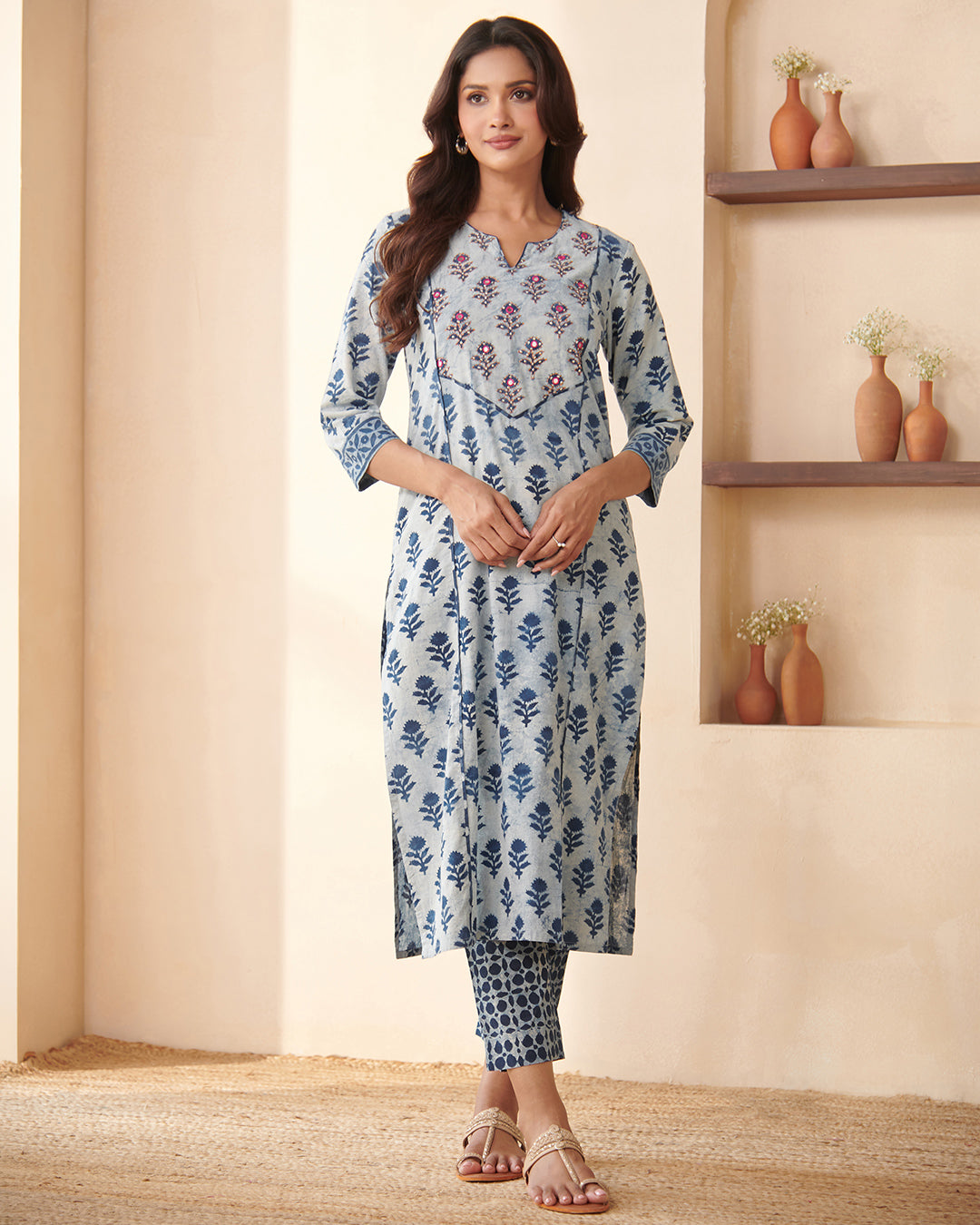
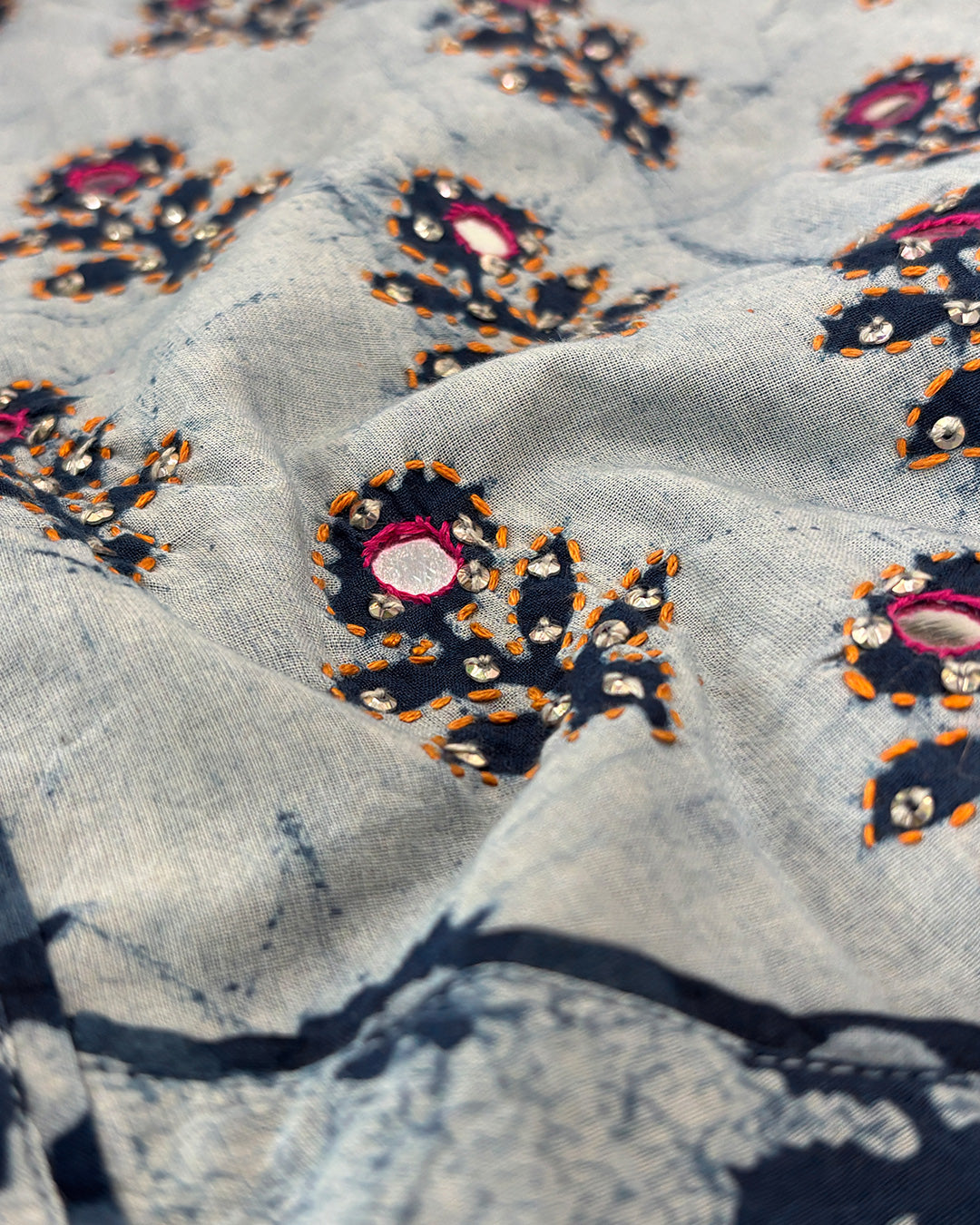
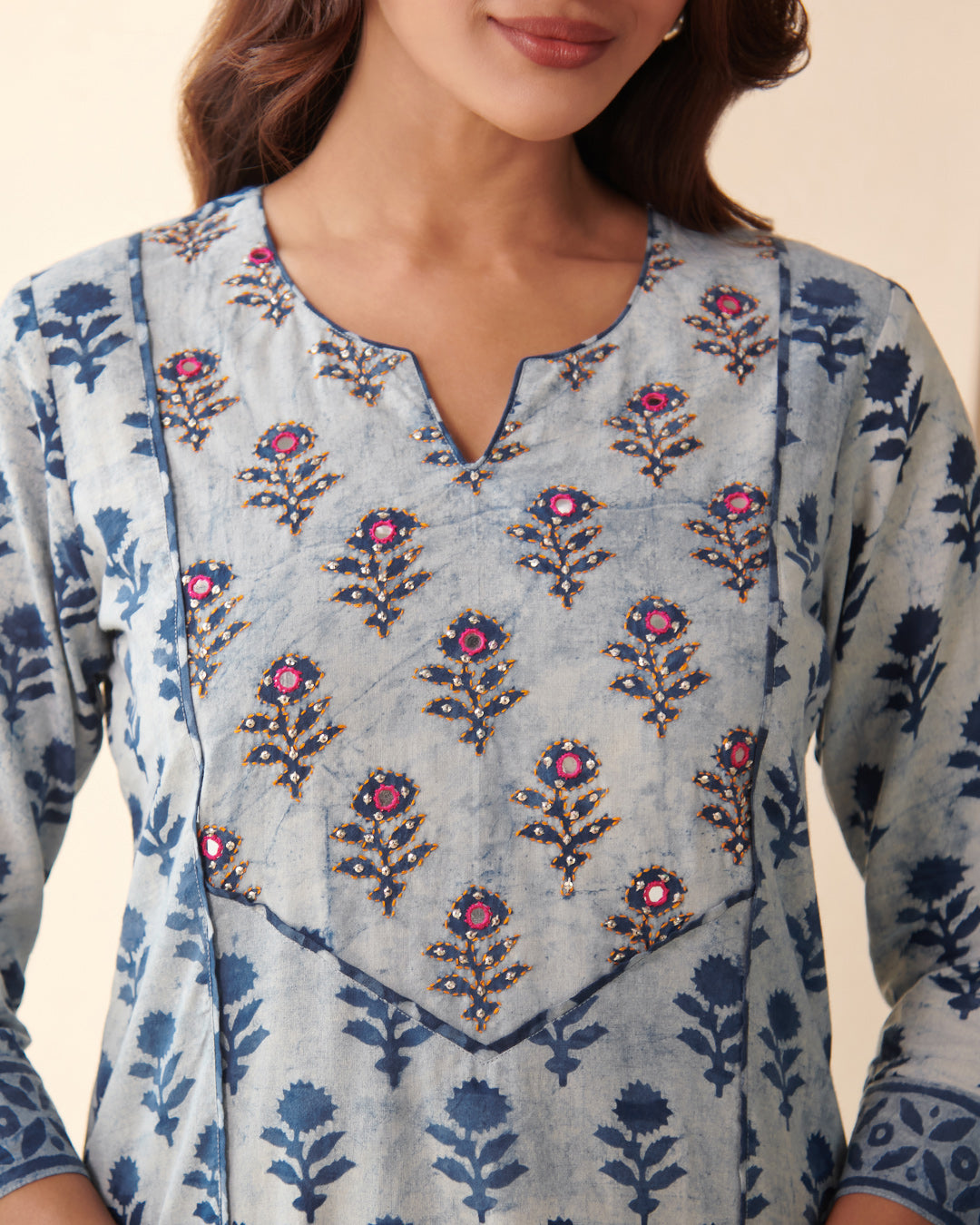
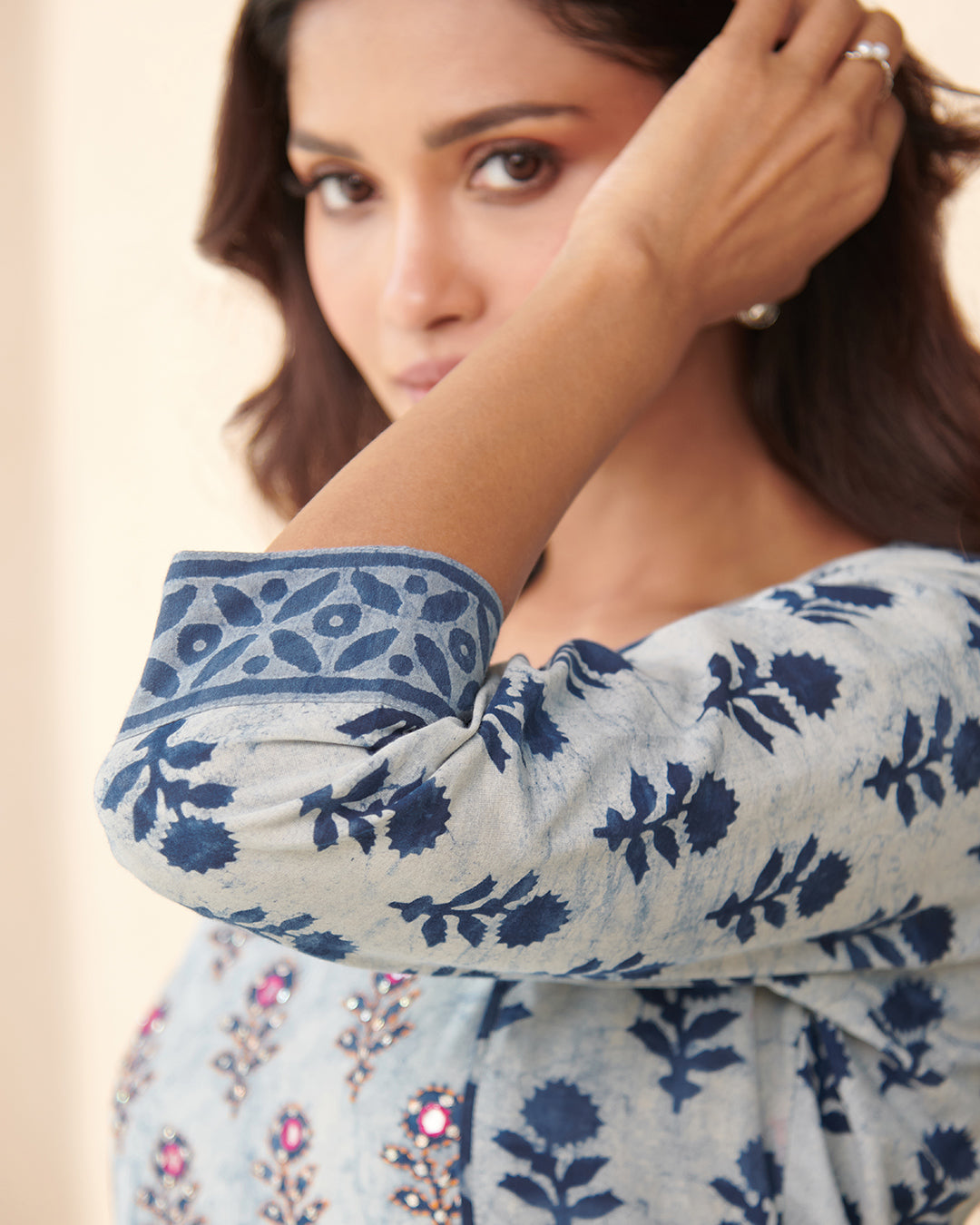
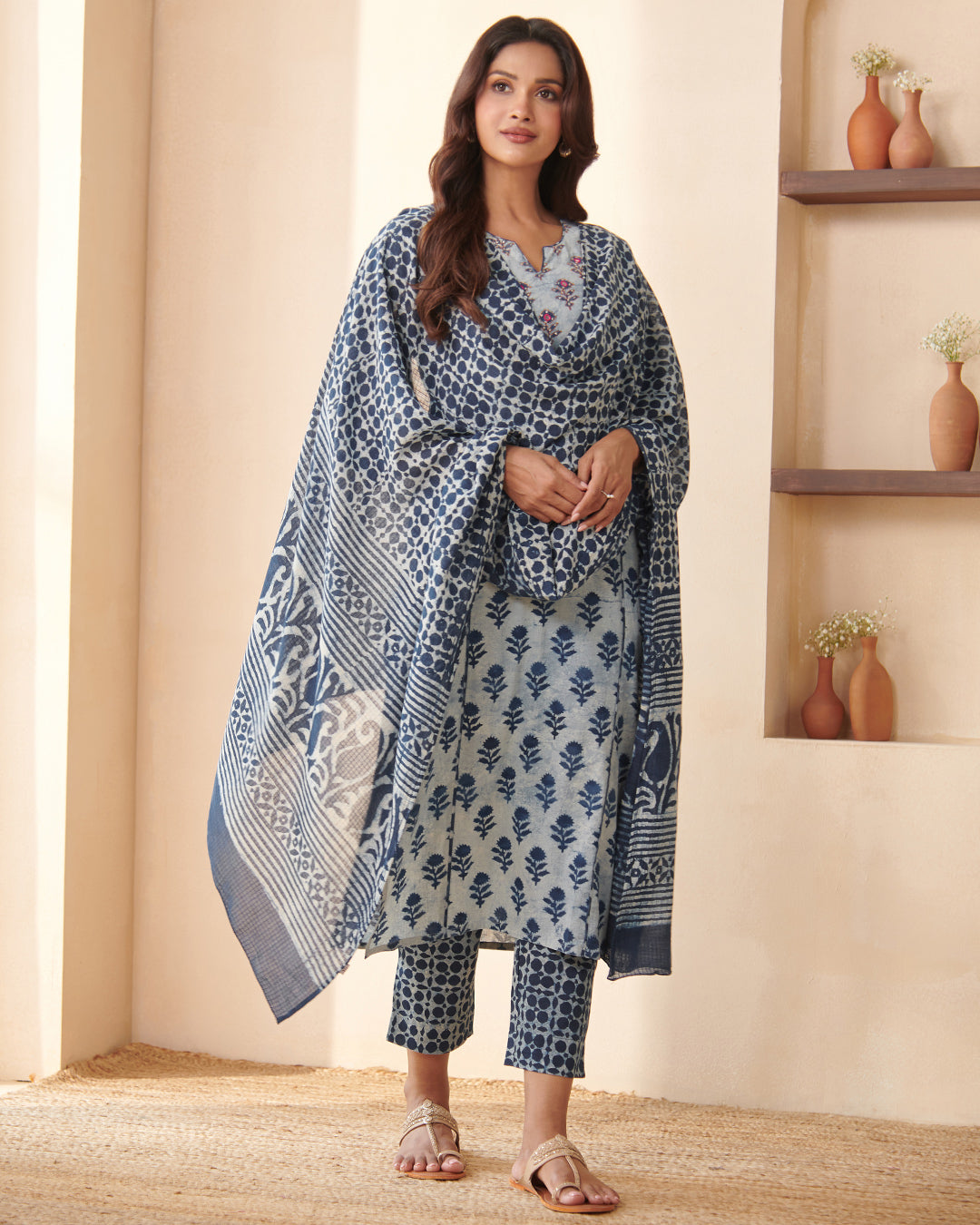
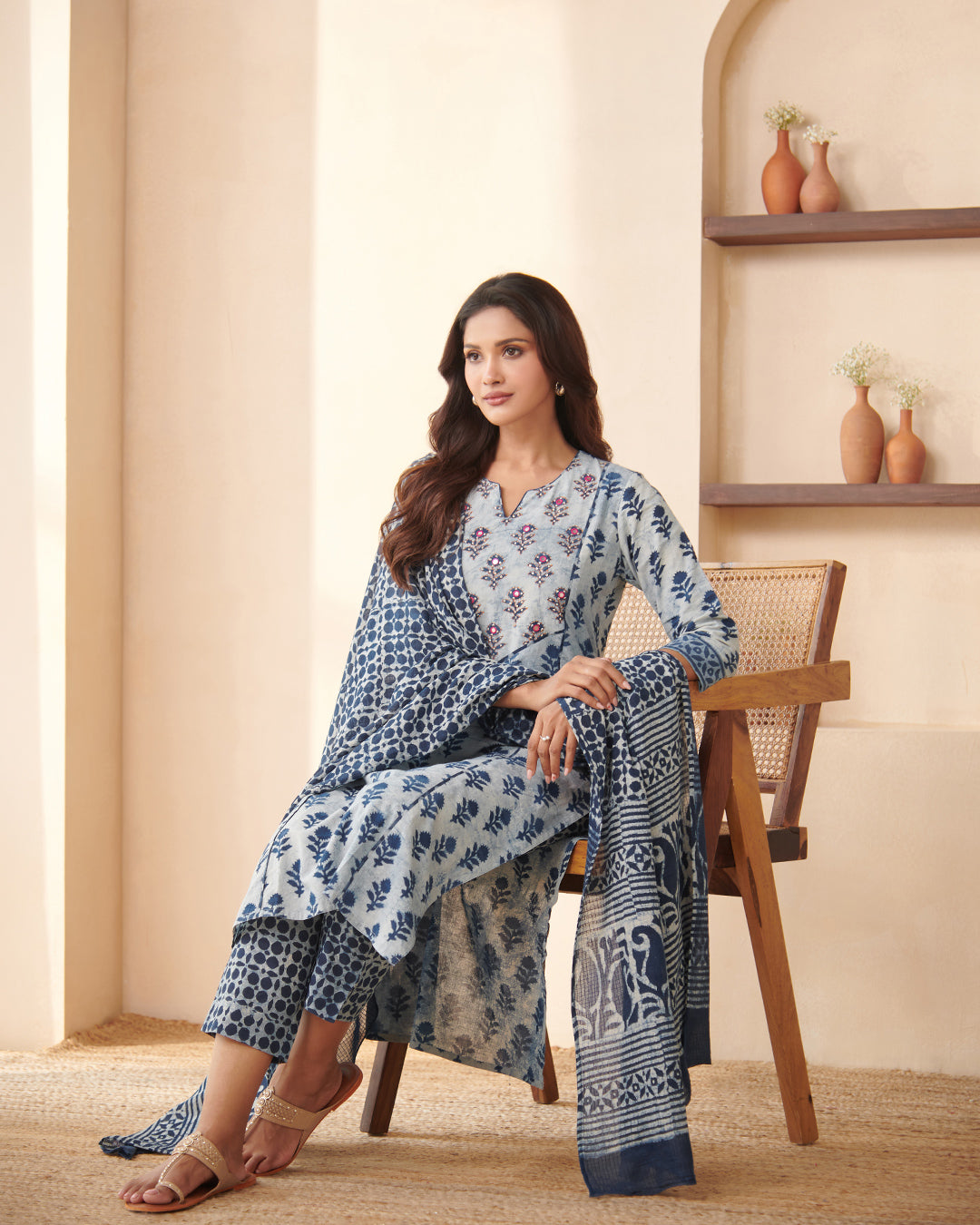
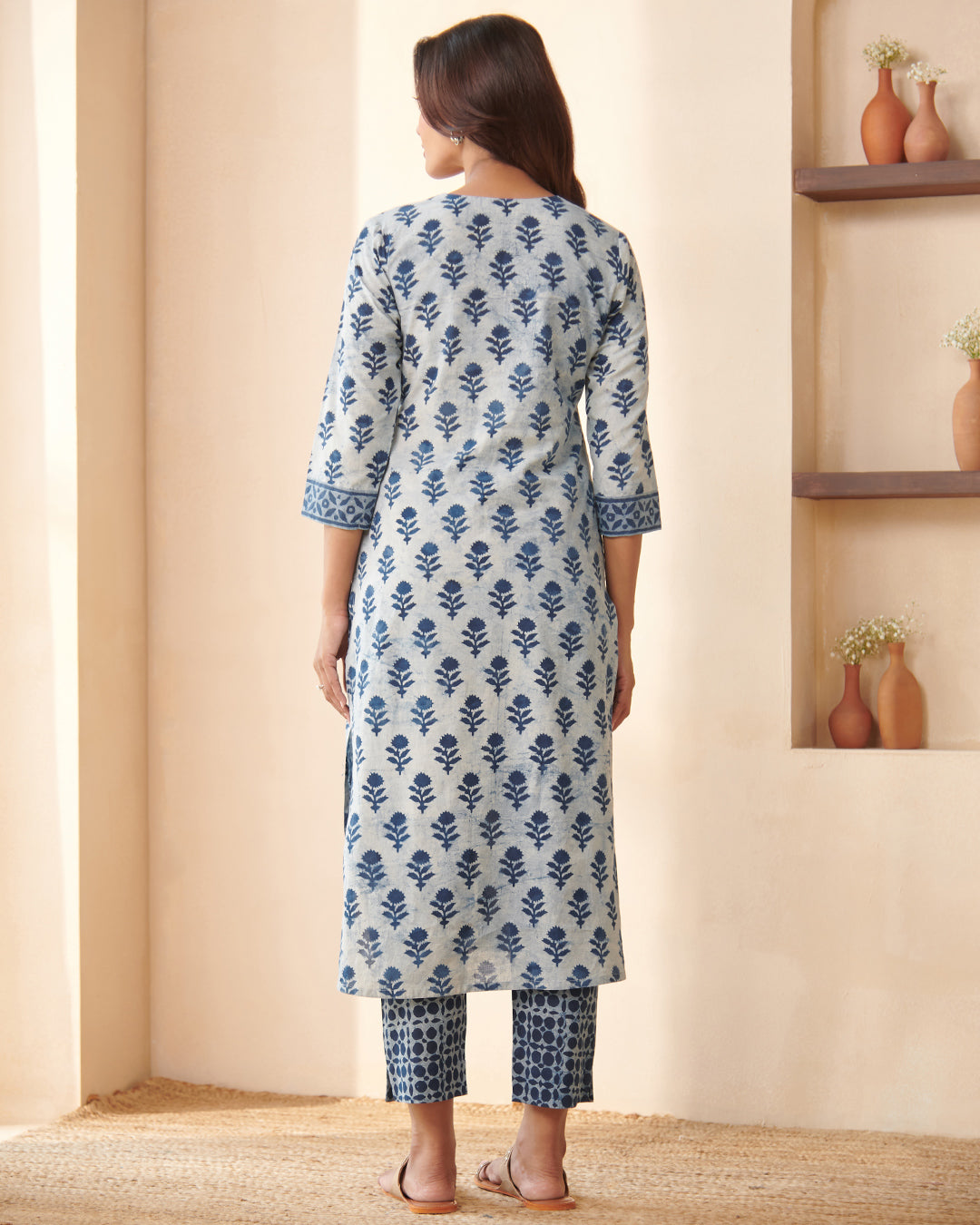
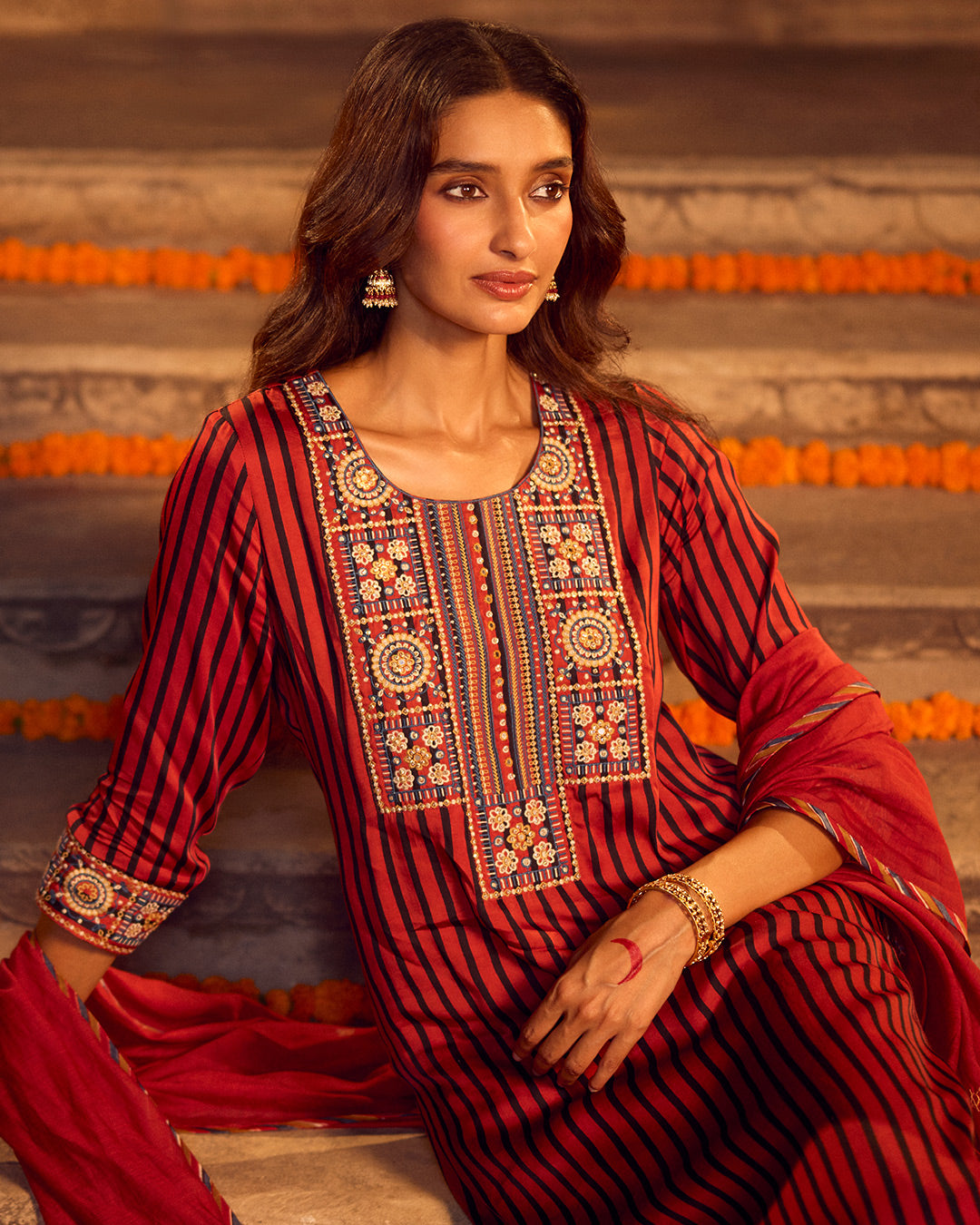
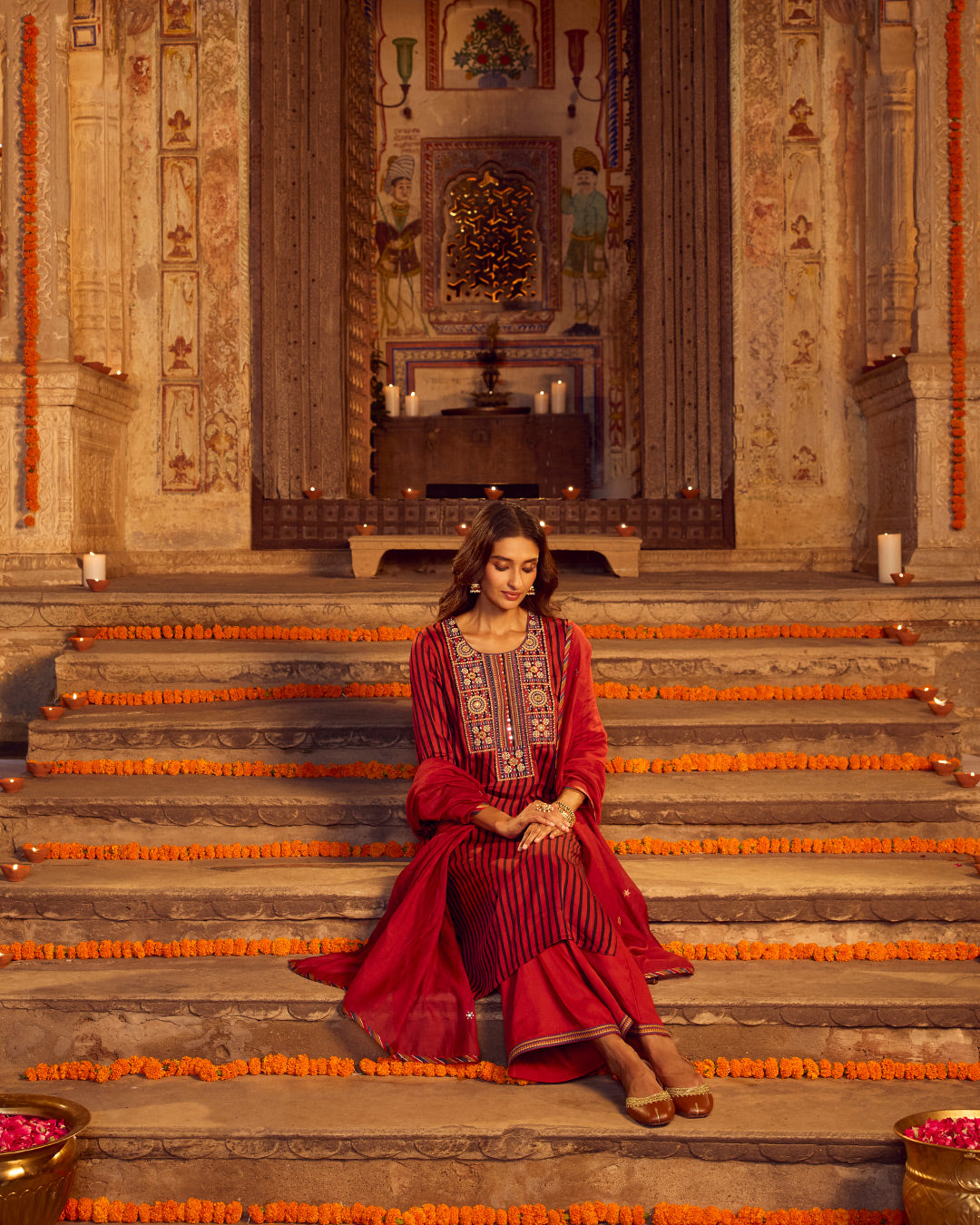
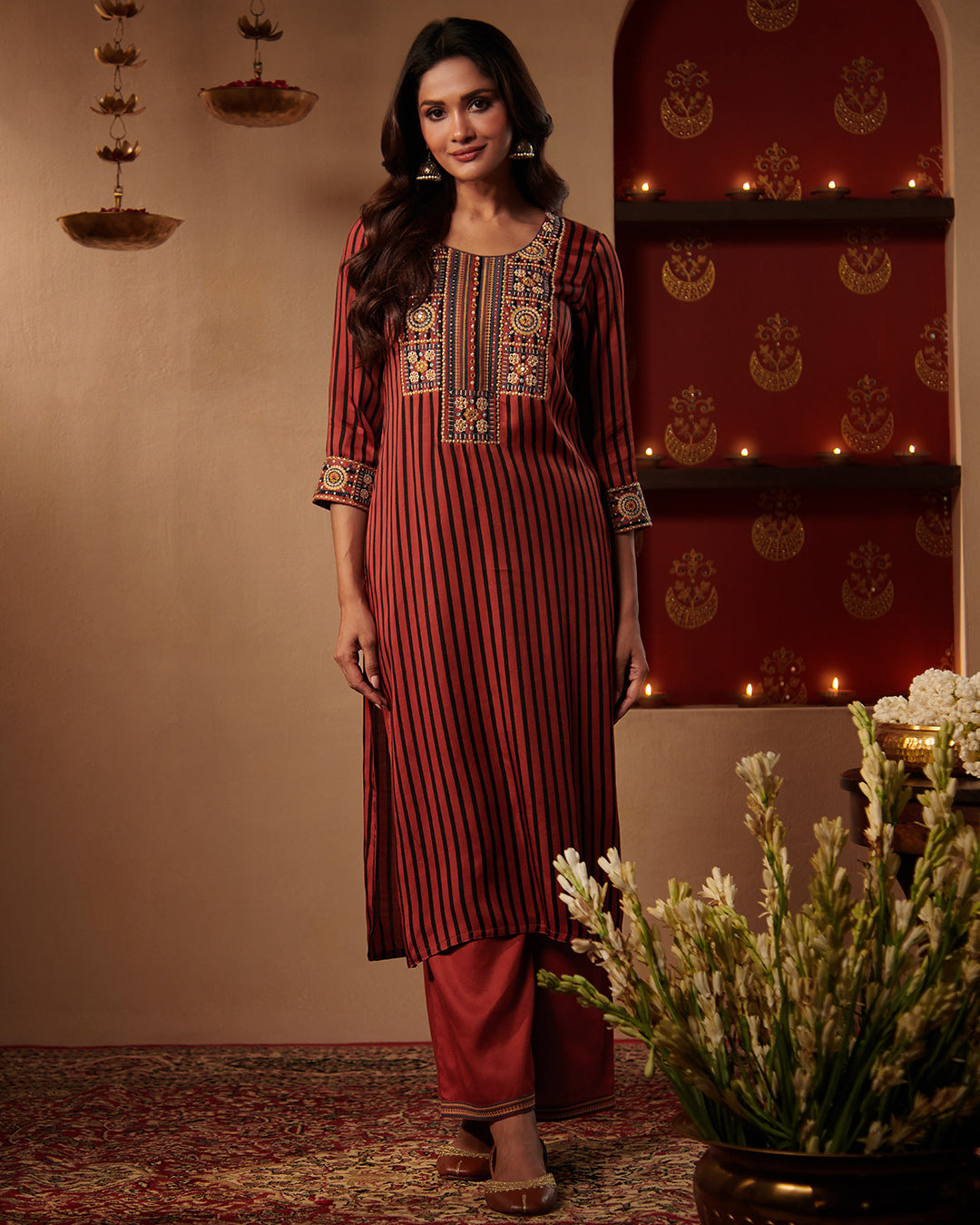
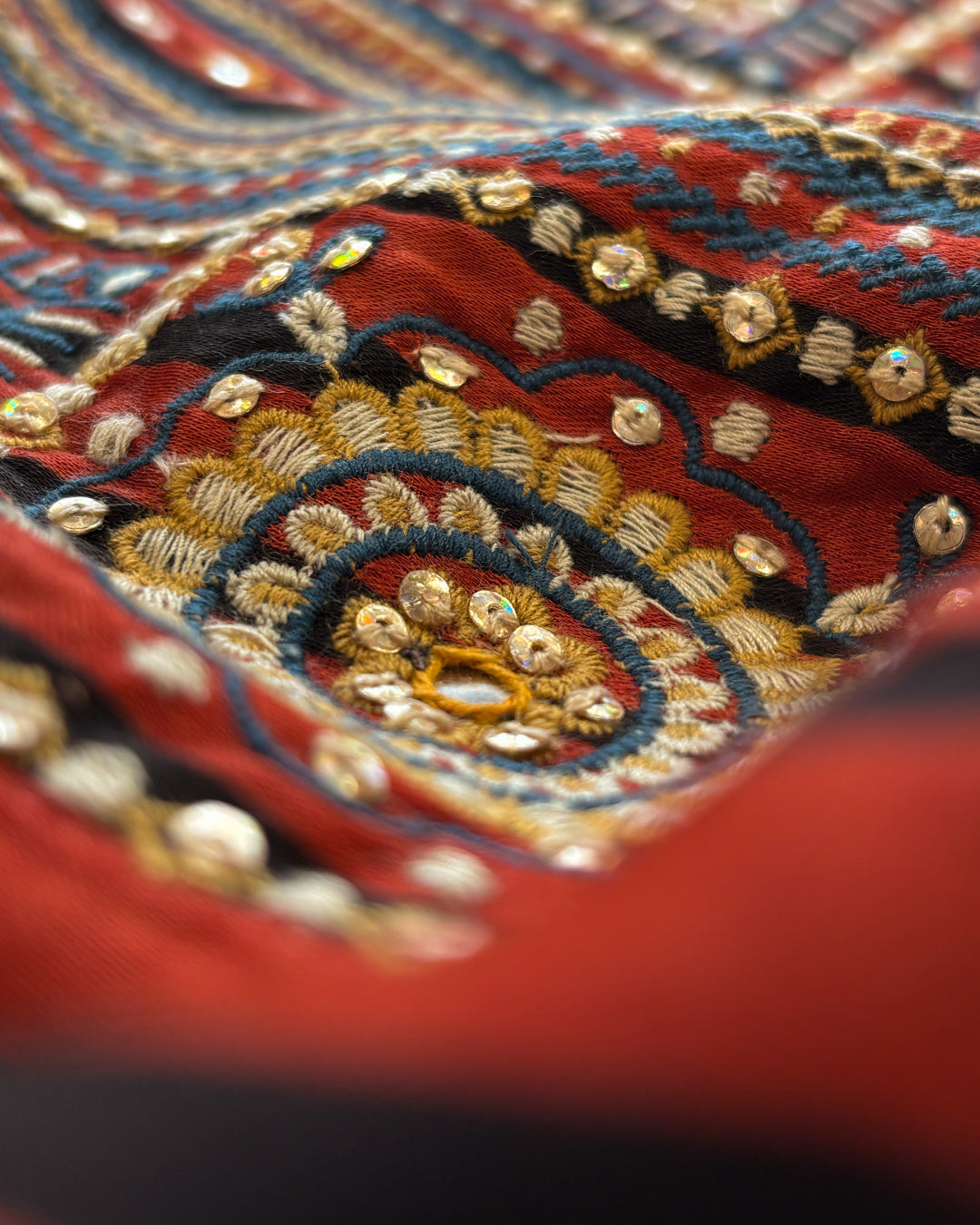
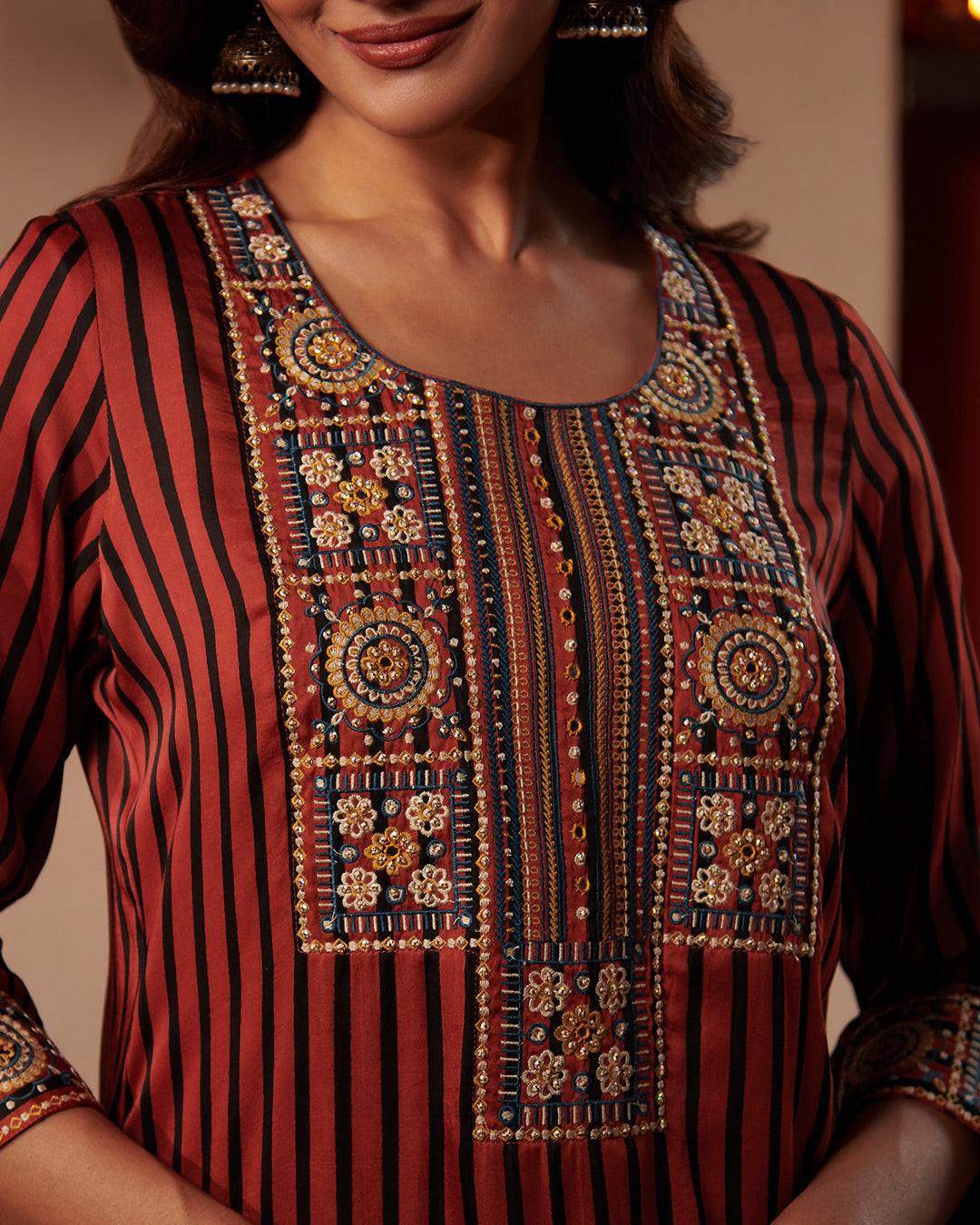
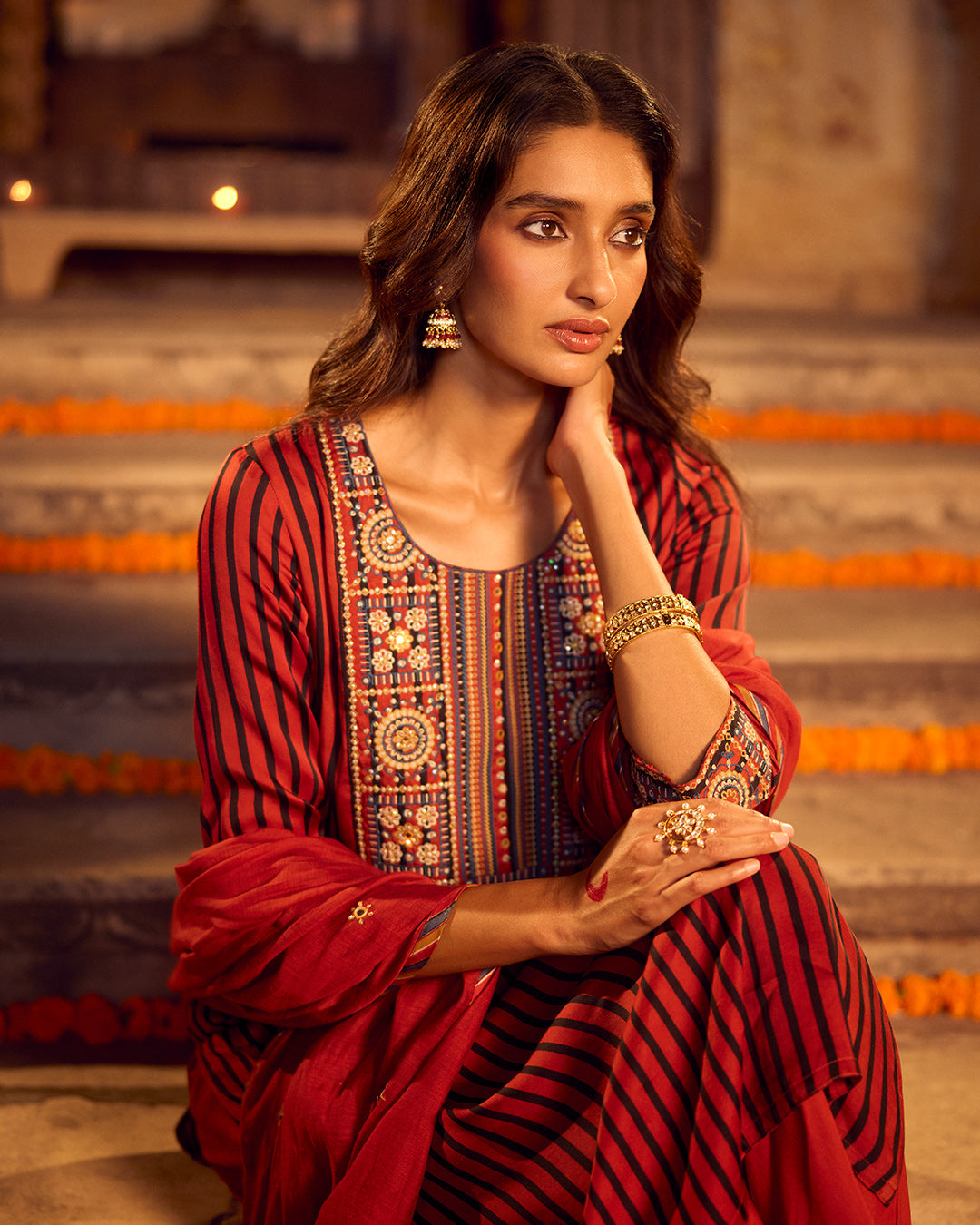
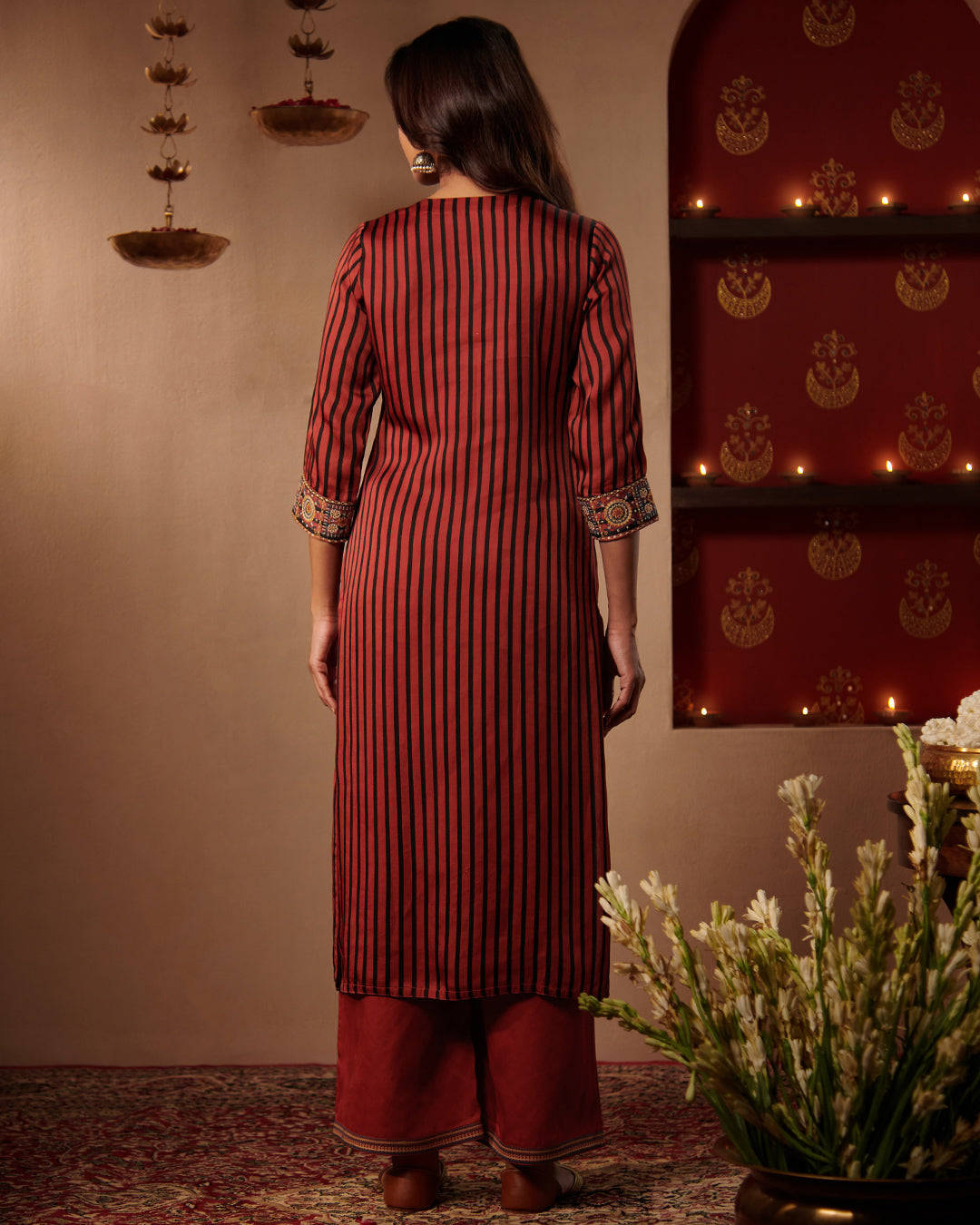
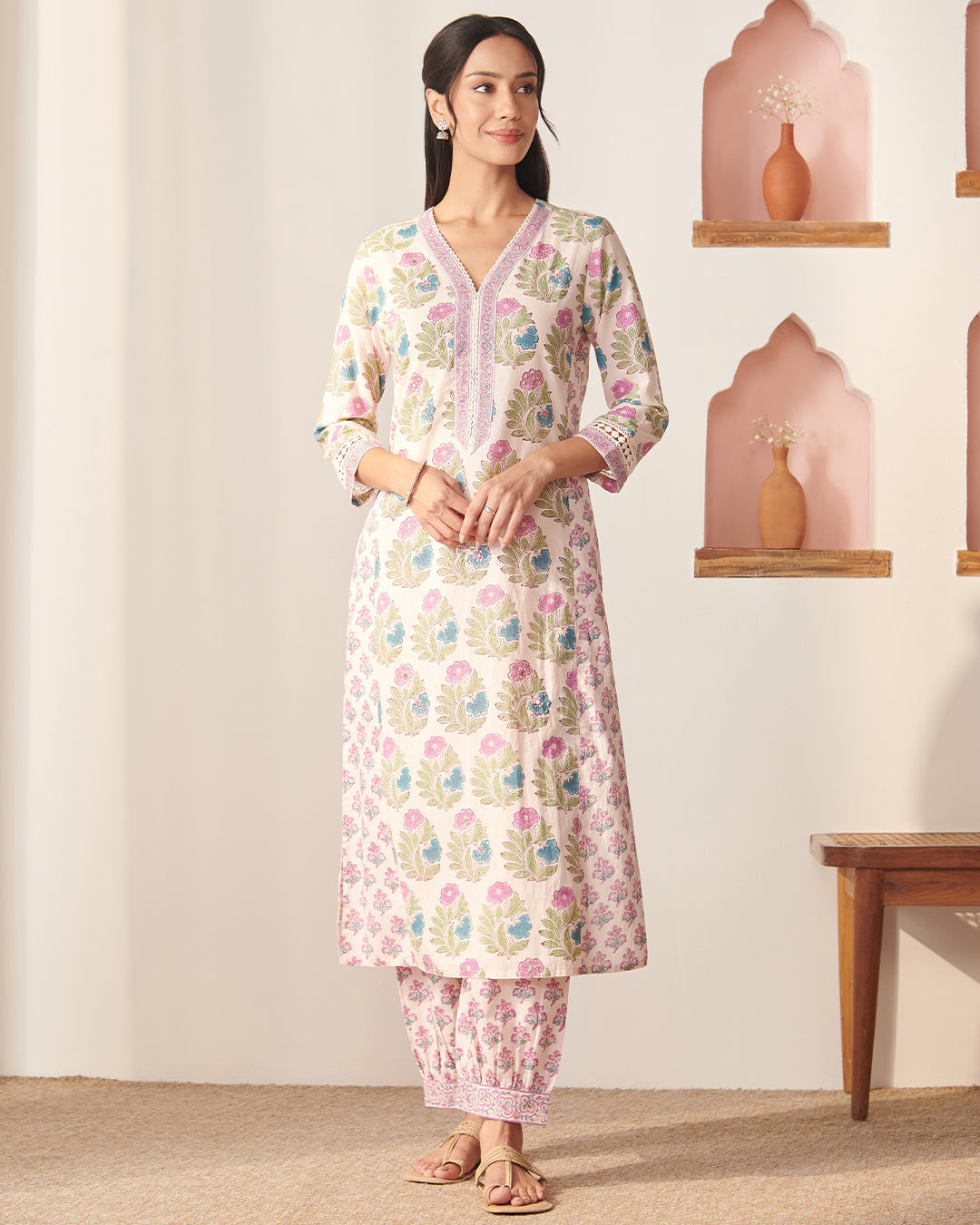
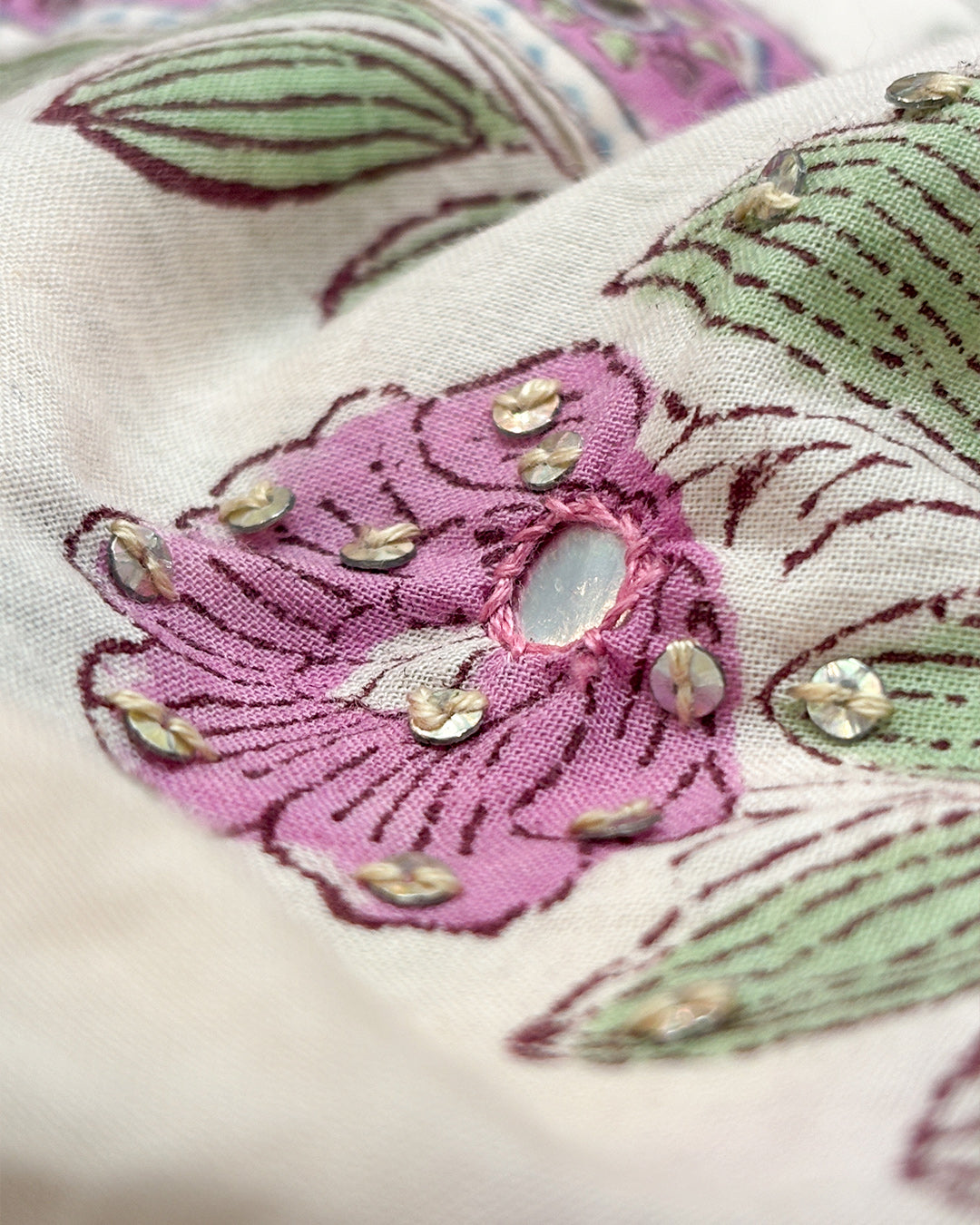
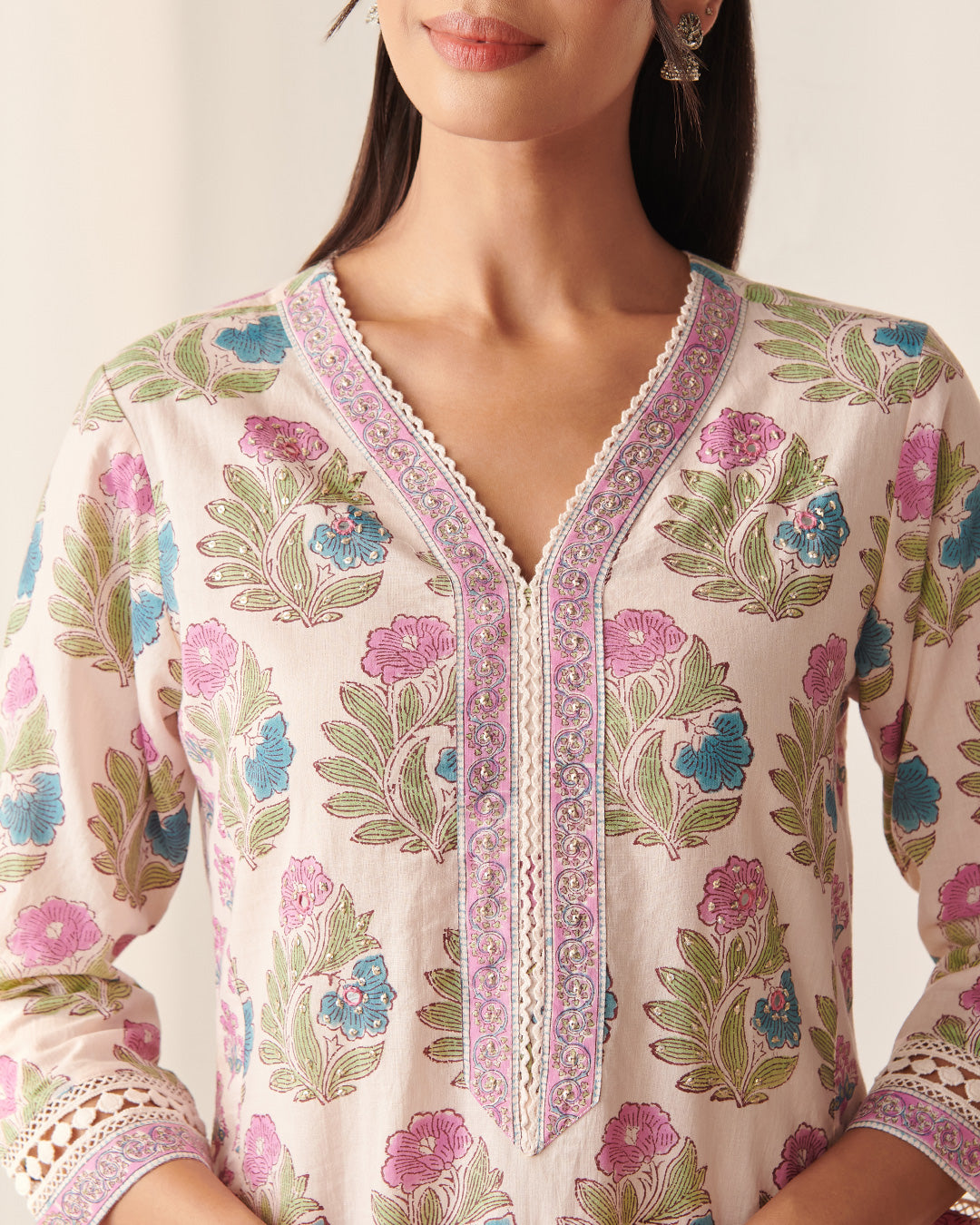
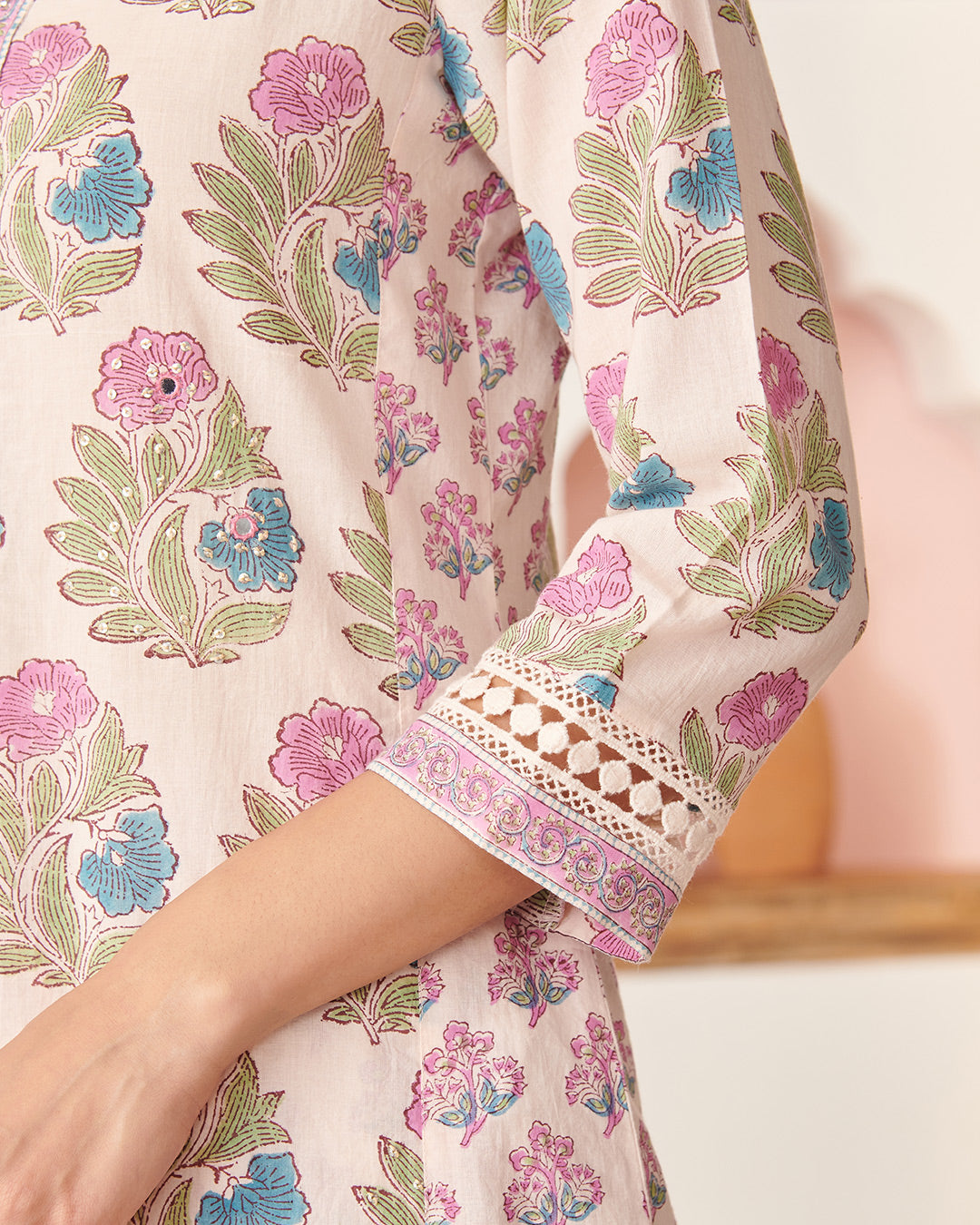
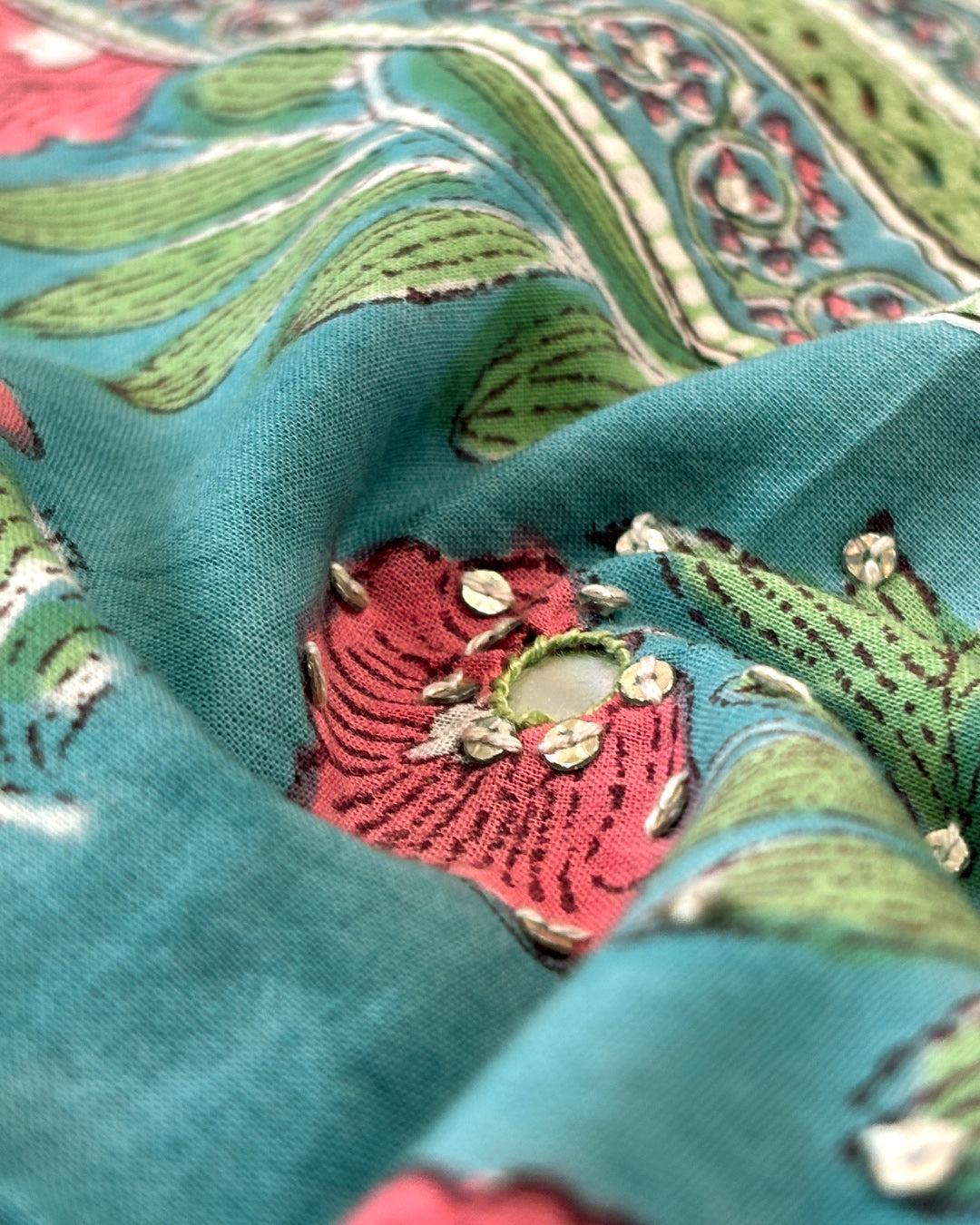
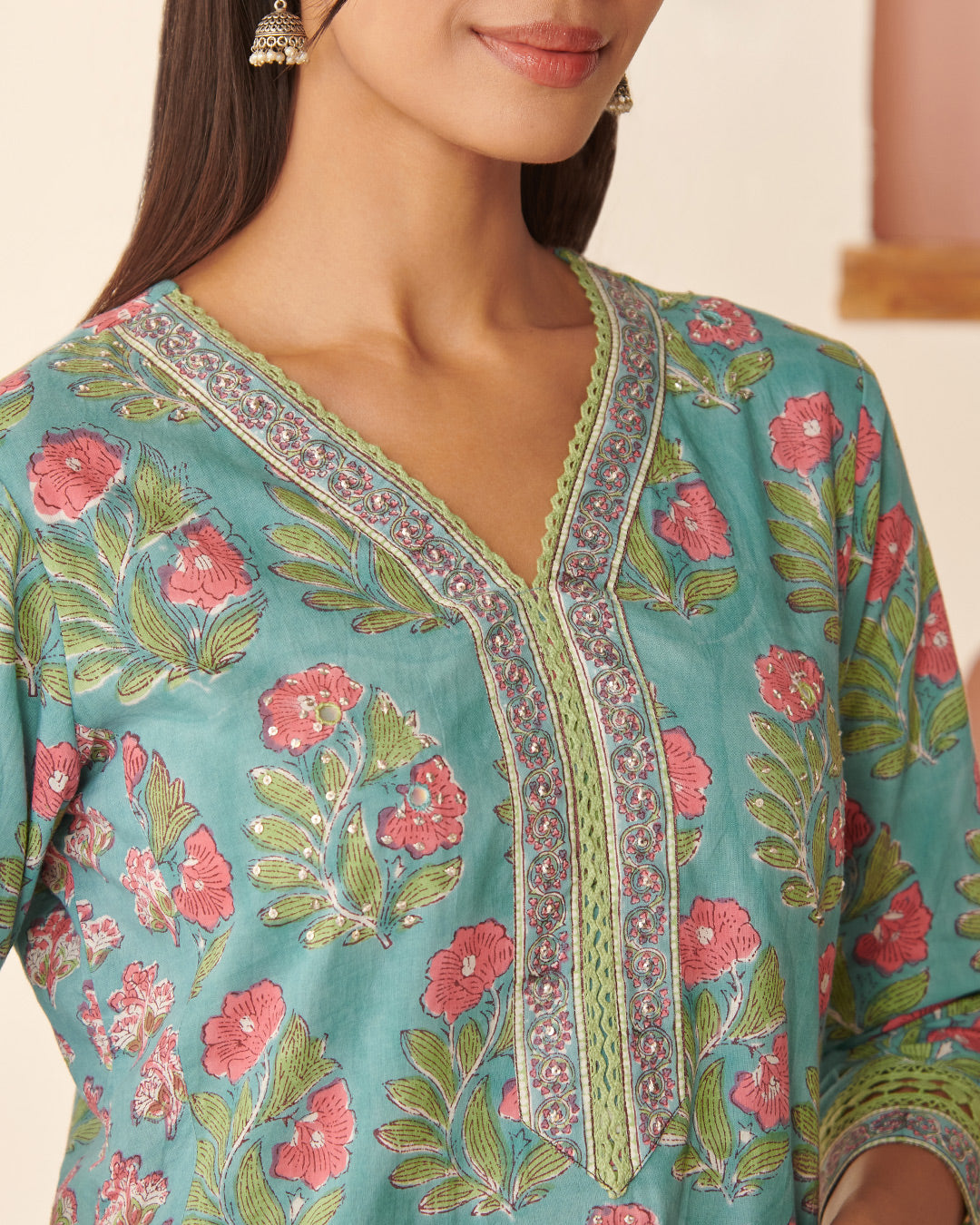
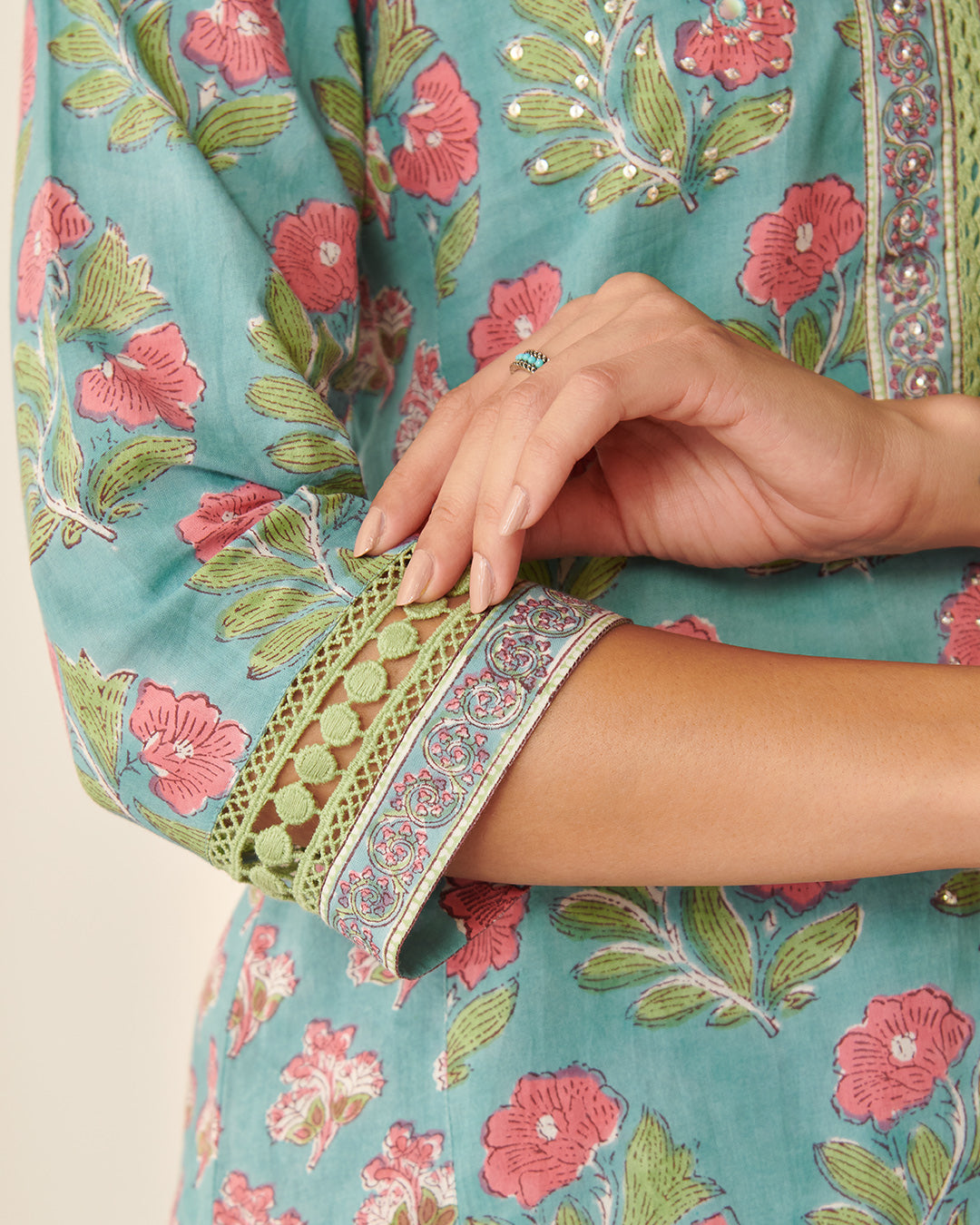
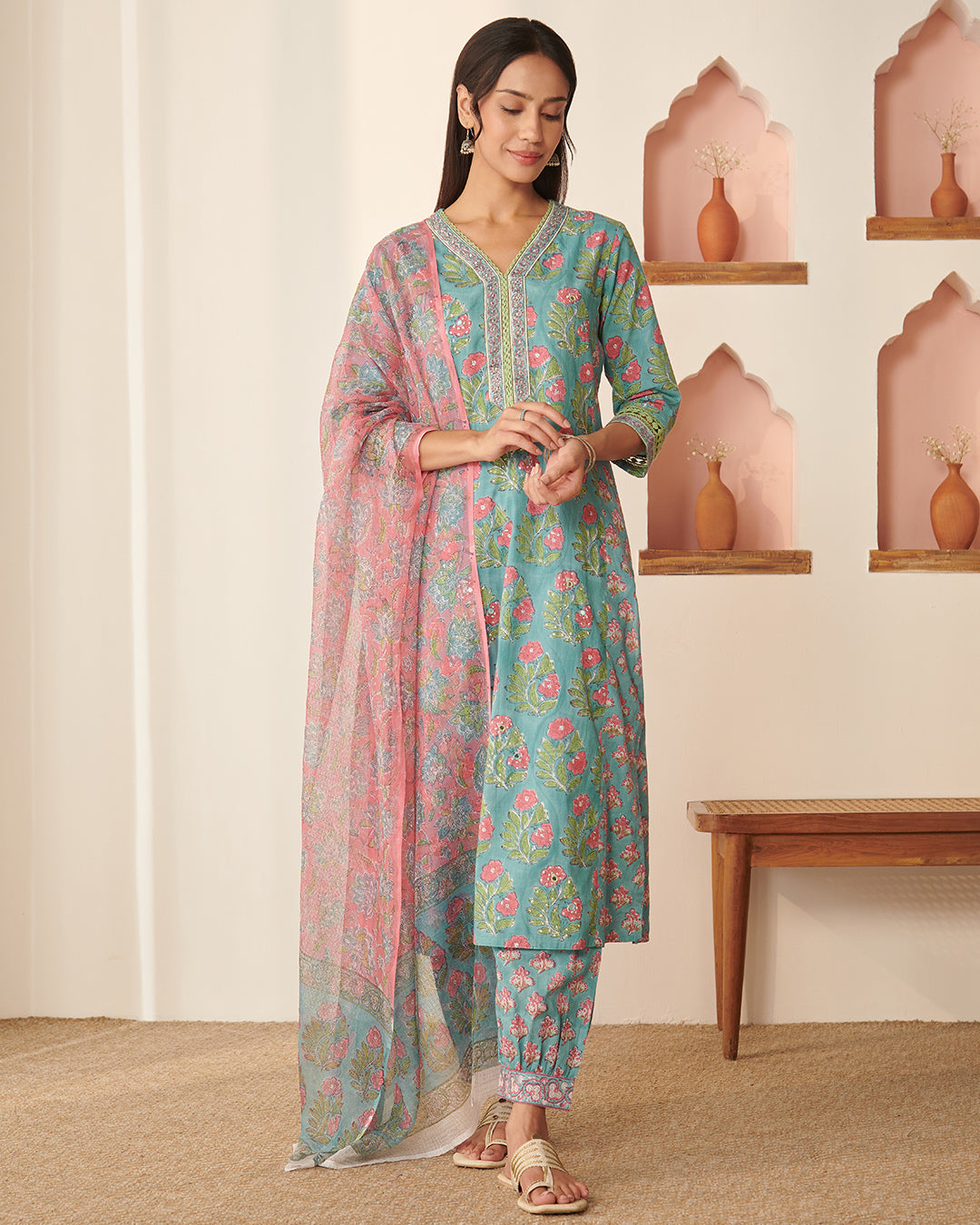
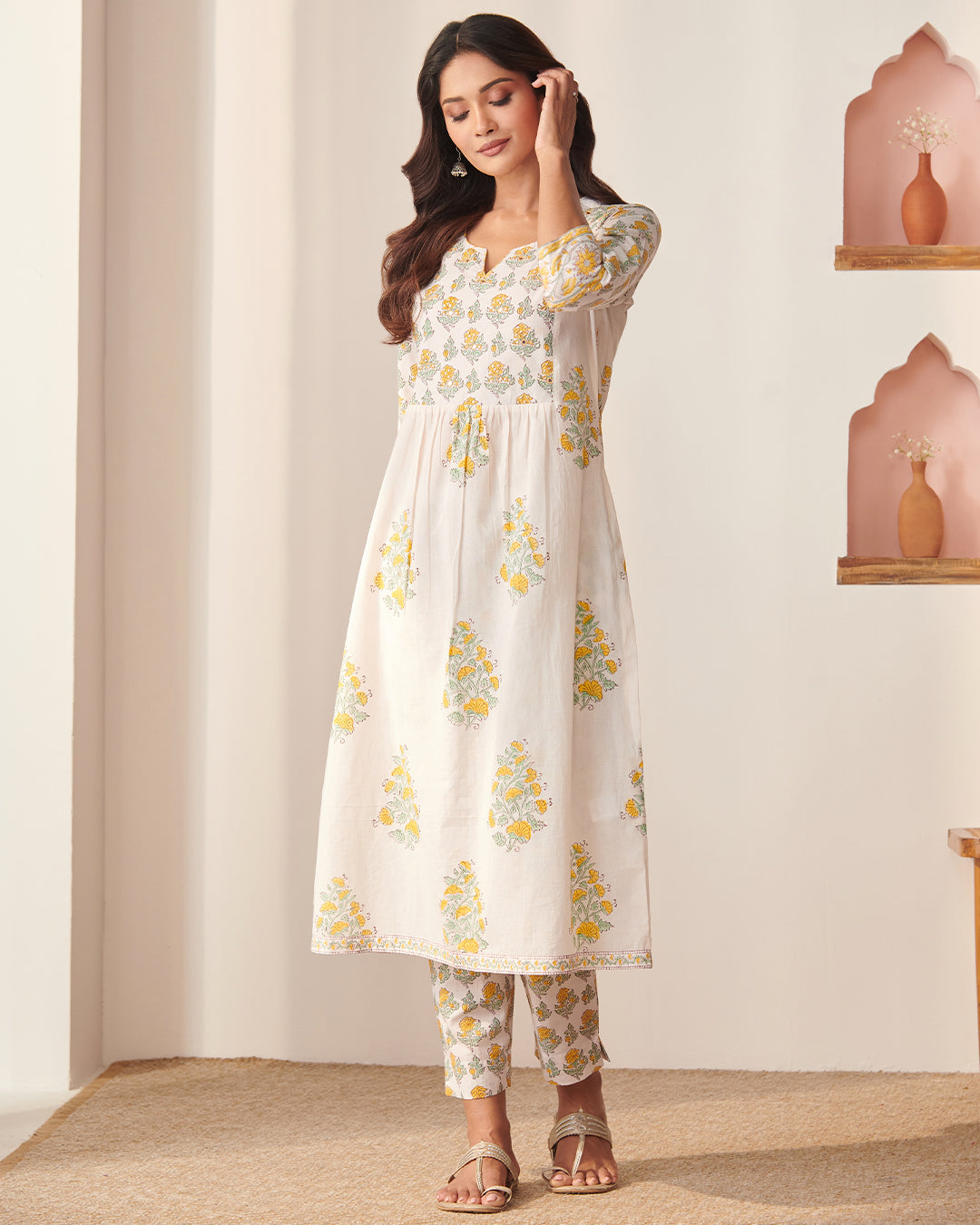
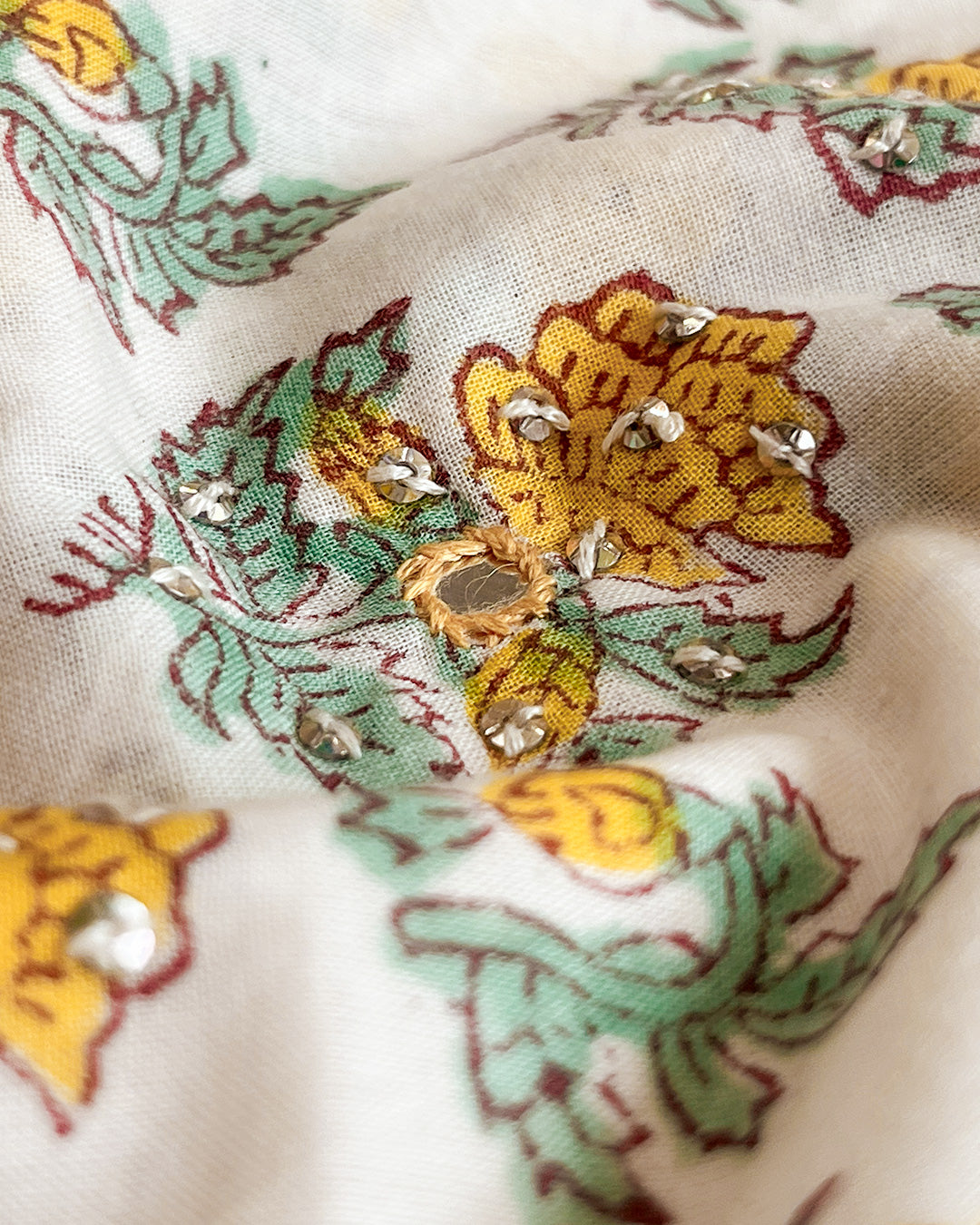
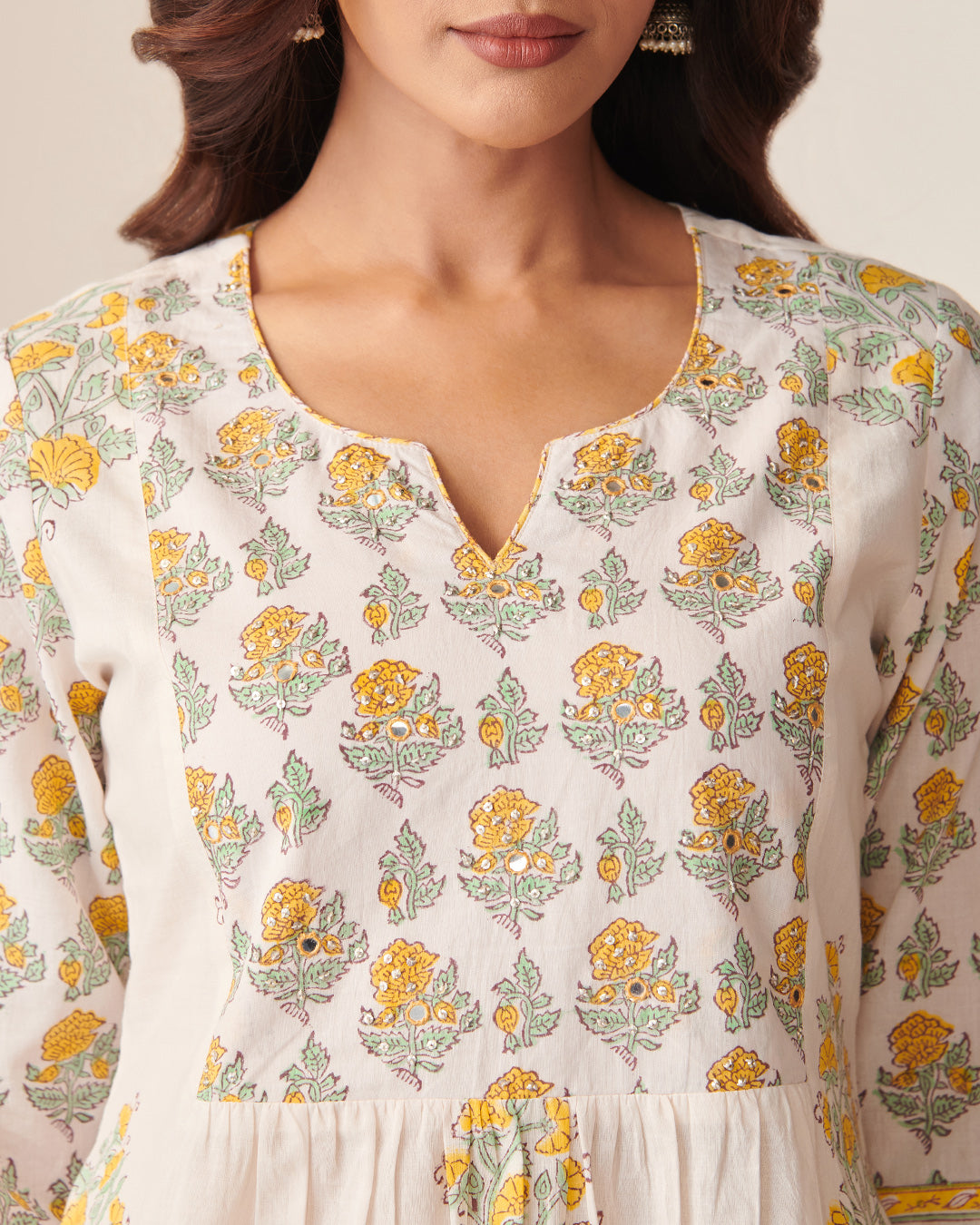
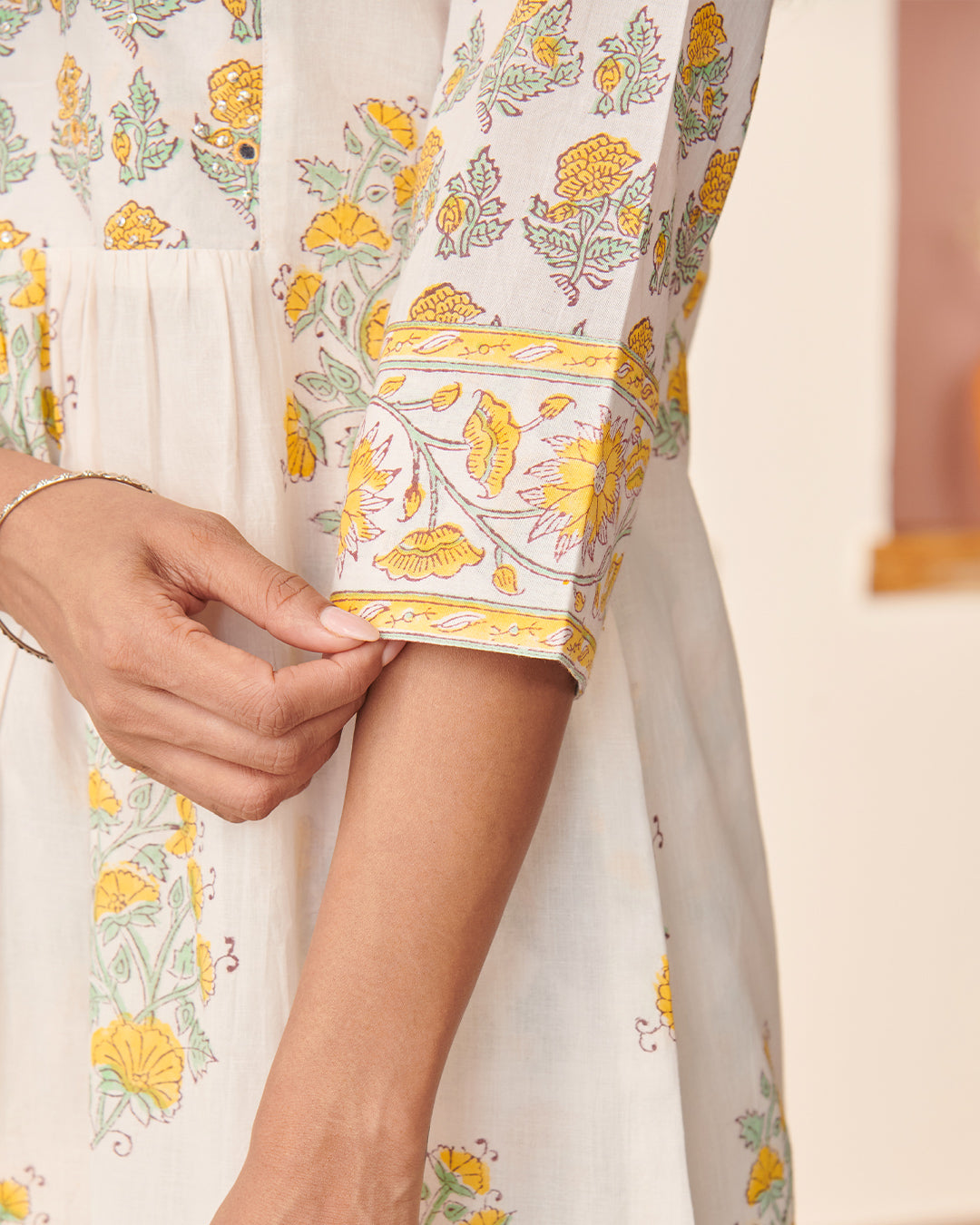


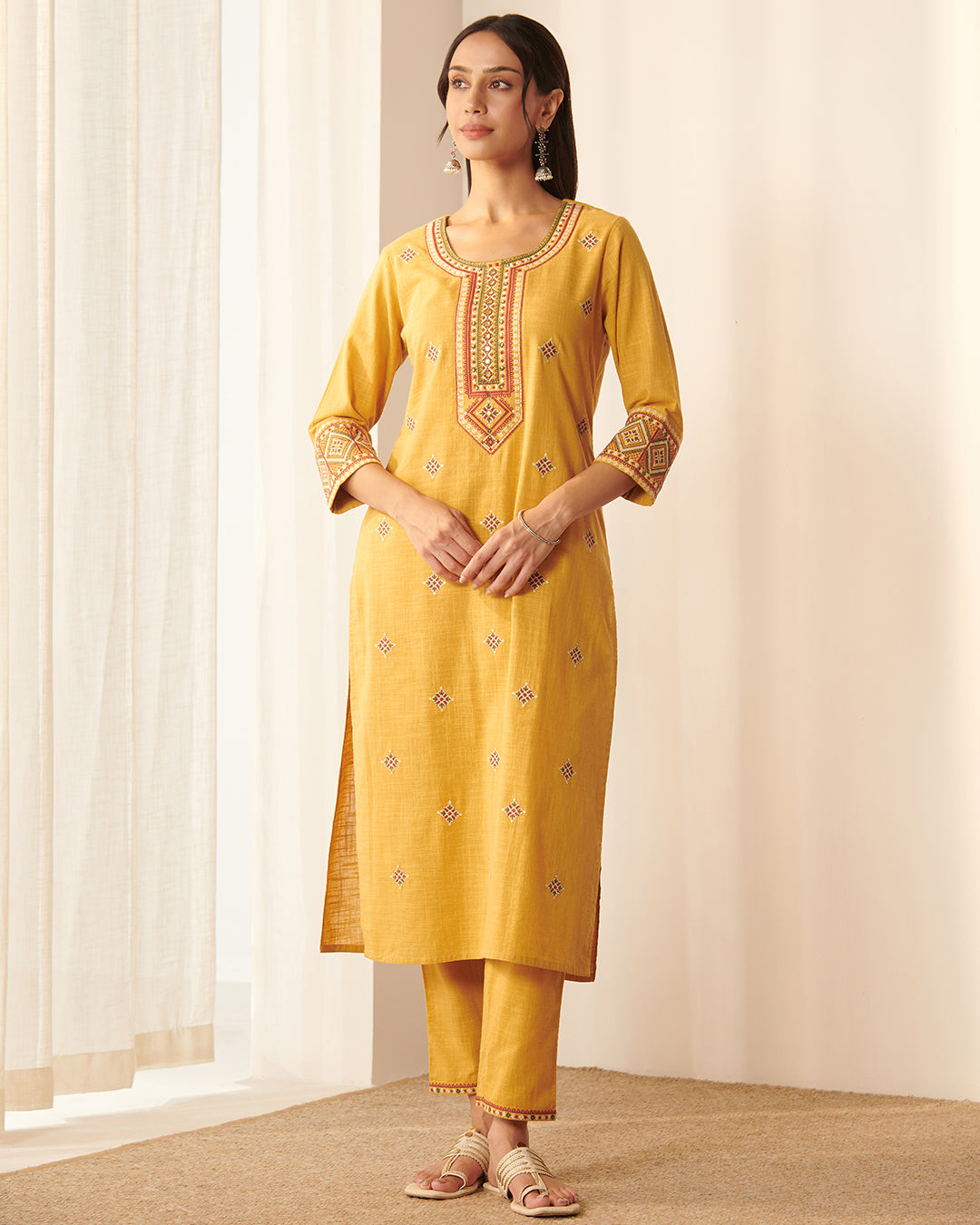
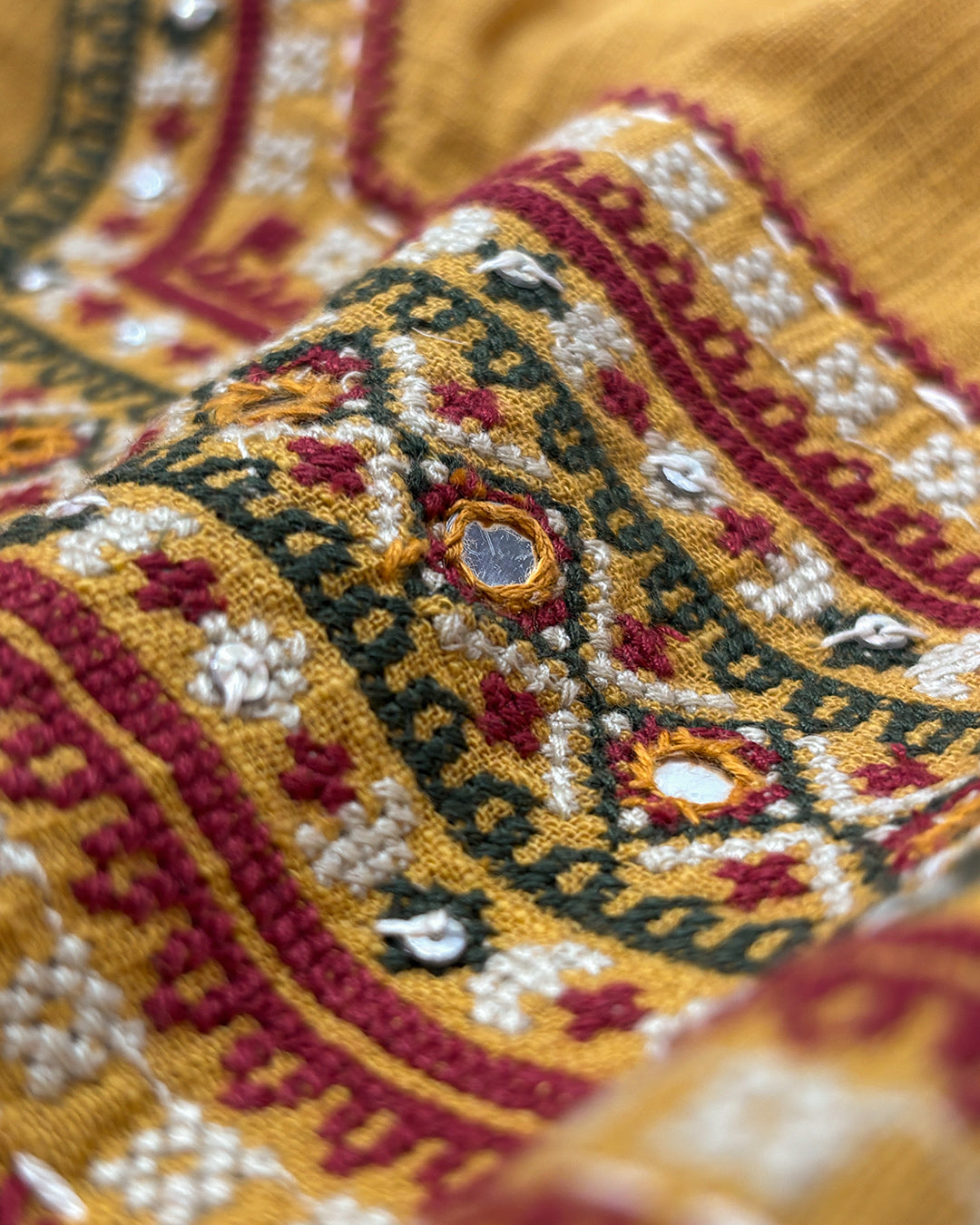
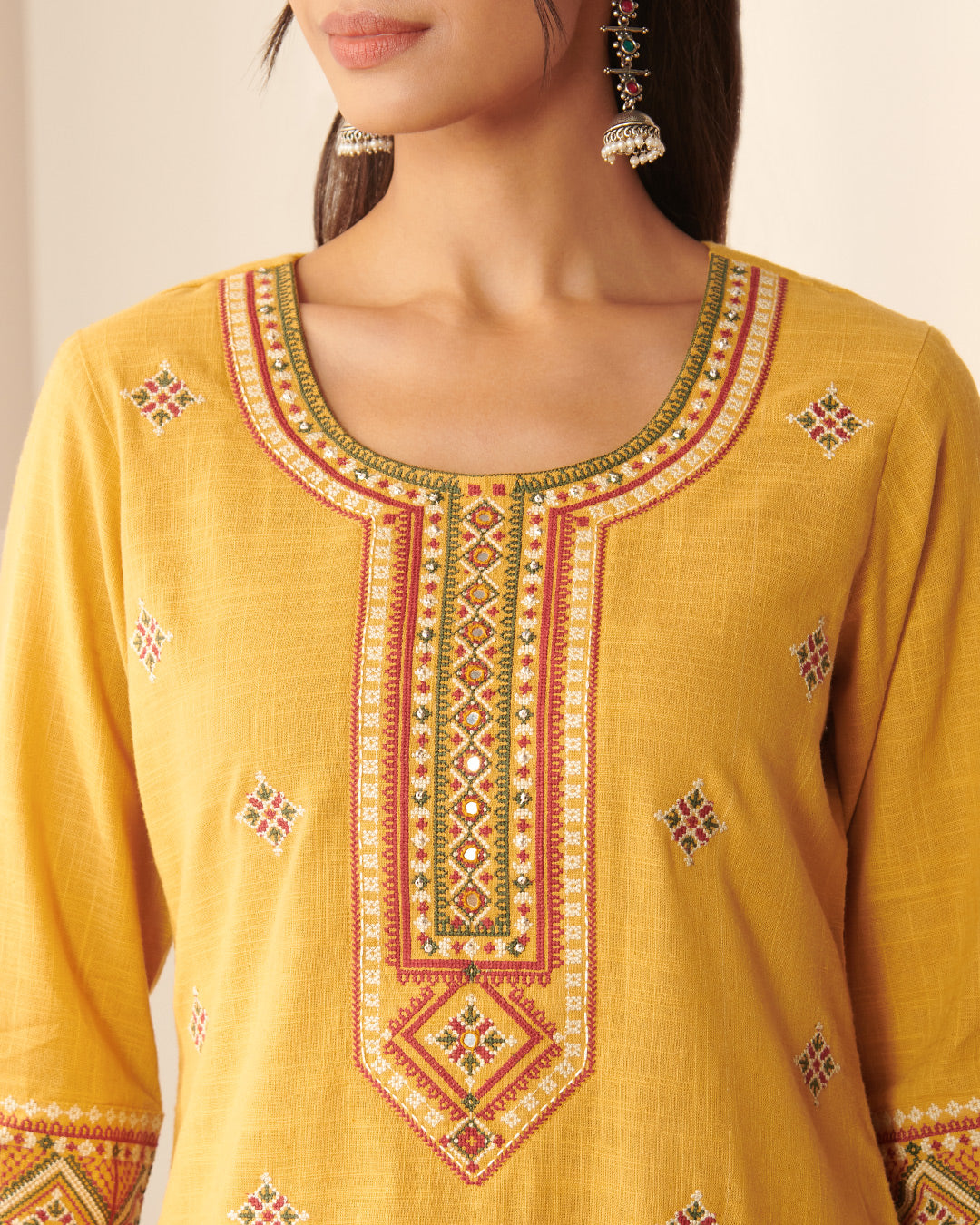
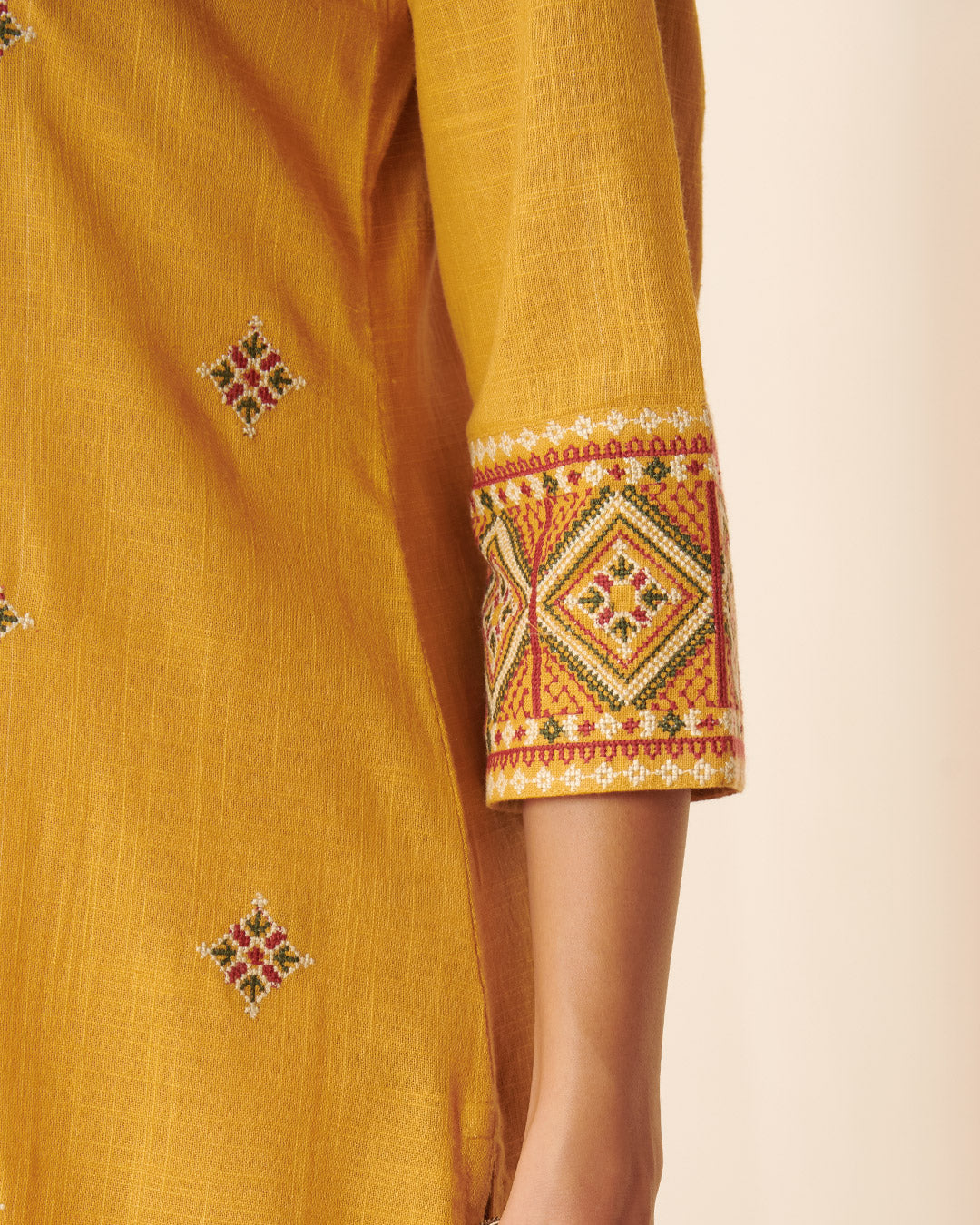

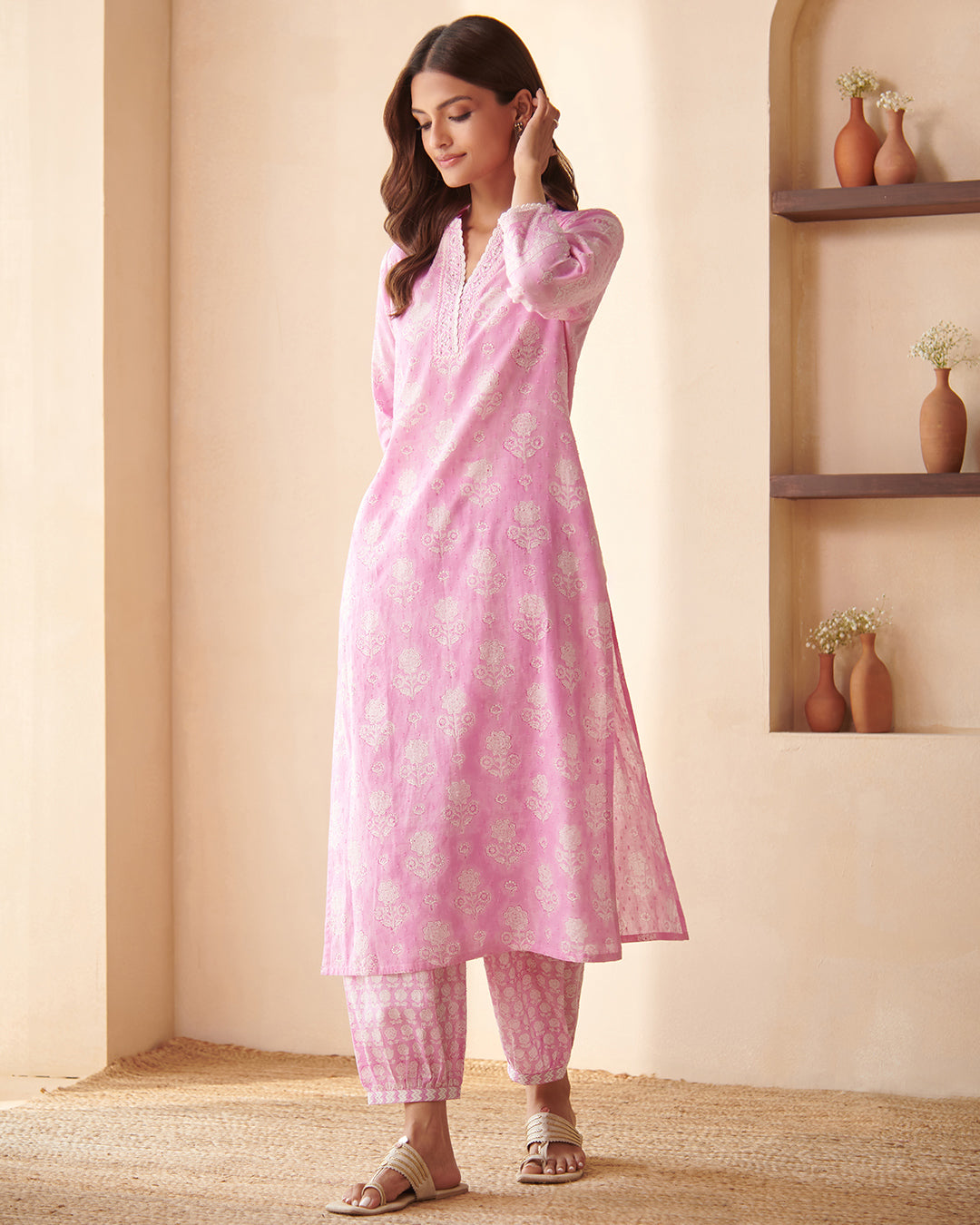
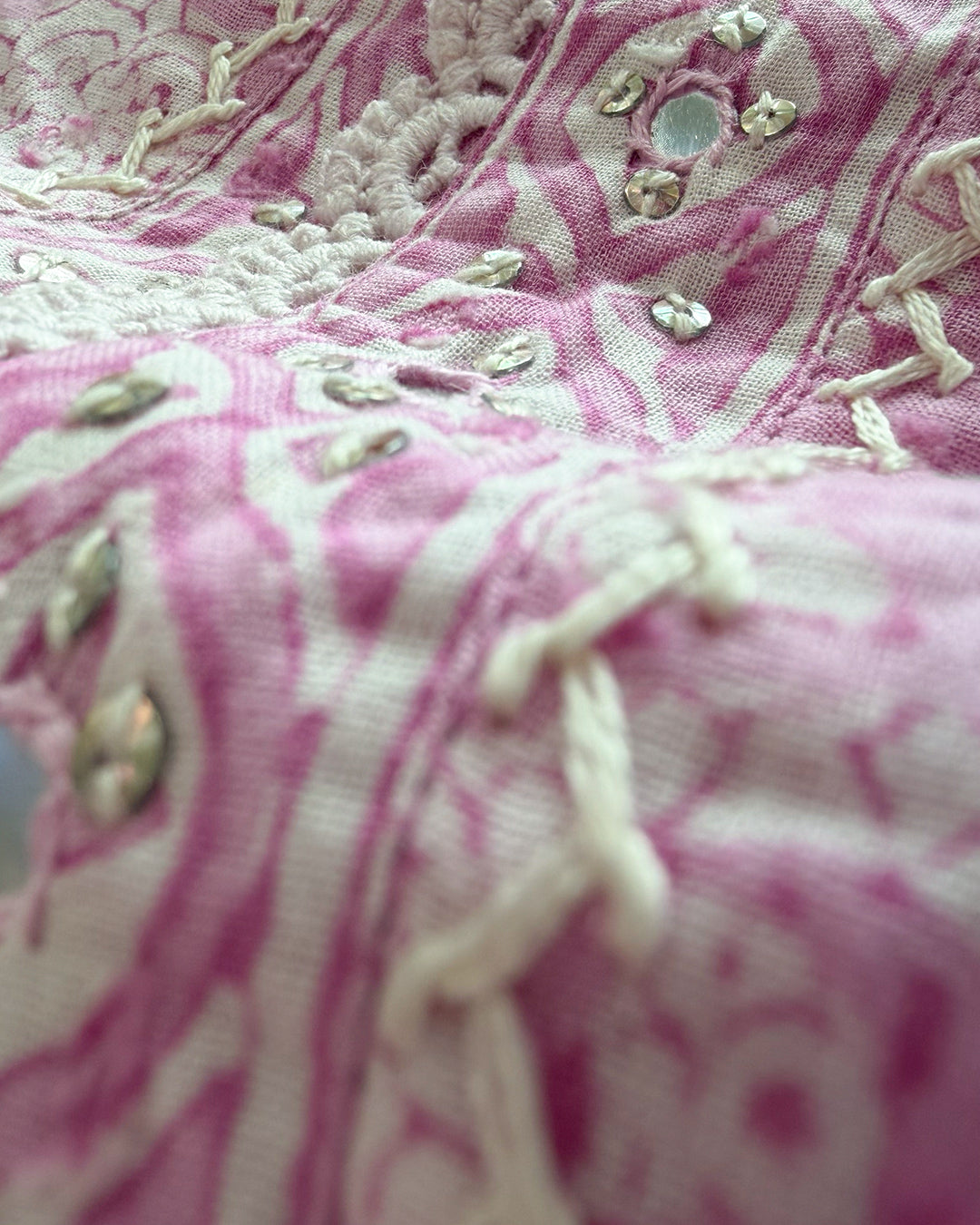
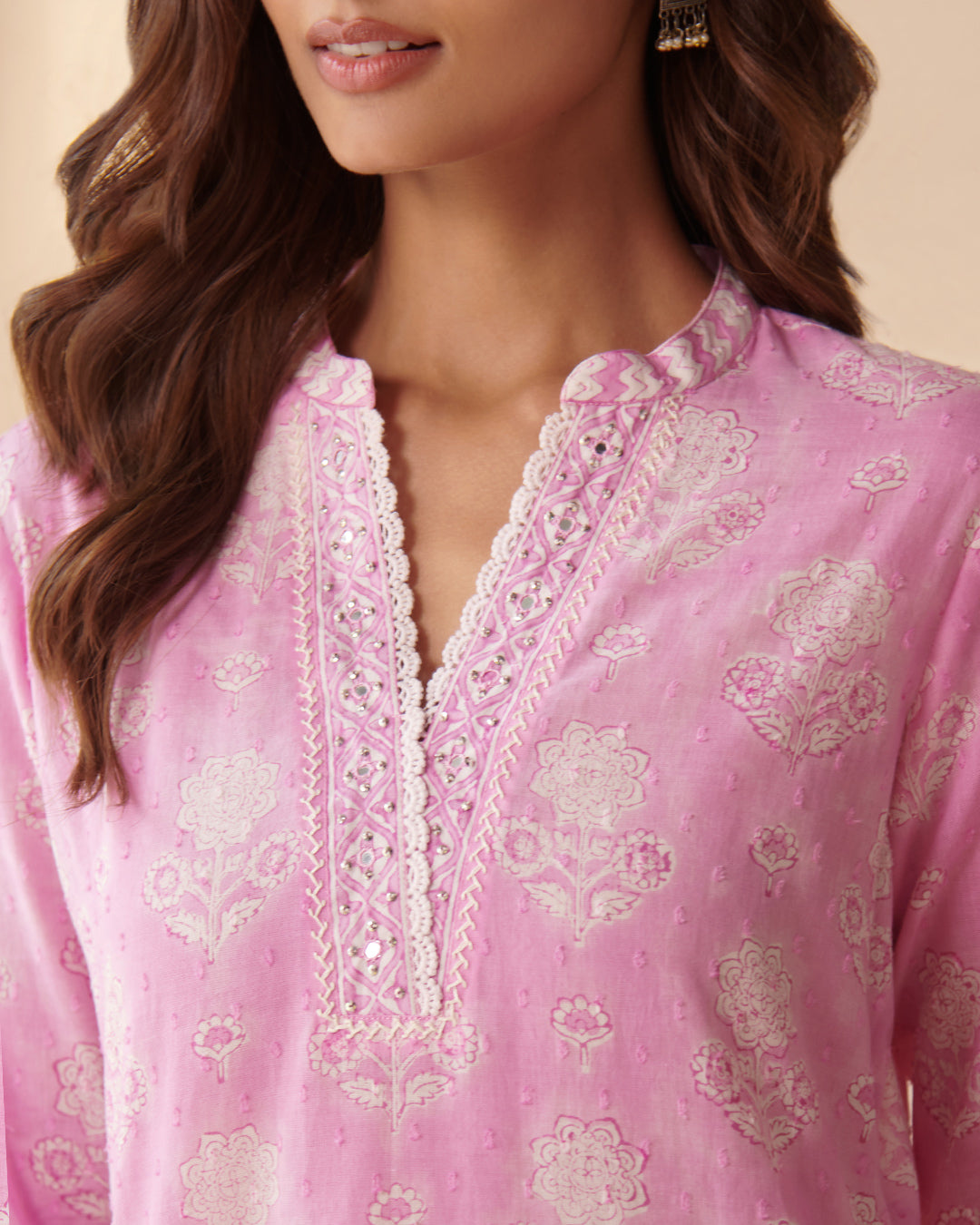
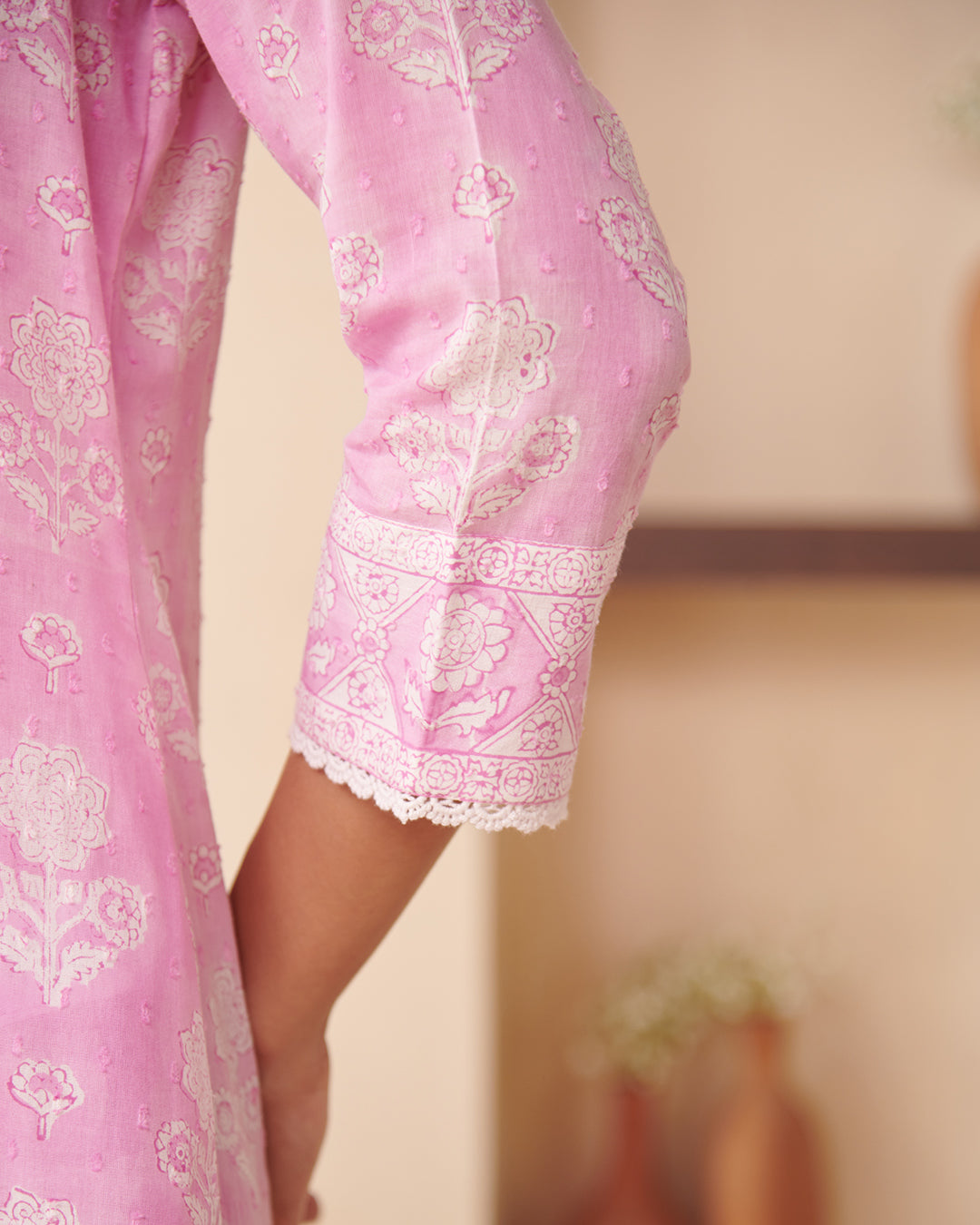
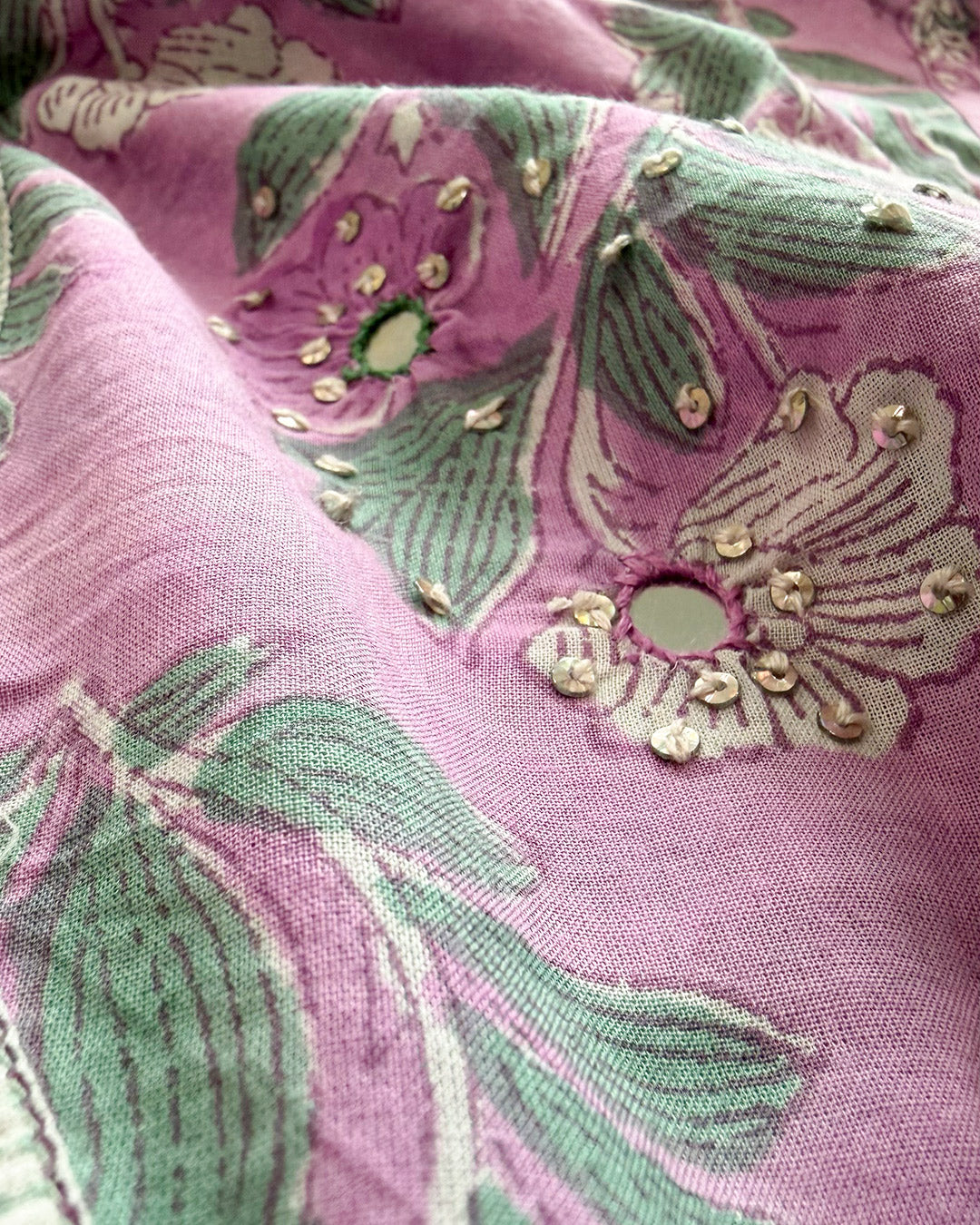
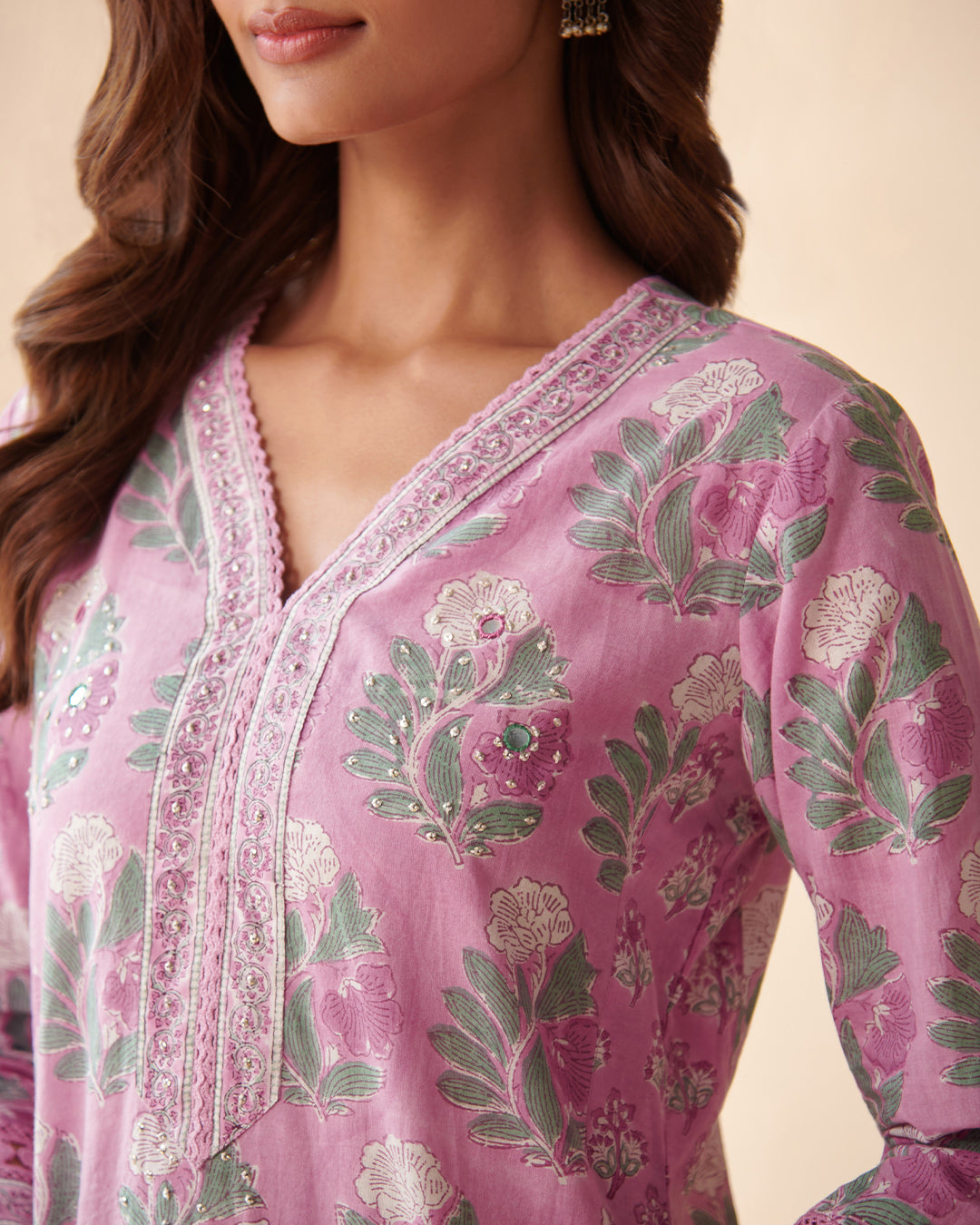
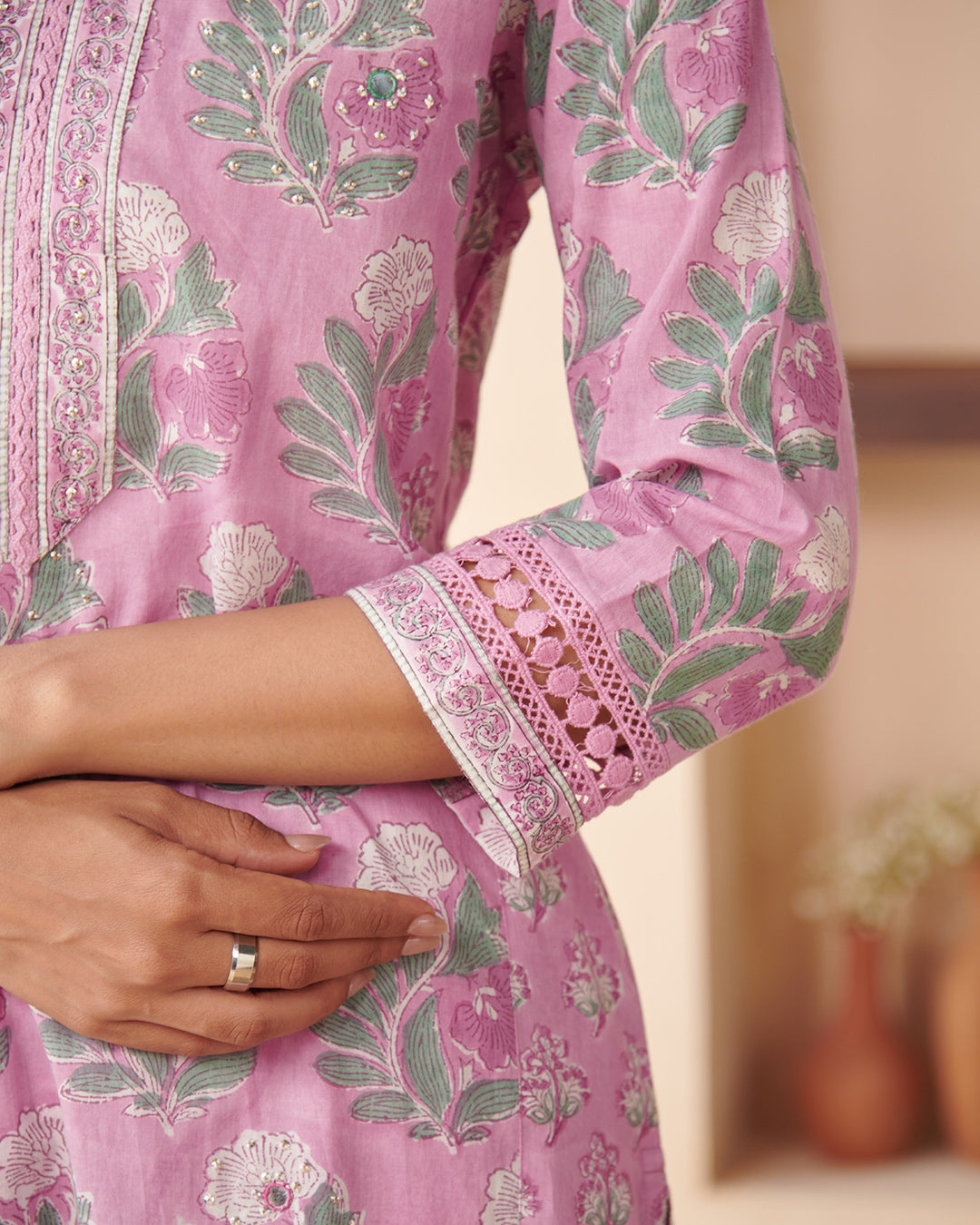
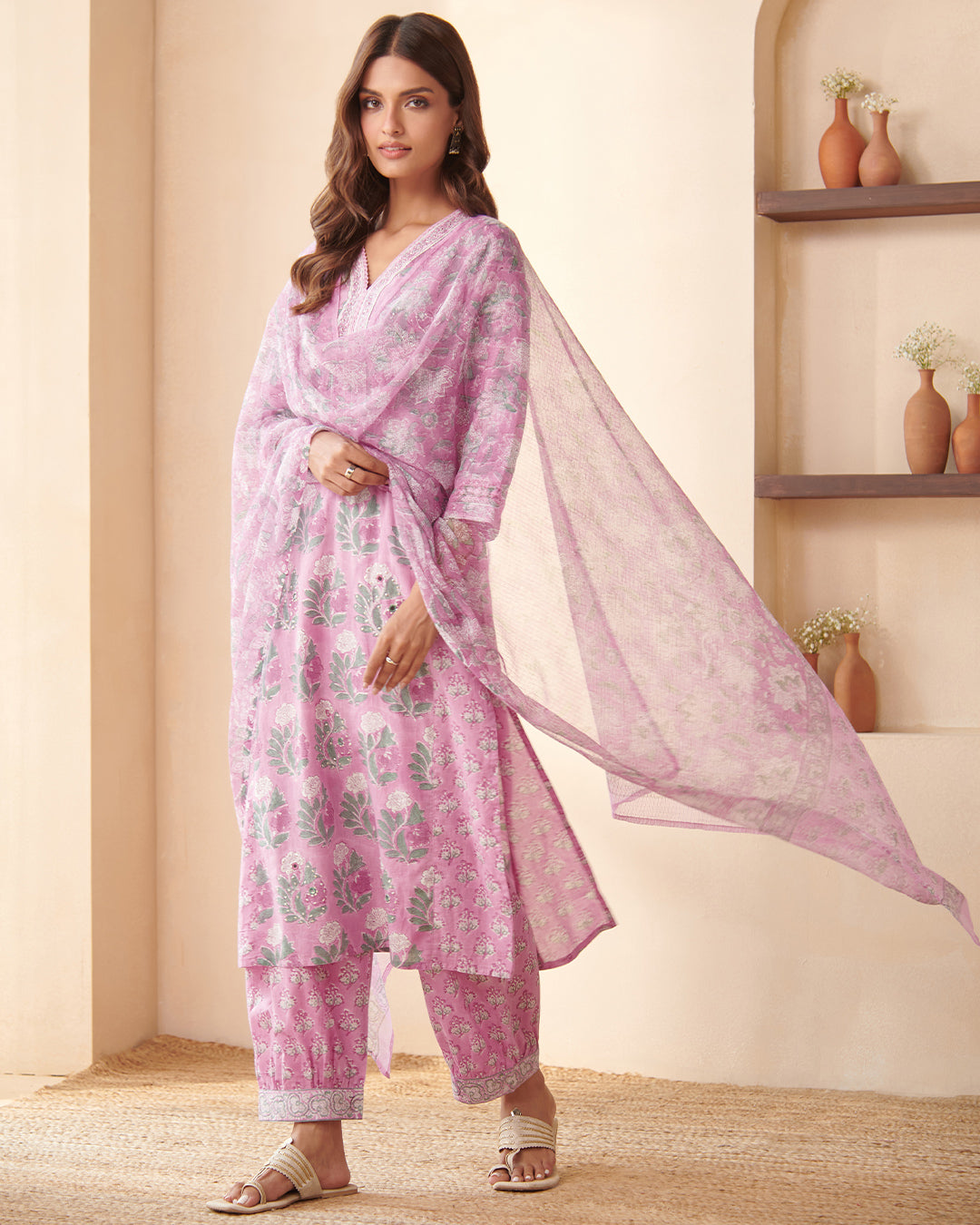
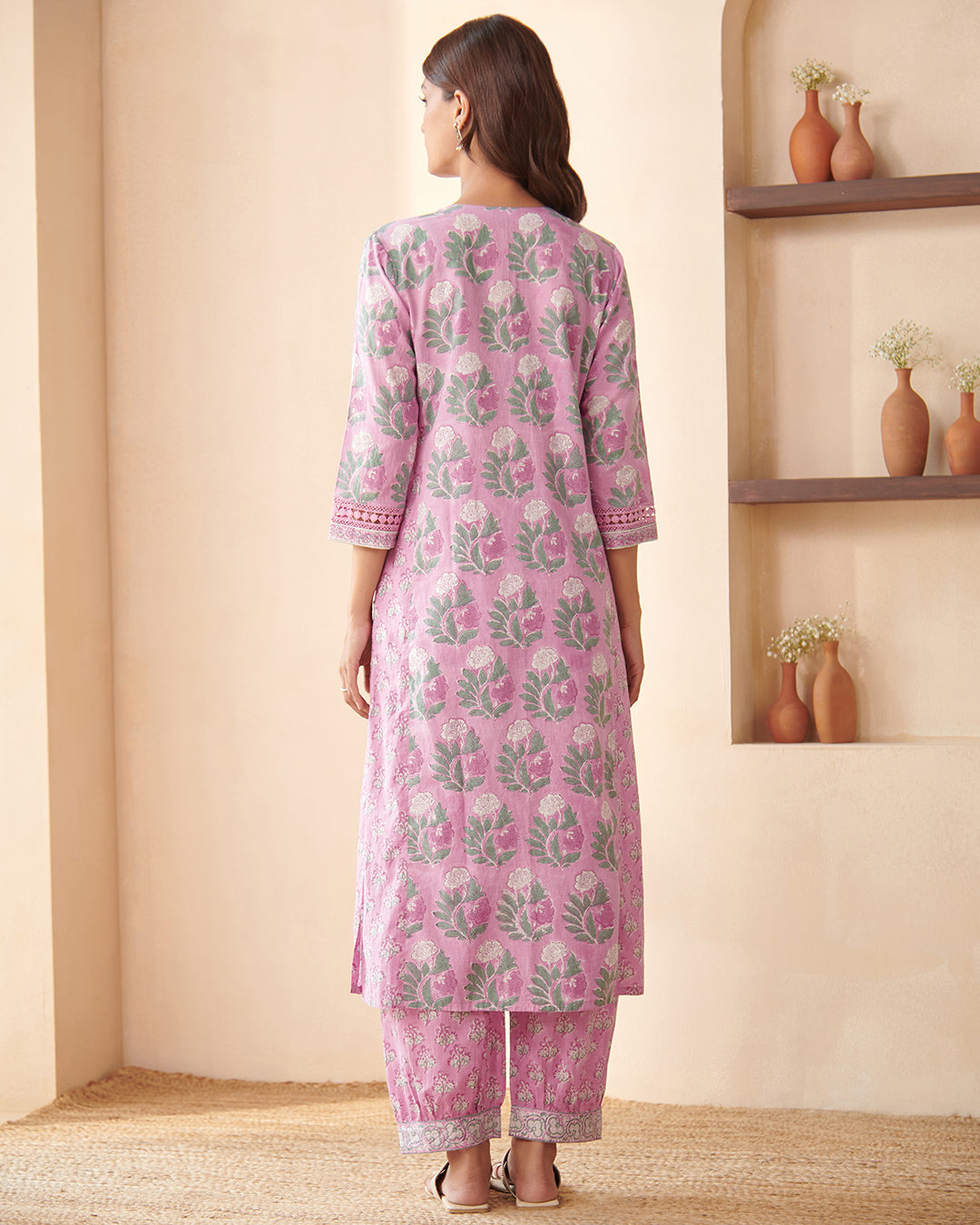
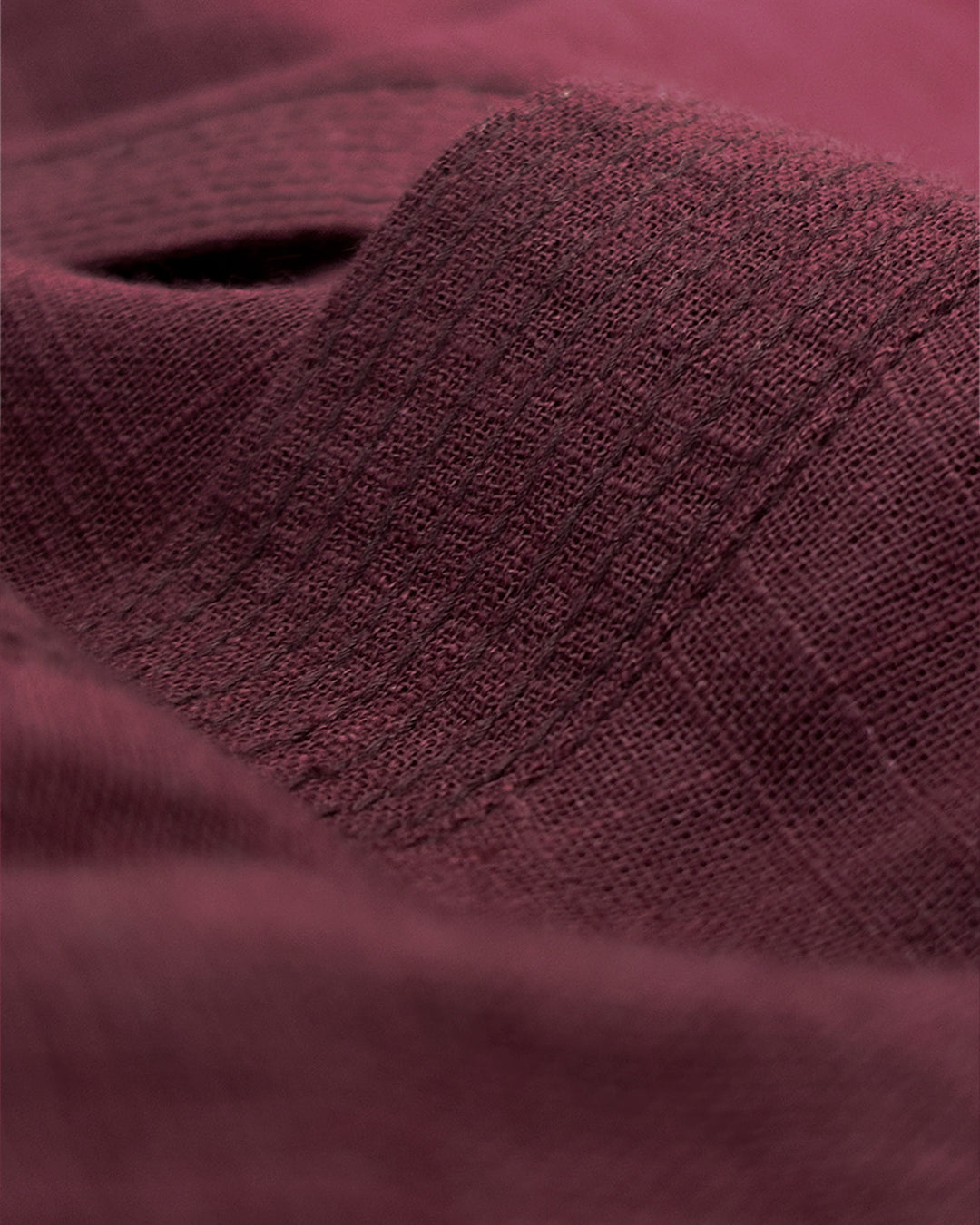




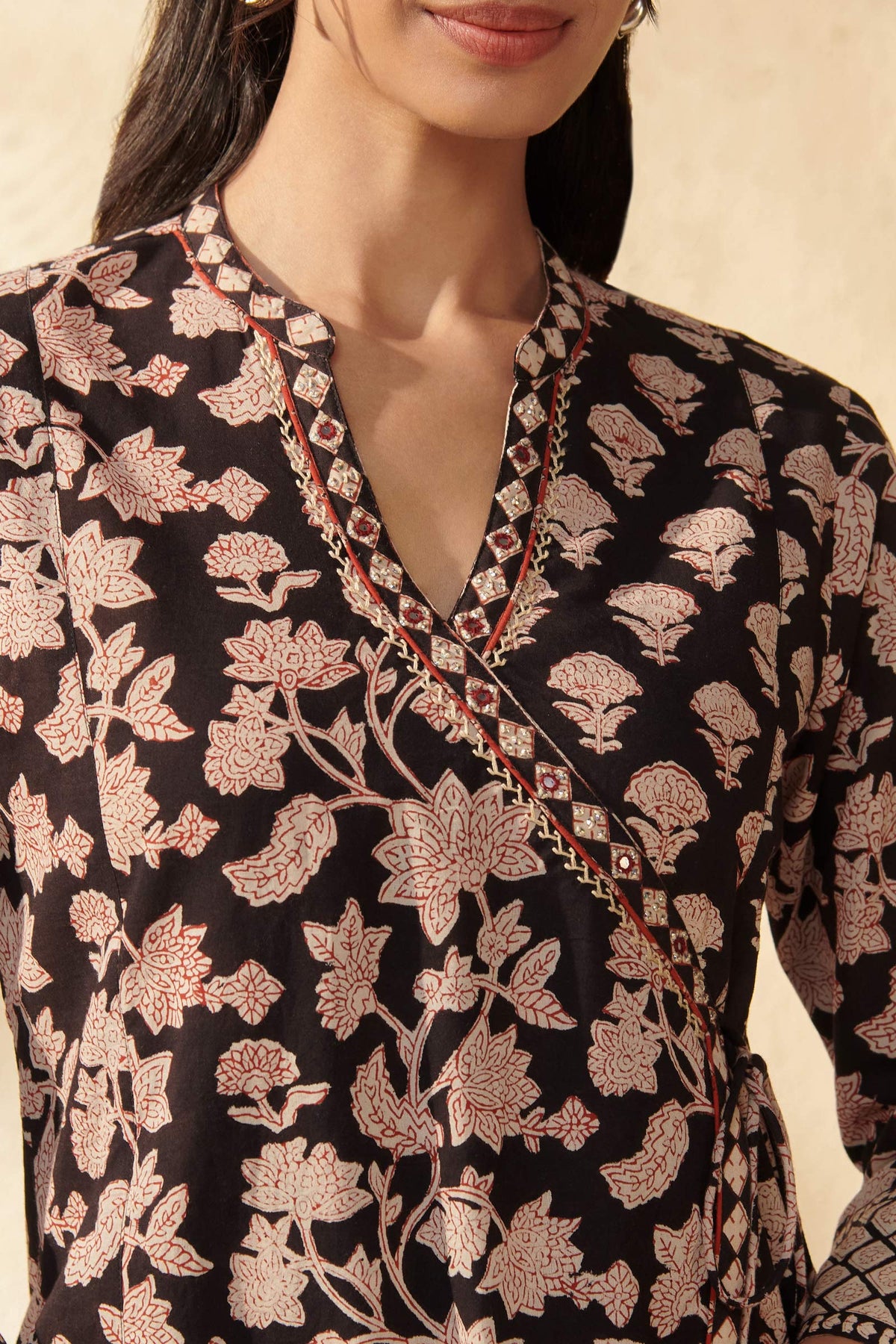
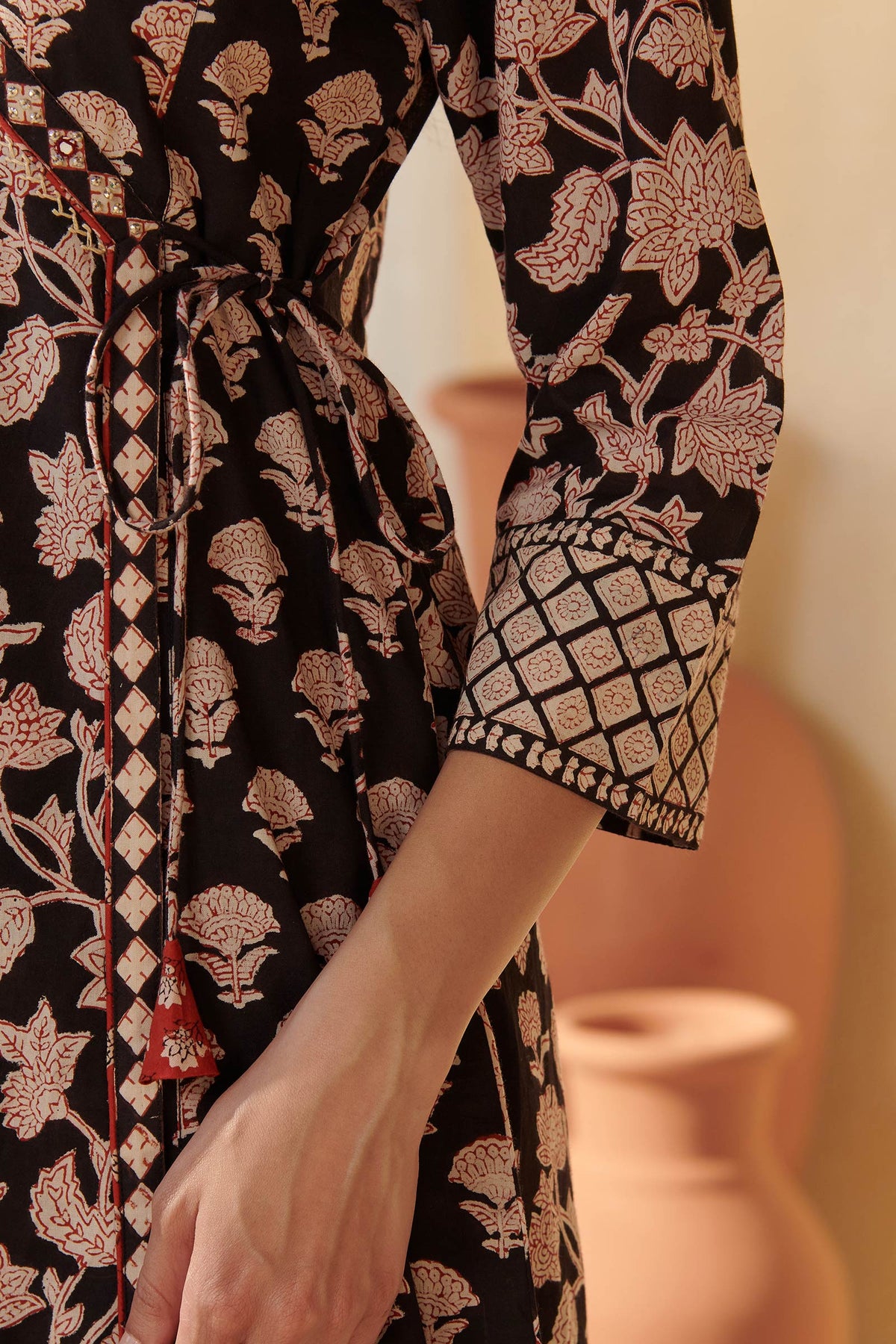
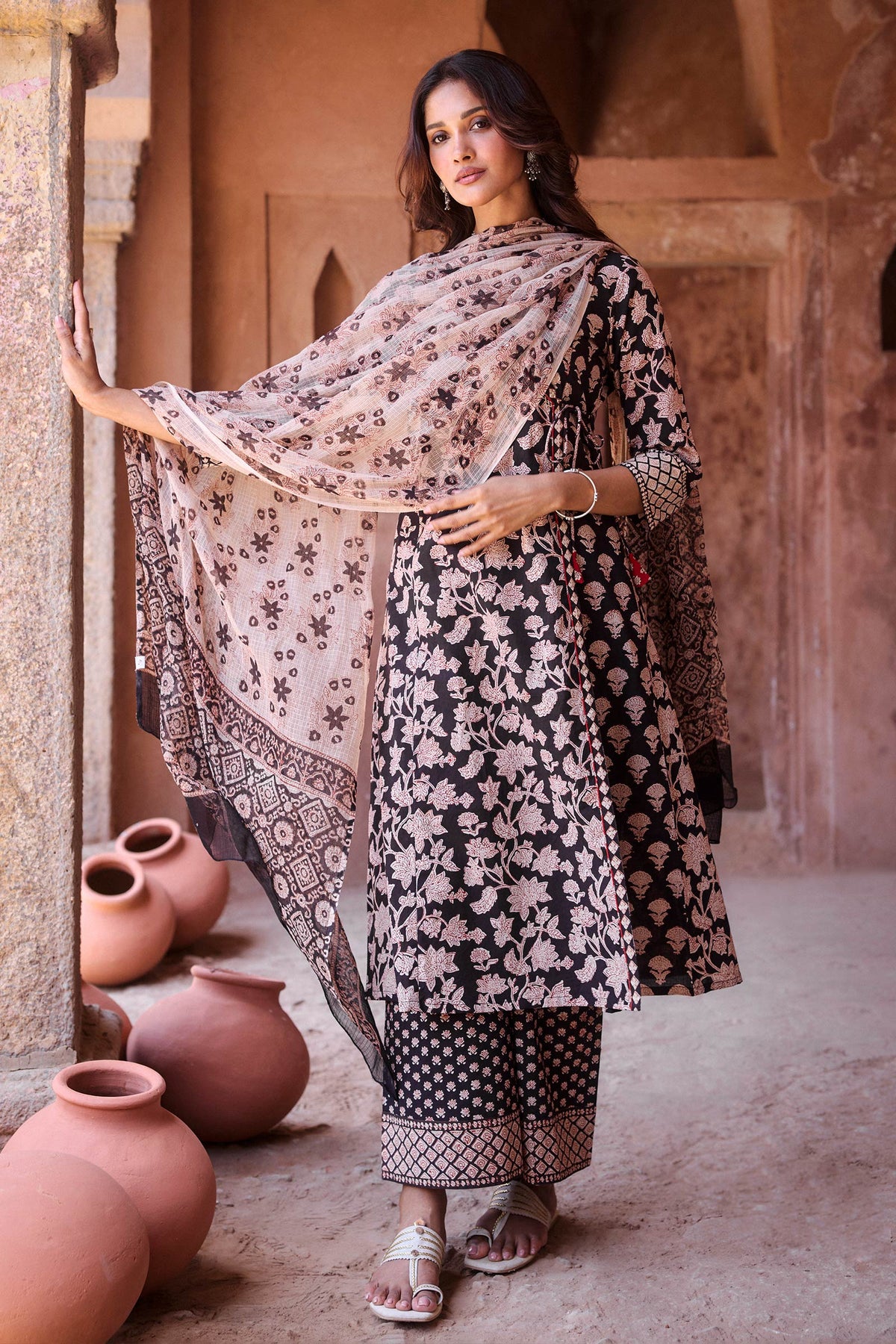
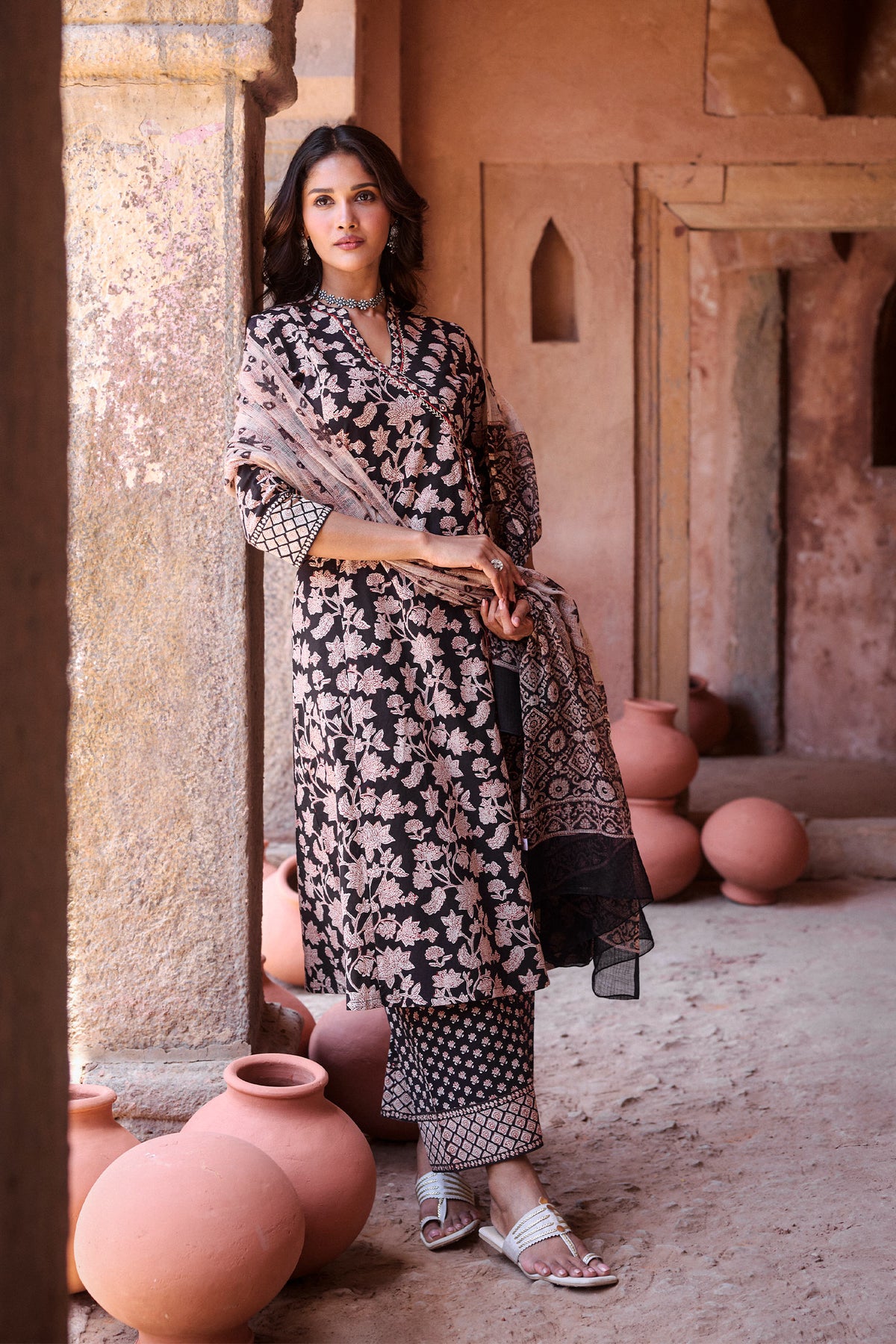
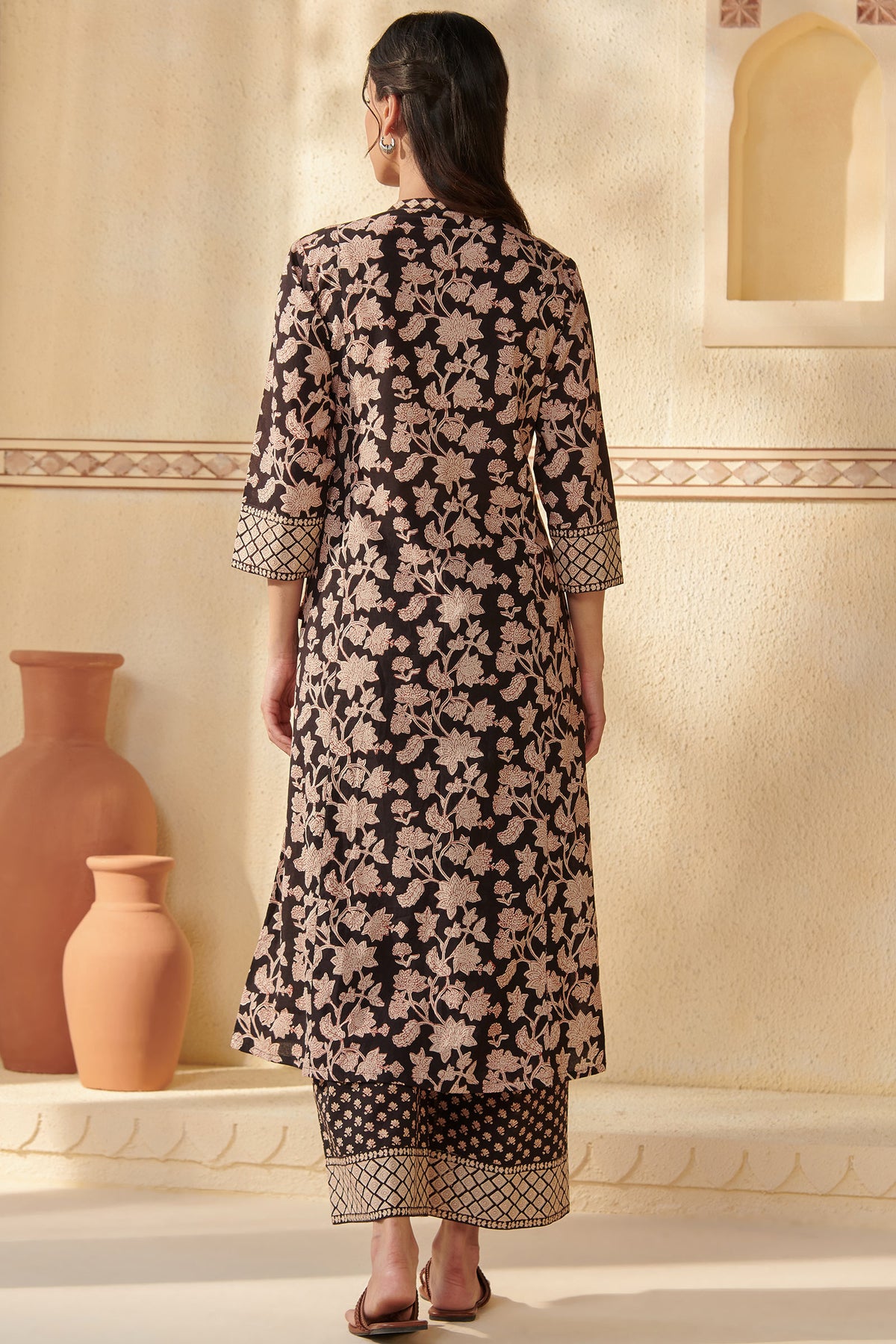
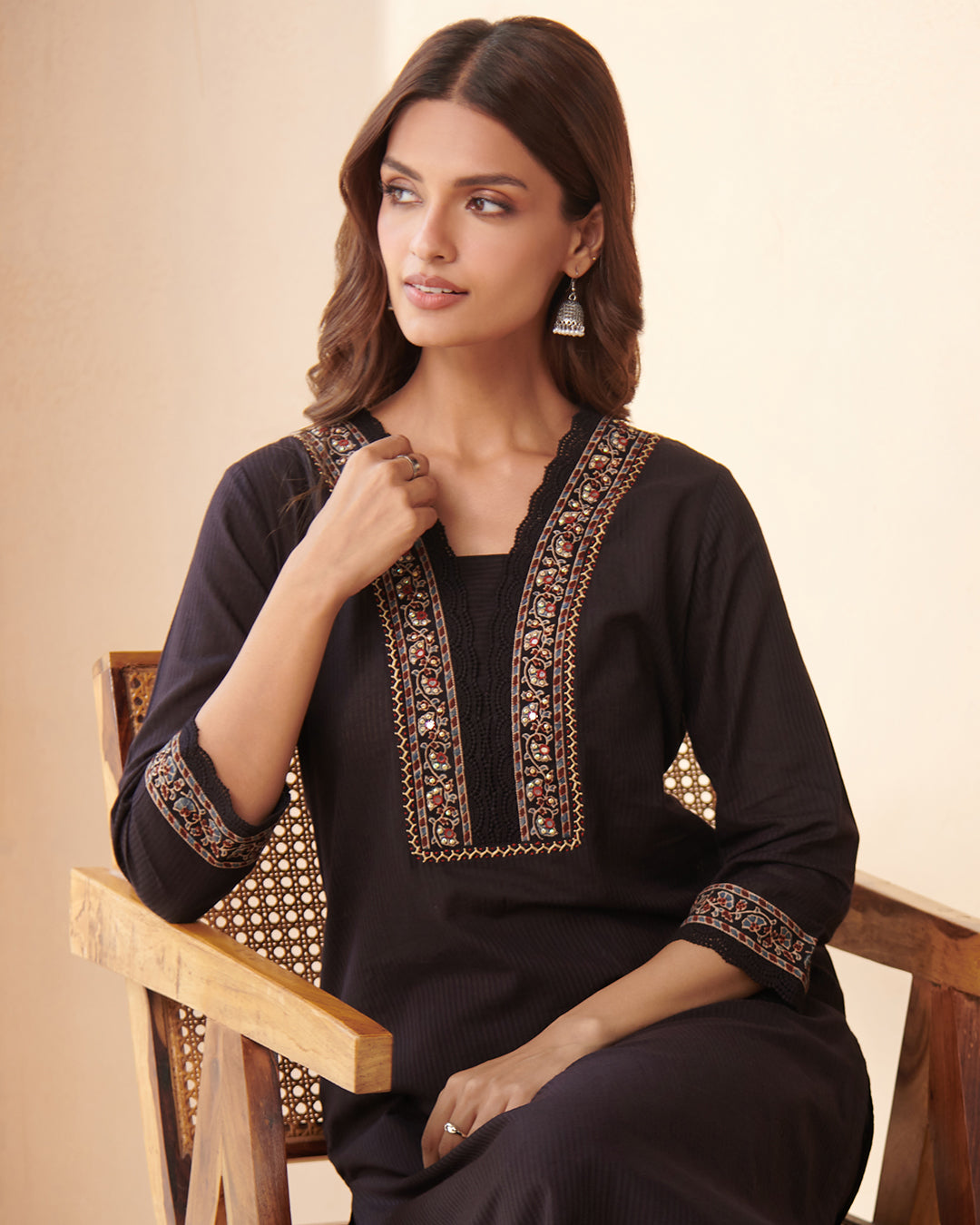
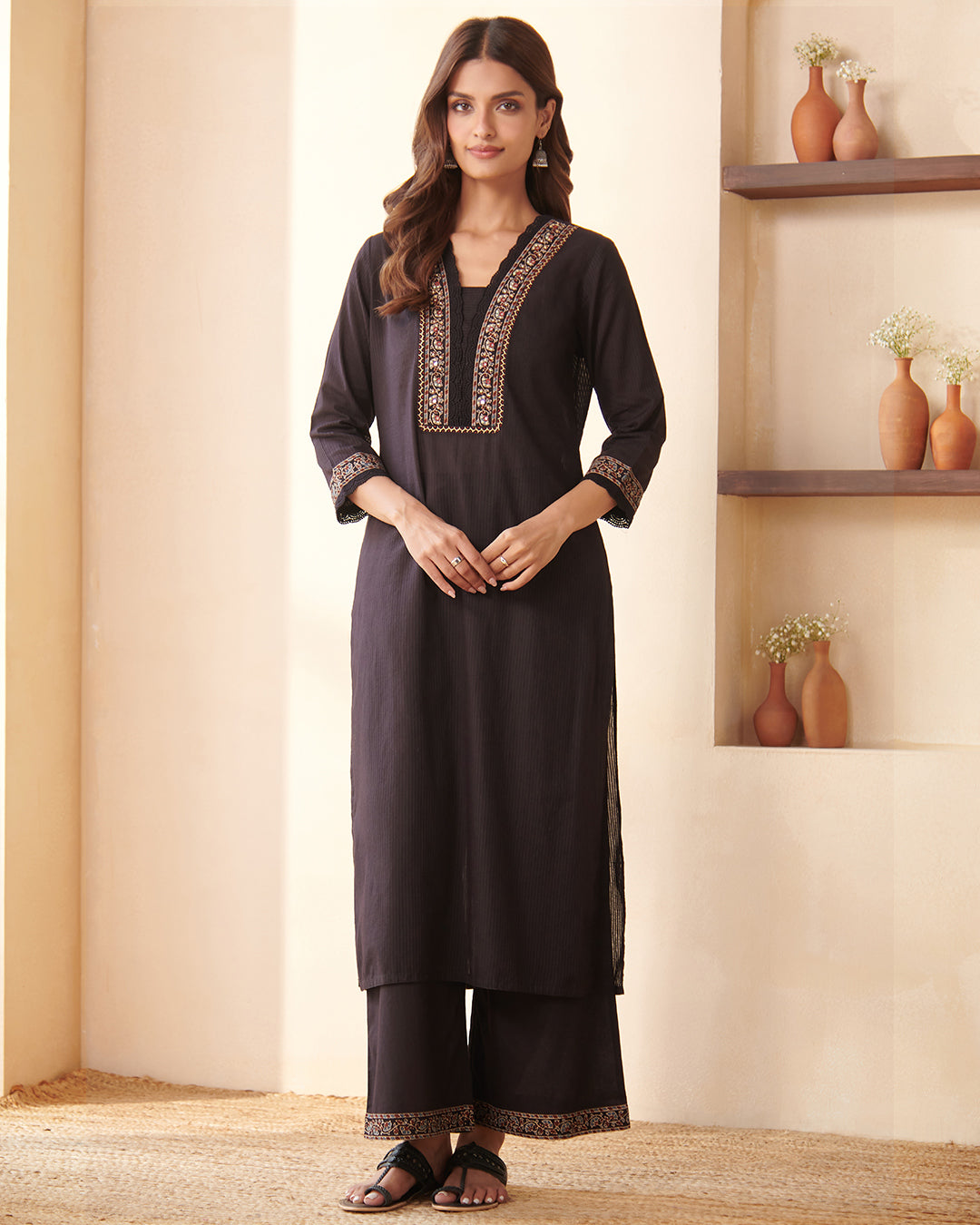
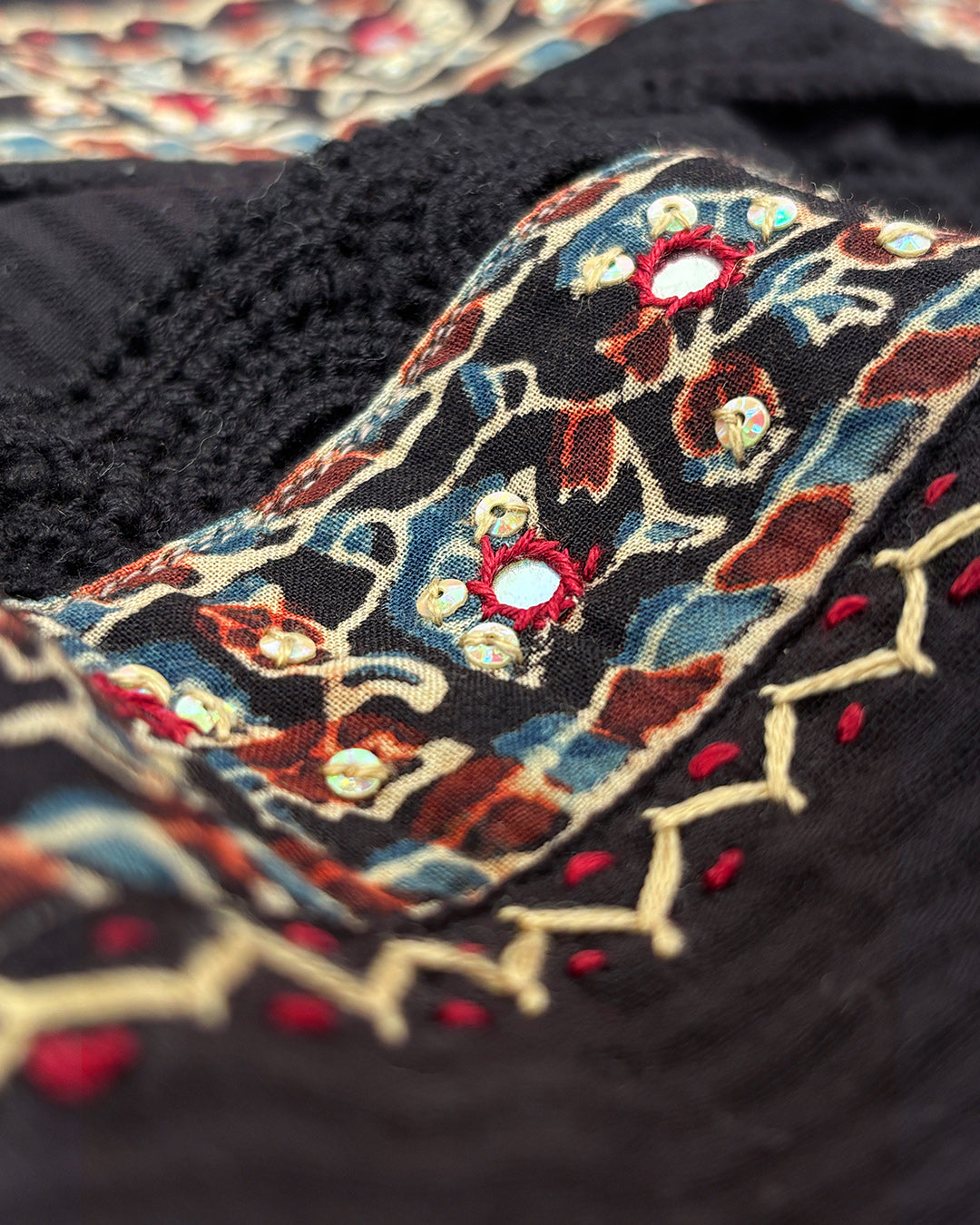
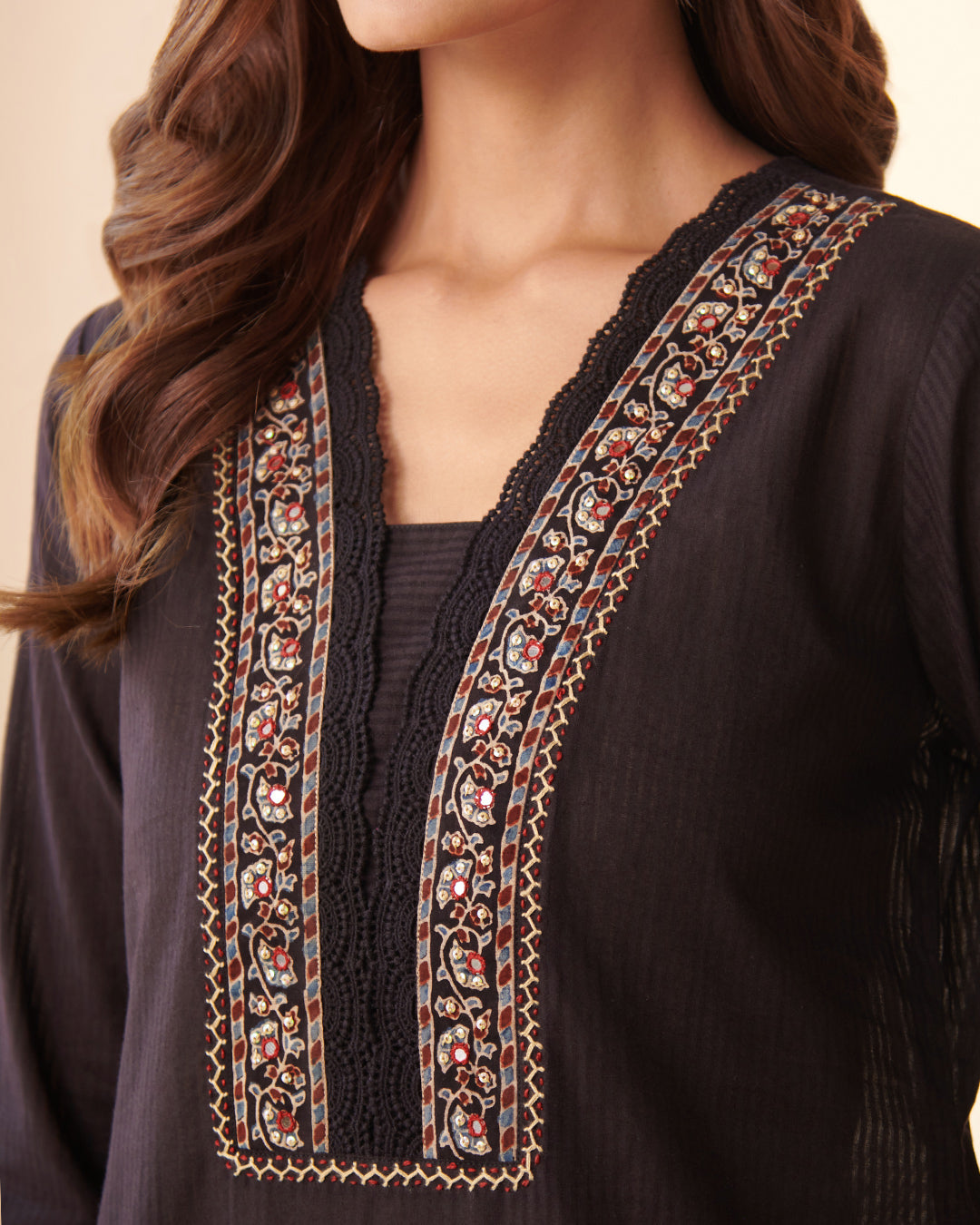
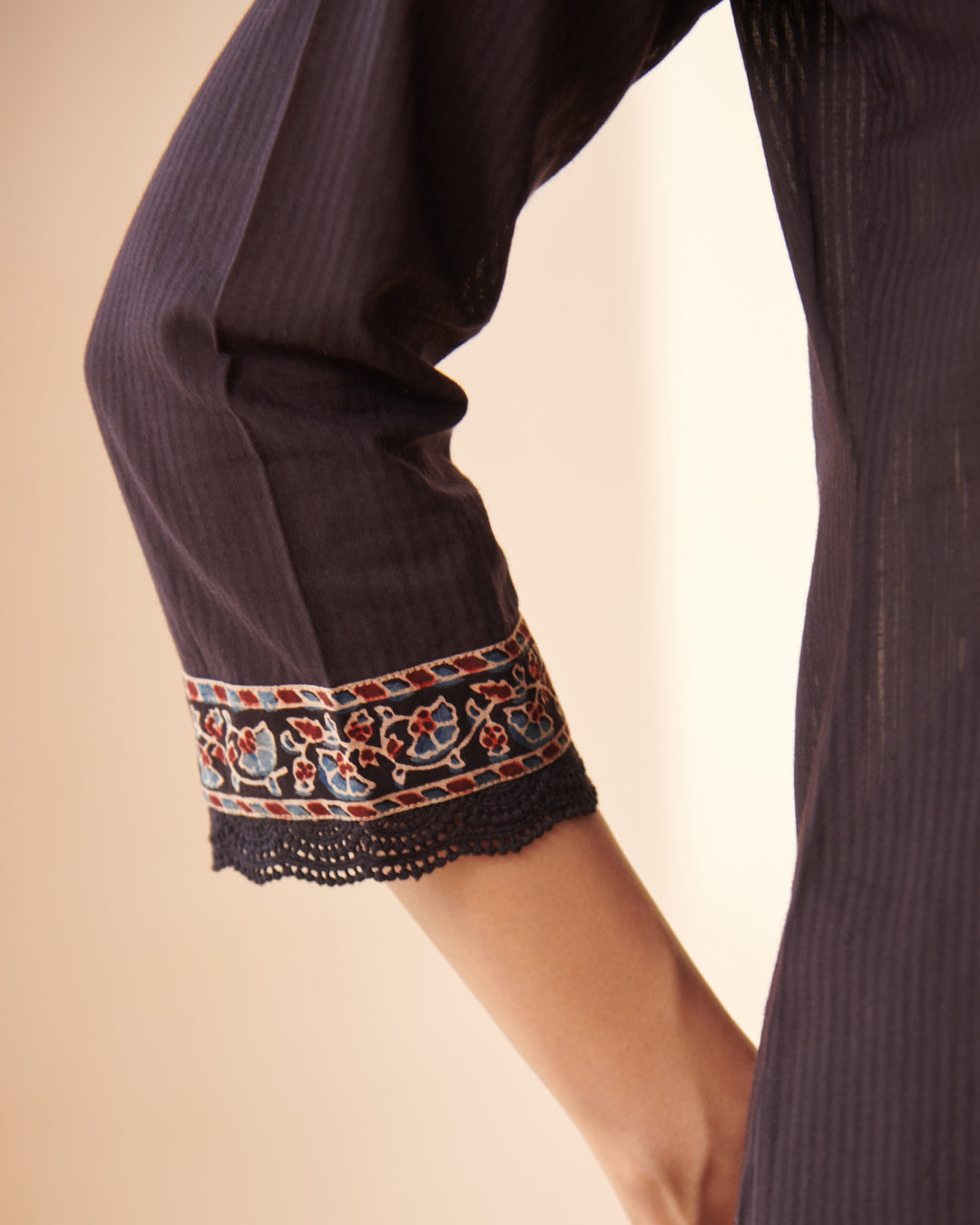

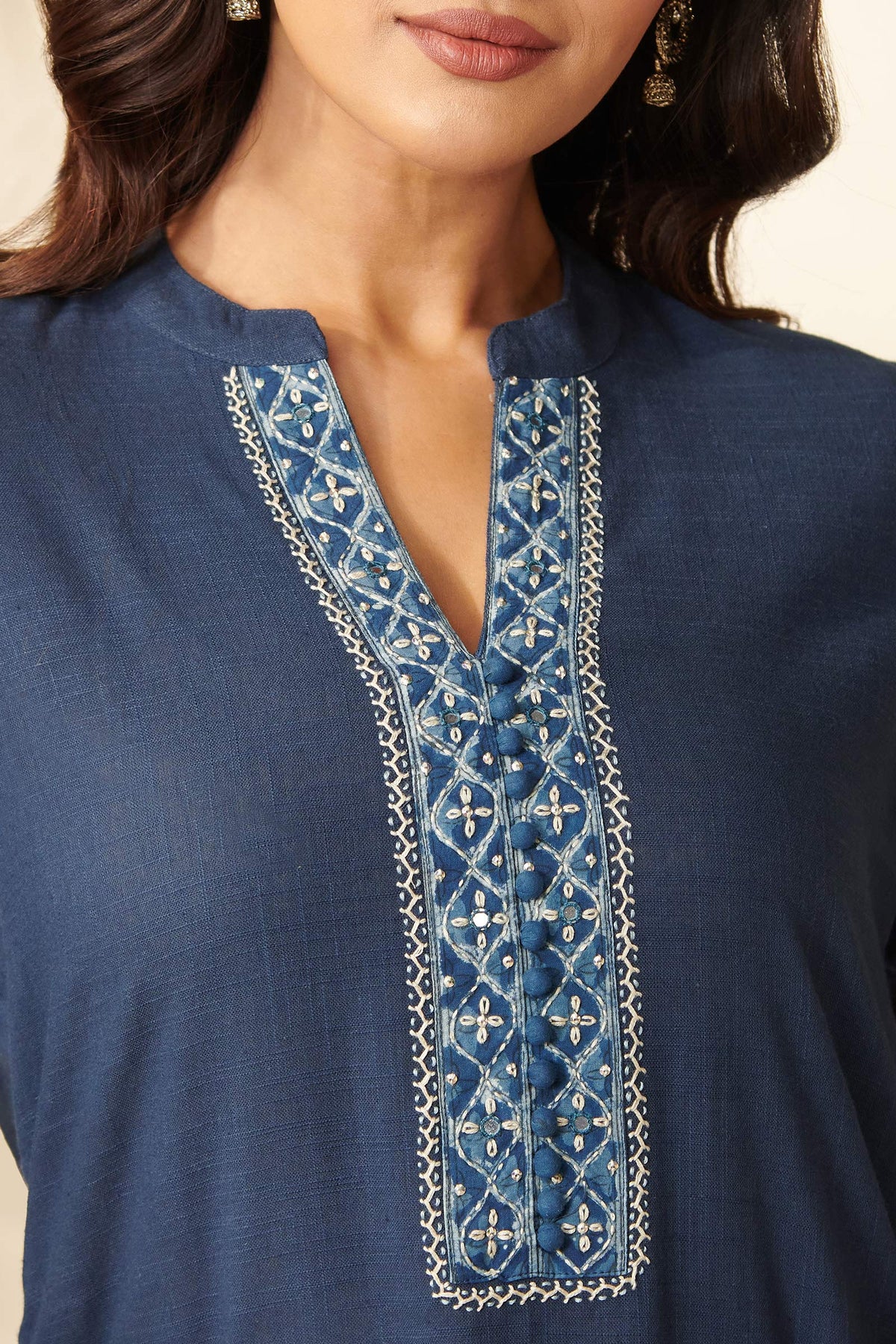
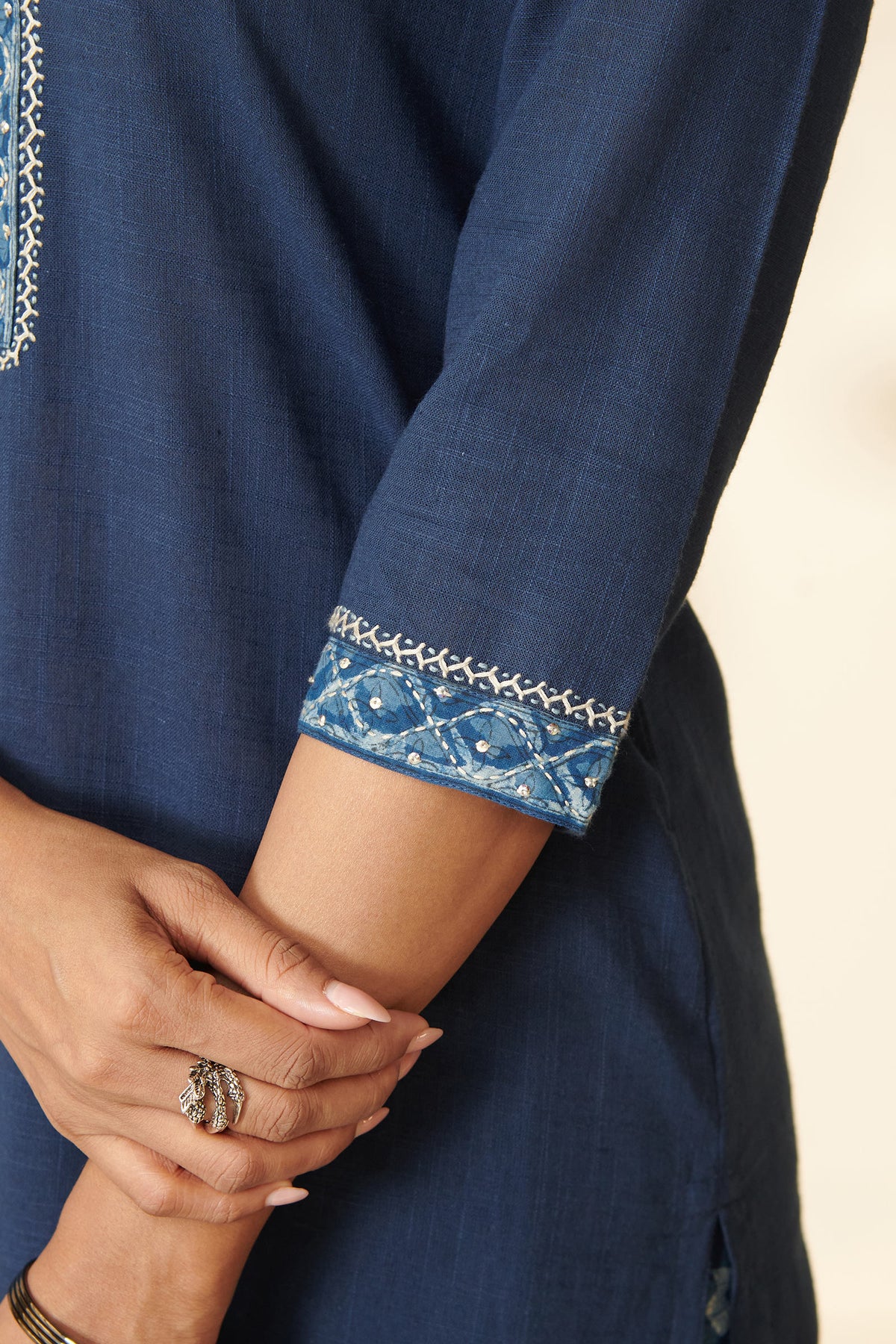
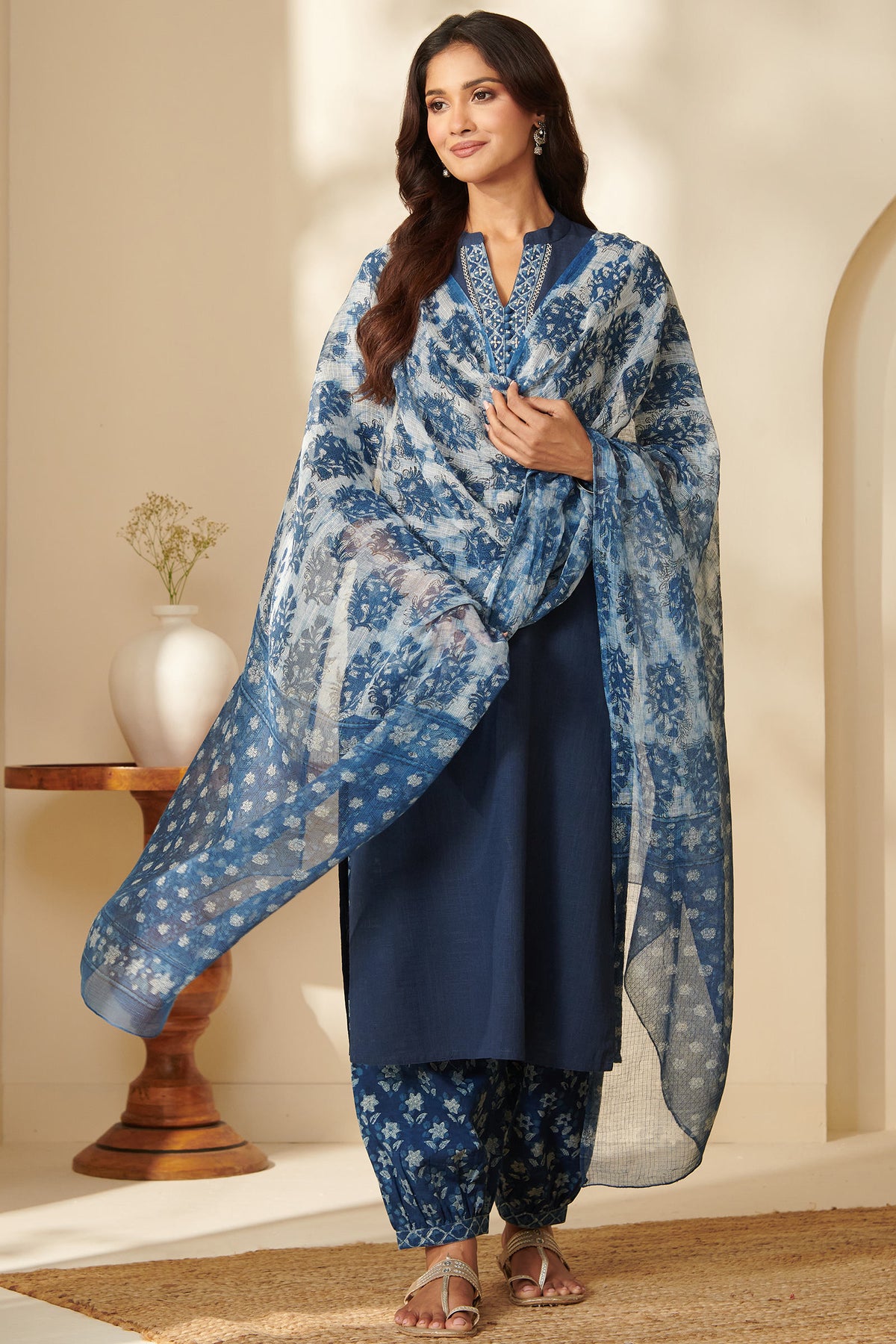
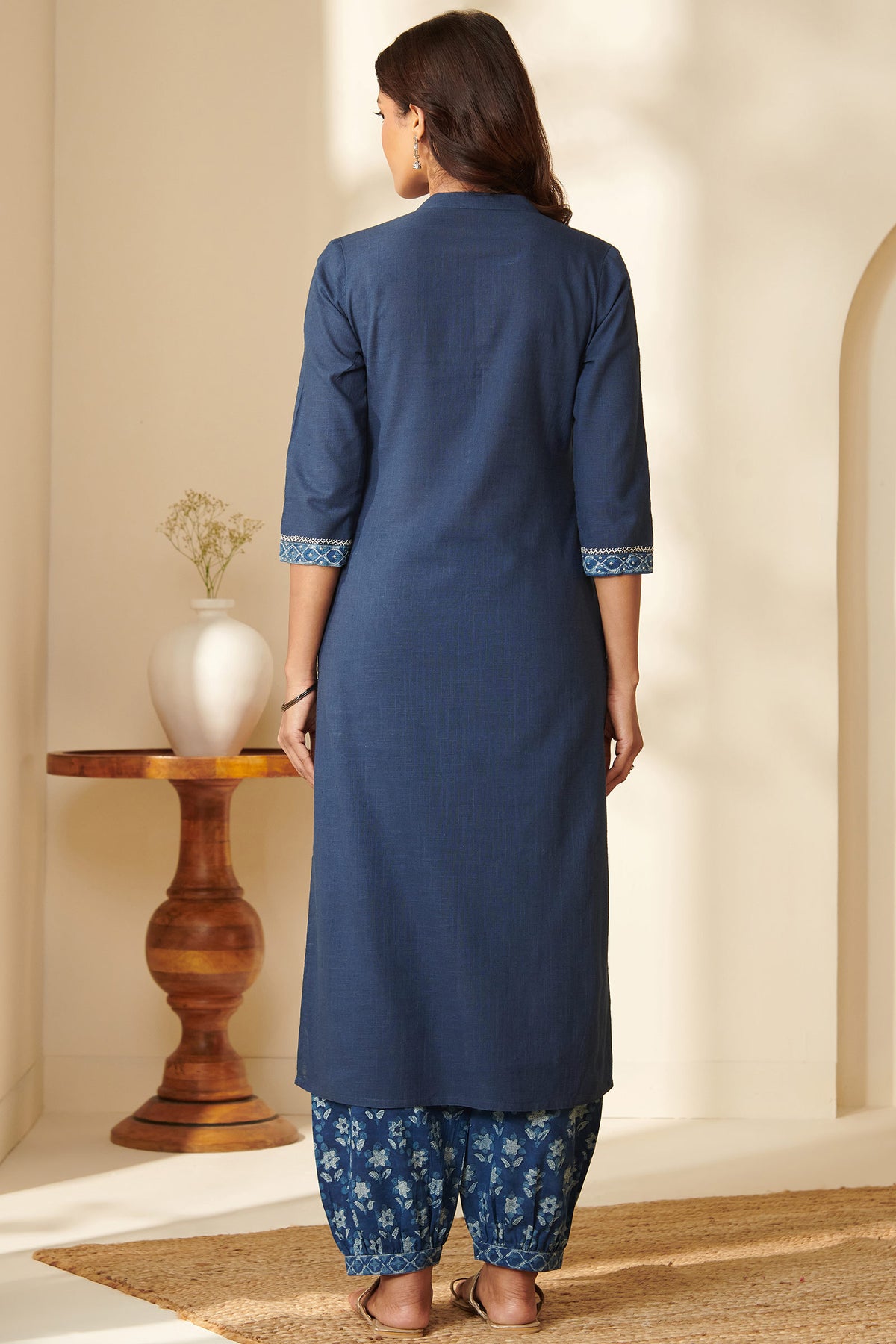


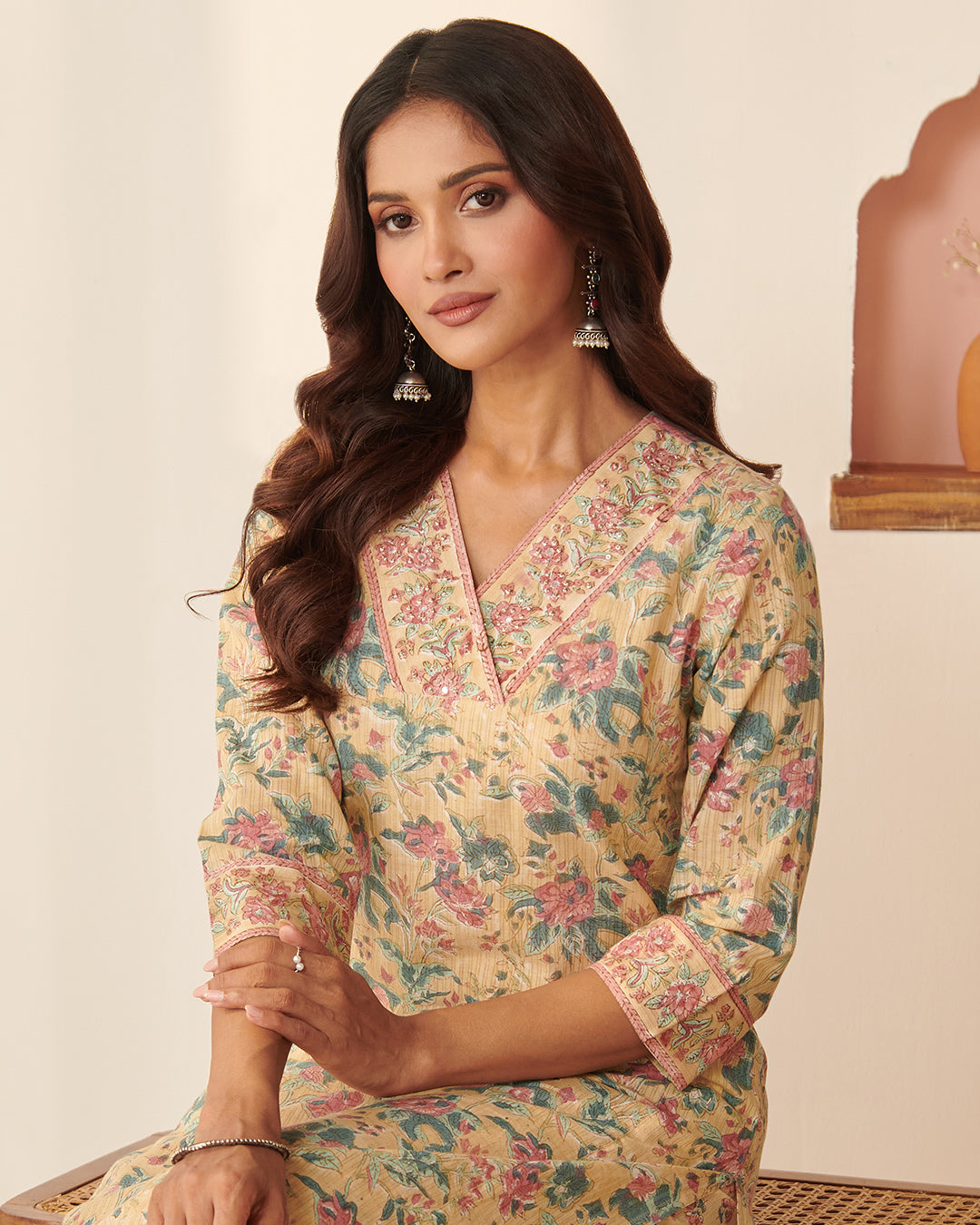
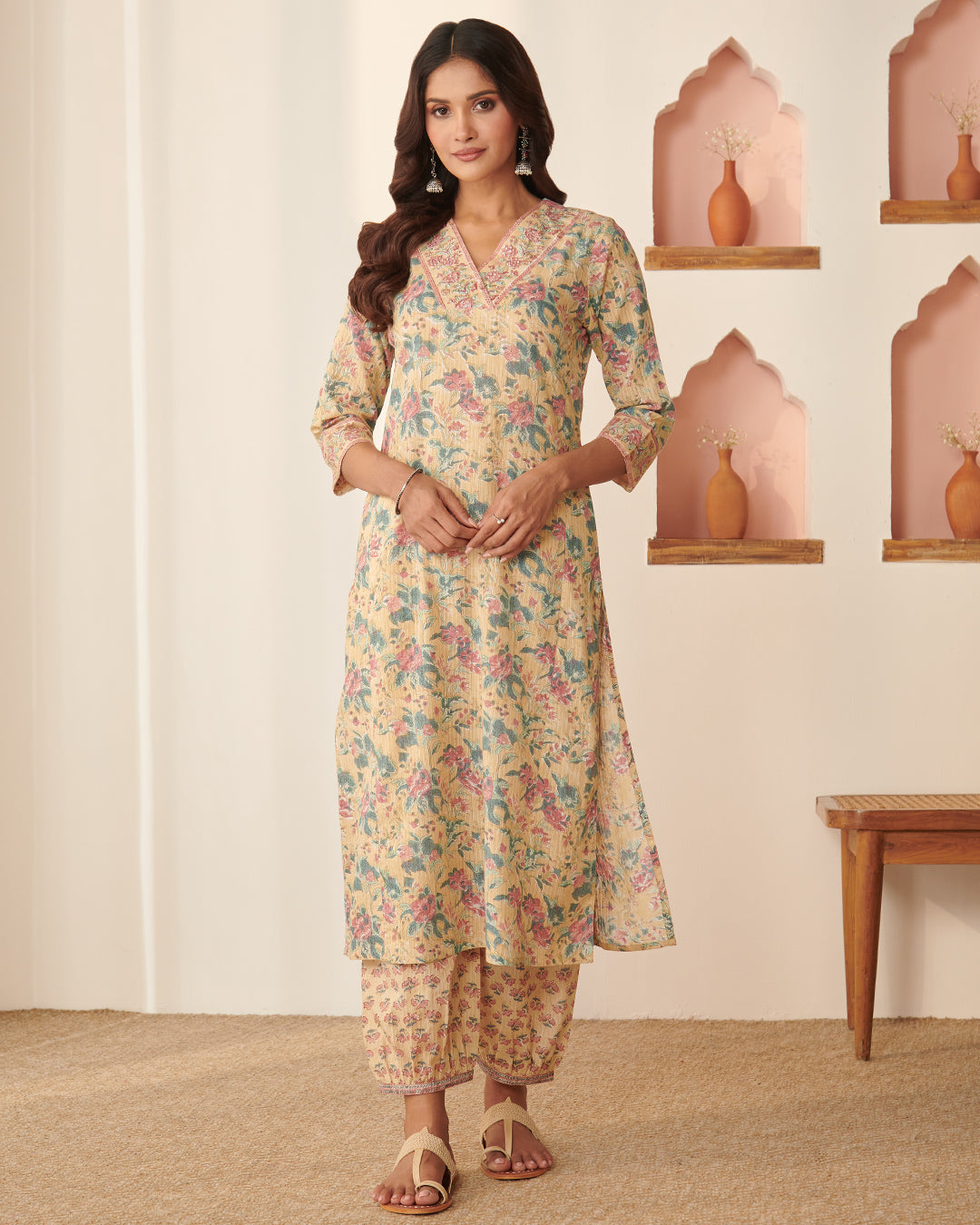
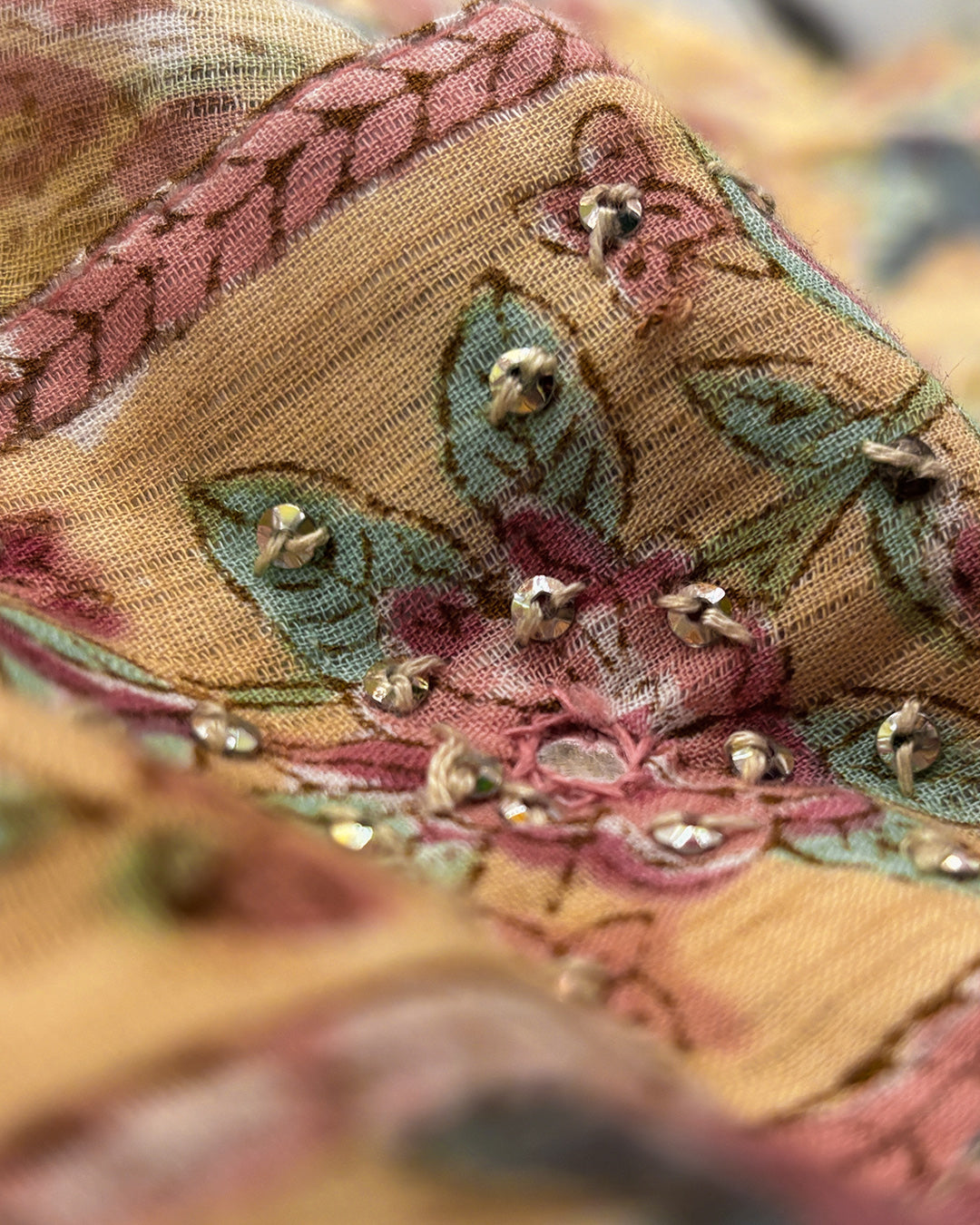
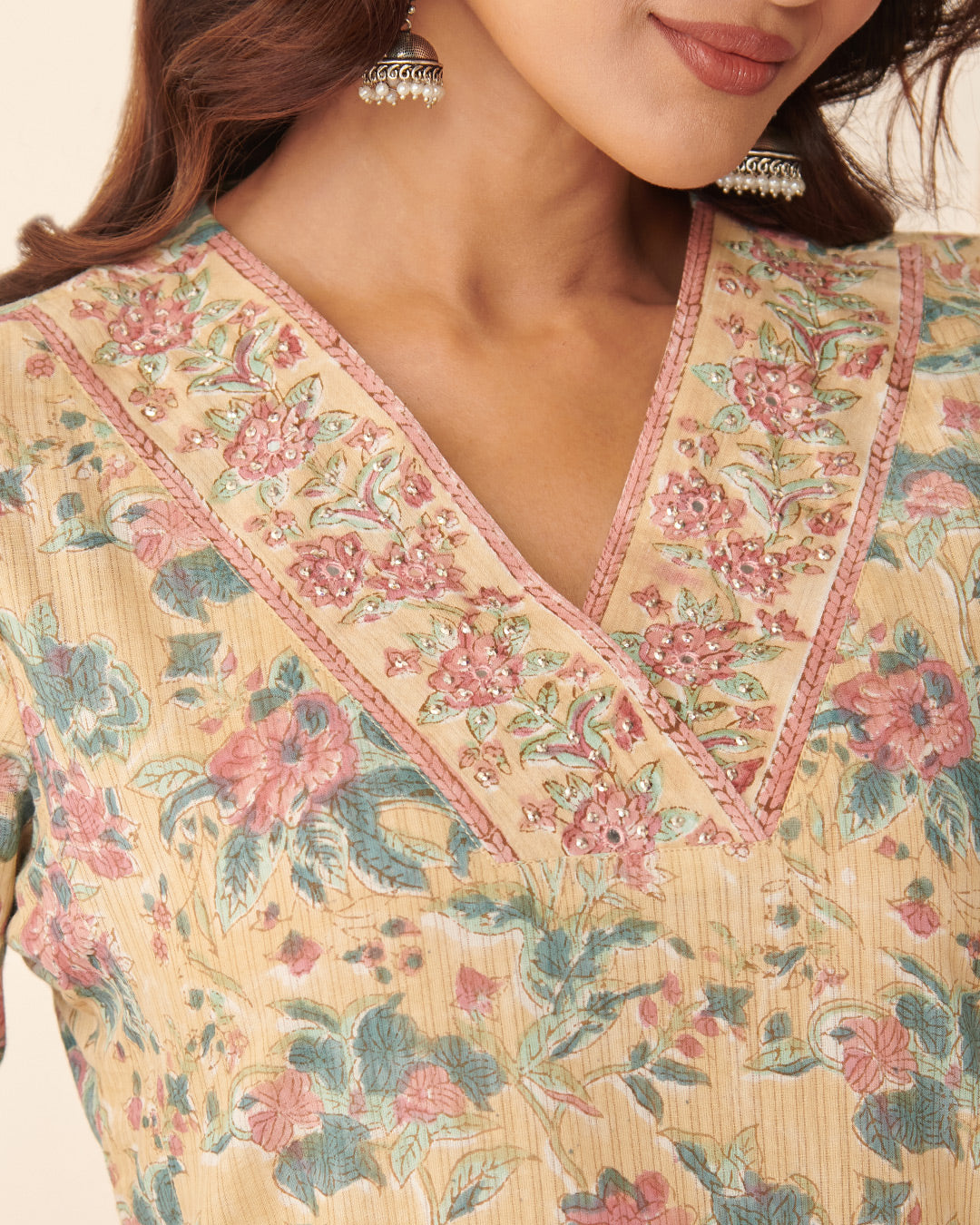
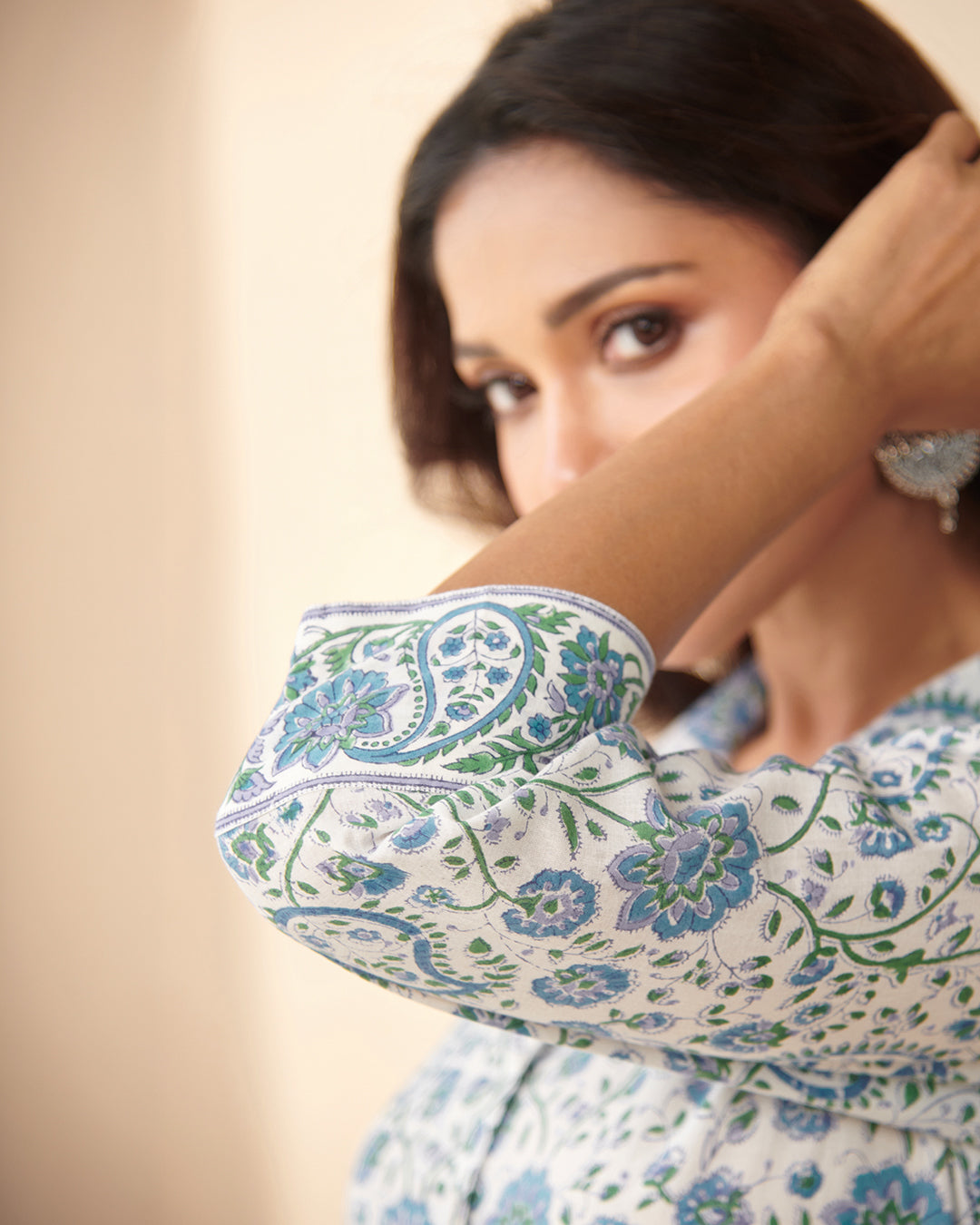
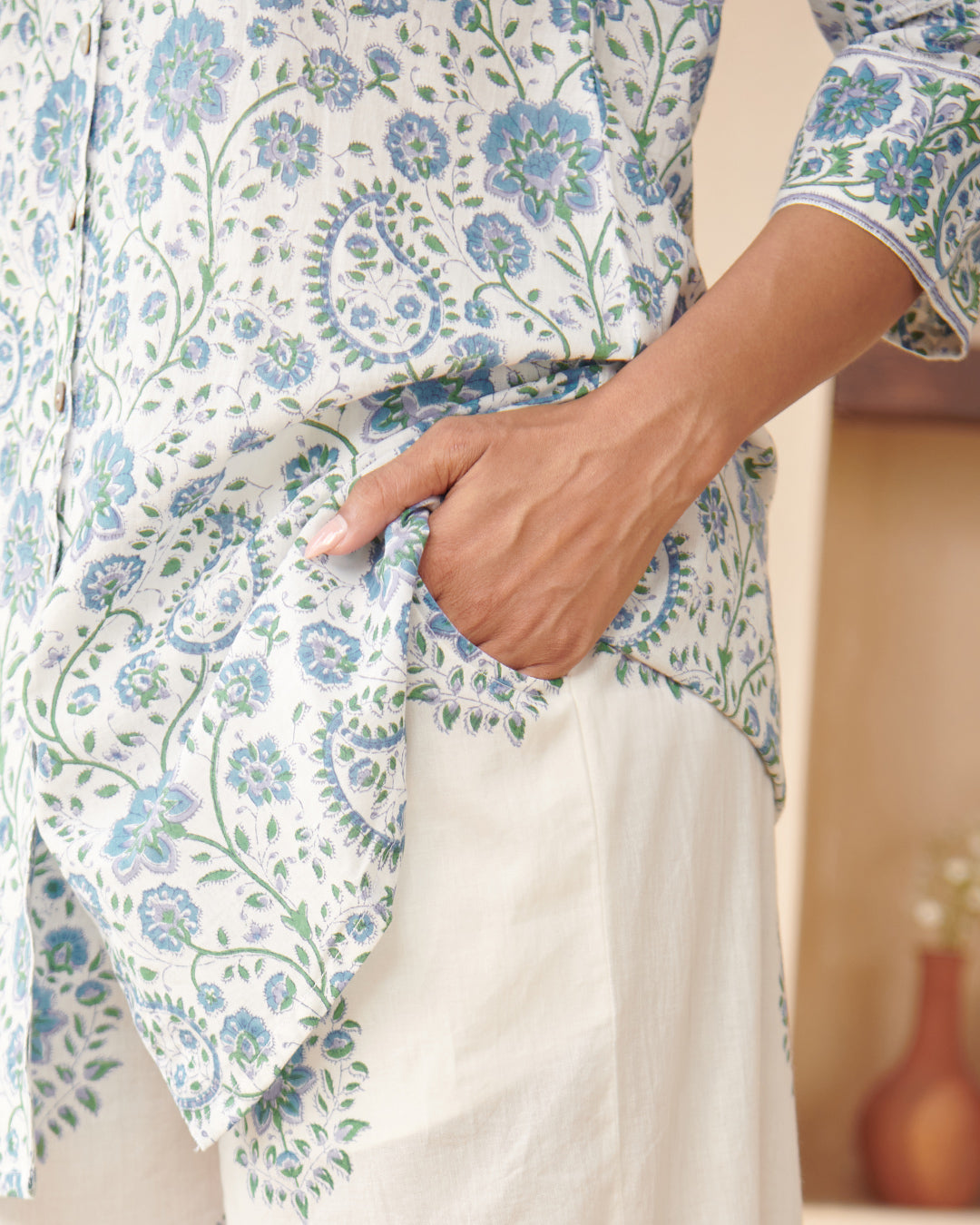
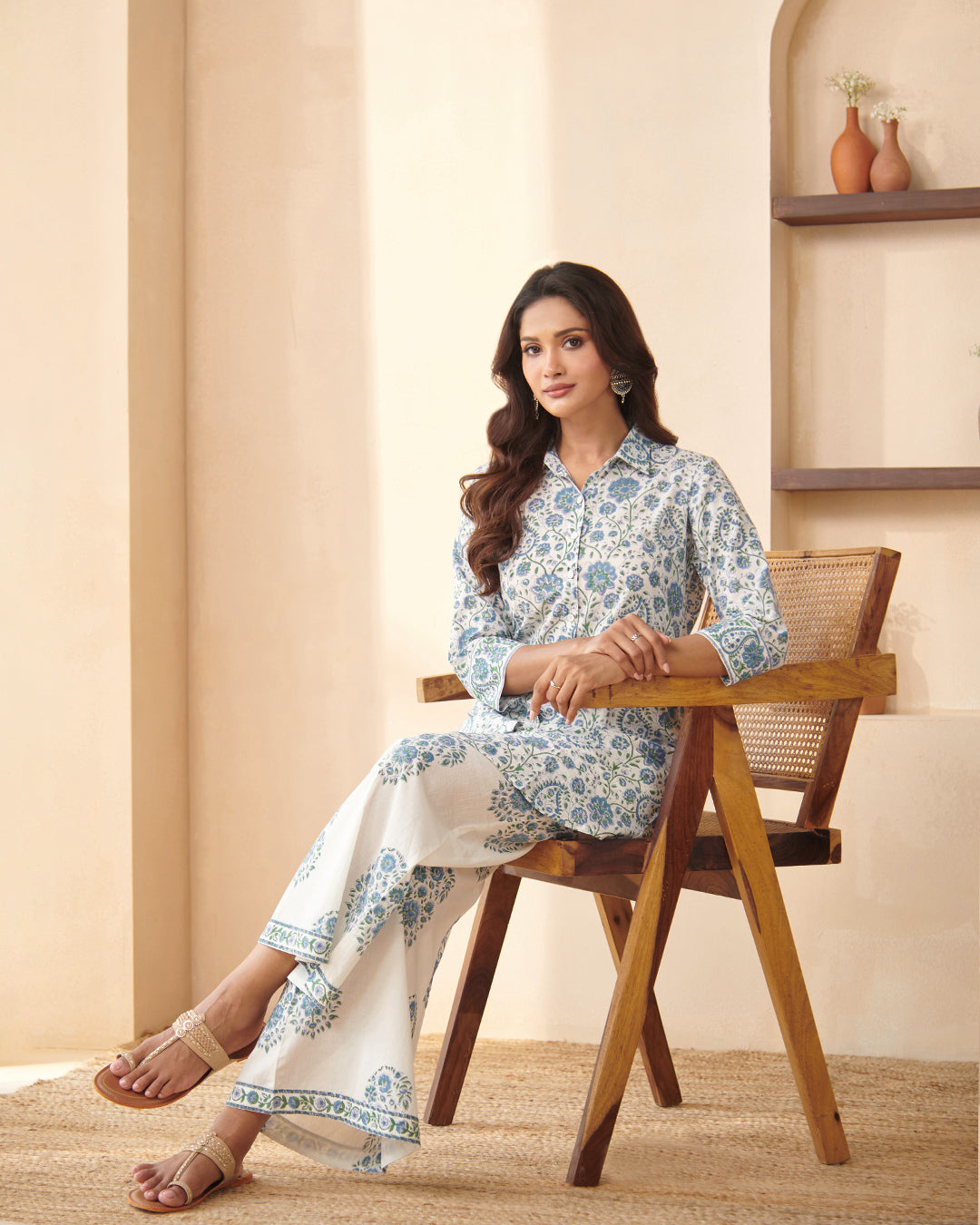
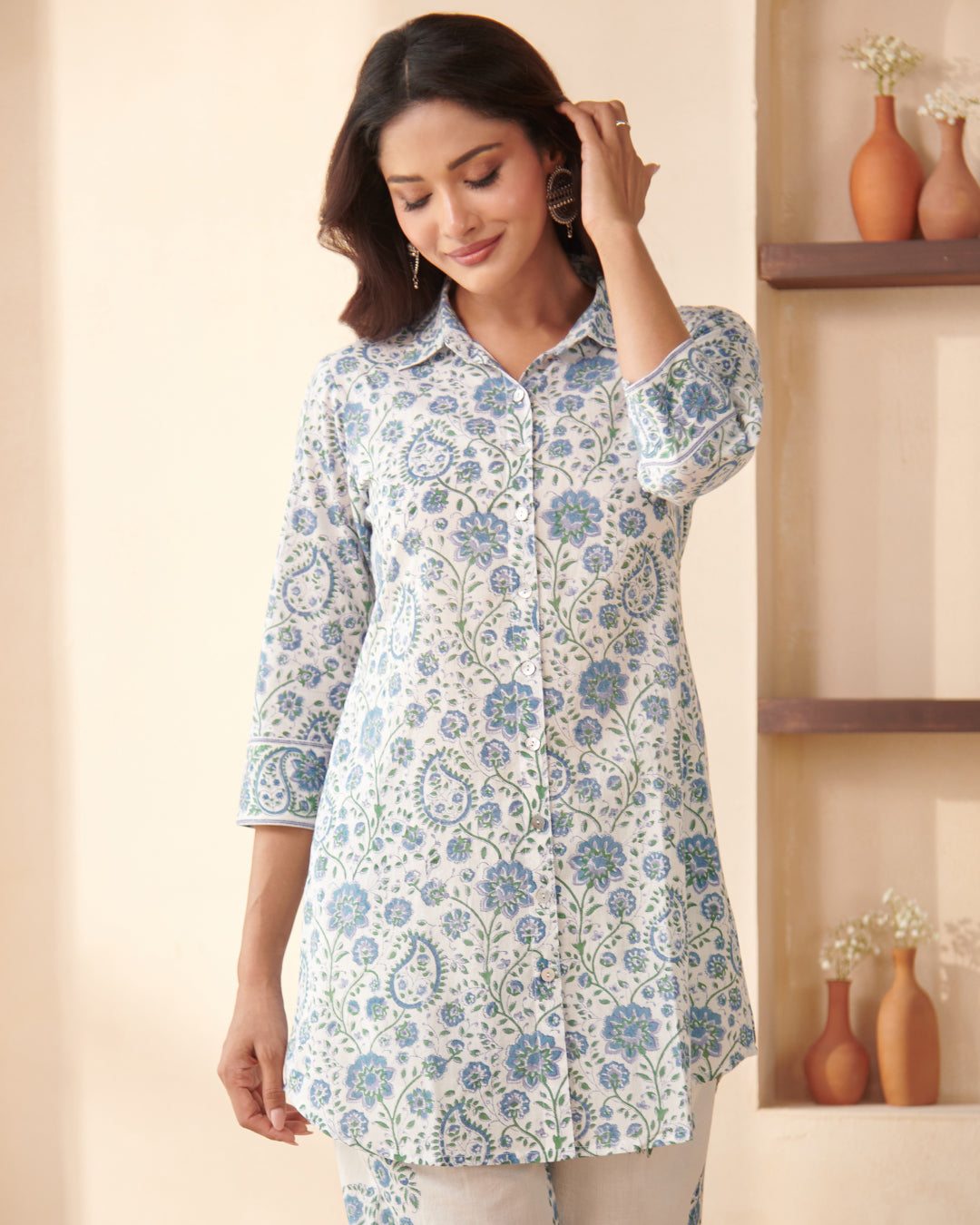

There is a certain stillness in an Ajrakh print saree.
Not just in the way it looks, but in how it feels when you wear it. Grounded, balanced, almost meditative.
For many of us, the first memory of Ajrakh comes quietly. A saree folded in a wooden cupboard, the scent of natural dye lingering in the fabric, patterns that seemed precise yet never mechanical. Over time, as Ajrak print sarees become easier to find, that quiet authenticity is not always guaranteed.
Knowing how to recognise the real from the replicated becomes important. Not as a skill, but as a way of staying connected to the craft itself.
What Is an Ajrakh Print Saree?
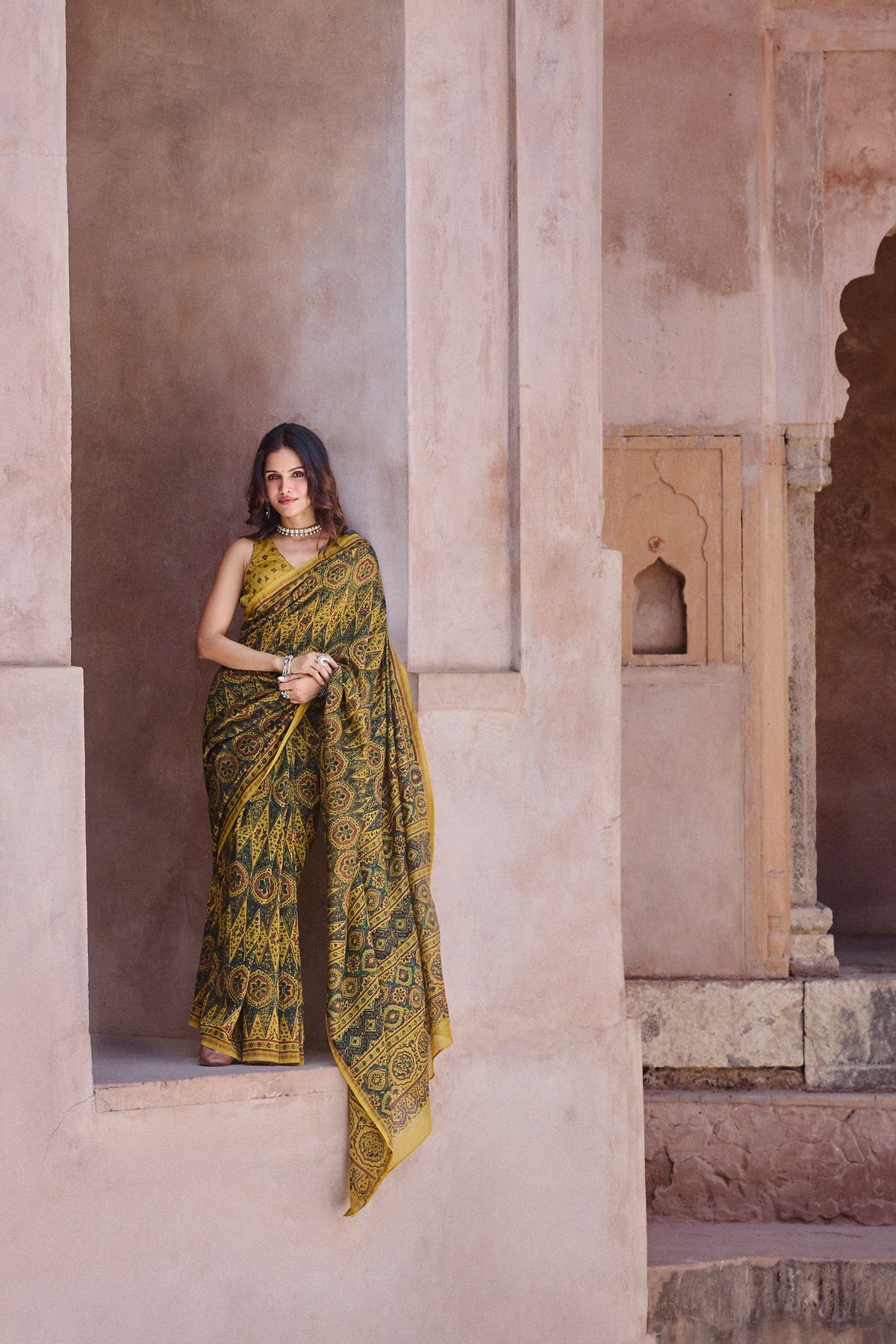
An Ajrakh print saree is created using a traditional block printing technique that traces back to regions of Kutch and Sindh. The process is slow and layered, involving multiple stages of resist dyeing and hand stamping.
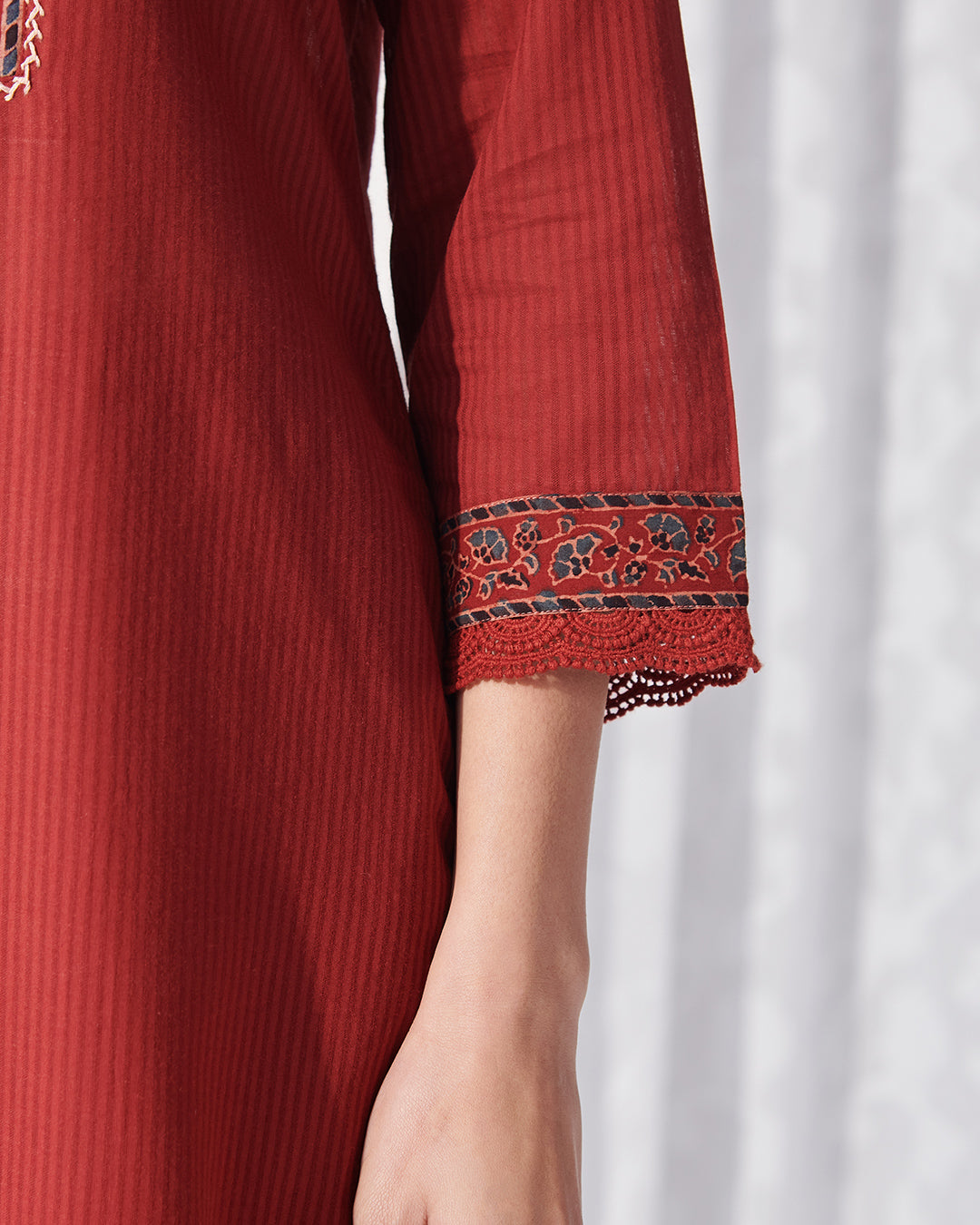
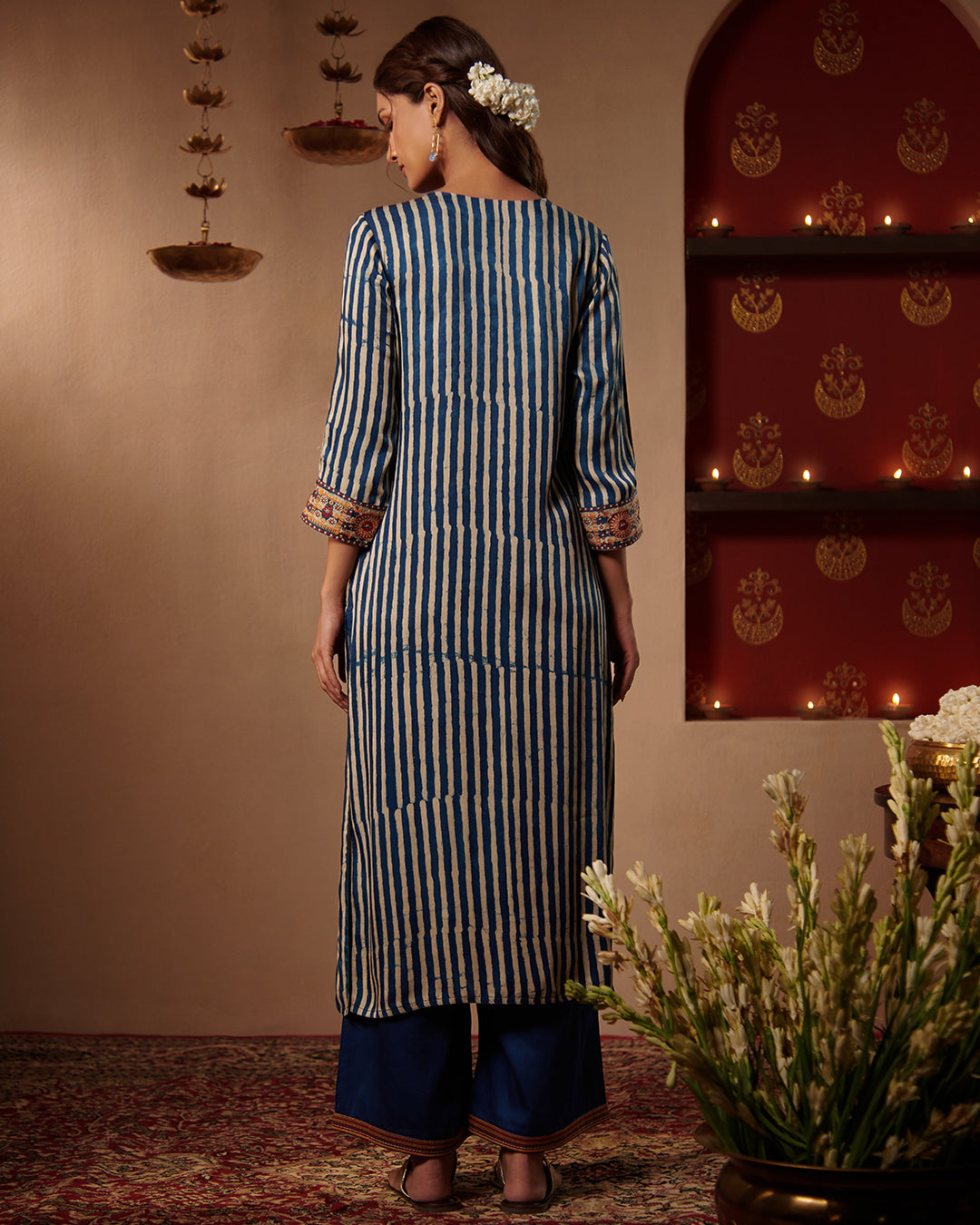
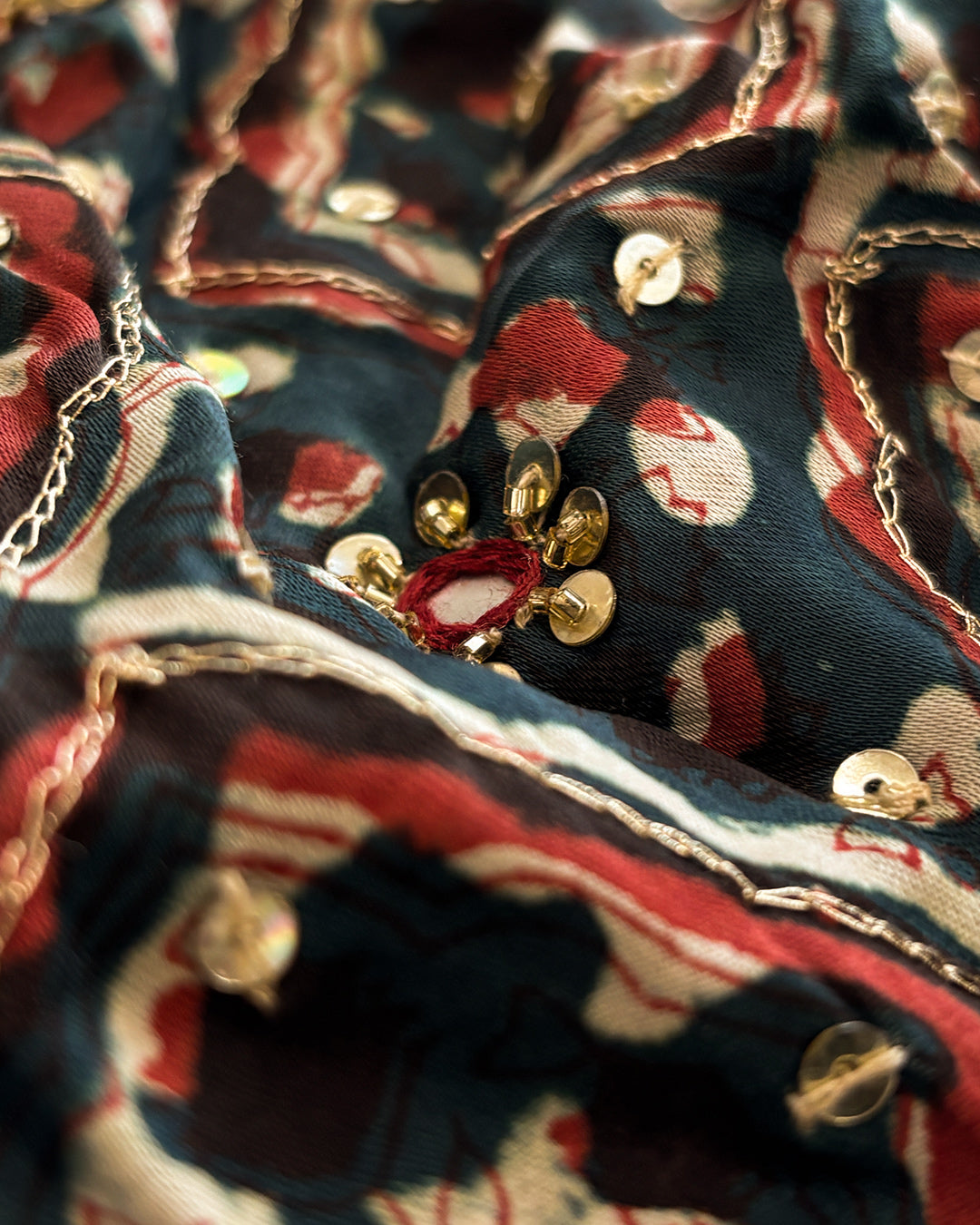
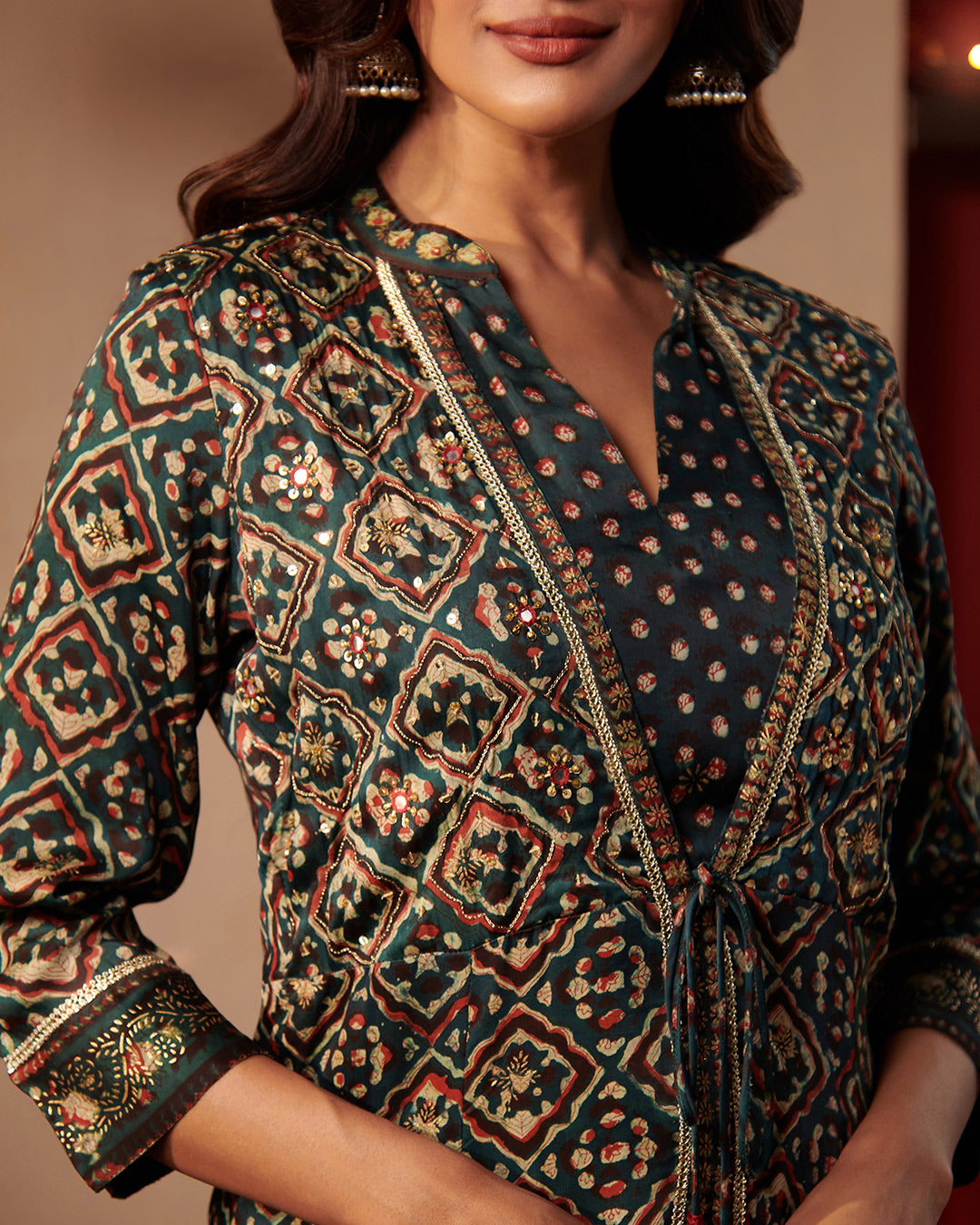
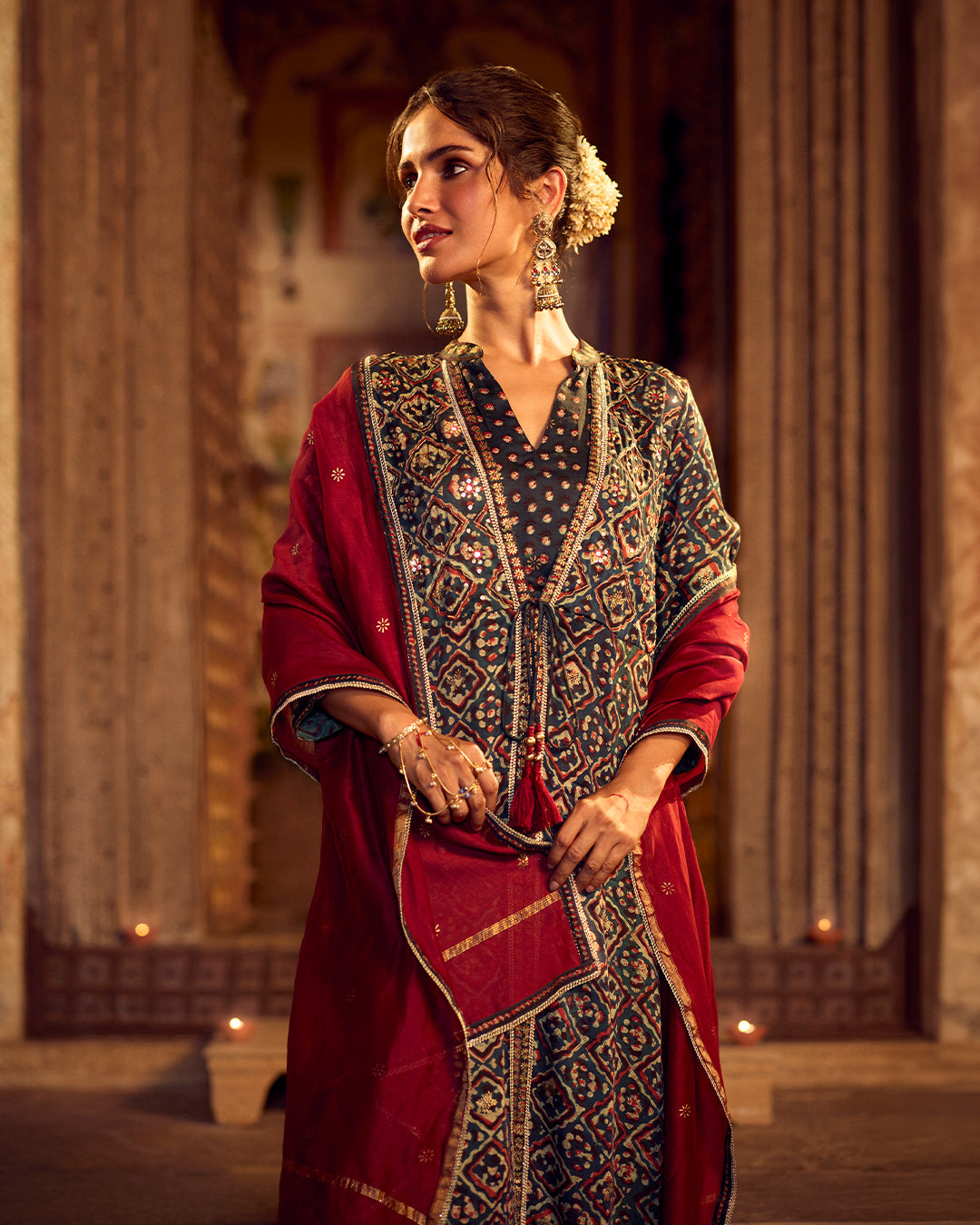
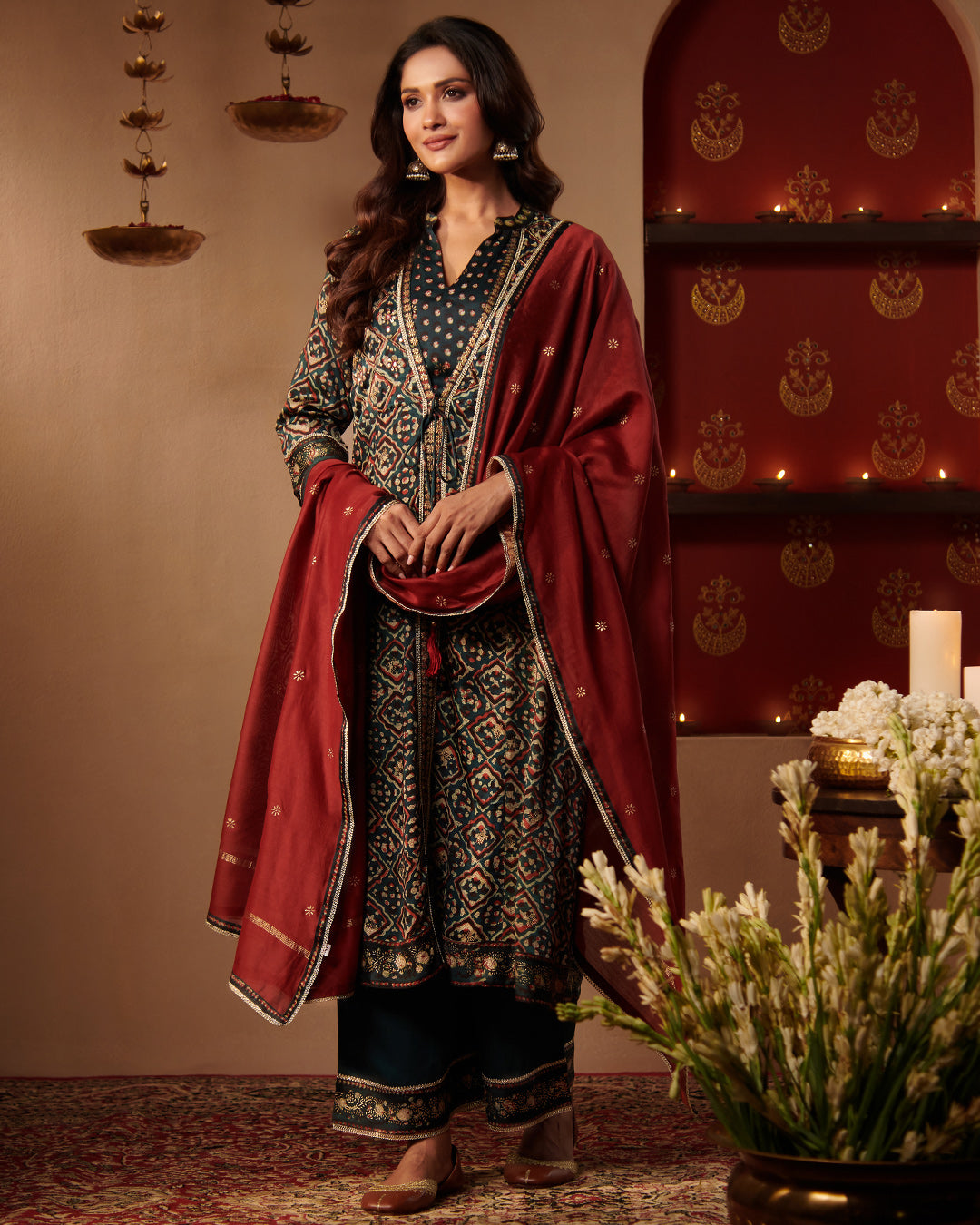
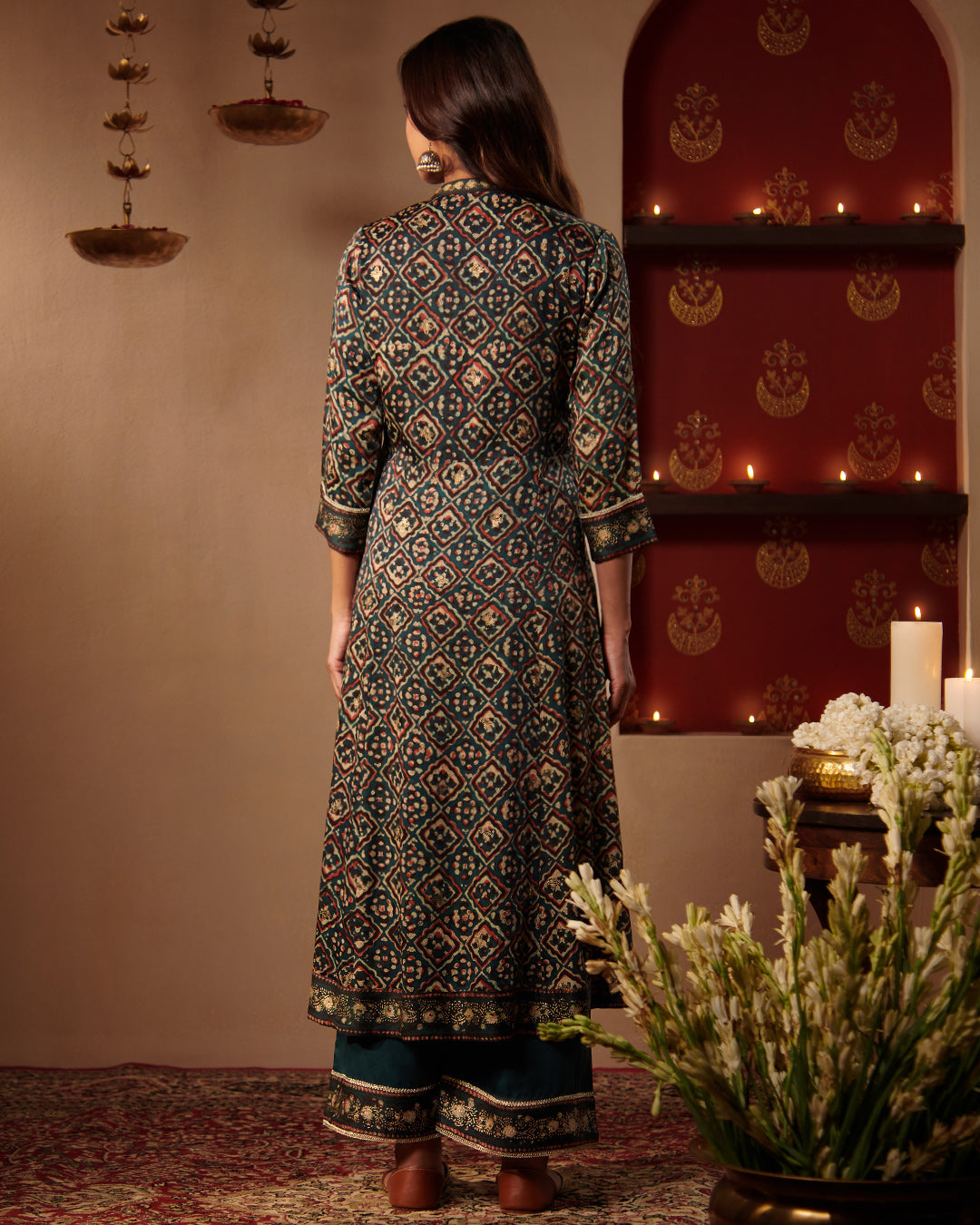
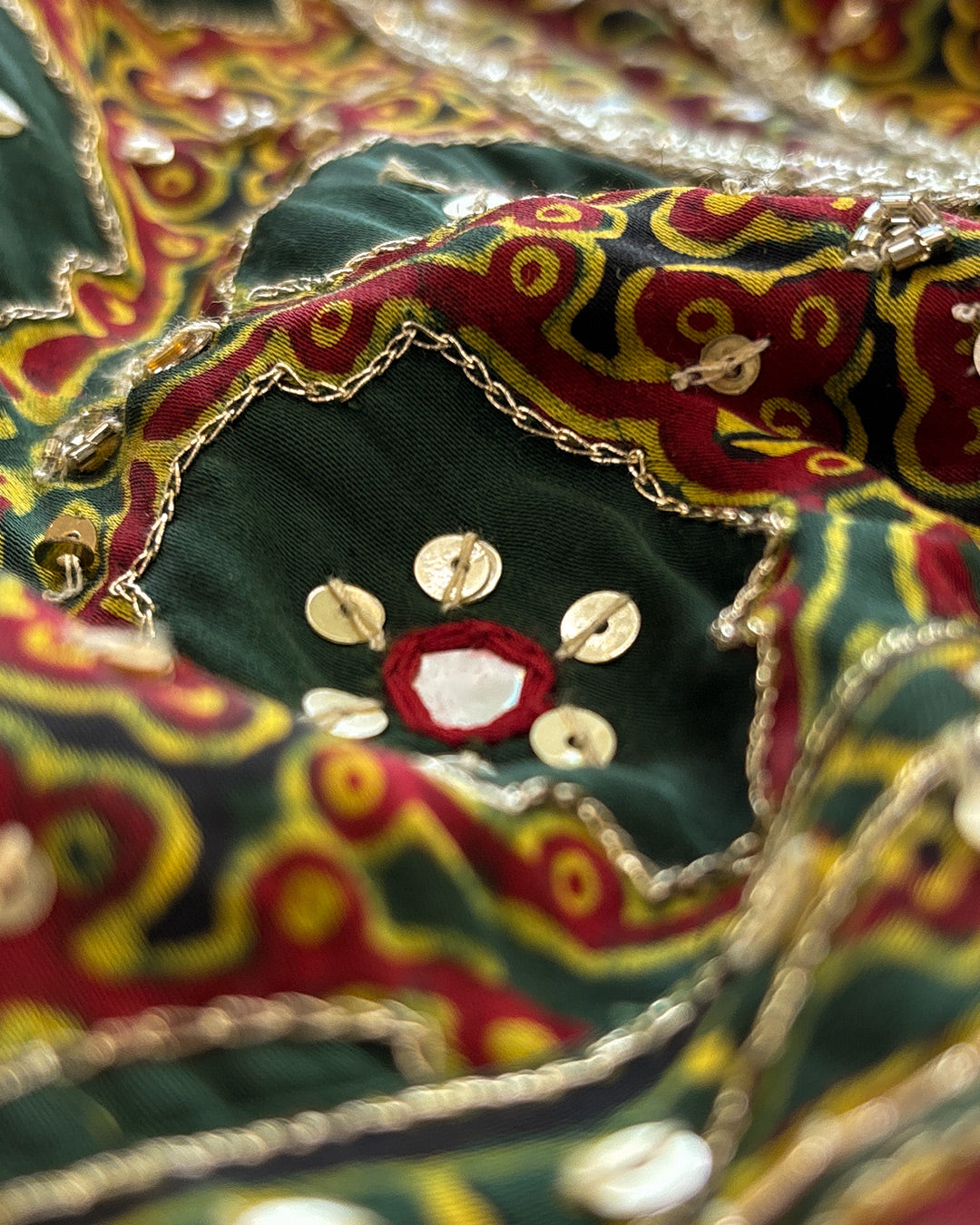
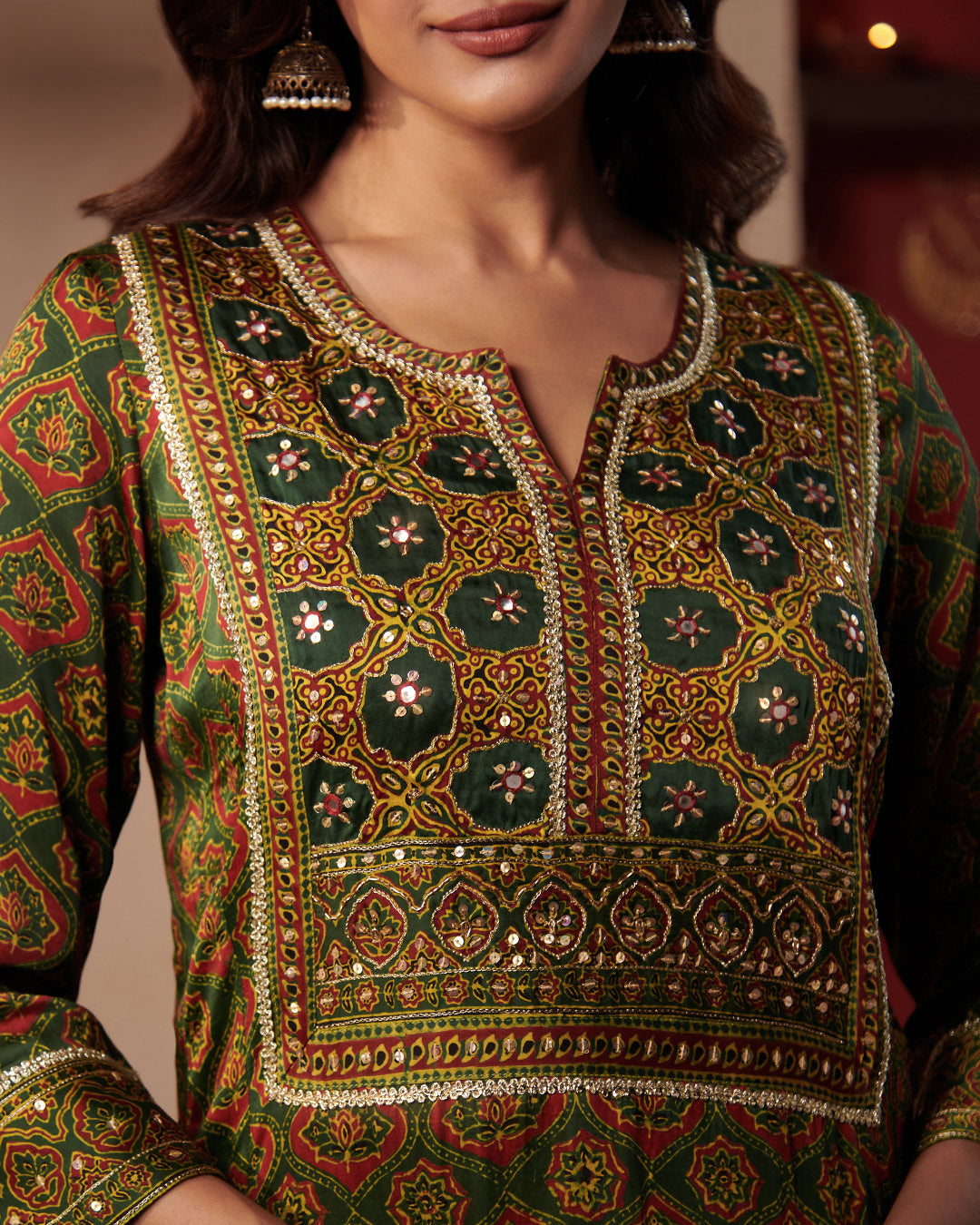
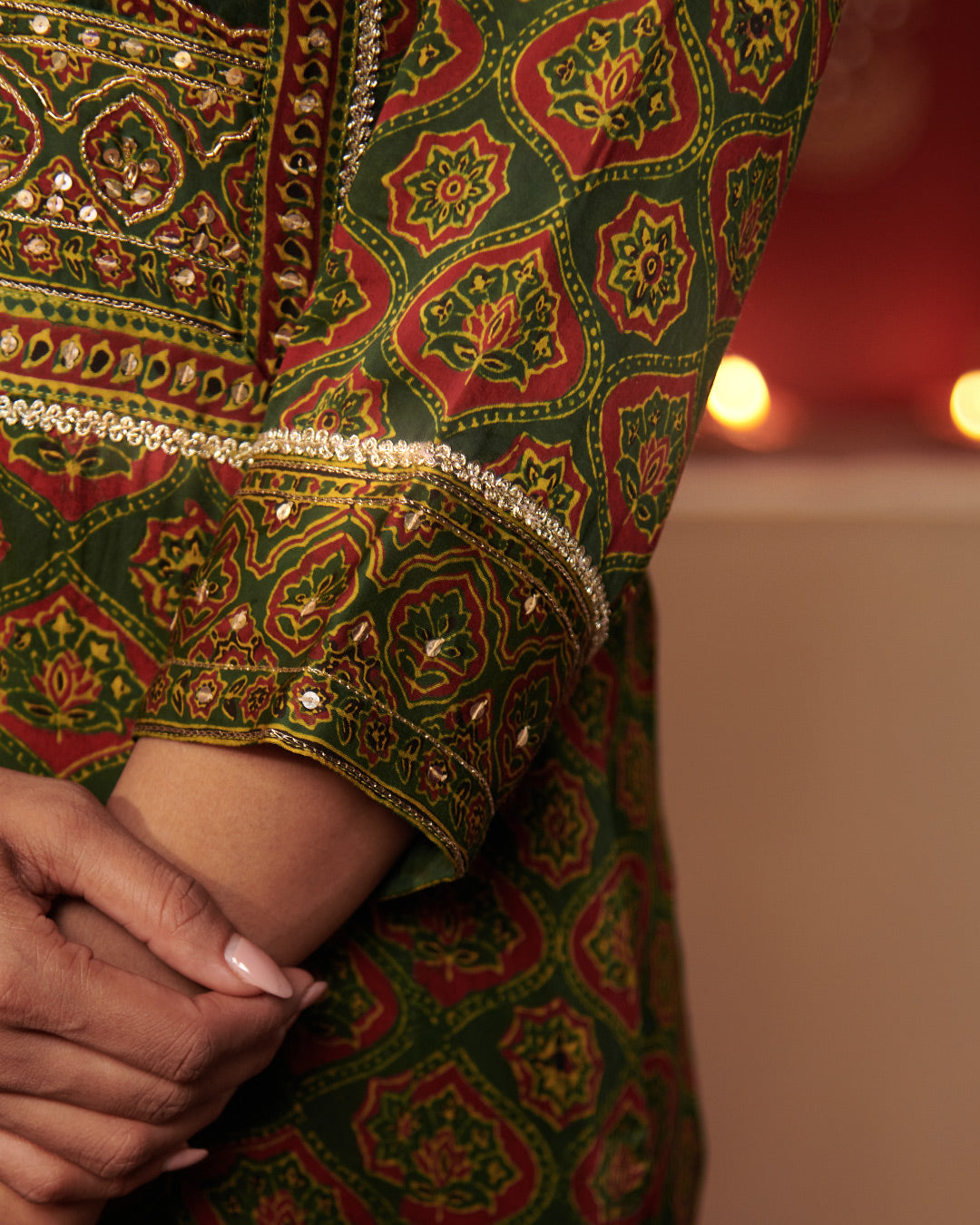
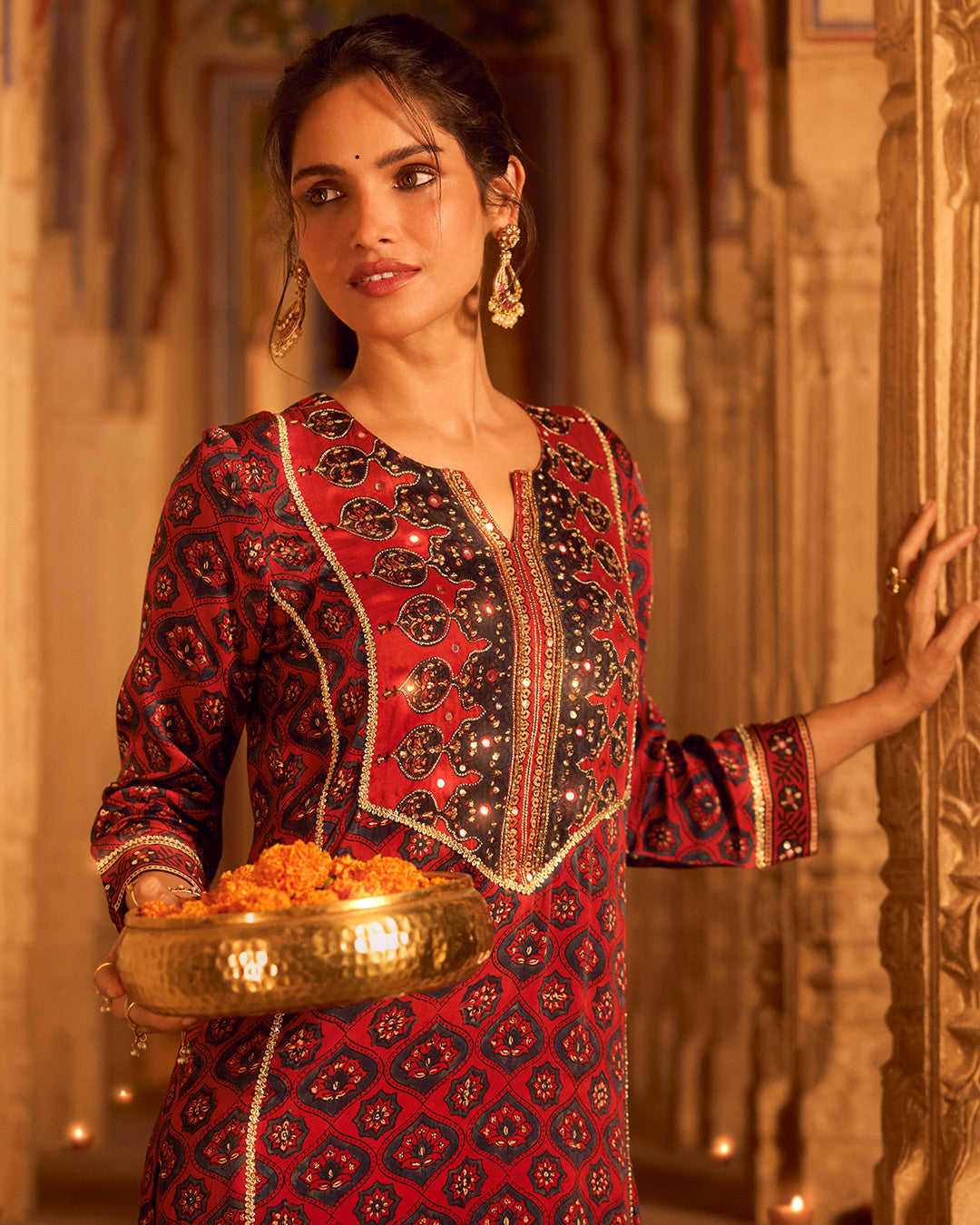
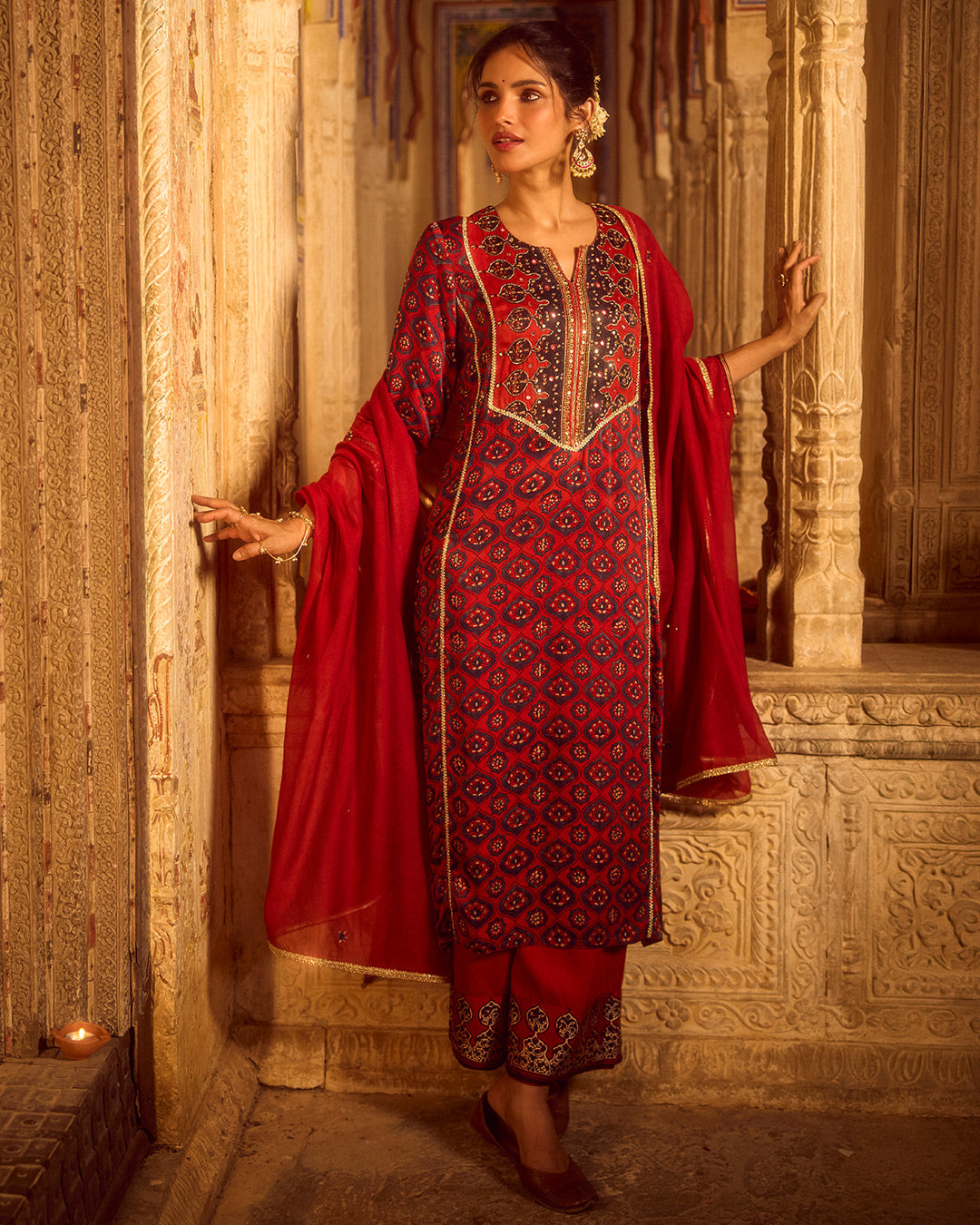
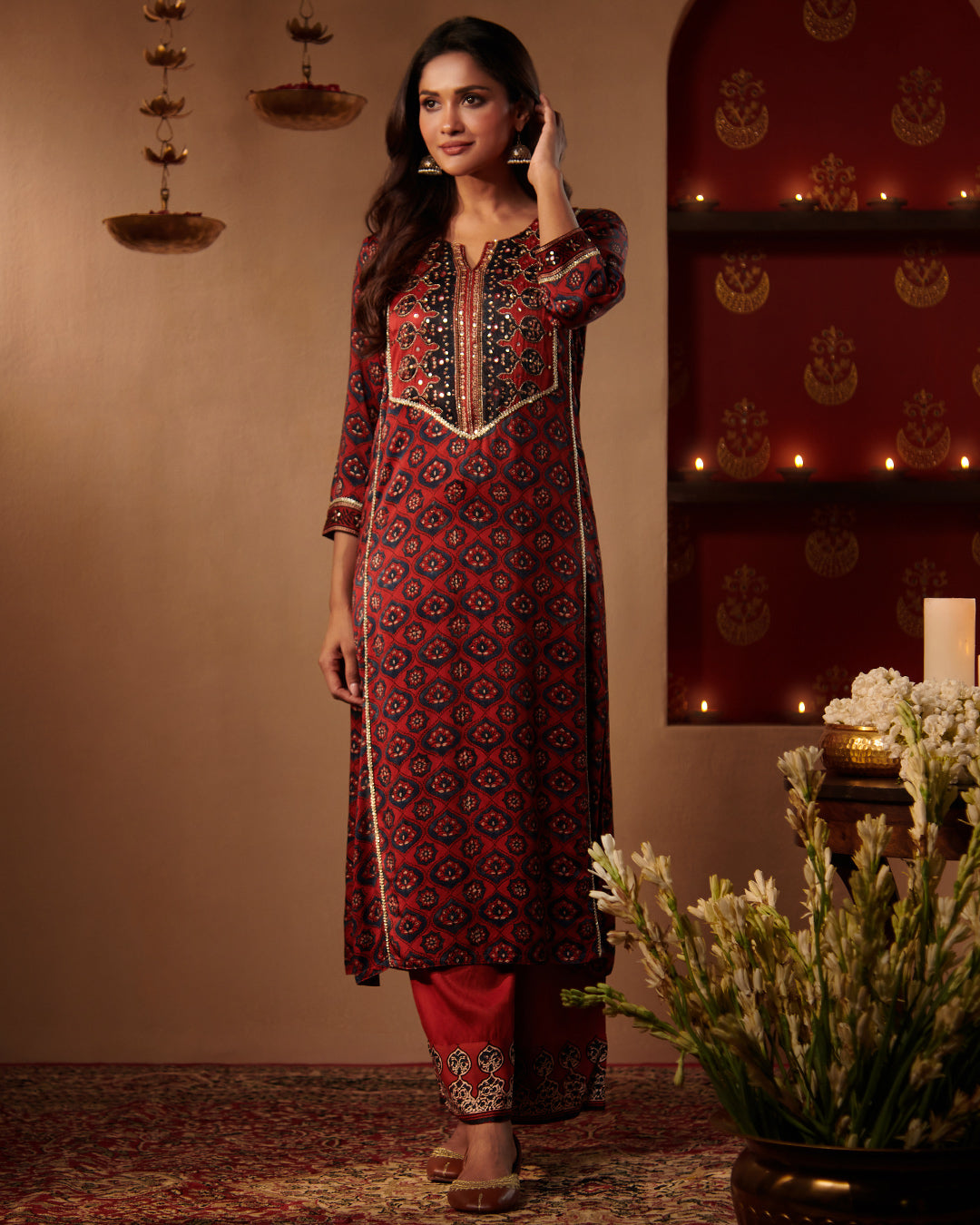
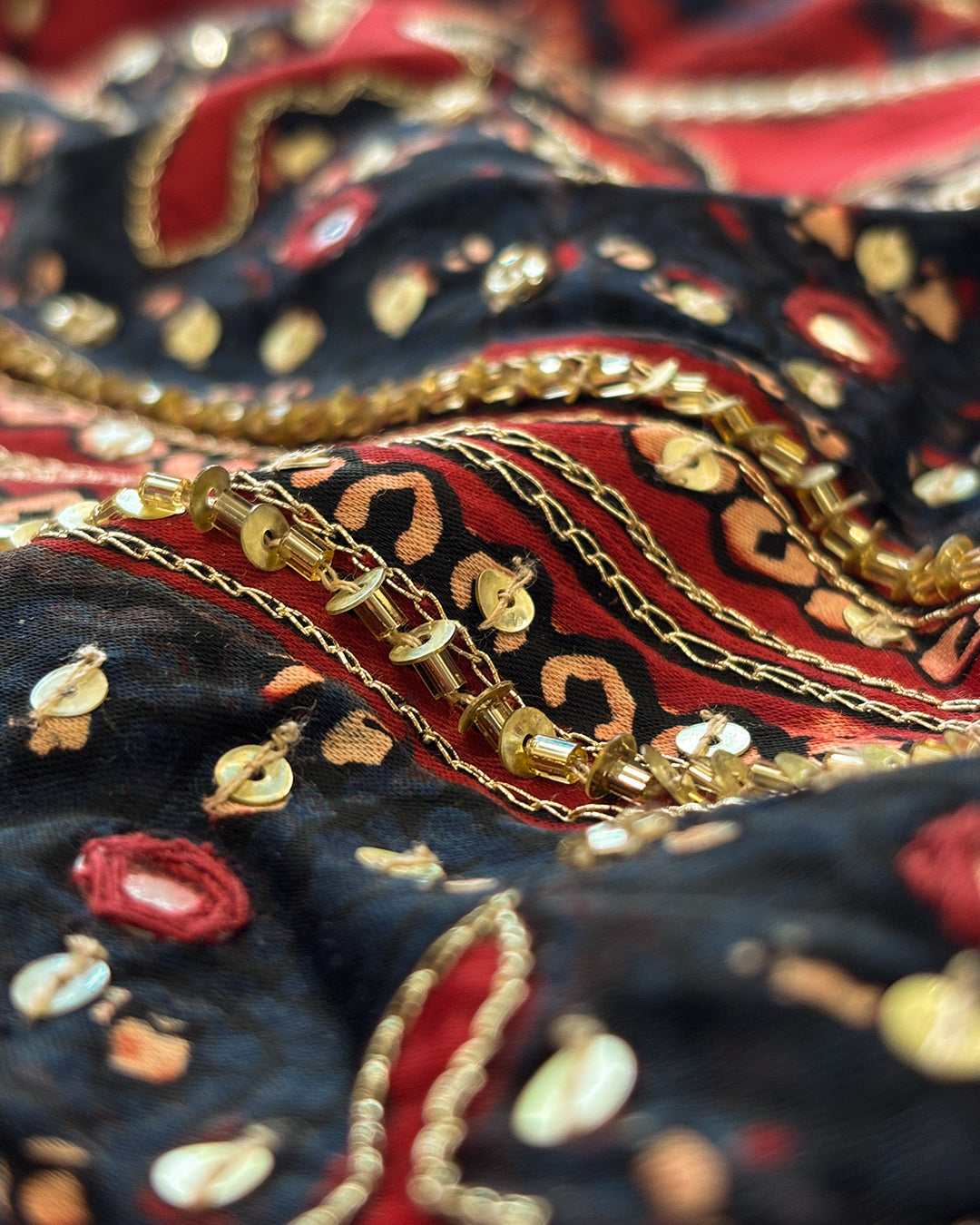
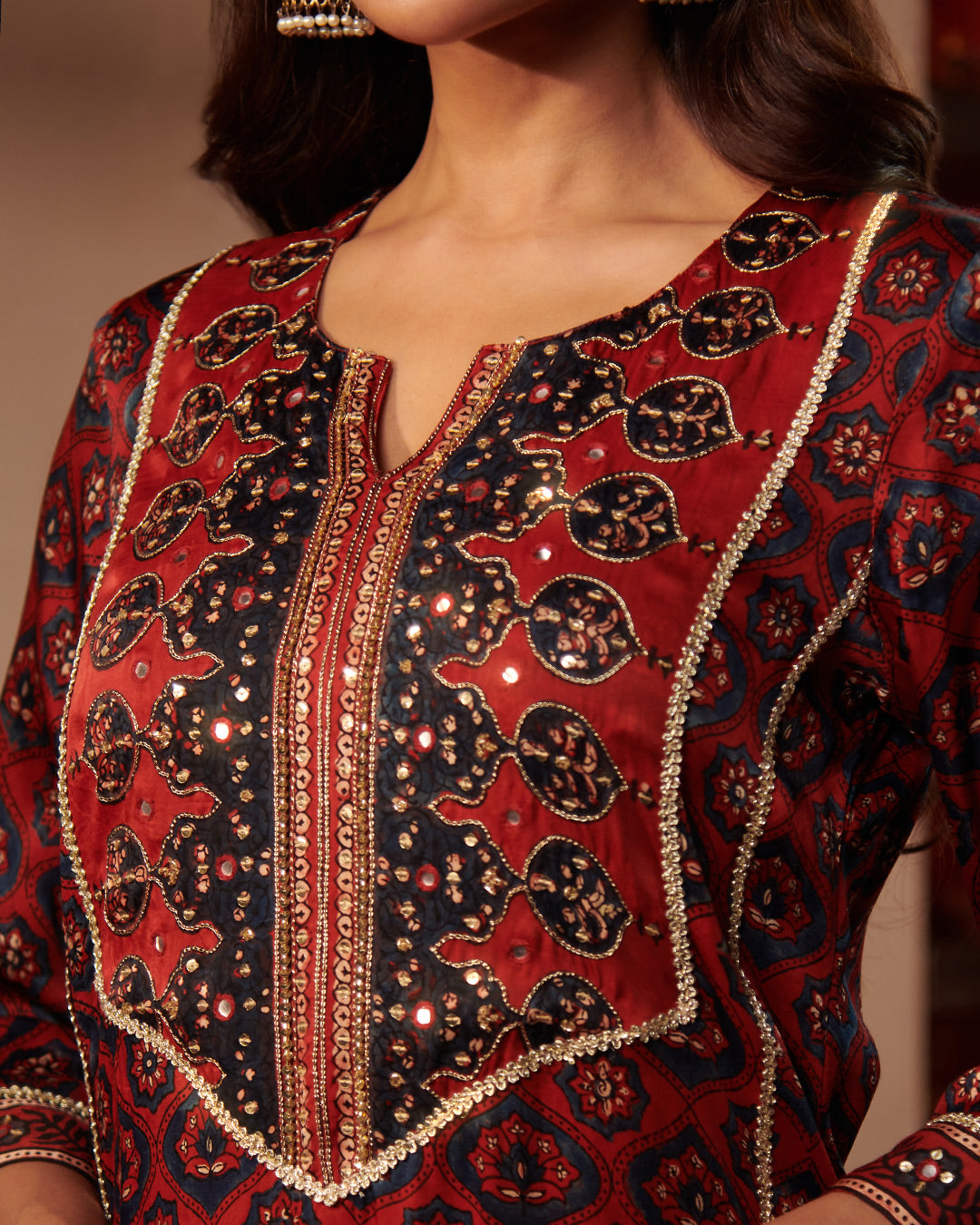
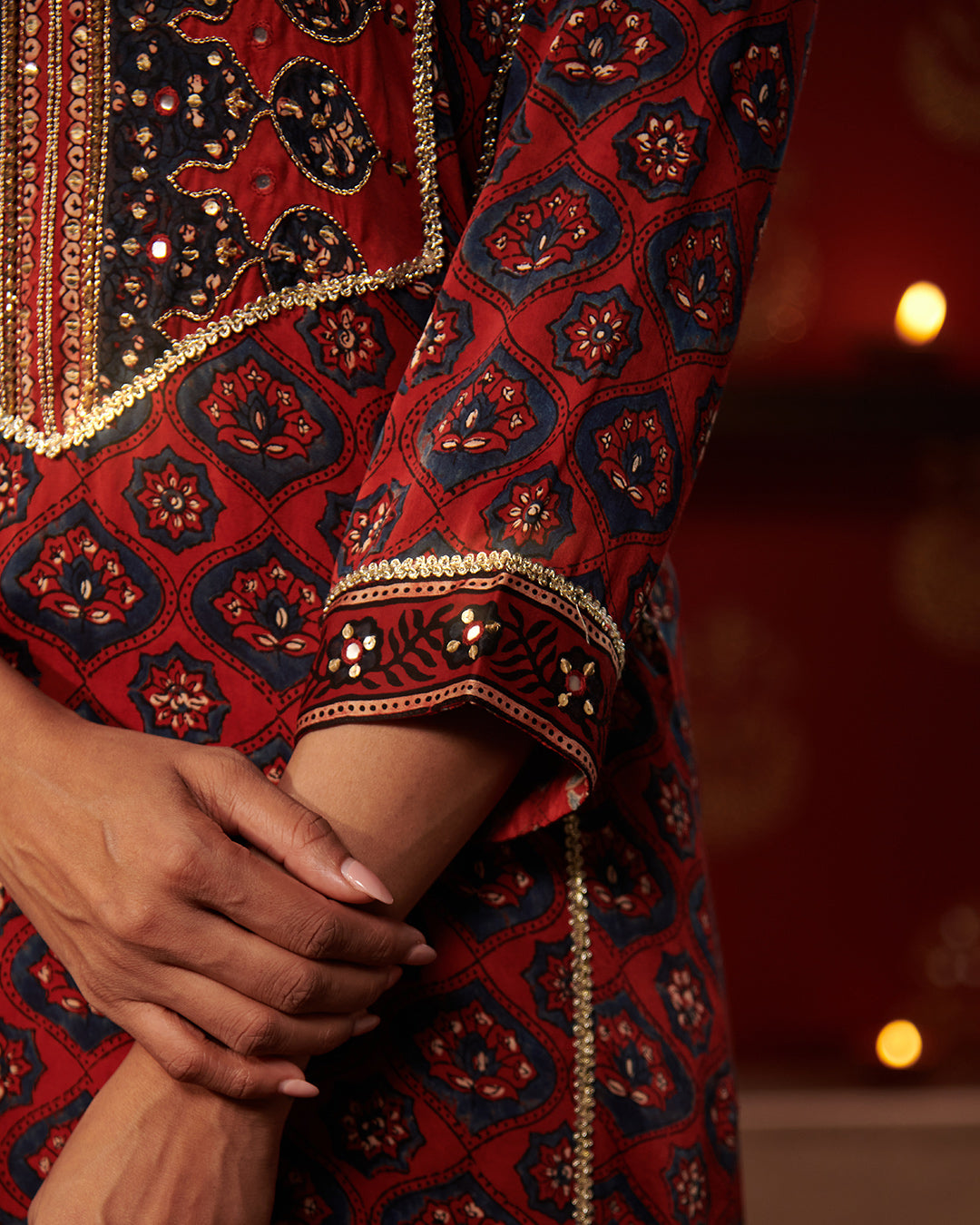
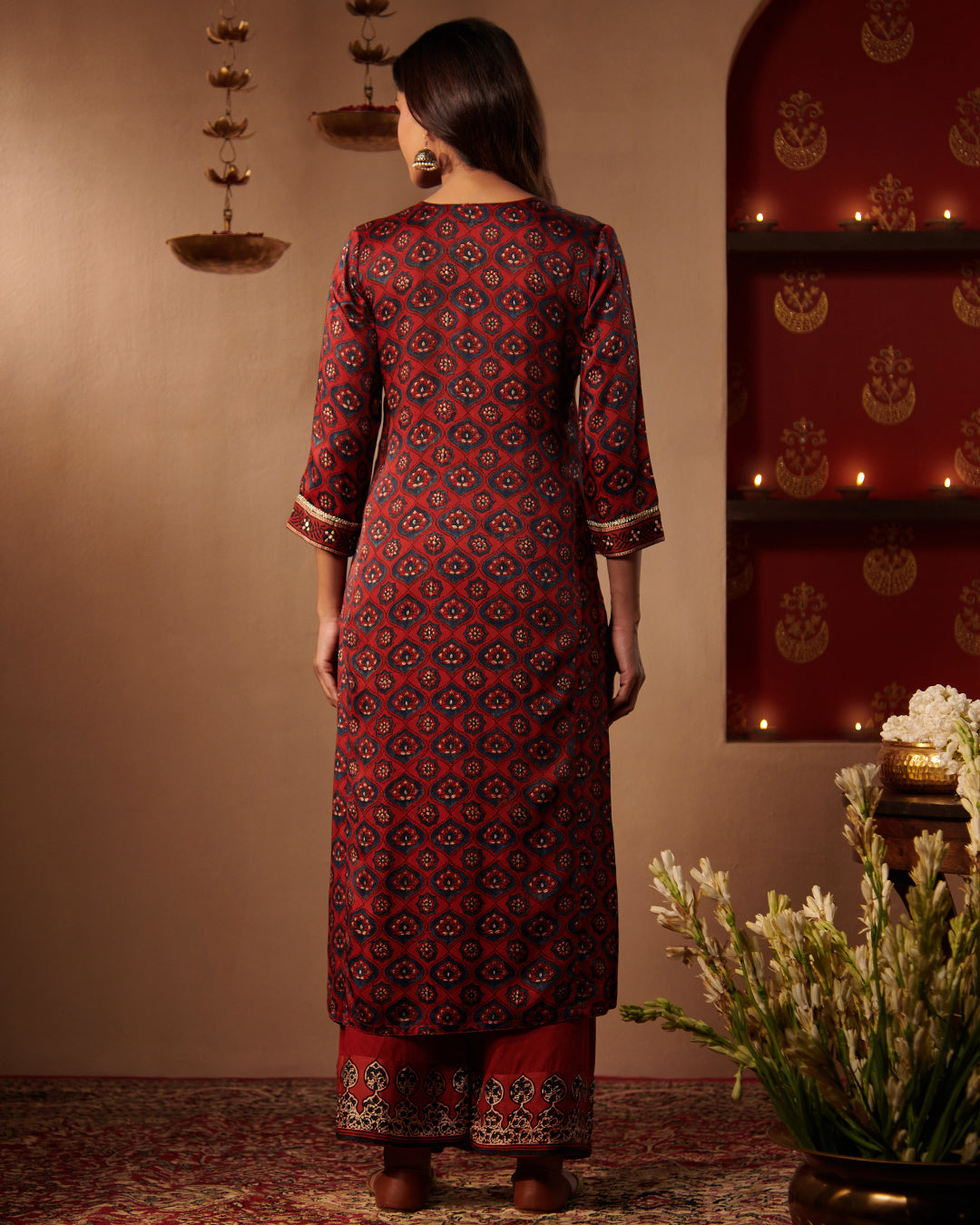
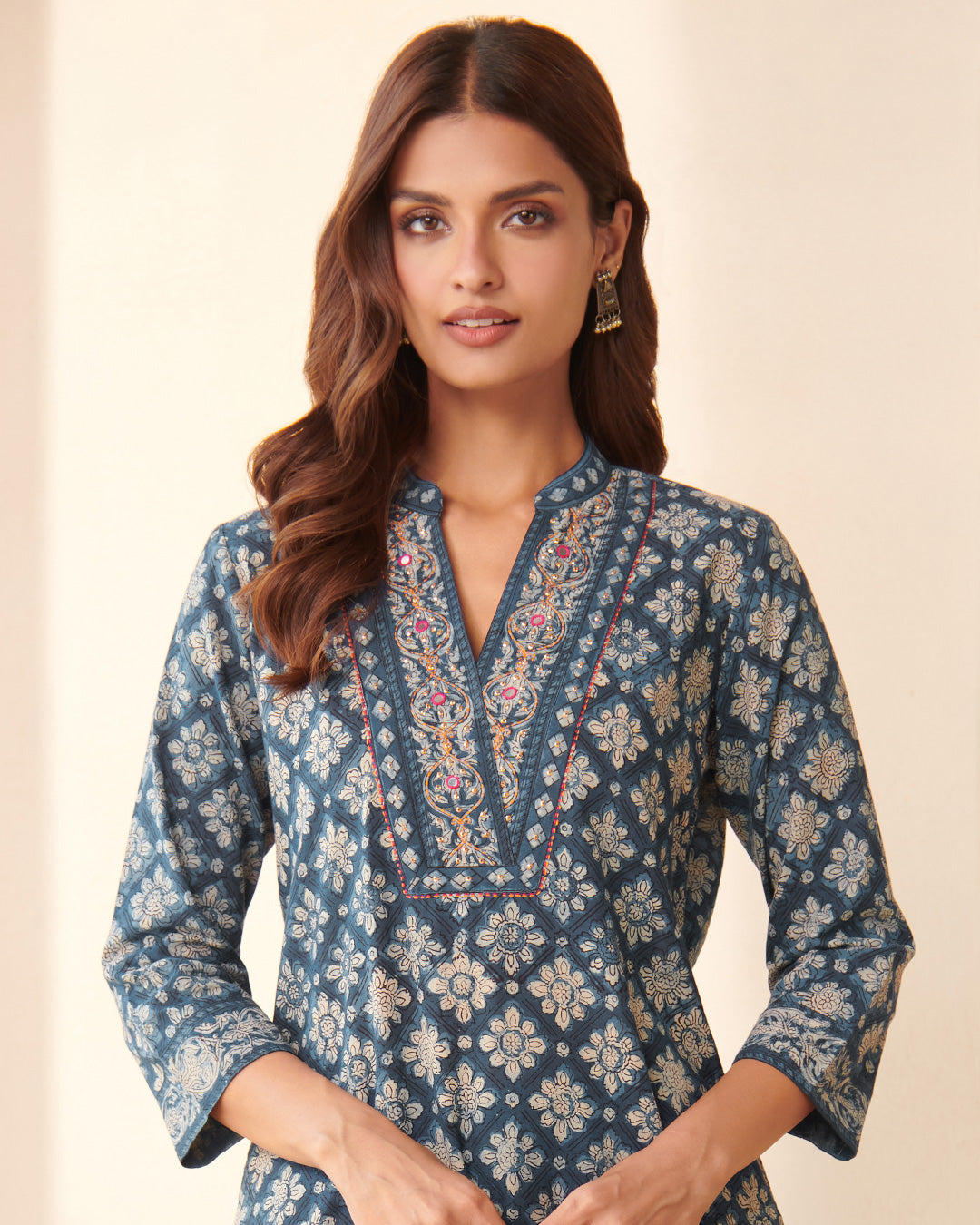
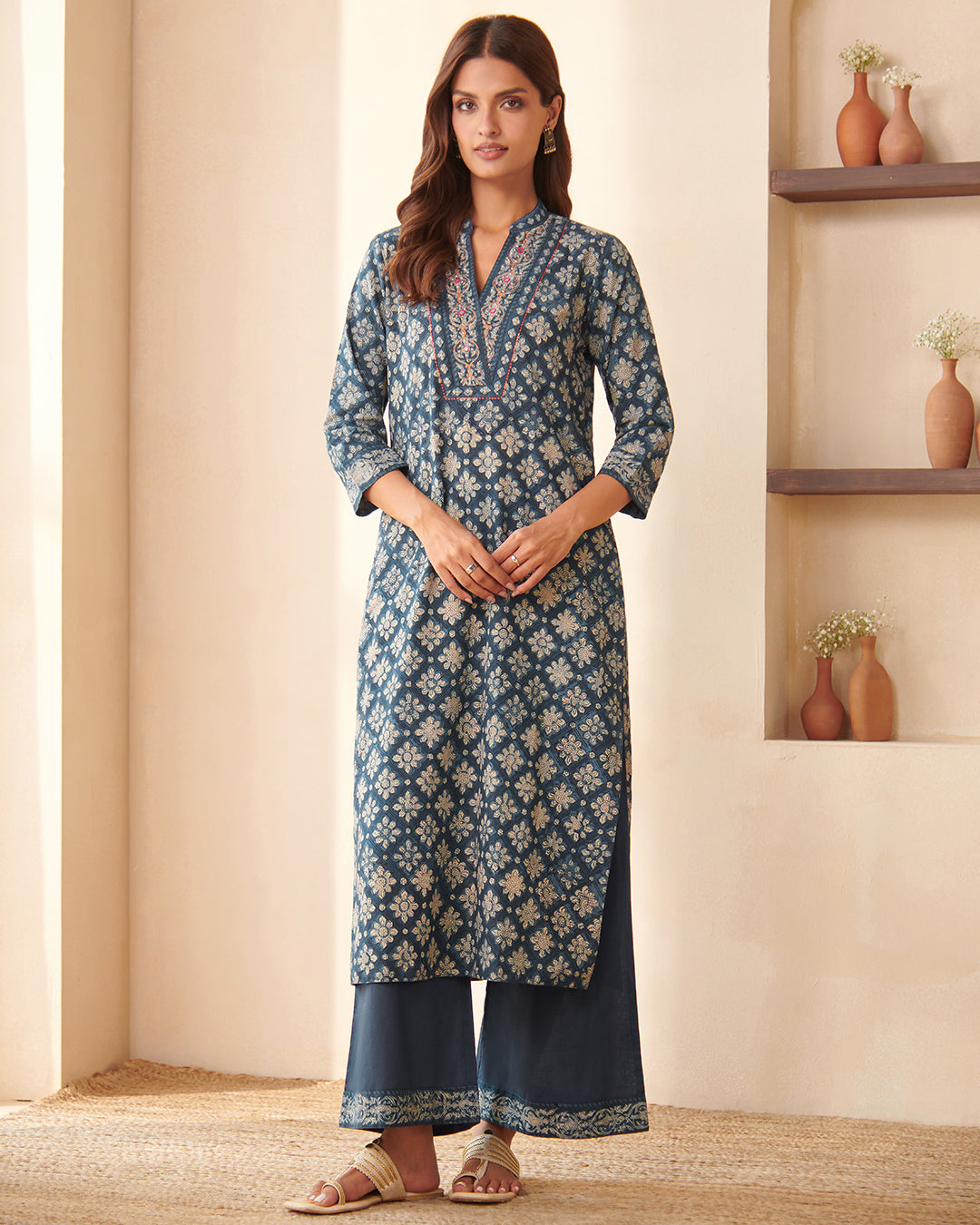
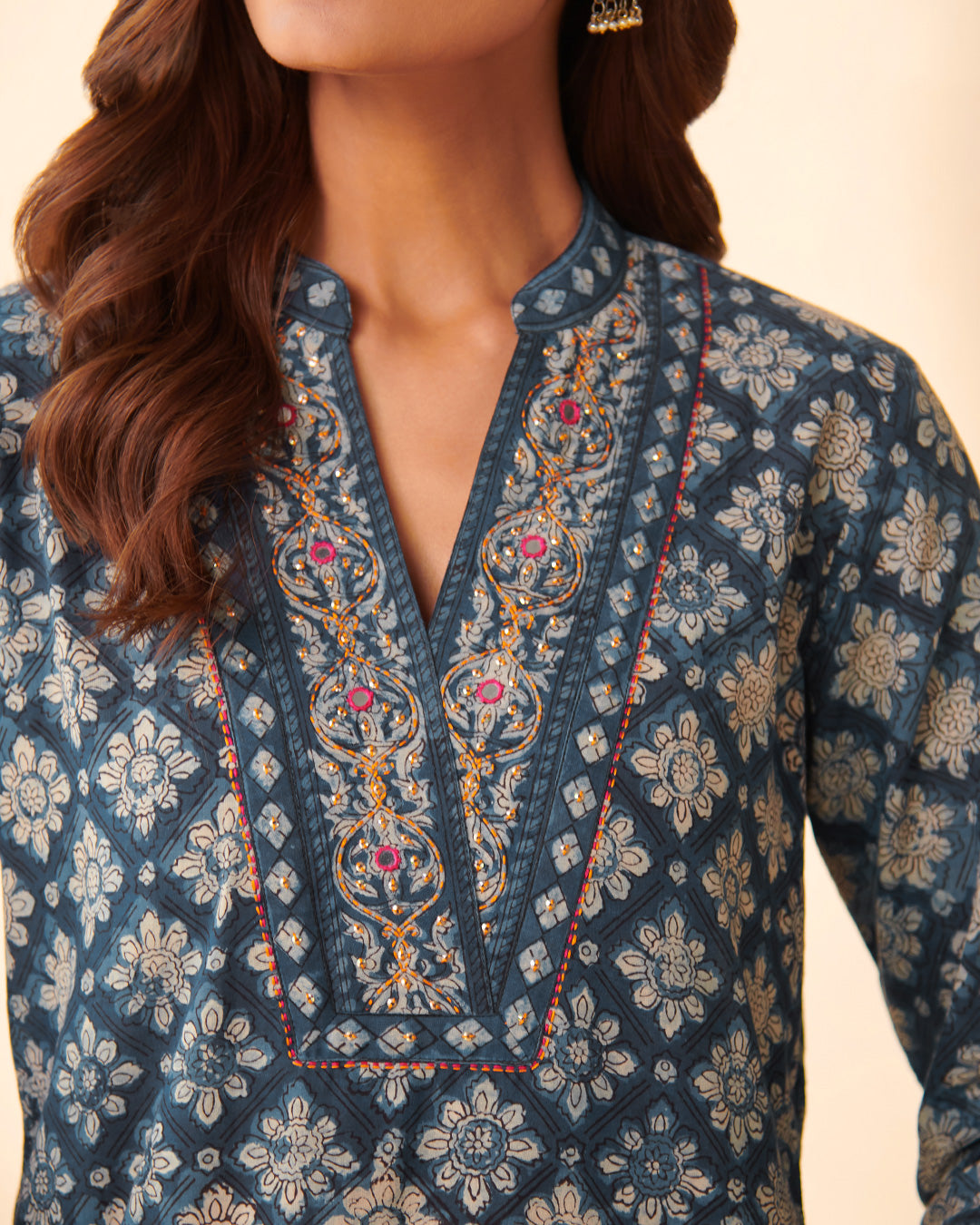
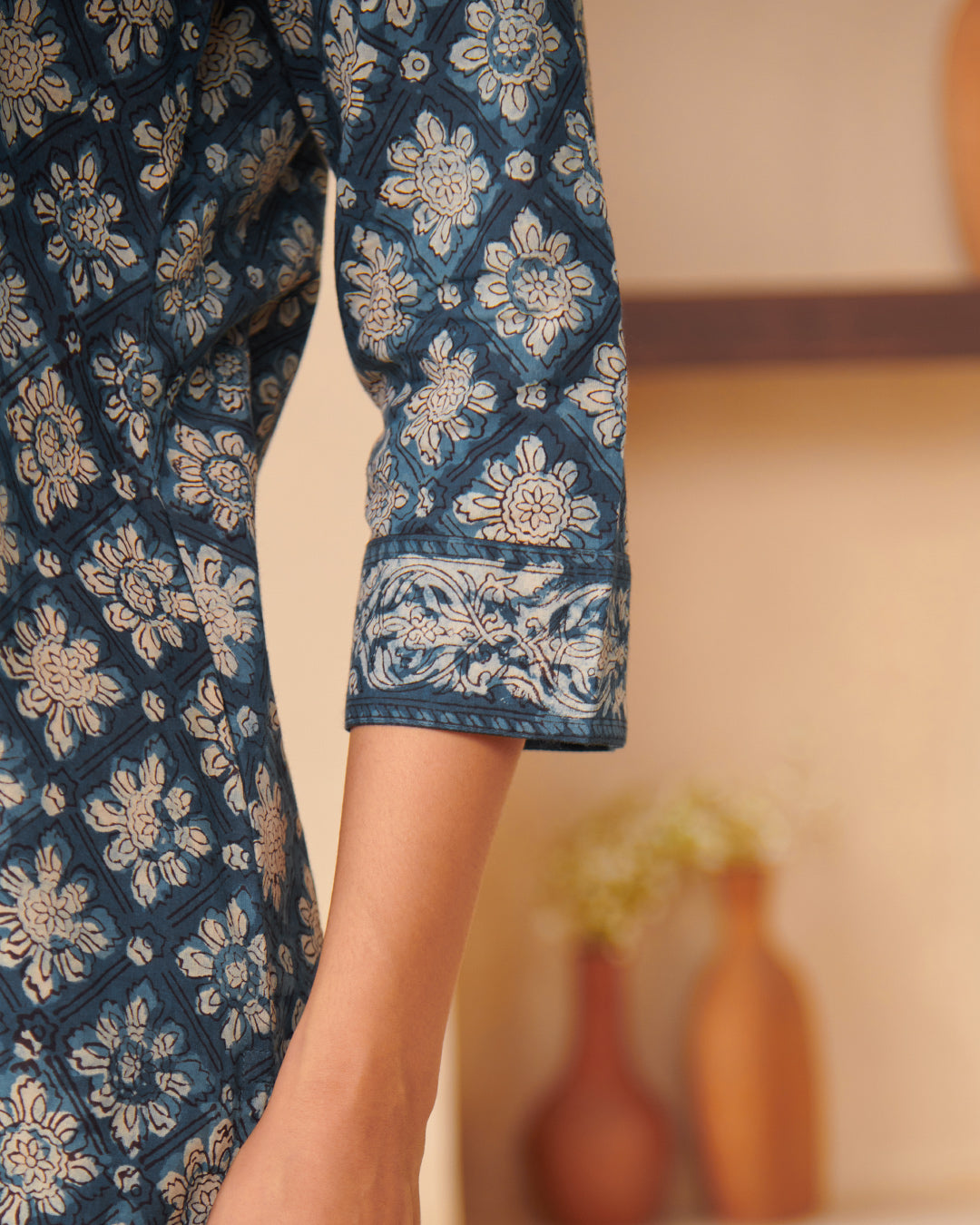
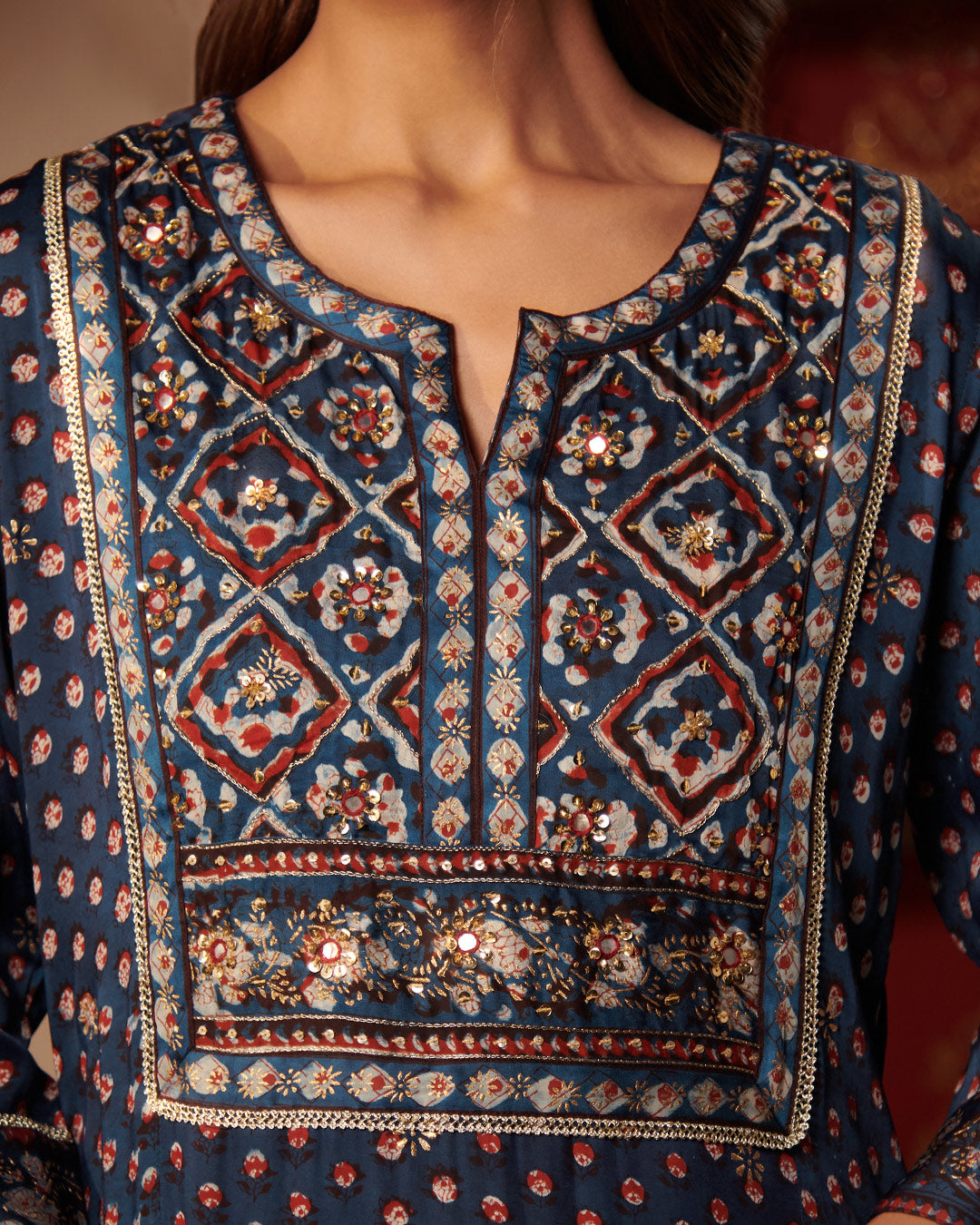
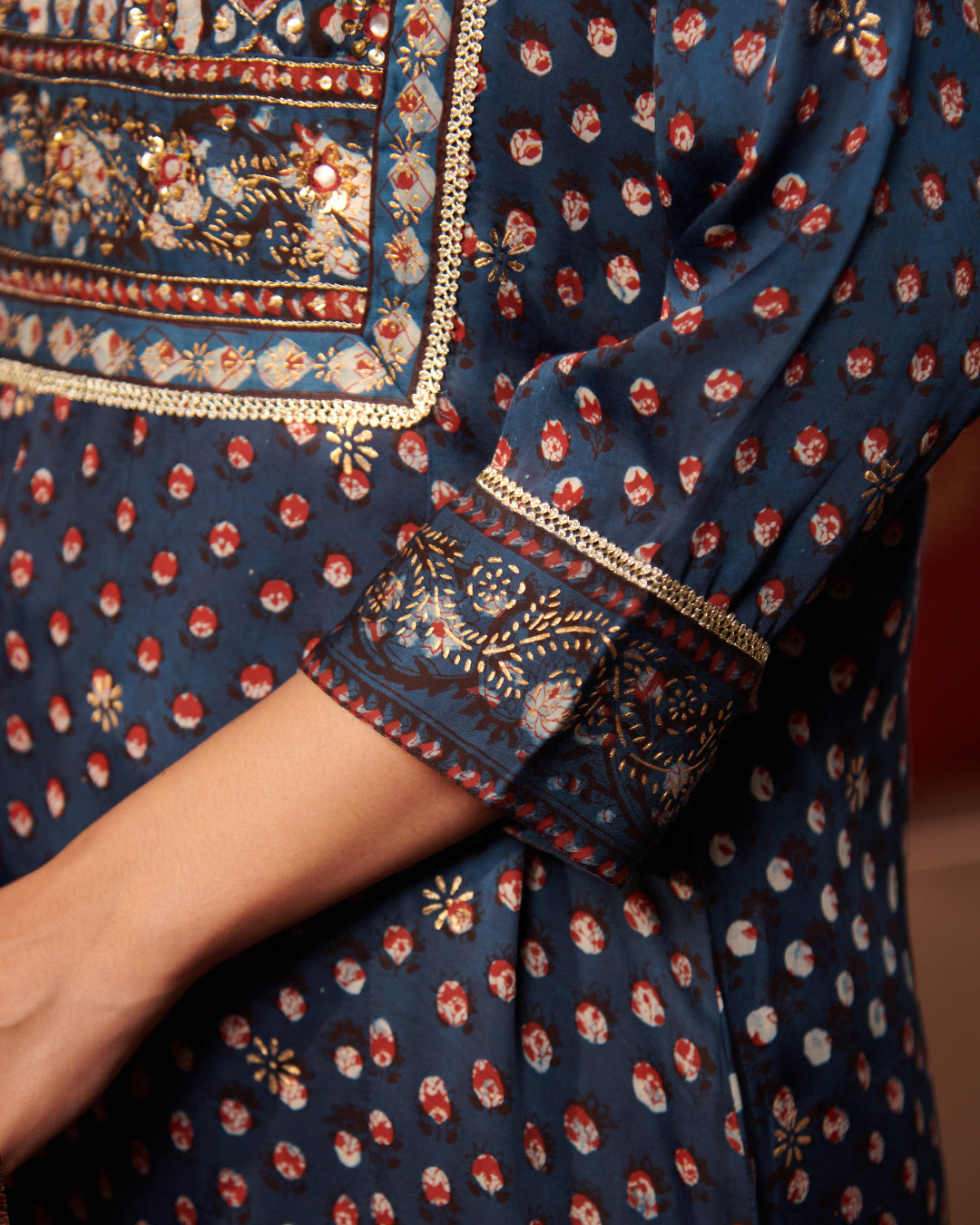
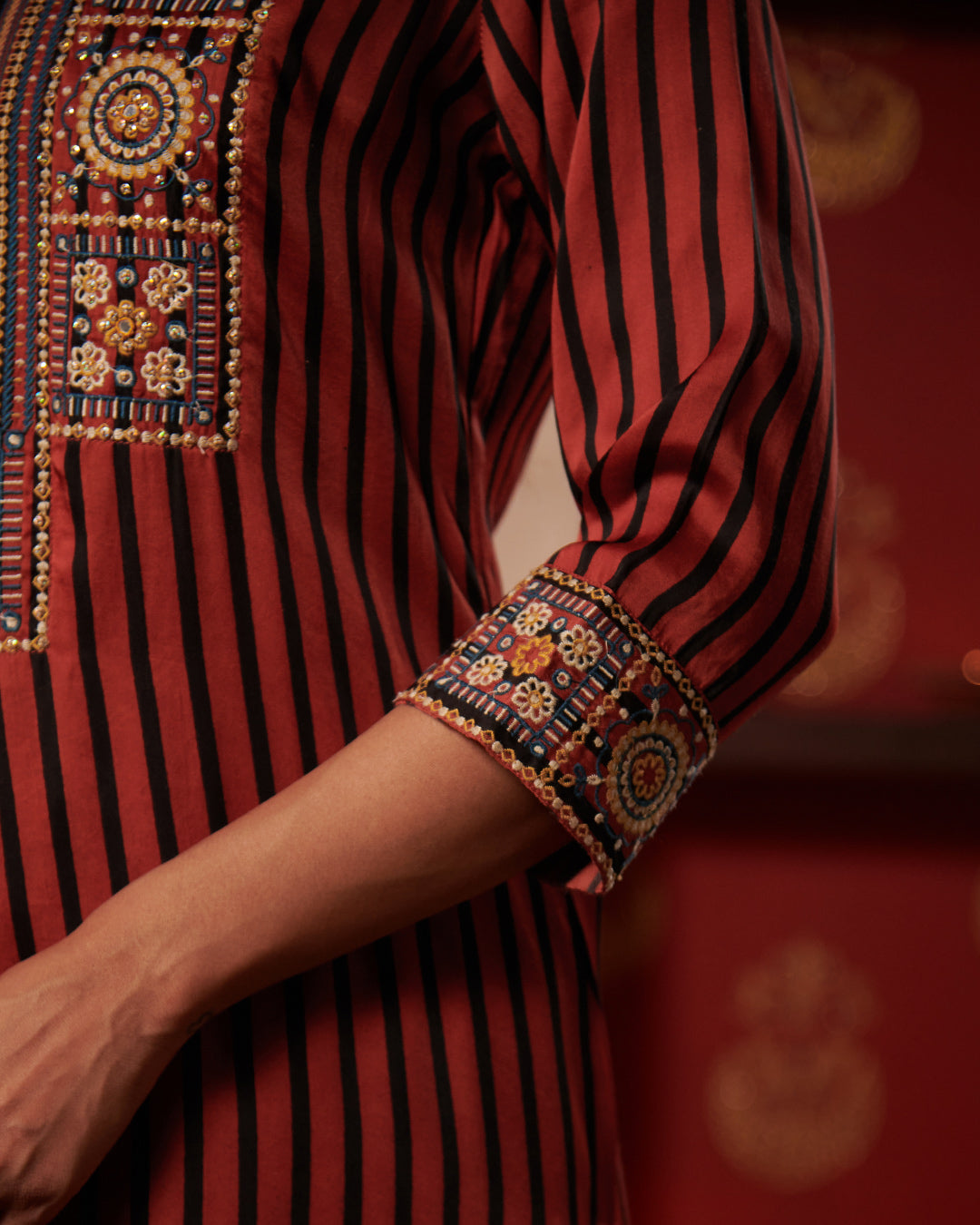
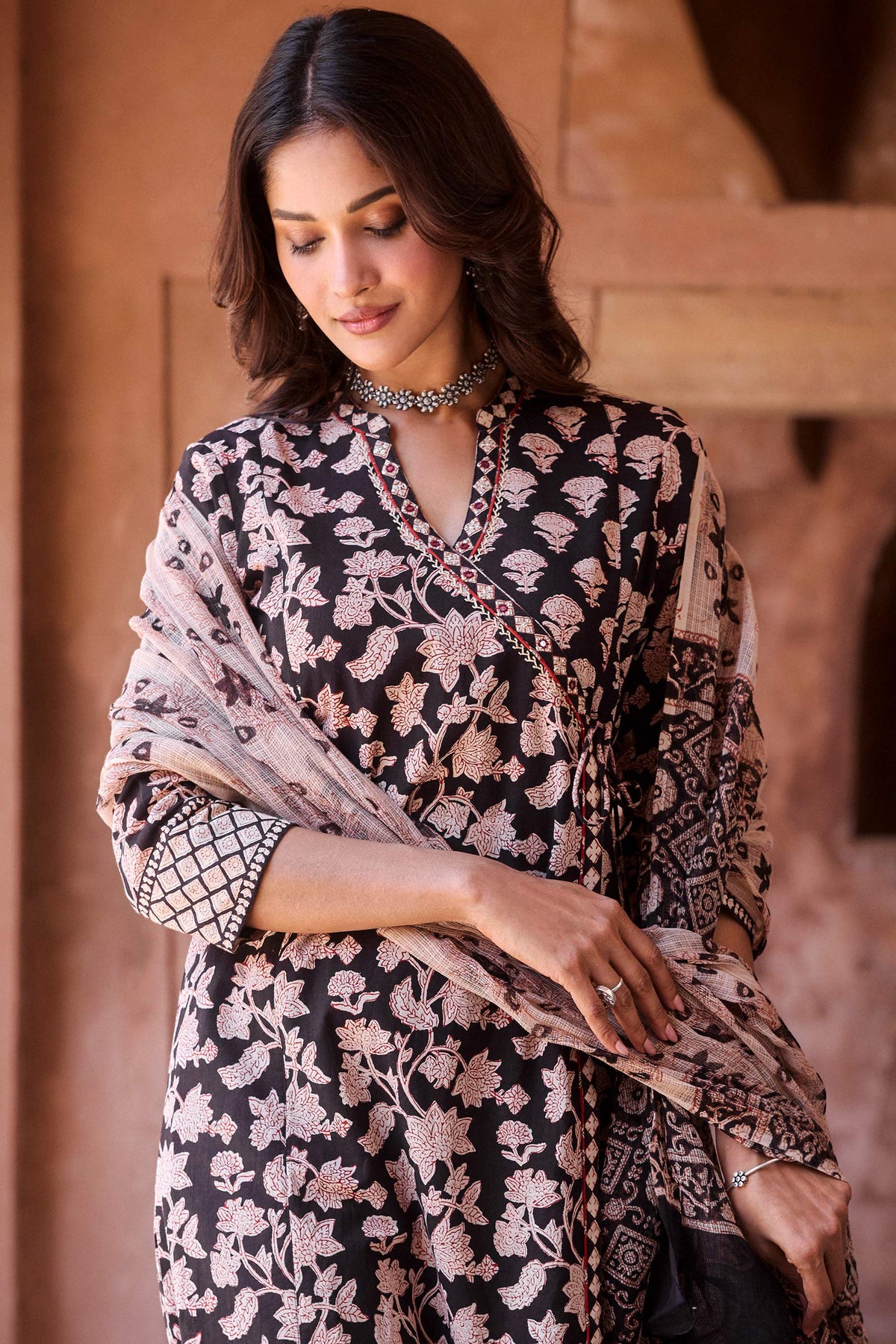
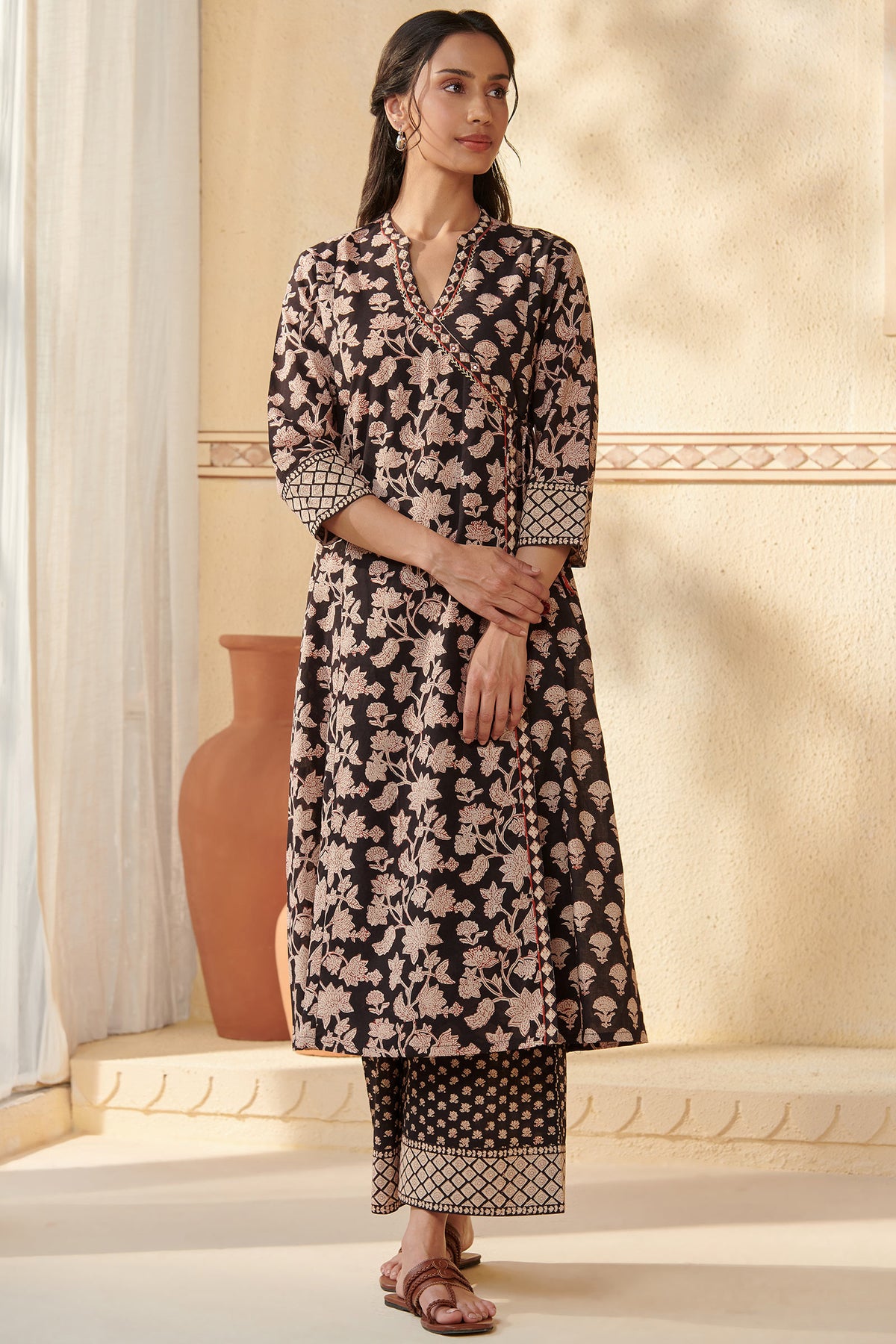
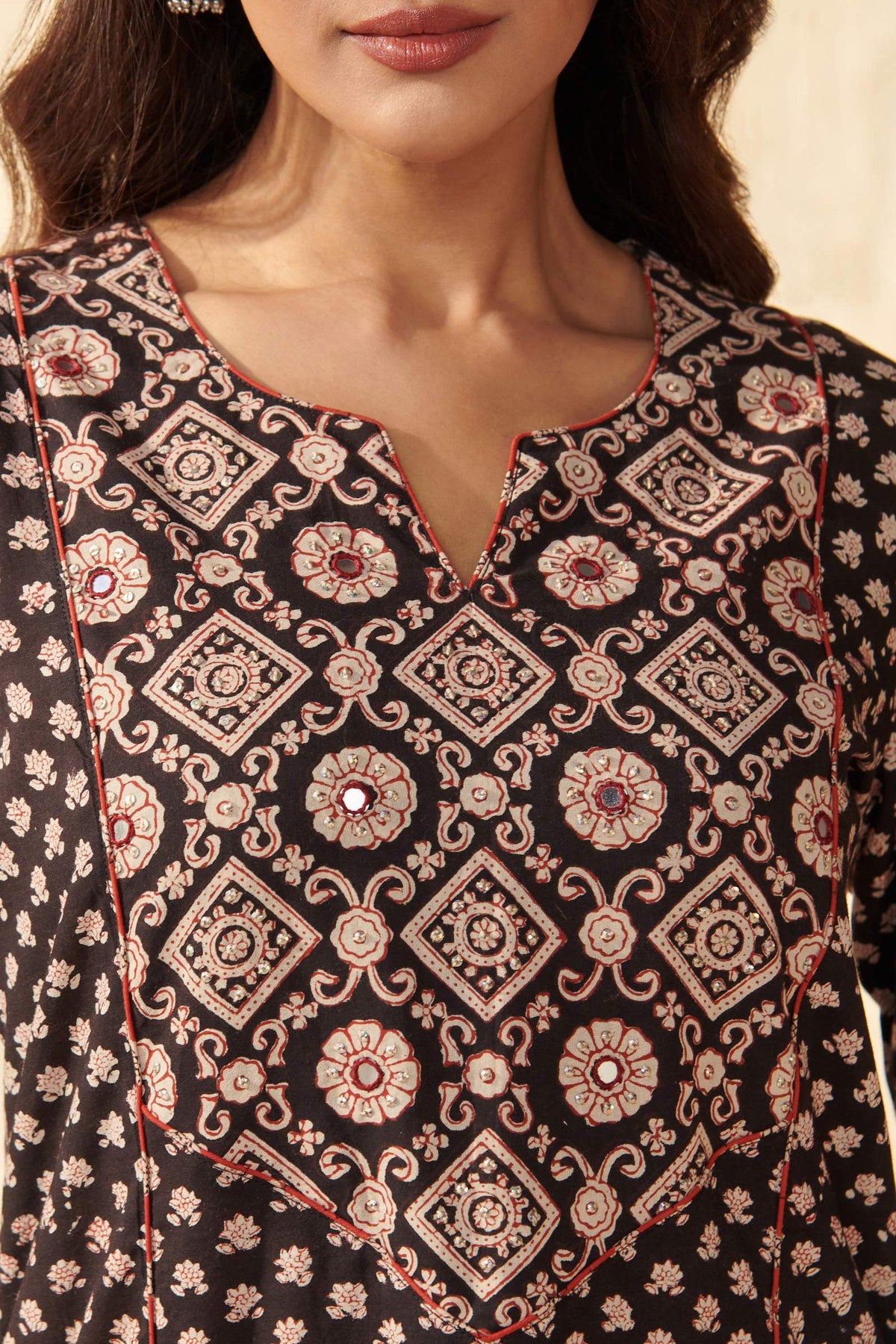
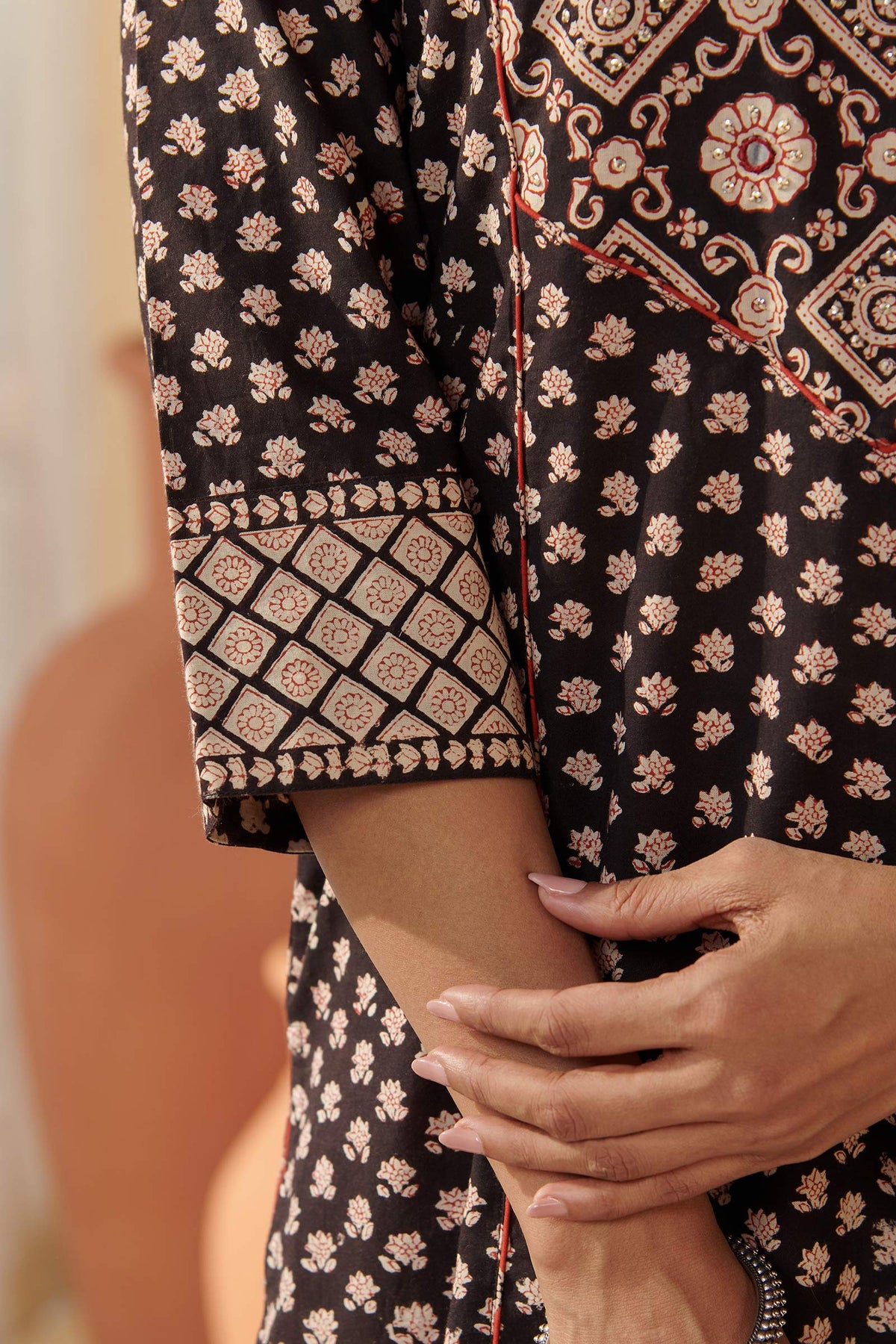
What makes Ajrakh distinct is its geometry. Repeating patterns, often symmetrical, built with remarkable precision using hand carved wooden blocks. The designs usually unfold in deep indigo, madder red, black, and muted neutrals.
In an Ajrakh print cotton saree, the fabric absorbs these dyes differently with each layer. The result is depth, not flat colour. You don’t just see the print, you notice how it settles into the cloth.
Why Authentic Ajrakh Sarees Are Special

Handcrafted Process
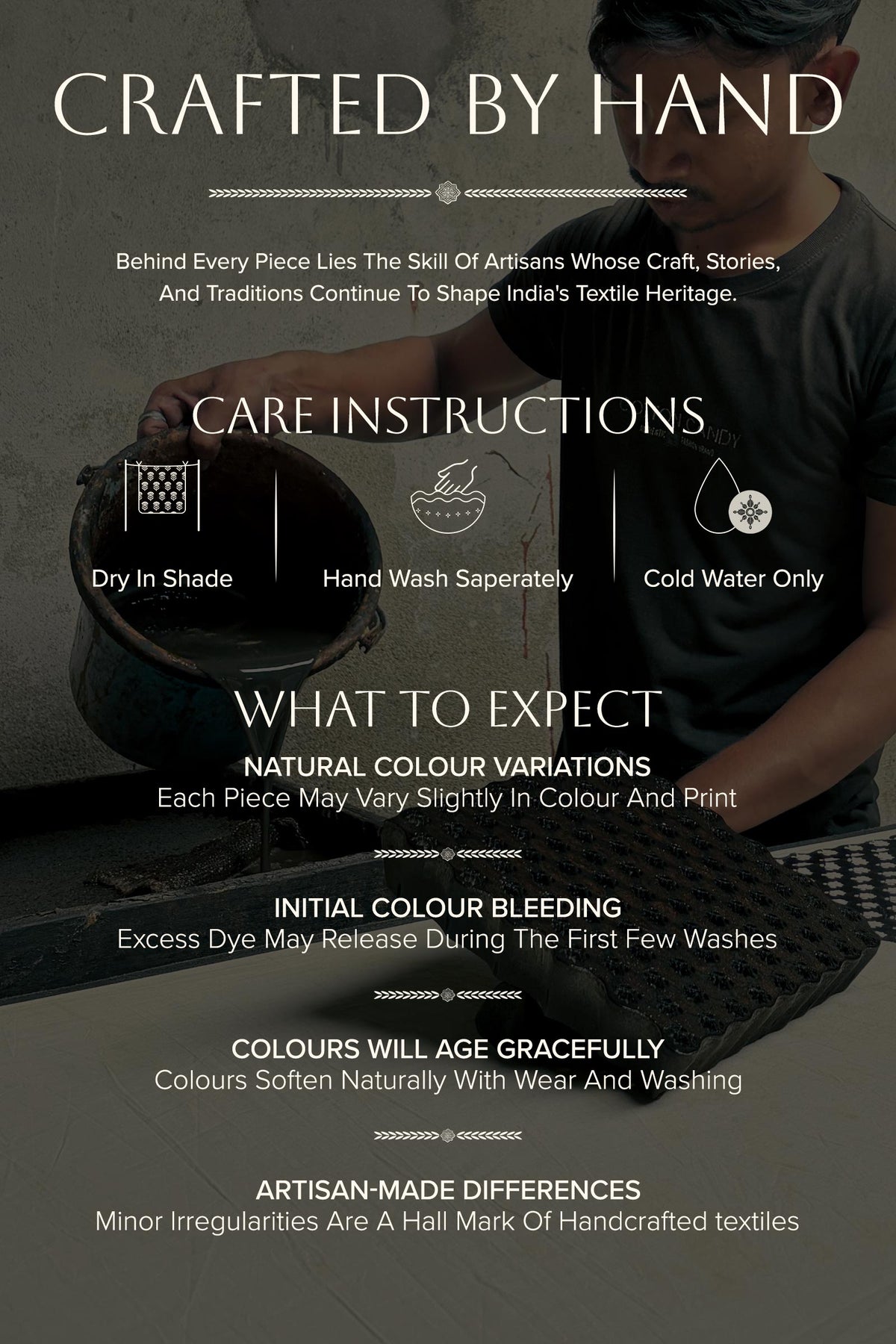
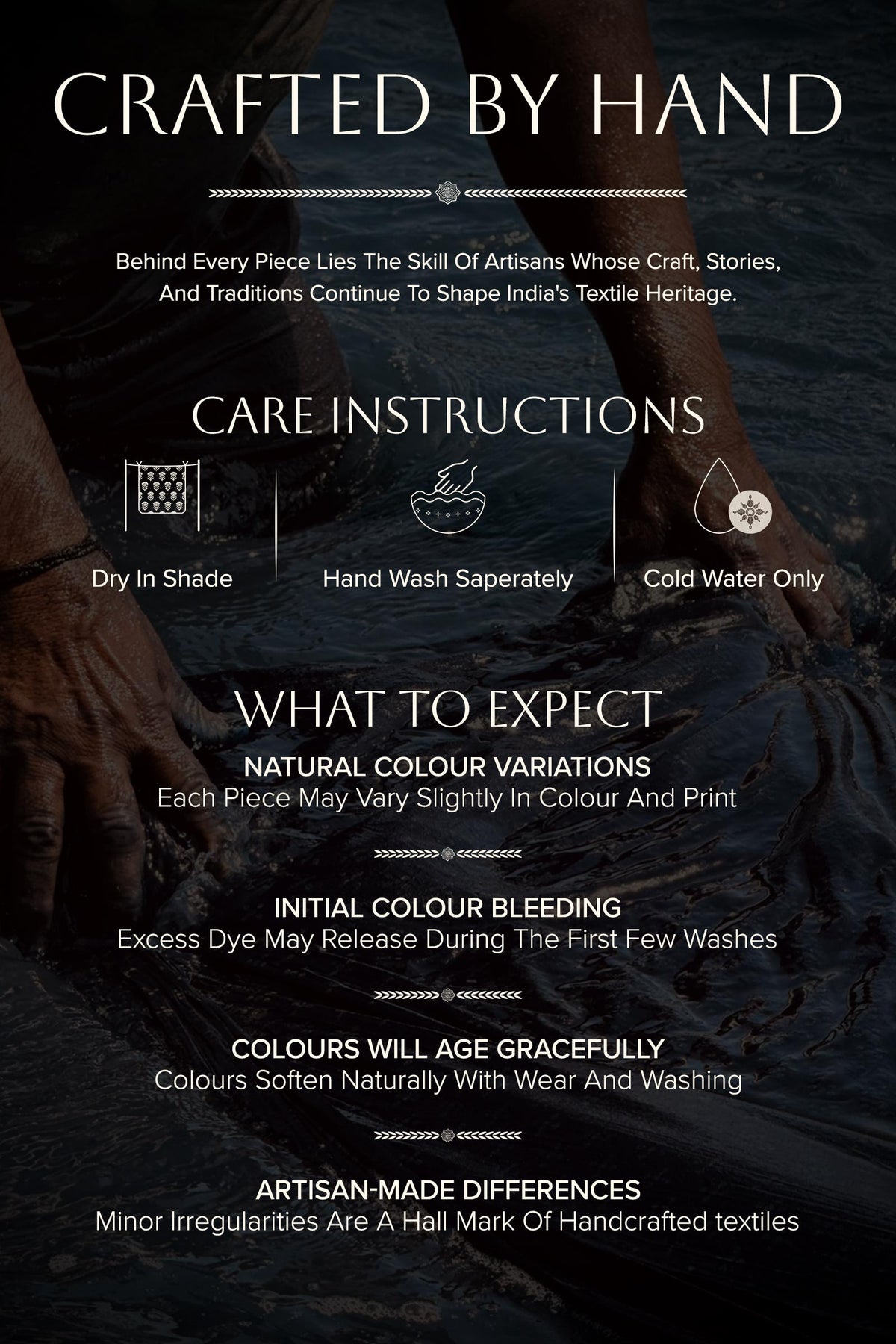
Every authentic Ajrakh block print saree is the outcome of time and repetition. The fabric goes through multiple stages, washing, drying, dyeing, printing, sometimes over two weeks or more.
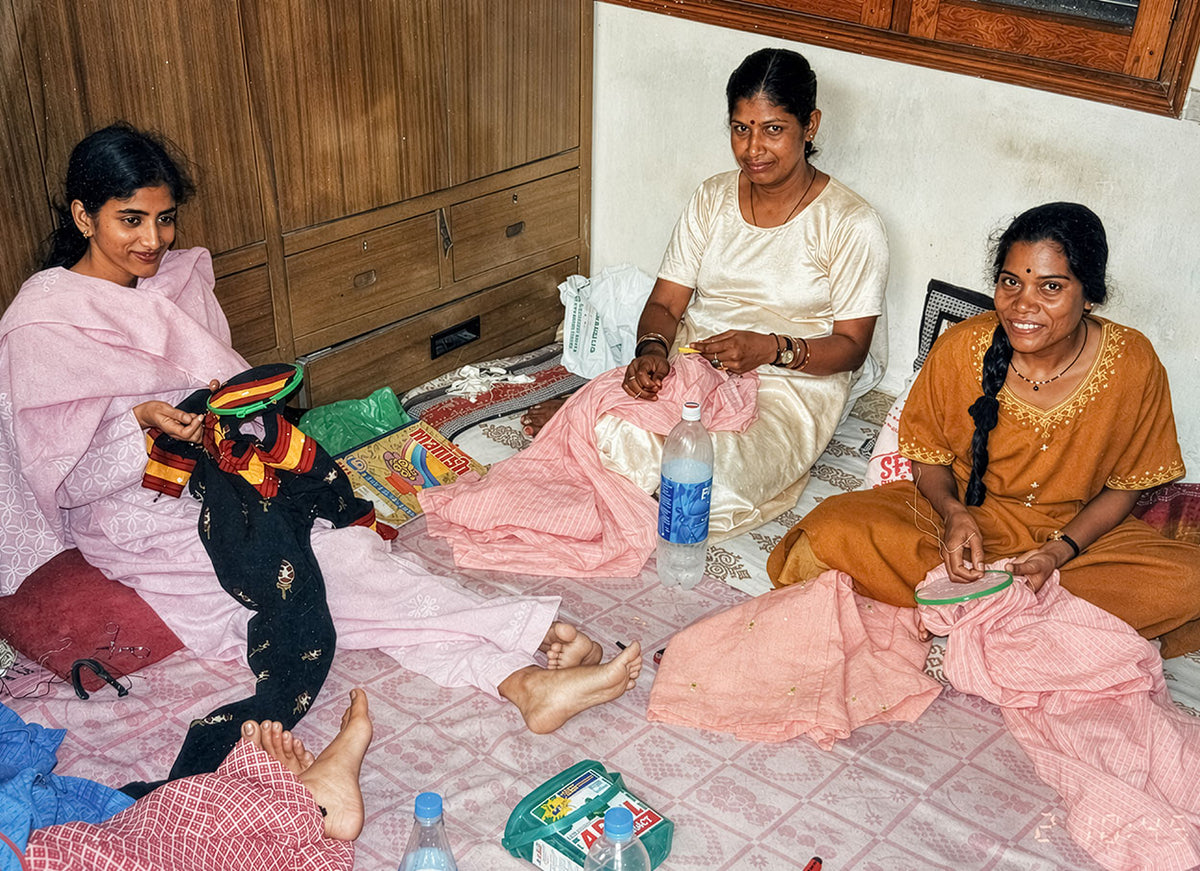
Each layer is applied by hand. Each alignment depends on the artisan’s eye, not a machine. This is why no two sarees are ever identical, even when they follow the same pattern.
Natural Dyes & Sustainability
Traditional Ajrakh uses natural dyes derived from indigo, iron, pomegranate skins, and other plant based sources. These dyes do not sit on the surface. They bind with the fabric over time.
The colours may feel softer compared to synthetic prints, but they age beautifully. An Ajrakh print saree often looks better after years of wear, the tones deepening gently rather than fading abruptly.
Cultural & Artistic Value
Ajrakh is not just a technique, it is a language of pattern. The geometry reflects balance, rhythm, and a certain discipline that has been passed down through generations of artisans.
Wearing Ajrak print sarees is, in many ways, wearing a piece of that continuity. It carries memory, not just design.
Key Signs of Authentic Ajrakh Block Print Sarees

1. Symmetry with Slight Imperfections
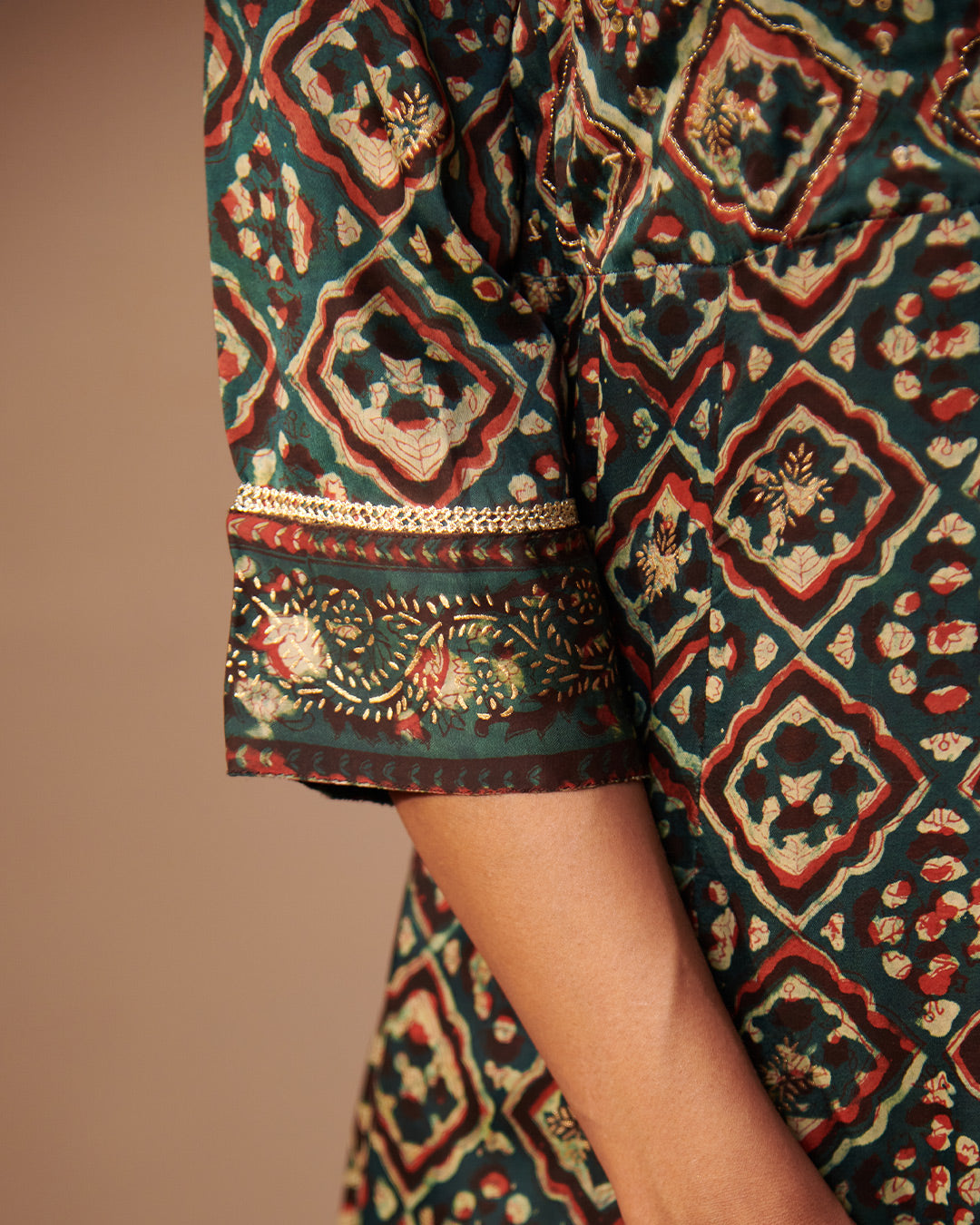
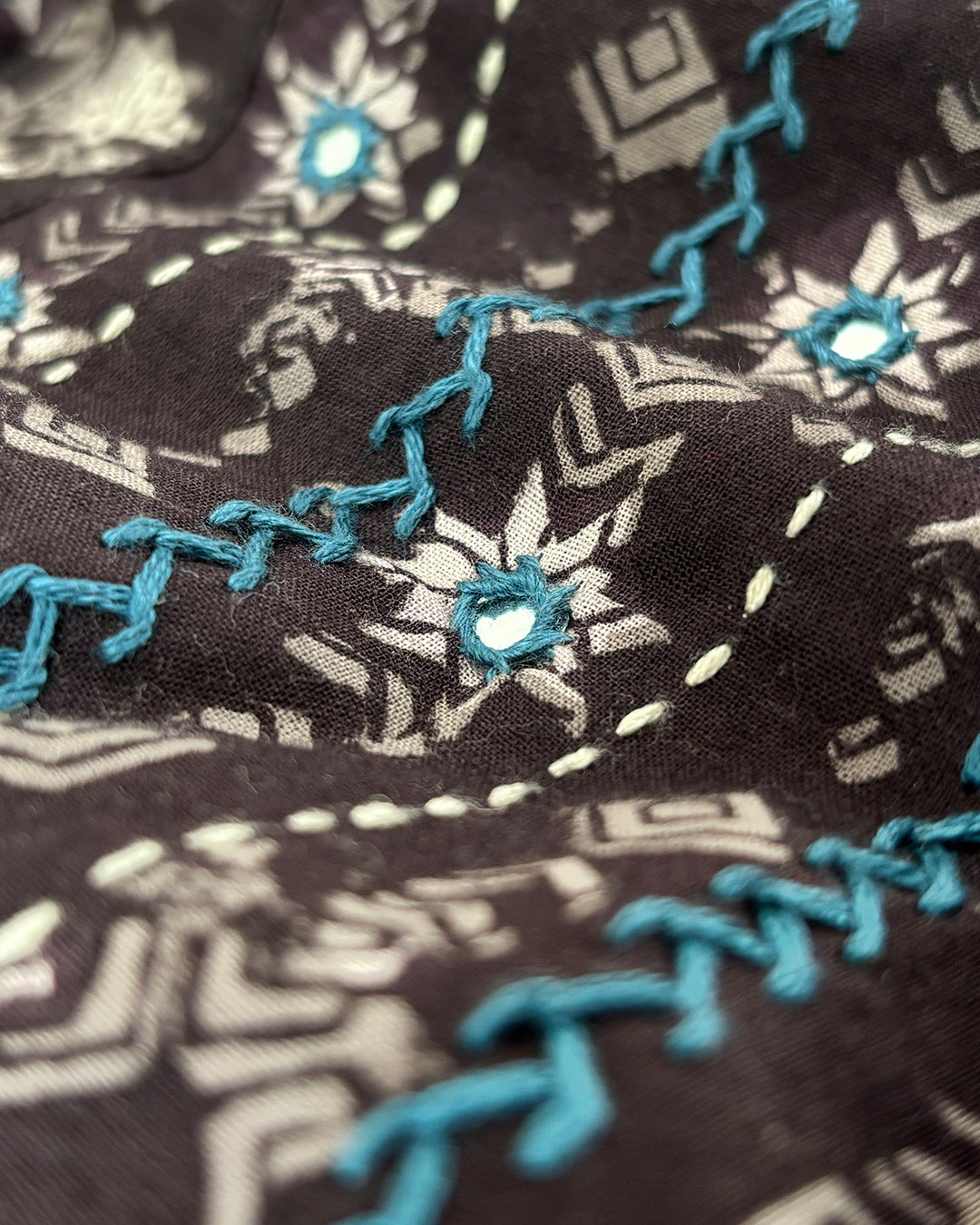
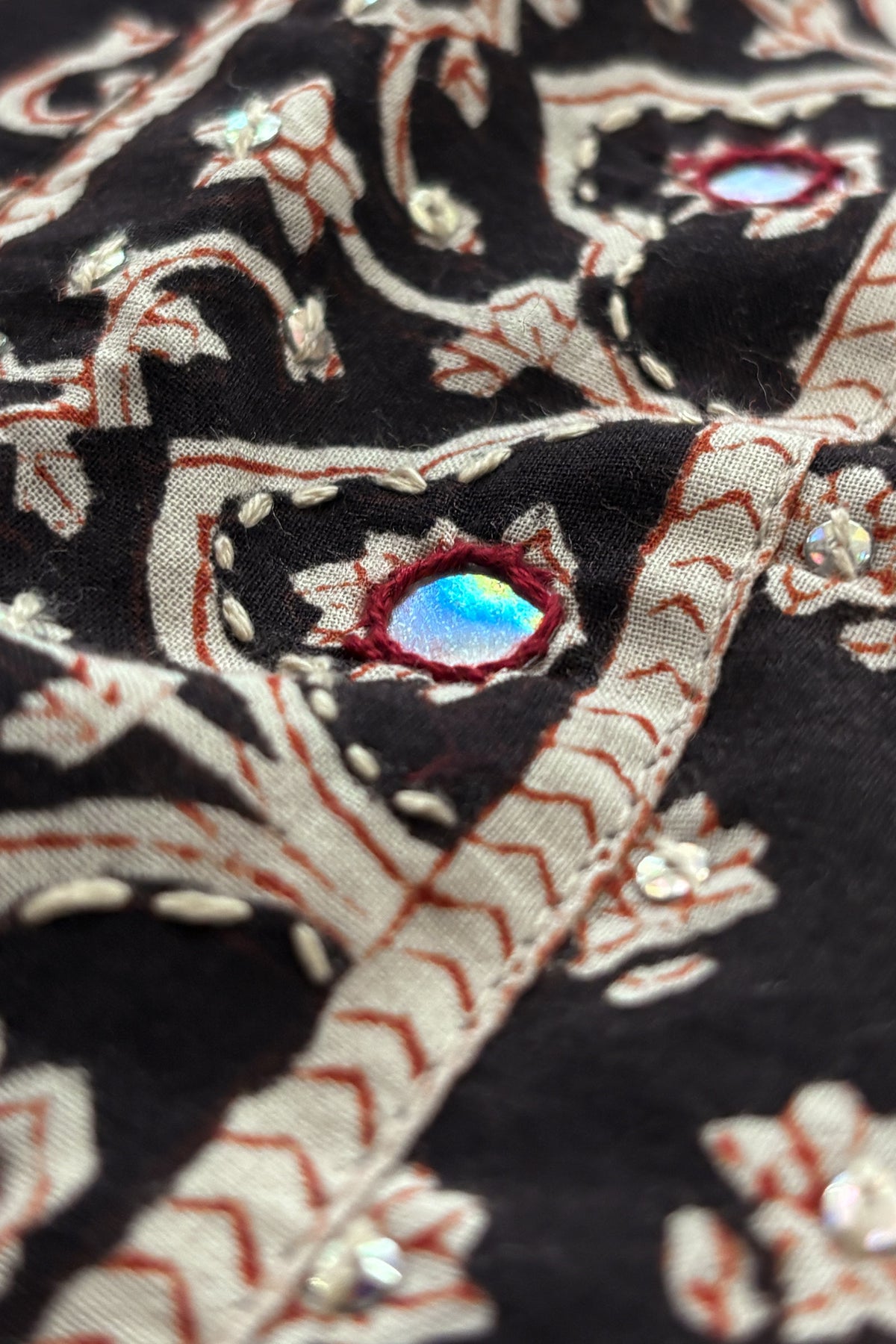
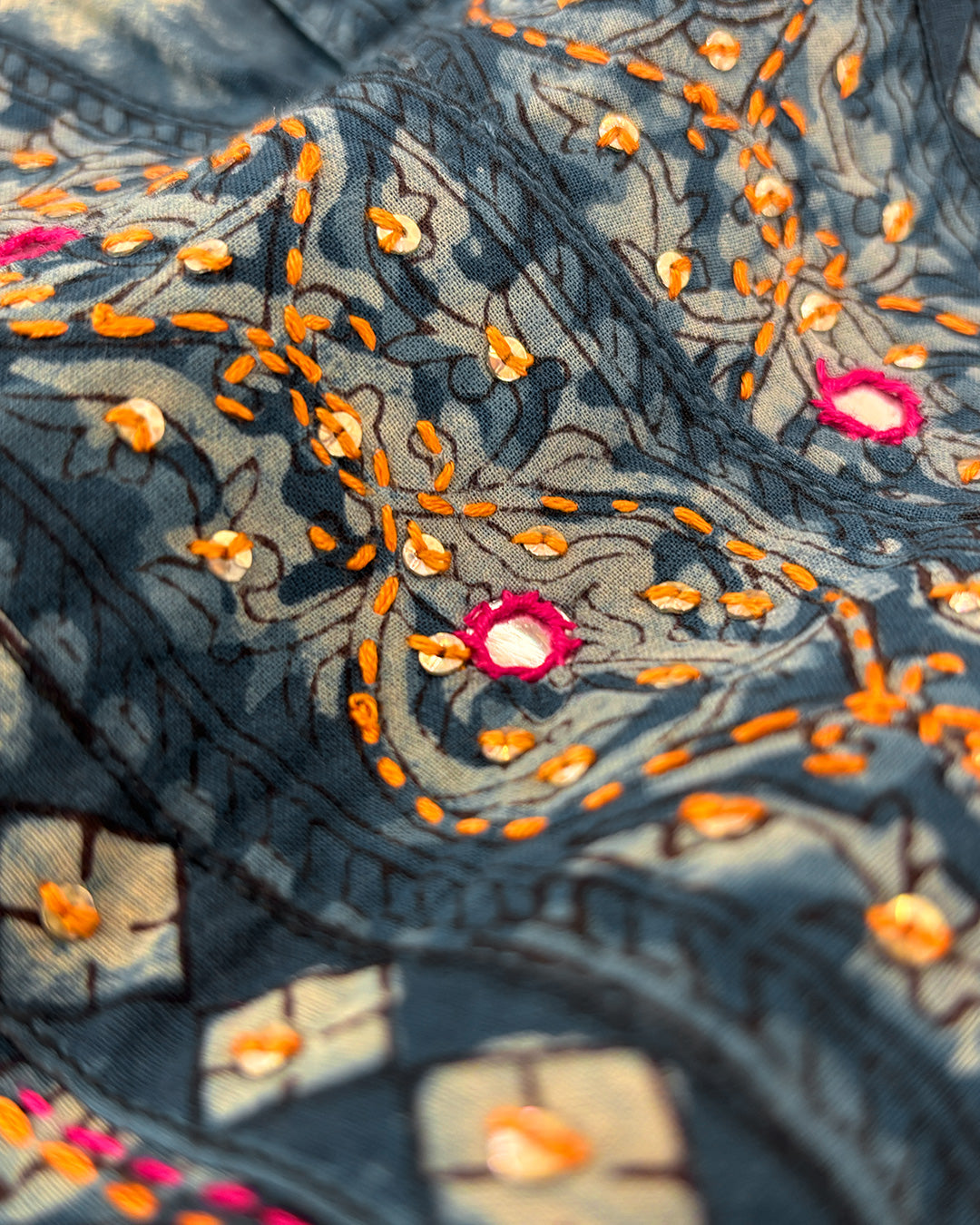
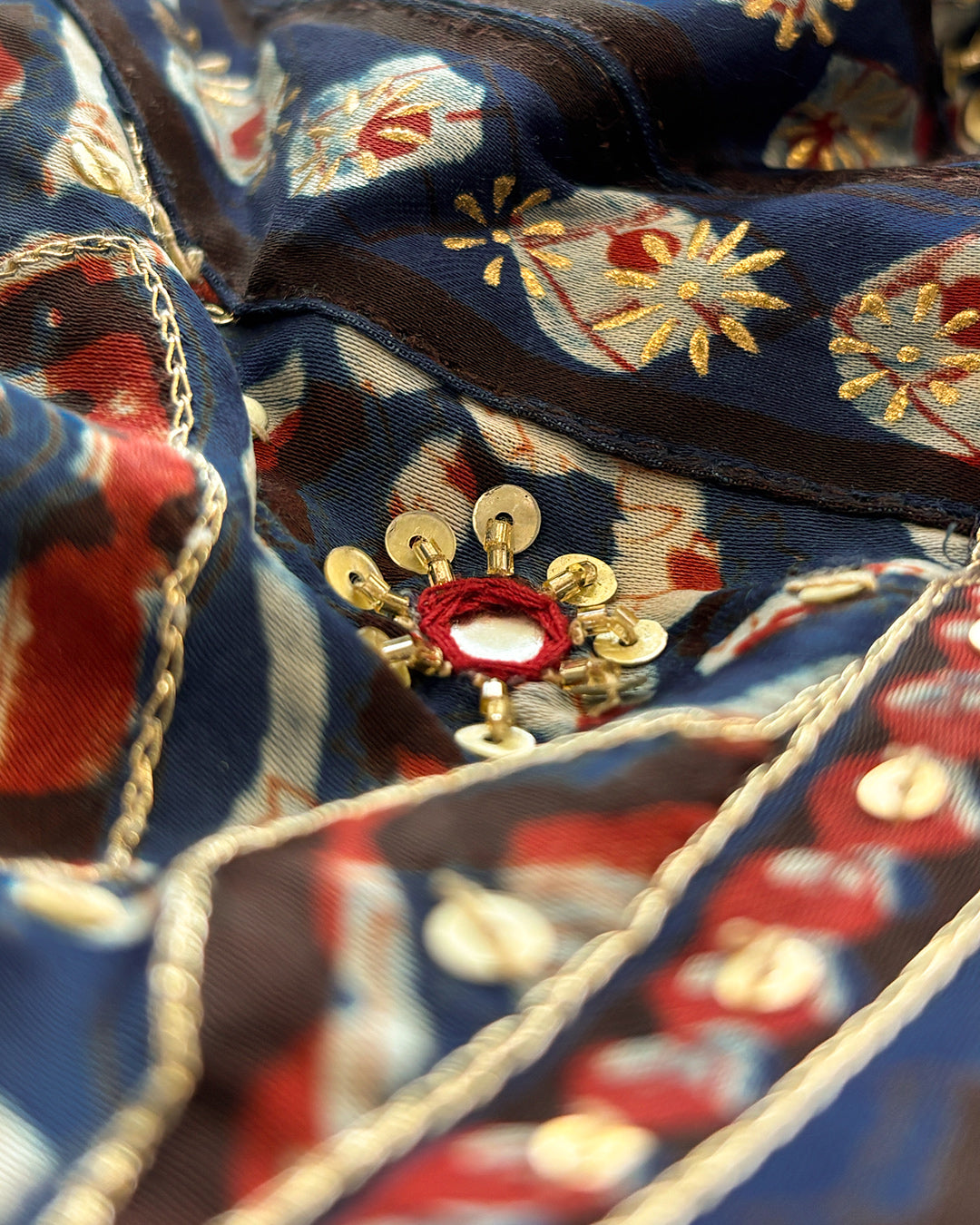
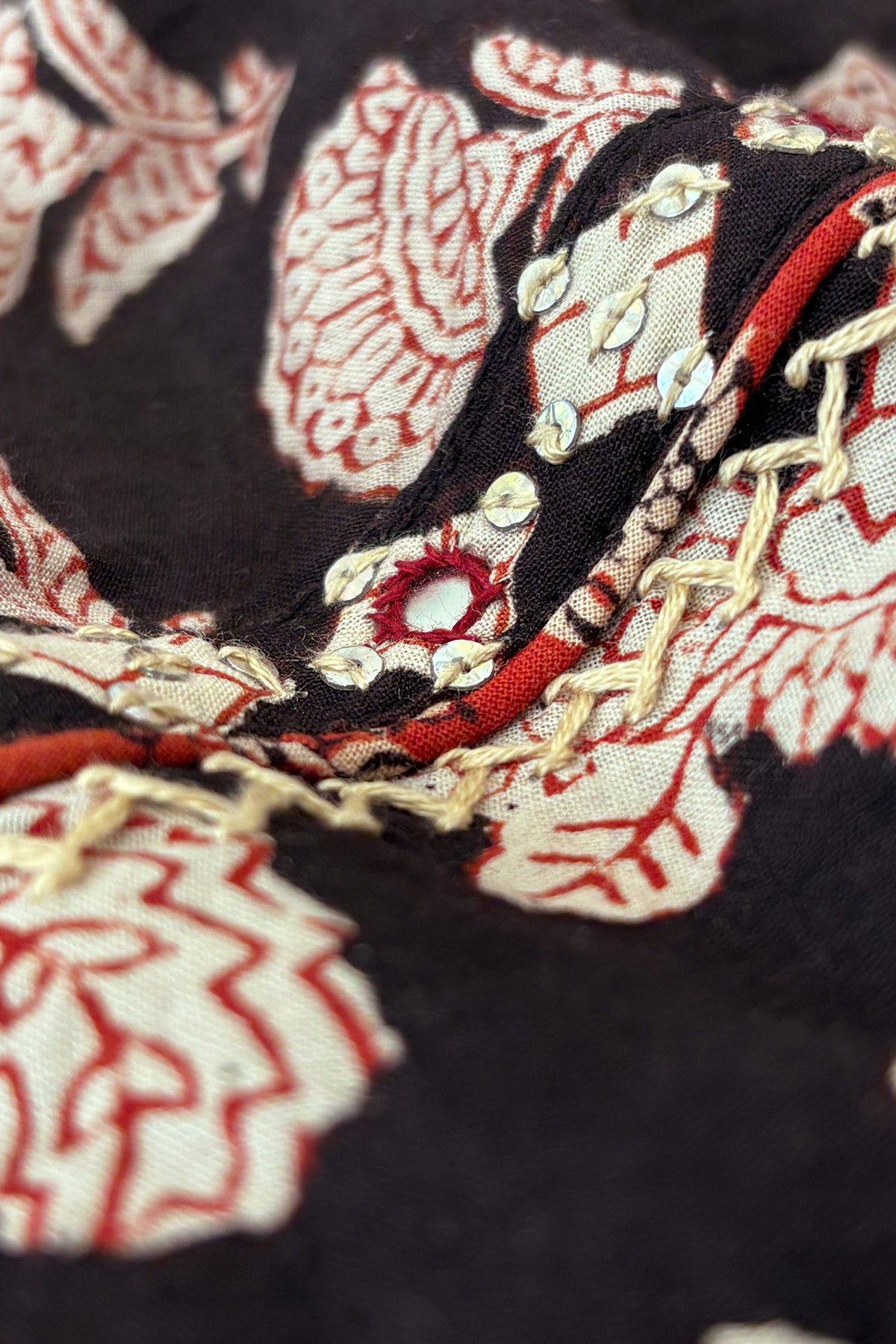
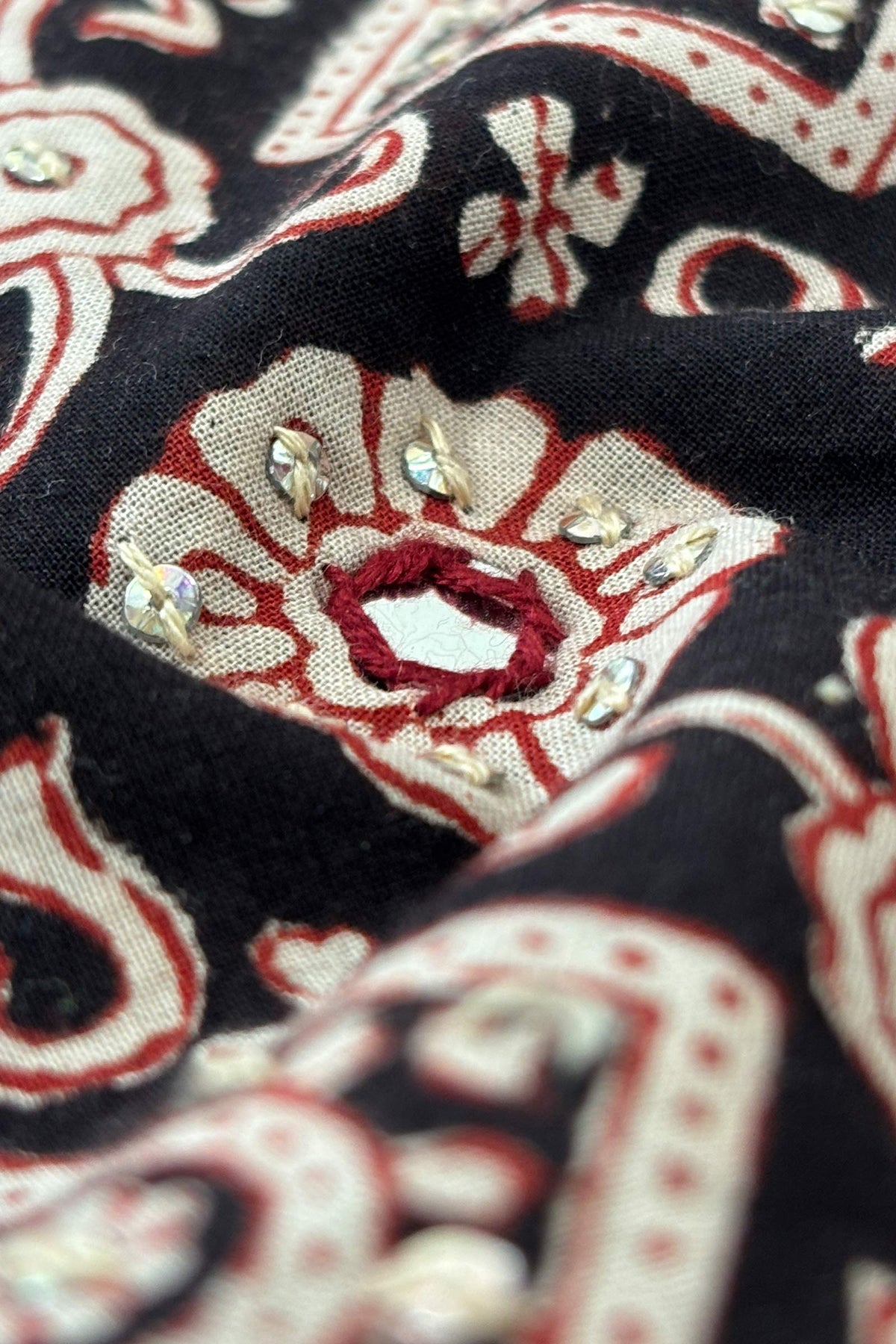
At first glance, the patterns appear perfectly symmetrical. But if you look closely, there will be tiny irregularities. A line slightly offset, a motif not perfectly mirrored.
These are not flaws. They are markers of the human hand. Machine prints tend to be too perfect, almost rigid.
2. Double-Sided Printing
One of the most reliable signs of authentic Ajrakh block print sarees is that the print appears clearly on both sides of the fabric.
The colours may be slightly softer on the reverse, but the design remains visible. This happens because of the resist dyeing process, where the fabric is worked through multiple layers rather than printed only on the surface.
3. Natural, Earthy Color Palette
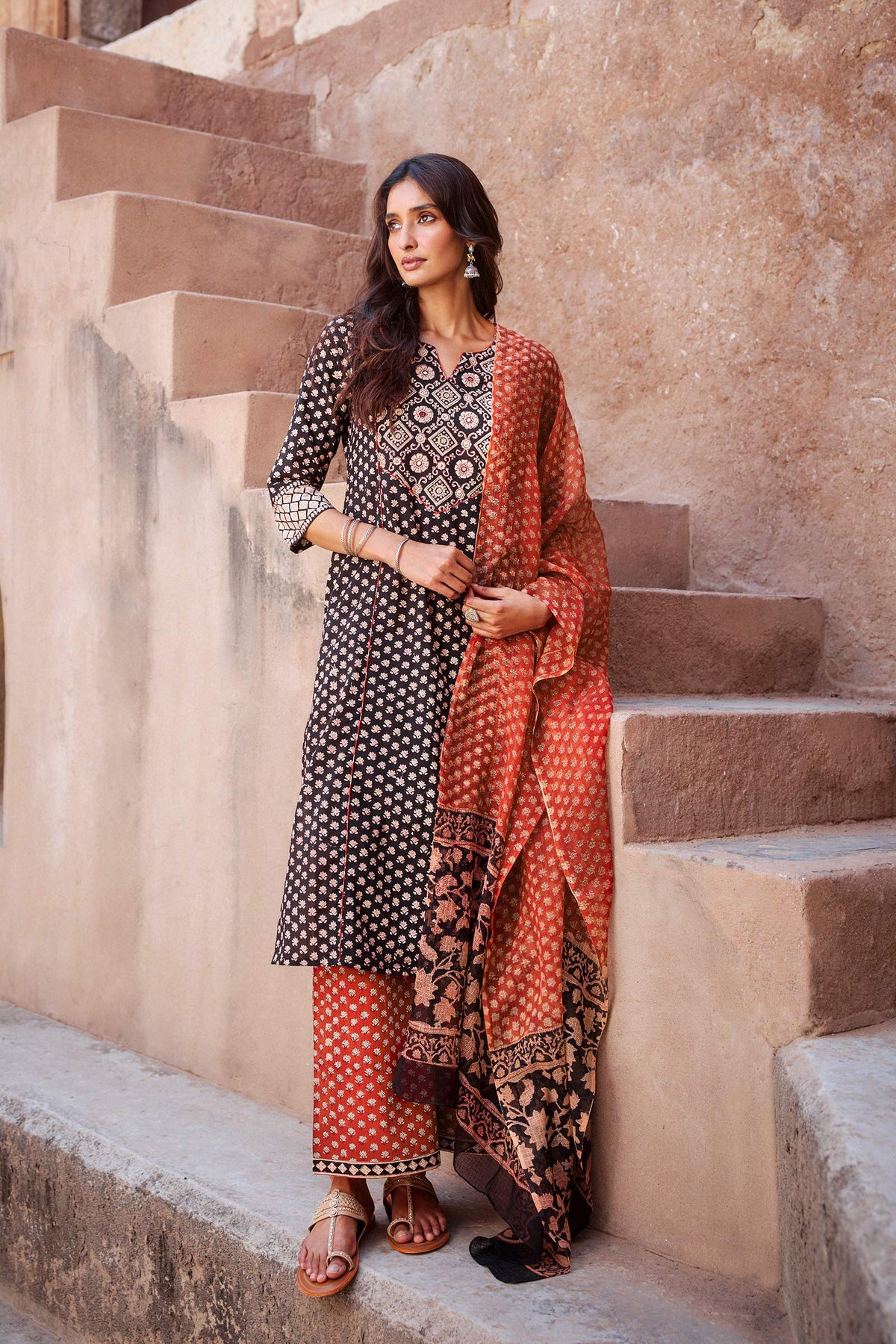
Authentic Ajrakh rarely uses bright, synthetic shades. Instead, you will see deep indigo, rust red, black, off white, and muted tones that feel close to the earth.
These colours do not shout. They settle into the fabric and into the eye over time.
4. Fabric Quality (Especially Cotton & Silk)
An Ajrakh print cotton saree feels breathable and slightly textured. The fabric is neither too stiff nor overly smooth.
In silk variations, the weave holds the dye with a quiet sheen, never glossy or artificial. The fabric supports the print rather than overpowering it.
5. Distinctive Geometric Patterns
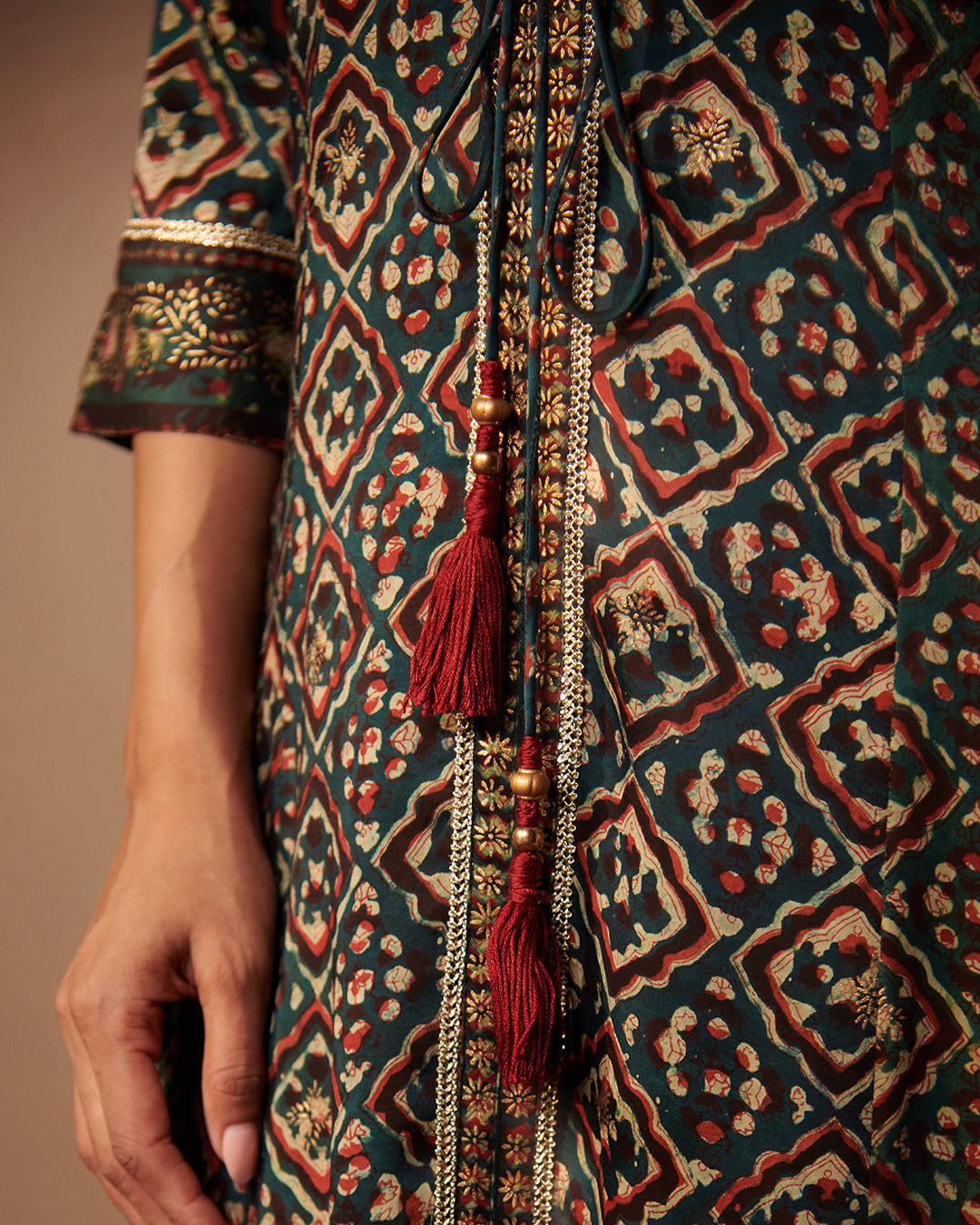
Ajrakh is defined by geometry. Stars, grids, floral abstractions, all arranged with careful repetition.
The patterns often carry a sense of rhythm. You can follow them across the saree without interruption, yet they never feel monotonous.
6. Smell & Feel Test
This is perhaps the most understated sign. Authentic Ajrakh often carries a faint, earthy scent from natural dyes and traditional processing.
The fabric feels lived in, not chemically treated. When you drape it, it falls with ease rather than stiffness.
Sometimes, the most reliable way to recognise authenticity is simply to spend a moment with the saree. To hold it, unfold it, and let it speak in its own time.
Common Mistakes Buyers Make

Even with the growing awareness around craft, Ajrakh is often misunderstood at the point of purchase. It is easy to be drawn to the surface beauty and miss what truly defines authenticity.
Confusing Screen Prints with Hand Block Prints
Many sarees today replicate Ajrakh patterns through screen printing. At first glance, they may look similar. But they lack the depth, slight irregularities, and layered richness of true Ajrakh block print sarees. The hand cannot be replaced by a machine, and it shows in the details.
Overlooking Fabric Quality
An authentic Ajrakh print saree is as much about the fabric as it is about the print. Pure cotton and silk allow natural dyes to settle and age gracefully. Synthetic blends often appear too smooth or overly bright, missing the quiet depth Ajrakh is known for.
Expecting Perfect Uniformity
There is a tendency to equate perfection with authenticity. In Ajrakh, it is the opposite. Slight misalignments, softened edges, and gentle variations are signs of a handcrafted process. When a saree looks too precise, it often is.
Ignoring the Reverse Side
One of the defining features of Ajrak print sarees is their double-sided clarity. Buyers sometimes forget to check the reverse. A true Ajrakh saree will carry the print almost as clearly on the inside as on the outside.
Choosing Bright Synthetic Colours Over Natural Dyes
Authentic Ajrakh relies on natural dyes, resulting in deep indigos, madder reds, and muted blacks. If the colours appear overly vibrant or artificial, it may not be genuine.
Where to Buy Authentic Ajrakh Print Sarees
Finding an authentic Ajrakh print cotton saree requires patience and trust. The craft is time-intensive, and the number of artisans who practise it with integrity is limited.
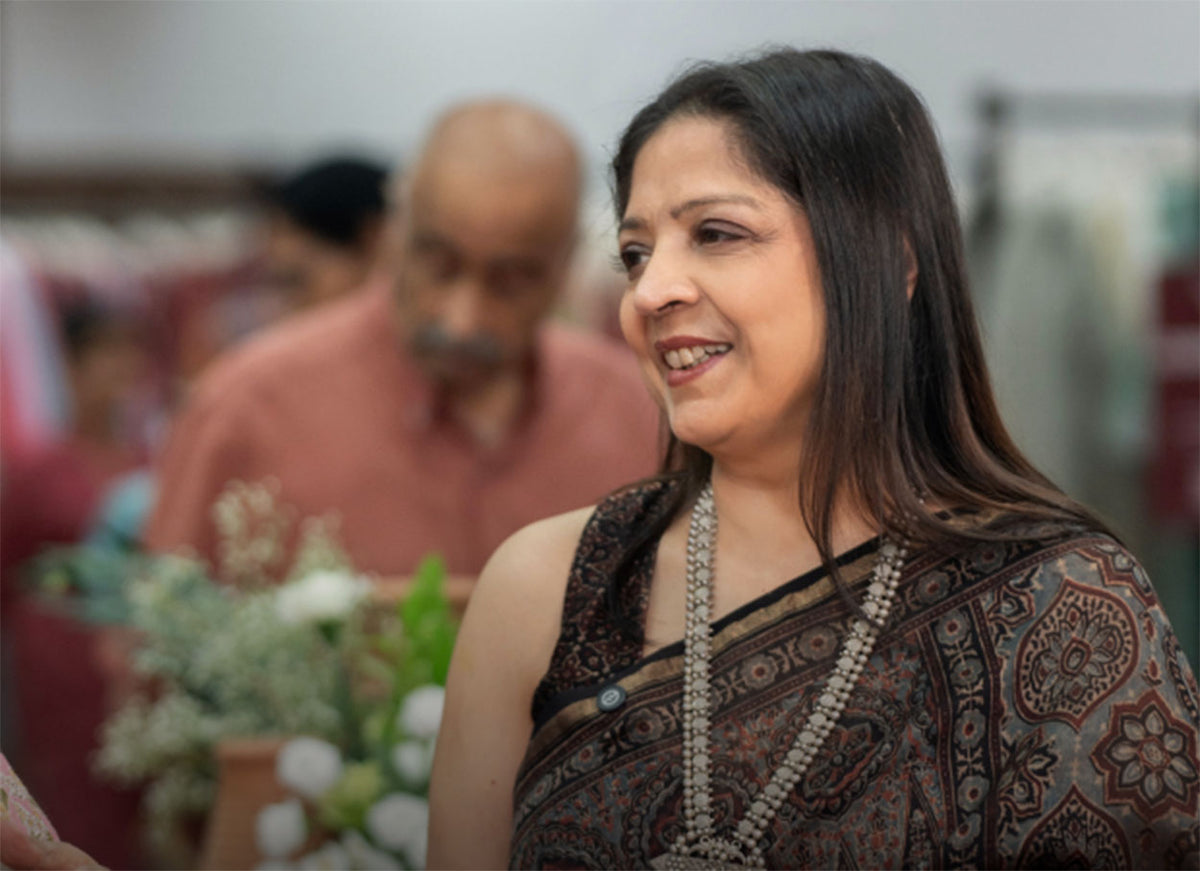
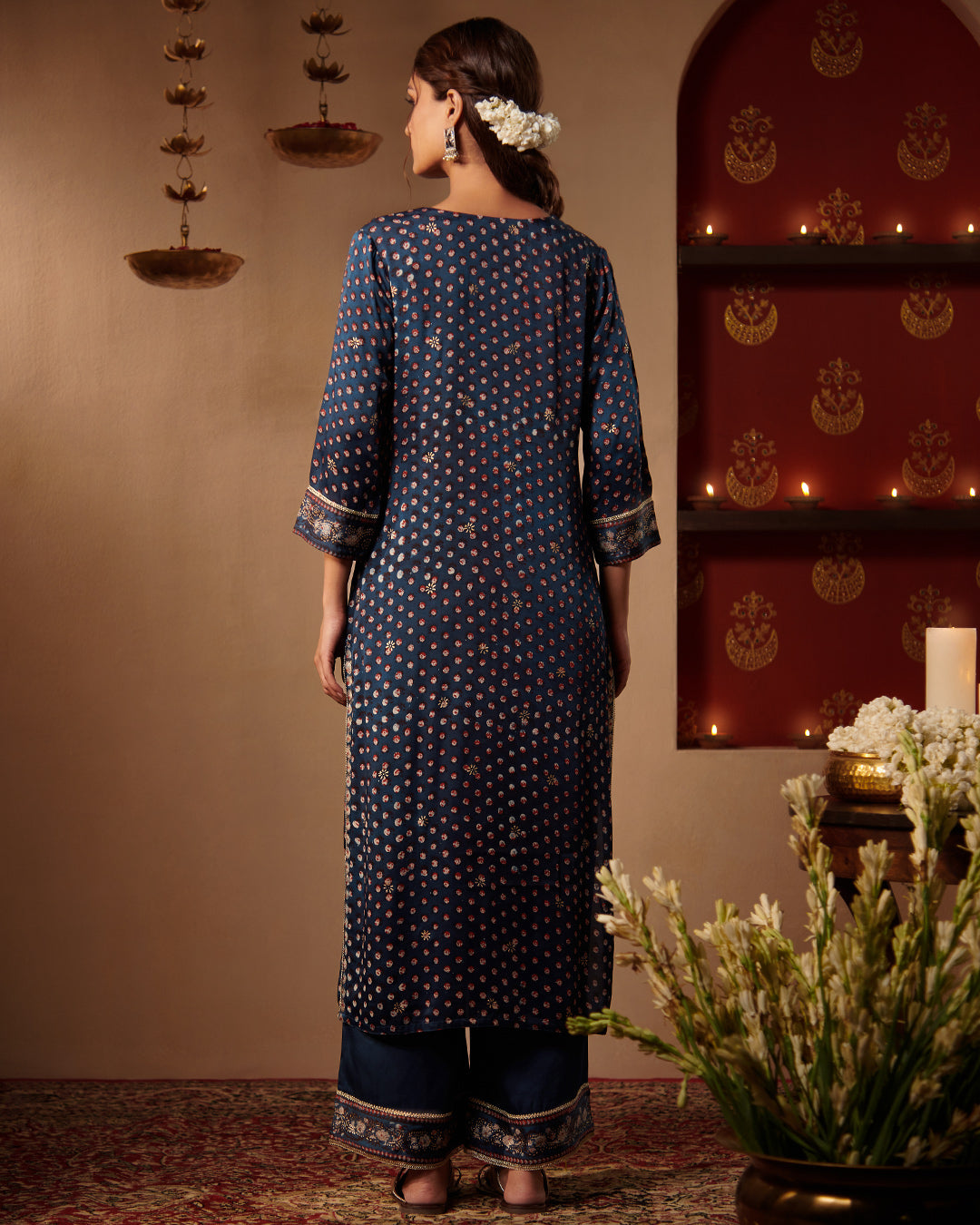
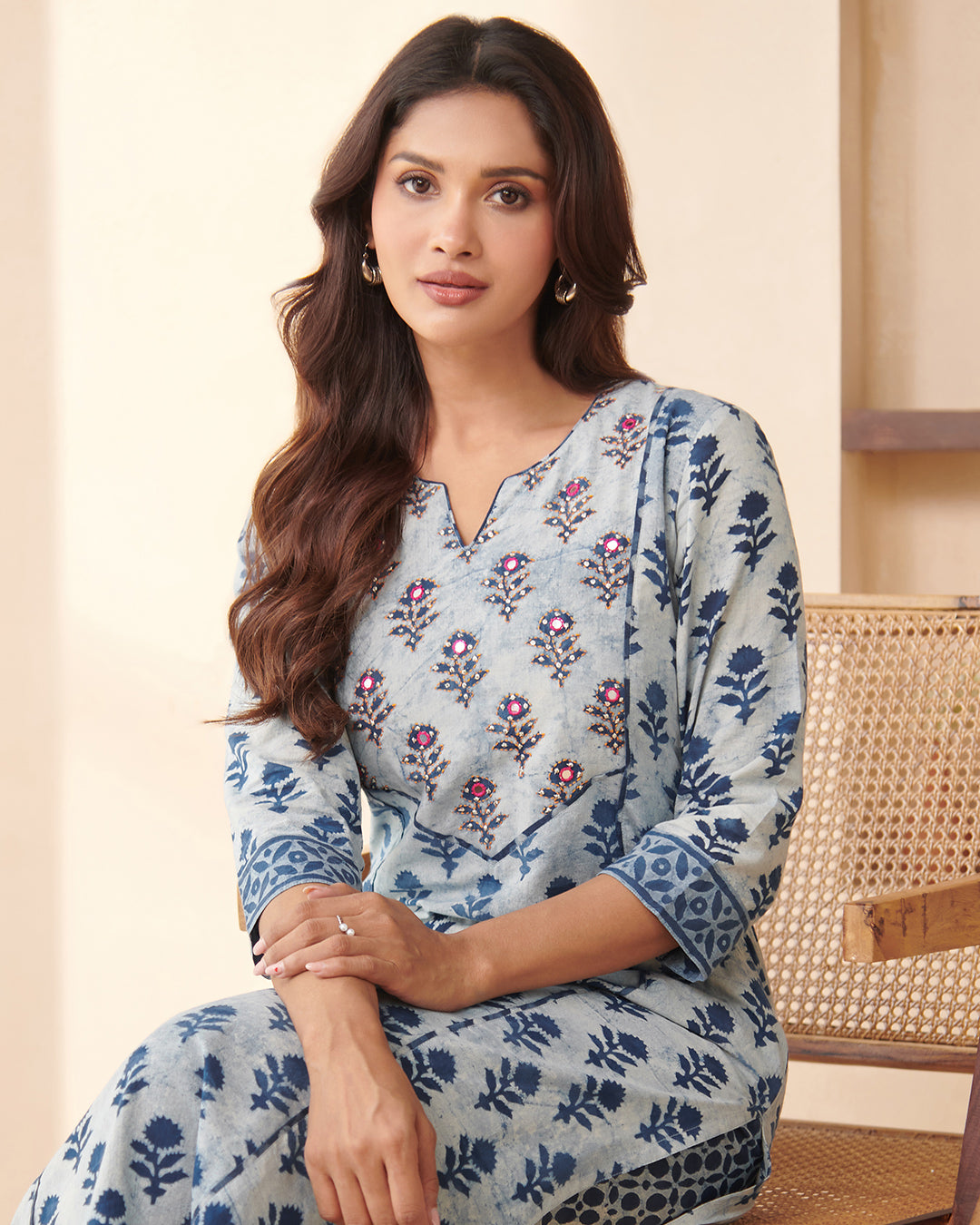
At Farida Gupta, Ajrakh is approached with quiet respect. The focus remains on traditional processes, breathable fabrics, and patterns that stay true to their origins. Each saree carries the mark of the artisan’s hand, from the careful block placement to the restrained, natural colour palette.
Beyond a single label, it is always worth seeking out spaces that honour craft over mass production. Artisan-led exhibitions, craft collectives, and thoughtful design houses often hold pieces that feel considered and lasting.
Final Thoughts
An Ajrakh print saree is not something you simply buy. It is something you come to understand.
The more you observe, the more you begin to notice, the softened symmetry, the depth of colour, the way the fabric holds the print without overpowering it. These are not loud markers. They reveal themselves slowly.
In a time where everything is made to look perfect, Ajrakh remains honest. It carries the rhythm of the hand, the patience of process, and the memory of a craft that has travelled through generations. And perhaps that is what makes it endure.Because some prints are more than patterns. They are stories waiting to be worn.

