

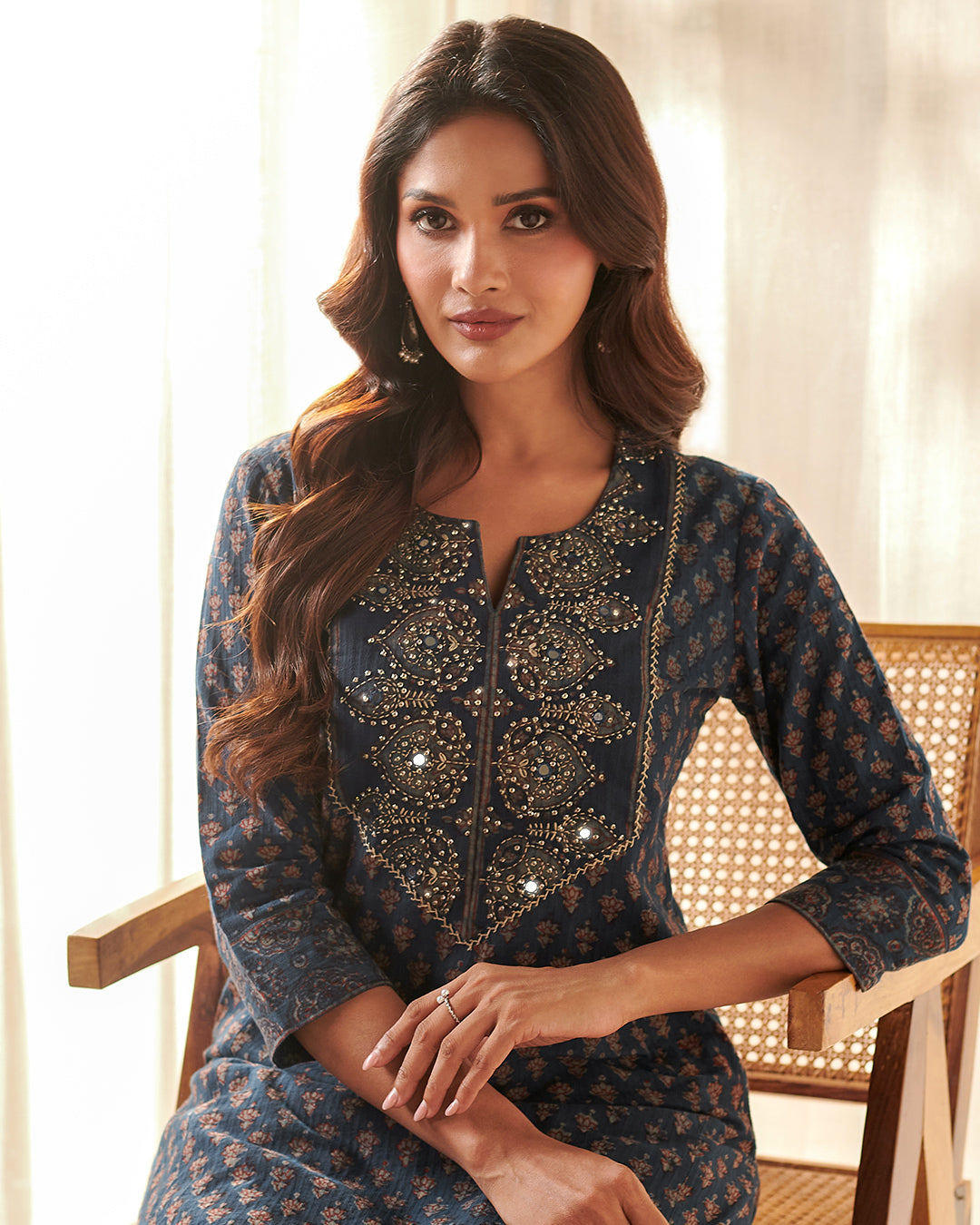

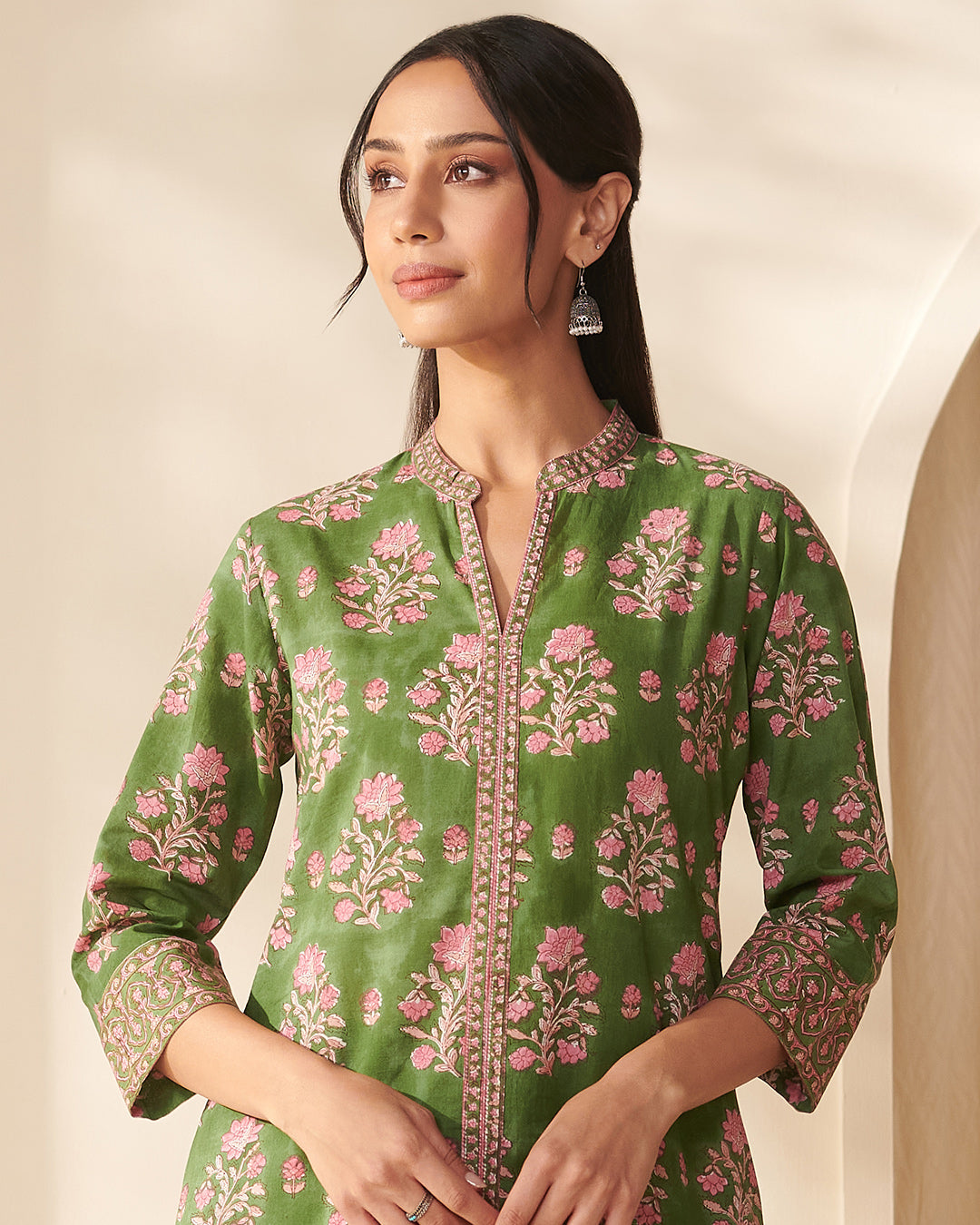
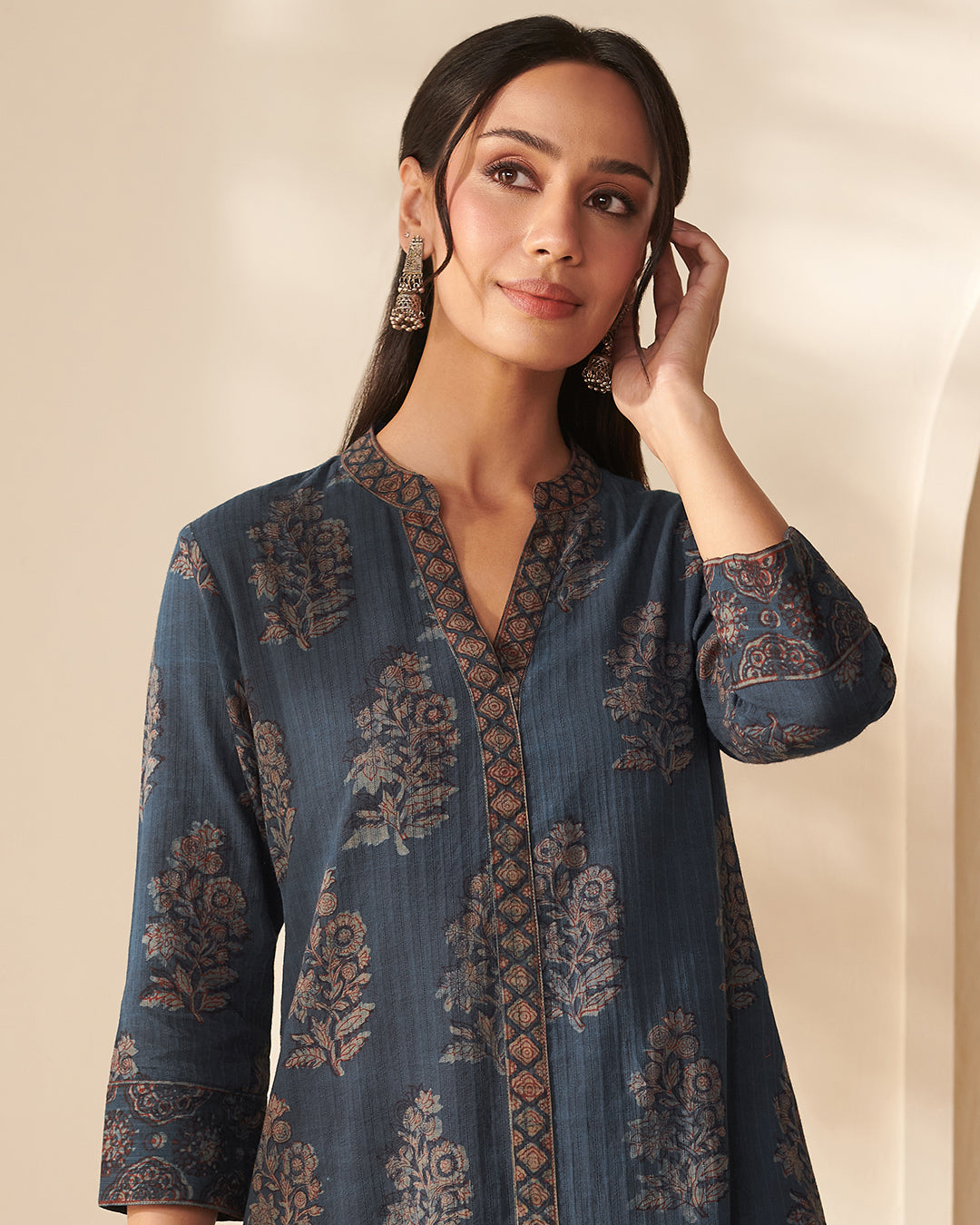
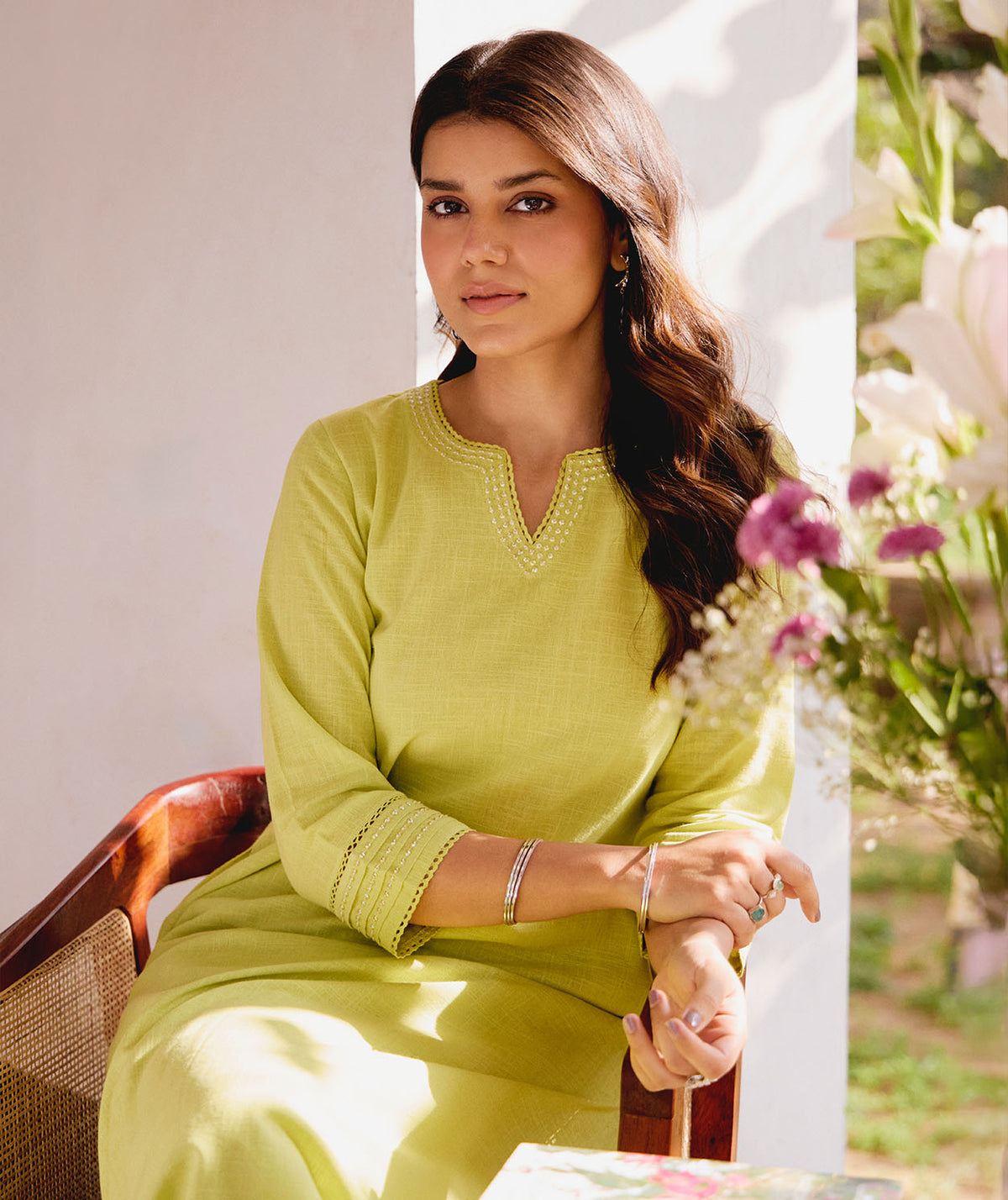

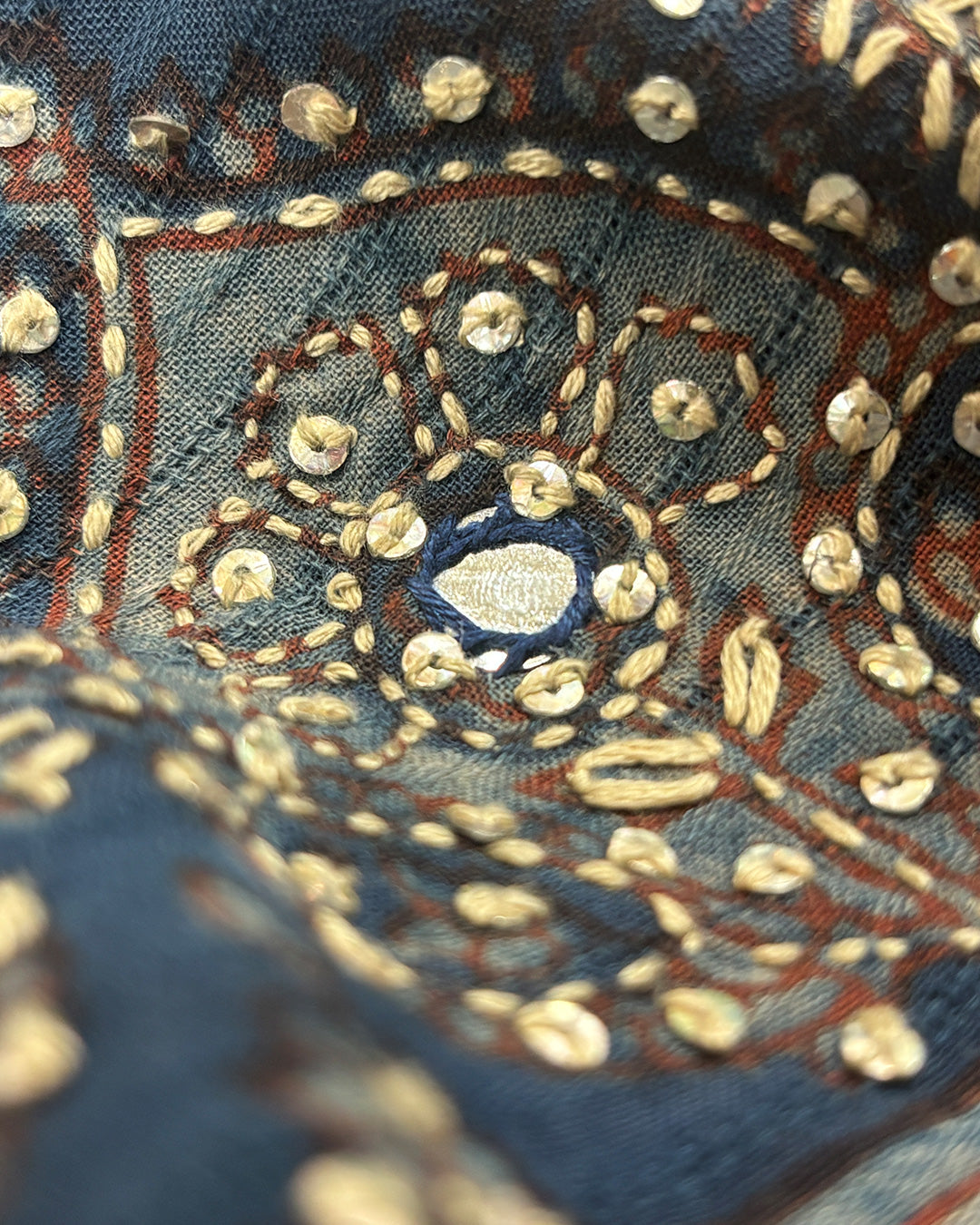
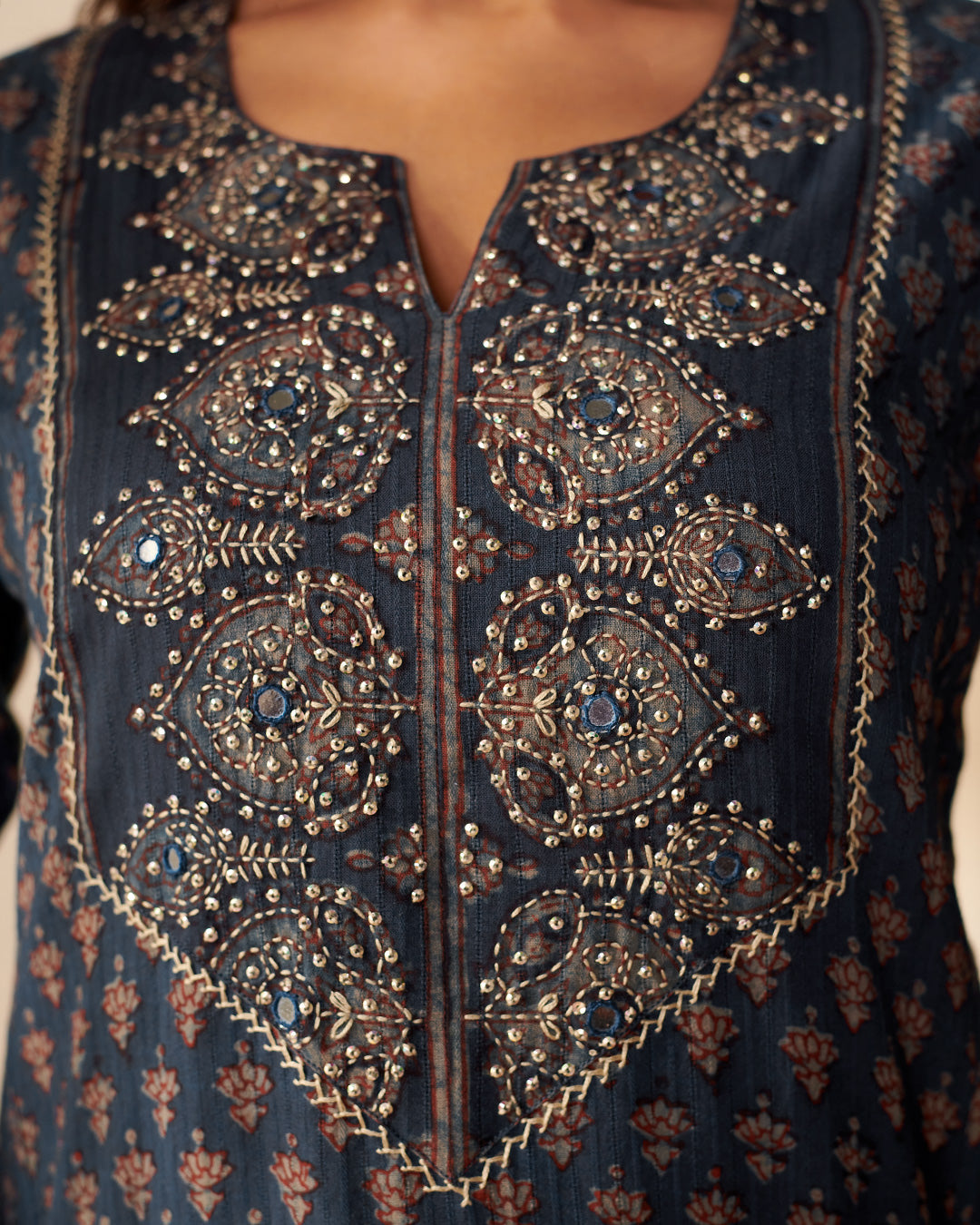
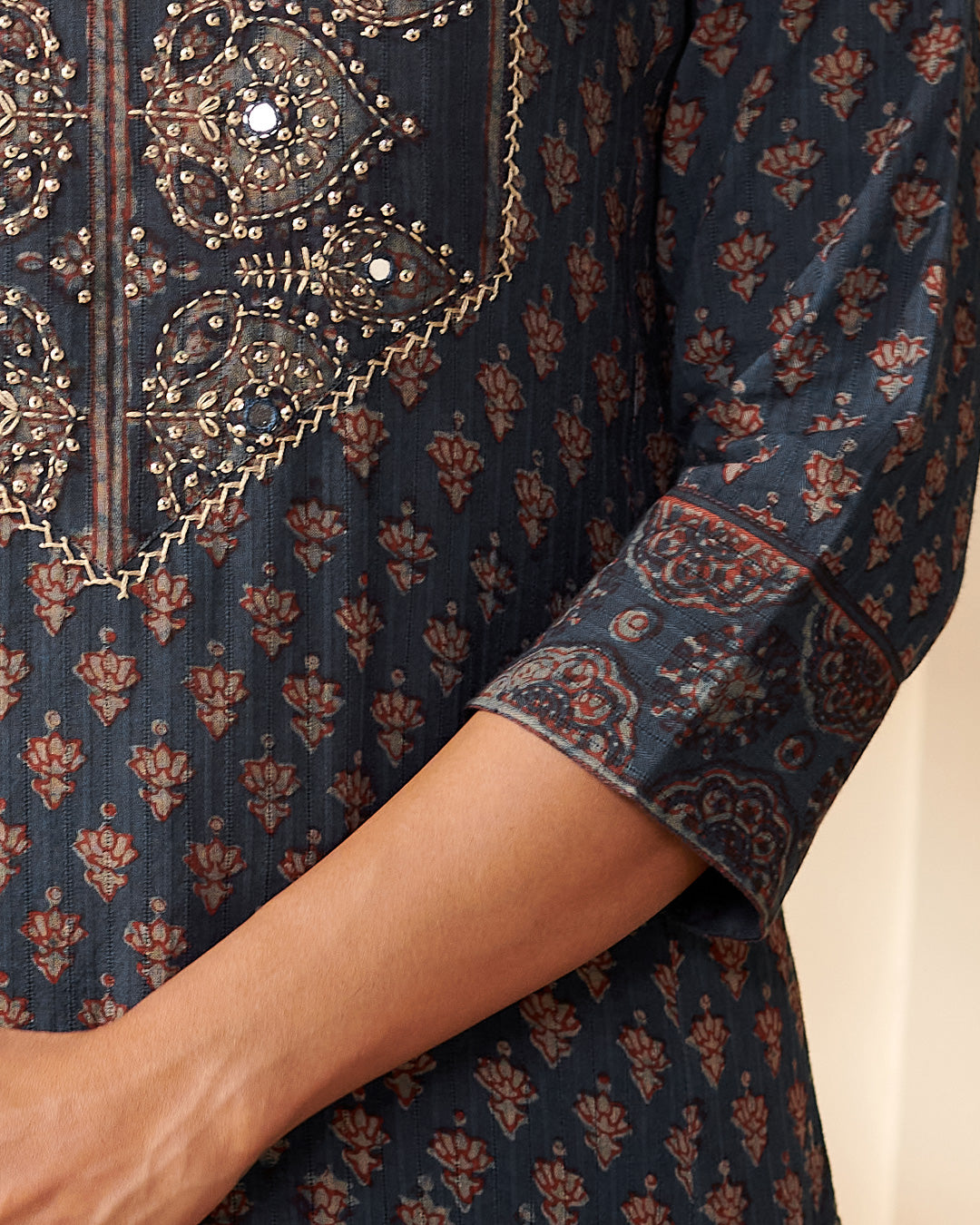
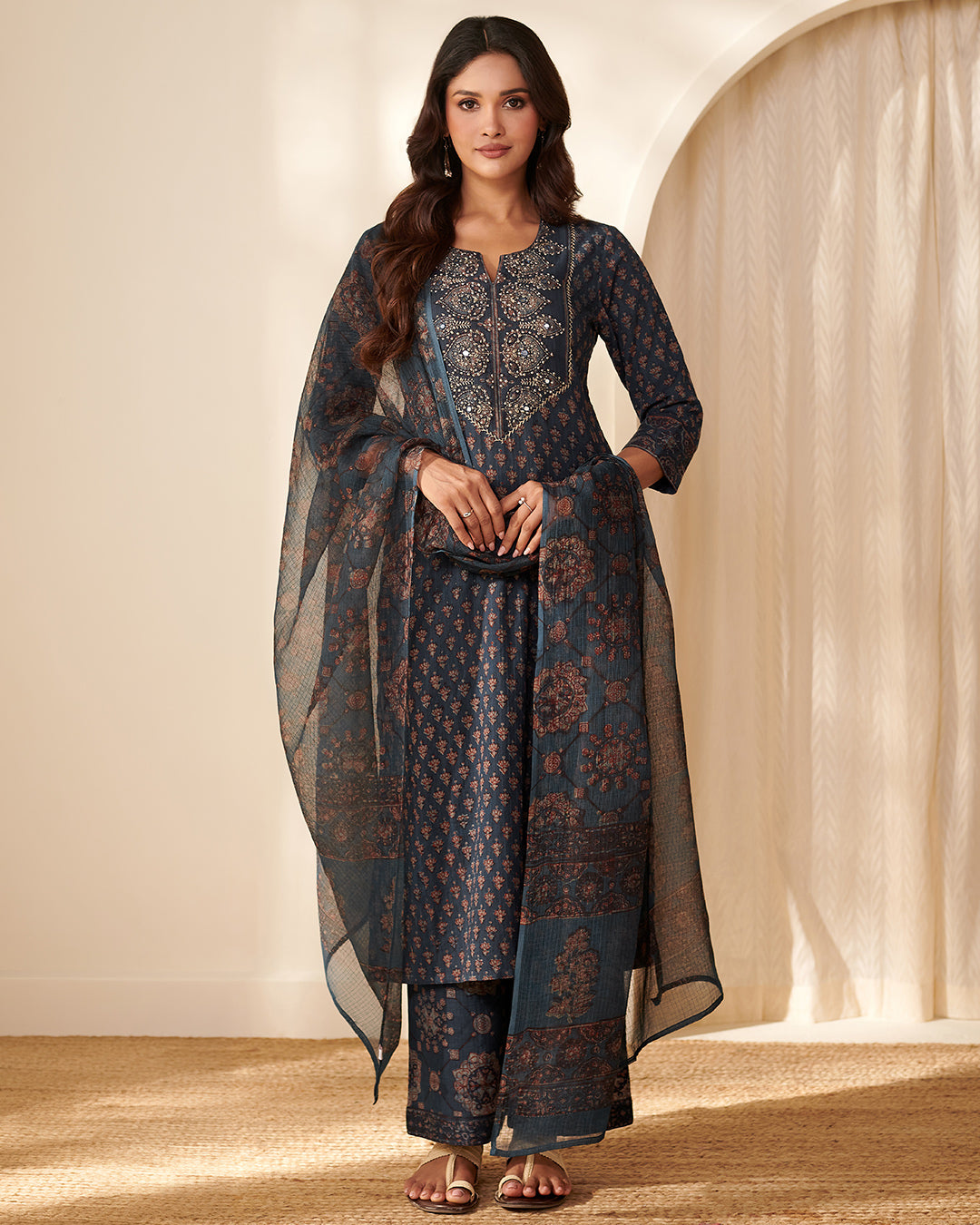
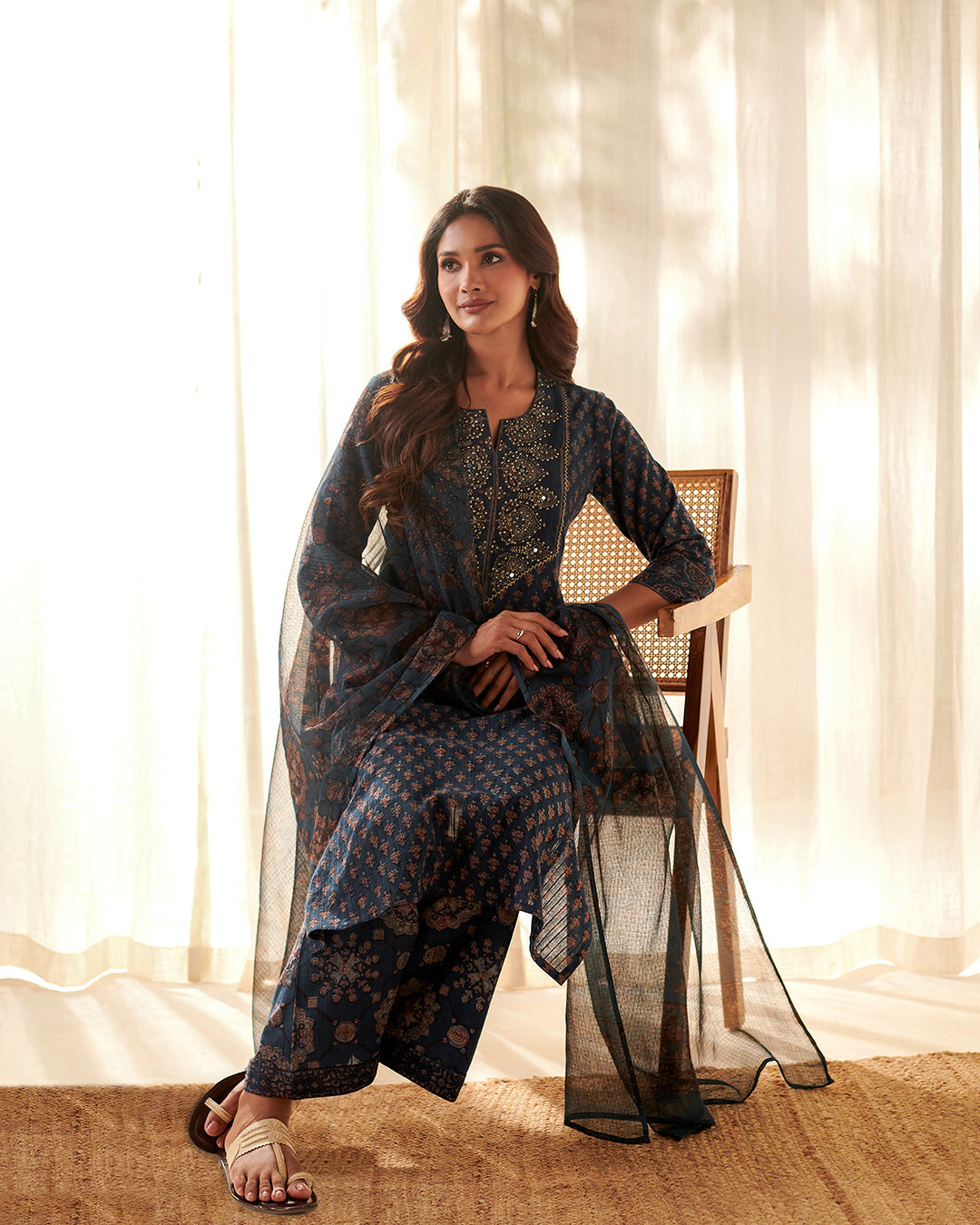
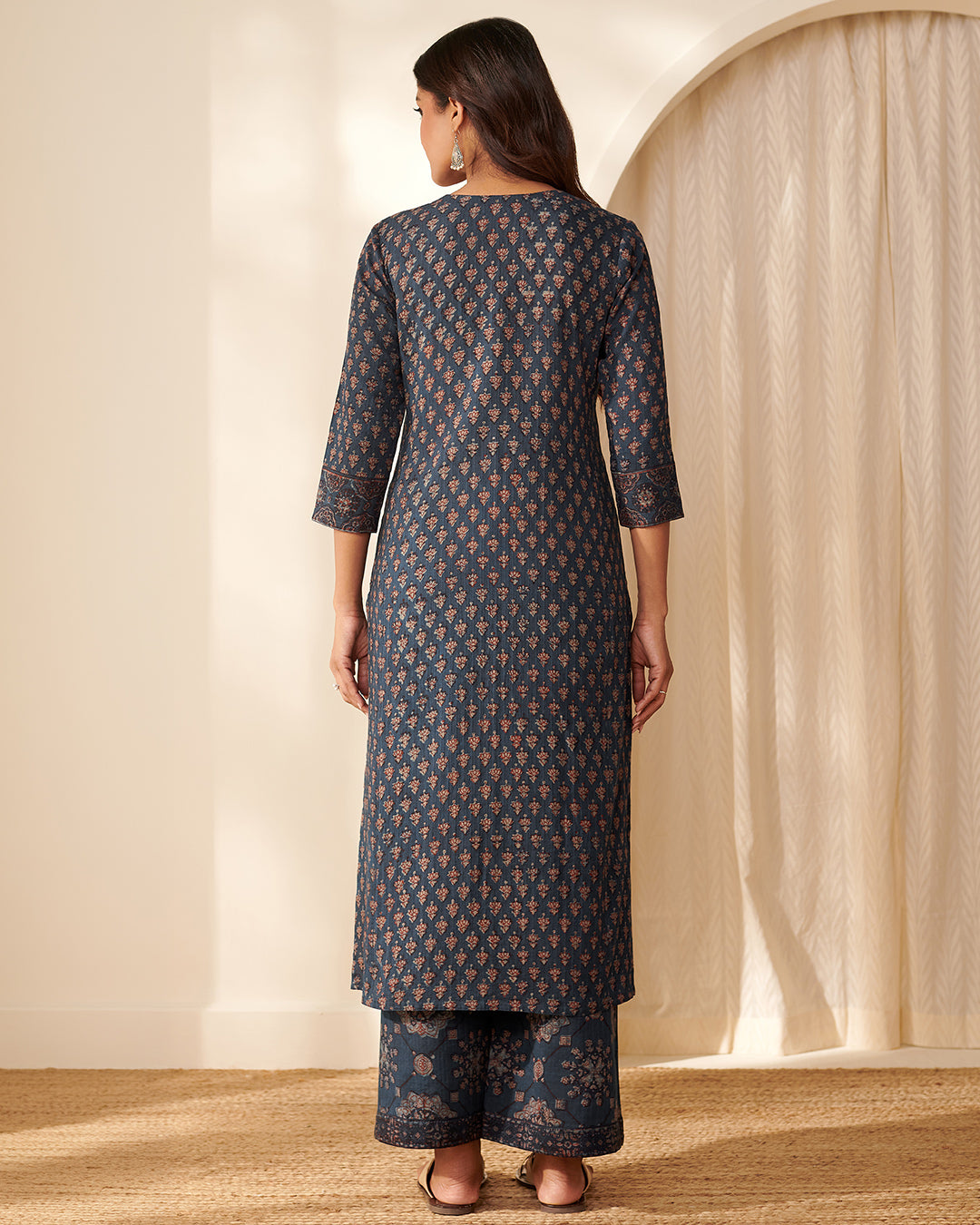


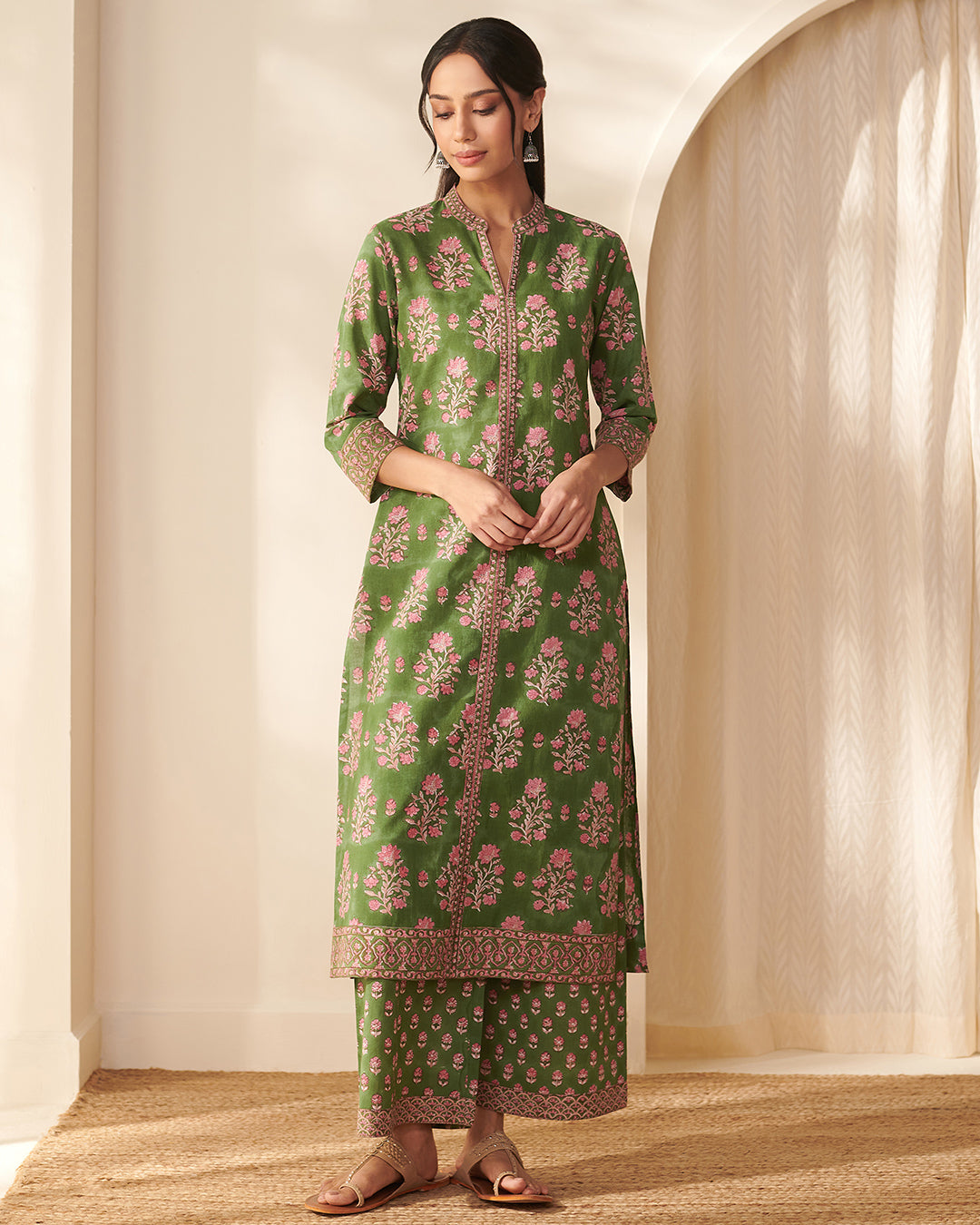
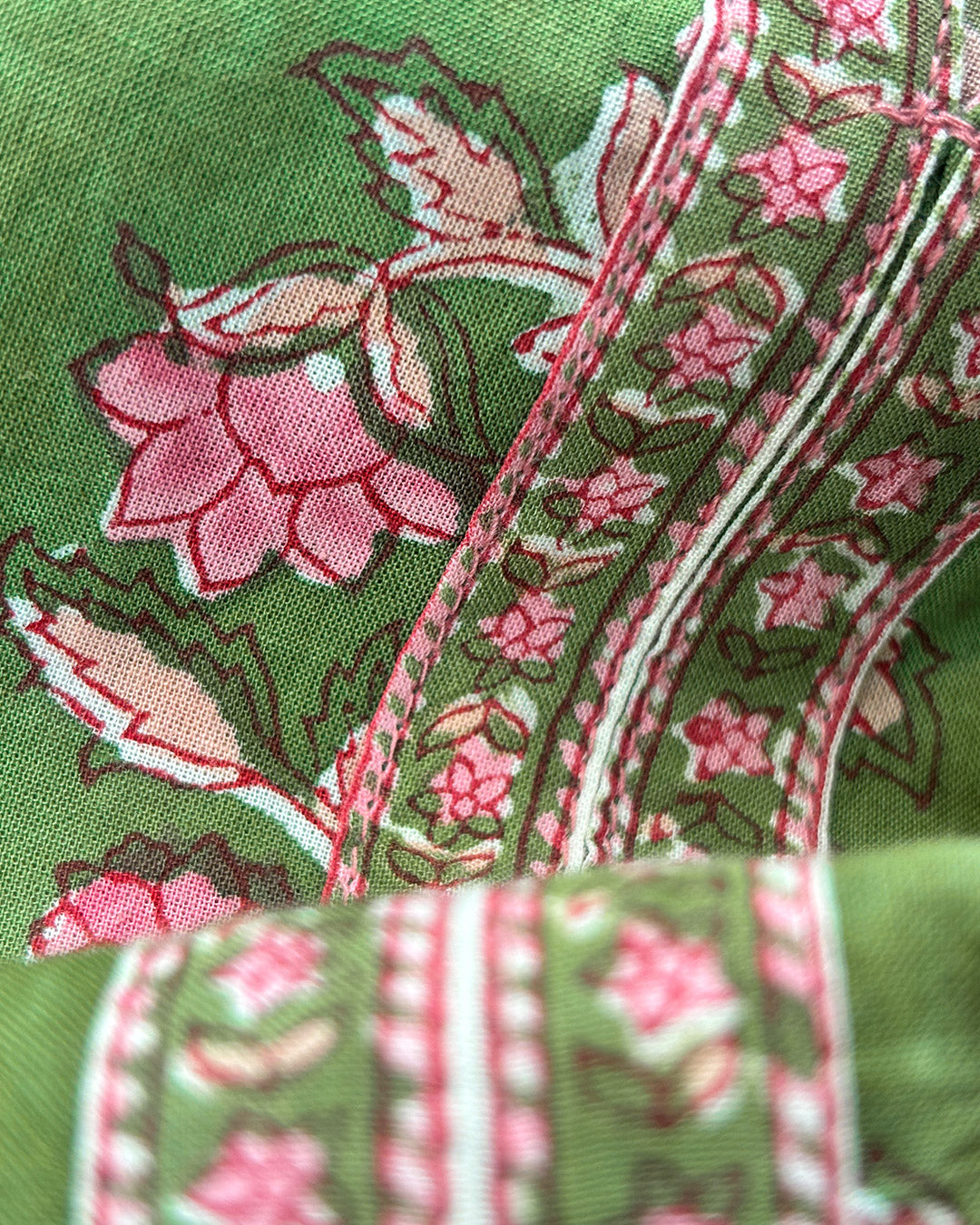
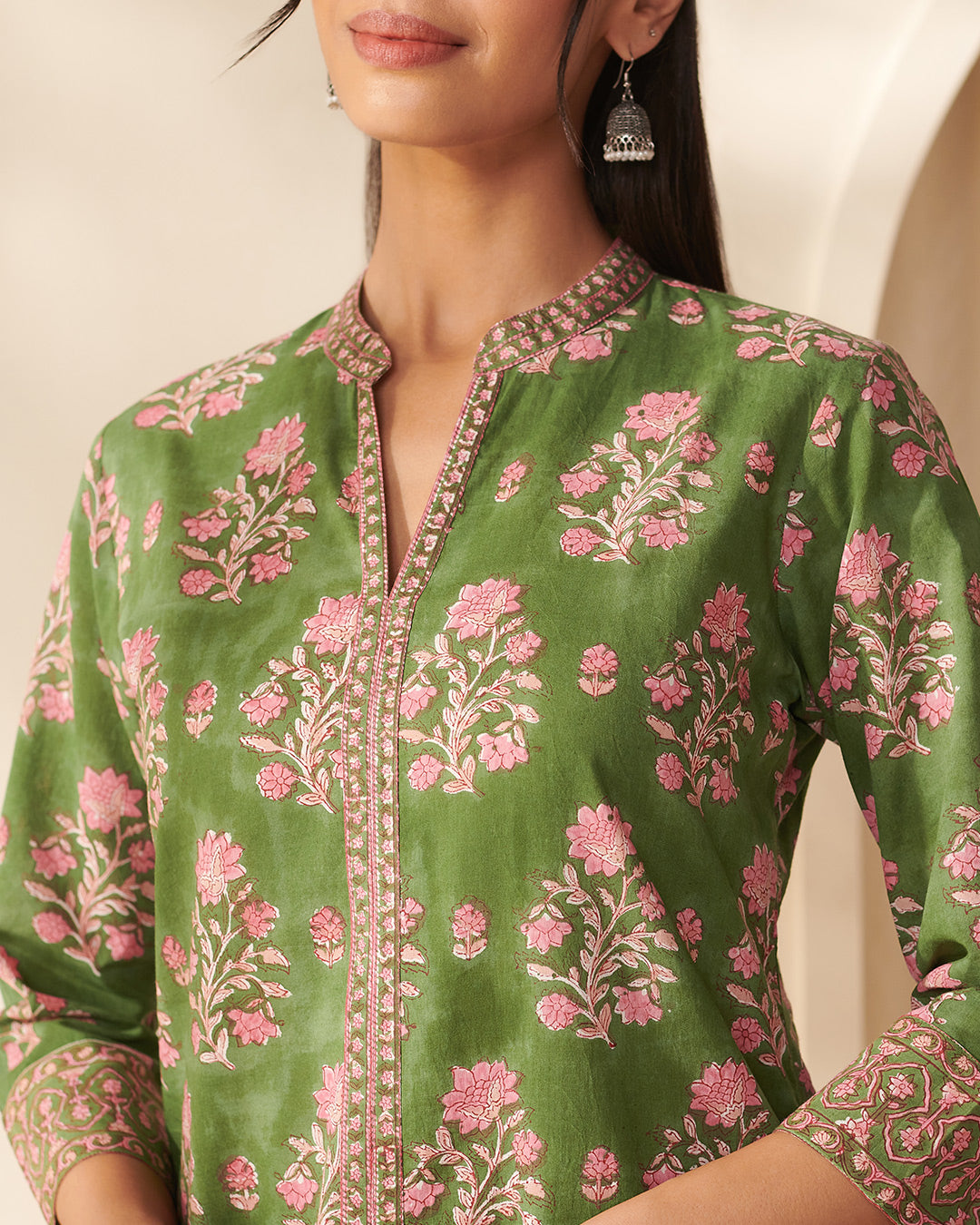
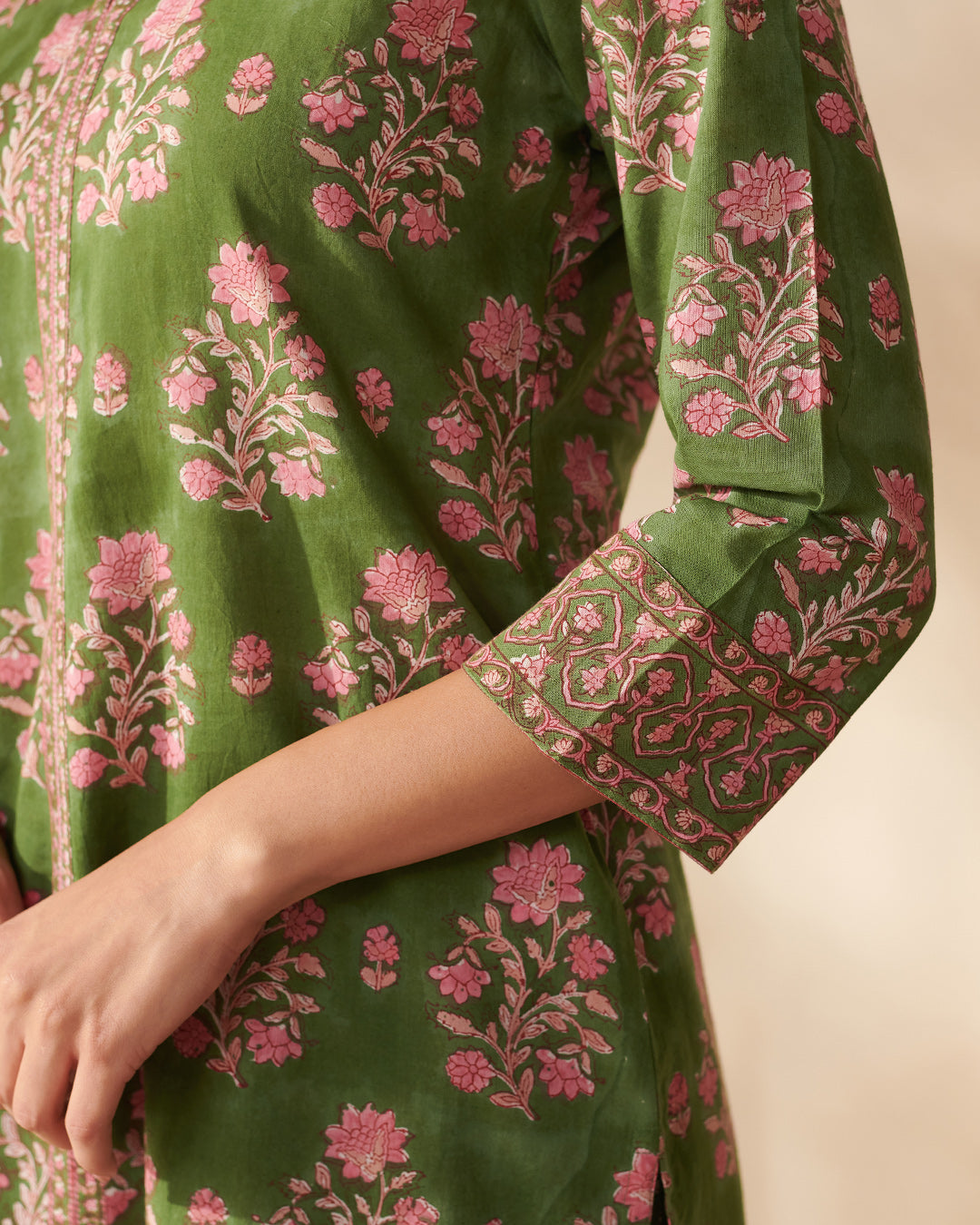
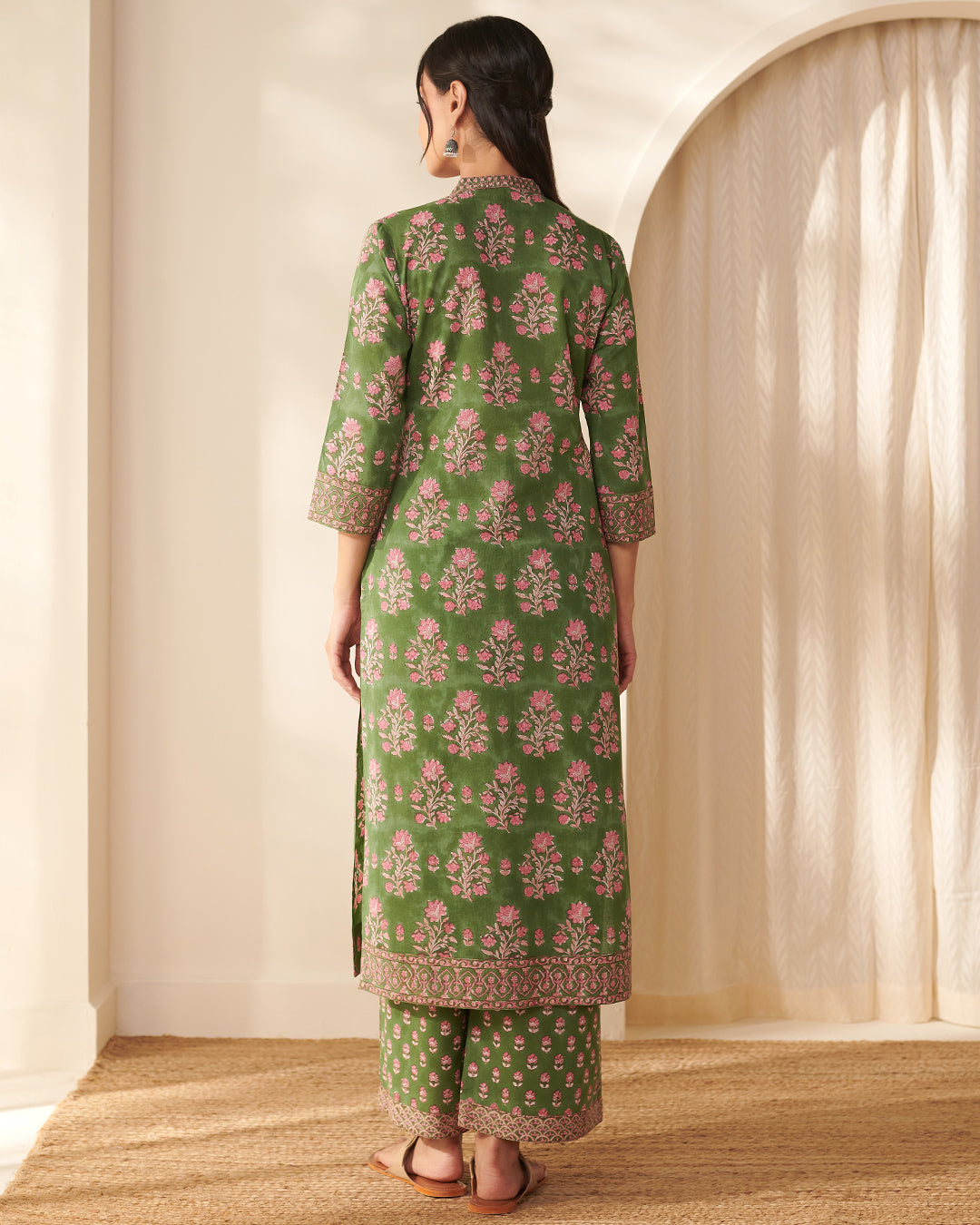
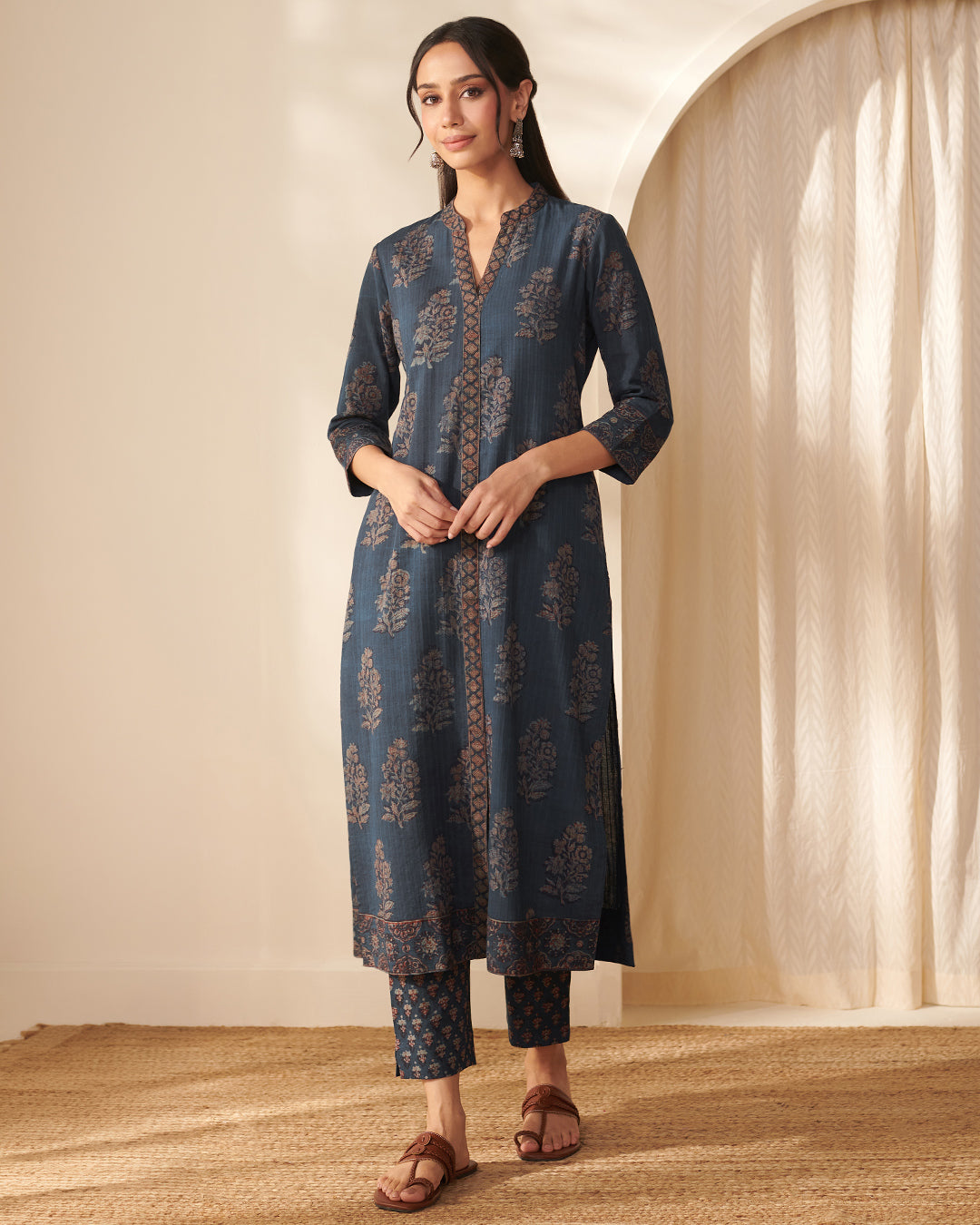
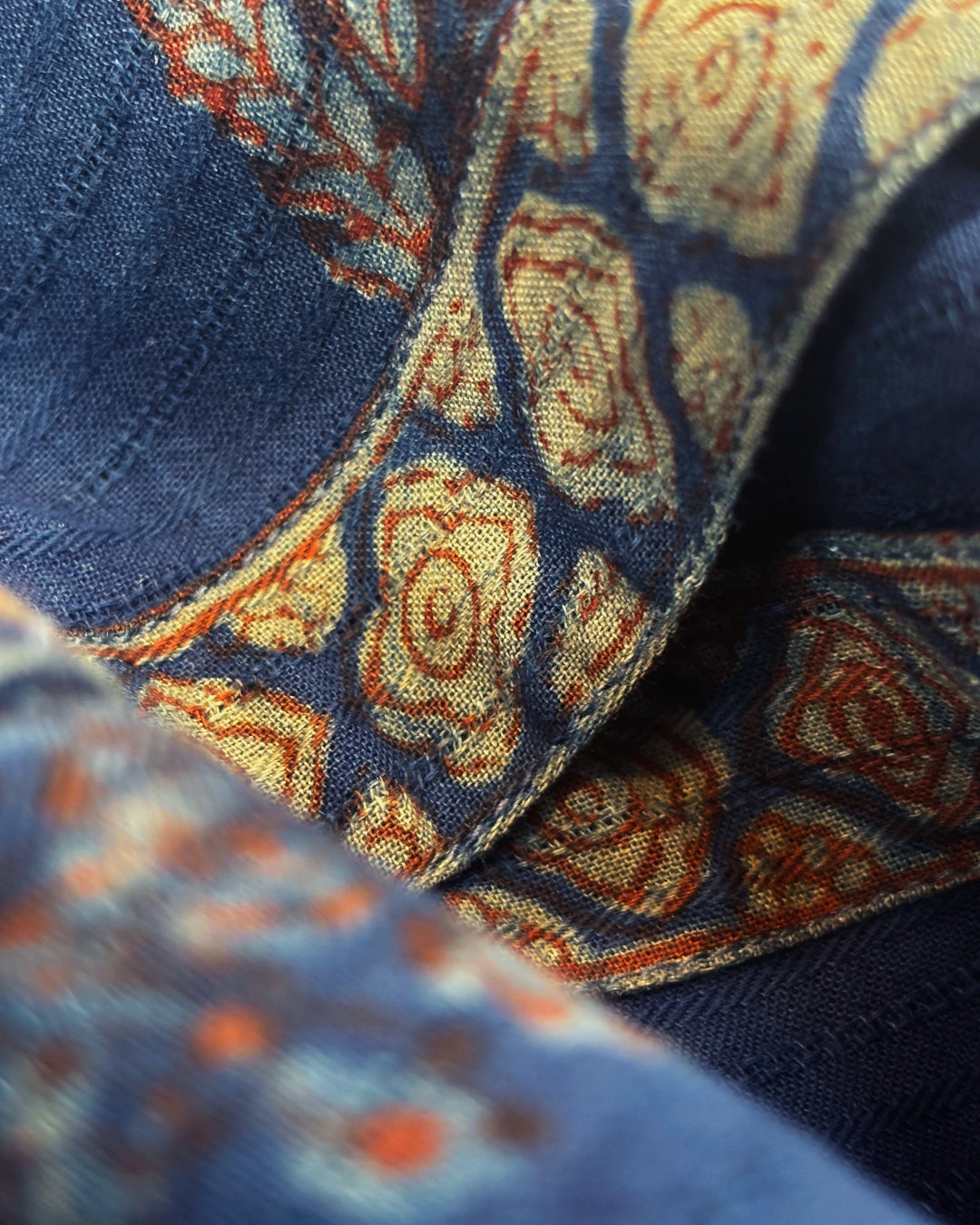
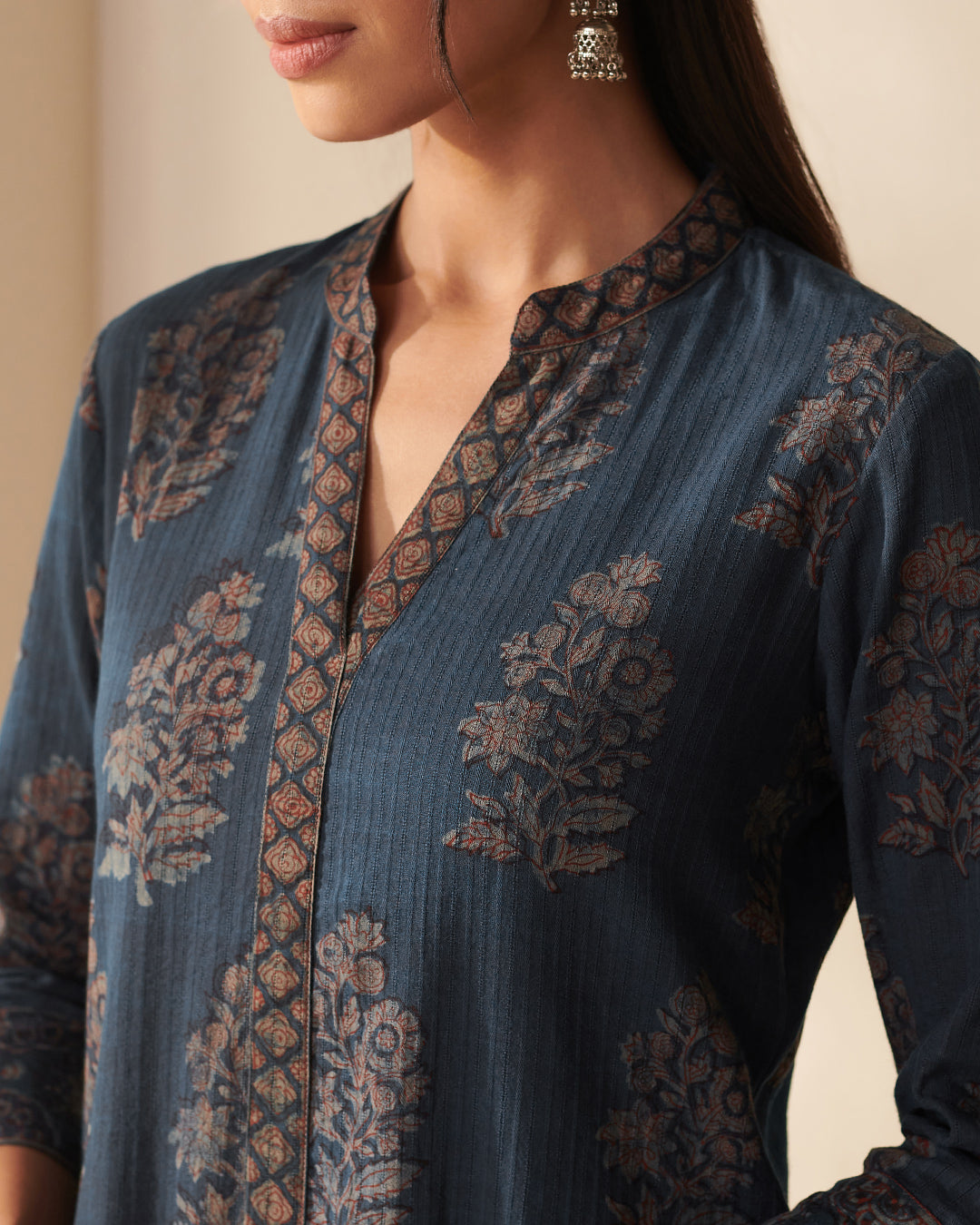
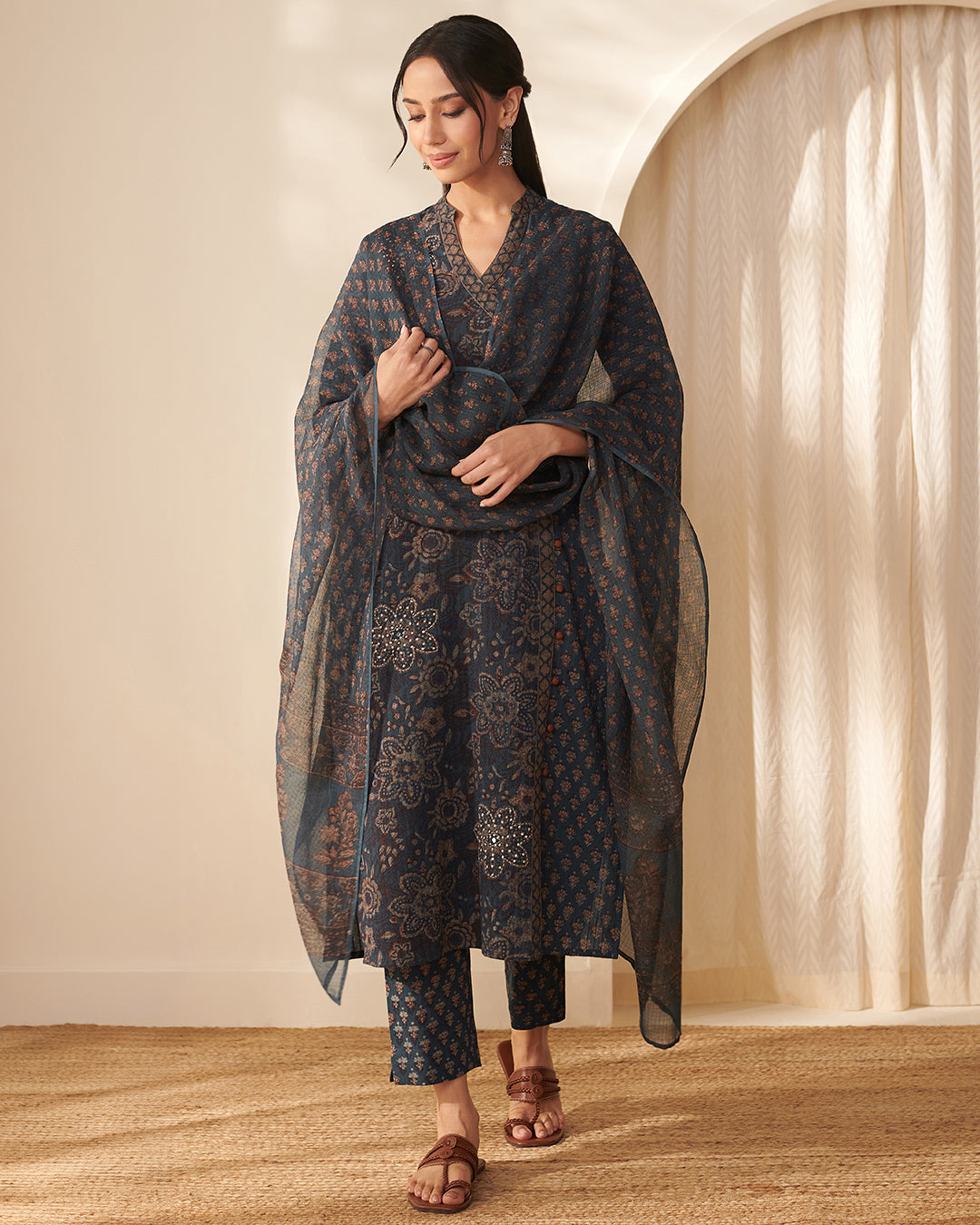
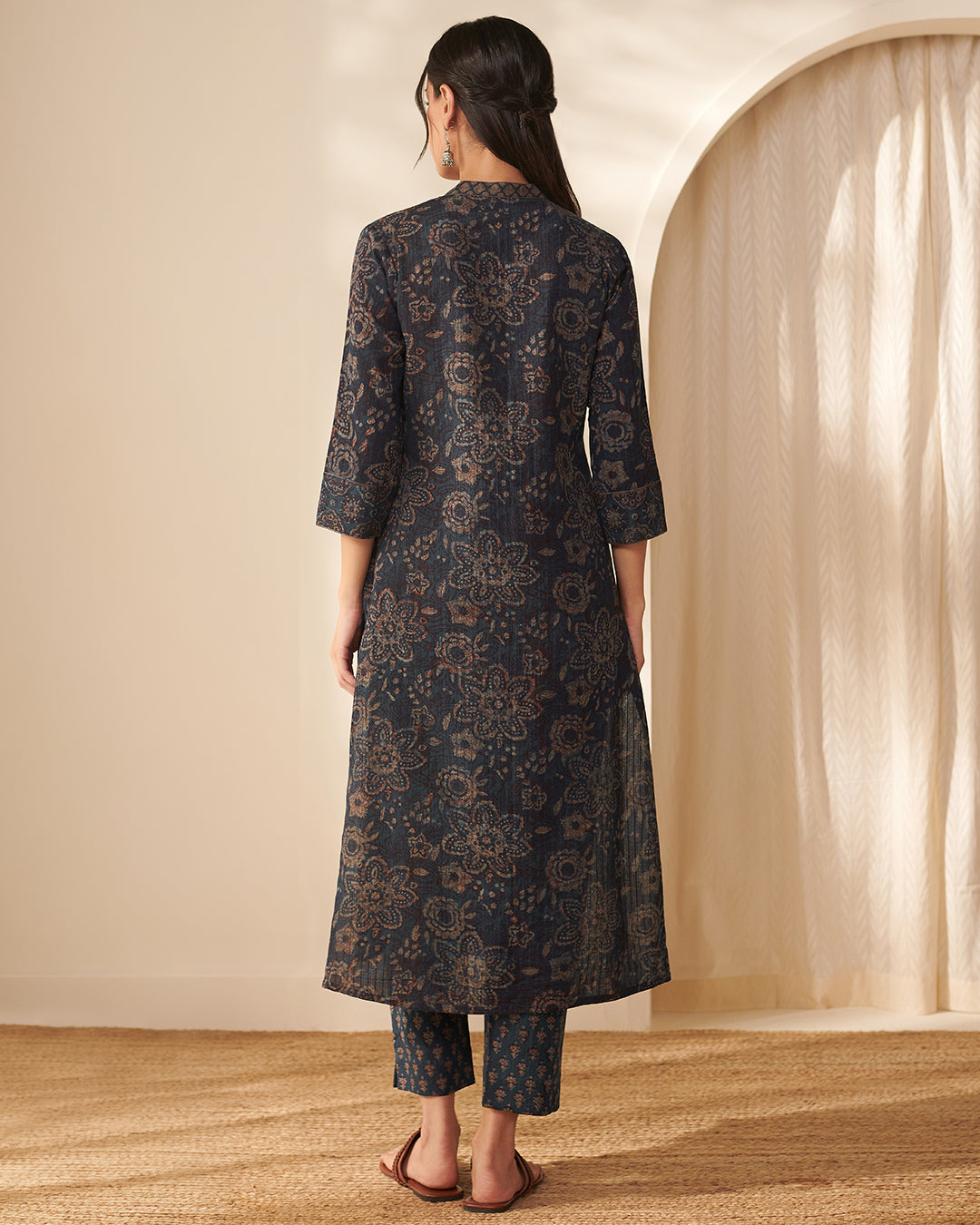
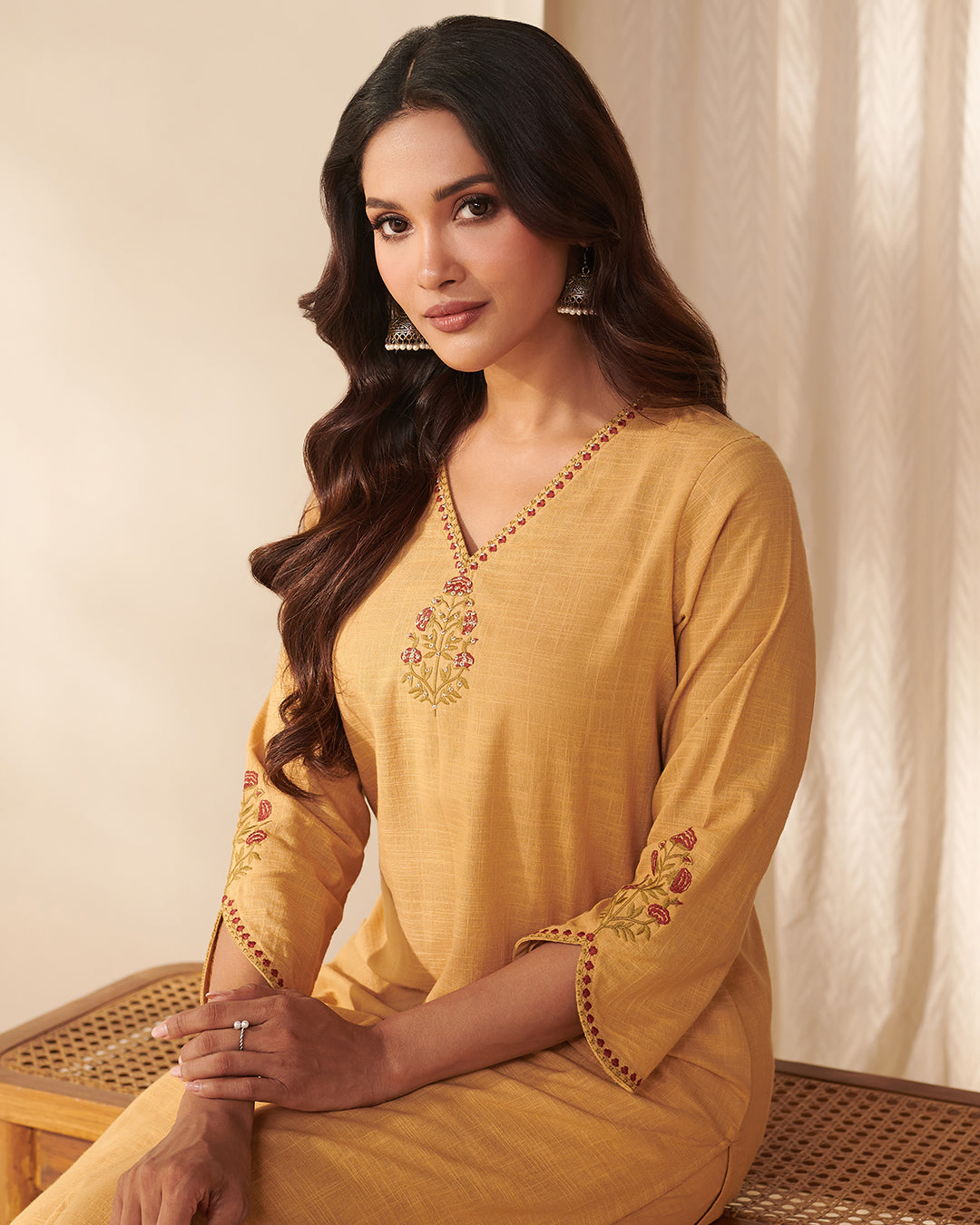
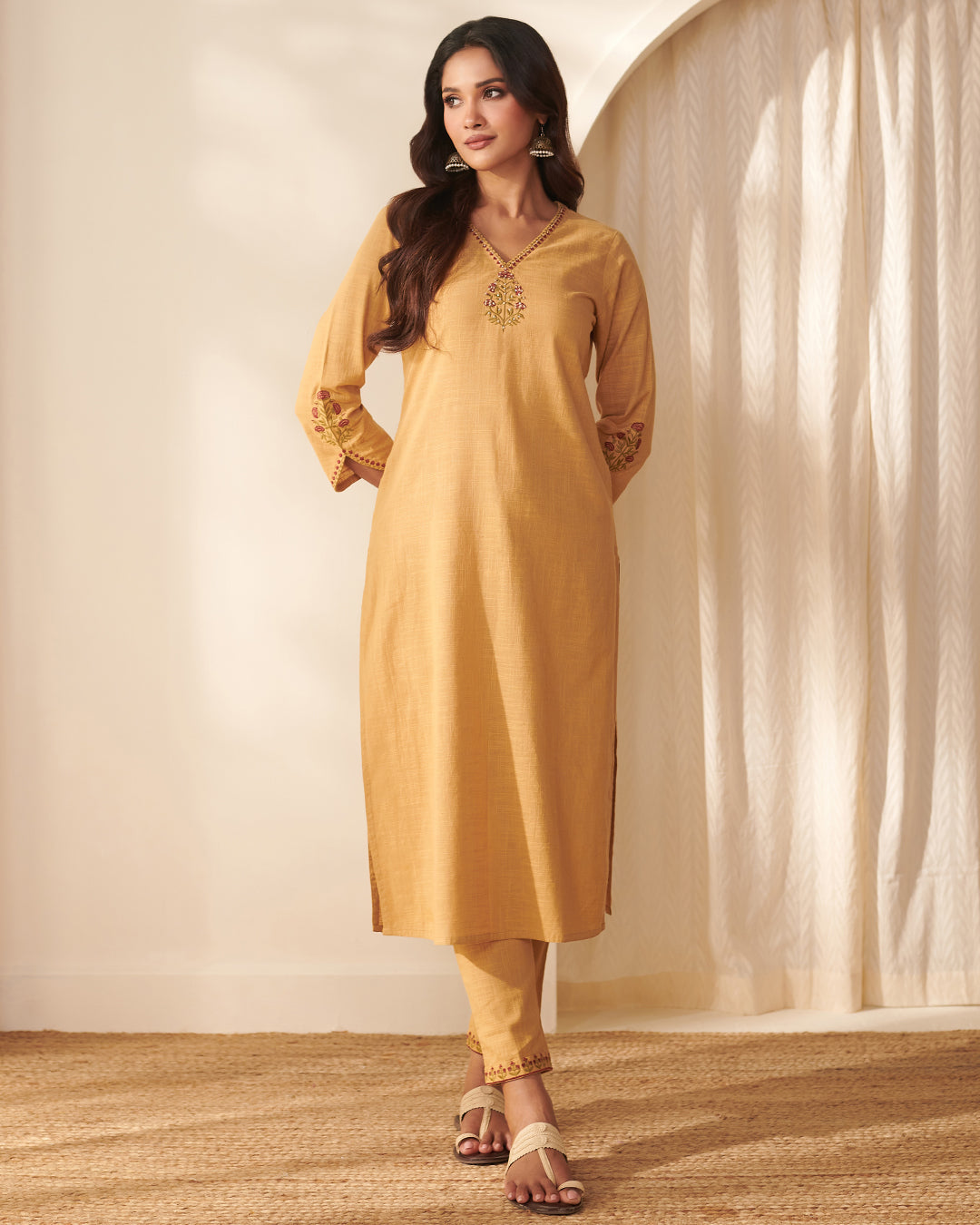
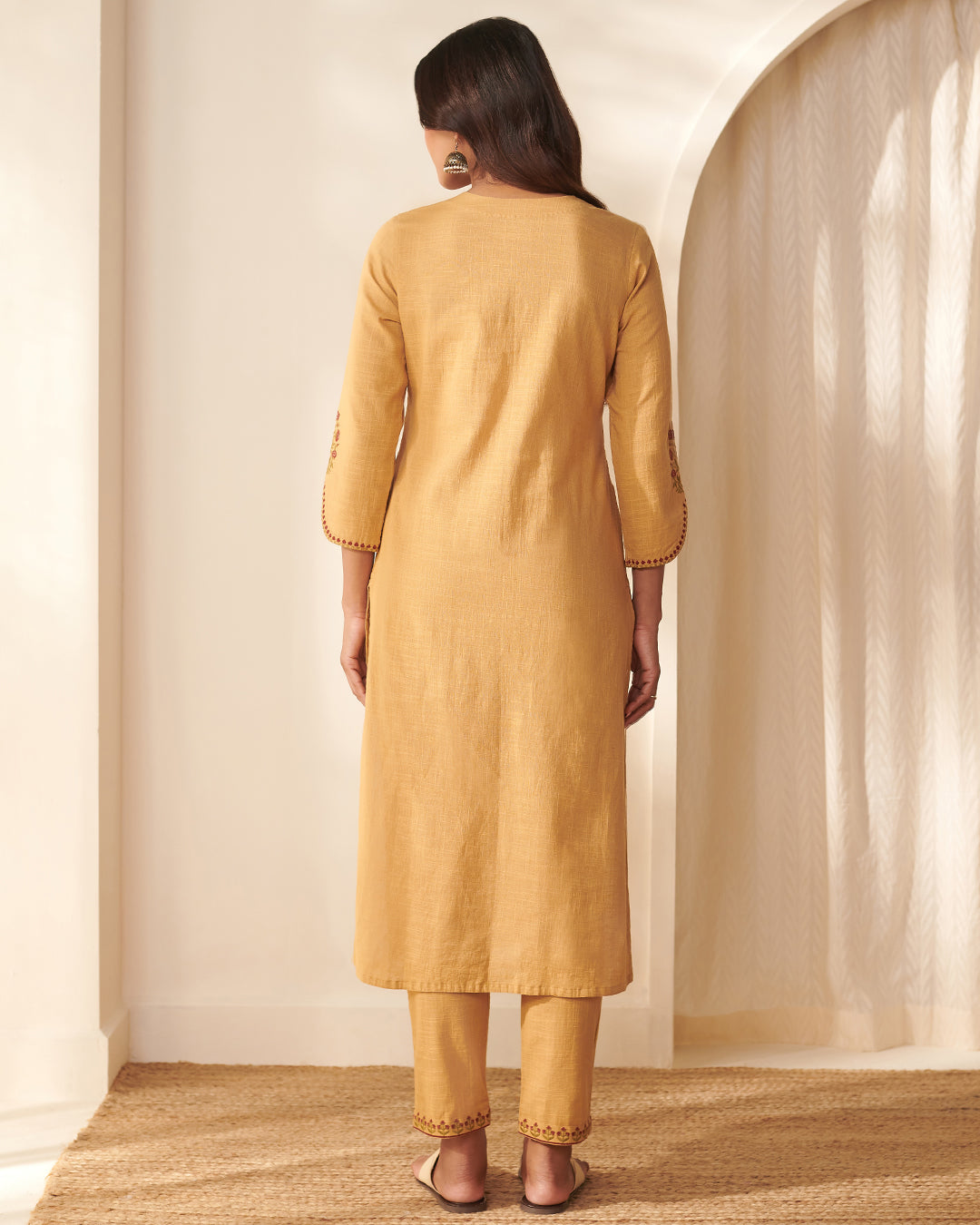
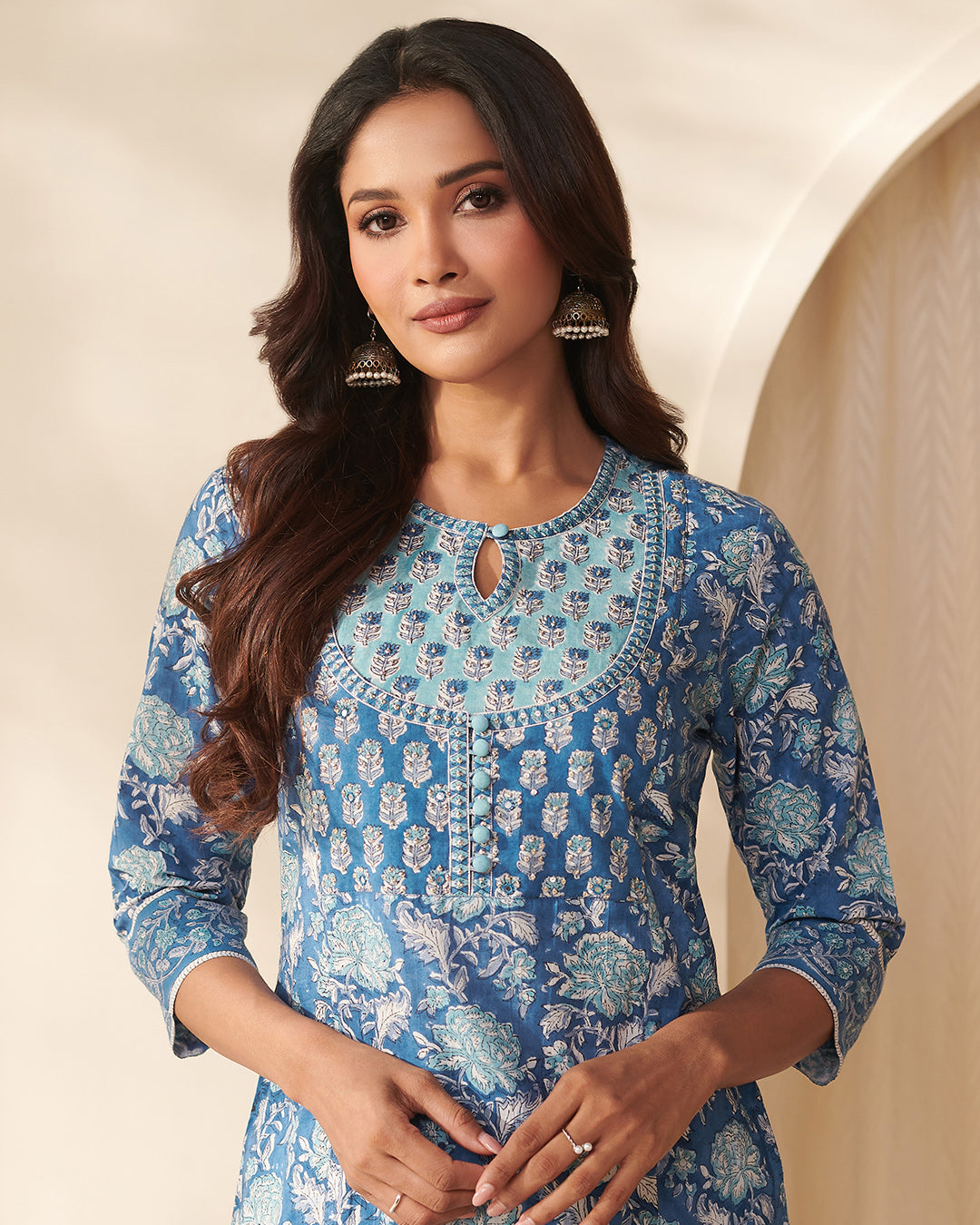
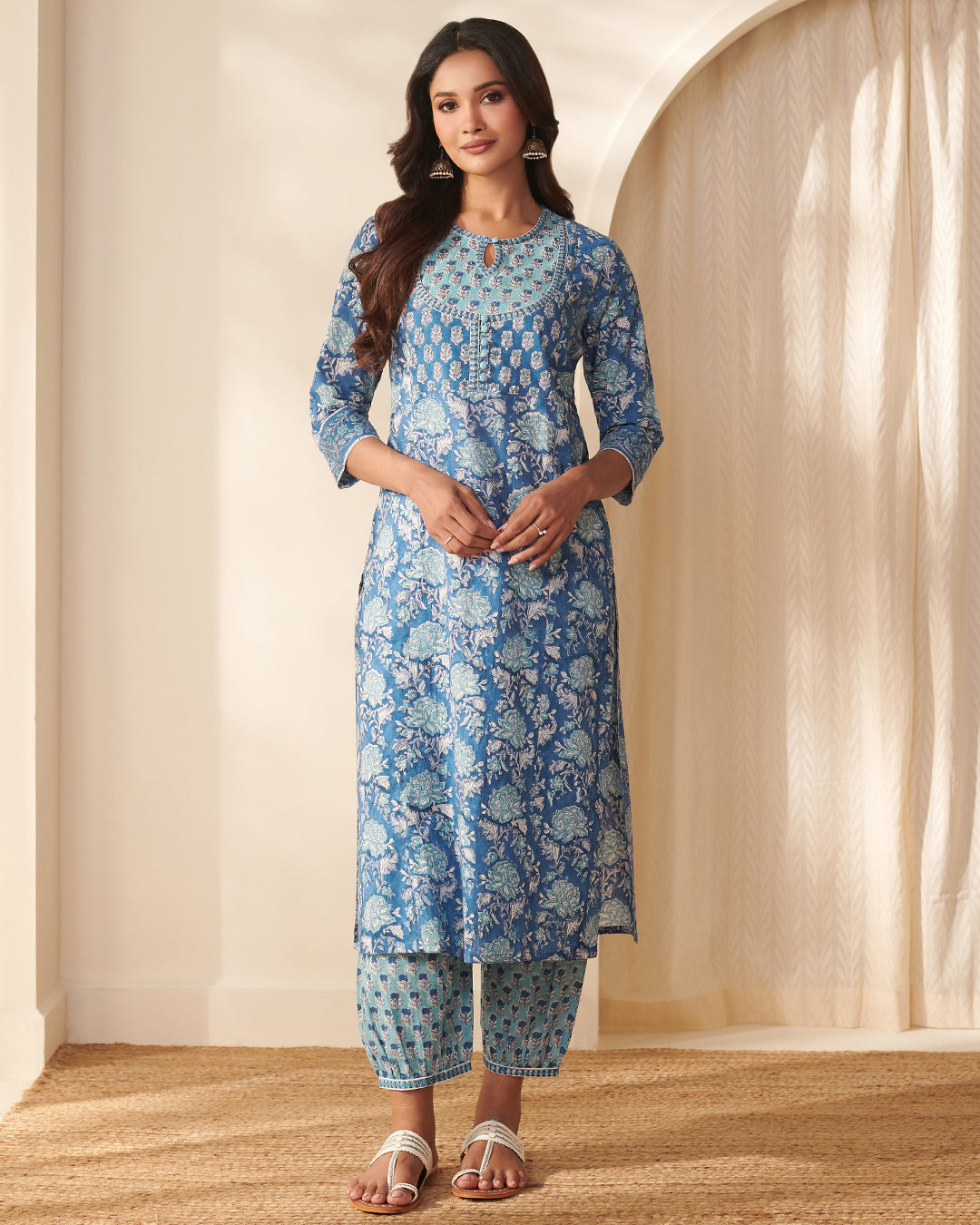
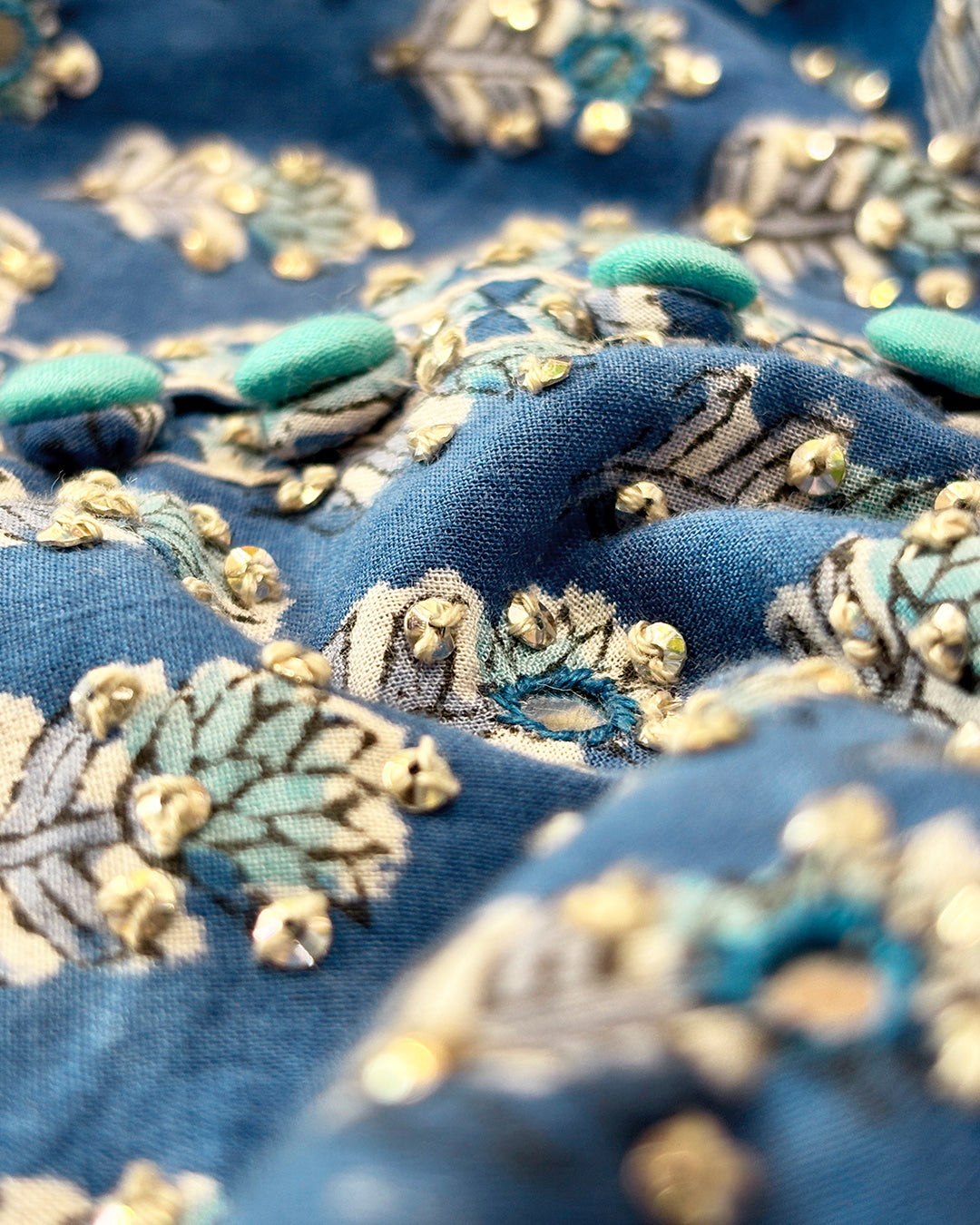
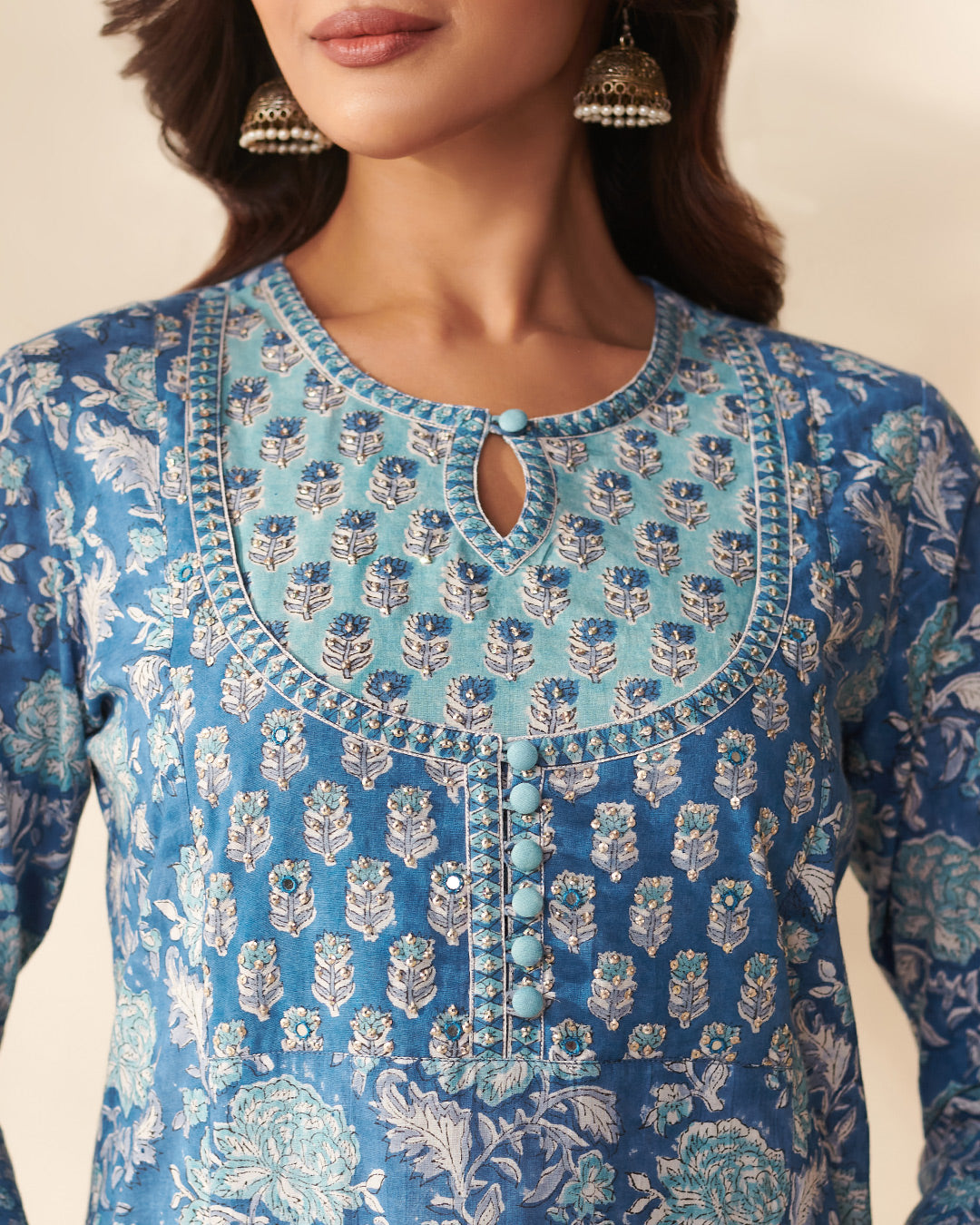
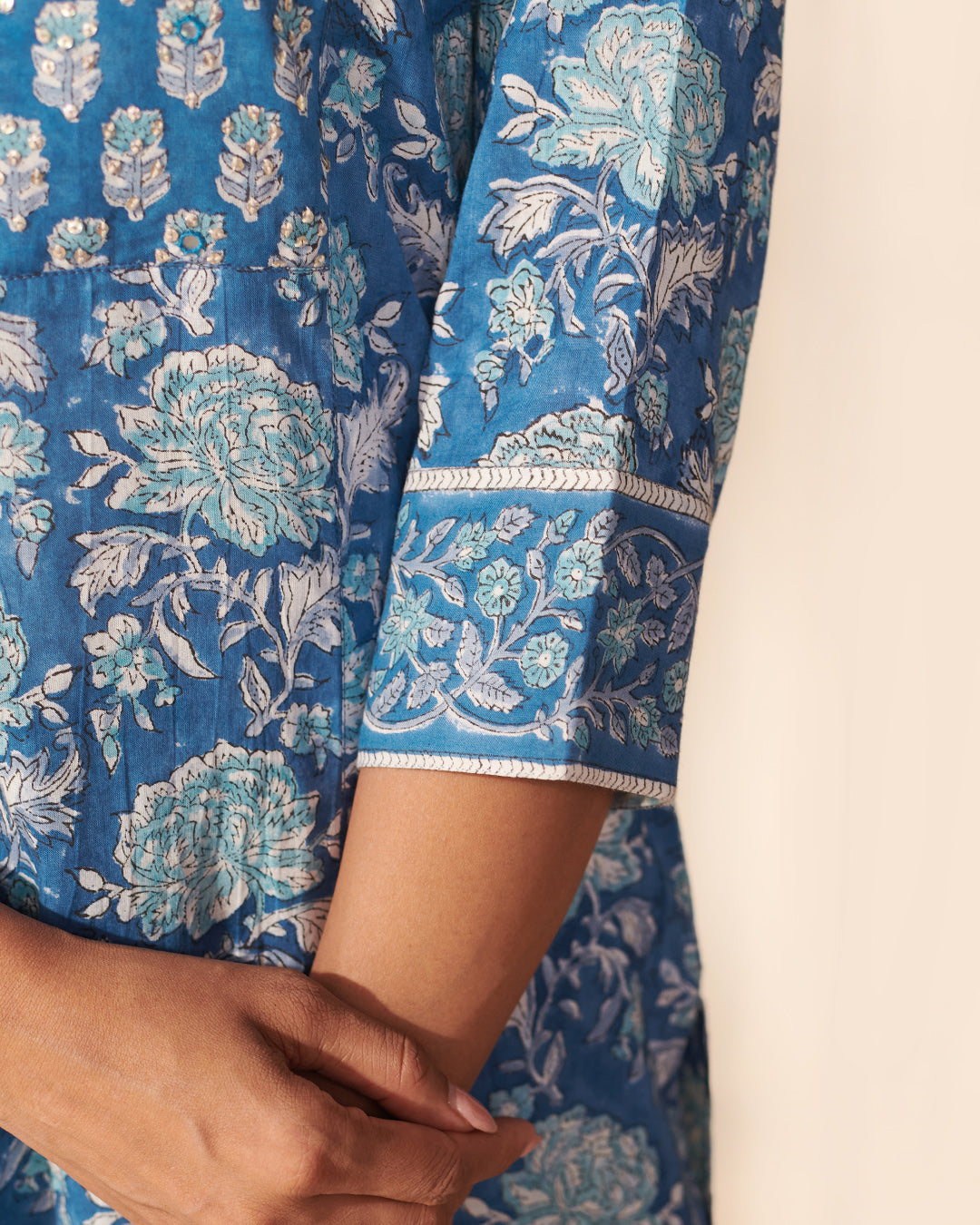
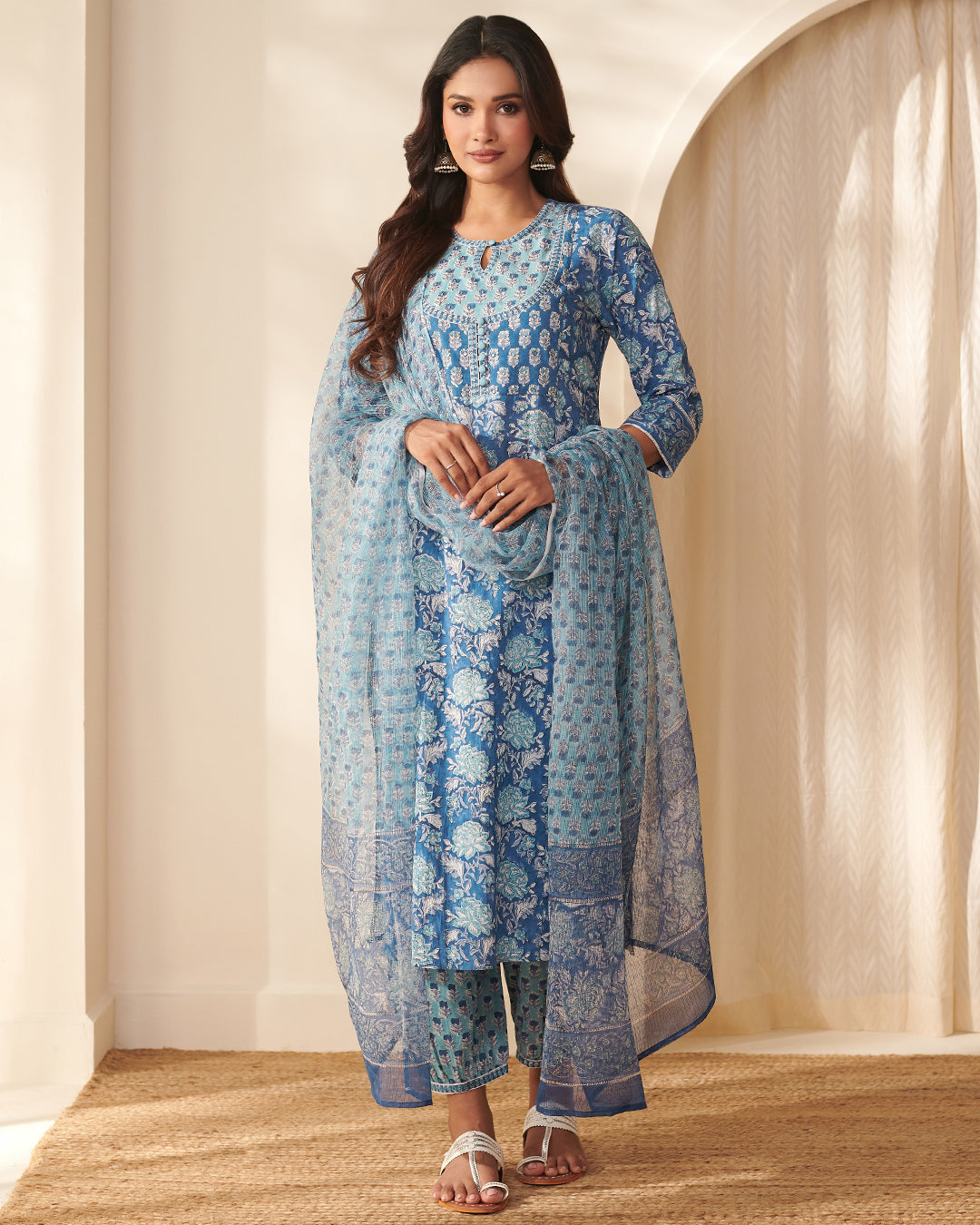
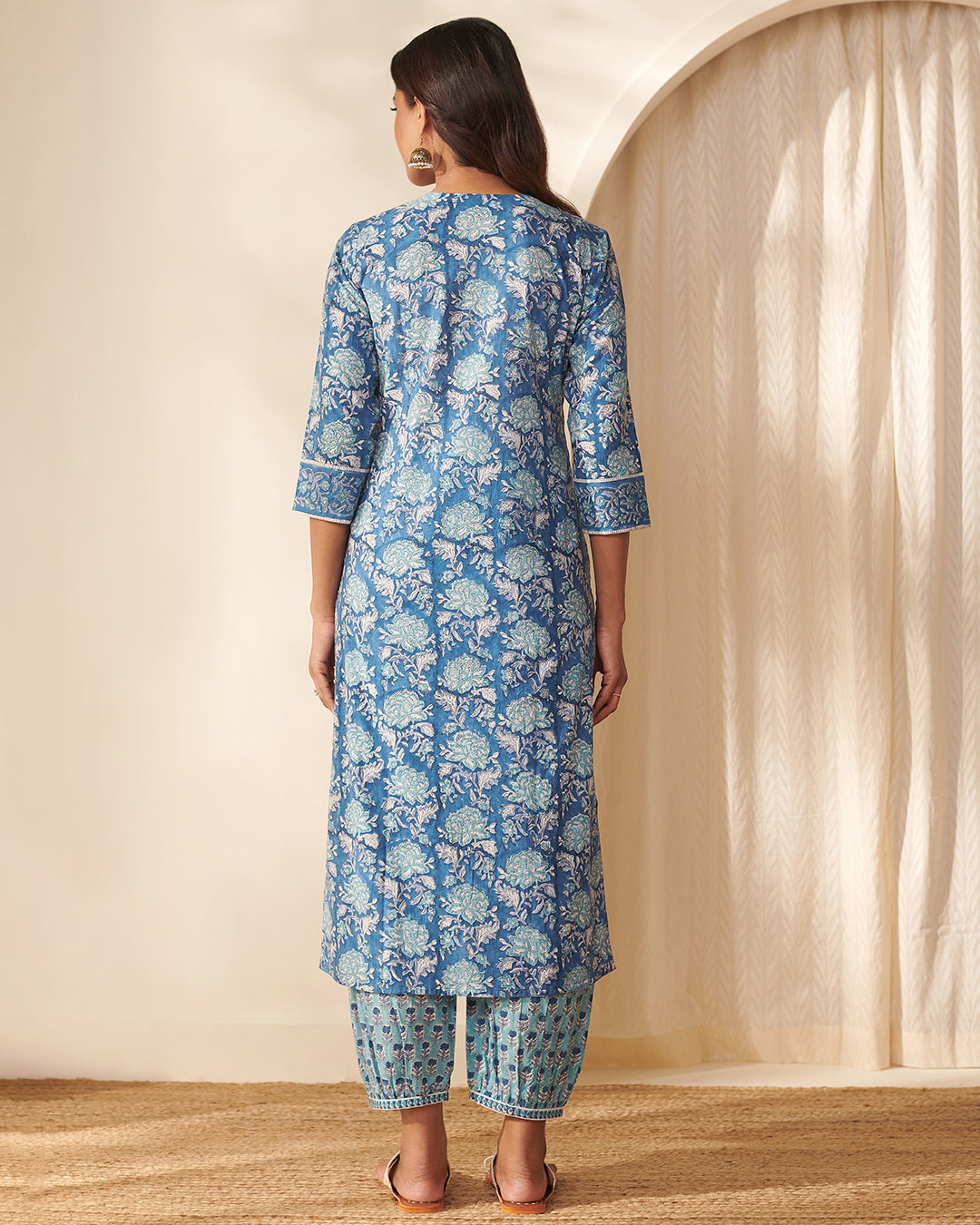
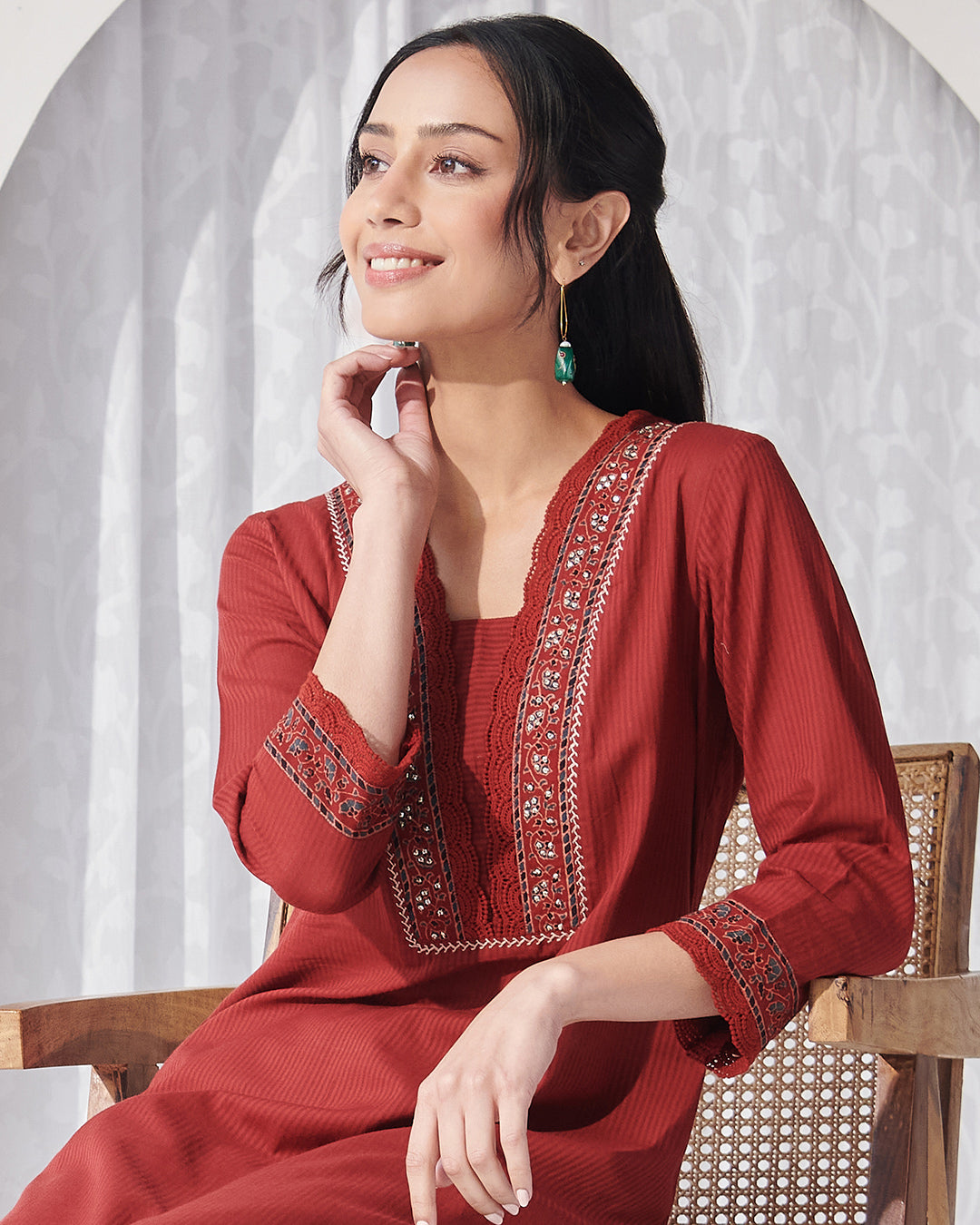
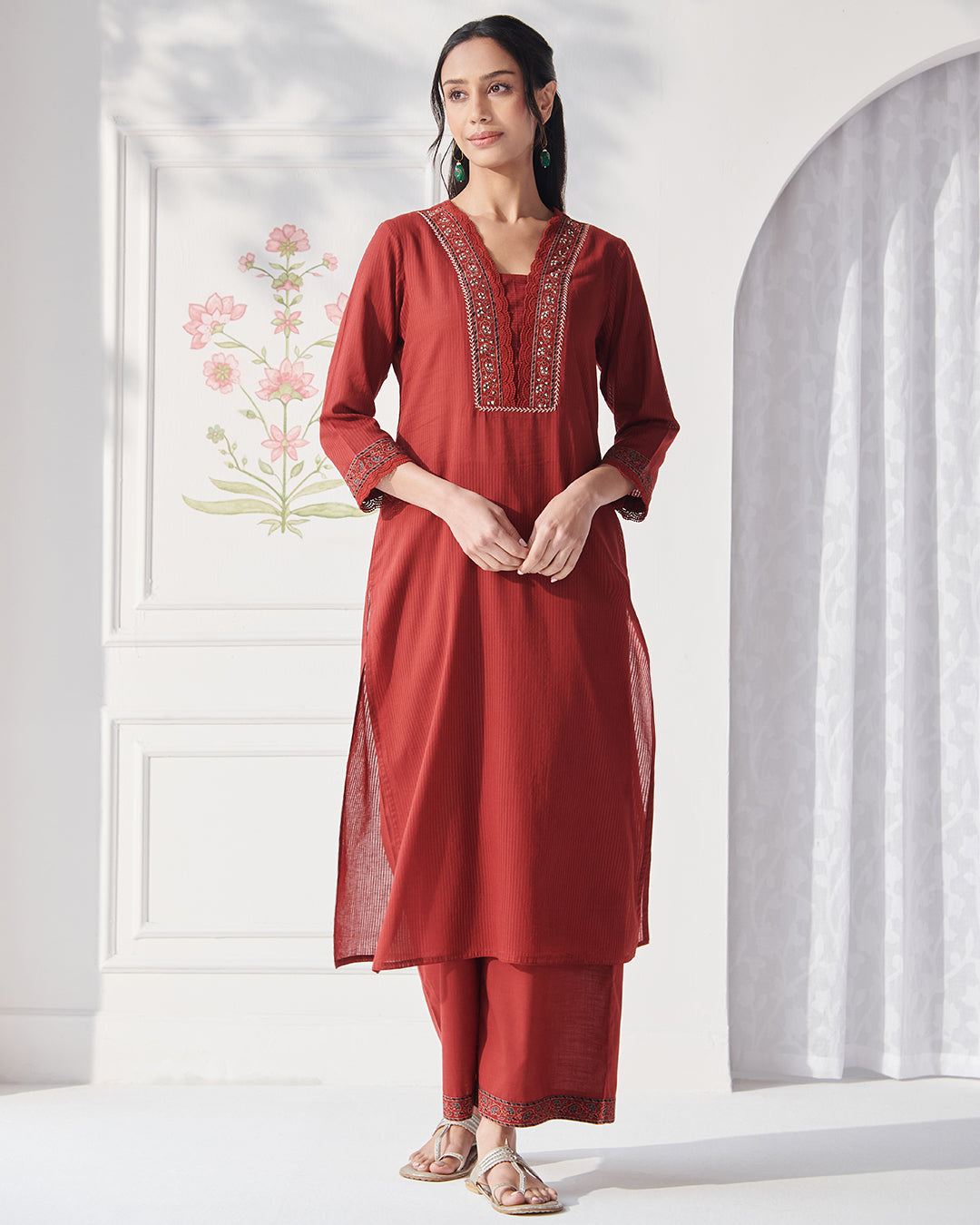
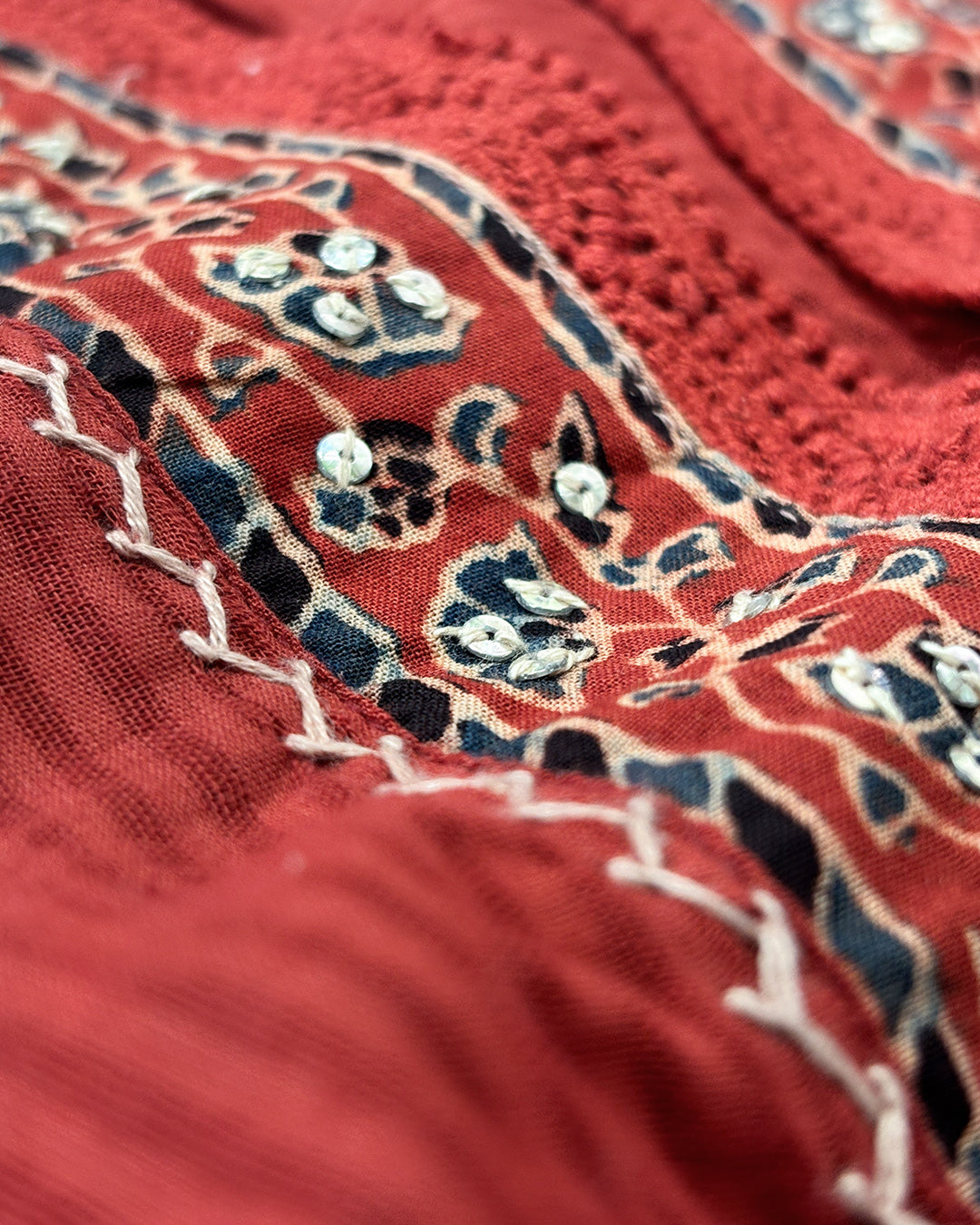
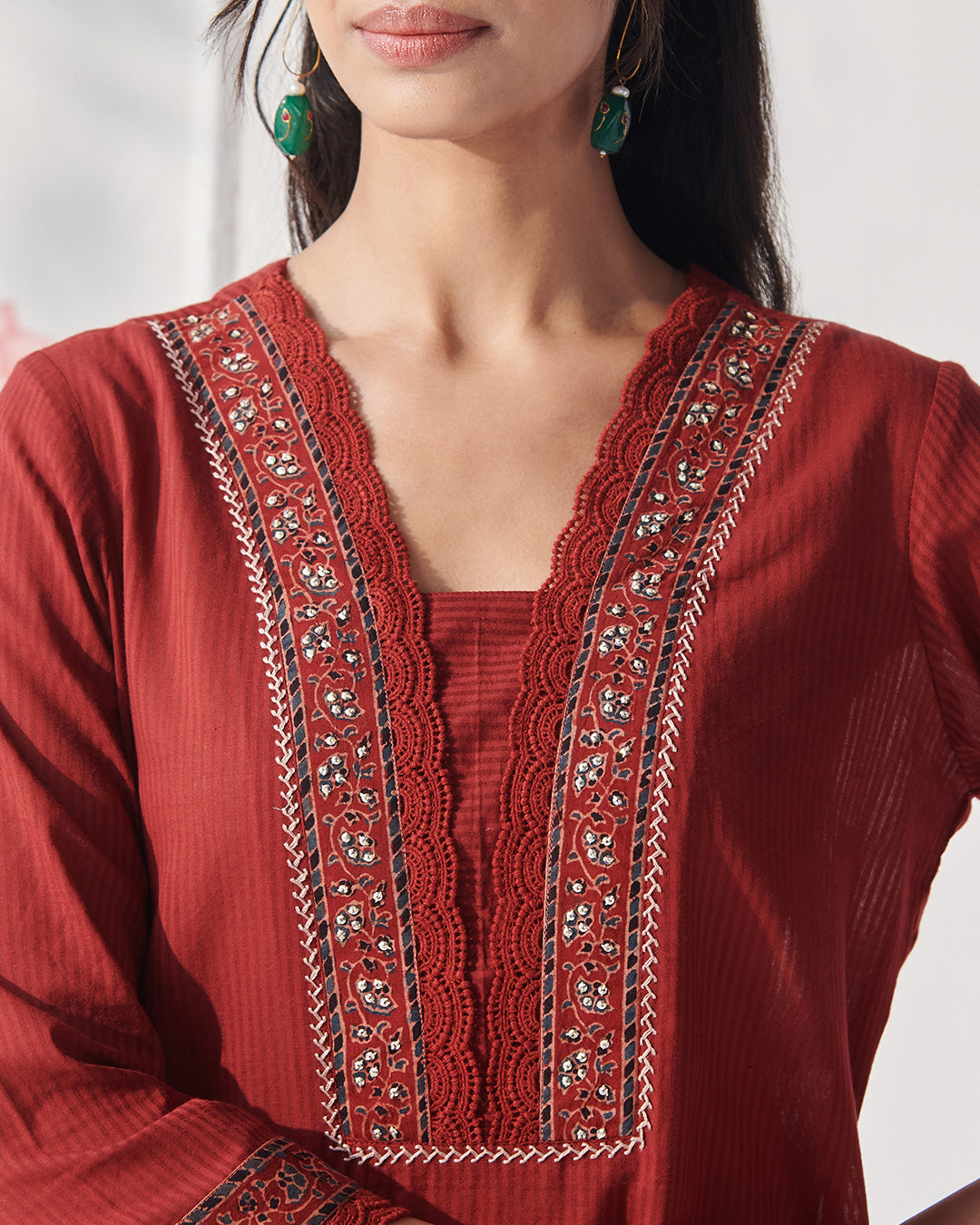
There is something unmistakable about Sanganeri prints. Fine floral patterns, delicate vines, and small motifs come together on a light background, creating a sense of detail without making the fabric feel busy. The beauty lies in the restraint. Every element has its place, and the overall design feels light, balanced, and graceful.
Originating in Sanganer, a historic town near Jaipur in Rajasthan, Sanganeri block printing has been shaped by generations of artisans who understand the relationship between colour, pattern, and cloth. The craft is known for its intricate floral designs, fine outlines, and the use of traditional wooden blocks to bring patterns to life. Its visual language is distinct, even within India's rich tradition of hand block printing.
Indian block prints carry the character of the regions they come from. Some are known for bold geometric forms, others for earthy colours or intricate natural motifs. Sanganeri printing has its own way of expressing beauty through fine detail and open space. Understanding what sets it apart offers a glimpse into the craft, the people behind it, and the heritage that continues to shape Indian textiles today.
What Makes Sanganeri Prints Unique?

Sanganeri prints are recognised for their delicate floral patterns, fine detailing, and predominantly light backgrounds. Traditional designs often feature flowering branches, small blossoms, leaves, and curling vines. These motifs draw inspiration from nature, but their arrangement is what gives Sanganeri textiles their distinctive character.
Unlike prints that rely on large, closely packed patterns, Sanganeri designs often allow the fabric to breathe. The motifs are distributed with care, creating a gentle rhythm across the surface. This balance between detail and open space gives the textile a lightness that feels especially suited to everyday Indian clothing.
Fine Floral Motifs and Delicate Detailing
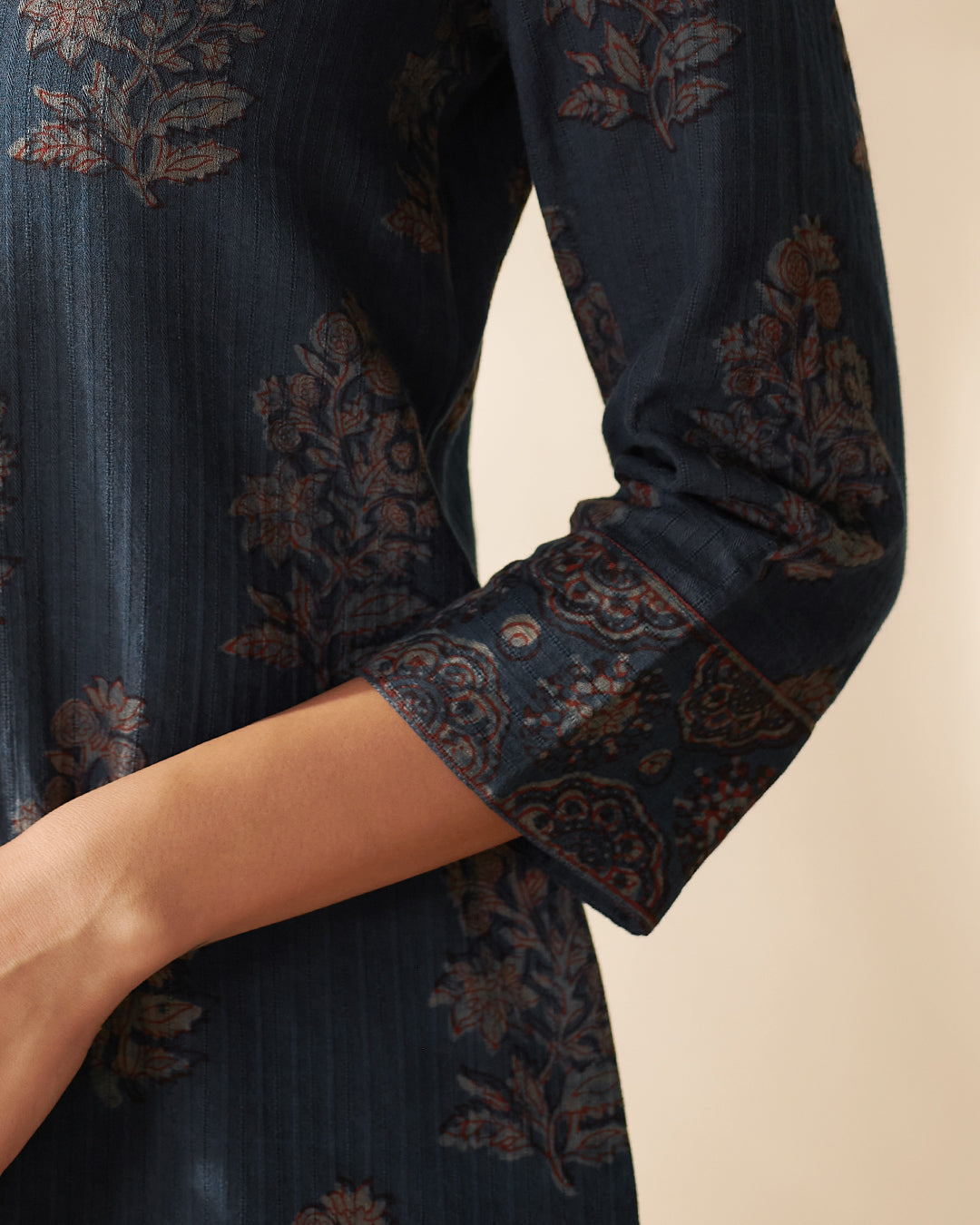
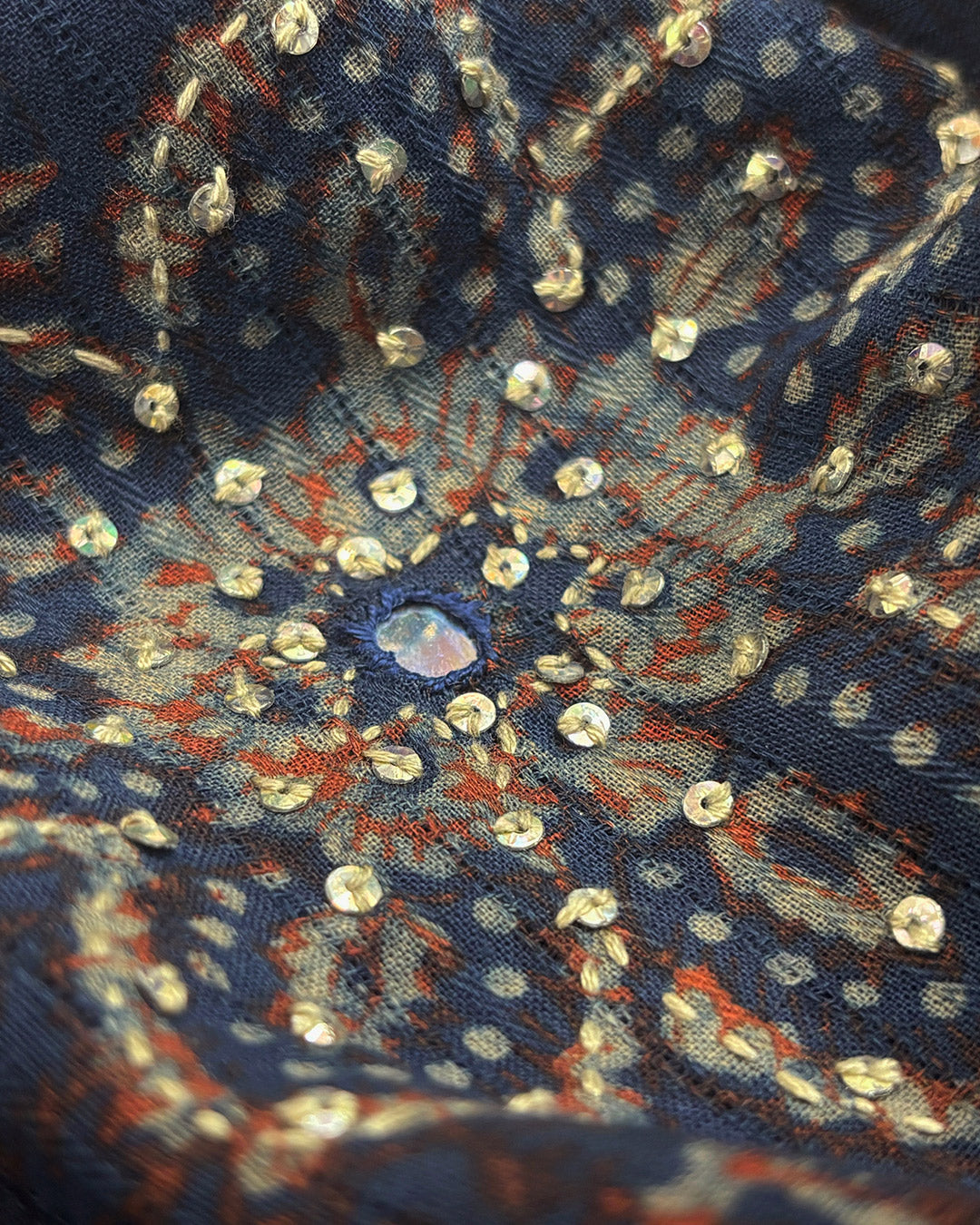
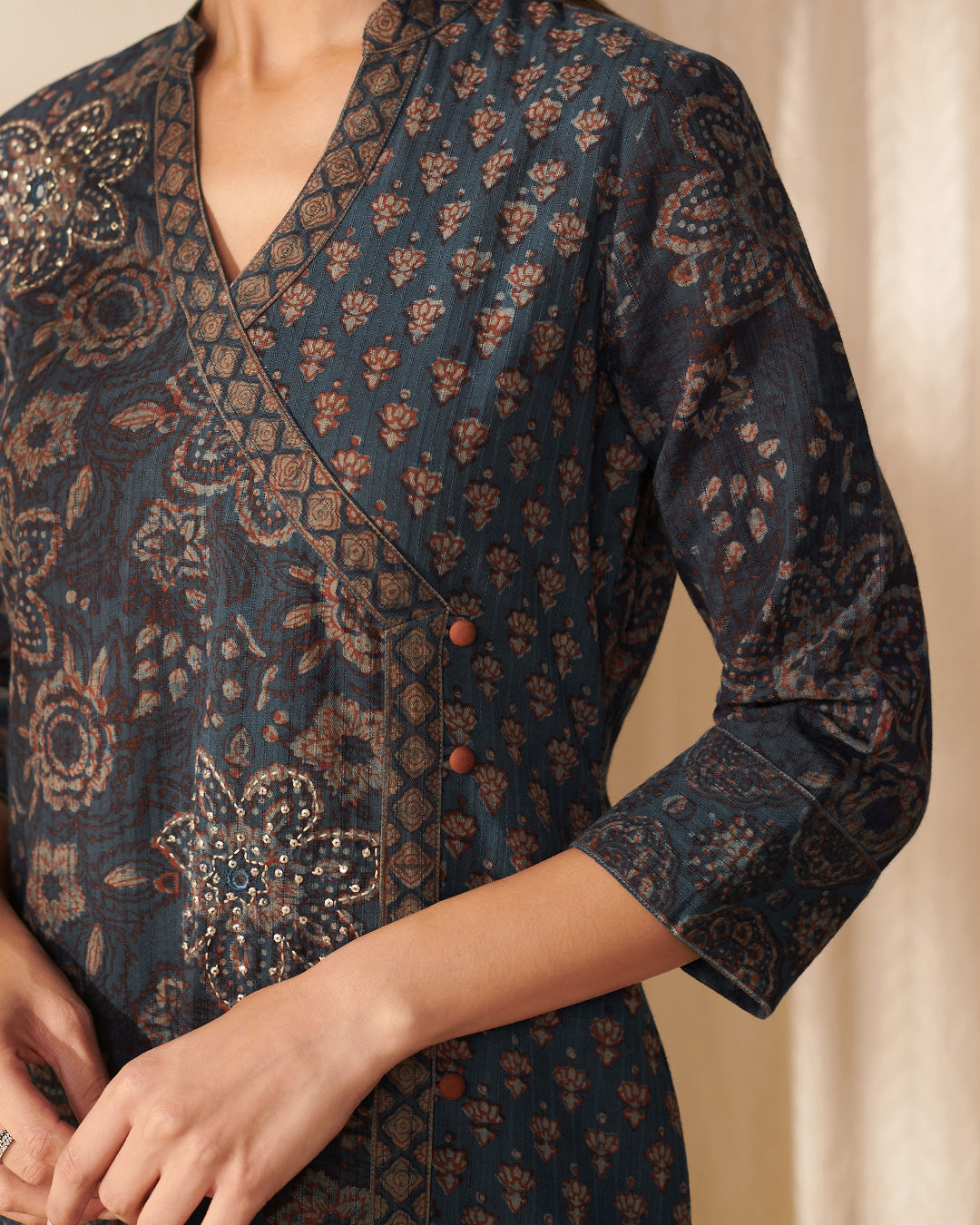
Flowers are central to many Sanganeri designs. Small butis, leafy creepers, and repeating floral arrangements are common, often rendered with fine outlines and carefully placed colours. The patterns can be intricate without appearing heavy, allowing the beauty of the print to emerge gradually.
Traditional motifs are carved into wooden blocks, with each block carrying a part of the design. Fine lines require a steady hand during both carving and printing. When the blocks are aligned correctly, individual impressions come together to form a continuous pattern that feels harmonious across the fabric.
This attention to detail is one reason Sanganeri prints have remained a favourite for cotton sarees, kurtas, dupattas, and other garments intended for regular wear.
The Beauty of Light Backgrounds
Traditional Sanganeri printing is particularly associated with white or light-coloured grounds. Against these backgrounds, floral motifs appear clear and distinct, allowing even small details to stand out.
Red, blue, yellow, green, and black have all featured in Sanganeri printing, with the choice of colours varying according to the design and period. The contrast between the background and the printed motifs contributes to the craft's recognisable appearance.
Light backgrounds also give these textiles a natural sense of ease. They work beautifully in warm weather, especially when printed on breathable cotton. The fabric feels comfortable against the skin, while the pattern adds character without overwhelming the garment.
A Craft Shaped by Its Region
Sanganeri printing developed within Rajasthan's long textile tradition, where colour, craftsmanship, and practical clothing have always held an important place. The region's history of textile production, access to skilled artisans, and established printing practices helped shape the craft over generations.
The patterns reflect a particular understanding of ornamentation. Rather than relying only on scale or bold contrast, Sanganeri printing finds its expression in precision, repetition, and the careful placement of motifs.
That quality makes the craft recognisable even as its designs evolve. Contemporary Sanganeri textiles may explore new colour combinations, larger motifs, or different garment silhouettes, but the tradition of fine patterning remains an important part of their identity.
Sanganeri Prints vs Other Indian Block Prints

India's block printing traditions are wonderfully diverse. Each region has developed its own visual language, shaped by local materials, cultural influences, natural surroundings, and generations of skilled workmanship.
Sanganeri printing is often compared with Bagru printing, another well-known textile craft from Rajasthan. Both traditions use wooden blocks and have deep roots in the region, yet their finished textiles can look quite different. Other printing traditions, such as Ajrakh from Kutch and Sindh, bring their own distinctive approaches to colour, geometry, and pattern.
These differences are not a measure of one craft being better than another. They reflect the many ways Indian artisans have interpreted the world around them through cloth.
Sanganeri and Bagru Prints
Sanganeri and Bagru prints come from the same broad region, but they are often distinguished by their patterns, colours, and visual character.
Sanganeri printing is commonly associated with fine floral motifs, delicate lines, and light backgrounds. Its designs often feel airy, with small patterns arranged across the fabric in a balanced composition.
Bagru printing, traditionally associated with the Bagru region near Jaipur, is known for its use of natural dyes and earthy shades, including indigo, black, and shades of red. Dabu printing, a mud-resist technique practised in Bagru and other regions, is also an important part of its textile heritage. The resulting patterns can have a more textured, layered appearance.
The distinction is not absolute. Both traditions include a variety of designs, colours, and techniques, and contemporary artisans continue to experiment within them. Still, when placed side by side, Sanganeri's fine floral detailing and Bagru's earthy, often more grounded visual palette offer a useful way to understand their differences.
Sanganeri and Ajrakh Prints
Ajrakh printing has a distinct visual identity built around geometric patterns, repeated symmetry, and rich colours, particularly indigo, deep red, and black. Traditionally practised in parts of Kutch and Sindh, Ajrakh involves a complex process that may include repeated washing, resist printing, and multiple stages of dyeing.
Where Sanganeri designs often draw the eye towards delicate flowers and flowing botanical forms, Ajrakh patterns tend to create a more structured visual rhythm. Geometric shapes, intricate borders, and carefully repeated motifs are central to many Ajrakh textiles.
The difference can also be felt in the use of colour. Sanganeri printing is often associated with light grounds and clearly defined floral designs, while Ajrakh is widely recognised for its deep, saturated palette. Both depend on patience and precision, but each expresses those qualities in its own way.
Understanding the Differences in Motifs and Colour
The easiest way to appreciate these traditions is to look closely at the fabric rather than rely on labels alone.
|
Feature |
Sanganeri Printing |
Bagru Printing |
Ajrakh Printing |
|
Common motifs |
Fine florals, leaves, vines, small butis |
Floral forms, nature-inspired motifs, geometric patterns |
Geometric forms, repeated motifs, intricate borders |
|
Common colour character |
Often light backgrounds with clear, contrasting prints |
Frequently earthy reds, blacks, and indigo |
Deep indigo, red, black, and white |
|
Visual character |
Delicate, detailed, and open |
Earthy, layered, and often bold |
Structured, symmetrical, and intricate |
|
Notable techniques |
Hand block printing with carved wooden blocks |
Hand block printing, with dabu resist printing among its traditions |
Multi-stage printing and resist-dyeing processes |
|
Common textile uses |
Cotton kurtas, sarees, dupattas, and dress fabrics |
Sarees, dupattas, garments, and home textiles |
Dupattas, sarees, garments, and other textiles |
These are broad characteristics rather than fixed rules. Individual artisans and printing workshops may use different motifs, colours, and methods, and modern designs often draw inspiration from more than one tradition.
What remains important is the intention behind each craft. Sanganeri printing celebrates fine detail and the quiet beauty of floral forms. Bagru carries the warmth of earthy colour and resist-printing traditions. Ajrakh reflects the precision of geometry and the depth achieved through layered dyeing.
Together, they show how Indian block printing can be deeply regional while remaining open to change. Each tradition preserves a way of working with cloth that has been refined over generations.
The Craftsmanship Behind Sanganeri Printing

A Sanganeri print may appear delicate at first glance, but creating it requires considerable skill. The clarity of the pattern depends on several stages of preparation, from carving the wooden blocks to treating the fabric and aligning each impression by hand.
The process brings together knowledge of materials, an understanding of colour, and a steady rhythm of work. Much of this knowledge is passed from one generation to the next, through observation and practice rather than written instruction alone.
Preparing the Fabric
Before printing begins, the fabric must be prepared so that it can receive the dye evenly. Depending on the material and the colours being used, this may involve washing, scouring, and other treatments to remove impurities and prepare the fibres.
Cotton has long been an important fabric for Sanganeri printing because of its breathability and its ability to take colour well. Proper preparation helps the printed motifs appear clear and reduces the risk of uneven colour or unwanted marks.
The quality of this early stage influences everything that follows. Even a beautifully carved block cannot produce a clean impression if the fabric has not been prepared properly.
Carving the Wooden Blocks
The wooden block is at the heart of hand block printing. Artisans carve the chosen motif into the surface of the wood, shaping the lines and spaces that will transfer the design onto the fabric.
Fine floral patterns require particular care. A small variation in a petal, leaf, or outline can affect how the motif appears when printed repeatedly. Complex designs may also require separate blocks for different colours or parts of a pattern.
The block must be comfortable to handle, accurately carved, and durable enough to create consistent impressions over repeated use. It is a working tool, but it also carries the design knowledge of the artisan who made it.
Printing Each Motif by Hand
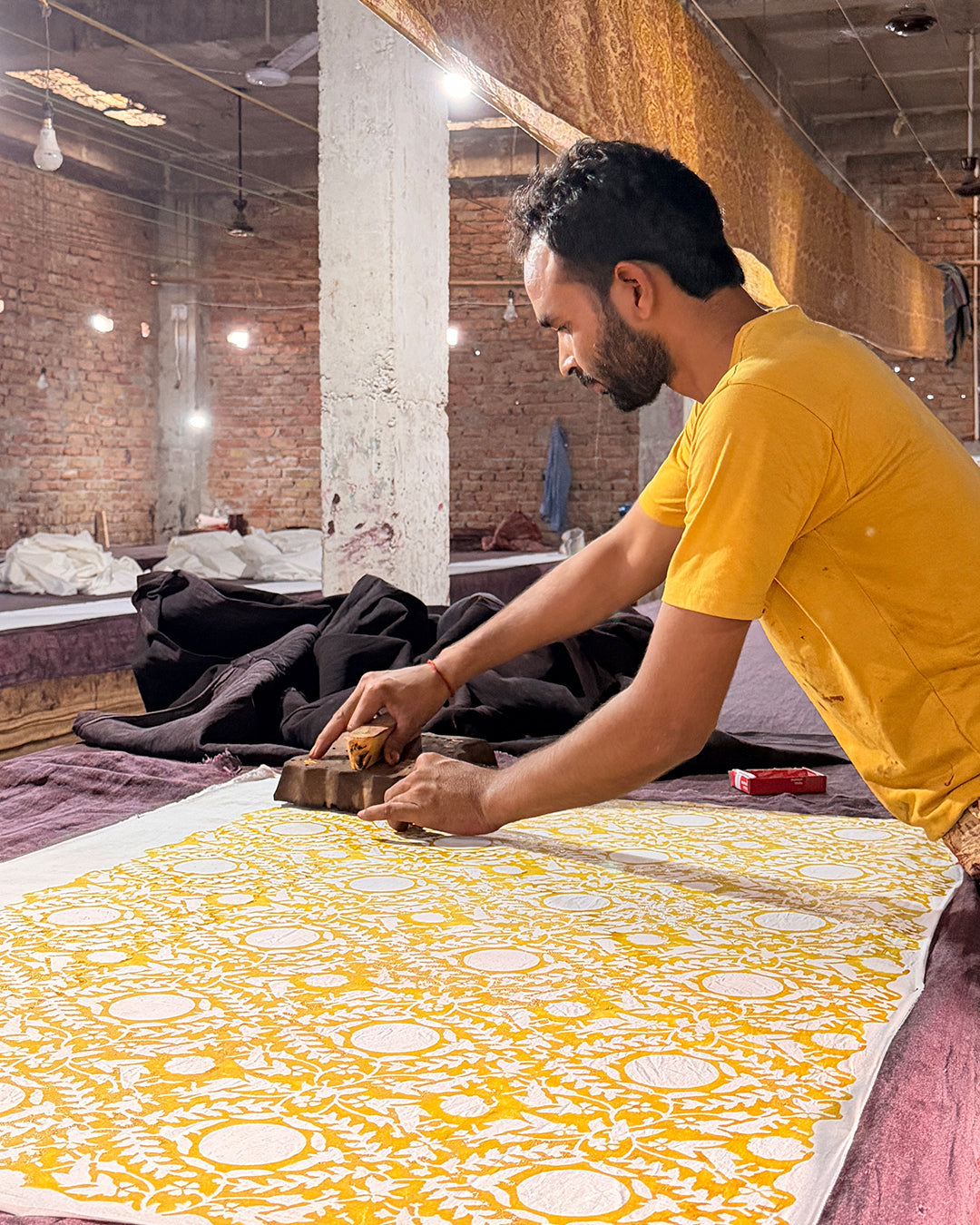
Once the fabric and blocks are ready, the printing begins. The artisan applies dye or printing colour to the carved surface and presses the block onto the fabric with controlled pressure. The block is then lifted and placed again to continue the pattern.
This repeated movement may look simple, but maintaining consistency takes practice. The artisan must judge the amount of colour, the pressure of each impression, and the distance between motifs. When several blocks are used, each part of the design must align correctly with the others.
Hand printing also allows for small variations that distinguish handmade textiles from mechanically produced prints. These variations should not be confused with poor workmanship. In a well-made hand block print, the overall design remains coherent while the process retains the character of human hands at work.
Colour, Drying, and Finishing
Colour plays an important role in the final appearance of Sanganeri textiles. Depending on the design and the printing method, artisans may use traditional dyes, pigments, or contemporary colour formulations. Each has its own requirements for application and finishing.
After printing, the fabric may need to dry and undergo further treatment to help the colour settle and improve its durability. The exact steps vary according to the dyes, pigments, and materials used. Careful finishing helps preserve the clarity of the design and the feel of the cloth.
The finished textile brings together all these decisions. The quality of the fabric, the precision of the blocks, the placement of the motifs, and the handling of colour all contribute to its character.
The Hands and Knowledge Behind the Craft
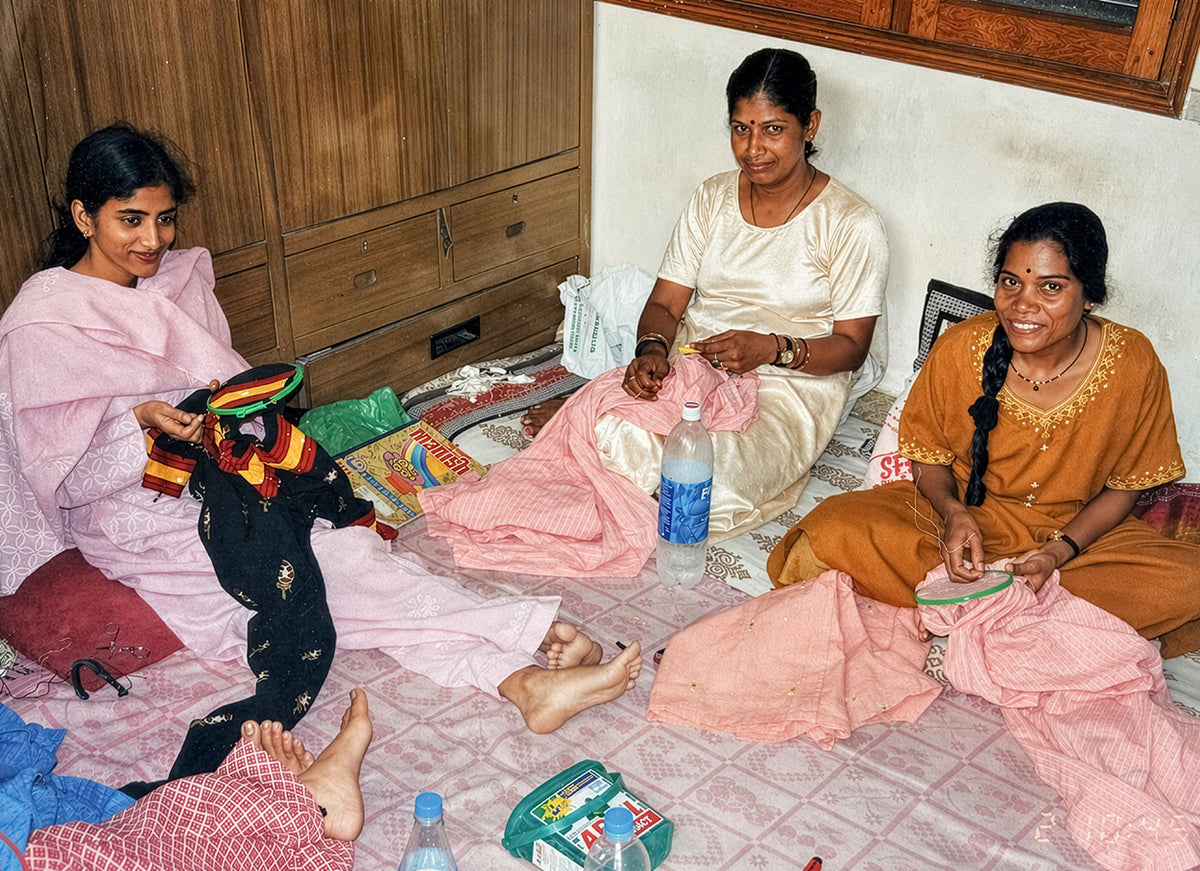
Sanganeri printing is sustained by the people who continue to practise it. Block makers, printers, dyers, and other textile workers each contribute a particular skill to the finished fabric. Their work often involves years of learning, repetition, and close attention to materials.
A floral motif may occupy only a small part of a kurta, yet behind it lies the knowledge required to carve, prepare, print, and finish the cloth. This is one of the quiet strengths of traditional Indian textiles. Their beauty is visible, but the labour and judgement that create it are woven into every stage of the process.
As Sanganeri printing finds its place in contemporary wardrobes, preserving its identity means valuing both the finished textile and the people who make it. The patterns may evolve, and colours may change with time, but the craft continues through the hands that know how to bring a design from wood to fabric.
There is a particular grace in wearing something made through such careful work. The print does not need to announce its history. Its detail, balance, and quiet beauty carry that history with them.
How to Style Sanganeri Print Outfits Today
Sanganeri prints have a way of bringing quiet elegance to everyday dressing. Their delicate floral patterns, fine lines, and balanced use of colour make them easy to wear without losing the richness of their heritage. Whether rendered in soft pastels or deeper shades, these prints carry a sense of lightness that feels equally at home in a familiar daily routine or a family gathering.
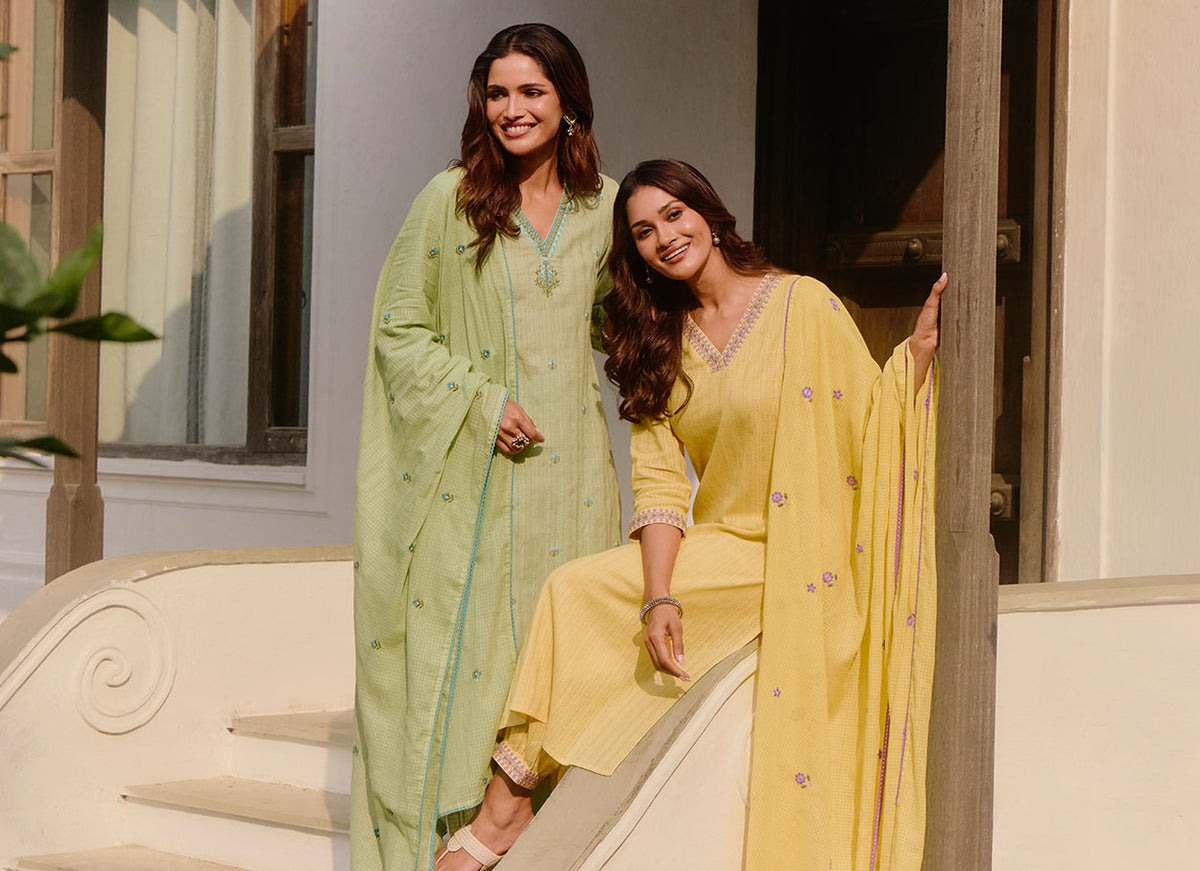
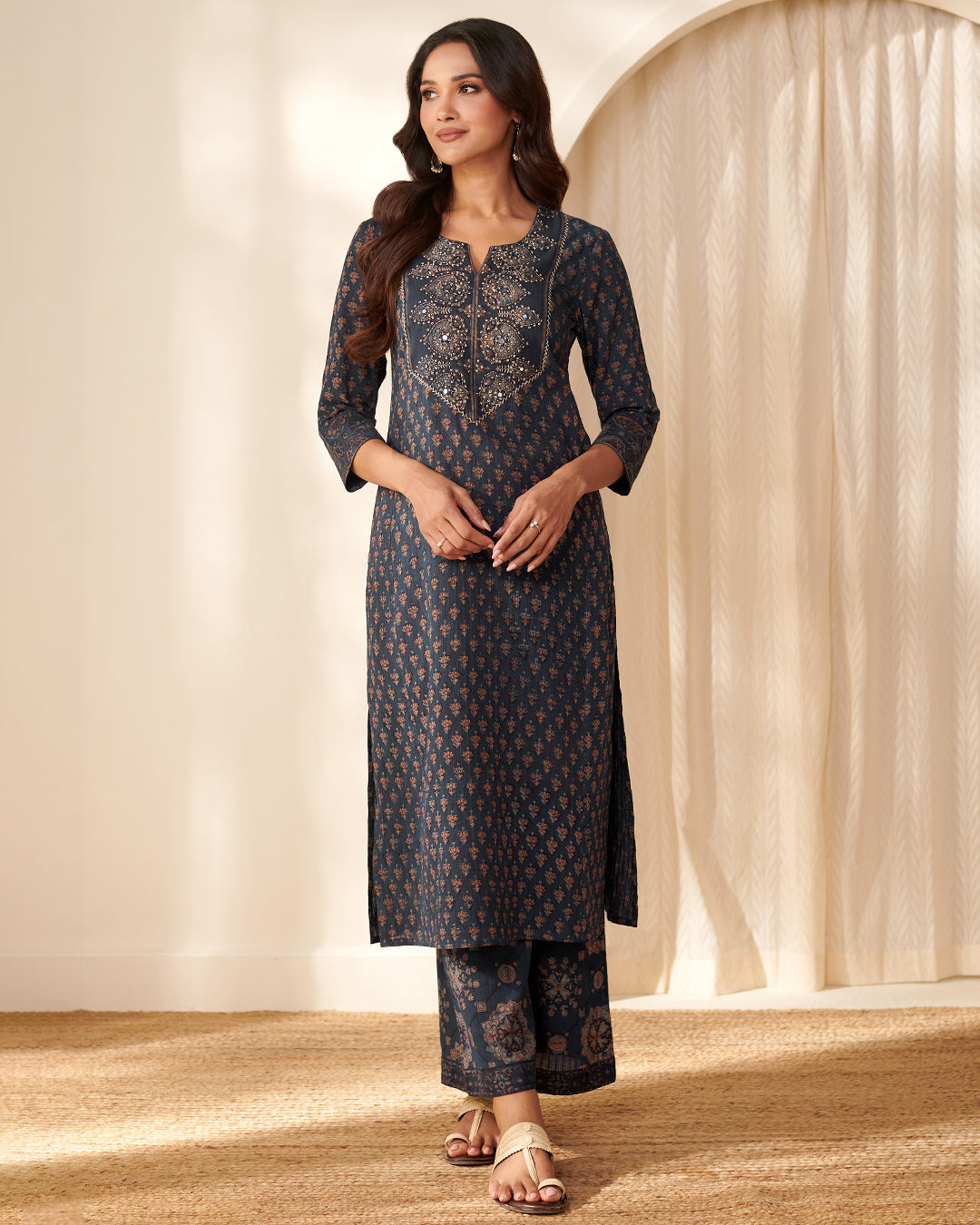
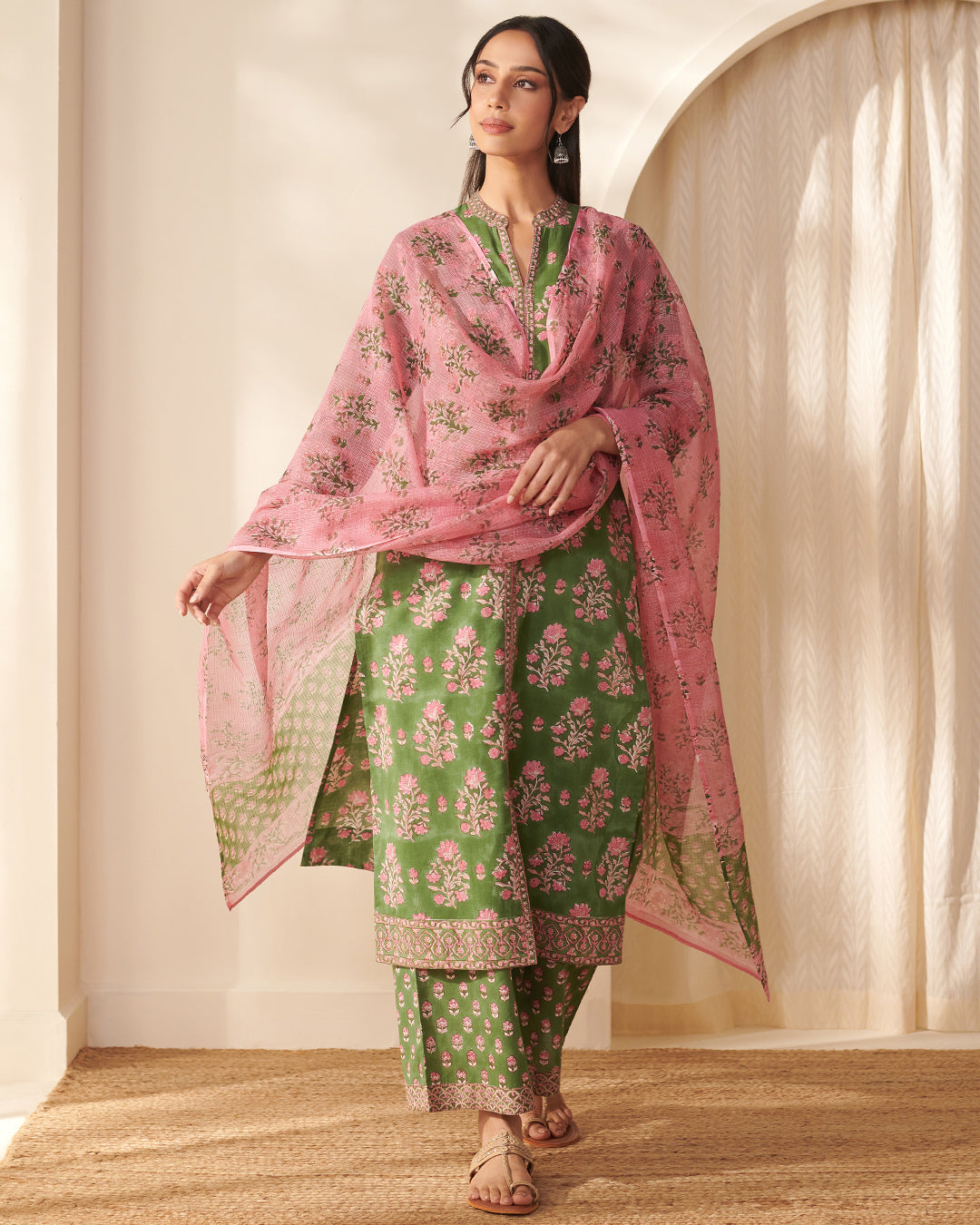
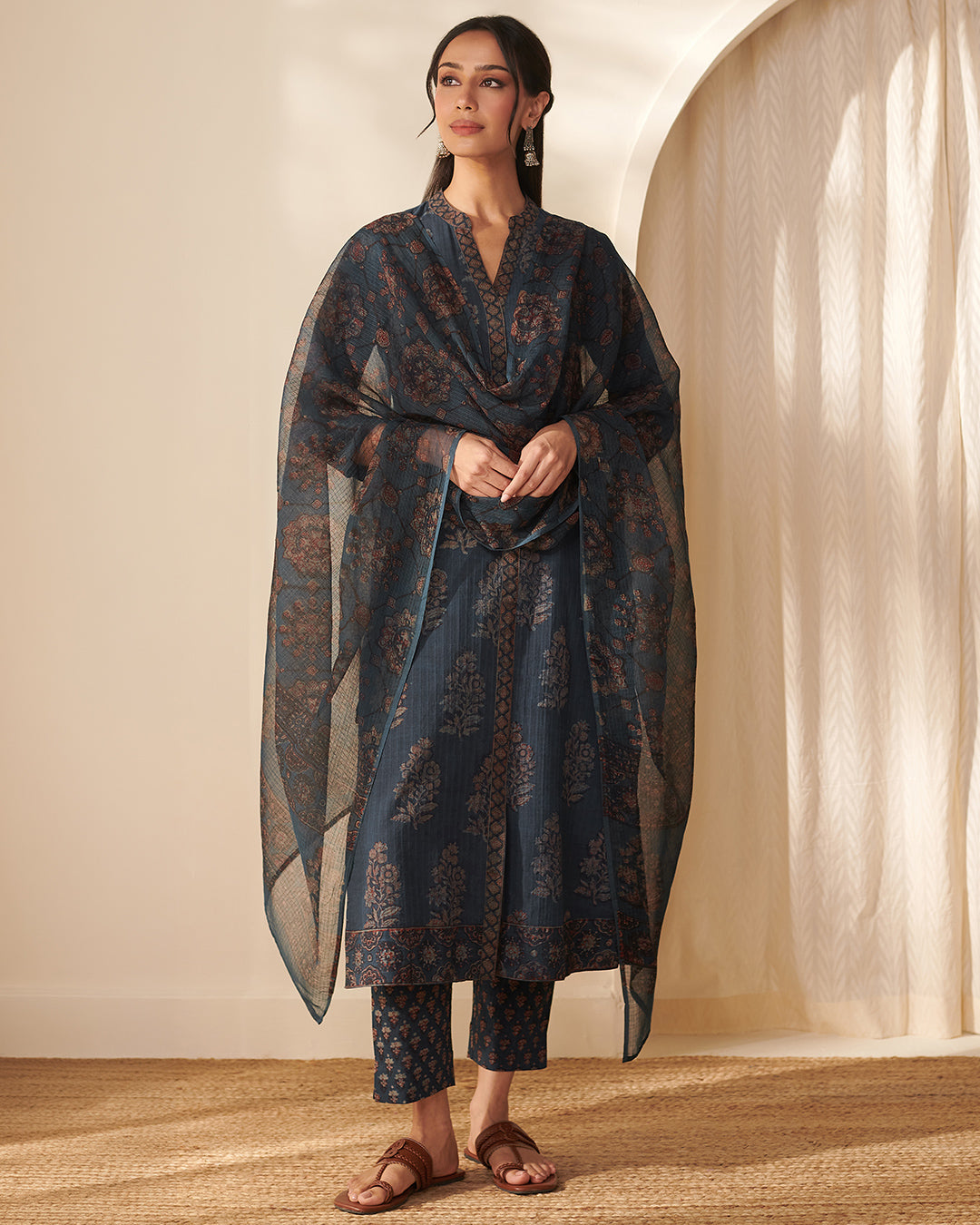
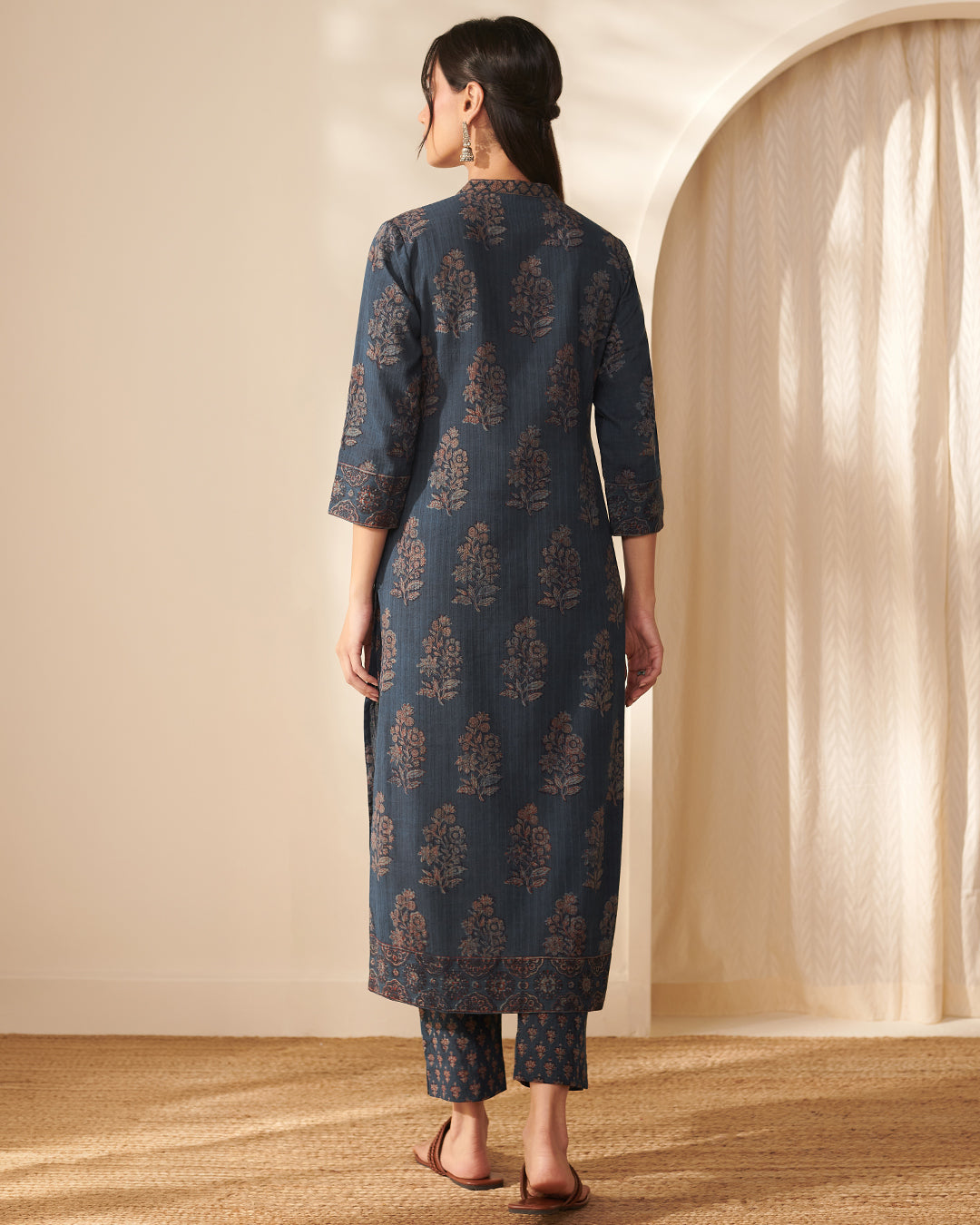
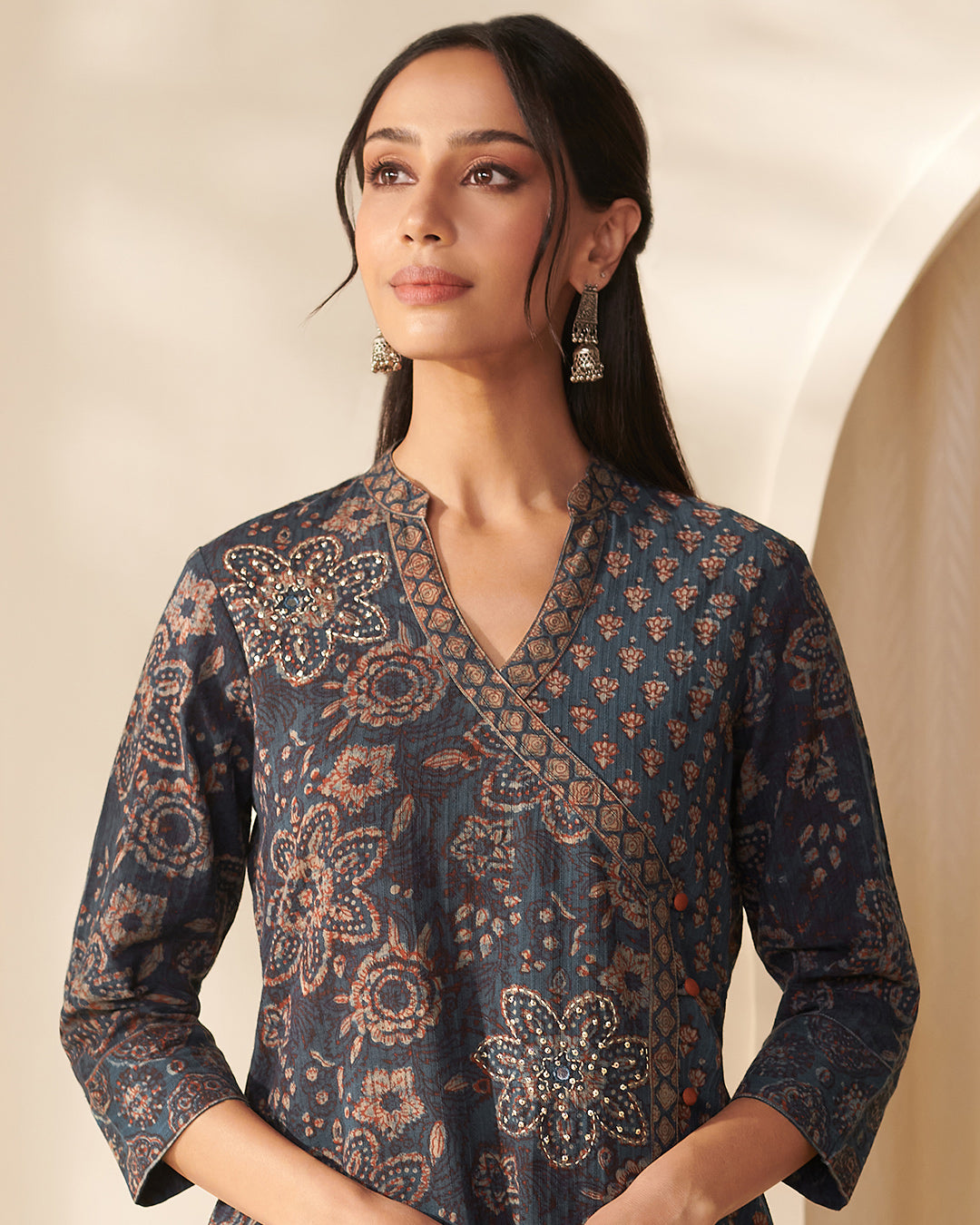
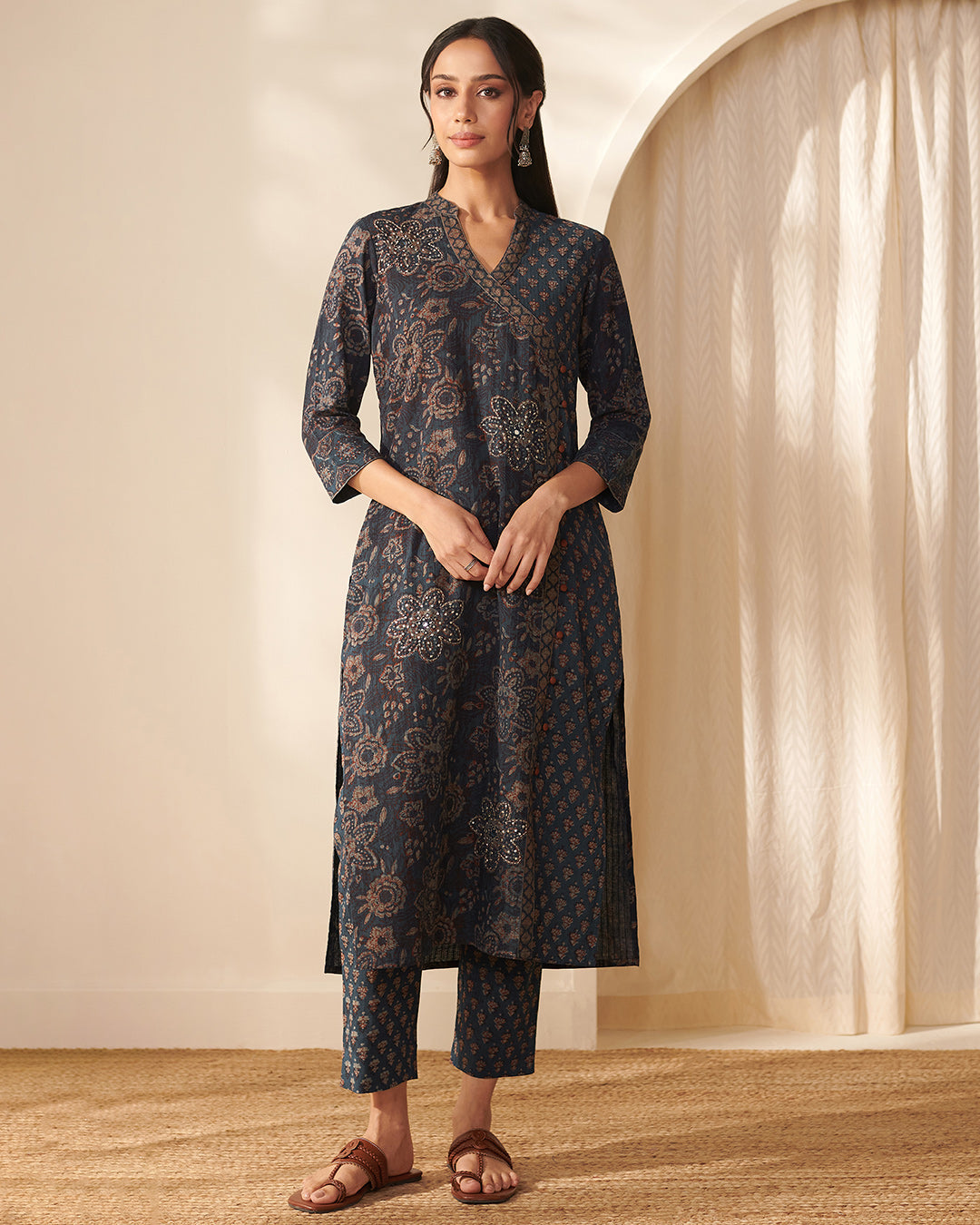
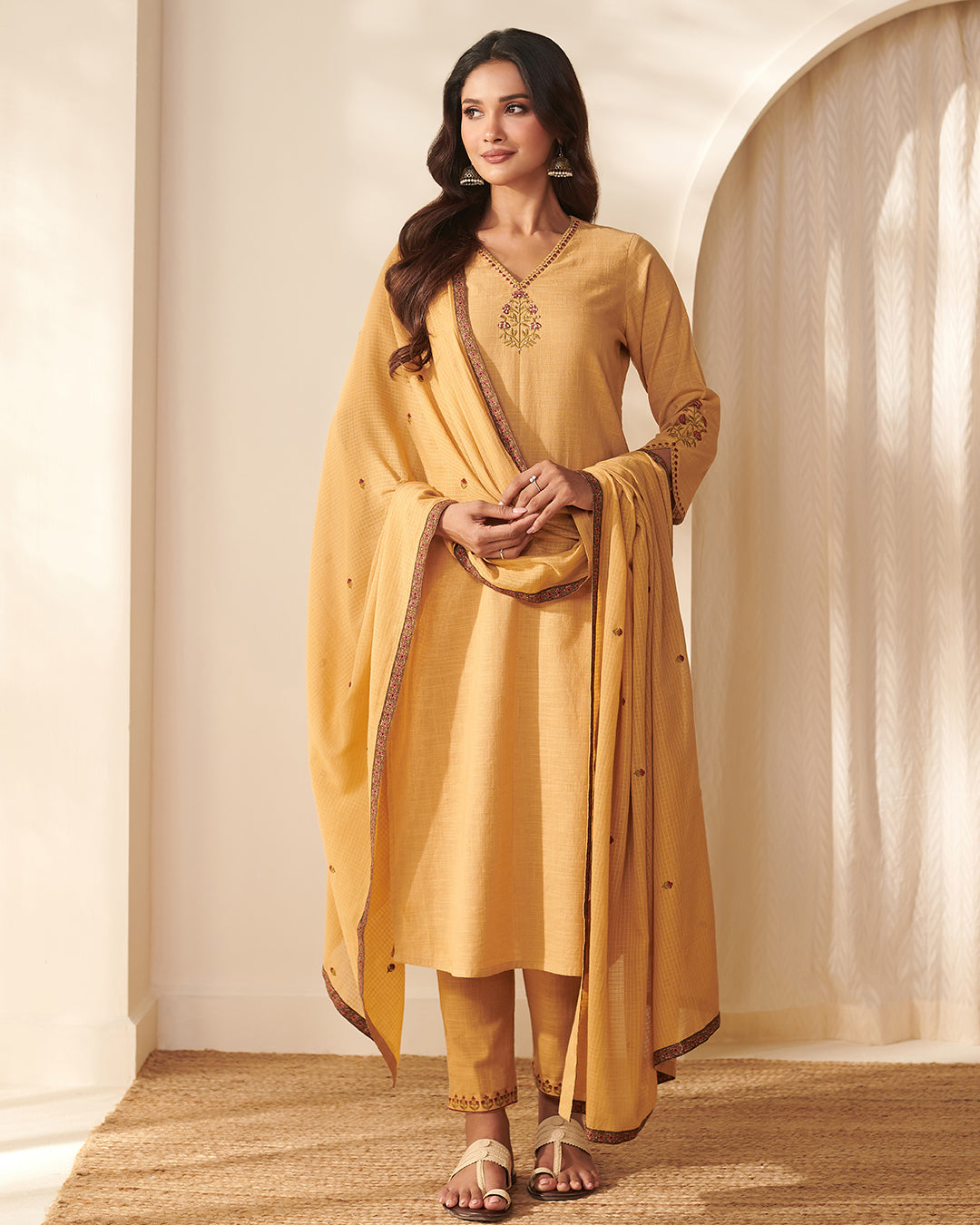
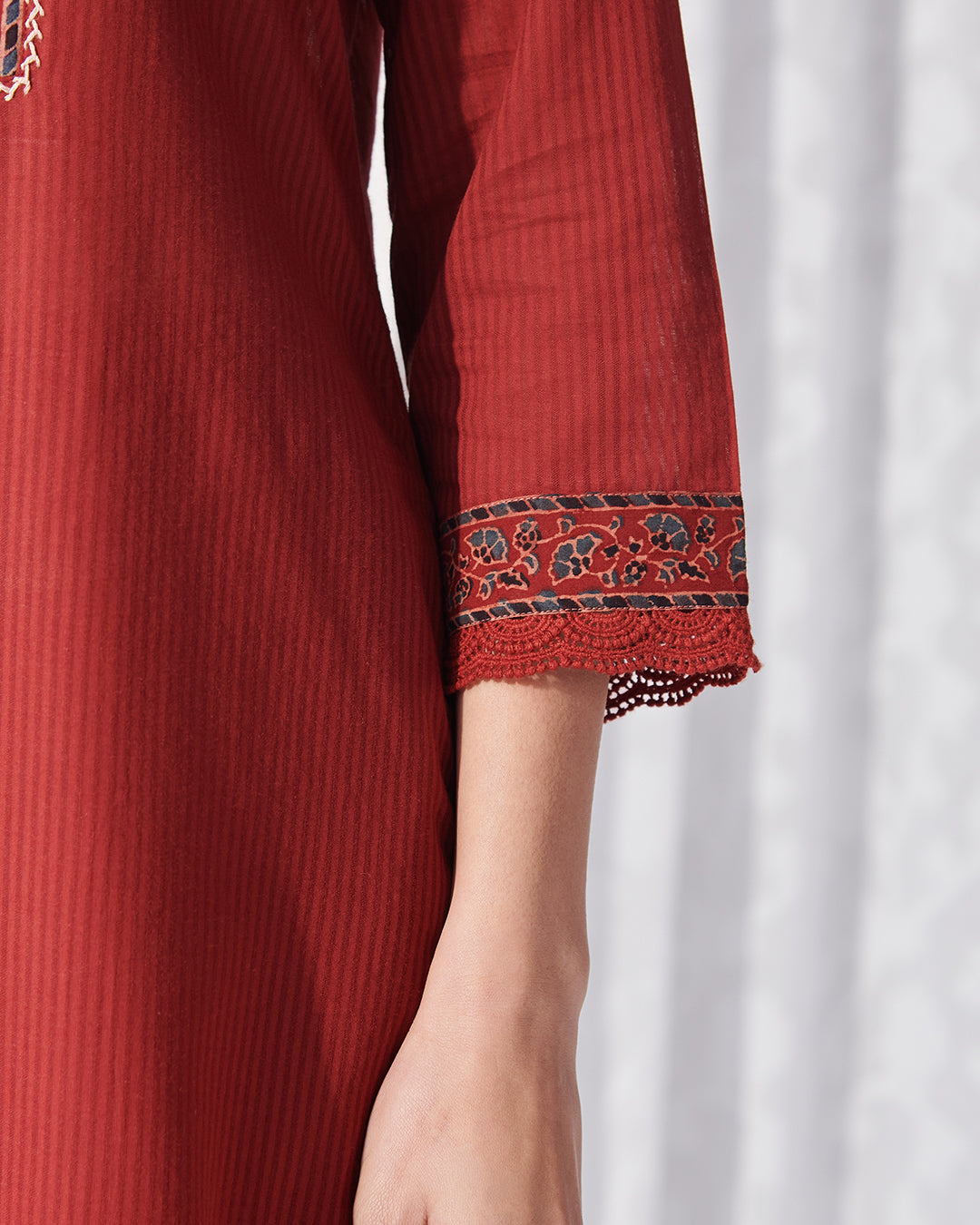
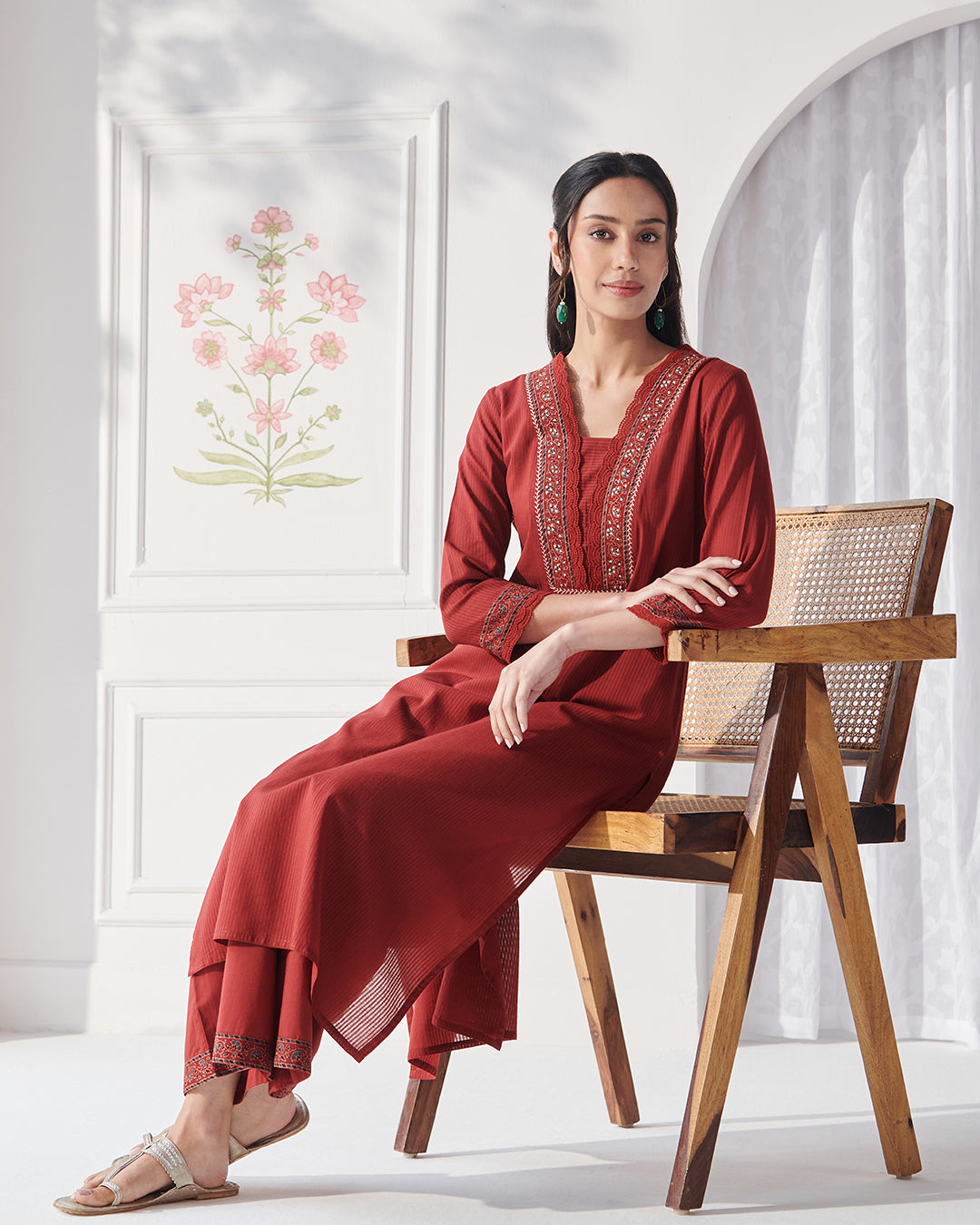
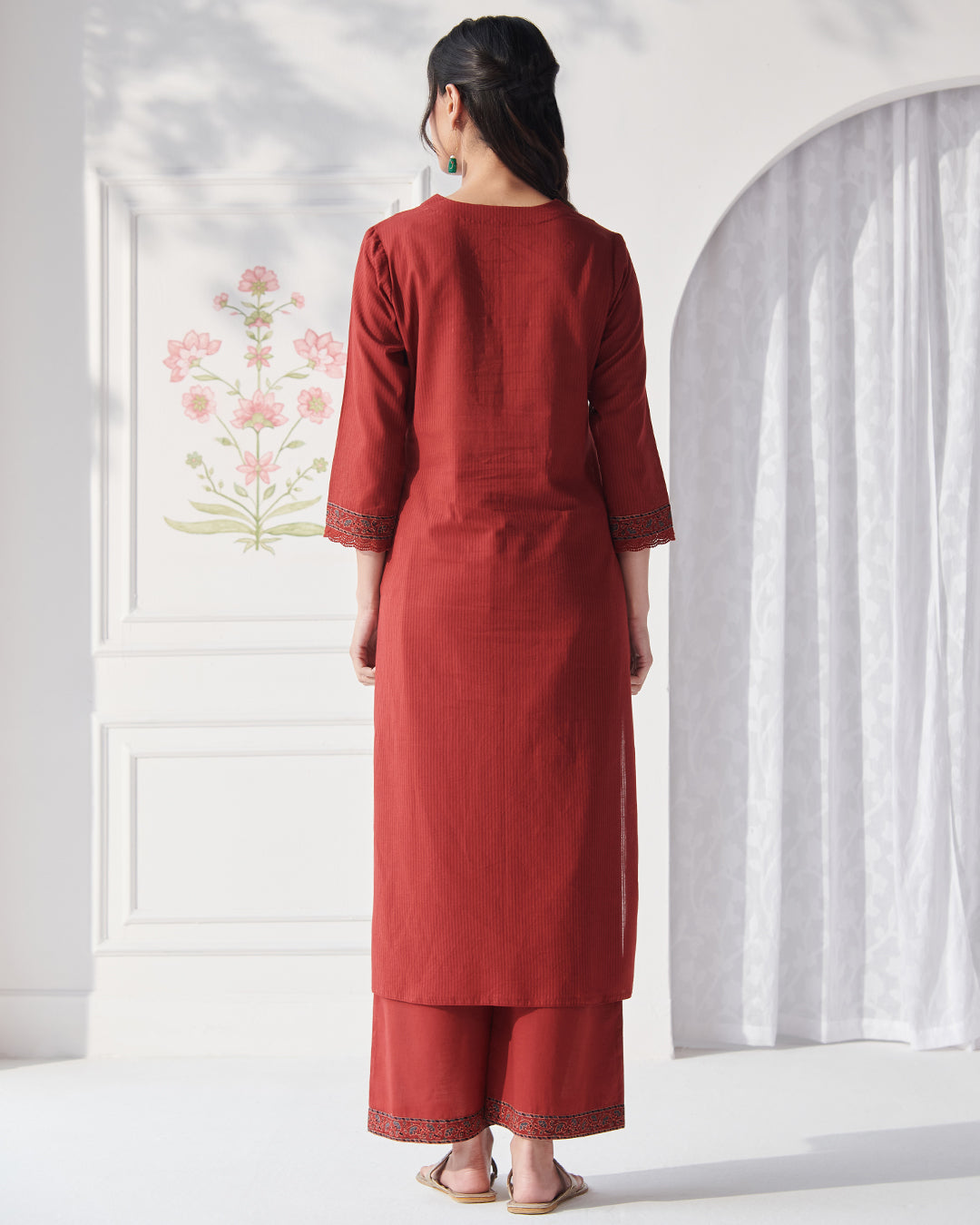
For everyday wear, a Sanganeri printed kurta paired with straight cotton trousers creates a look that feels effortless and composed. Colours drawn from the print itself can help bring the outfit together without making it feel too coordinated. A simple dupatta, delicate earrings, and comfortable footwear are often all that is needed.
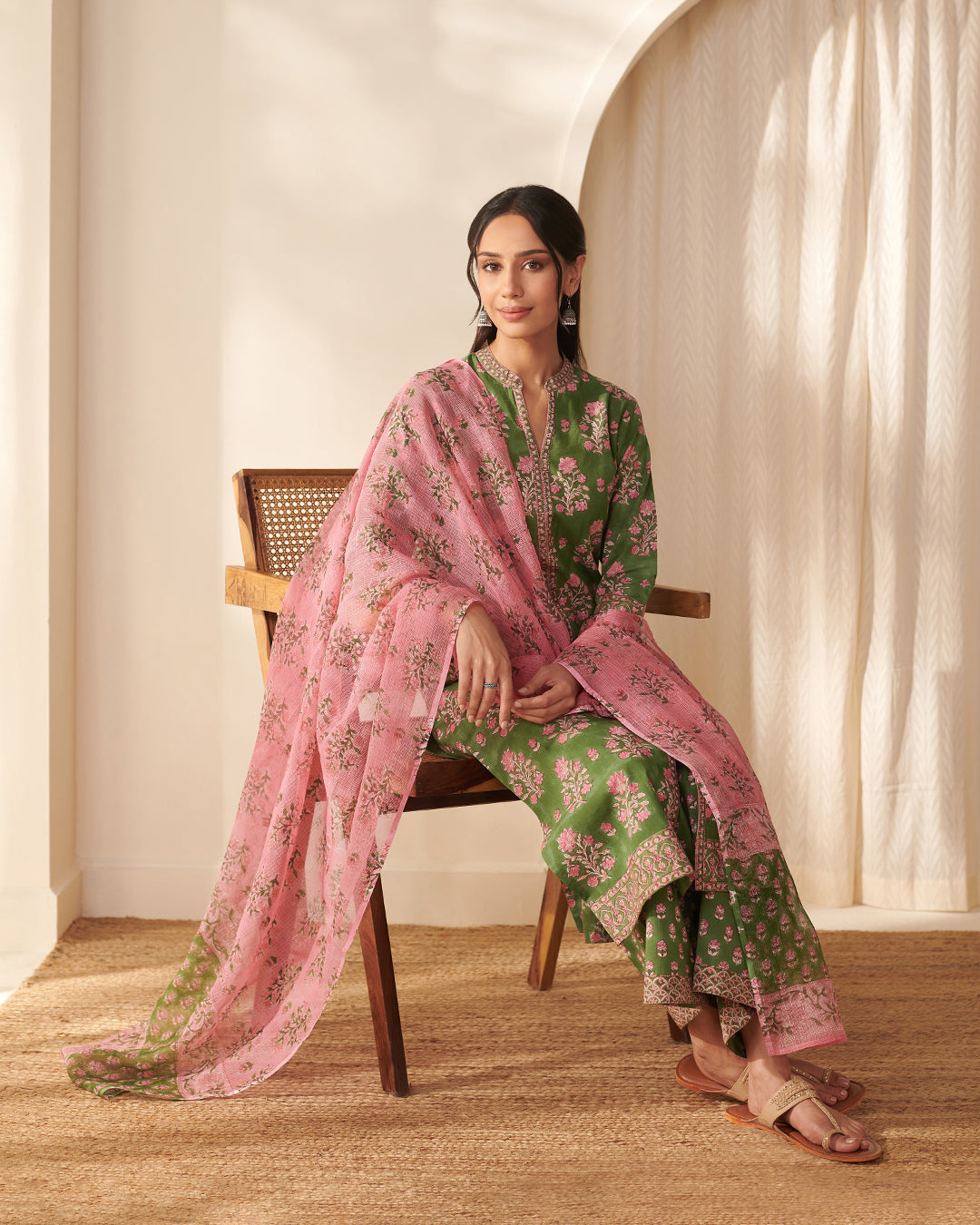
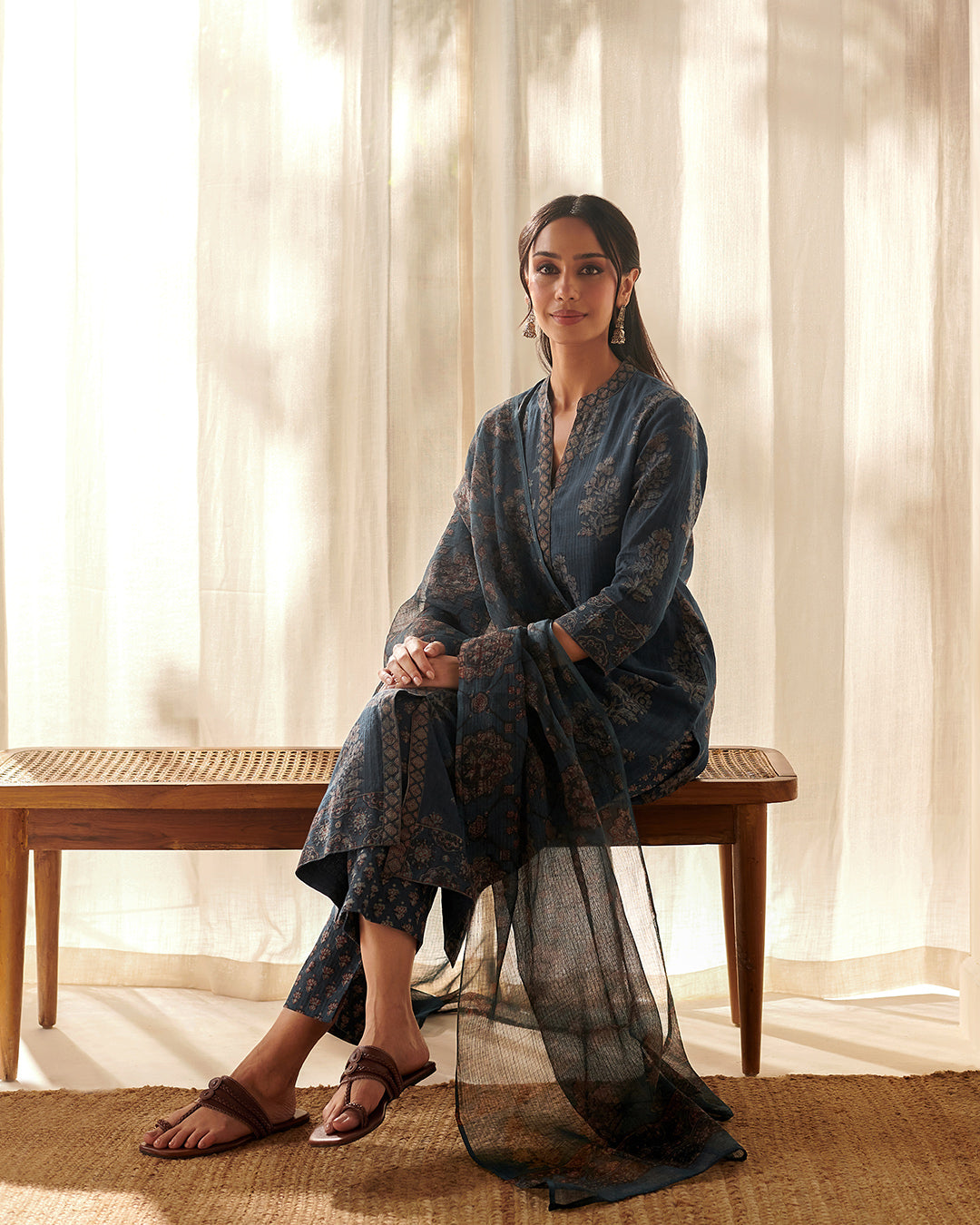
For occasions that call for a little more detail, Sanganeri printed suits can be styled with a dupatta in a complementary solid colour or one that picks up a smaller motif from the fabric. Silver jewellery, traditional juttis, or a pair of understated bangles can add character while allowing the print to remain at the centre of attention.
The beauty of Sanganeri prints also lies in their ability to adapt to different seasons. Lighter cotton fabrics feel especially comfortable during warmer months, allowing the skin to breathe while the fine patterns lend the garment its visual appeal. As the weather cools, the same prints can be worn with a light shawl or layered with a simple, unstructured outer layer.
When styling these prints, it helps to let the fabric speak for itself. Intricate floral patterns do not always need elaborate accessories or elaborate combinations. Often, a well-cut kurta, a thoughtfully chosen colour, and the ease of natural fabric are enough.
Sanganeri prints remind us that dressing well does not always require making a statement. Sometimes, it is about choosing something that feels familiar, sits comfortably through the day, and carries a little of India's textile heritage into the present.
Bringing Sanganeri Craftsmanship Into Your Wardrobe
Bringing Sanganeri craftsmanship into a wardrobe is, in many ways, an appreciation of the hands and traditions behind the fabric. Each printed surface reflects a relationship between the artisan, the wooden block, the dye, and the cloth. The finished design may appear delicate and effortless, but its clarity depends on patience, precision, and years of experience.
Traditional Sanganeri printing is known for its fine floral motifs, intricate detailing, and distinctive use of colour. The craft has deep roots in Sanganer, near Jaipur in Rajasthan, where generations of printers have developed a visual language shaped by local traditions and natural surroundings. These designs have travelled through changing tastes and generations, yet they continue to feel relevant because they leave room for both beauty and everyday comfort.
A Sanganeri printed kurta is one way to bring this heritage into daily life. Worn for work, a family lunch, or an unhurried afternoon at home, it allows traditional craftsmanship to become part of ordinary moments rather than something reserved for special occasions. A printed dupatta offers another way to wear the craft, adding colour and detail to a simple outfit without asking for much else.
Choosing these textiles also invites us to look beyond the finished garment. We begin to notice the spacing of a motif, the clarity of a fine outline, or the way colours sit together across the fabric. We become more aware of the skill required to maintain consistency by hand, especially when a design is repeated across several metres of cloth.
There is value, too, in allowing such garments to become familiar over time. A well-loved cotton kurta may soften with every wash. A printed dupatta might accompany us through family gatherings, journeys, and everyday errands. Its meaning grows quietly, shaped by the moments in which it is worn.
In a world where clothing often moves quickly from one trend to another, traditional Indian block prints offer a different relationship with what we wear. They encourage us to choose with care, to appreciate the work behind a textile, and to keep regional crafts present in our everyday lives.
When we bring Sanganeri prints into our wardrobes, we are not simply choosing a pattern. We are making space for a living craft, sustained by generations of knowledge and the skilled hands that continue to carry it forward.
Conclusion
Sanganeri prints stand apart through their fine floral patterns, delicate detailing, and the balance they bring to colour and design. Rooted in the textile traditions of Rajasthan, they reflect a craft that values precision without losing its warmth. Each motif carries the memory of a practice shaped over generations, where the relationship between the block, the dye, and the fabric remains central to the finished piece.
What makes these prints especially meaningful today is their ease of wear. A Sanganeri printed kurta or dupatta can be part of an ordinary day, worn with the same comfort and familiarity as a favourite cotton garment. Its beauty does not depend on an occasion. It comes from the thoughtfulness of the design and the craftsmanship that gives it character.
As we continue to make room for traditional Indian textiles in our lives, Sanganeri prints remind us that heritage need not remain in the past. It can live in the clothes we reach for, the fabrics we grow attached to, and the details we learn to notice with time.
Because some prints are more than patterns. They are stories waiting to be worn.

