




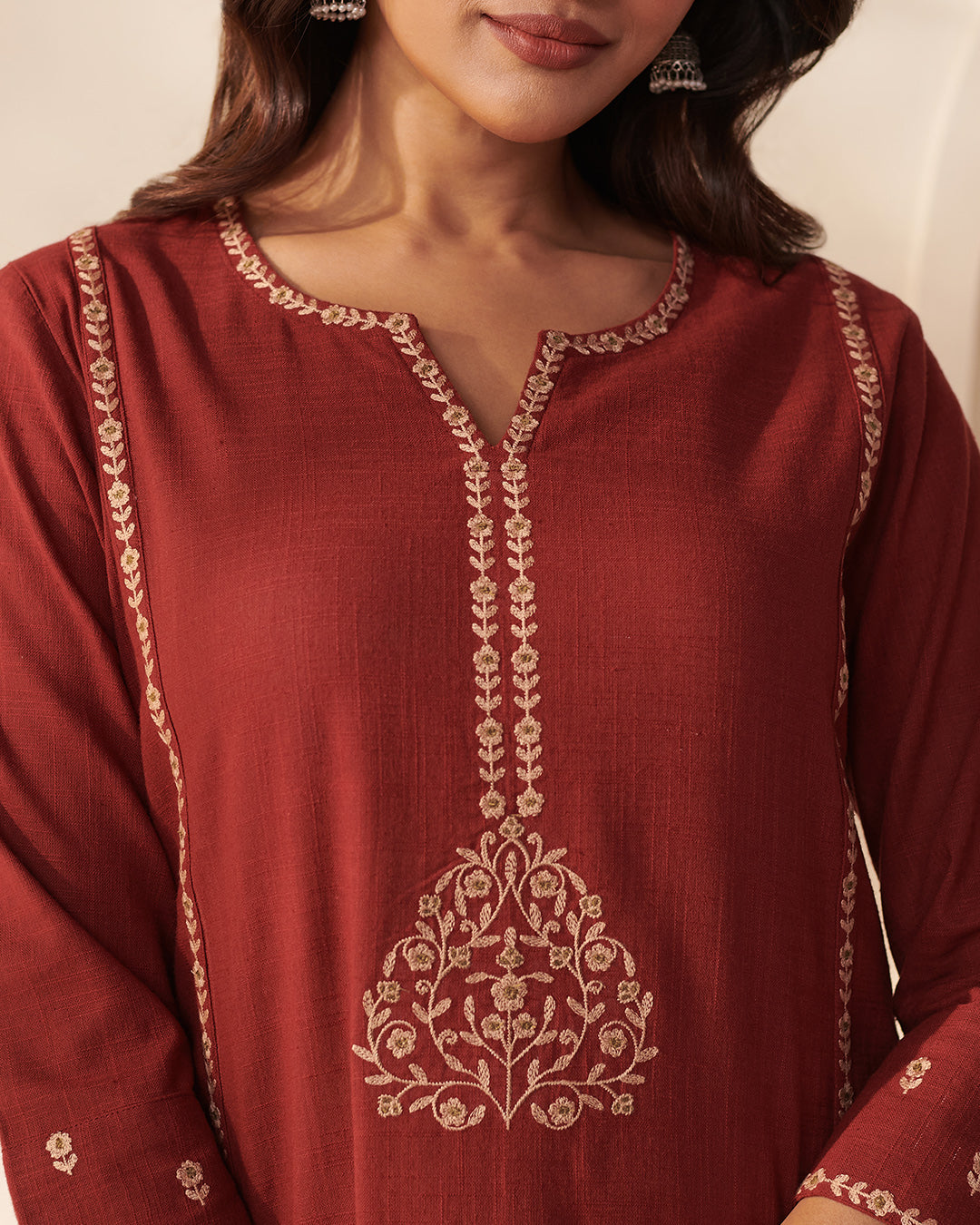
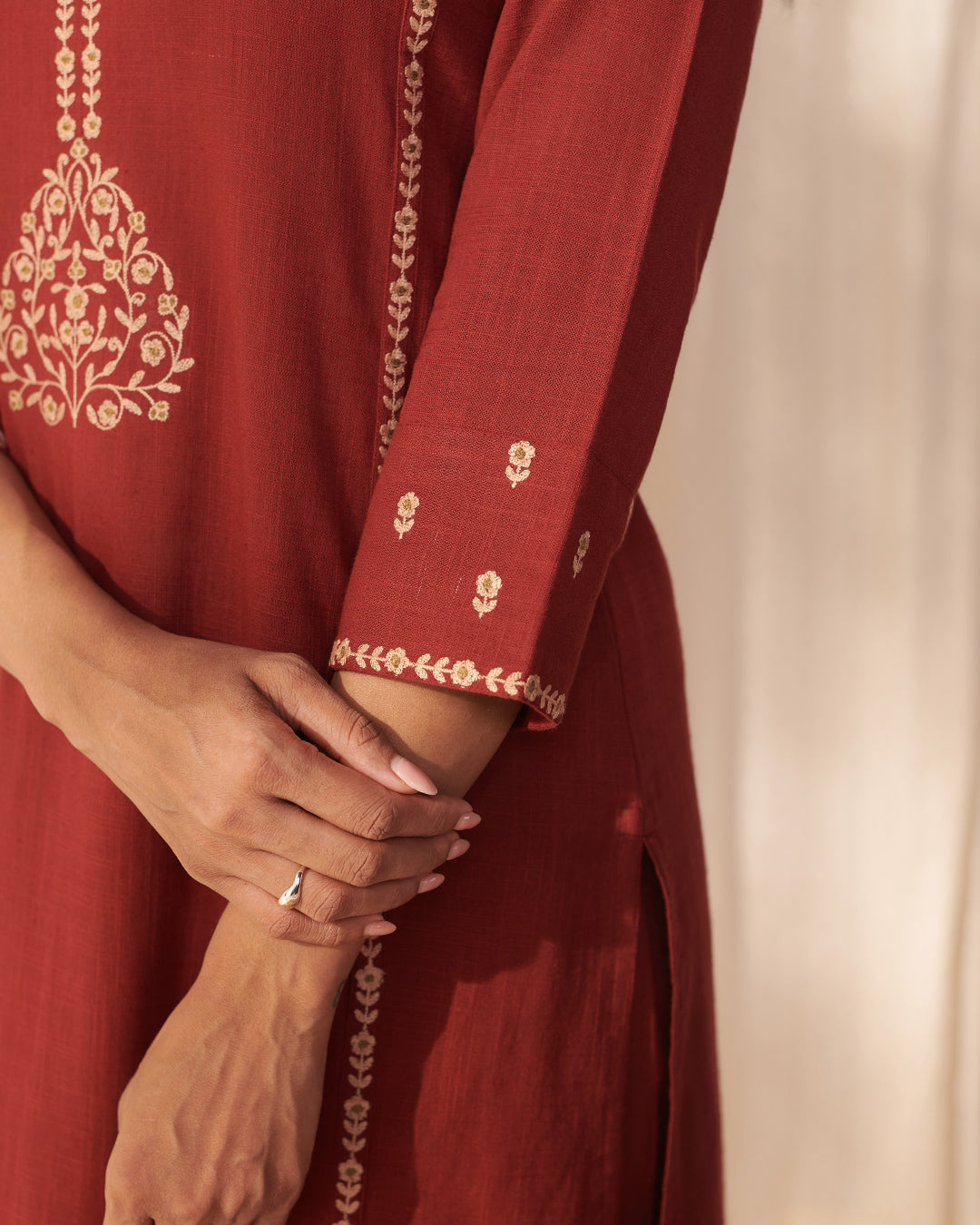
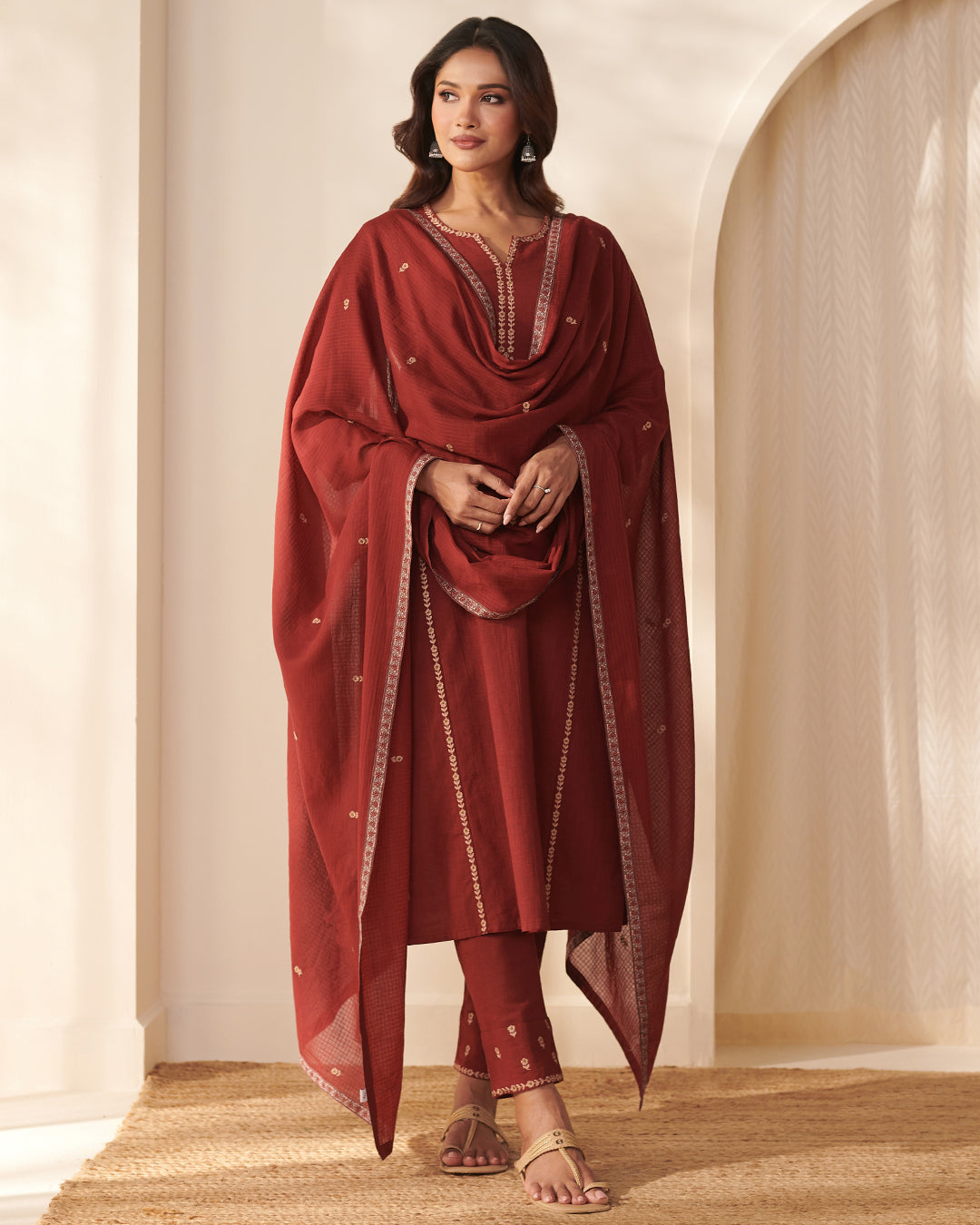
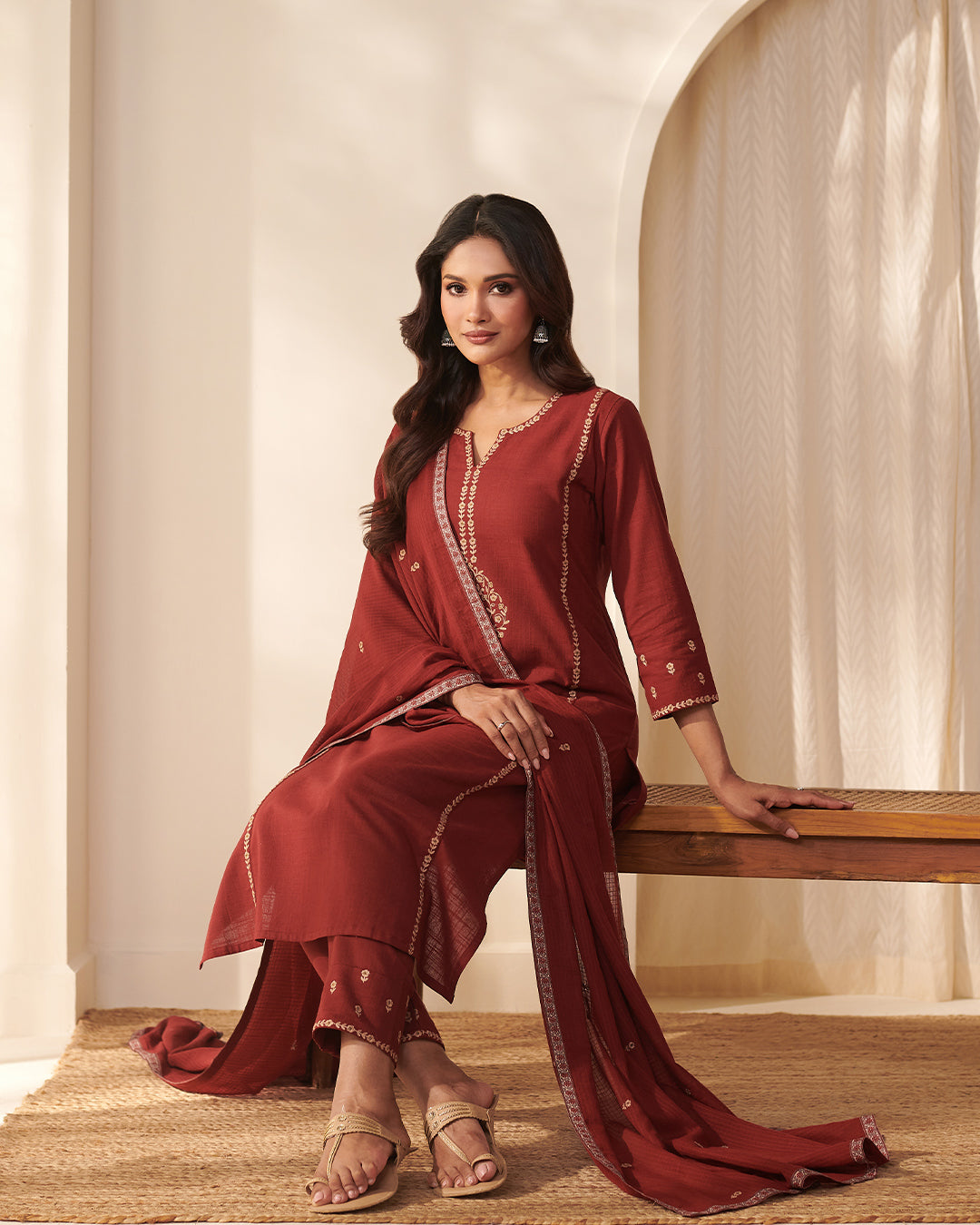
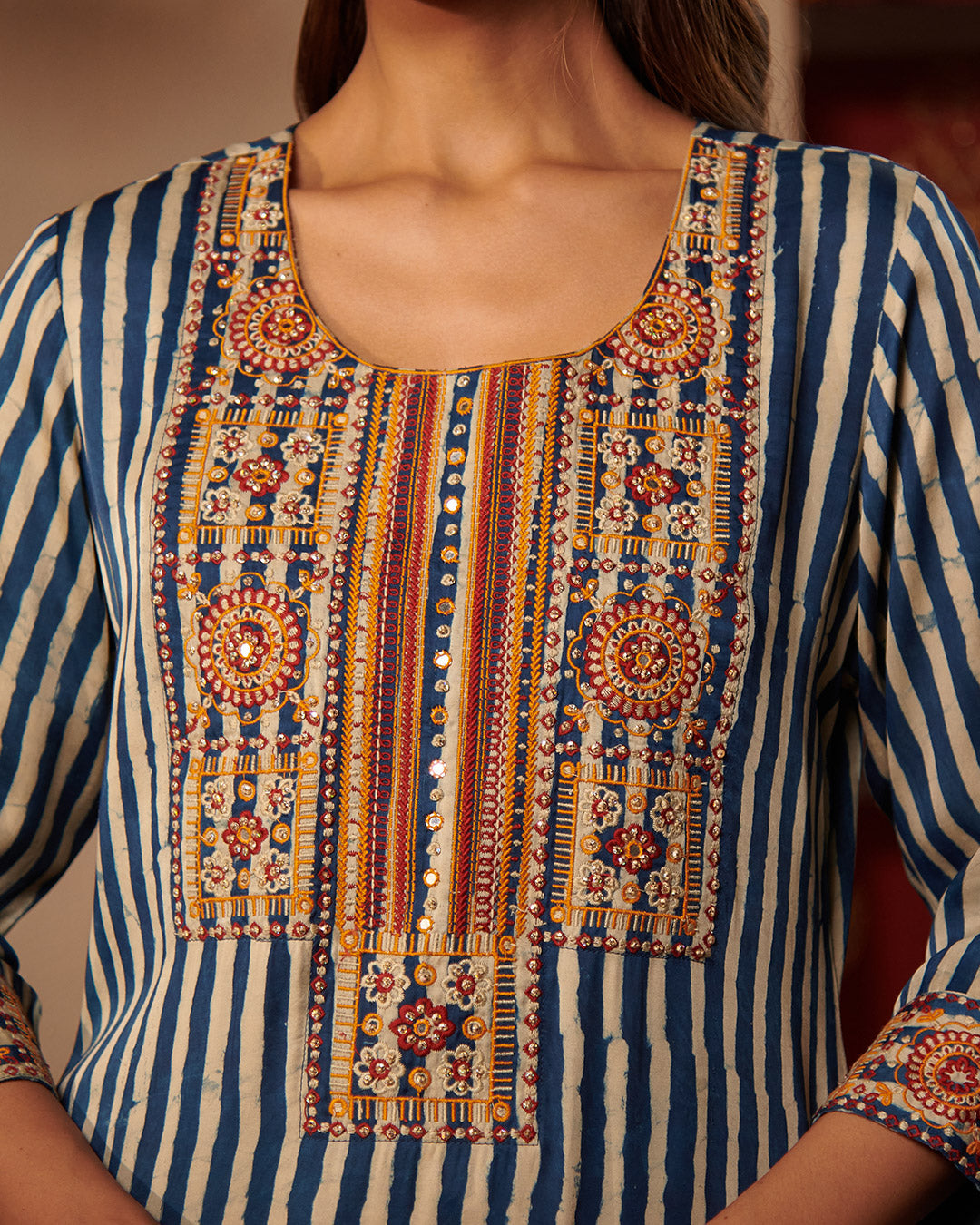
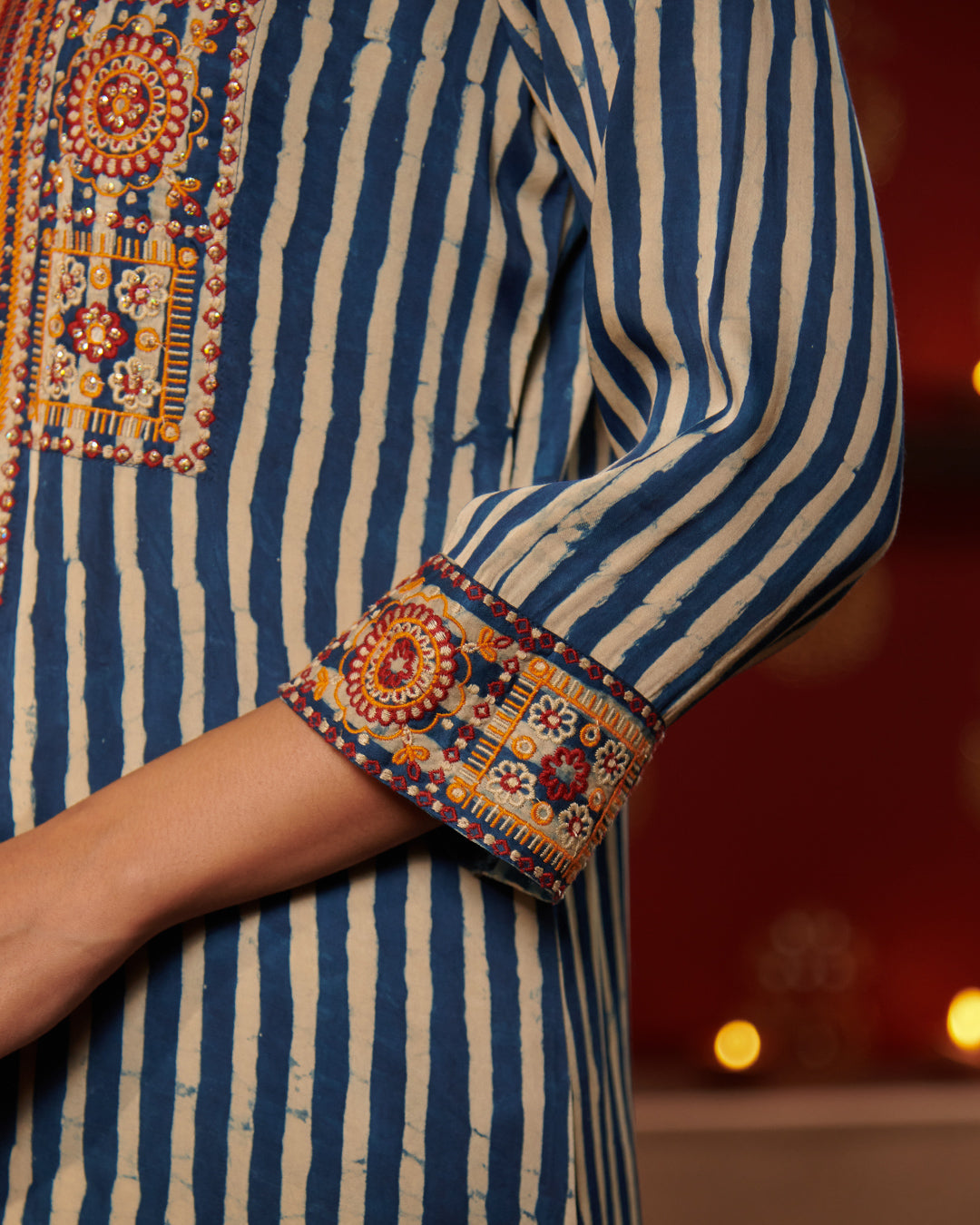
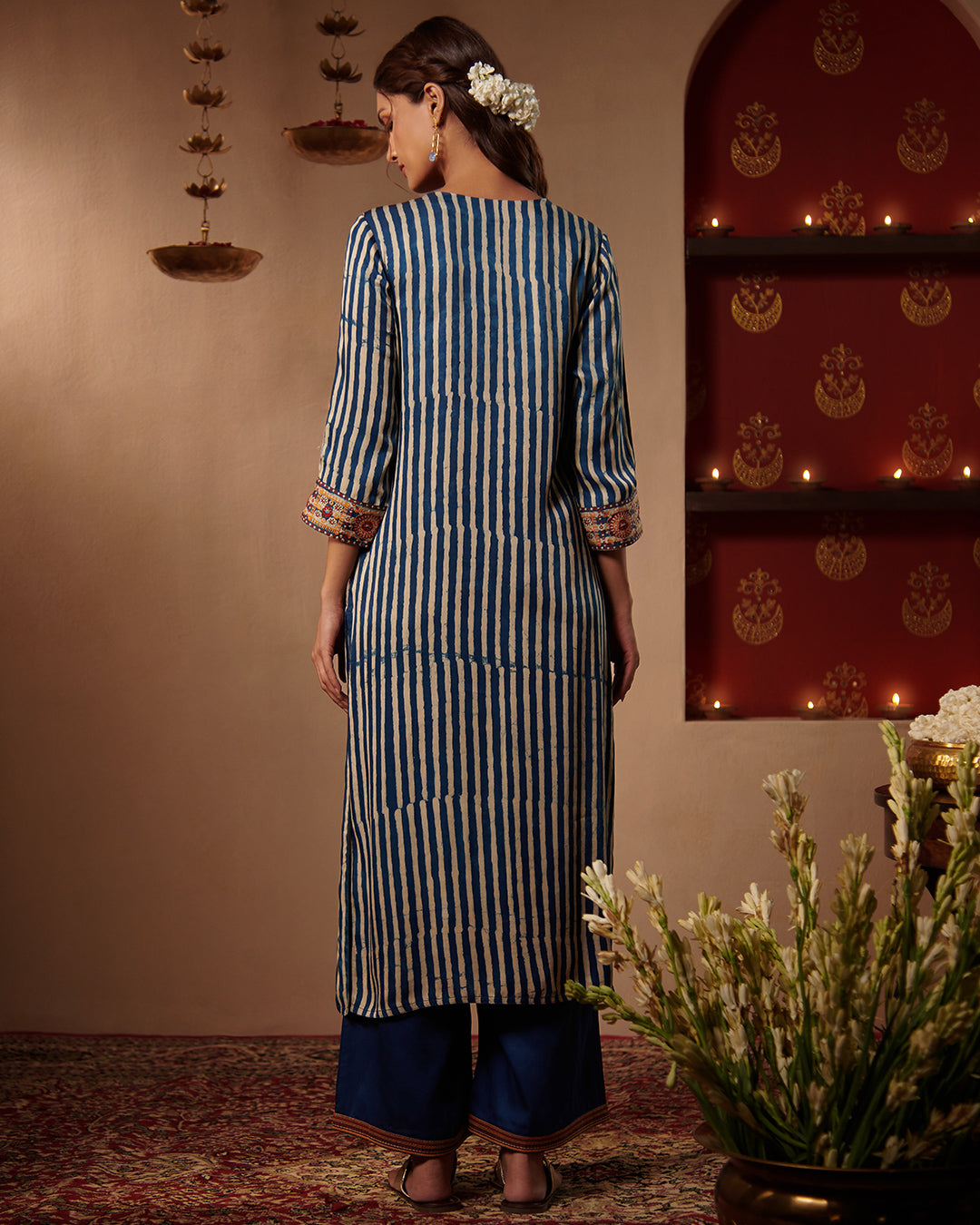
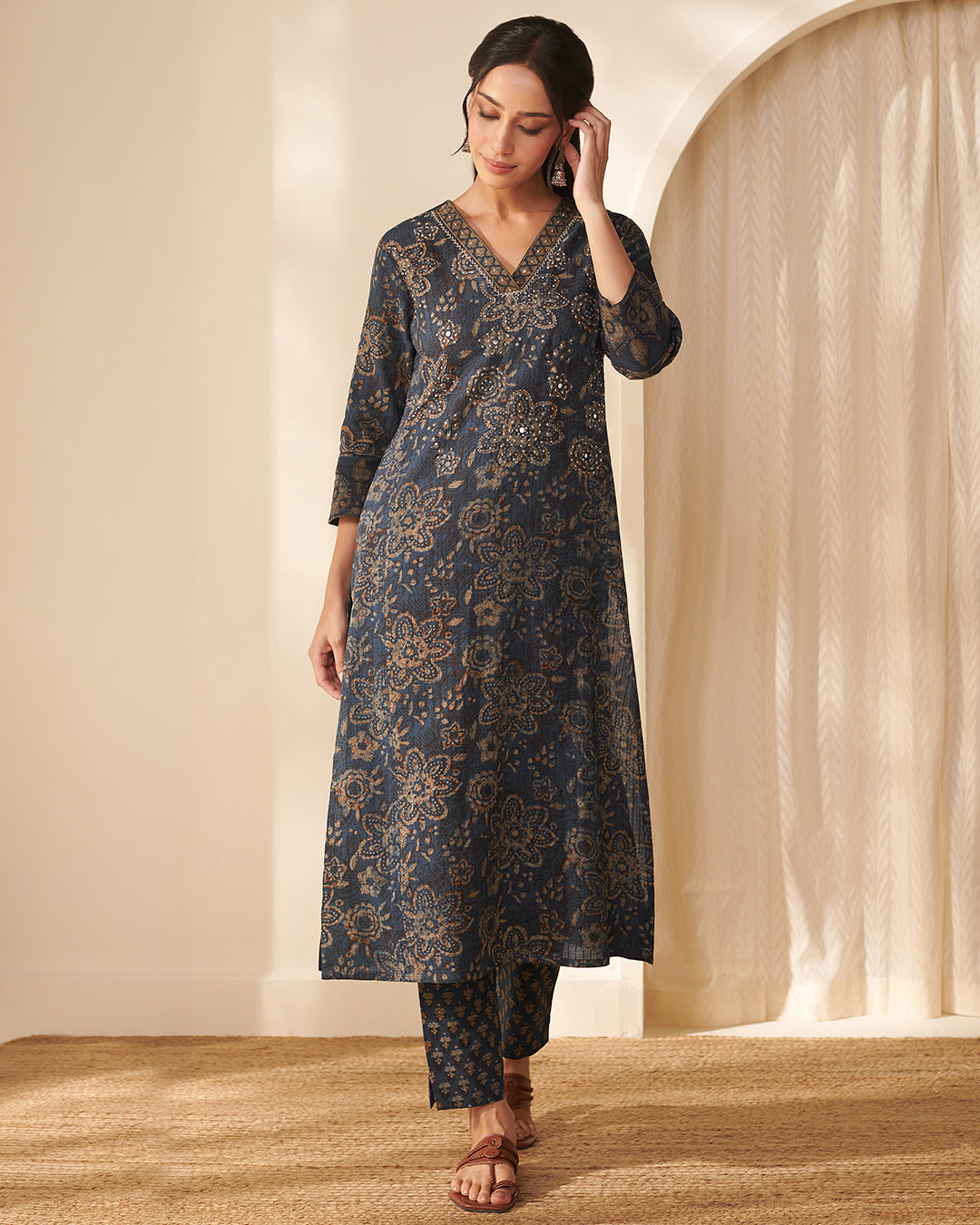
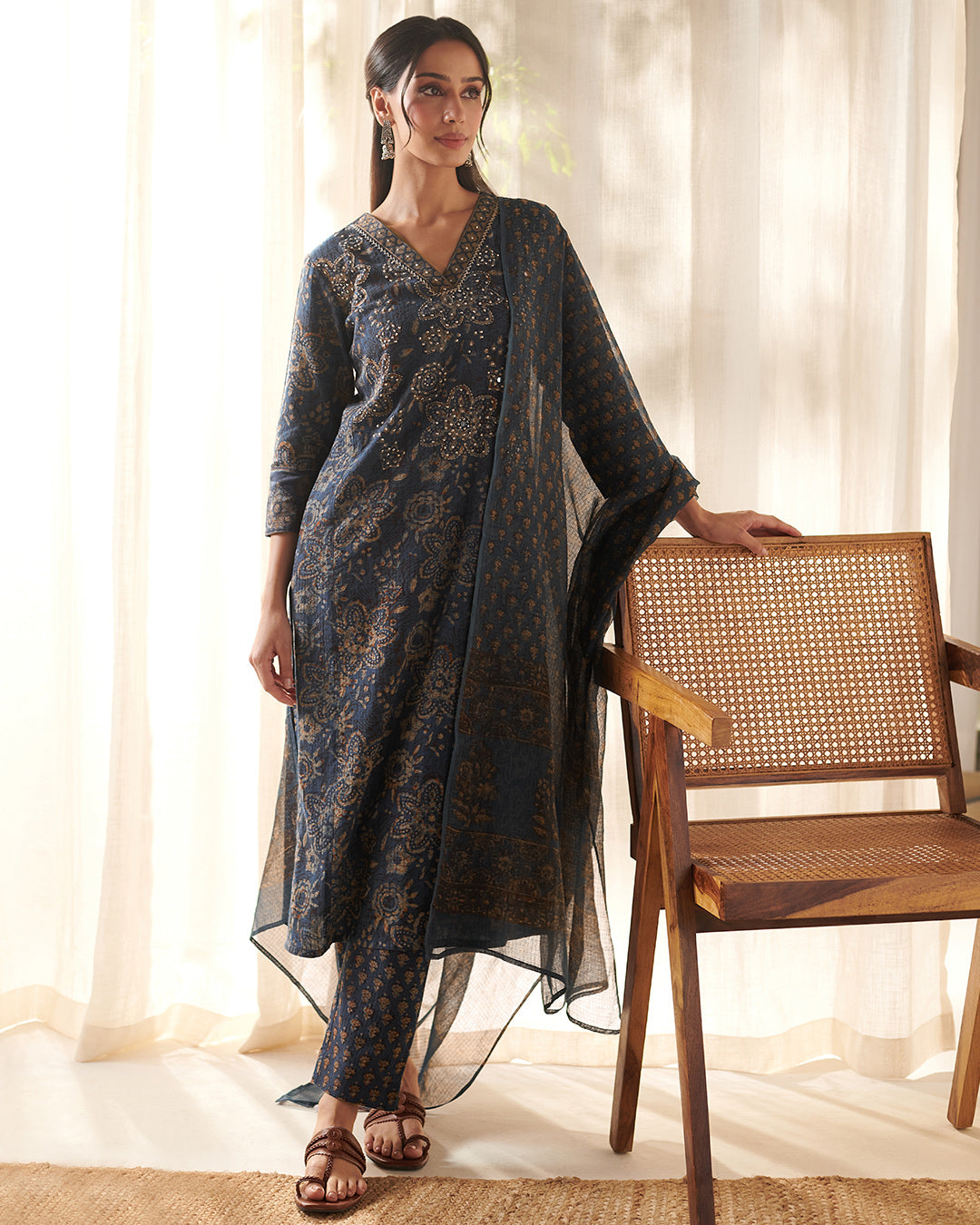
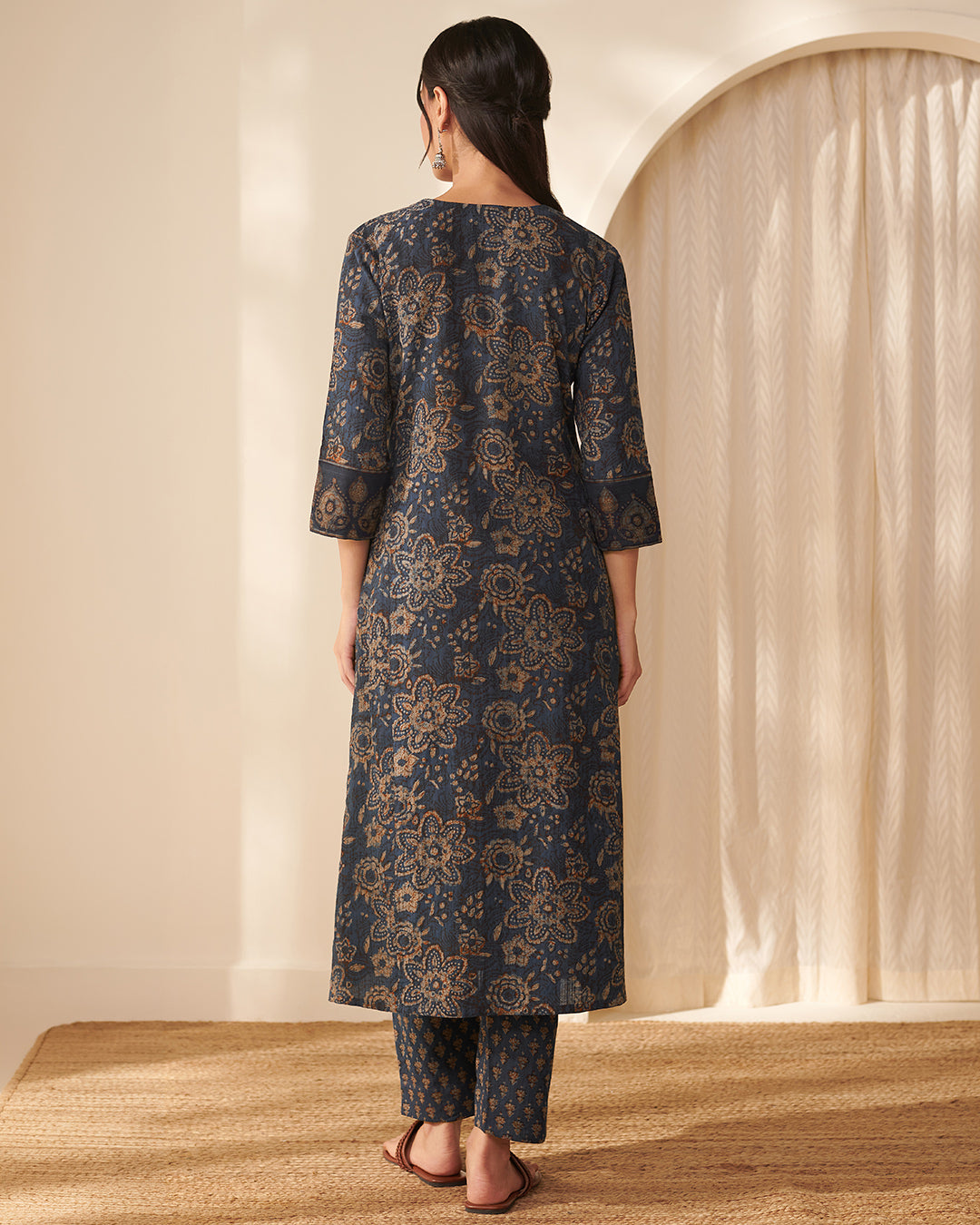
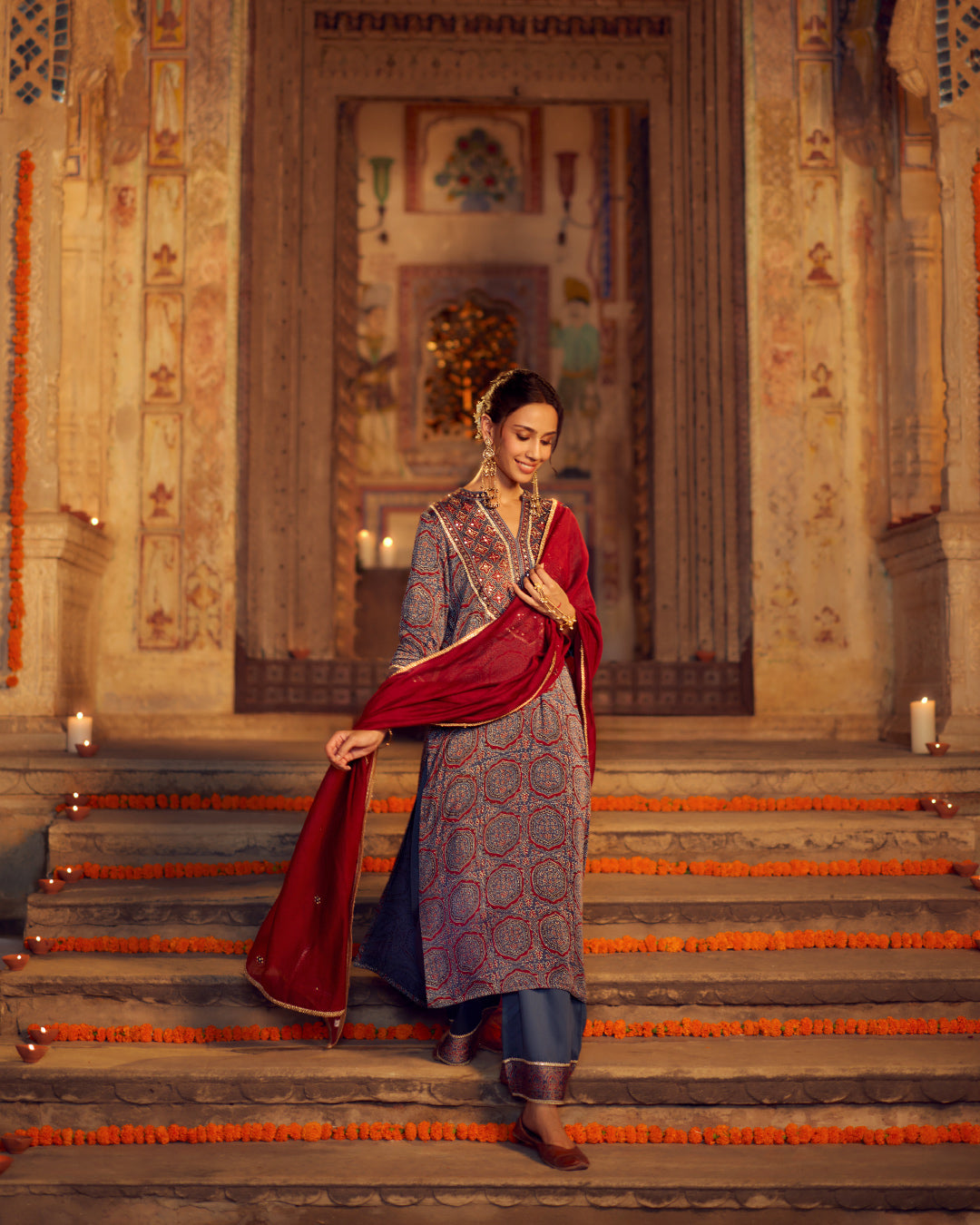
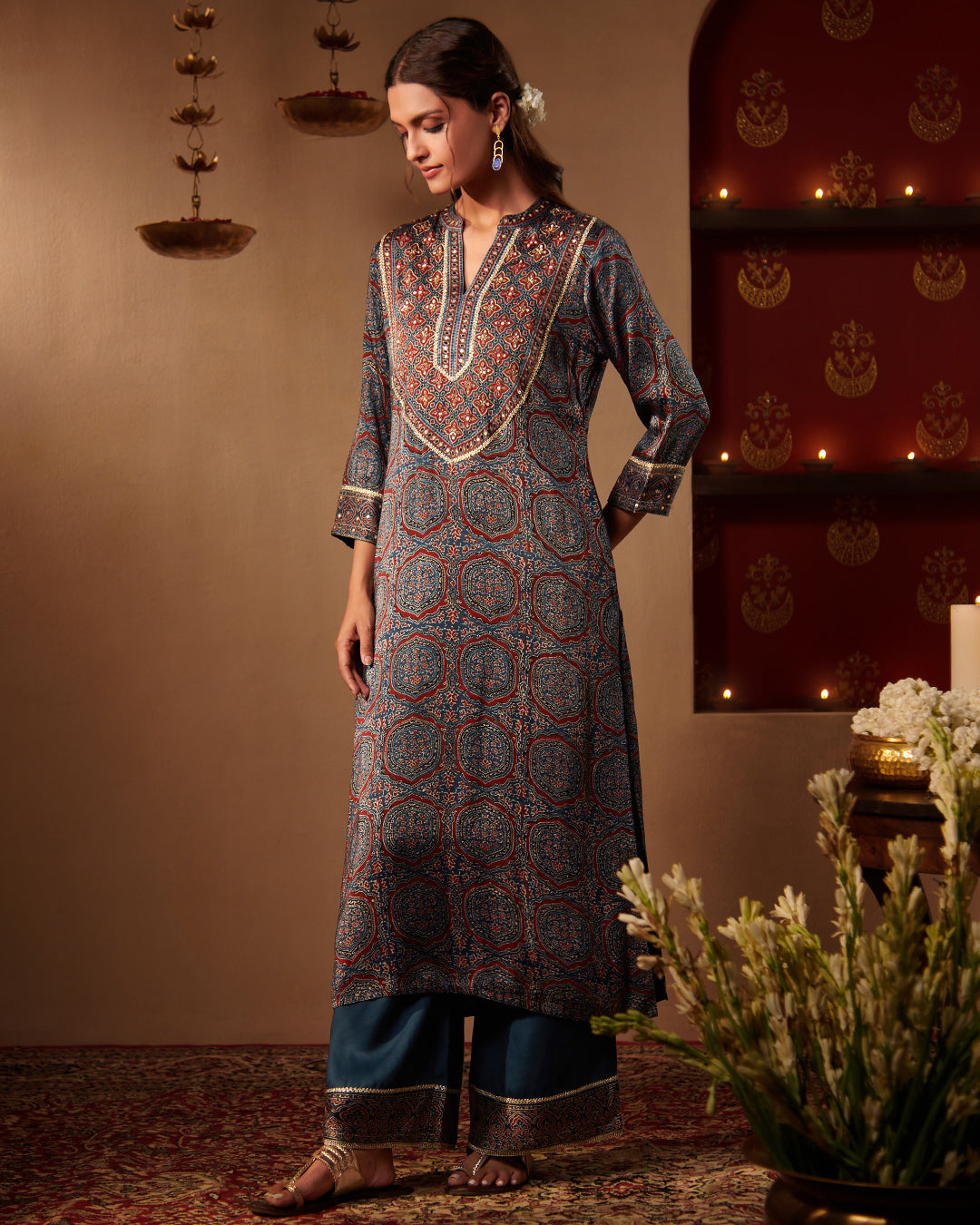
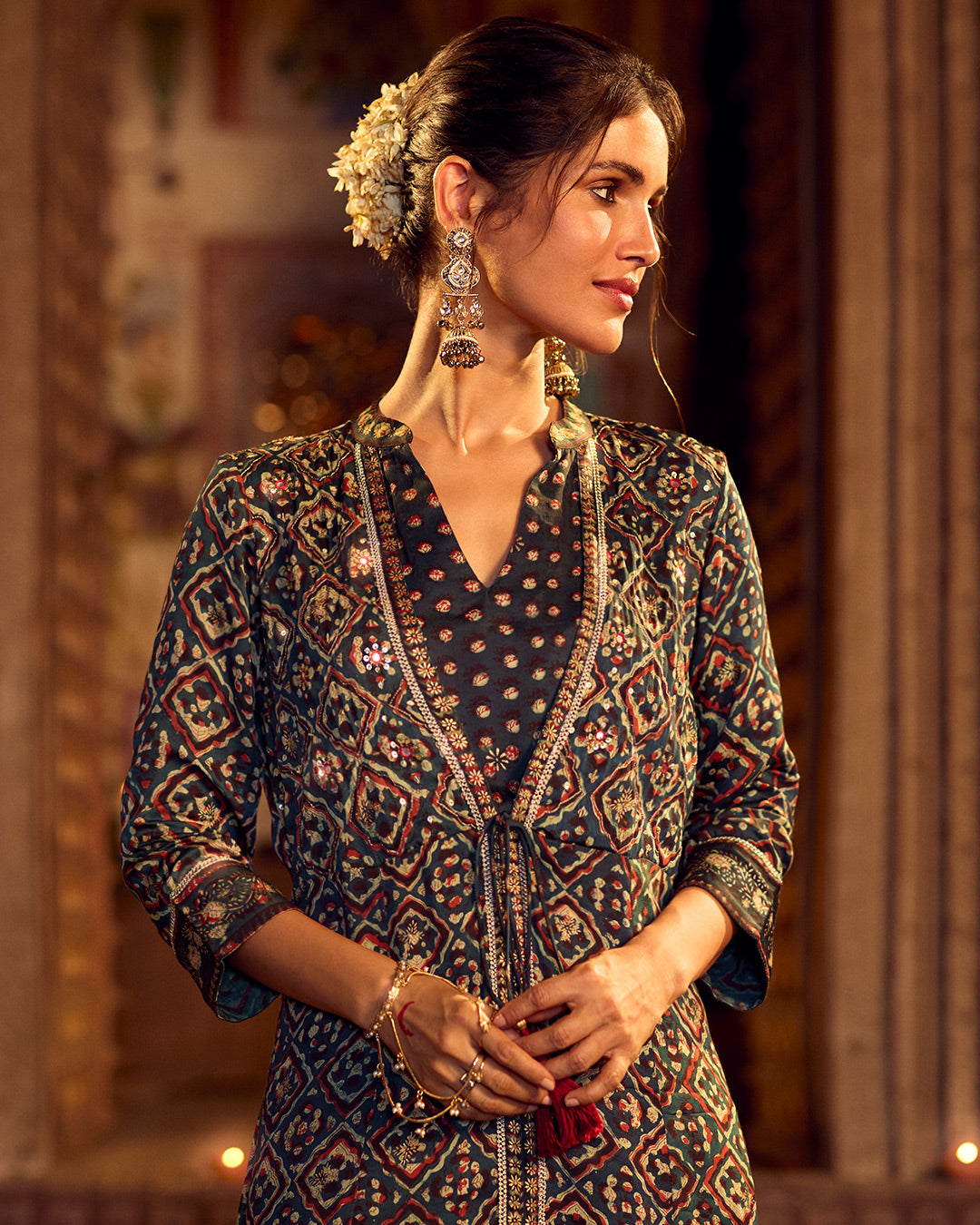
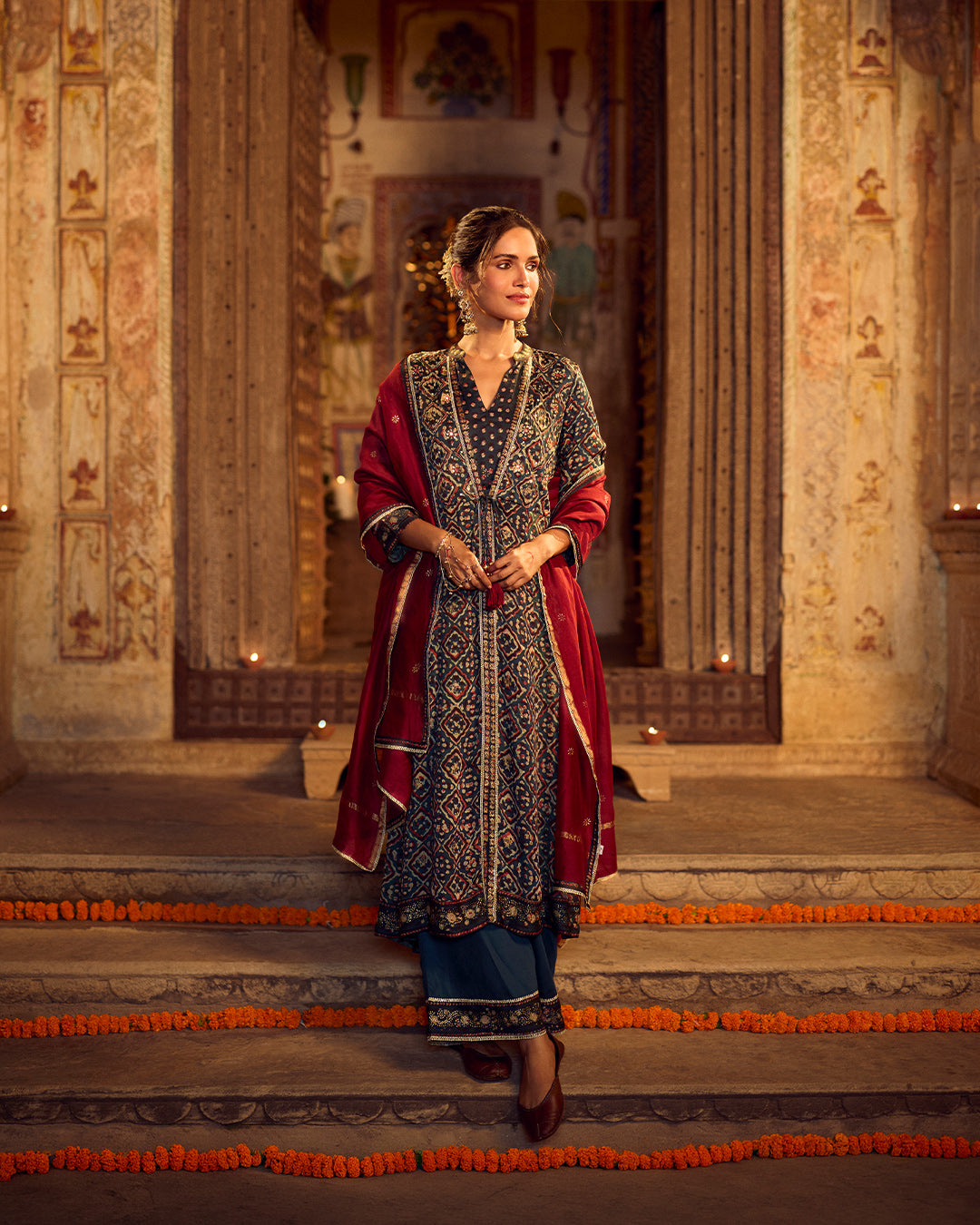
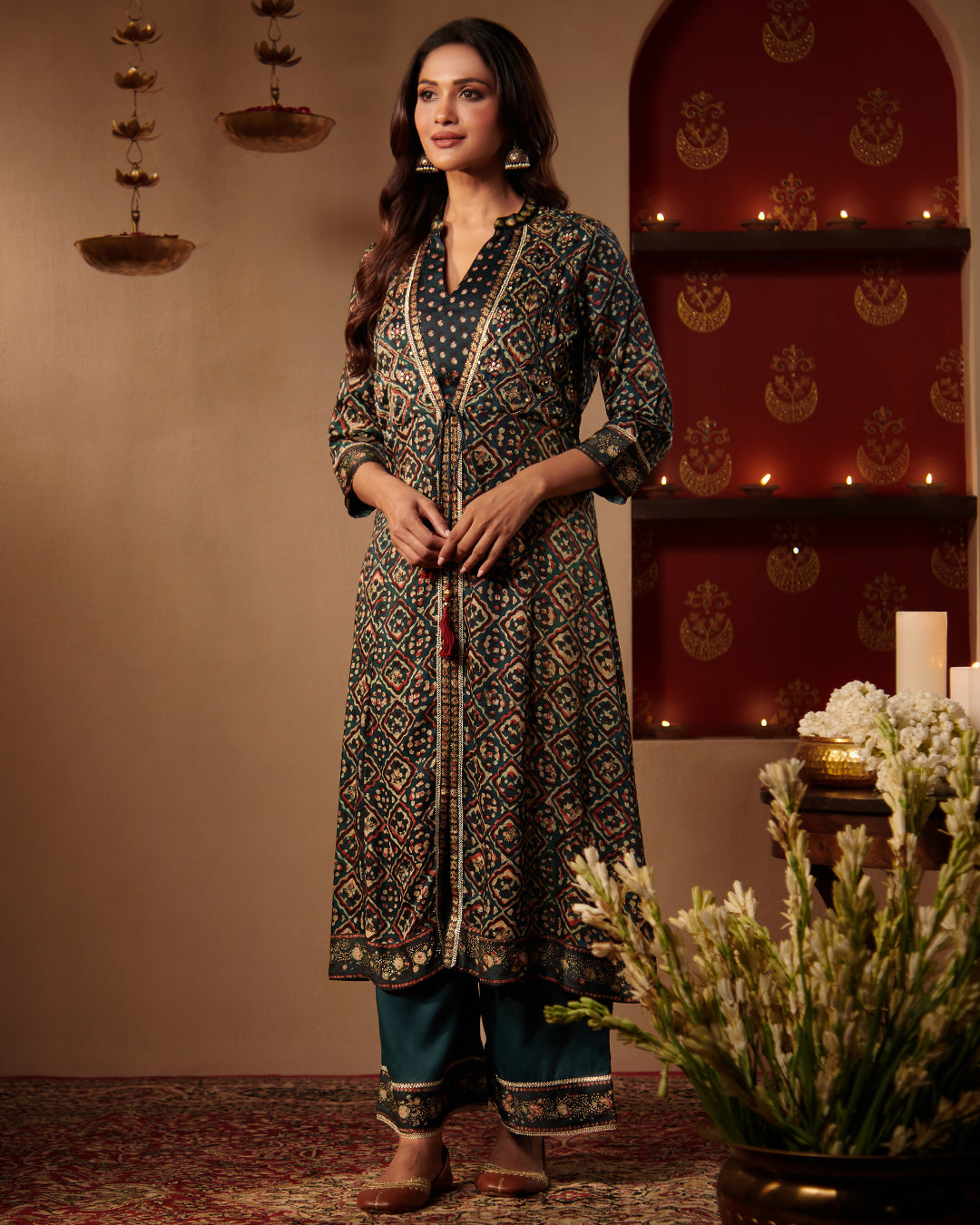
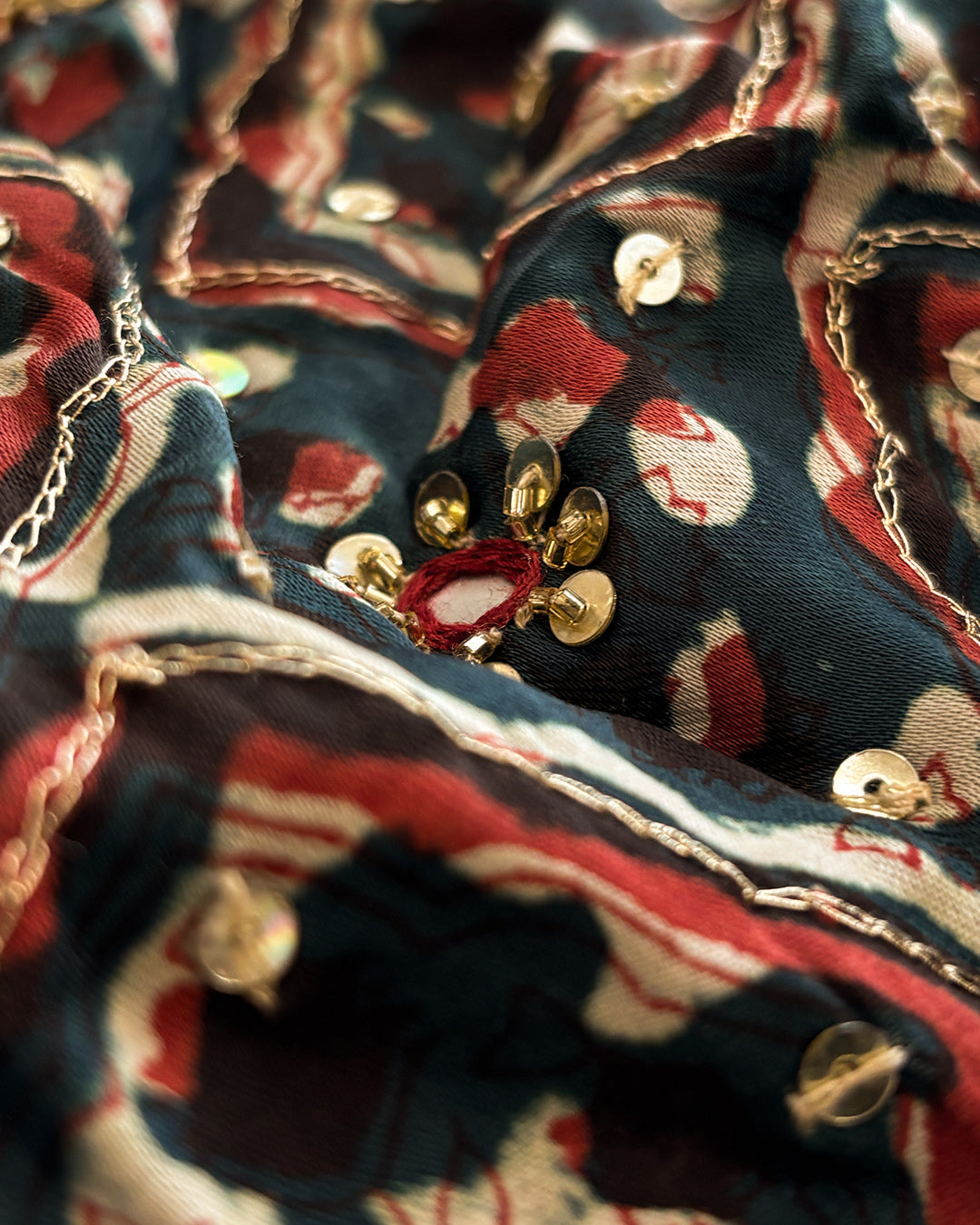
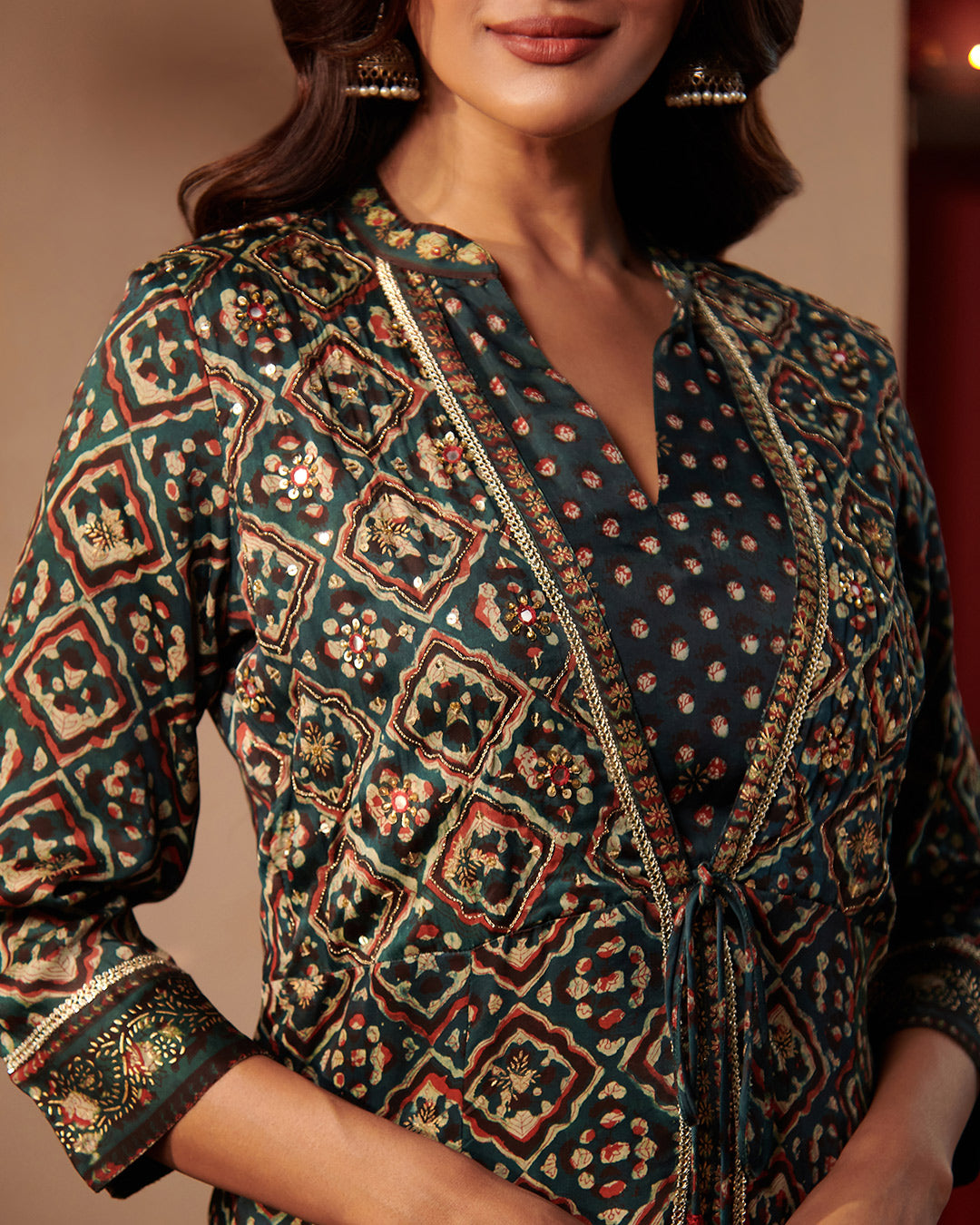
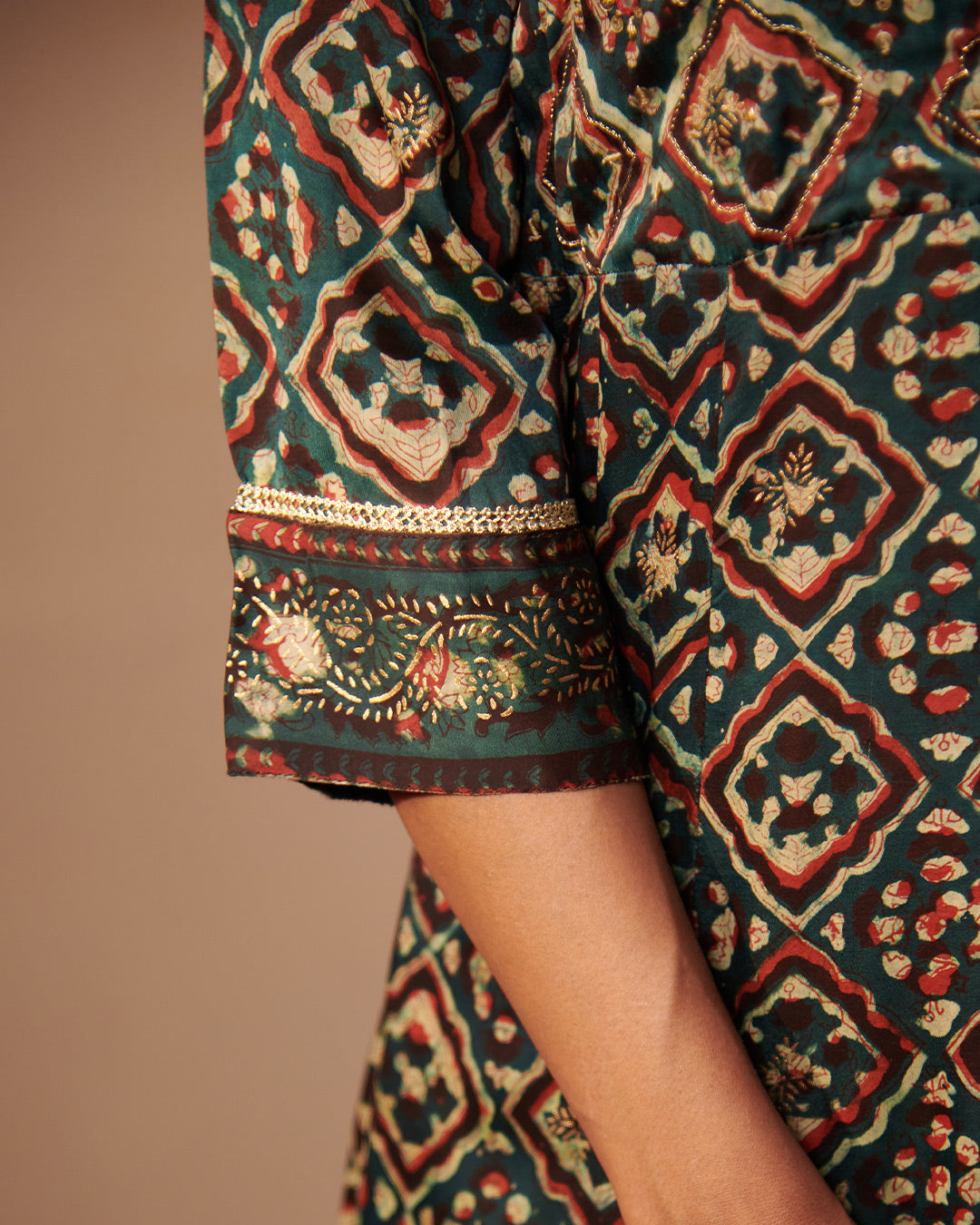
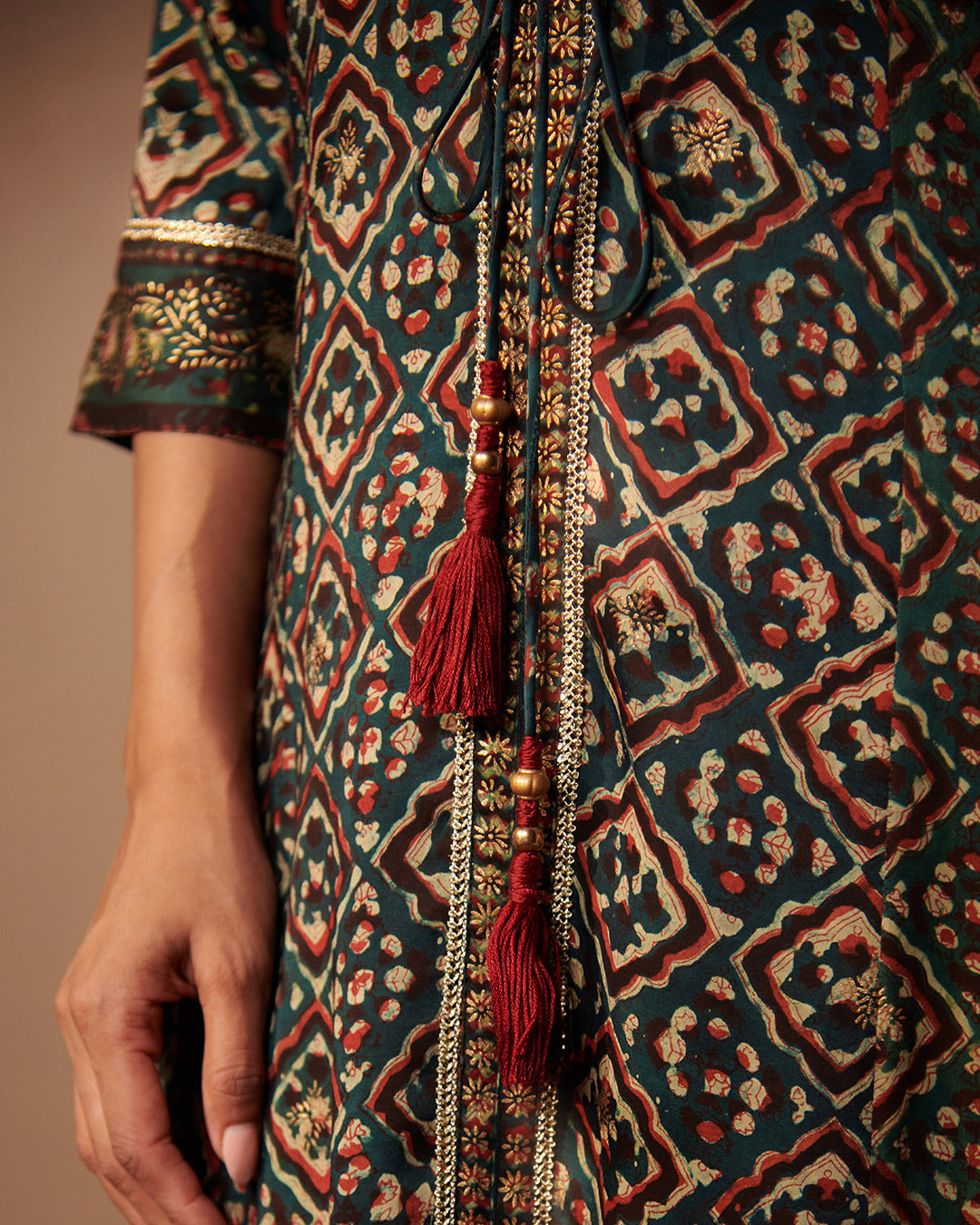
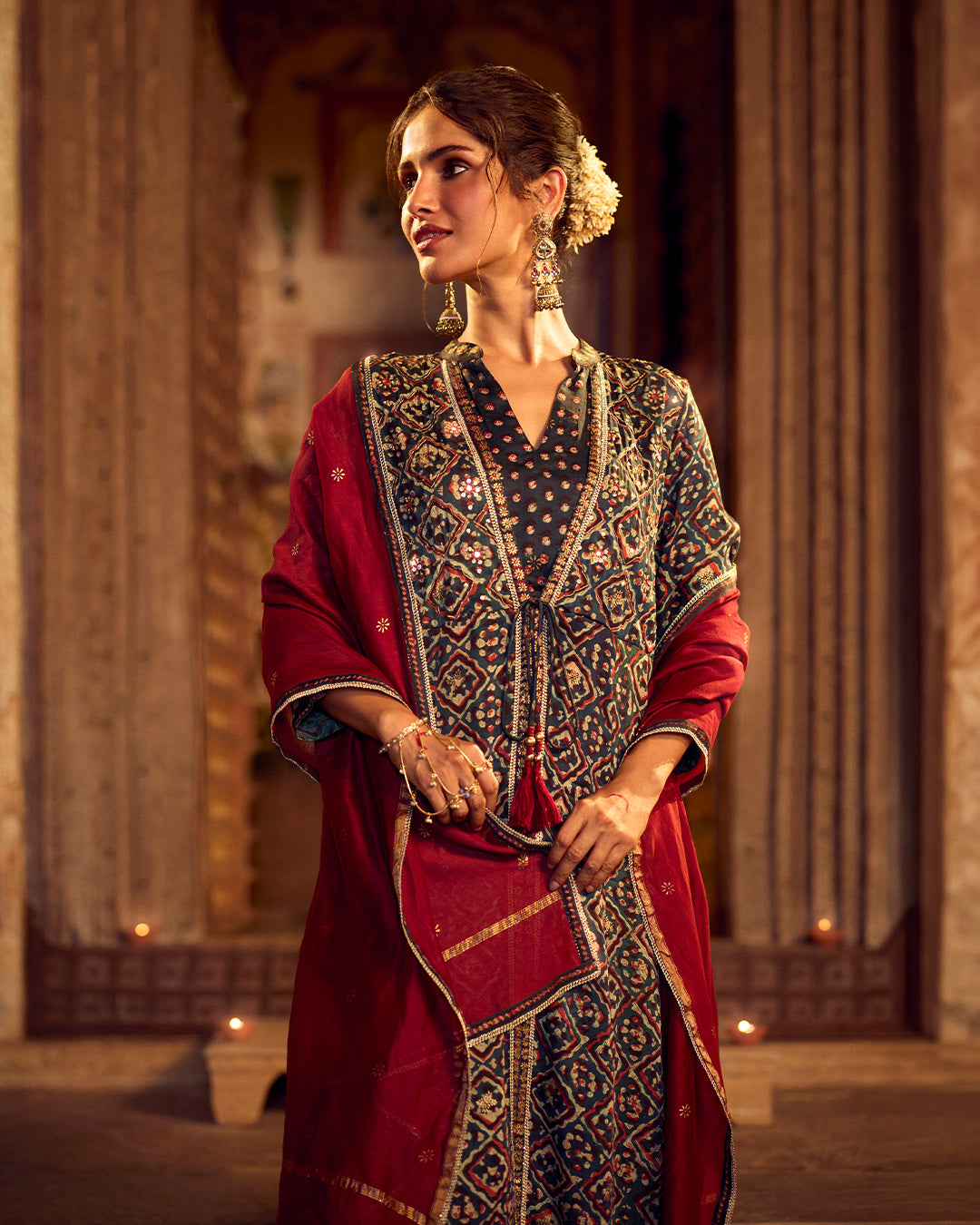
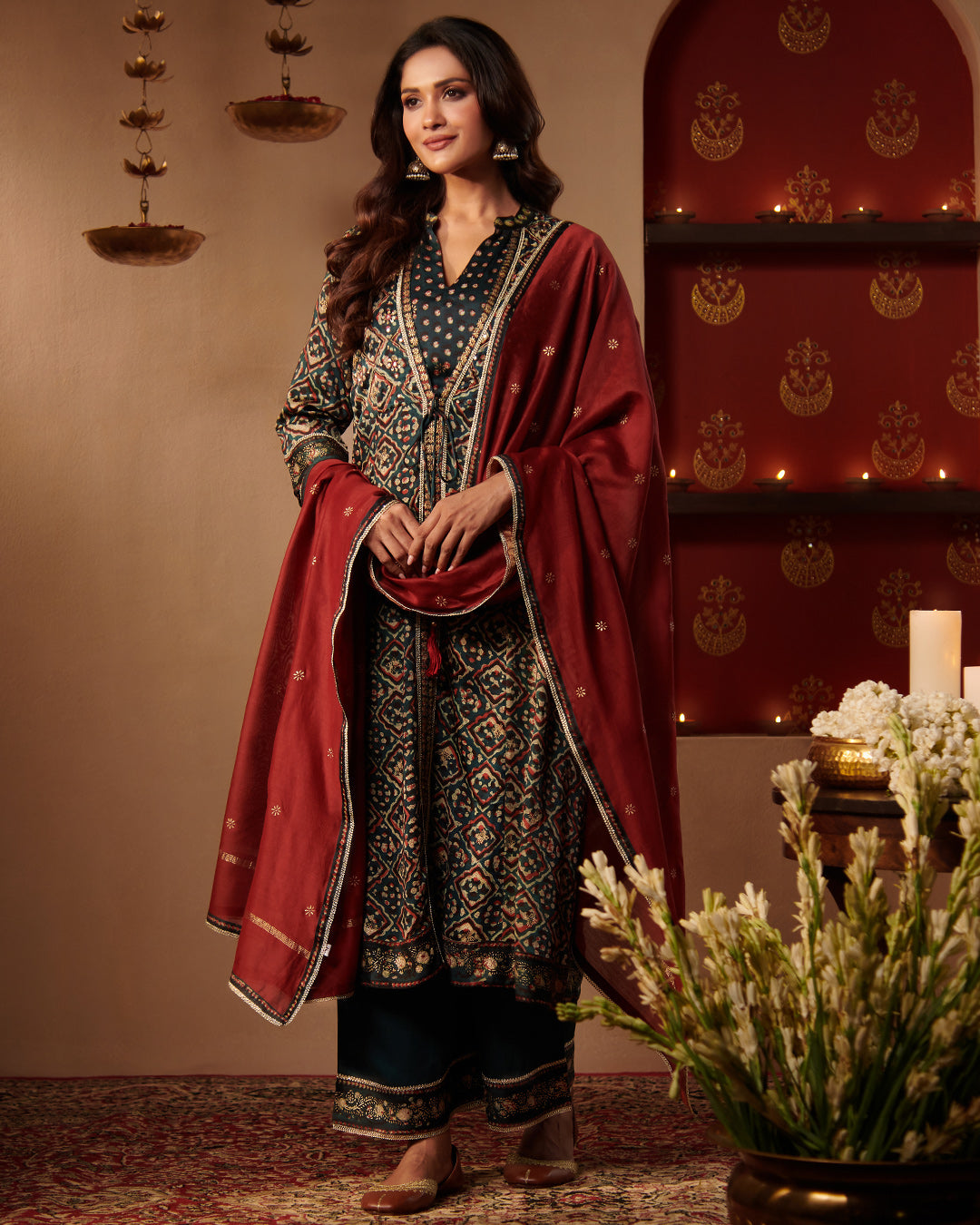
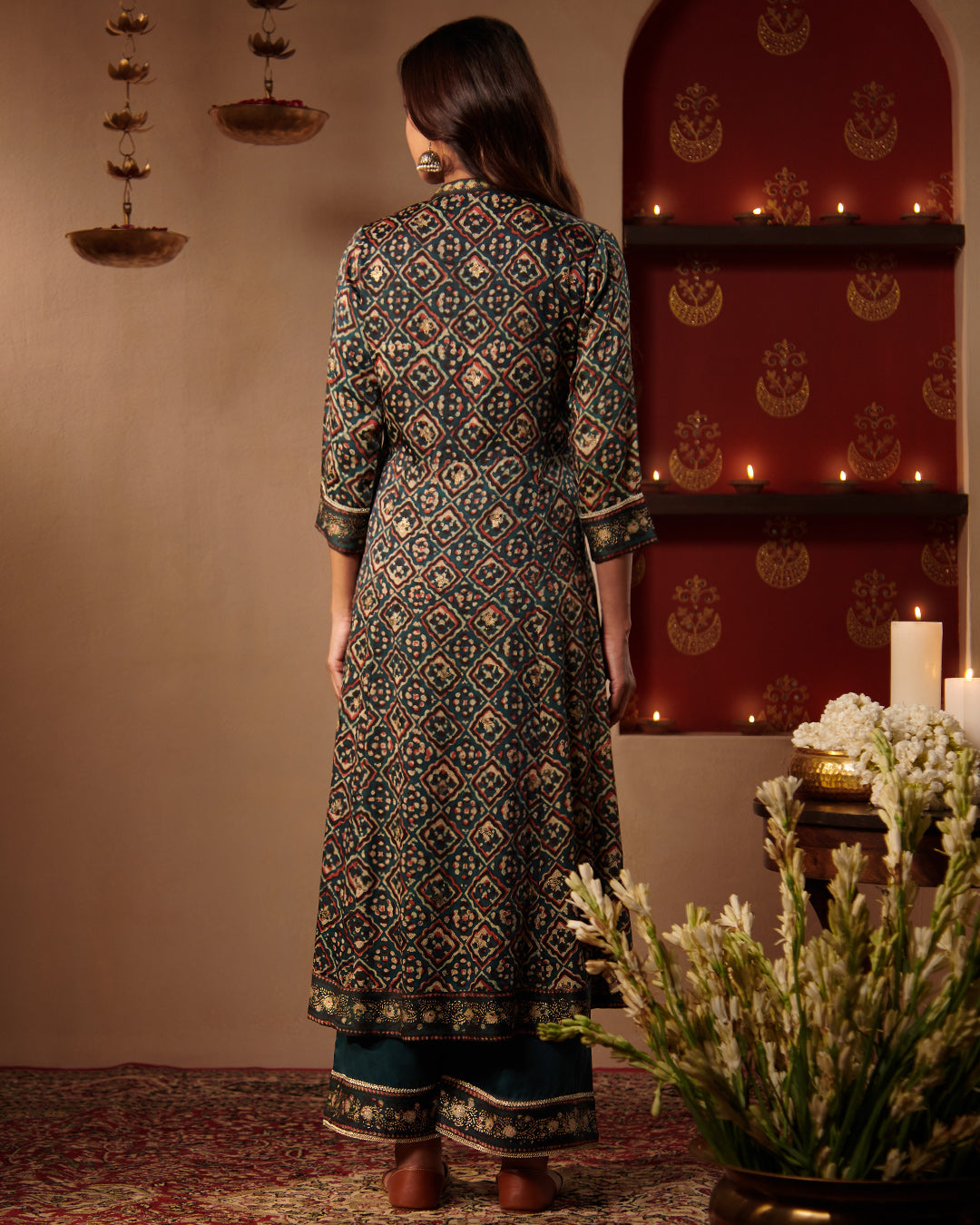
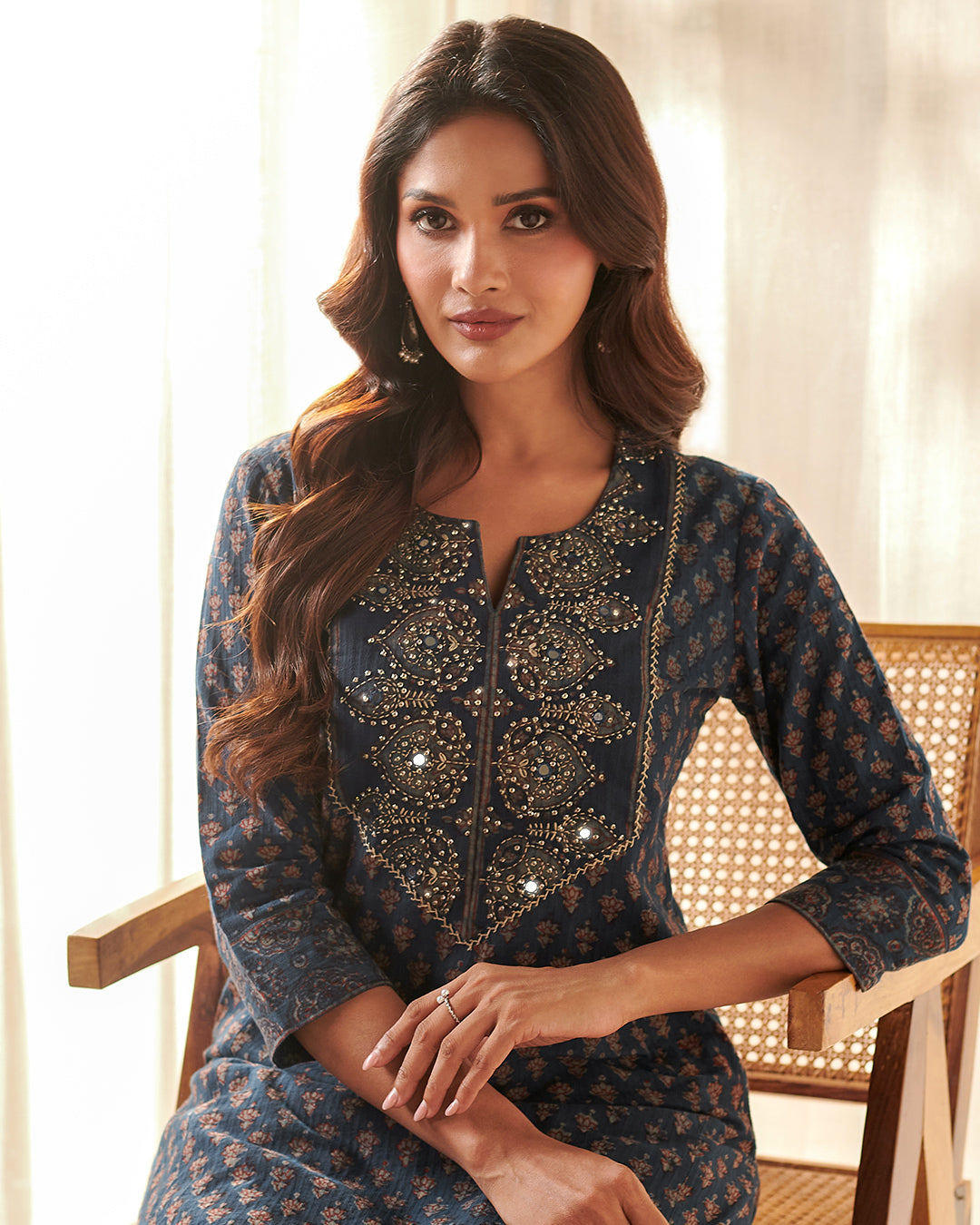
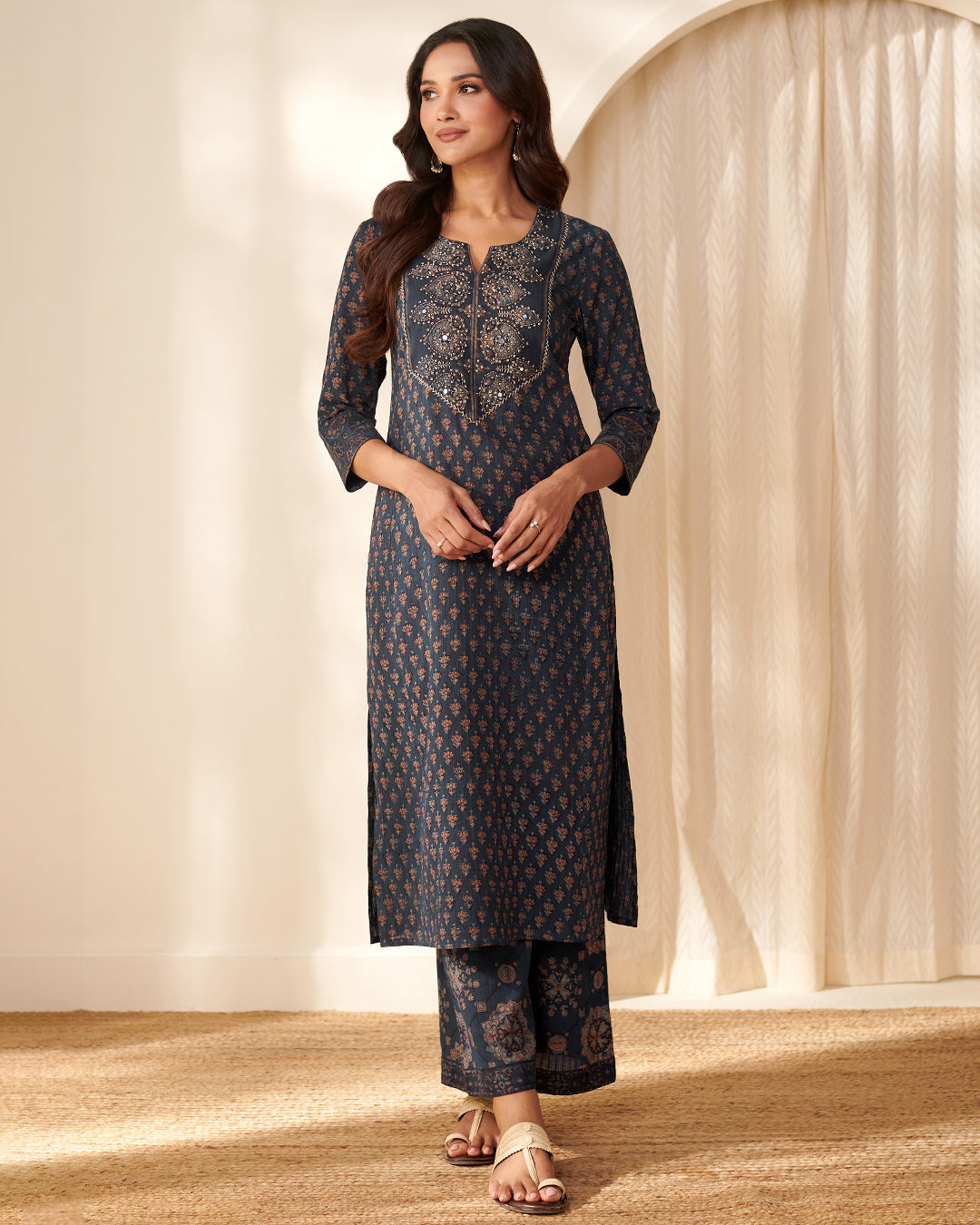
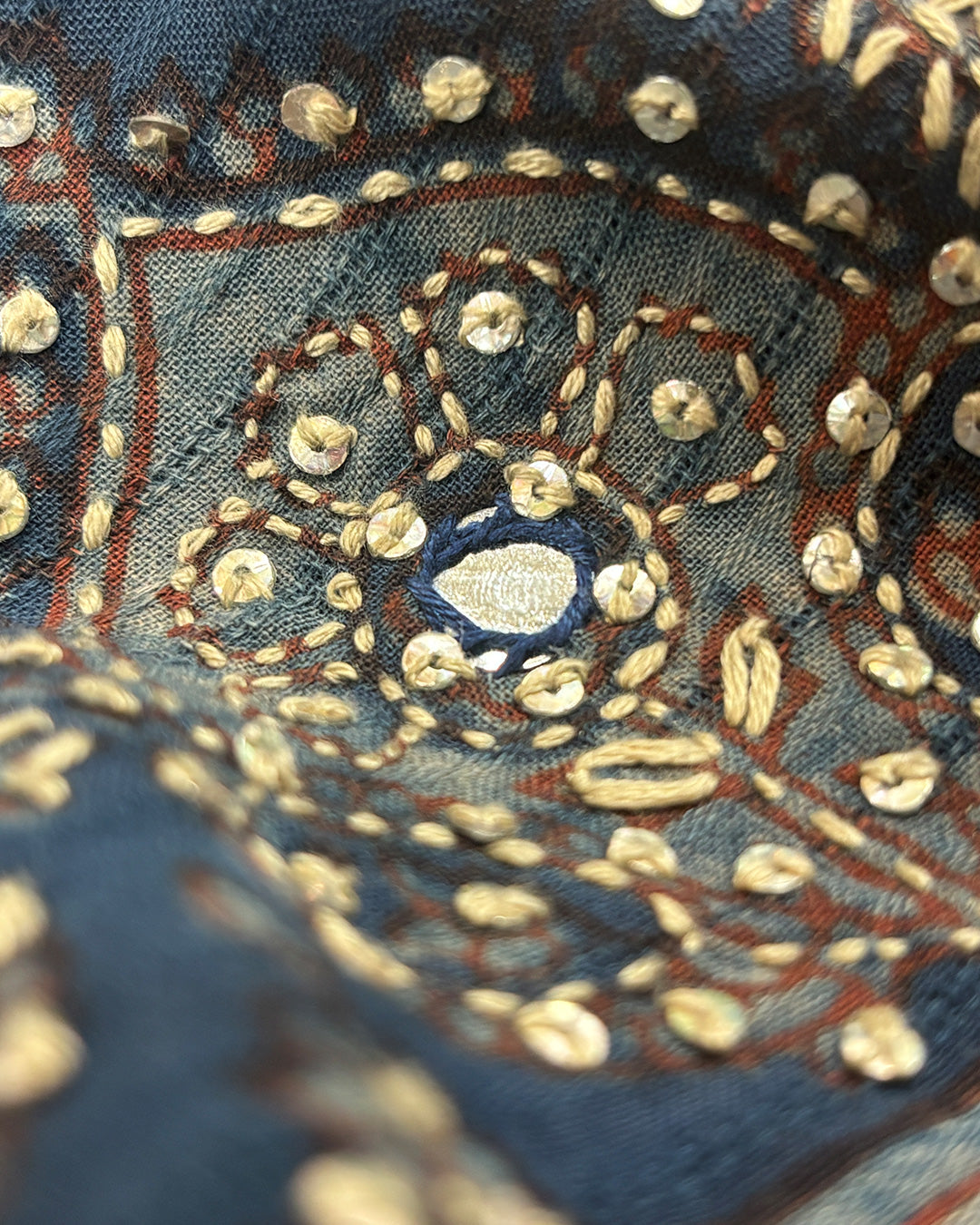
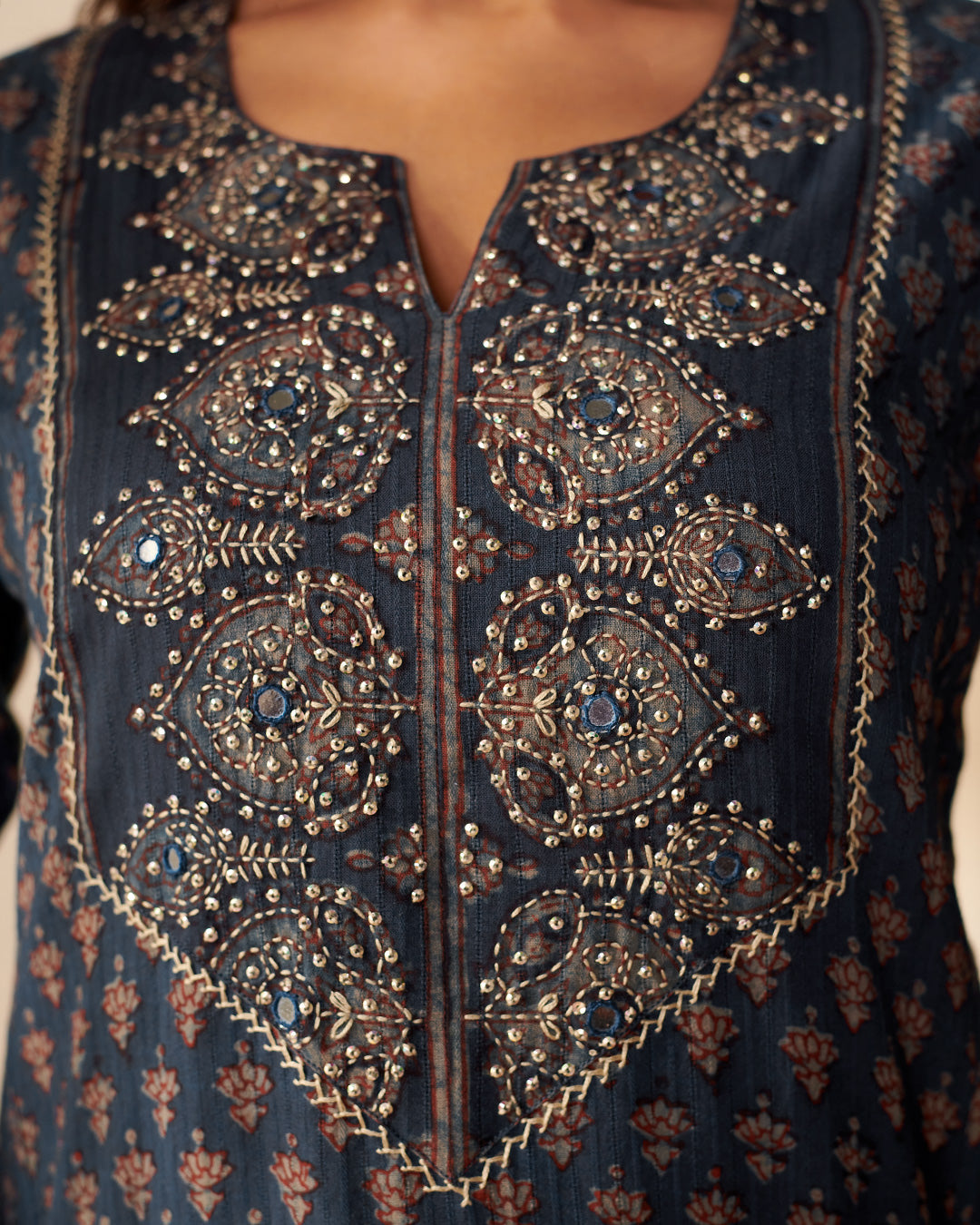
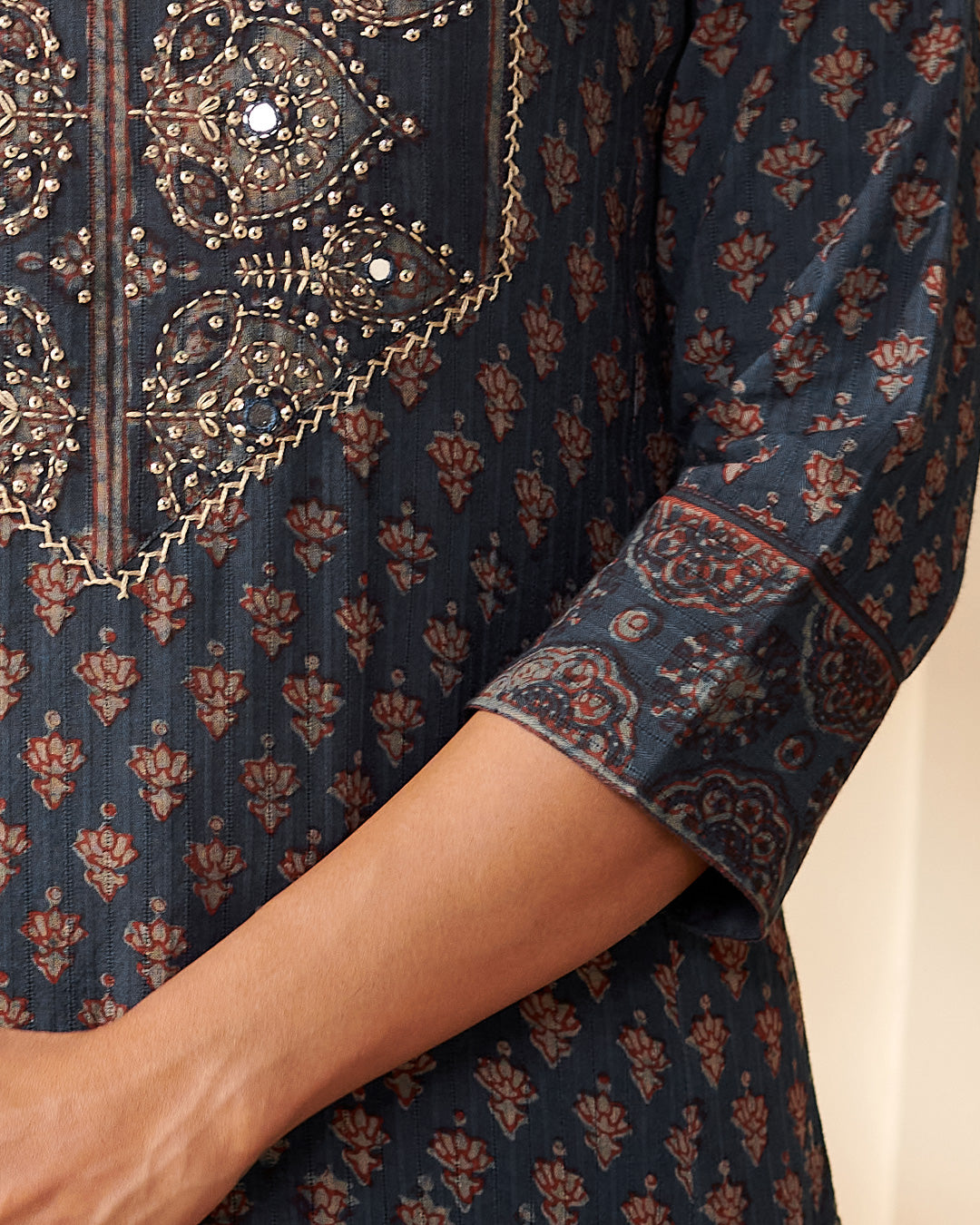
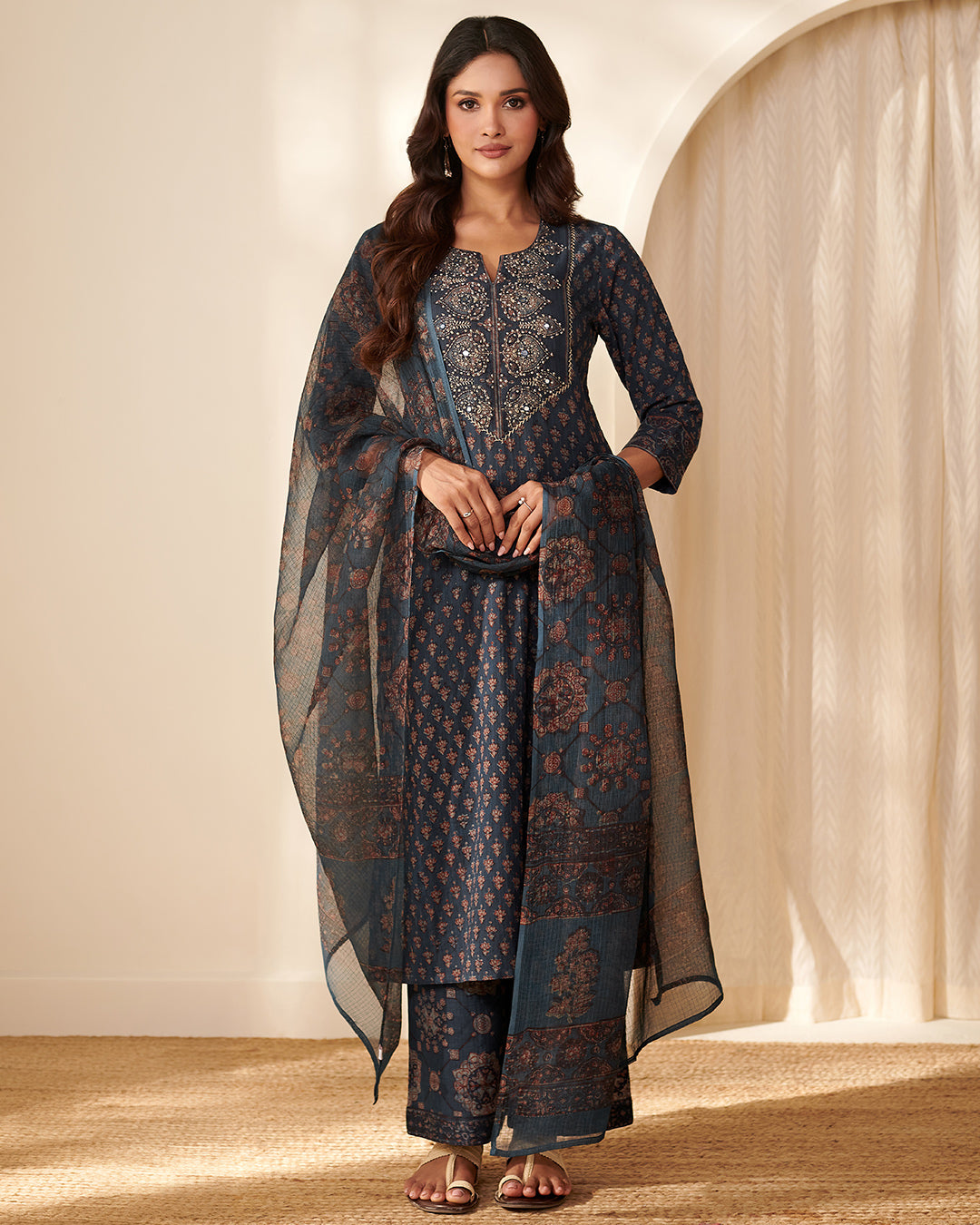
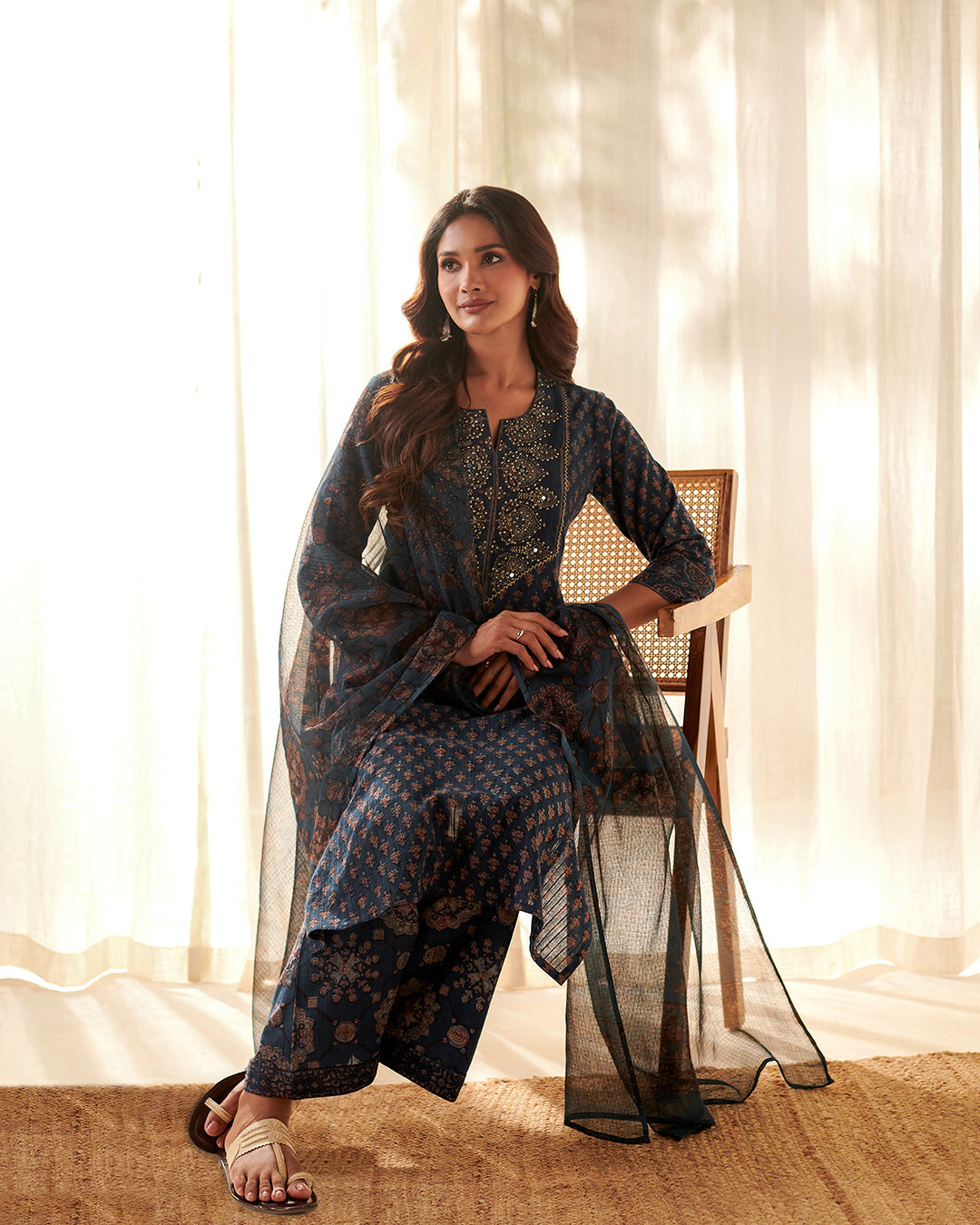
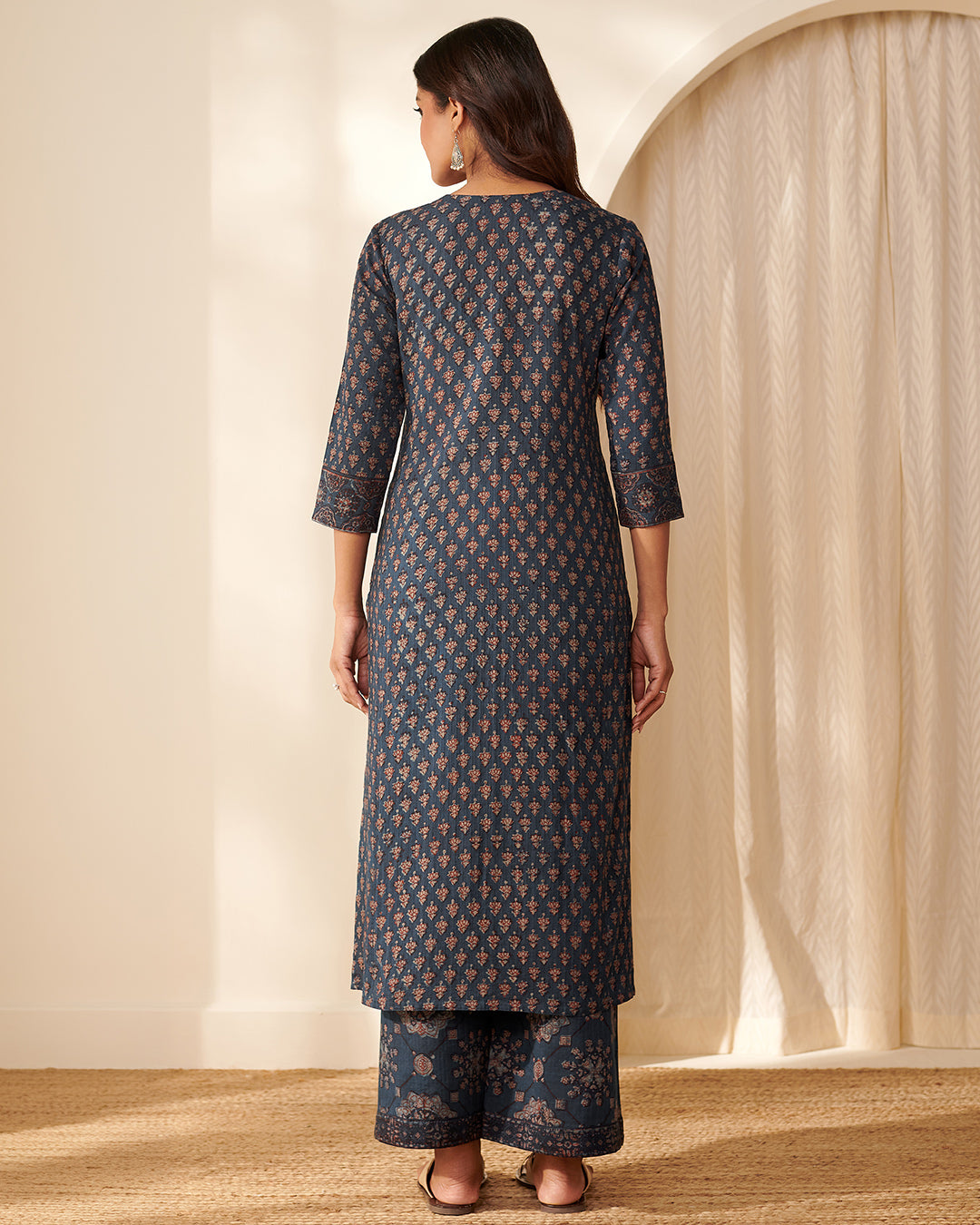
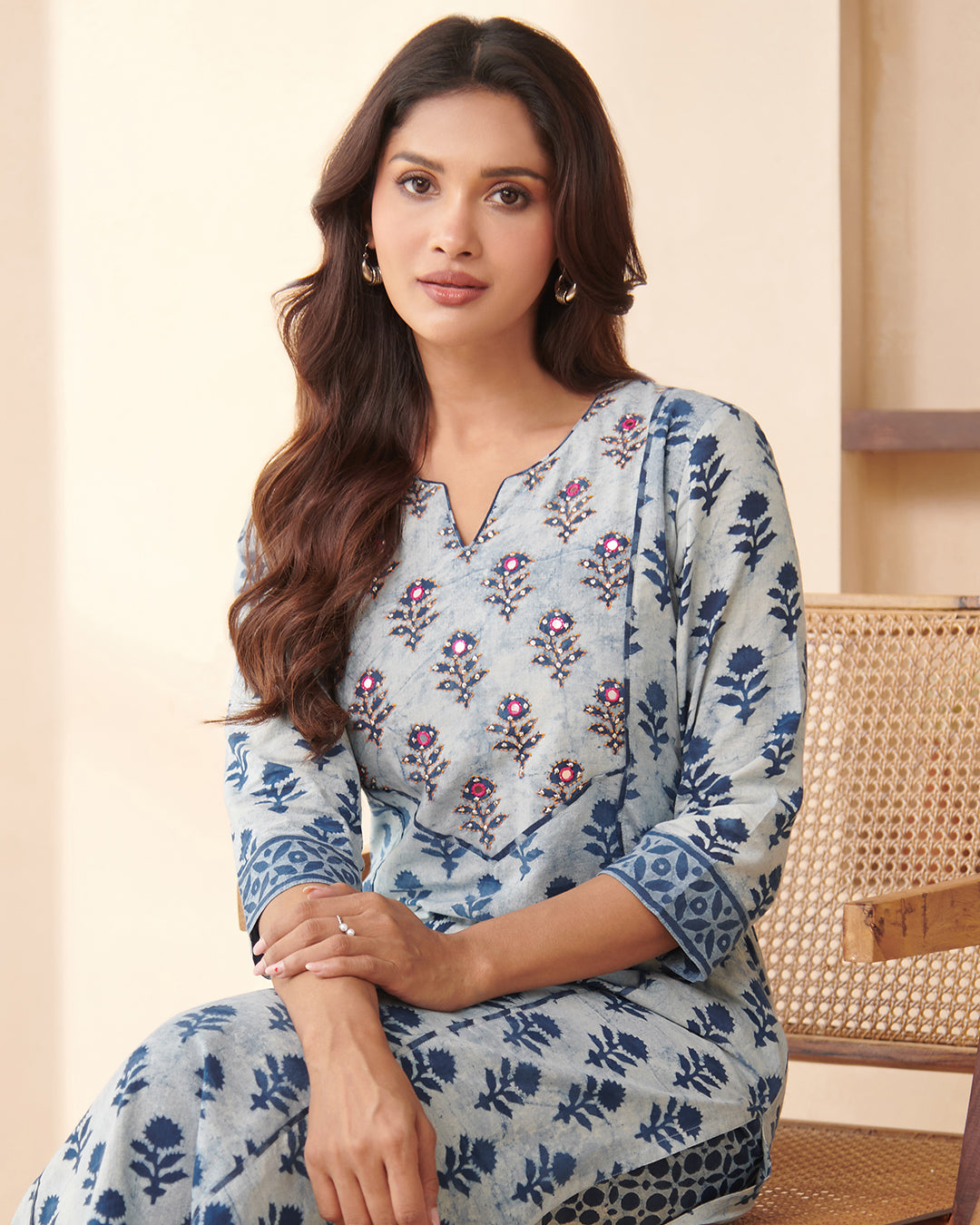
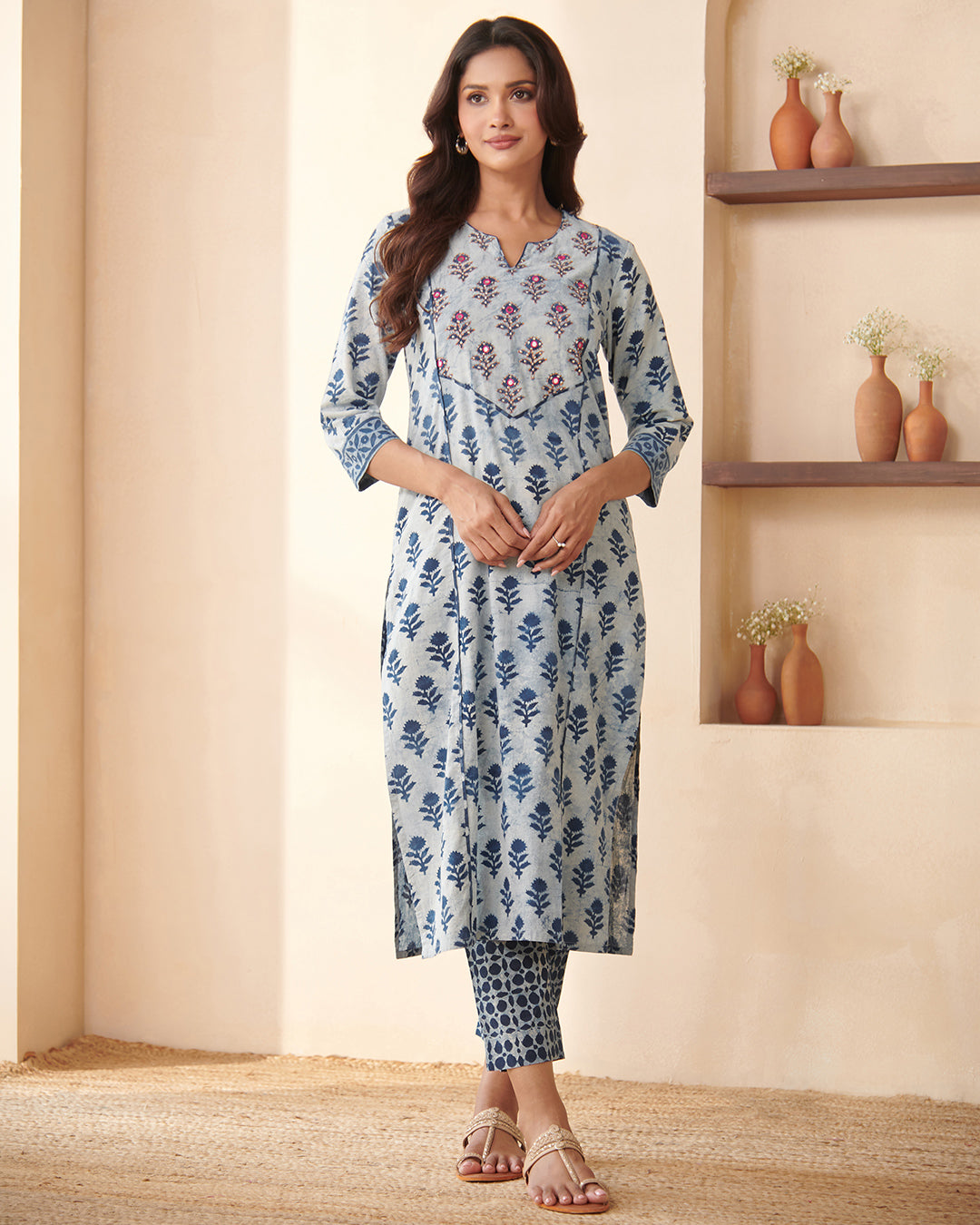
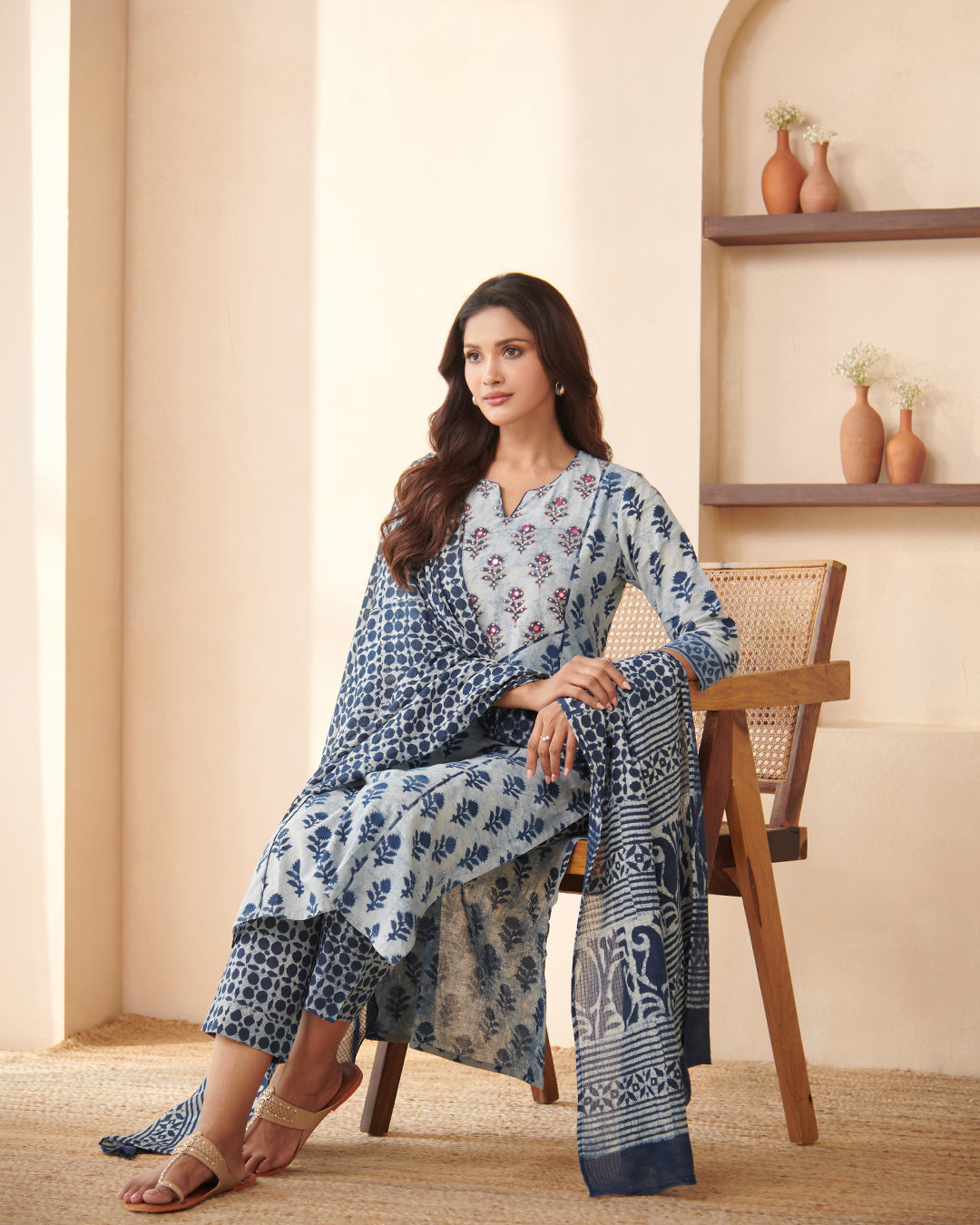
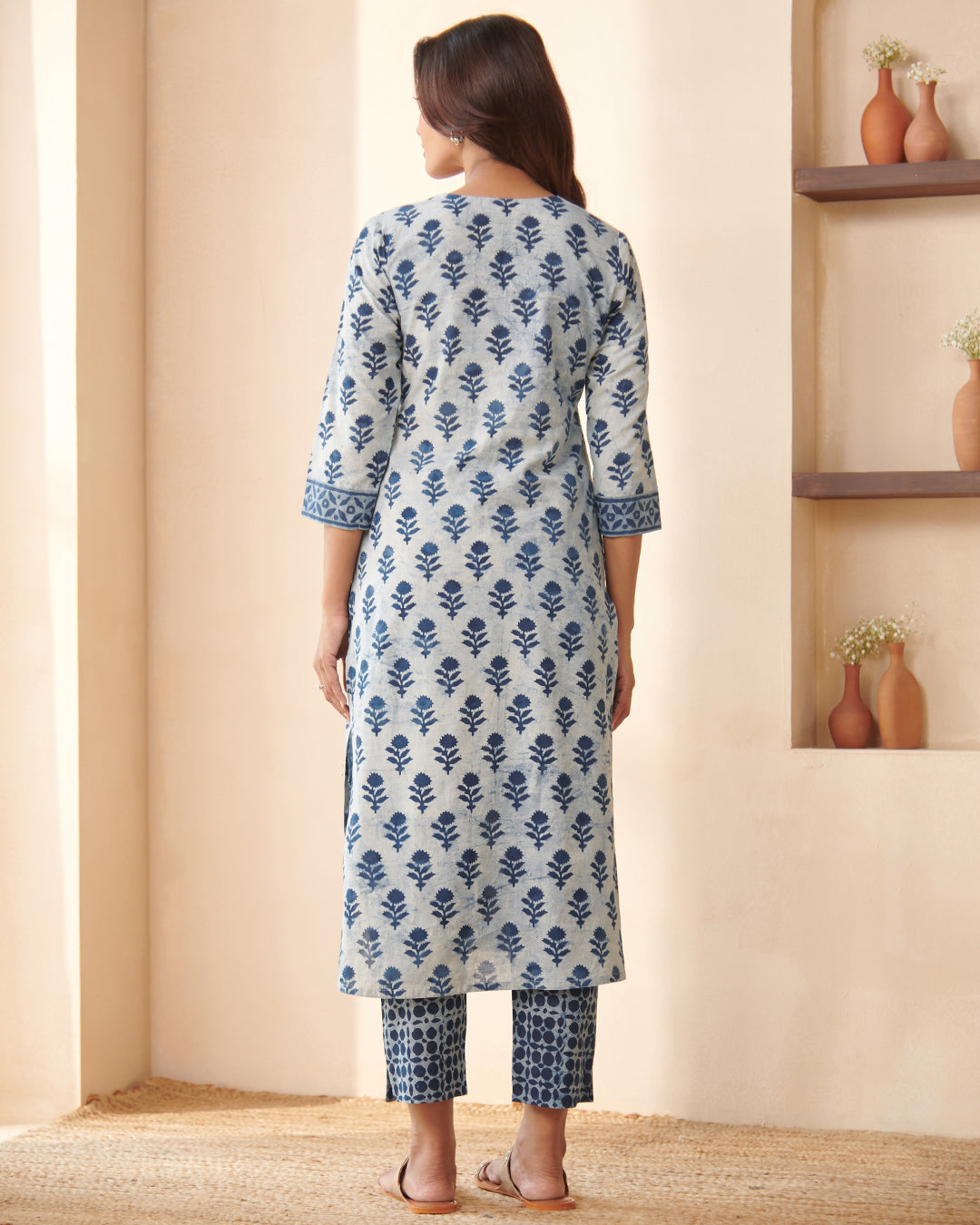
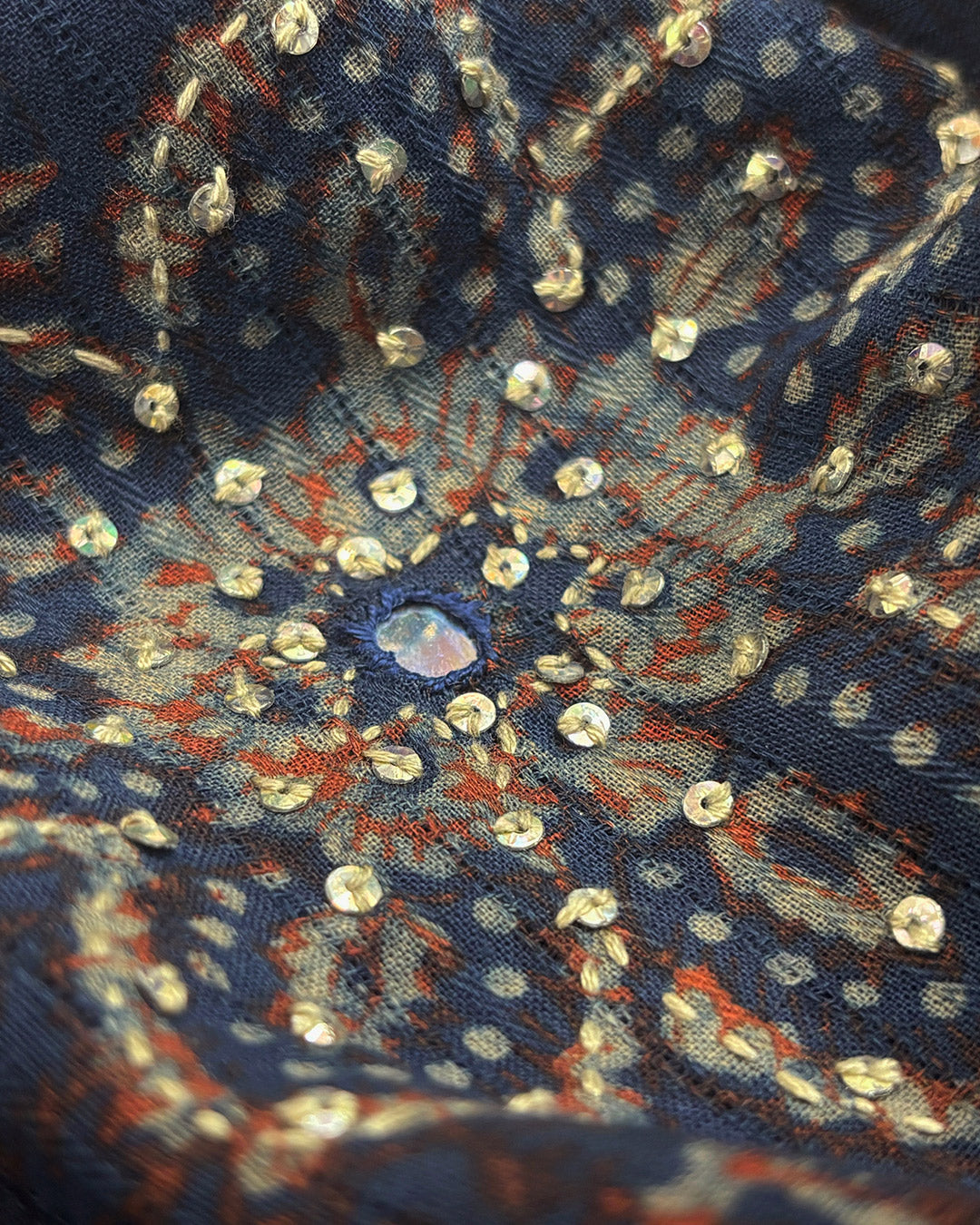
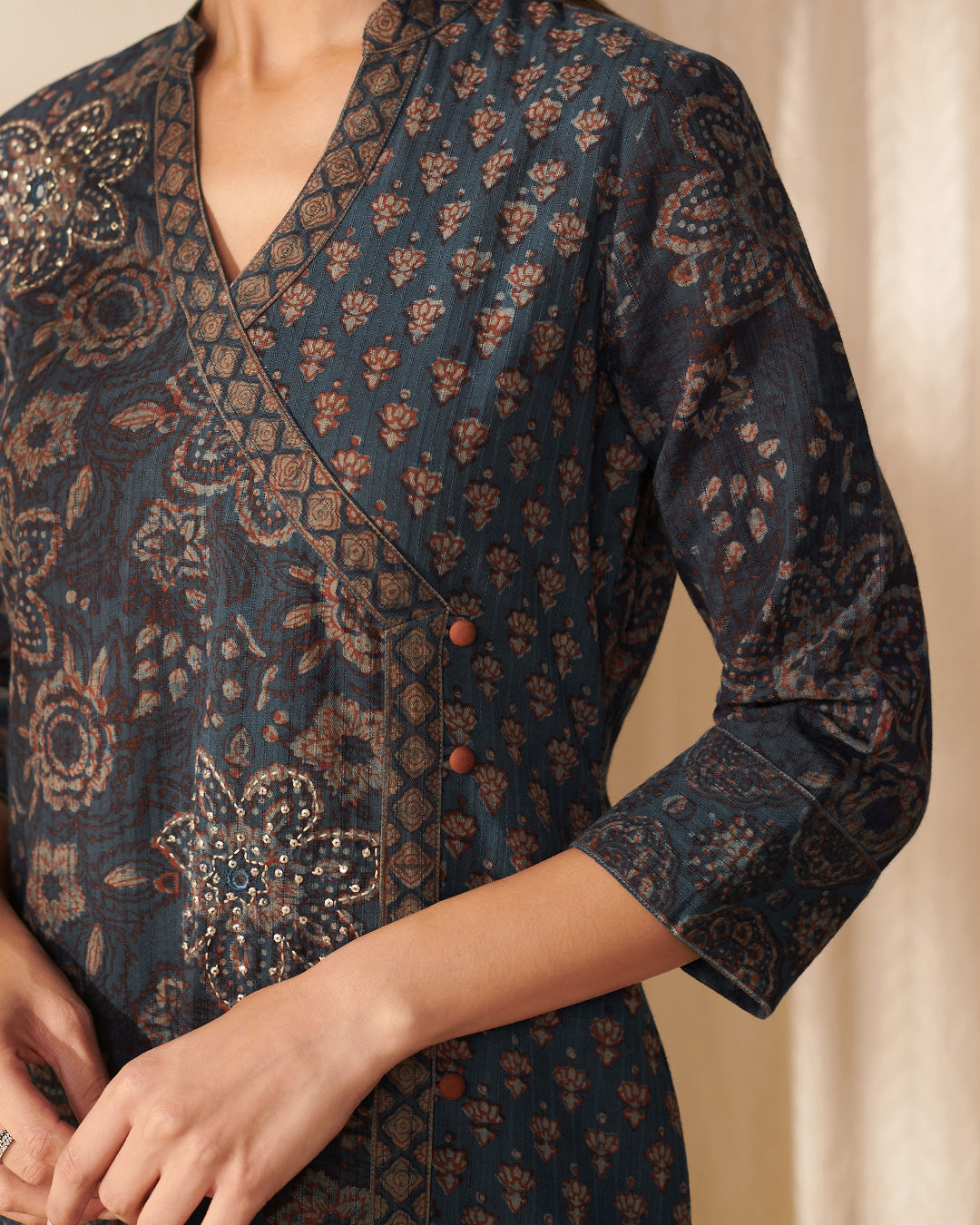
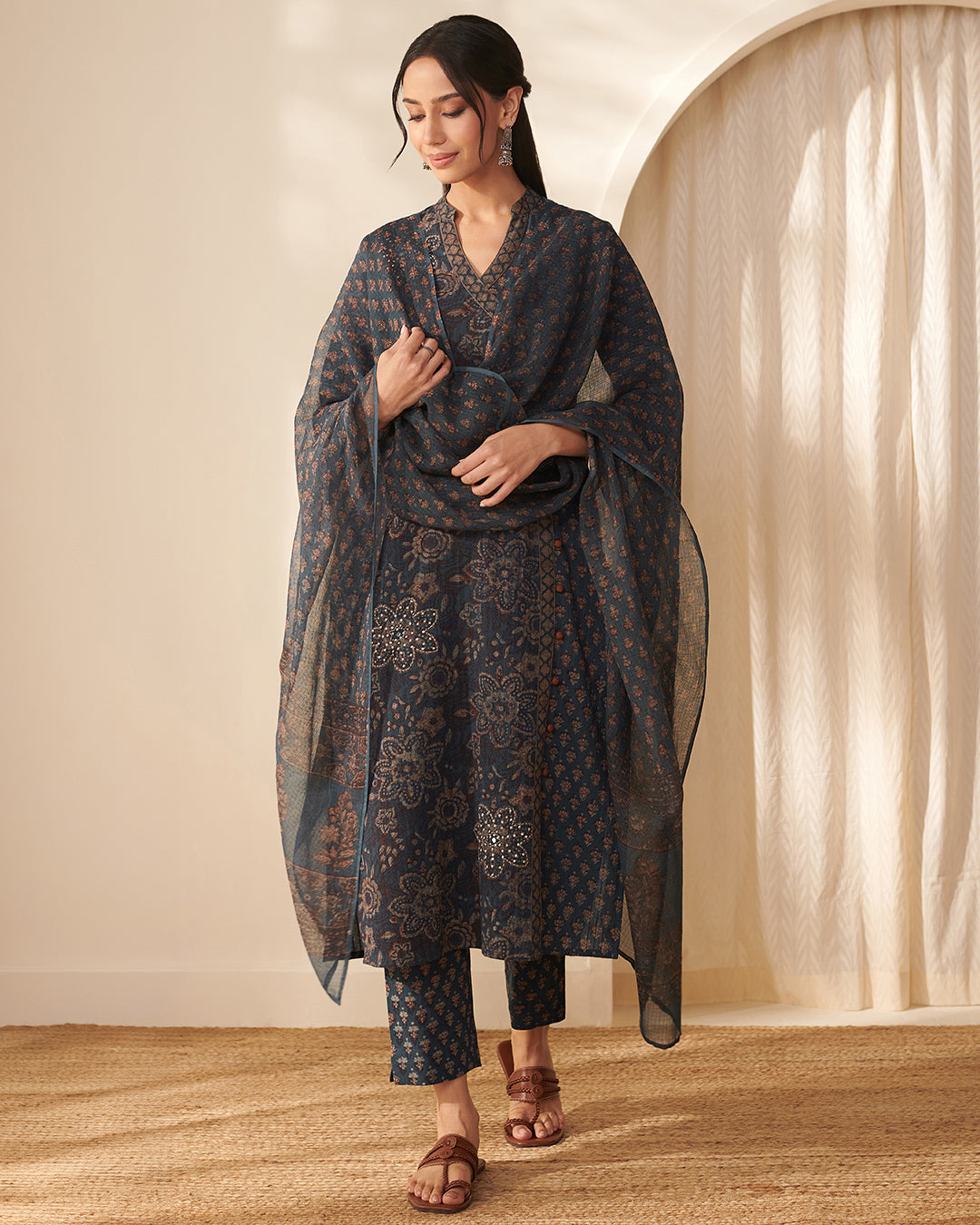
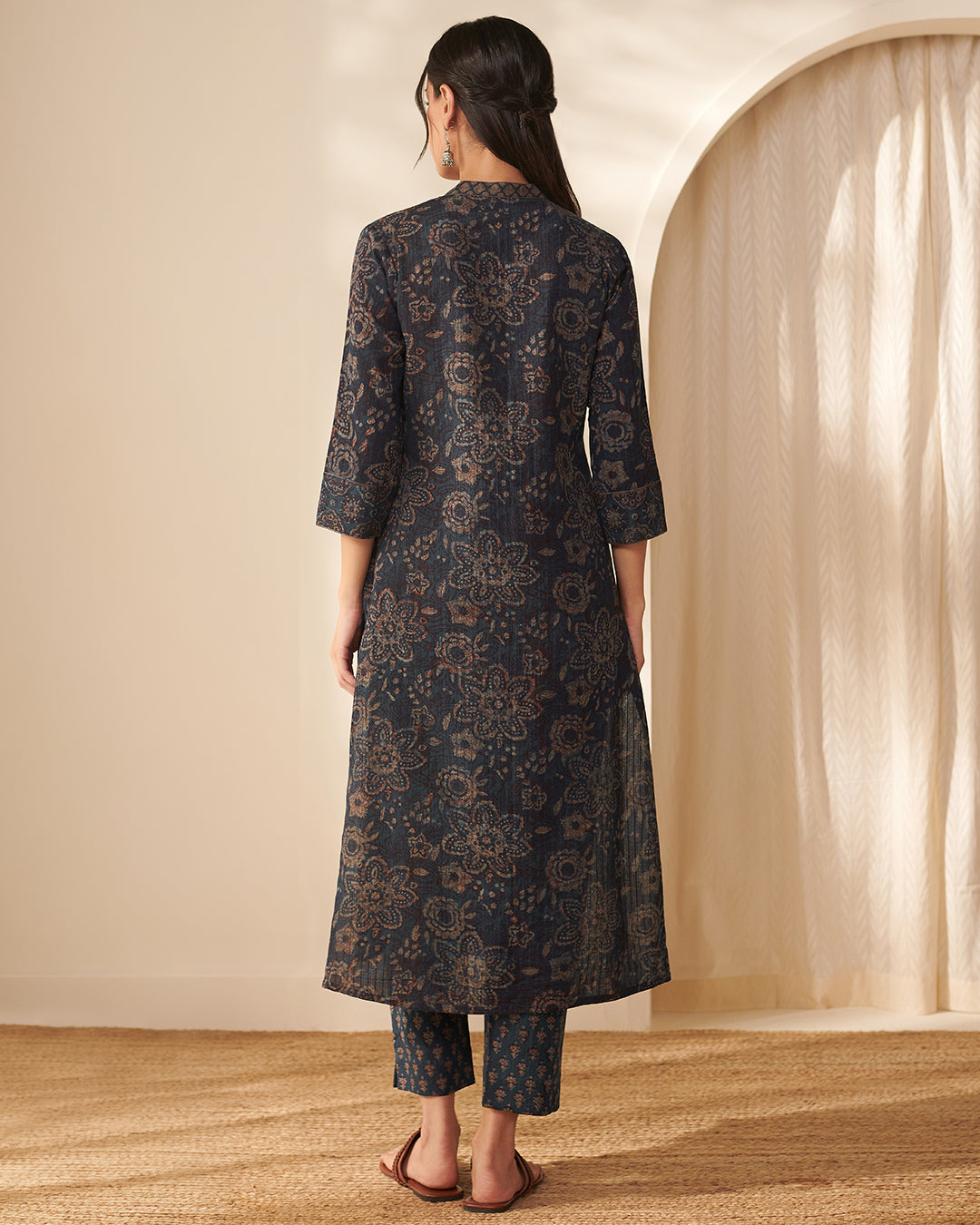


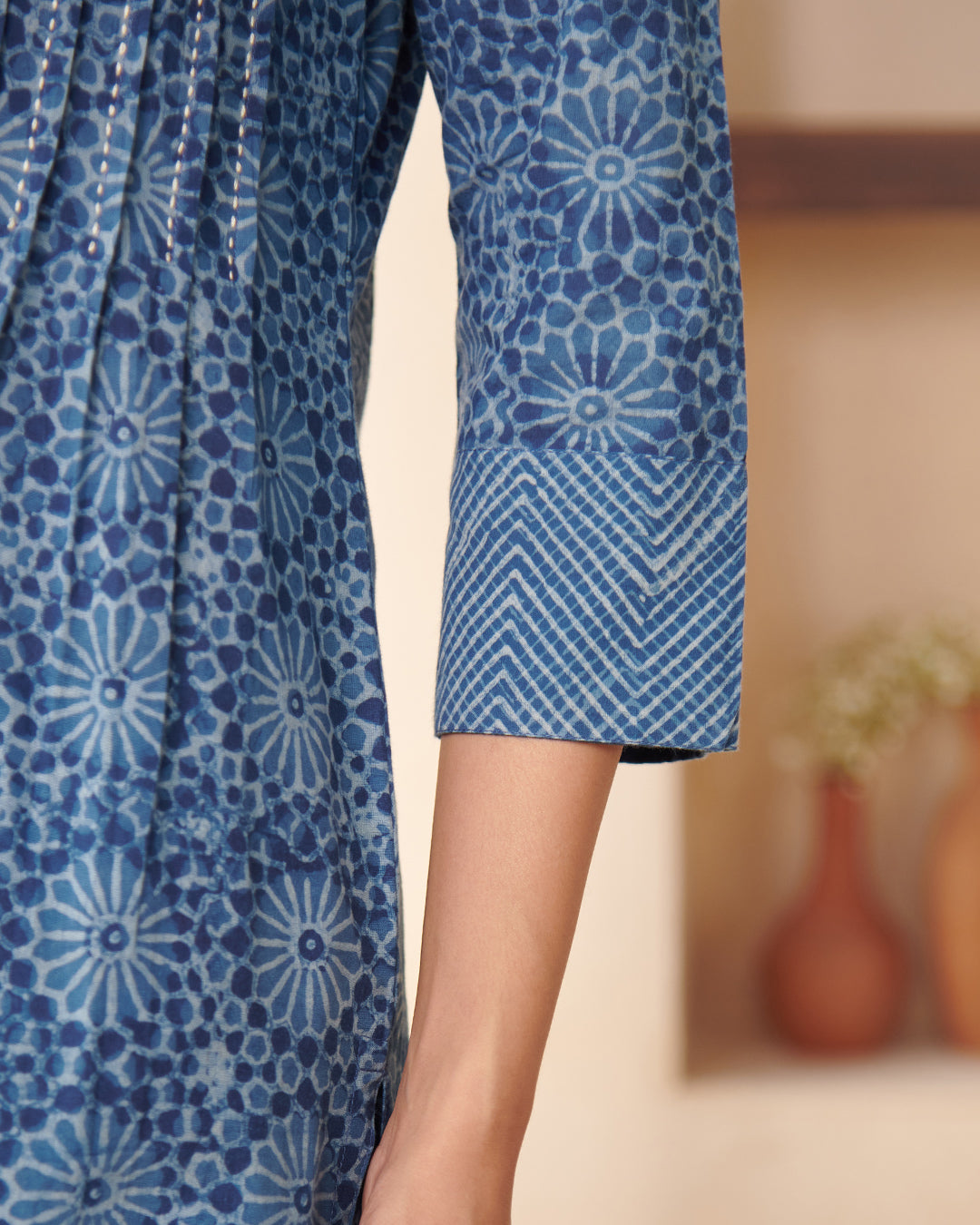
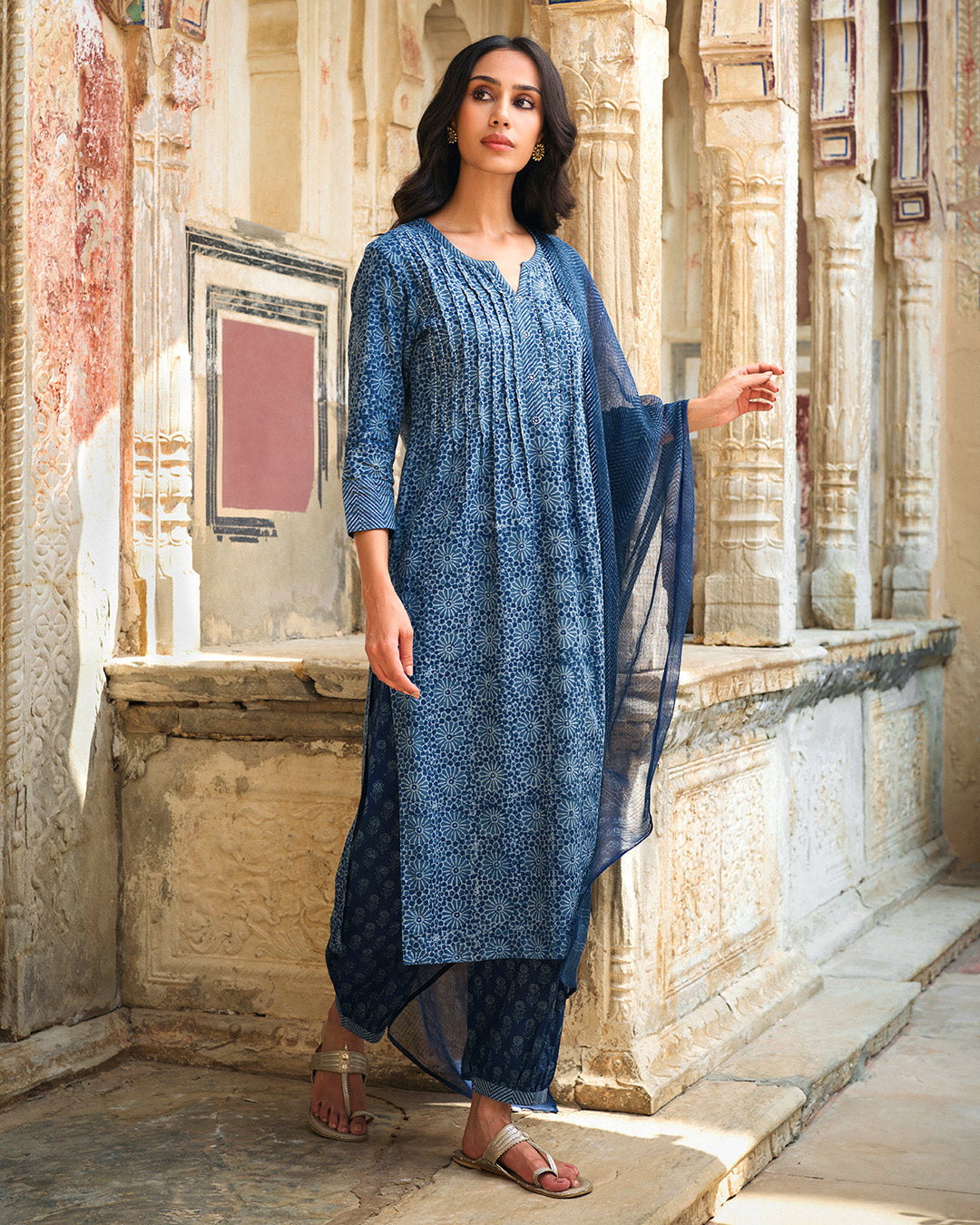
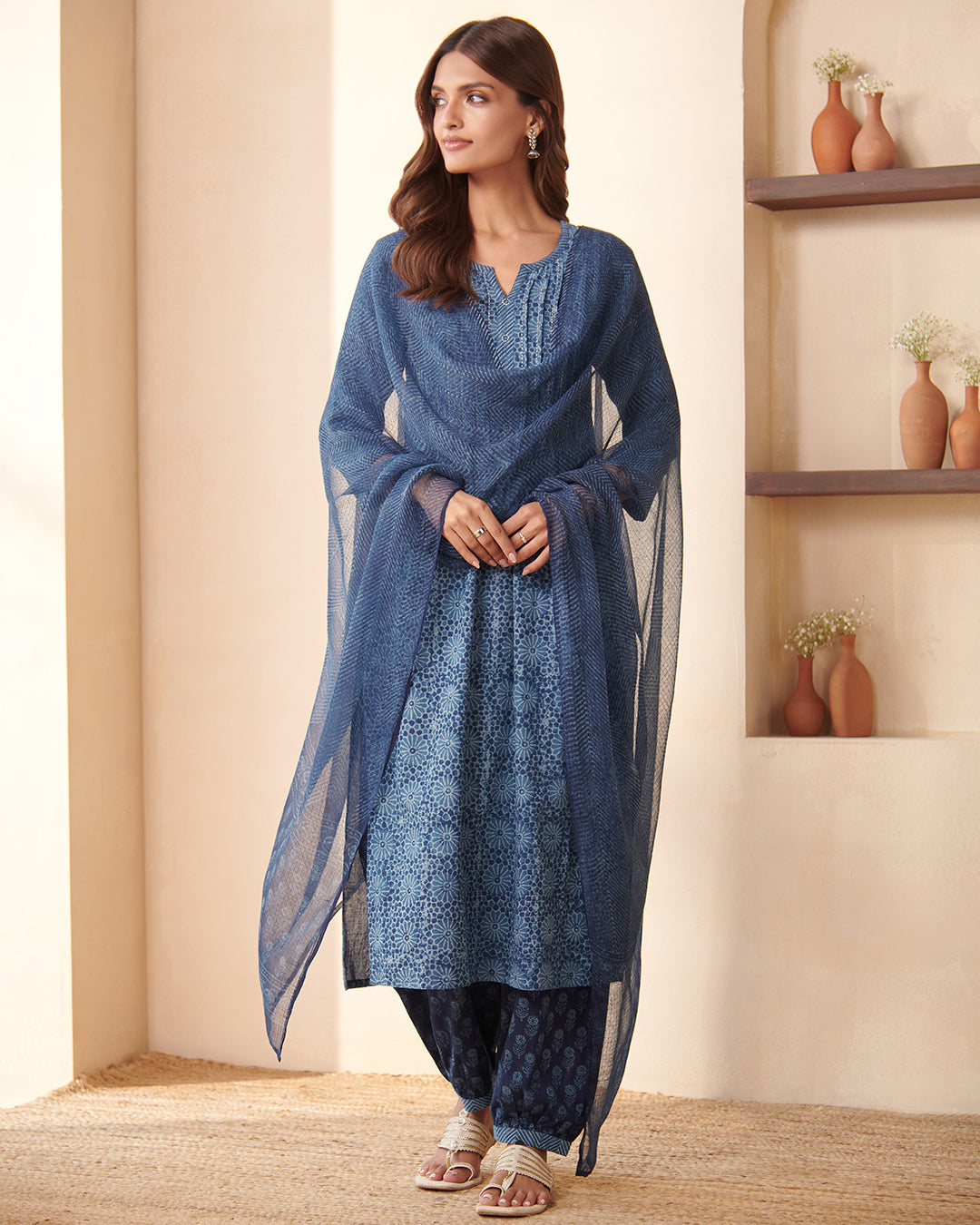
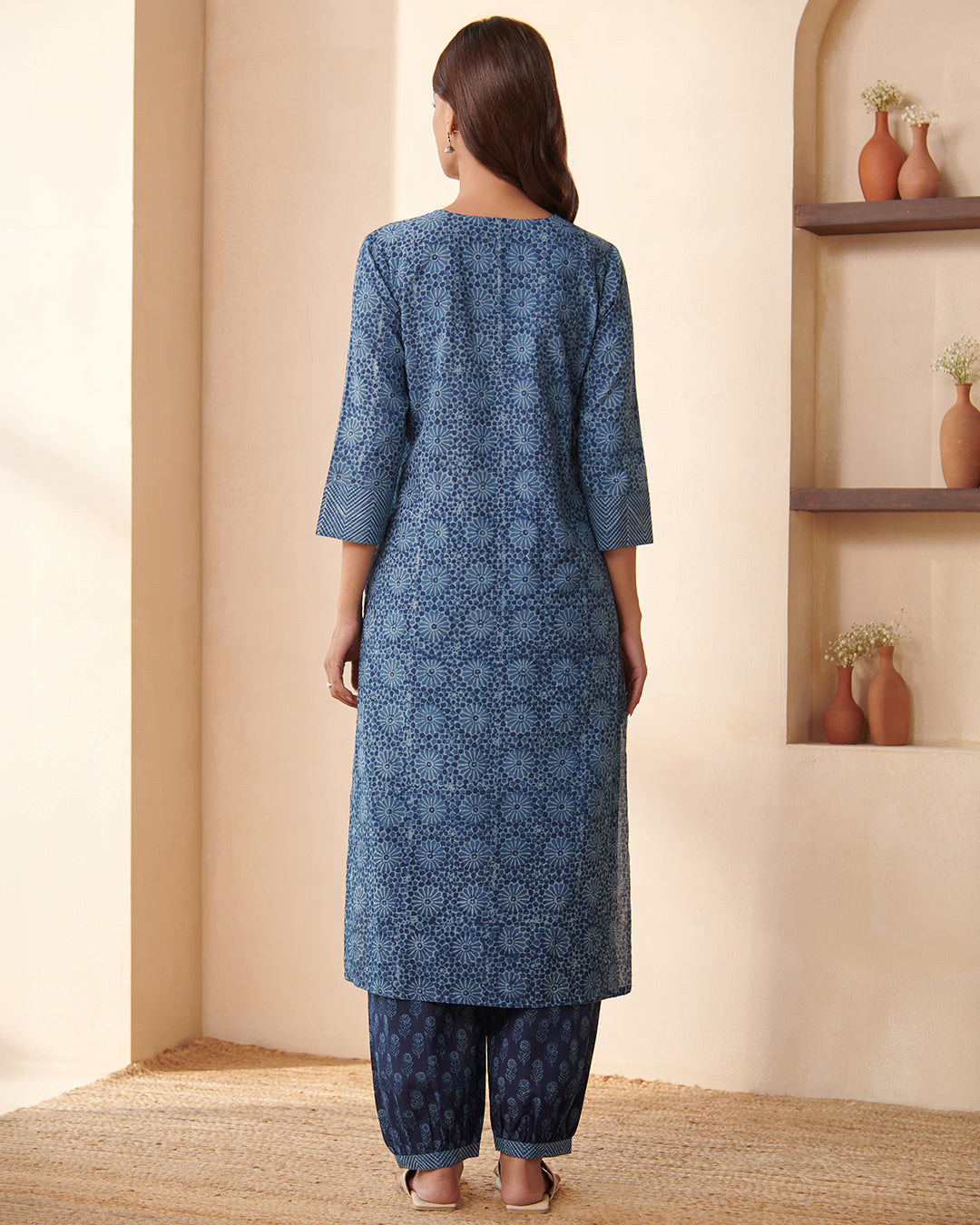
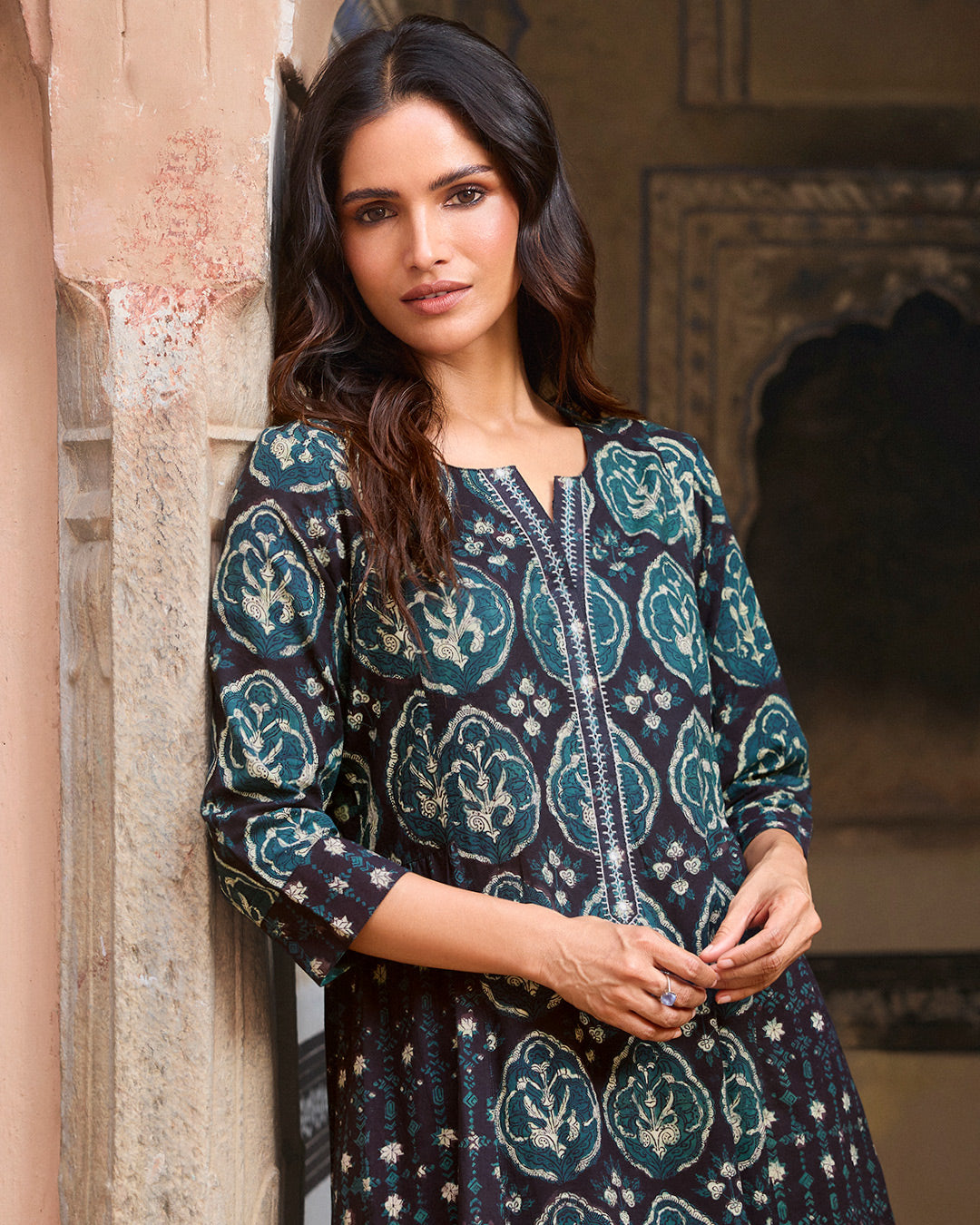
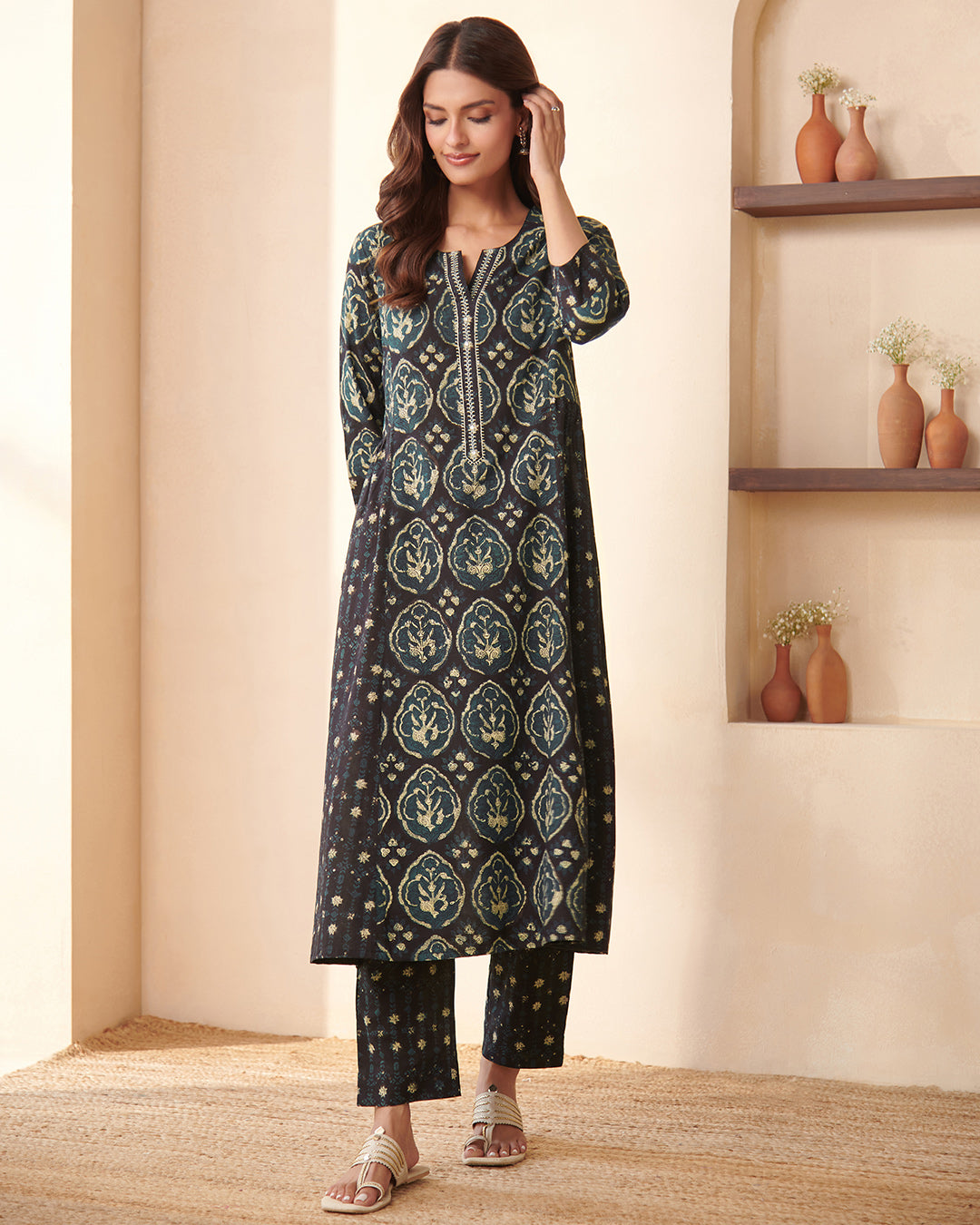
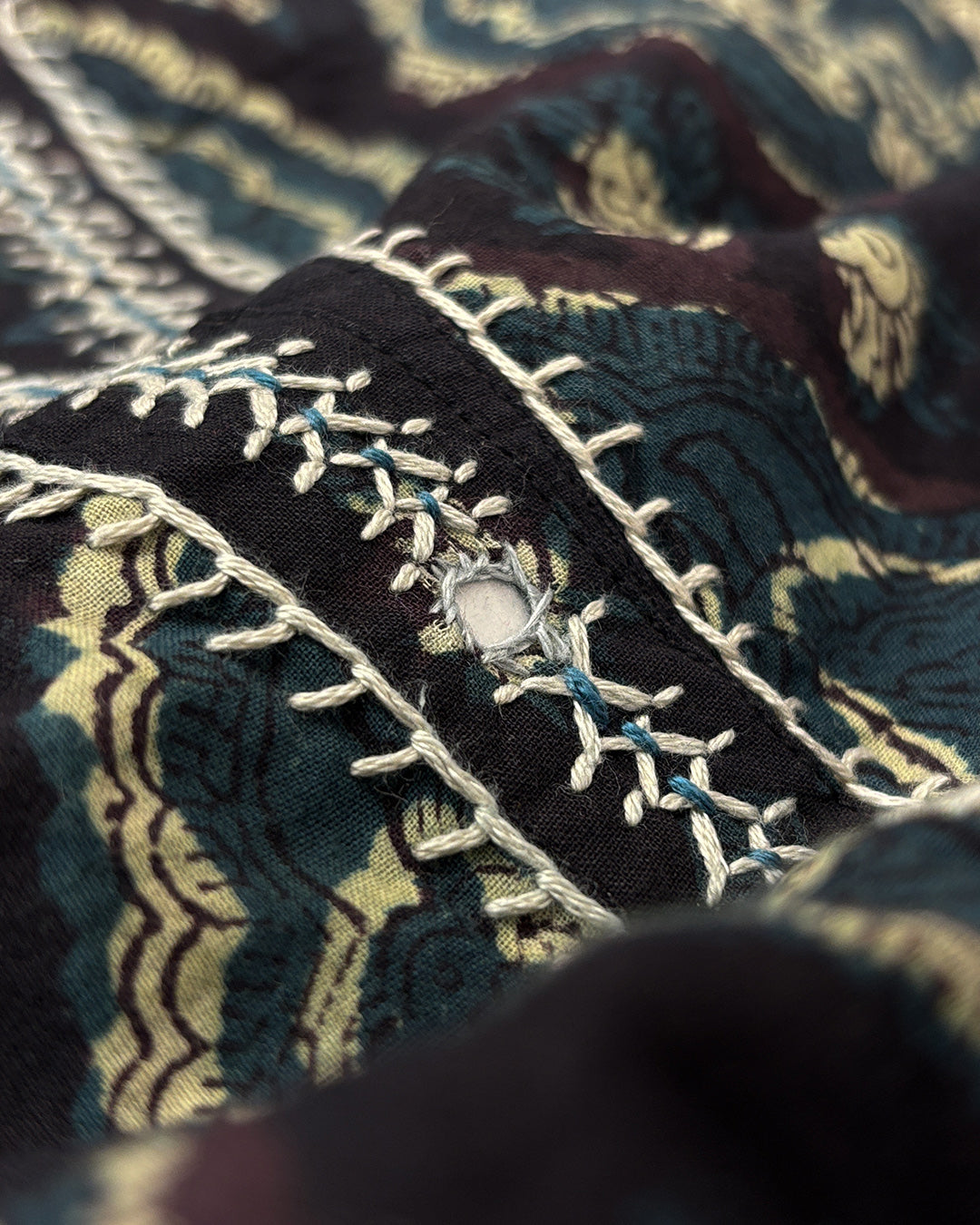
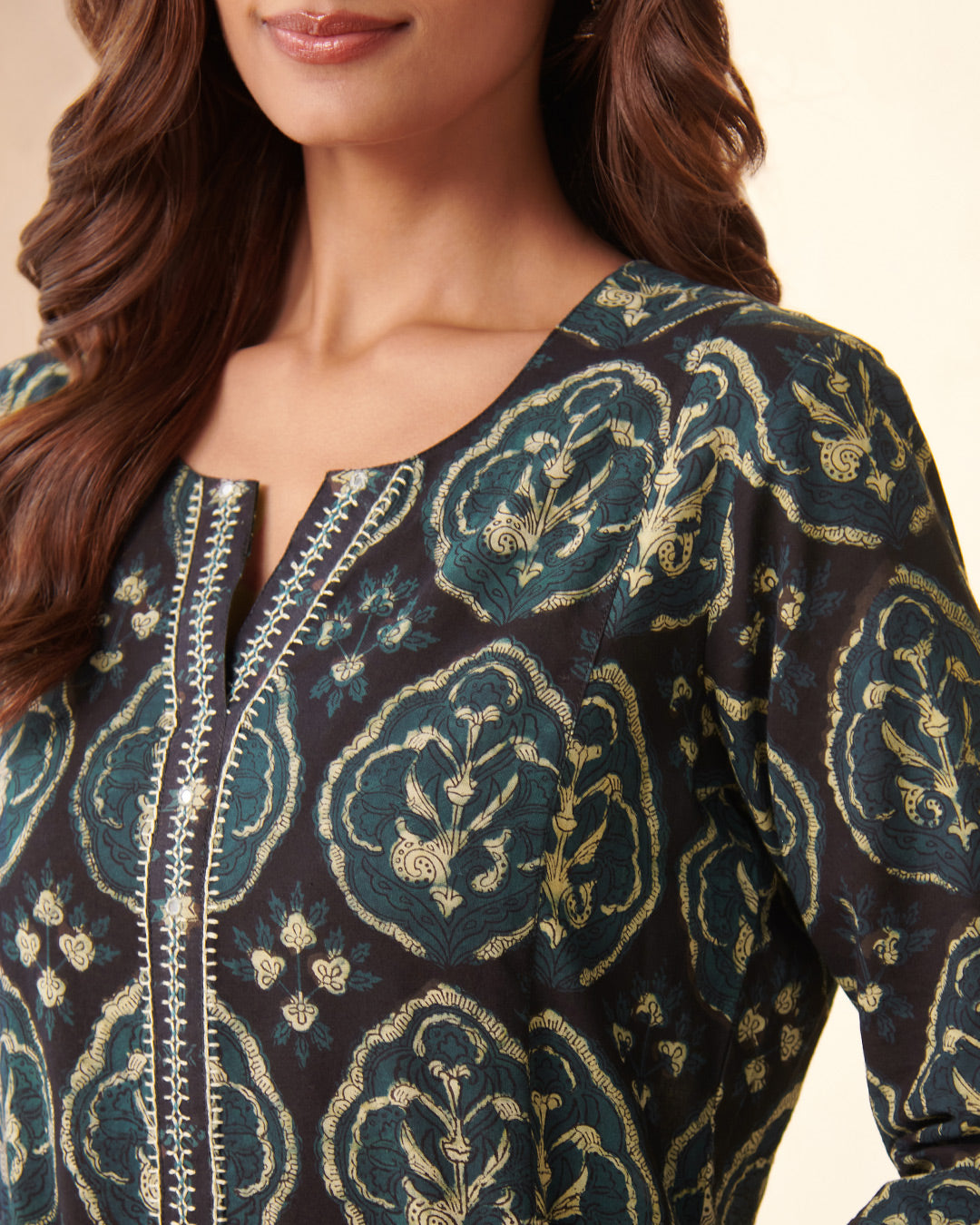
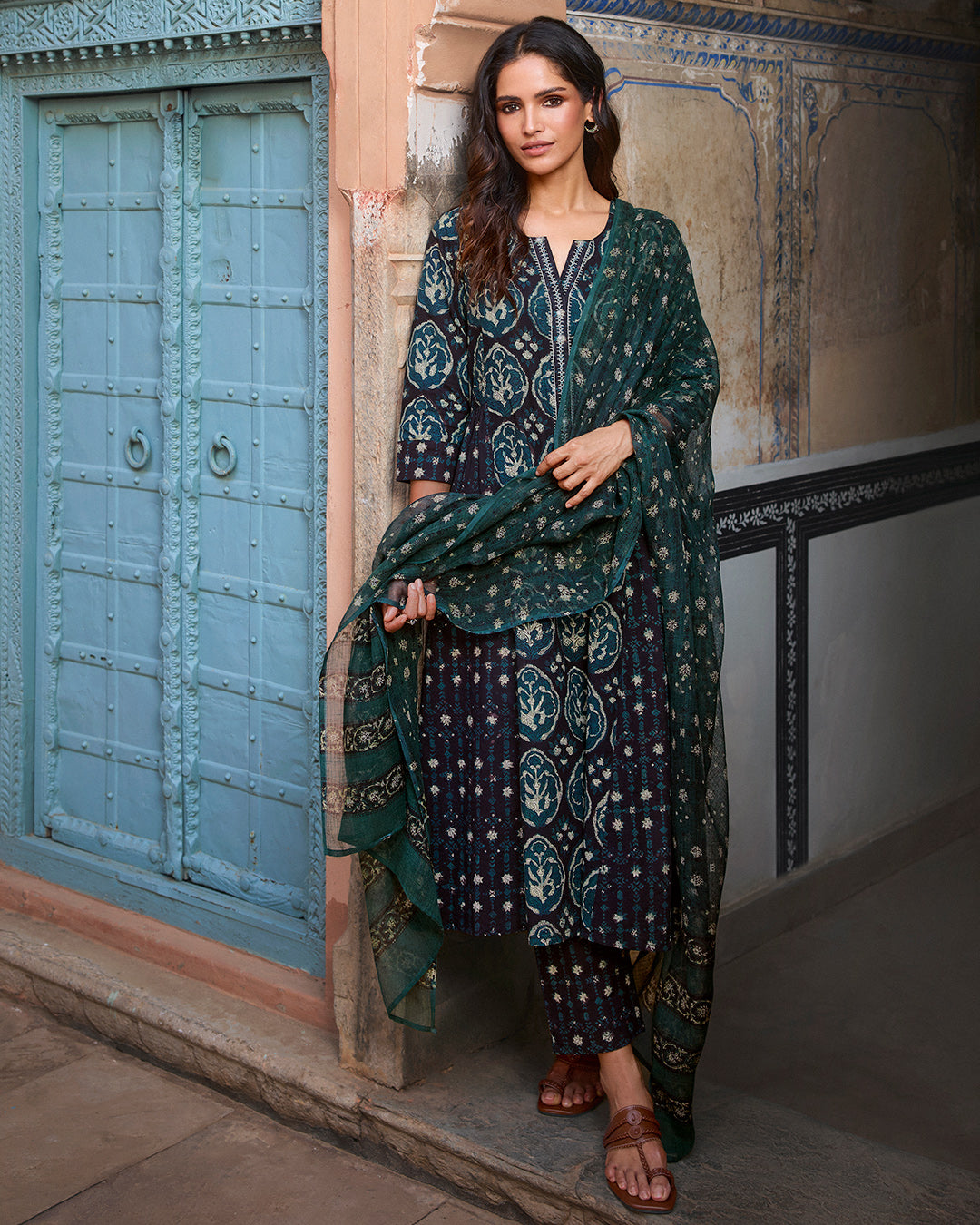
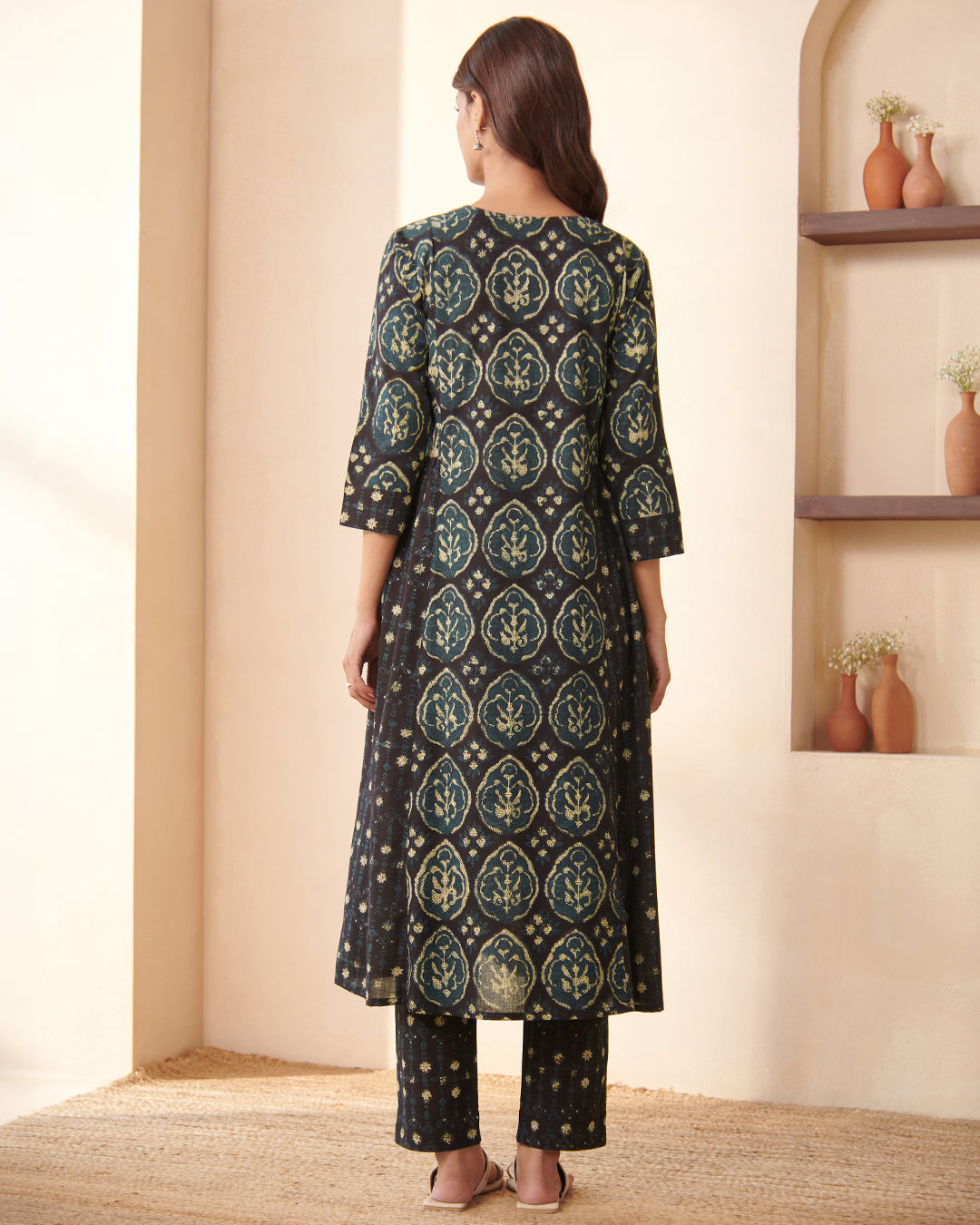
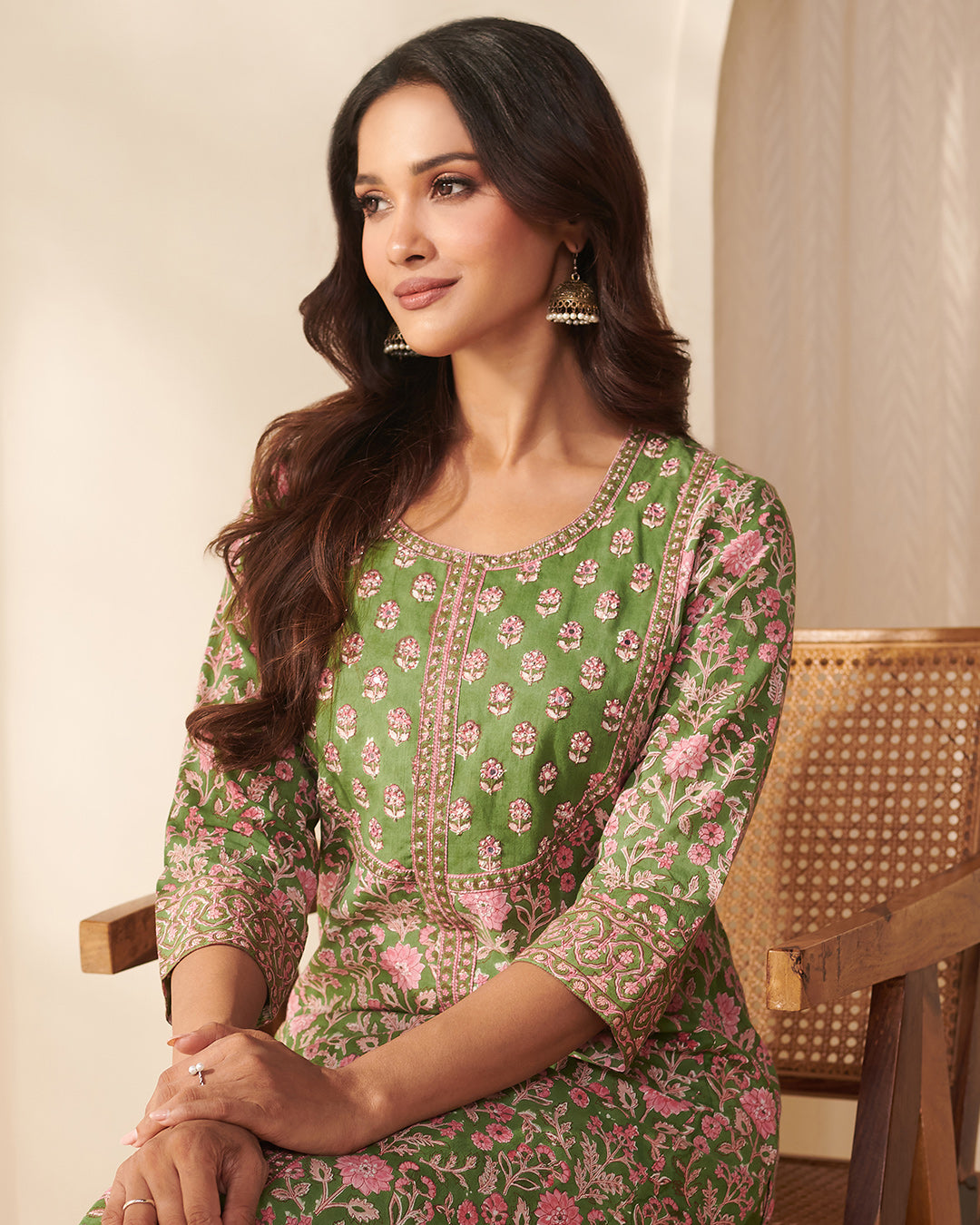
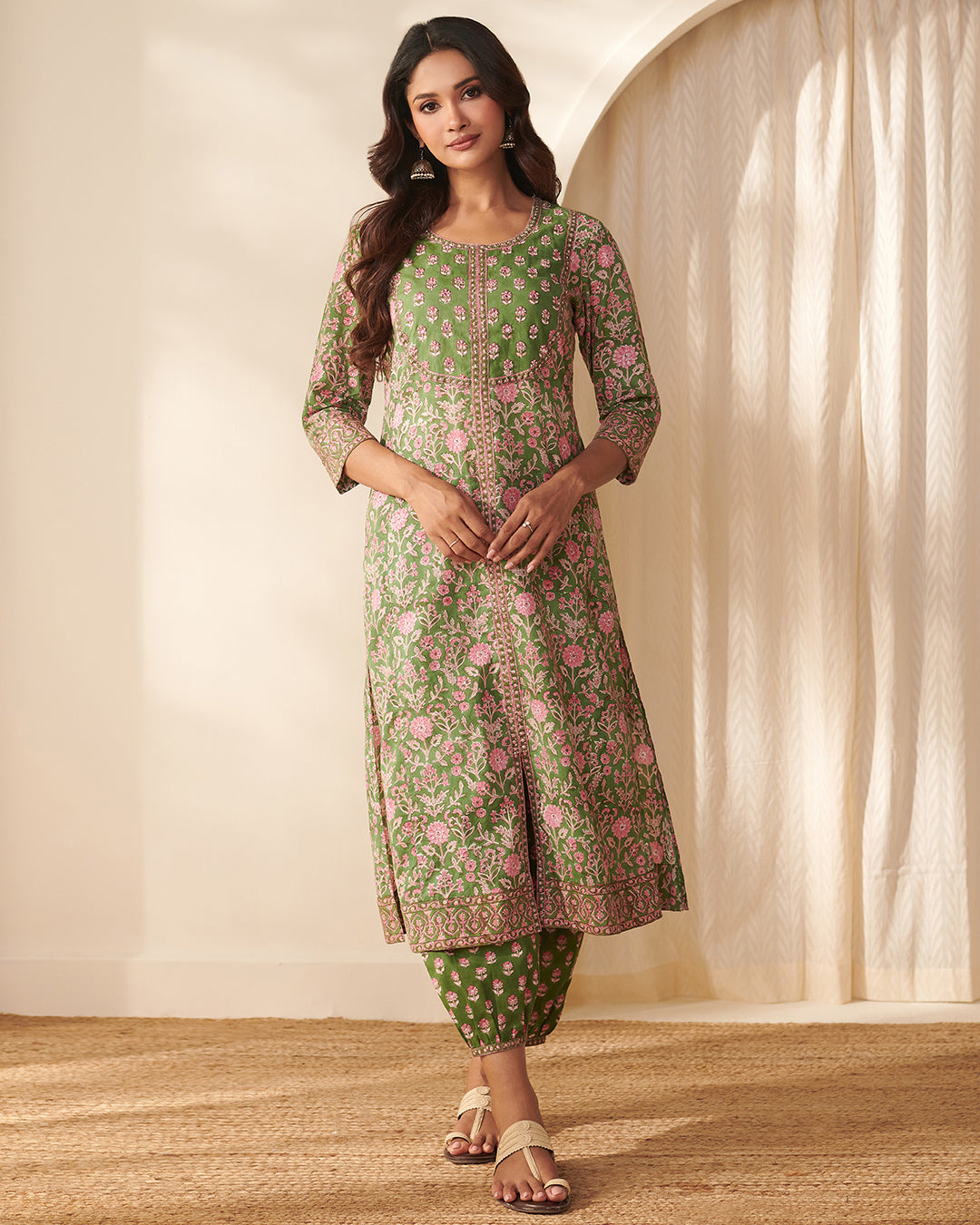
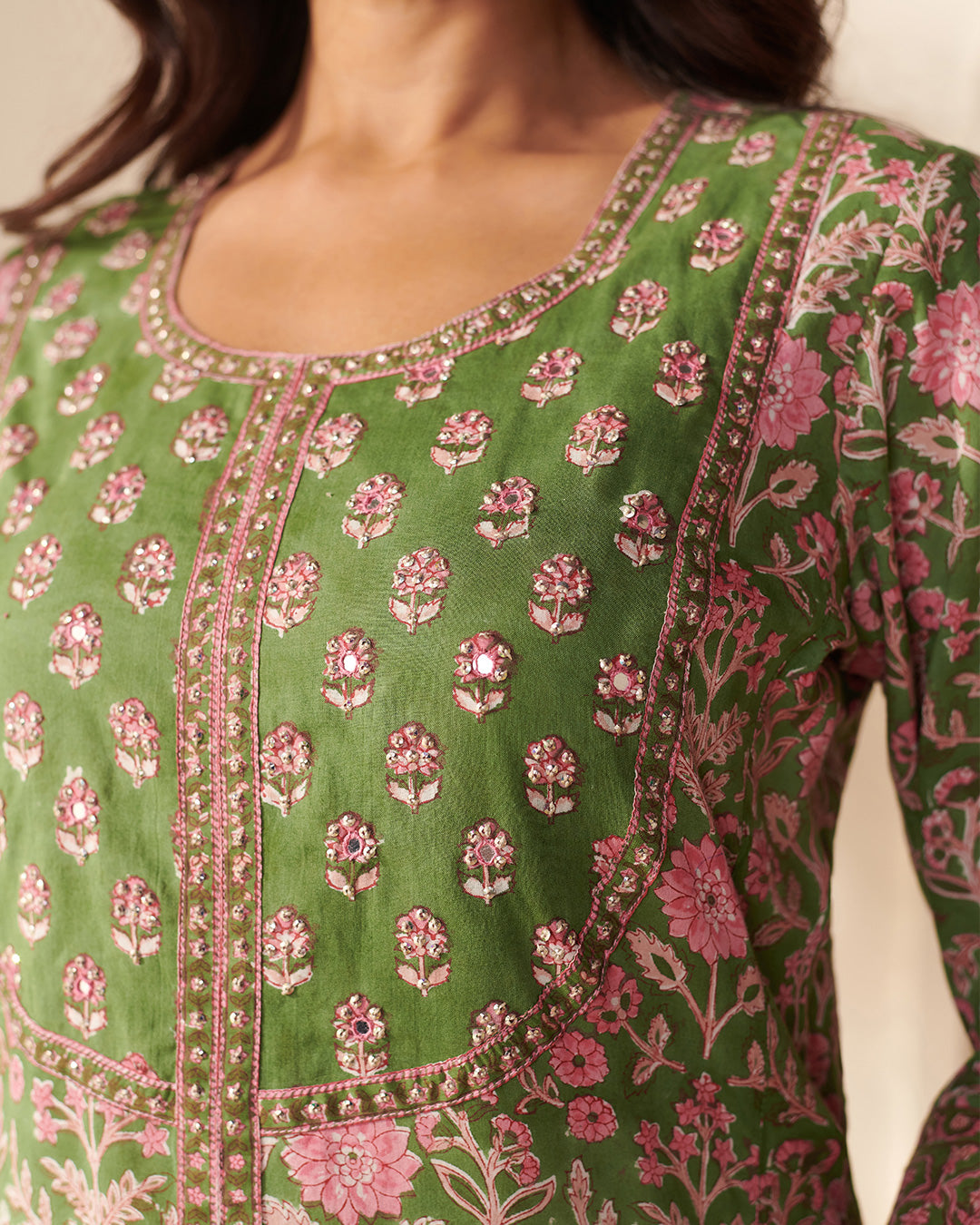
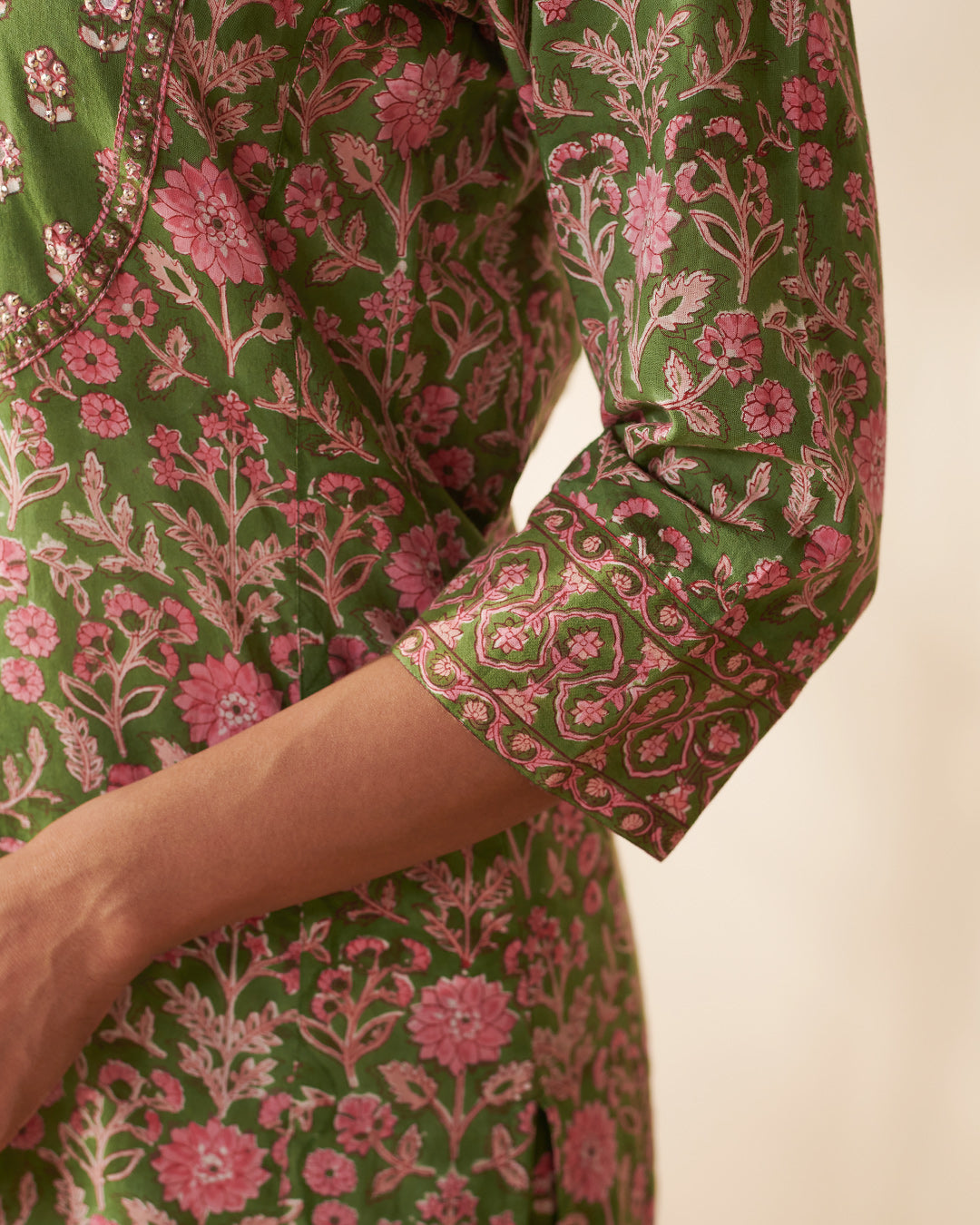
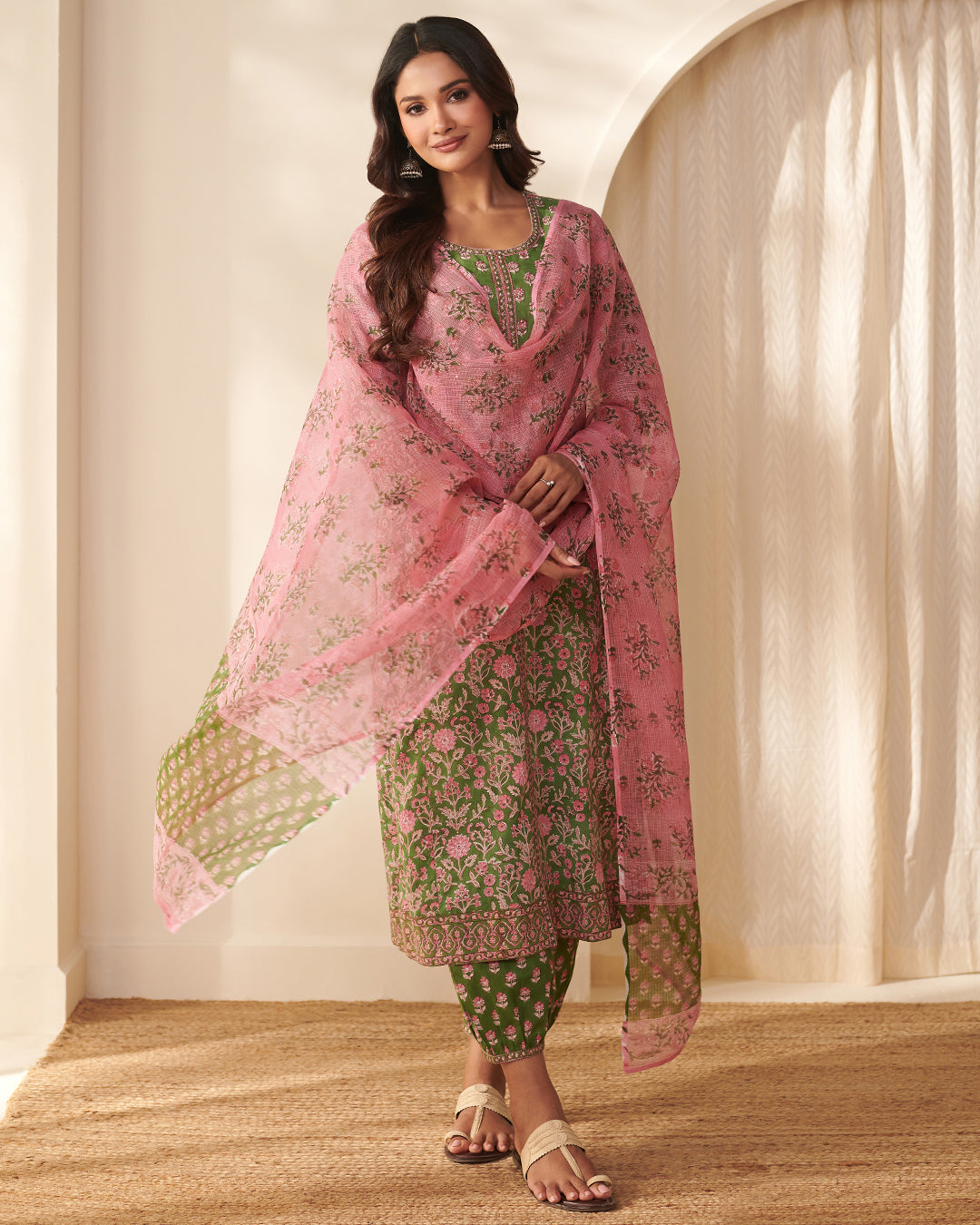
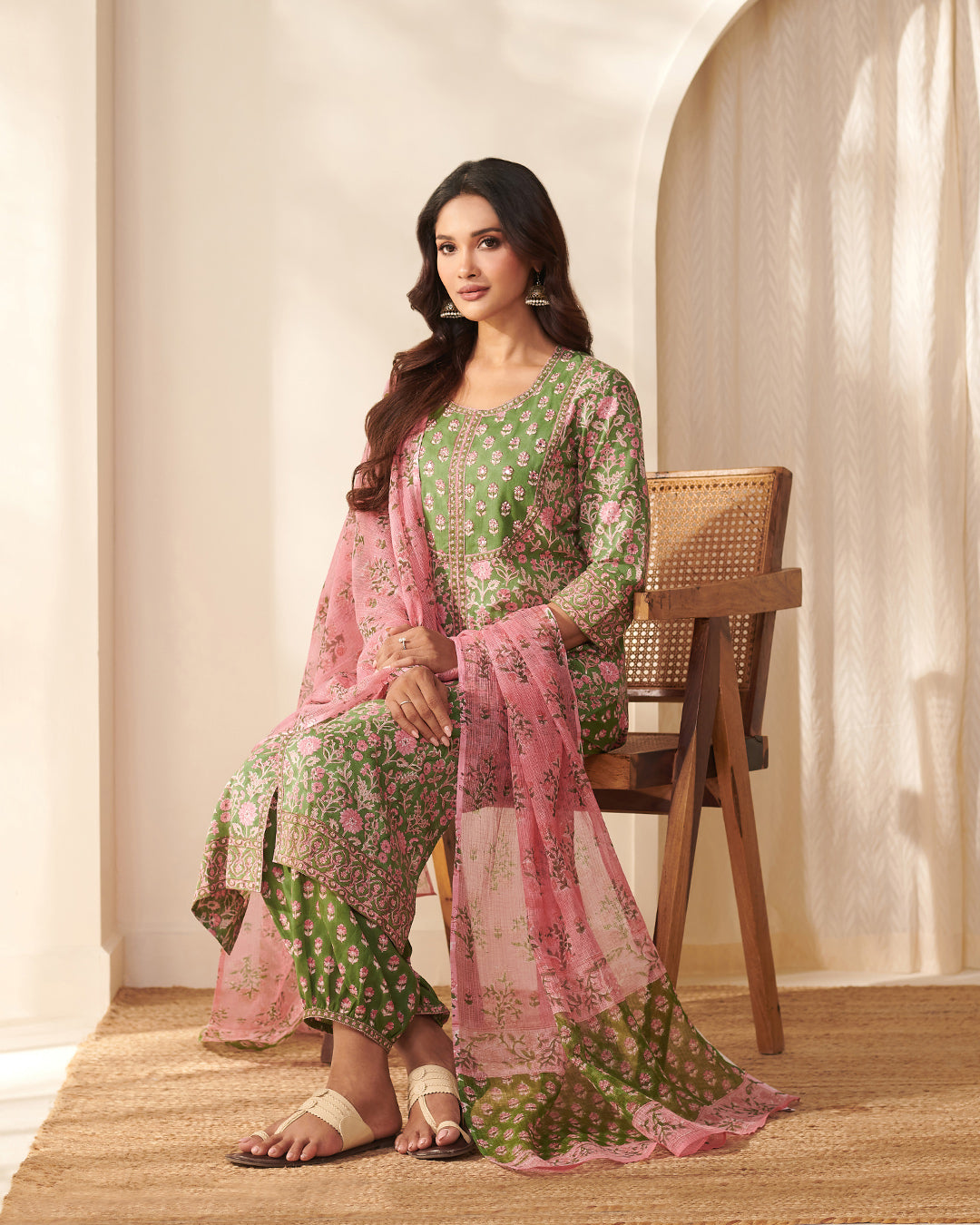
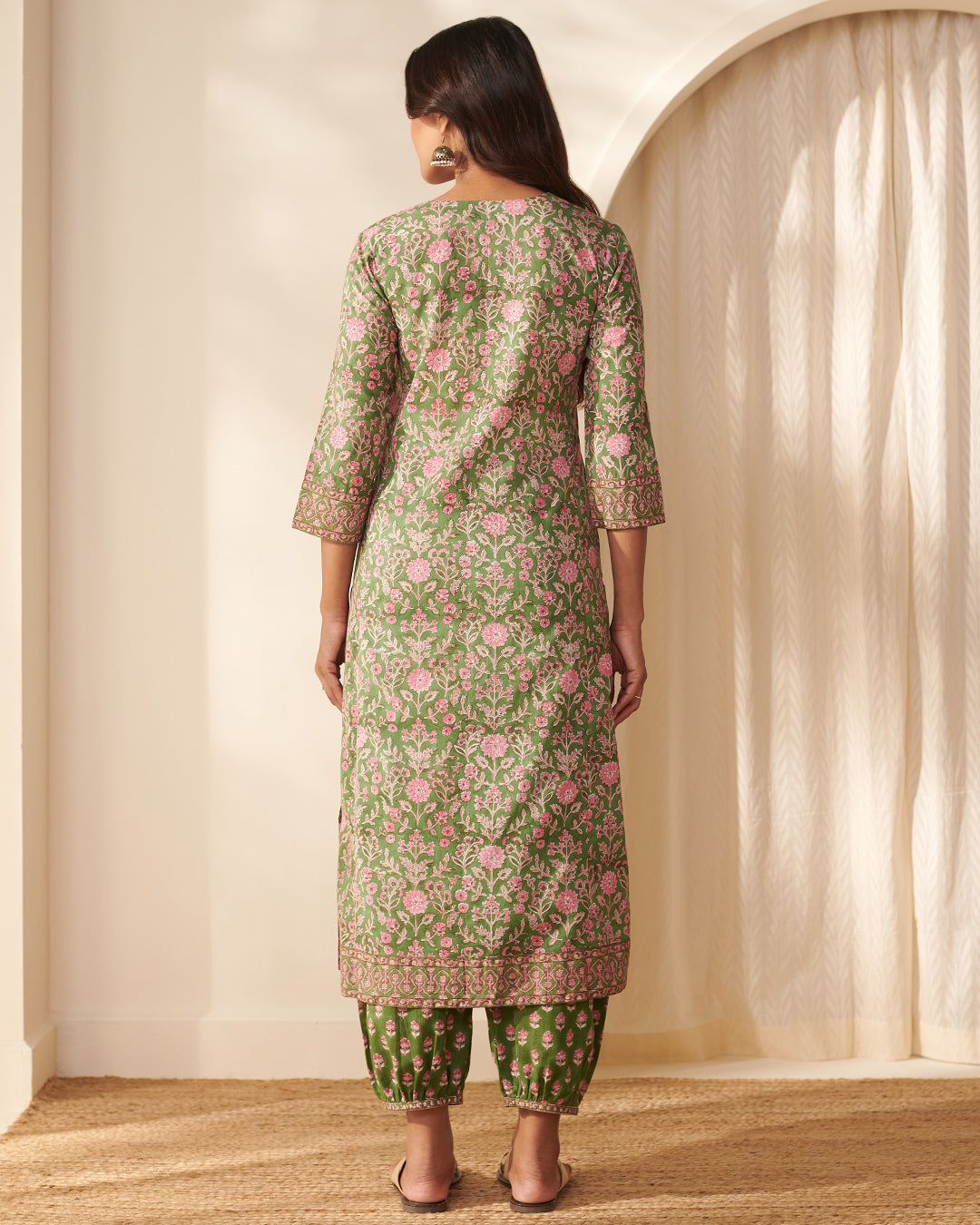
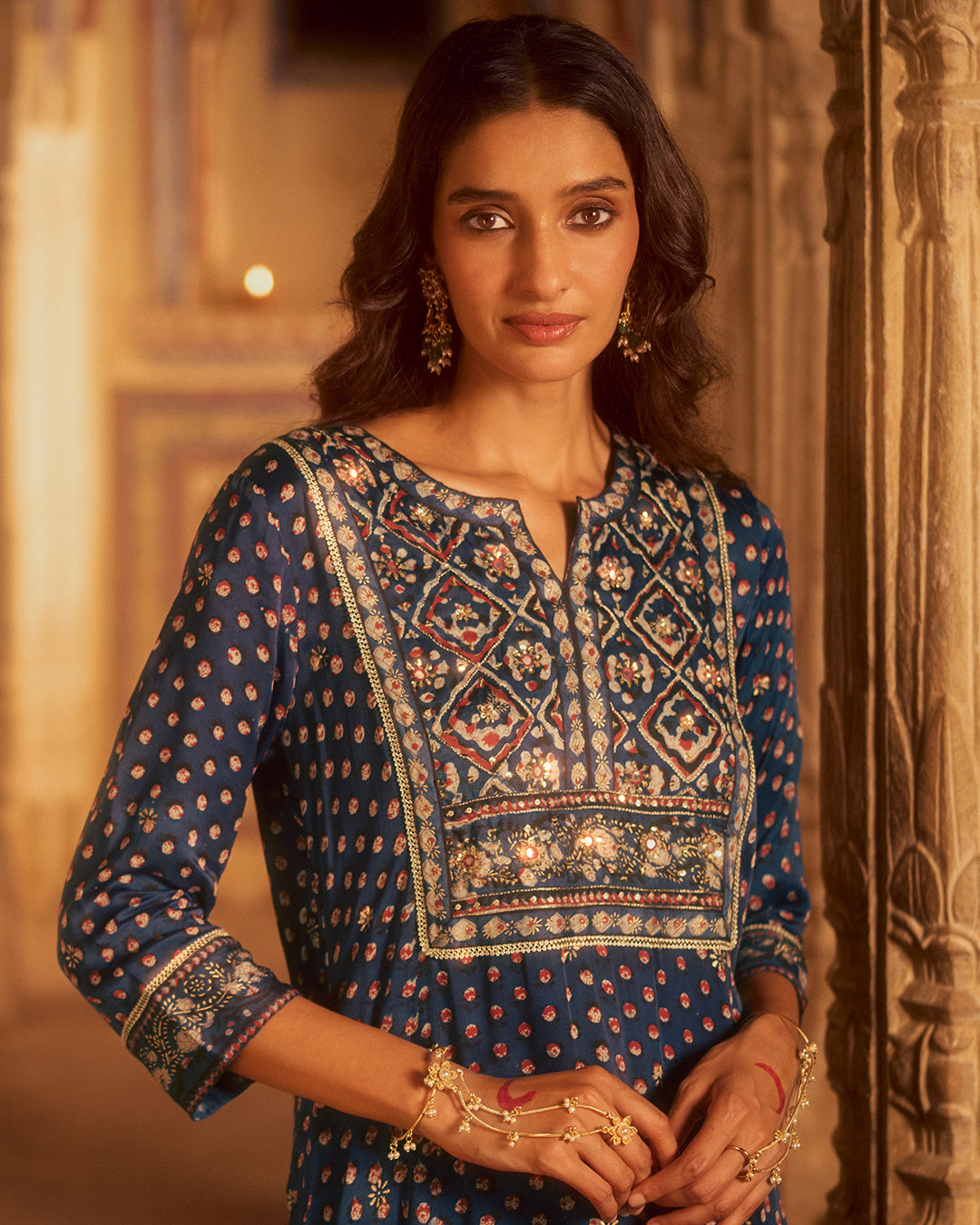
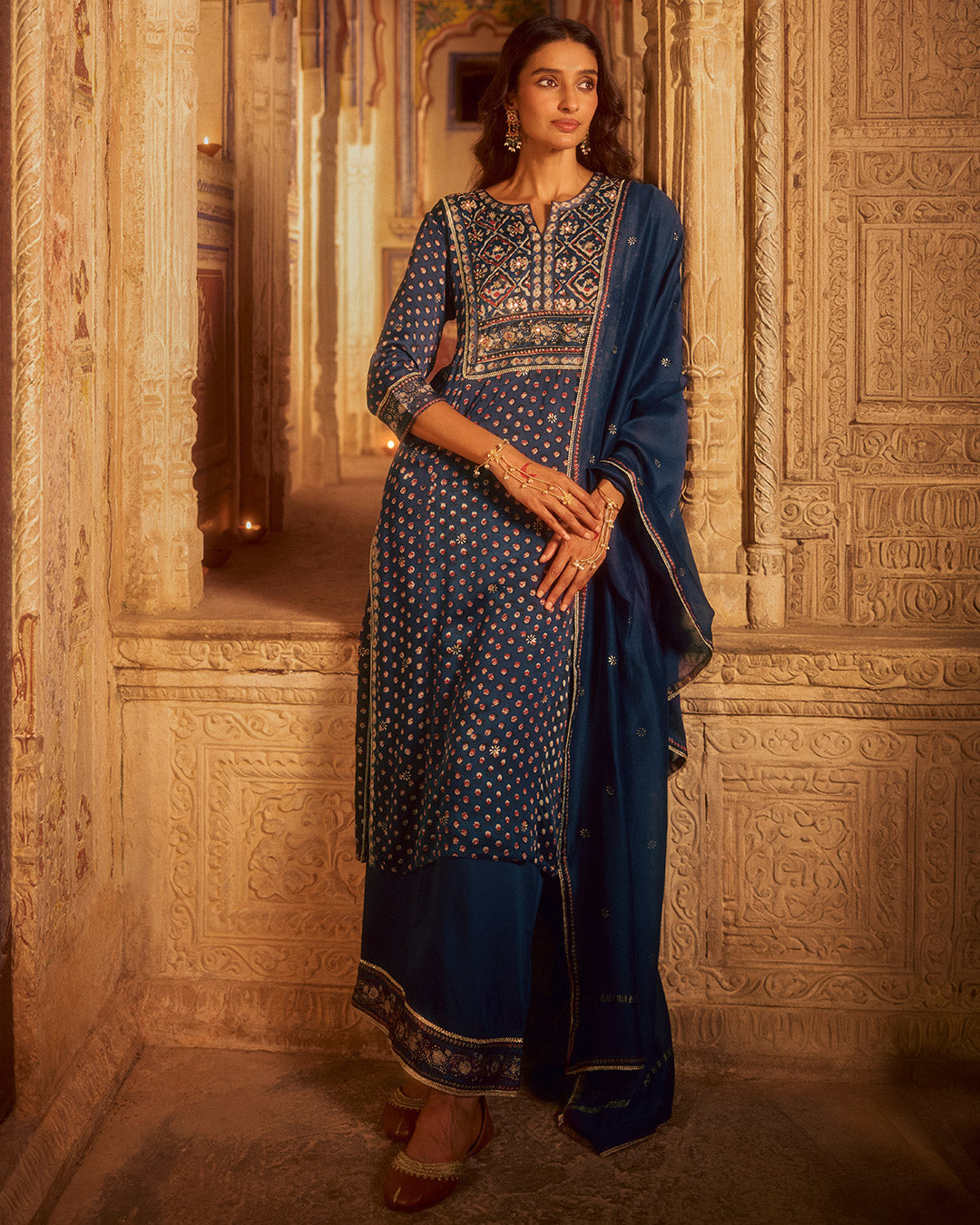
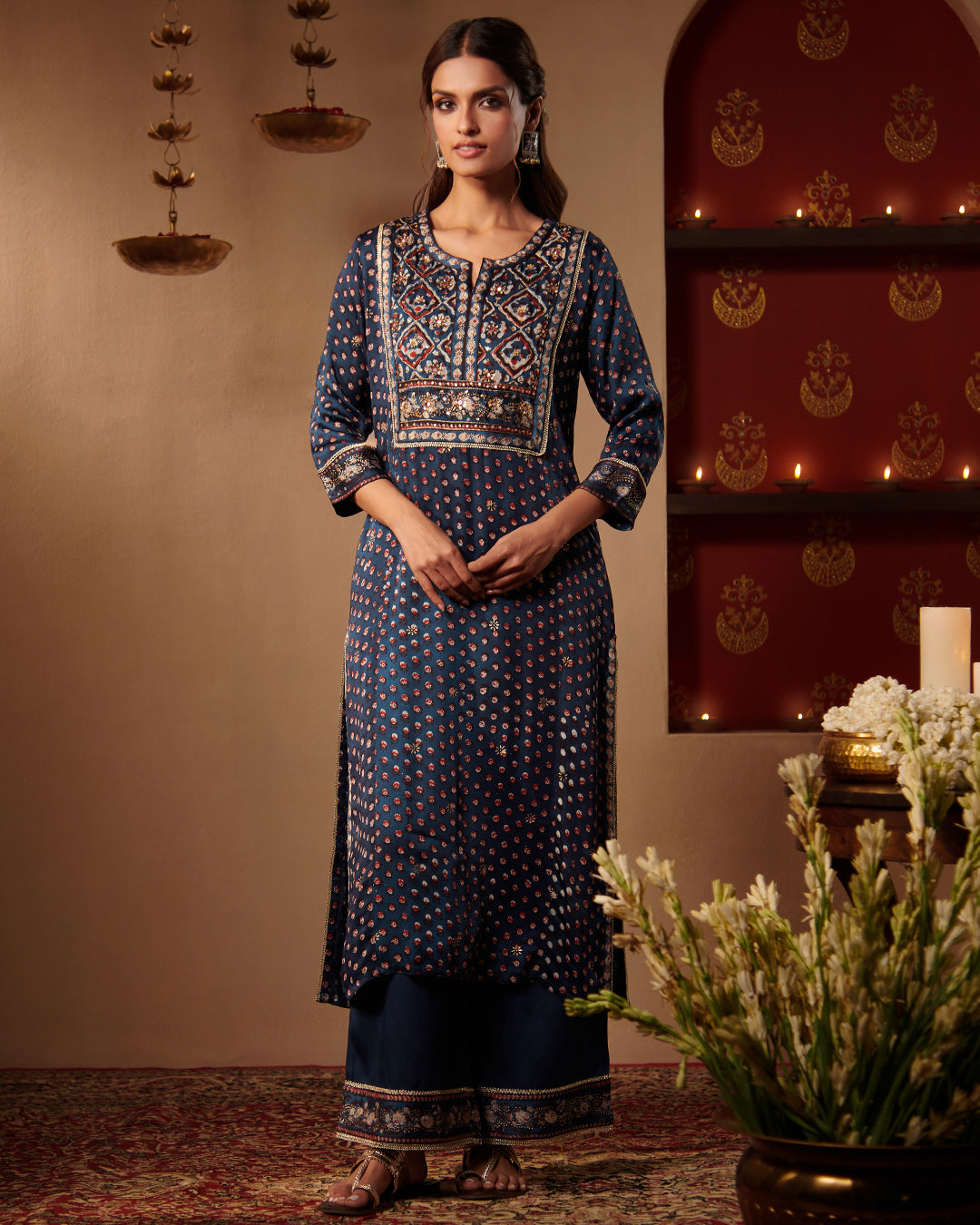
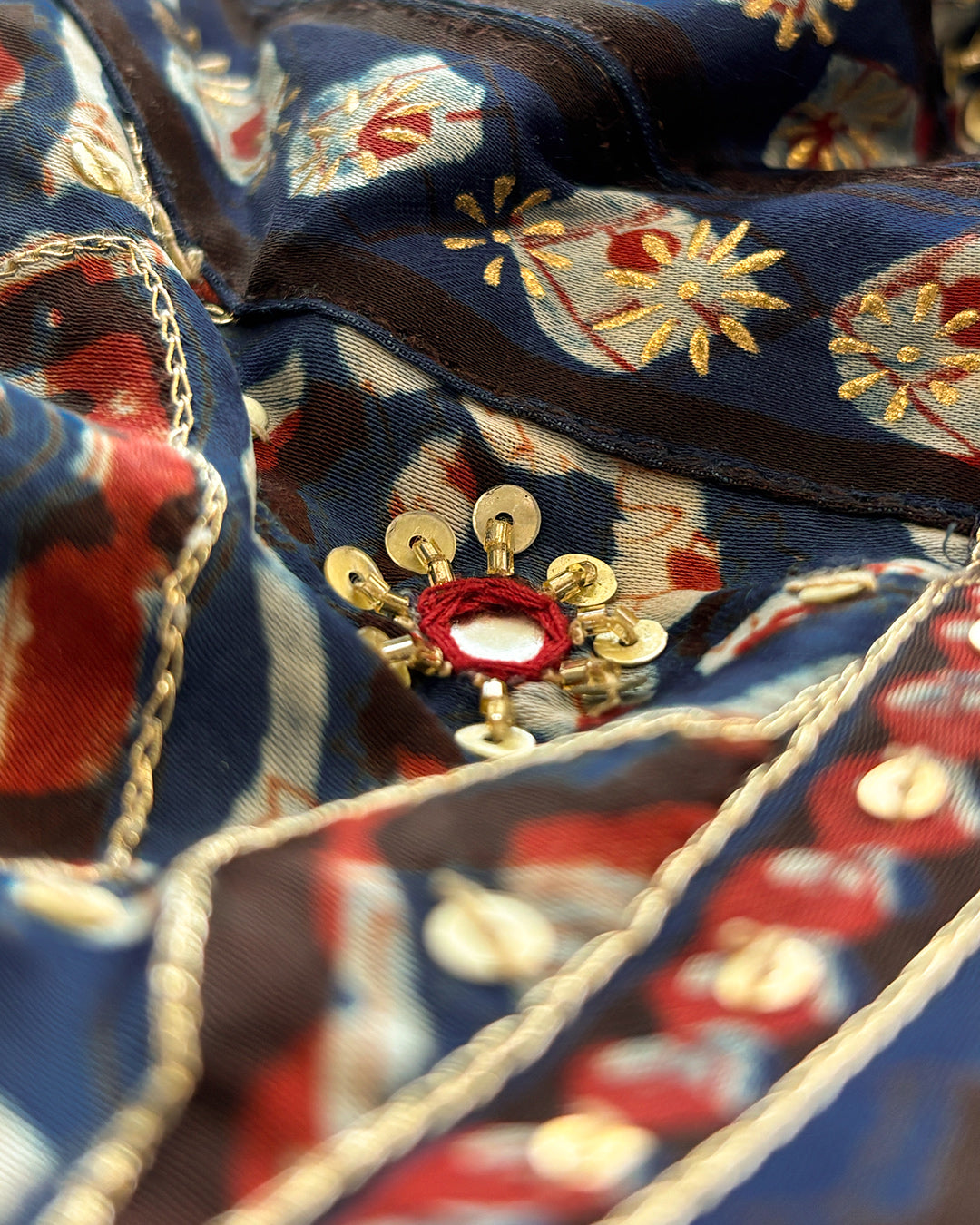
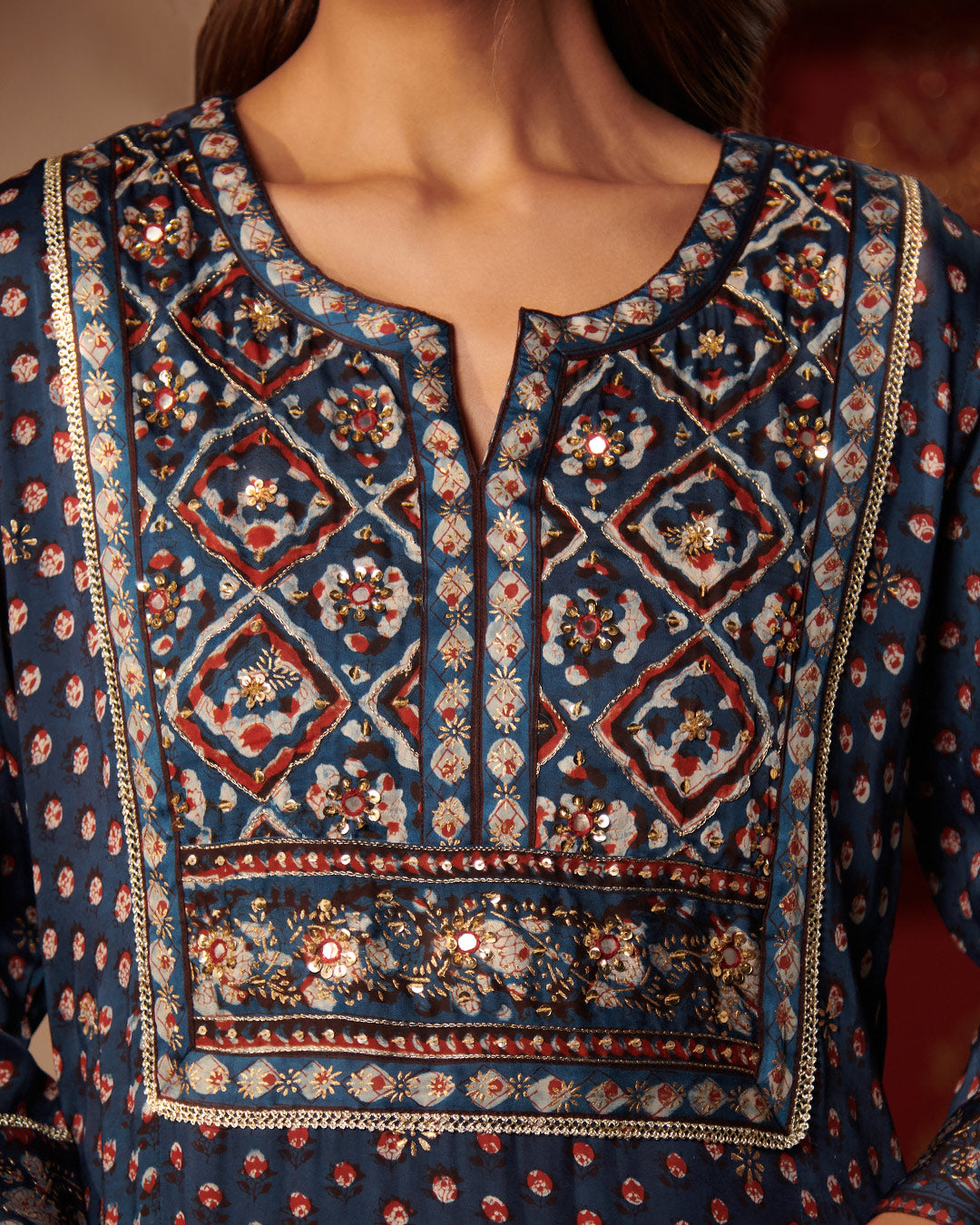

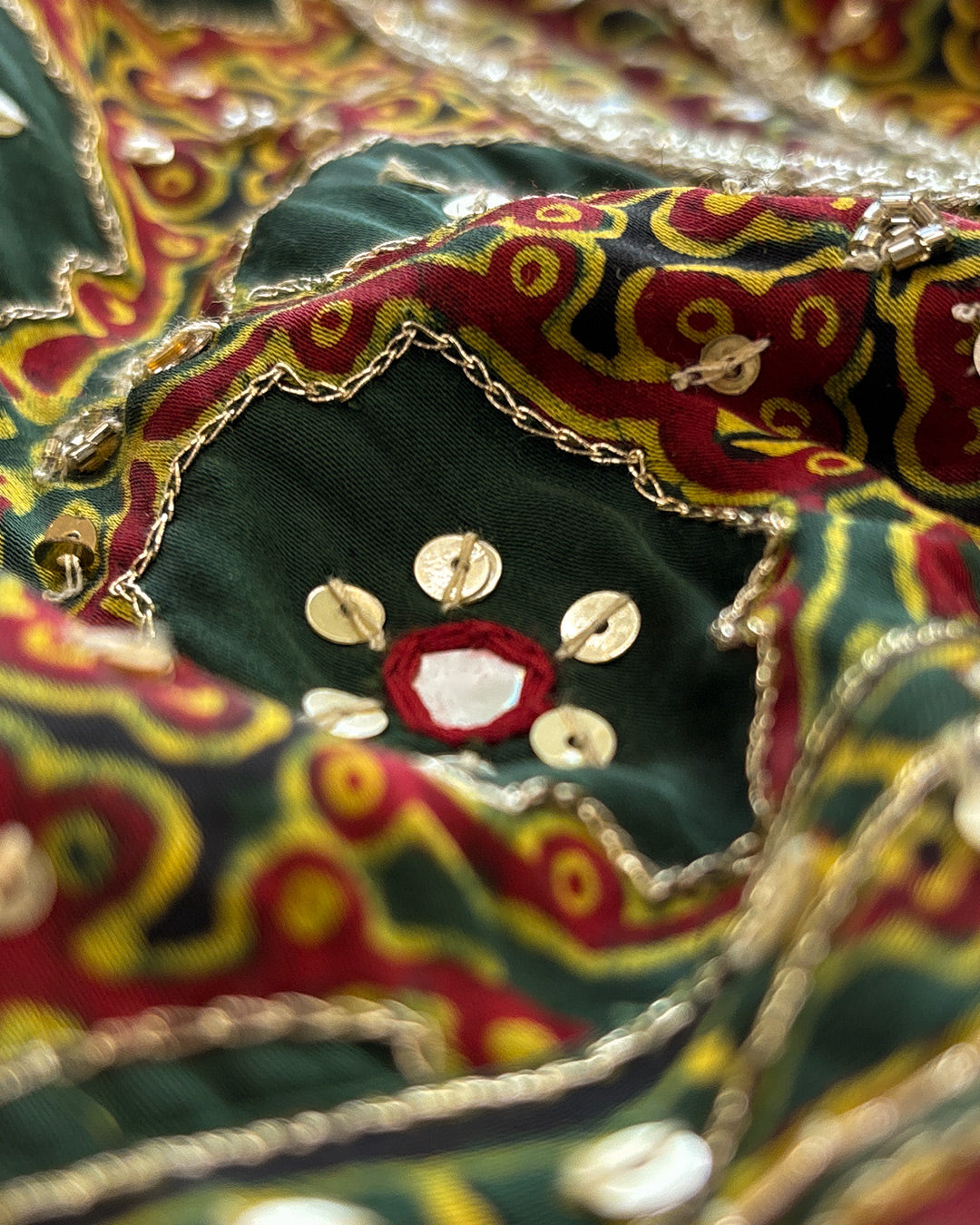
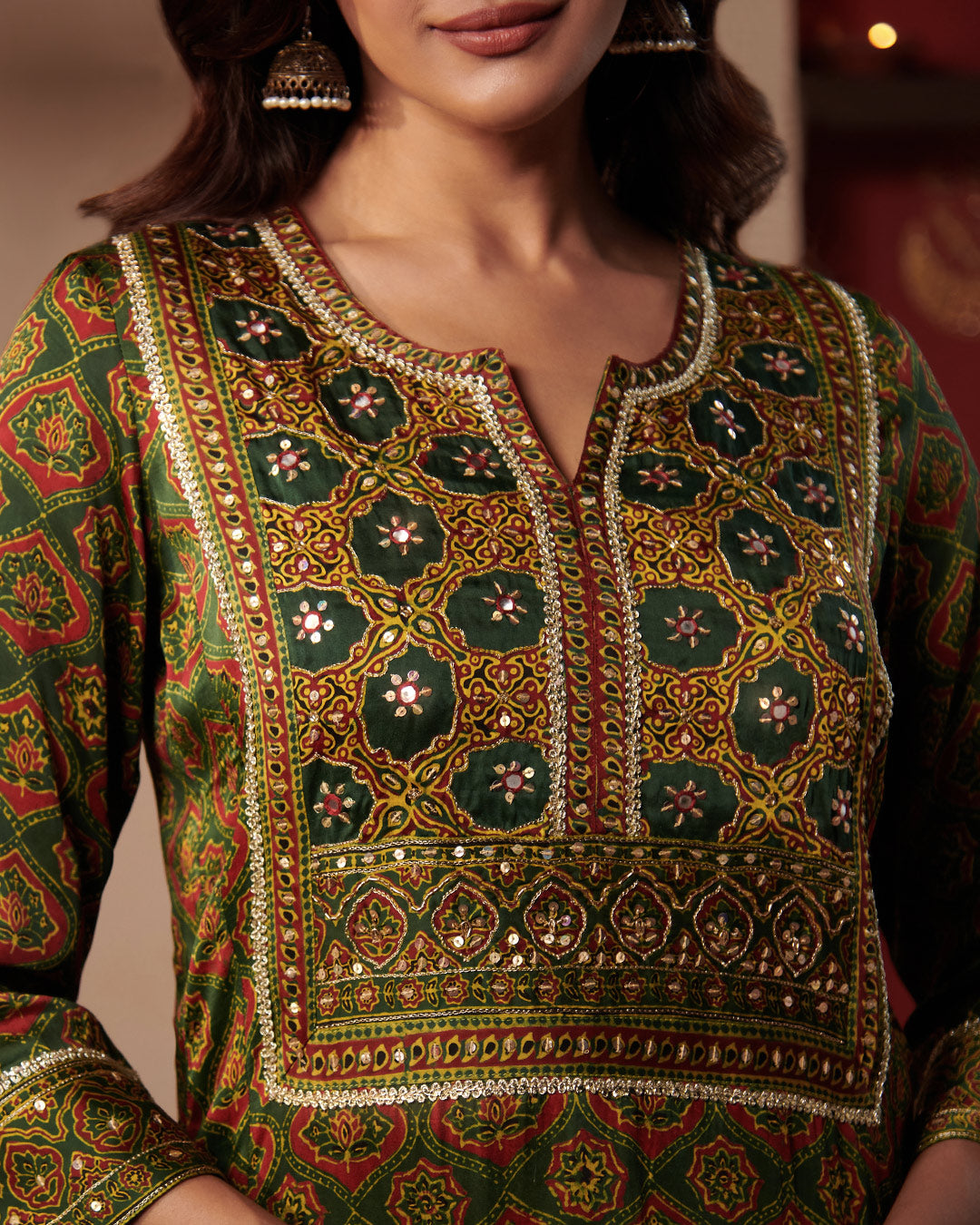
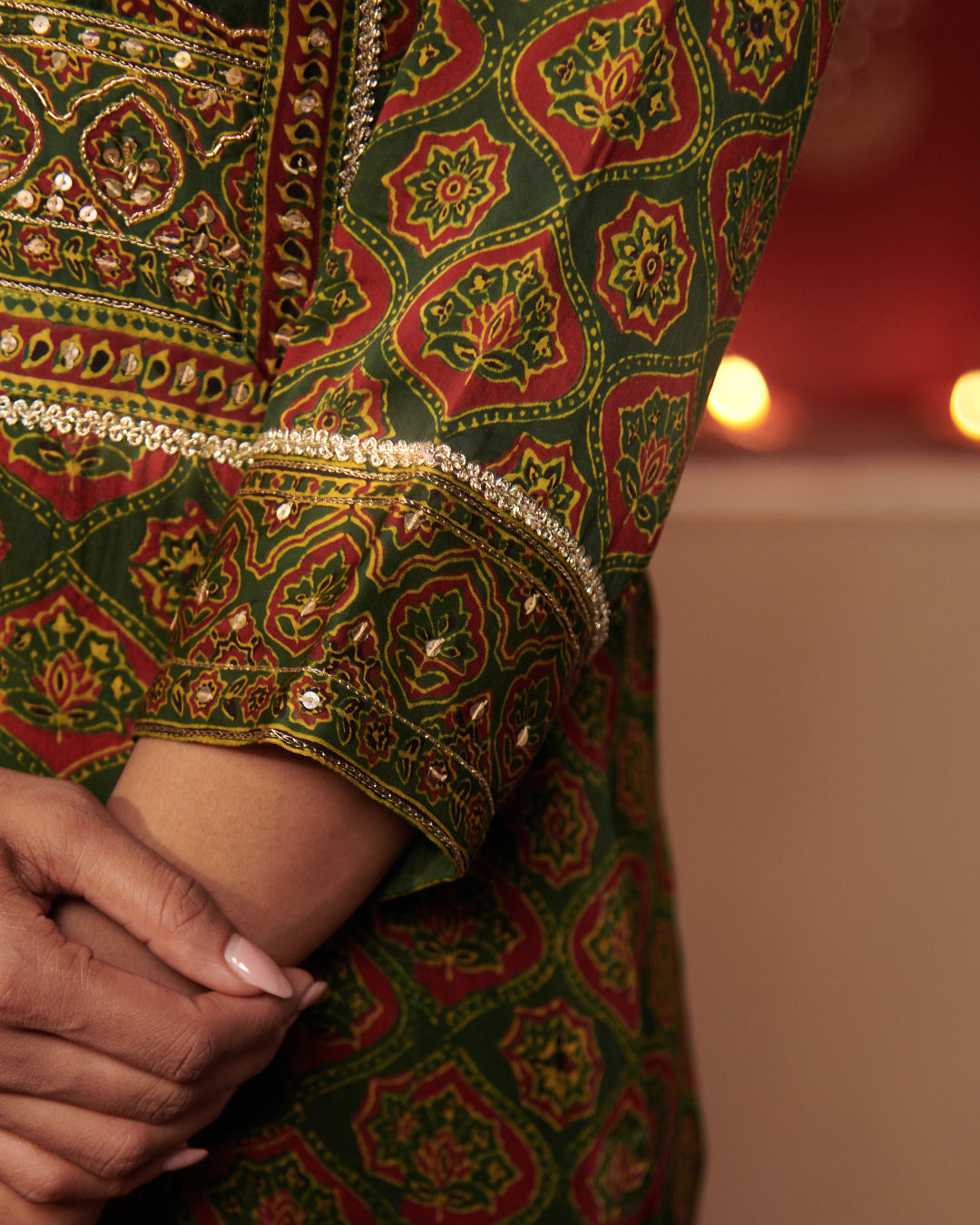
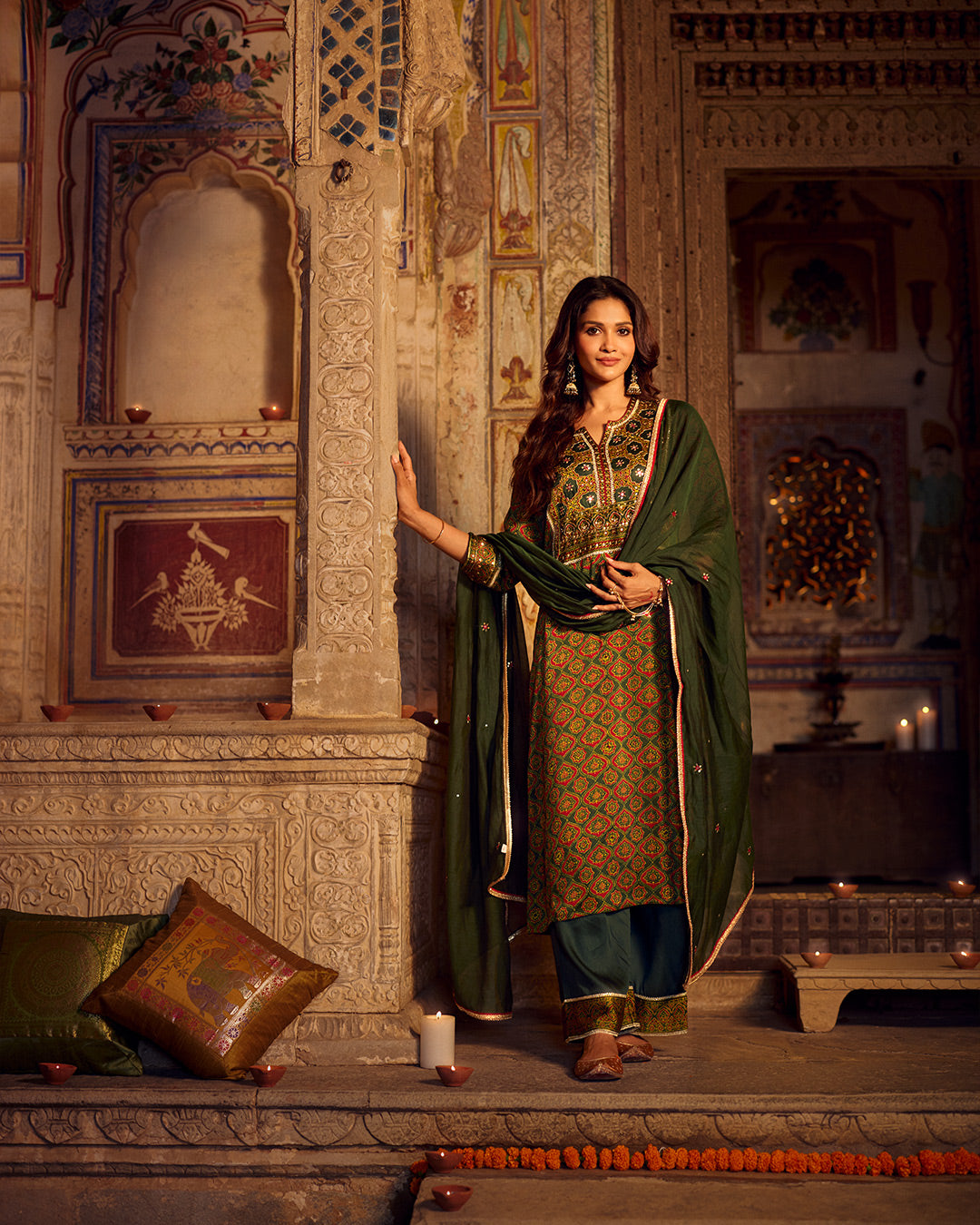

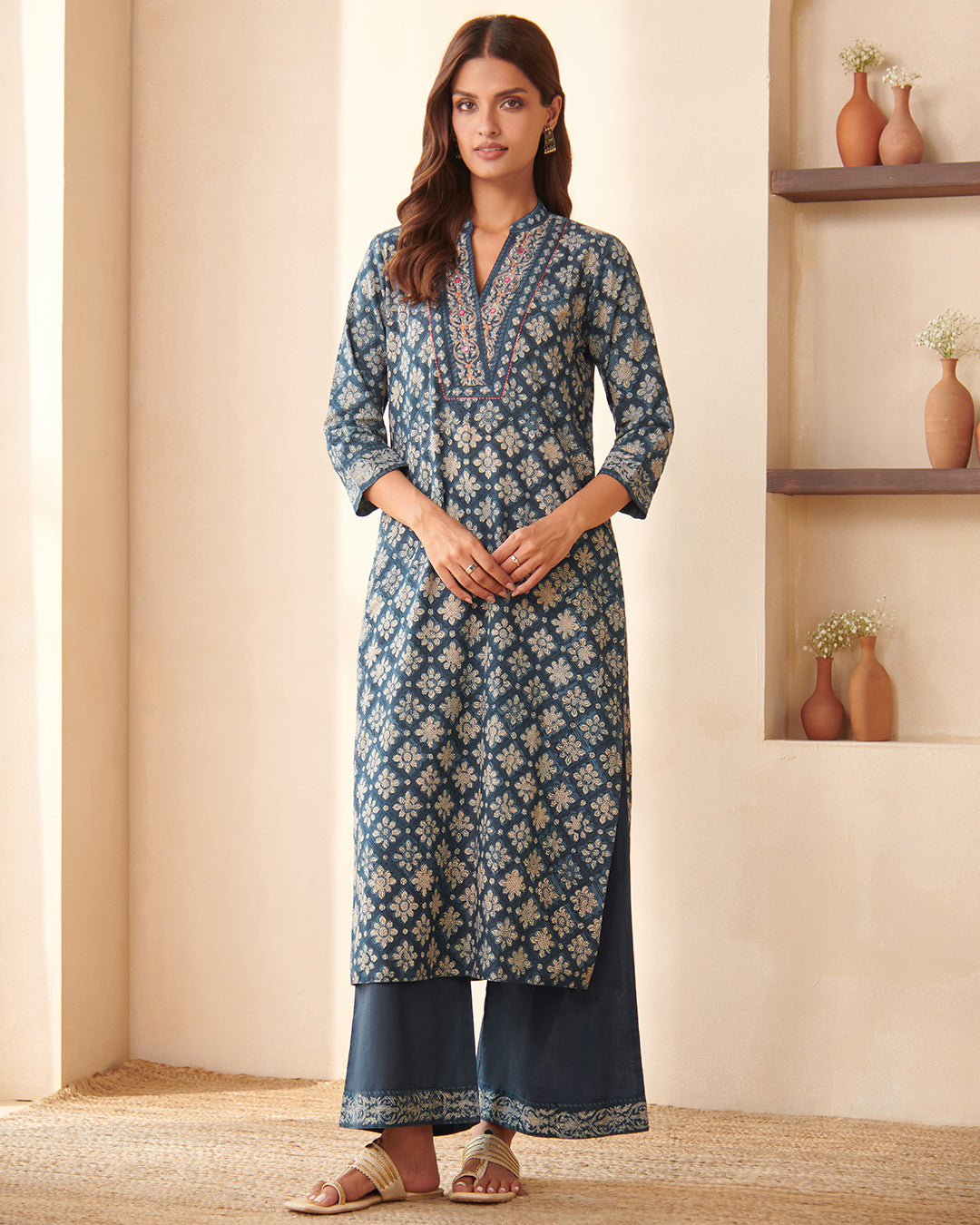
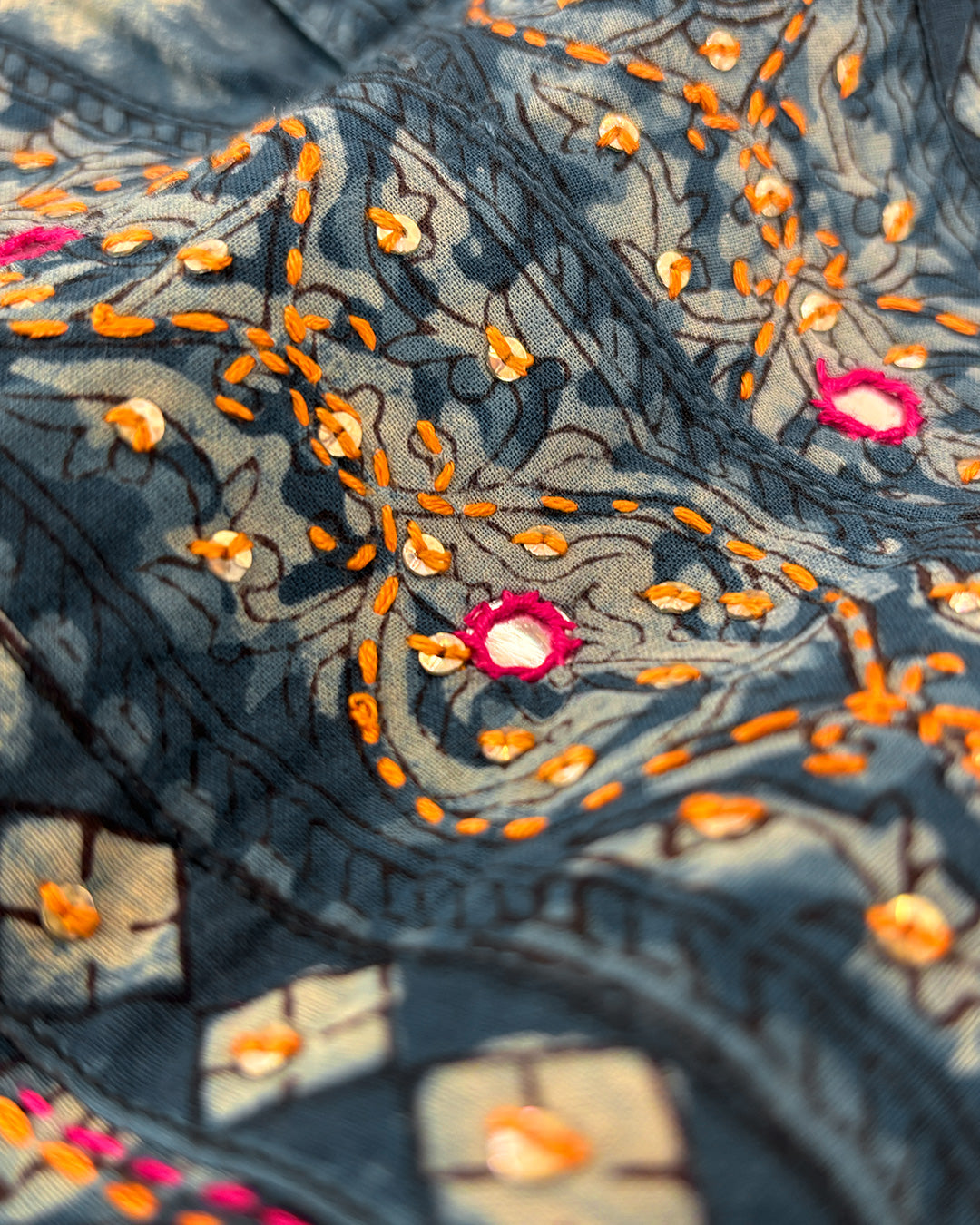
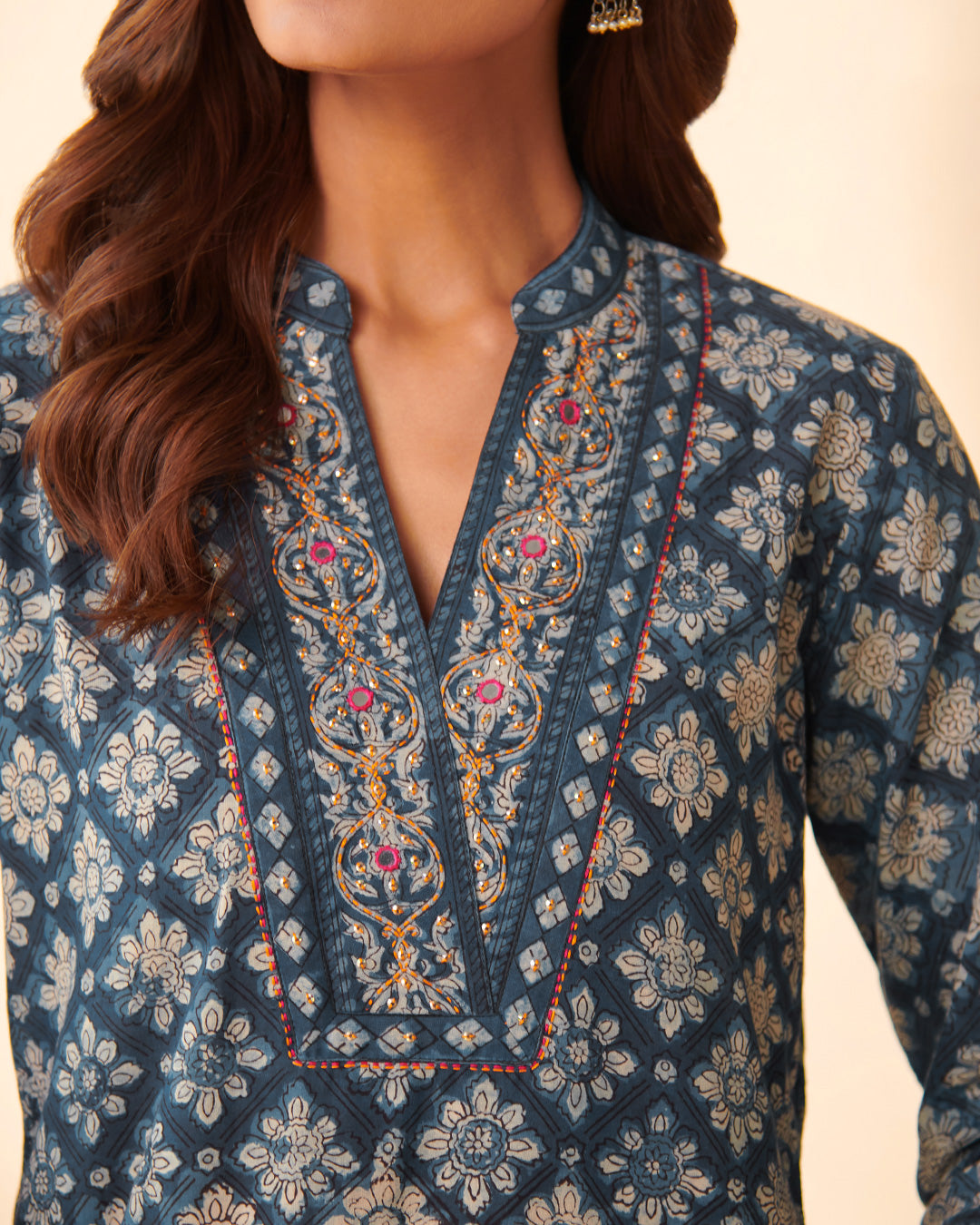
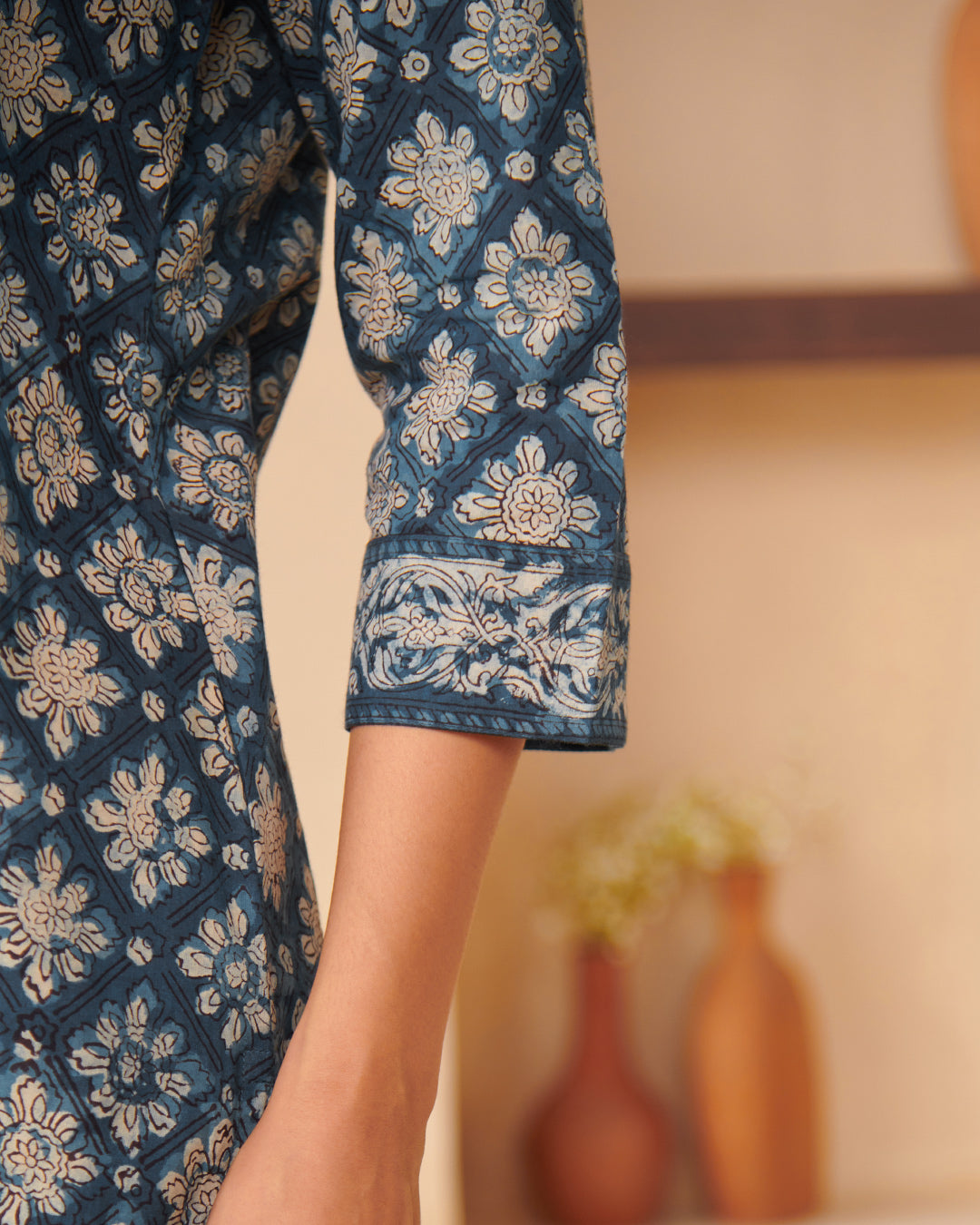

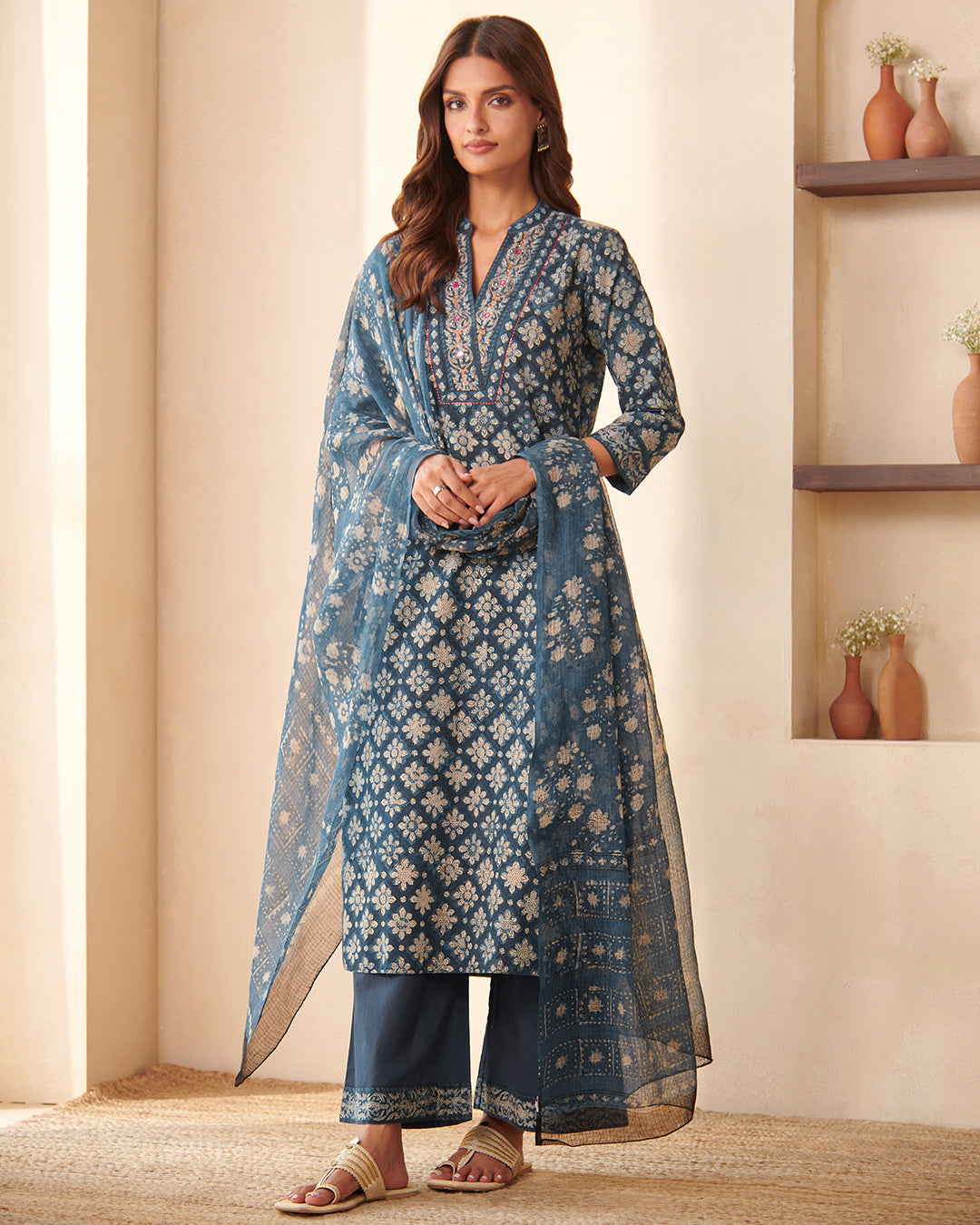
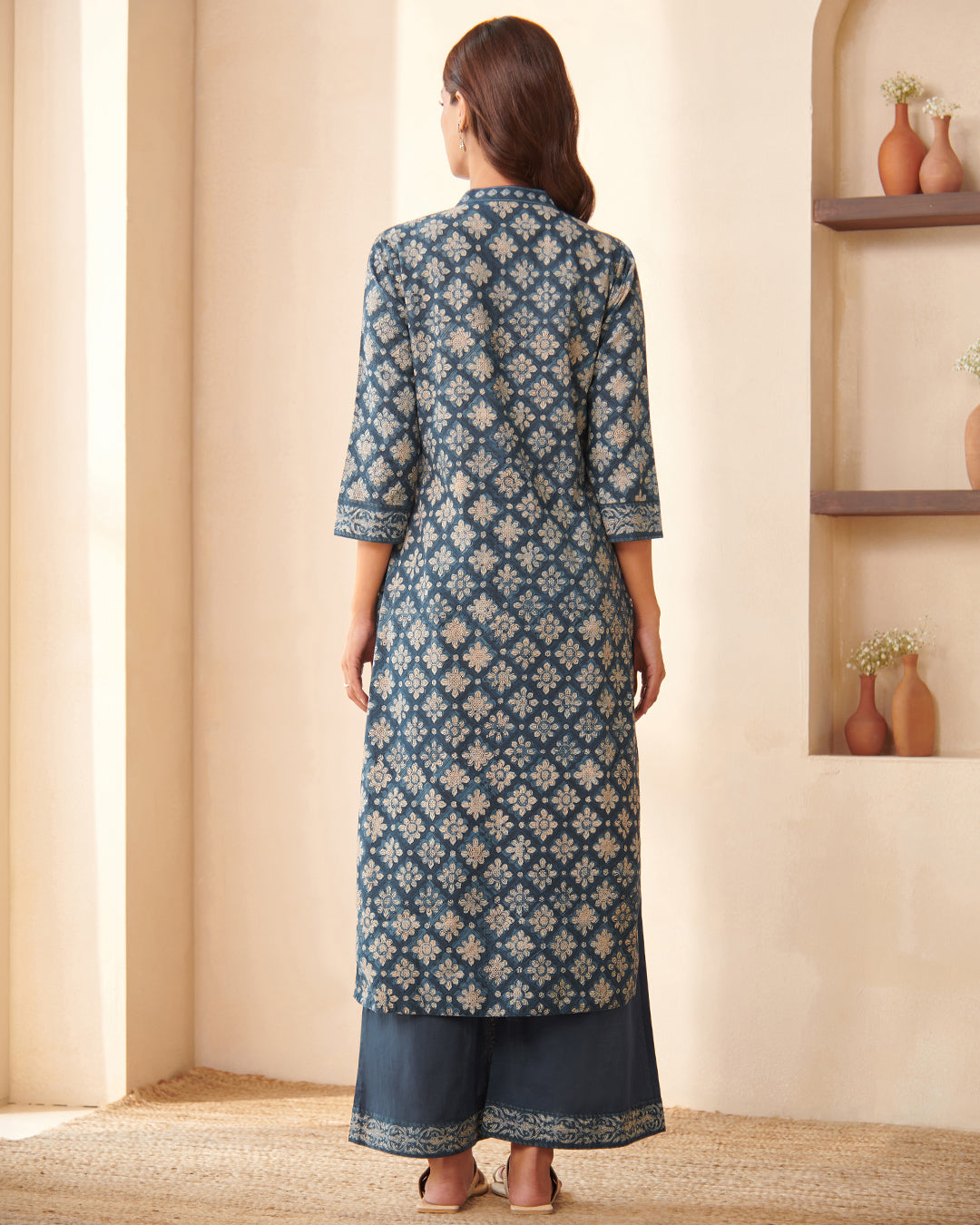


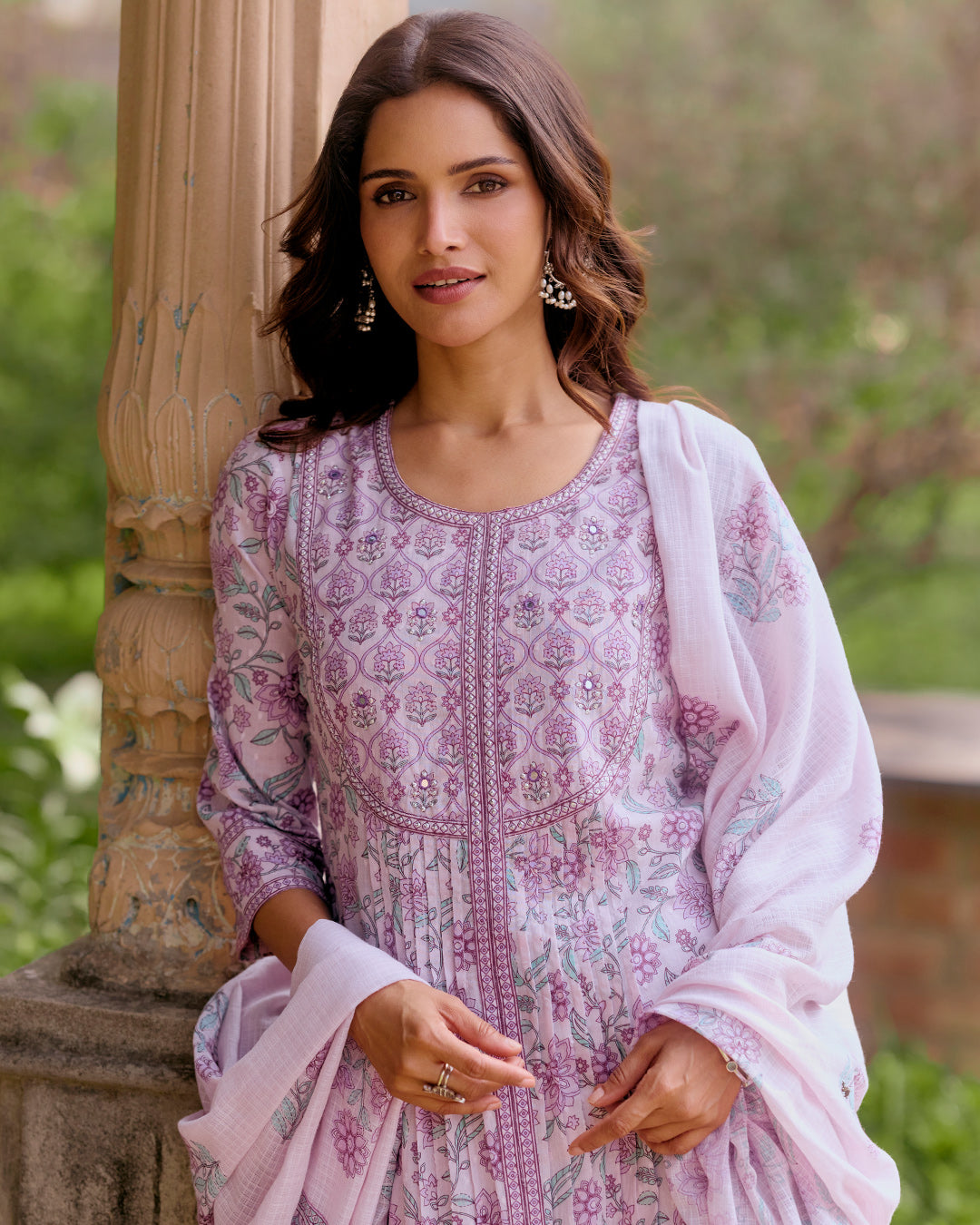
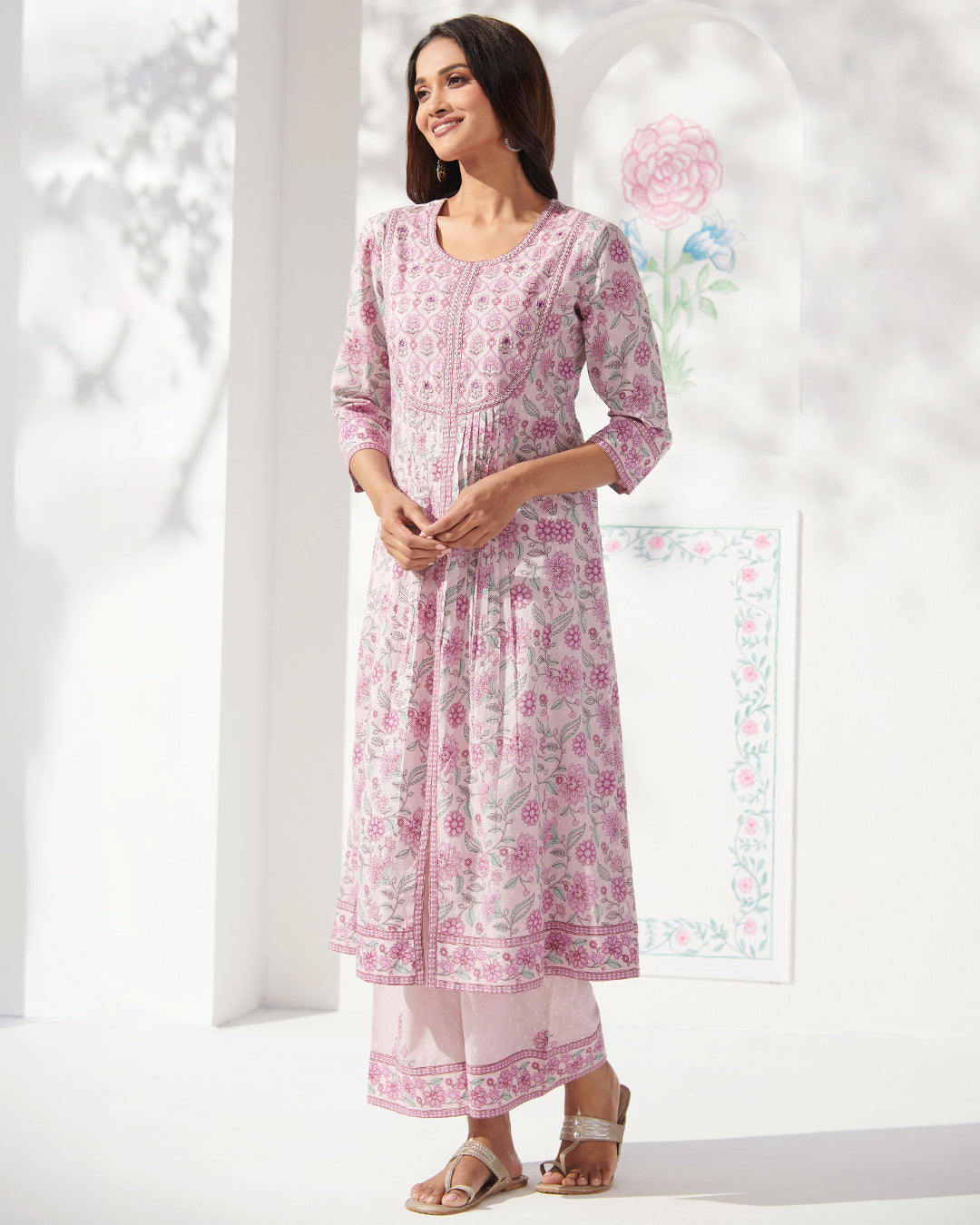
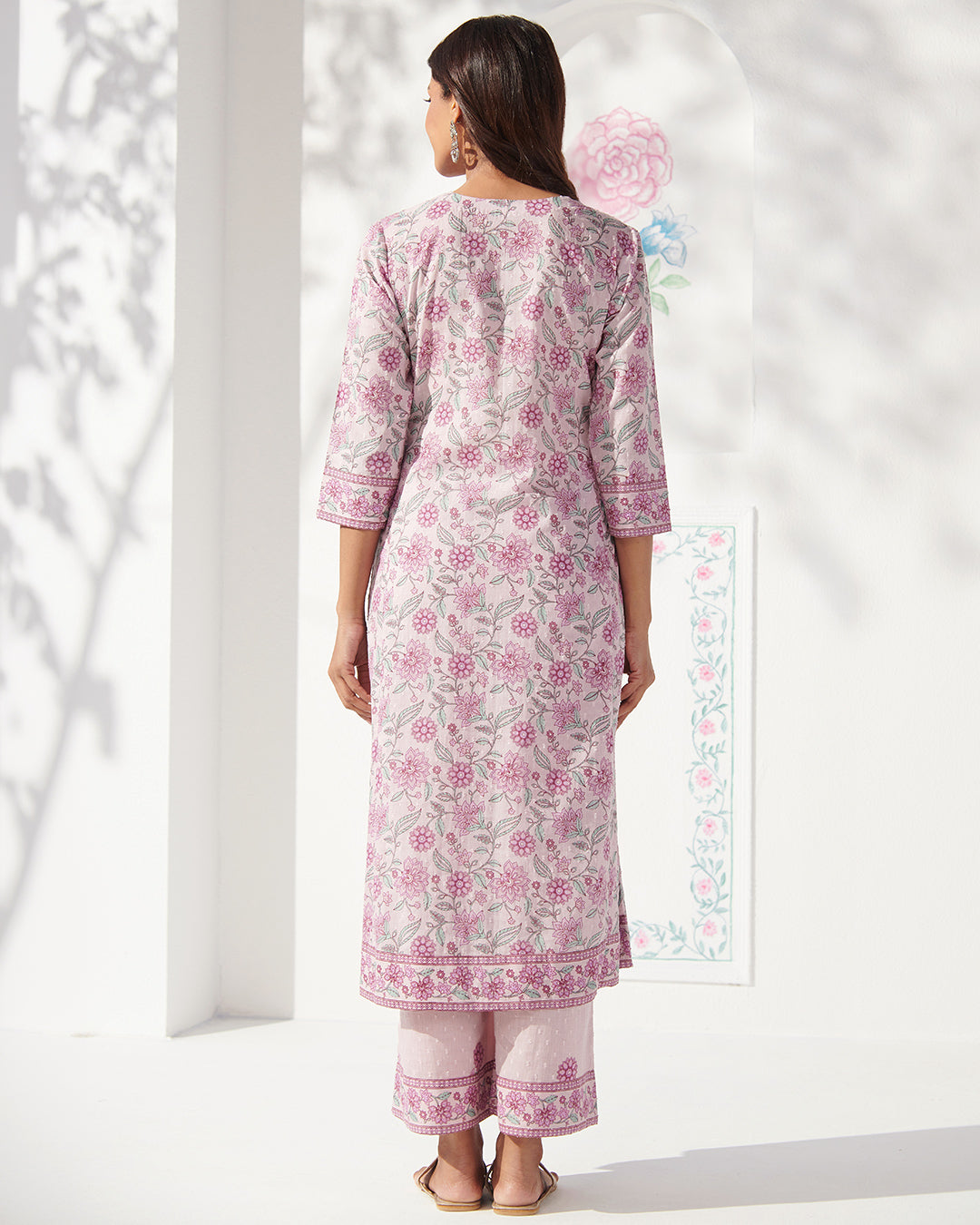


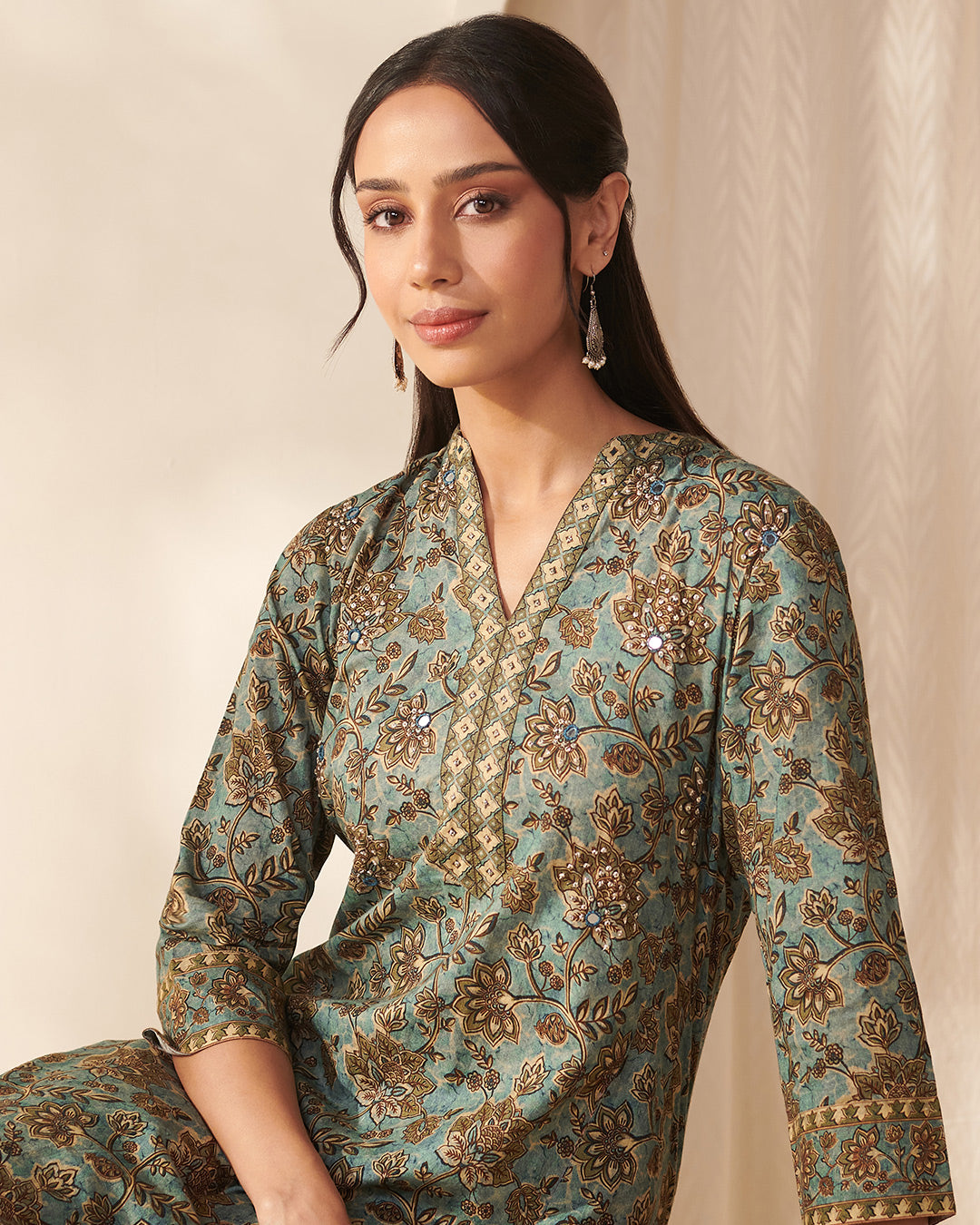
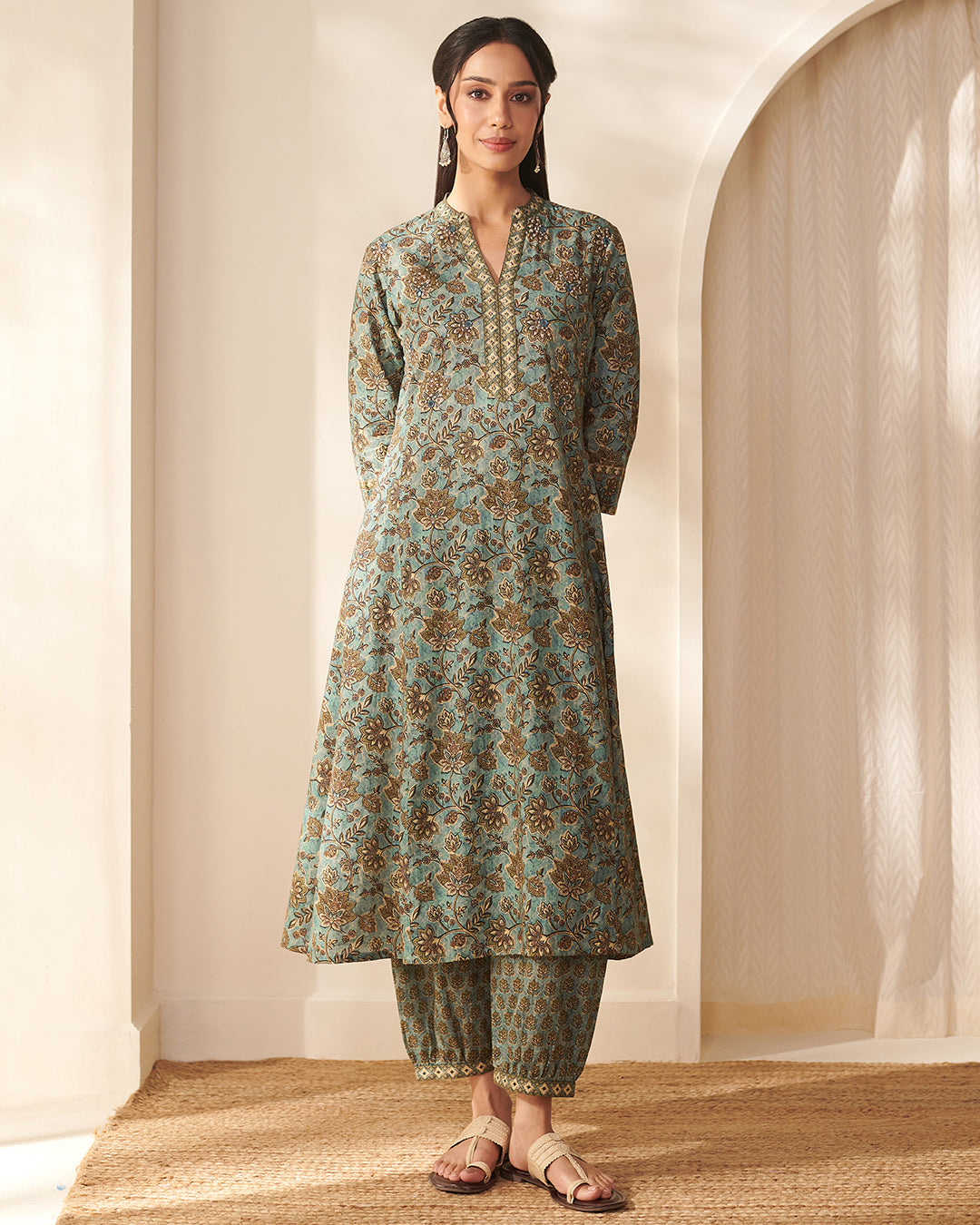
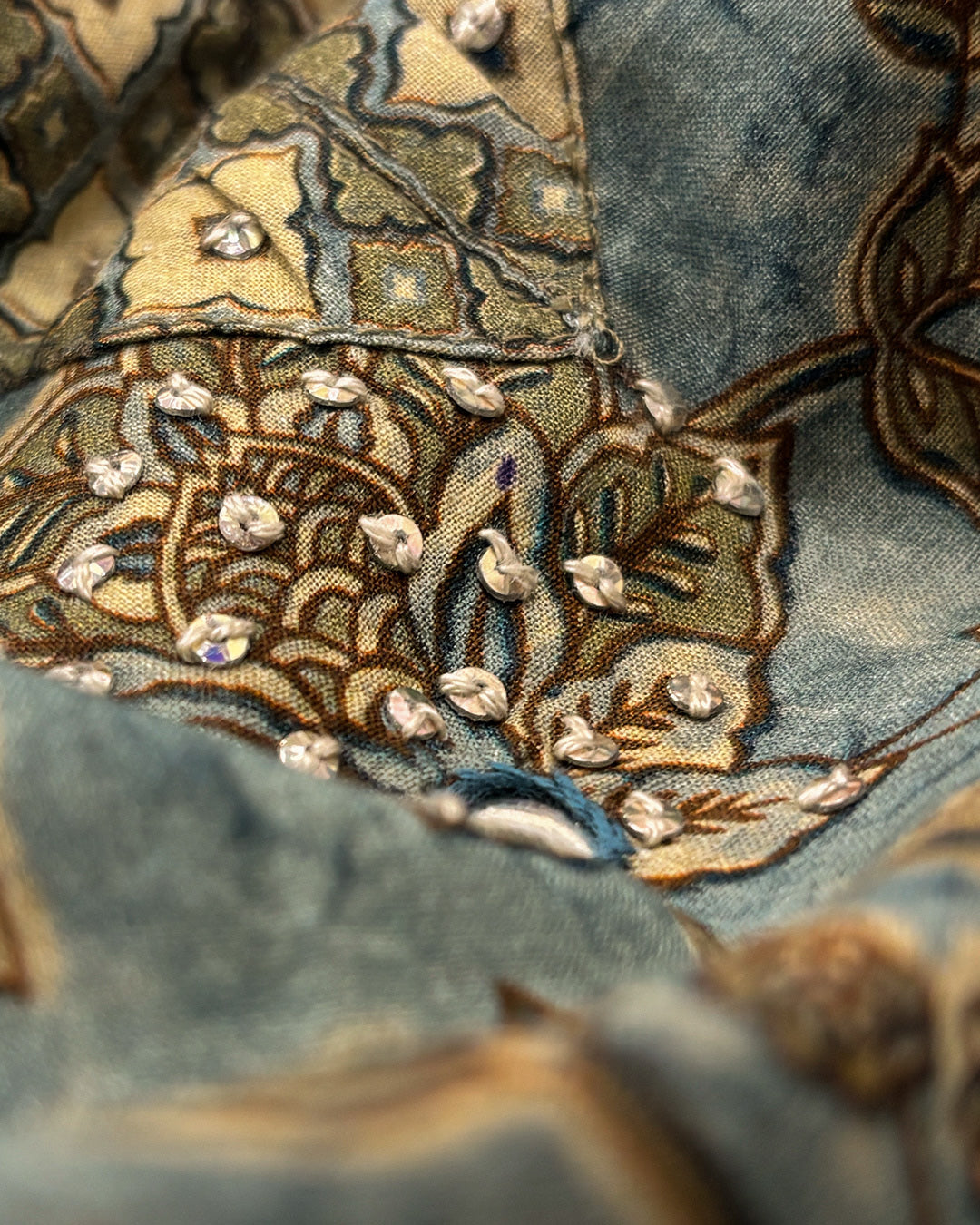
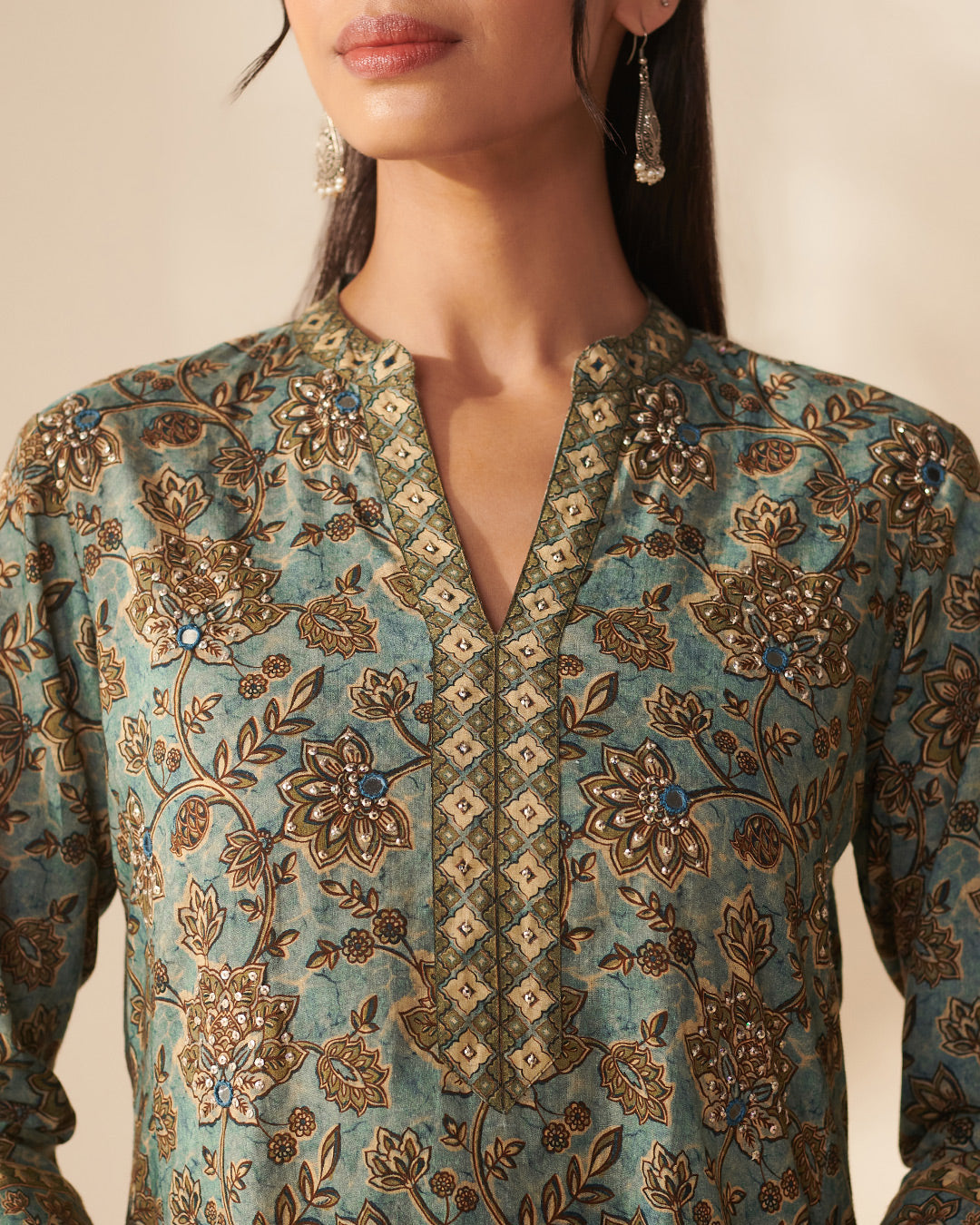
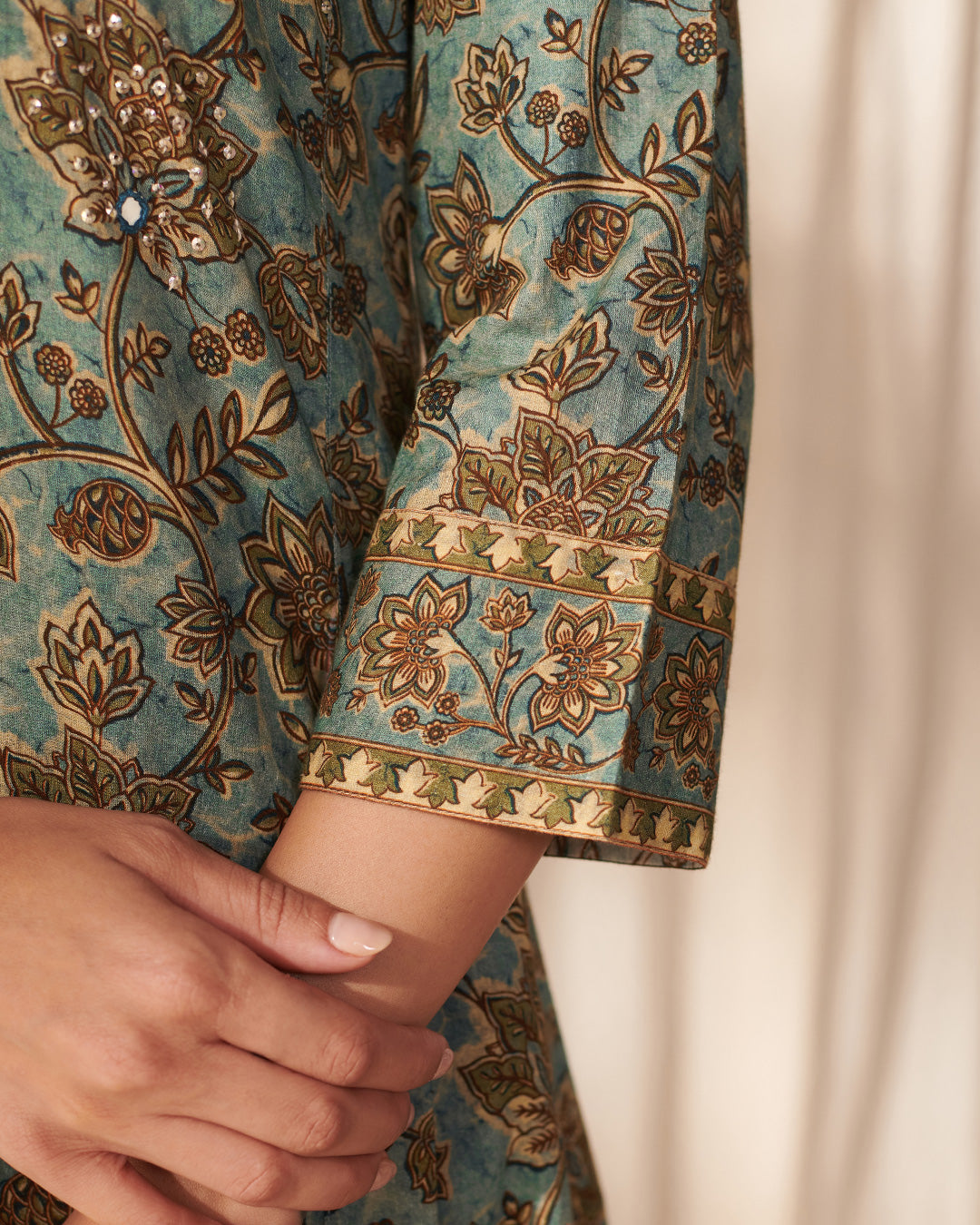
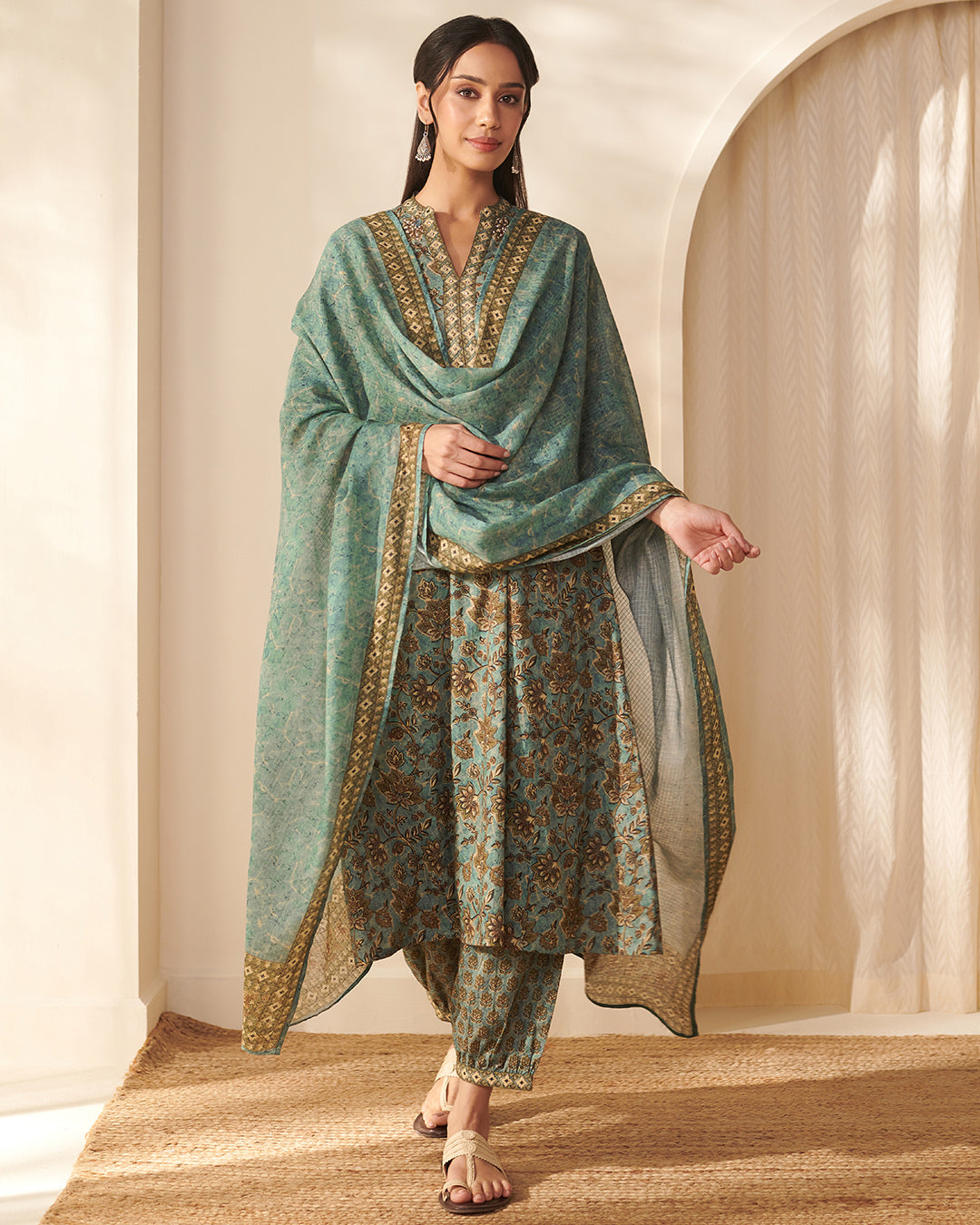
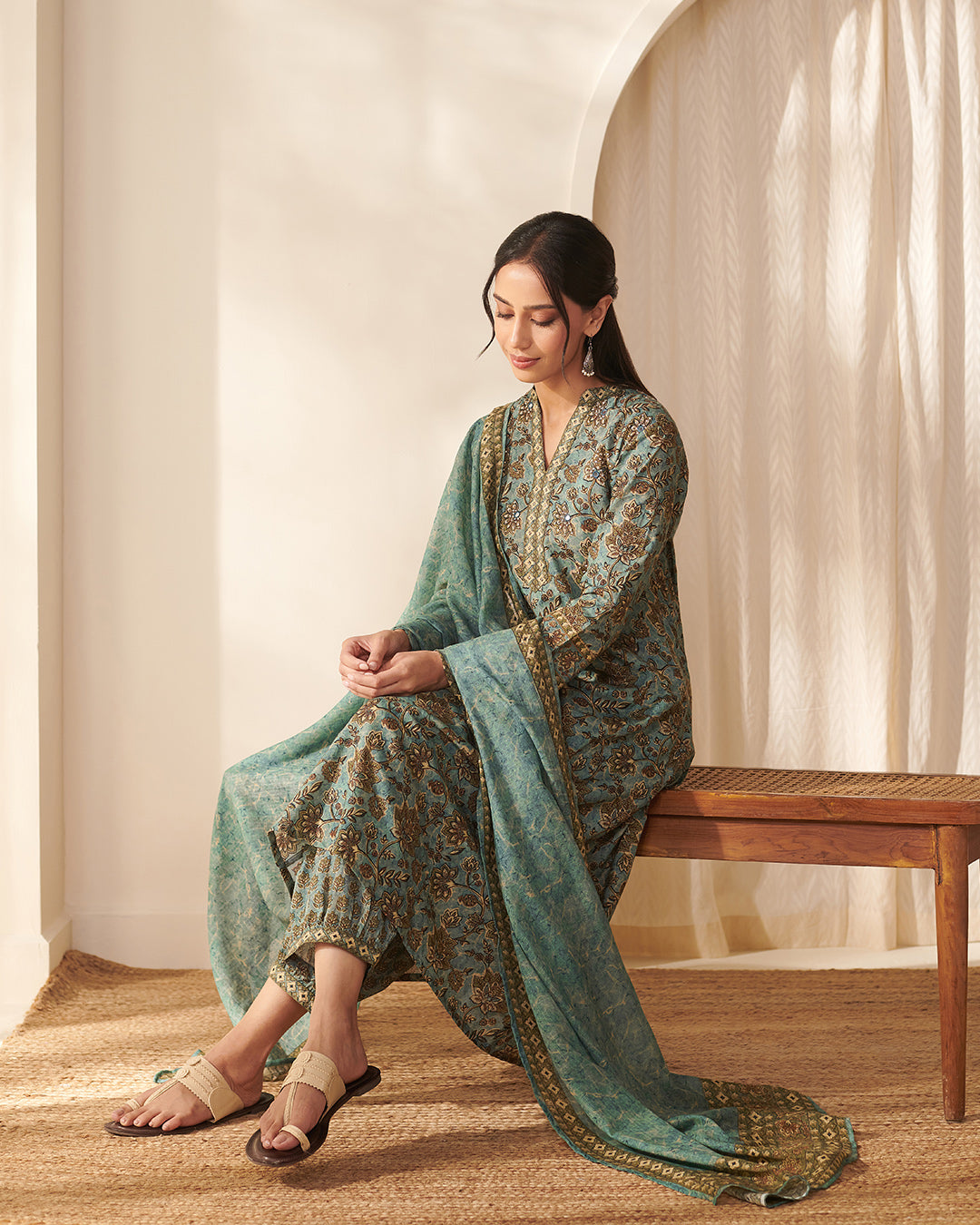
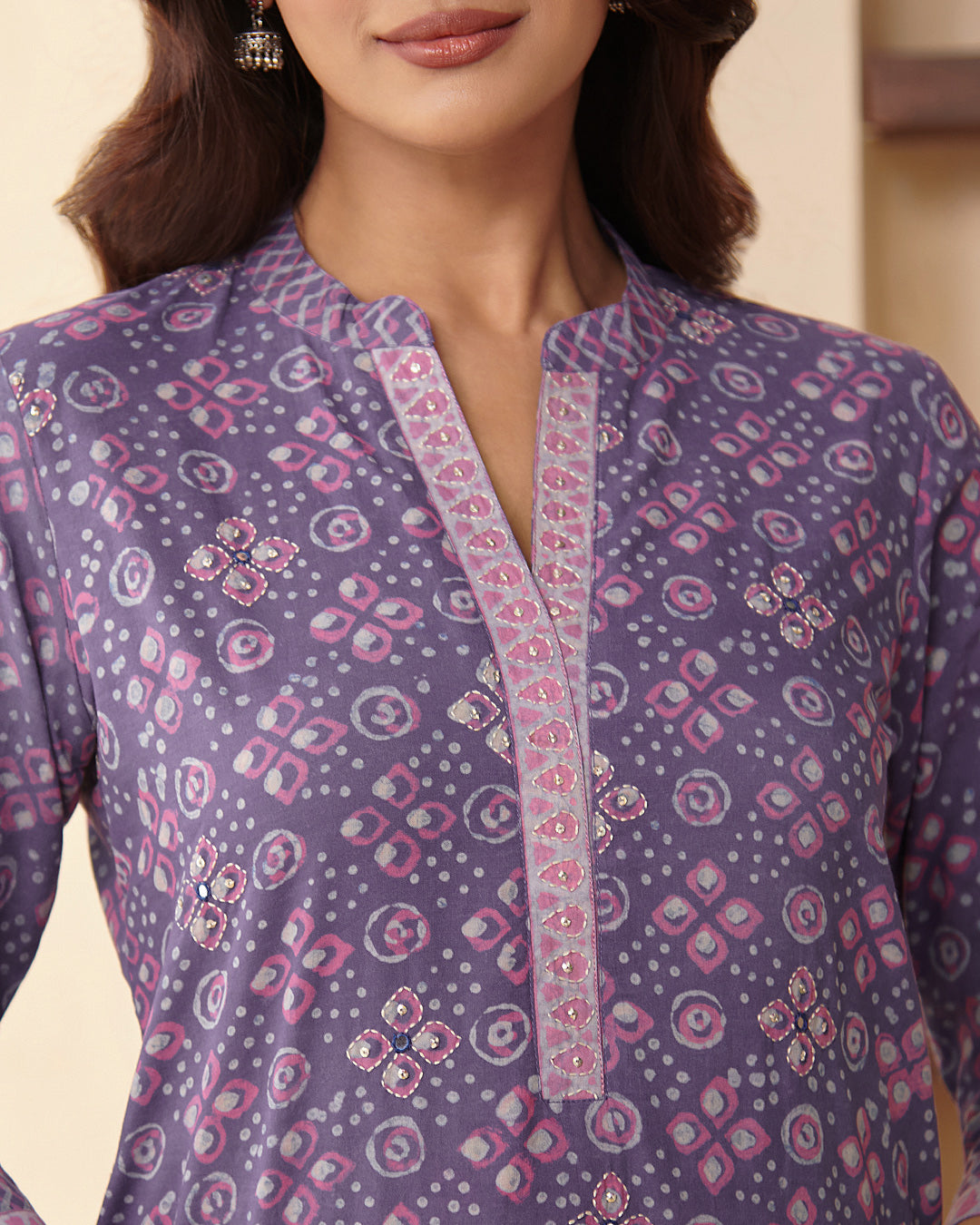
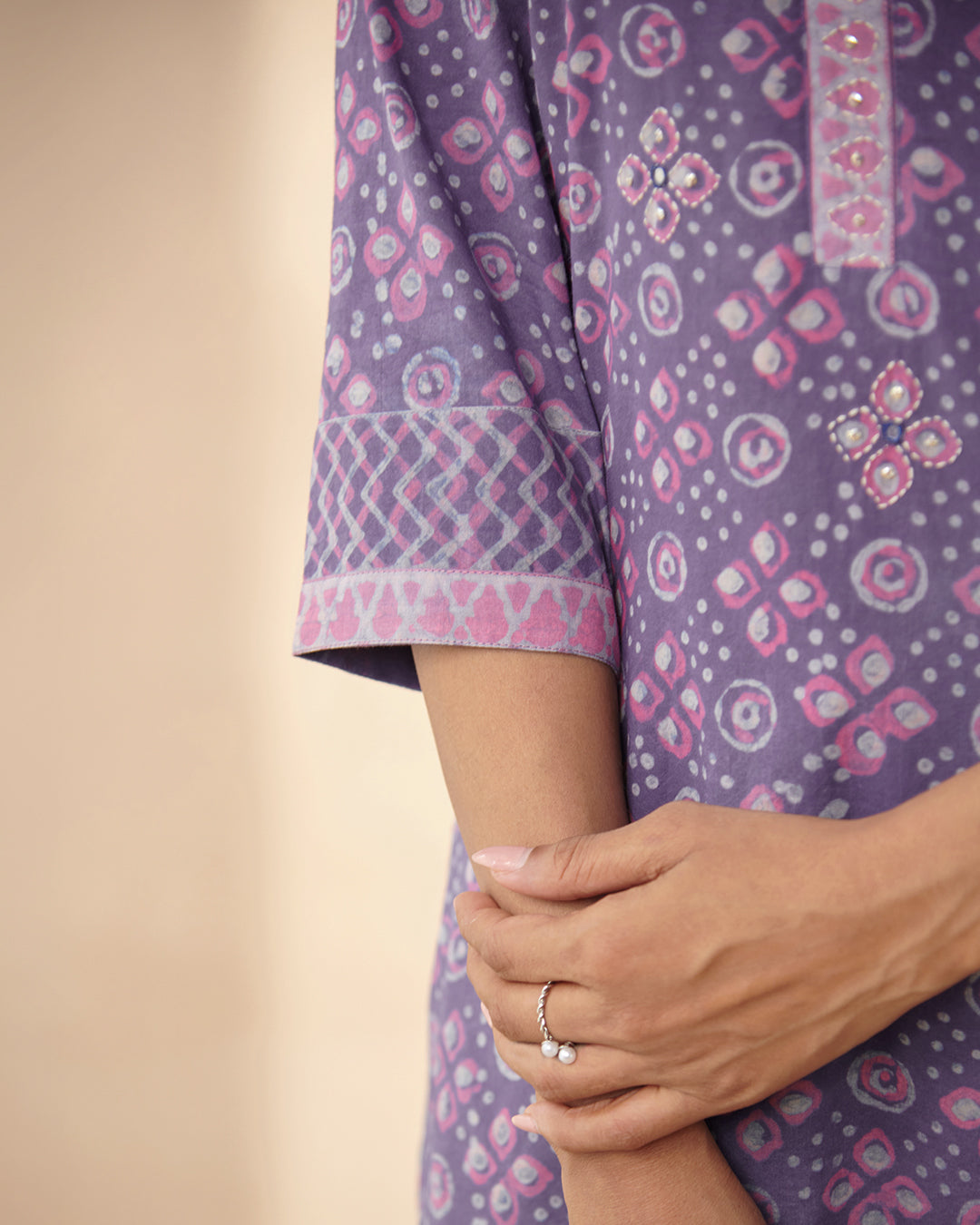
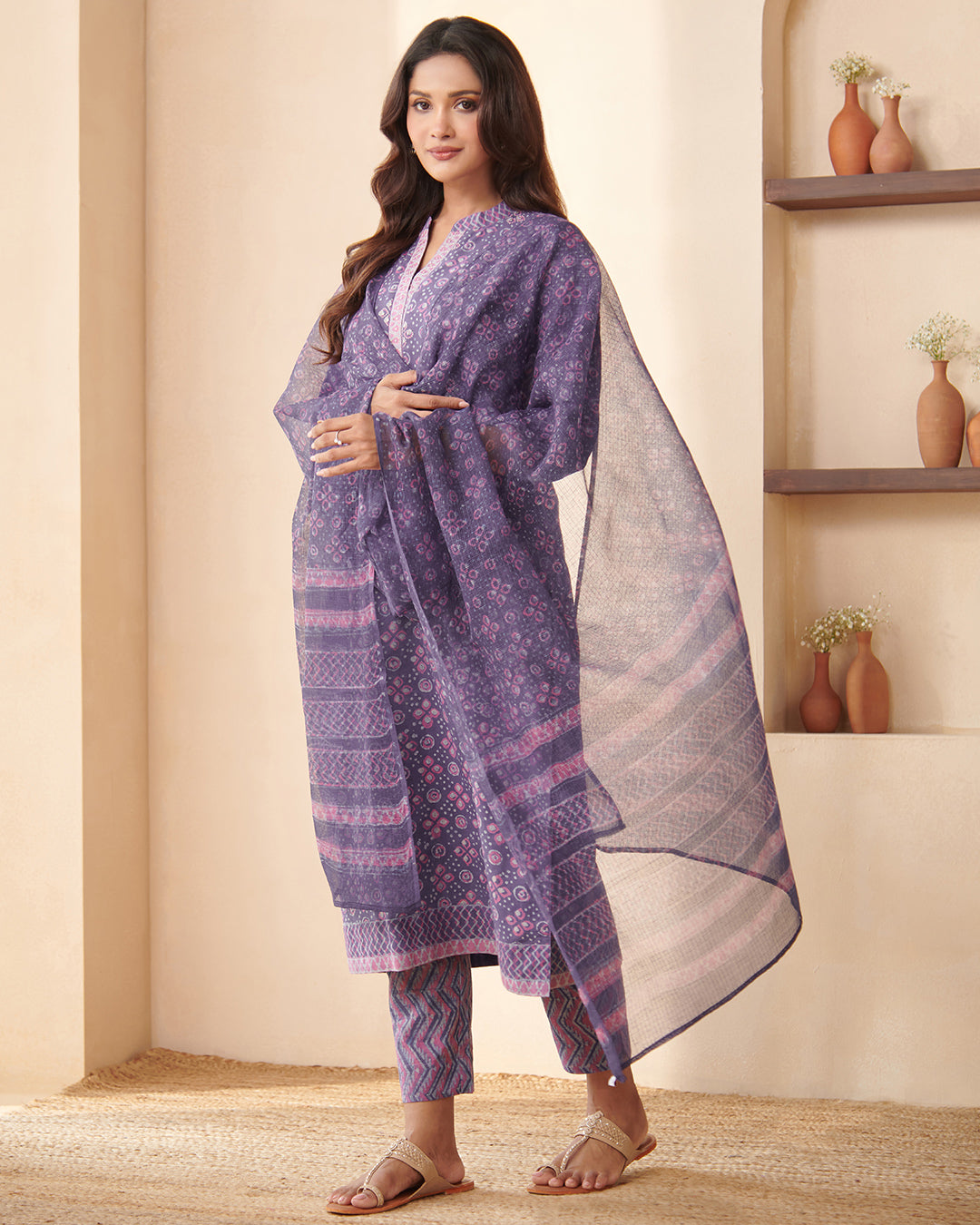
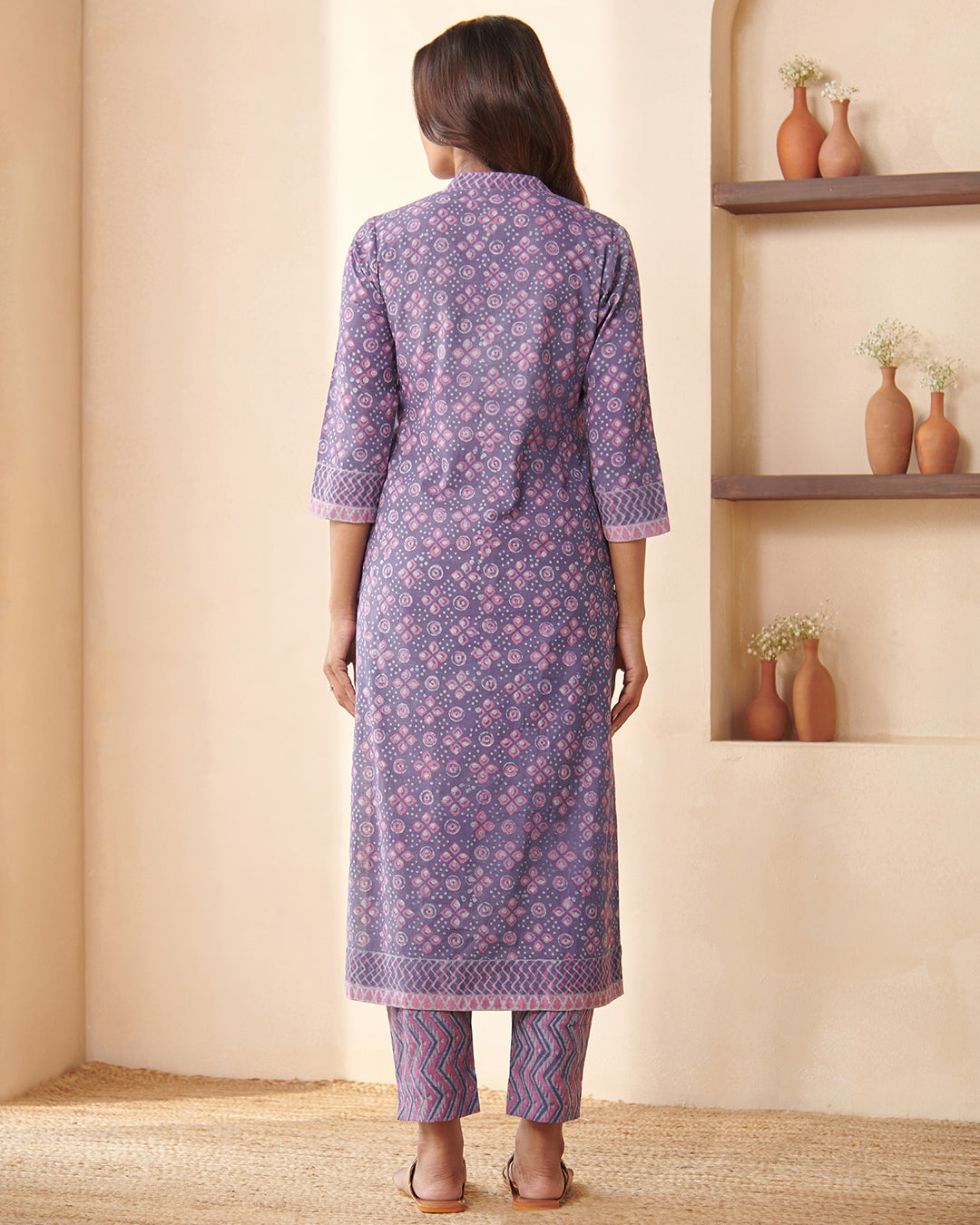
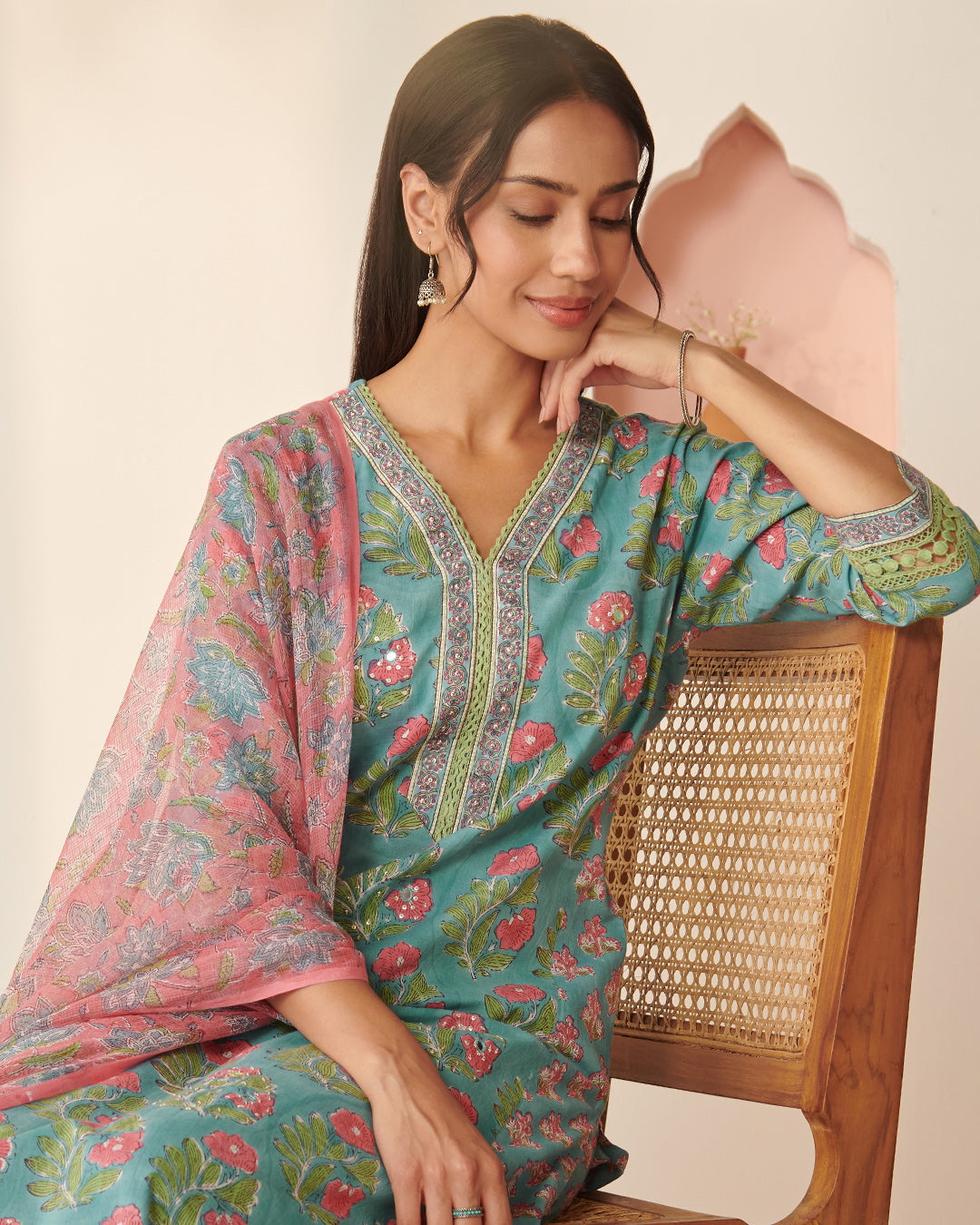
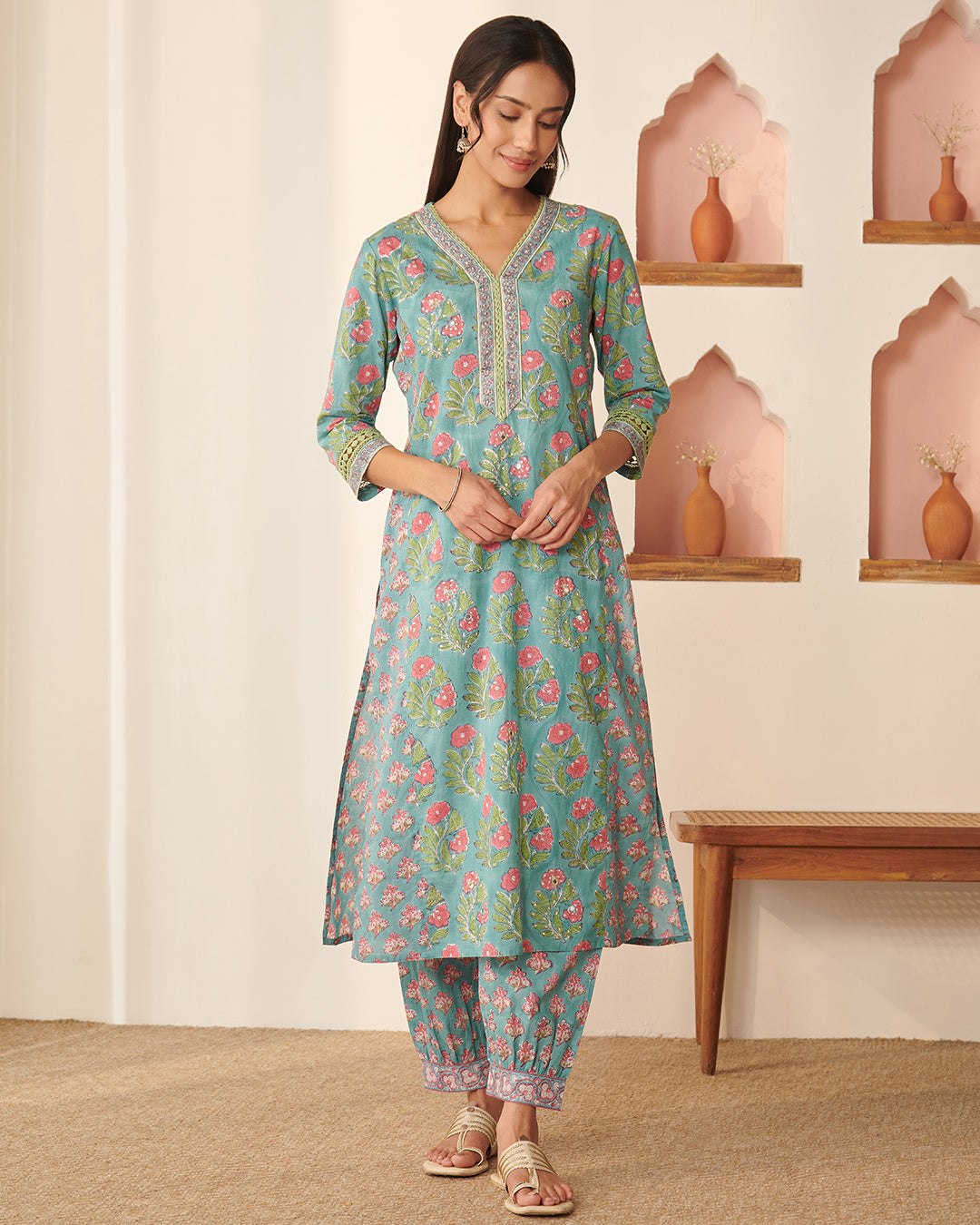
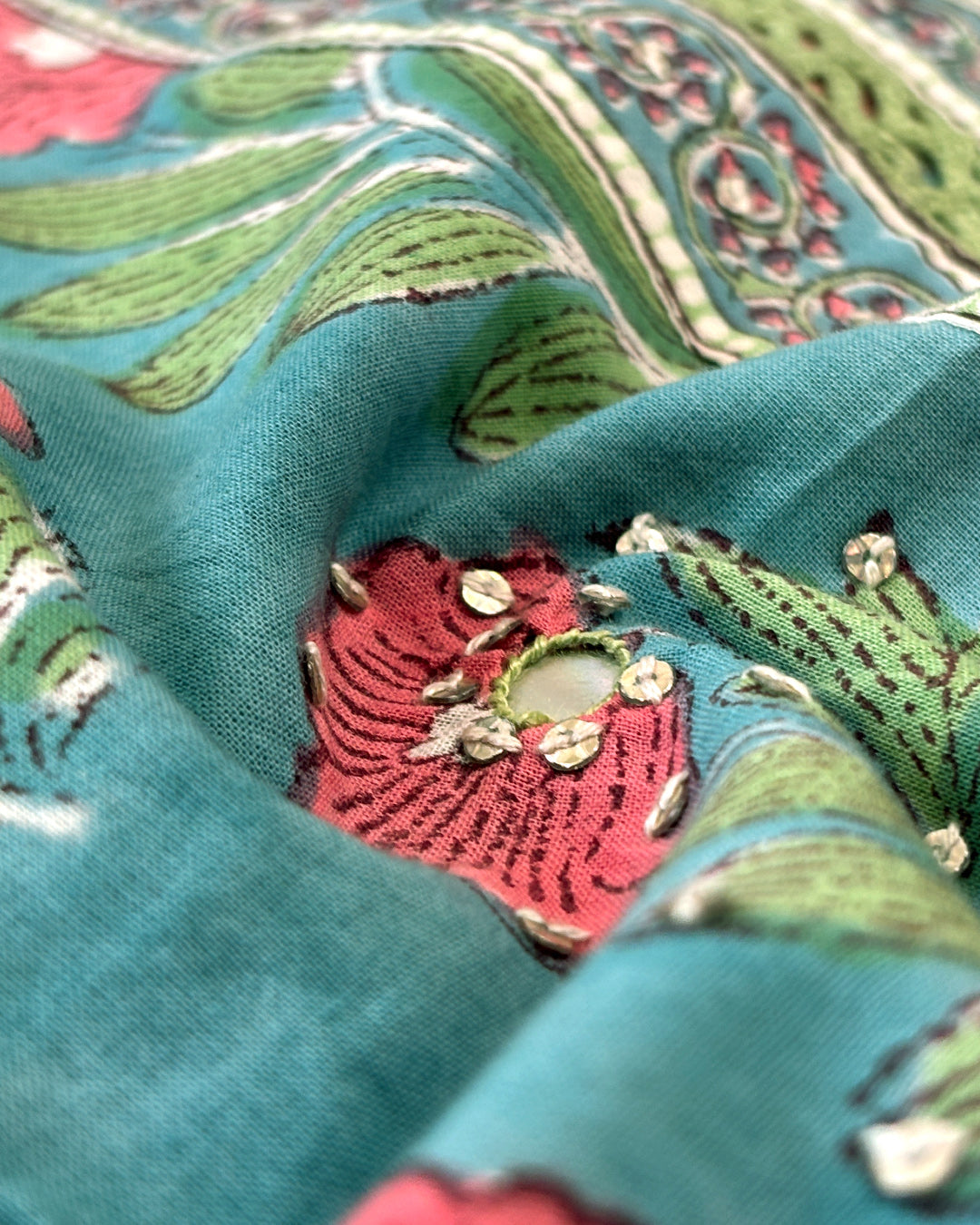
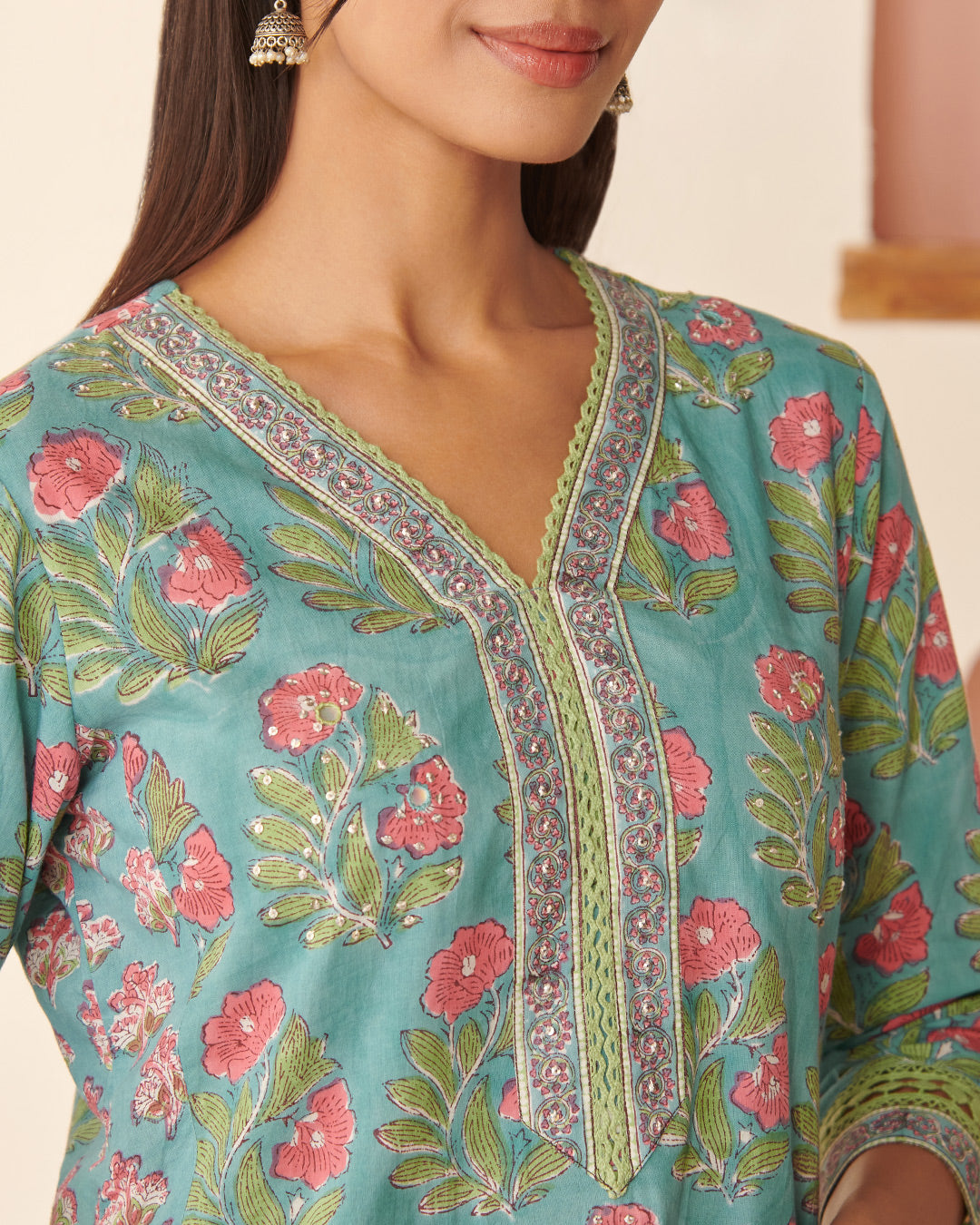
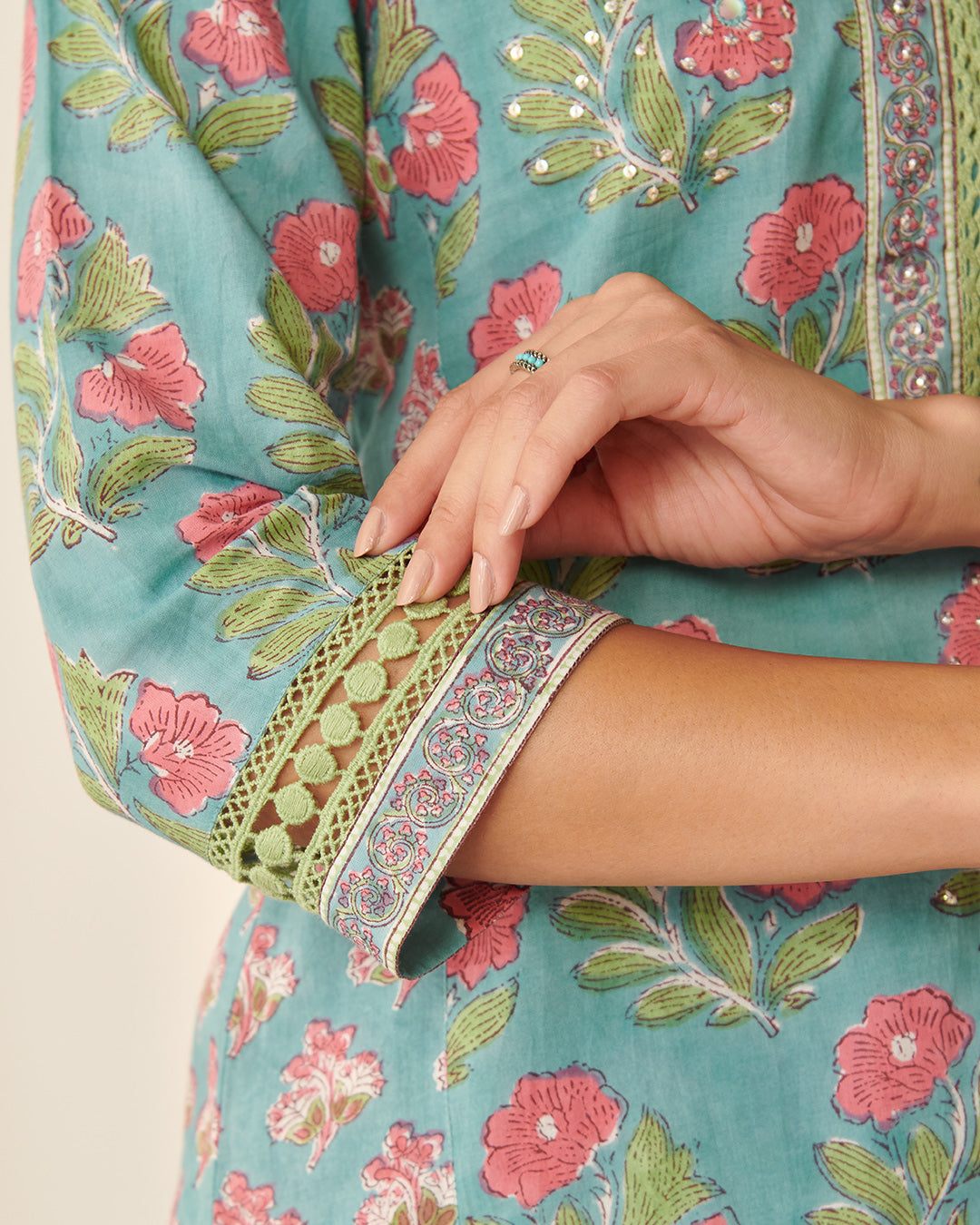
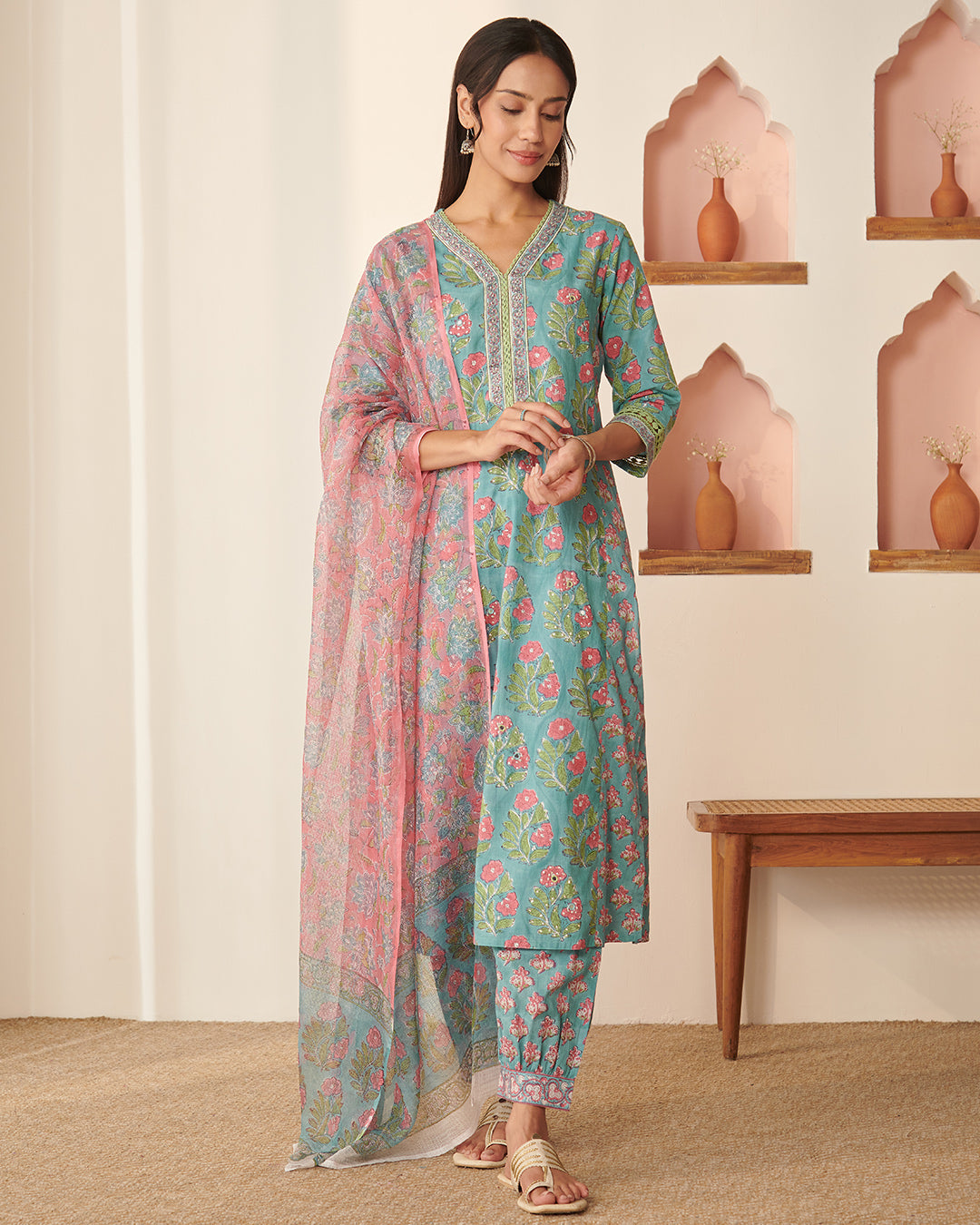
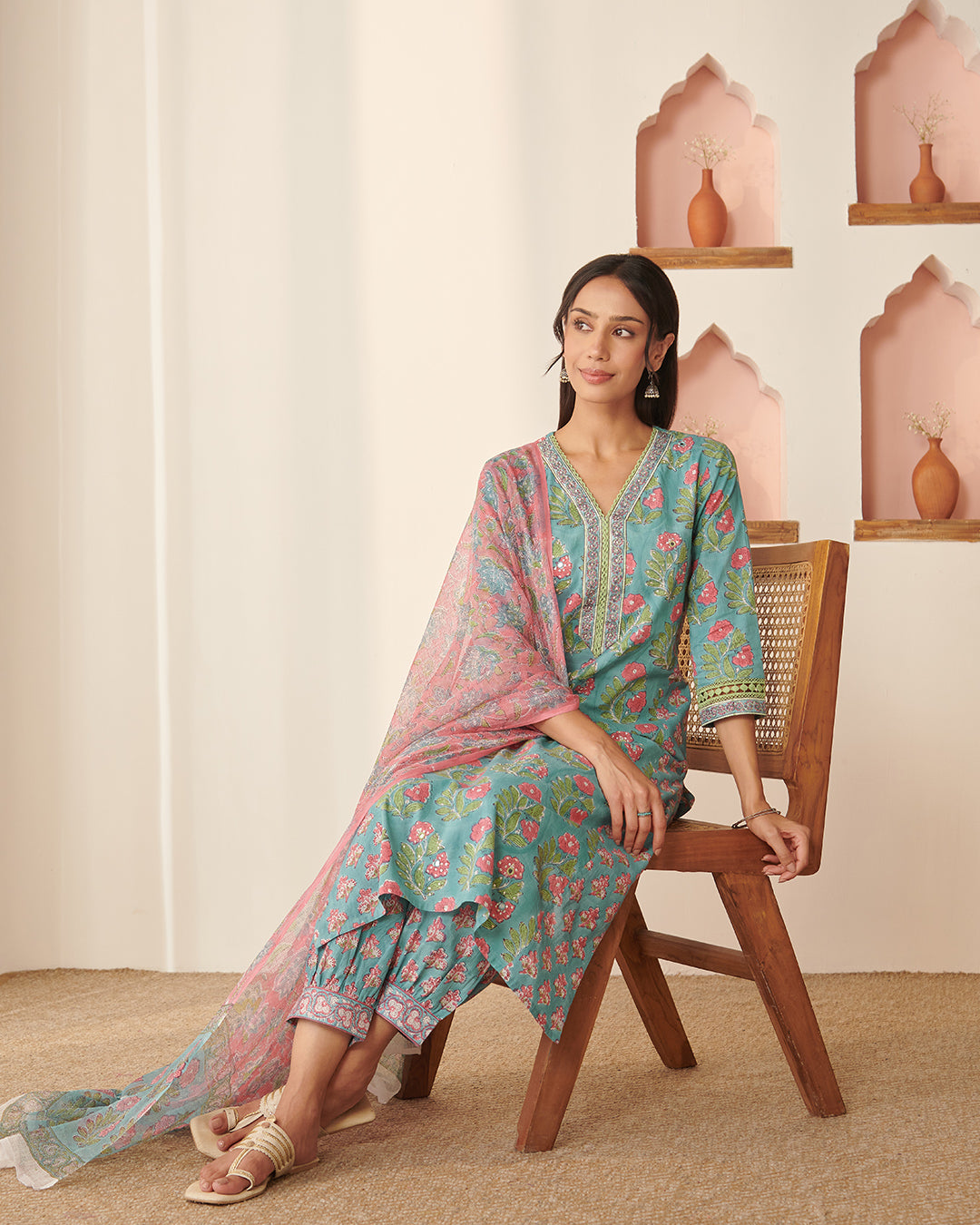
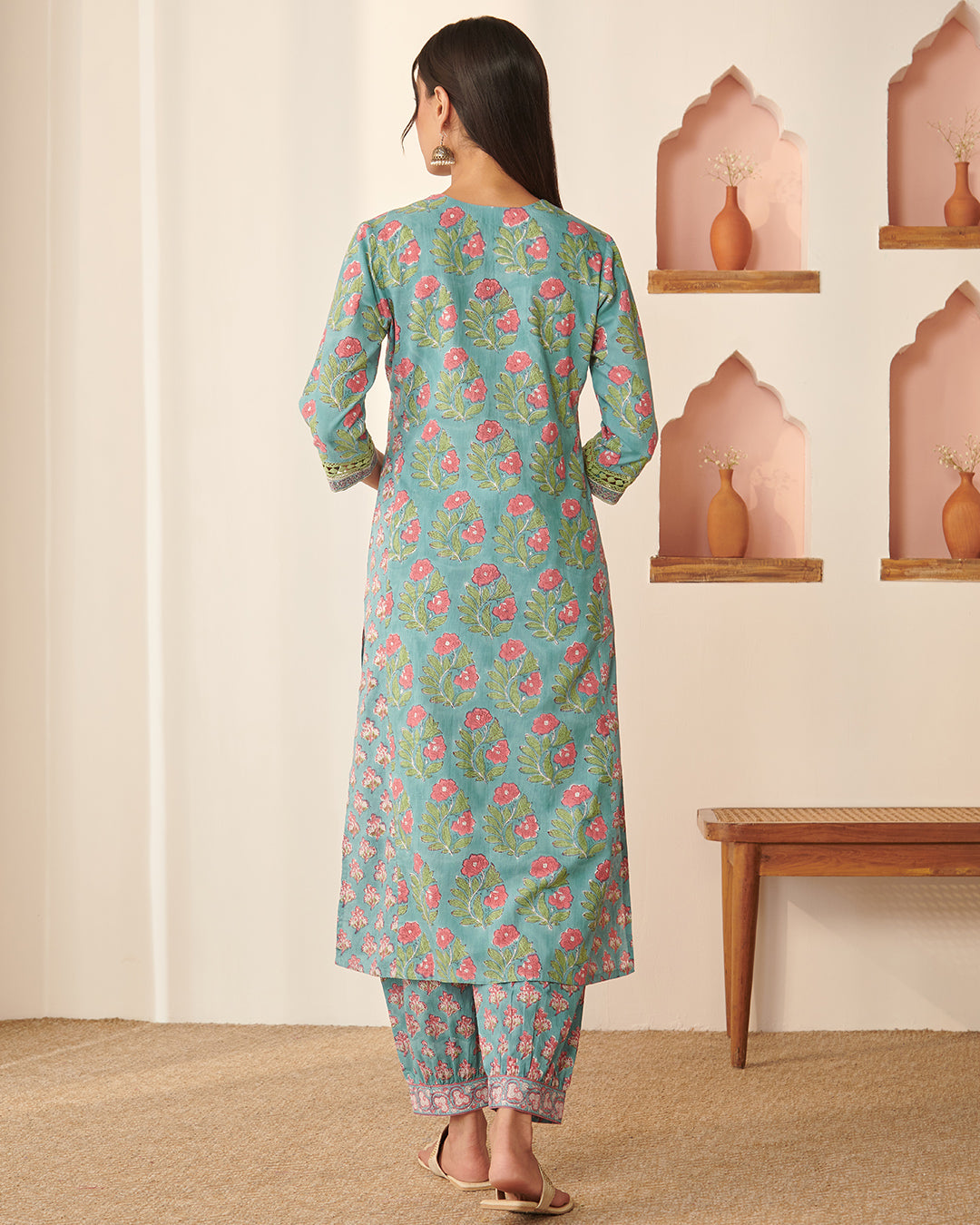
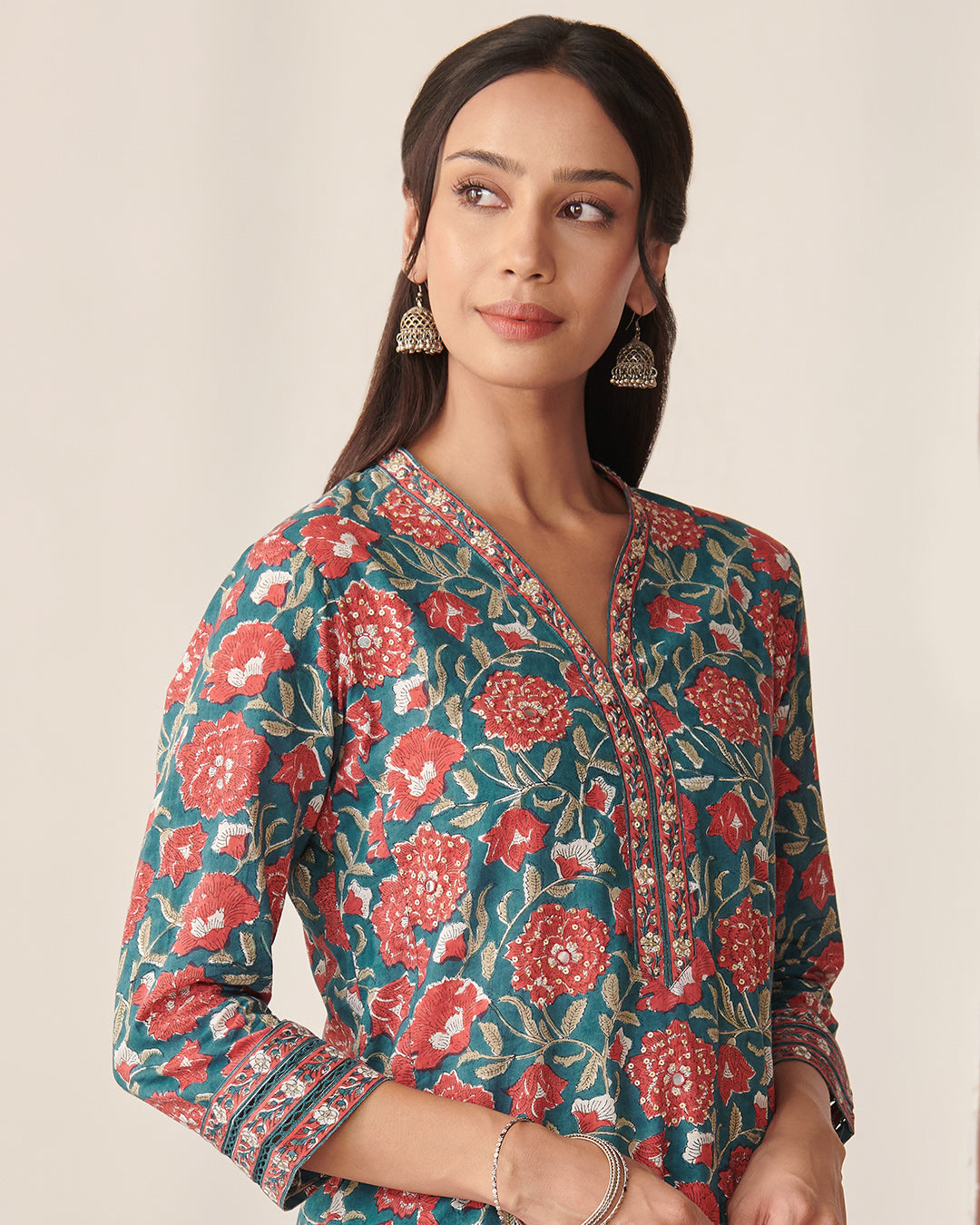
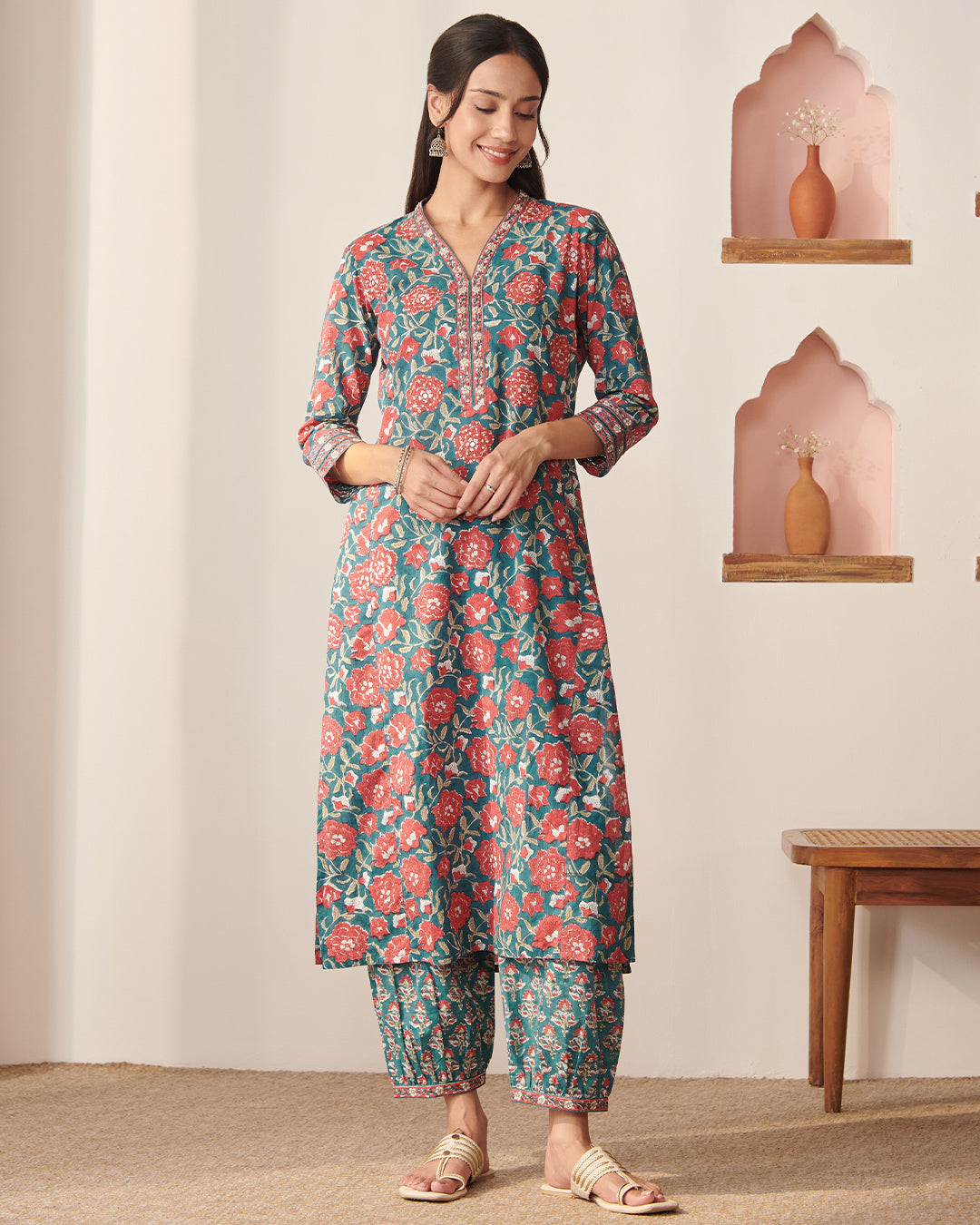
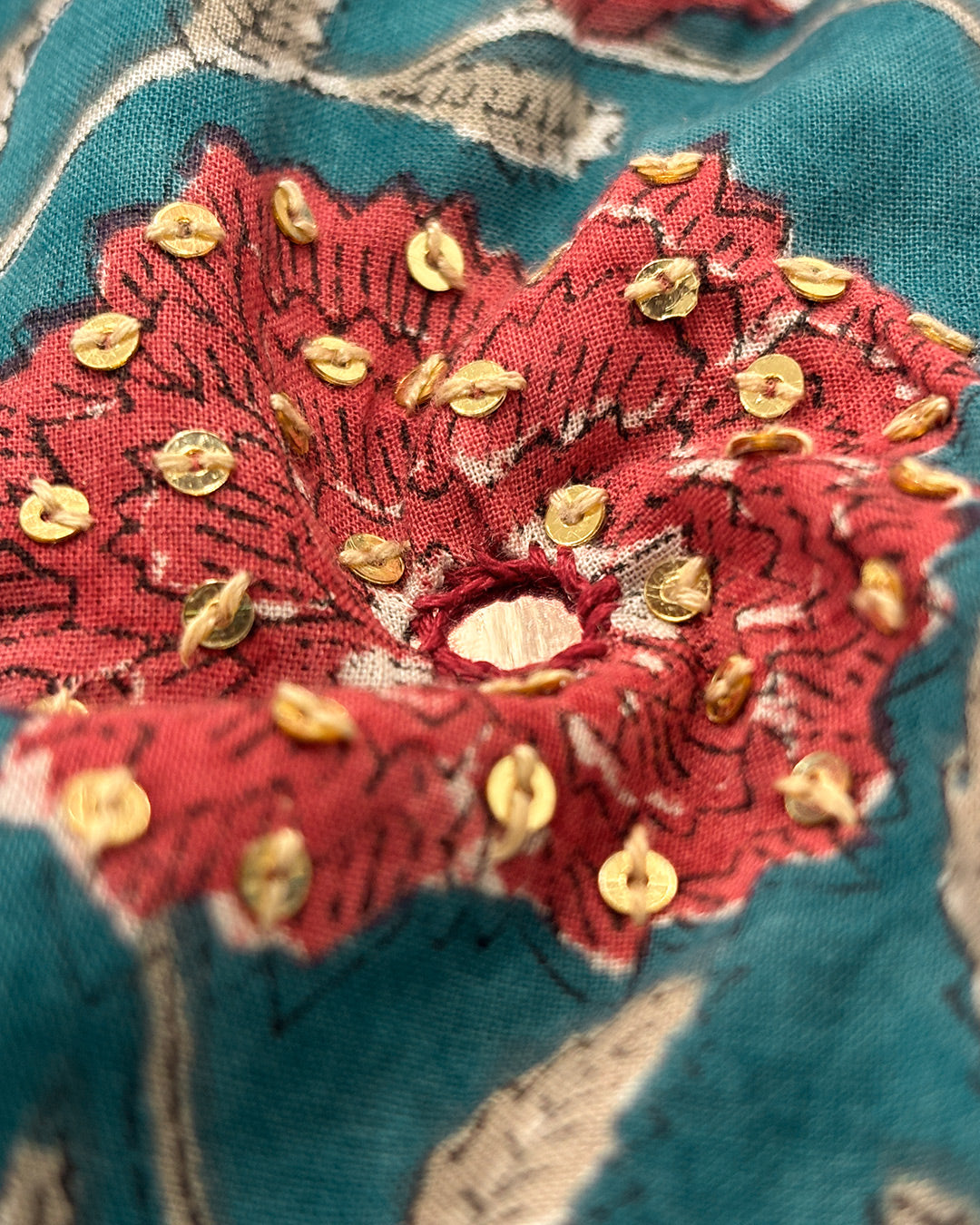
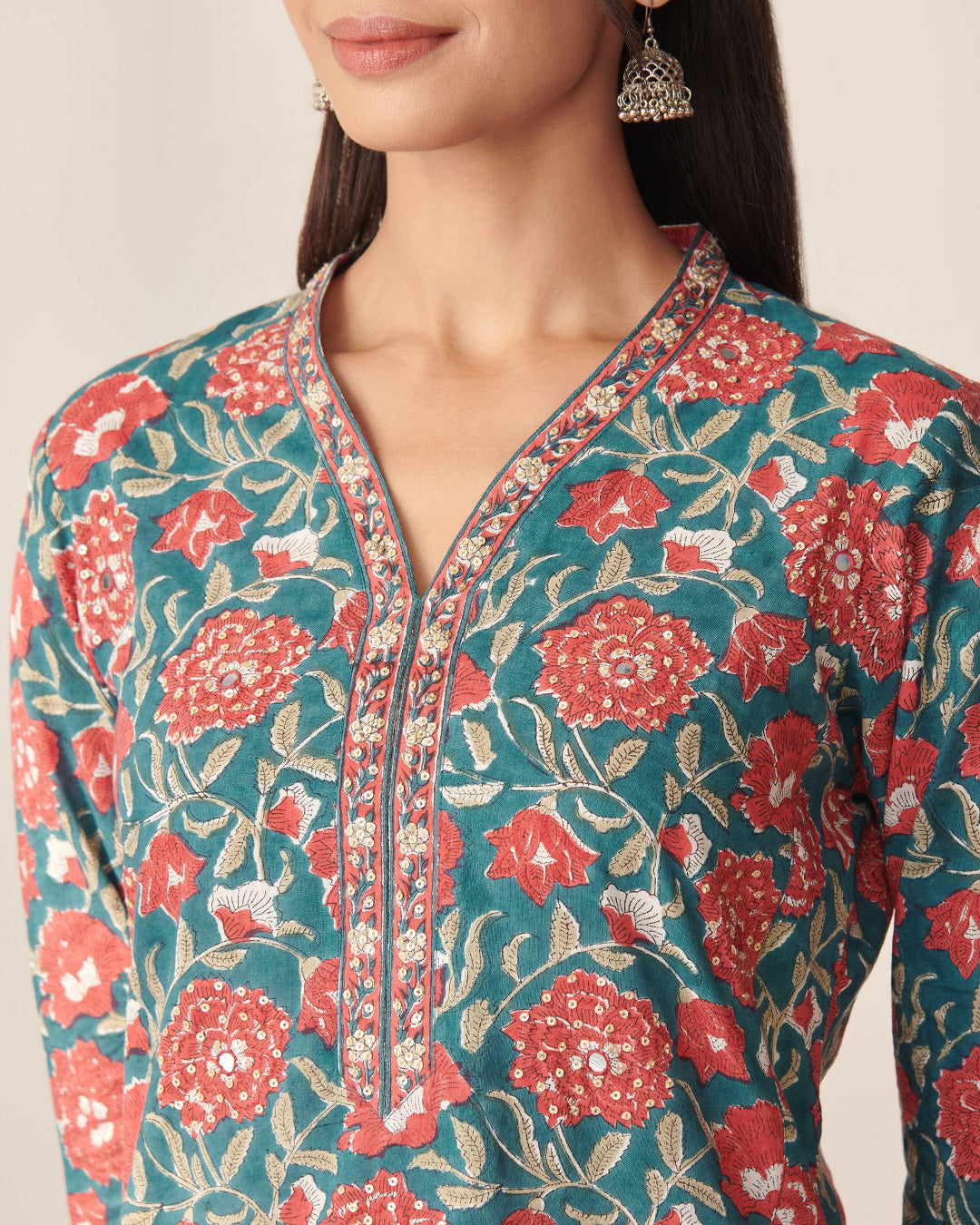
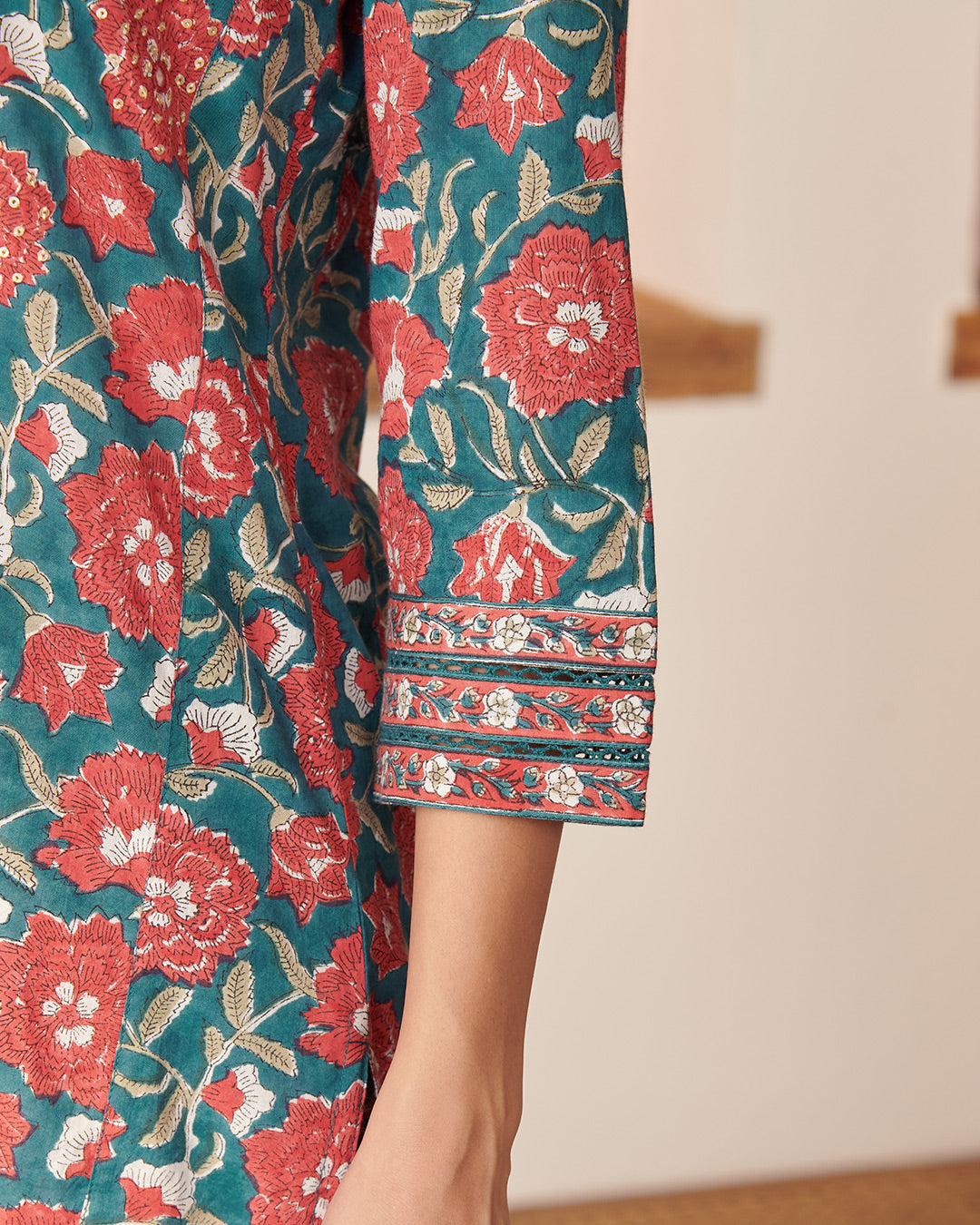
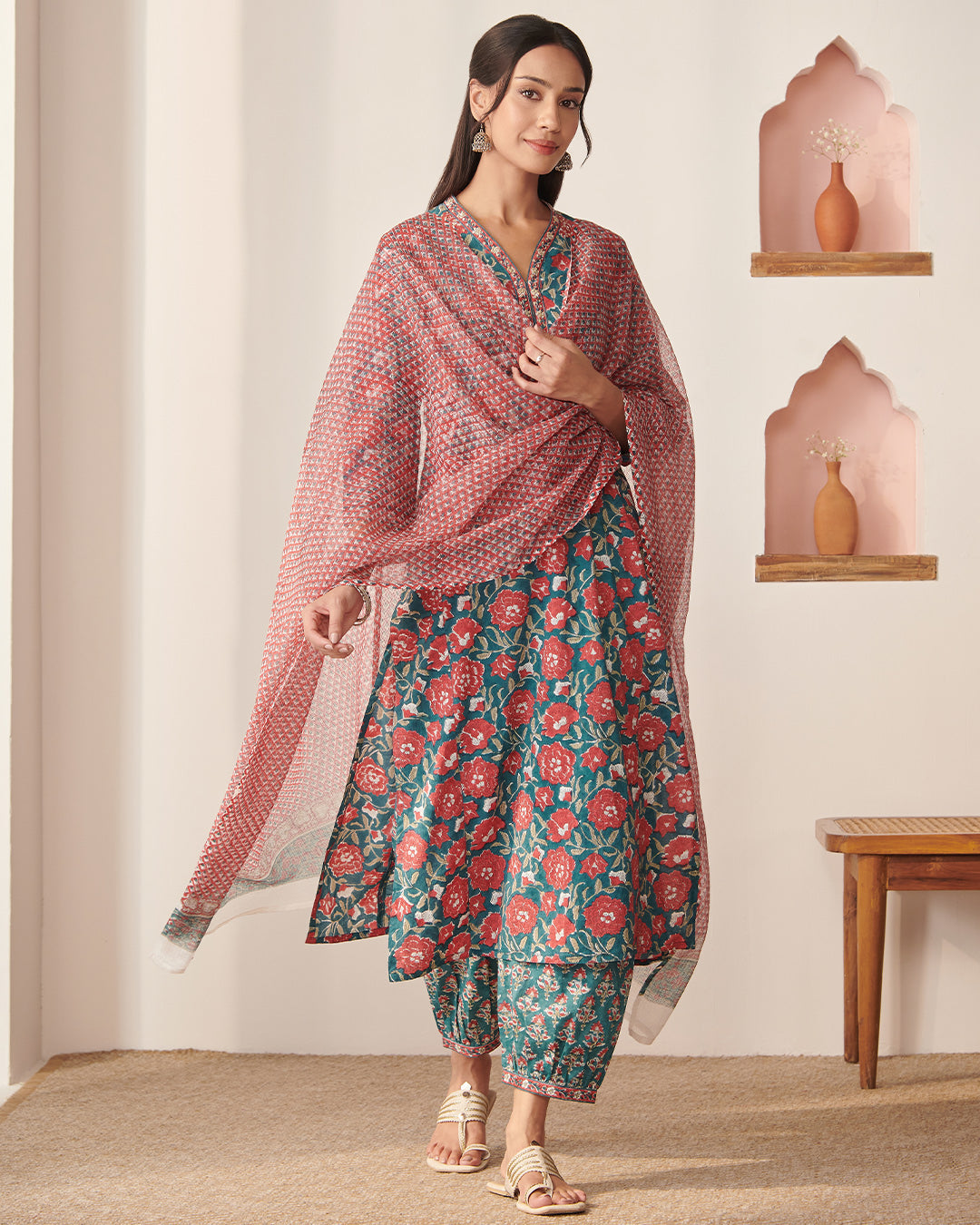
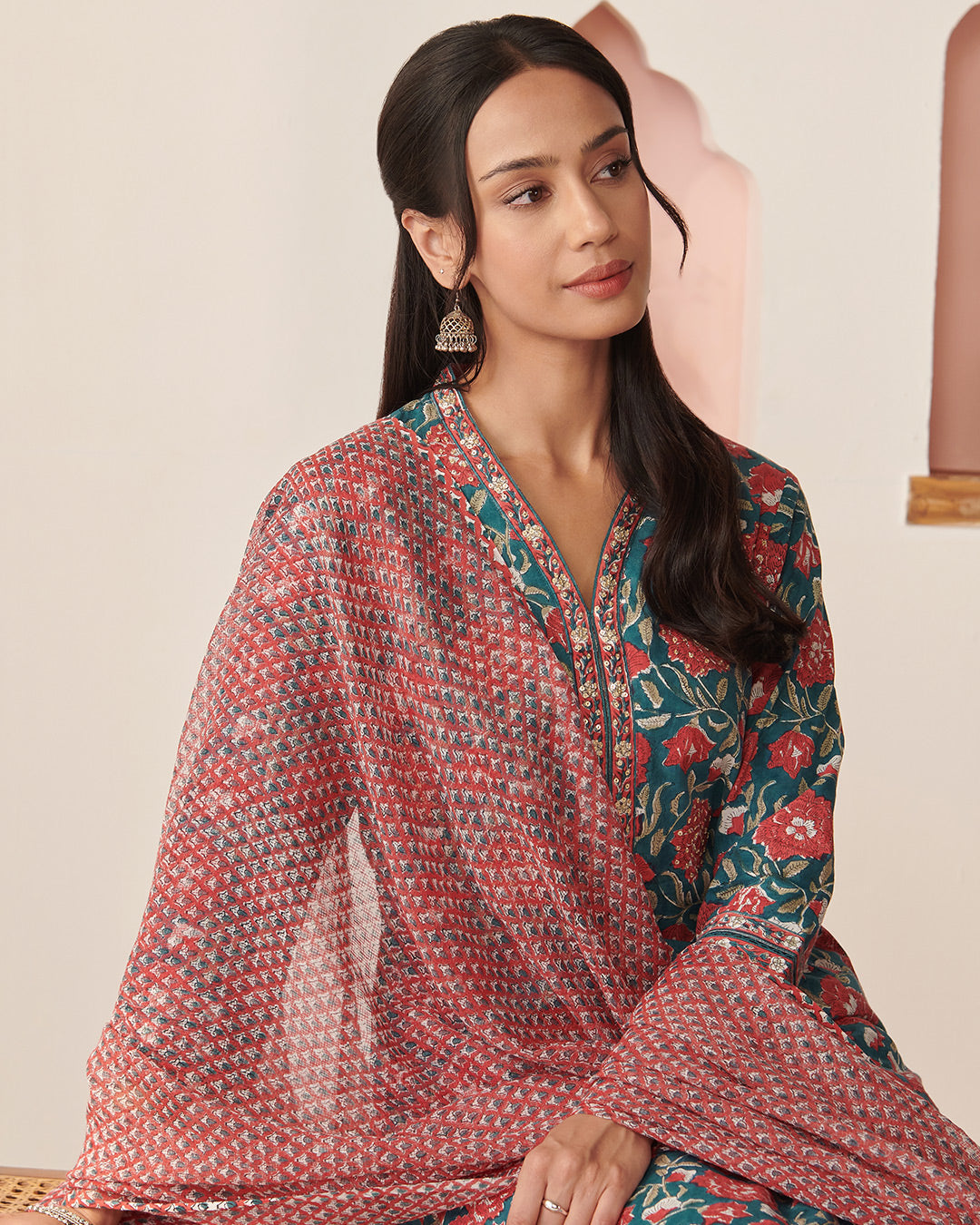
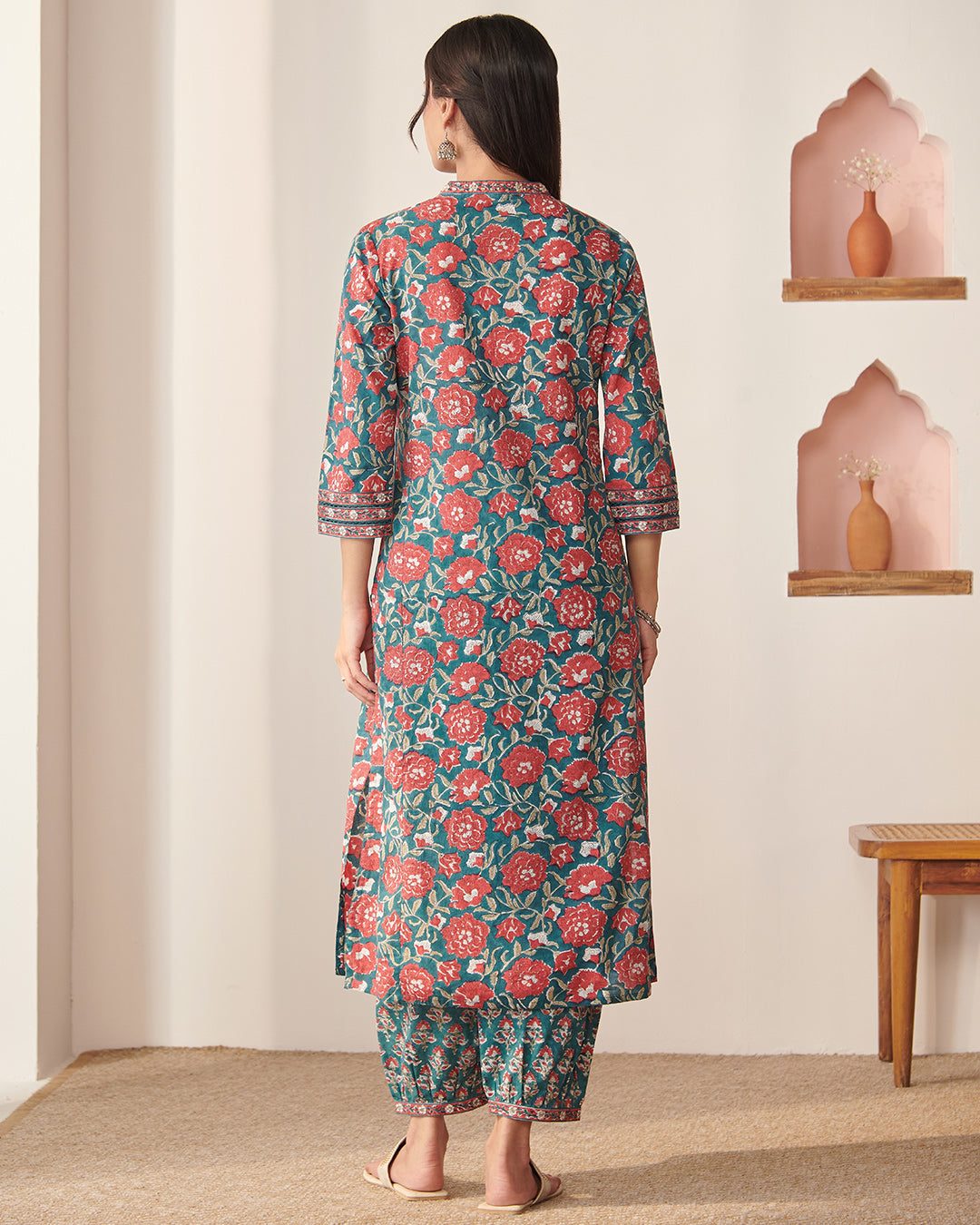
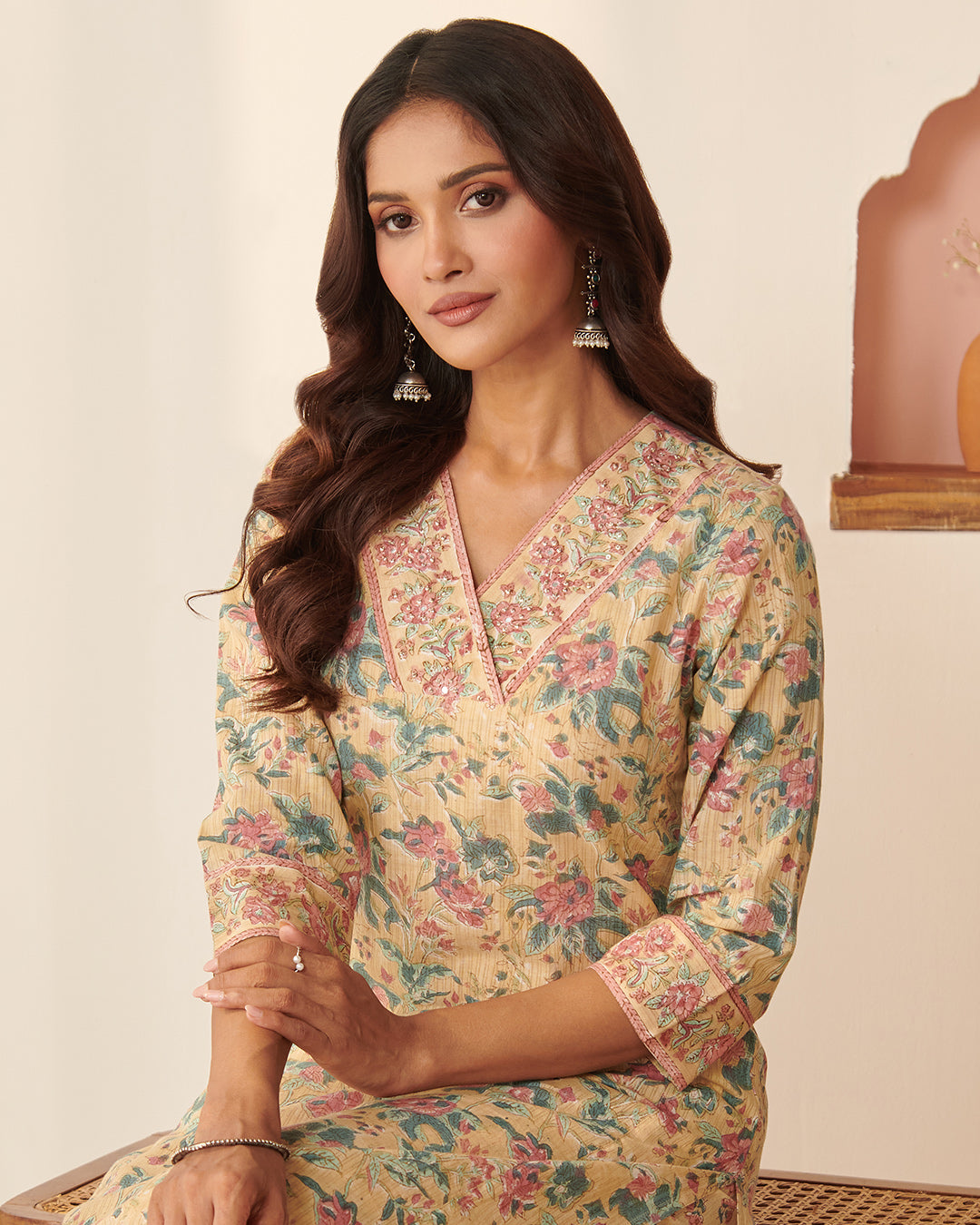
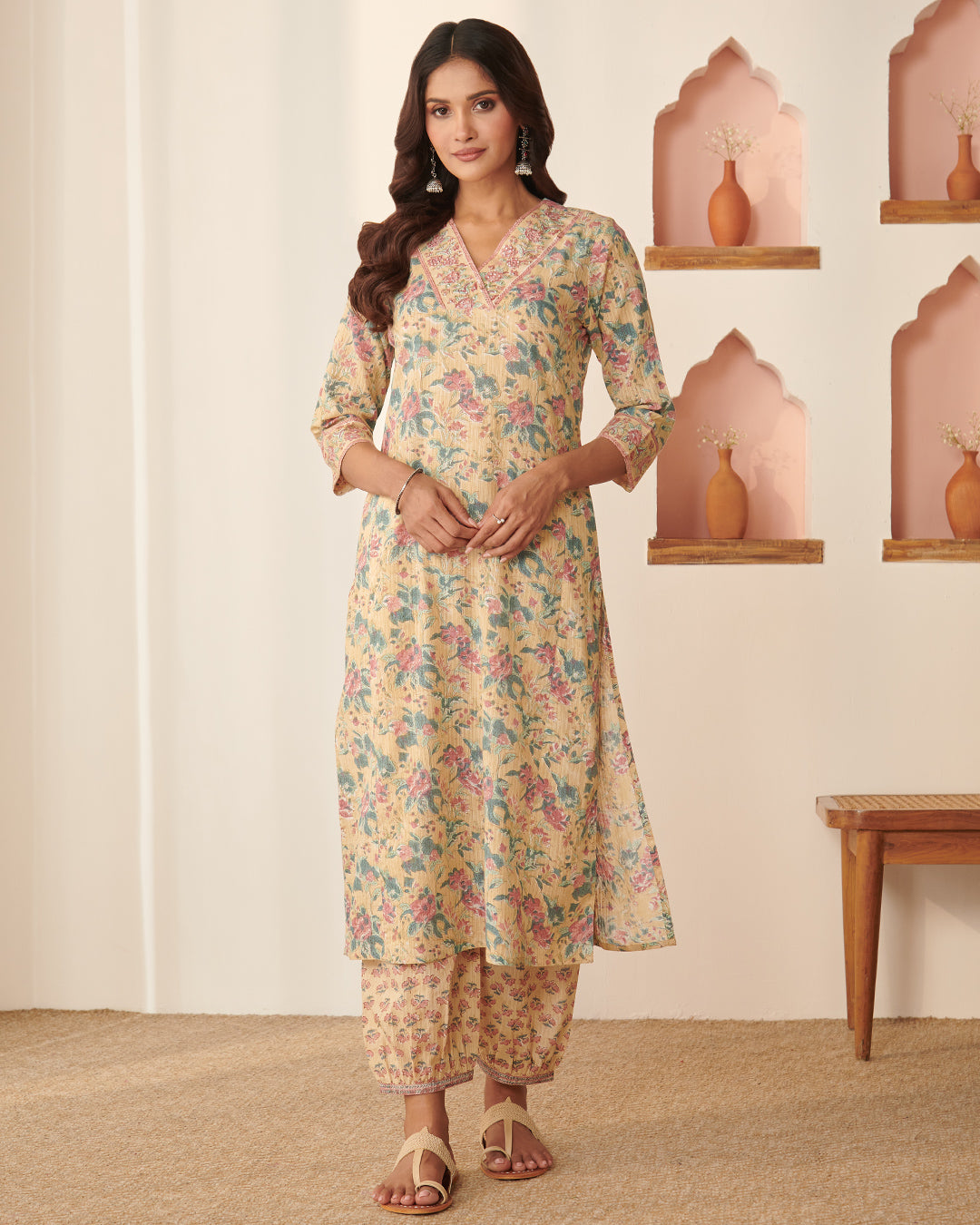
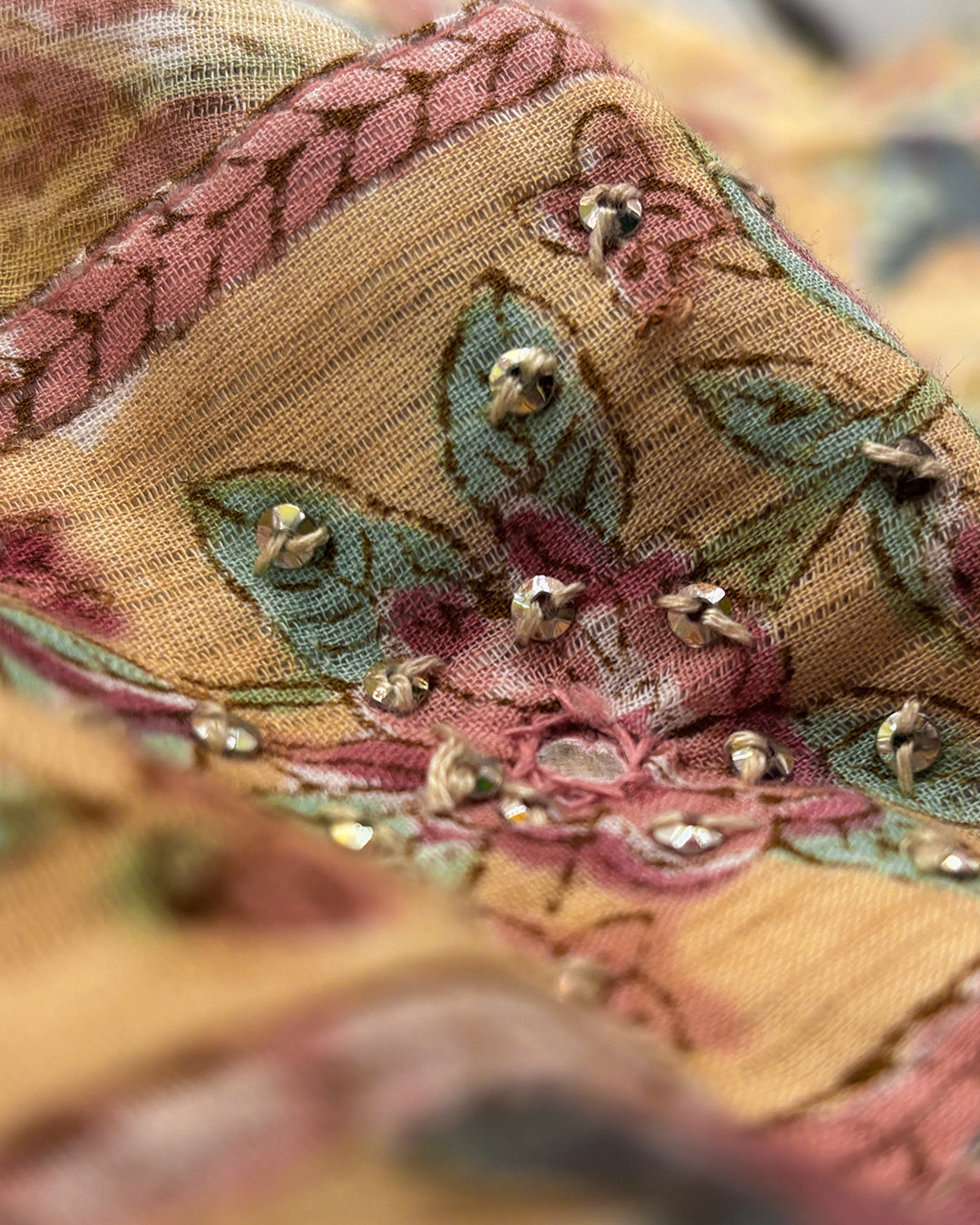
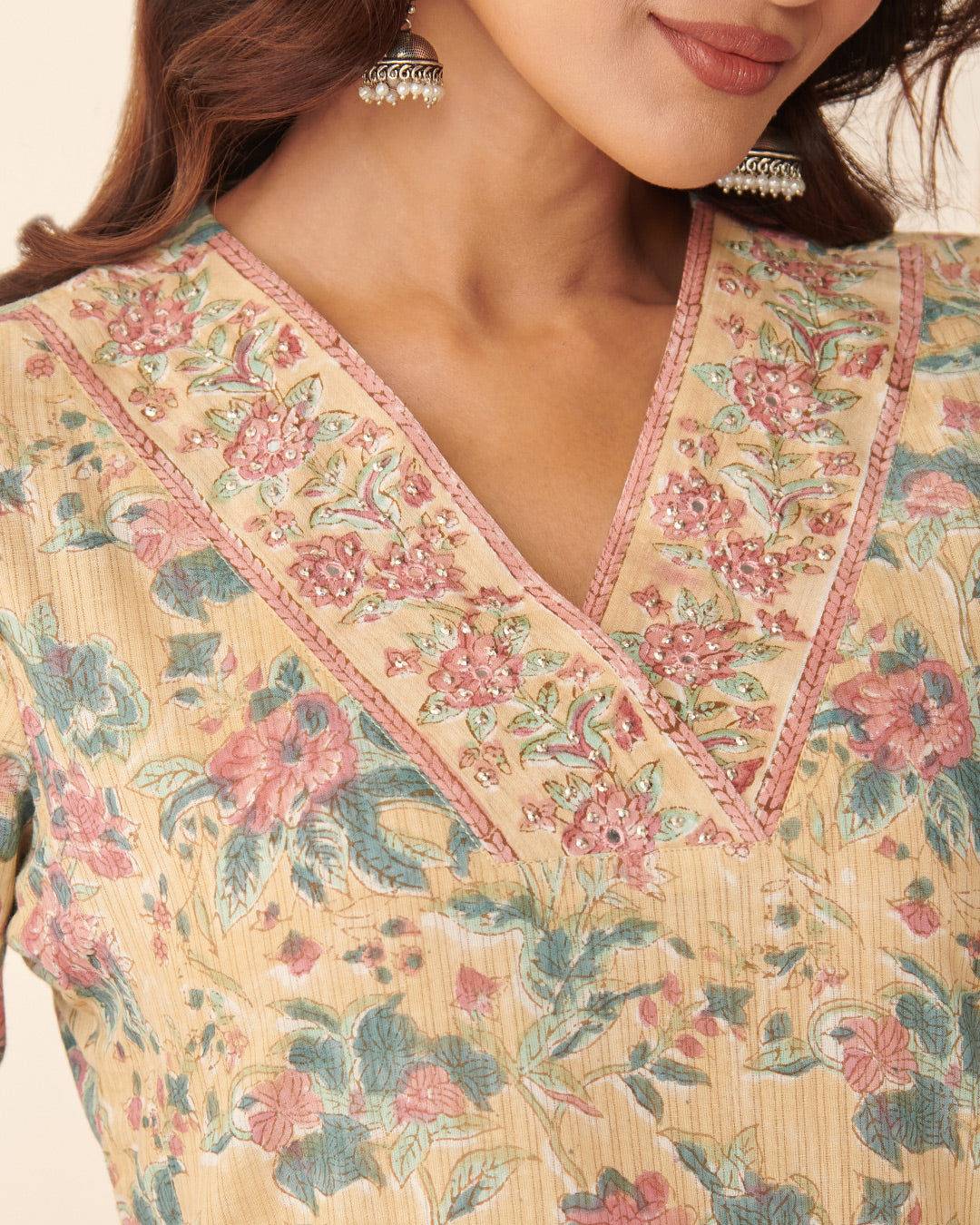
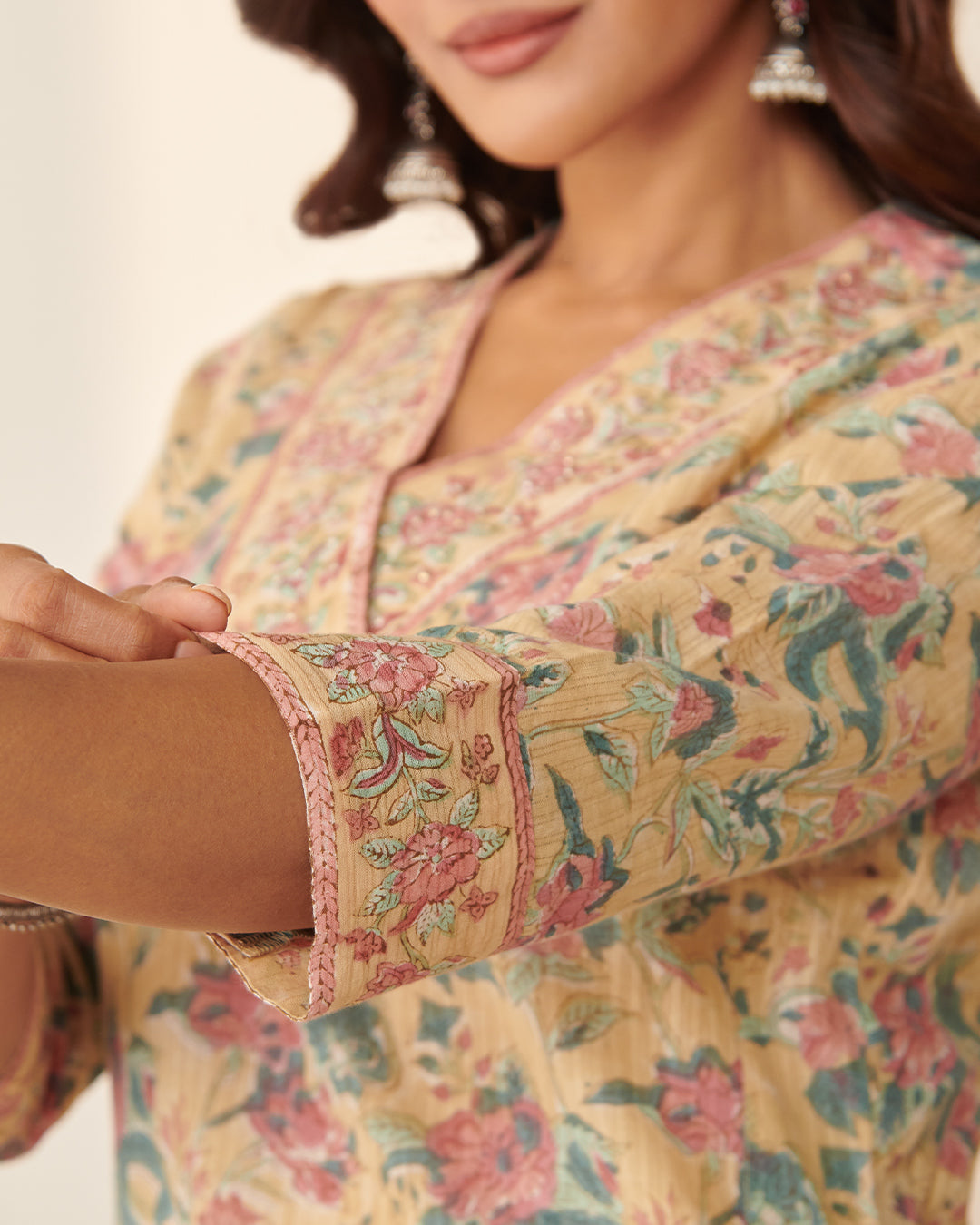
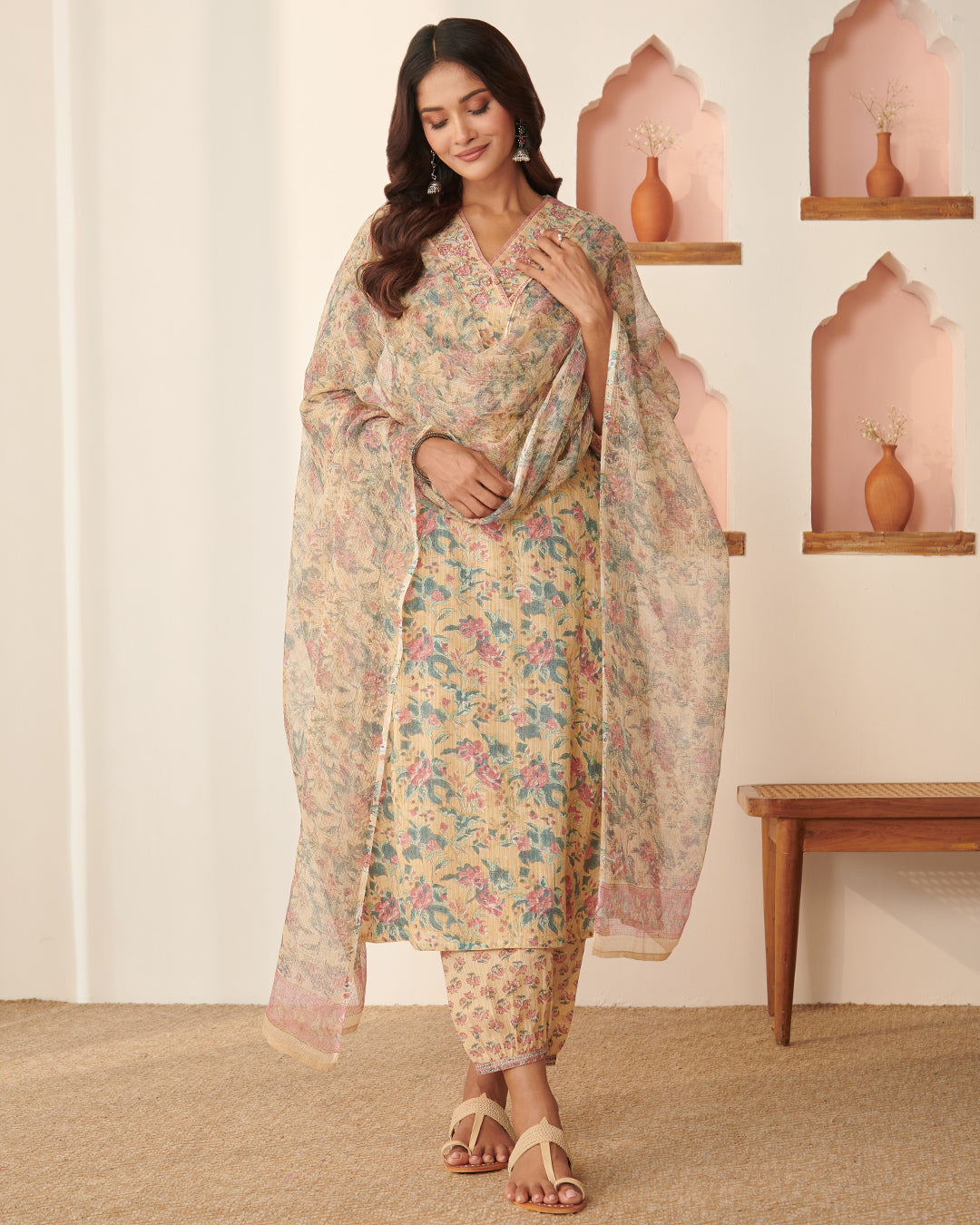
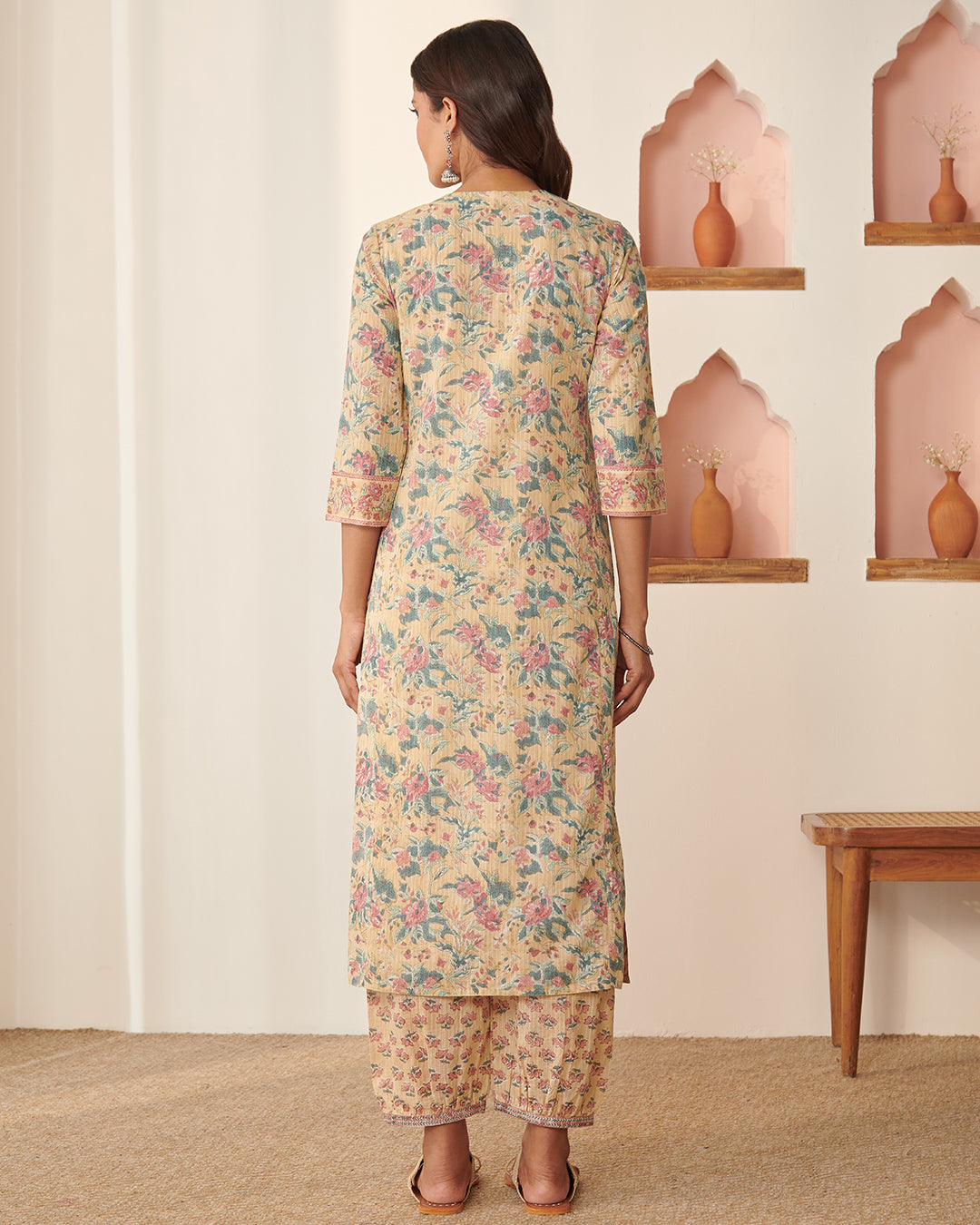
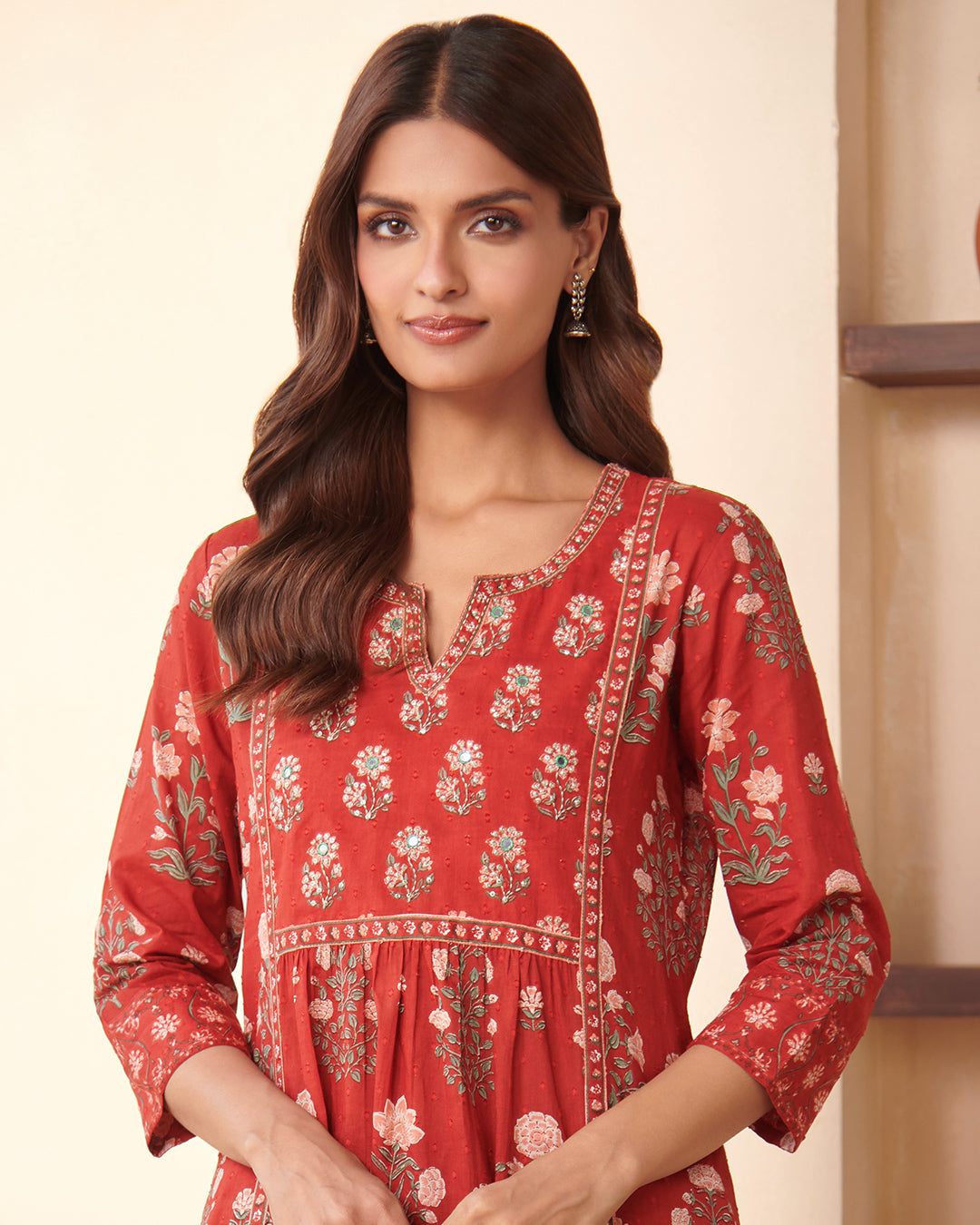
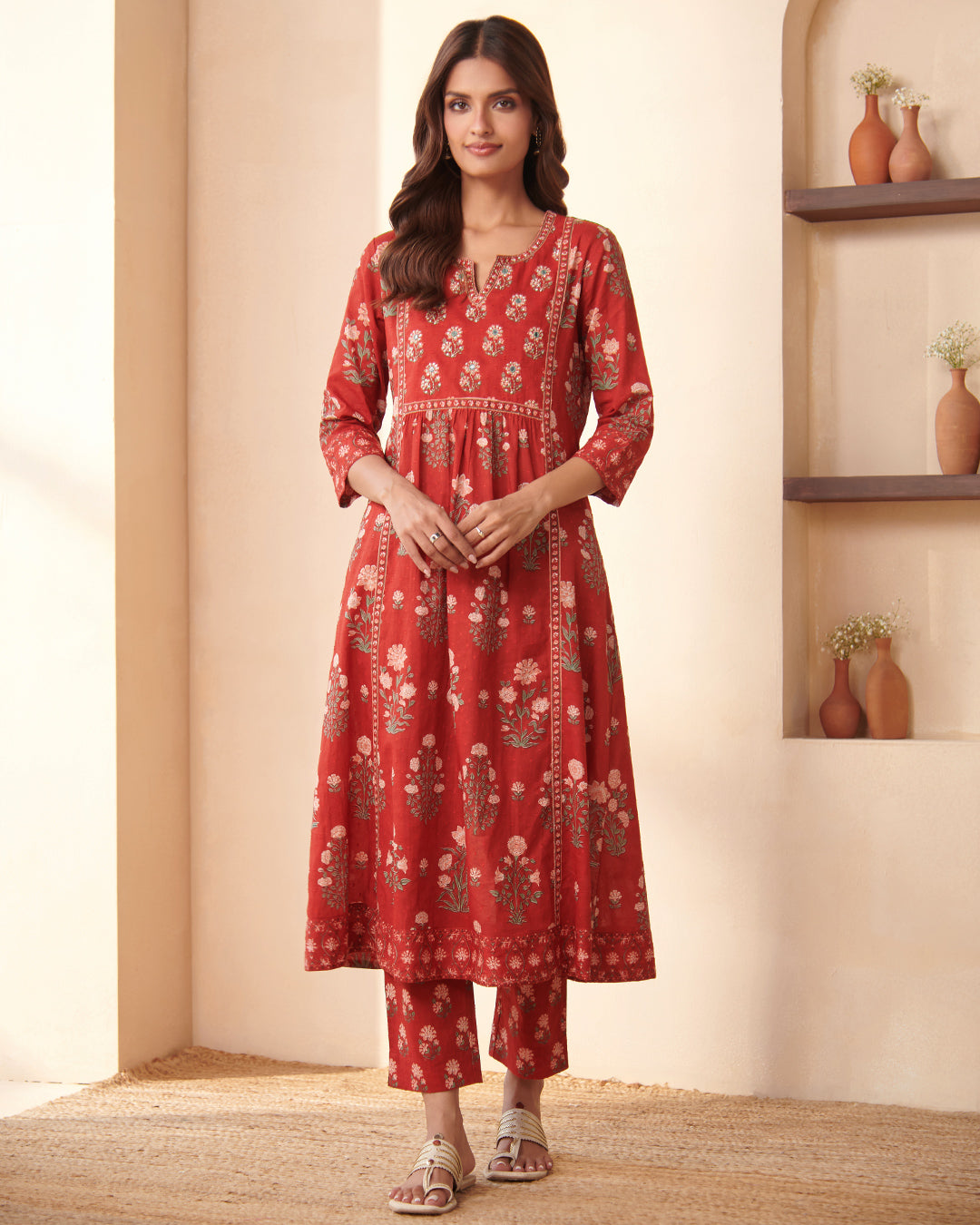
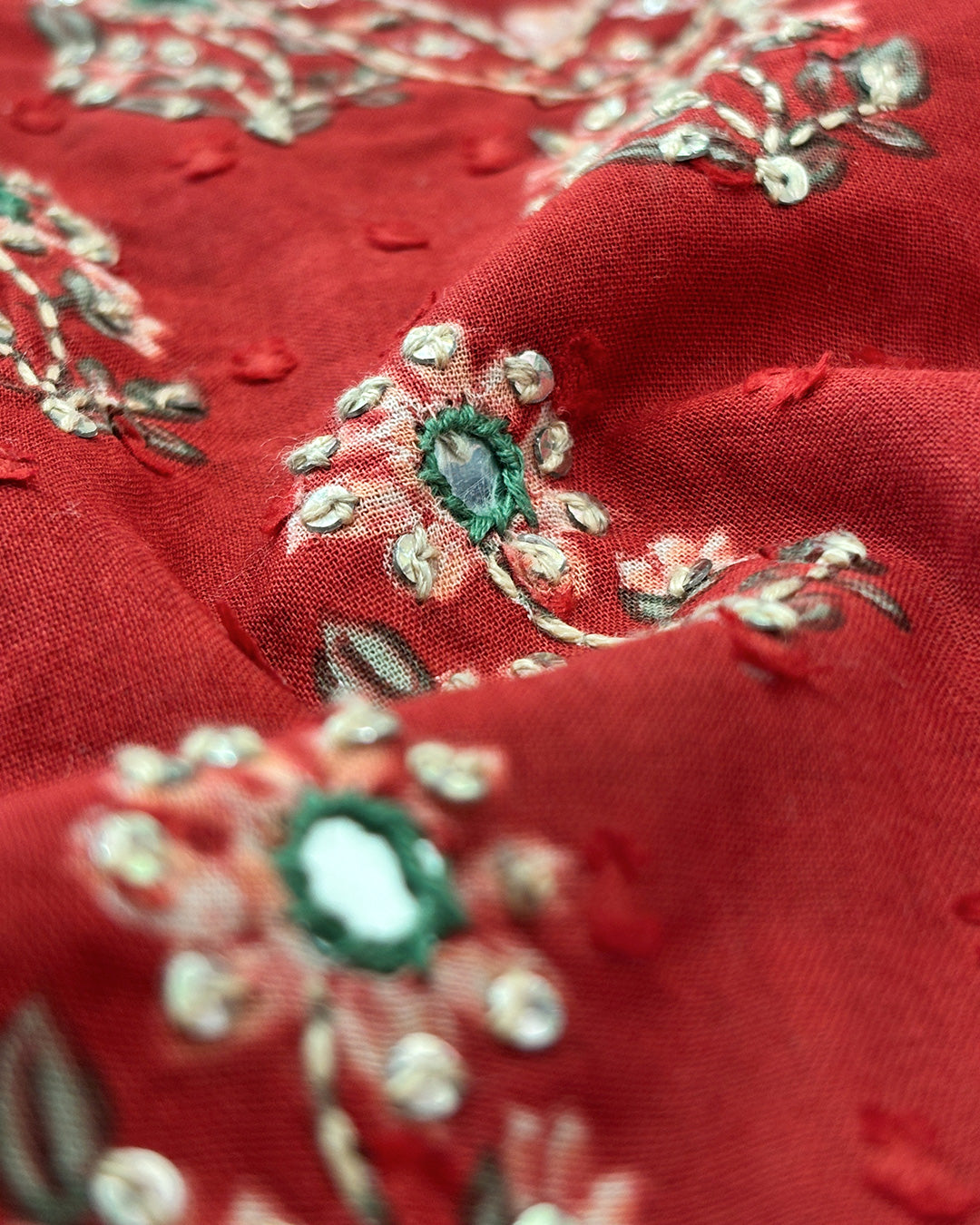
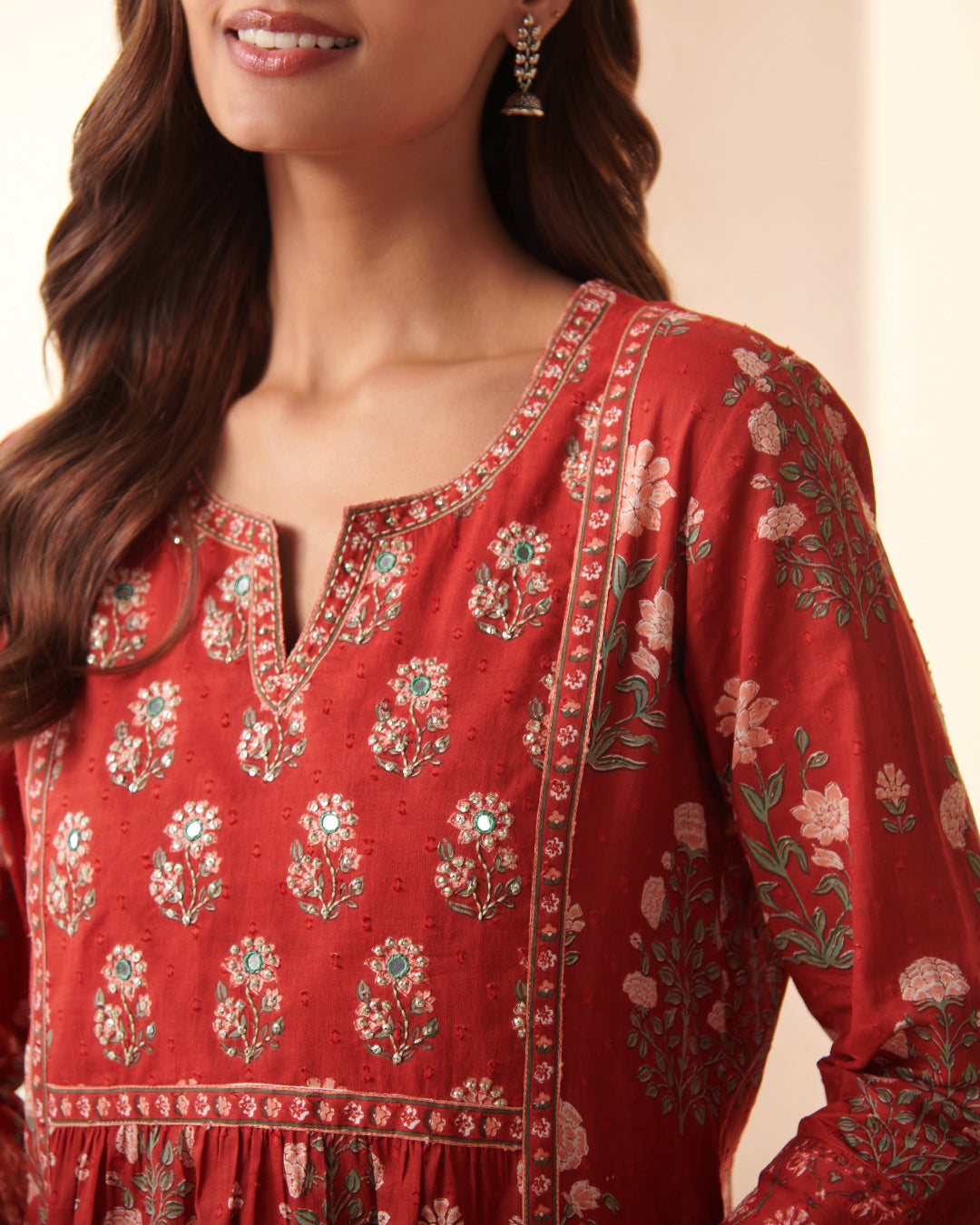
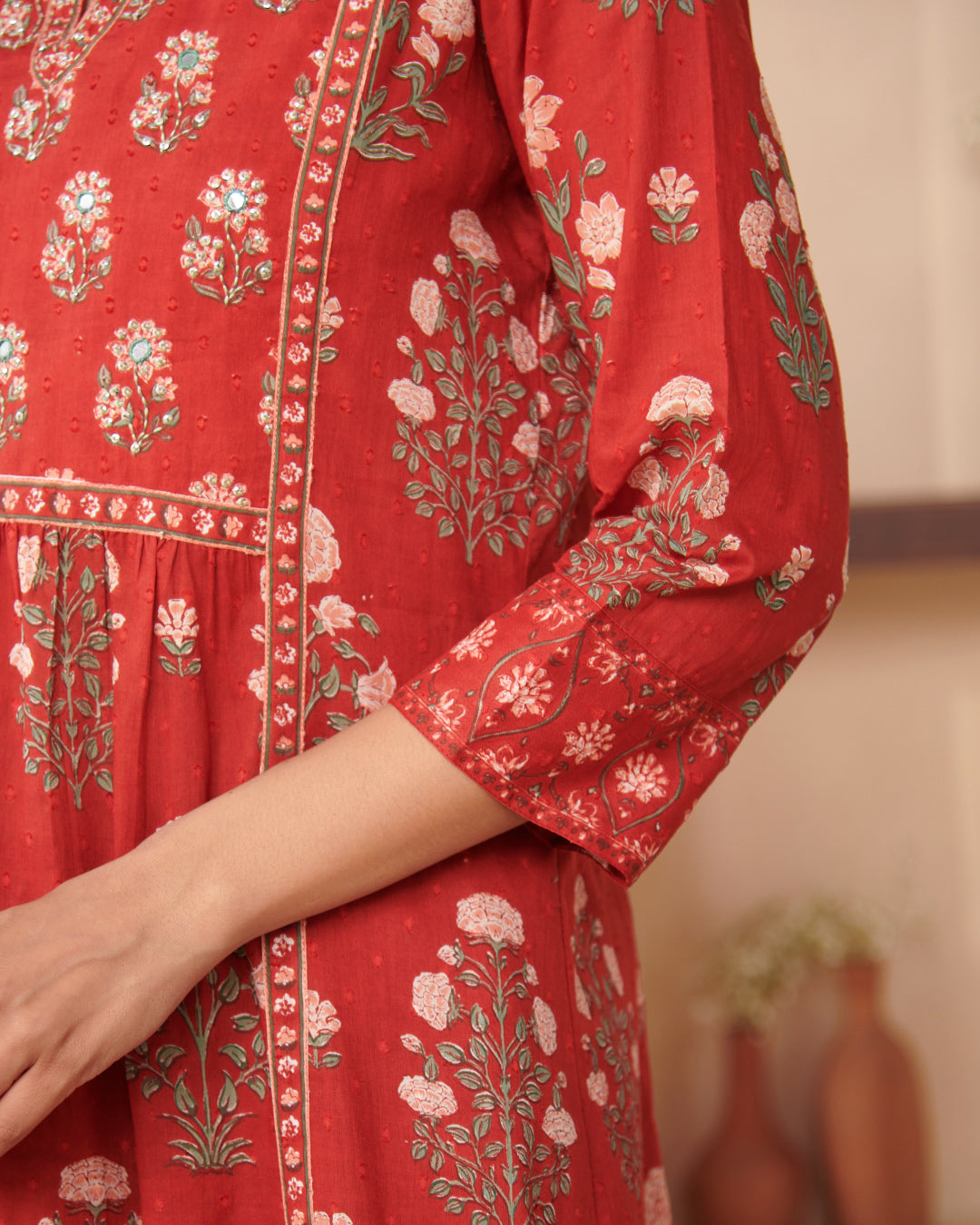
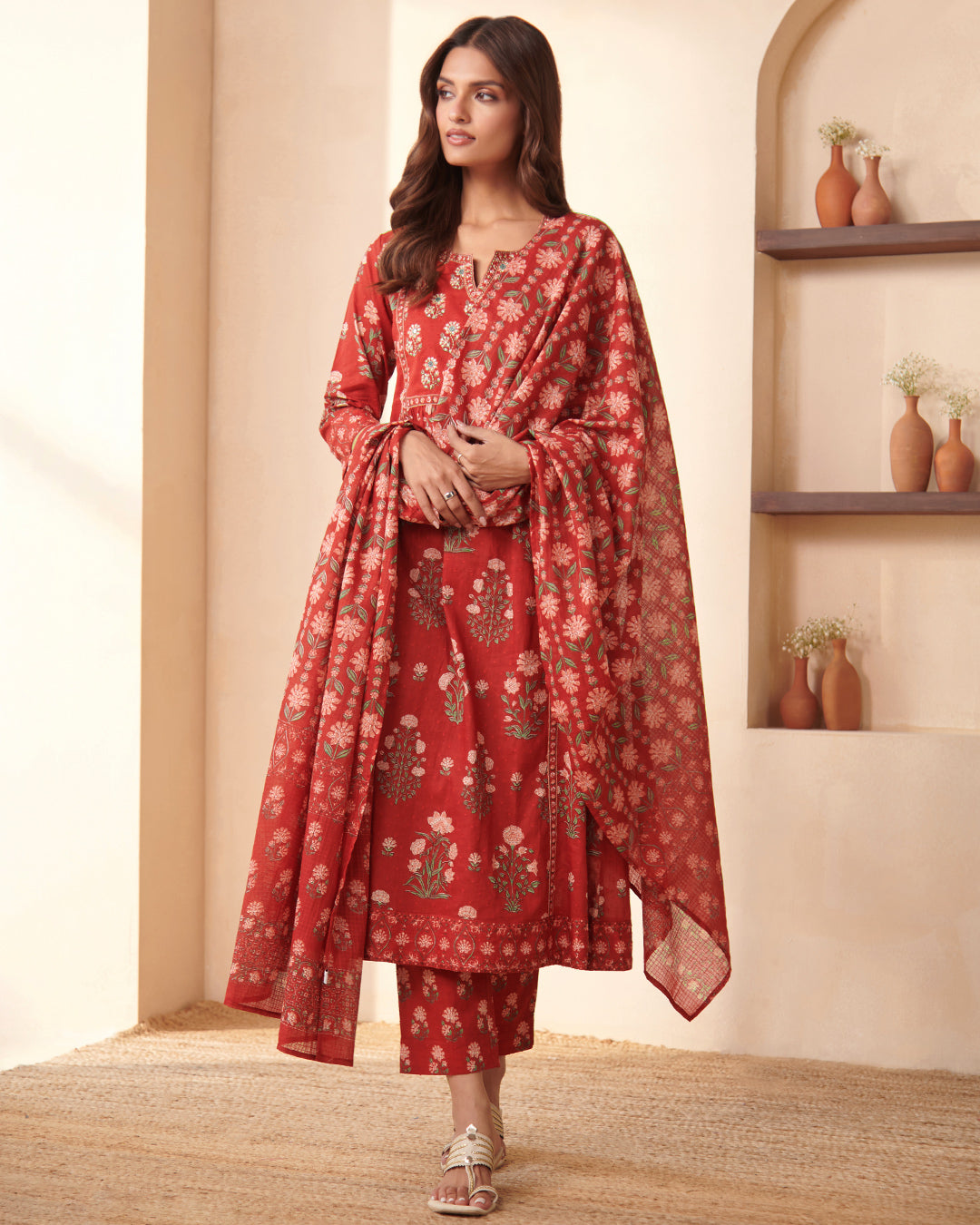
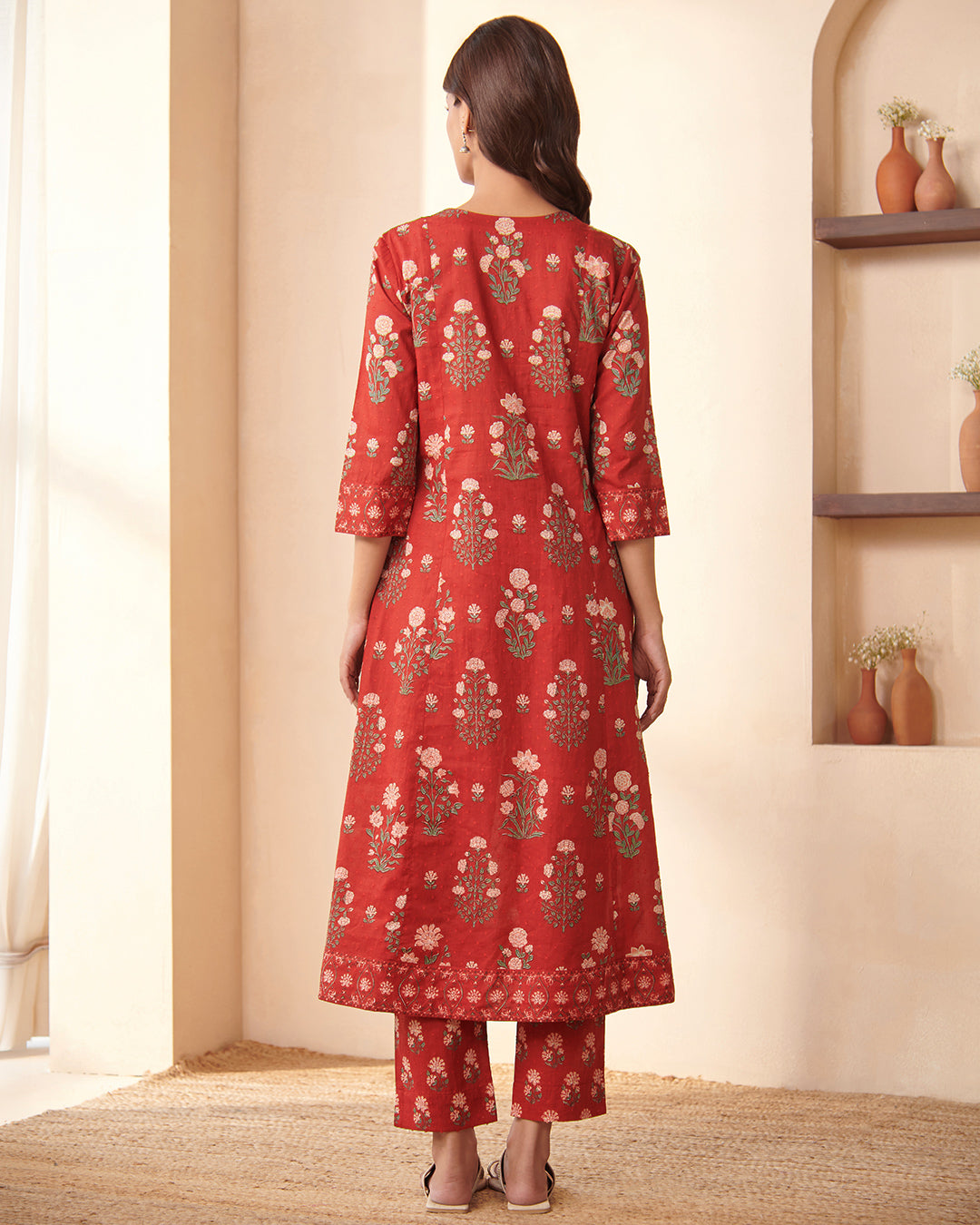
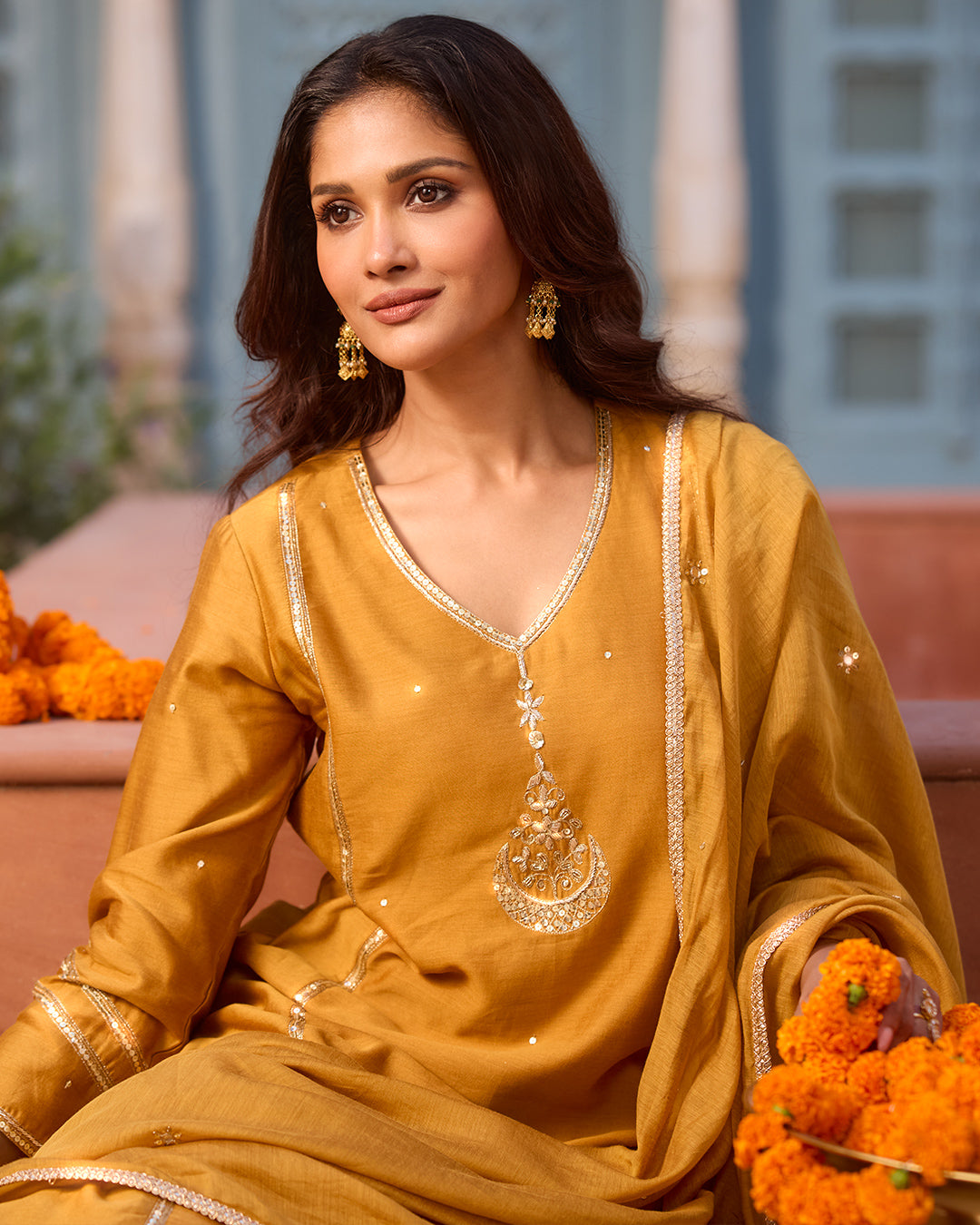
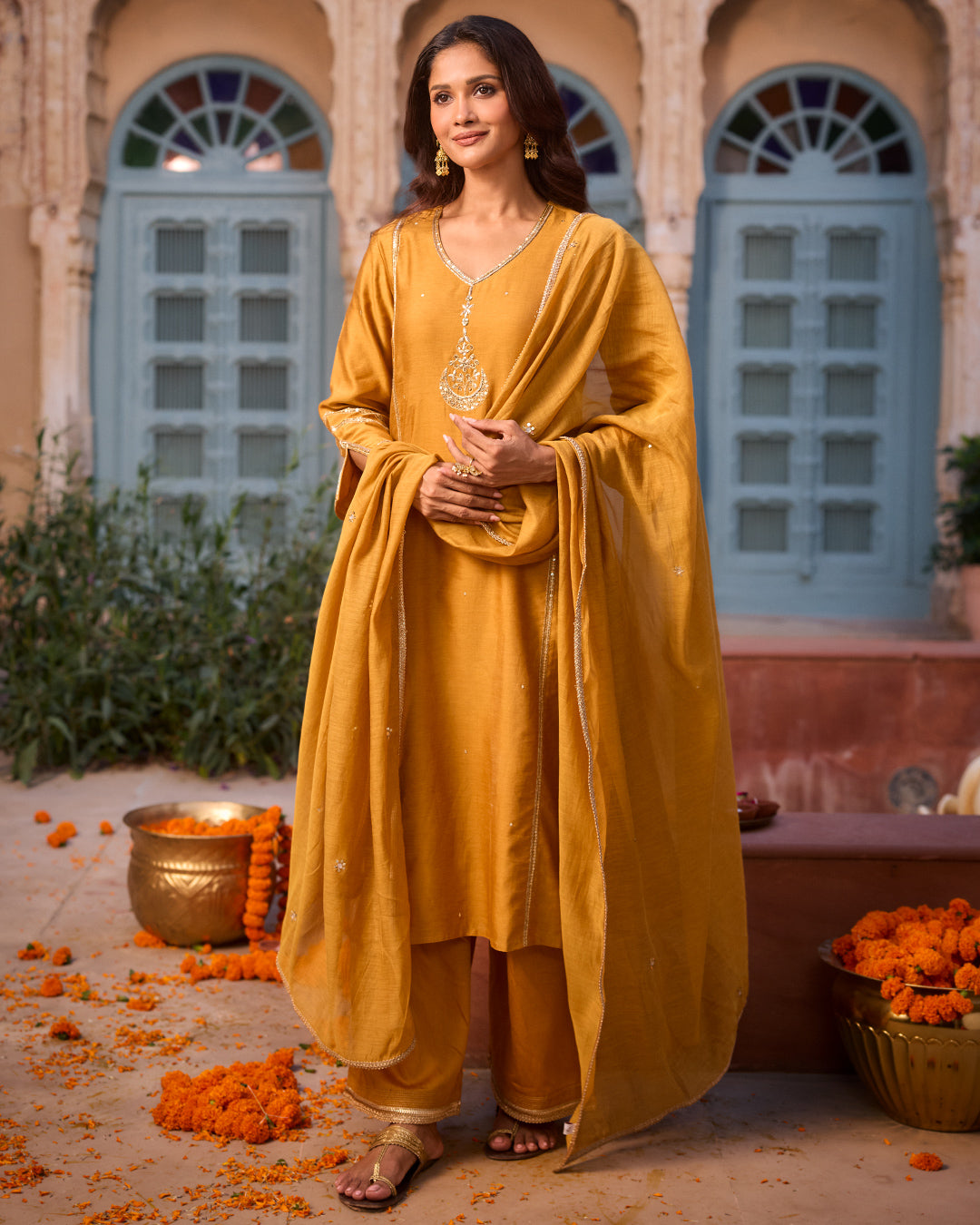

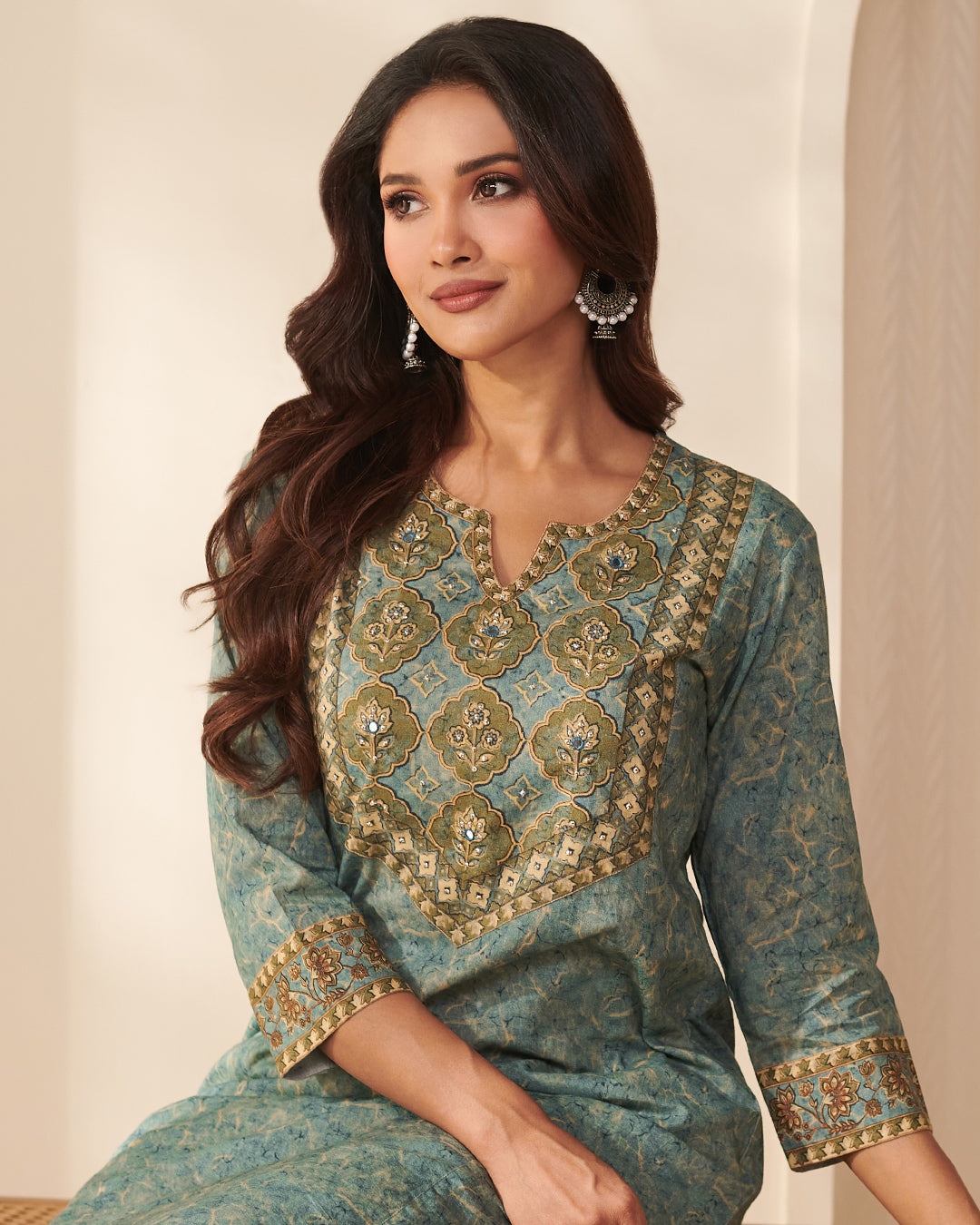
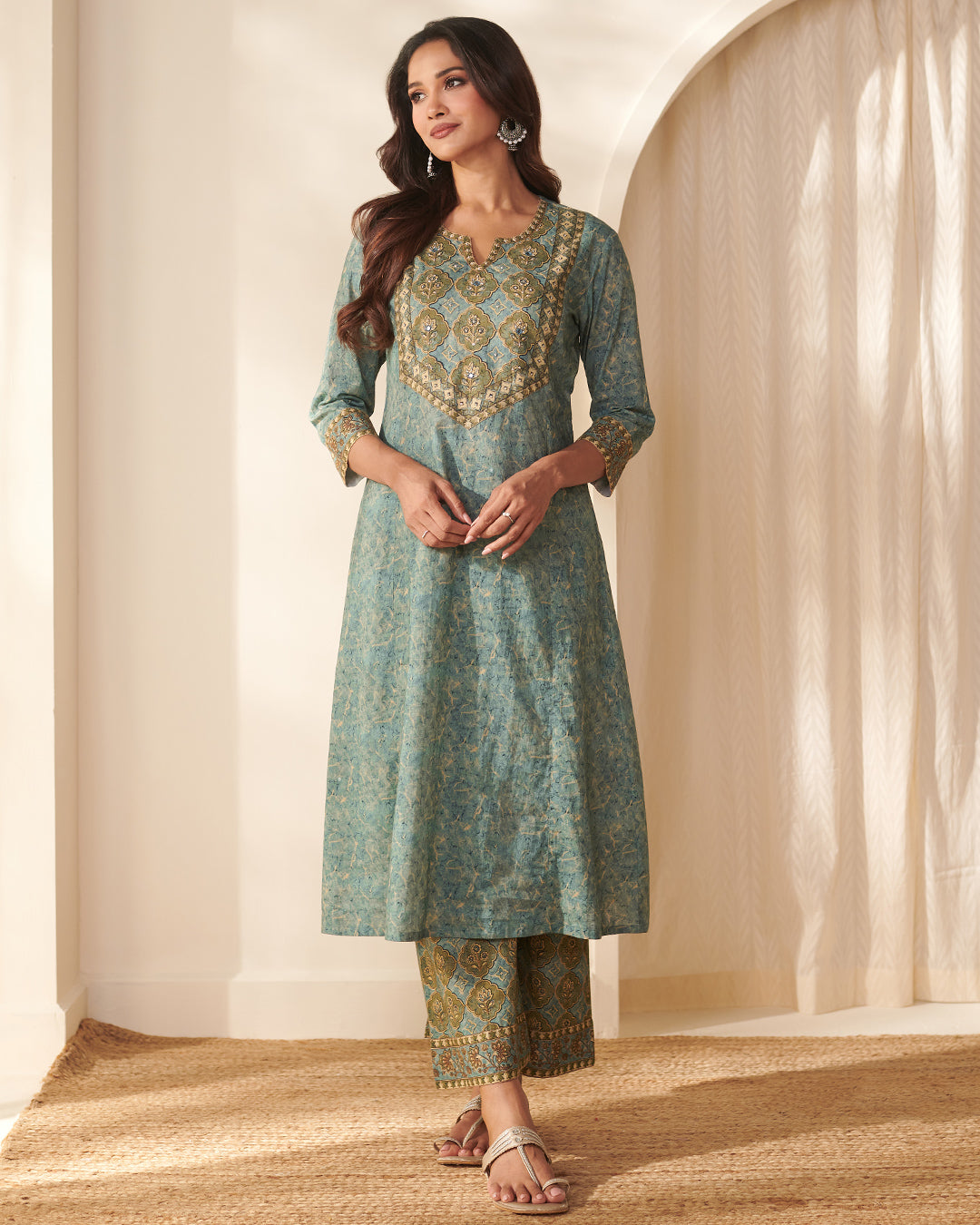
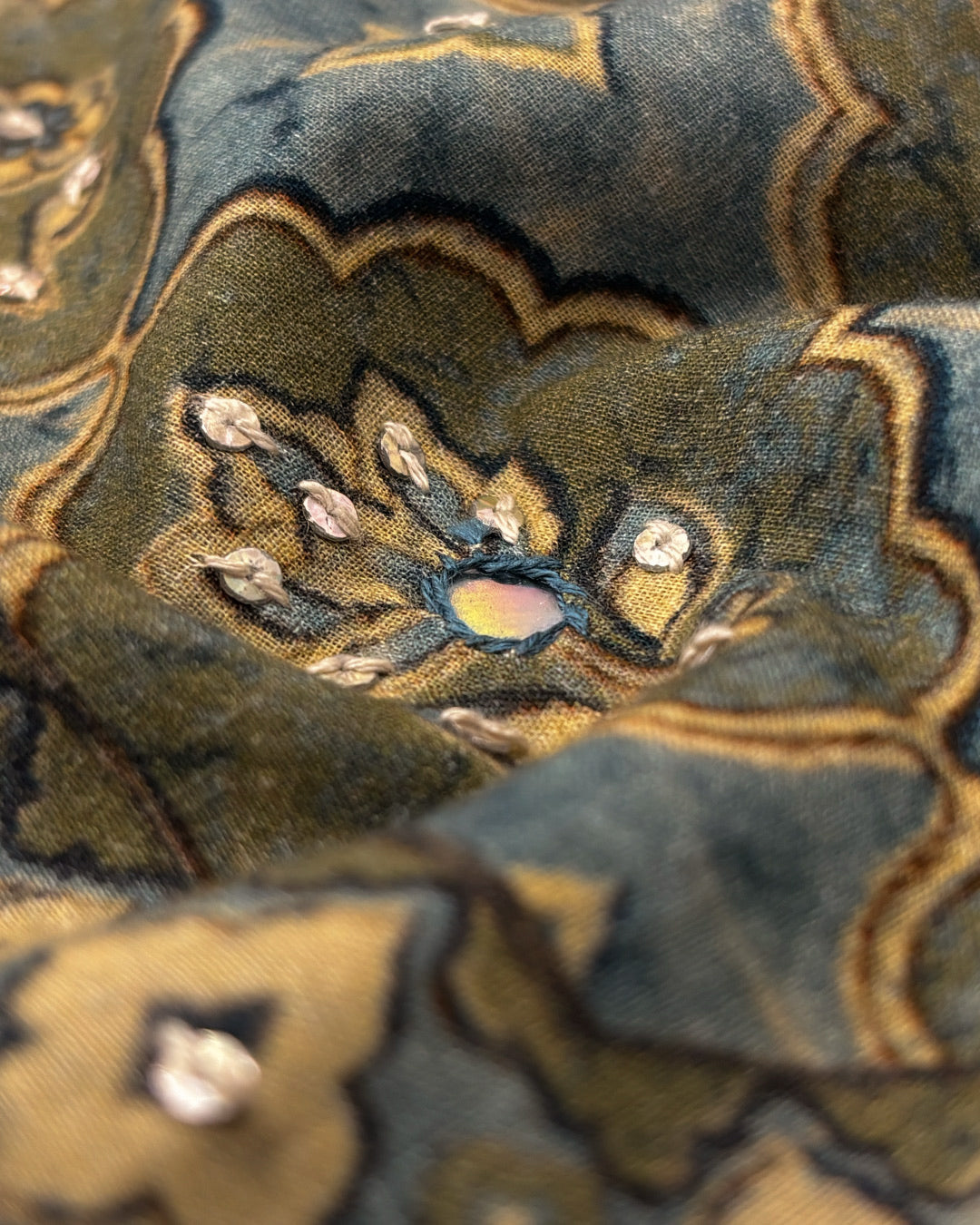
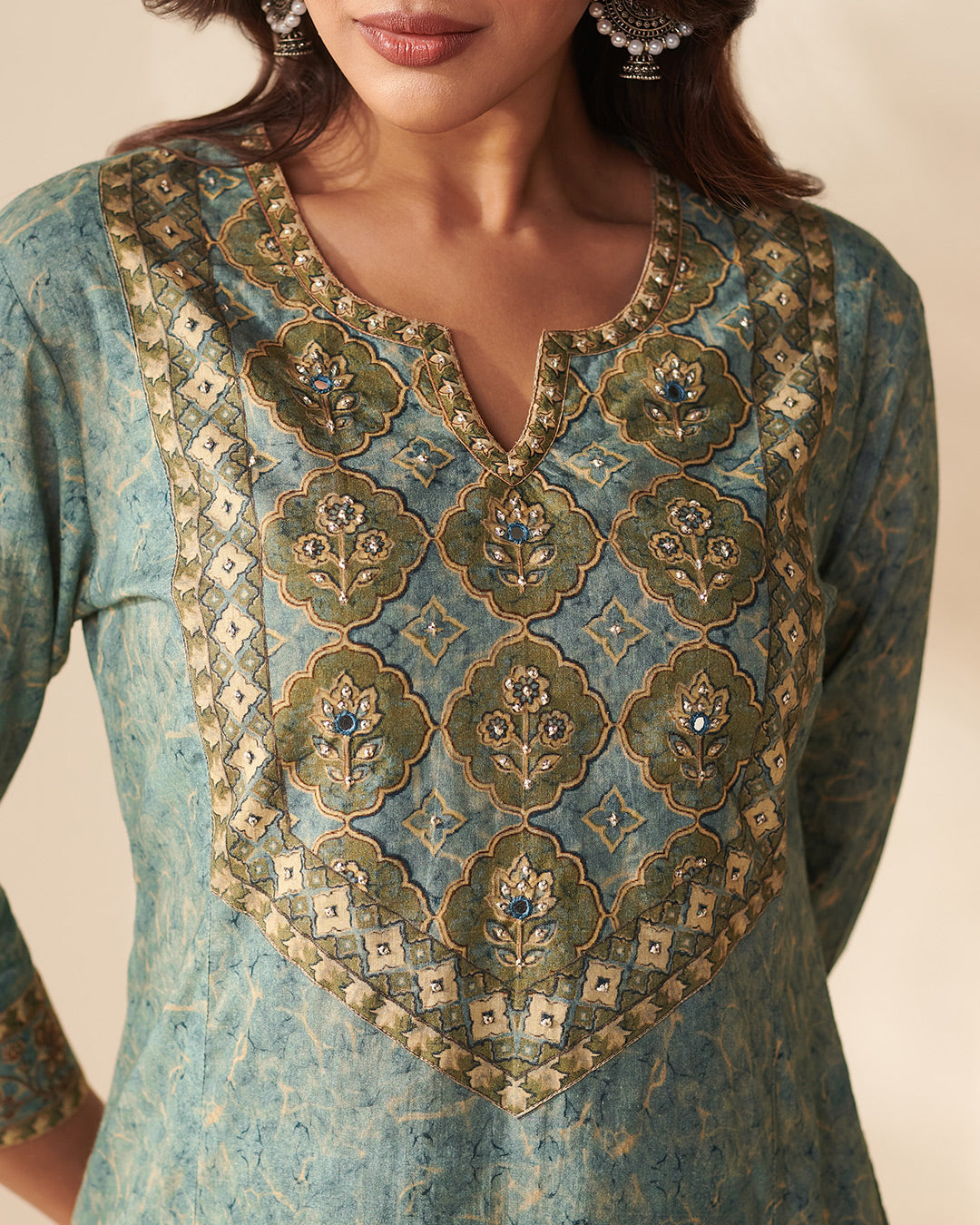
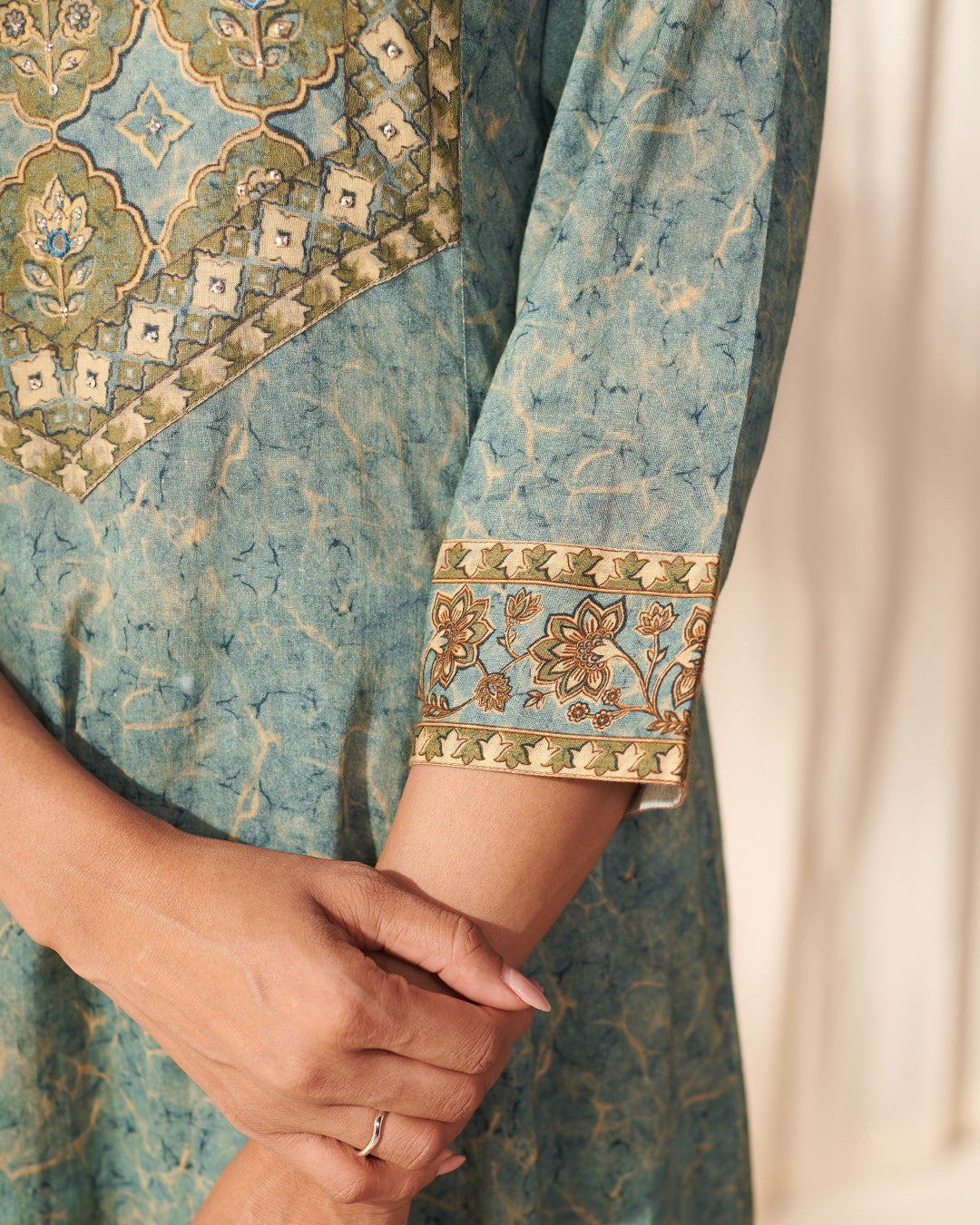
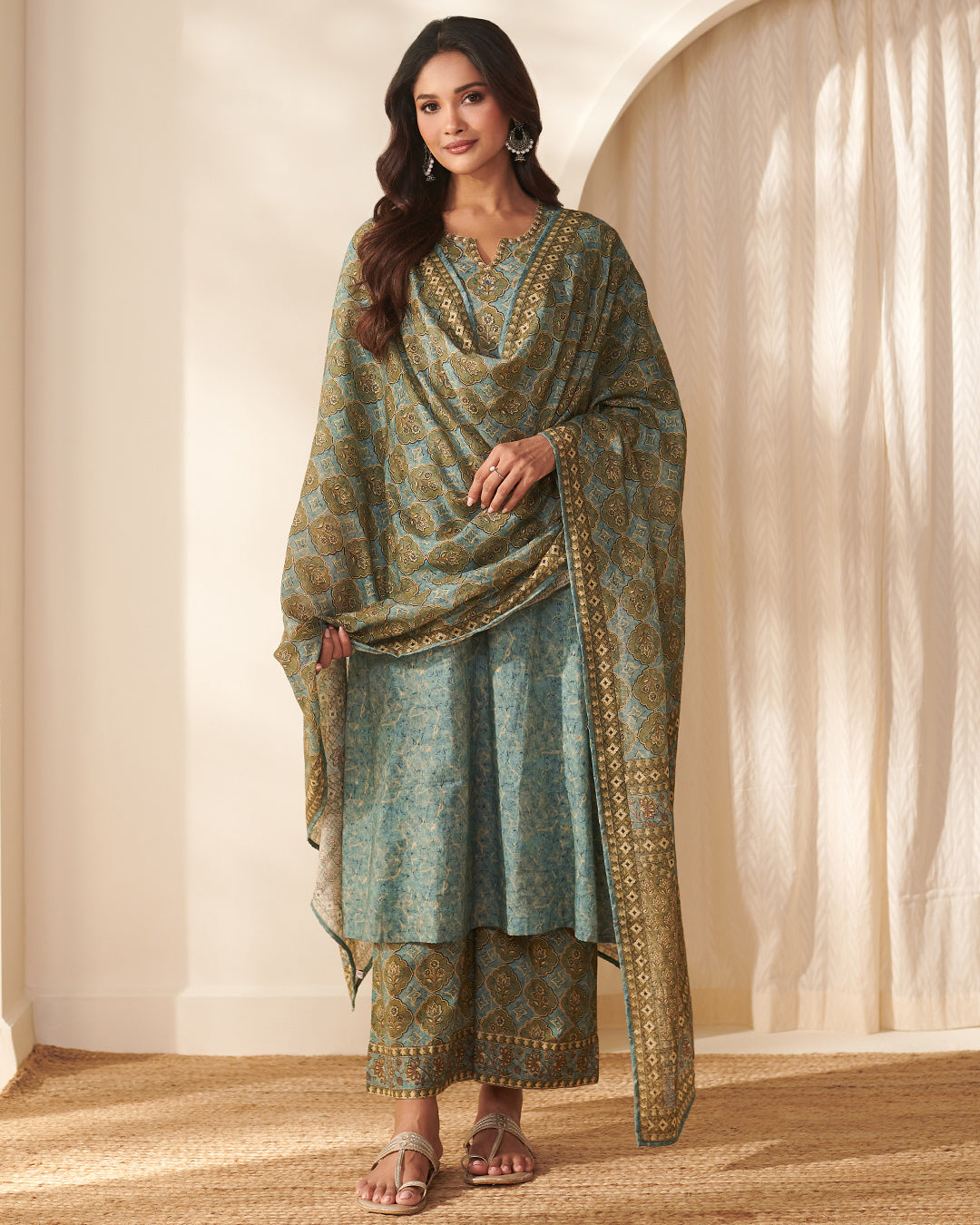
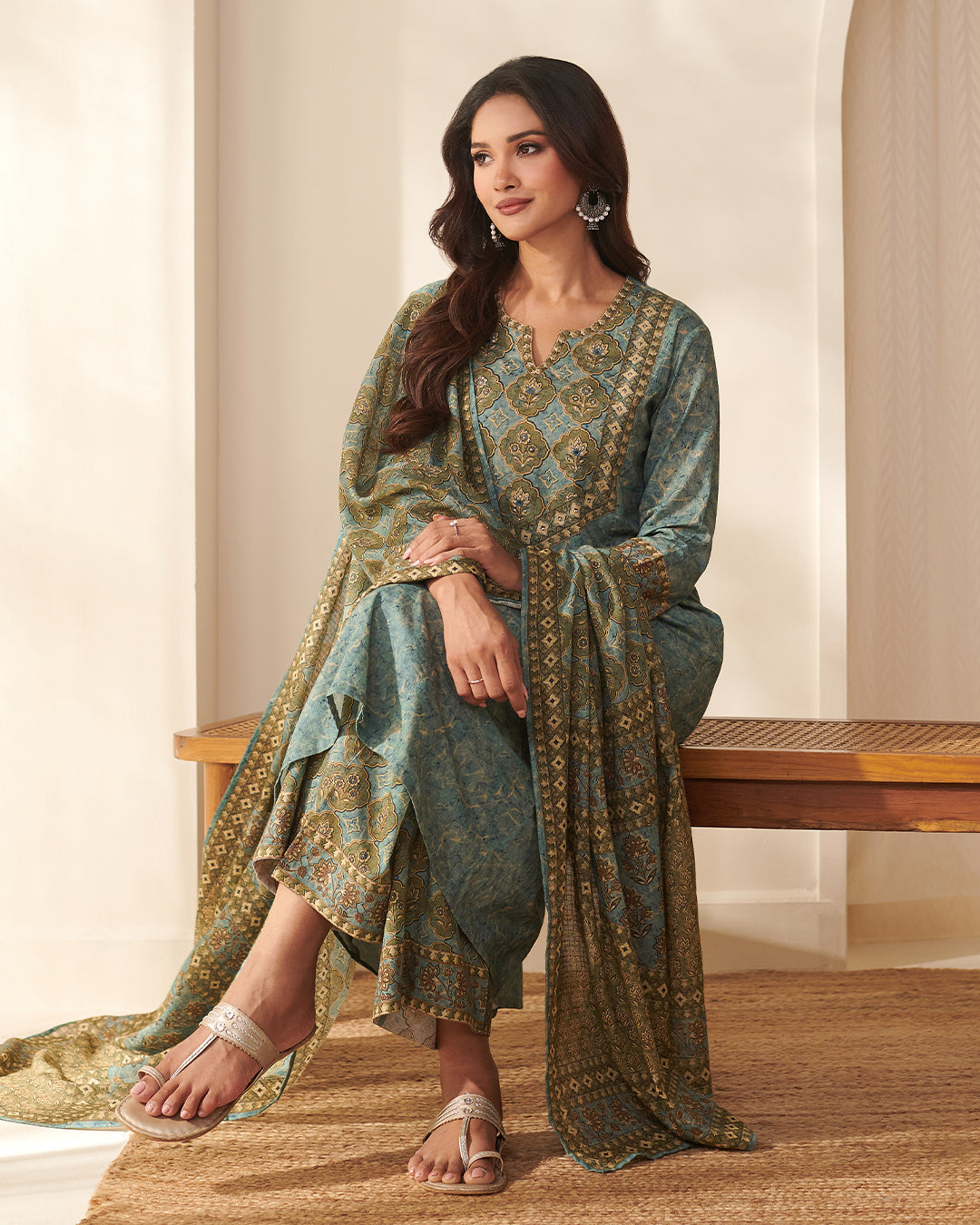
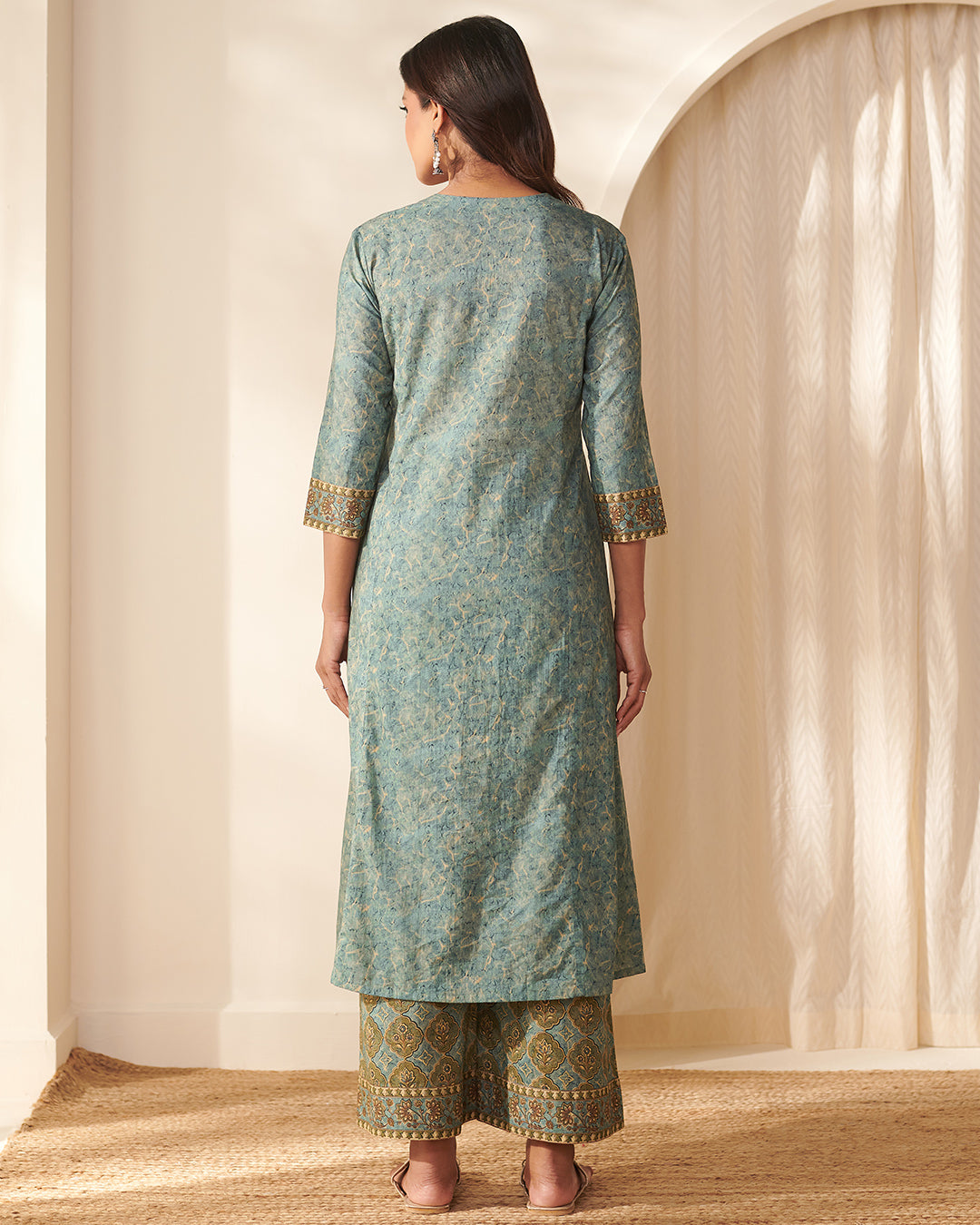
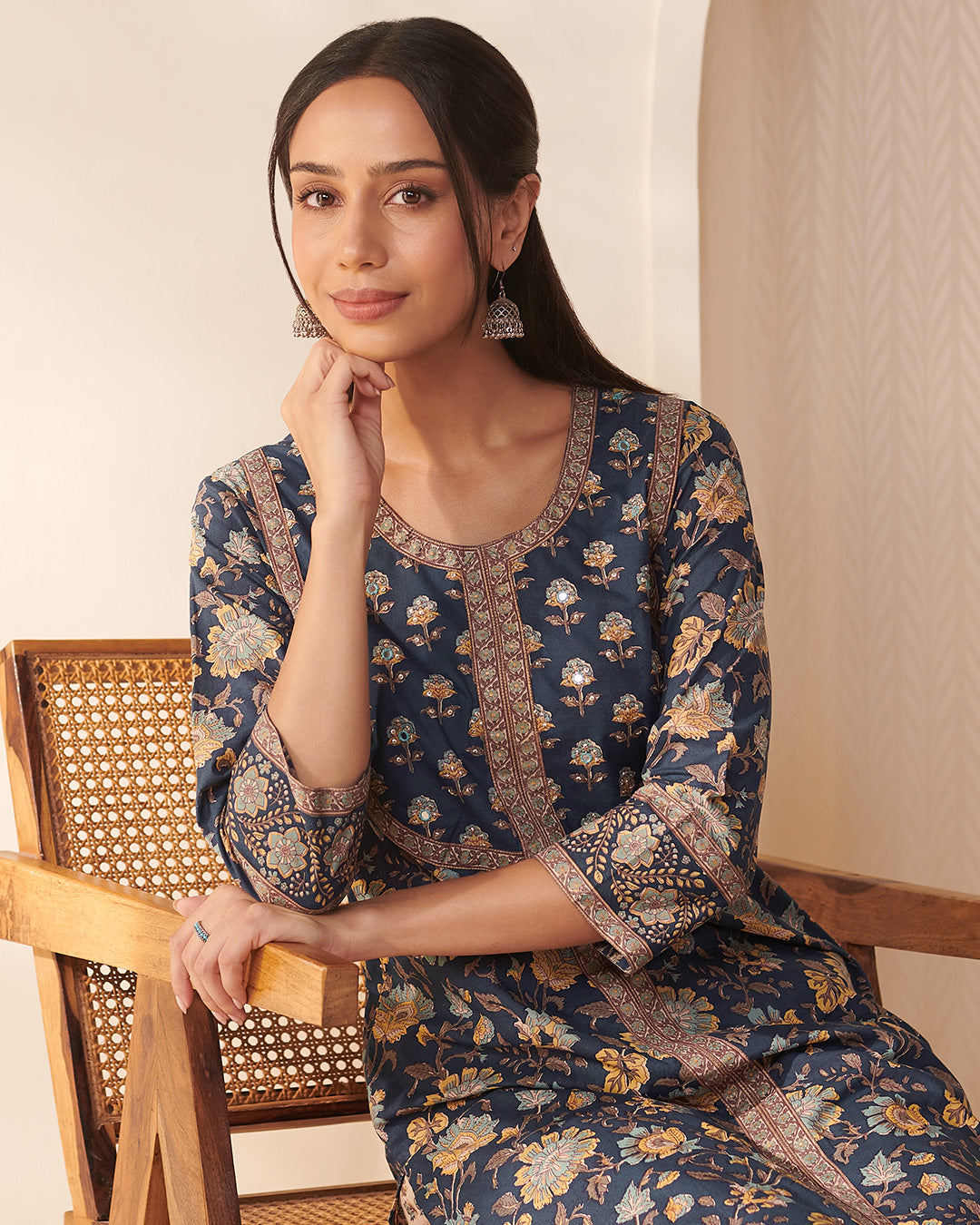
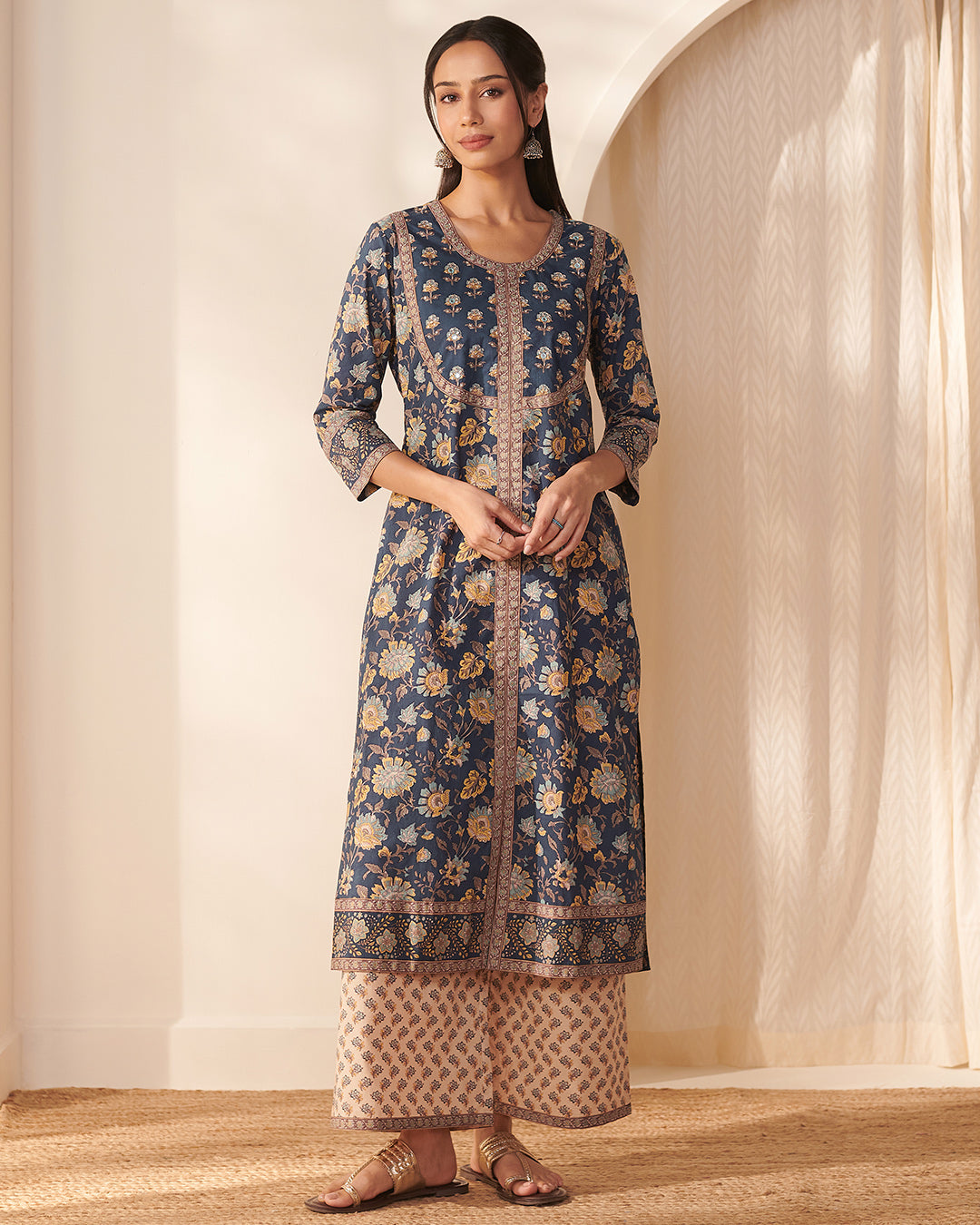
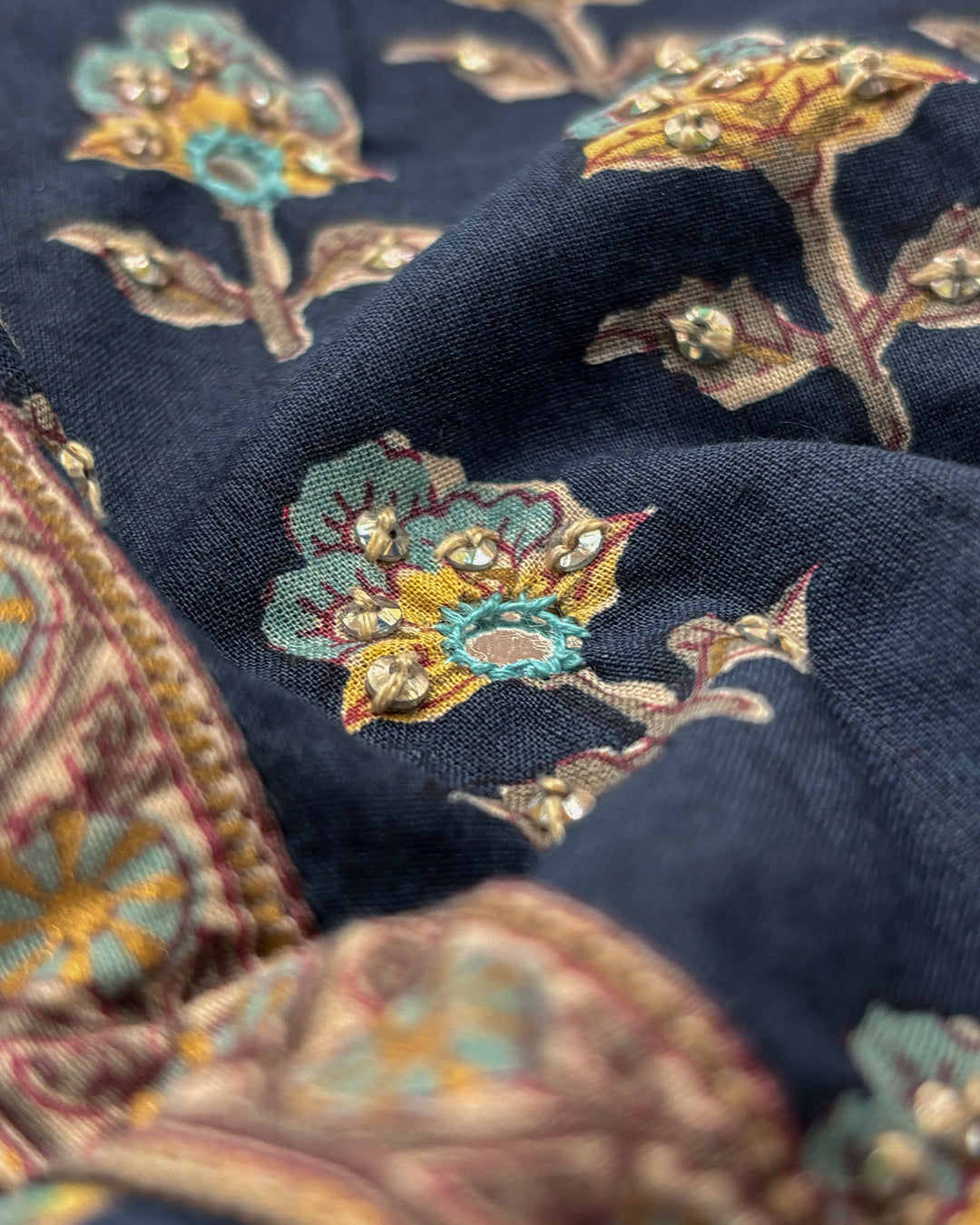
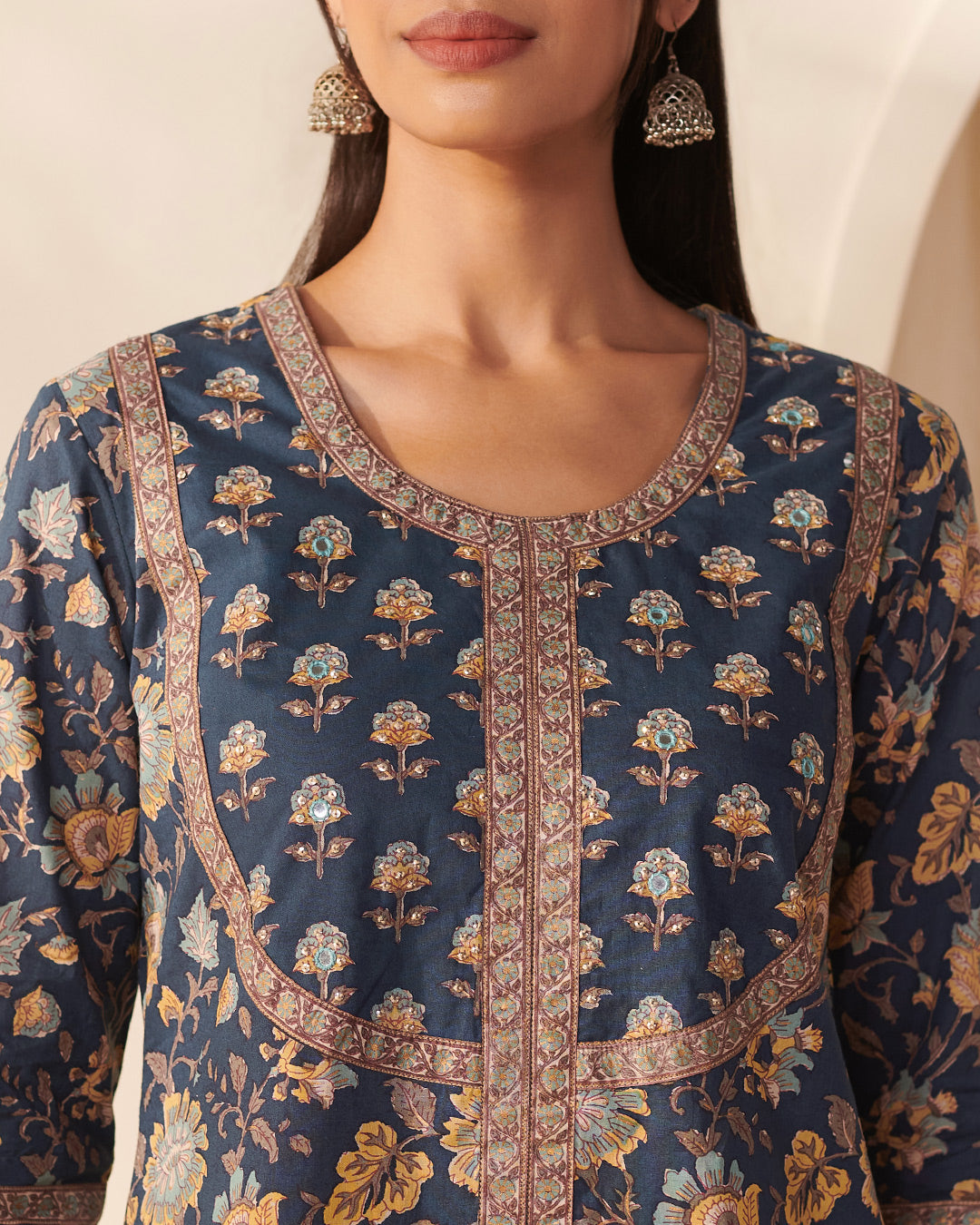
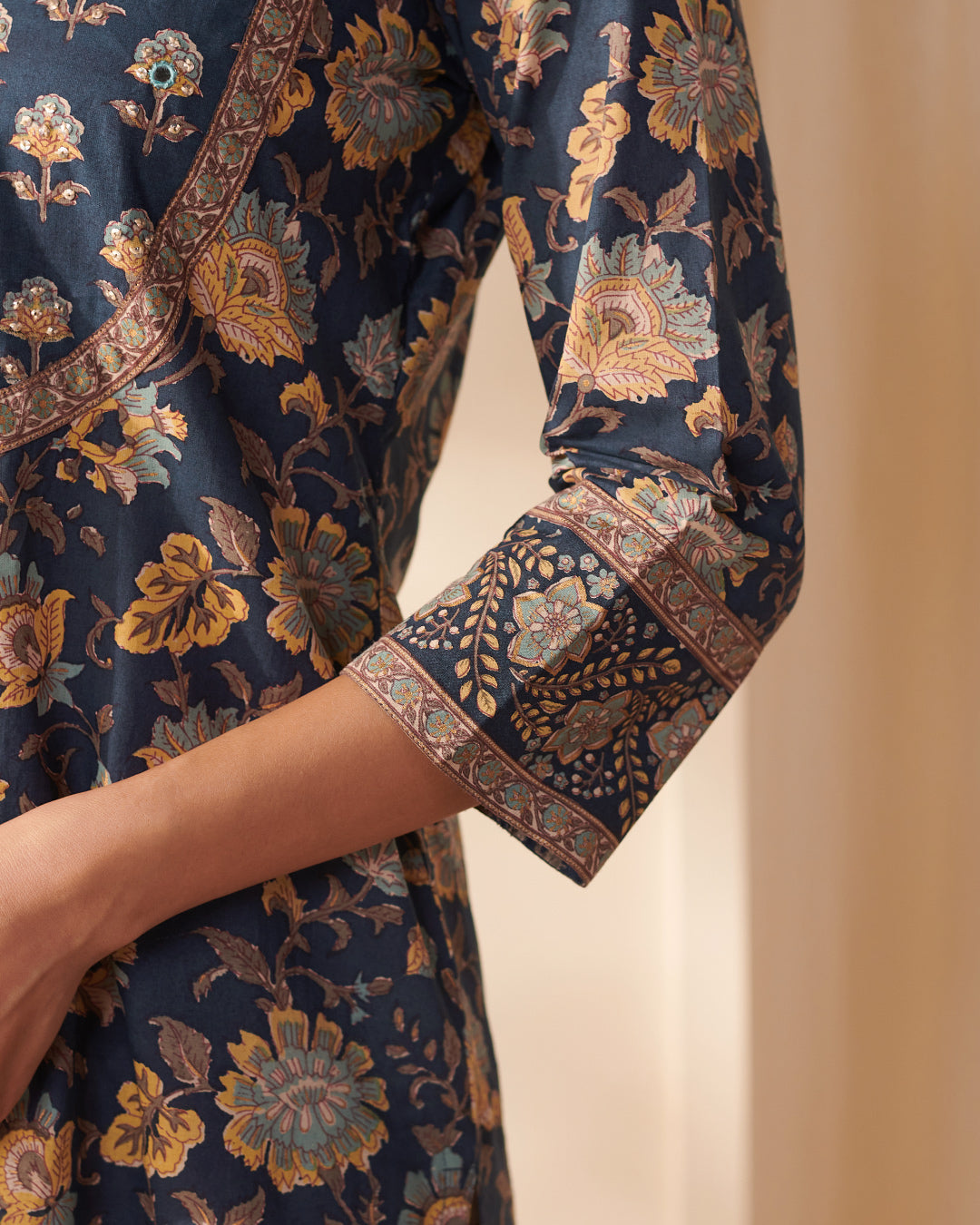
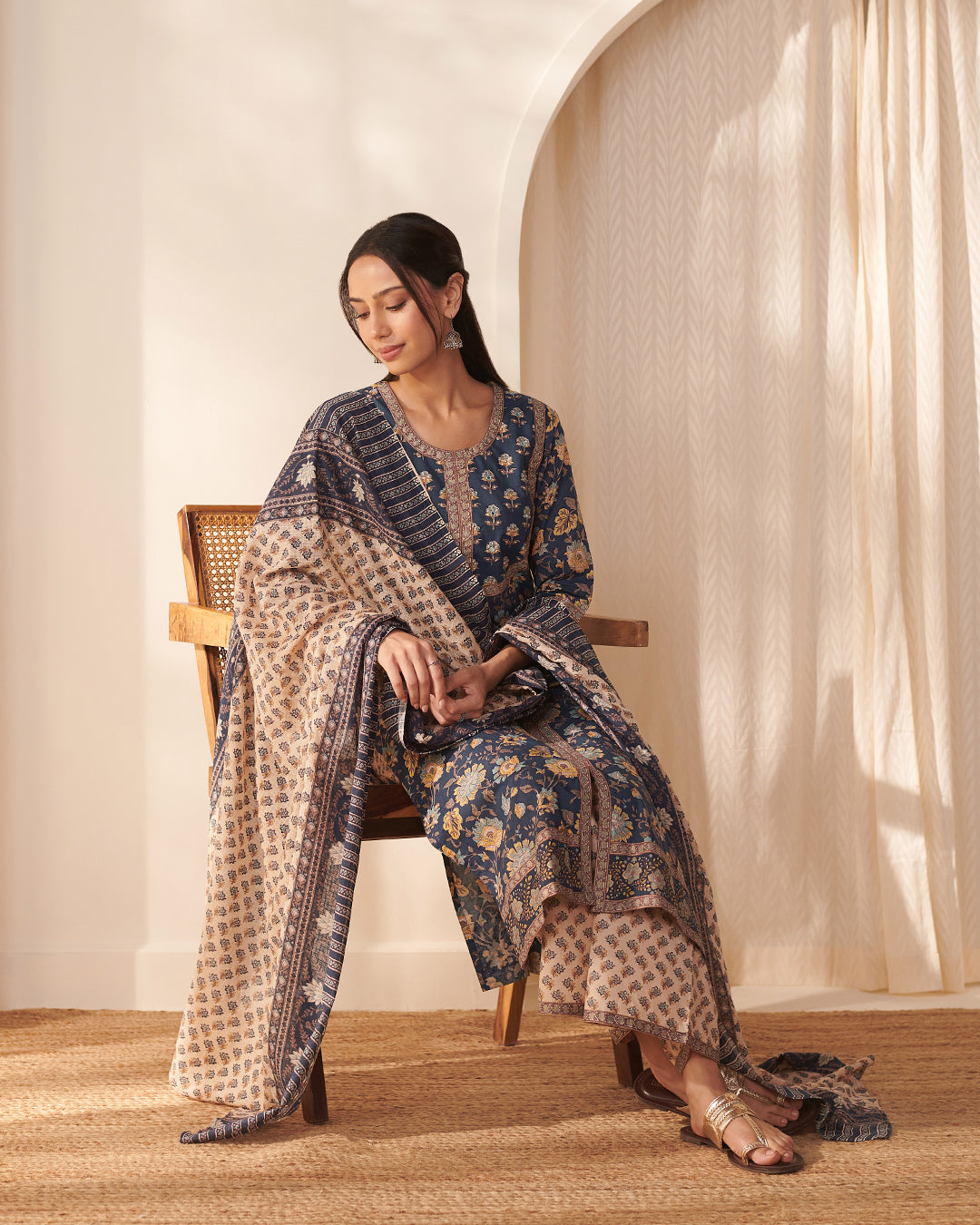
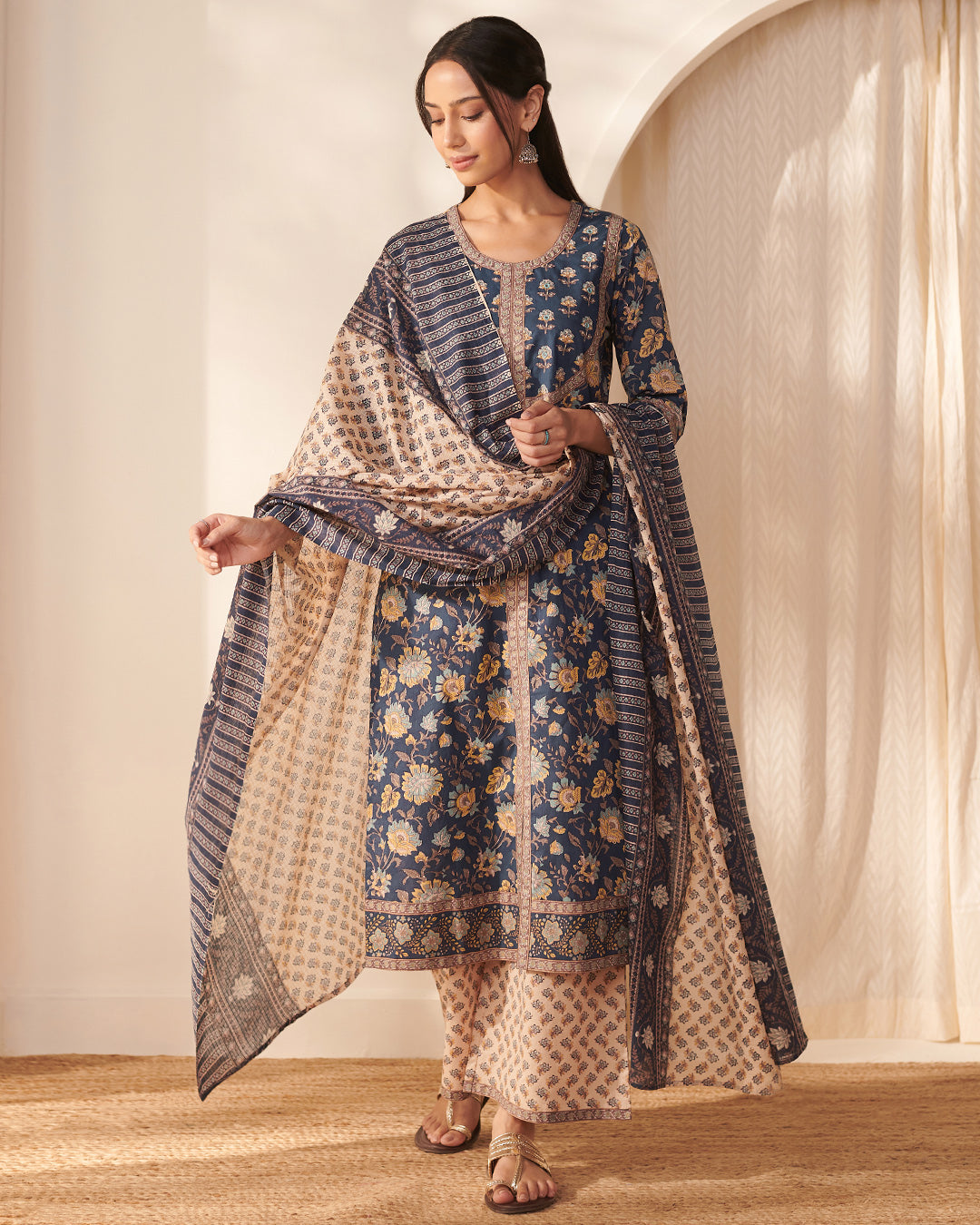
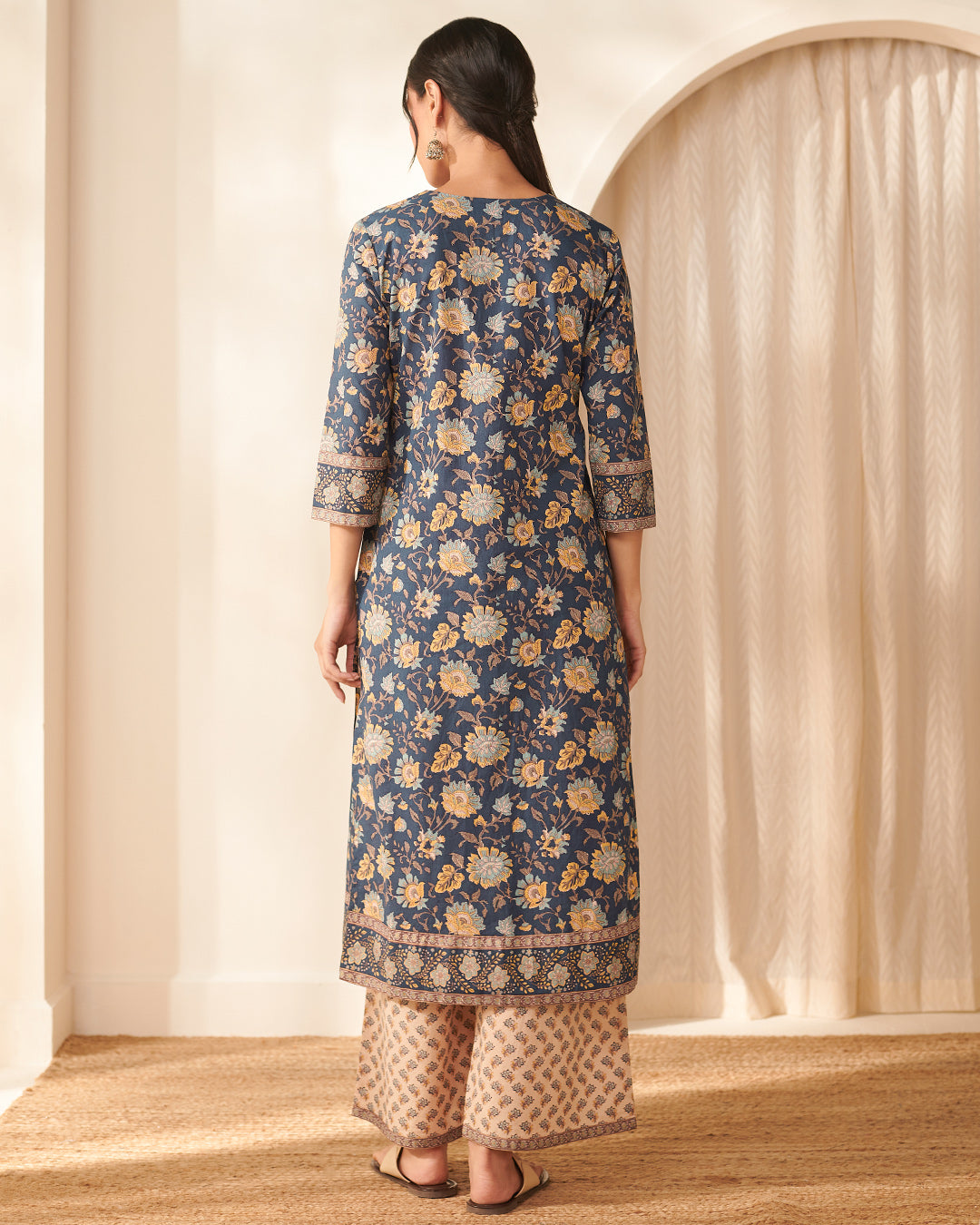
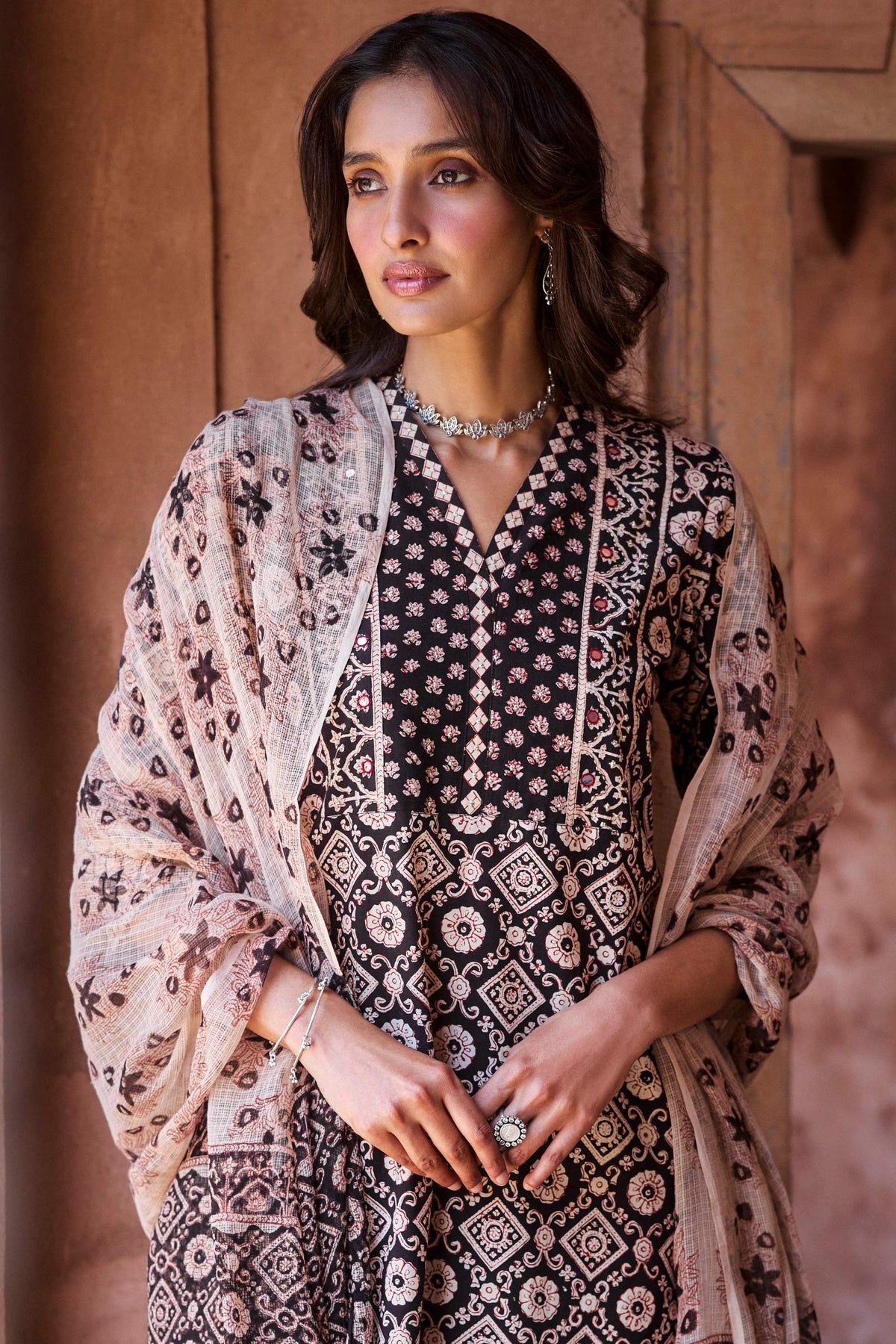
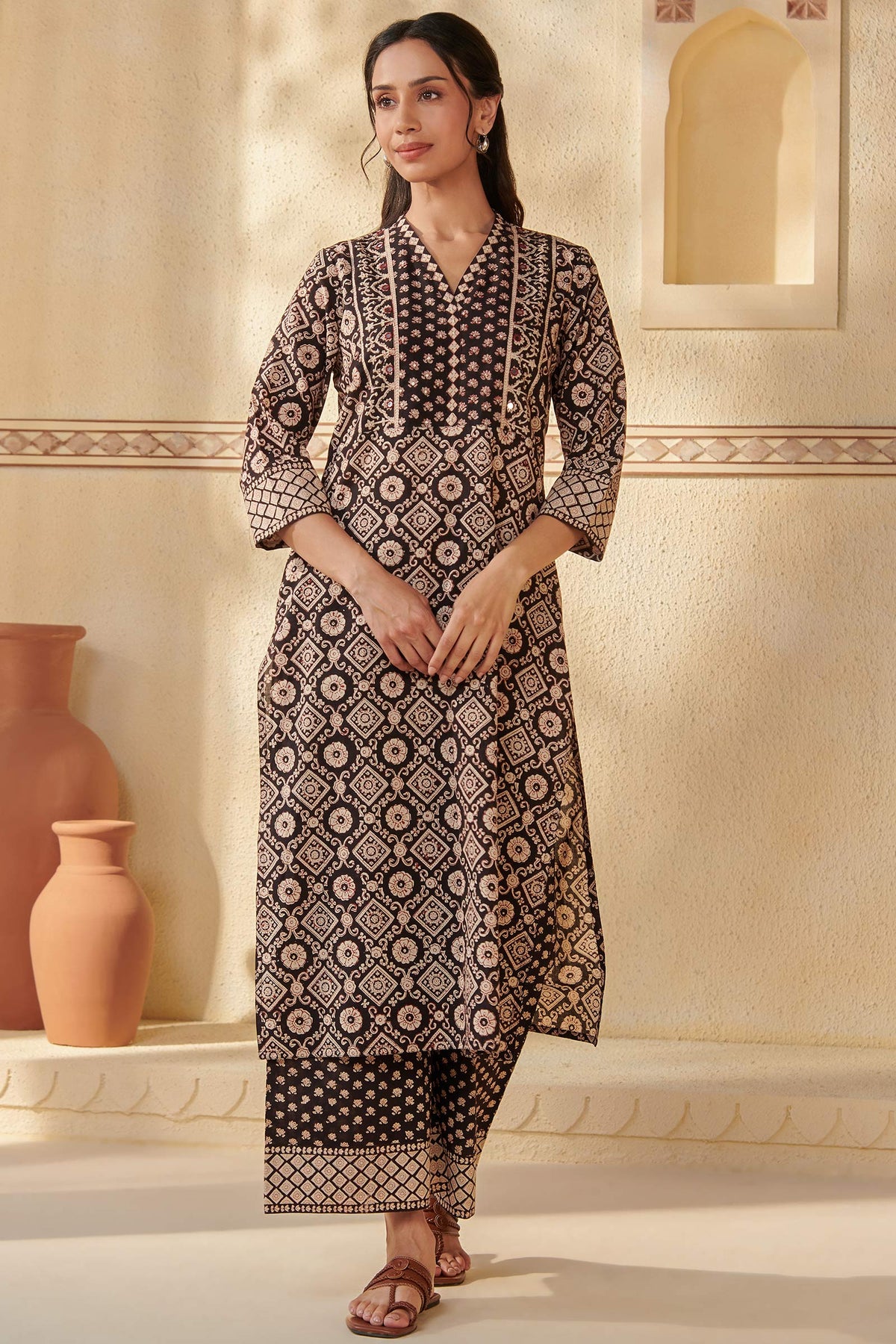
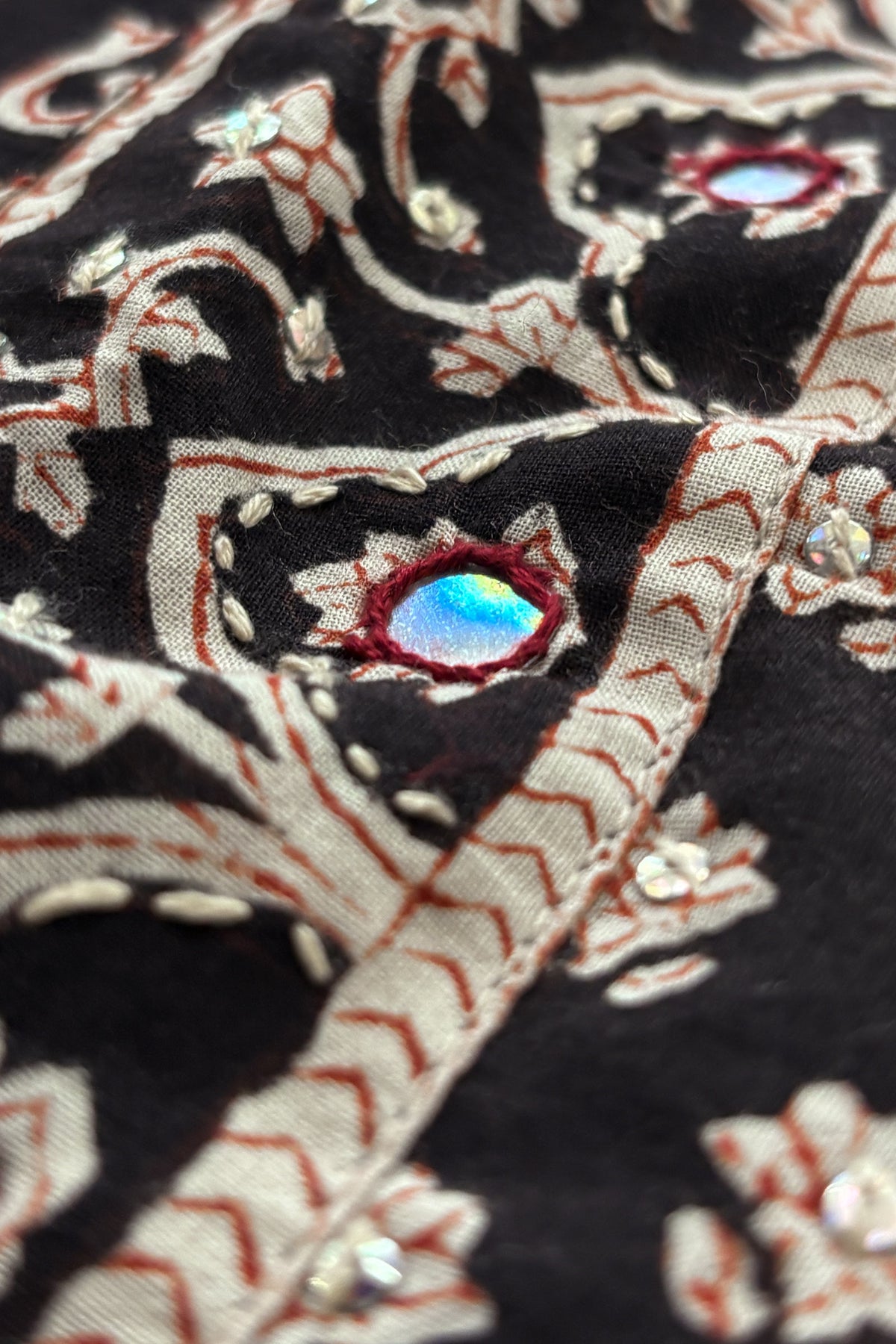
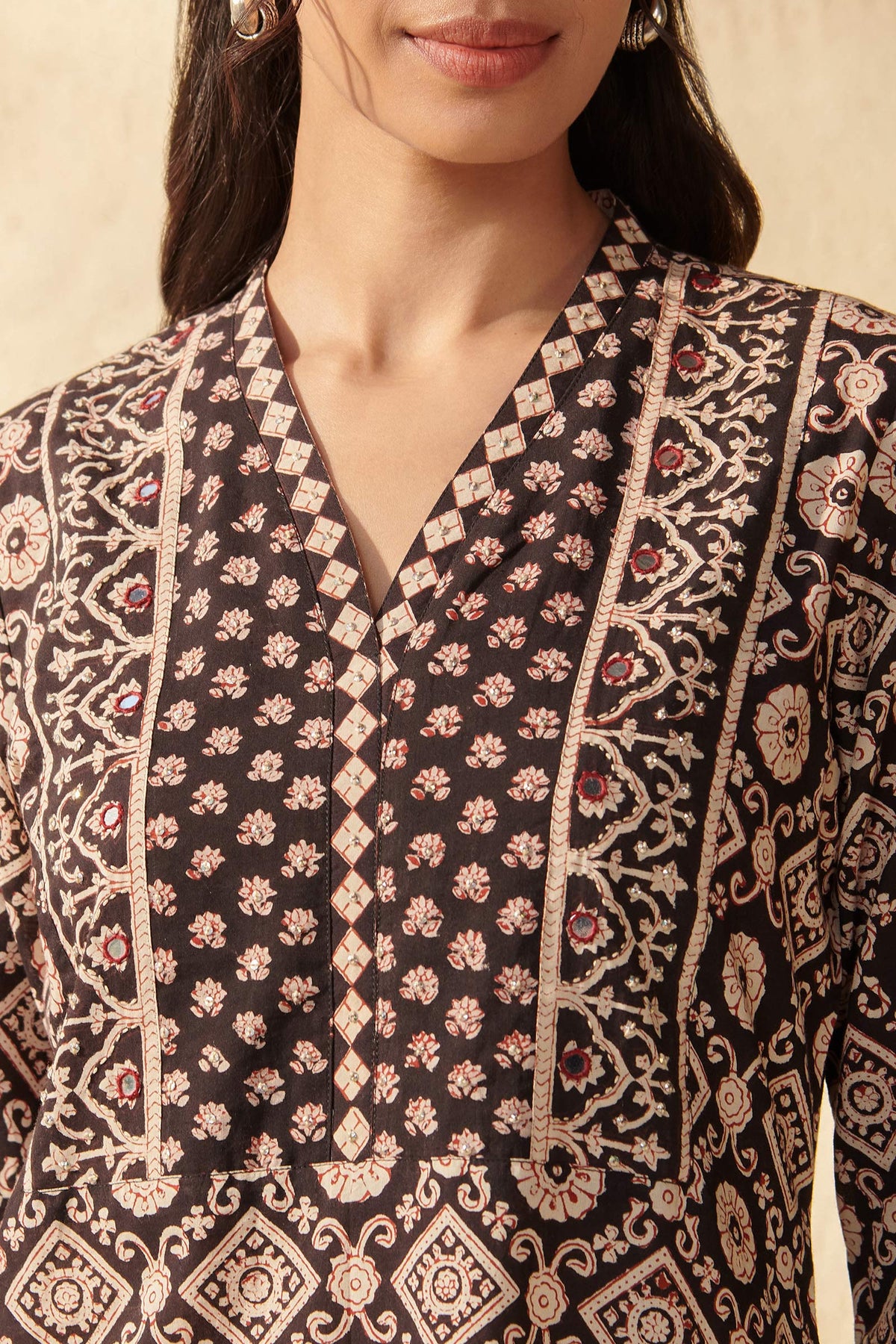
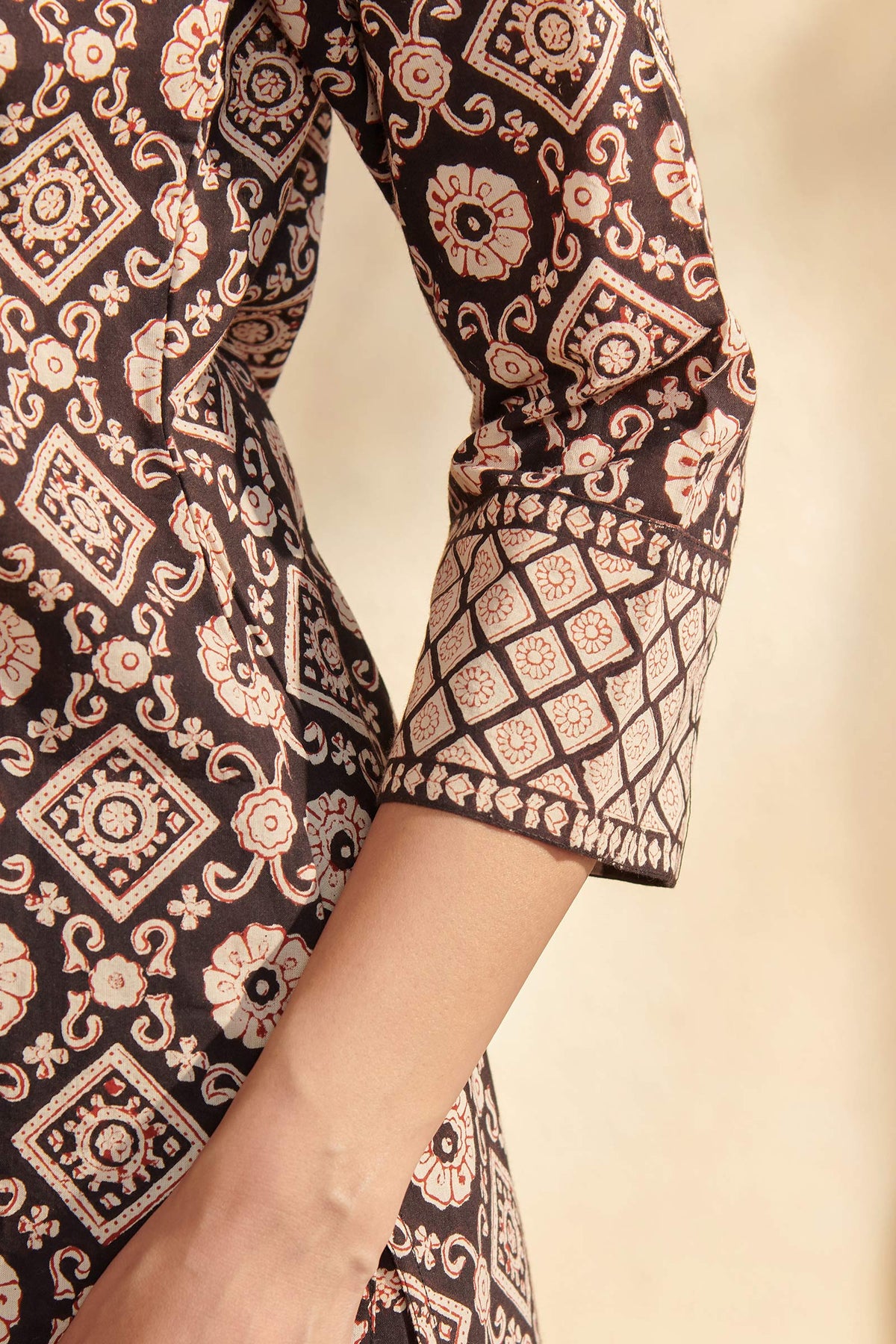
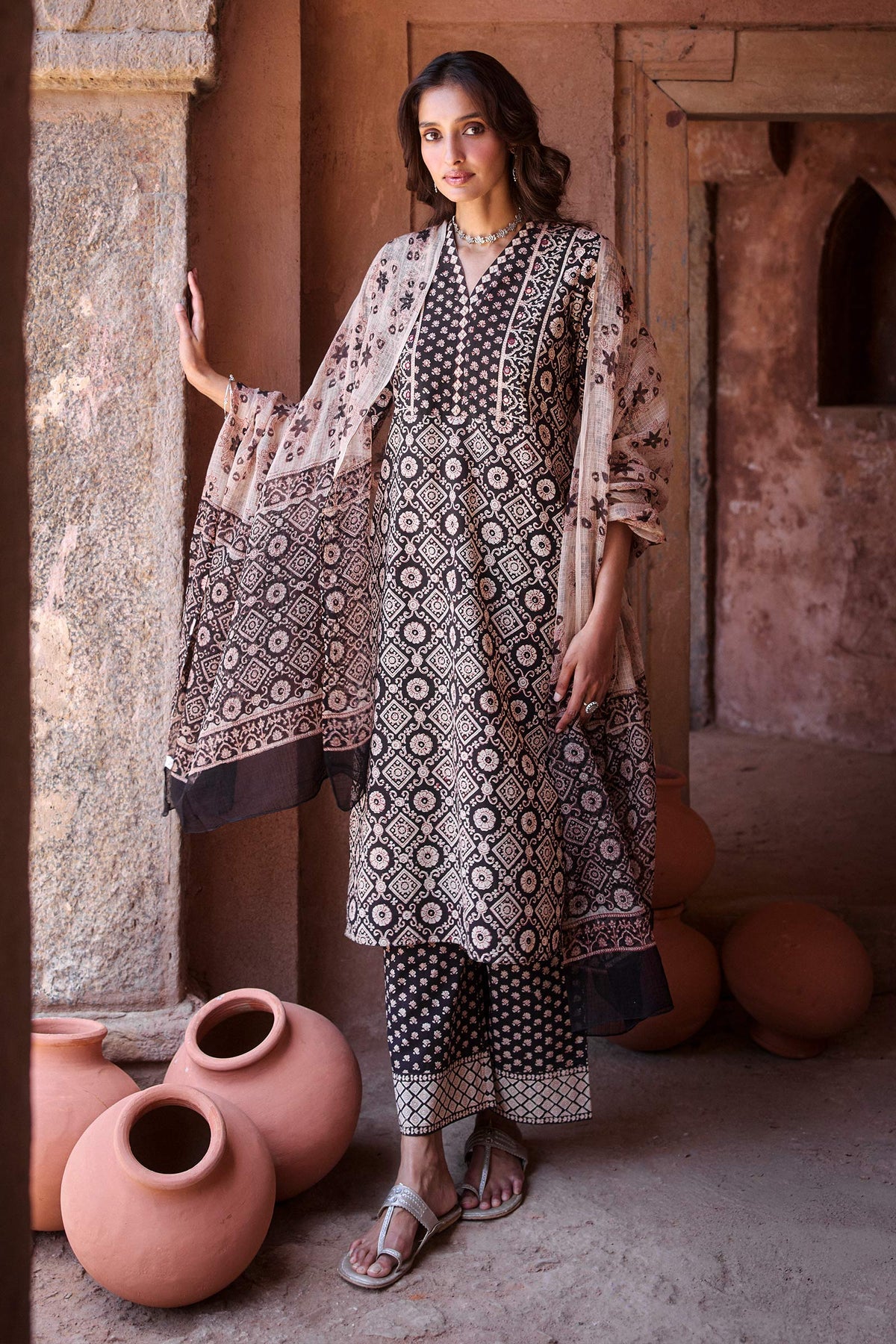
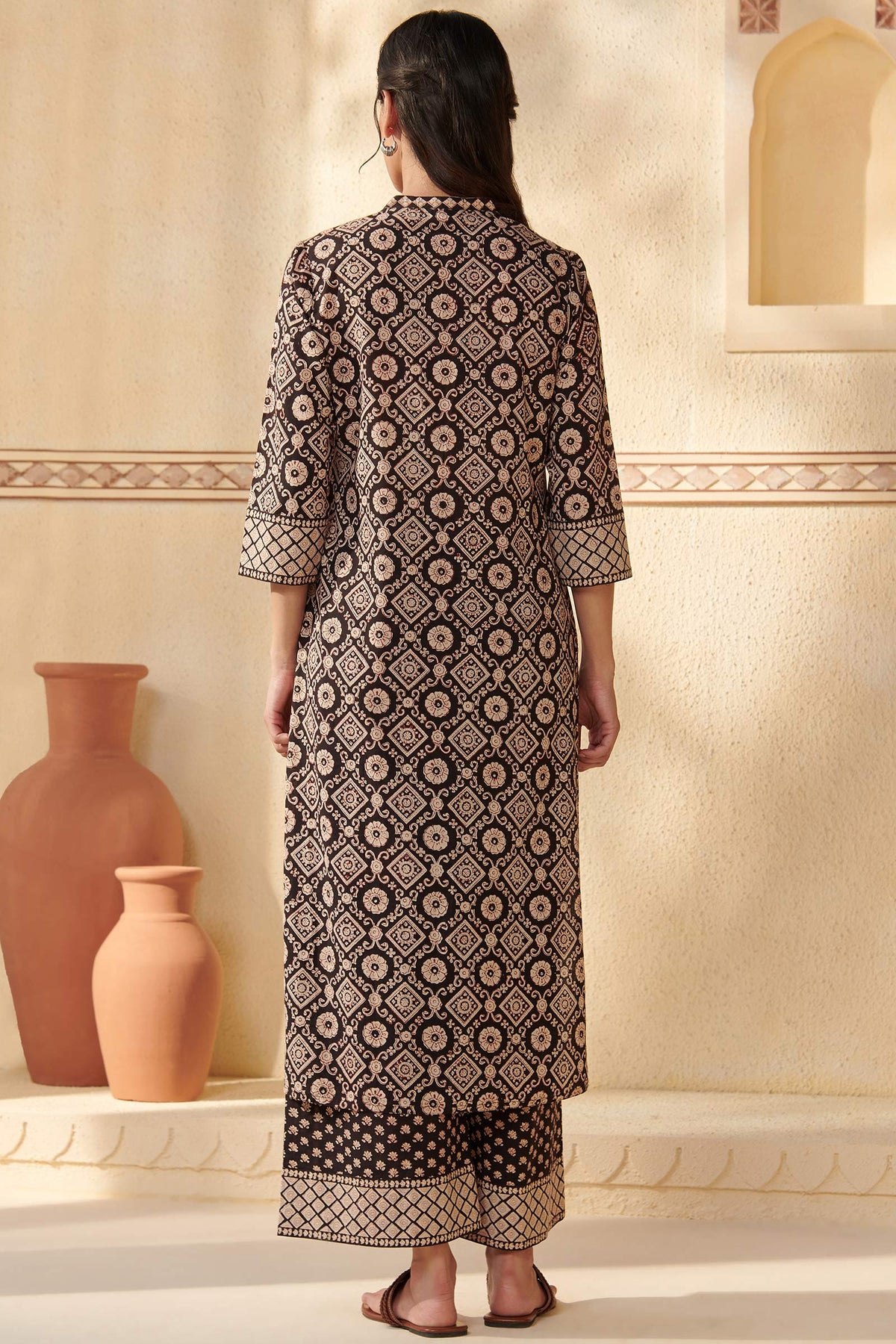
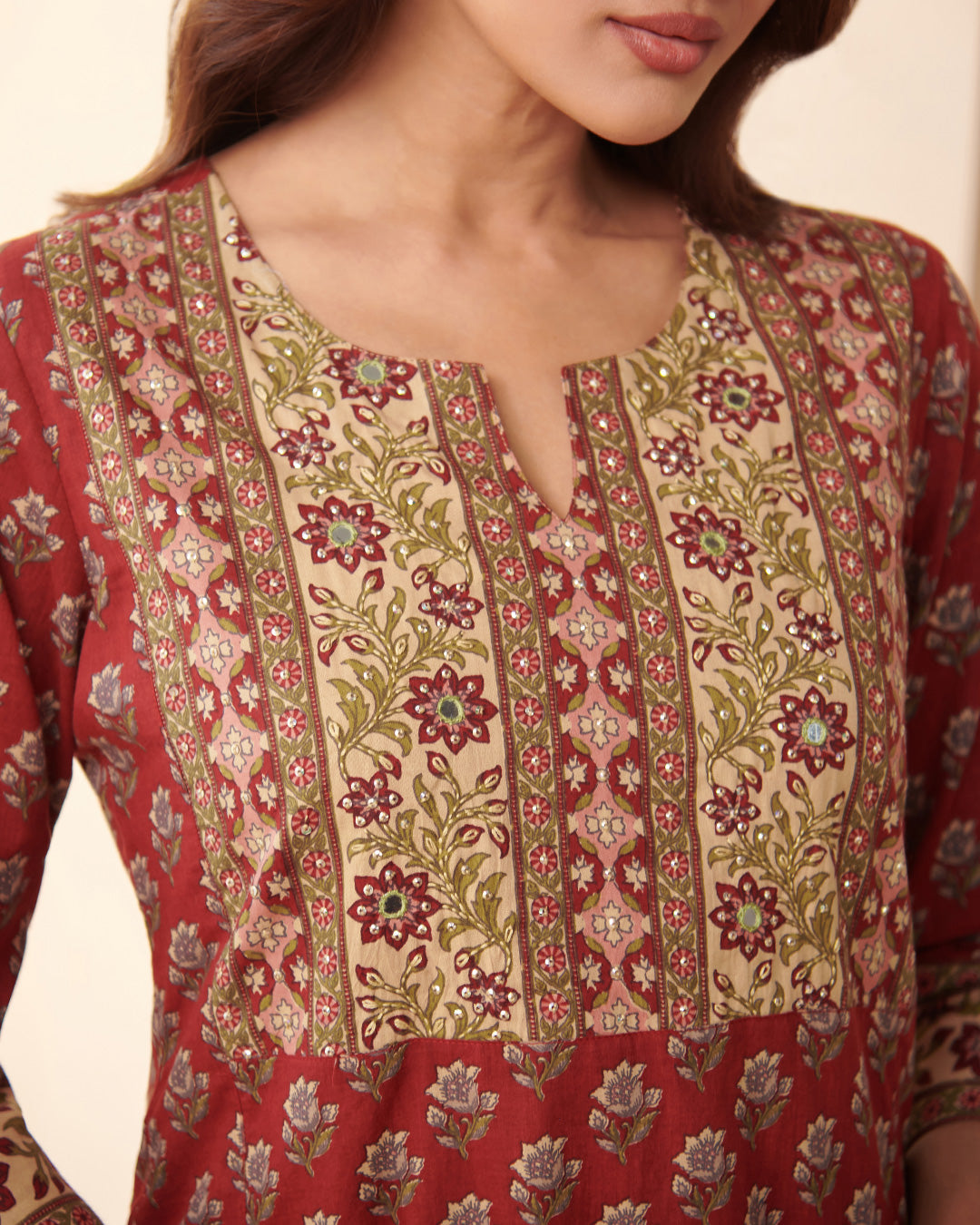
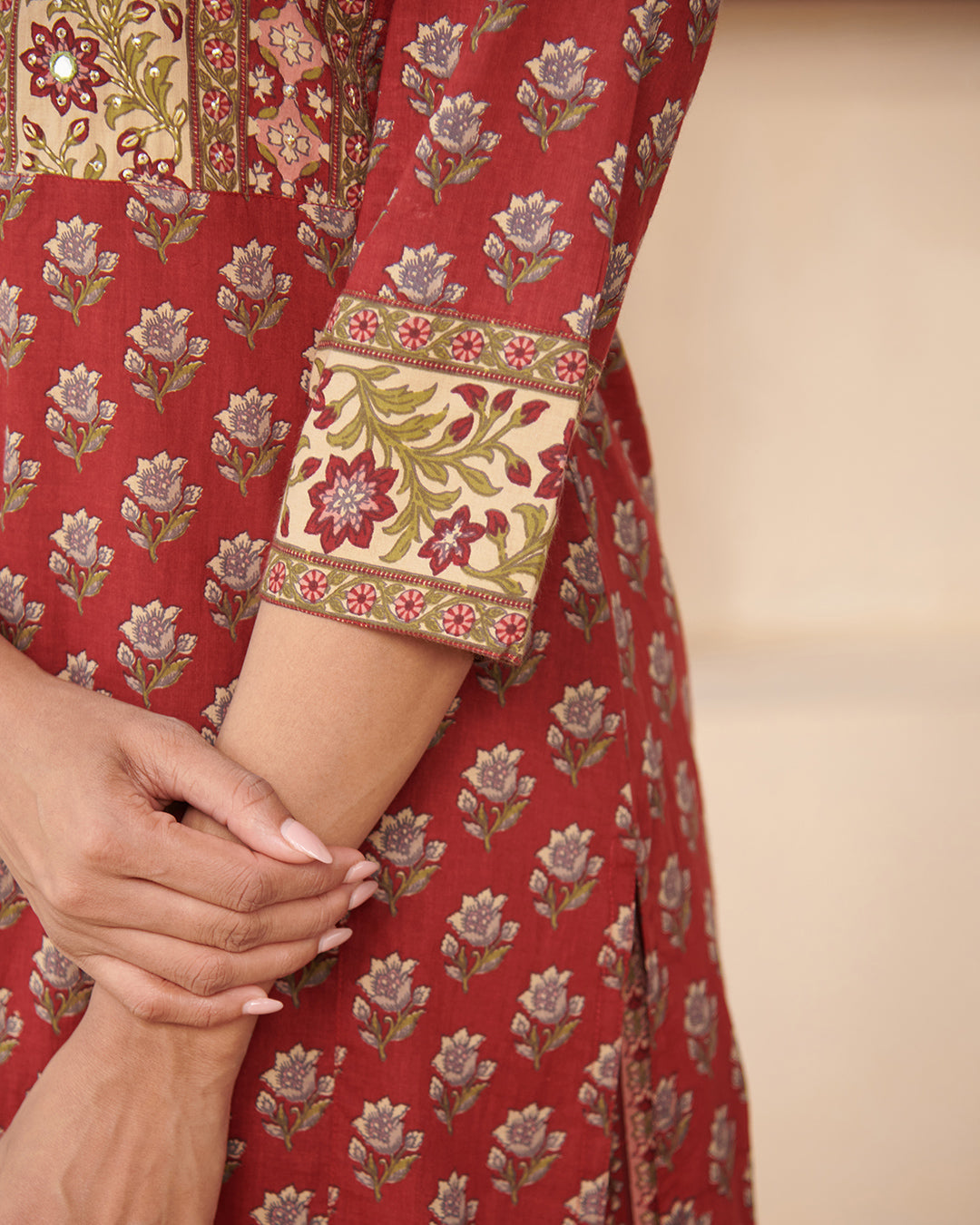
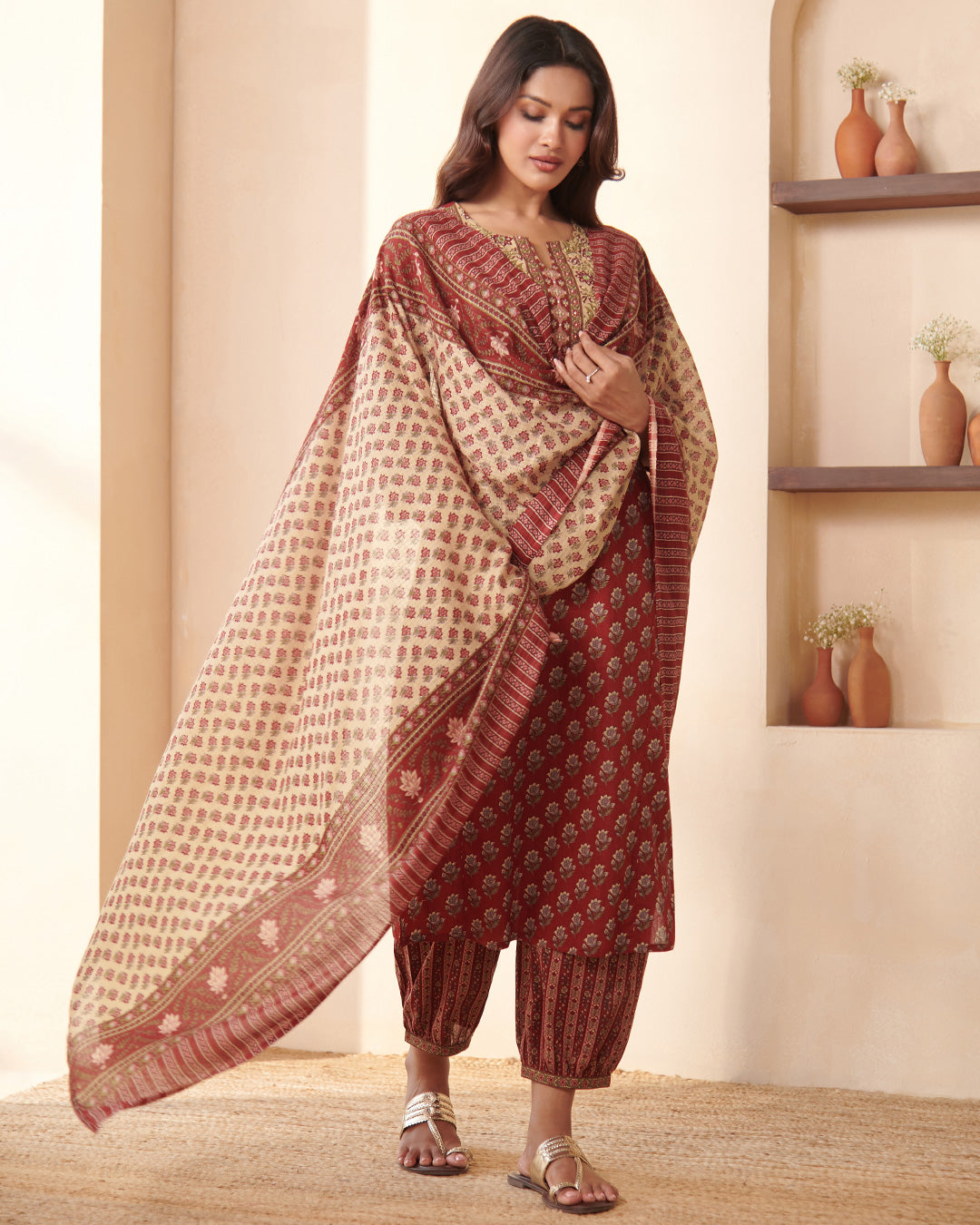
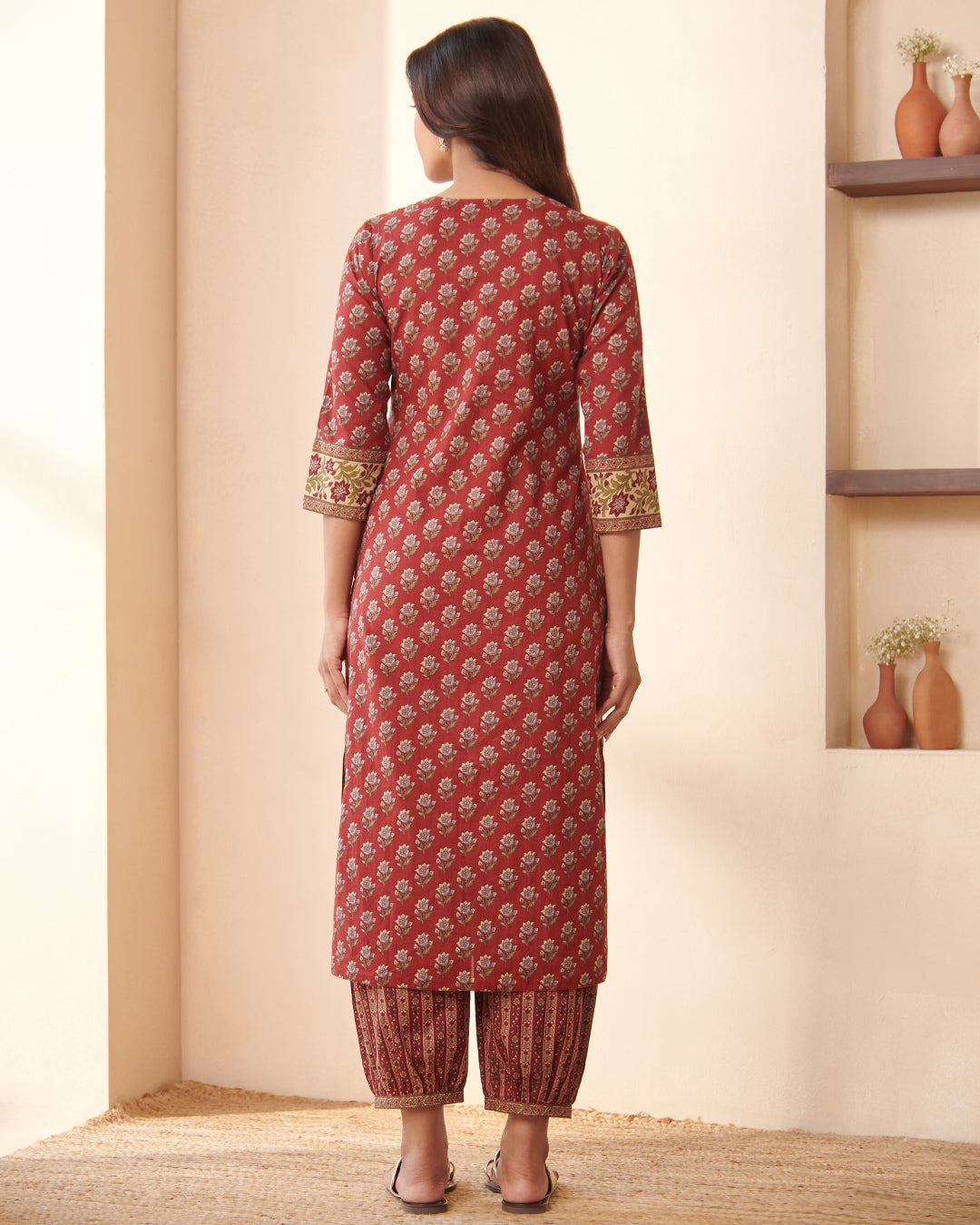

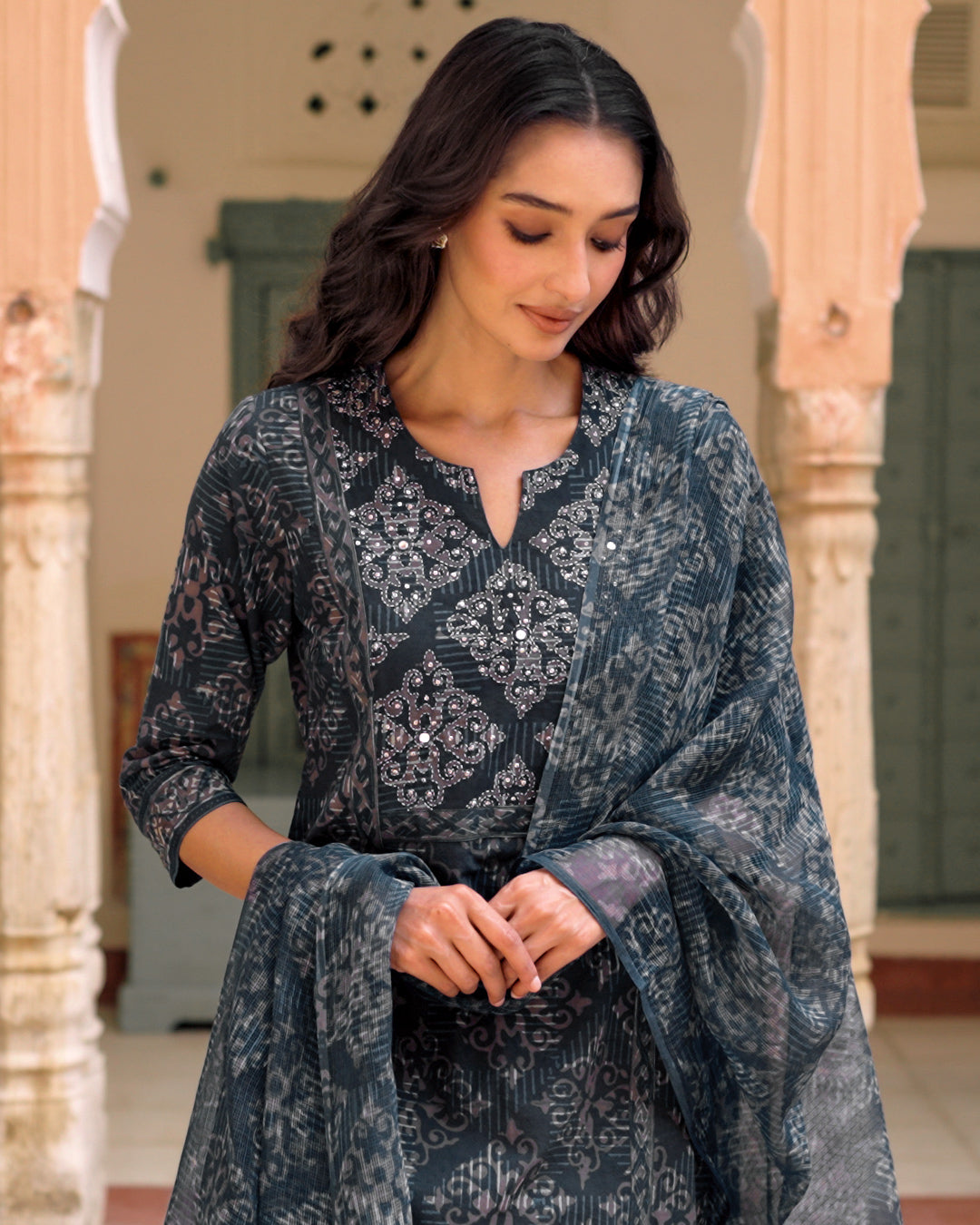
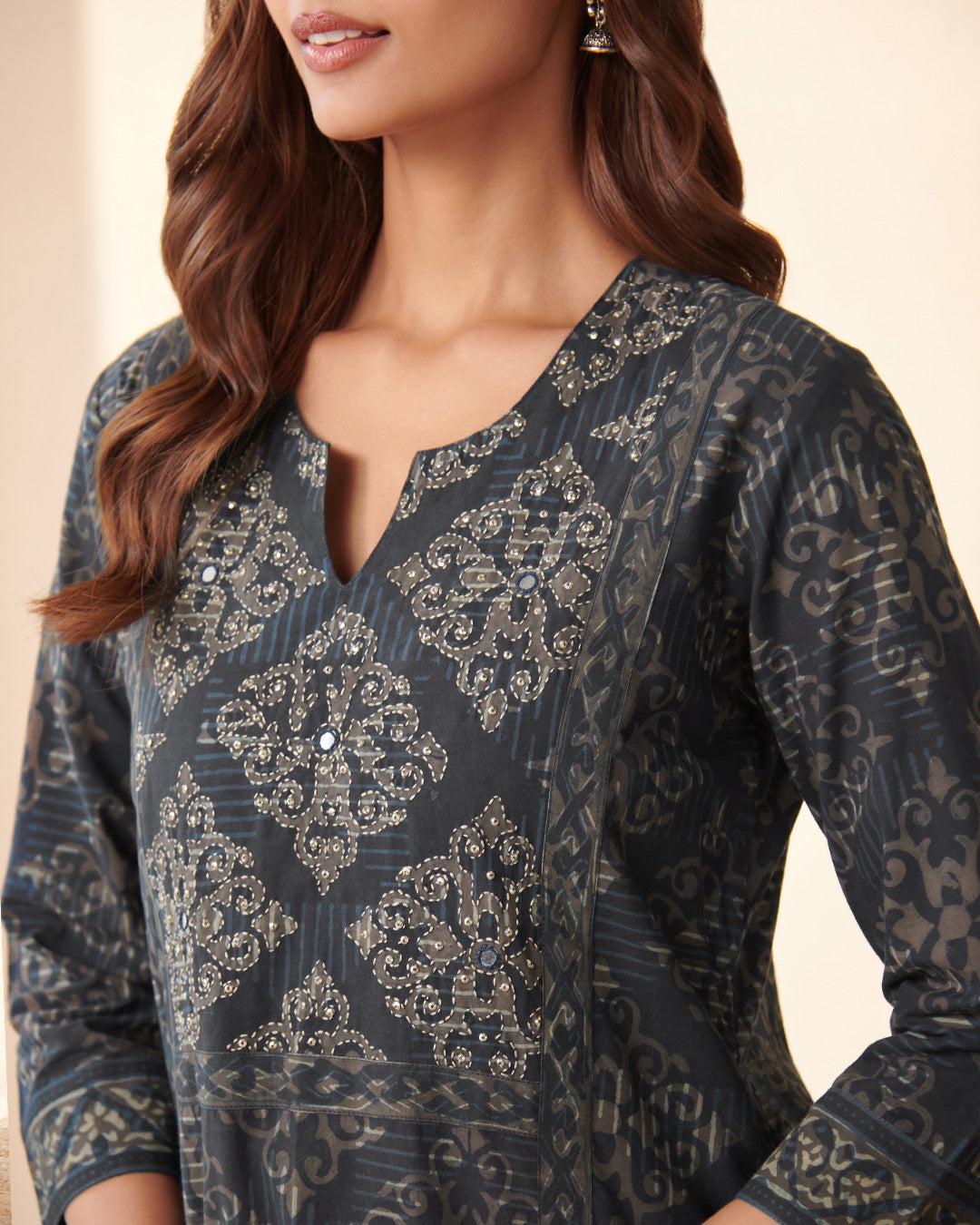
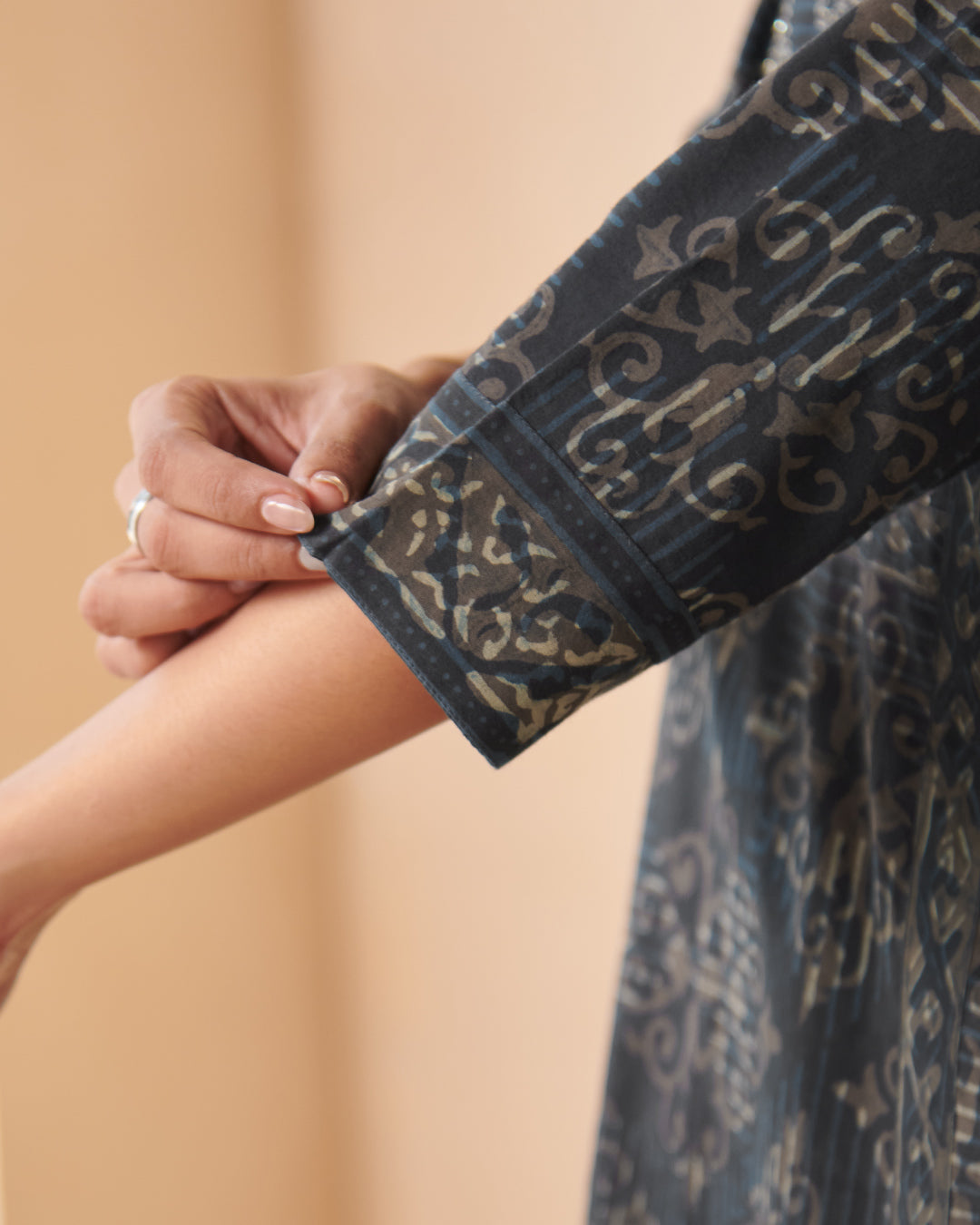
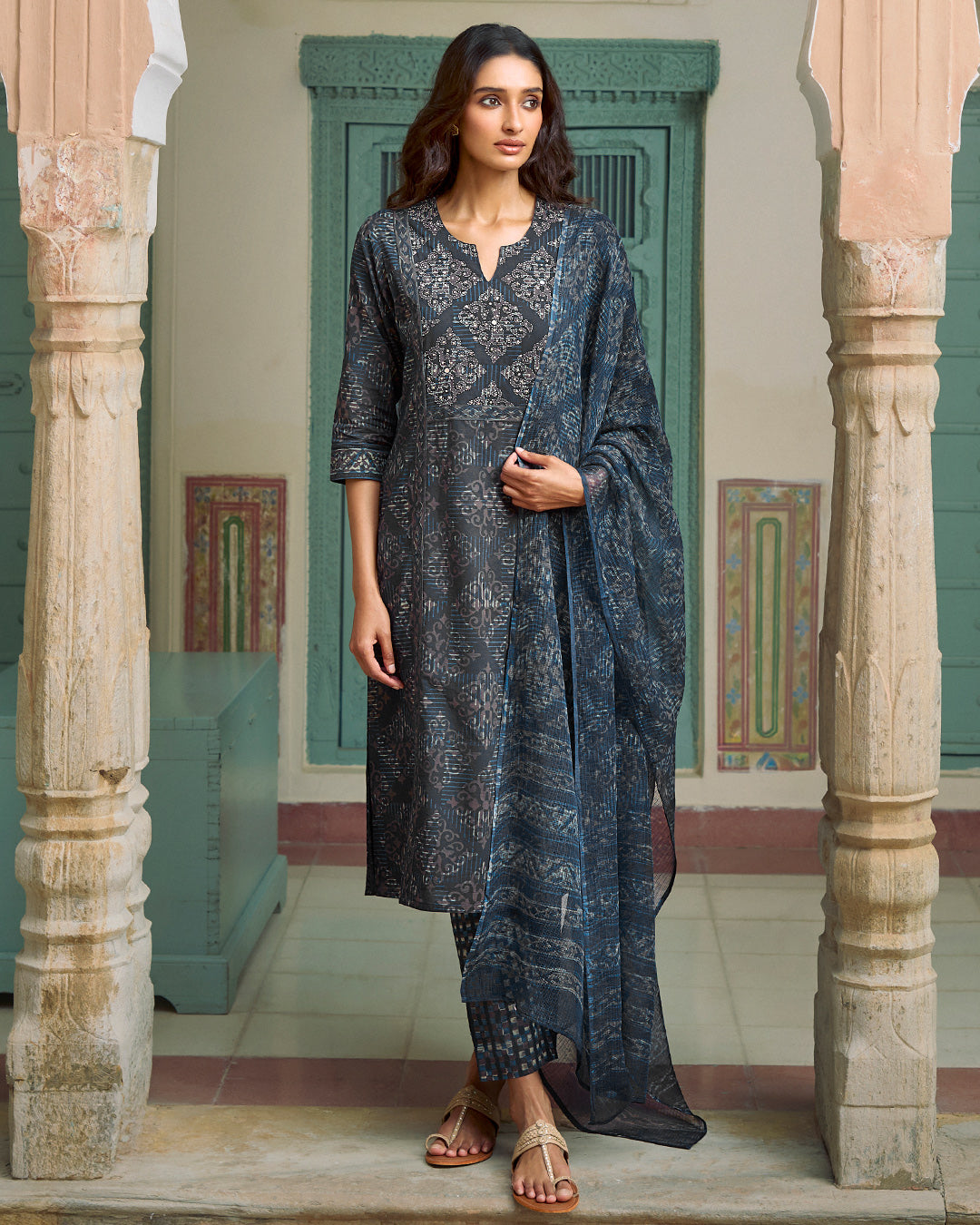
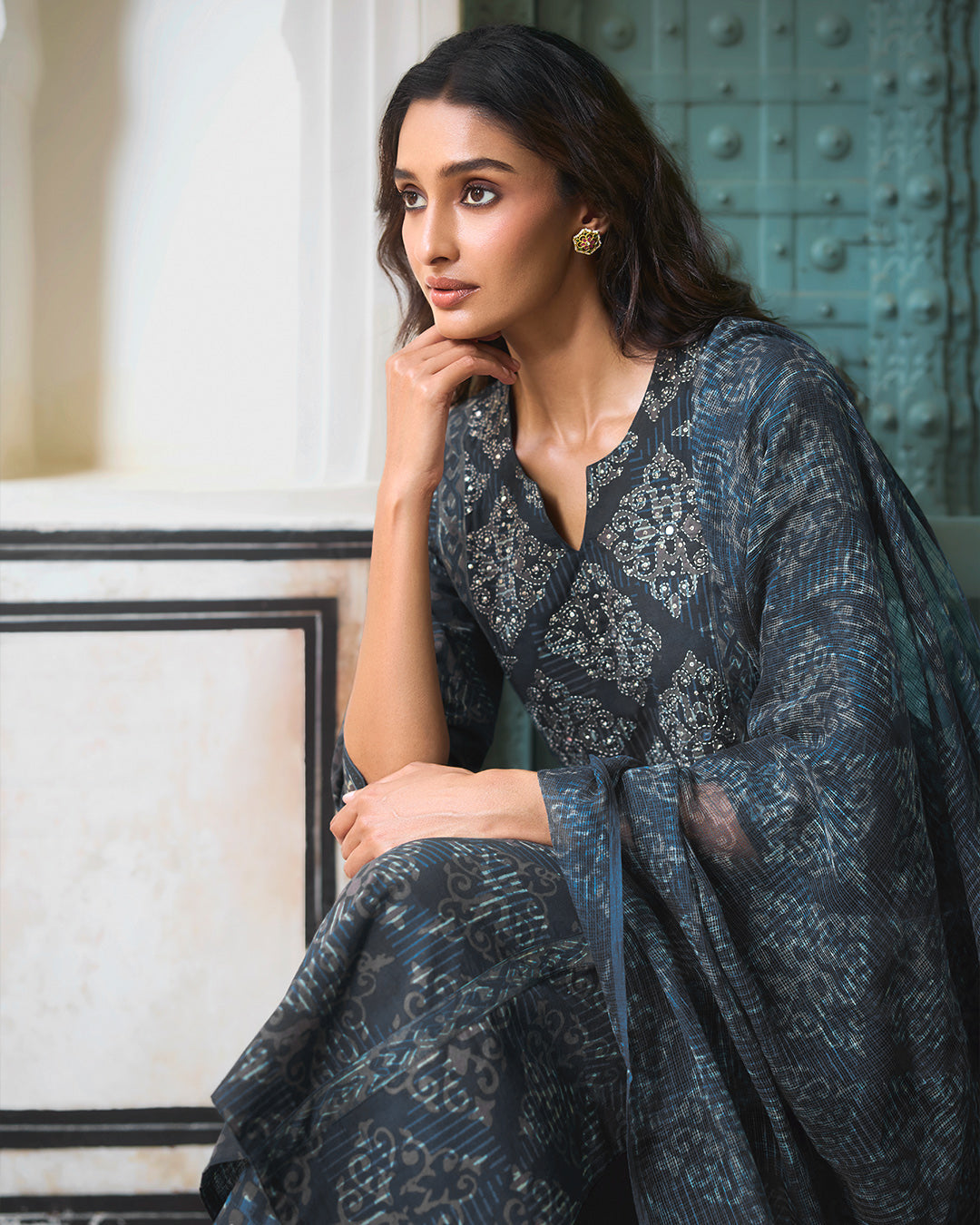
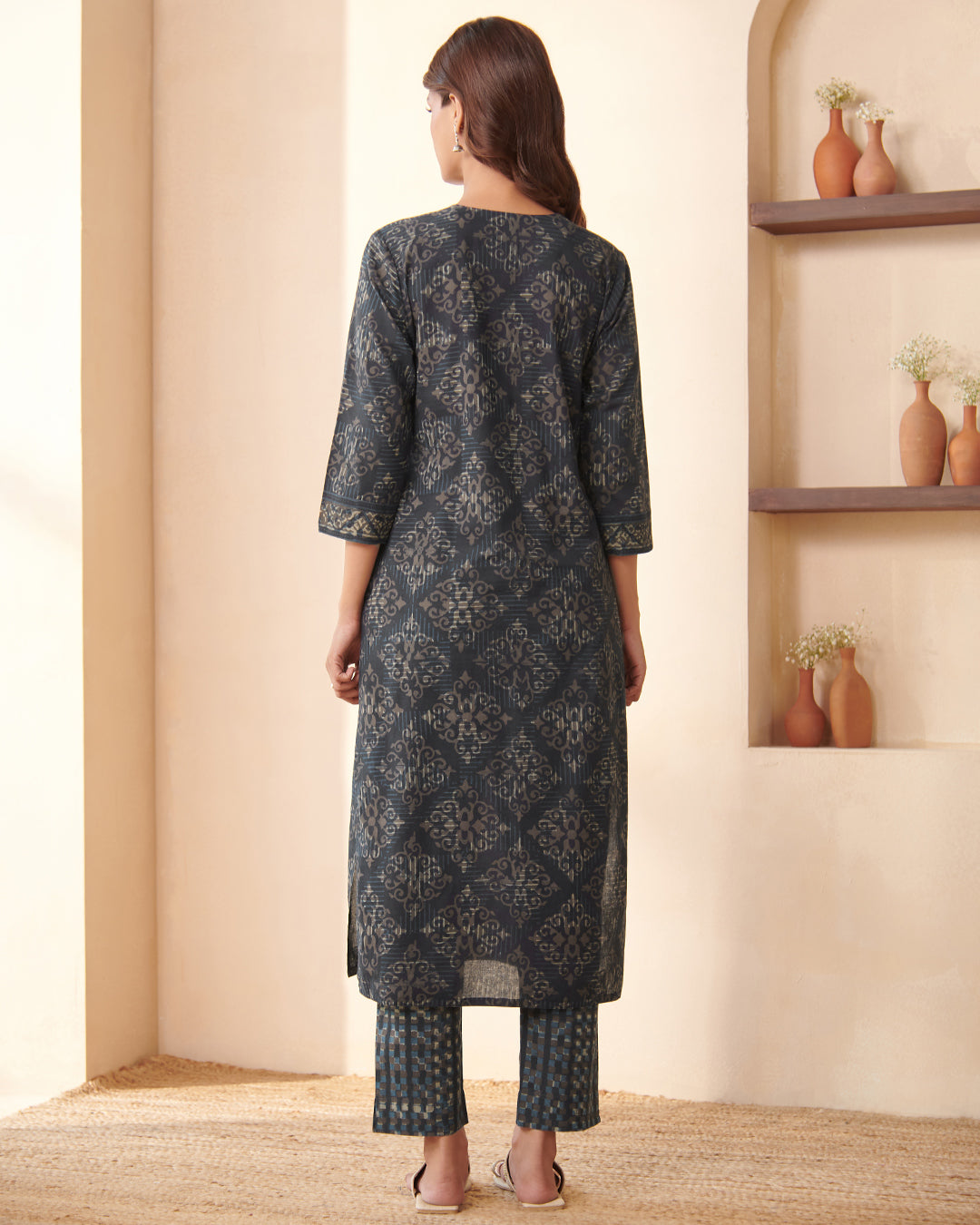
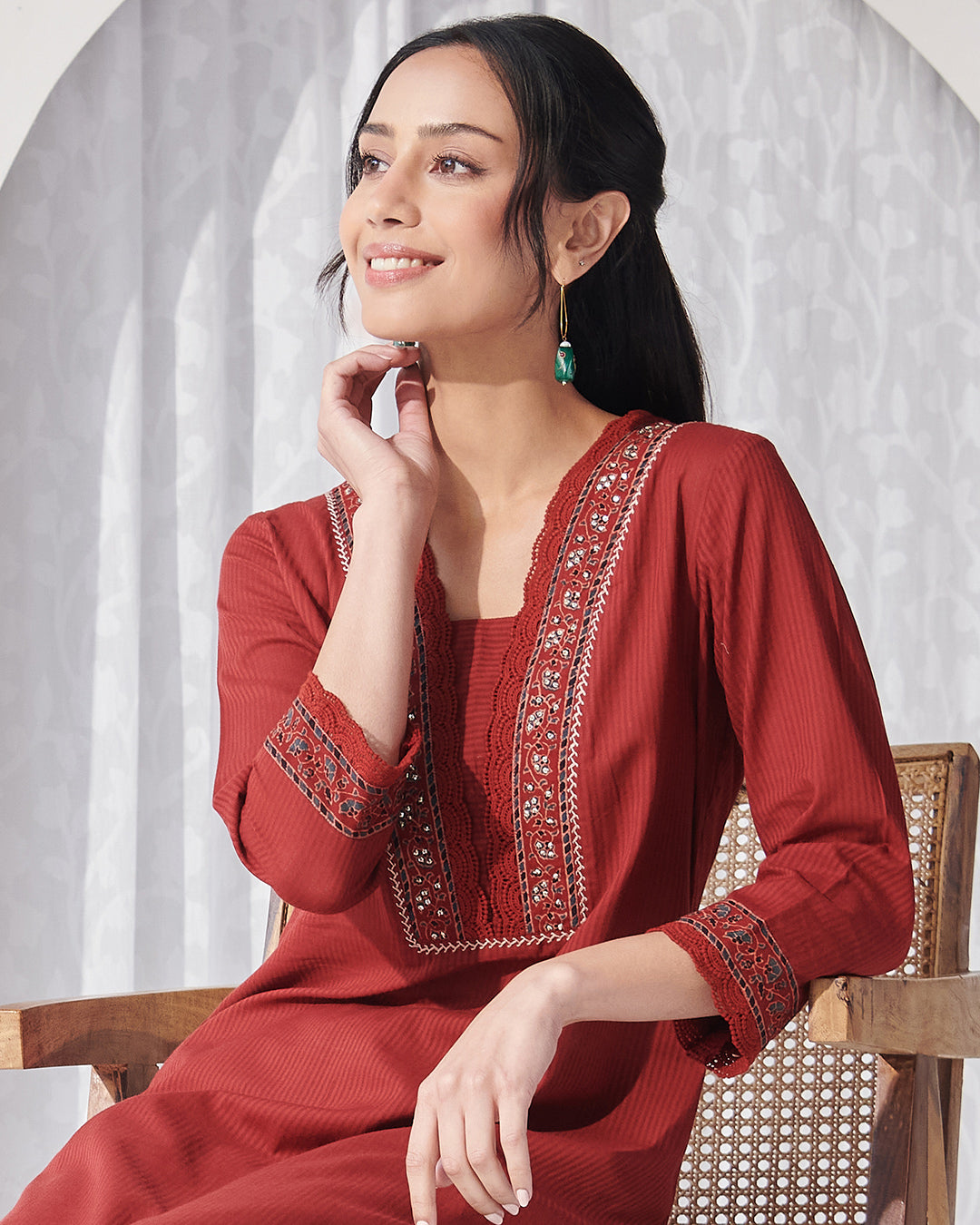
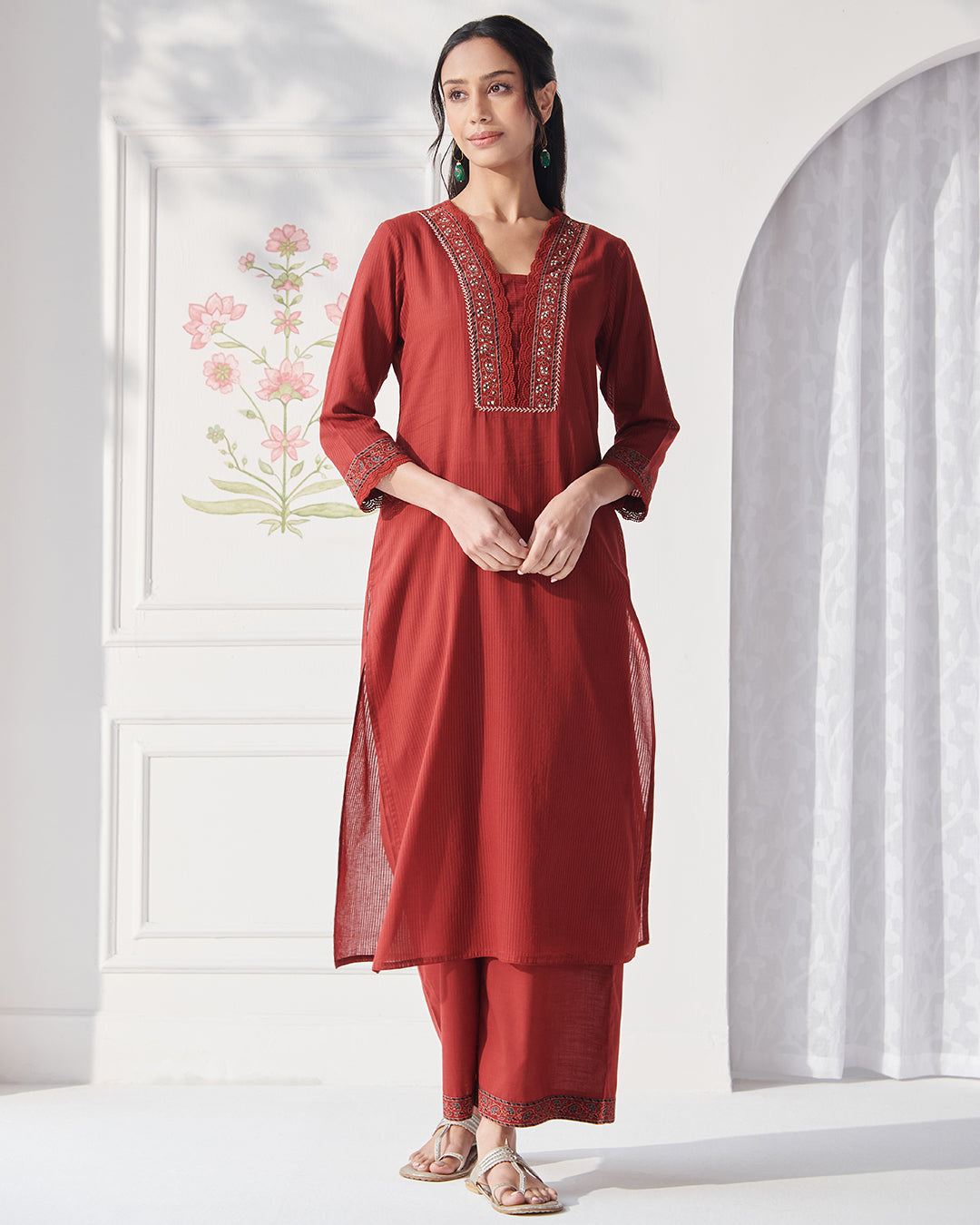
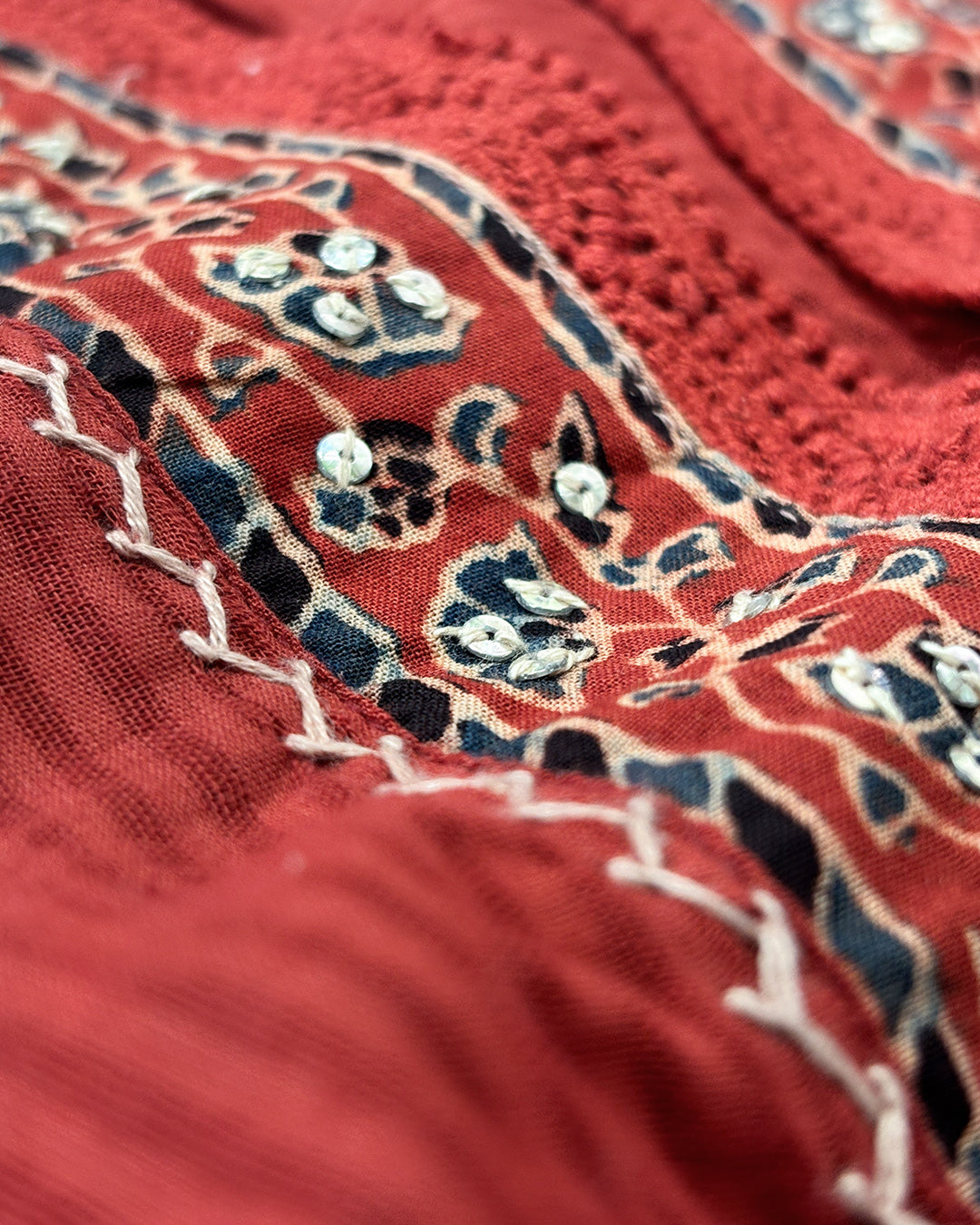
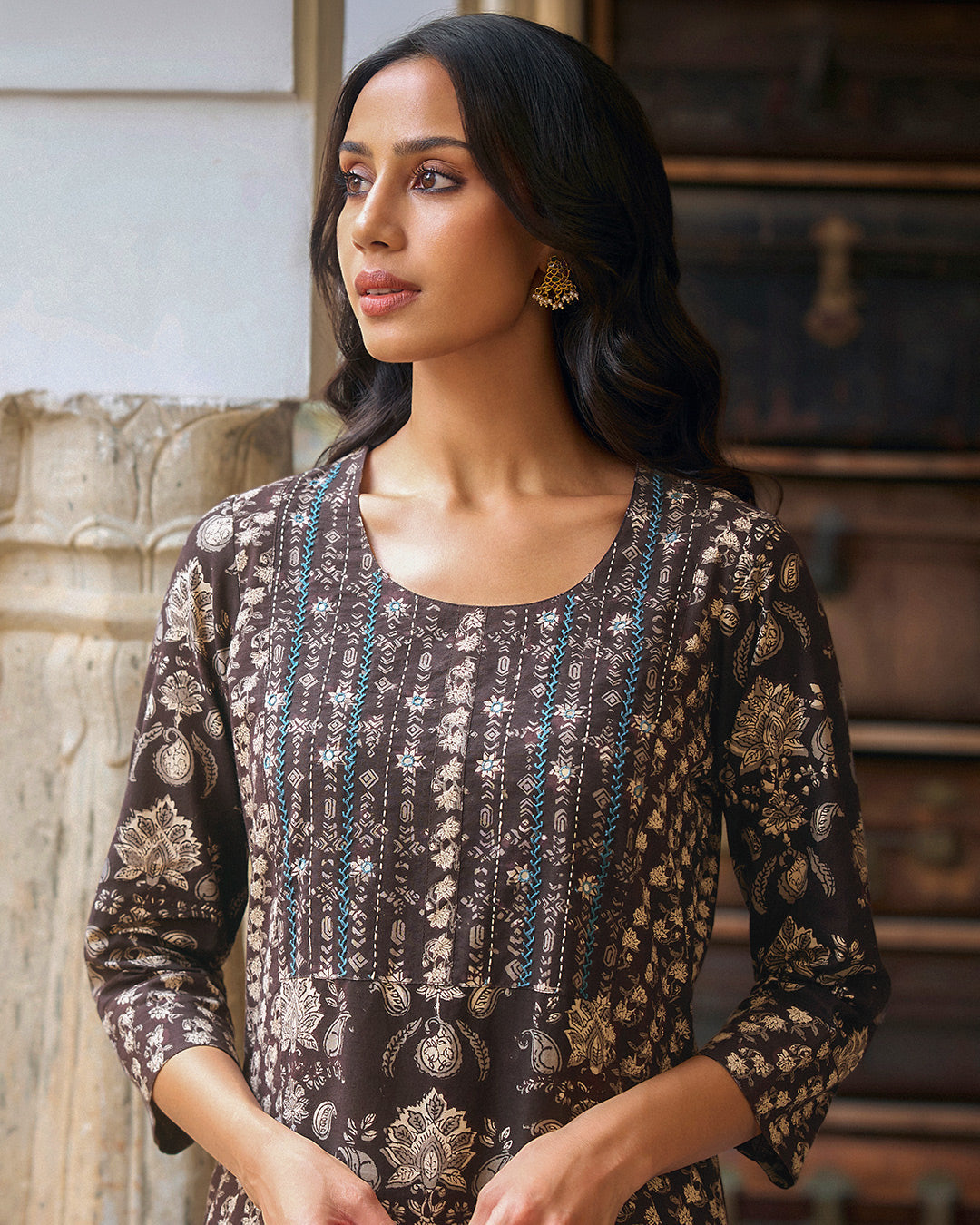
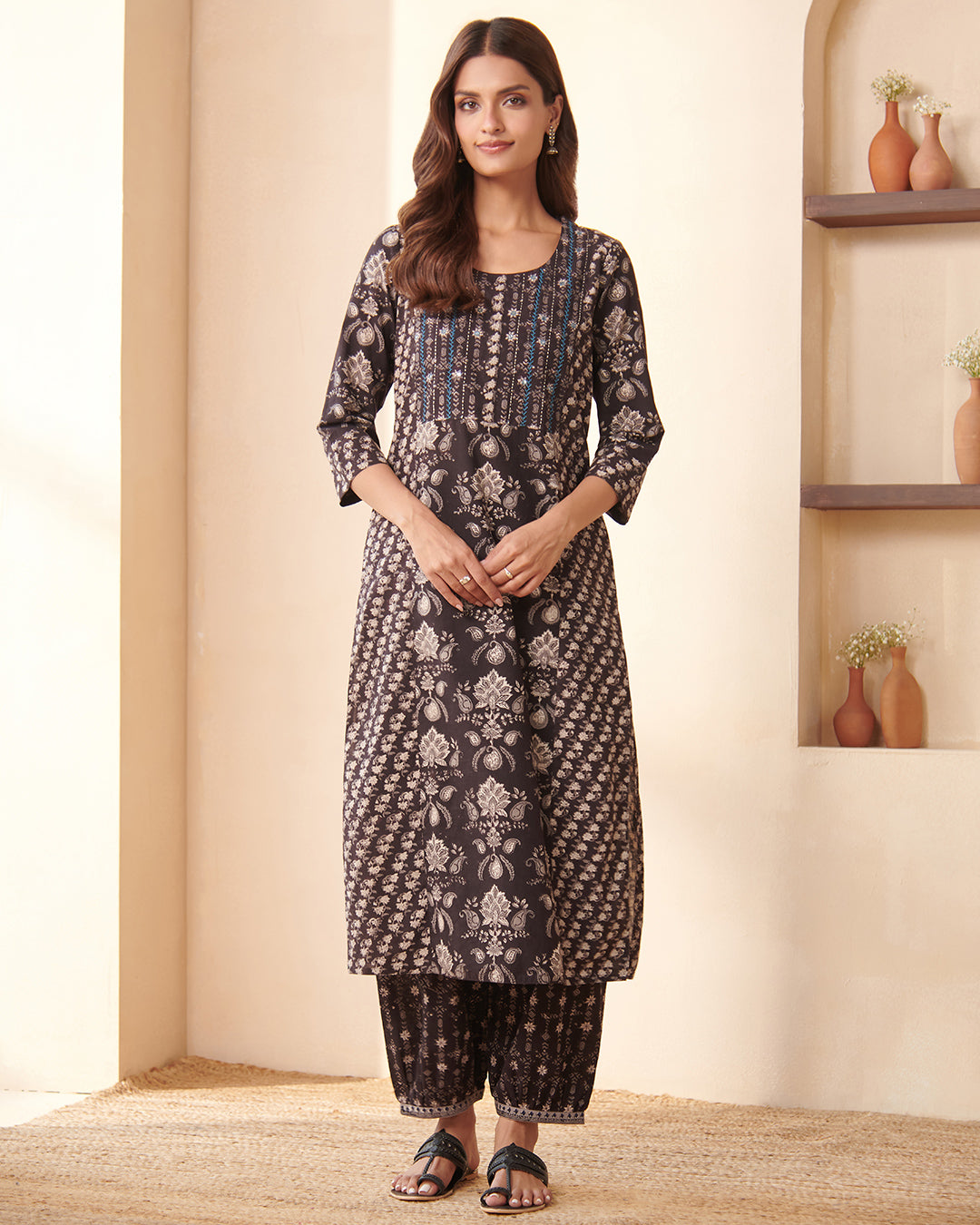
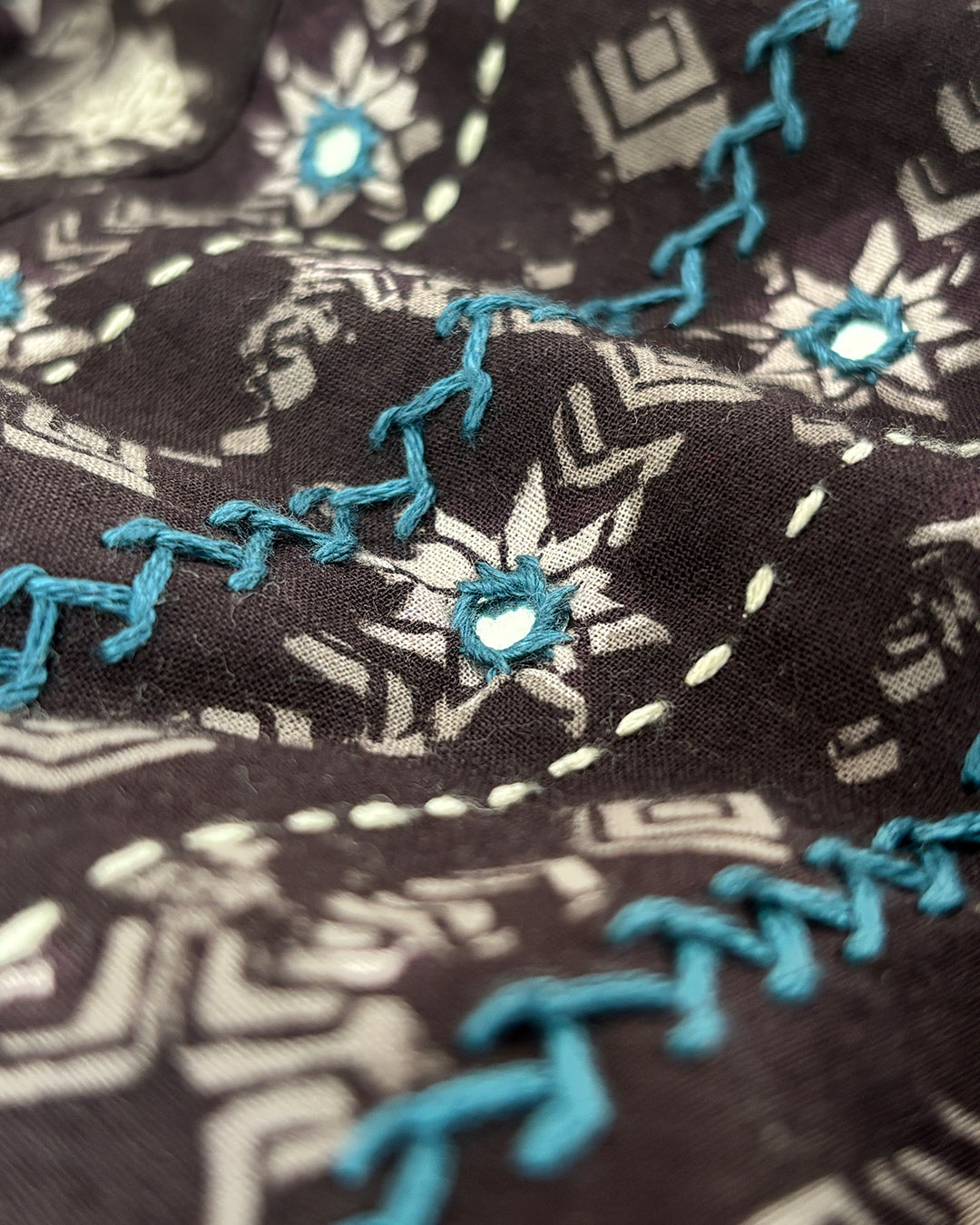
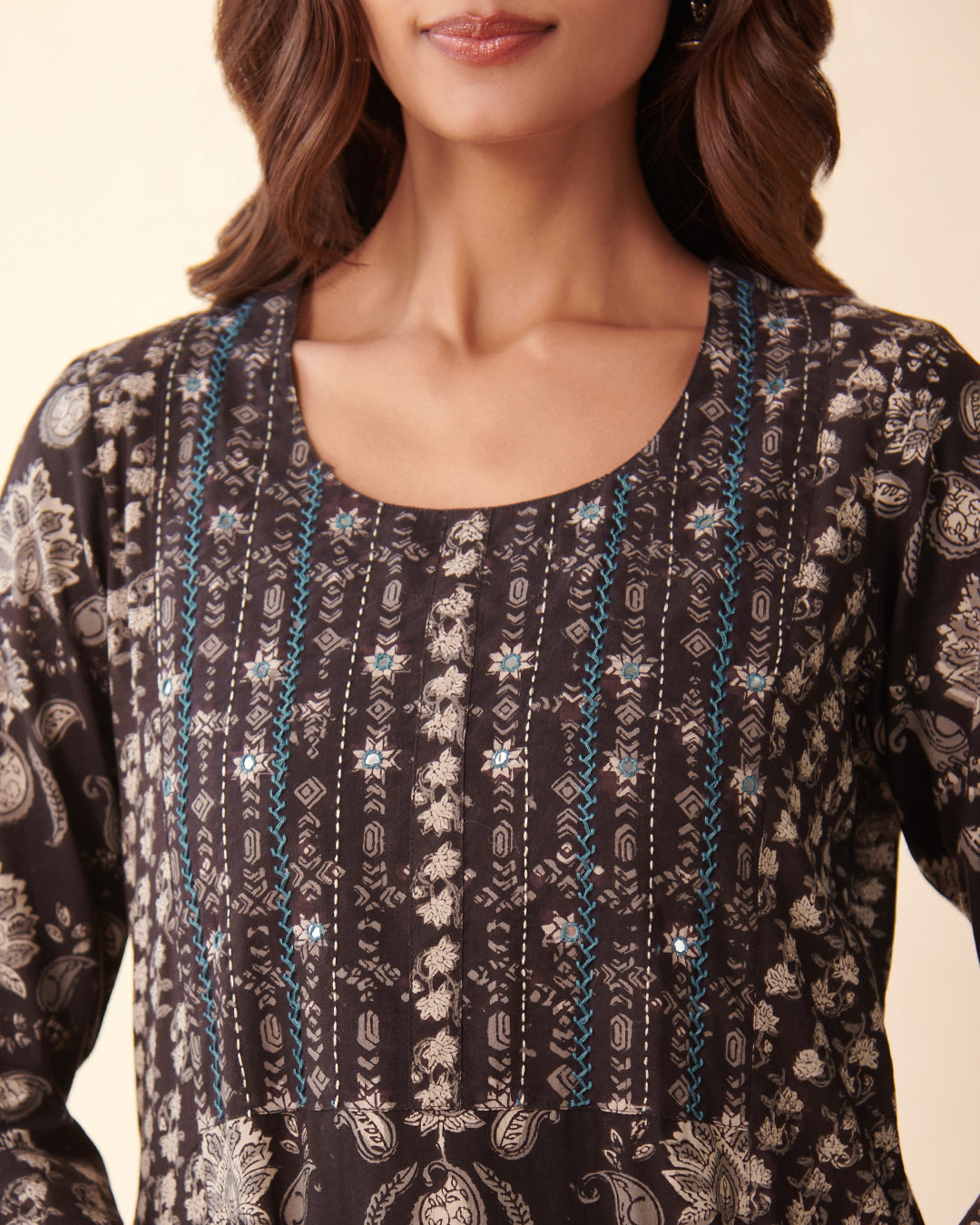
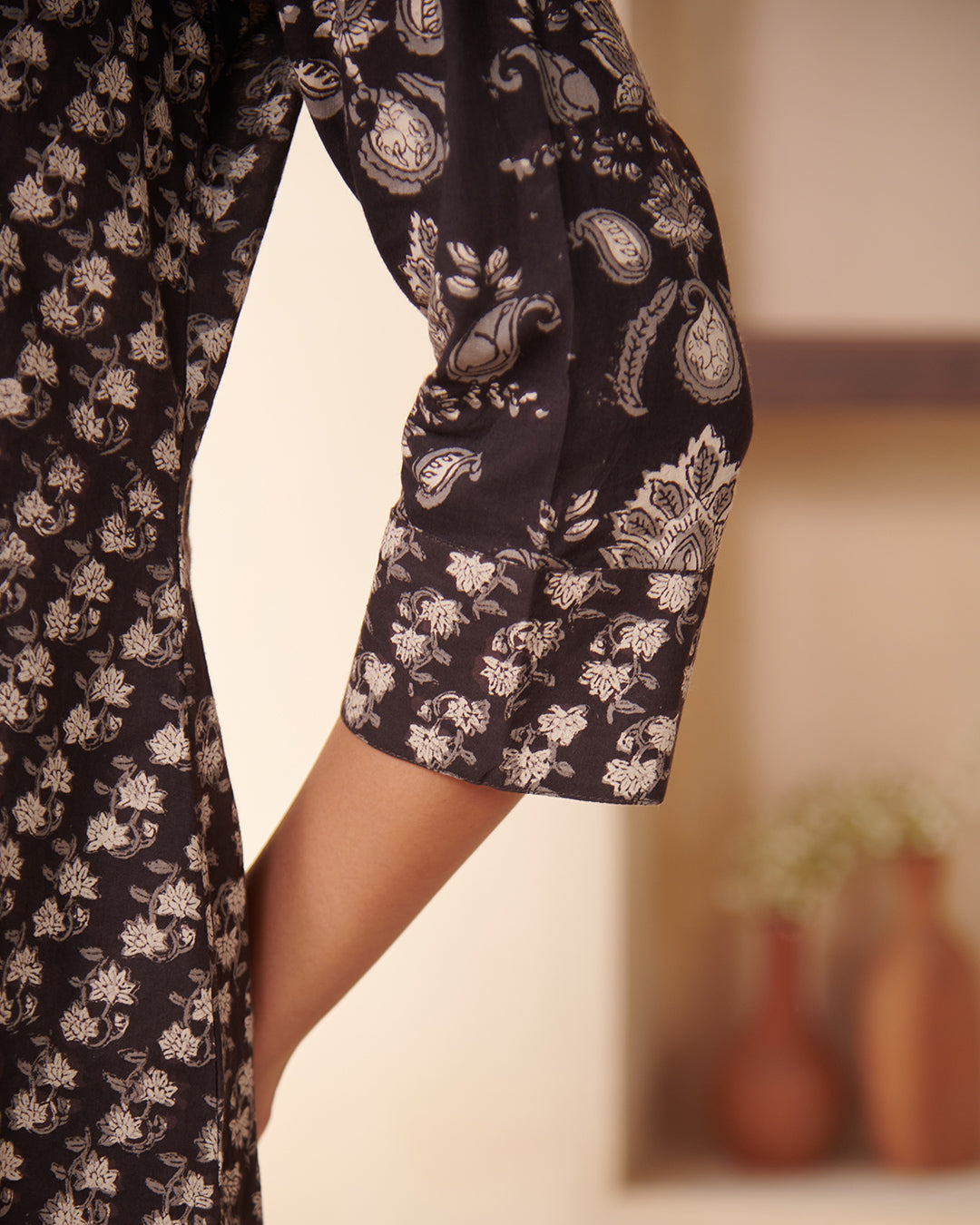
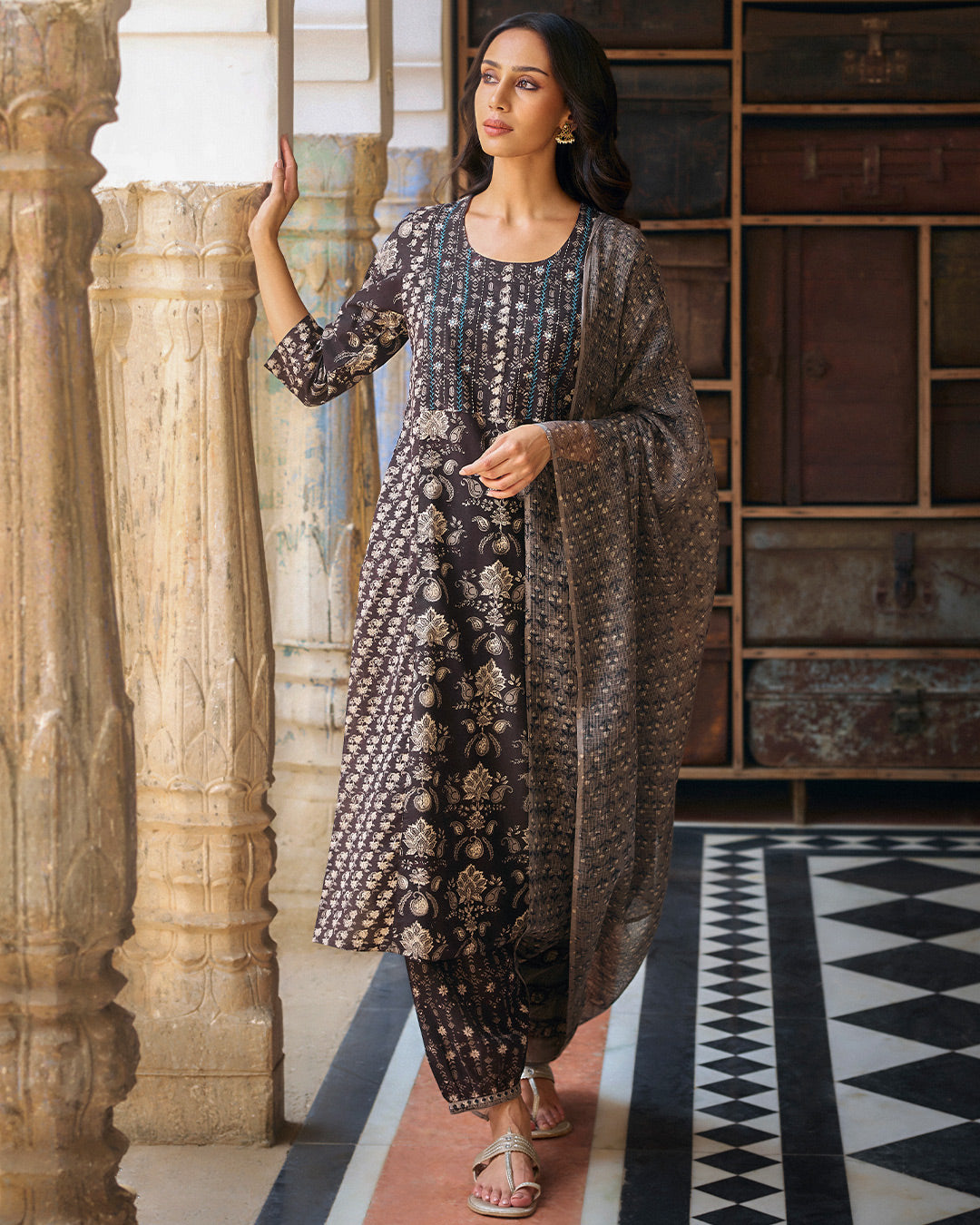
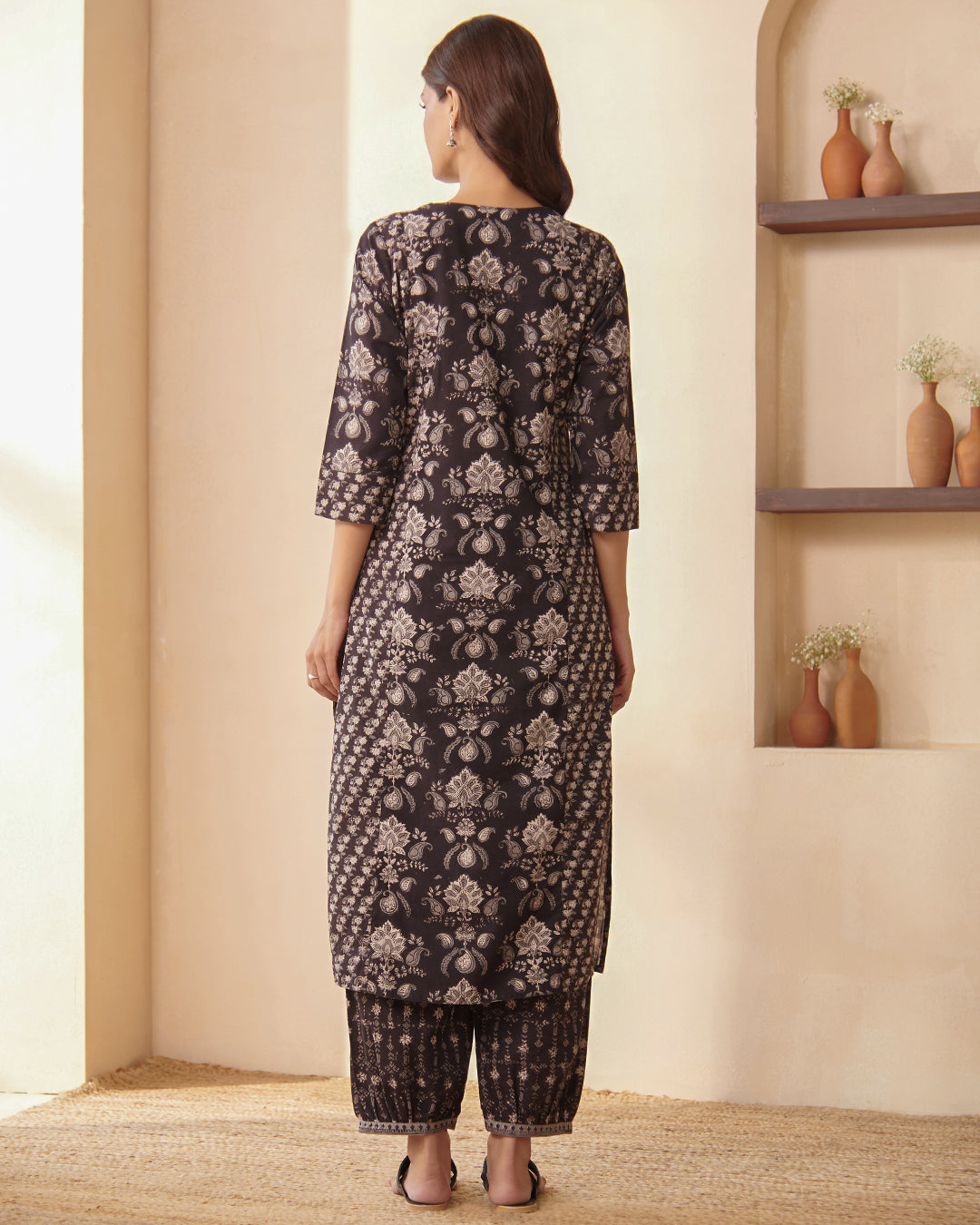
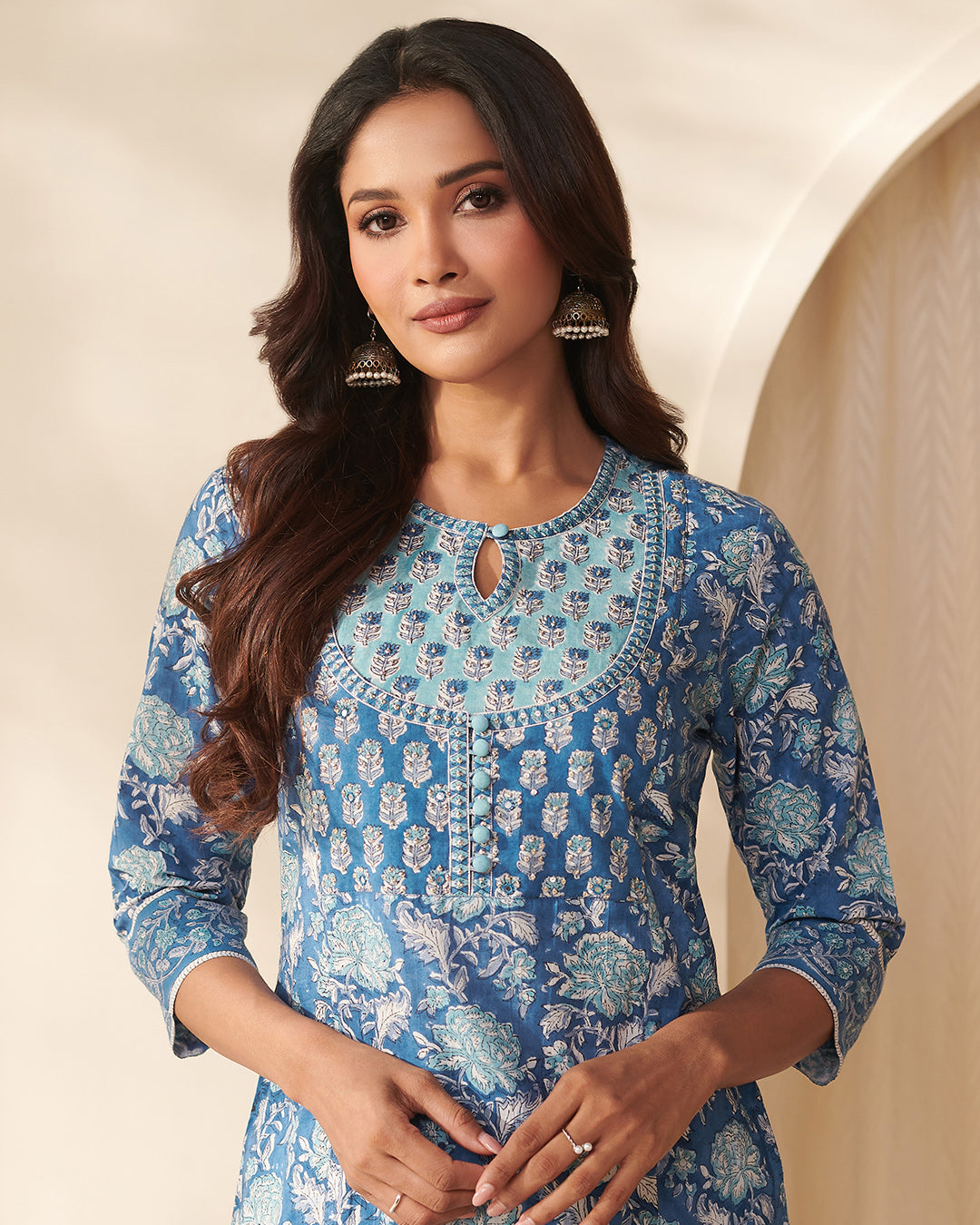
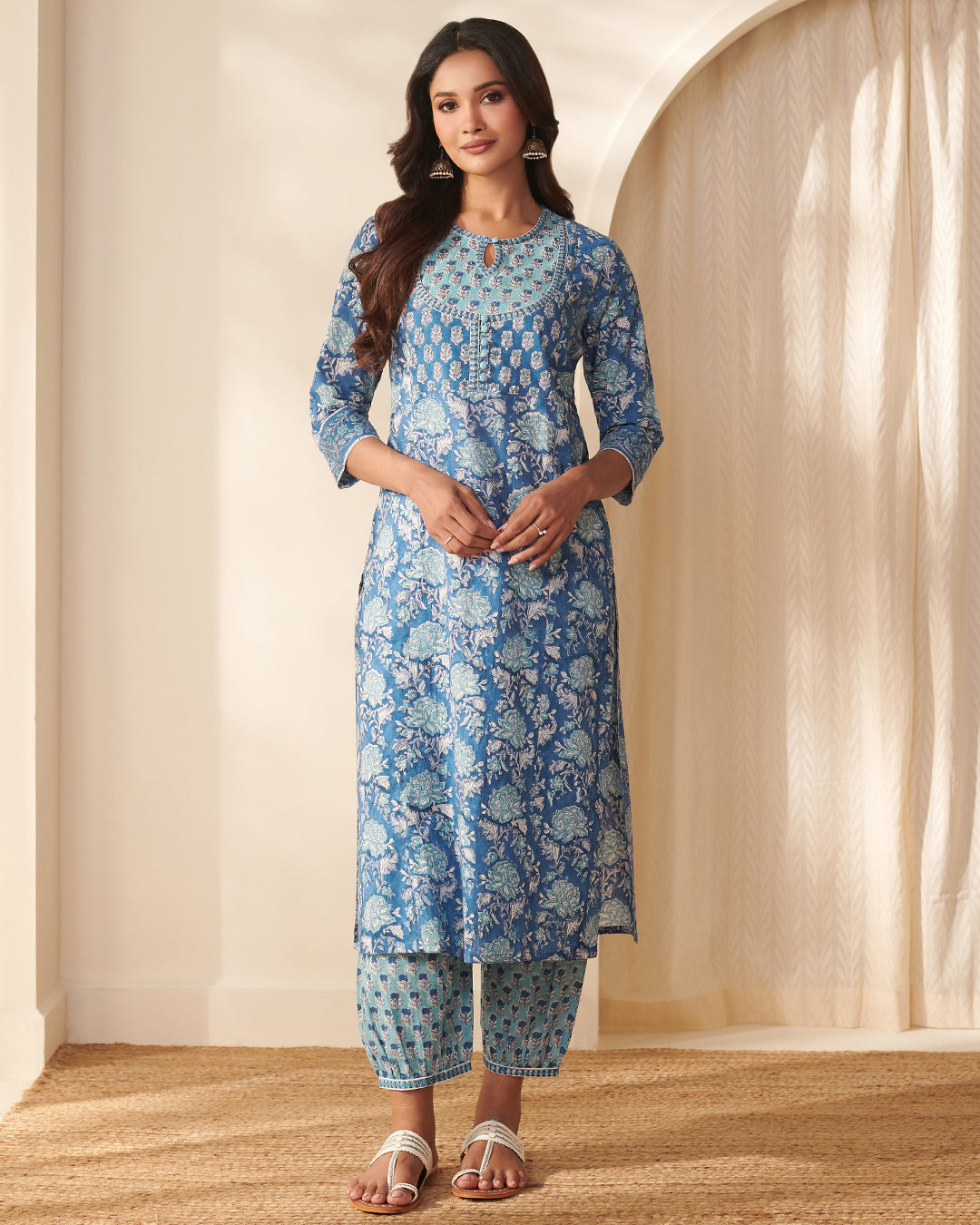
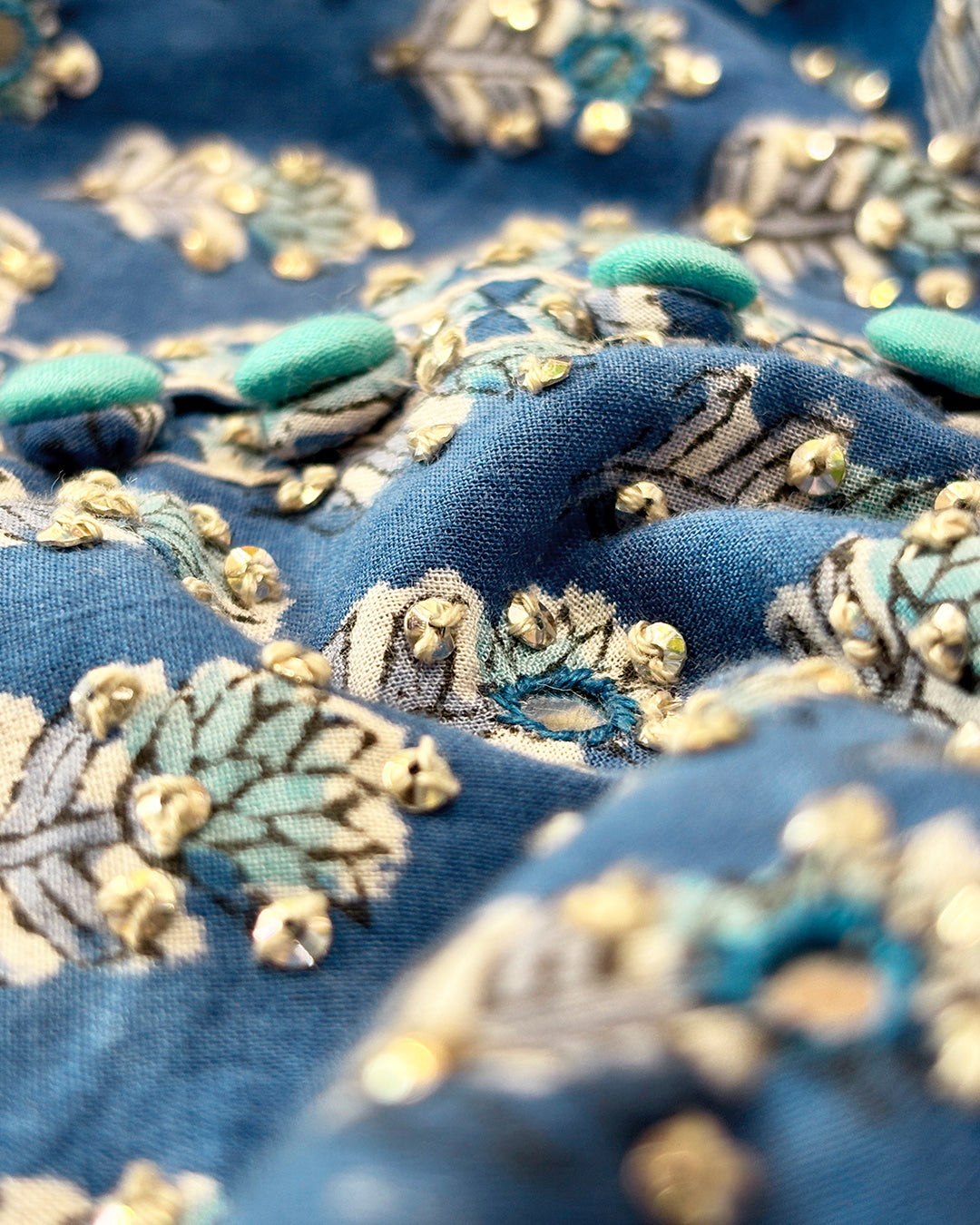
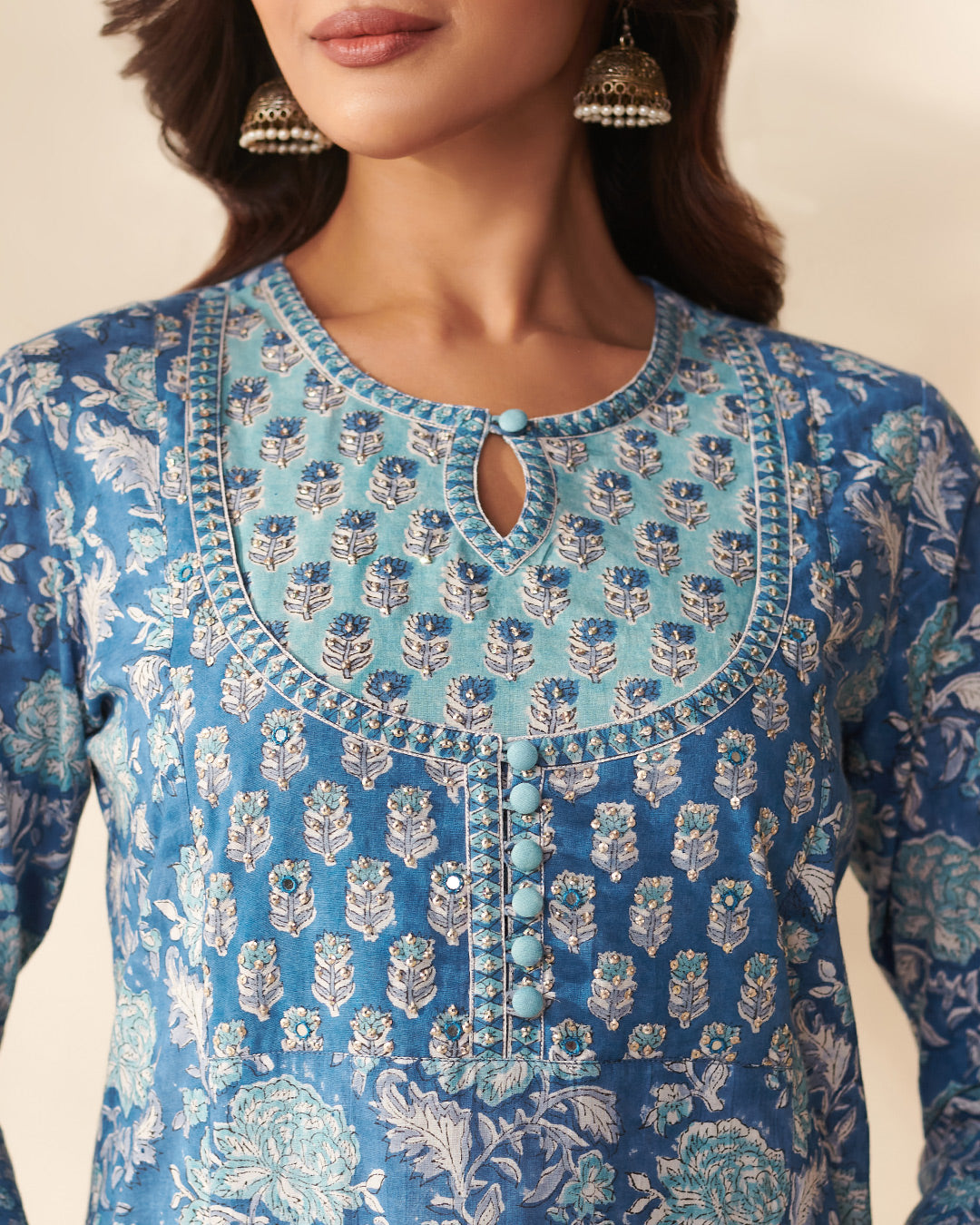
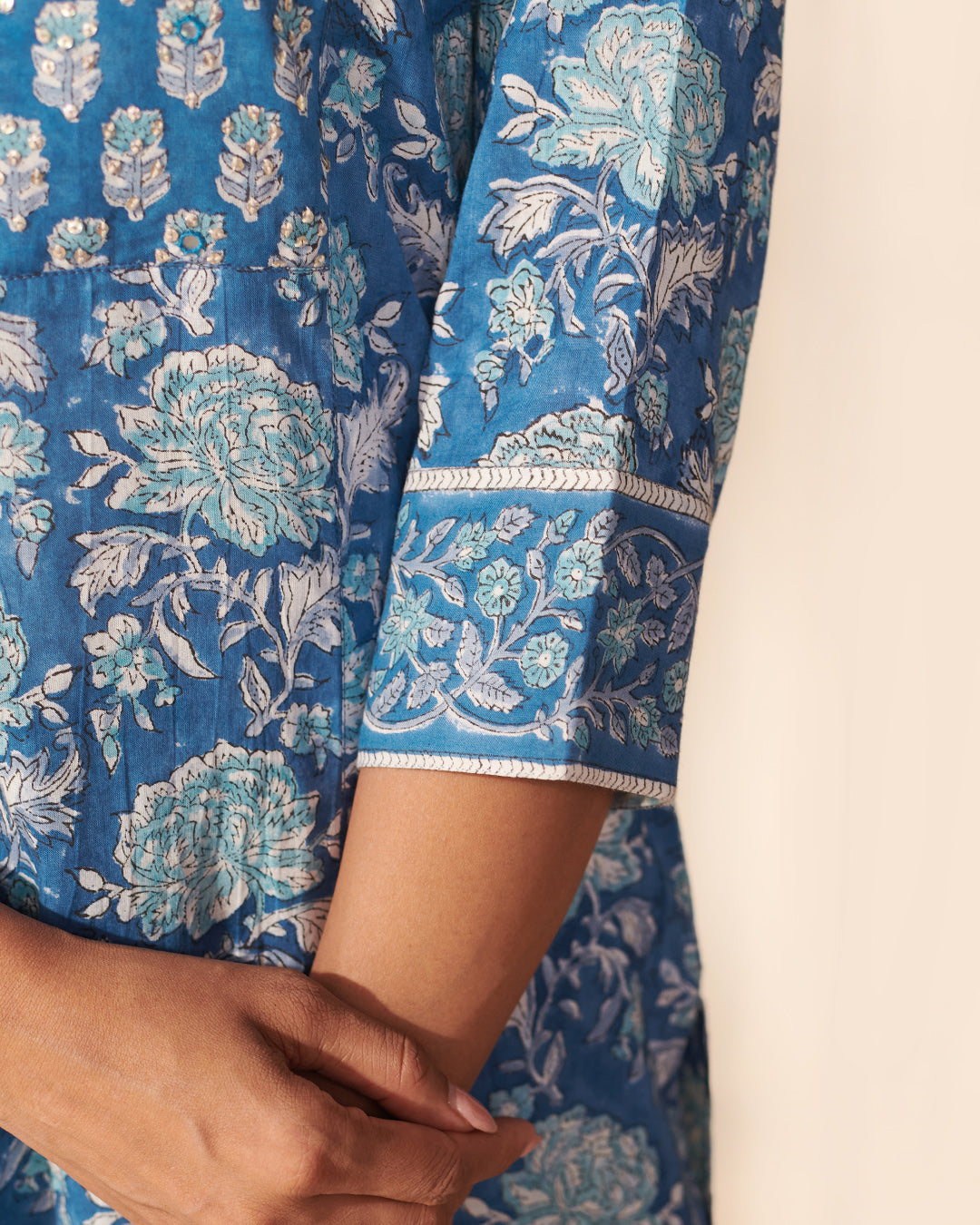
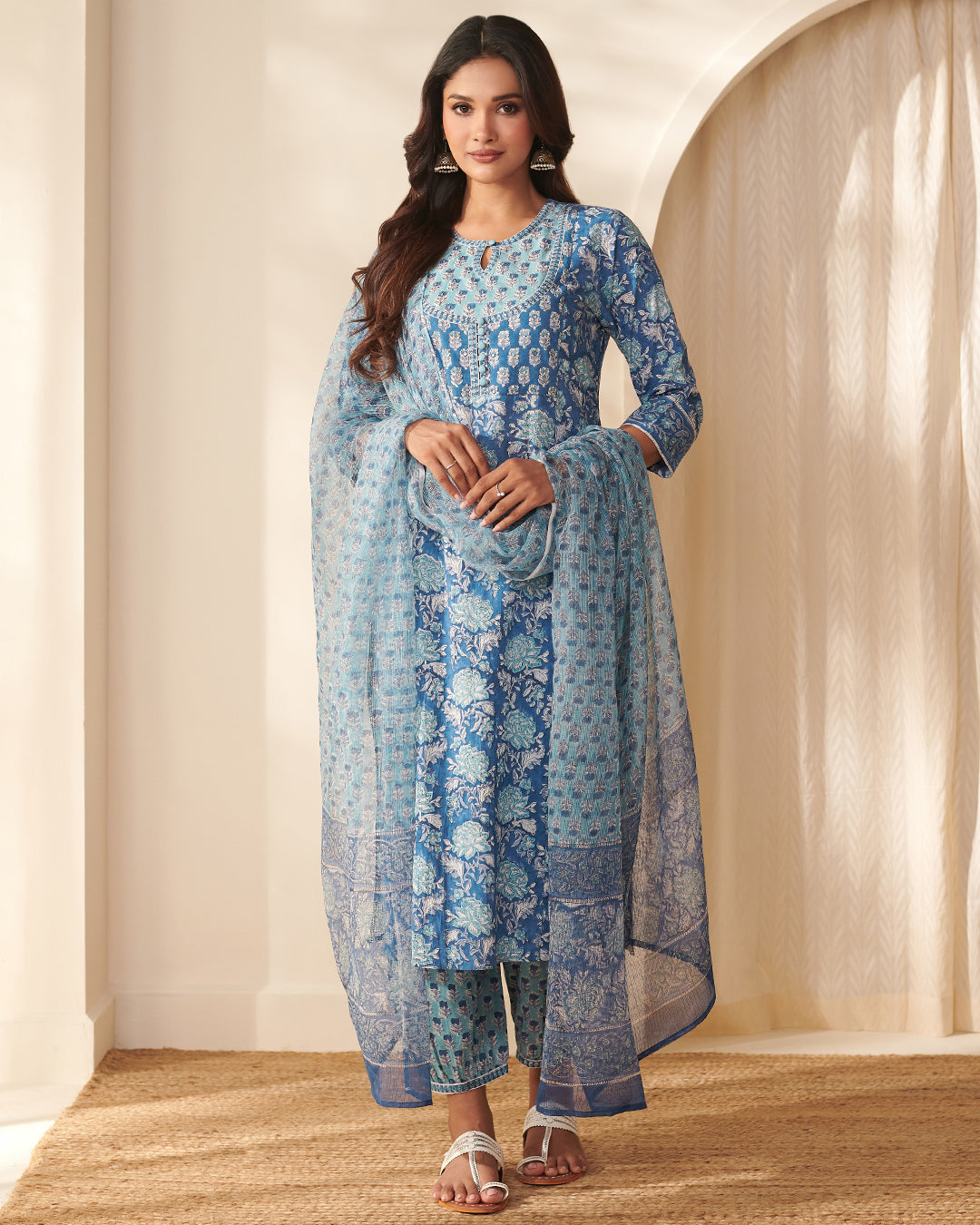
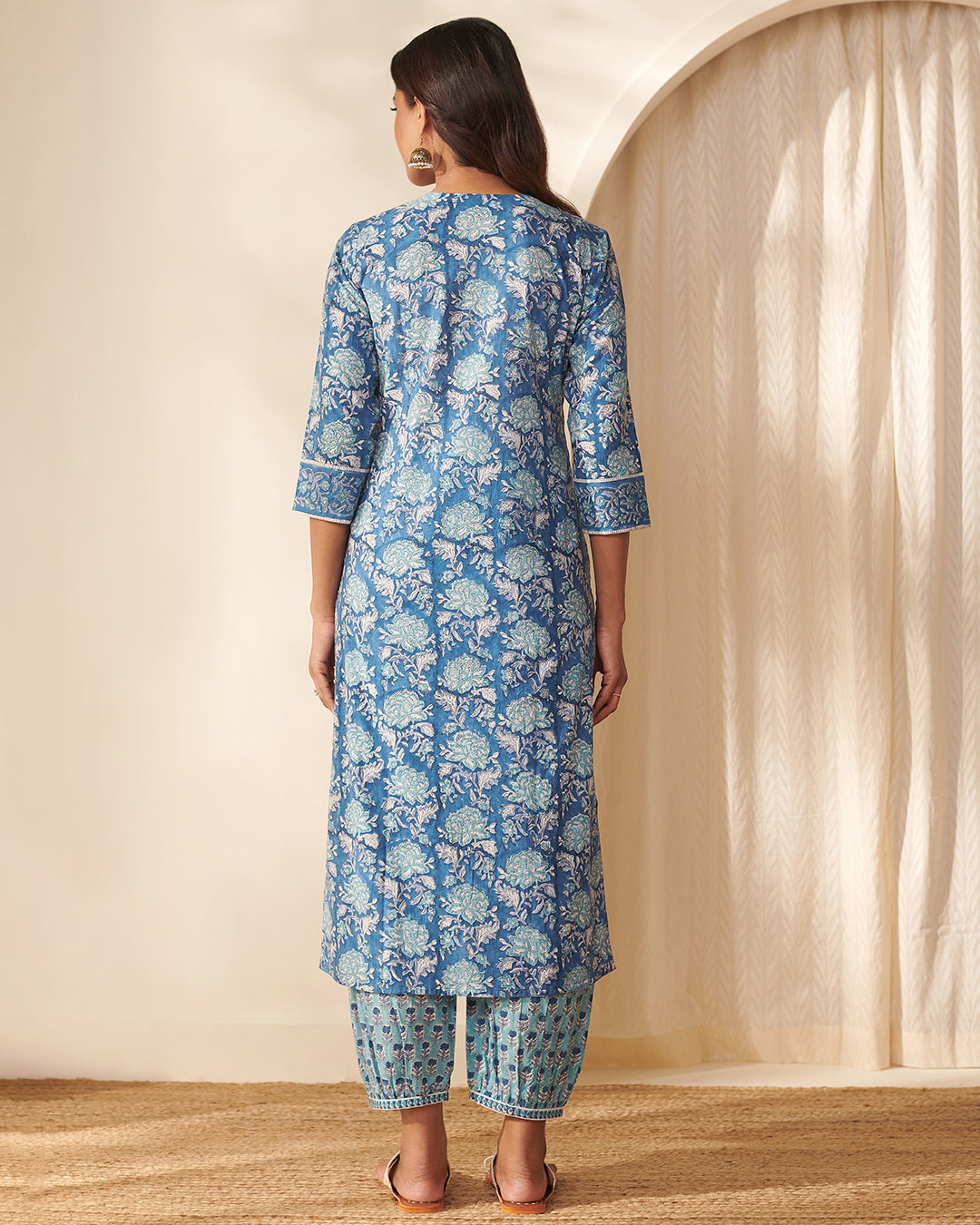
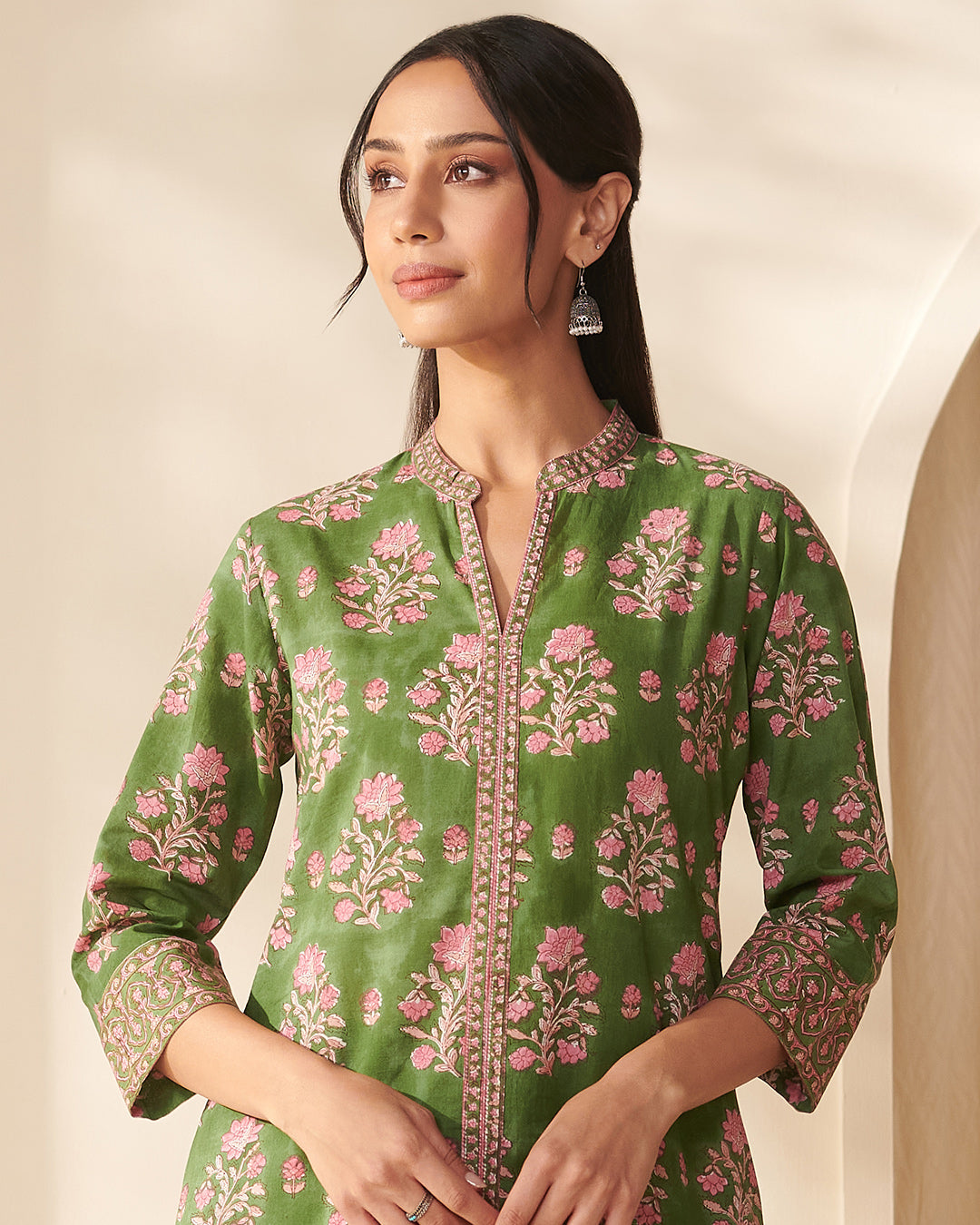
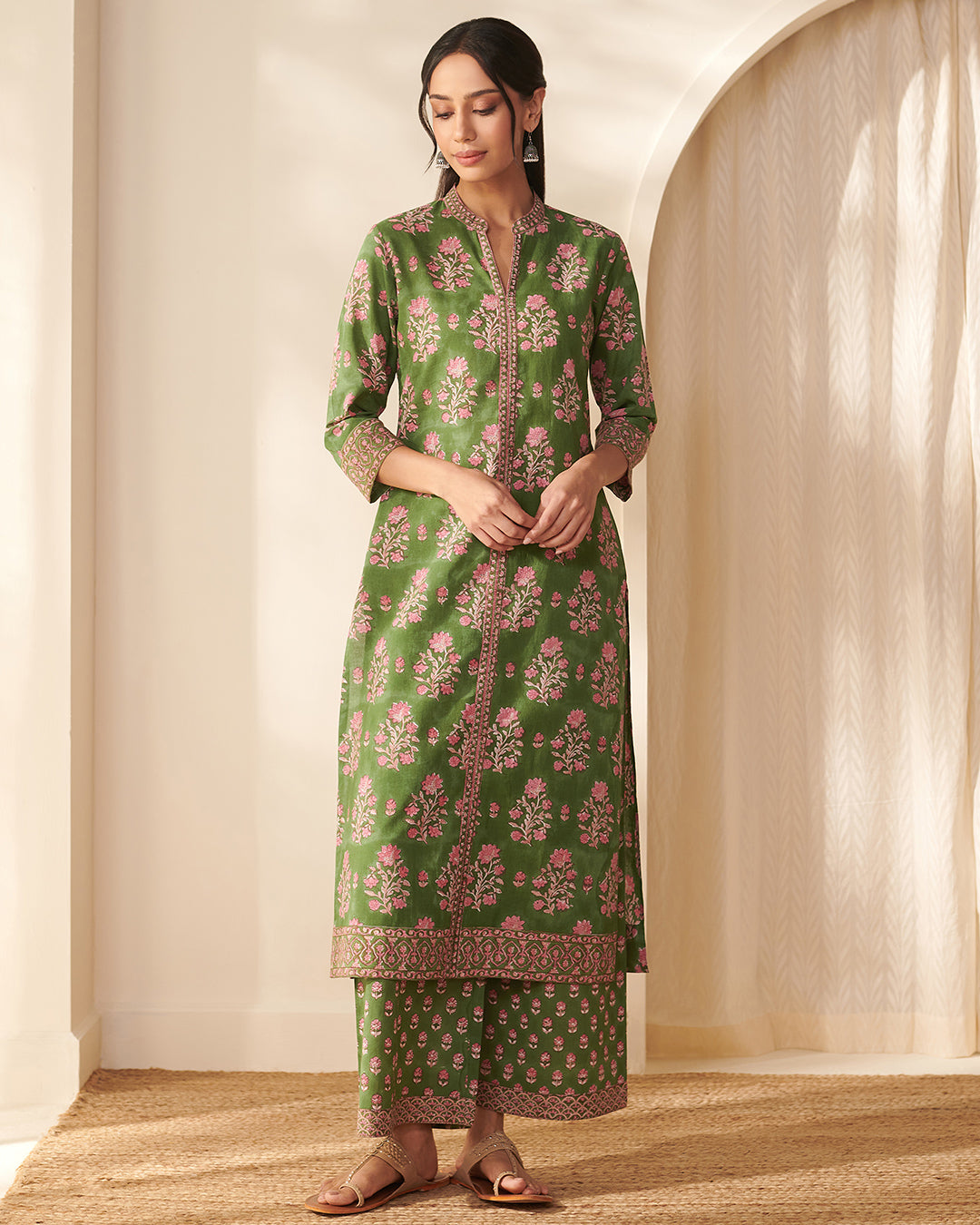
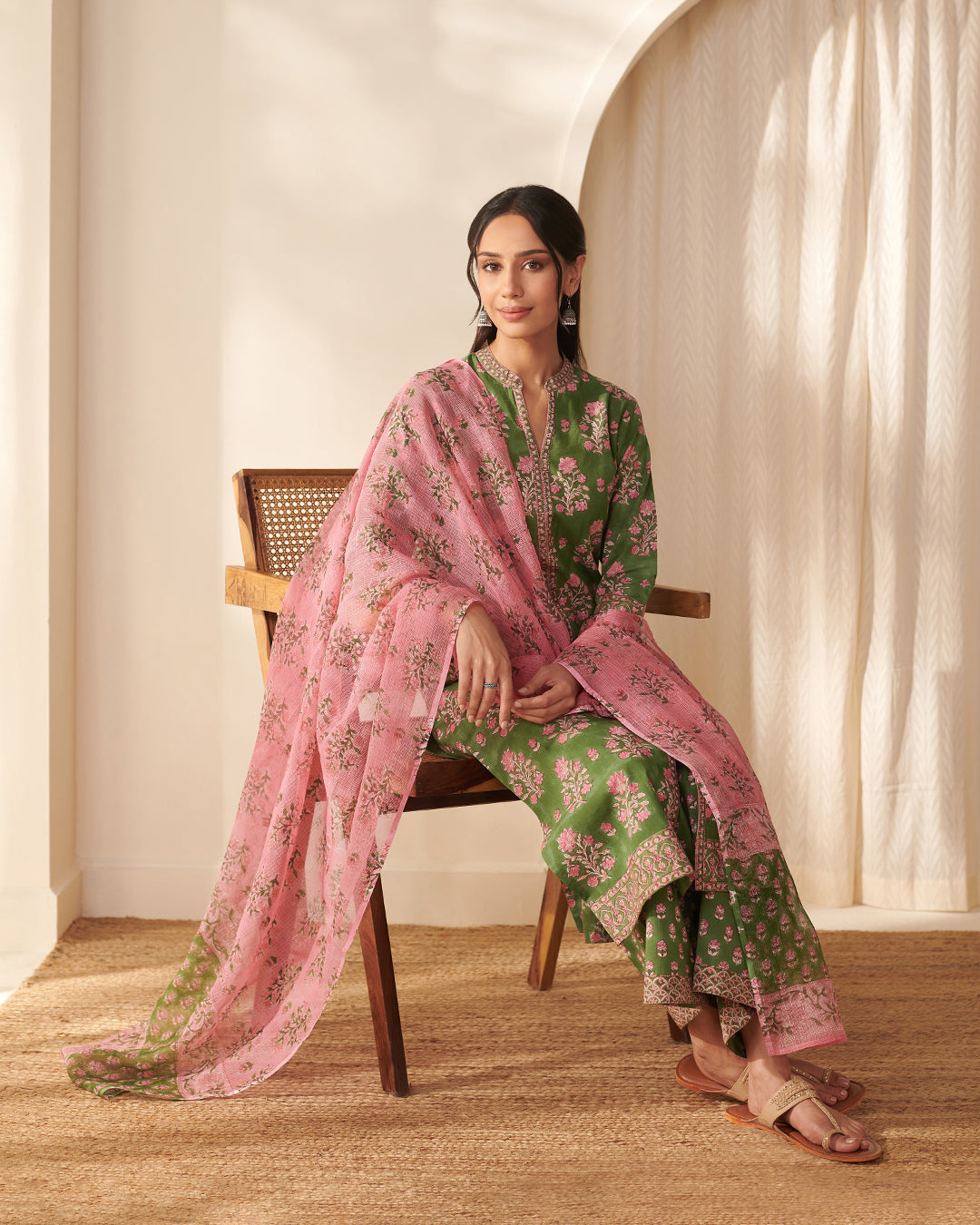
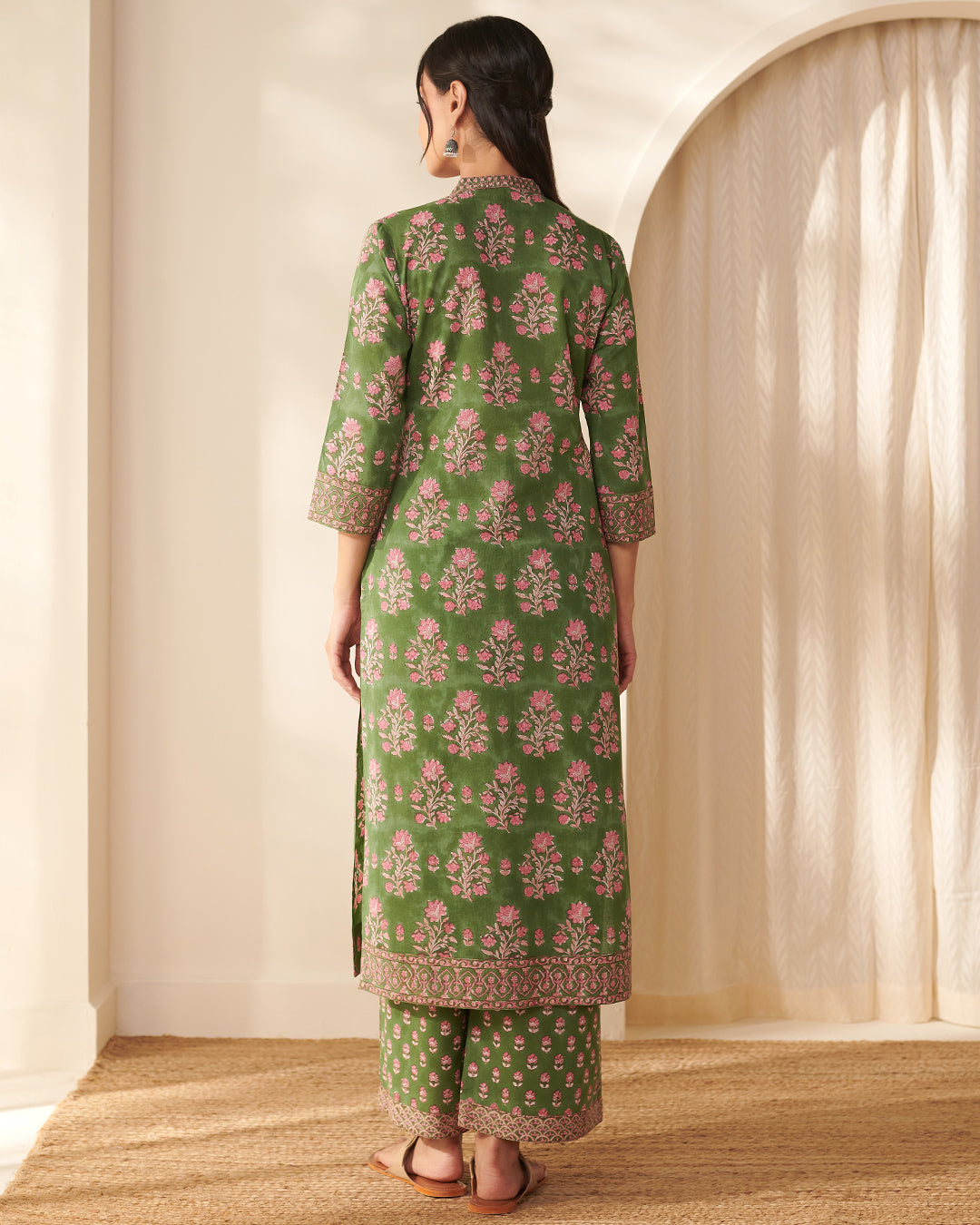
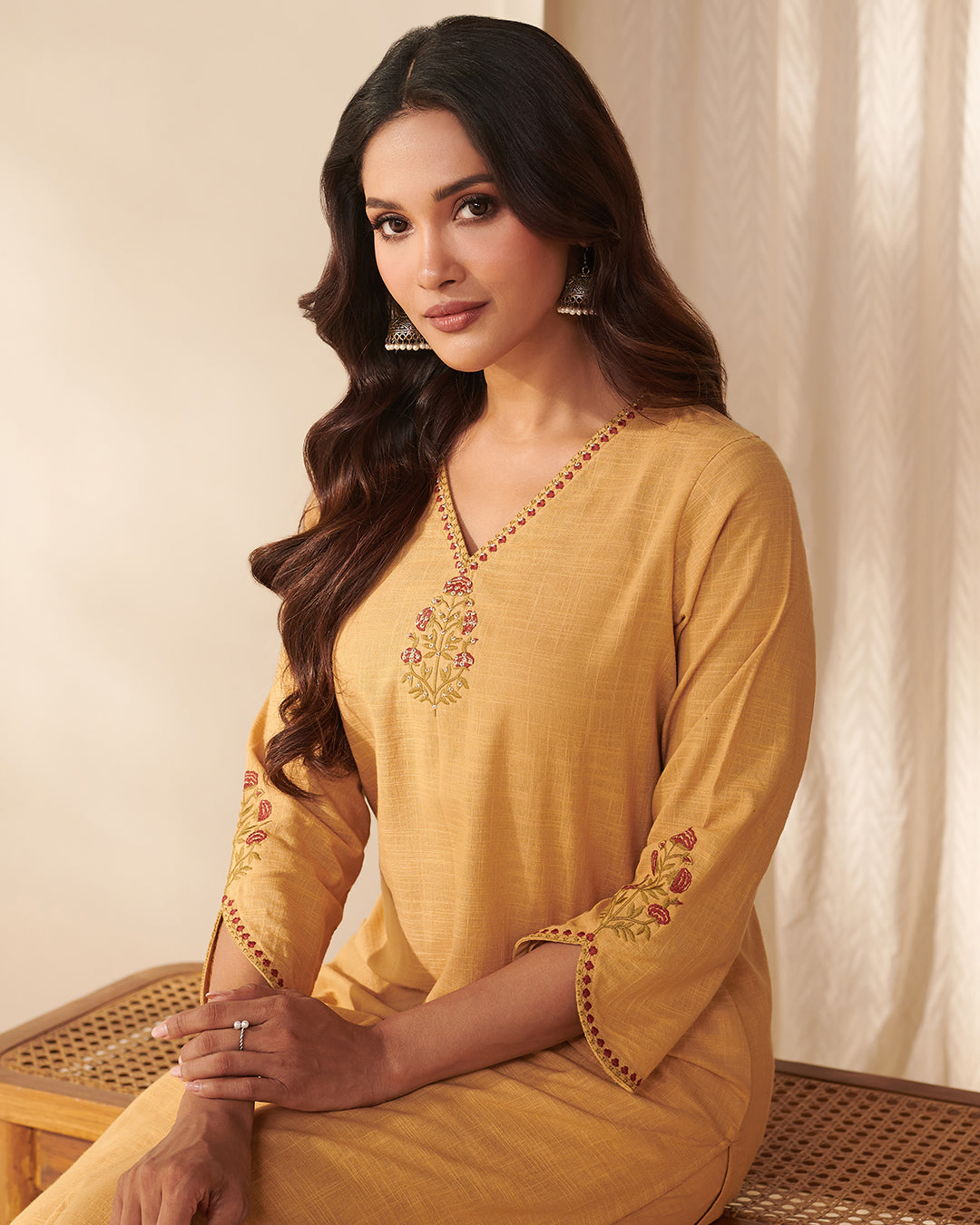
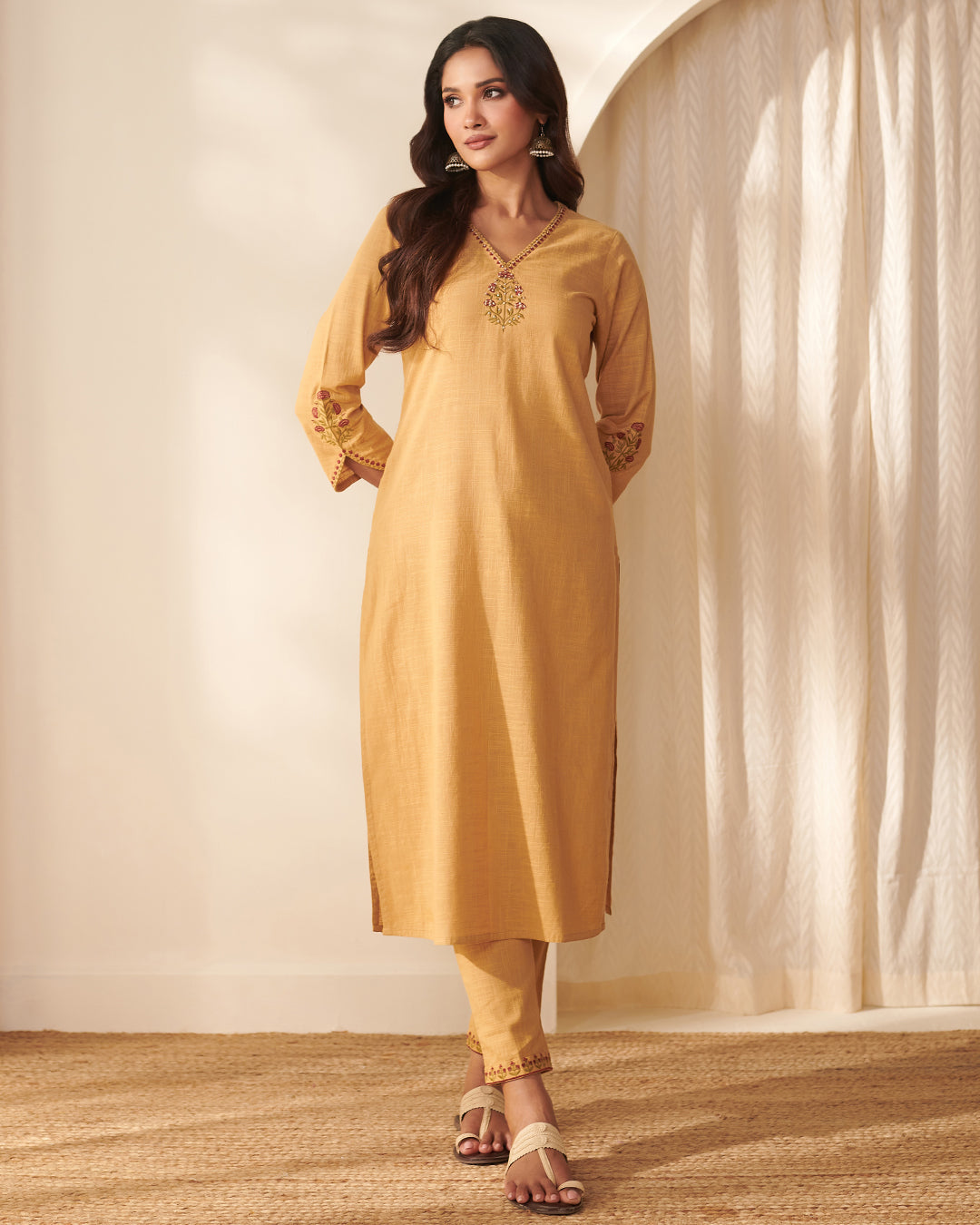
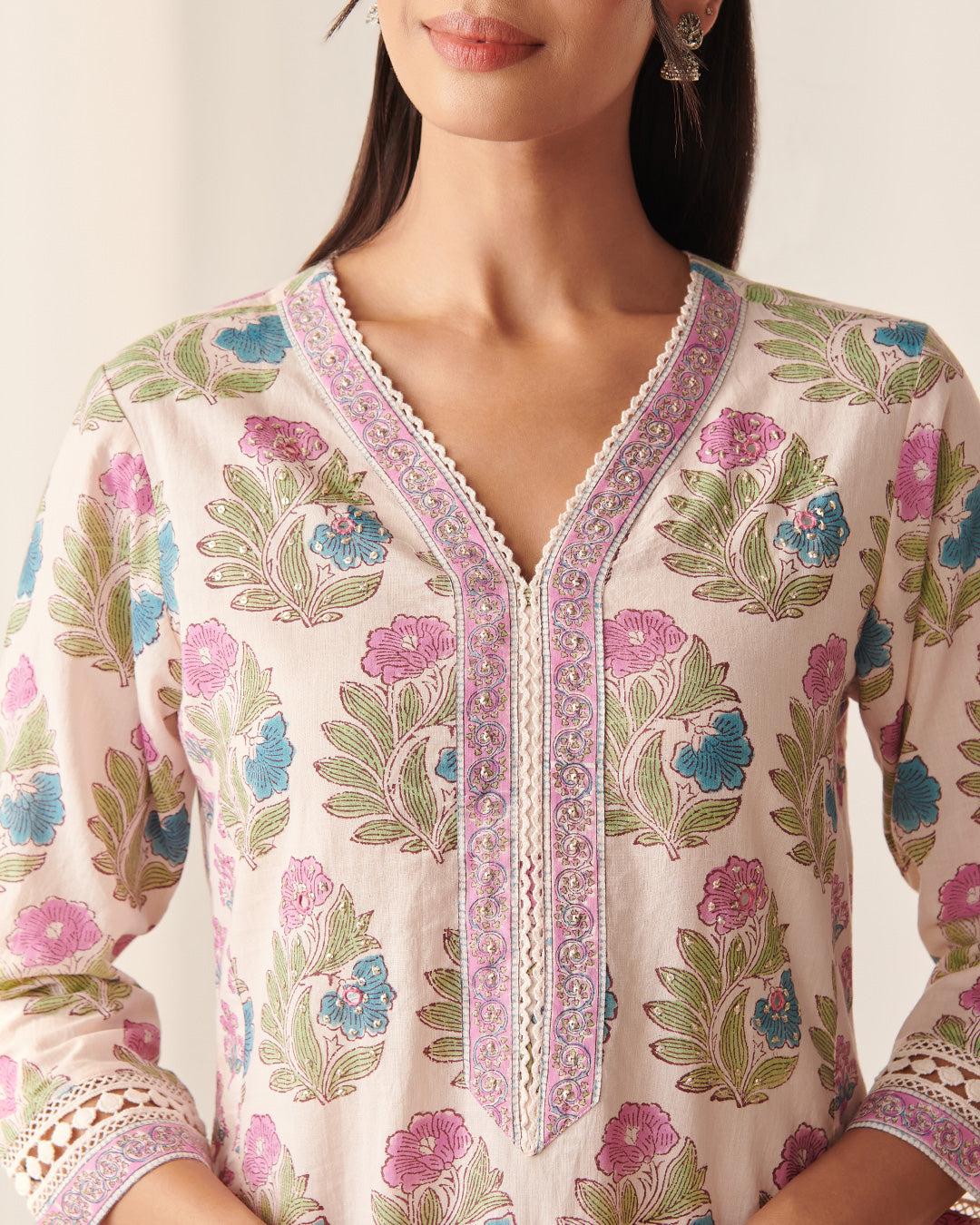
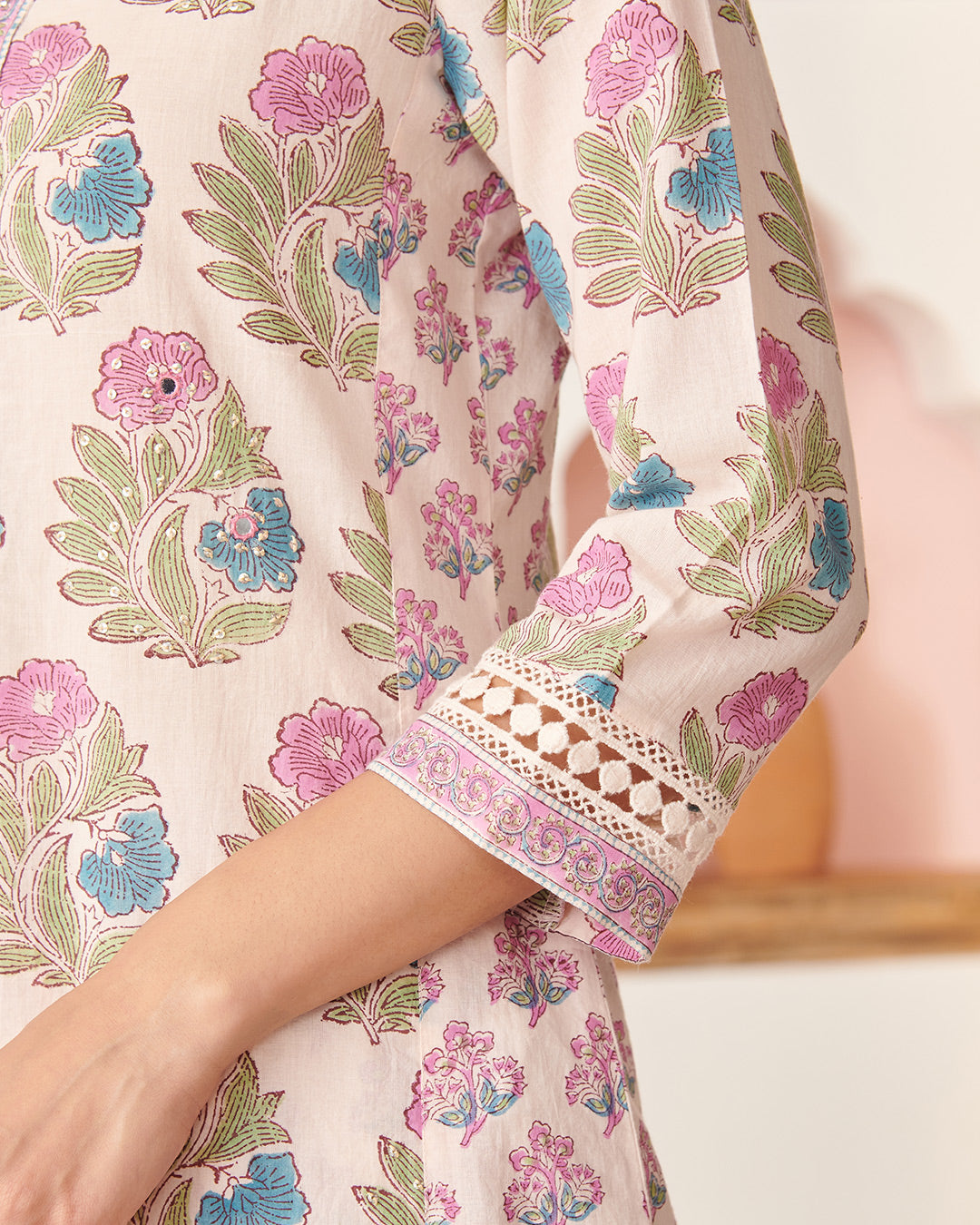
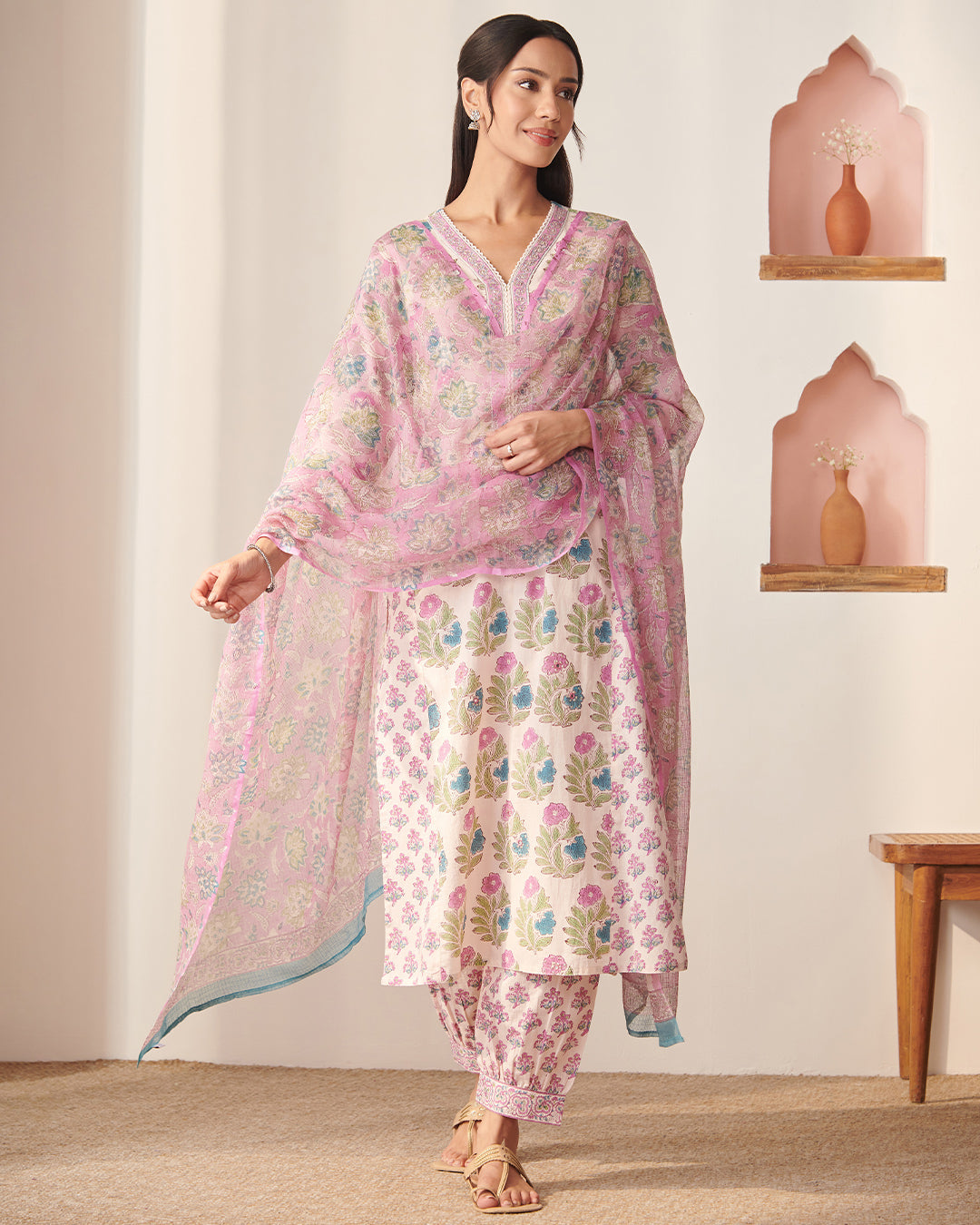
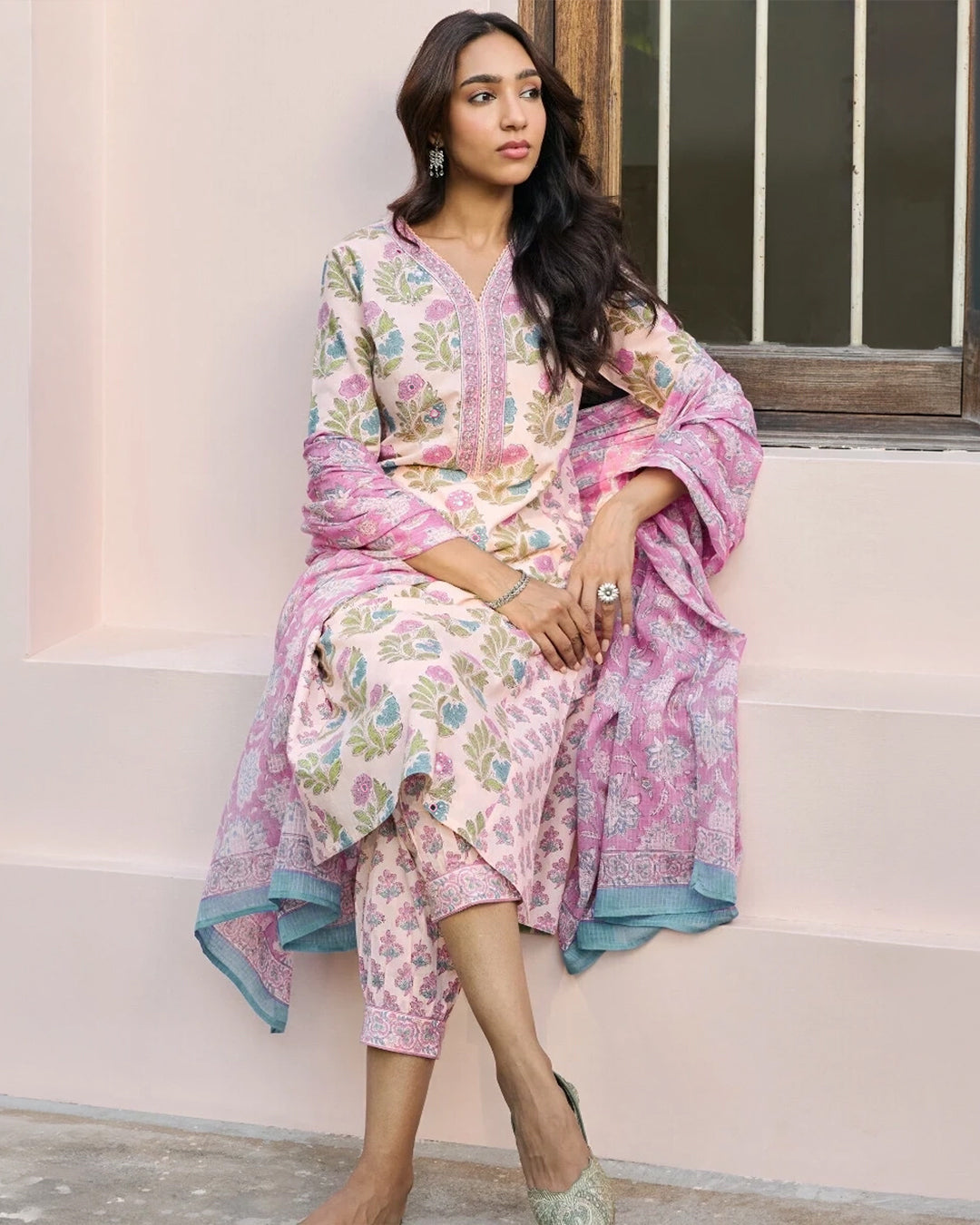



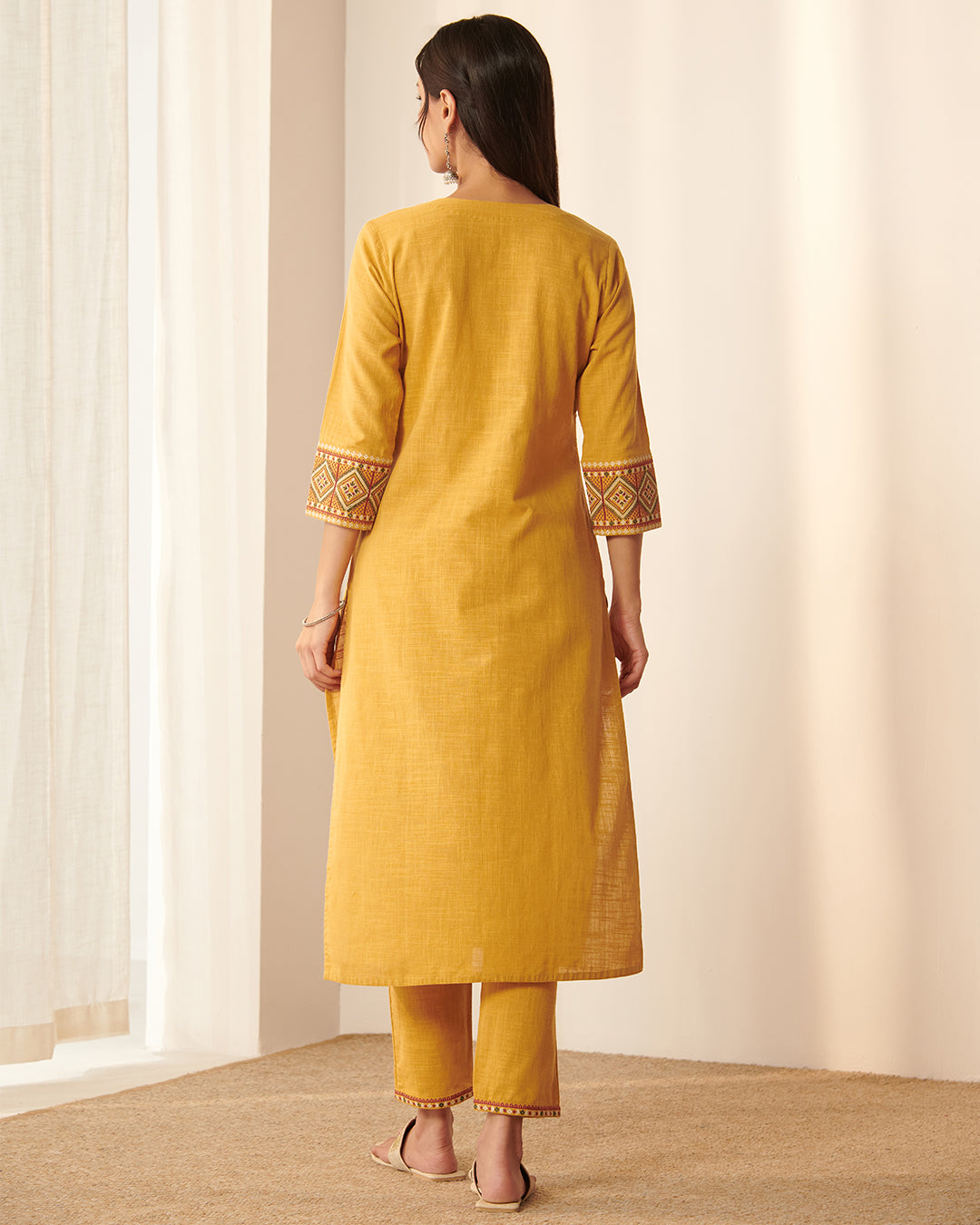
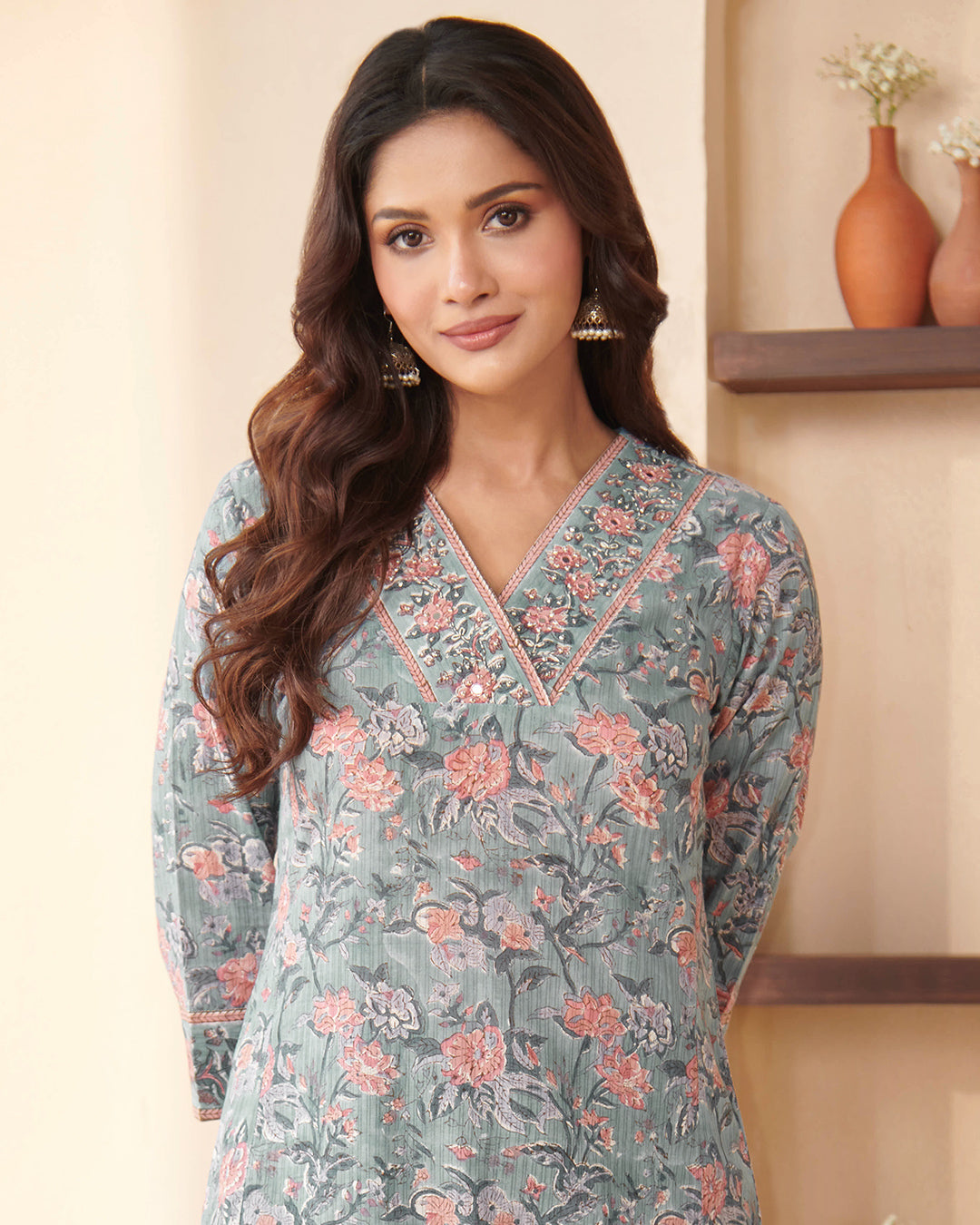
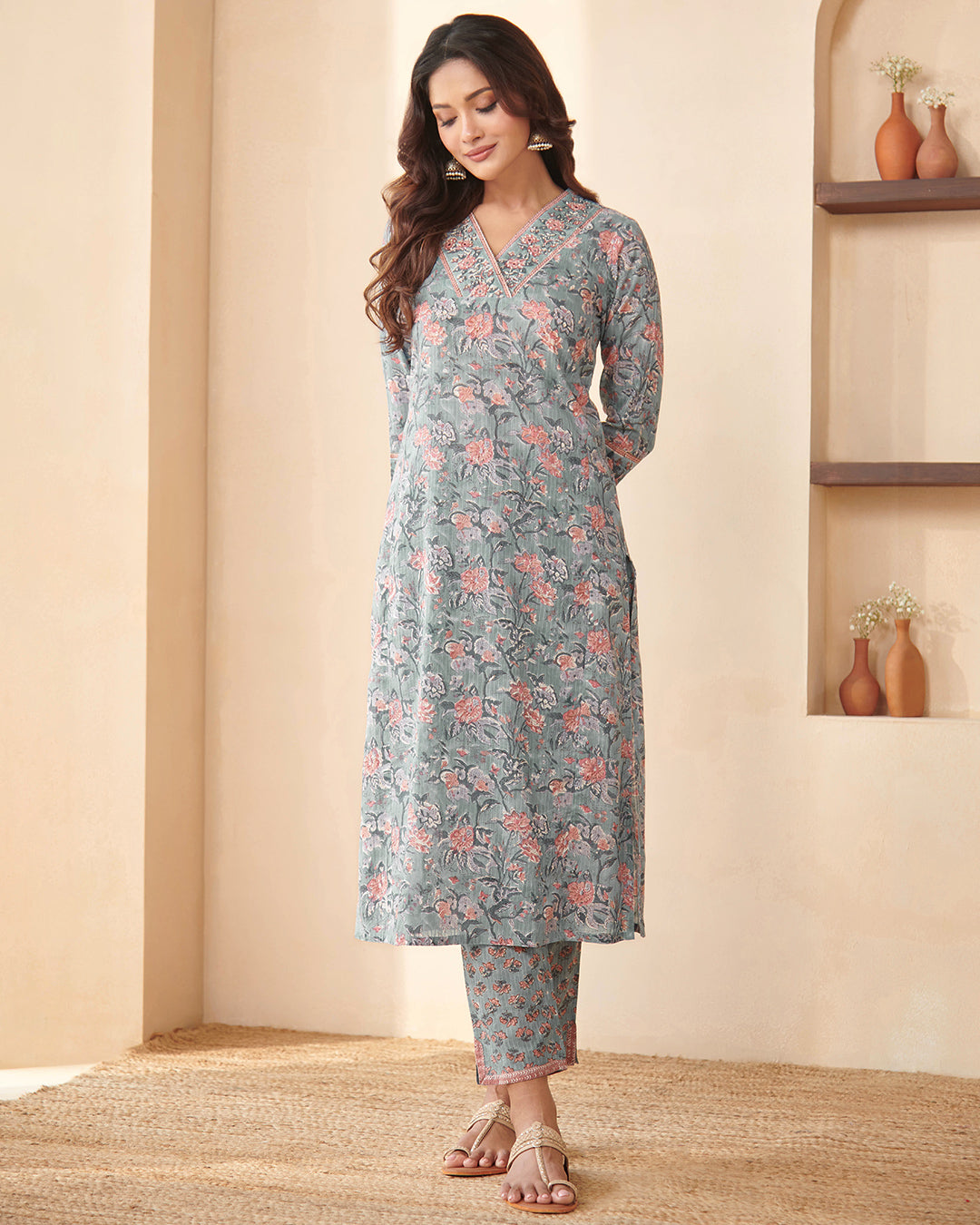
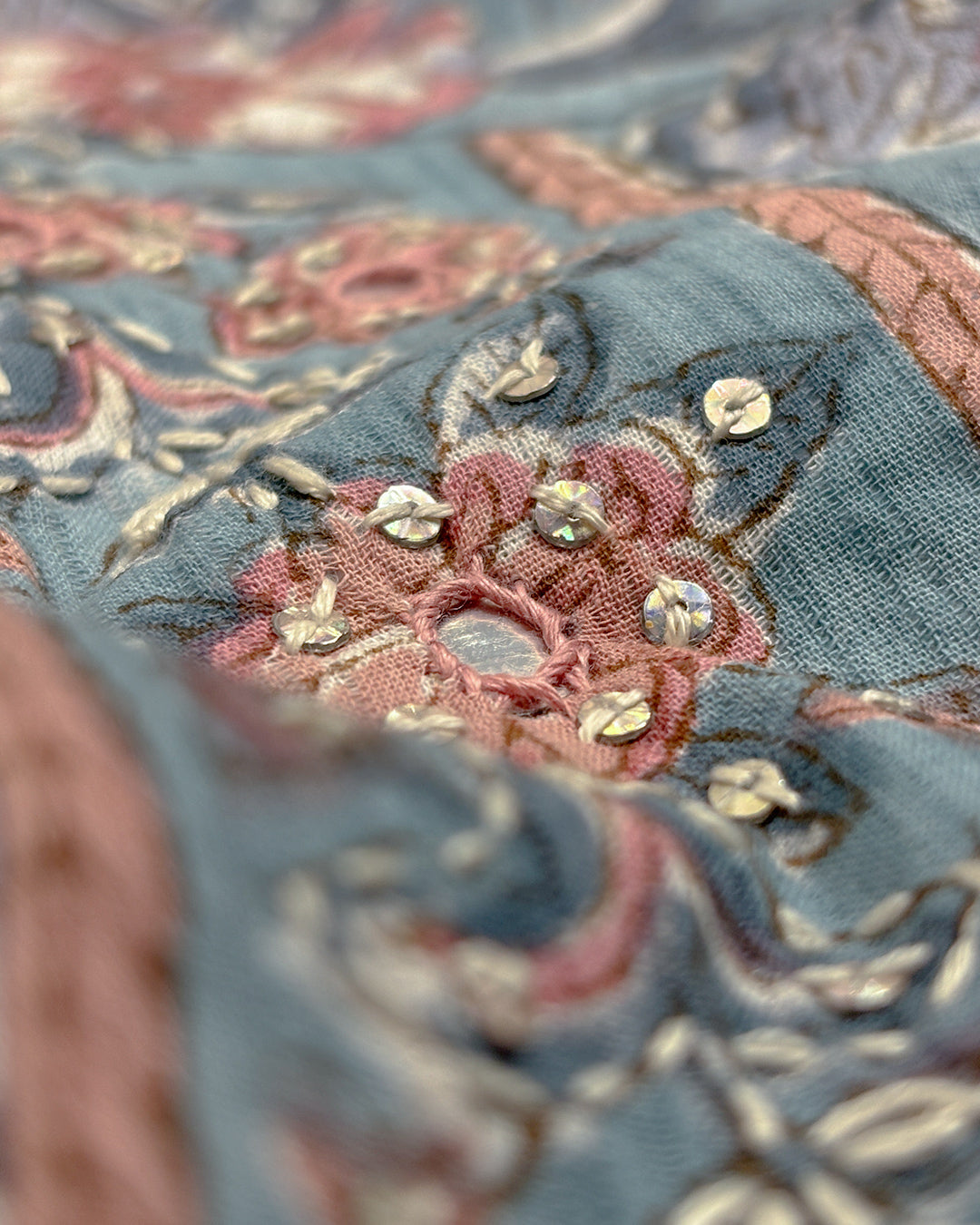
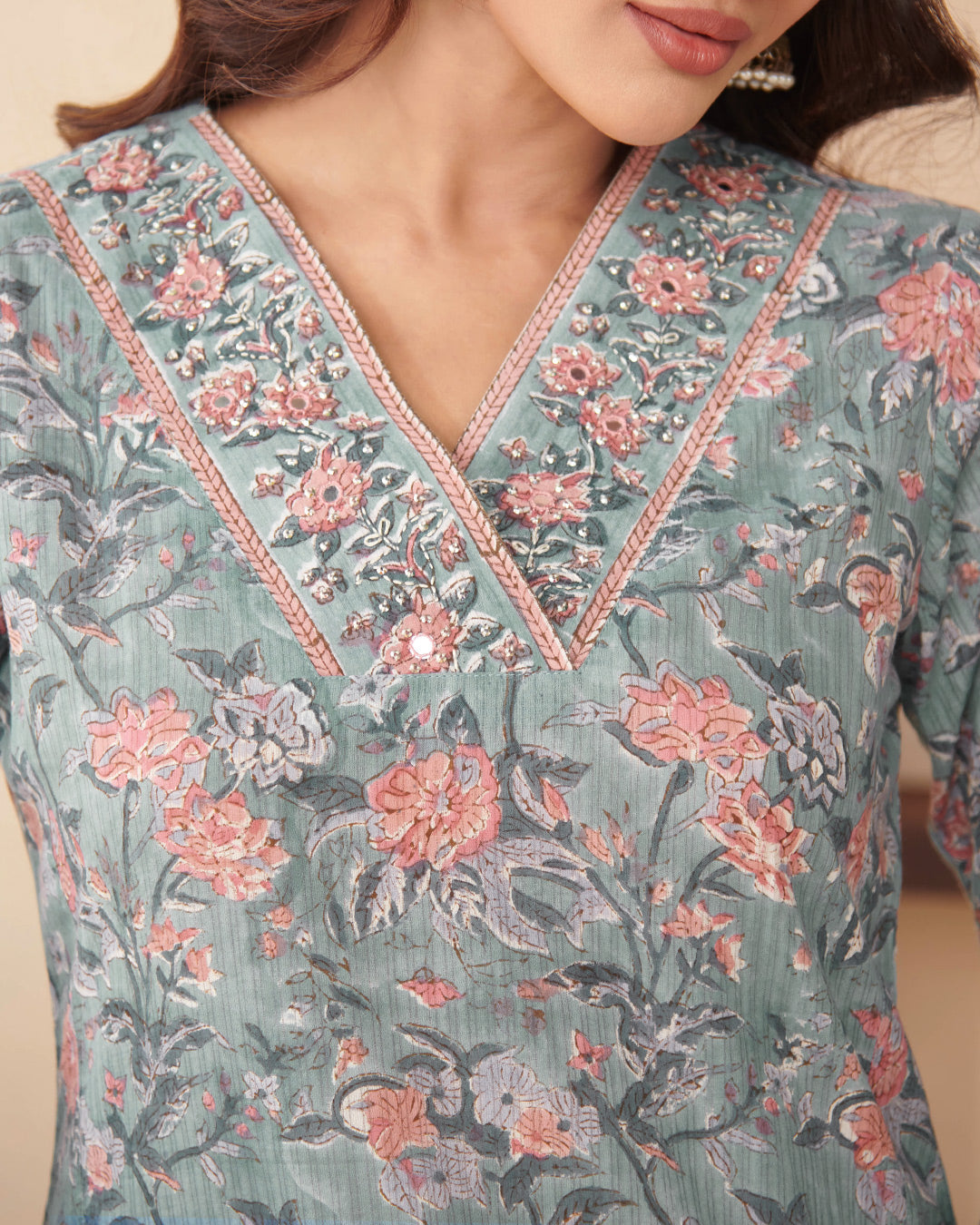
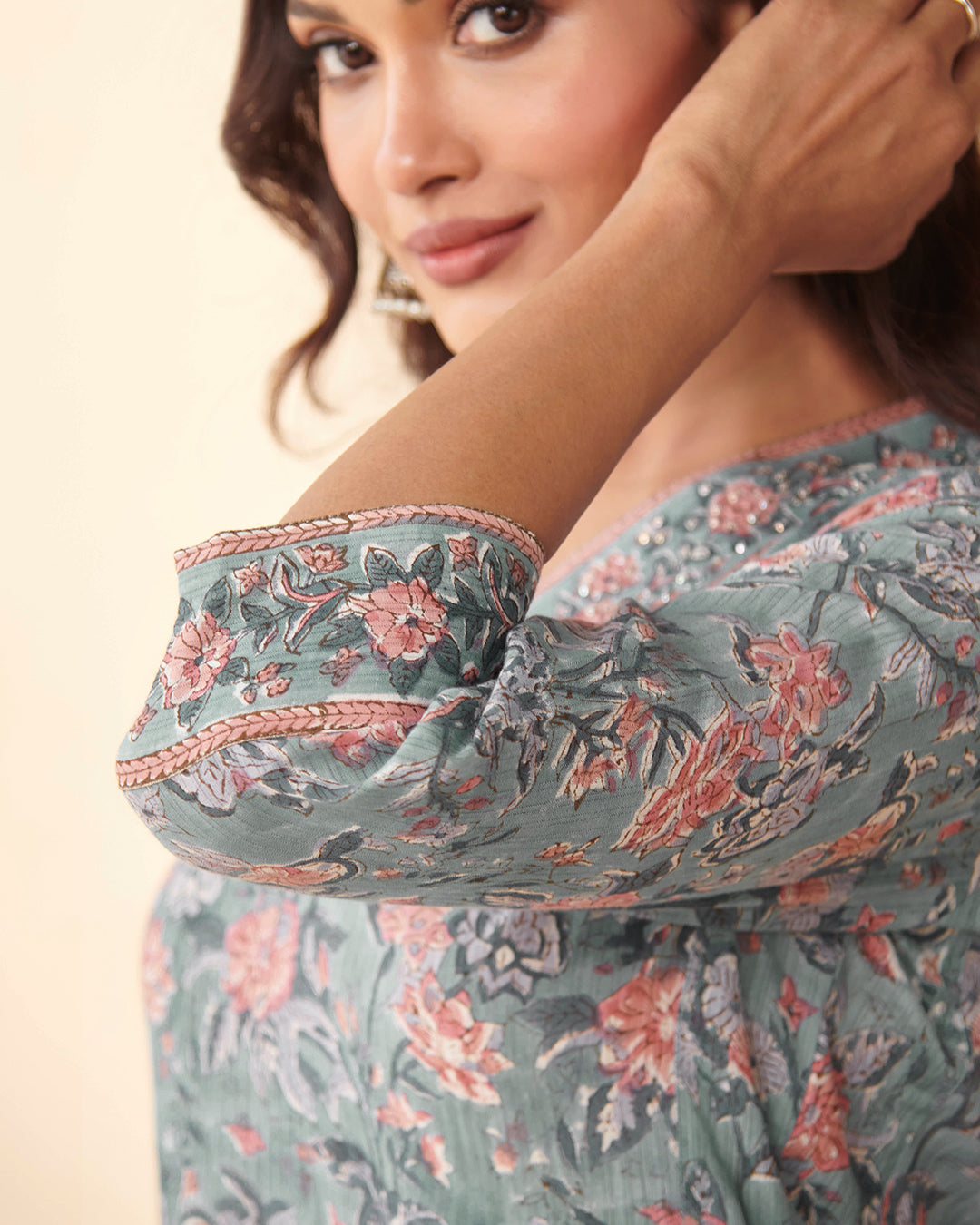
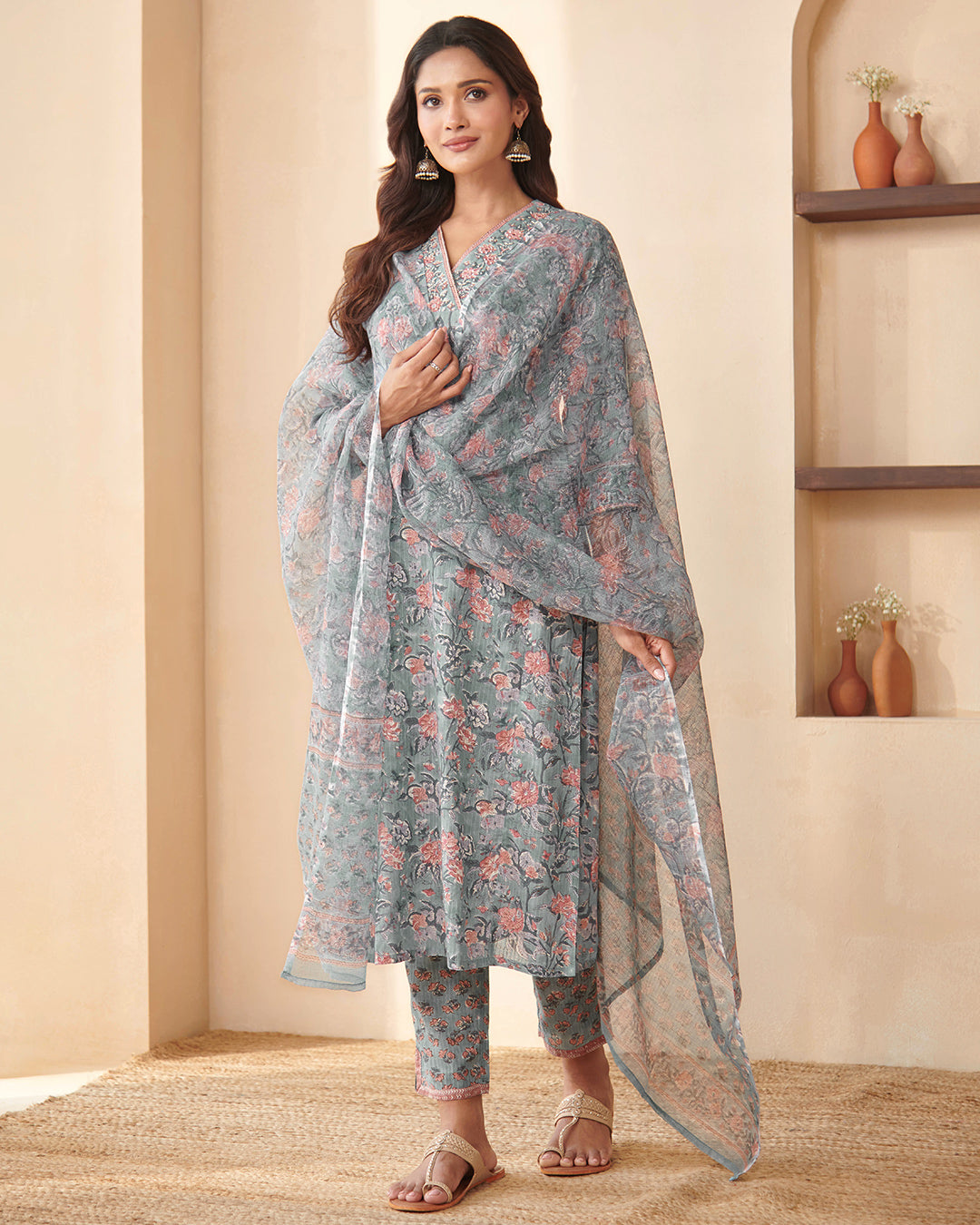
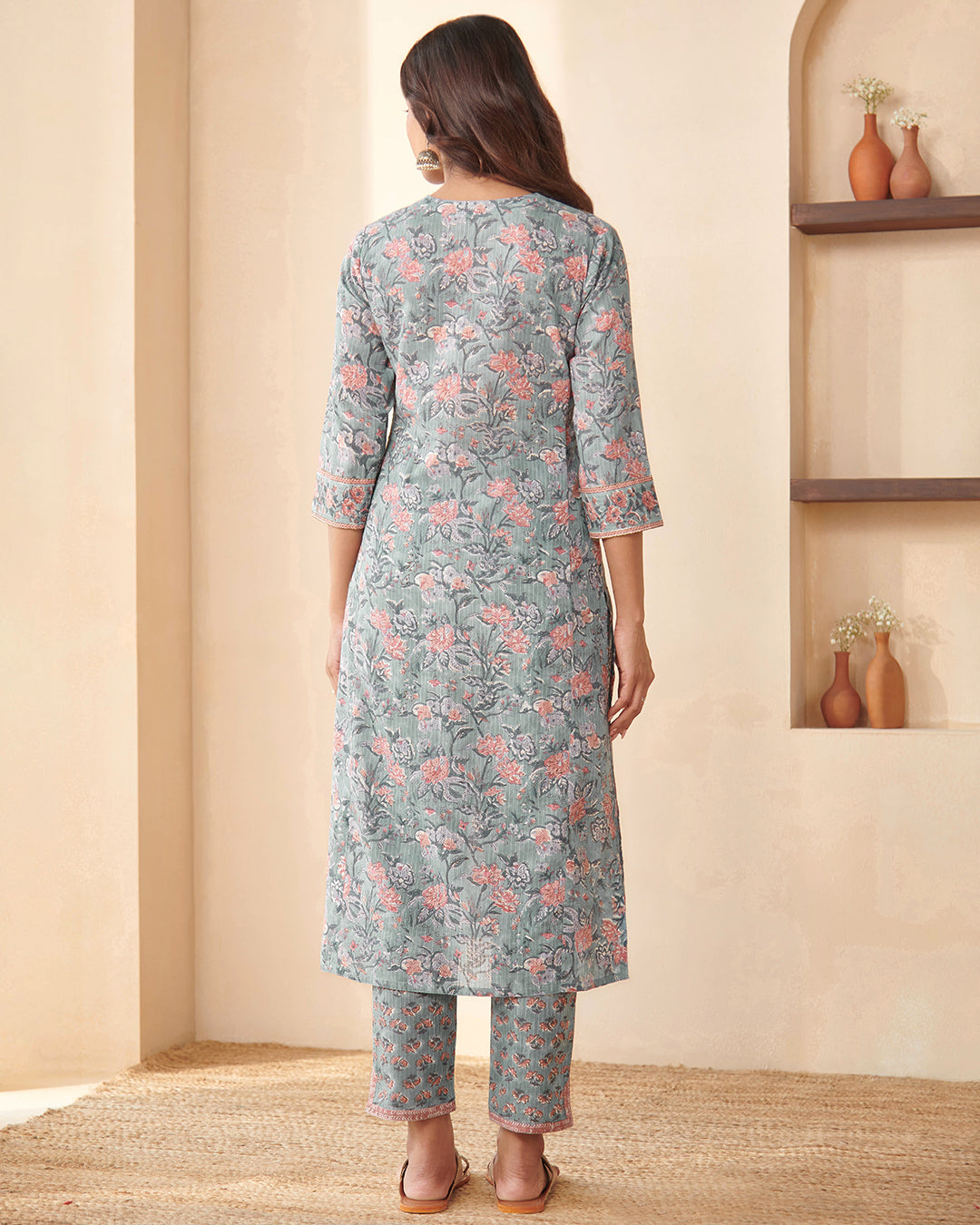
A printed dupatta often reveals its story slowly. At first, we notice the colours, the softness of the fabric, perhaps the way a familiar print brings back the memory of a grandmother’s sari or a summer spent in an old family home. Look a little closer, and the motifs begin to speak.
A flower, a paisley, a curling vine, a row of small geometric forms. These patterns are rarely there simply to fill a piece of cloth. Across Indian textile traditions, motifs have carried ideas of nature, fertility, beauty, movement, protection and continuity for generations. Their meanings have shifted with region, community, craft practice and time, but the instinct behind them remains familiar: to bring something from the world around us into the fabric we live with.
This is what makes a printed dupatta so interesting. It is not only an accessory or an additional layer of clothing. Its pattern can hold traces of a place, a craft tradition and the hands that brought the design to life.
Why Motifs Matter in Indian Textile Craft

Indian textiles have always had a close relationship with the natural world. Before motifs became recognisable elements of textile design, they were part of everyday surroundings: flowers in courtyards, leaves and creepers along walls, birds in fields, fruits on trees and flowing forms inspired by water and movement.
Over time, these observations became visual language. A flower could suggest renewal. A vine could express abundance. A paisley could recall the shape of a mango, a leaf or a drop of water, depending on the tradition and the interpretation. The motif became more than an image. It became a way of carrying meaning onto cloth.
For this reason, traditional motifs continue to matter in Indian textile craft. They connect the decorative with the familiar. They allow a textile to belong to a particular place while still feeling intimate and everyday.
From Nature to Fabric: How Traditional Motifs Began
Many Indian textile motifs have their roots in close observation of nature. This does not mean that every floral or paisley design has one fixed symbolic meaning. Rather, nature provided a rich vocabulary from which artisans and designers could create patterns suited to different regions and textile traditions.
The transformation from nature to fabric was also a process of interpretation. A real flower might be simplified into a few petals. A leaf could become a repeated outline. A bird might be reduced to its most recognisable form. Once translated into a block, stencil or other printing method, the image had to work not just as a single form but as part of a larger composition.
Repetition became especially important. A single flower could become a border. A small leaf could travel across an entire length of fabric. Two motifs could be arranged together to create rhythm. In this way, the original inspiration from nature became something distinctly textile: ordered, repeated and designed to live on cloth.
The printed dupatta carries this history beautifully. A motif that appears simple at first glance may be the result of generations of visual memory, refined so that it can be carved, printed and repeated by hand.
How Regional Craft Traditions Shaped Textile Patterns
India does not have one single textile vocabulary. Motifs have evolved alongside regional materials, climates, communities, printing methods and local aesthetics.
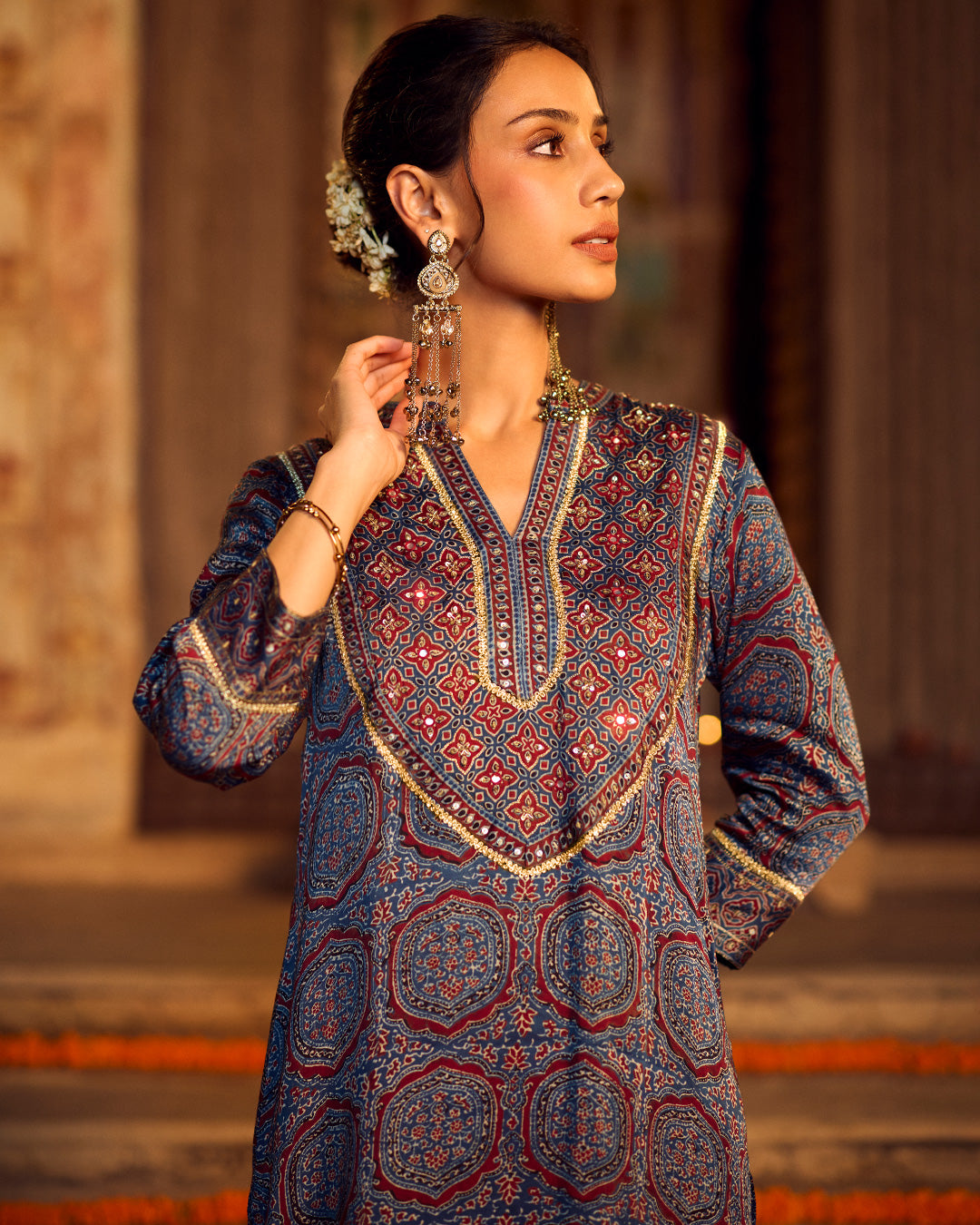
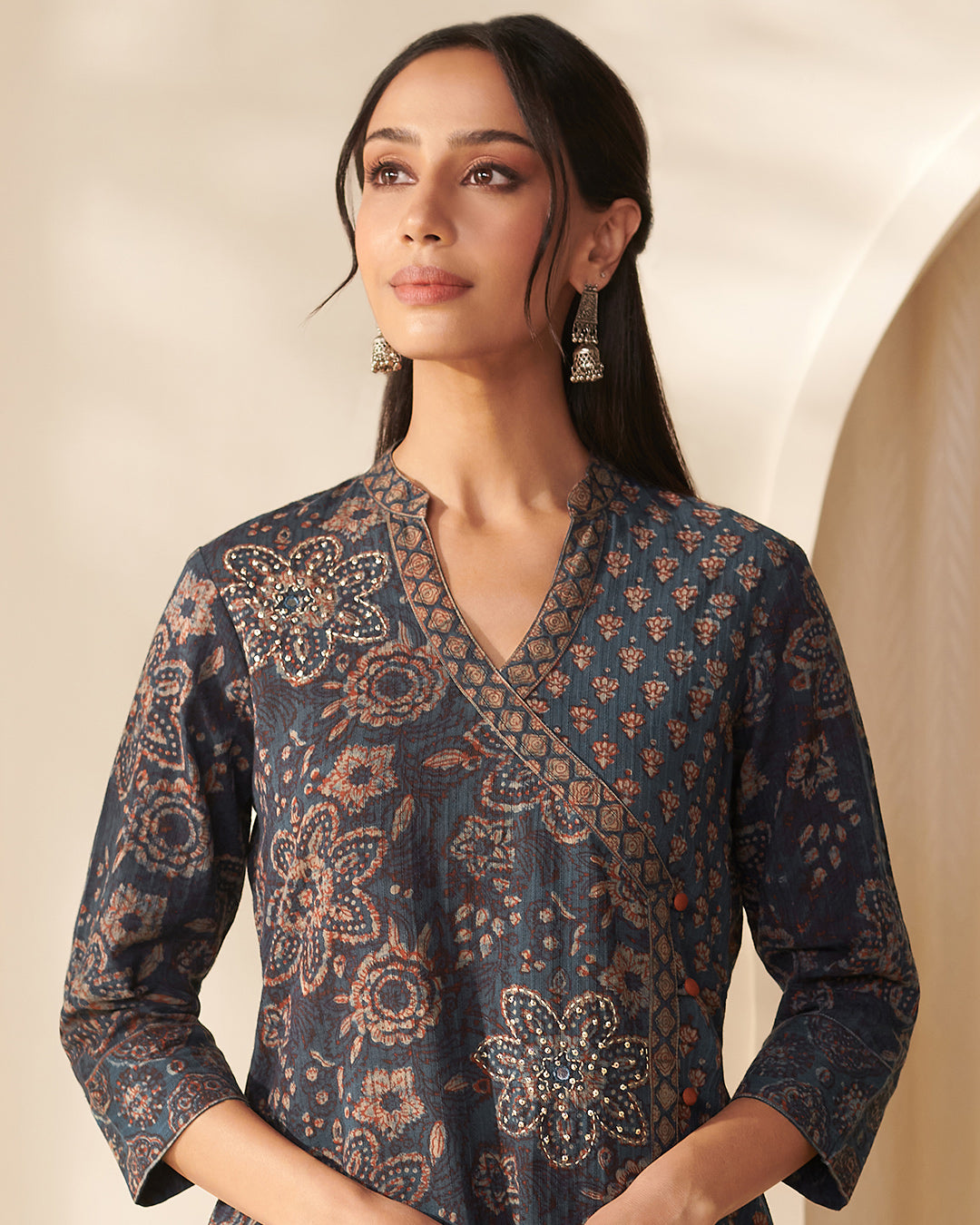
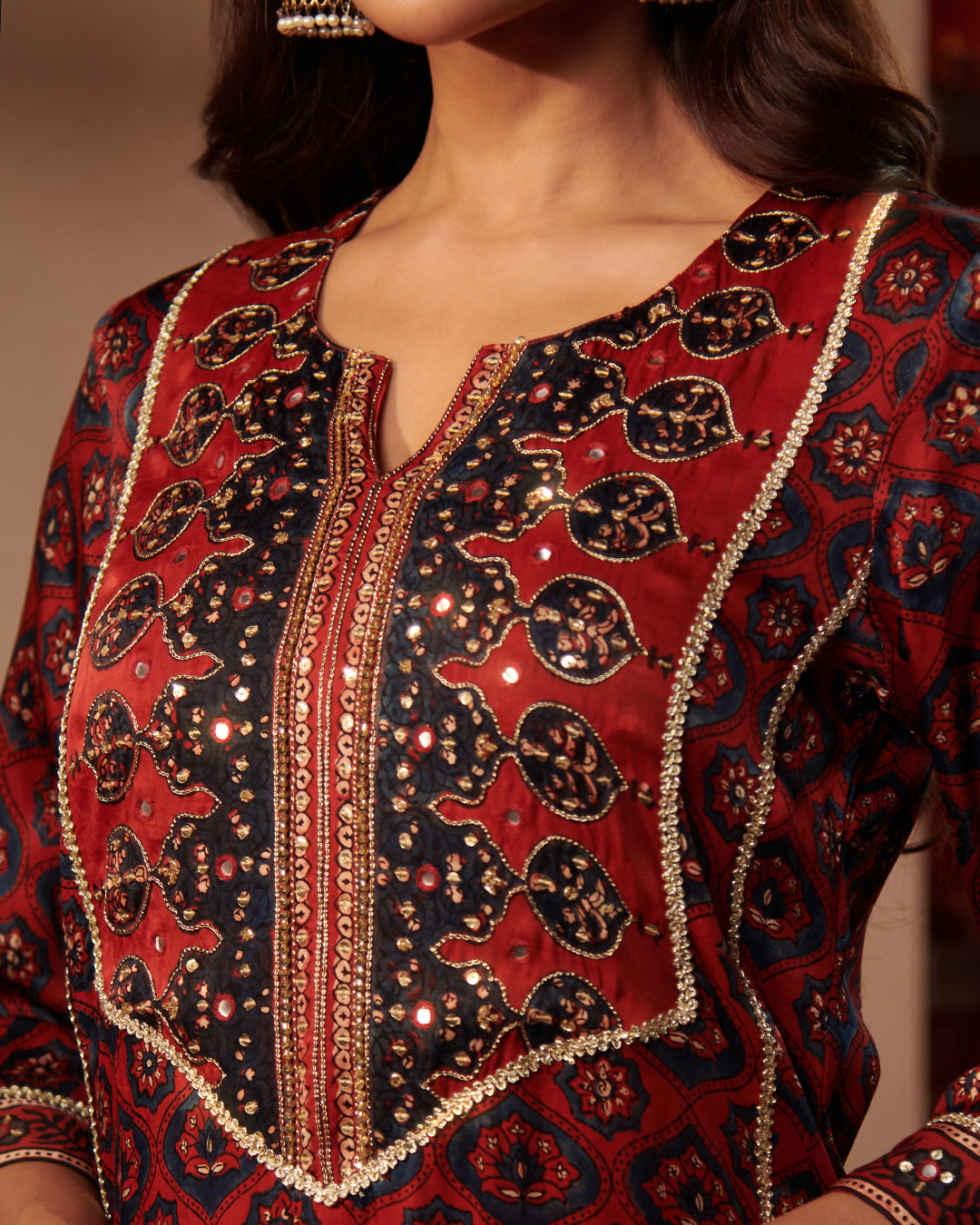
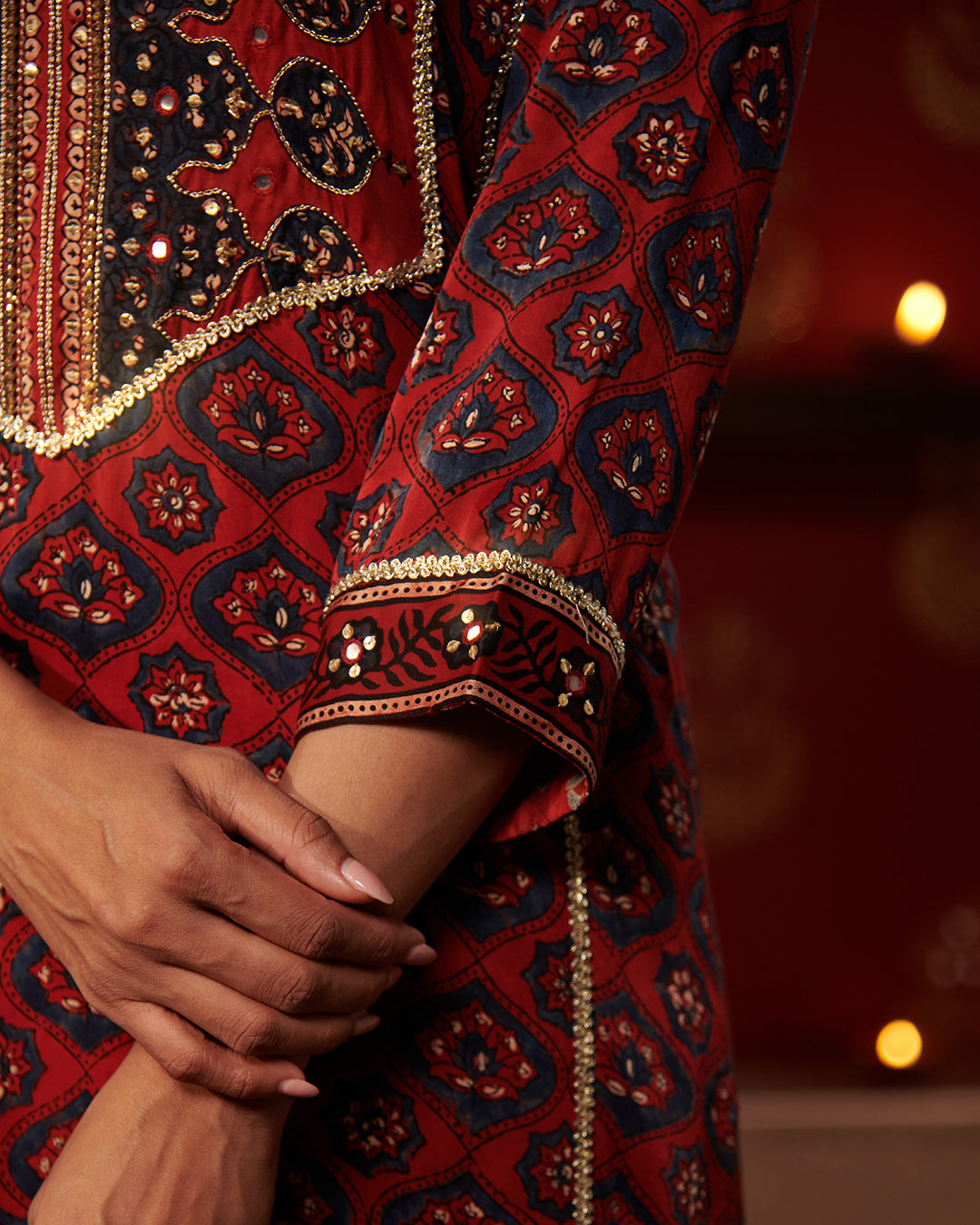
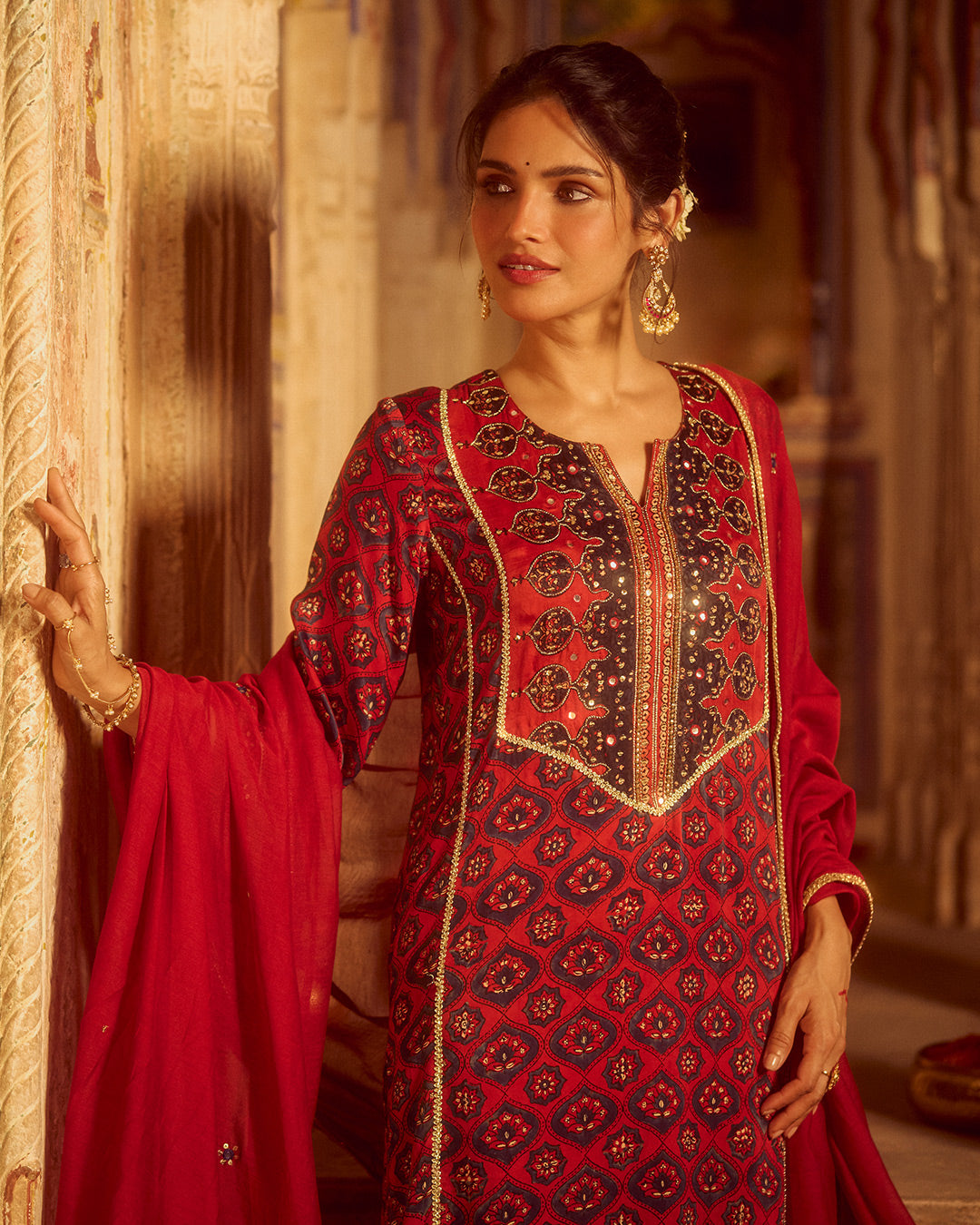
In Rajasthan, traditions such as Bagru and Dabu printing are closely associated with hand-carved wooden blocks, natural or locally developed colour traditions, and patterns drawn from flowers, leaves and other organic forms. In Ajrakh, associated particularly with Kutch and Sindh, geometry, floral elements and intricate borders come together in highly structured compositions.
Elsewhere, textile traditions developed their own distinctive visual languages. The scale of a motif, the colours used, the way a border is constructed and even the amount of space left between repeated forms can tell us something about the craft tradition behind a textile.
This regional character is important when looking at Indian printed dupattas. A floral motif is not simply a flower. Its shape, arrangement and method of printing can place it within a much wider craft history.
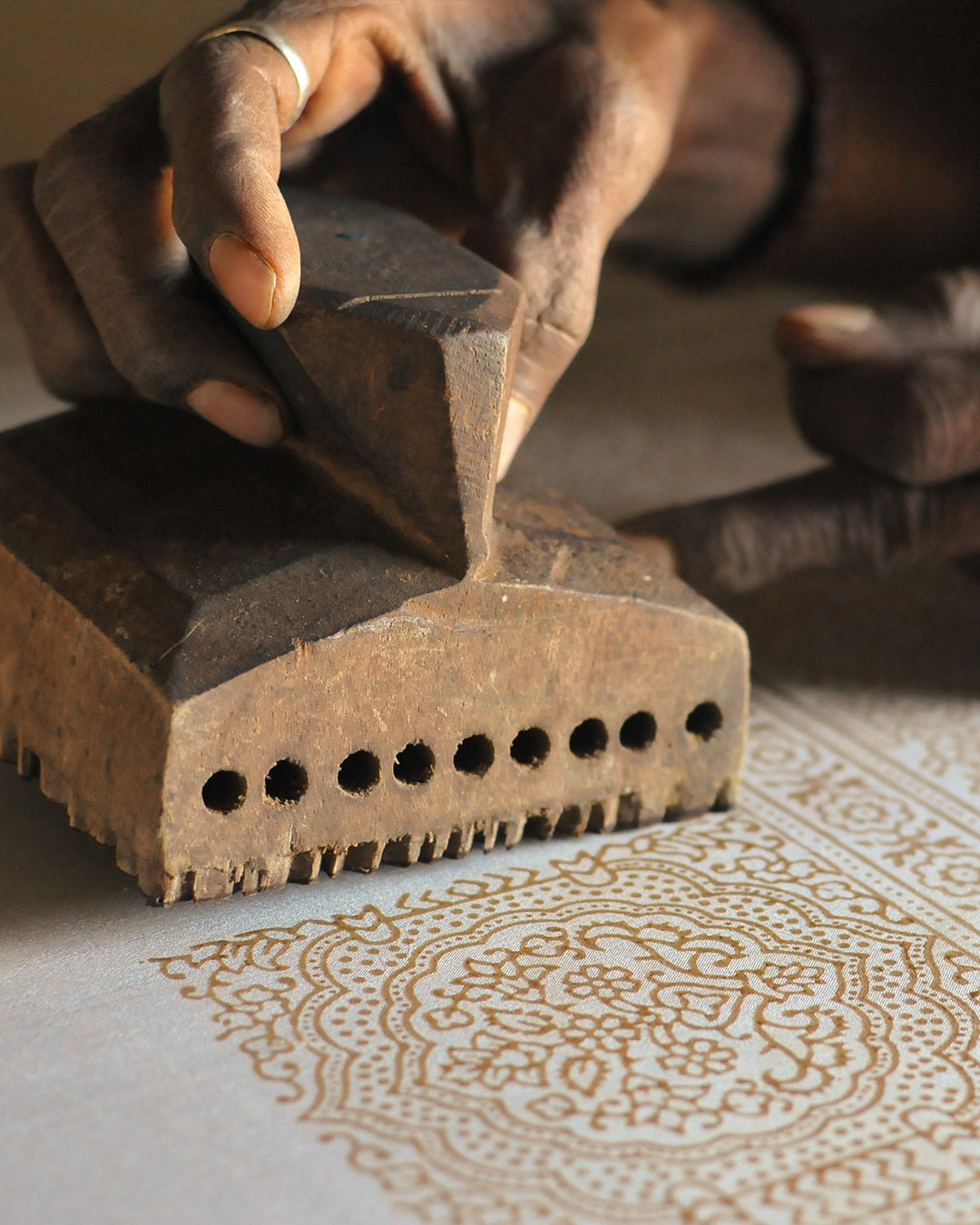
The same is true of block printing. A hand-carved block is not merely a tool for transferring colour onto fabric. It determines the scale and character of the motif, while the act of printing repeatedly creates a rhythm that is particular to the craft. Small variations in placement or colour are part of that process, rather than imperfections to be erased.
Why the Same Motif Can Have Different Meanings
Motifs rarely have one universal meaning across India. A paisley, for instance, may be associated with the mango, a seed, a leaf or a water-like form, depending on the cultural and textile context in which it appears. Floral designs can suggest beauty and renewal, but their significance may change according to the flower, the region and the way it is used.
Meaning also comes from arrangement. A single flower scattered across a fabric tells a different visual story from flowers packed closely into a border. A geometric motif repeated with precision may create a sense of order, while the s
Common Motifs on Printed Dupattas and Their Stories

A printed dupatta can hold a surprising amount of meaning in a small space. A flower may speak of renewal, a paisley may recall the old language of the buta, and a trail of leaves can bring the quiet presence of nature into everyday clothing. These motifs have travelled through generations of Indian textile traditions, changing in scale, colour and arrangement while retaining a connection to the world around us.
There is rarely one fixed meaning behind a motif. Its significance can shift with the region, craft tradition, colour palette and the way it is placed on the fabric. That is part of what makes printed textiles so fascinating. They leave room for memory and interpretation.
Floral Motifs: Symbols of Beauty, Growth and Renewal
Flowers have always found their way into Indian textiles. Marigolds, lotuses, jasmine, roses and stylised blossoms appear across different regional traditions, sometimes recognisable and sometimes reduced to a few graceful lines.
The appeal goes beyond beauty. Flowers naturally suggest growth, abundance and renewal. The lotus, for instance, has deep cultural and spiritual associations across India, while flowering forms more generally evoke the changing seasons and the abundance of the natural world.
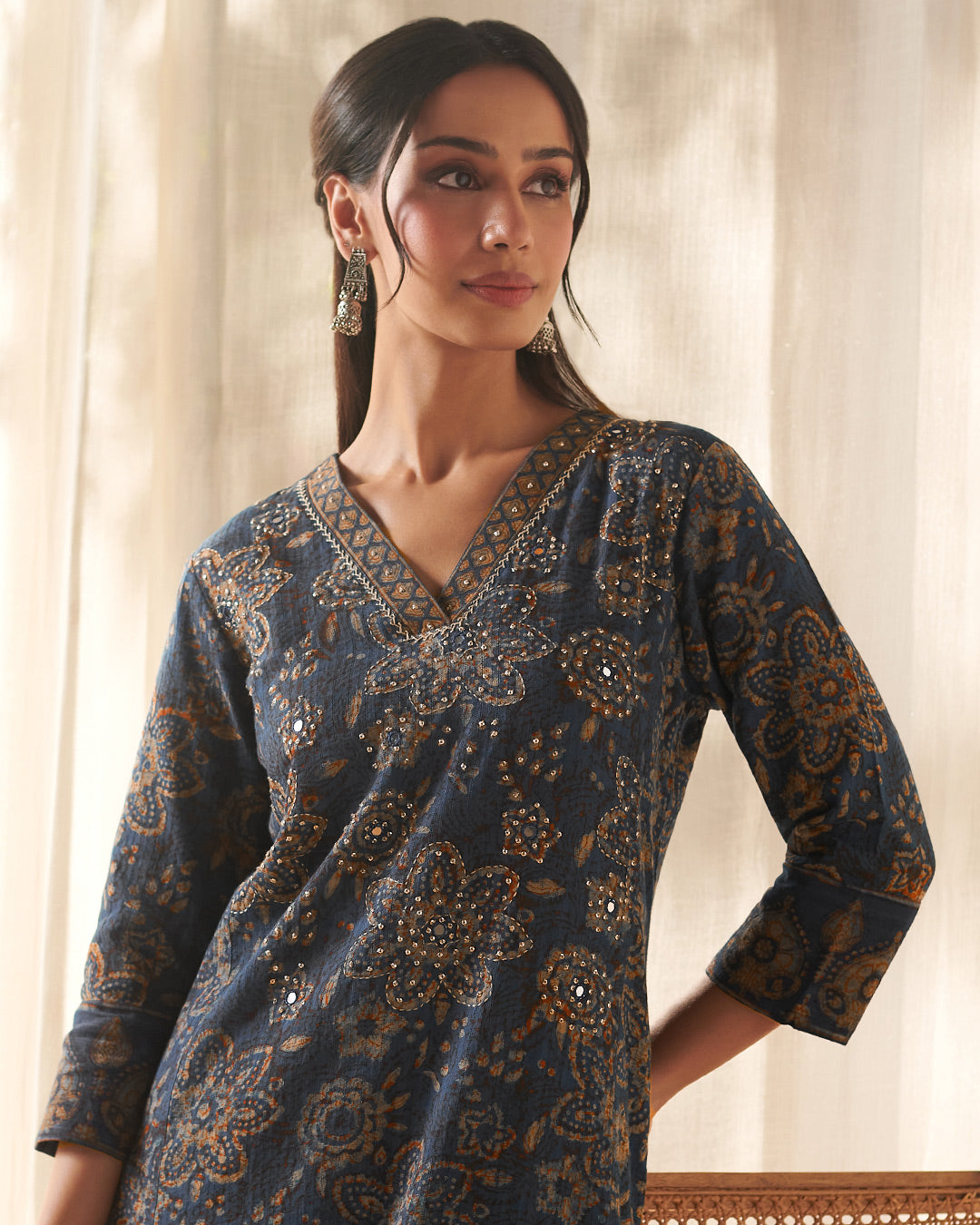
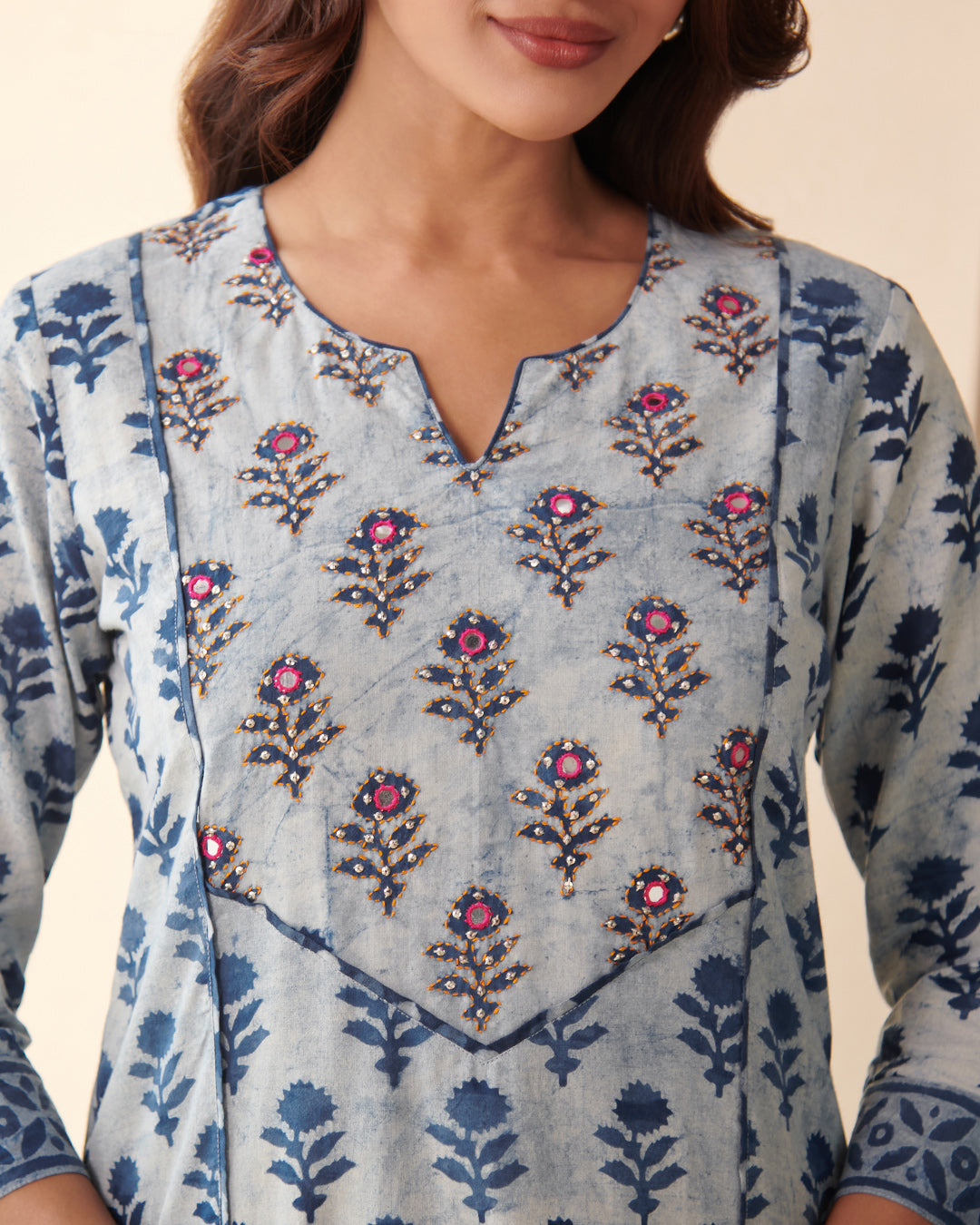
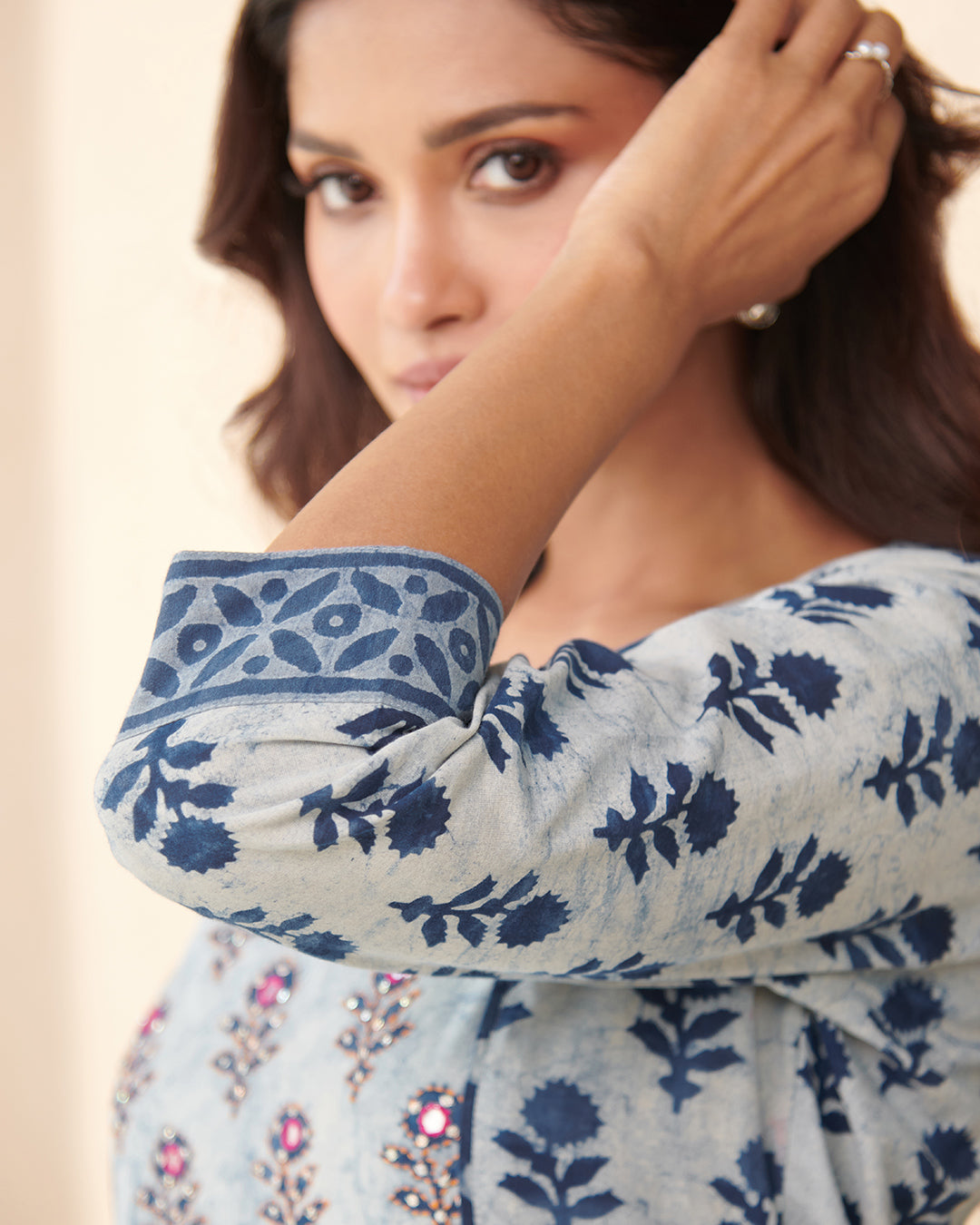
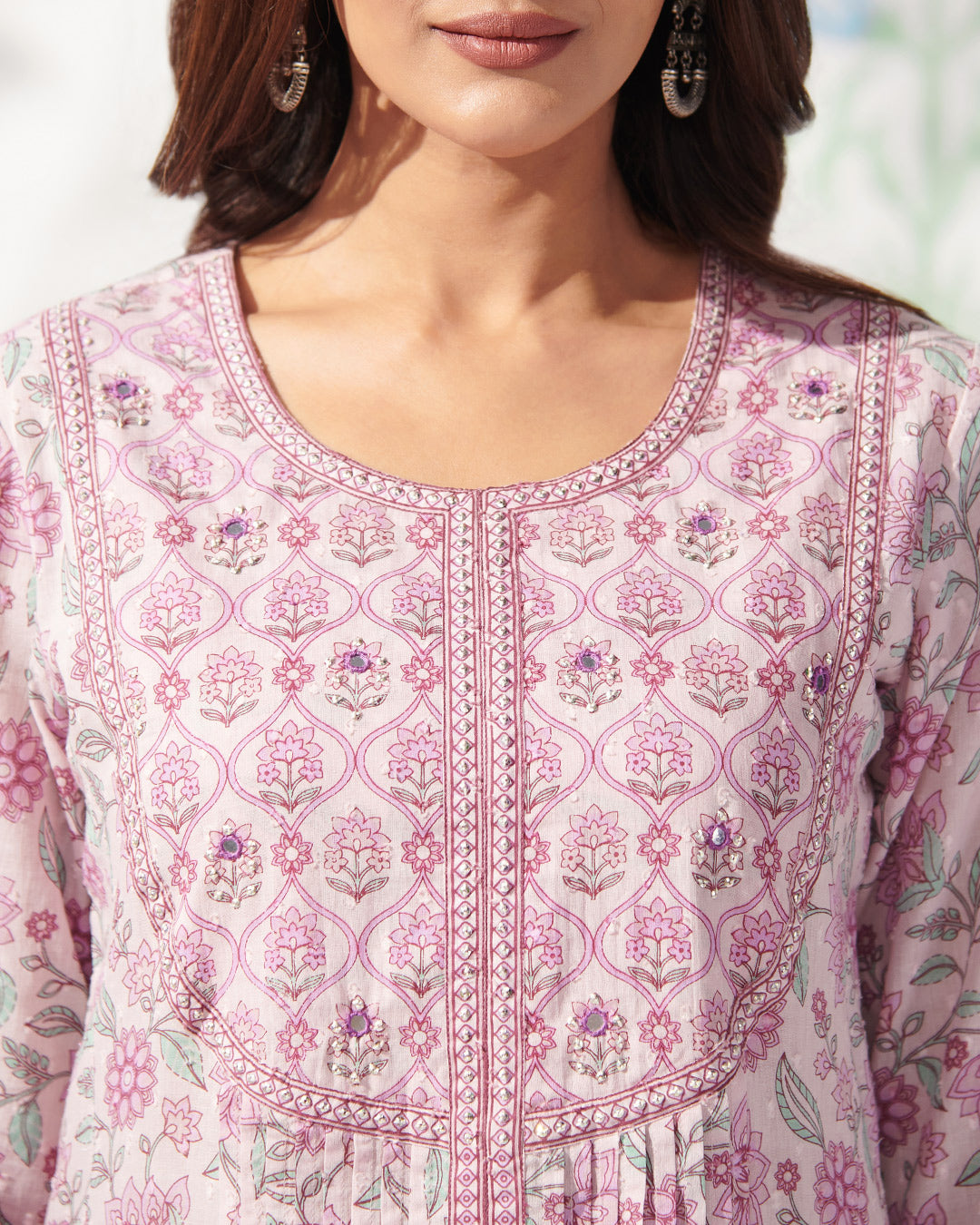
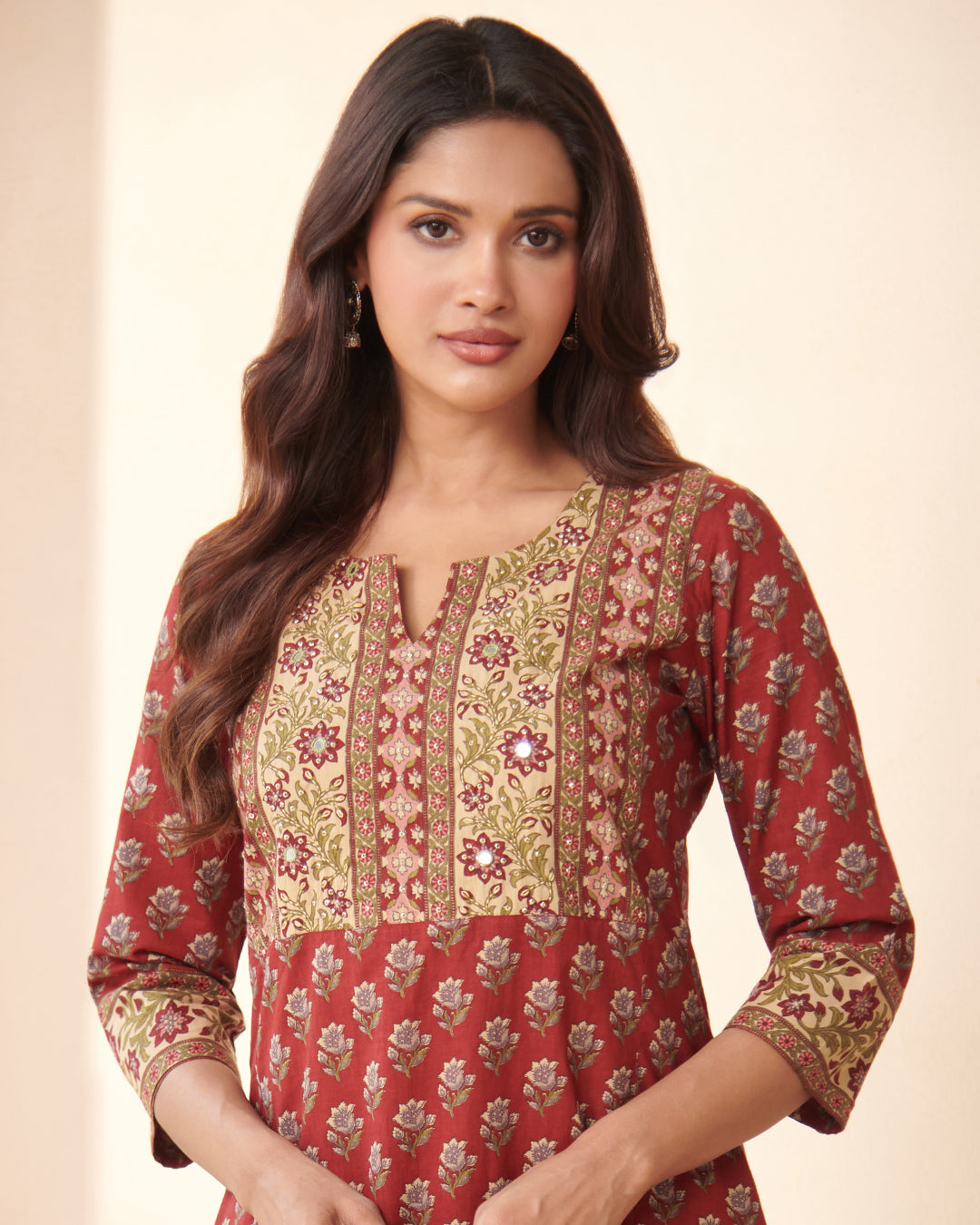
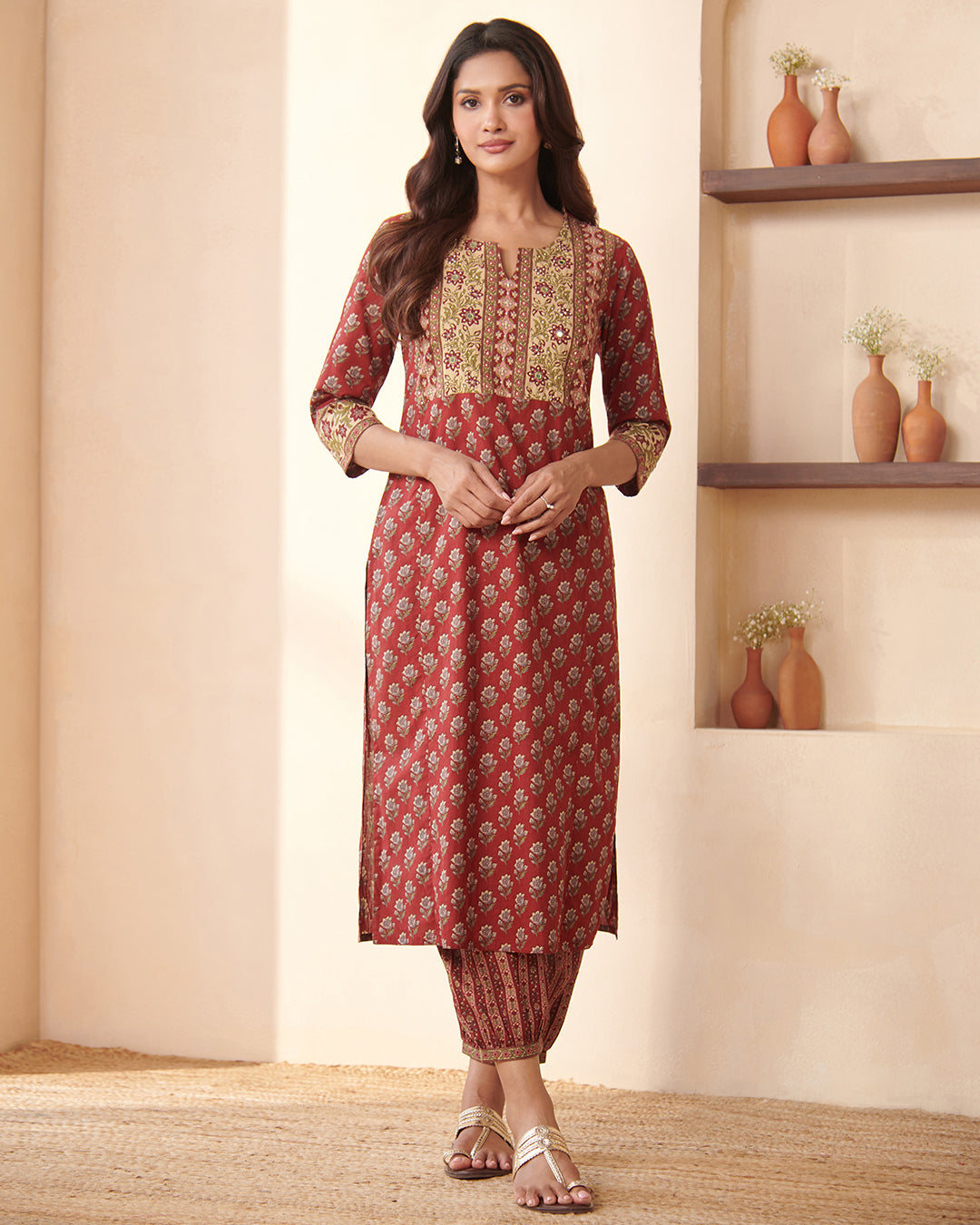
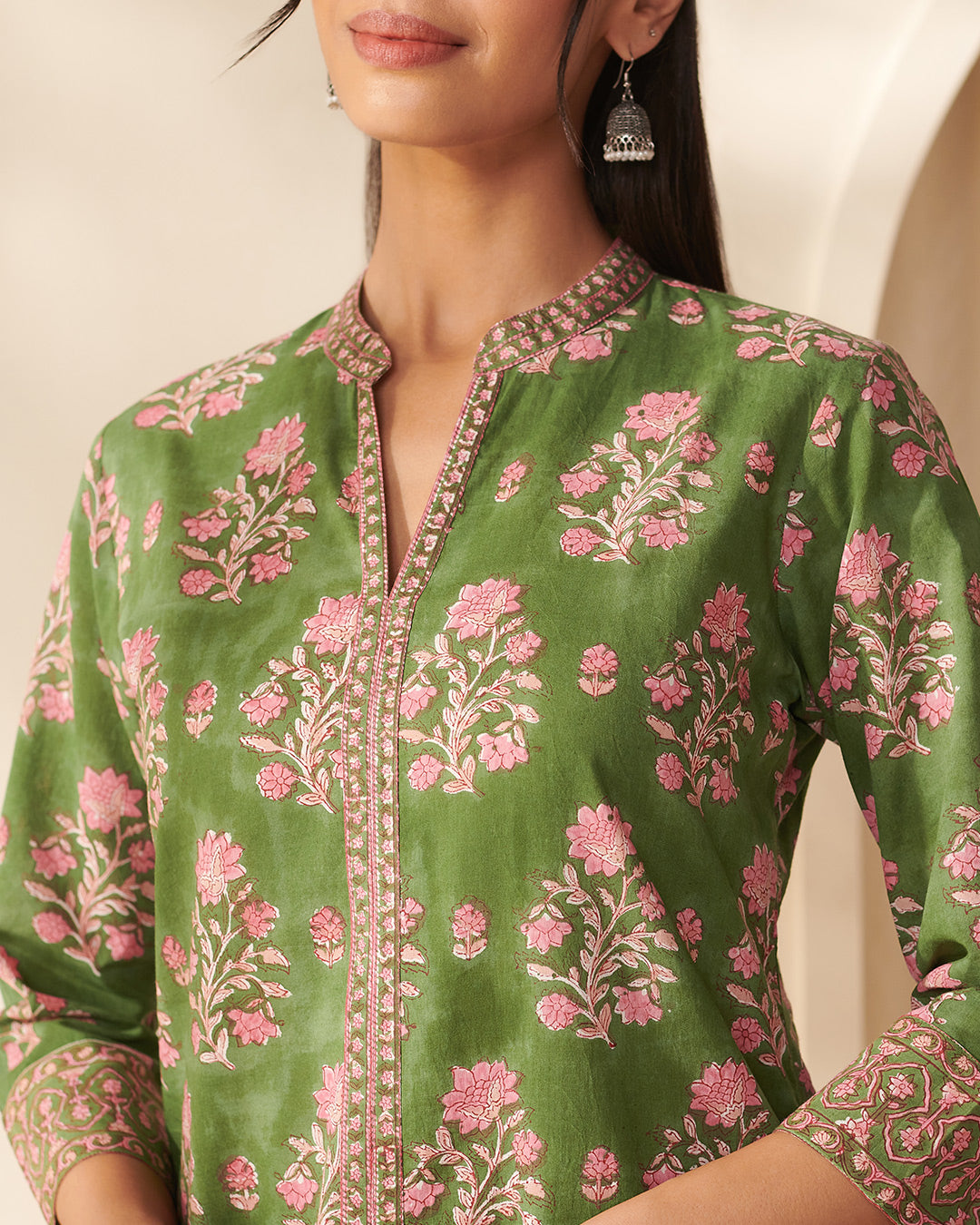
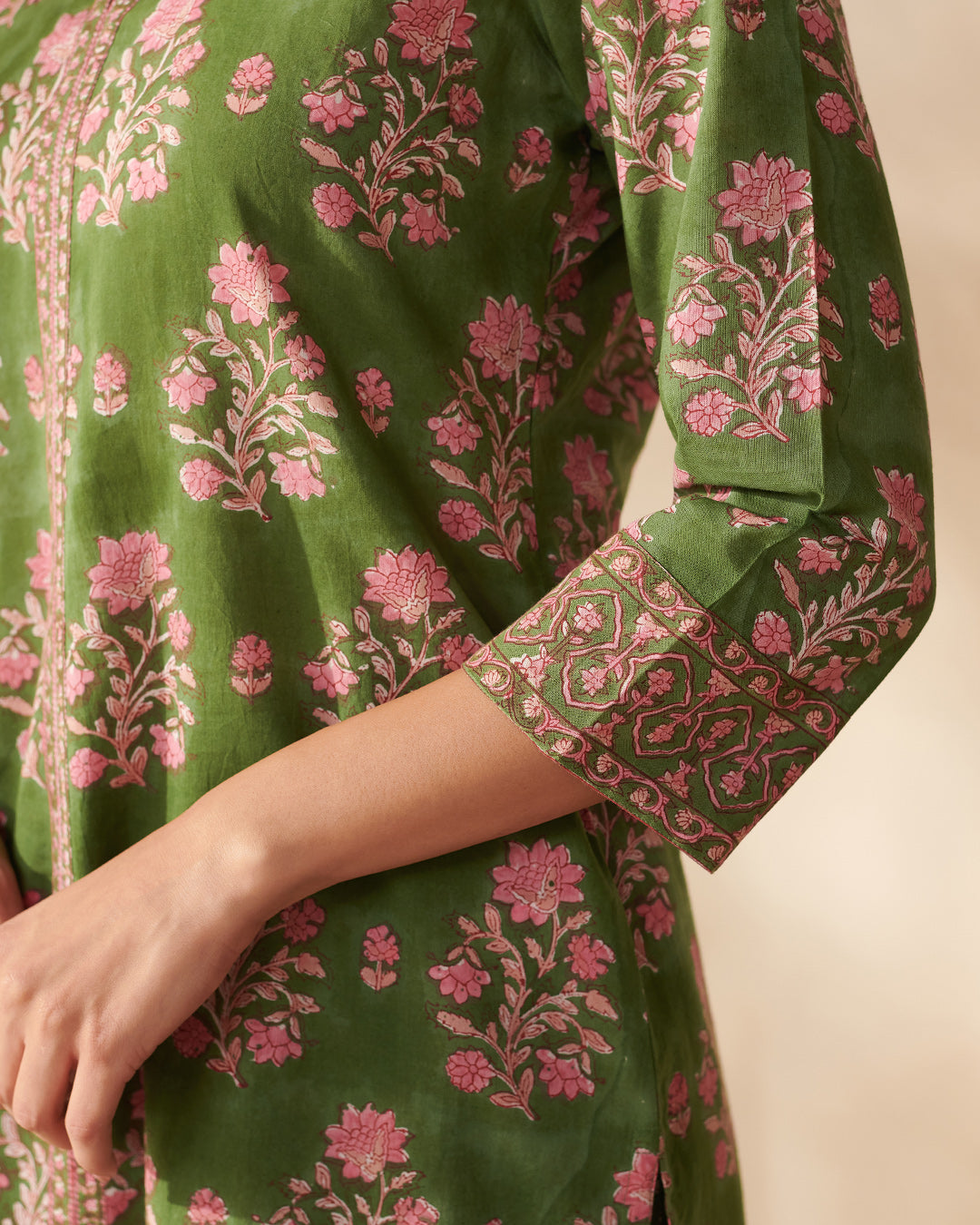
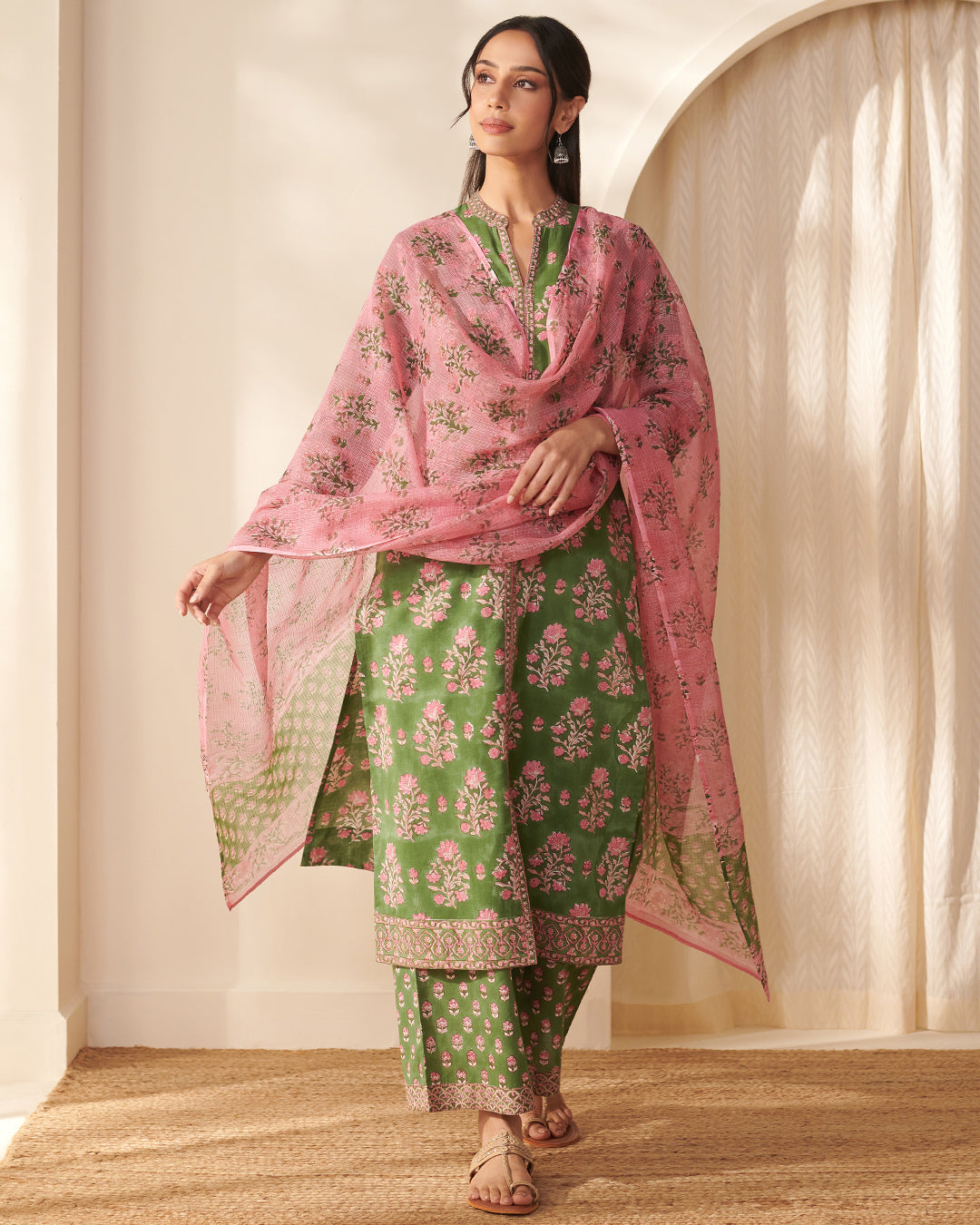
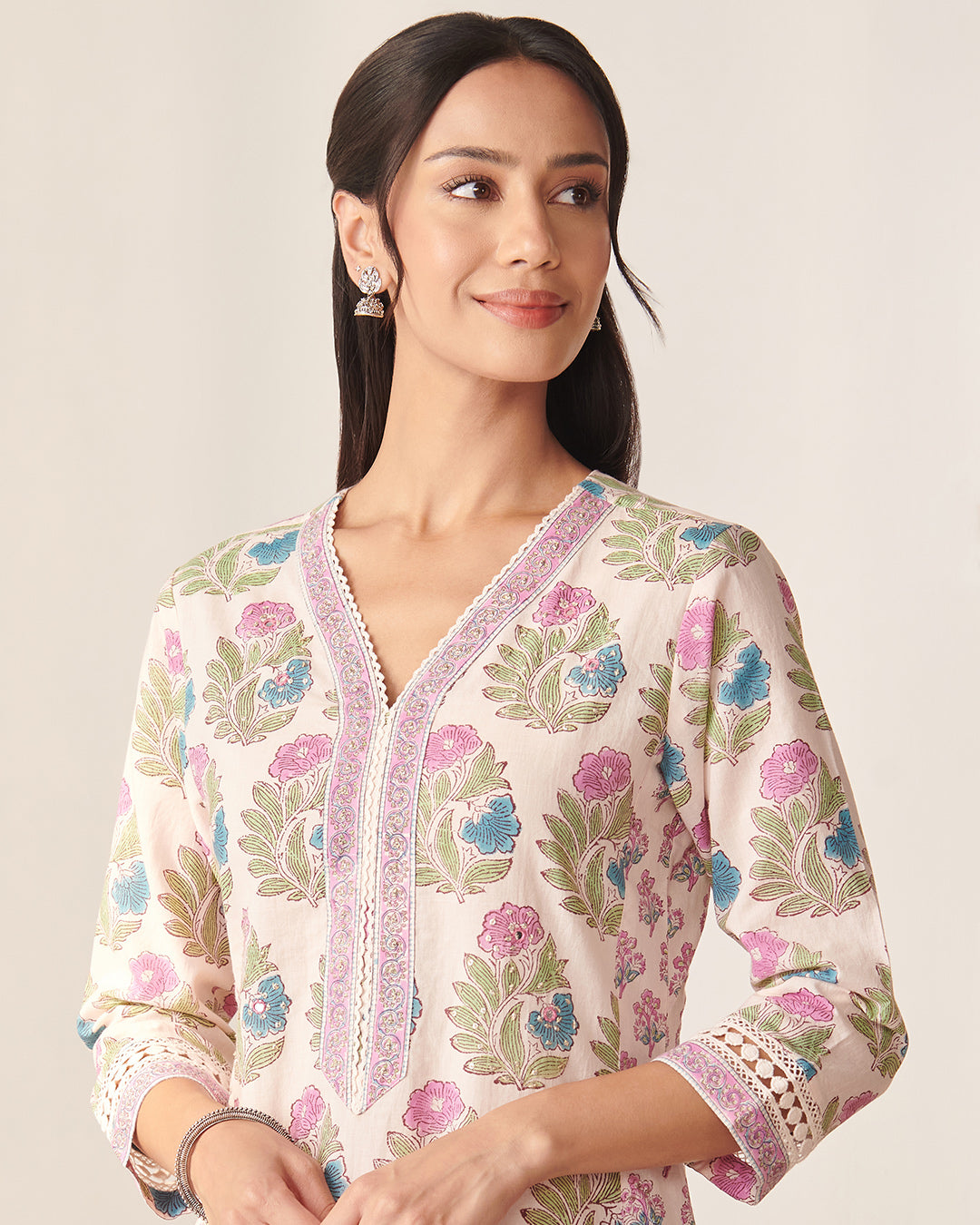
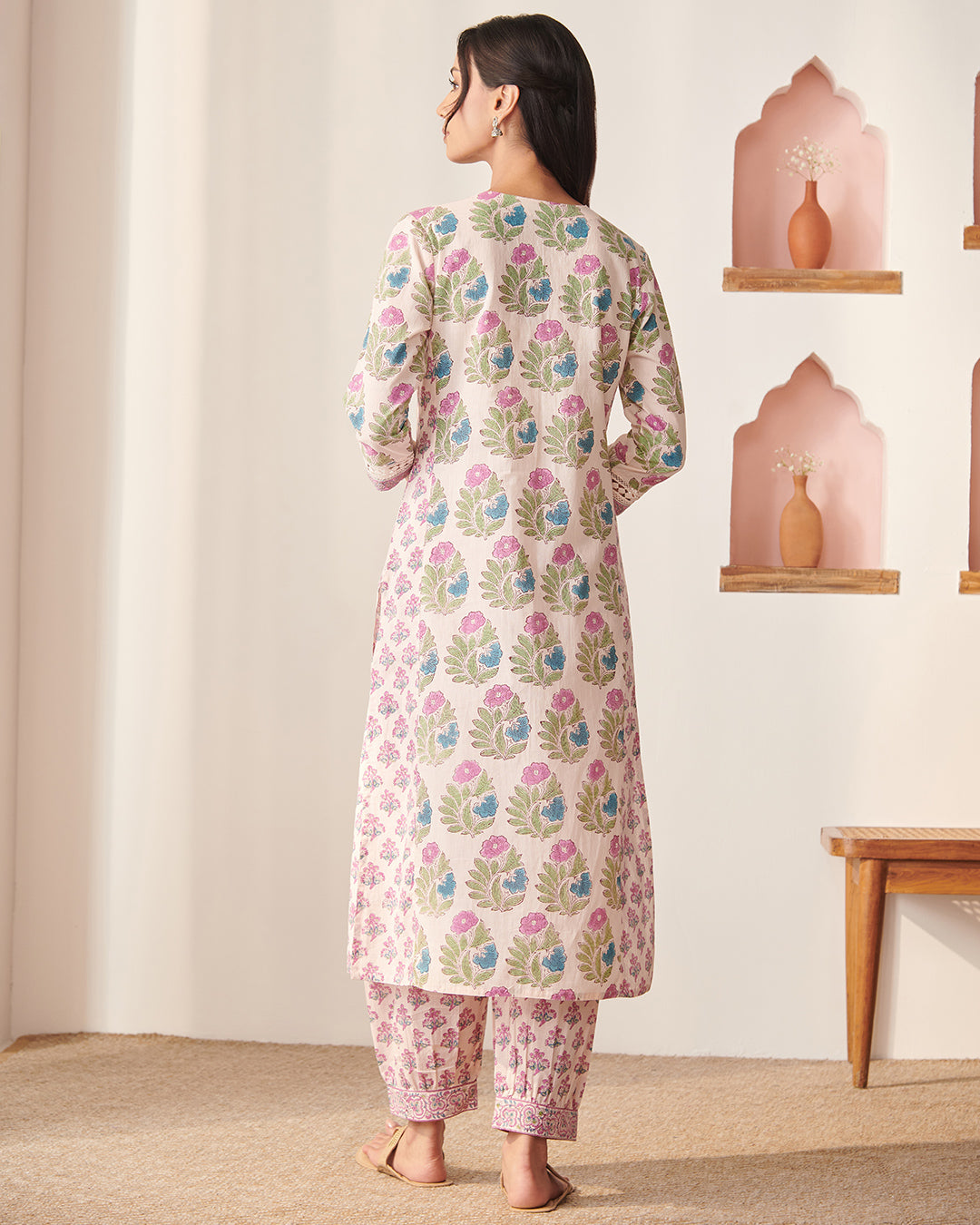
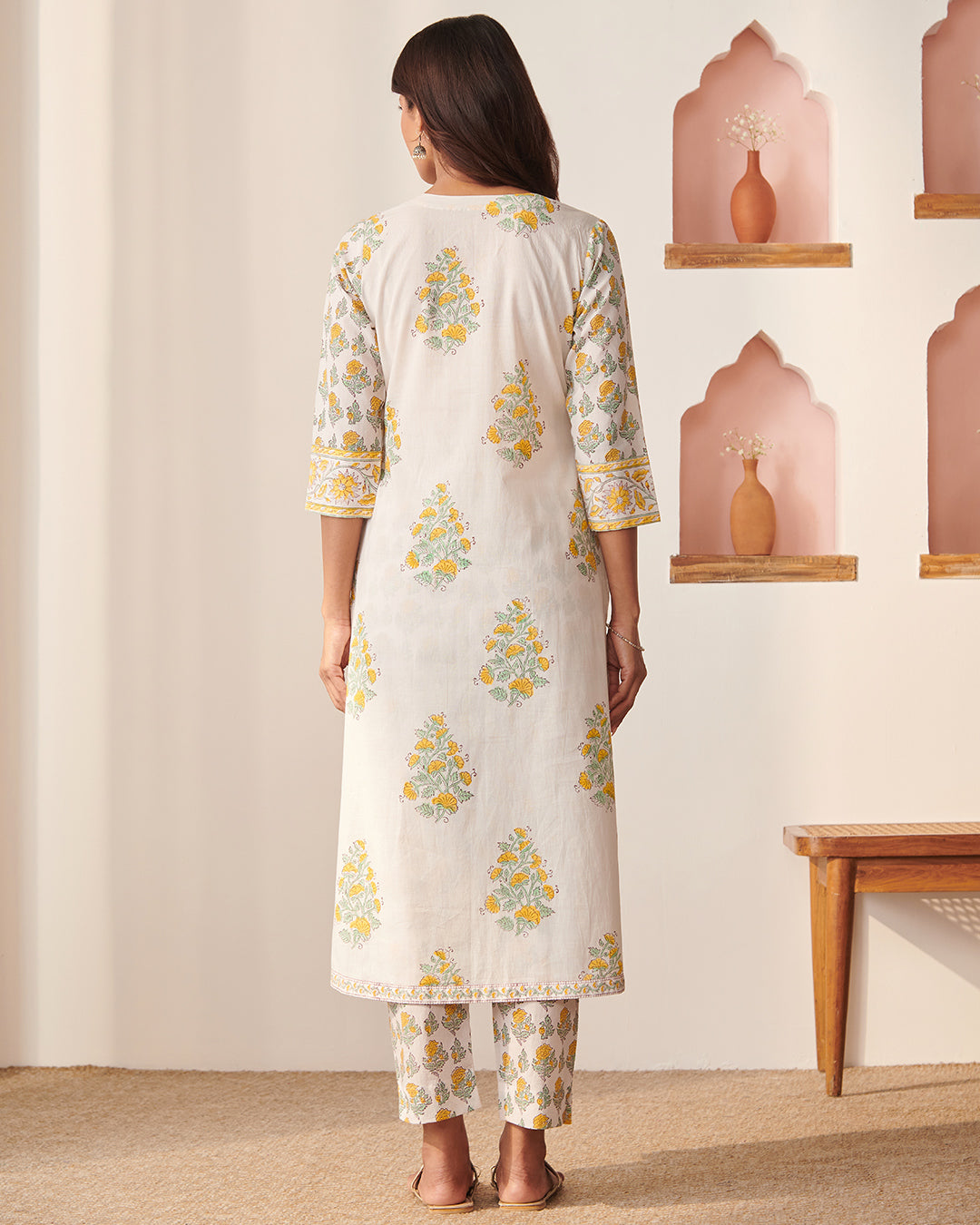
On a printed dupatta, floral motifs may be scattered as small butis, arranged into borders or gathered into larger compositions. Their repetition gives the fabric a gentle rhythm. Even when the flower is highly stylised, it retains something familiar, a reminder that Indian textile design has long looked to nature for its vocabulary.
Paisley Motifs: The Timeless Buta with Many Stories
Few motifs are as recognisable in Indian textiles as the paisley. Known in Indian textile vocabulary through forms such as the buta, it appears in countless interpretations, from small and delicate shapes to elaborate motifs filled with flowers, leaves and fine detail.
Its history is layered. The form has been associated with the mango in Indian design traditions and is also connected to broader boteh or paisley traditions that travelled across South and Central Asia. Over time, artisans and textile communities adapted it to their own visual languages.
This adaptability may be one reason the paisley has endured. It can feel distinctly traditional without looking frozen in time. On a dupatta, one paisley may stand alone as a focal motif, while dozens of smaller forms can create an intricate field across the fabric.
Leaves and Vines: Nature Woven into Everyday Wear
Leaves and winding vines bring movement to a textile. Instead of a single, contained shape, they create a line that travels across the fabric, connecting one motif to another.
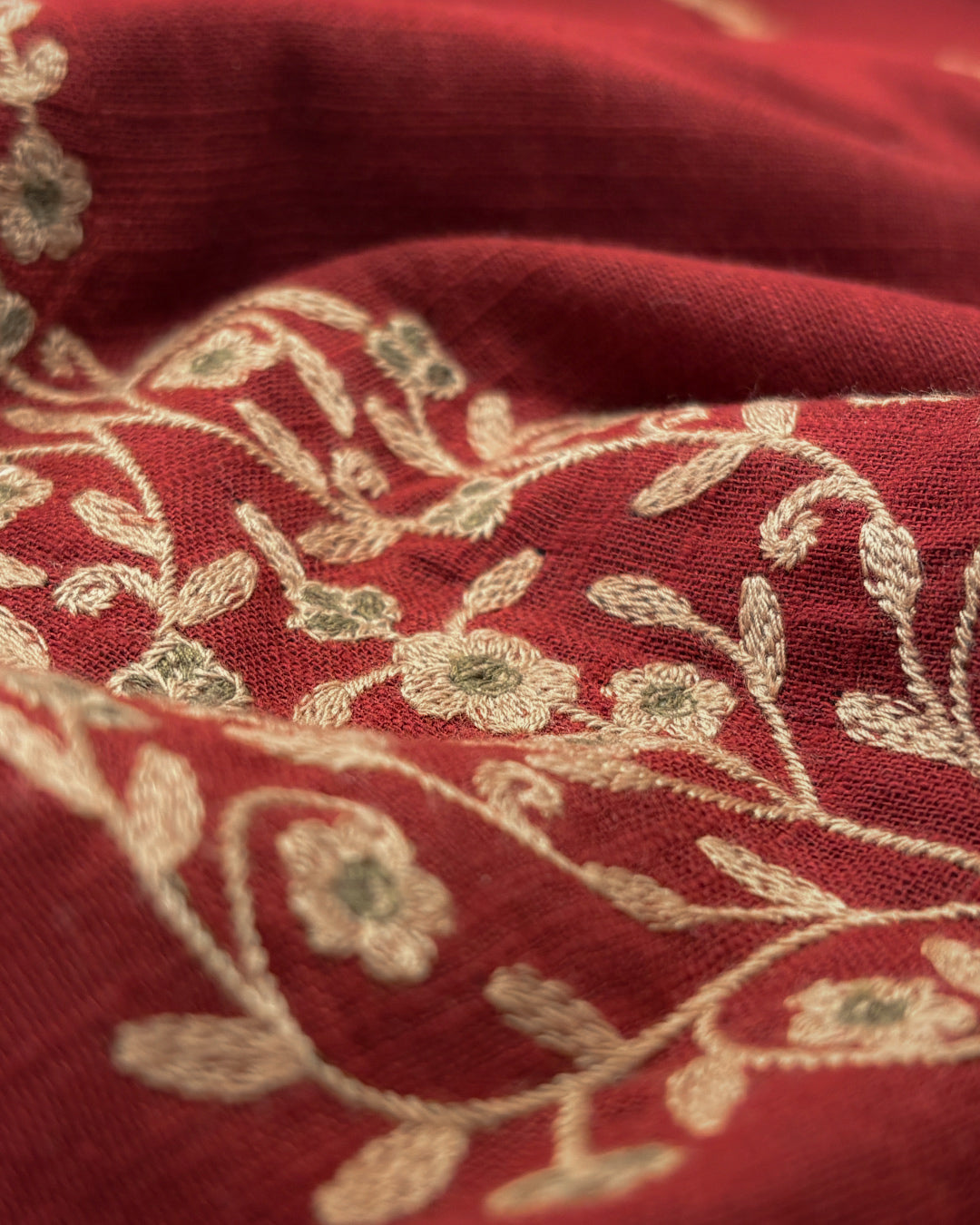
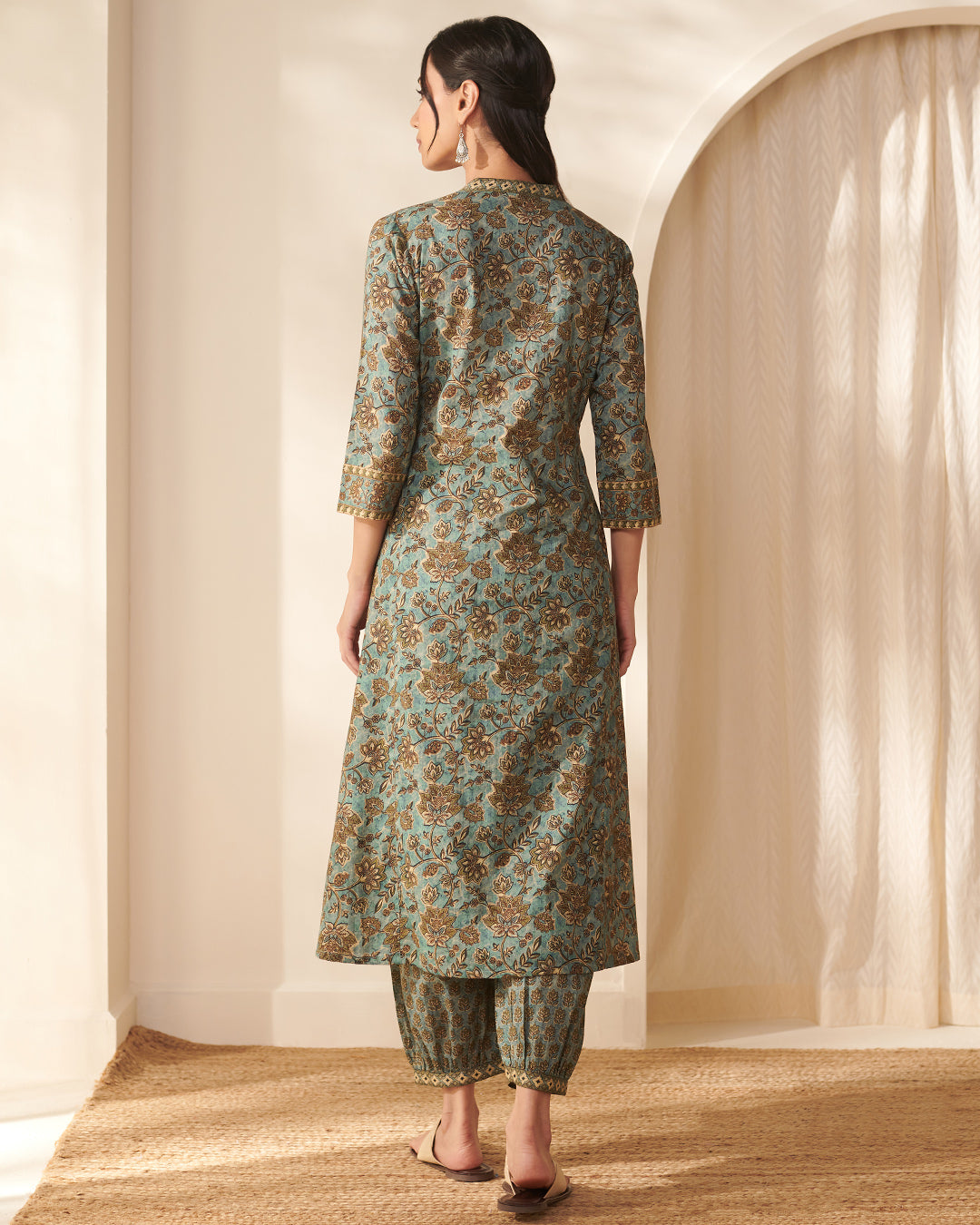
The idea is beautifully suited to Indian textile traditions, where nature is often interpreted rather than copied. A vine may be reduced to a simple curved line. Leaves may become geometric, elongated or almost abstract. Flowers can emerge from the same stem, creating a continuous pattern.
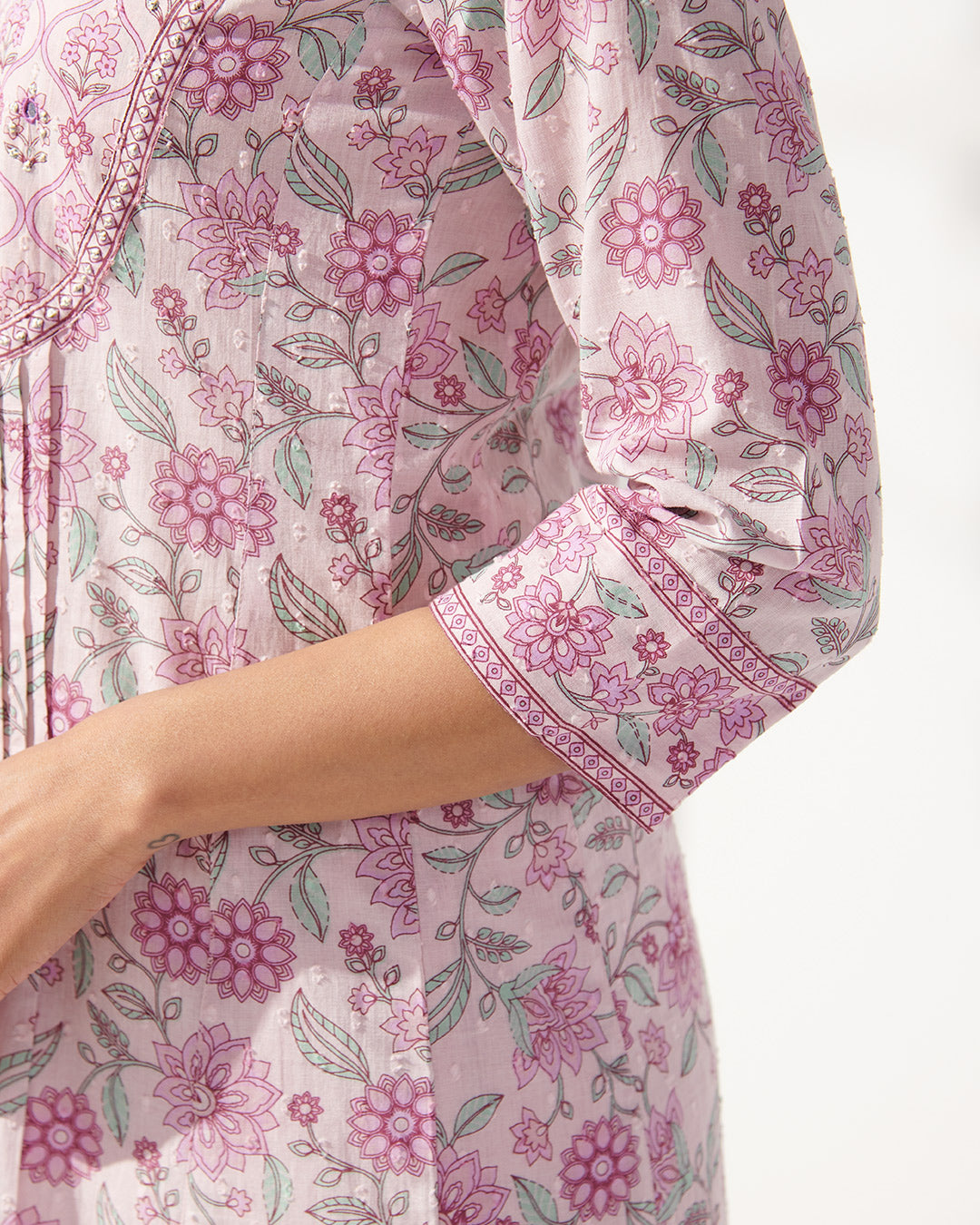
These motifs also work naturally on a dupatta because they lend themselves to borders, pallus and flowing arrangements. When the fabric moves, the vines seem to move with it. There is something quietly graceful about that continuity, as though the landscape has been carried into everyday dress.
Geometric Patterns: Balance, Rhythm and Repetition
Not every Indian textile story begins with flowers and foliage. Geometry has its own rich place in textile design.
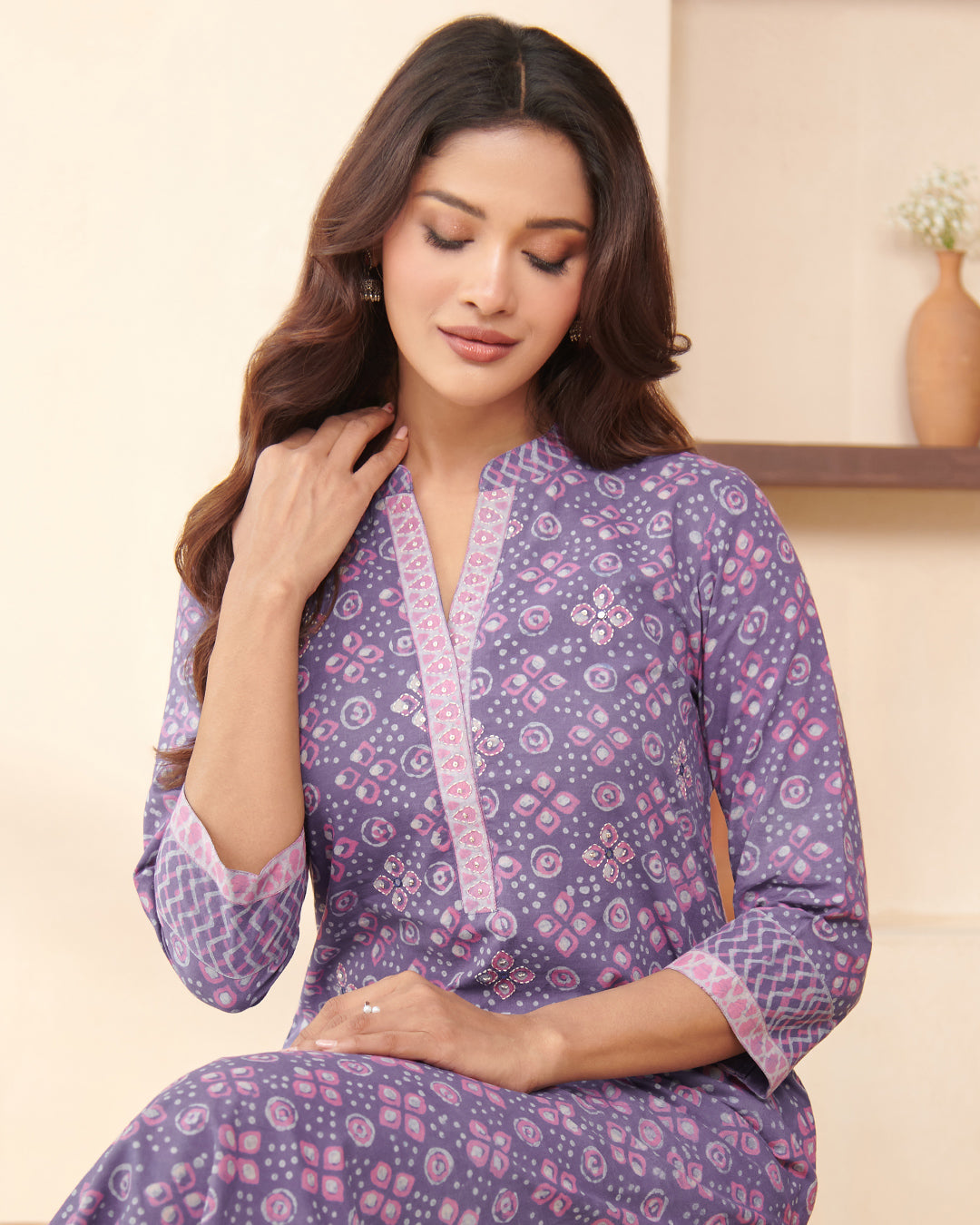
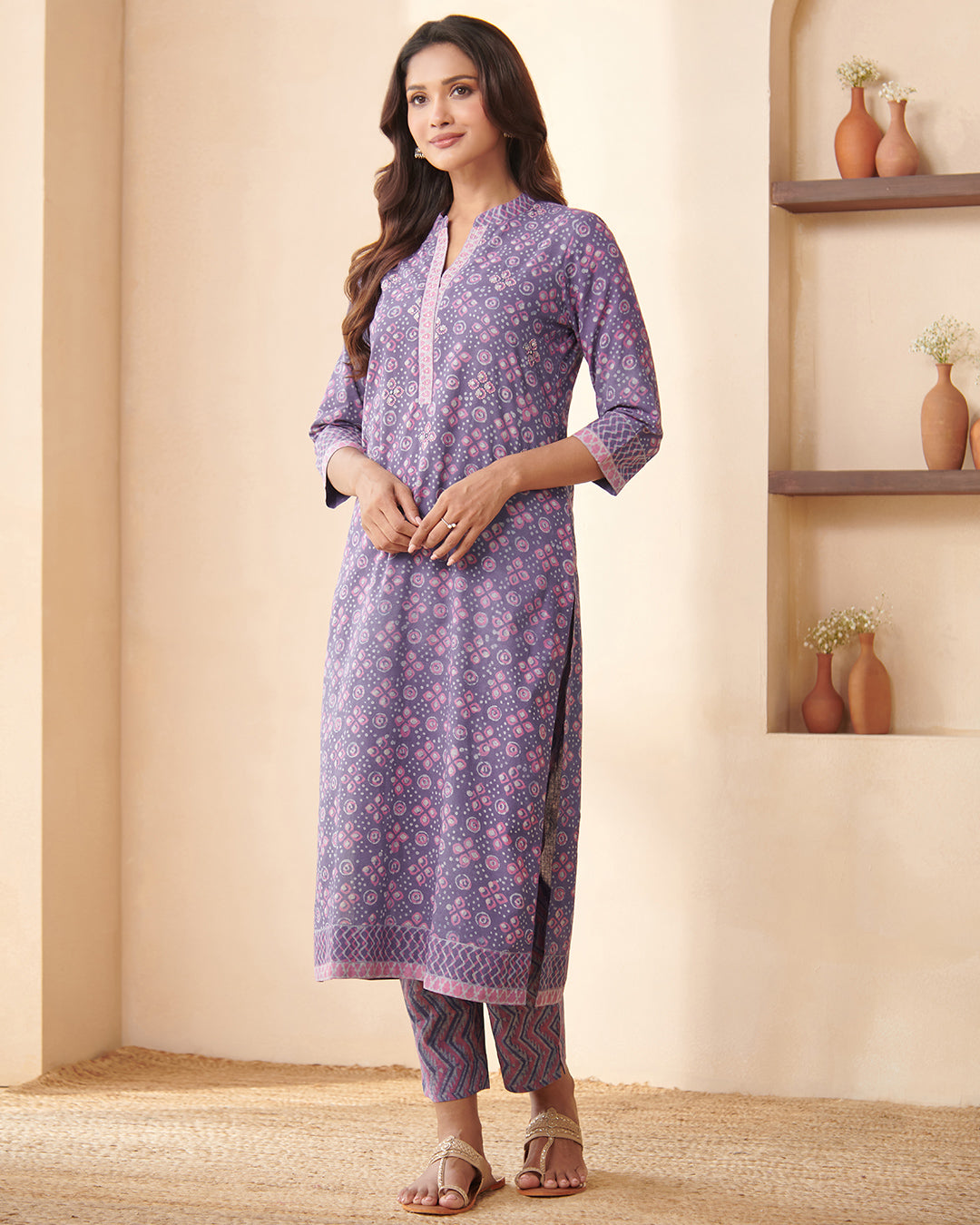
Squares, diamonds, stripes, checks, dots and repeated linear forms bring order to a printed surface. Their beauty often lies in repetition. A single shape may appear ordinary, but repeated across several metres of cloth, it creates rhythm and visual balance.
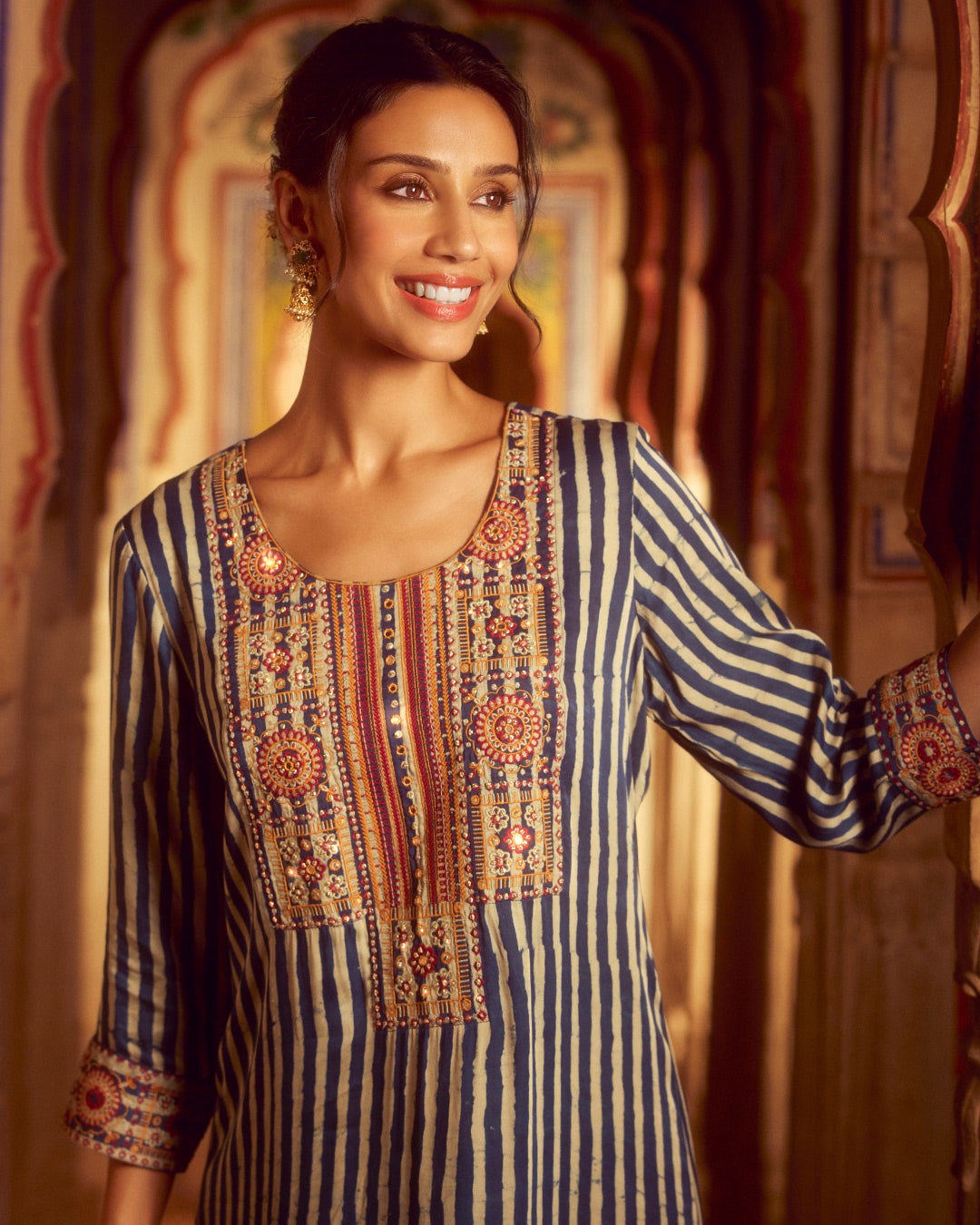
In many textile traditions, geometry also works alongside natural motifs. A floral form may sit inside a grid, or a vine may be framed by precise borders. The contrast between organic shapes and measured repetition gives the textile its character.
On a printed dupatta, geometric patterns can be especially striking when used as borders or as a structured ground for more delicate motifs. They remind us that Indian craftsmanship has always held space for both the fluidity of nature and the discipline of pattern.
Birds and Animals: Movement, Joy and Symbolism
Birds and animals bring another kind of energy to Indian textiles. Peacocks, parrots, elephants, deer and other creatures have appeared in textile traditions, miniature painting, embroidery and decorative arts across the subcontinent.
The peacock is particularly familiar in Indian visual culture, often associated with beauty, vitality and the monsoon. Birds may suggest movement, companionship or the abundance of the natural world. Animals can carry associations that vary greatly by region and tradition.
Sometimes, however, a bird is simply part of a beautiful scene. Not every motif needs a single symbolic explanation. An artisan may be drawing from a familiar visual vocabulary, arranging birds among flowers and vines because the composition feels balanced and alive.
That openness is important. Textile motifs are not a dictionary with one translation for every shape. They are part of a living visual language.
Buti and Buta Patterns: Small Details with a Larger Story
The words buti and buta are often used to describe recurring motifs in Indian textiles, though their usage can vary across textile traditions. Broadly, a buti is understood as a smaller motif, while a buta generally refers to a larger, more elaborate form.
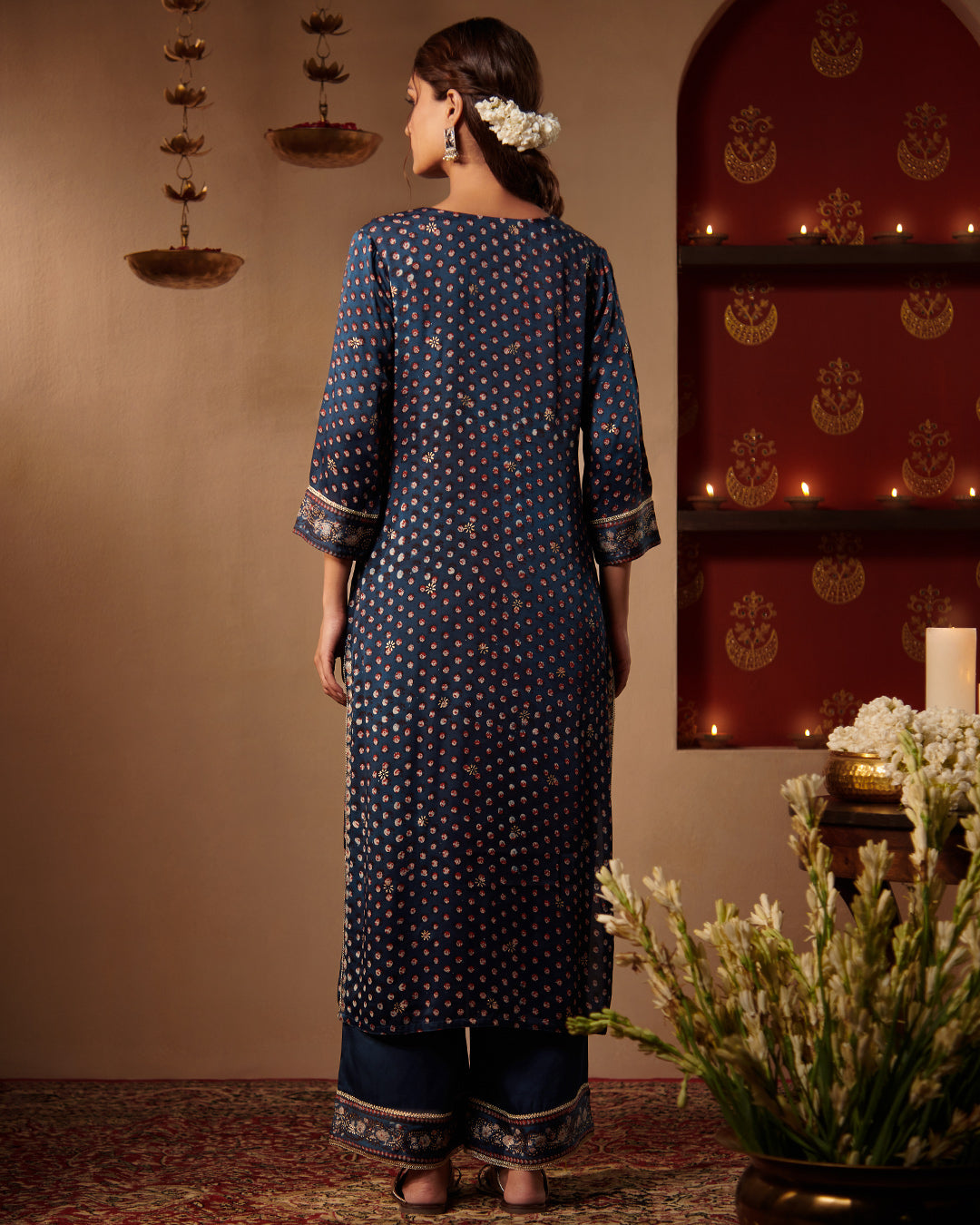
The difference can be subtle, but its effect on a dupatta is significant. Small butis can create a quiet, evenly spaced pattern, allowing the fabric to feel light and detailed at once. Larger butas draw the eye and can become the central character of a textile.
A single motif can also be repeated at different scales. A large paisley may appear alongside tiny paisleys, or a flower may be interpreted as both a small scattered buti and a more elaborate central buta.
This play with scale is one of the simplest ways Indian textile design creates depth. What looks like a collection of small details from a distance can reveal an entire world when seen up close.
How Printing Techniques Bring These Motifs to Life

A motif on paper and the same motif on cloth are not quite the same thing. The printing technique gives it a particular texture, rhythm and personality.
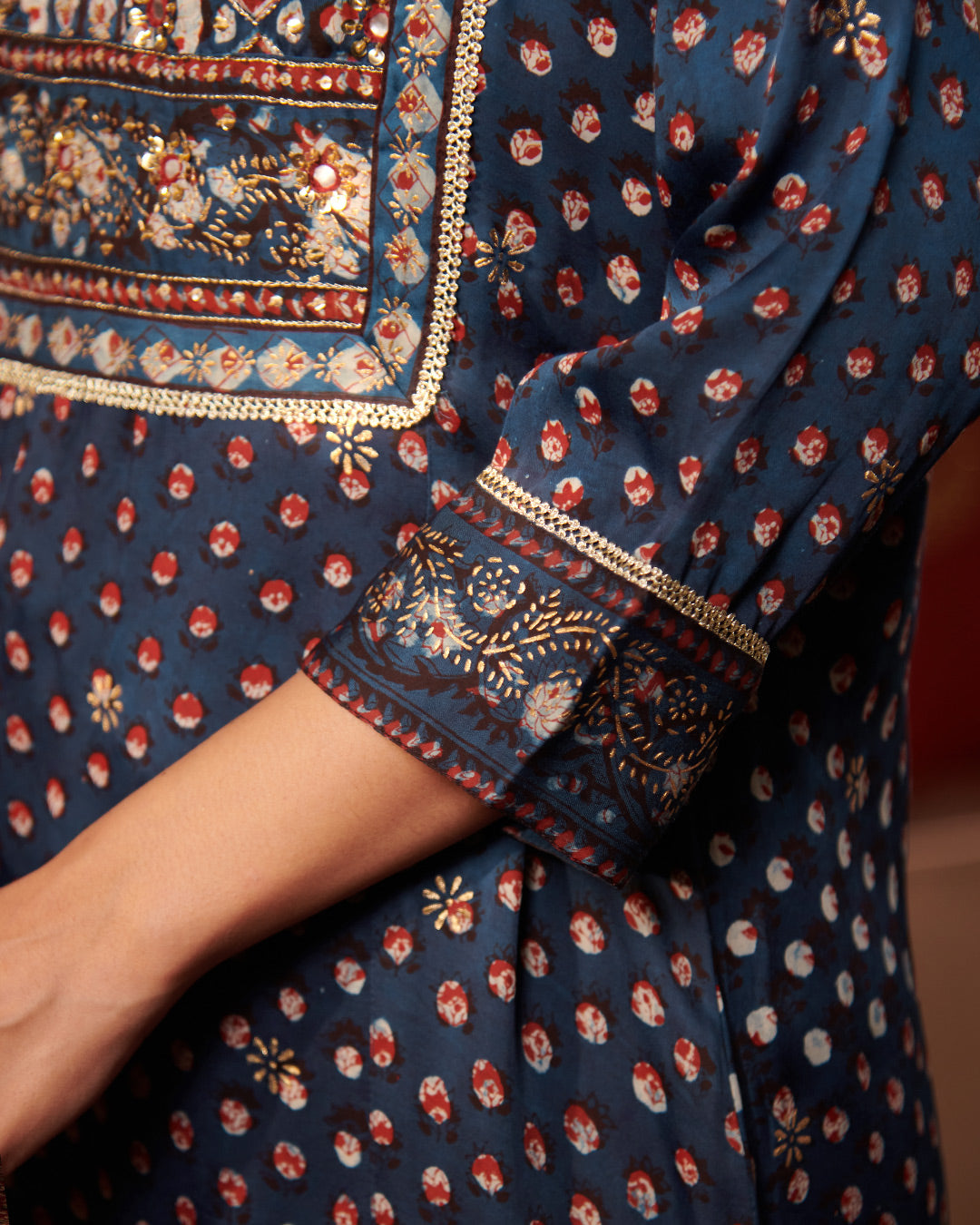
Indian textile printing is closely tied to regional knowledge. The character of a printed dupatta depends not only on the motif itself, but also on the block, dye, resist, fabric, pressure of the hand and sequence in which the pattern is created.
Block Printing and the Art of Repeating a Motif
Block printing is built around repetition, but repetition does not mean mechanical sameness.
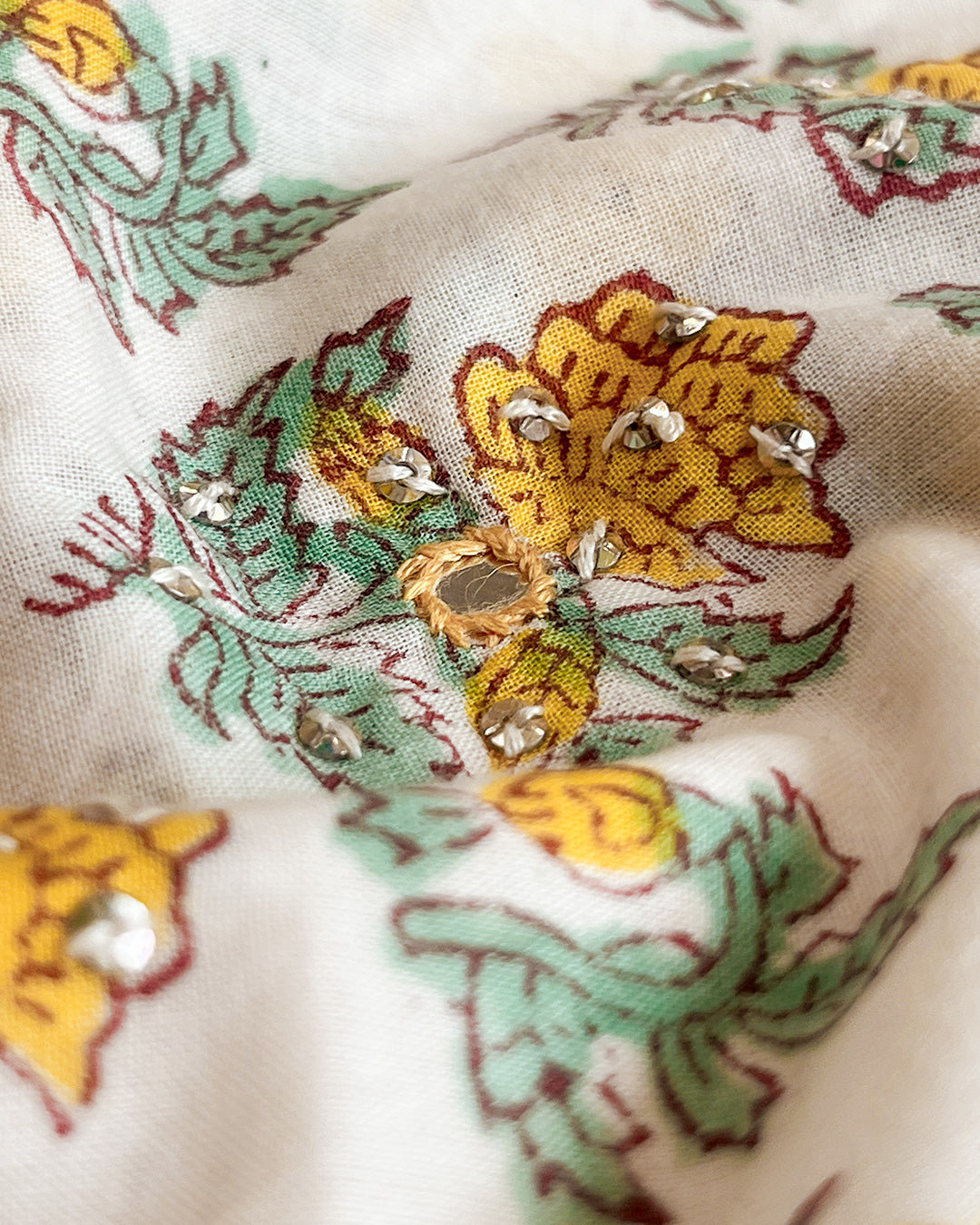
A carved wooden block carries the motif onto the fabric, and the printer carefully aligns each impression to build the larger pattern. Borders, floral sprays, butis and geometric arrangements can all be created through this process.
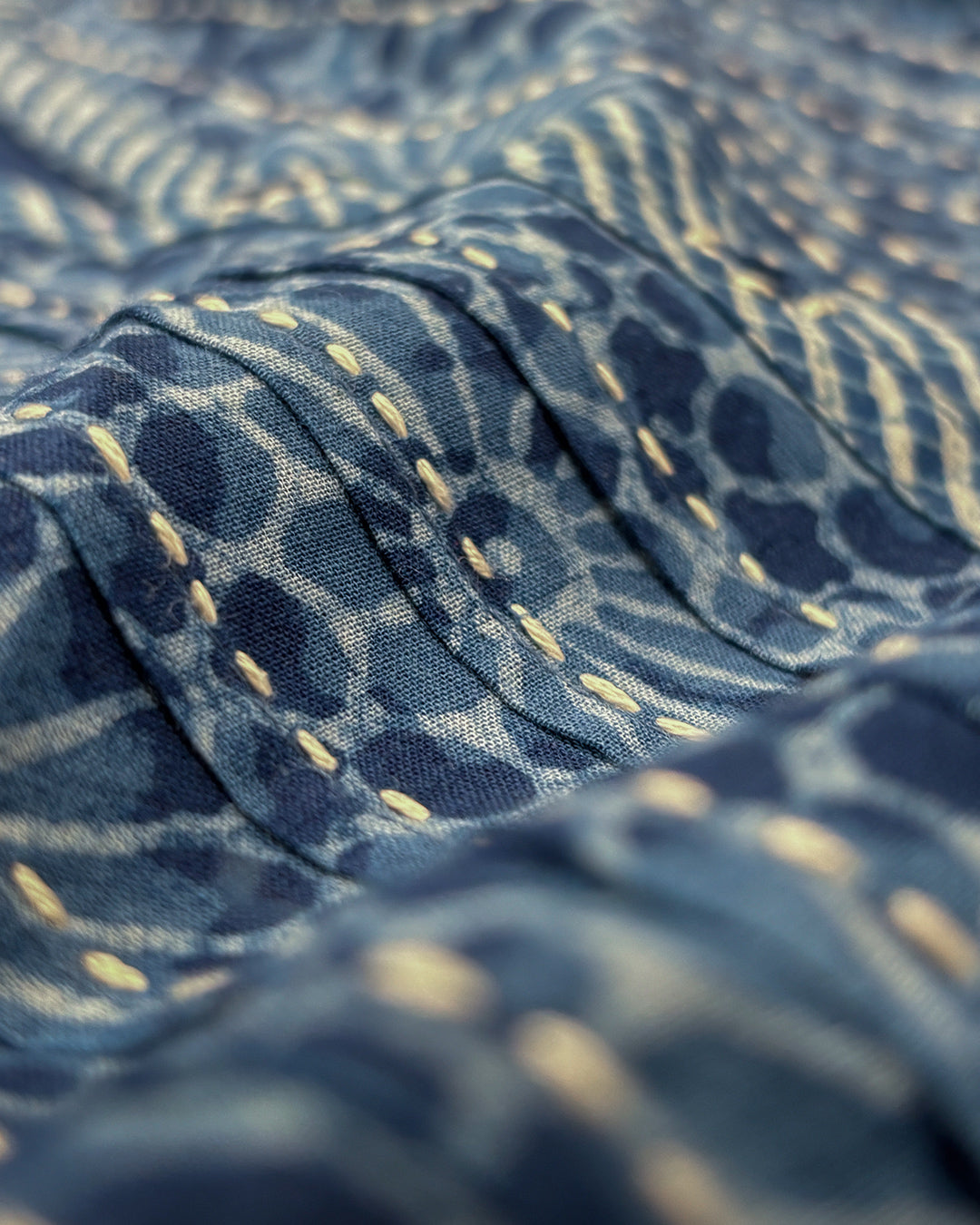
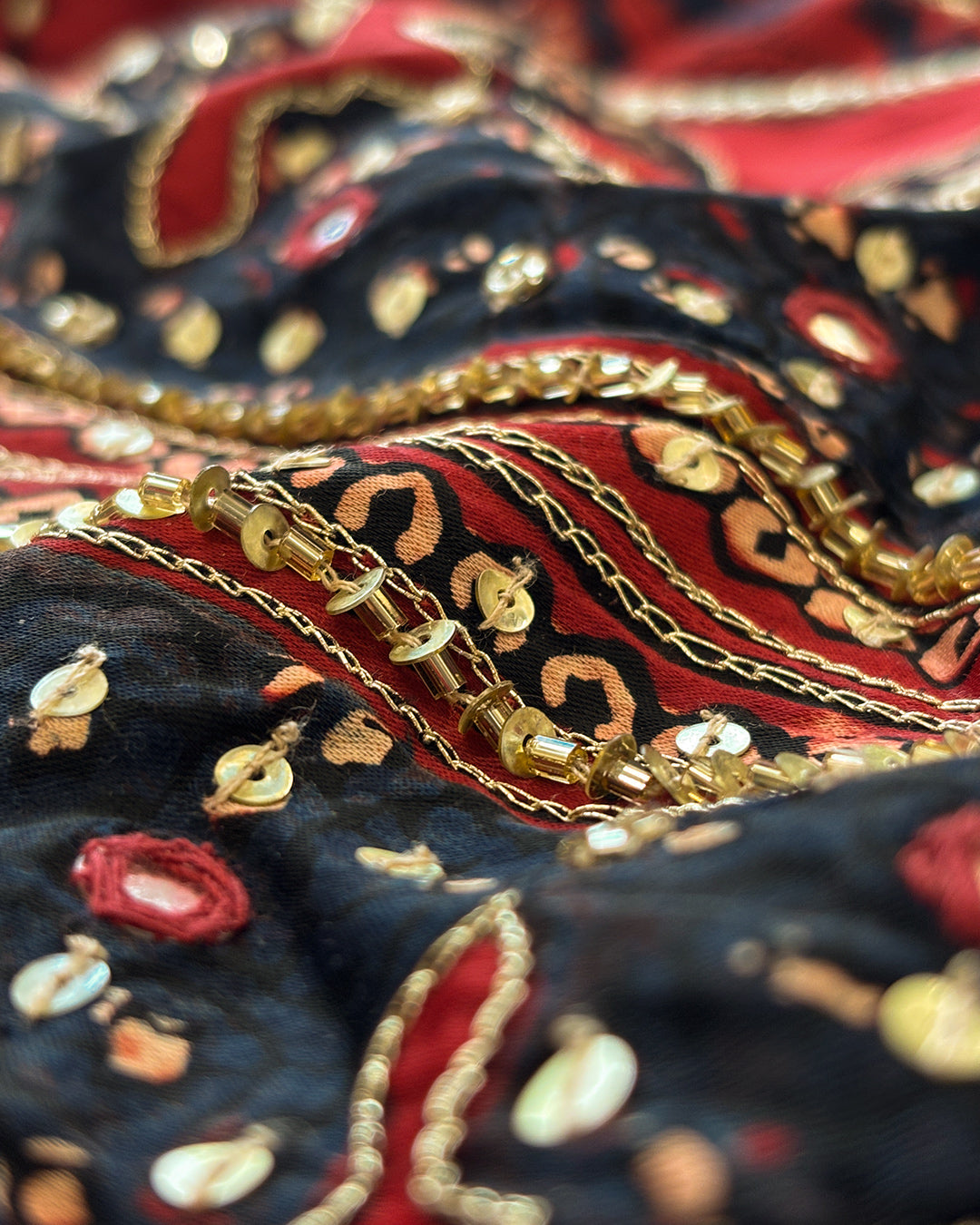
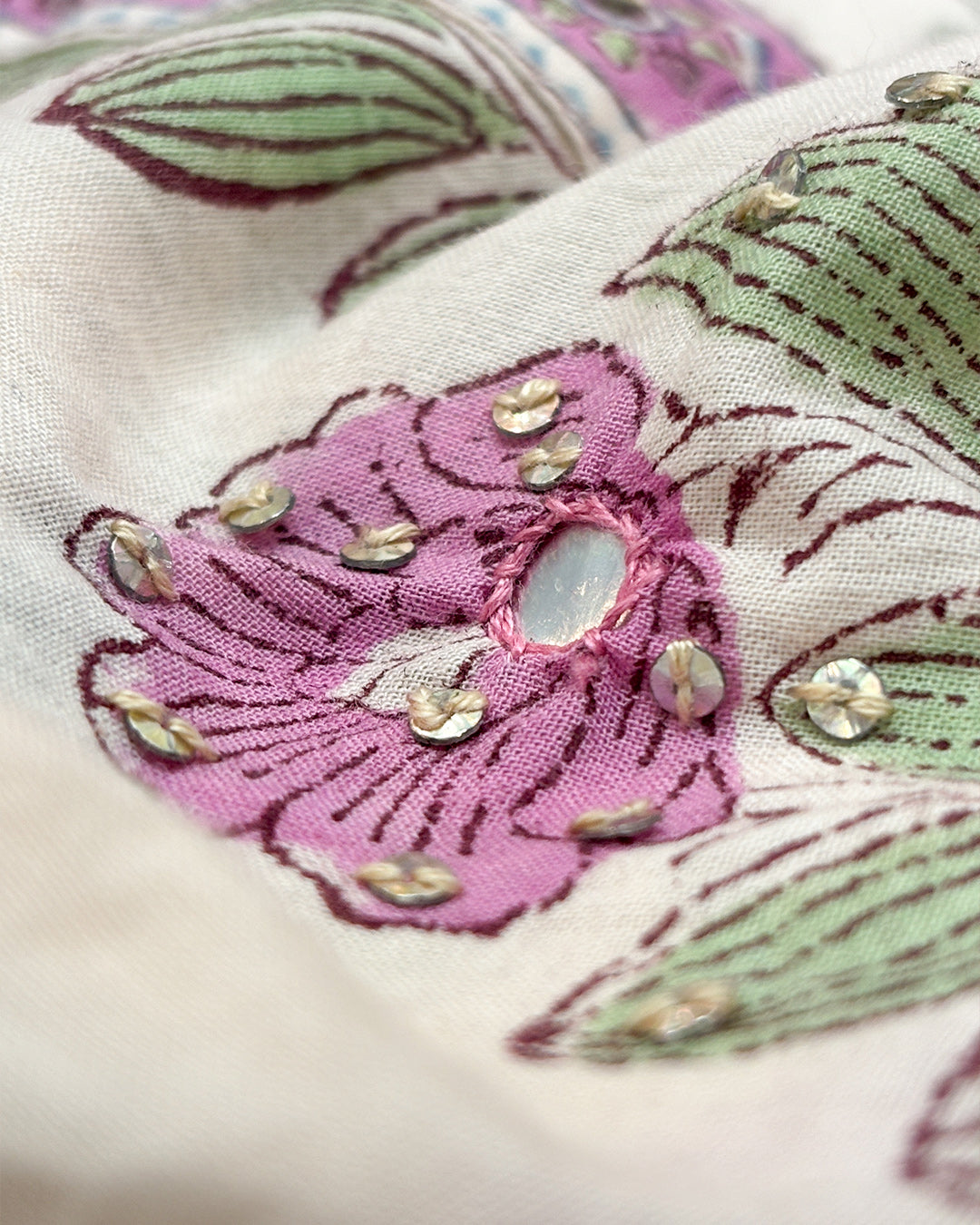
The skill lies partly in maintaining continuity. Each impression needs to meet the next with enough precision for the pattern to flow naturally across the cloth. At the same time, the hand remains present. Pressure, pigment and the absorbency of the fabric can create minute differences between one impression and another.
That balance between discipline and variation is central to the beauty of hand block printed textiles.
Ajrakh, Bagru and Dabu: Motifs Rooted in Regional Craft
Ajrakh, Bagru and Dabu are not simply names for patterns. They refer to distinct textile traditions, each shaped by place, materials, techniques and generations of craft knowledge.
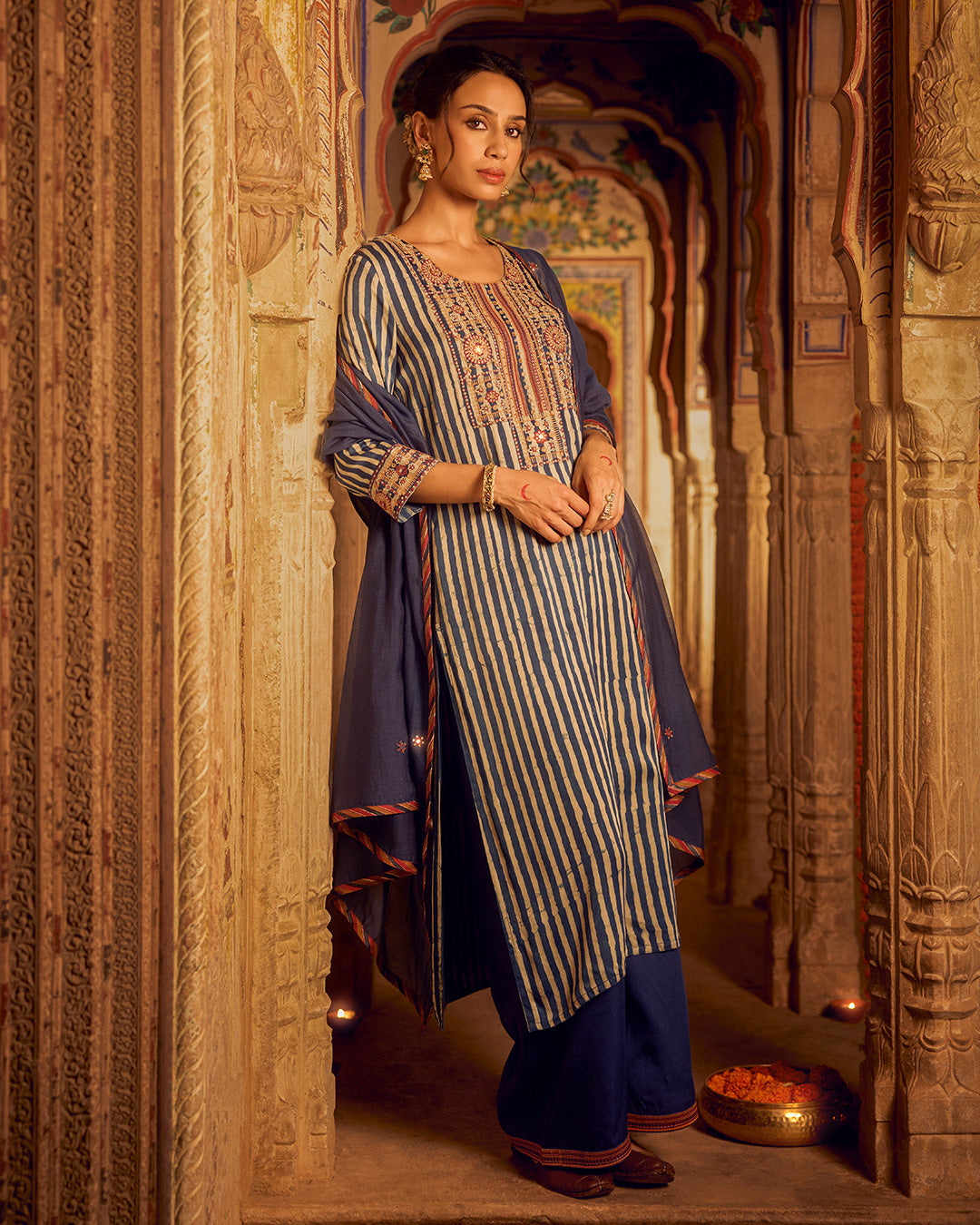
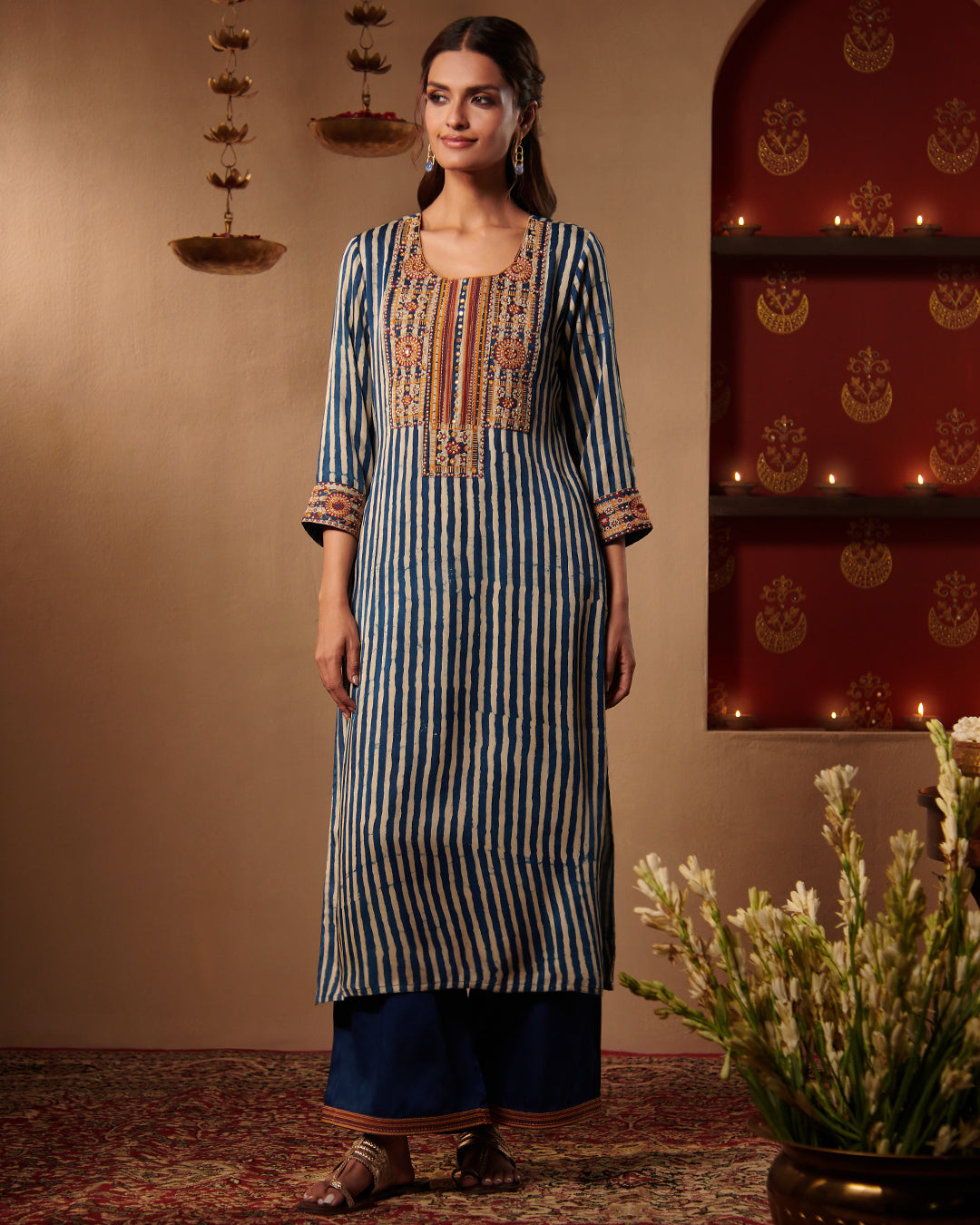
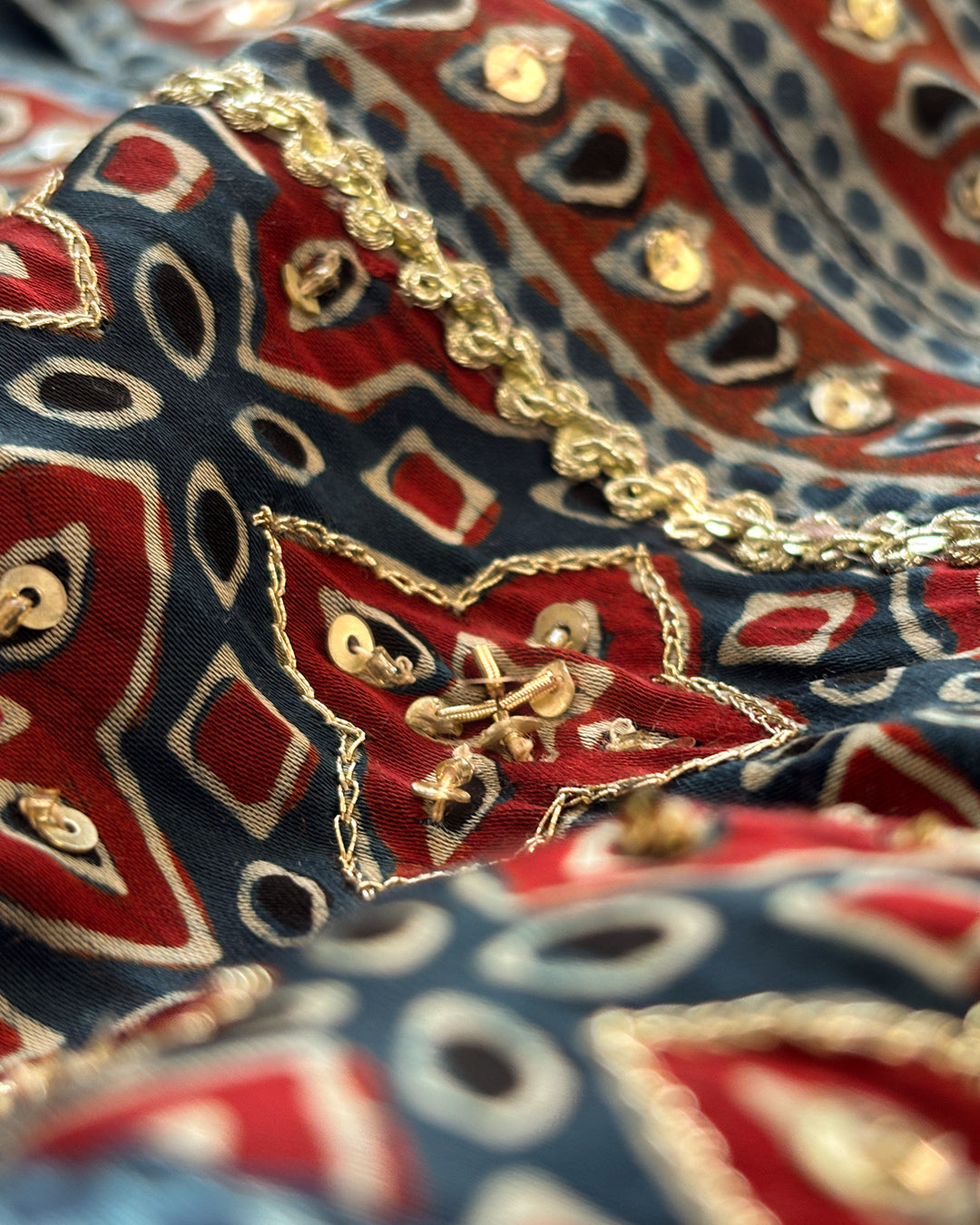
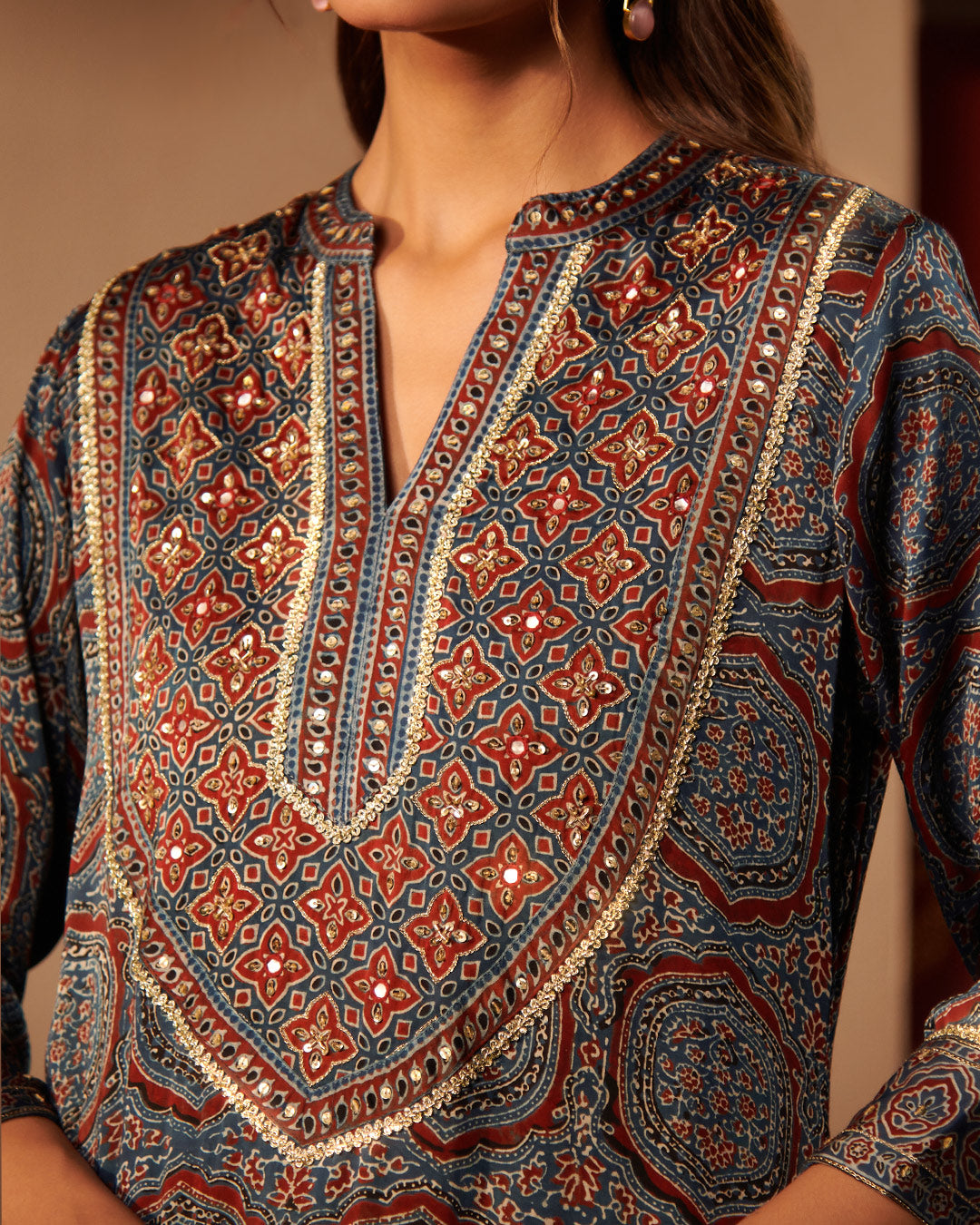
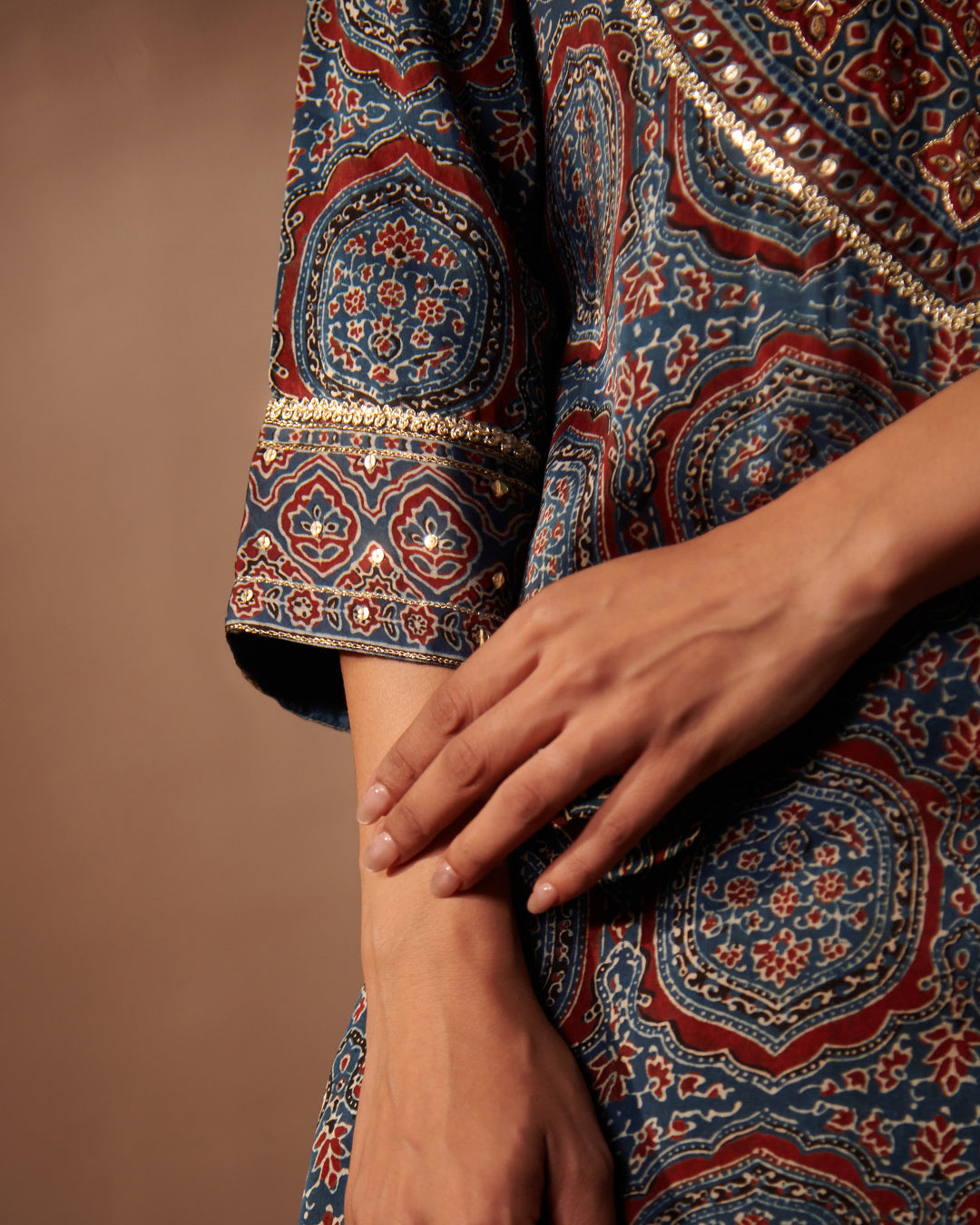
Ajrakh is closely associated with the Kachchh region of Gujarat and parts of Rajasthan, and is known for its complex use of natural and synthetic dyes, resist processes, repeated geometric structures and deep colours. Bagru printing, associated with the Bagru region of Rajasthan, is known for hand block printing traditions that include floral, vegetal and geometric designs. Dabu is a resist printing technique, traditionally using a mud-based resist, which allows selected areas of the fabric to remain protected during dyeing.
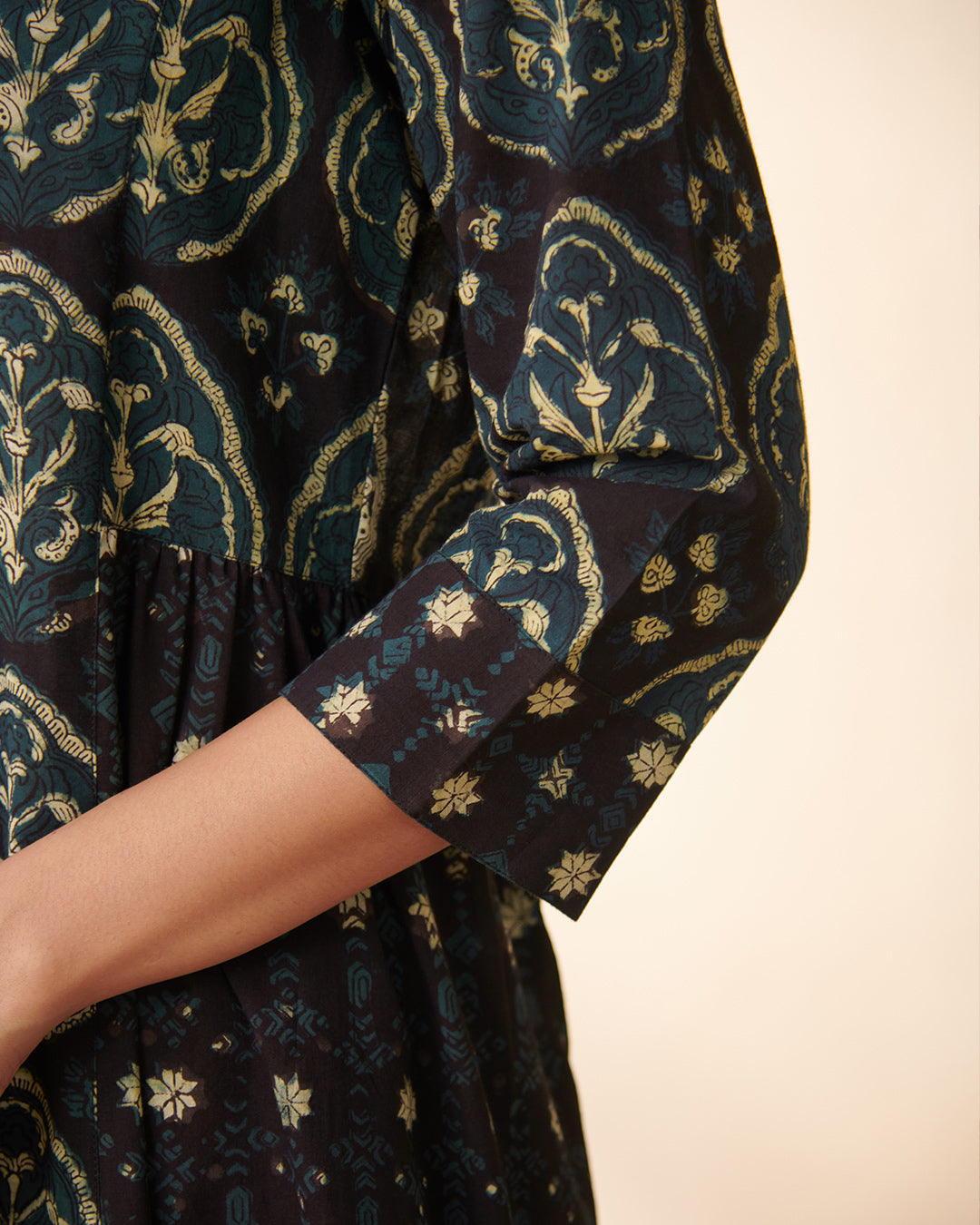
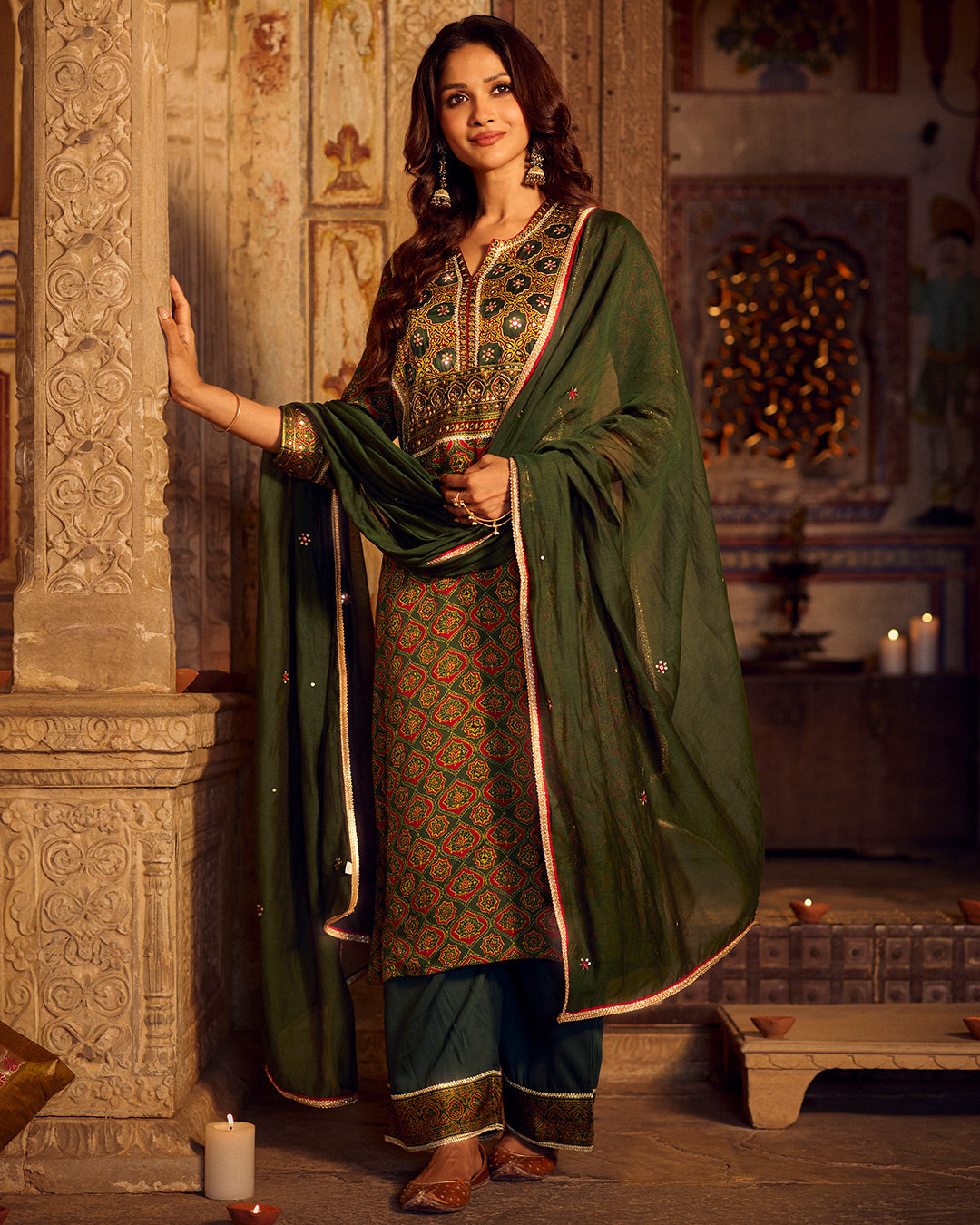
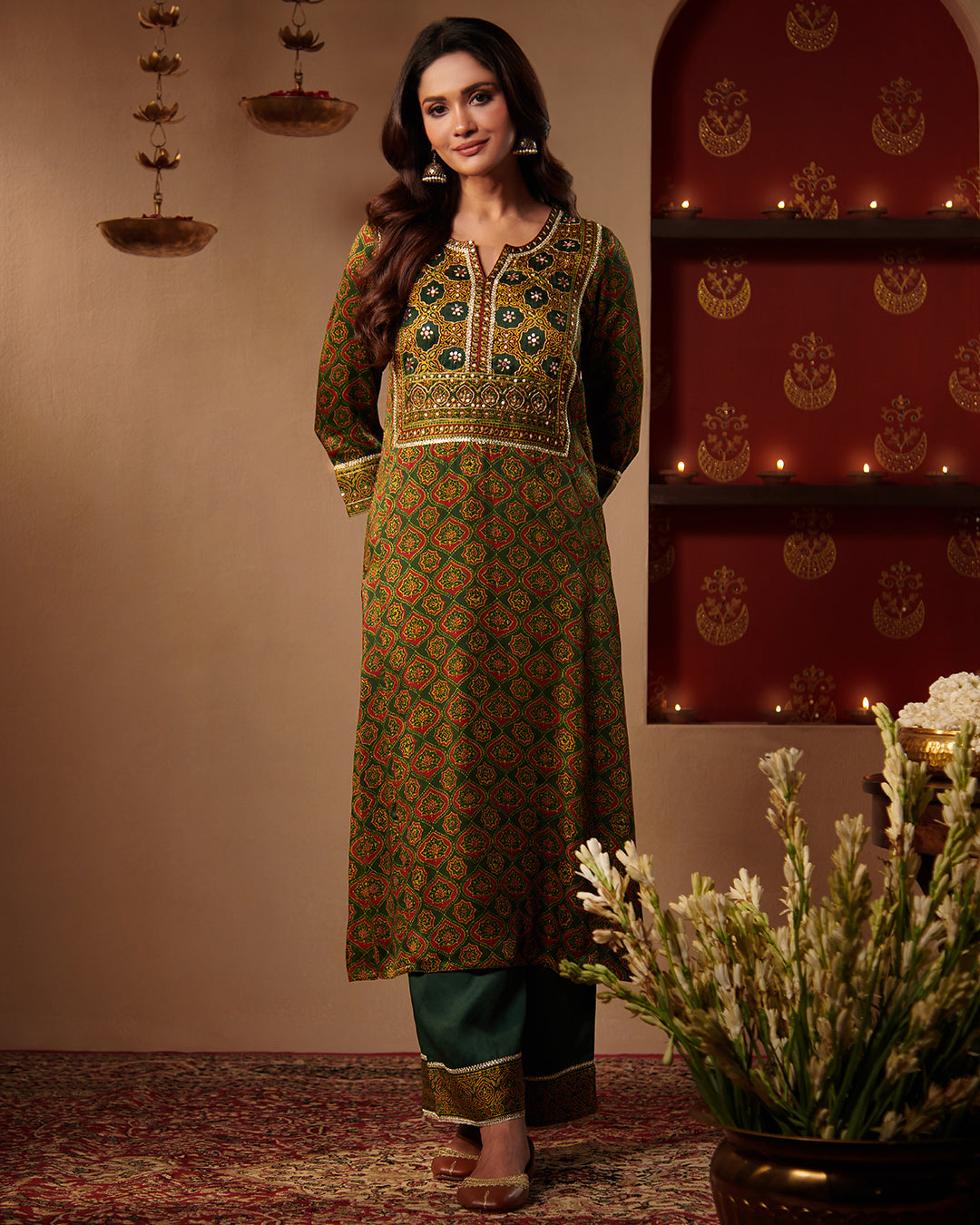
The motifs found within these traditions are shaped by the techniques used to create them. A geometric Ajrakh pattern has a different visual character from a floral Bagru composition, just as the soft irregularities created through Dabu resist printing become part of the final textile.
Knowing the craft tradition behind a print changes the way we see it. The pattern becomes more than decoration. It becomes evidence of a particular place and a particular way of working with cloth.
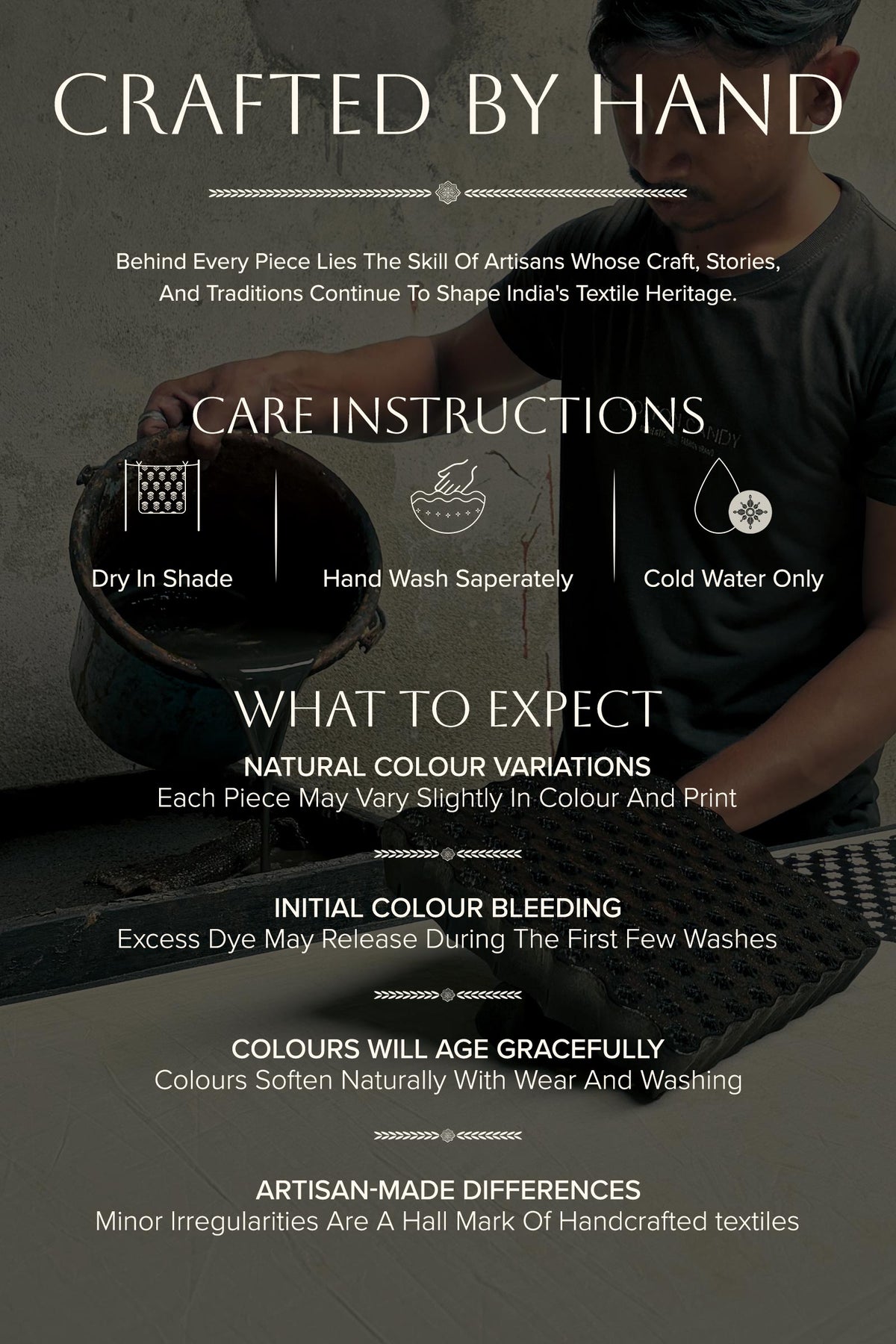
Why Handcrafted Prints Have Natural Variations
One of the quiet pleasures of a handcrafted print is that it does not always look perfectly uniform.
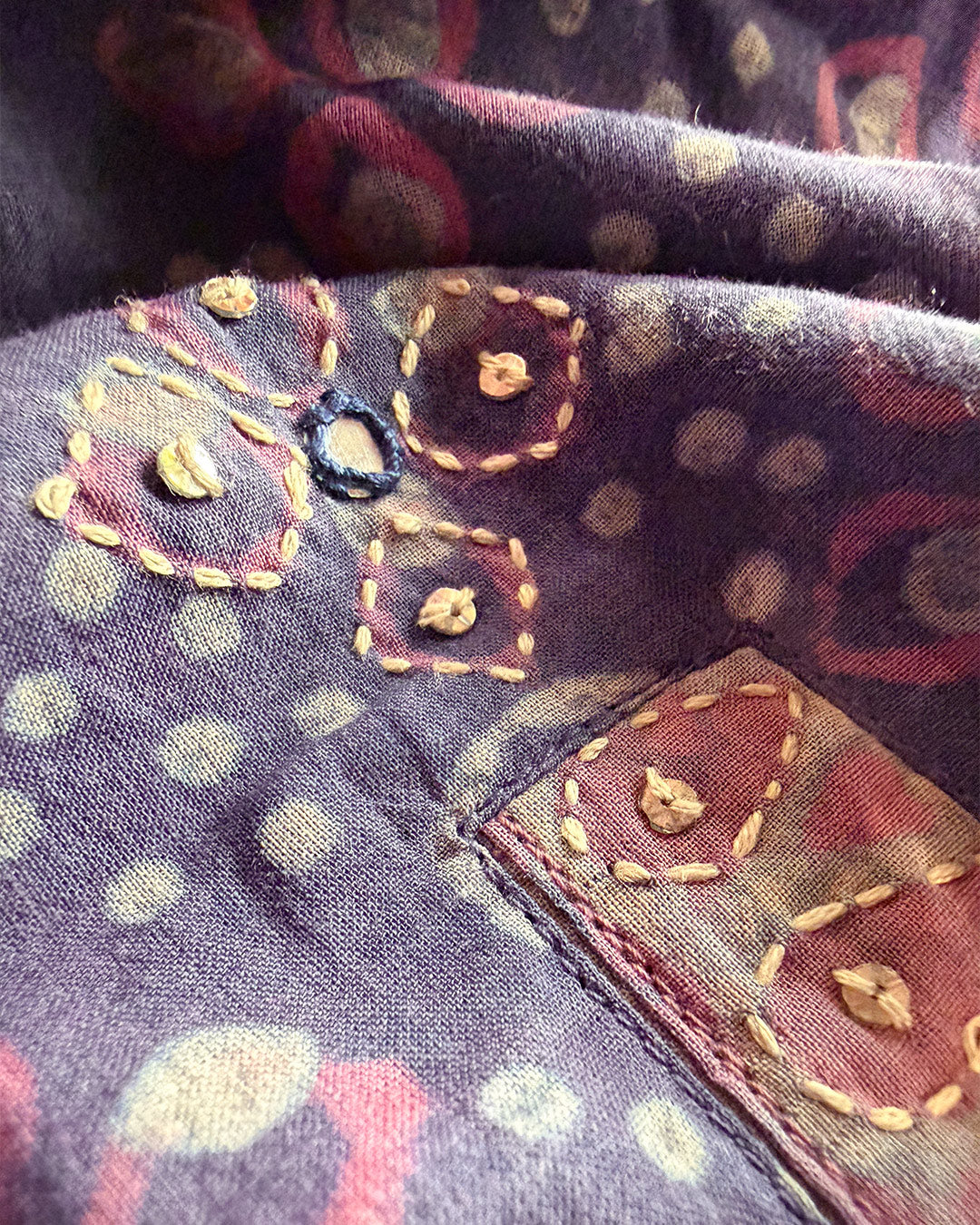
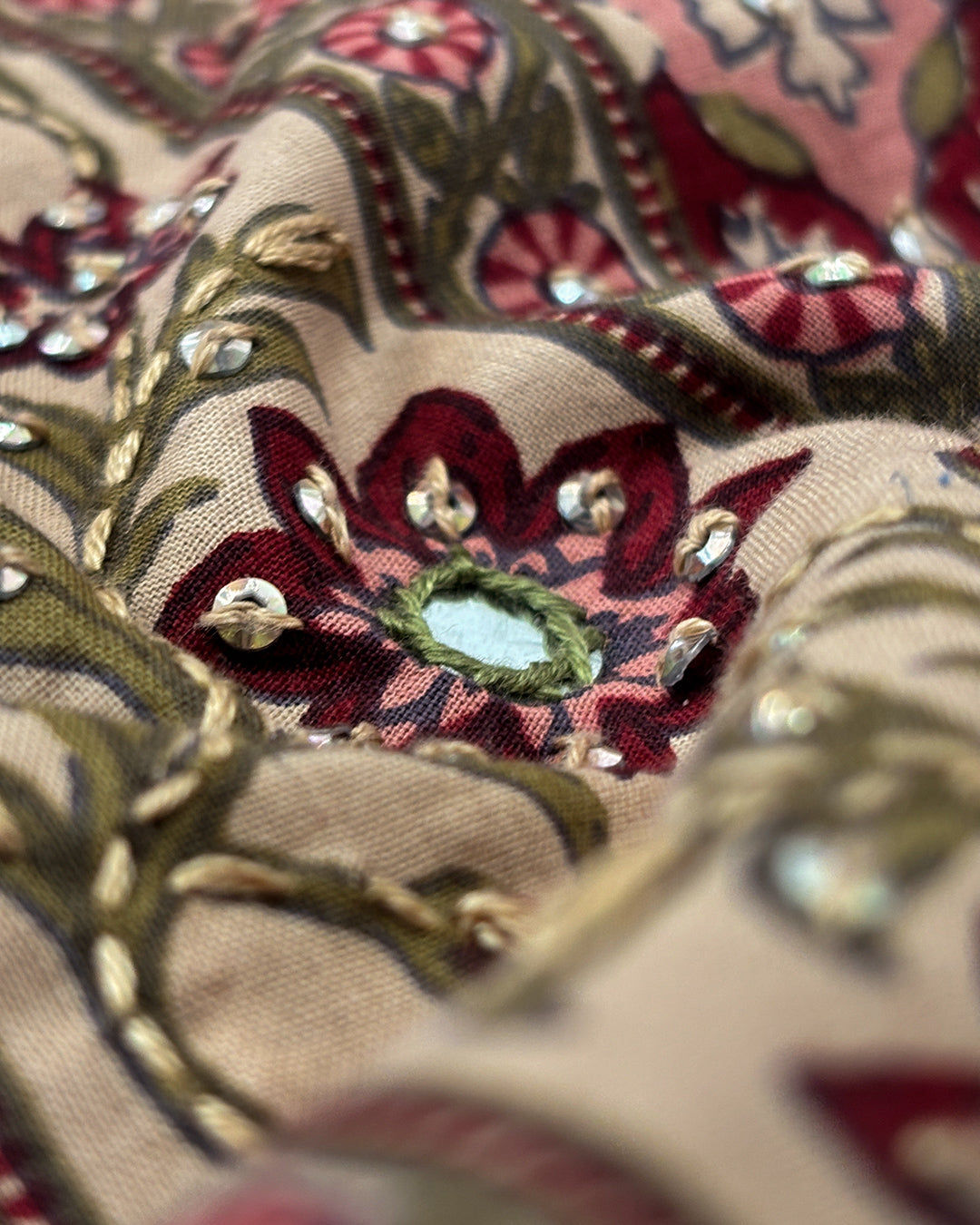
A block may leave a slightly deeper impression in one area. A tiny amount of dye may travel beyond the intended edge. The grain of the wood can leave its own trace. With resist printing, the interaction between fabric, resist and dye can produce small differences that would be difficult to reproduce exactly.
These variations are not necessarily flaws. They are signs of the human process behind the textile.
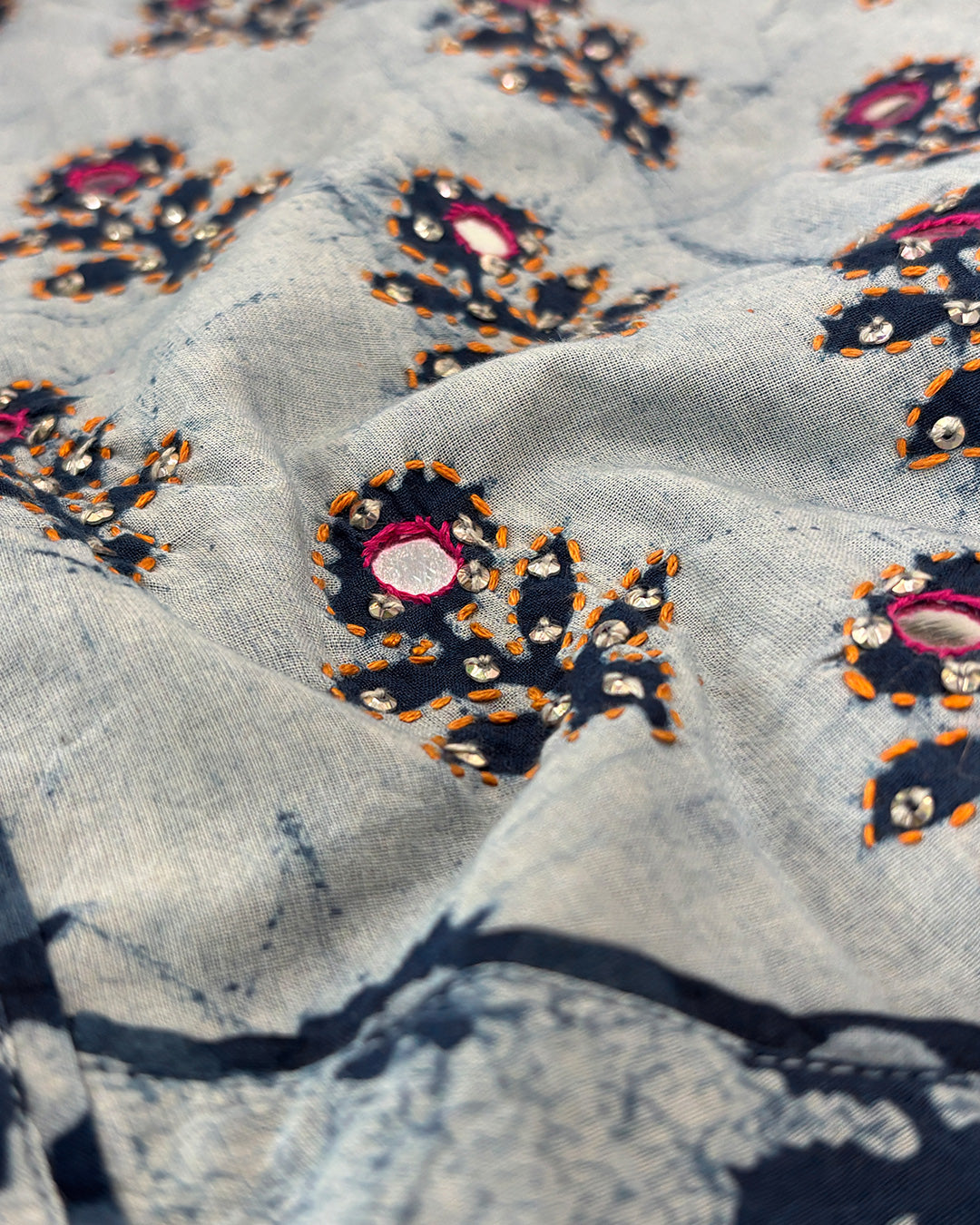
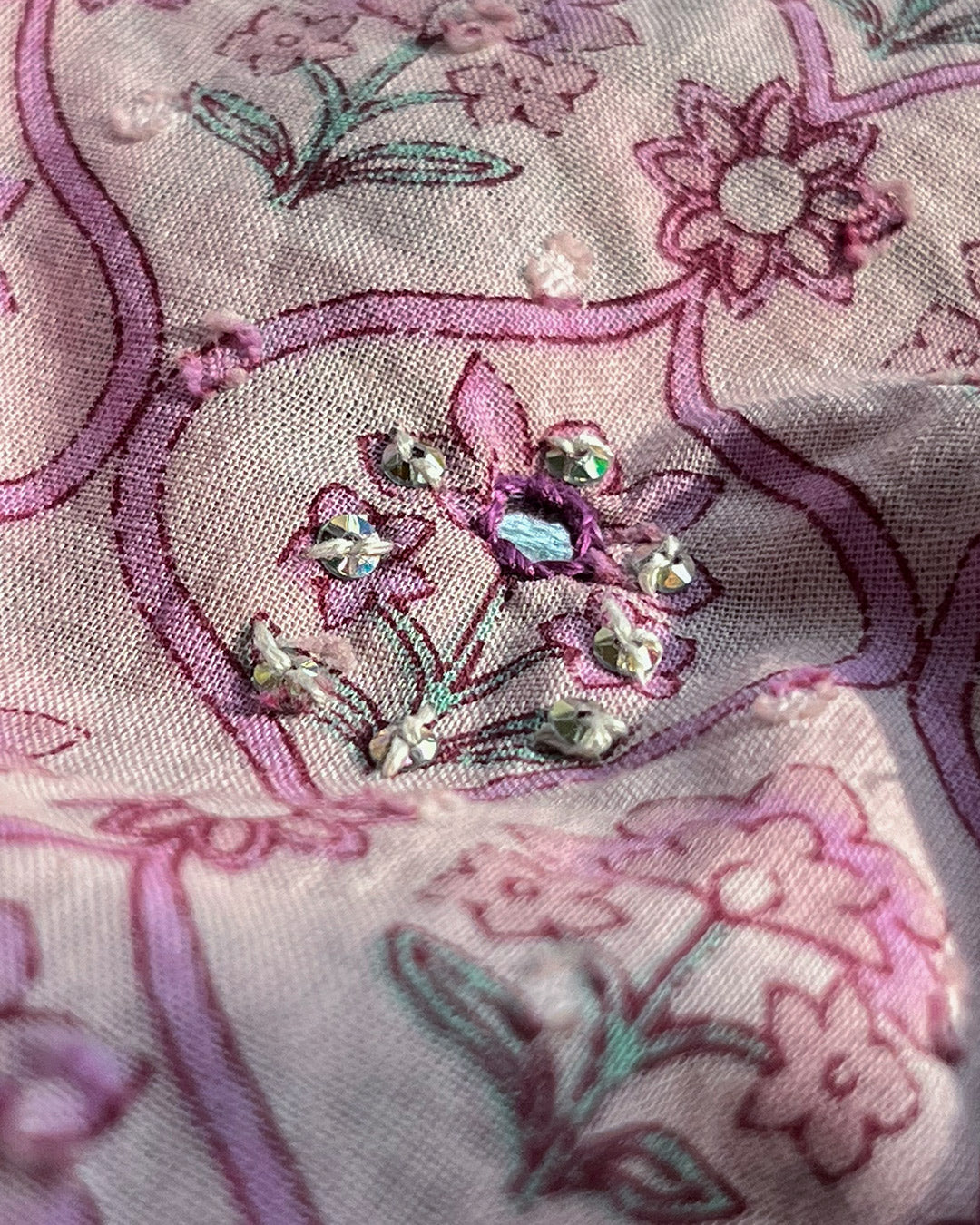
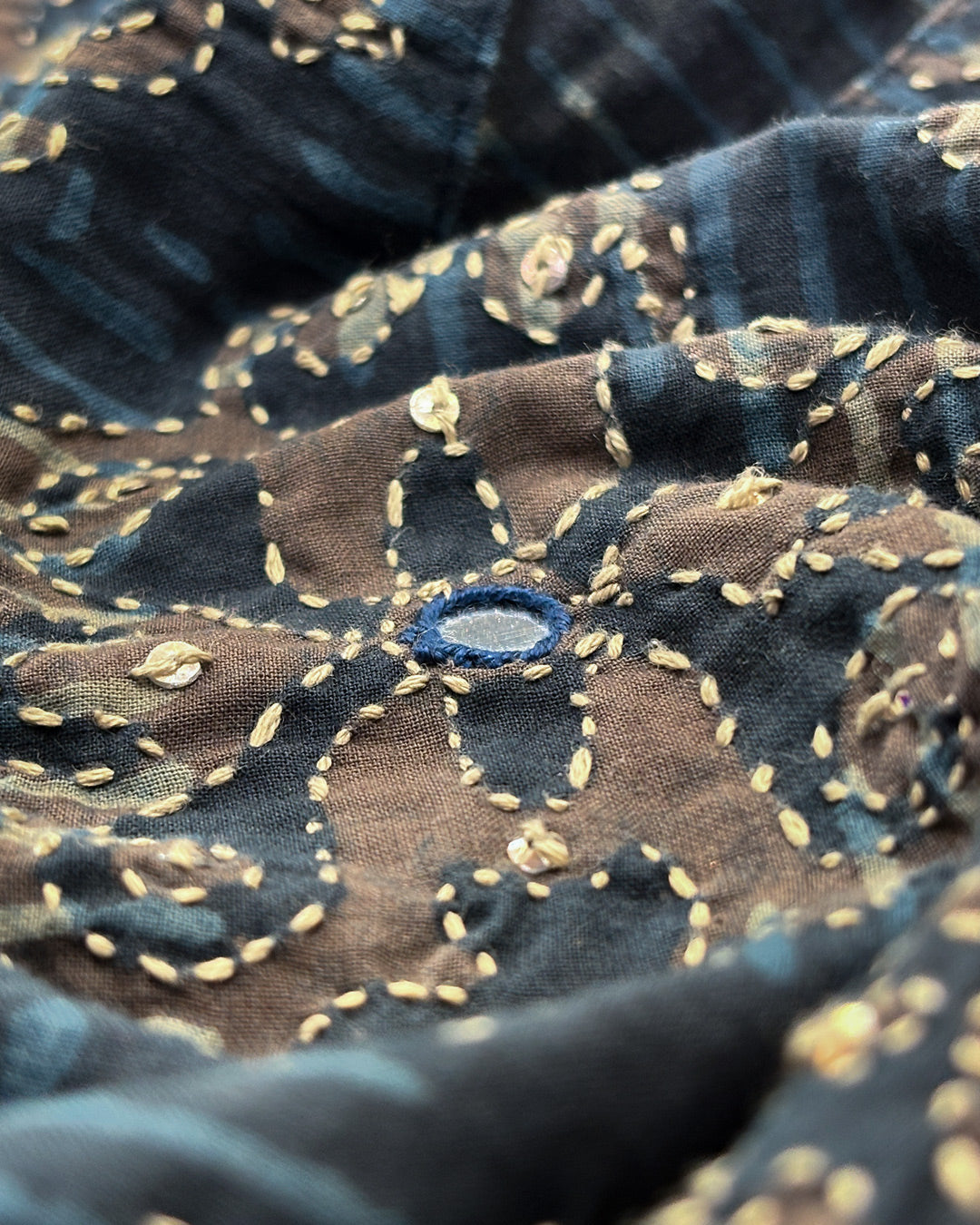
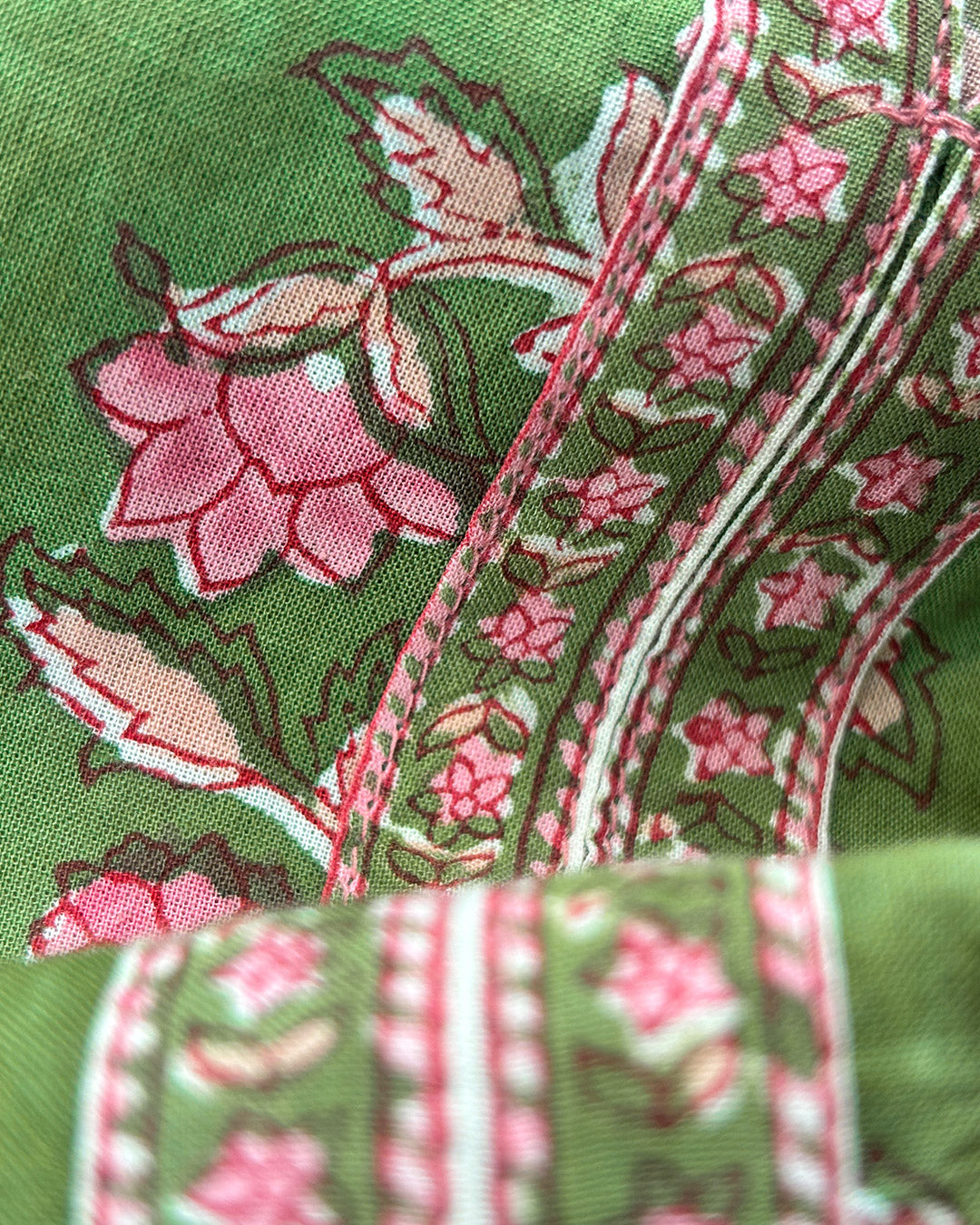
When we look closely at a hand printed dupatta, we may notice that every flower is not absolutely identical, every border is not perfectly mechanical, and every colour has its own depth. Those small differences connect the finished fabric to the hands that made it.
In that sense, the motif is only the beginning of the story. The real character of a printed dupatta comes from the meeting of motif, material, region and craft, carried forward by hands that understand the fabric through years of practice.
How to Read the Story on Your Printed Dupatta
A printed dupatta can reveal more than we notice at first glance. The motifs, colours, spacing and even the way a design repeats across the fabric can offer clues about its inspiration and craft tradition. Reading these details does not require knowing every textile term. It begins simply with looking closely.
Look at the Motif
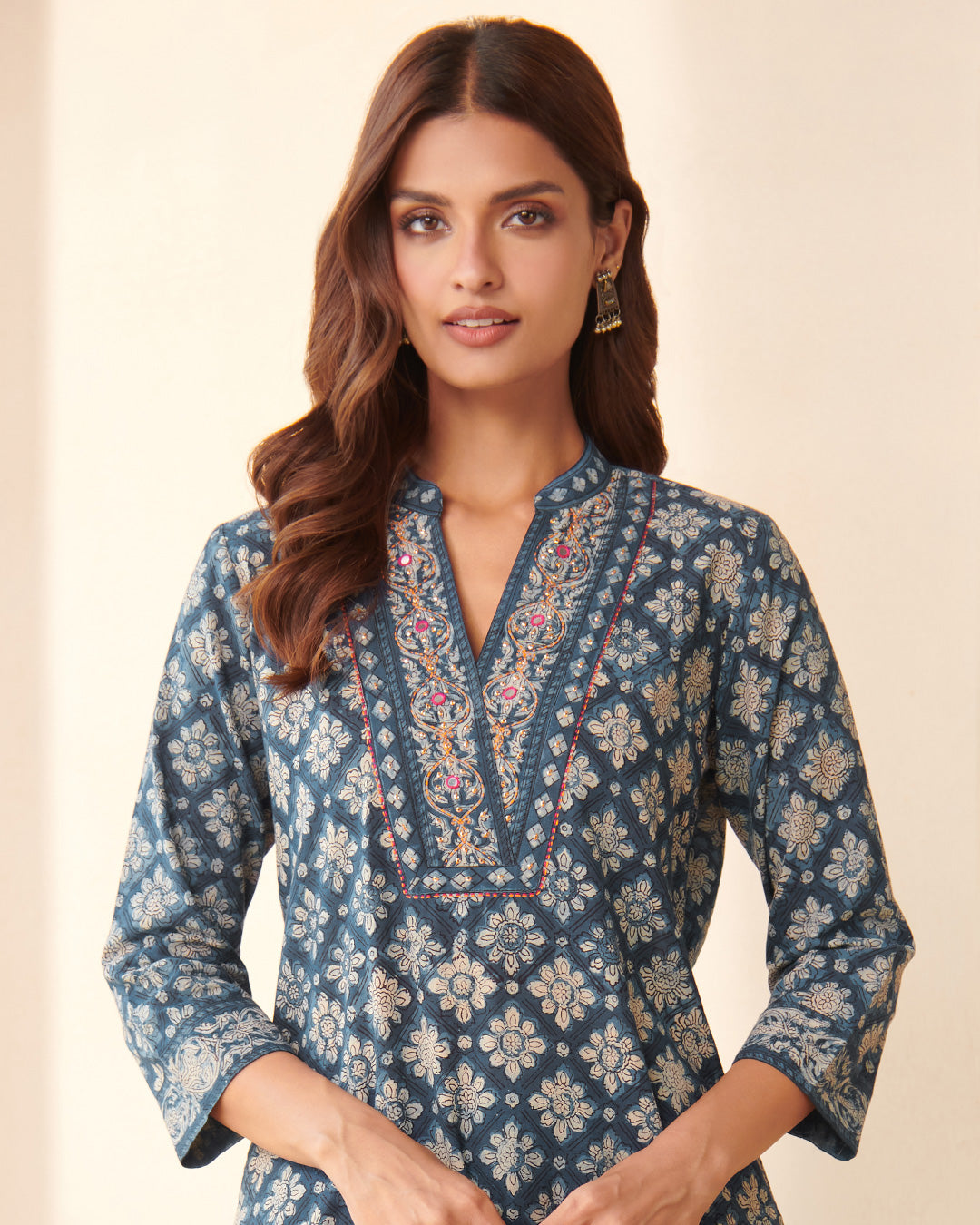
Start with the motif itself. Is it a flower, a paisley, a leaf, a bird, or a more structured geometric form? Traditional Indian textiles have long drawn from the world around them, translating familiar forms into patterns that could be repeated on fabric.
A floral motif, for instance, may suggest growth, beauty or renewal, while a paisley can carry several layers of association depending on the region and textile tradition. A small buti scattered across a dupatta creates a very different feeling from a larger buta arranged as a central or repeating element.
The important thing is not to assign one fixed meaning to every design. Motifs have travelled, changed and been interpreted differently over generations. Look first, then consider the story behind what you see.
Notice the Colours
Colour can change the character of a motif entirely. Deep indigo, earthy red, muted green and natural tones often bring to mind the landscapes and dye traditions of the regions where many Indian textile crafts developed. Brighter combinations can create a more celebratory expression, while softer shades may lend the same floral or botanical design a quieter quality.
Traditional dyeing practices also shaped the colours available to artisans. In crafts such as Ajrakh, indigo and madder have a long-standing place, while other regional traditions are known for their own distinctive palettes.
There is no single colour code to follow. Instead, notice how the colours sit alongside the motif. Sometimes the relationship between the two tells us as much as the pattern itself.
Understand the Arrangement and Repetition
Indian textile design often finds beauty in repetition. A motif may appear at regular intervals, flow along the border, gather into a jaal, or be placed more freely across the fabric.
This arrangement matters. A closely repeated pattern creates rhythm, while generous spacing allows individual motifs to breathe. Borders can frame the fabric and give a dupatta its sense of structure. Scattered butis, meanwhile, can make a print feel lighter and more understated.
Look at what happens when the pattern repeats. Does it move in a particular direction? Does one motif lead naturally into another? Does the border echo the design on the body of the dupatta?
These small details reveal the thought involved in creating a printed textile. Repetition is not simply about filling space. It is part of the visual language of the craft.
Consider the Craft Tradition Behind the Print
The final piece of the story is the craft itself. A motif printed by hand carries a different history from one produced through a purely mechanical process.
In hand block printing, the design is carved into wooden blocks and carefully stamped onto fabric, often requiring different blocks for different colours. Slight shifts in alignment or variations in pressure are natural parts of the process. In Dabu printing, mud resist is used to protect sections of the fabric before dyeing, creating layered patterns with a distinctive depth. Ajrakh has its own complex sequence of resist printing, dyeing and washing, developed through generations of regional knowledge.
Knowing the craft tradition helps us look at a printed dupatta differently. What may seem like a simple floral or geometric pattern can carry the imprint of a place, a technique and the hands that brought it to life.
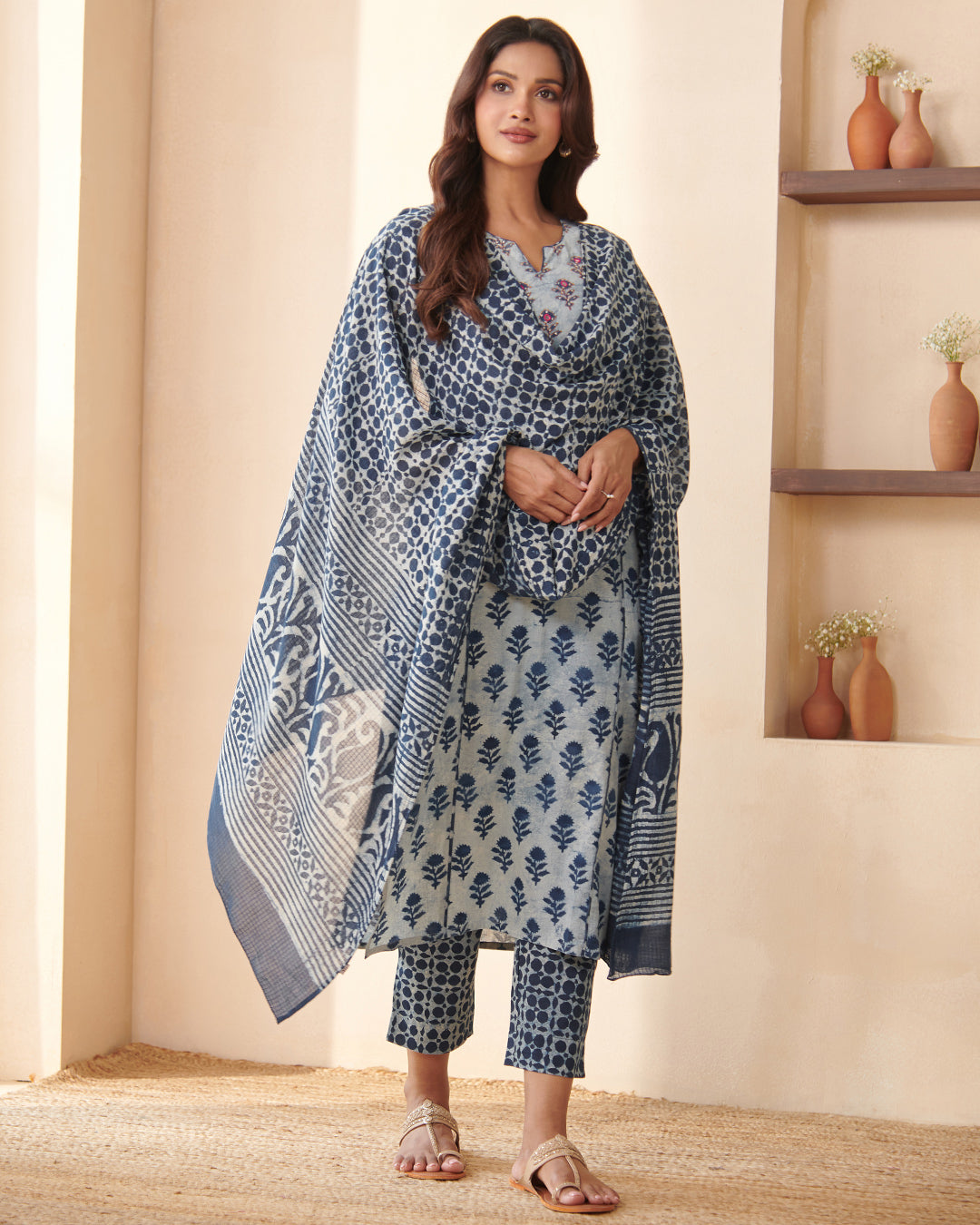
A dupatta, then, can be read almost like a textile manuscript. The motifs tell one part of the story. The colours, arrangement and printing technique reveal the rest.
Final Thoughts
The beauty of Indian printed textiles lies partly in how much they leave for us to discover. A flower may recall the natural world. A paisley may carry a form that has travelled across centuries and regions. A repeated buti may be simple at first glance, yet reveal remarkable discipline in its placement.
When we look closely at a hand printed dupatta, we begin to see more than decoration. We see regional traditions, inherited techniques and a continuing relationship between nature, craft and everyday life.
And perhaps that is why these patterns continue to feel familiar, even when we cannot always explain why. They belong to a visual language passed quietly from one generation to another.
Because some prints are more than patterns. They are stories waiting to be worn.

