

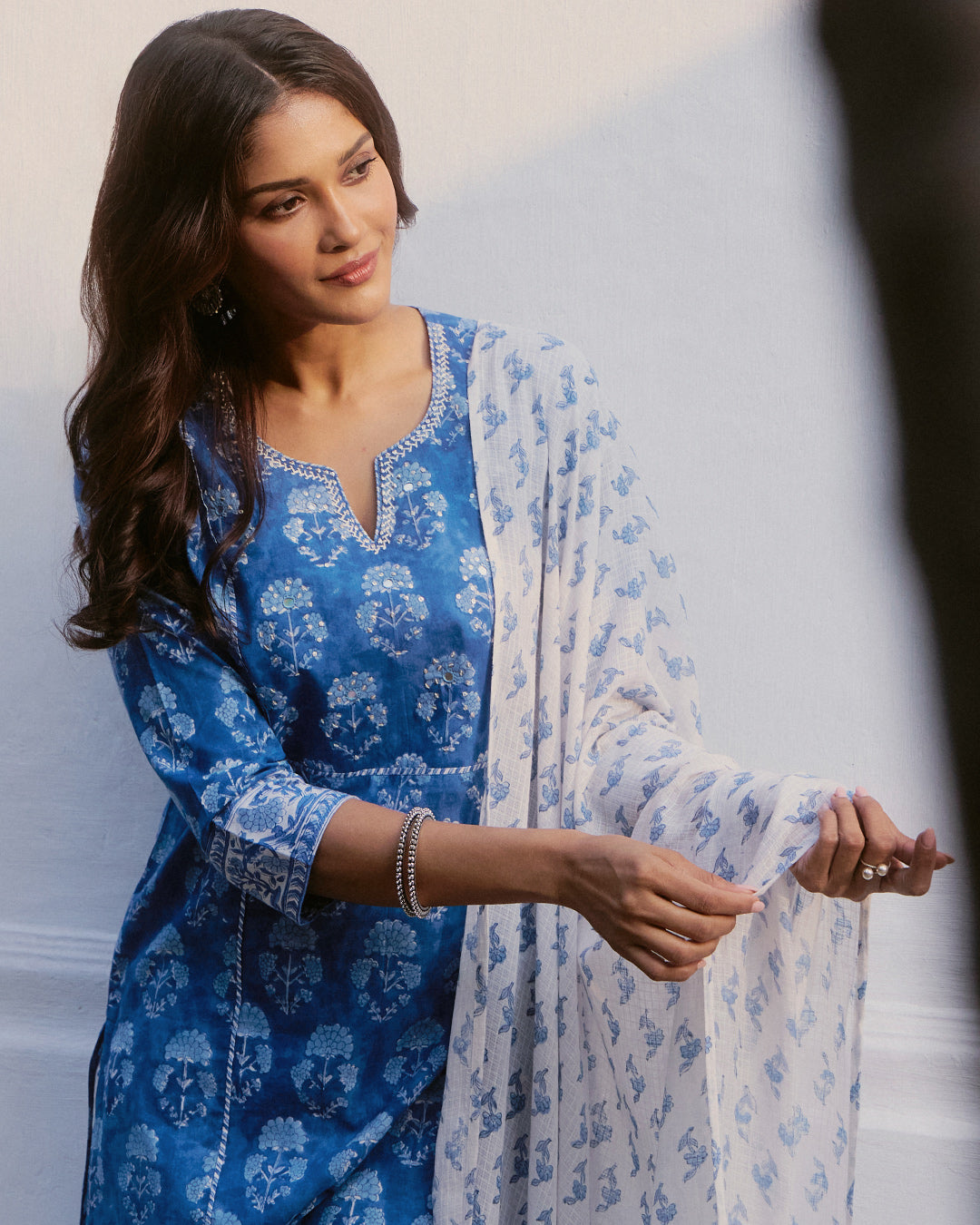
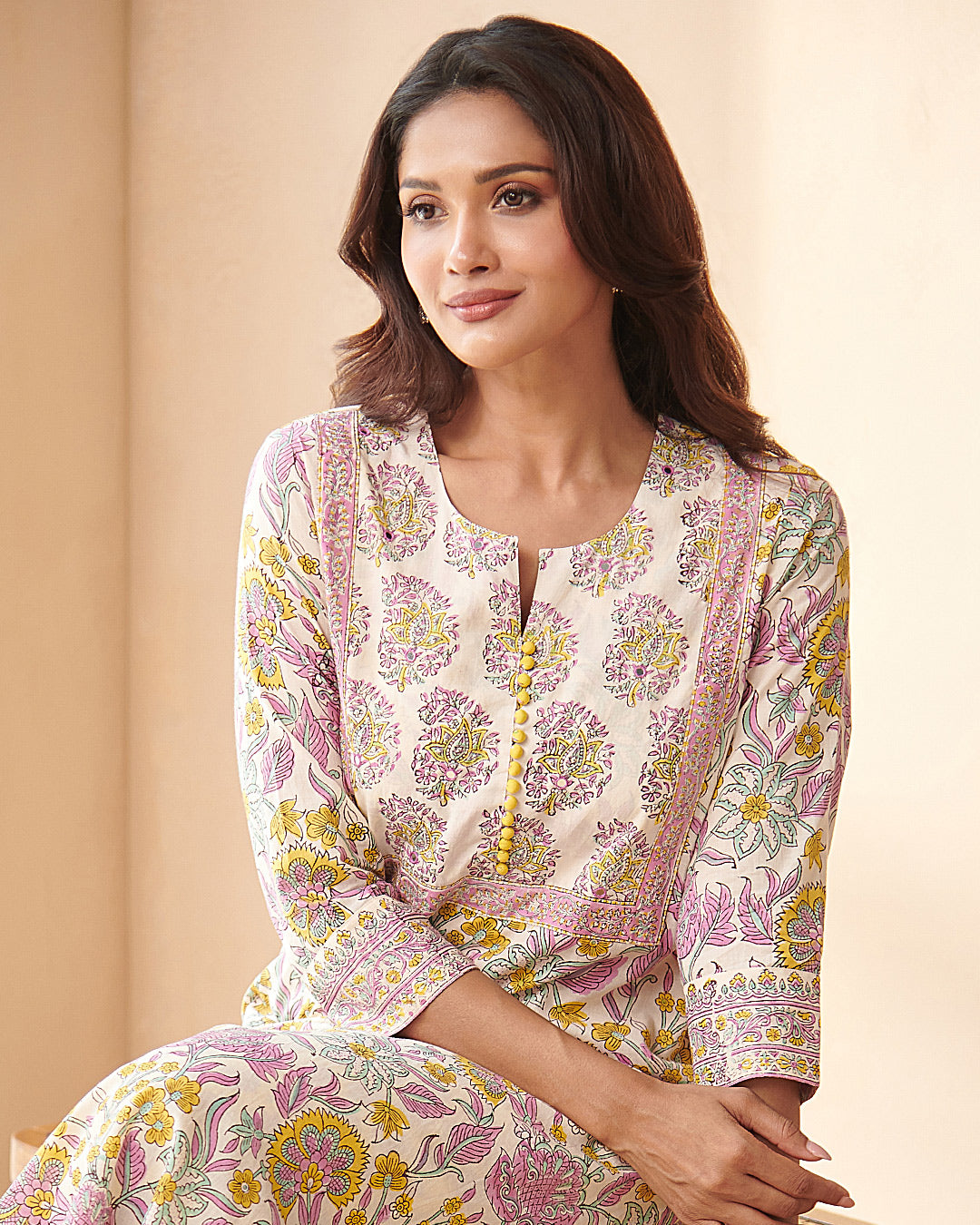
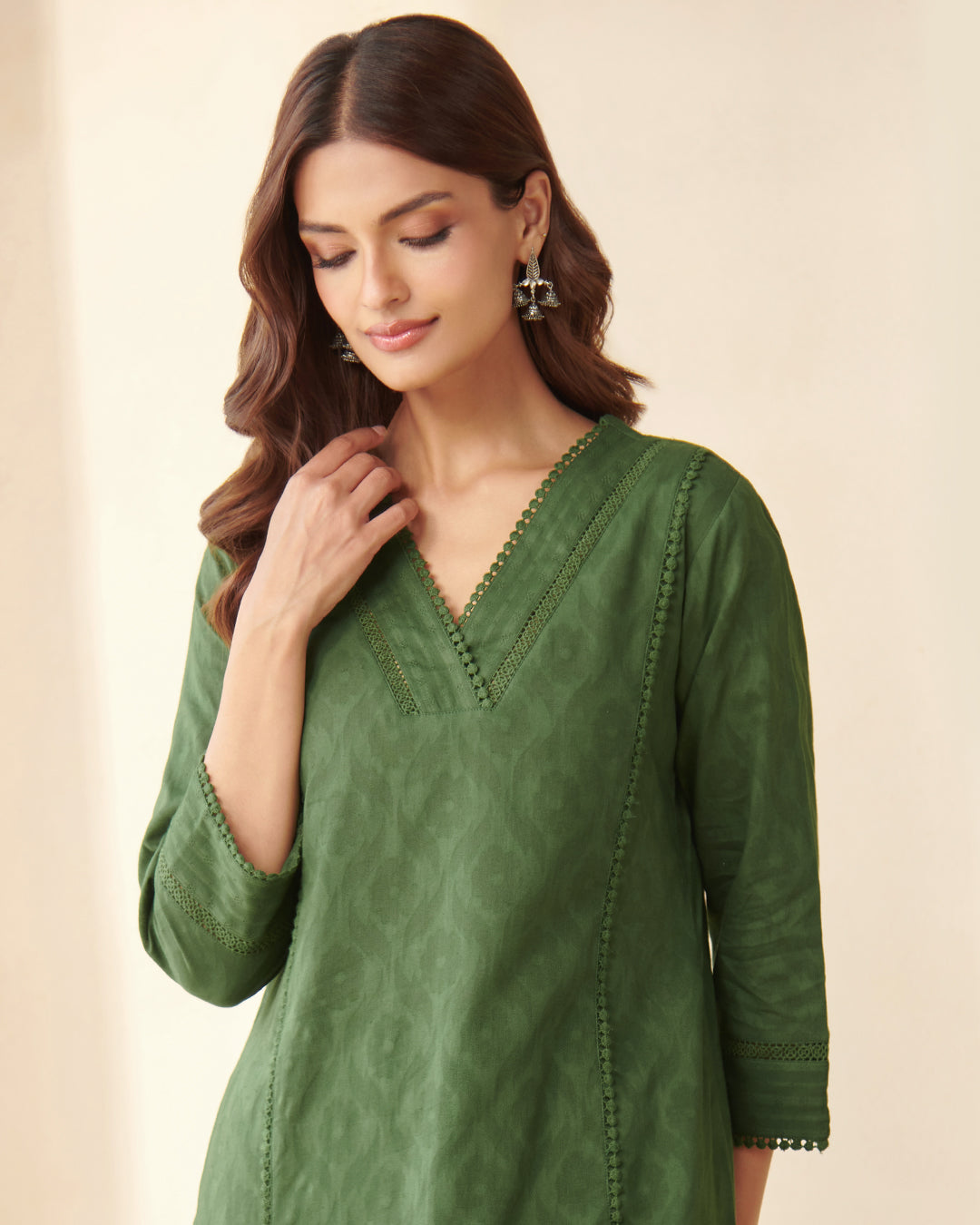

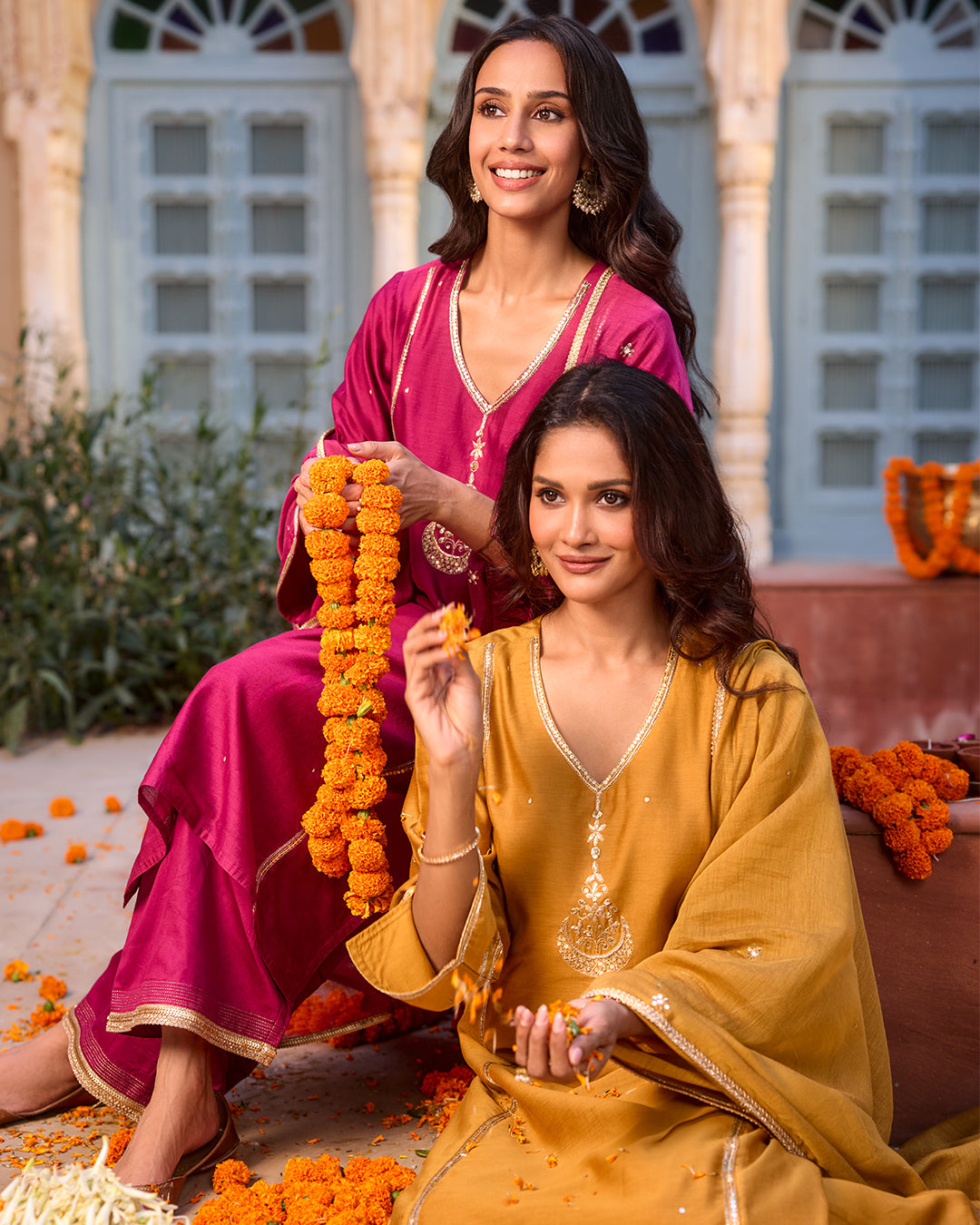

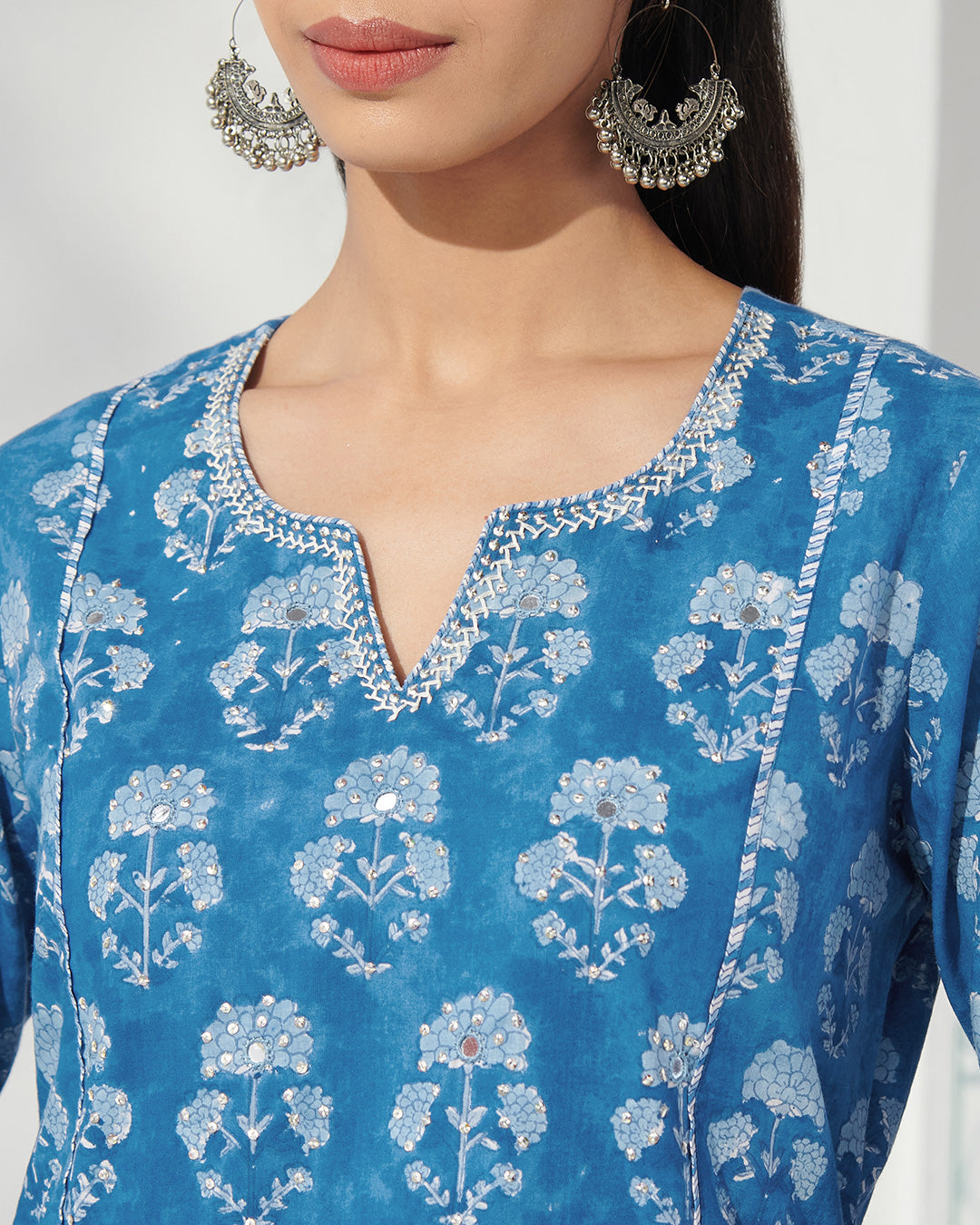
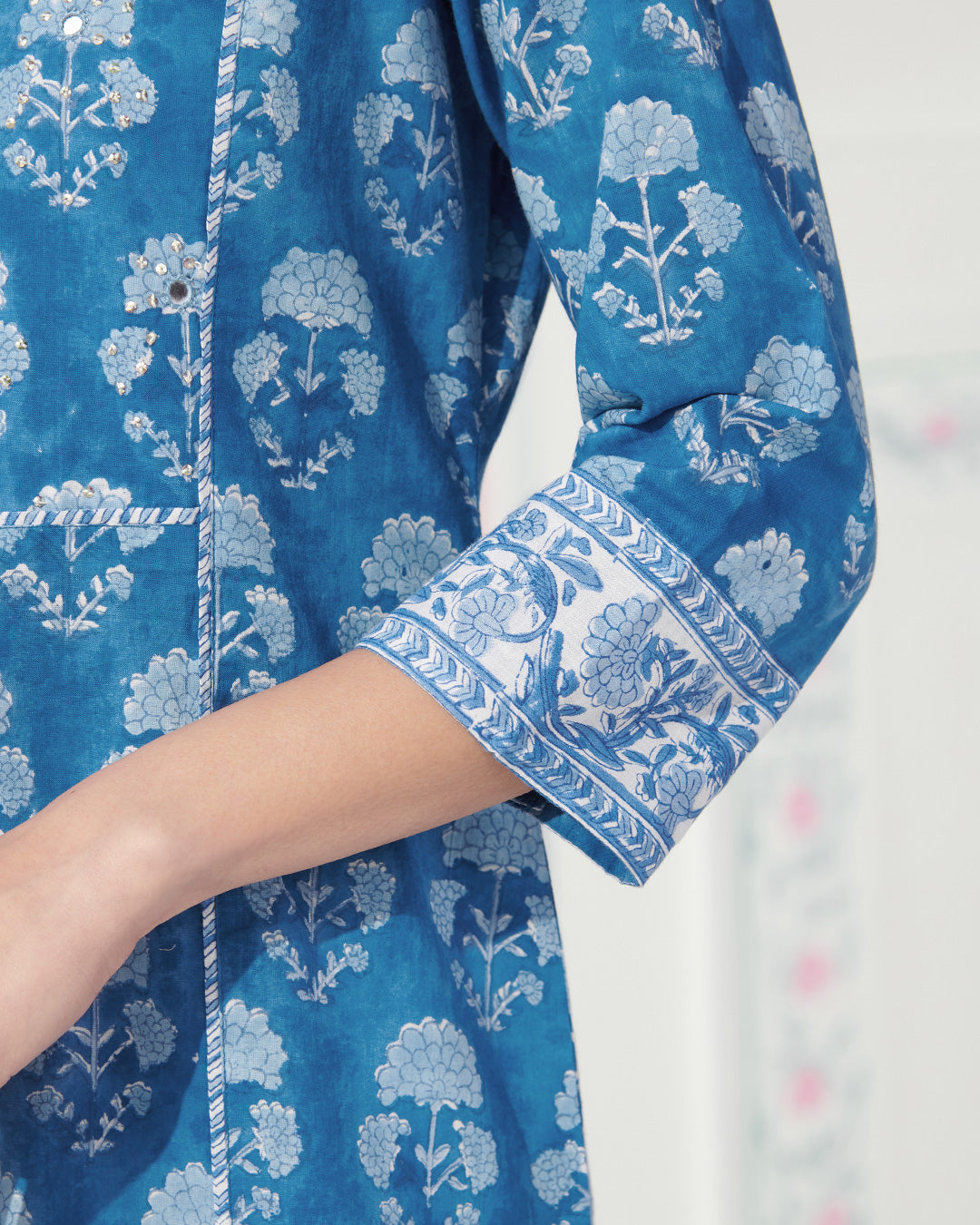
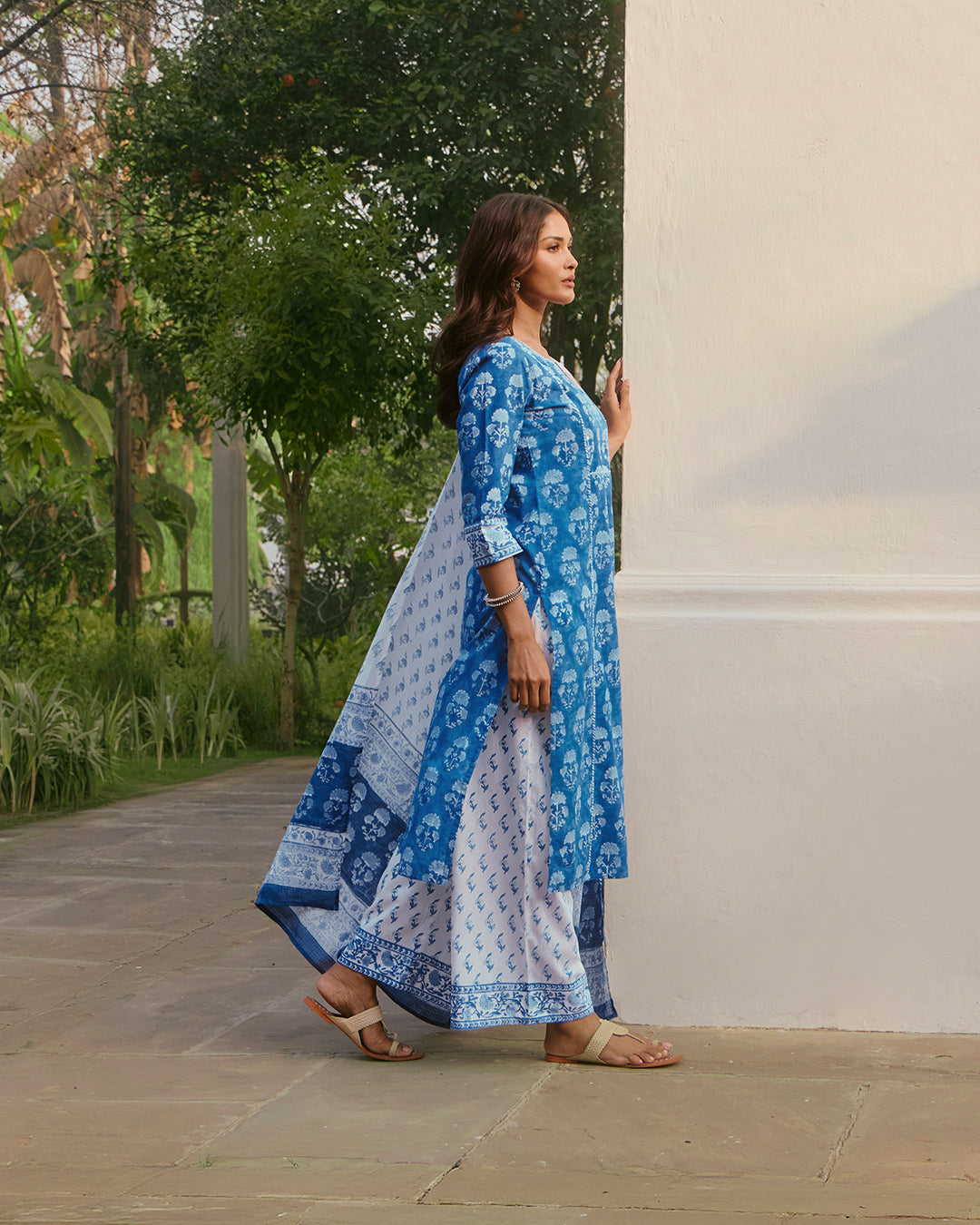
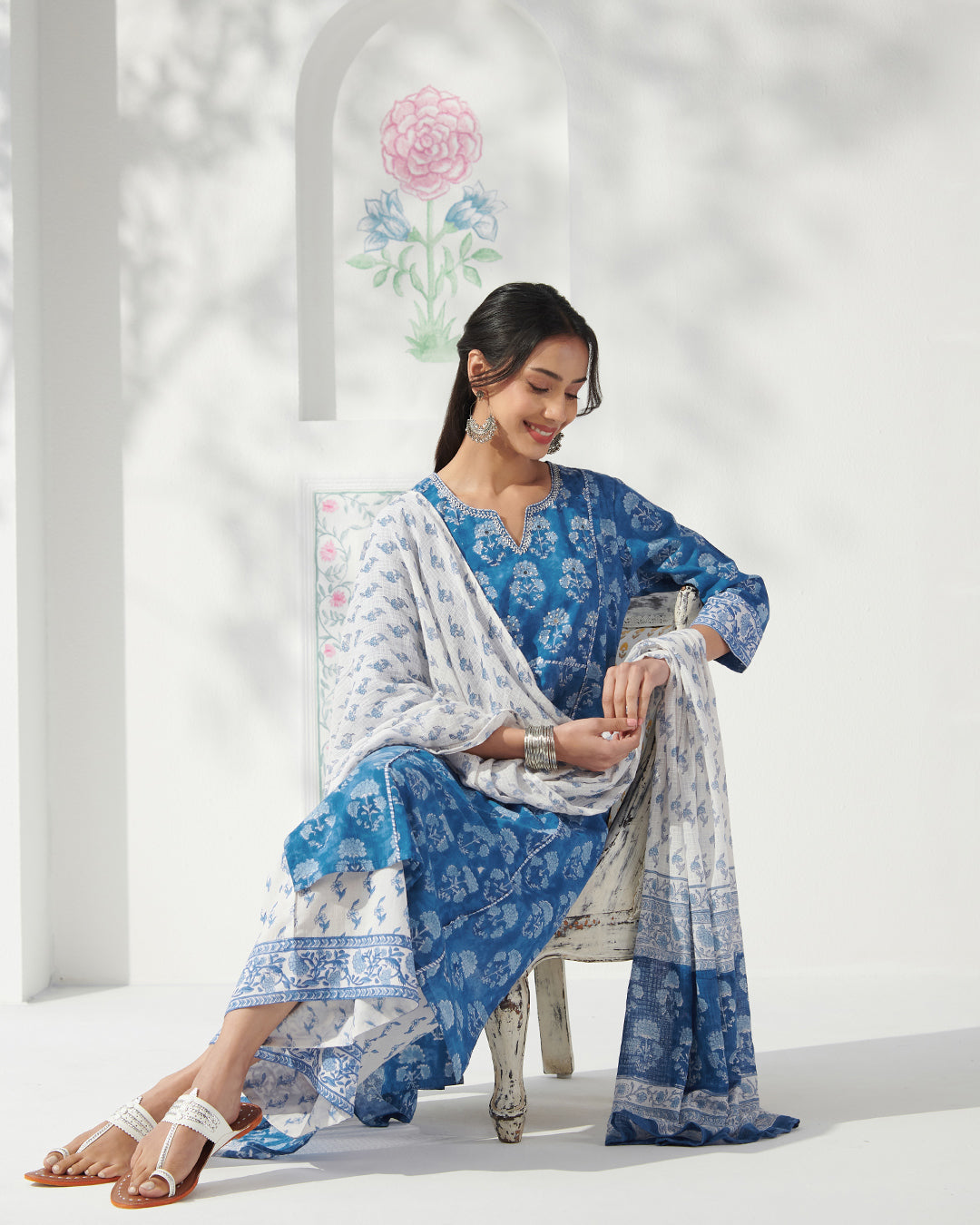
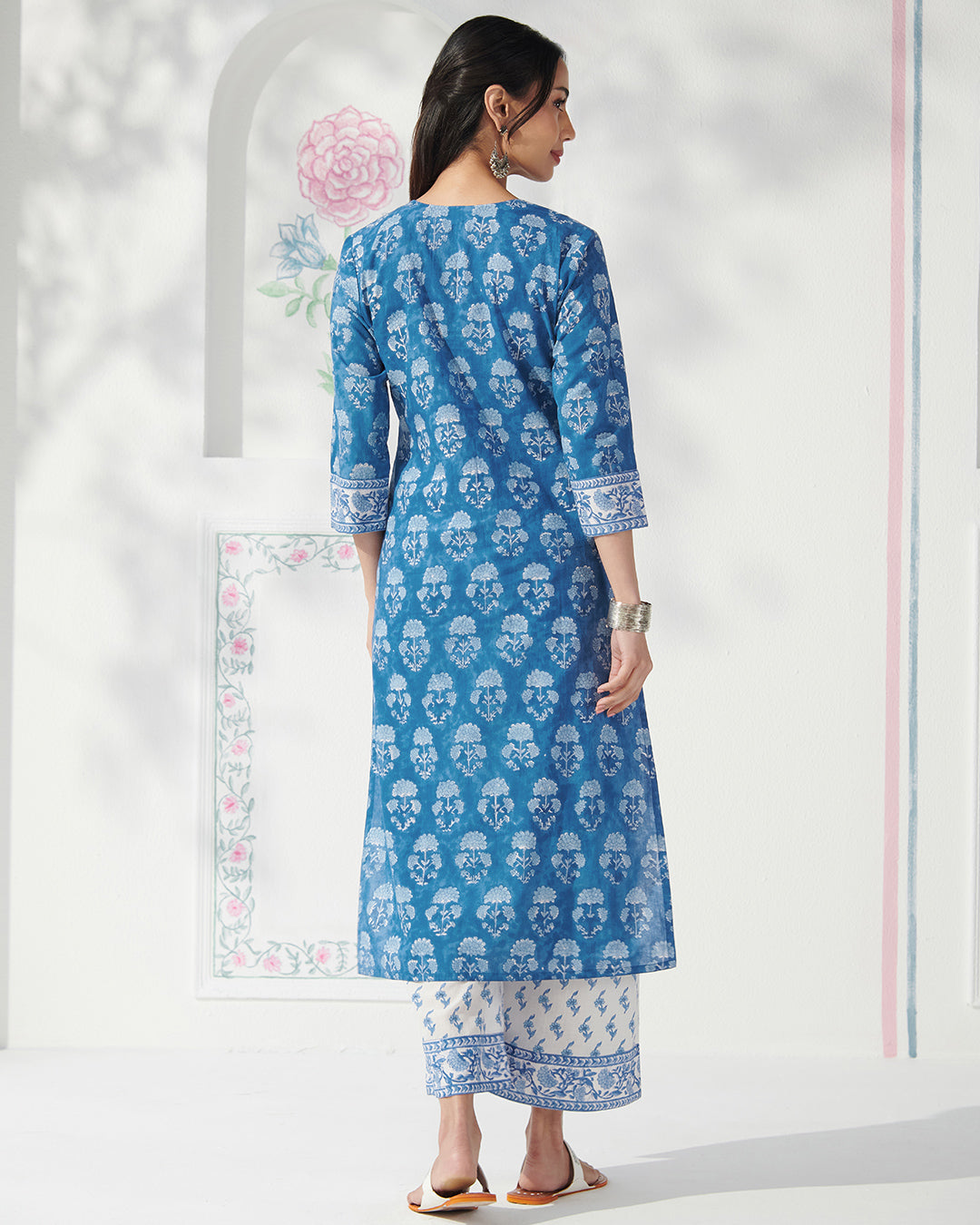
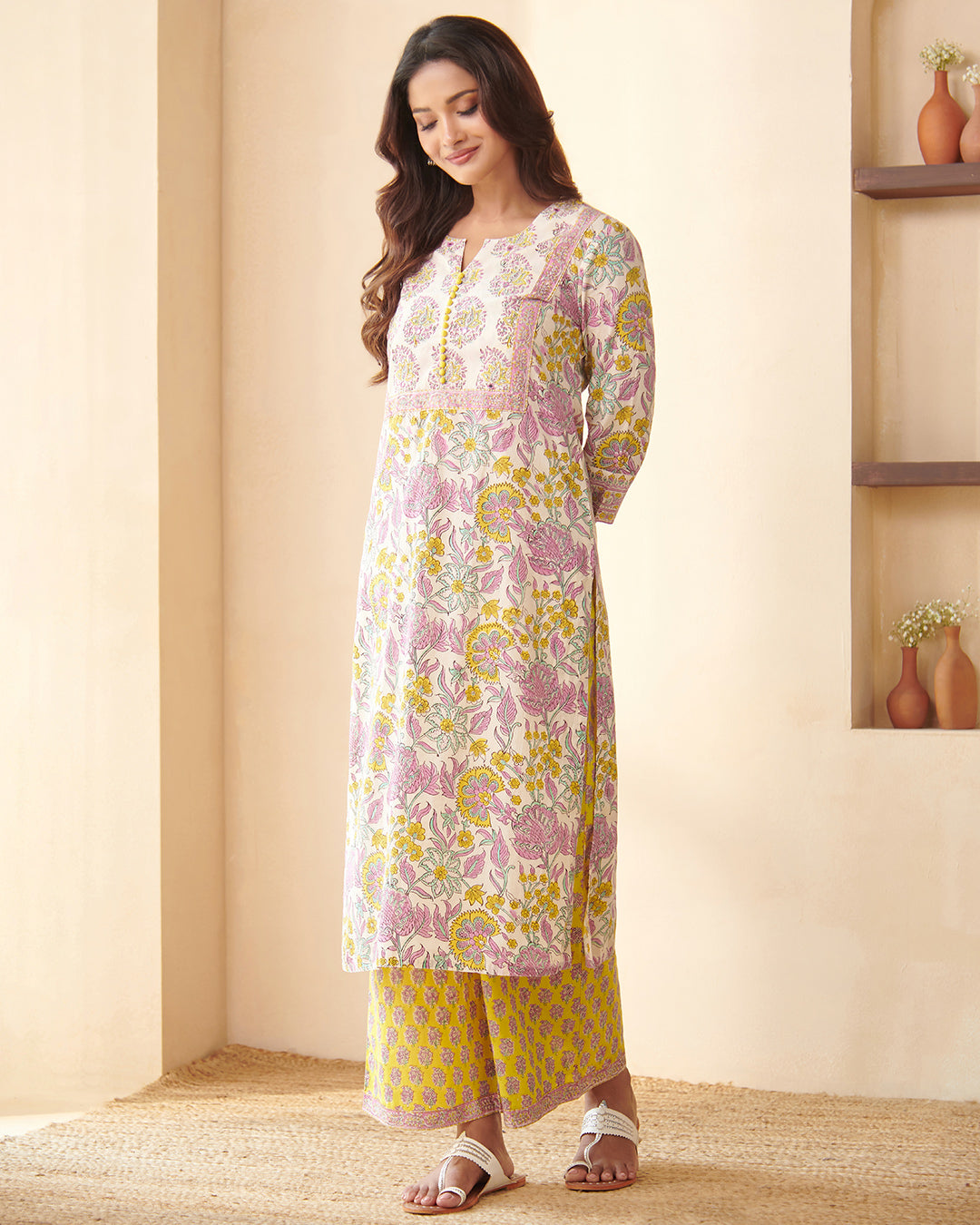
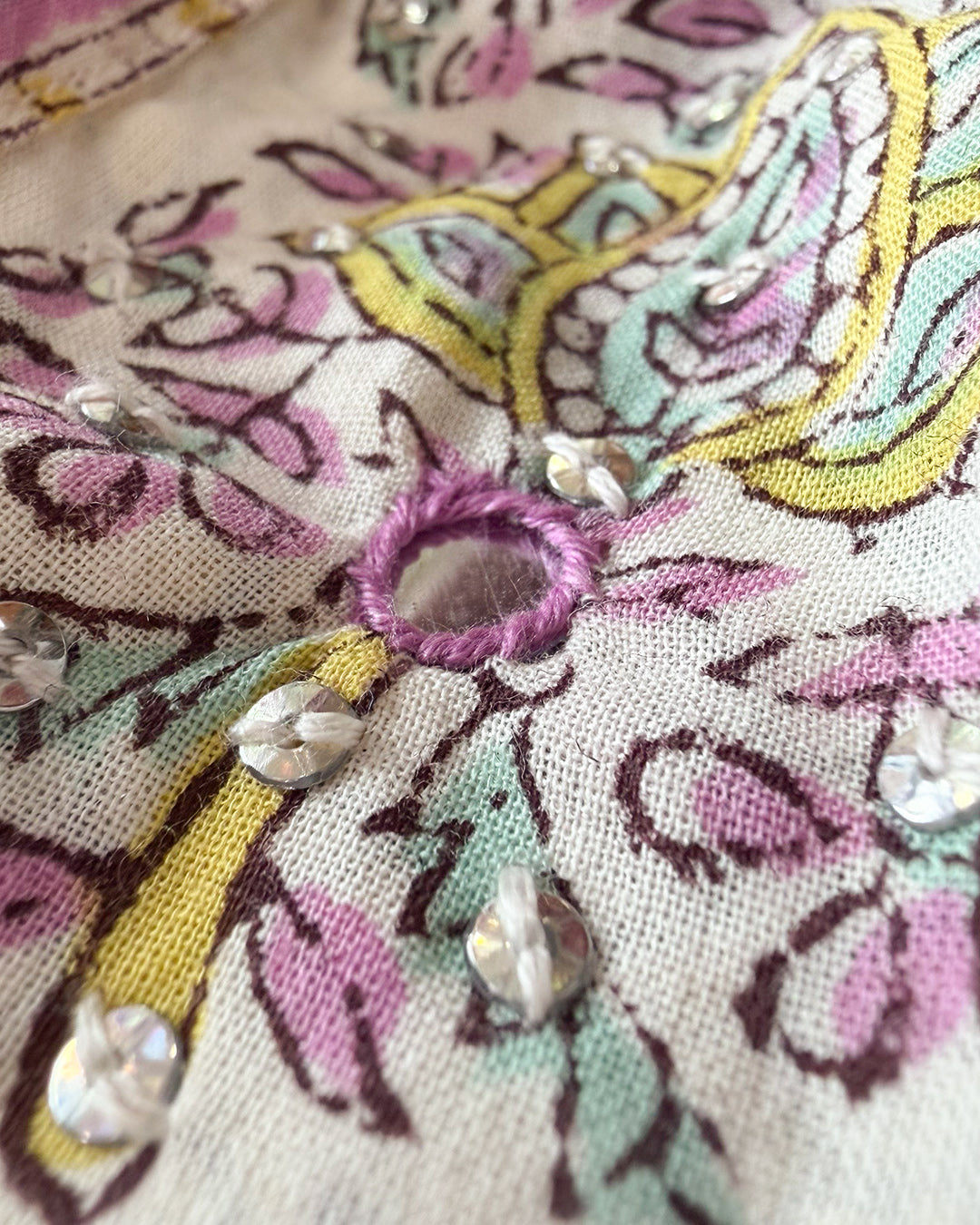
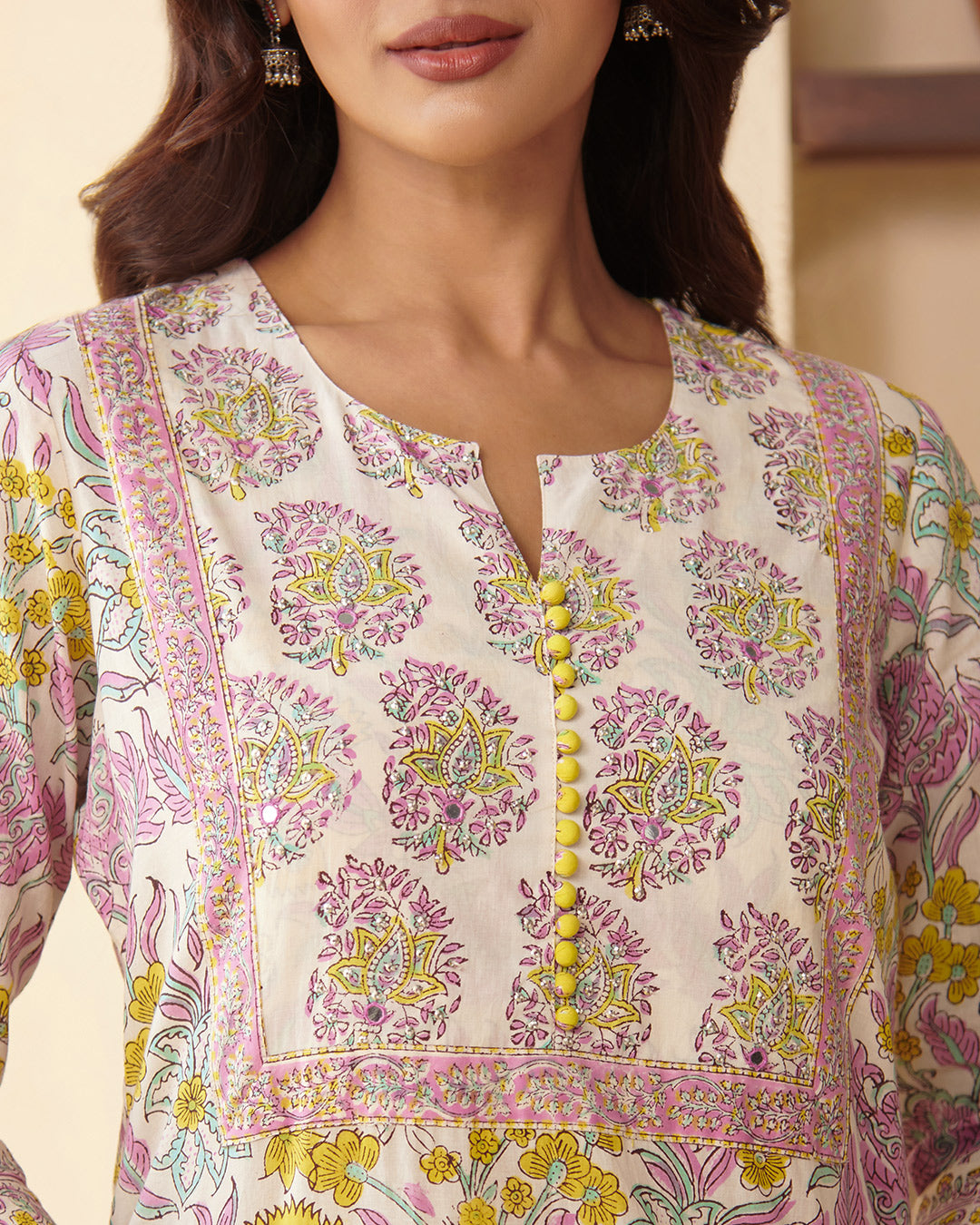
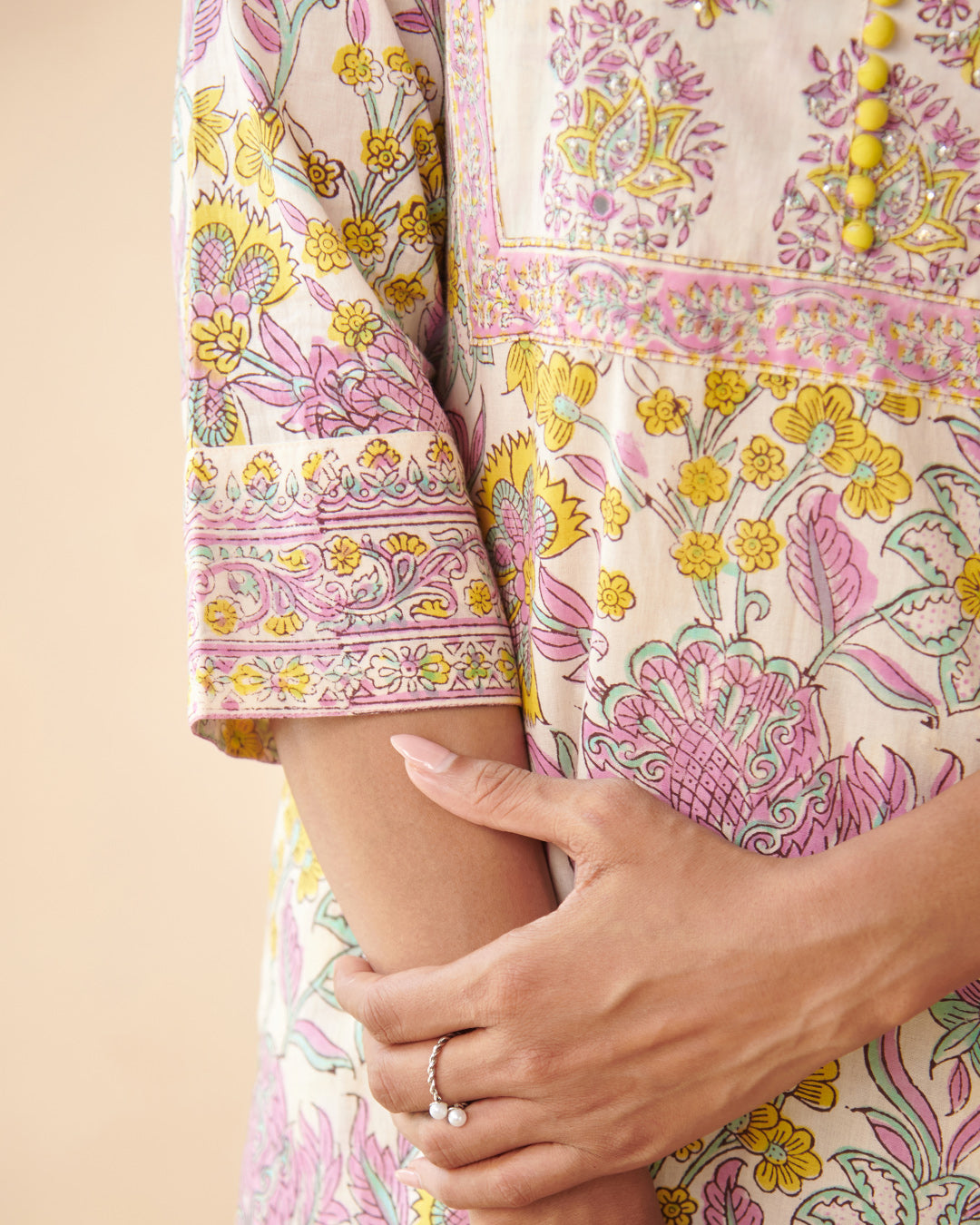
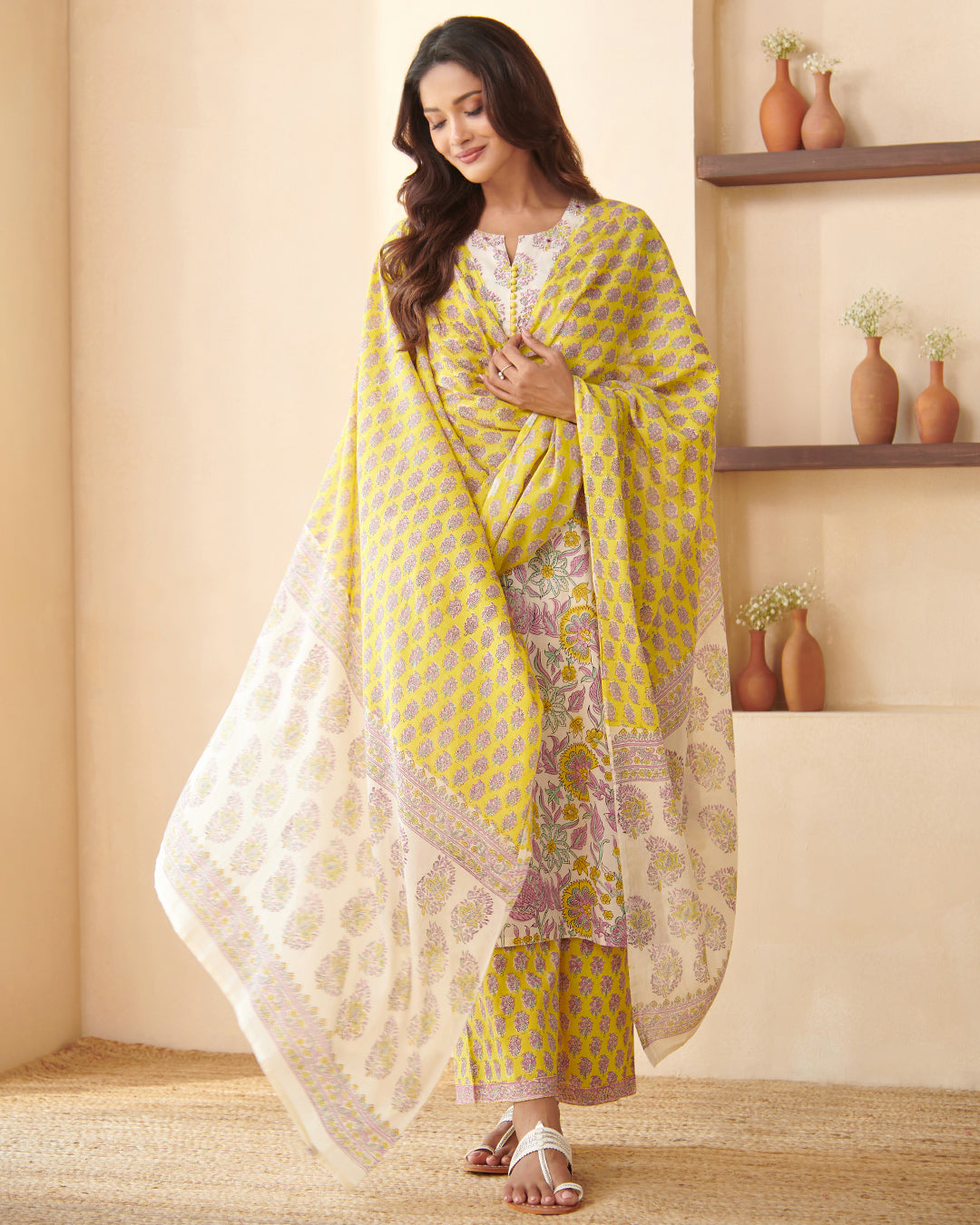
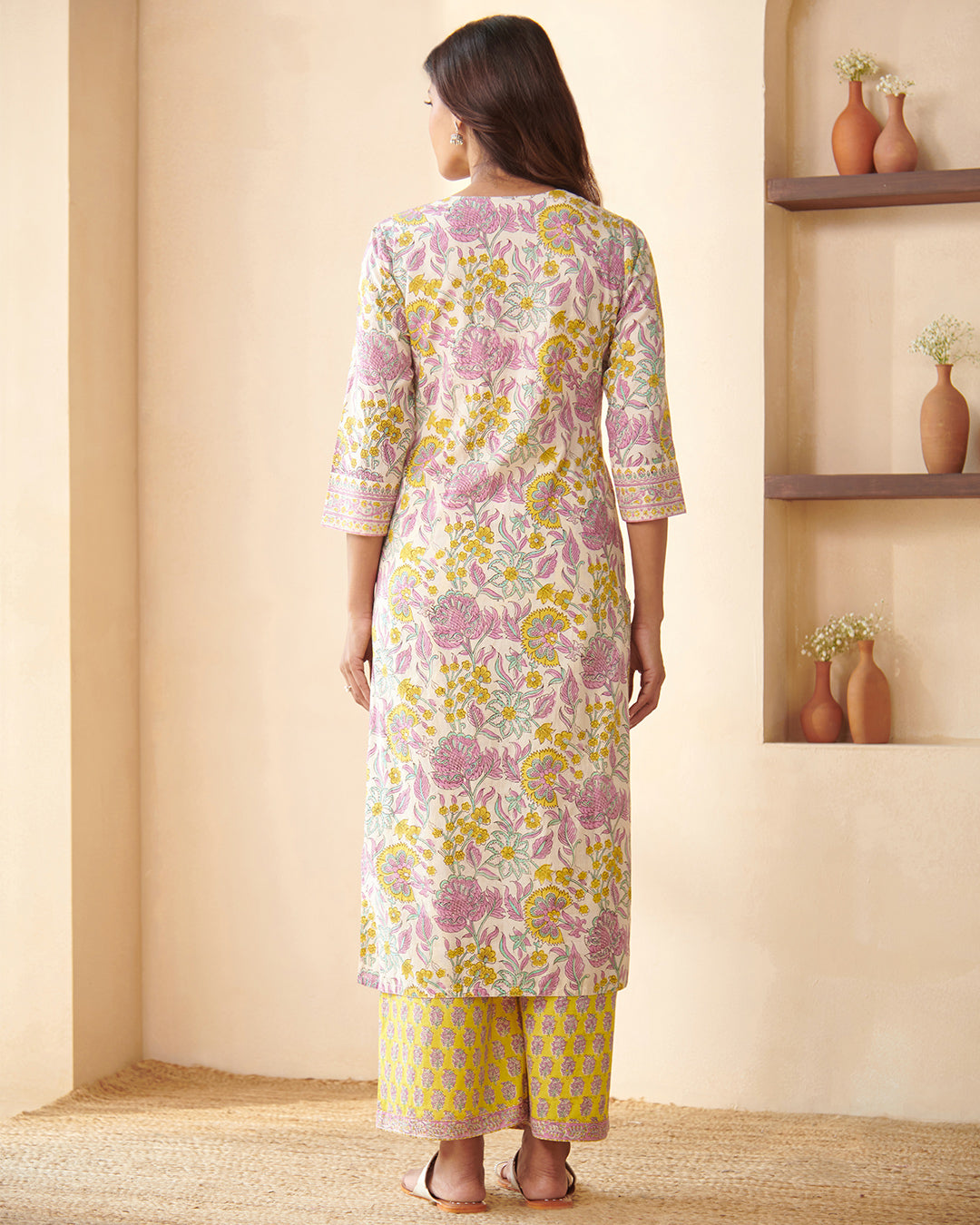
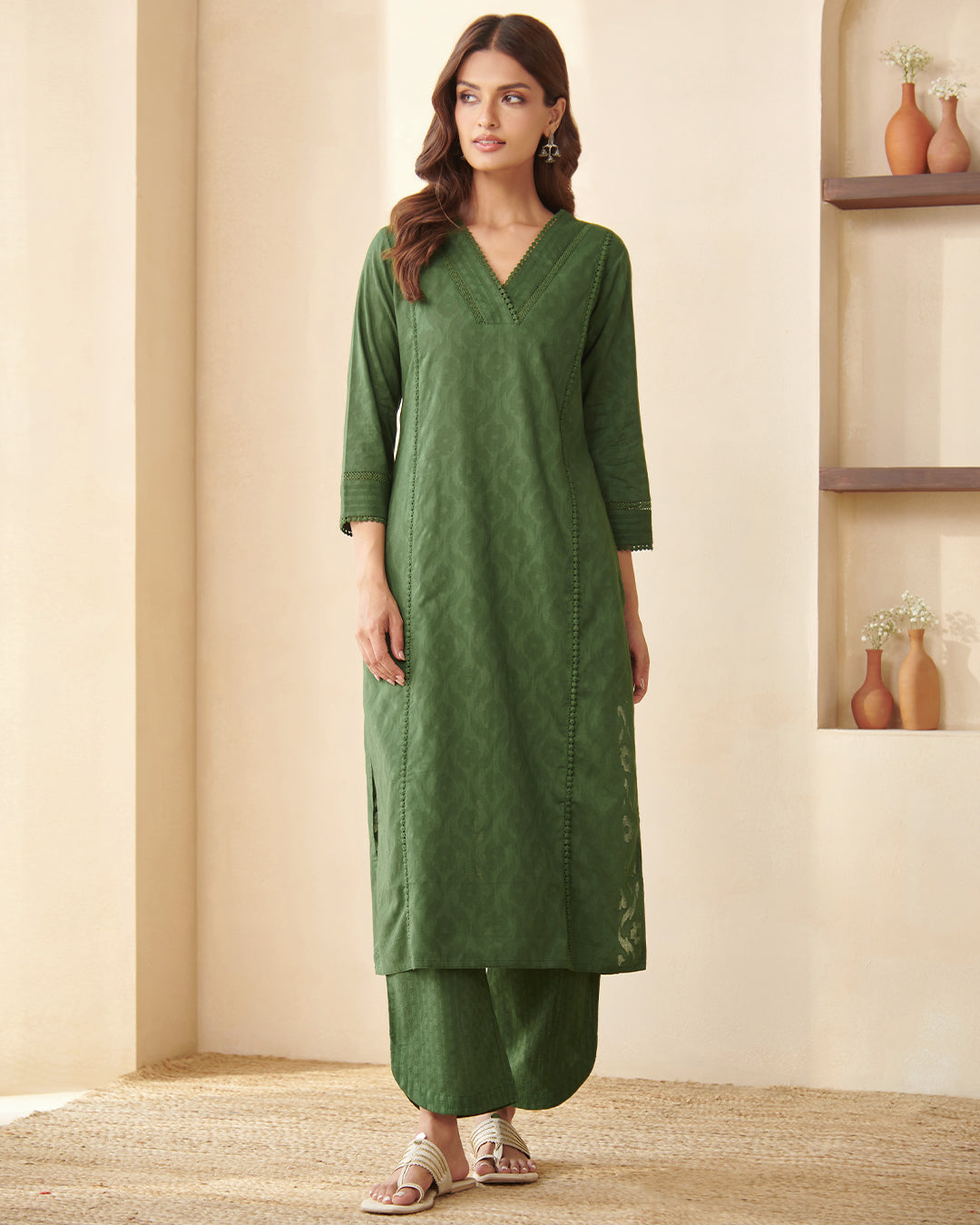
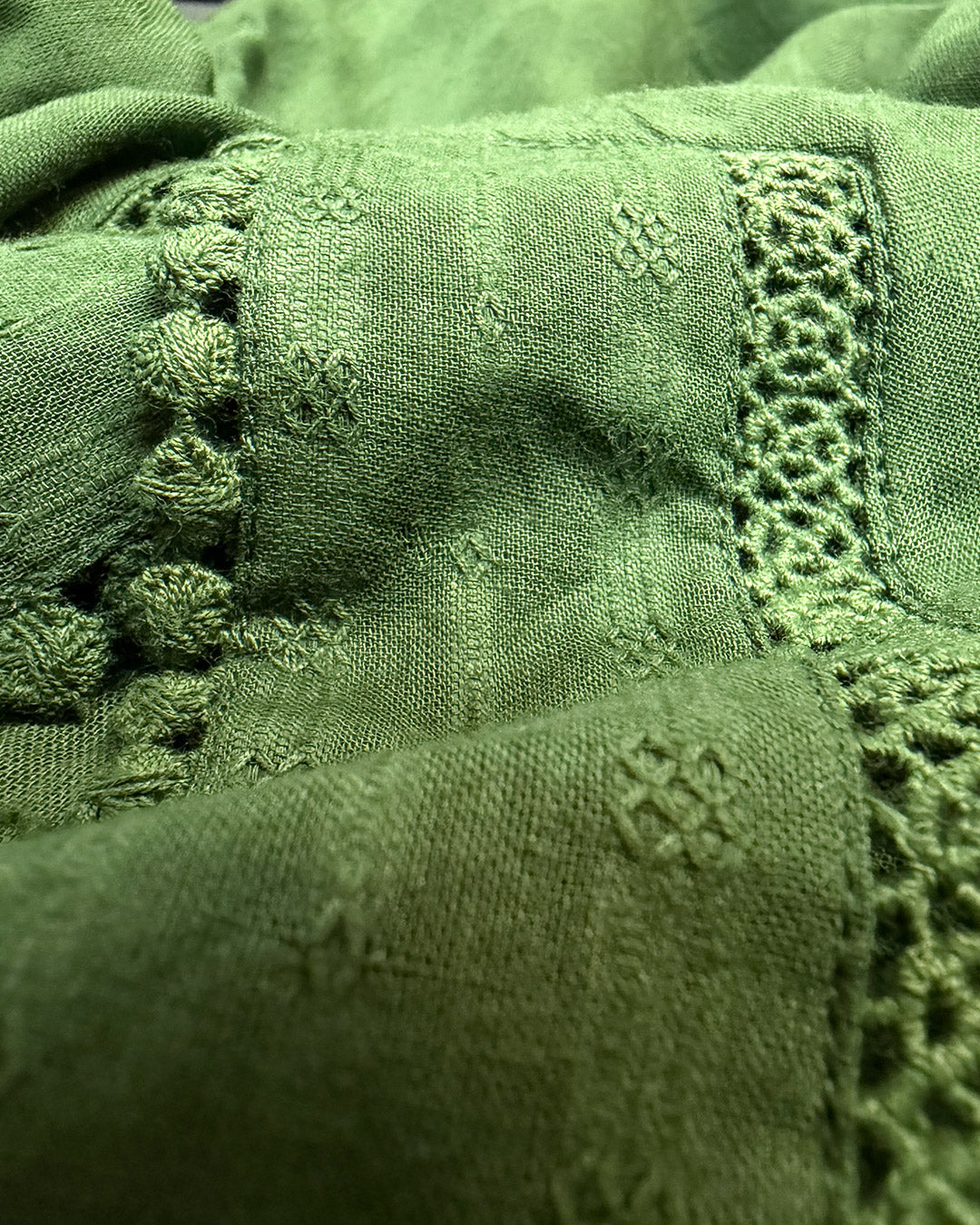
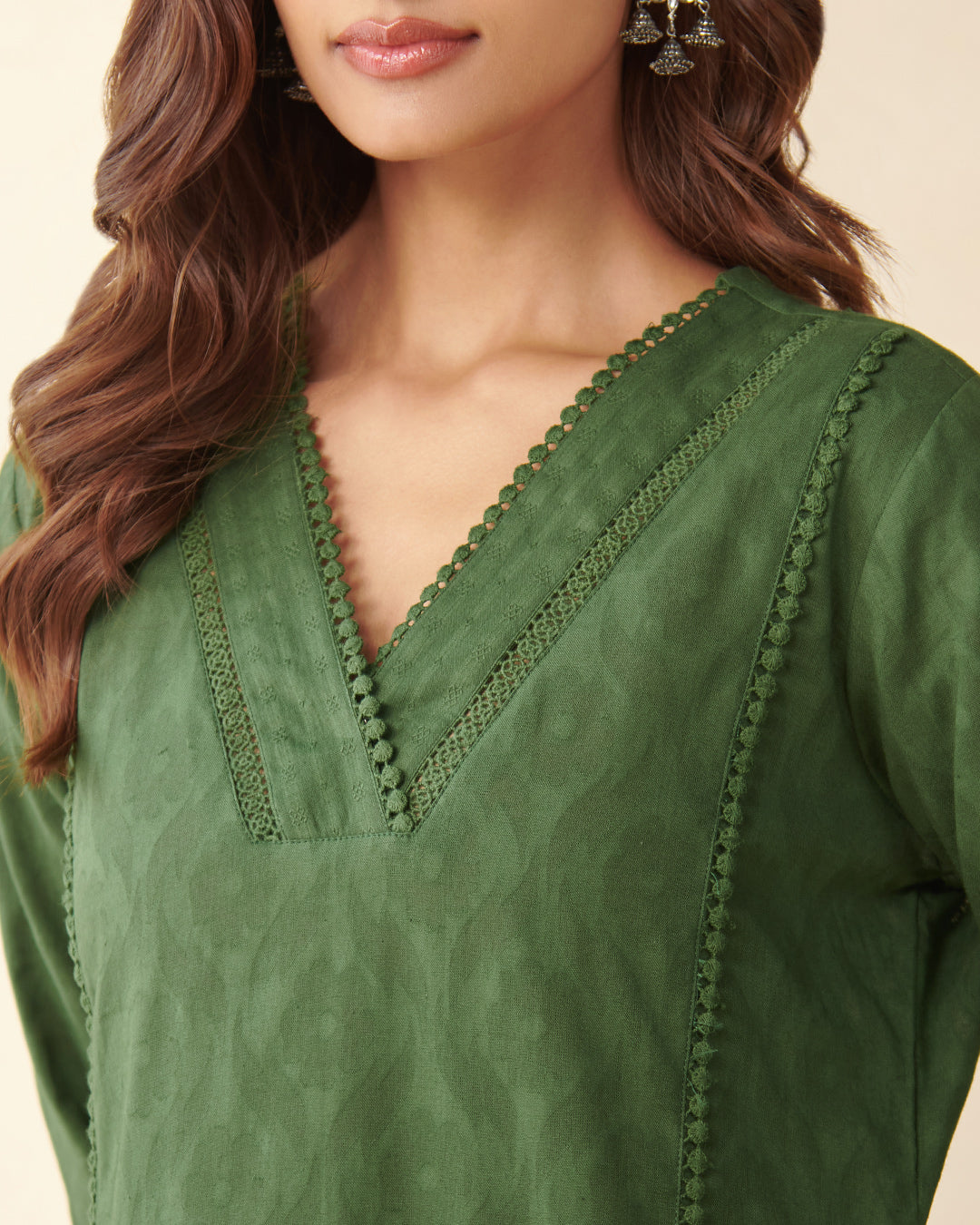
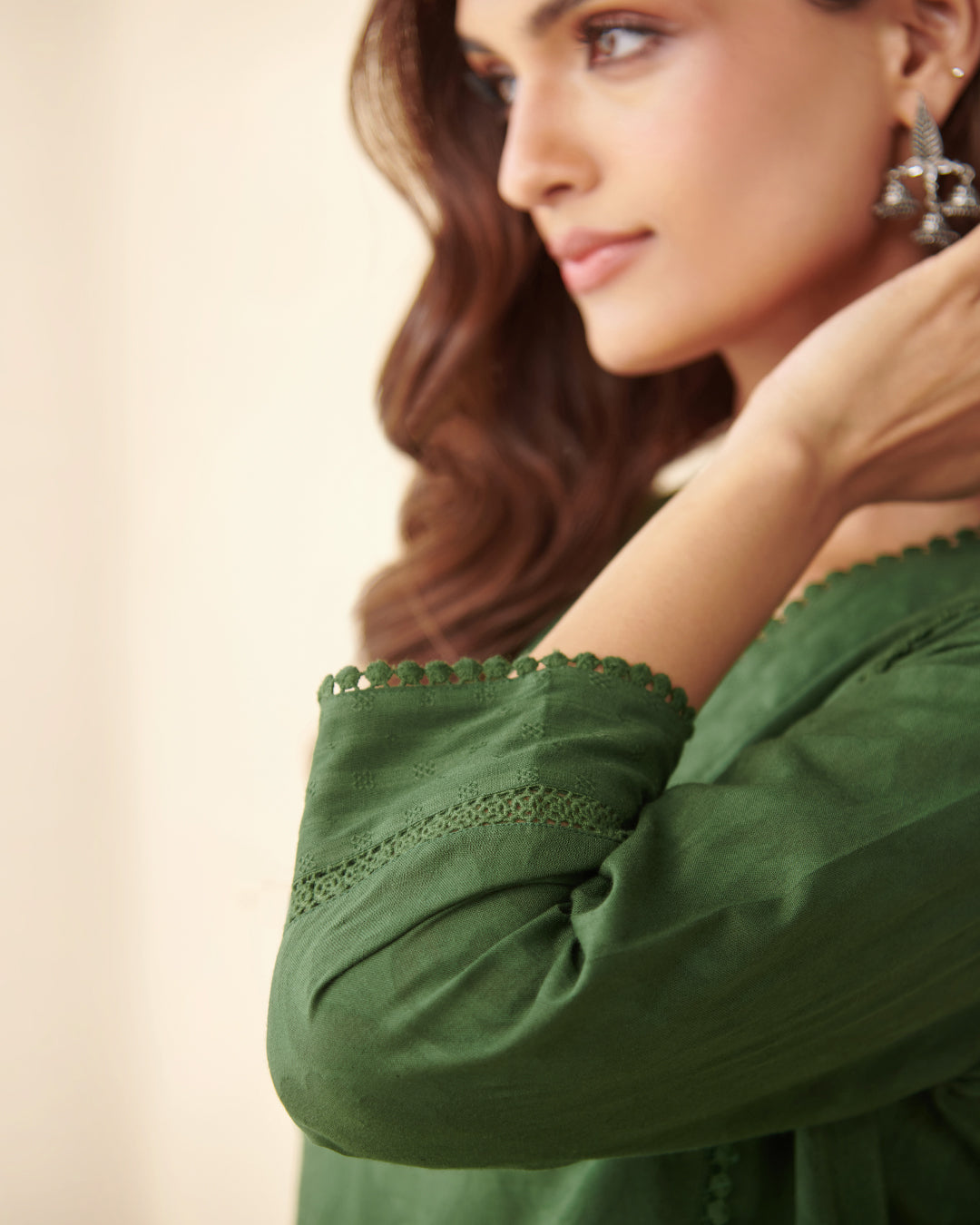
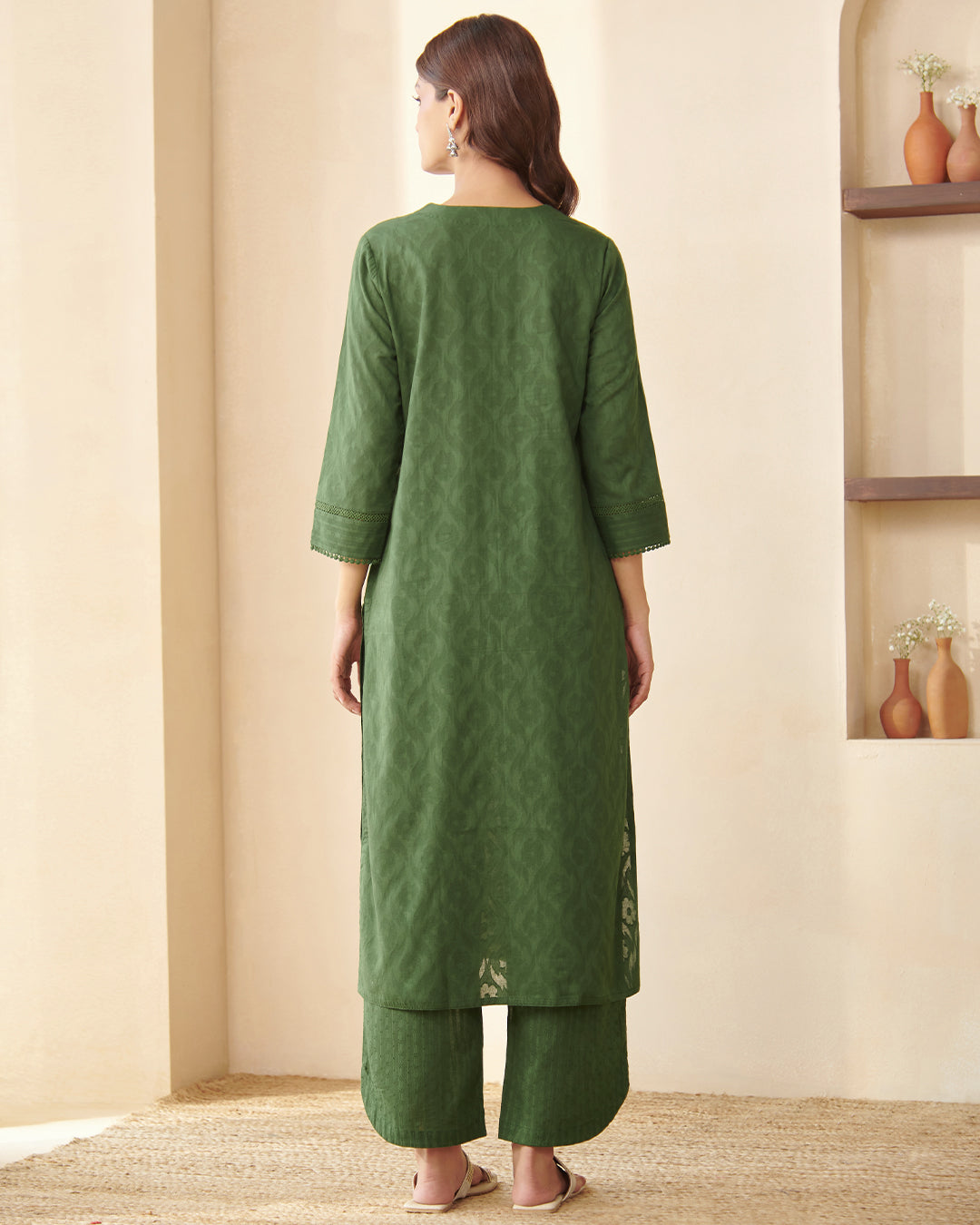
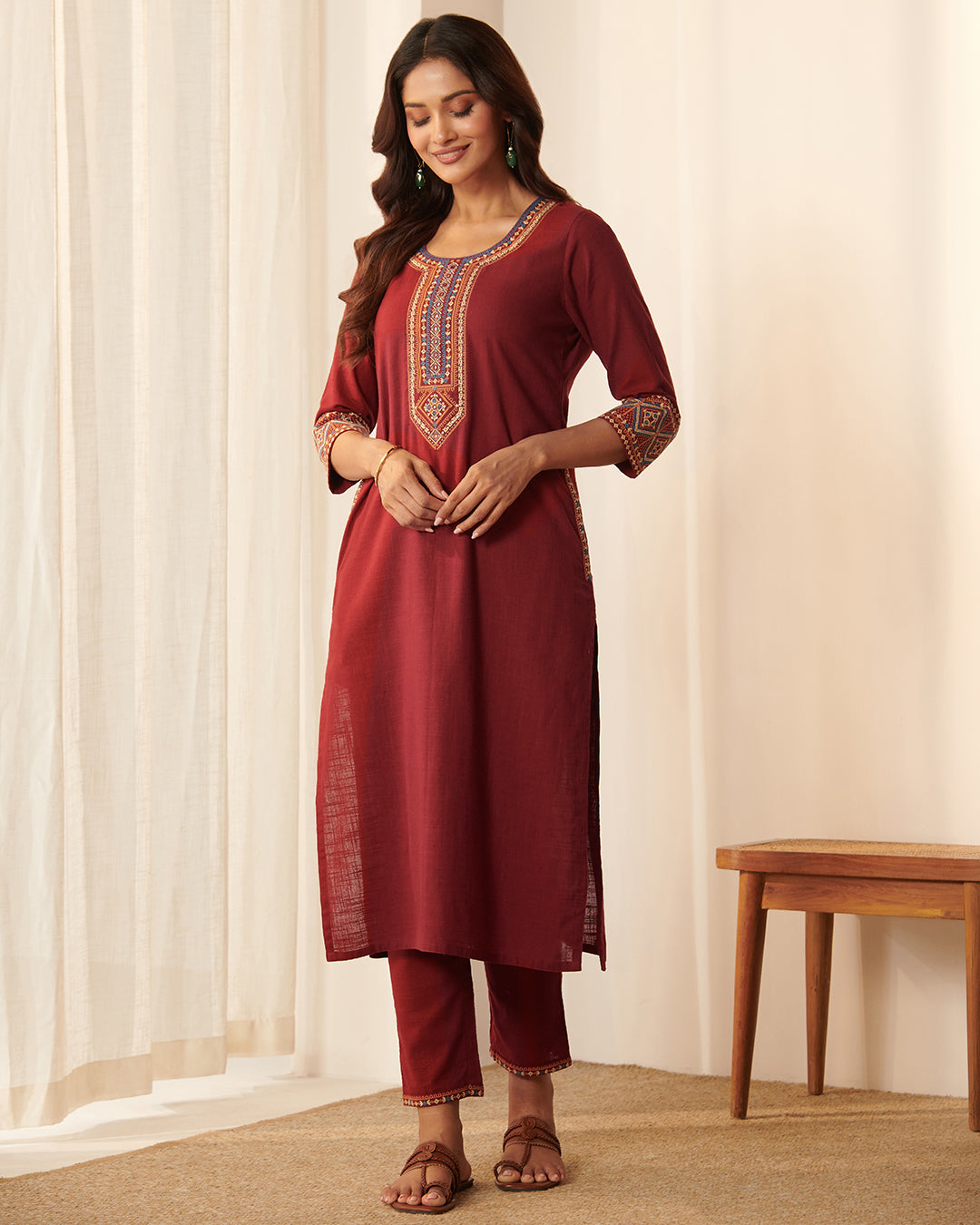


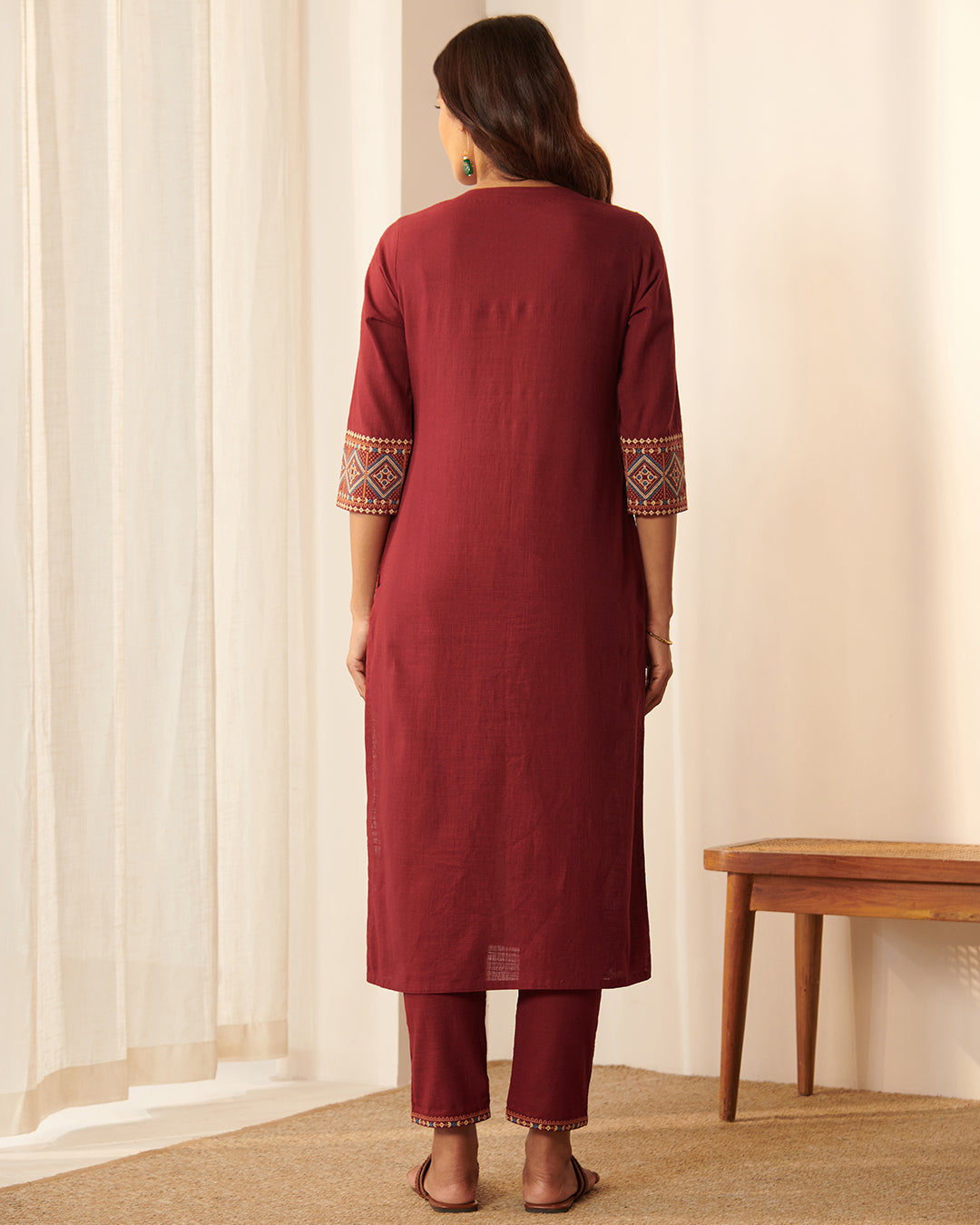
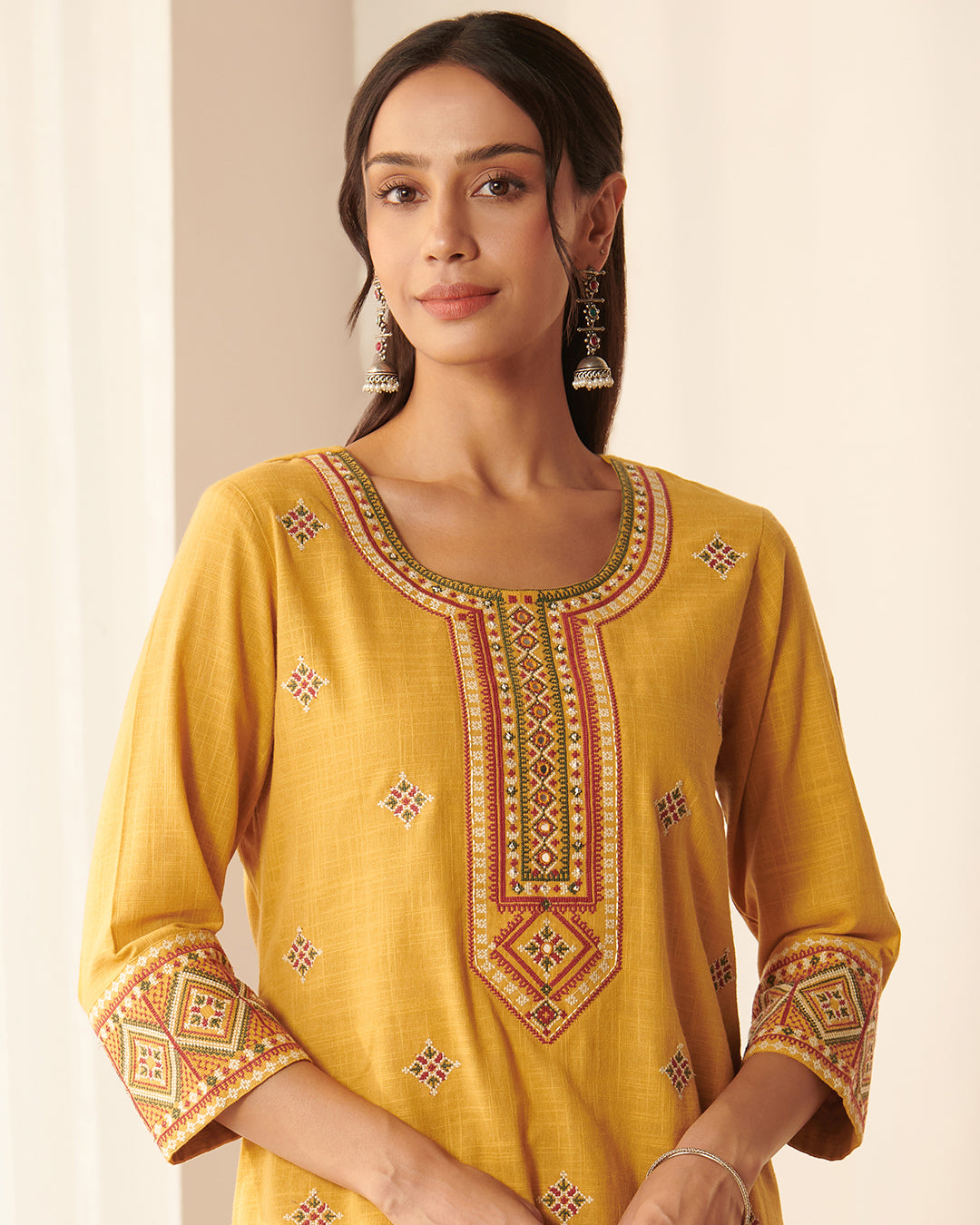
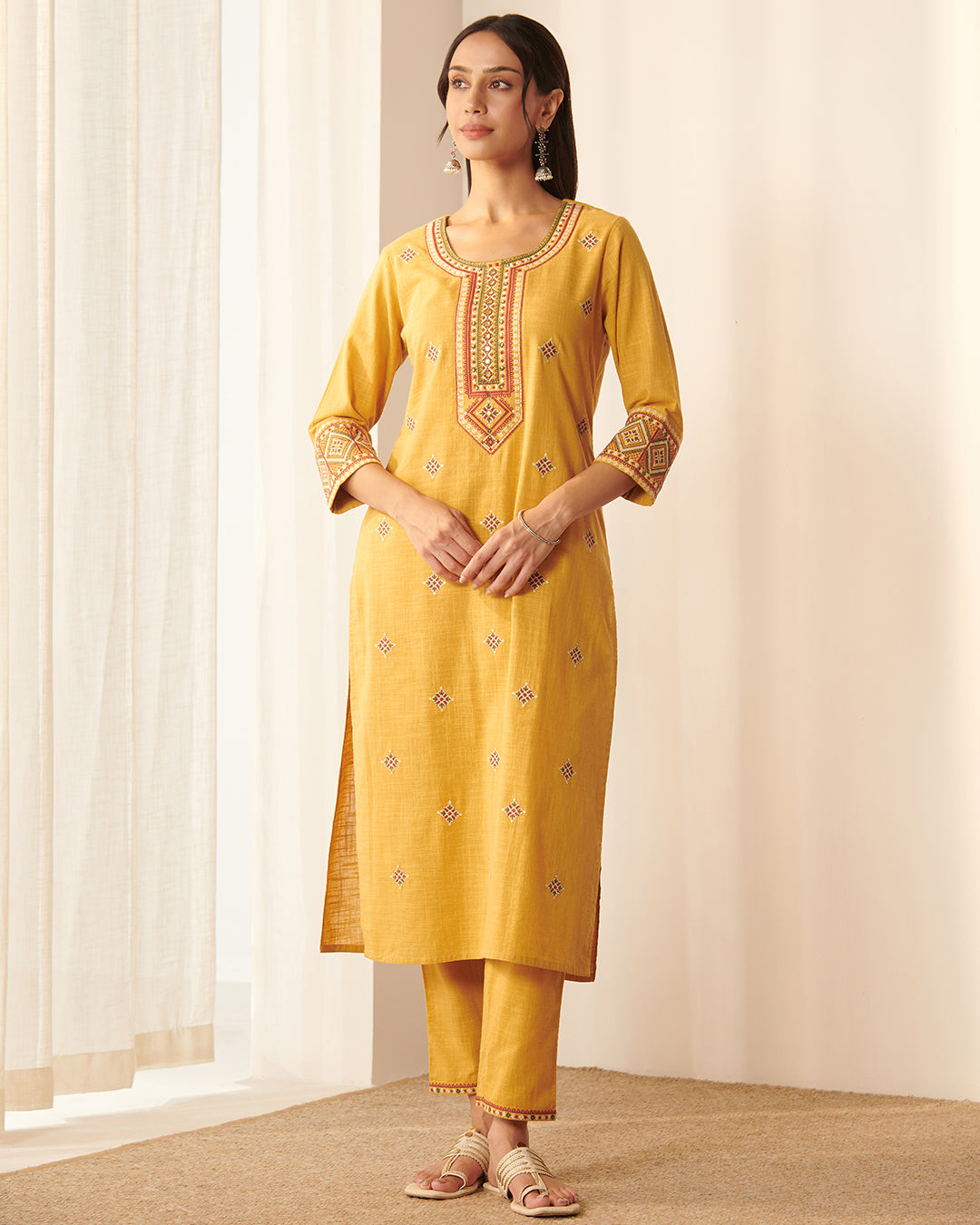
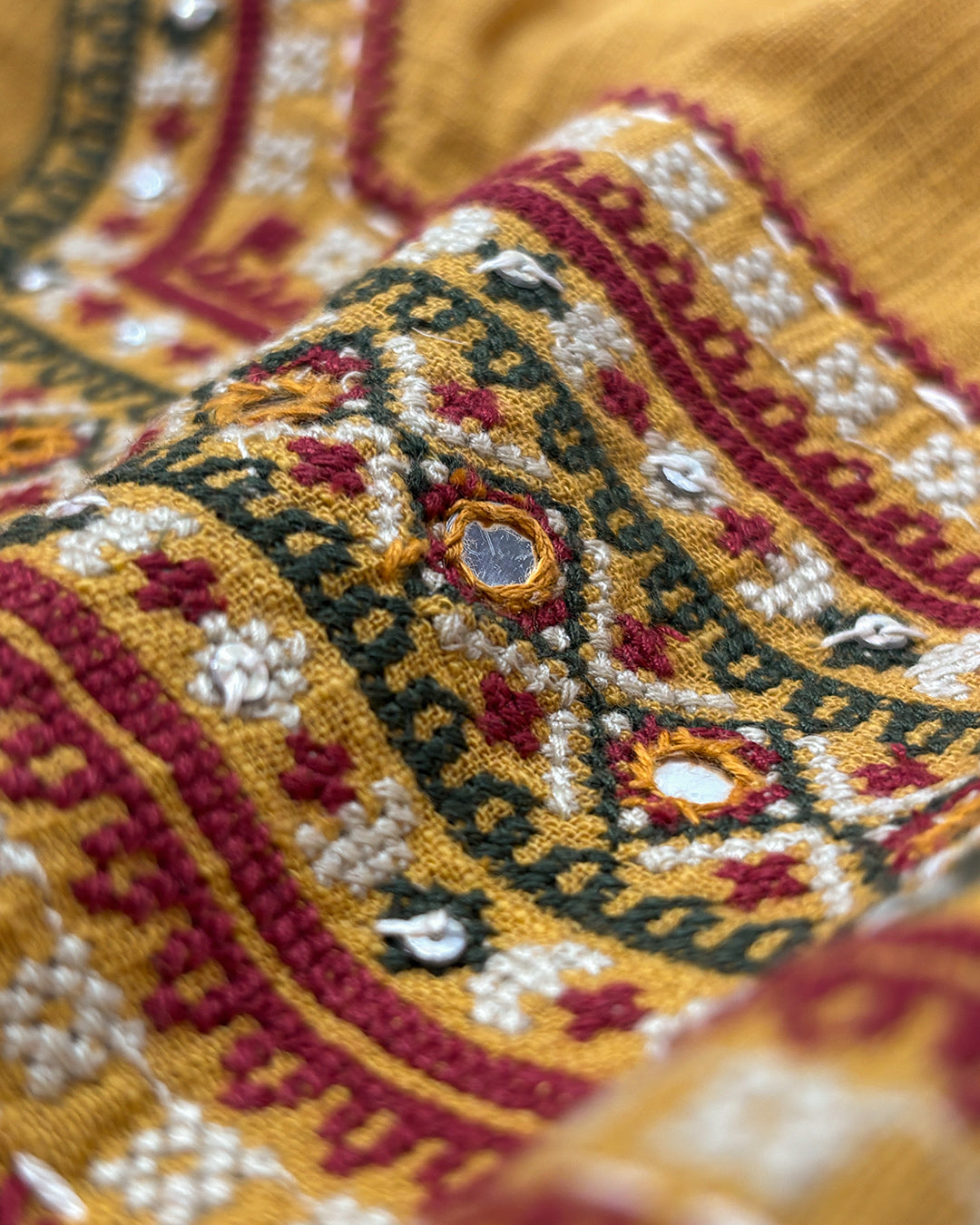
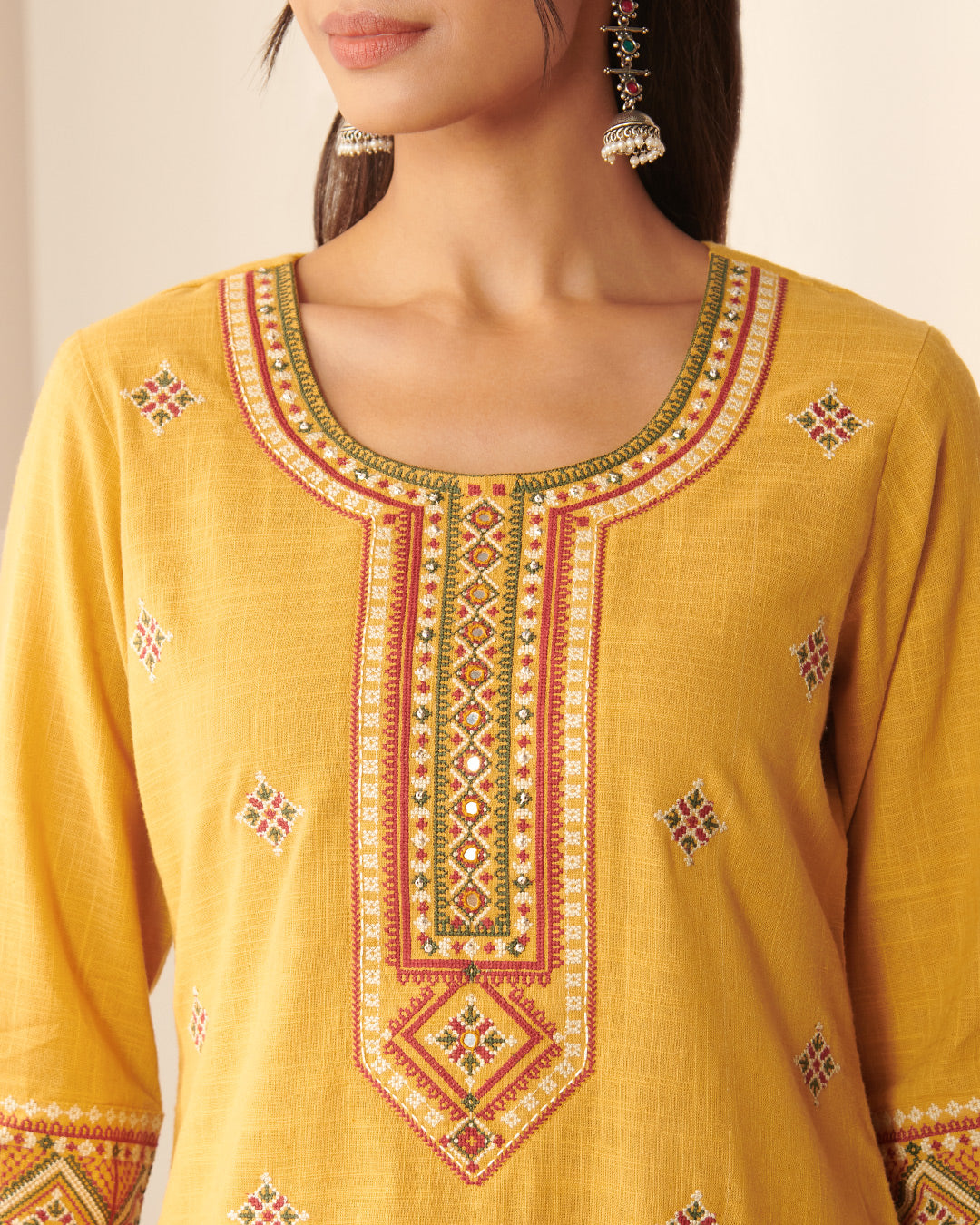
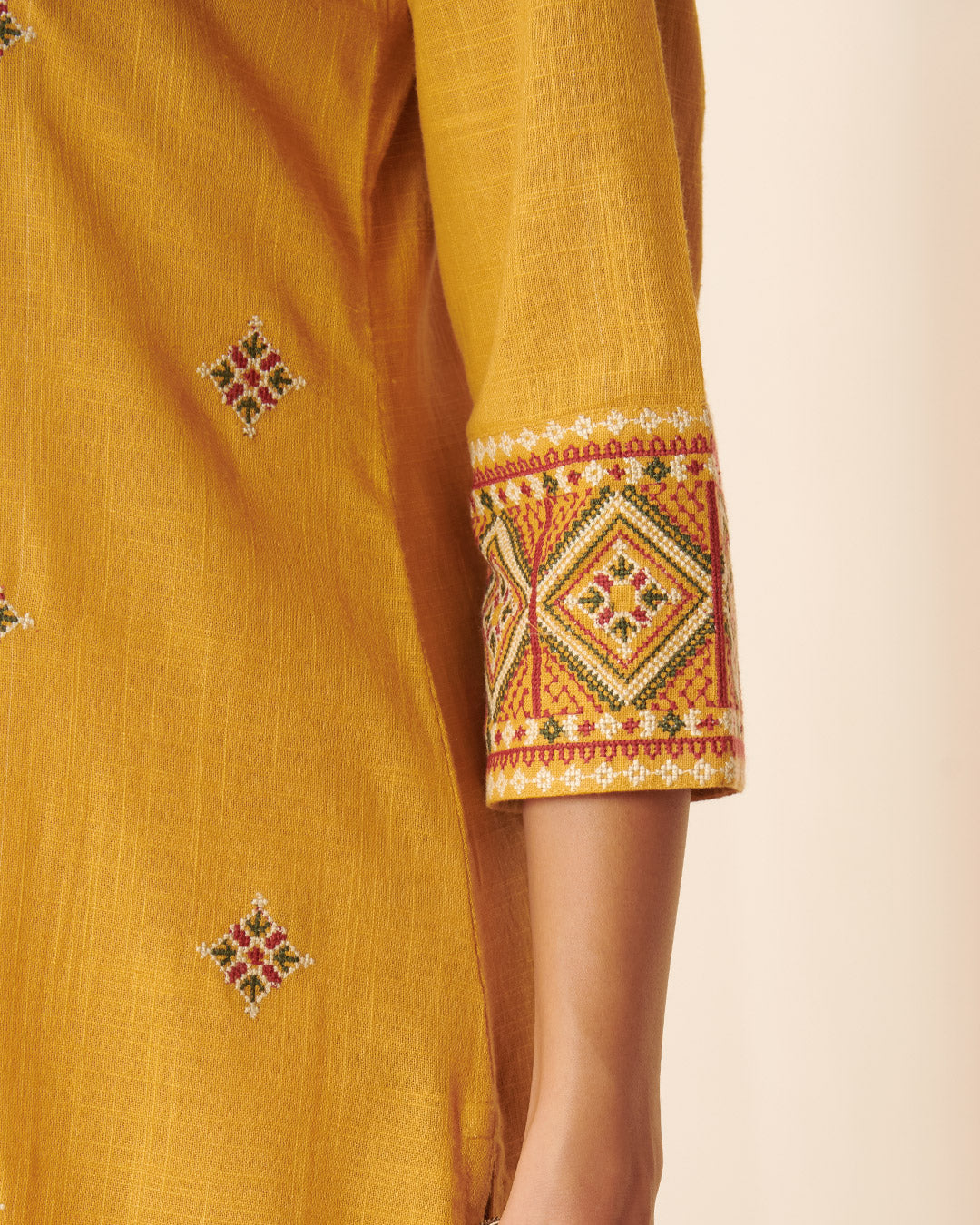
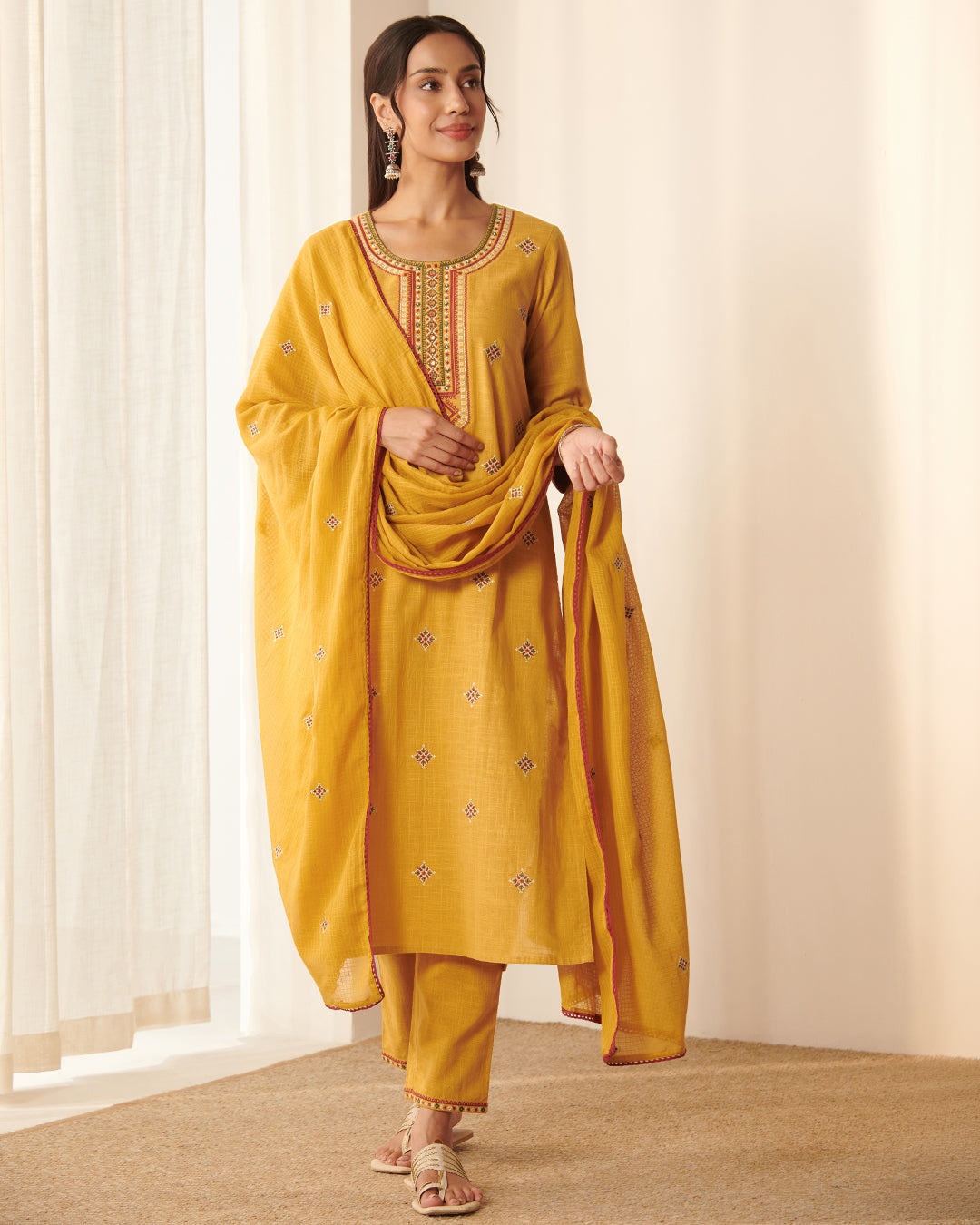
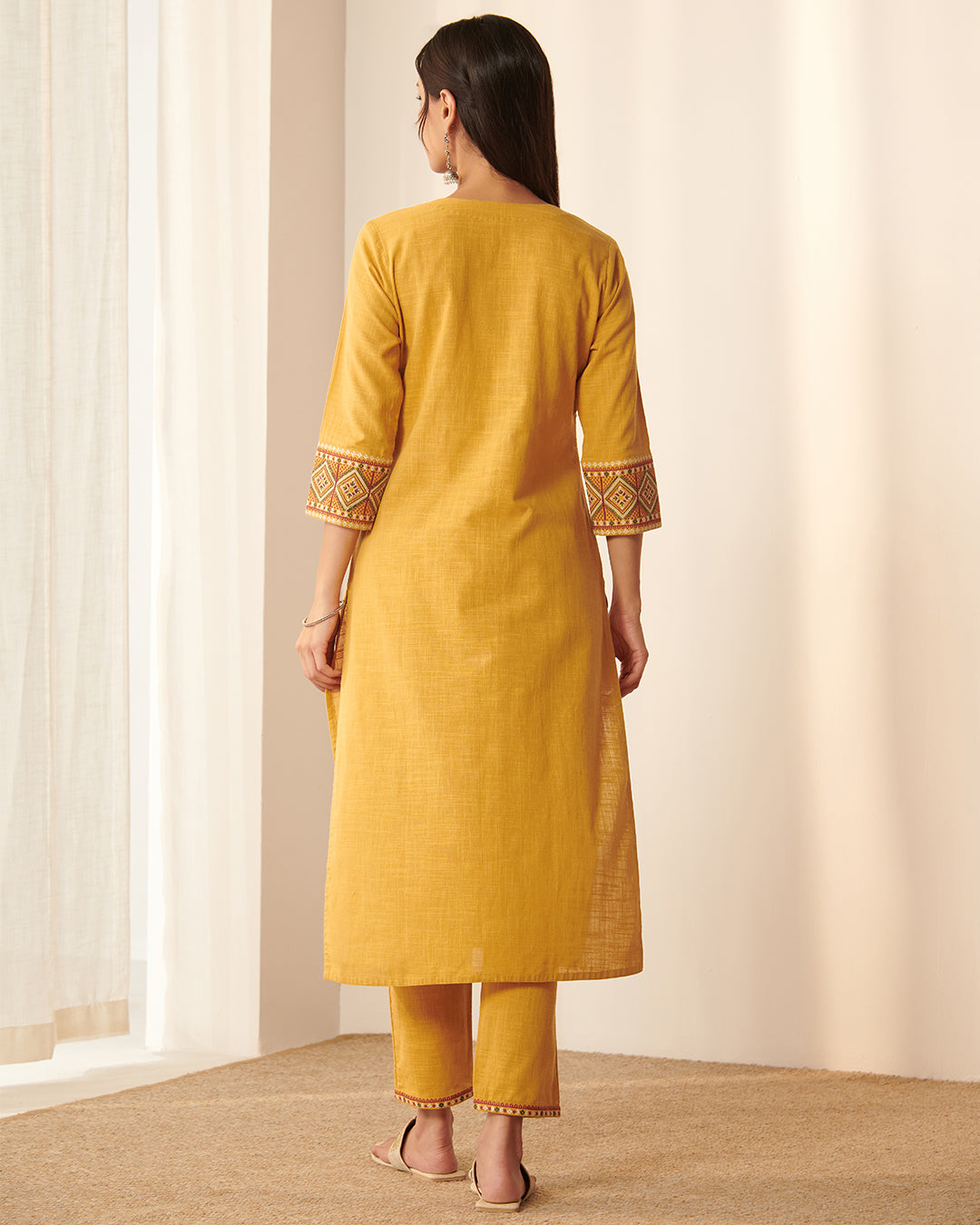
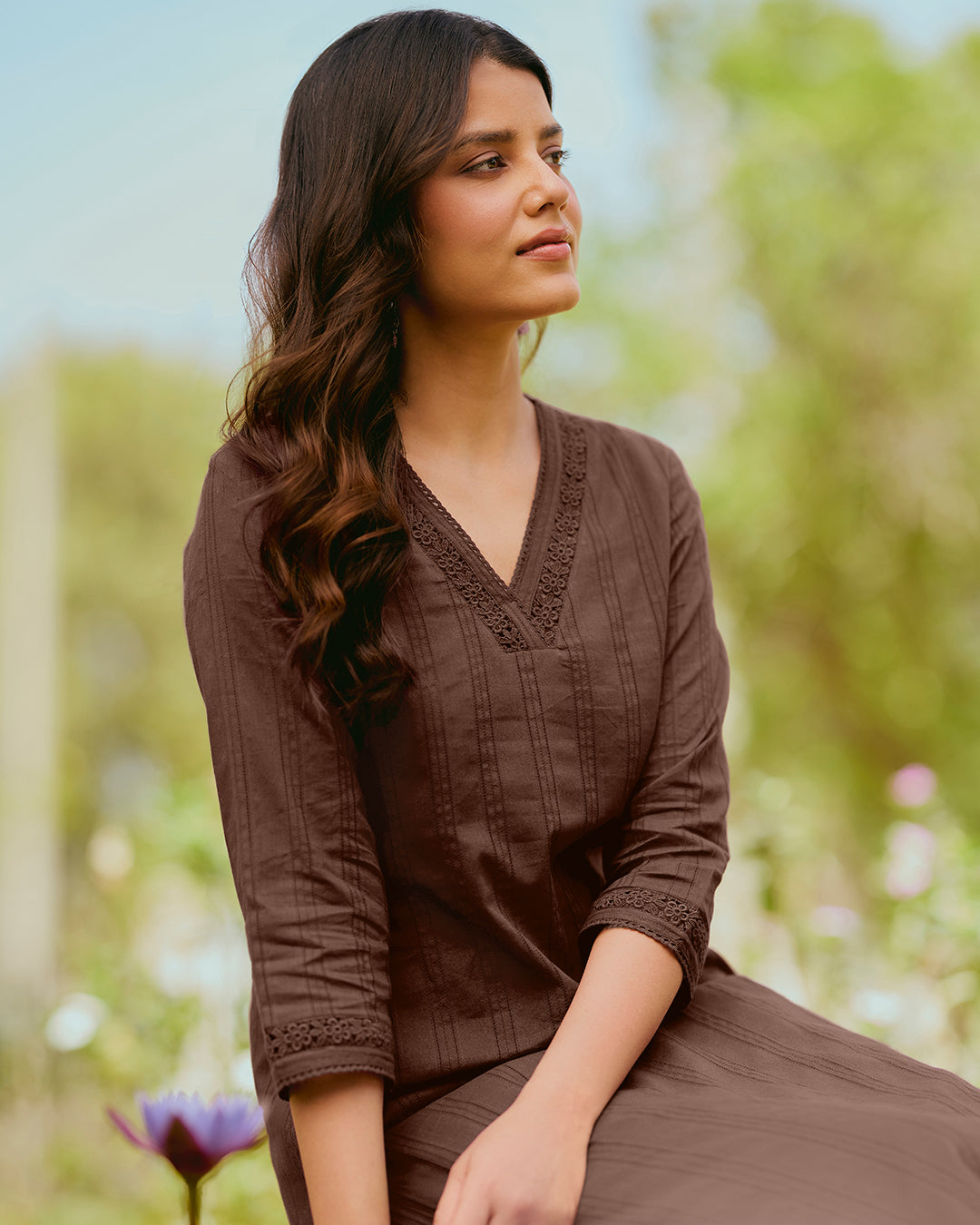
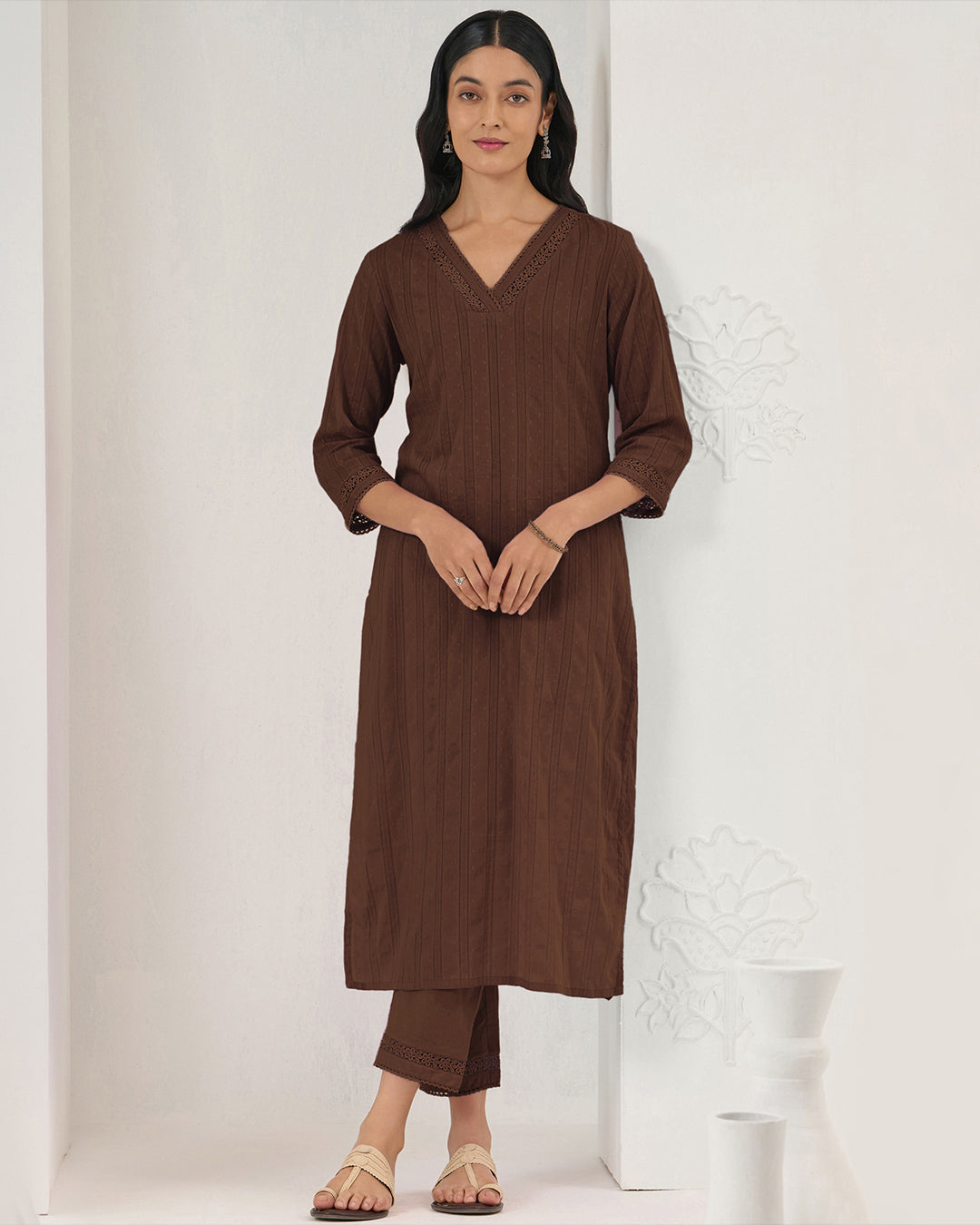
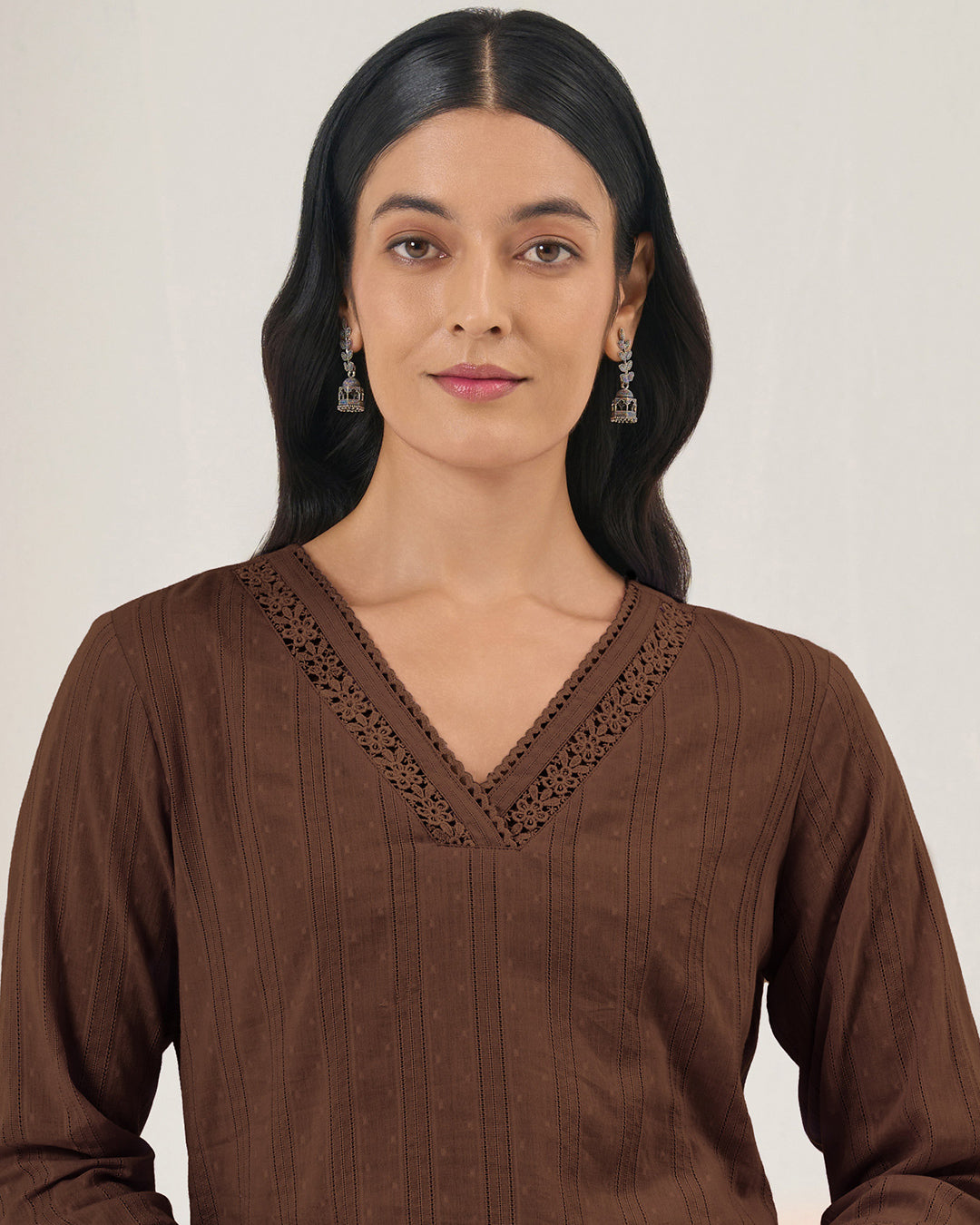
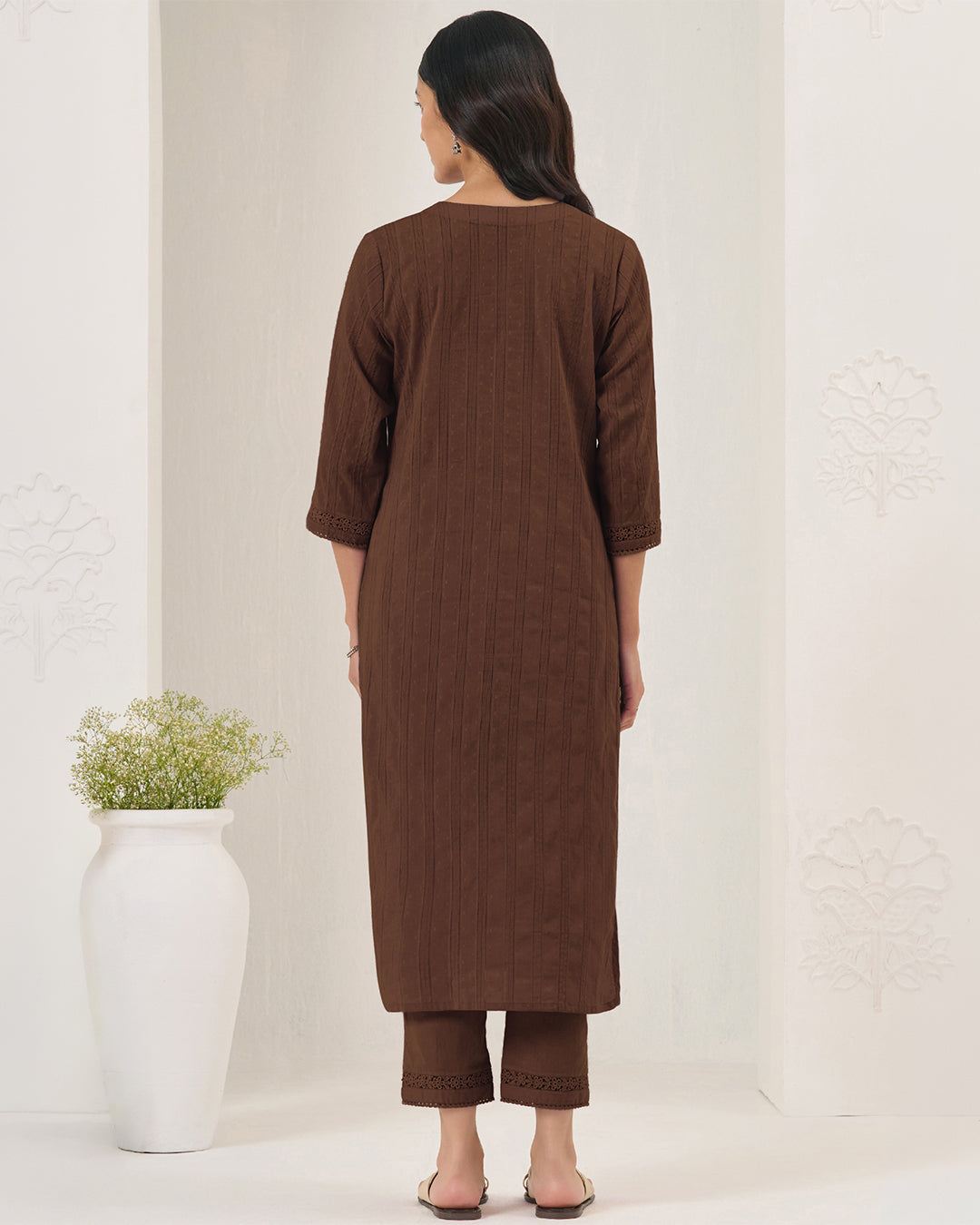
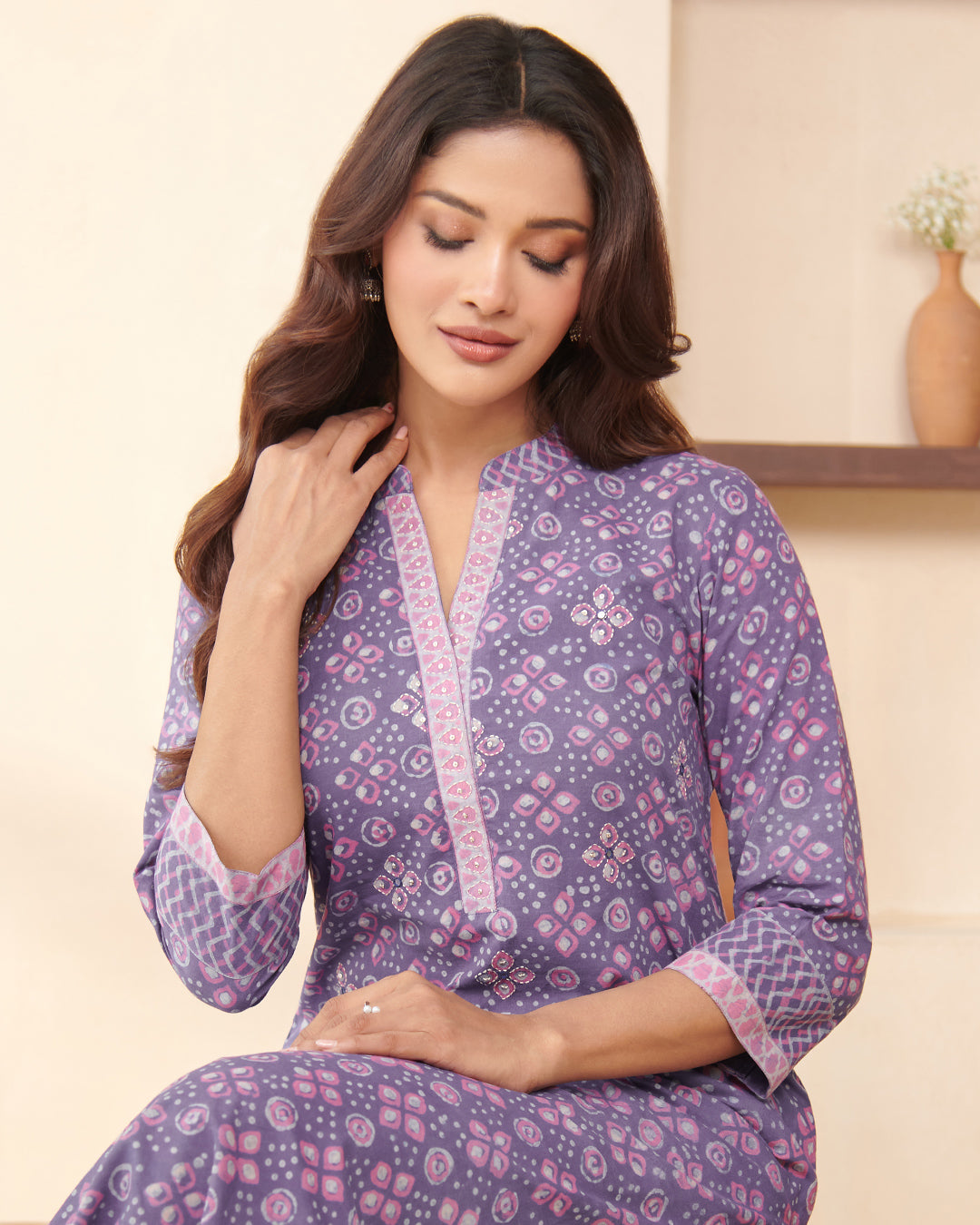
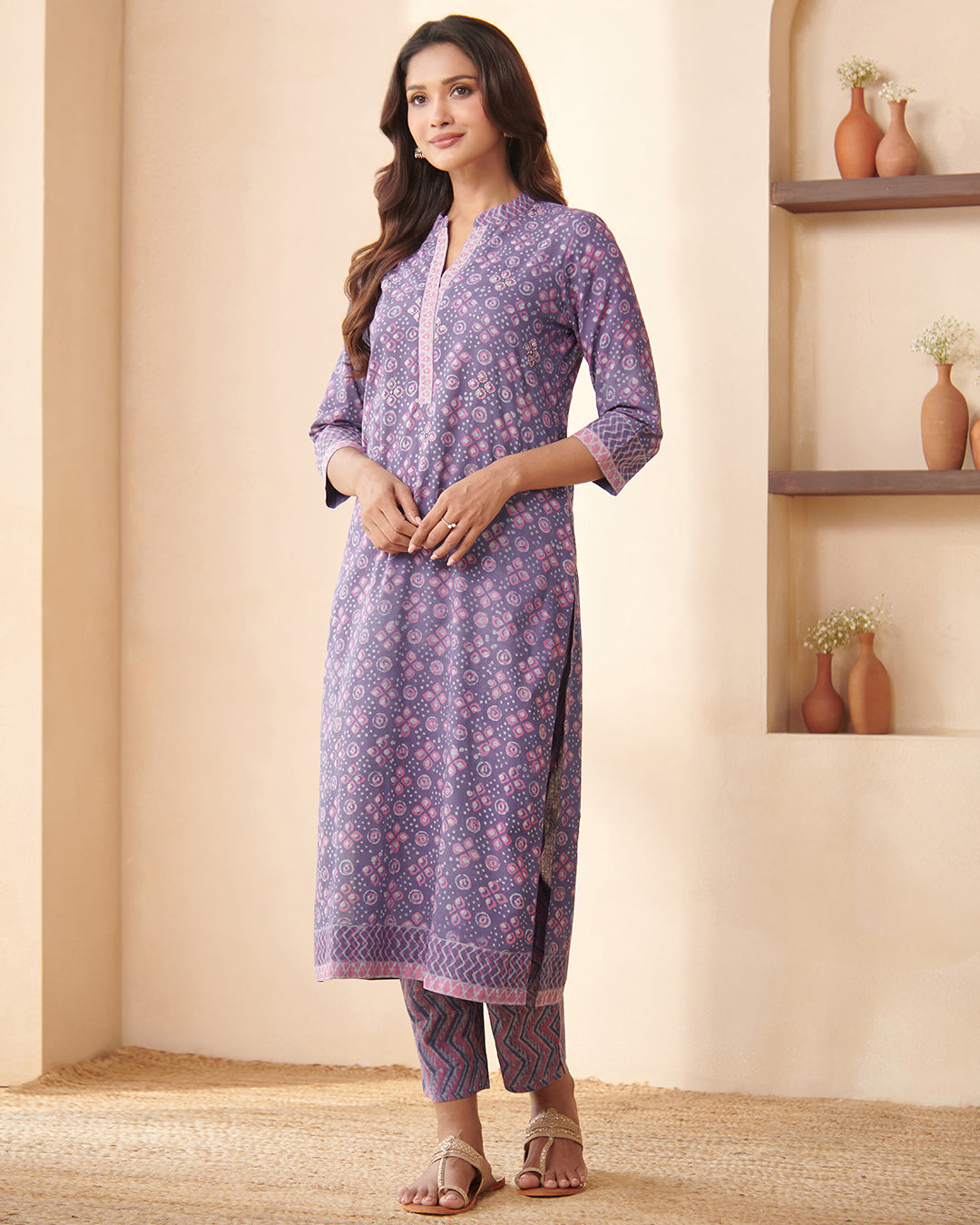
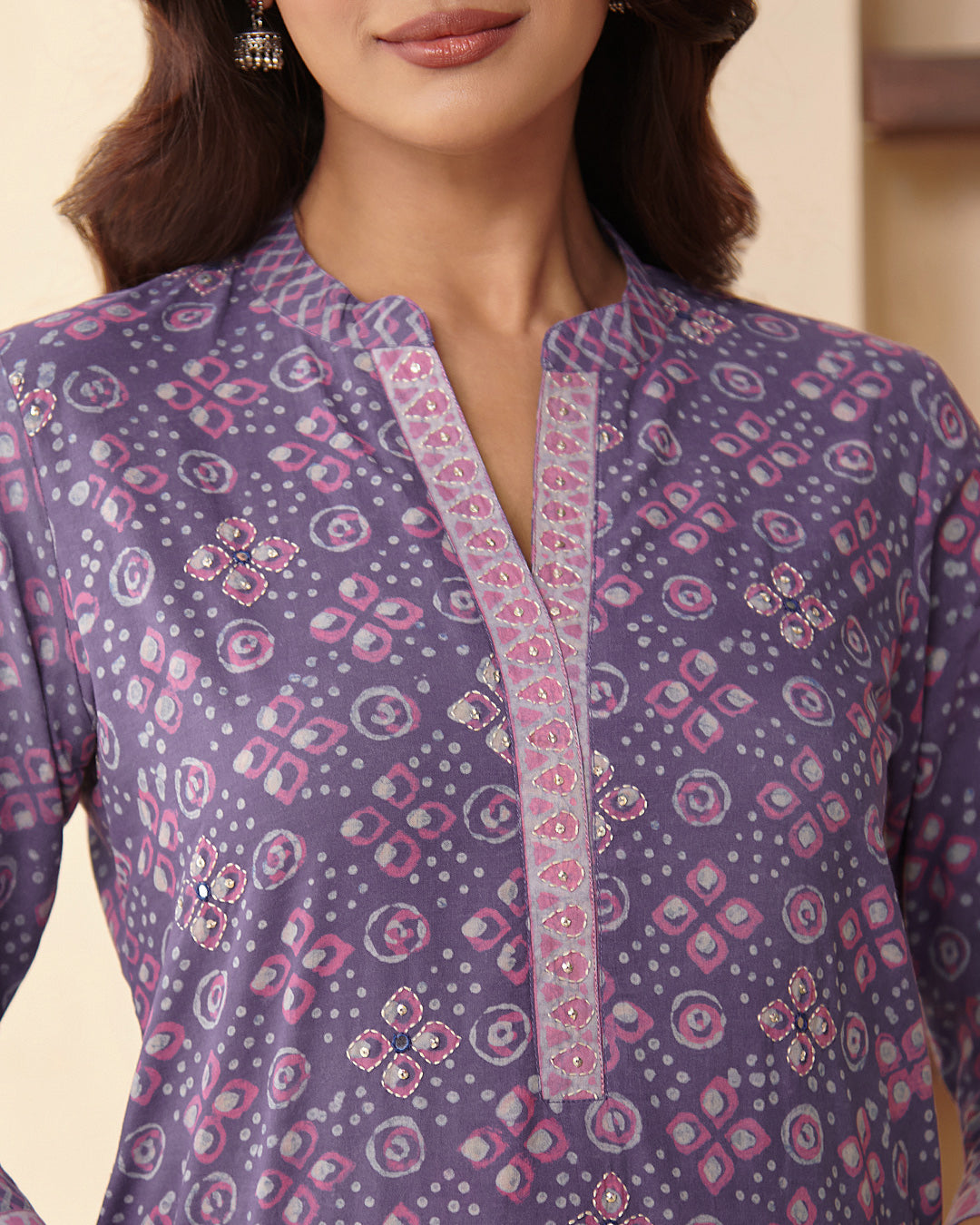
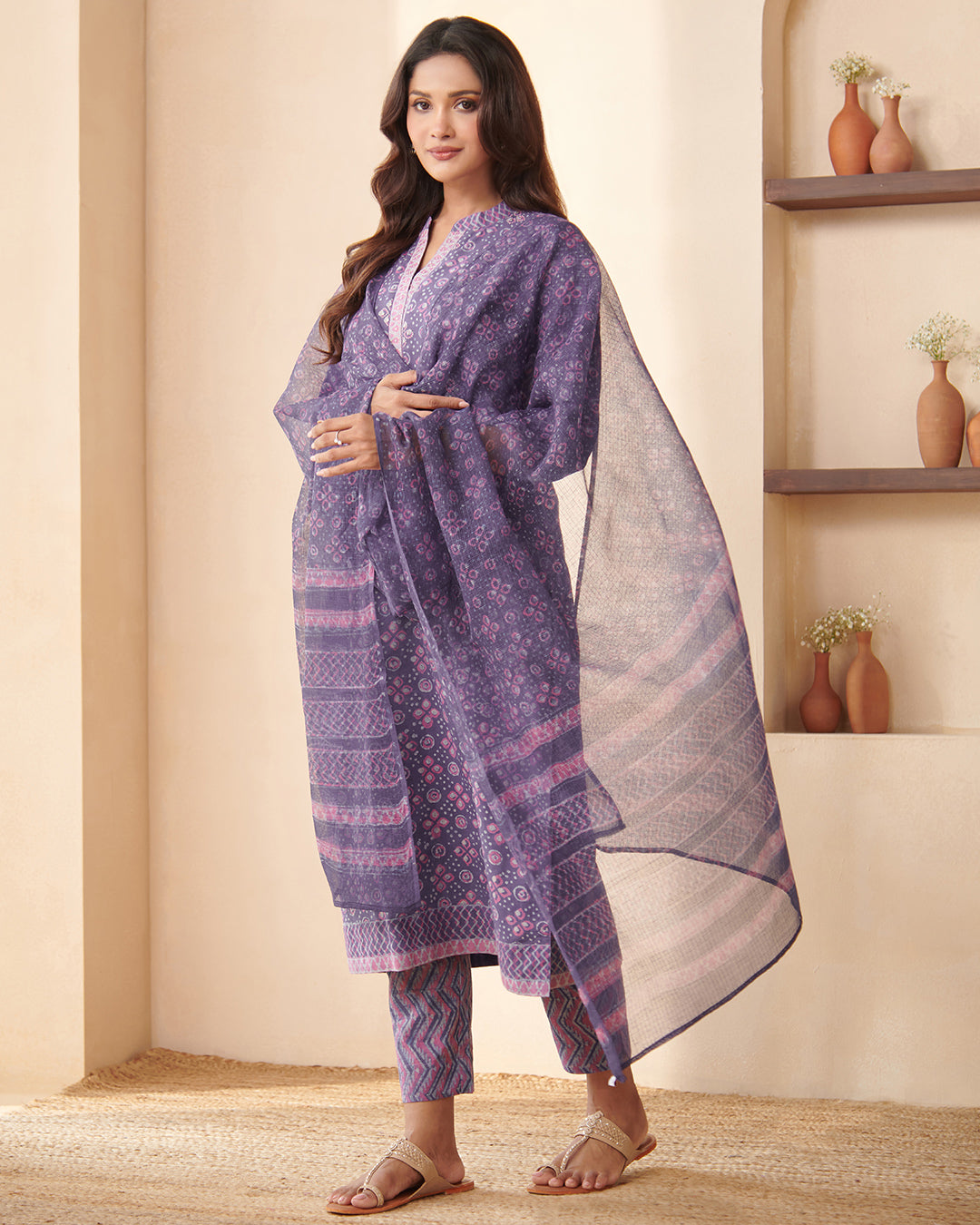
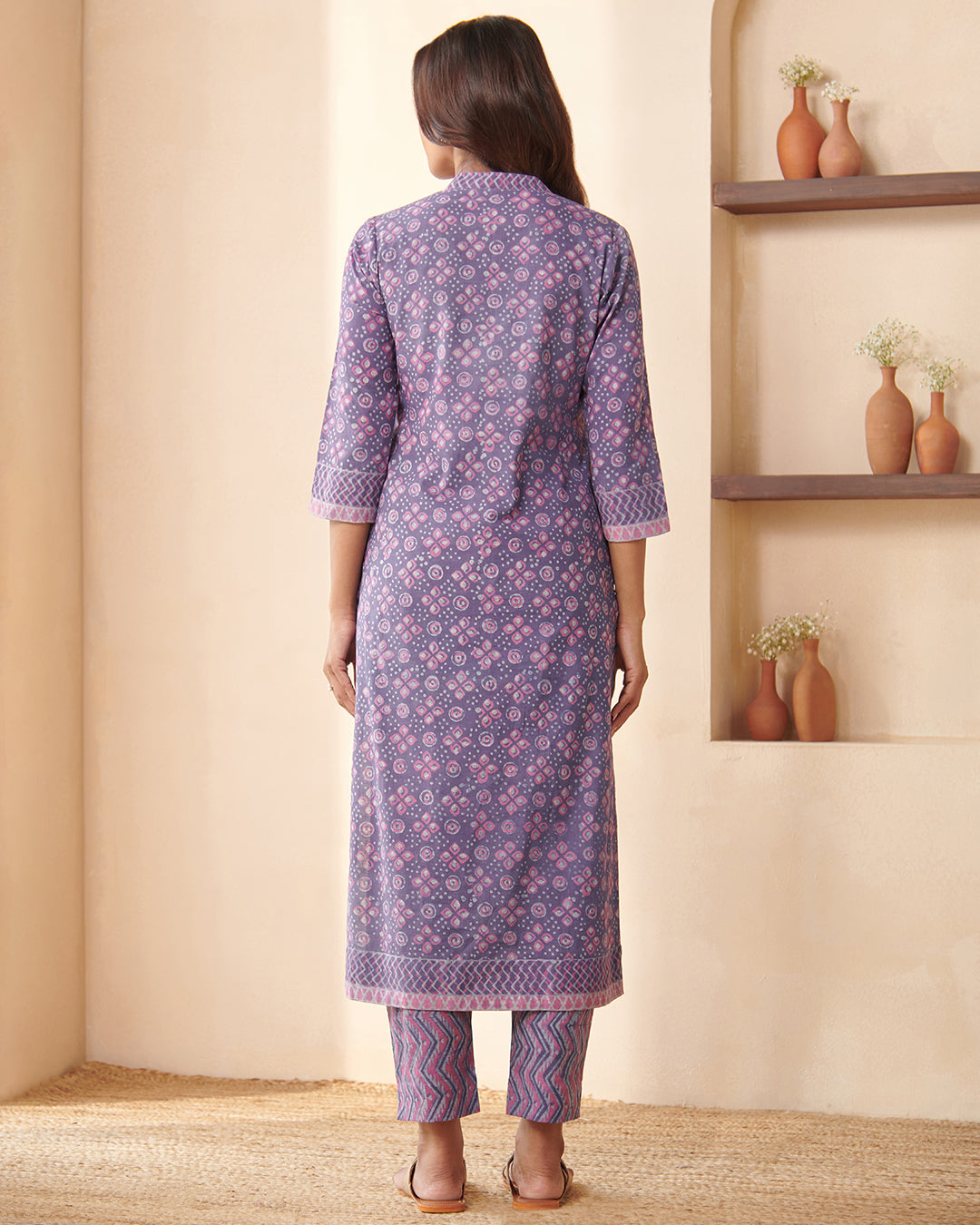
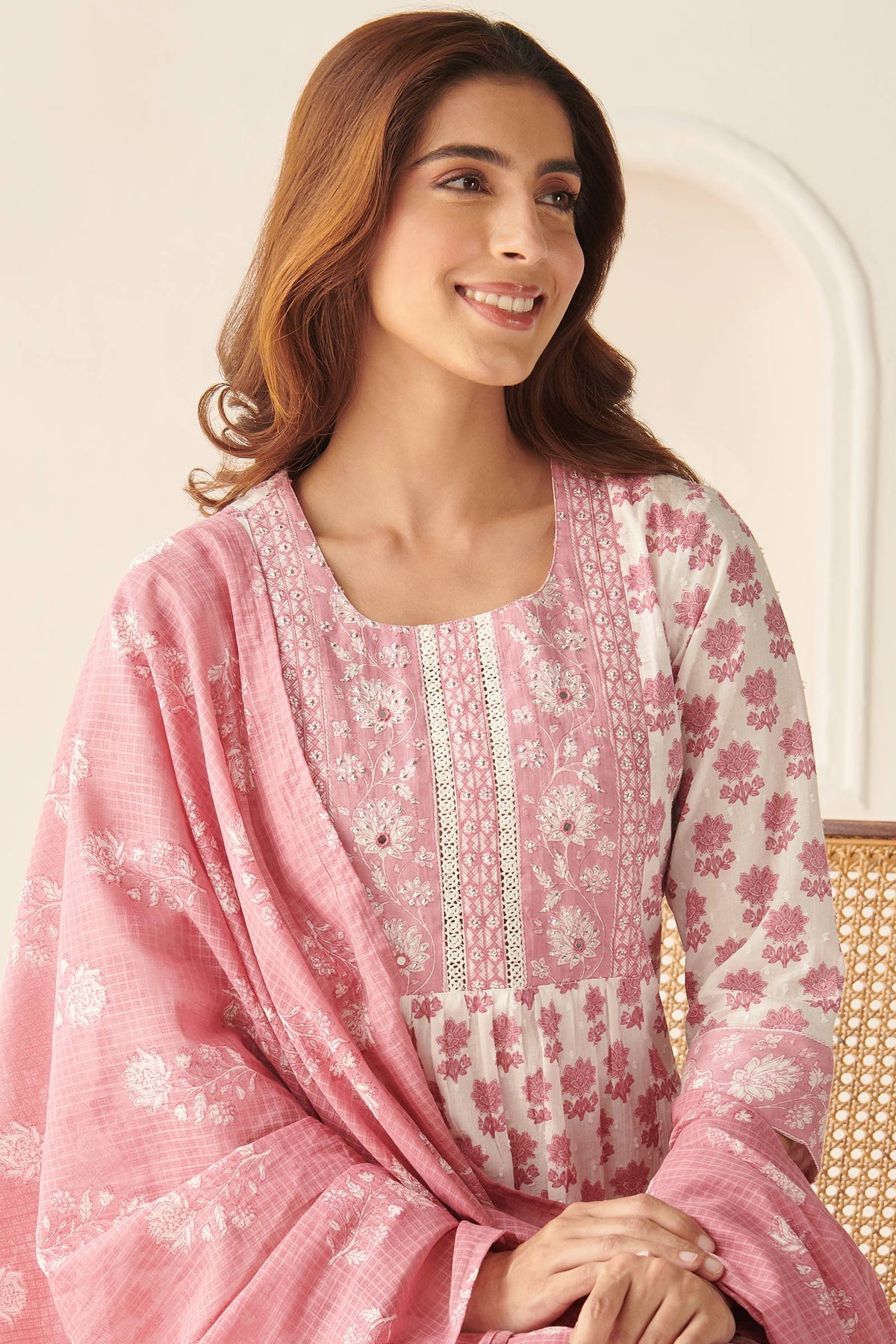
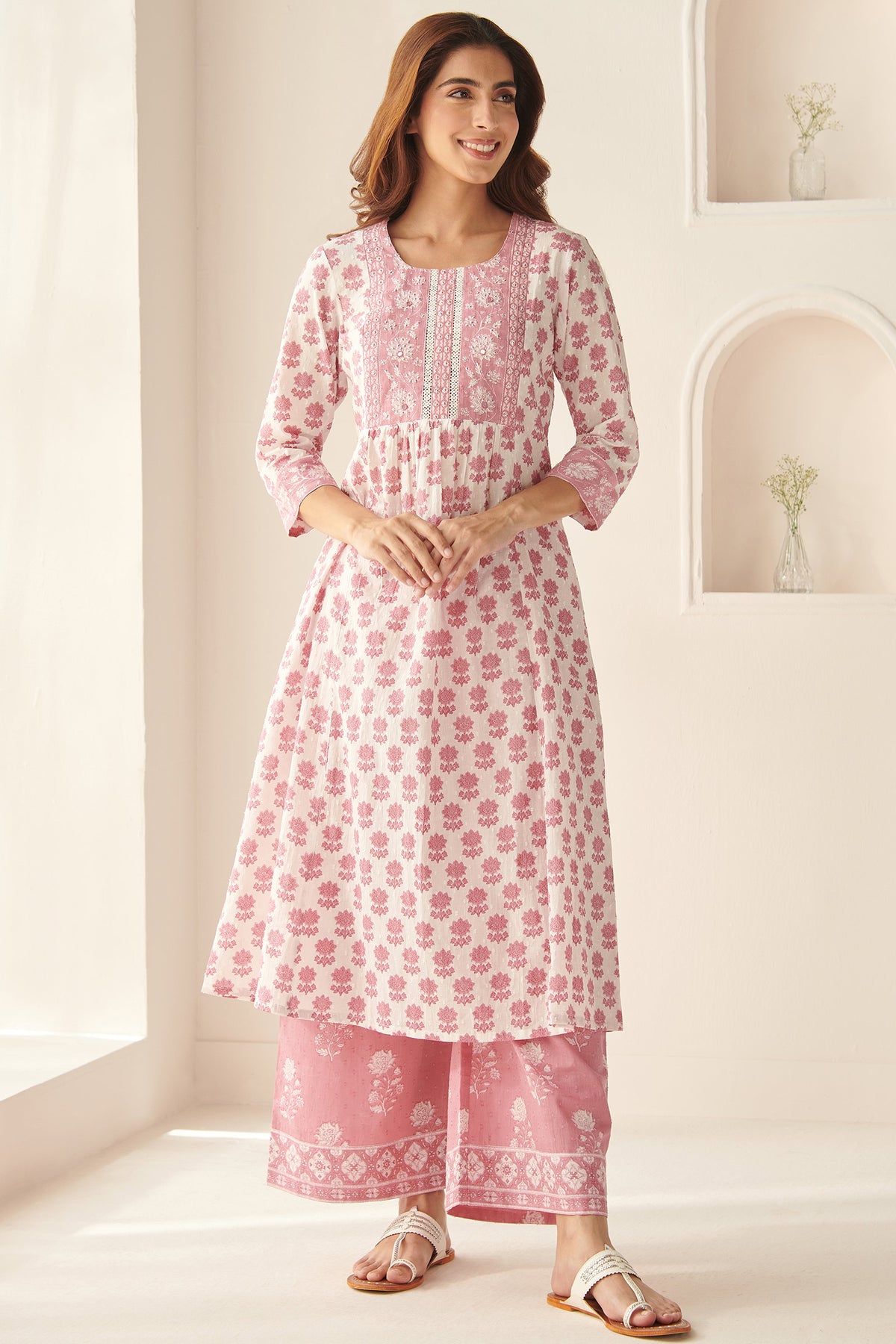
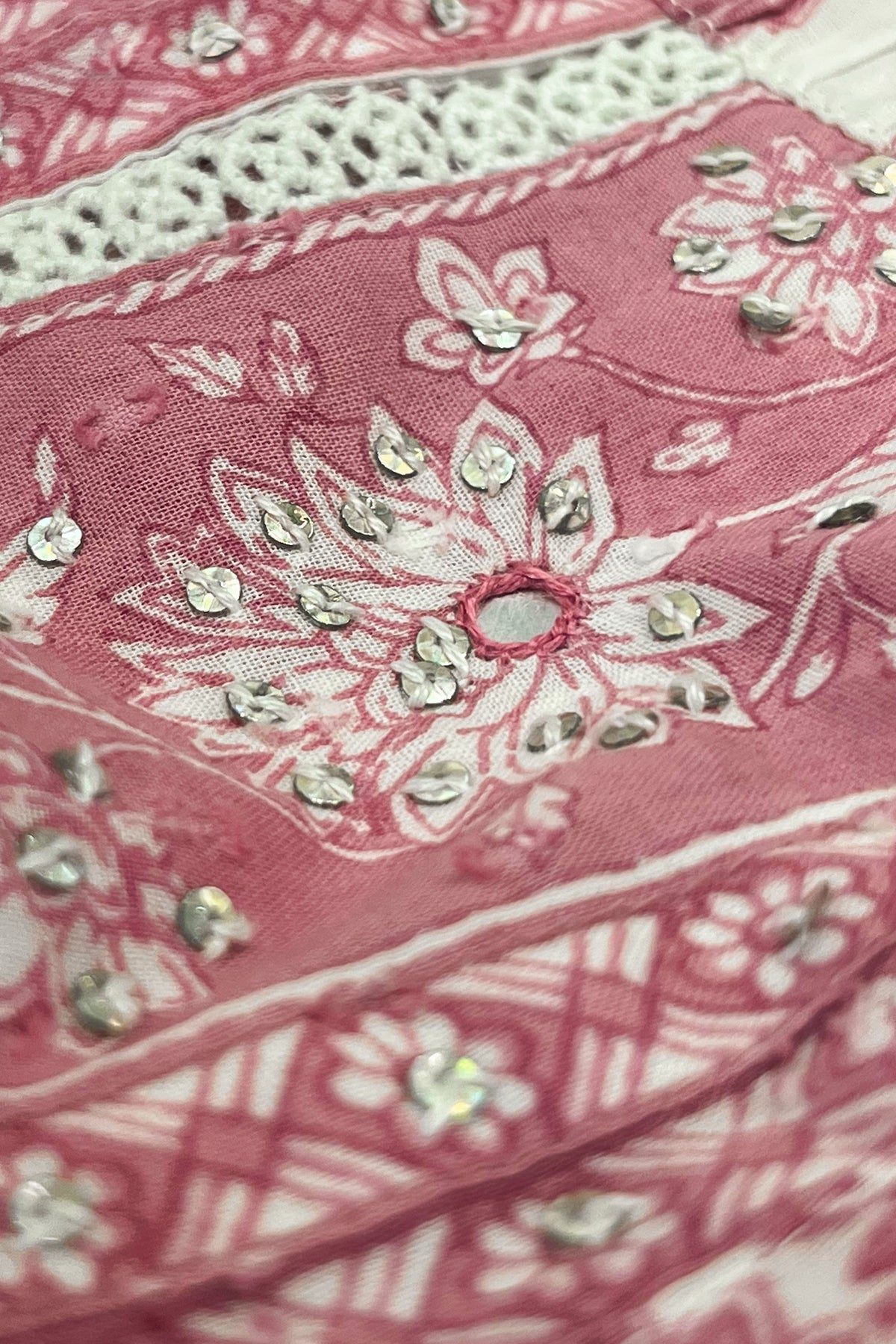
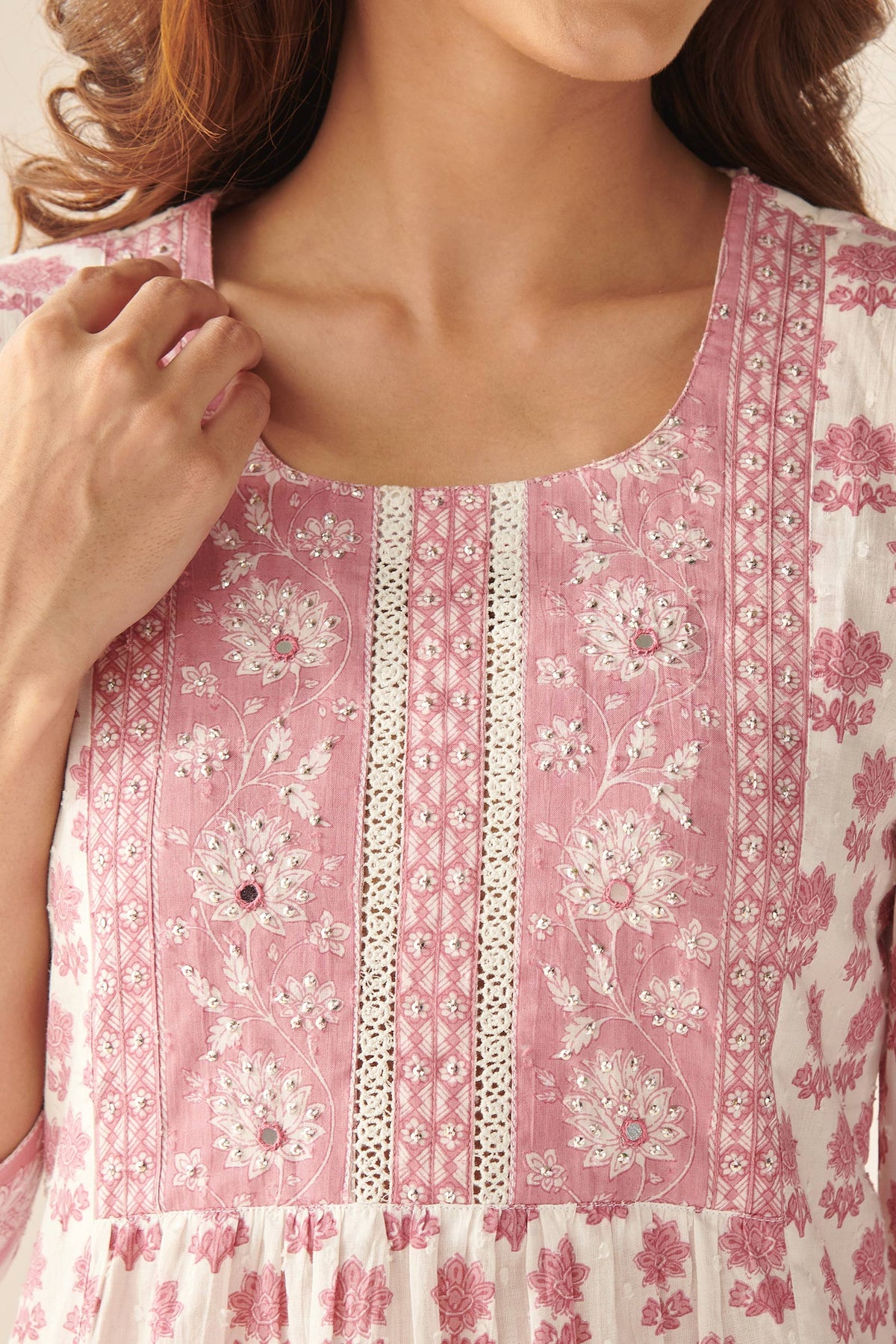
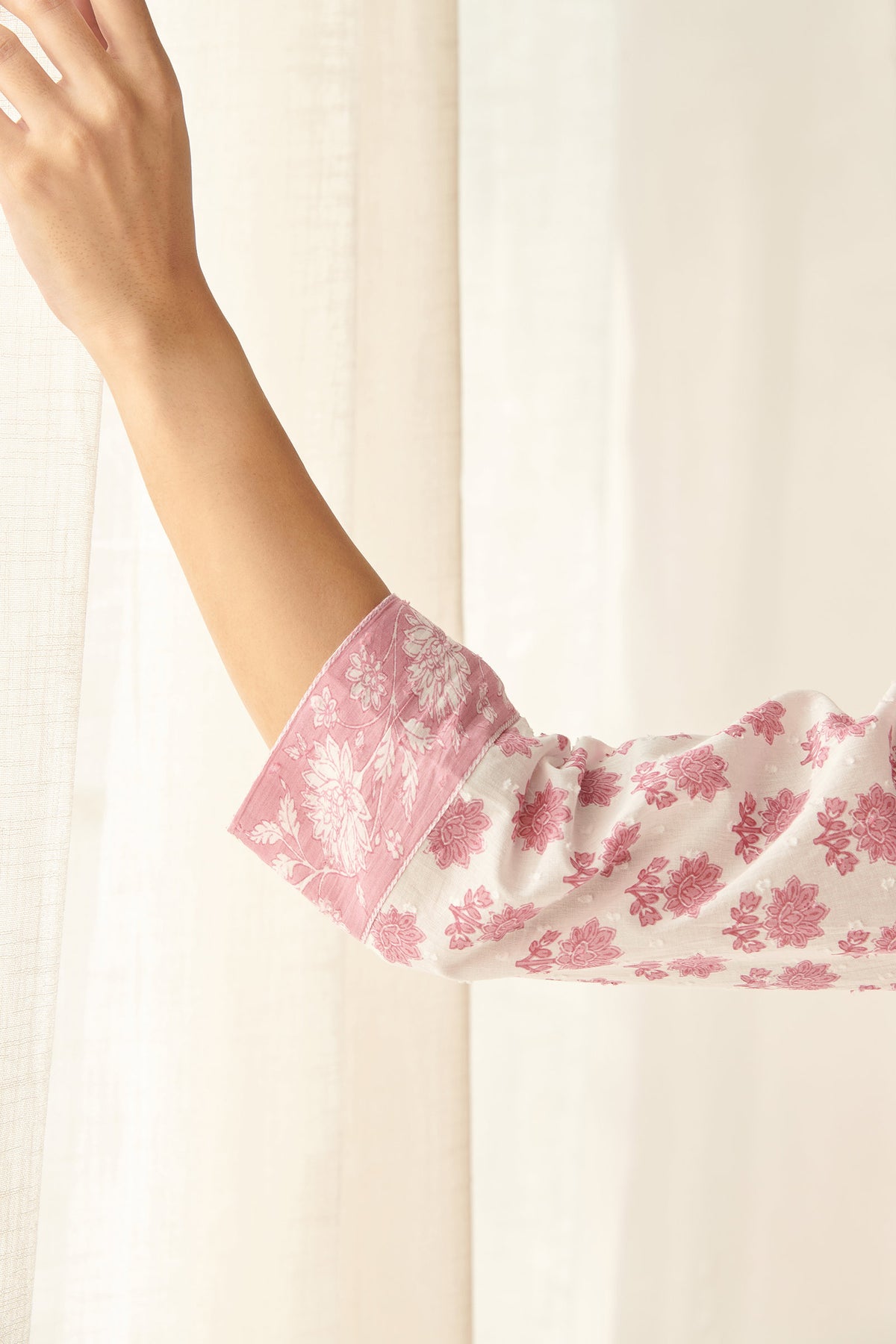
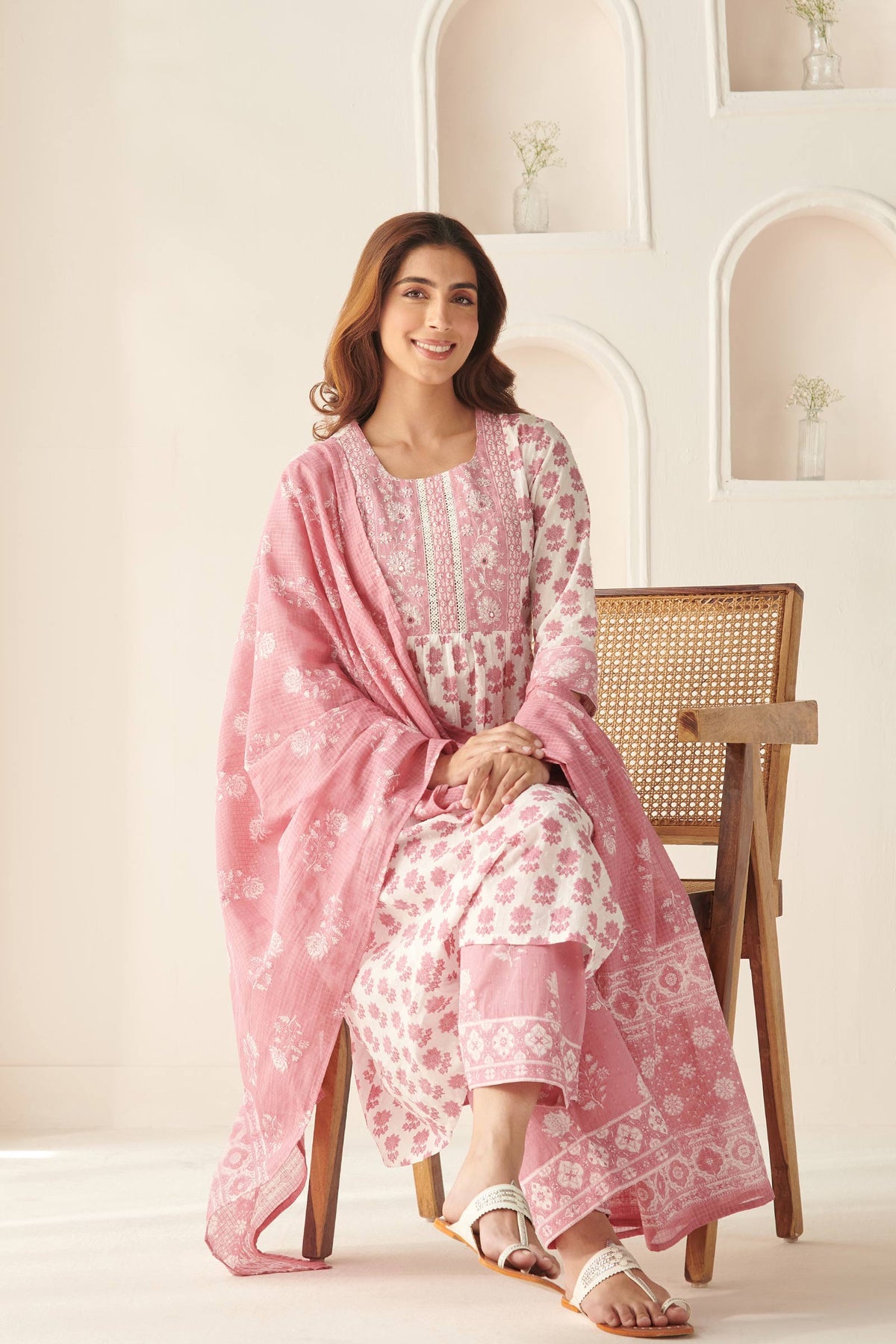
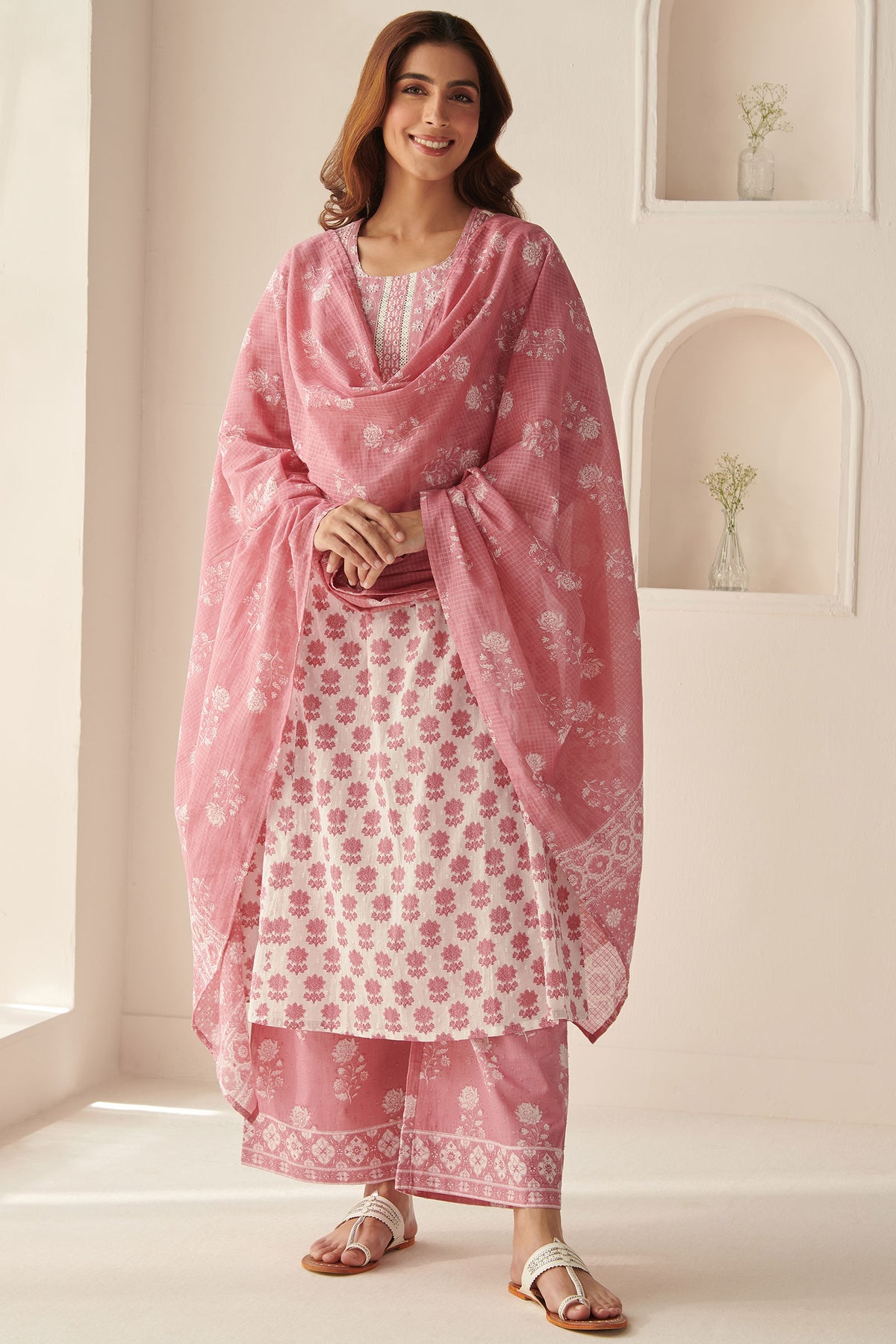
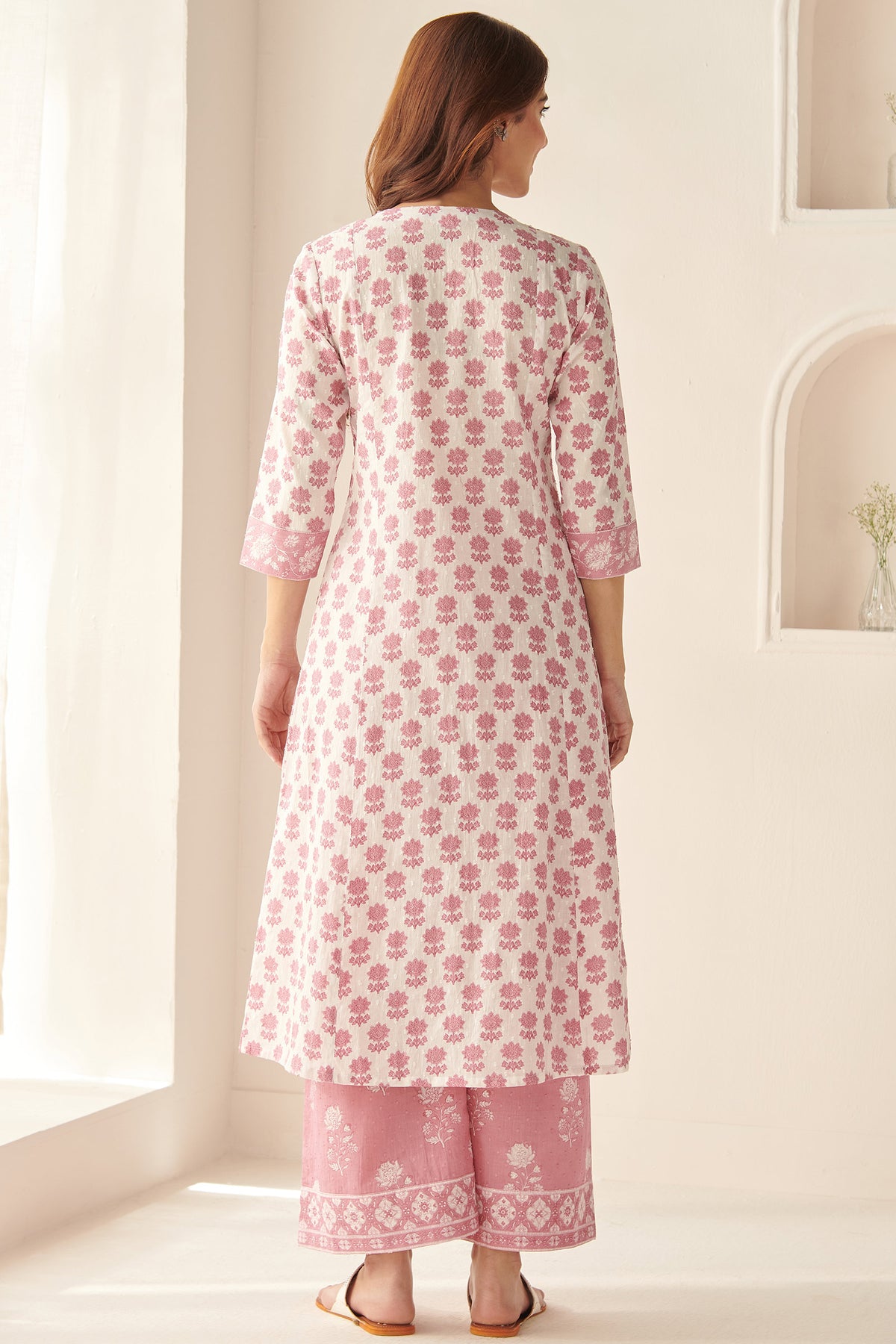
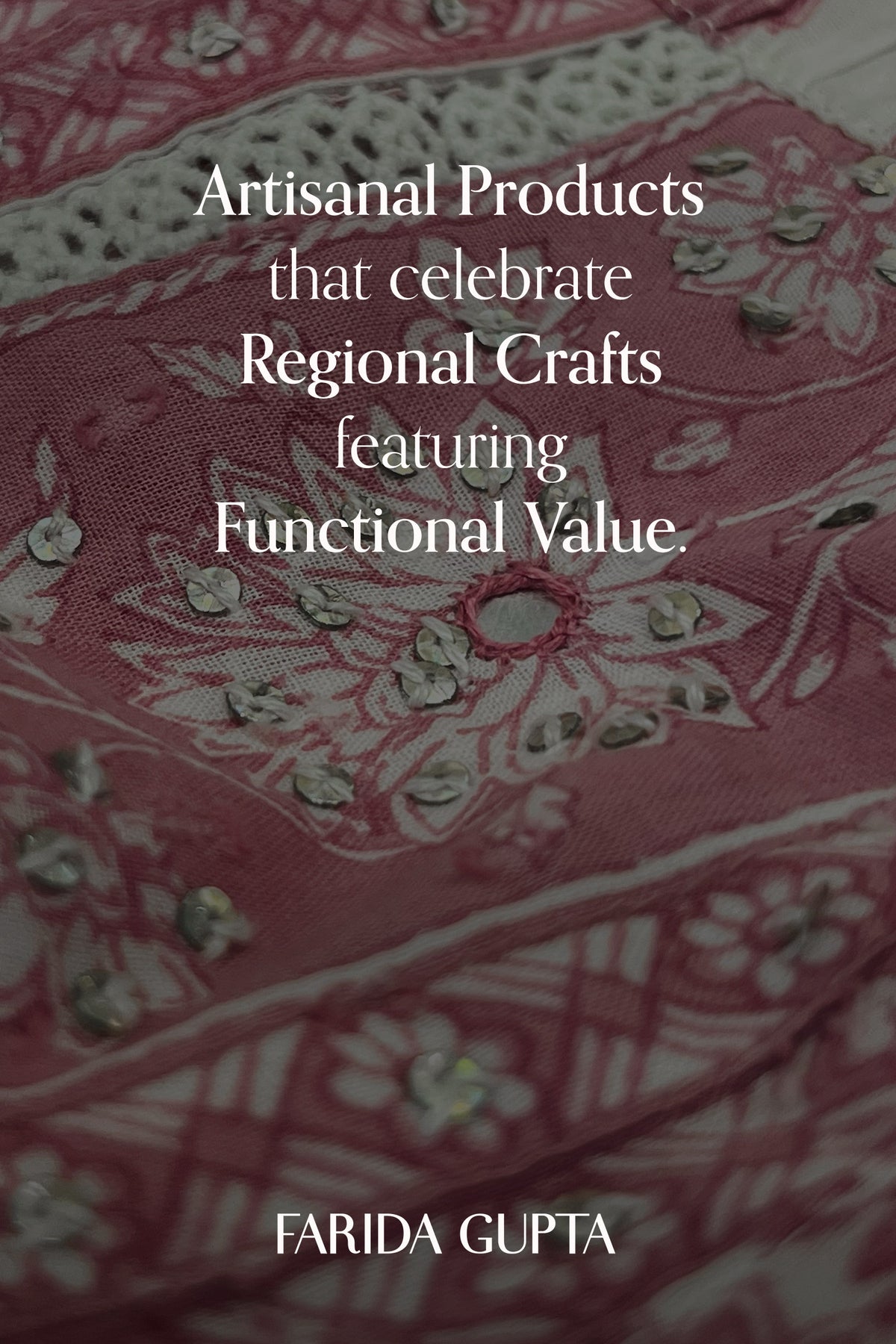

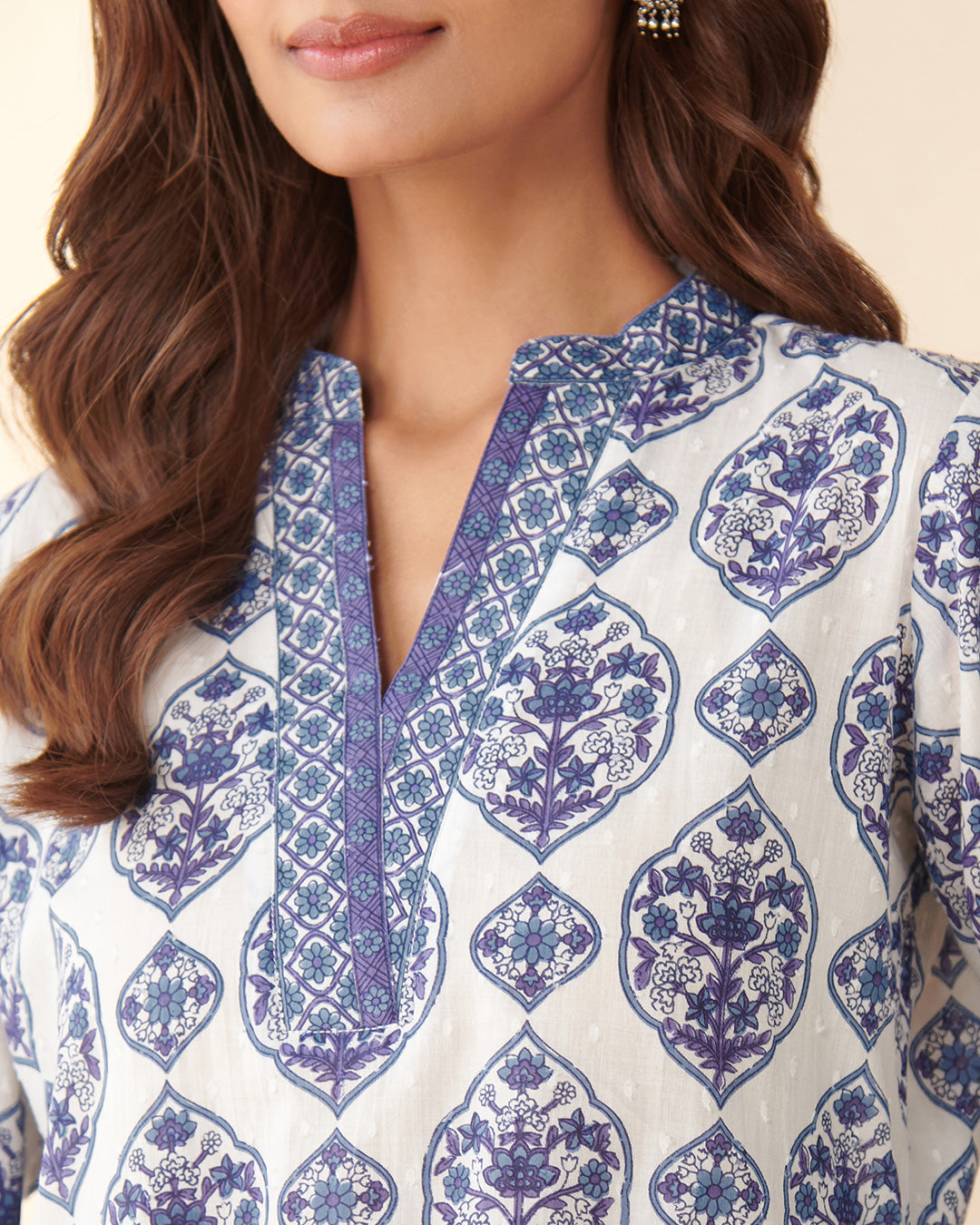
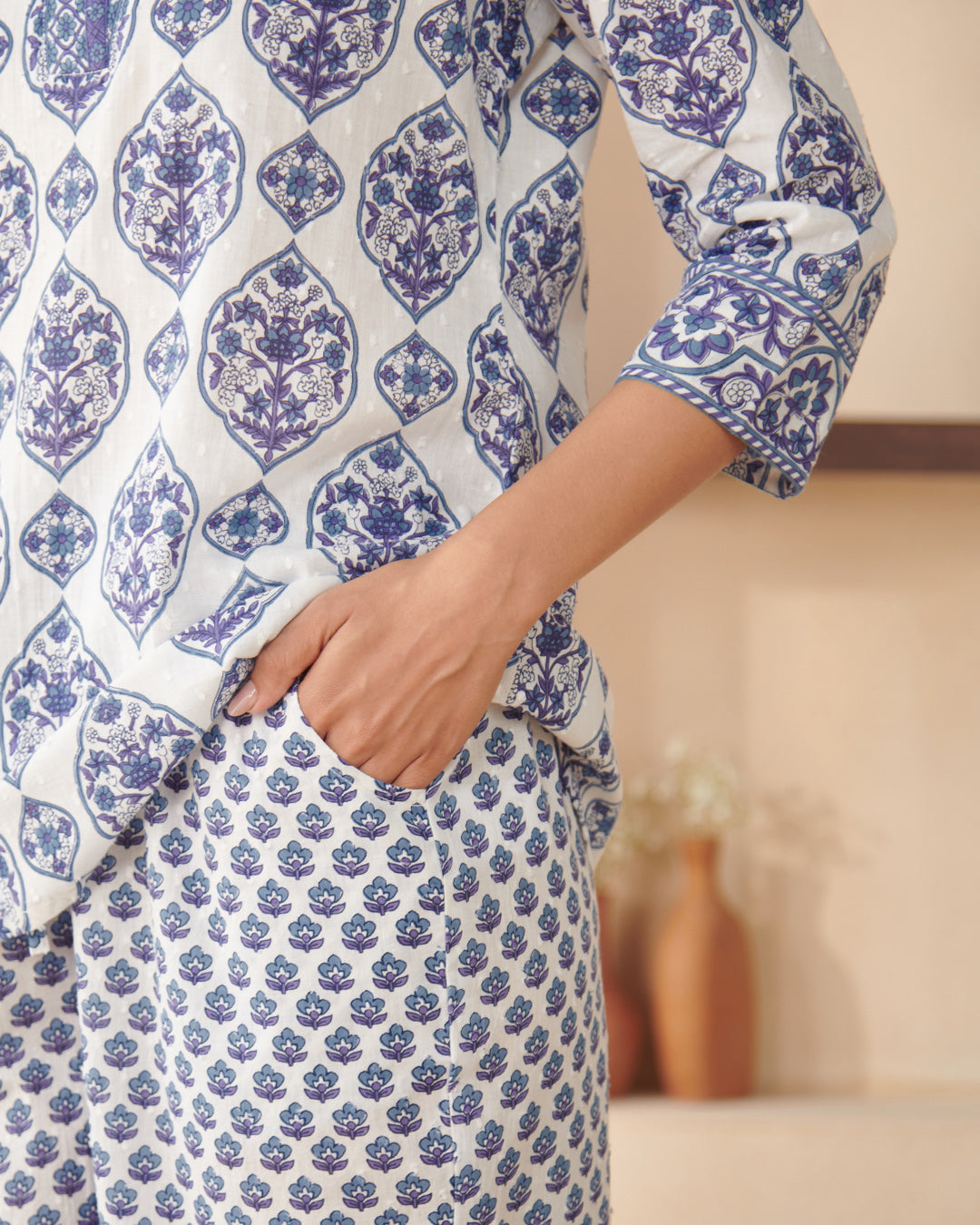
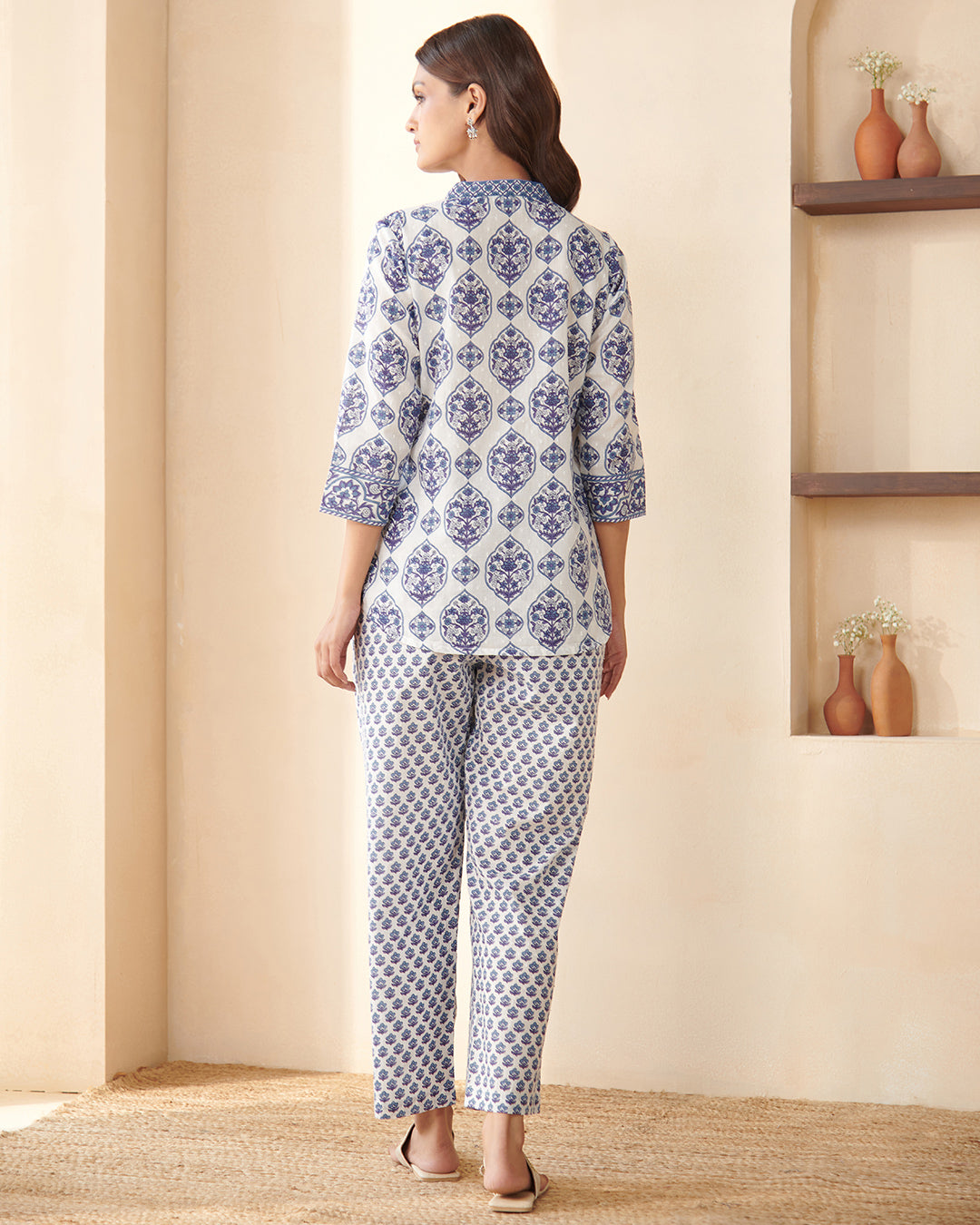
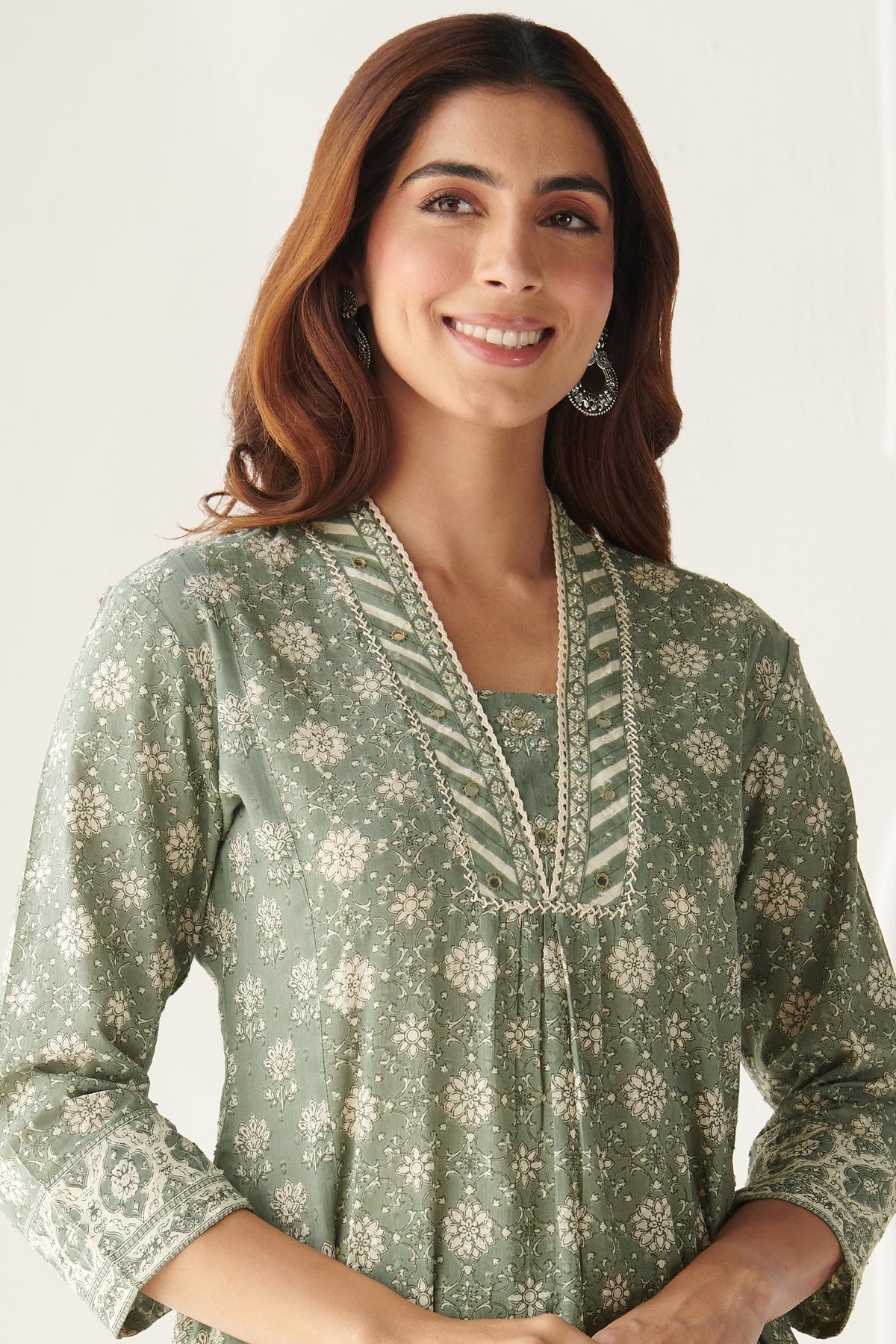
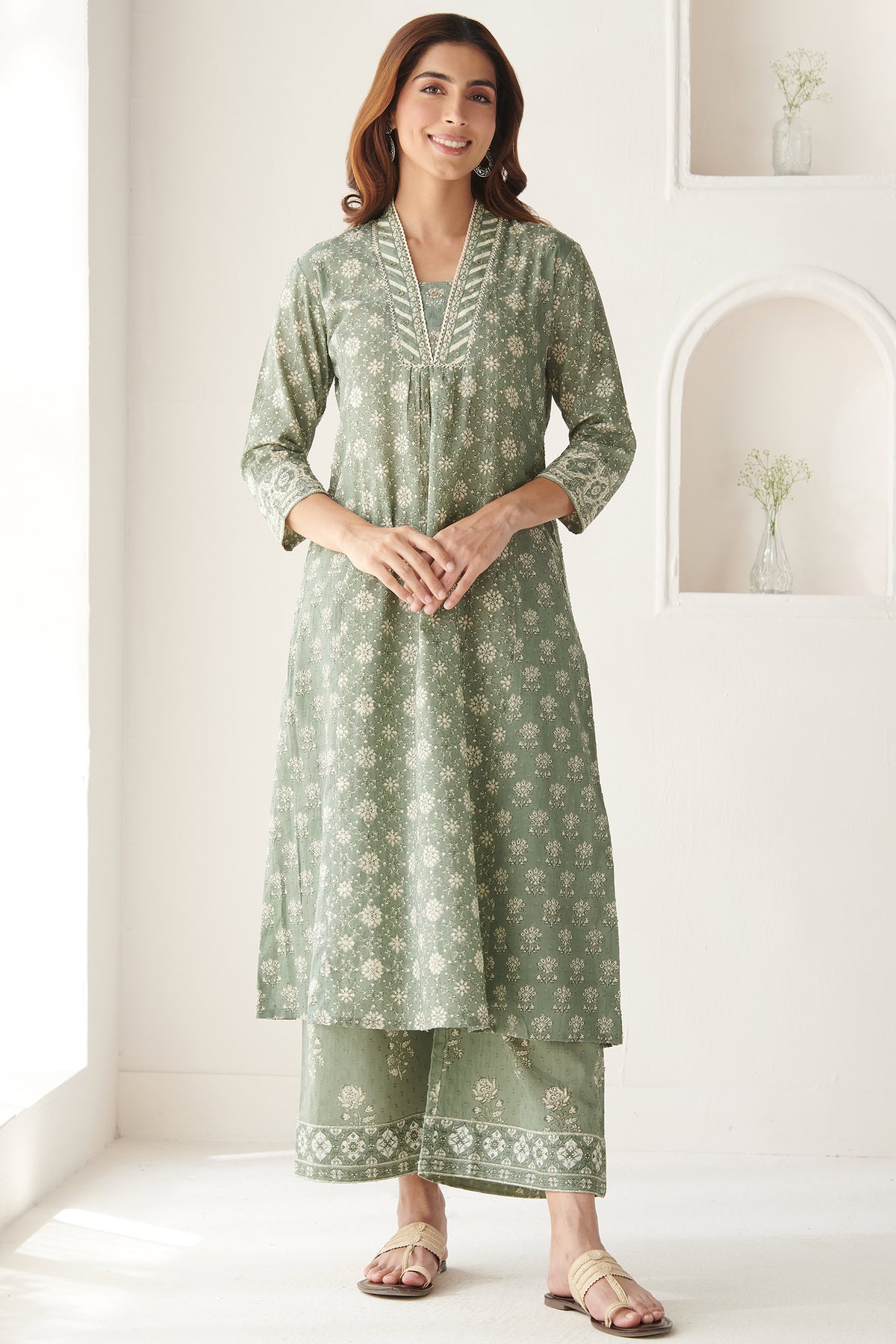
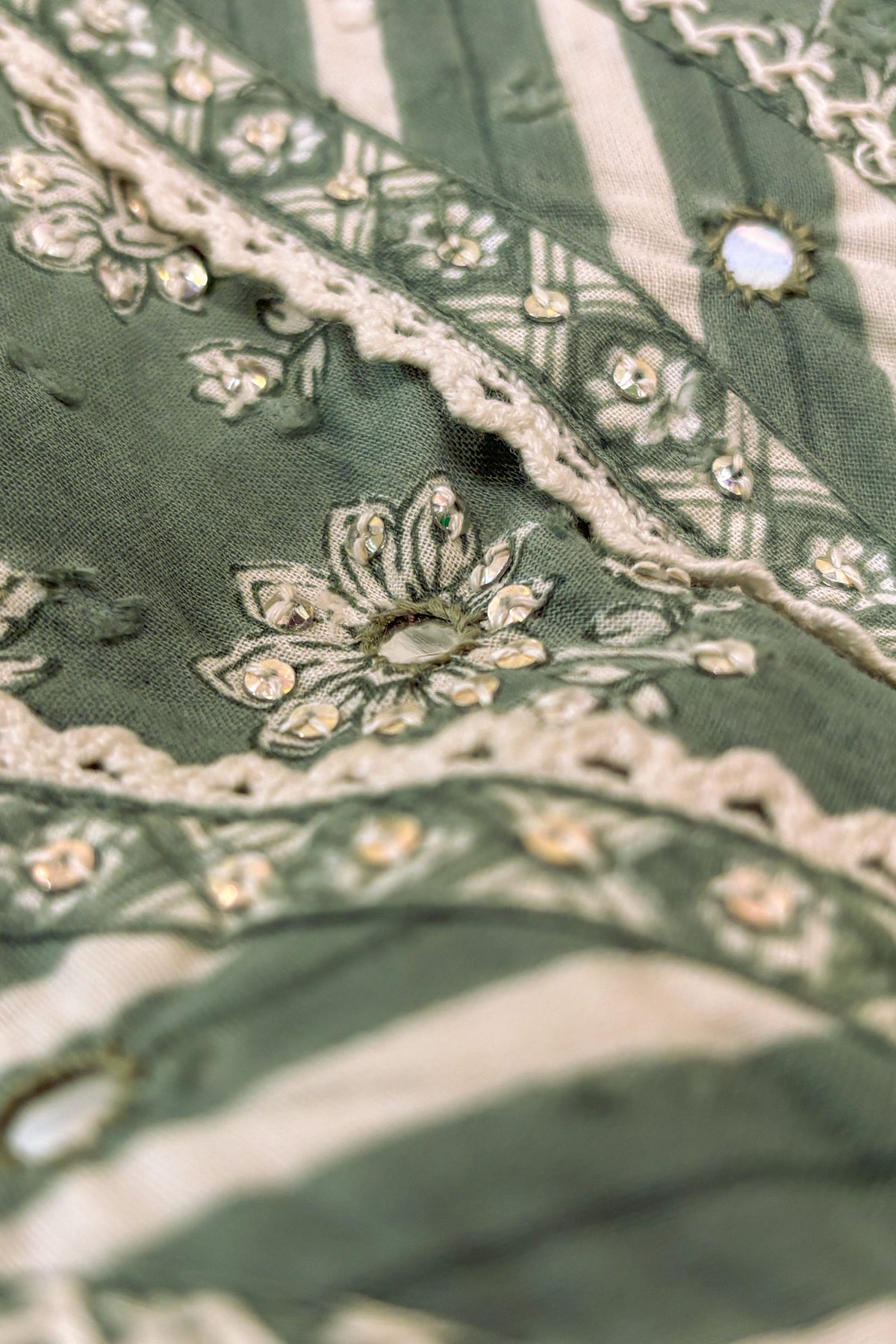
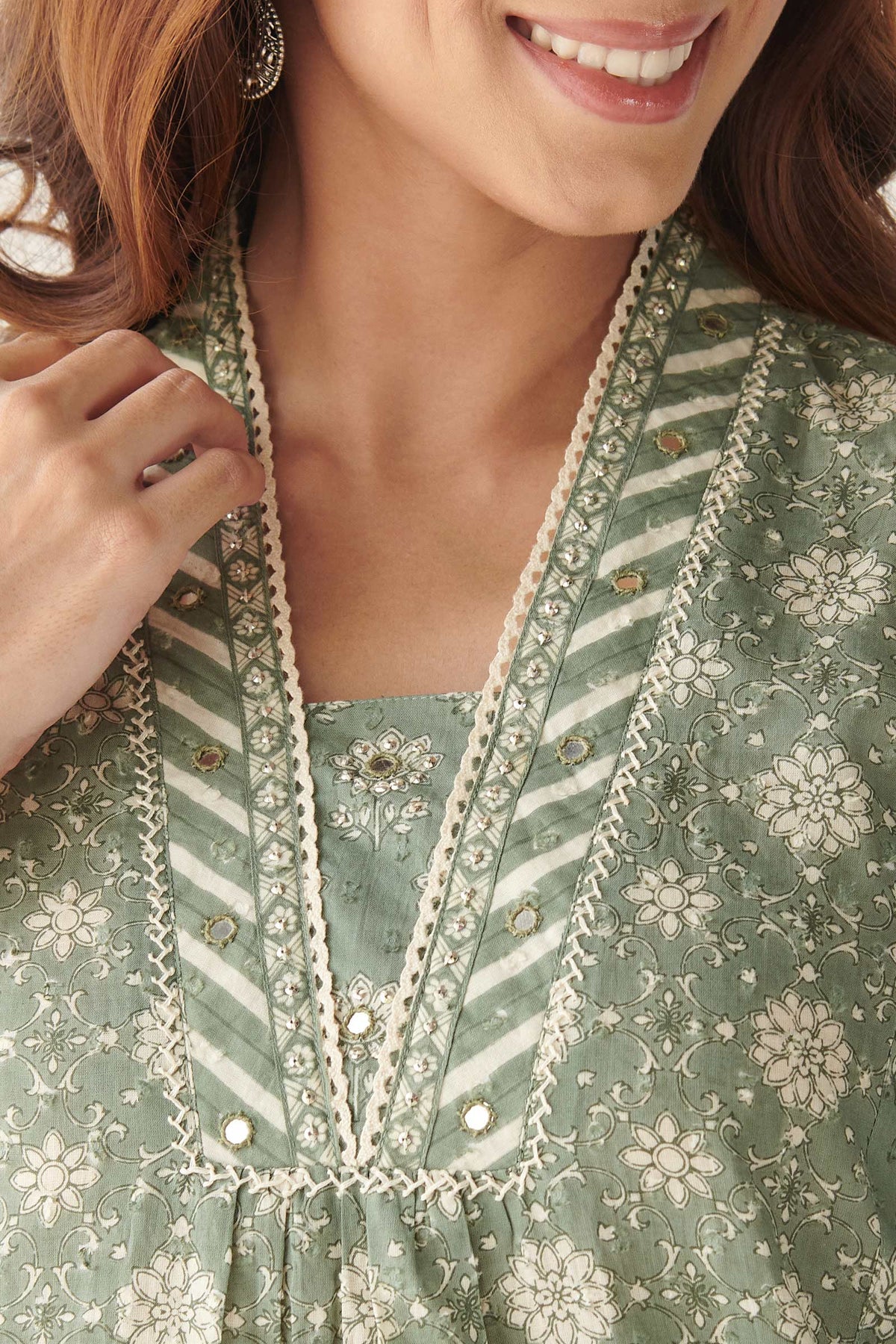
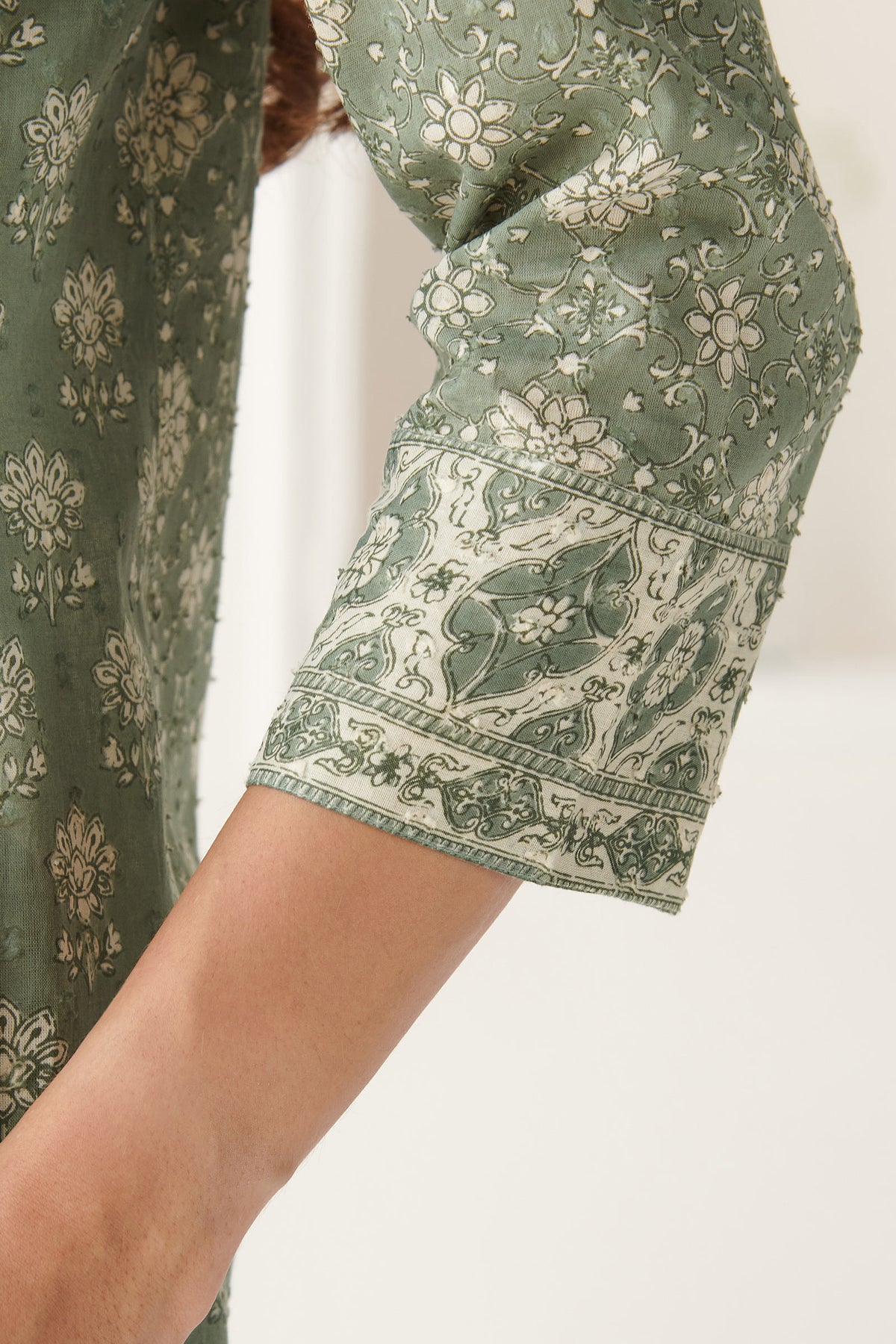
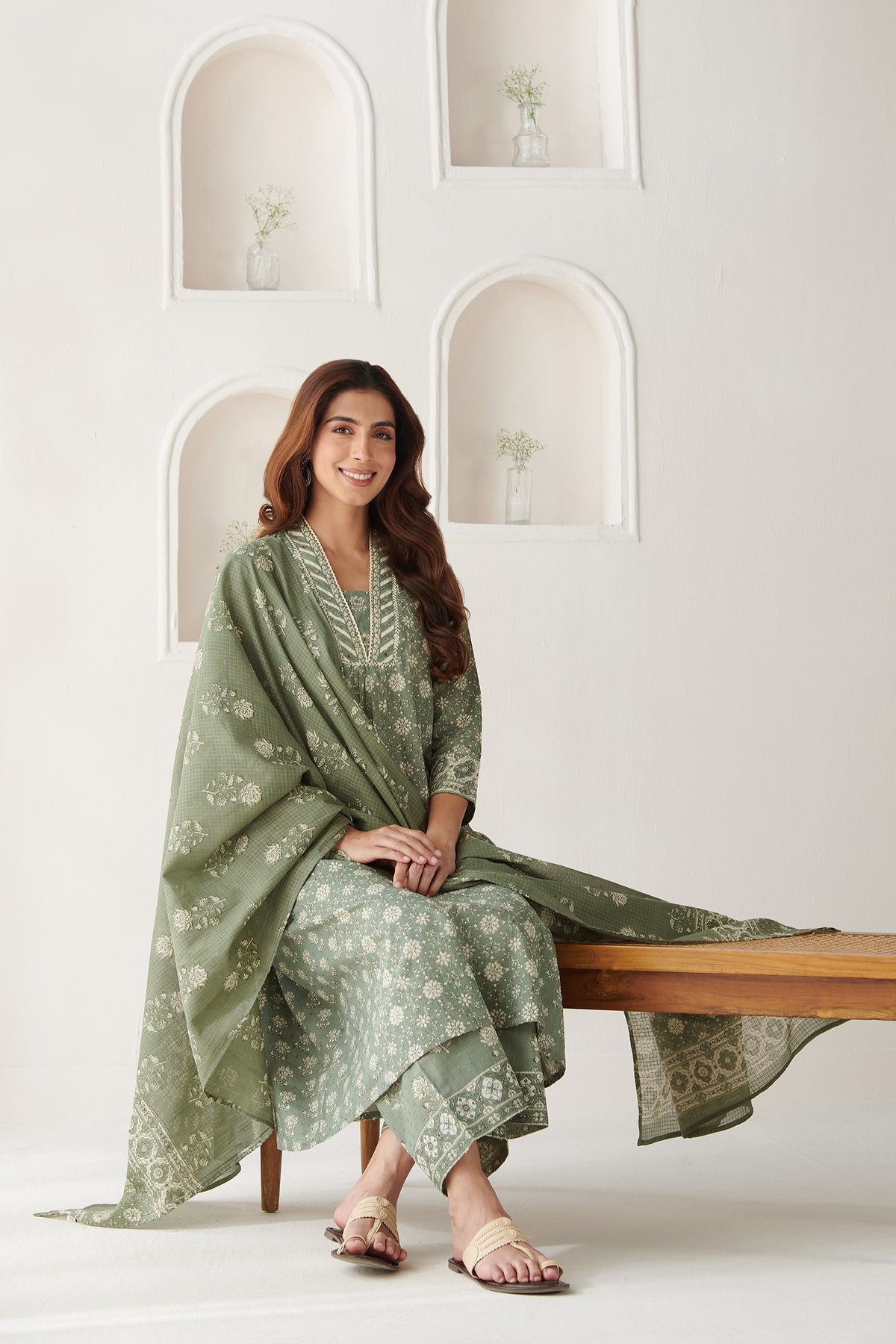
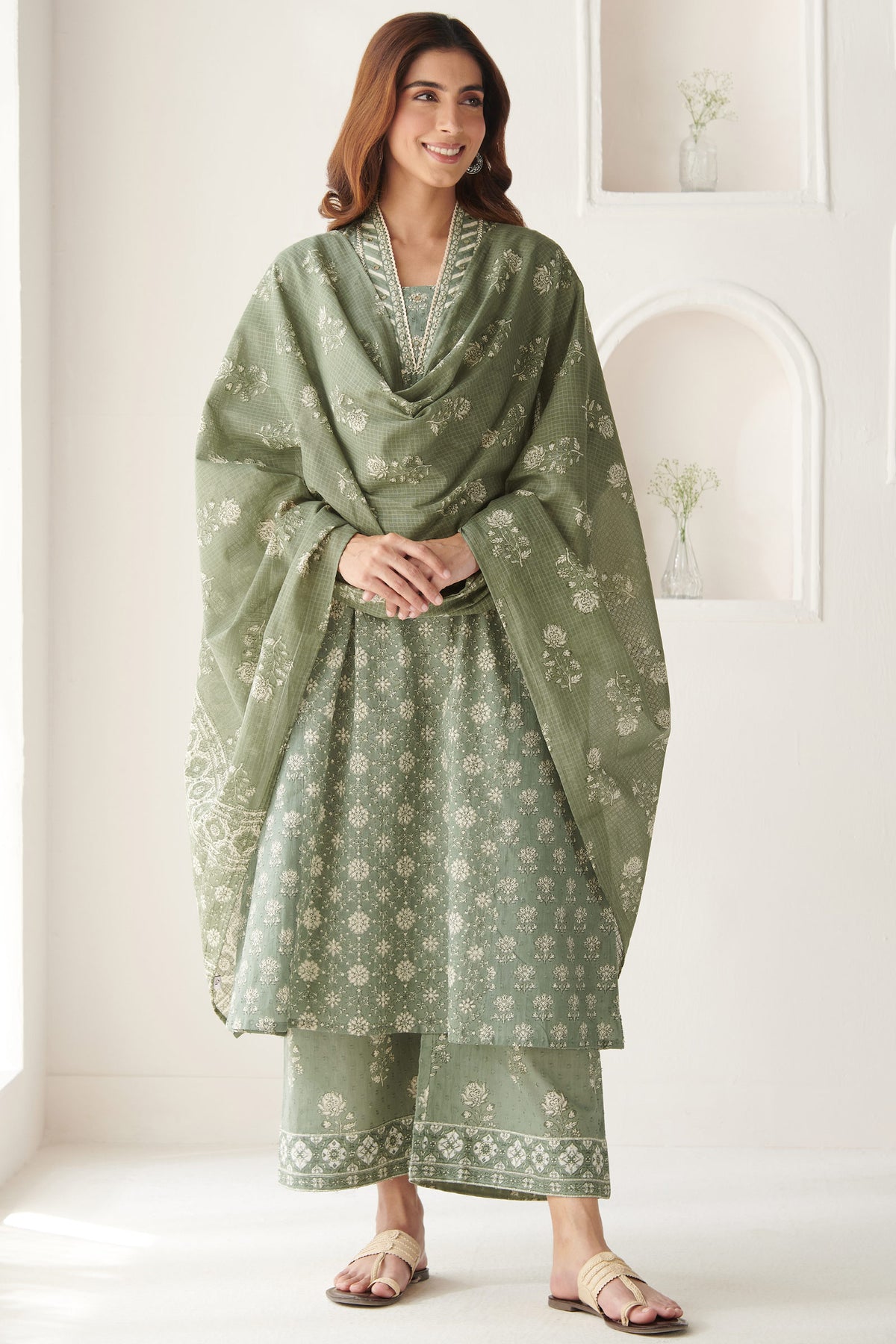
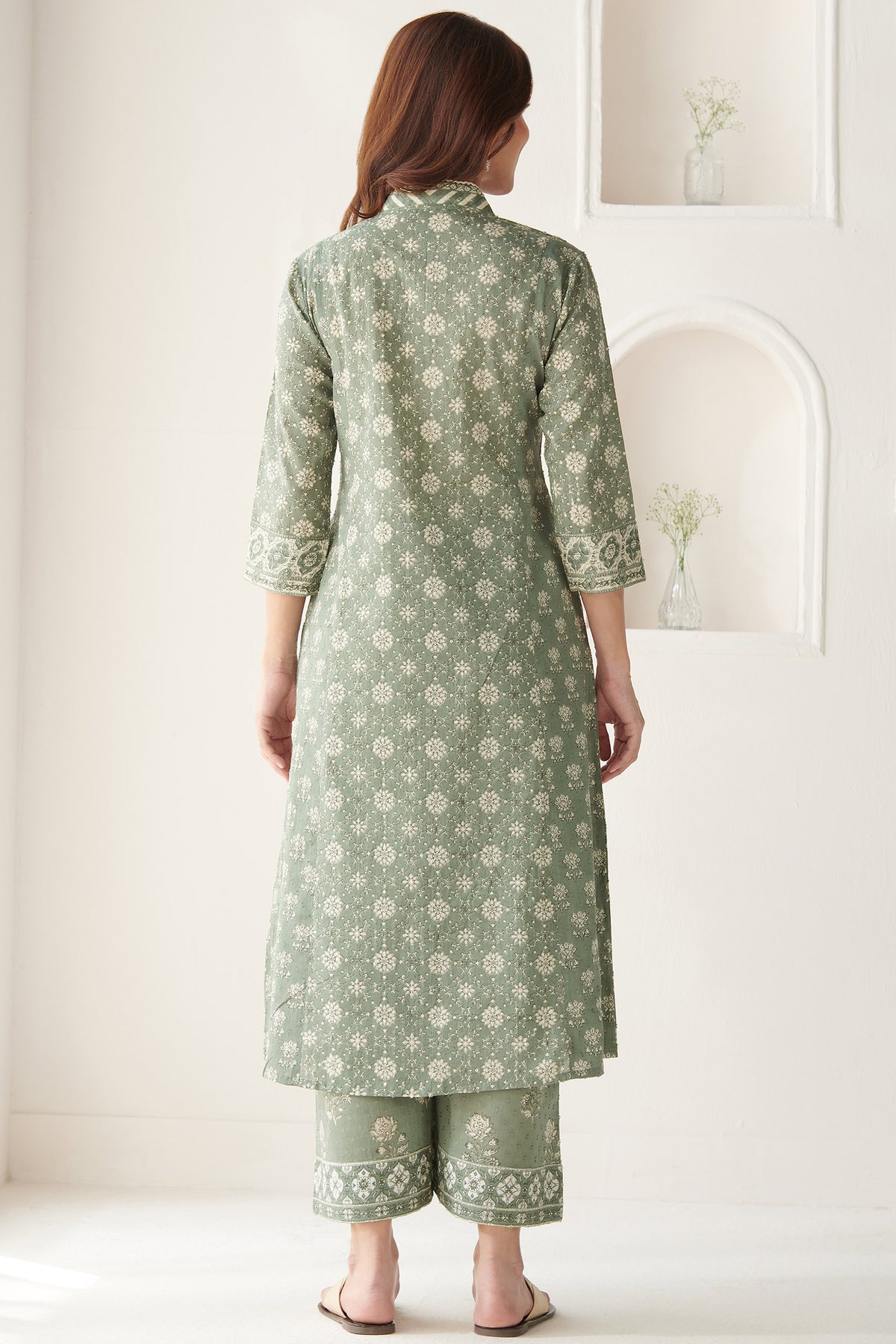
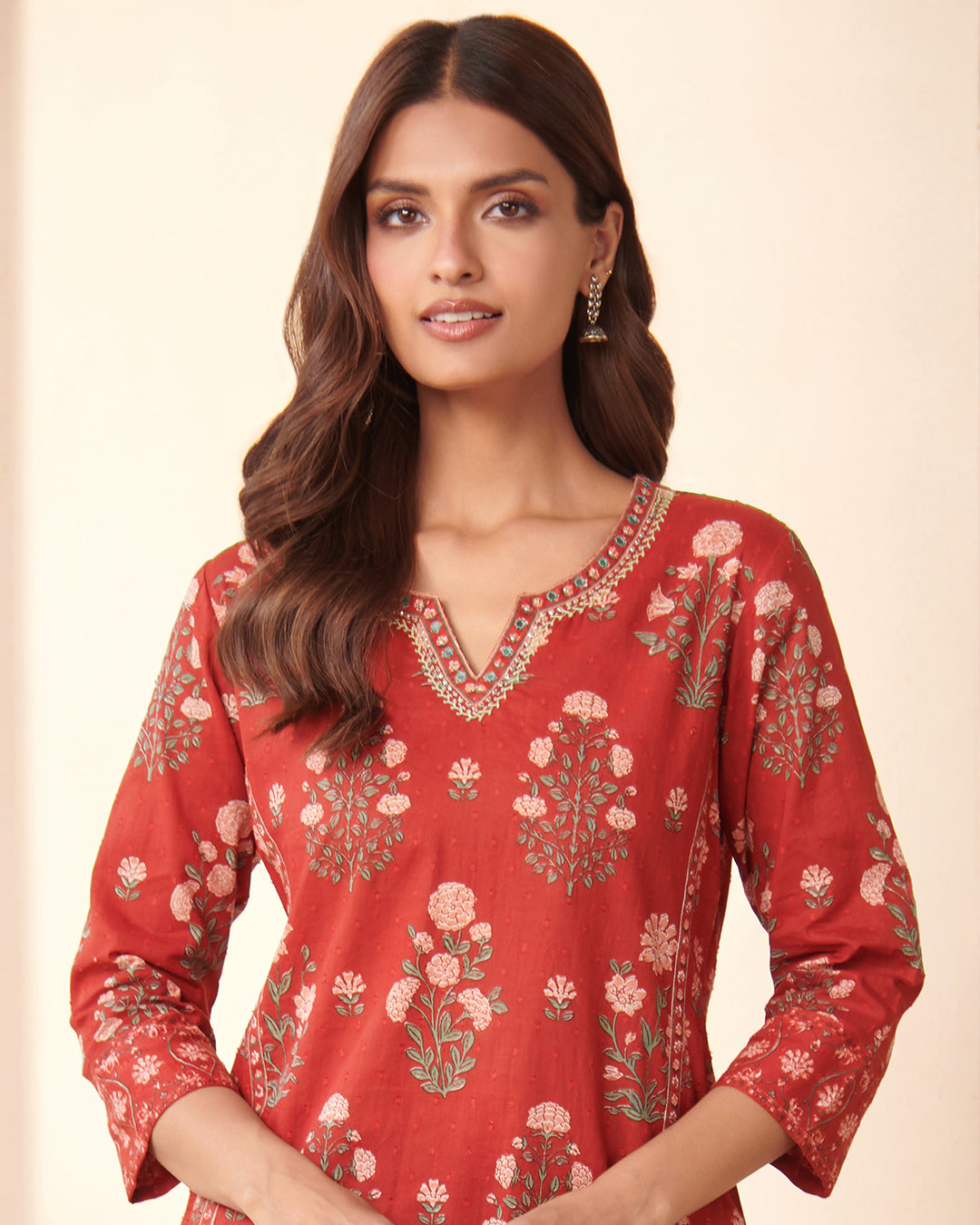
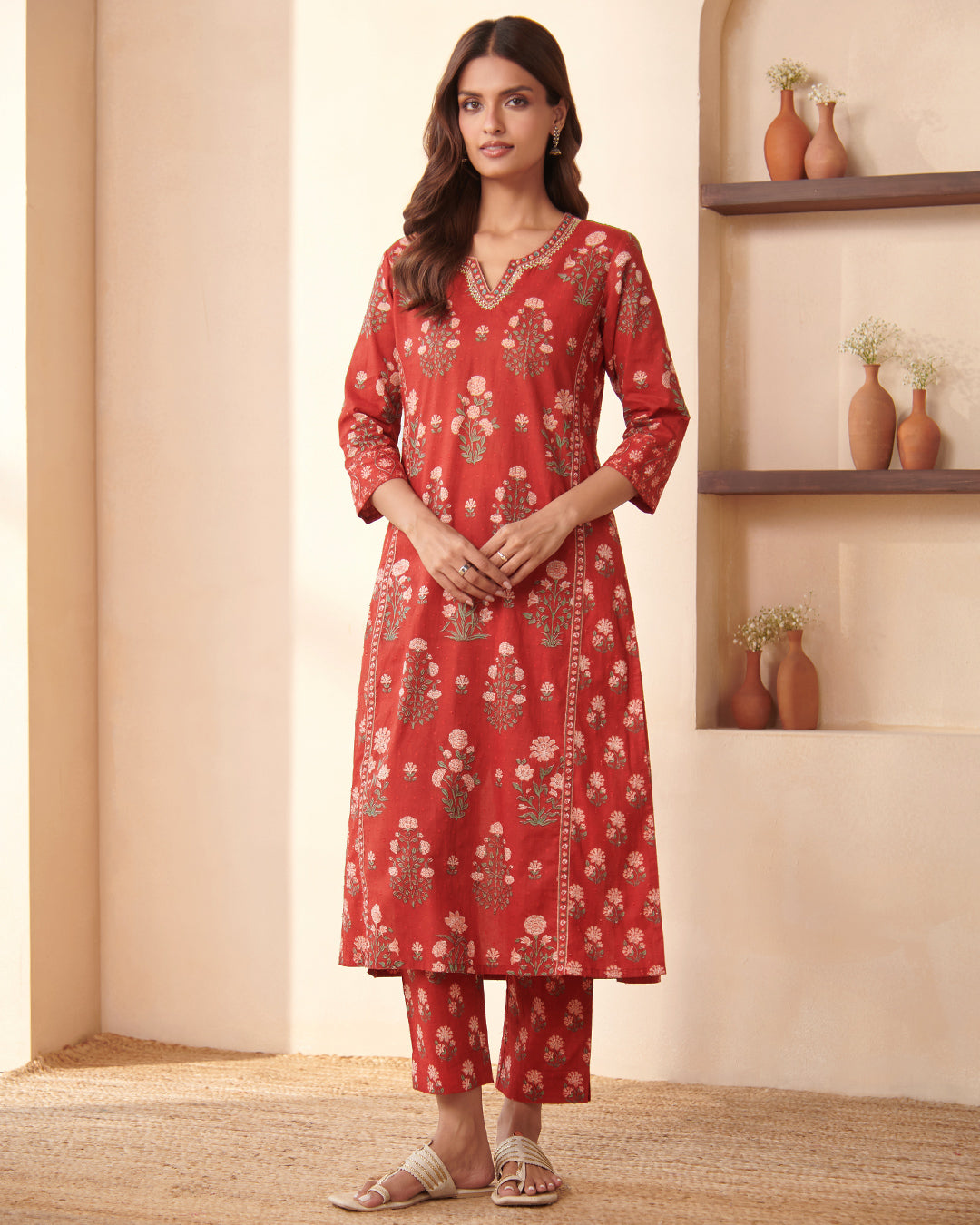
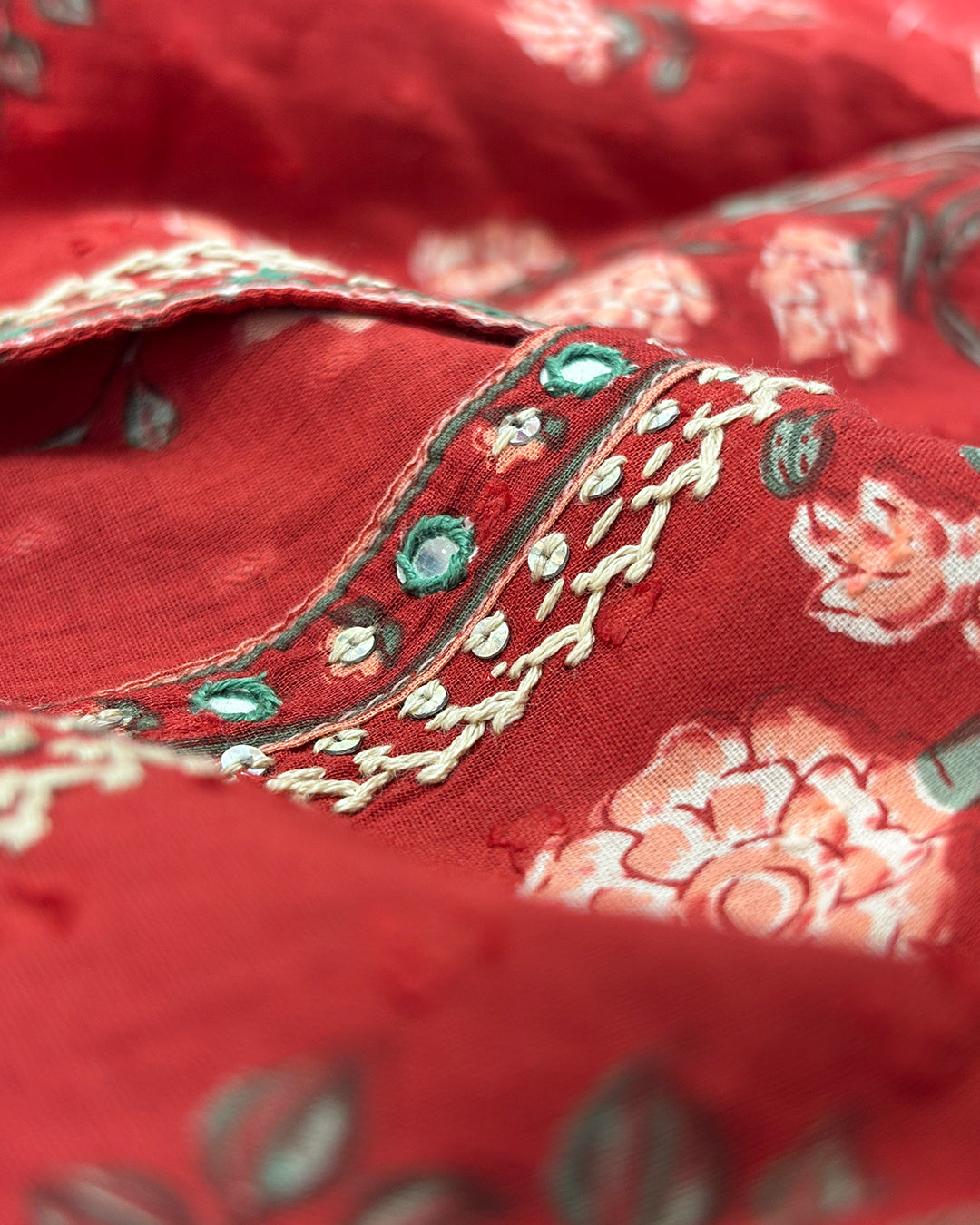
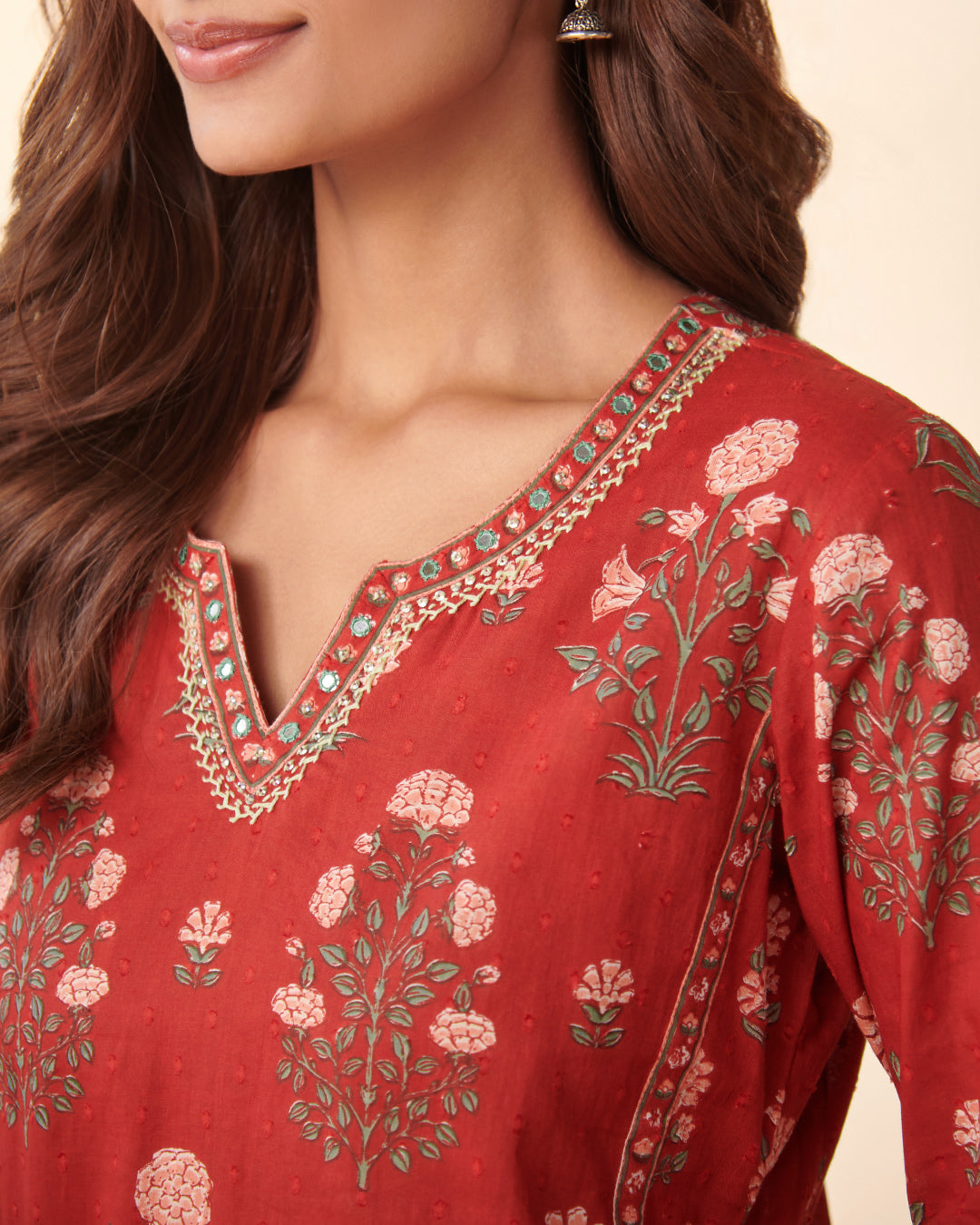
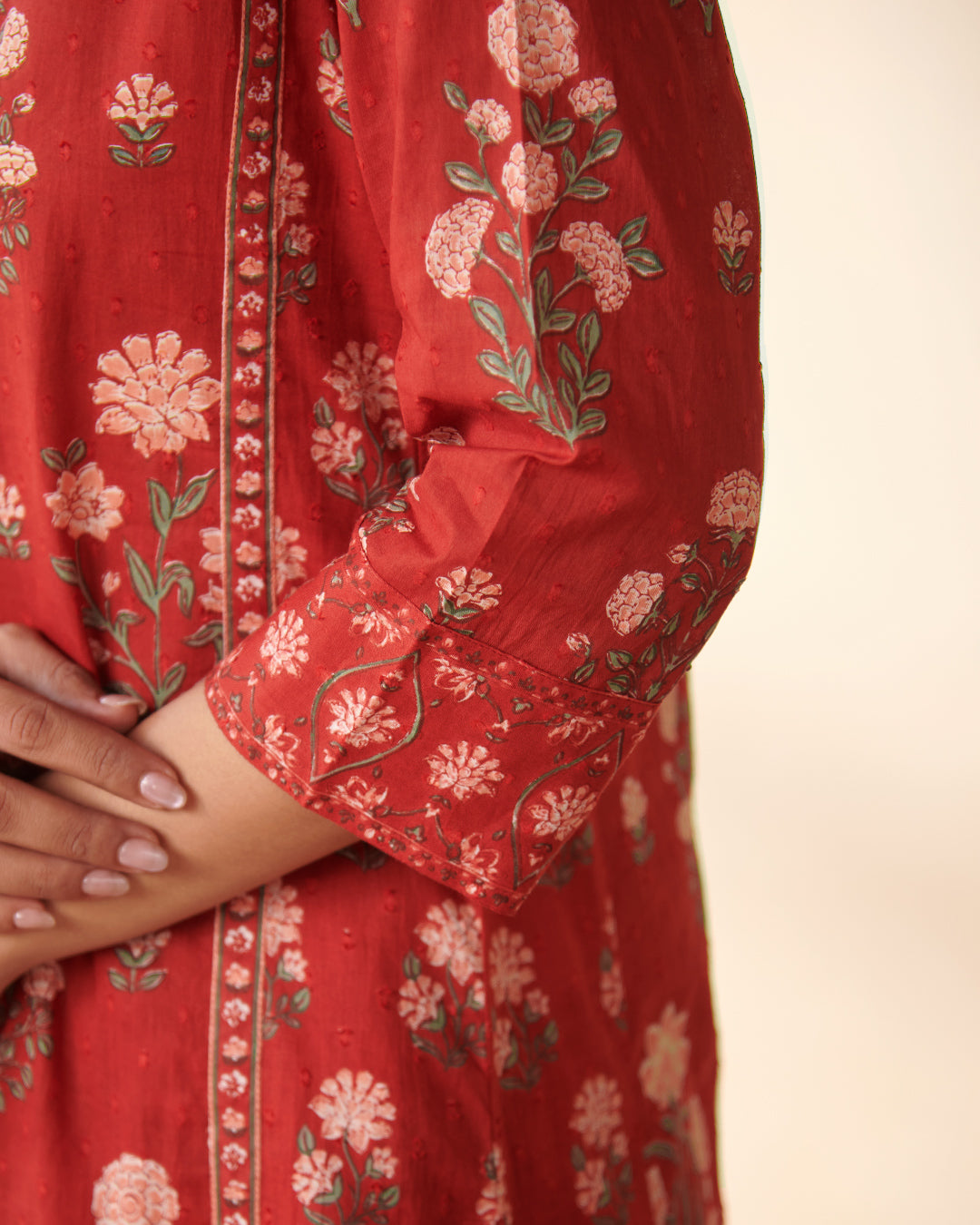
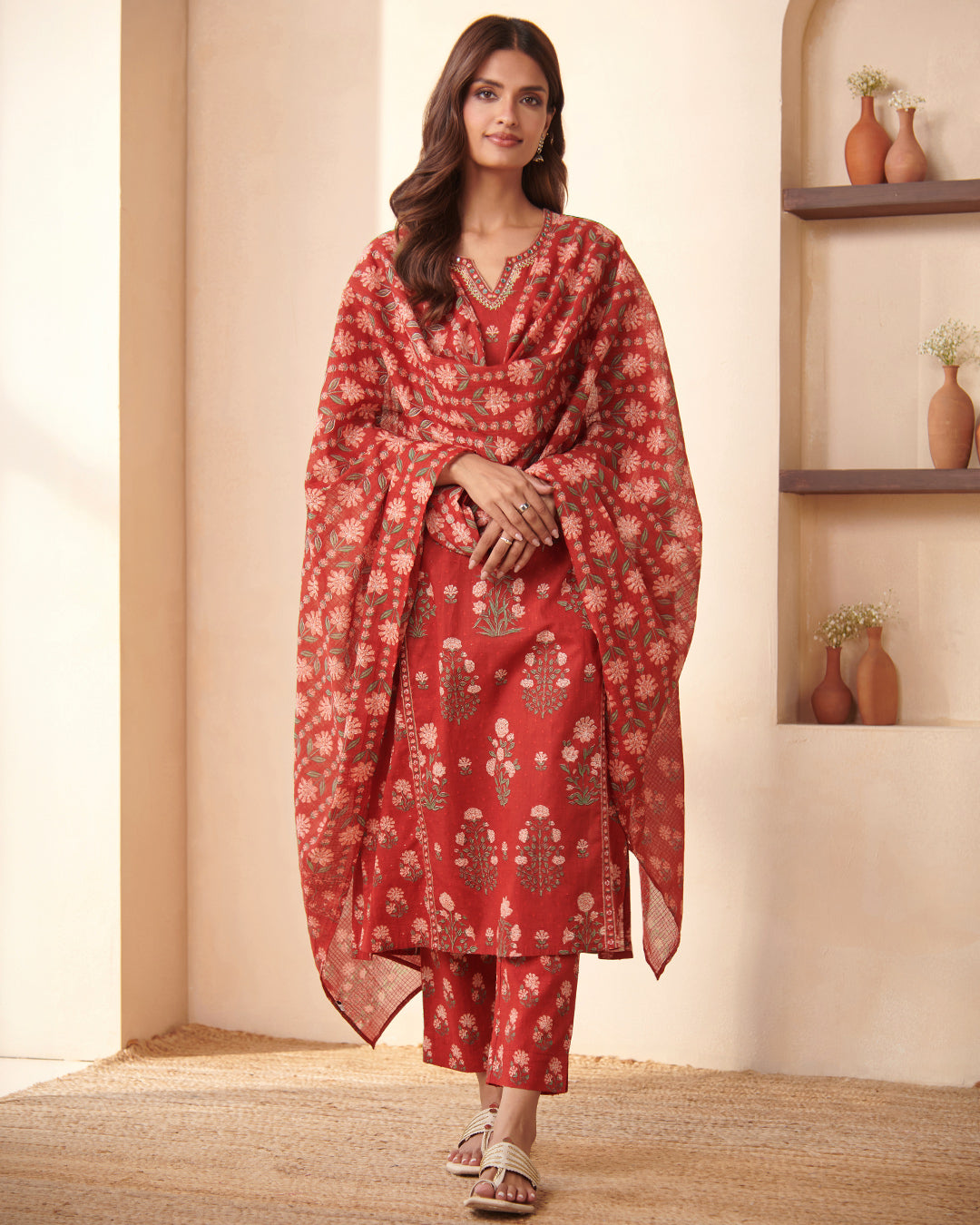
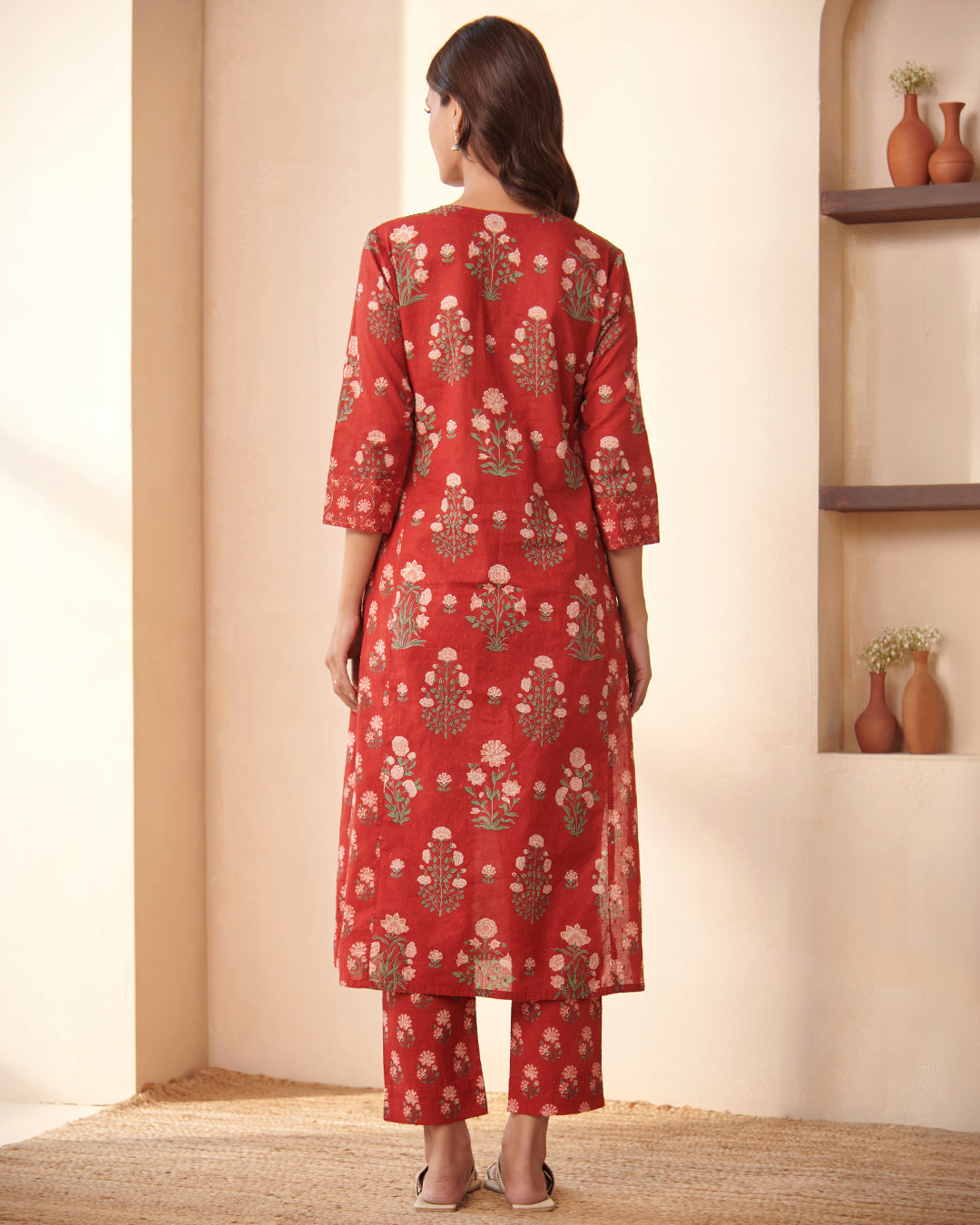
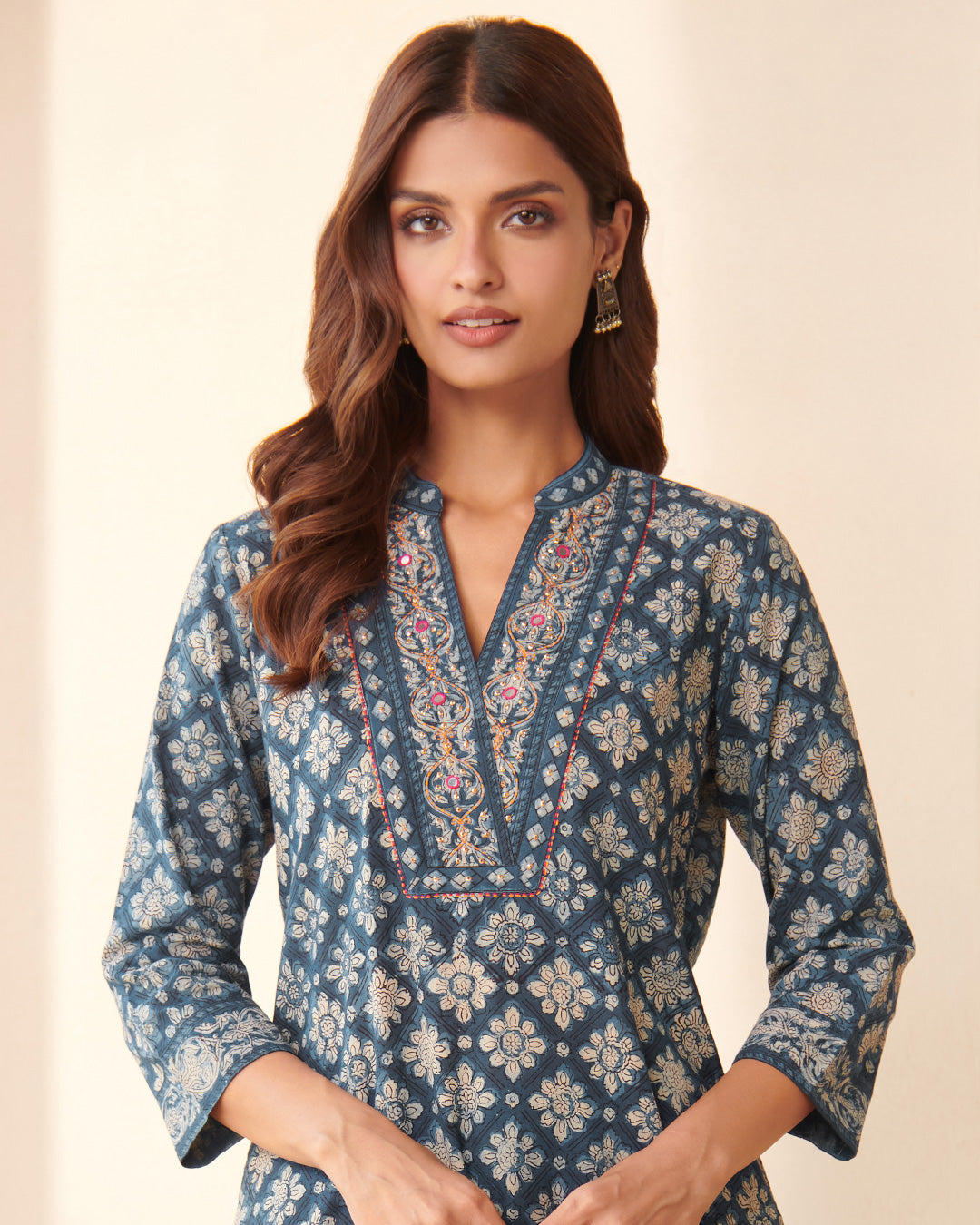
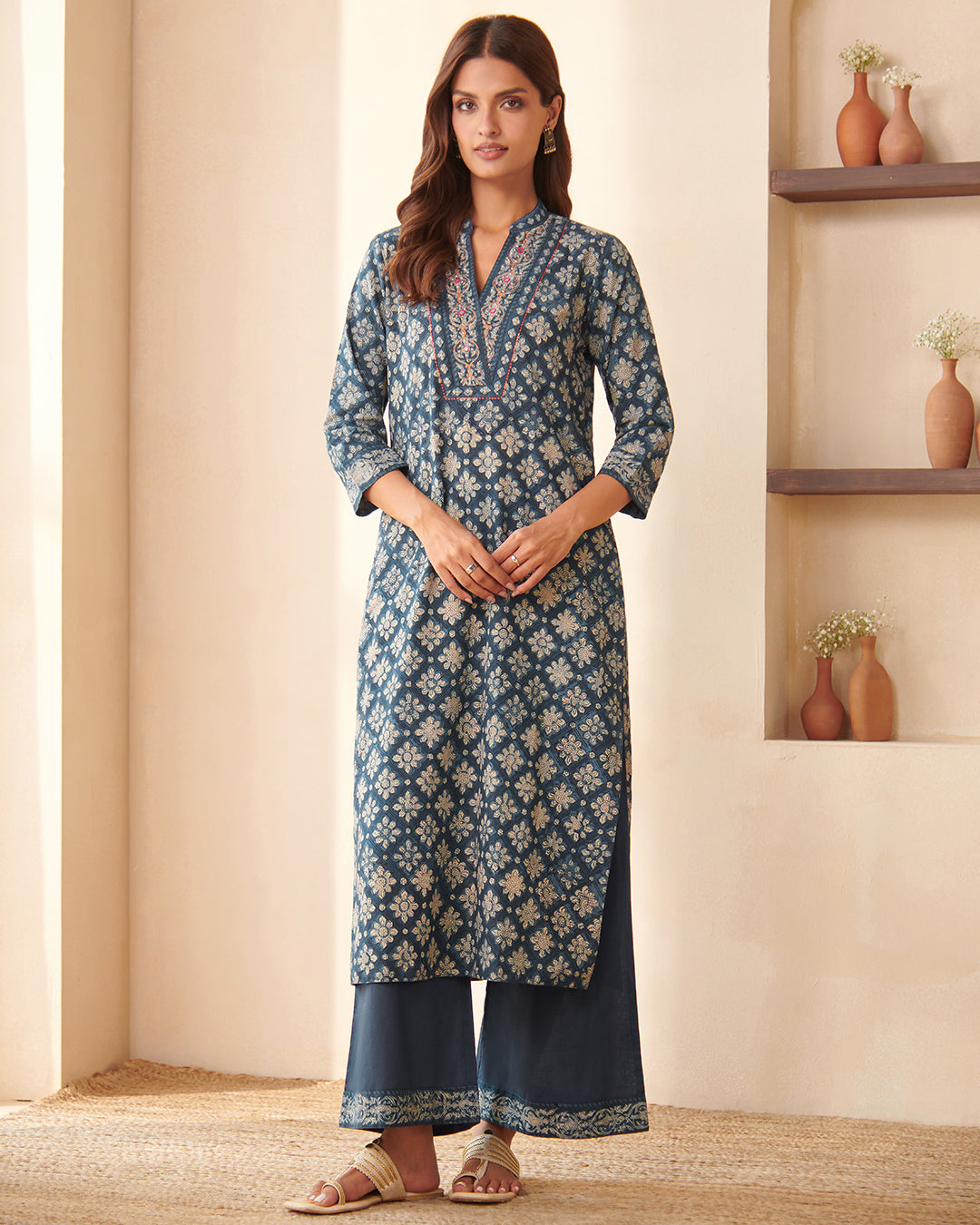
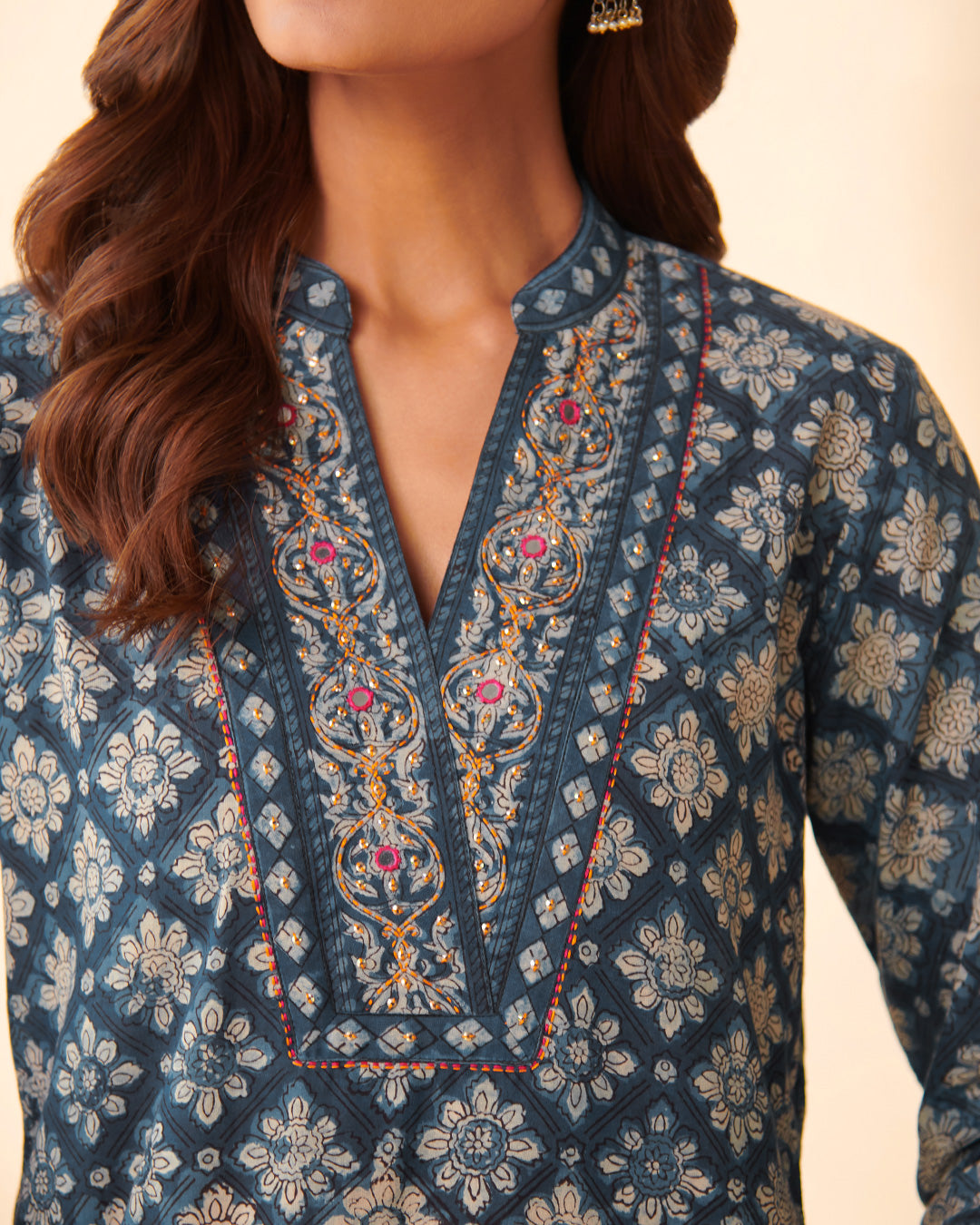
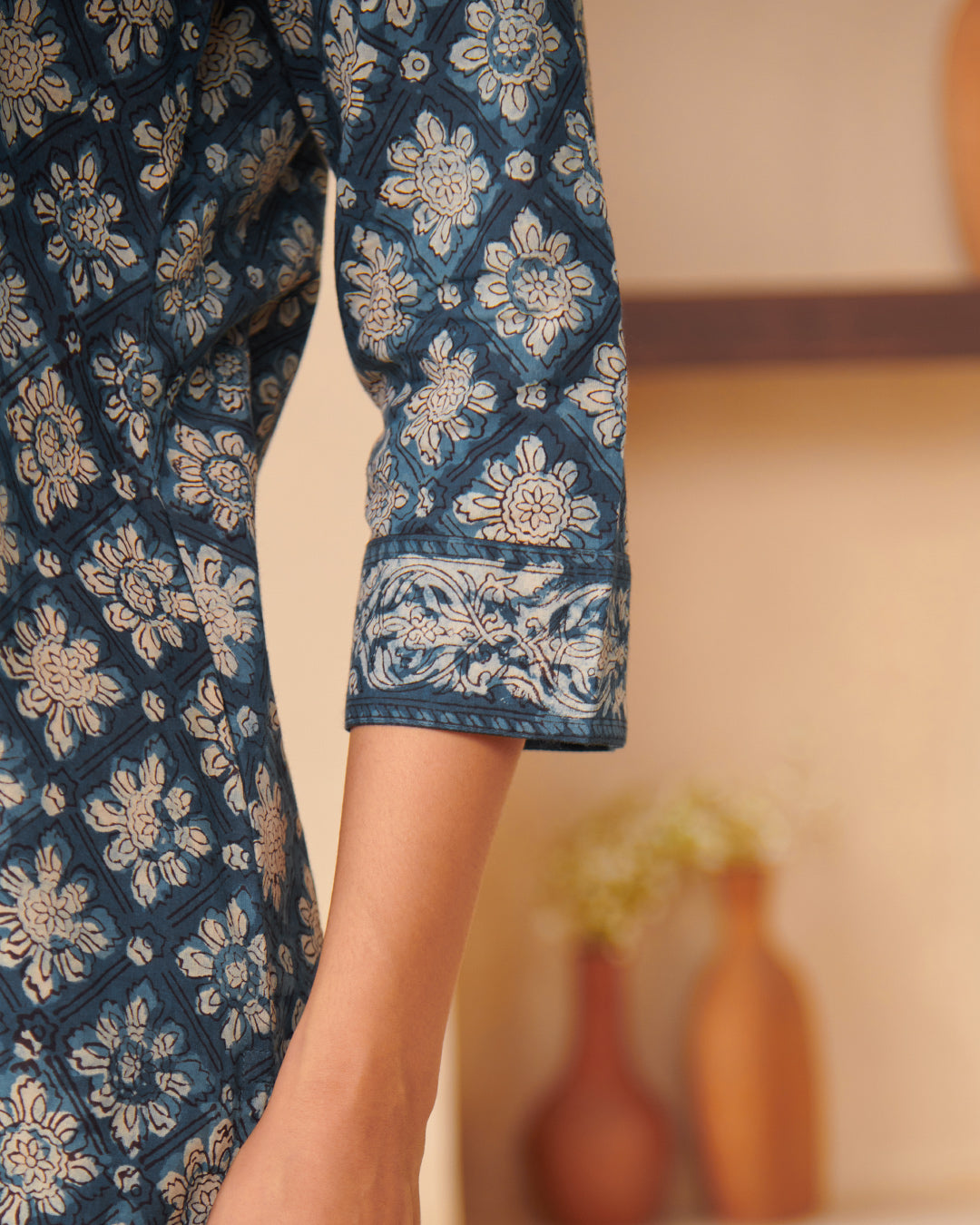

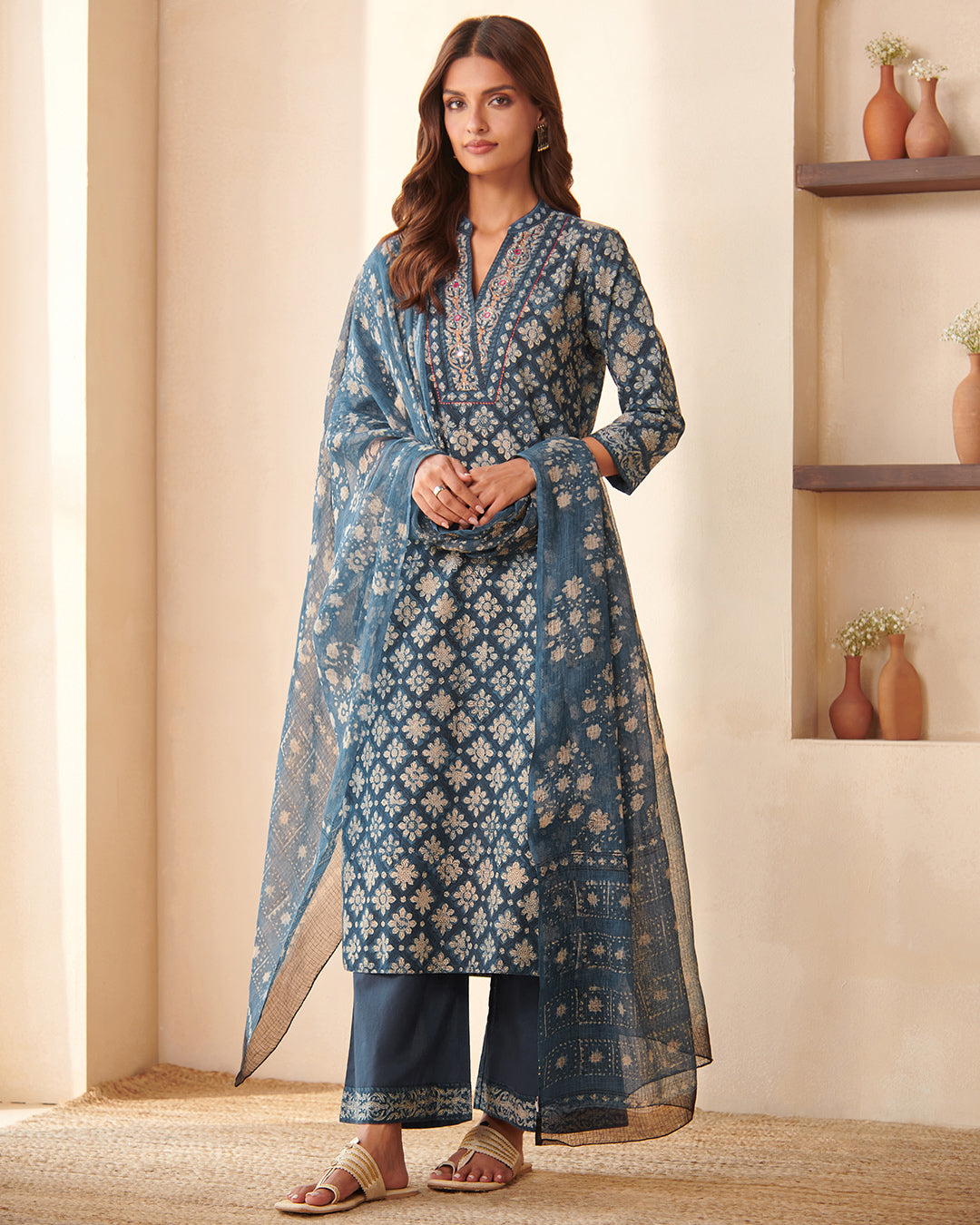
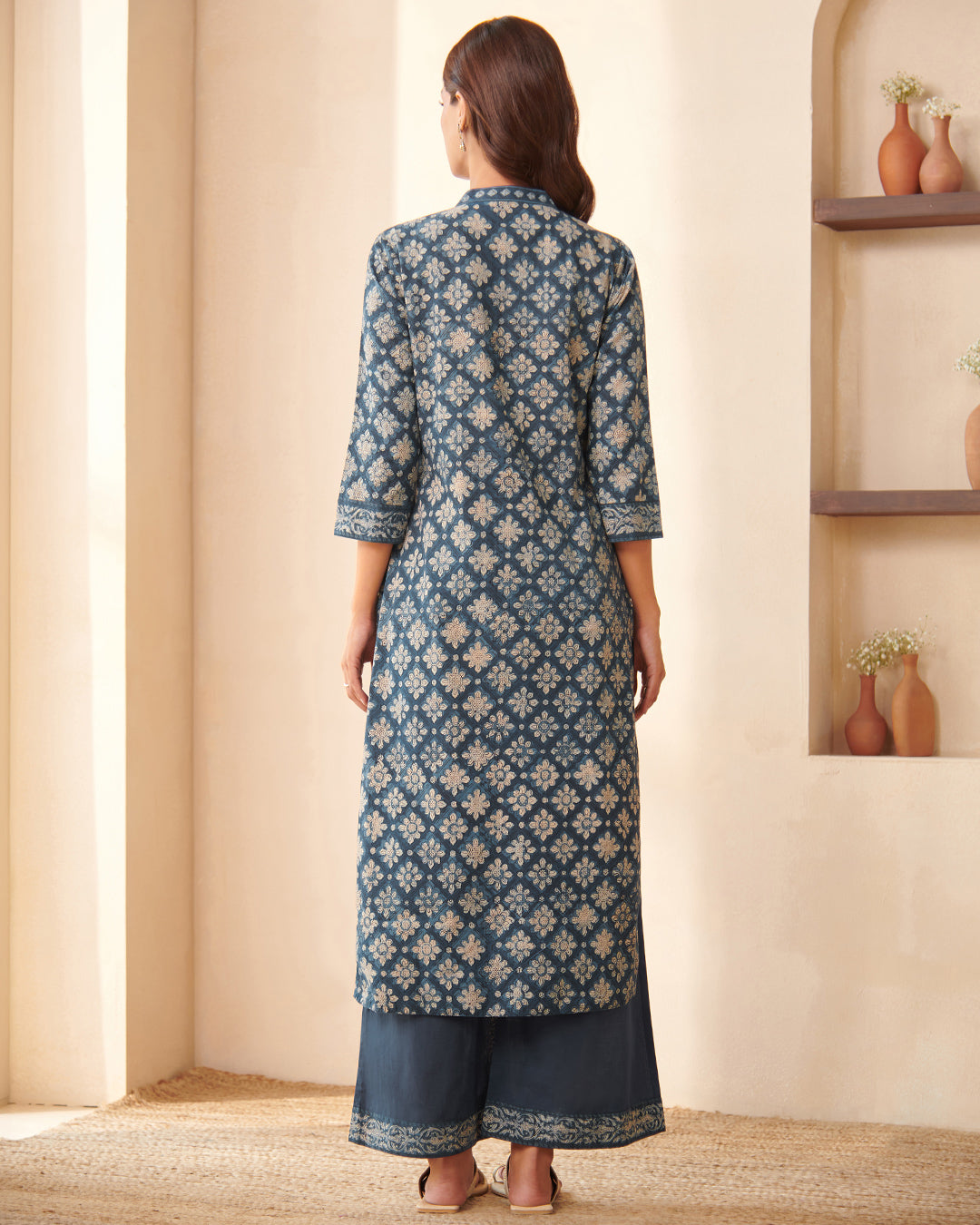
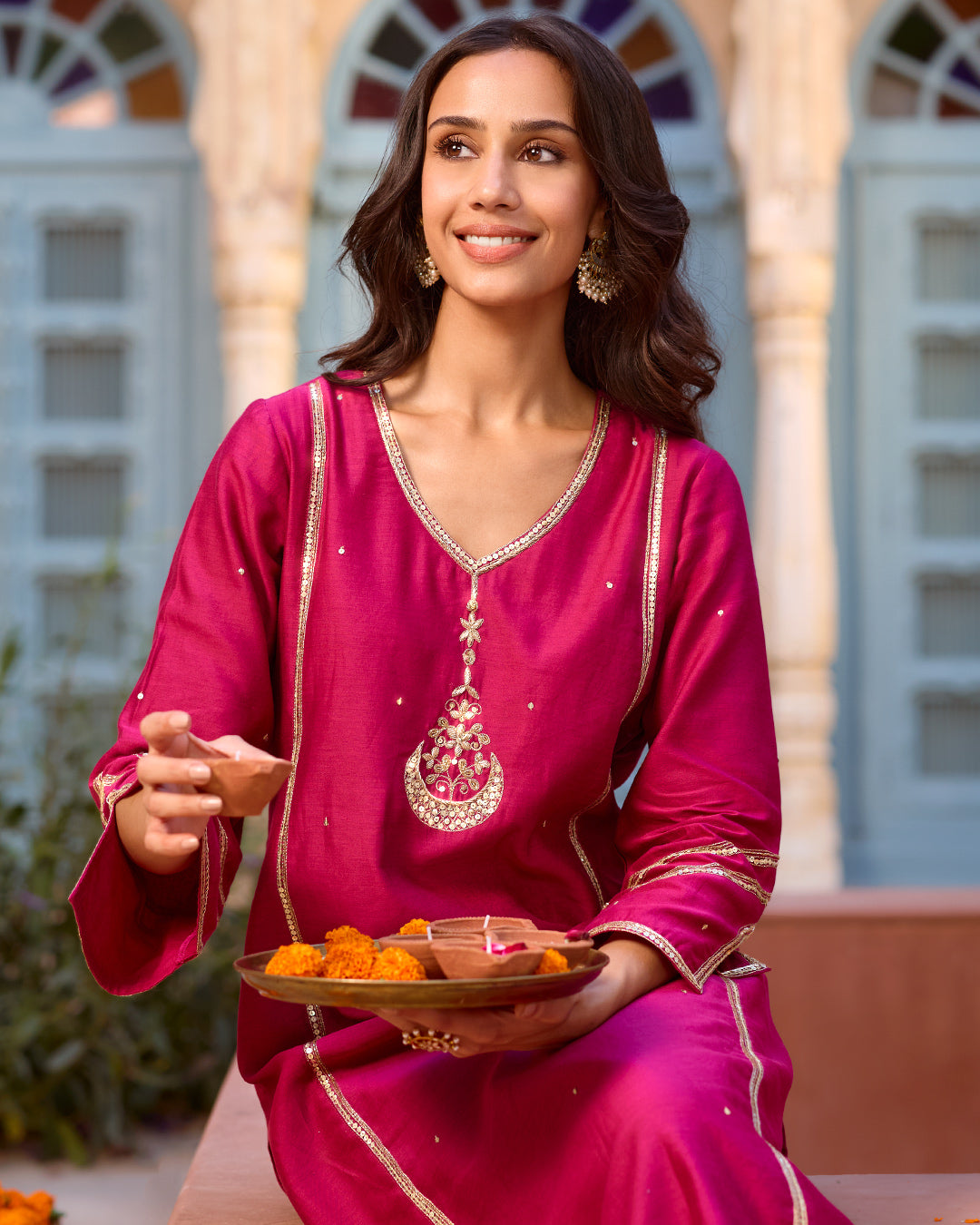

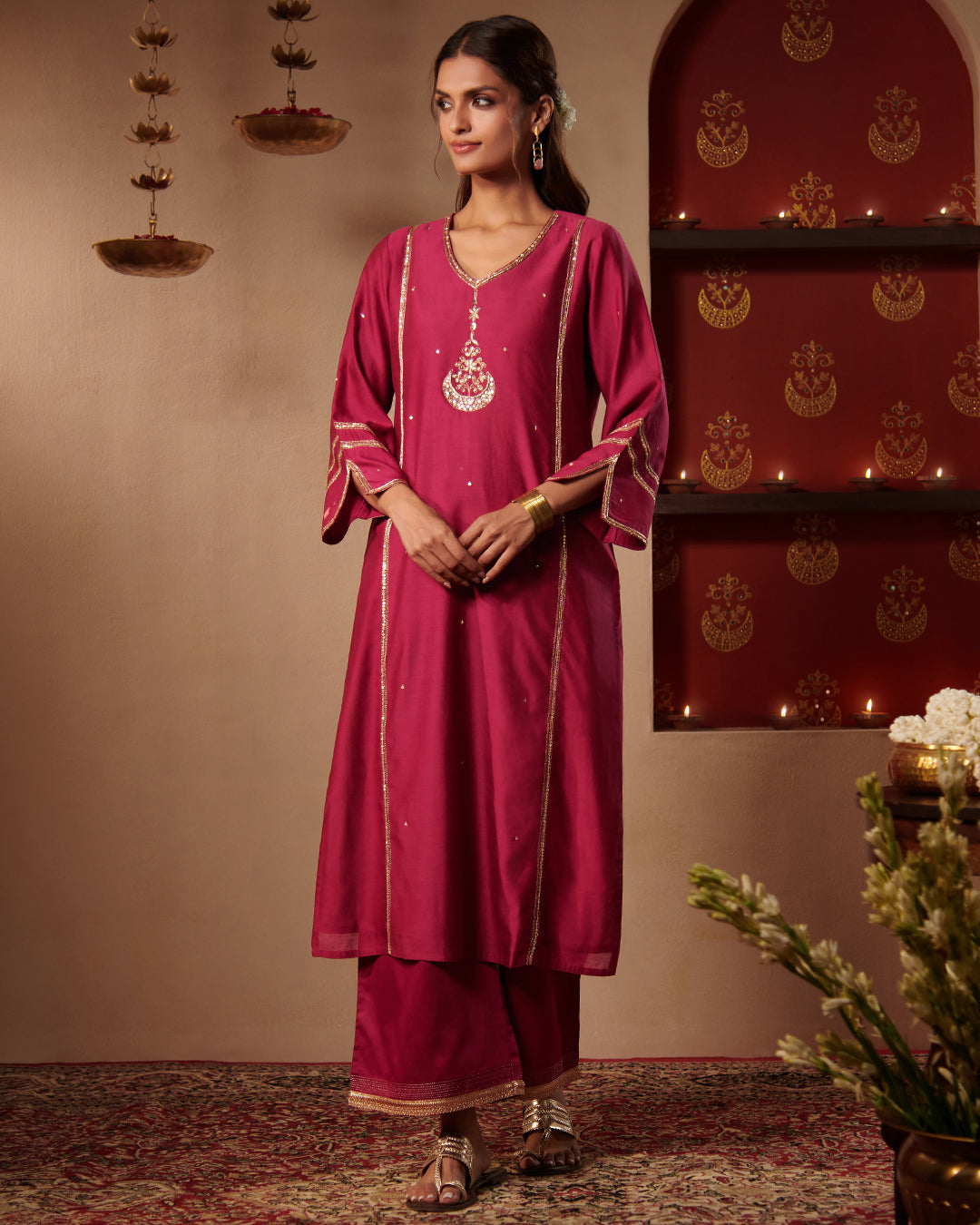
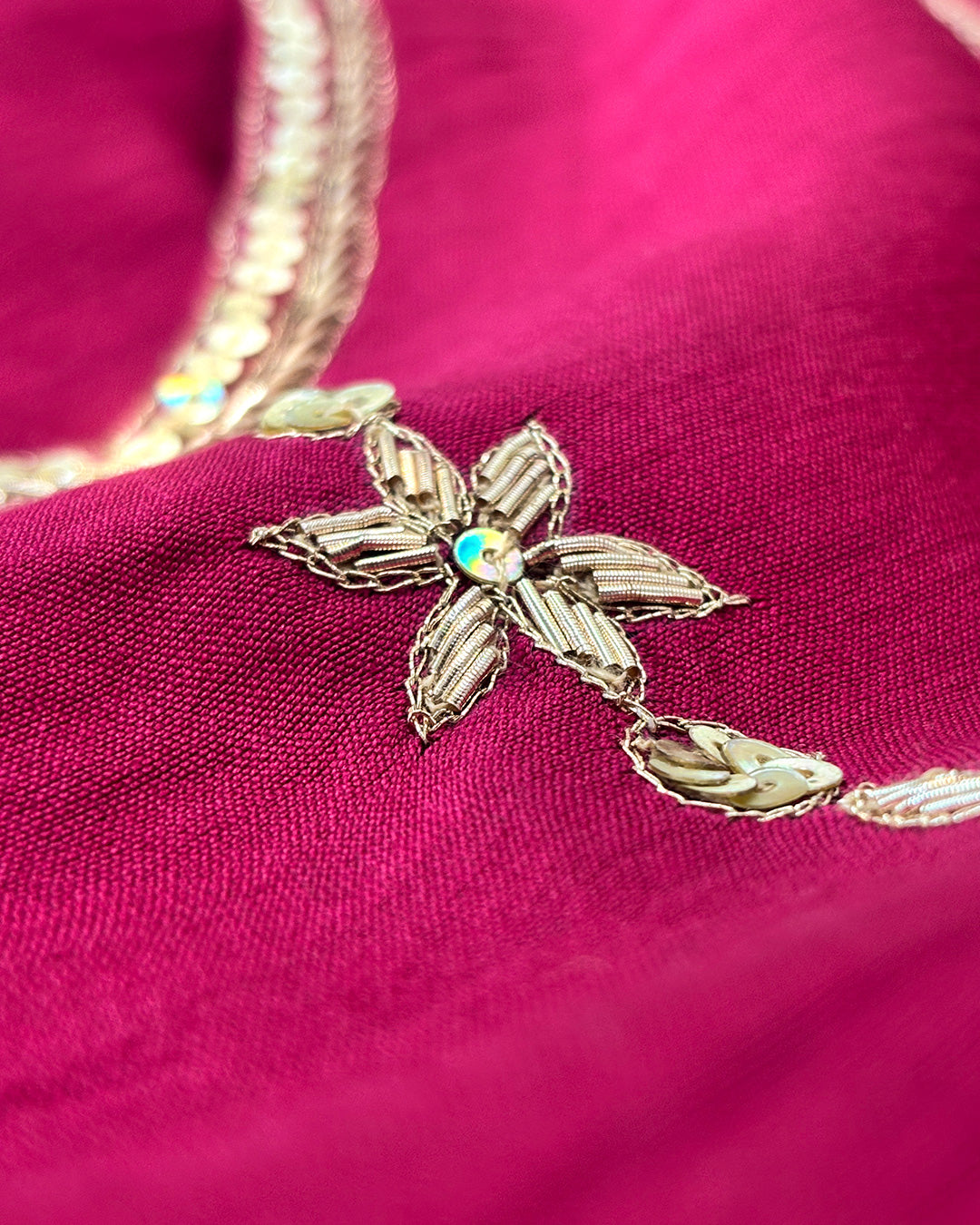
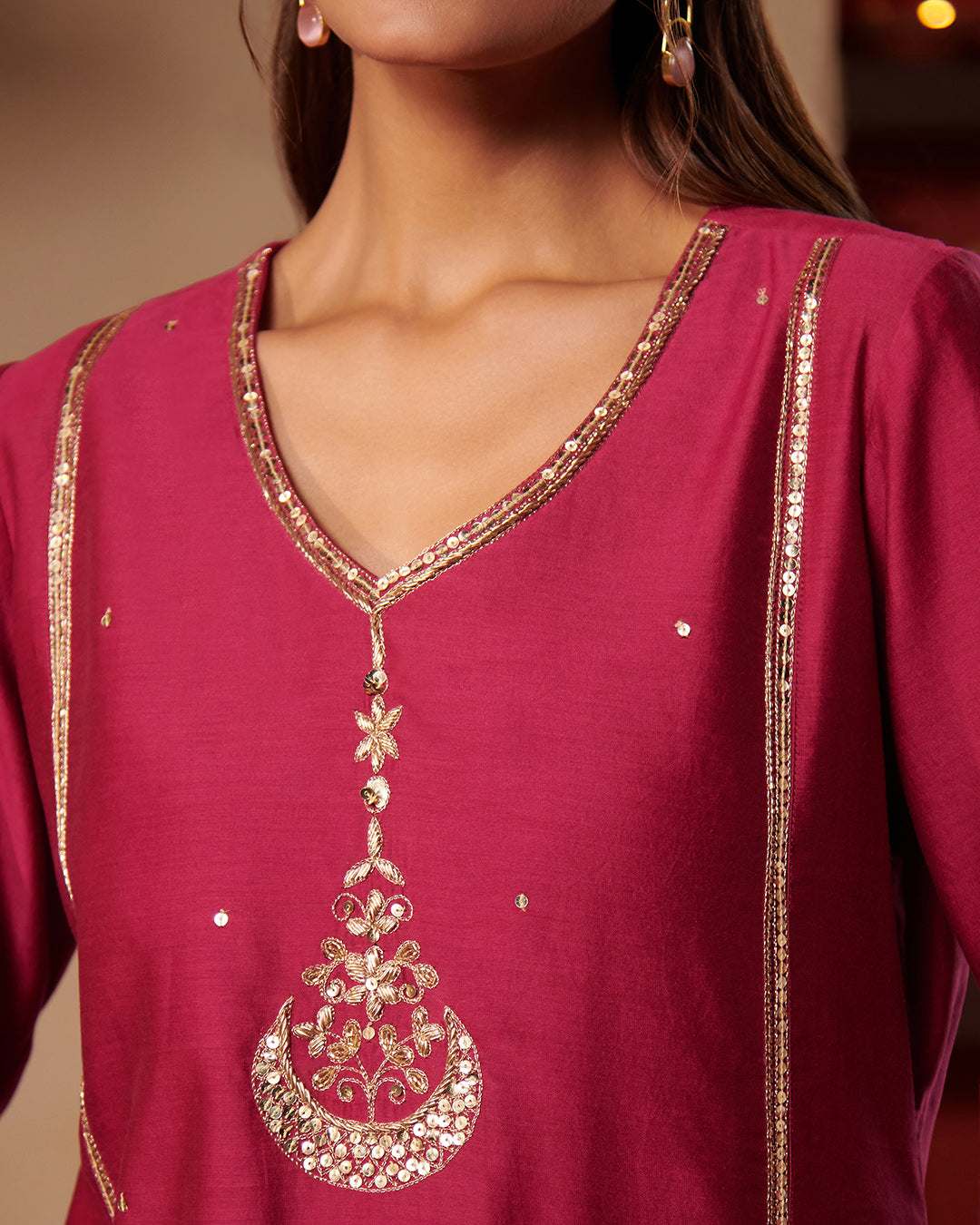
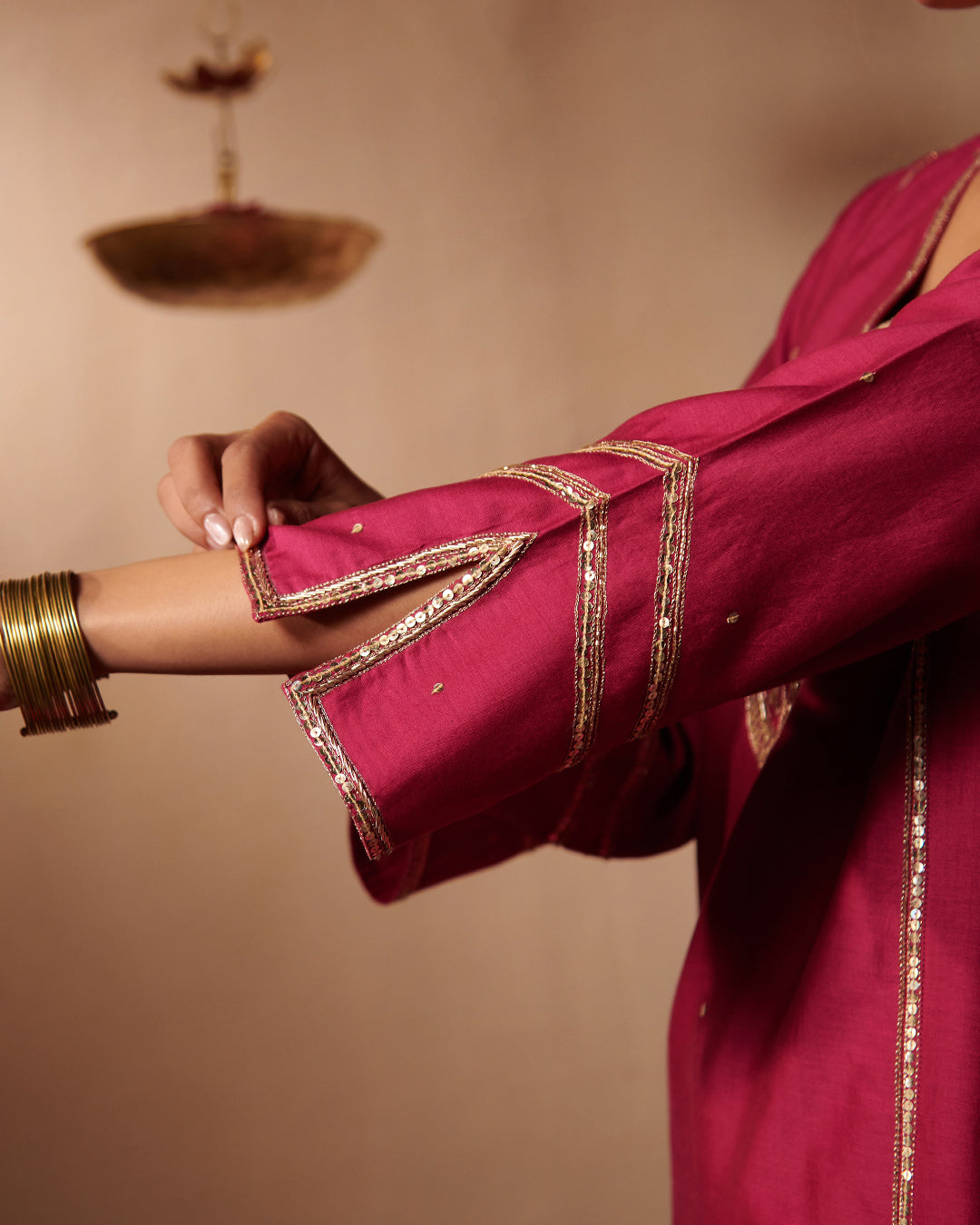
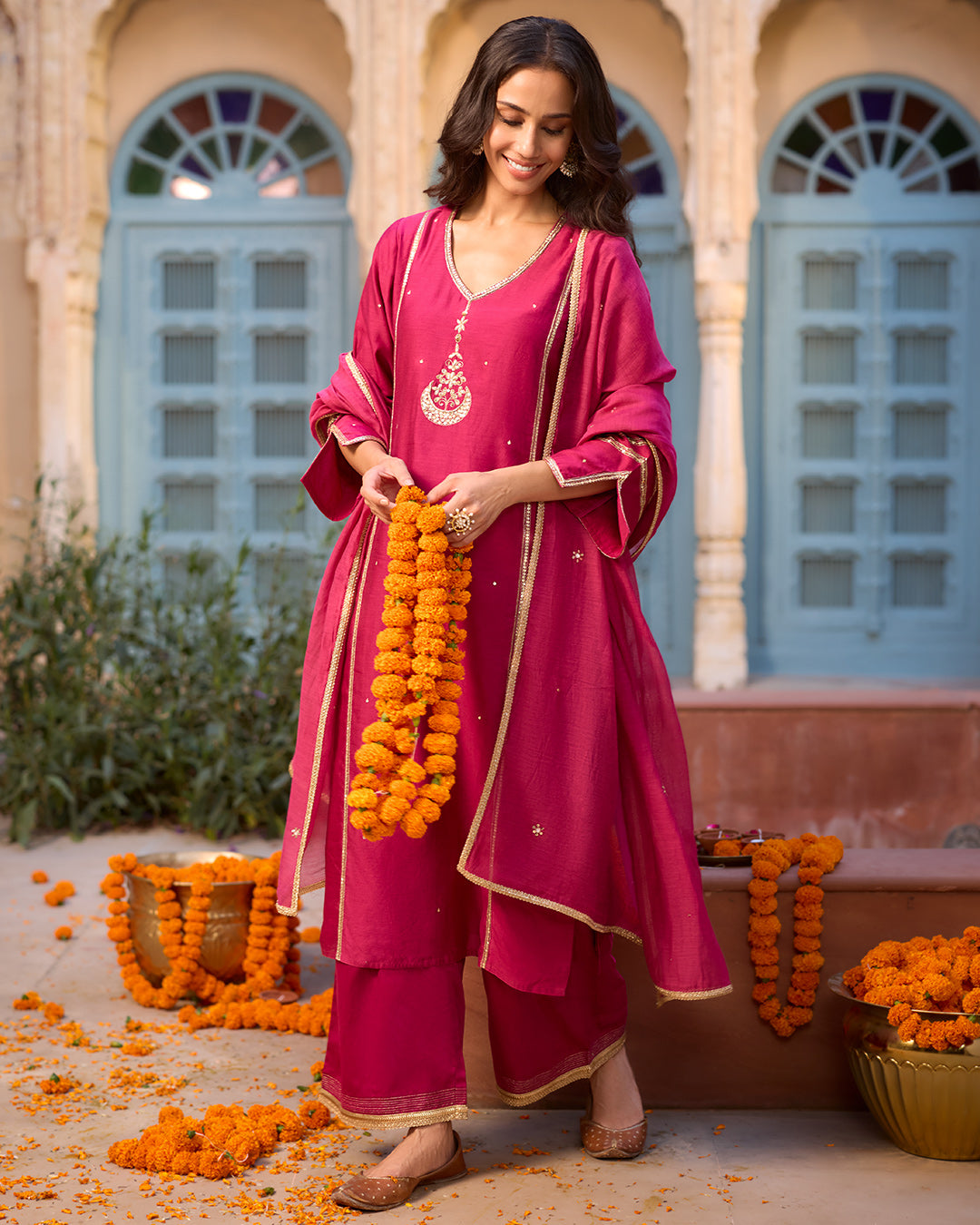
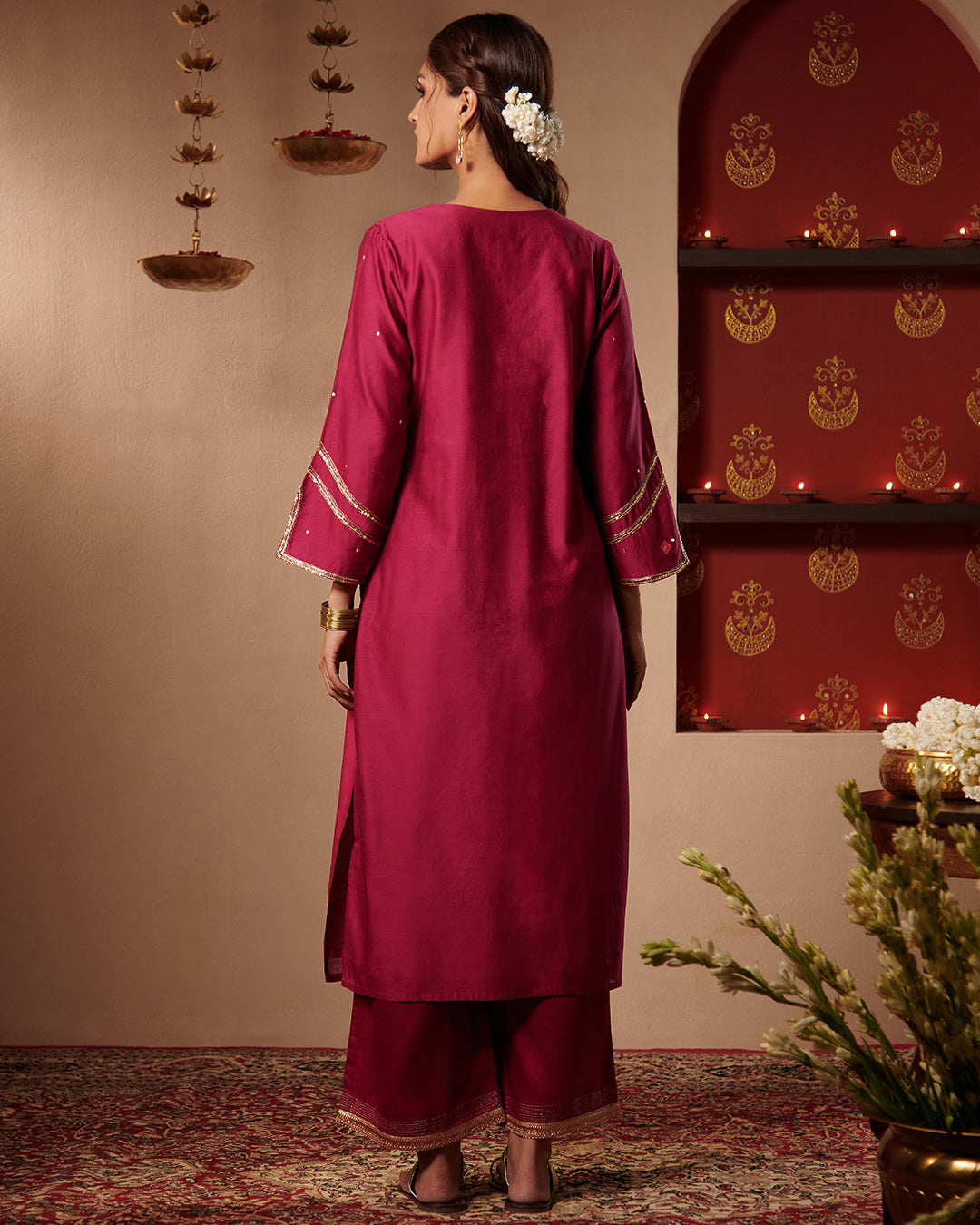


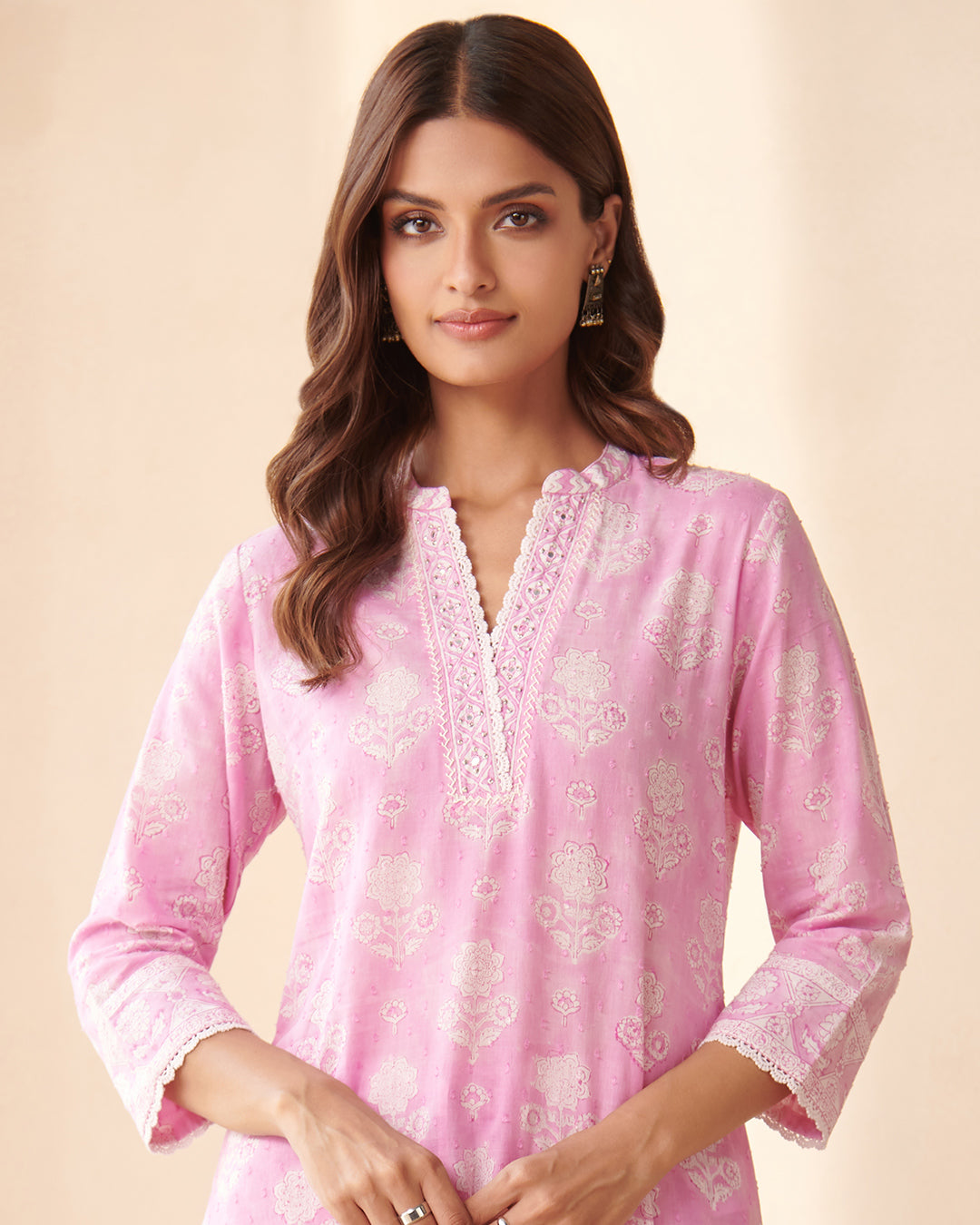
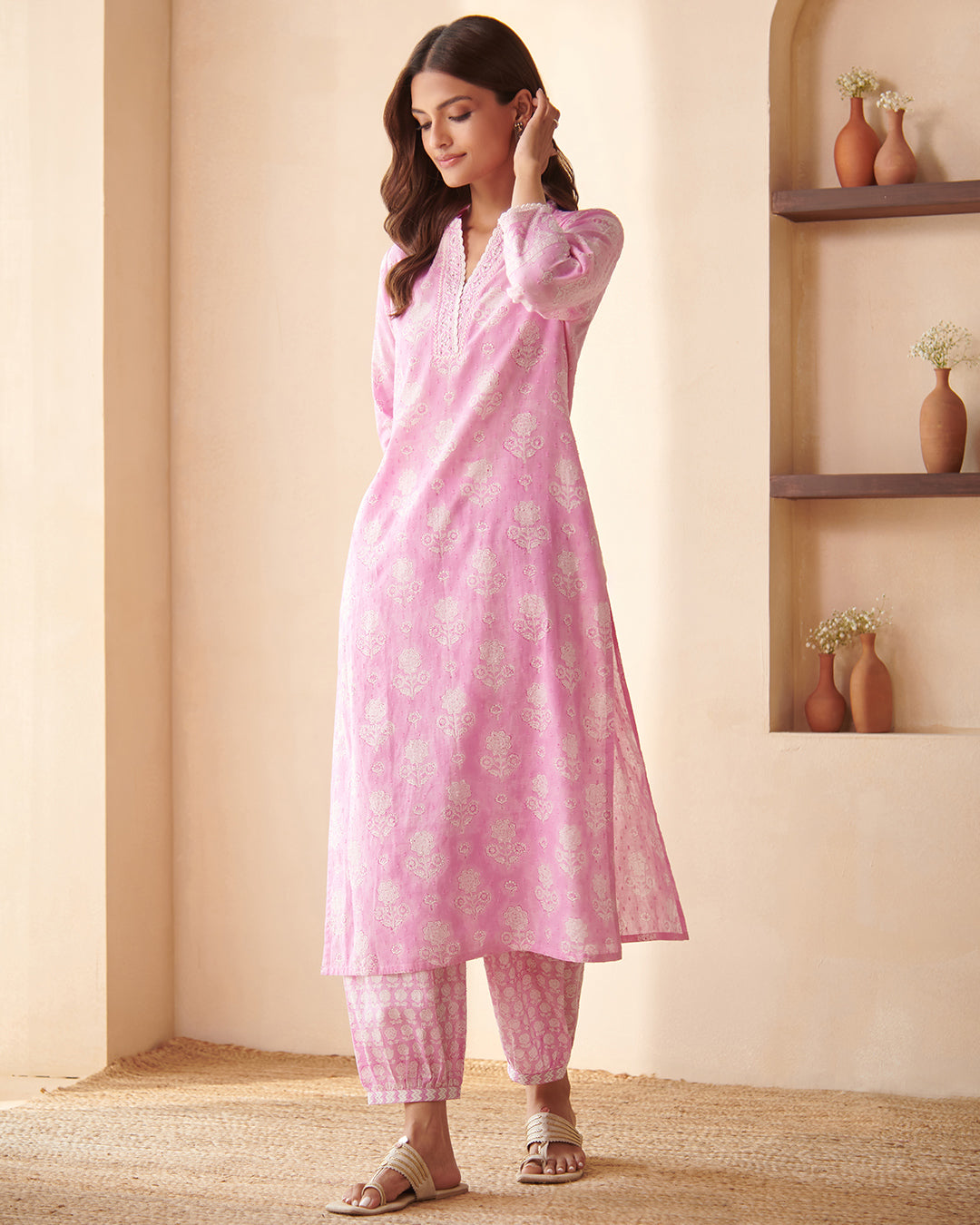
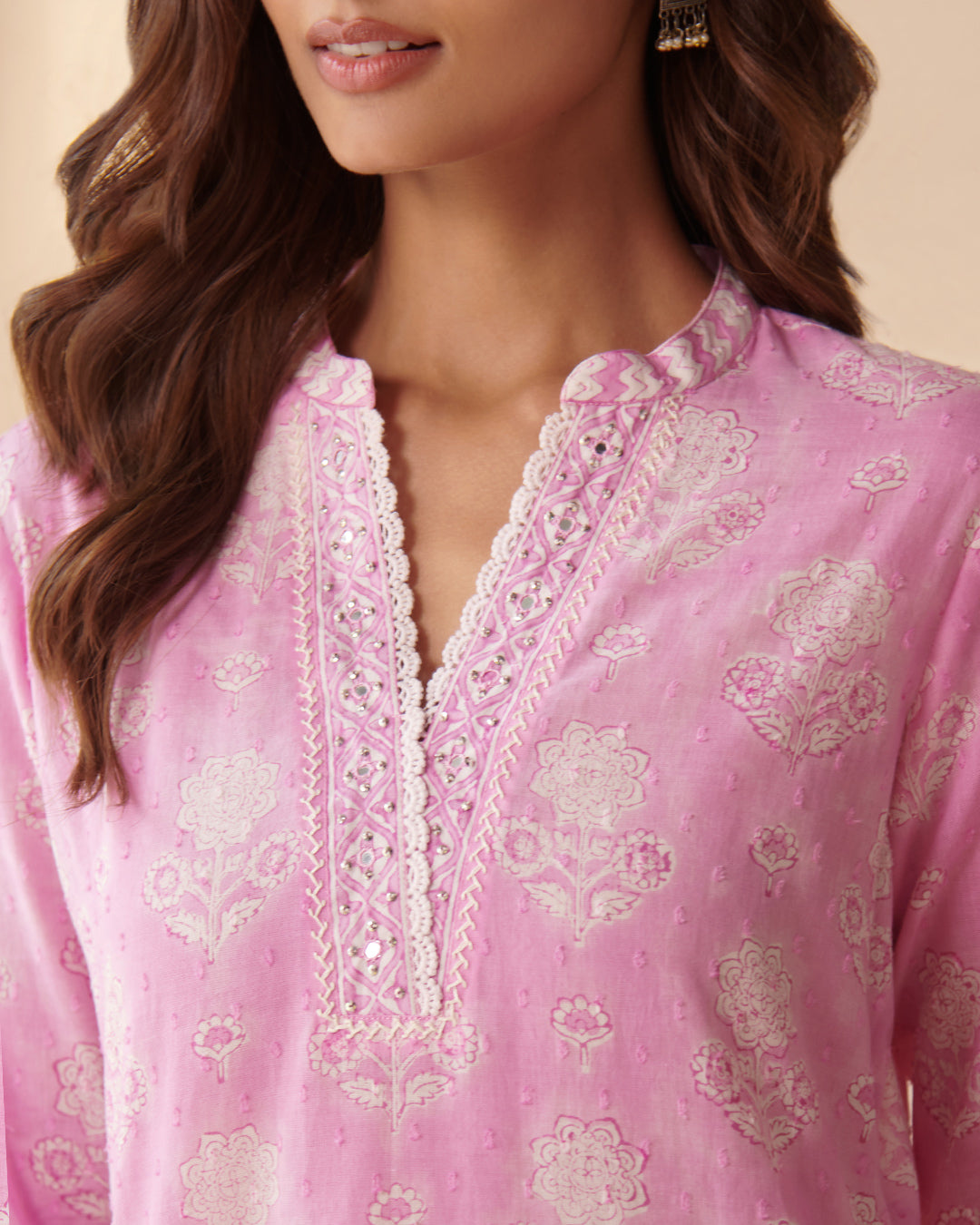
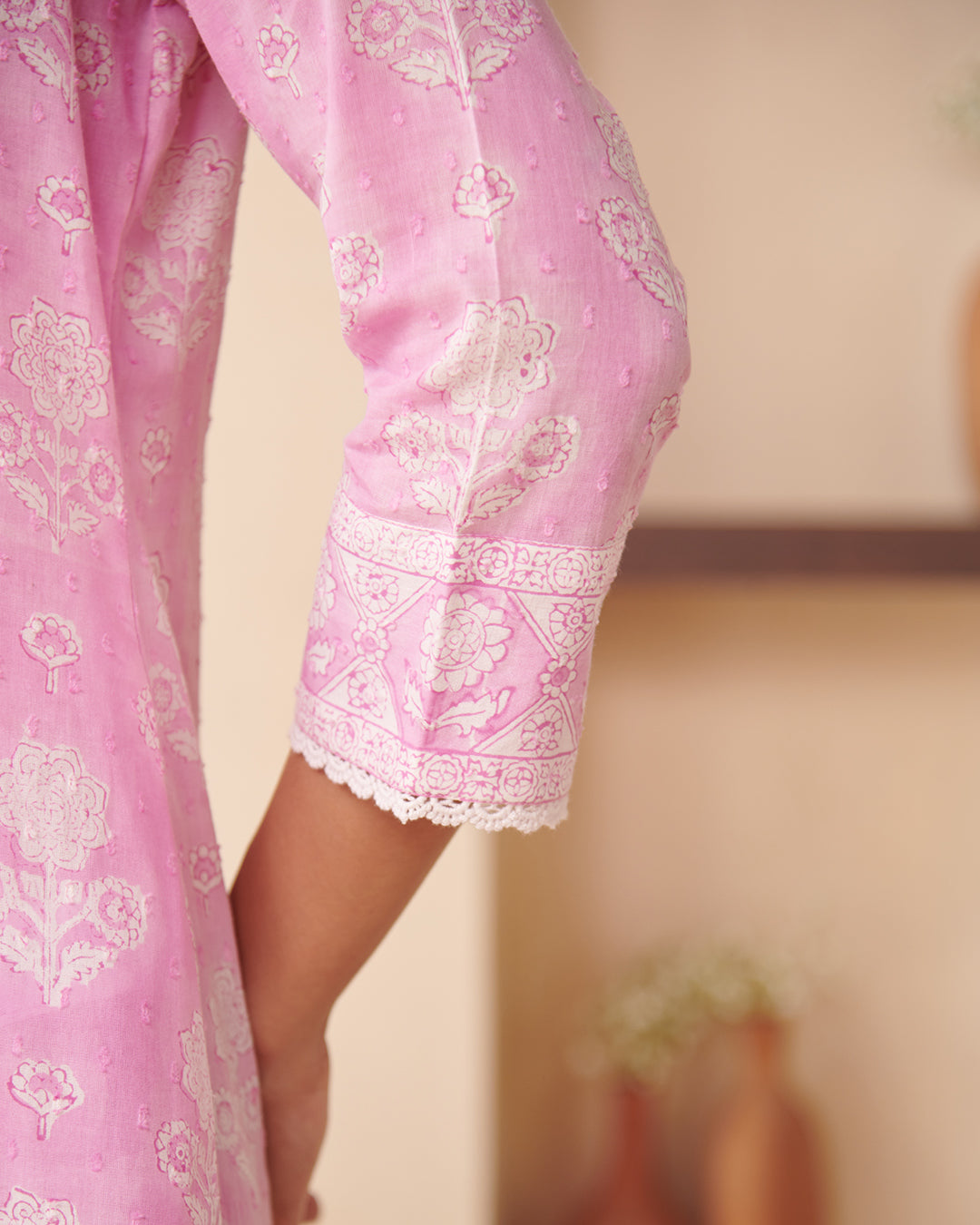
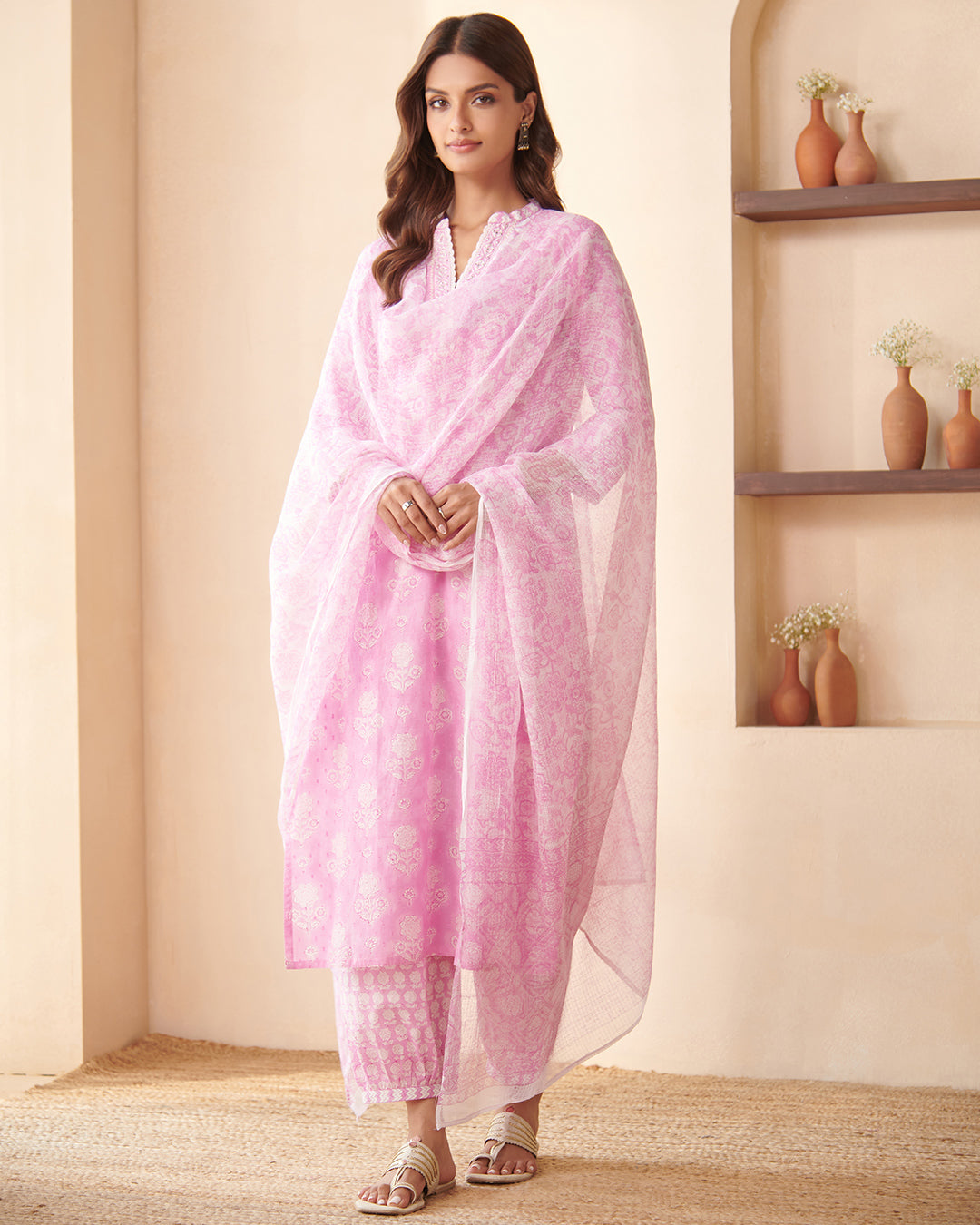
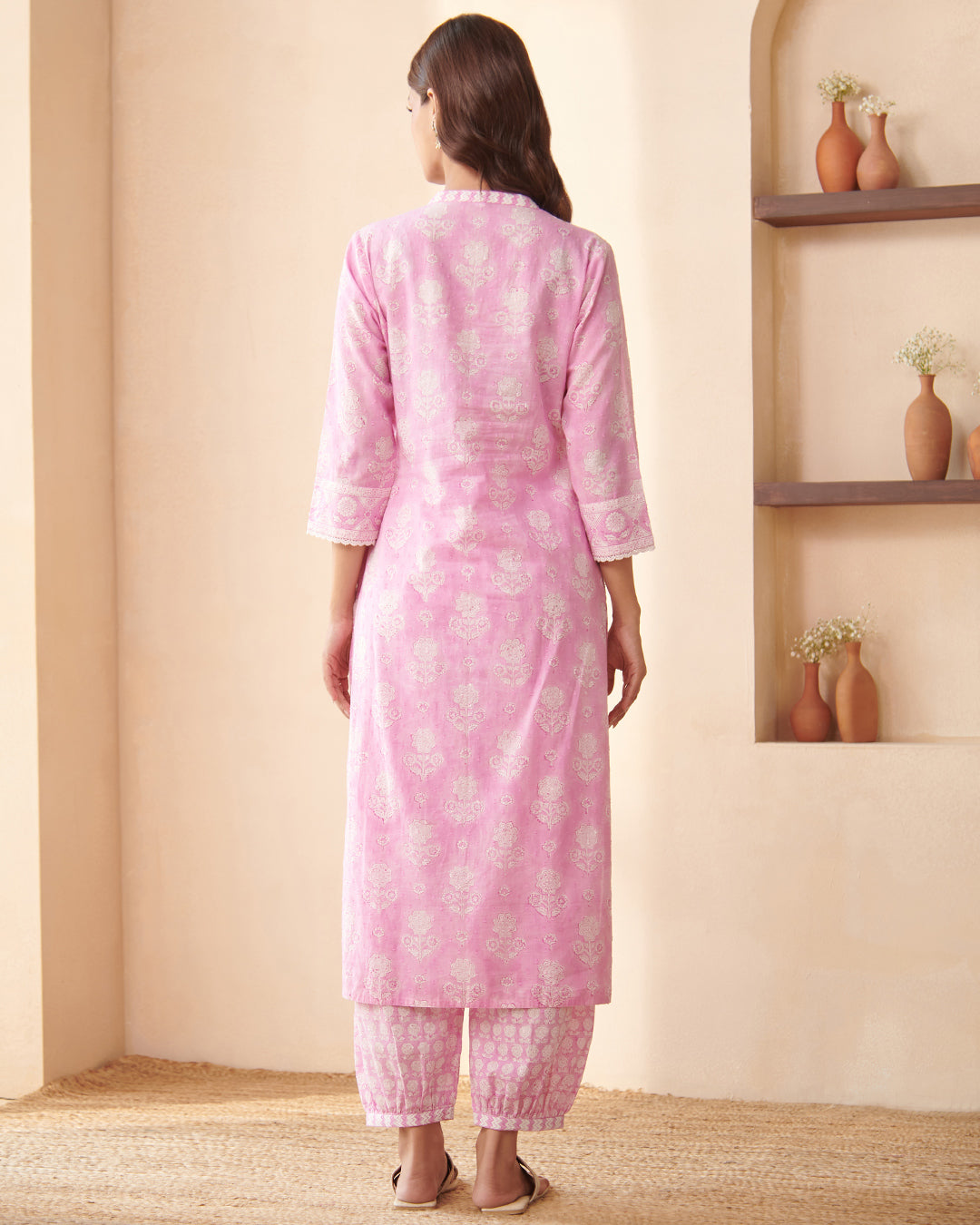
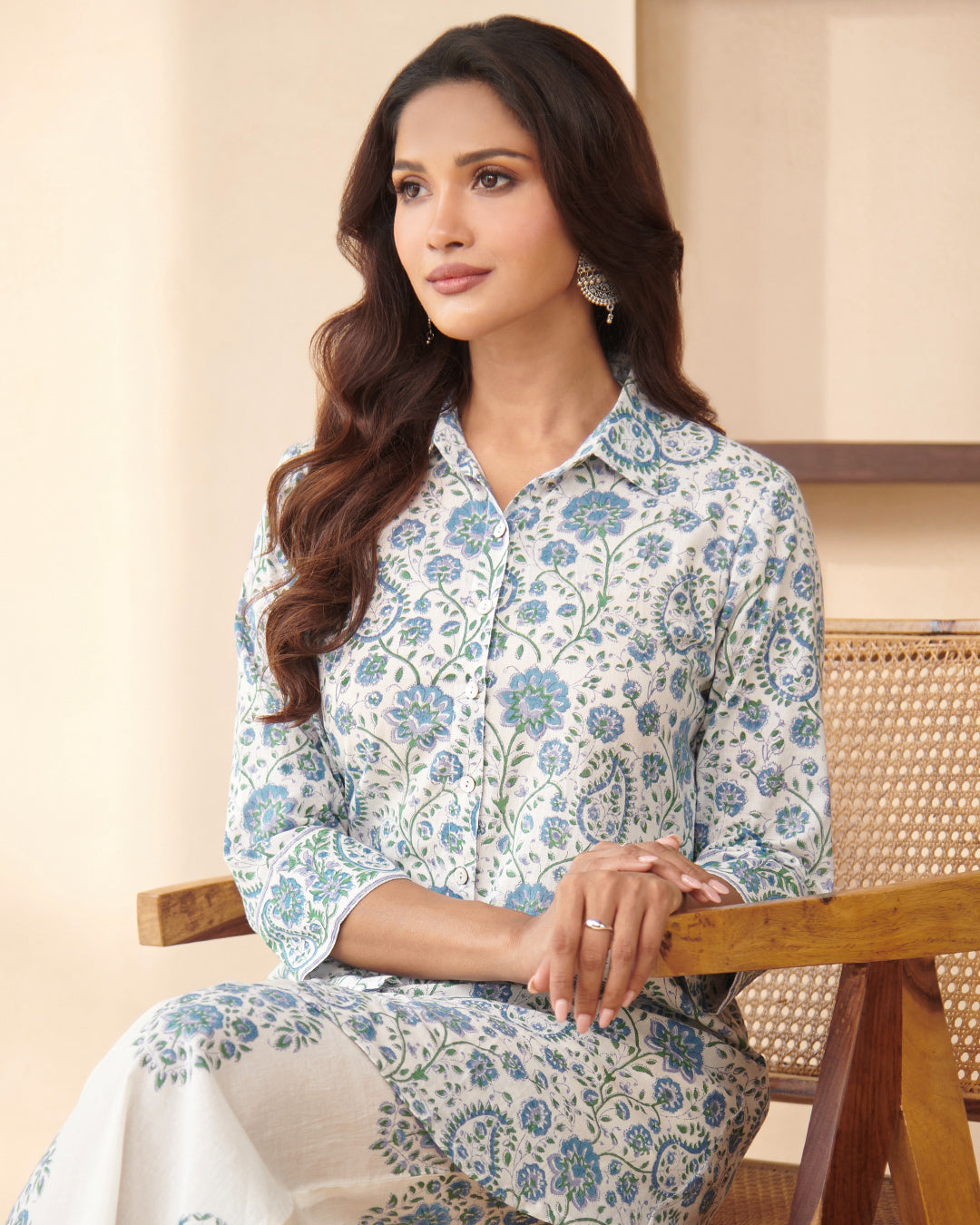
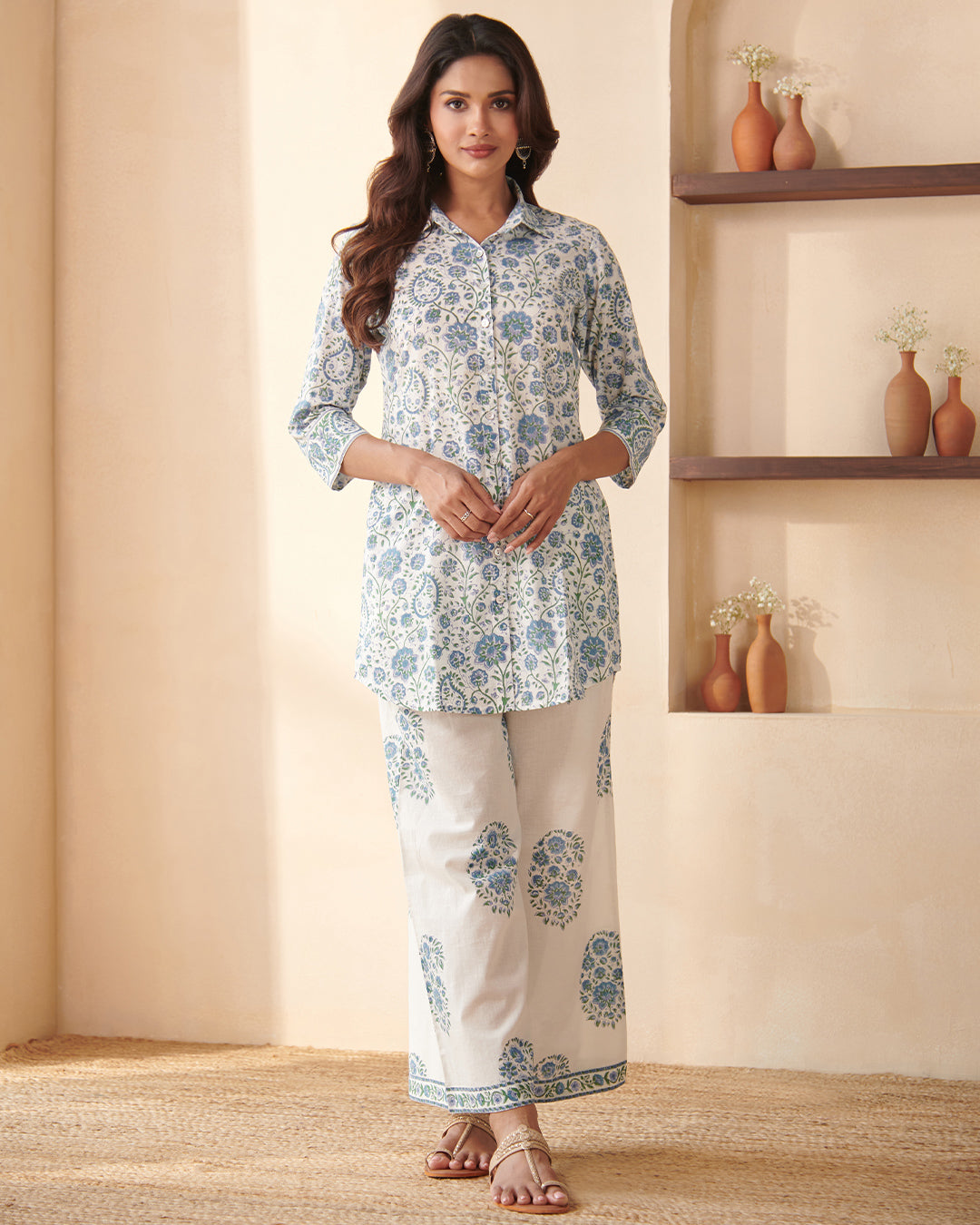
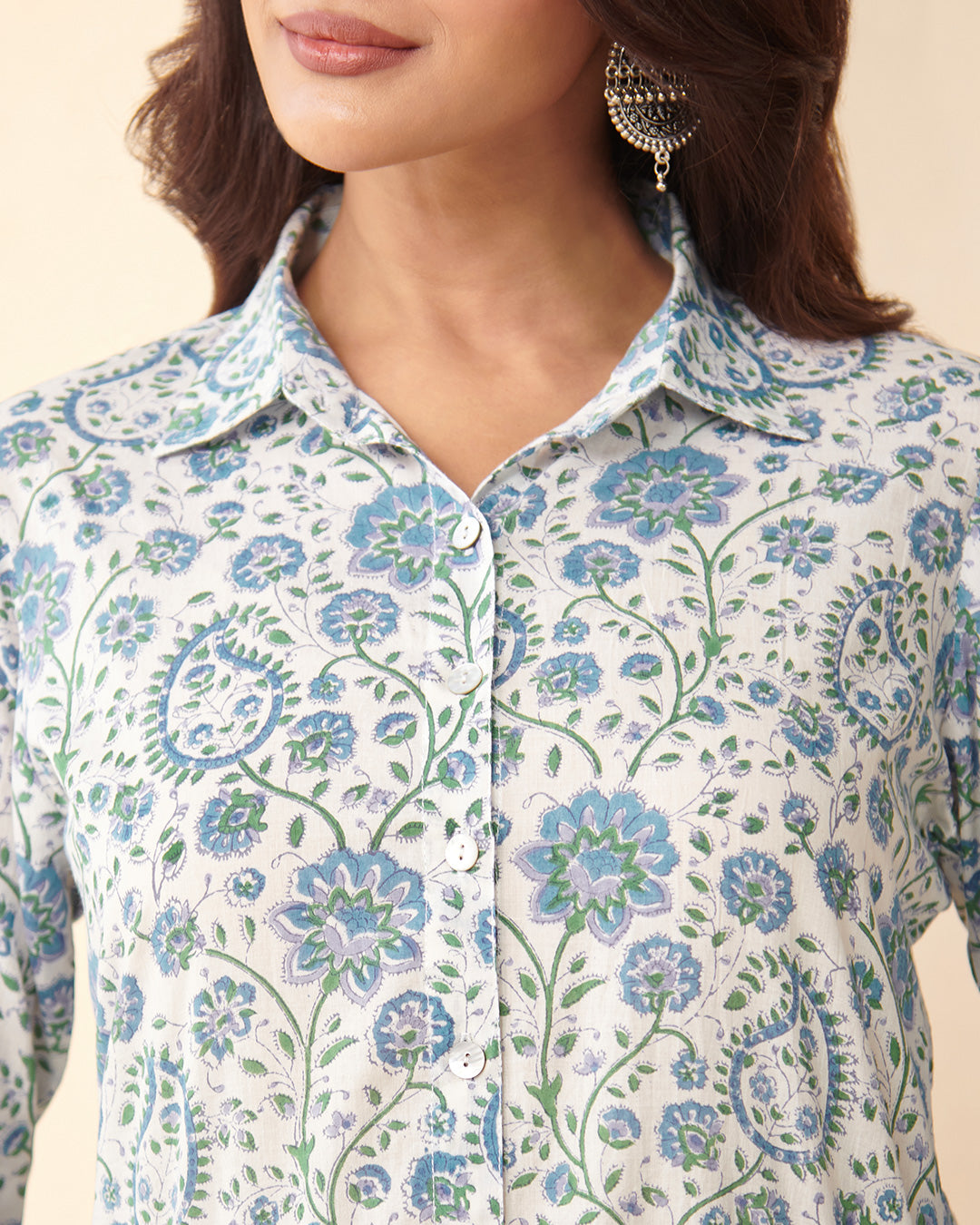
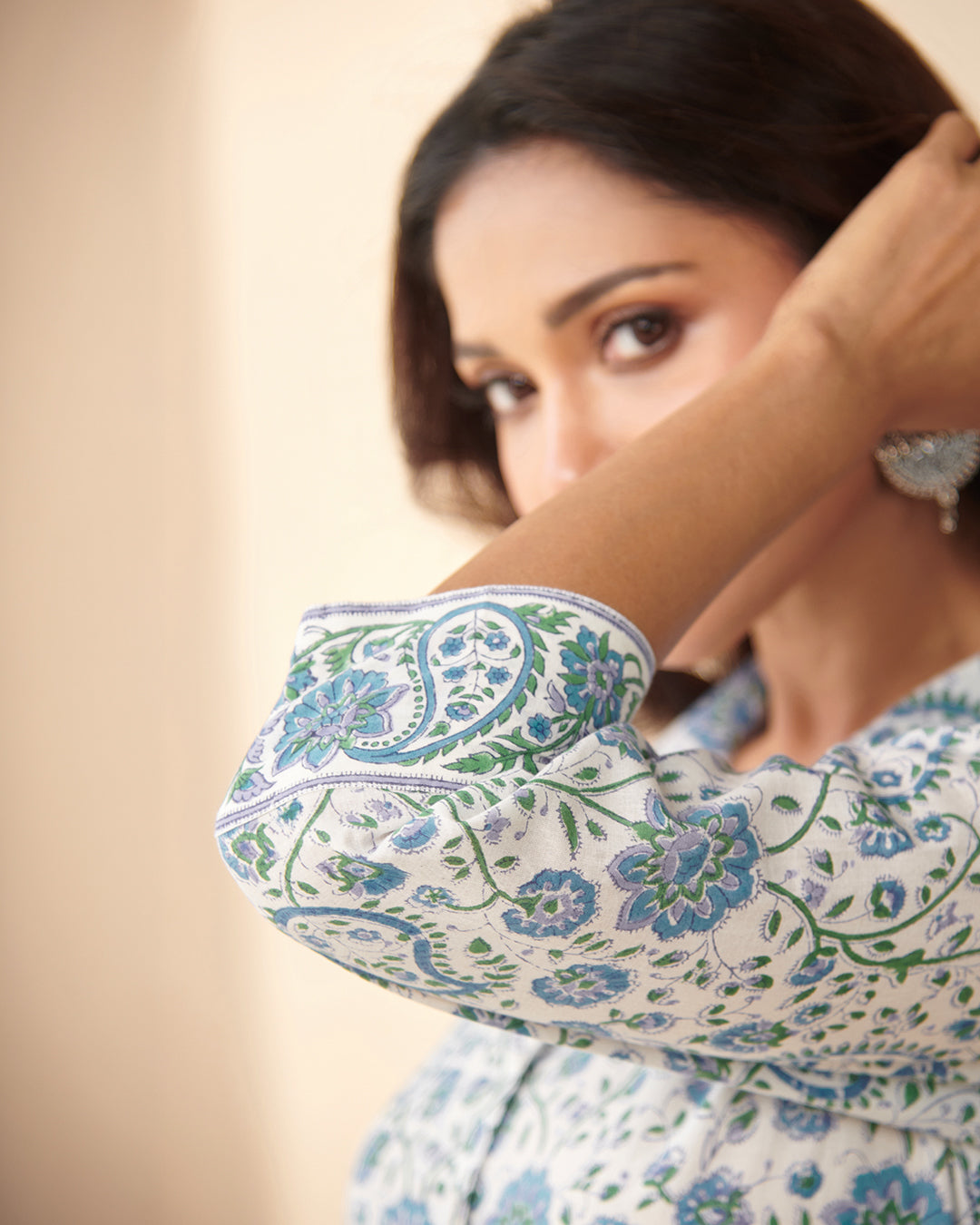
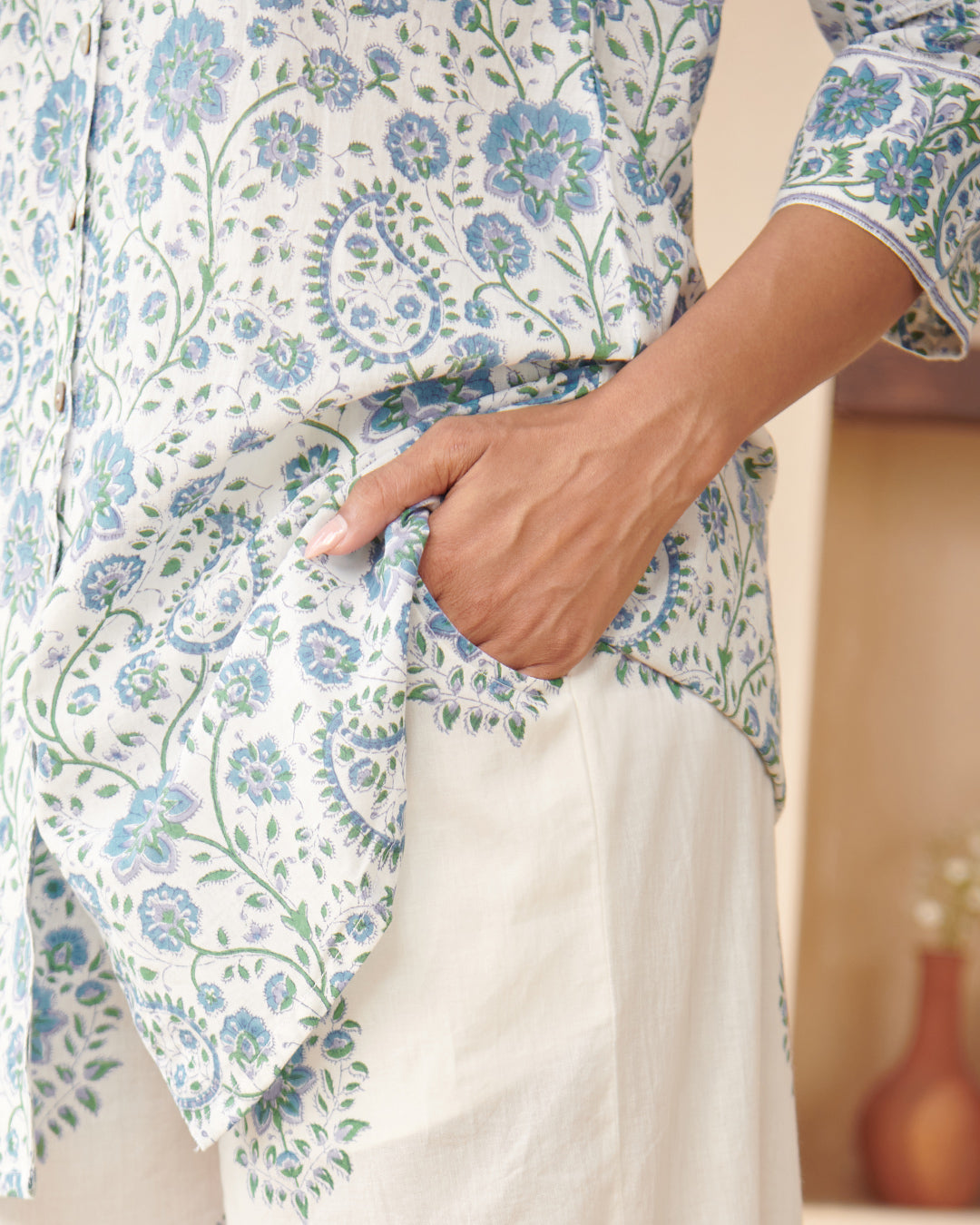
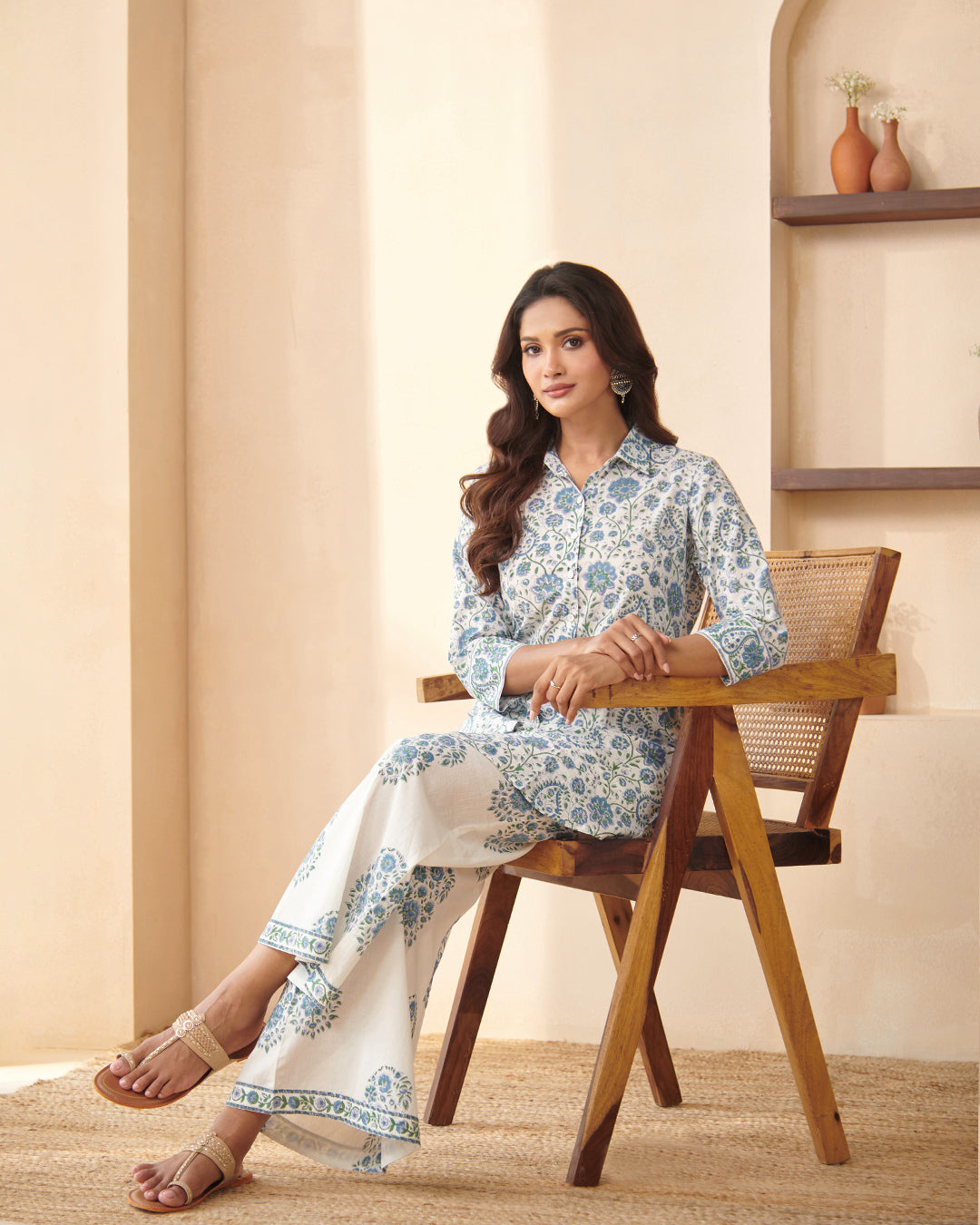
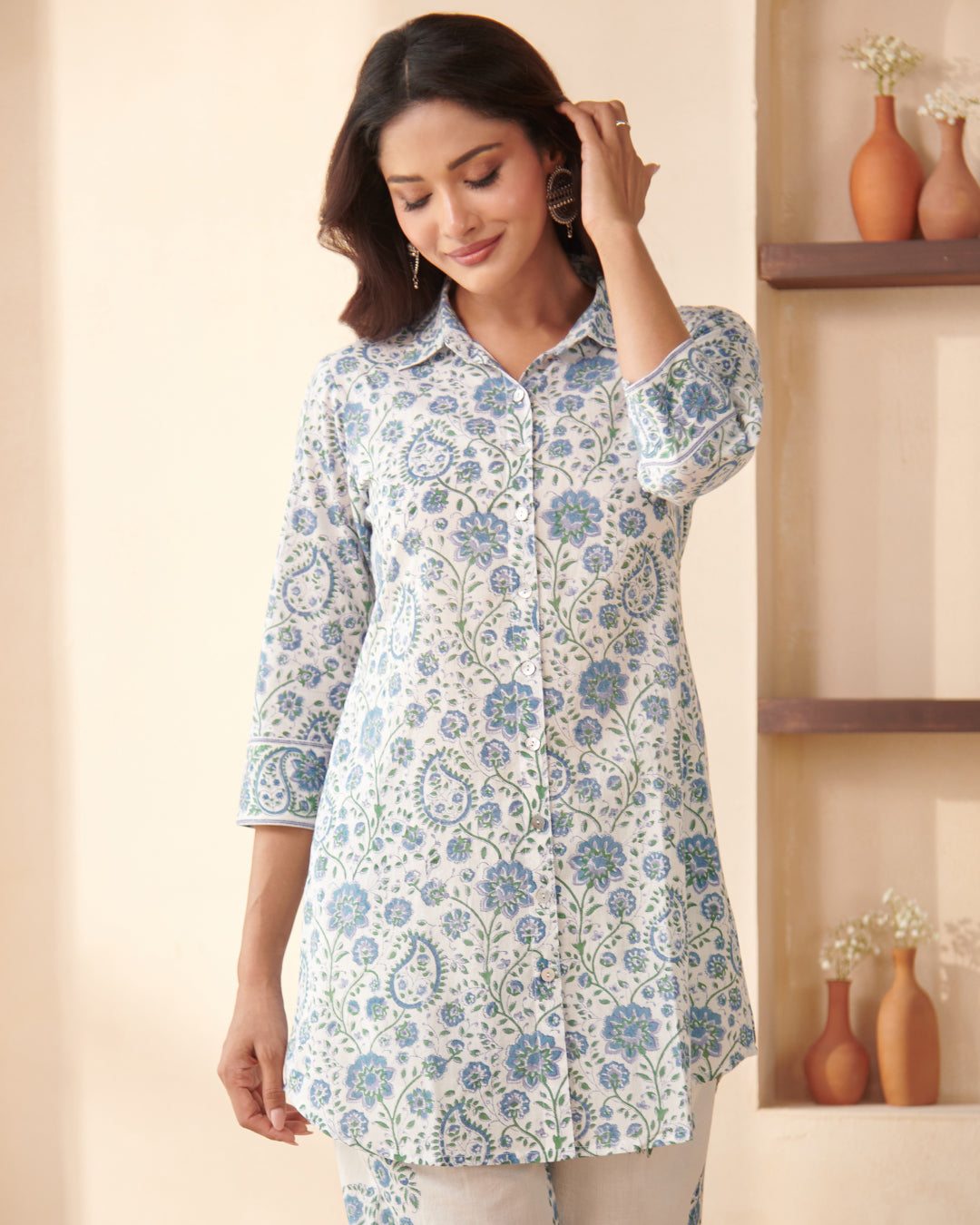
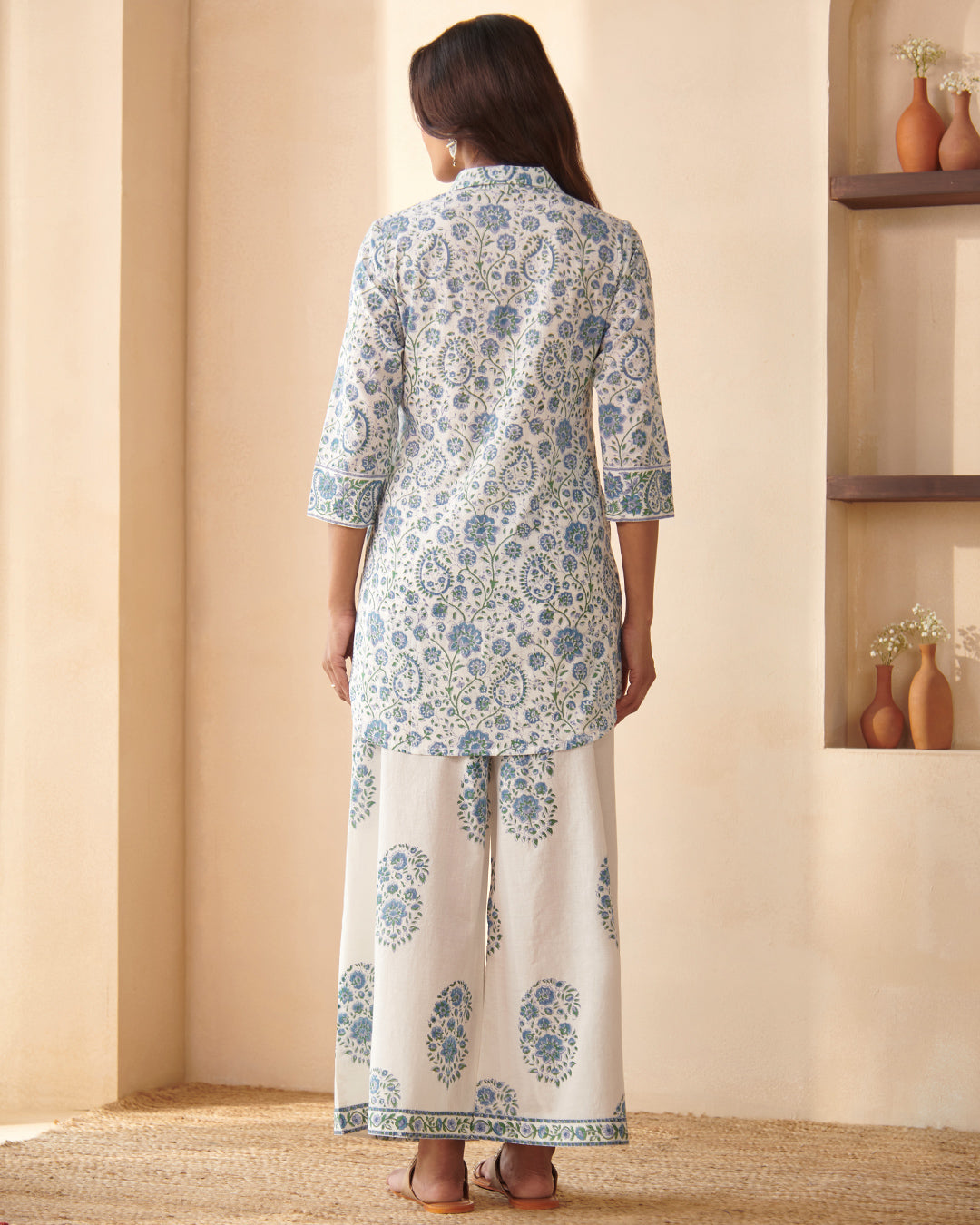
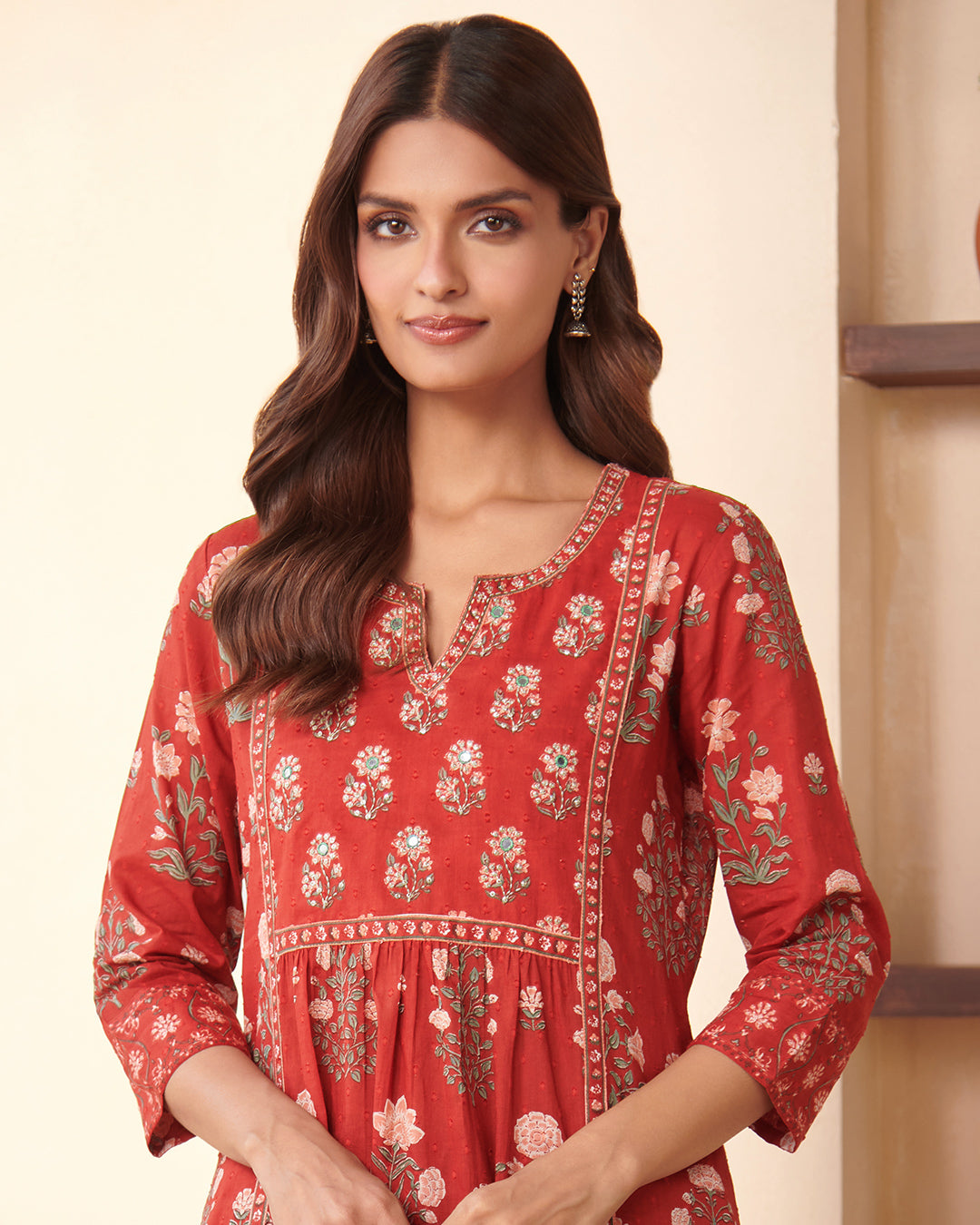
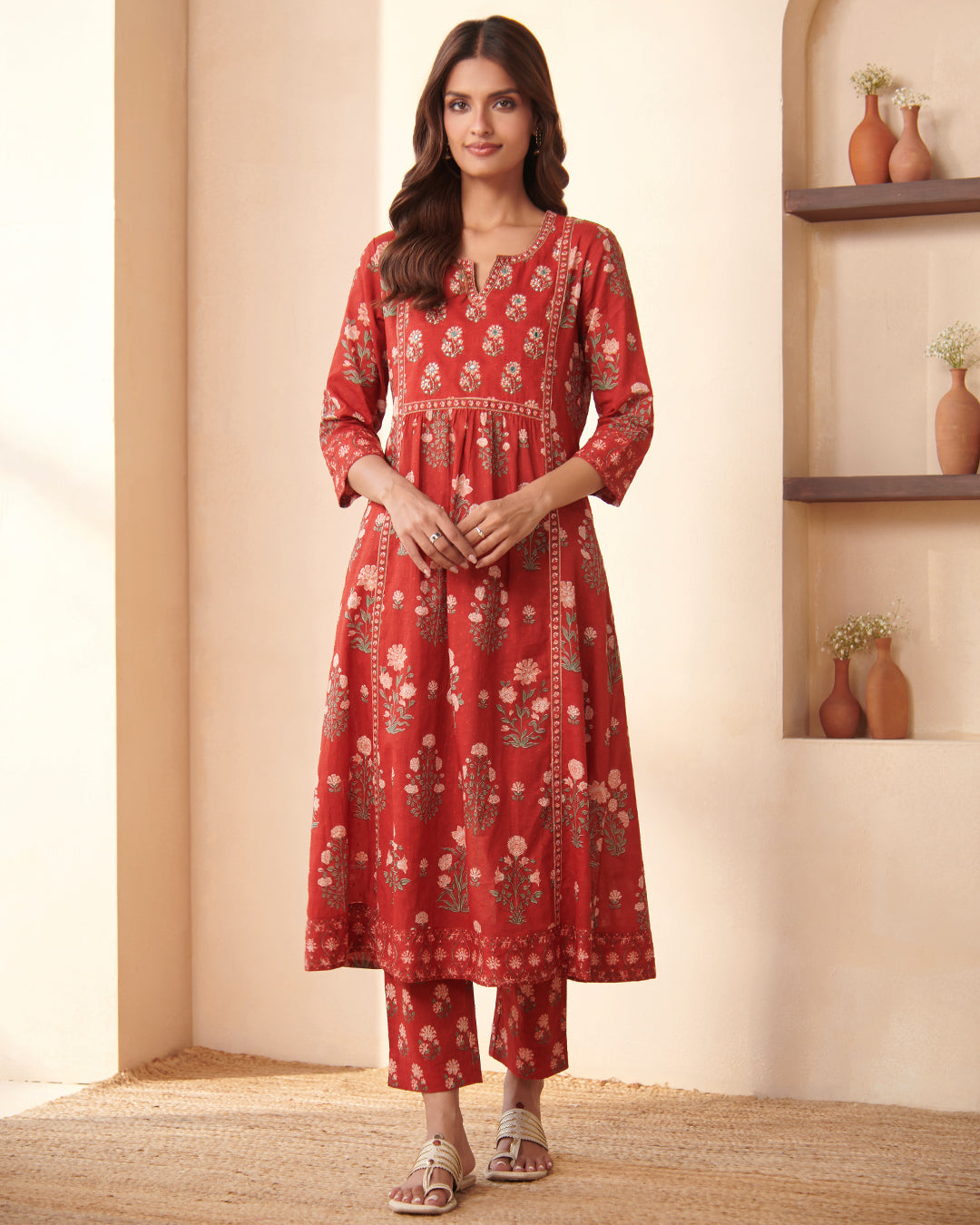
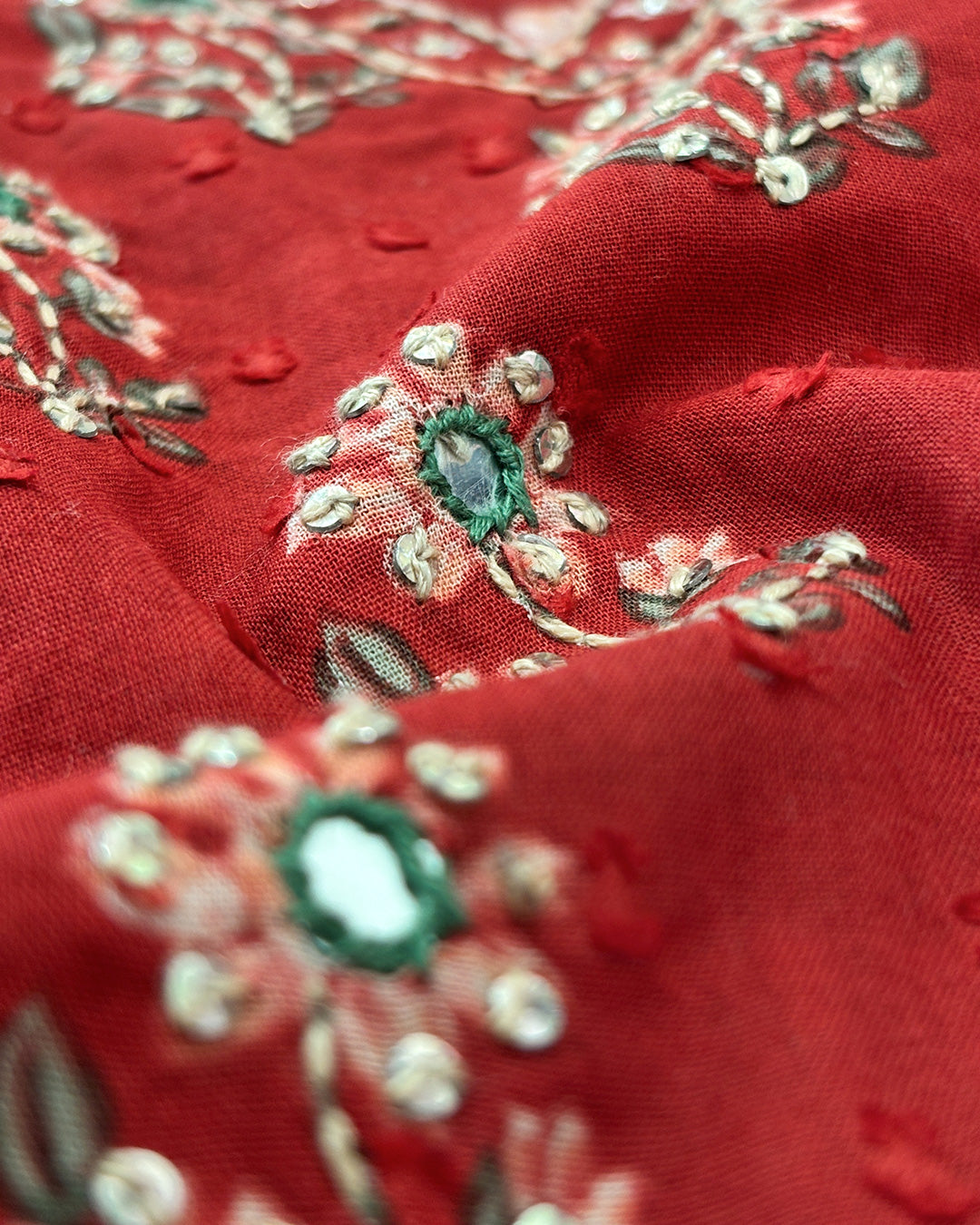
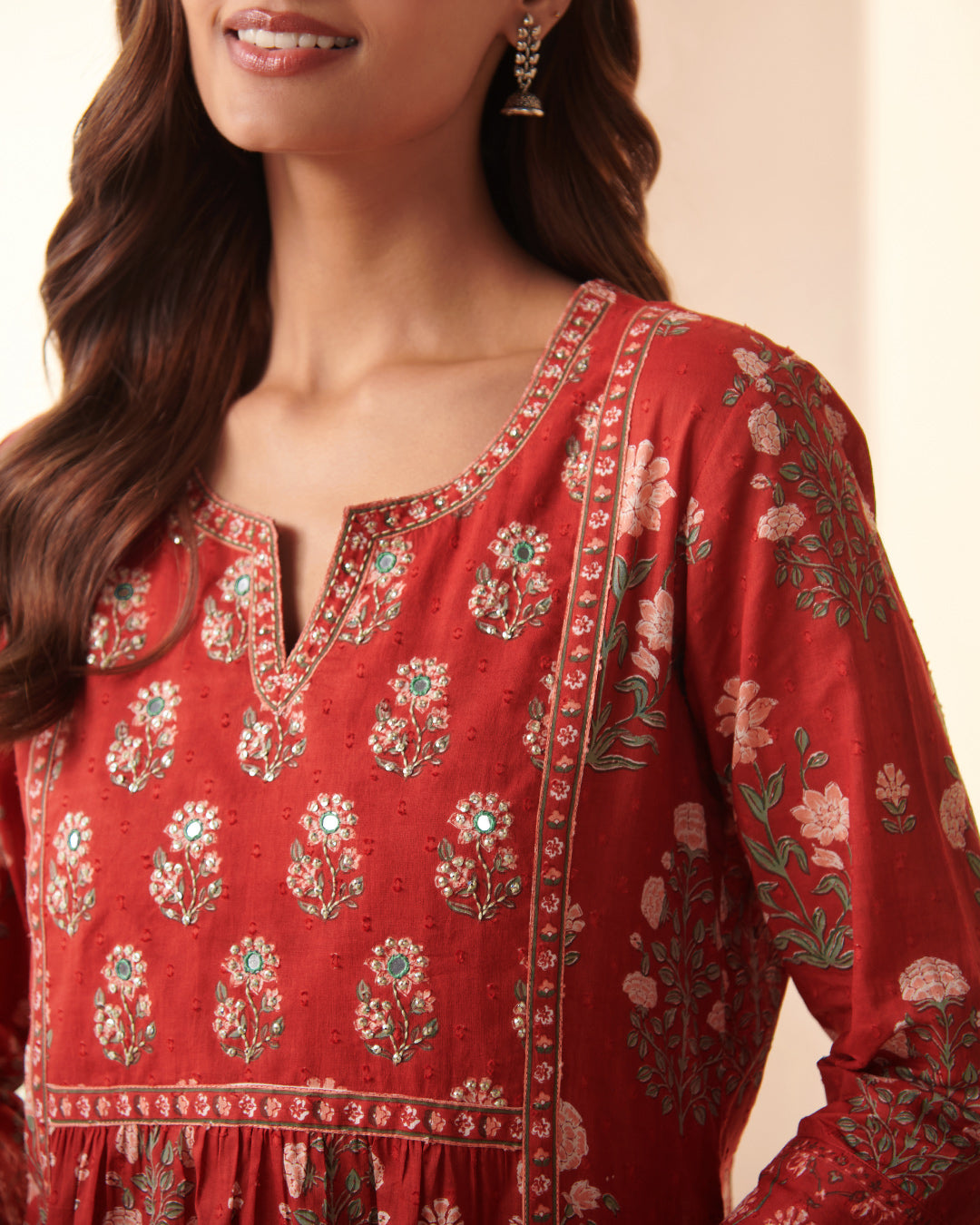
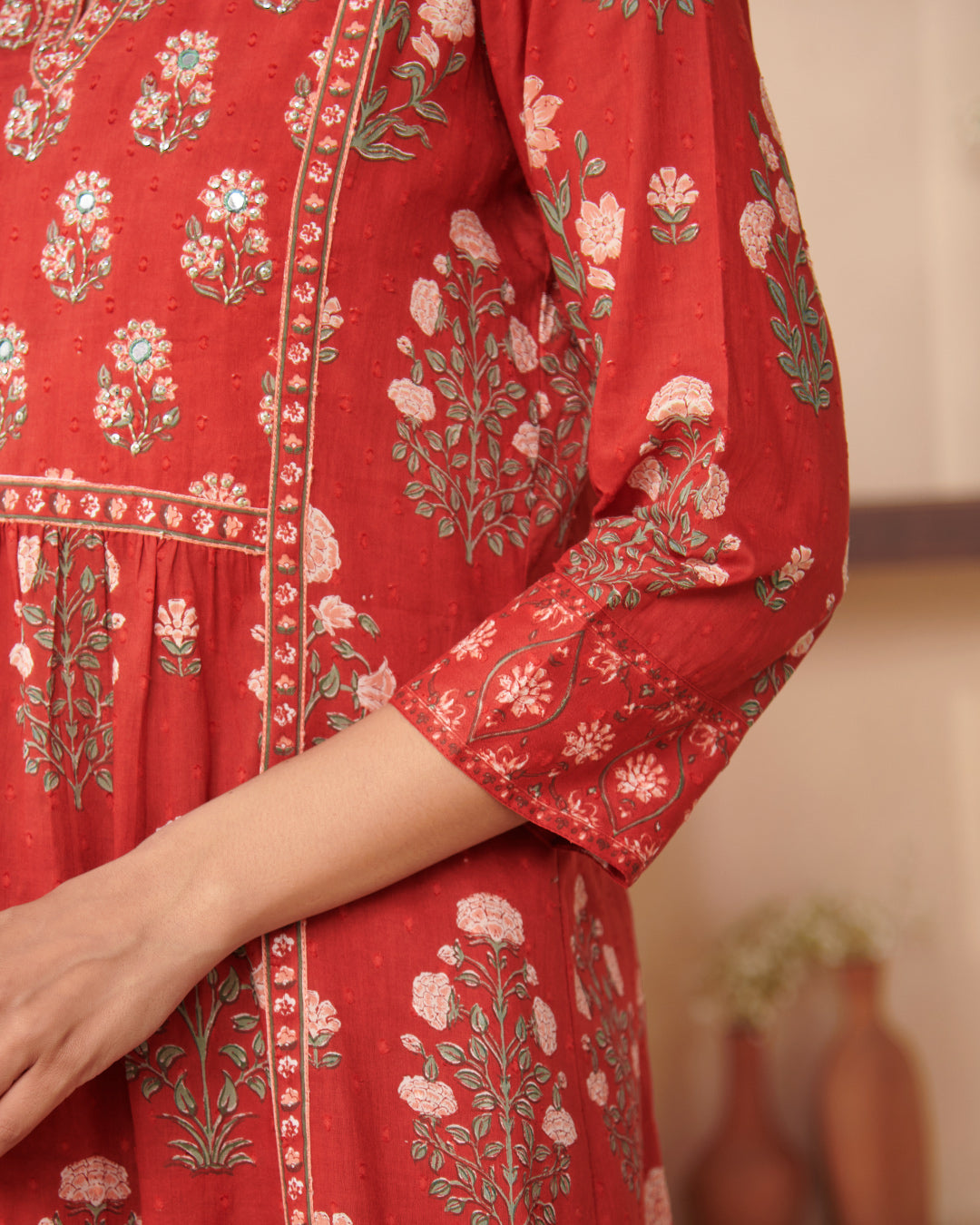
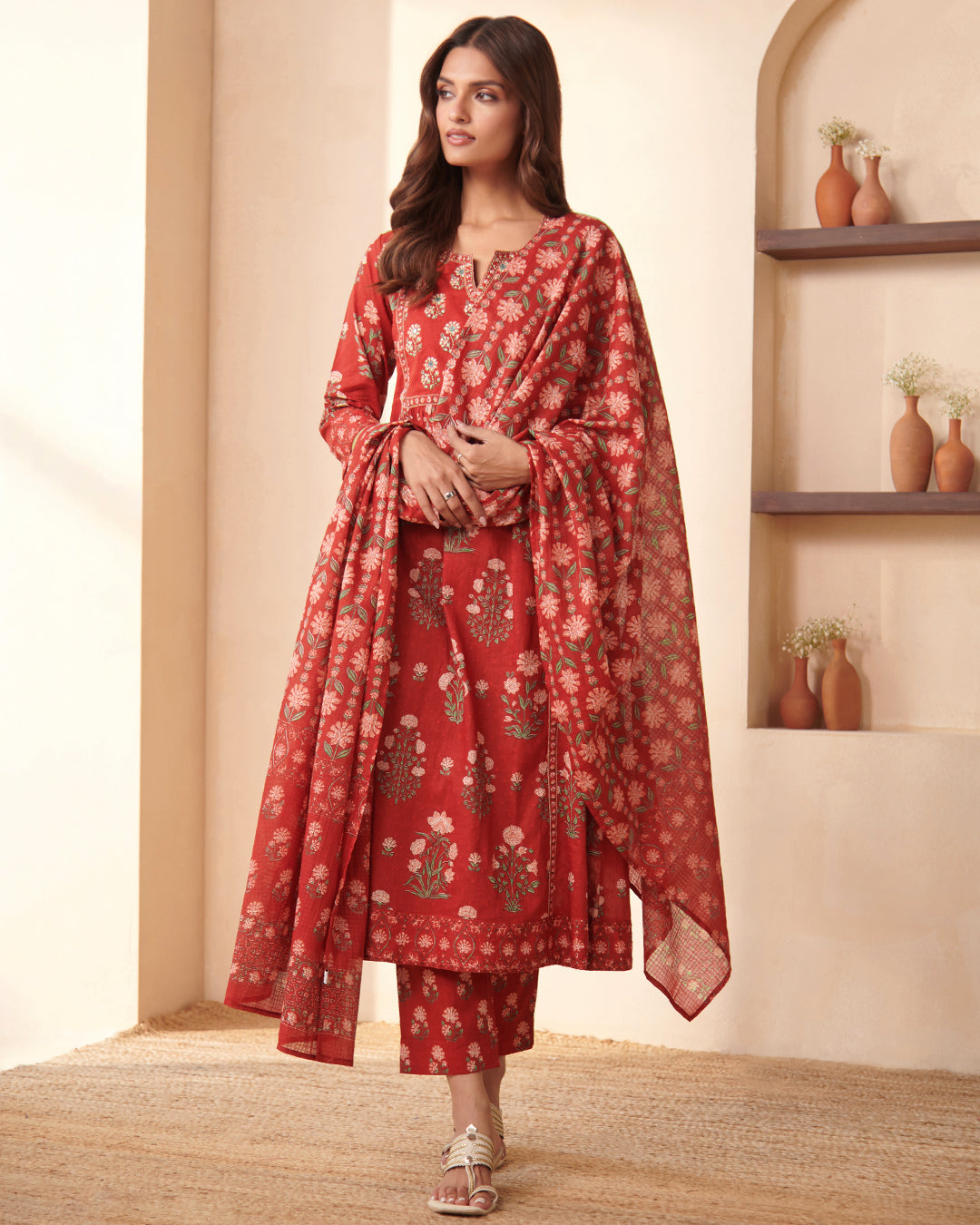
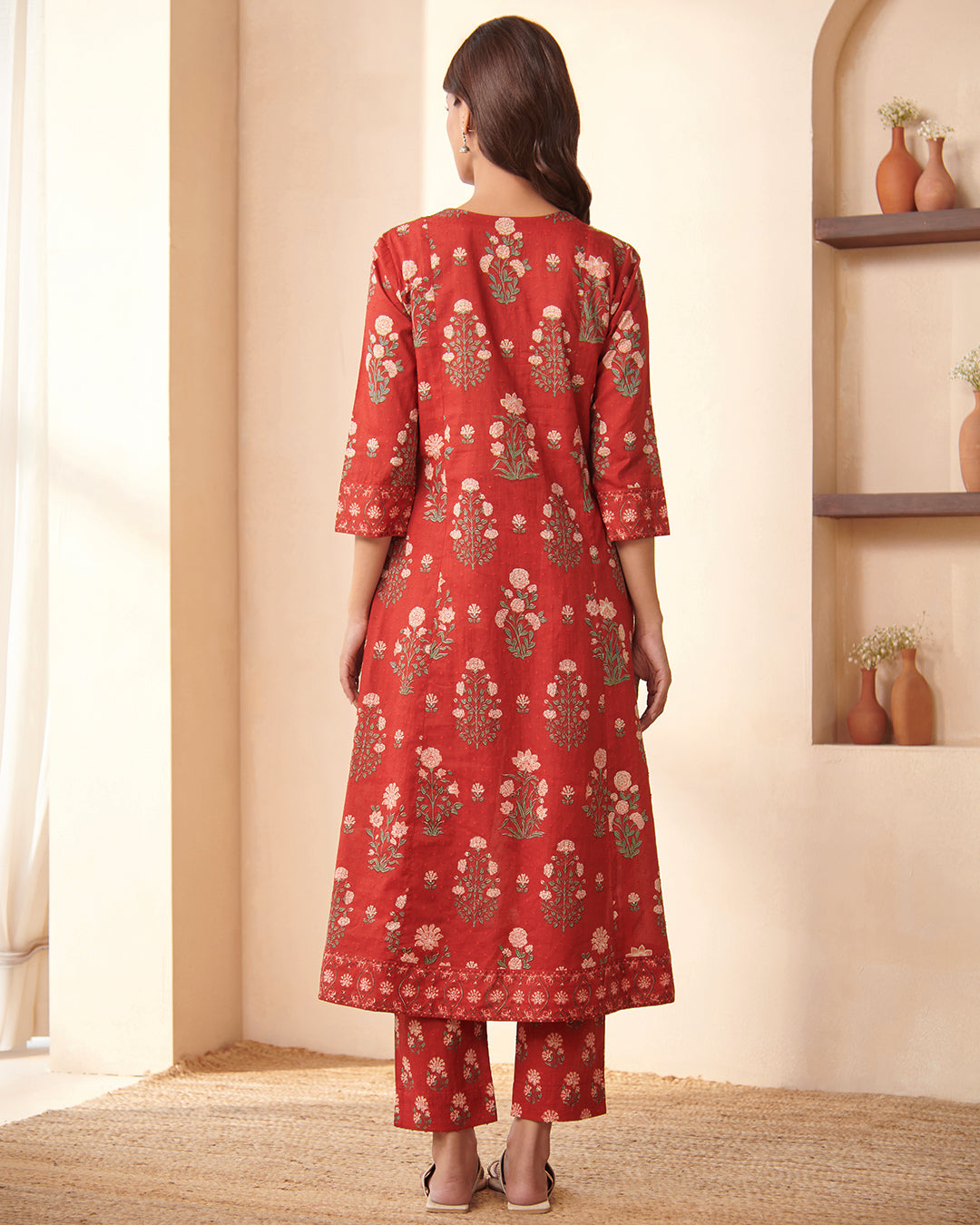
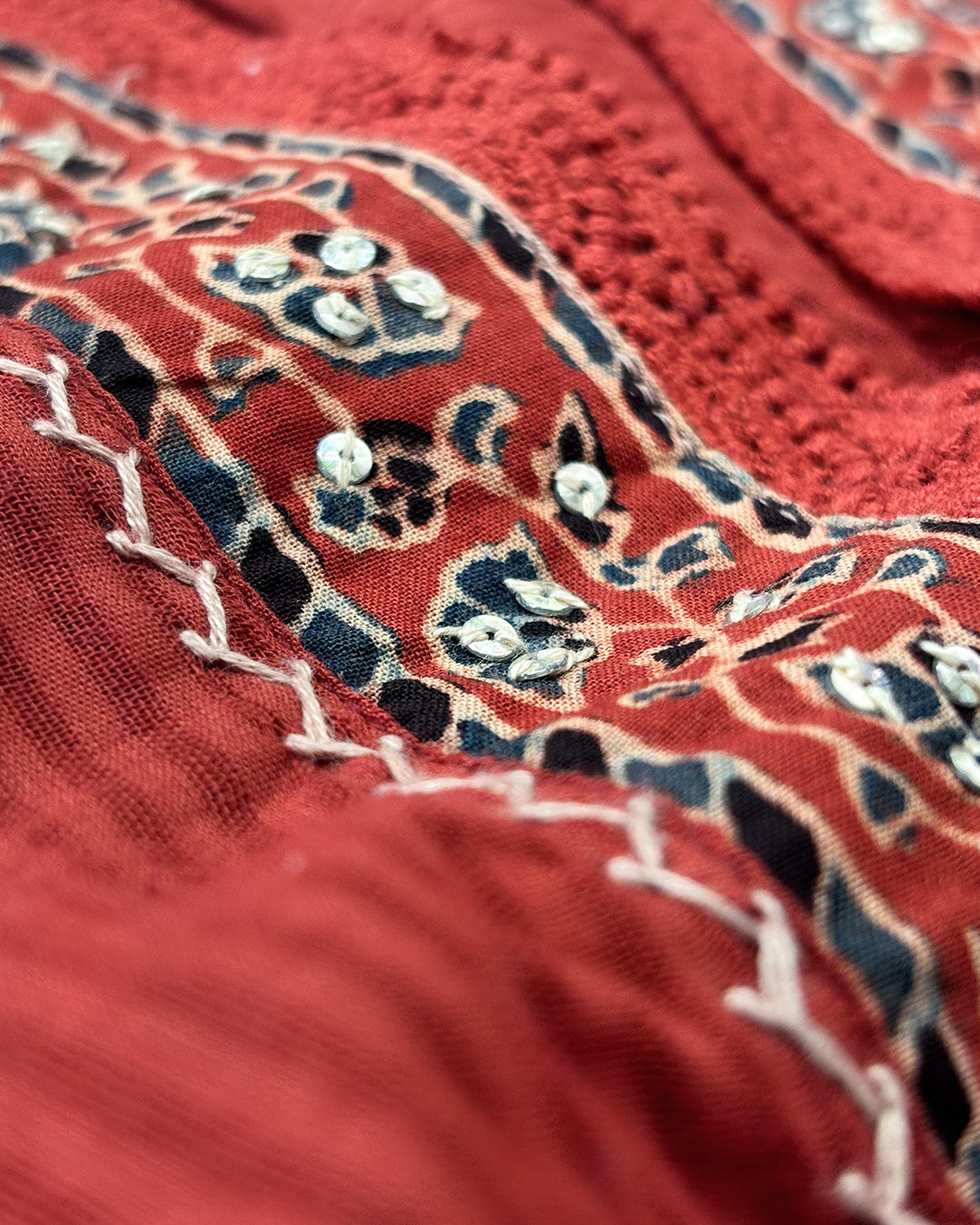
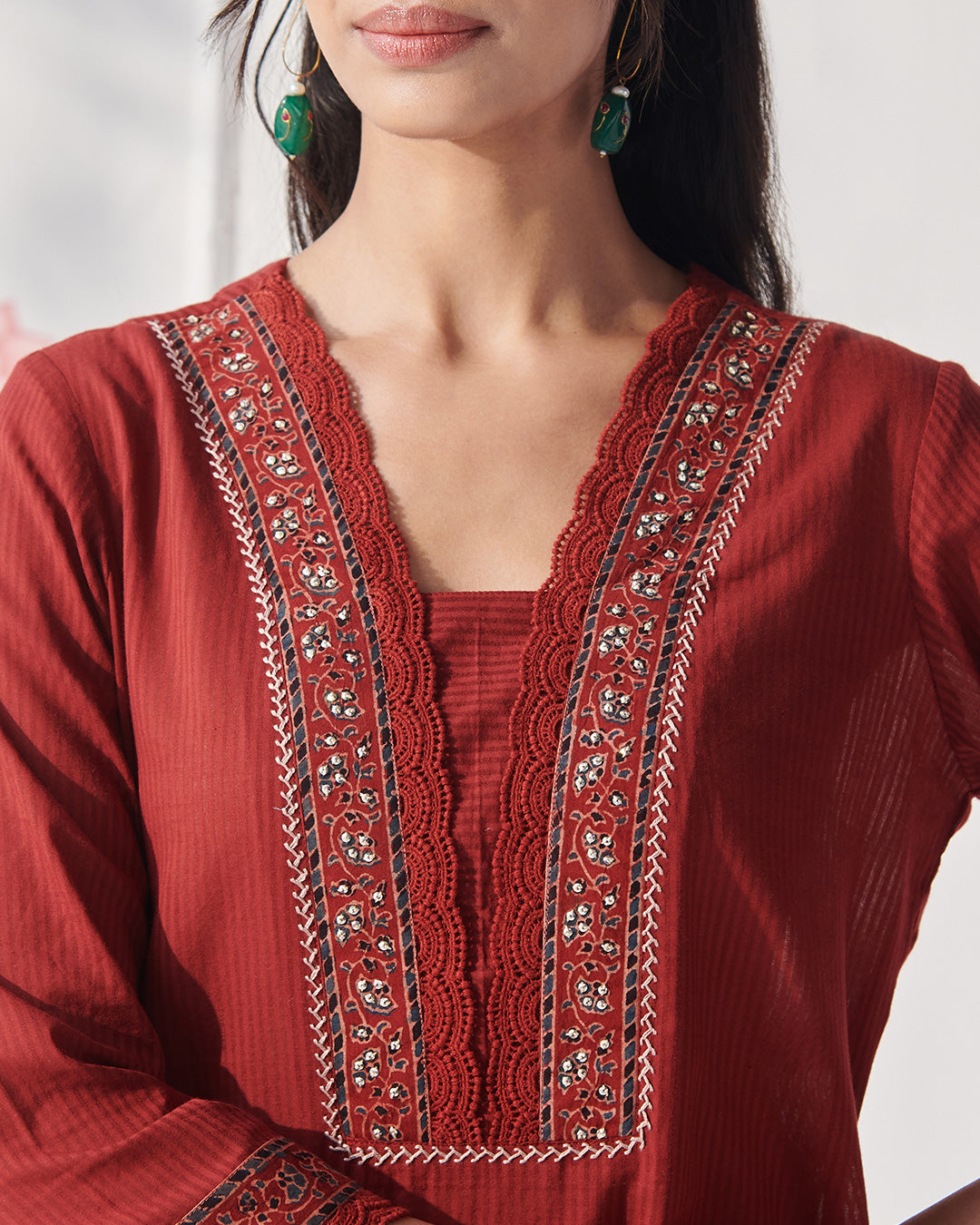
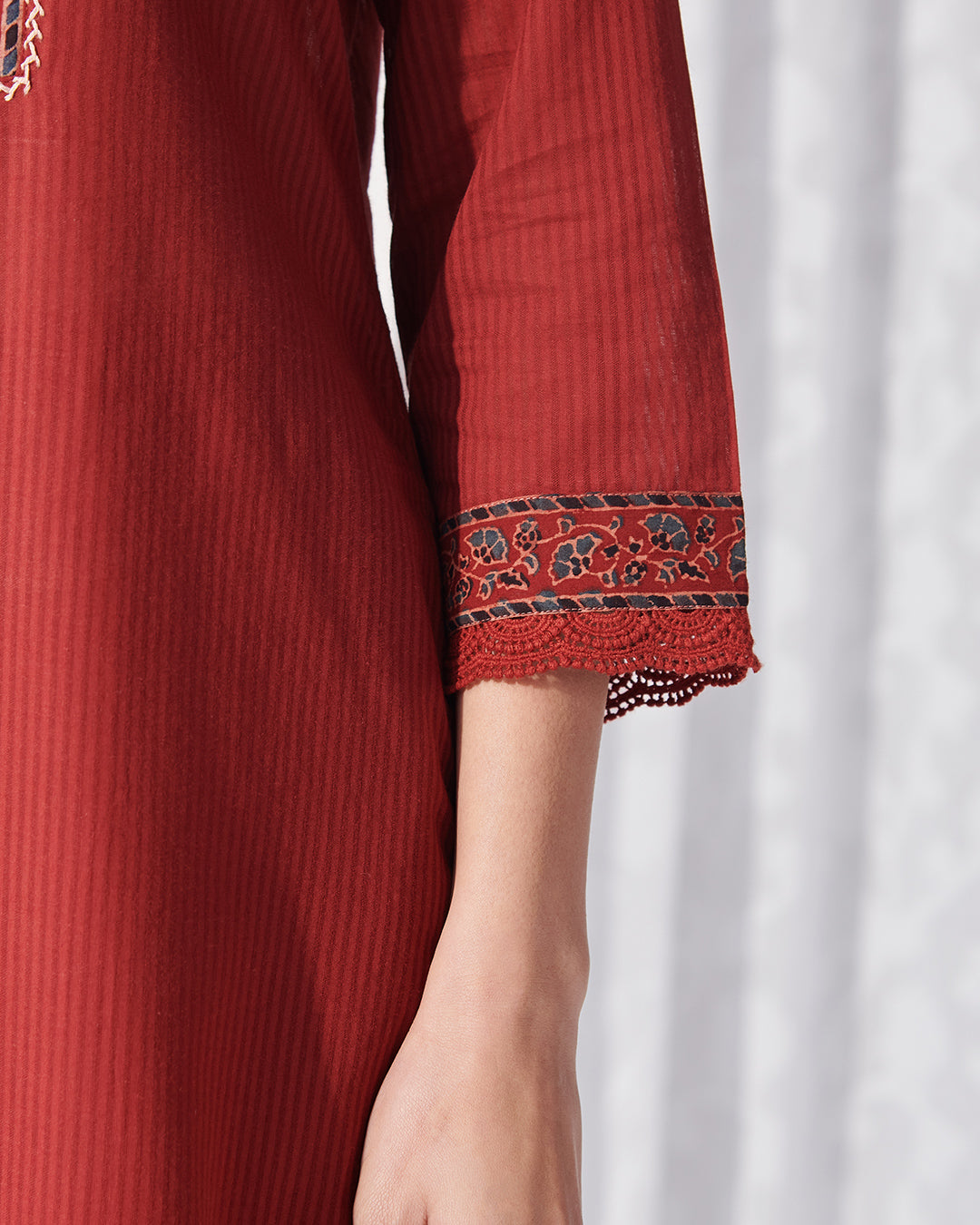
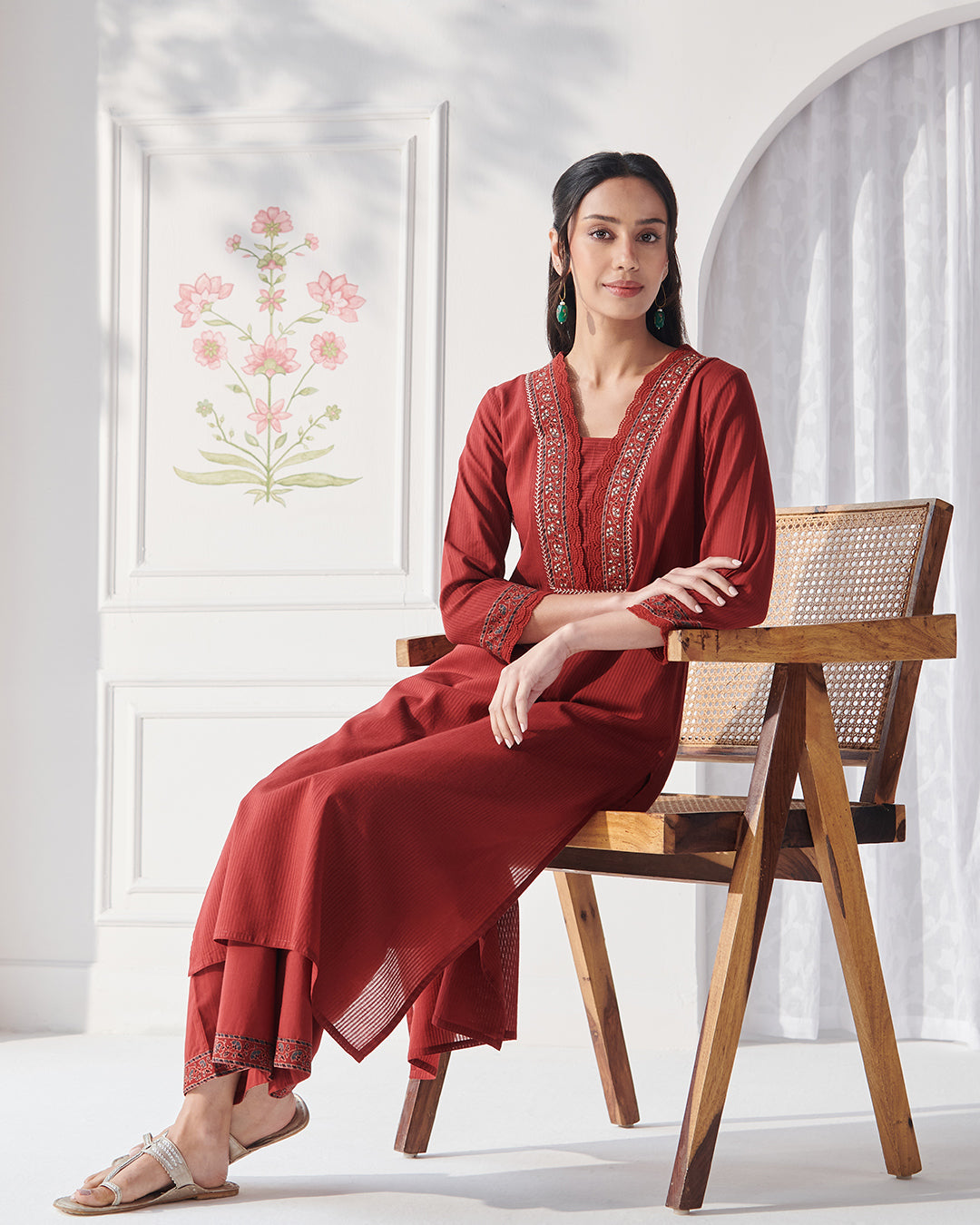
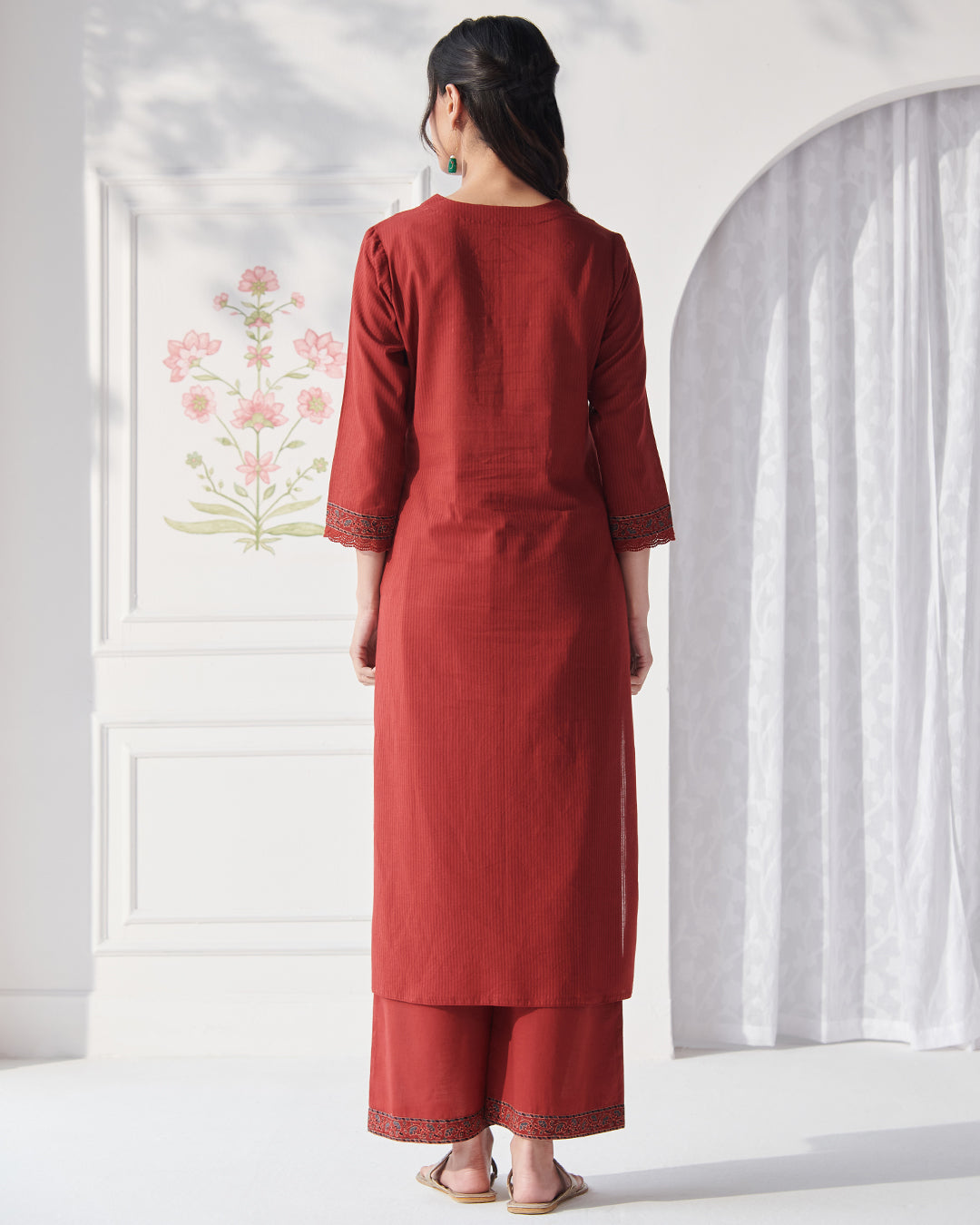
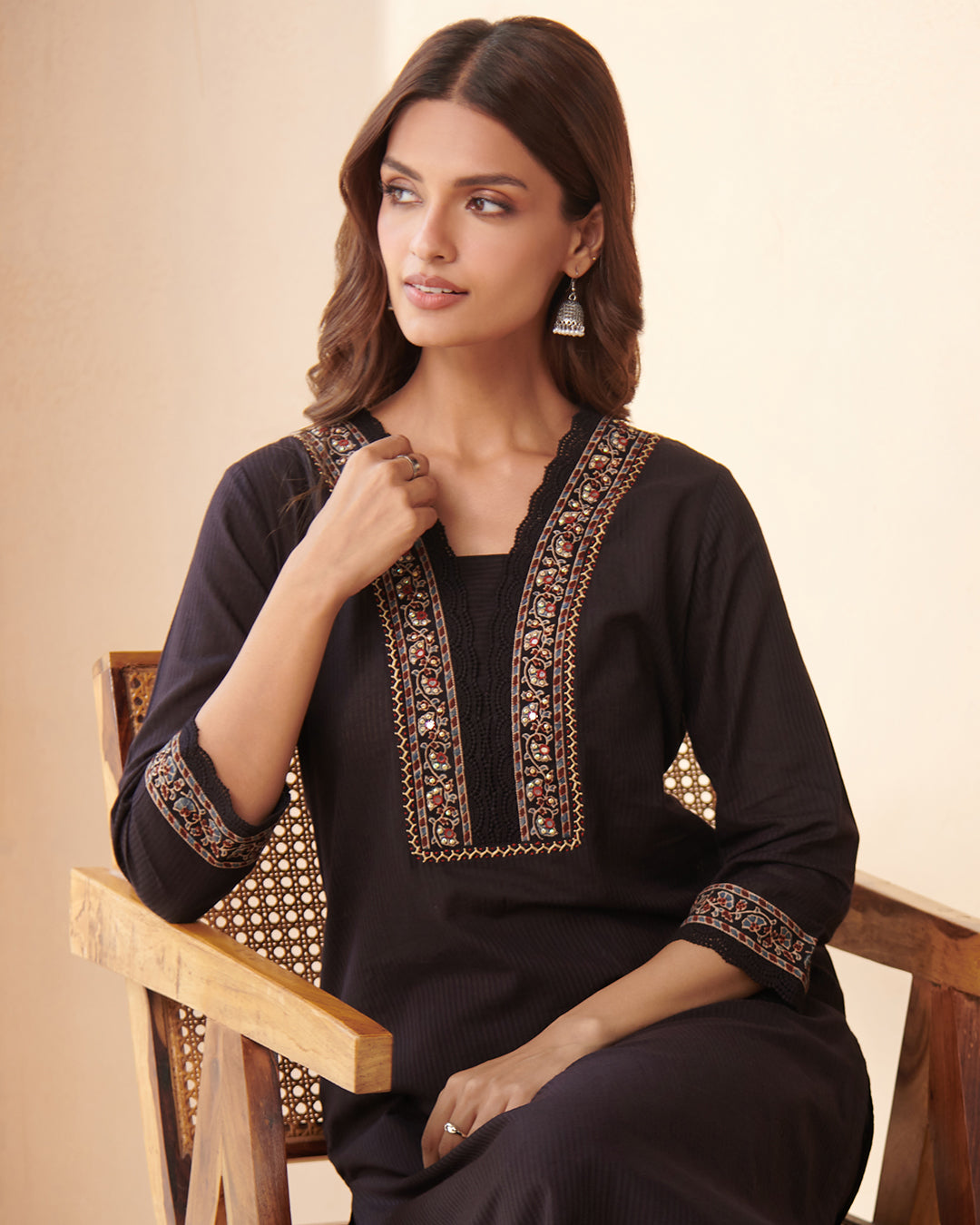
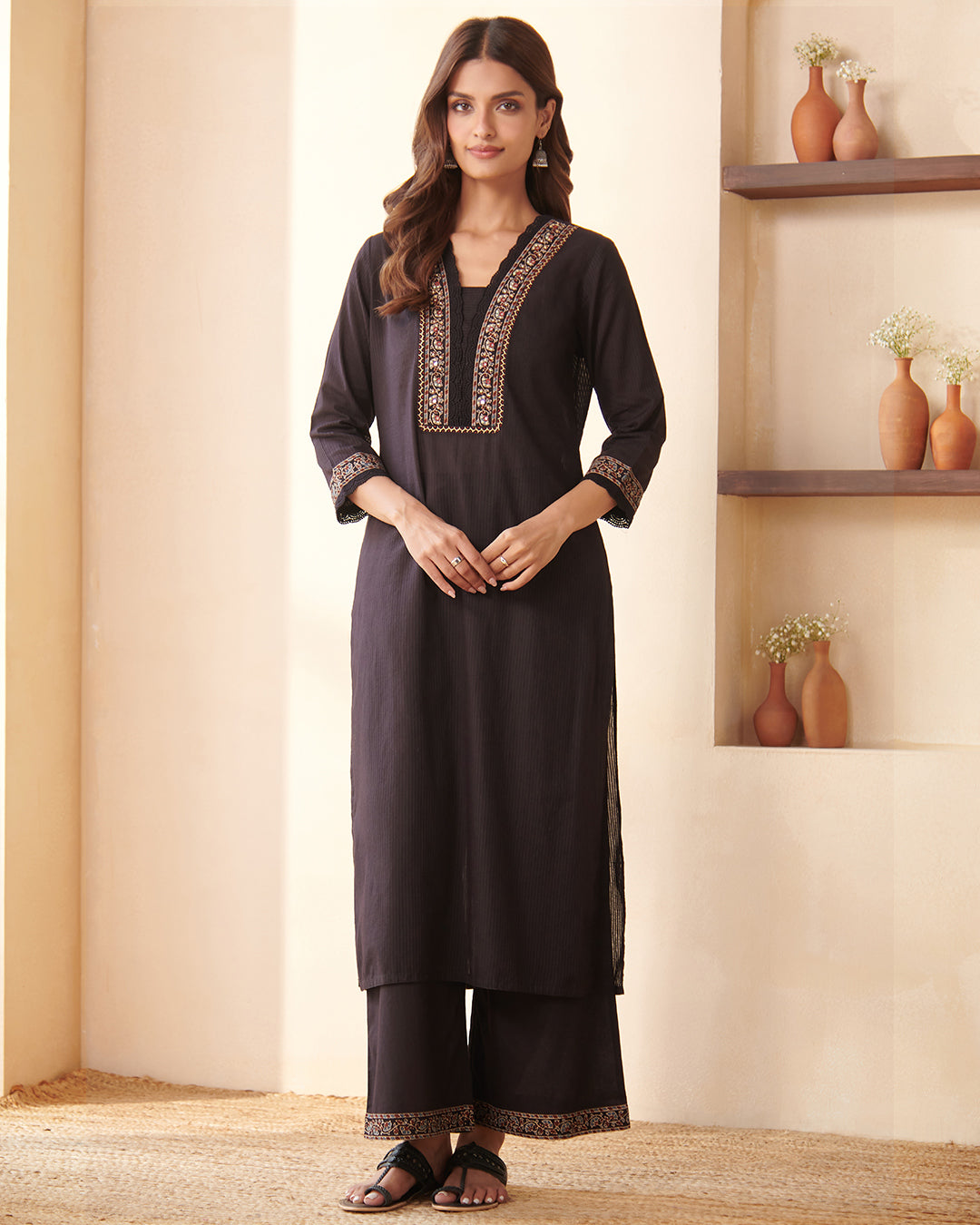
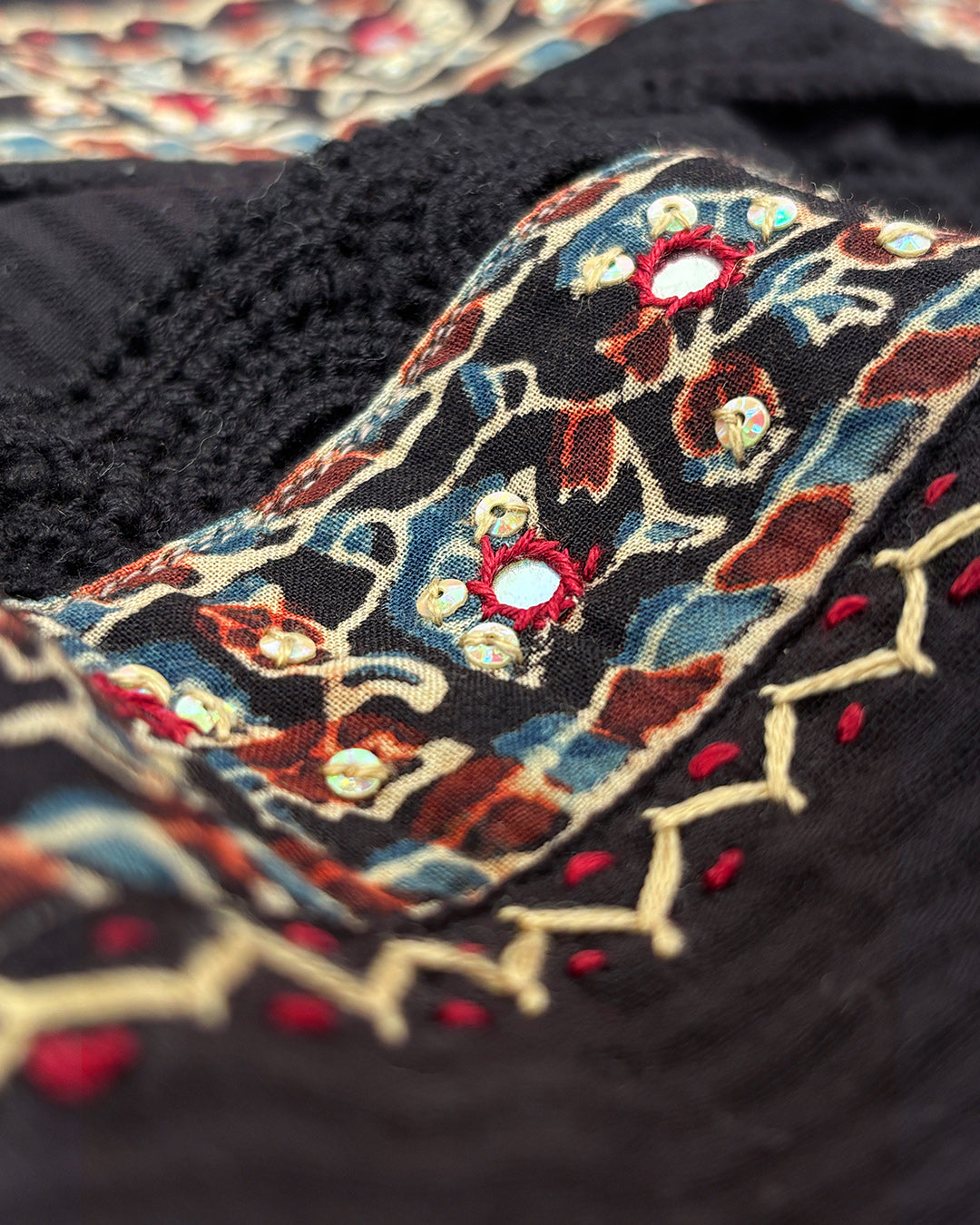
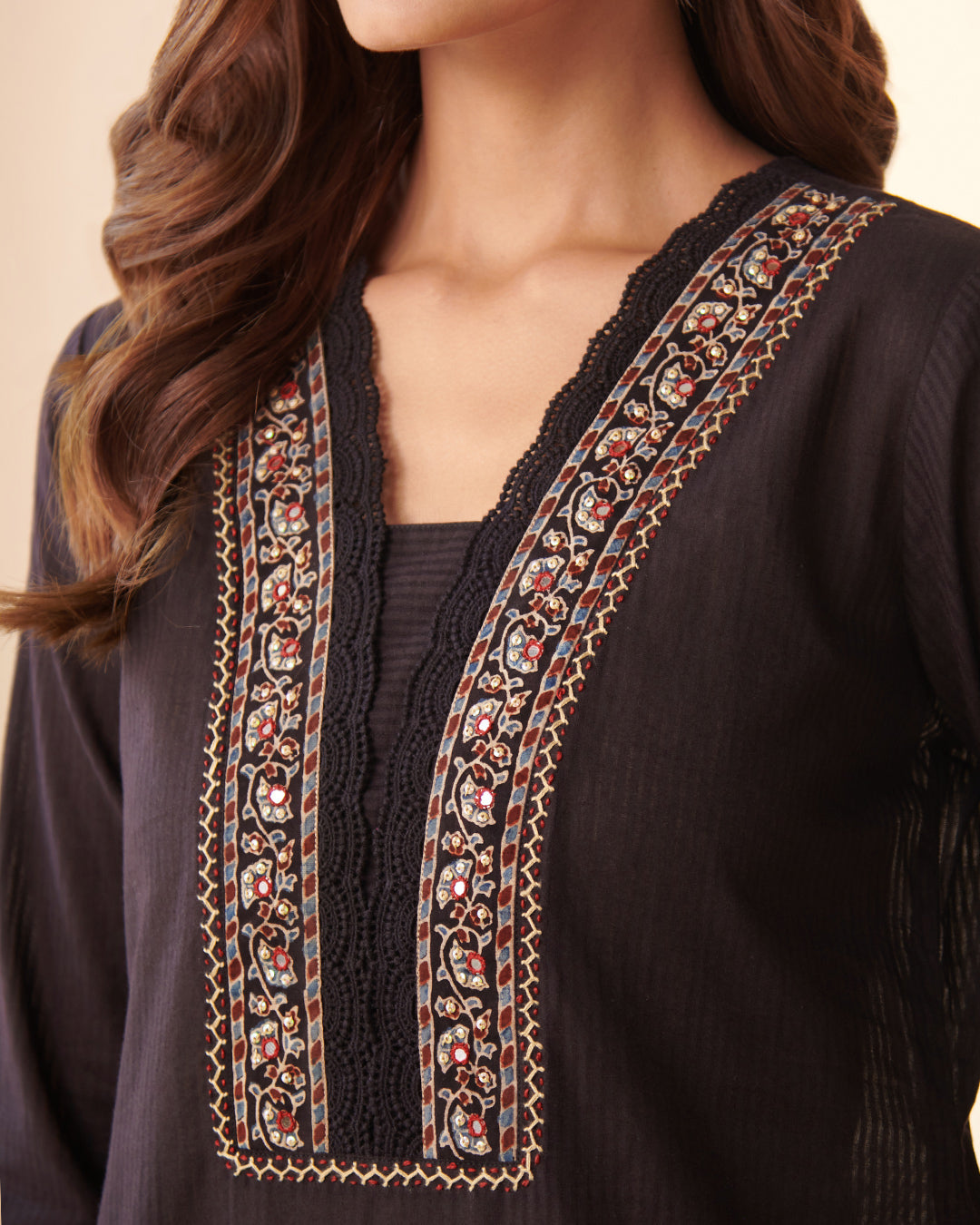
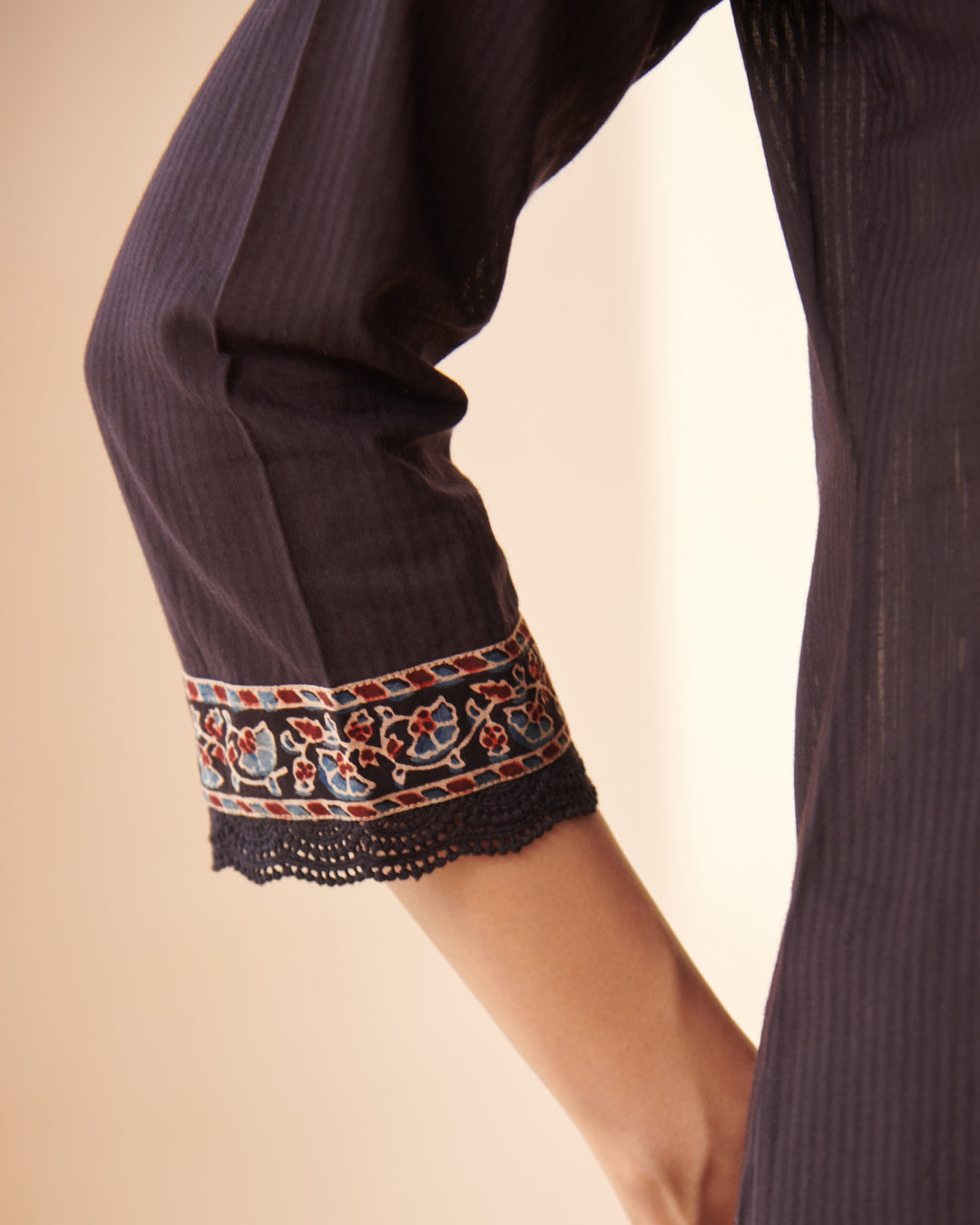

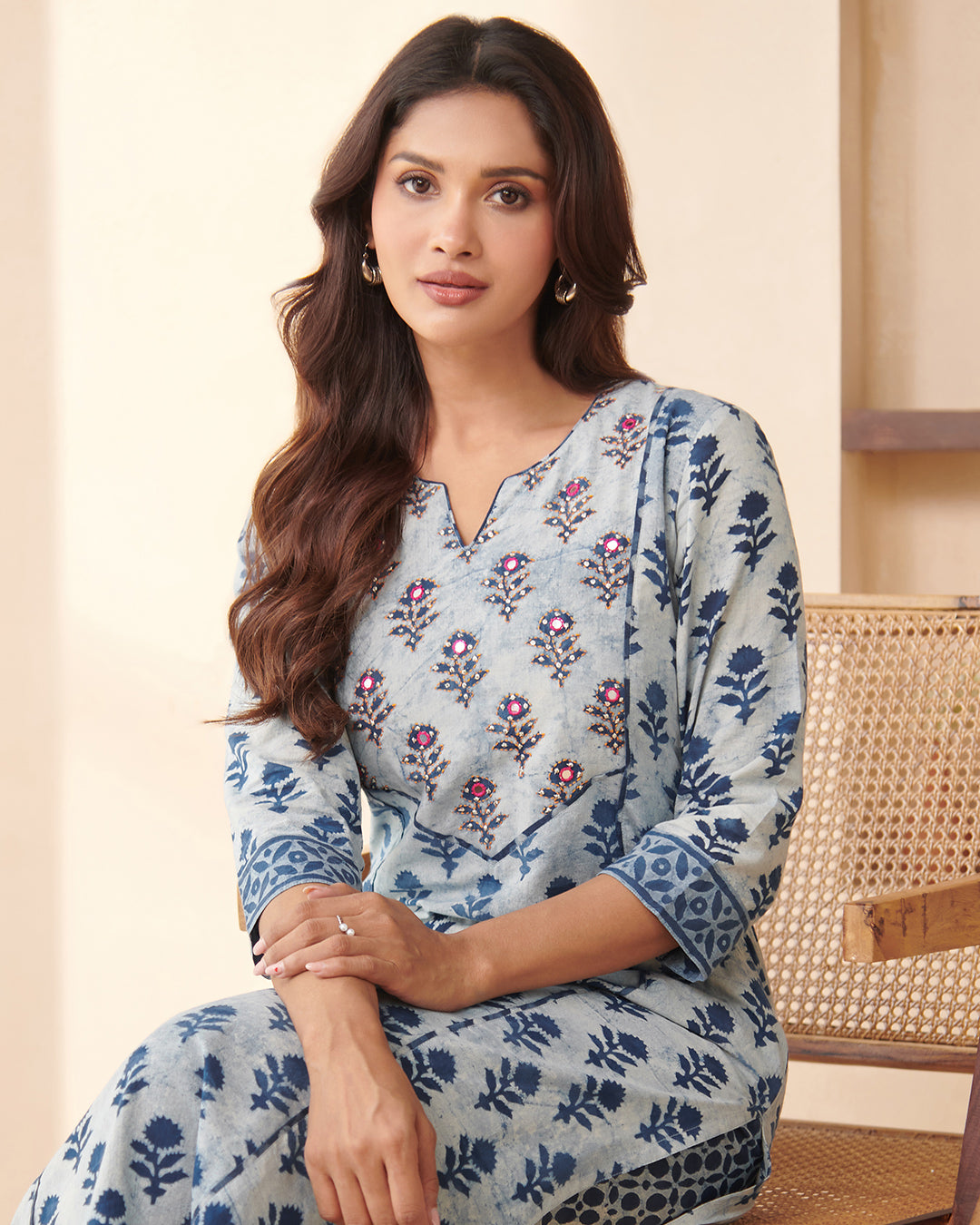
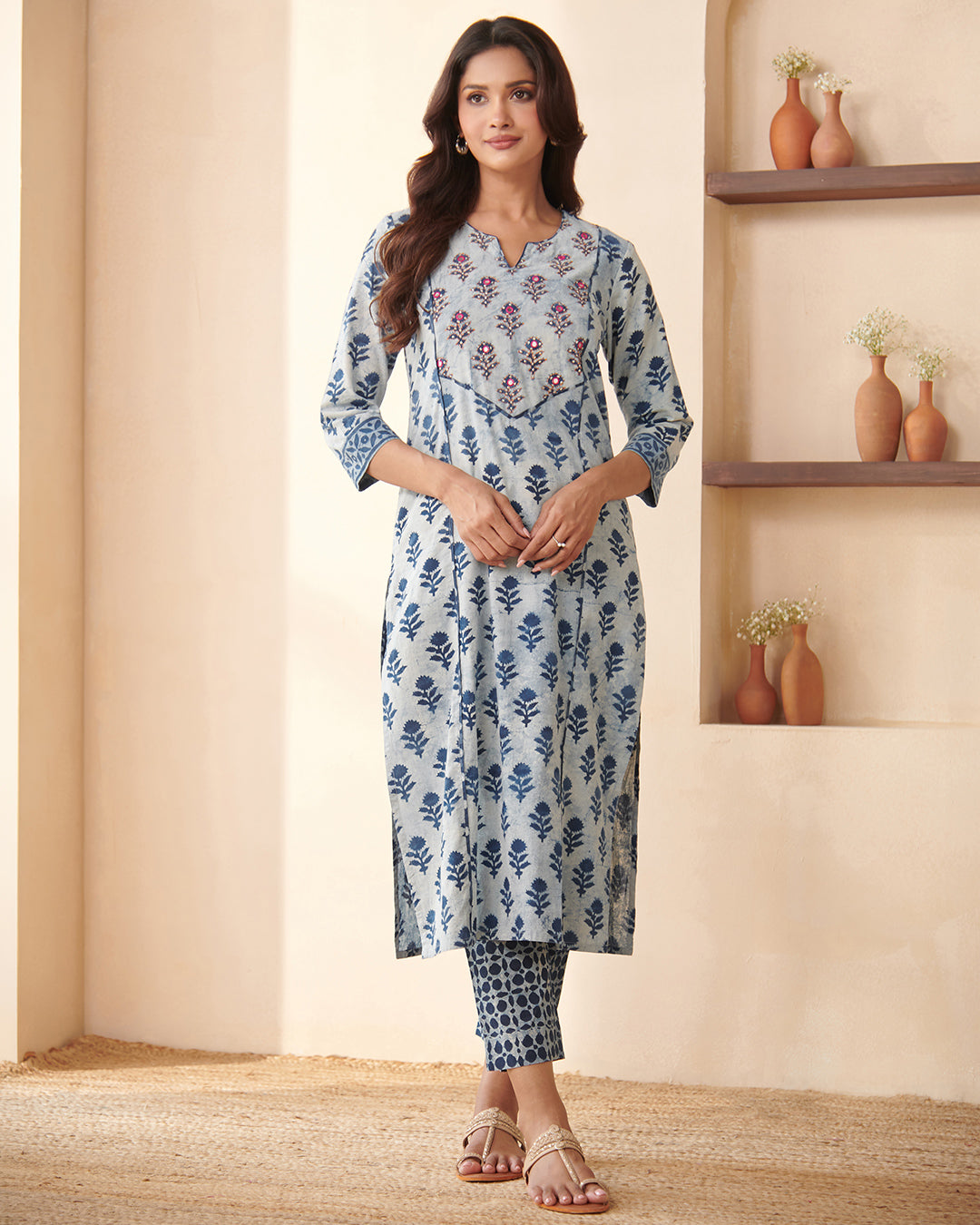
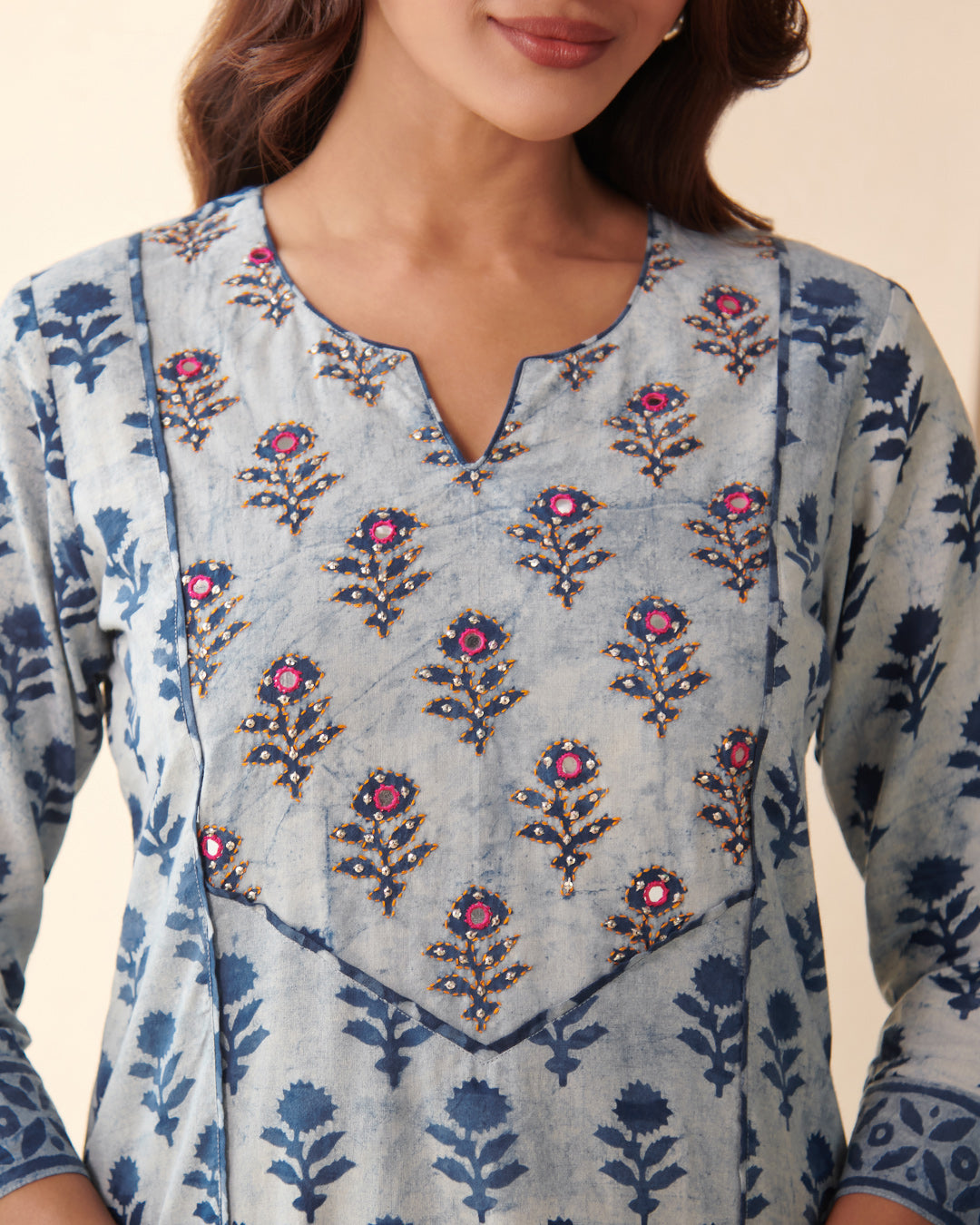
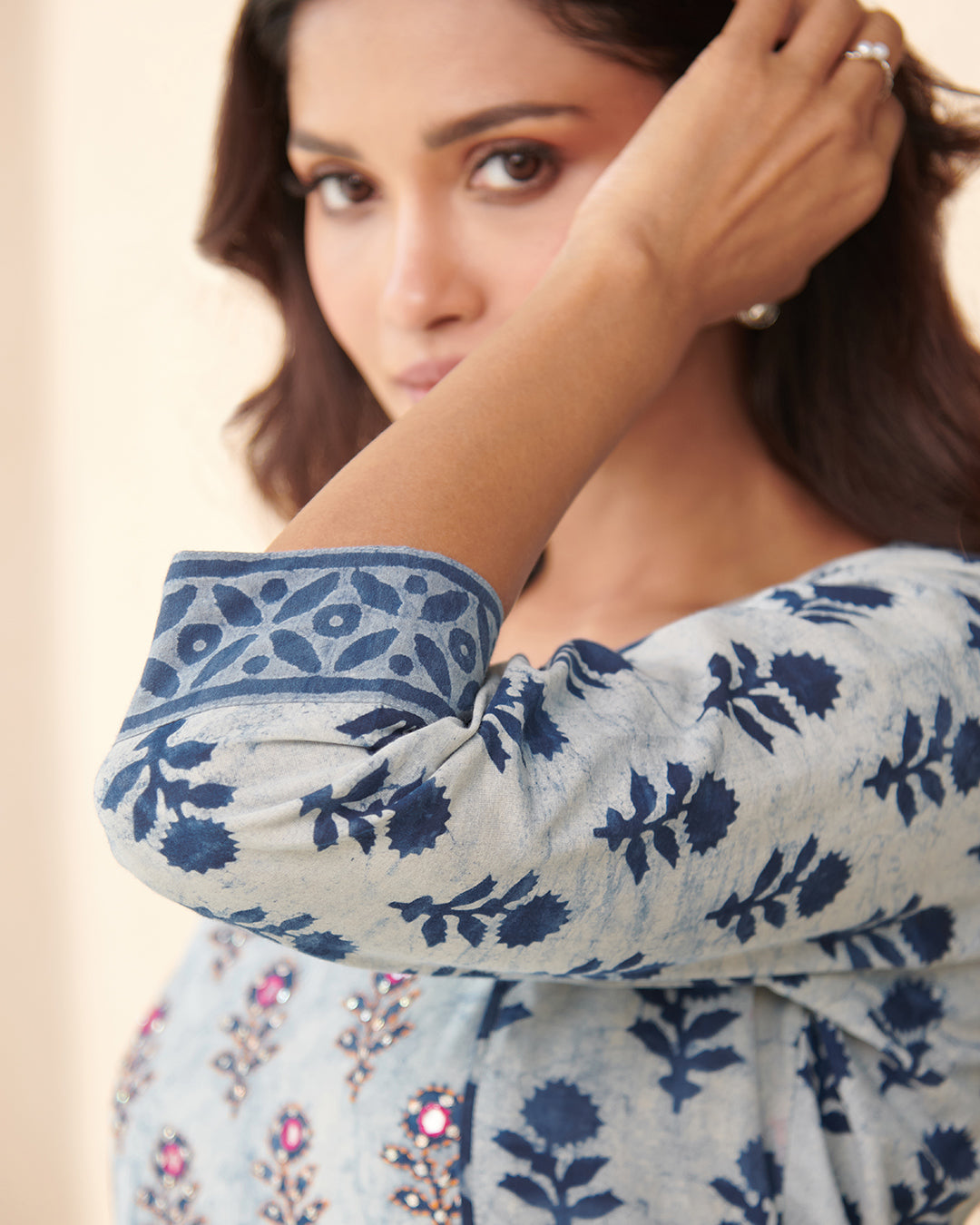
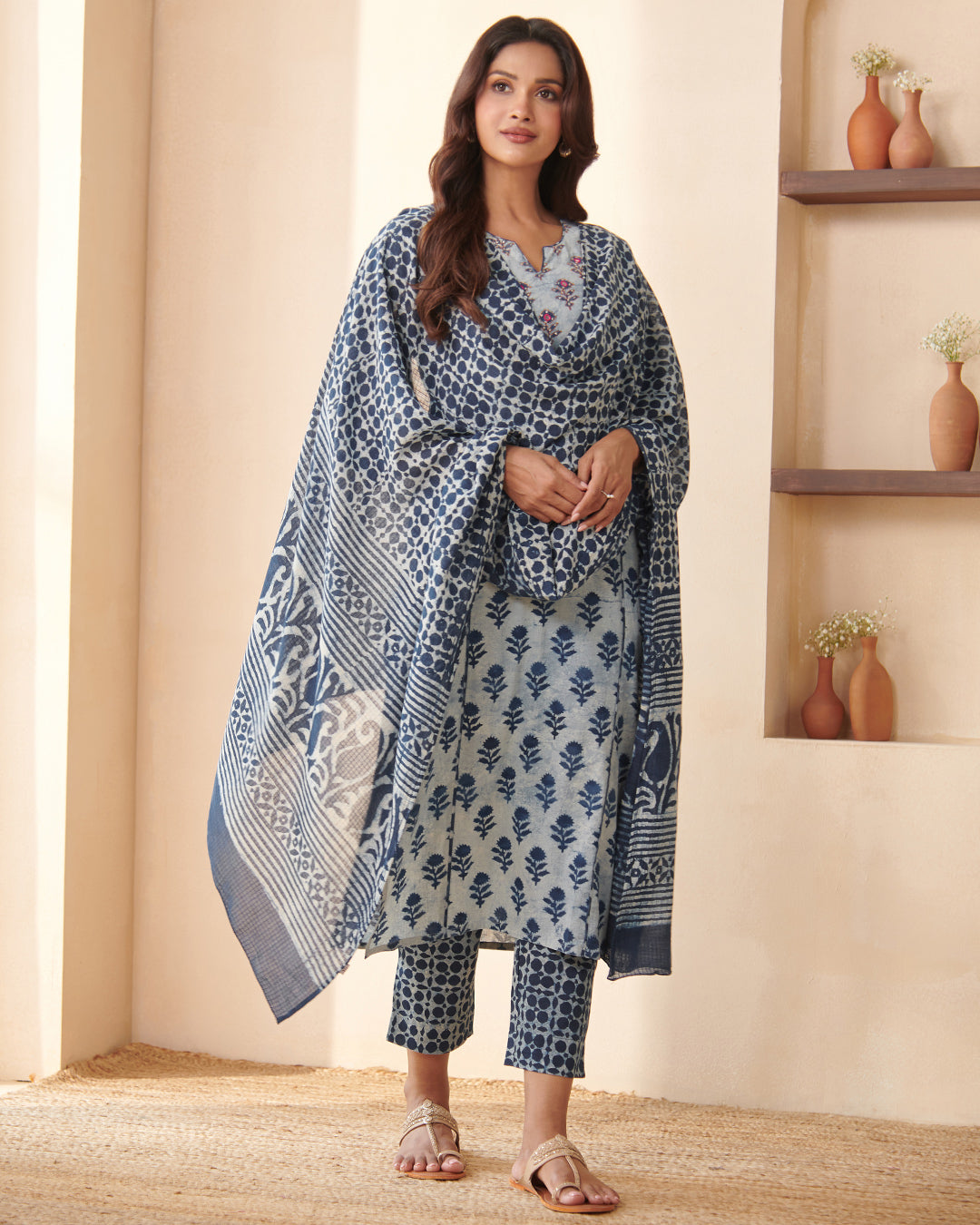
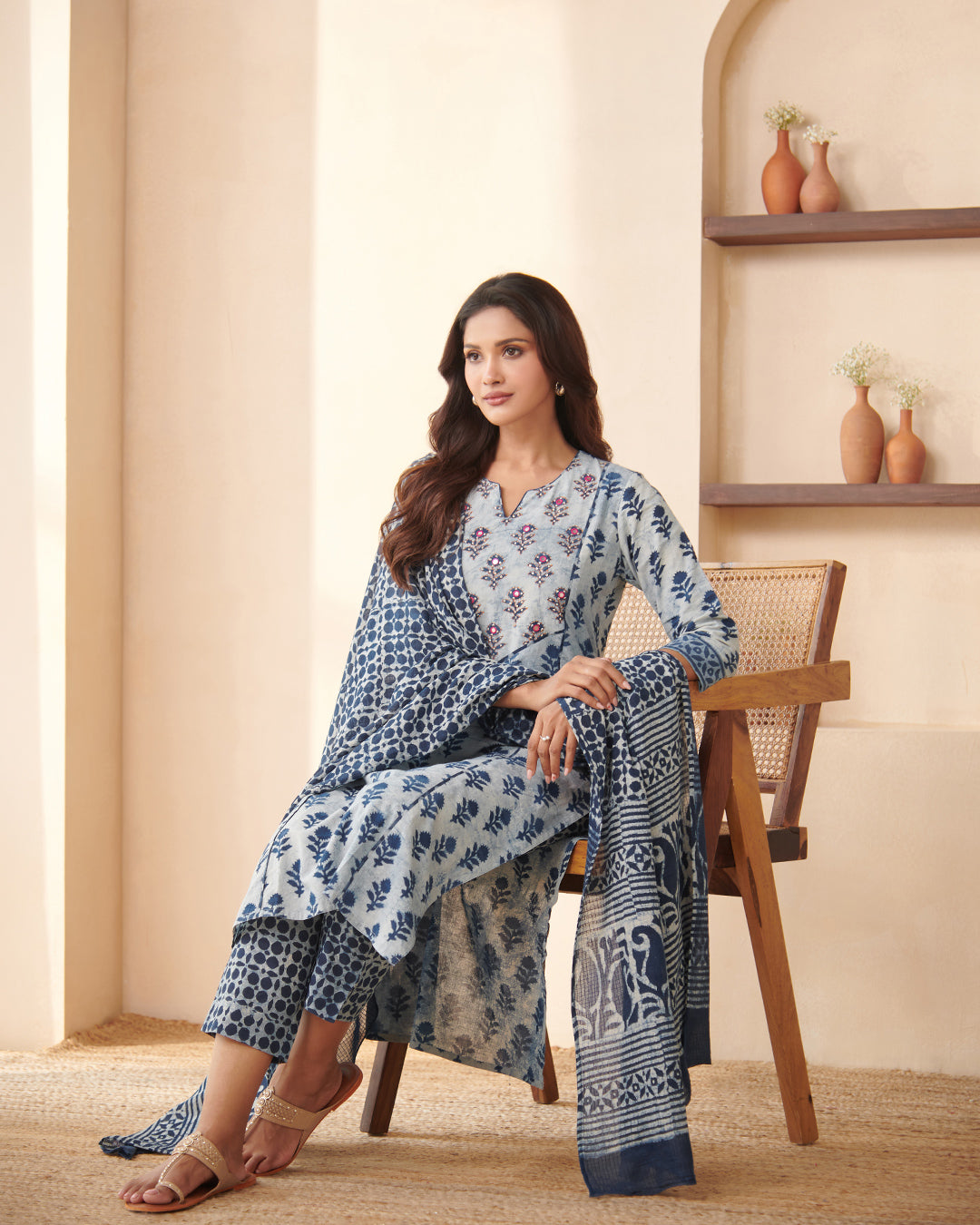
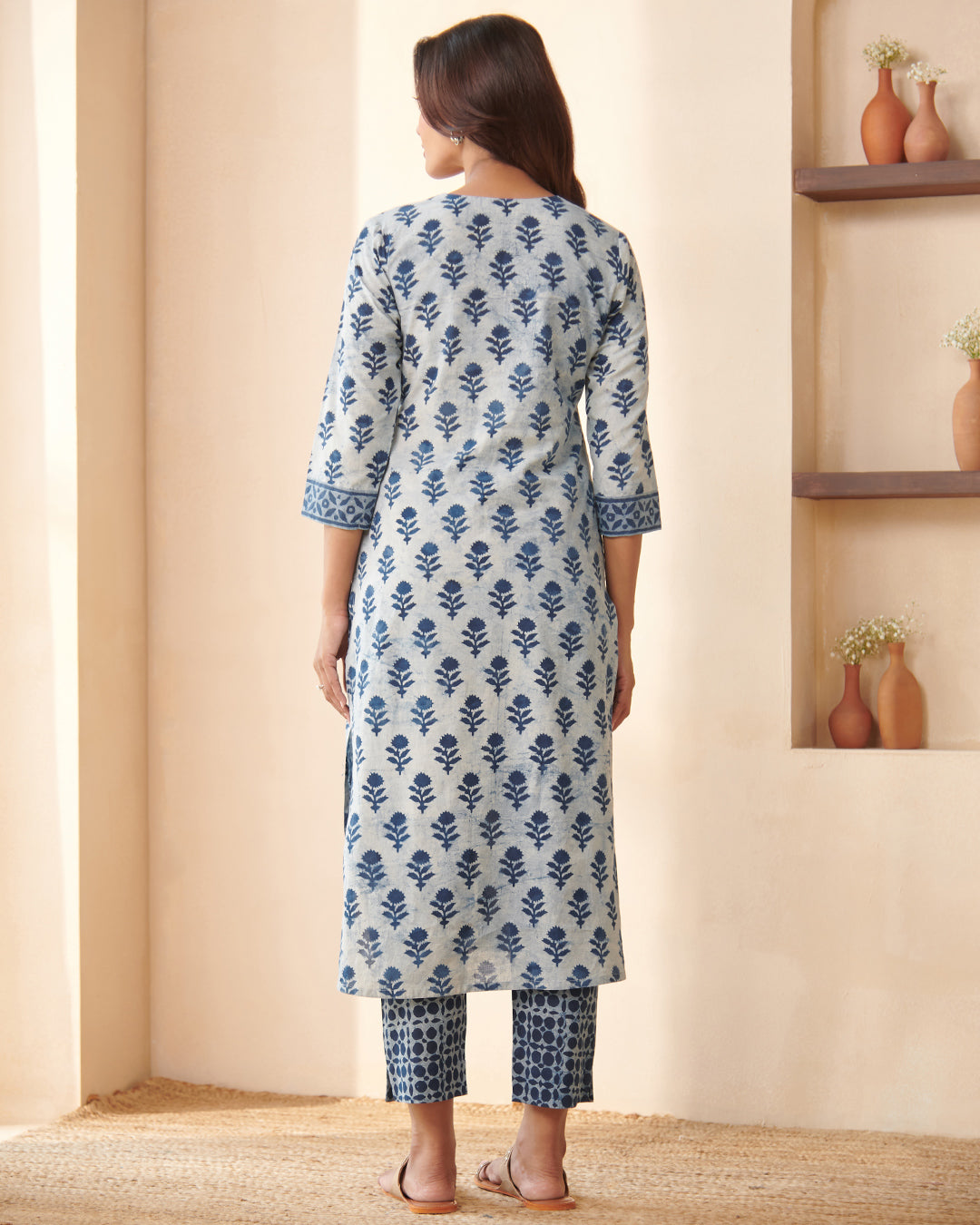
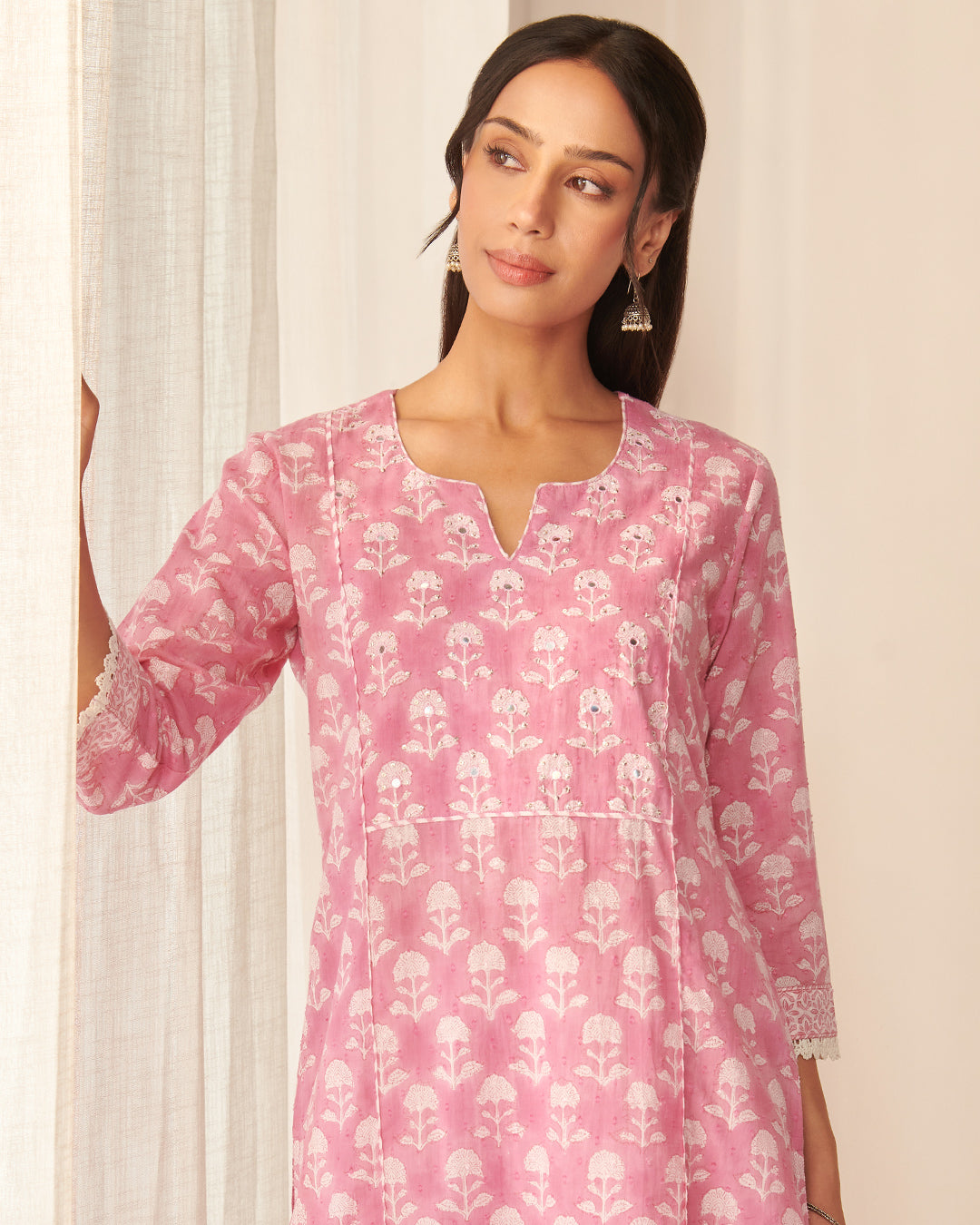
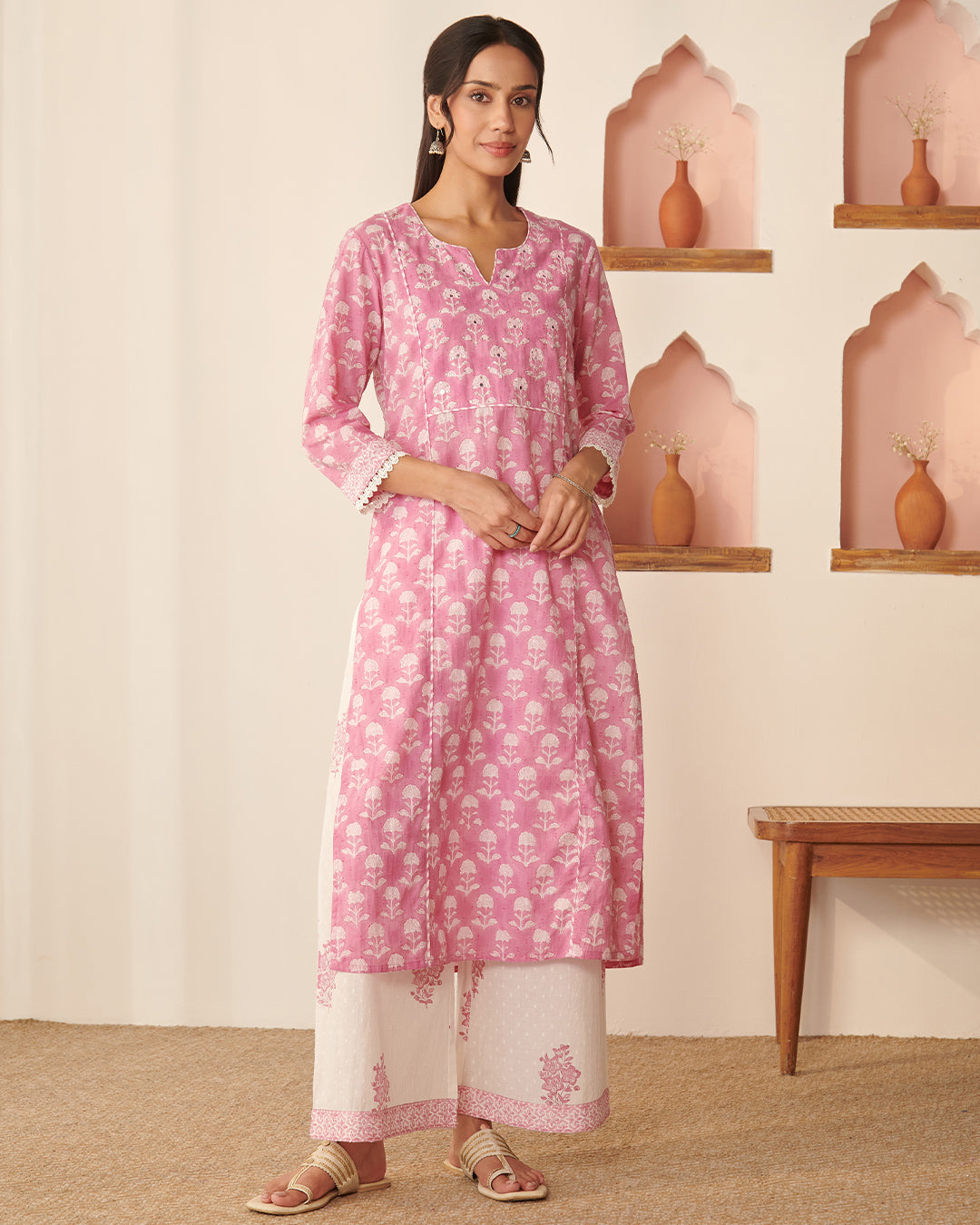
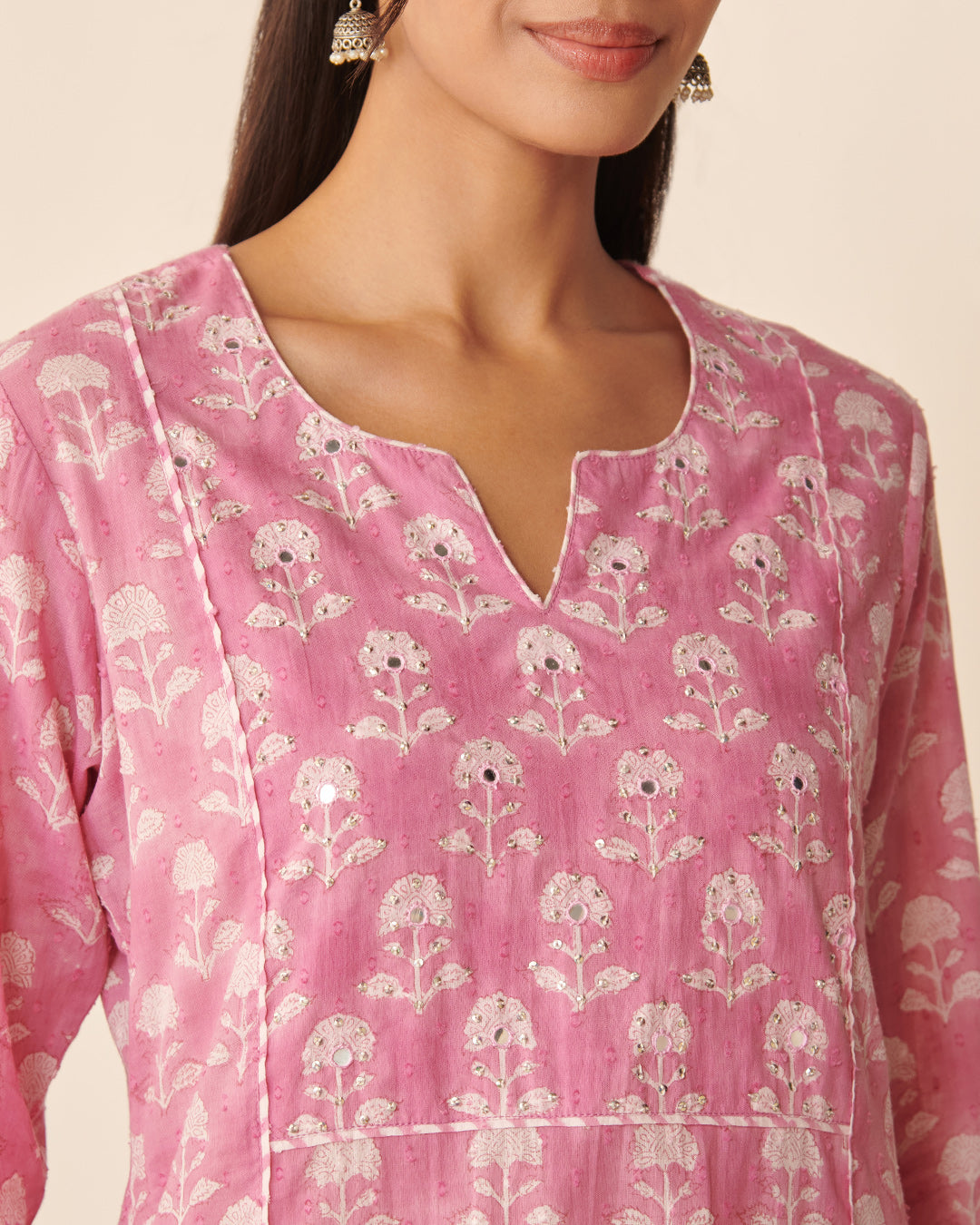
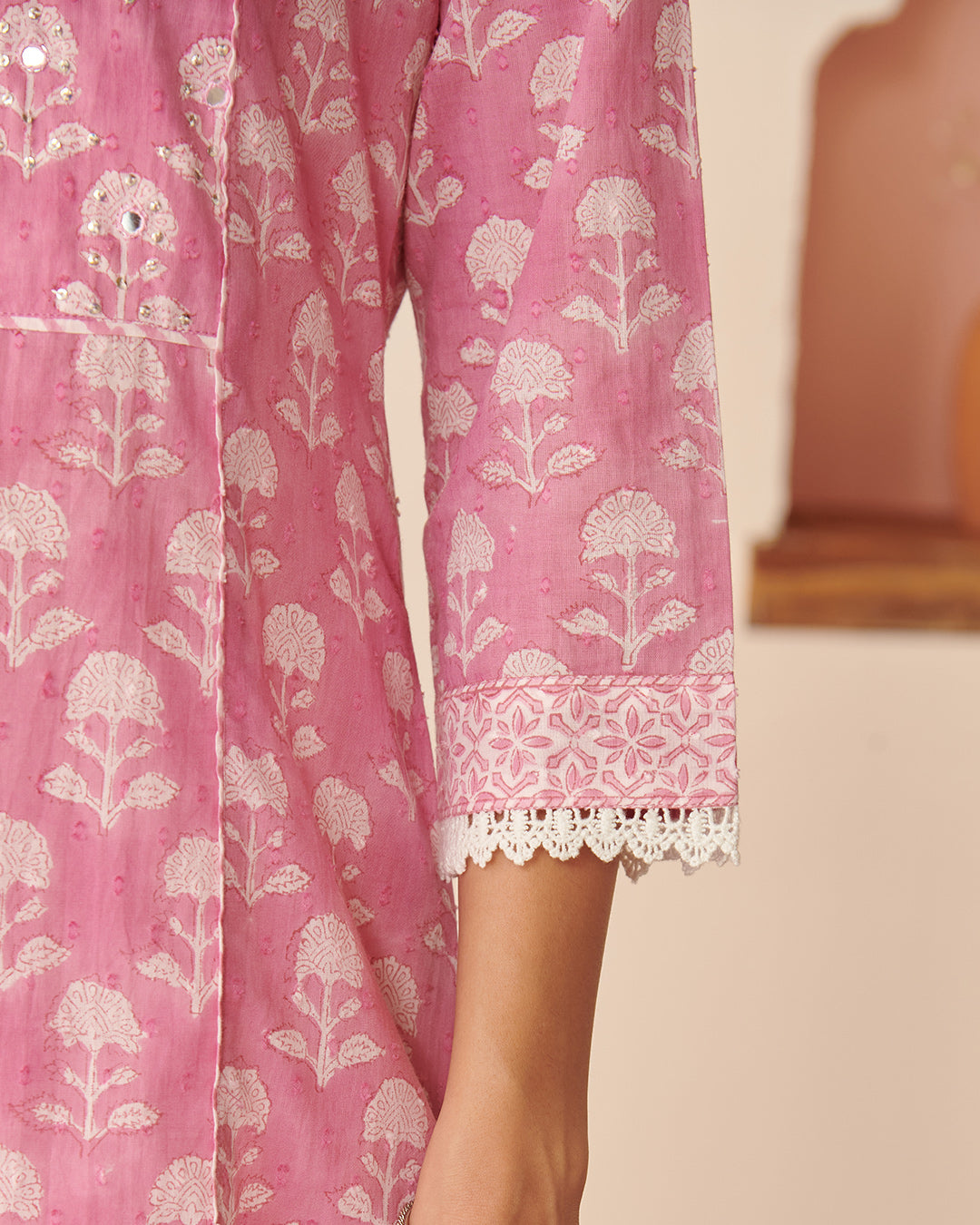
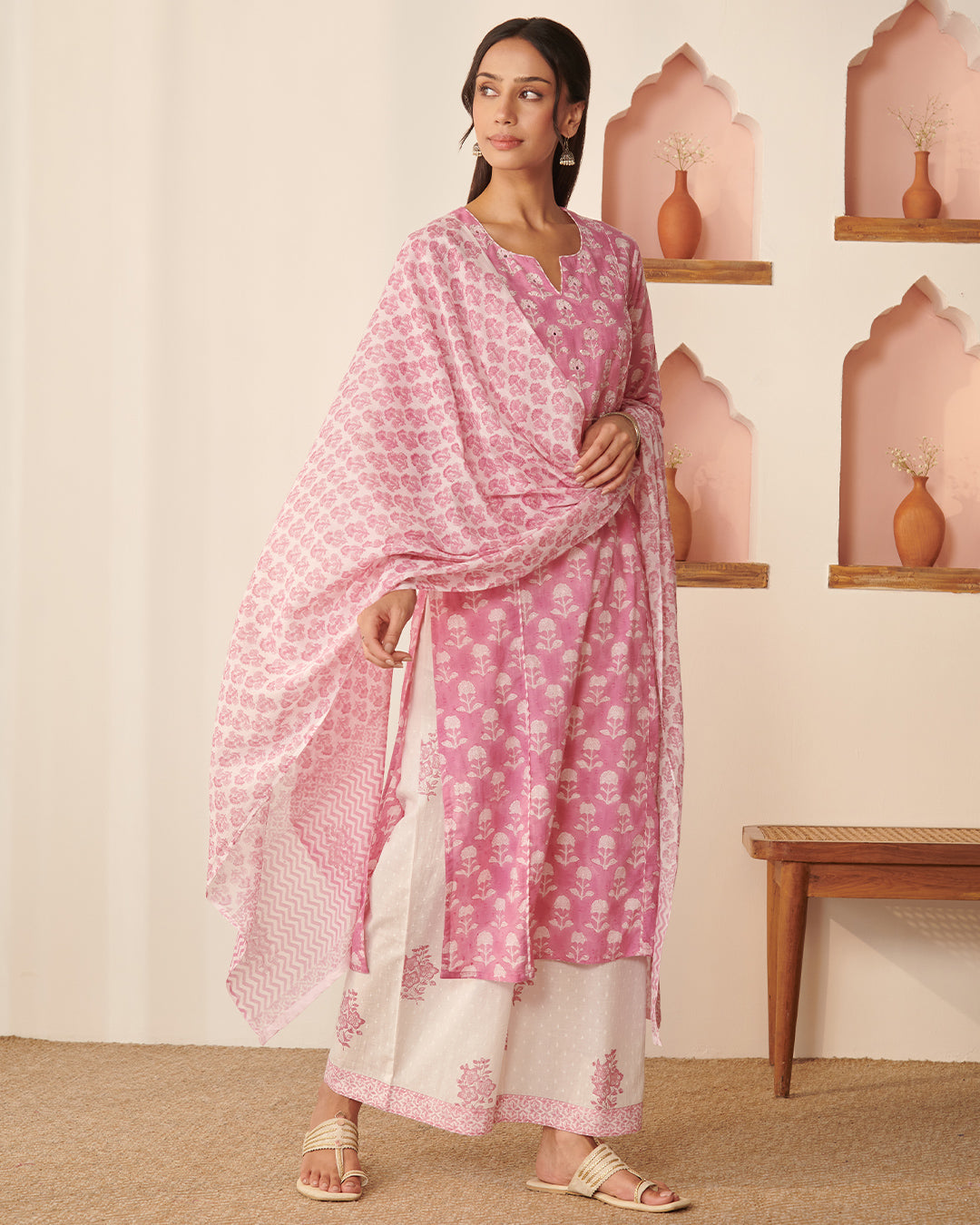
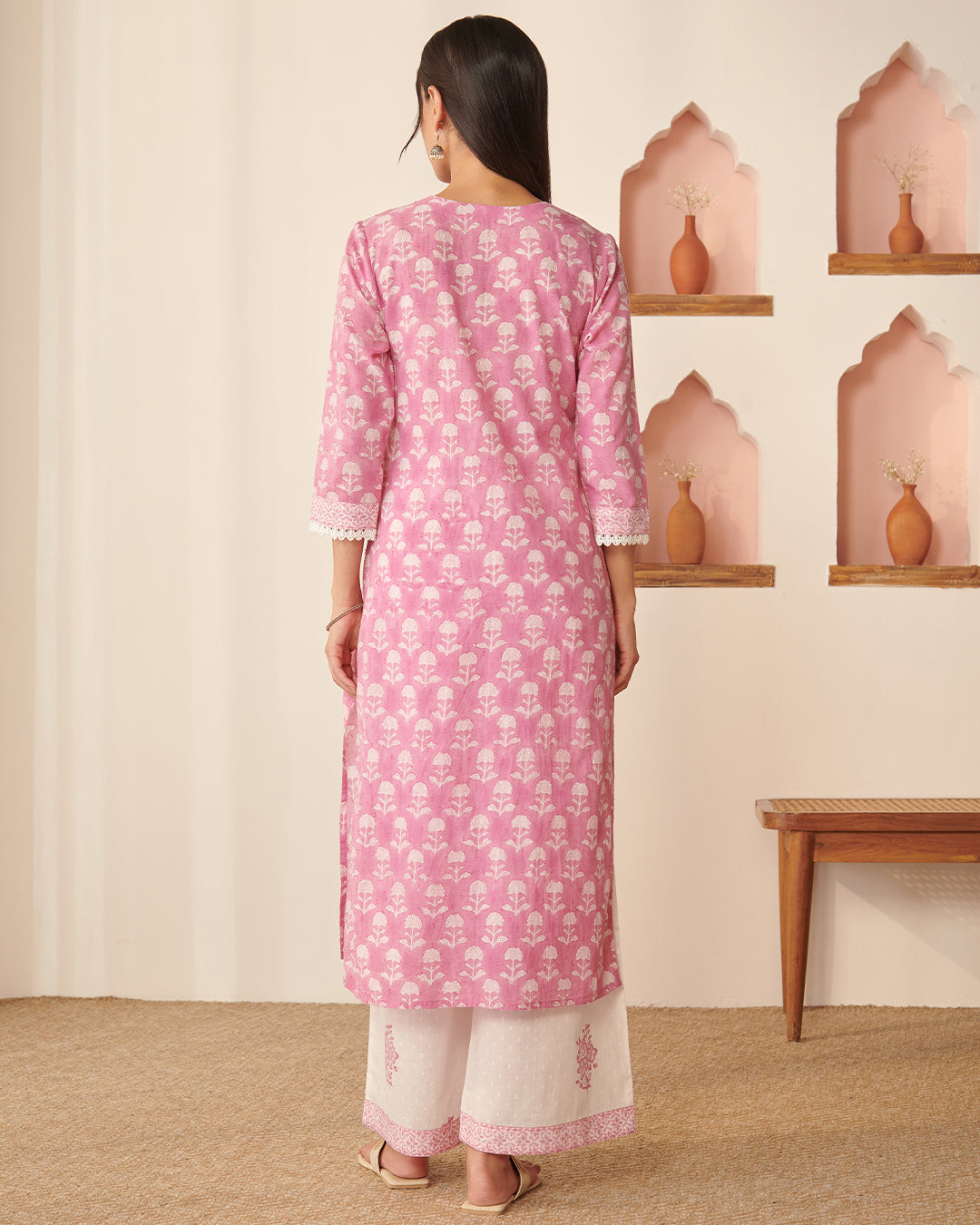
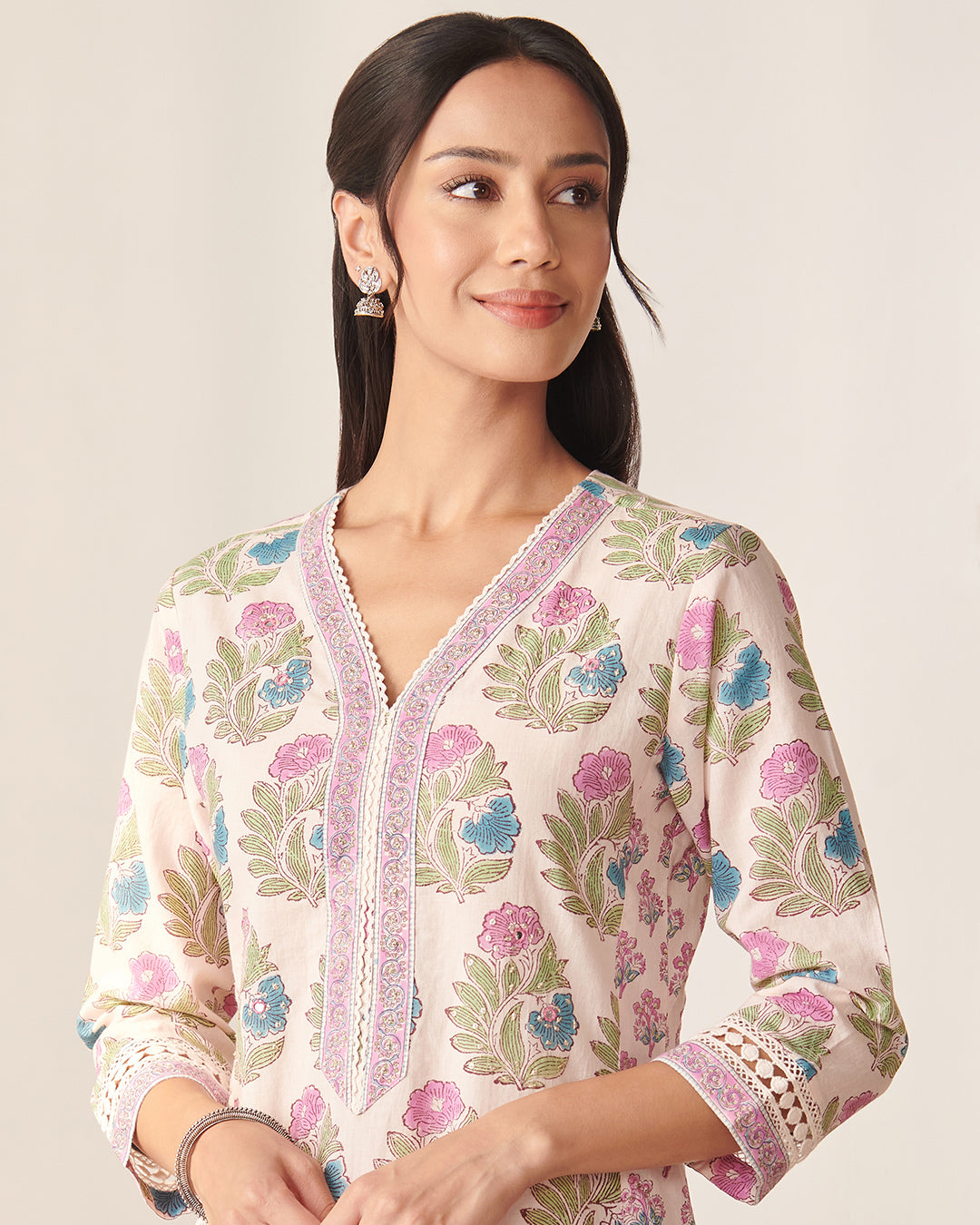
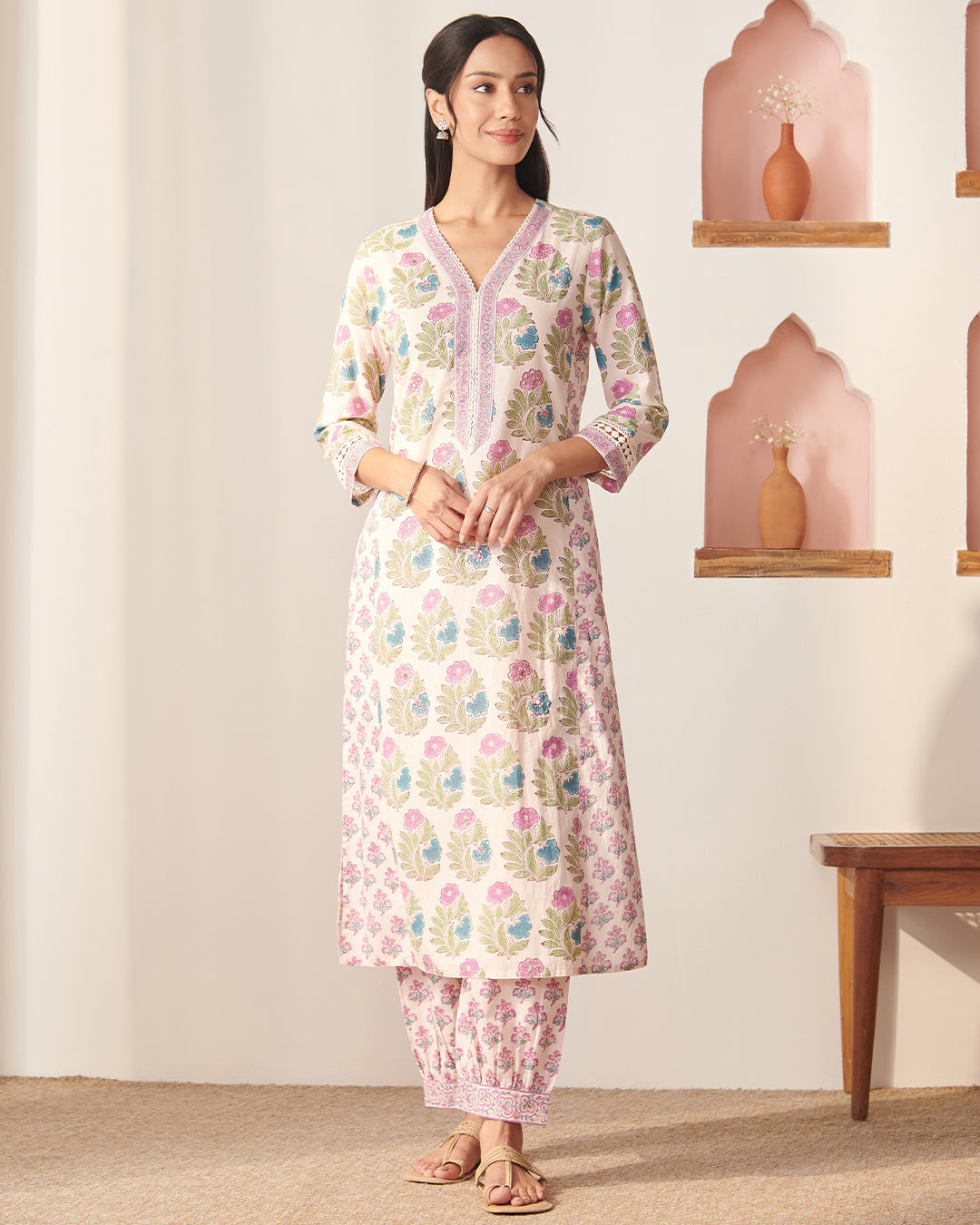
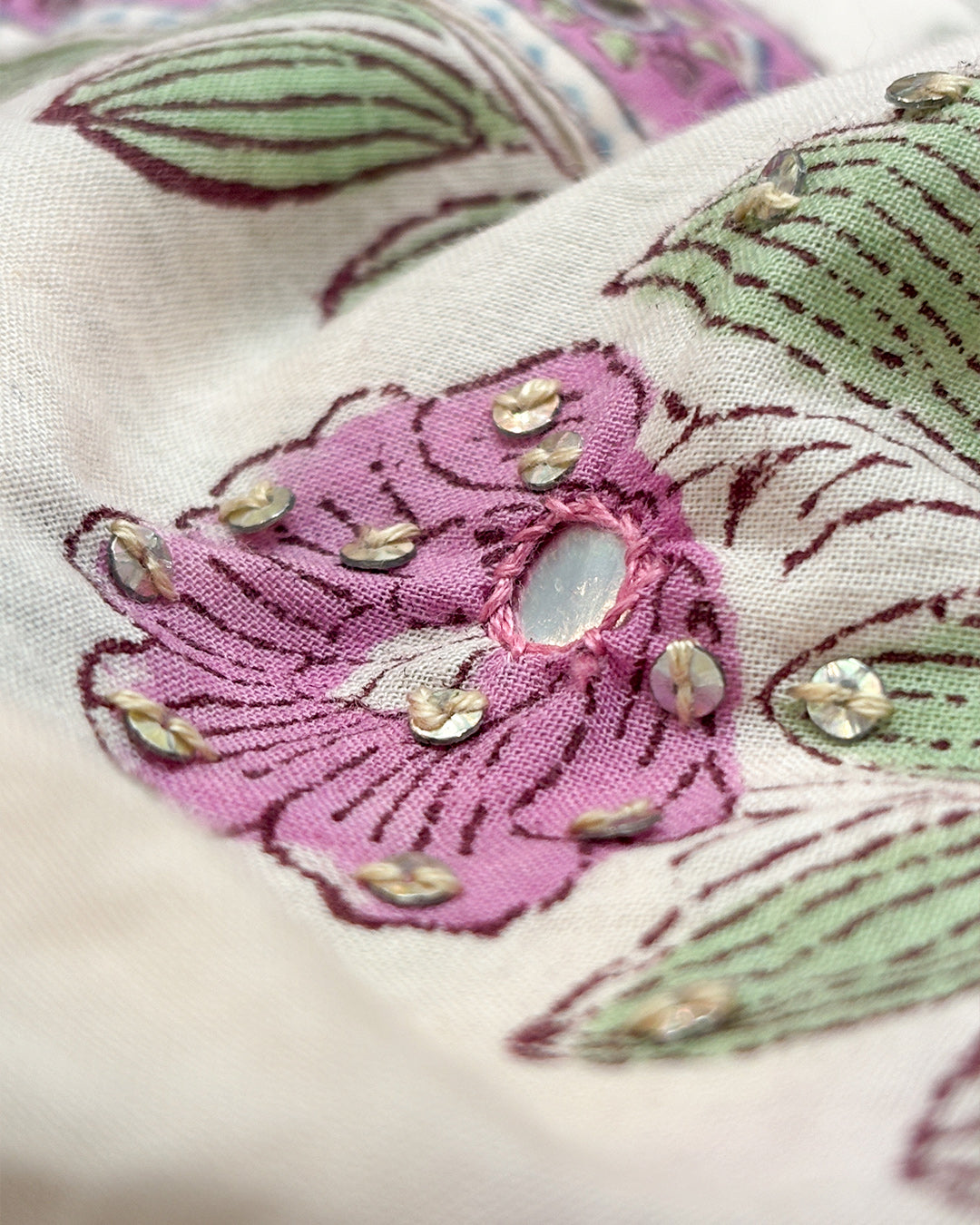
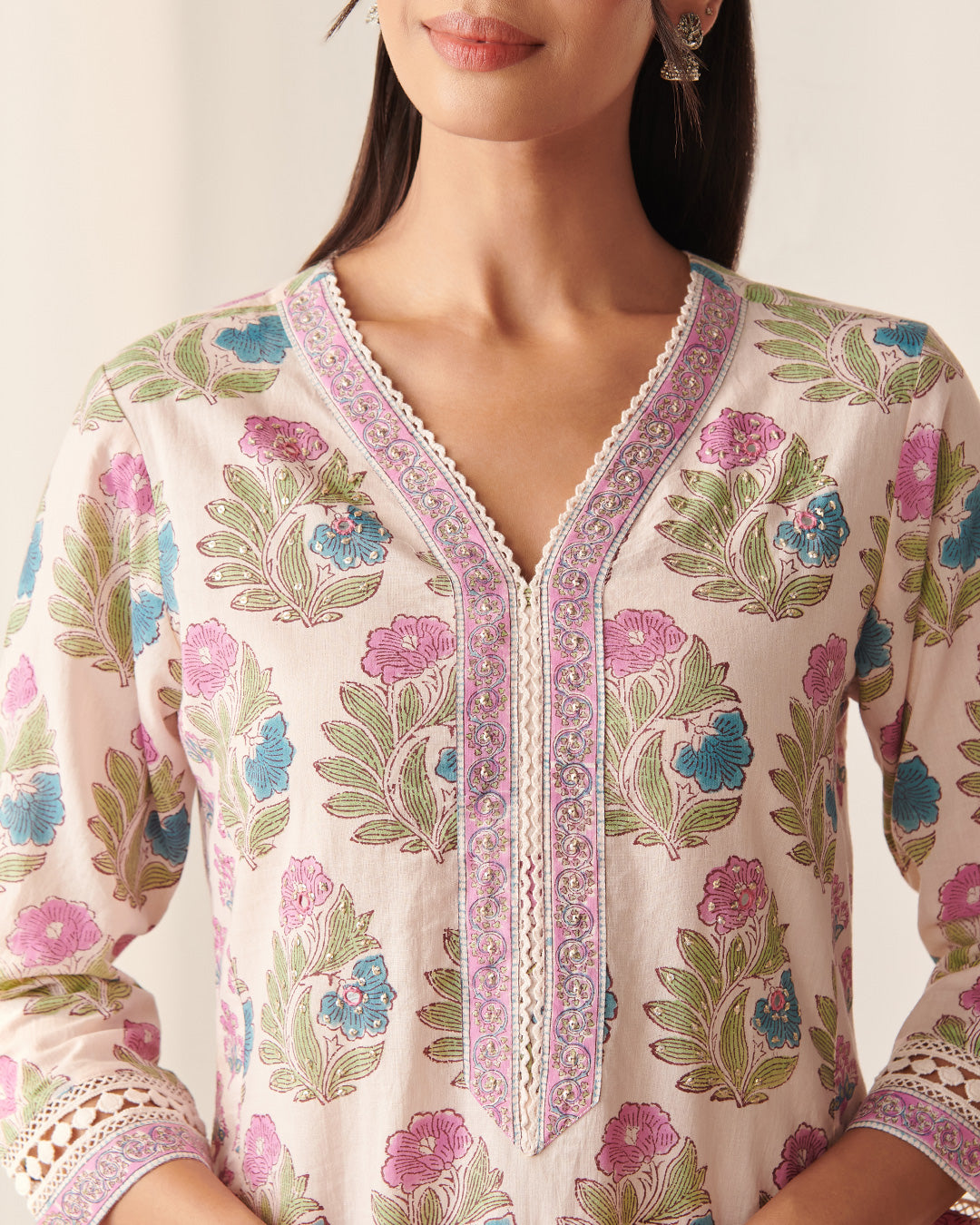
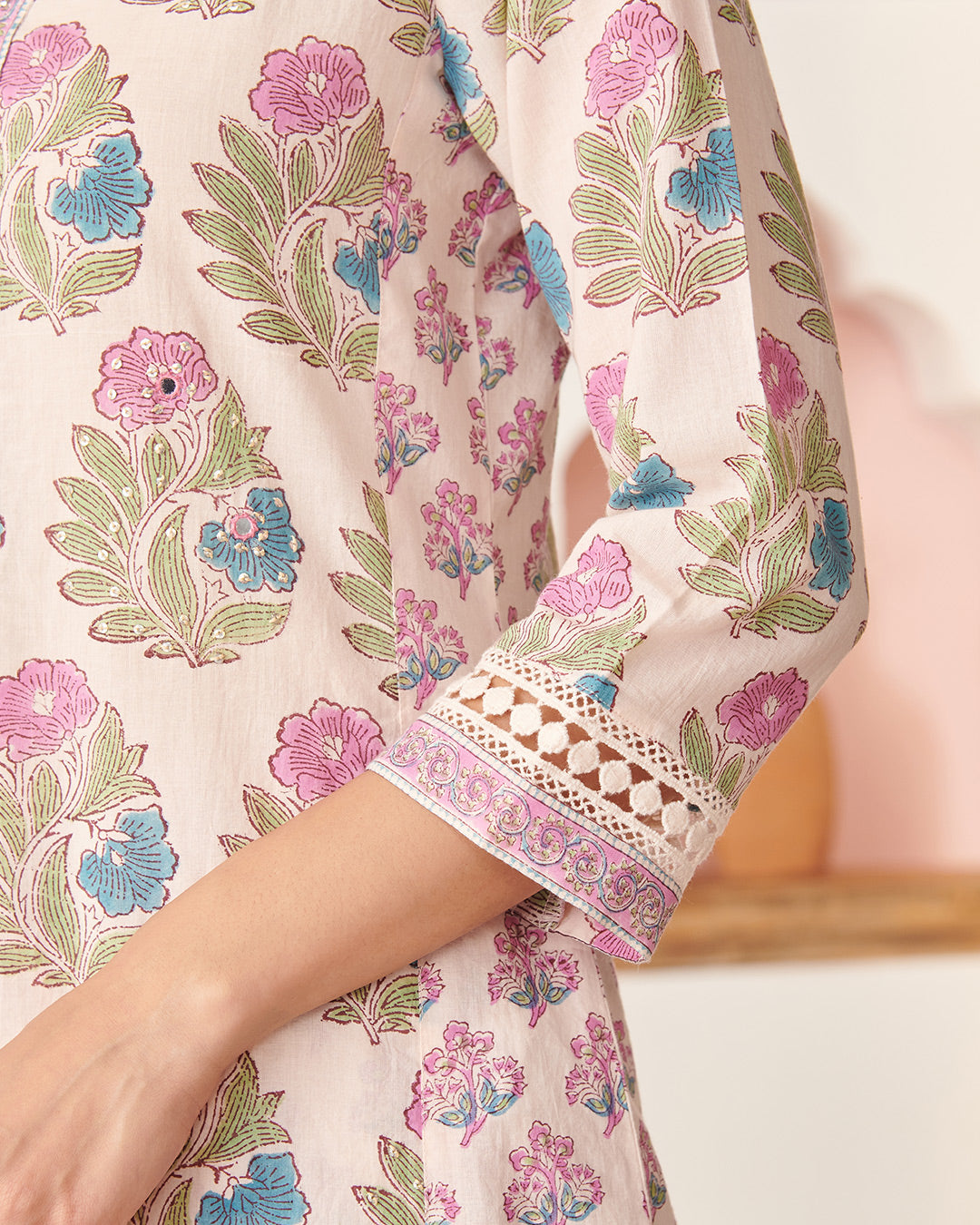
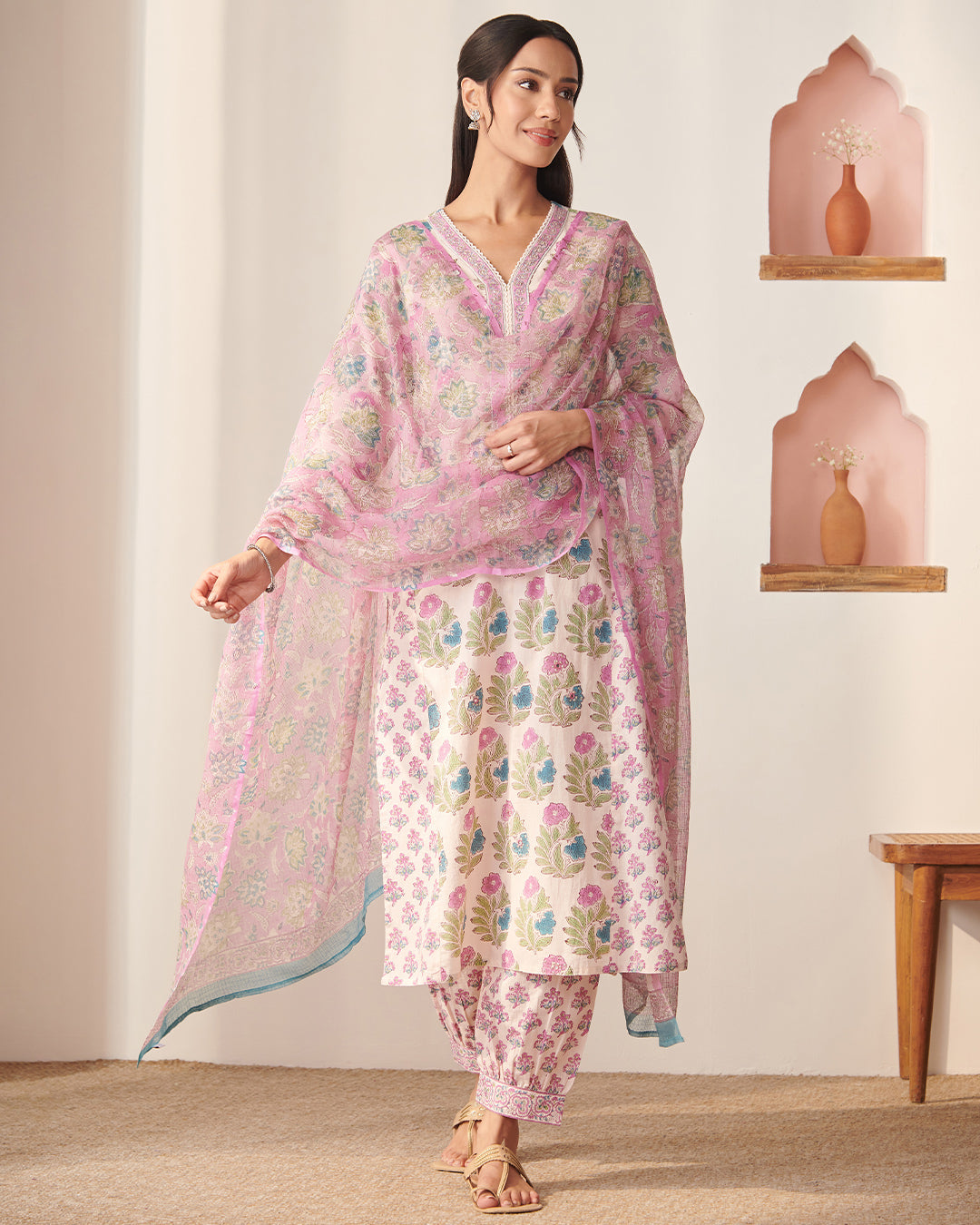
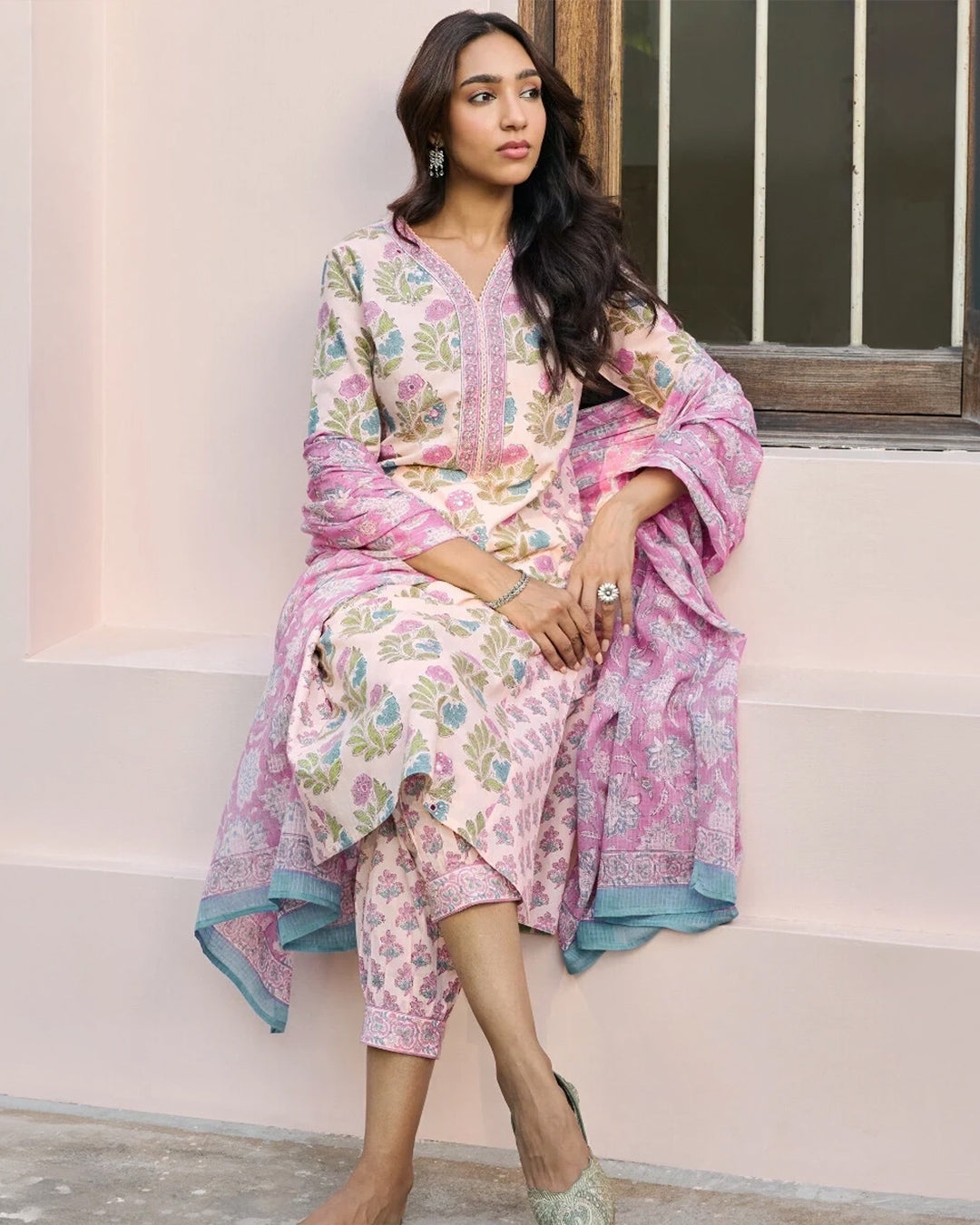
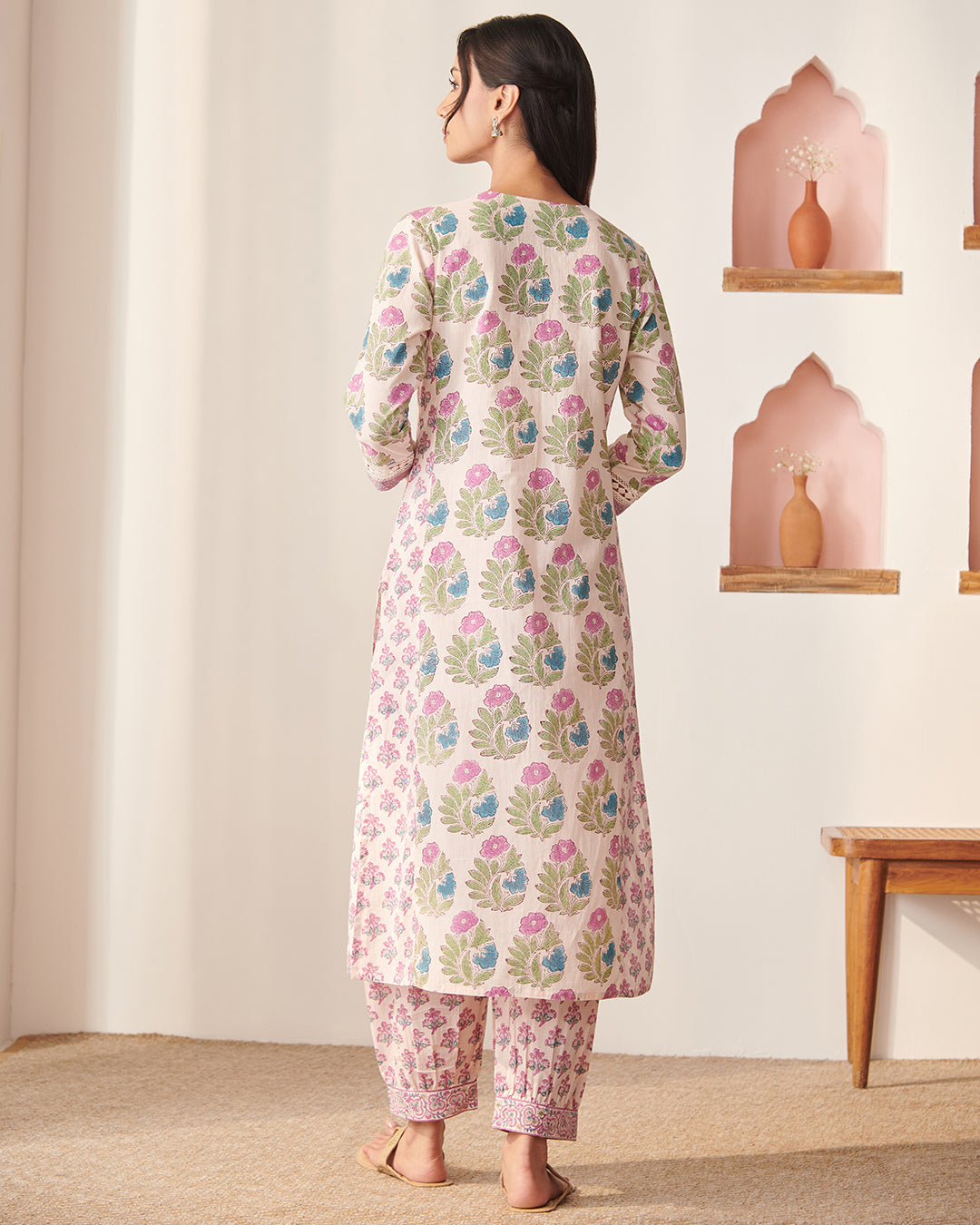
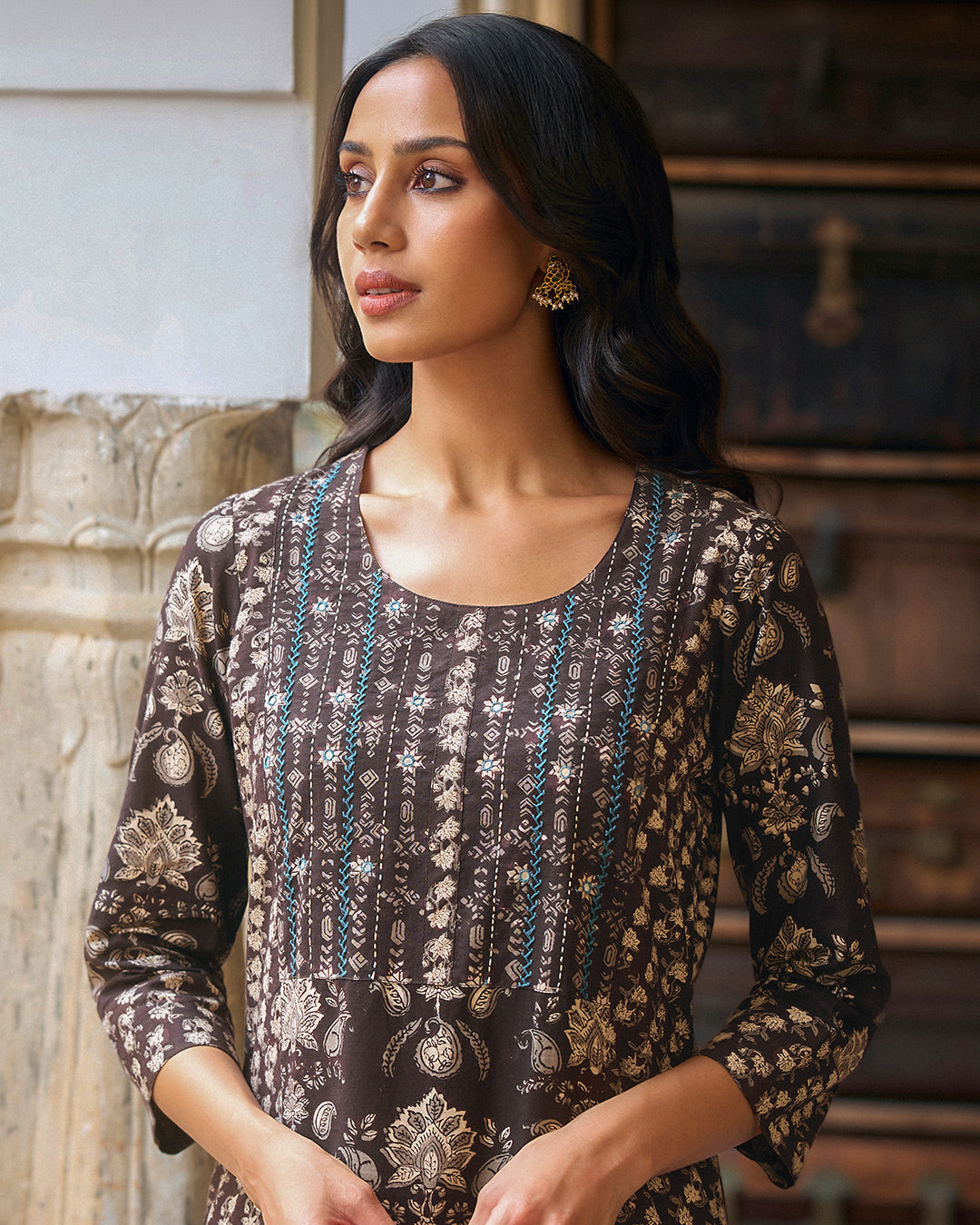
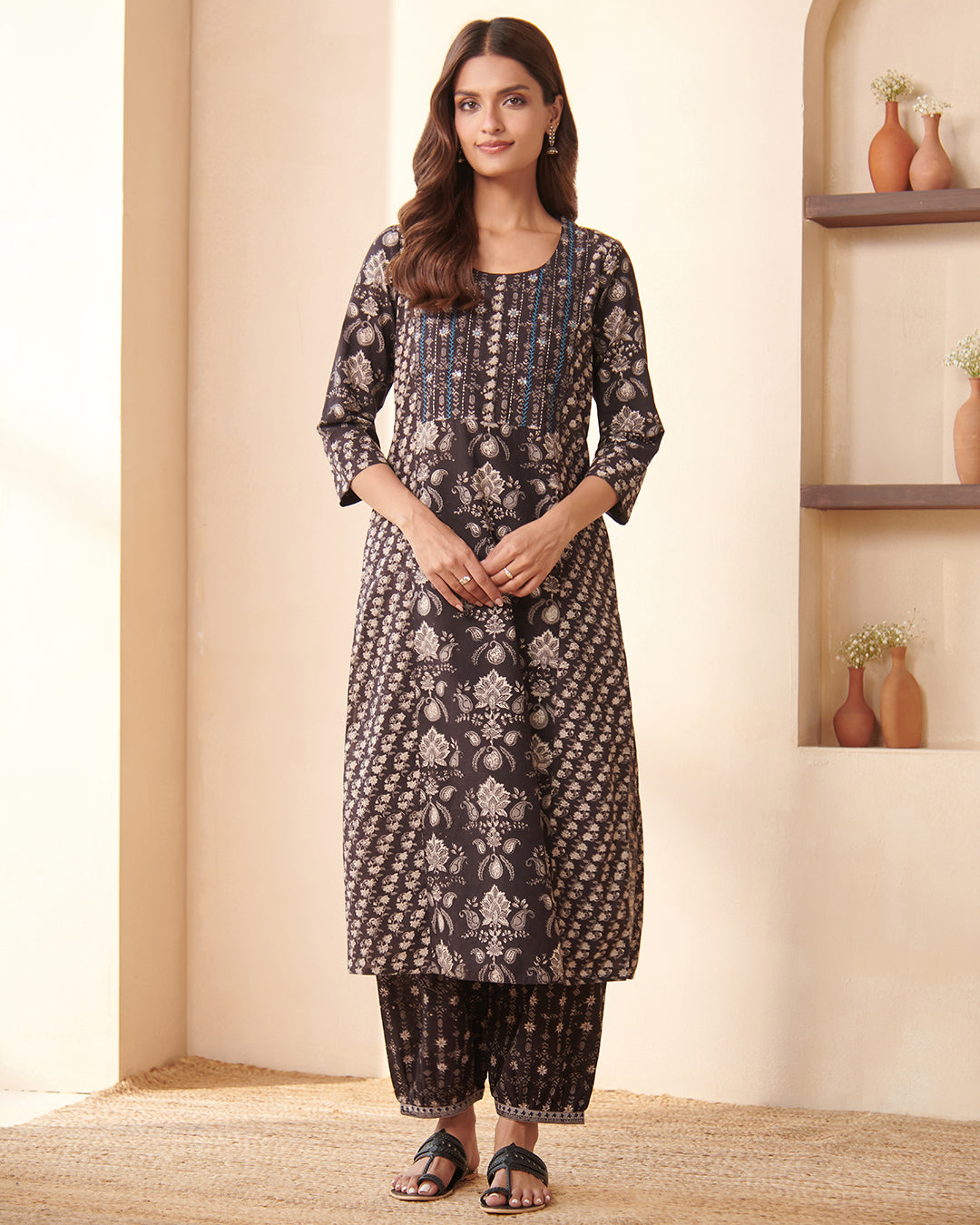
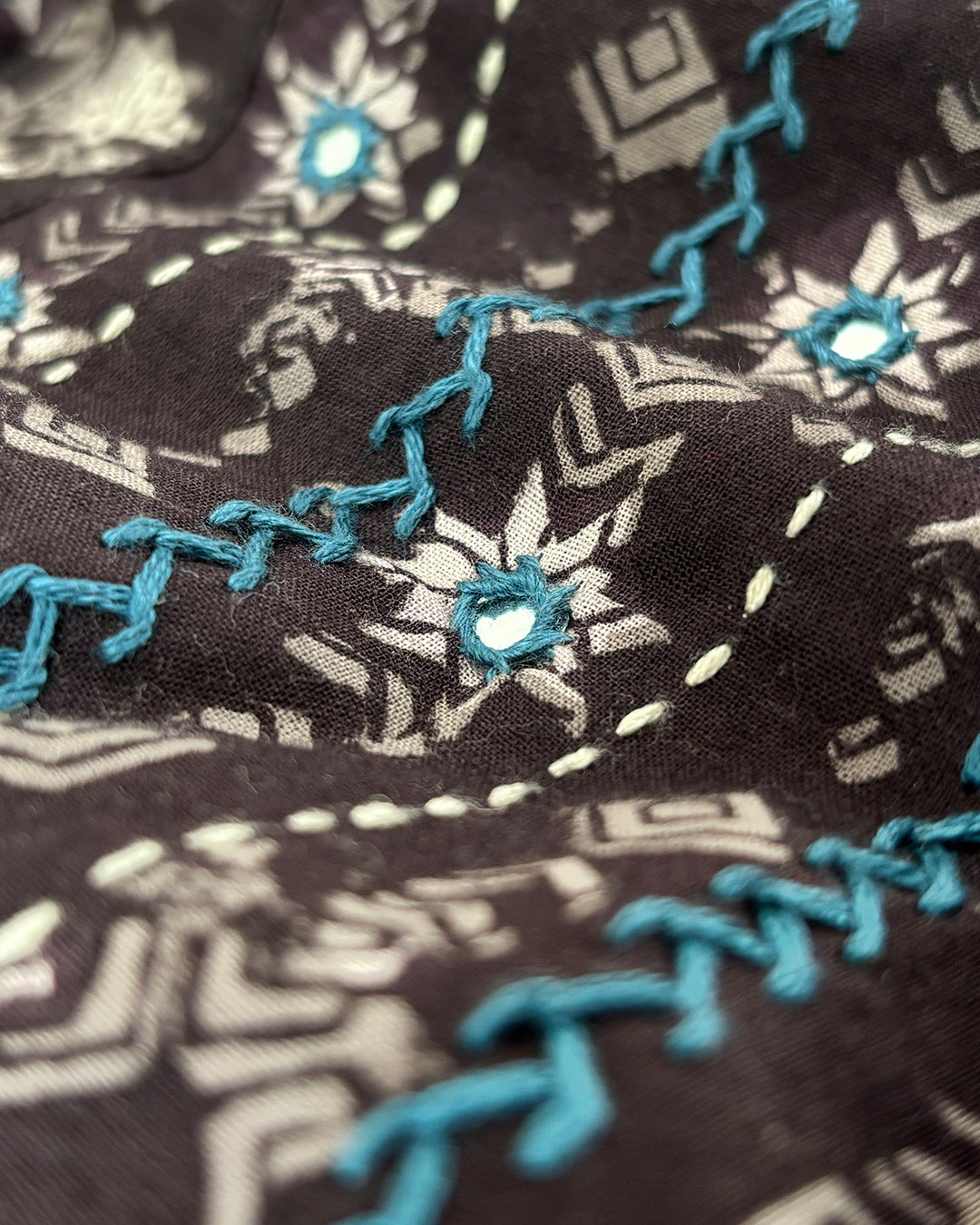
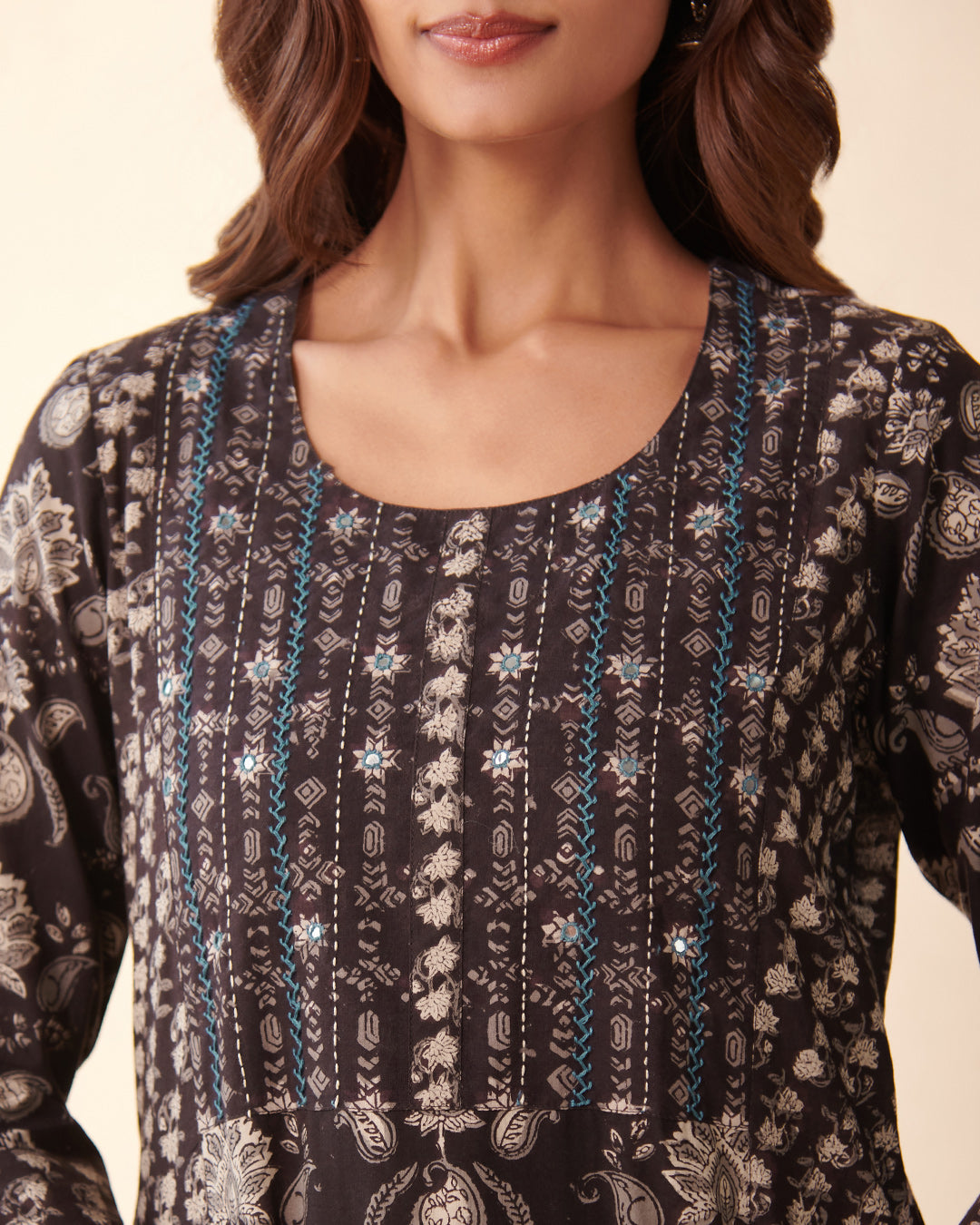
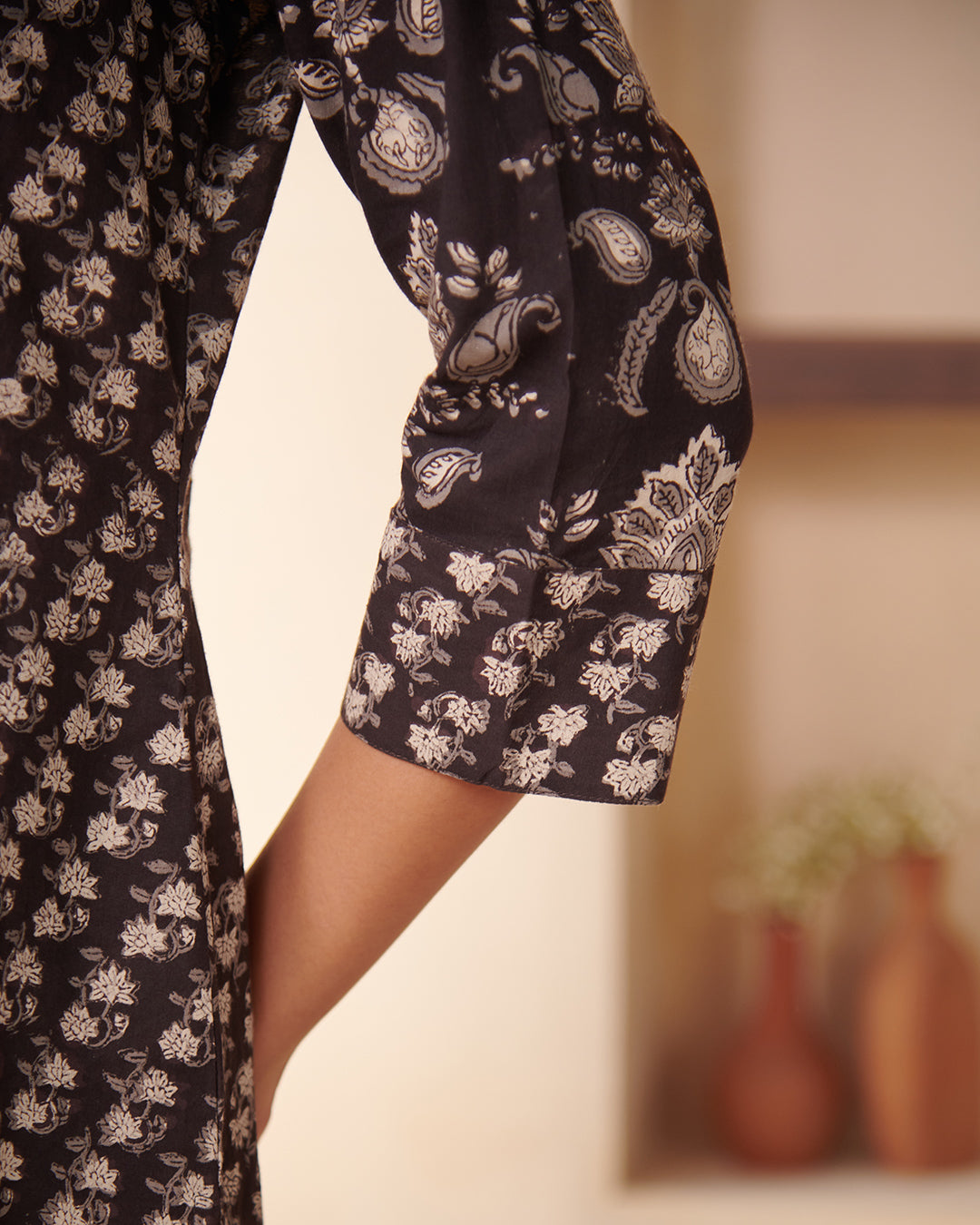
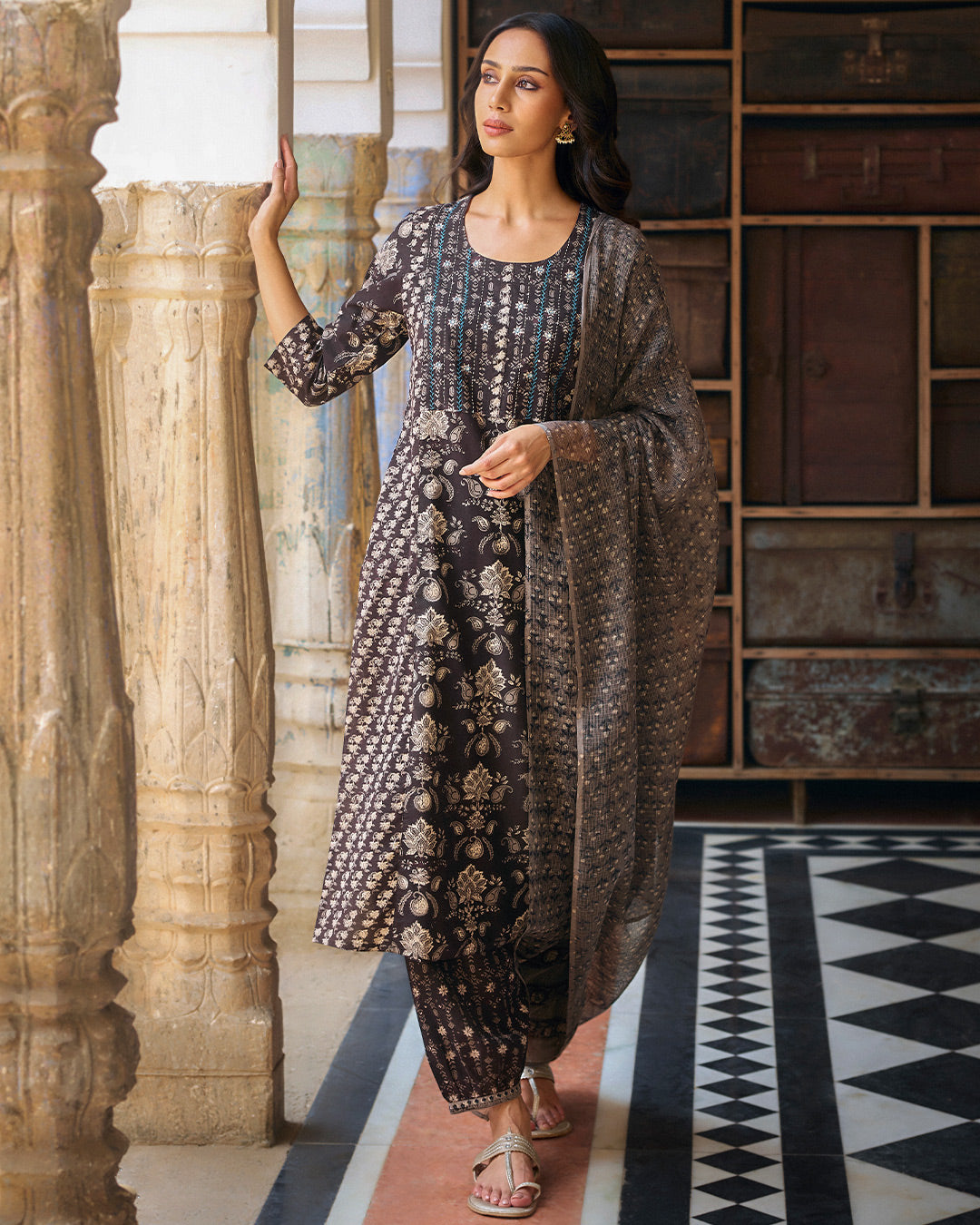
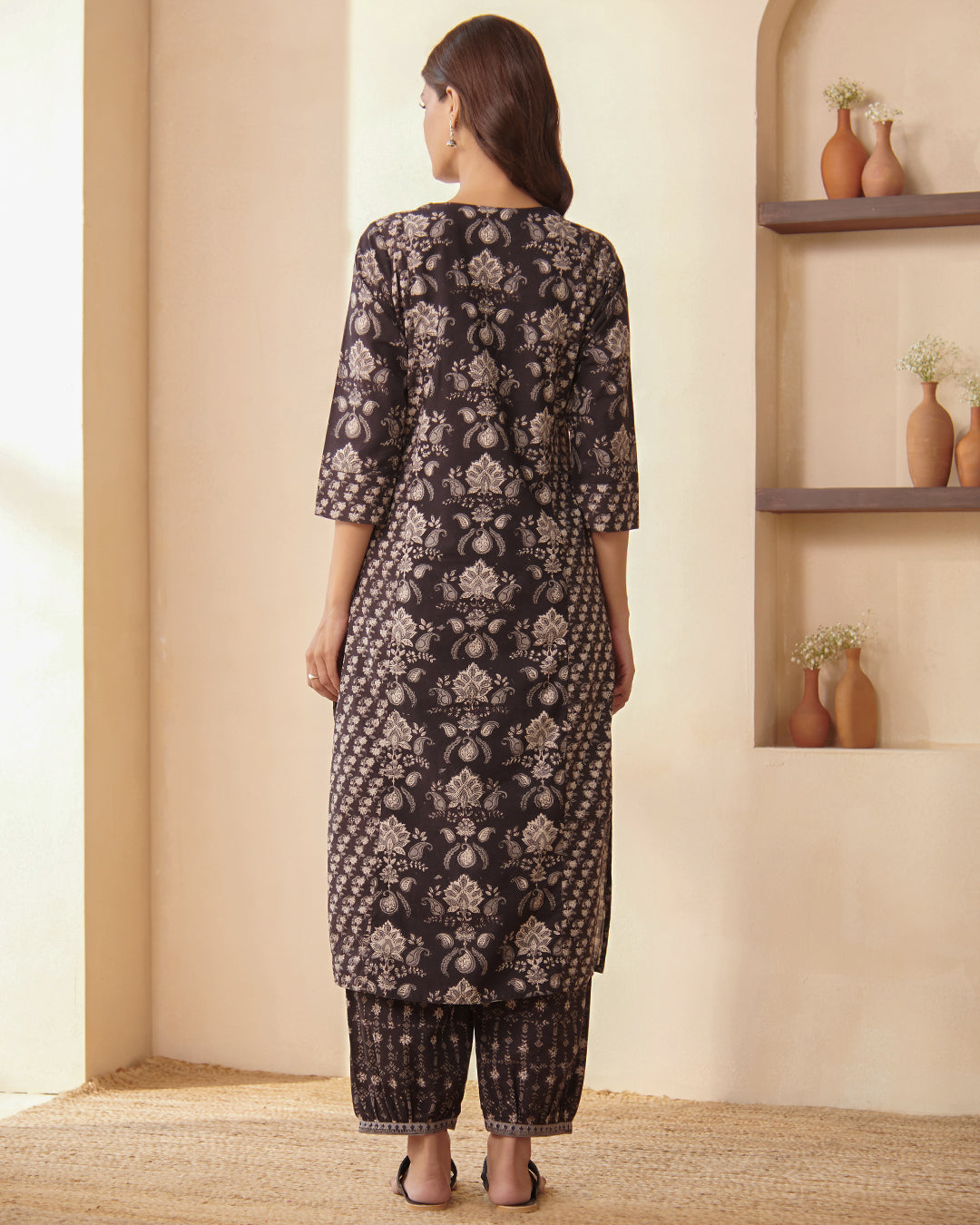
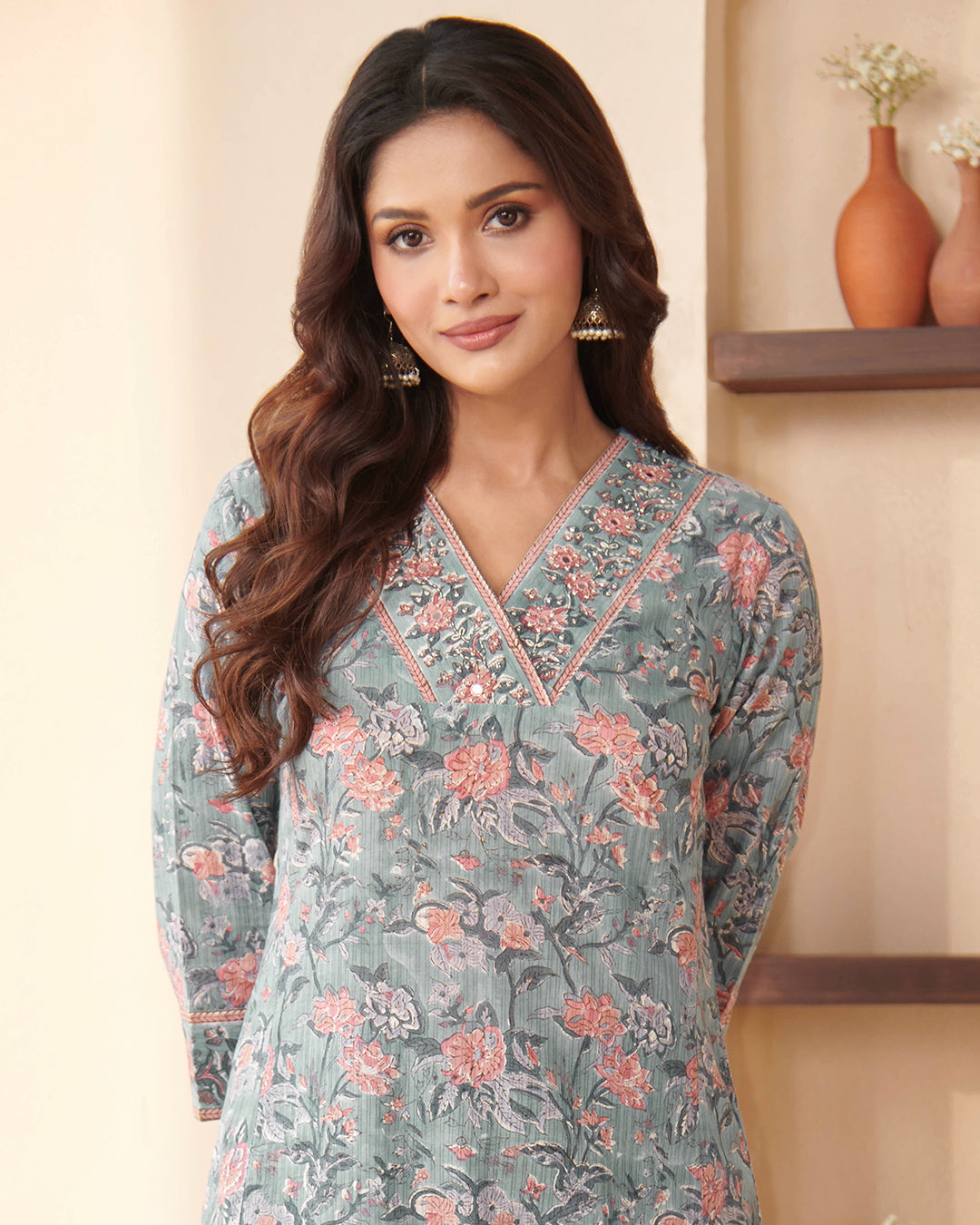
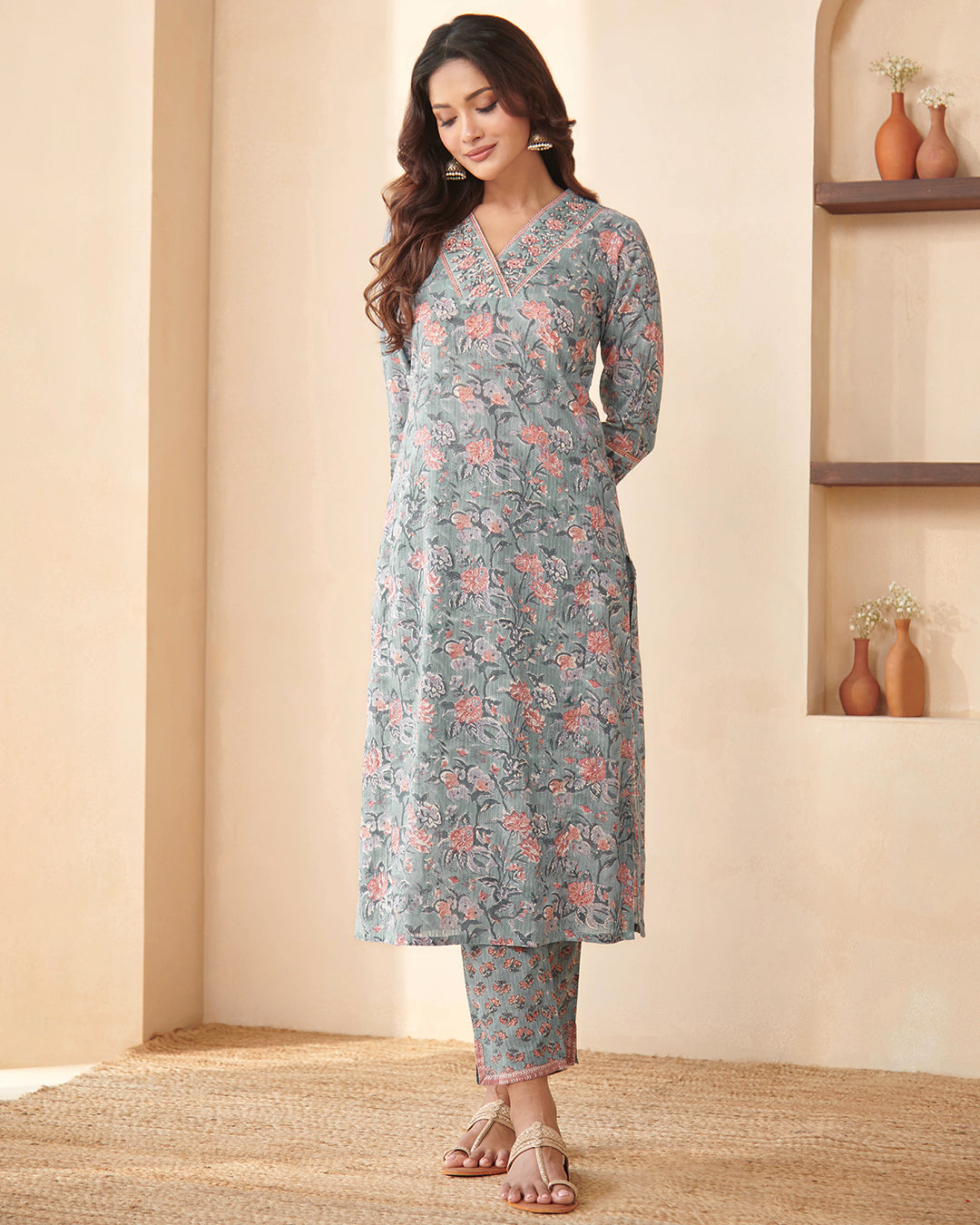
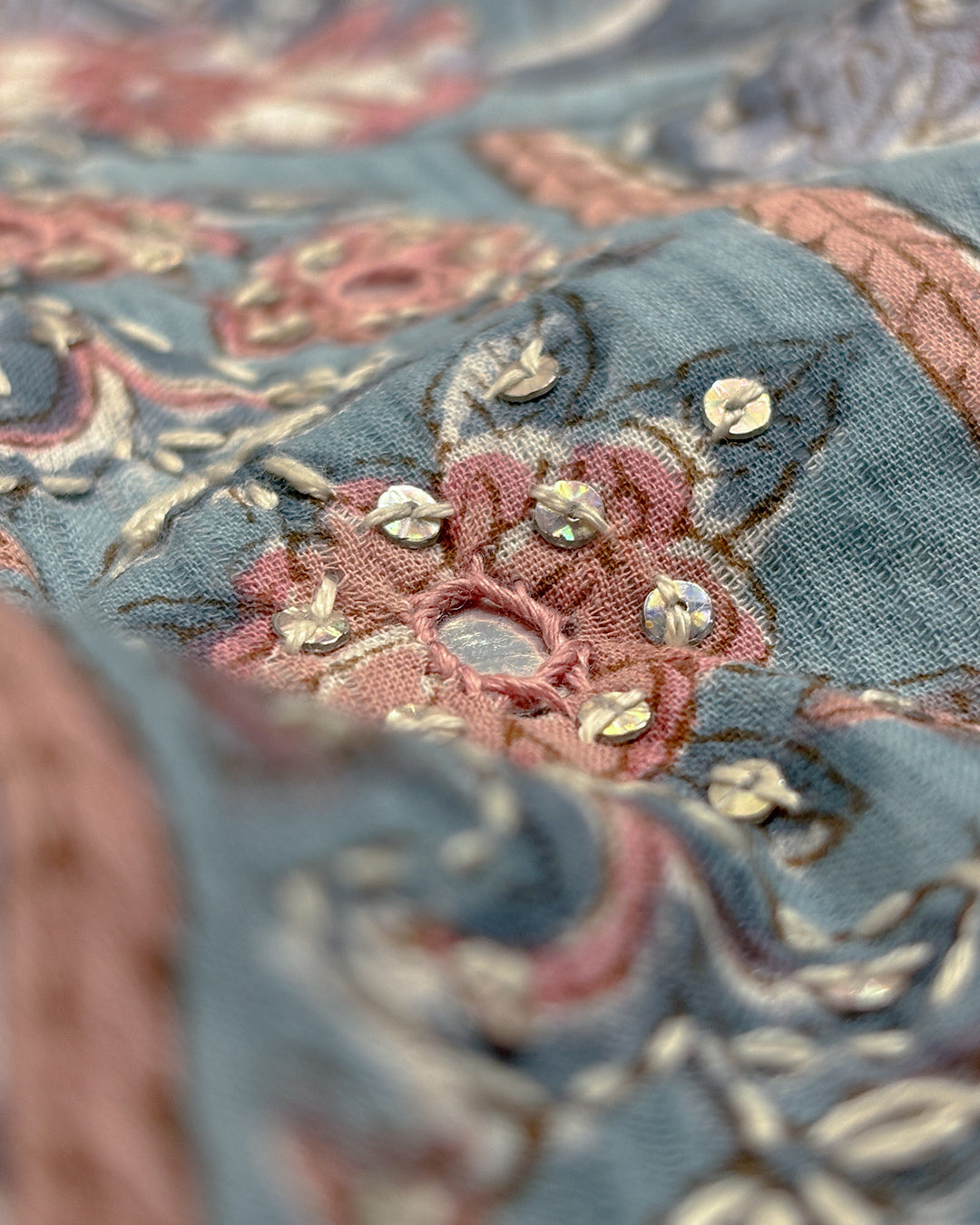
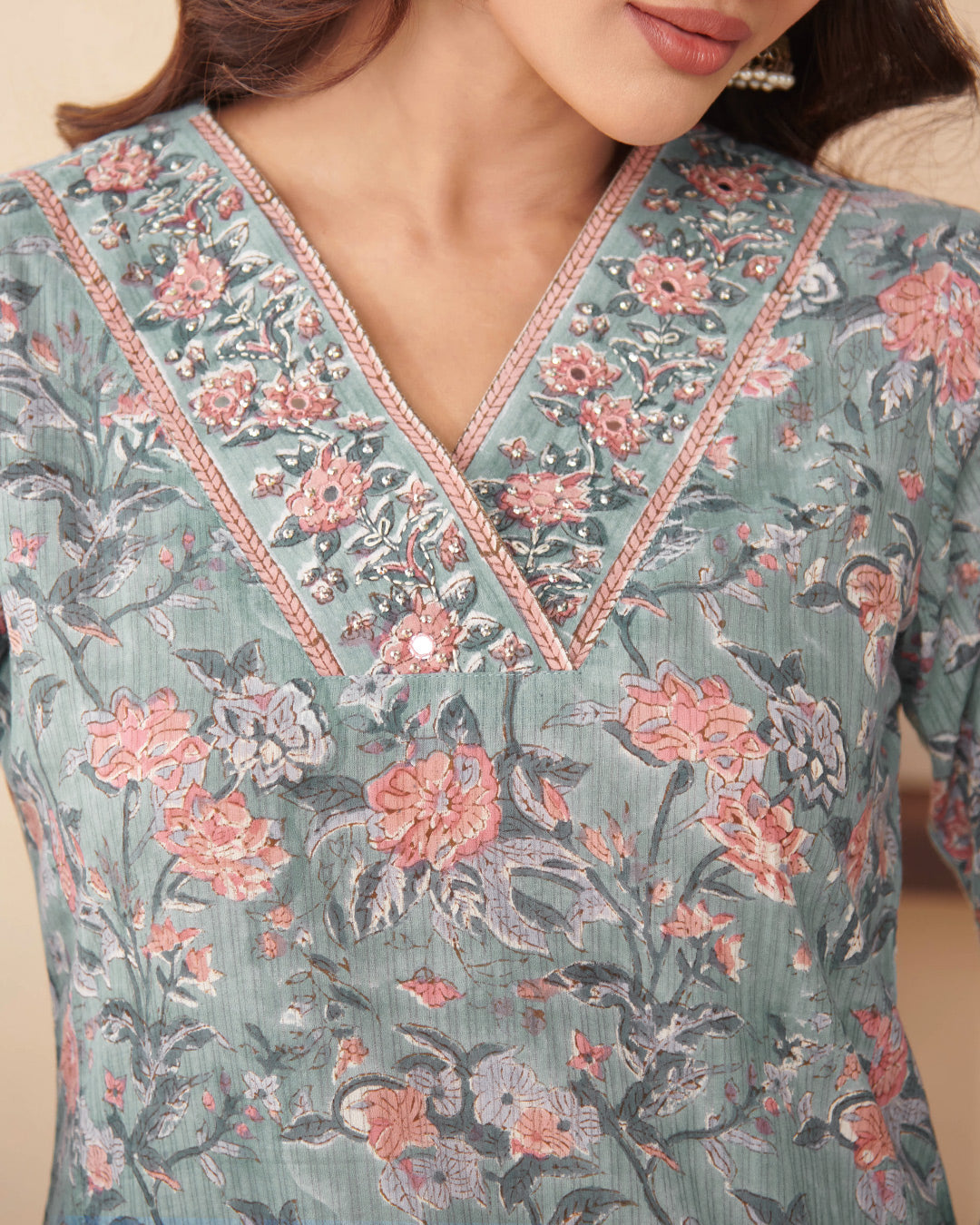
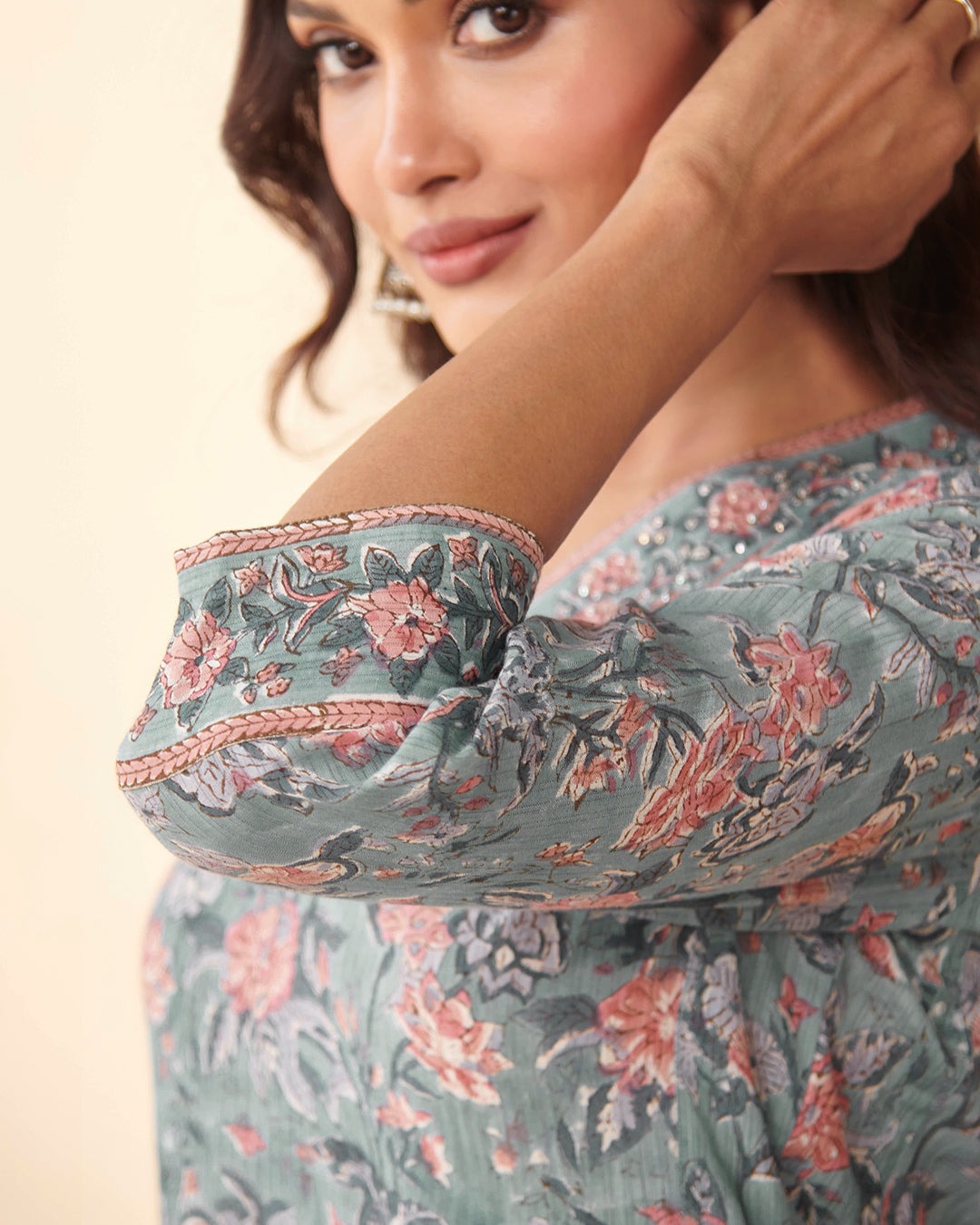
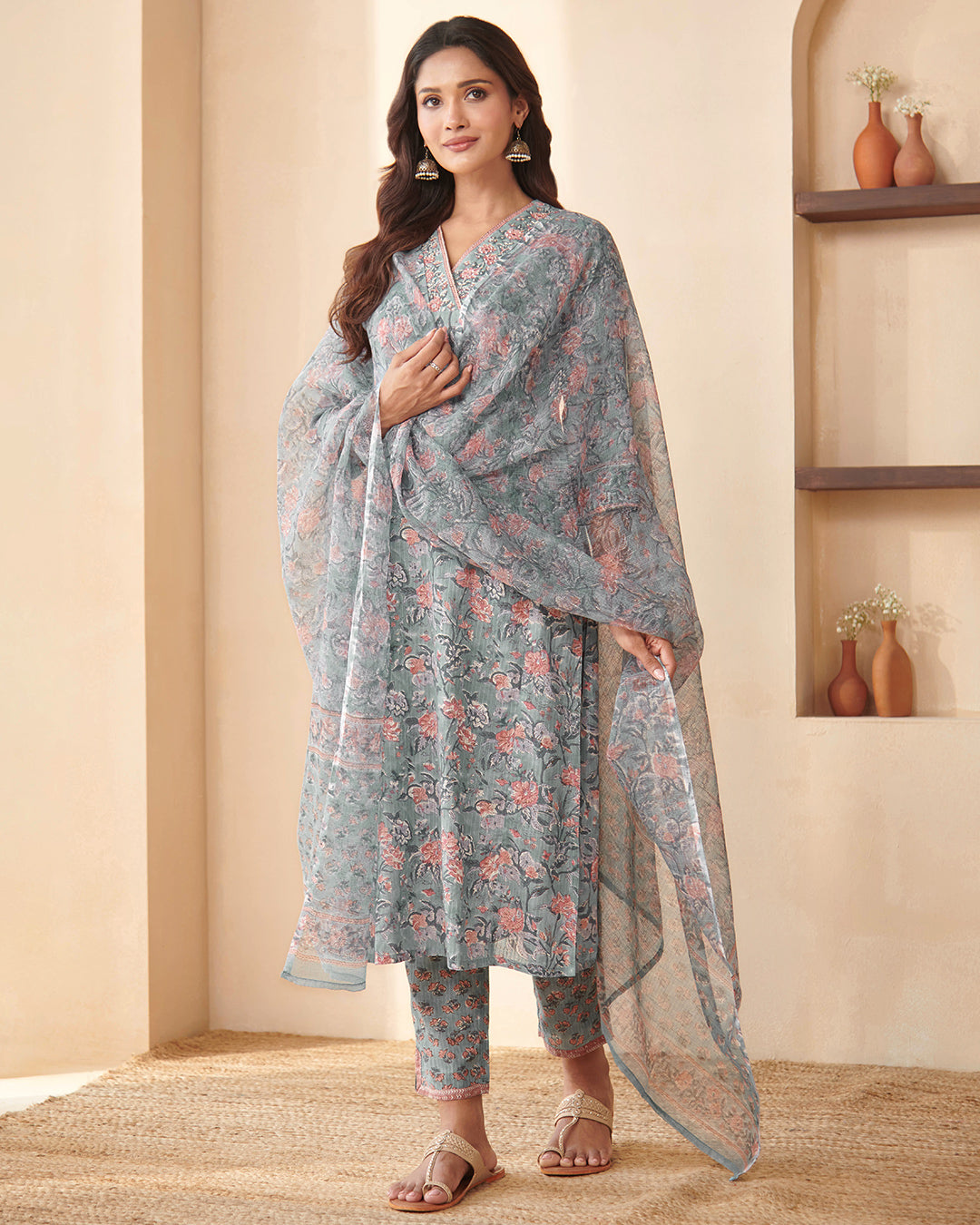
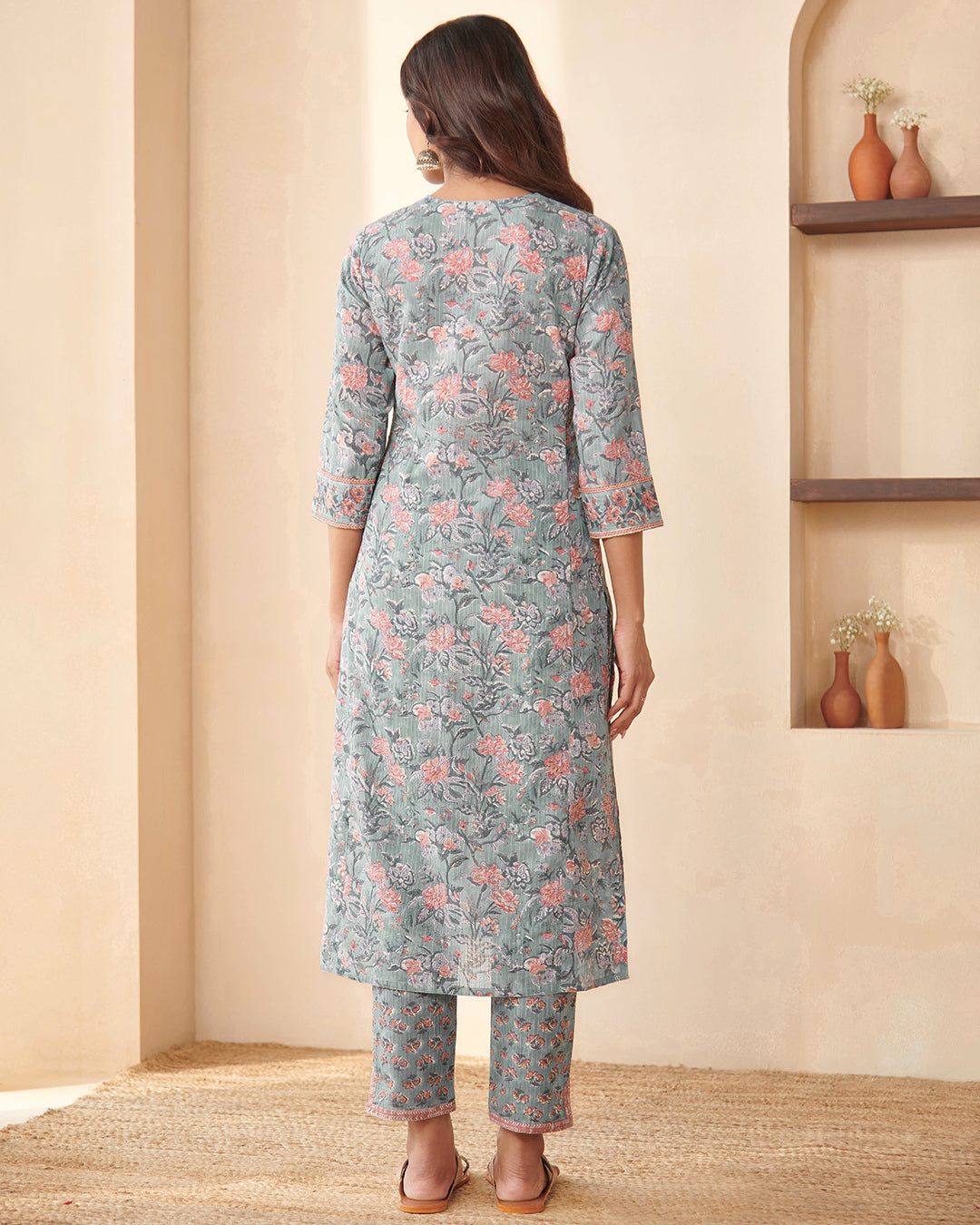
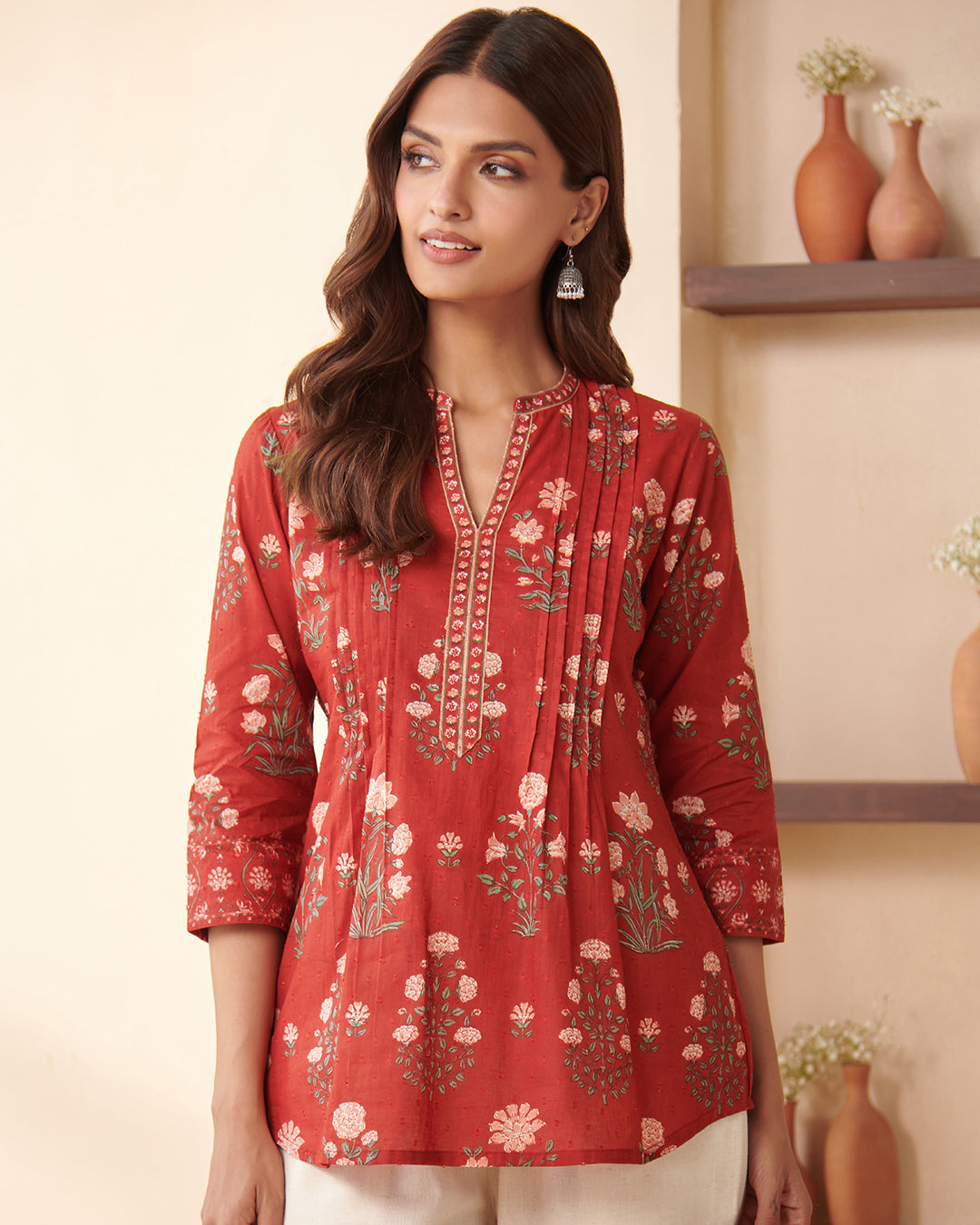
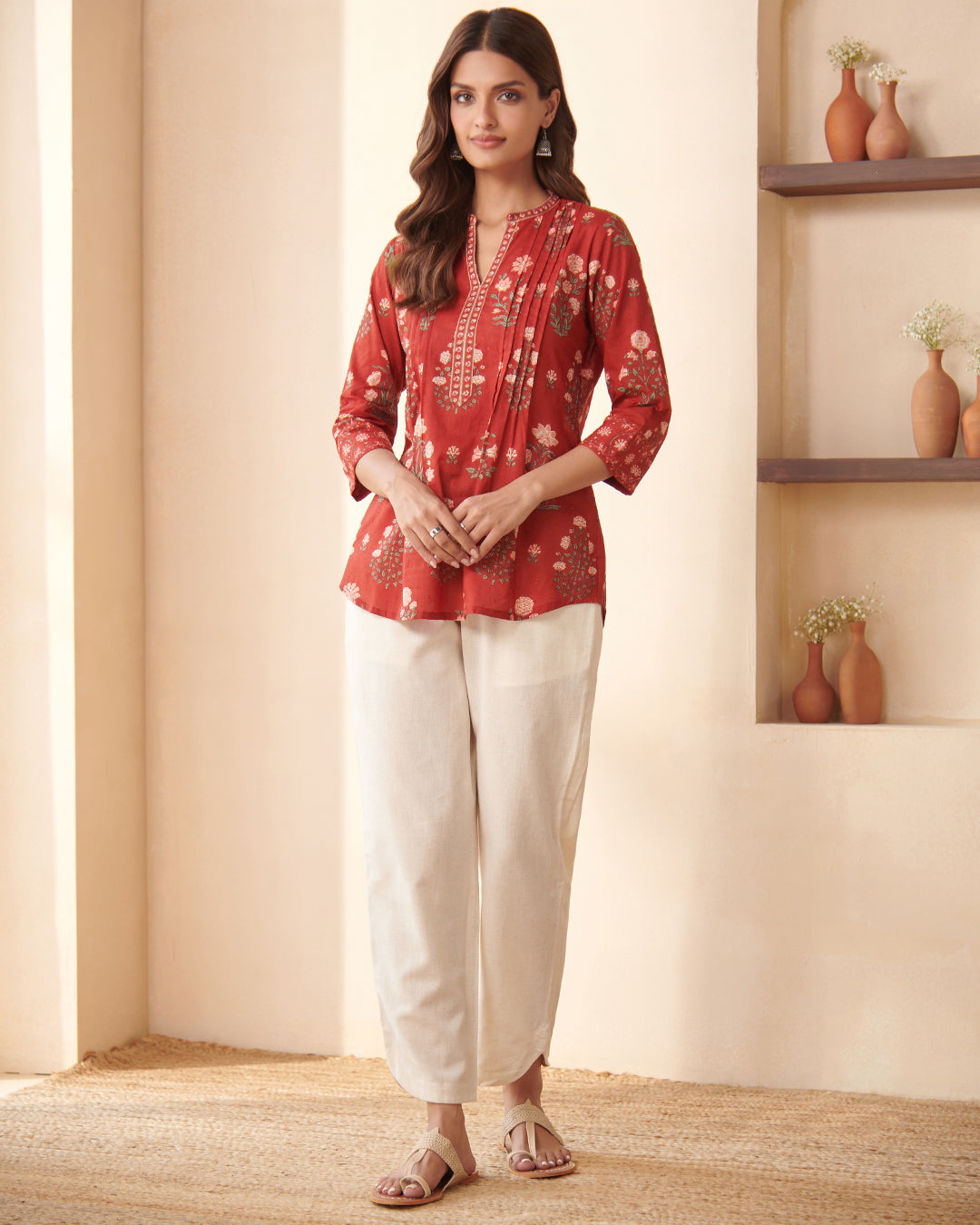
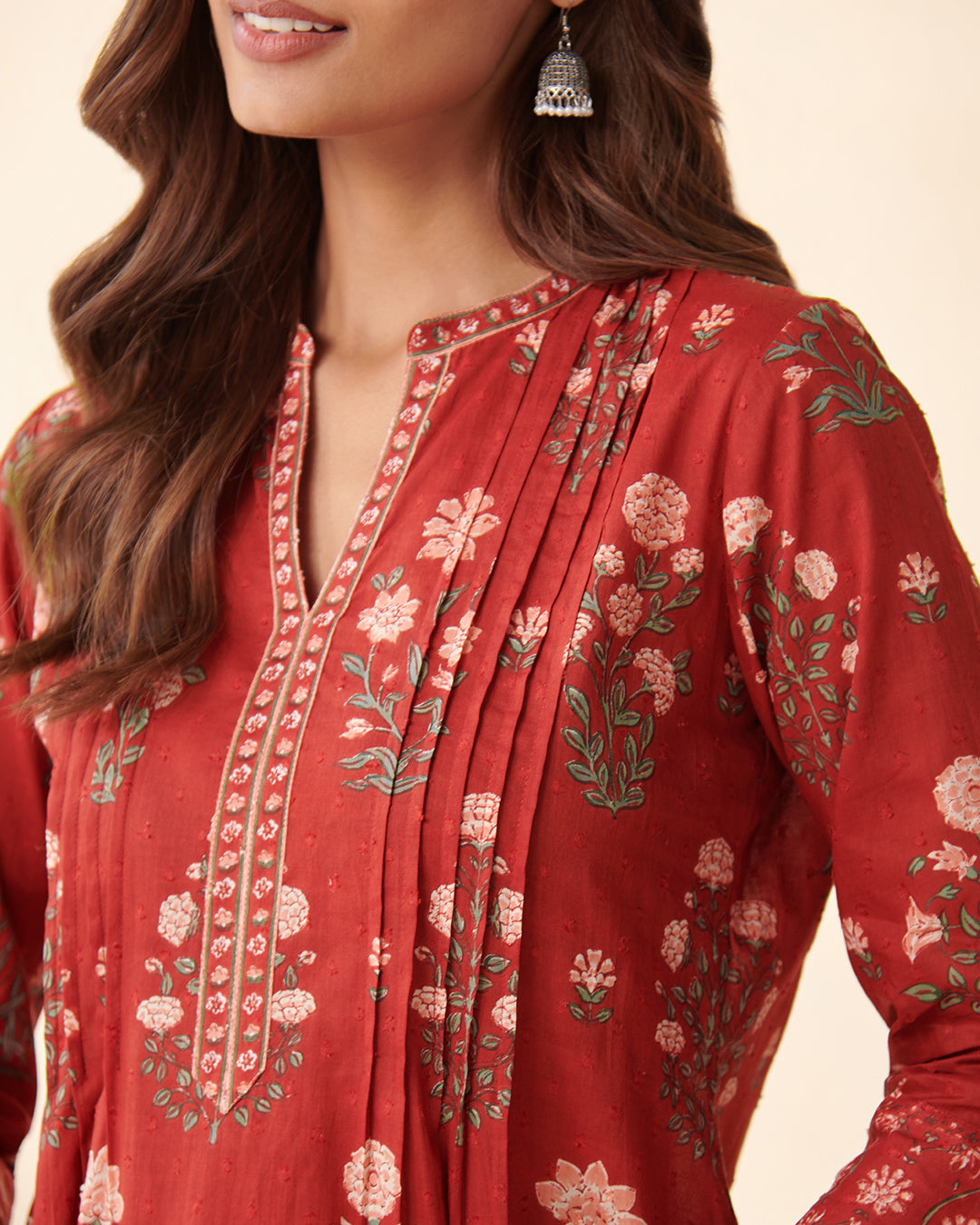
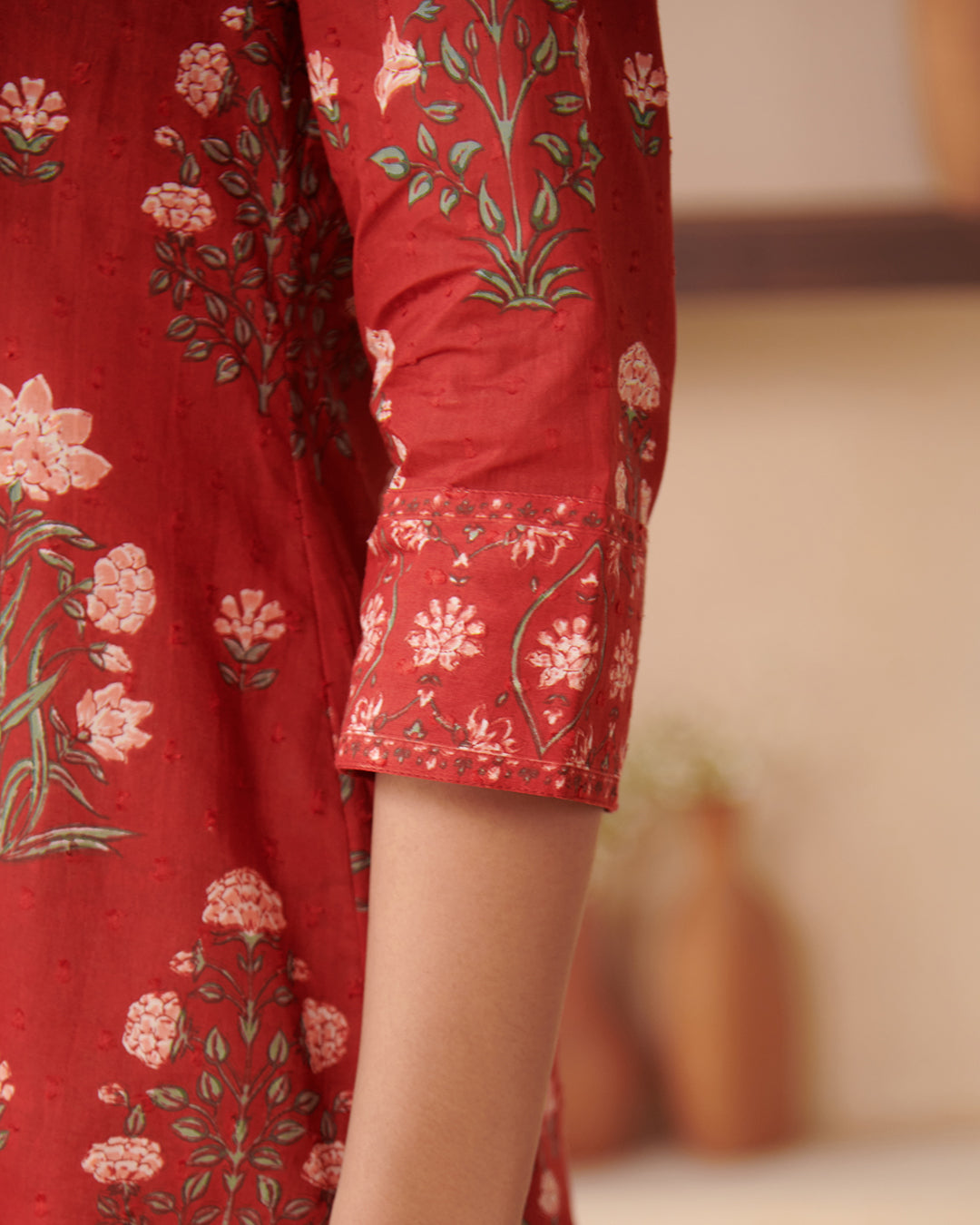
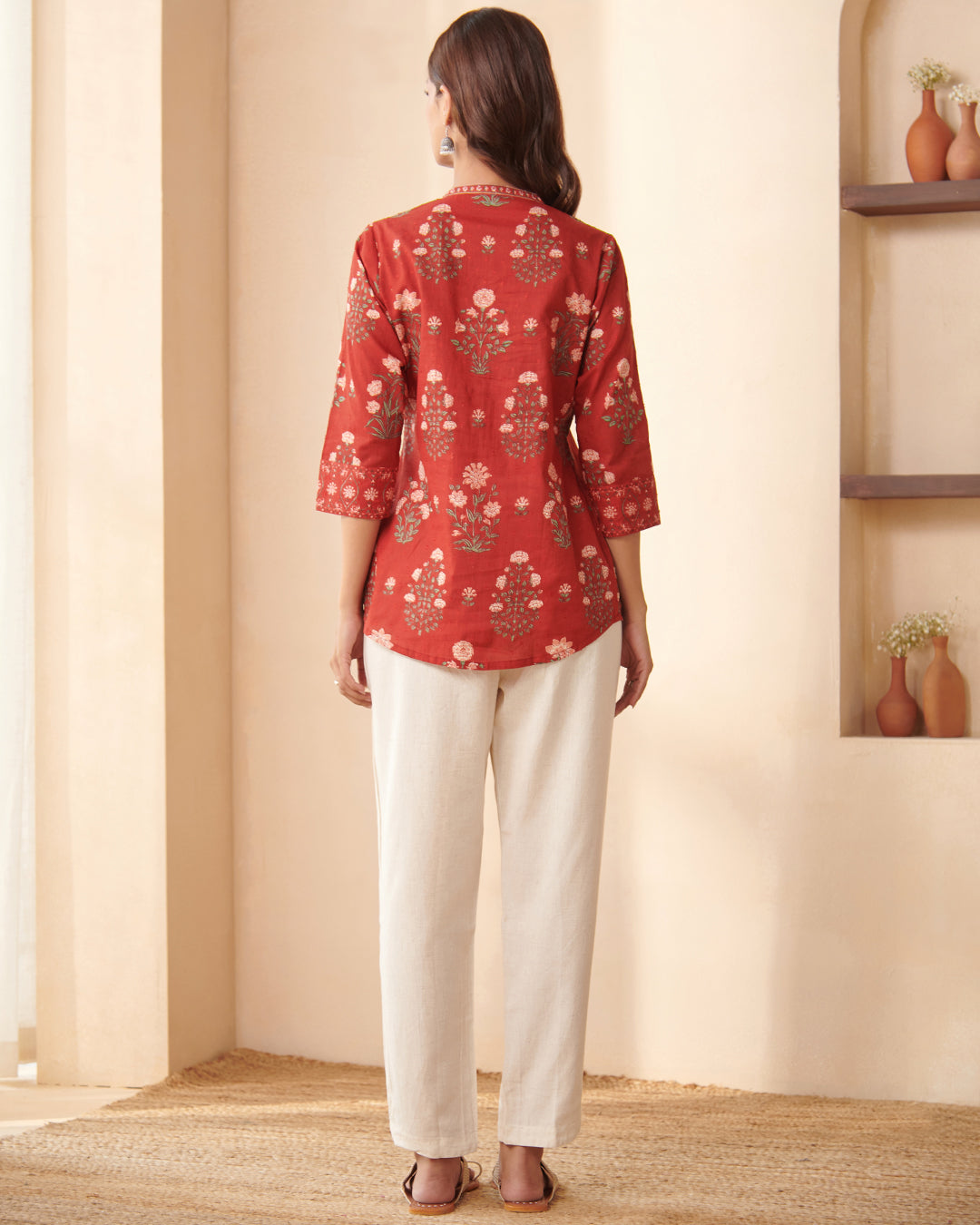
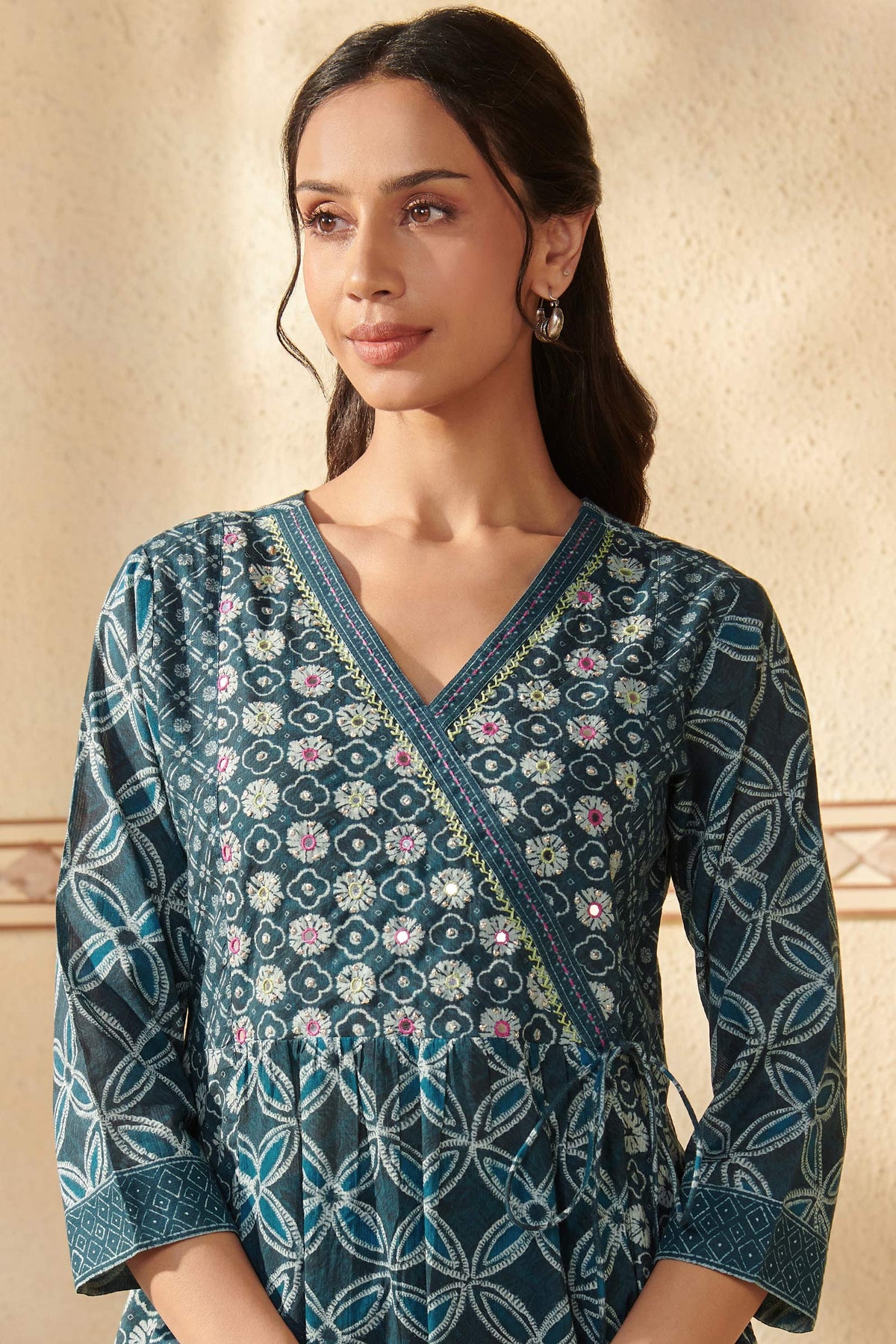
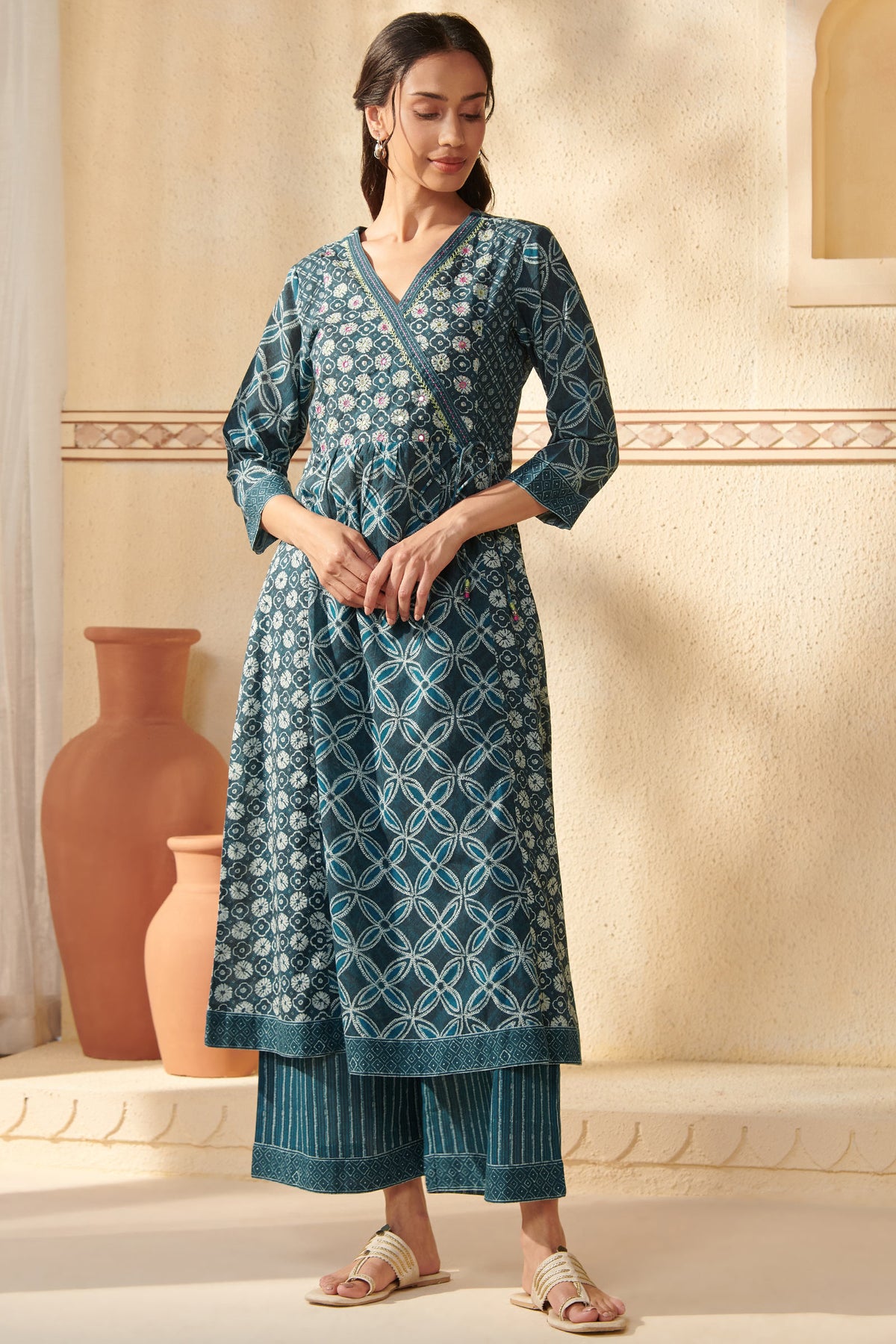
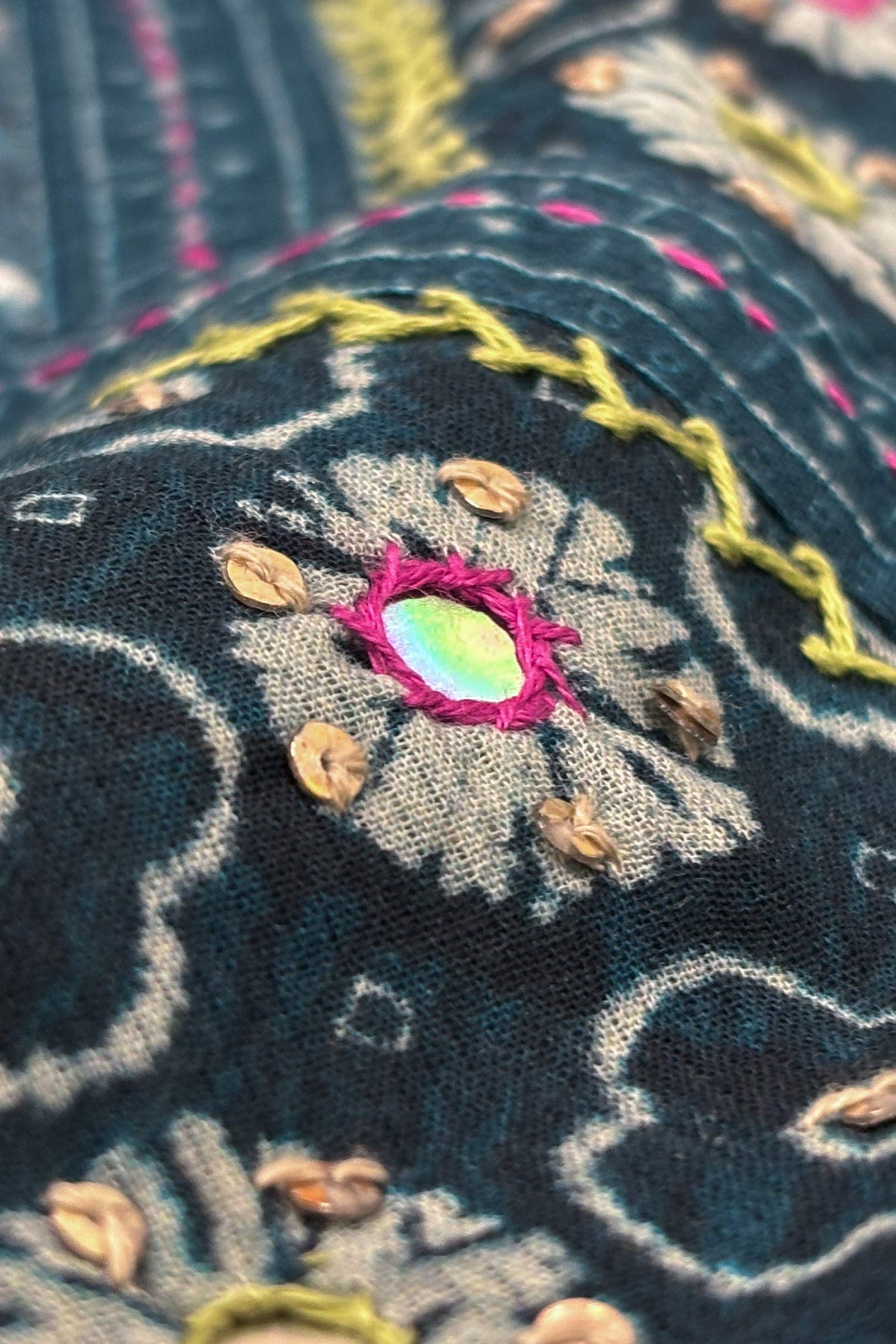
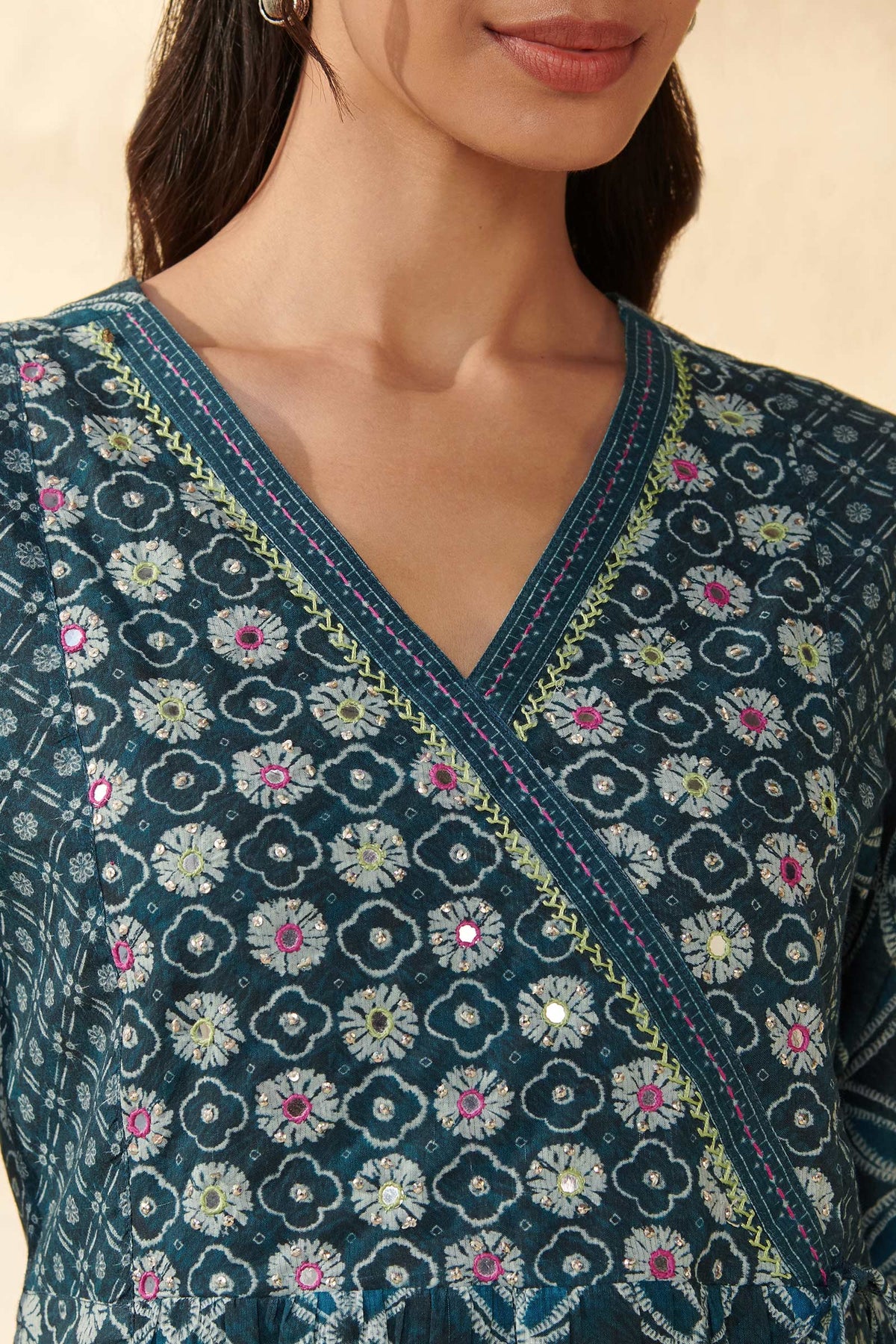
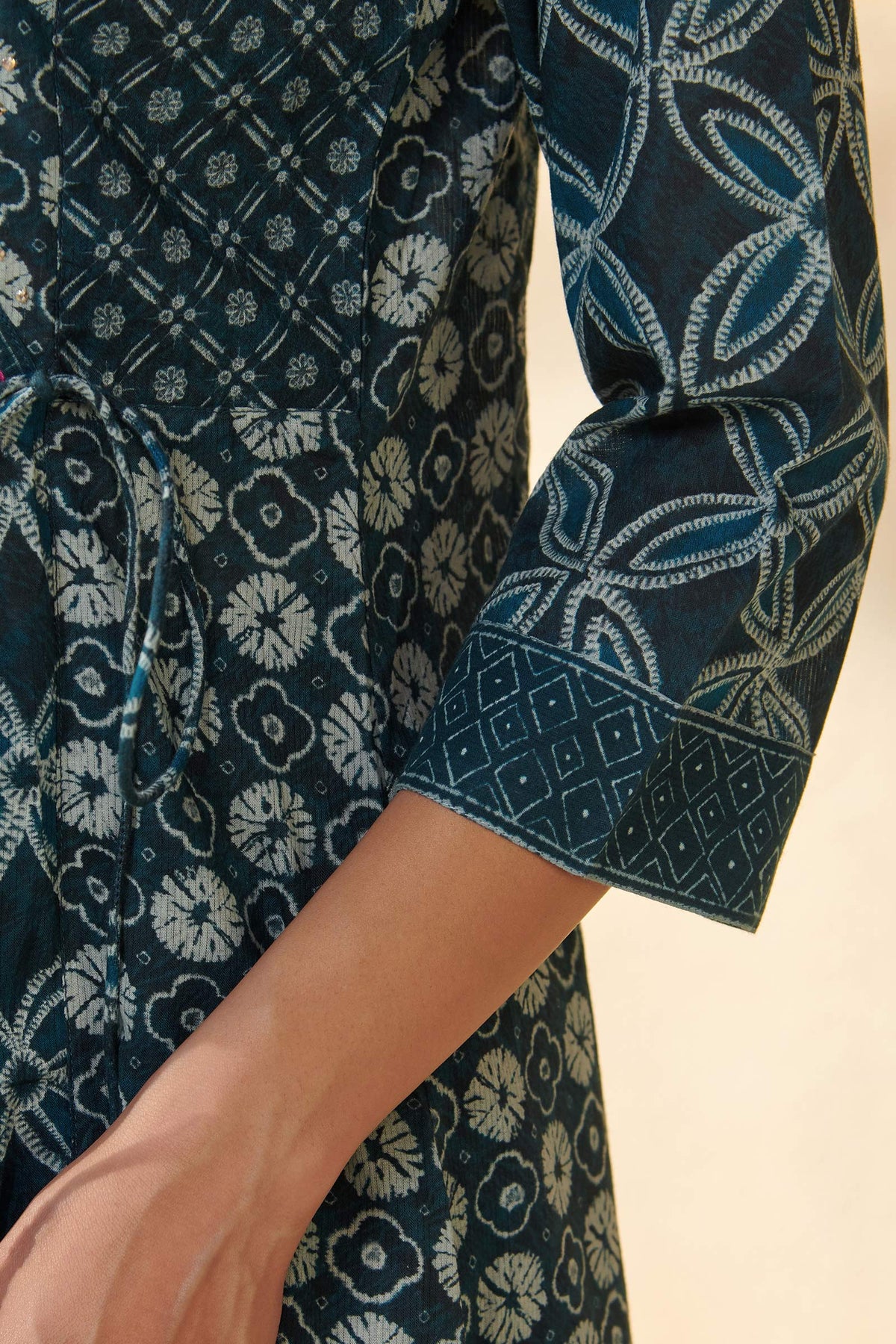
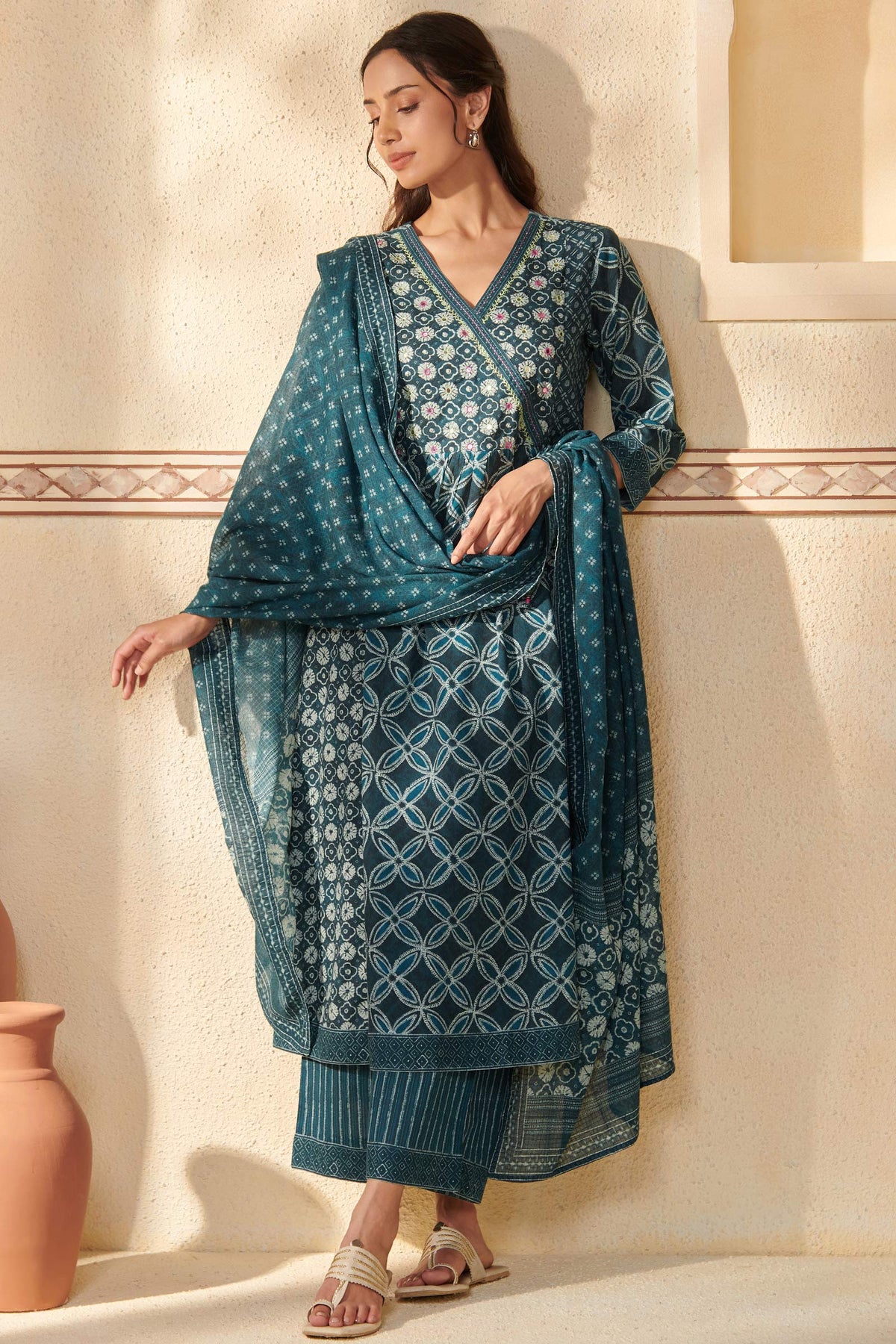
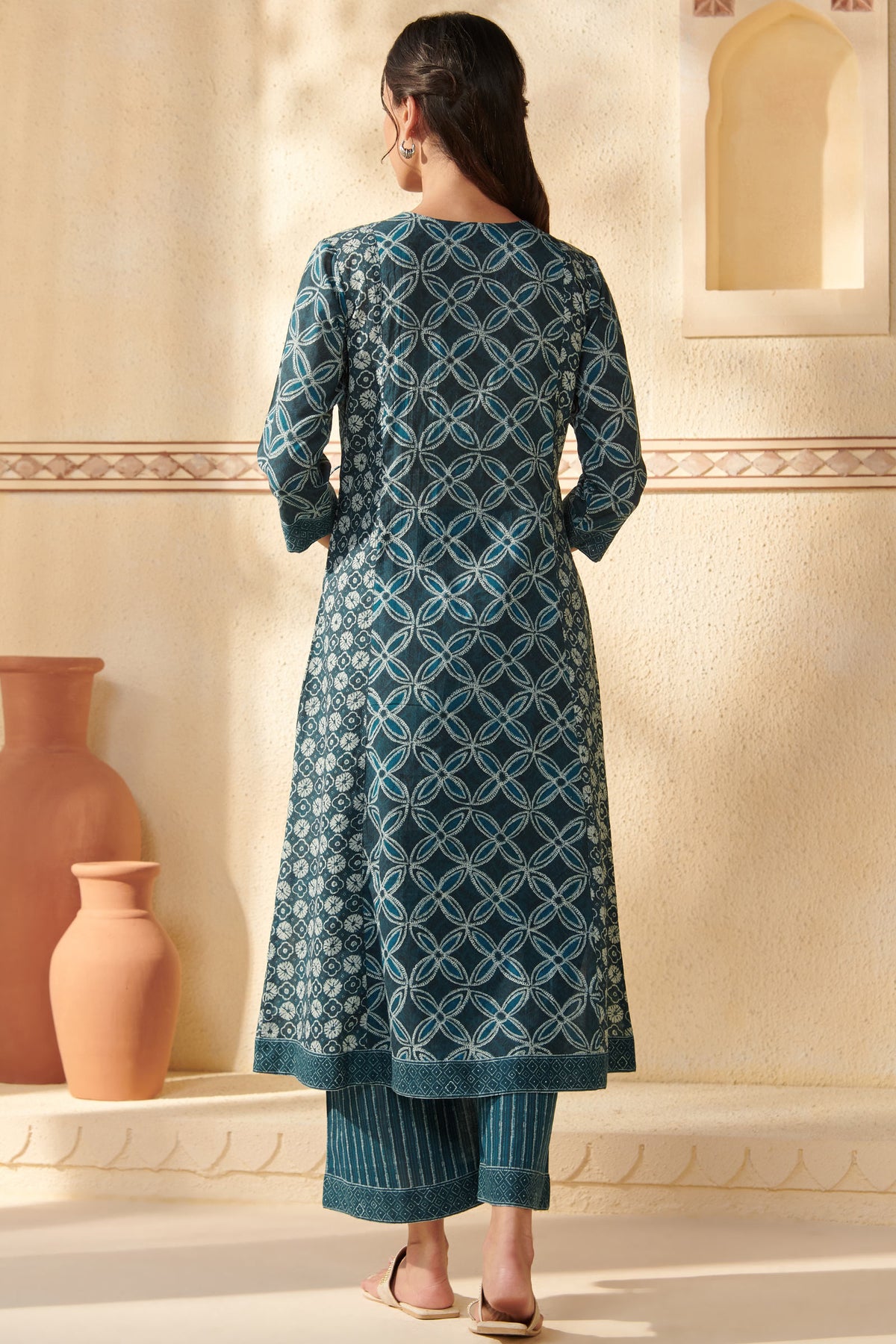
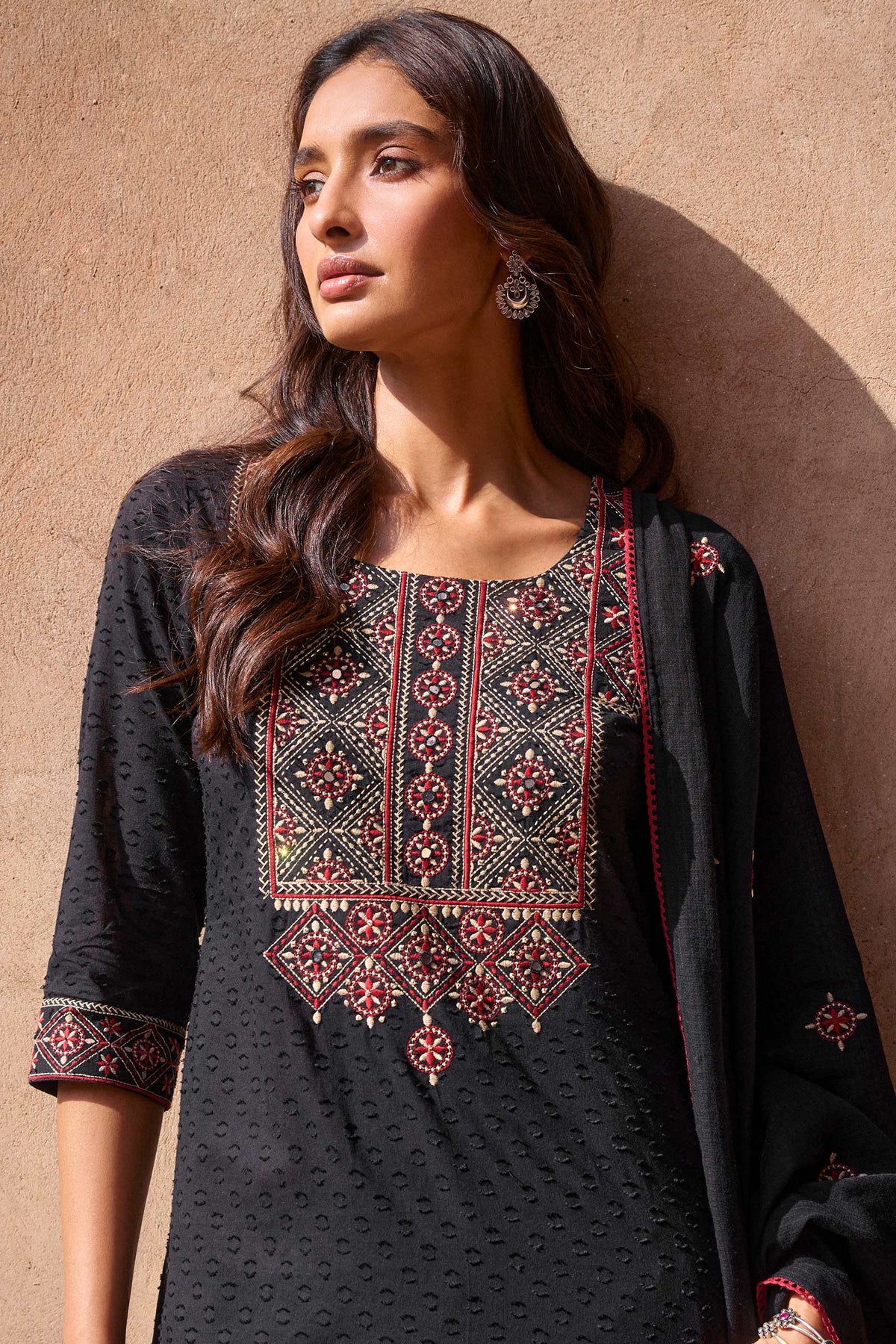
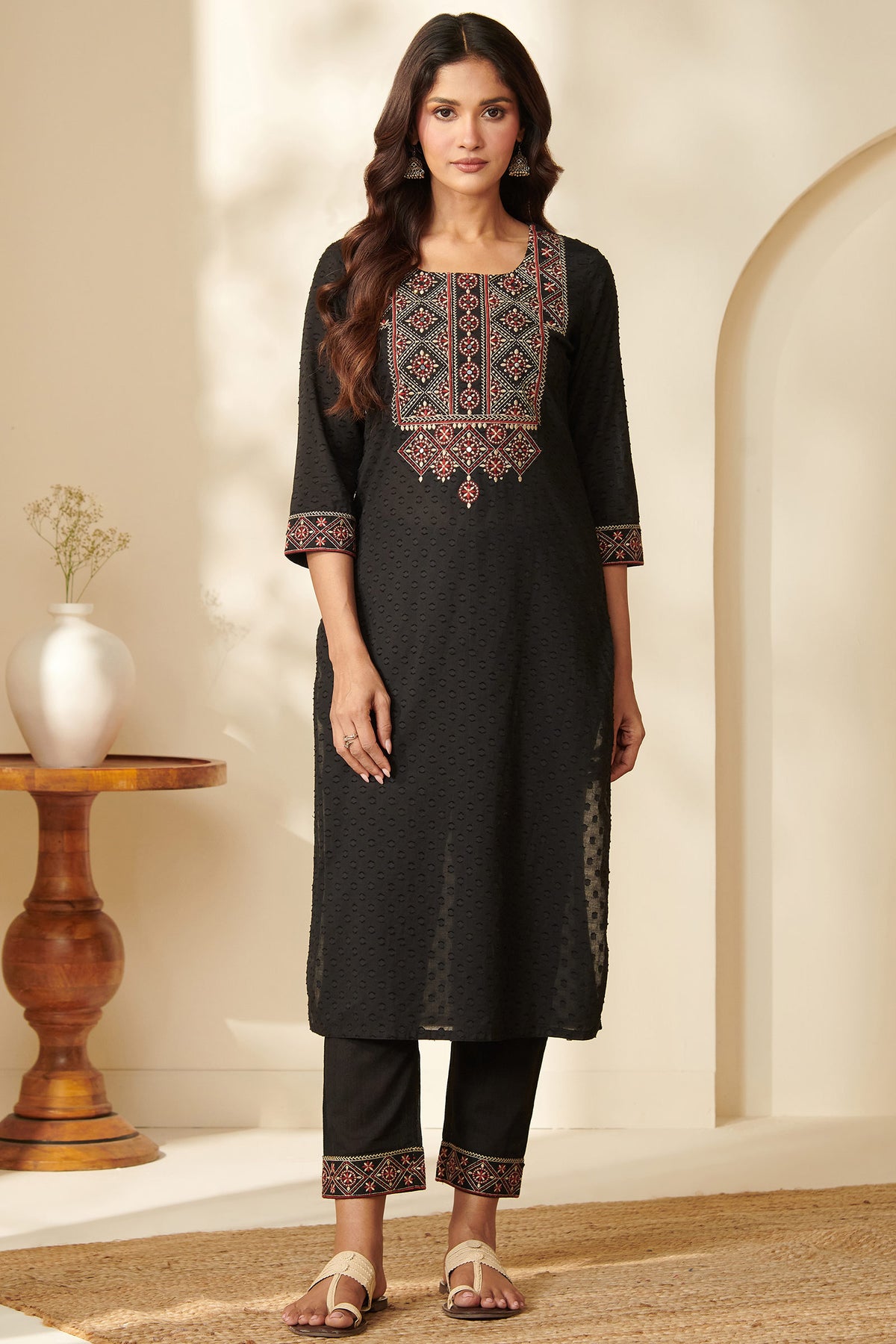
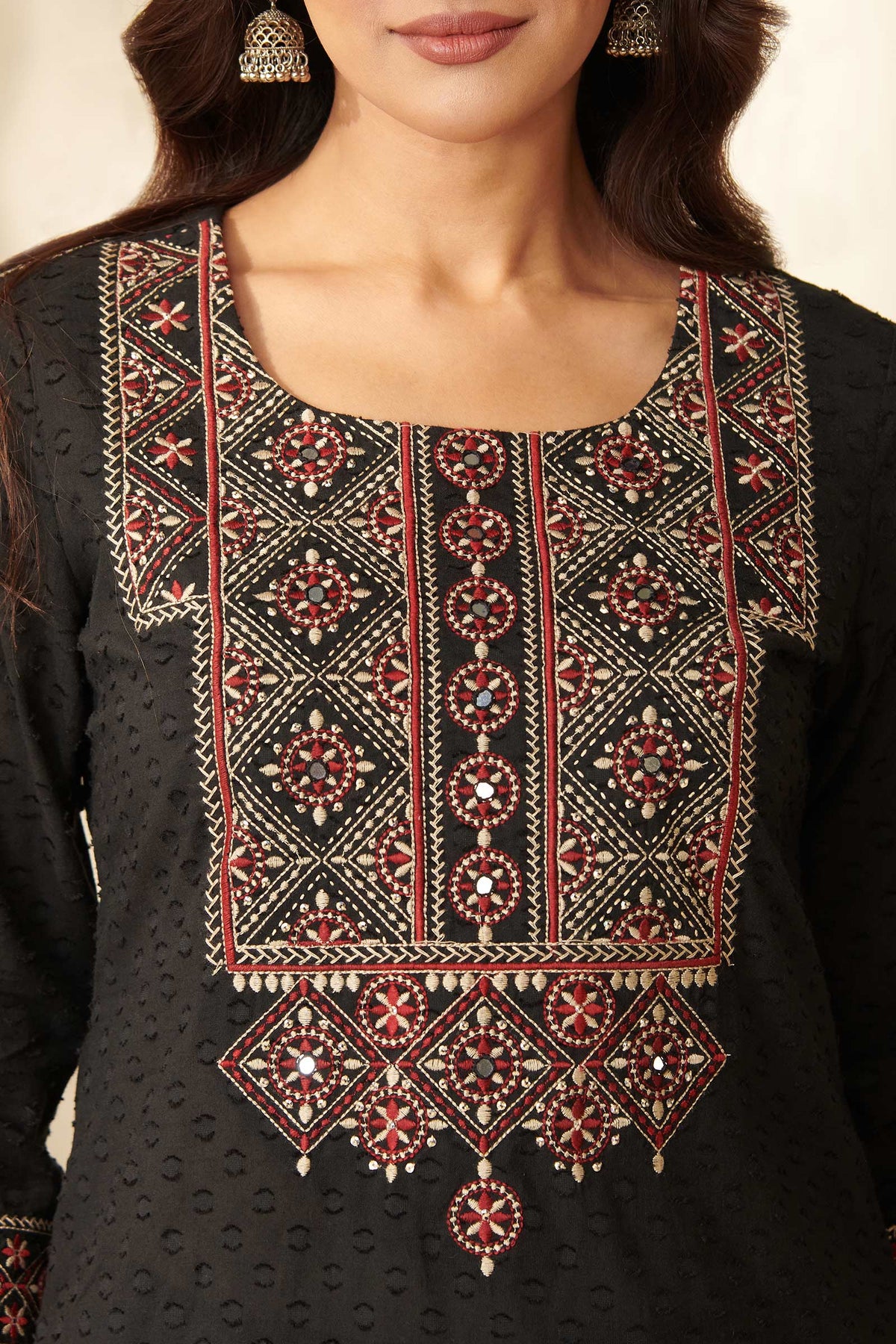
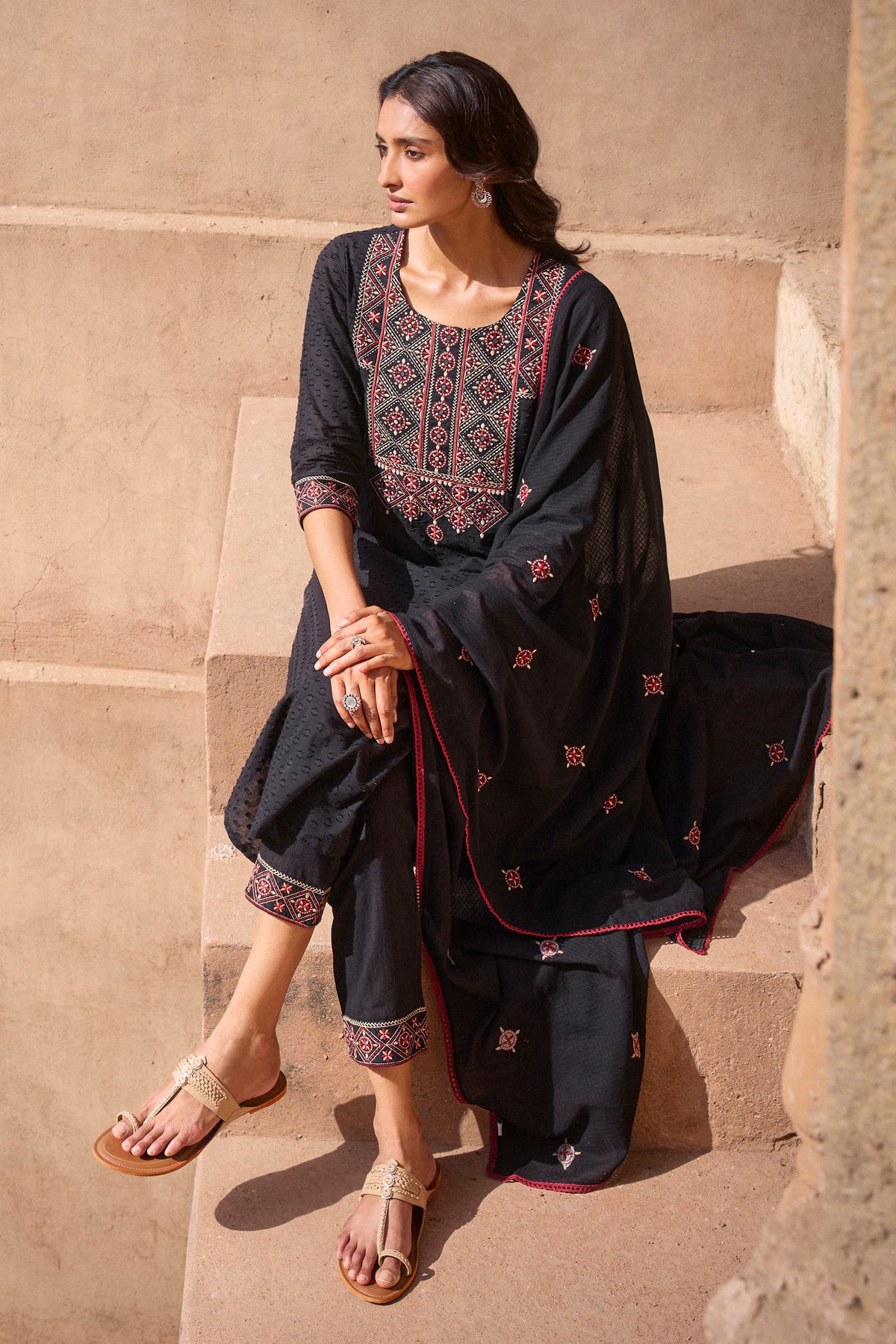
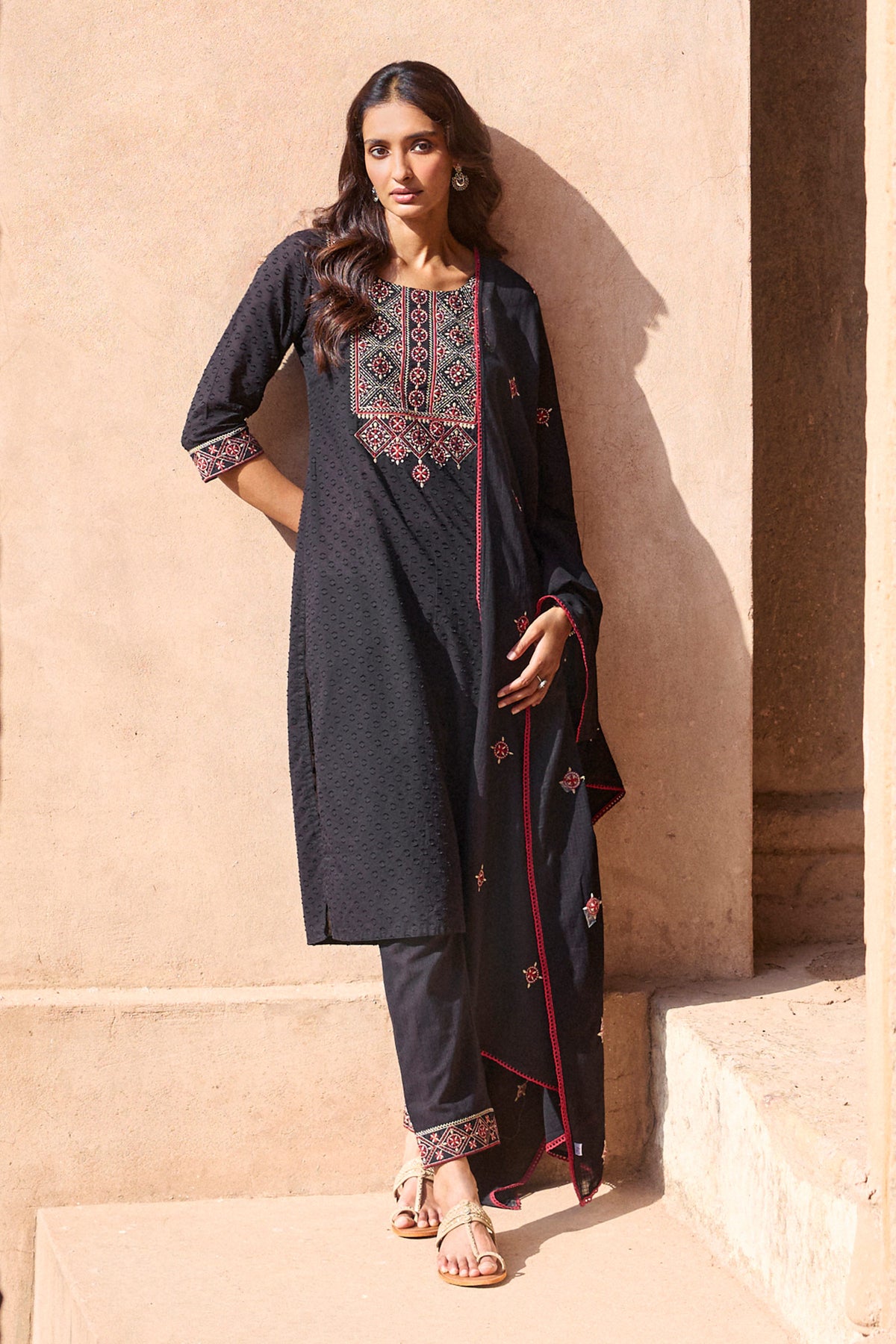
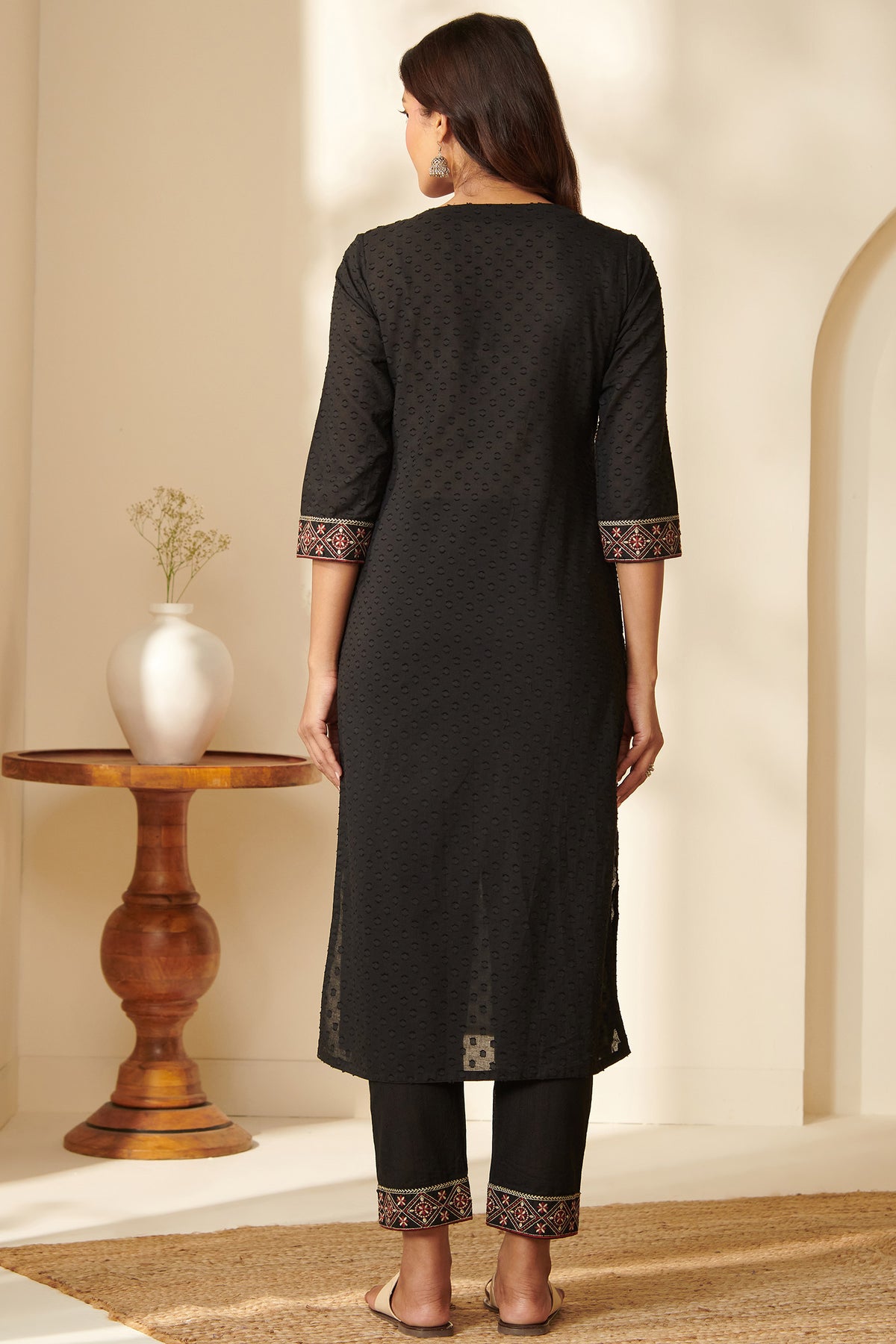


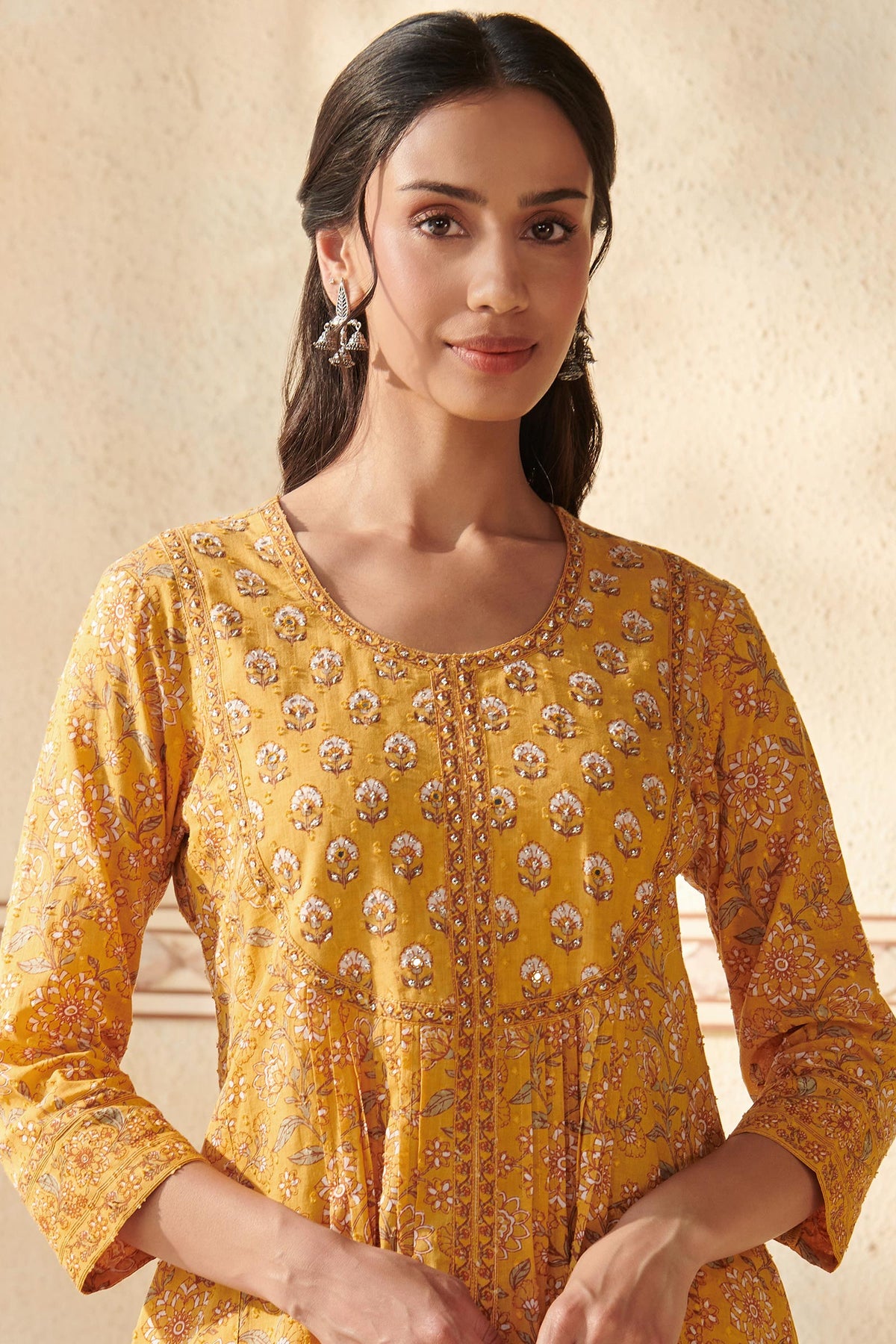
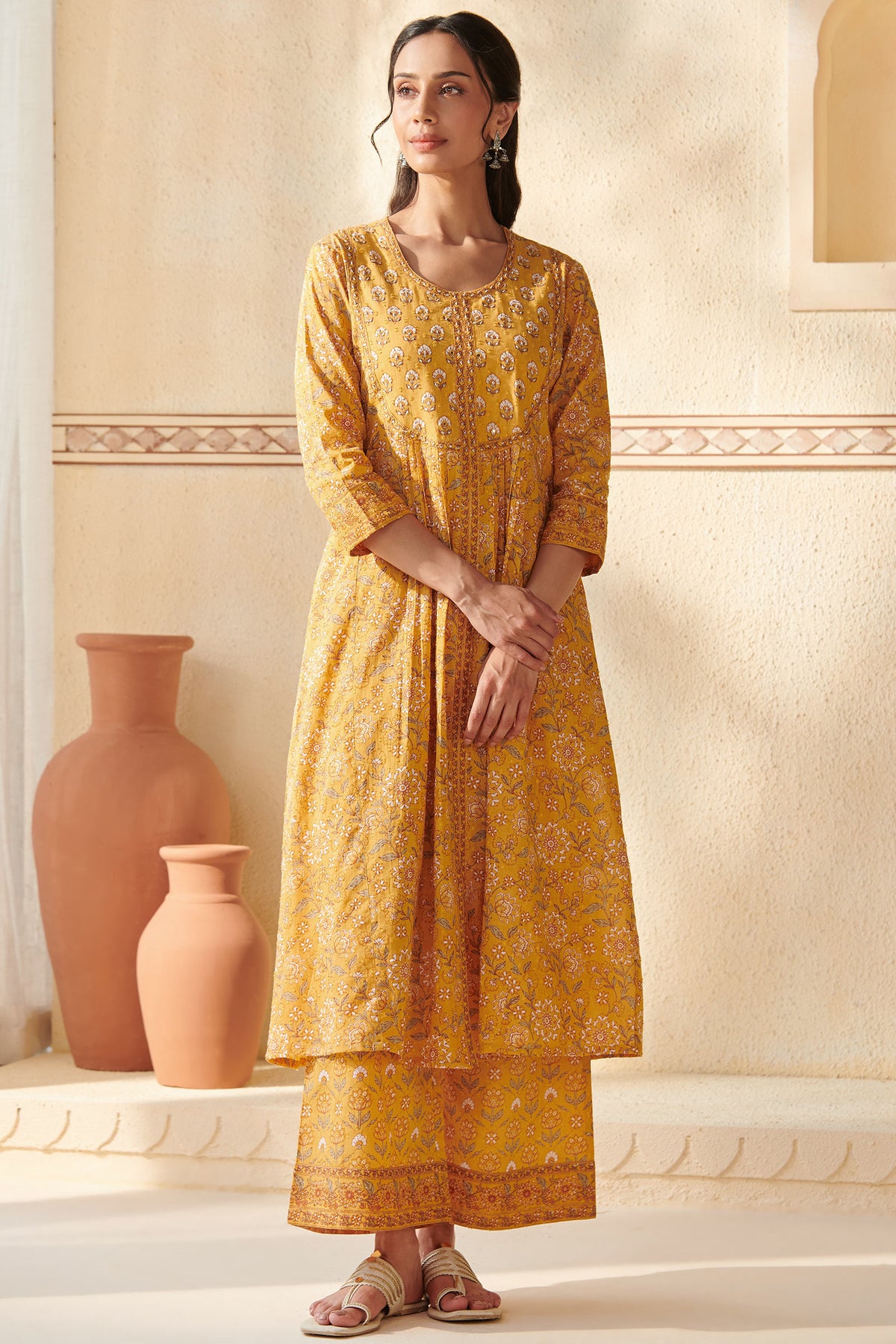
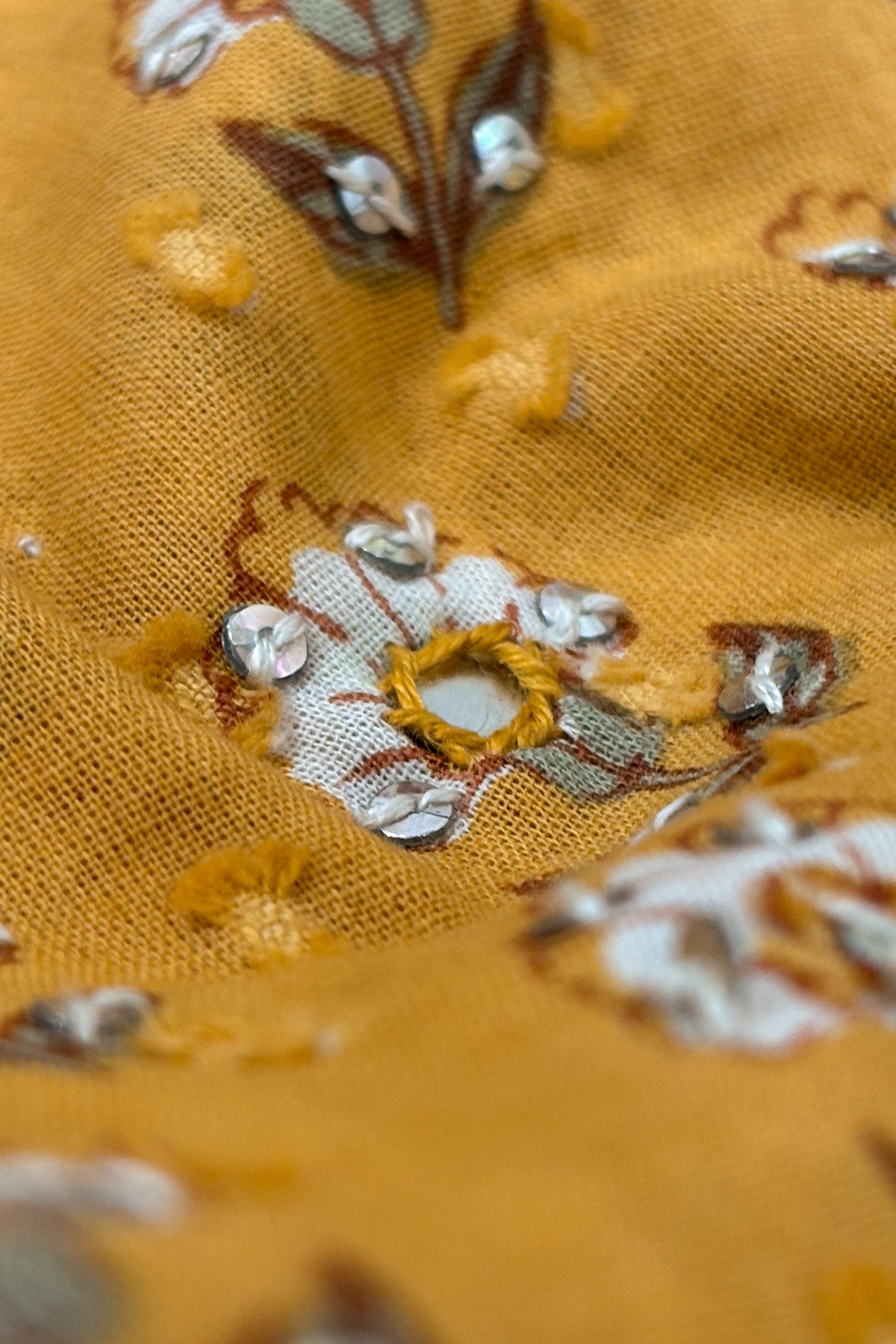
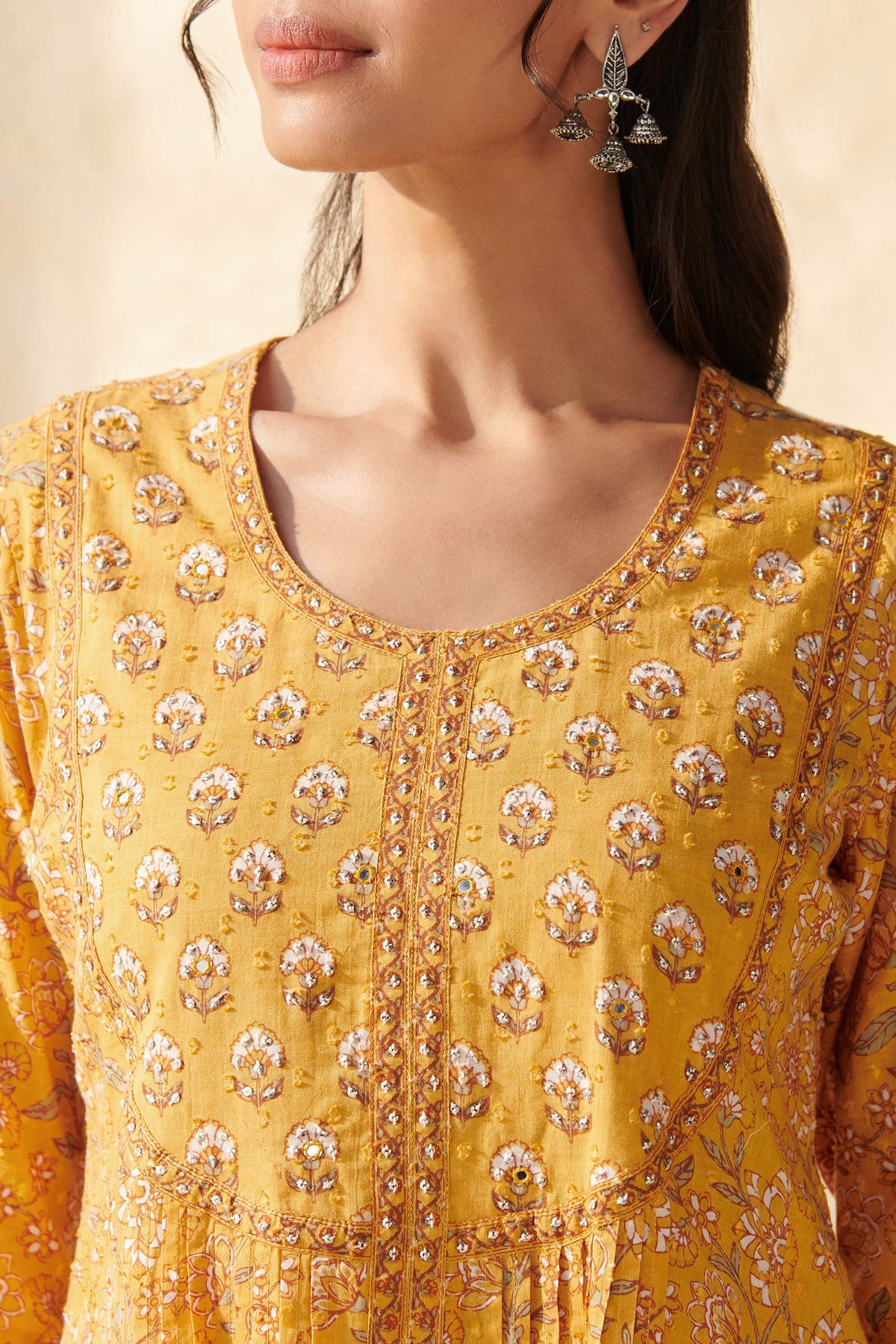
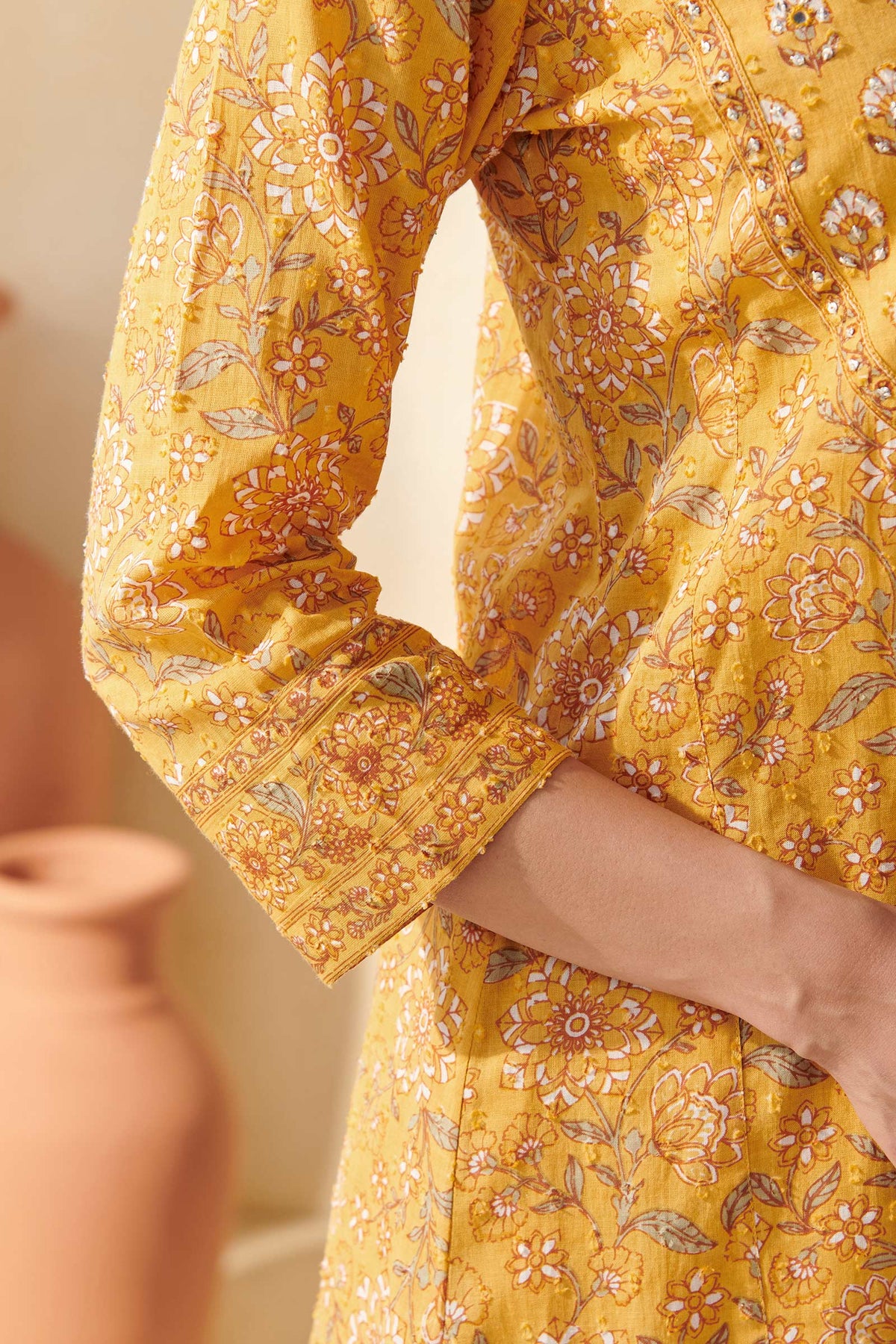
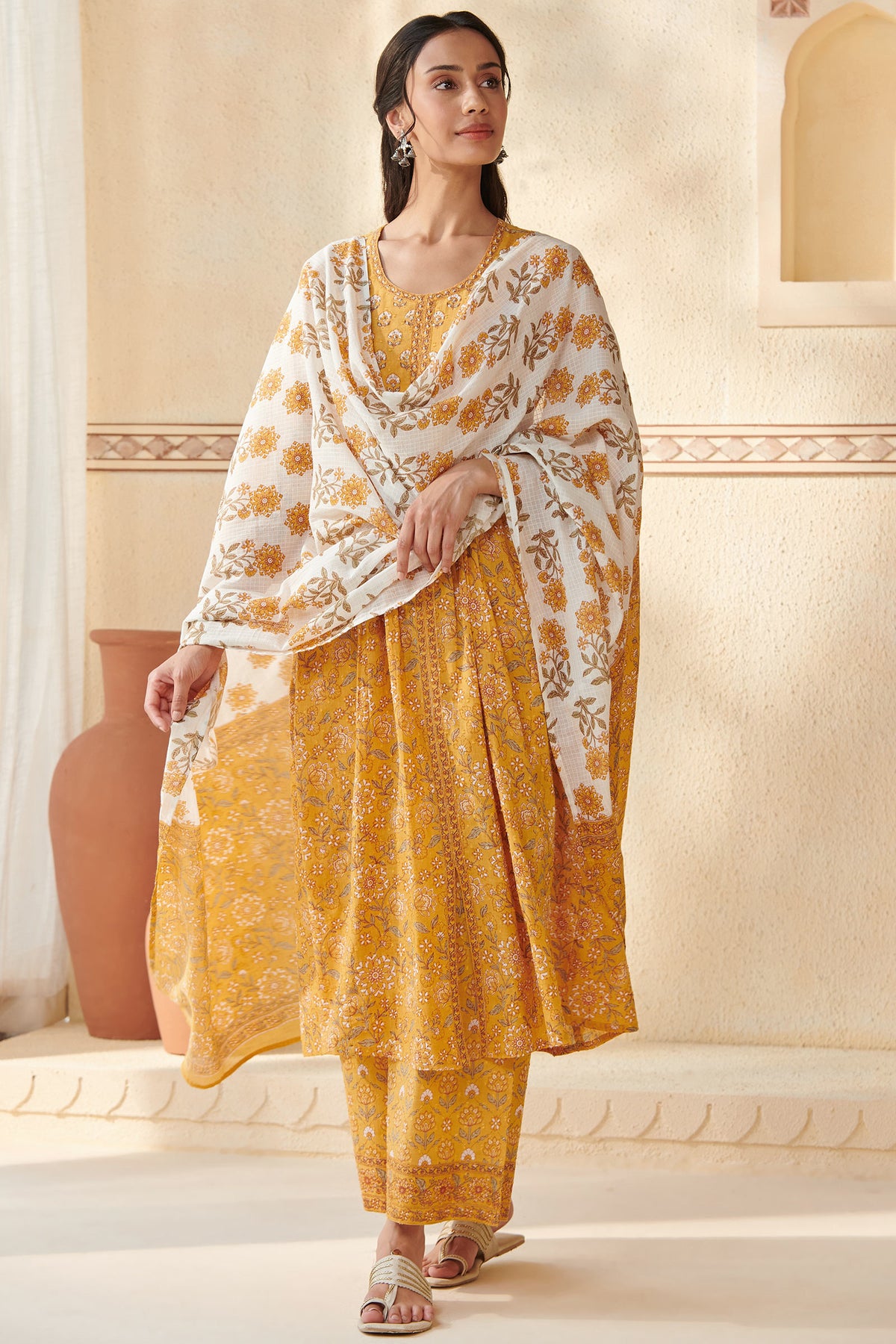
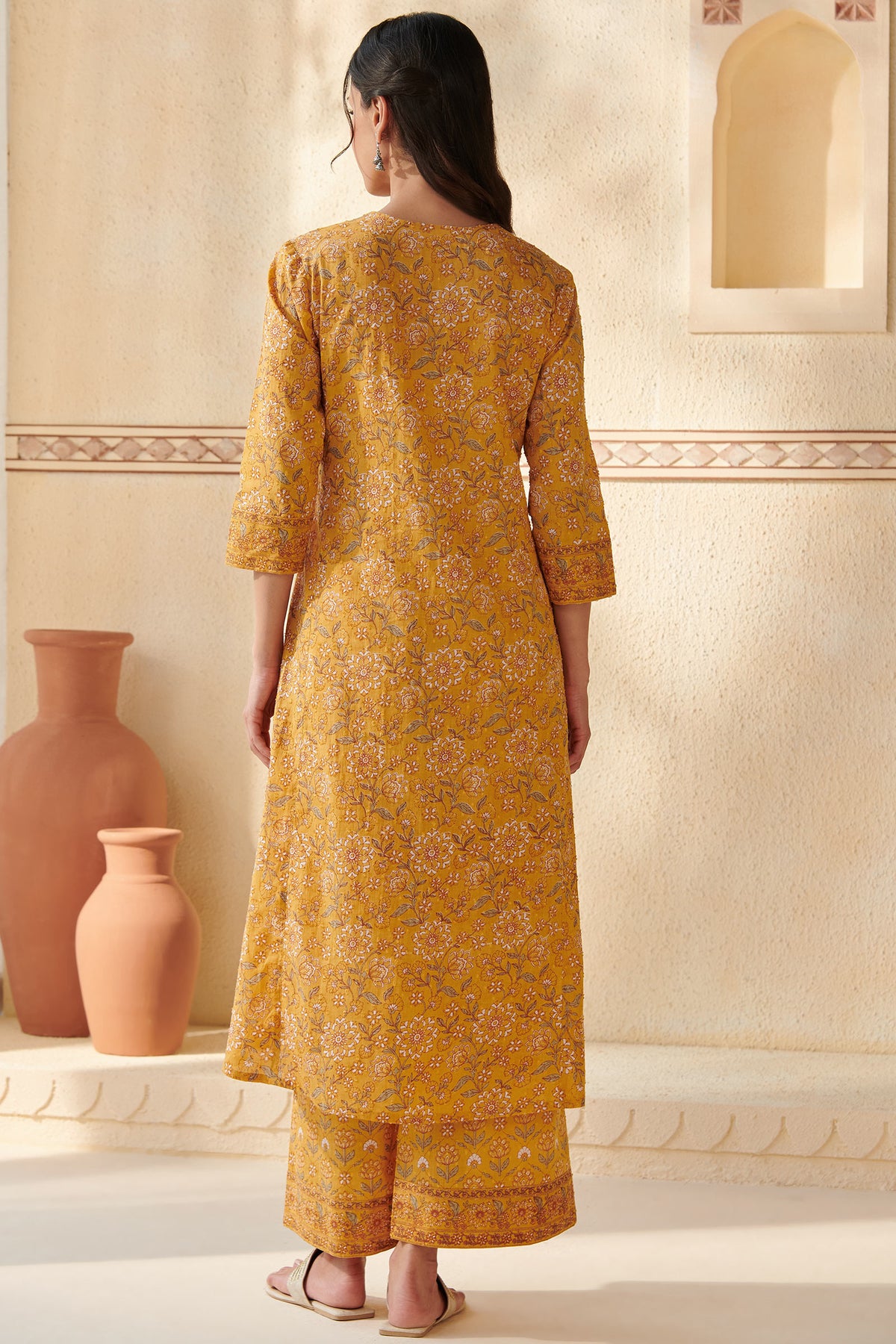

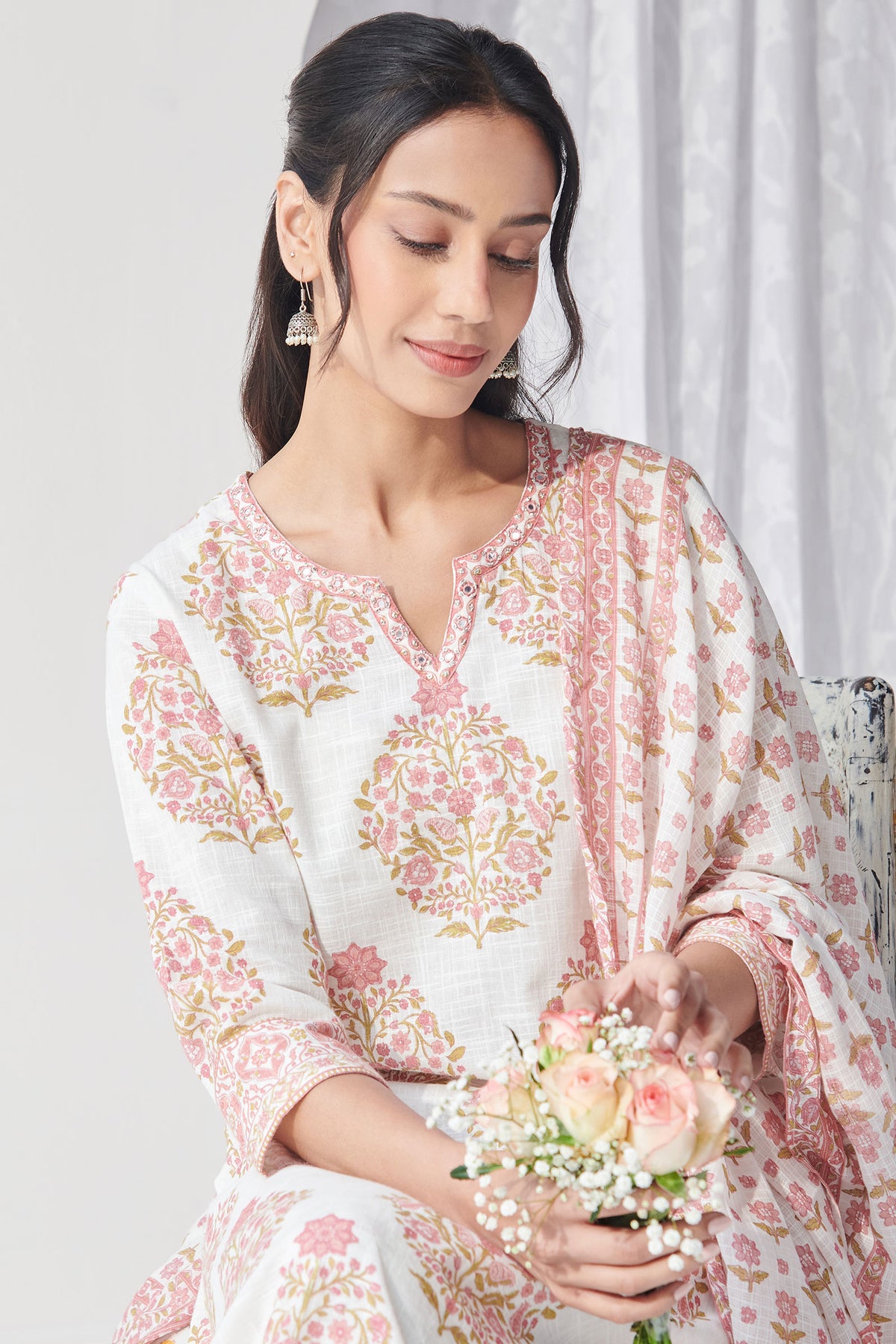
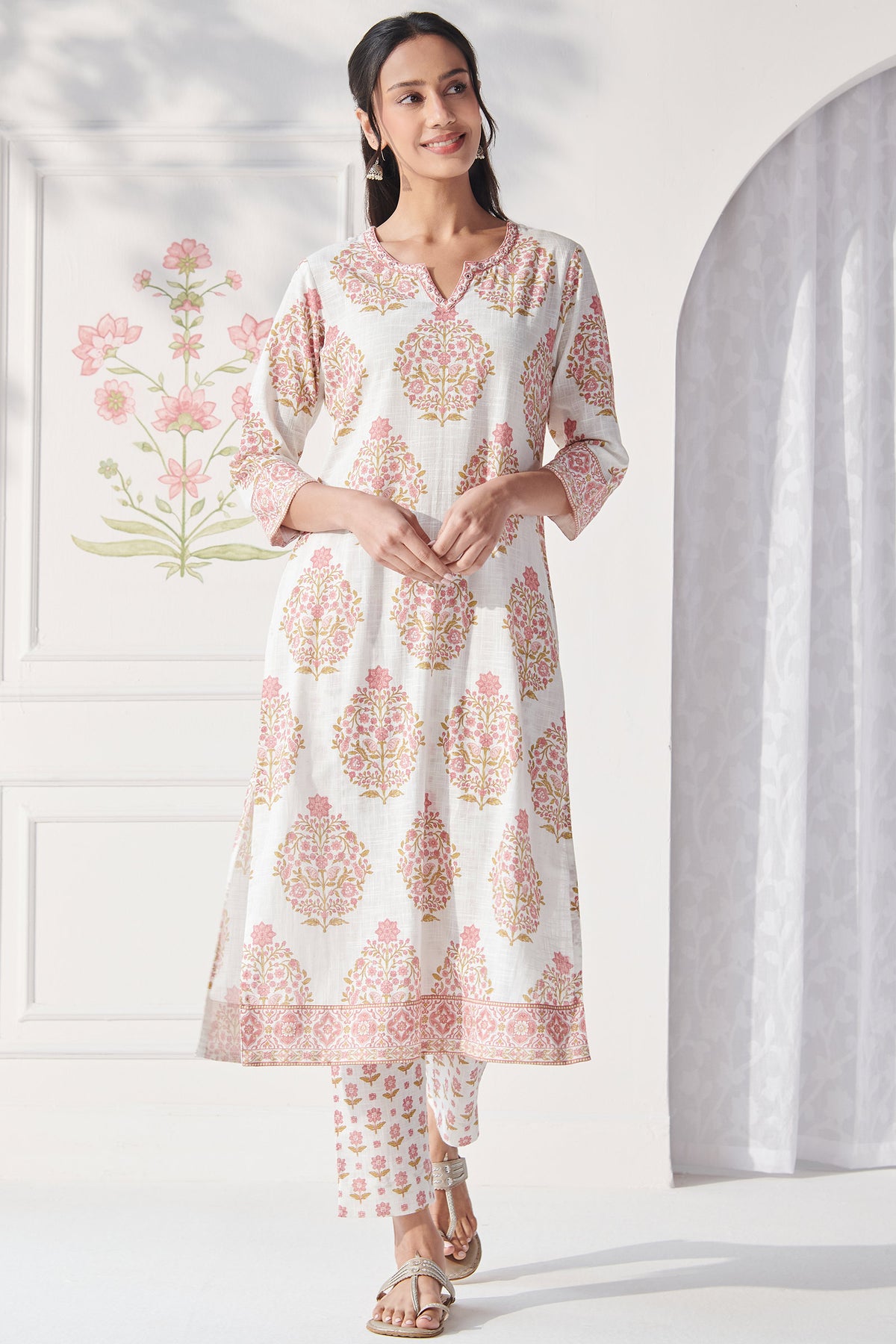
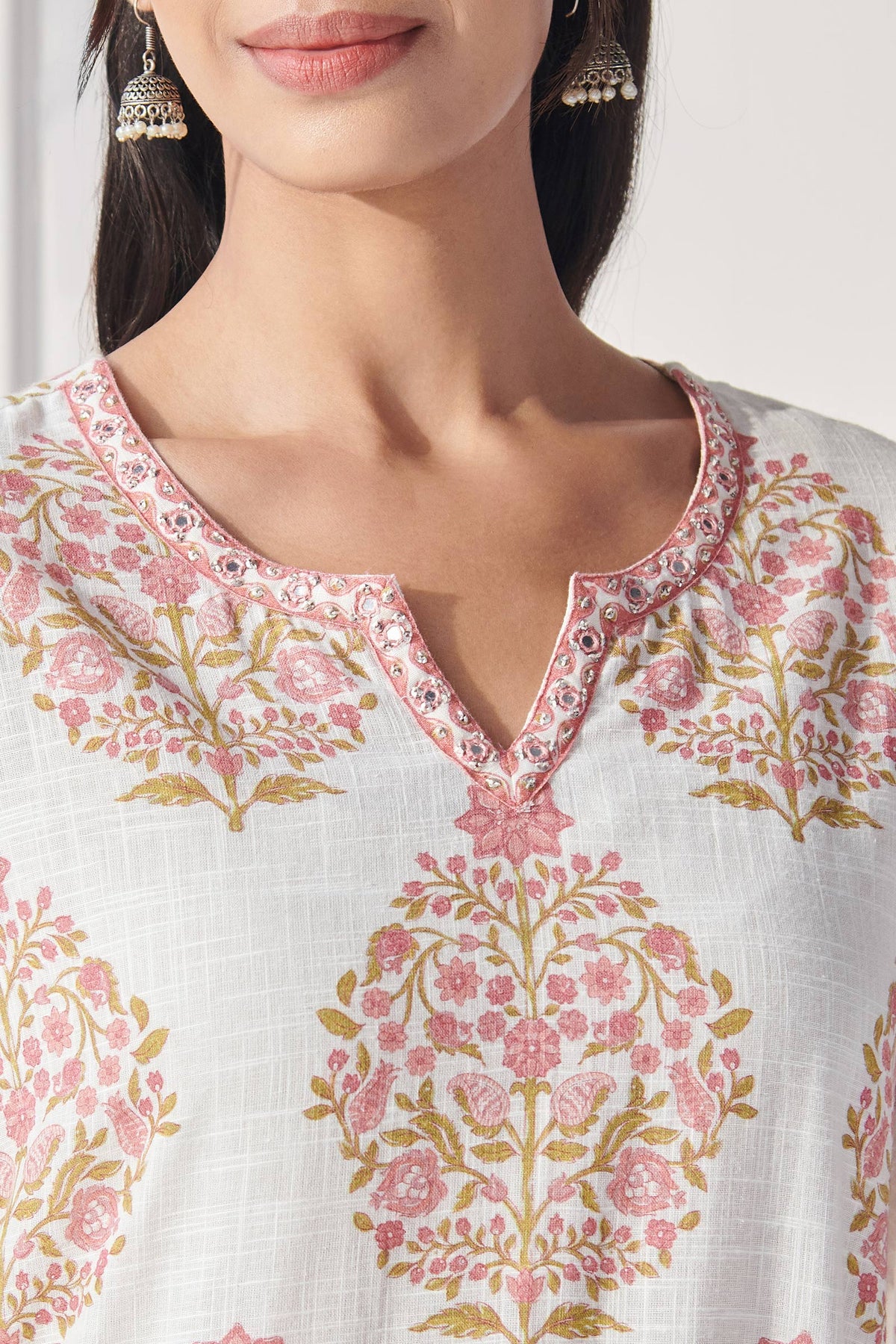
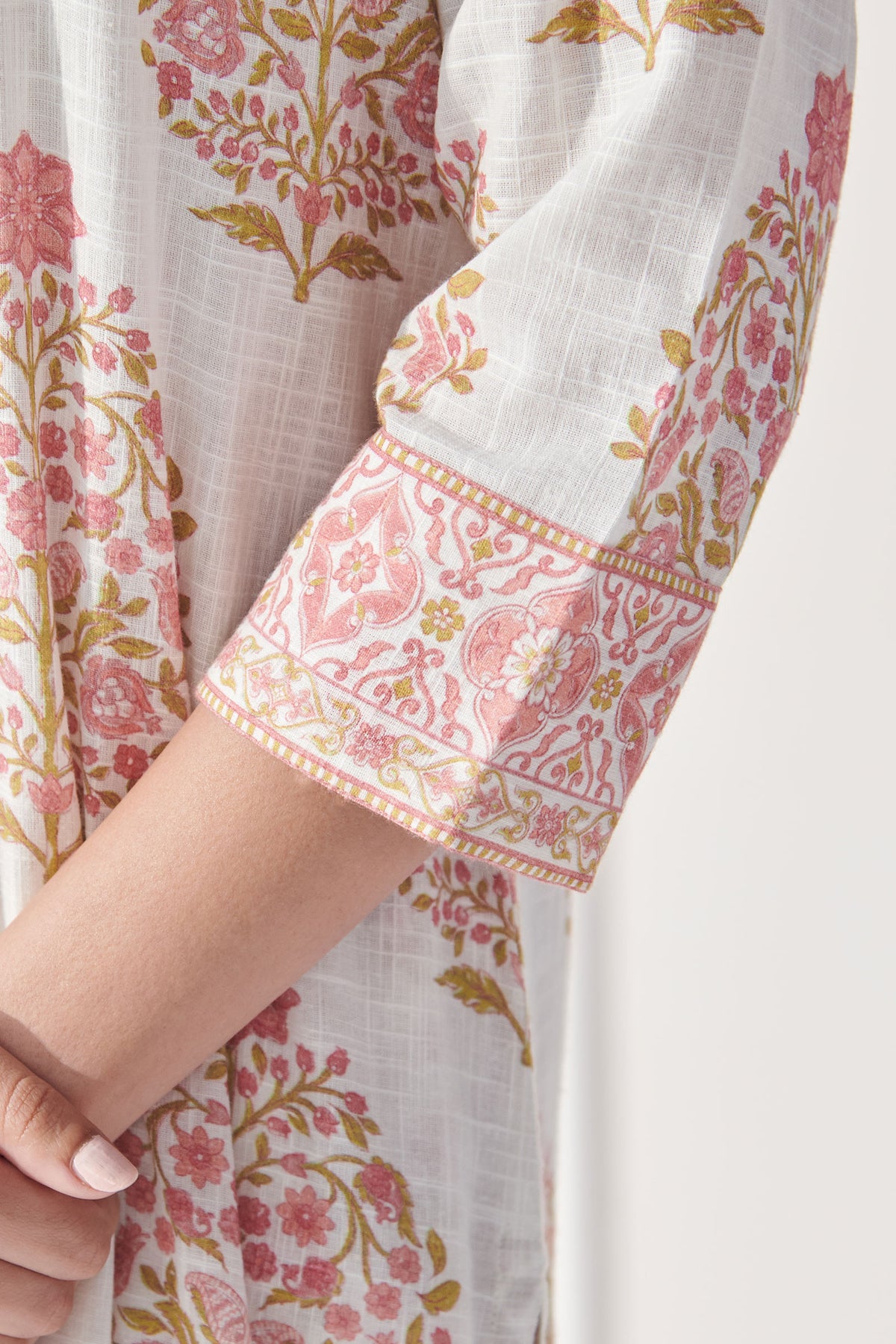
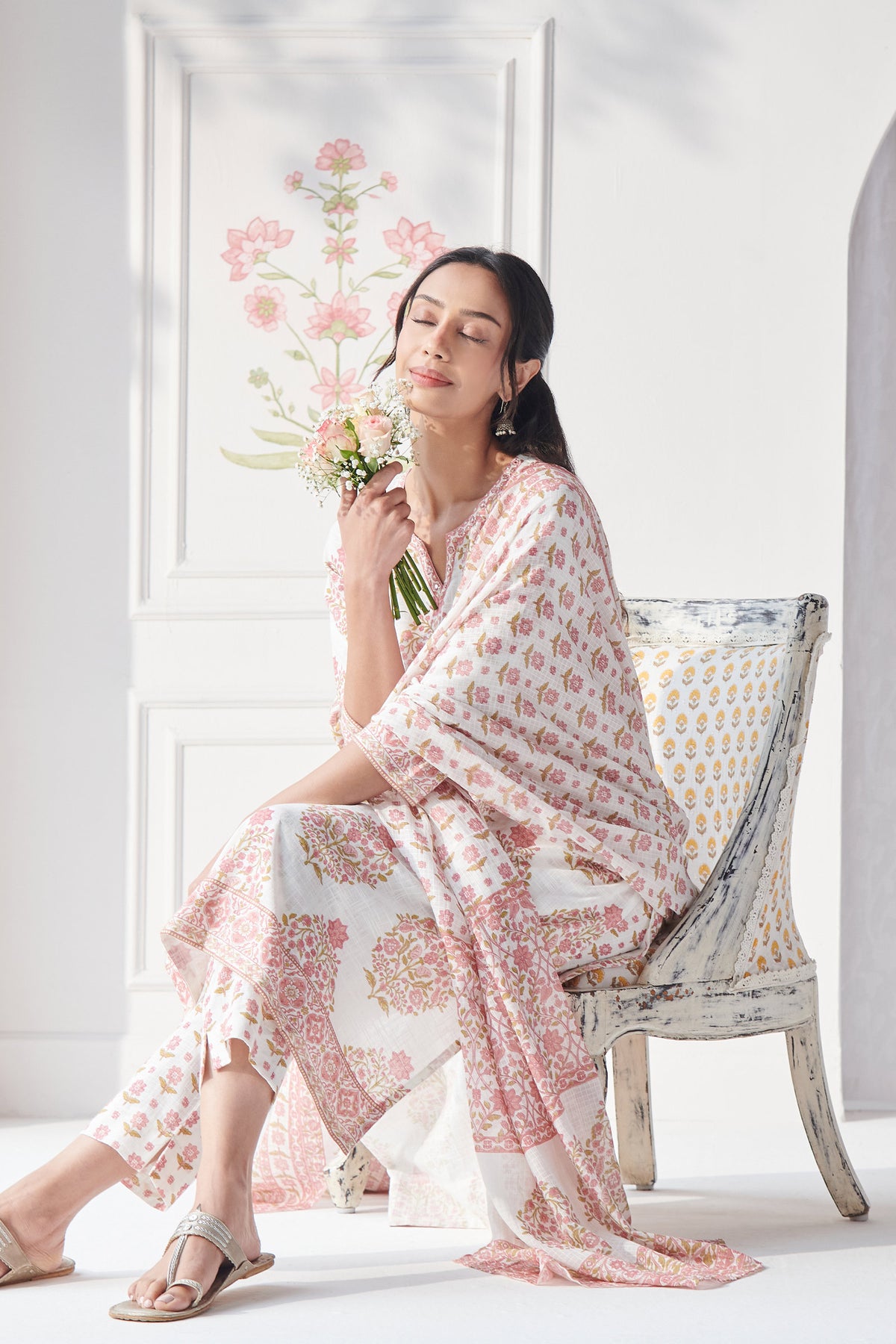
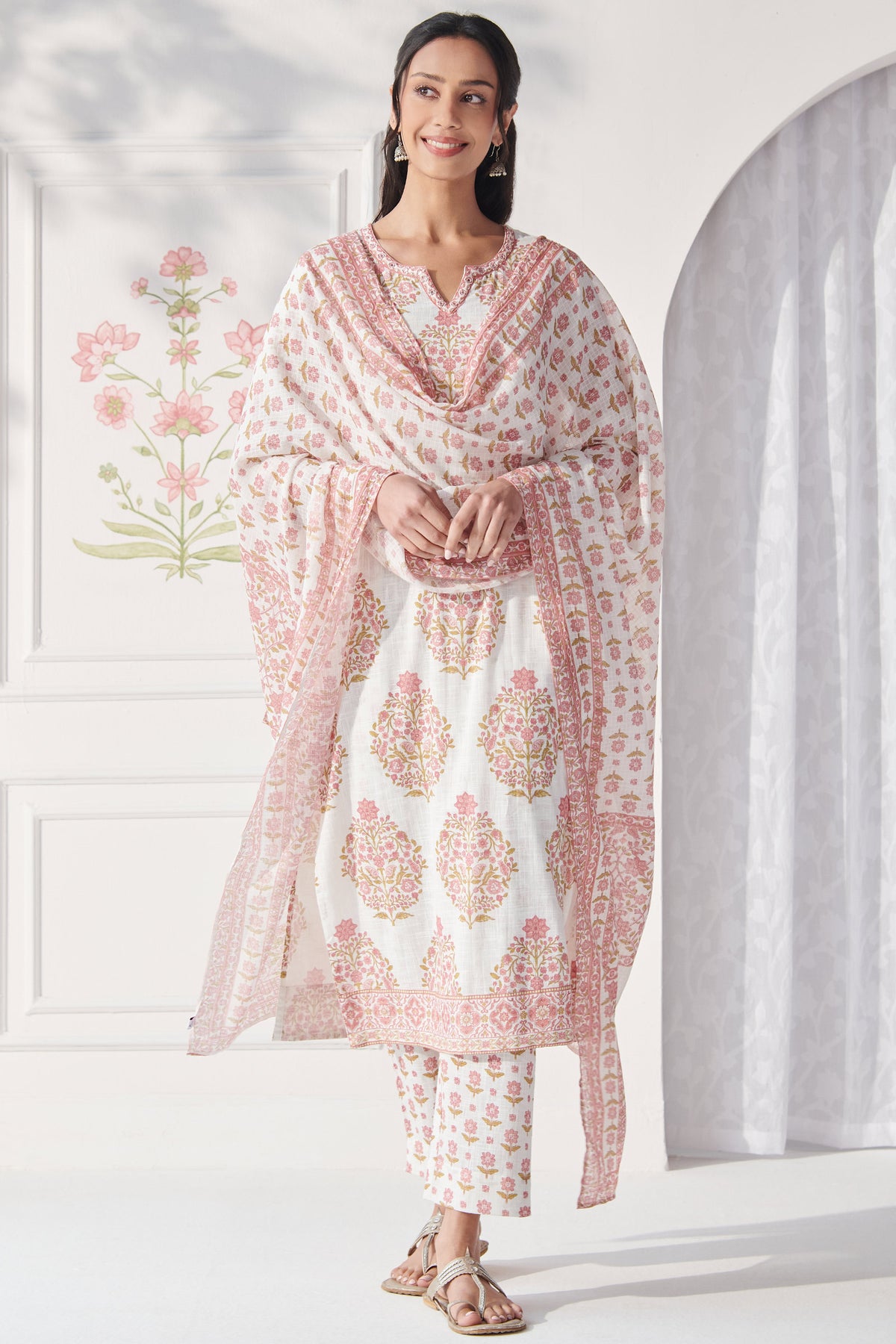
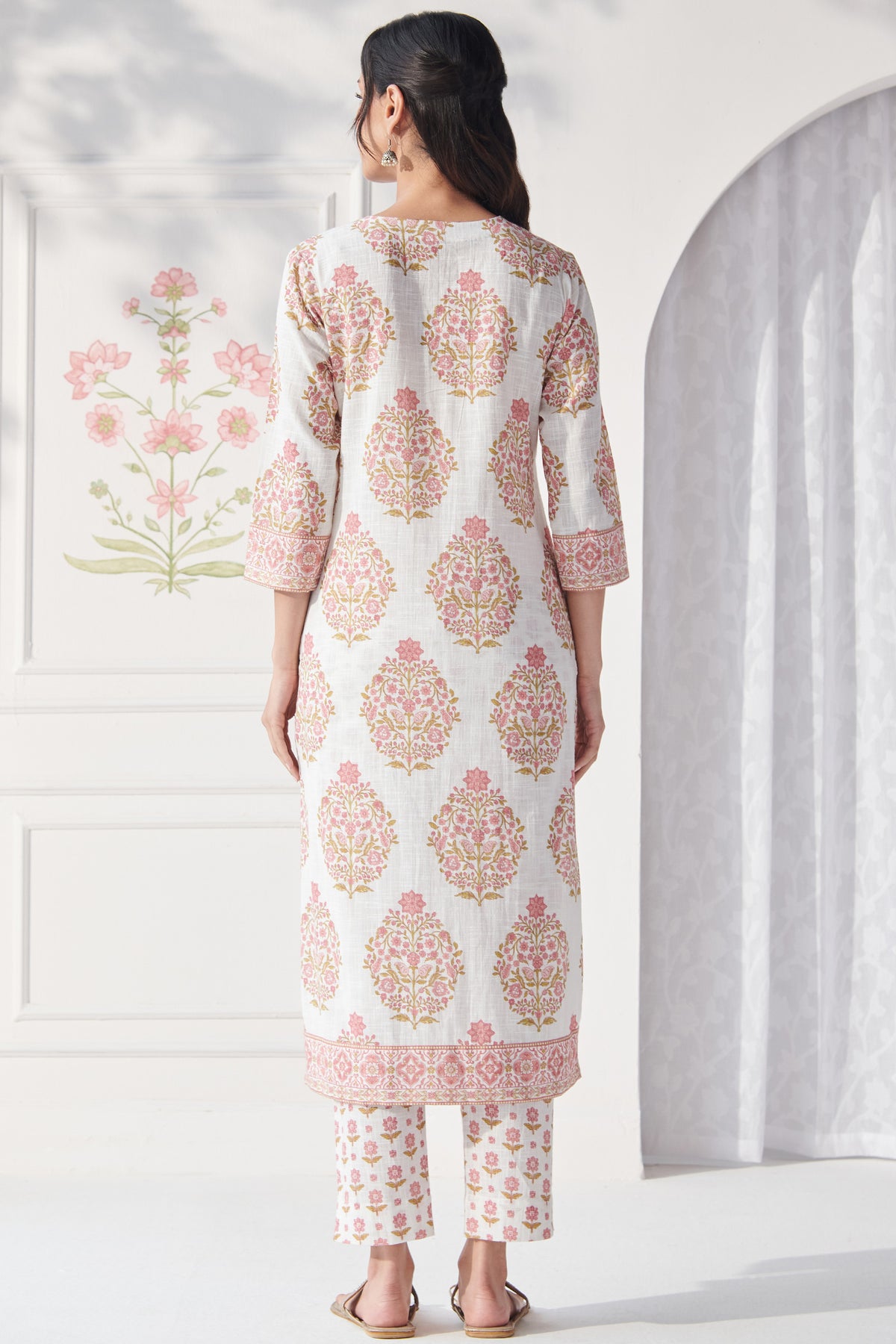

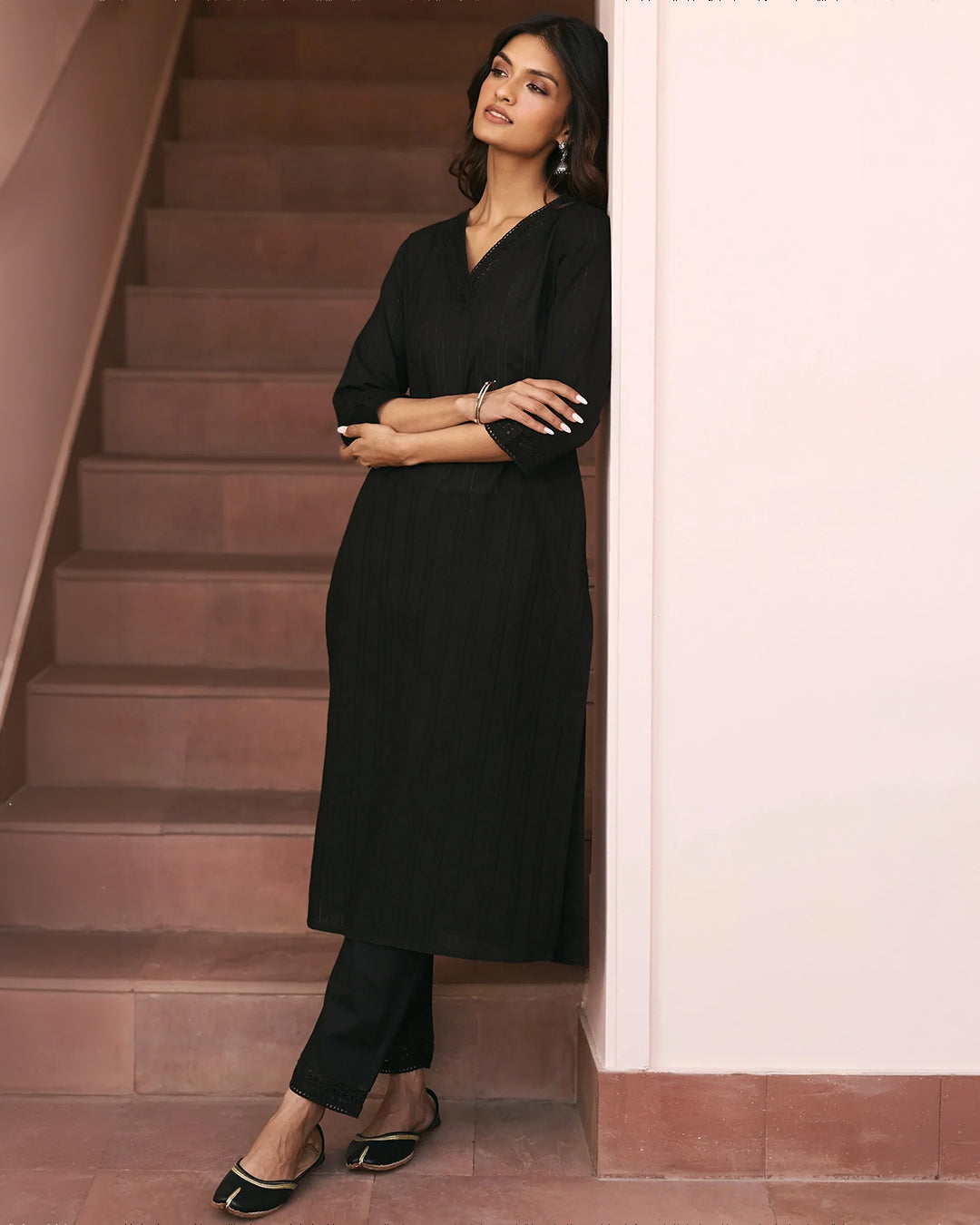
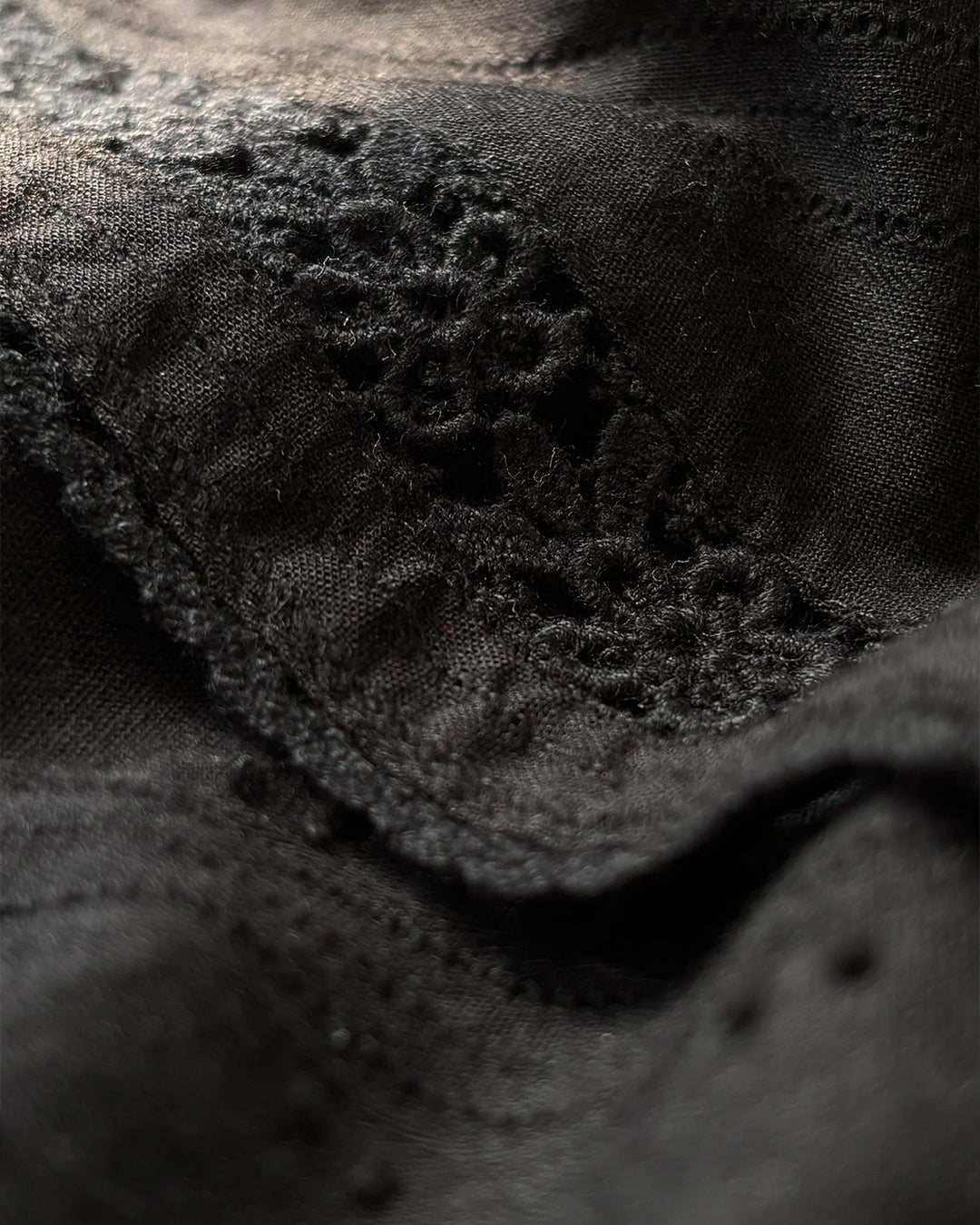
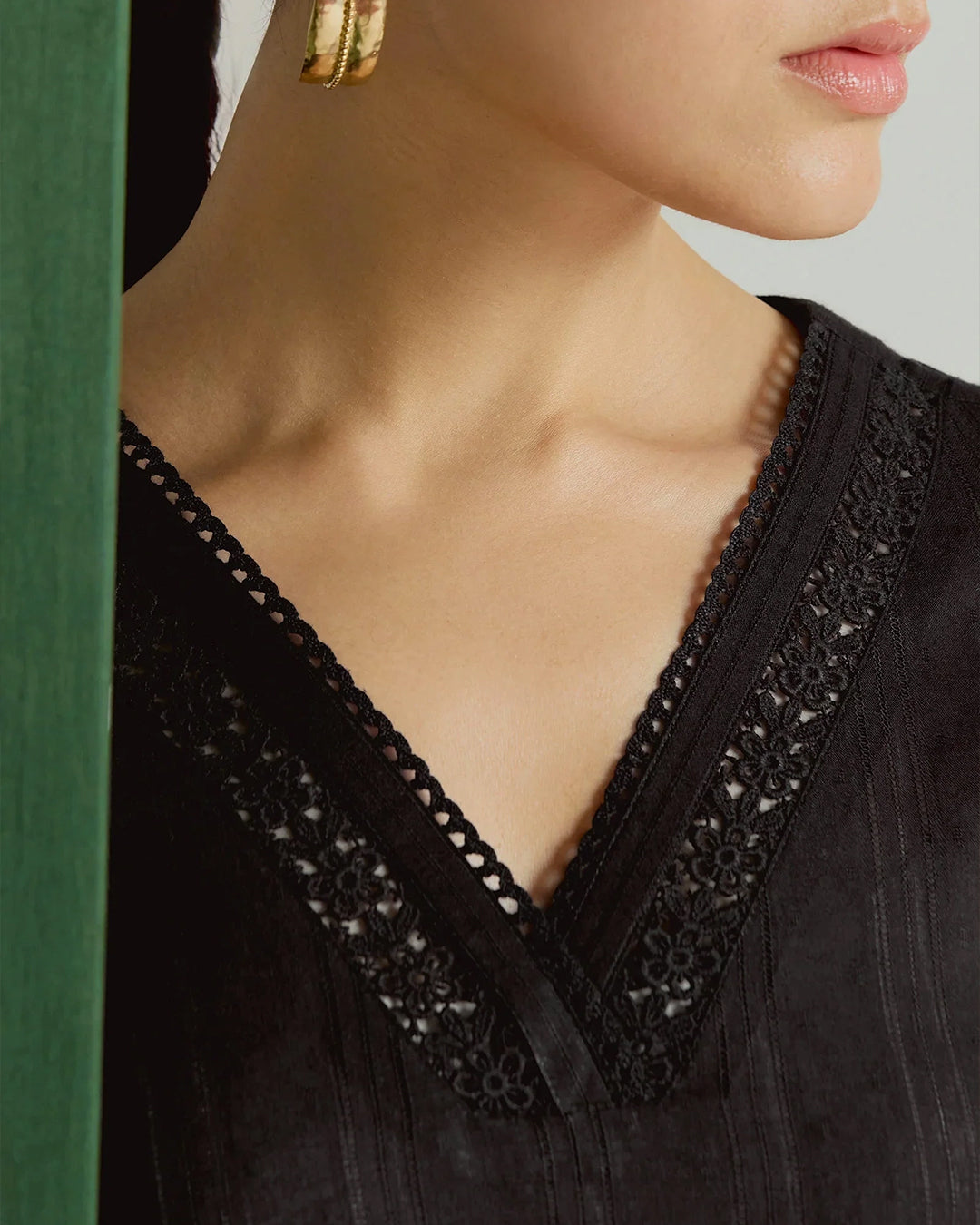
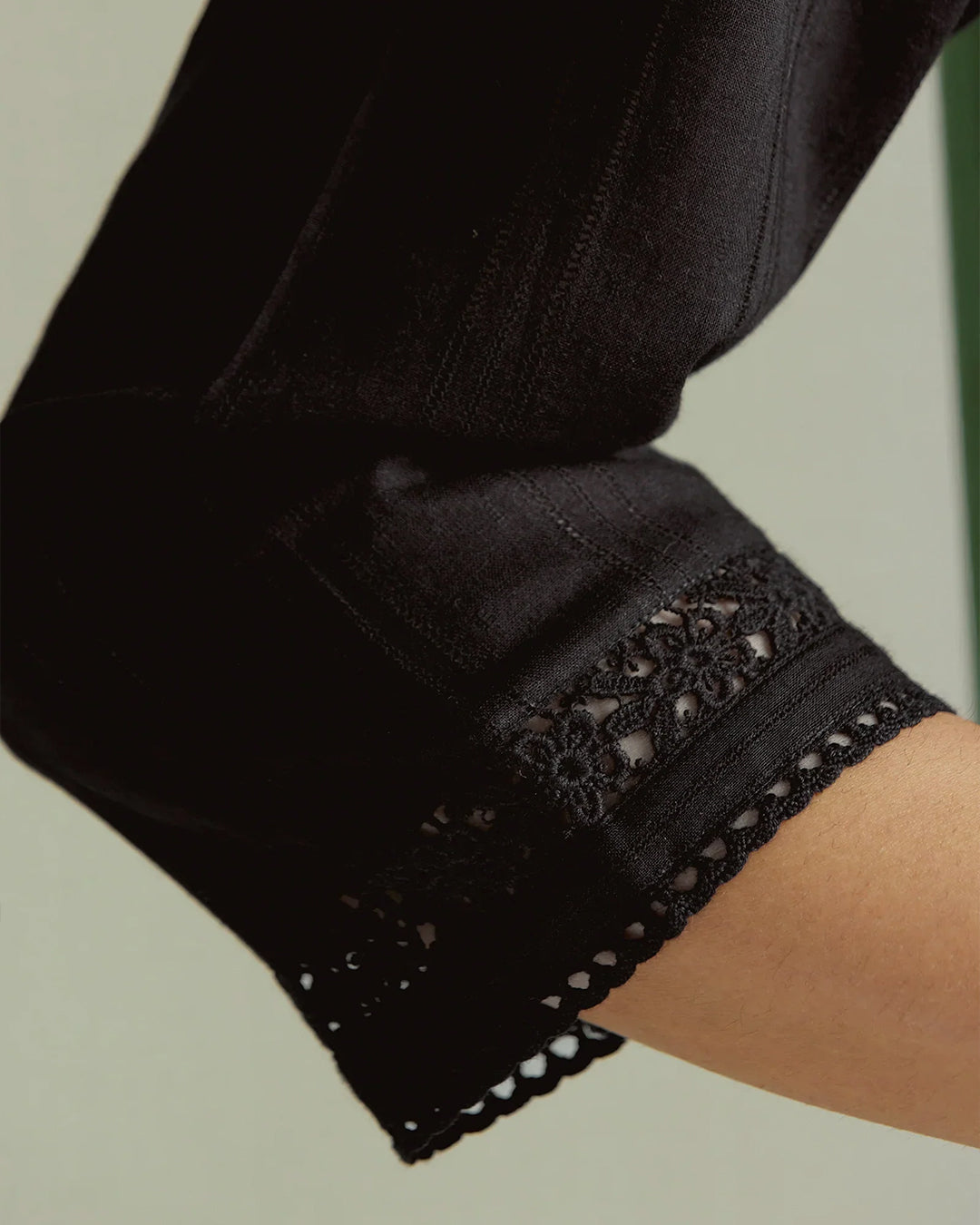
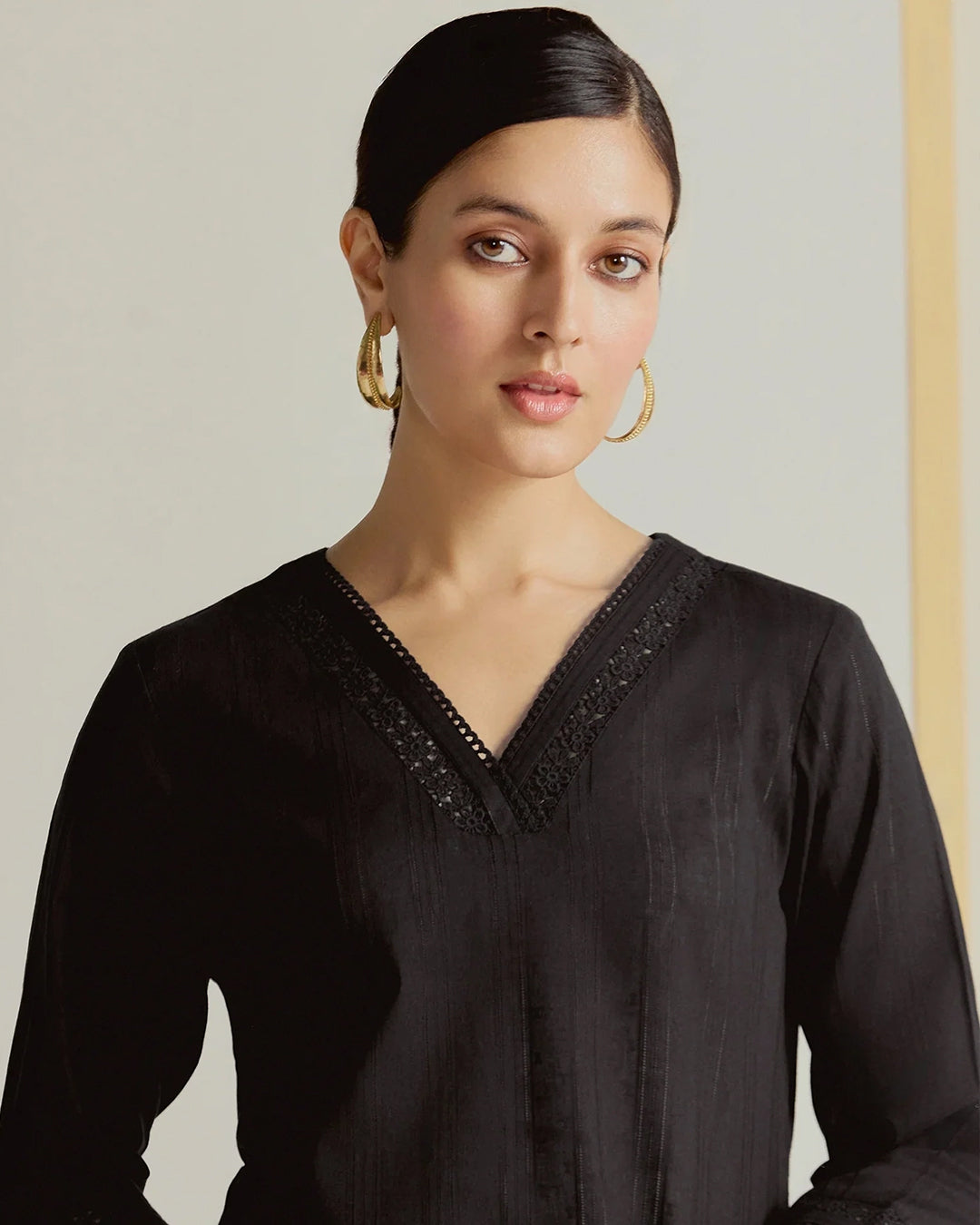
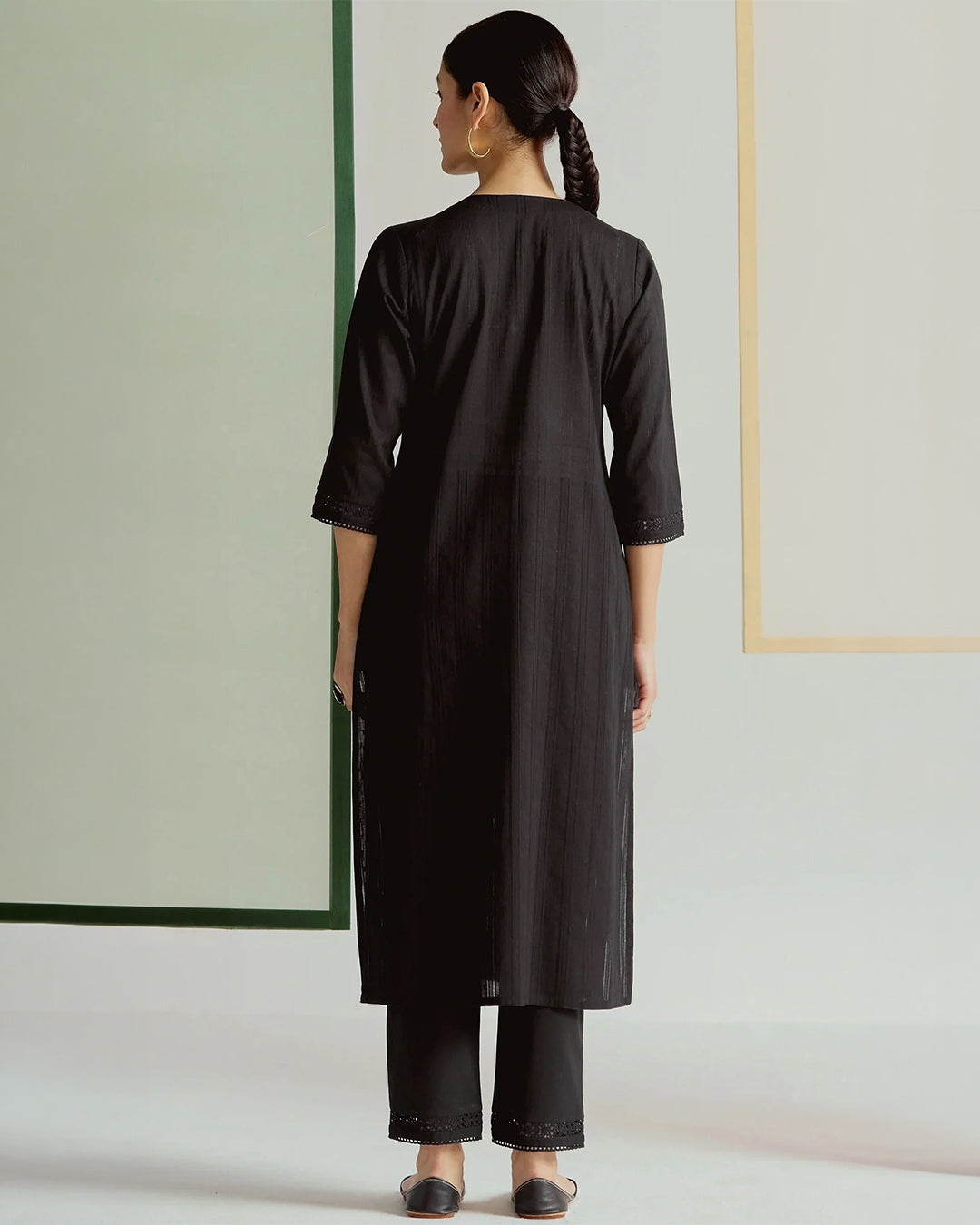
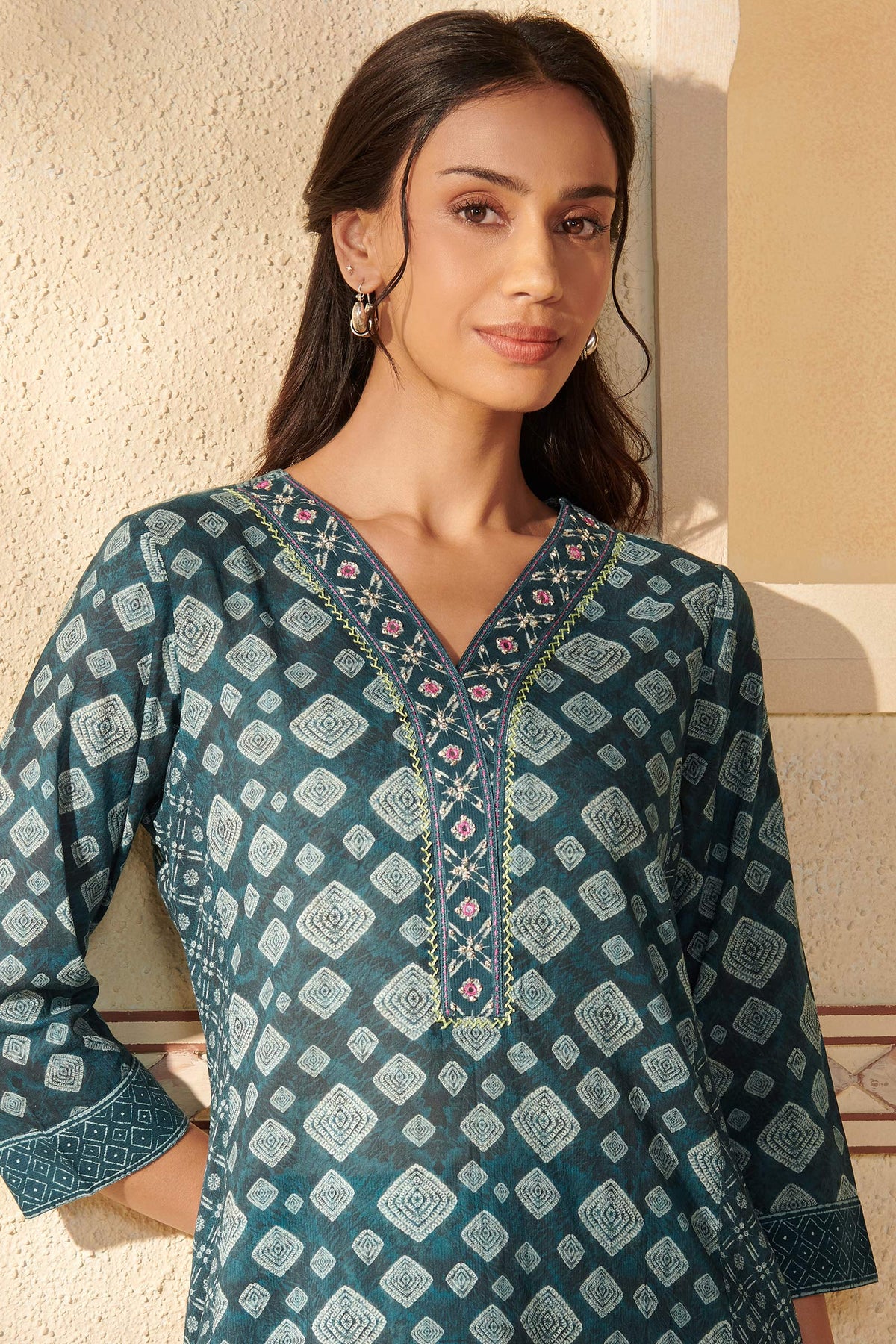
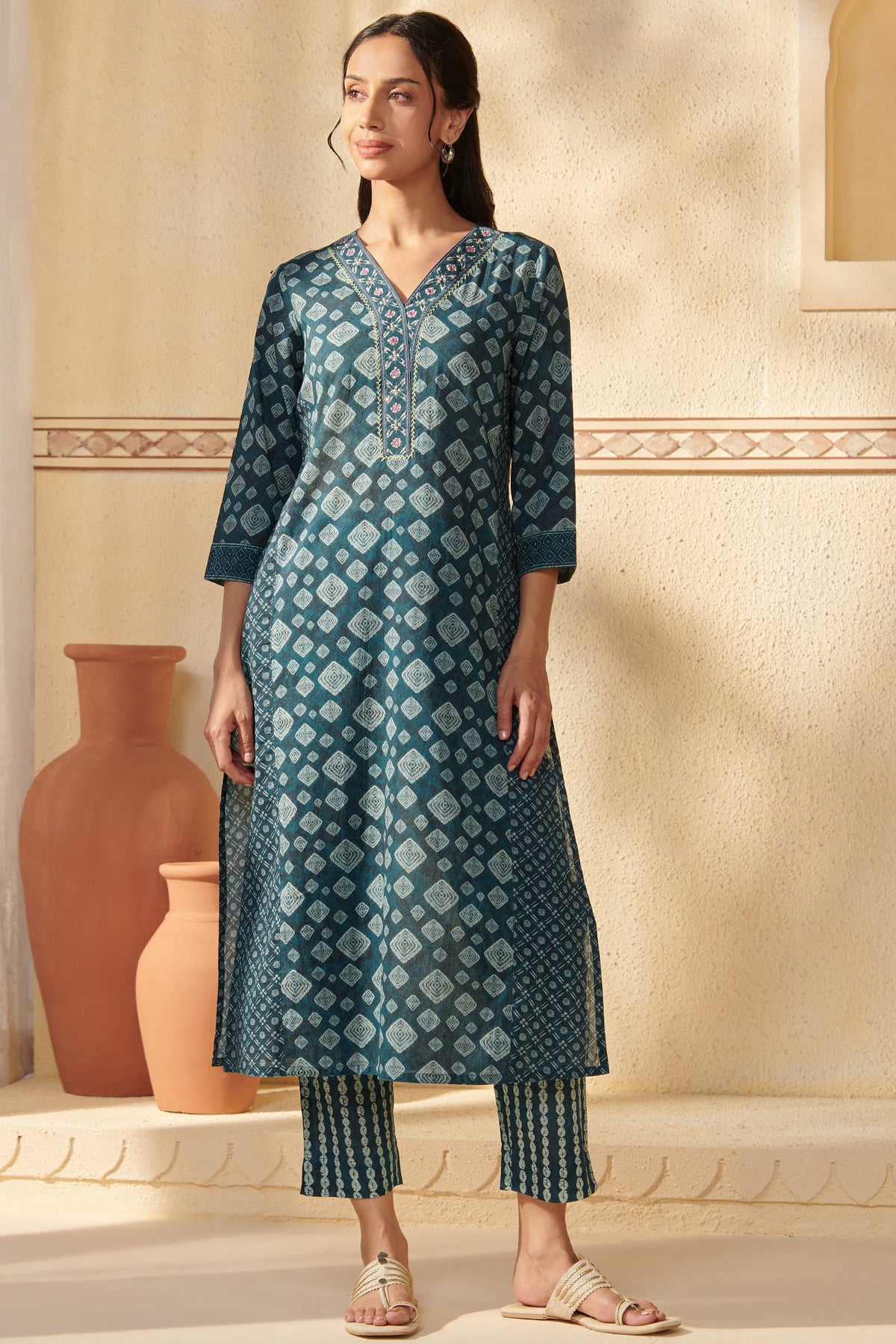
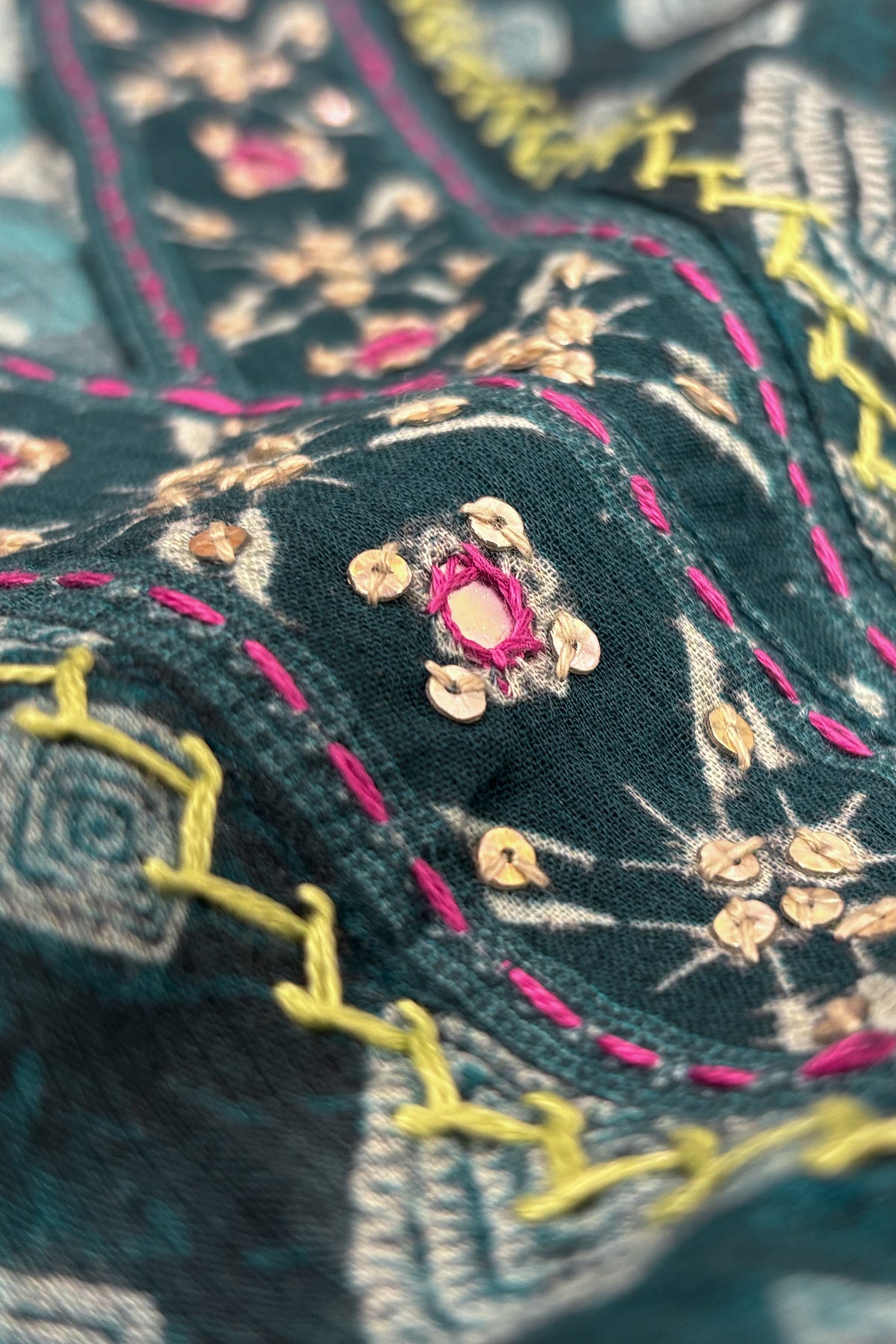
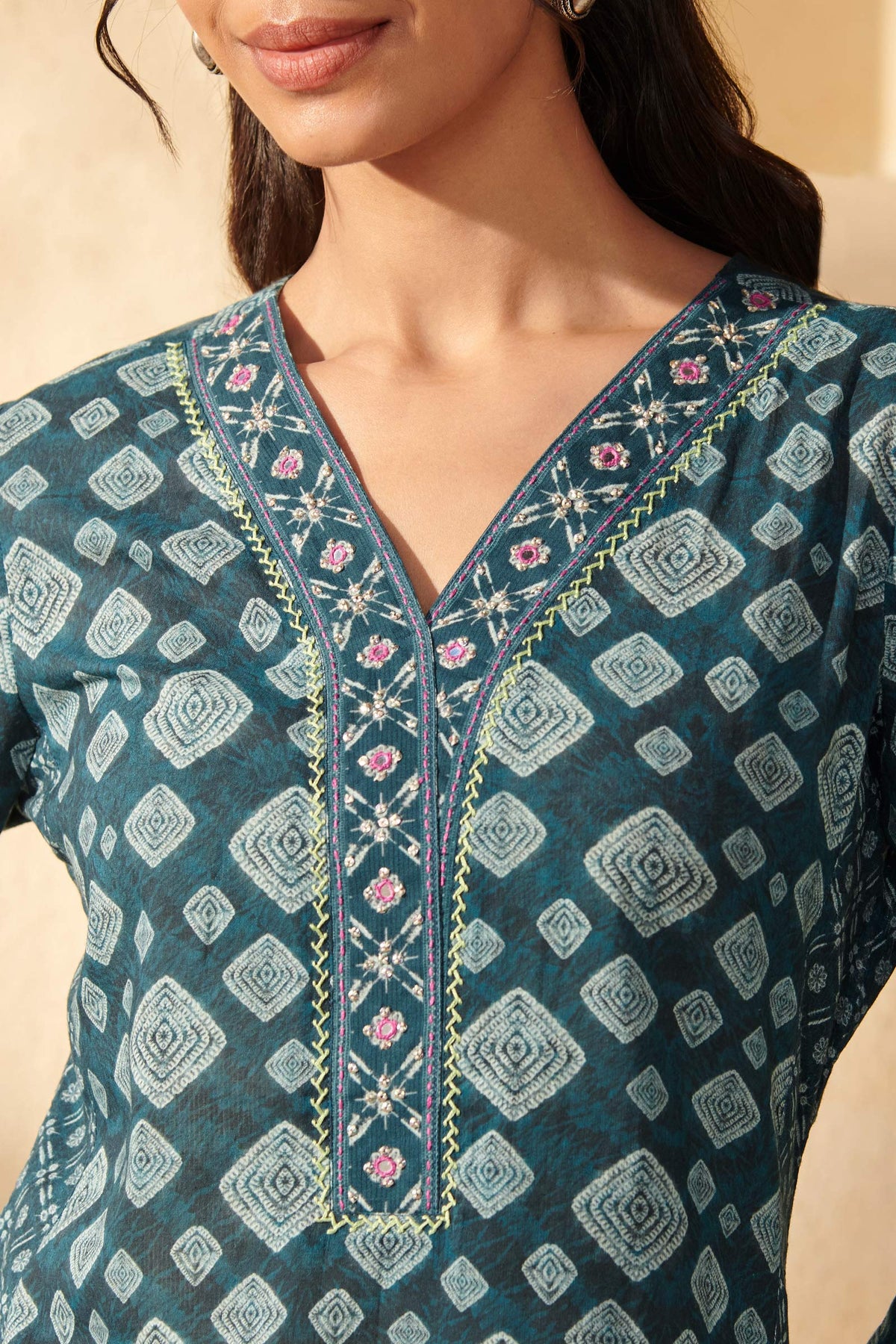
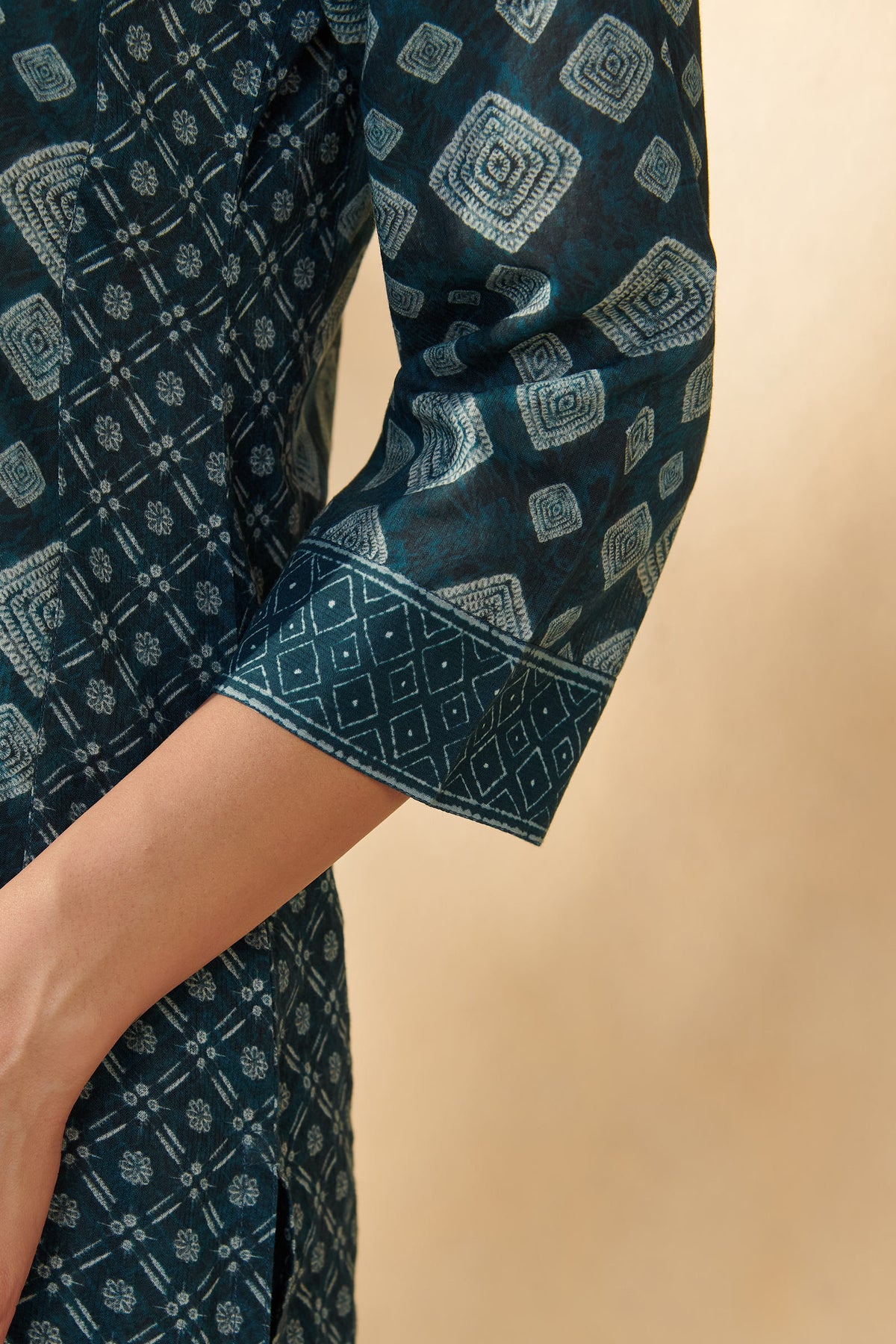
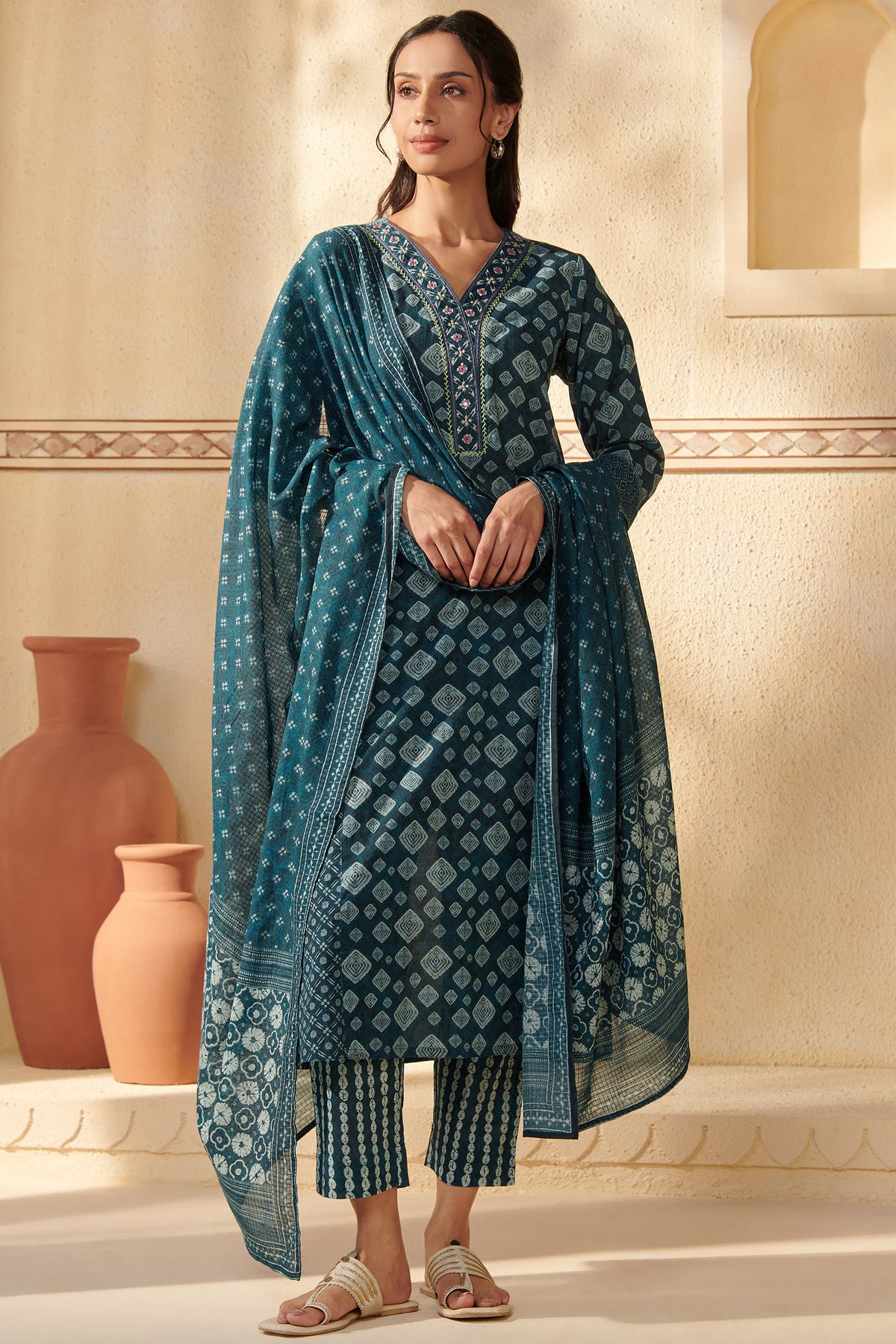
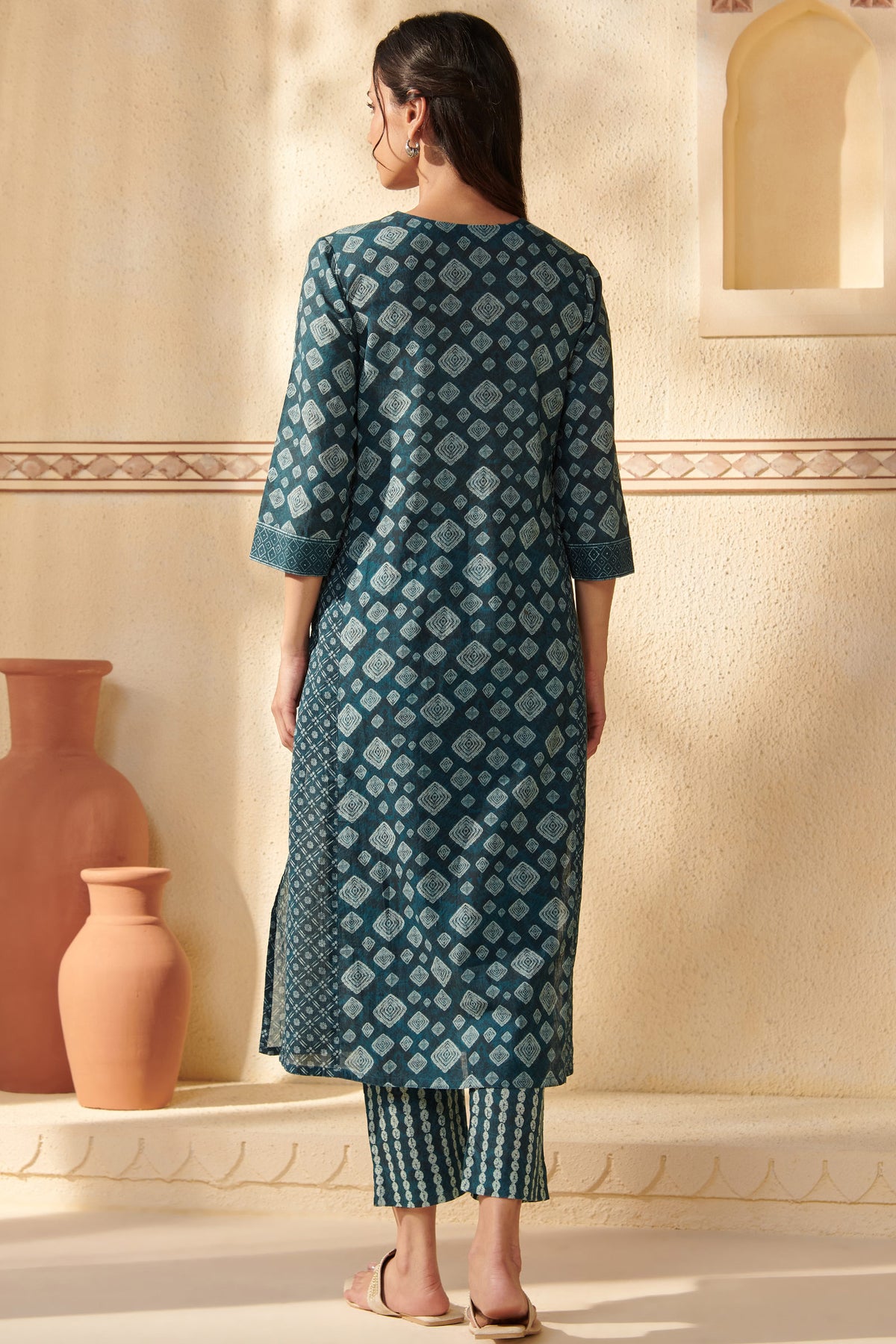
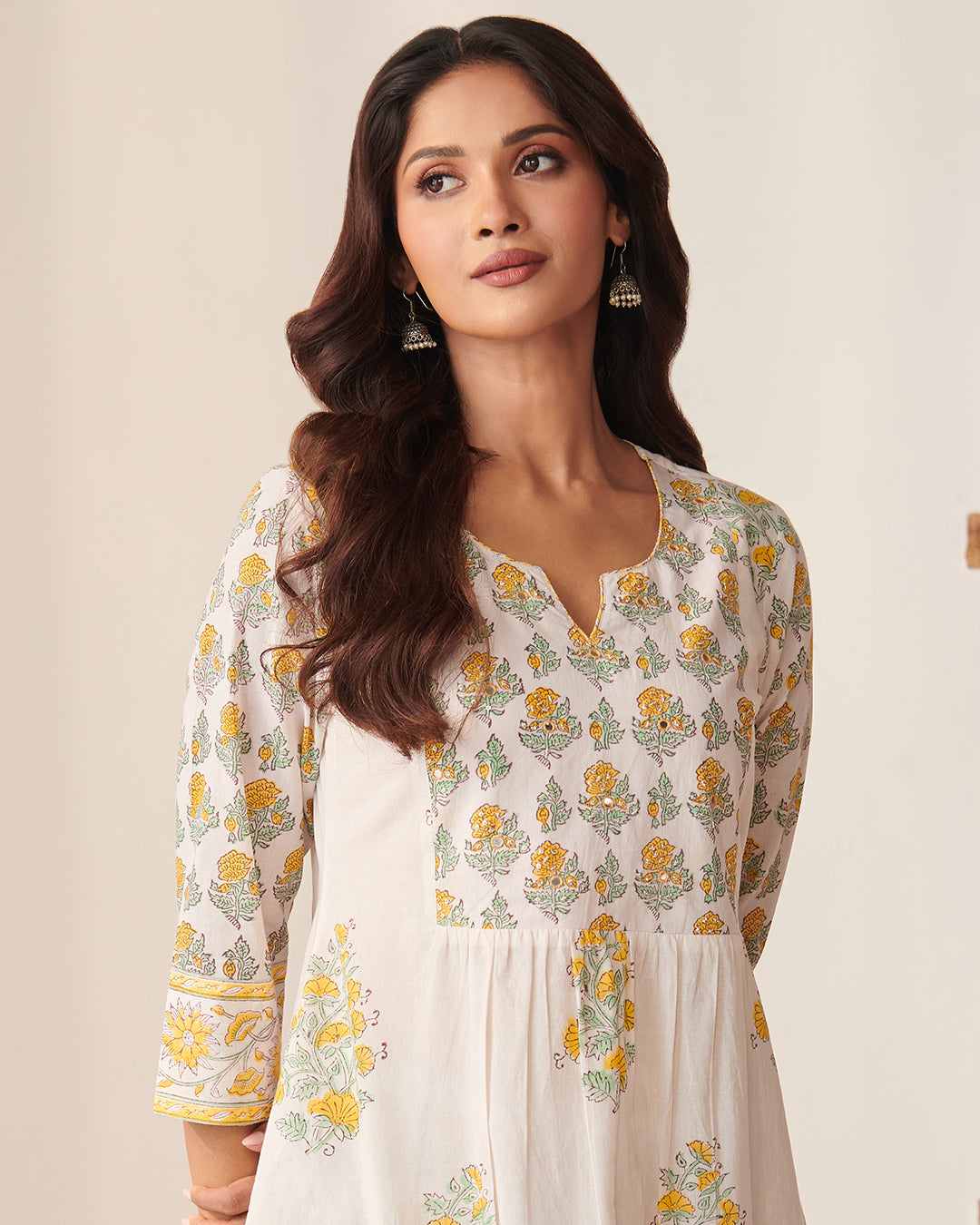
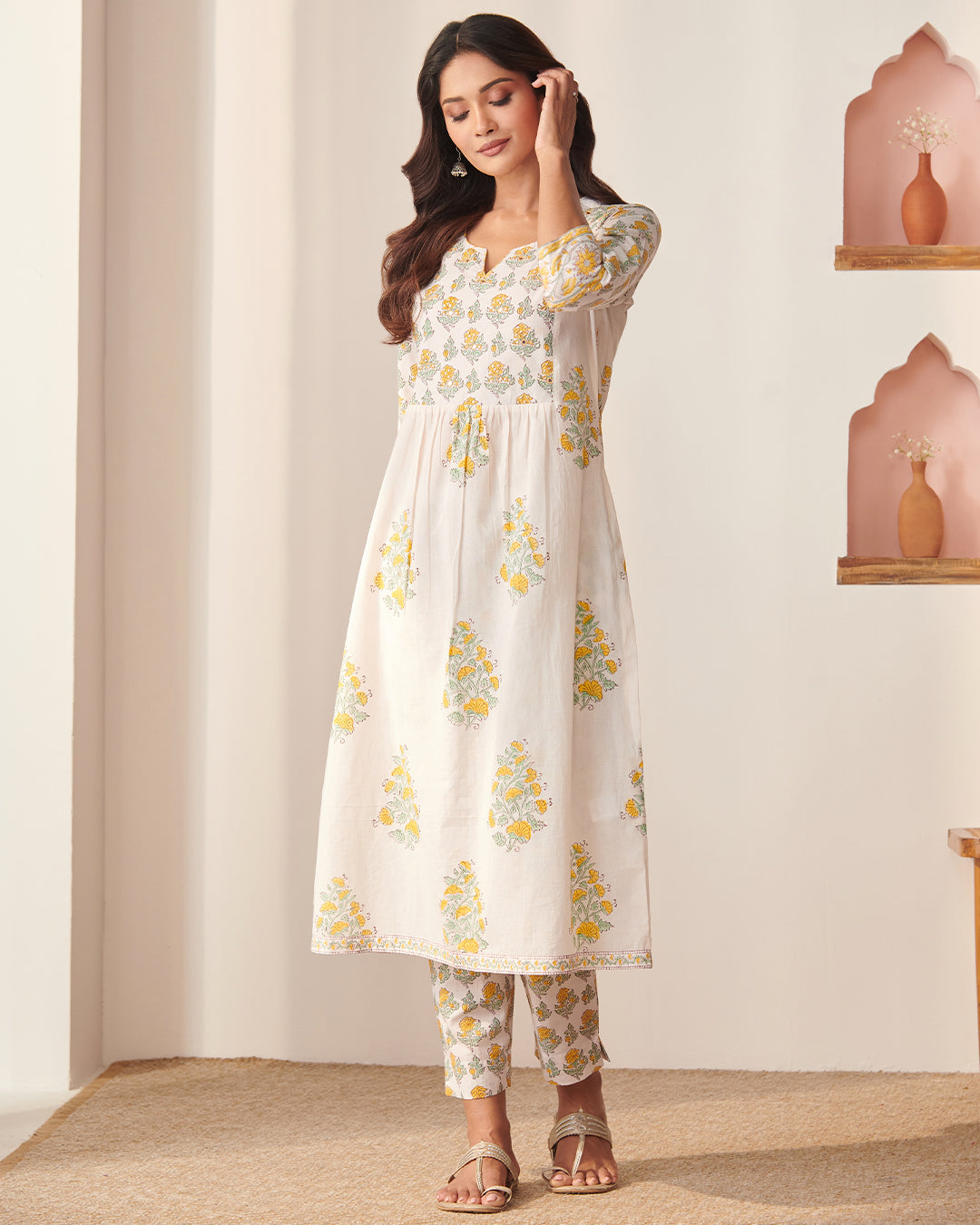
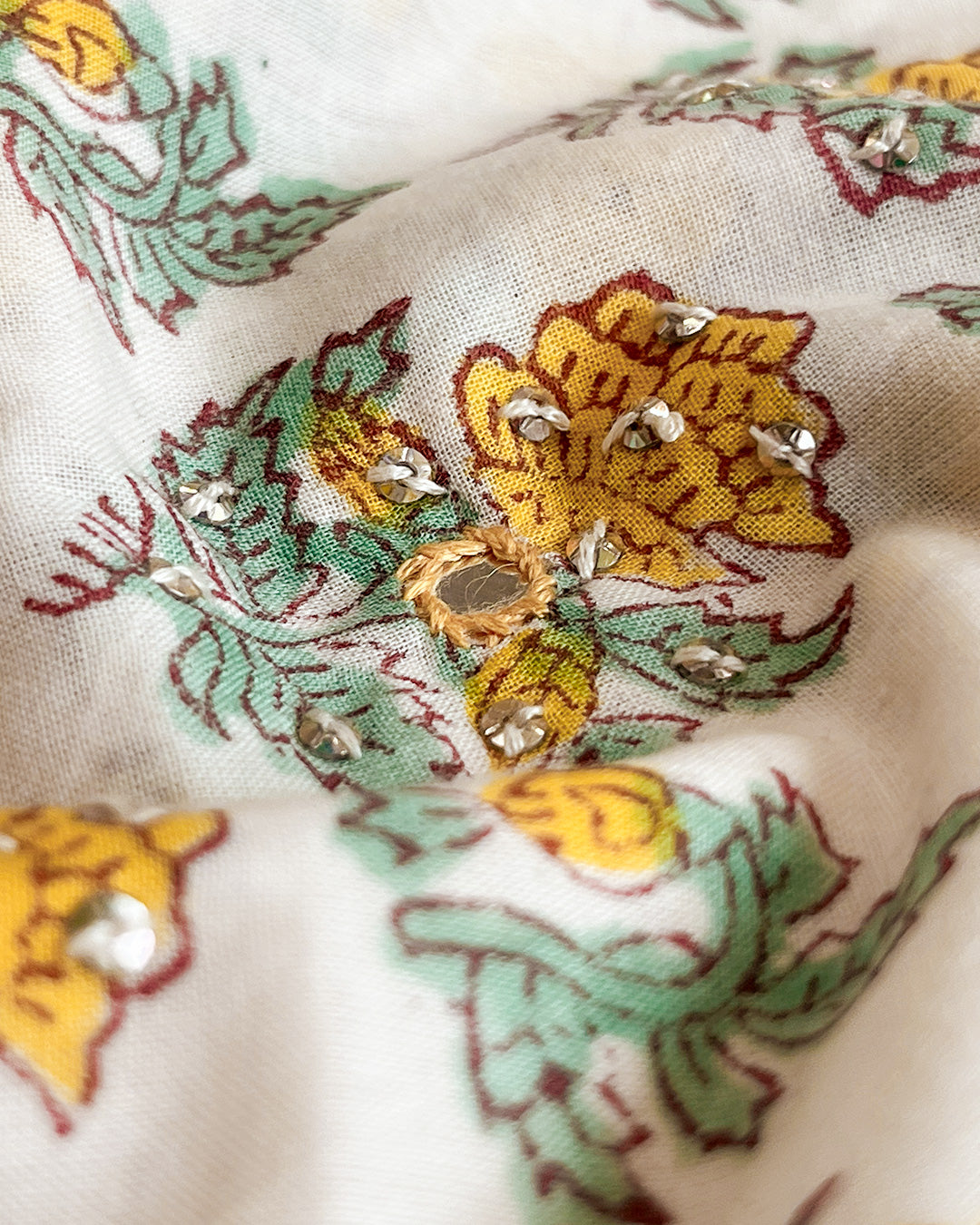
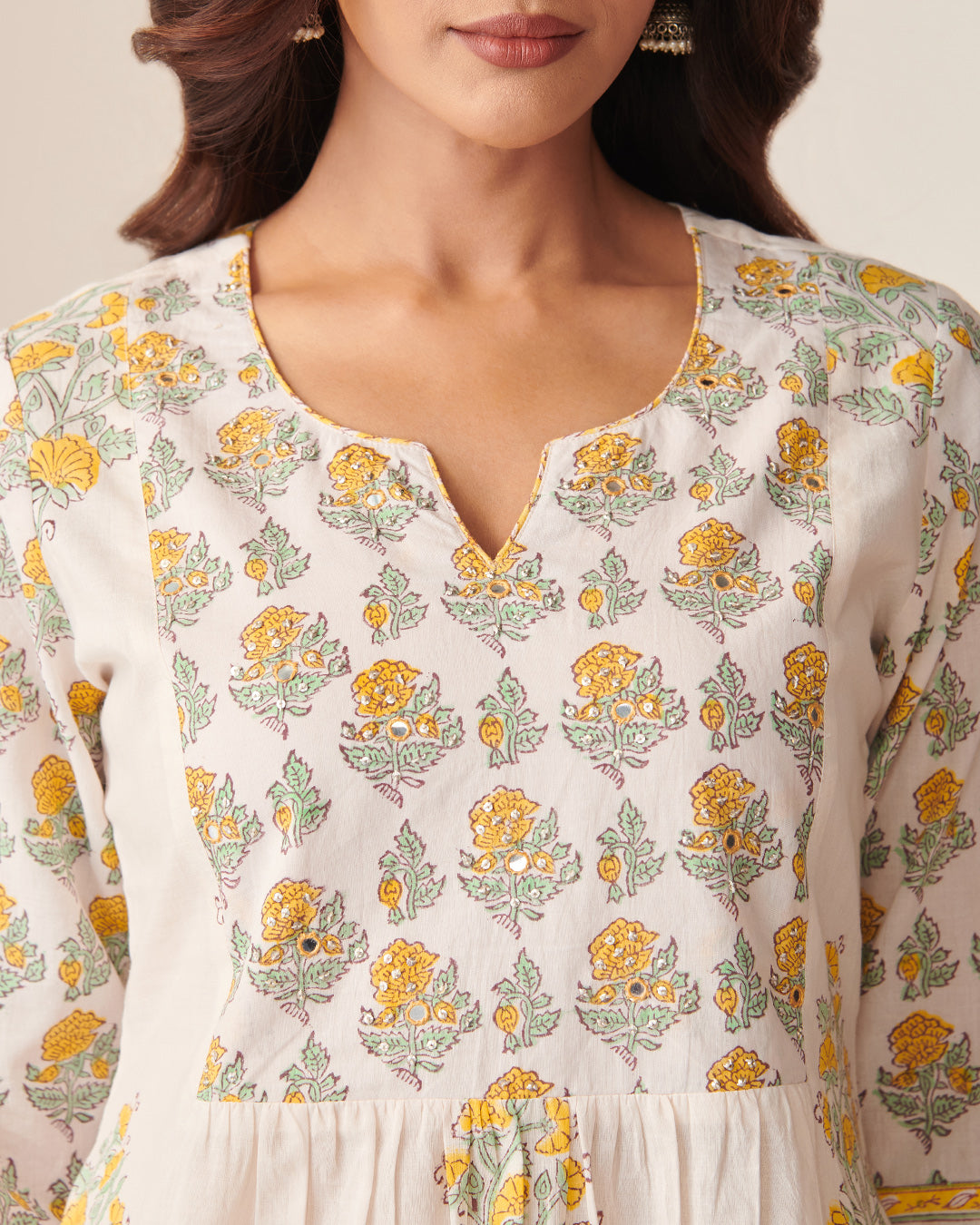
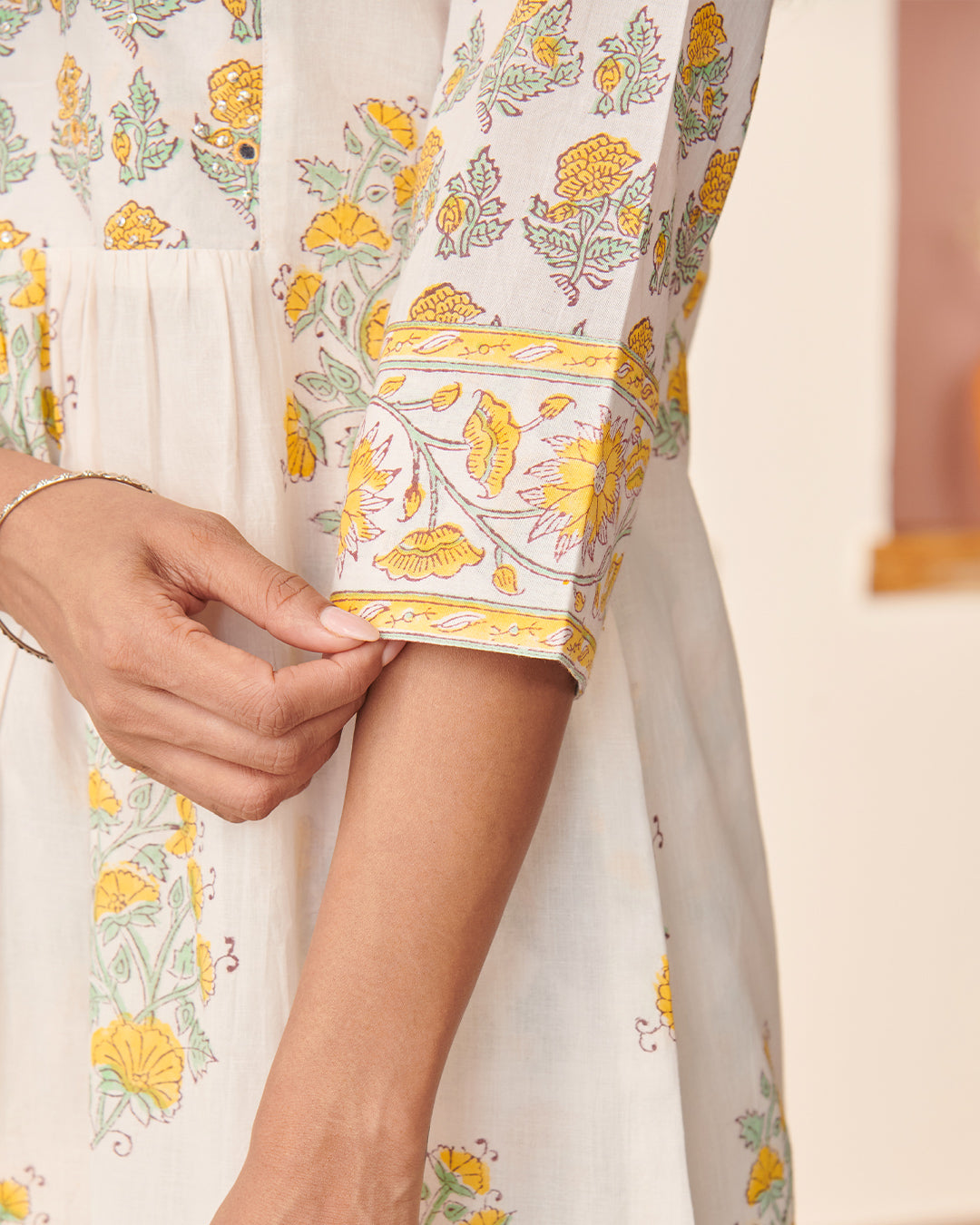
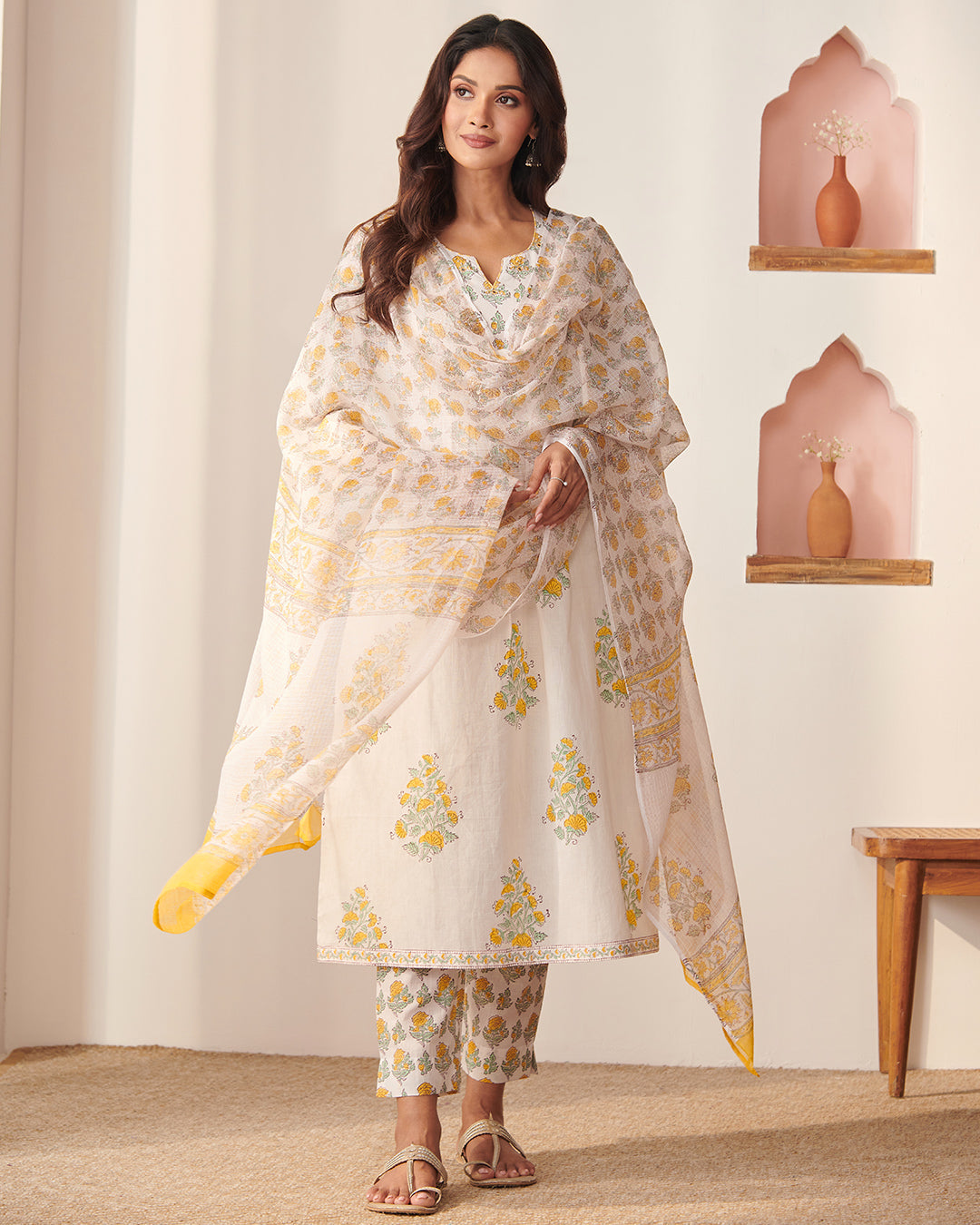
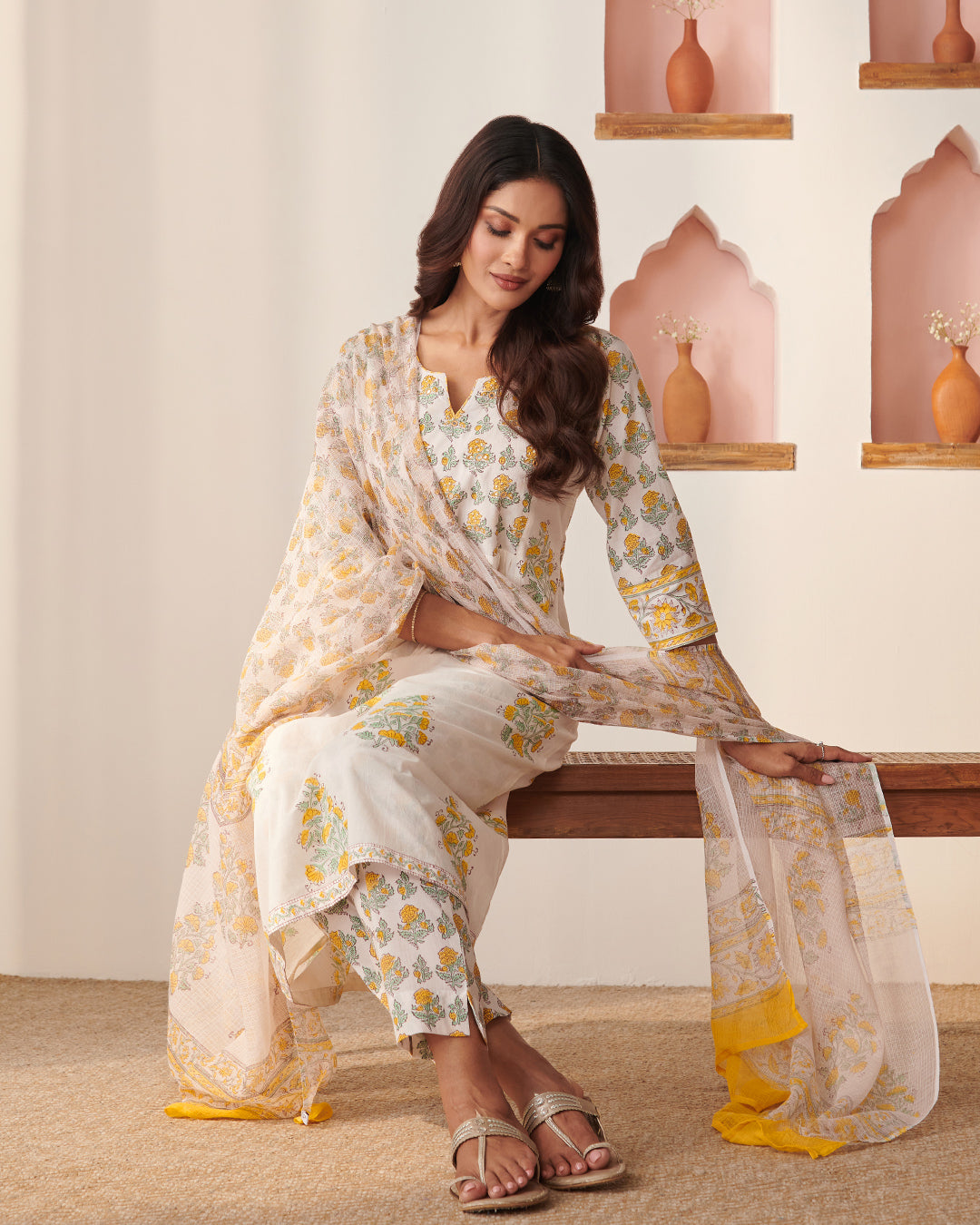
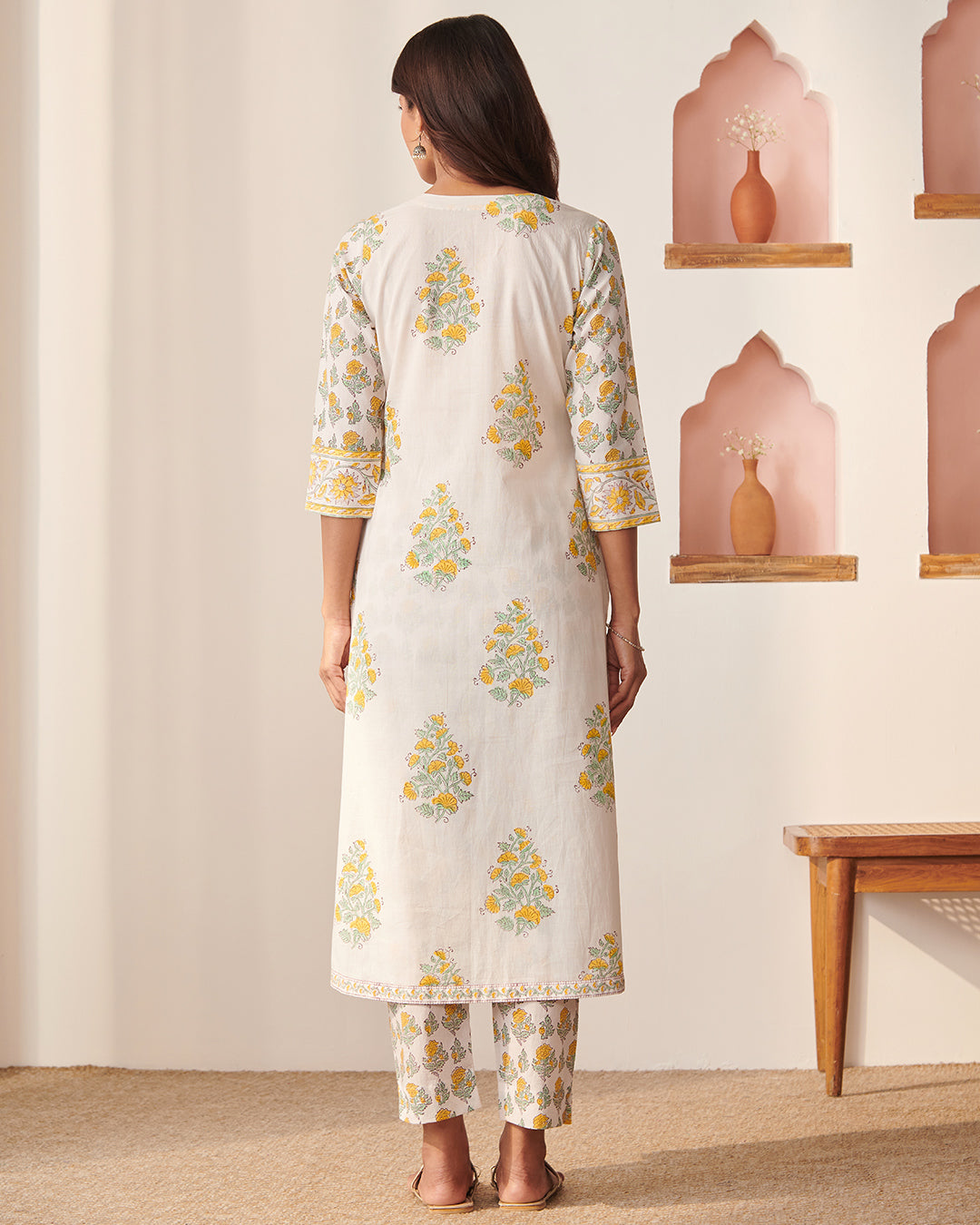
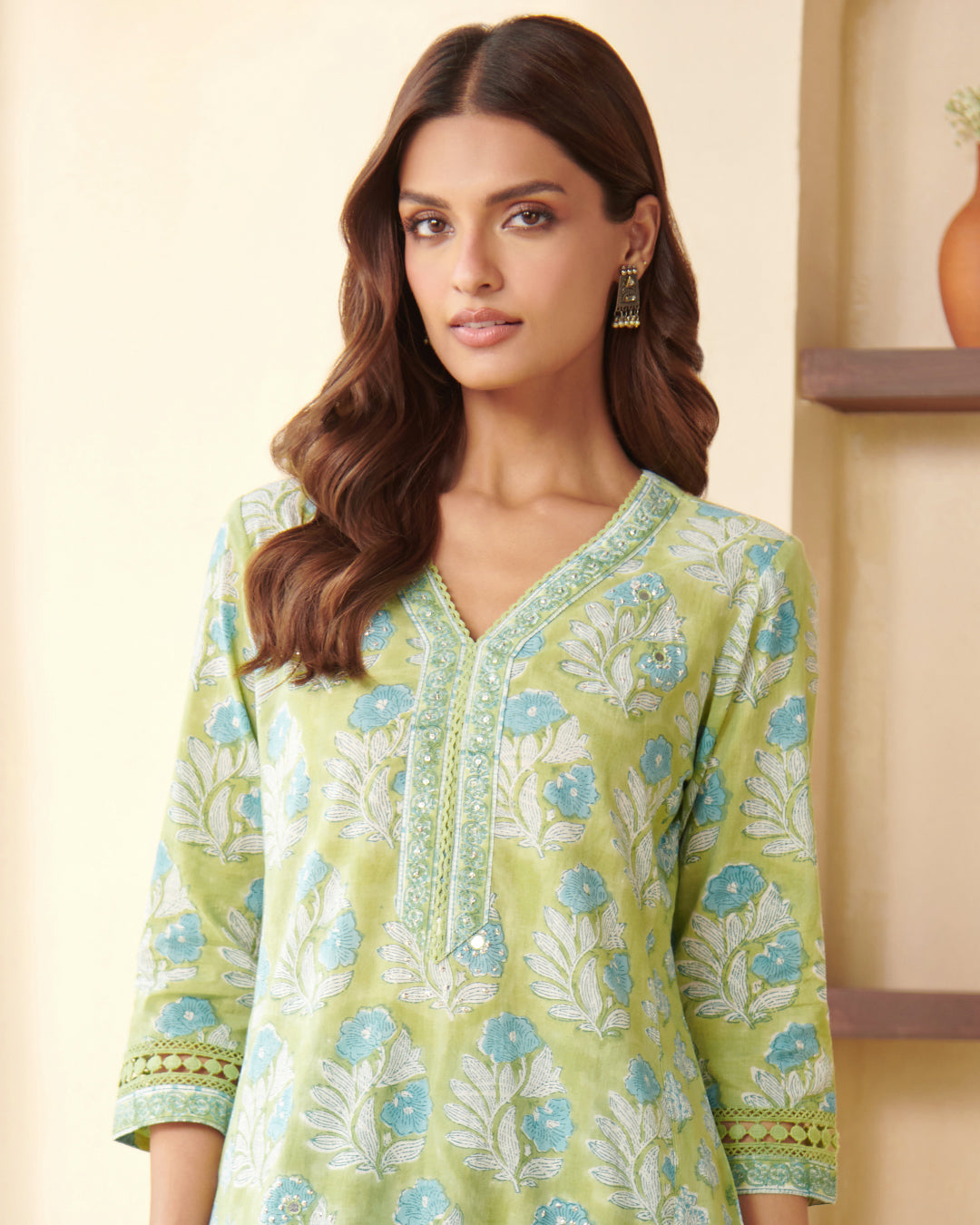
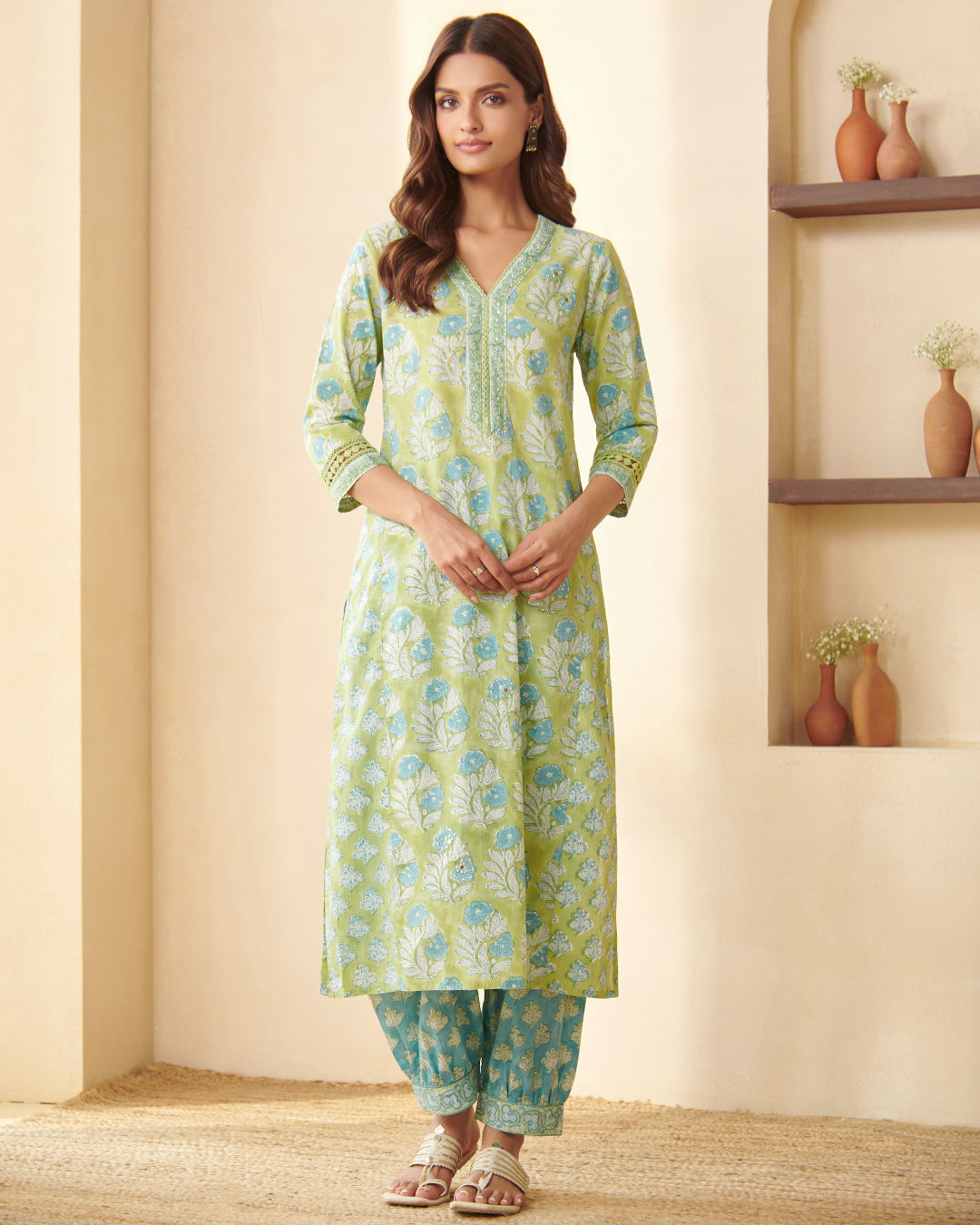
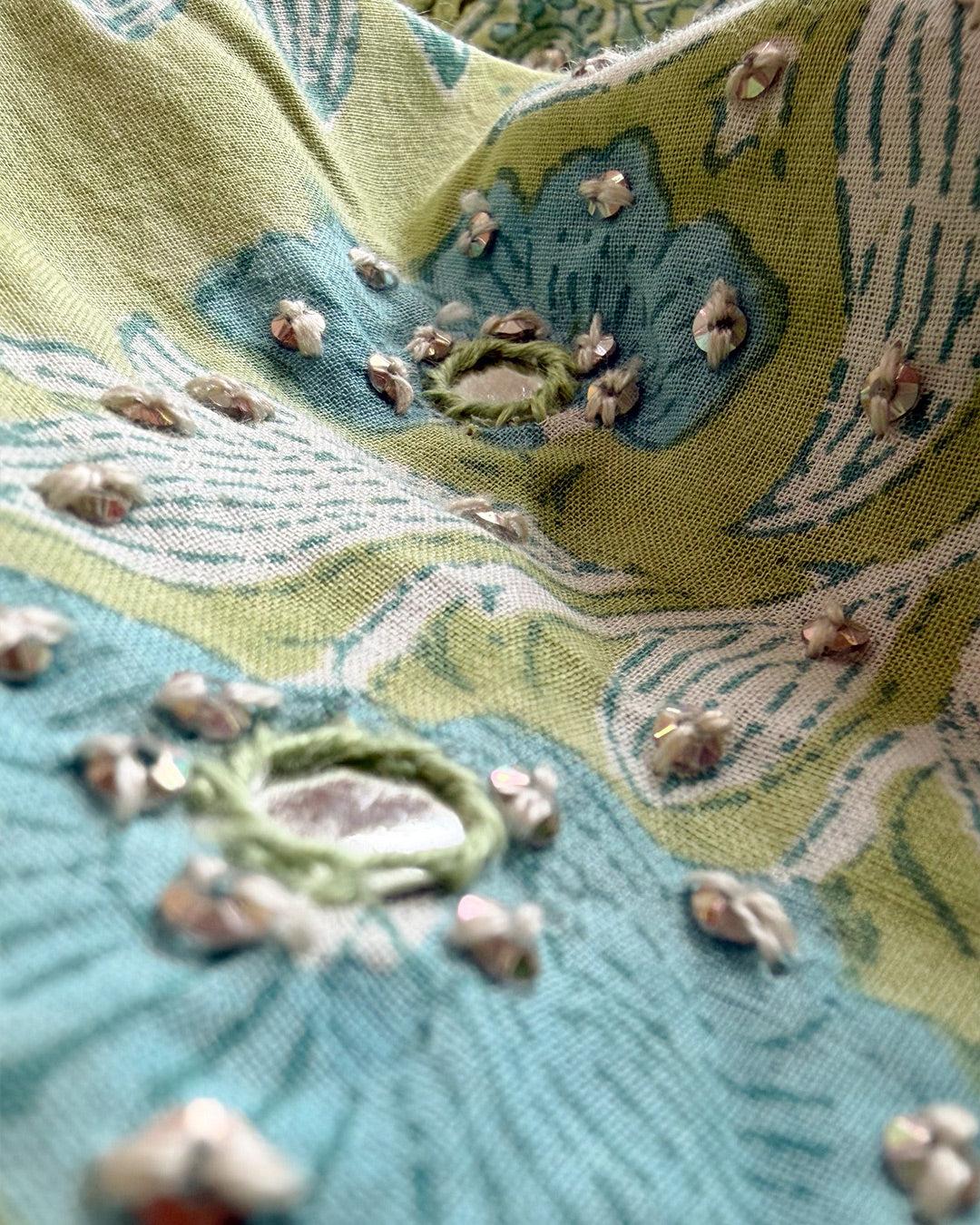
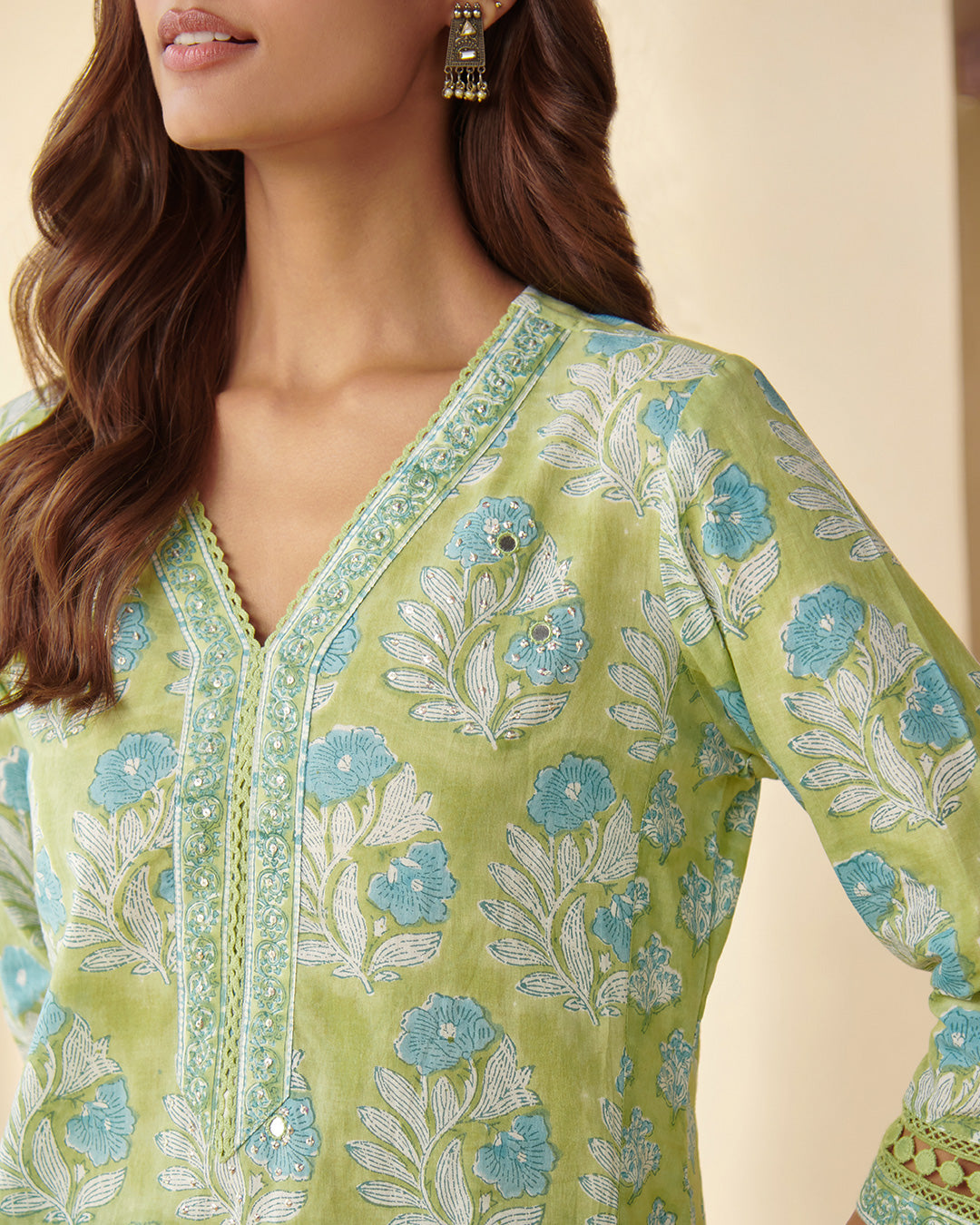
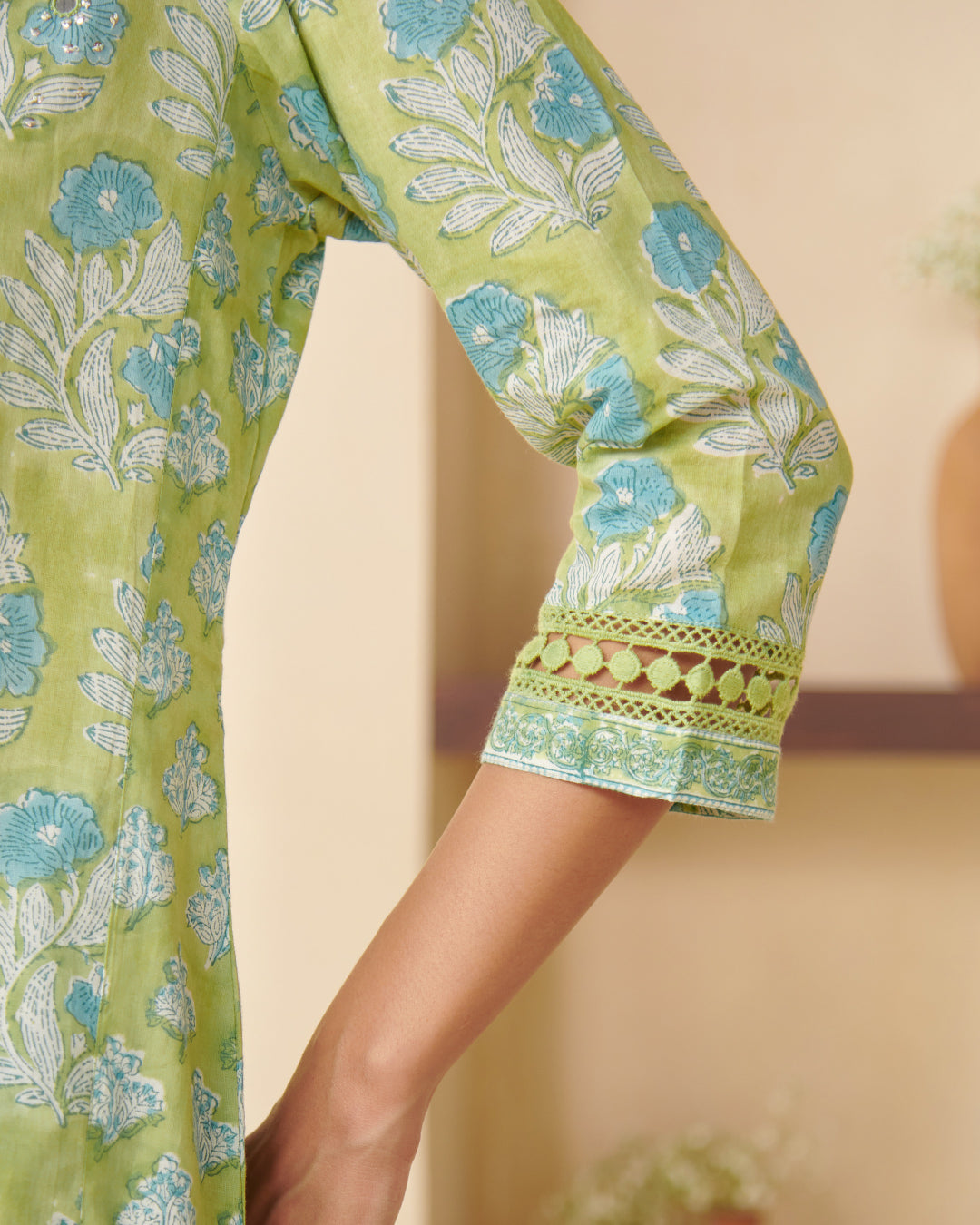
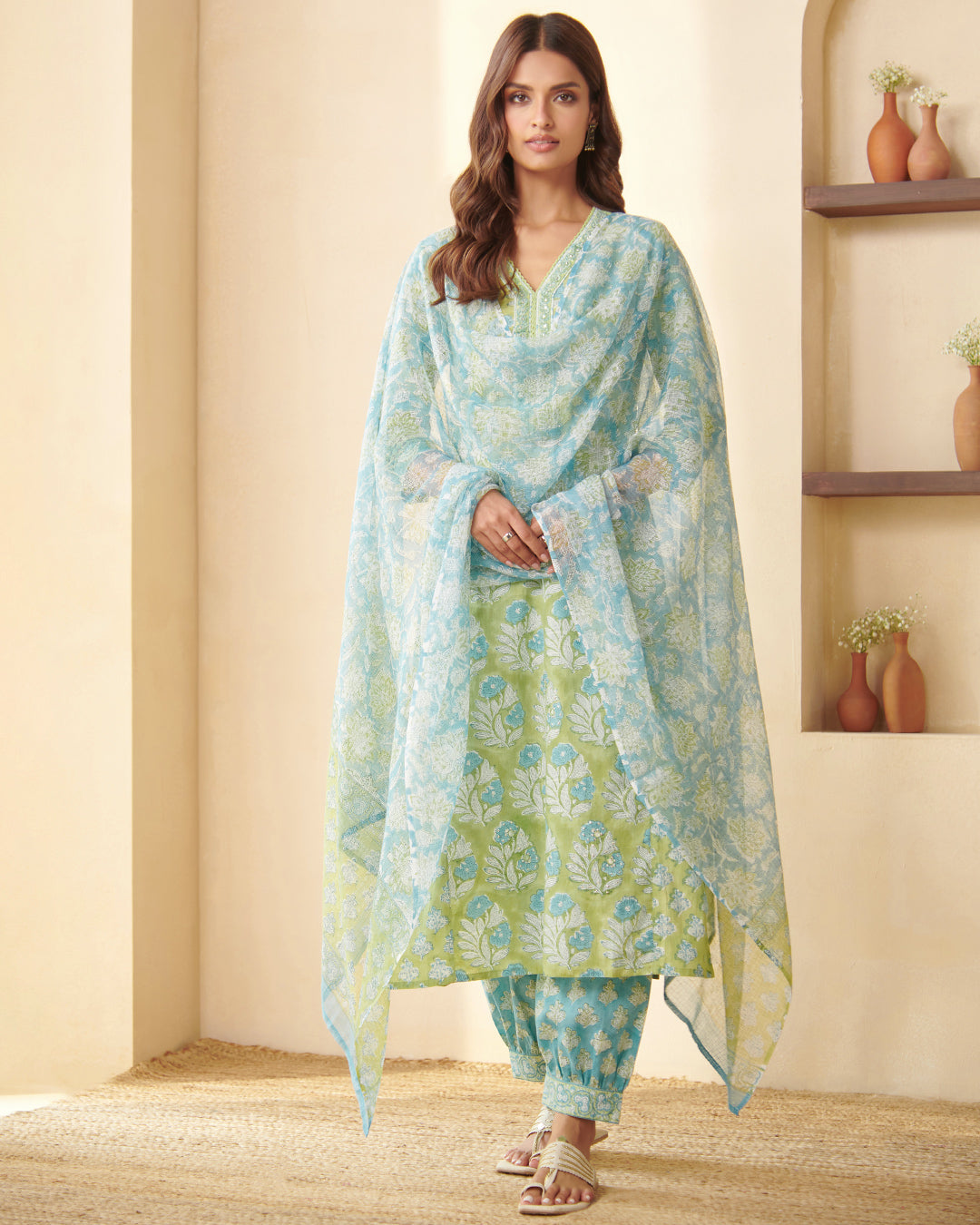
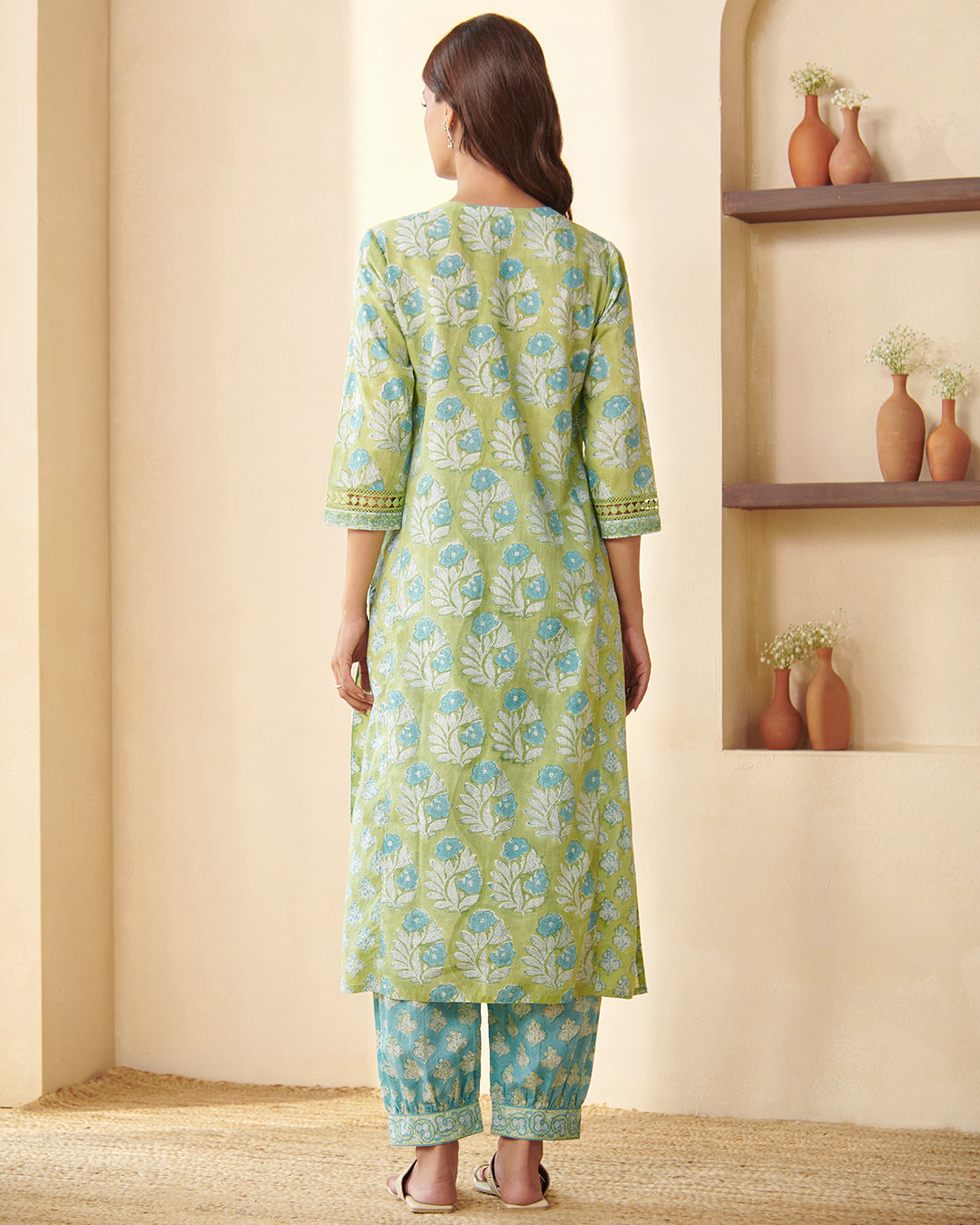
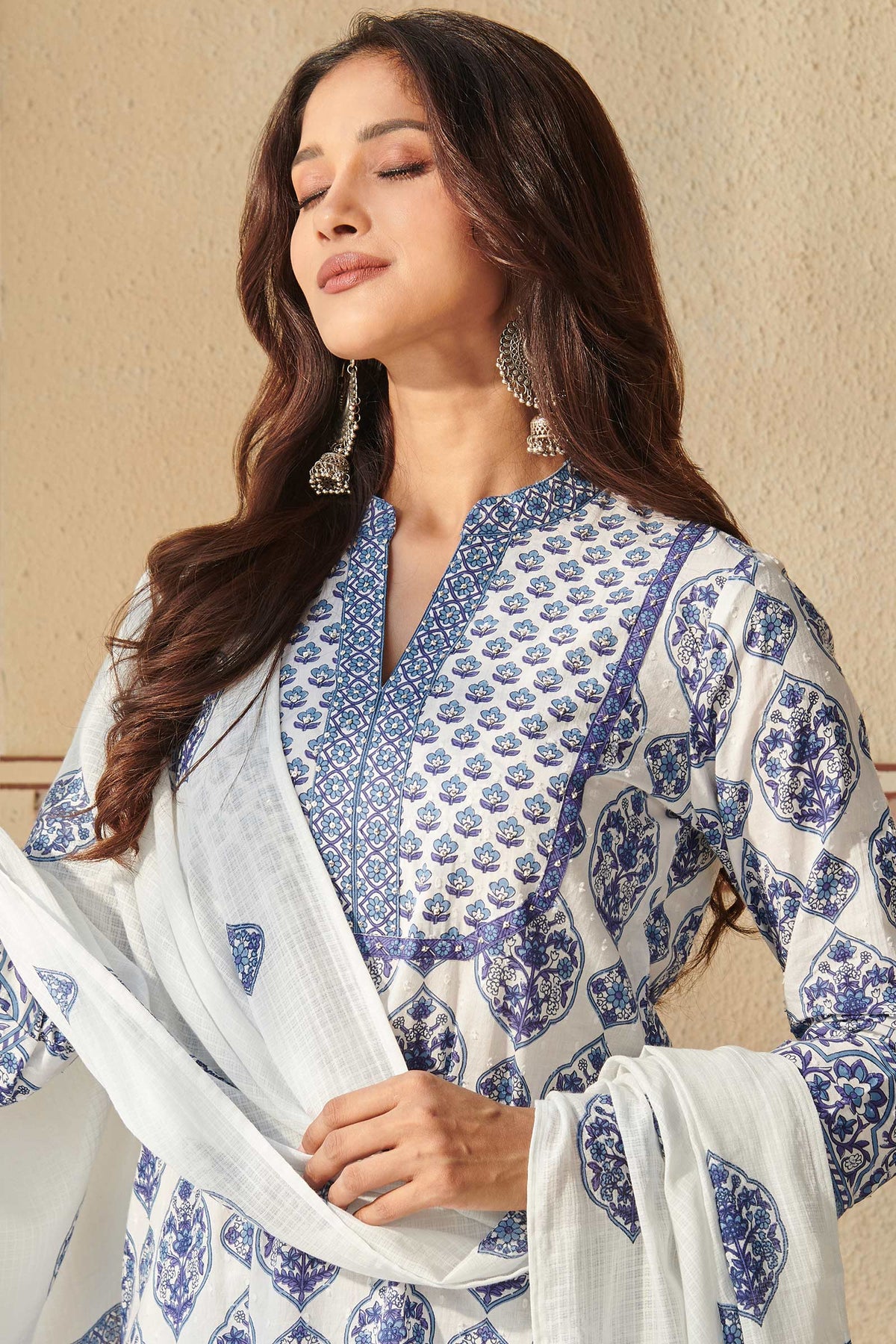
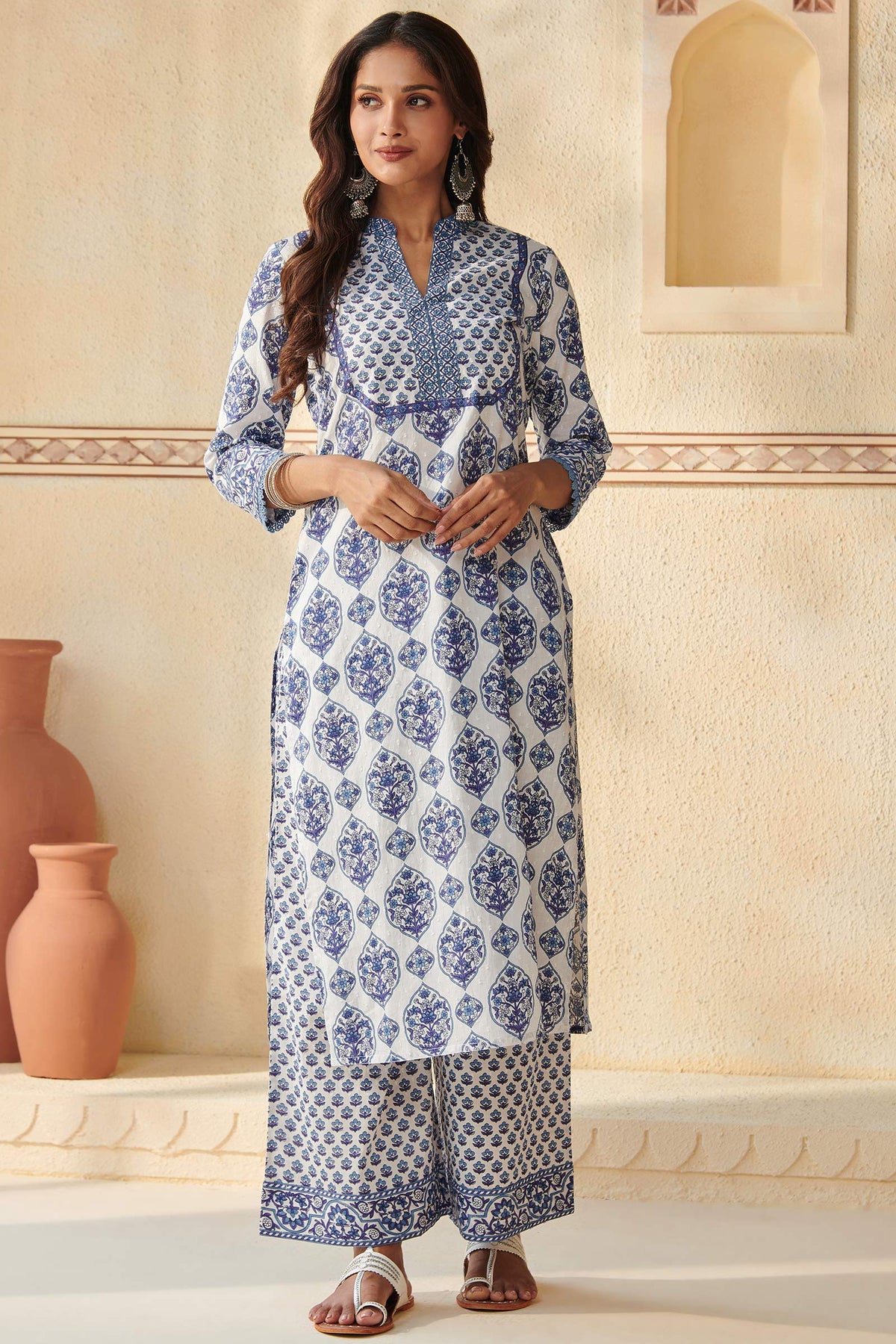
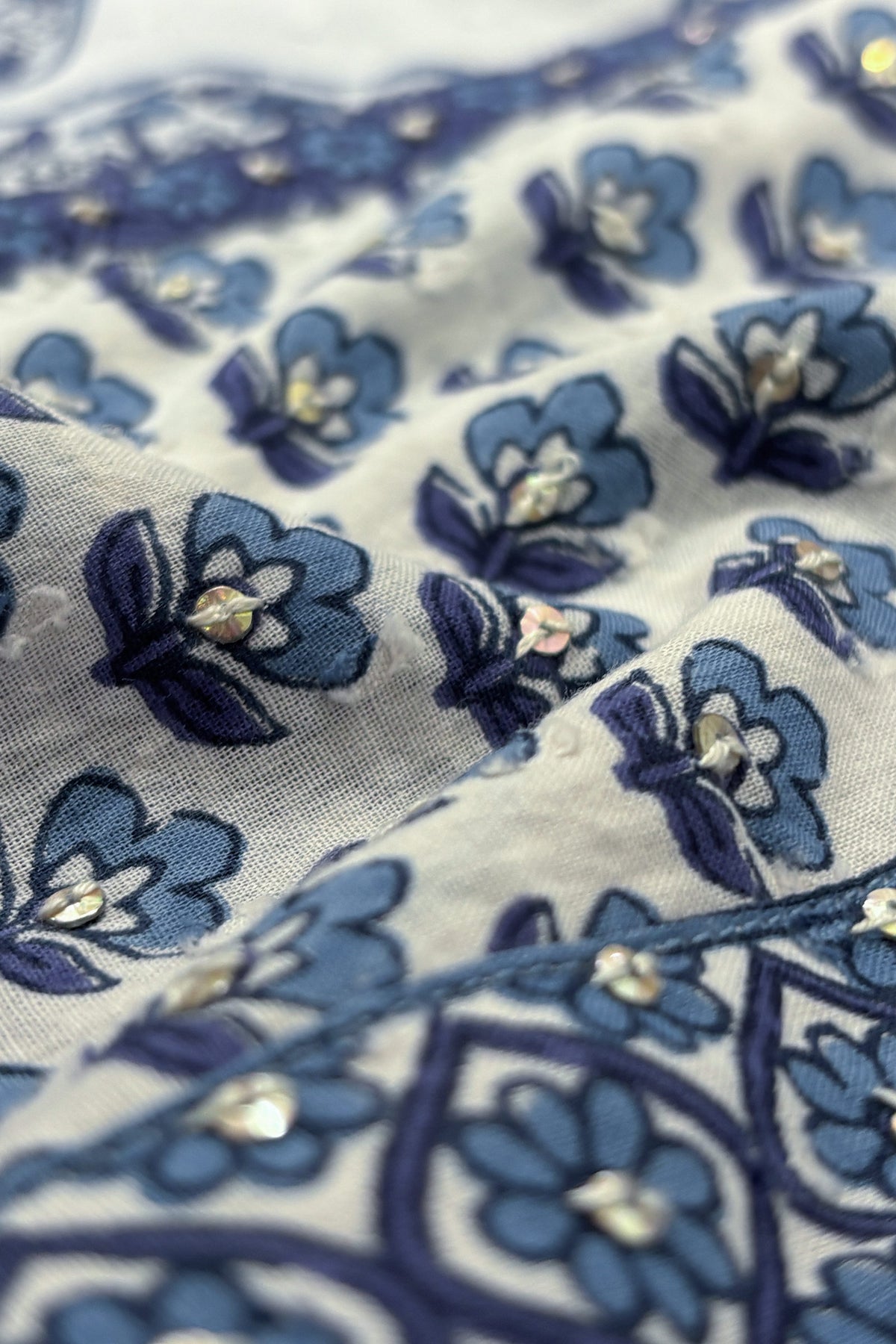
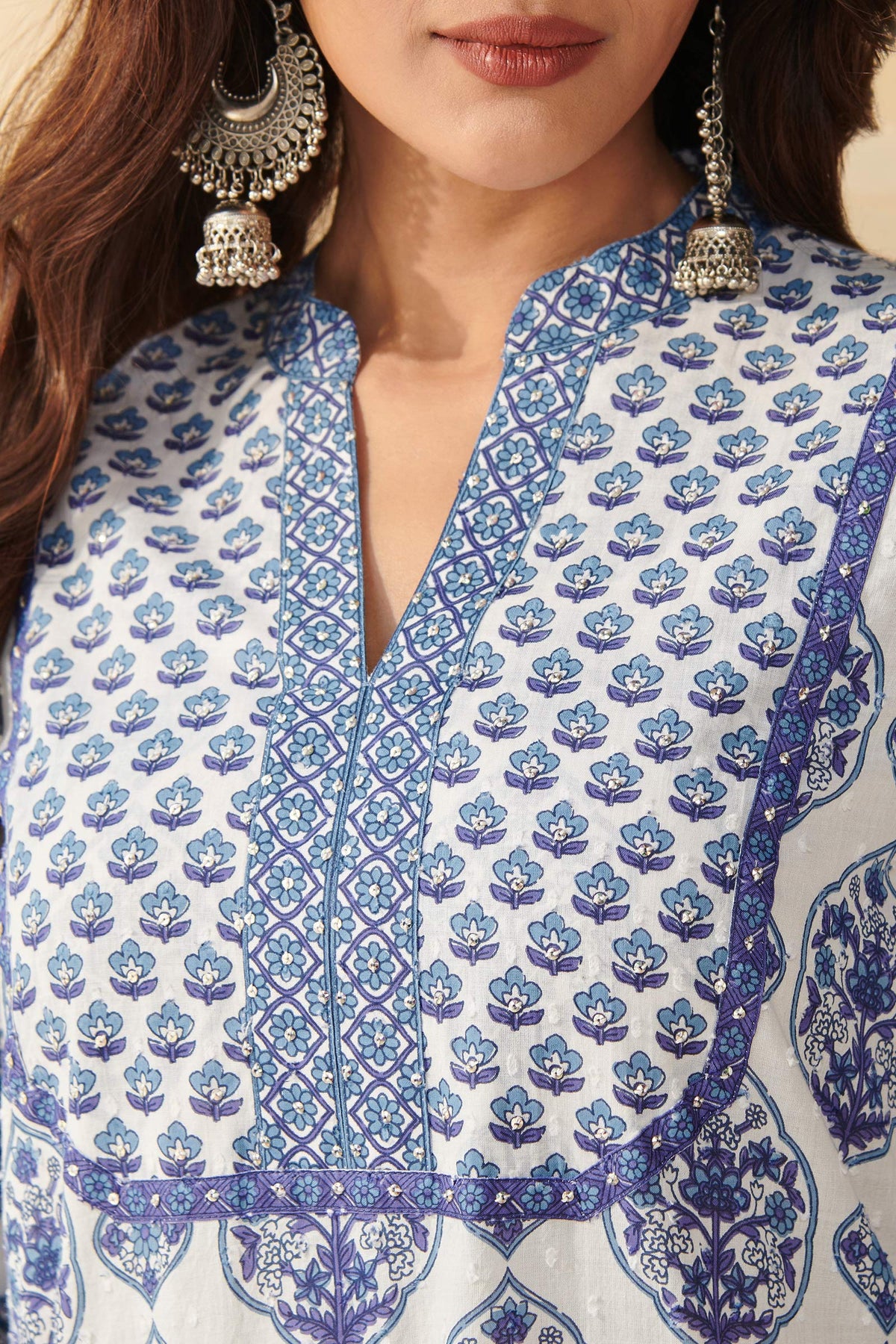
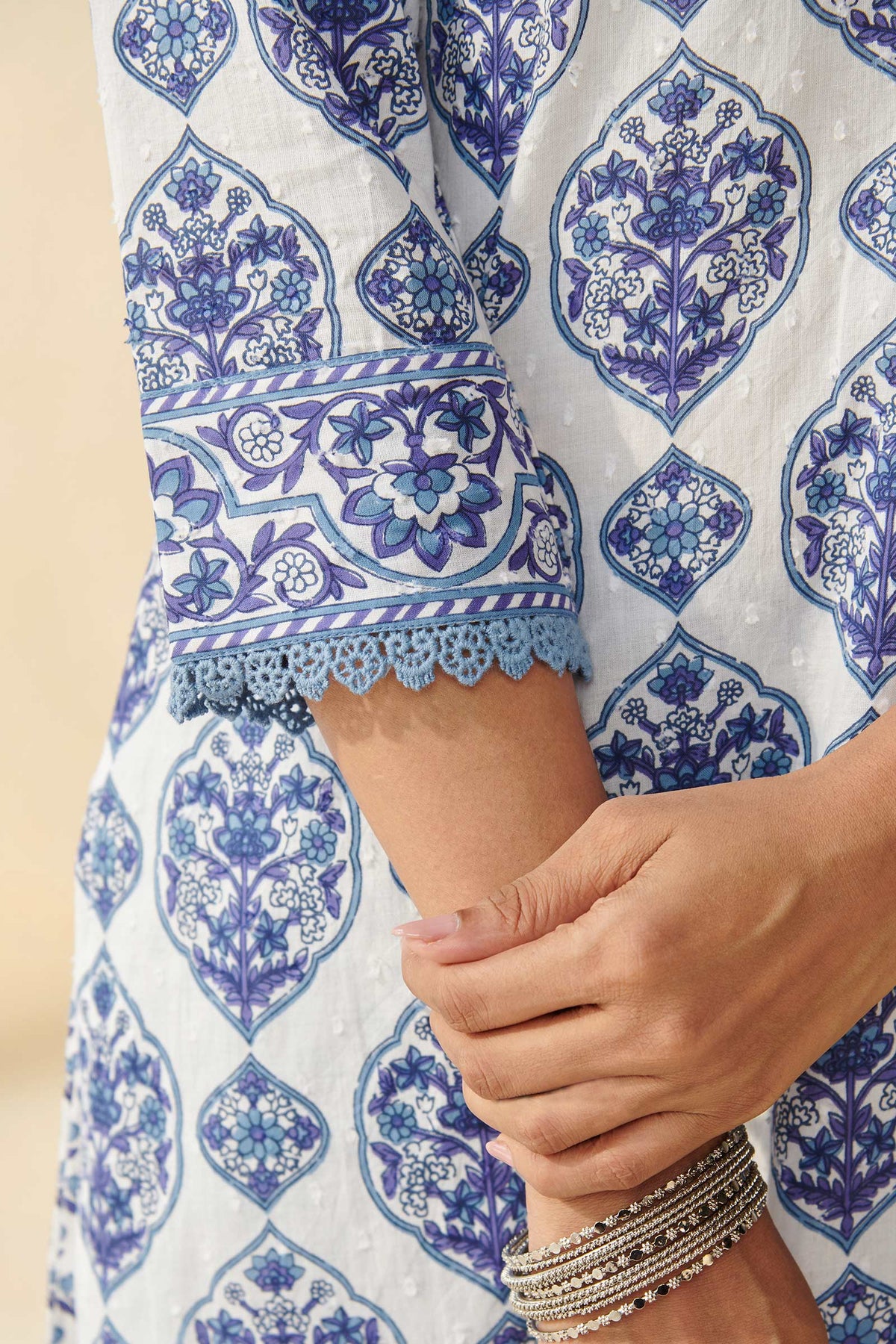
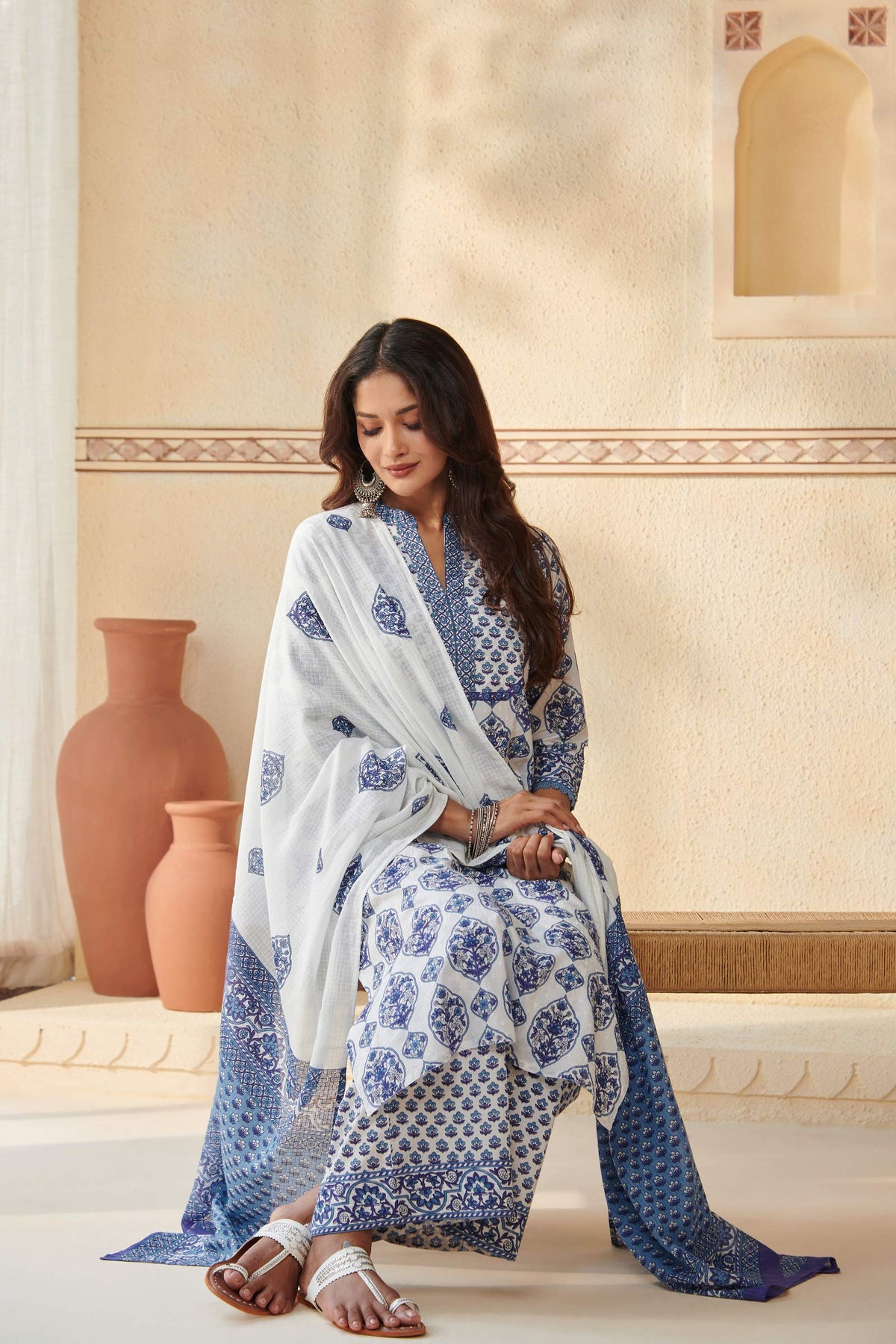
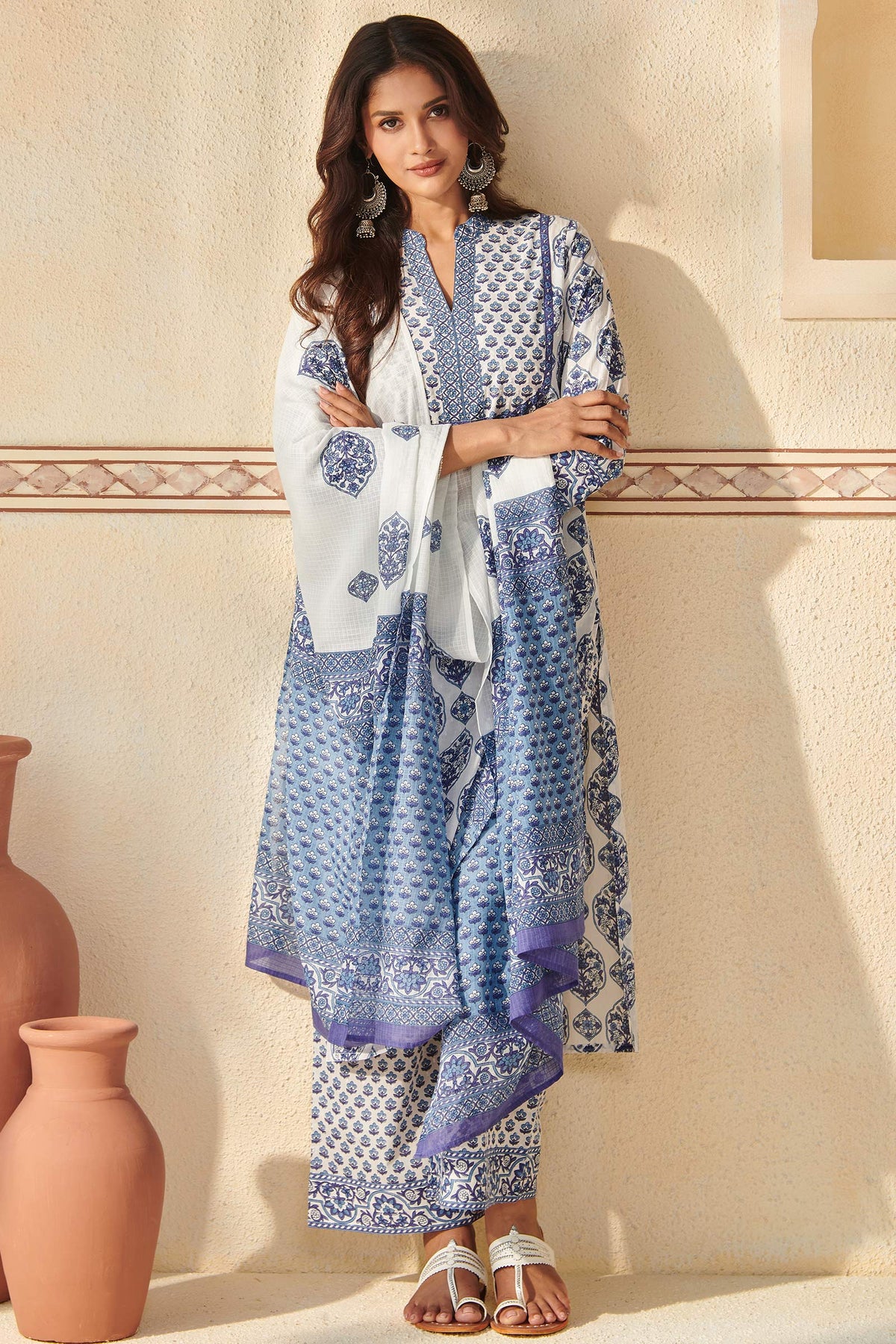
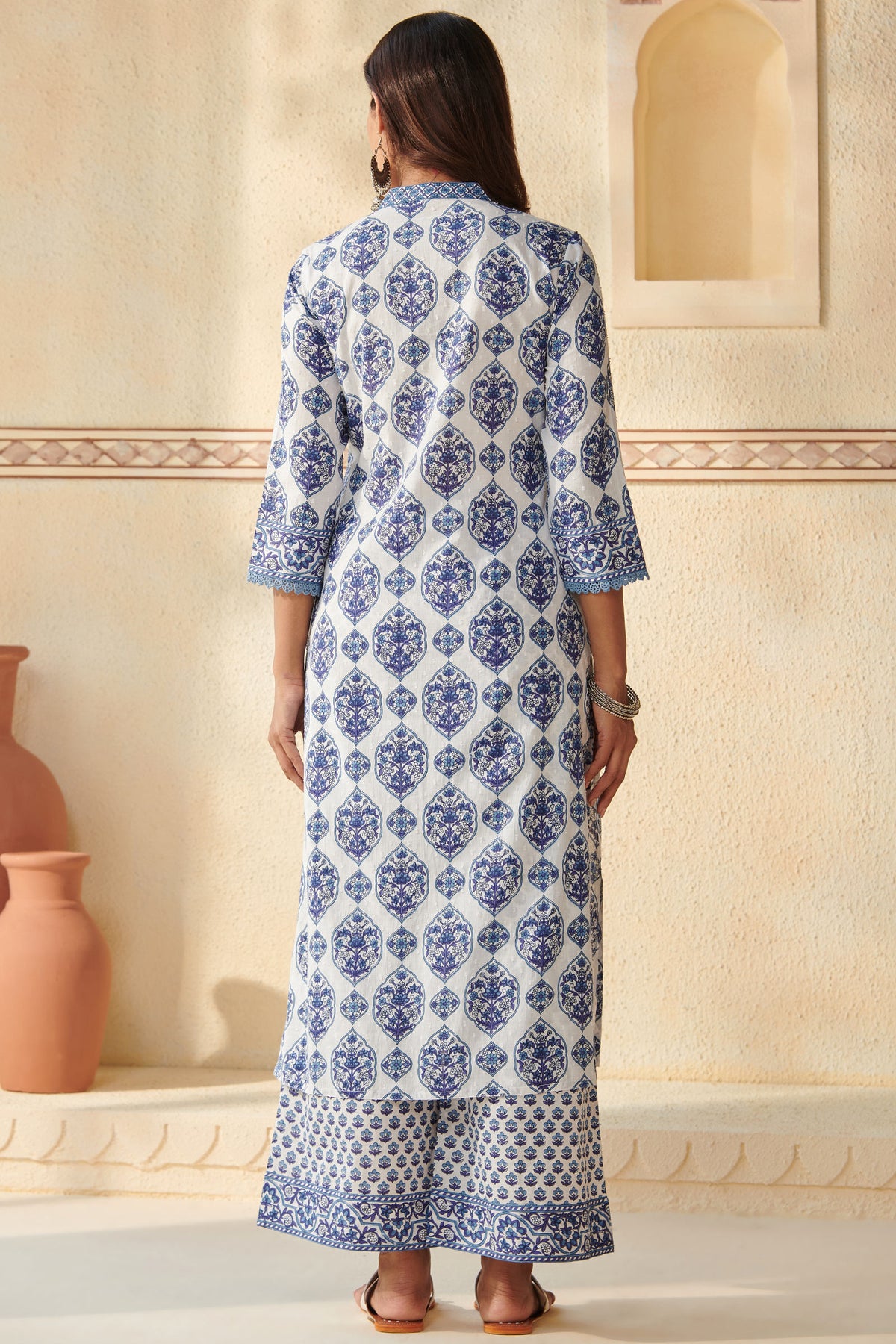
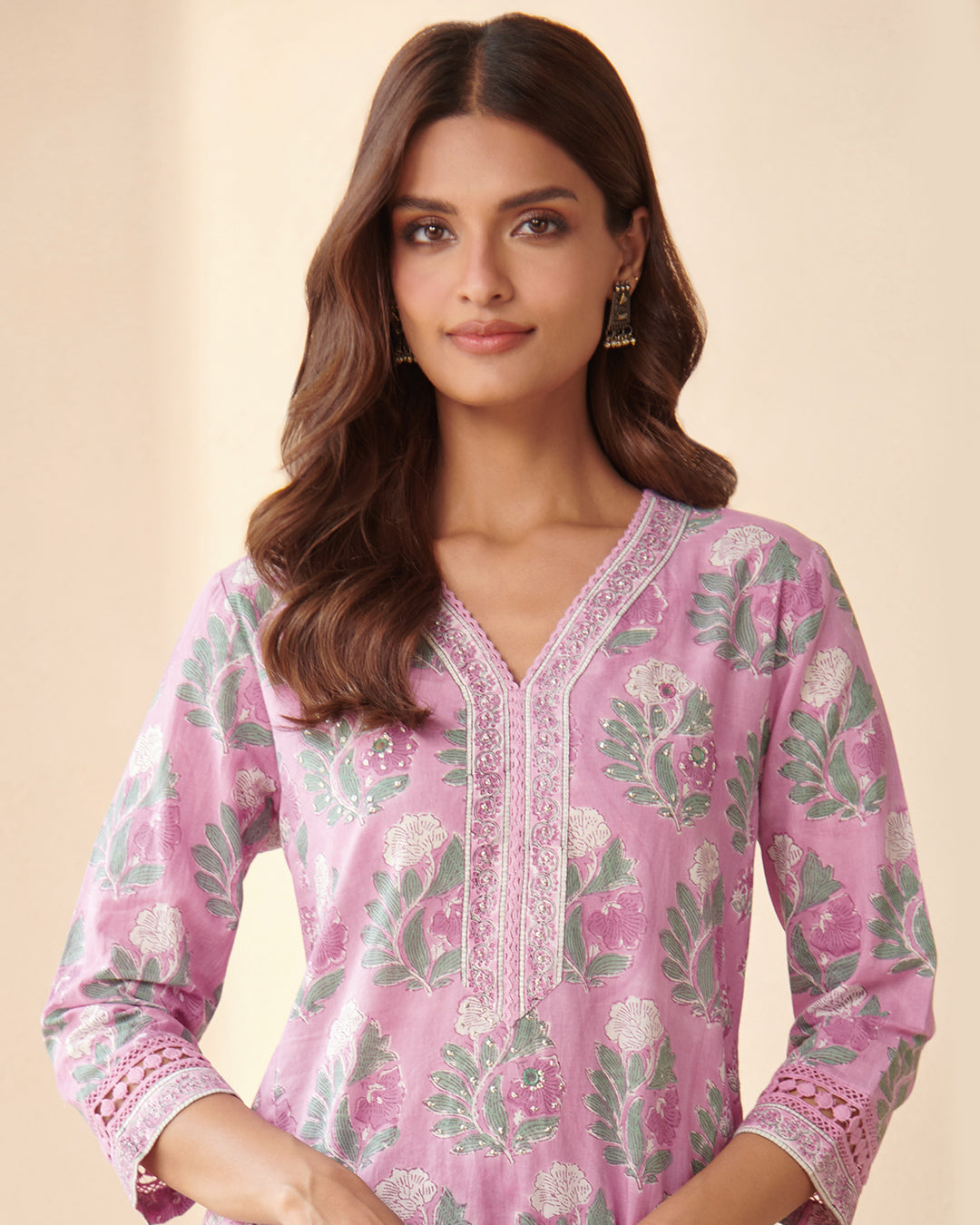
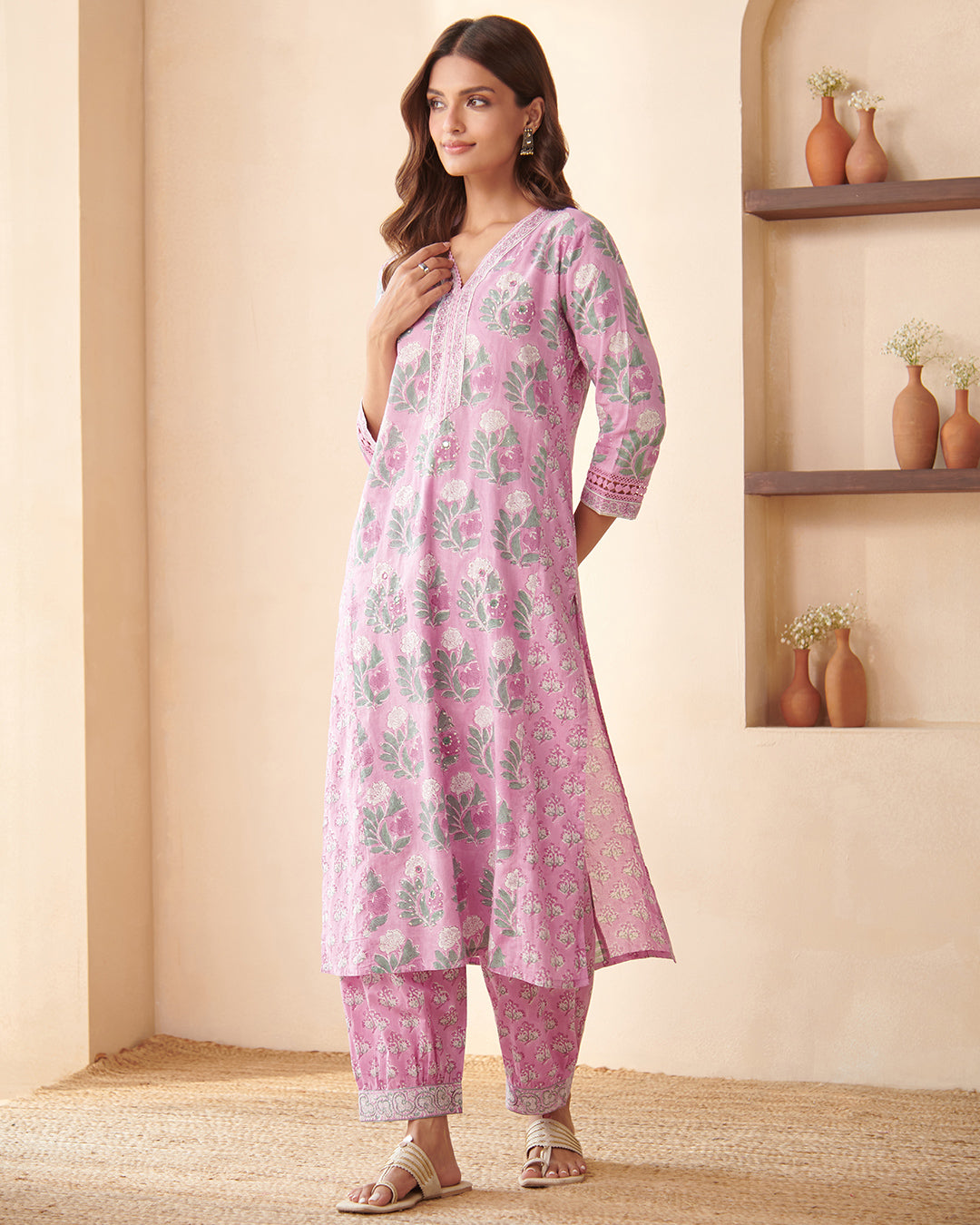
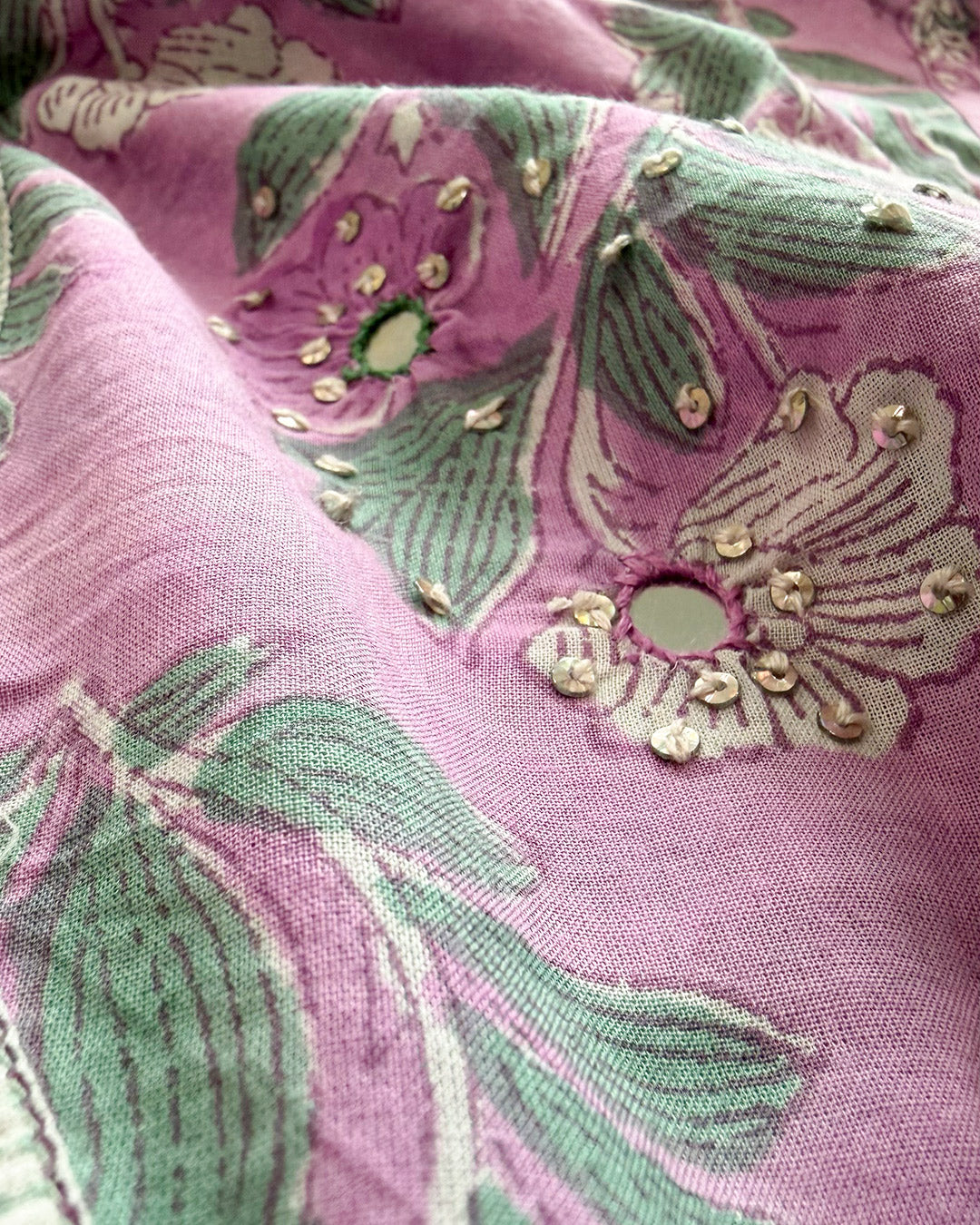
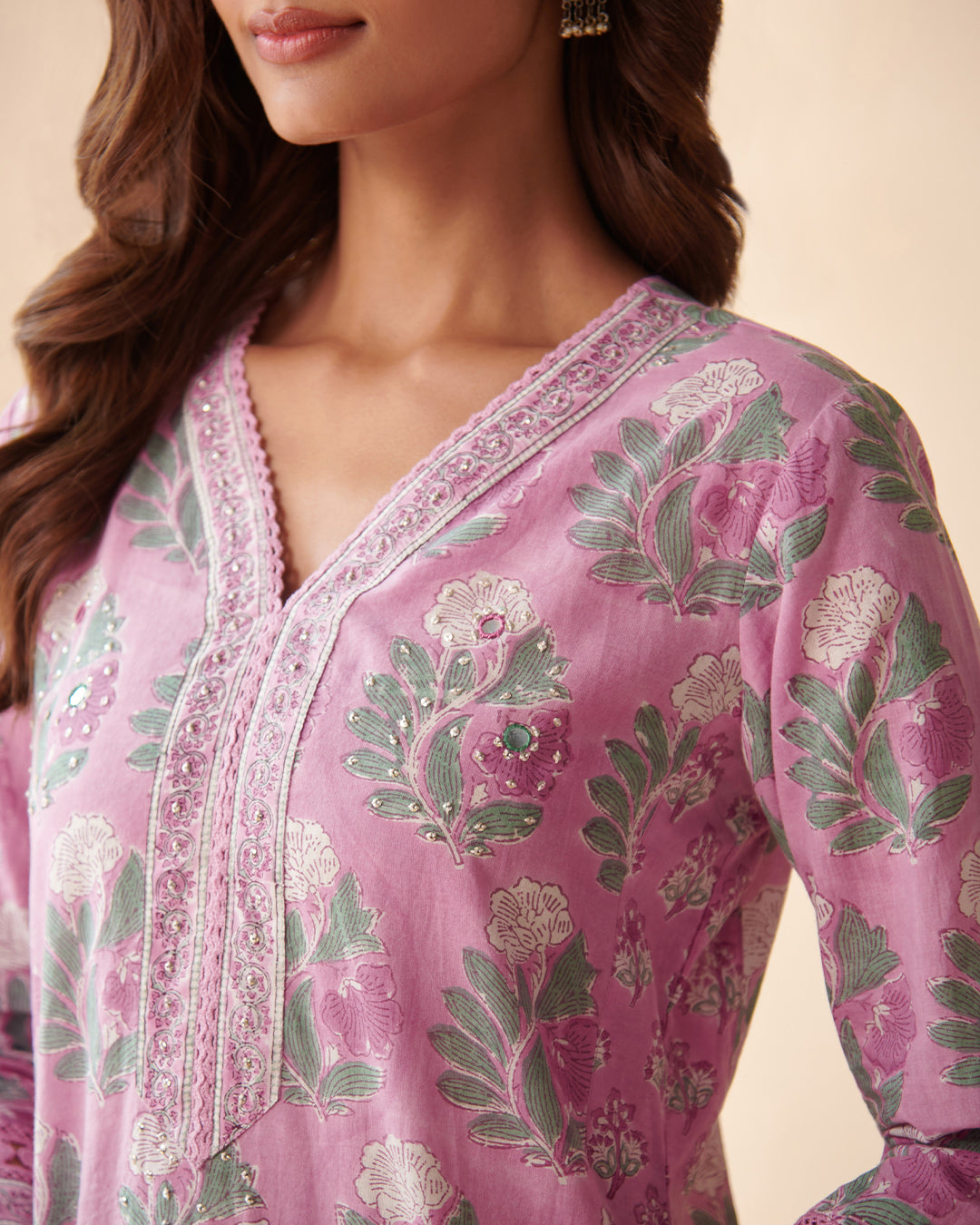
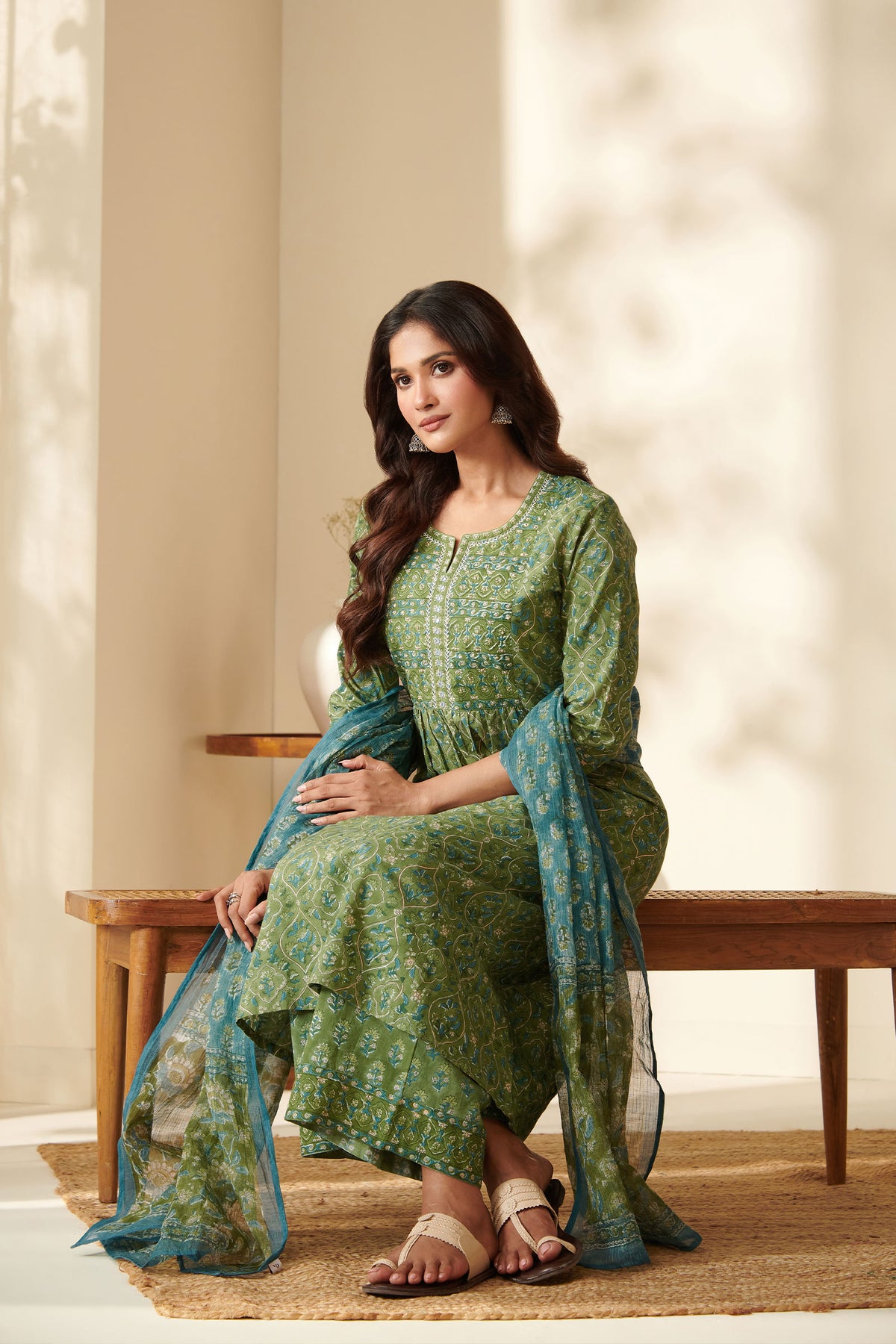
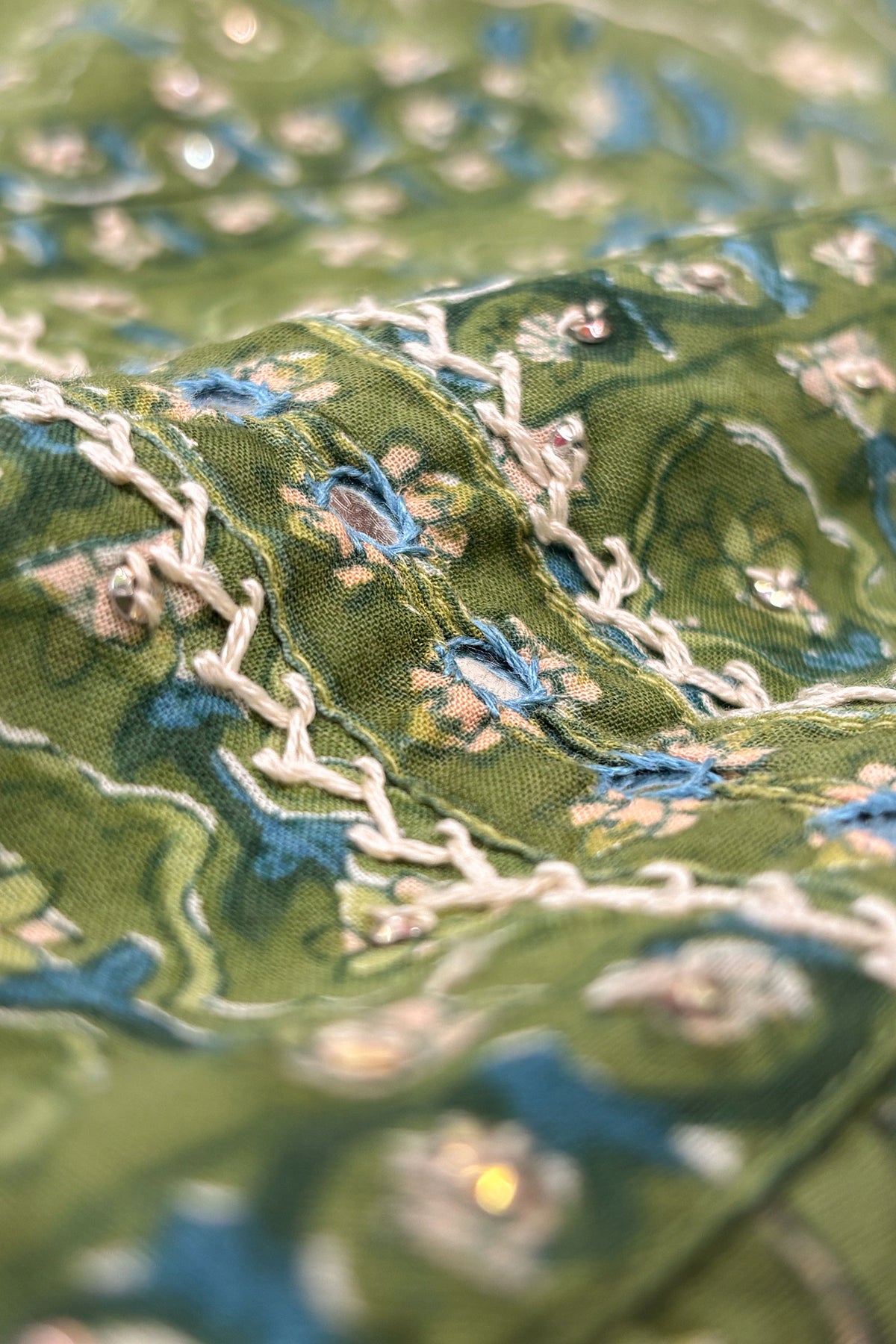
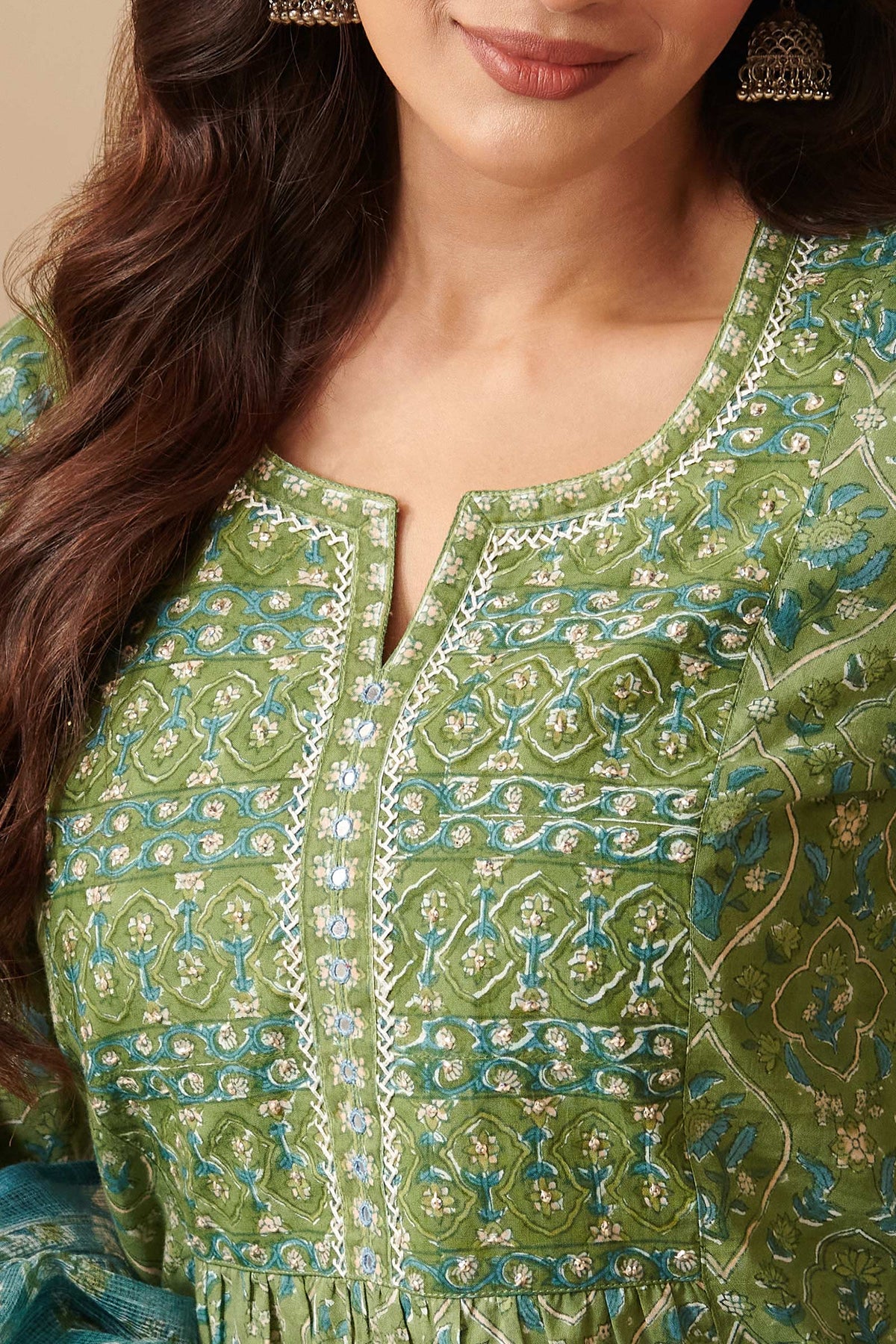
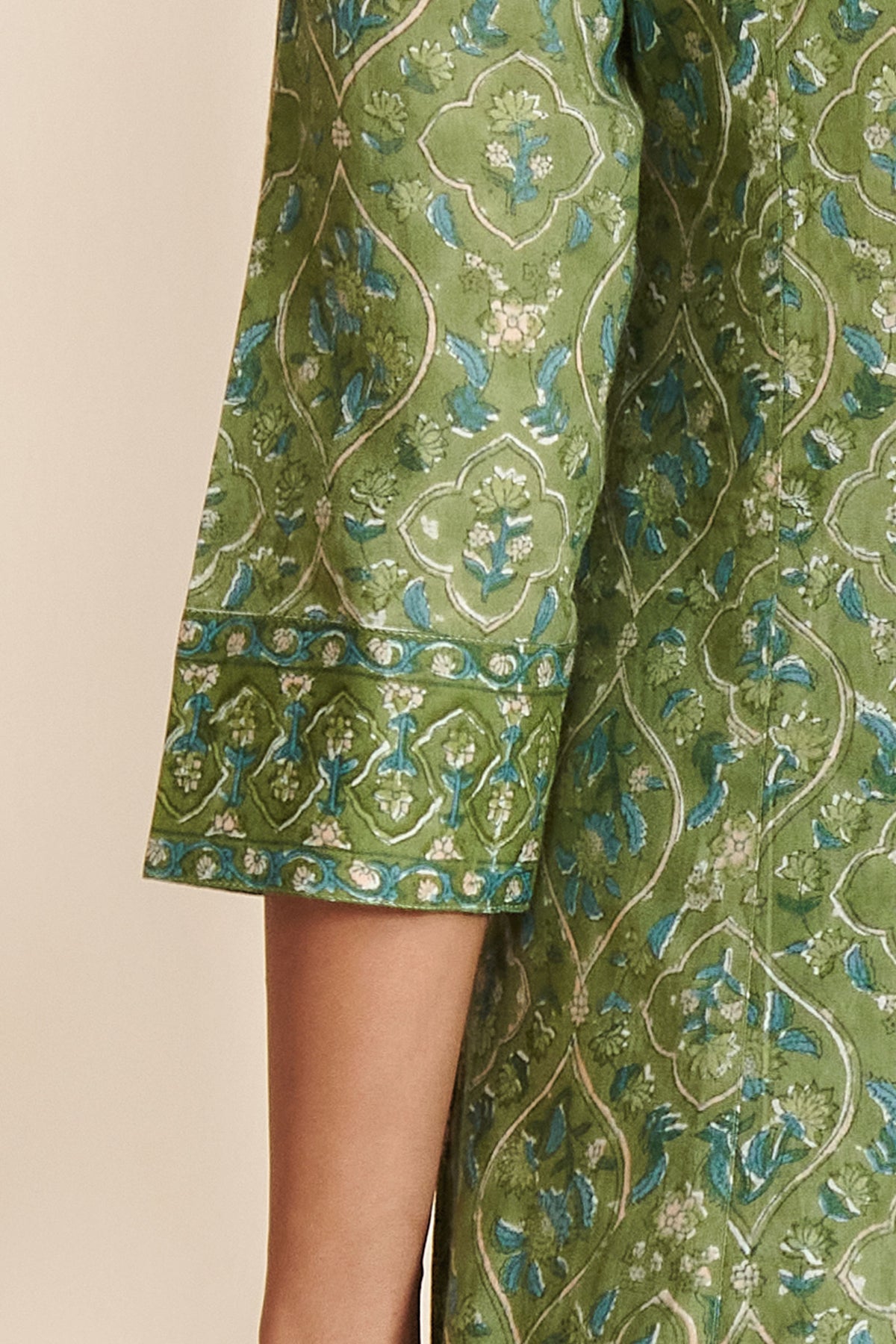
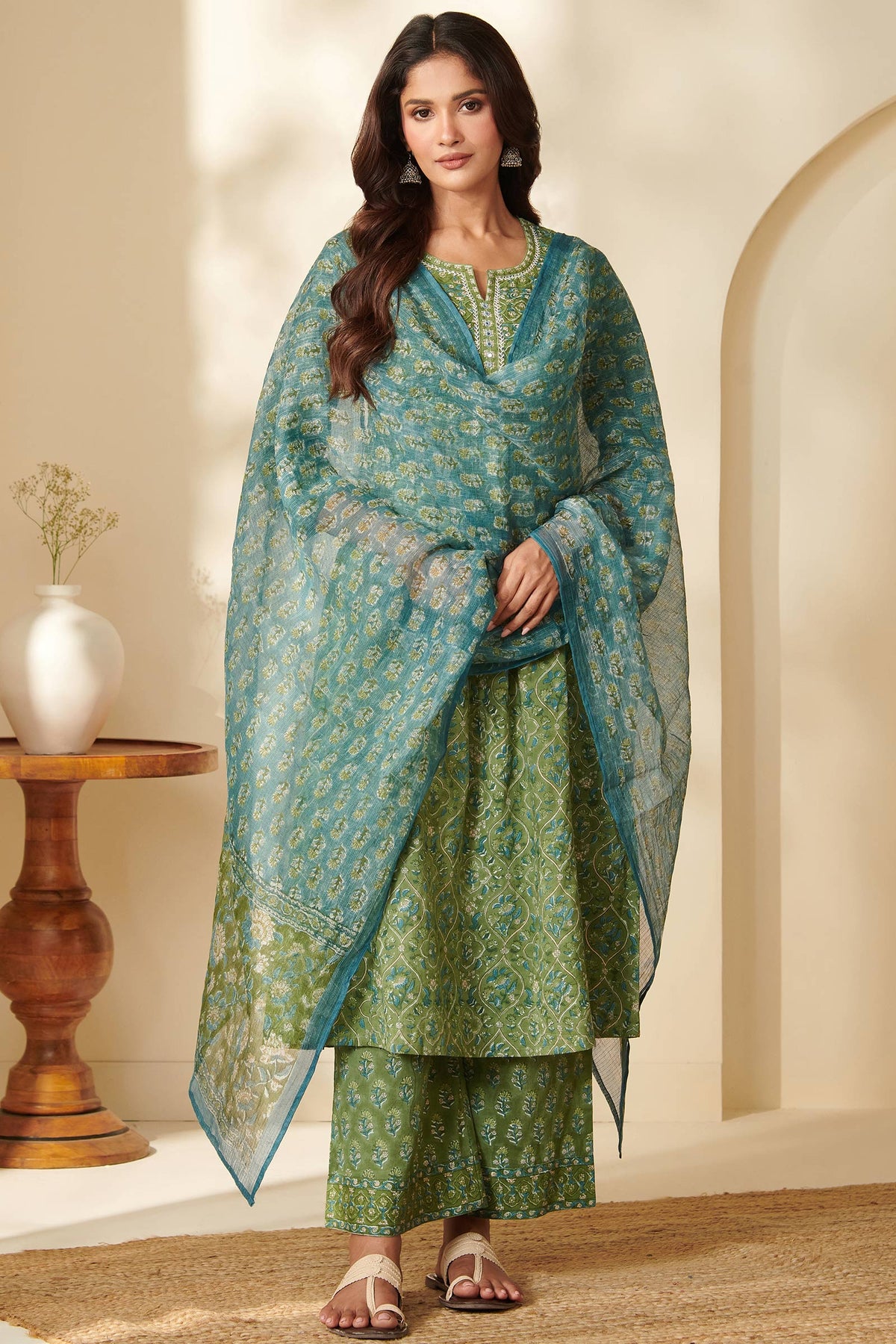
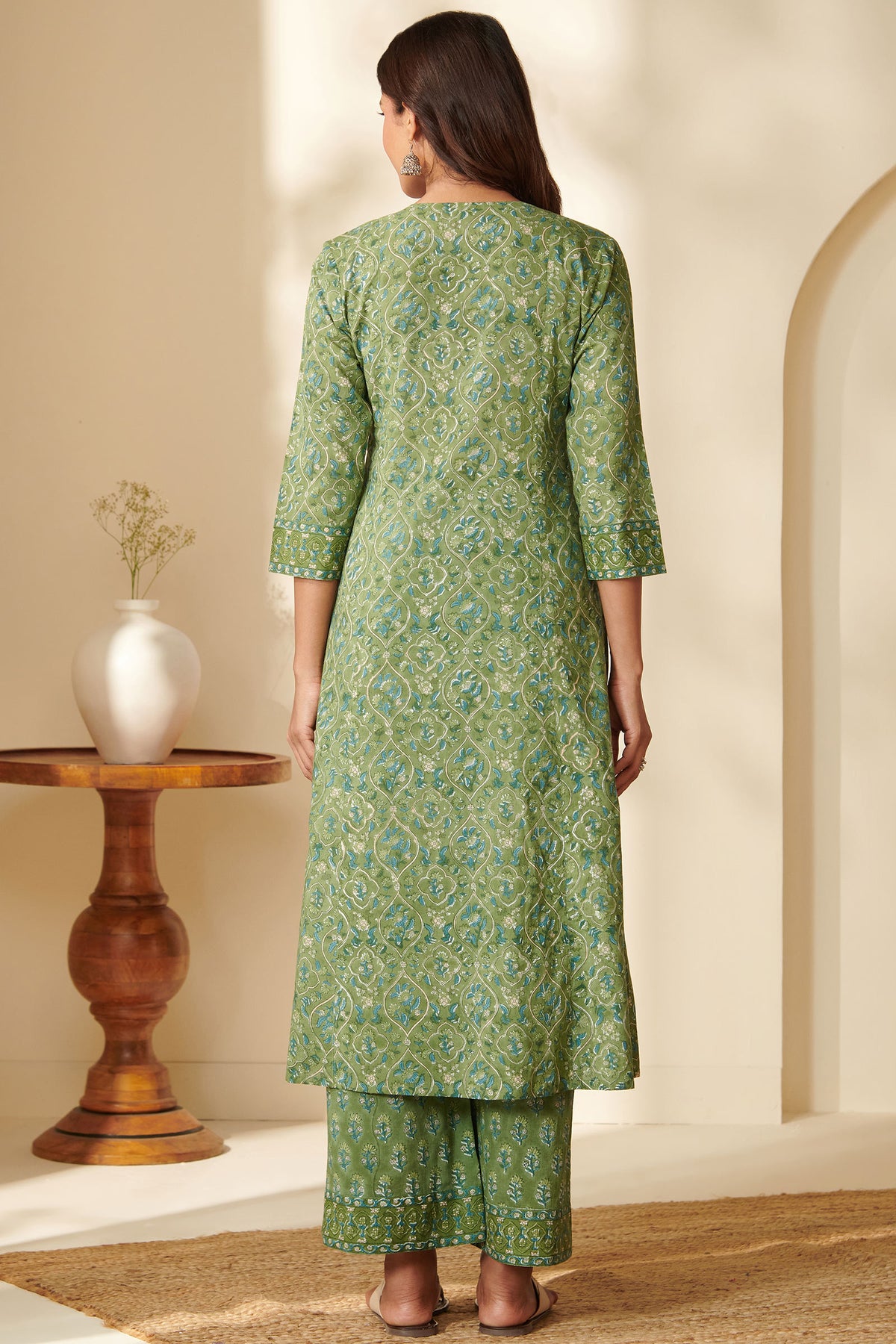
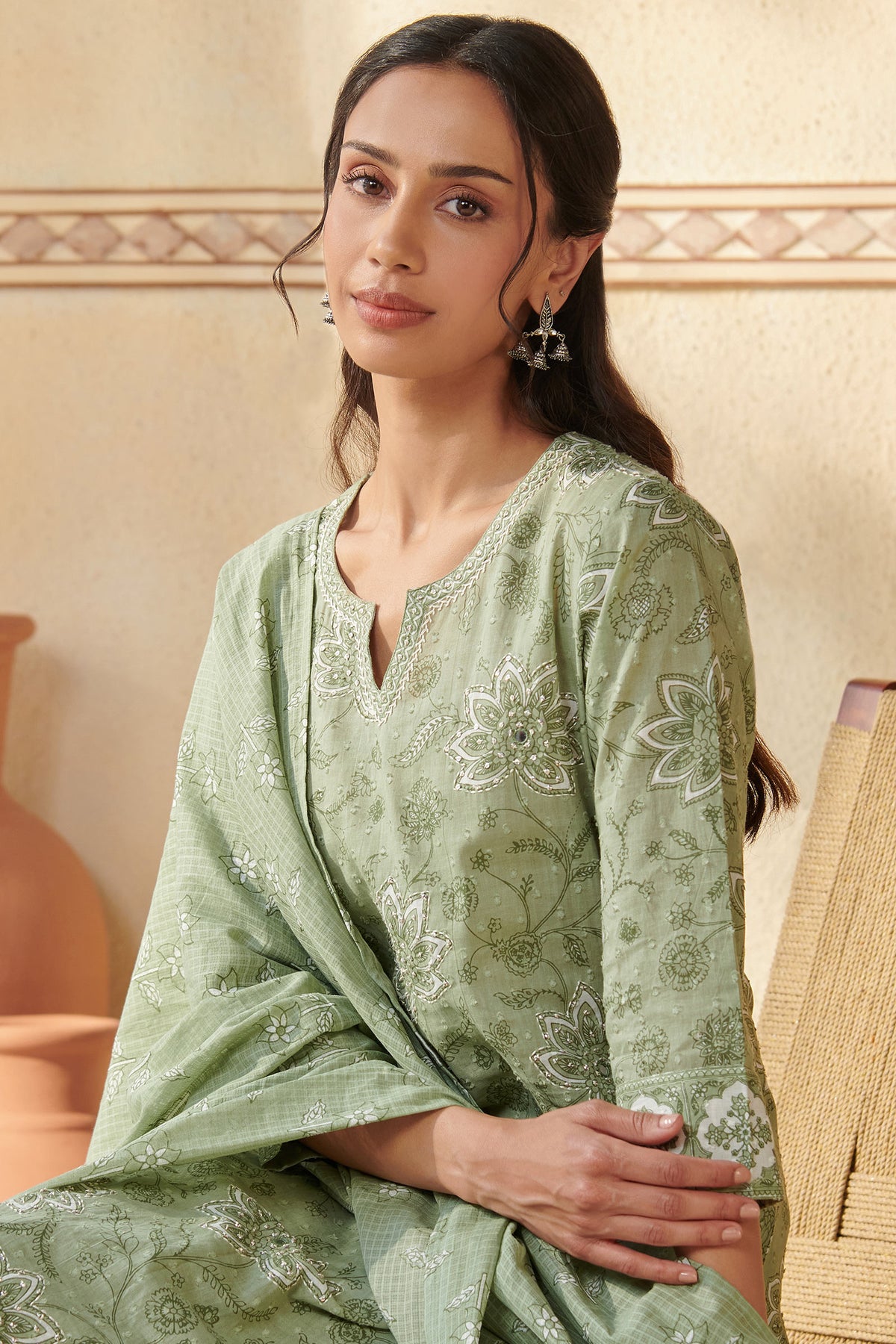
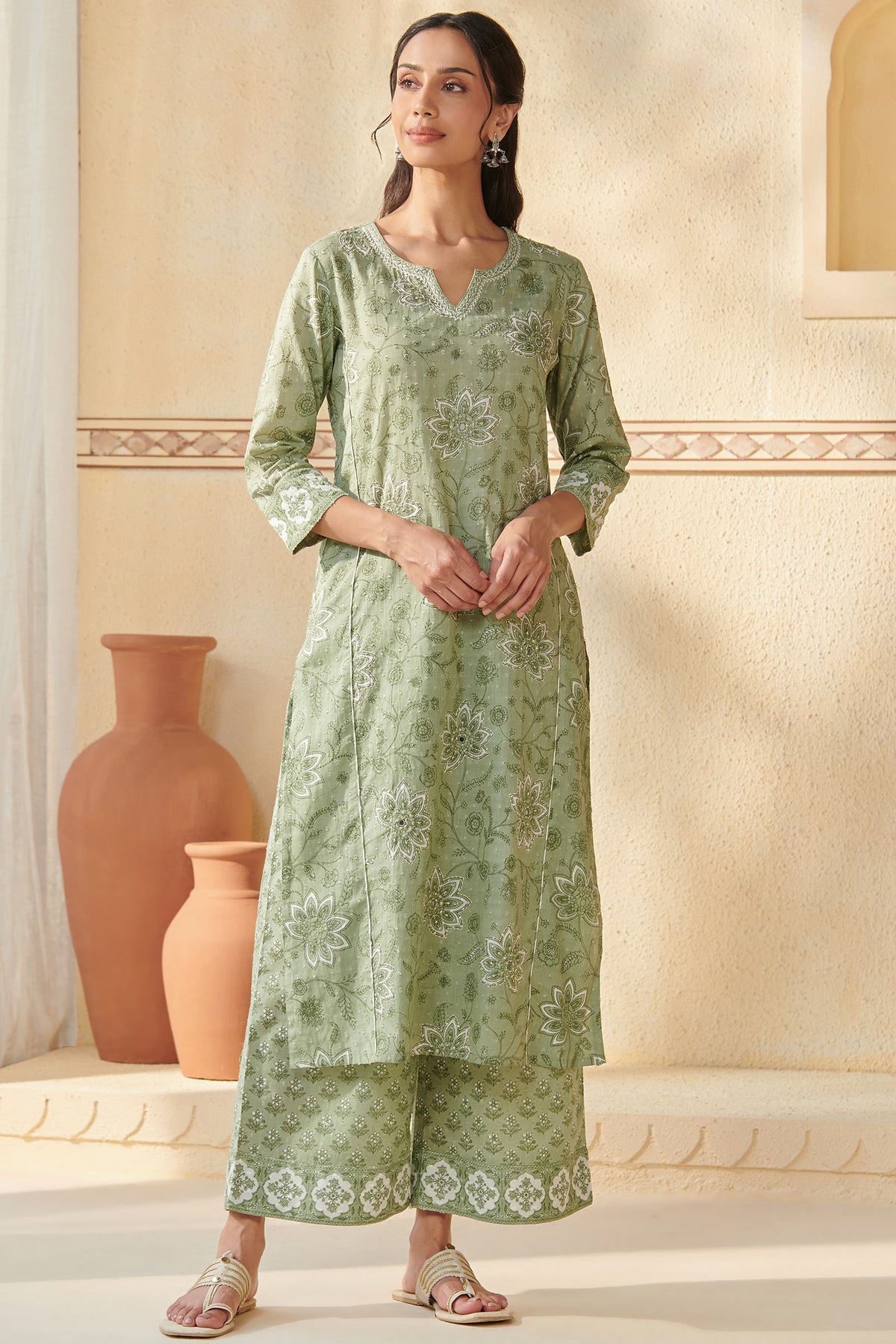
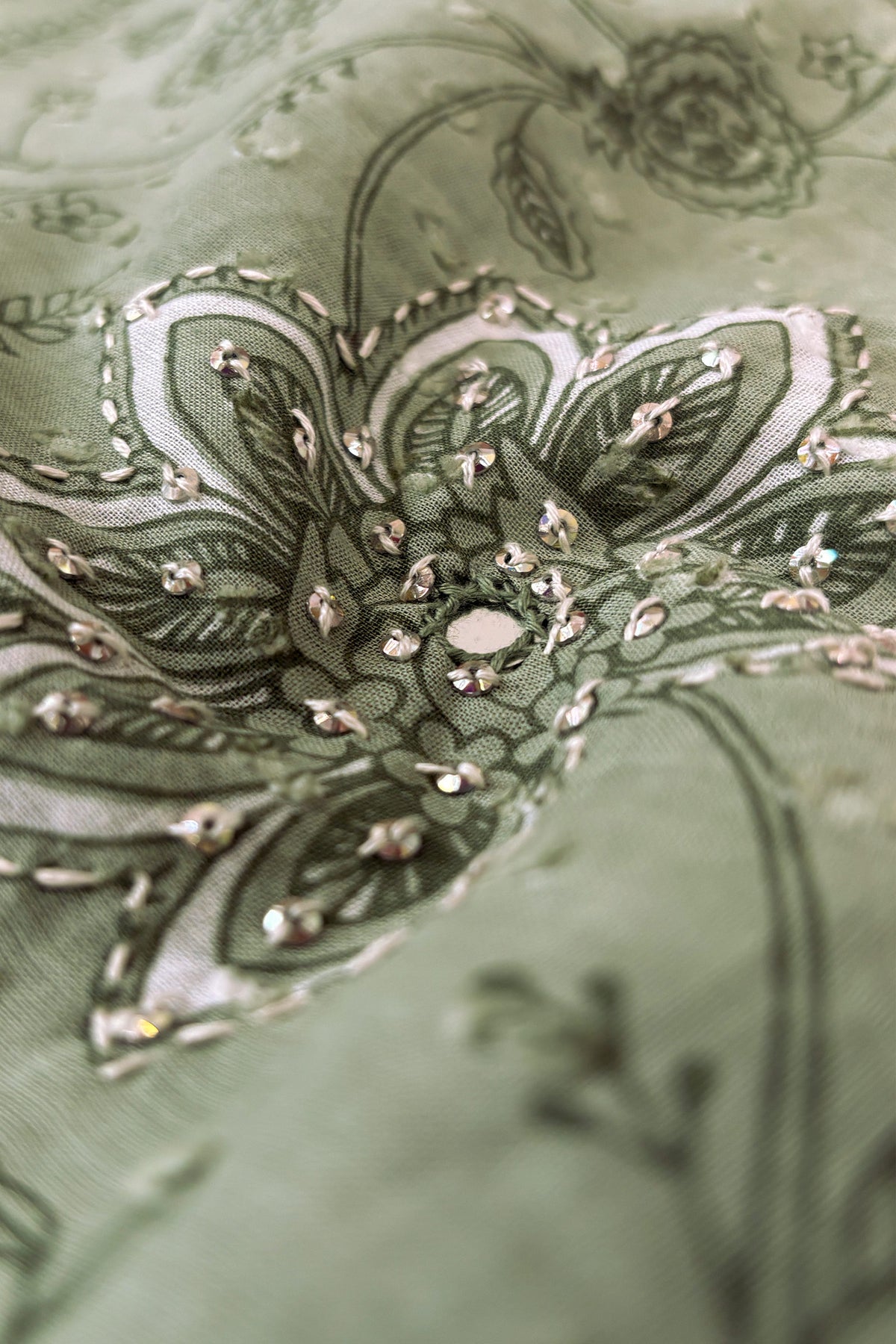
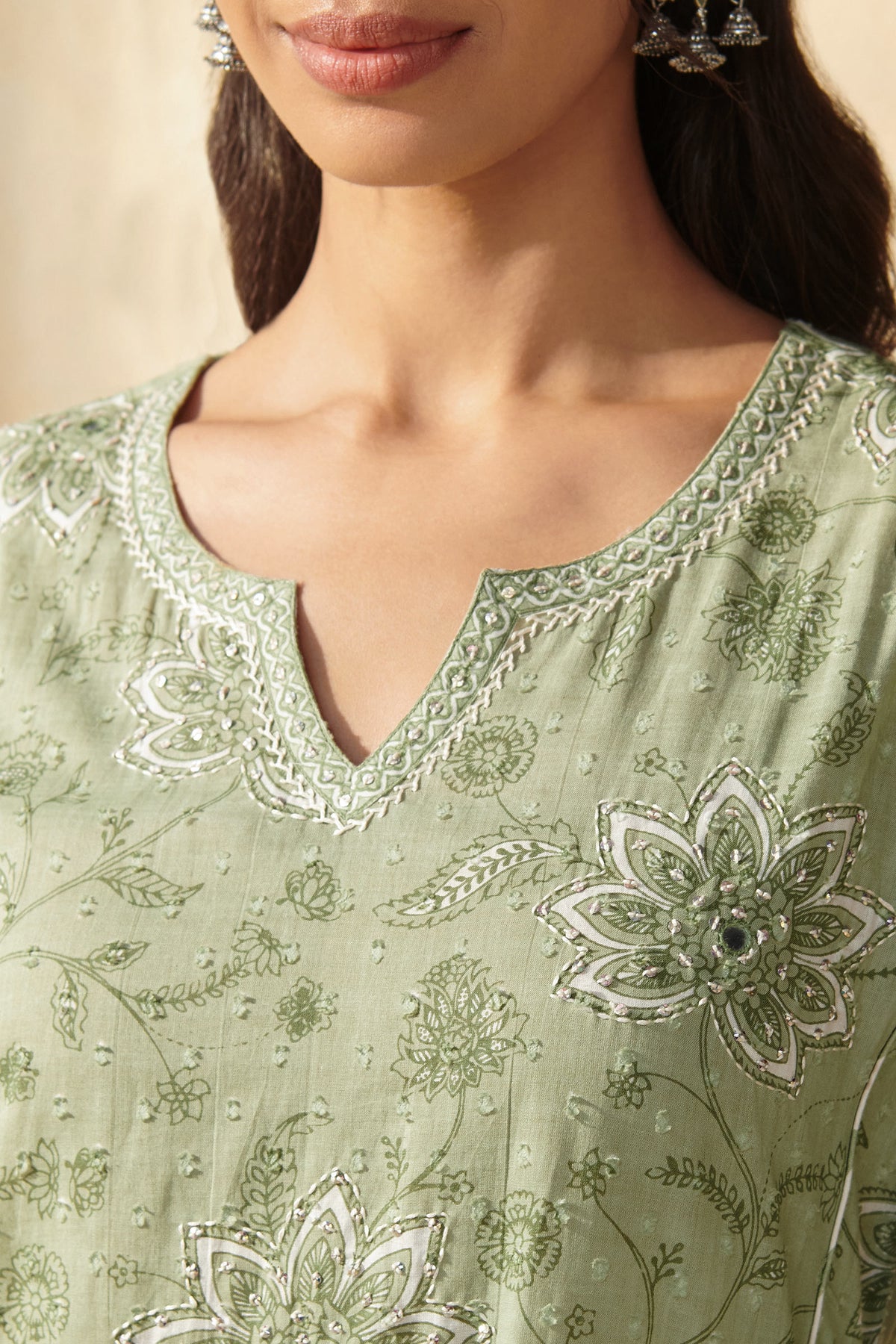
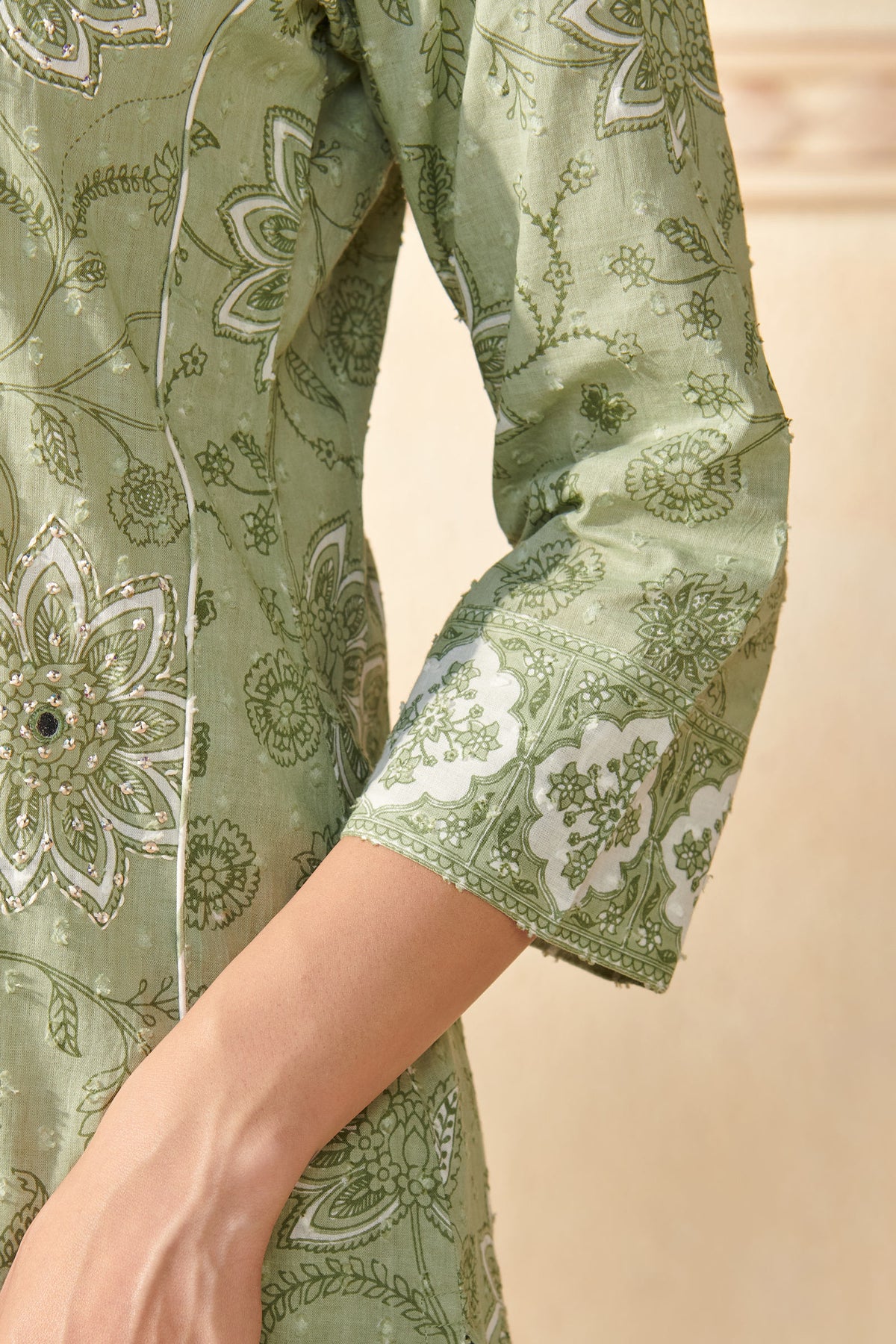
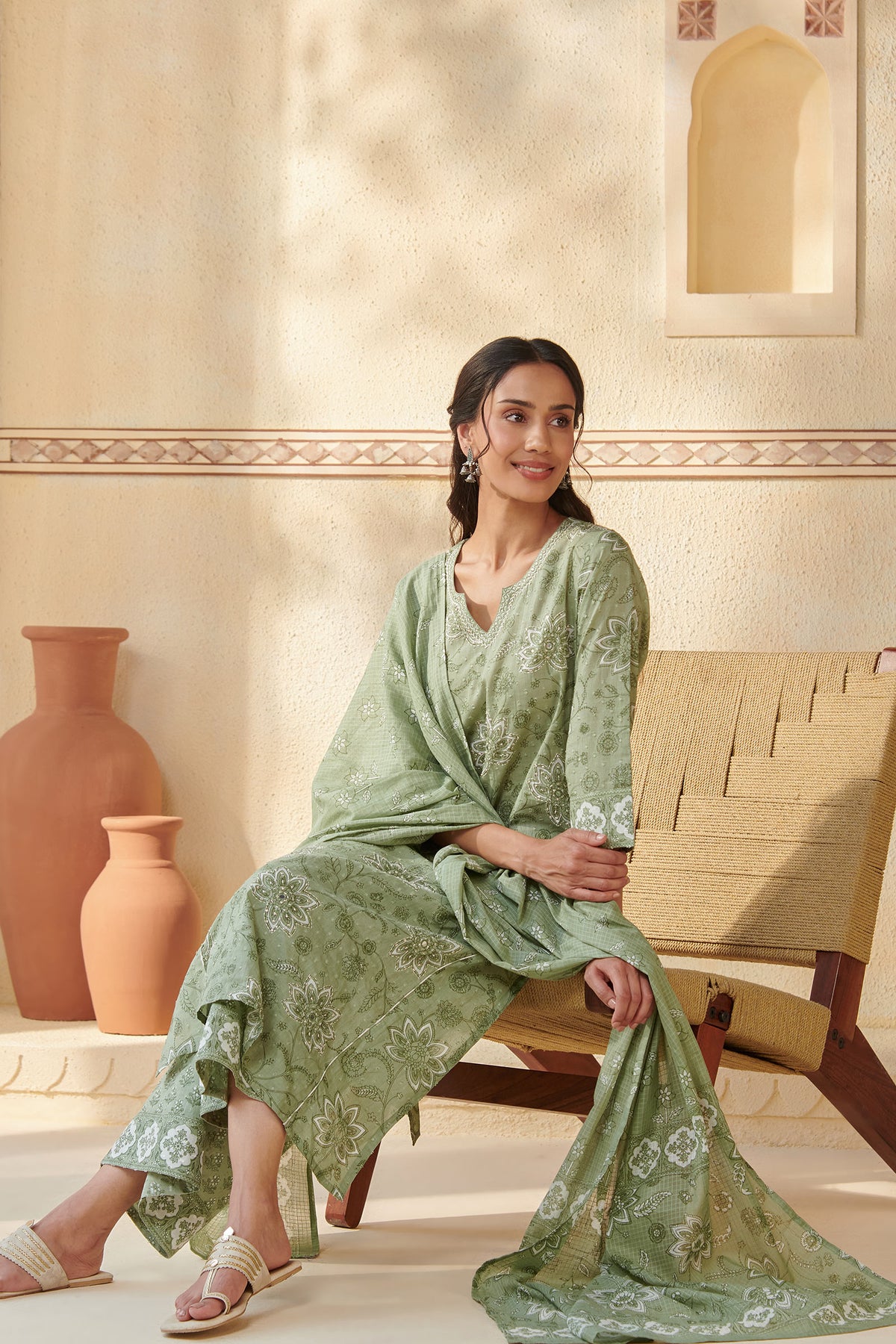
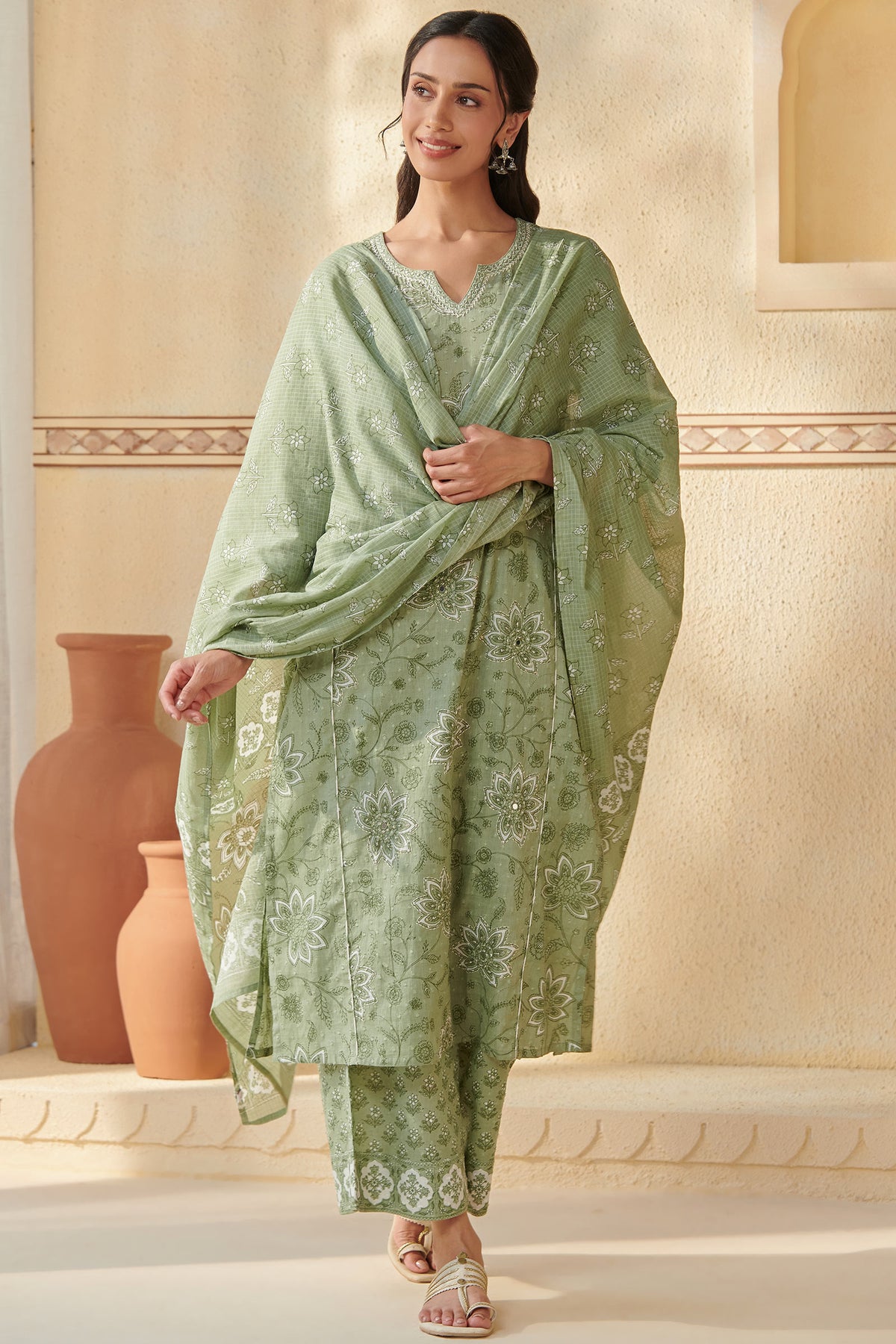
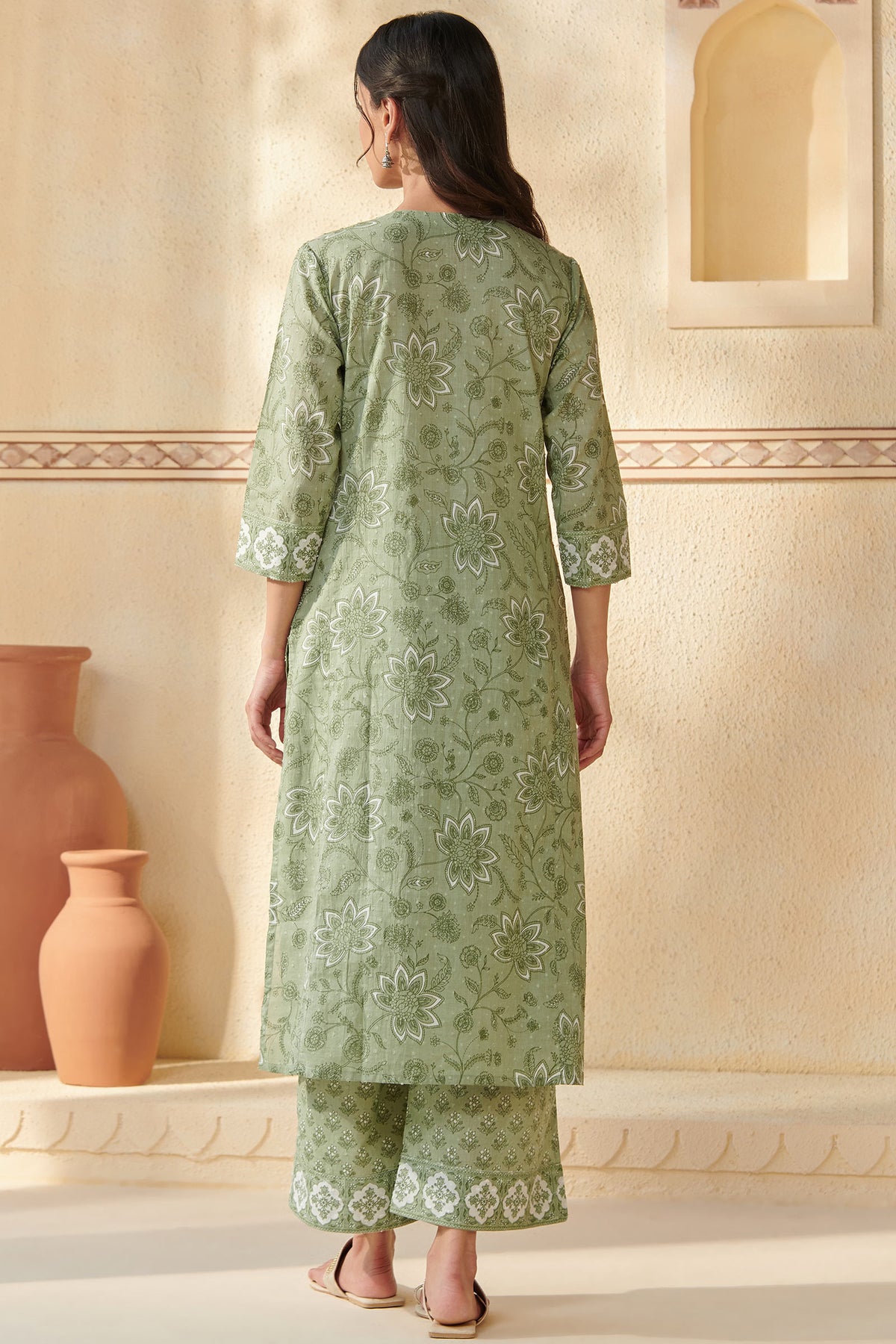
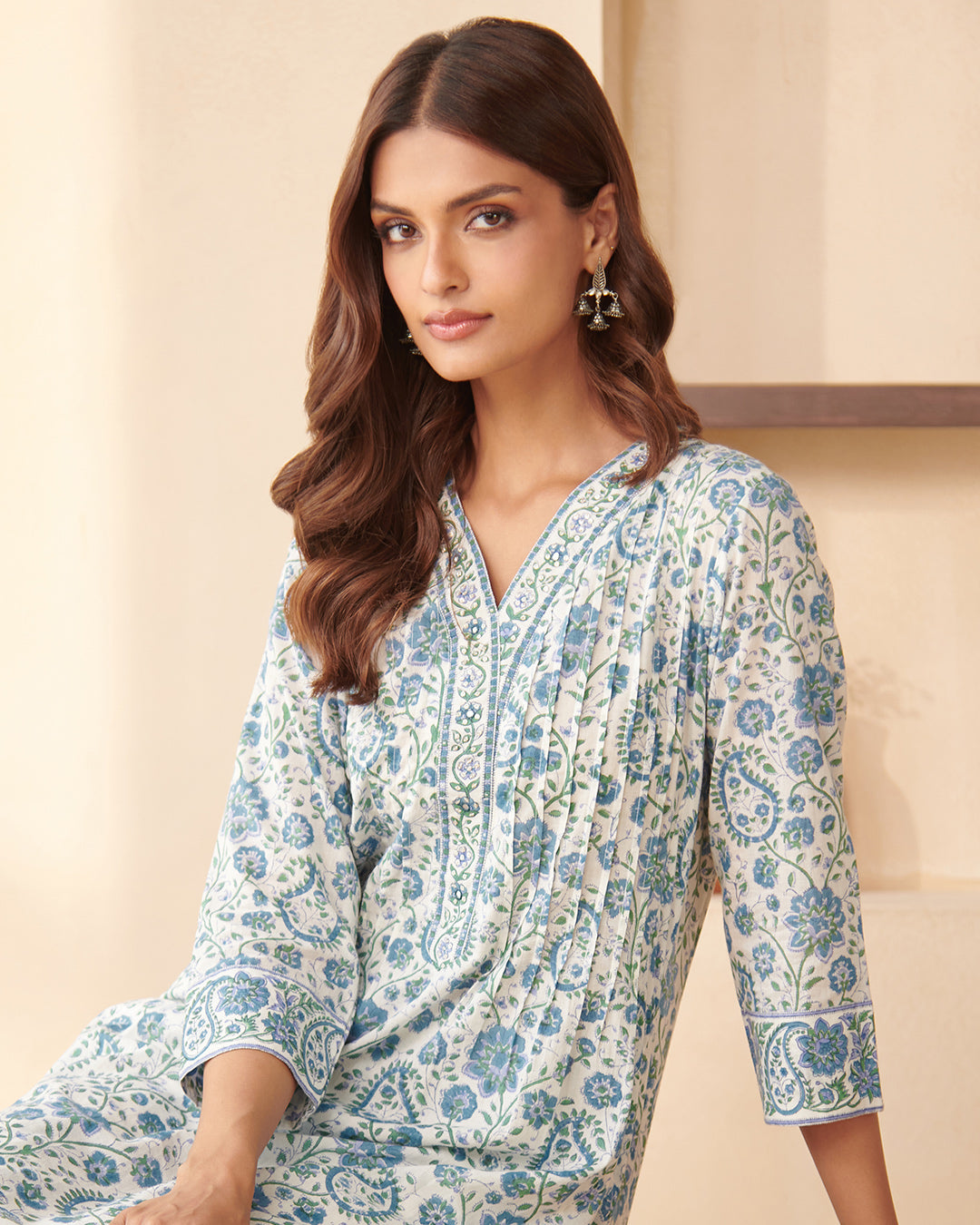
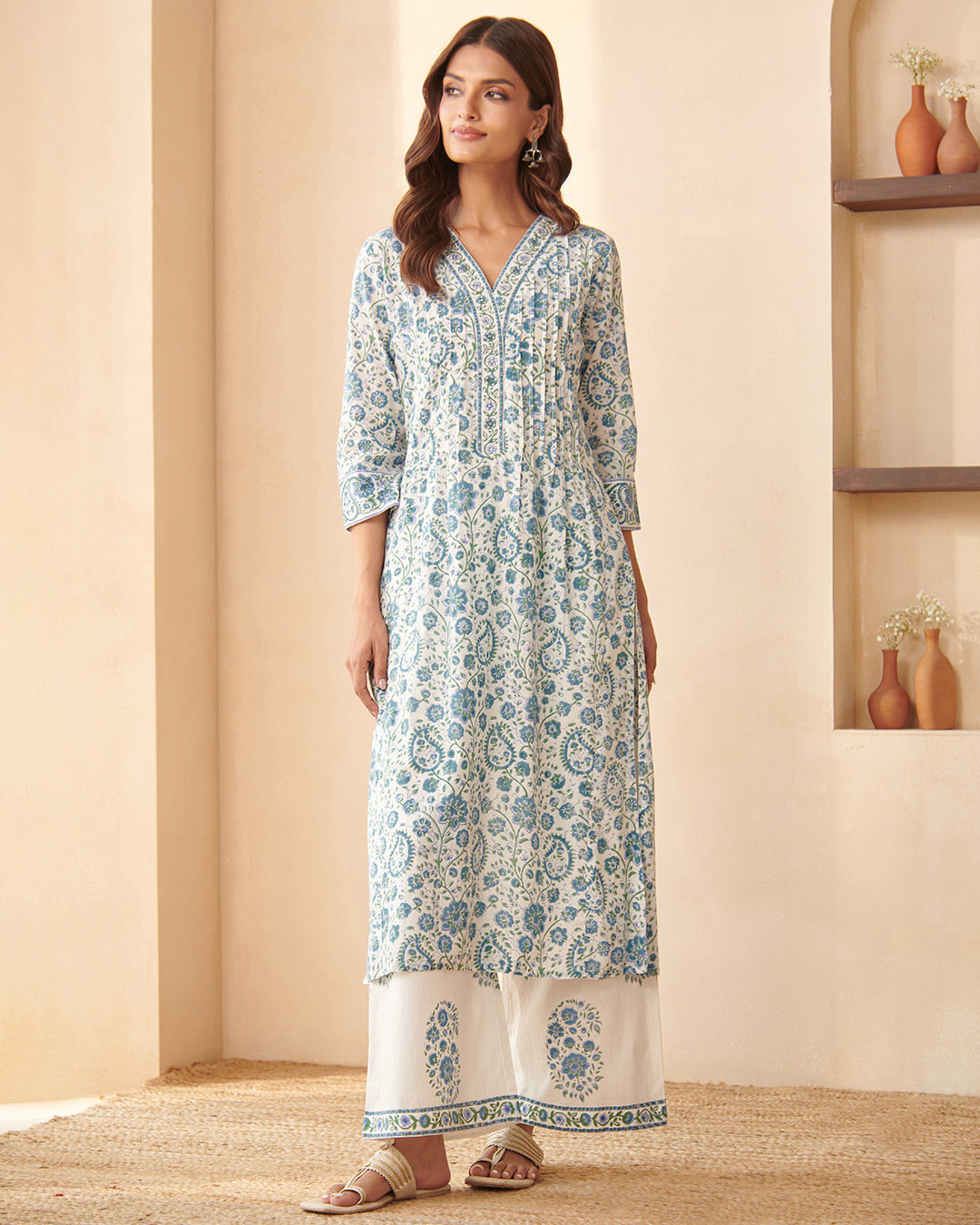
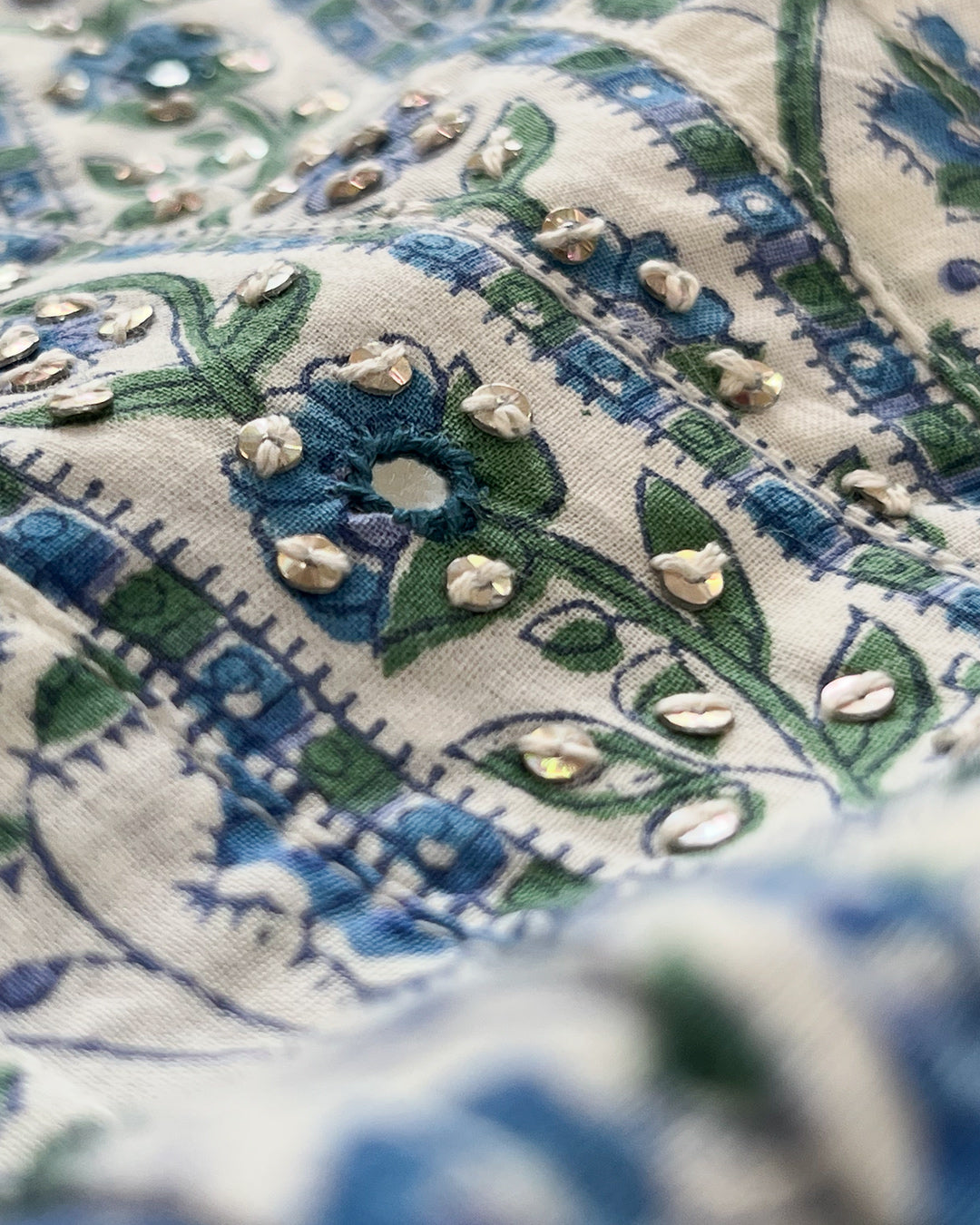
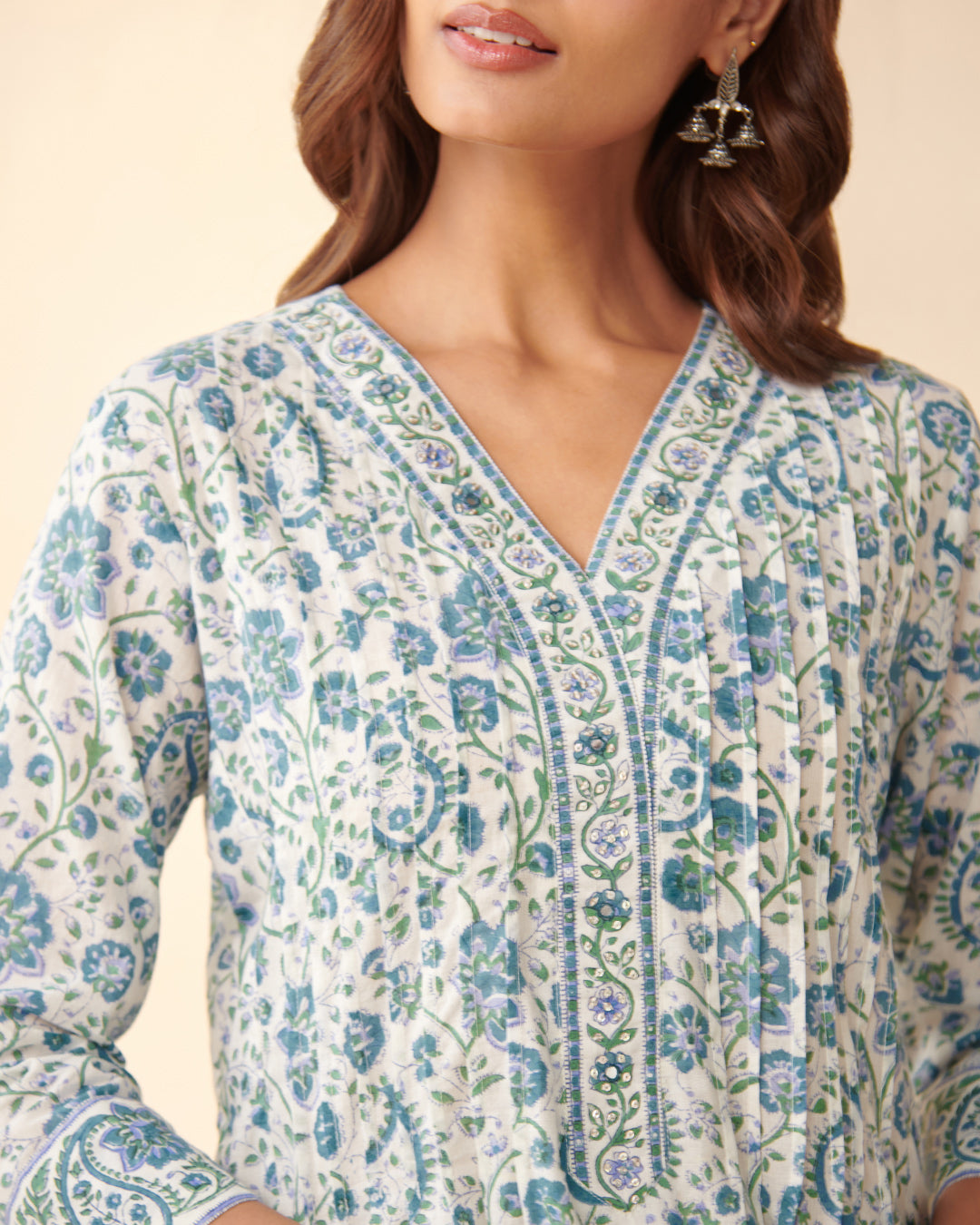
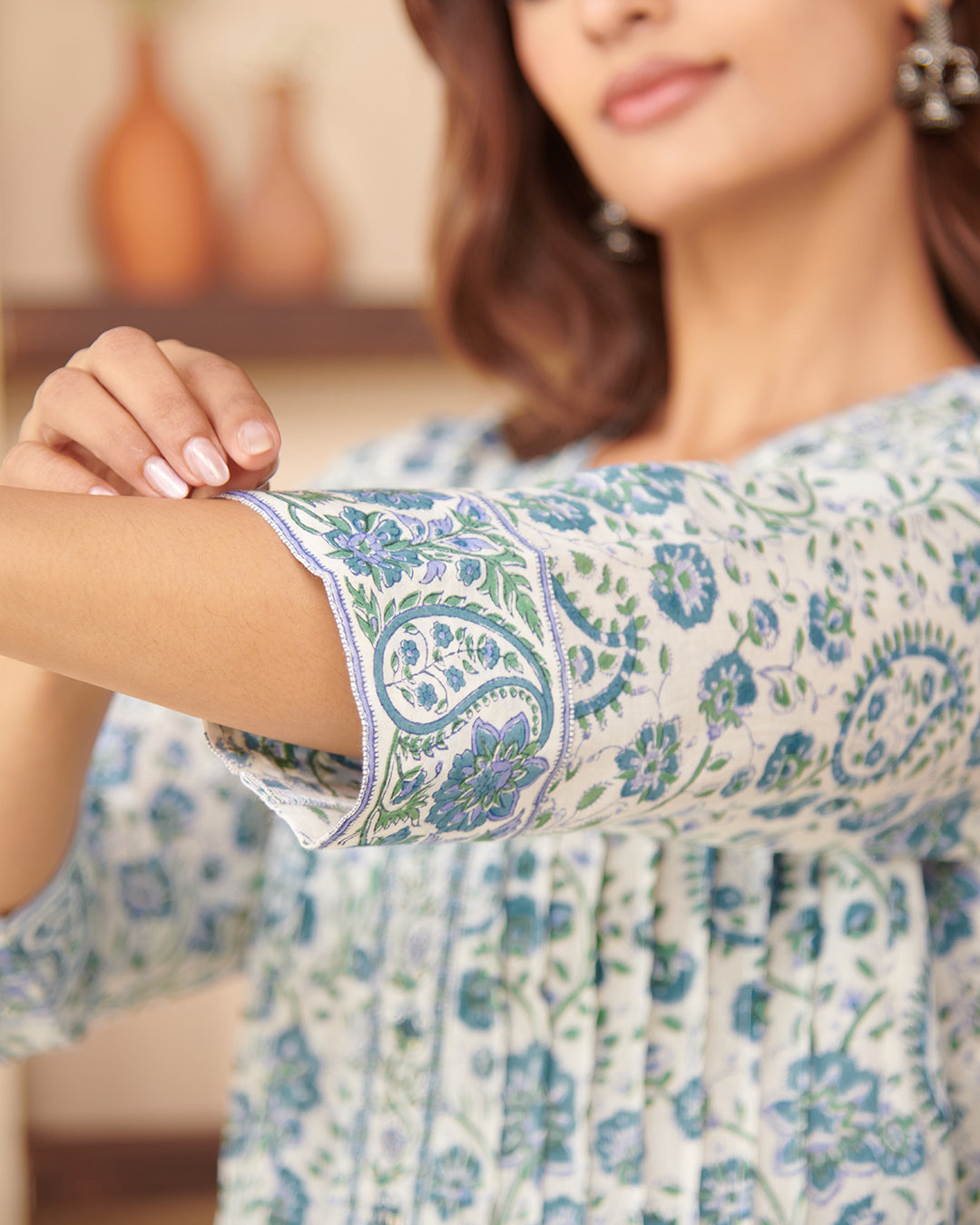
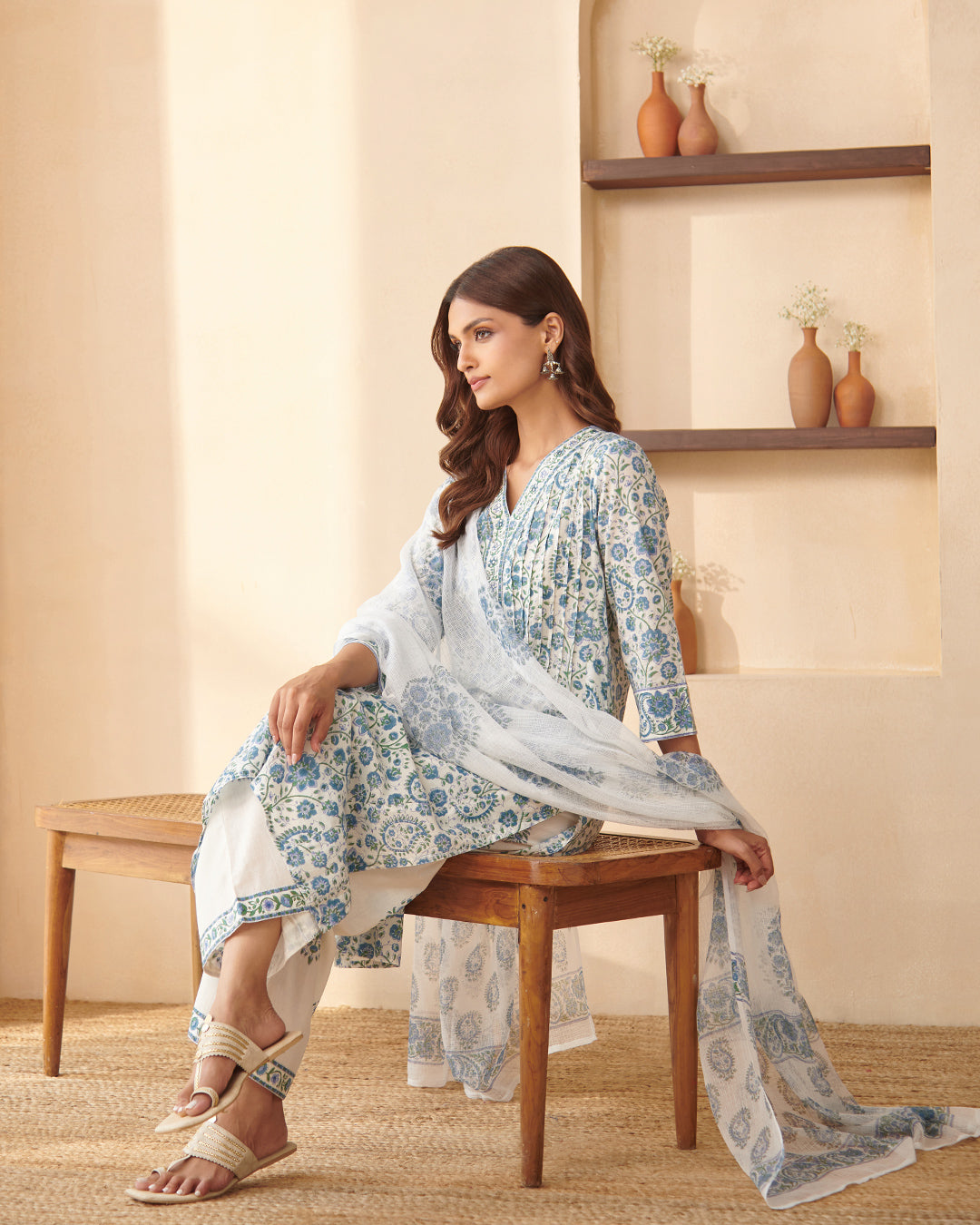
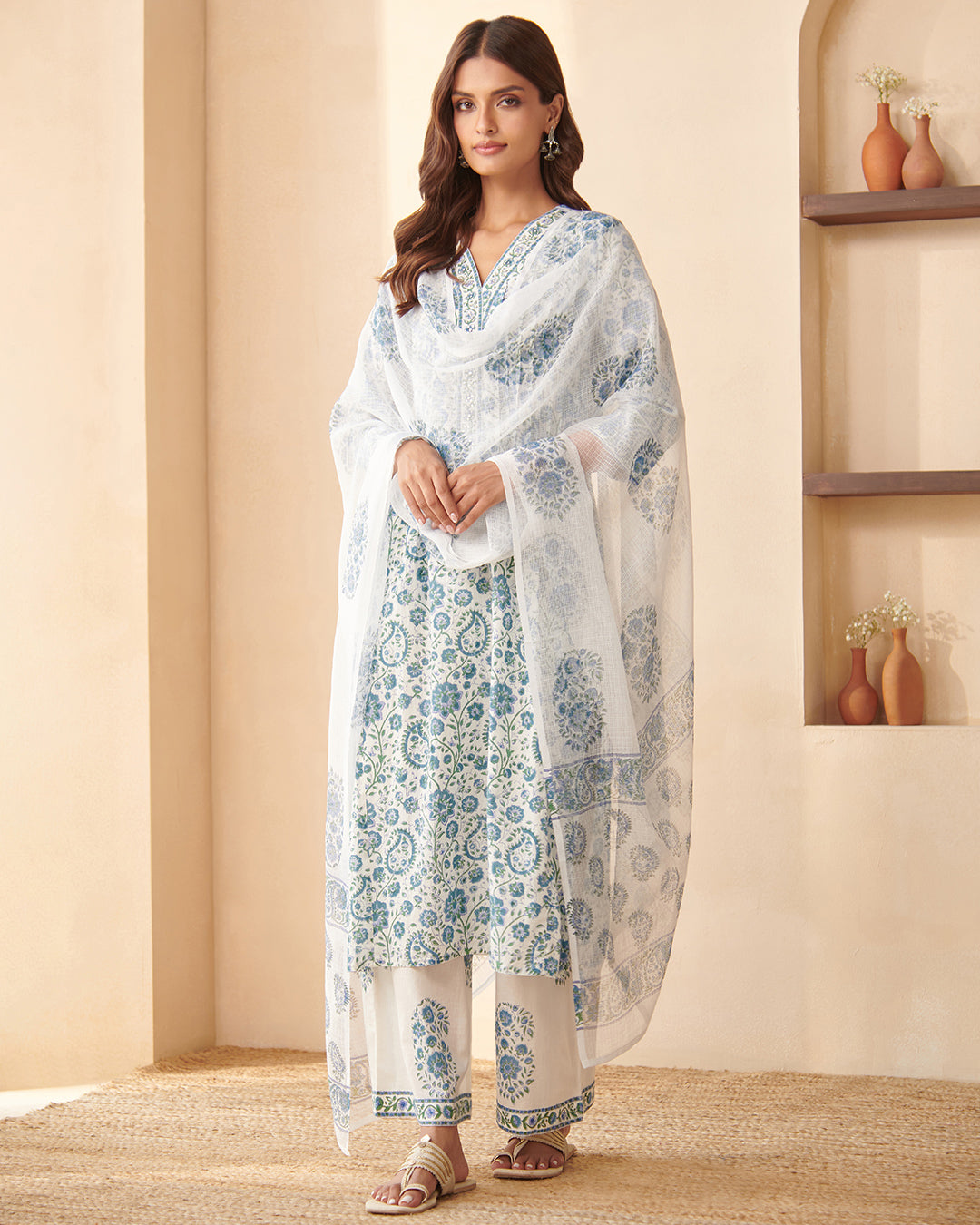
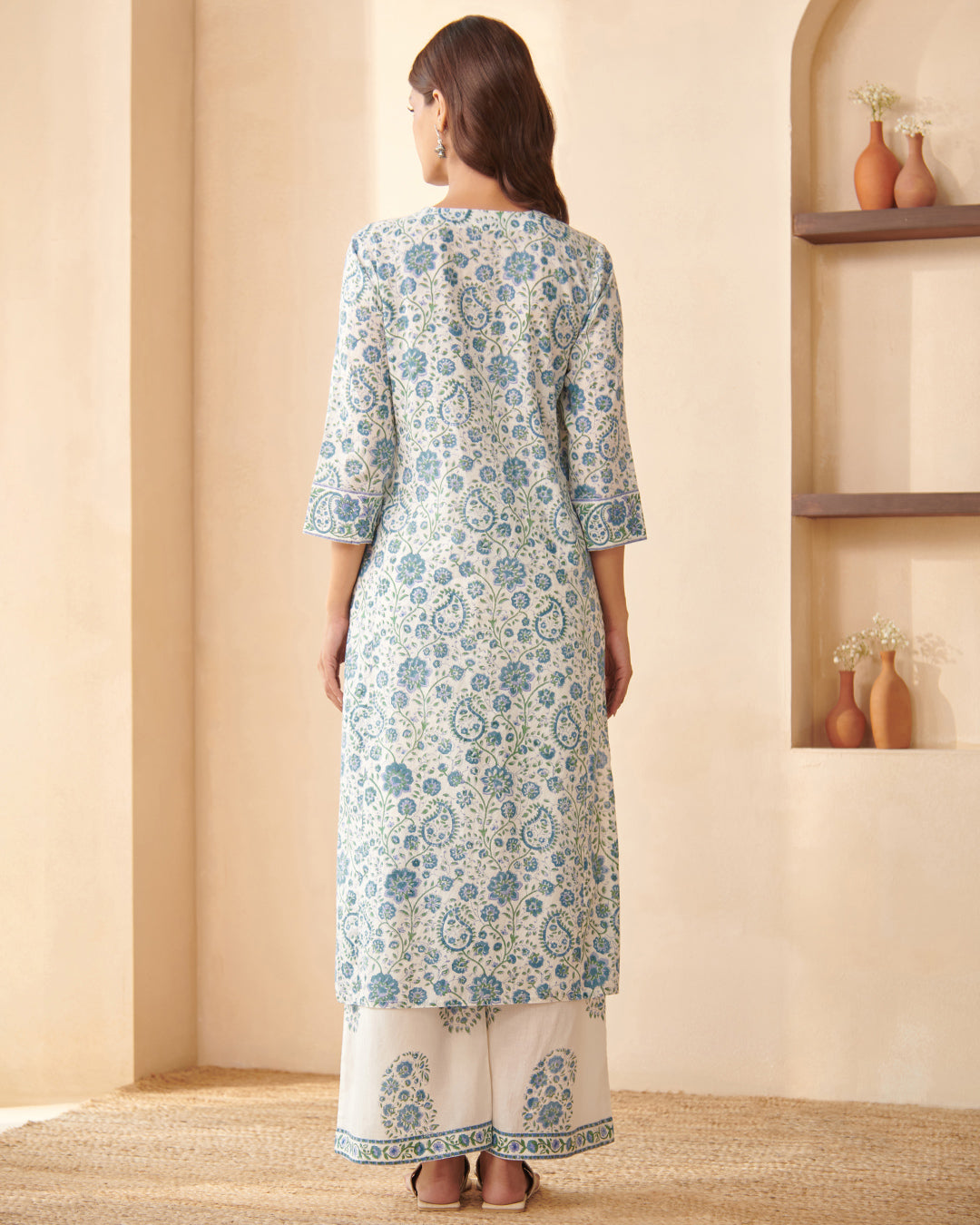
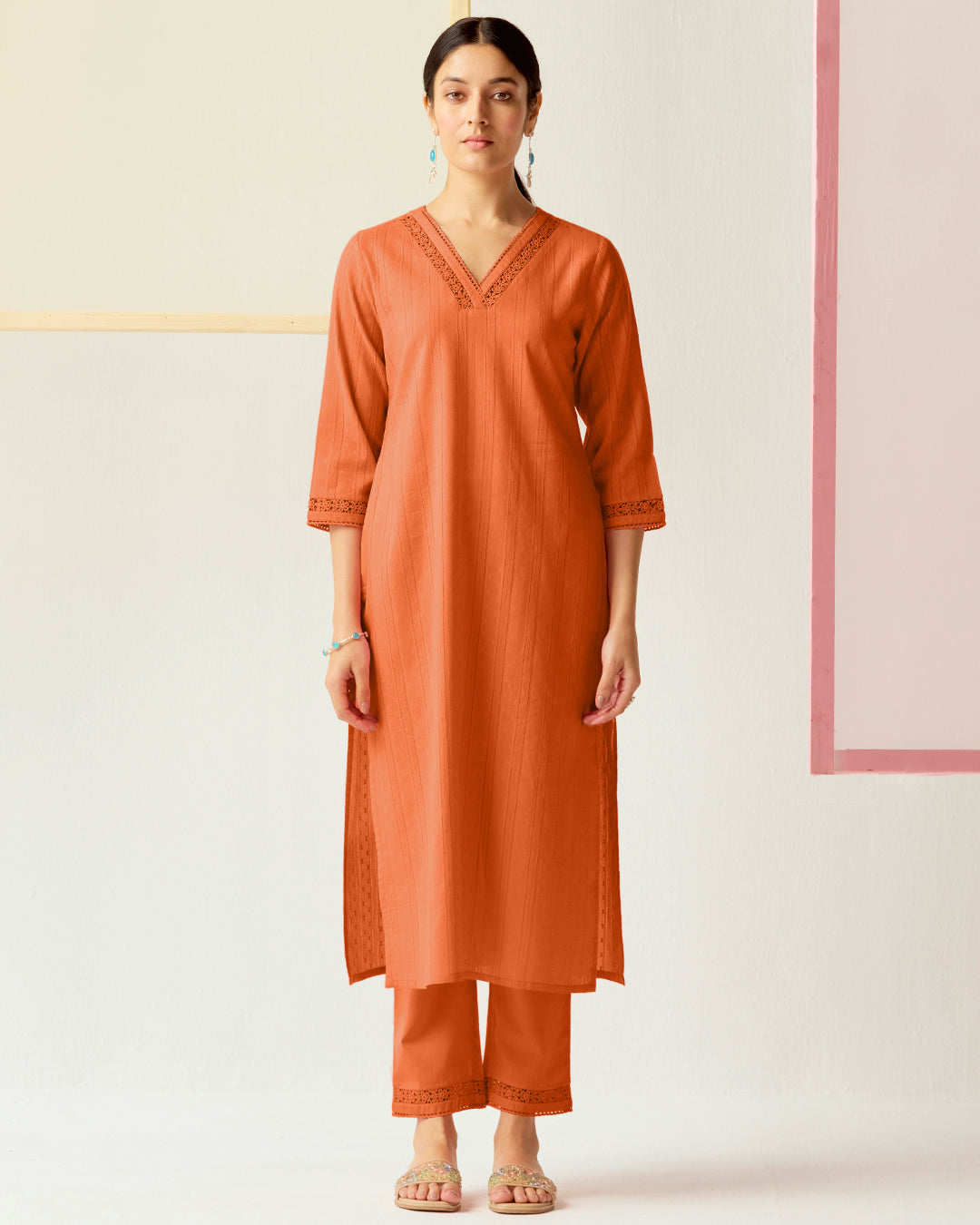
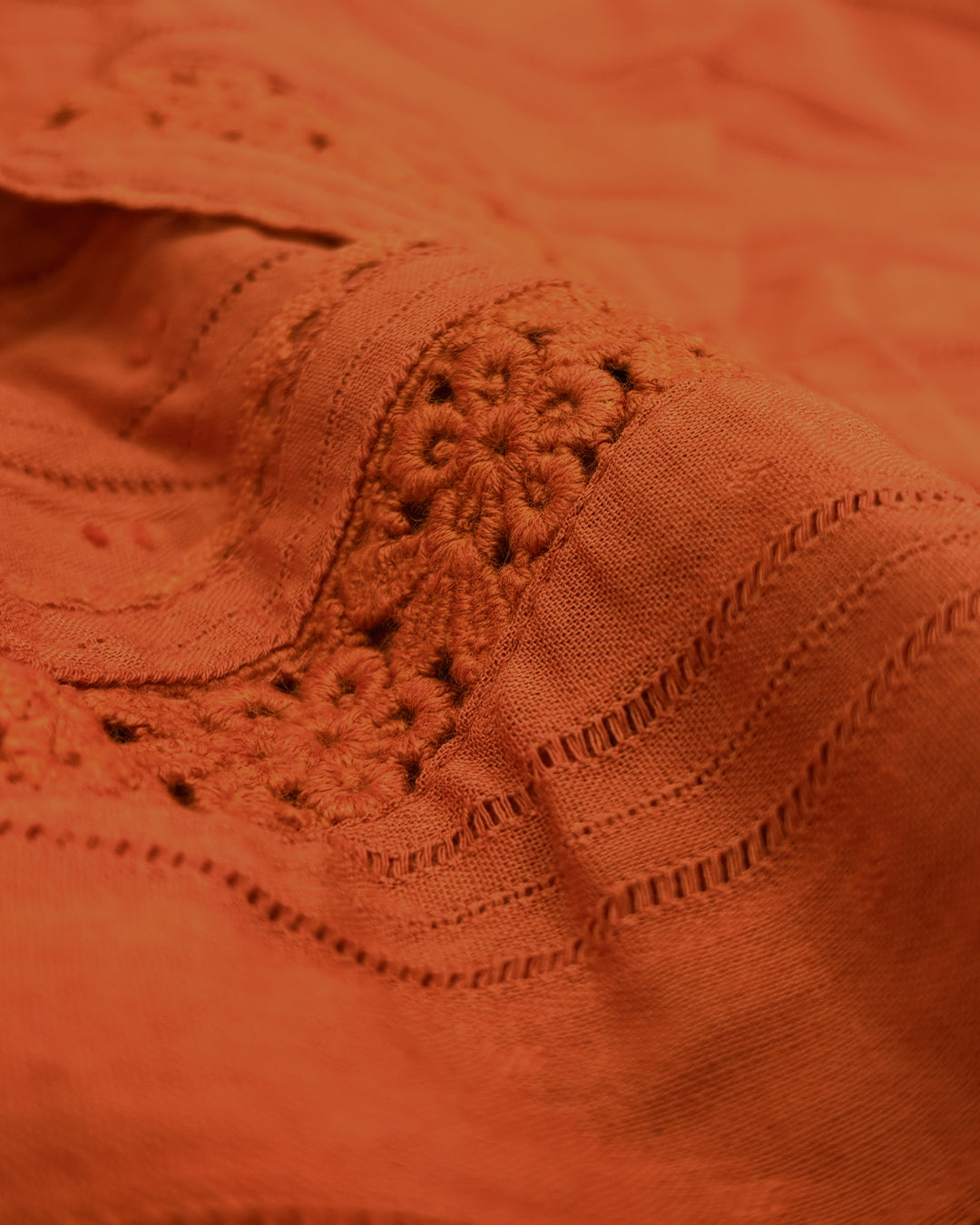
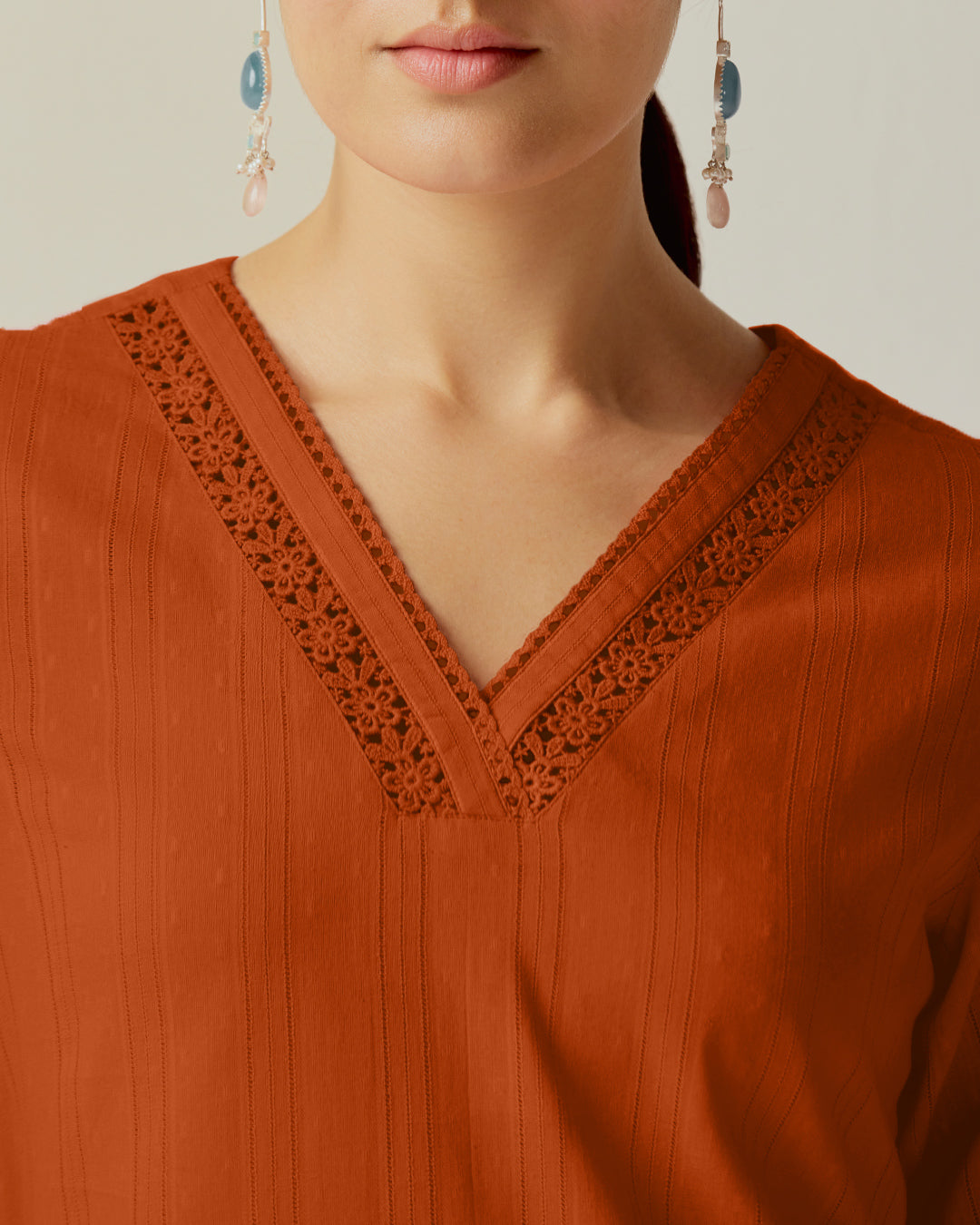
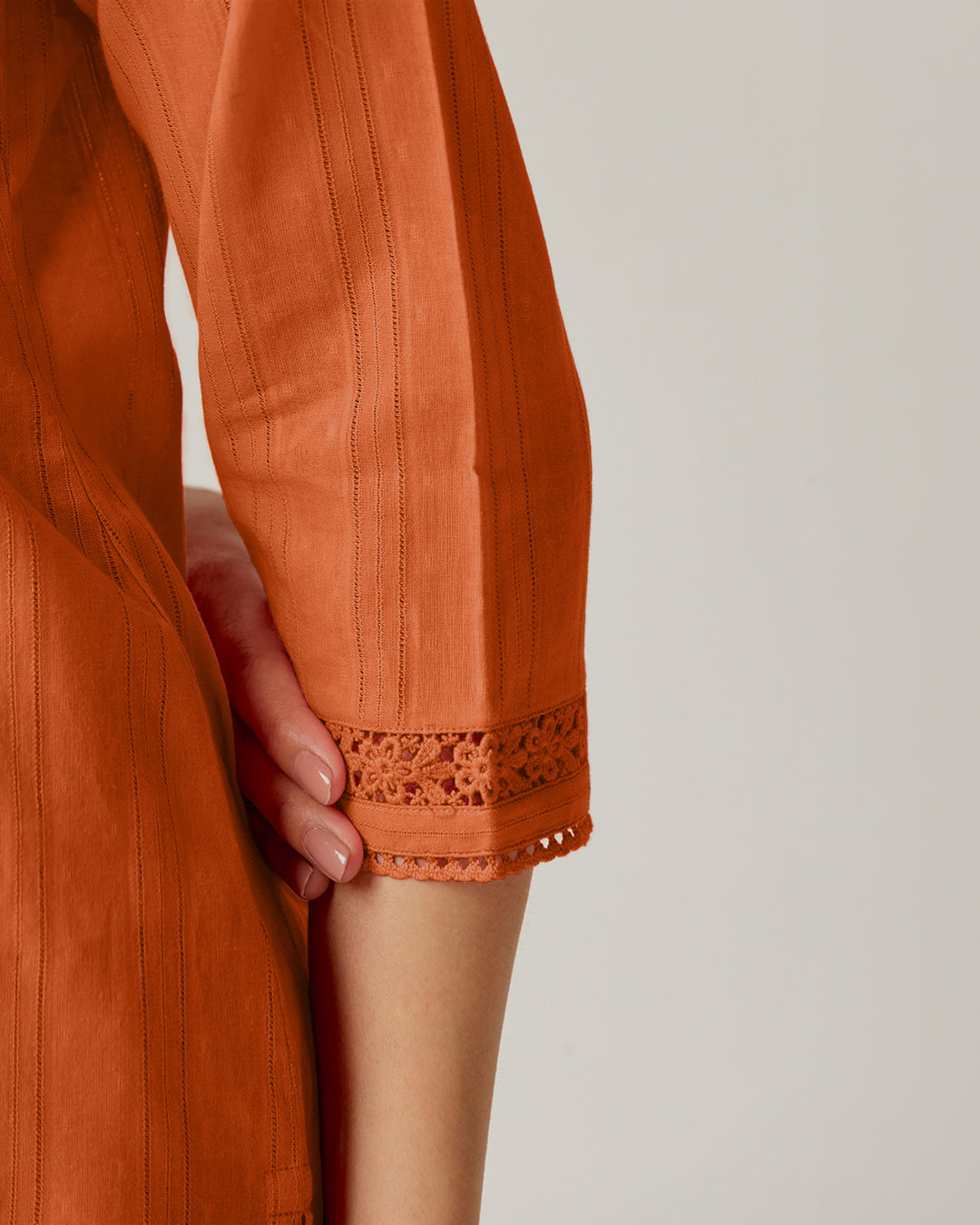
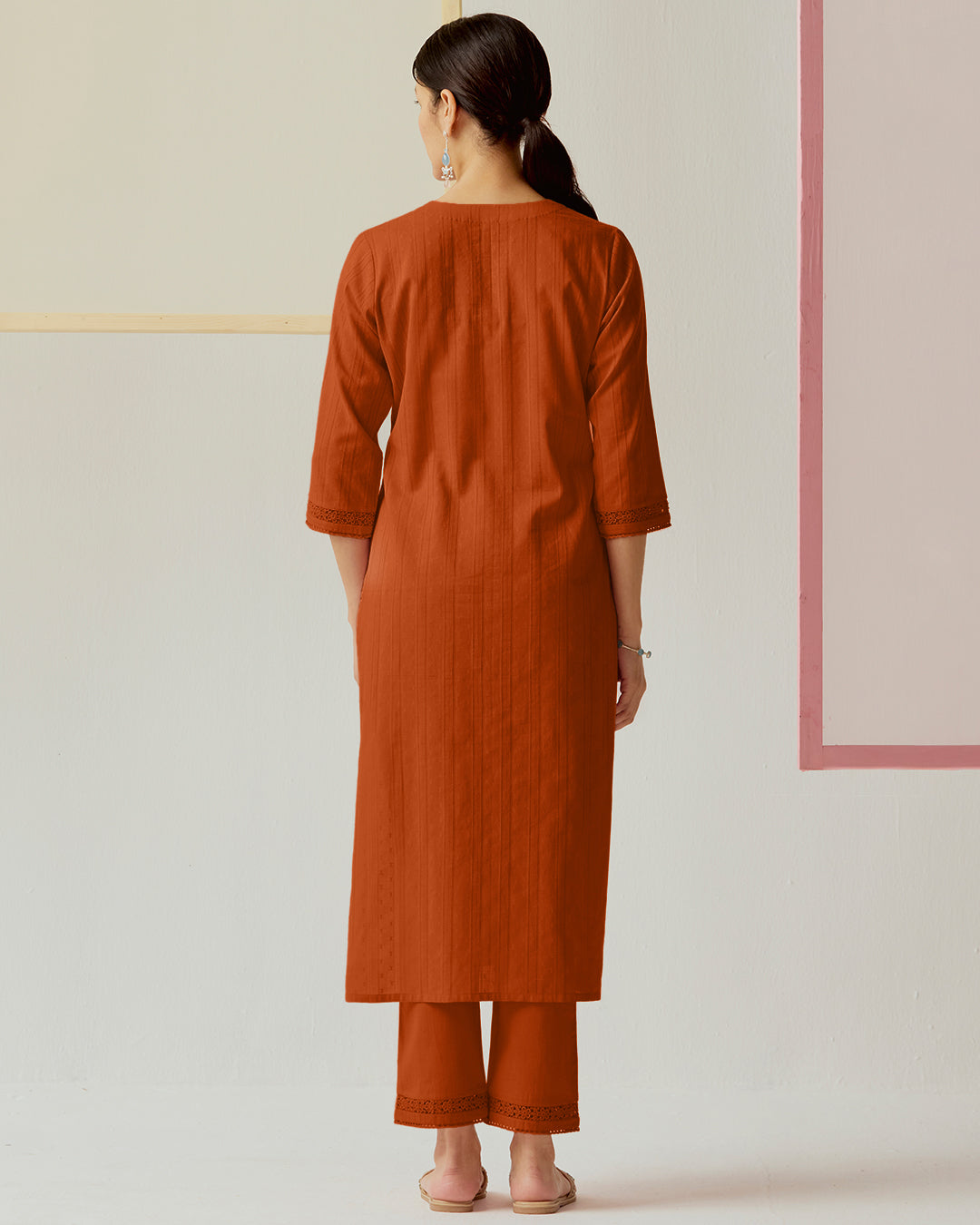
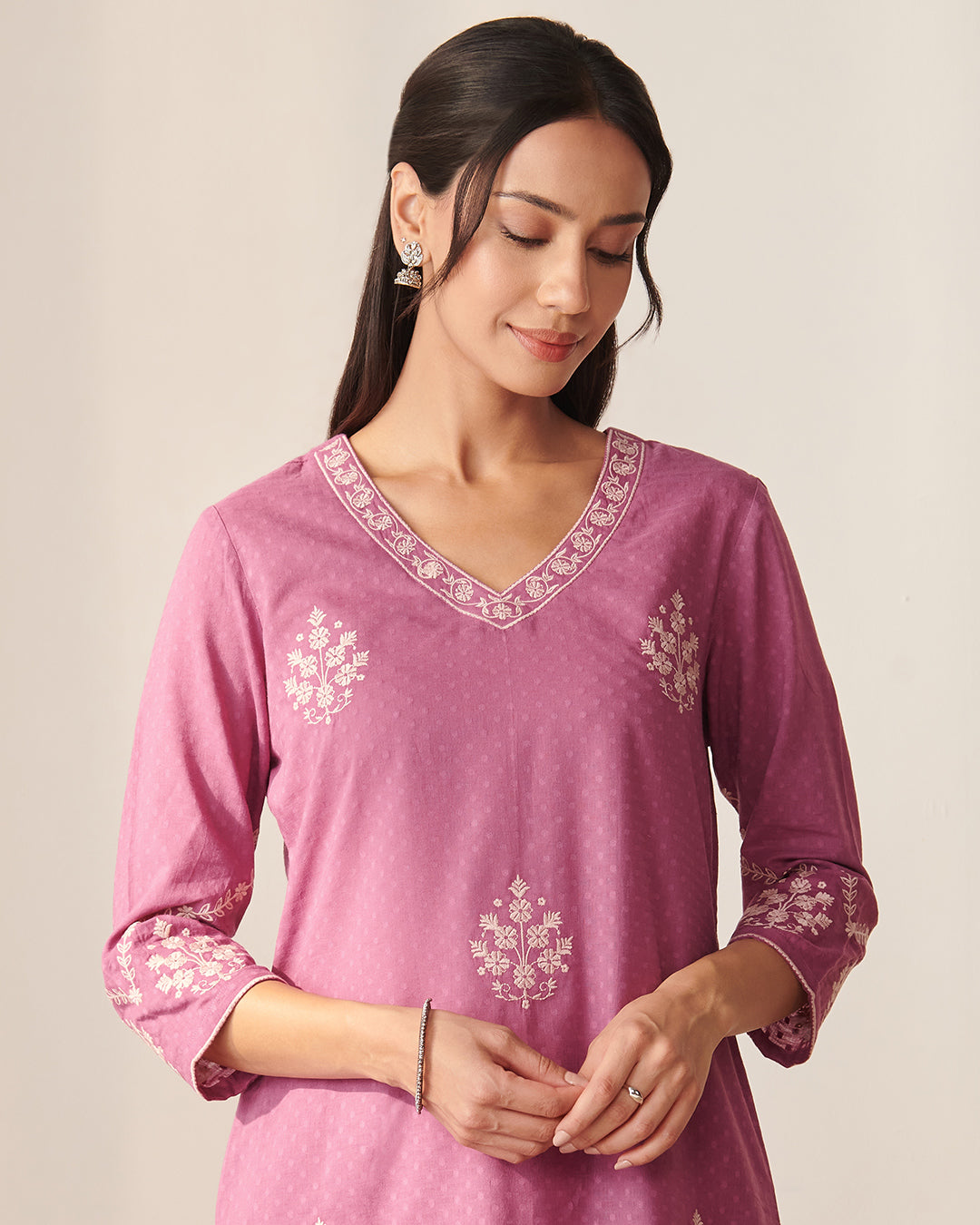
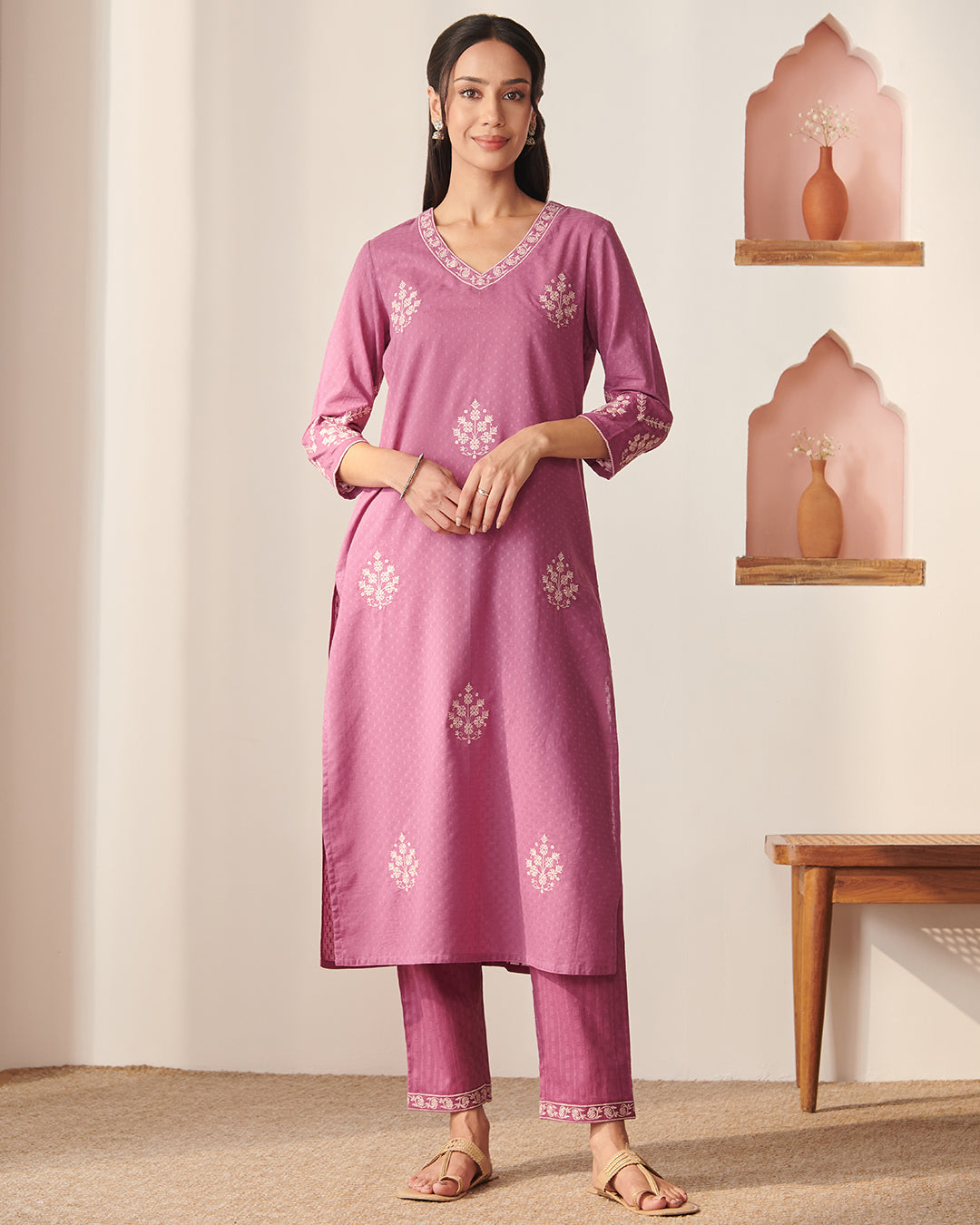
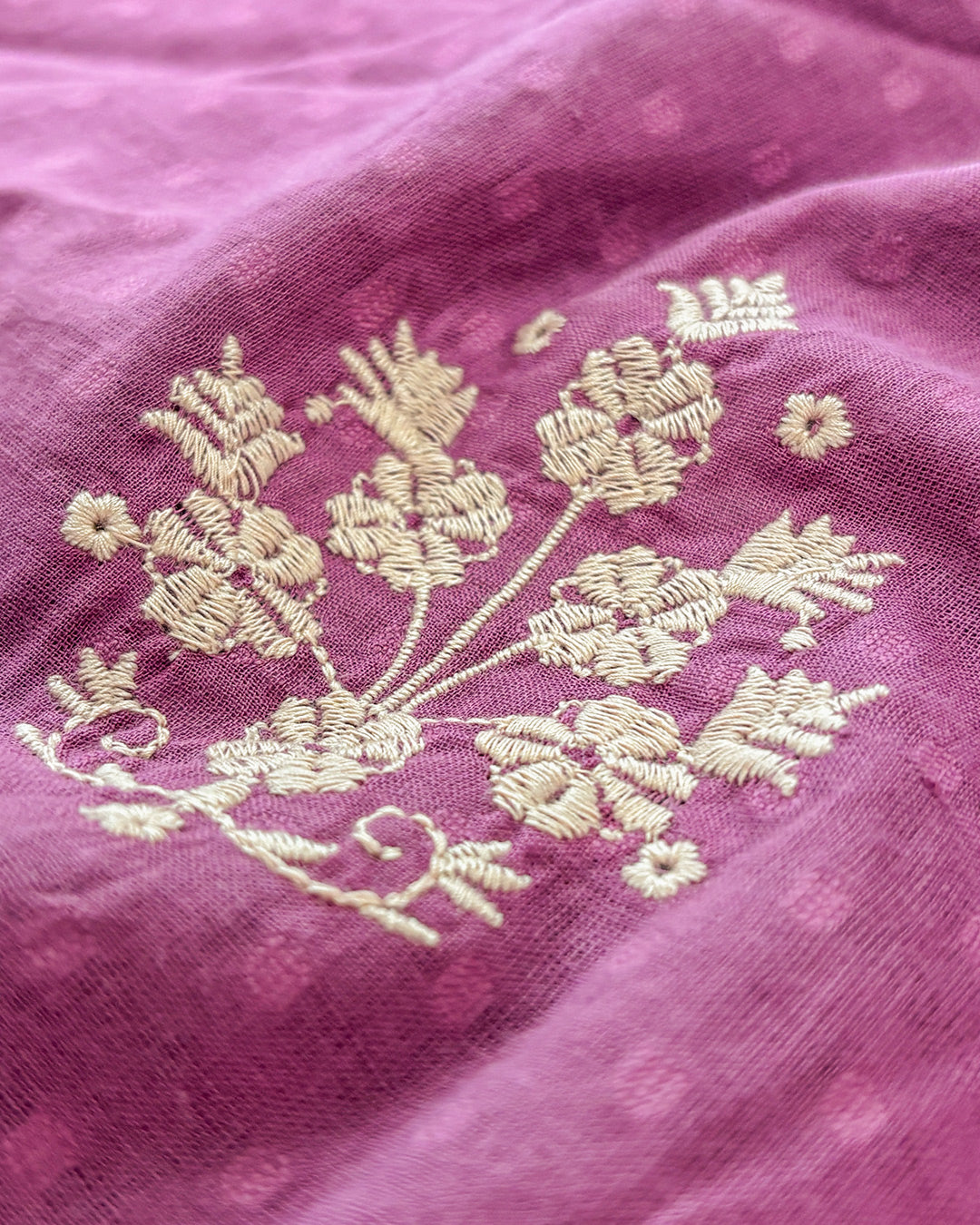
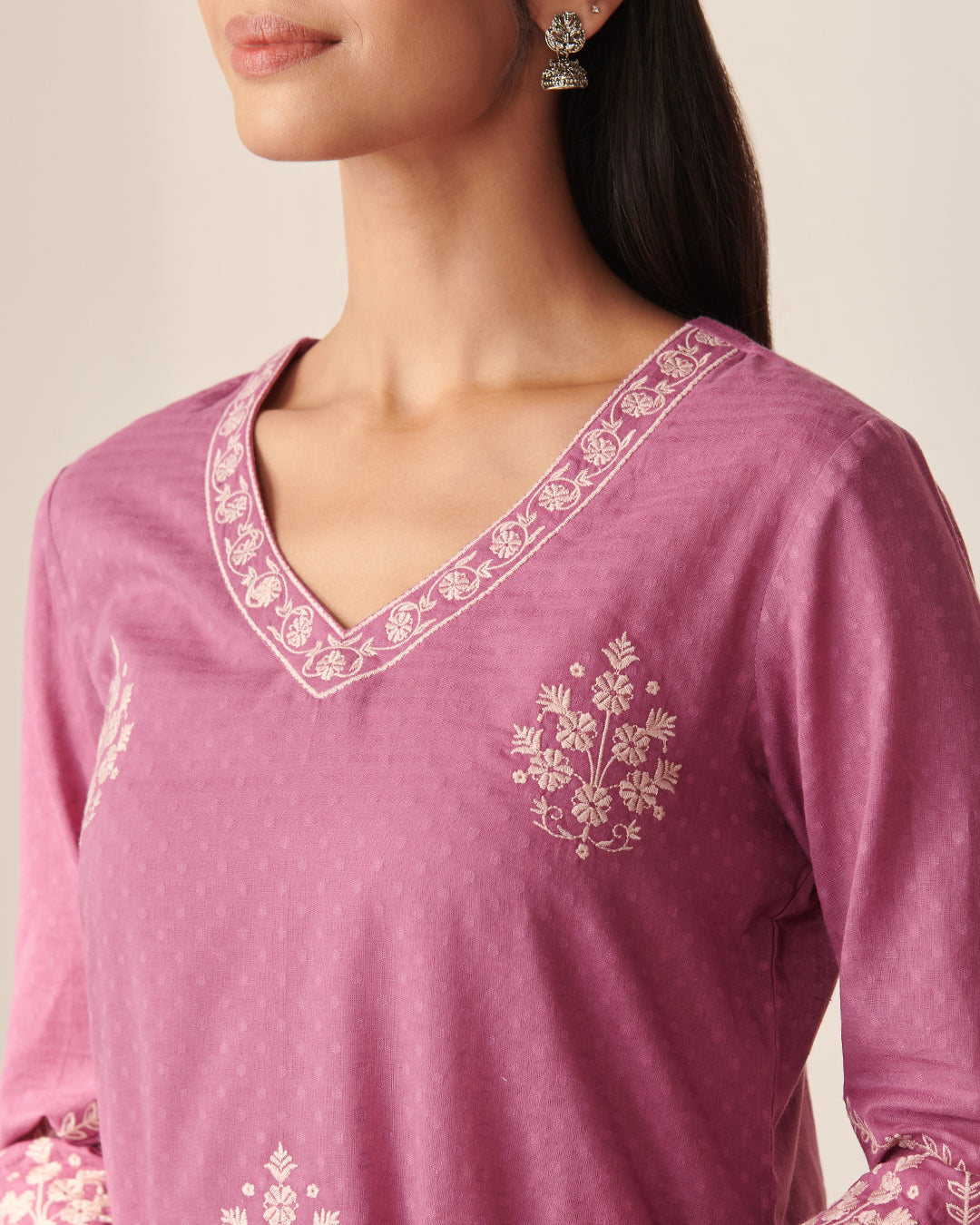
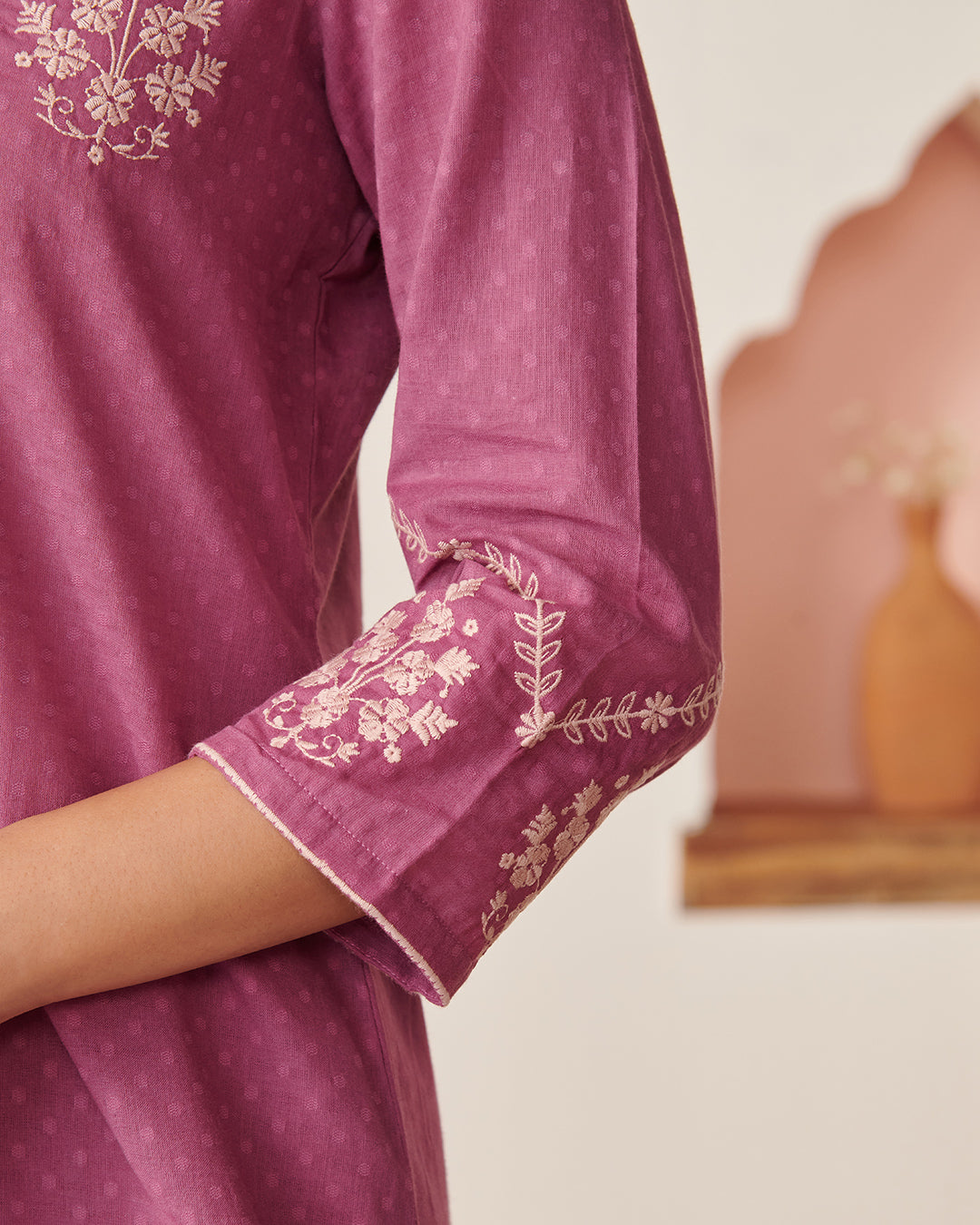
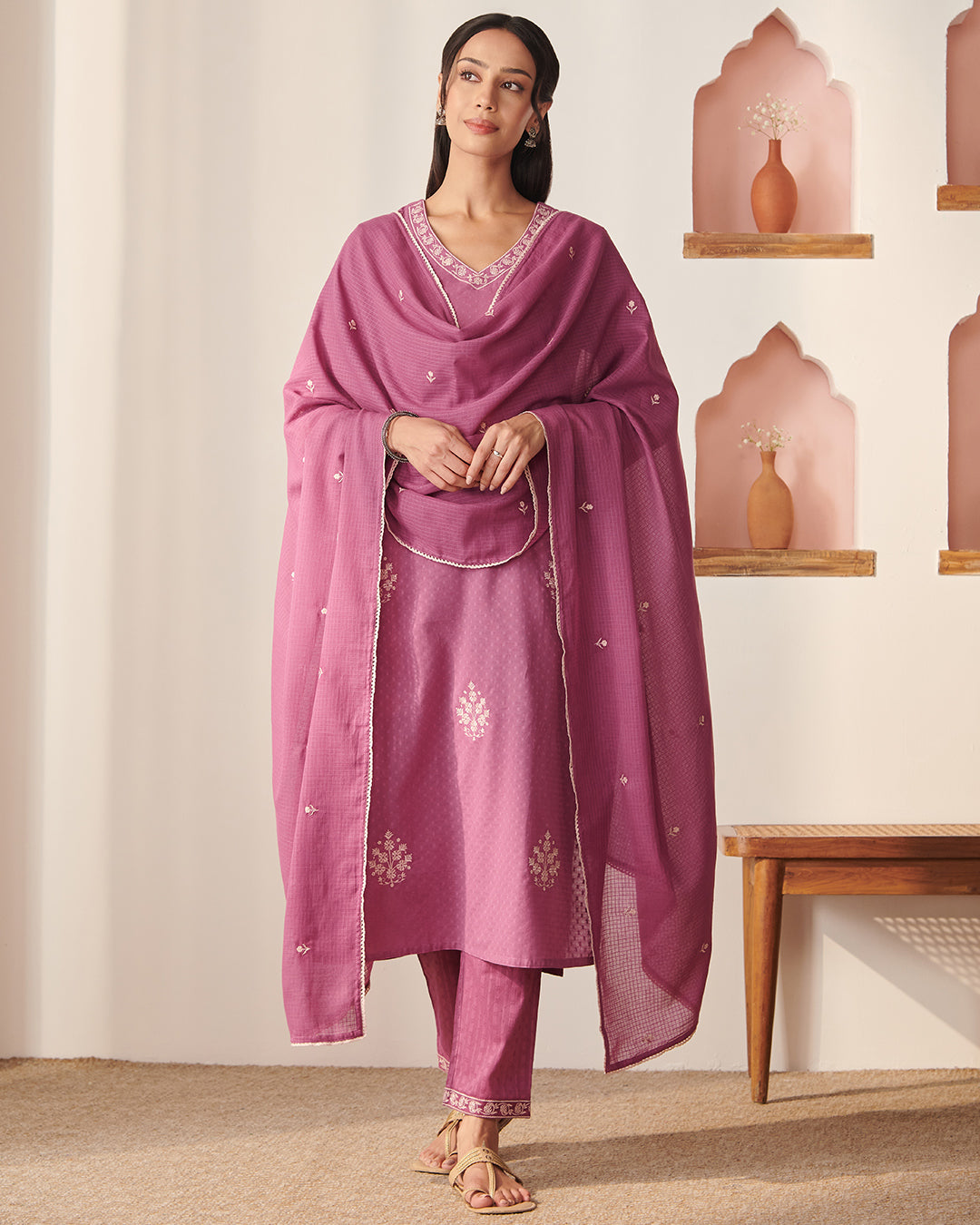
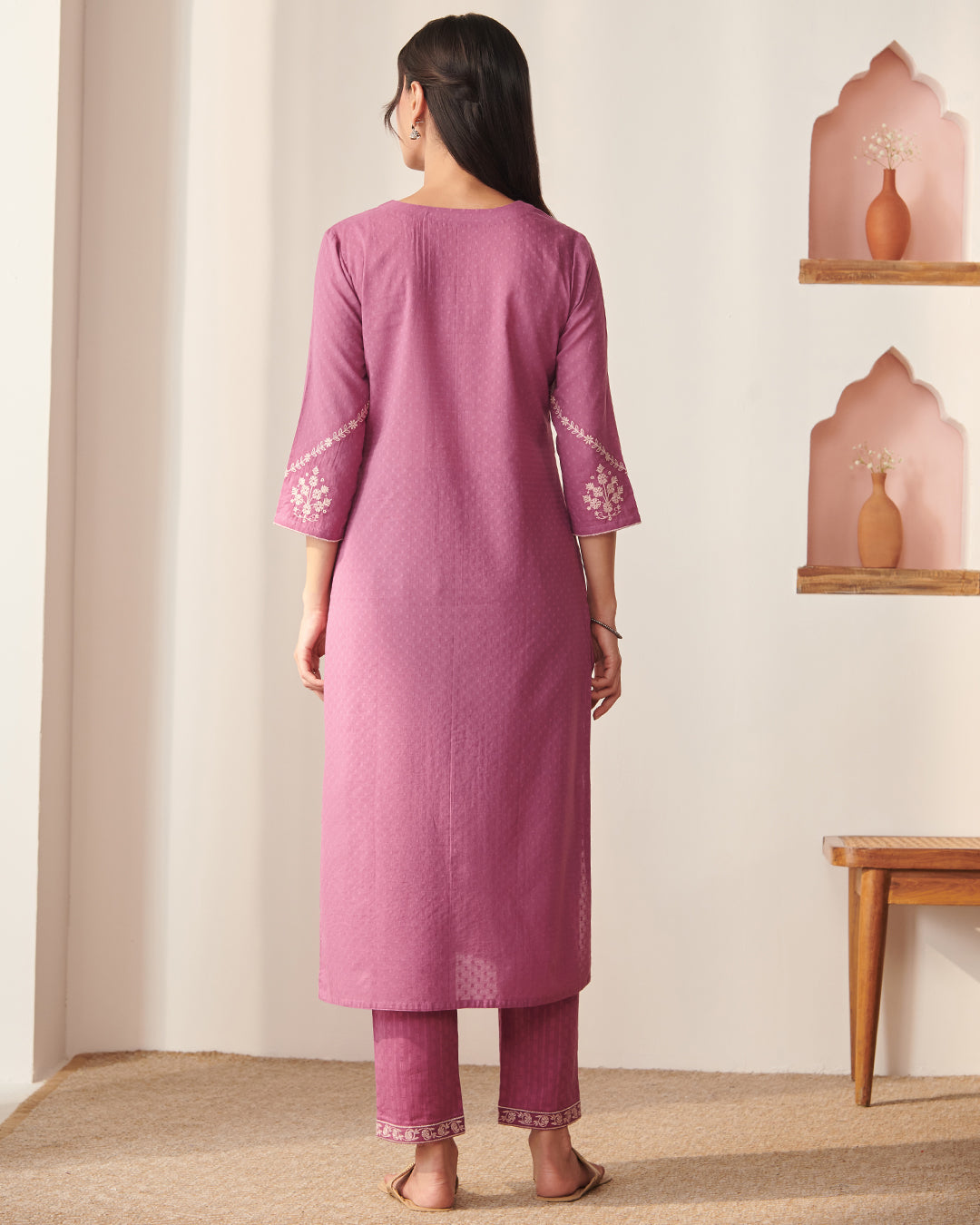
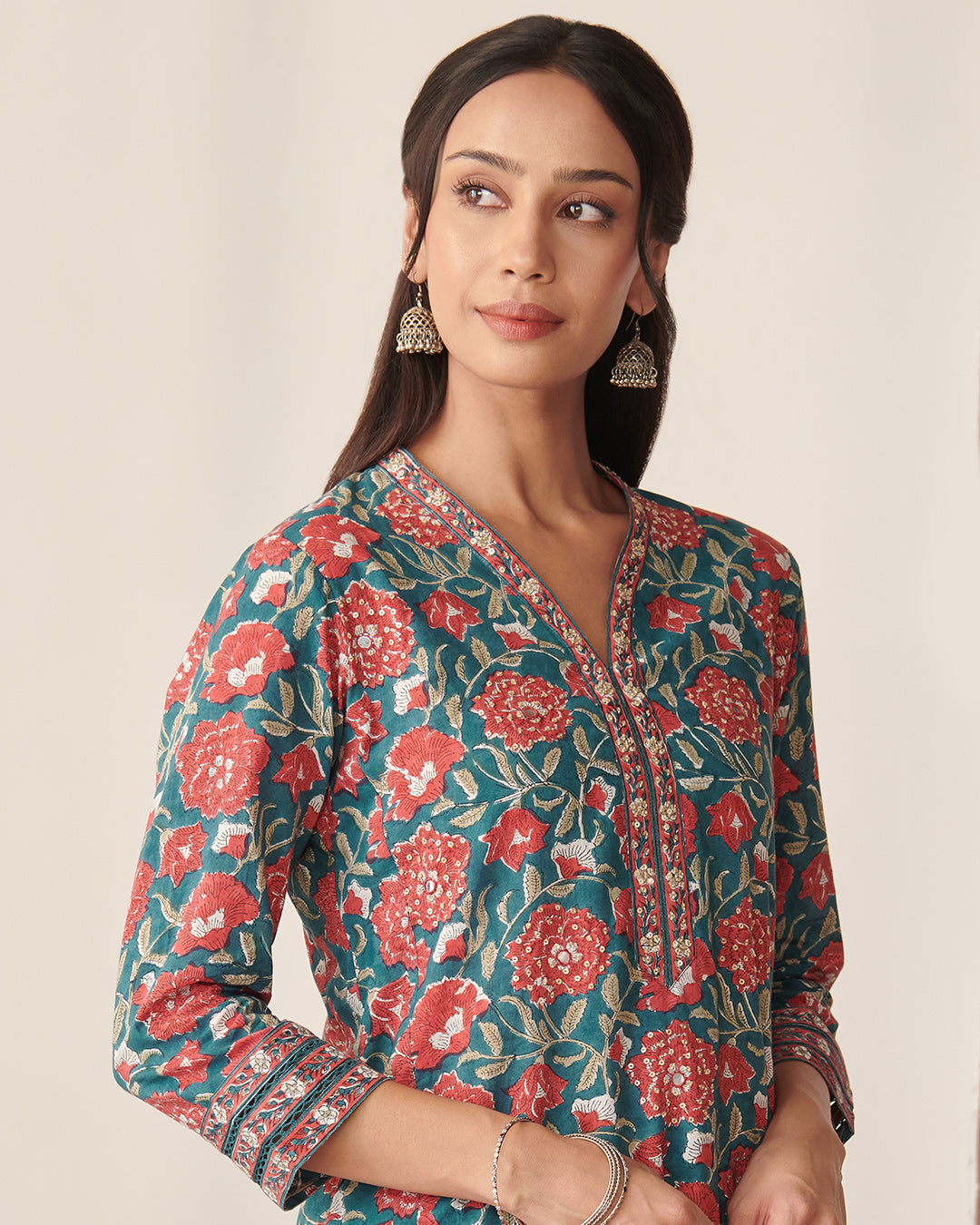
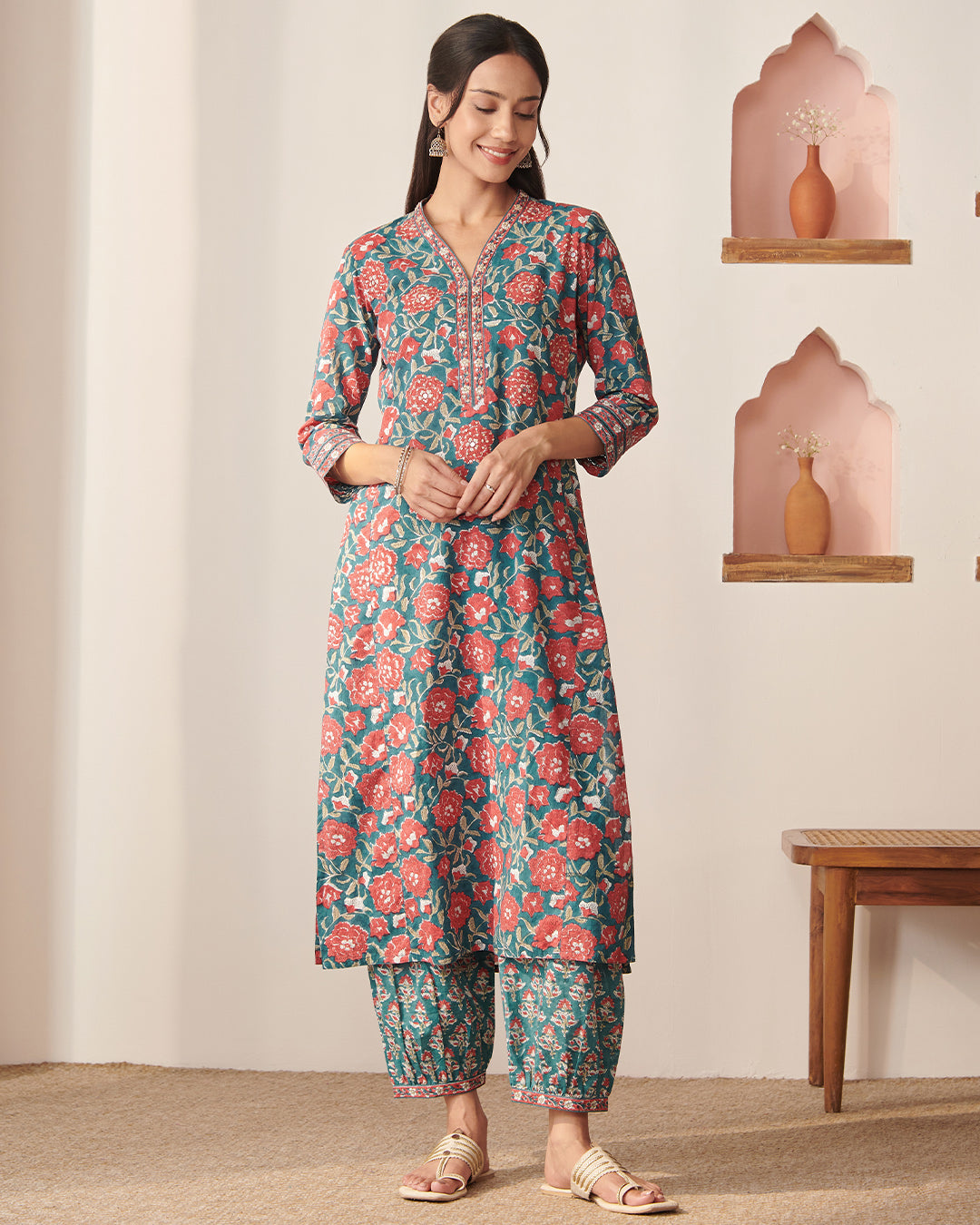
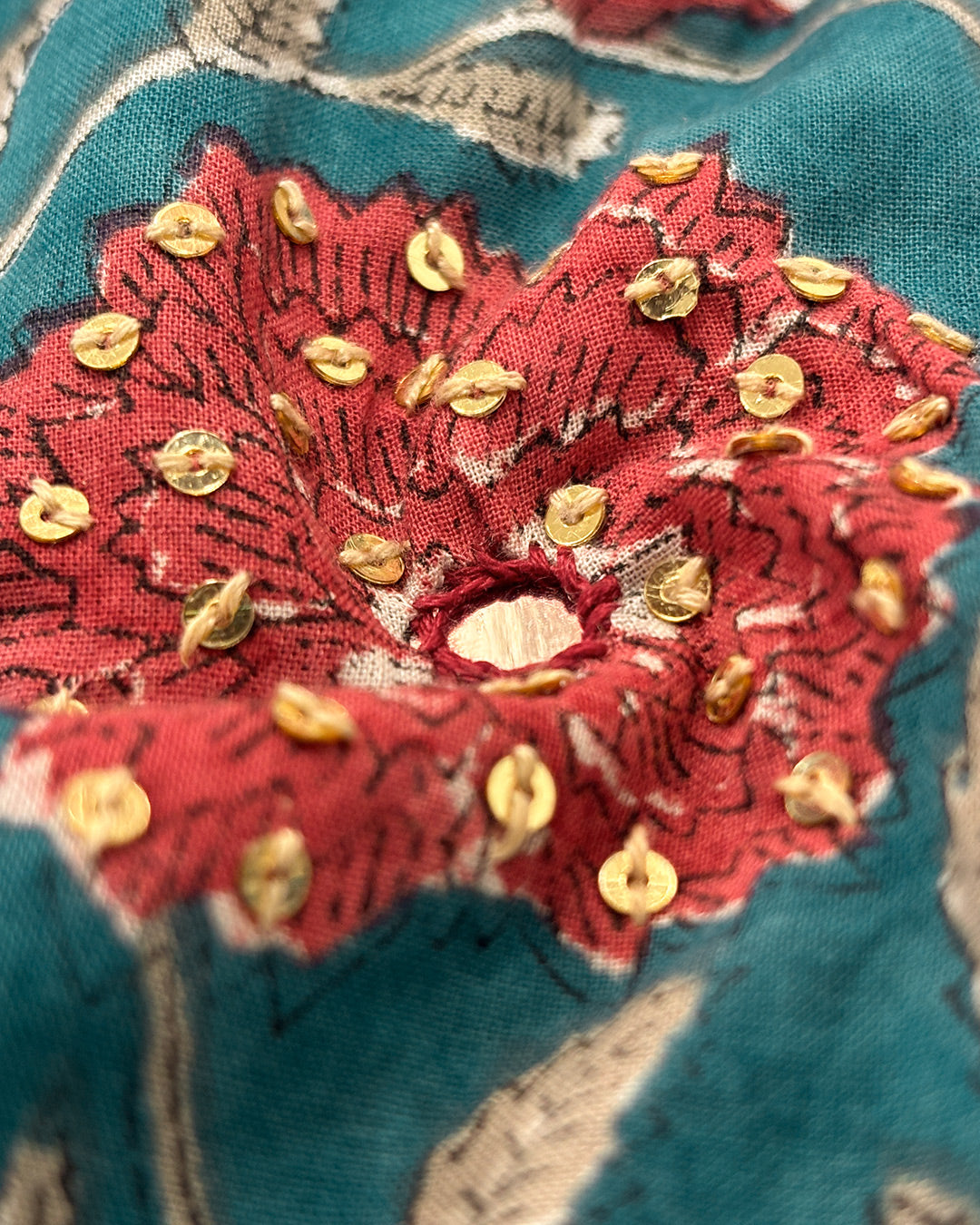
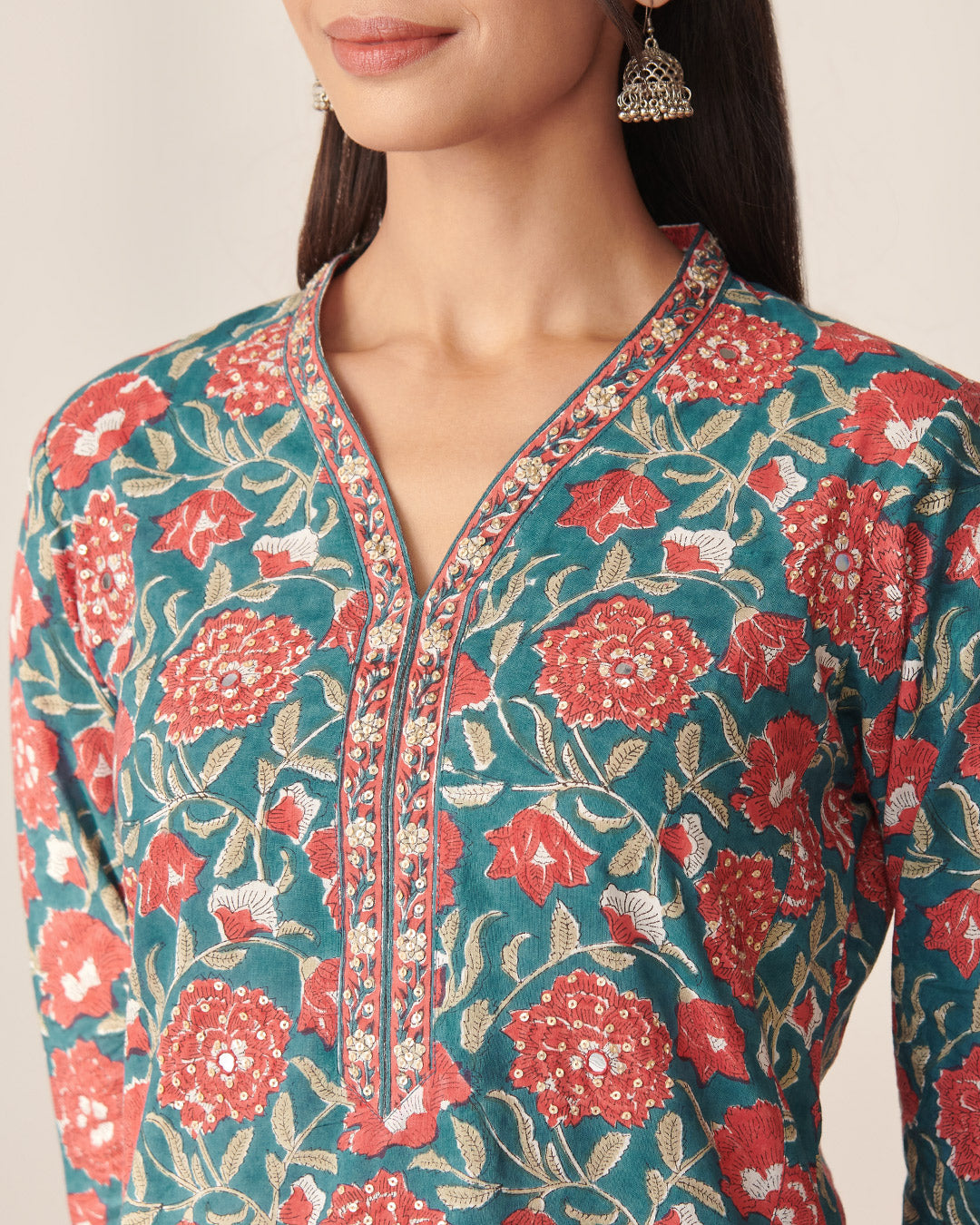
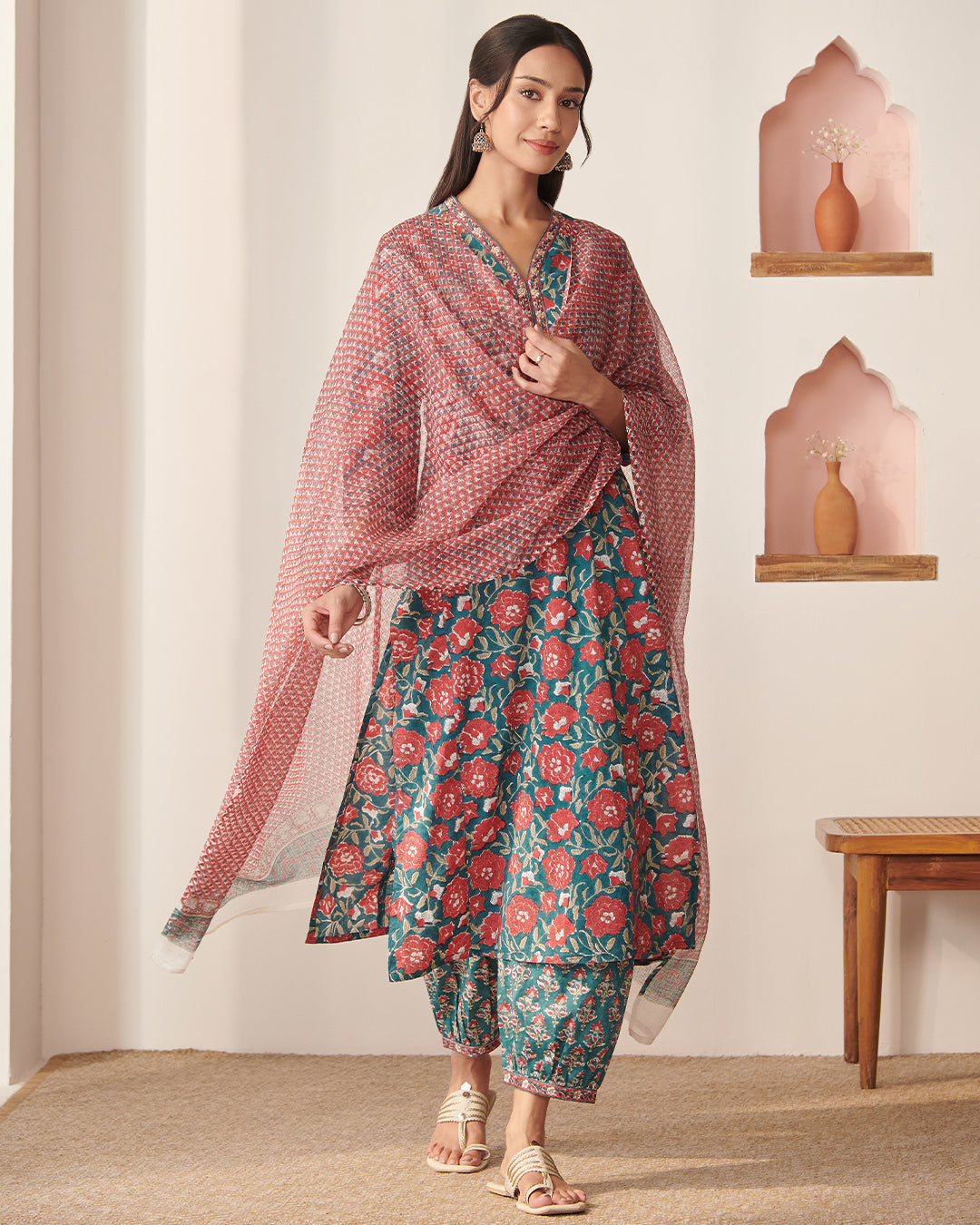
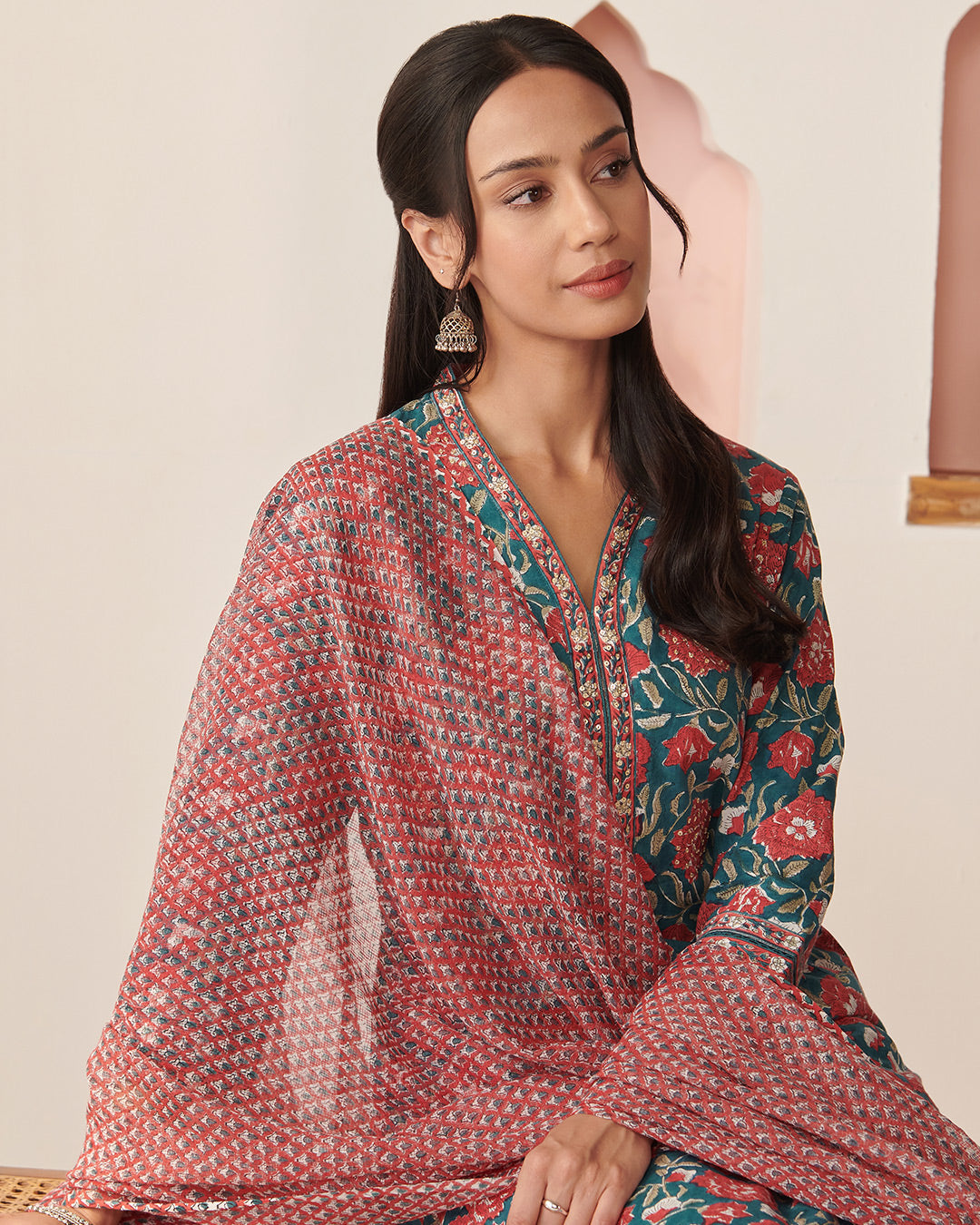
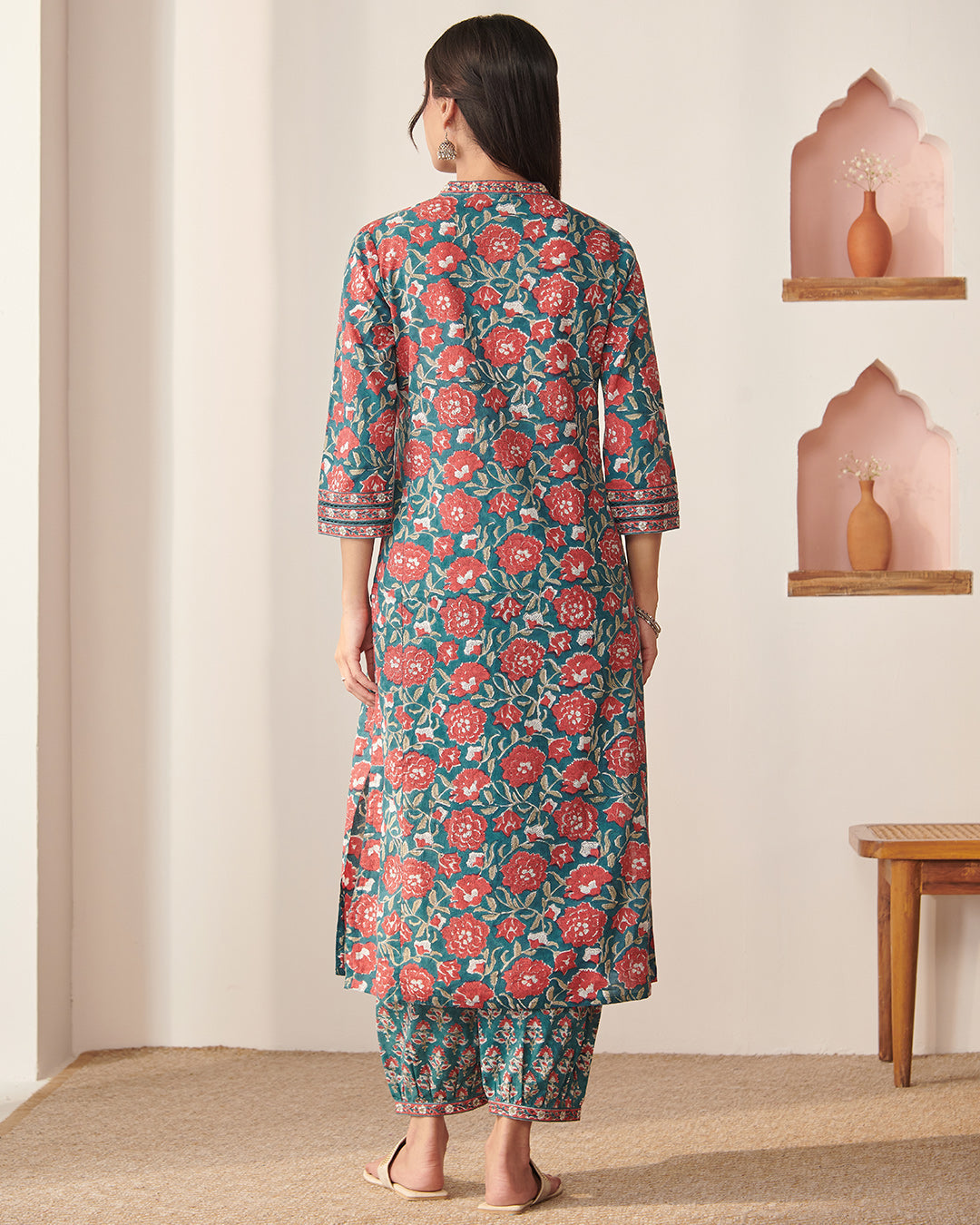
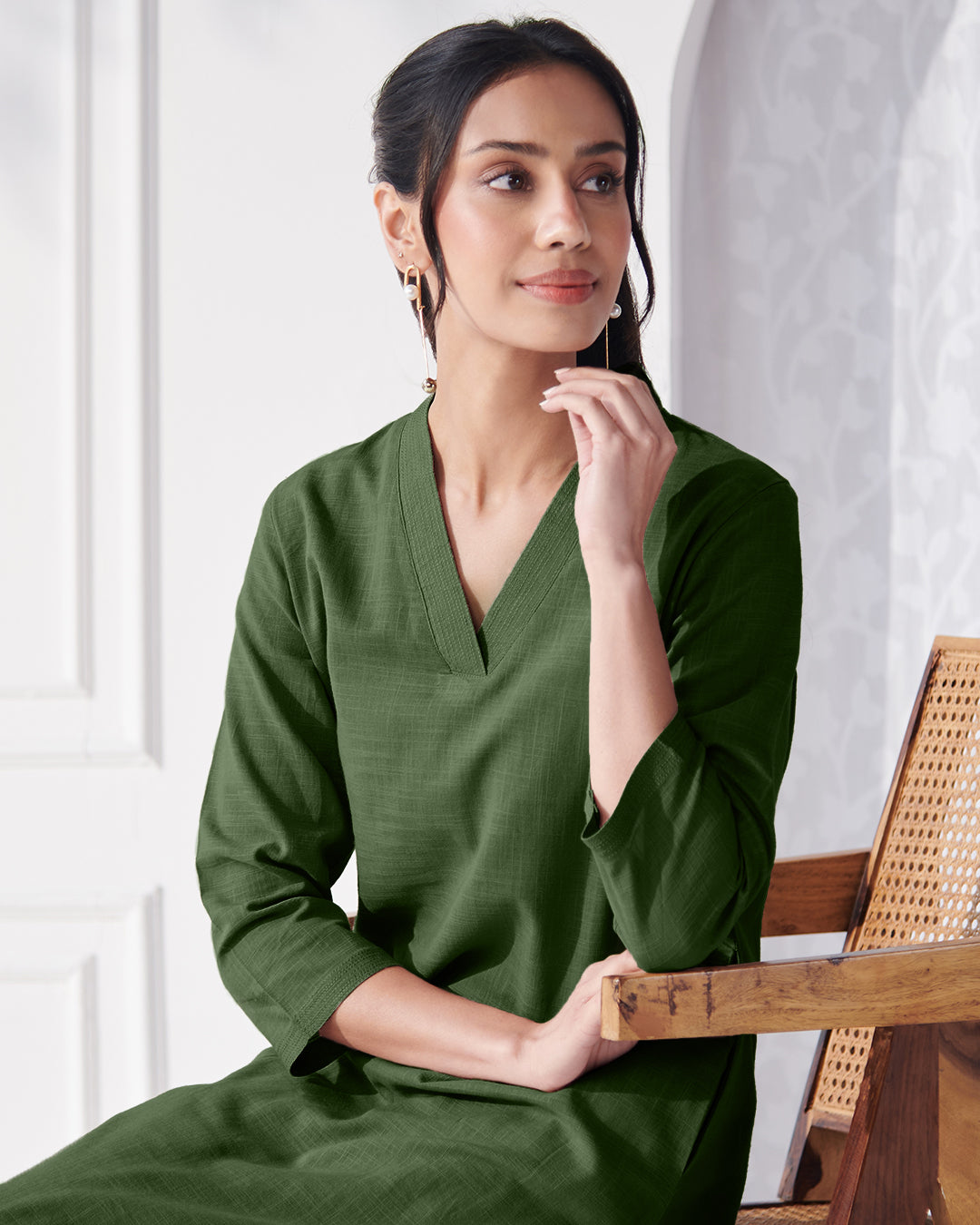
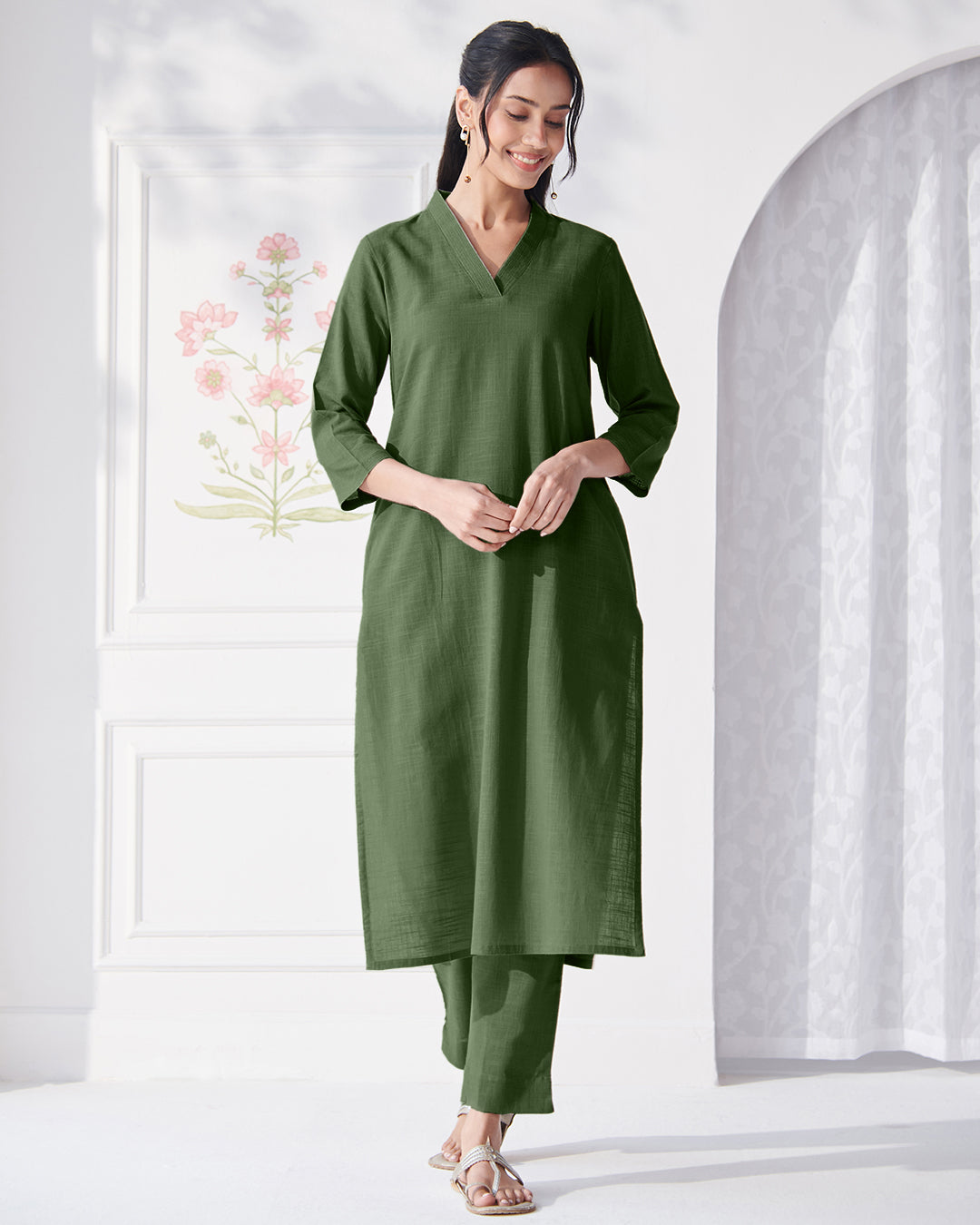
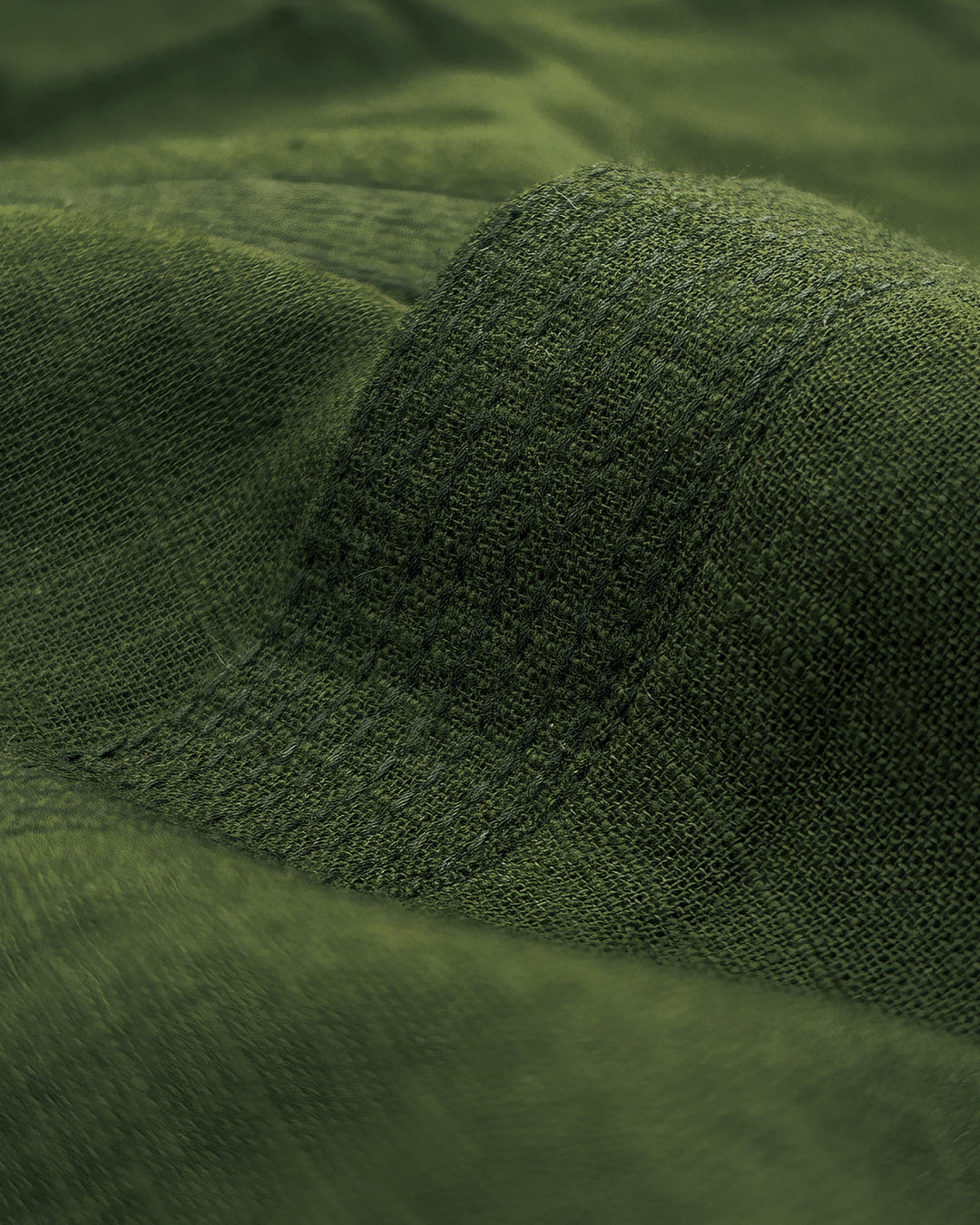
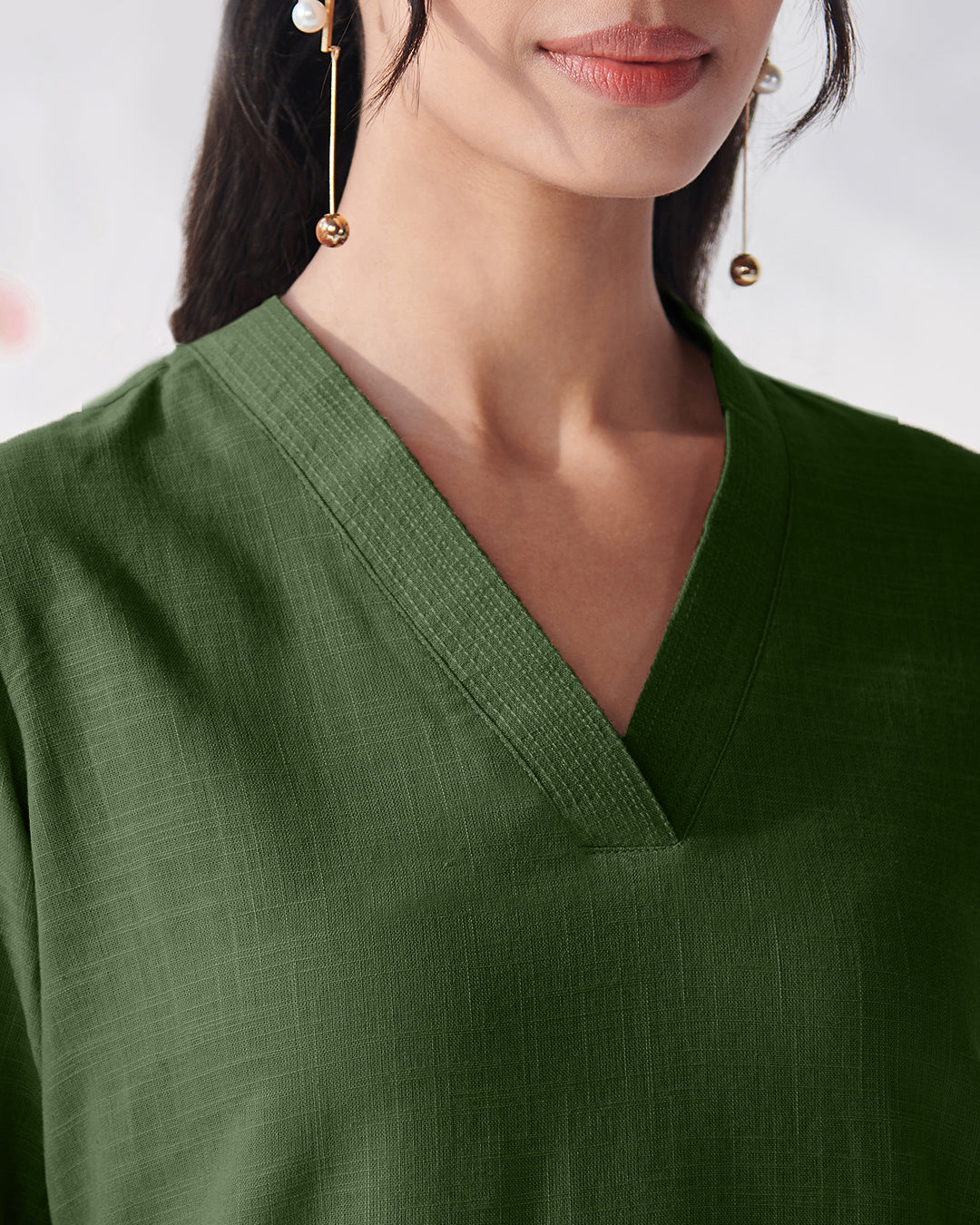
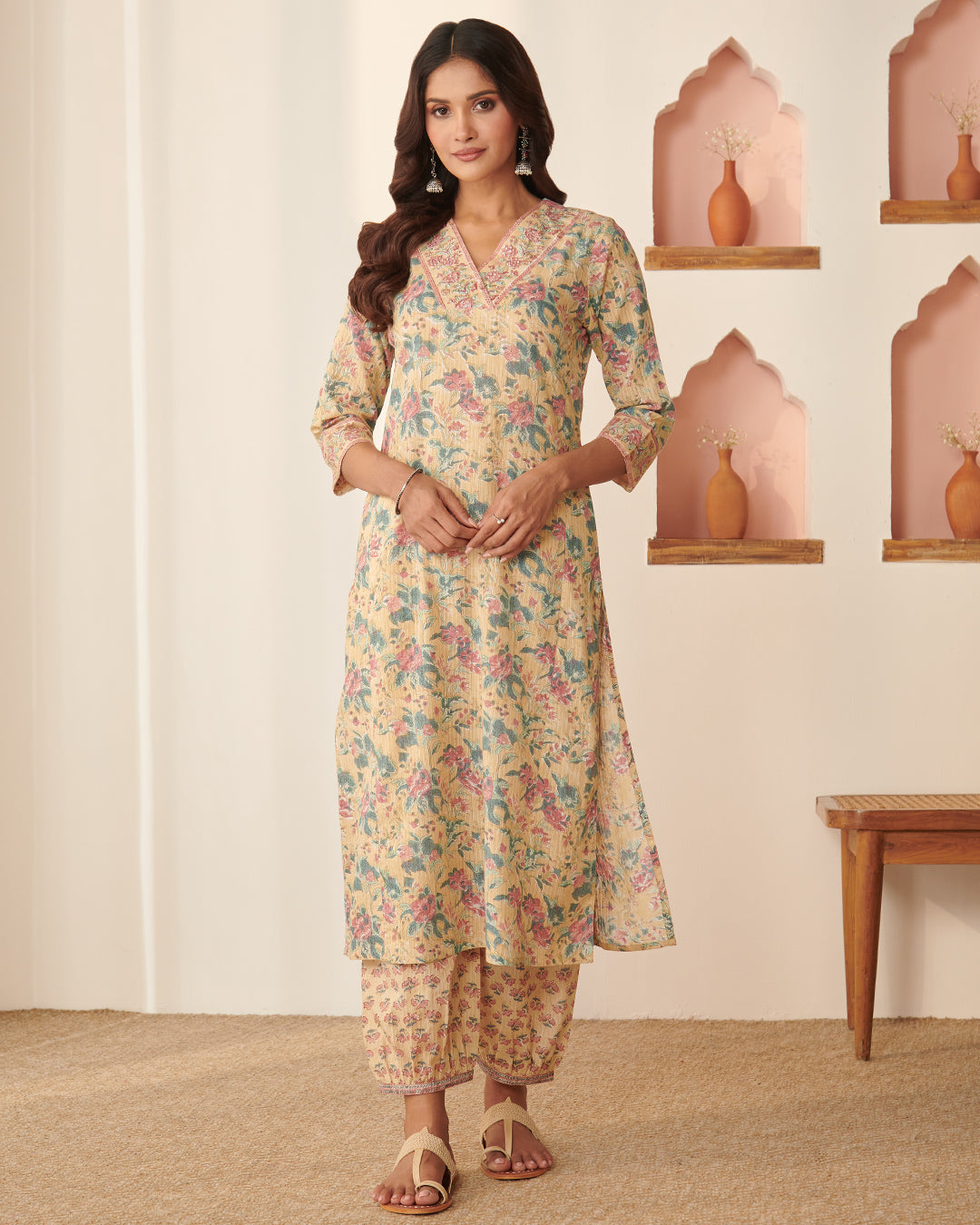
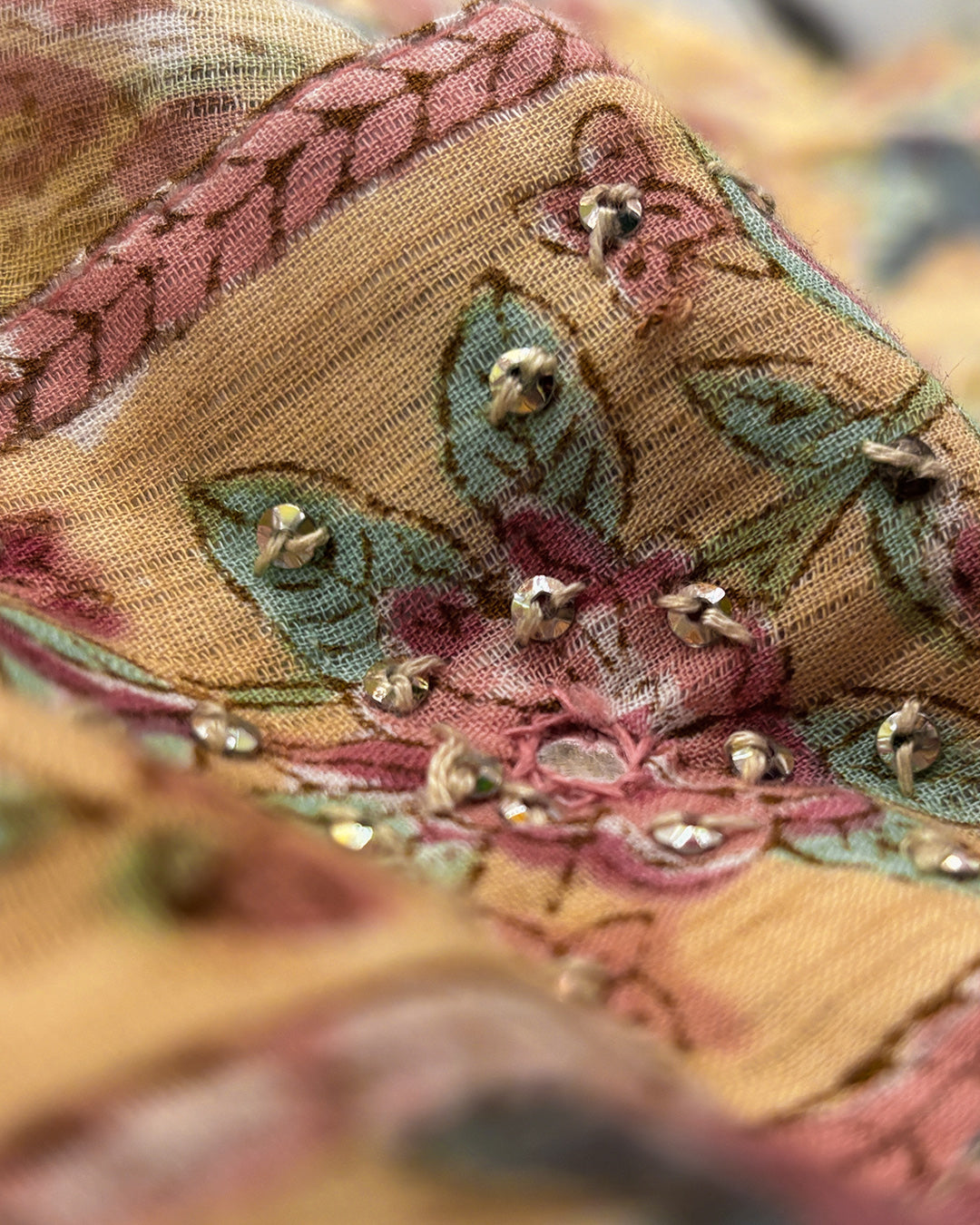
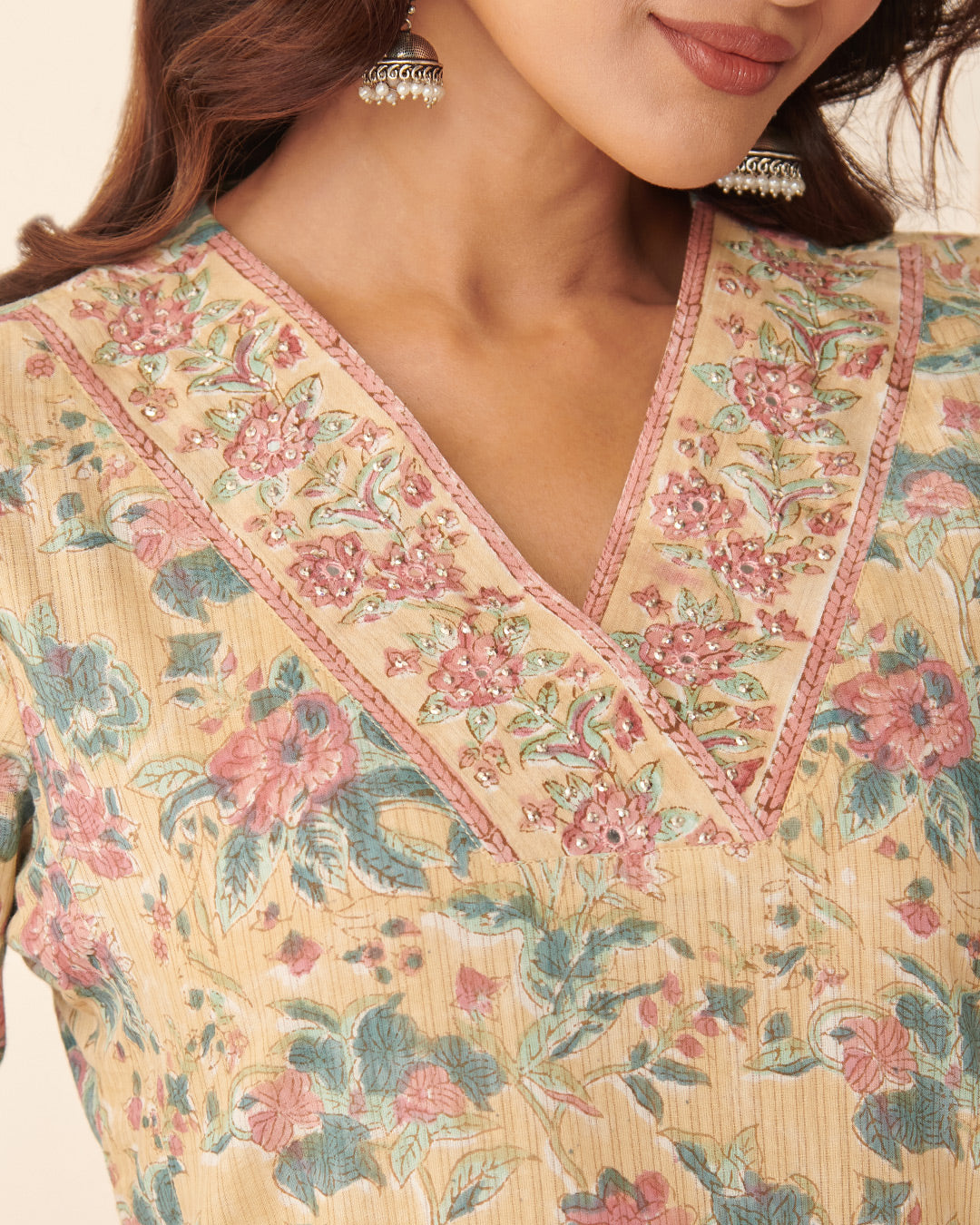
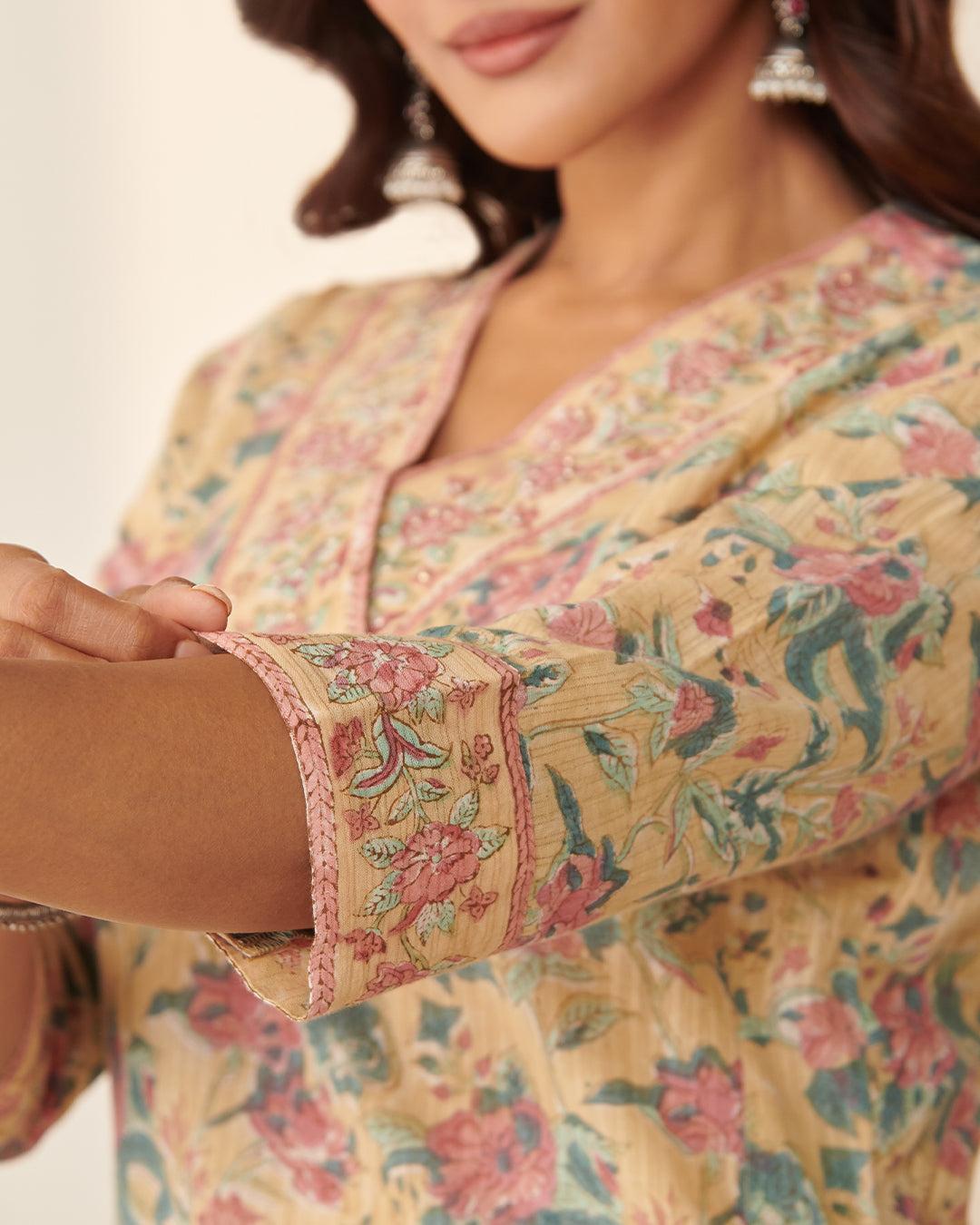
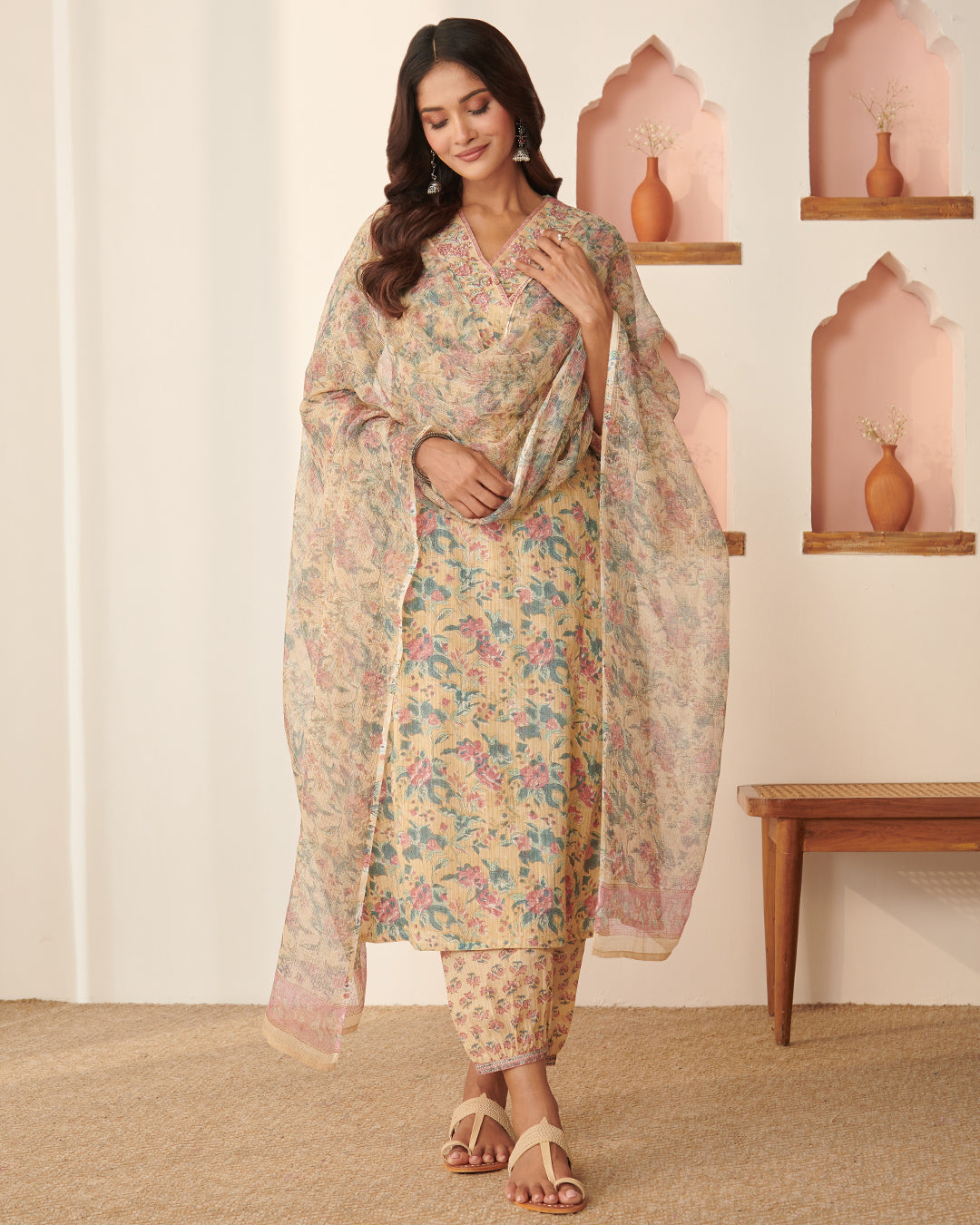
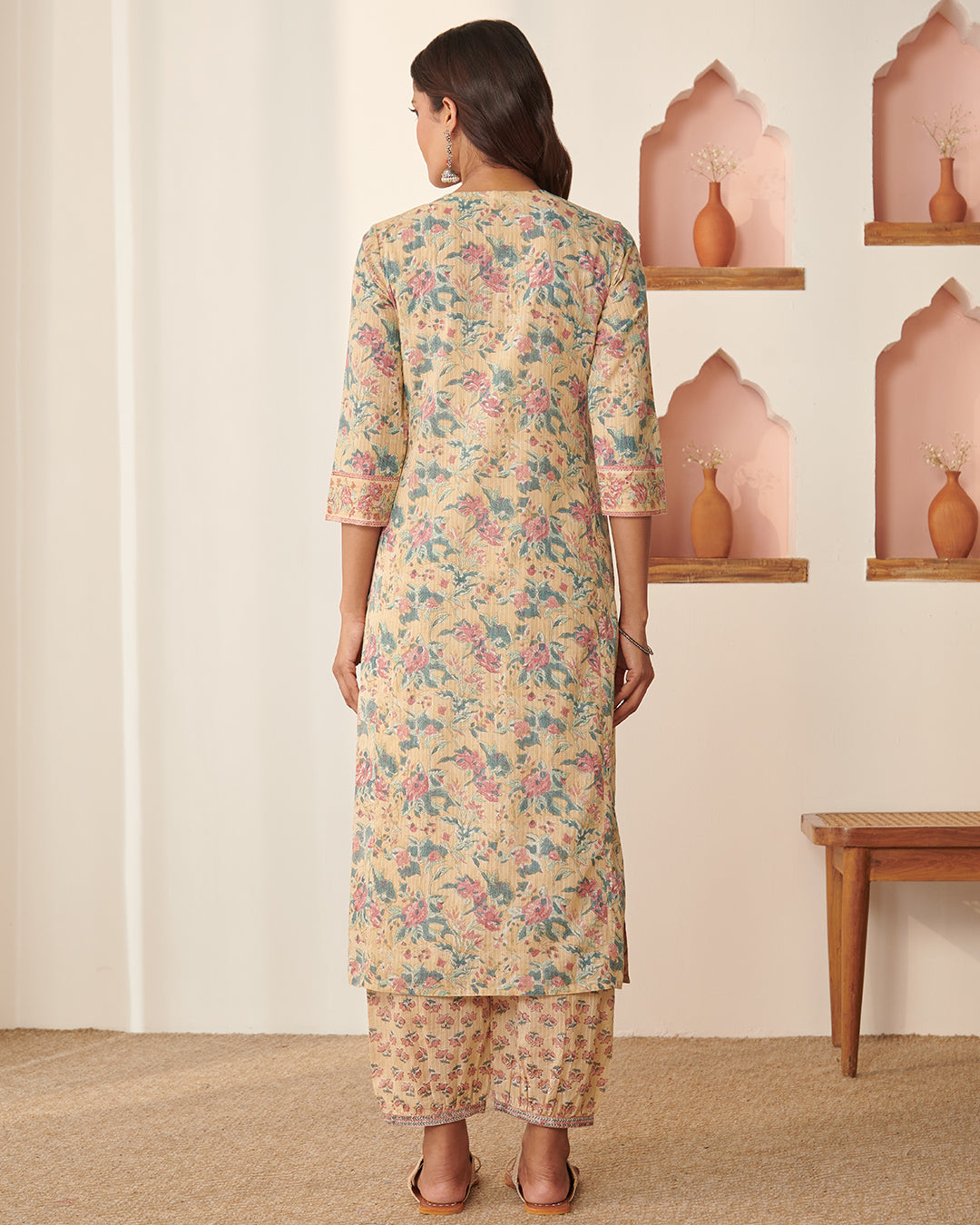
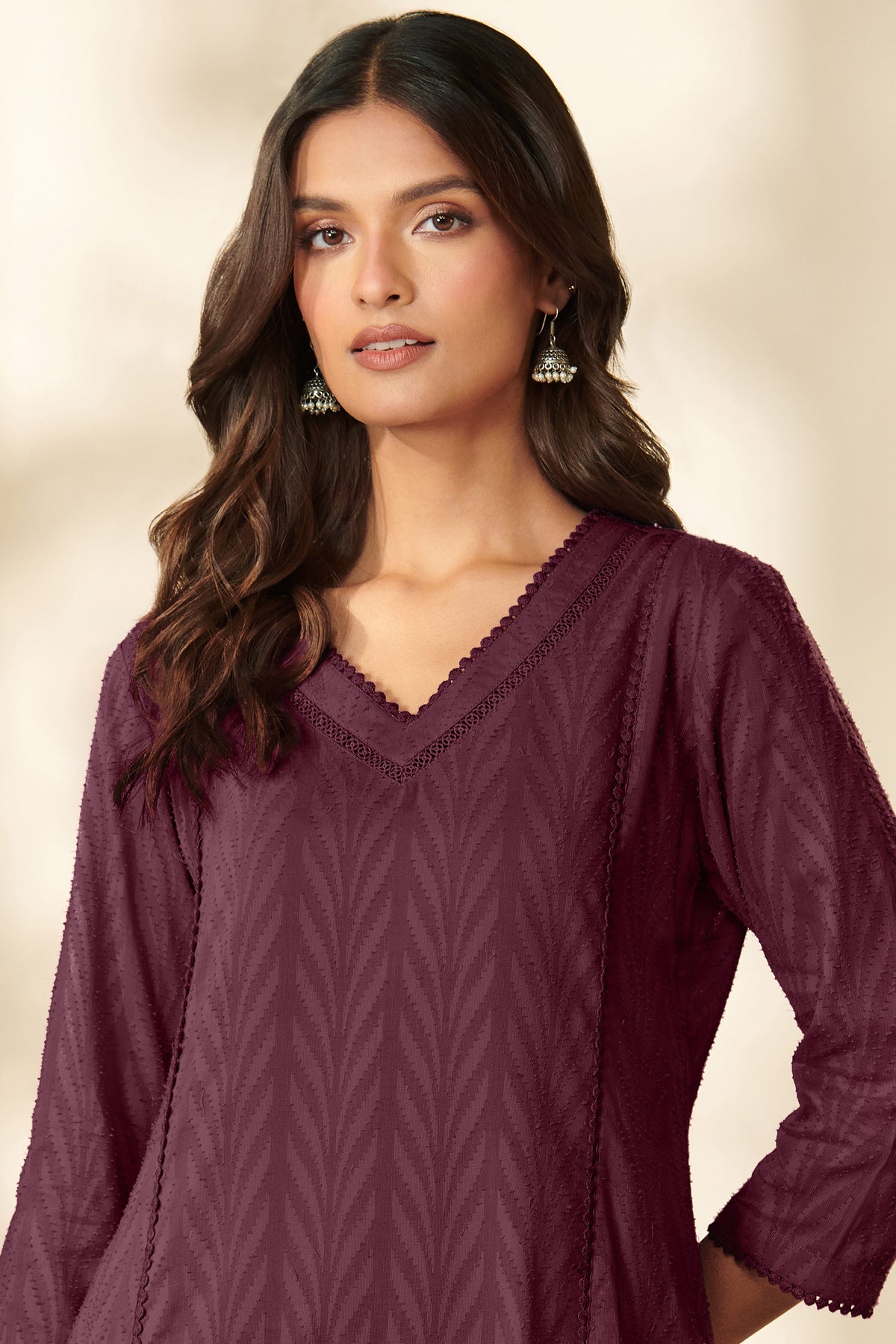
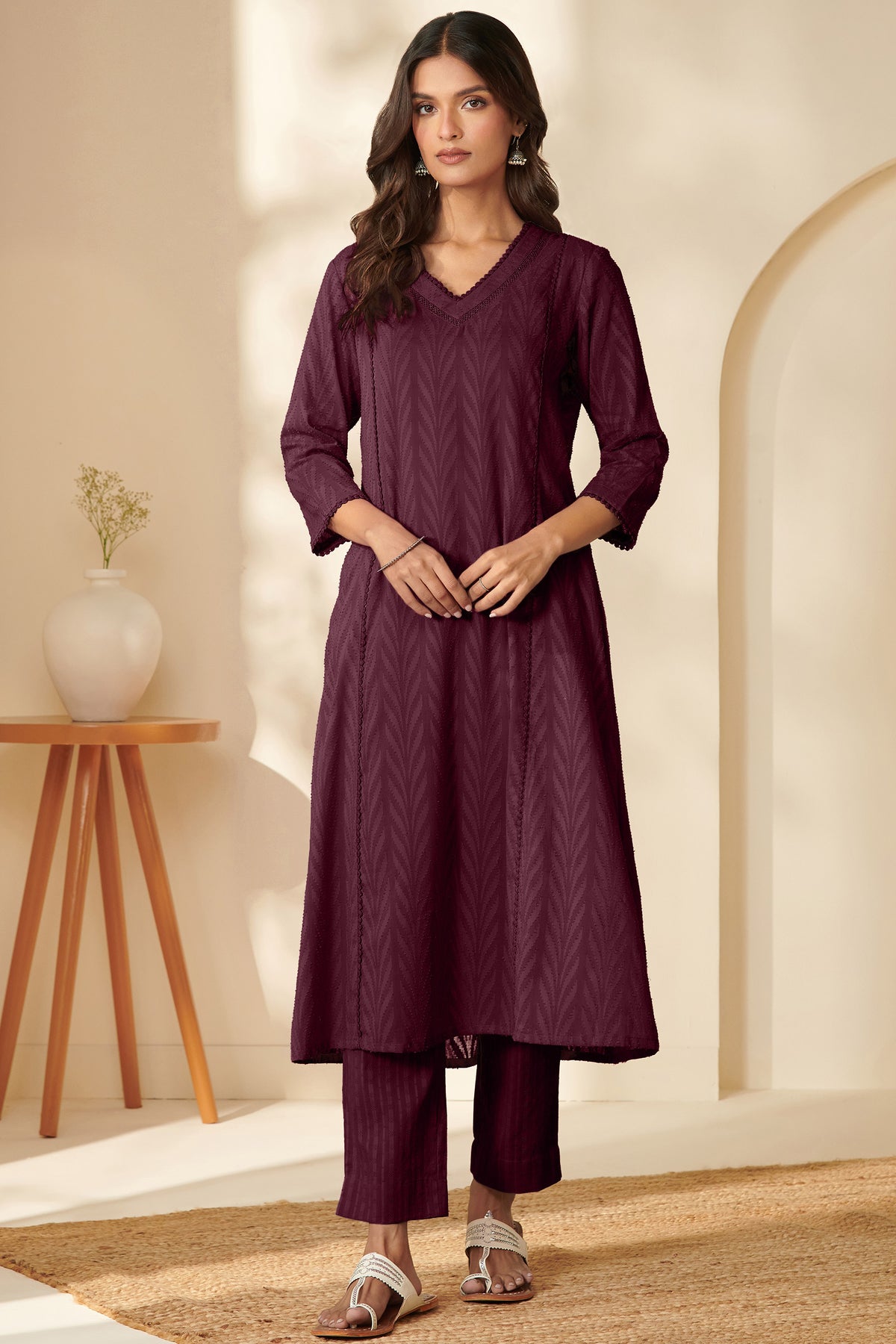
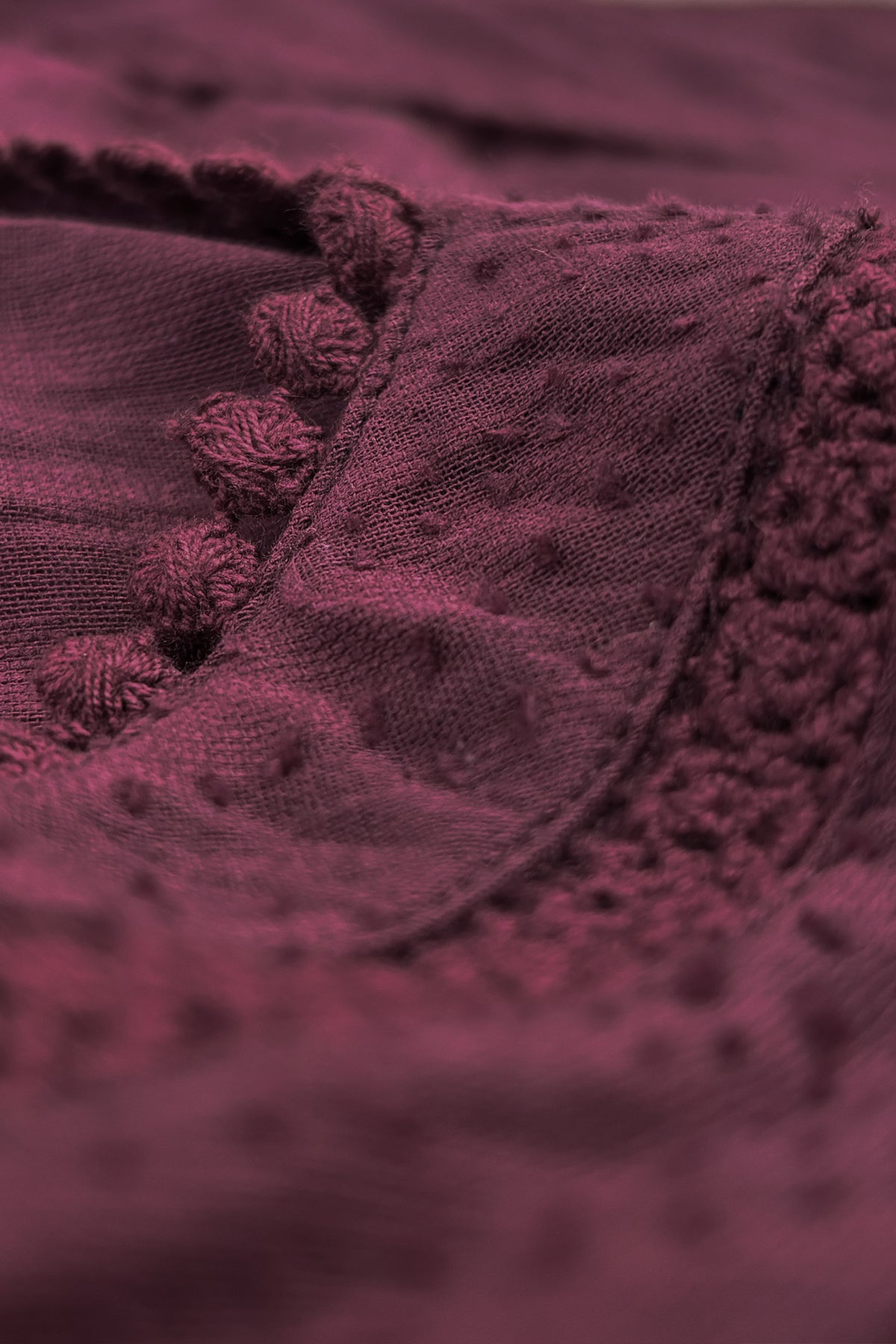
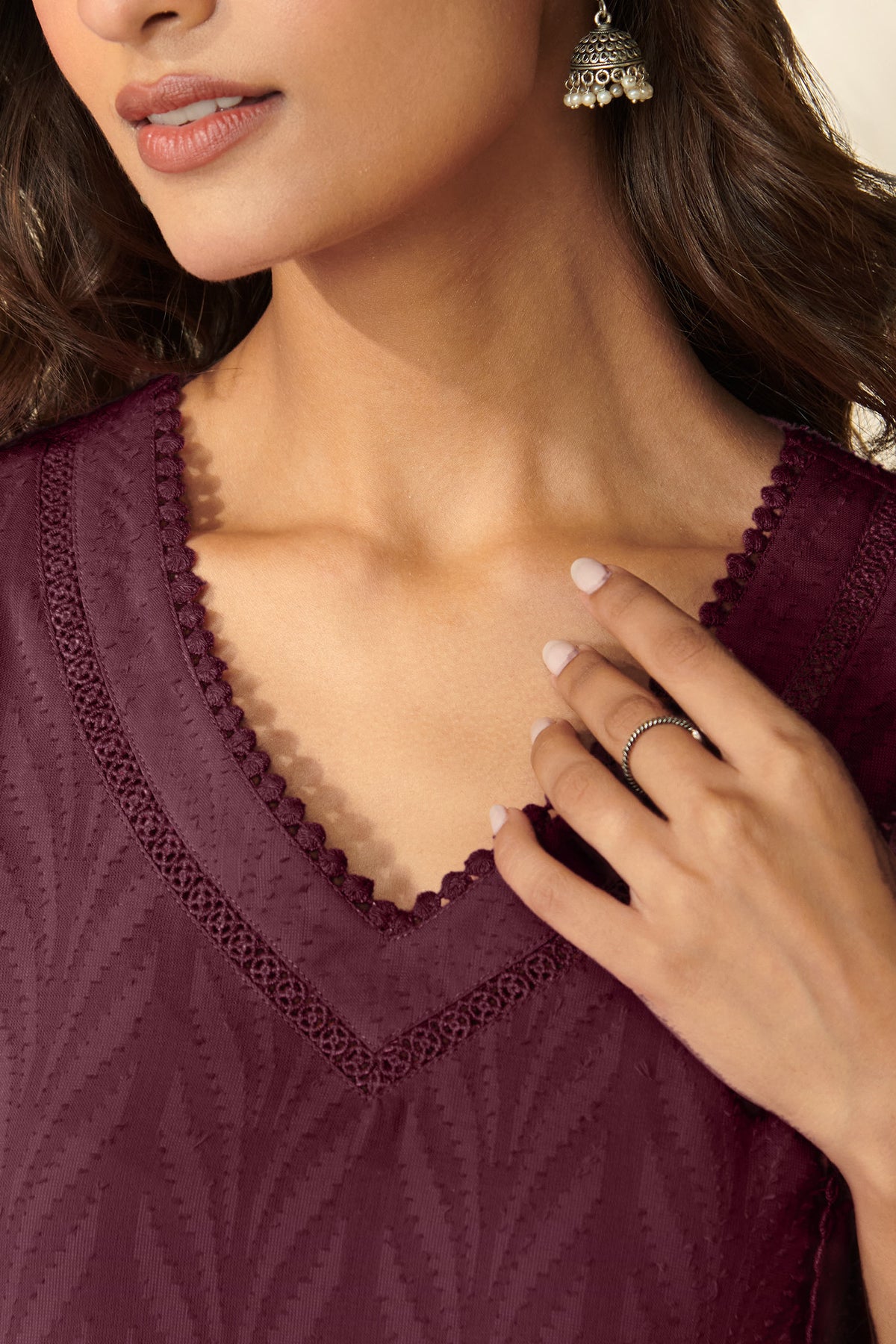

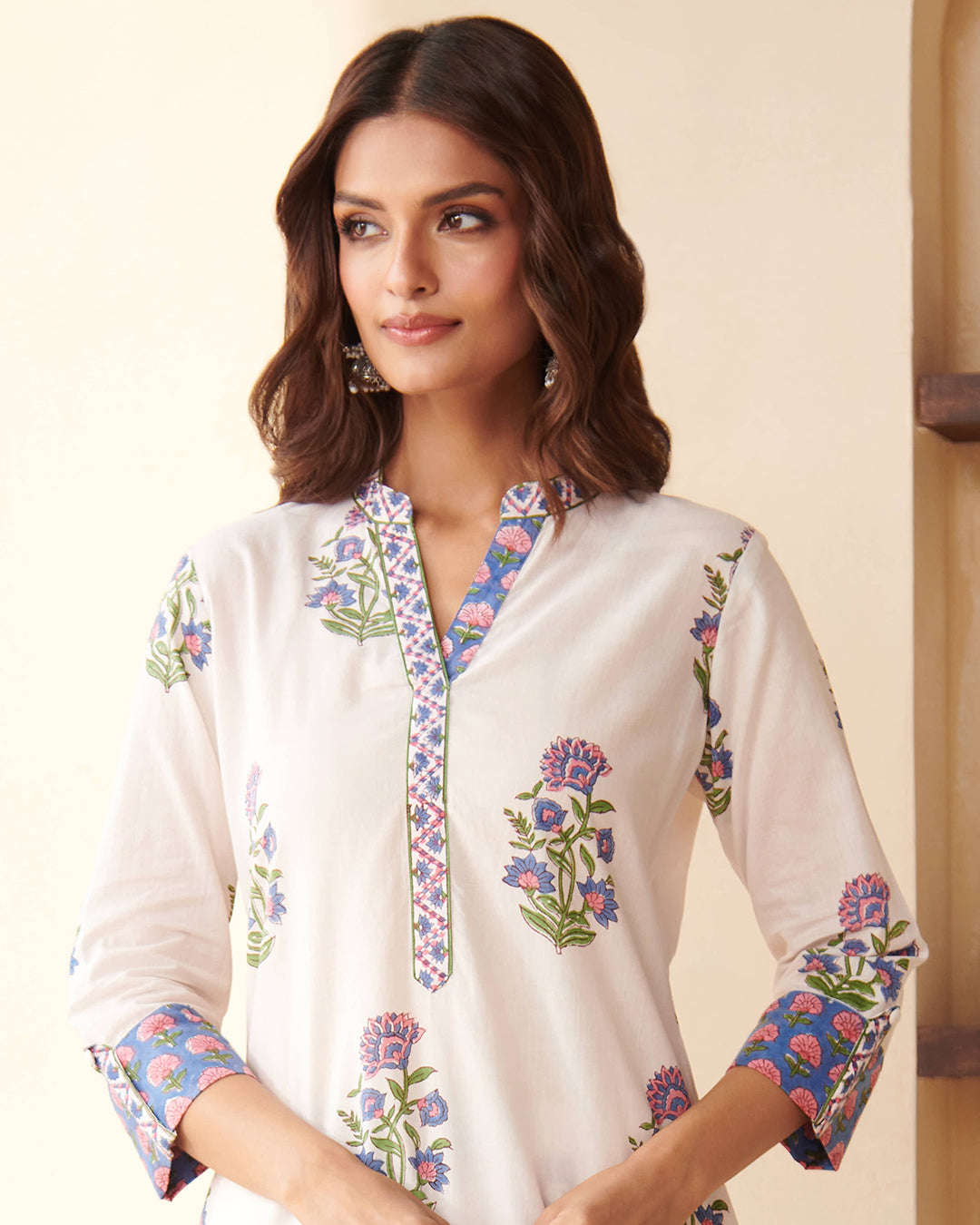
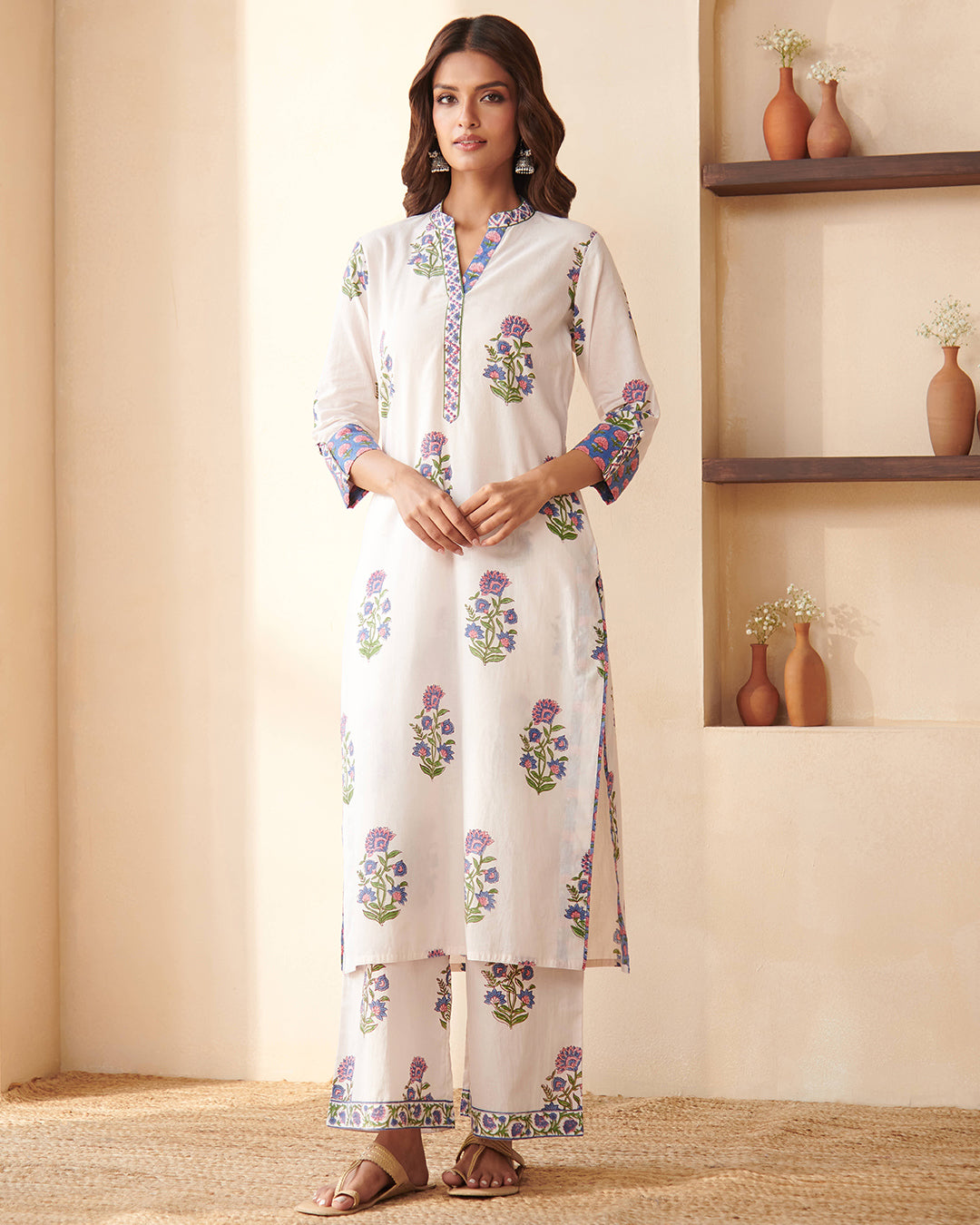
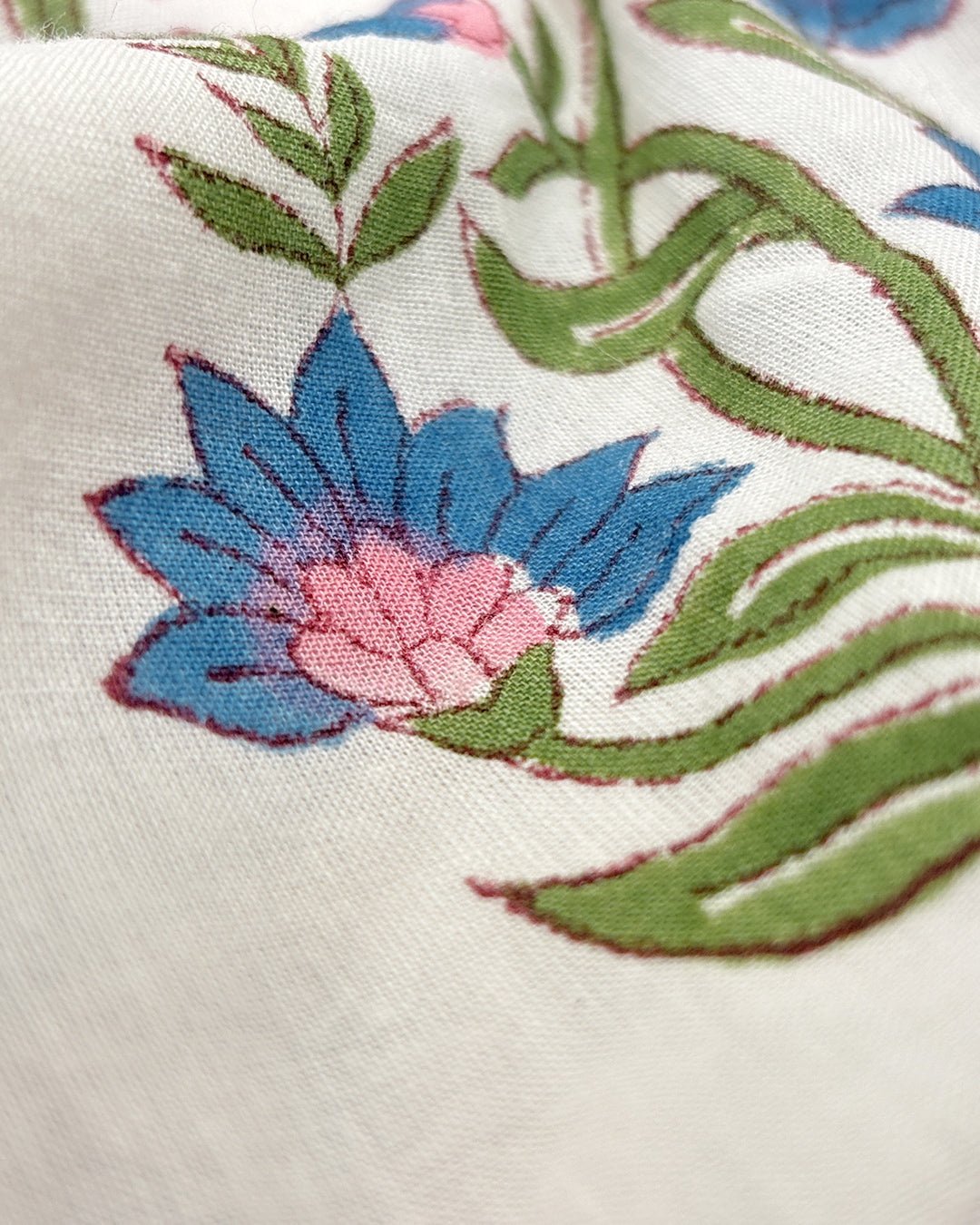
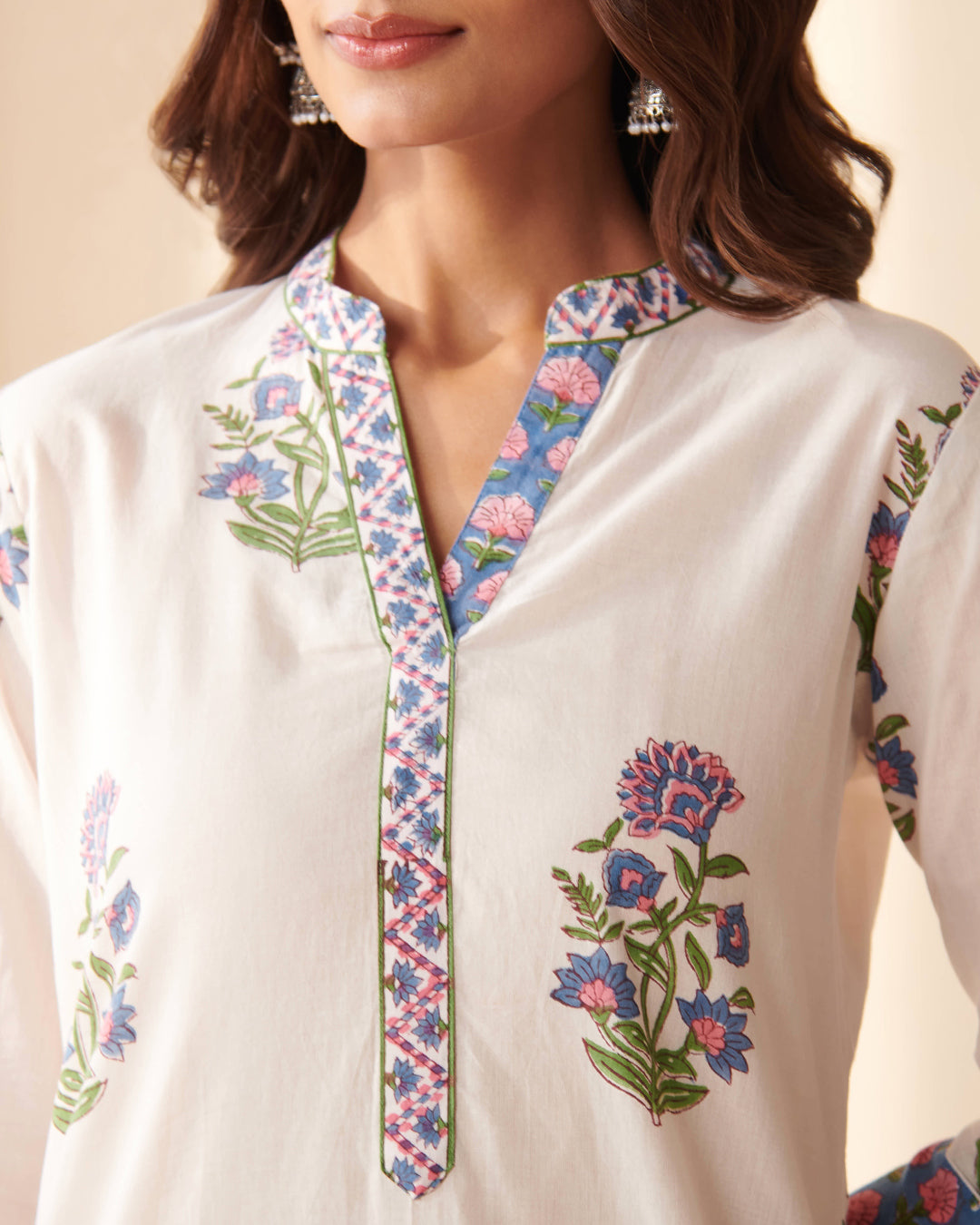
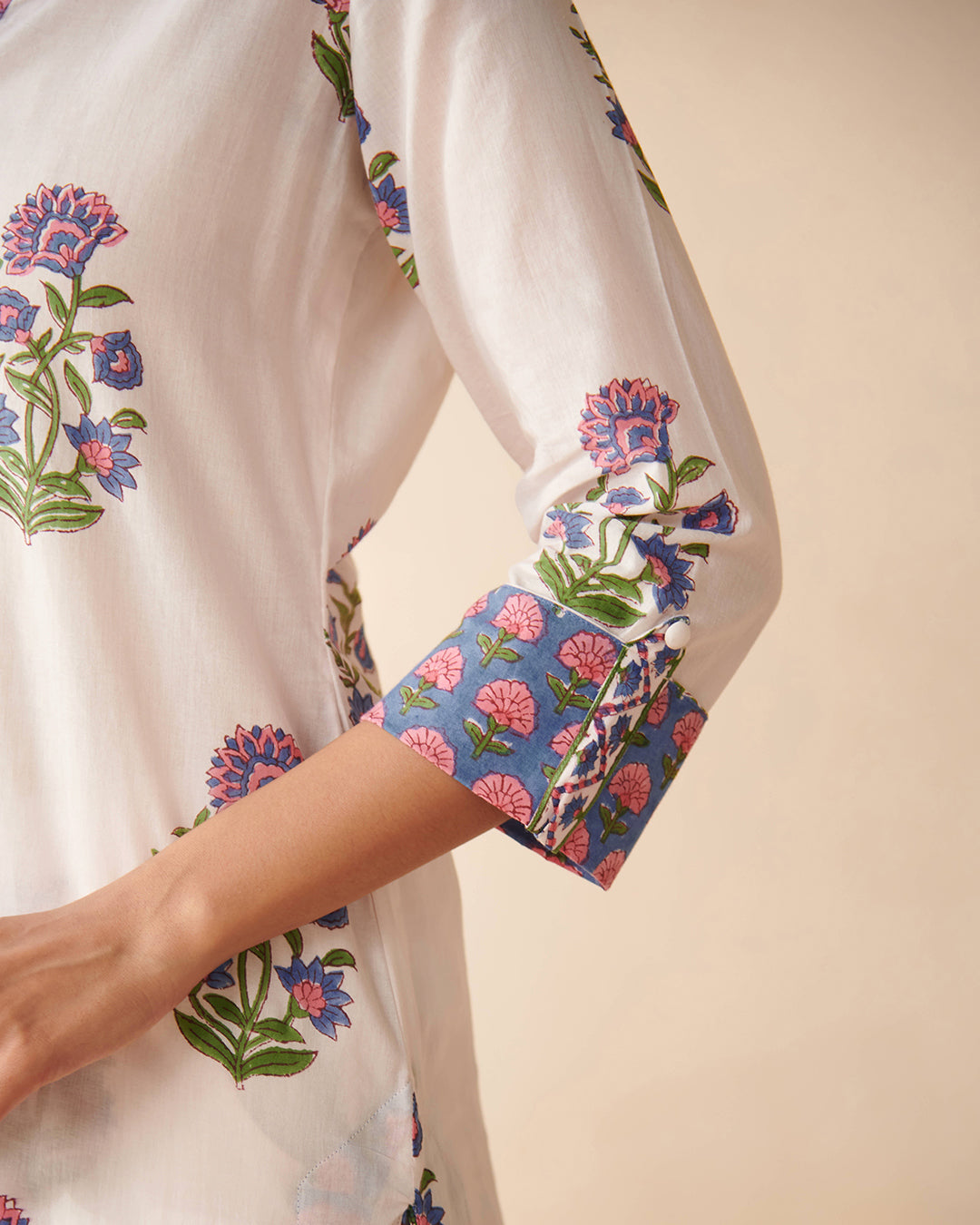
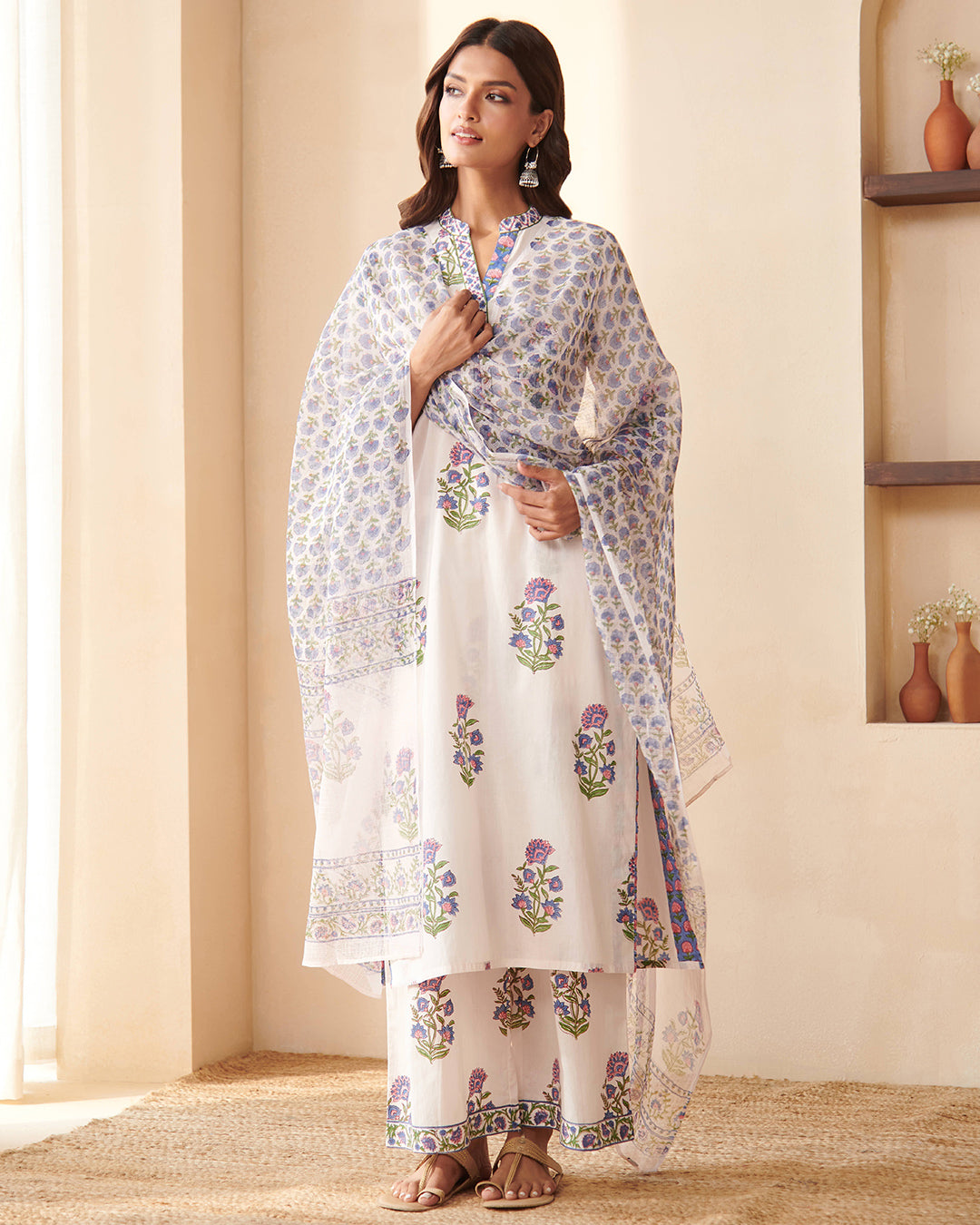
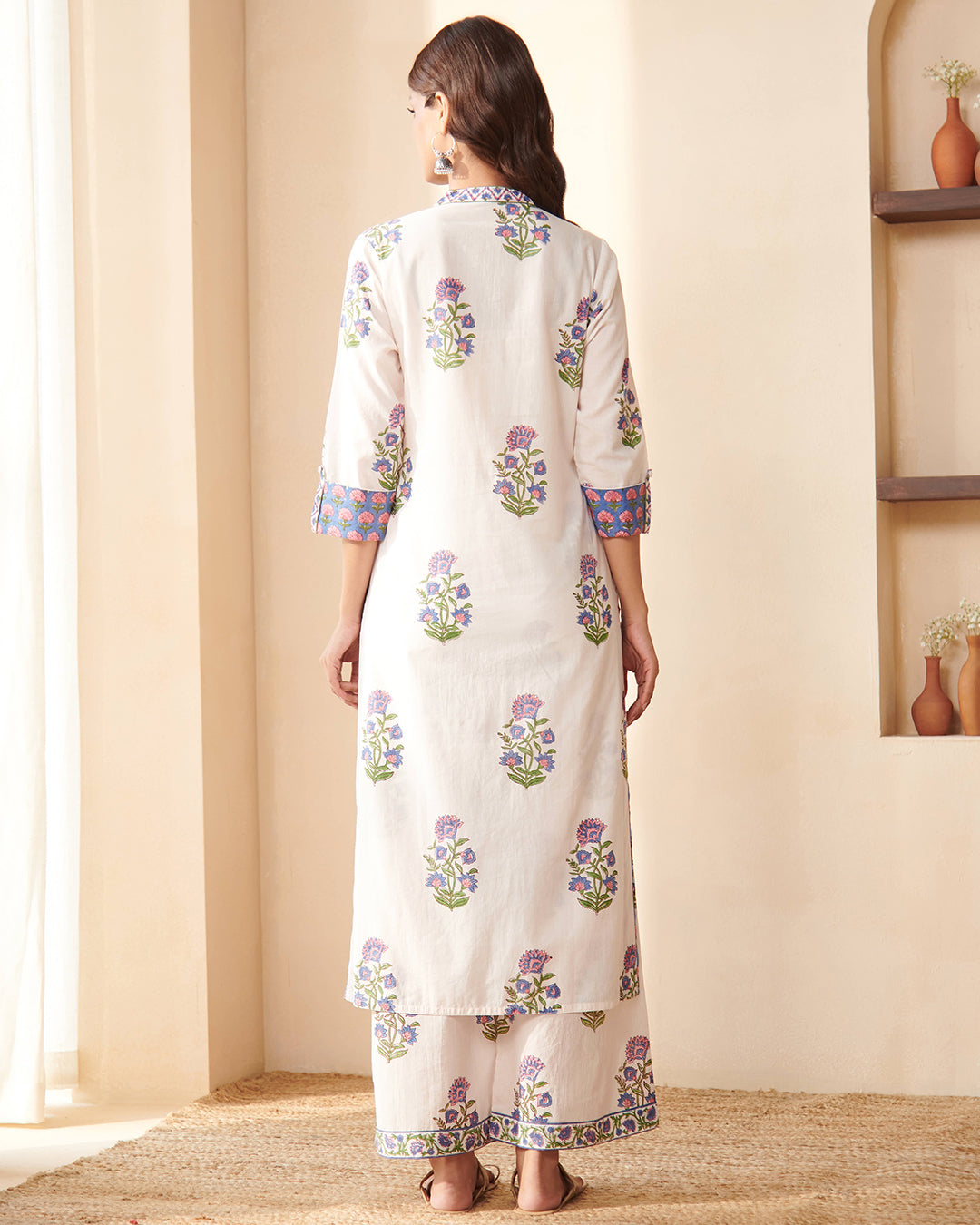


A hand block printed kurta begins long before the fabric reaches the cutting table. Its story starts with an idea, often a flower, a leaf, a vine, or a familiar Indian motif, and slowly takes shape through wood, colour, fabric, and the steady hands of skilled artisans.
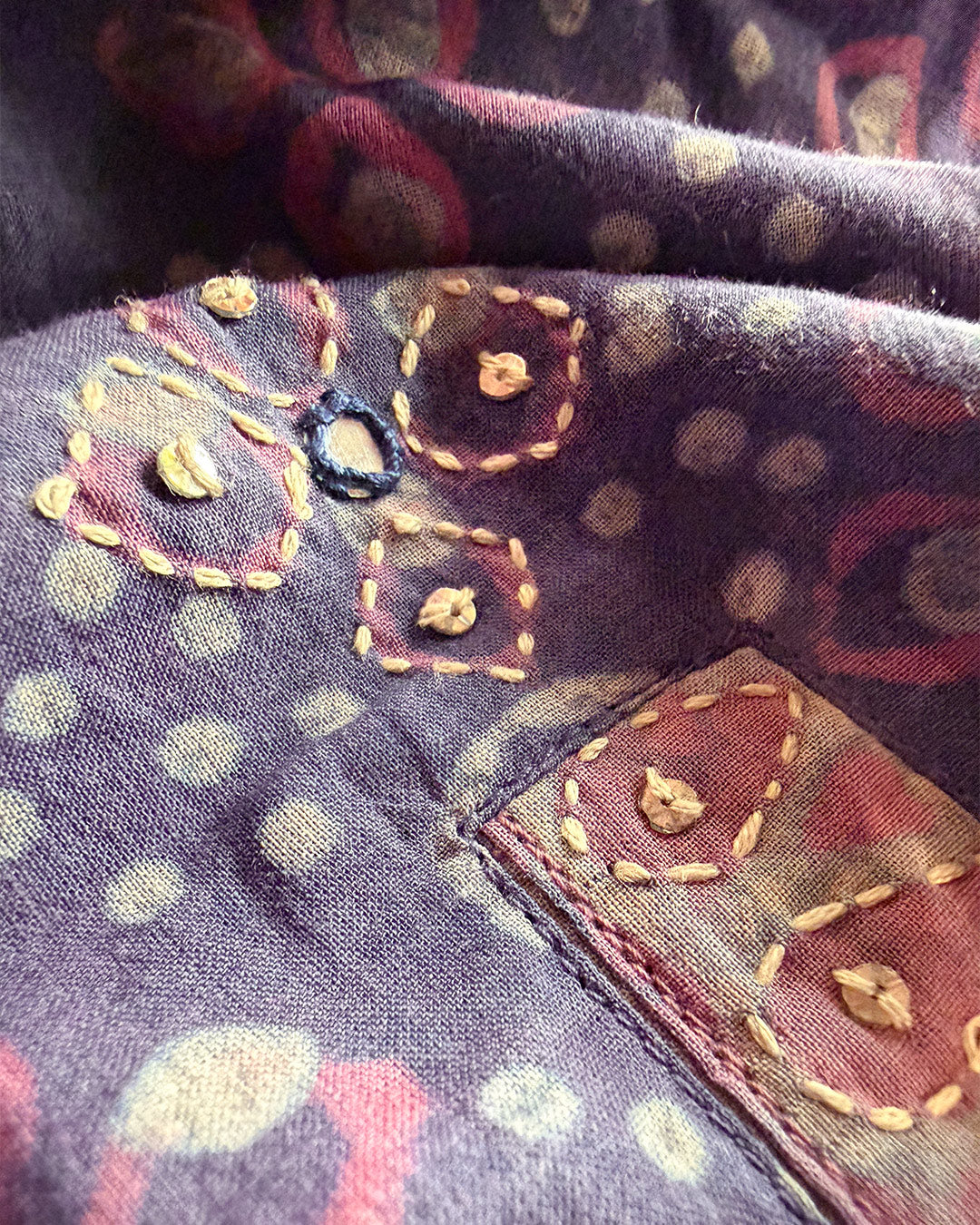
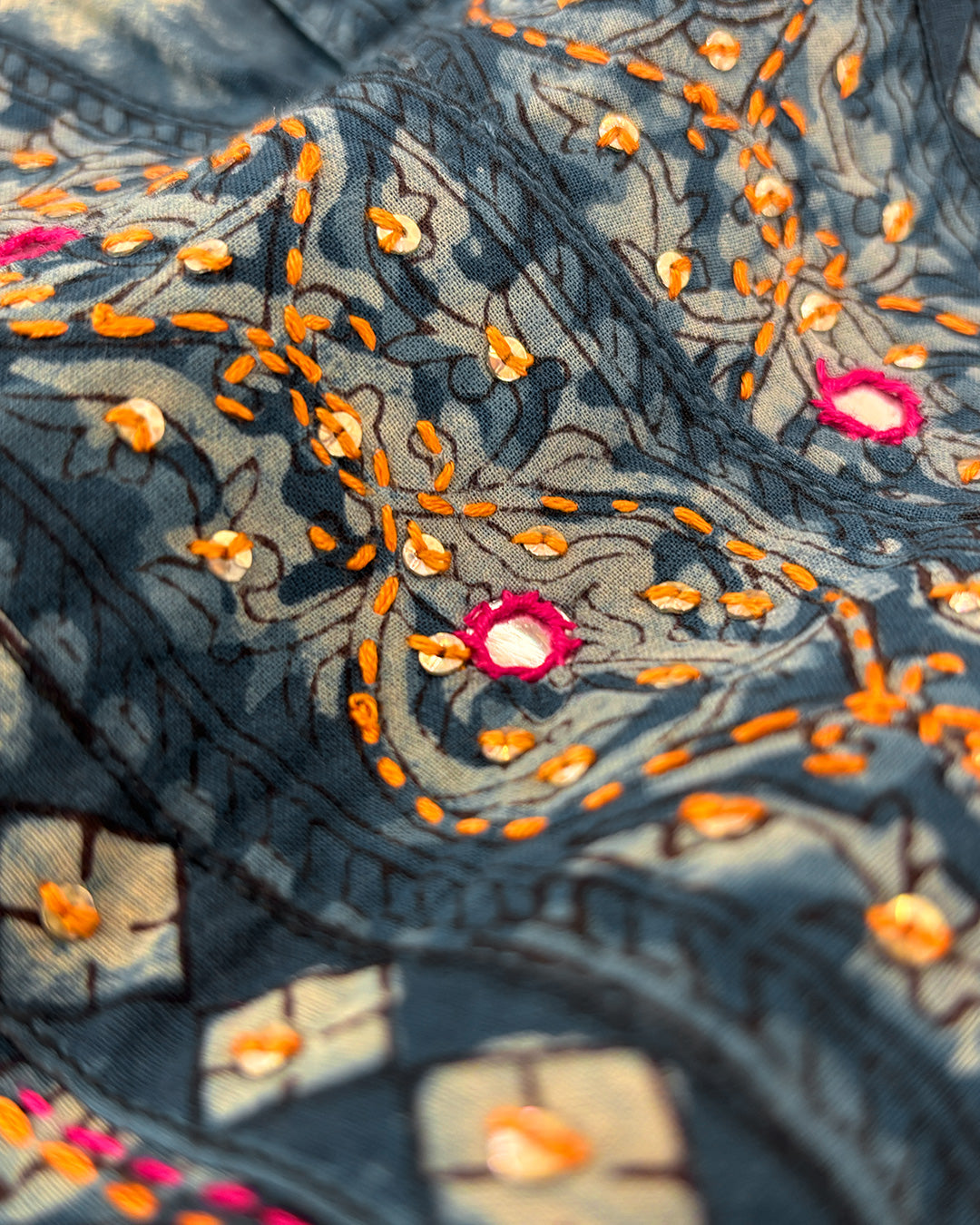
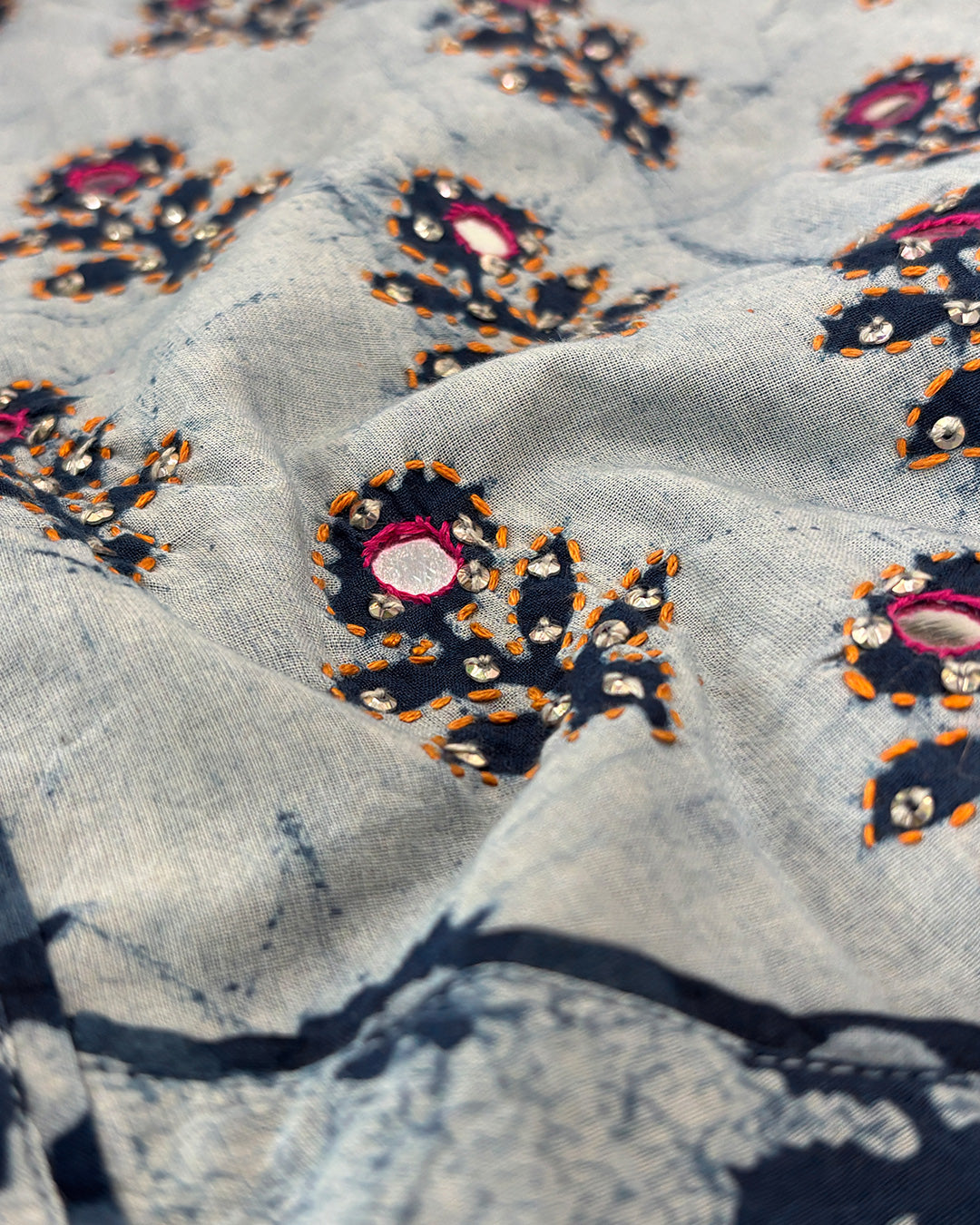
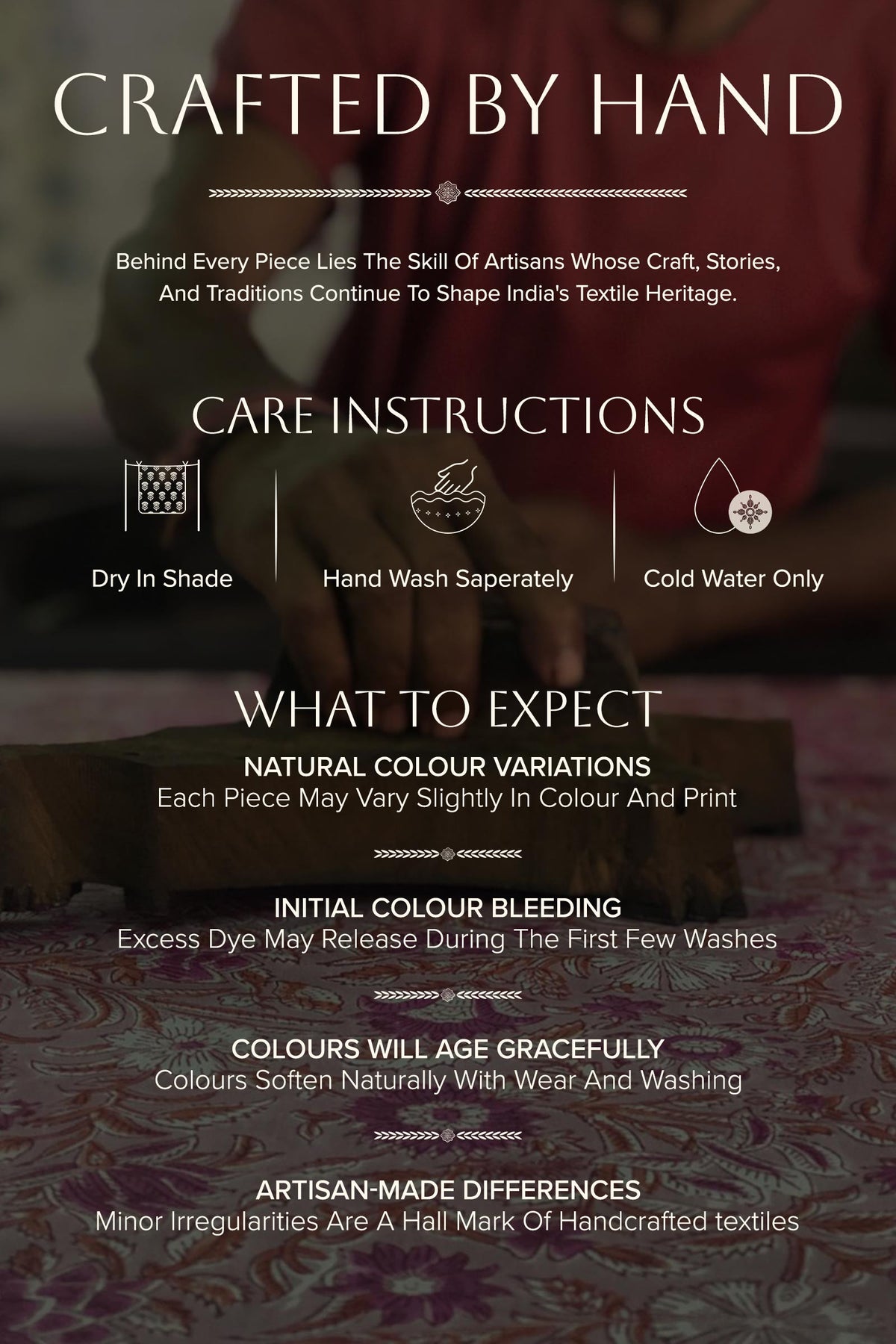
Unlike a print created by machine, hand block printing leaves room for the human touch. A block may sit a fraction differently on the fabric. A colour may settle with a gentle variation. These small differences are not imperfections. They are part of what makes the craft feel alive.
From the first carved line to the finished kurta, there is a quiet sequence of work that demands patience and precision. Here is how that journey unfolds.
The 7 Step Journey of a Hand Block Printed Kurta

Step 1: Designing the Motif
Every hand block printed fabric begins with a motif.
The design may draw from nature, traditional Indian flowers, paisleys, foliage, jaalis, or geometric forms. At this stage, the motif needs to be considered not just as a drawing, but as something that will eventually be carved into wood and repeated across fabric.
The scale, spacing, fine lines, and arrangement all matter. A design that looks beautiful on paper may need thoughtful adjustments before it can become a workable printing block.
There is also something deeply Indian about the motifs used in block printing. Many are inspired by forms that have appeared on textiles, architecture, jewellery, and everyday objects for generations. The design may be contemporary in its arrangement, but its visual language often has older roots.
Step 2: Carving the Wooden Block
Once the motif is finalised, it moves from paper to wood.
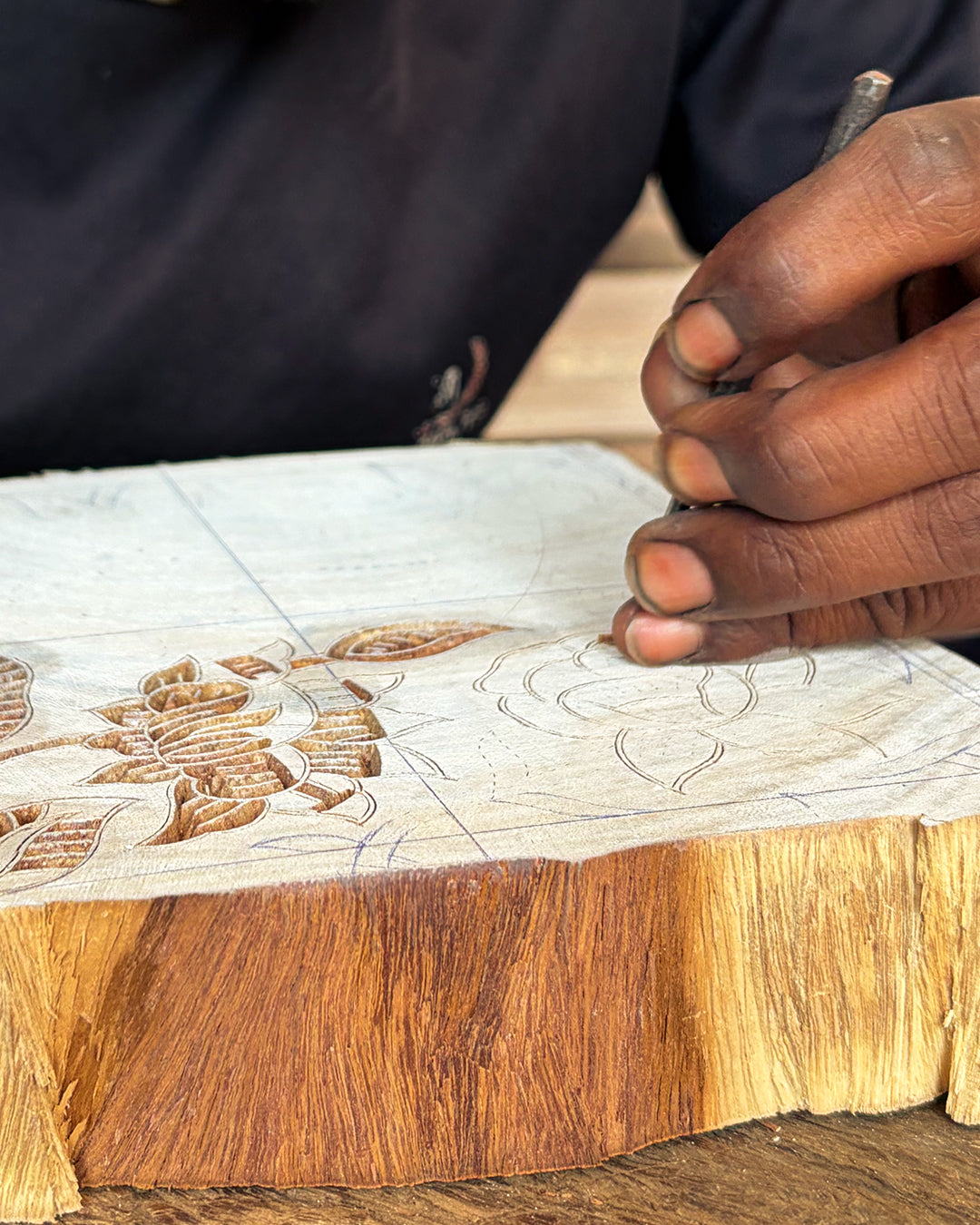
A block maker carefully transfers the design onto a piece of seasoned wood and begins carving away the areas that should not receive colour. What remains is the raised surface that will touch the fabric.
The work calls for a steady hand. Fine floral details, narrow stems, and small geometric elements all have to be carved with care. A small change in the depth or shape of a line can affect how the final print appears.
Different parts of a design may require separate blocks, particularly when several colours are involved. Each block must eventually align with the others, making accuracy an important part of the craft.
The wooden block is simple in appearance, but it carries a remarkable amount of work within it. It is the bridge between a drawn motif and a repeat that can travel across many metres of cloth.
Step 3: Preparing the Fabric
Before printing begins, the fabric has to be prepared.
Cotton and other natural fabrics may be washed and treated to remove impurities, excess starch, or finishes that could interfere with the colour. The fabric is then dried and prepared on a suitable printing surface.
This stage is easy to overlook because there is no visible motif yet. But good printing depends on what happens before the first block touches the cloth. The fabric needs to be clean, receptive to colour, and positioned carefully so that the print can develop evenly.
For an artisan, this is part of the rhythm of the work. Preparation is not separate from printing. It is what allows the printing to happen well.
Step 4: Preparing the Dyes and Colours
Colour brings the carved motif to life.
Depending on the textile and the design, artisans may work with traditional dyes, pigment colours, or carefully prepared colour mixtures. Natural dyes have their own particular character and can require considerable knowledge to prepare and apply correctly.
The consistency of the colour matters. It should be suitable for the block and fabric, neither too thin nor too heavy. The artisan needs to understand how the colour will behave once it meets the cloth and how it will change through drying and washing.
Indian block printing has always had a close relationship with colour. Deep indigos, earthy reds, muted yellows, greens, blacks, and other shades have found their place in regional textile traditions, each carrying the character of the materials and methods used to create them.
Step 5: Hand Block Printing the Fabric
This is where the craft becomes visible.
The prepared fabric is laid flat, and the artisan applies colour to the carved wooden block. The block is then placed carefully onto the fabric and pressed firmly by hand. It is lifted, moved forward, aligned, and pressed again.
This happens repeatedly across the length of the cloth.
The alignment requires both concentration and experience. When a design uses several blocks or colours, each one has to meet the previous impression at the right point. There is no digital guide marking exactly where the next print should land.
That is why the hands of the artisan matter so much. With years of practice, they develop a sense of pressure, spacing, rhythm, and placement that cannot simply be separated from the process.
The result is a fabric with a gentle sense of variation. Two sections may look almost identical, yet never feel completely mechanical. The human hand remains present in the cloth.
Step 6: Drying, Washing and Finishing
Once the printing is complete, the fabric still has several stages to pass through.
It needs to dry properly so that the colours can settle. Depending on the printing technique and dyes used, the fabric may then be washed to remove excess colour and finished to achieve the desired softness and appearance.
This stage can reveal the true character of the print. Colours settle into their final tones, the fabric gains its familiar hand feel, and the repeated motif begins to look less like a freshly printed surface and more like a finished textile.
Care at this point is important. Too much handling or an unsuitable finishing process can affect the colour, texture, or clarity of the print.
The fabric that emerges is ready to become something that will be worn, lived in, washed, folded, and worn again.
Step 7: From Printed Fabric to Finished Kurta
Only now does the printed fabric become a garment.
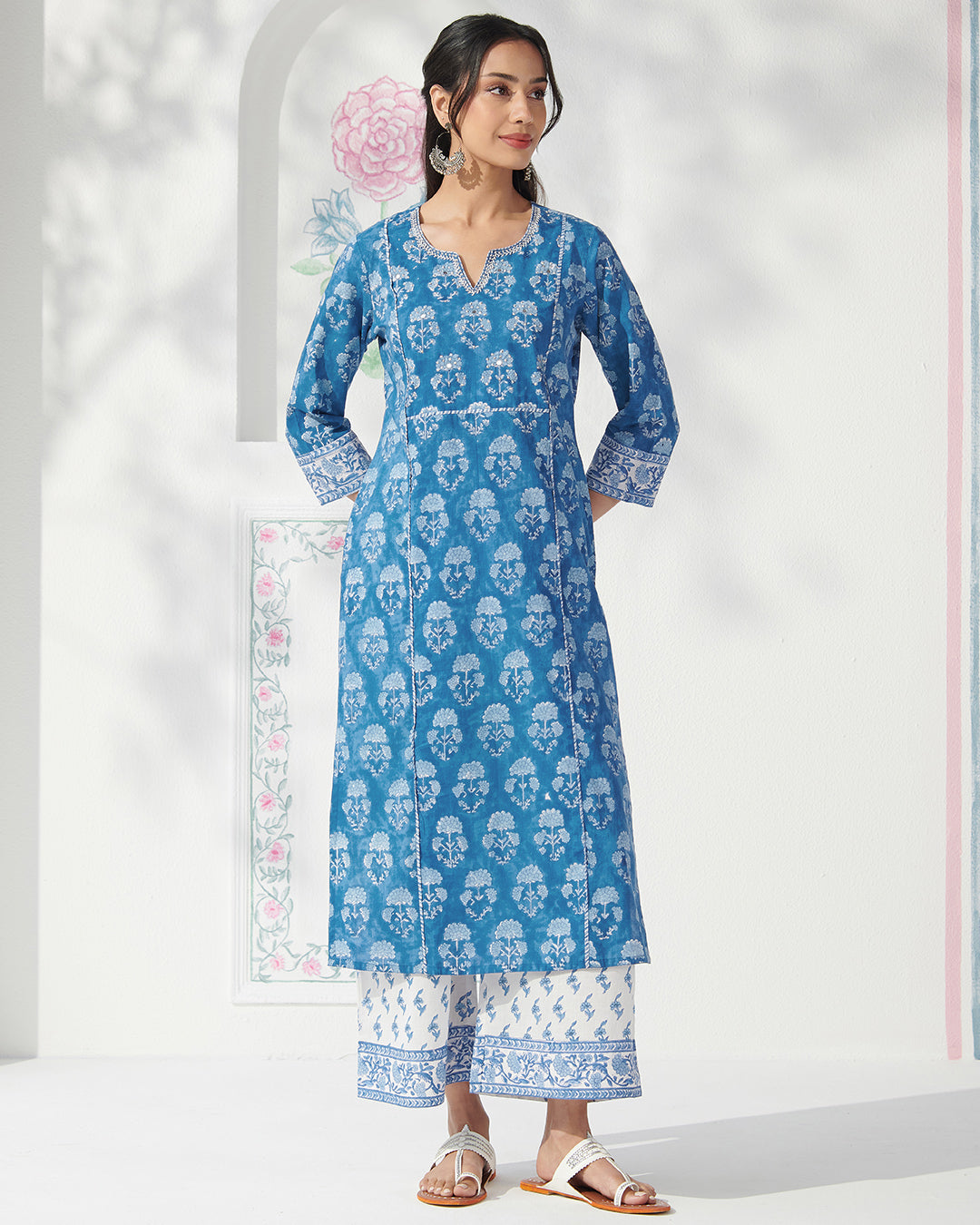
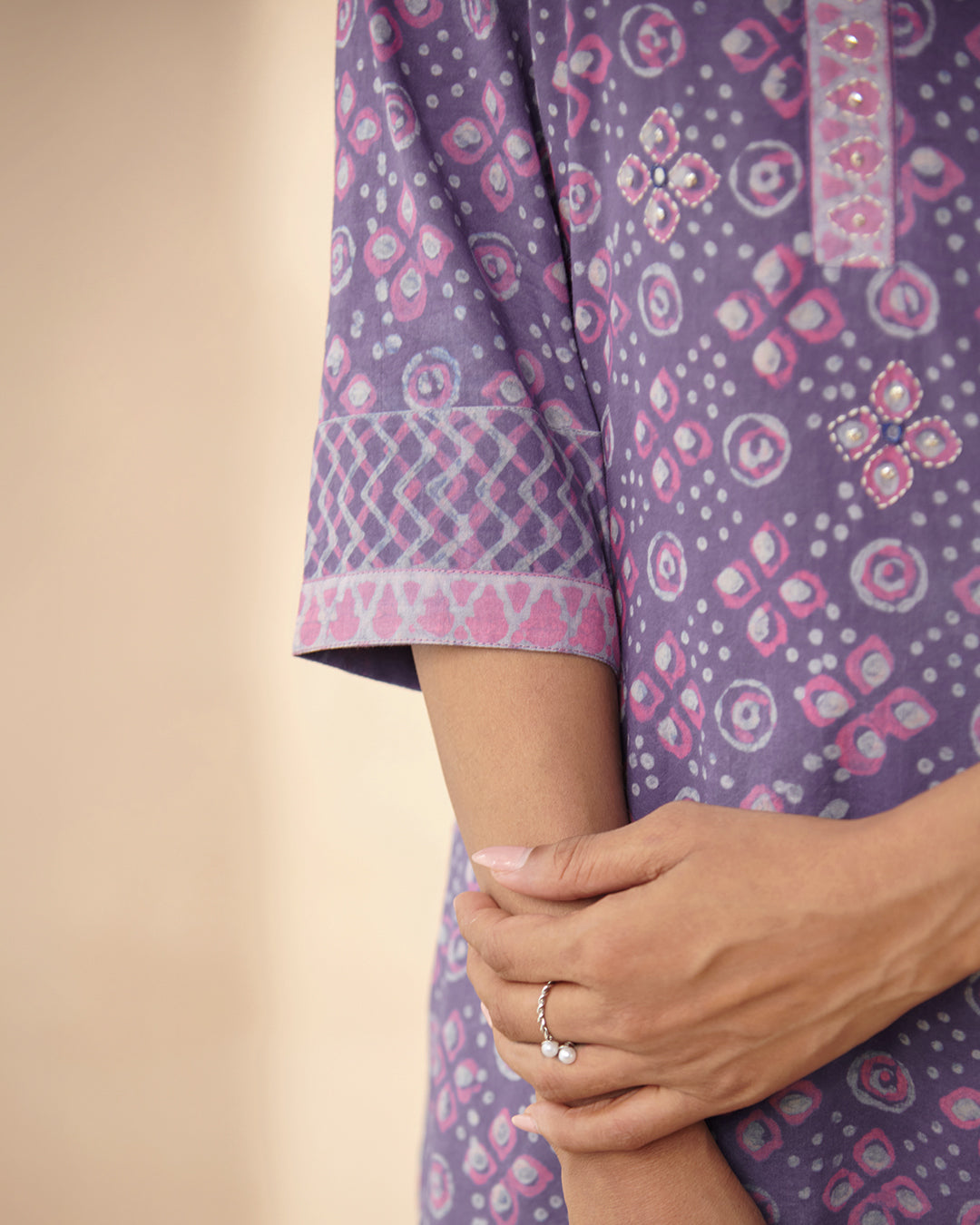
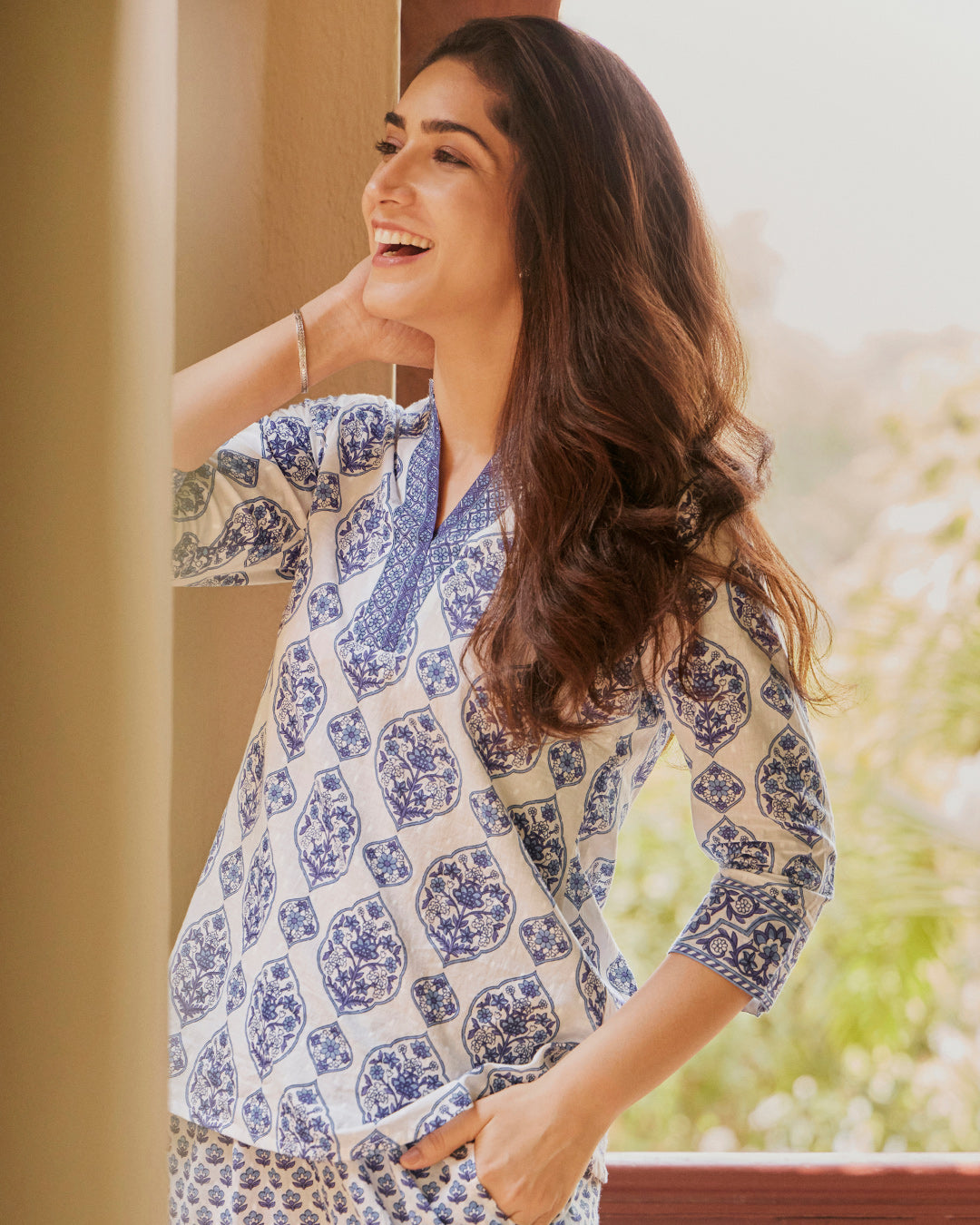
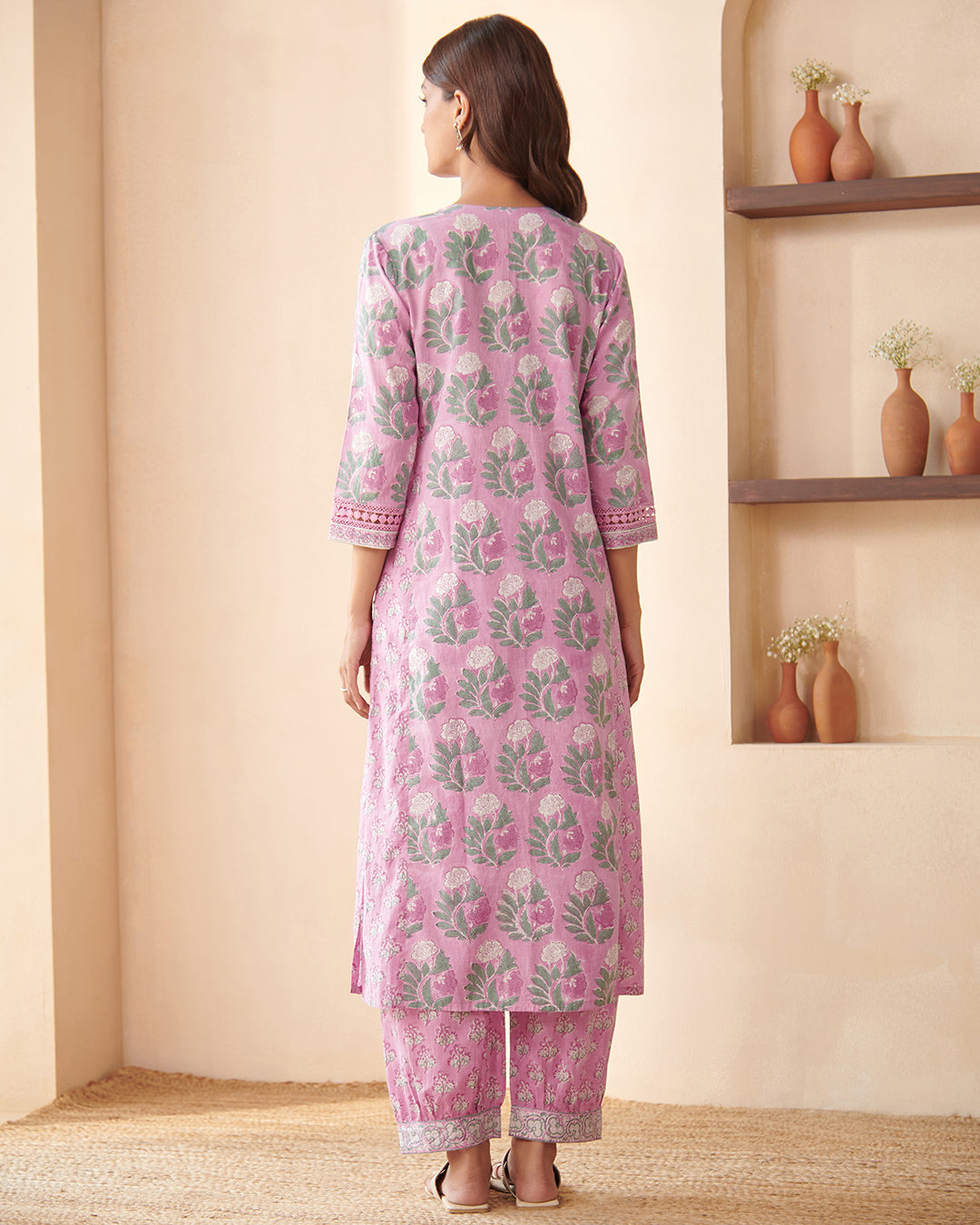
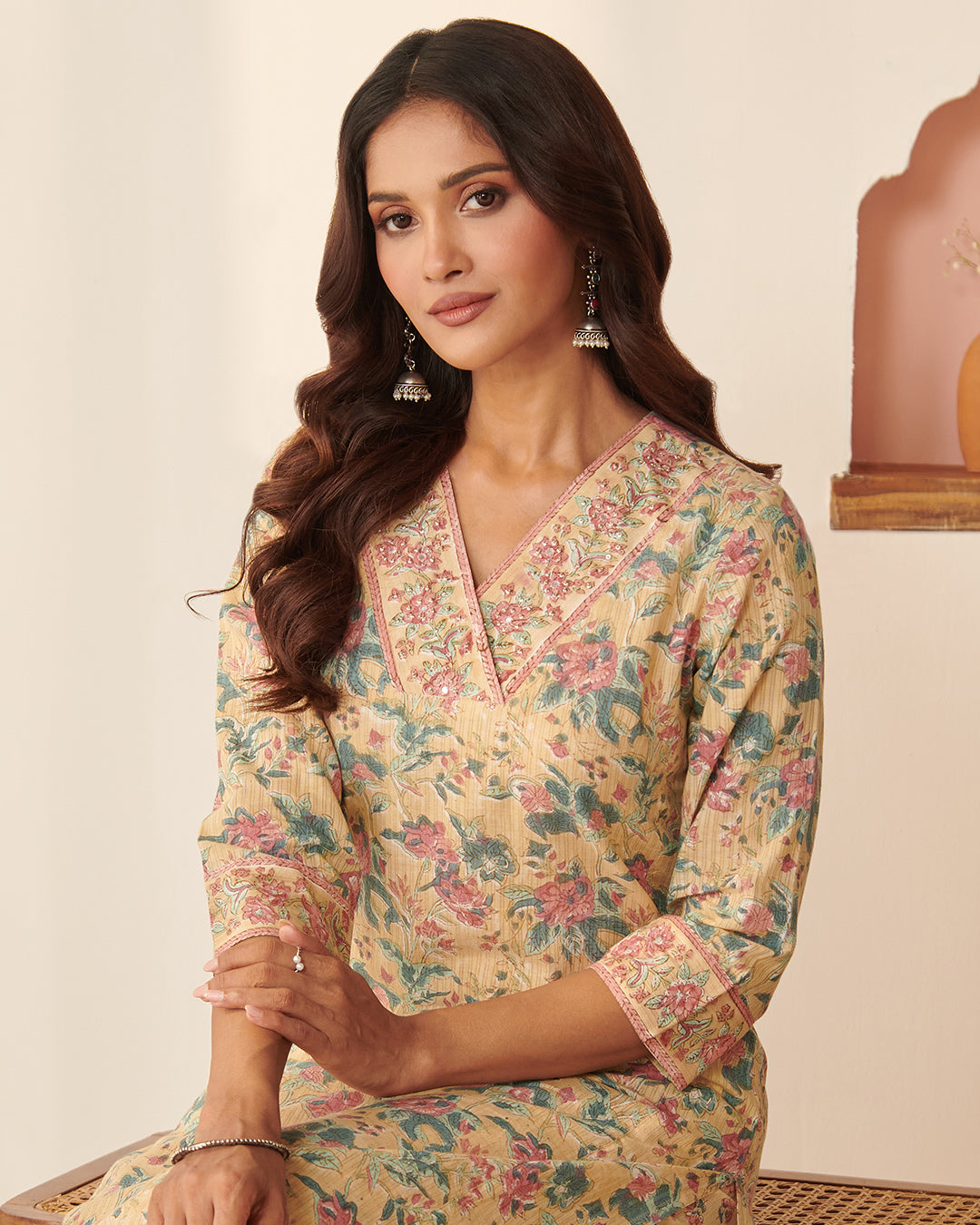
The fabric is inspected before it is cut. The placement of the print has to be considered alongside the shape of the kurta, the sleeves, neckline, borders, and other details. A thoughtfully placed motif can change how the finished garment feels without drawing attention to the construction itself.
Cutting and stitching require another kind of precision. The beauty of the printed cloth should remain visible while allowing the kurta to sit comfortably on the body.
This final step brings together every stage that came before it. The original motif, the carved block, the prepared fabric, the colours, the printing, and the finishing all become part of one garment.
What began as a small design carved into wood has travelled through many careful hands to become something as familiar and intimate as a kurta.
What Makes Every Hand-Block Printed Kurta Unique?
The Beauty of Small Variations
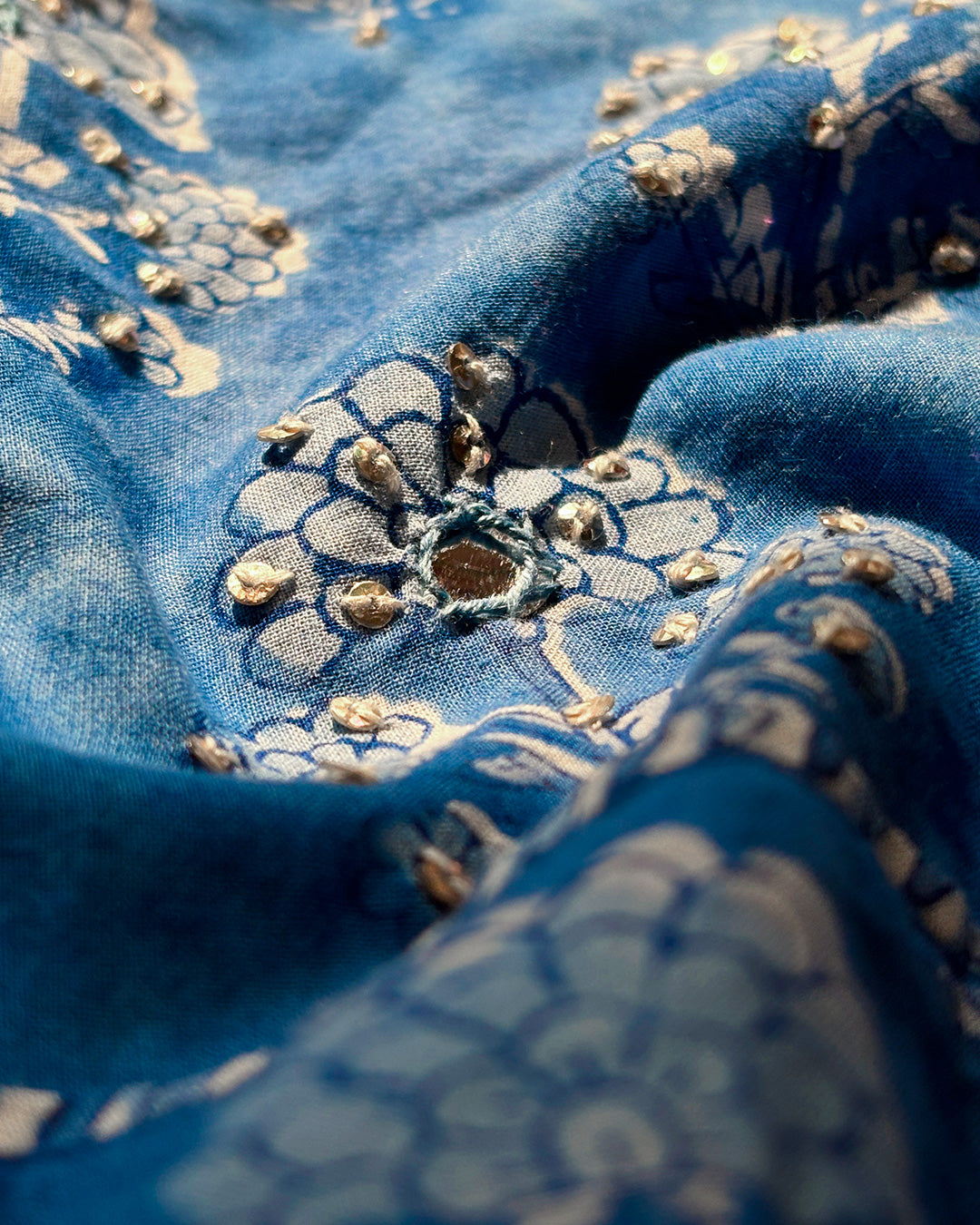
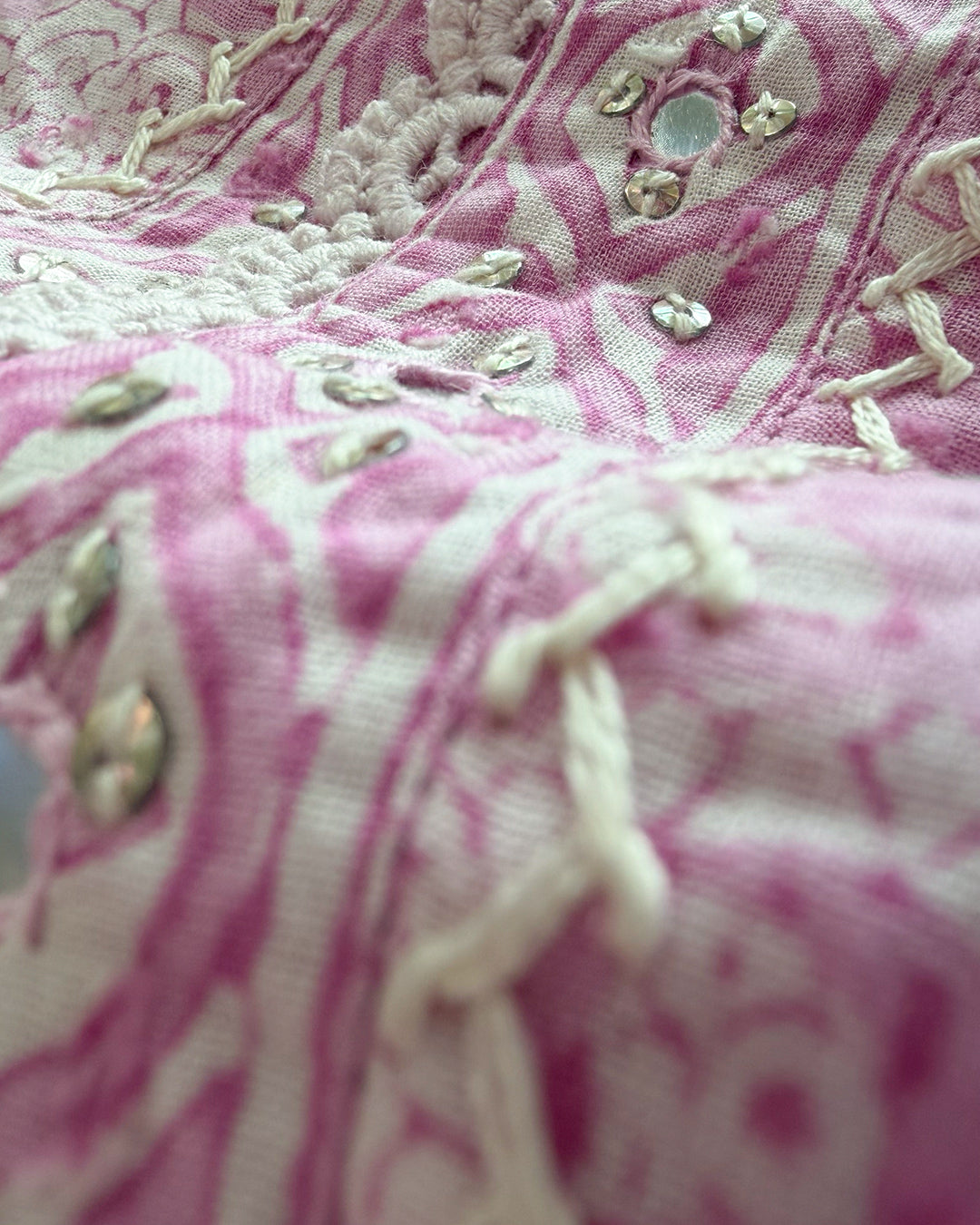
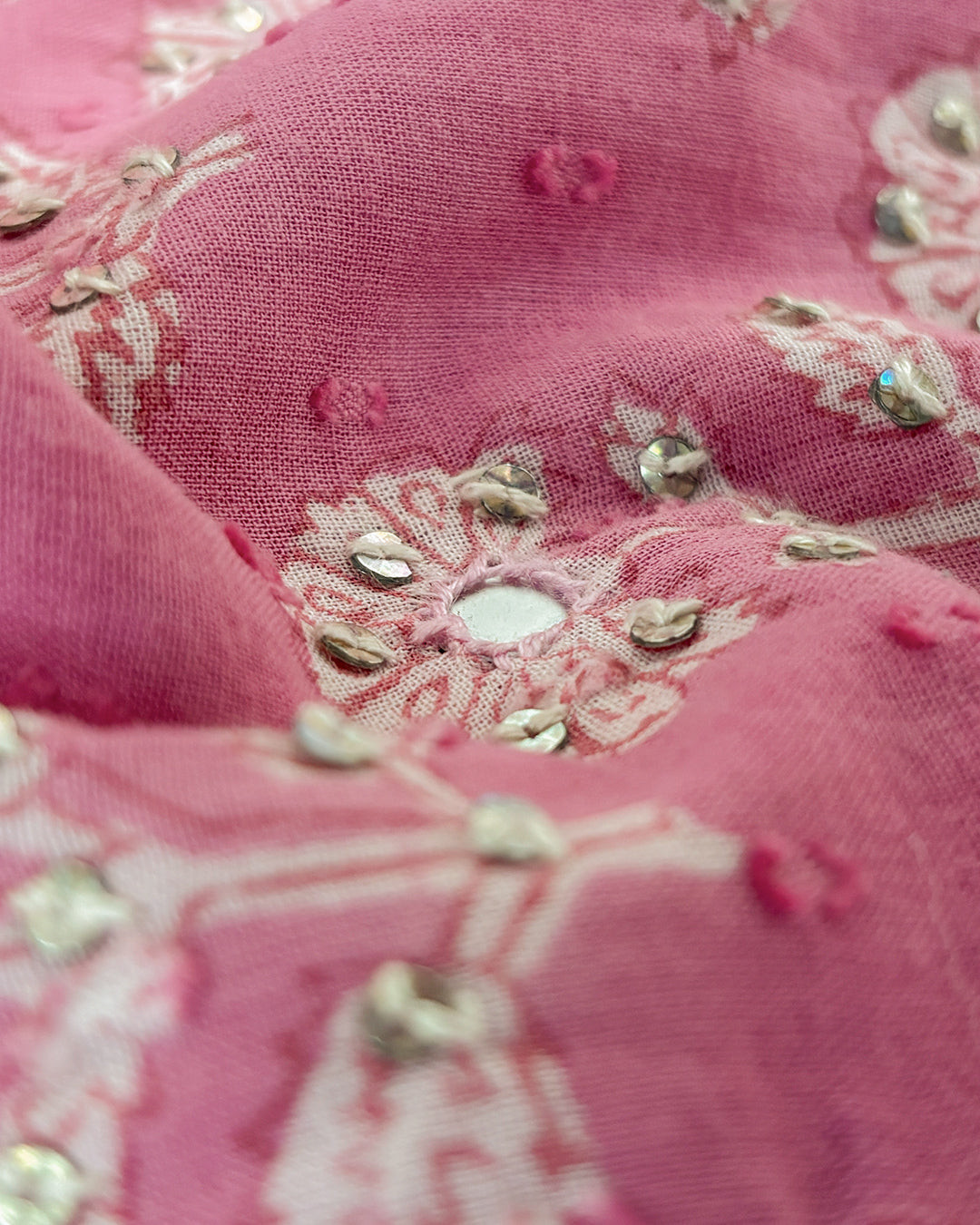
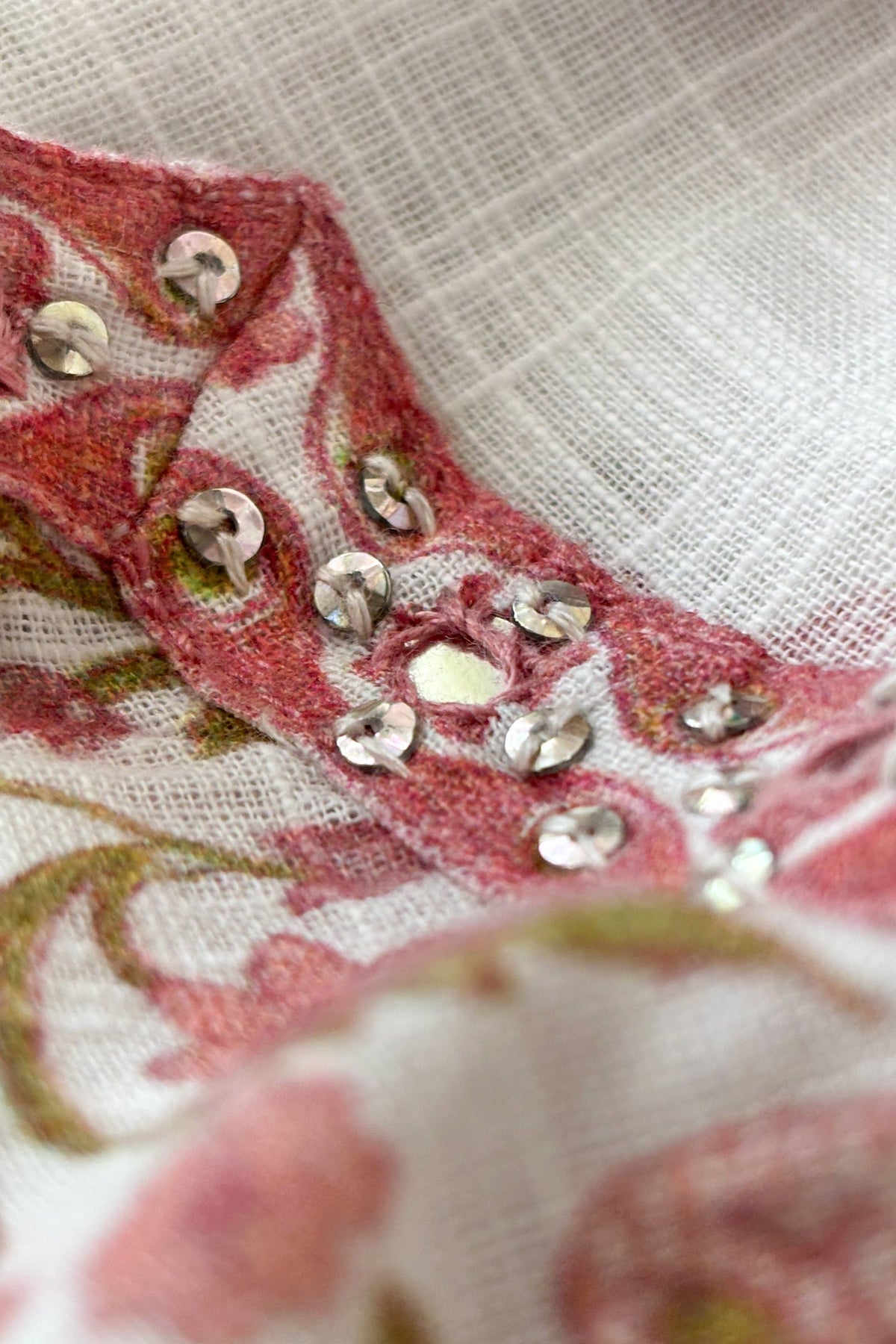
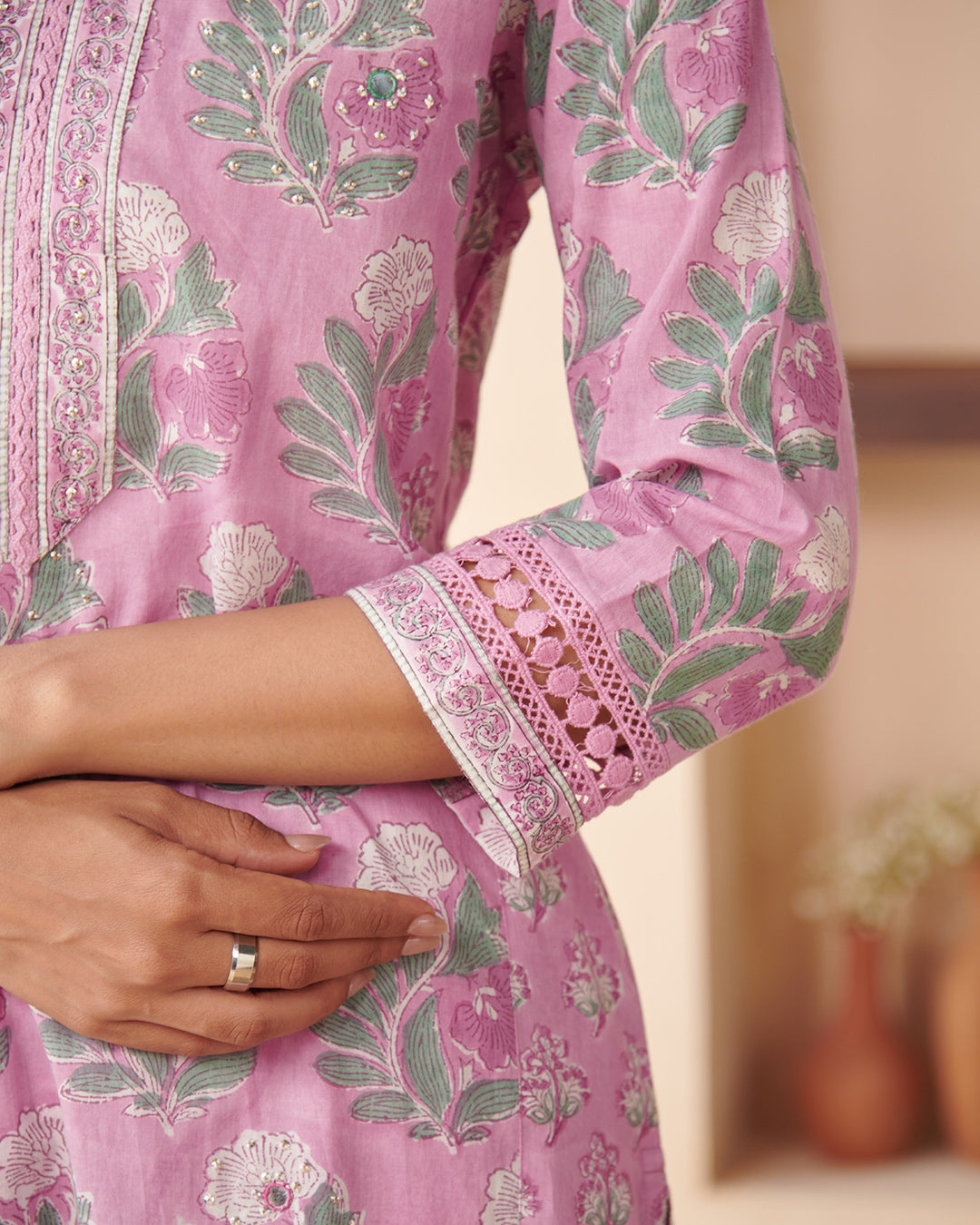
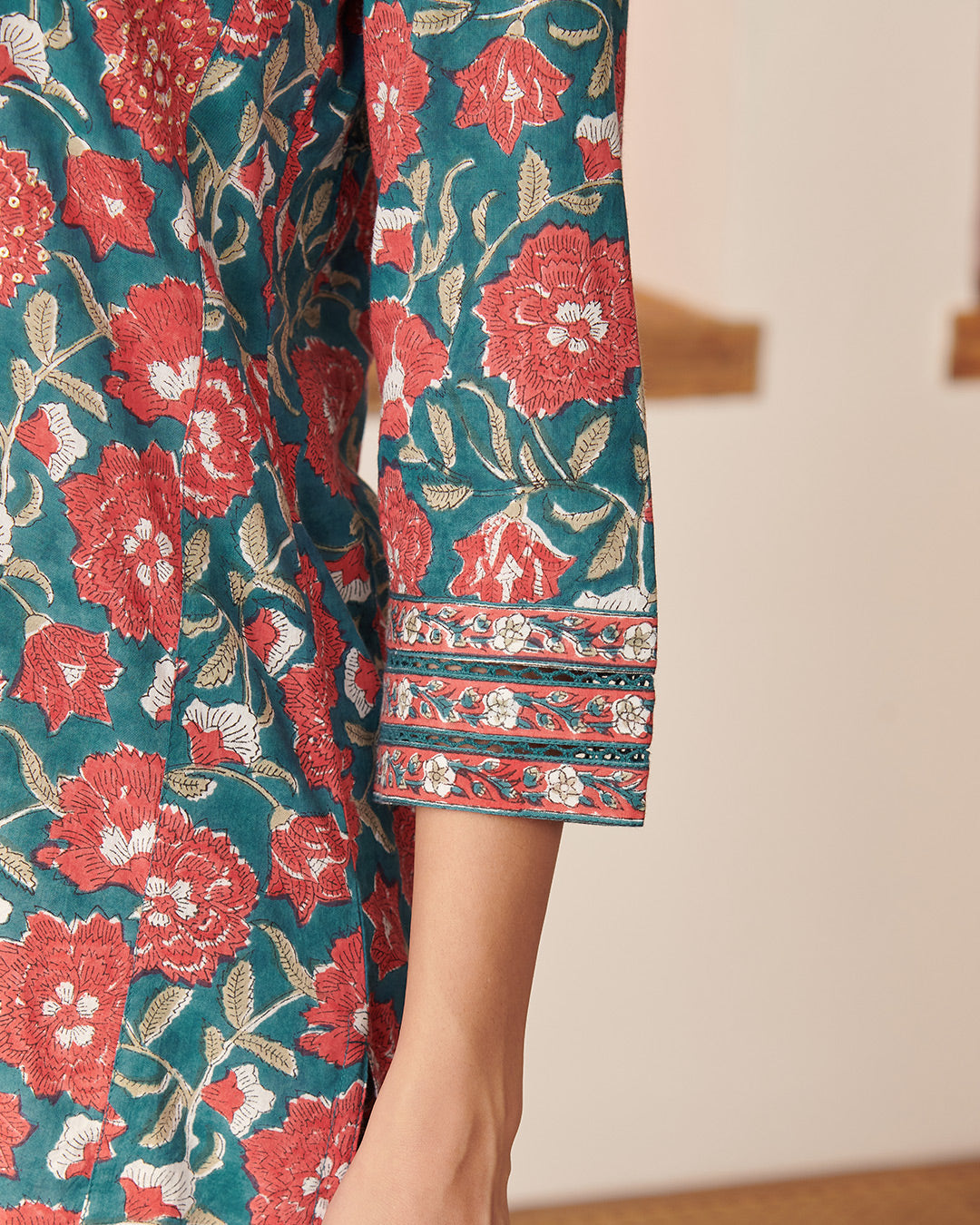
A hand-block printed kurta carries the marks of the hands that made it. No two impressions are ever completely identical. There may be a slight shift in a motif, a gentle variation in colour, or a difference in the way the block meets the fabric. These are not flaws to be corrected. They are part of the nature of hand-block printing.
Unlike machine-made prints, where uniformity is the aim, traditional block printing allows for a certain softness and movement. Each impression records a moment of the artisan’s hand, creating a fabric that feels considered rather than manufactured.
The Character of the Wooden Block
The wooden block itself has a story. A motif is carefully drawn and carved into wood, often with fine details that need precision and patience. As the block is used over time, it develops its own character. The pressure of the hand, the amount of dye, and the texture of the fabric all influence the final impression.
This is why a hand-block printed kurta can have a quiet irregularity that makes it feel personal. The design may be repeated, but the expression of it is never entirely mechanical.
When Craft Becomes Part of Everyday Life
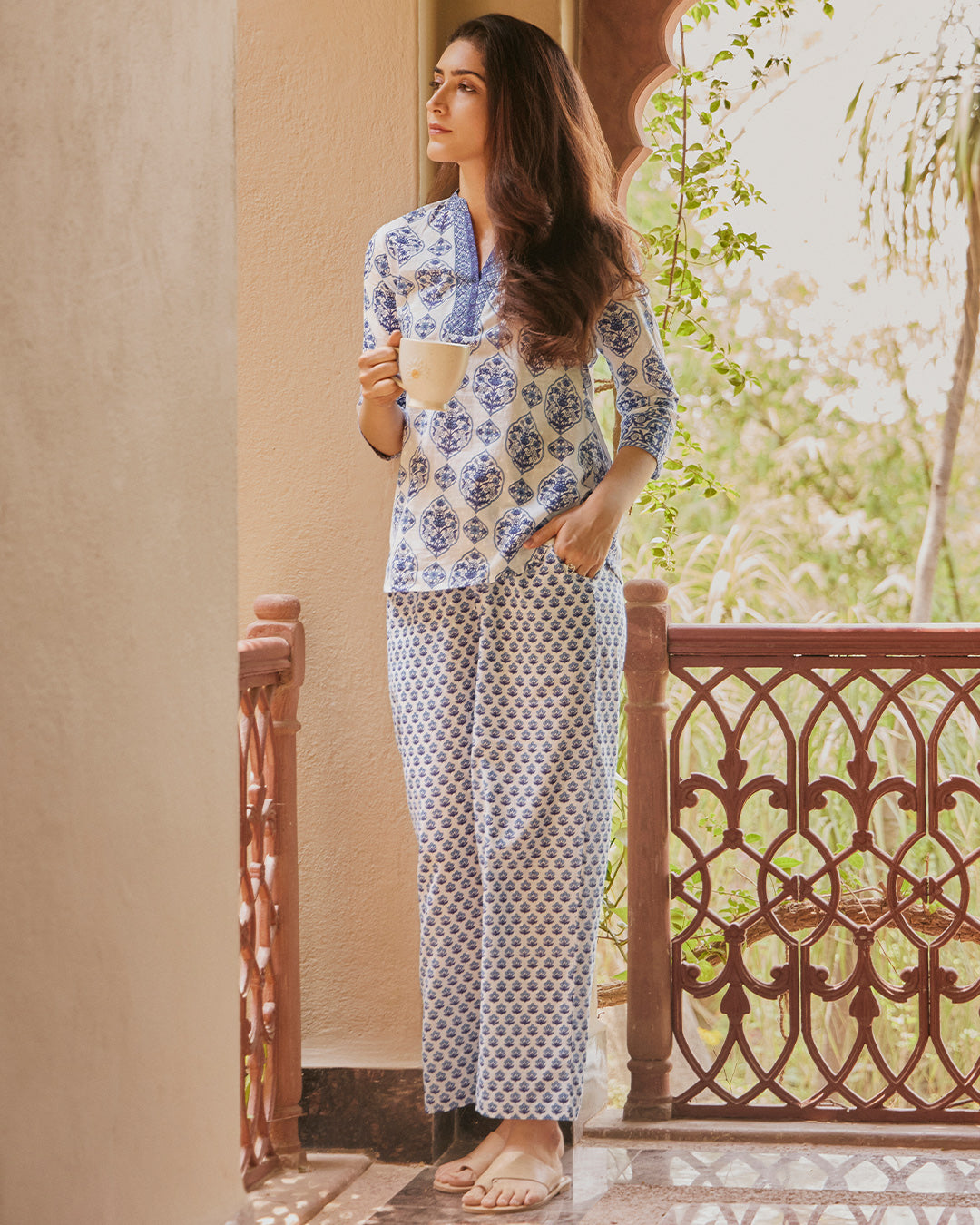
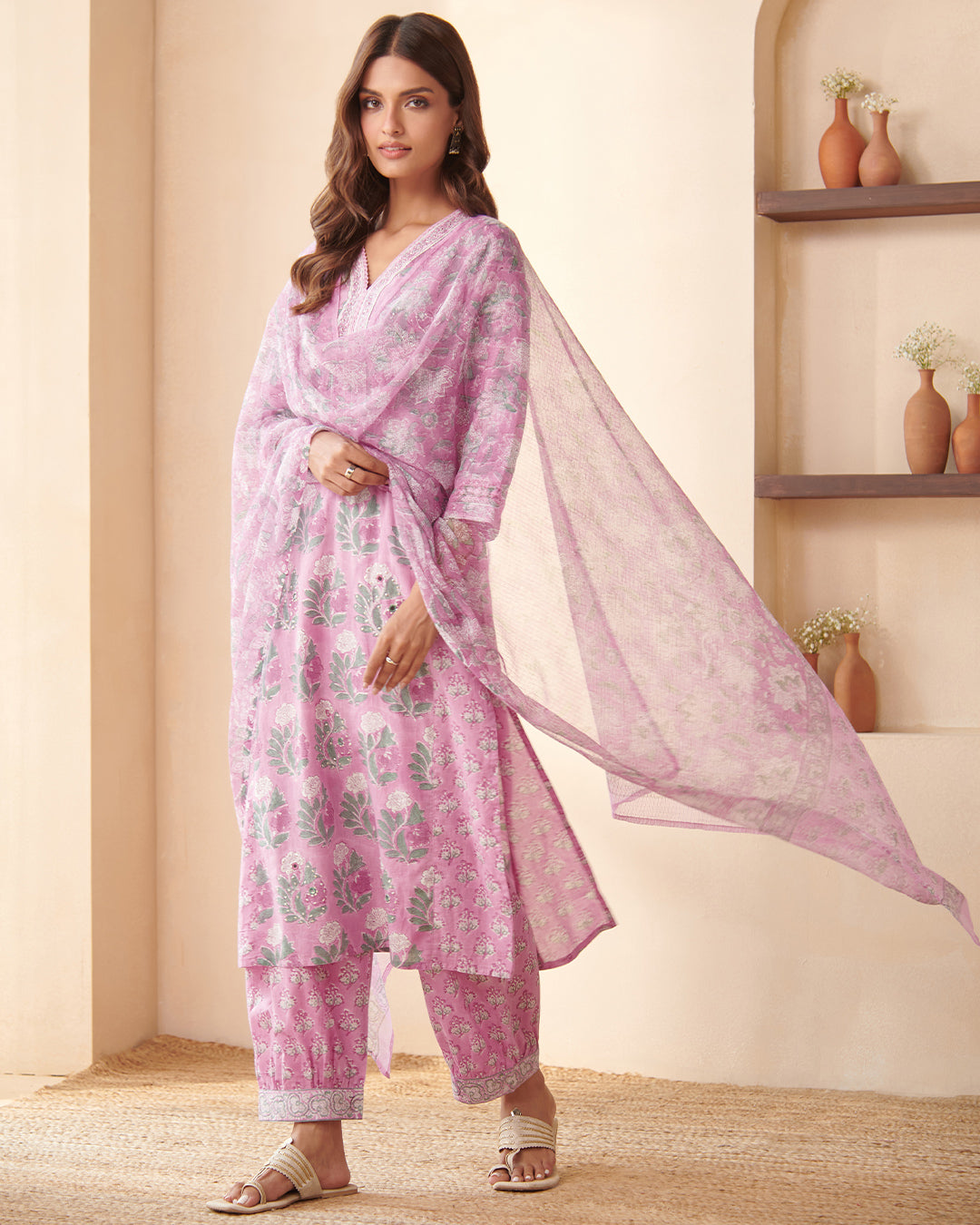
There is something special about wearing a craft that has travelled through so many careful stages before reaching us. A hand-block printed kurta can be worn to work, for a family gathering, over an unhurried lunch, or on an ordinary afternoon at home.
Its beauty does not depend on occasion. The print, the fabric, and the ease of the silhouette allow traditional Indian craftsmanship to remain part of everyday dressing, rather than something reserved only for special days.
Discover the Craft Behind Farida Gupta Kurtas
Rooted in Indian Craftsmanship
At Farida Gupta, hand-block printing is closely connected to the way we understand Indian clothing. The craft is not treated simply as a decorative technique. It is part of a longer tradition of making clothes with care, where the beauty of the finished piece comes from the process as much as the design.
Our kurtas draw from the richness of Indian motifs, traditional printing practices, and the quiet appeal of natural variation. Each print carries the presence of the artisan’s hand, while the finished garment is designed with the comfort and rhythm of contemporary Indian life in mind.
From Artisan Hands to the Woman Who Wears It
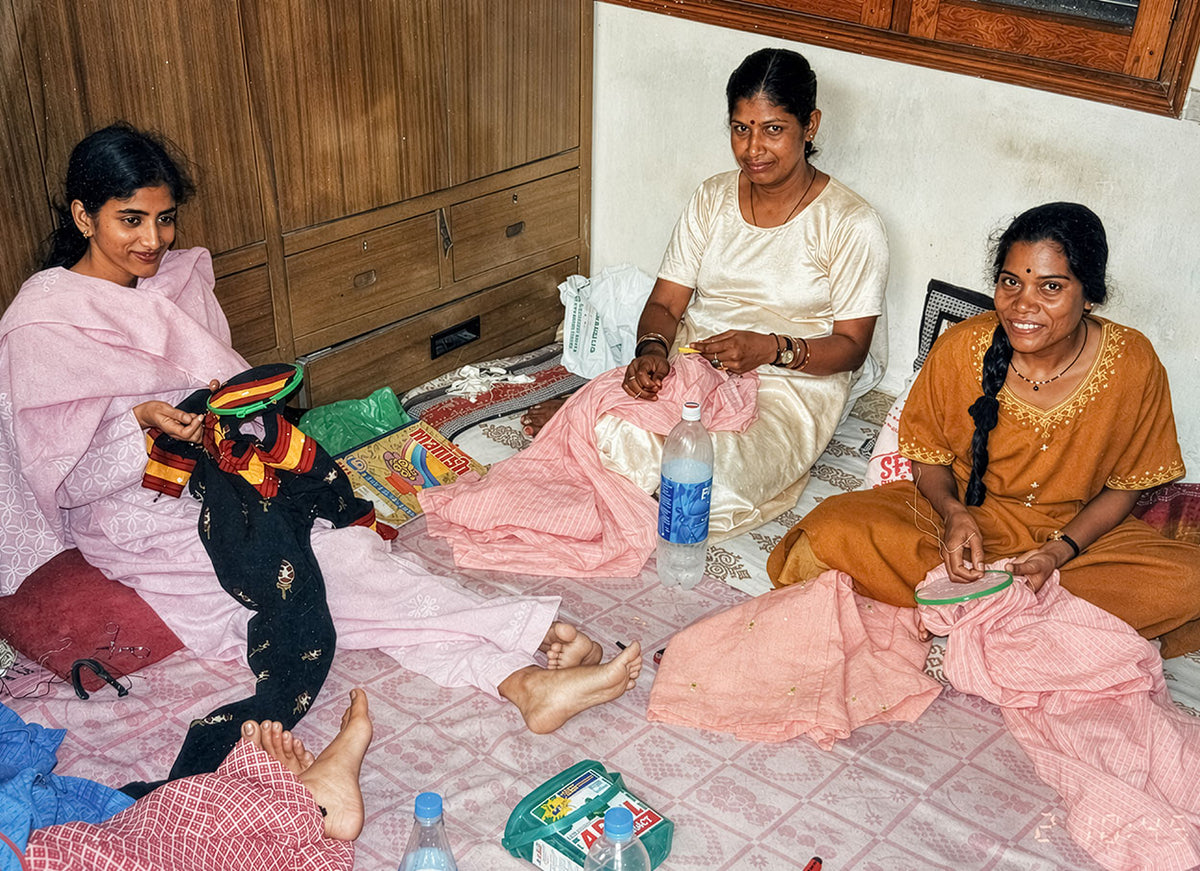
There is a long journey between a carved wooden block and a finished kurta. It passes through the hands of artisans who prepare the fabric, mix colours, place each impression, wash and finish the cloth, and finally help bring it into a form that can be worn and lived in.
That journey matters. It reminds us that clothing can hold more than a design. It can hold skill, patience, tradition, and the knowledge passed from one pair of hands to another.
For us, this is what gives a hand-block printed kurta its enduring character. It feels connected to where it comes from, yet at home in the life of the woman wearing it.
Final Thoughts
A hand-block printed kurta begins long before it becomes a garment. It begins with an idea, takes shape in carved wood, finds colour on fabric, and slowly comes alive through the repeated movement of an artisan’s hands.
By the time we wear it, that journey is no longer visible at first glance. Yet it remains there in every uneven impression, every subtle variation, and every detail that could only have been created by hand.
Perhaps that is what makes traditional Indian craft so enduring. It does not need to be perfectly uniform to be beautiful. It asks us to notice the hand behind the making and to value the time held within the cloth.
Because some prints are more than patterns. They are stories waiting to be worn.

