




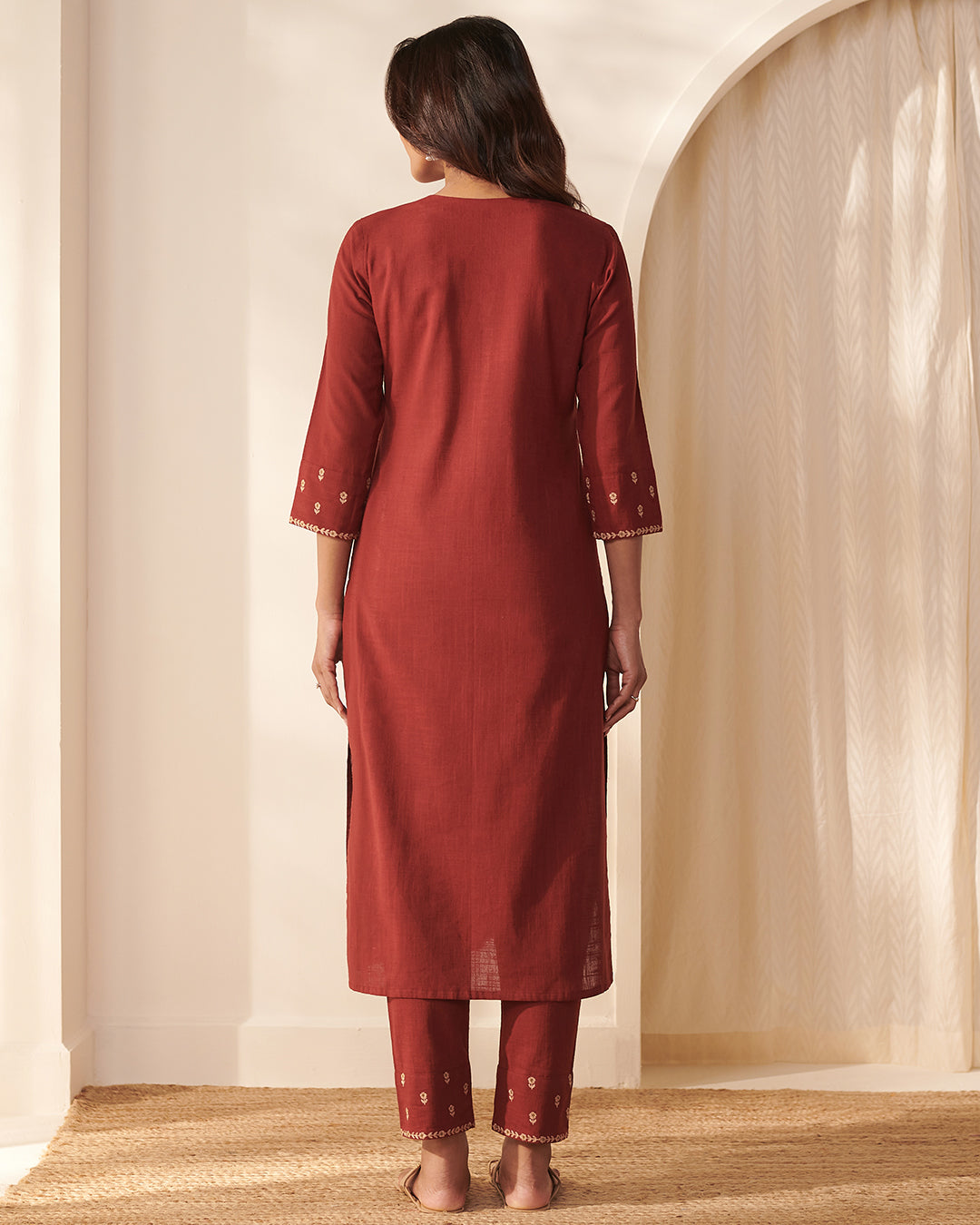
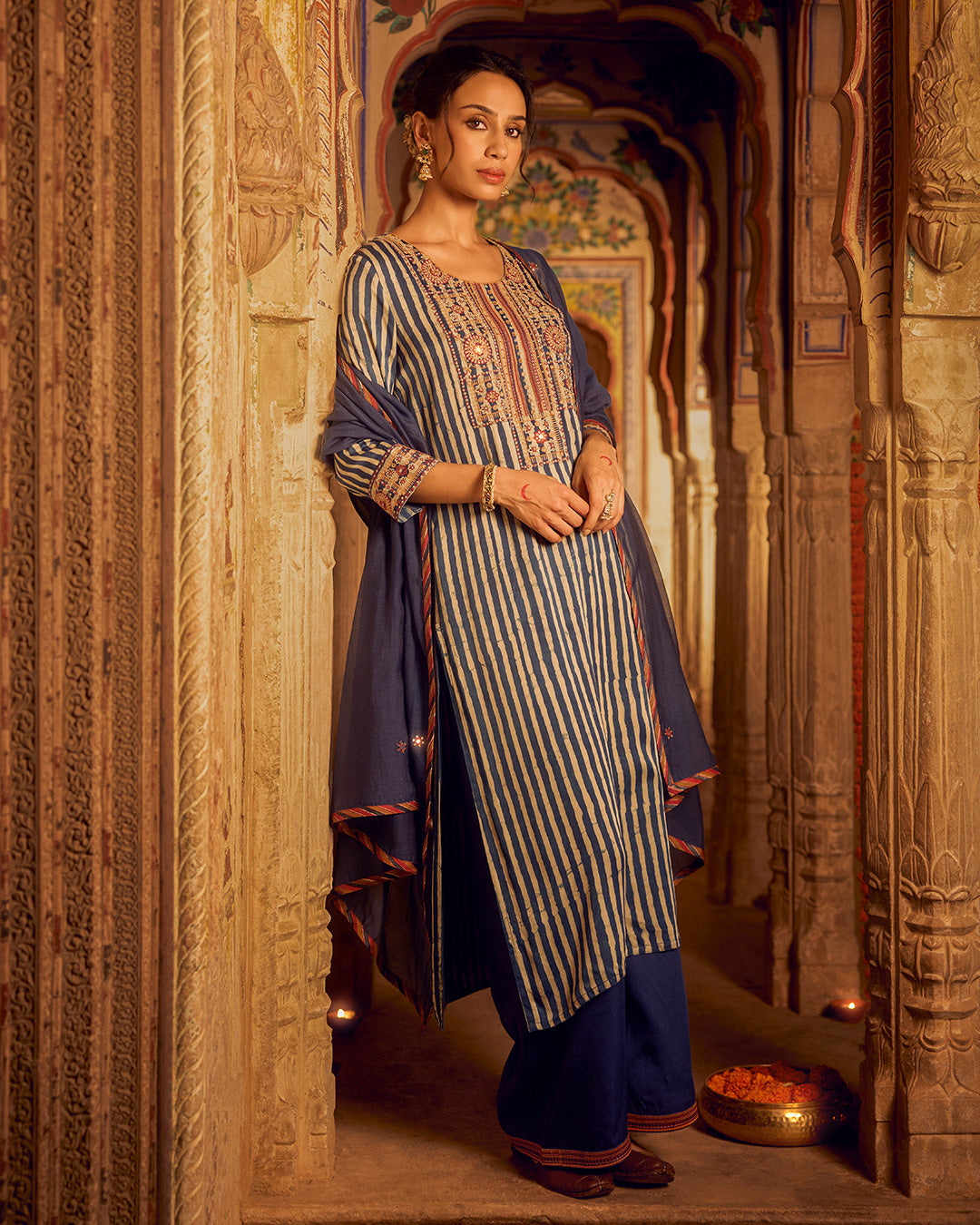
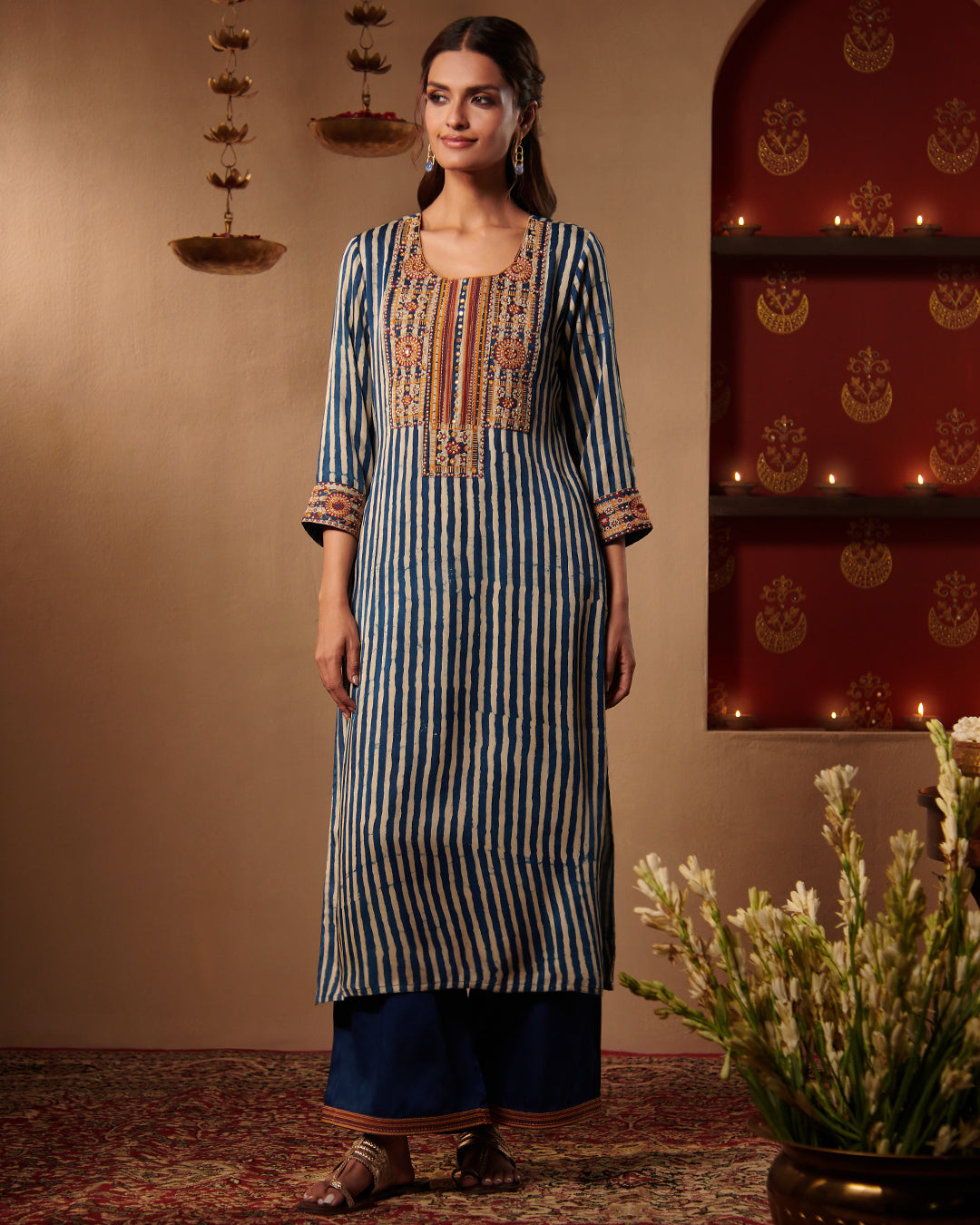
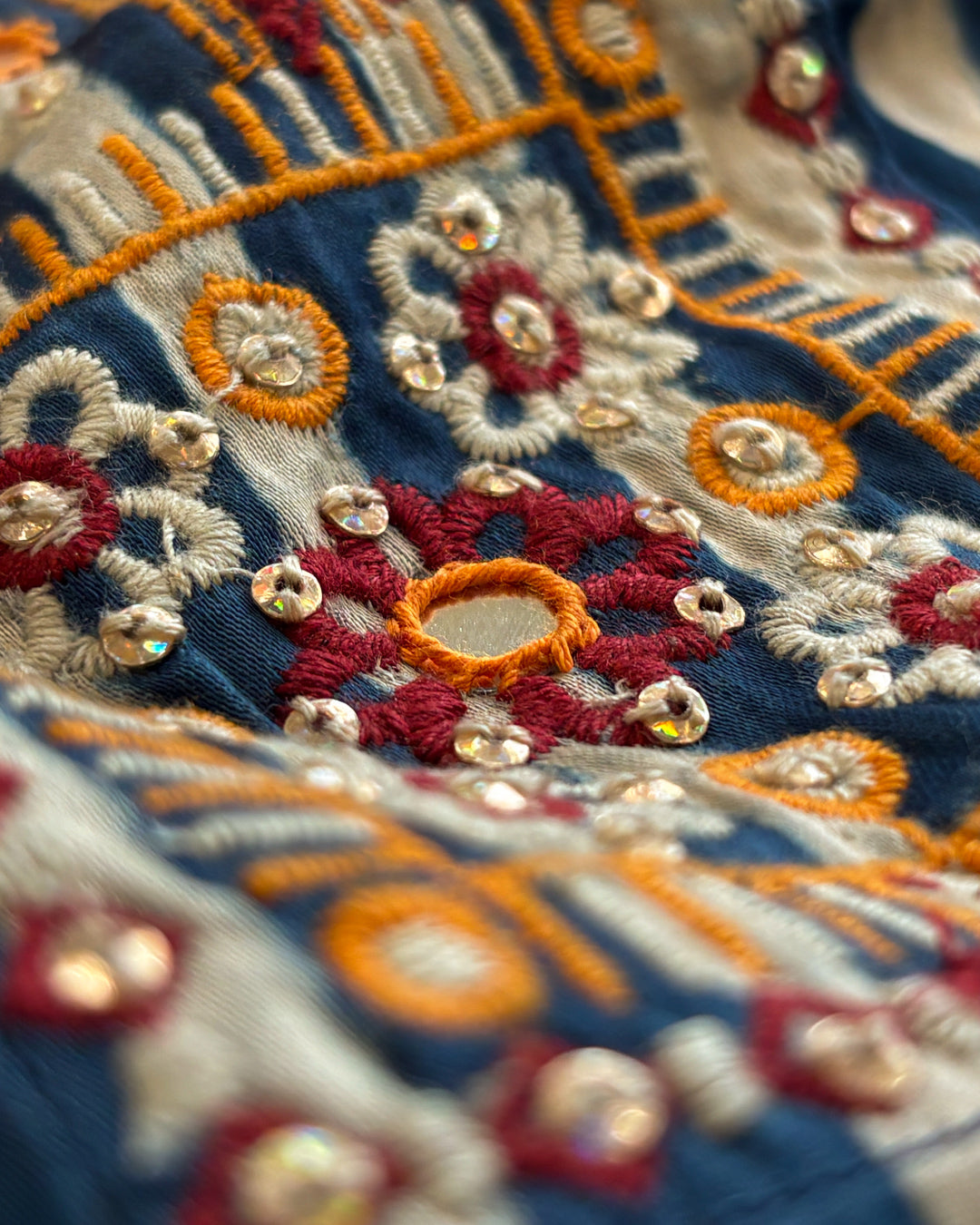
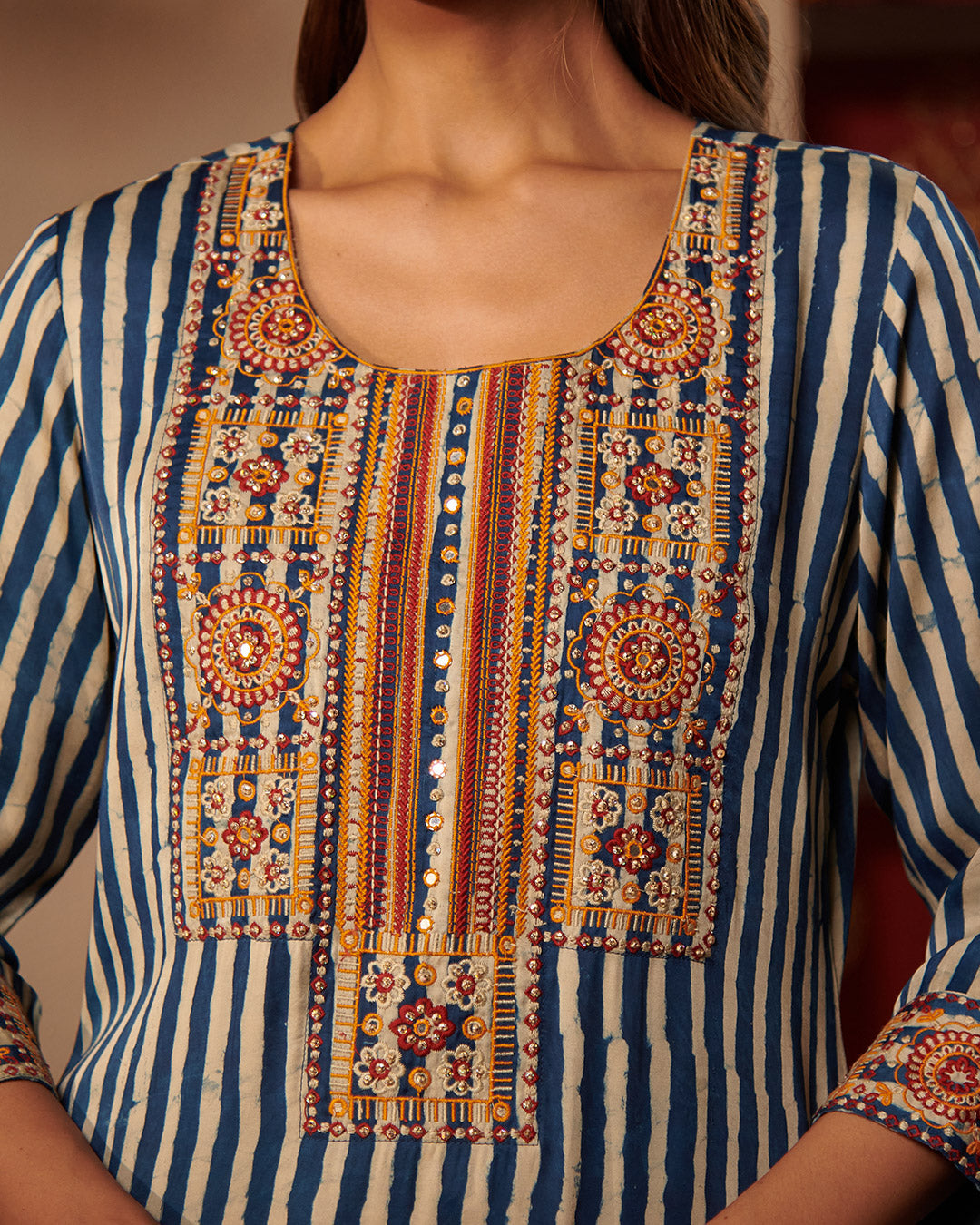
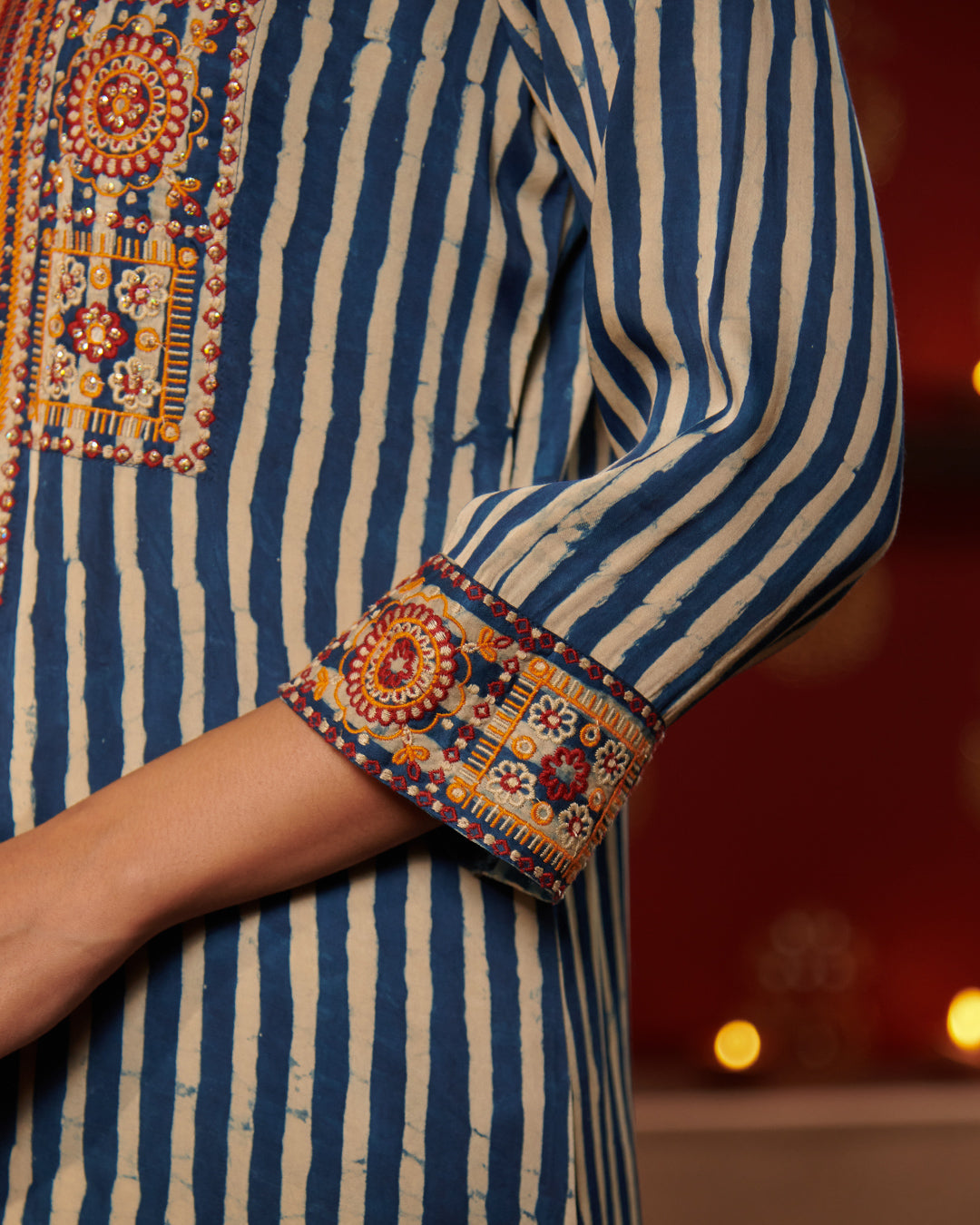
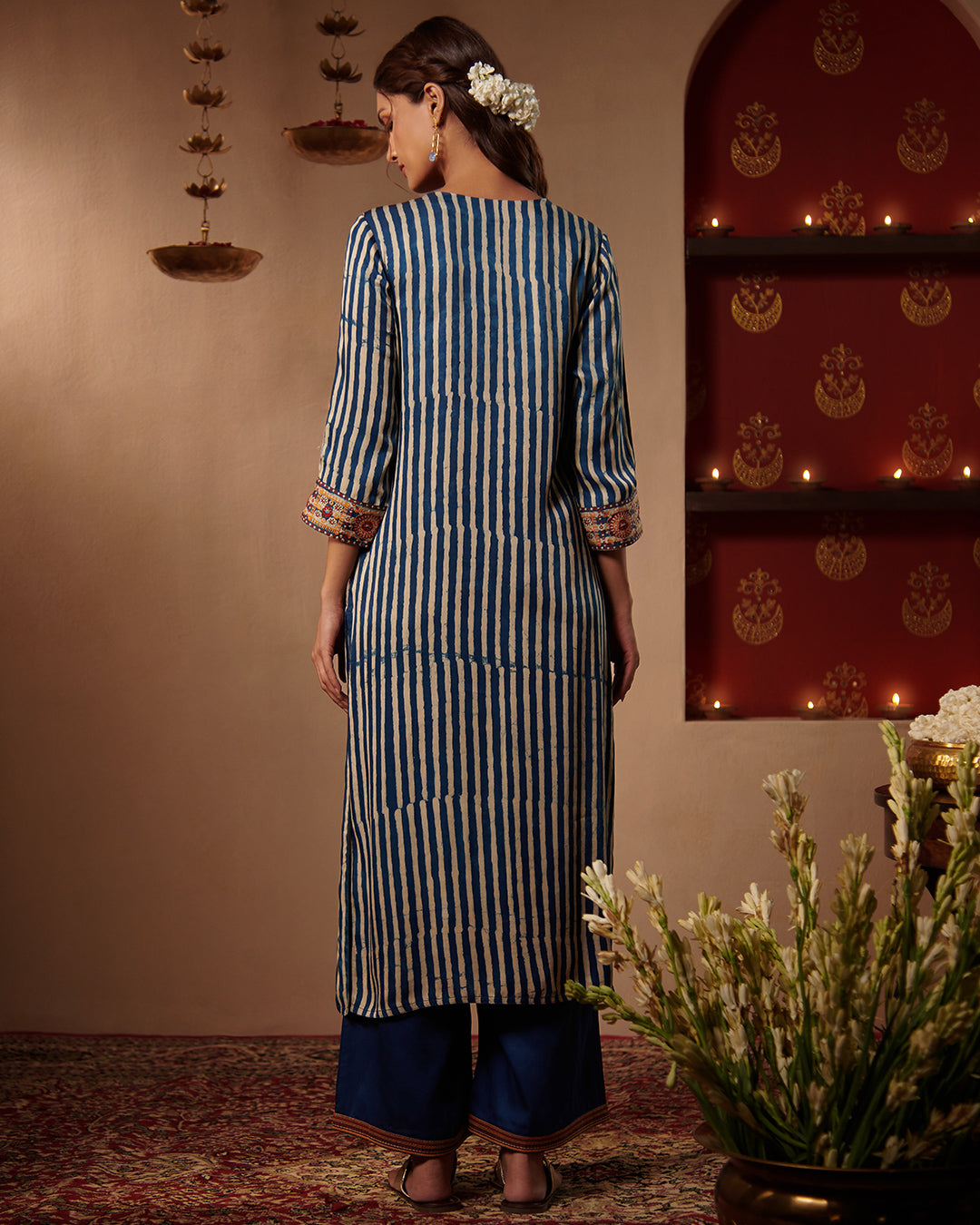
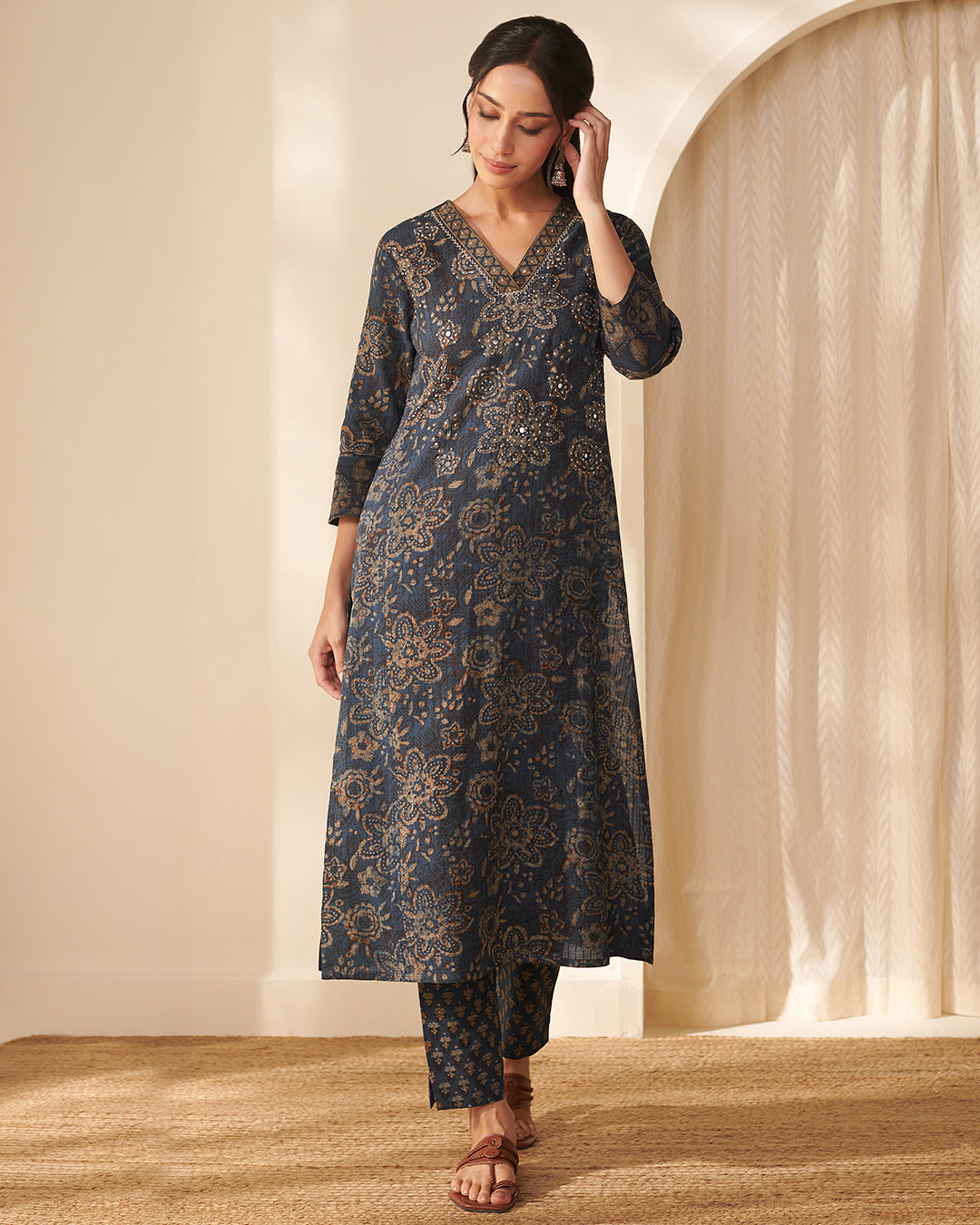
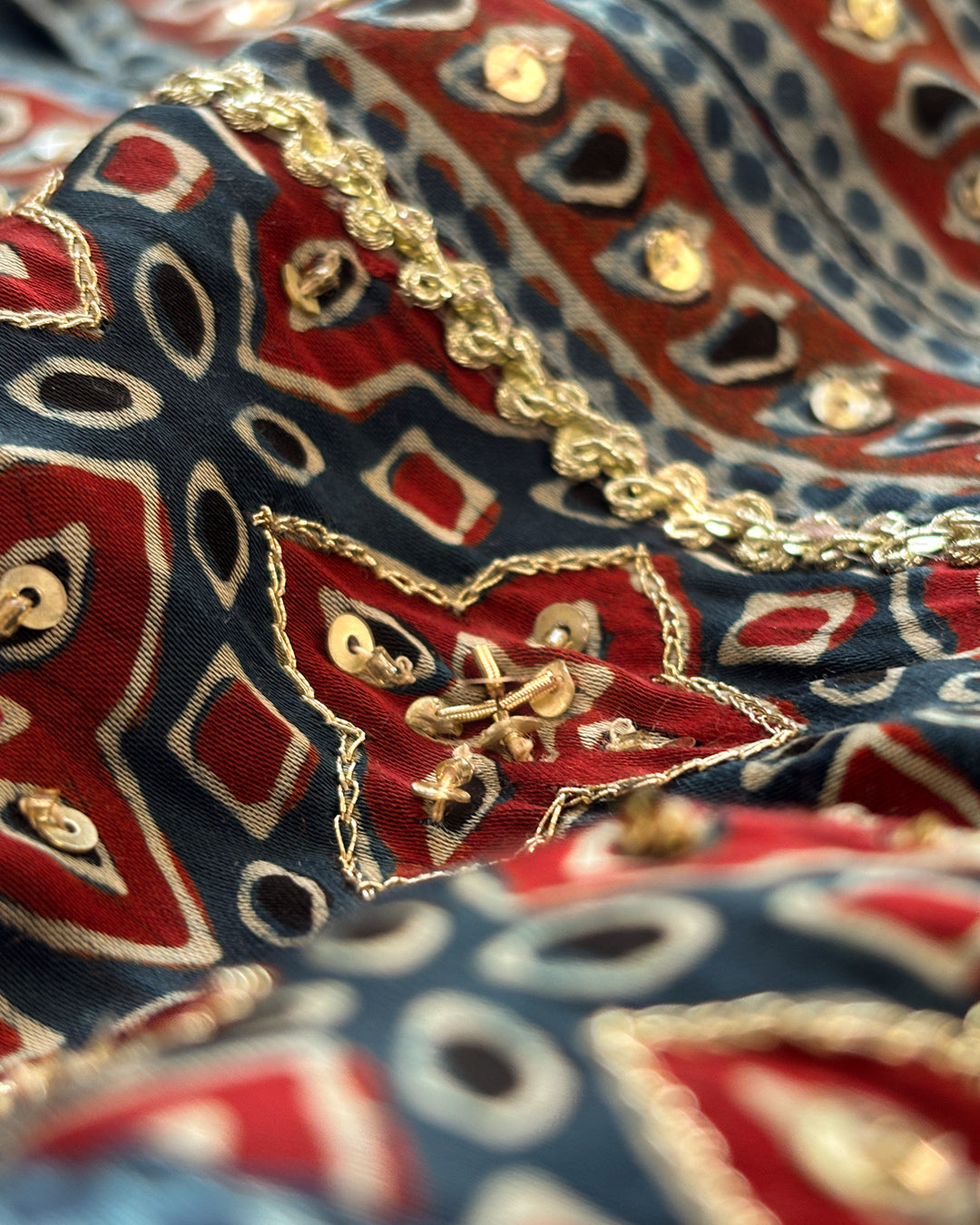
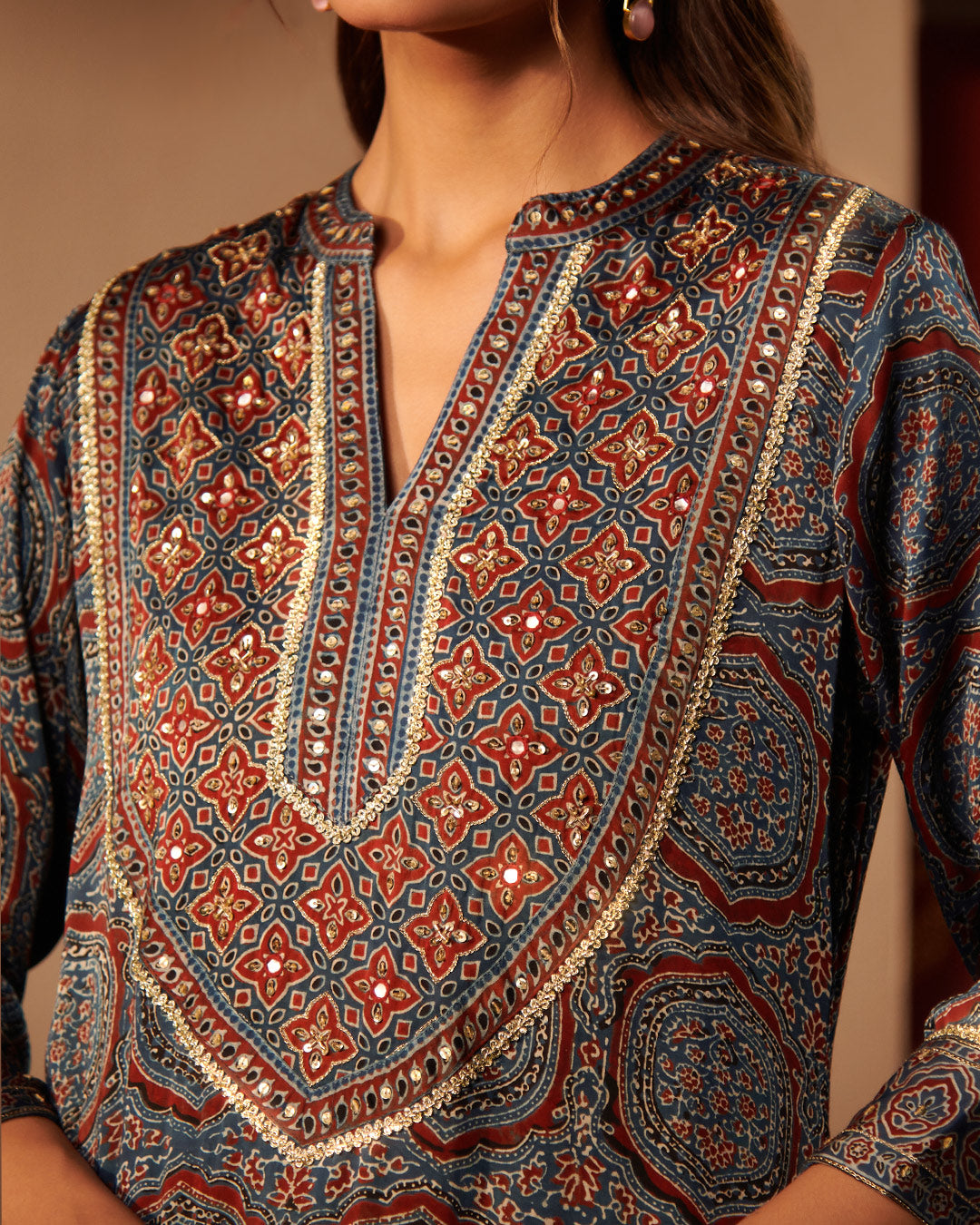
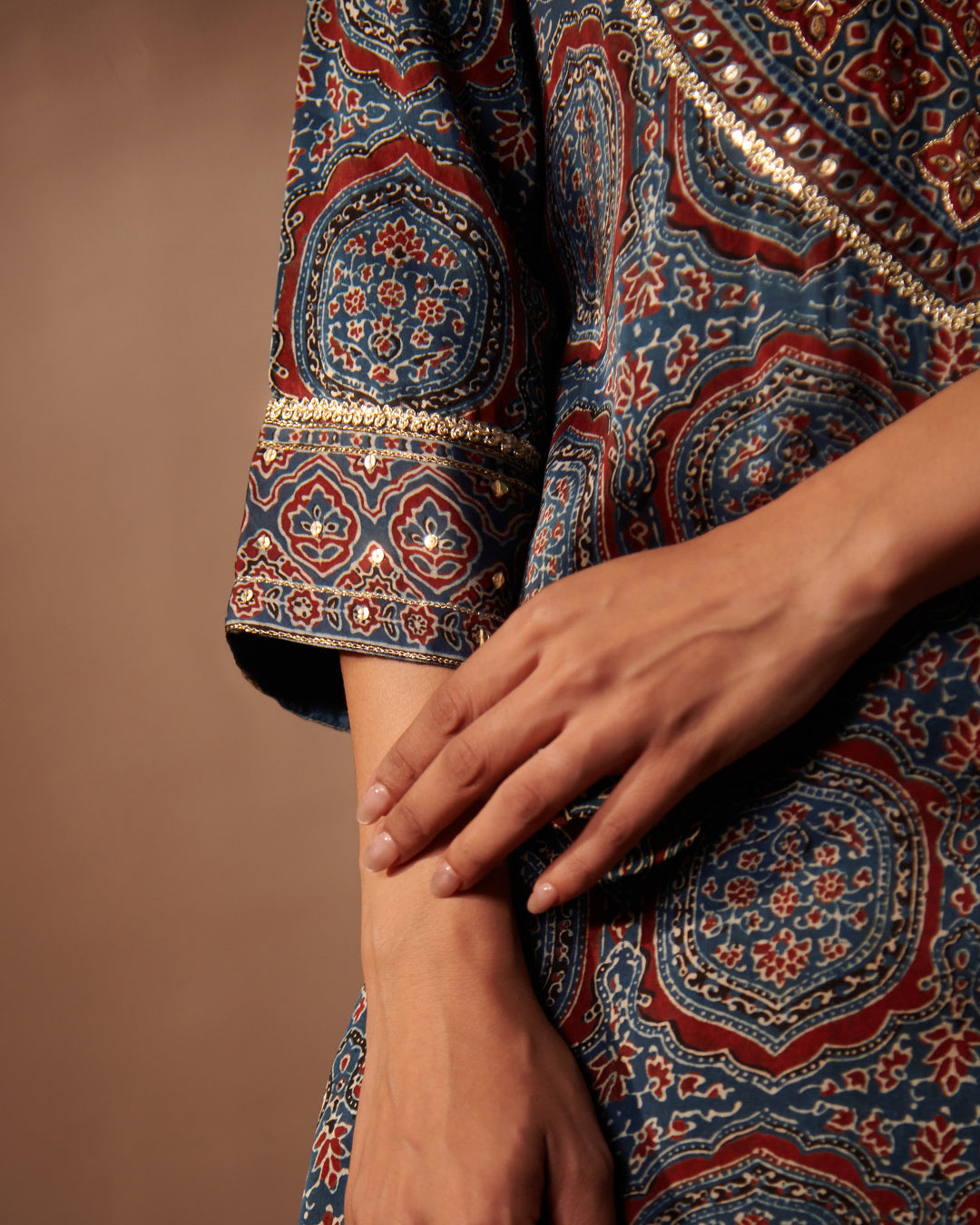
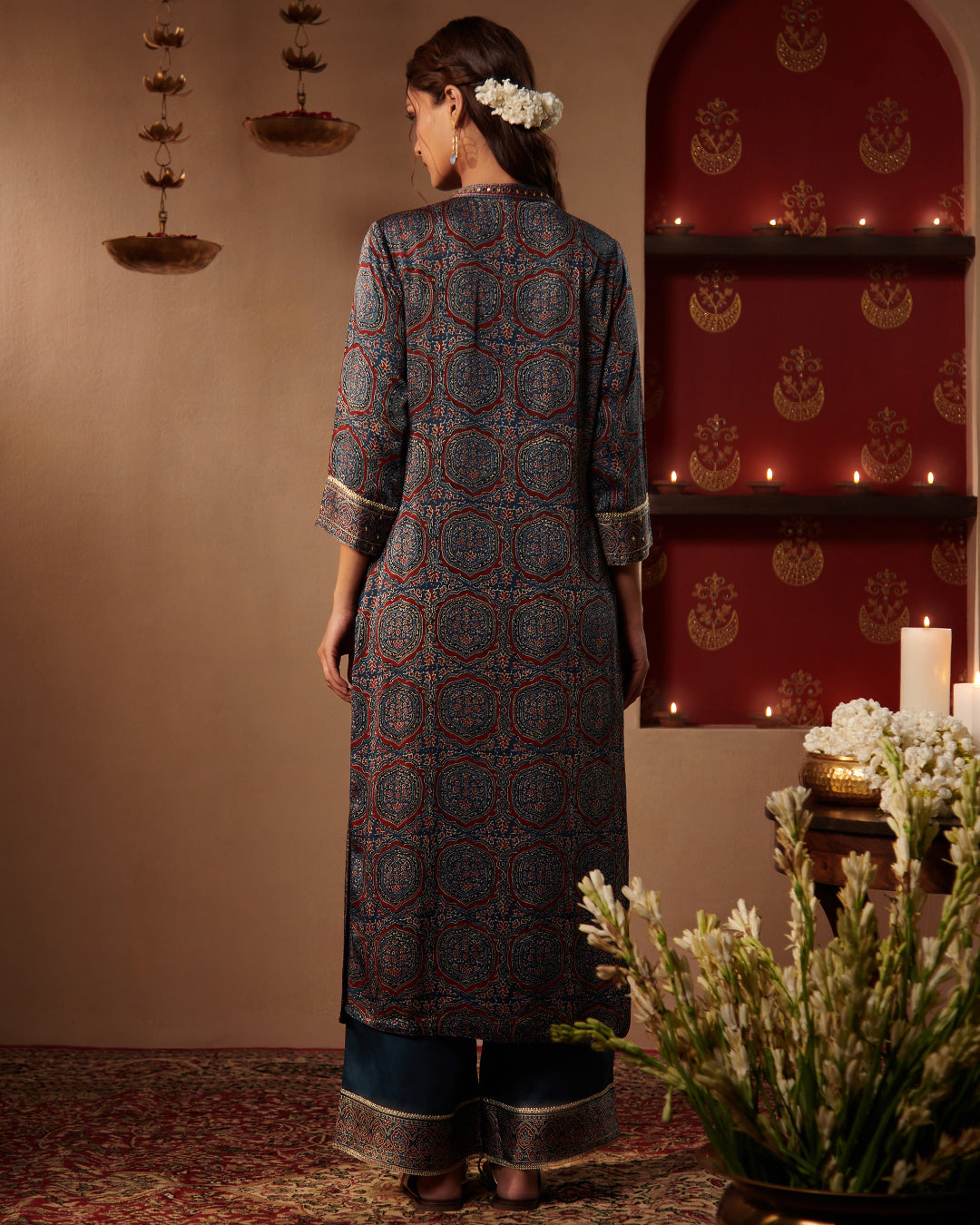
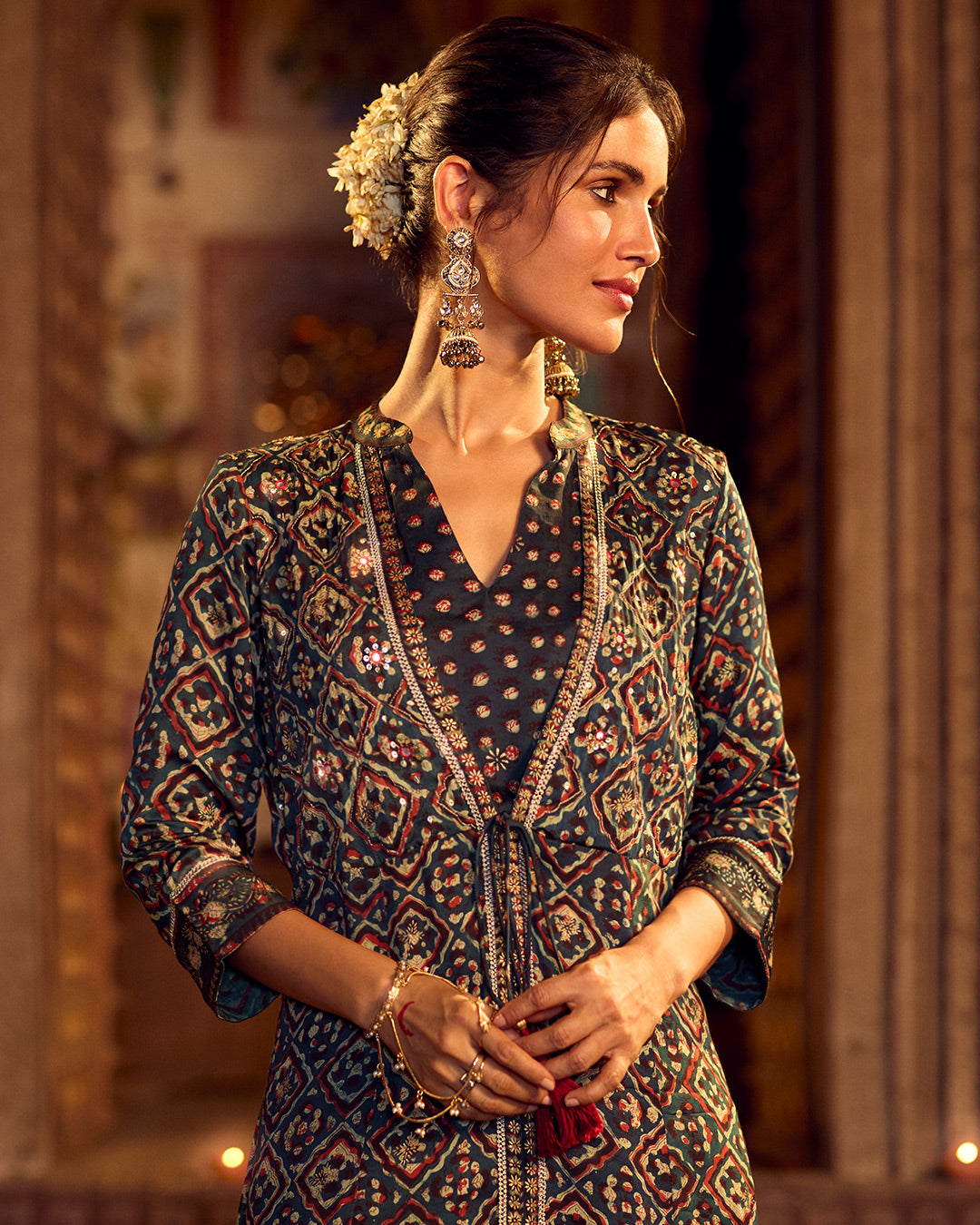
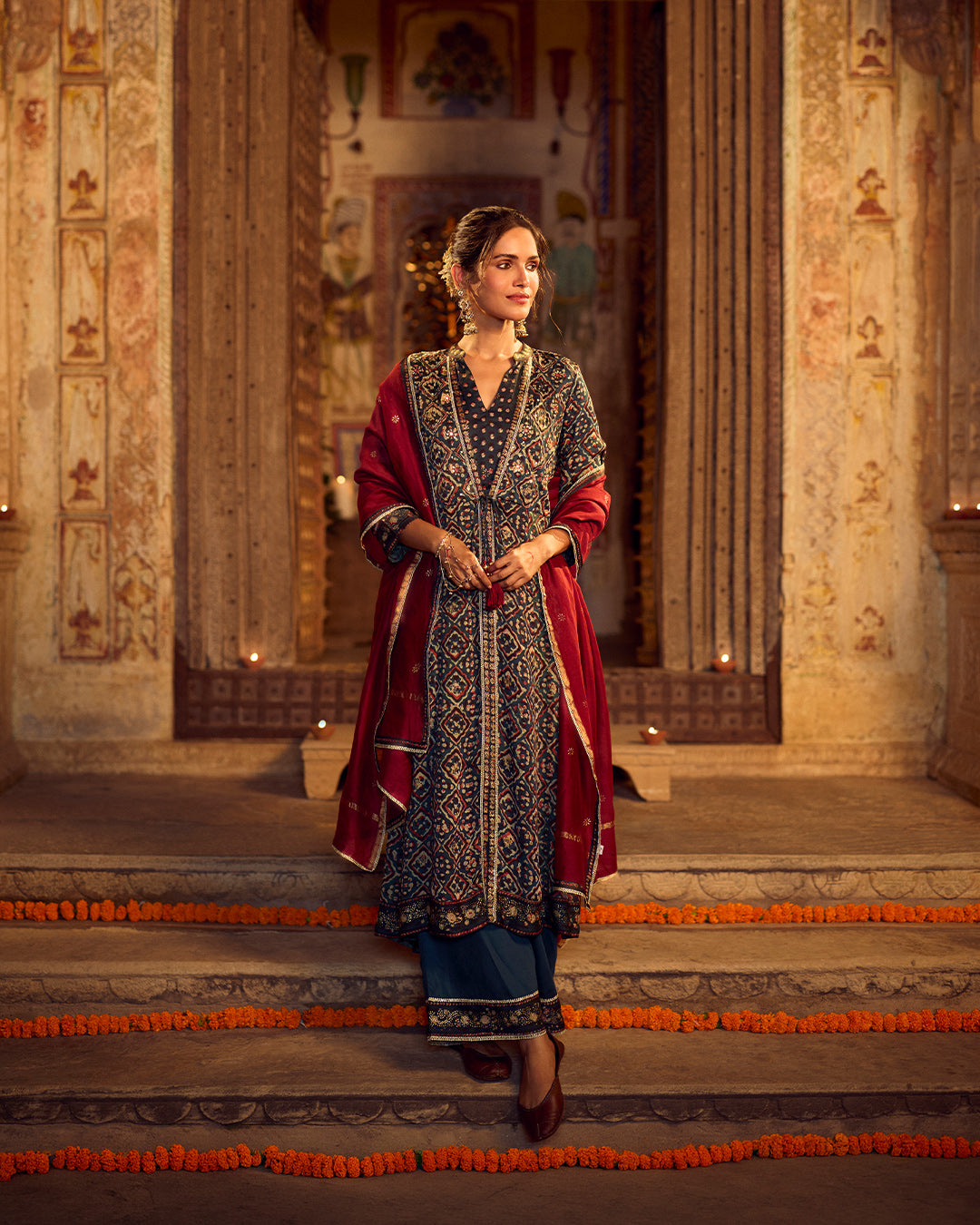
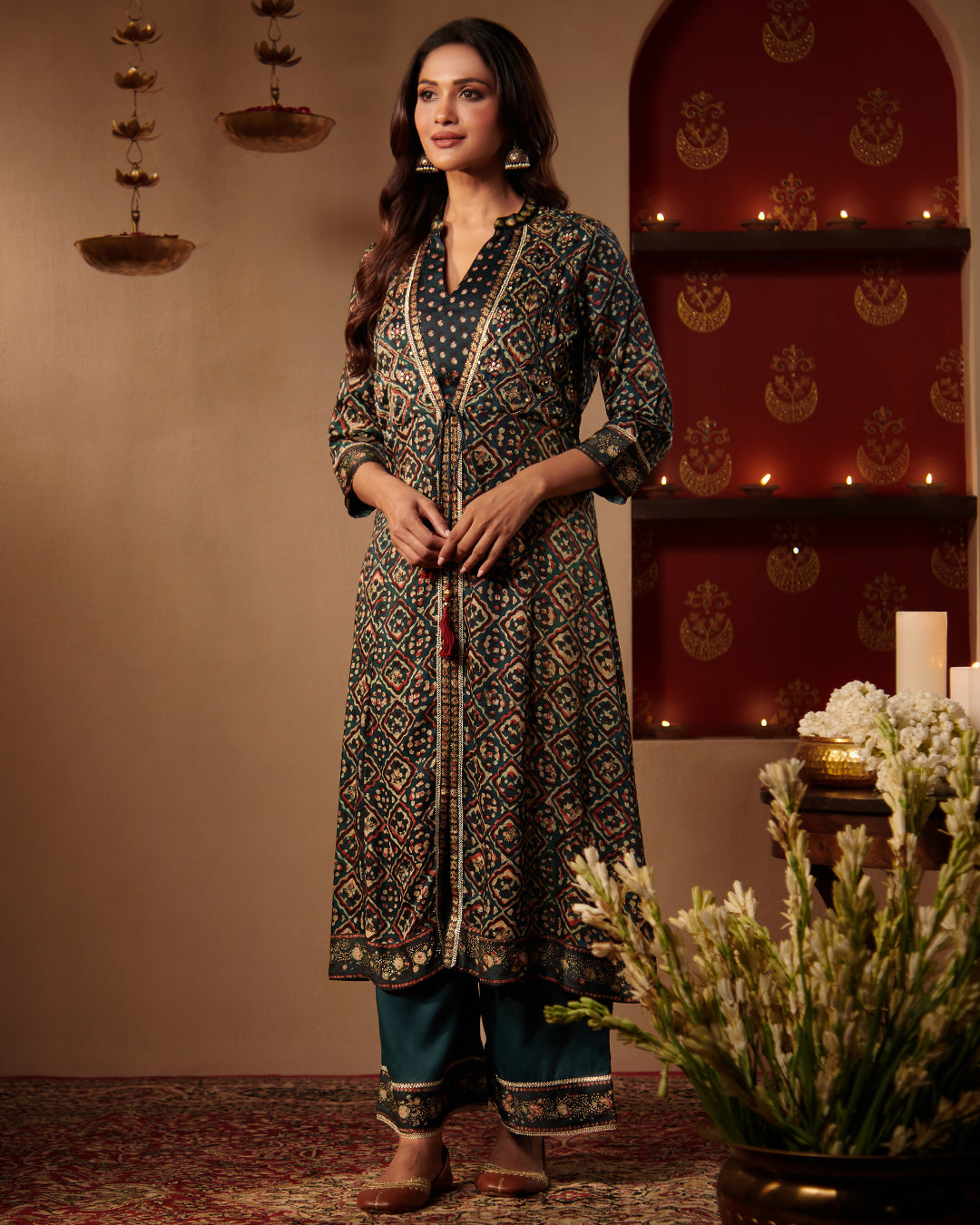
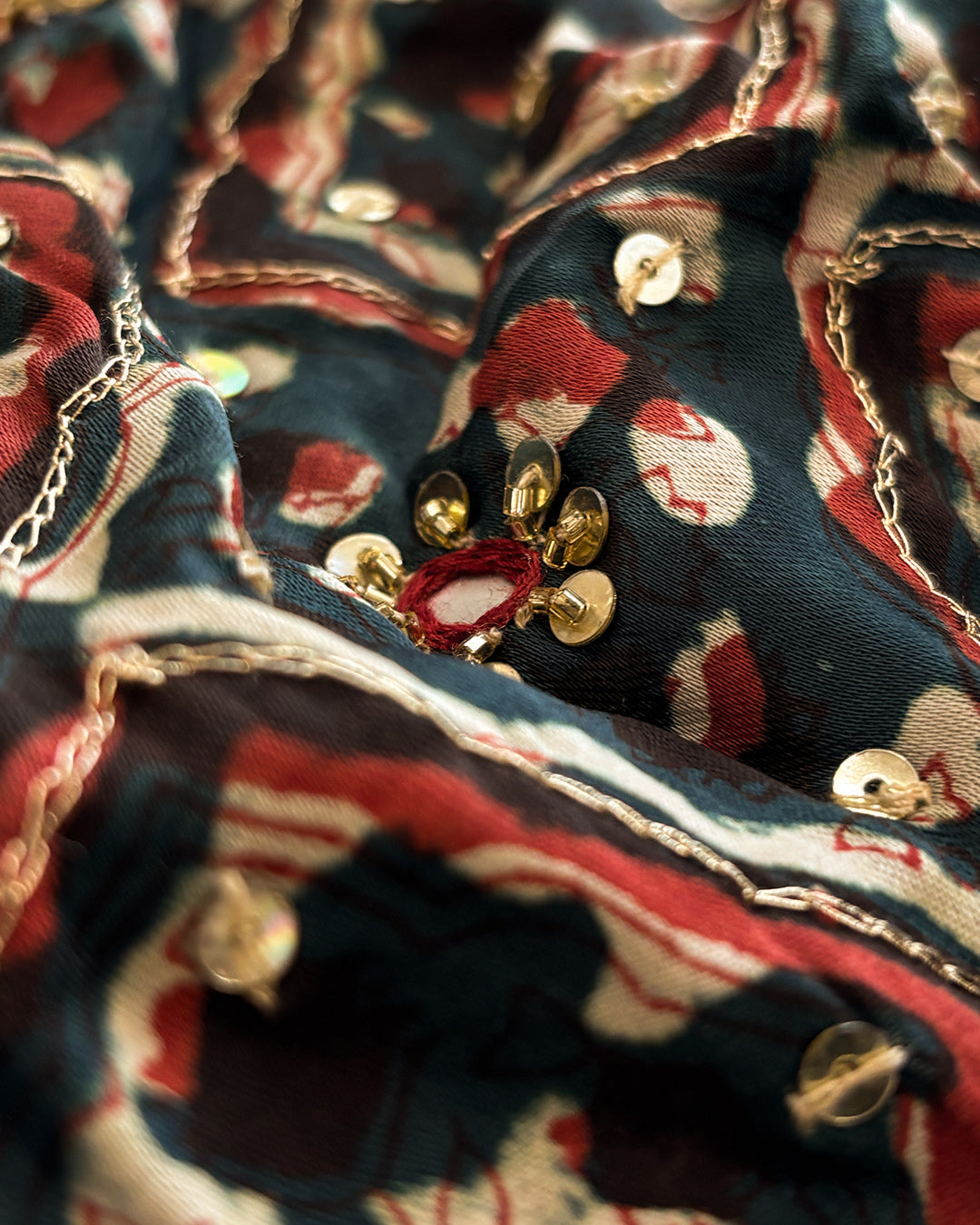
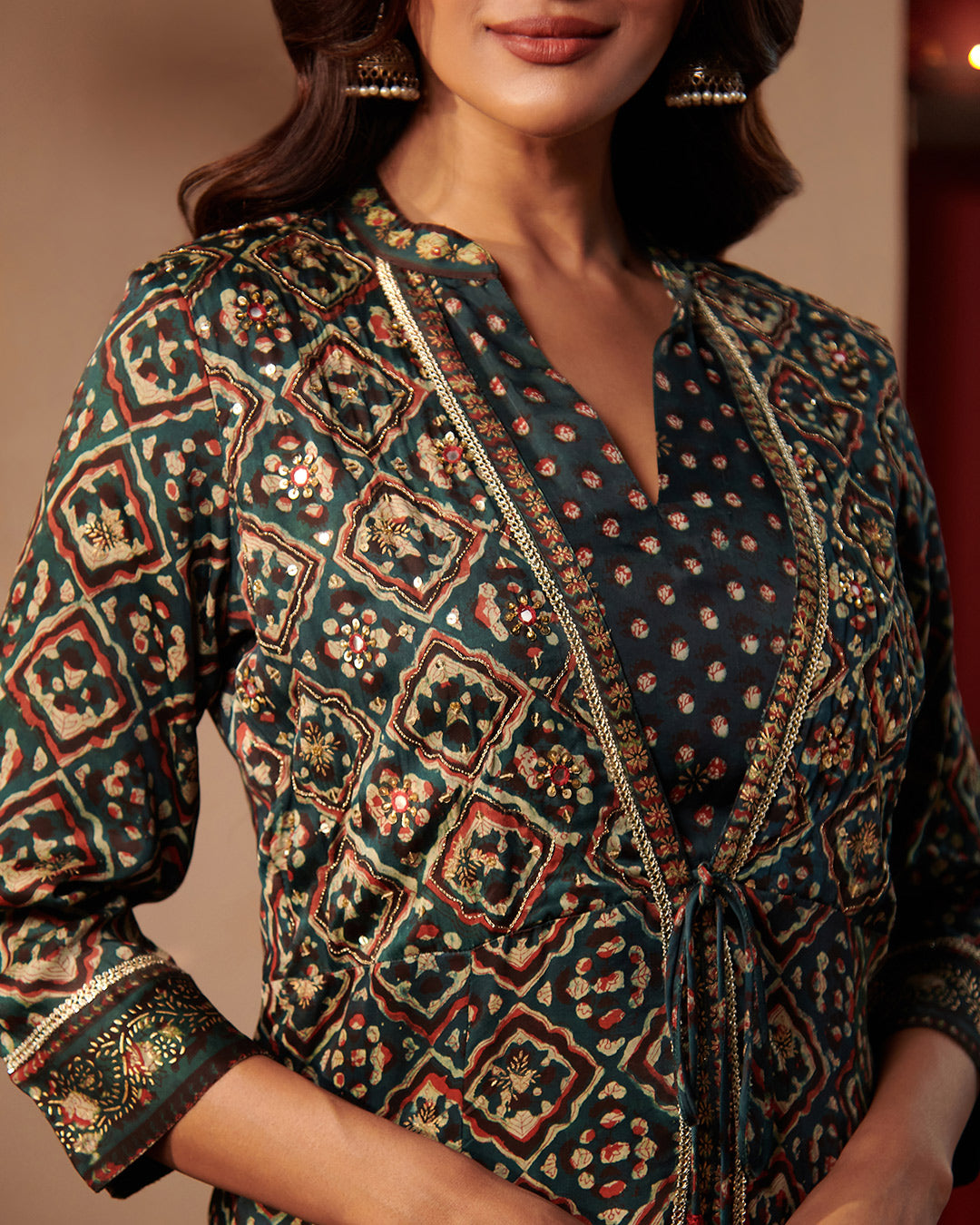
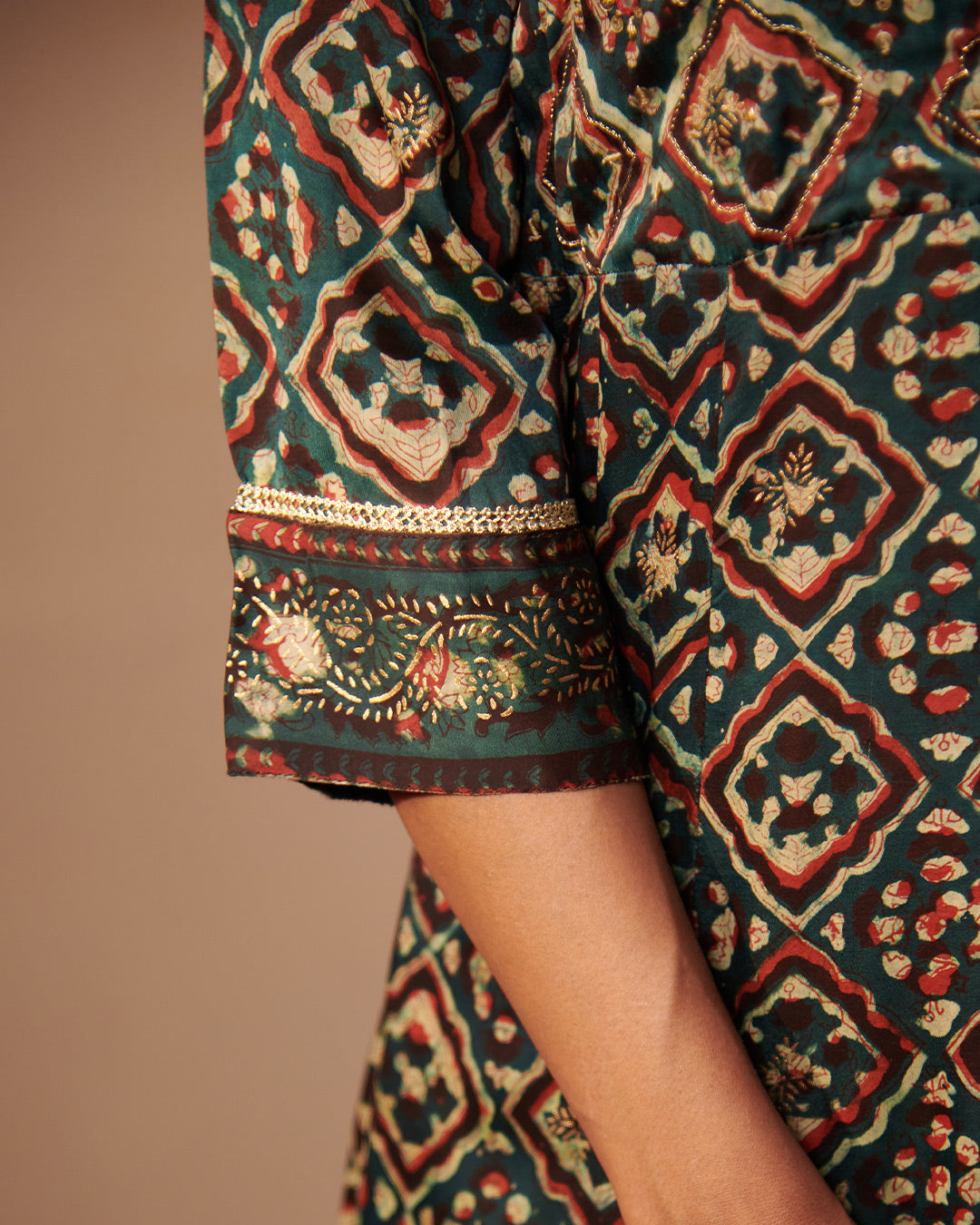
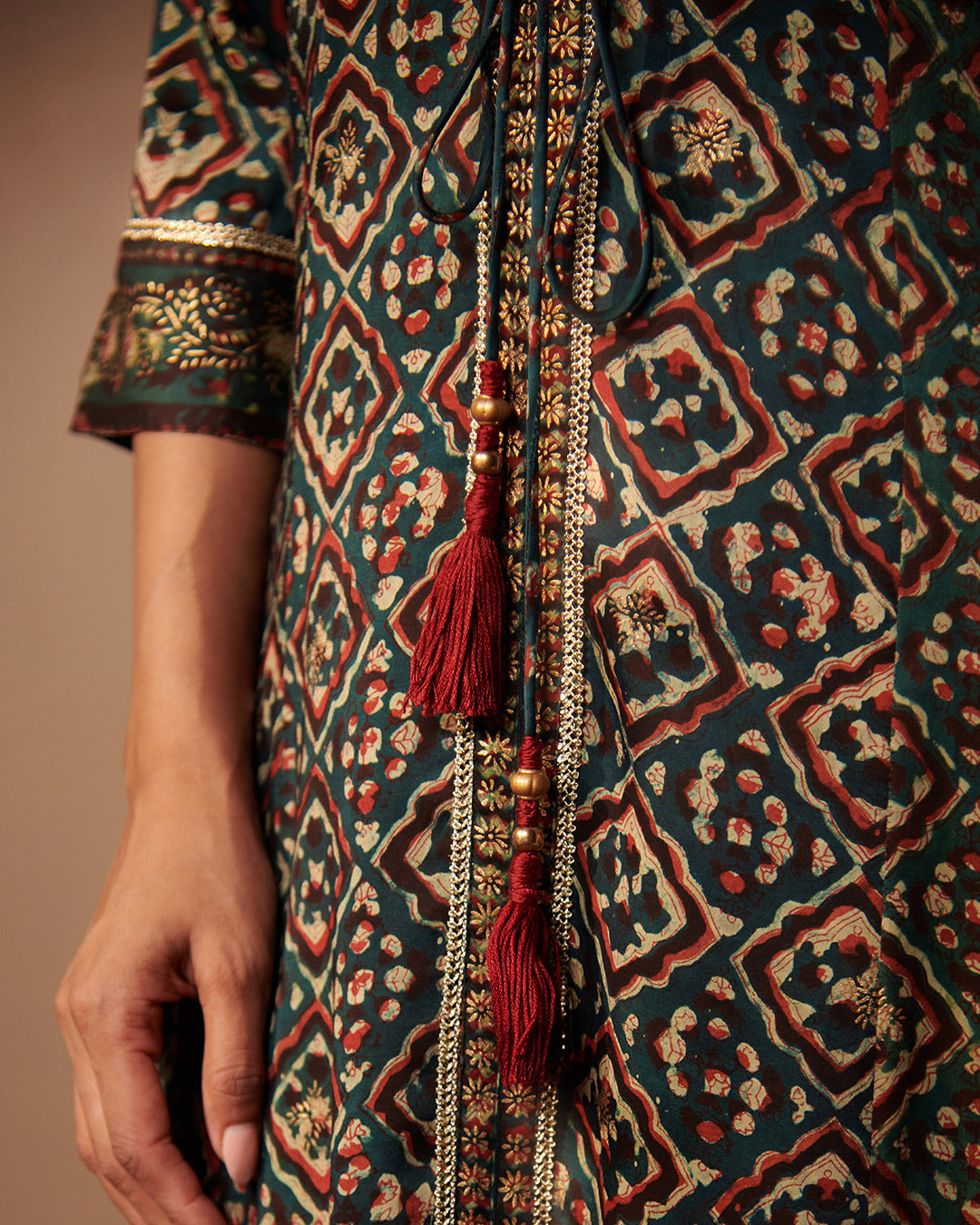
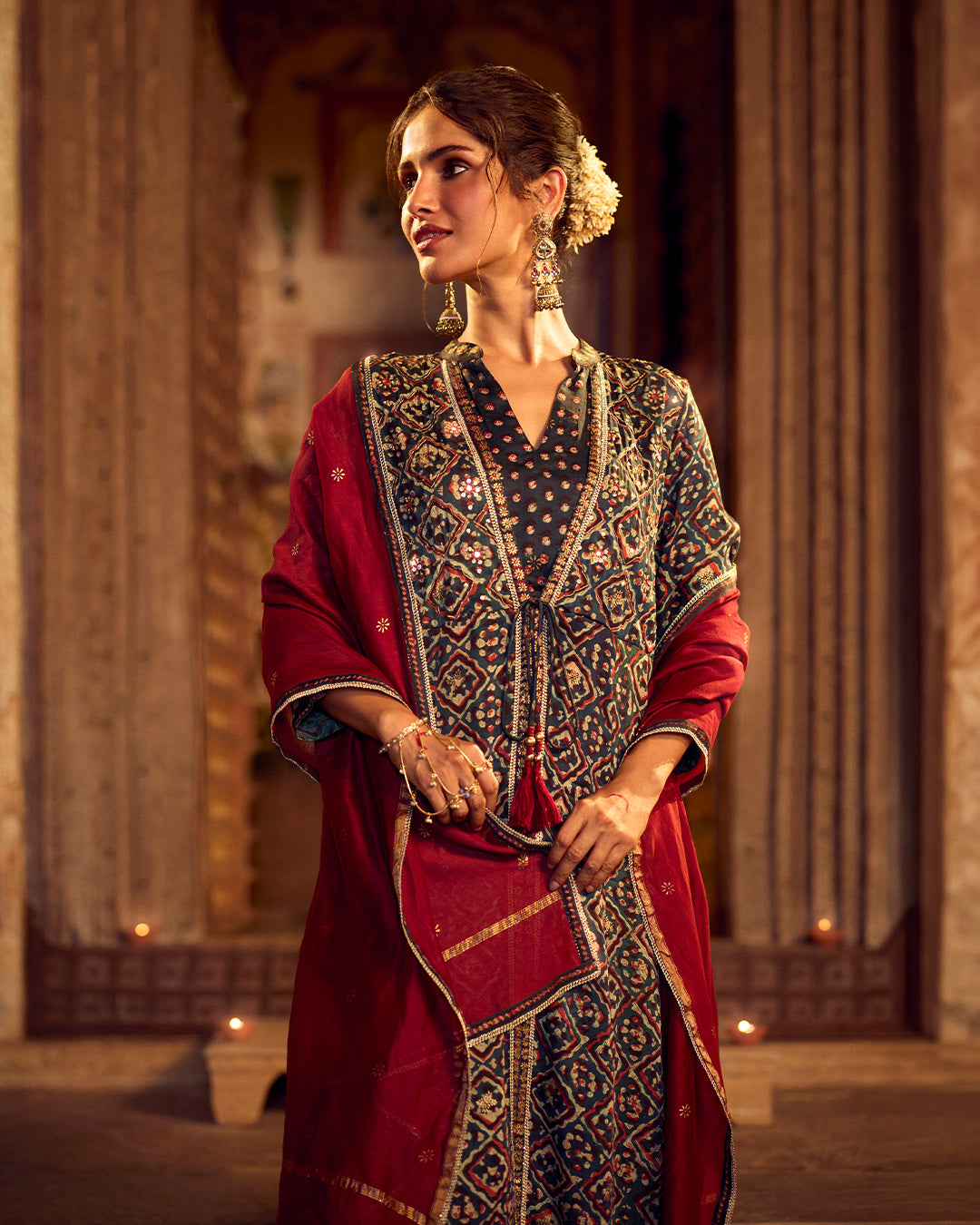
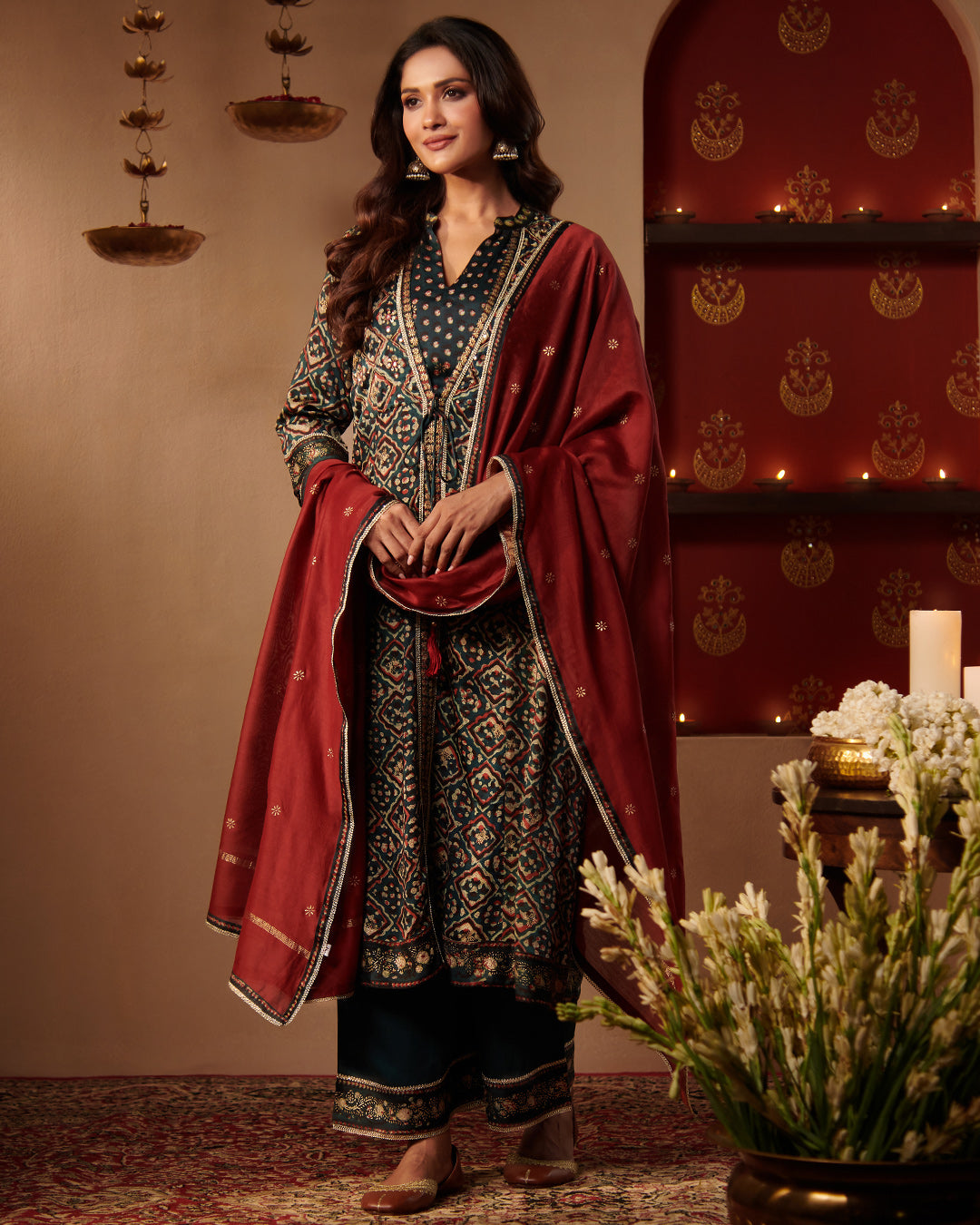
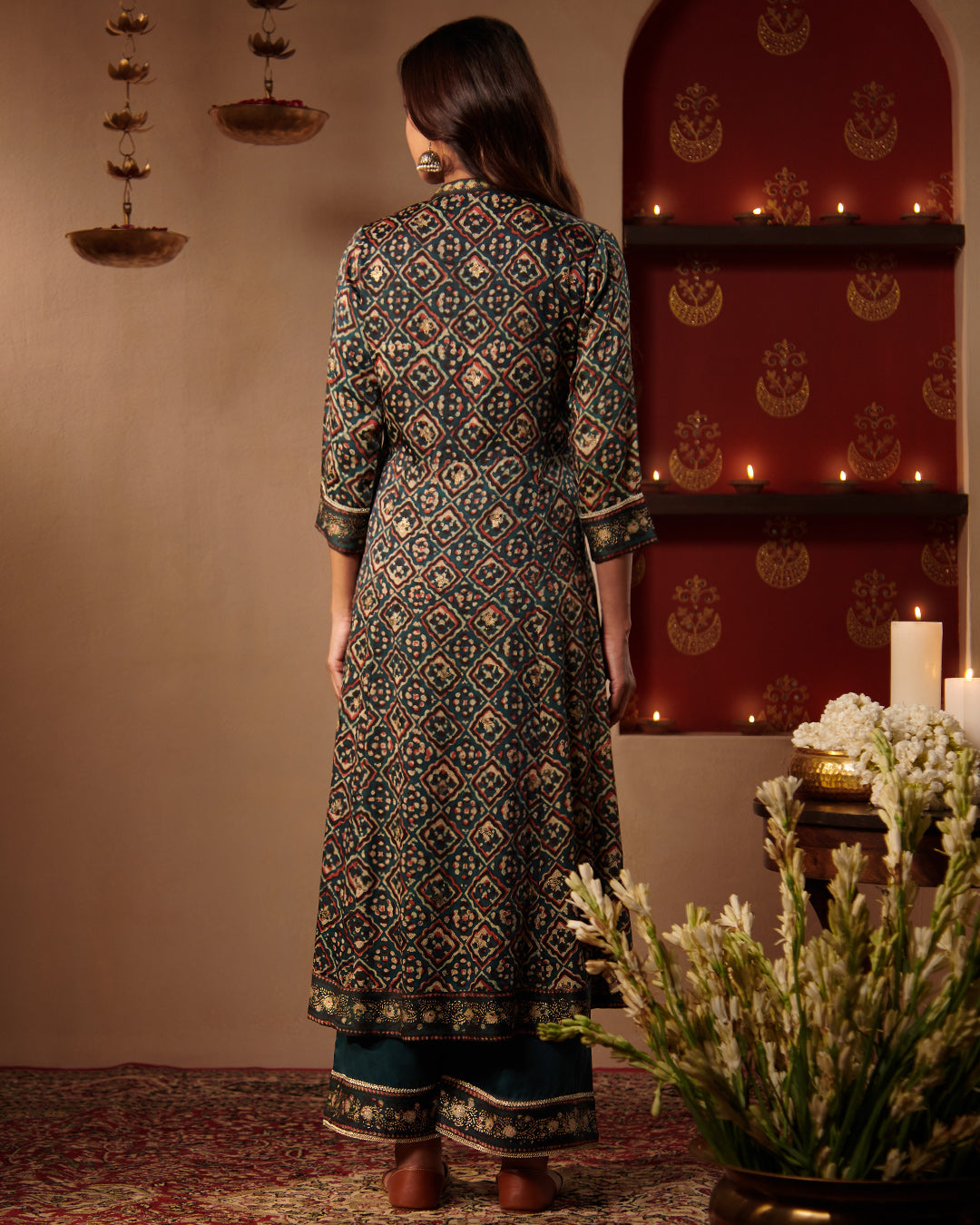
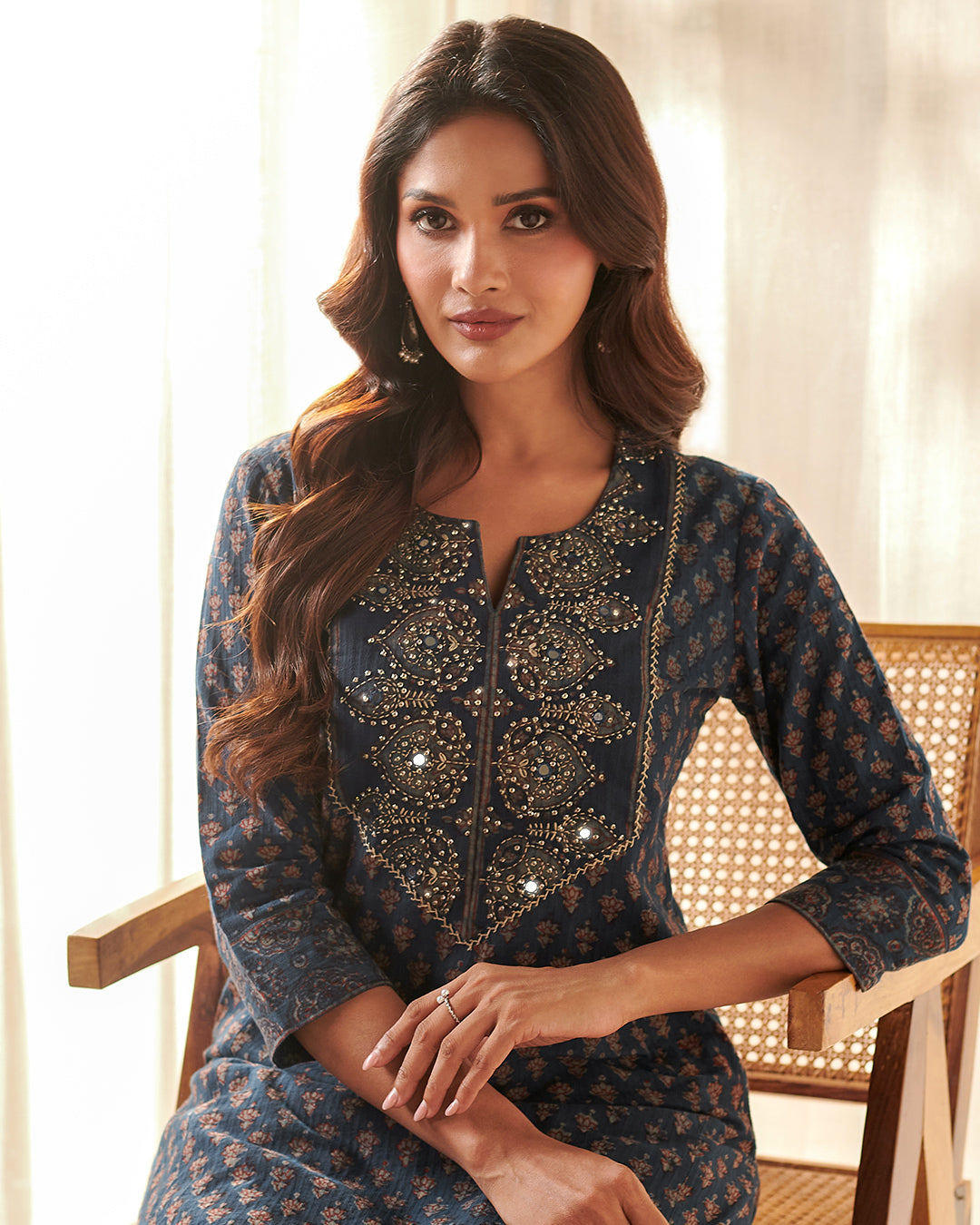
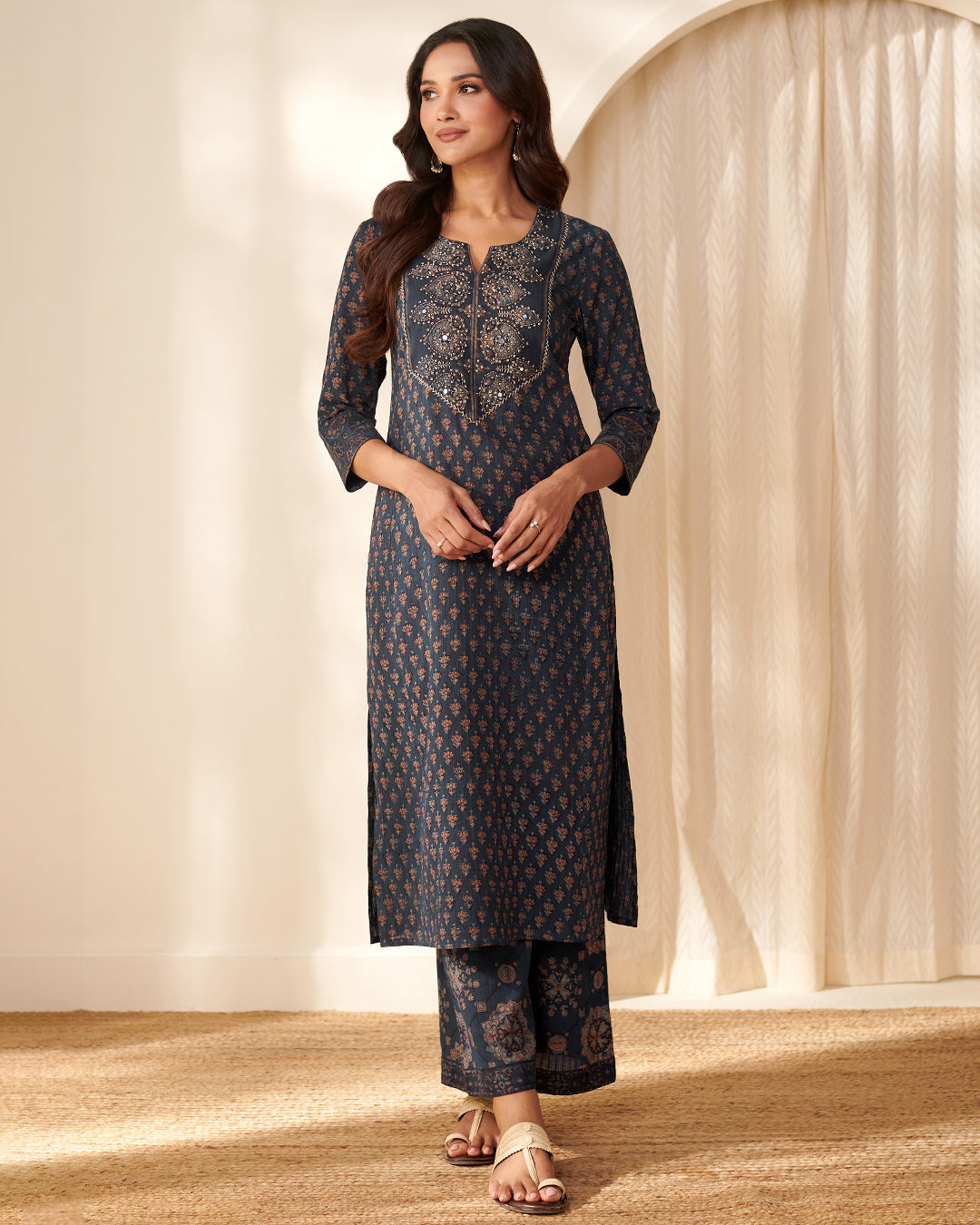
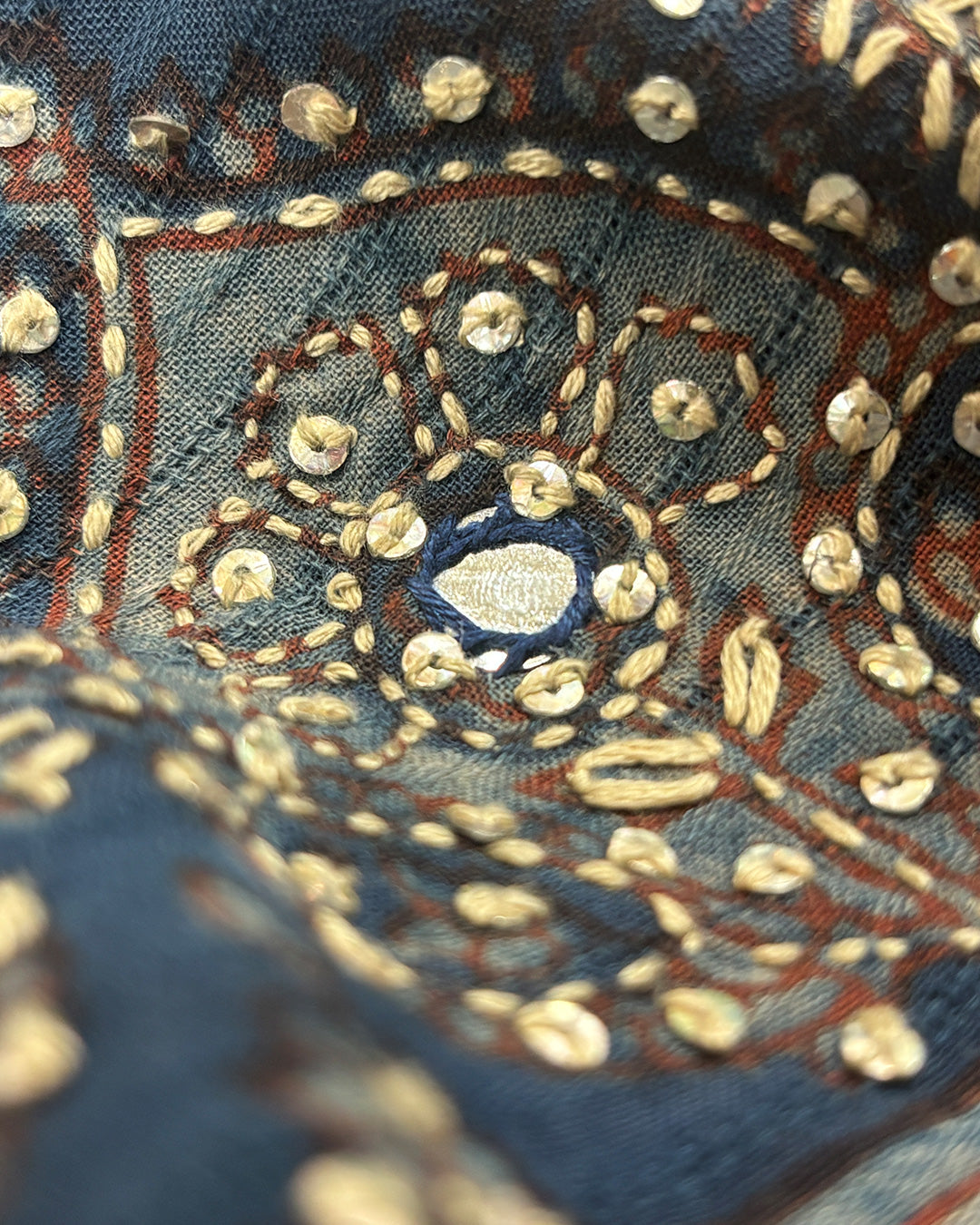
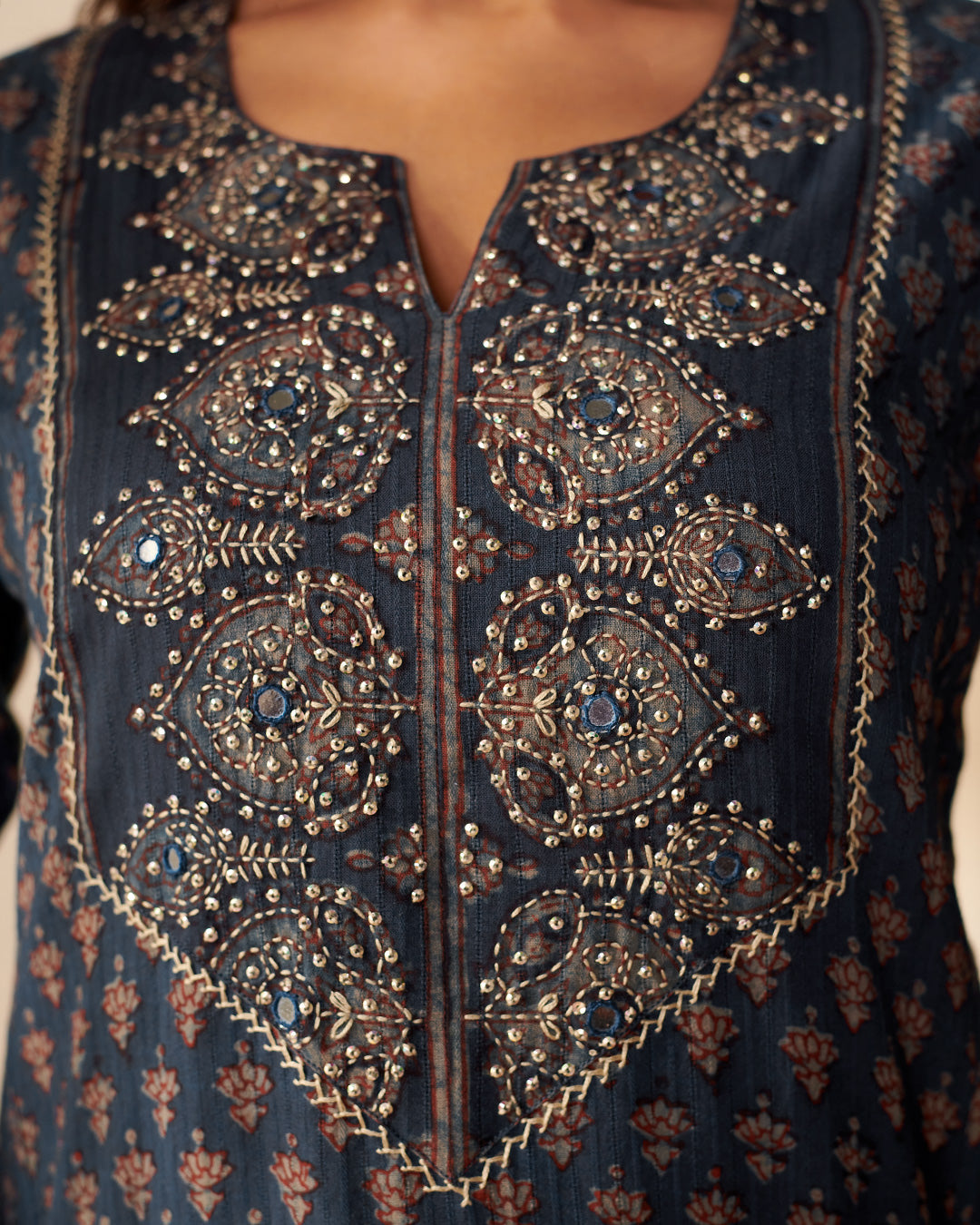
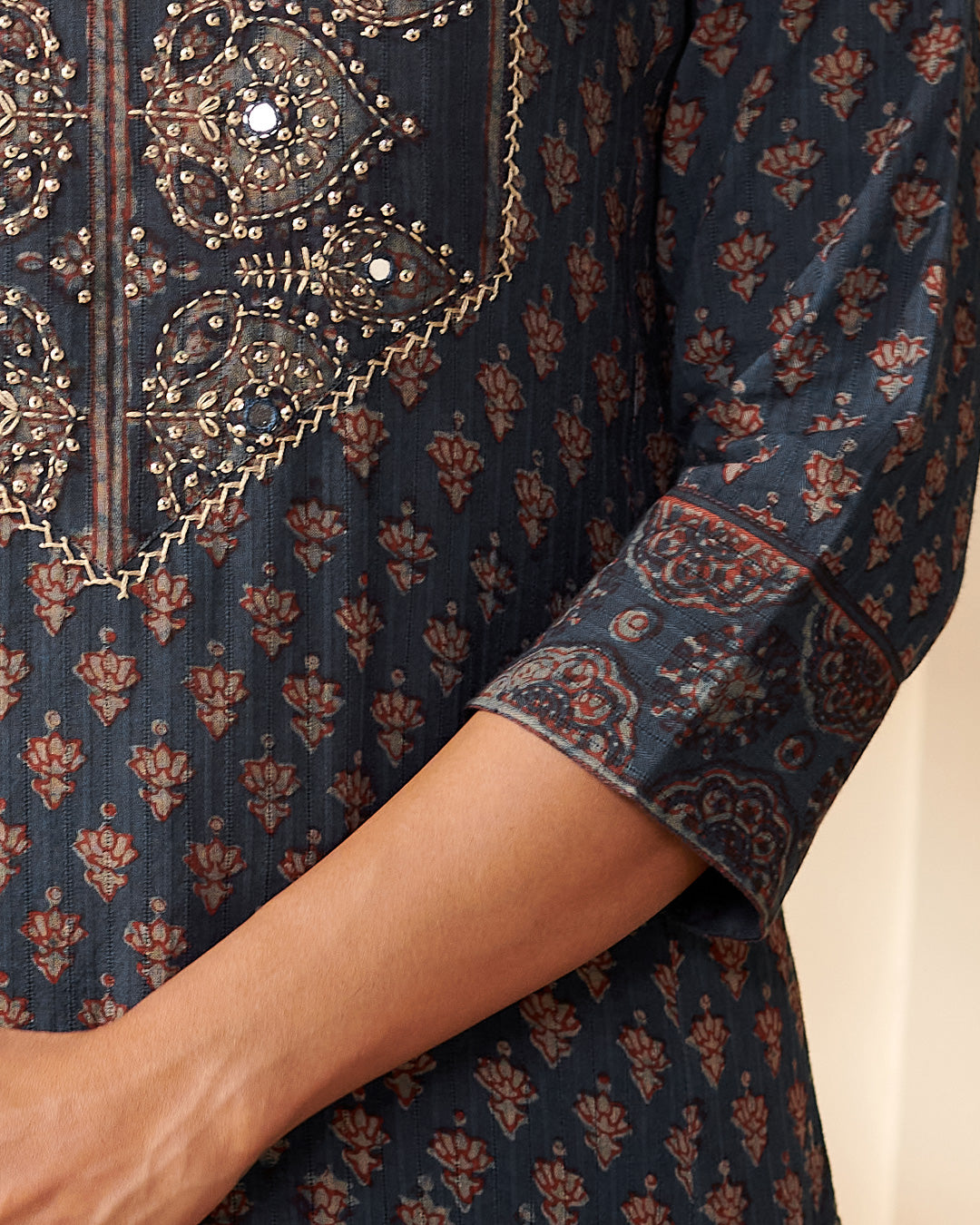
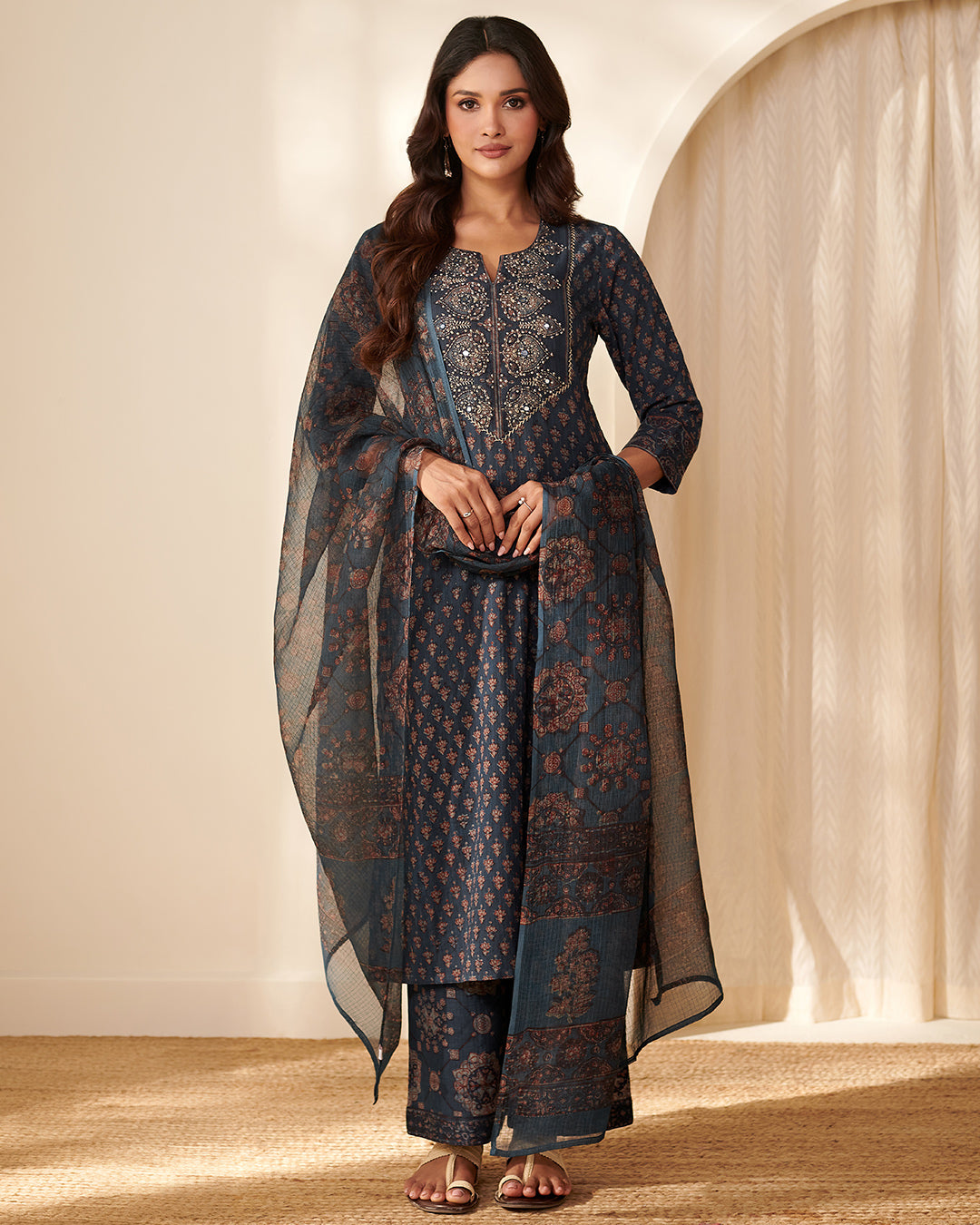
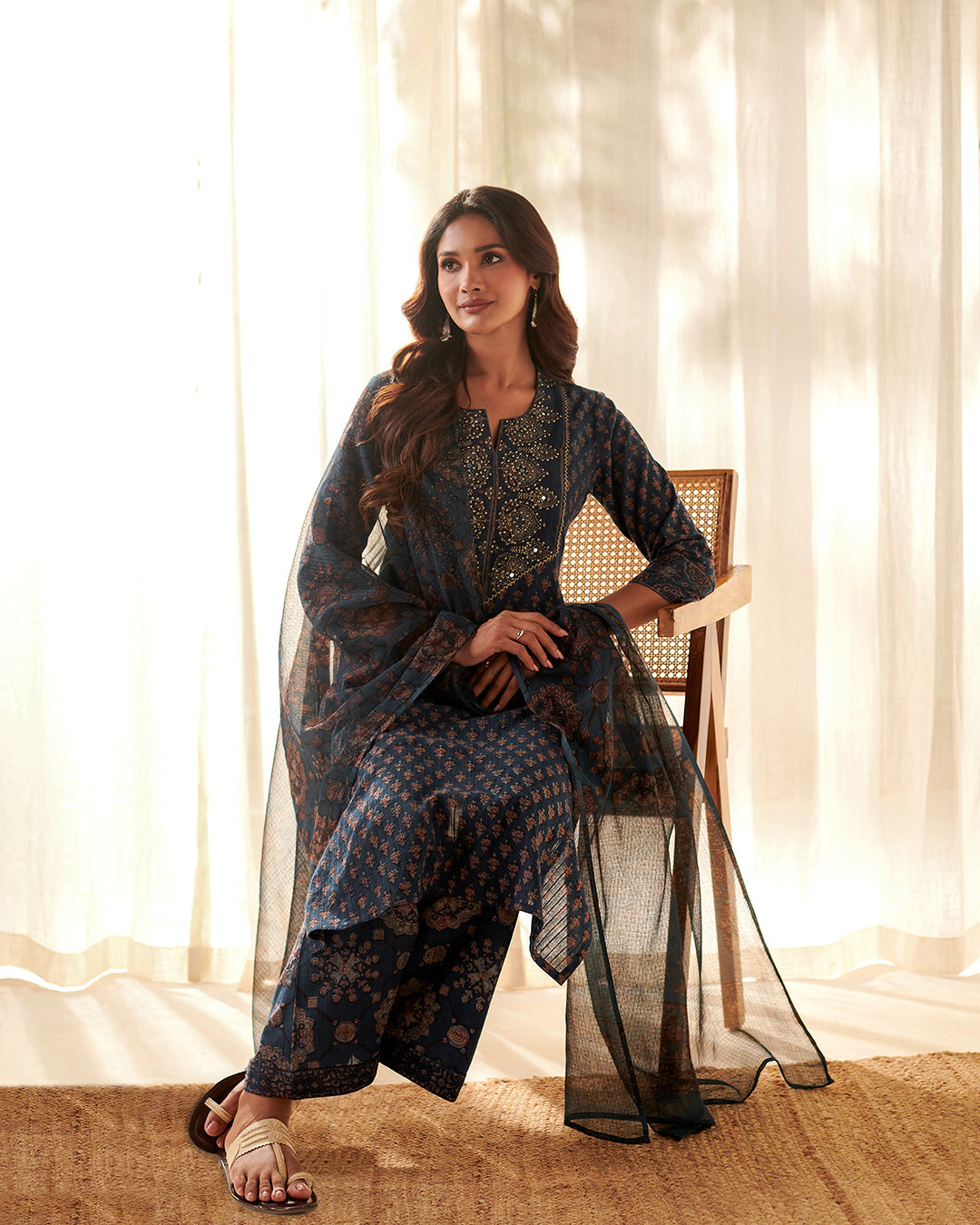
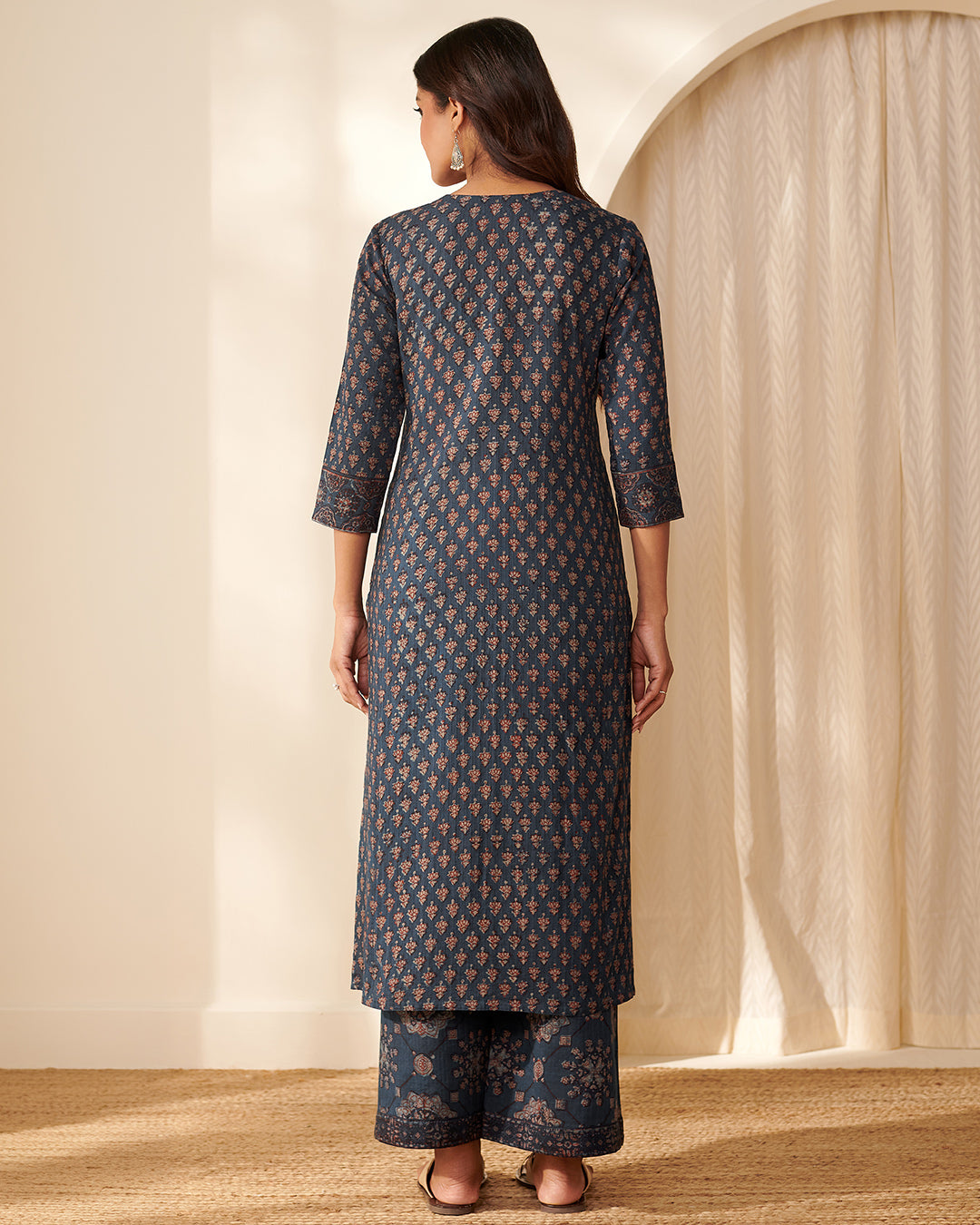
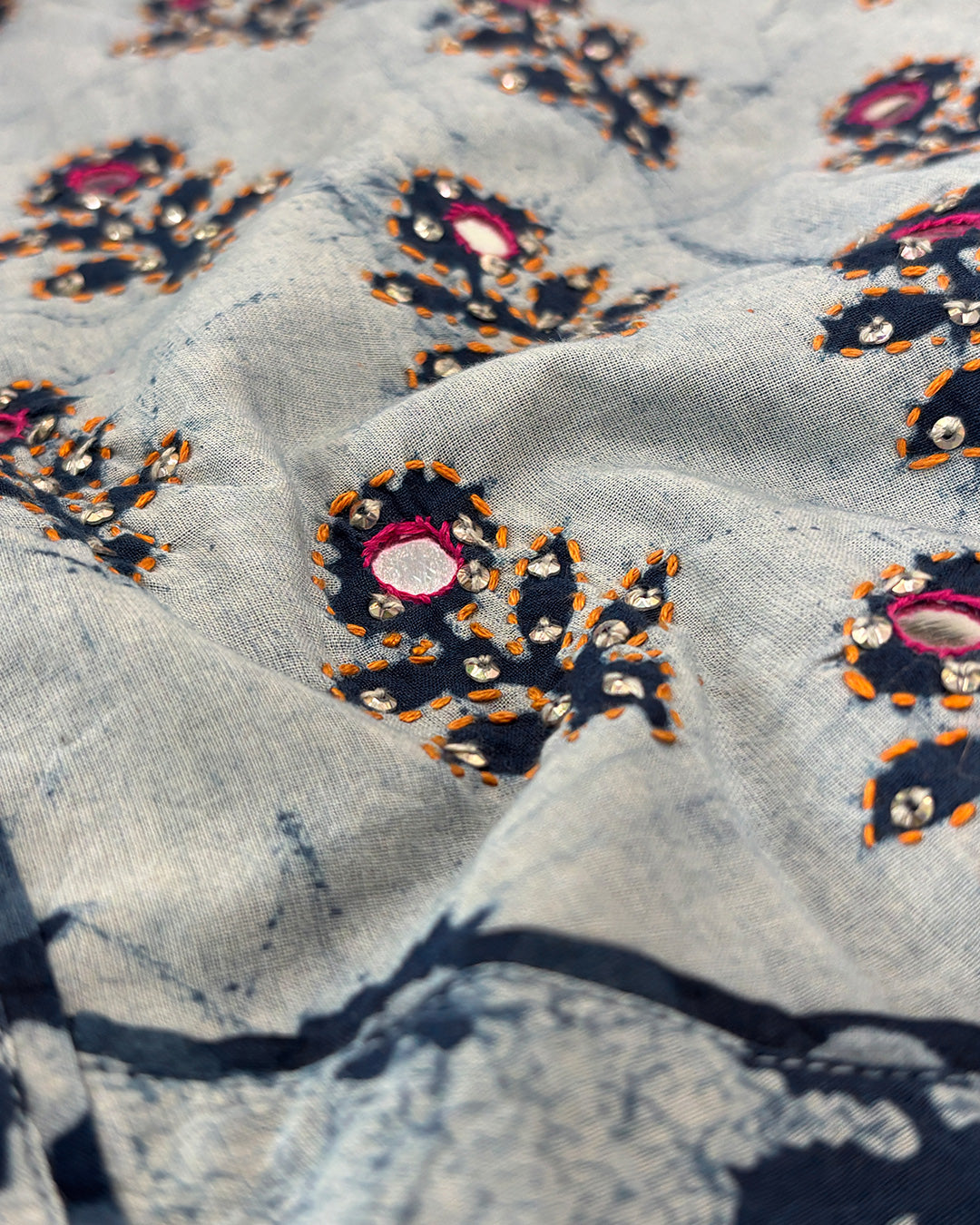
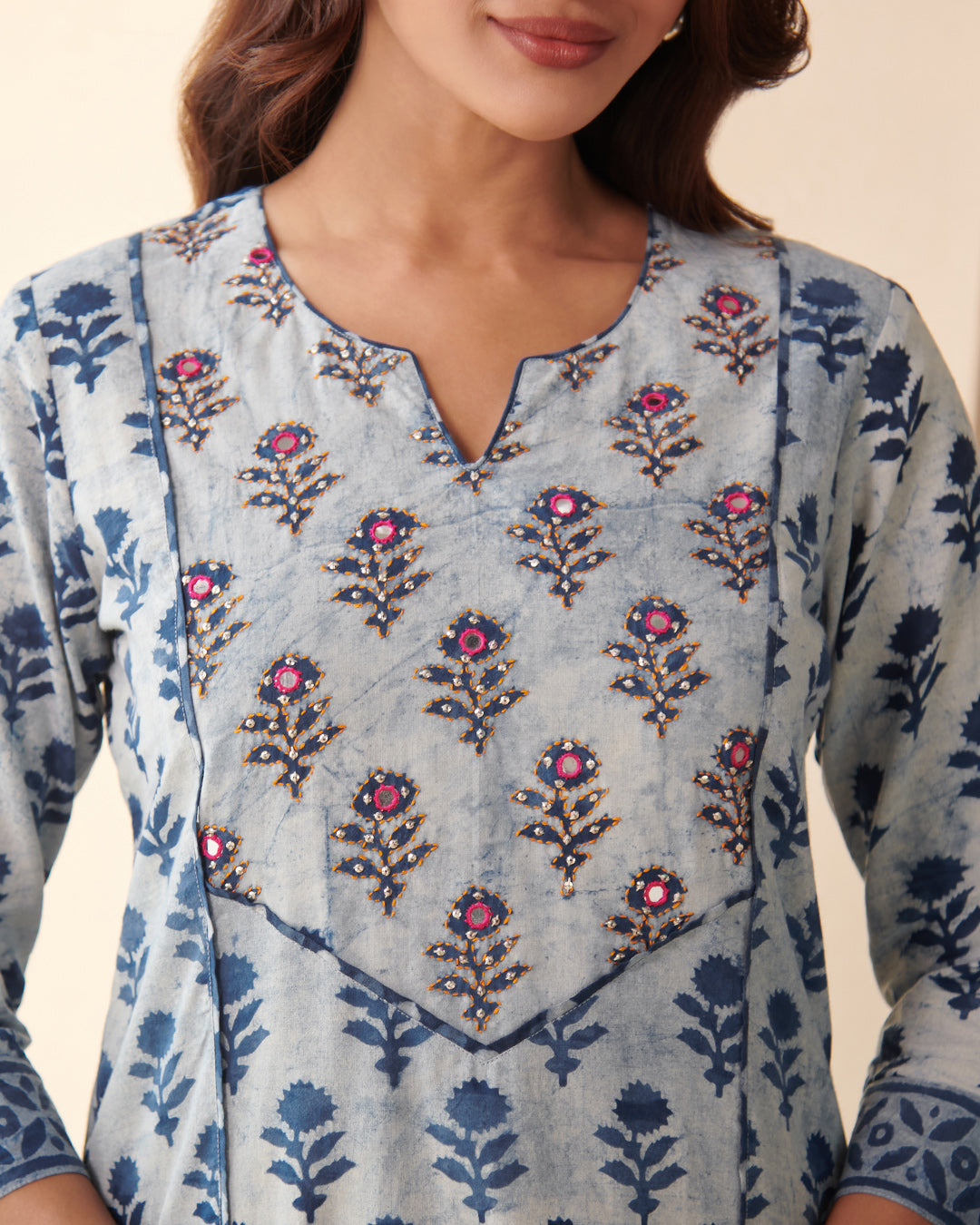
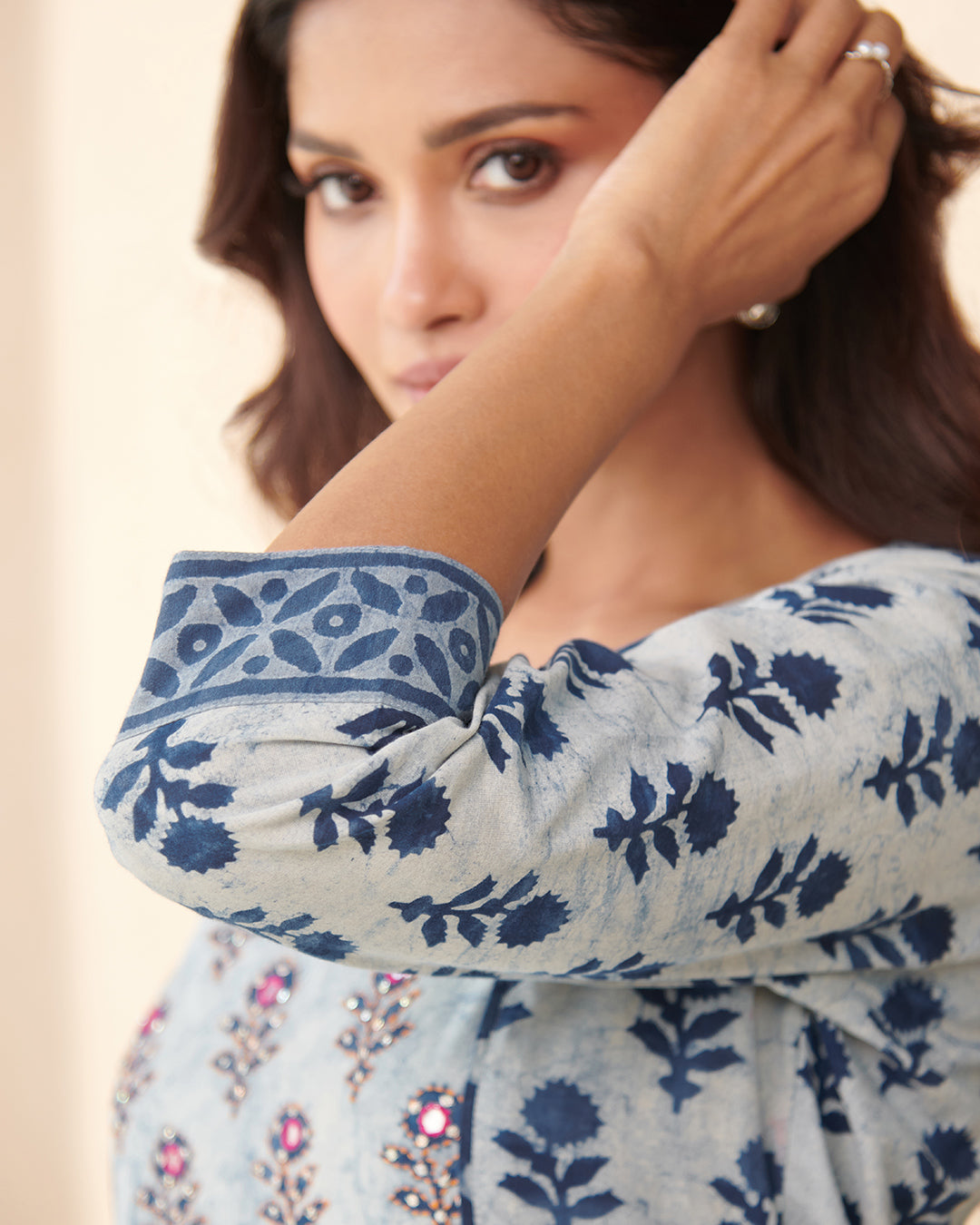
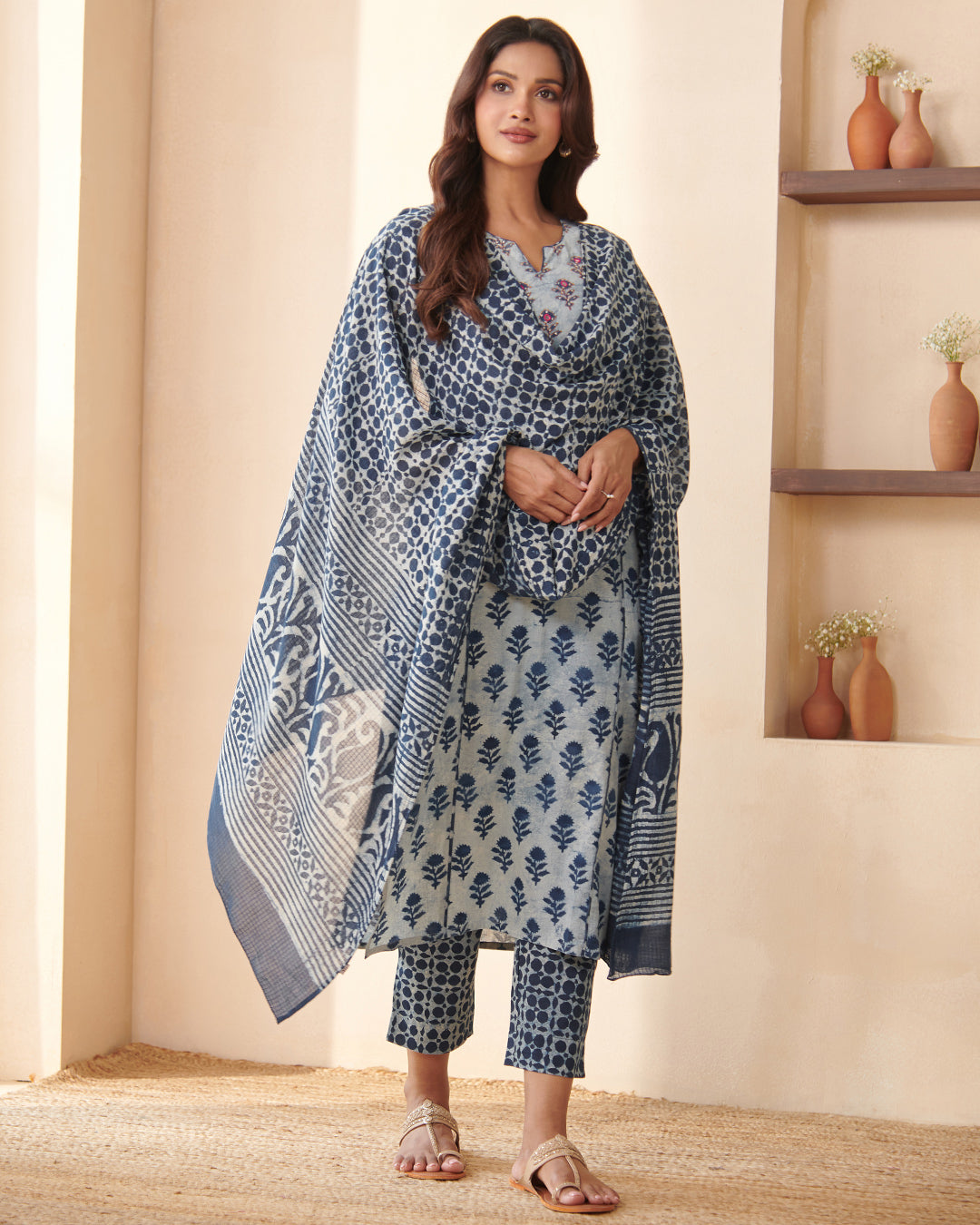
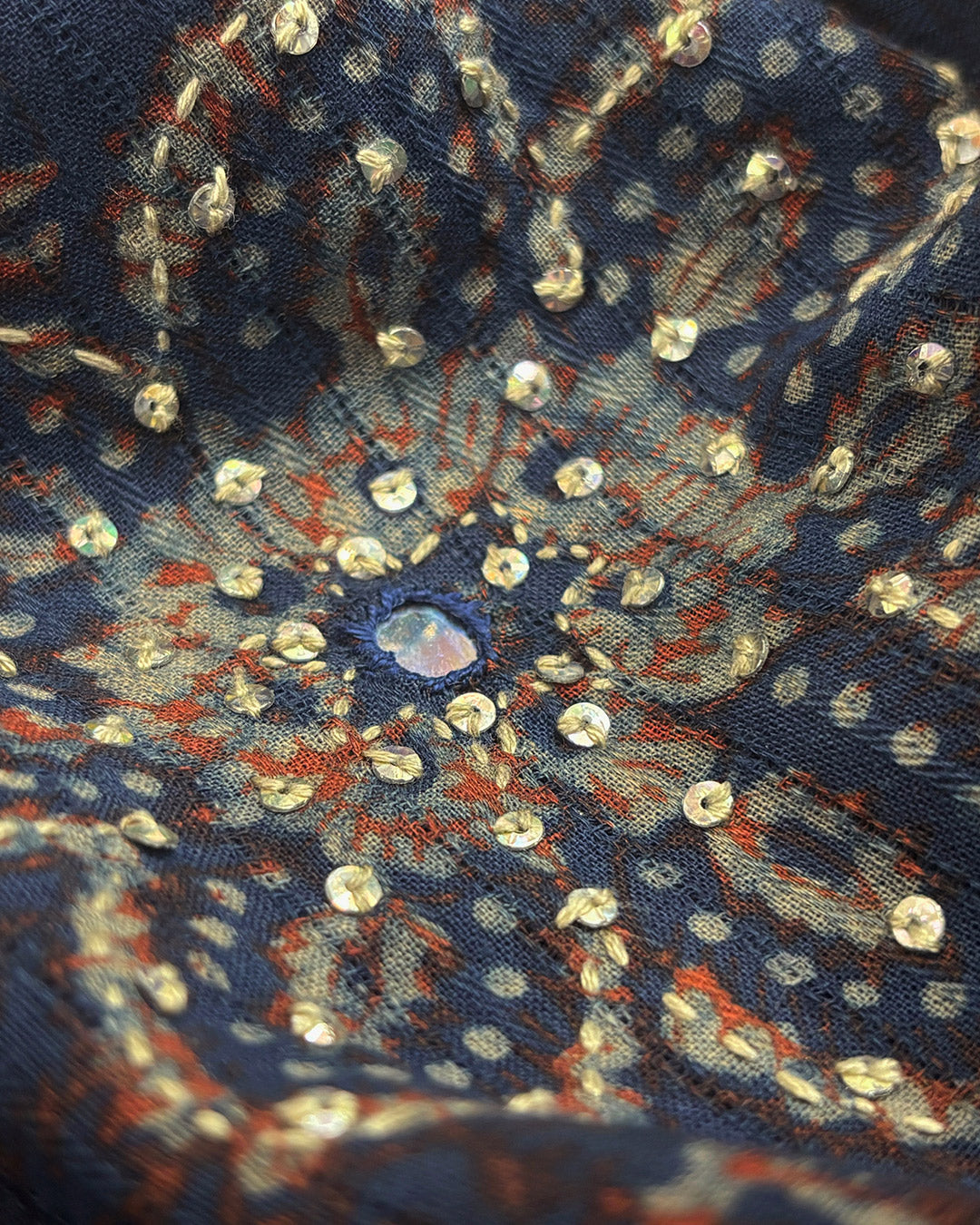
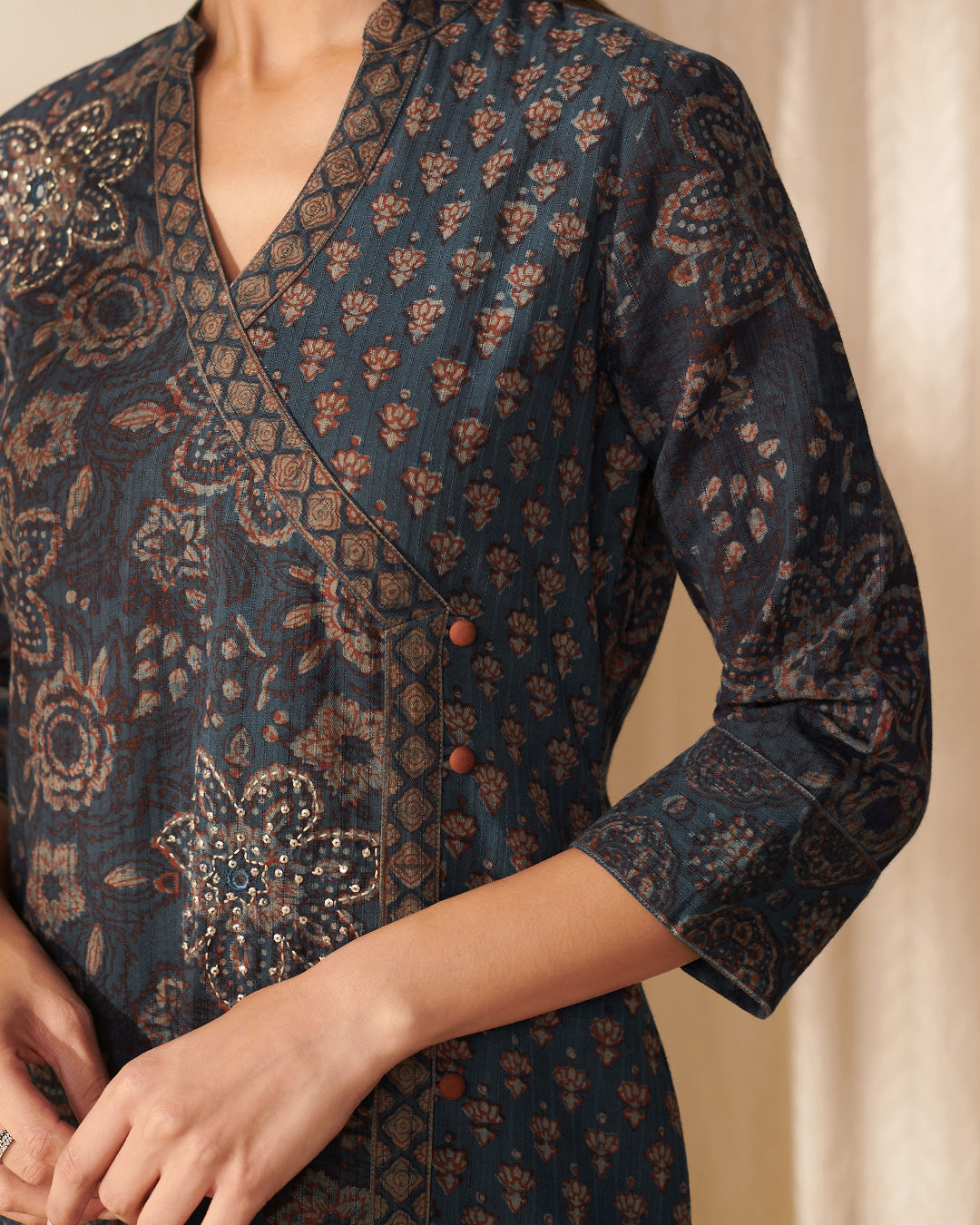
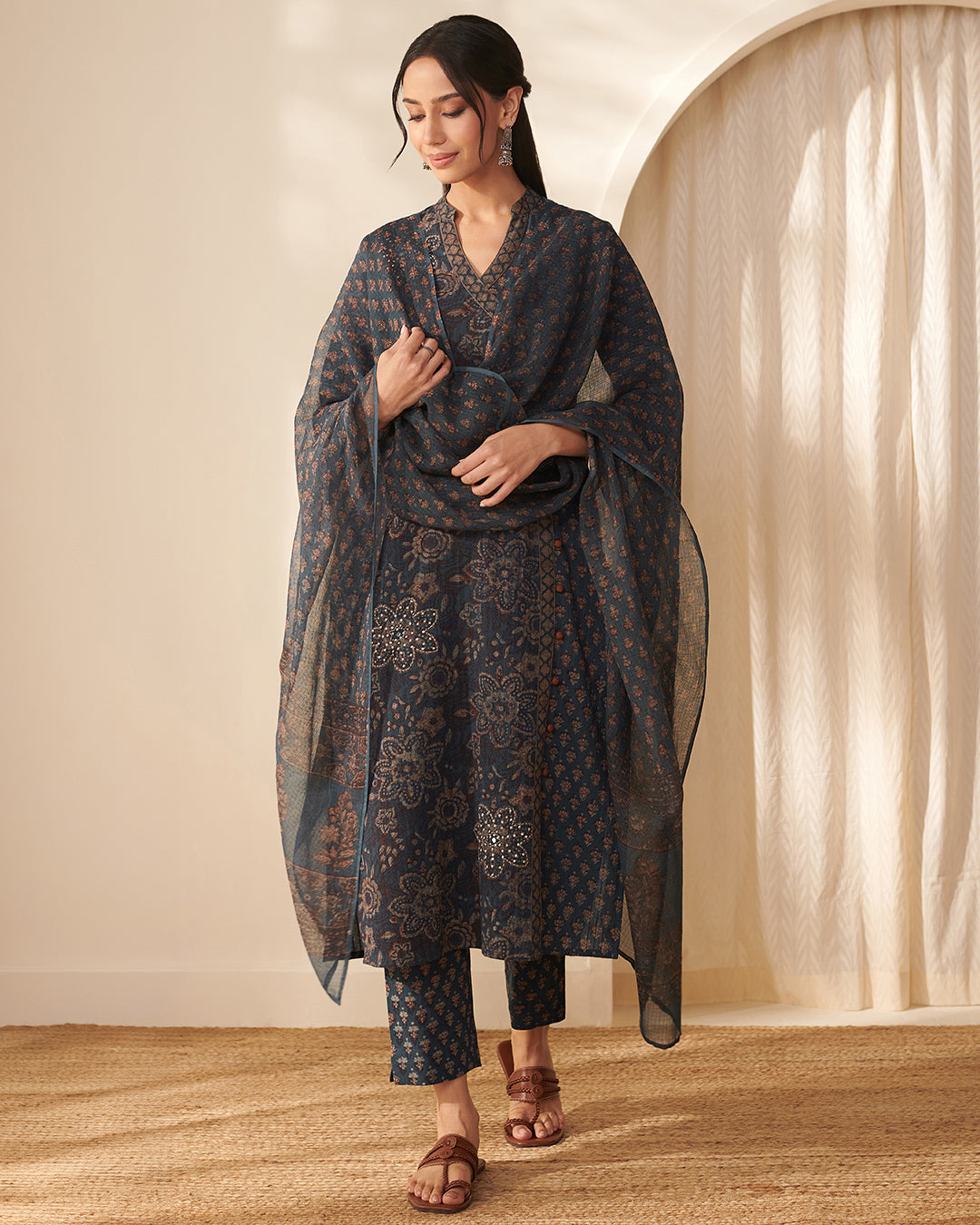
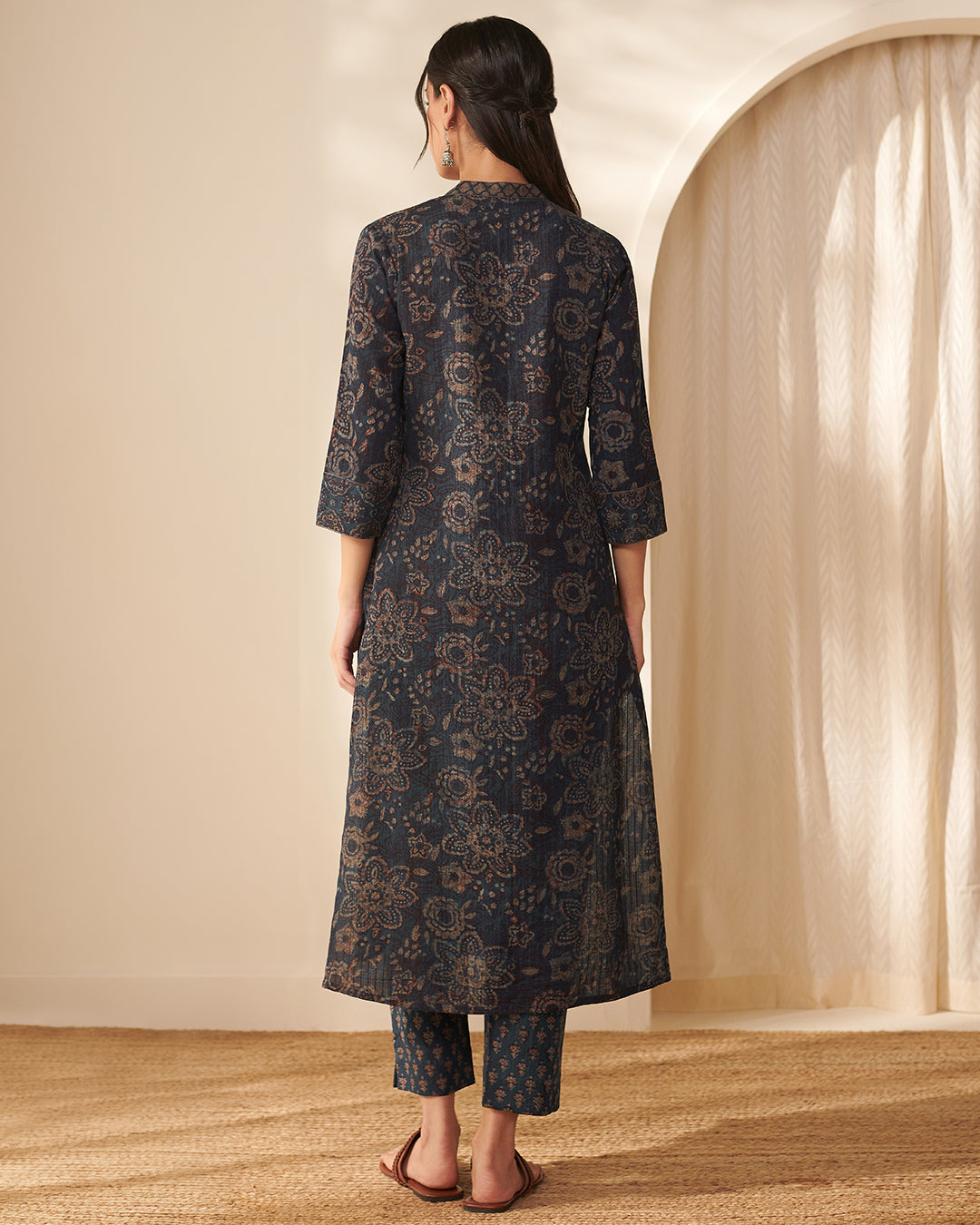

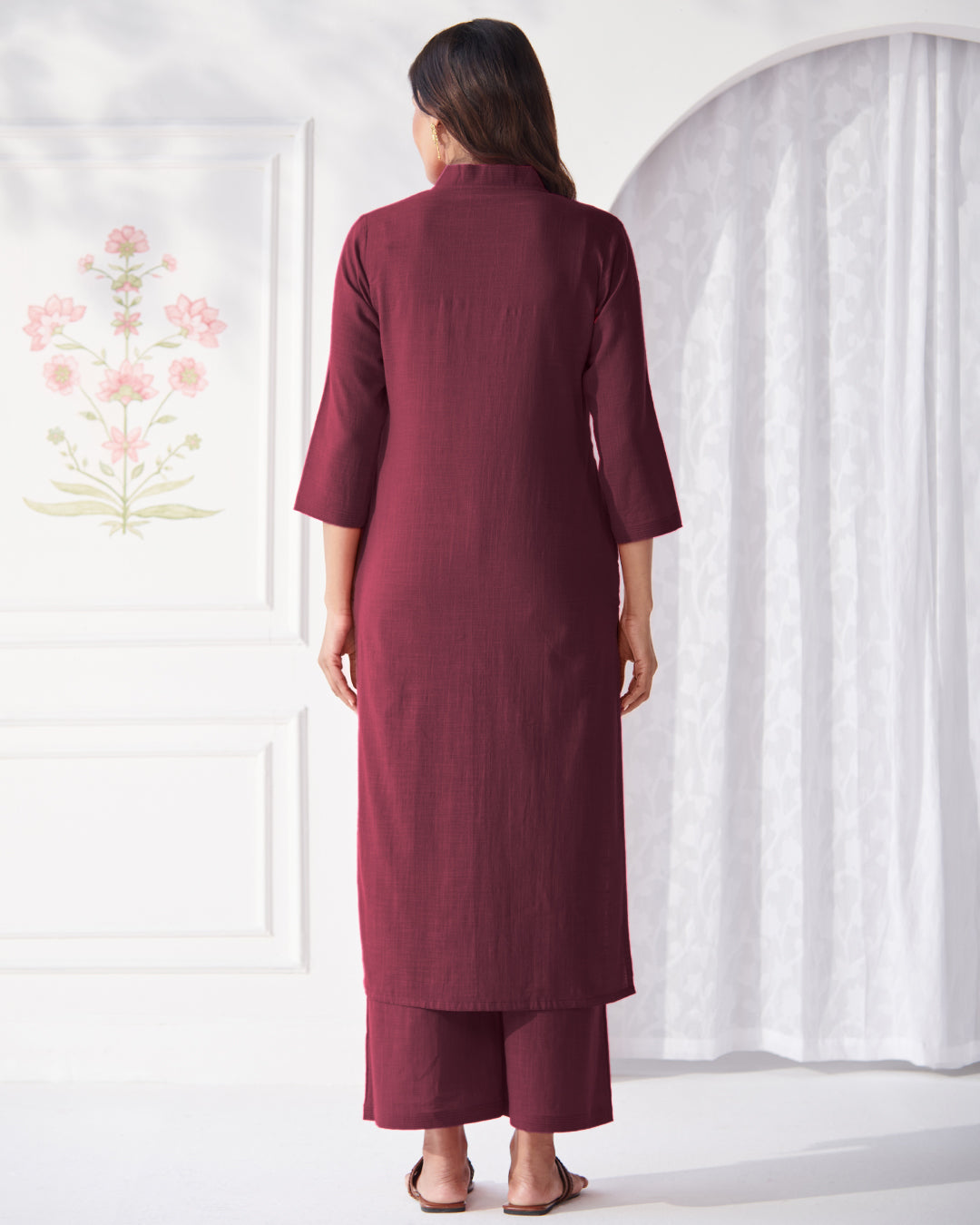
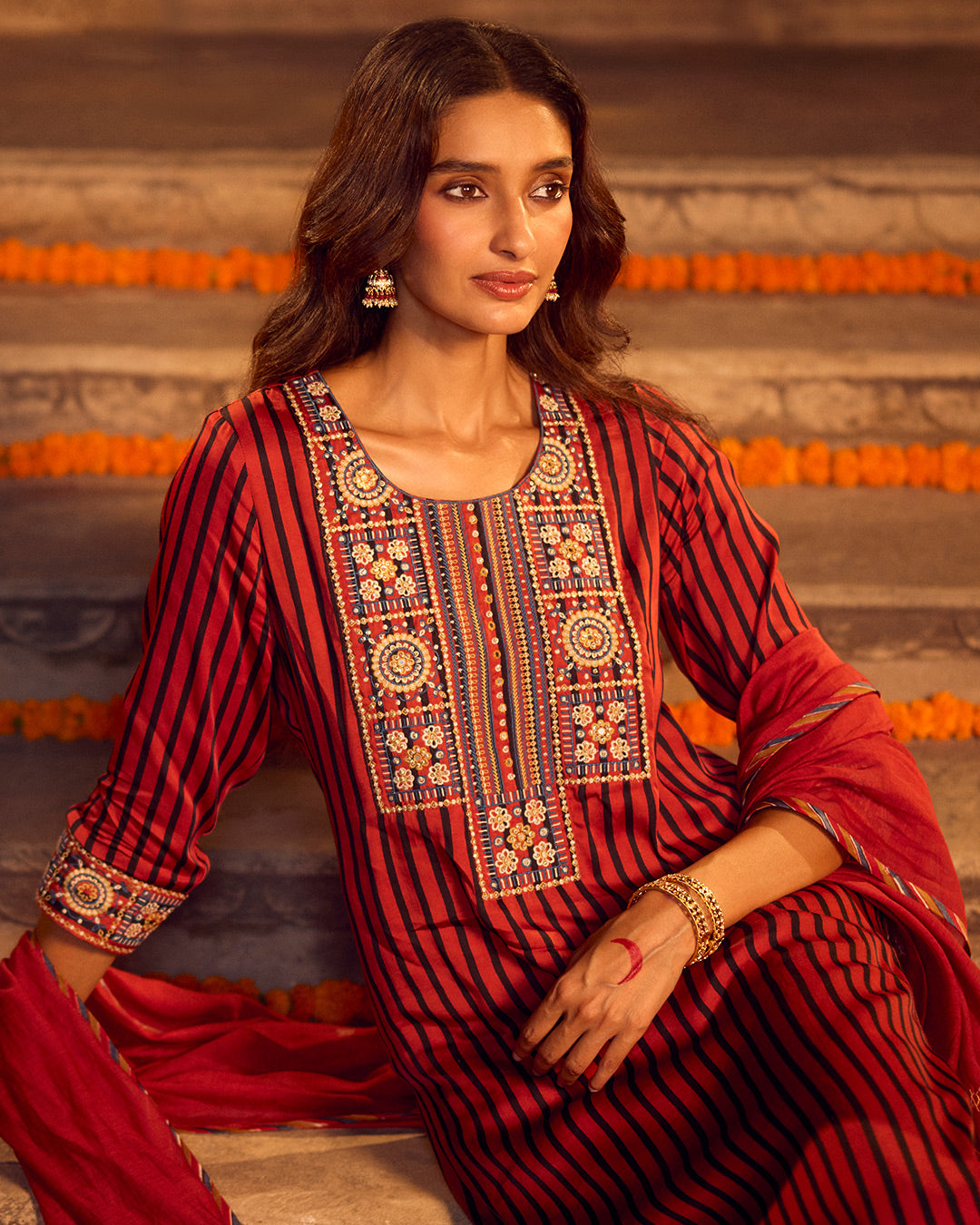
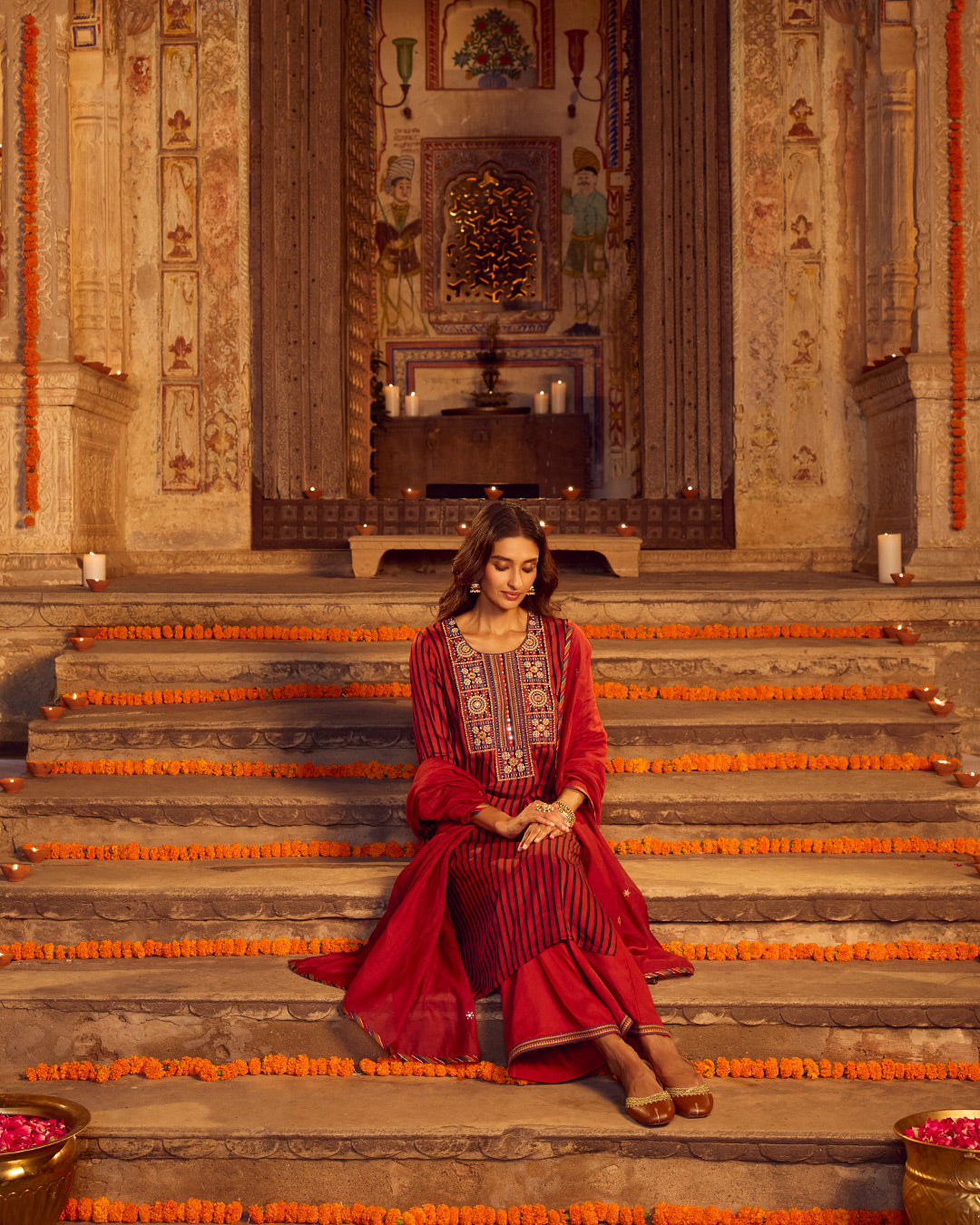
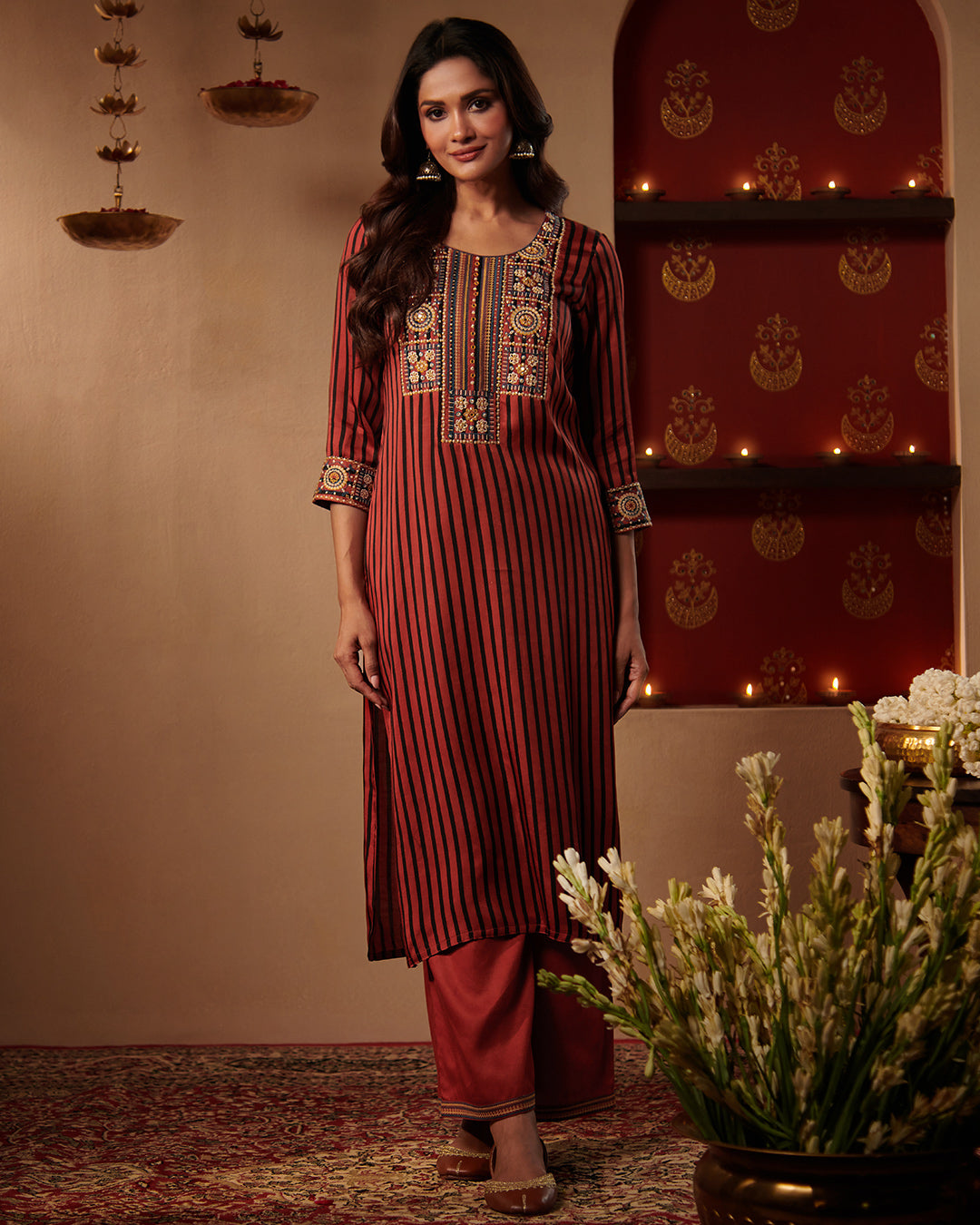
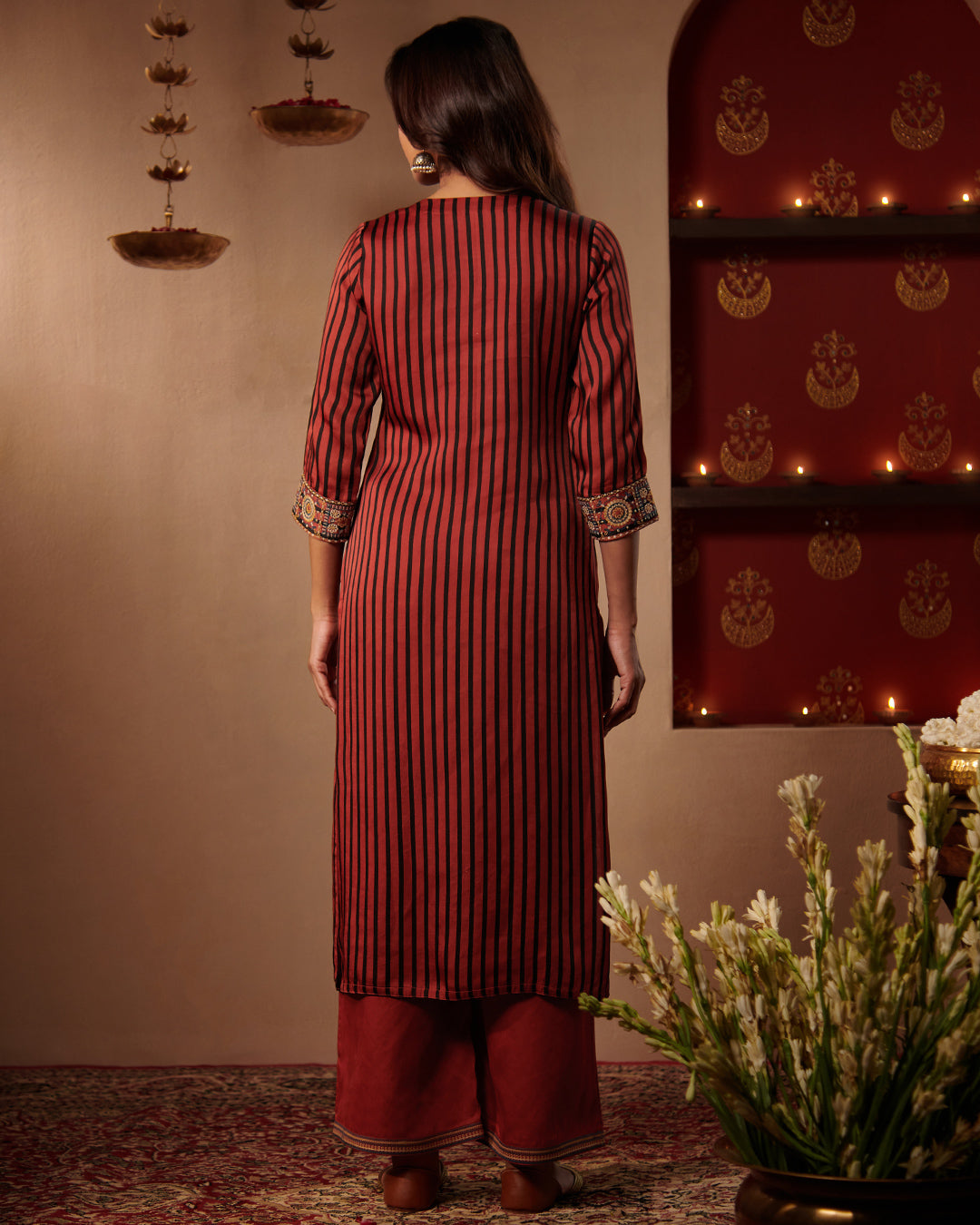
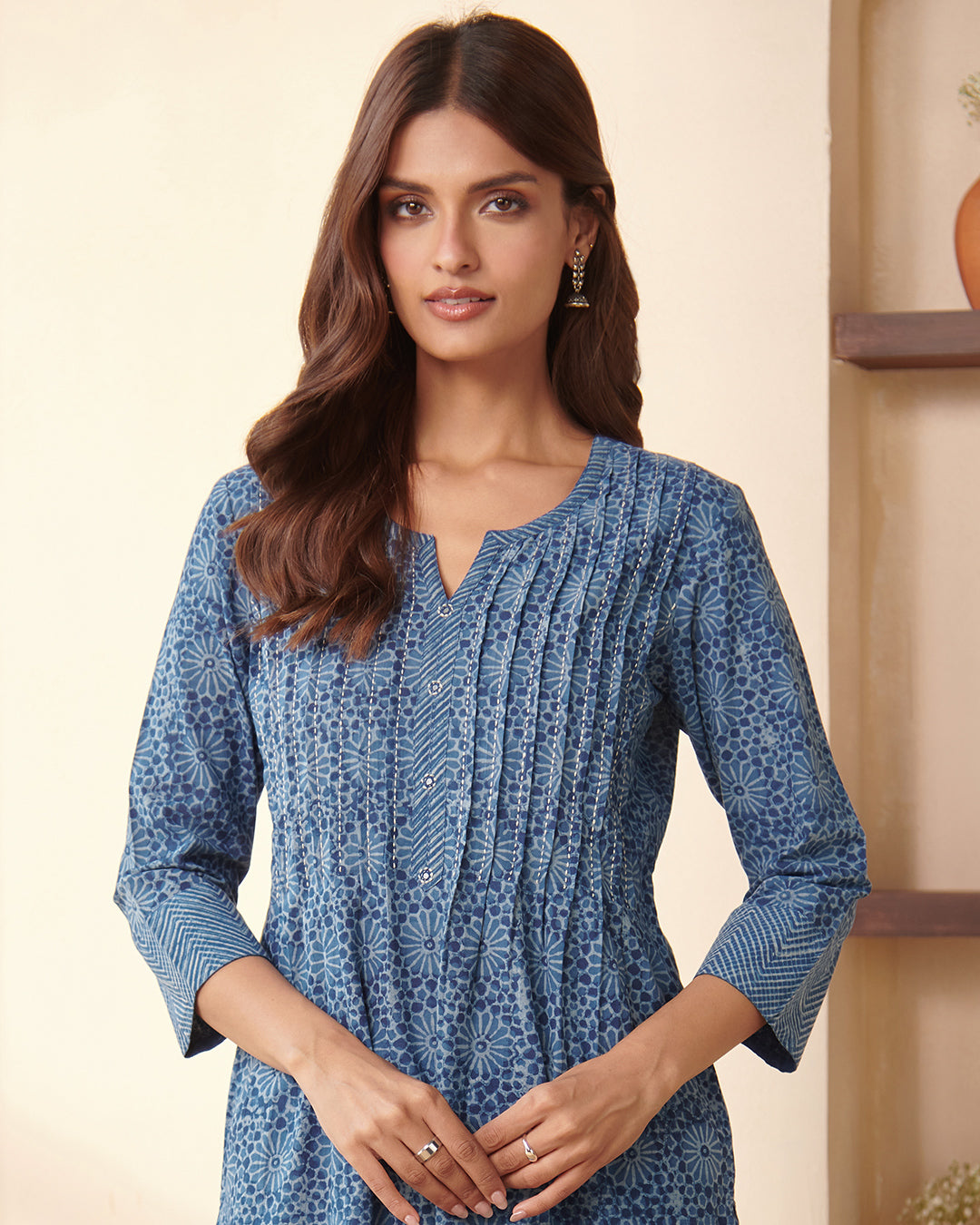
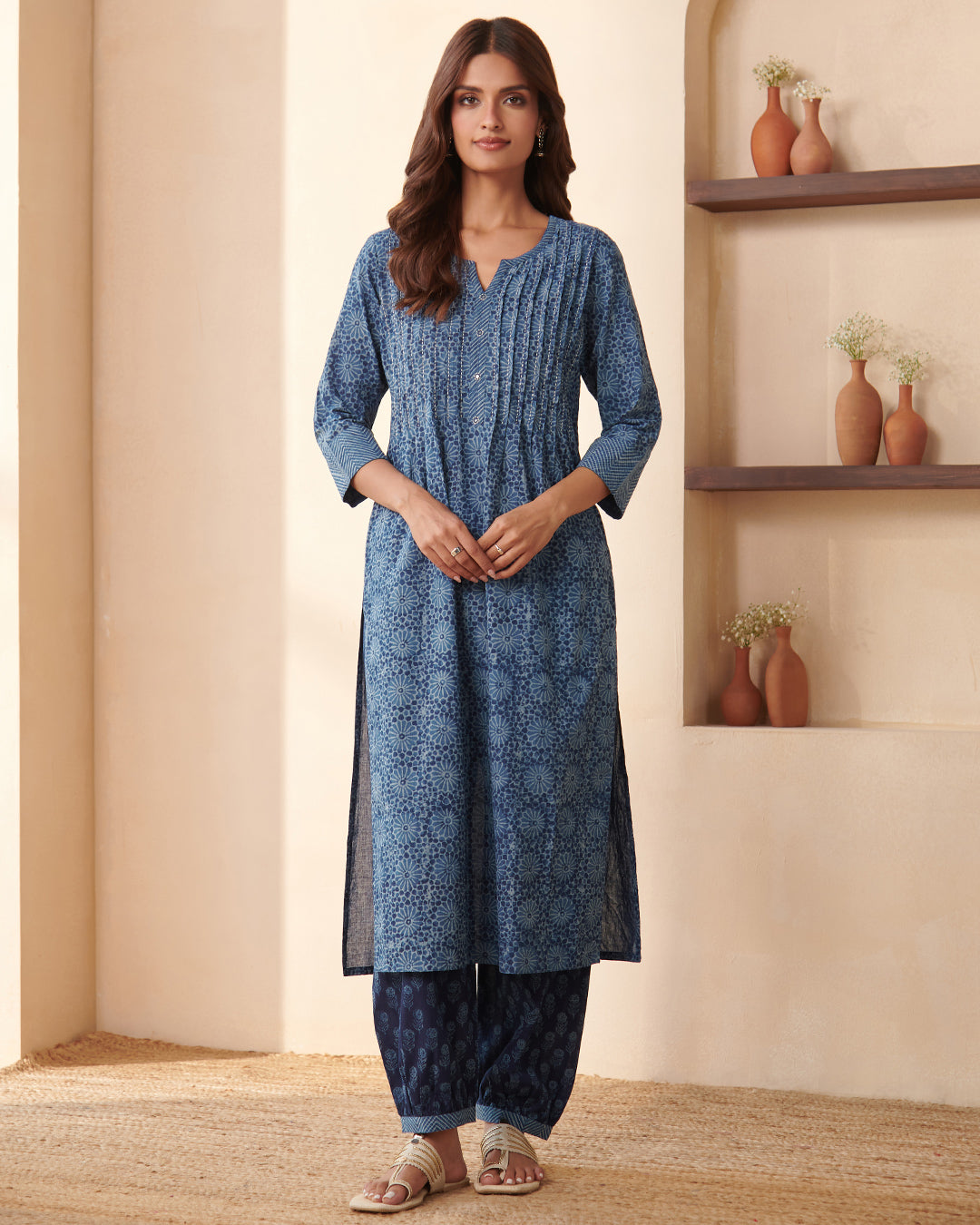
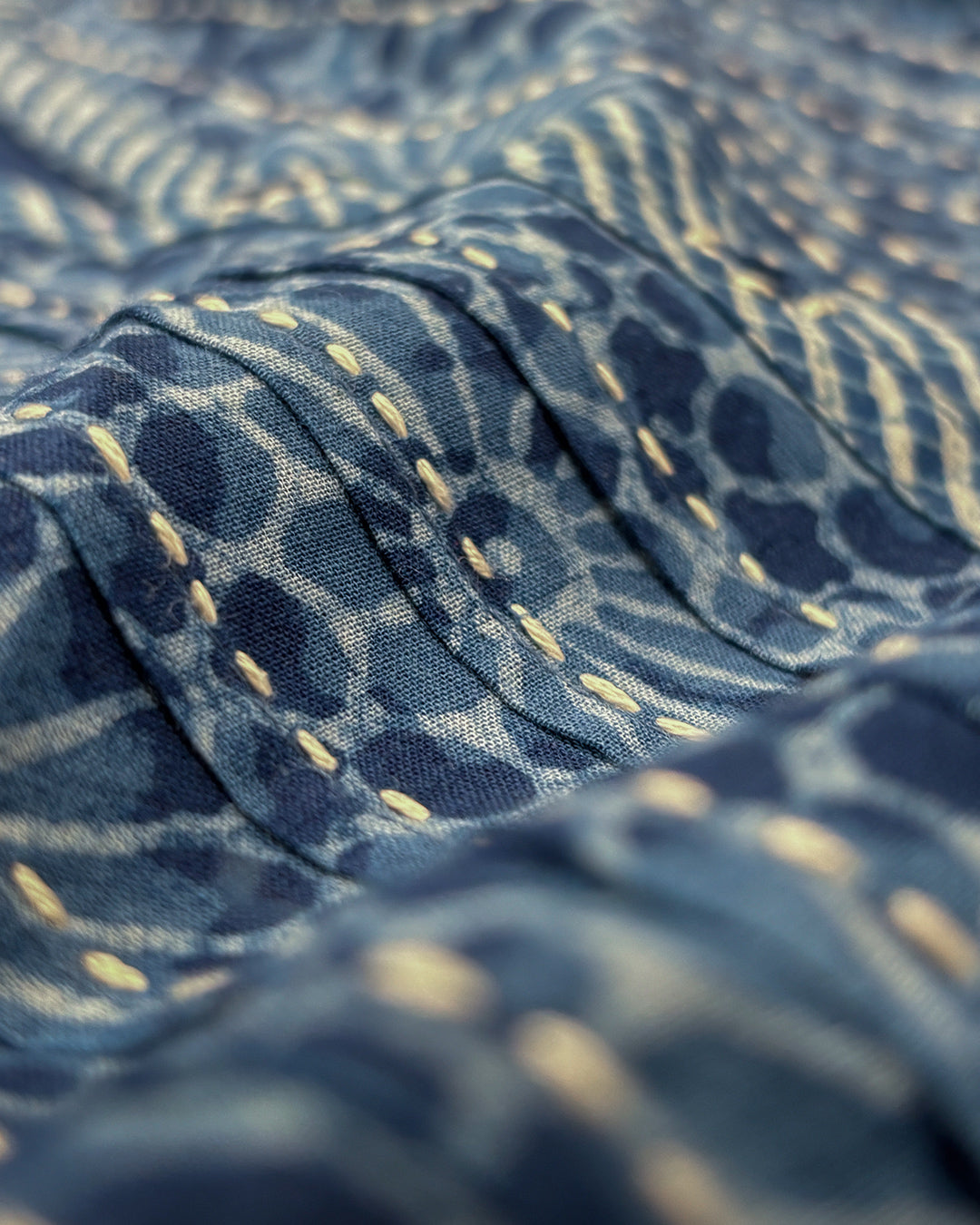

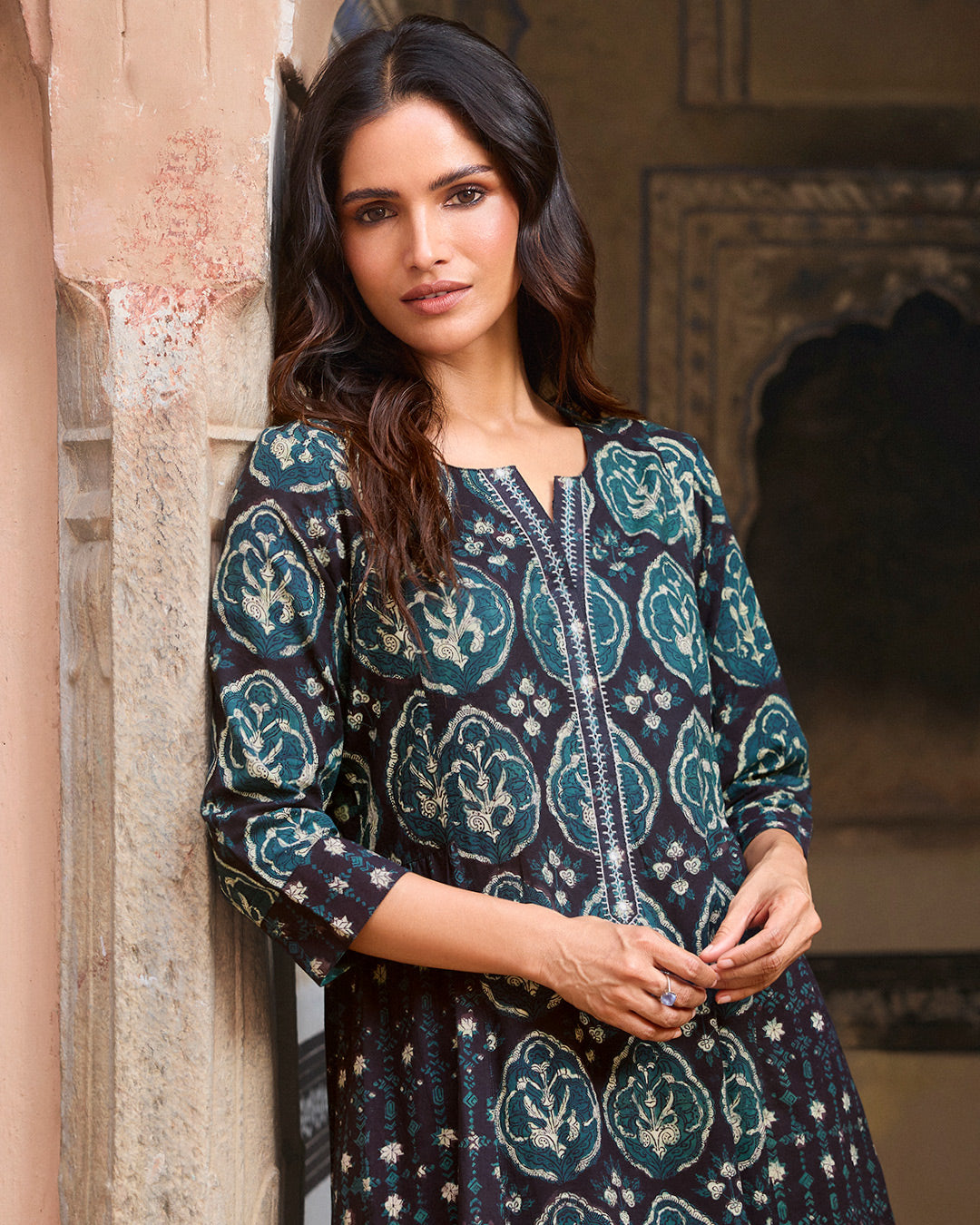
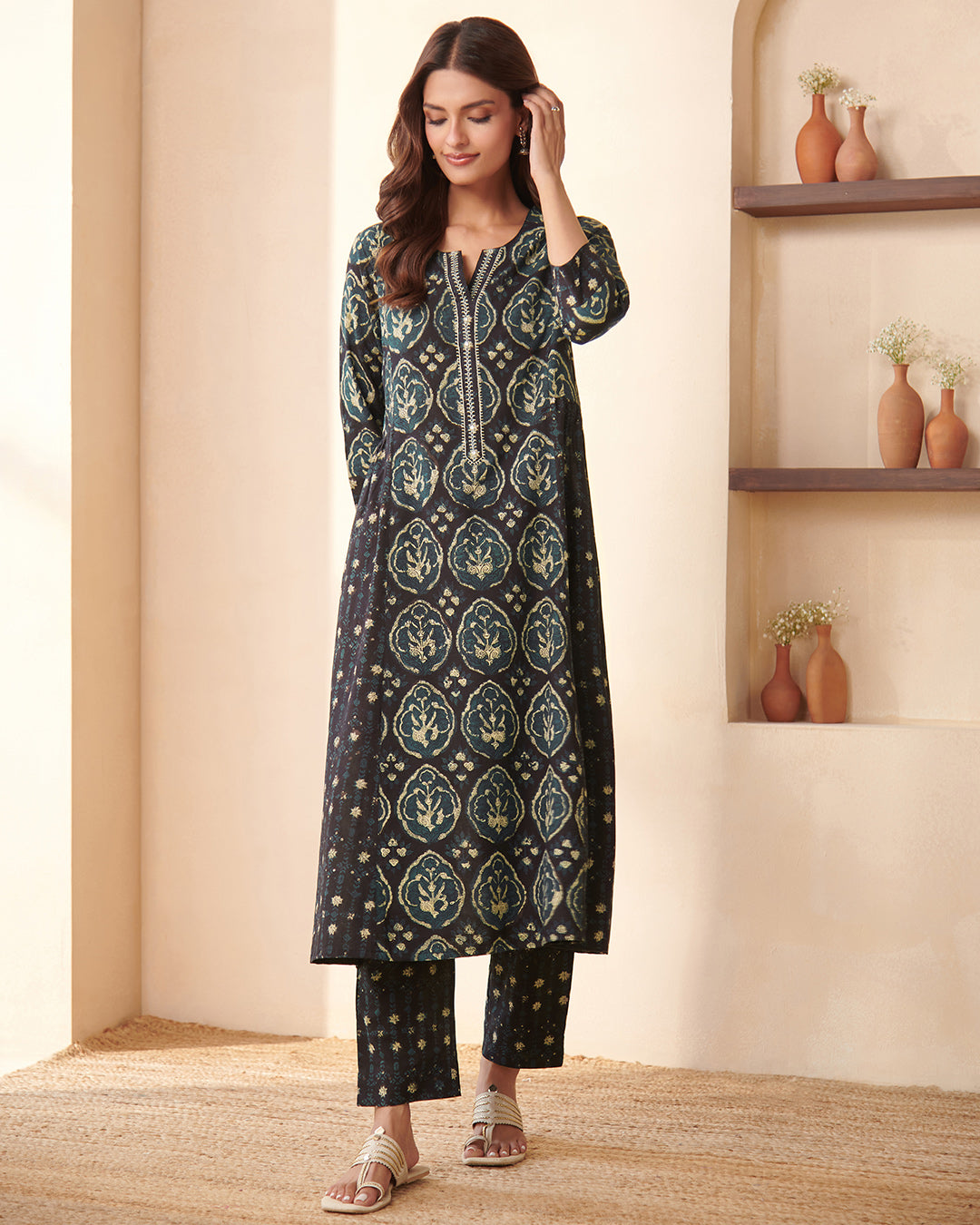
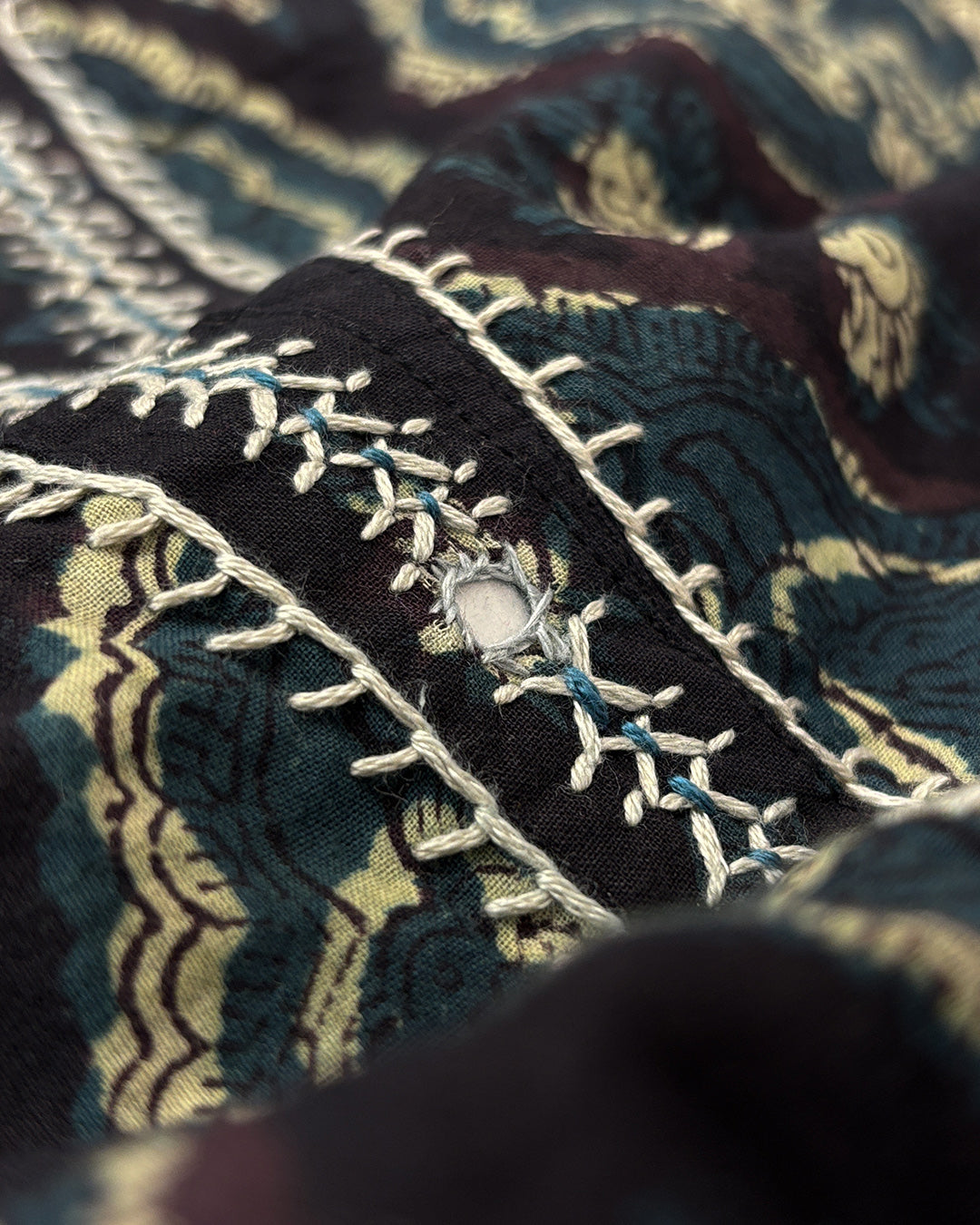
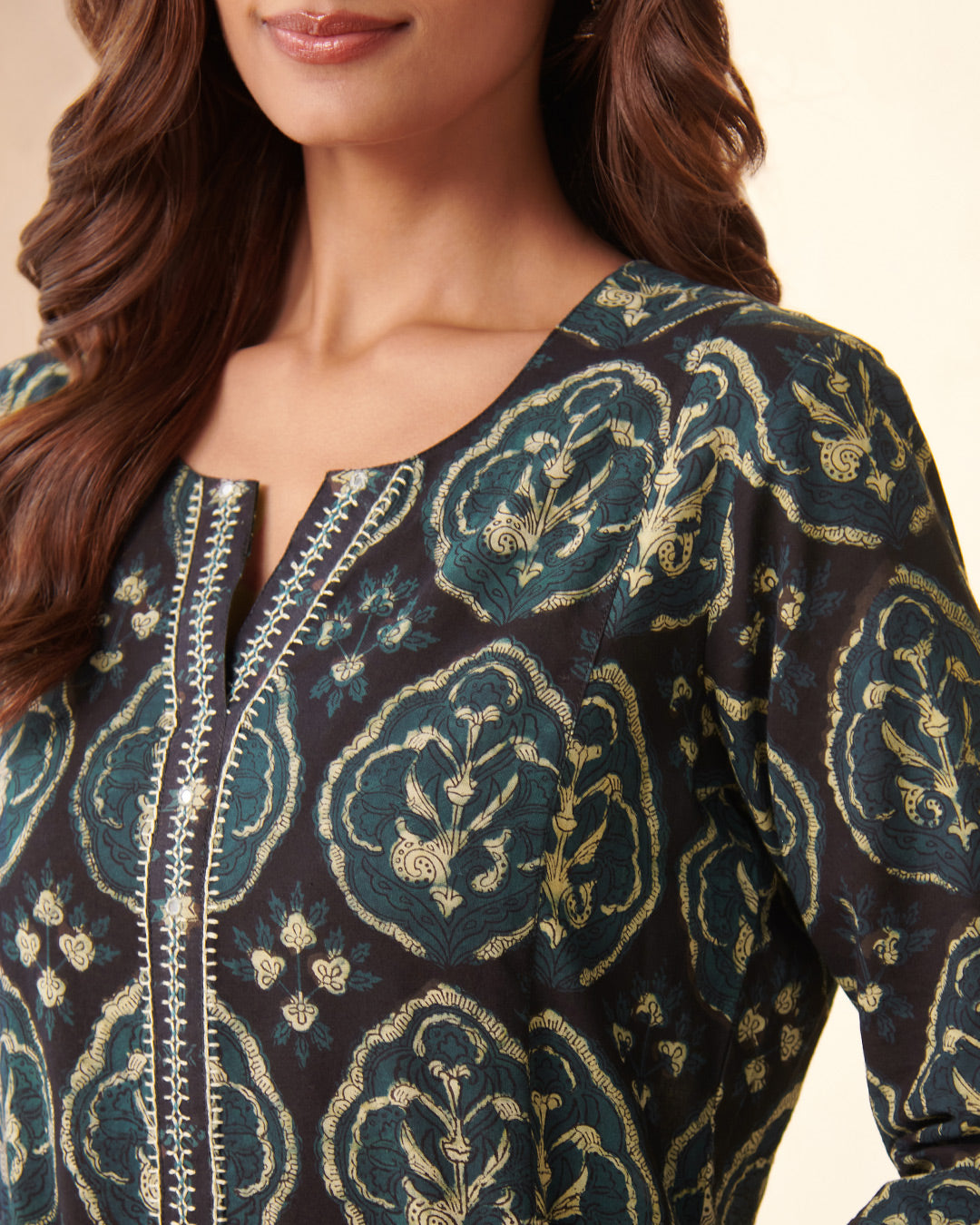
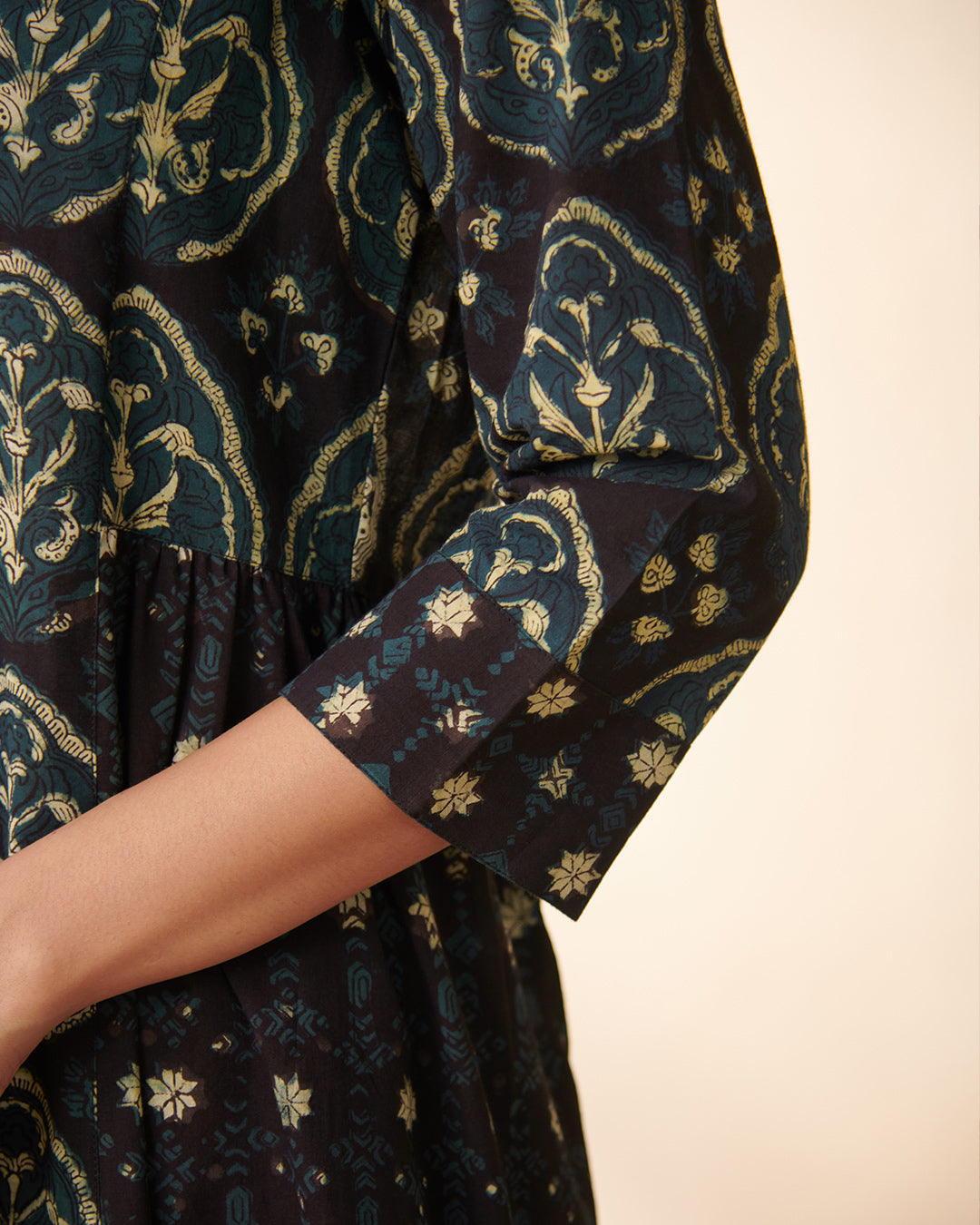
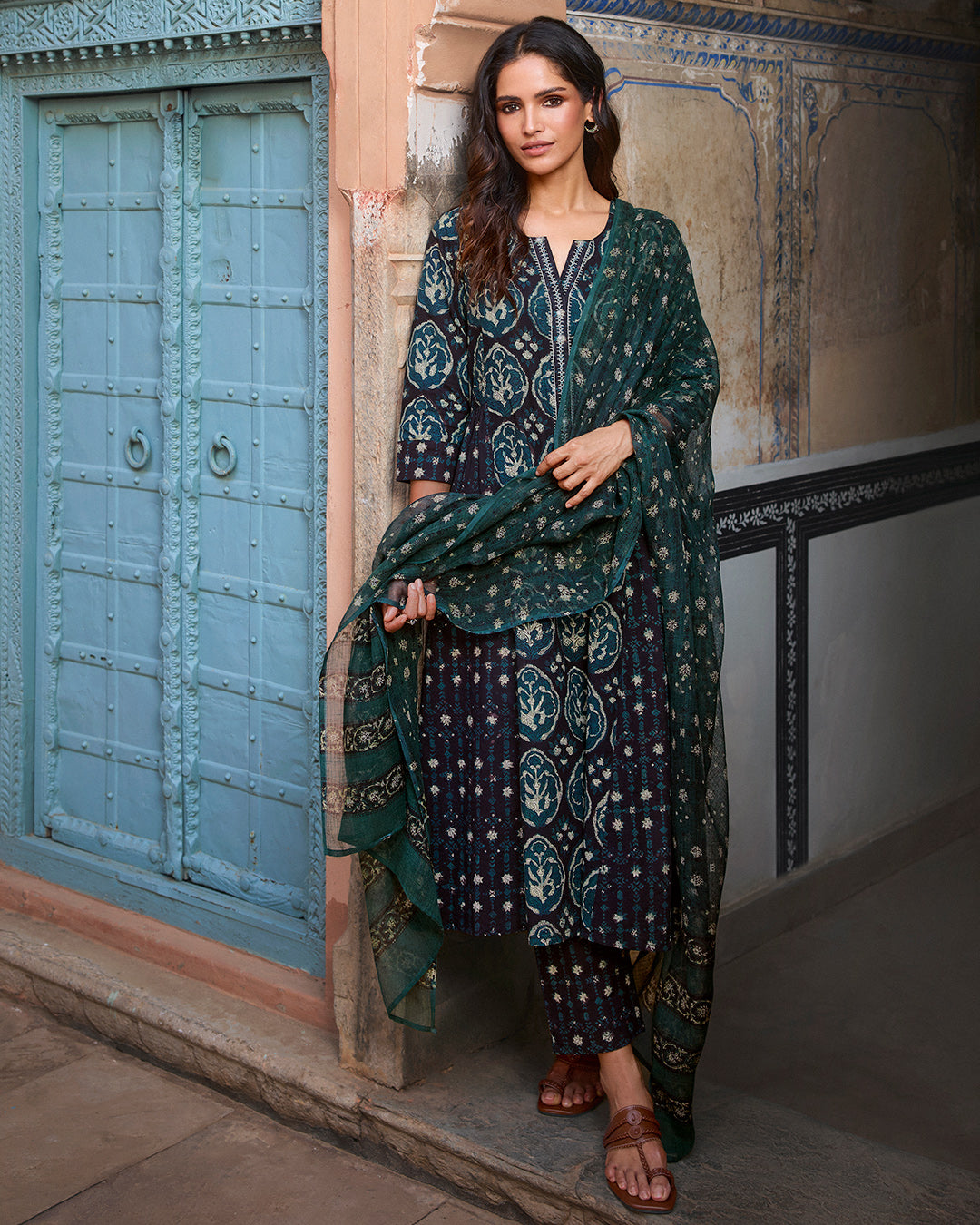
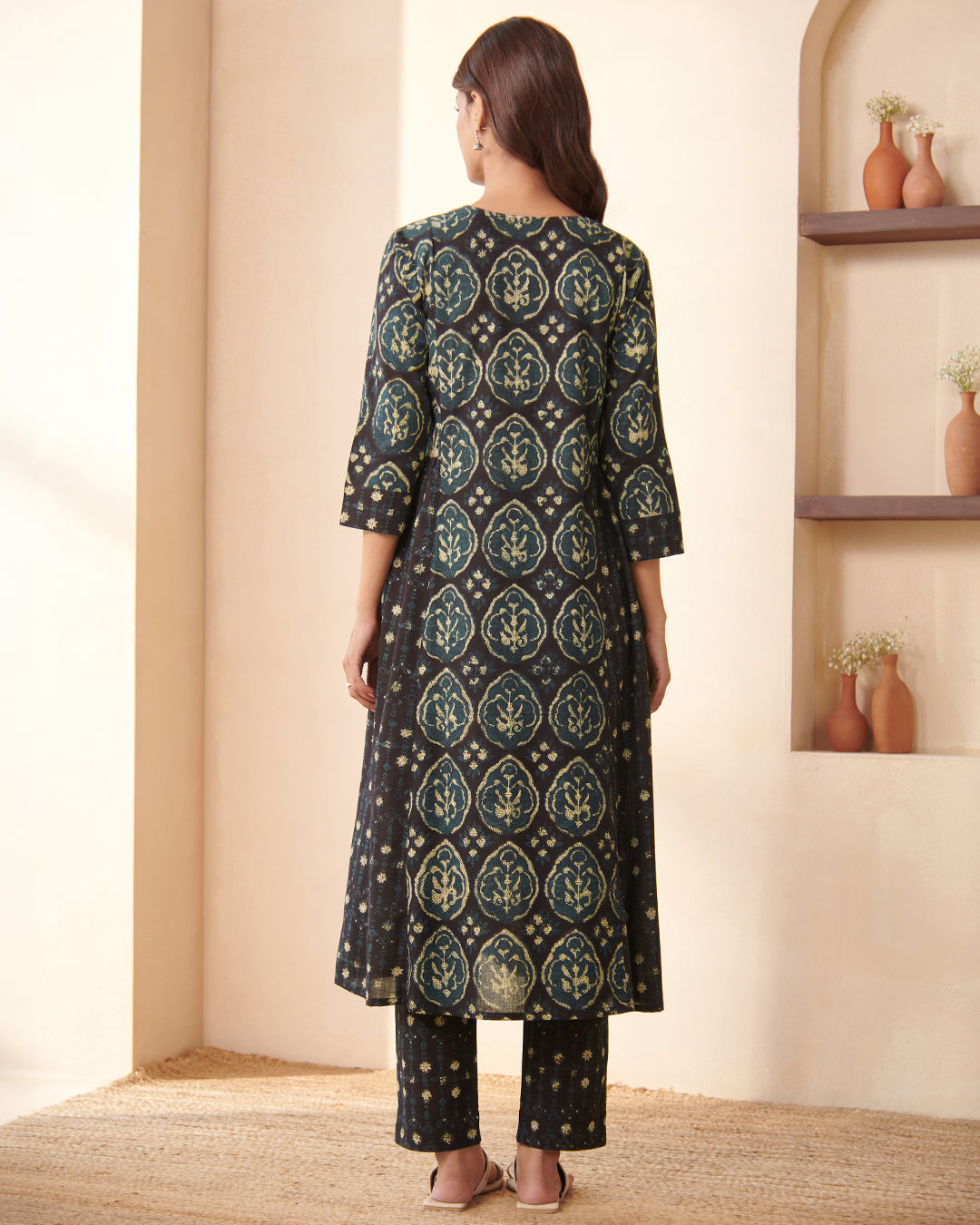
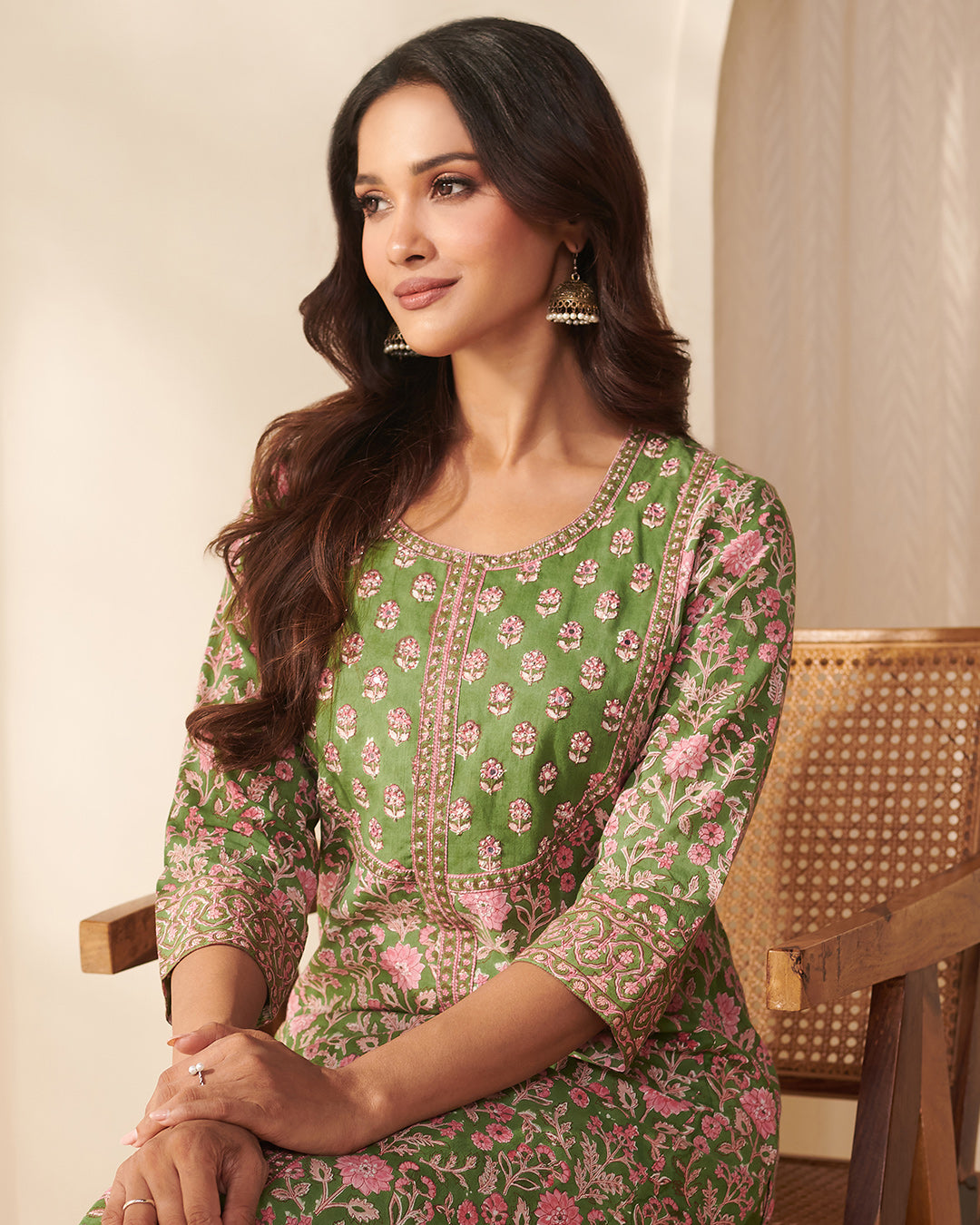
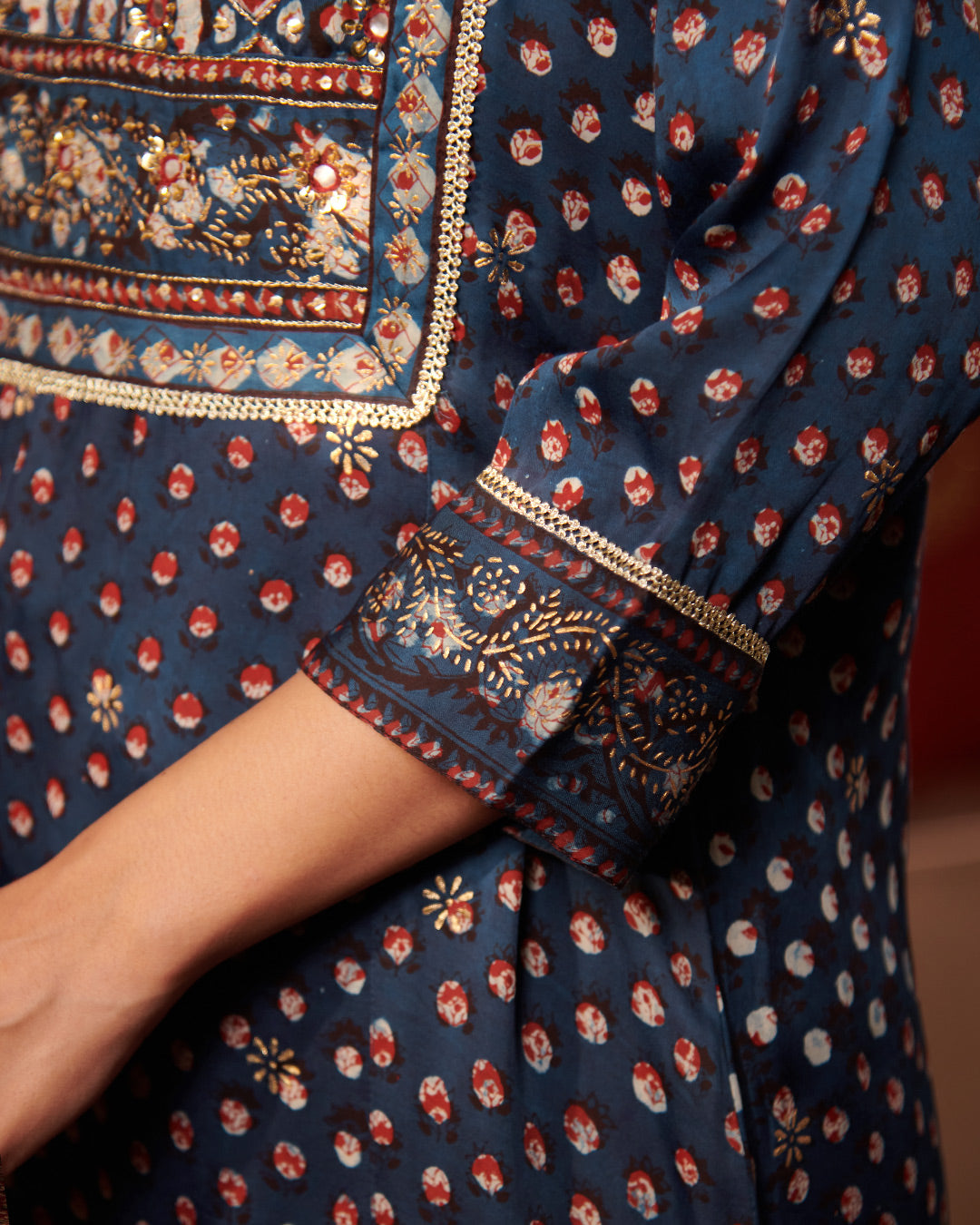
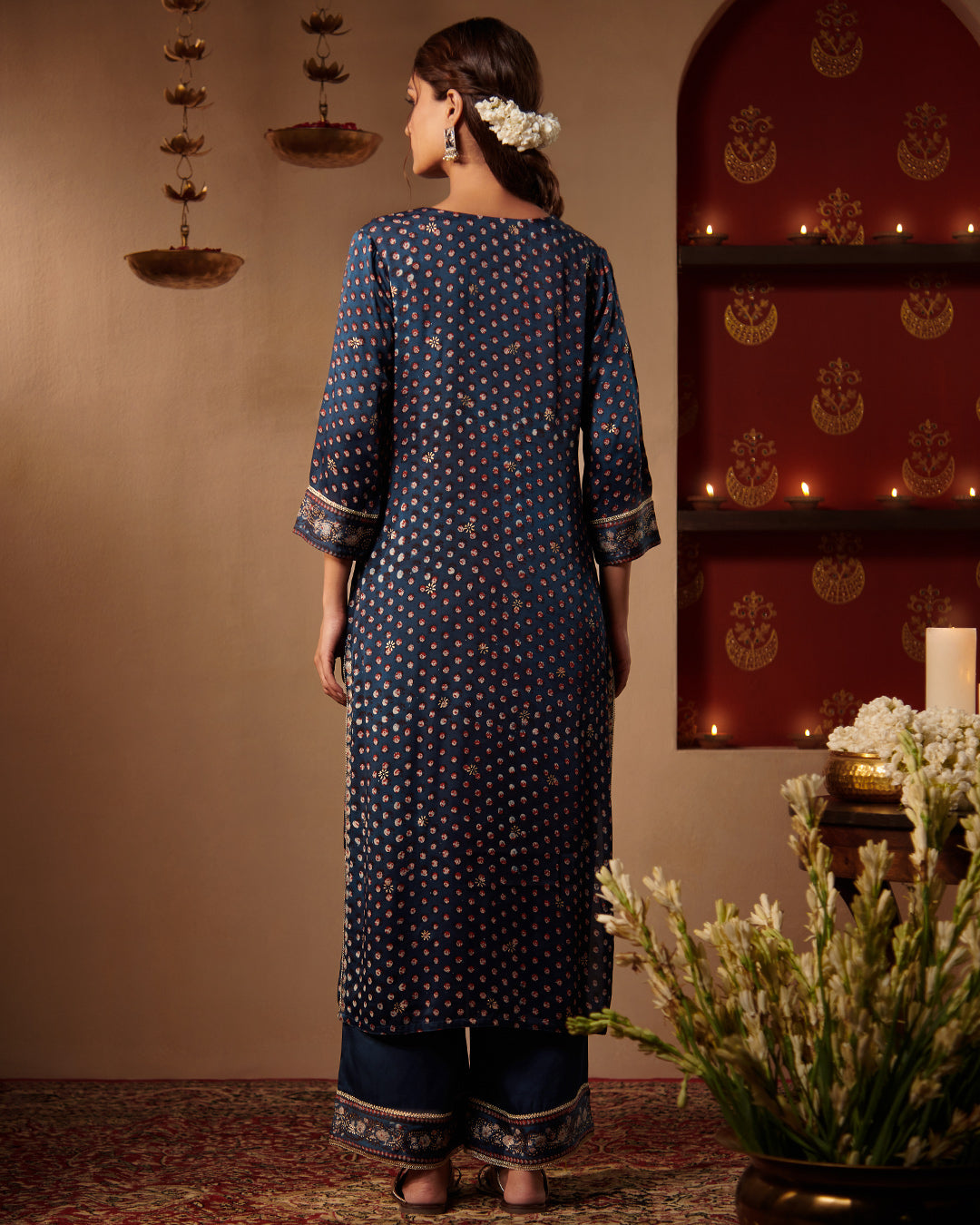

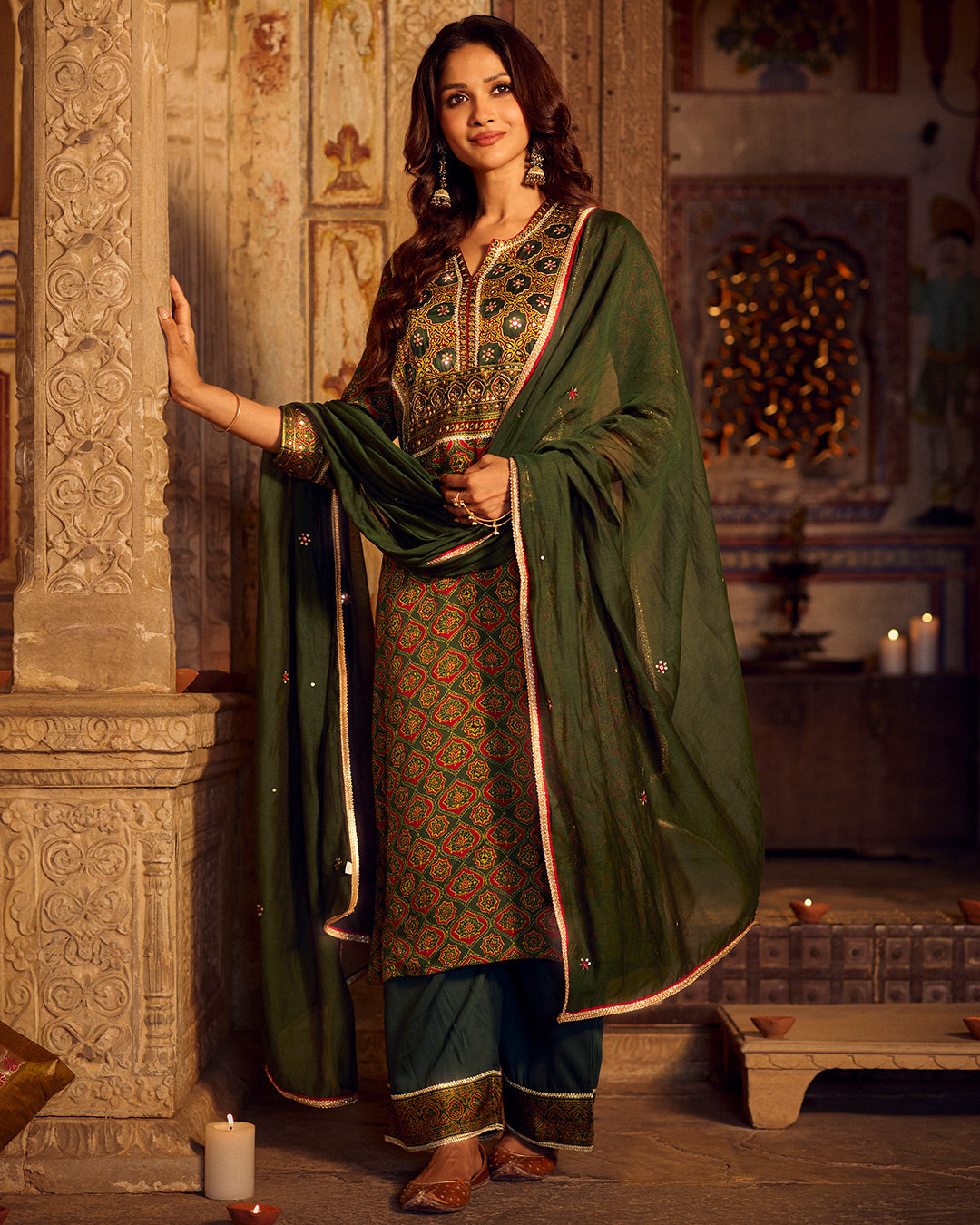
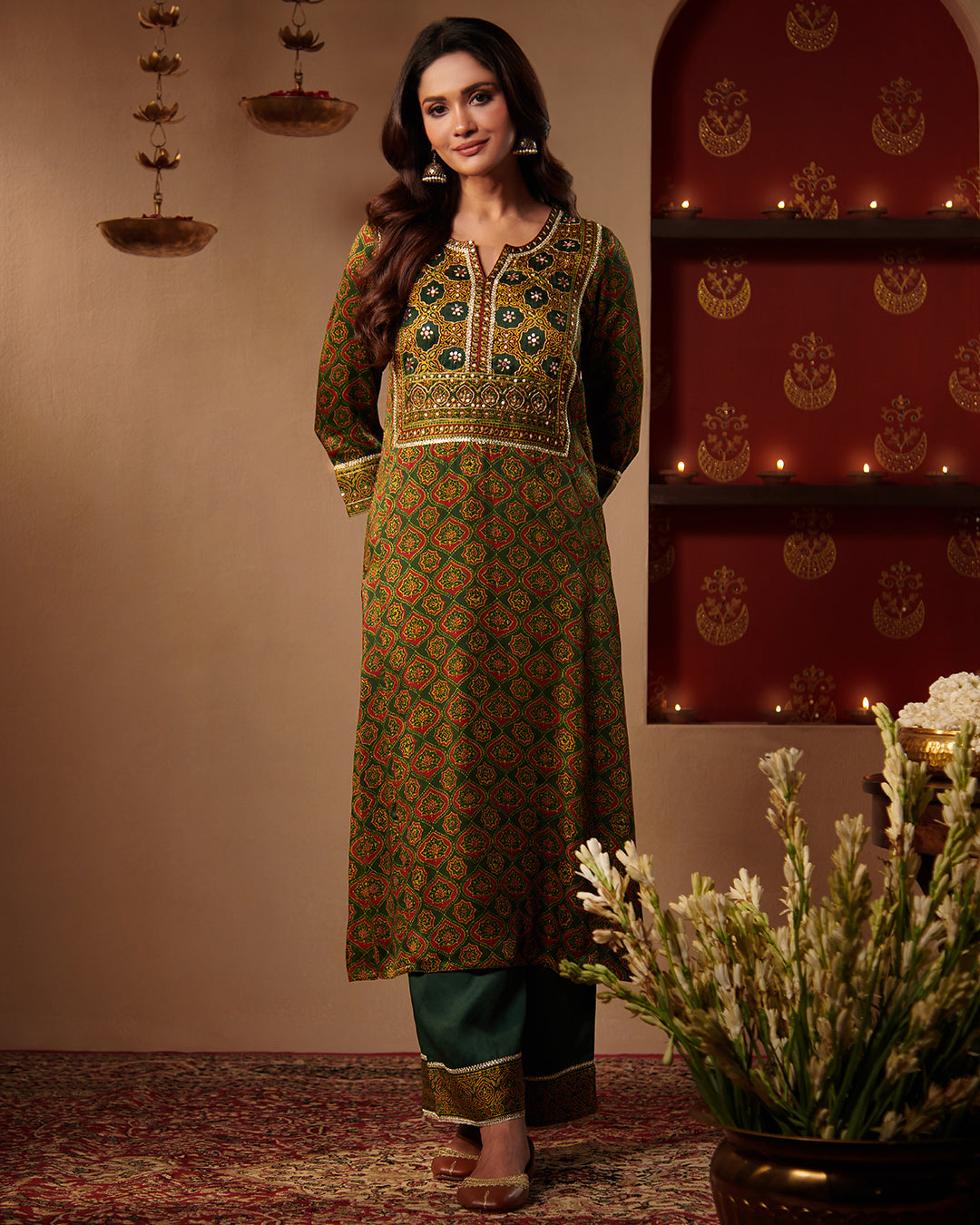
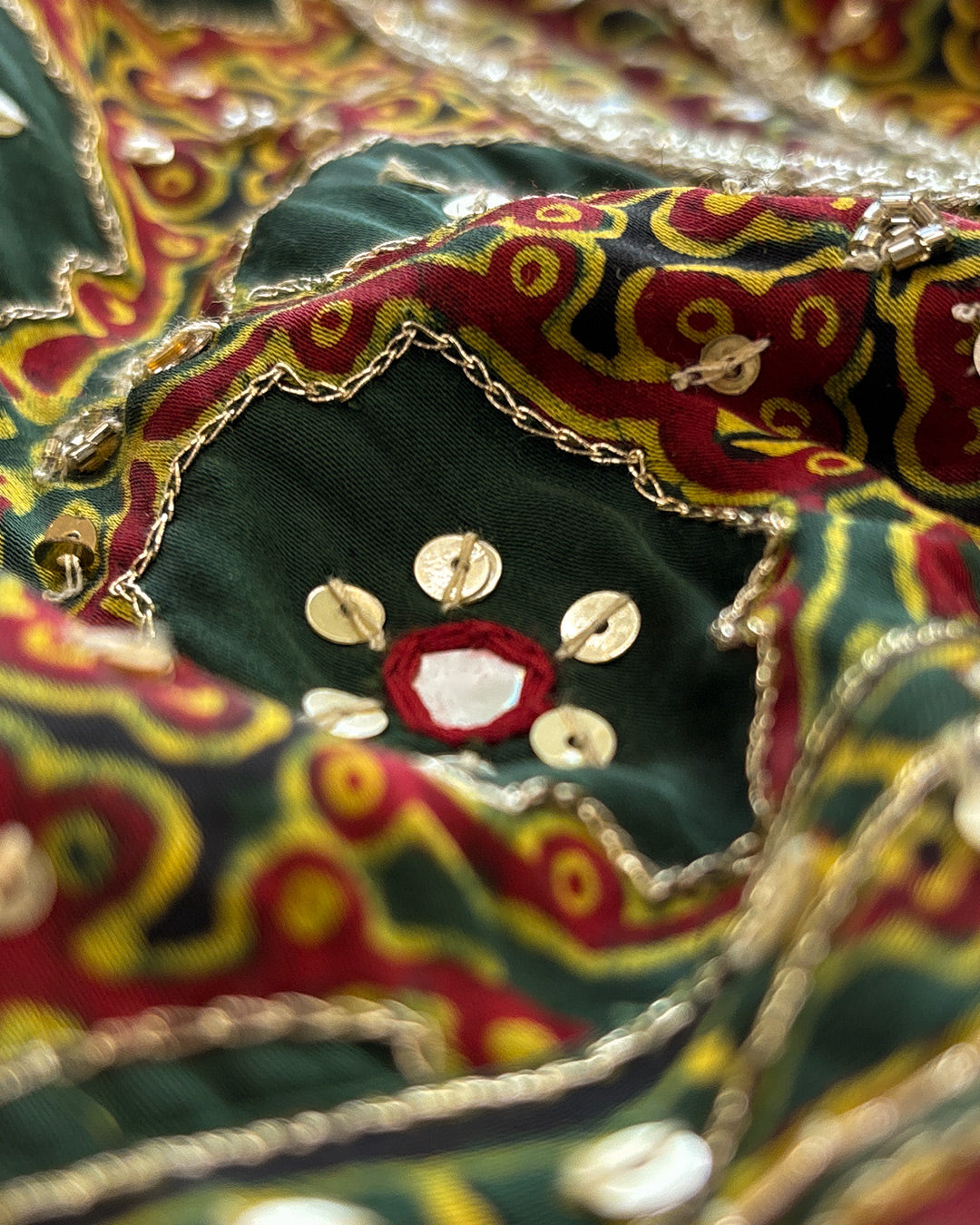
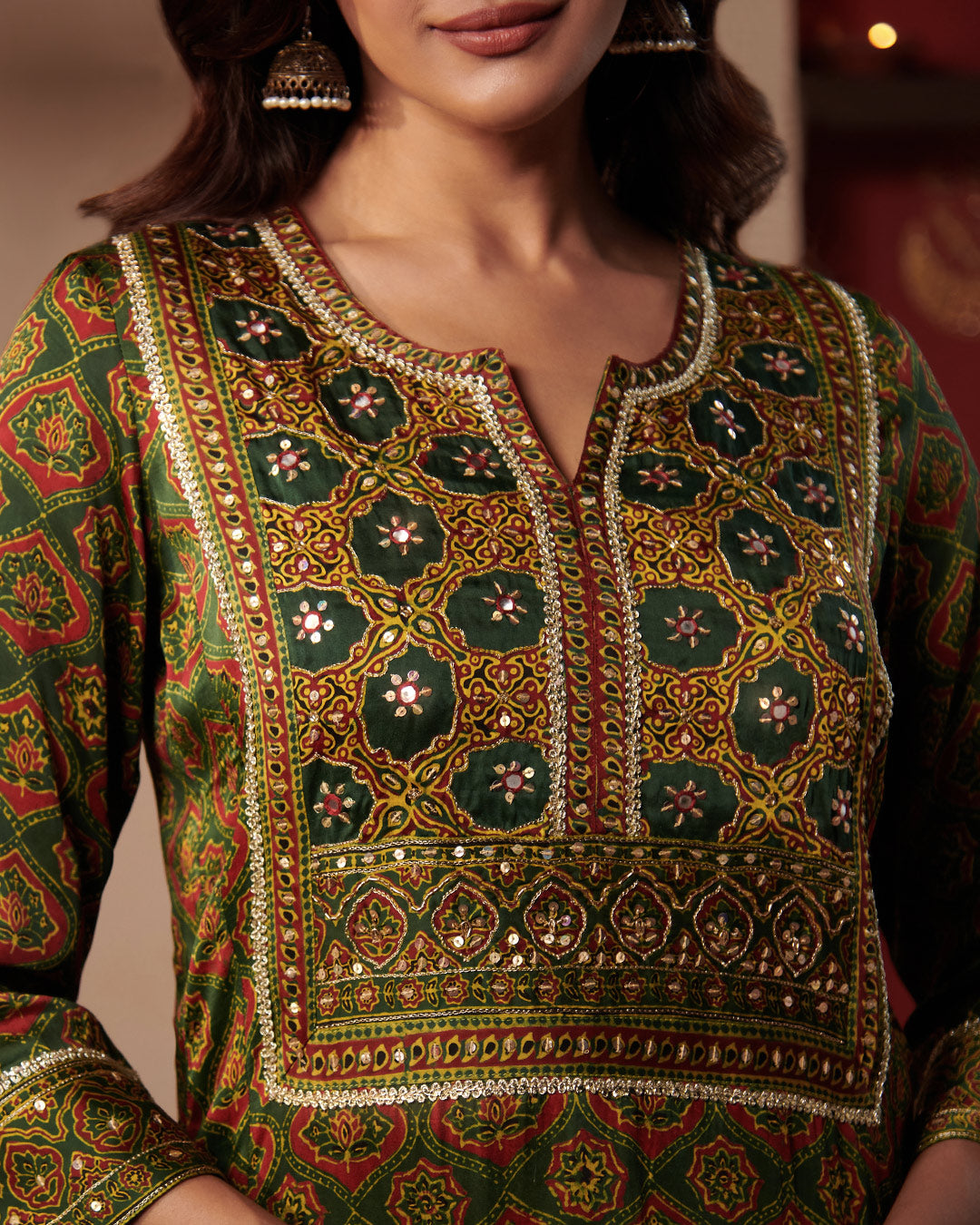
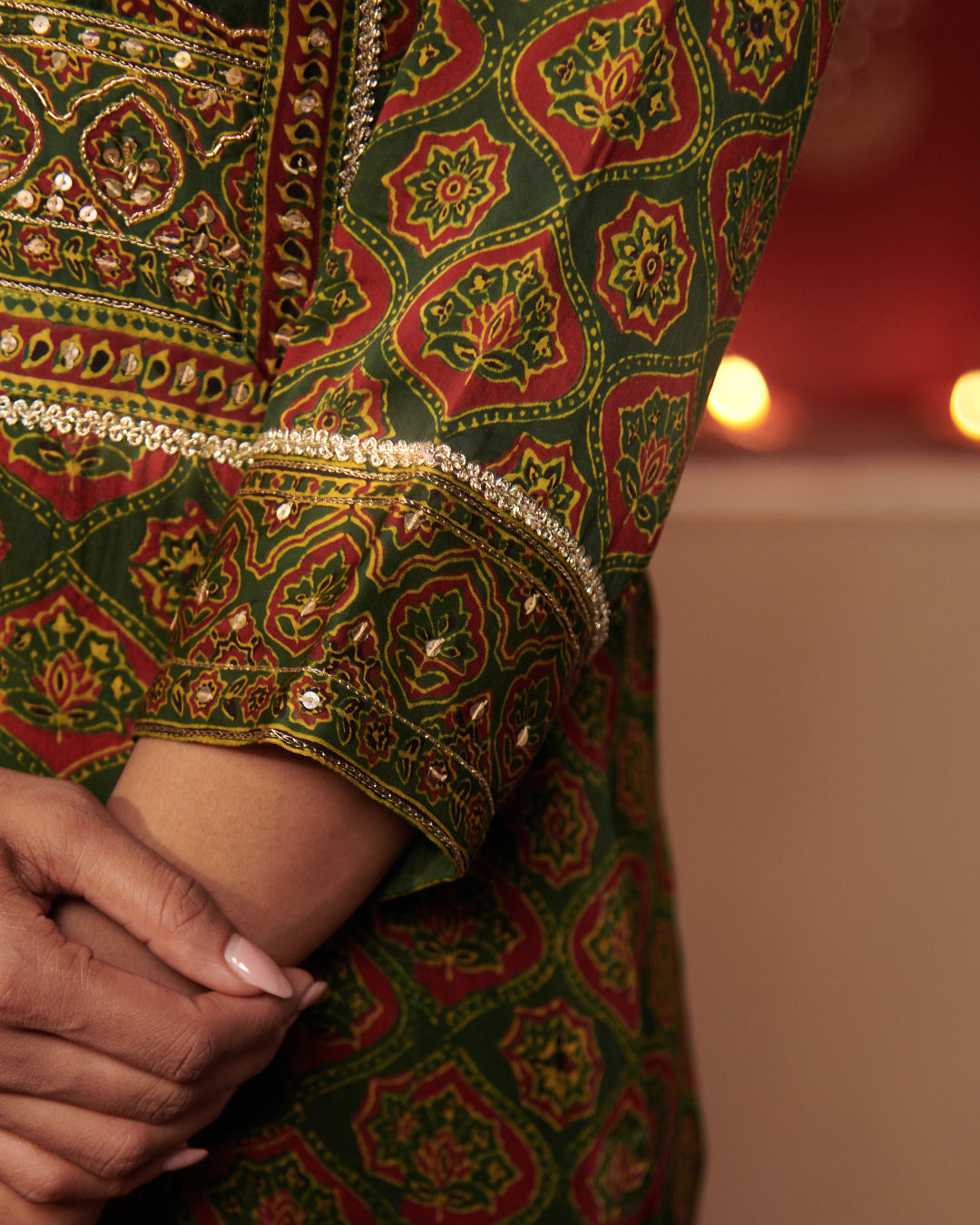
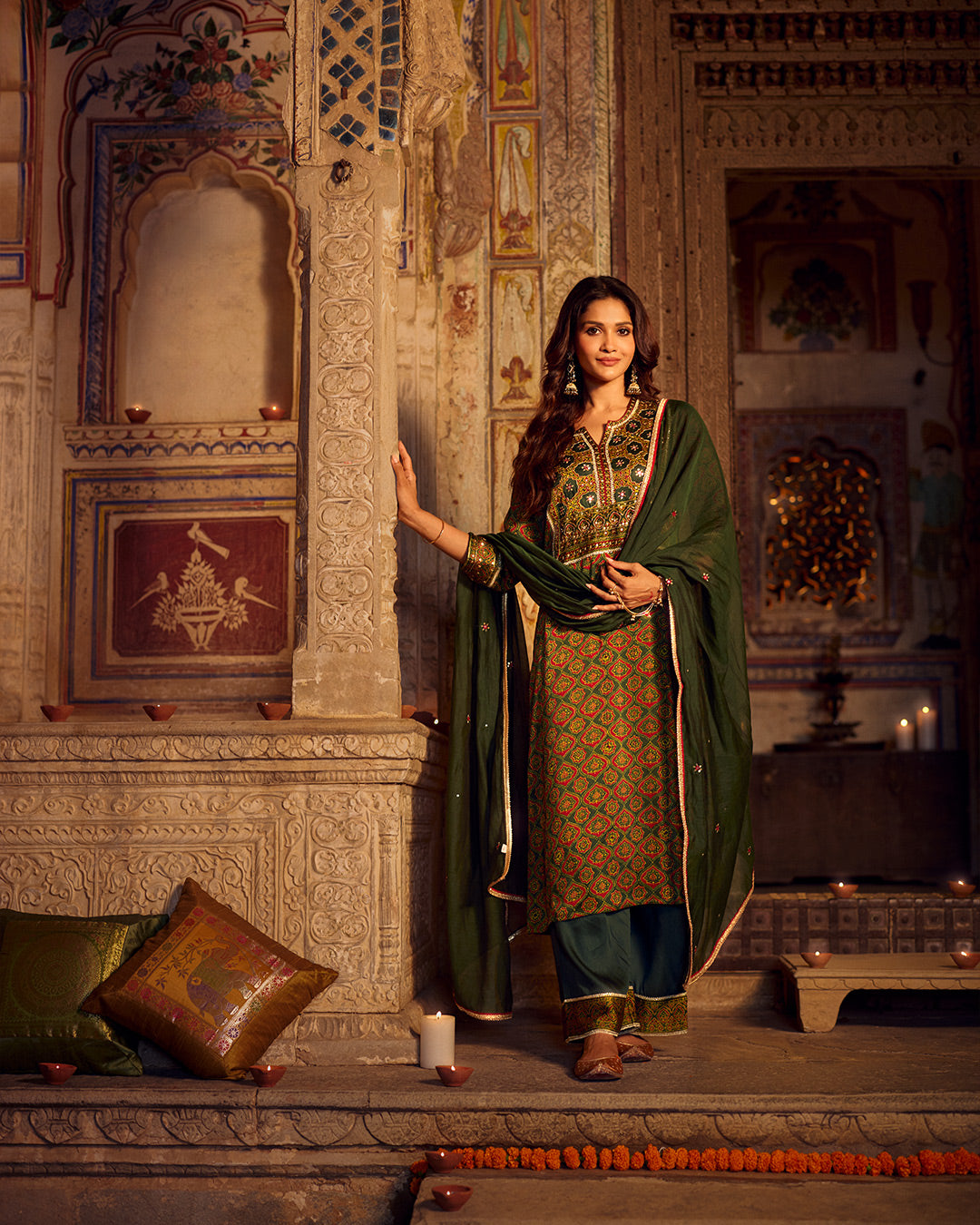
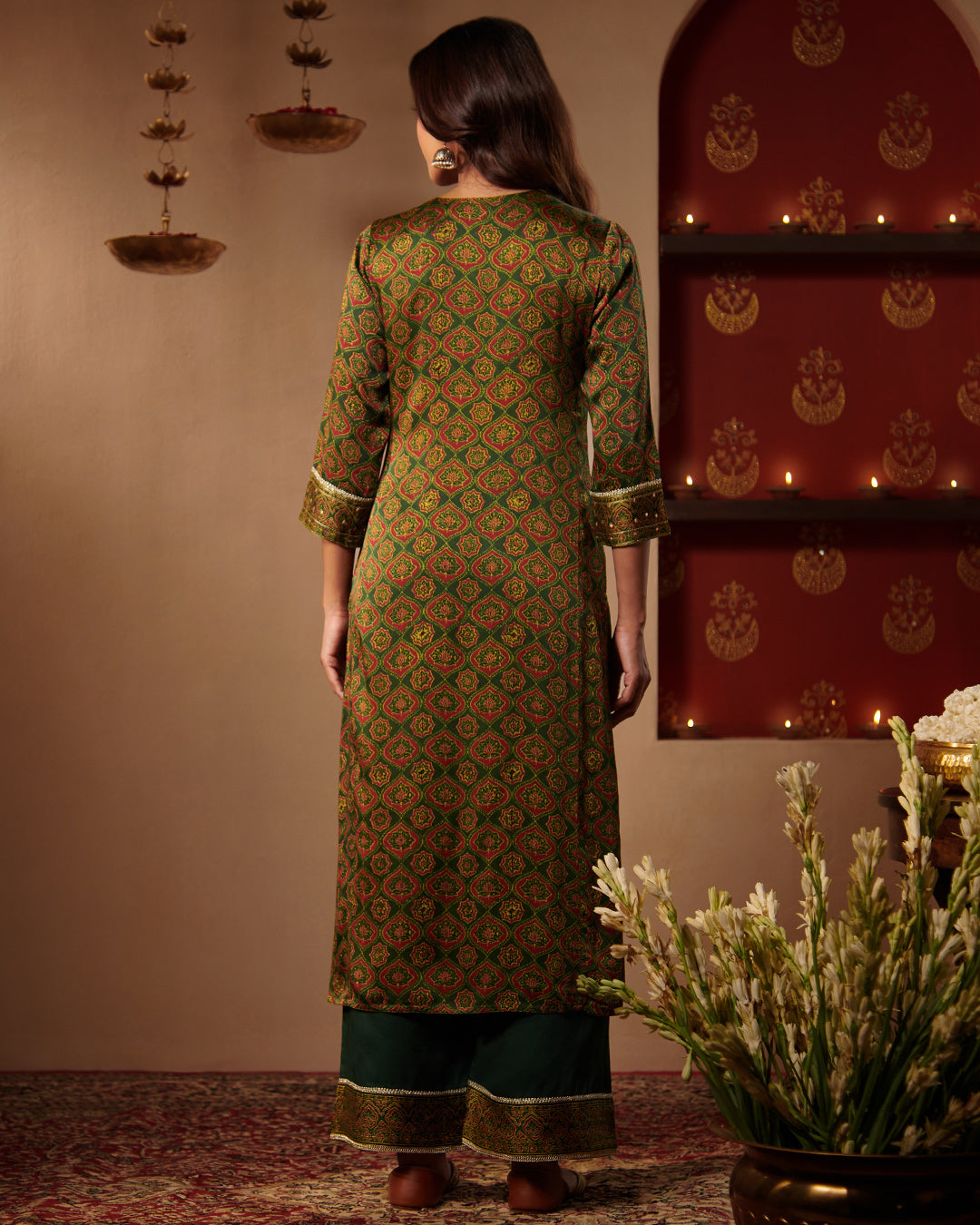
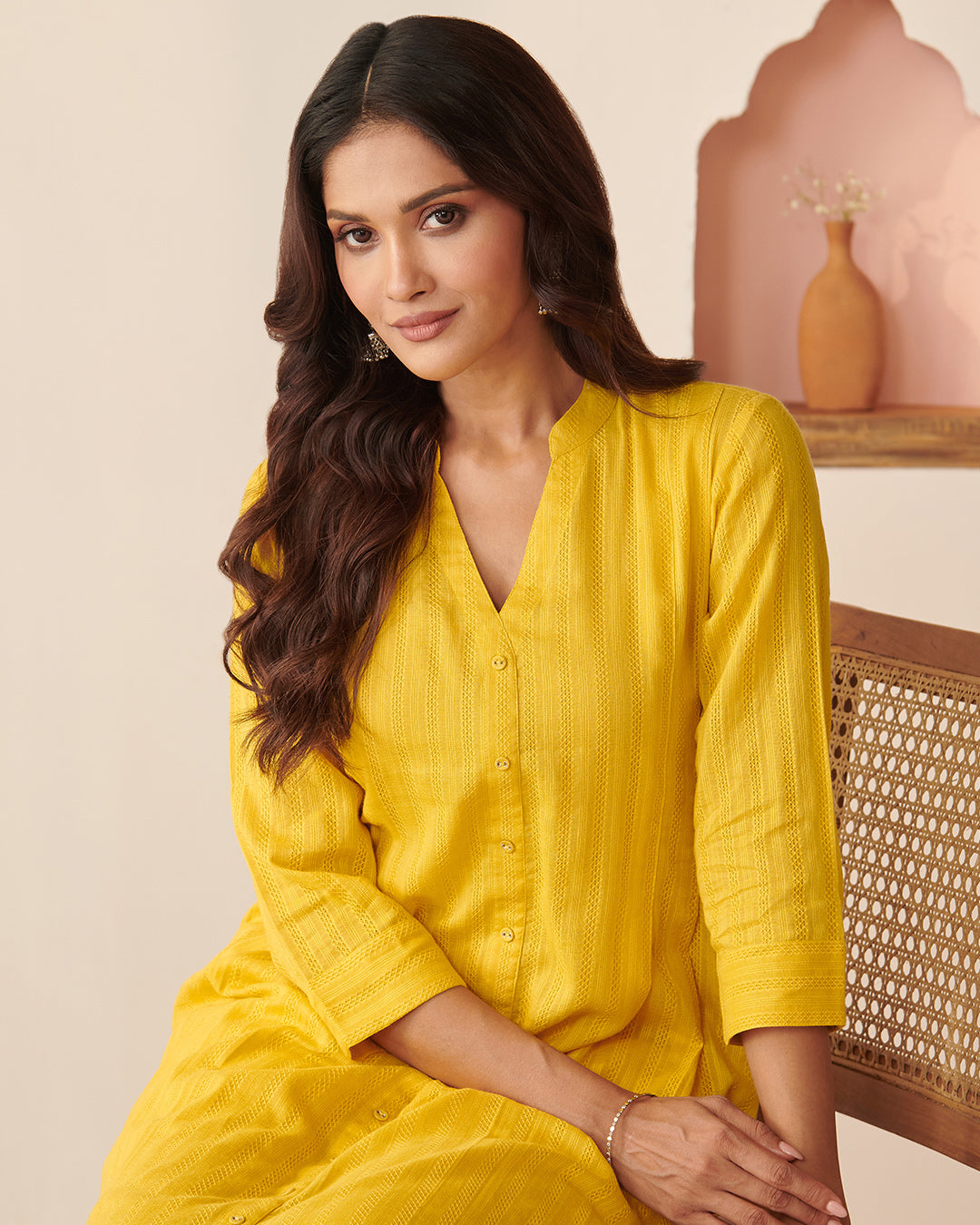
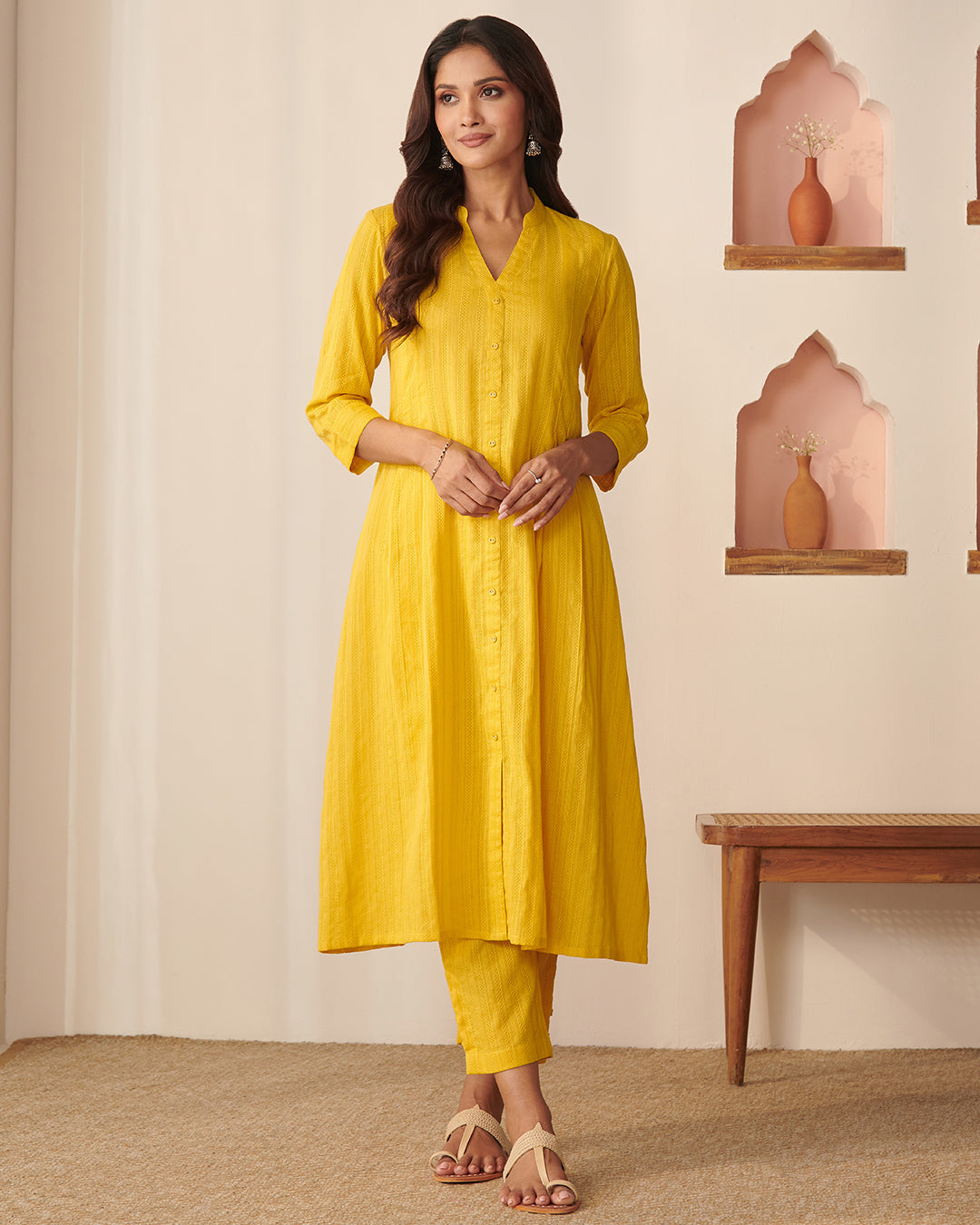
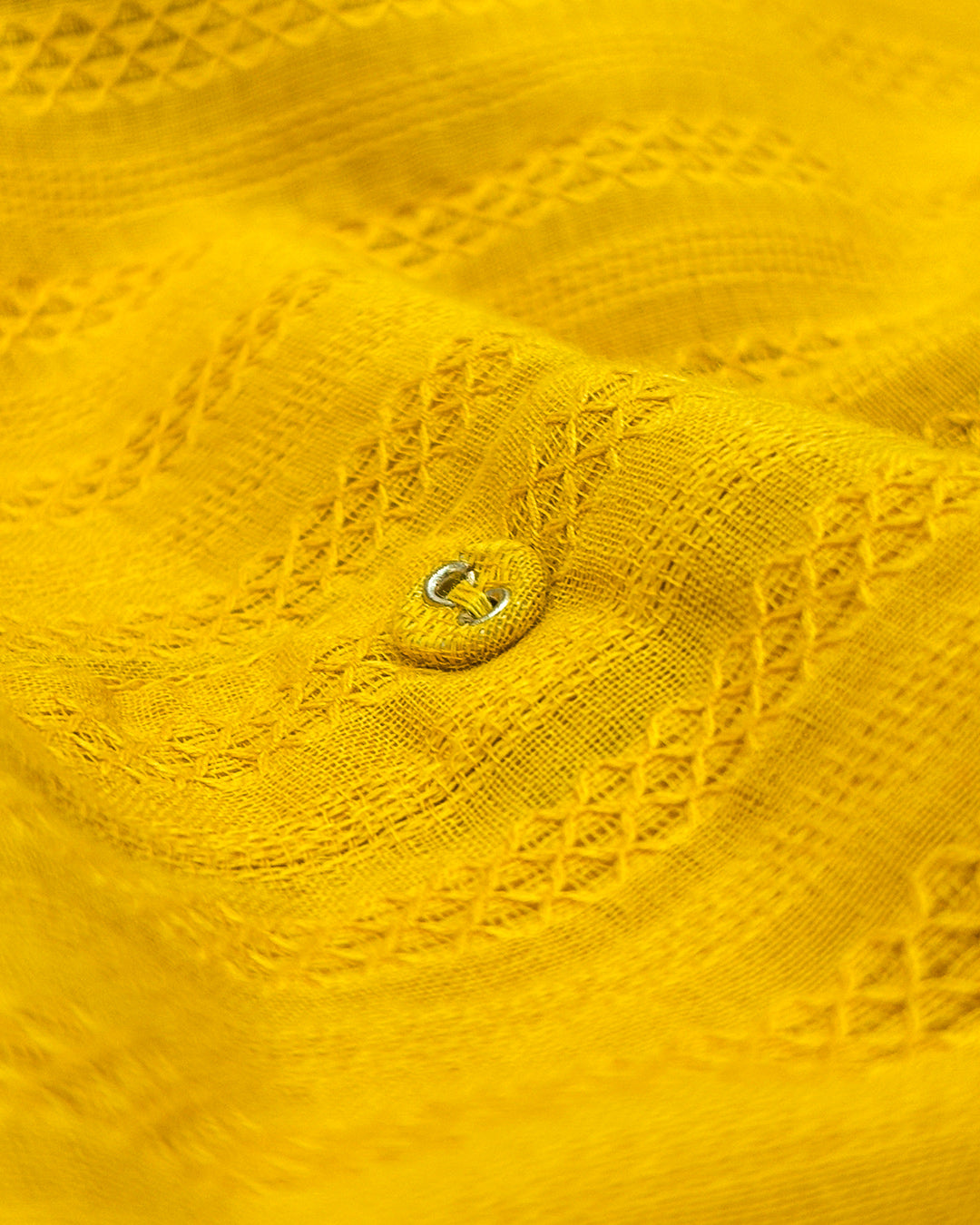





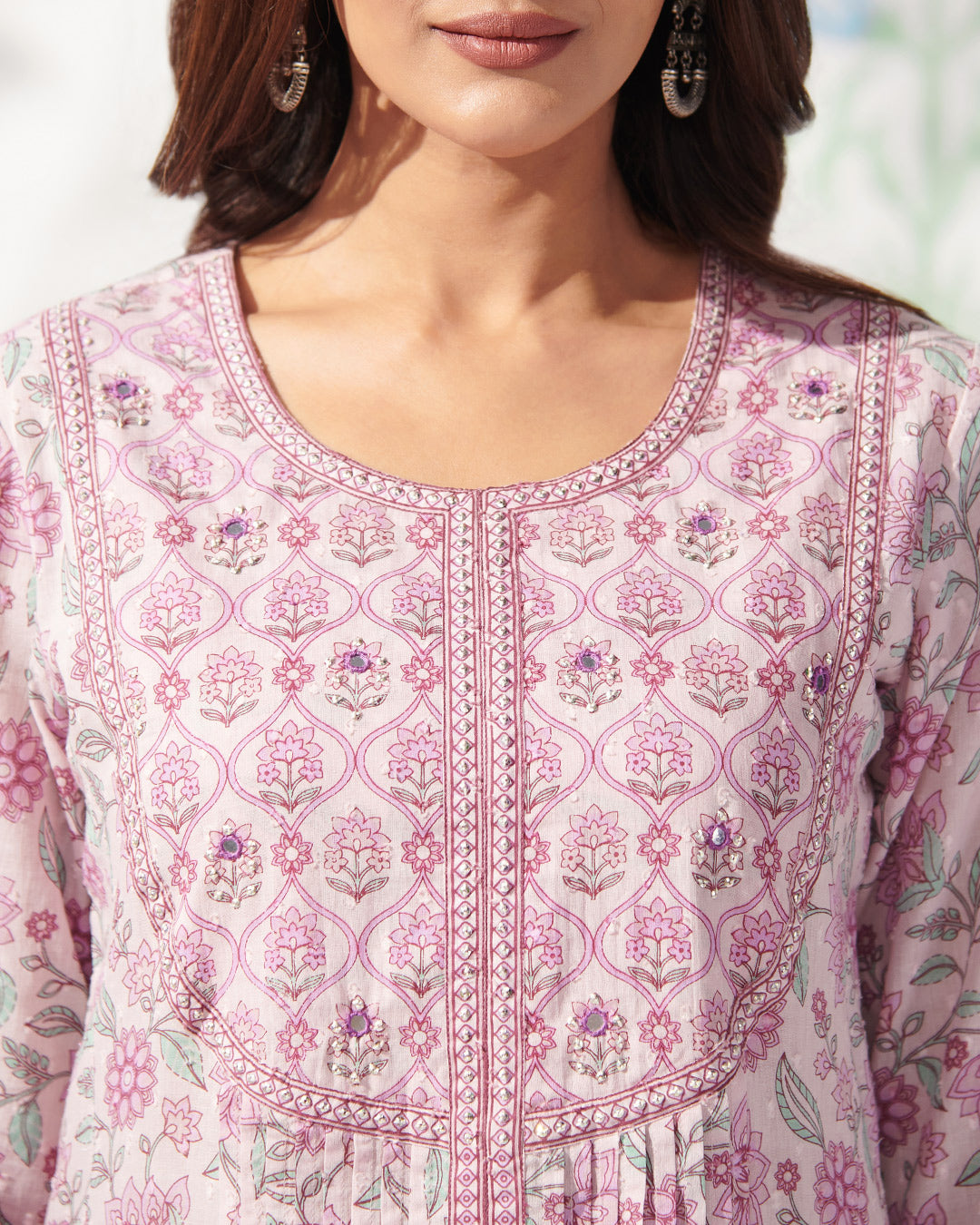
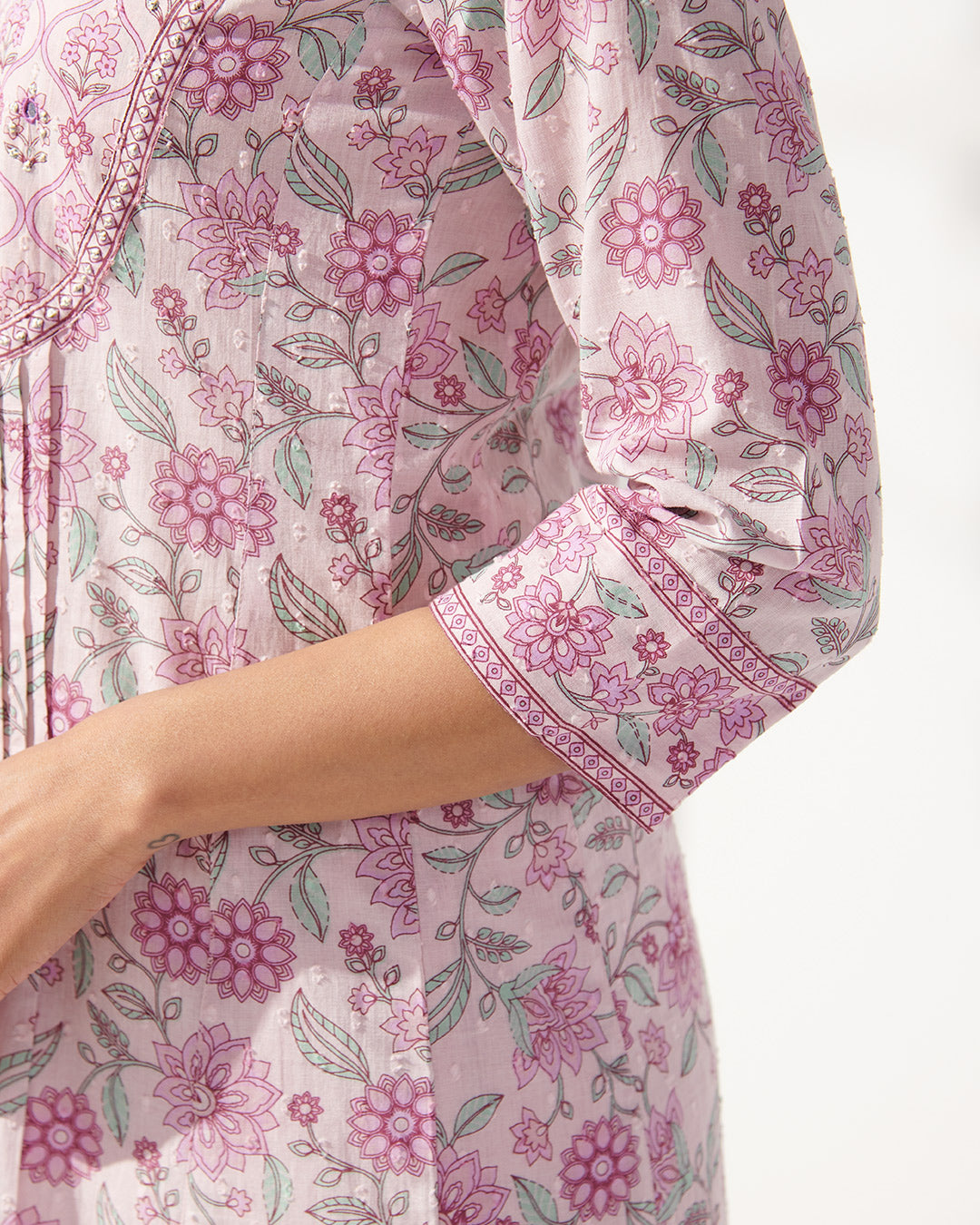


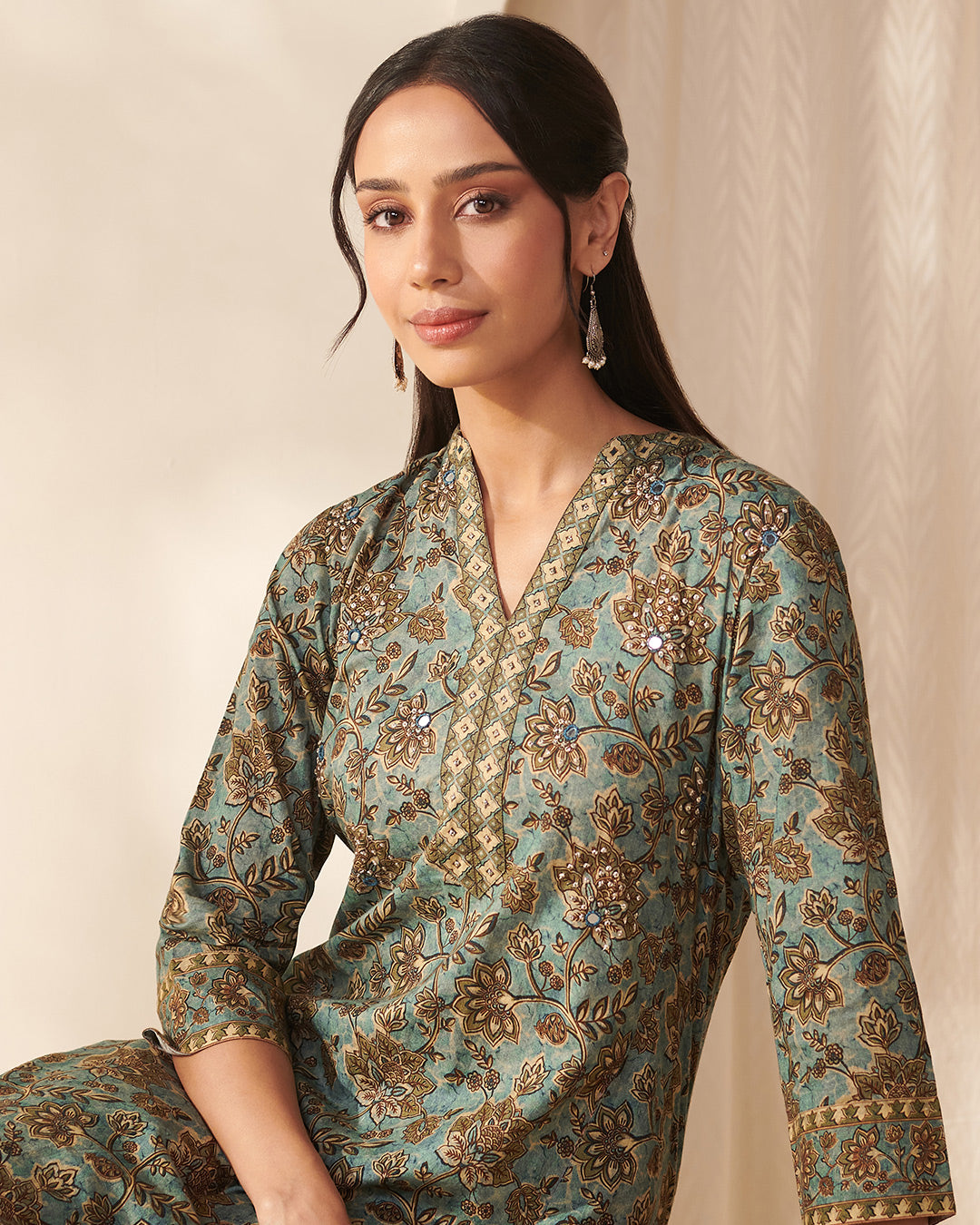
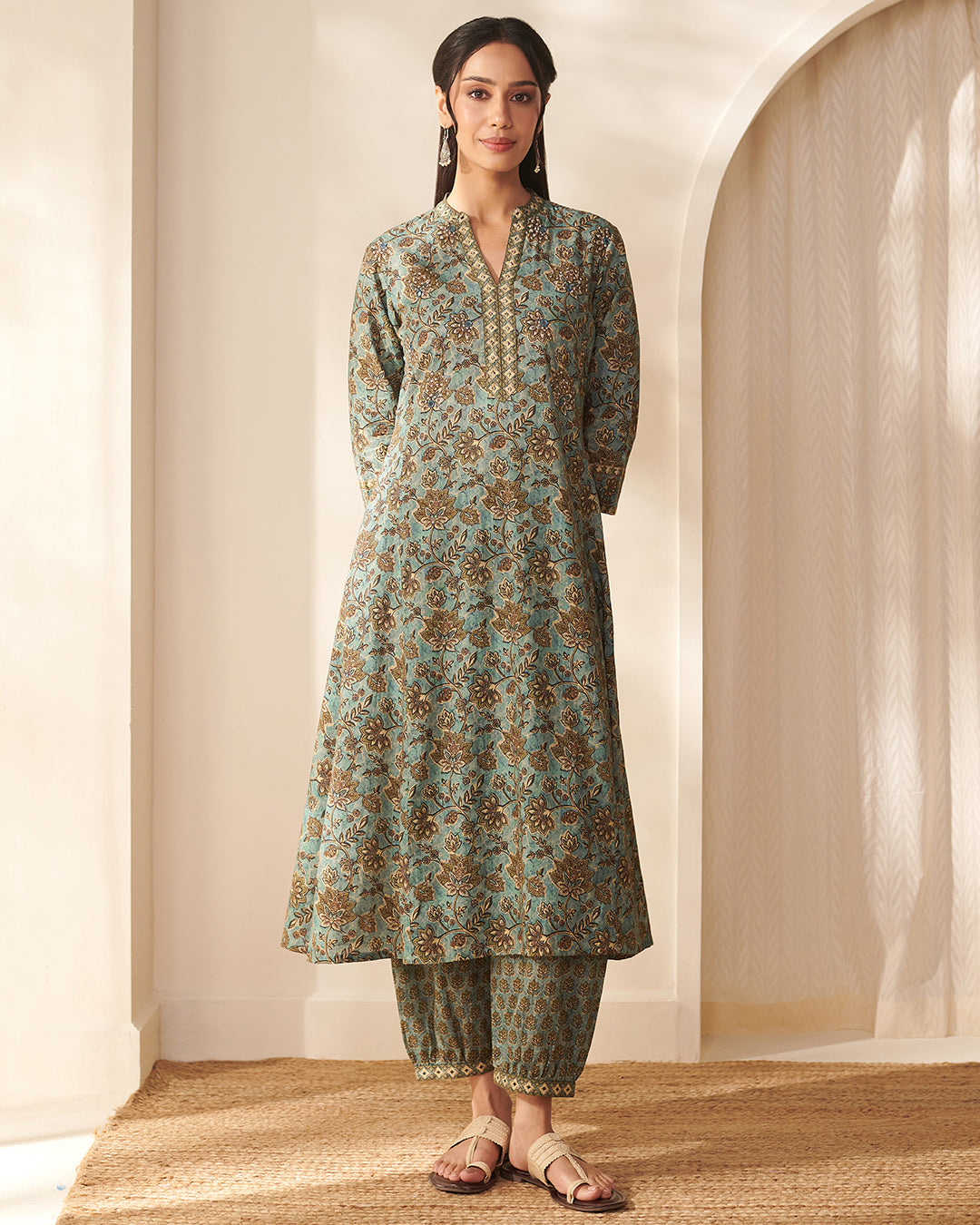
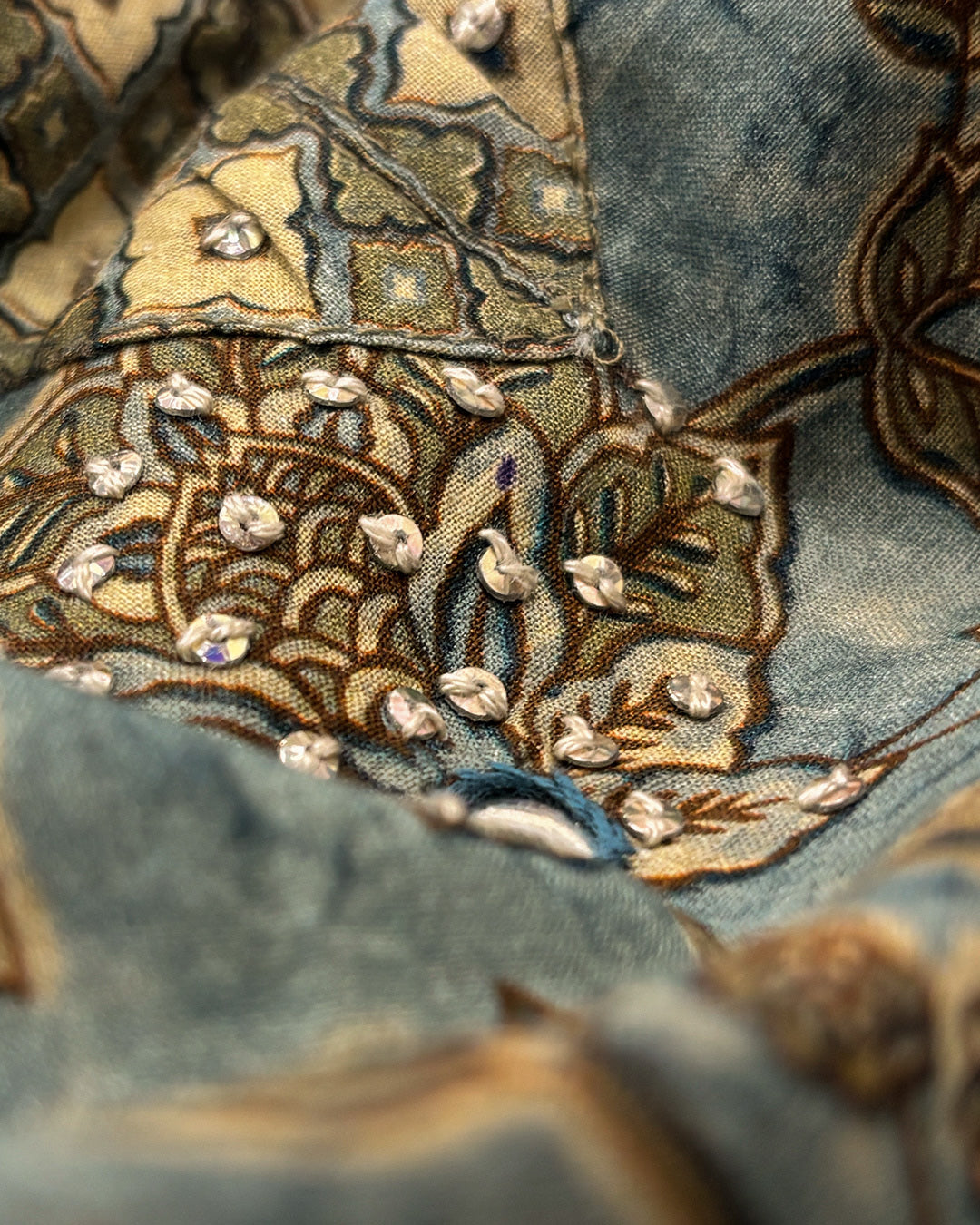
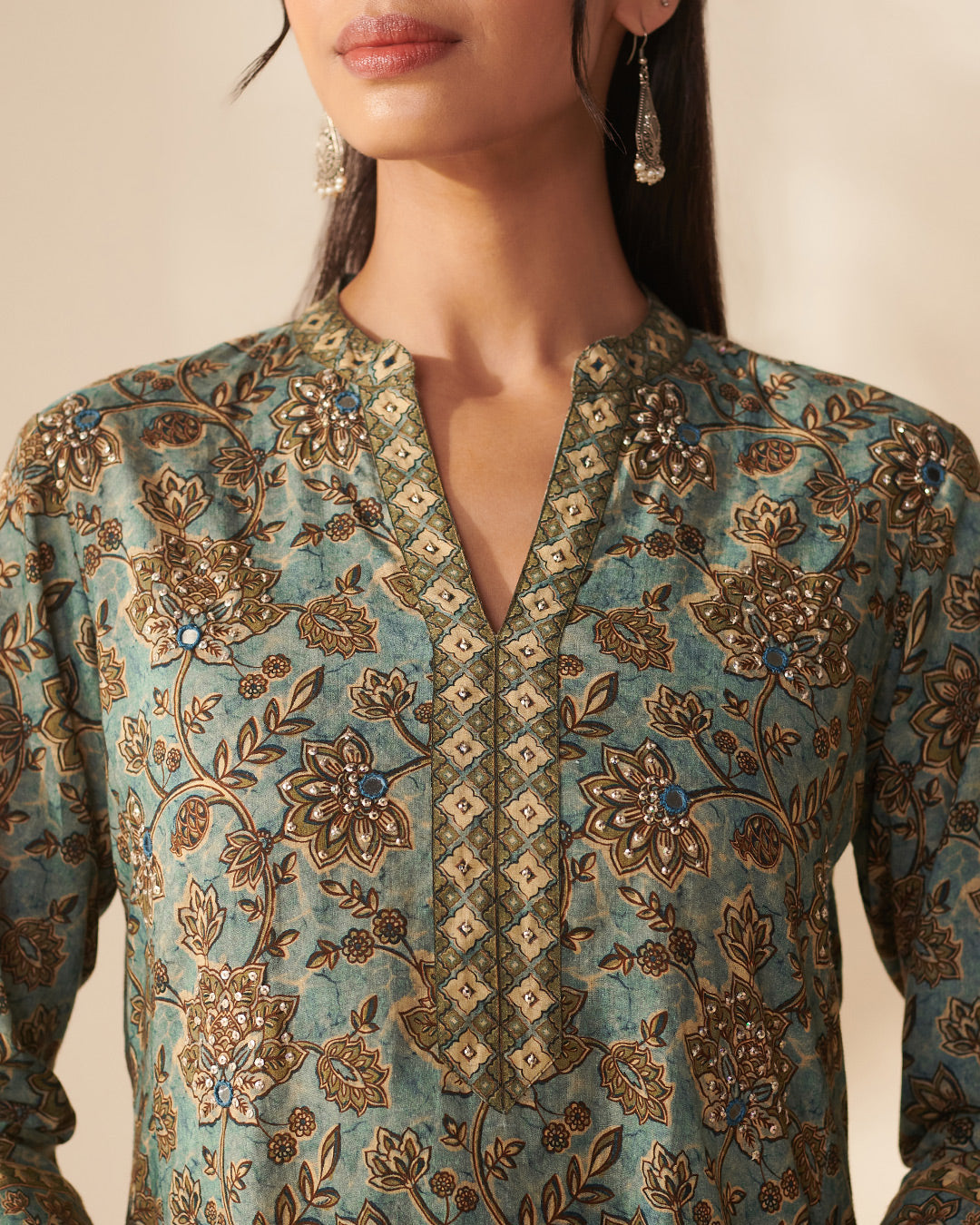
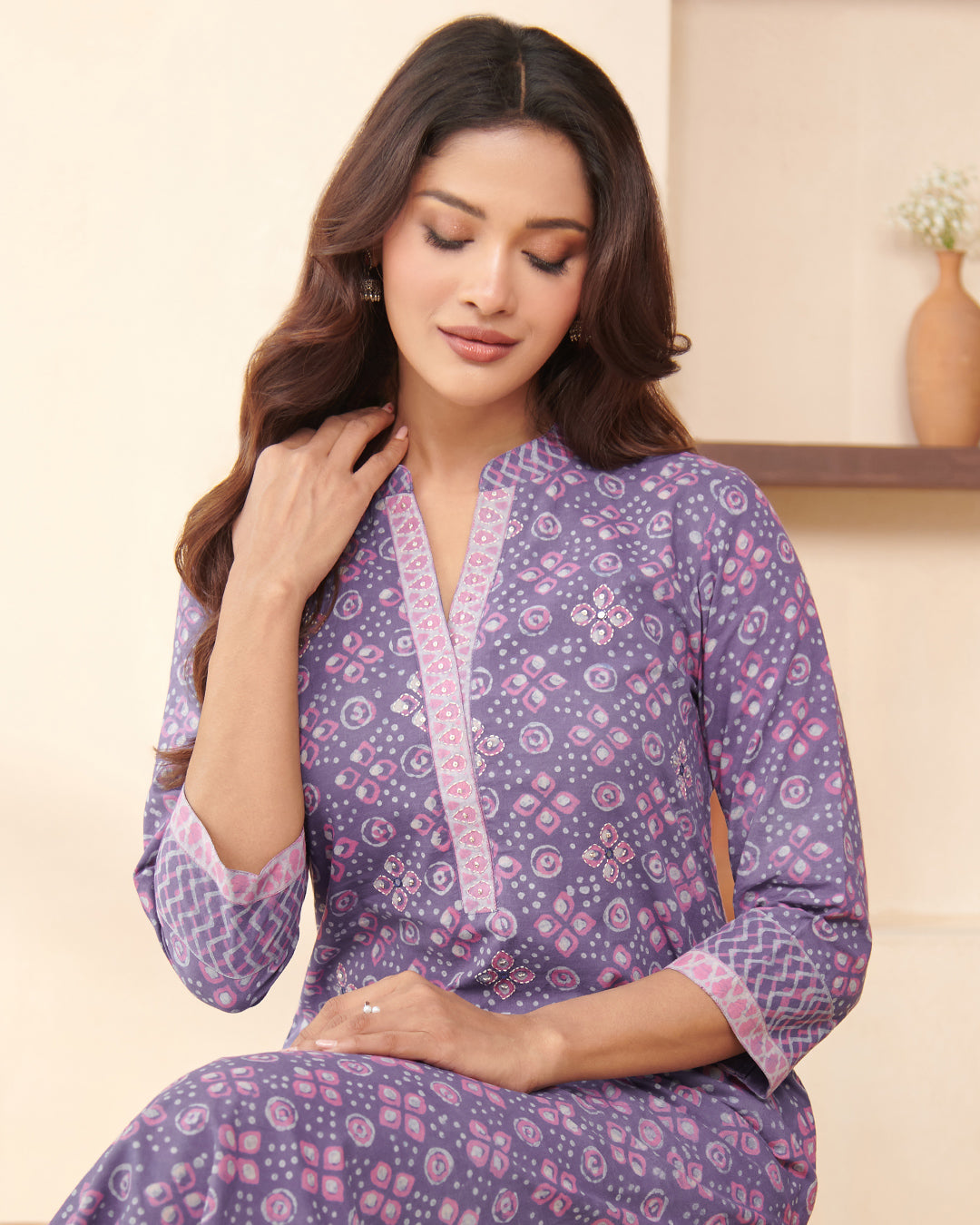
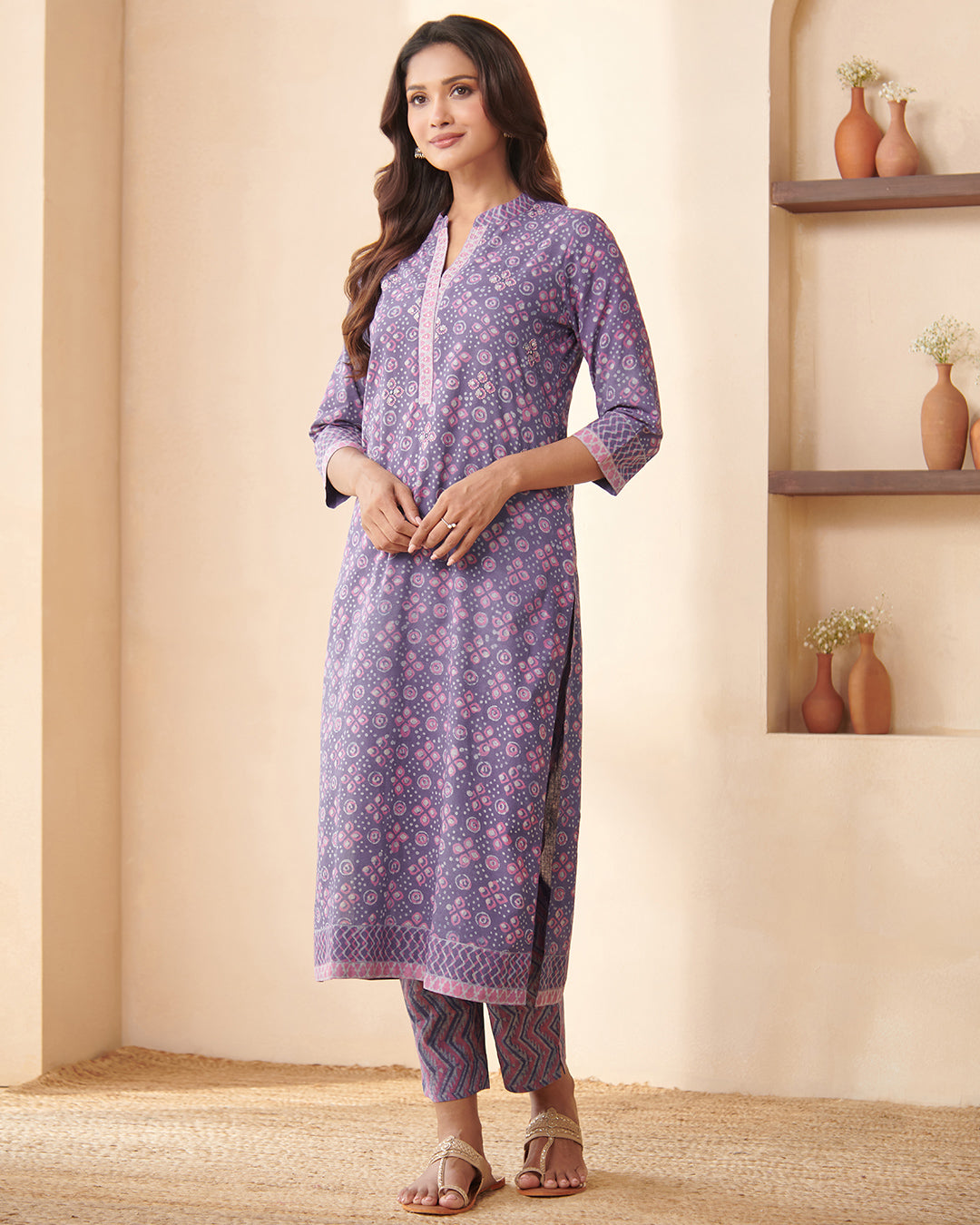
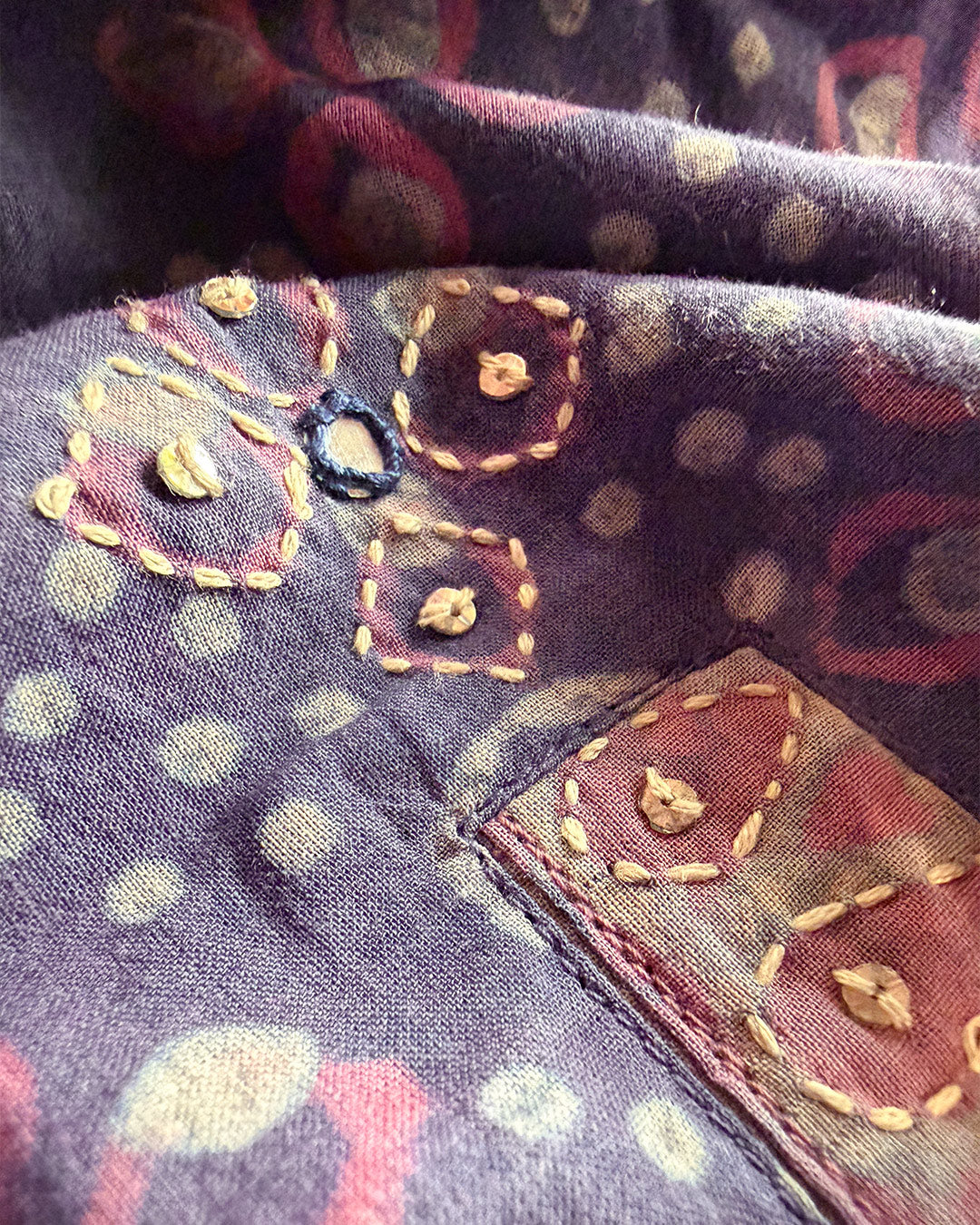
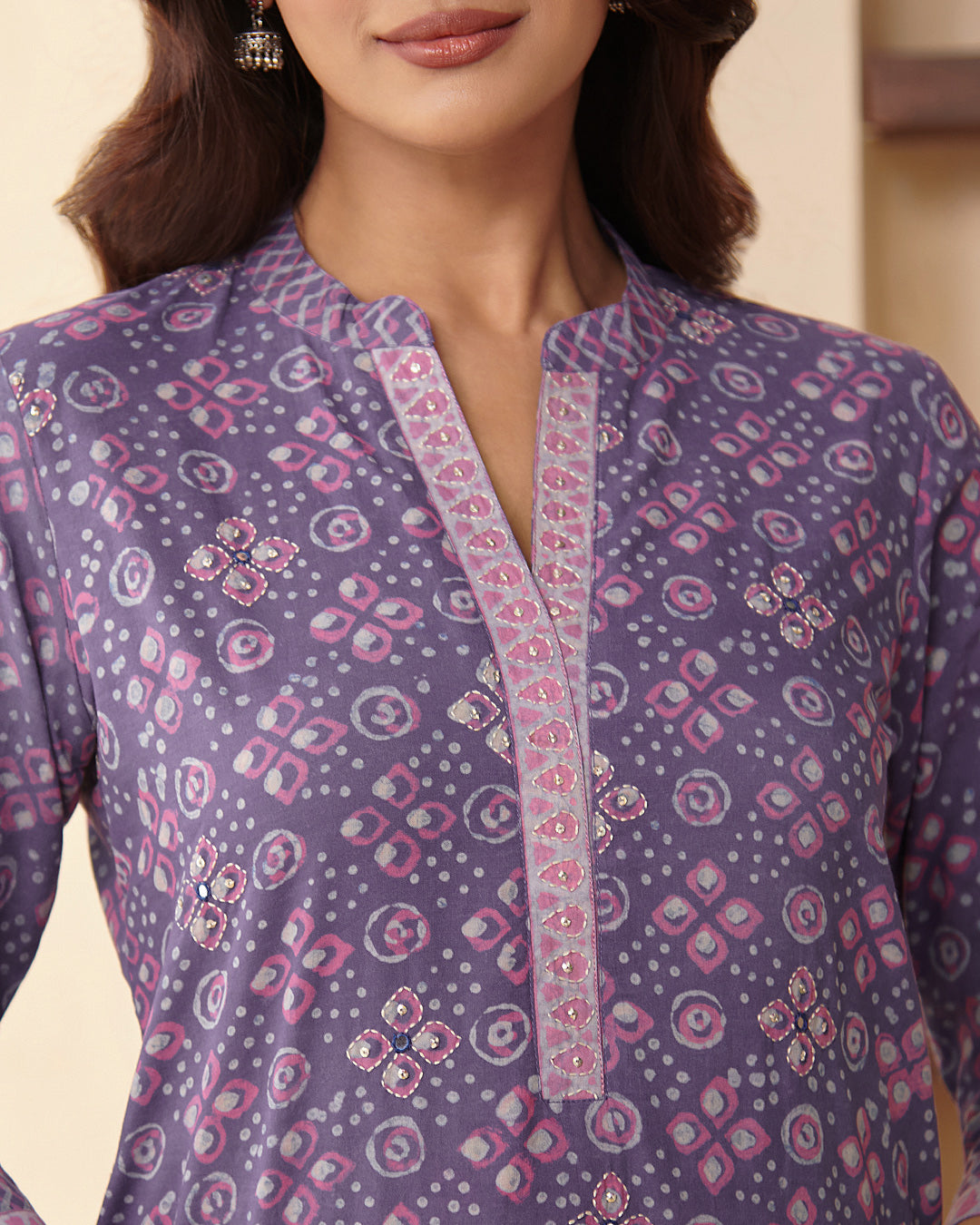
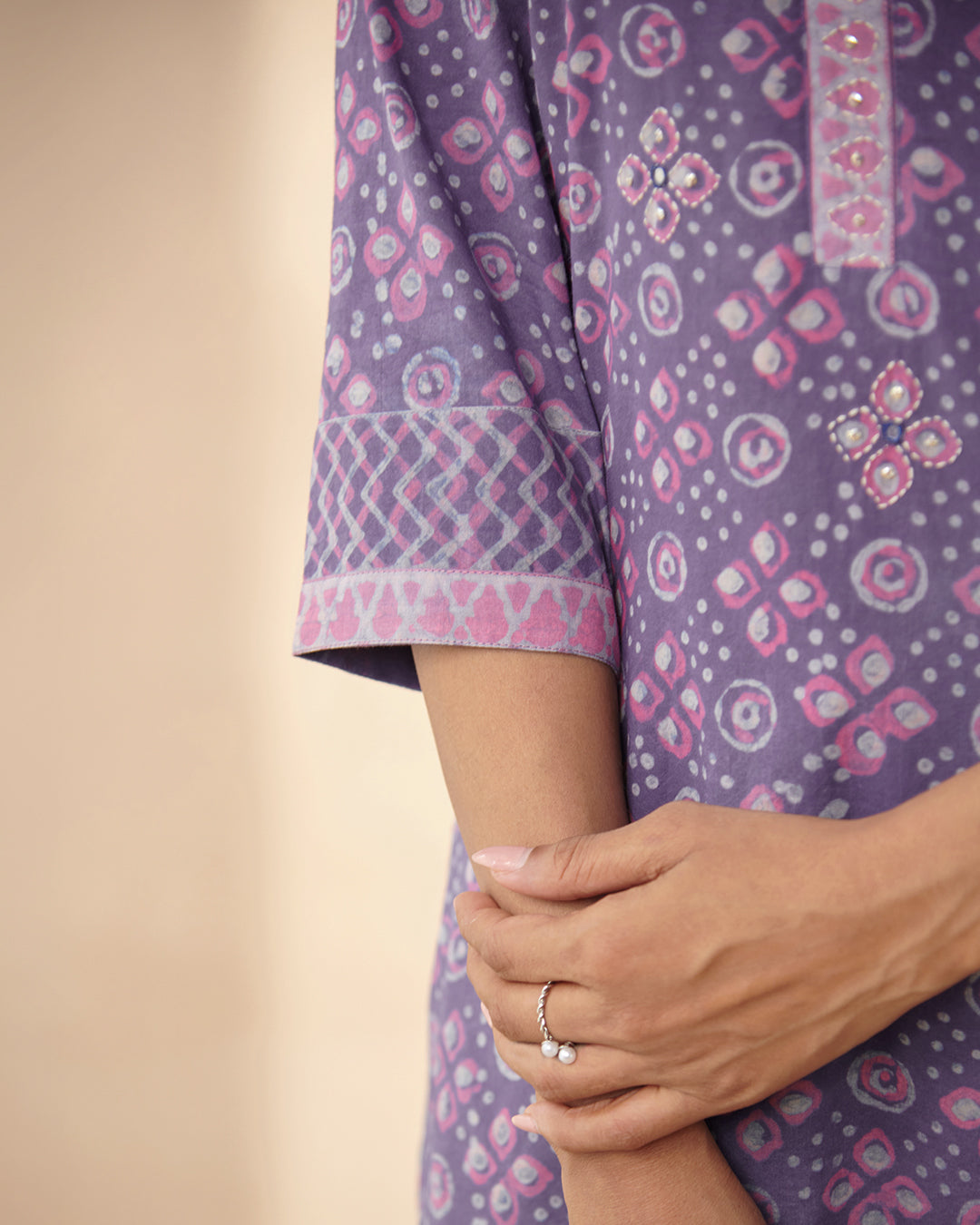
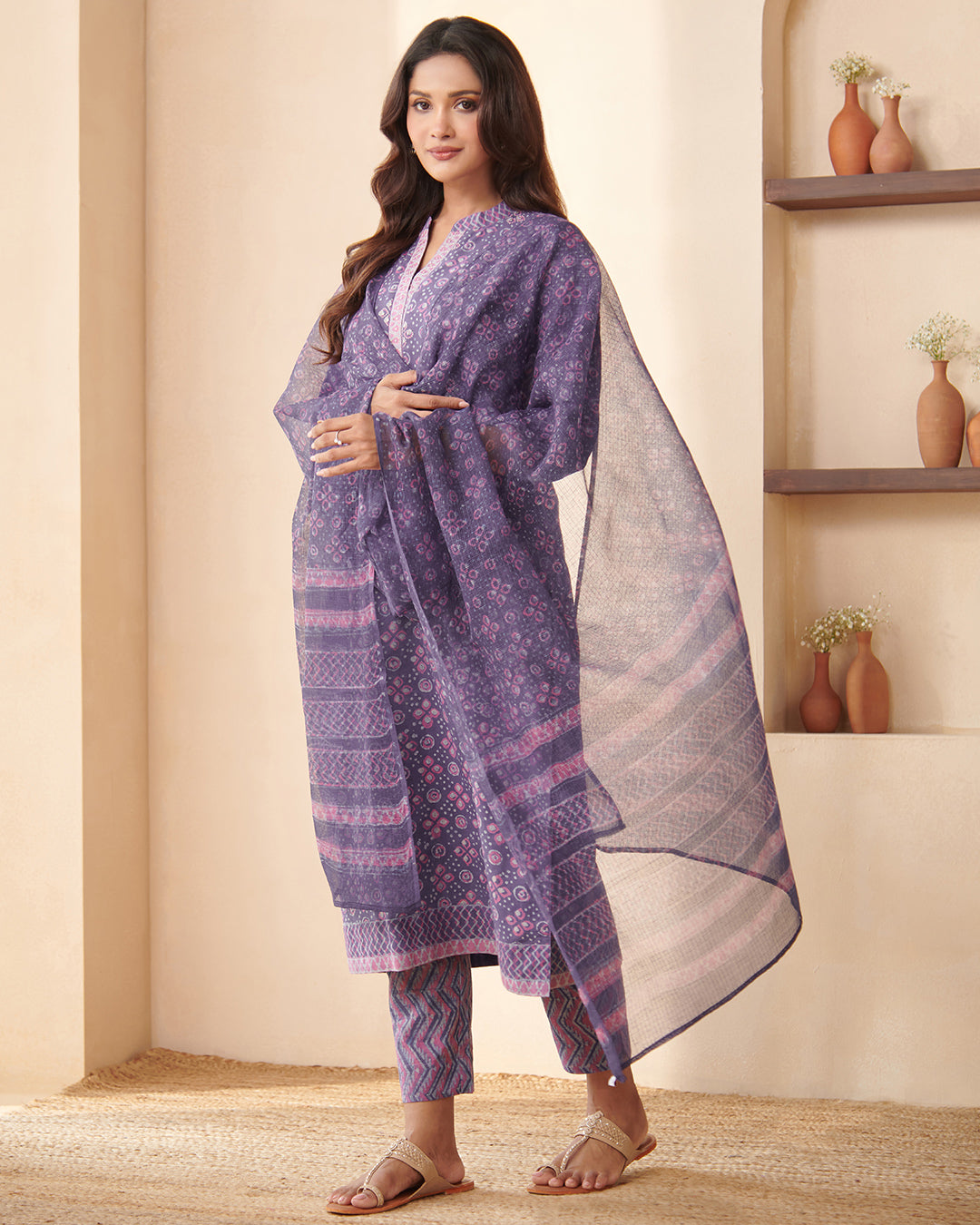
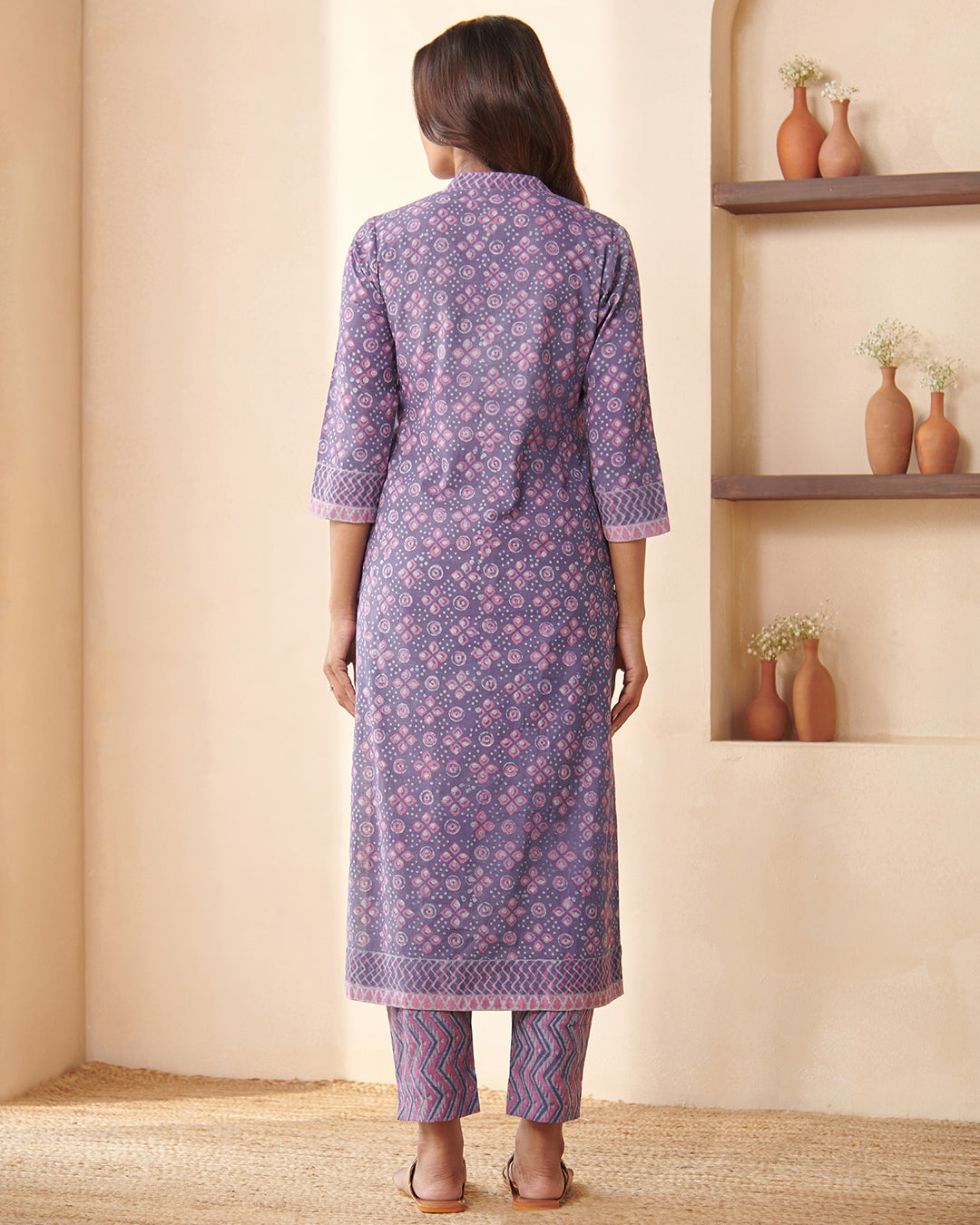
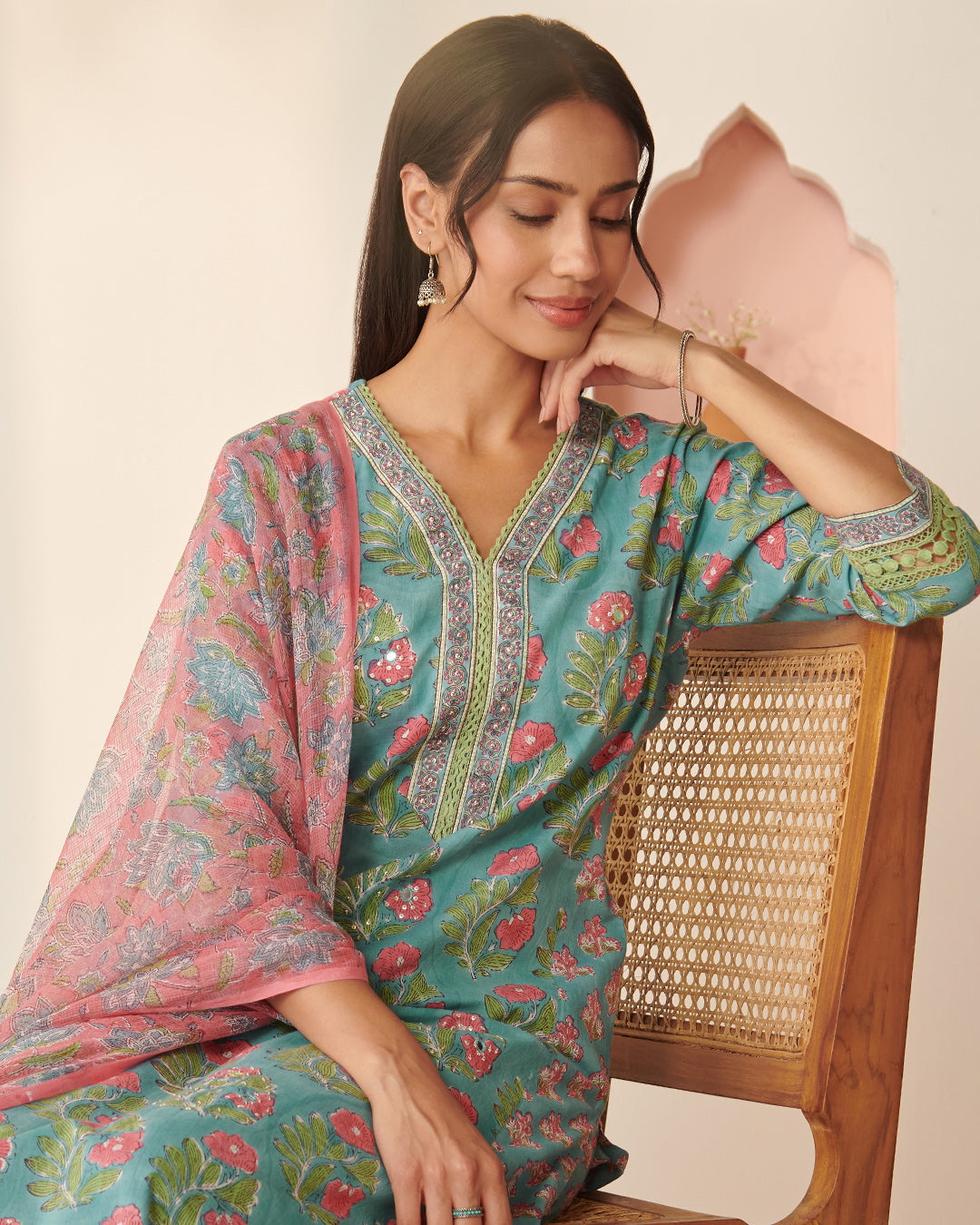
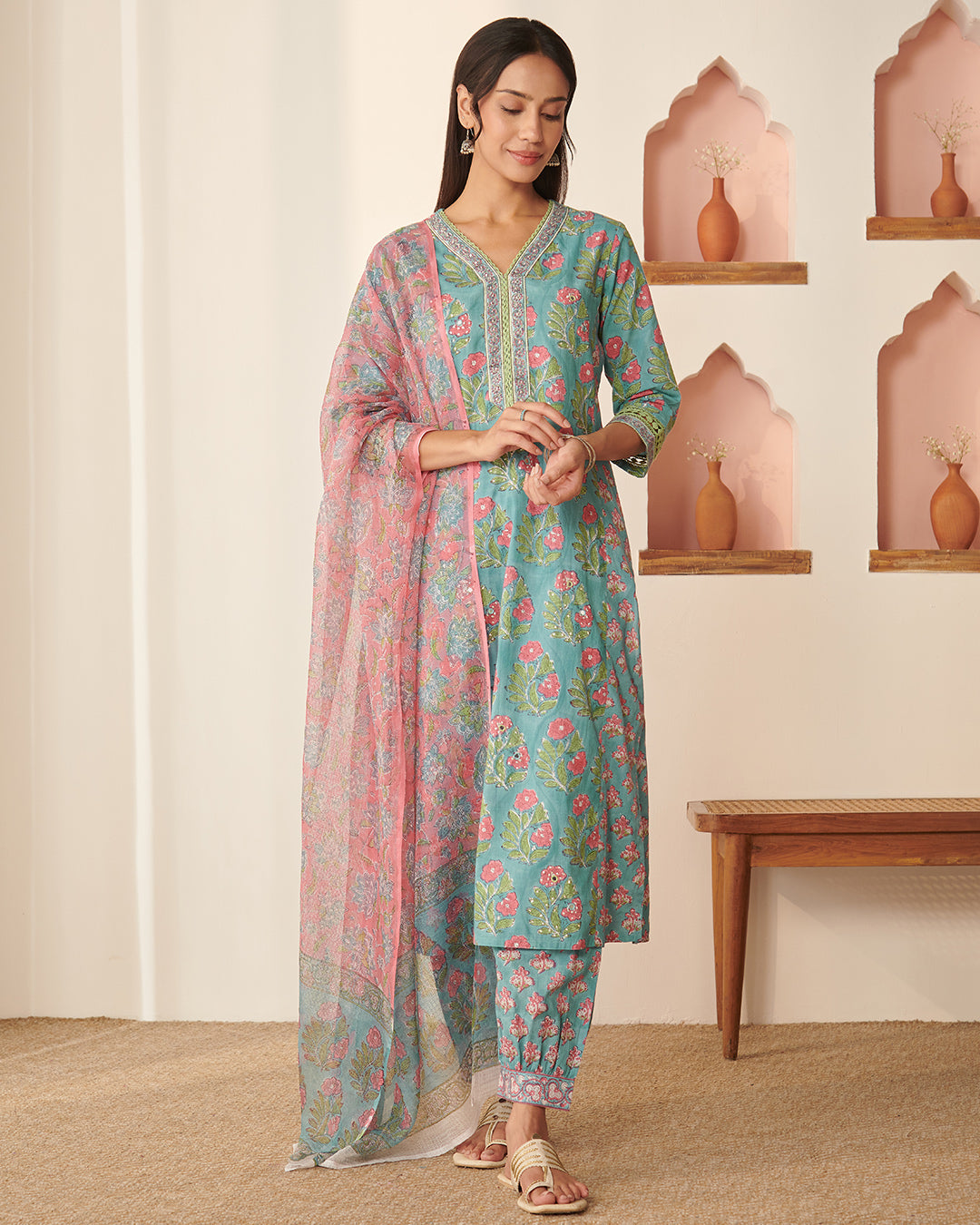
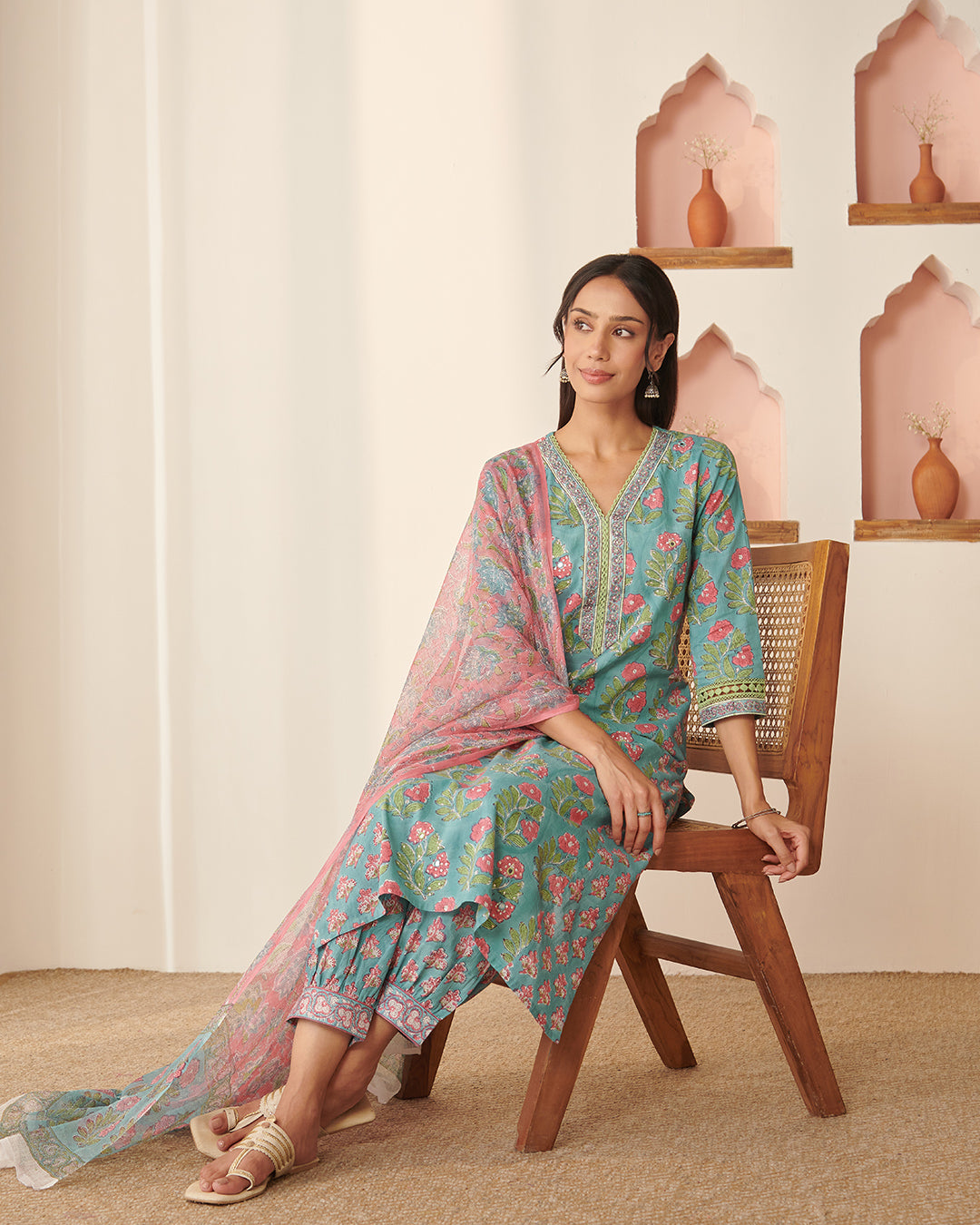
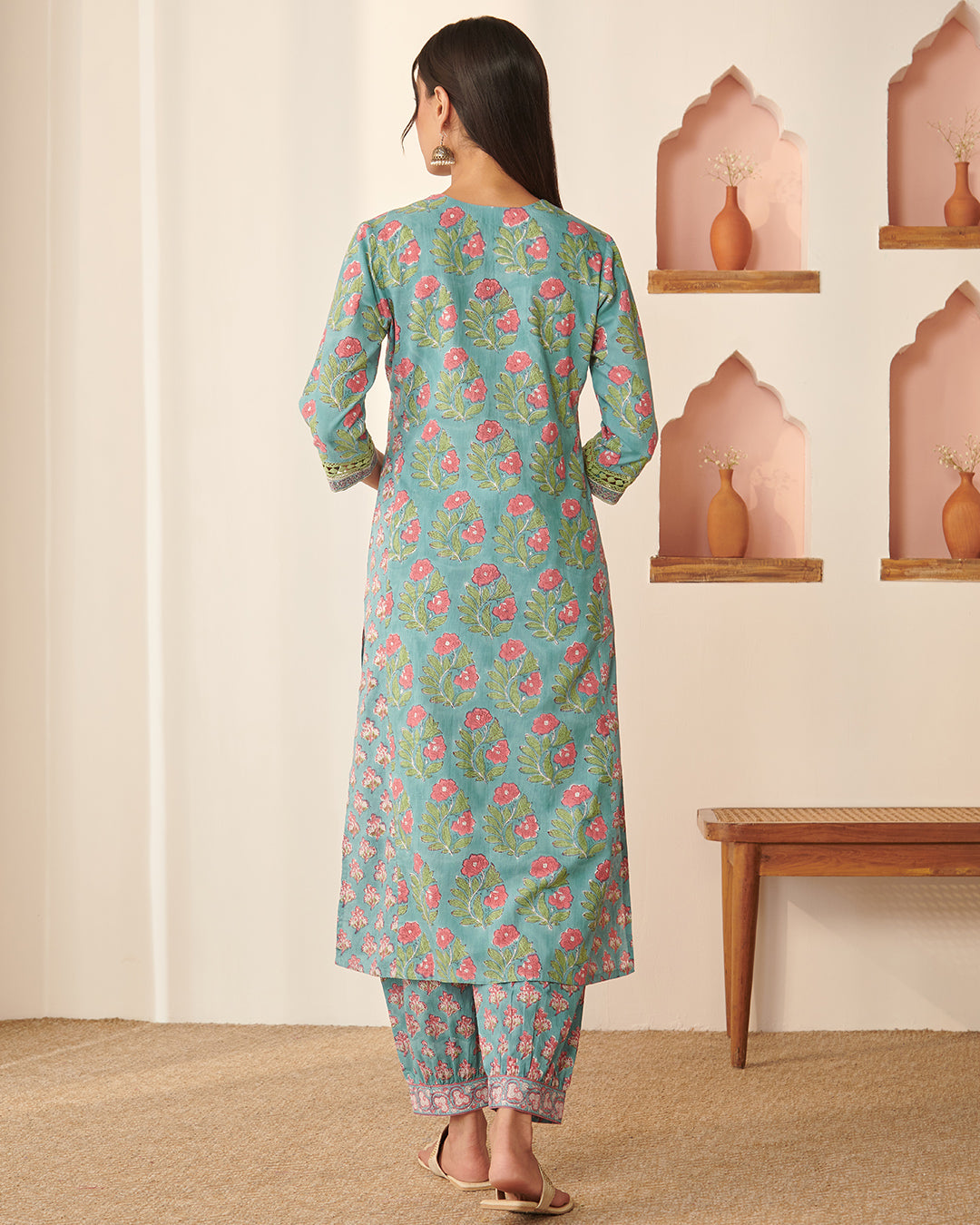
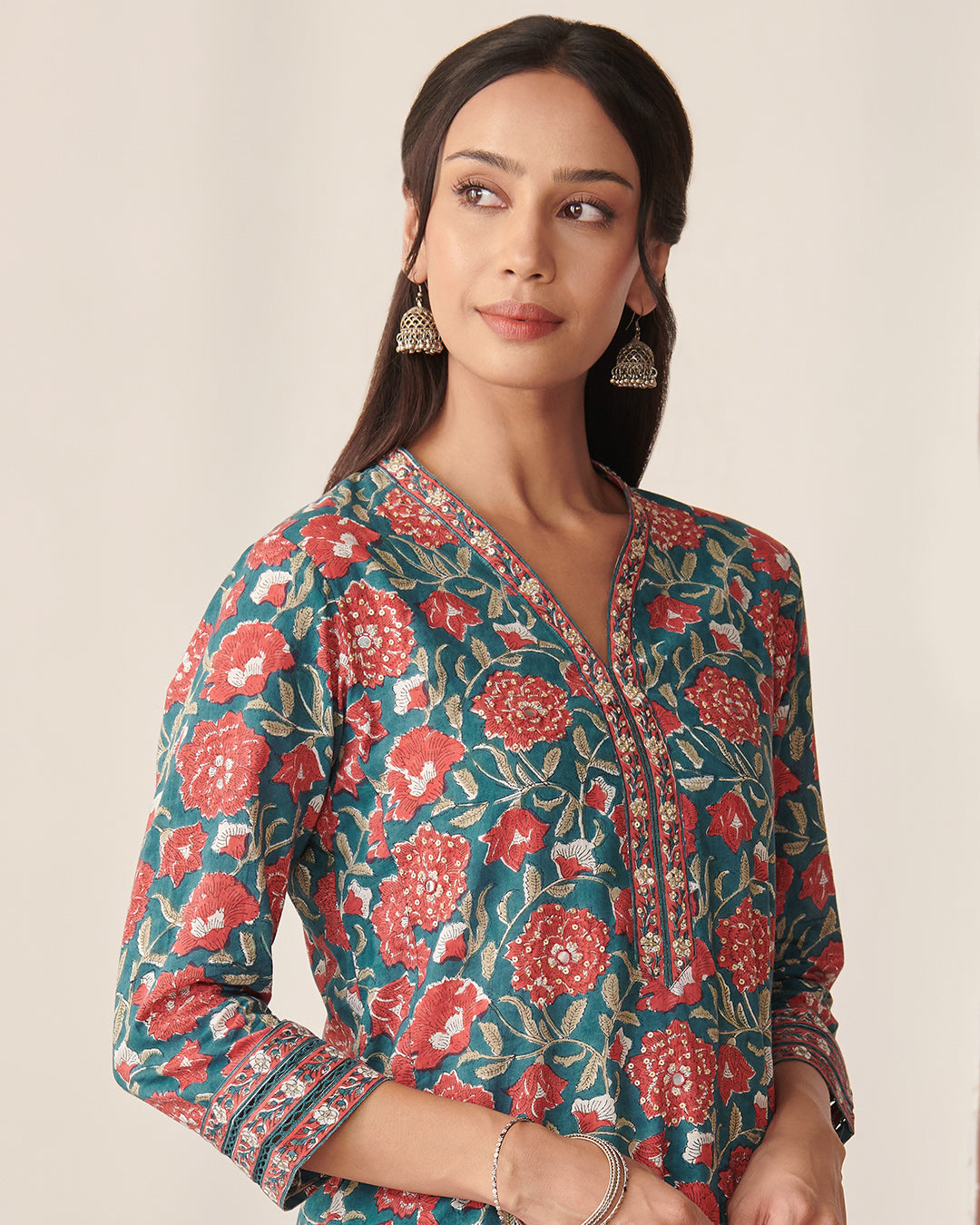
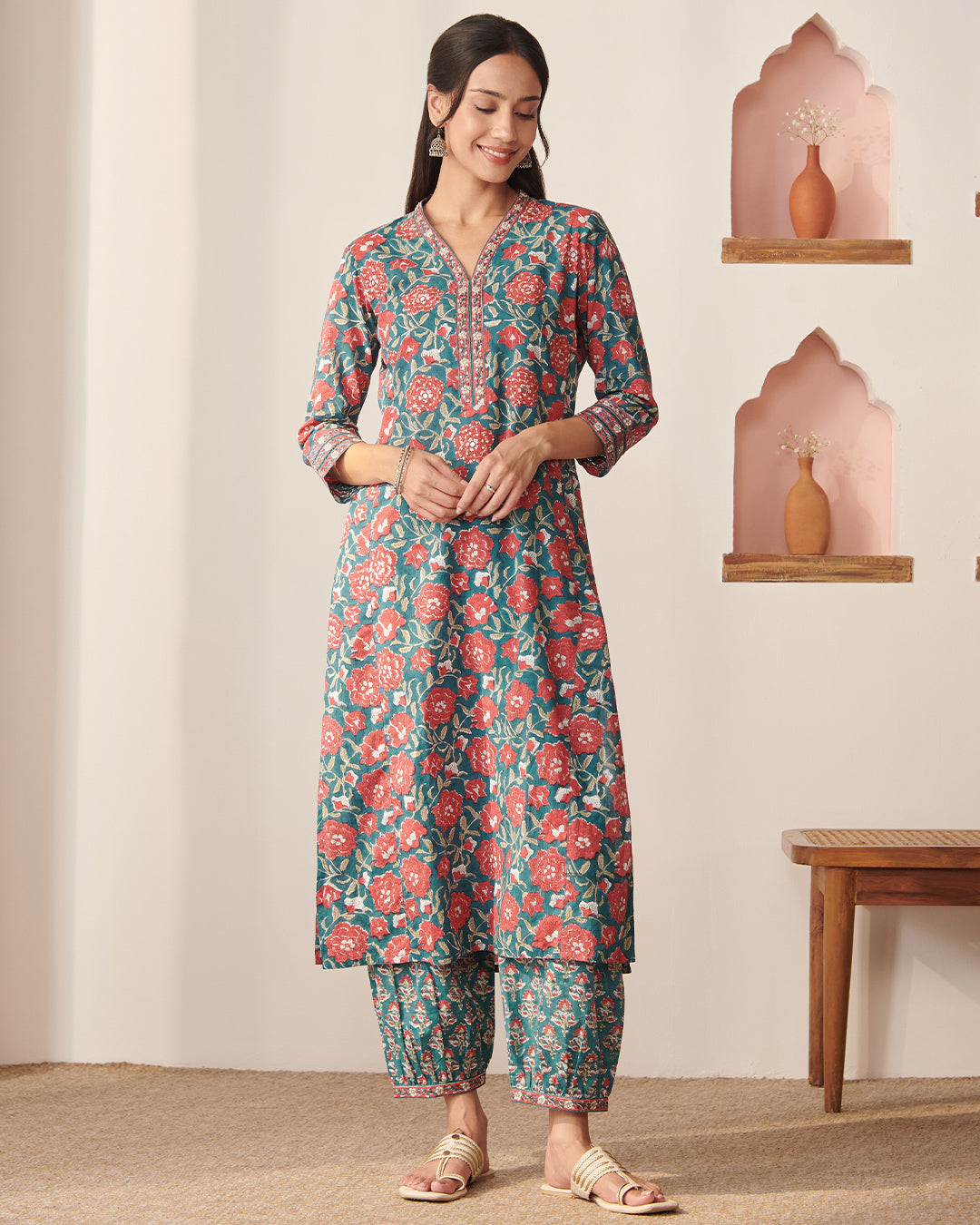
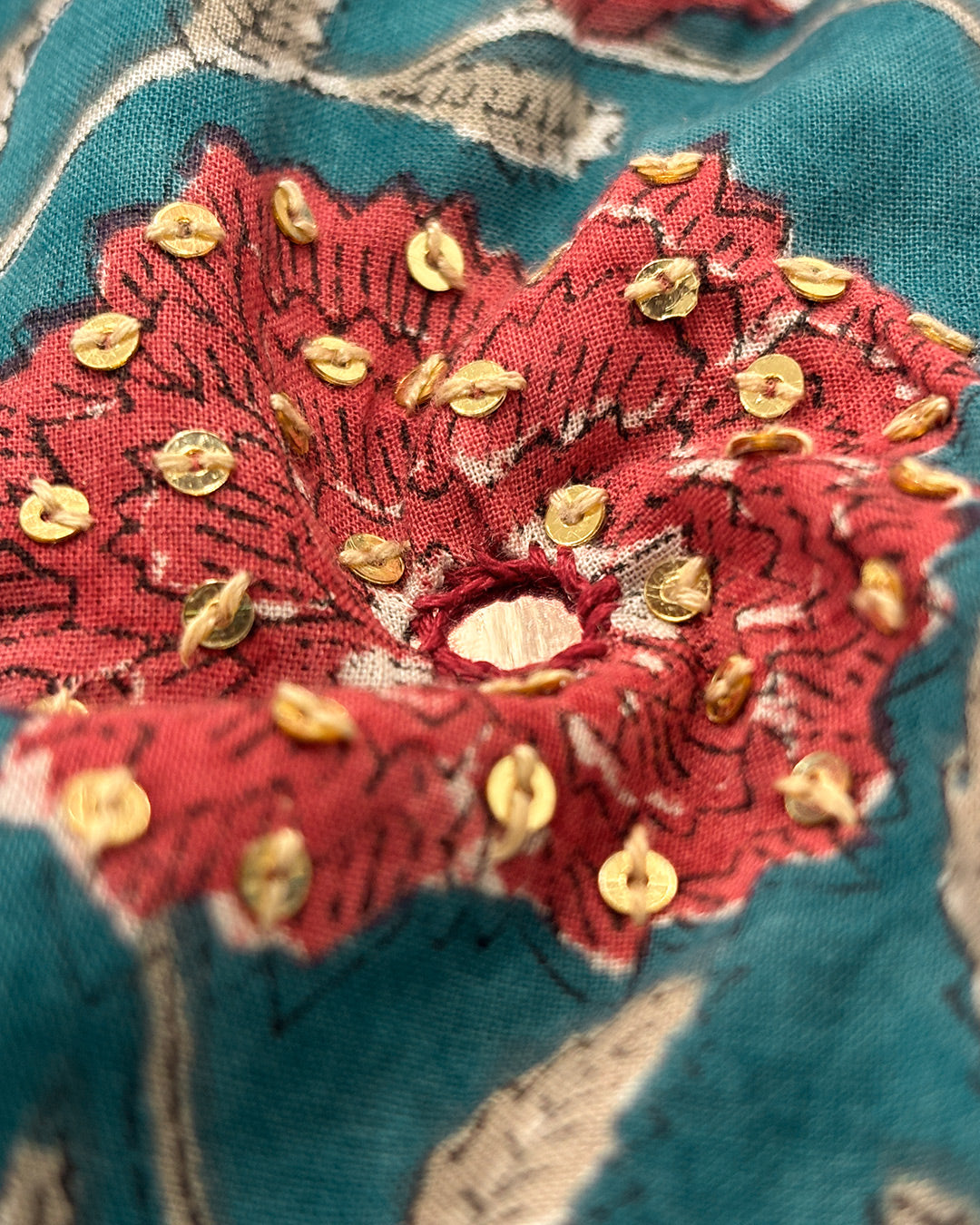
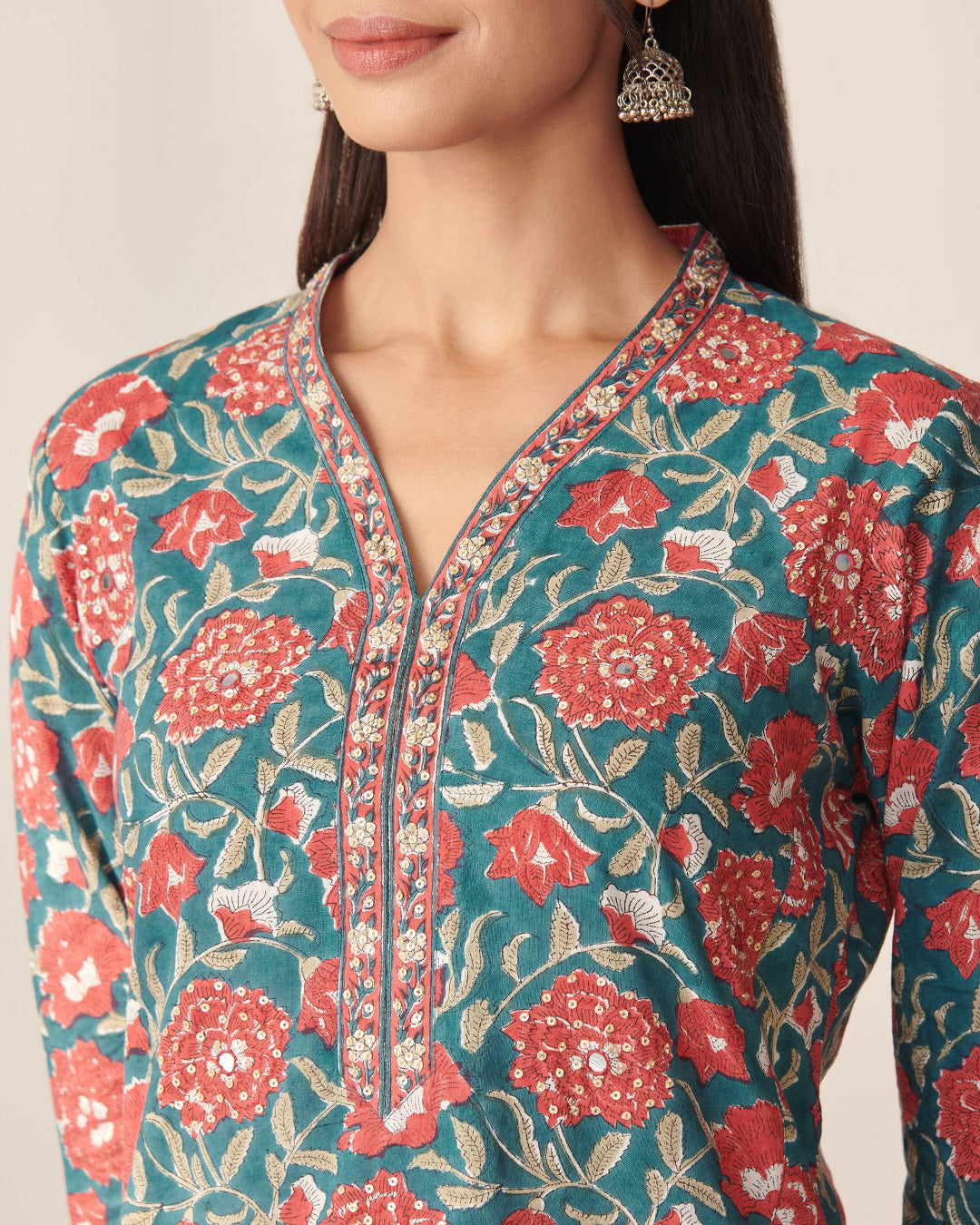
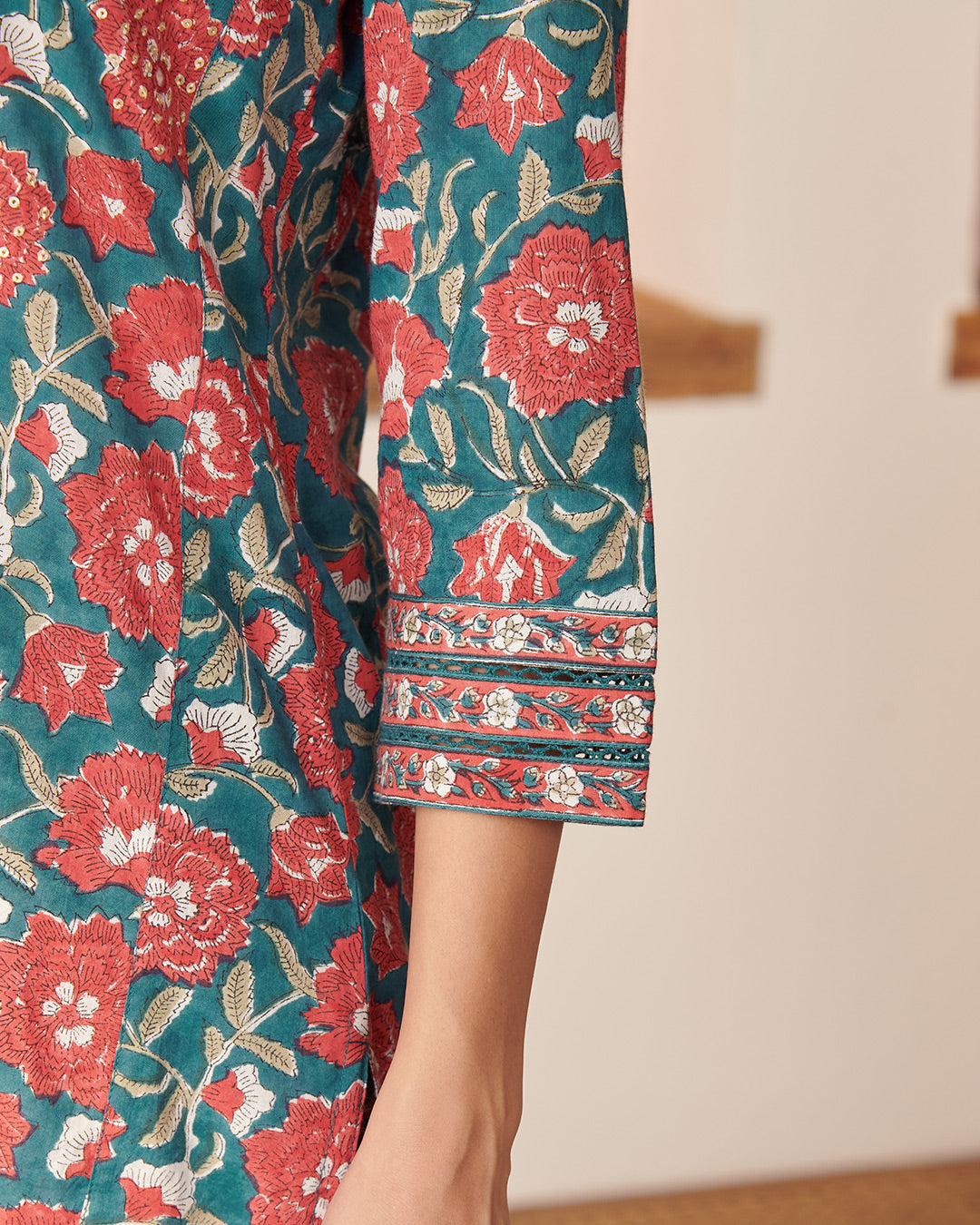
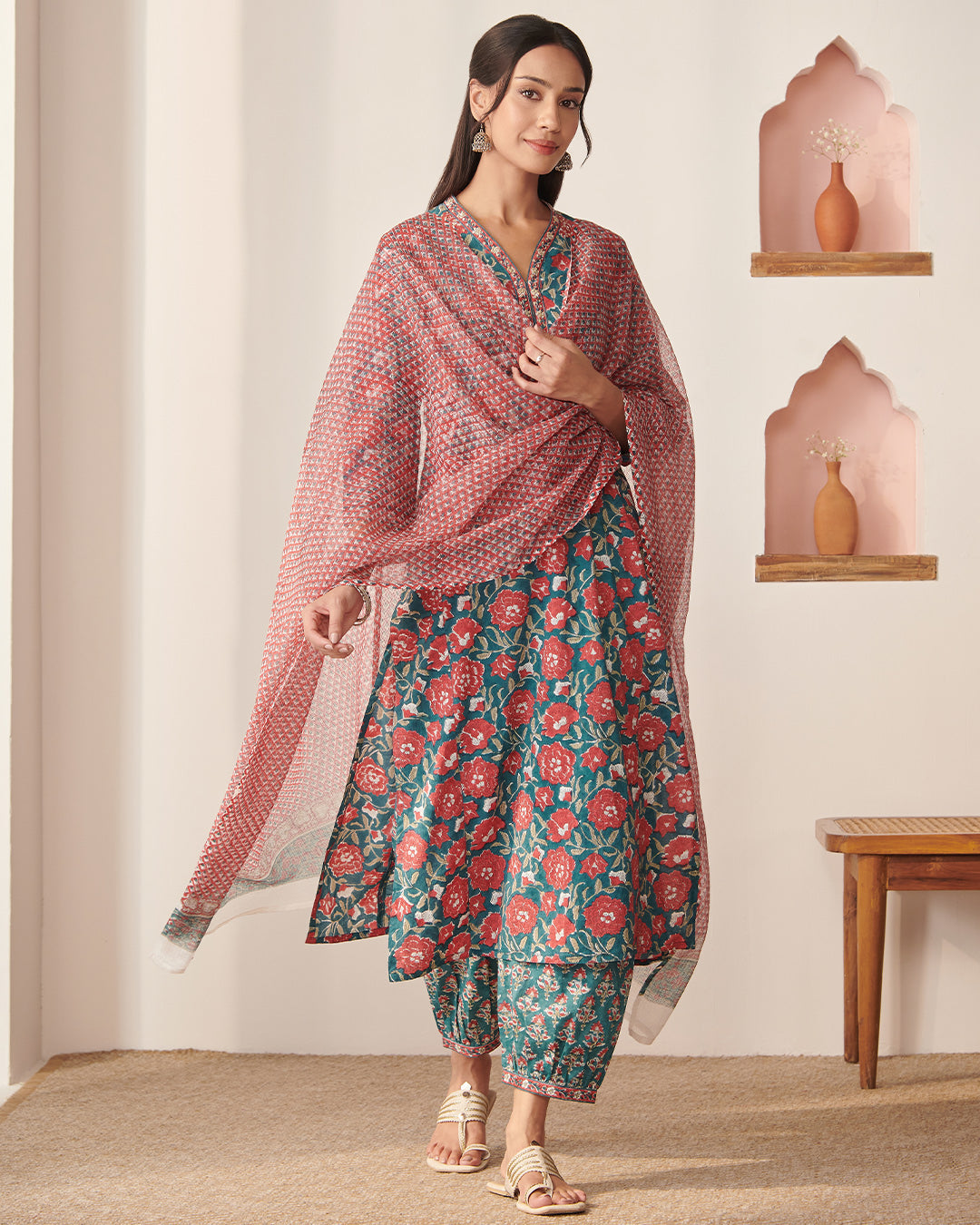
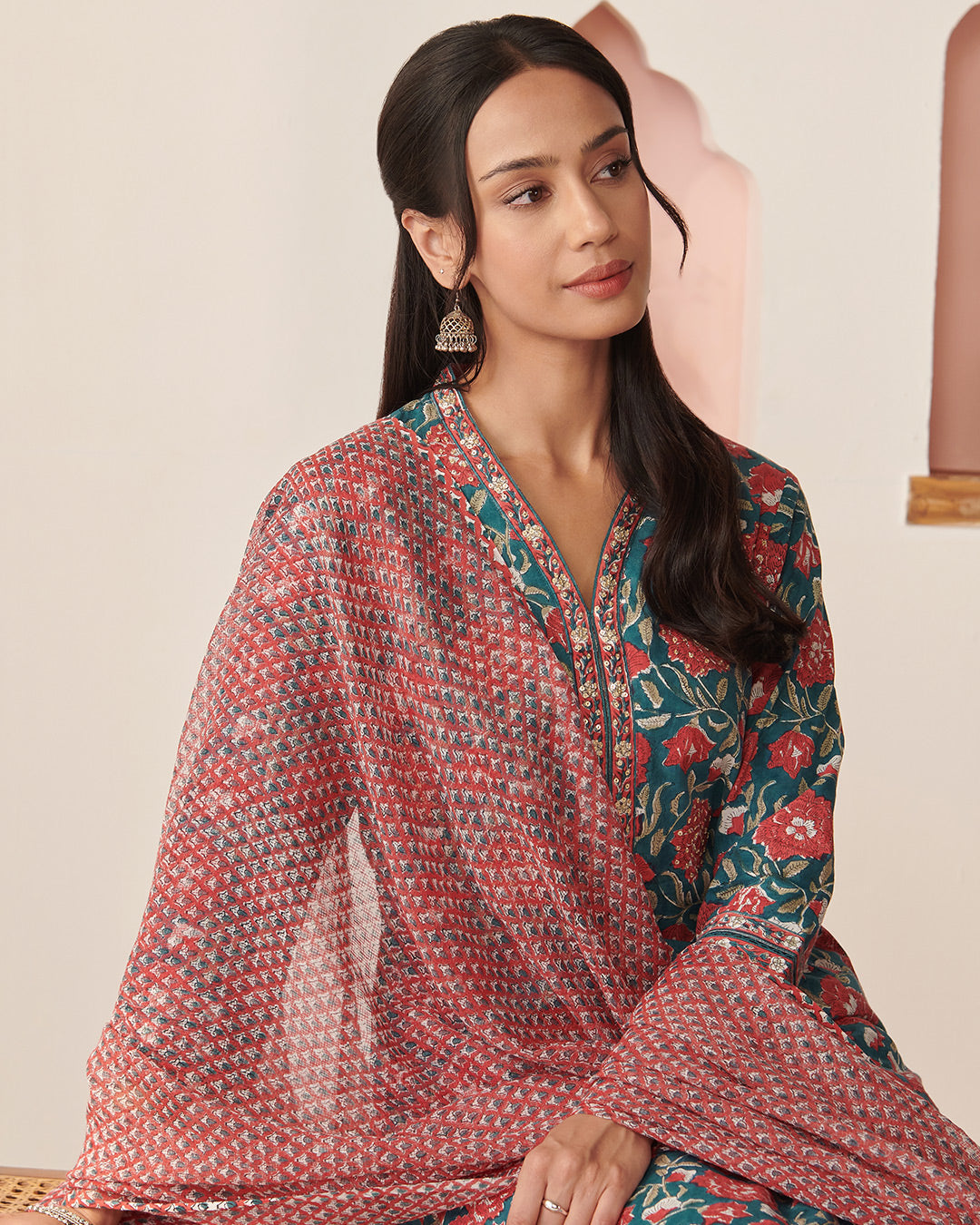
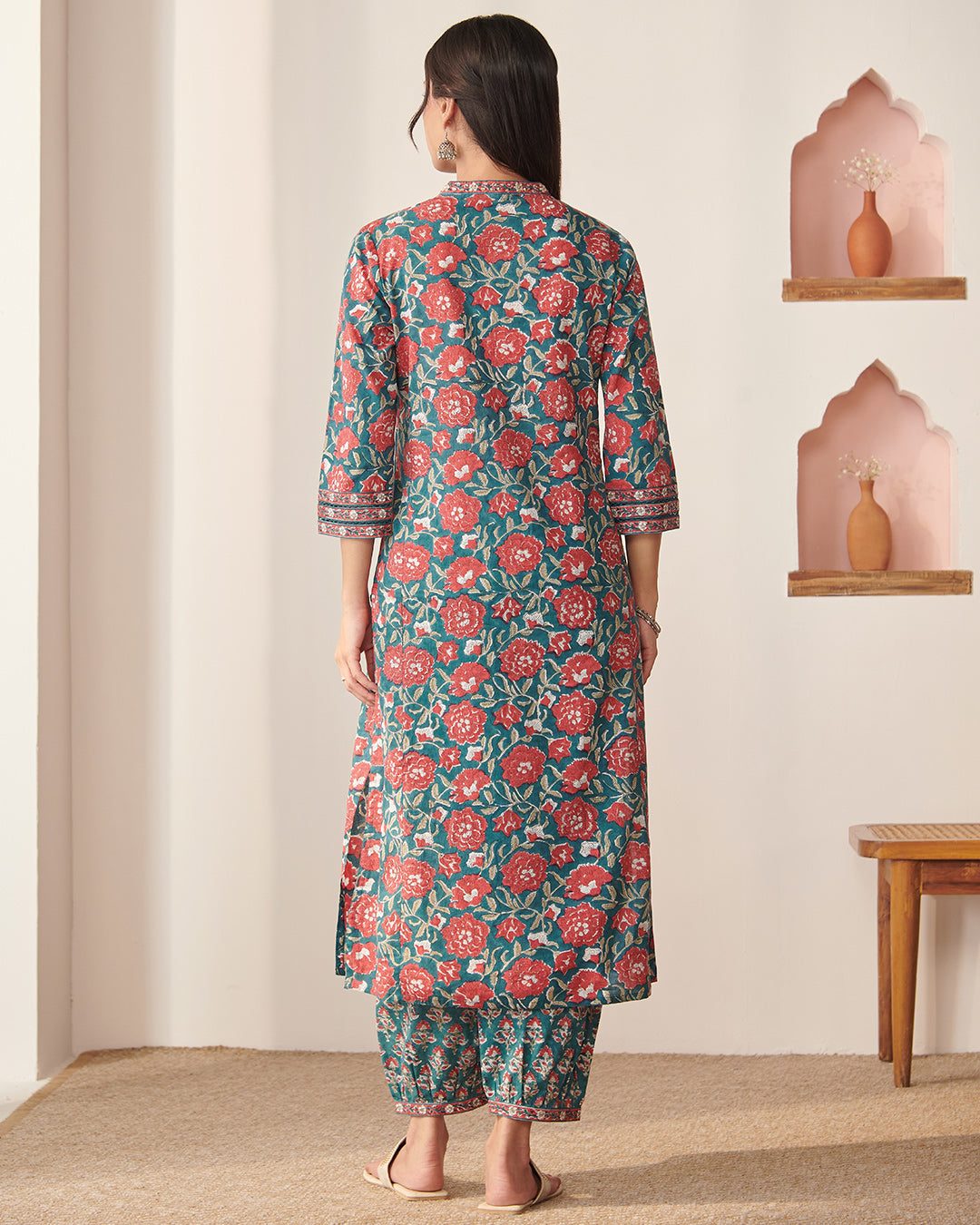
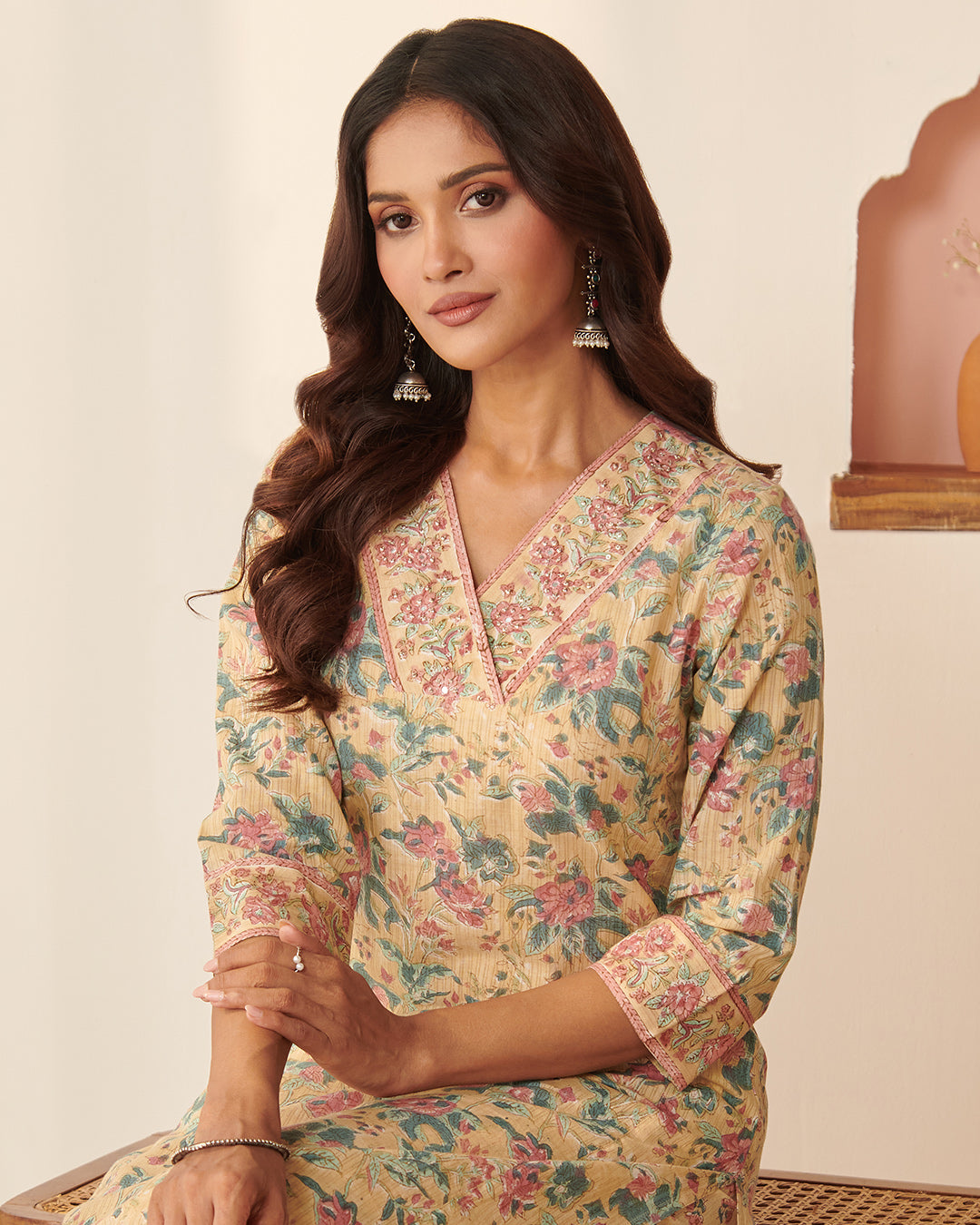
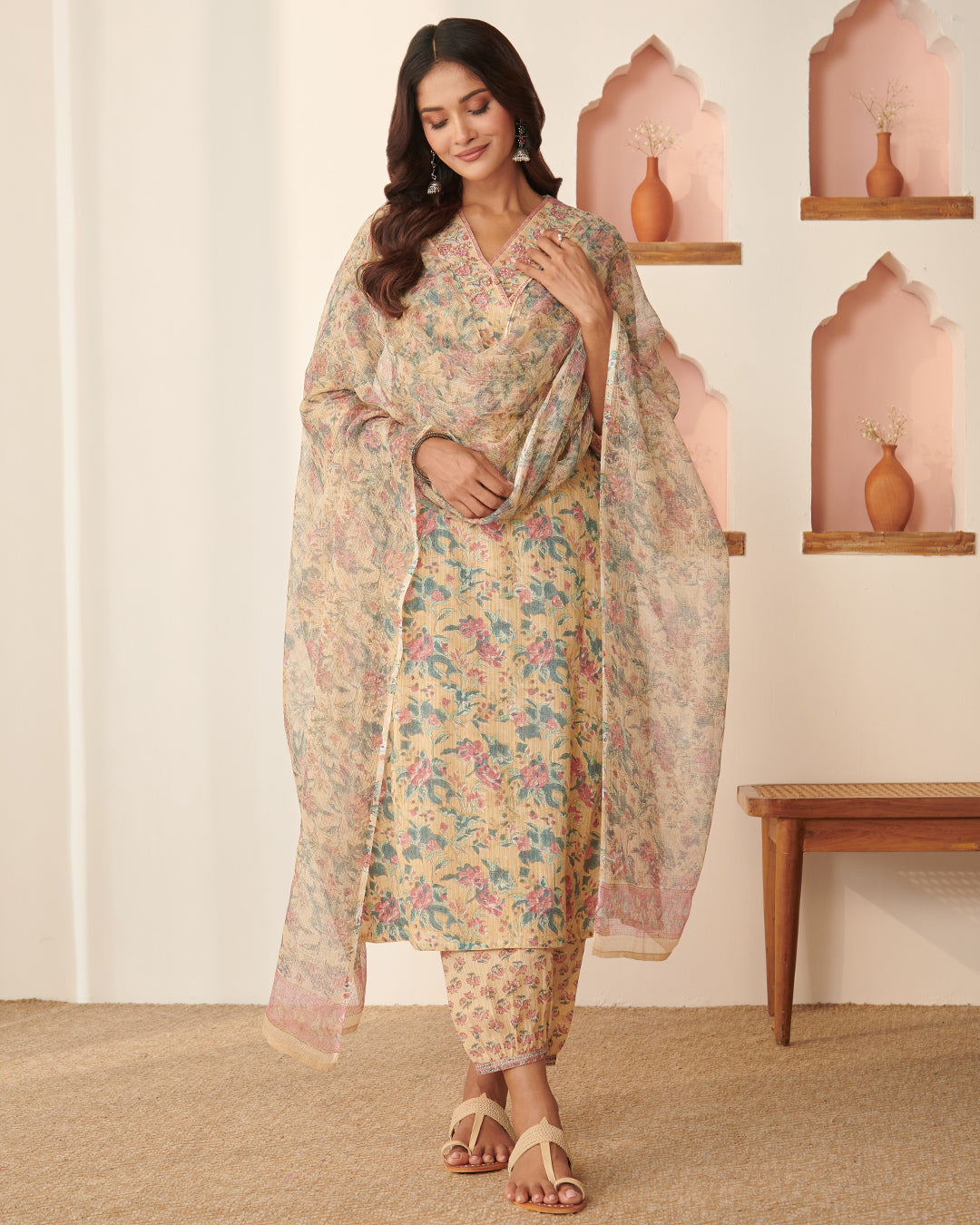
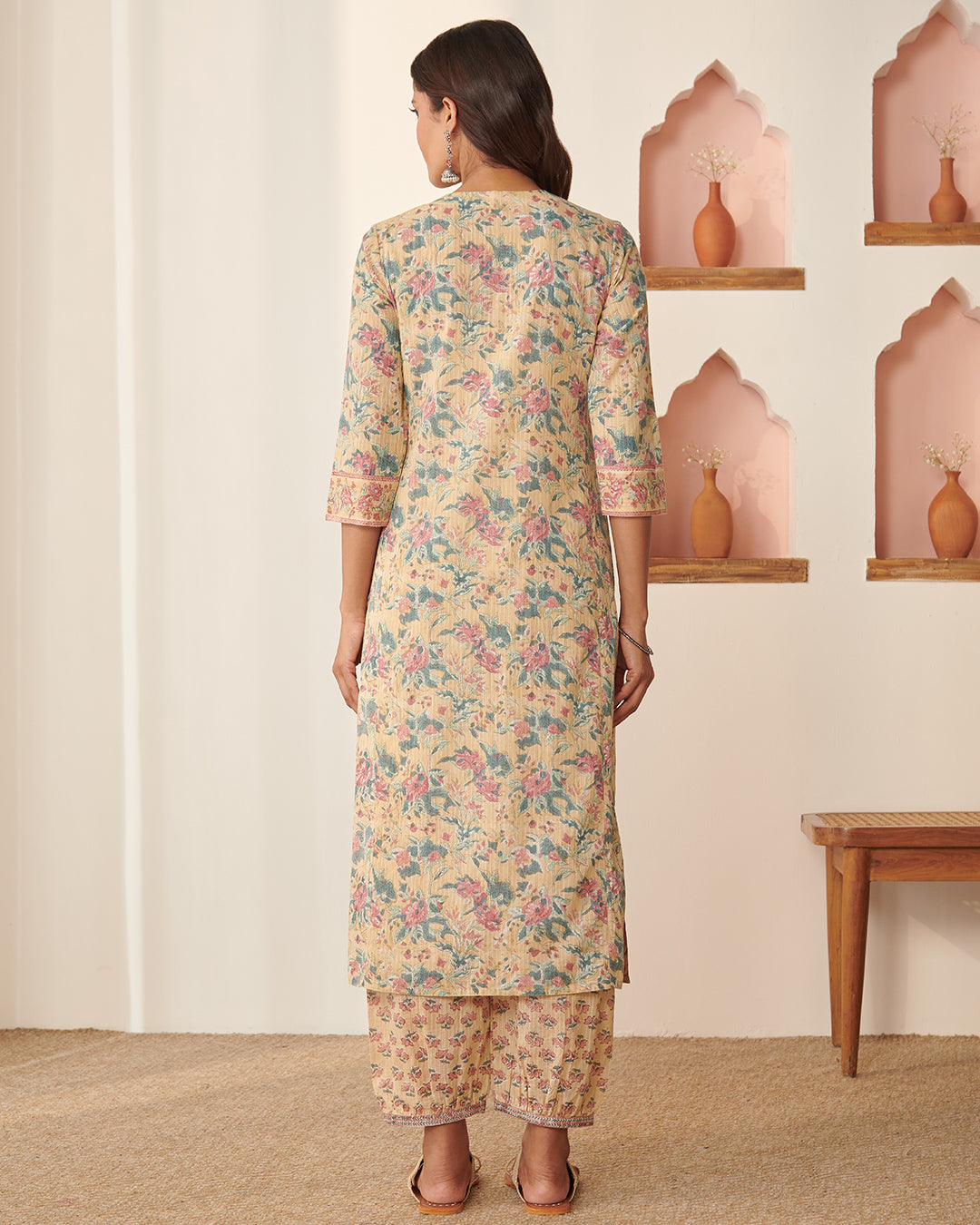
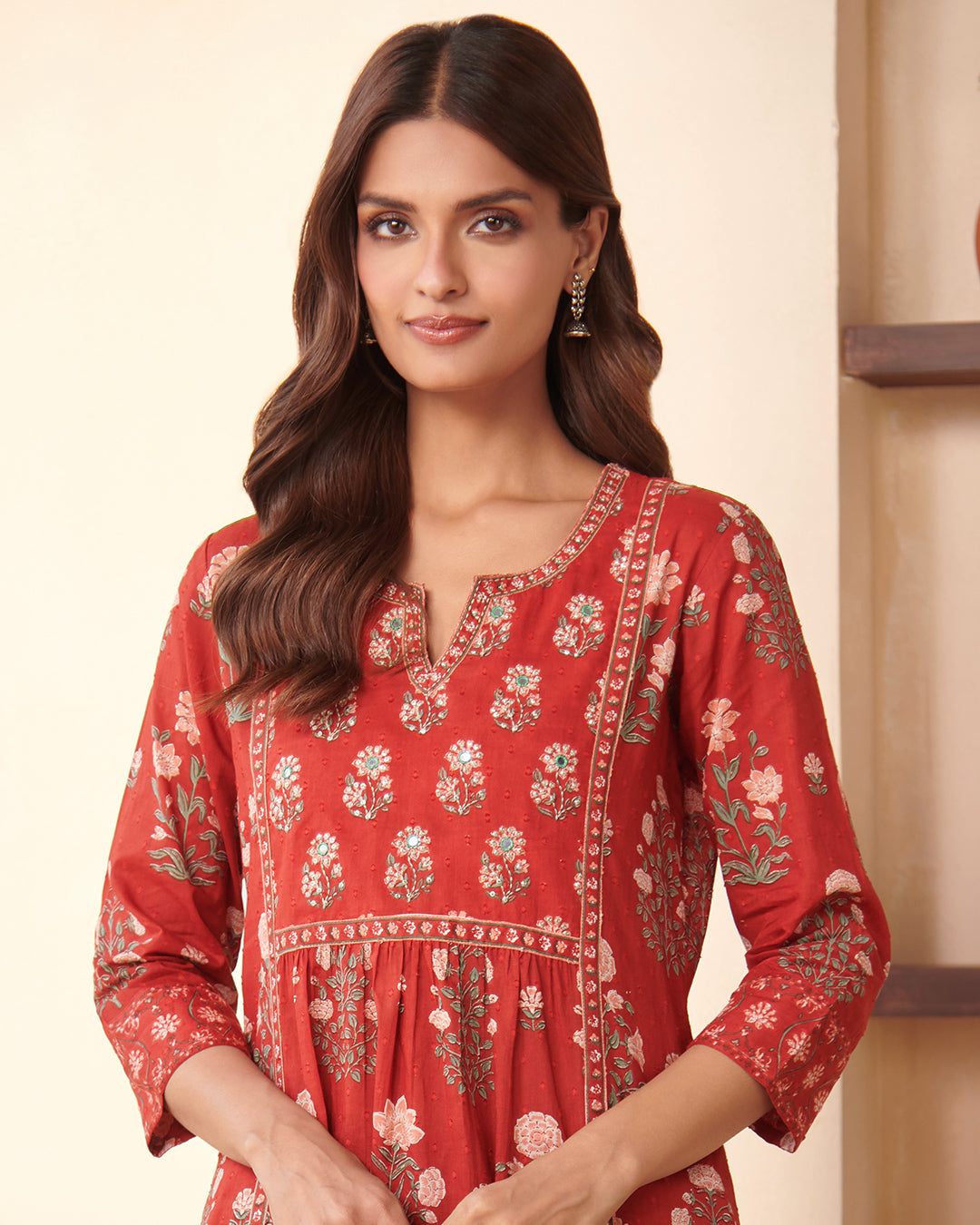
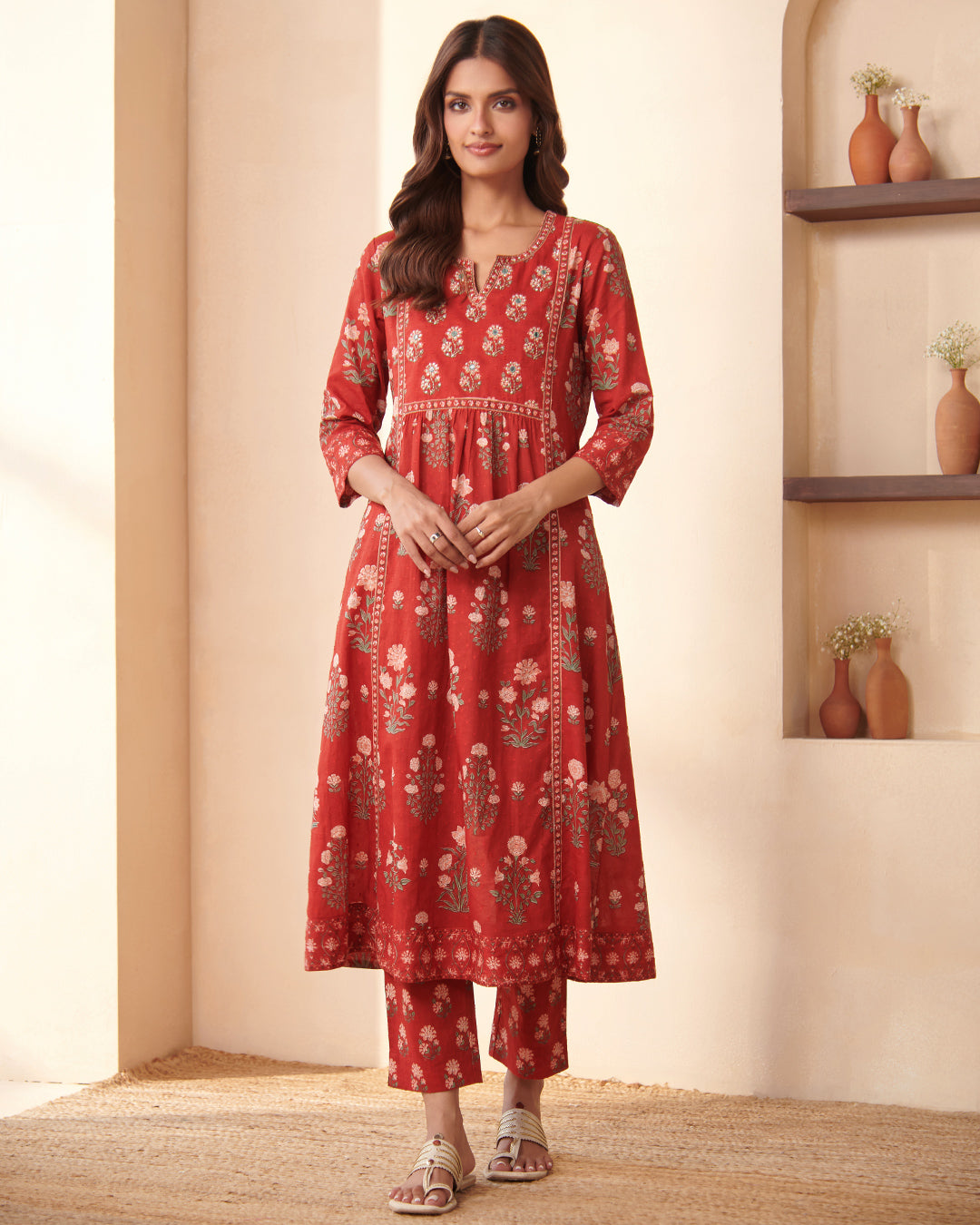
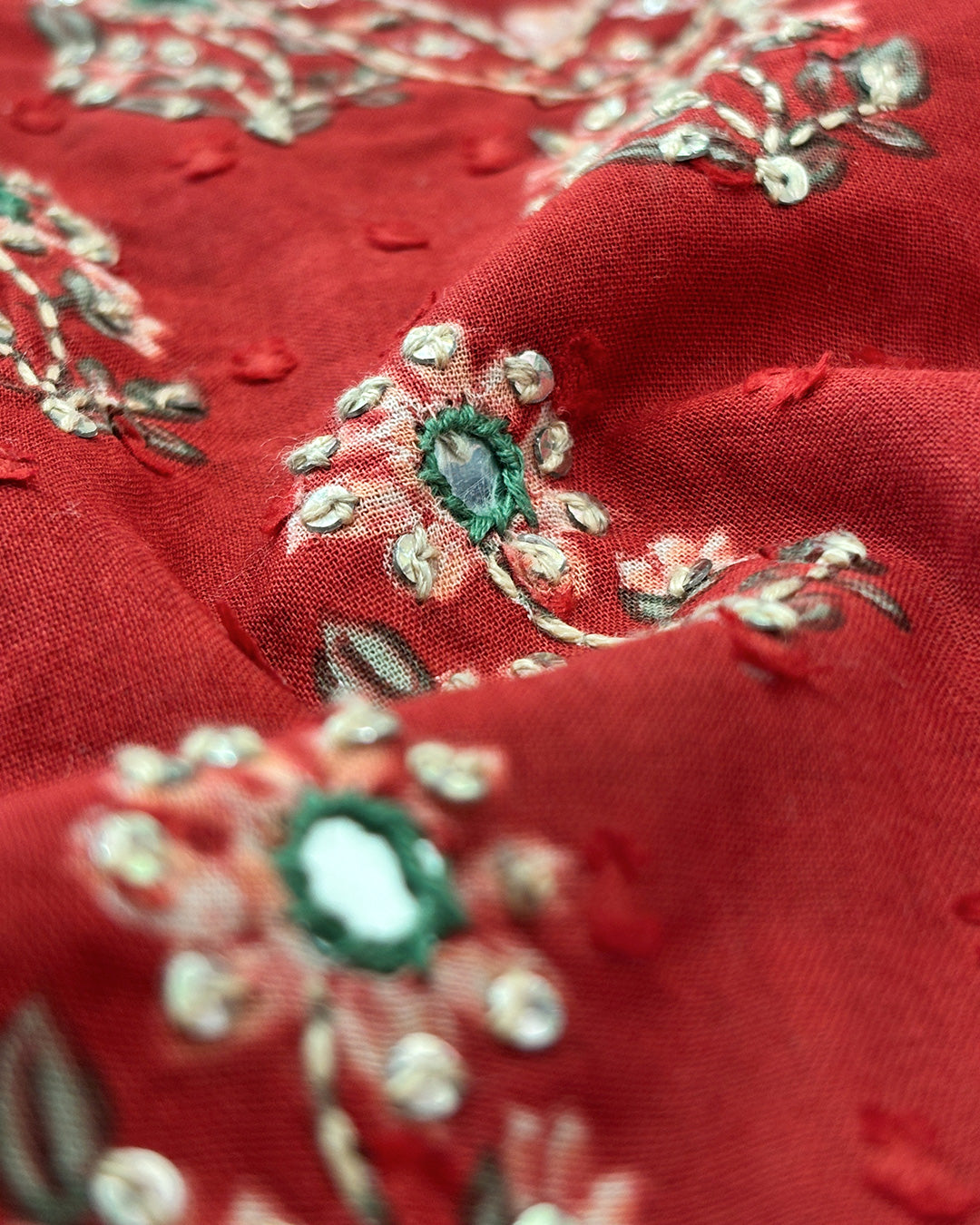
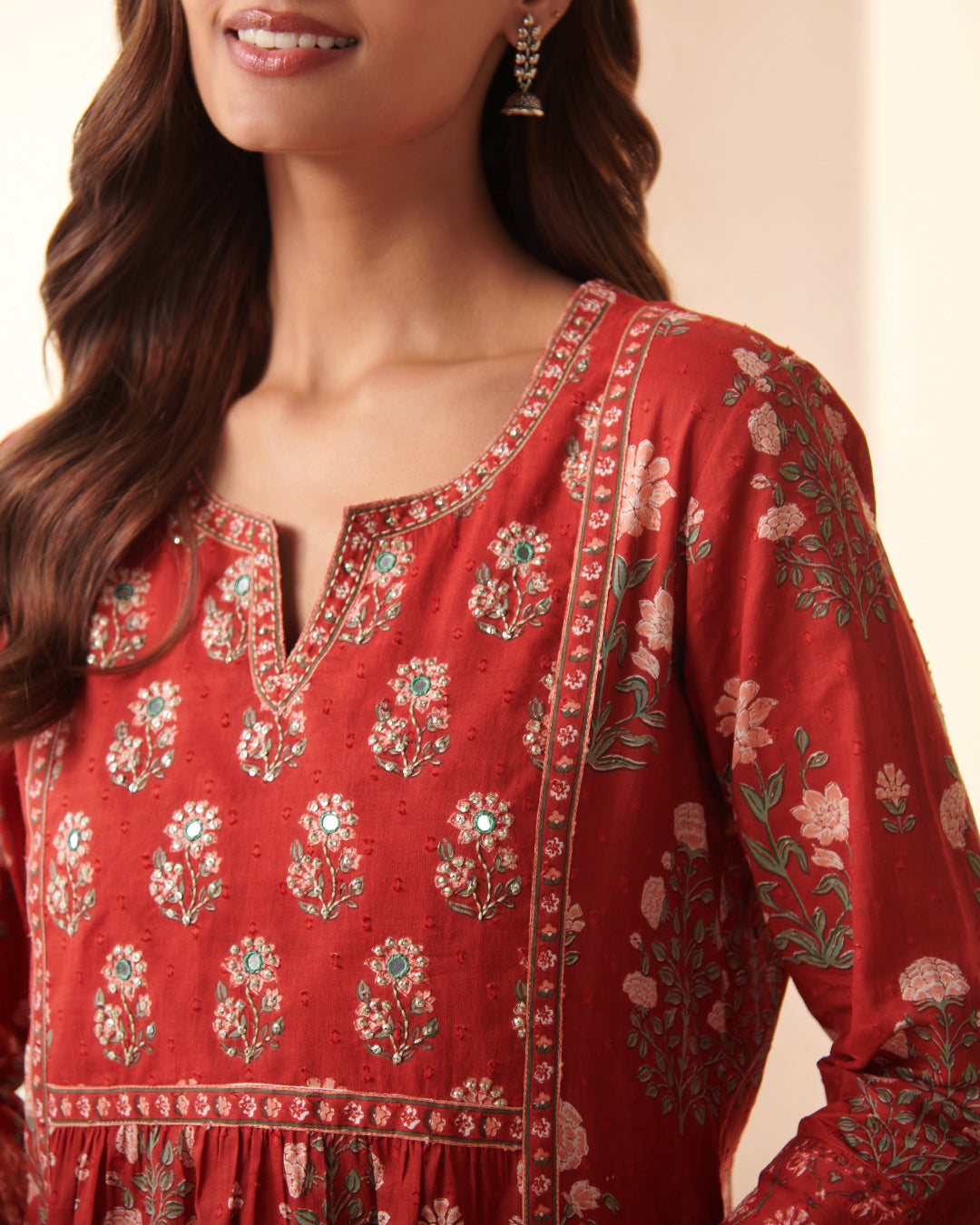
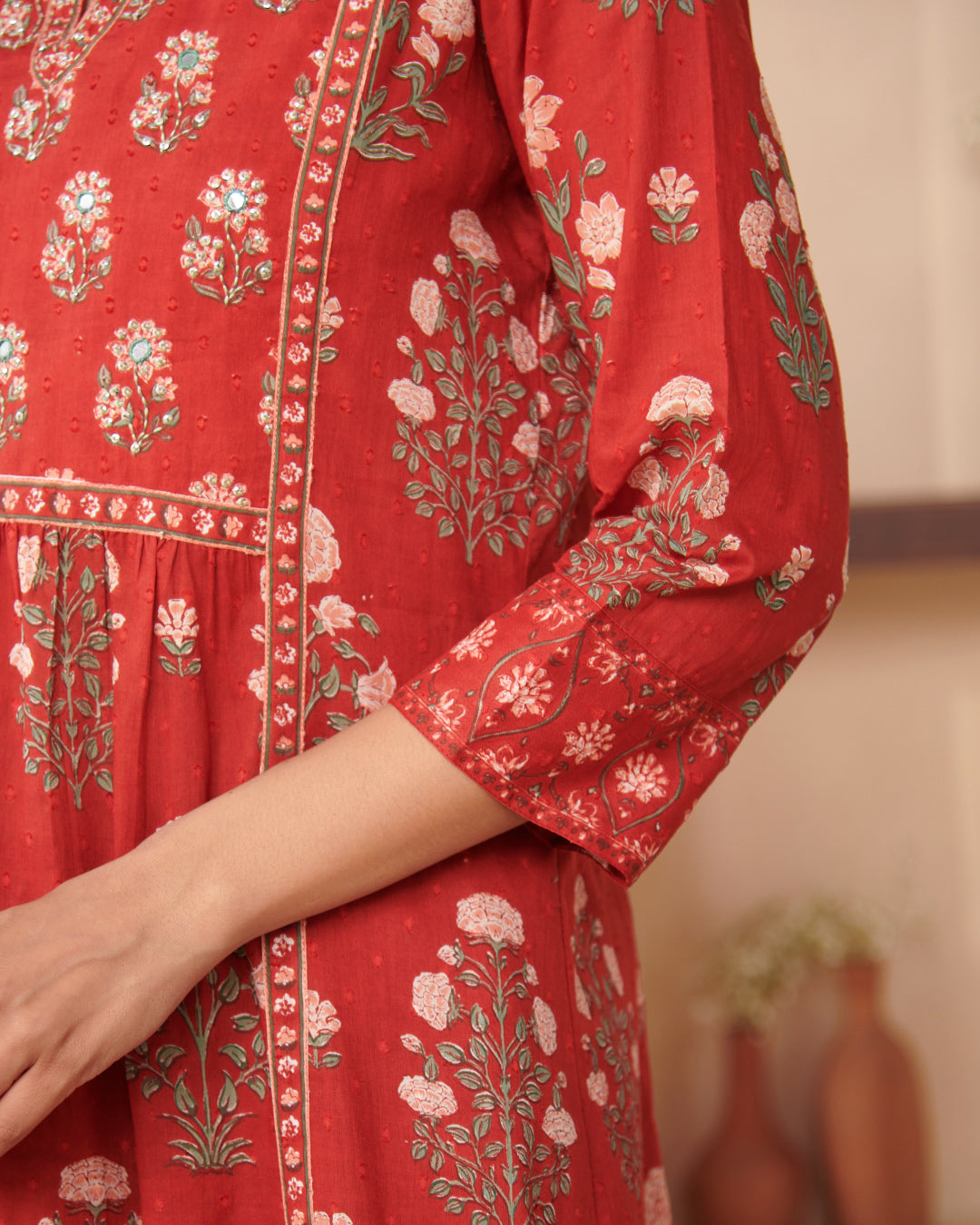
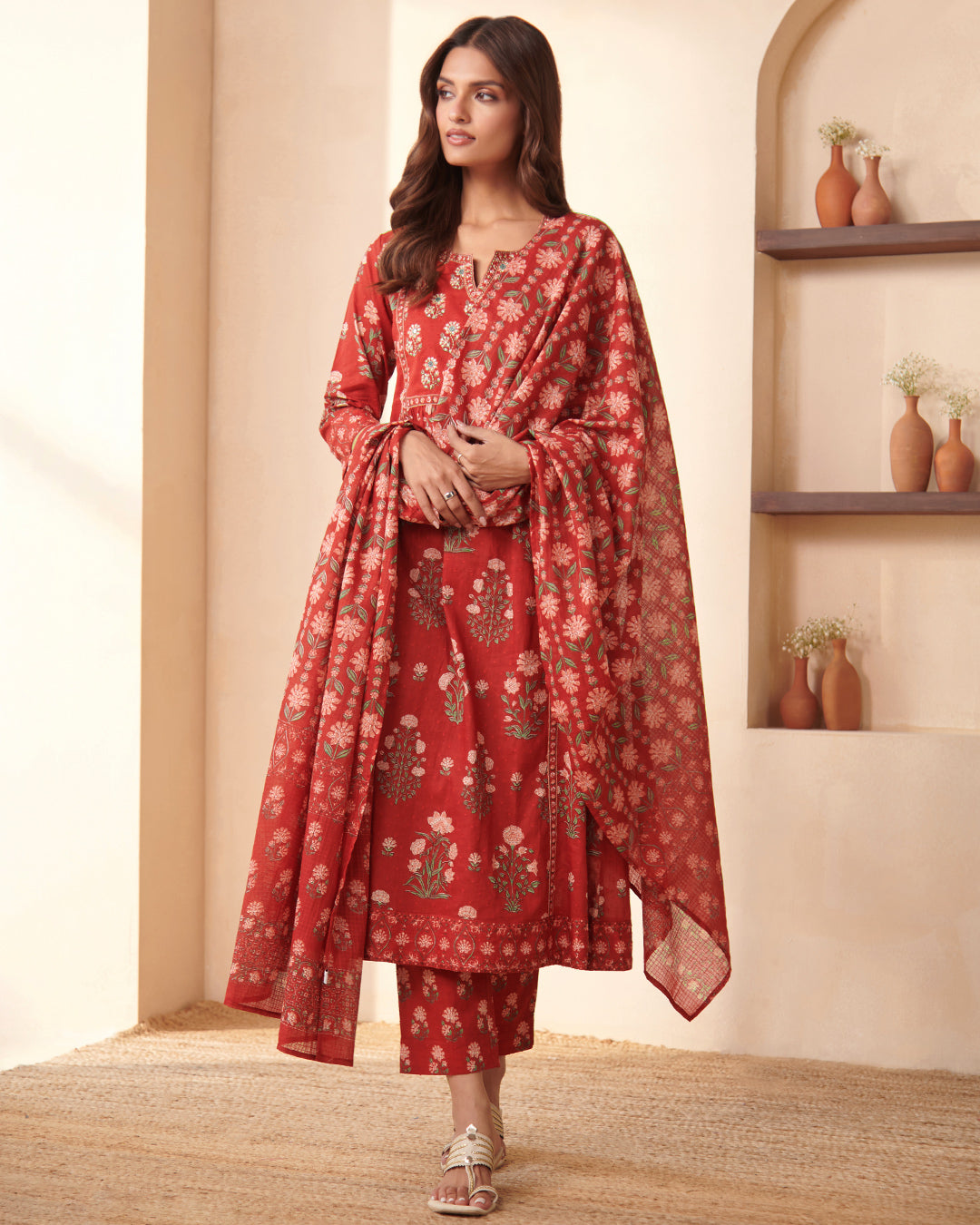



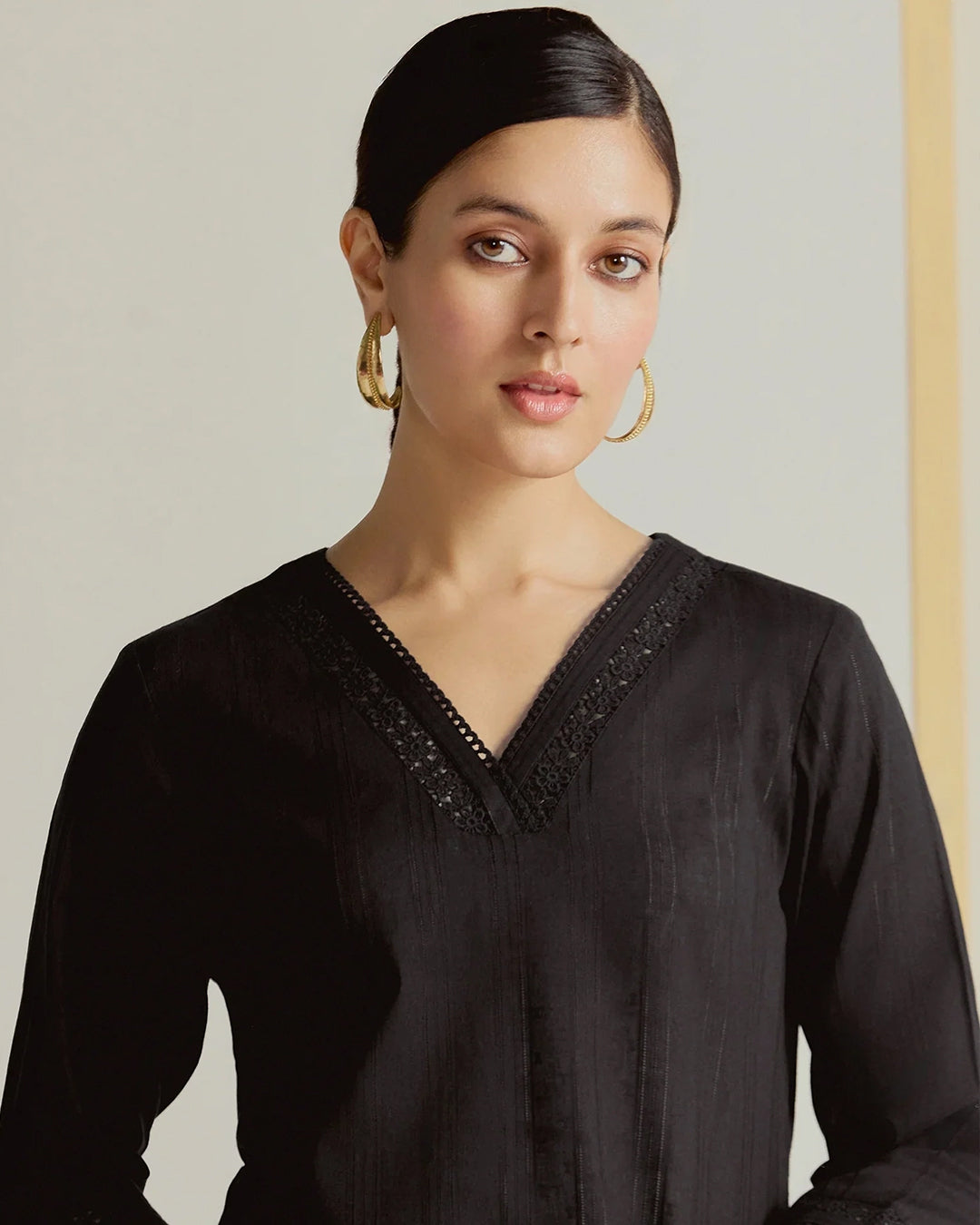
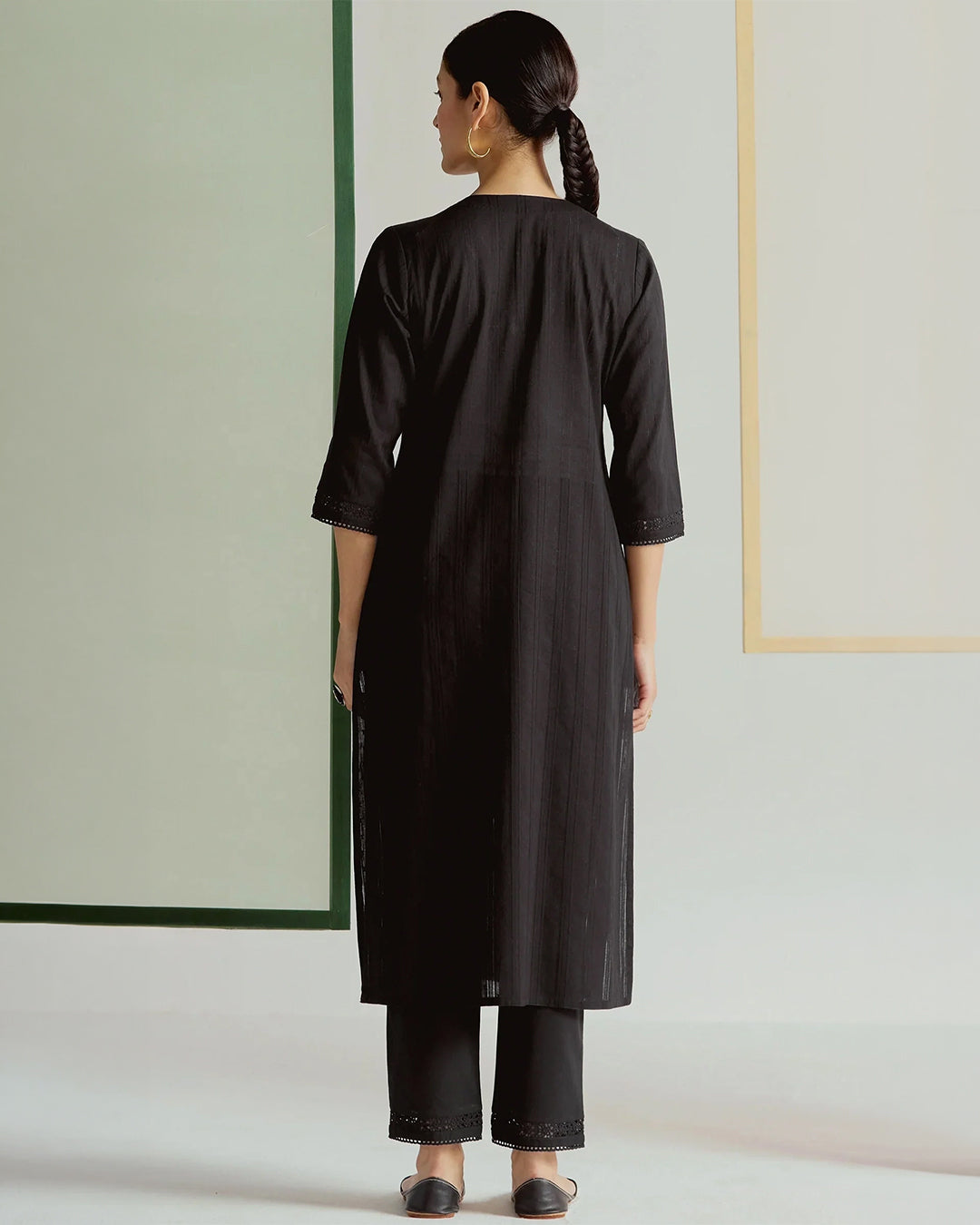
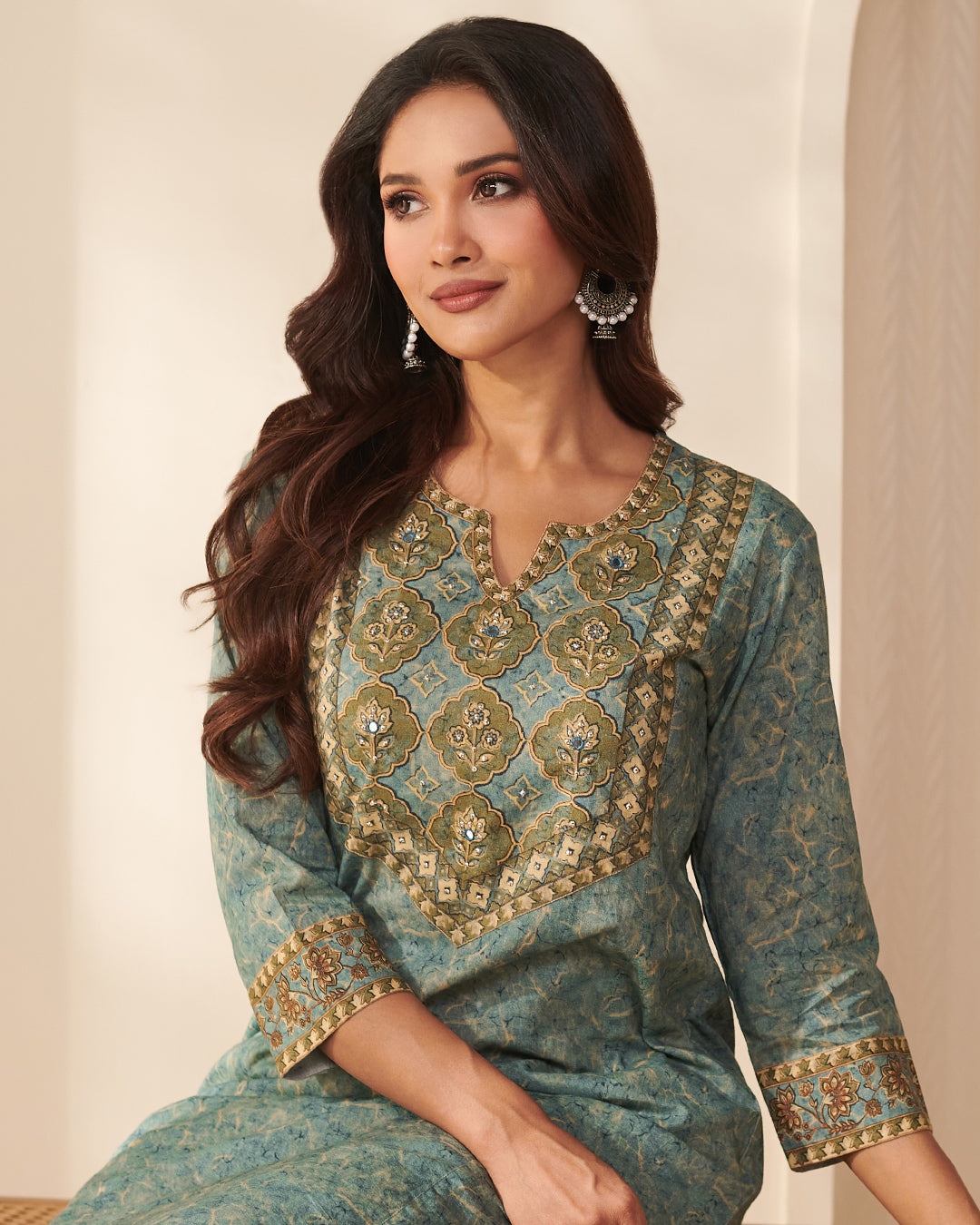
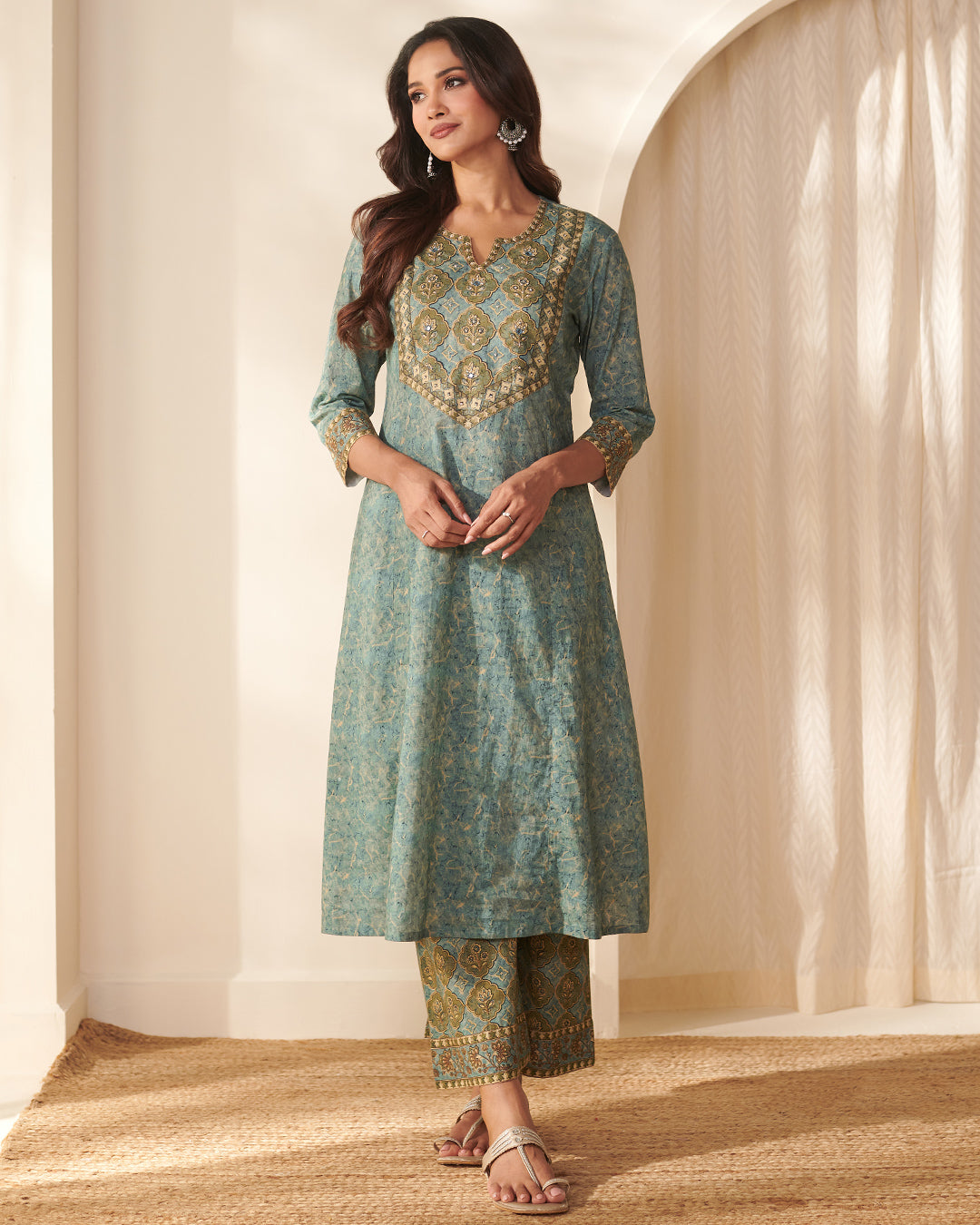
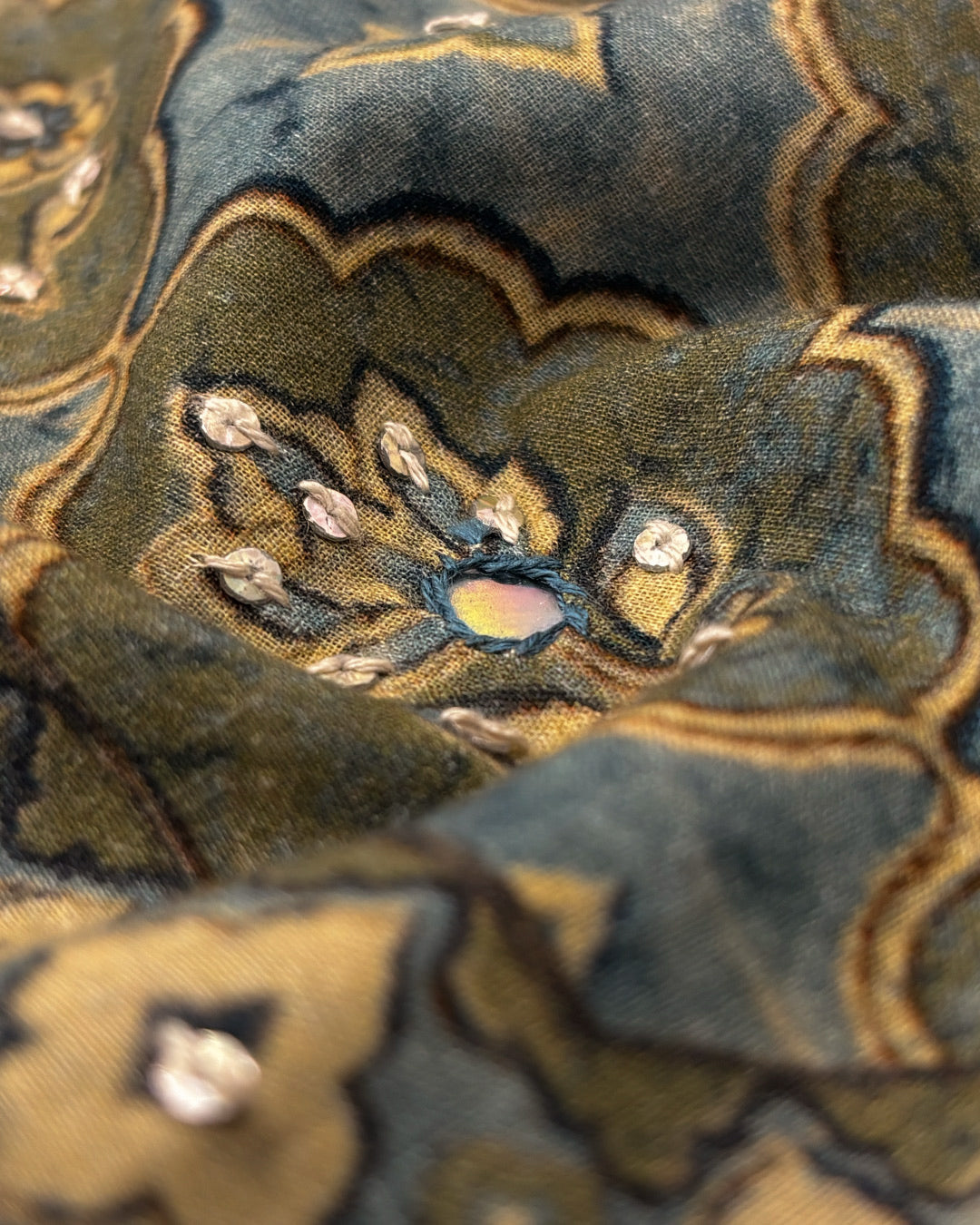
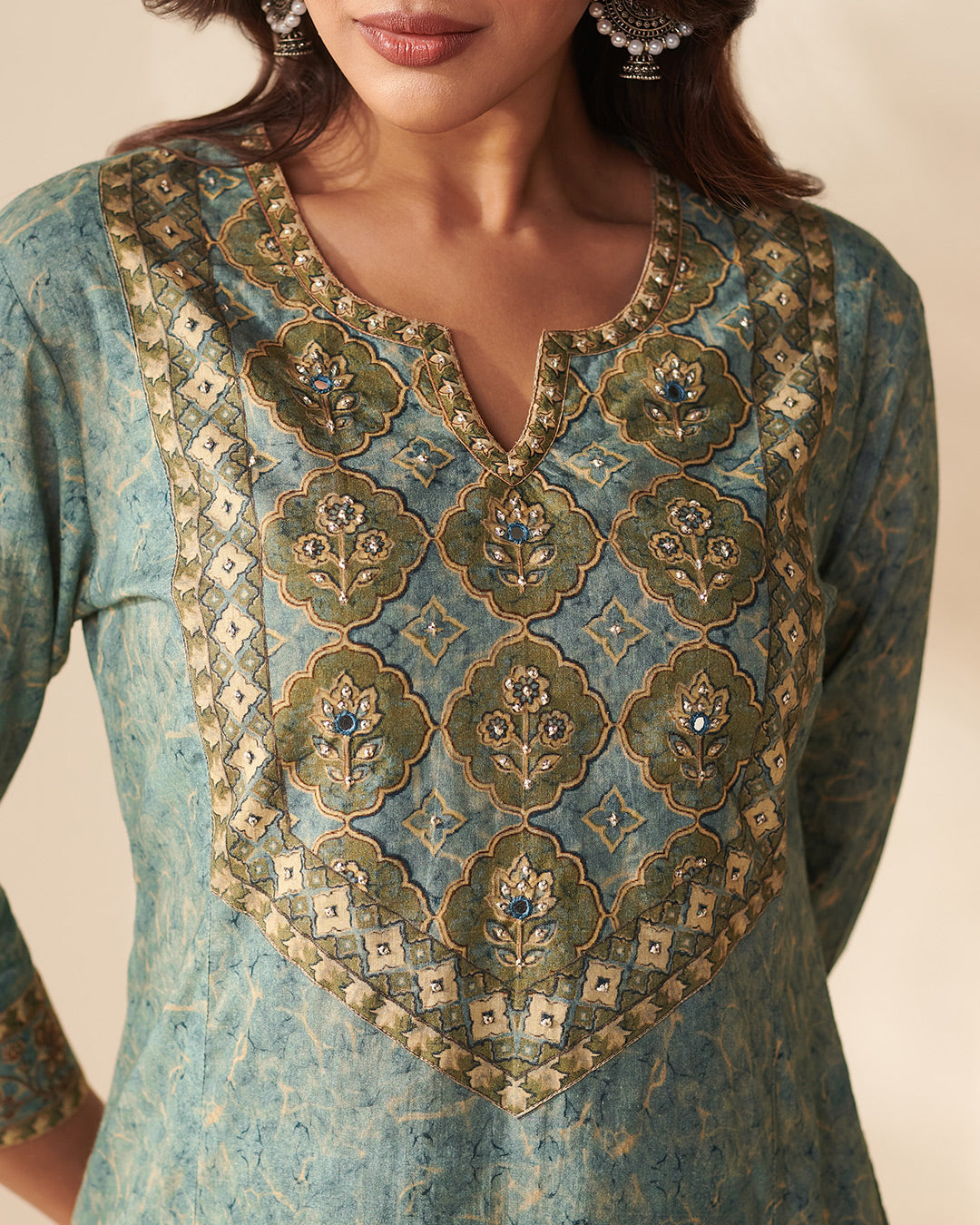
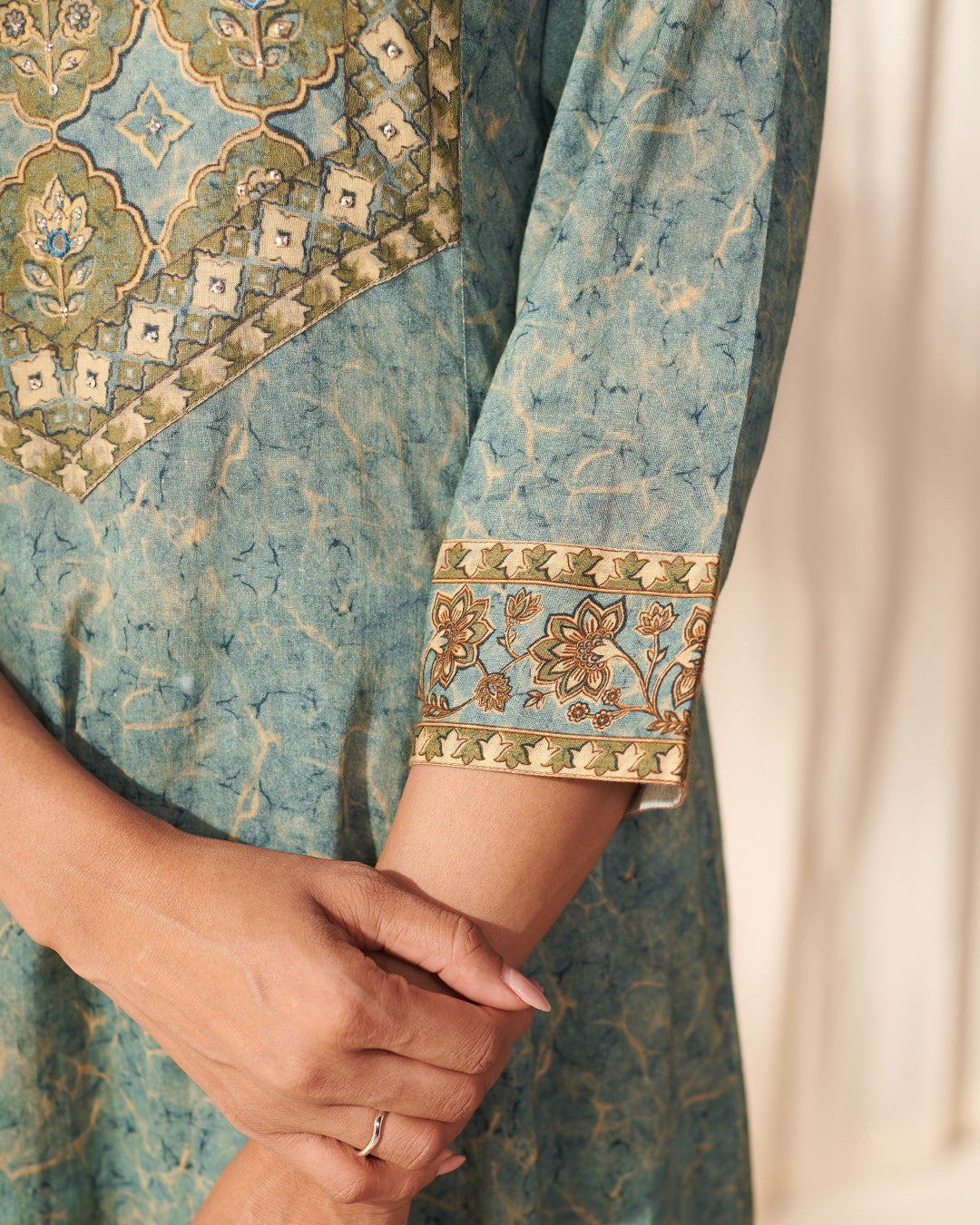
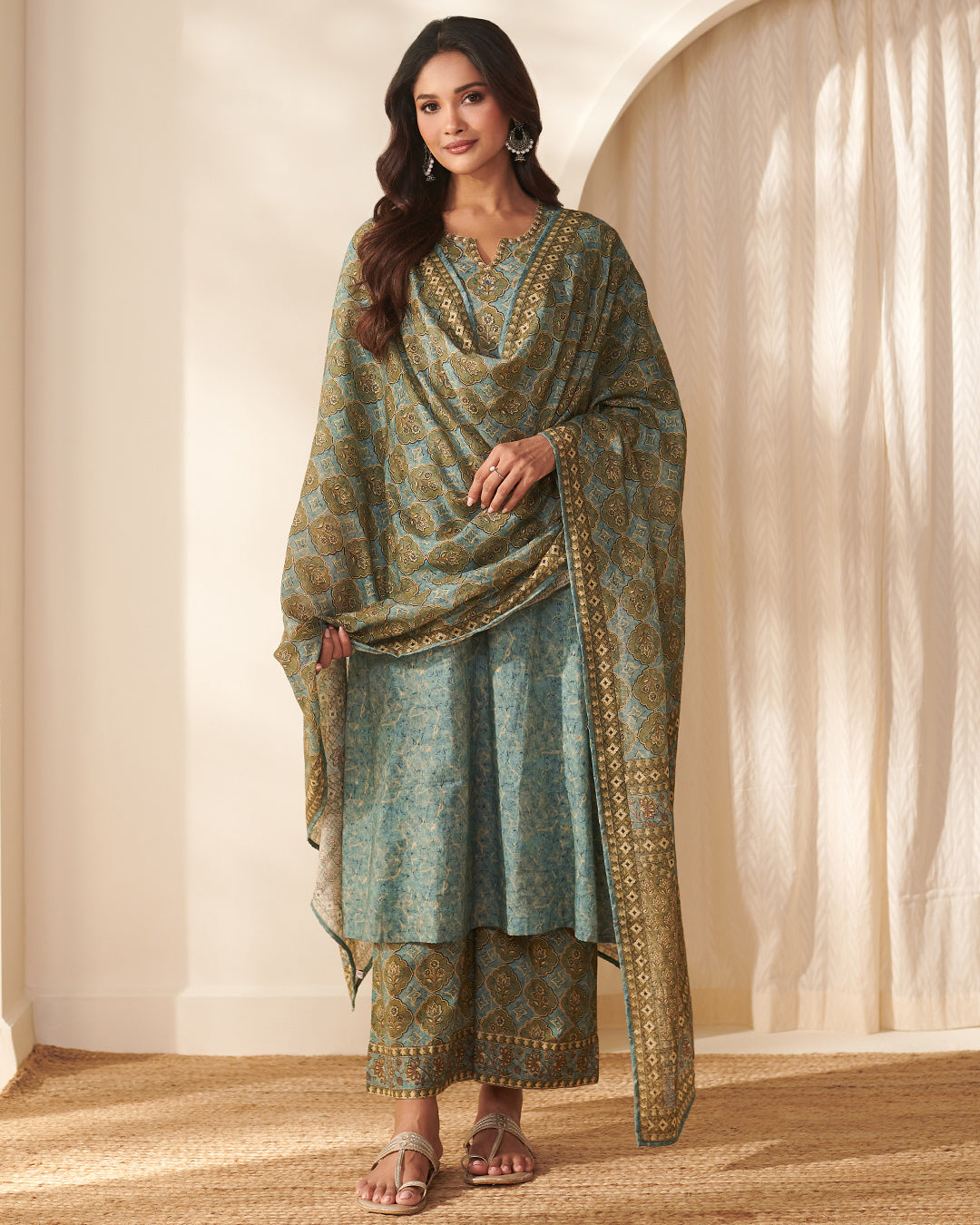
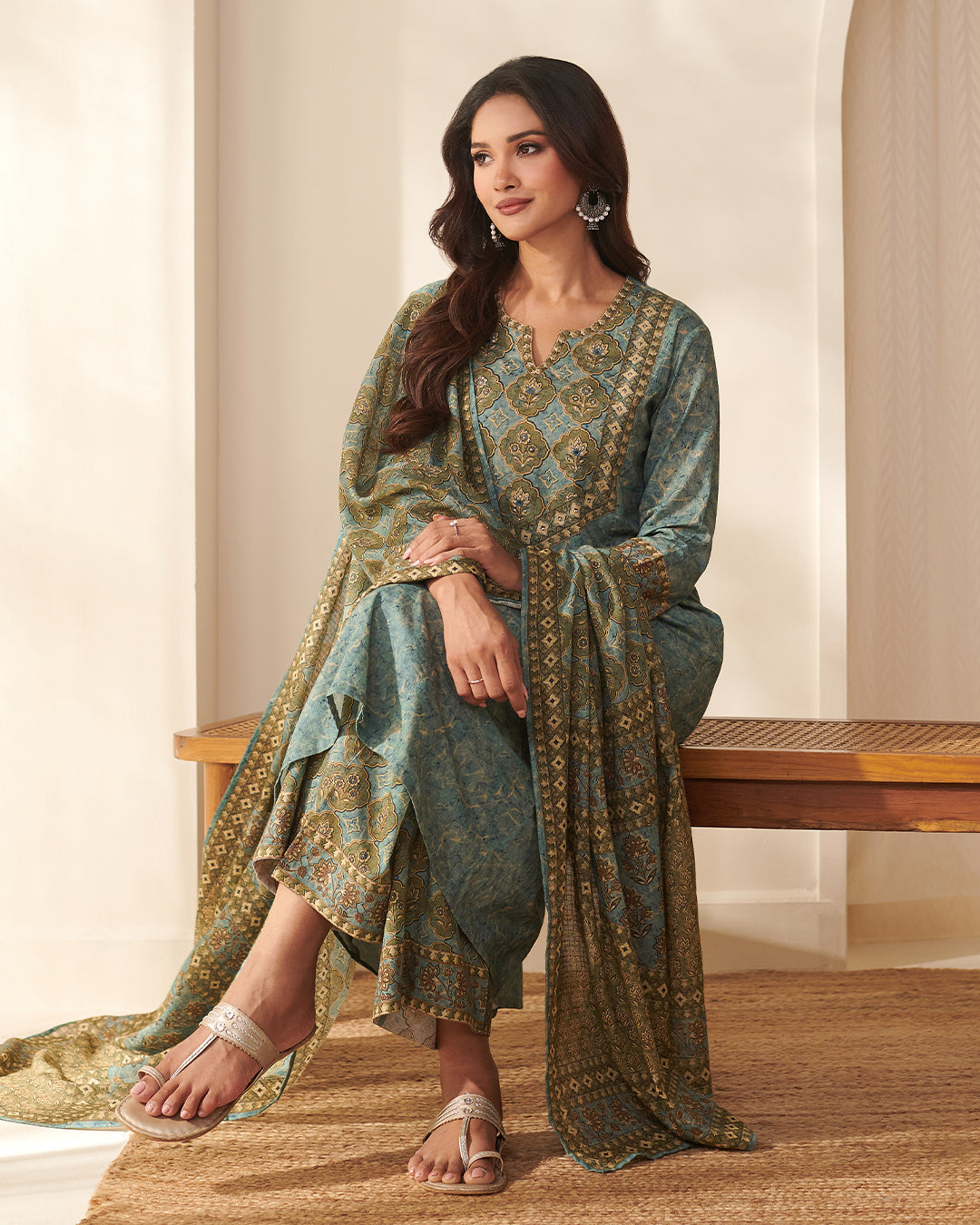
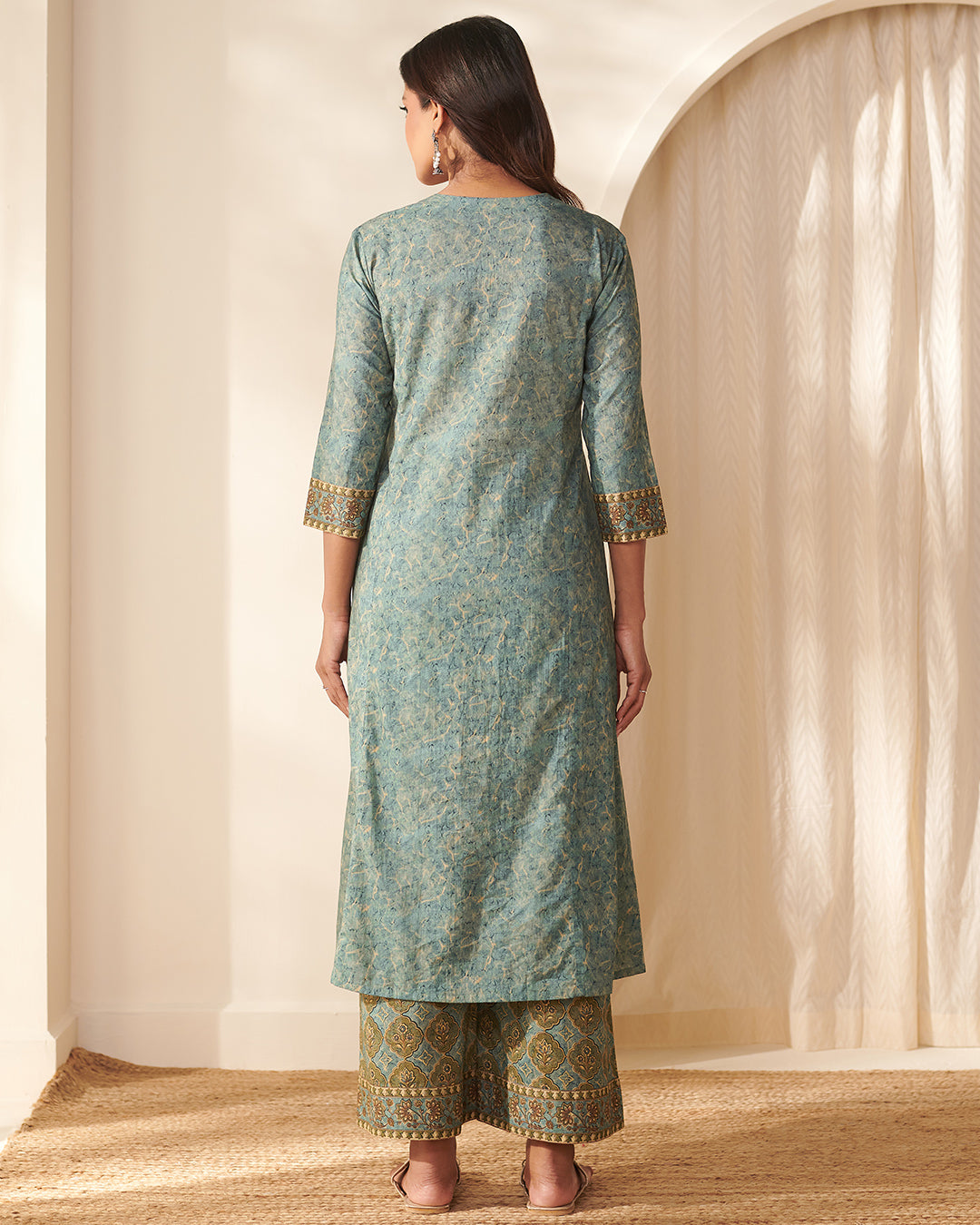
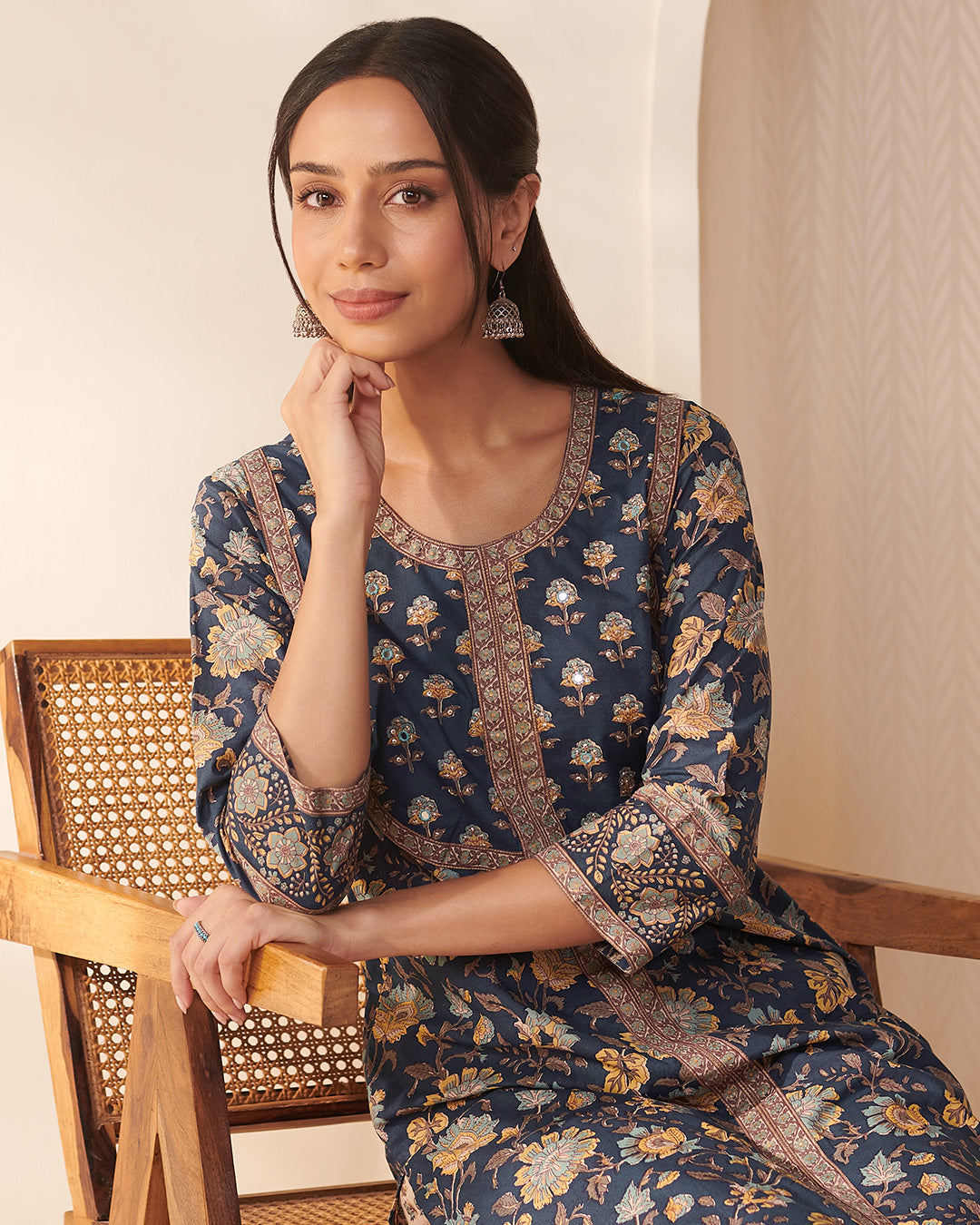
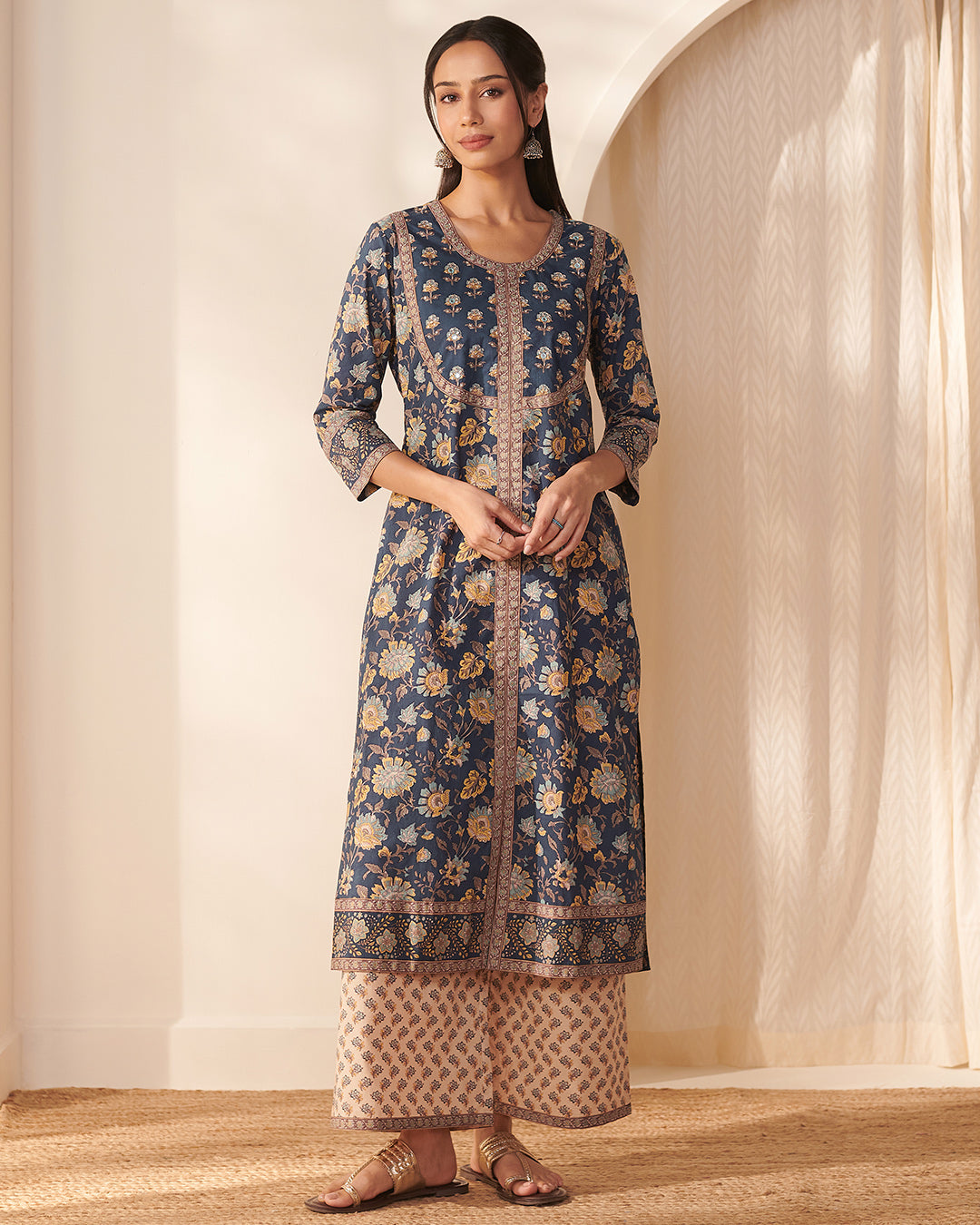
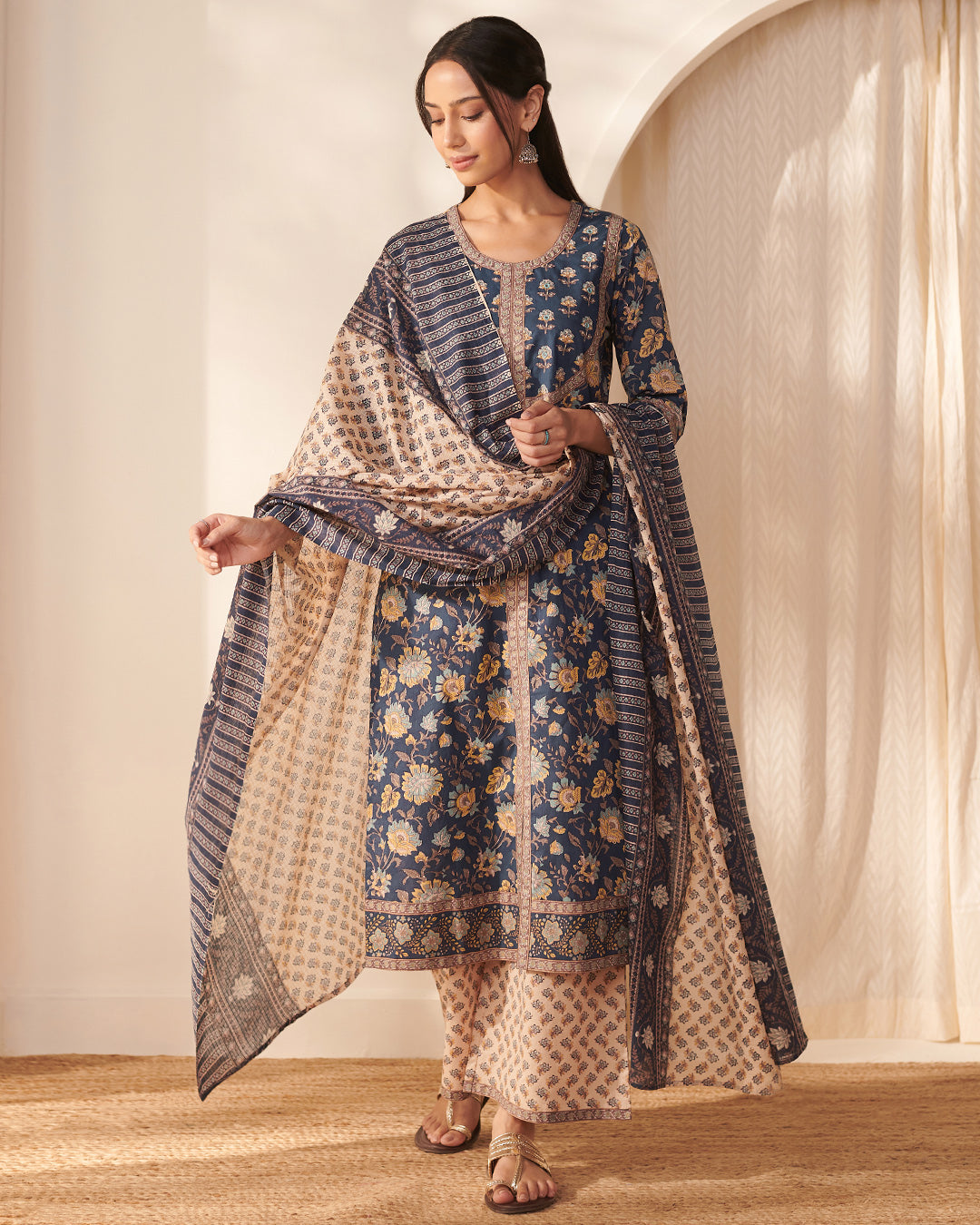
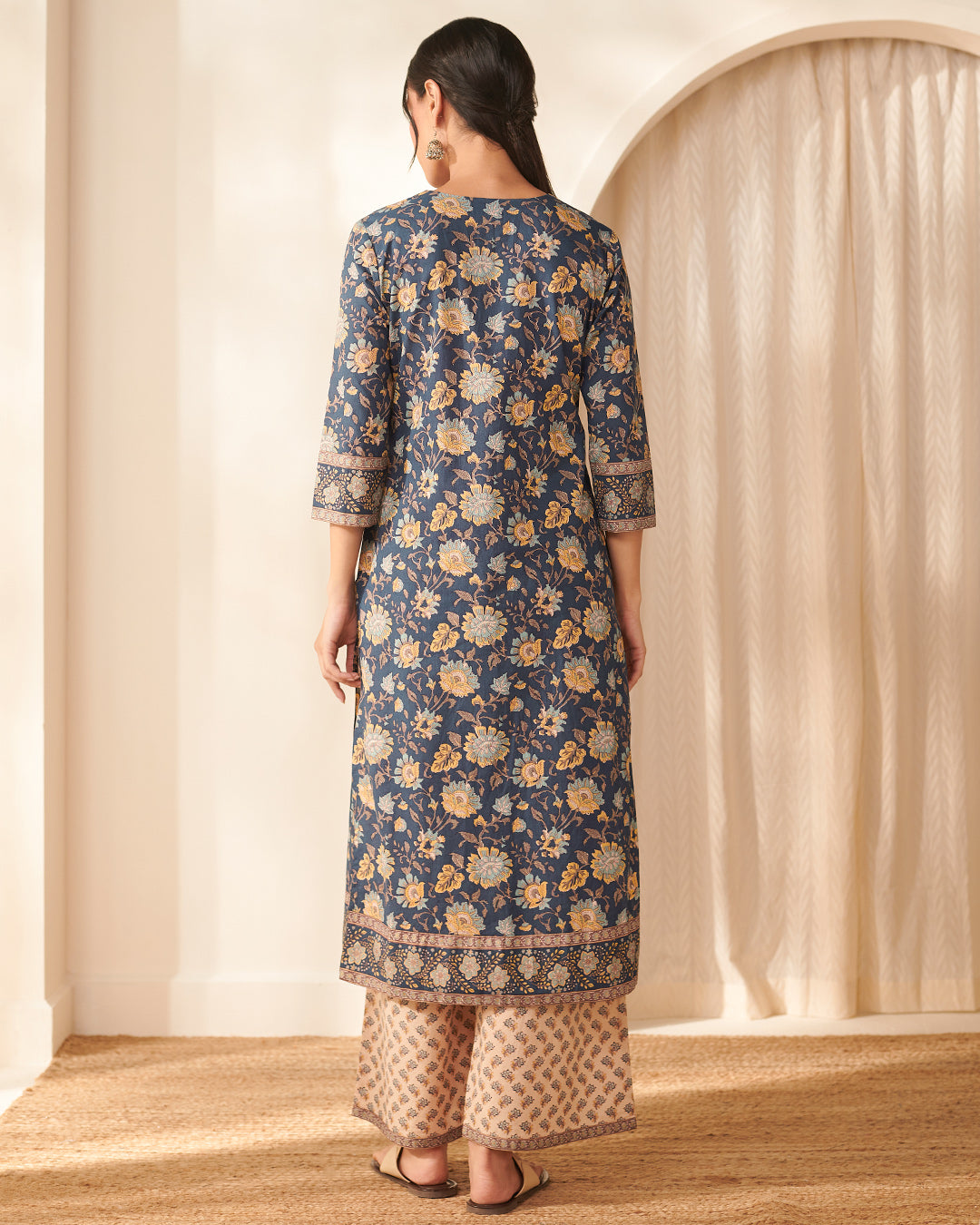
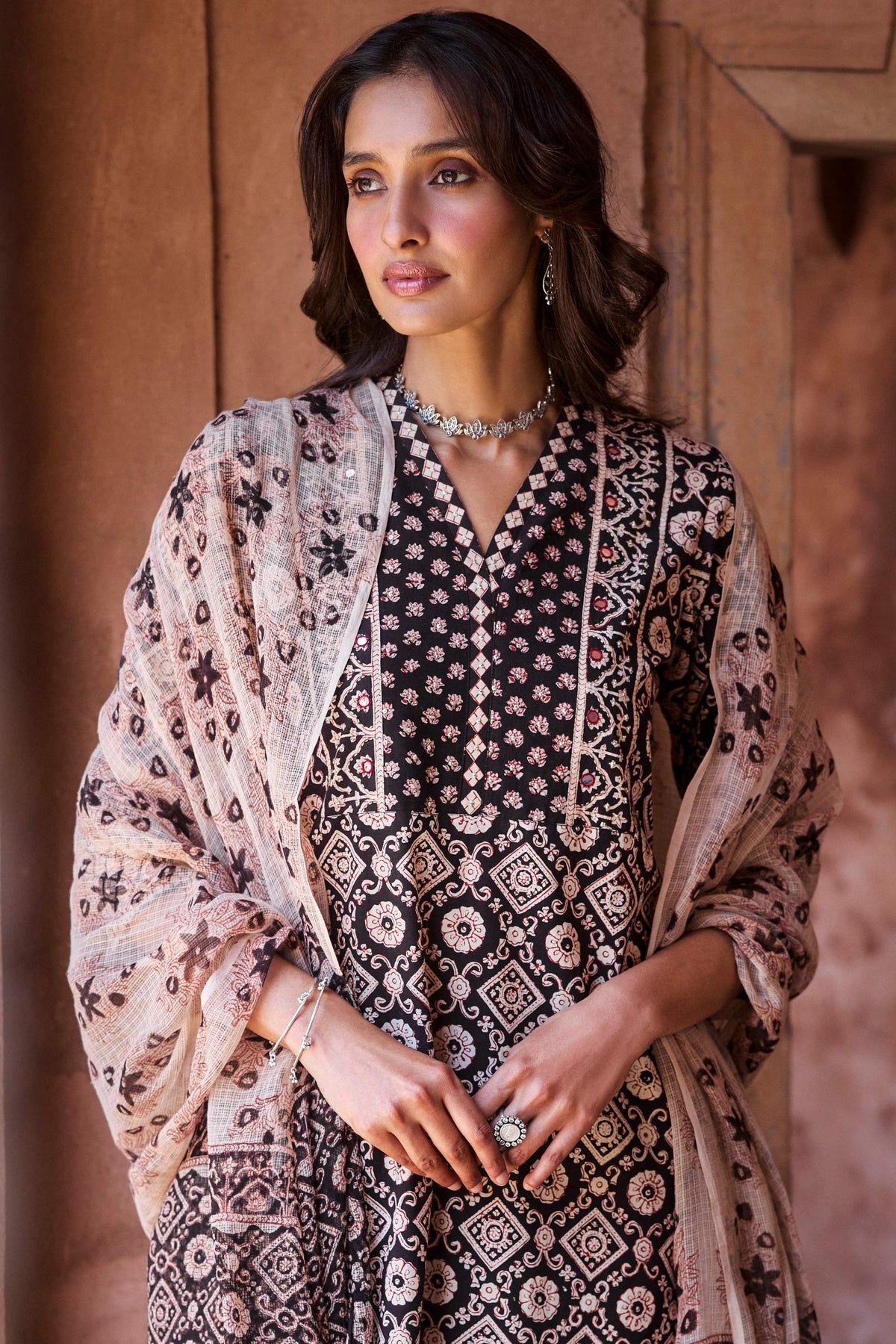
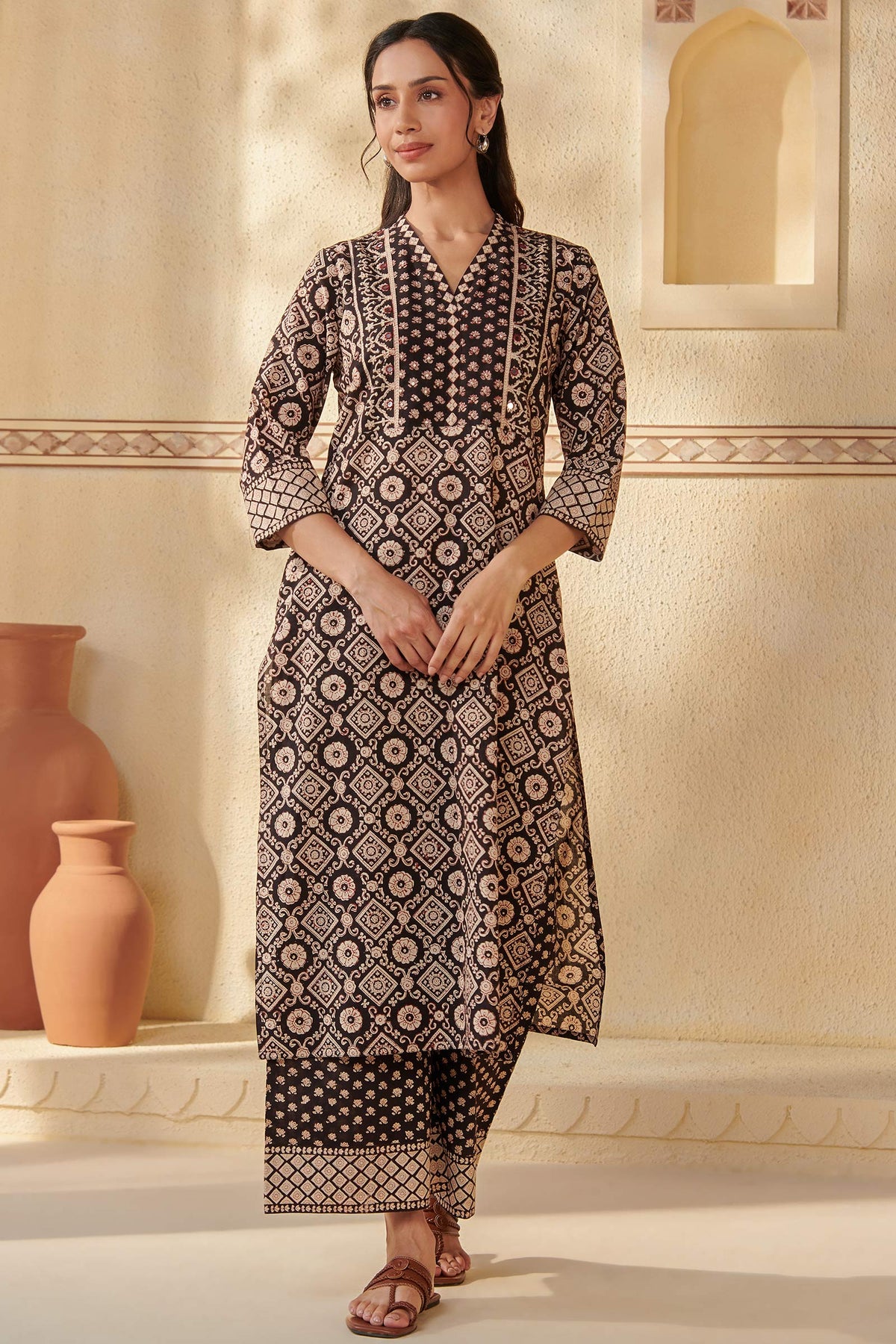
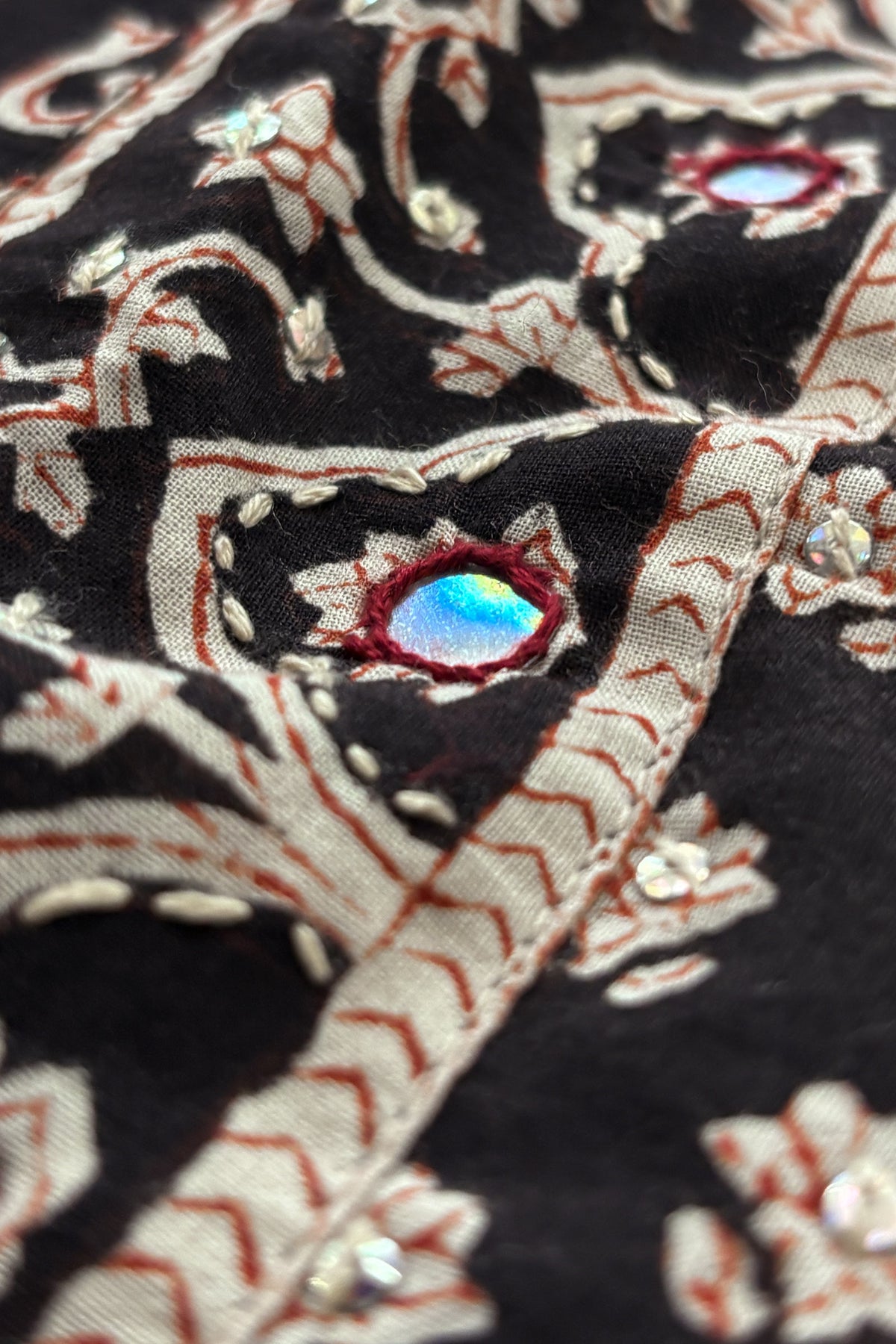
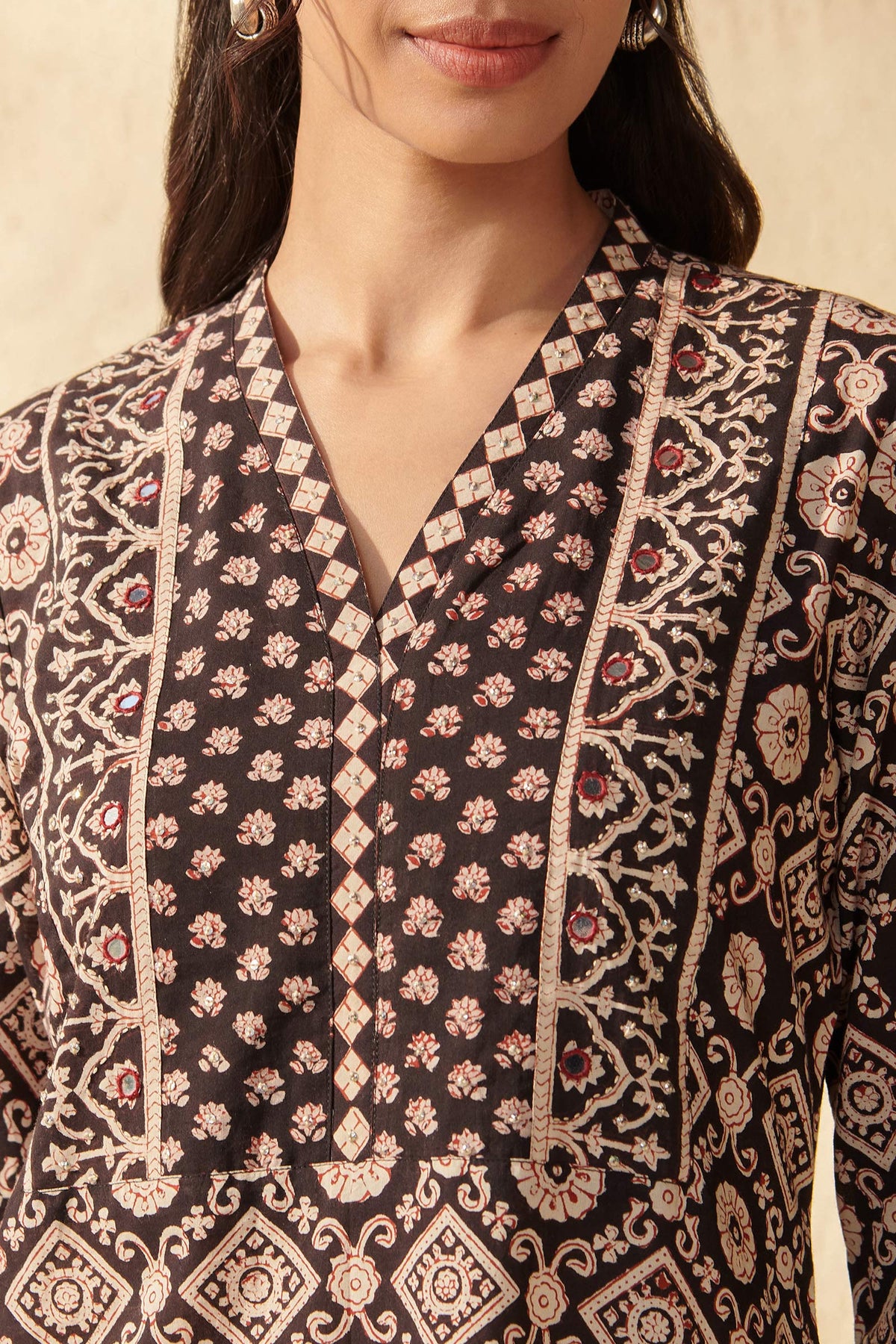
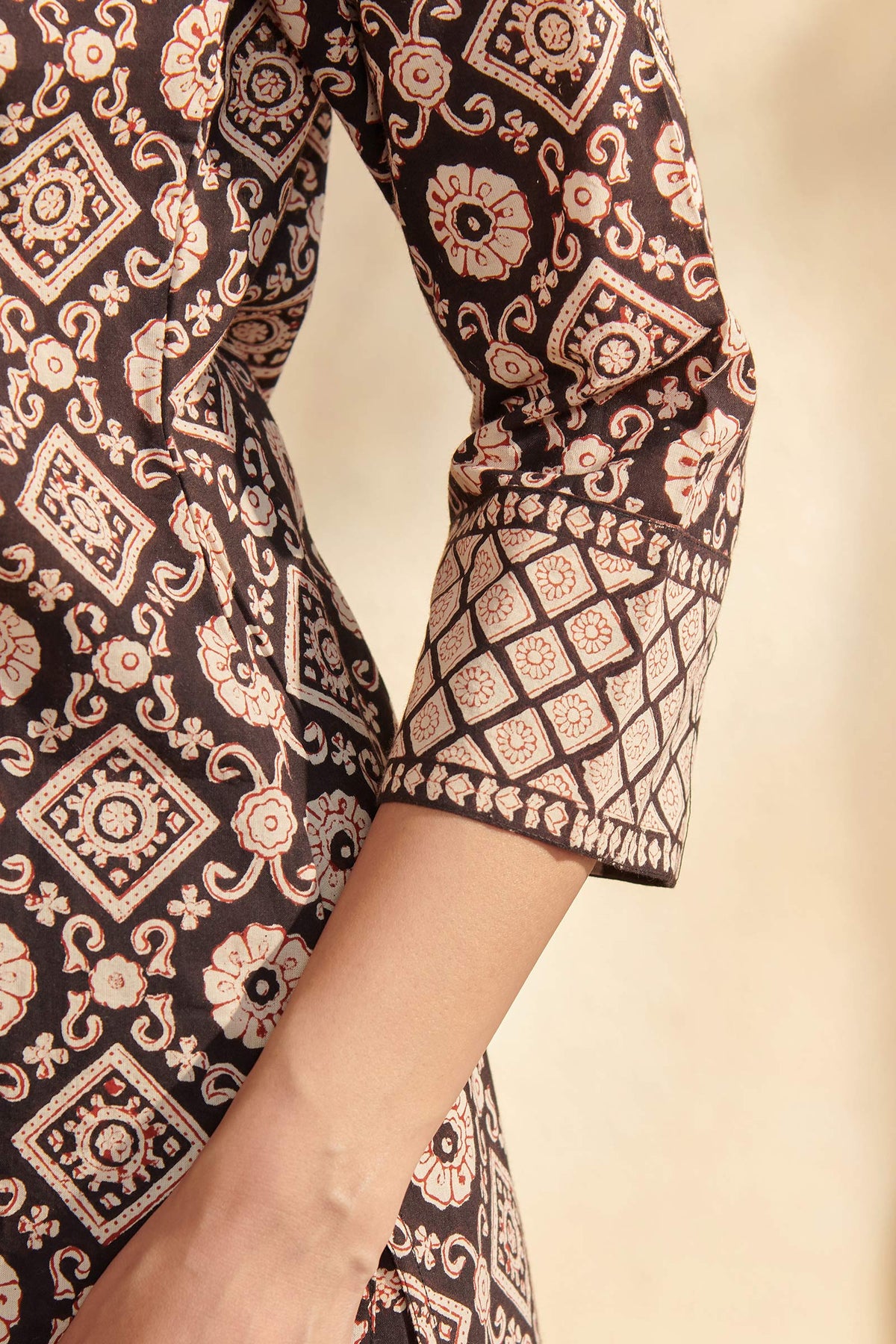
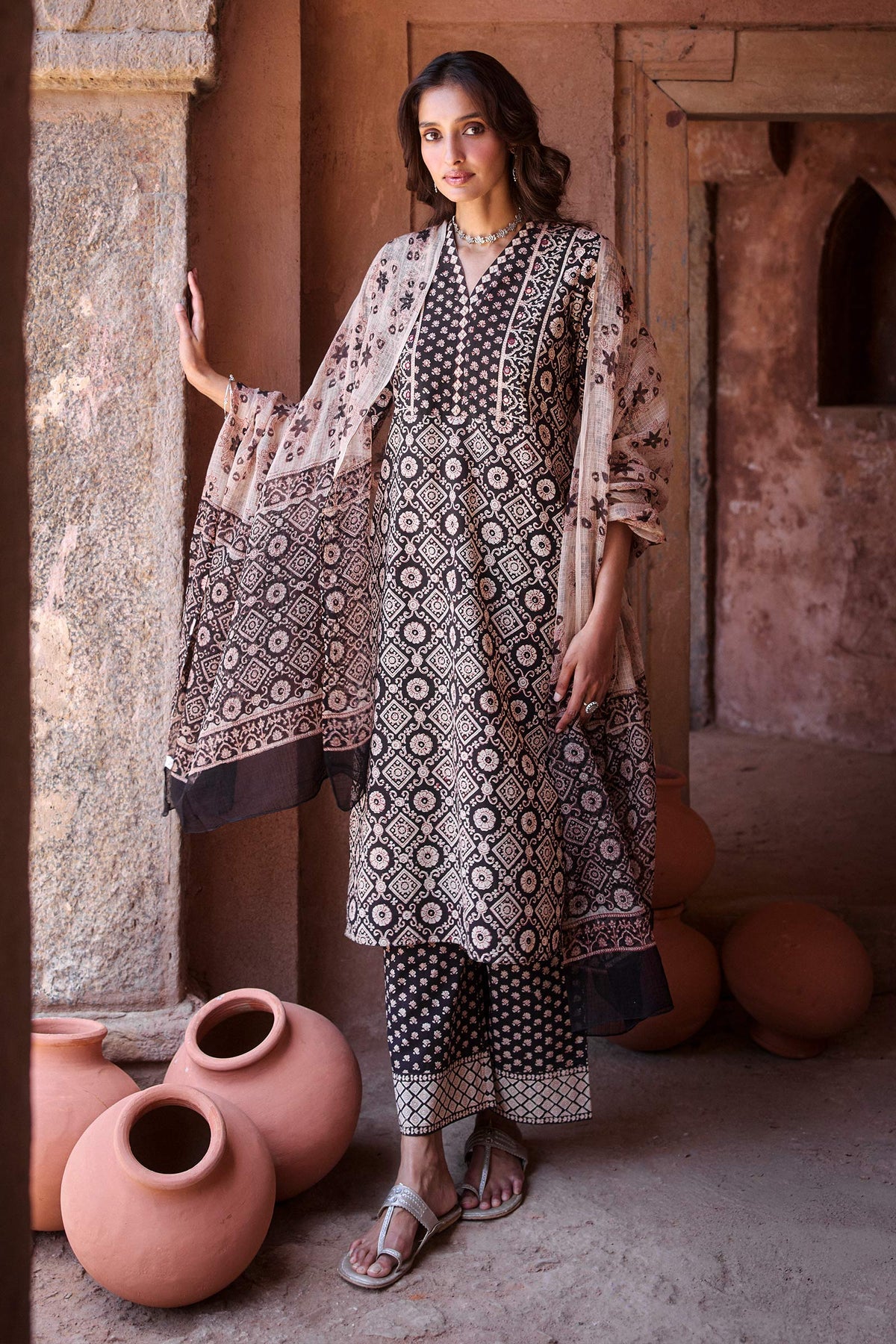
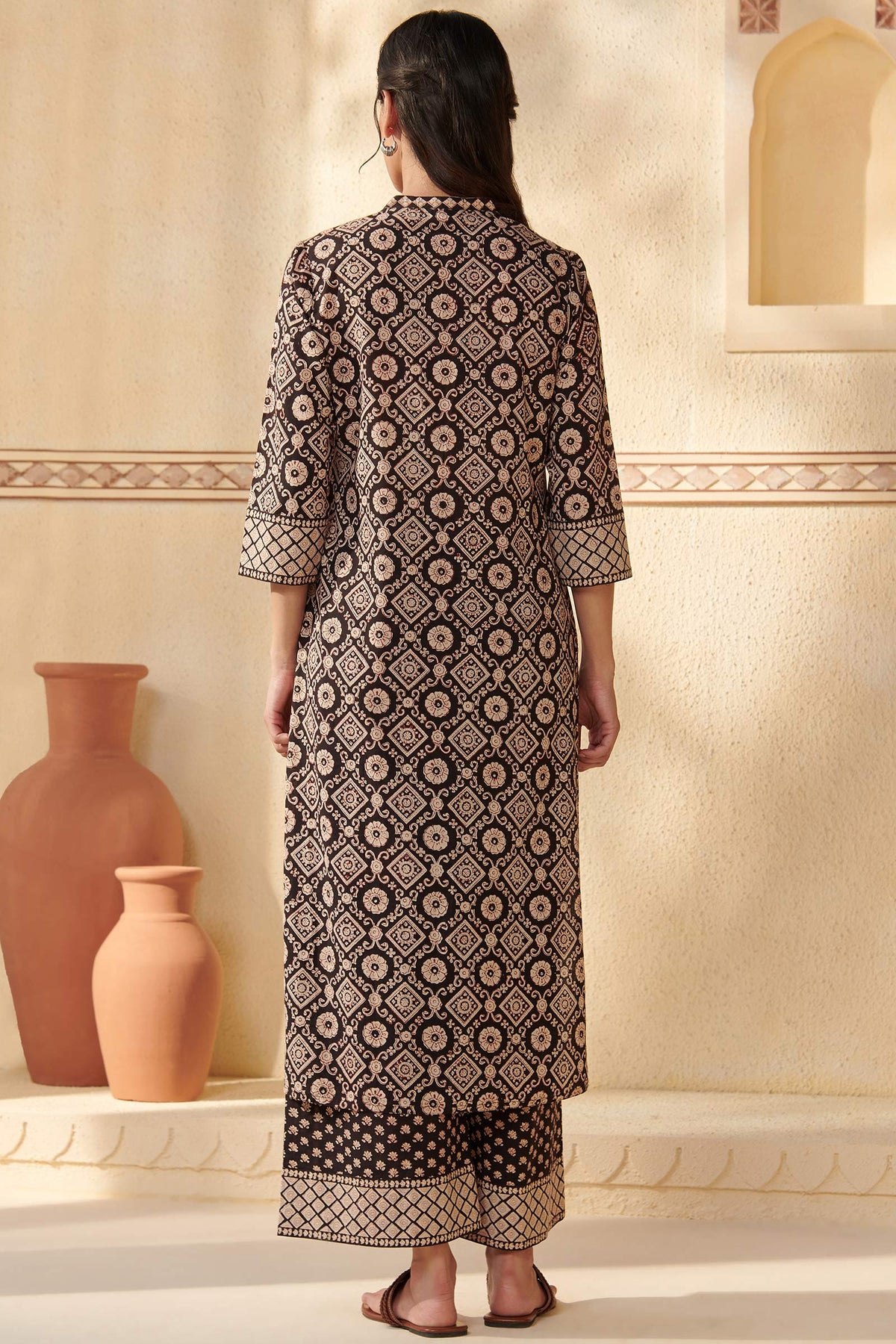
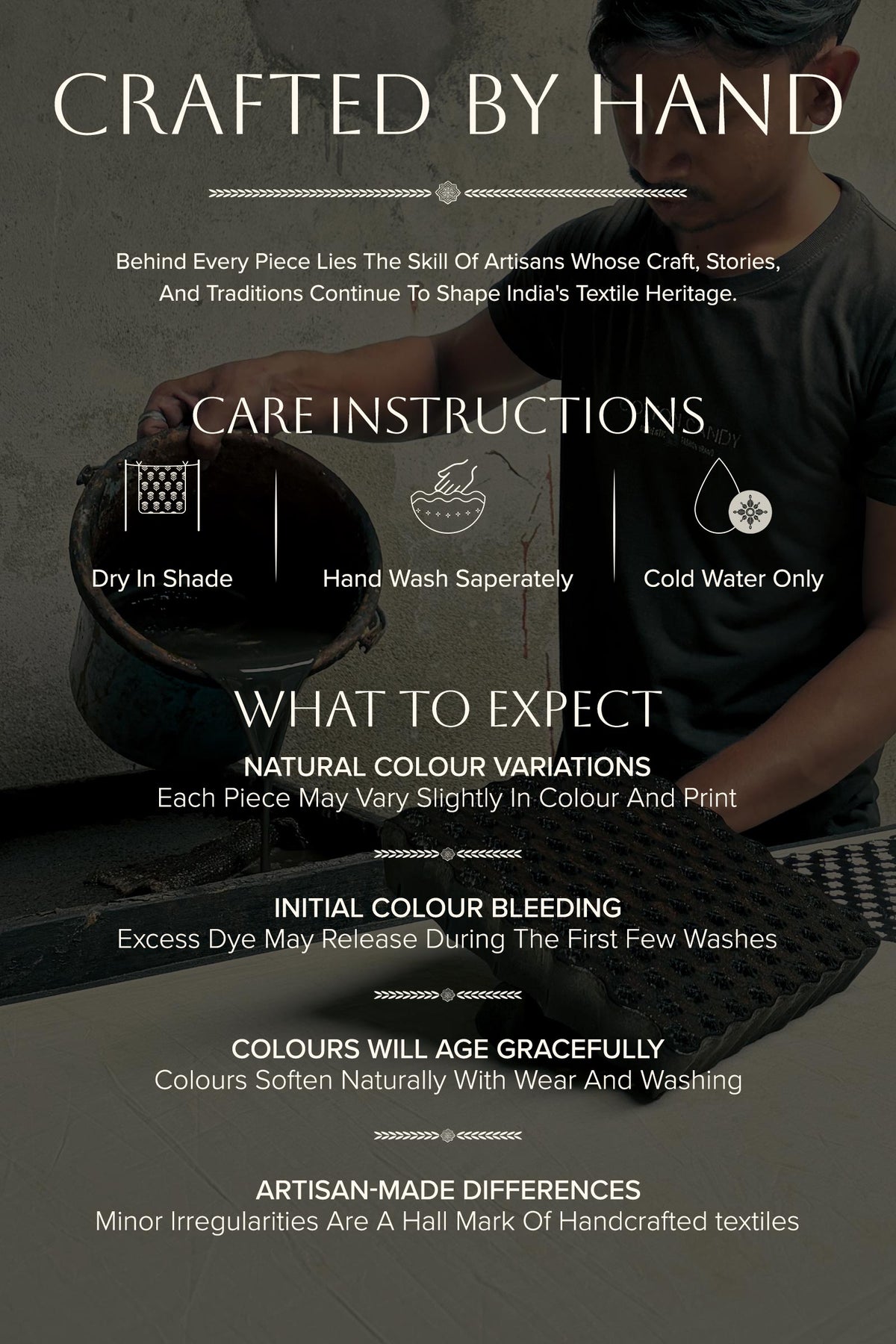
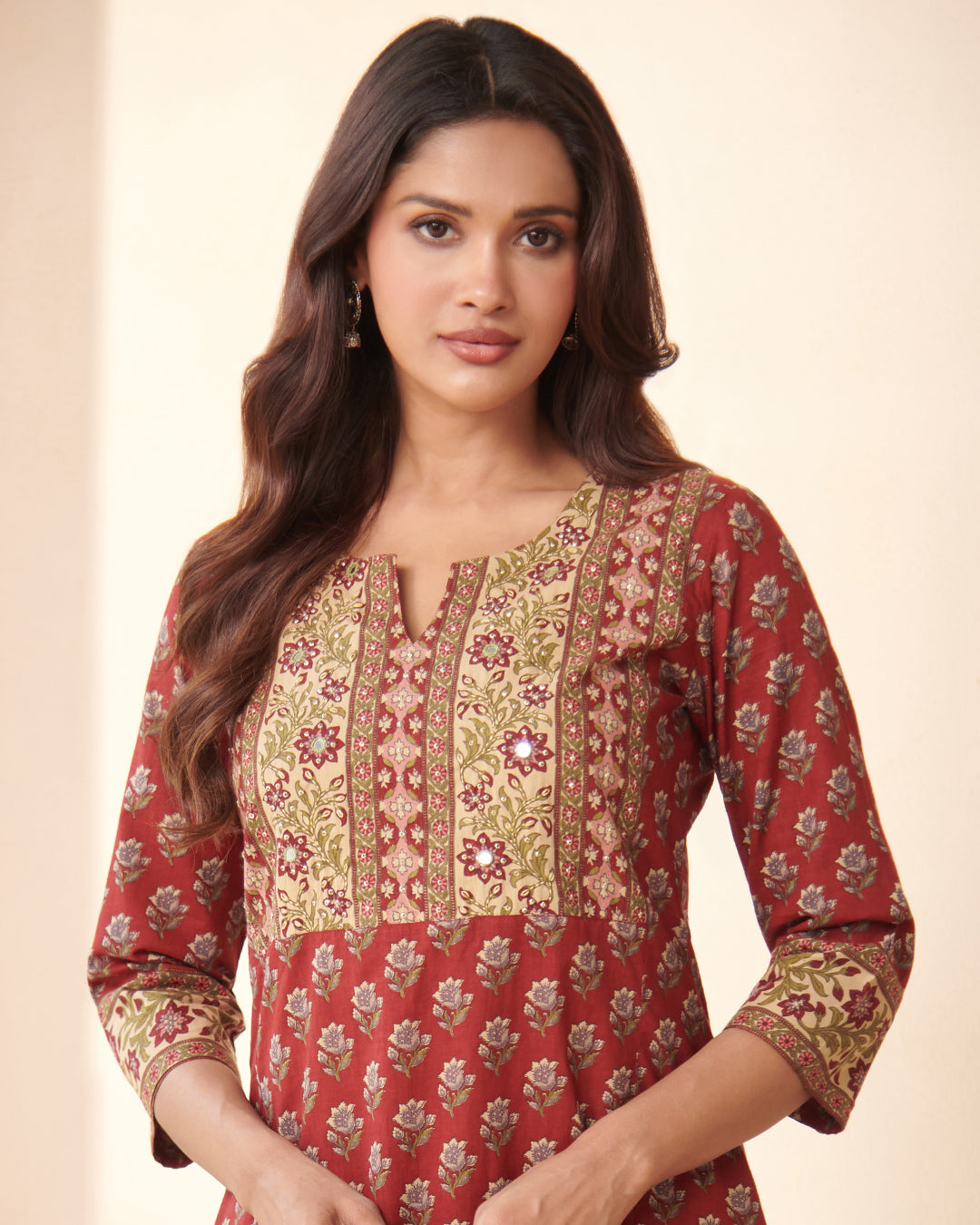
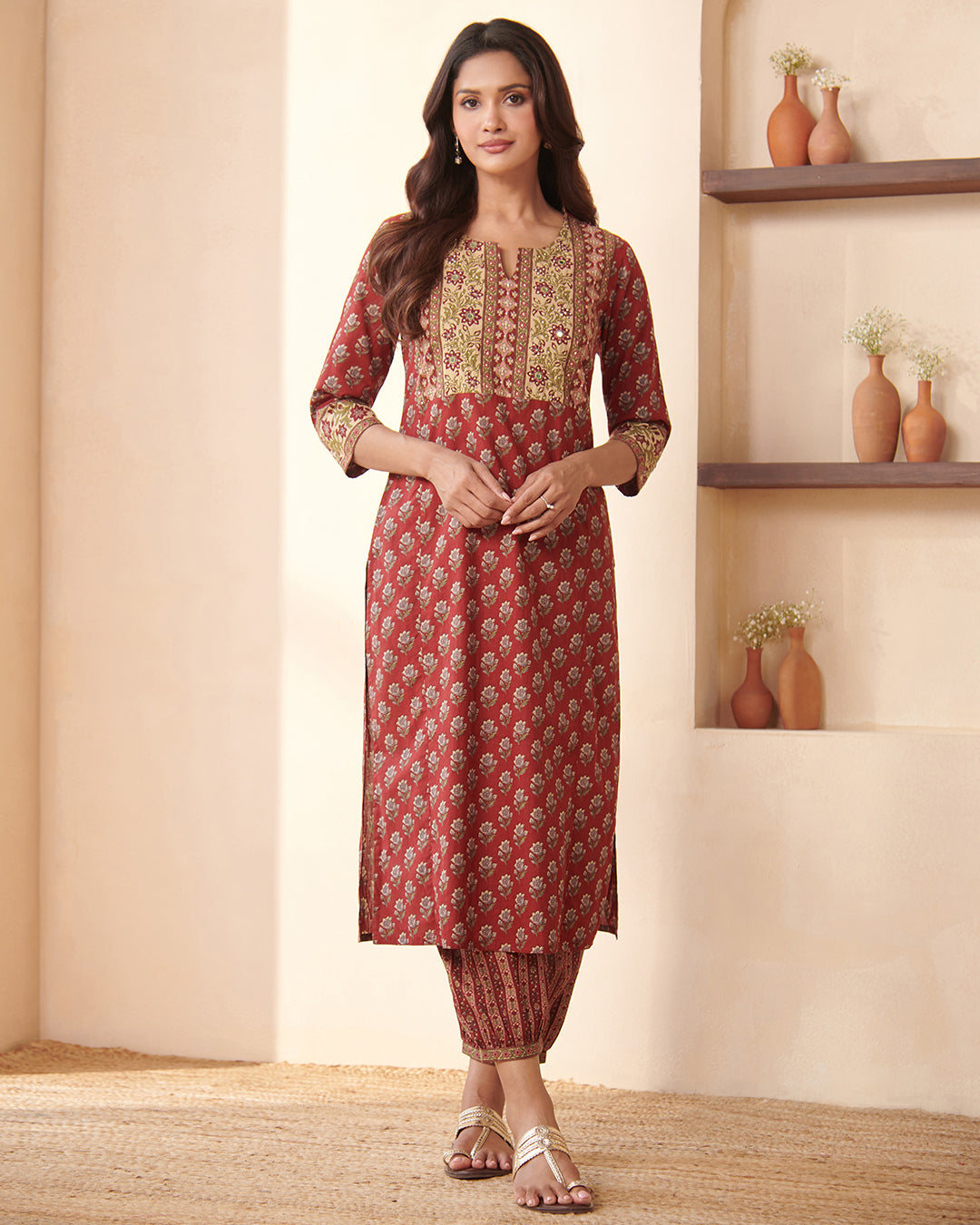
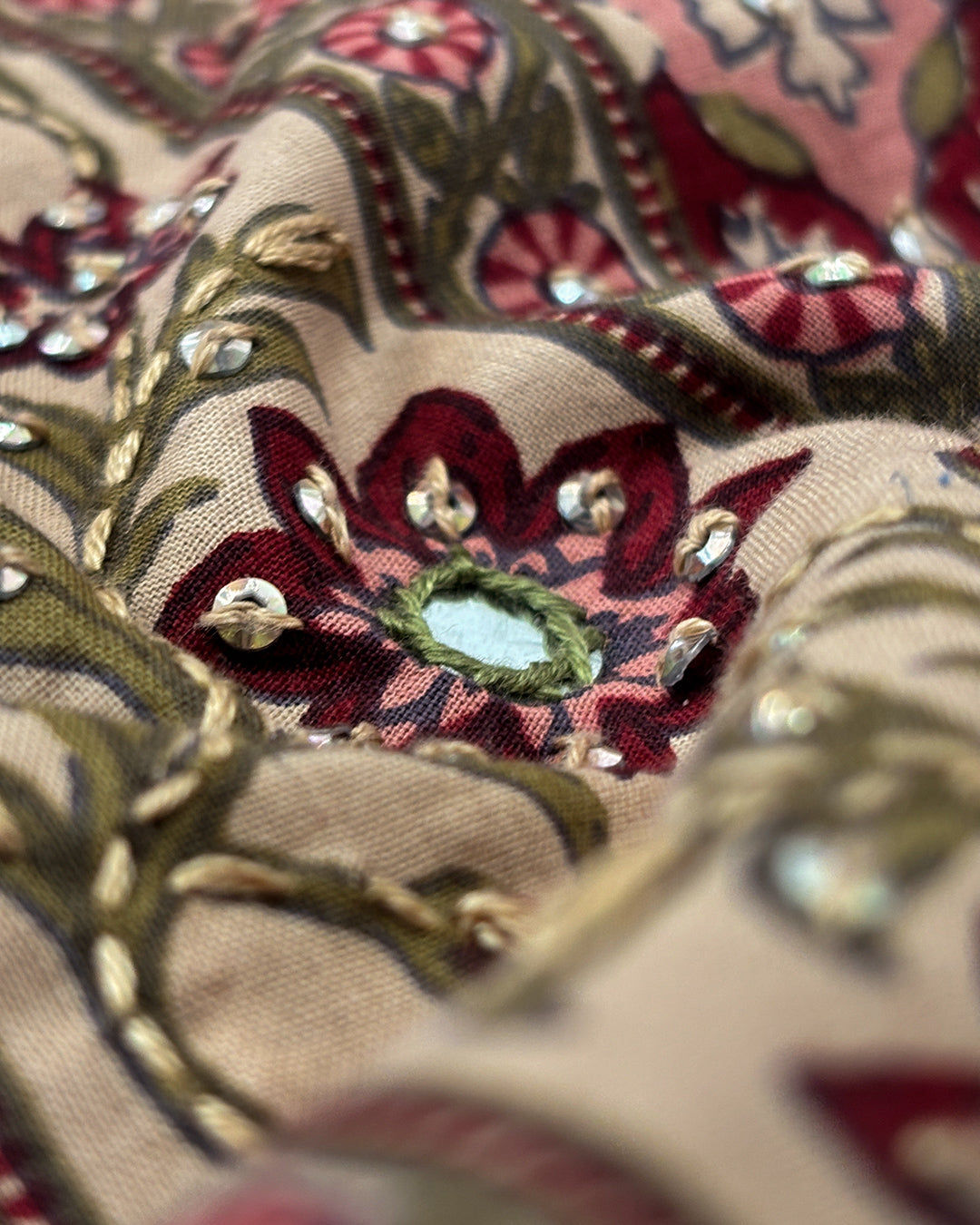
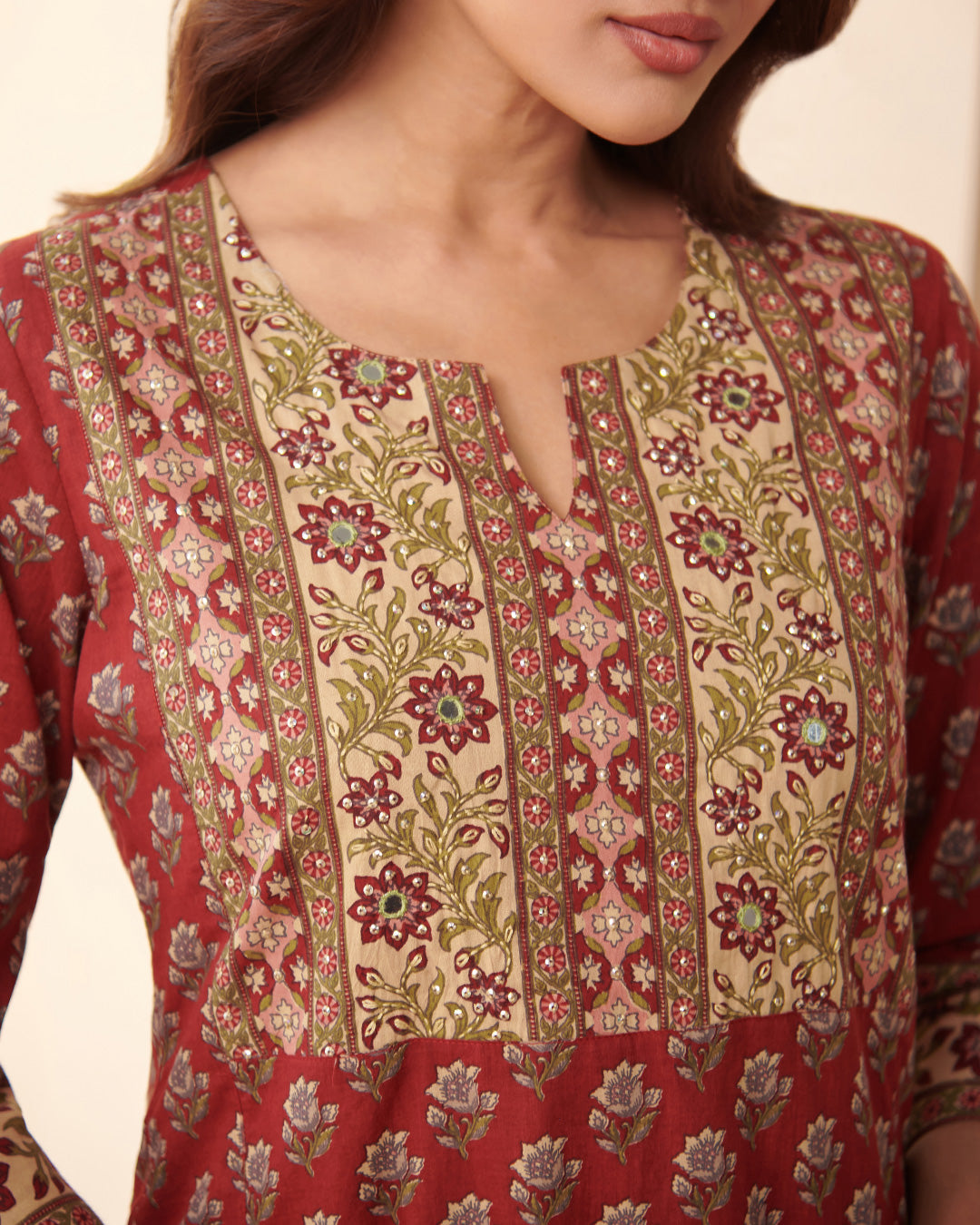
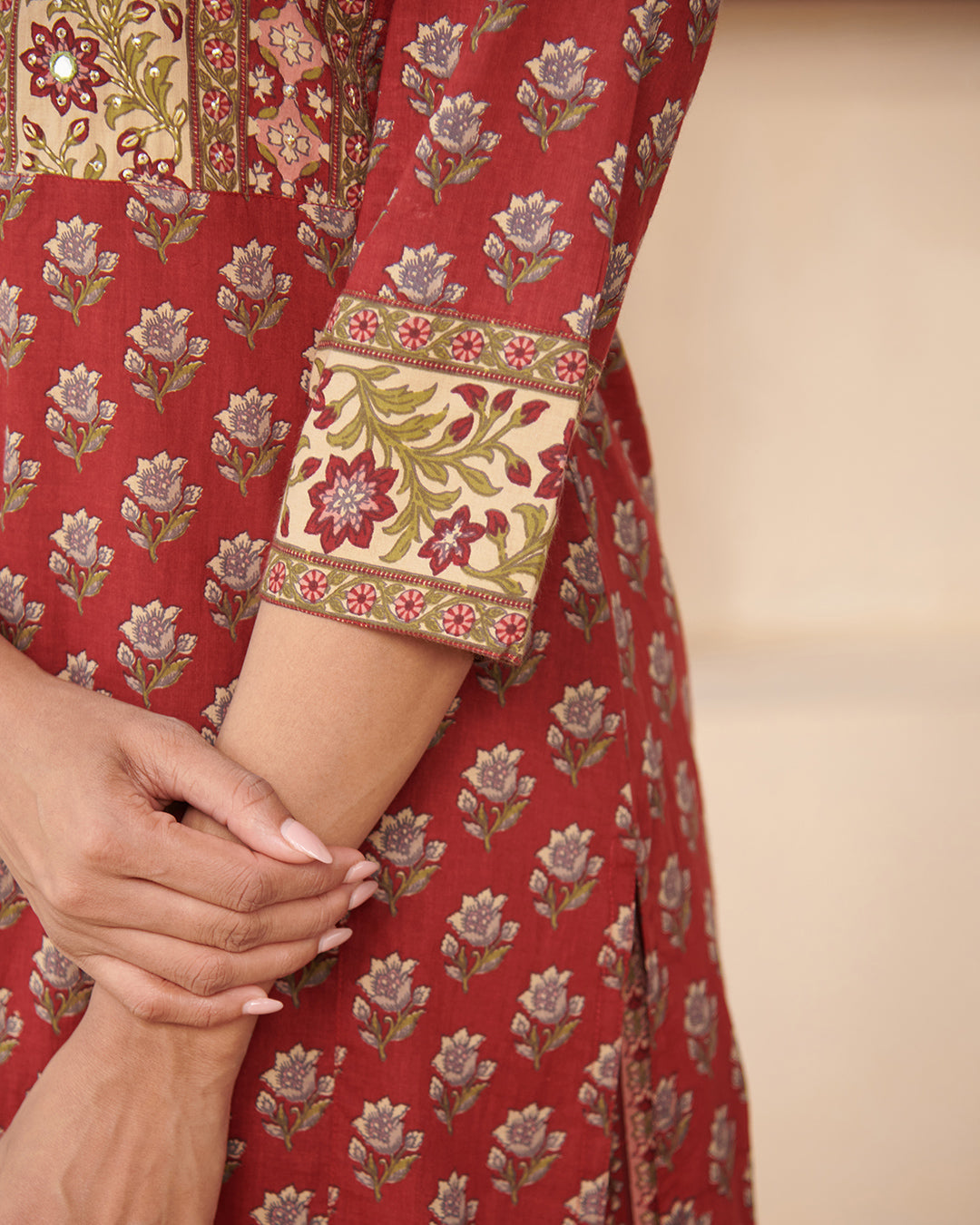
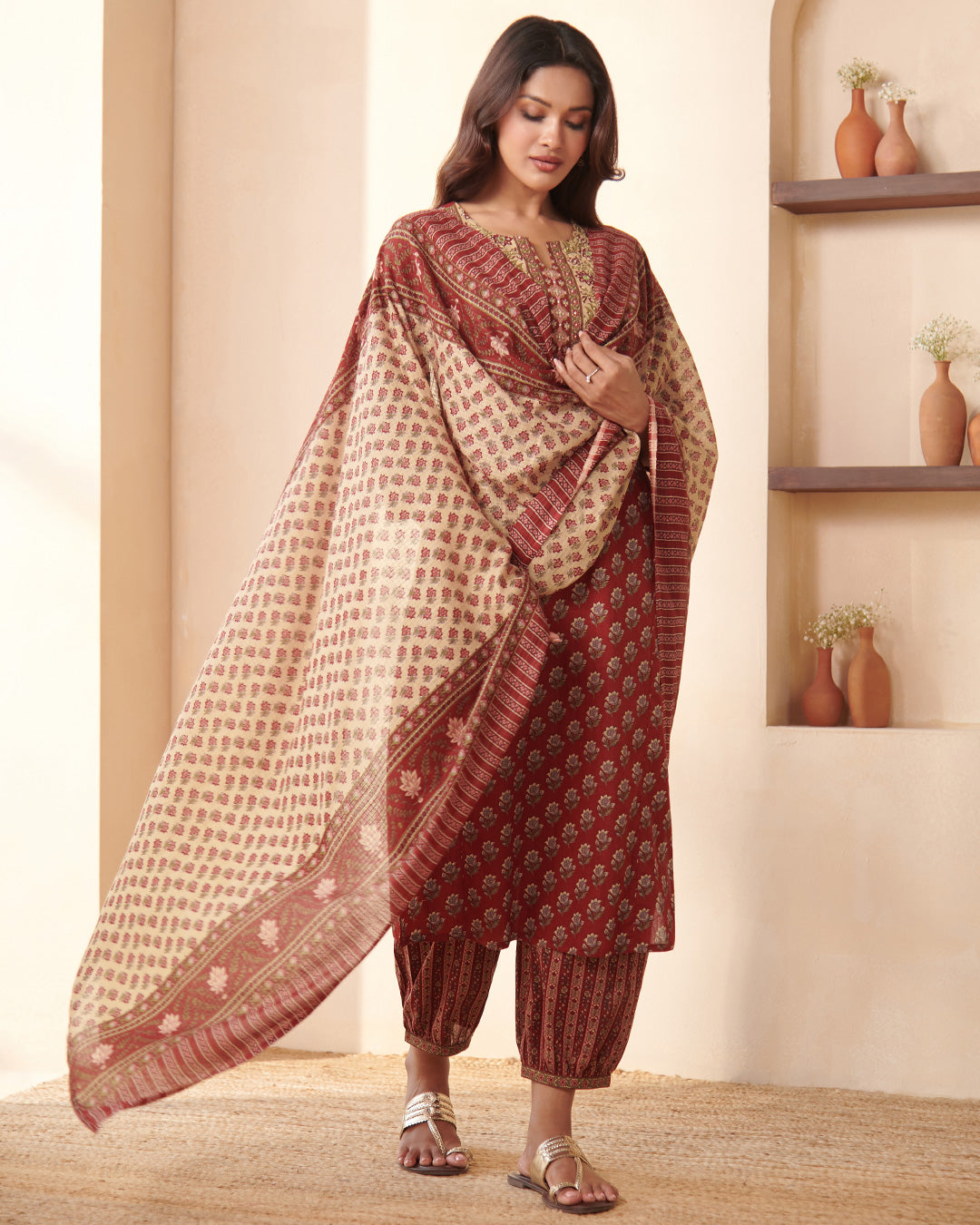
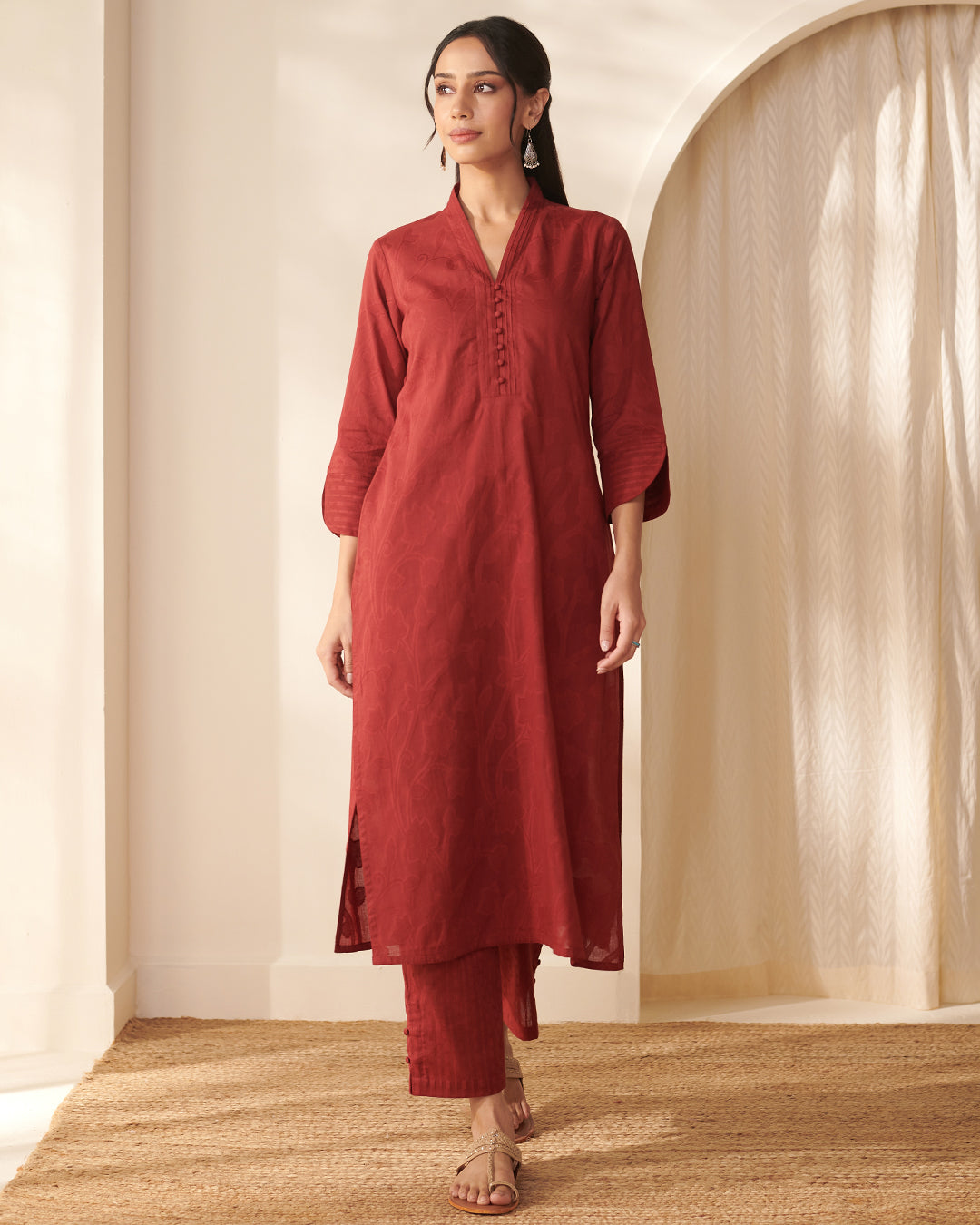
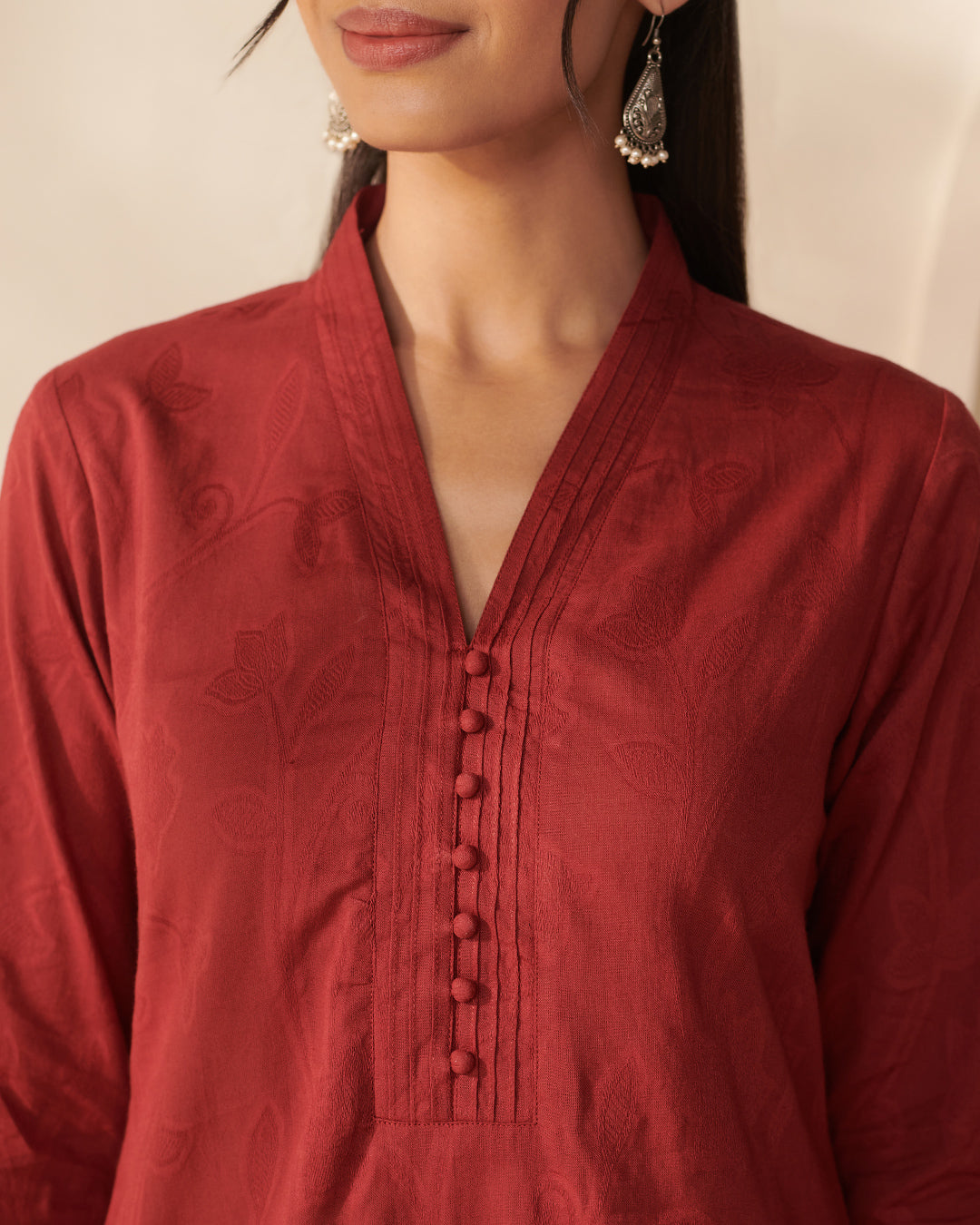
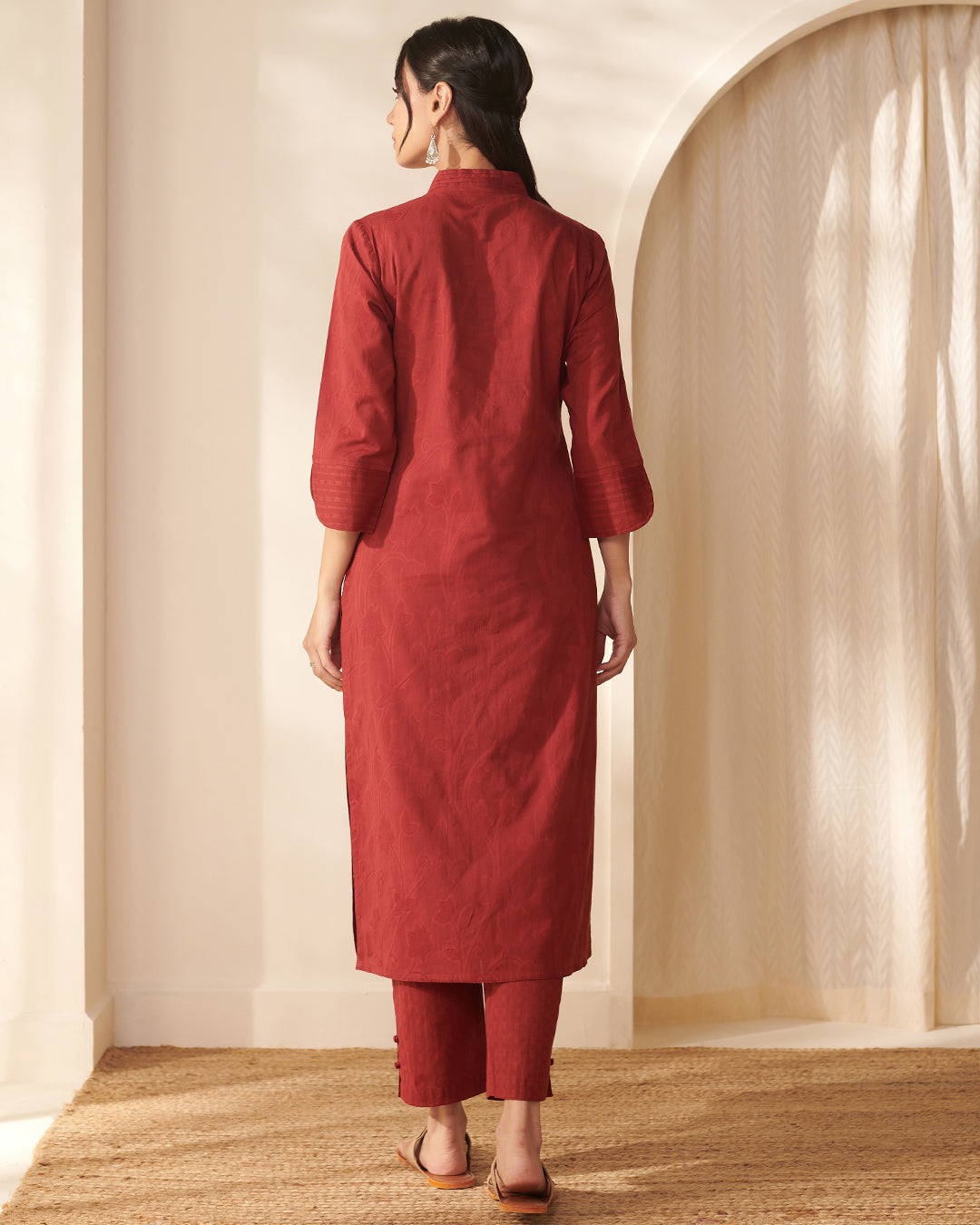

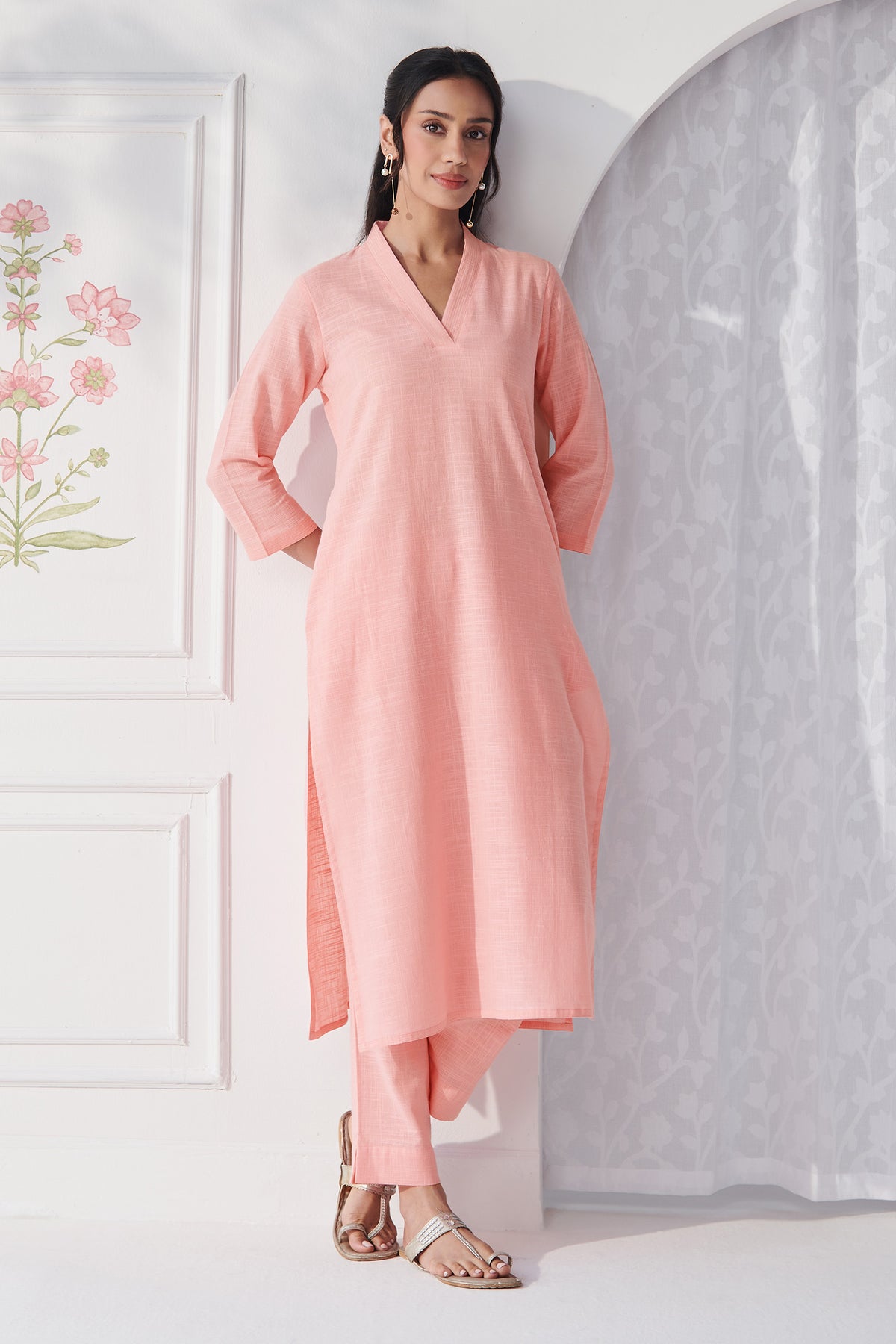
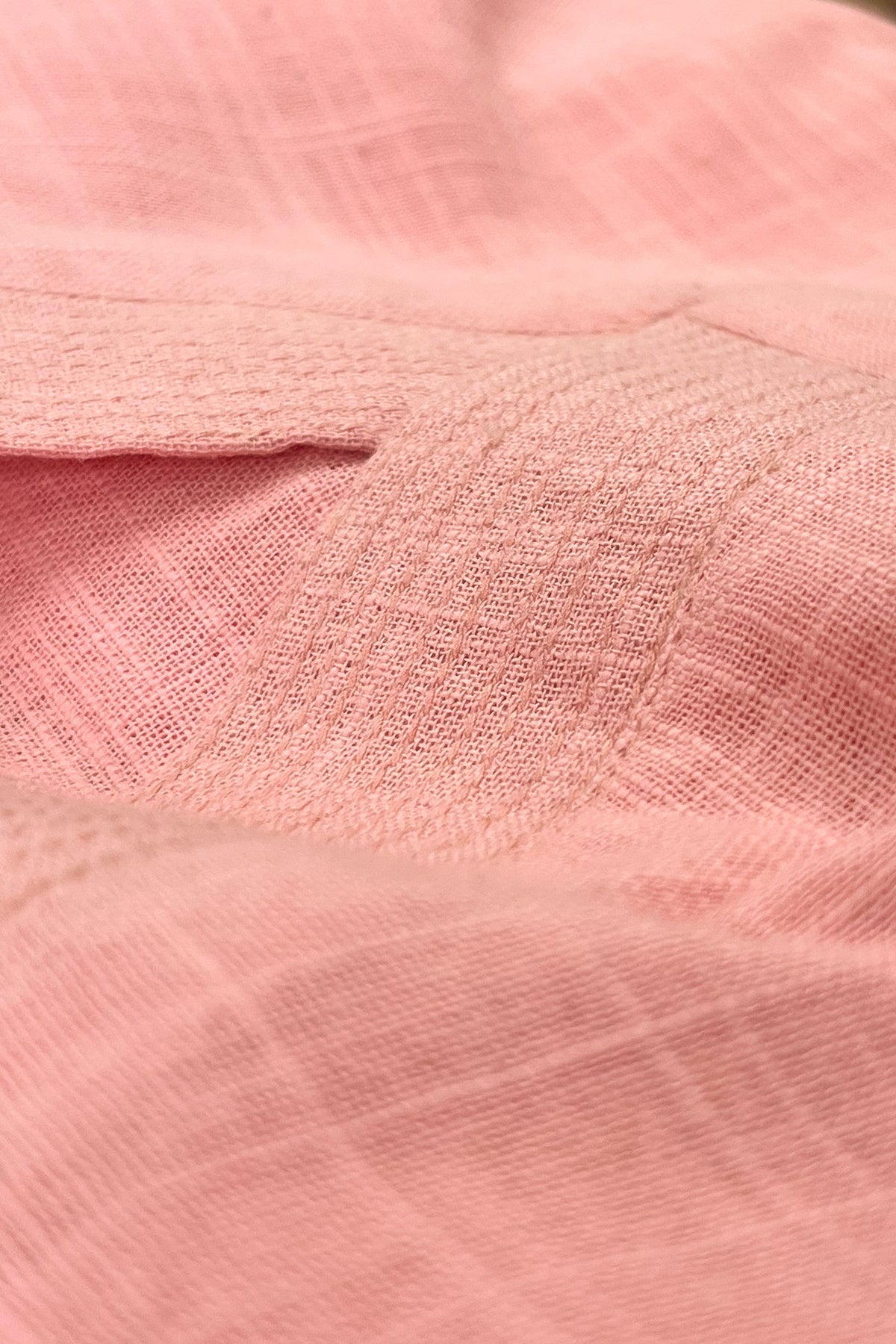
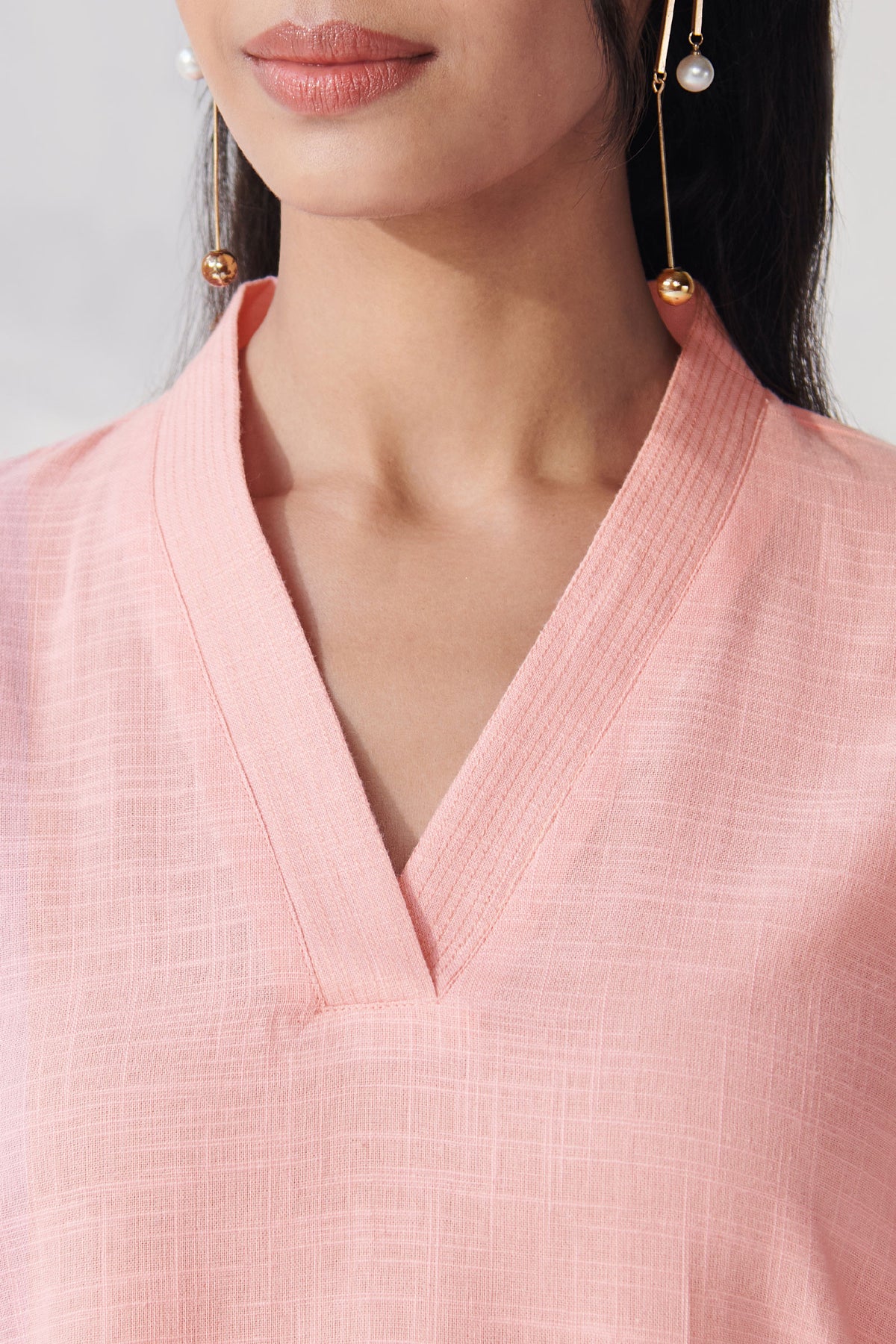

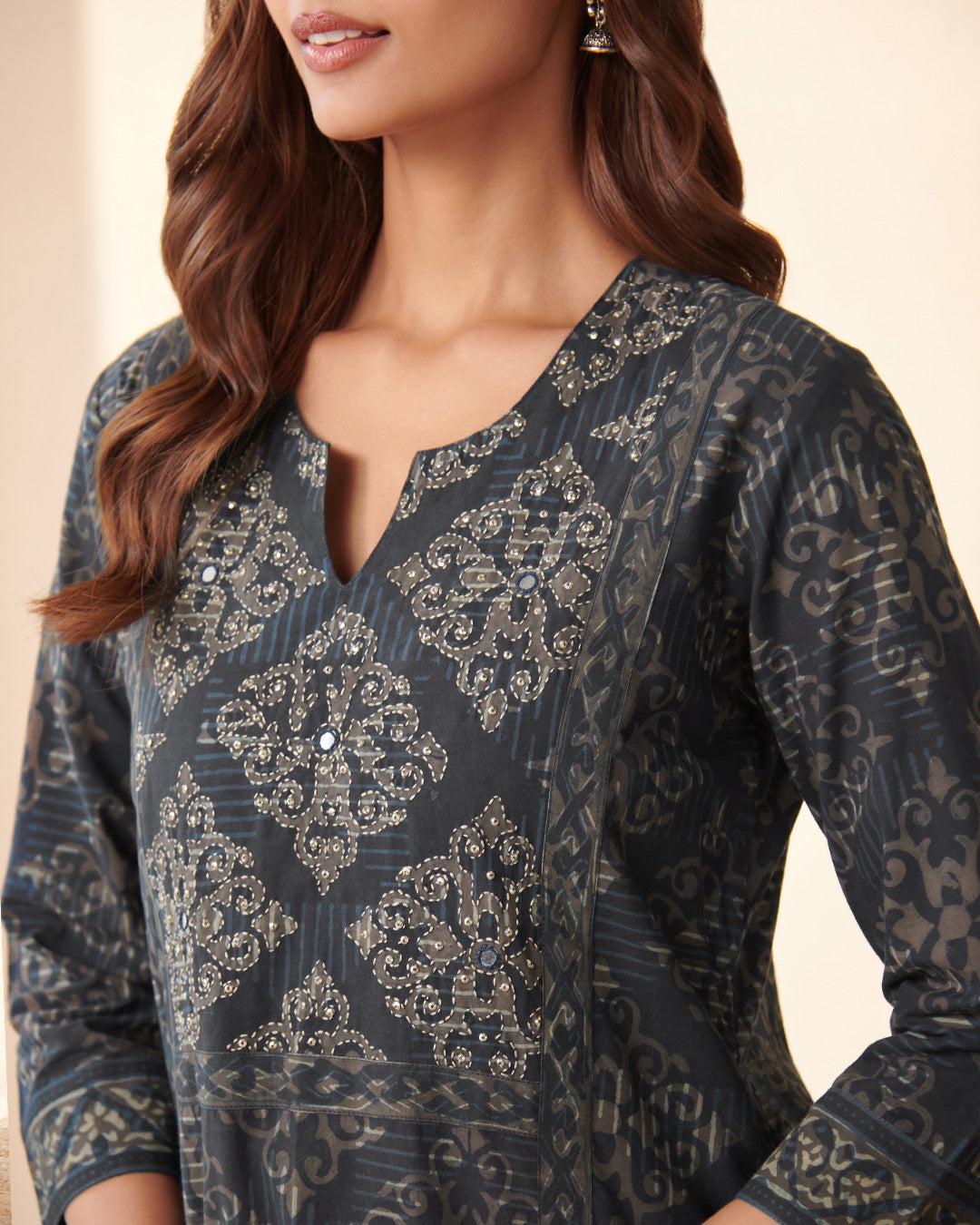
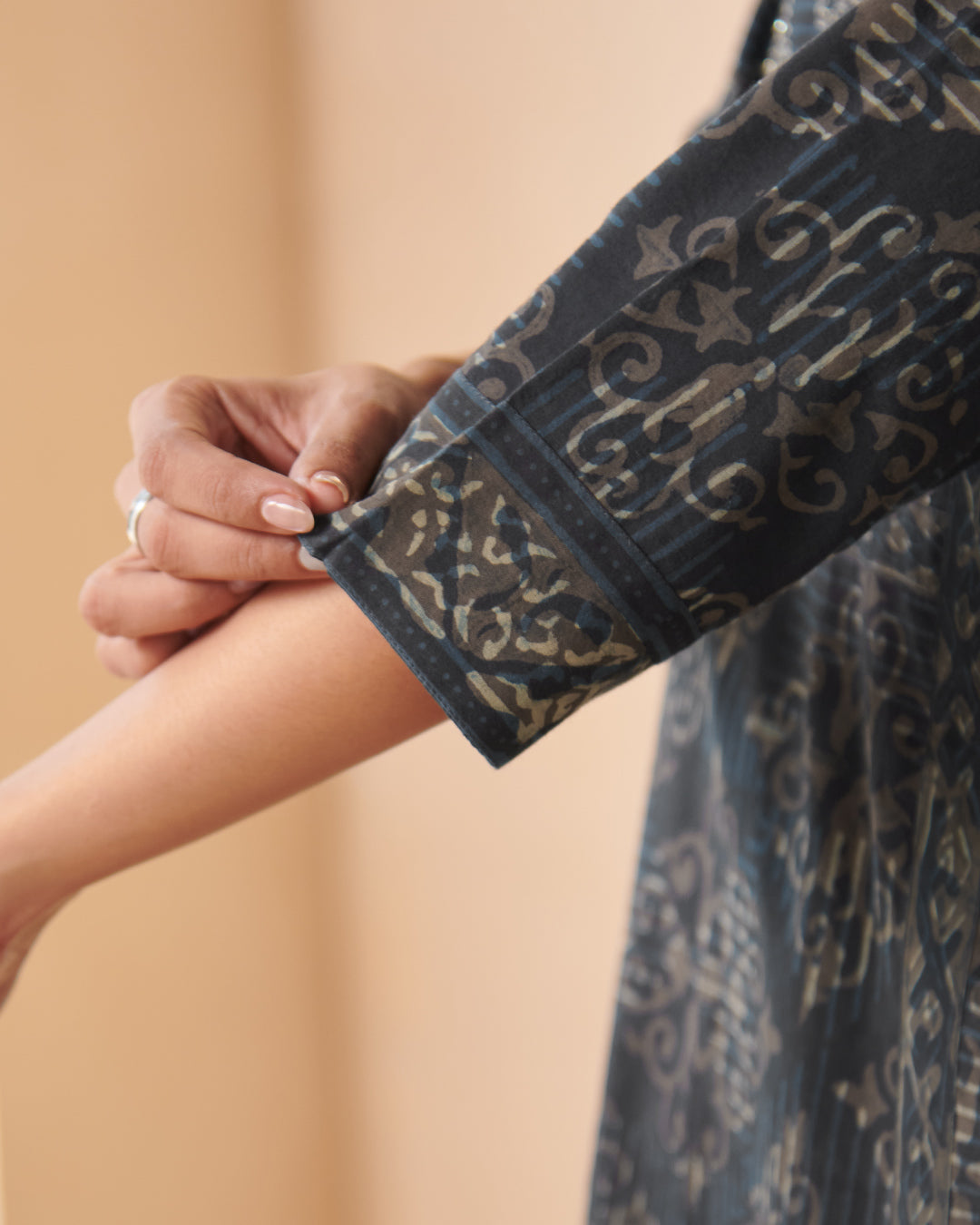
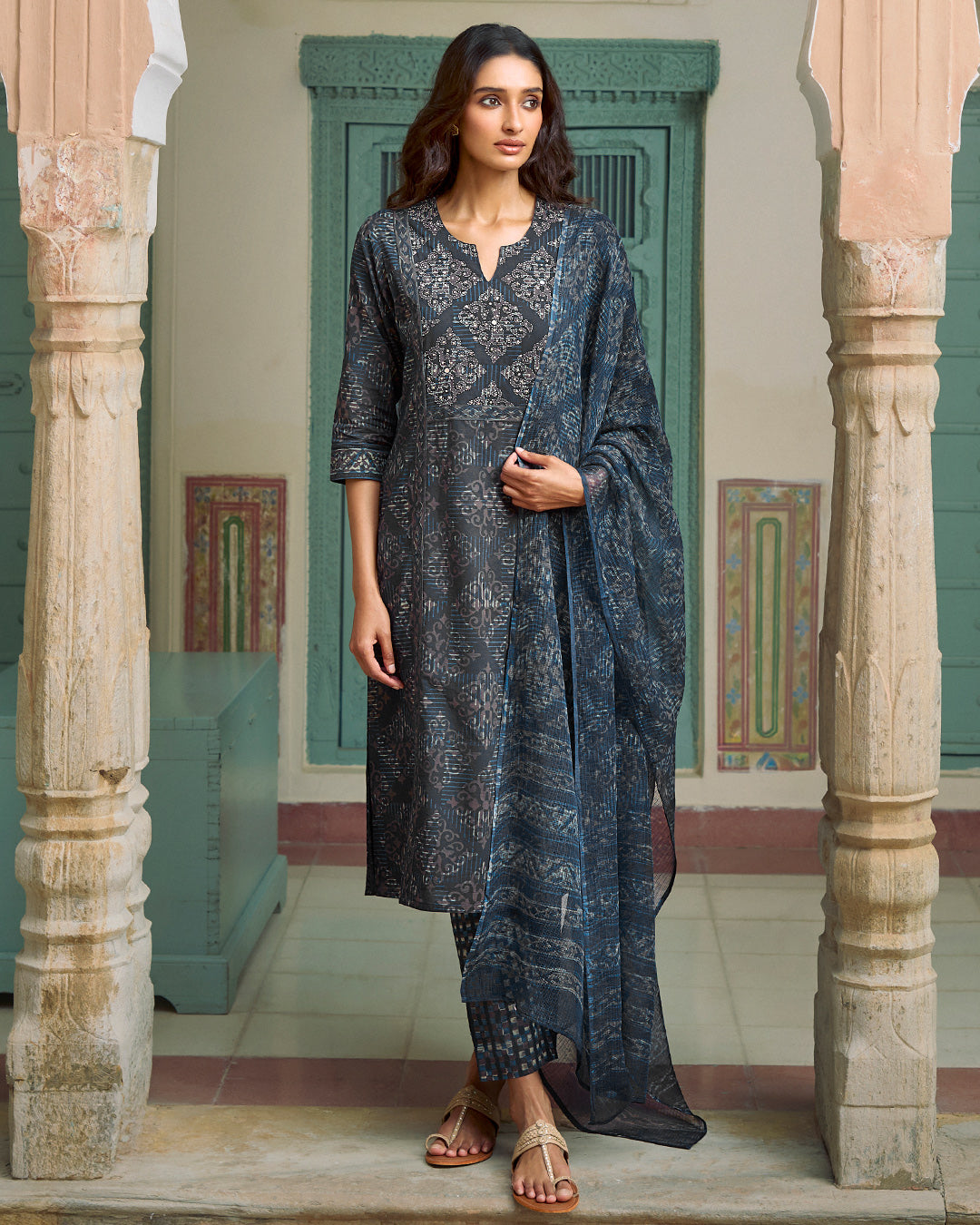
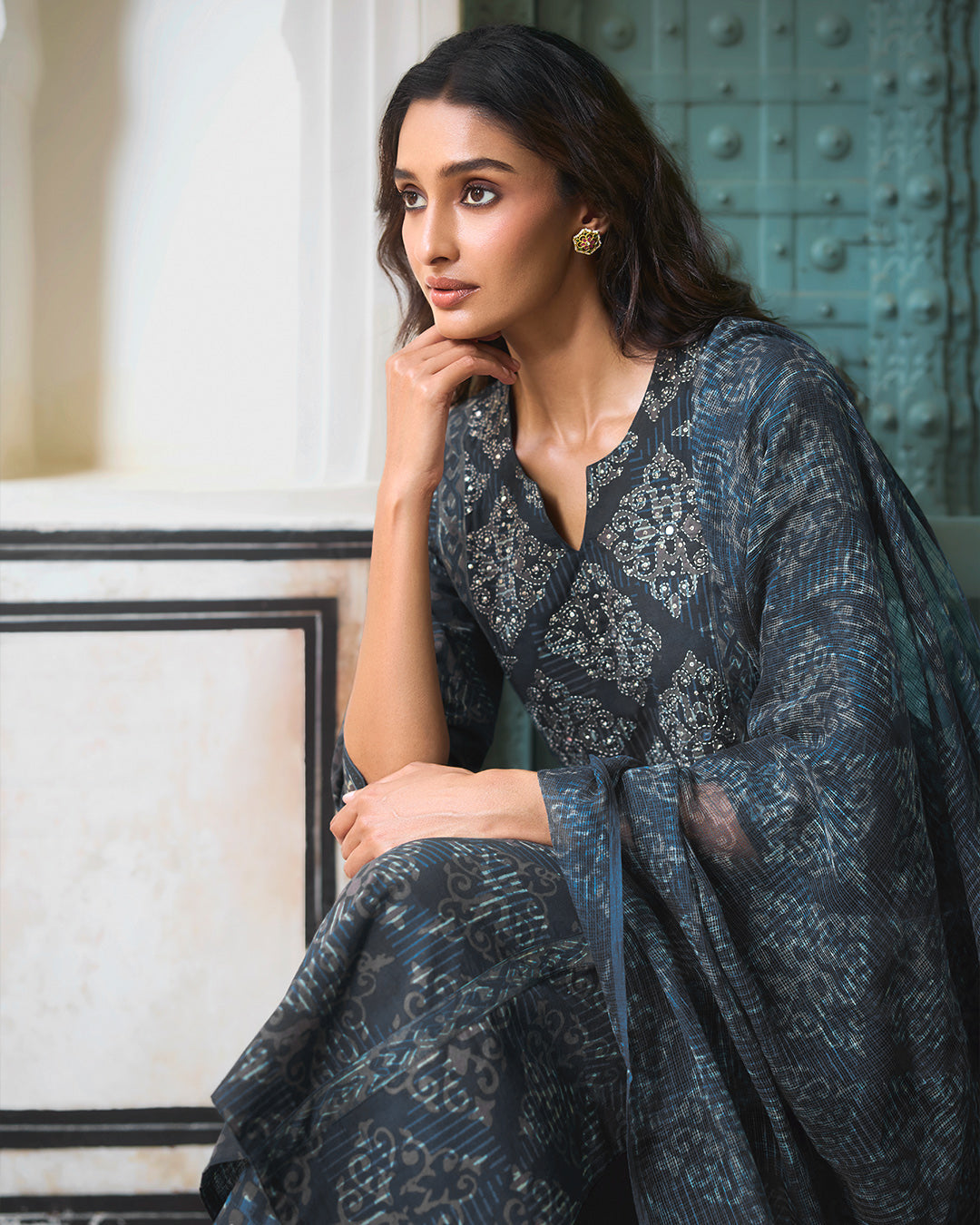
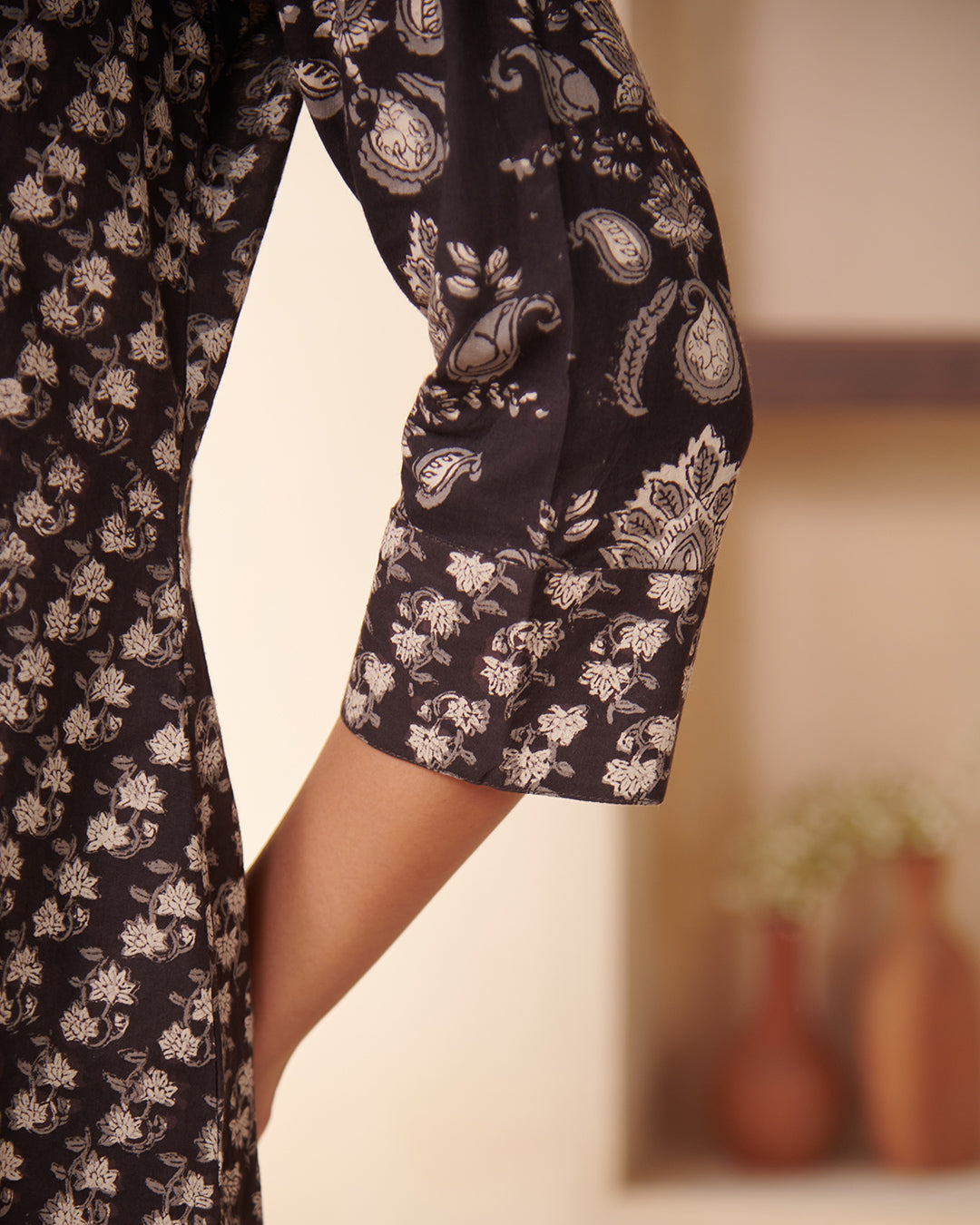
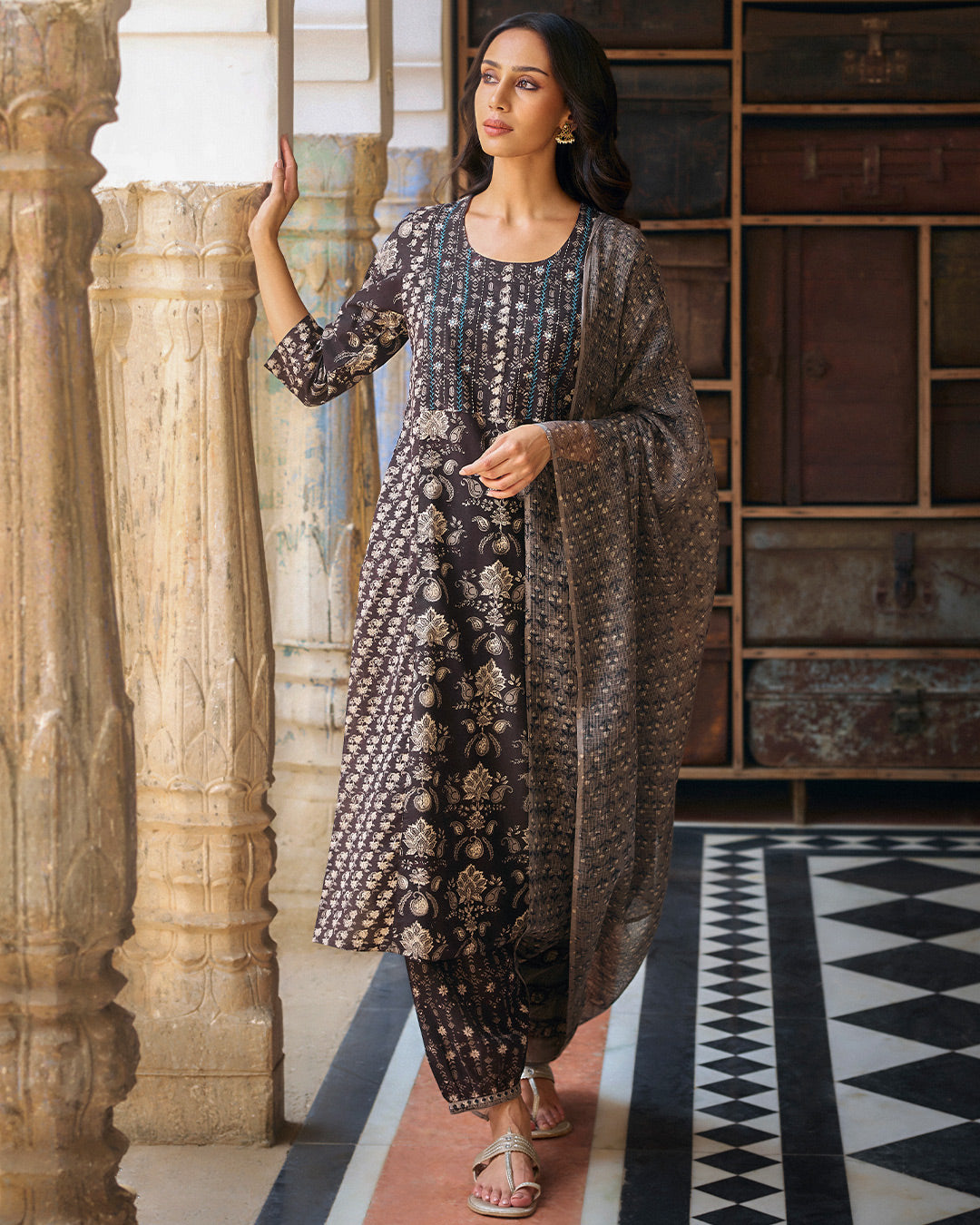
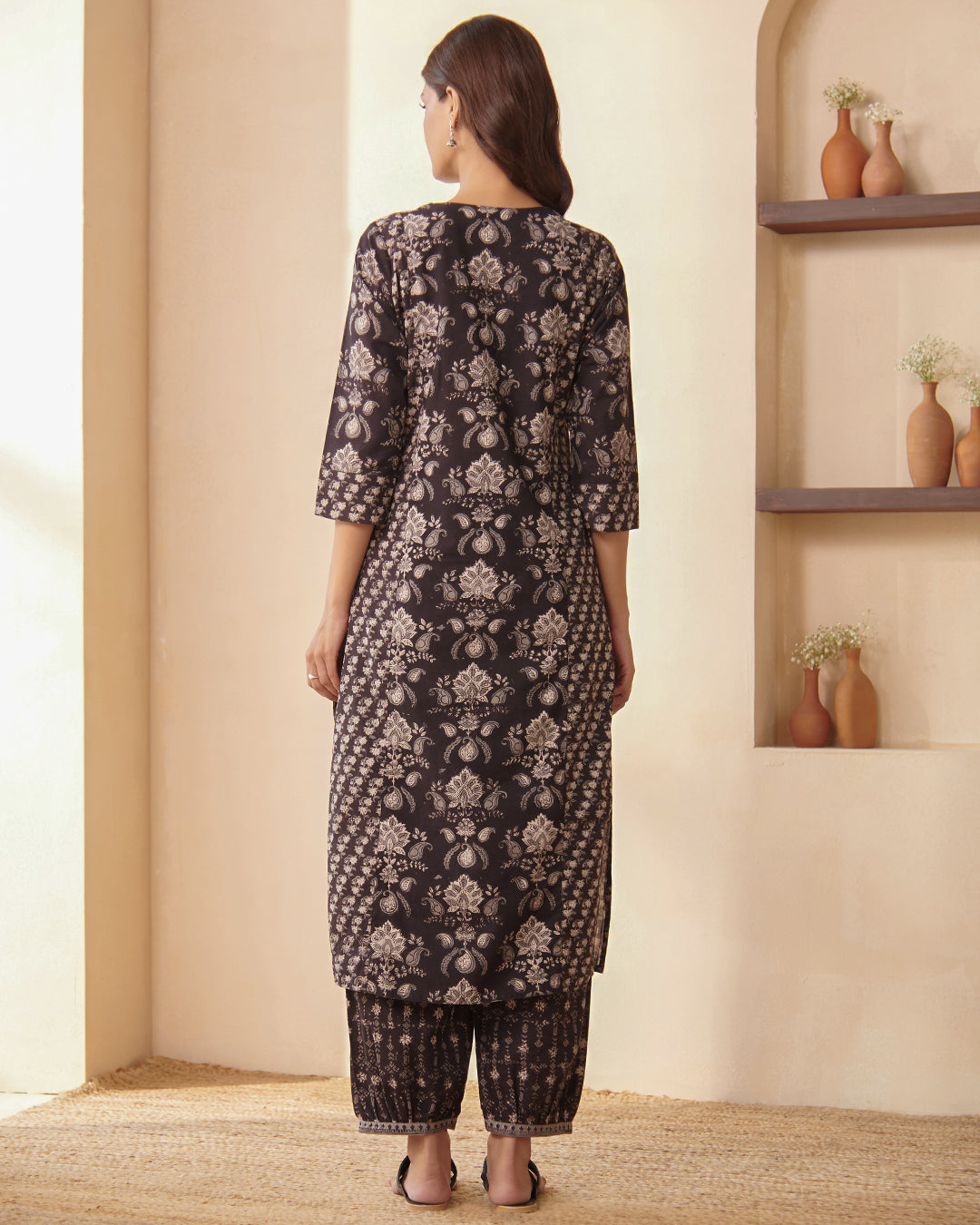
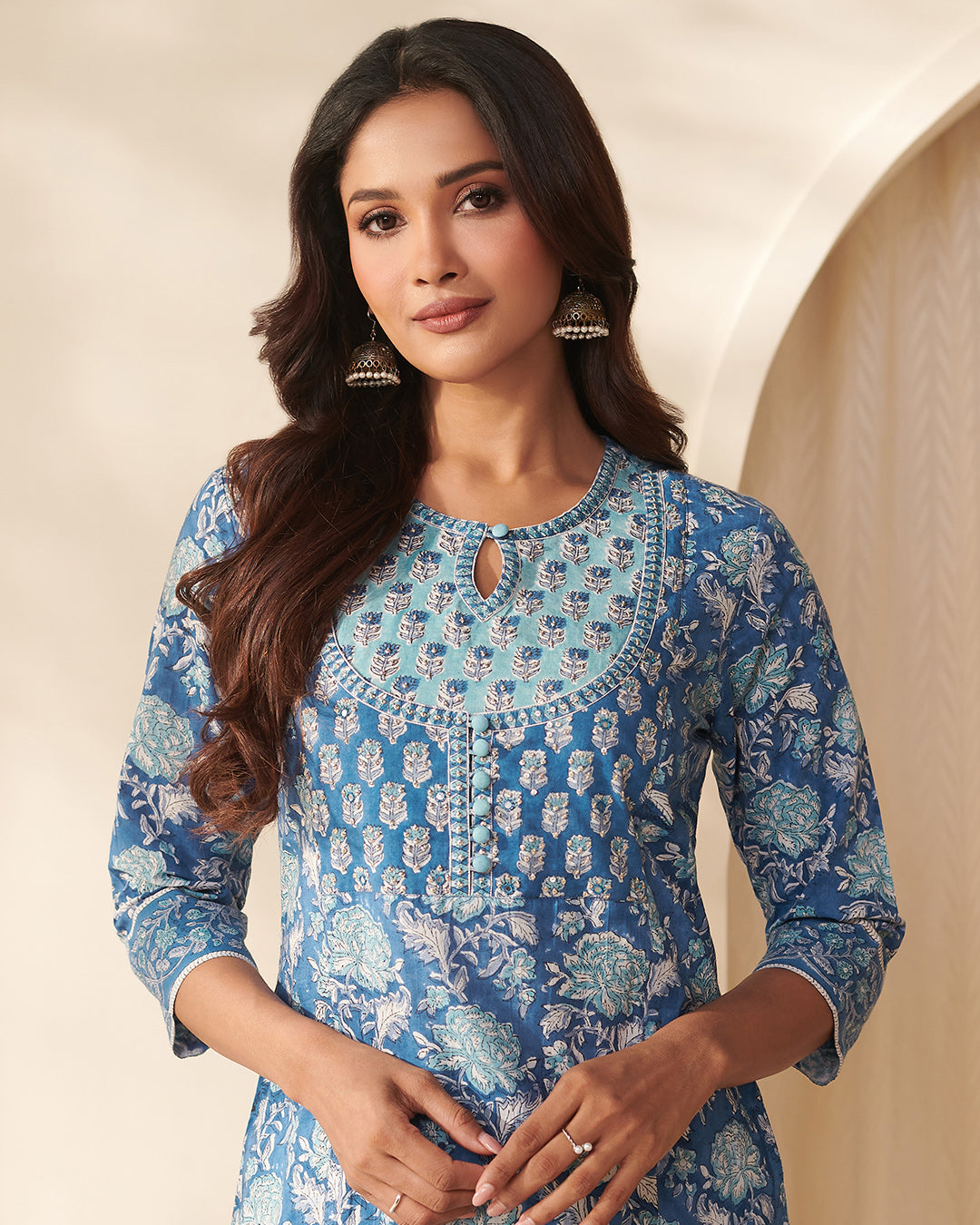
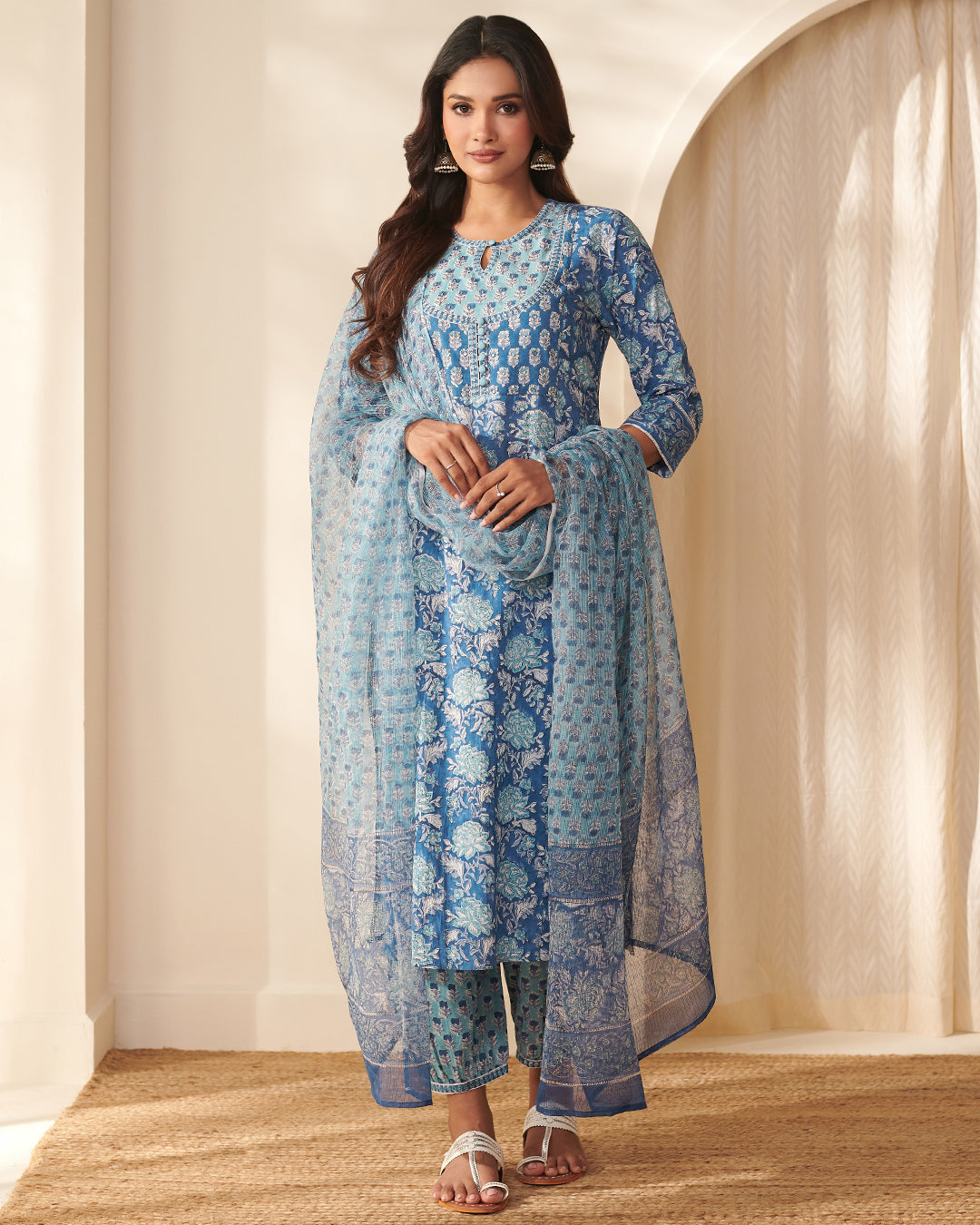
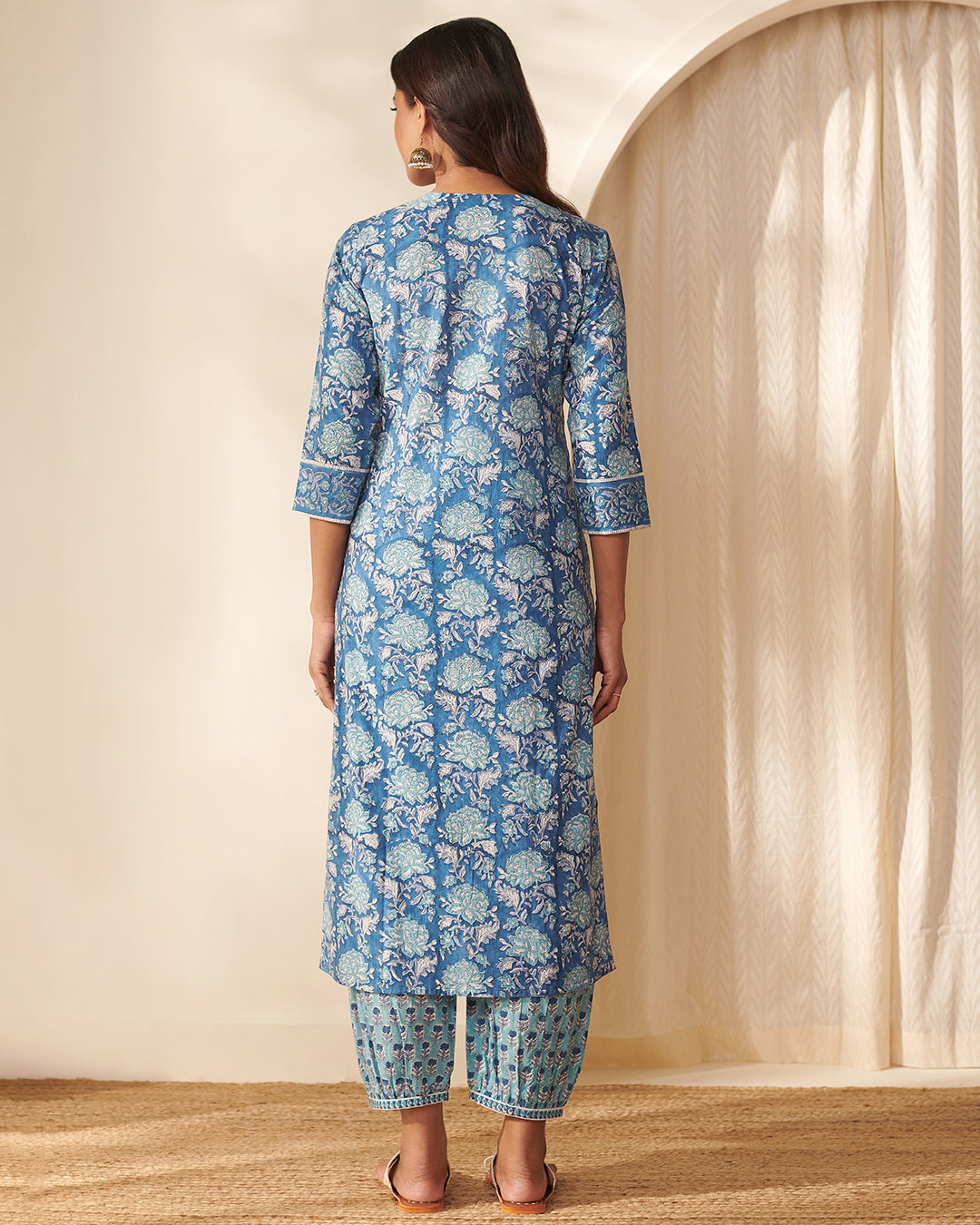
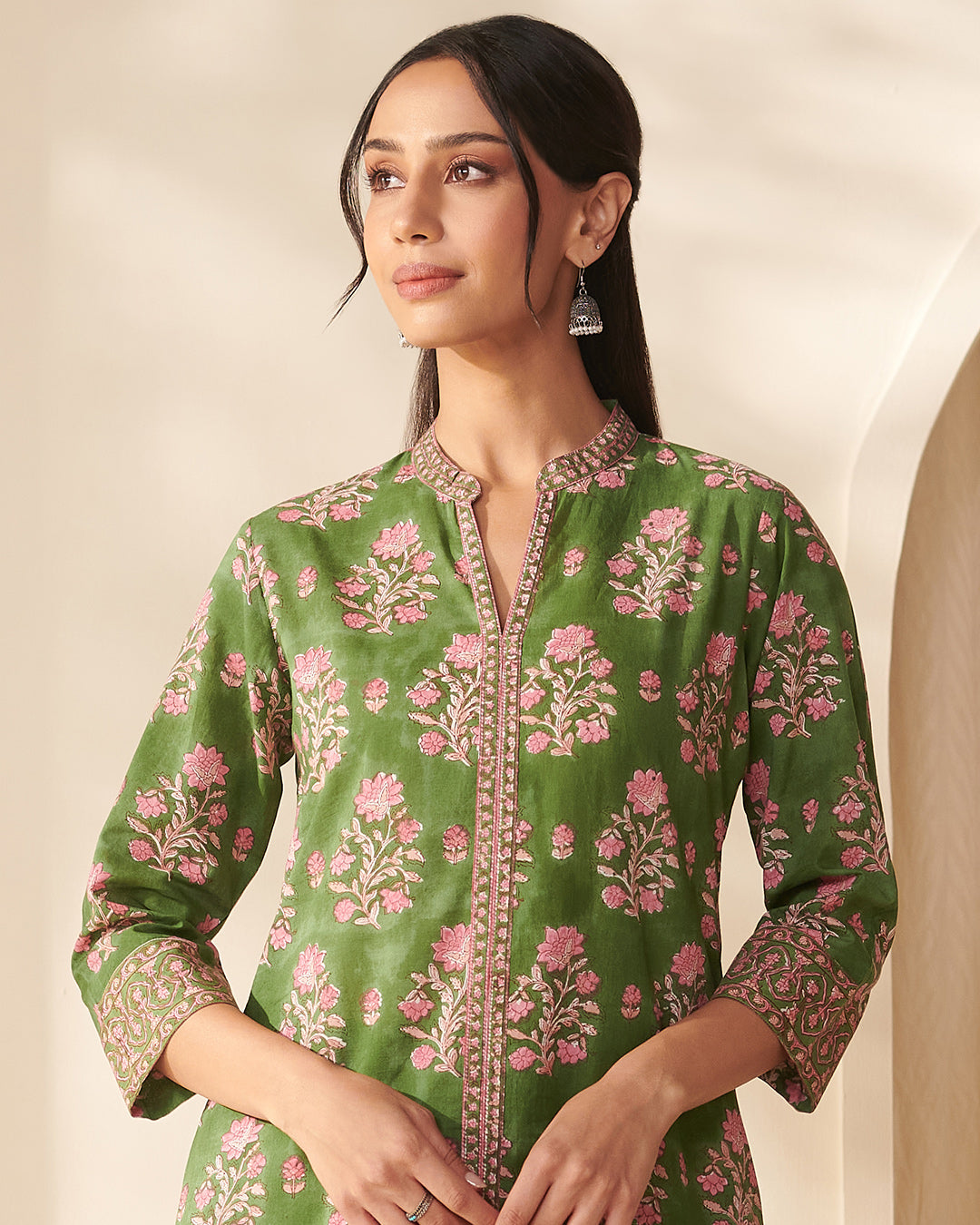
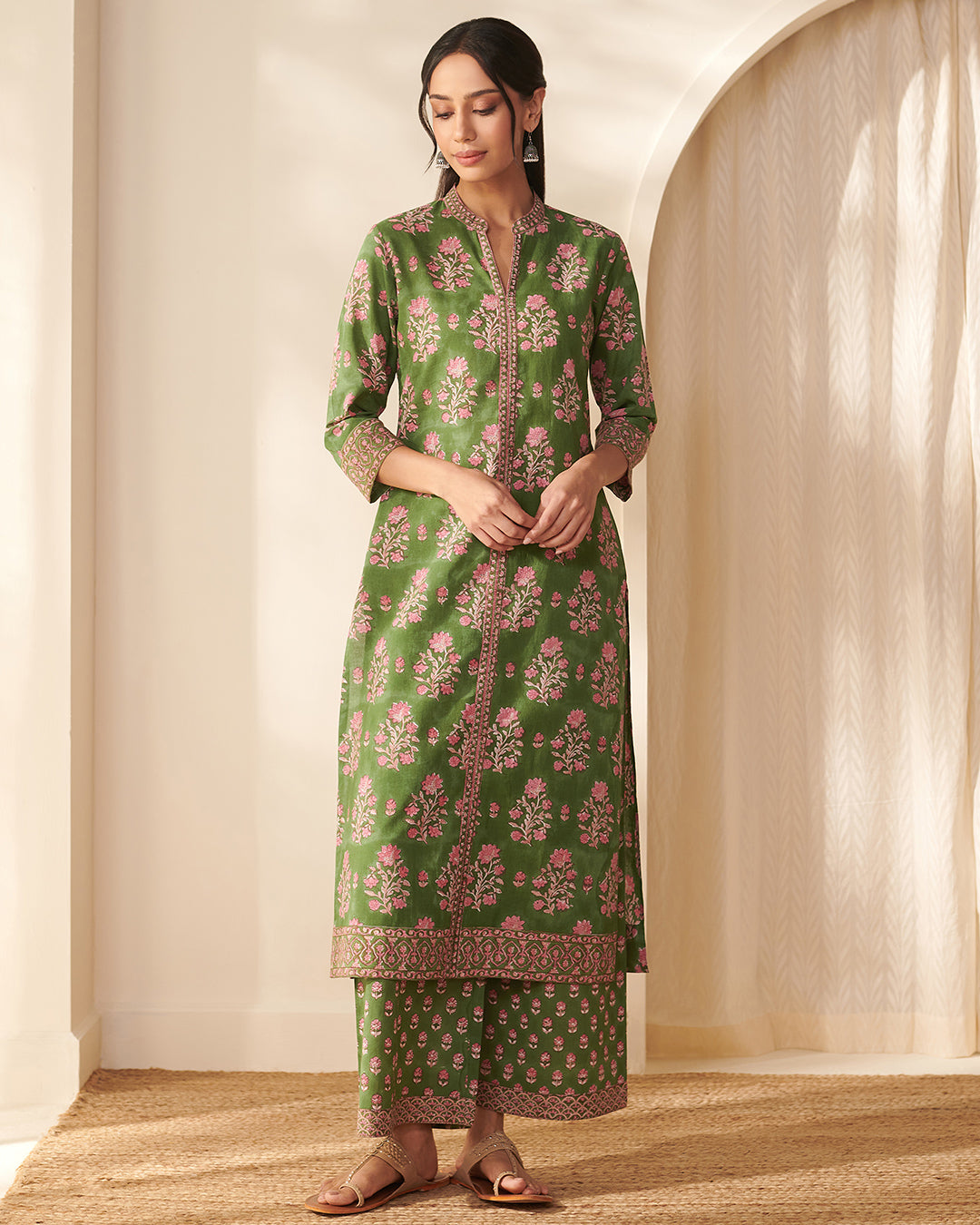




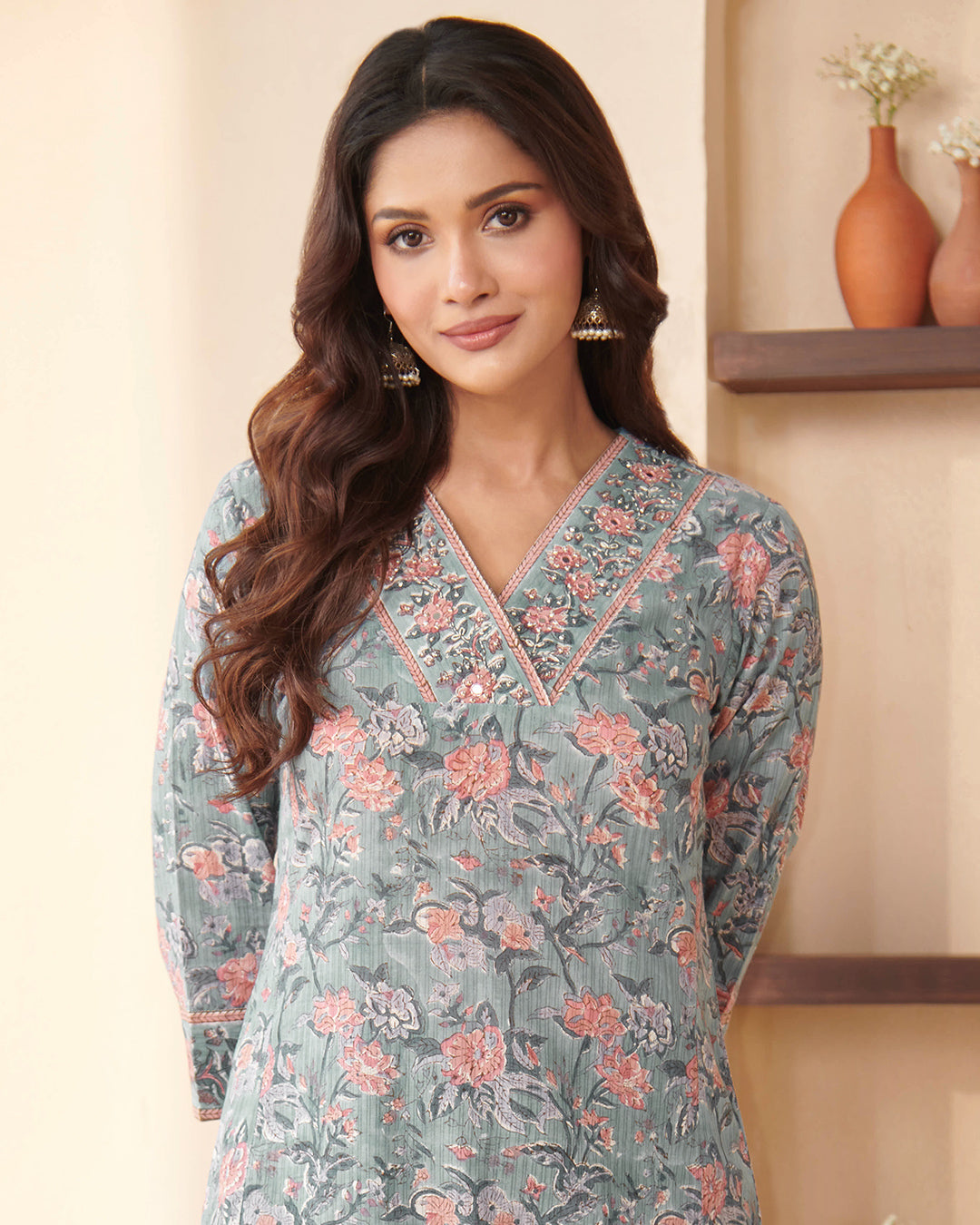
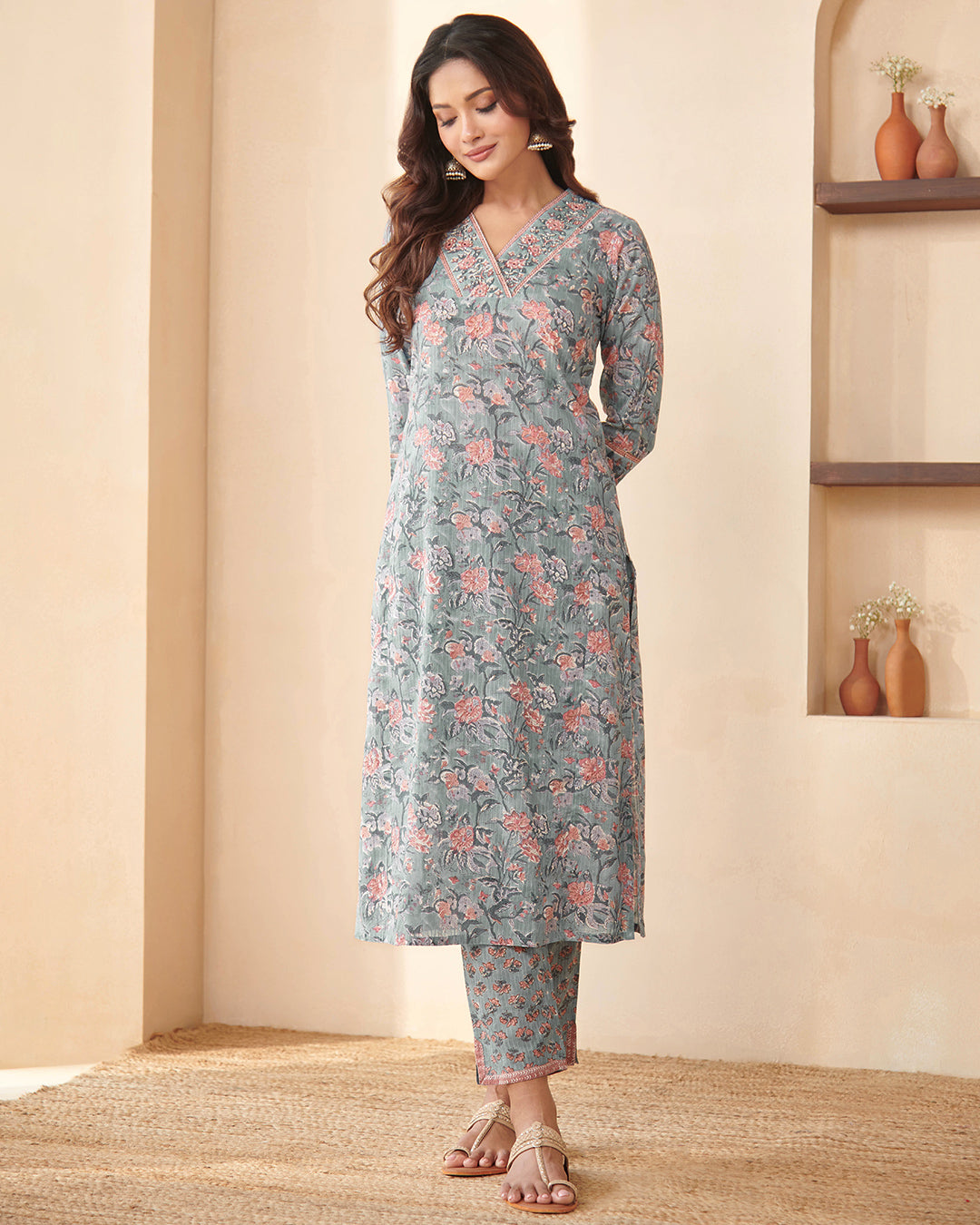
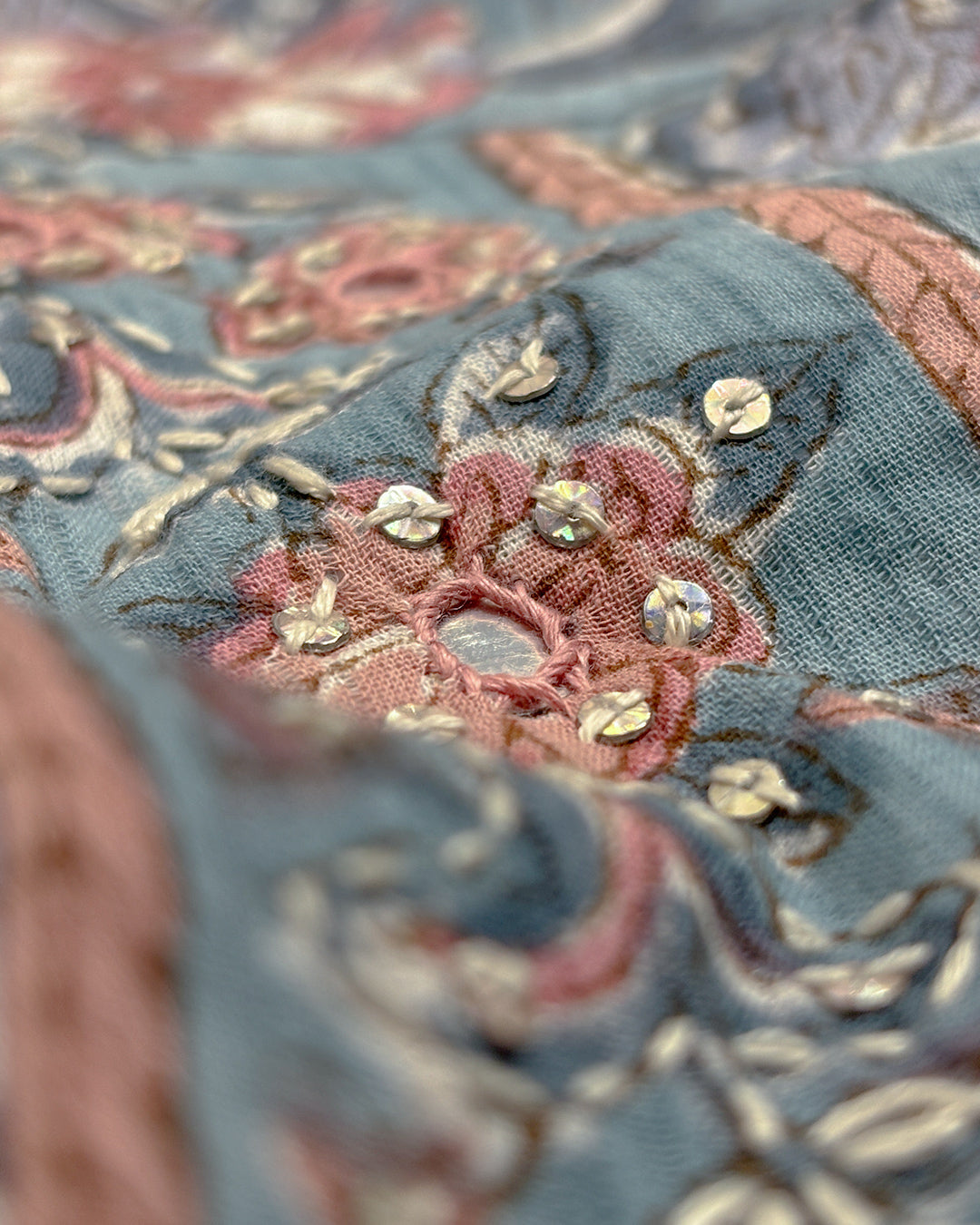
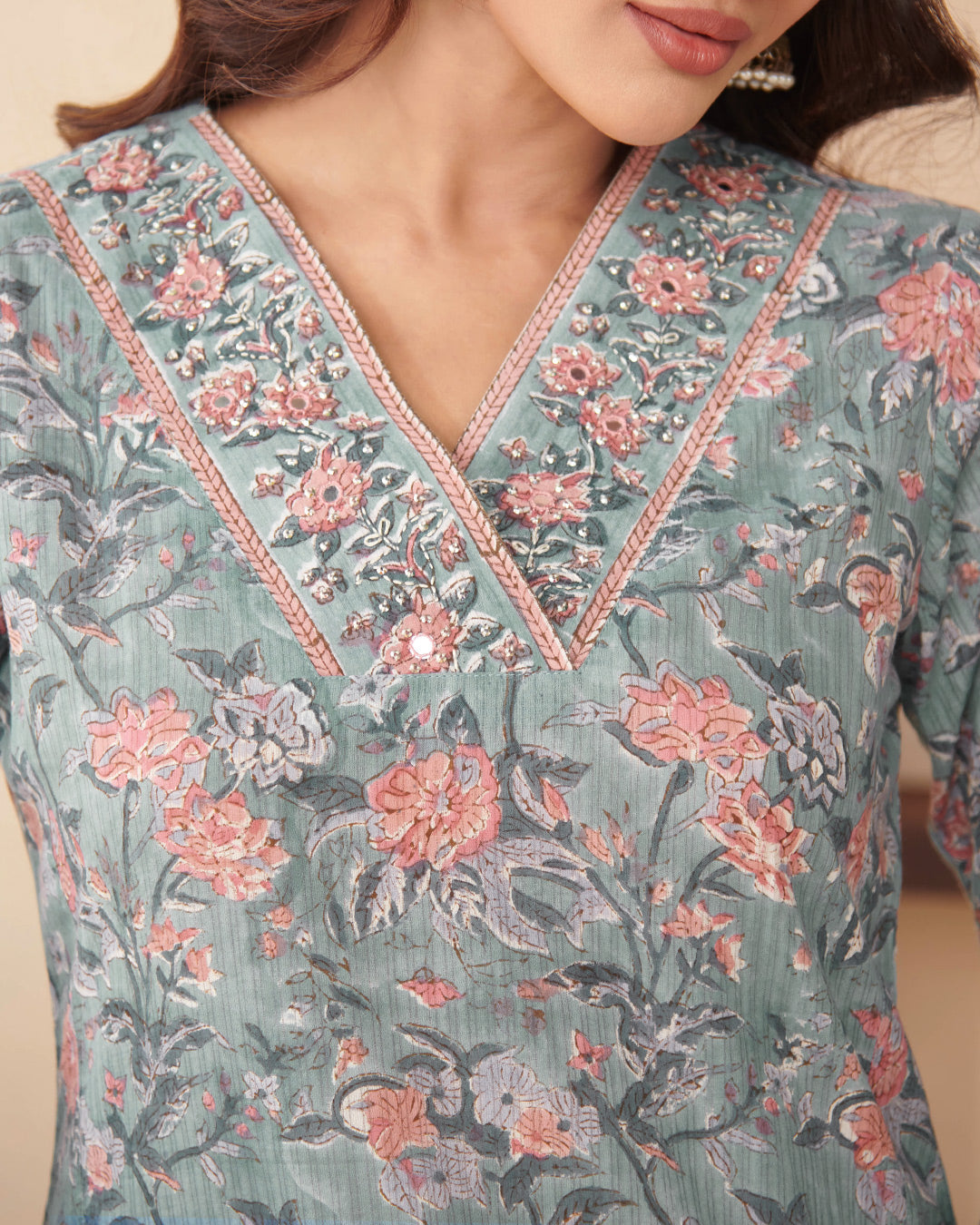
Some prints carry the quiet beauty of the hands that create them. Sanganeri block printing is one such craft, shaped by generations of artisans in Rajasthan. Its fine floral patterns, delicate detailing and thoughtful use of colour have made it a cherished part of India’s textile heritage.
Originating in Sanganer, near Jaipur, this traditional printing technique reflects a close relationship between nature, craftsmanship and everyday life. Each design begins with a carved wooden block, but the beauty of the finished fabric lies in much more than the pattern itself. It comes from the skill of the artisan, the rhythm of the printing process and the care taken with every impression.
Today, Sanganeri prints find their way into wardrobes across India, bringing a sense of heritage to clothing worn through ordinary days and special occasions alike. Yet there is much more to this craft than its familiar flowers and graceful patterns.
7 Things About Sanganeri Block Printing

1. Sanganeri Printing Has Roots in Rajasthan’s Craft Heritage
Sanganeri block printing takes its name from Sanganer, a historic town near Jaipur in Rajasthan. The town has long been associated with textile printing, with generations of artisans developing and refining the craft through years of practice.
Its growth was shaped by the region’s access to water, the availability of skilled craftspeople and the movement of textiles through traditional trade networks. Over time, Sanganer became known for its printed fabrics, particularly those distinguished by fine patterns and delicate workmanship.
The craft has survived because knowledge has passed from one generation to the next. Techniques, ways of preparing fabric and the handling of wooden blocks have been learnt through observation and practice, often within artisan families.
When we look at a piece of Sanganeri printed fabric today, we see more than a traditional Indian print. We see a living connection to Rajasthan’s artistic history, carried forward through the hands of those who continue to practise it.
2. The Craft Is Known for Its Delicate Floral Patterns
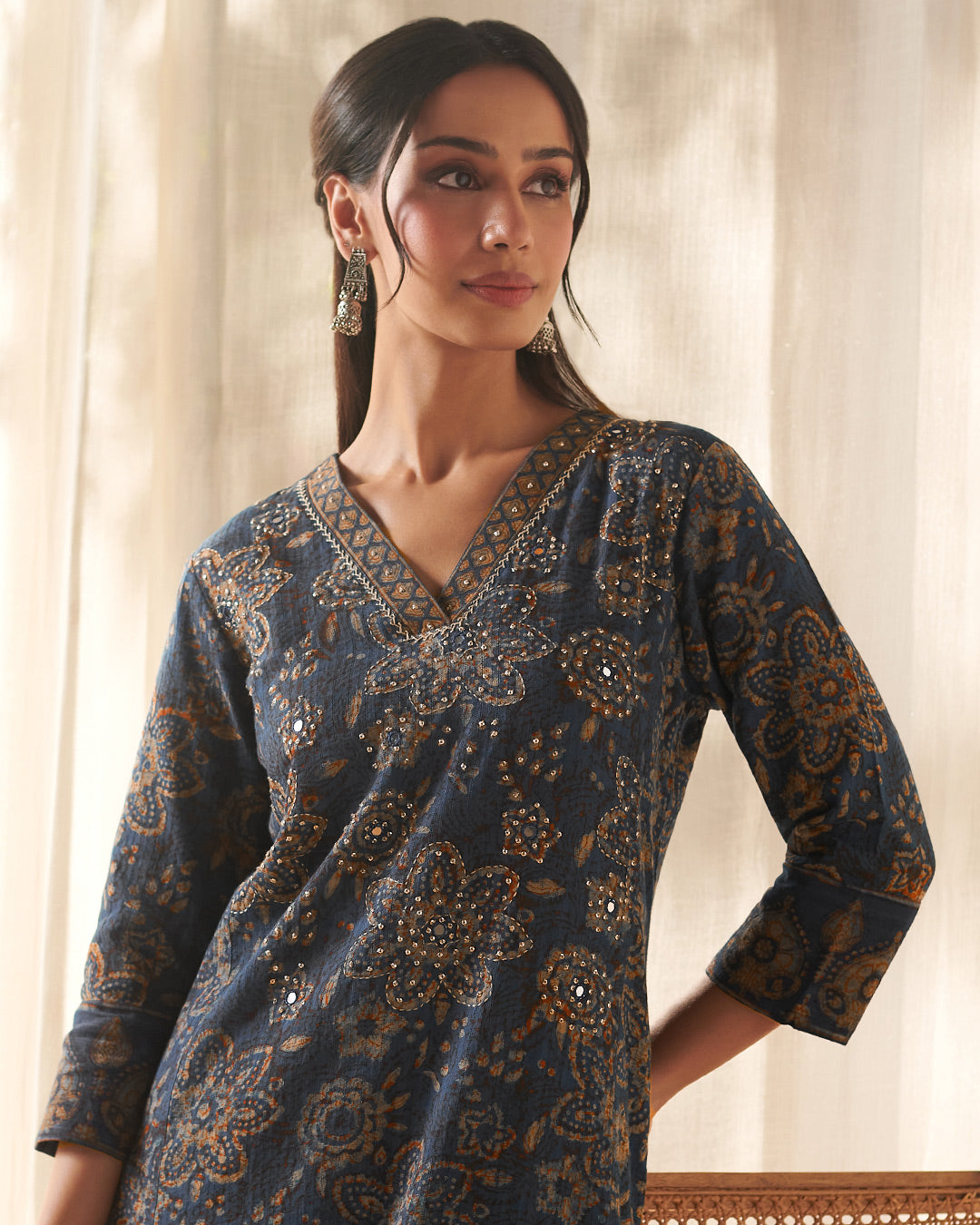
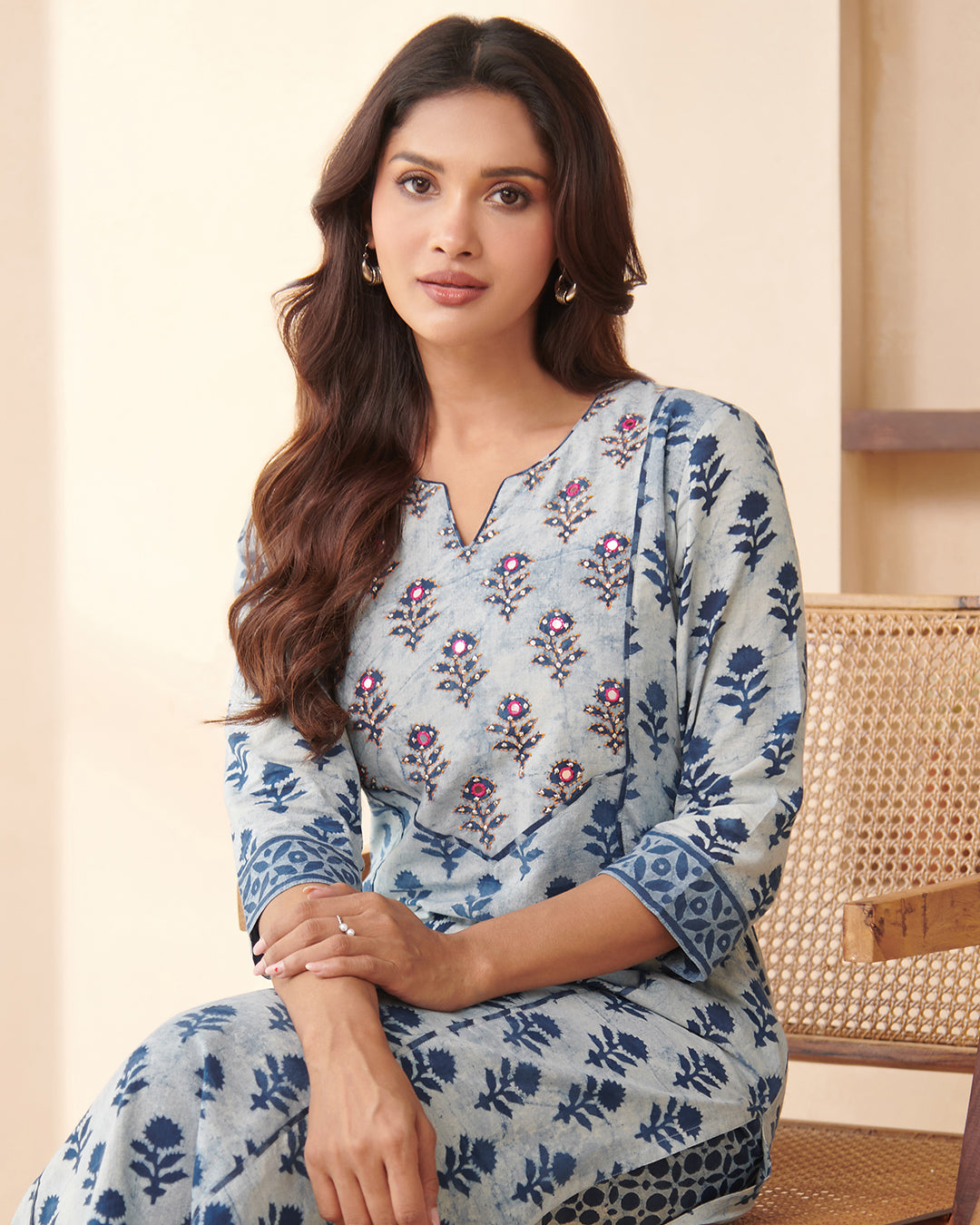
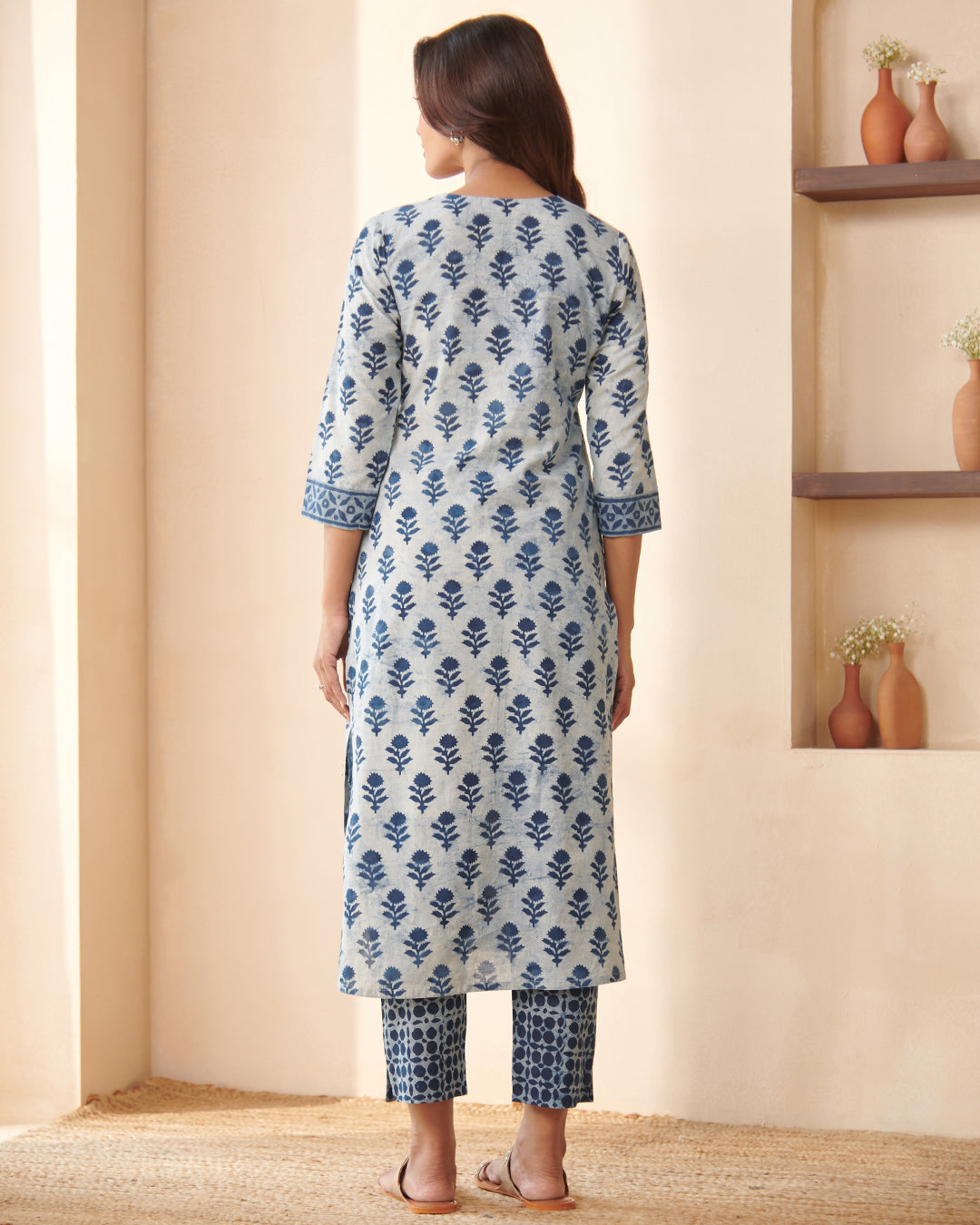
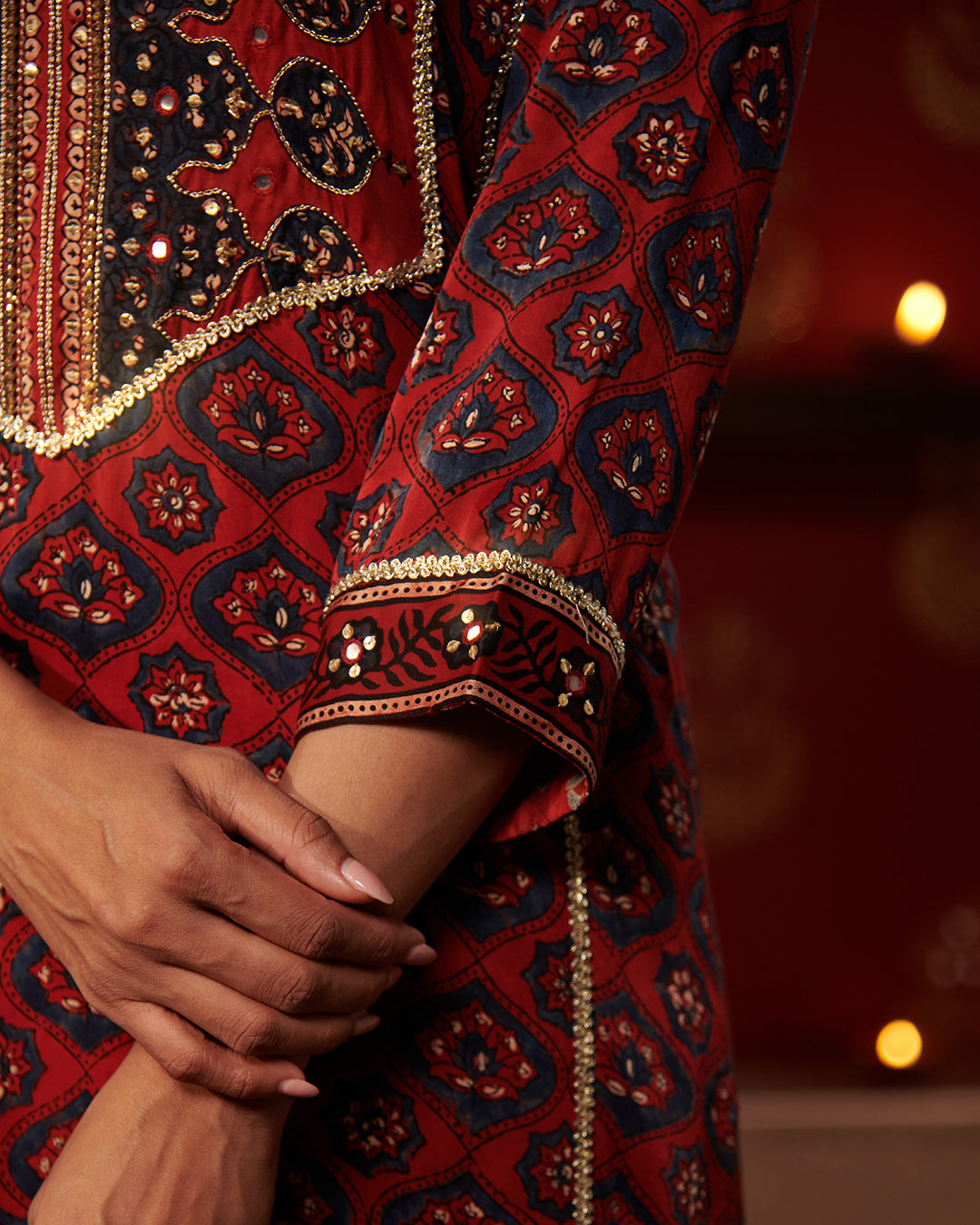
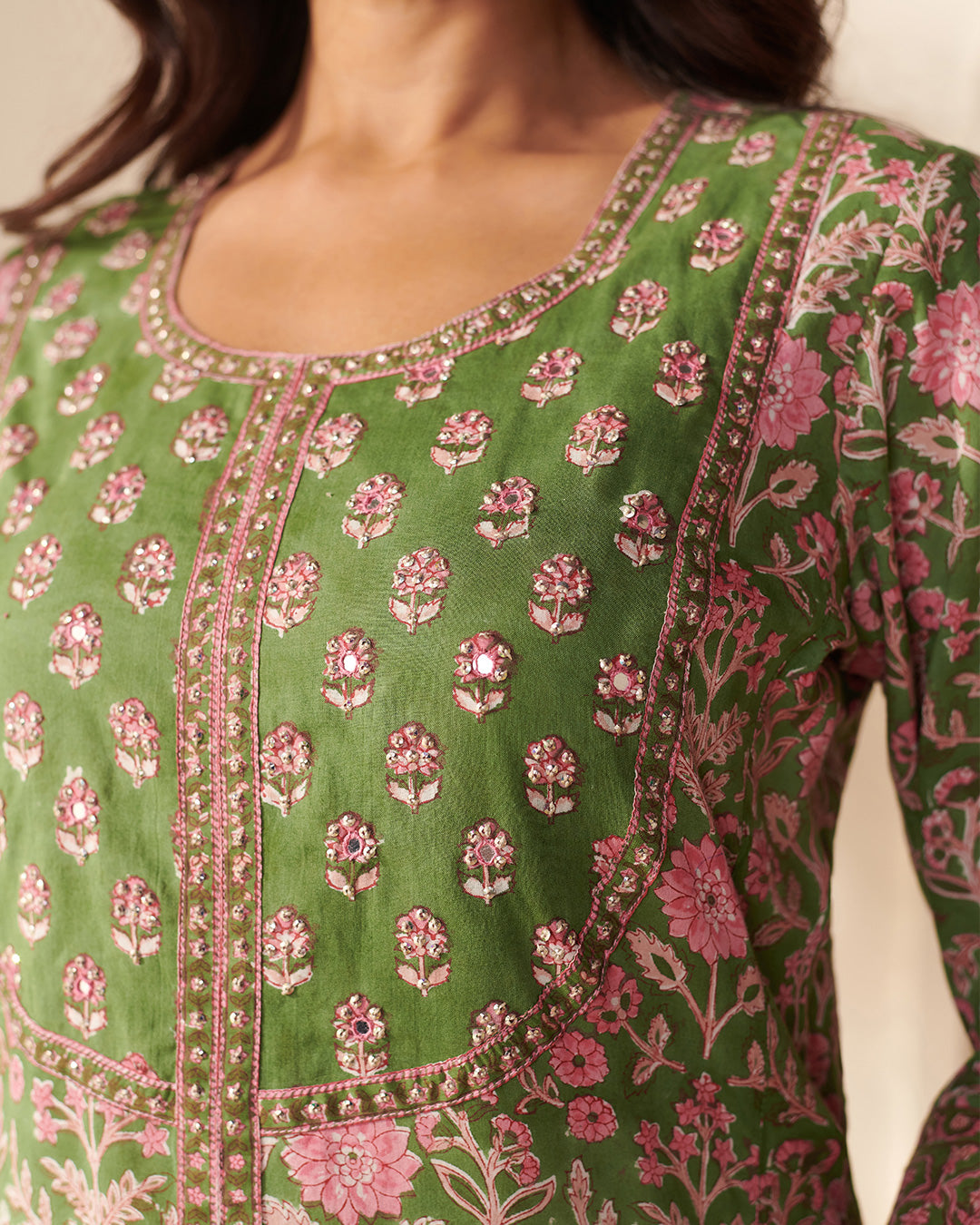
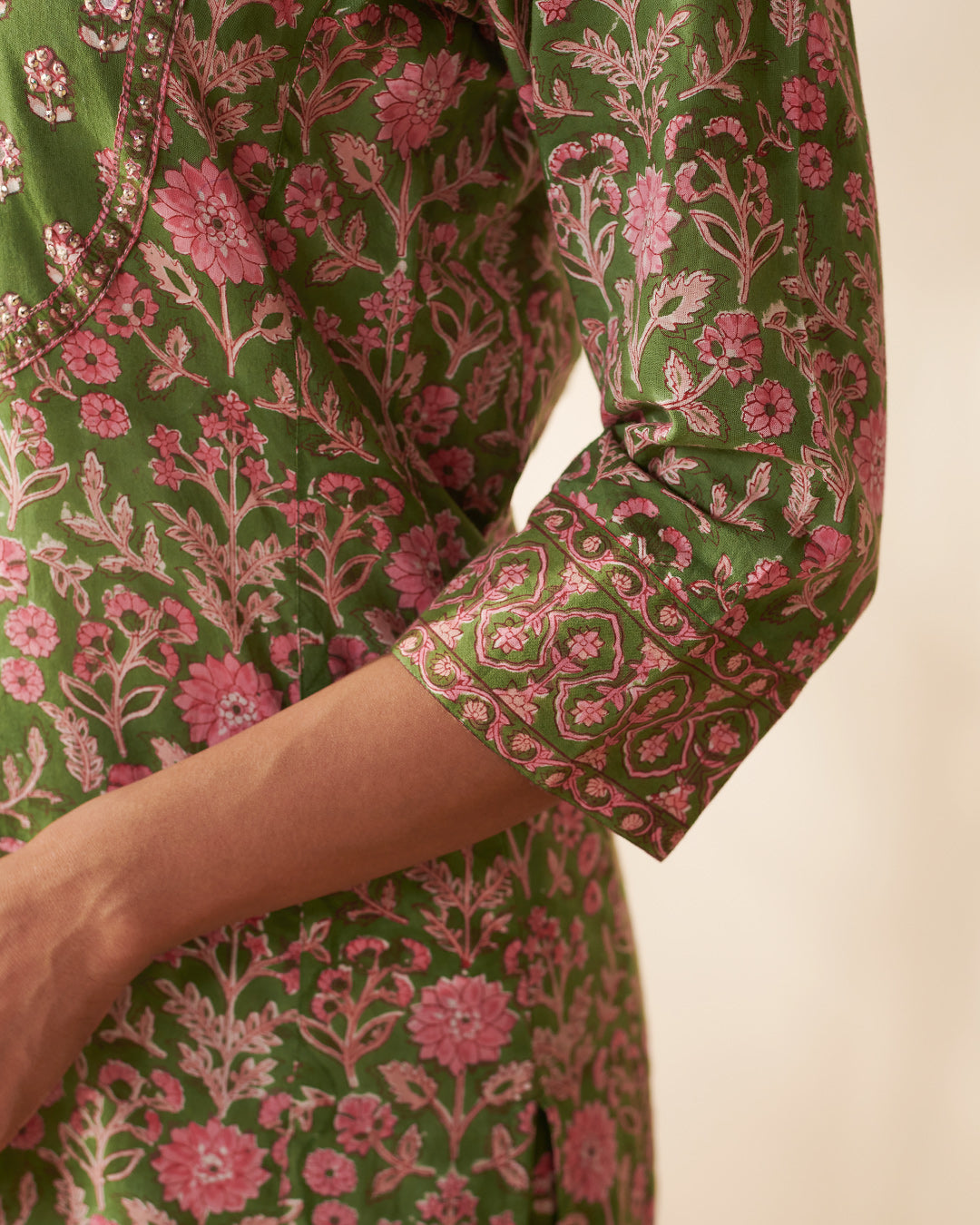
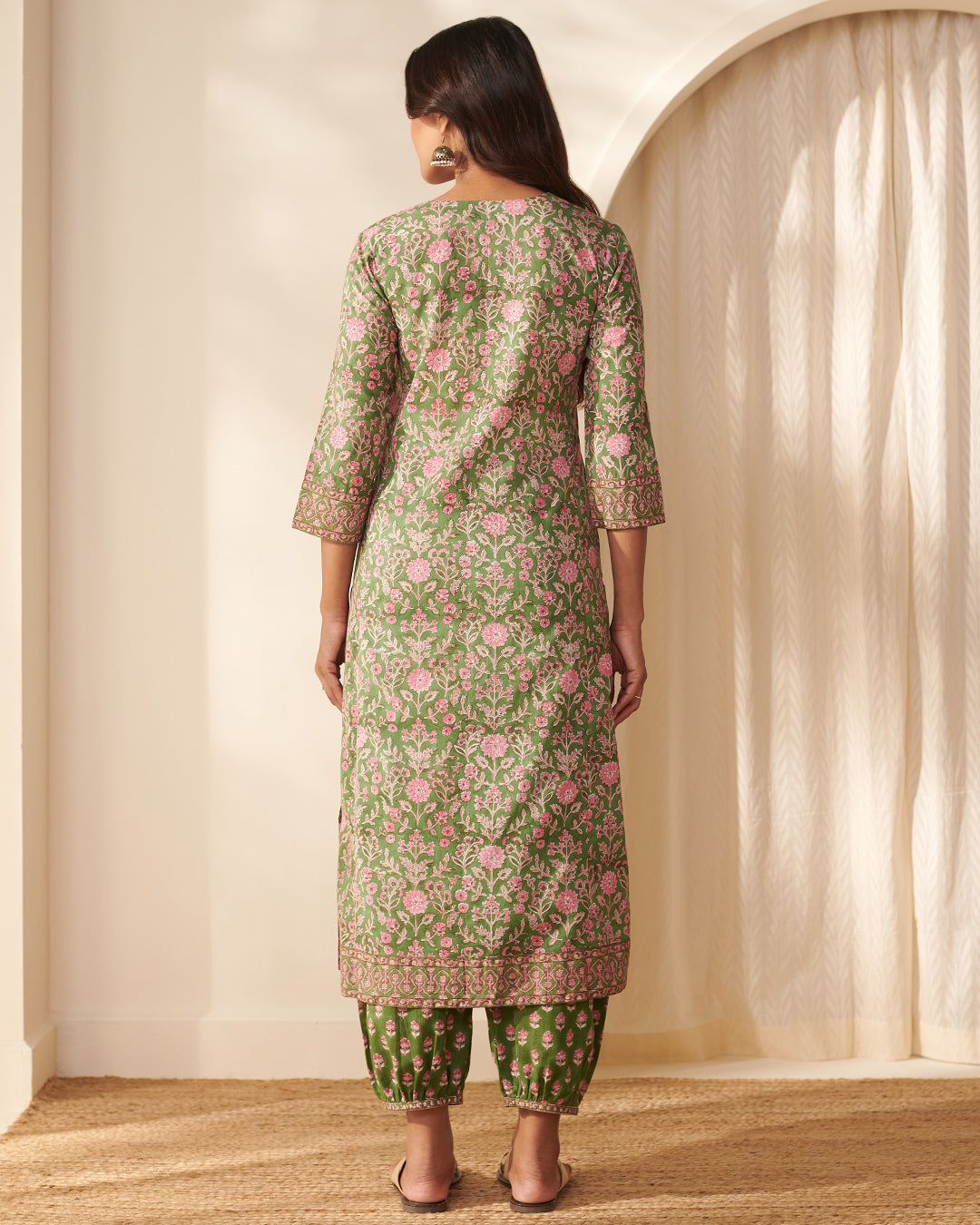
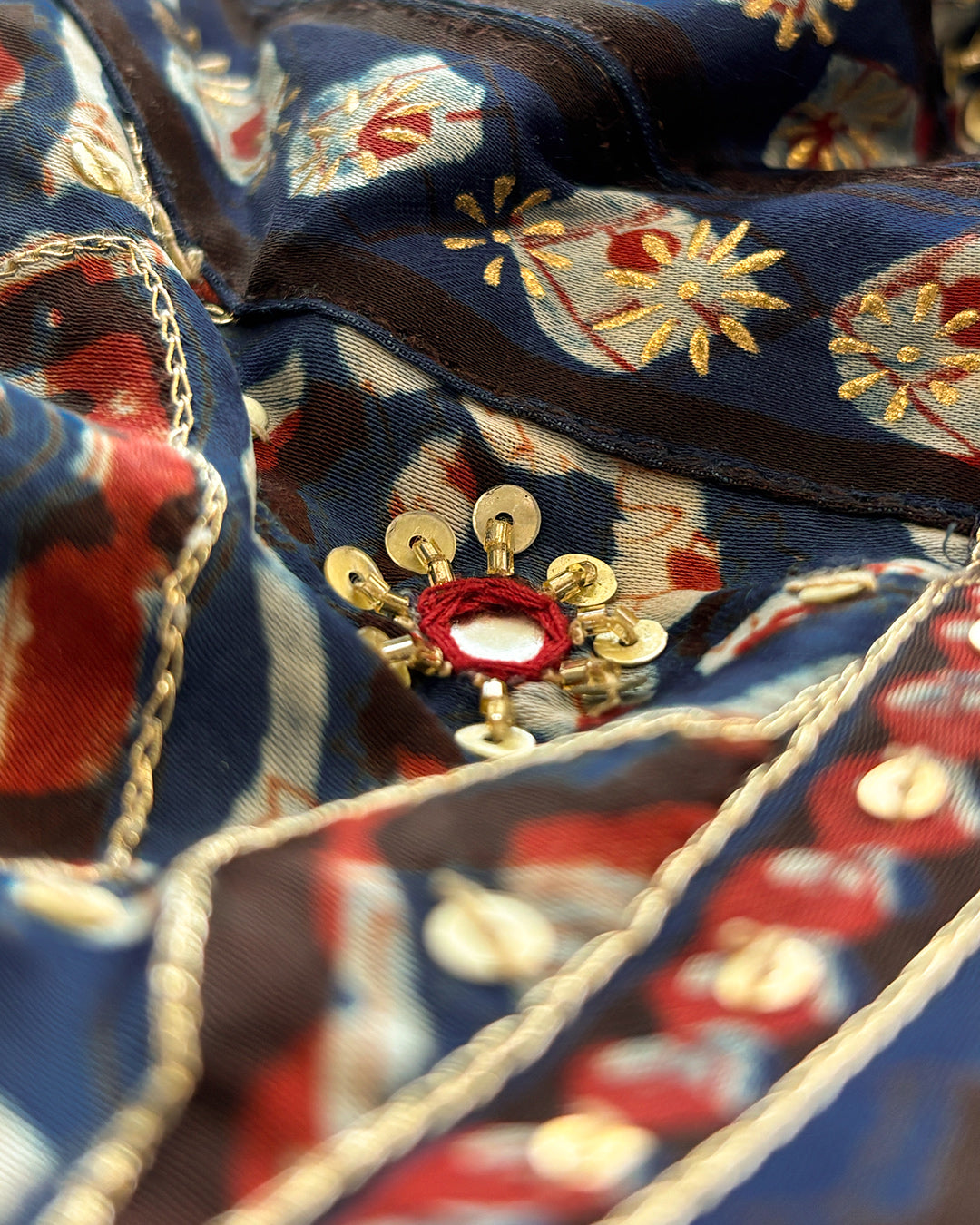
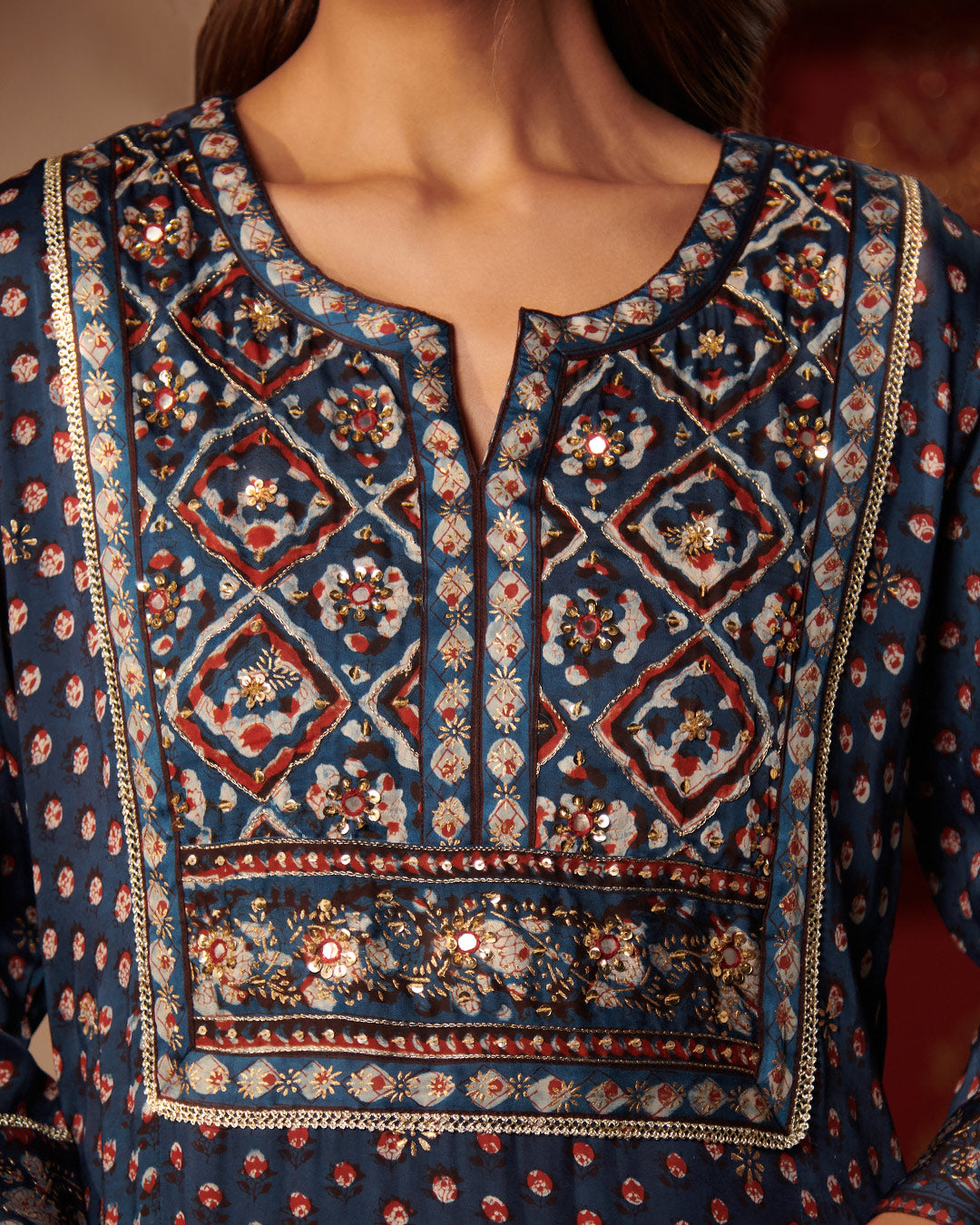
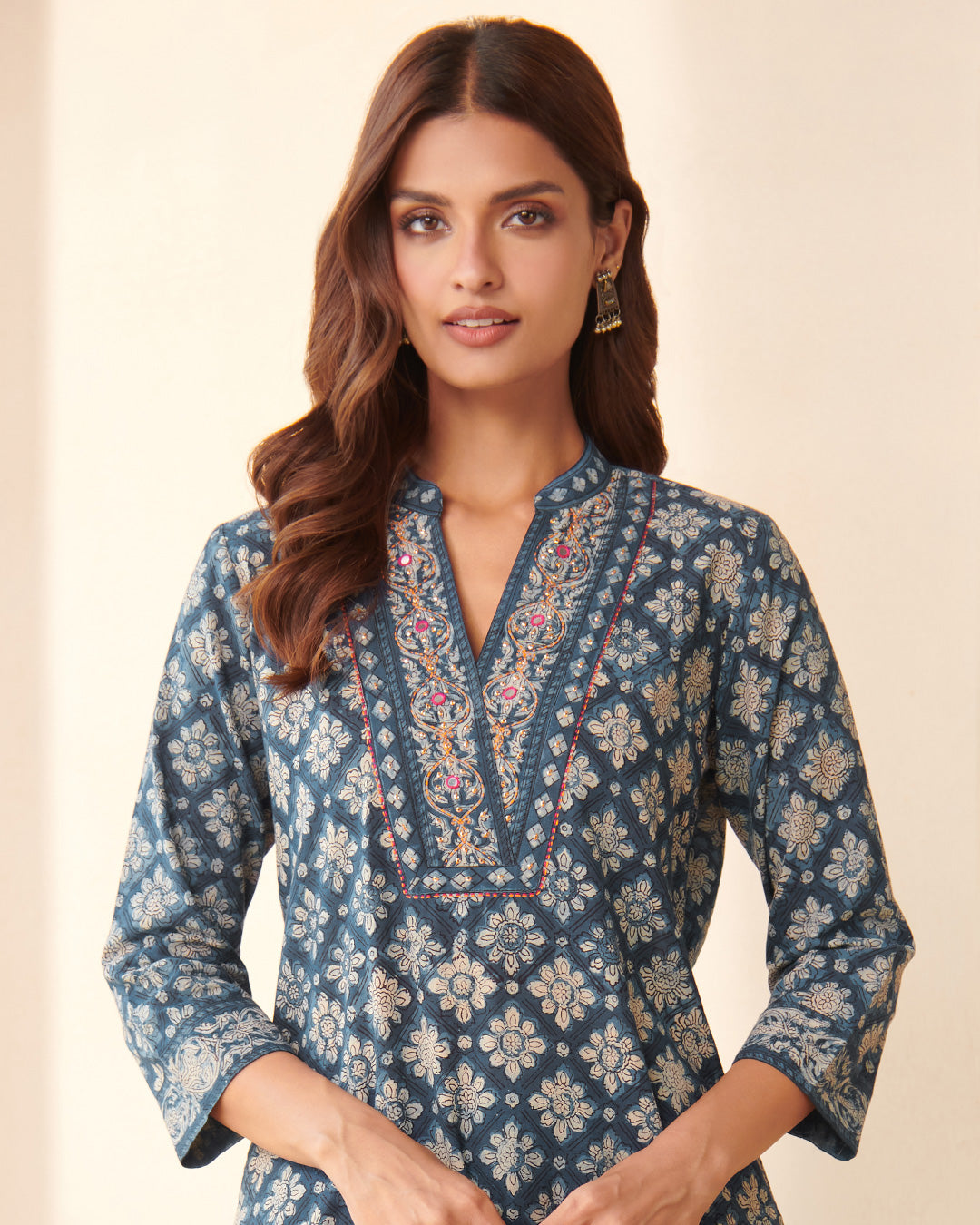
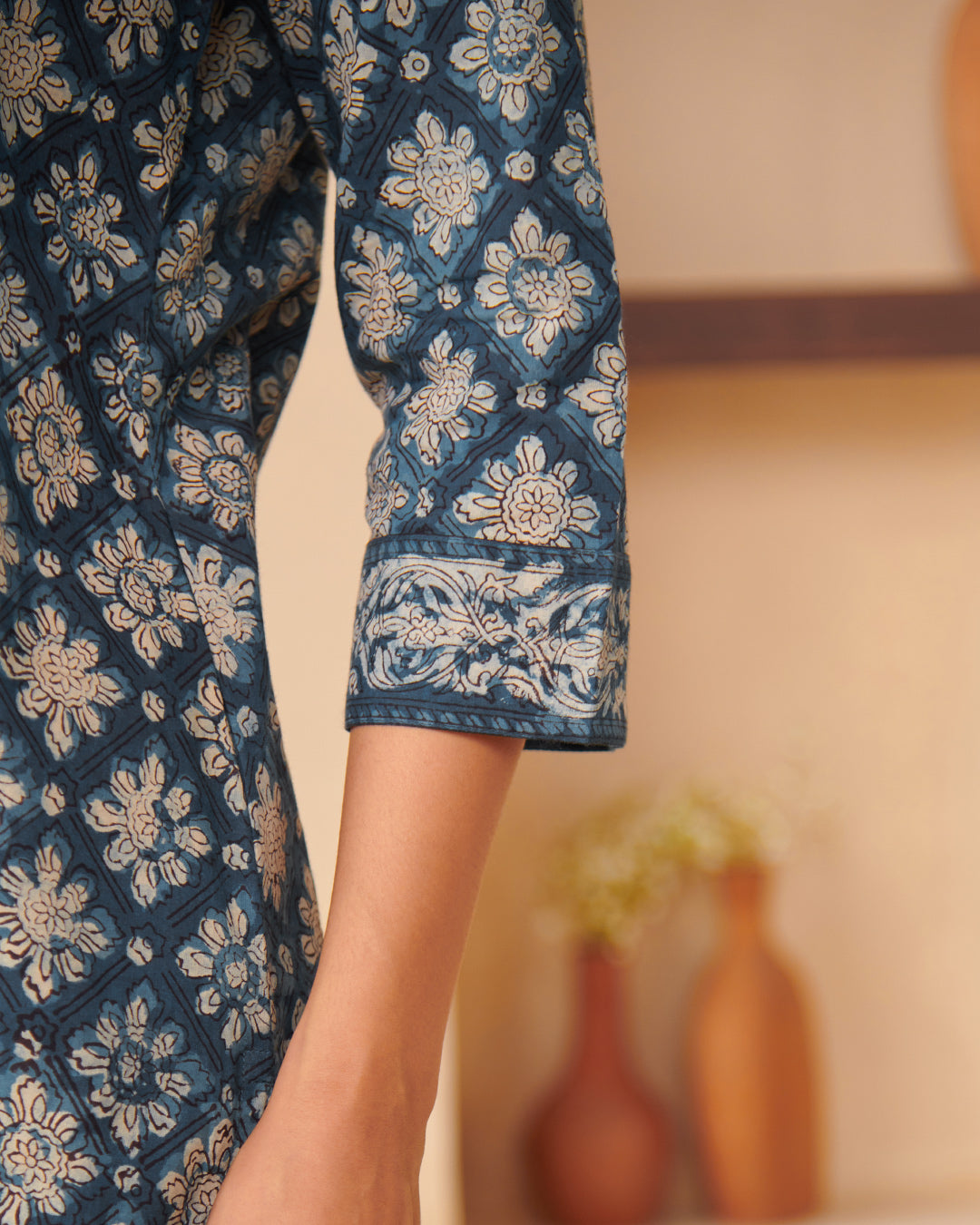
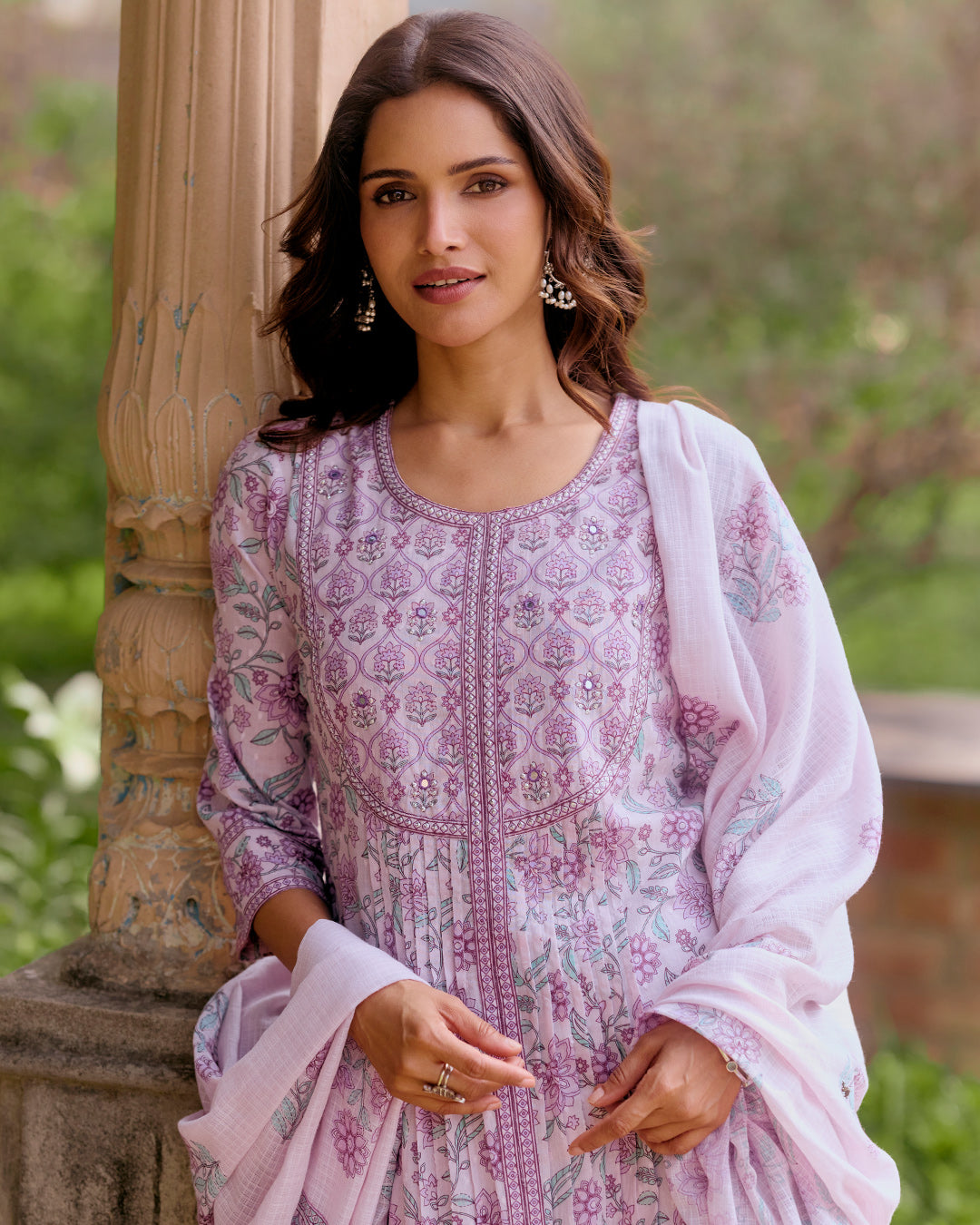
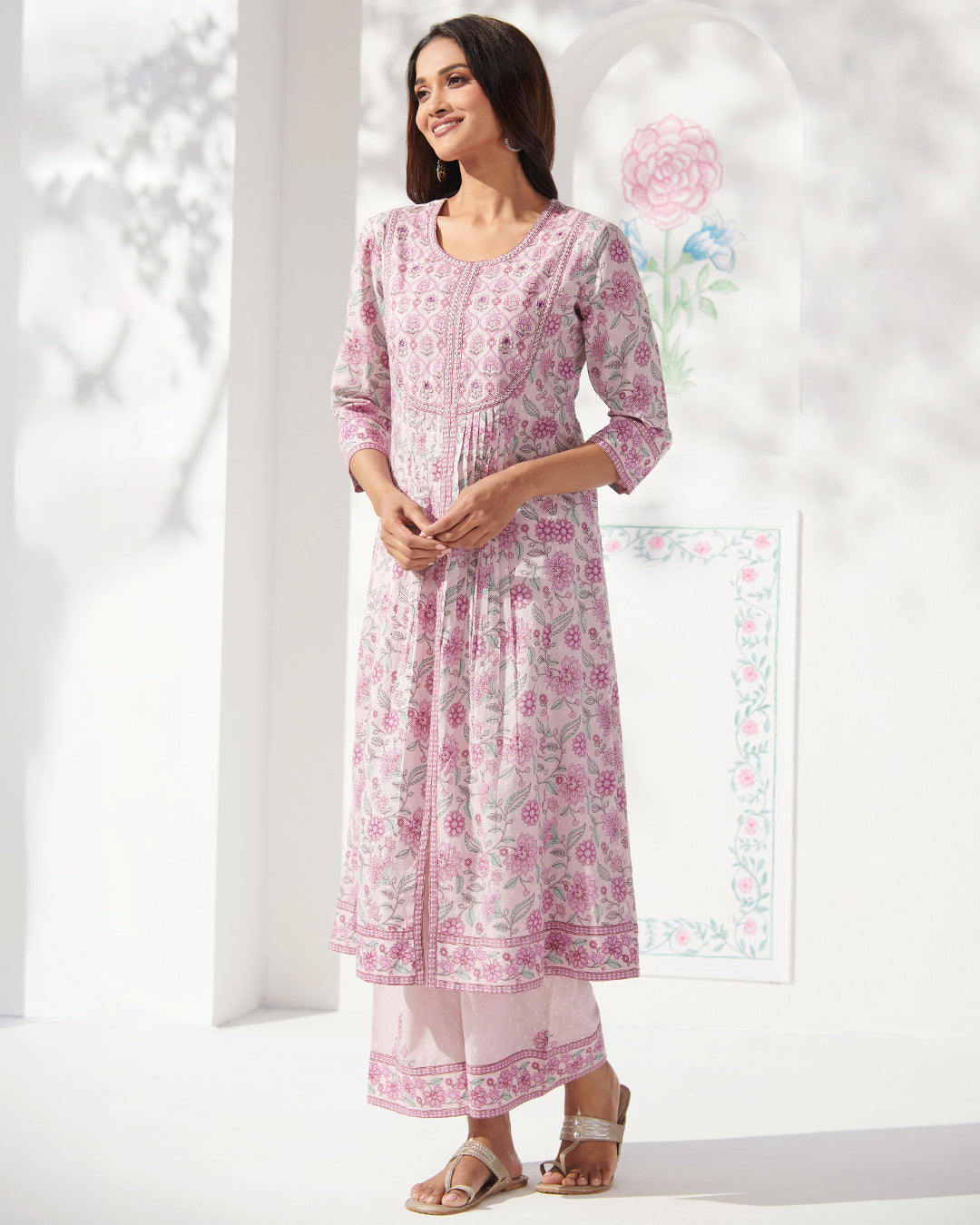
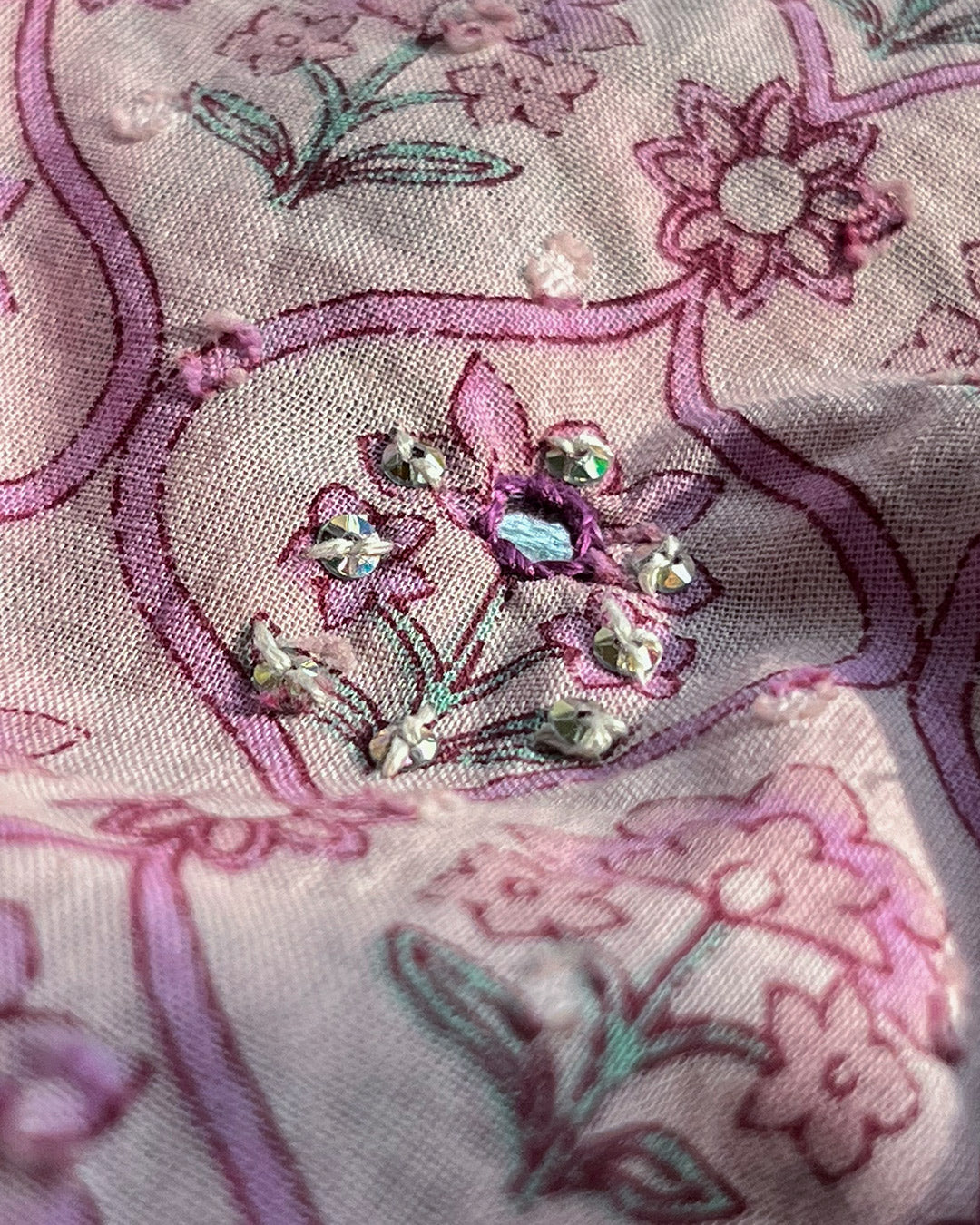
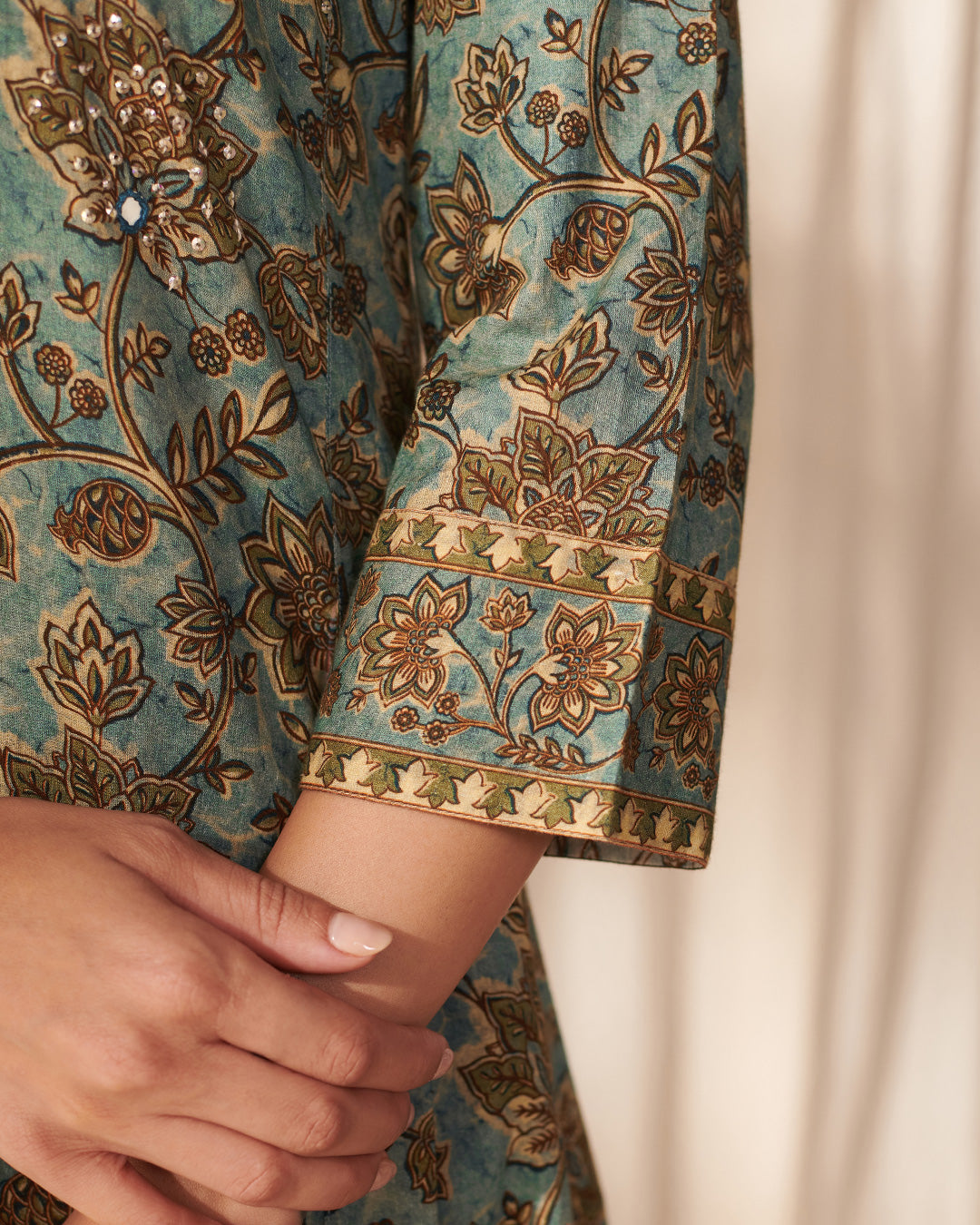
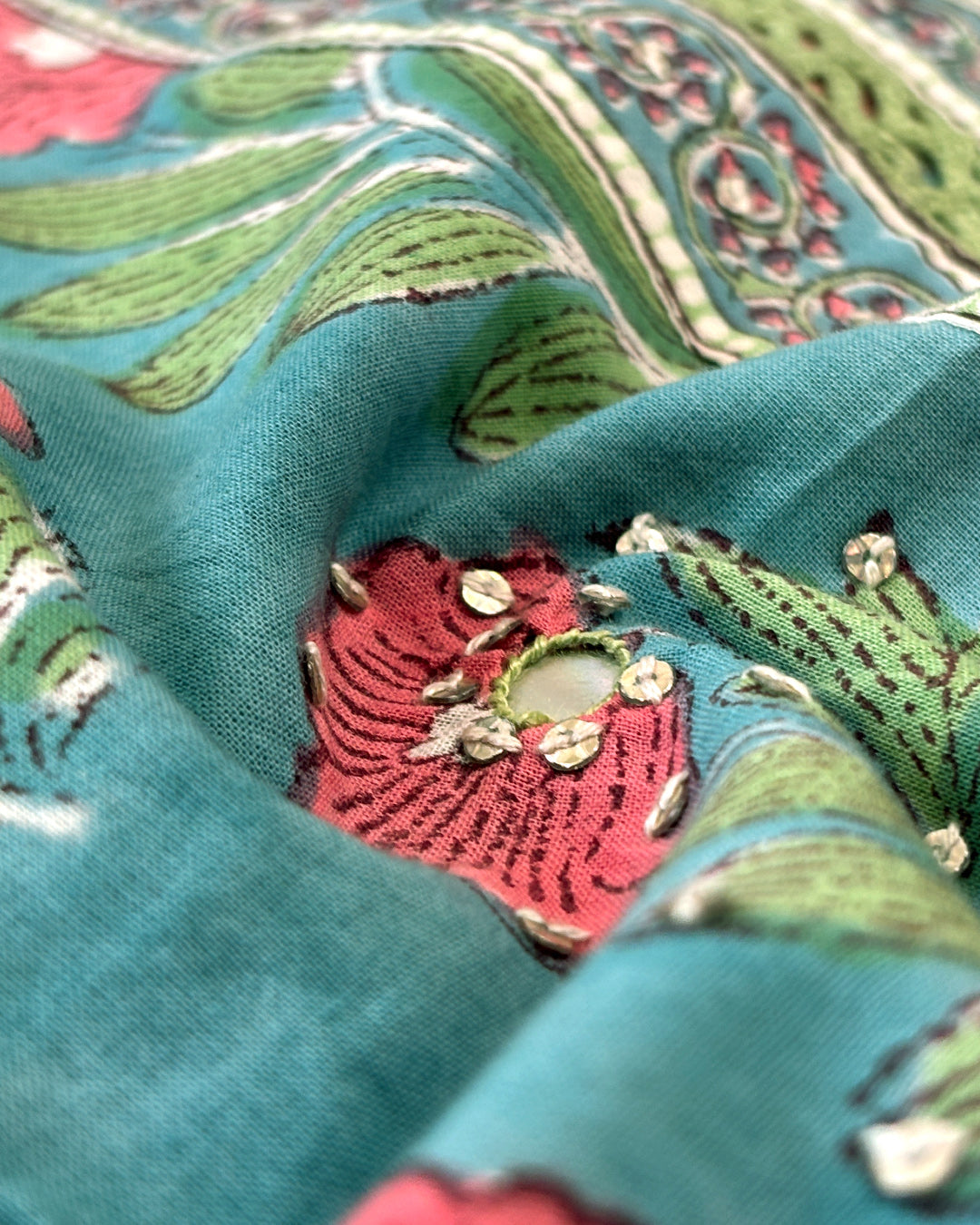
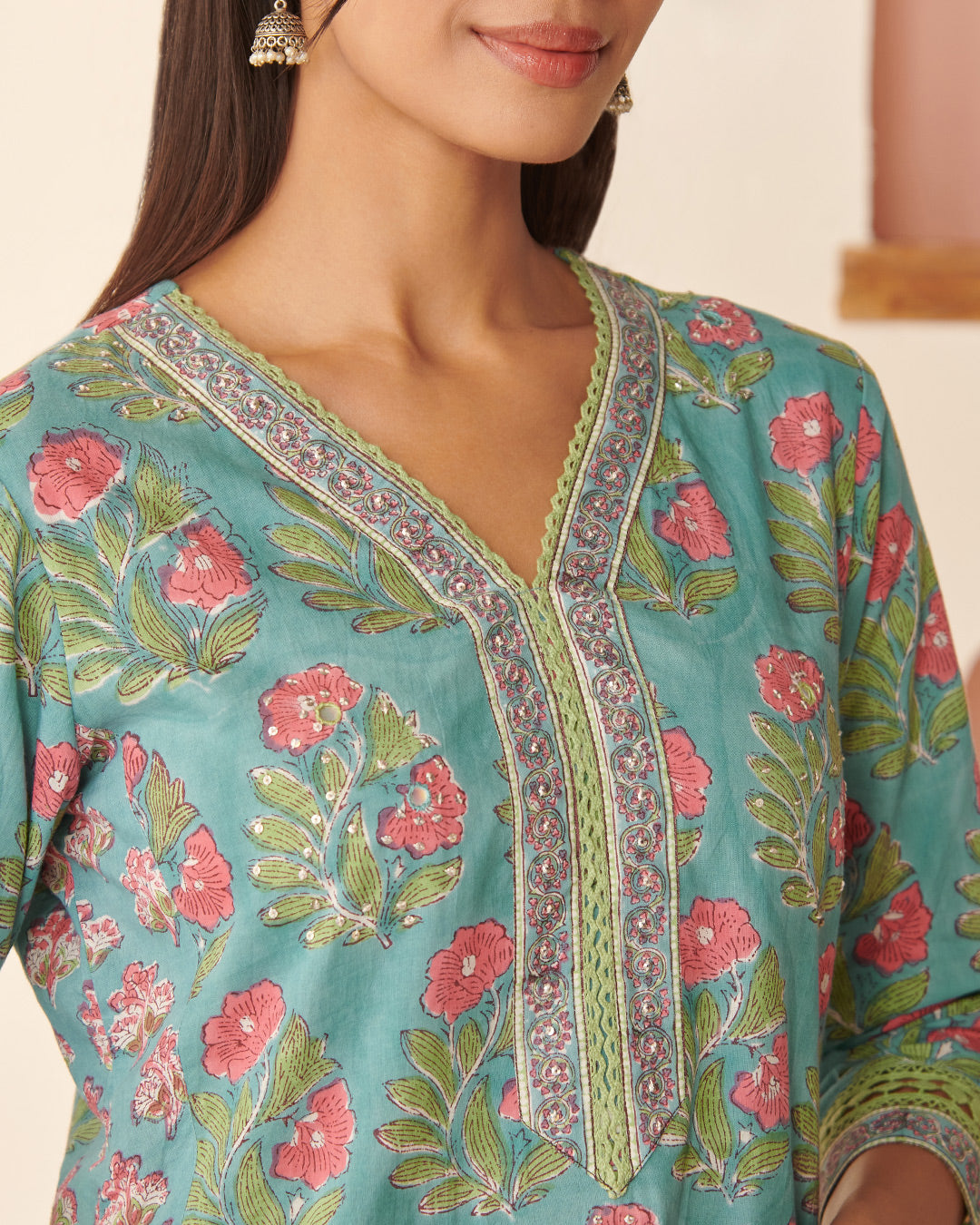
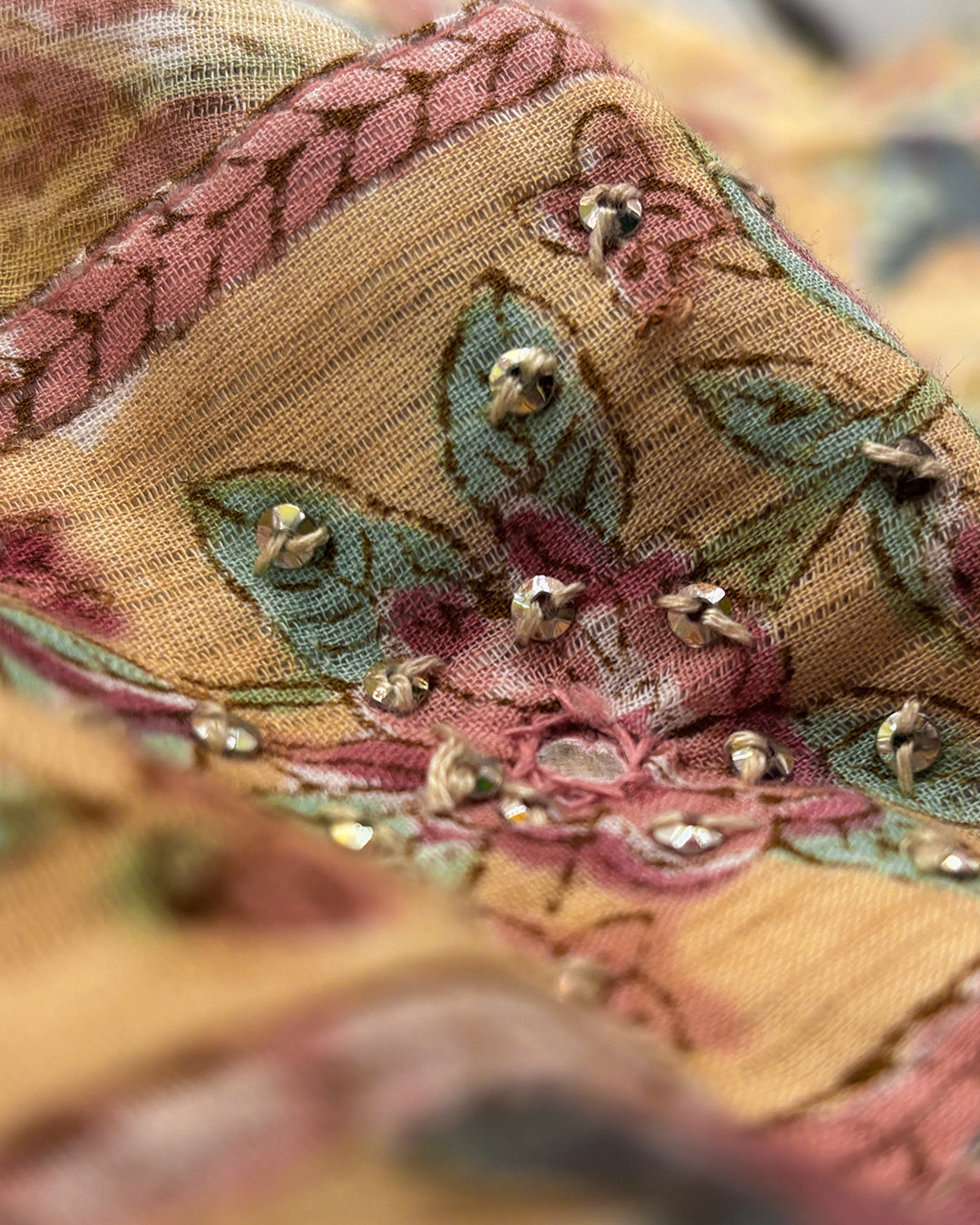
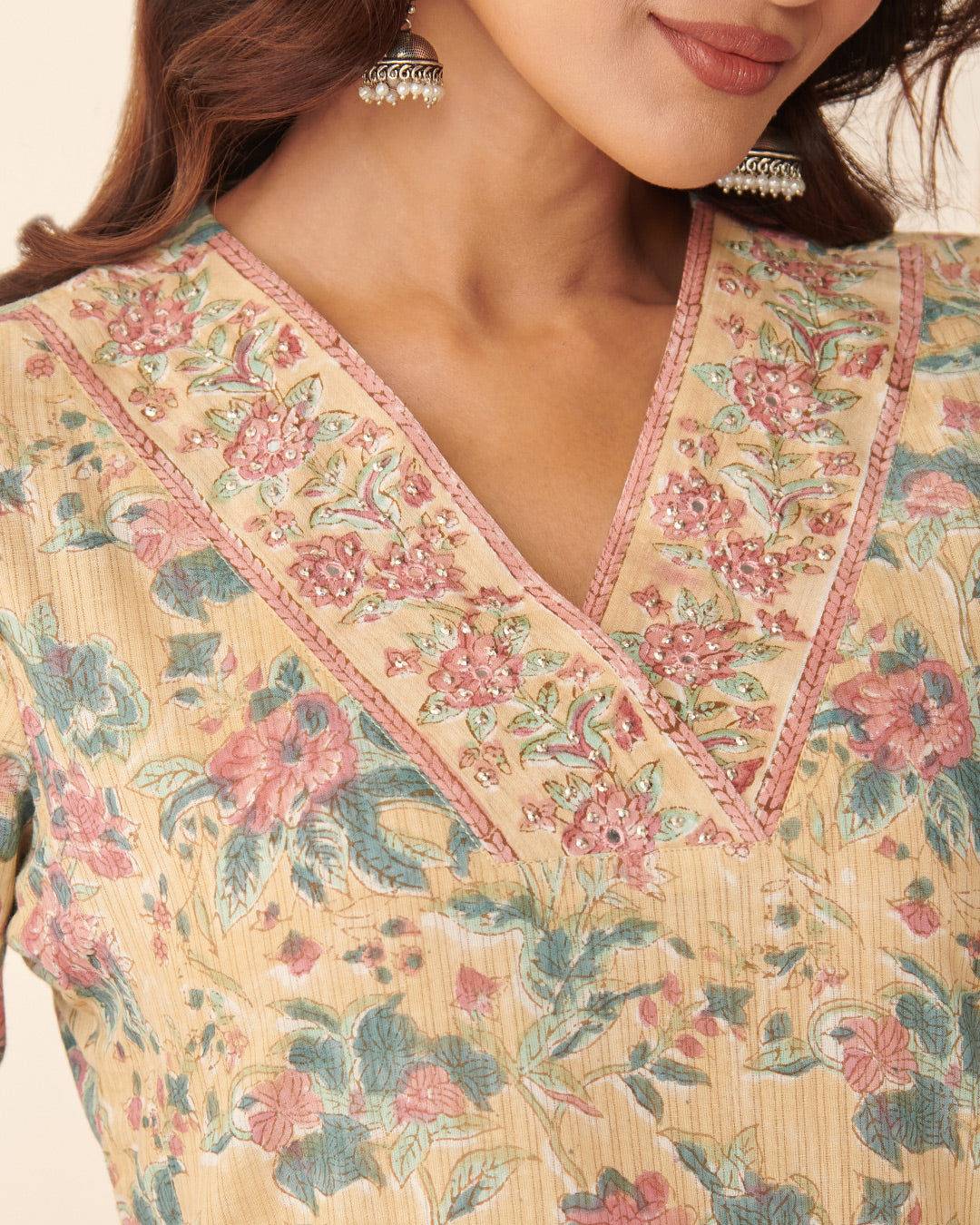
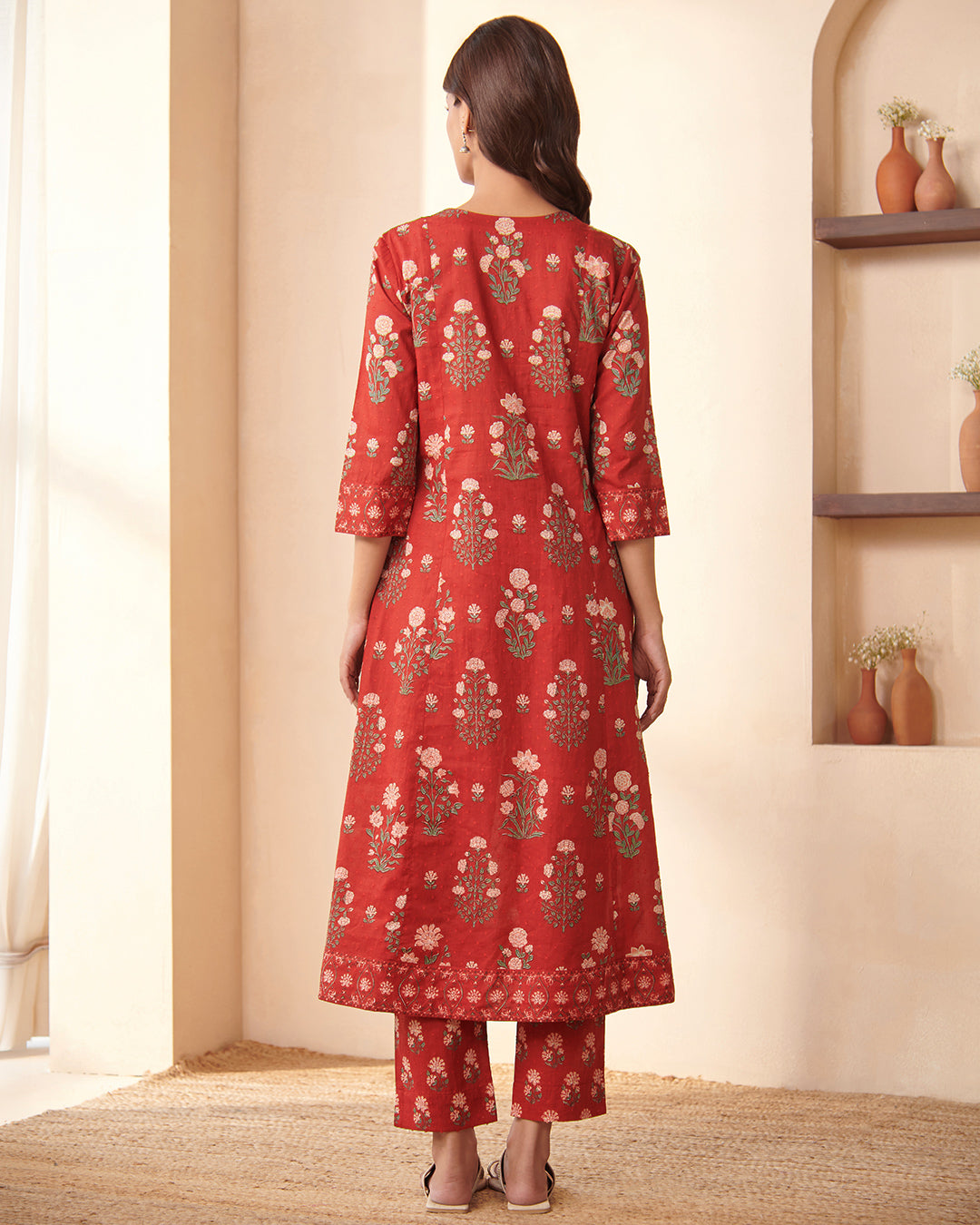
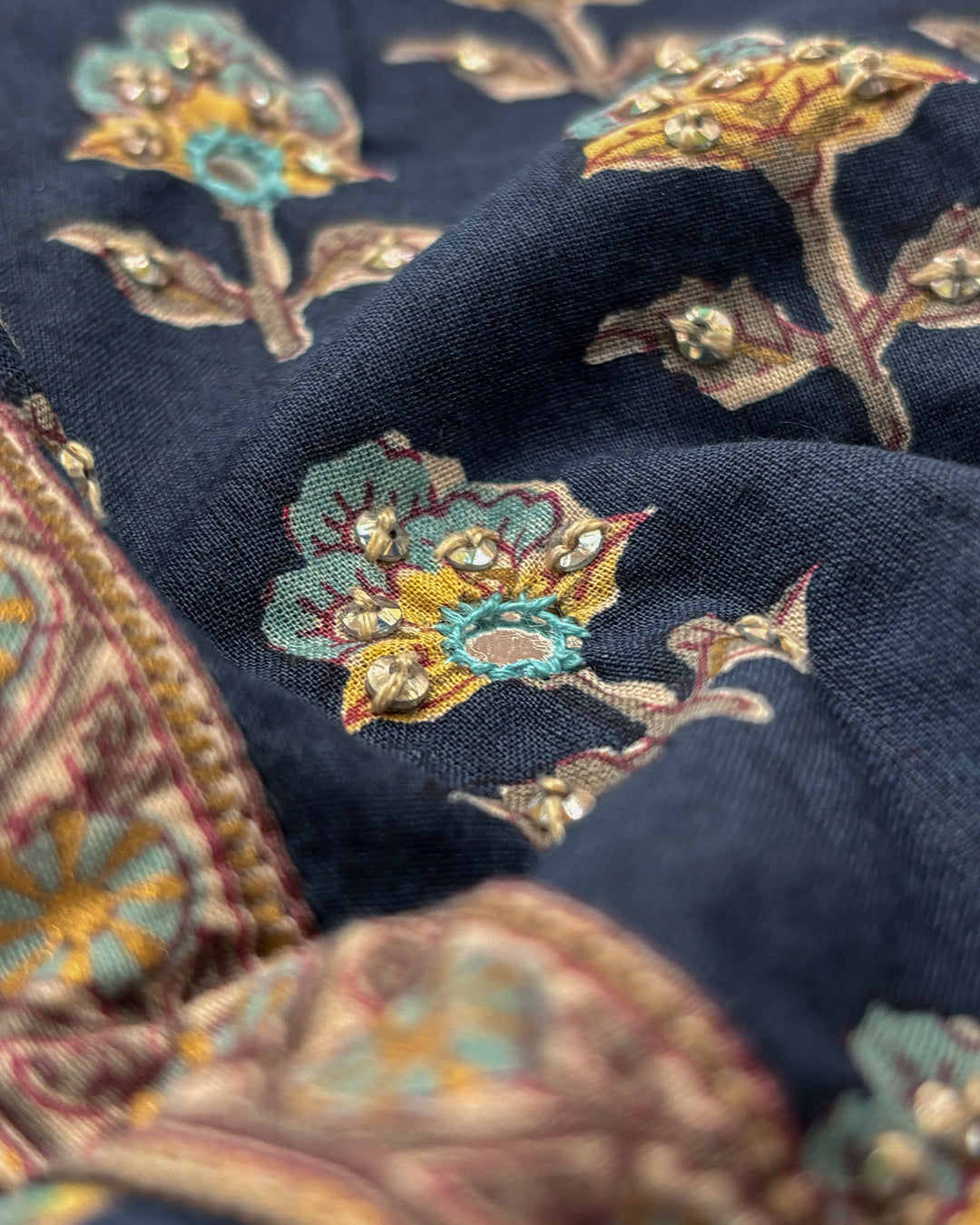
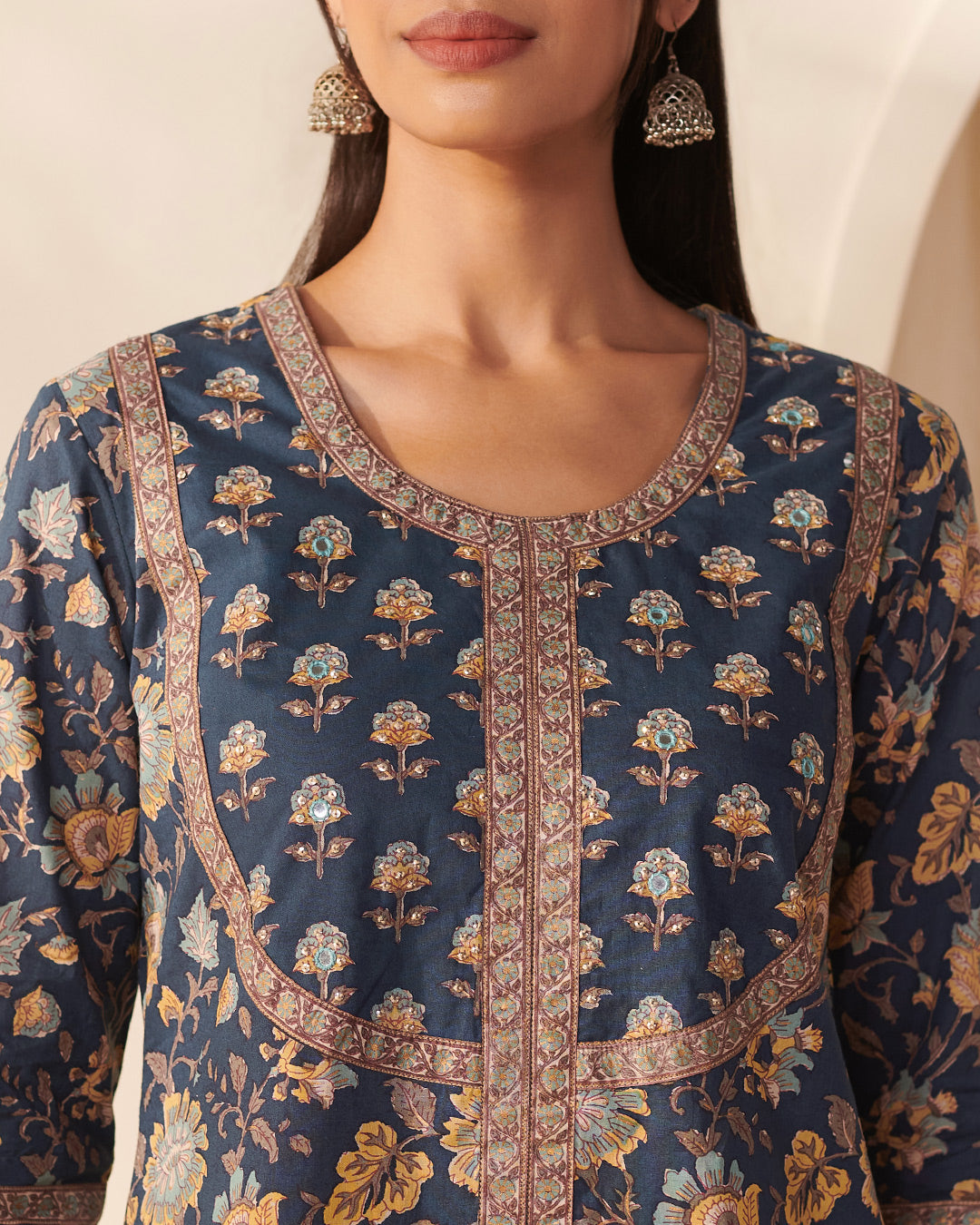
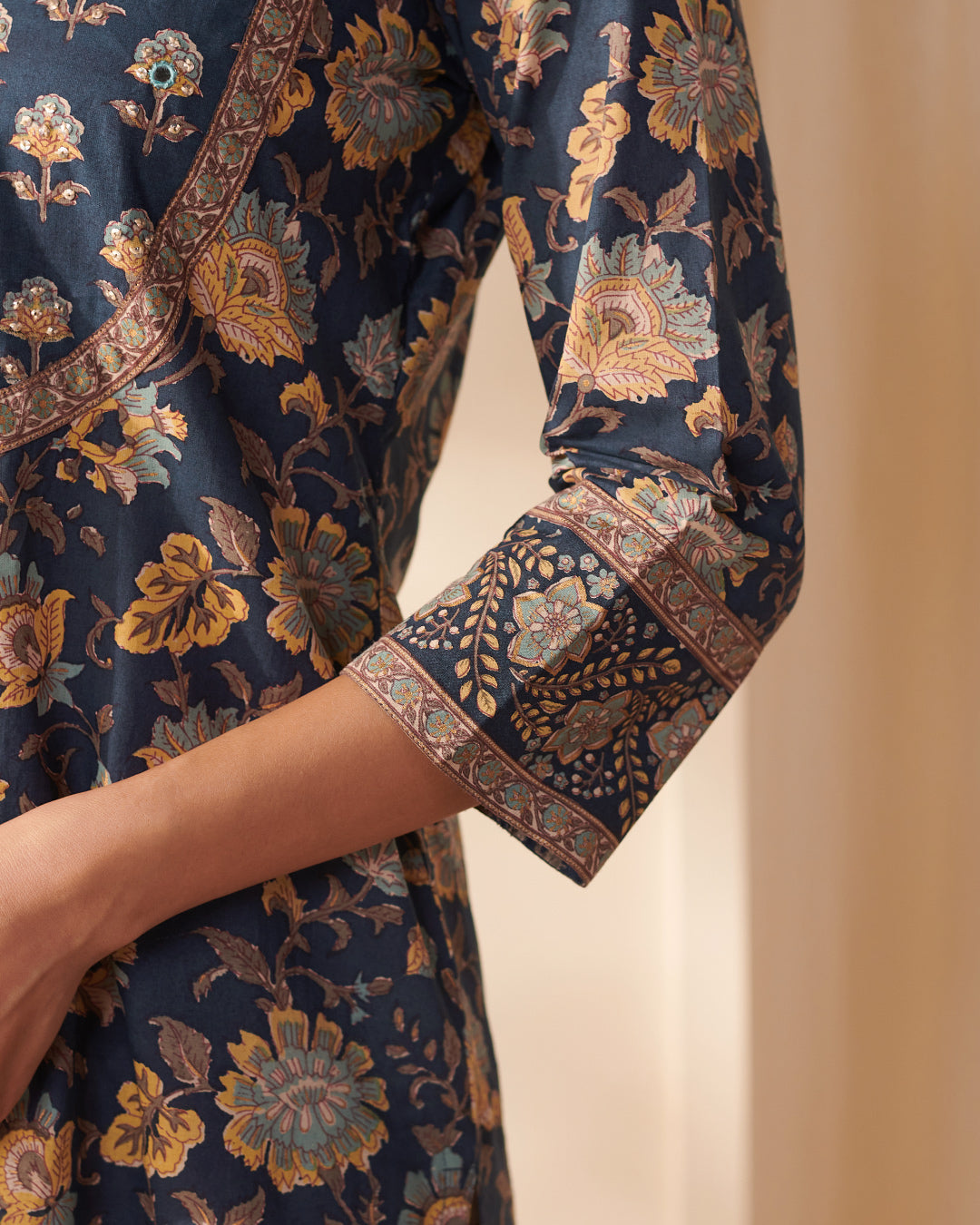
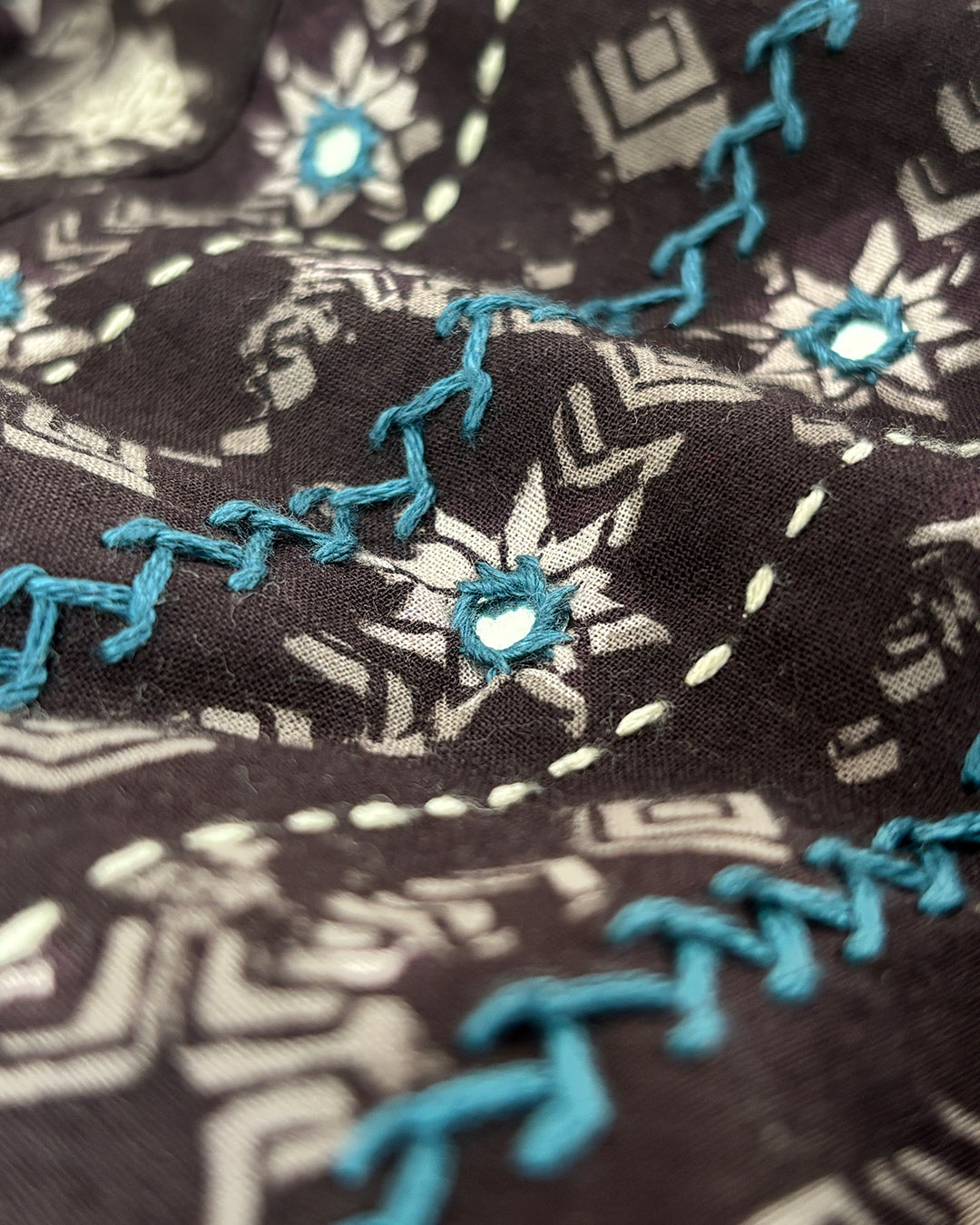
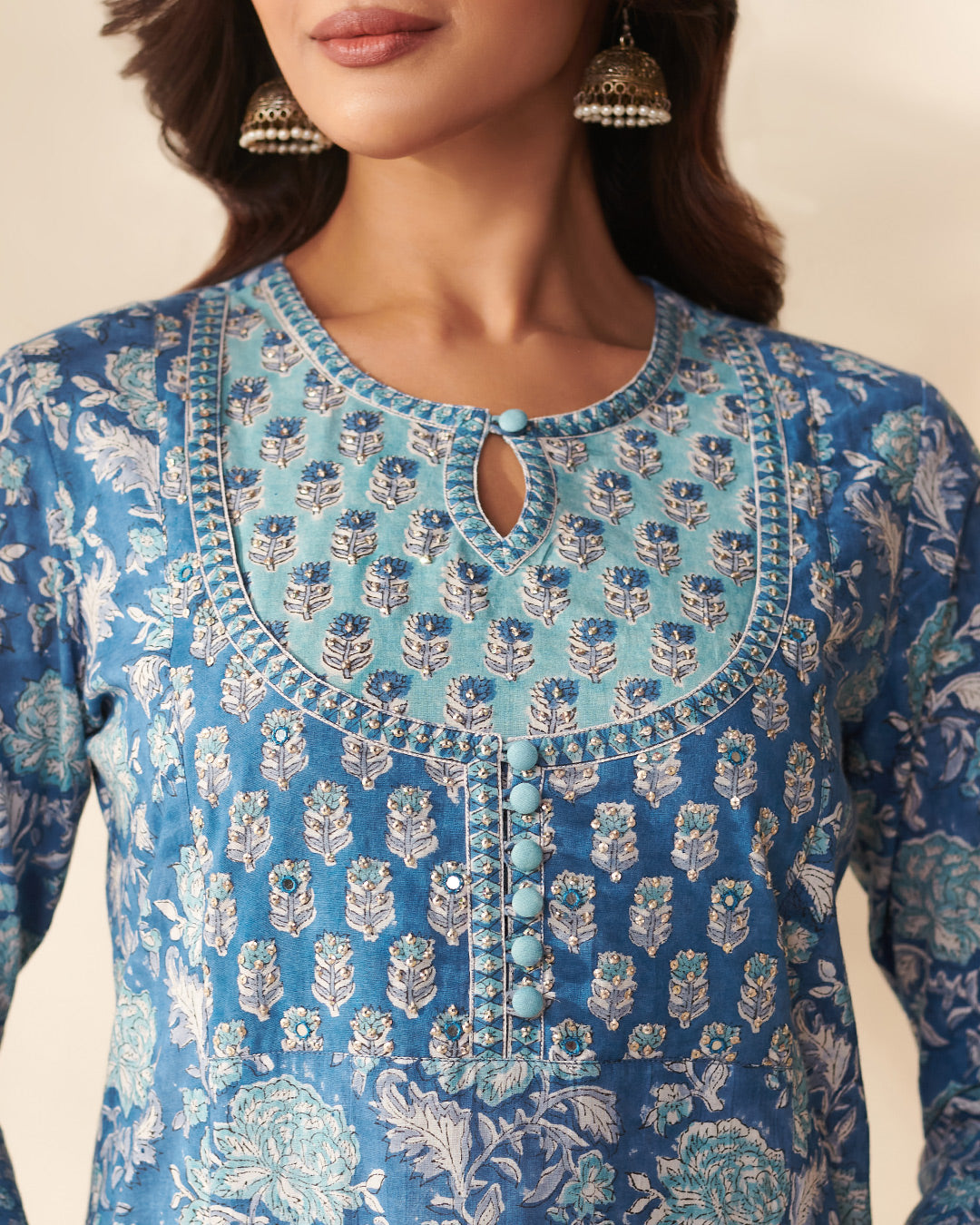
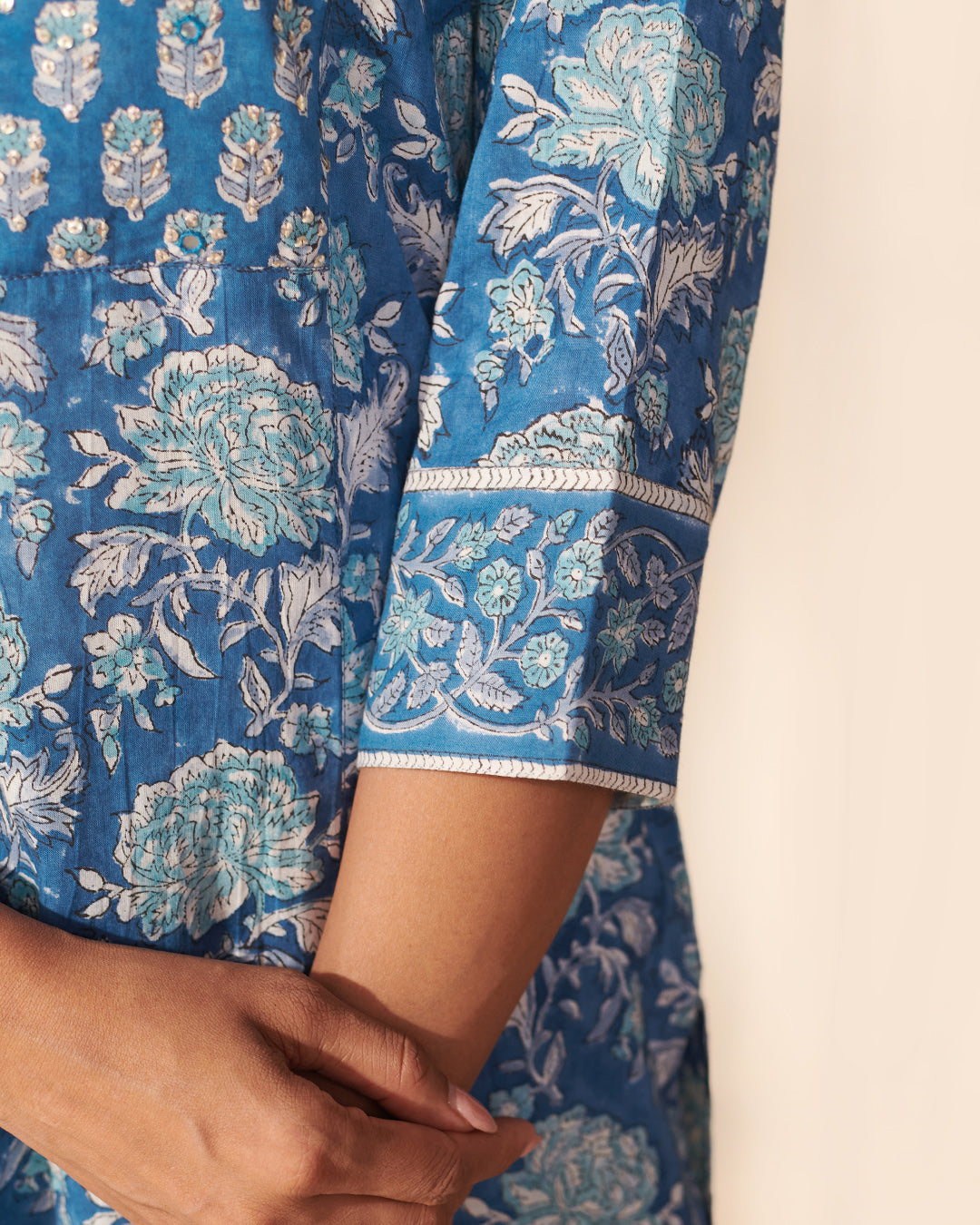
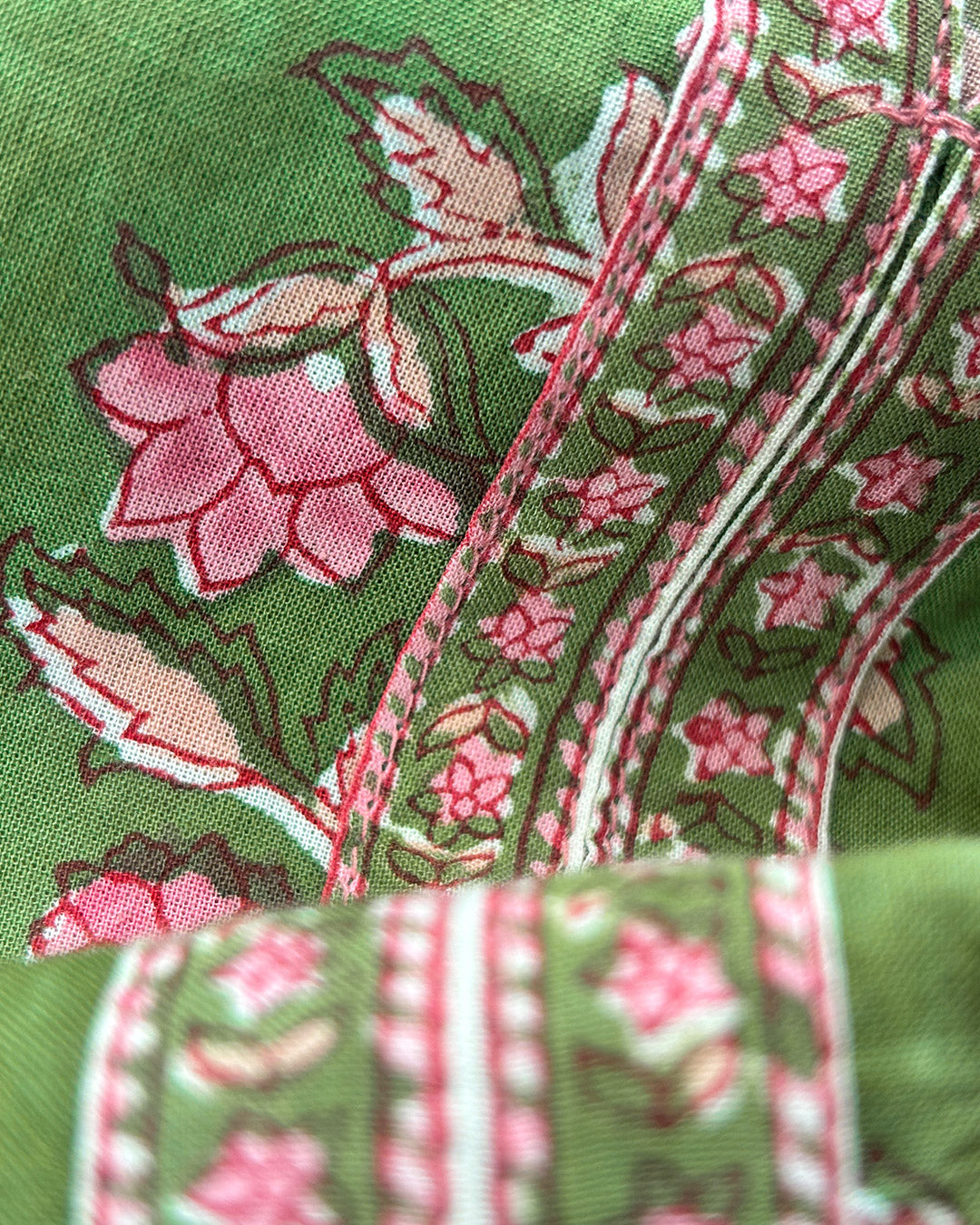
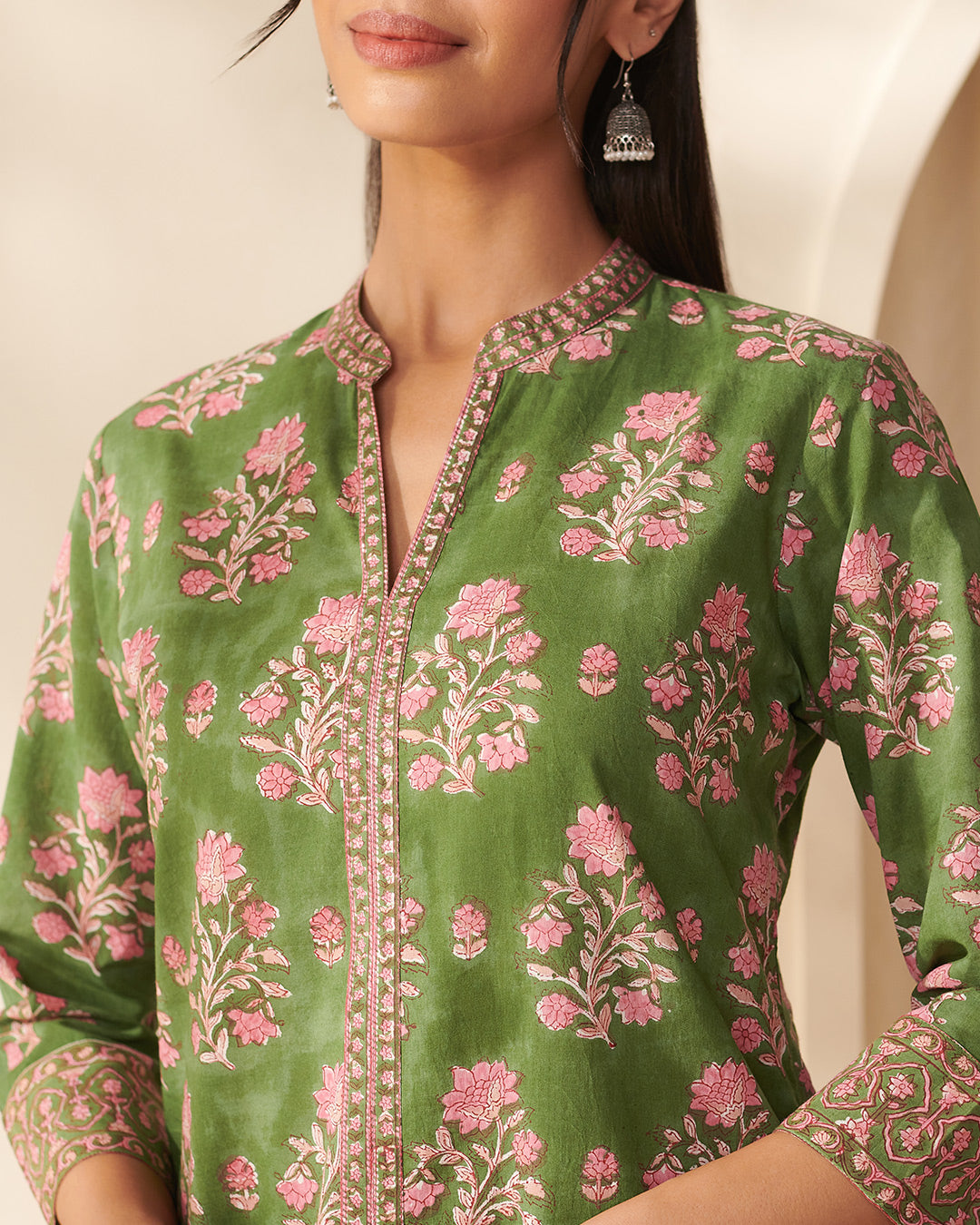
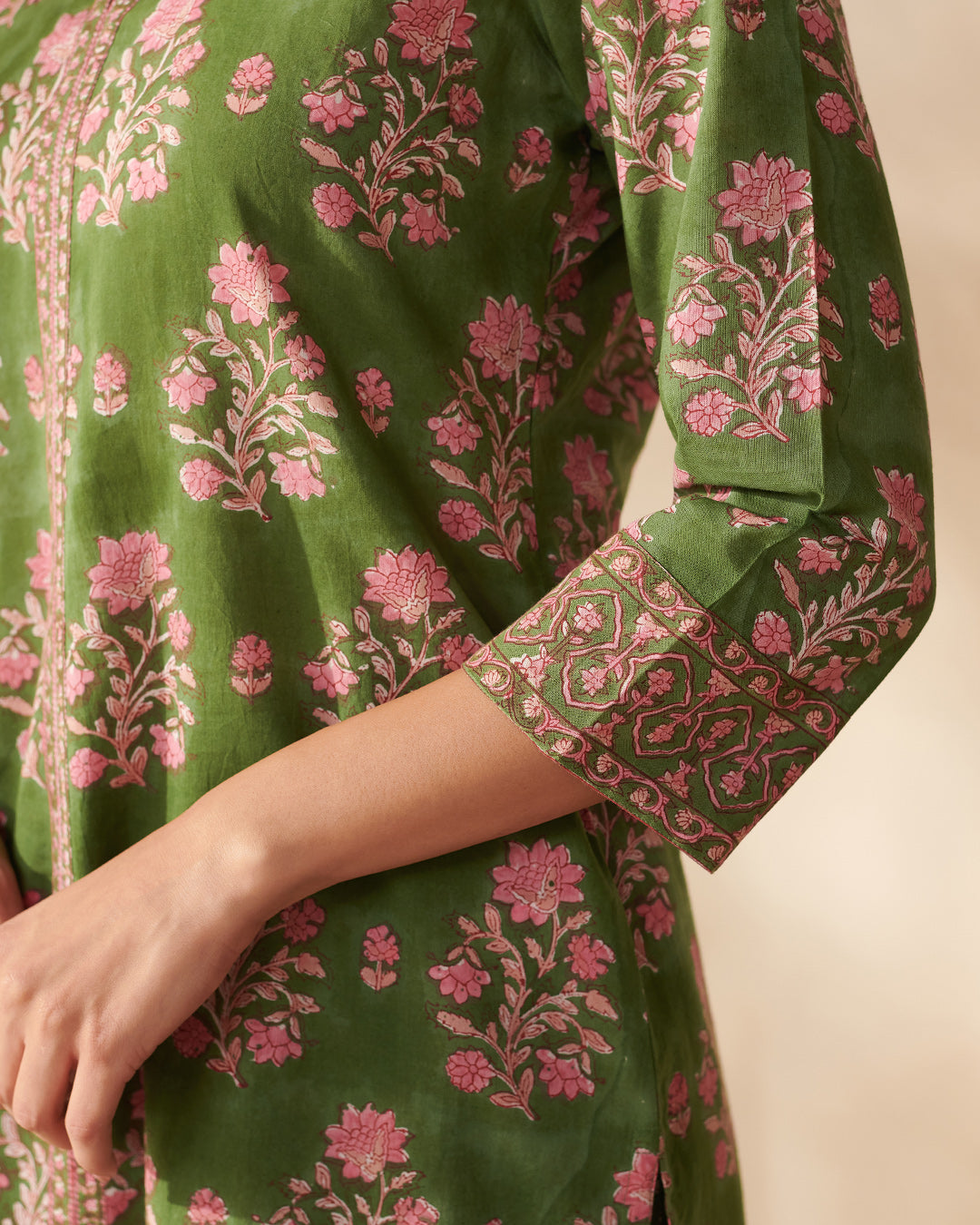
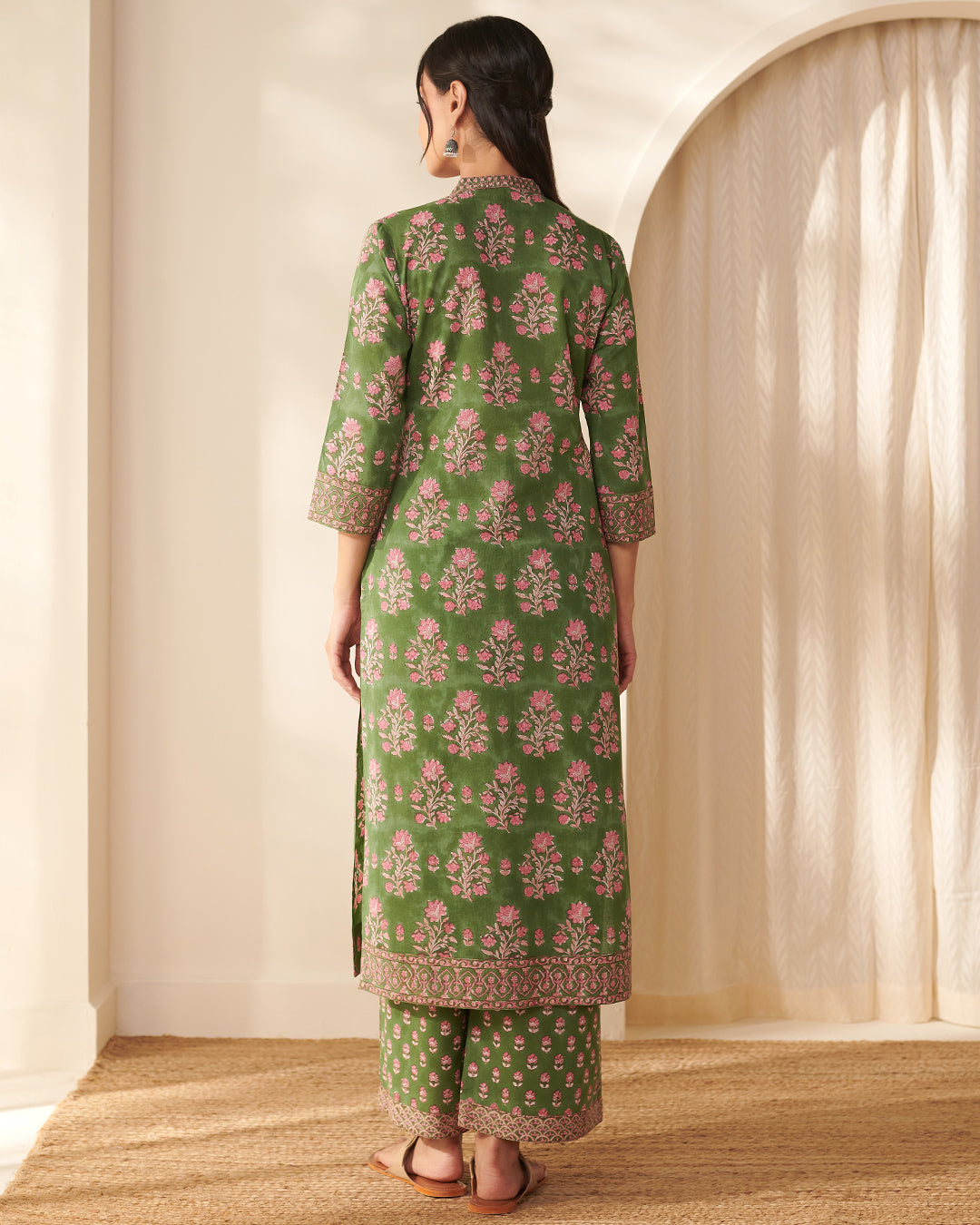
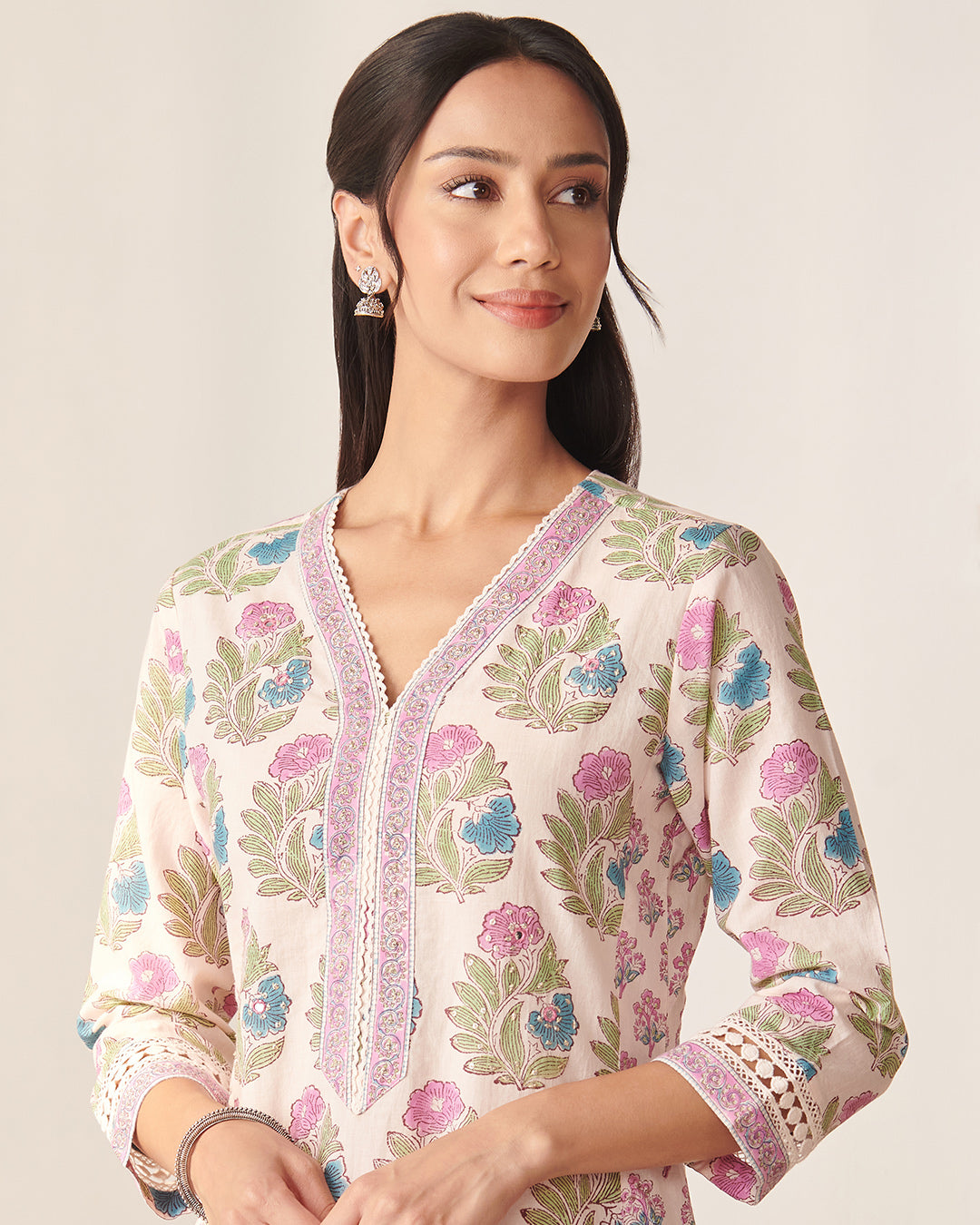
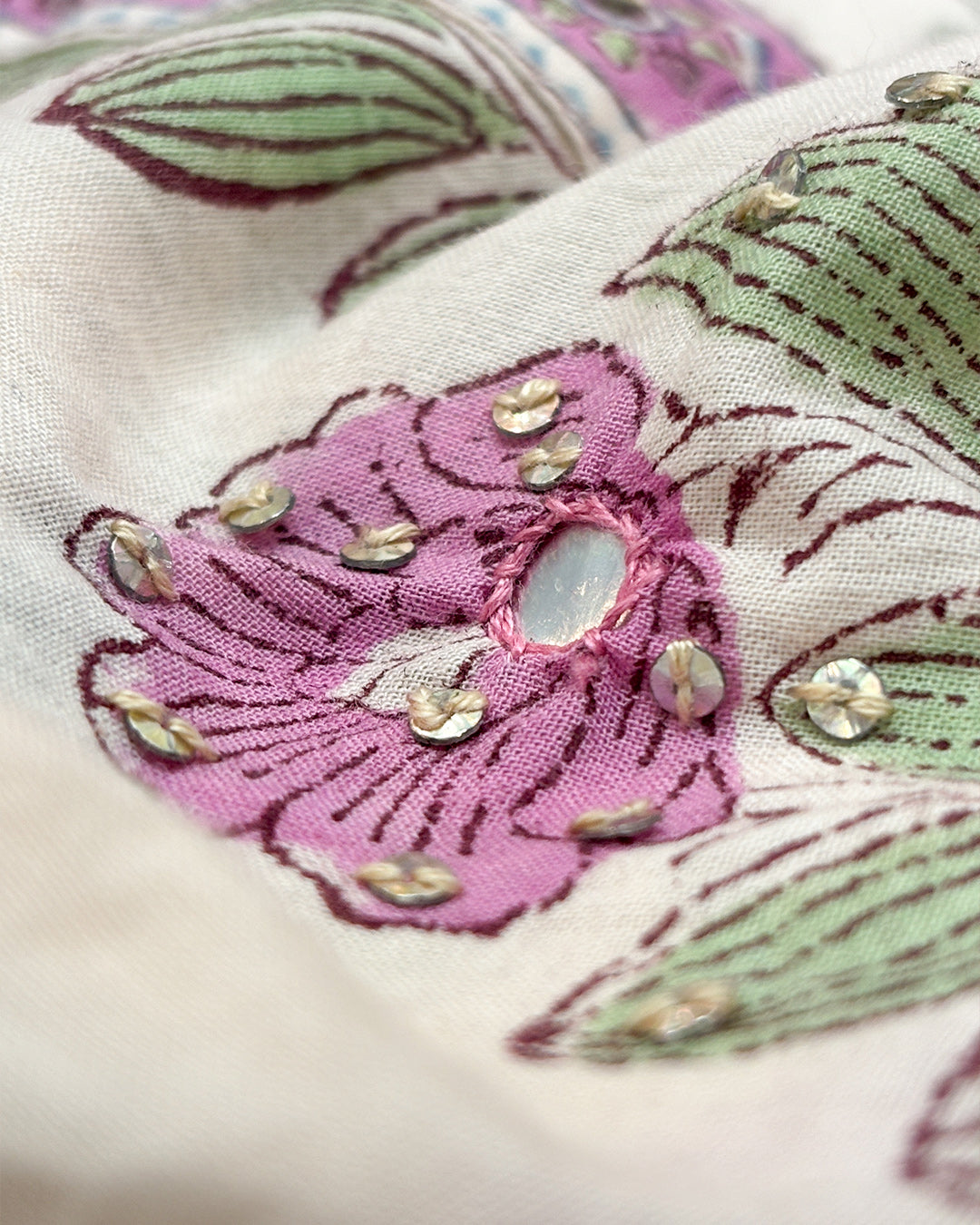
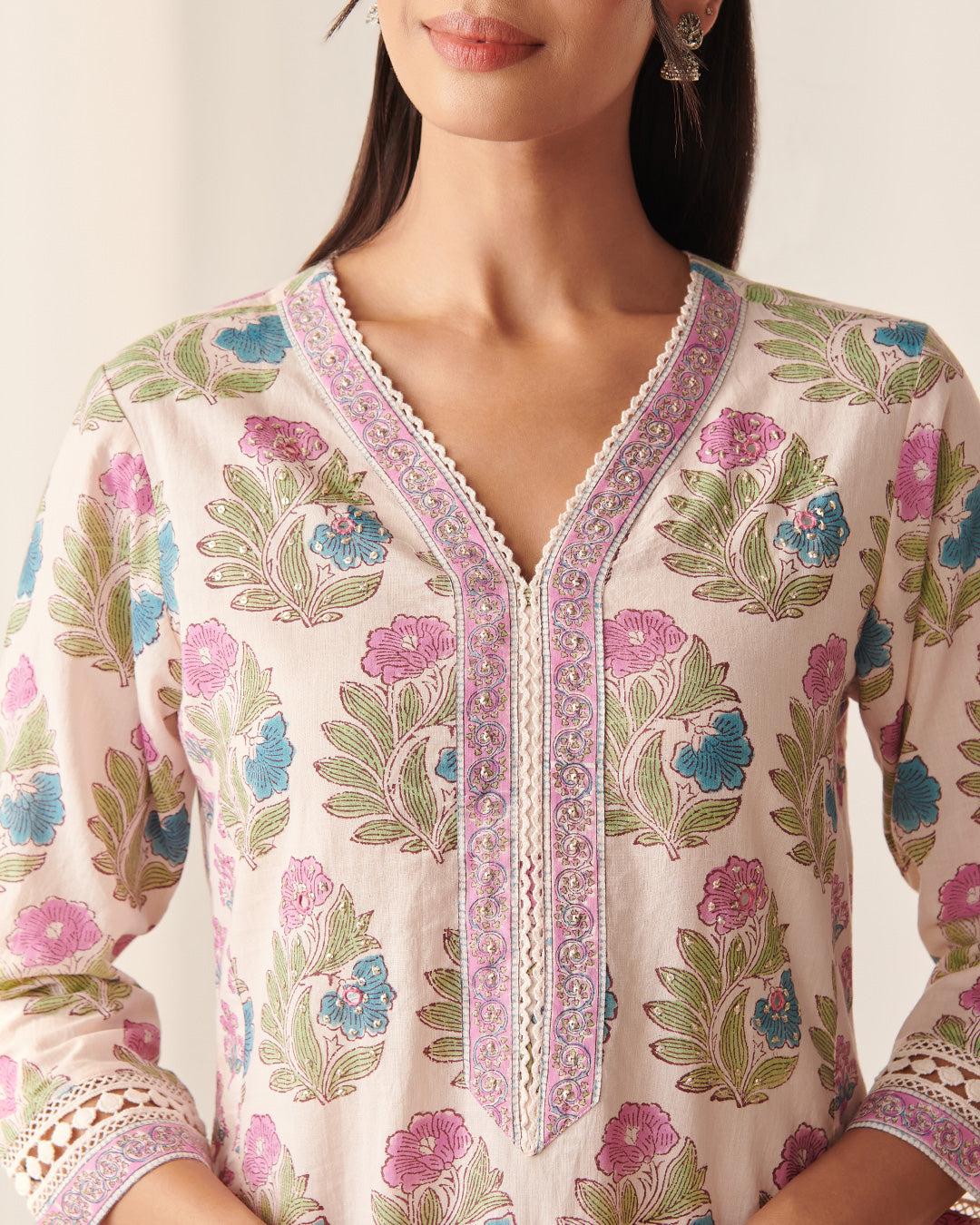
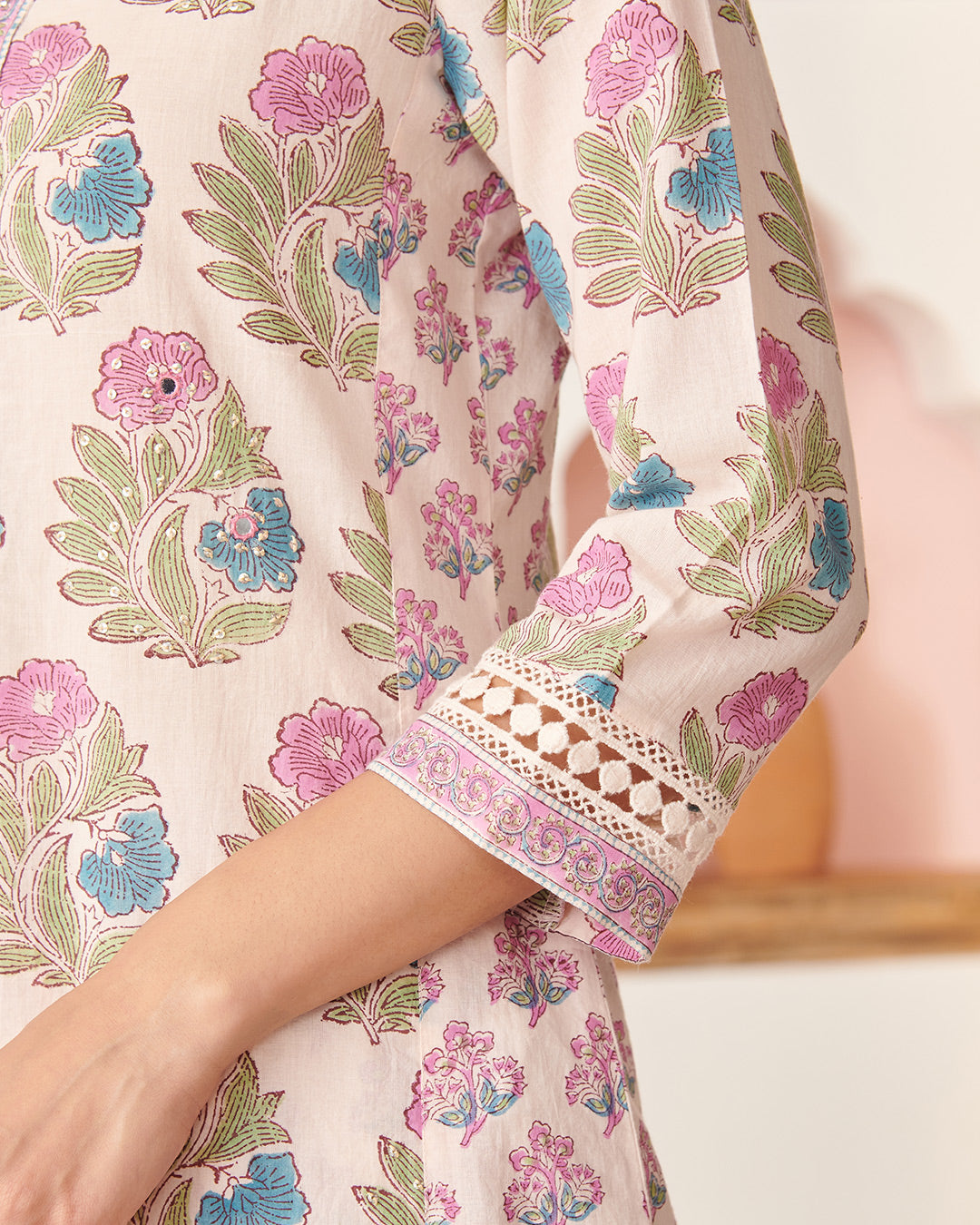
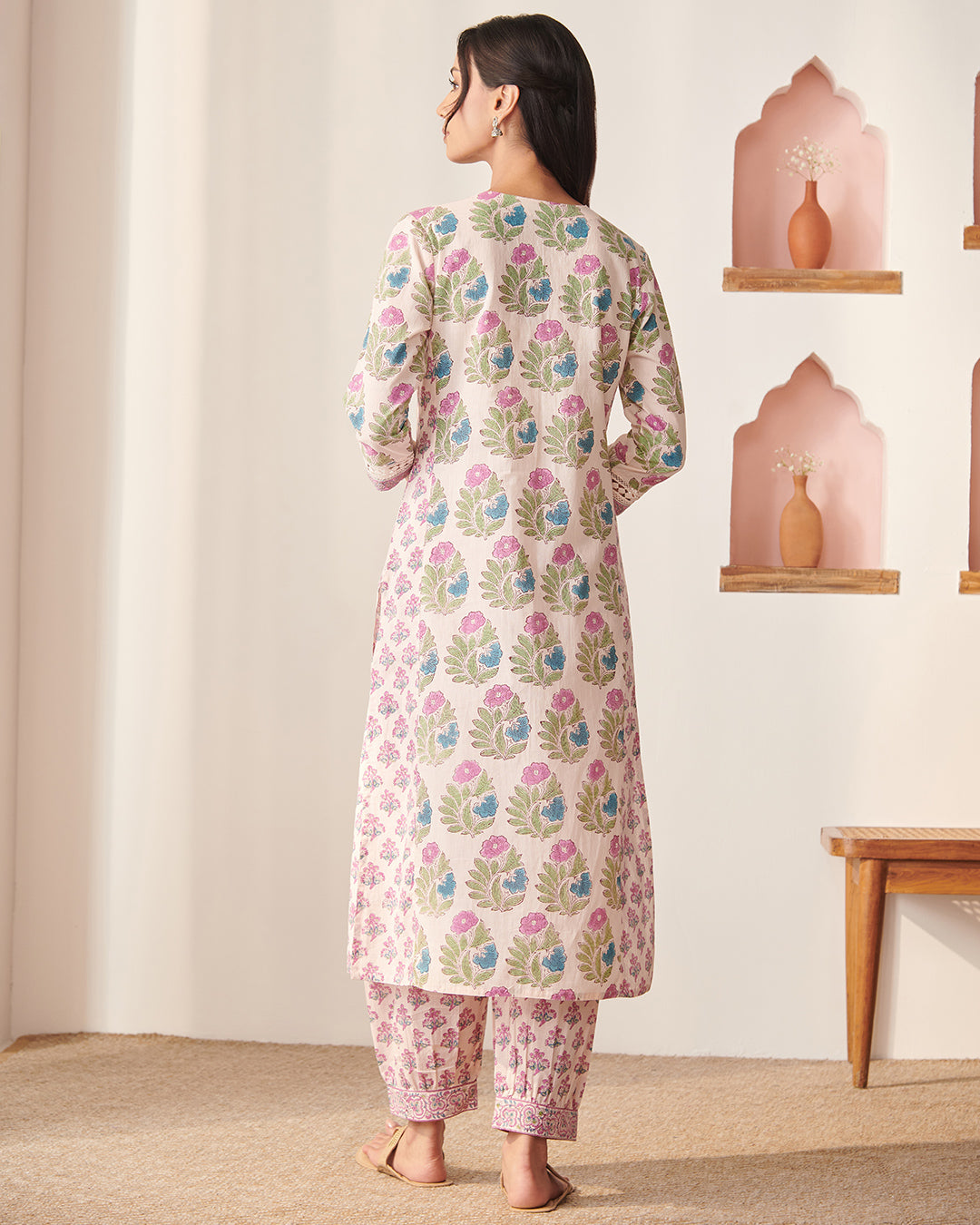
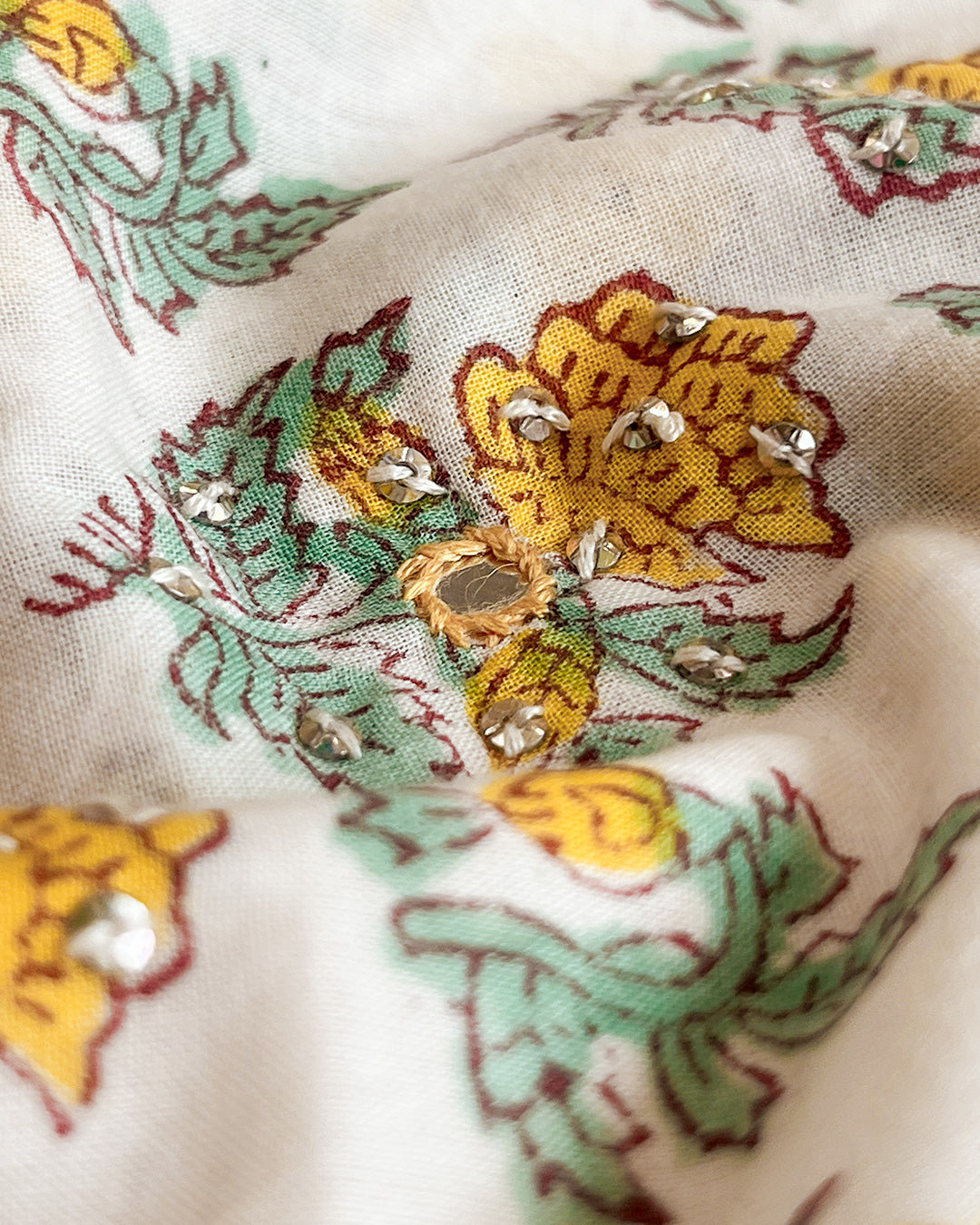
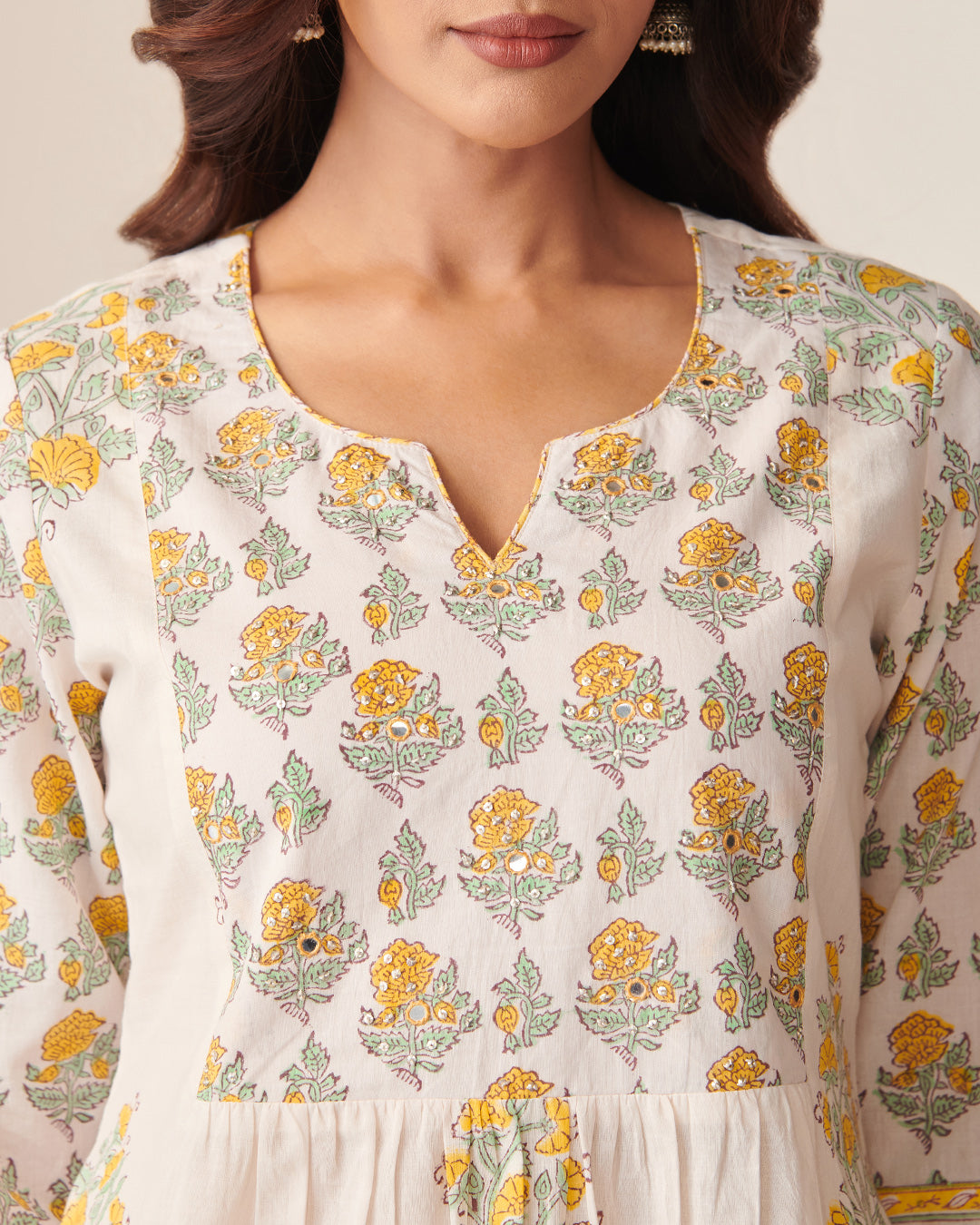
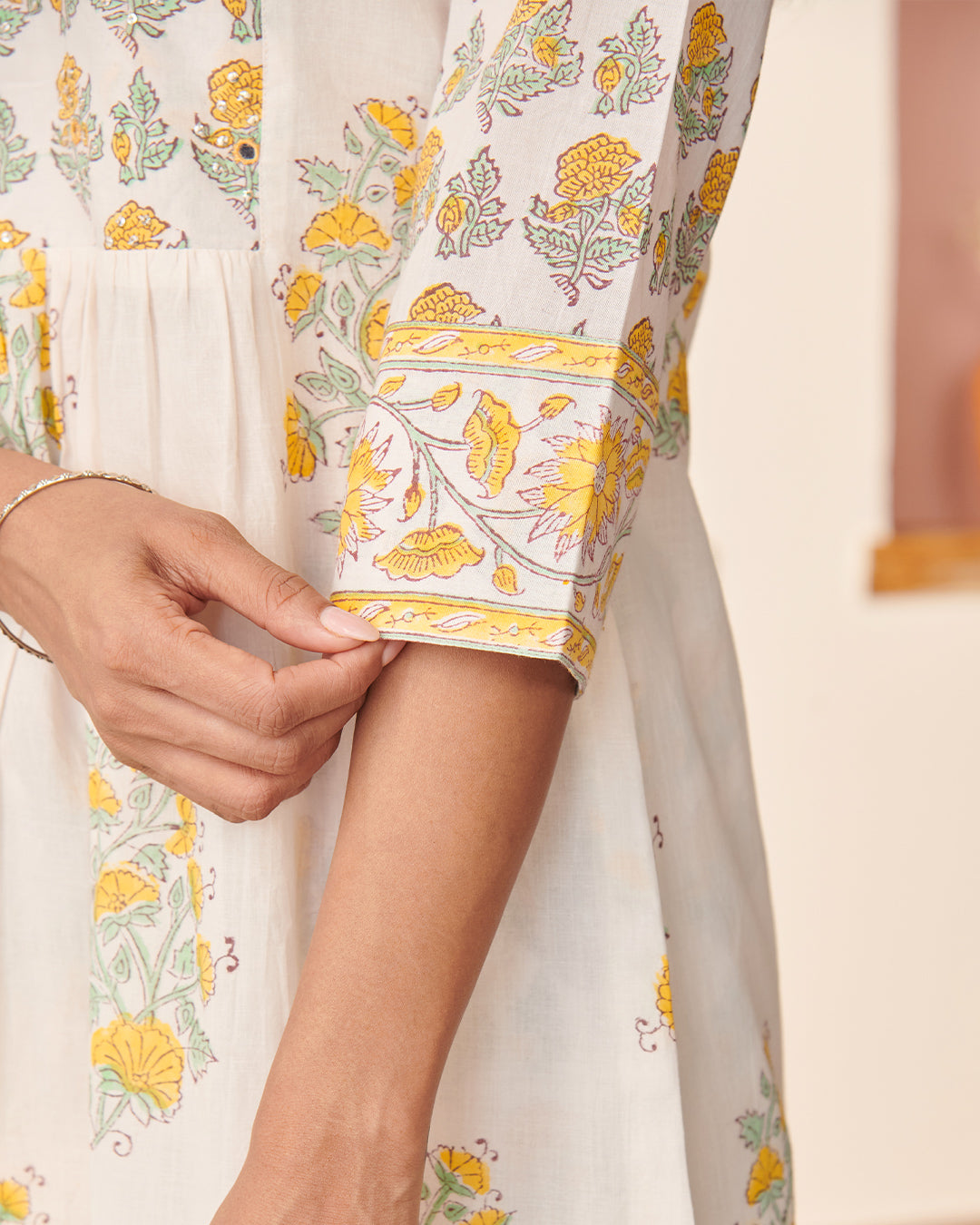
One of the most recognisable features of Sanganeri block printing is its floral vocabulary. Small flowers, leafy vines, buds and fine botanical motifs appear across the fabric, often arranged in repeating patterns that feel light and balanced.
Nature has always offered Indian textile artisans a rich source of inspiration. In Sanganeri prints, this influence often takes the form of carefully drawn flowers and slender stems, with each element contributing to the rhythm of the overall design.
The patterns may look effortless, but their delicacy requires considerable skill. The spacing between motifs, the clarity of each line and the consistency of the repeated design all influence the final result. Even a small variation can change the appearance of the fabric.
This is part of what makes Sanganeri prints so enduring. Their beauty does not depend on elaborate ornamentation. A fine floral pattern, thoughtfully placed on cotton, can feel just as graceful years later as it did when the fabric was first printed.
3. Artisans Use Hand-Carved Wooden Blocks
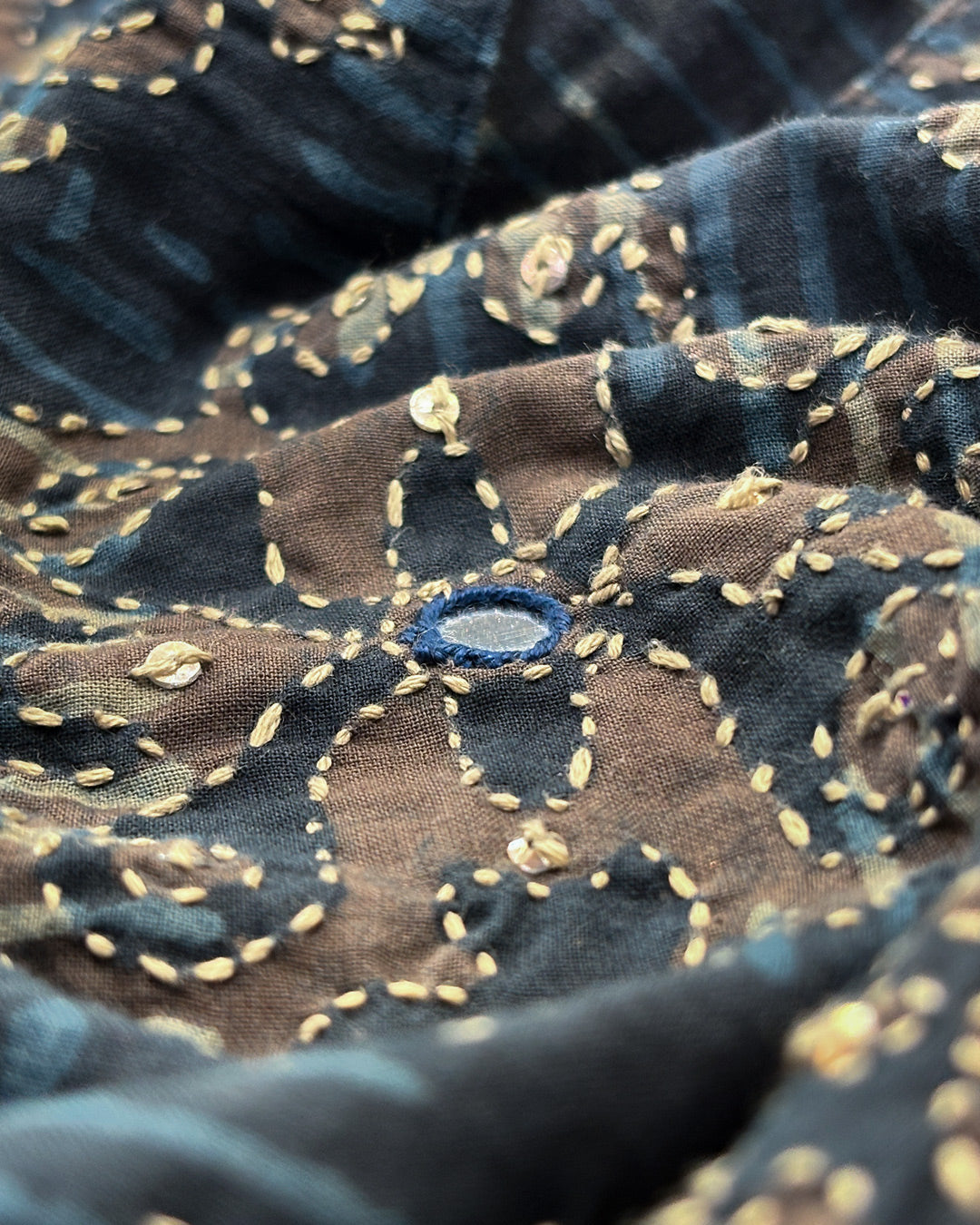
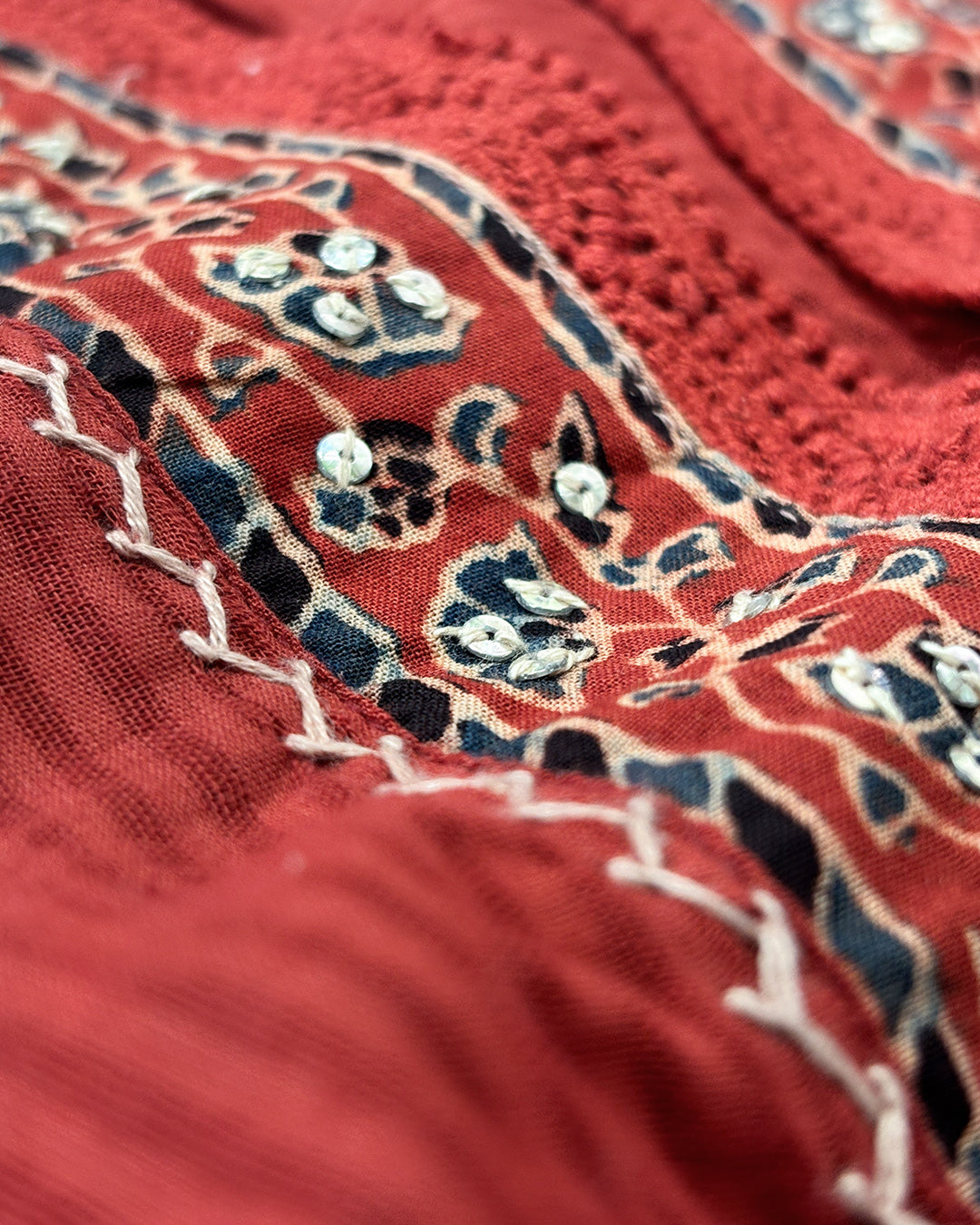
At the heart of traditional Sanganeri printing is the wooden block. Artisans carve designs into blocks of wood, creating raised surfaces that hold colour and transfer the pattern onto fabric.
The carving process demands a steady hand and a clear understanding of how the design will appear once printed. Fine petals, slender leaves and small decorative details must be shaped with care. The block also needs to be comfortable to handle, since it will be pressed onto the fabric repeatedly during printing.
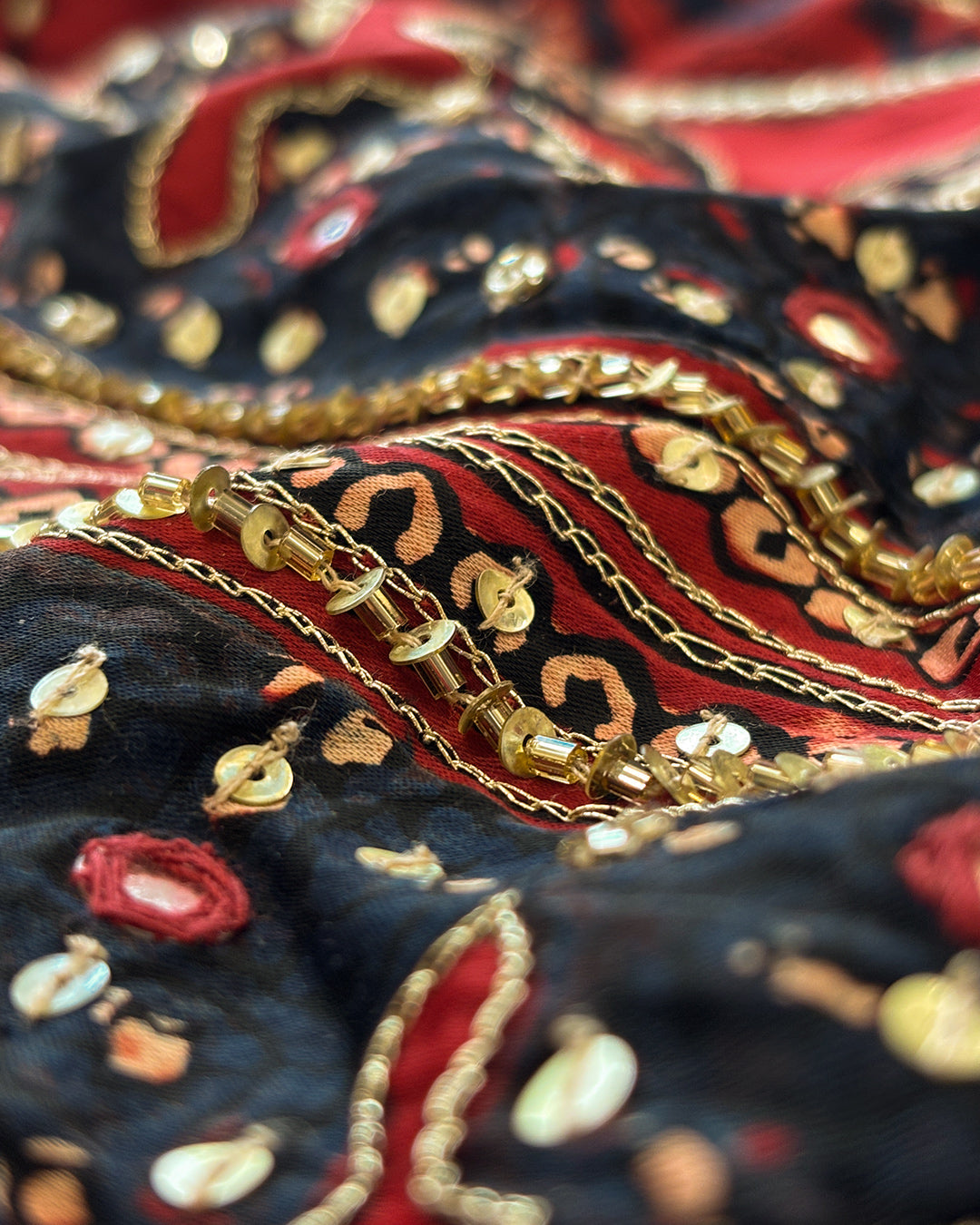
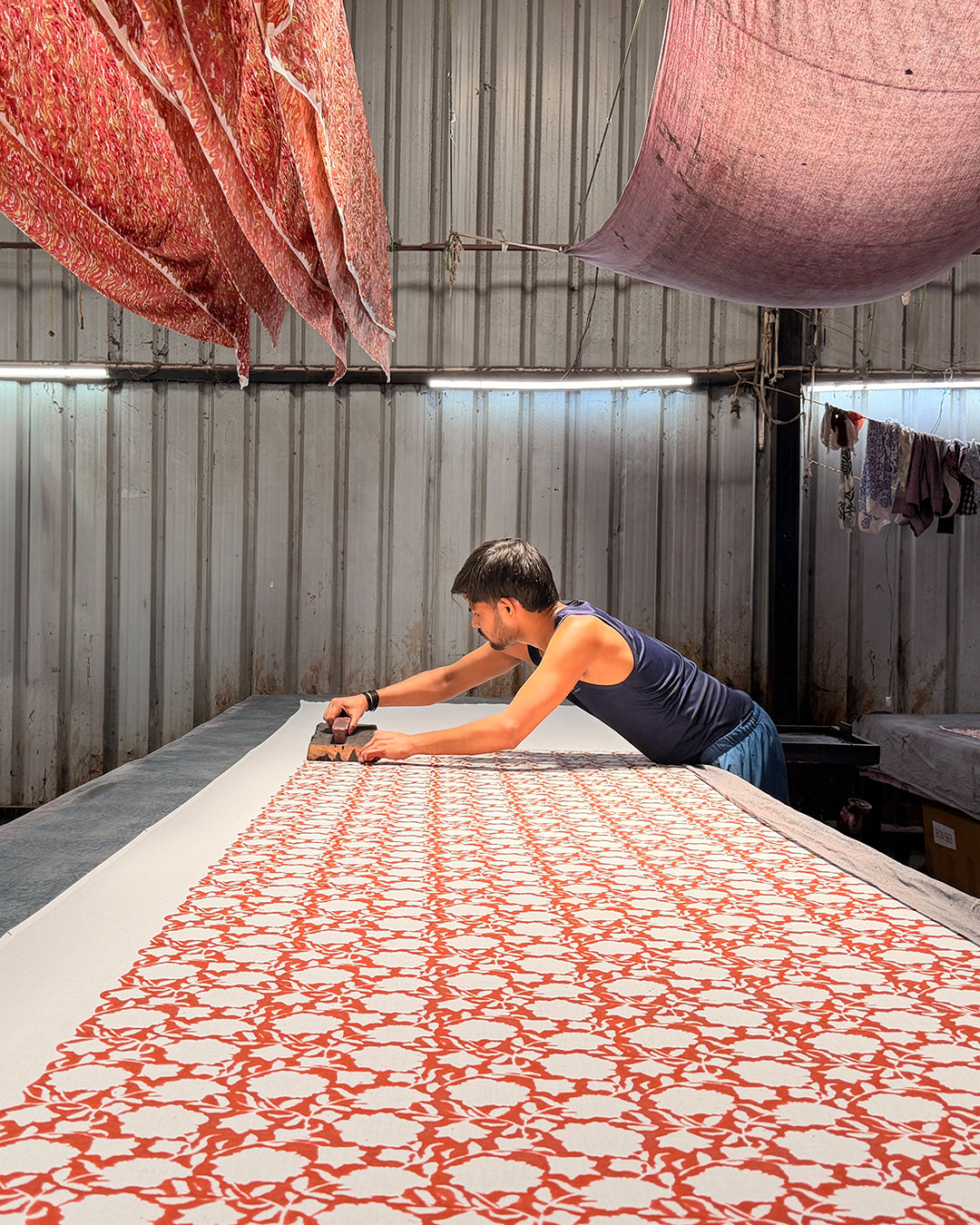
Once the block is ready, the artisan applies colour and presses it onto the prepared cloth. Each impression must align with the previous one so that the pattern continues evenly across the surface. Different blocks may be used for different colours or parts of a design.
Unlike a digitally repeated image, a hand-block printed pattern carries the subtle character of the process itself. Small variations can occur from one impression to another, giving the fabric a sense of individuality without taking away from the design.
The wooden block may be a simple tool, but it holds the accumulated skill of its maker. Its usefulness depends not only on the carving, but also on the experience of the person who knows how to bring it to life on fabric.
4. Traditional Sanganeri Prints Often Feature Light Backgrounds
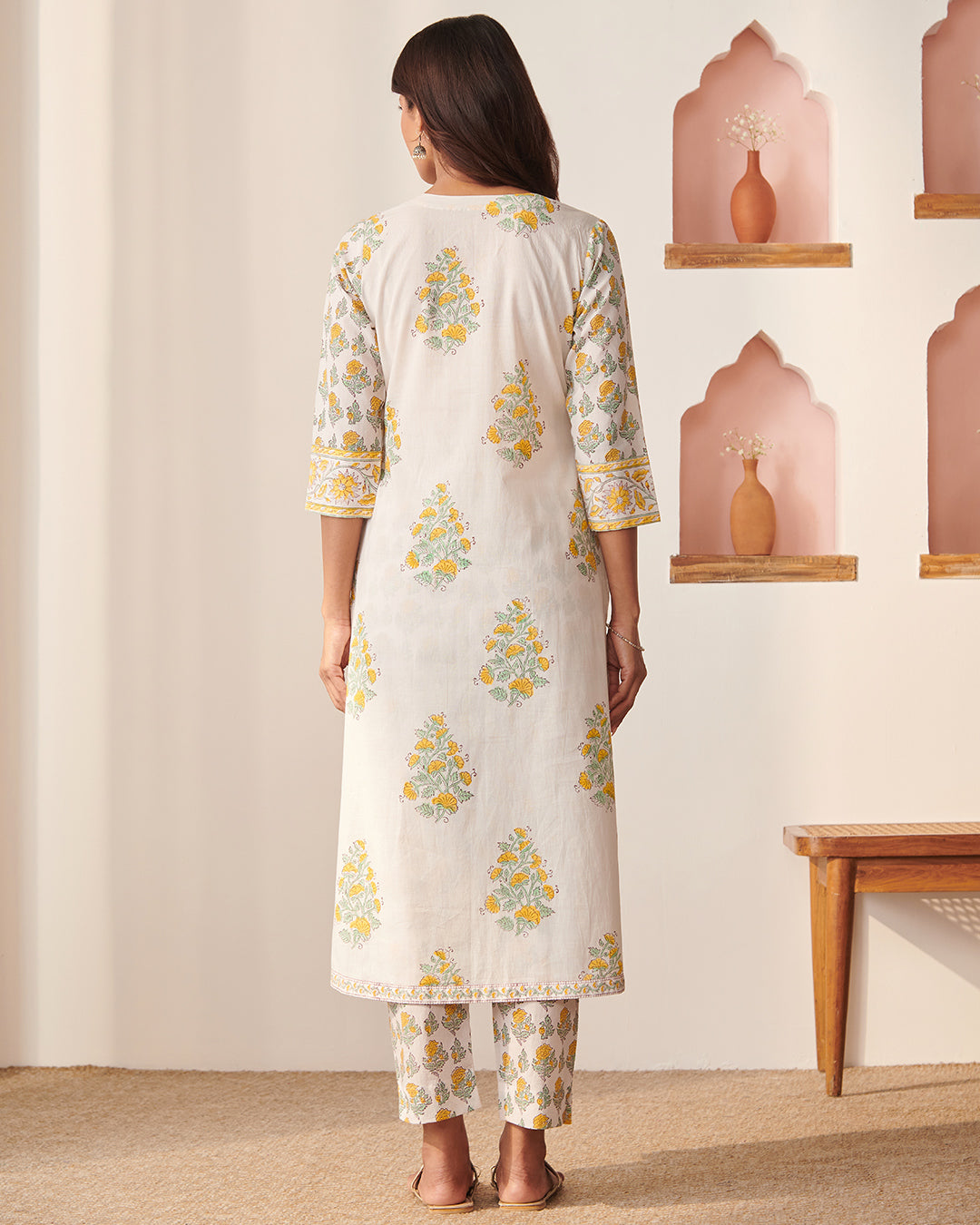
Sanganeri prints are widely associated with white and other light-coloured backgrounds. This is one of the features that gives the craft its distinctive appearance. Fine floral motifs stand out clearly against the pale fabric, allowing the details to remain visible without making the overall design feel heavy.
White cotton, in particular, has a long association with Sanganeri printing. Its clean surface allows delicate patterns and colours to take centre stage. The result is often a fabric that feels fresh, airy and easy to wear, qualities that have made these prints well suited to India's warm climate.
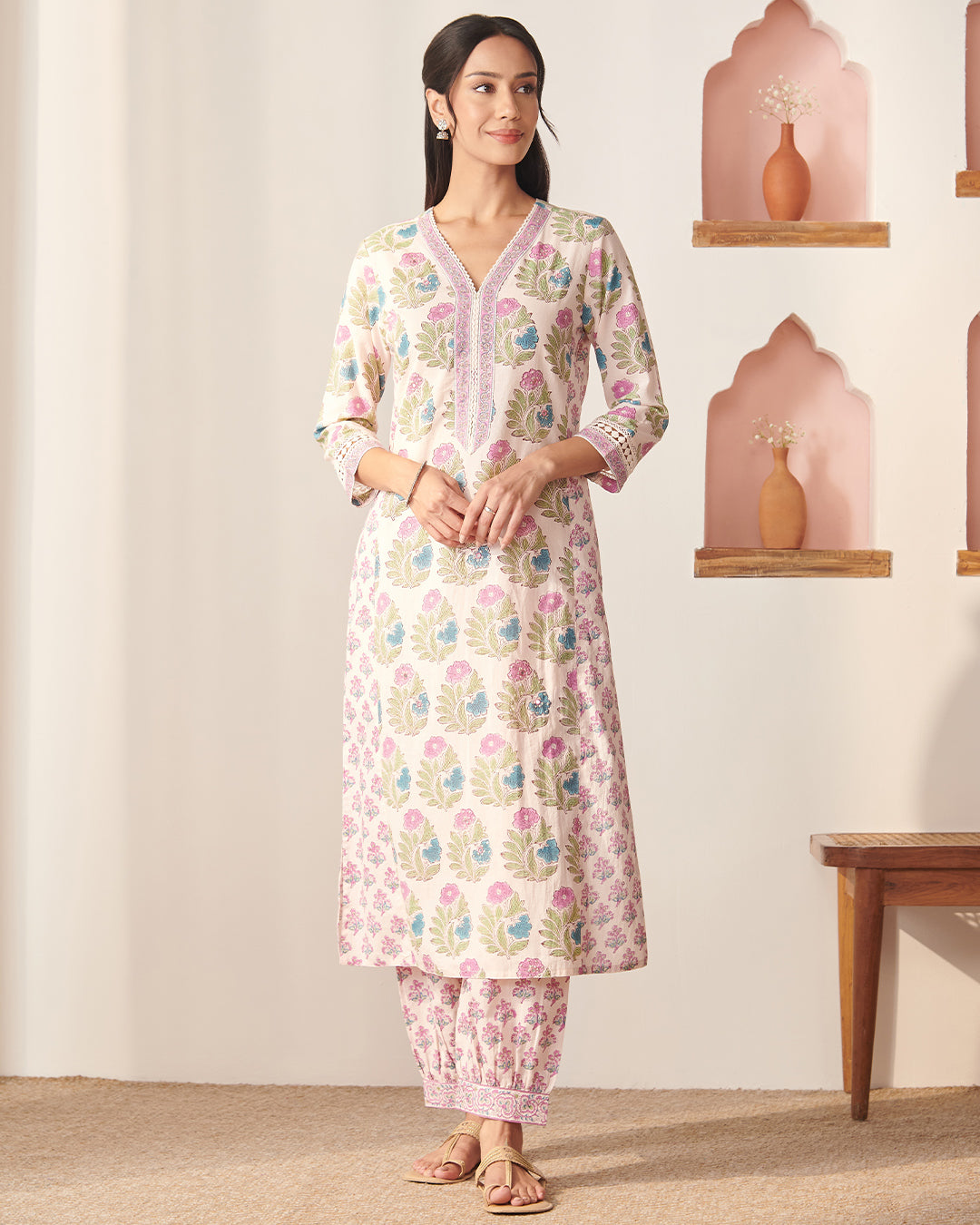
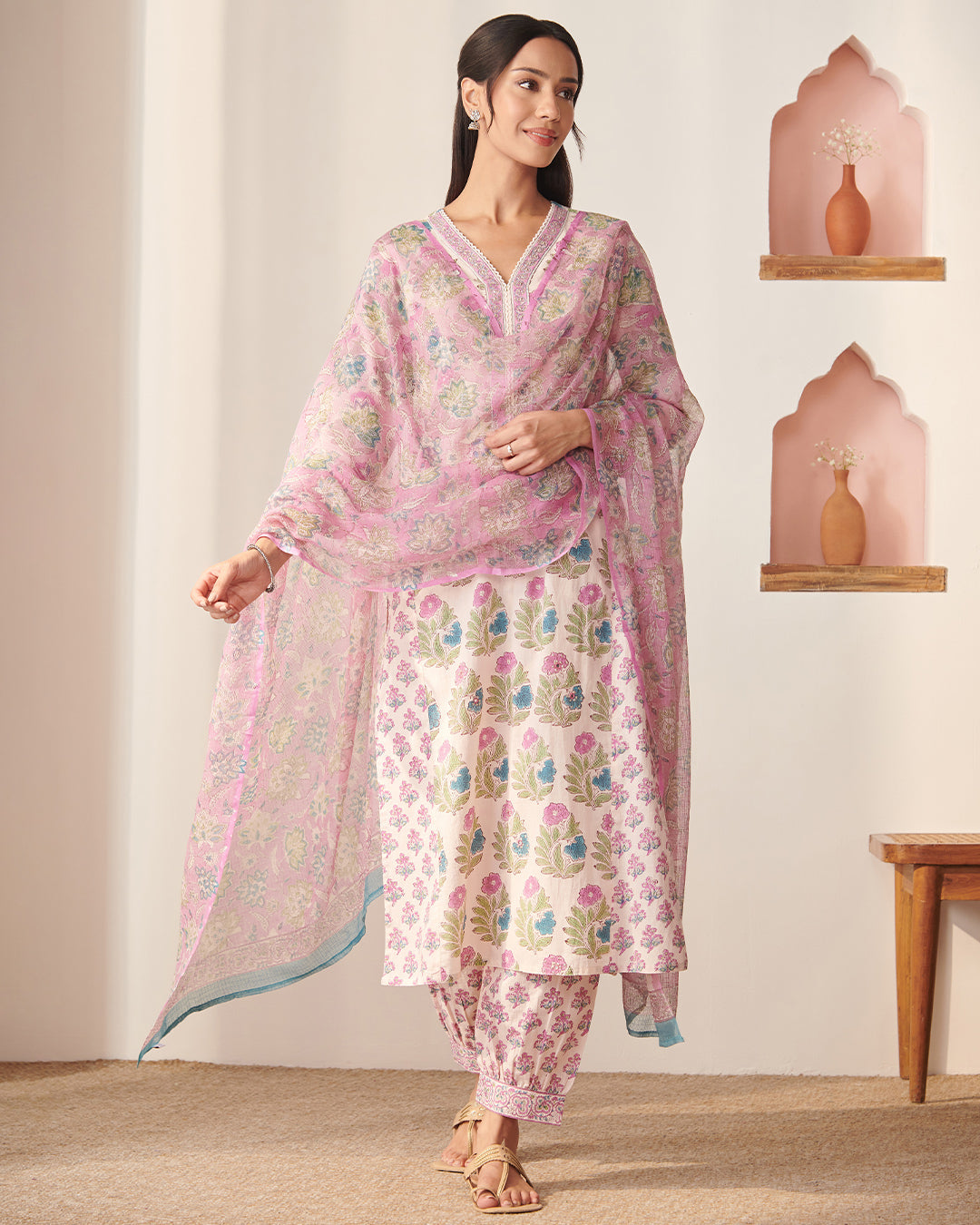
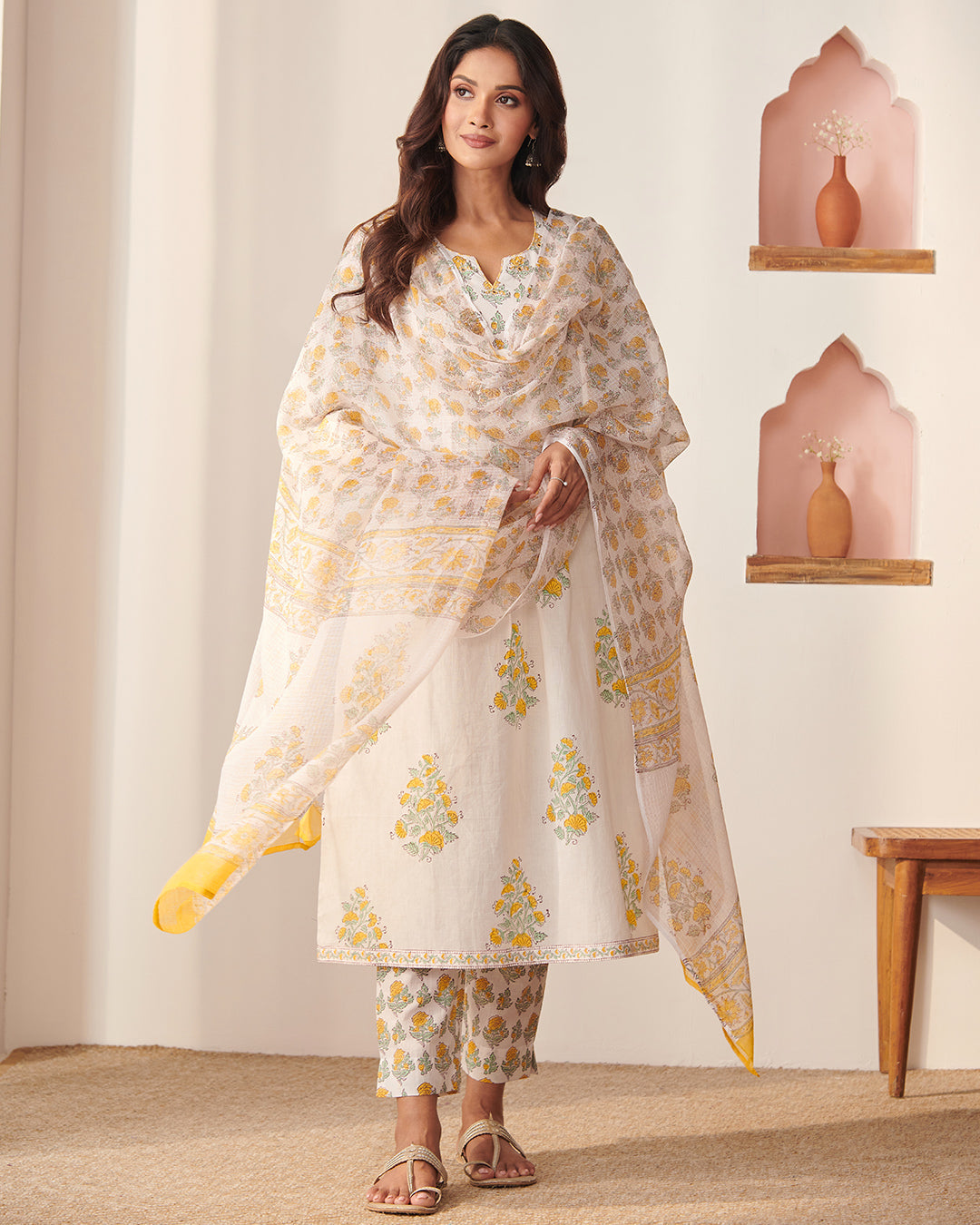
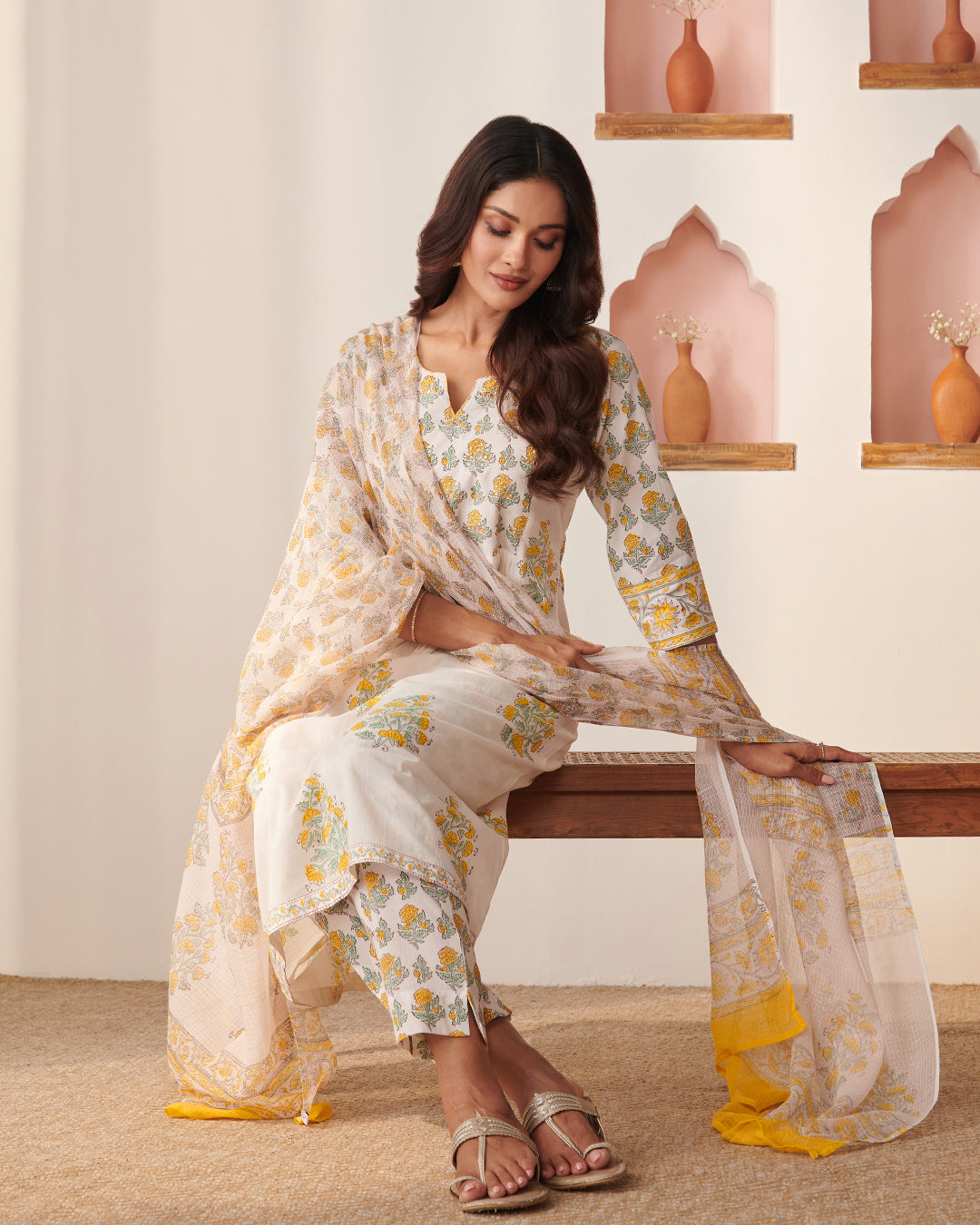
Light backgrounds also offer considerable versatility. A small floral print can look at home in an everyday kurta, while a more elaborate arrangement can lend itself to a longer kurta set or a graceful dupatta. The fabric does not need excessive embellishment to hold its own.
Although light backgrounds are strongly associated with the tradition, Sanganeri printing is not limited to white. Other background colours and more varied palettes are also used. What remains important is the relationship between the base fabric and the printed design, with each element given room to be appreciated.
5. Creating a Sanganeri Print Requires Patience and Precision

Hand block printing is a process in which the smallest details matter. Before printing begins, the fabric must be prepared so that it can receive the colour evenly. The artisan then works across its surface, placing each block carefully and maintaining the alignment of the repeating pattern.
This requires a practiced sense of spacing, pressure and rhythm. Too much or too little colour can affect the clarity of a motif. An uneven impression may interrupt the pattern, while a slight misalignment can become more noticeable as the design continues across the fabric.
For multicoloured prints, the process becomes more involved. Different blocks may be needed for different colours, and each stage must be positioned accurately in relation to the others. Depending on the fabric and printing method, drying and other finishing steps also play an important role in the final appearance.
Much of this work is guided by experience rather than speed. Artisans develop an understanding of the material through years of repetition, learning how the block, colour and fabric respond to one another.
This patient approach is part of the craft's lasting appeal. The finished textile carries the result of many careful decisions, even when the viewer sees only a delicate flower or a line of leaves.
6. Natural Colours Have Played an Important Role in the Craft
Colour has always been an important part of Indian textile traditions, and natural dyes have a place in the history of Sanganeri printing. Traditionally, dyers and printers worked with materials derived from plants, minerals and other natural sources to create different shades and effects.
The preparation of natural colours could be a detailed process in itself. The final shade depended on several factors, including the source of the colour, the treatment of the fabric and the methods used to fix the dye. Achieving consistency required knowledge that developed through years of practice.
Over time, synthetic dyes became more widely used in textile printing because they offered a broader range of colours and greater consistency for many applications. Contemporary Sanganeri prints may therefore use natural dyes, synthetic dyes or different approaches depending on the maker and the intended result.
It is worth remembering that the history of a craft and the materials used today are not always the same. Natural dyes remain meaningful to conversations about traditional textile knowledge and more considered production, but a fabric's environmental impact also depends on factors such as water use, dye processing and waste management.
The deeper story lies in the knowledge behind the colour. Whether working with traditional or contemporary materials, the artisan must understand how colour behaves on fabric and how it contributes to the character of the finished print.
7. Sanganeri Block Printing Has Found a Place in Modern Fashion
Traditional crafts continue to find meaning when they remain part of everyday life. Sanganeri block printing is a good example of this. Its fine patterns and breathable cotton fabrics have carried the craft beyond its place of origin and into contemporary Indian wardrobes.
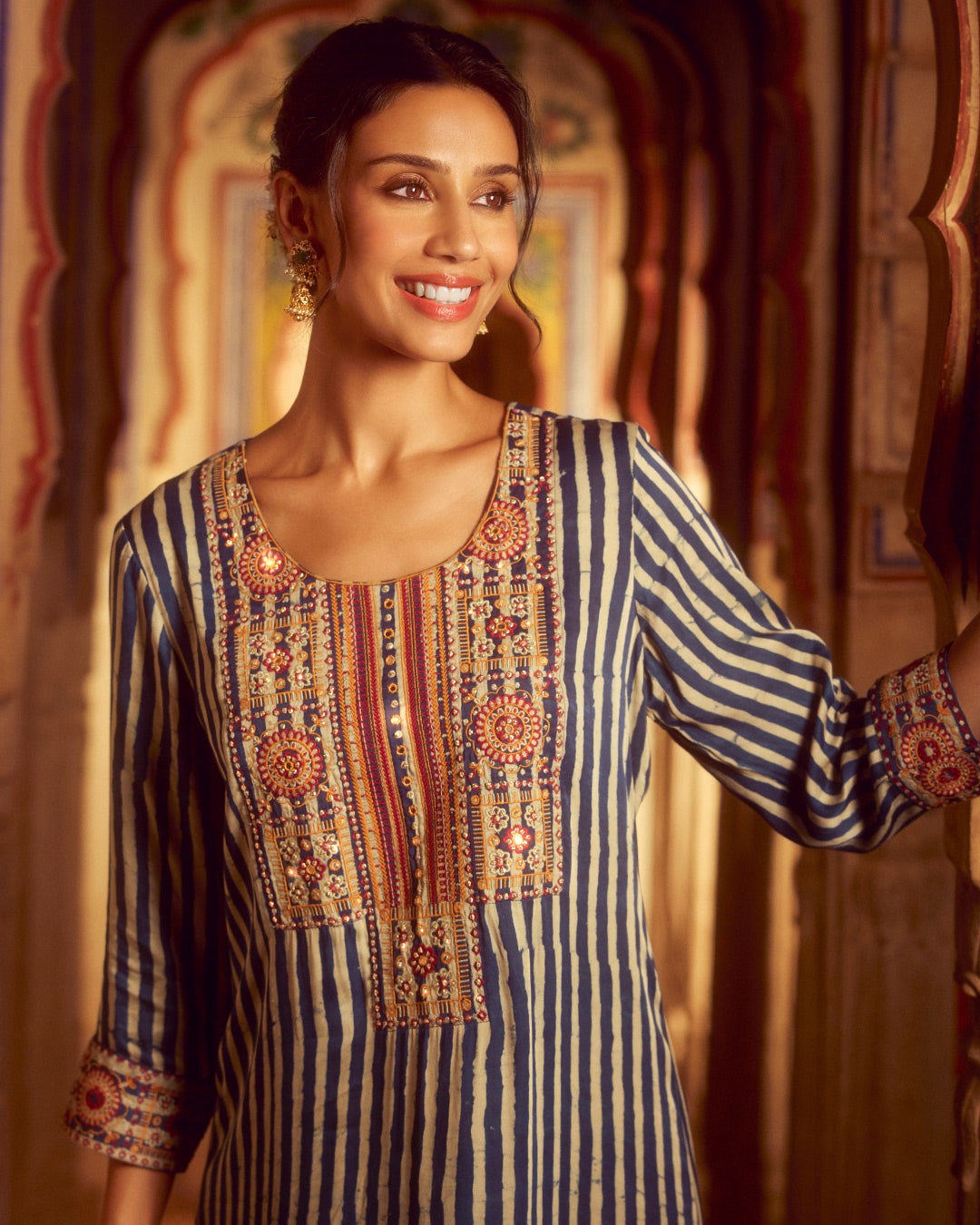
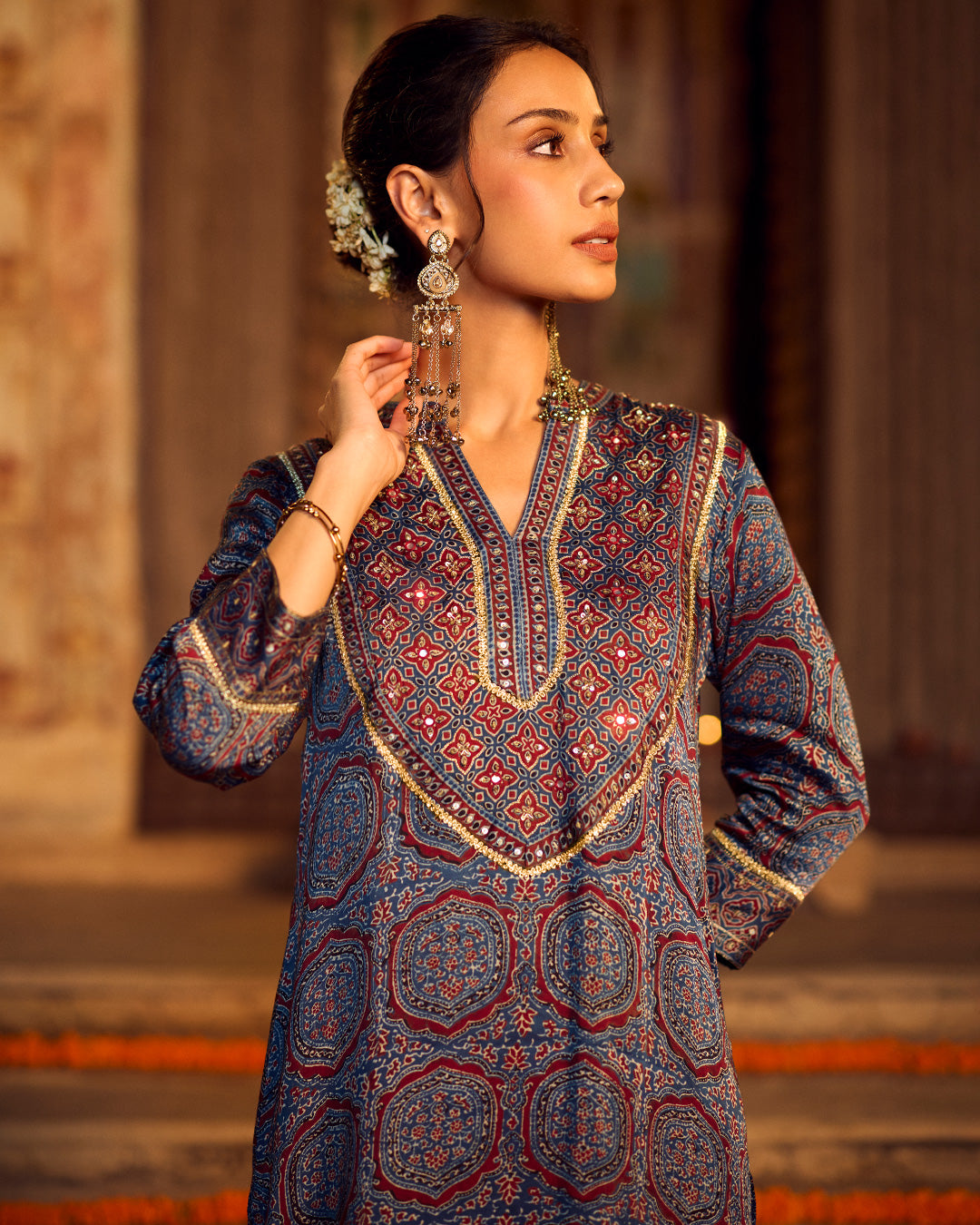
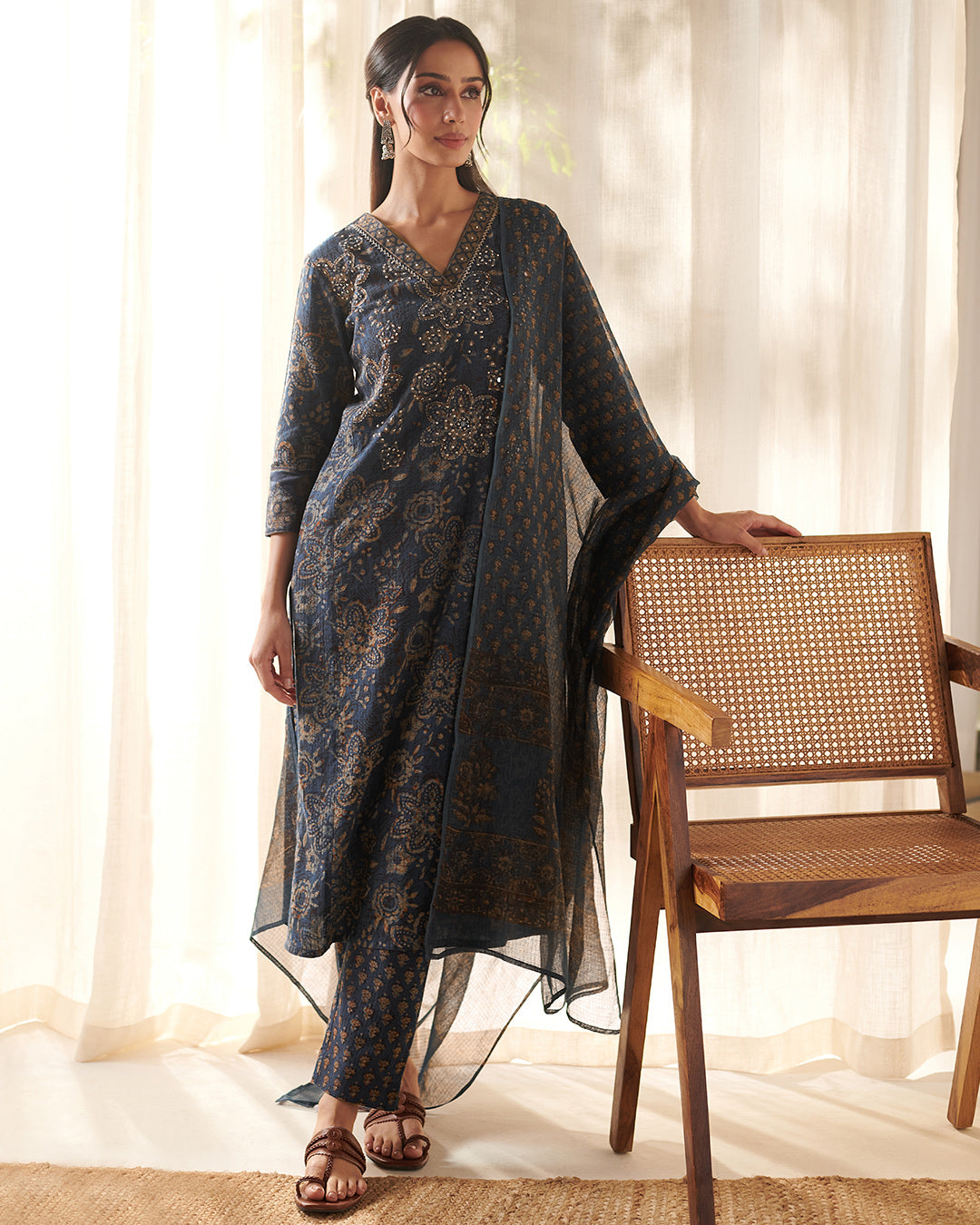
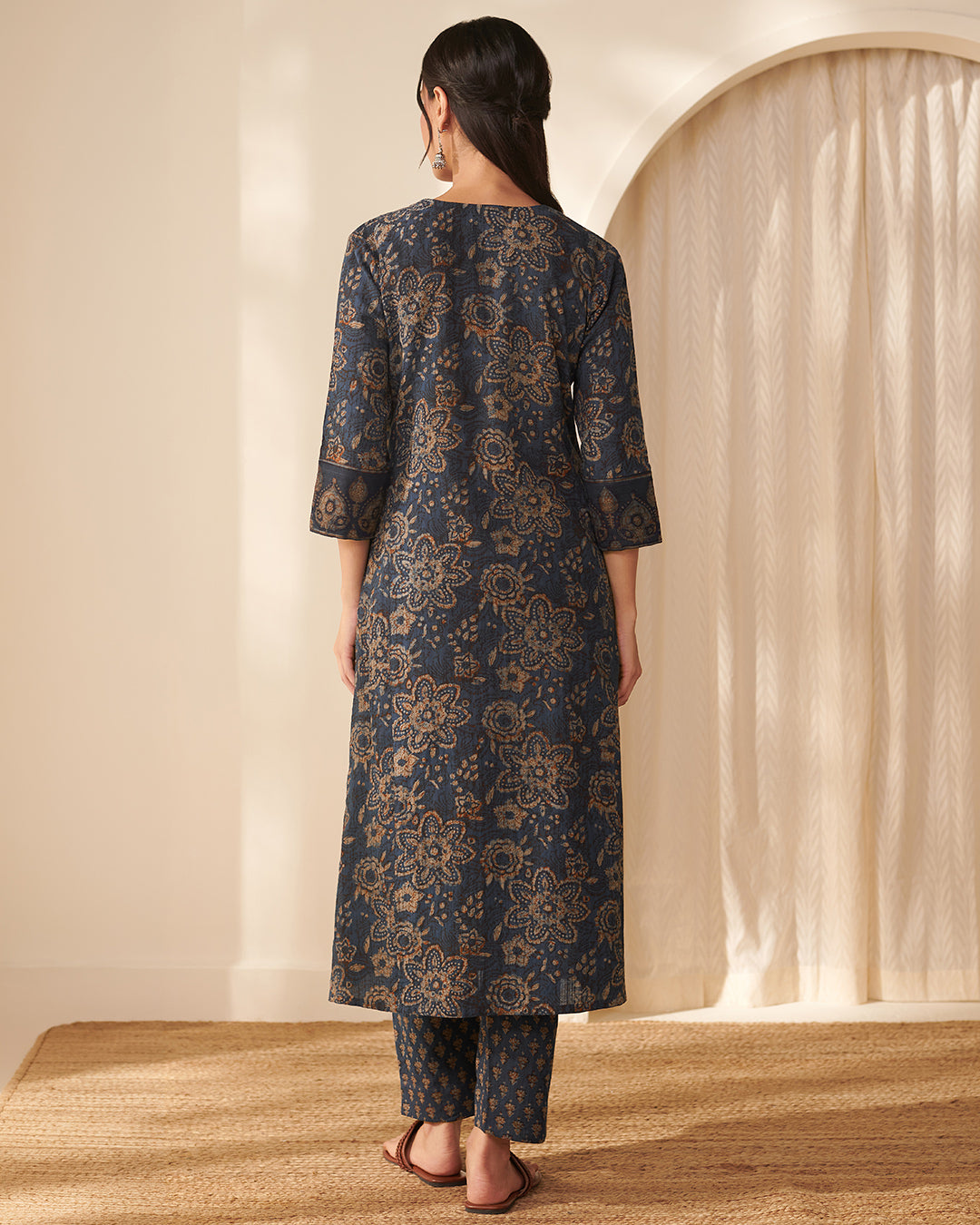
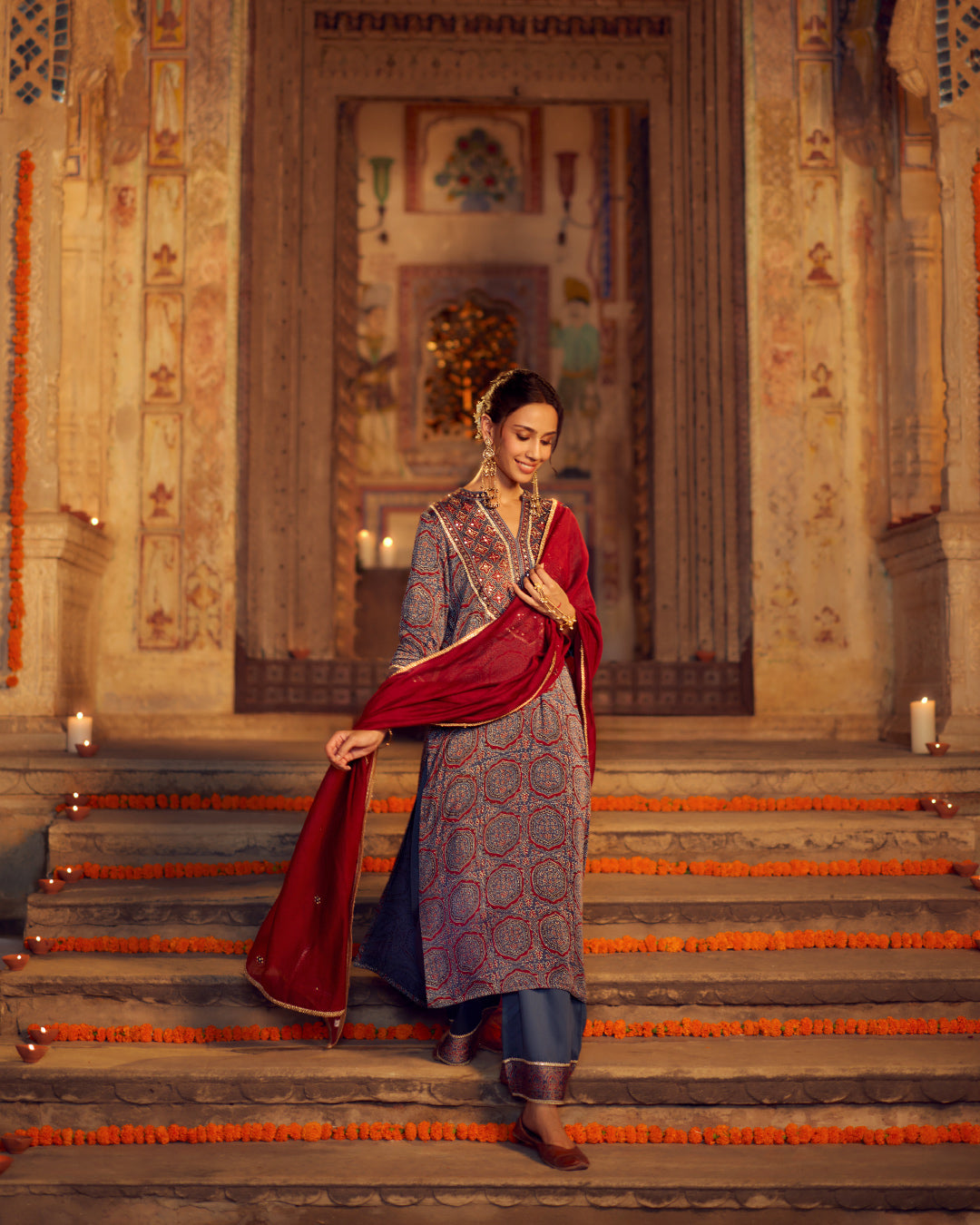
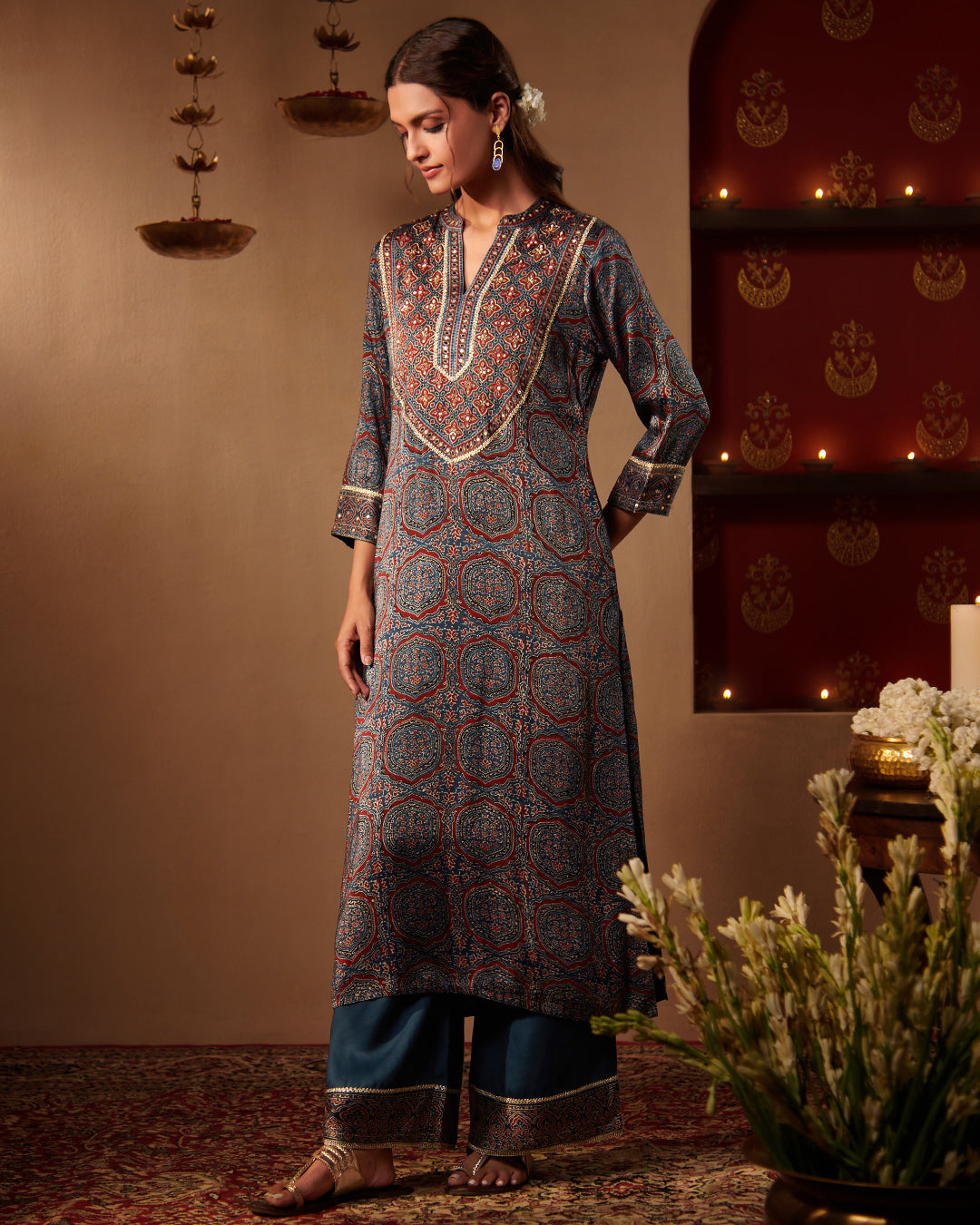
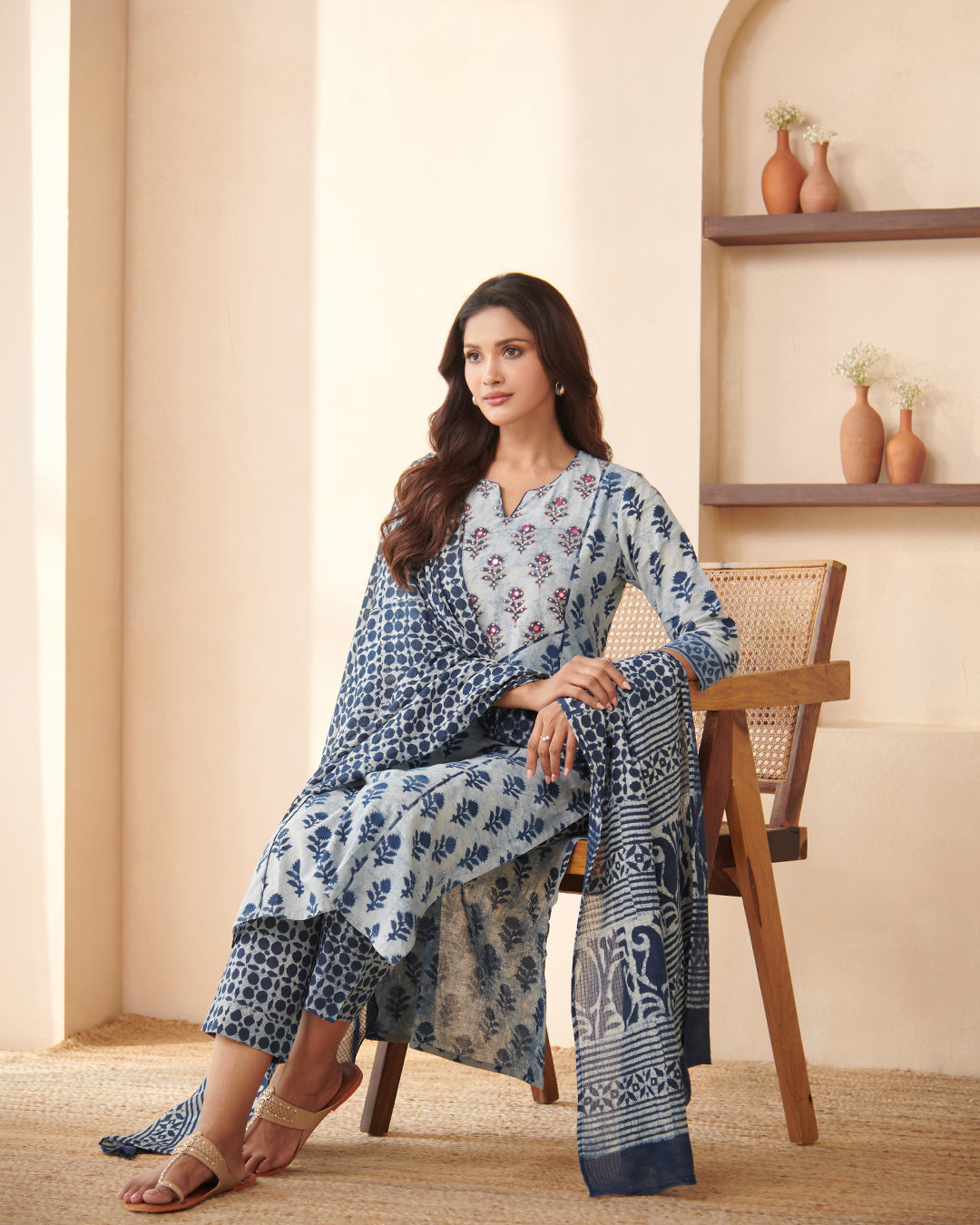
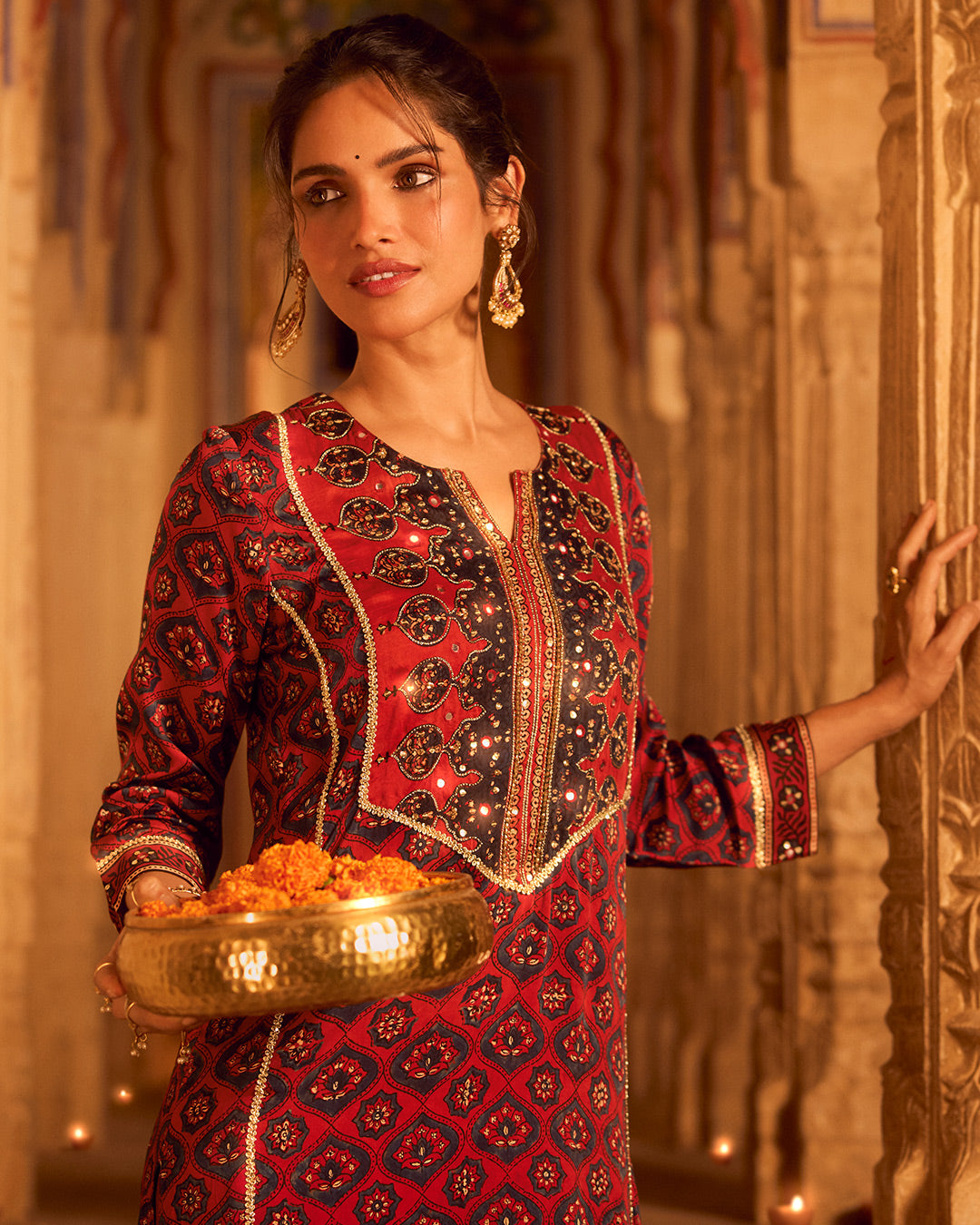
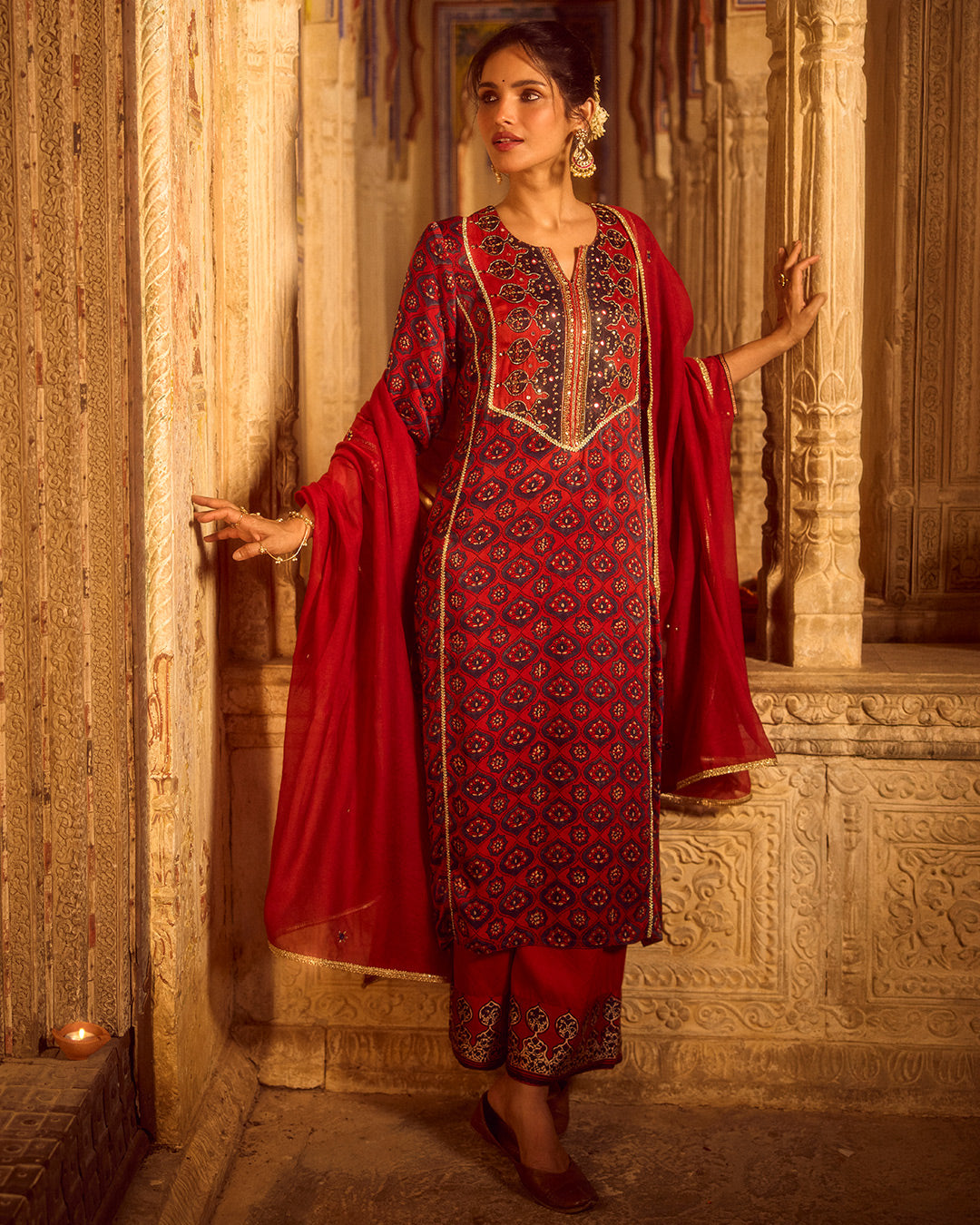
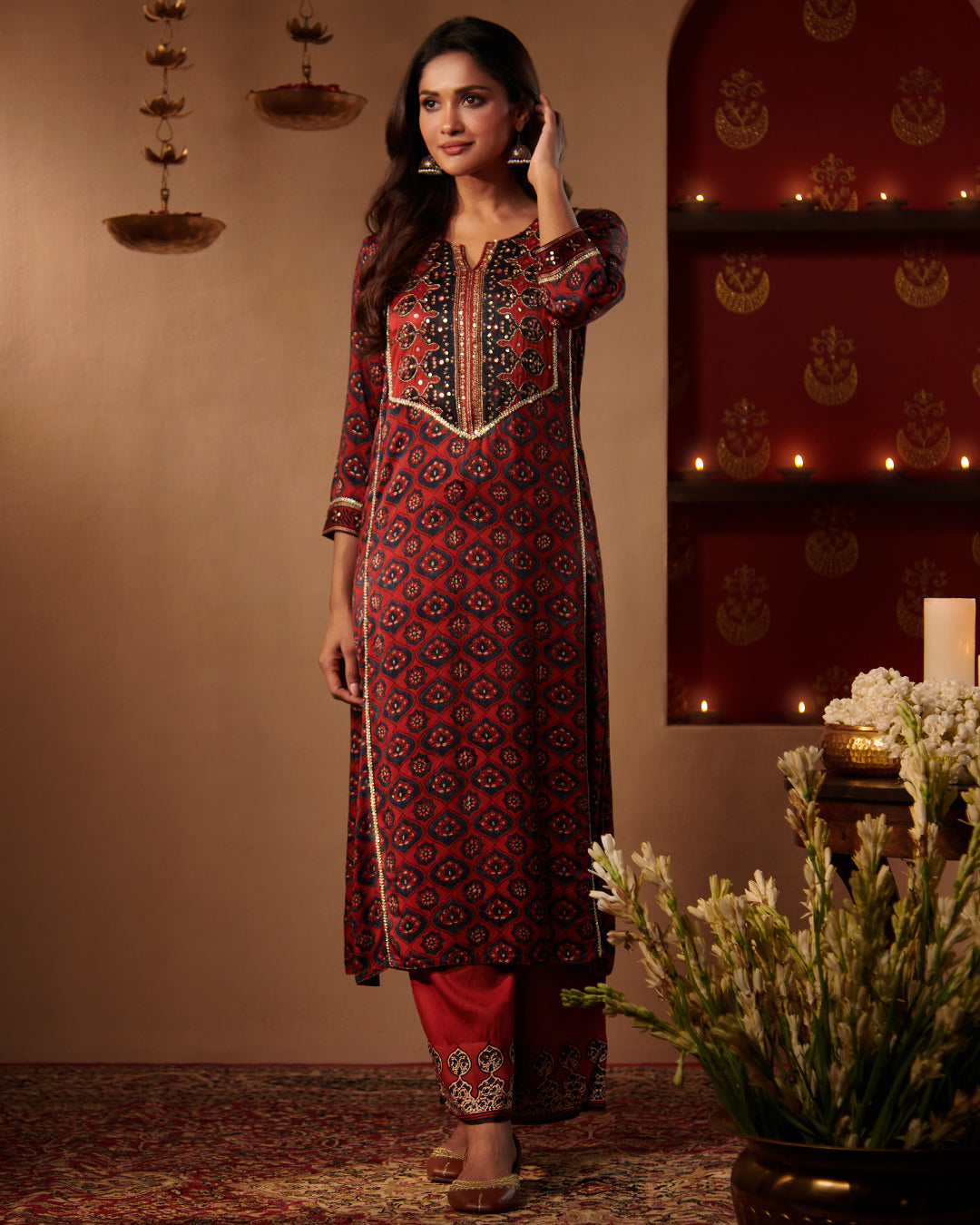
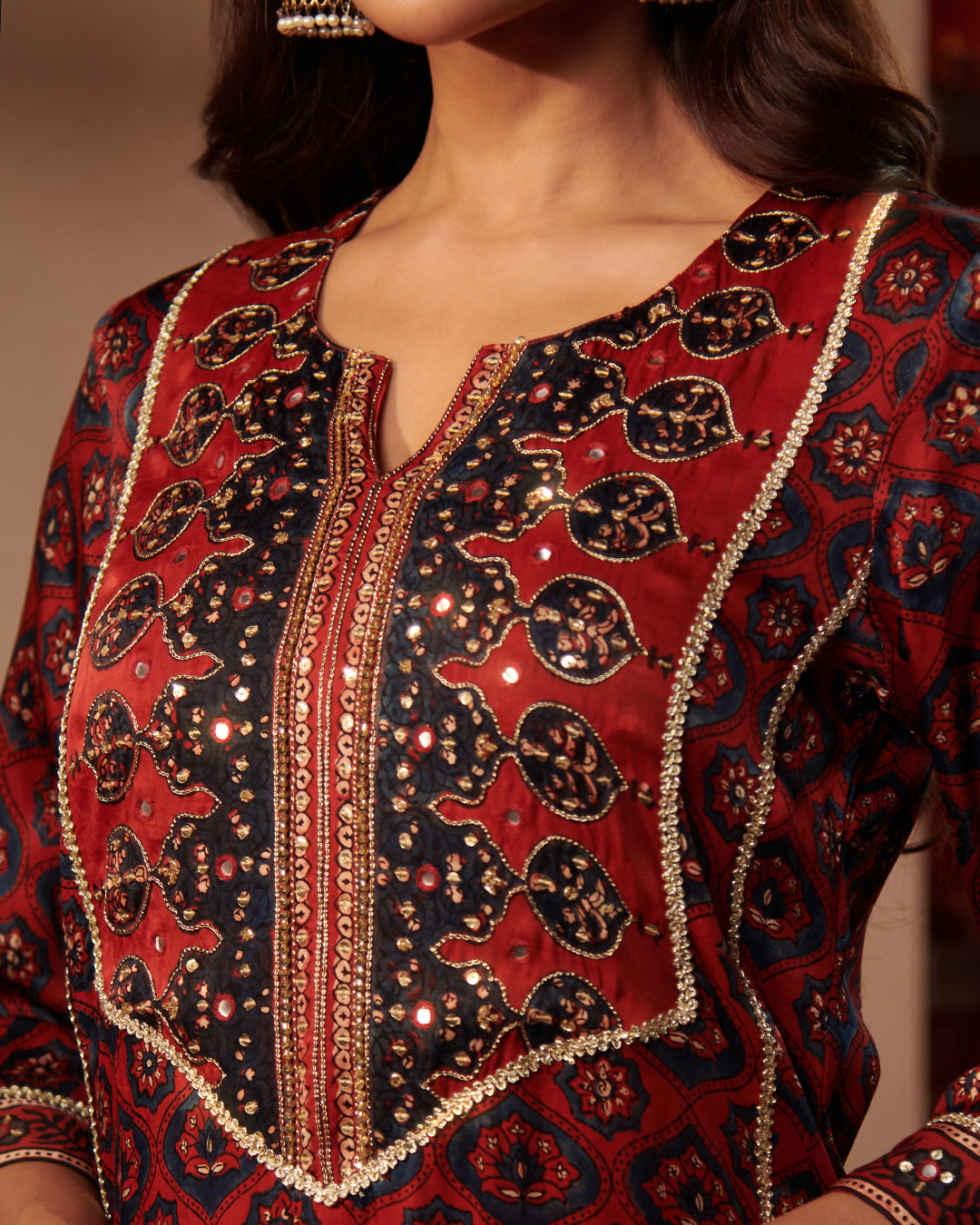
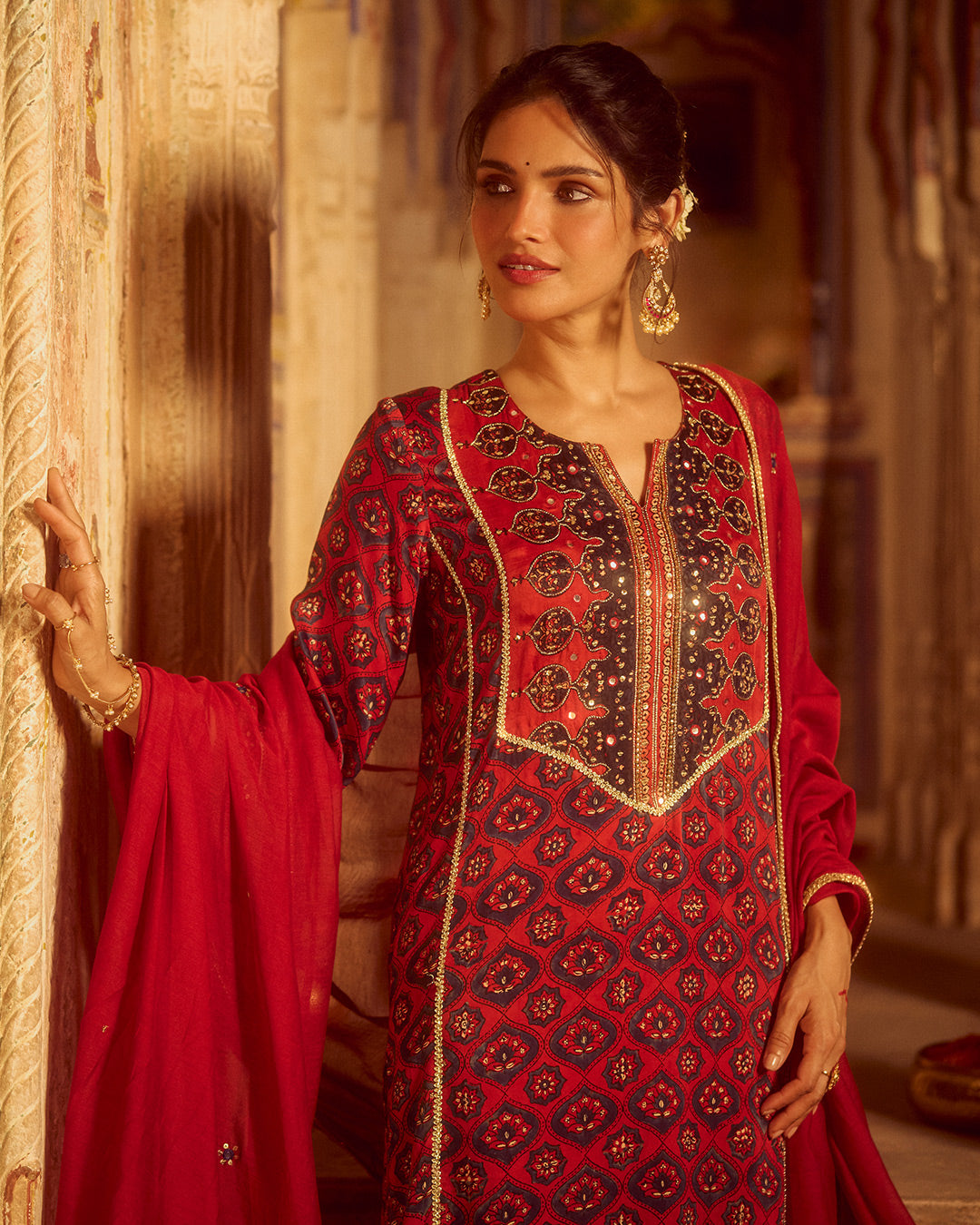
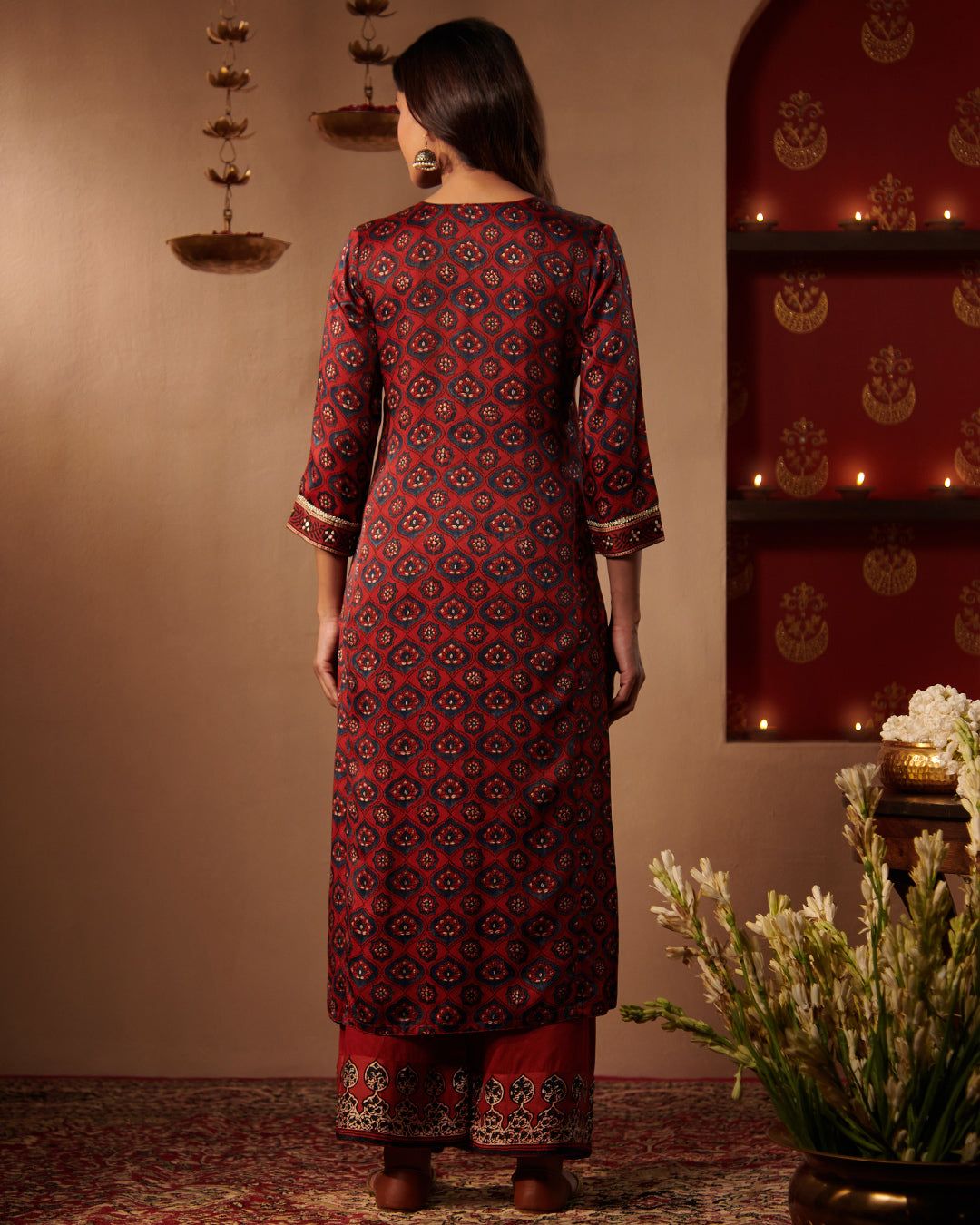
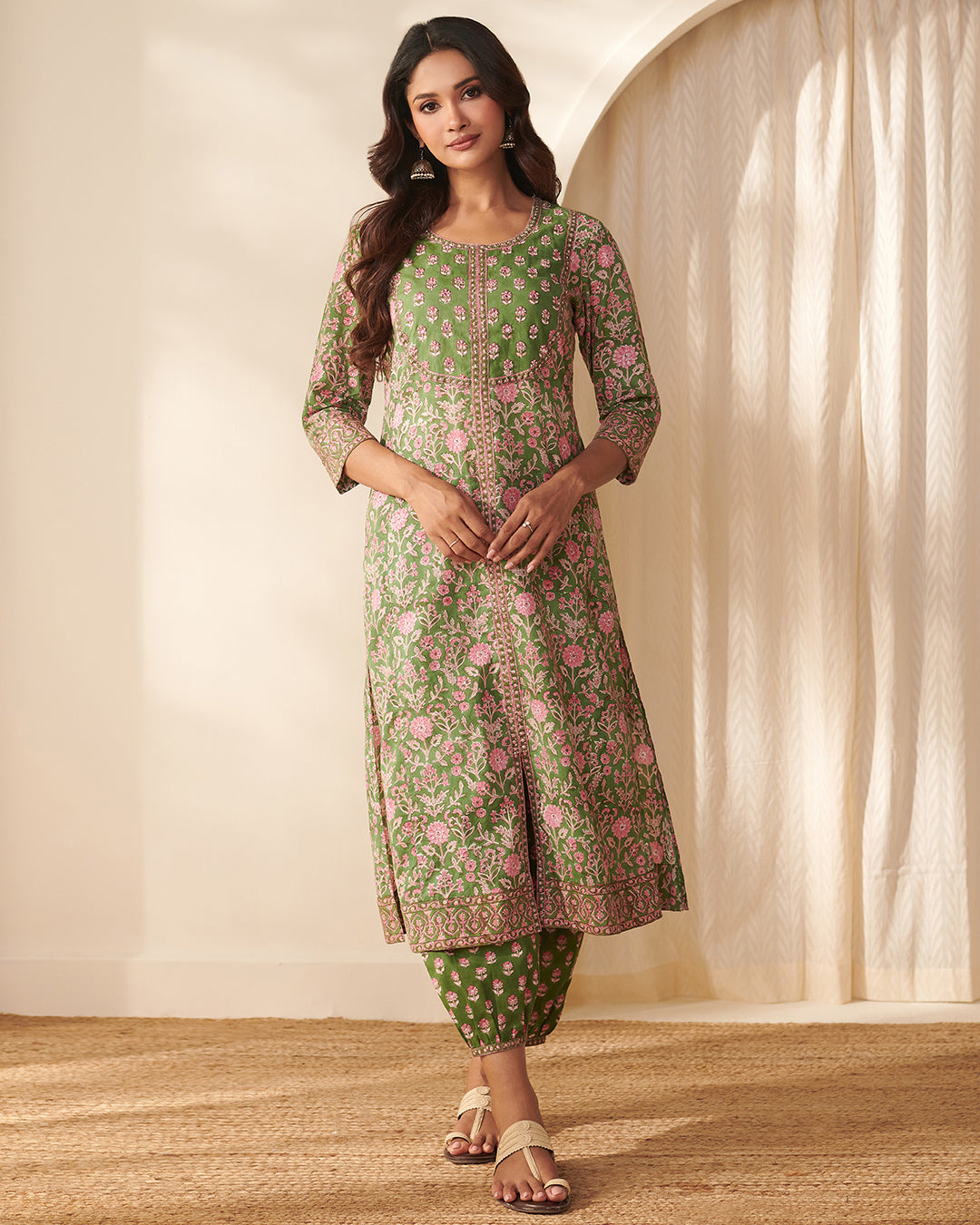
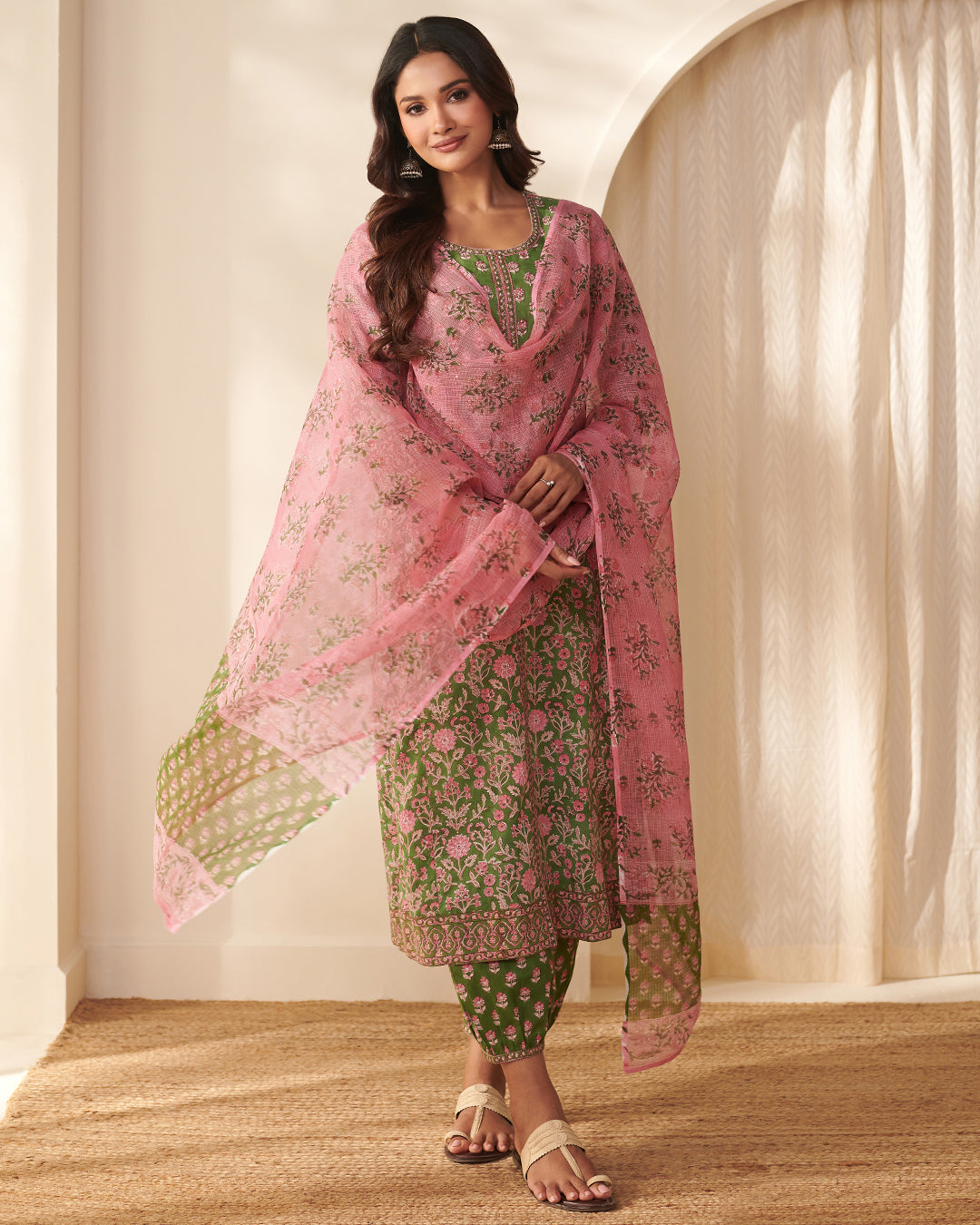
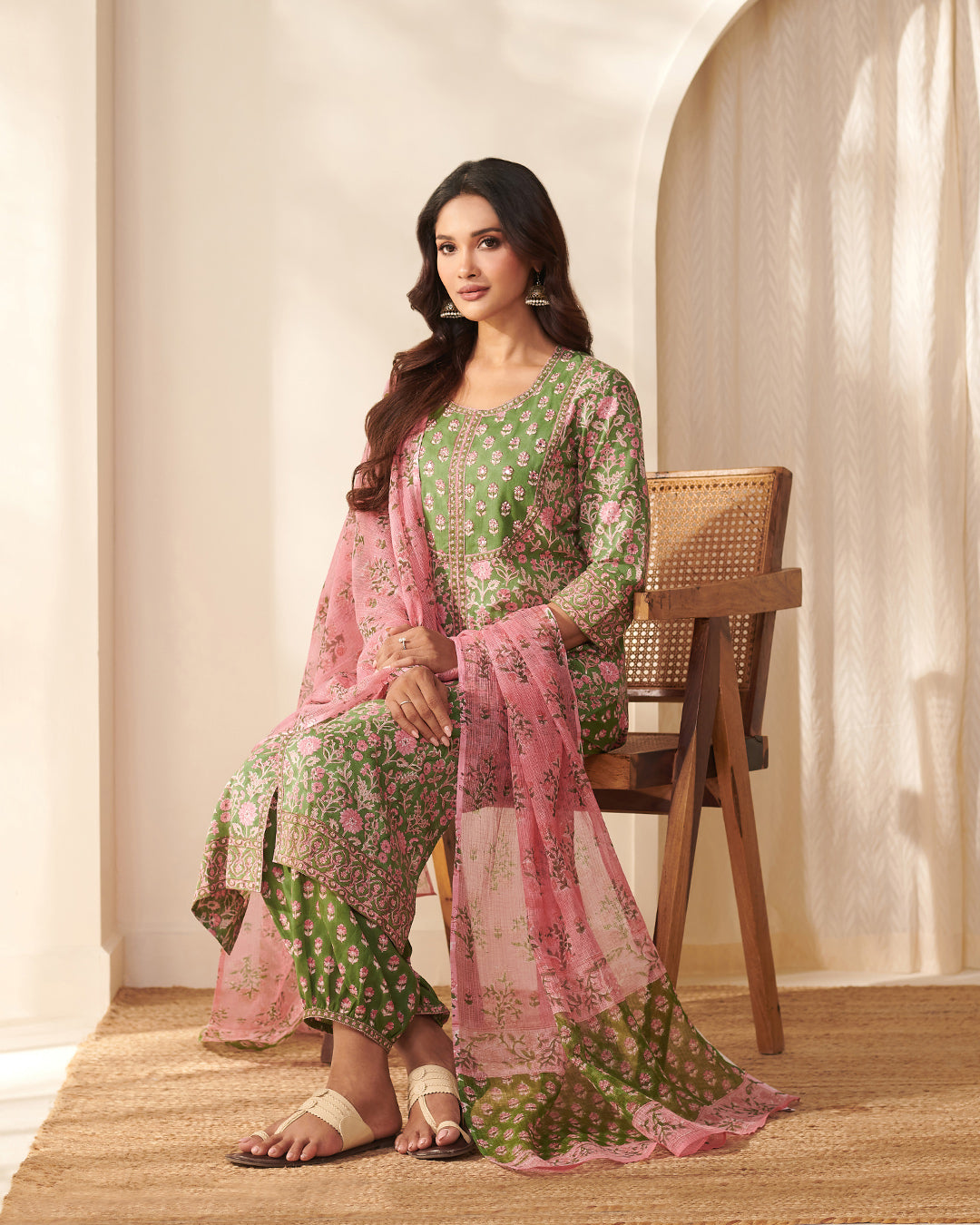
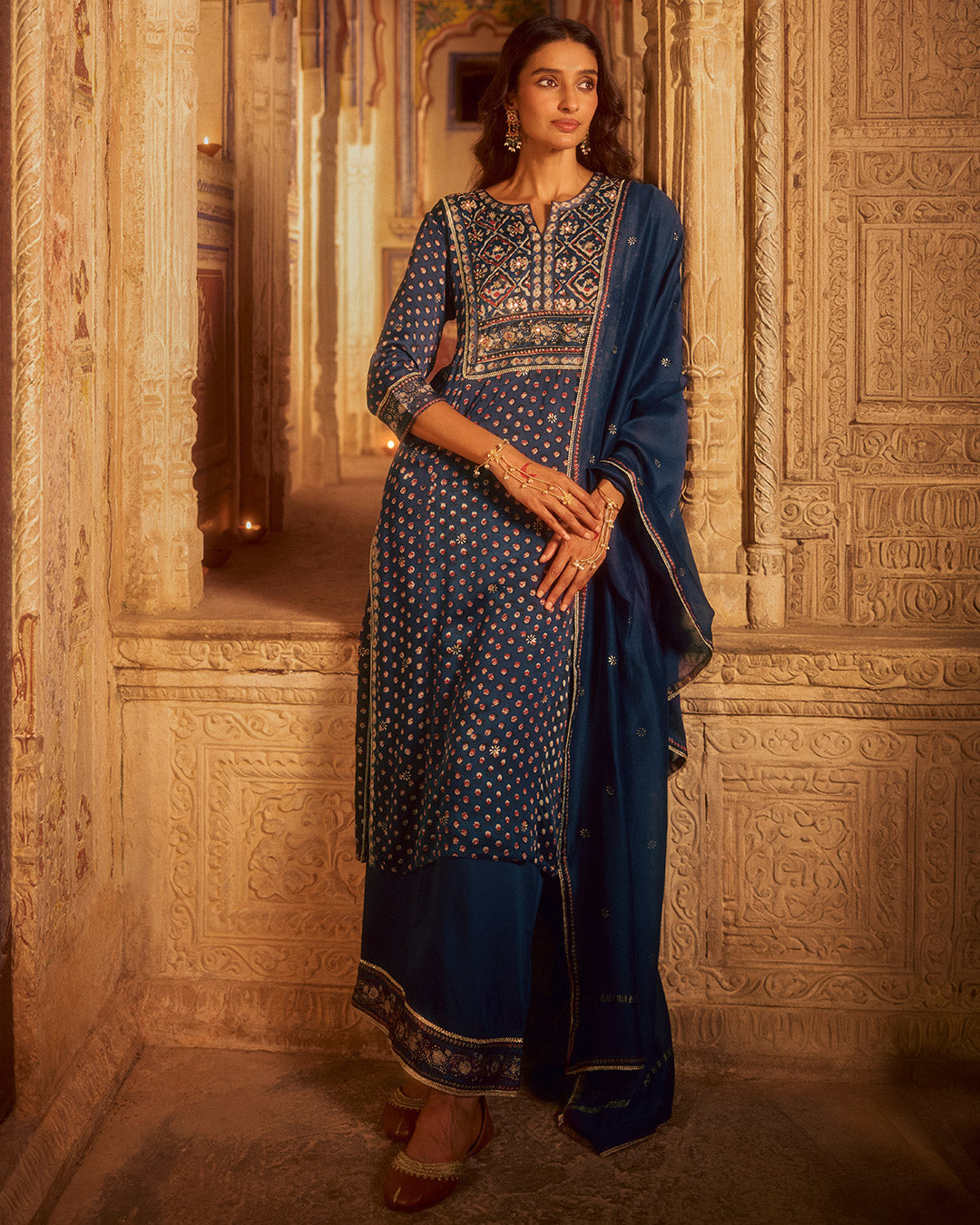
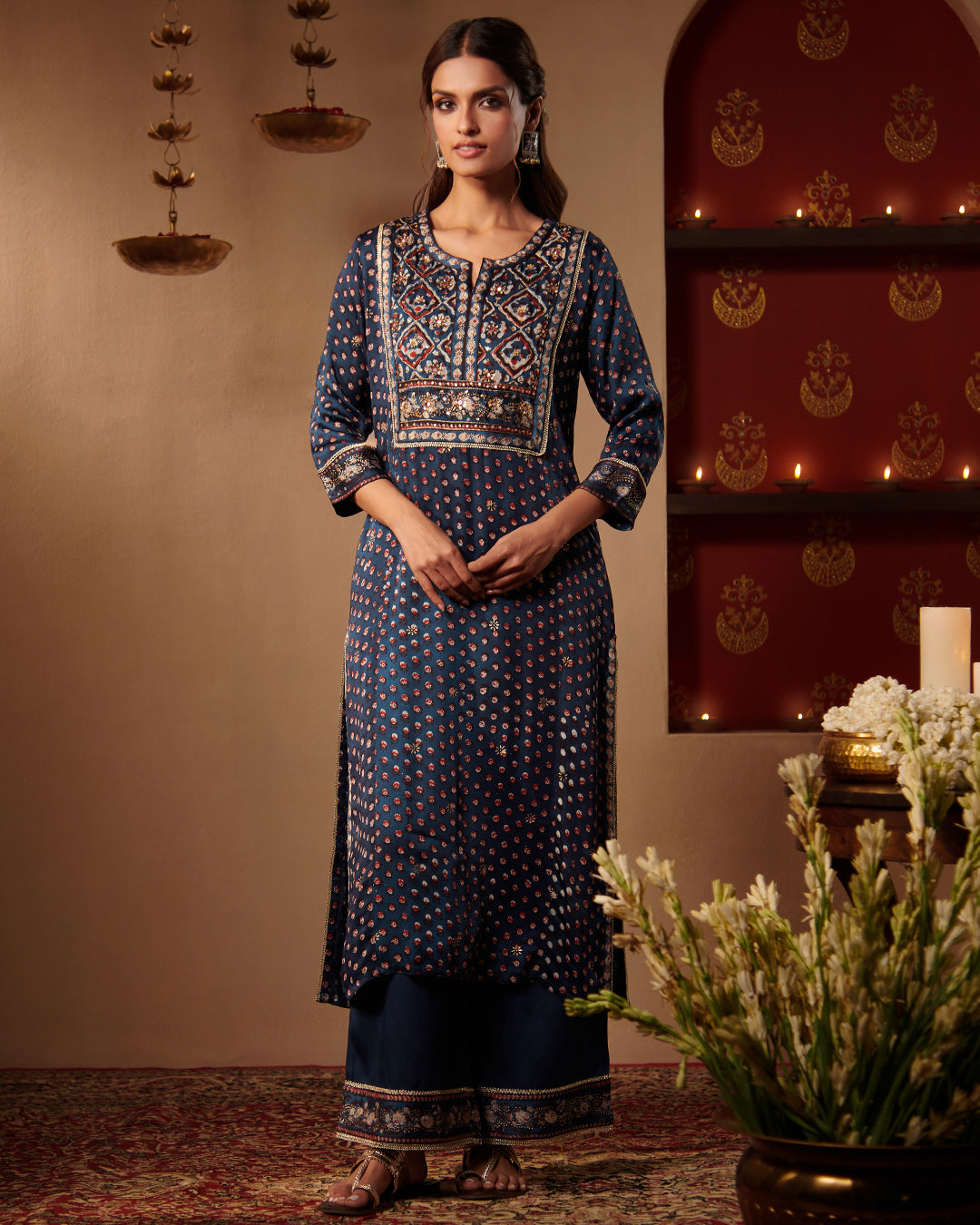
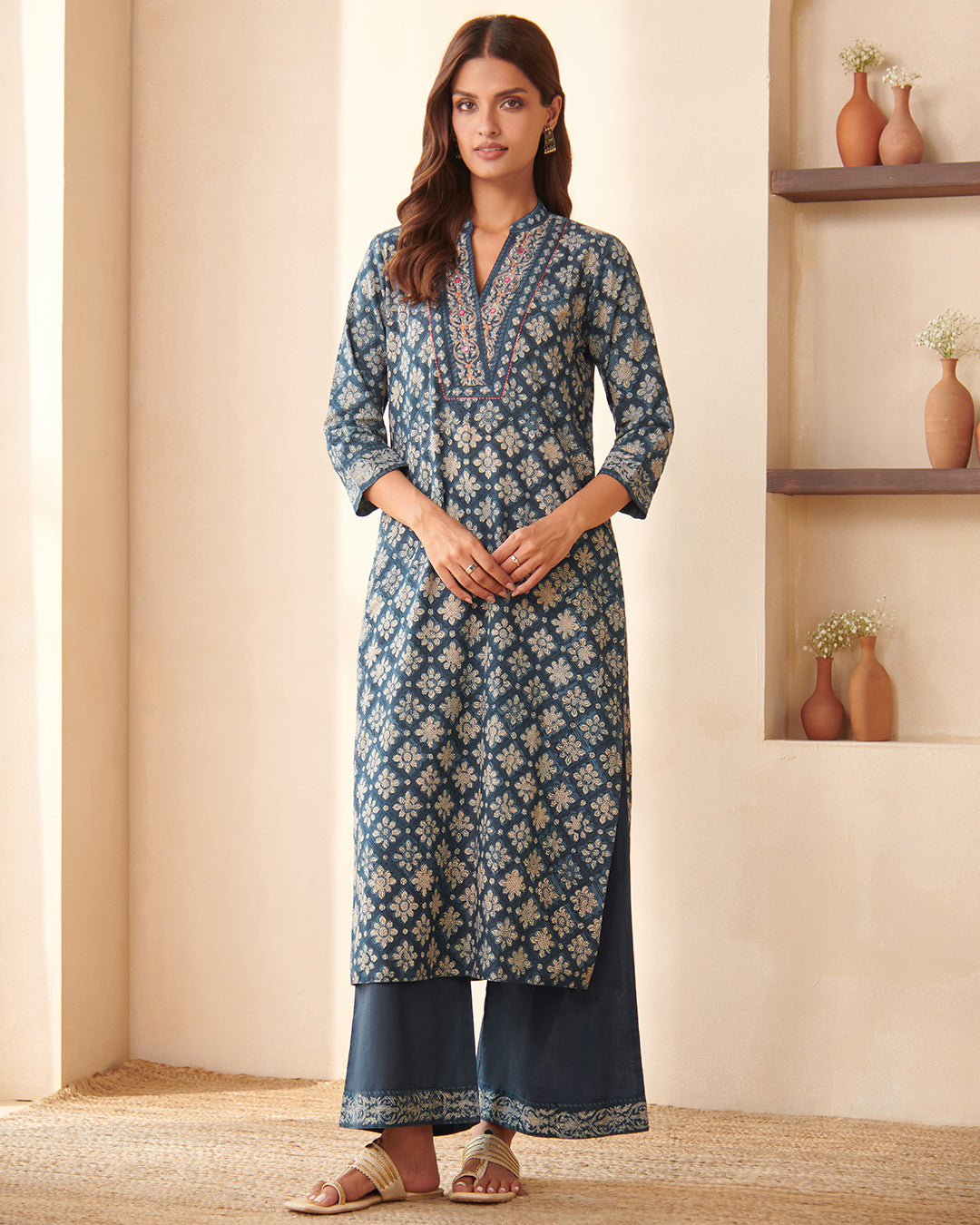
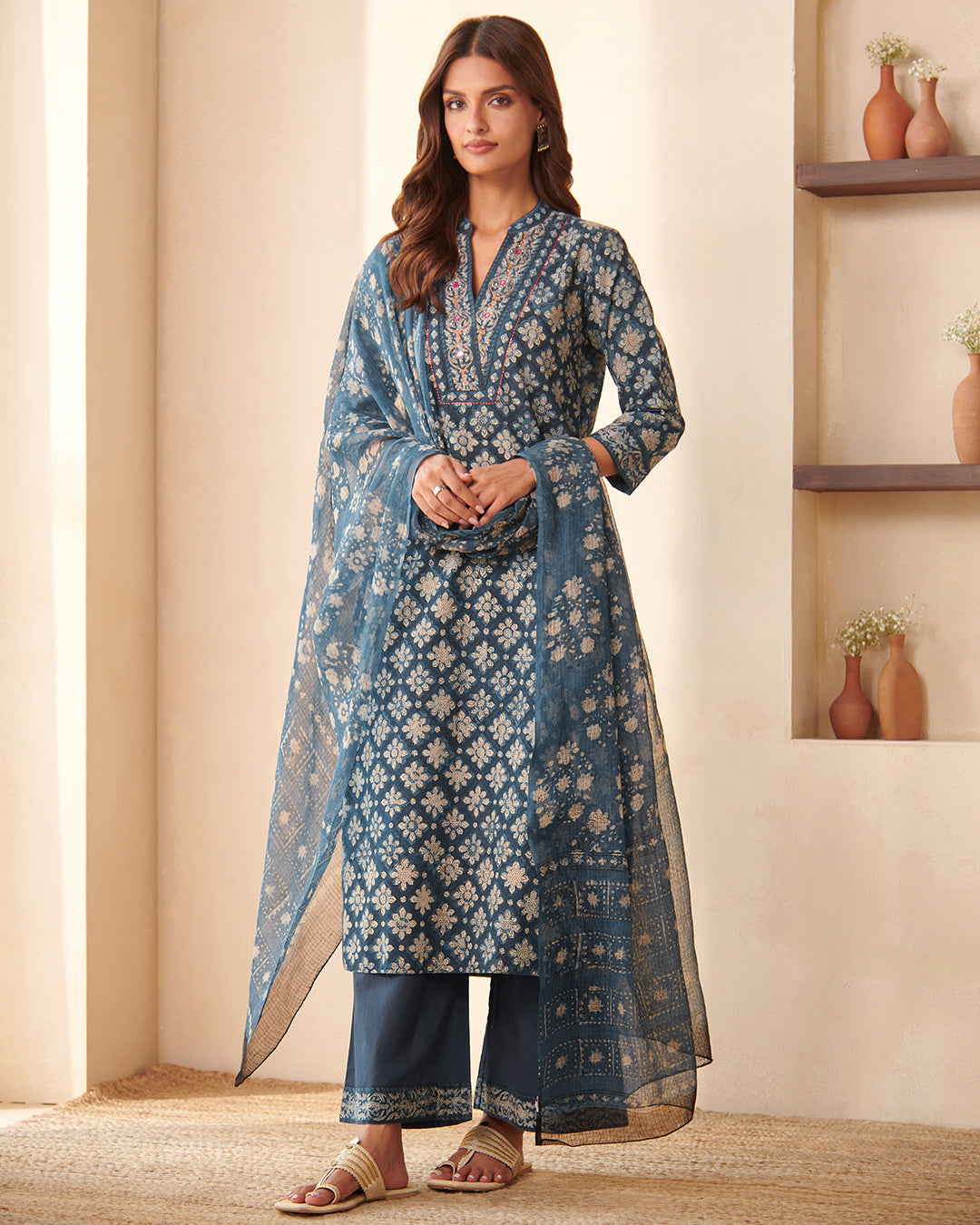
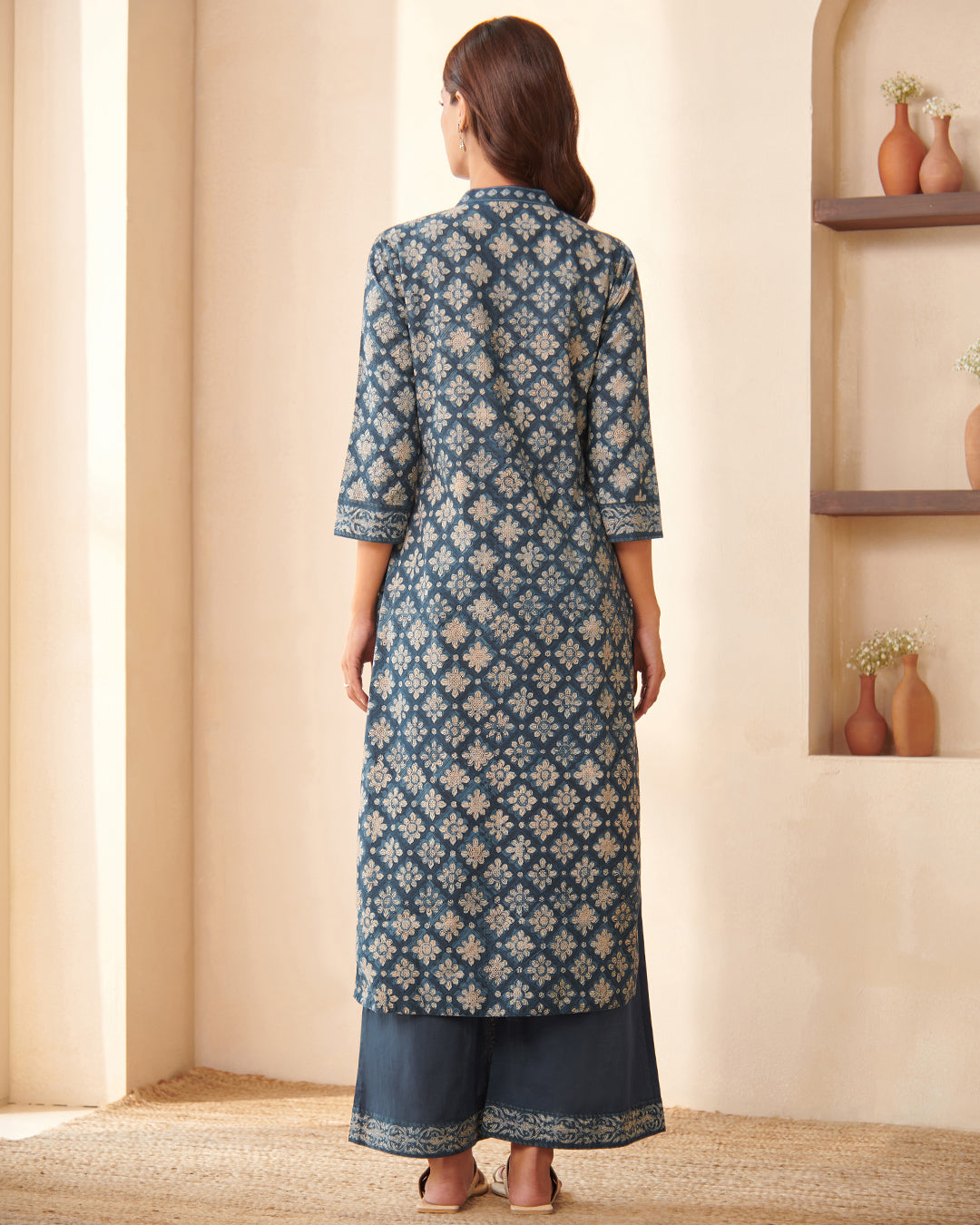
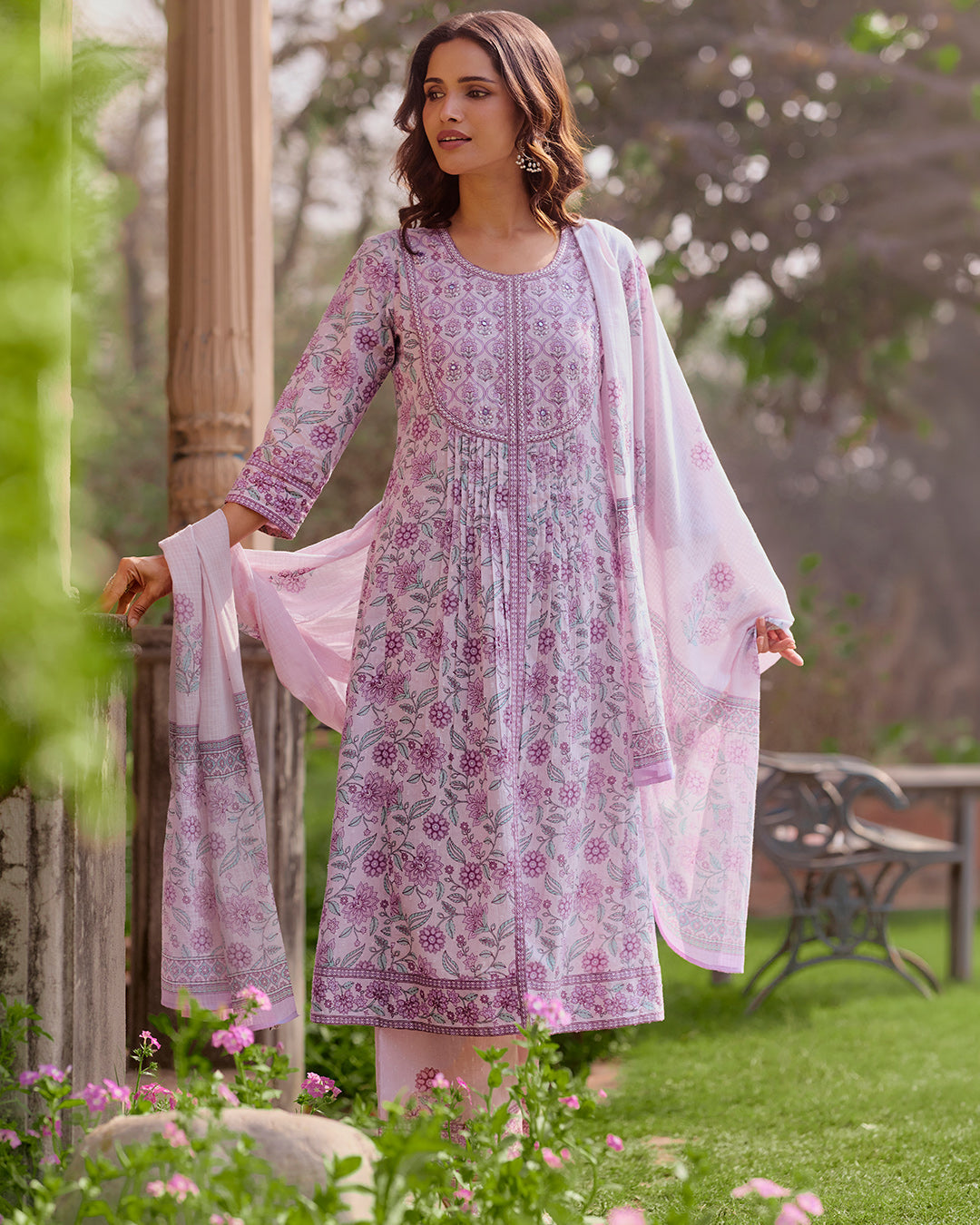
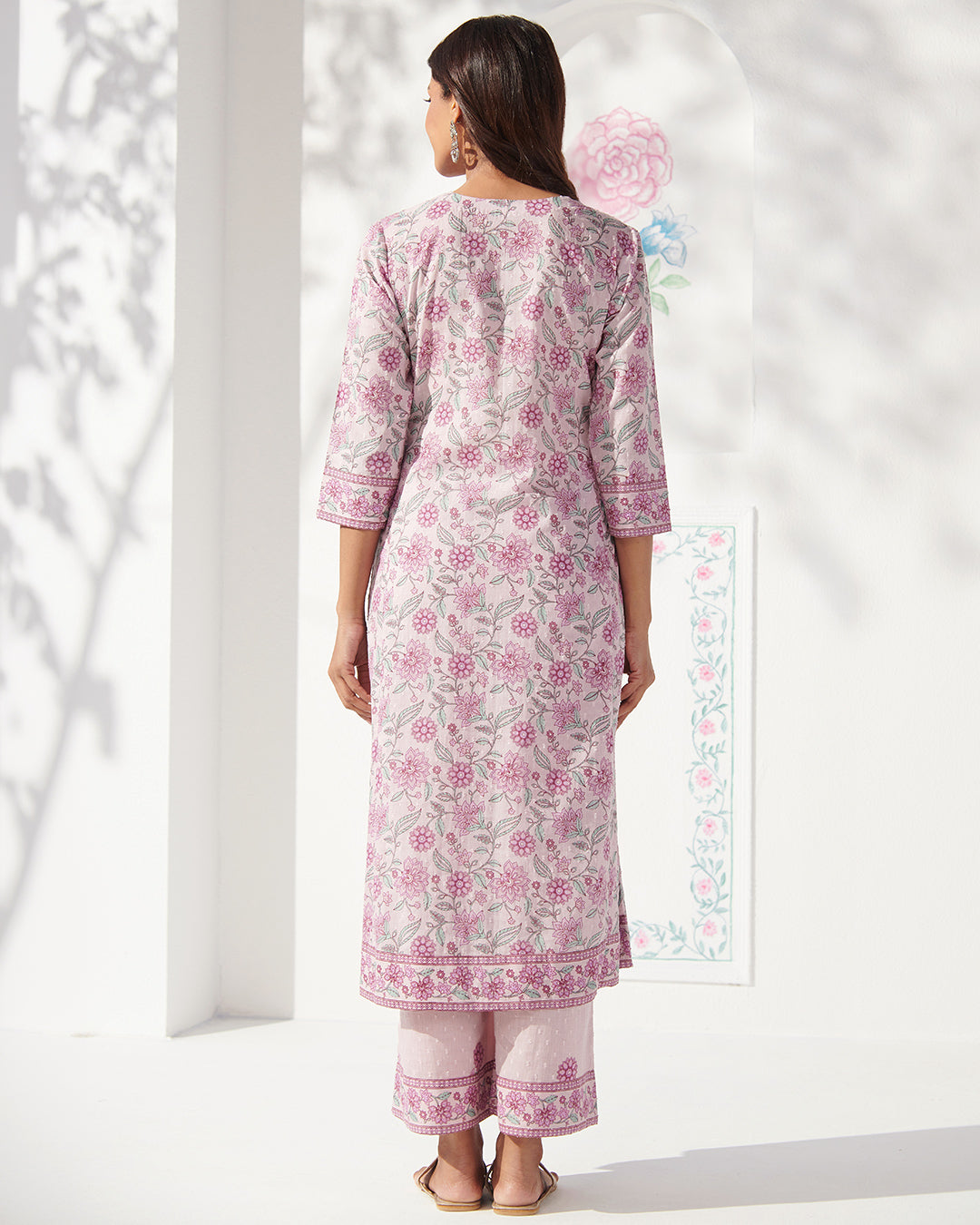
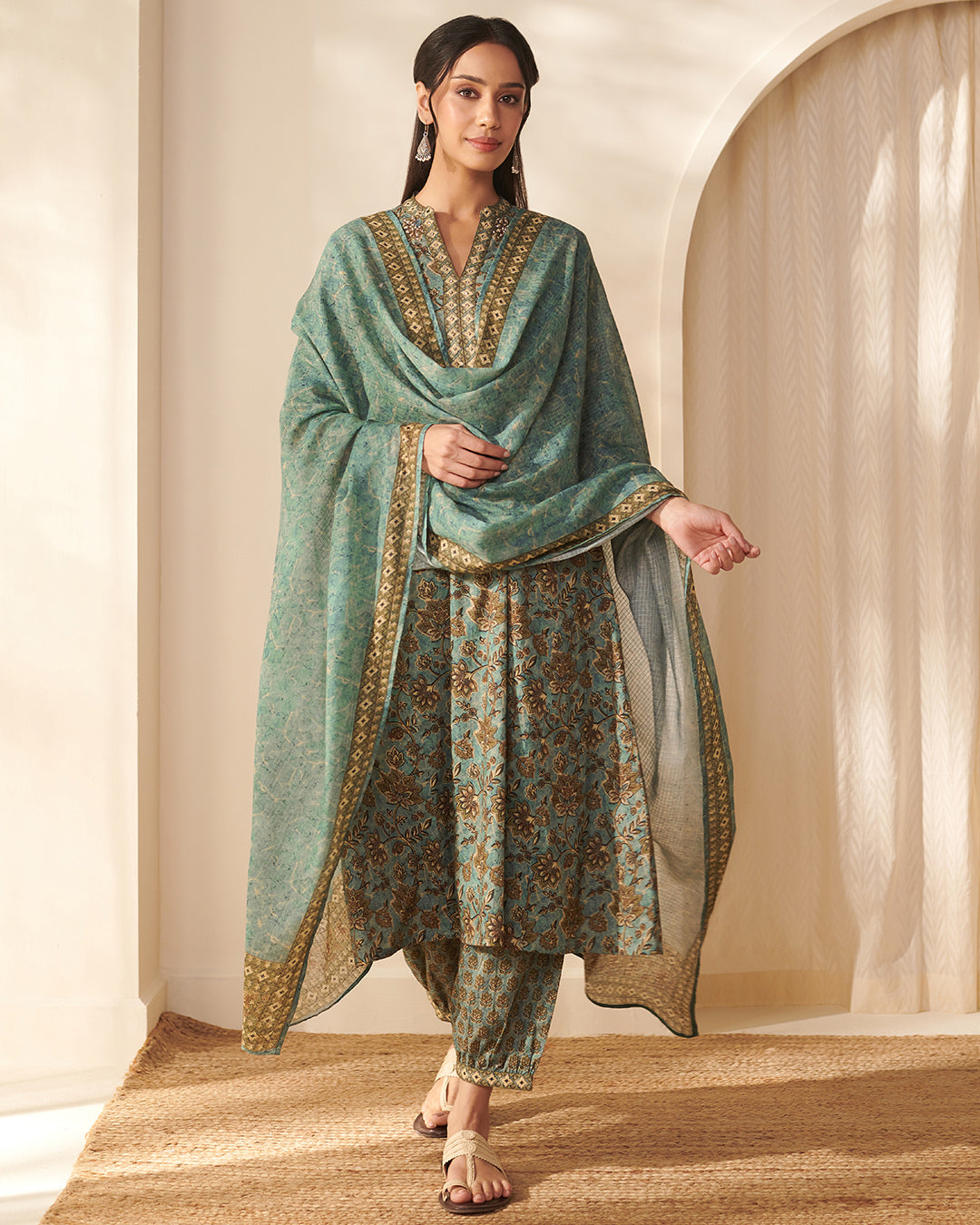
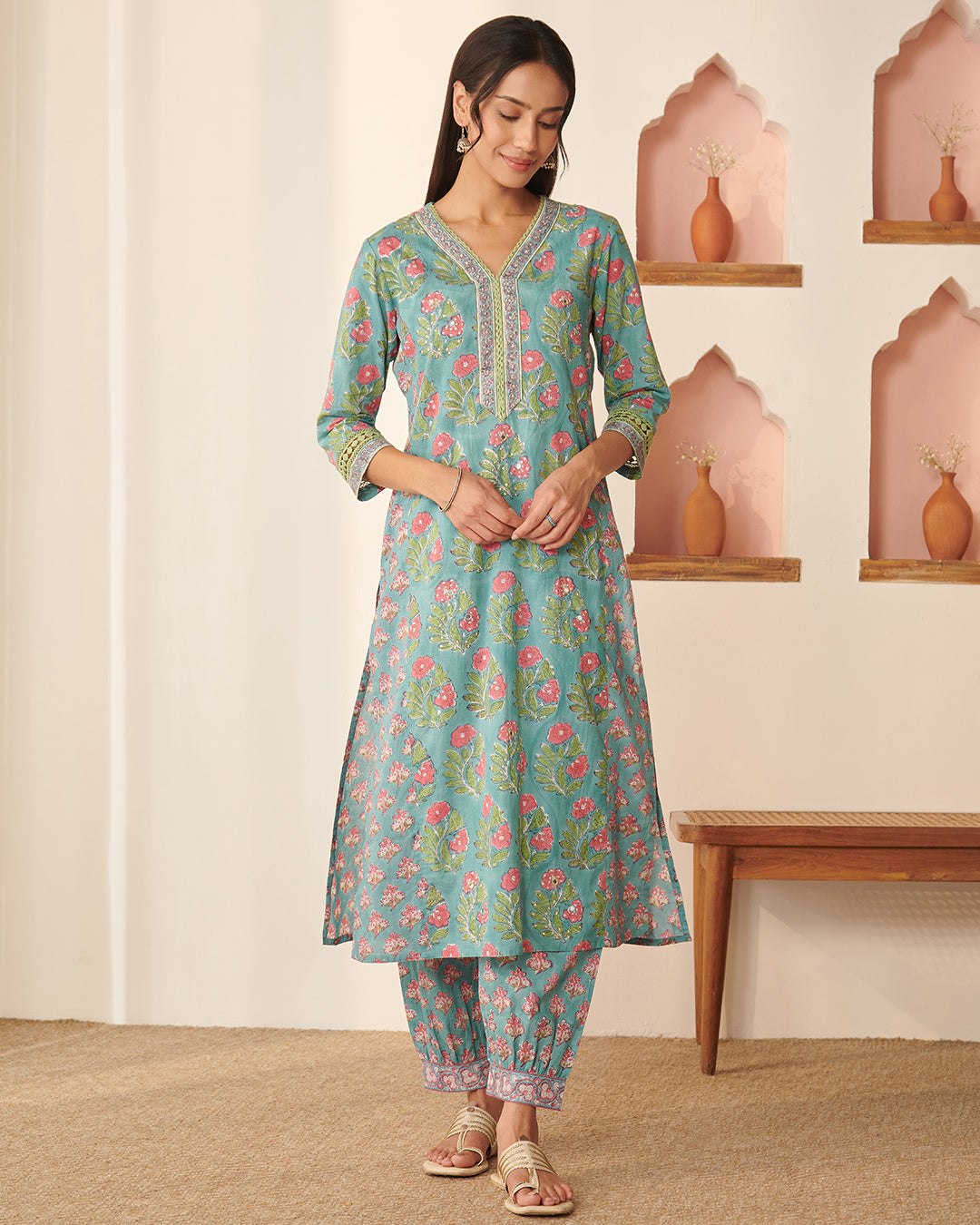
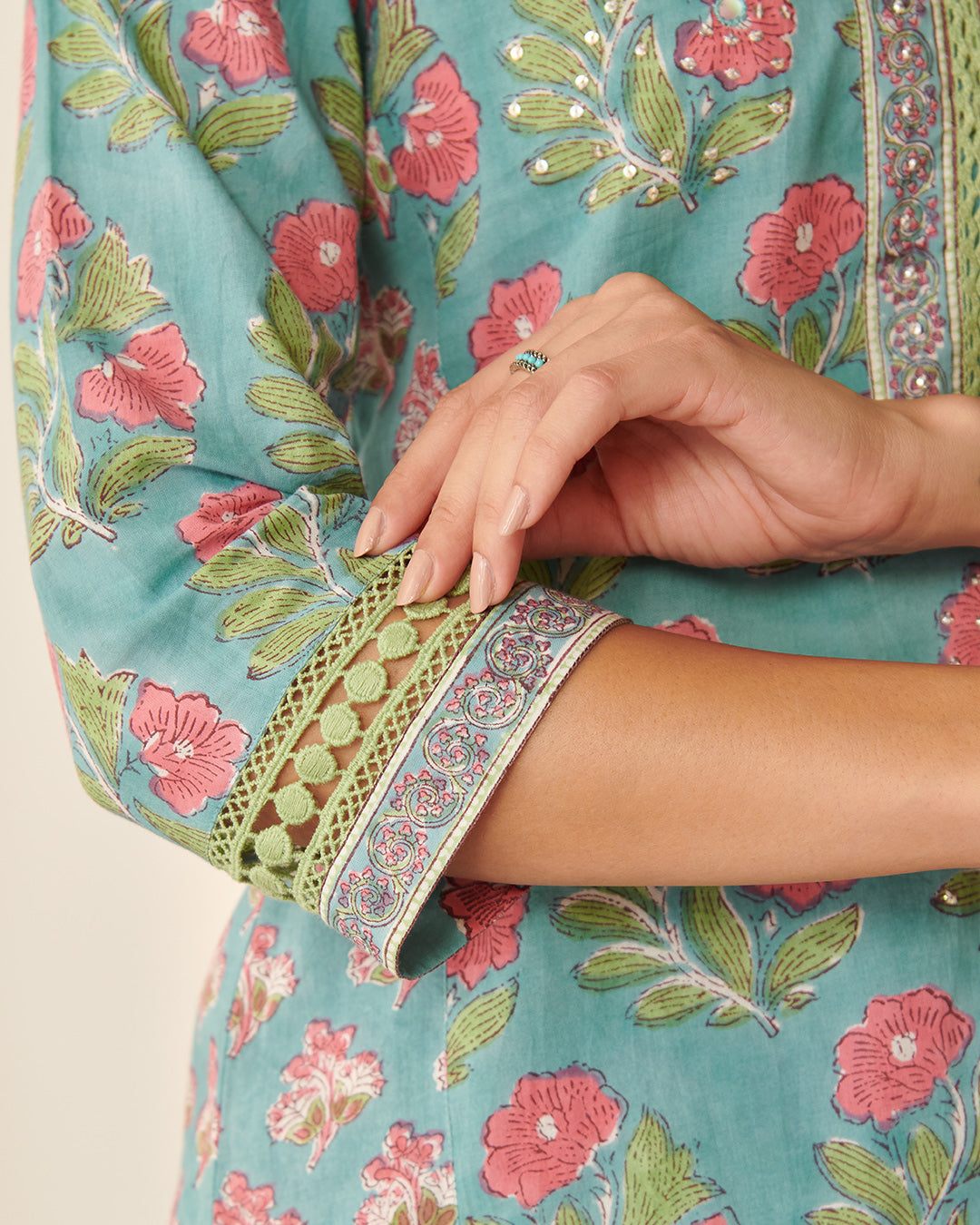
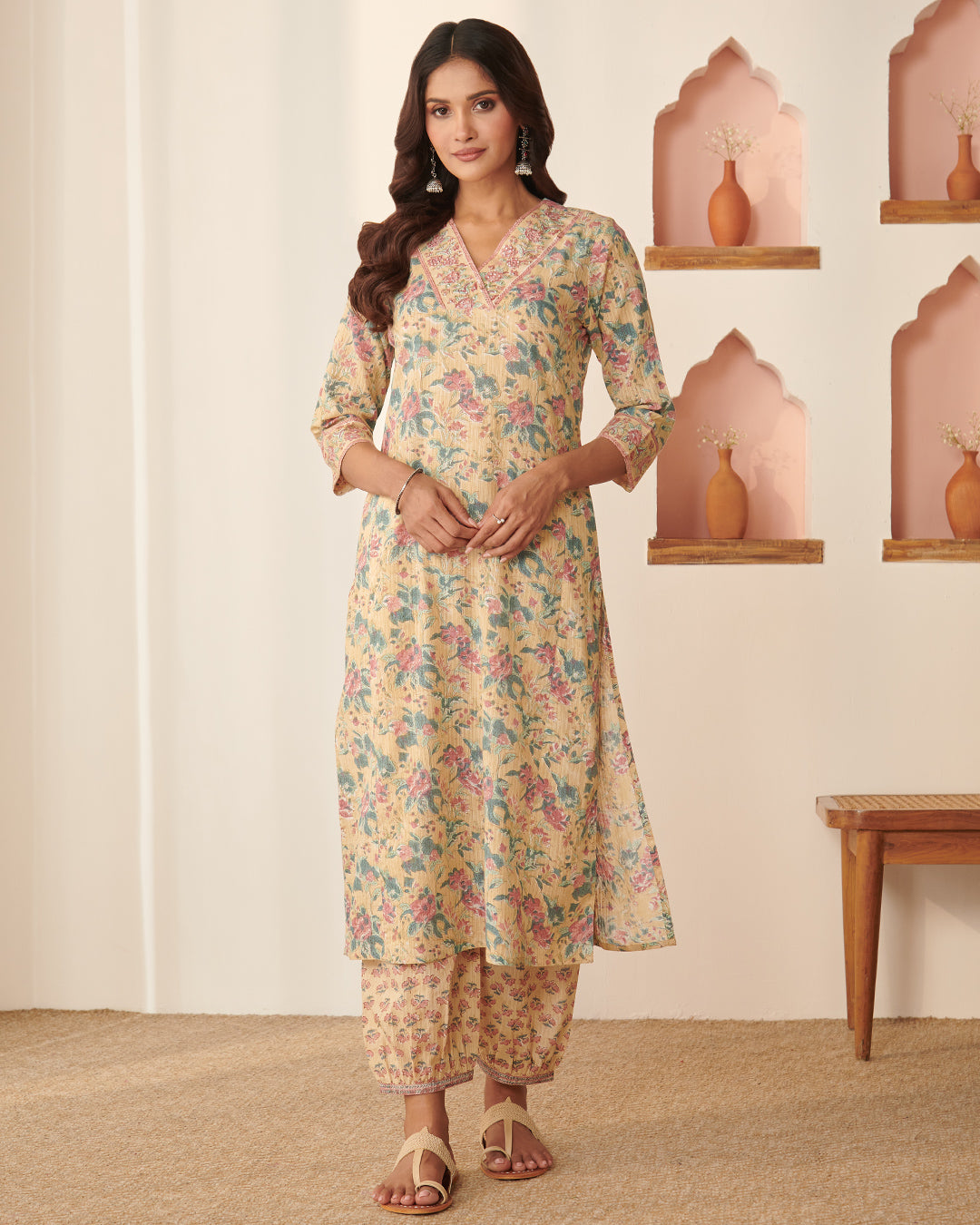
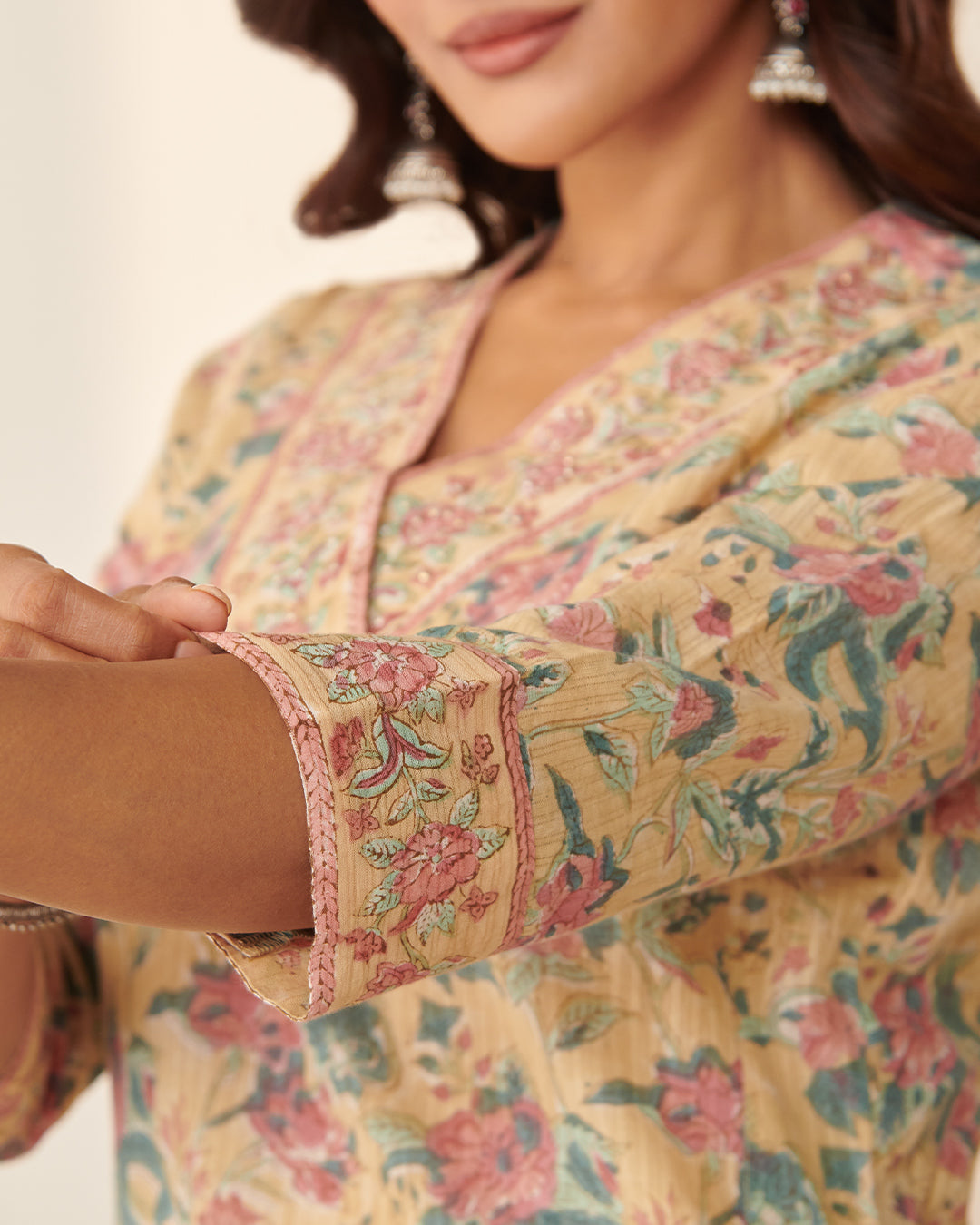
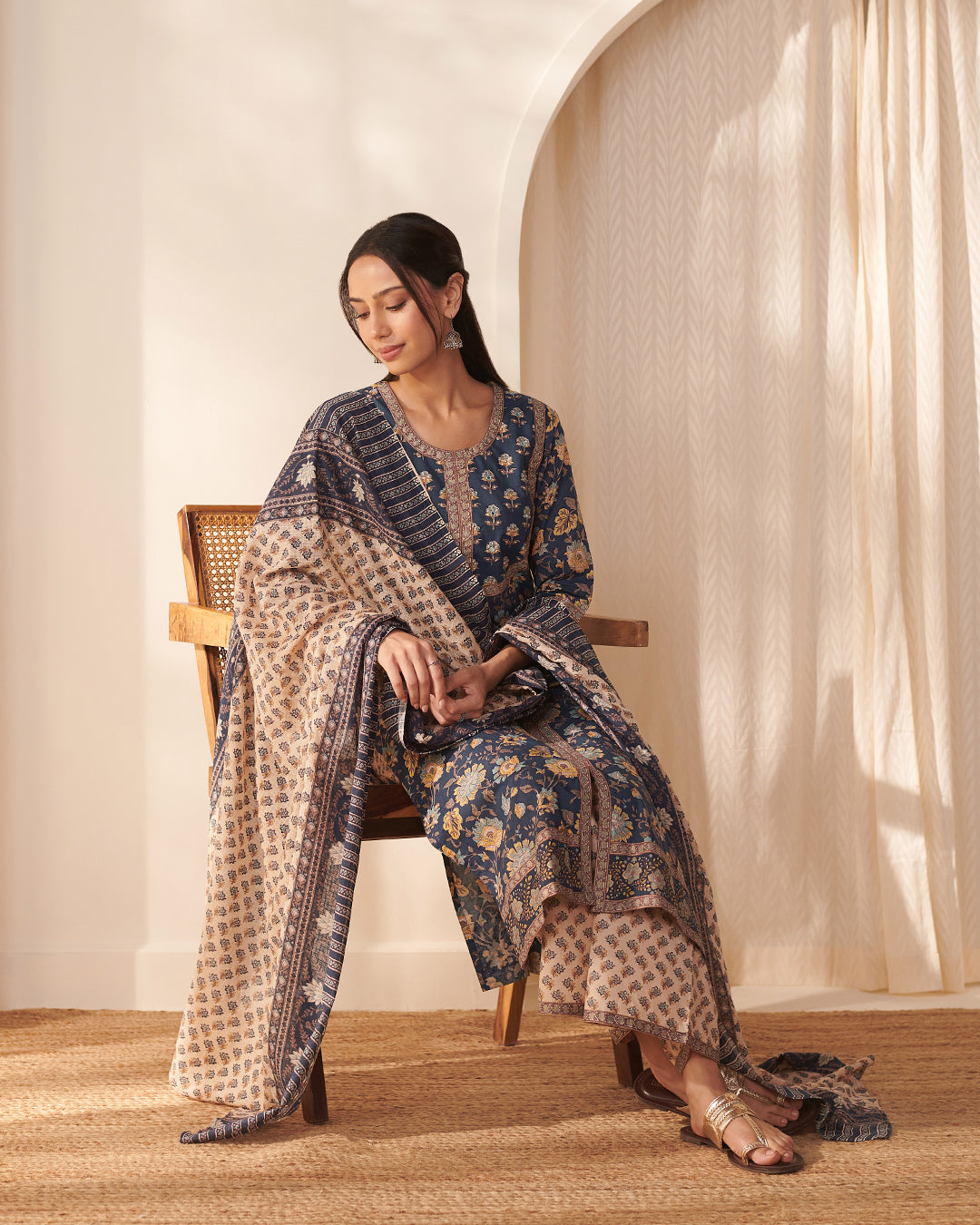
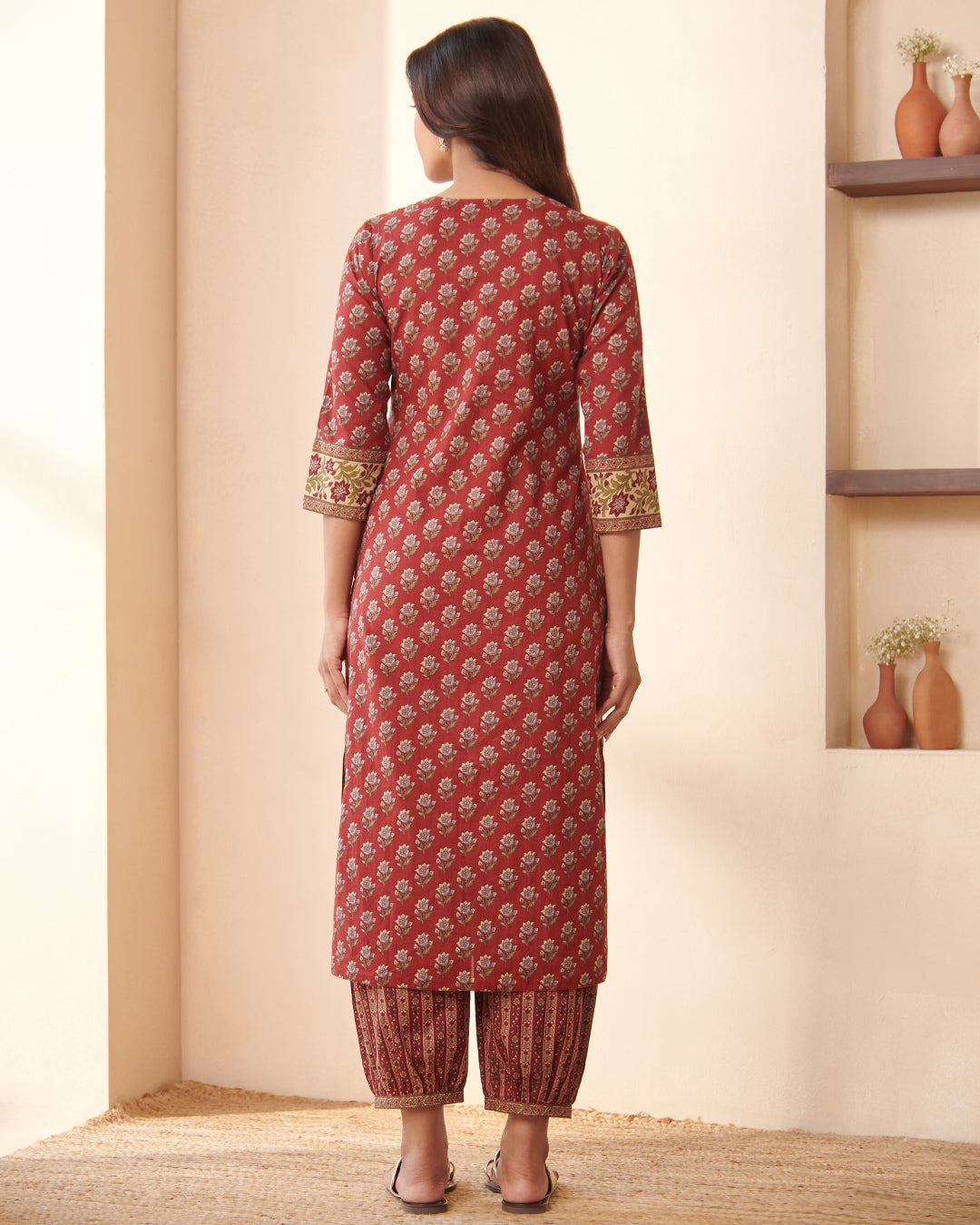
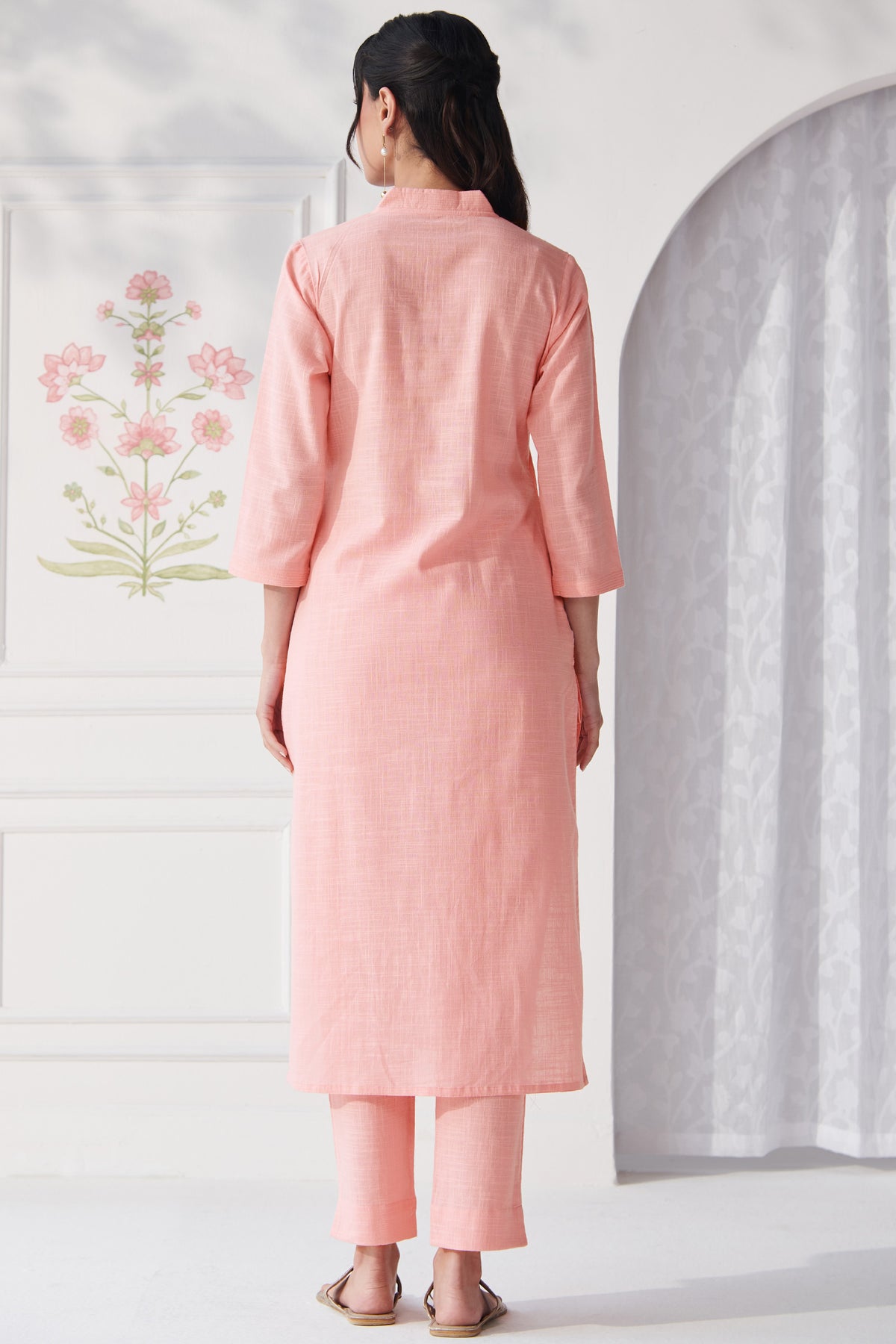
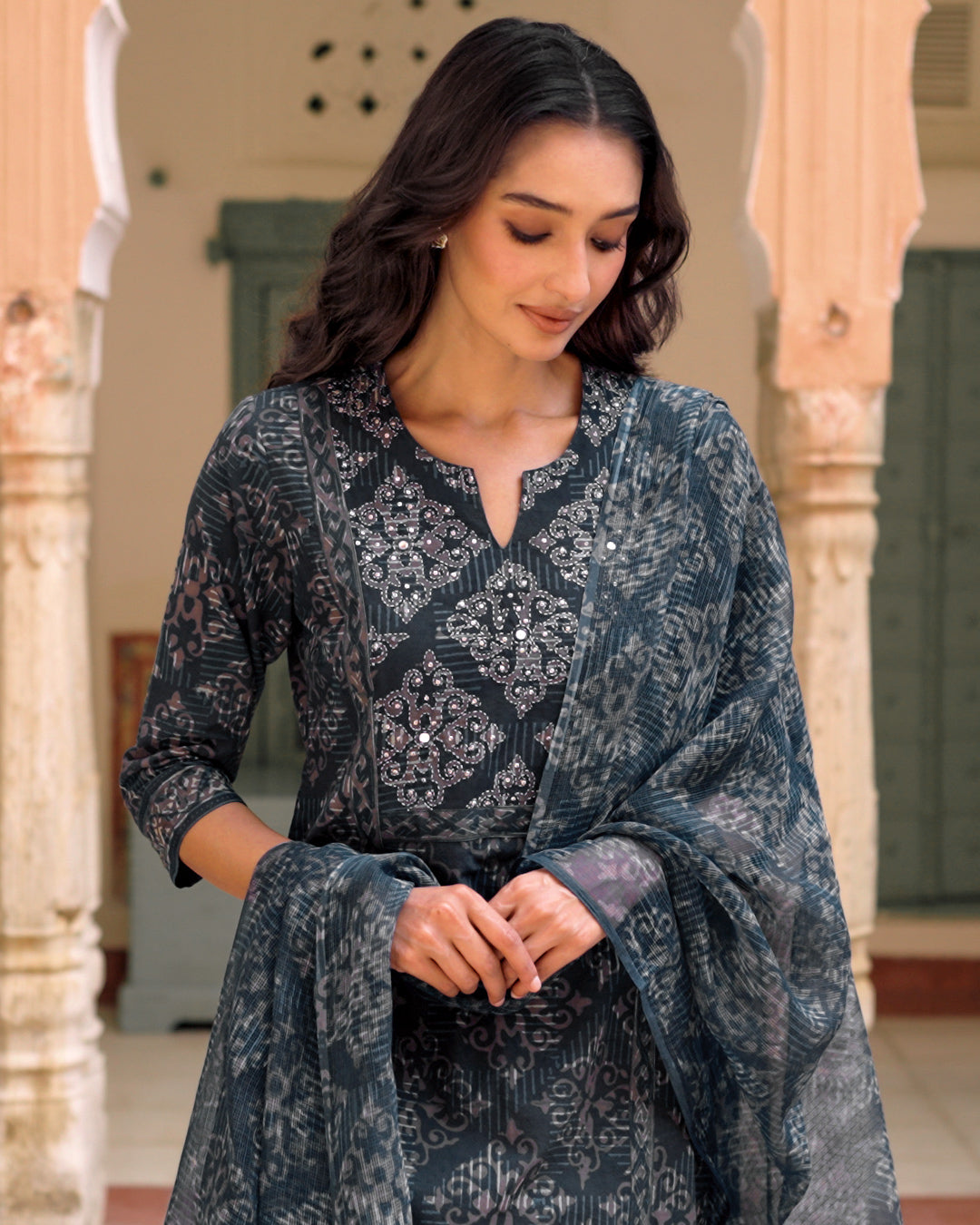
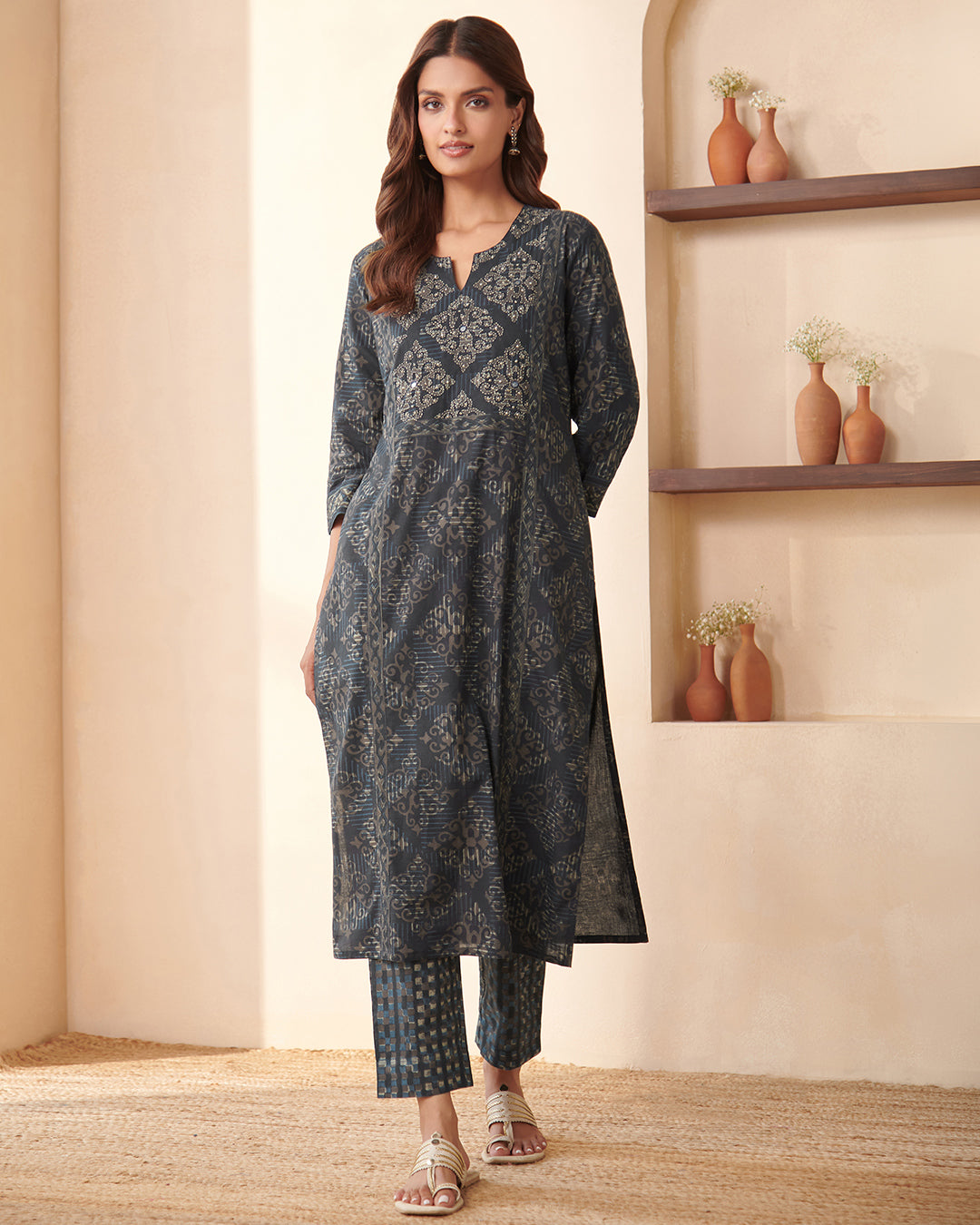
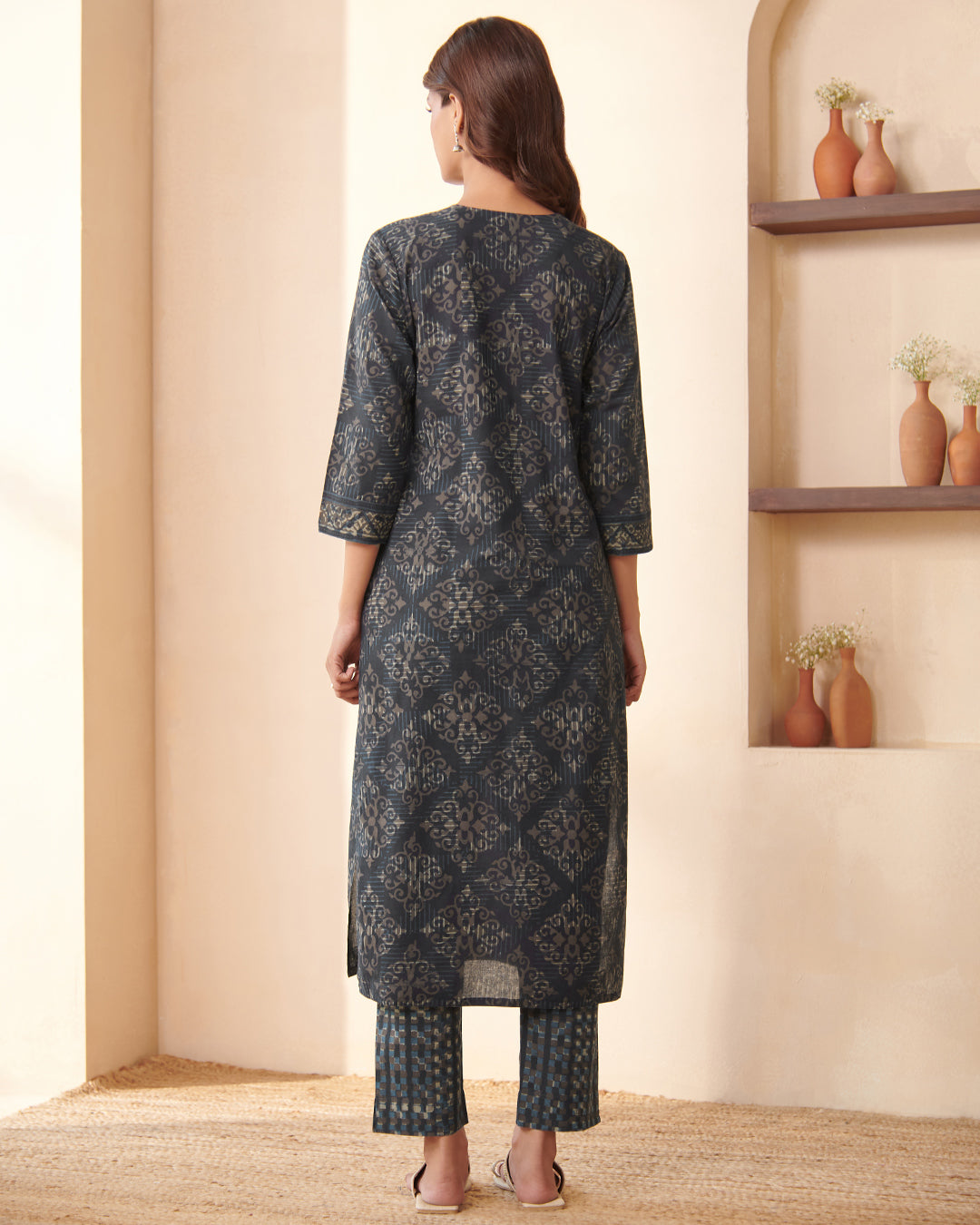
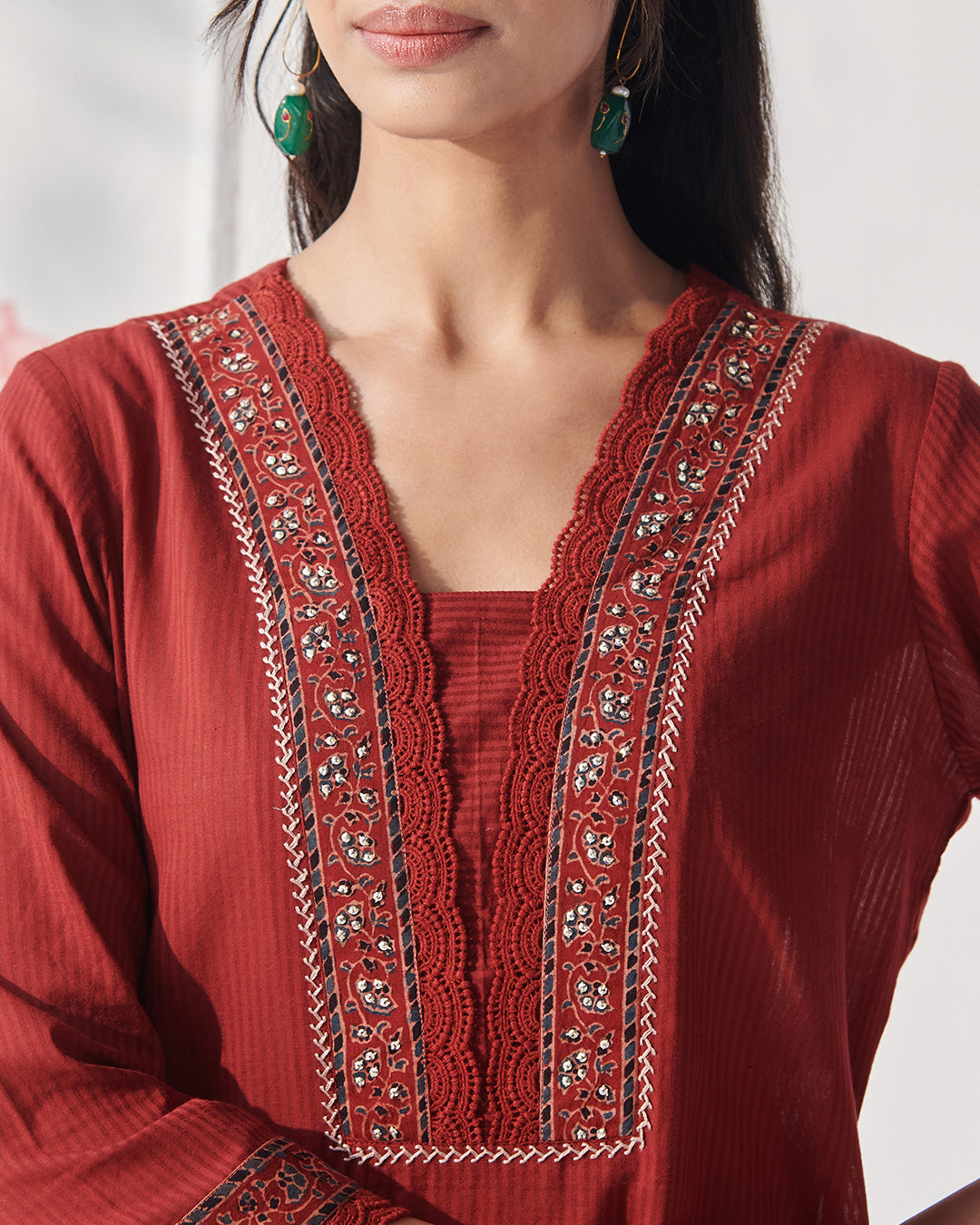
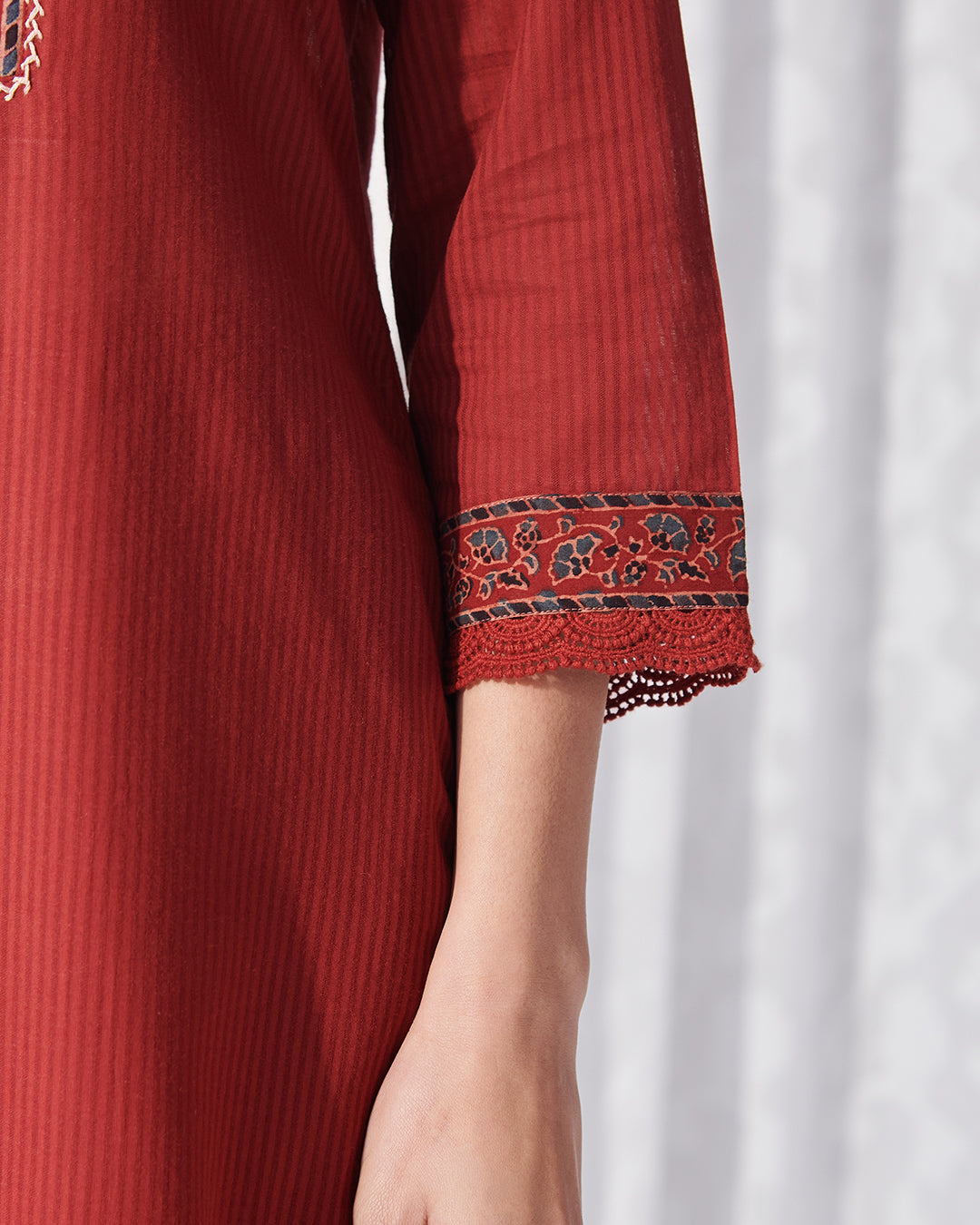
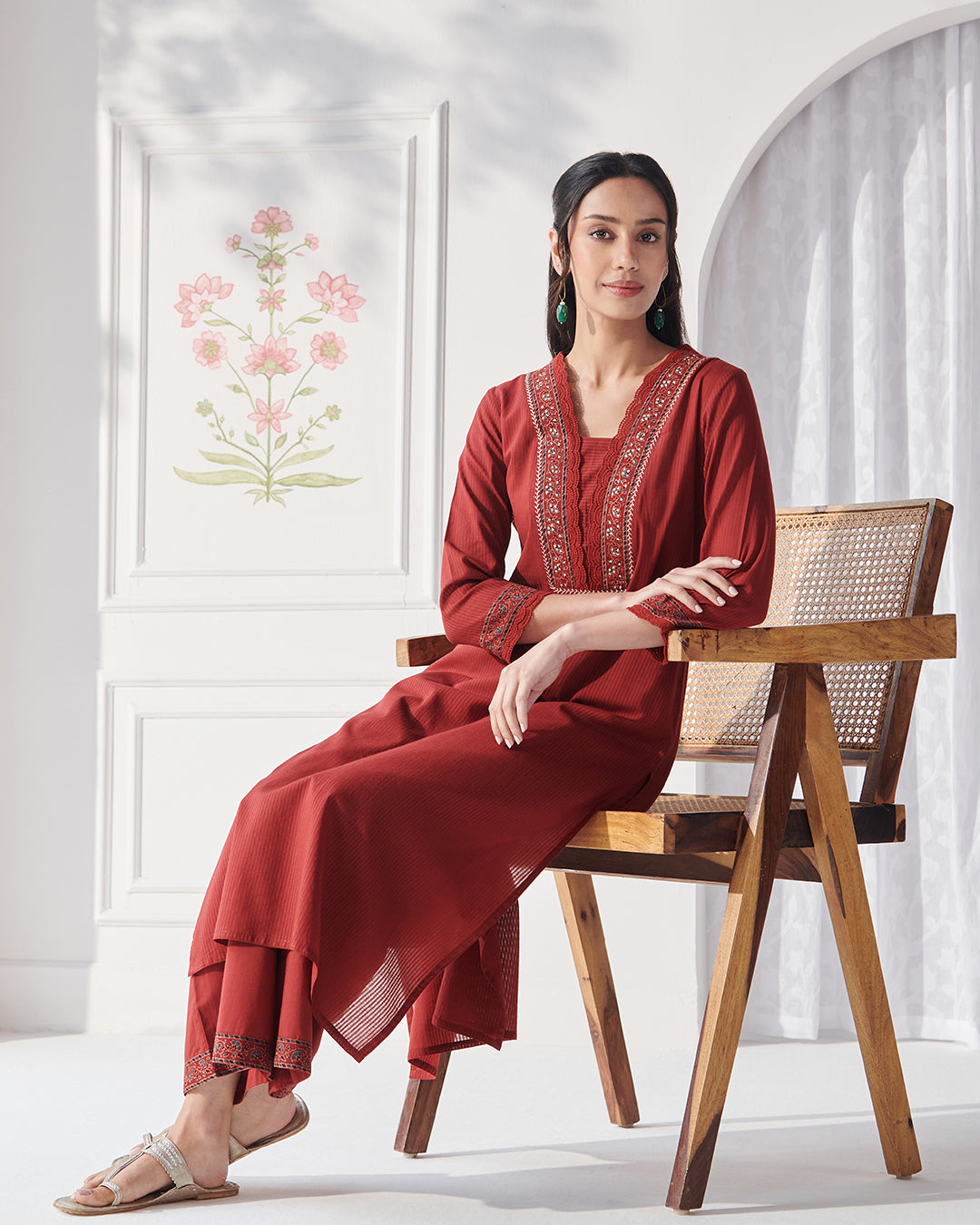
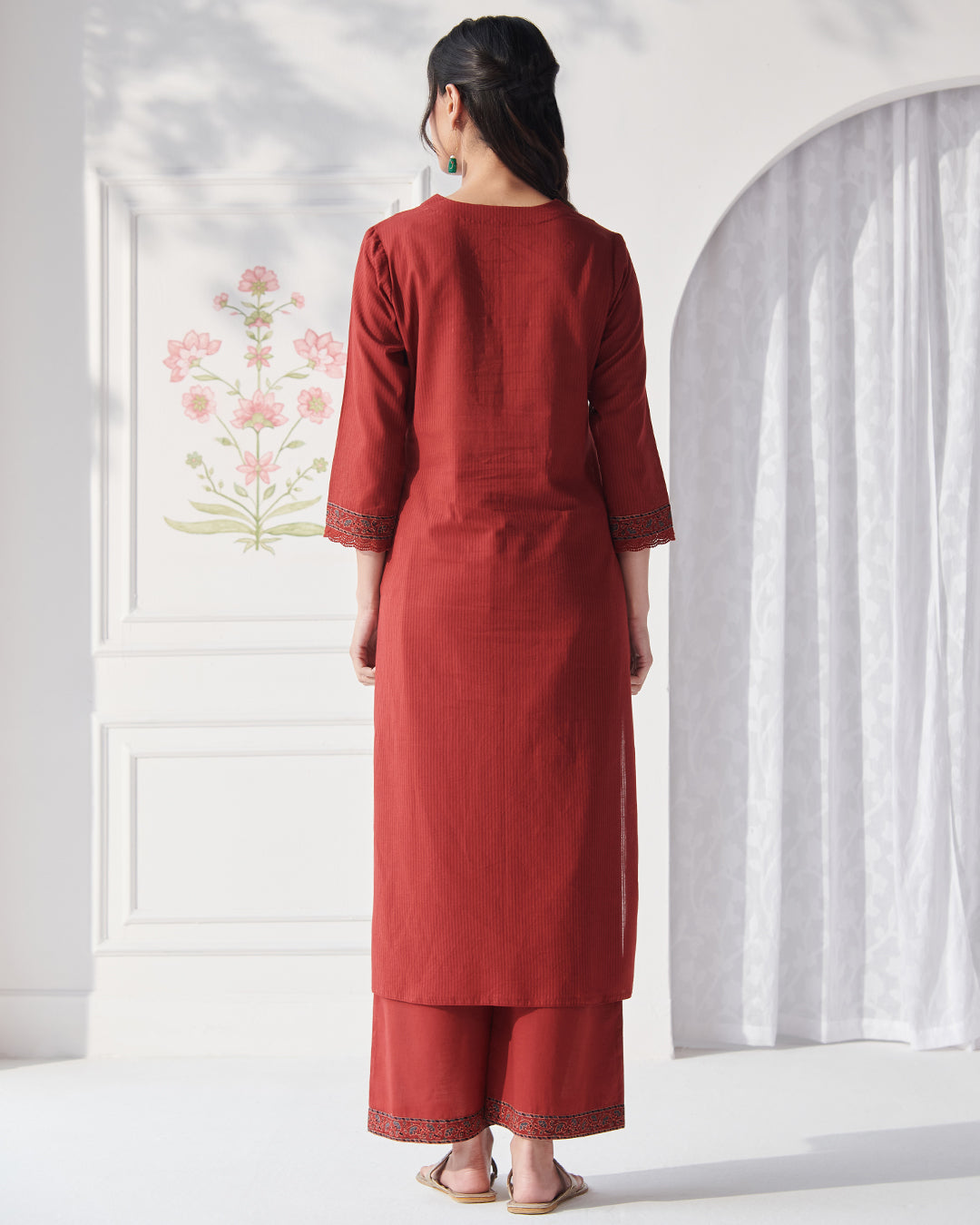
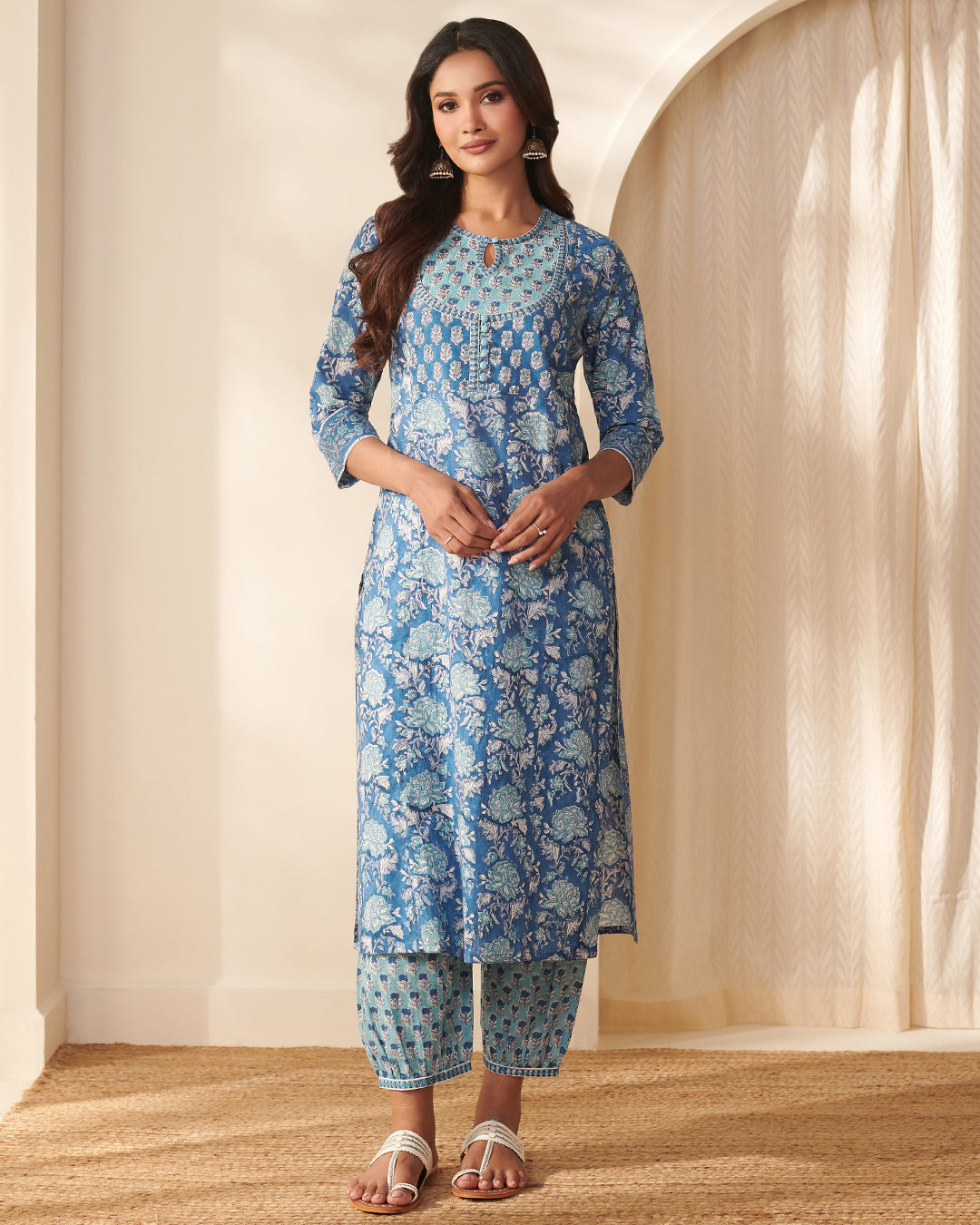
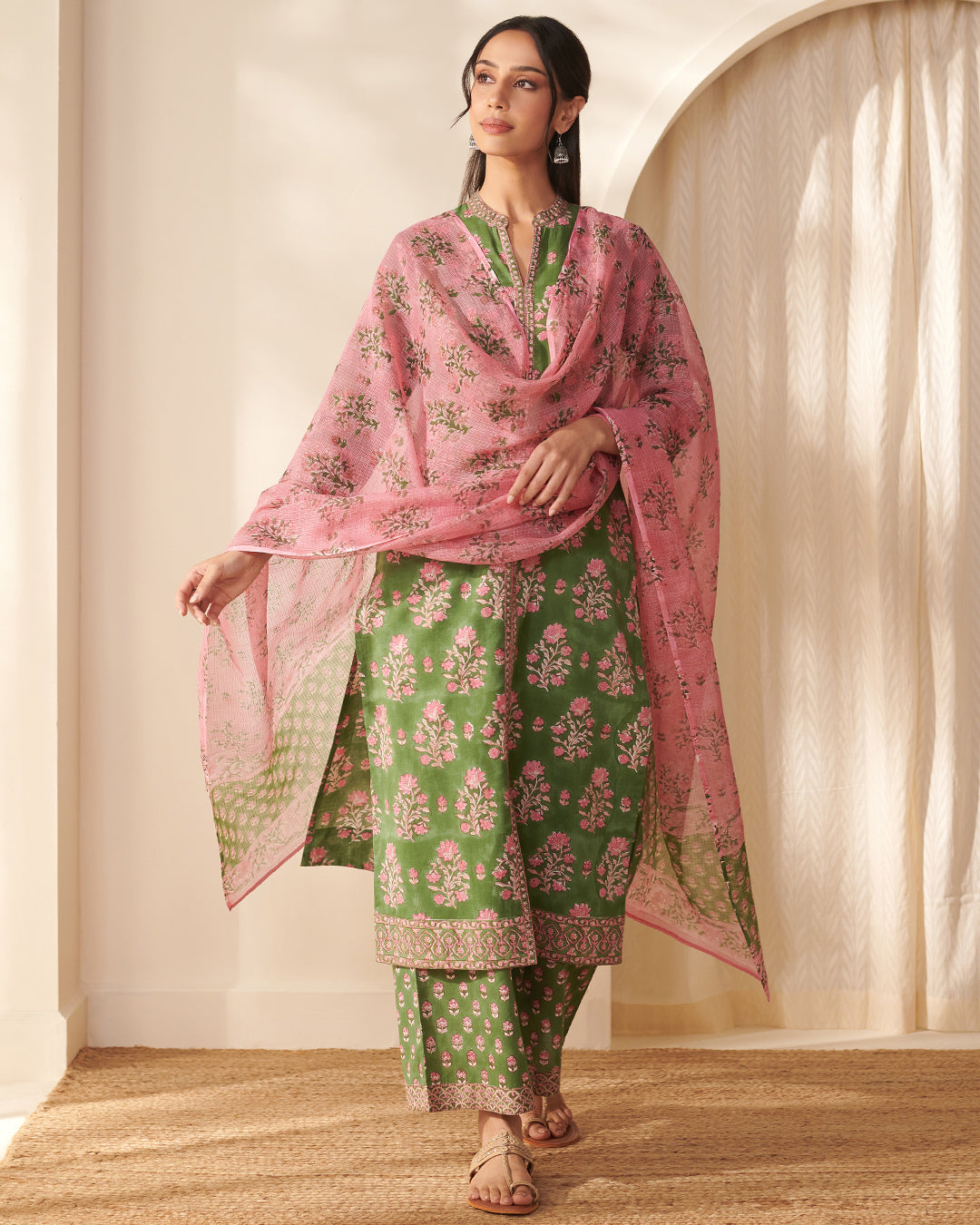
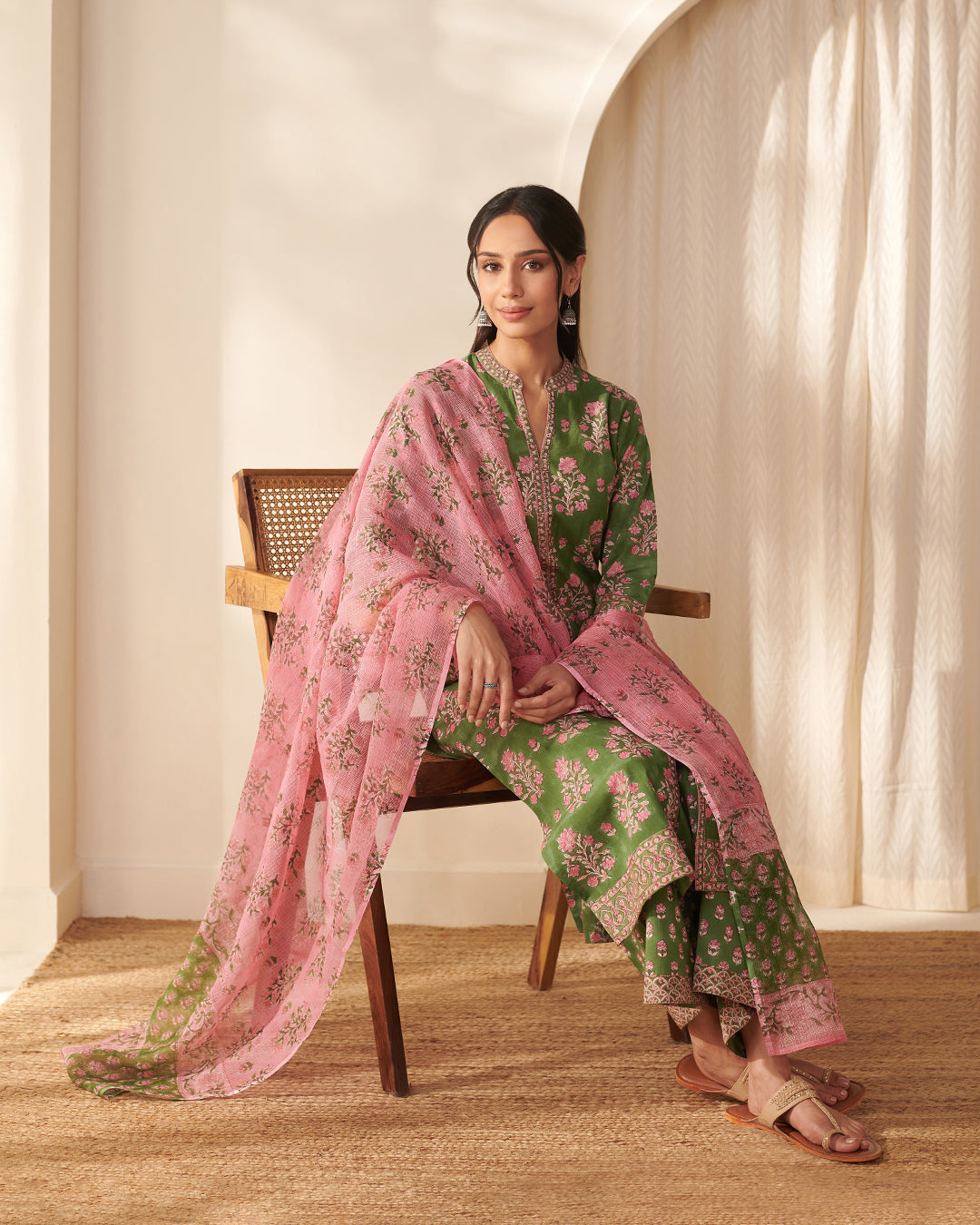
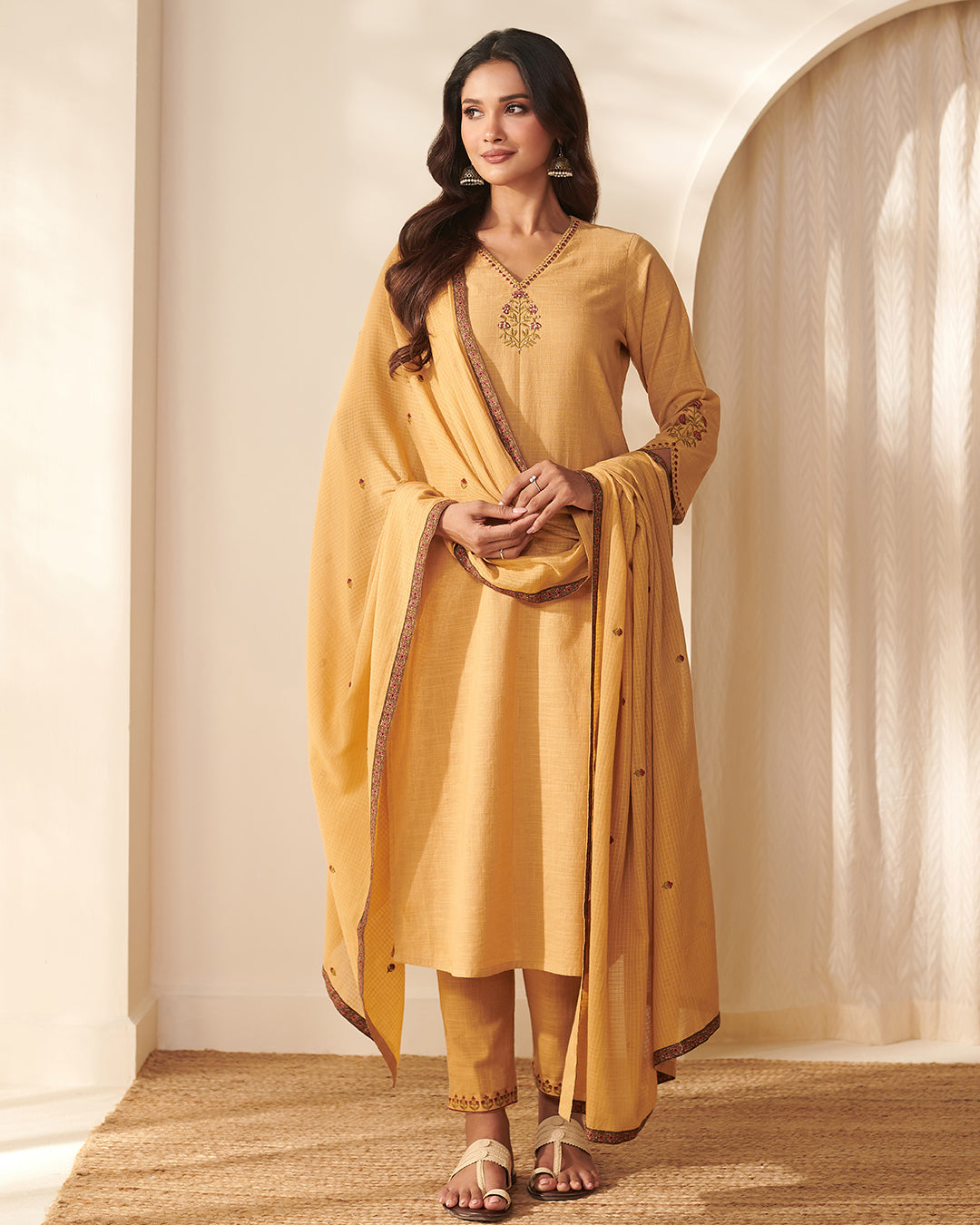
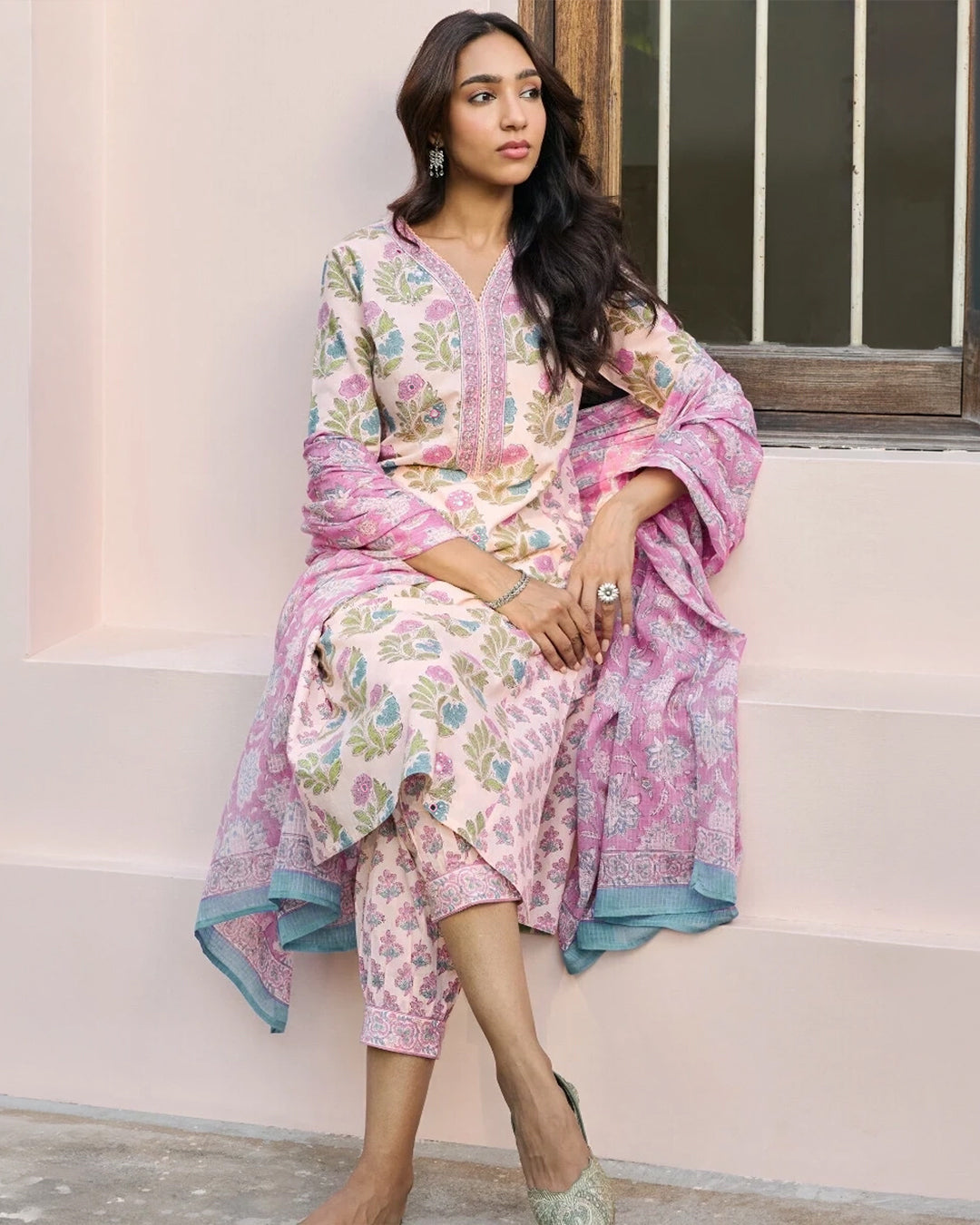
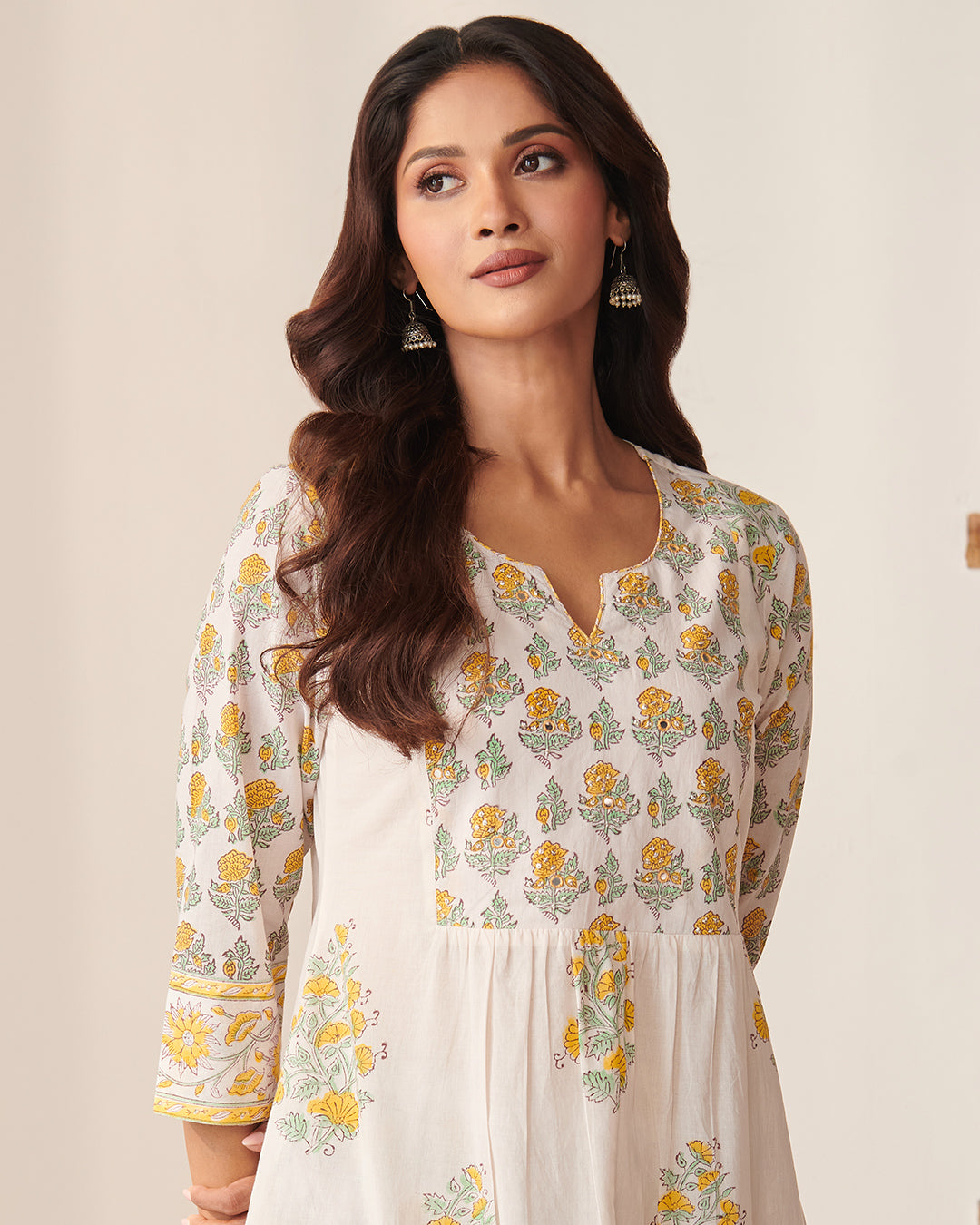
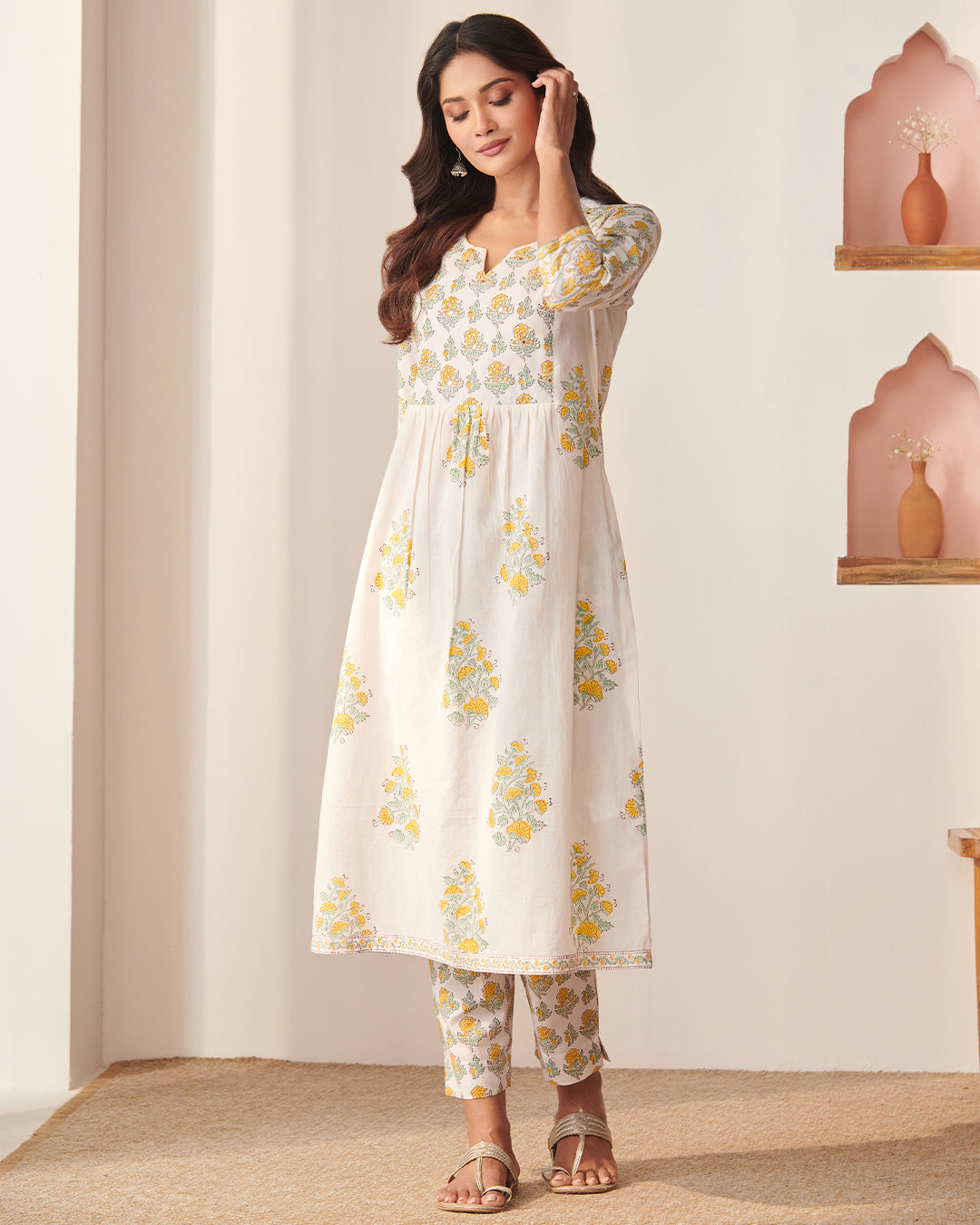
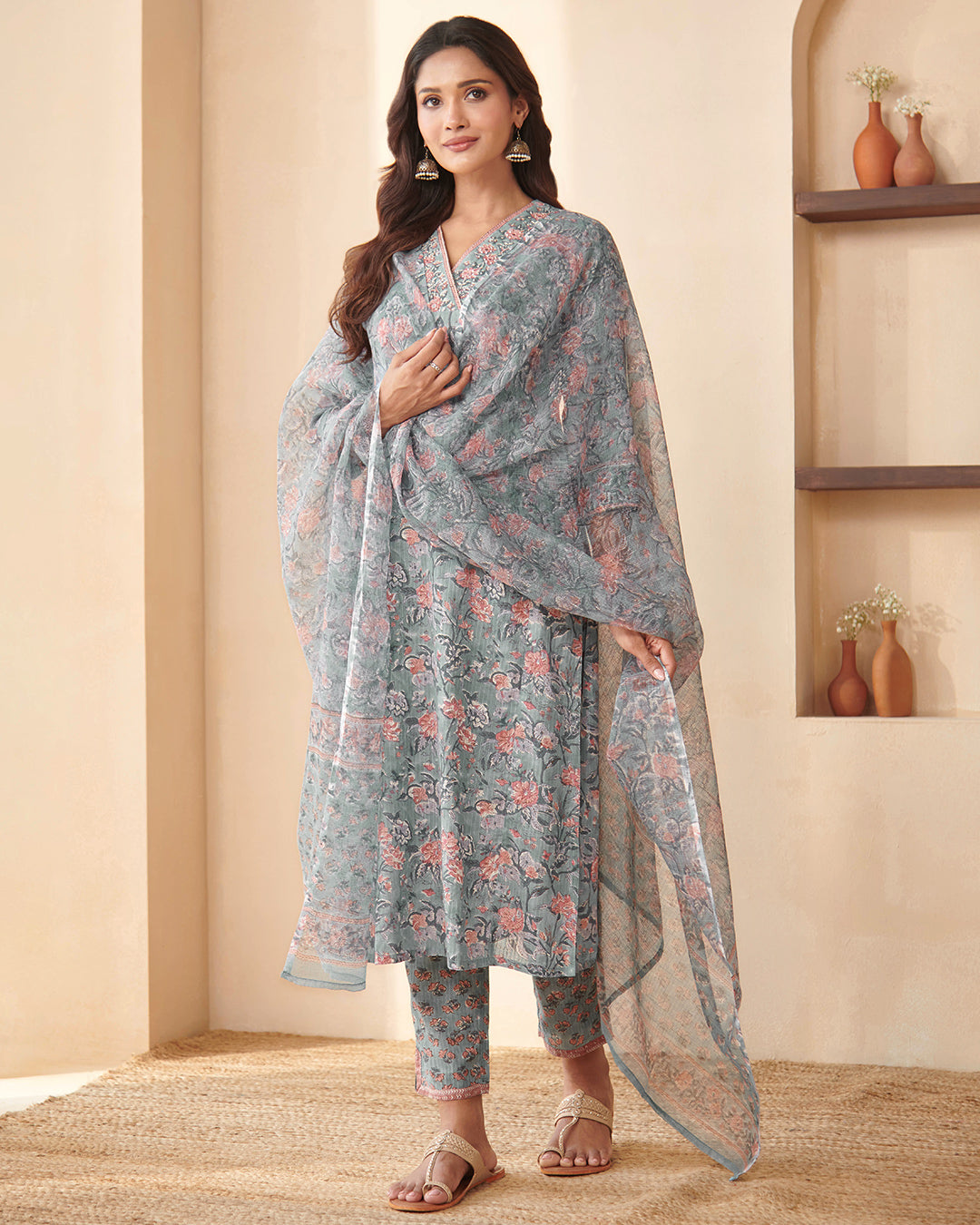
Today, Sanganeri prints appear on kurtas, kurta sets, dupattas, dresses and other garments. Designers and textile makers work with familiar floral motifs in different scales and colour combinations, allowing the craft to sit comfortably within changing preferences while retaining its recognisable character.
For many women, the appeal is also practical. A printed cotton kurta can offer comfort through a long day, whether worn at home, to work, while travelling or when meeting family. The pattern brings a sense of detail to the garment without necessarily requiring elaborate styling.
There is something reassuring about clothing that feels connected to a longer history. A Sanganeri print may be worn in a contemporary silhouette, yet its motifs still carry traces of the landscape, skill and textile traditions from which they emerged.
Modern fashion does not have to leave heritage behind. When traditional printing is approached with respect for the craft and the people who practise it, the fabric becomes part of a continuing story rather than a reference to the past.
How Farida Gupta Brings Traditional Prints into Contemporary Style

At Farida Gupta, traditional Indian prints are appreciated for the stories they carry and the place they hold in everyday life. Their beauty lies not only in their motifs, but also in the familiarity of the fabrics, the care behind the details and the ease with which they can become part of a woman's wardrobe.
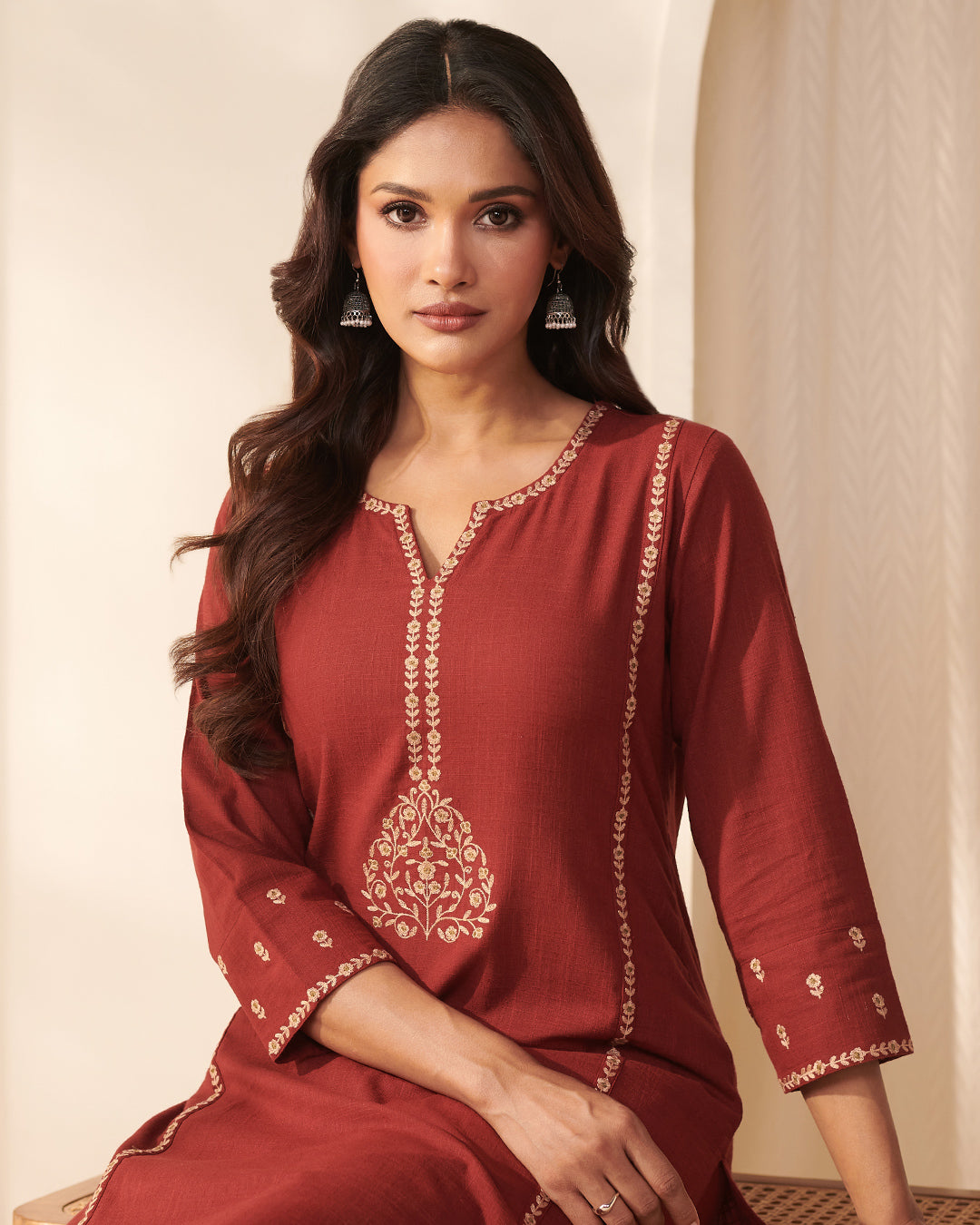
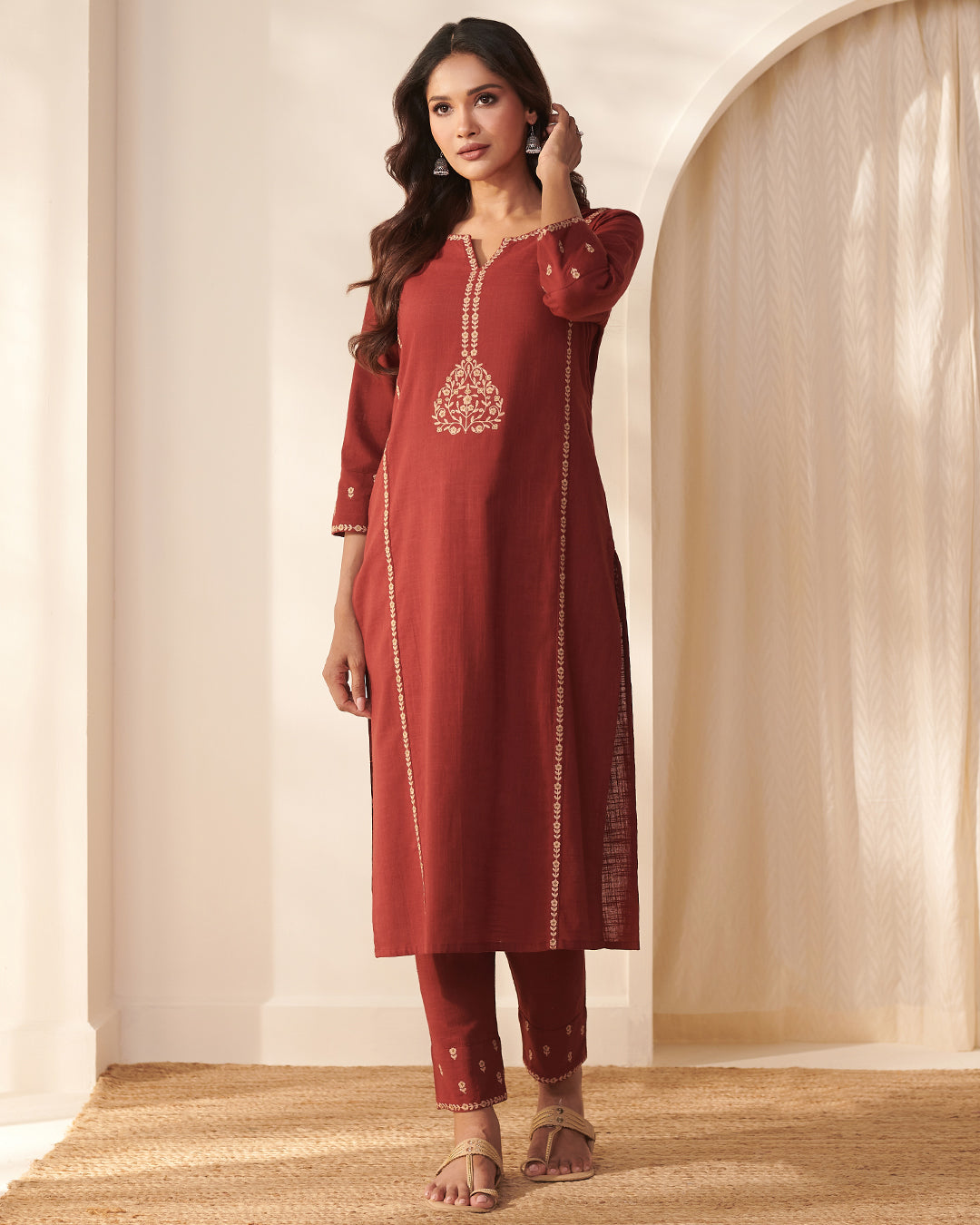
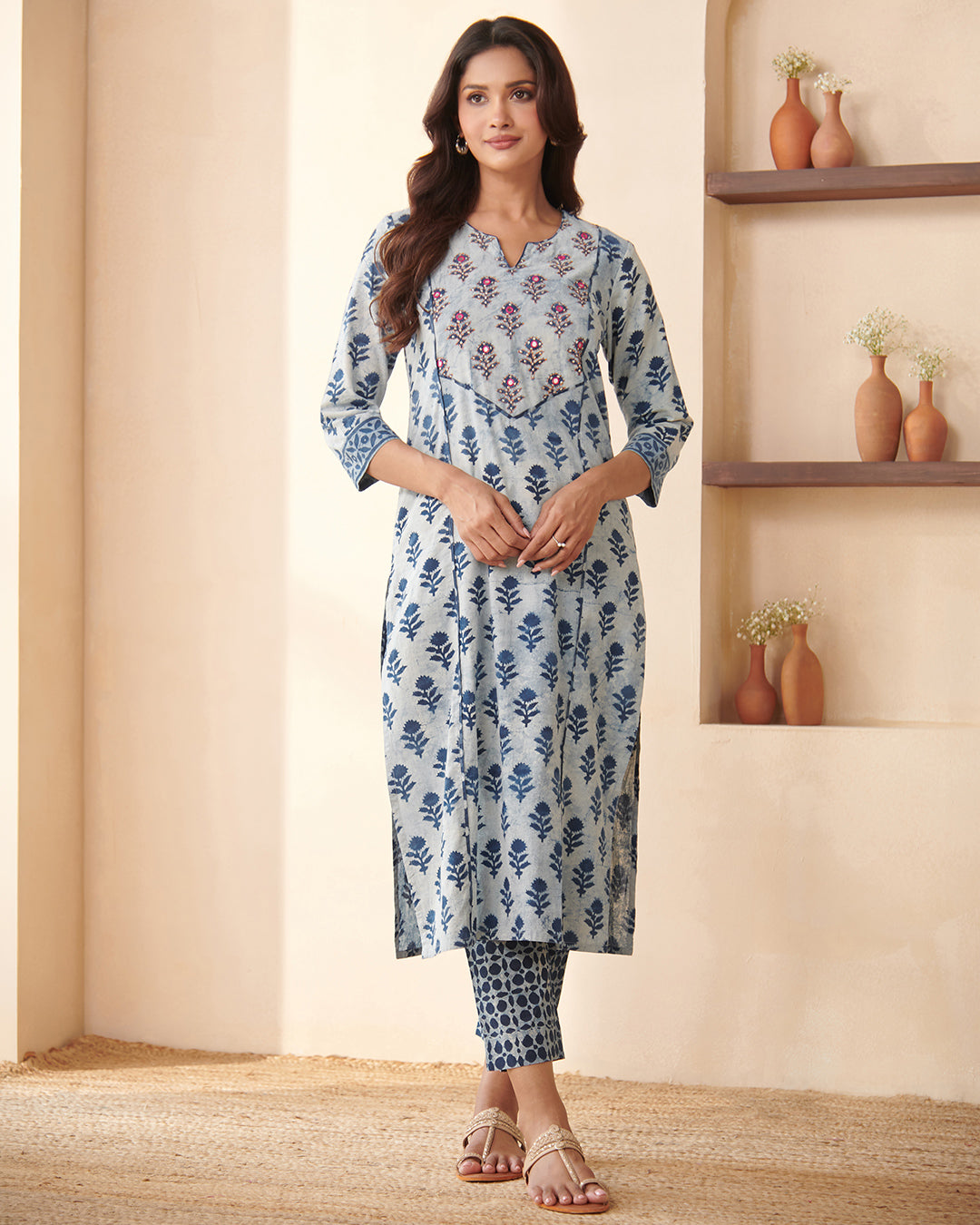
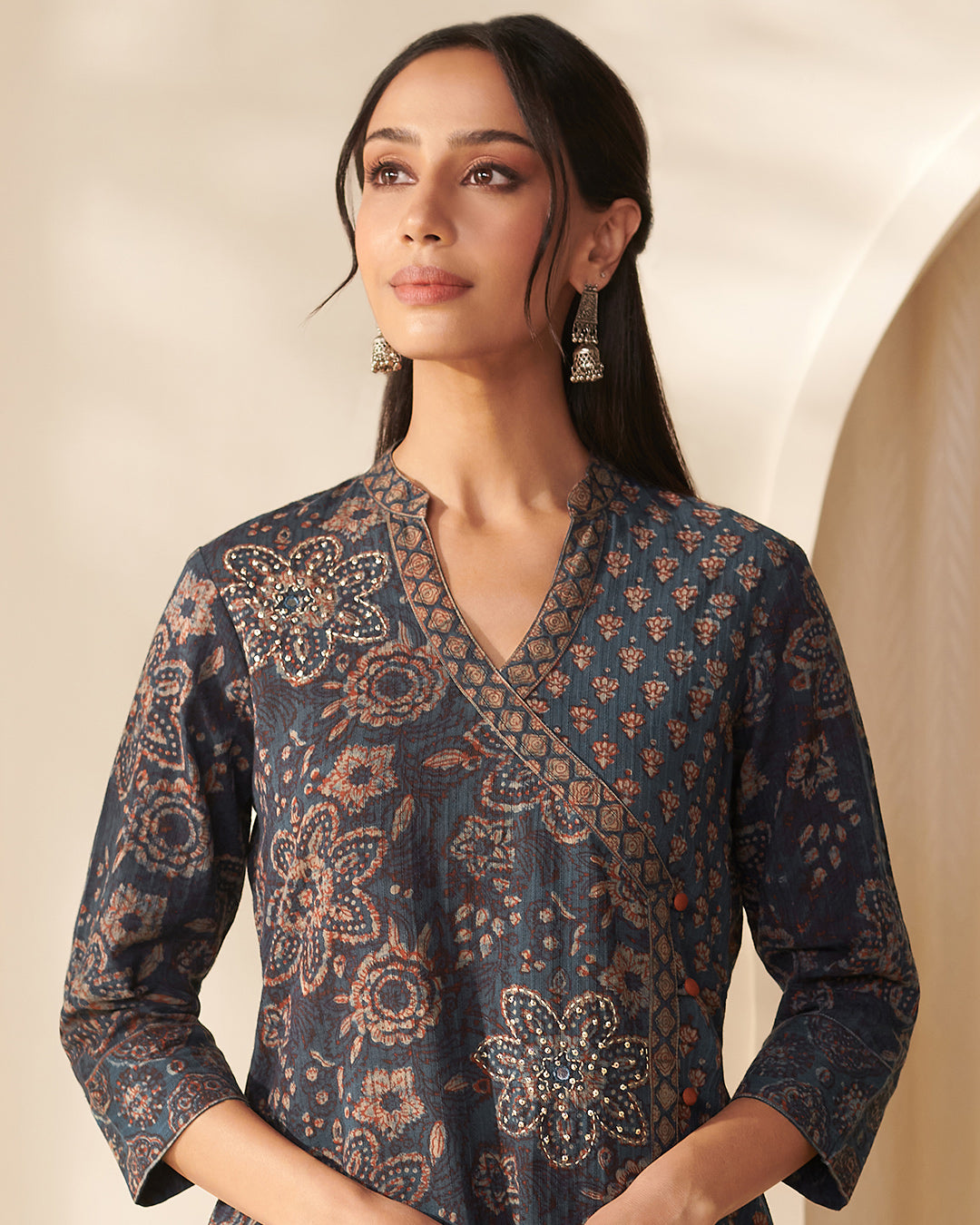
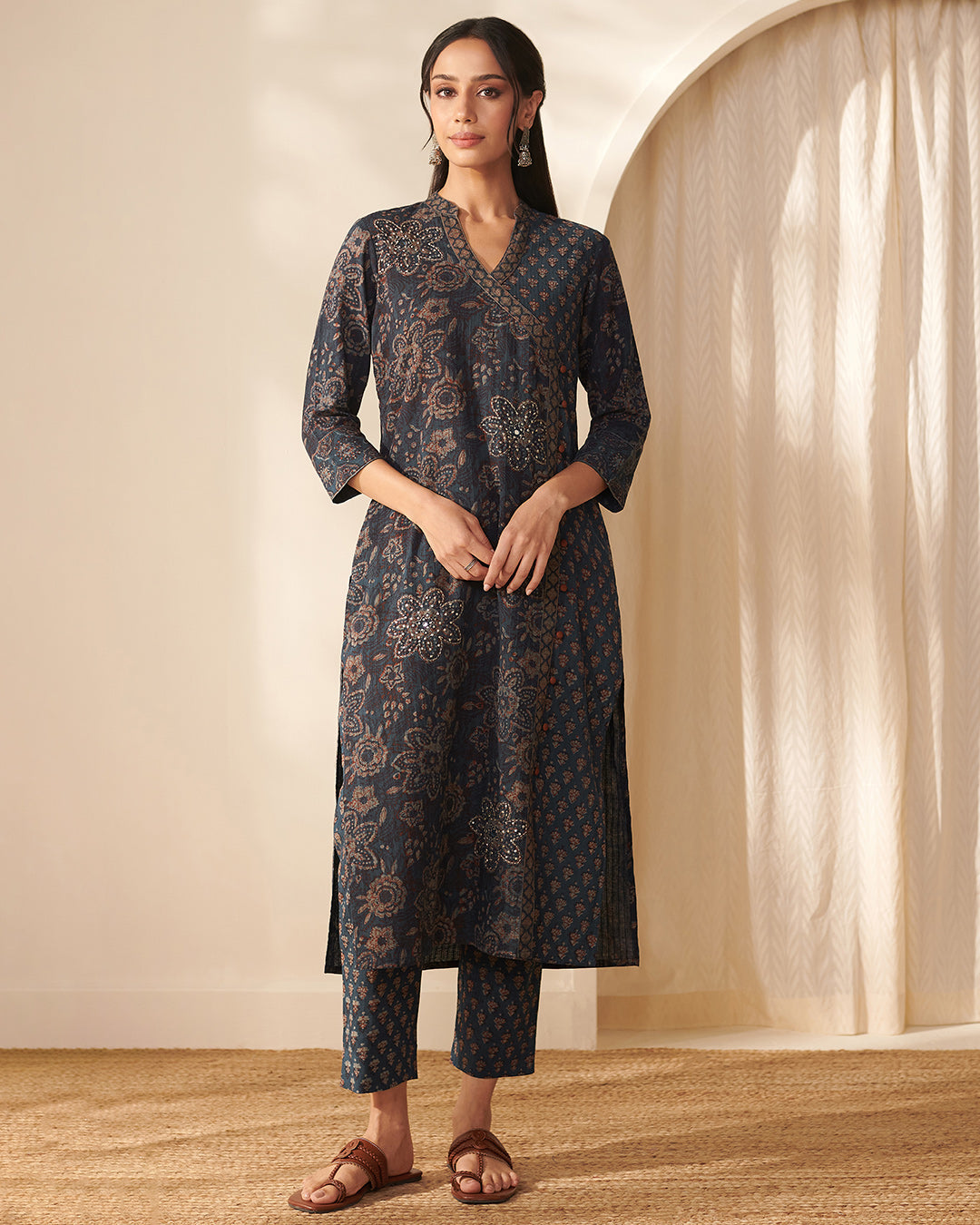
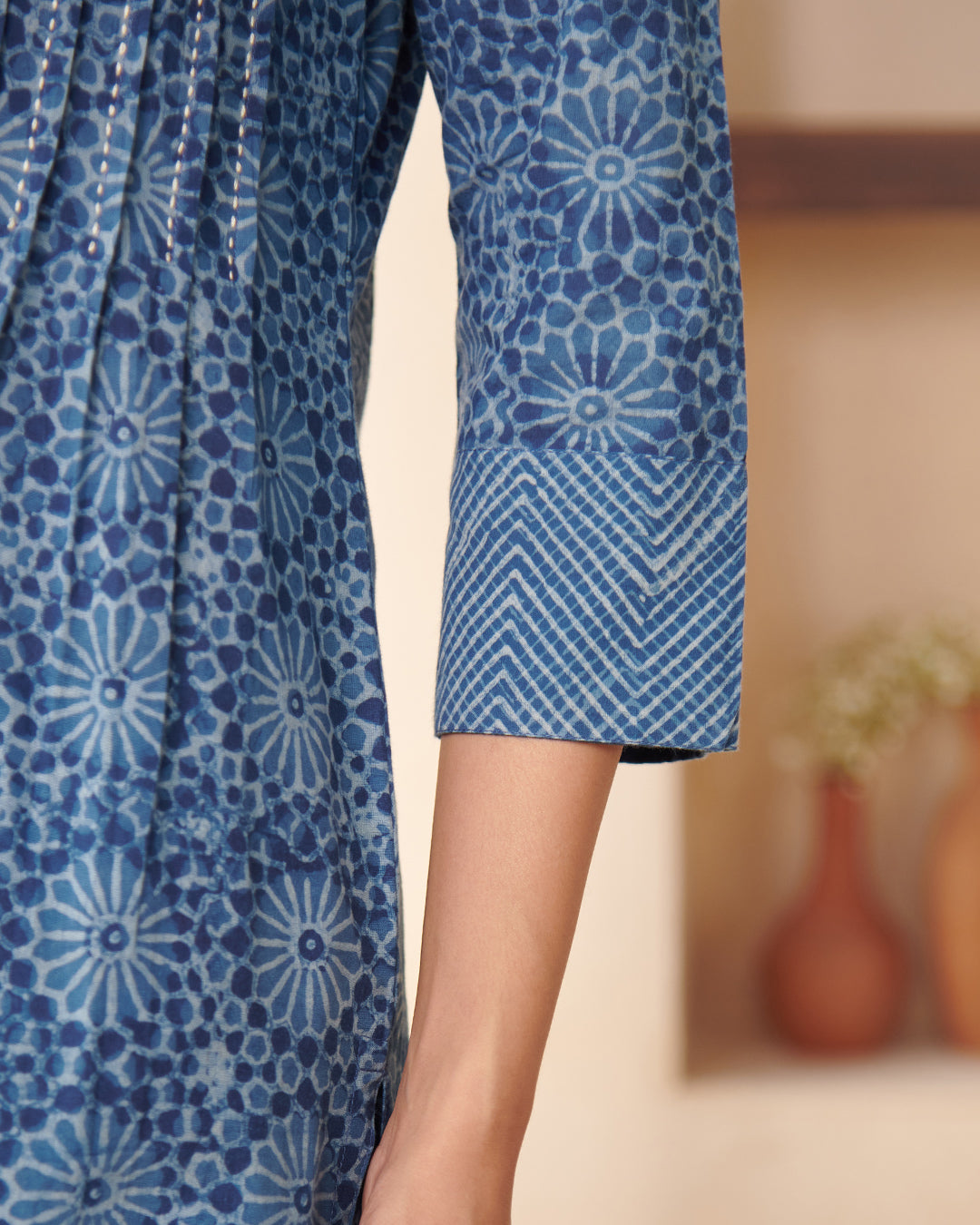
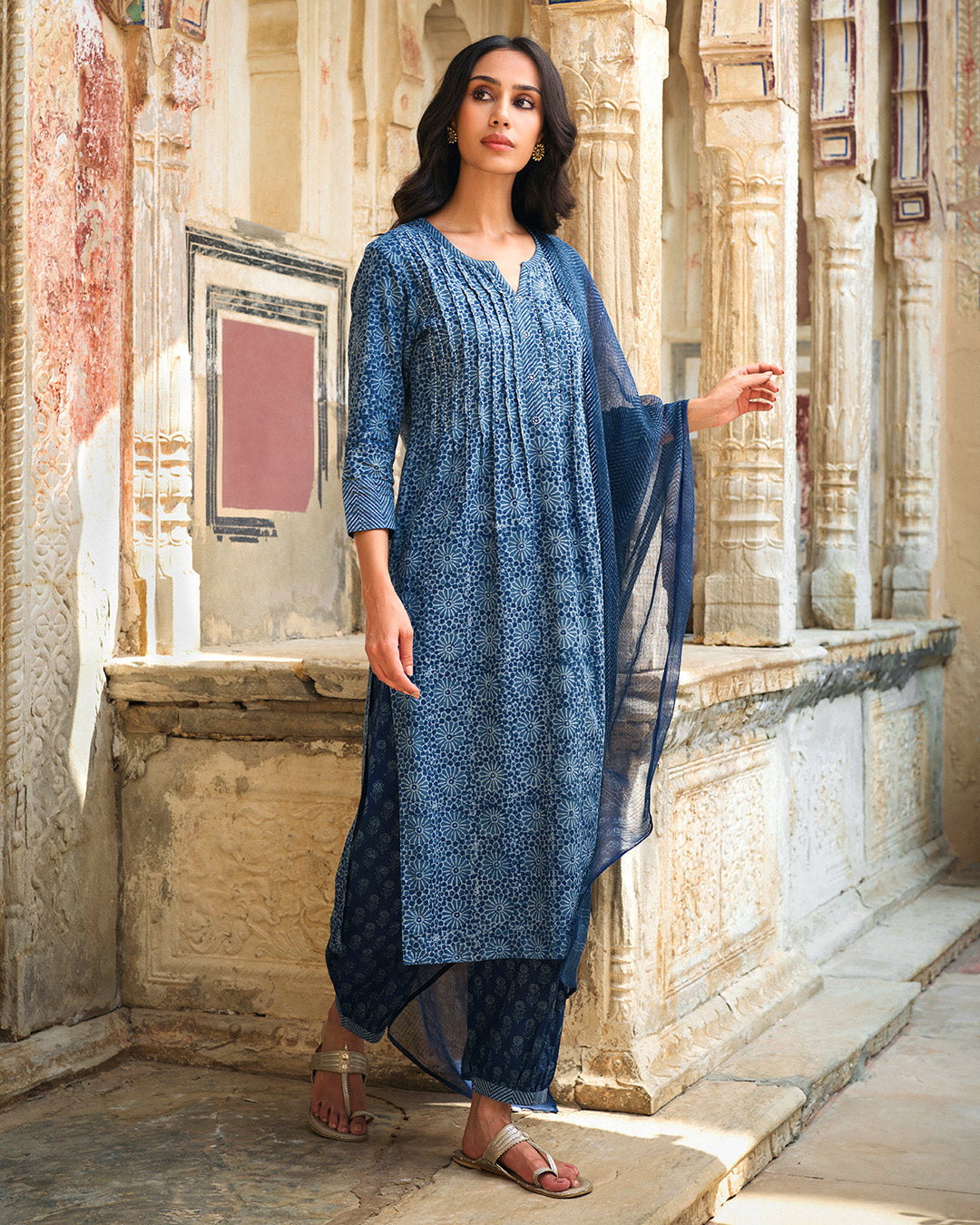
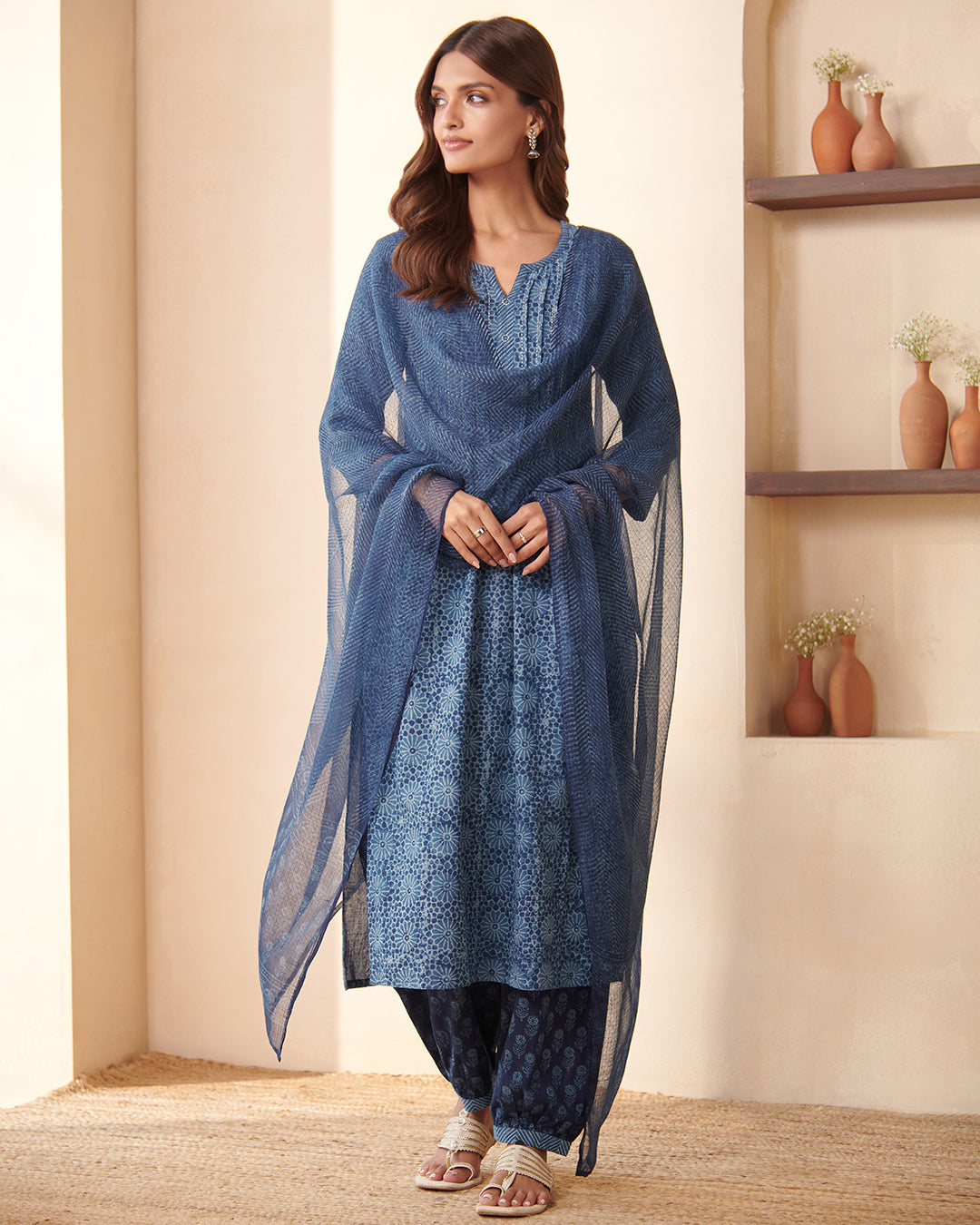
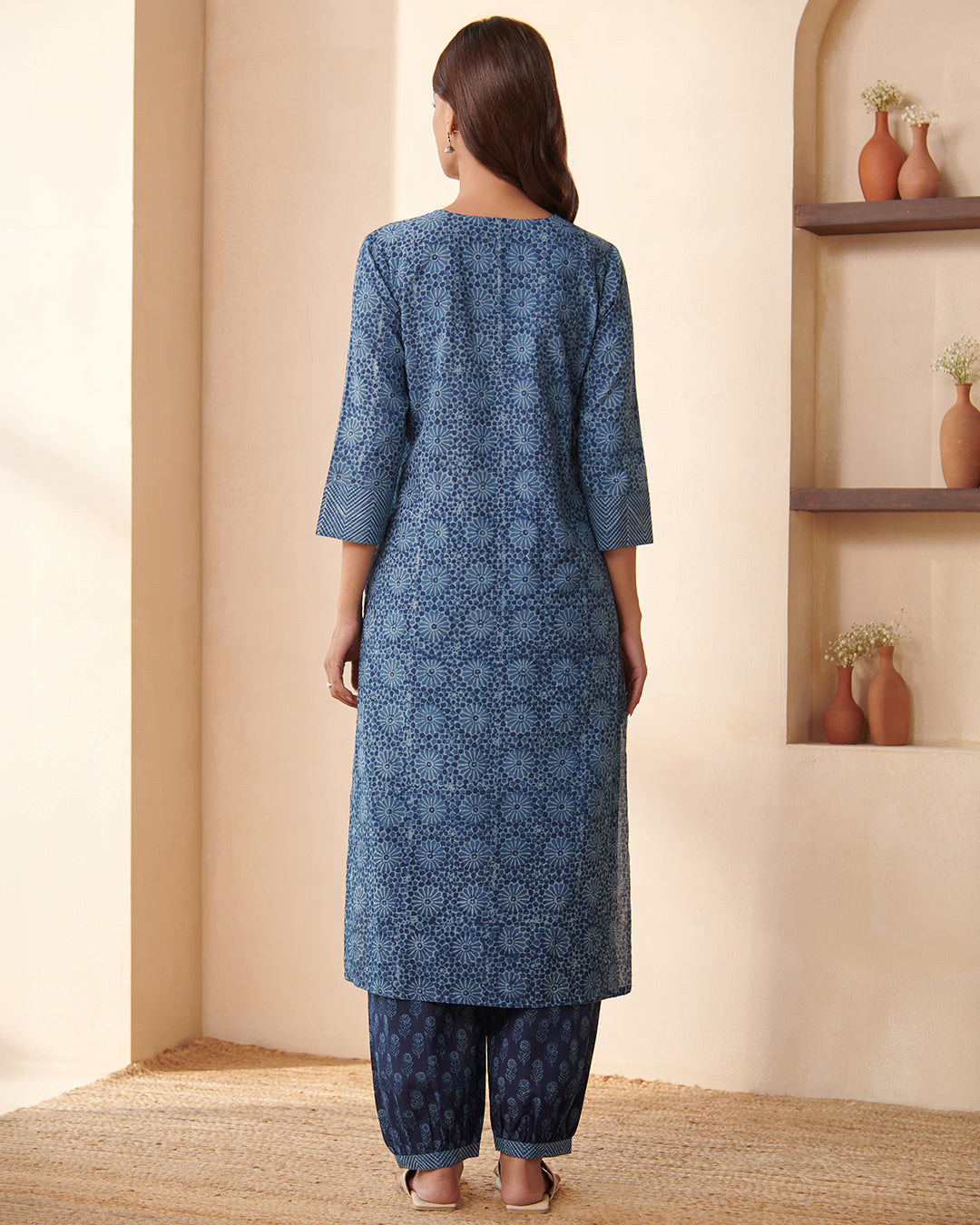
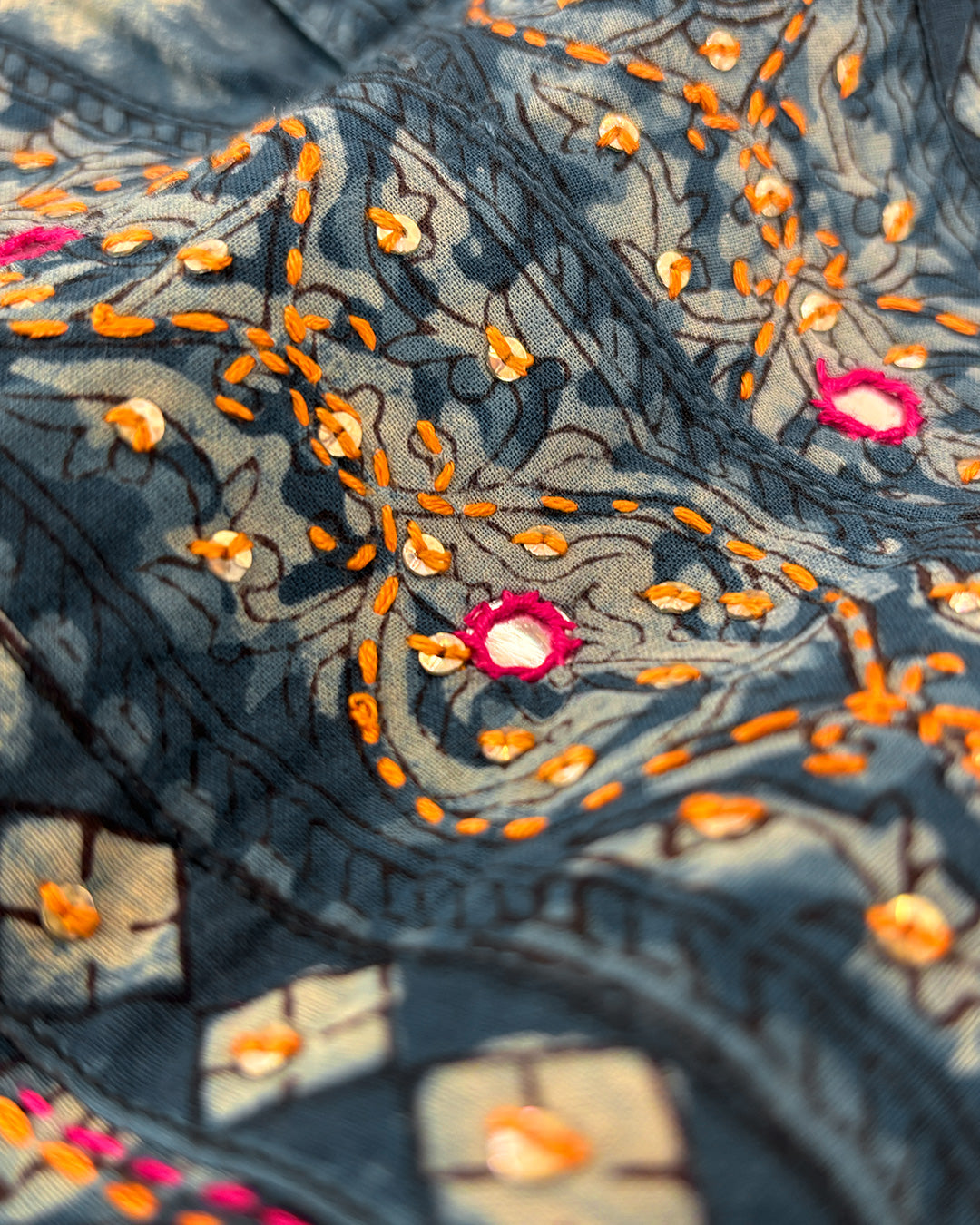
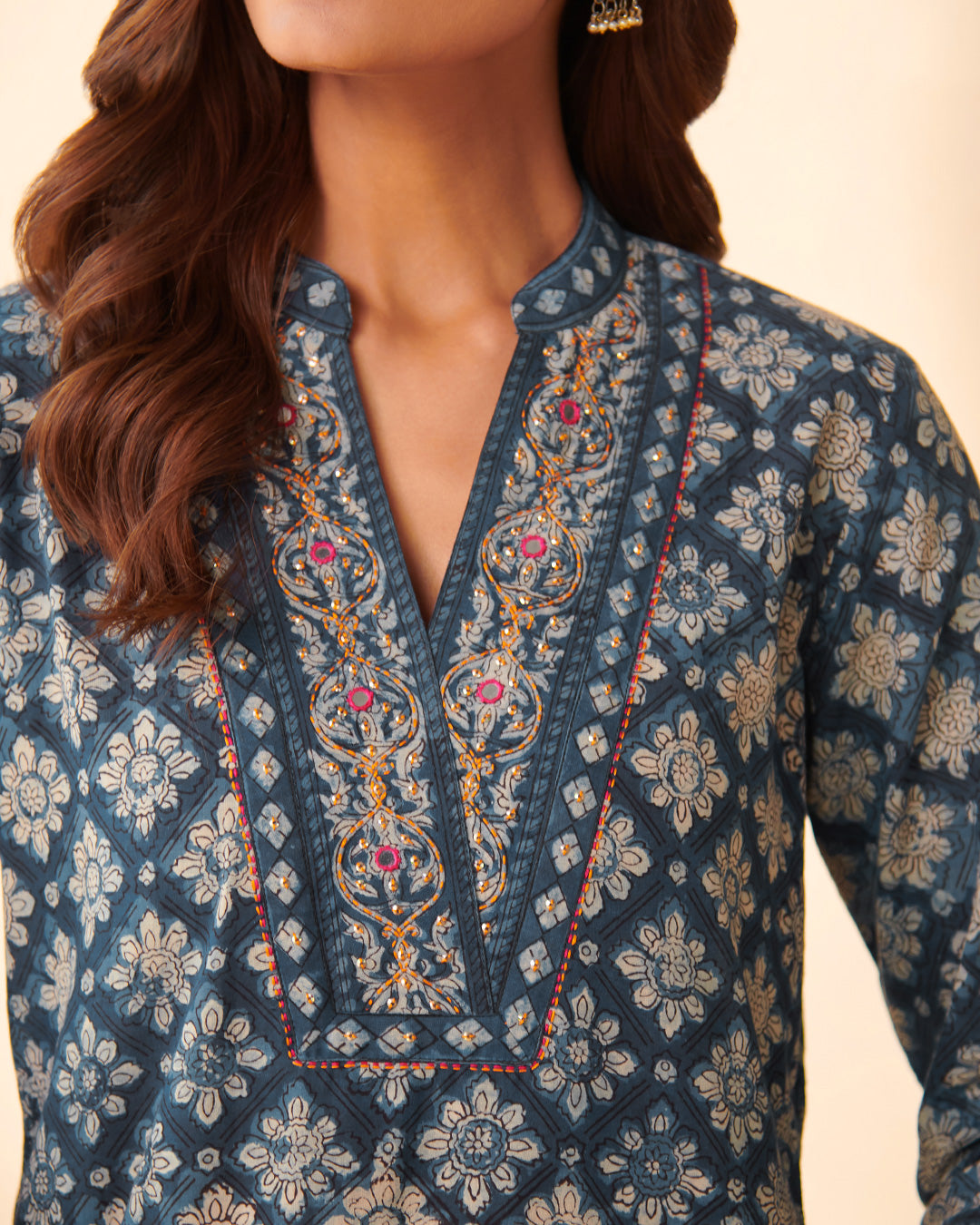
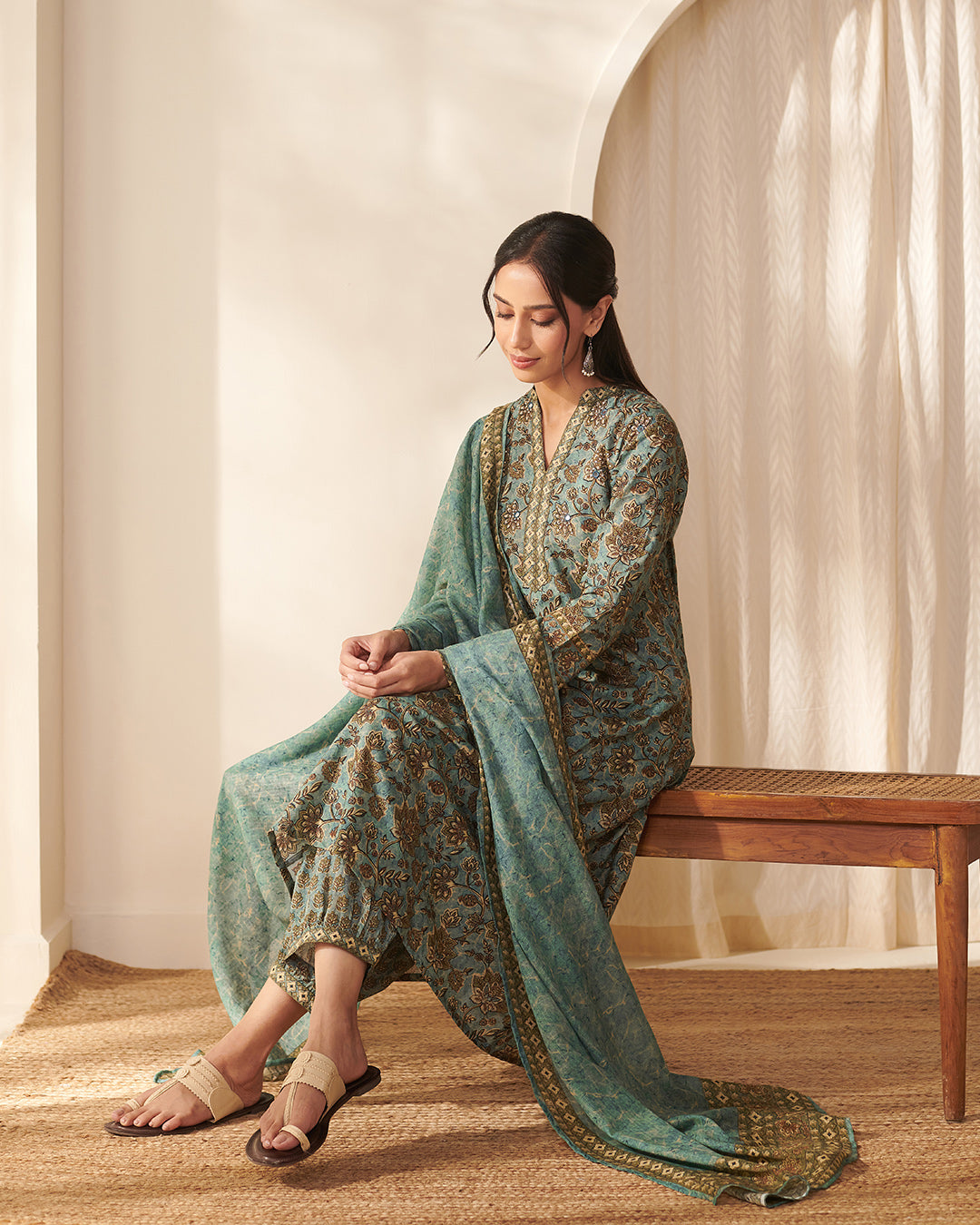
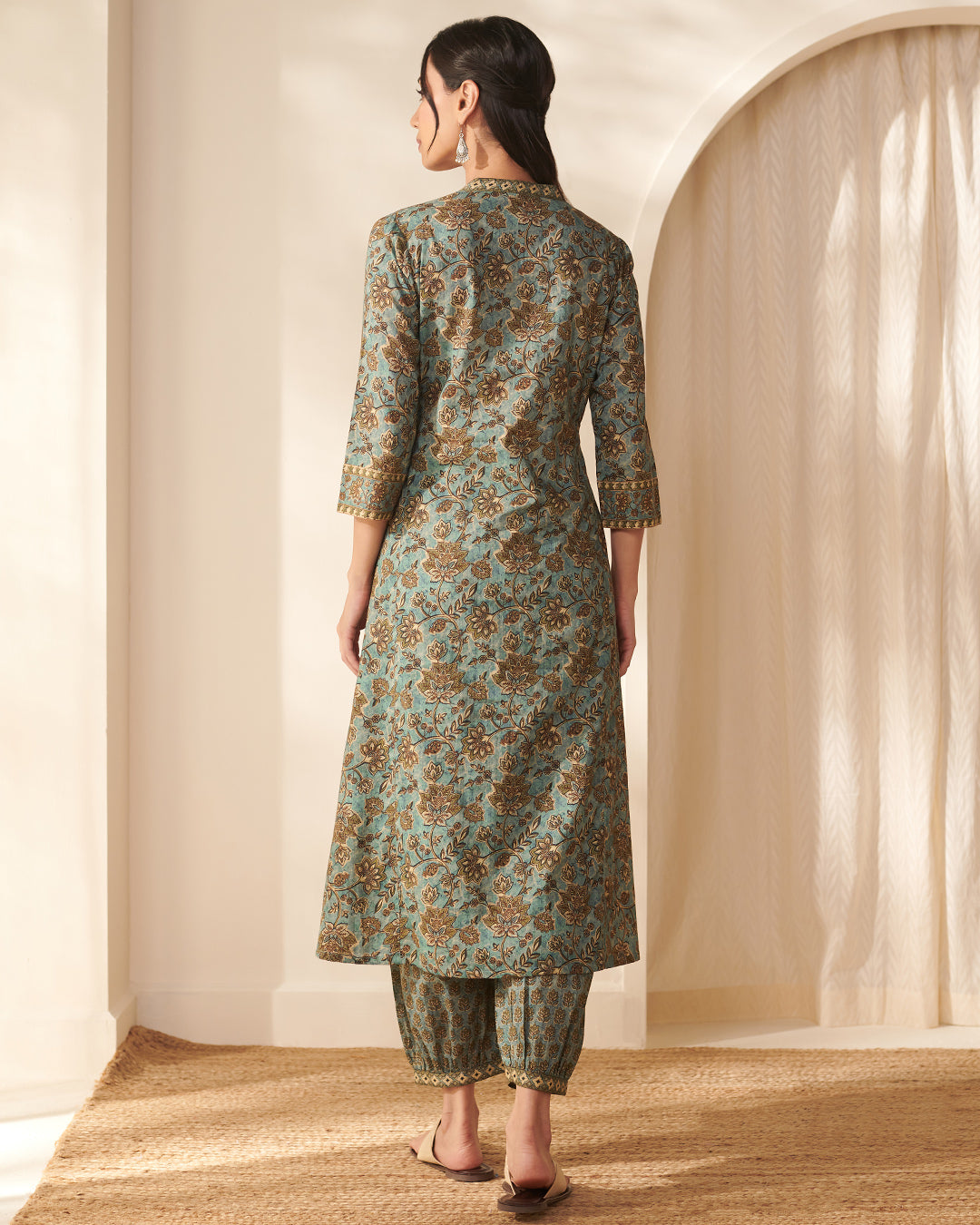
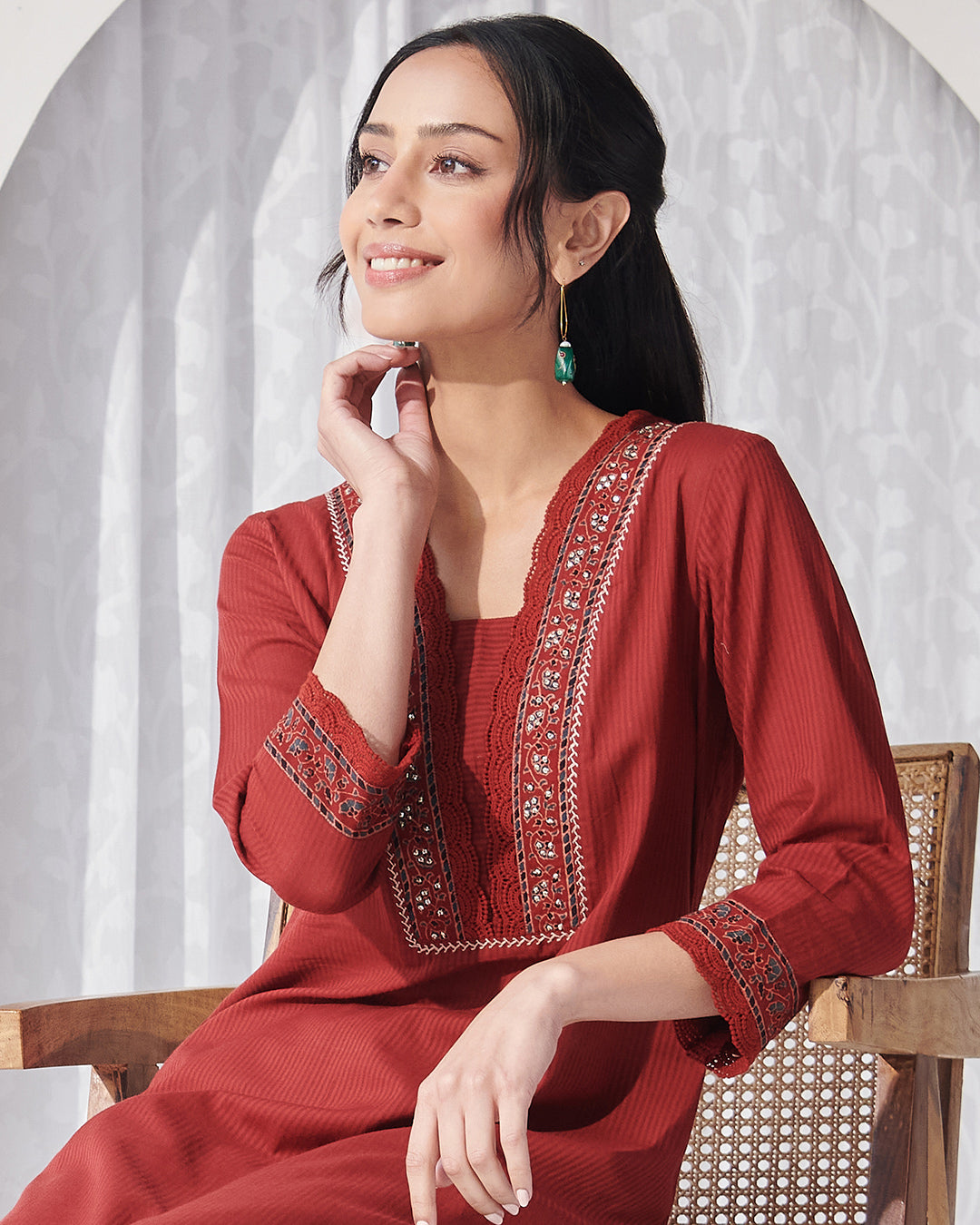
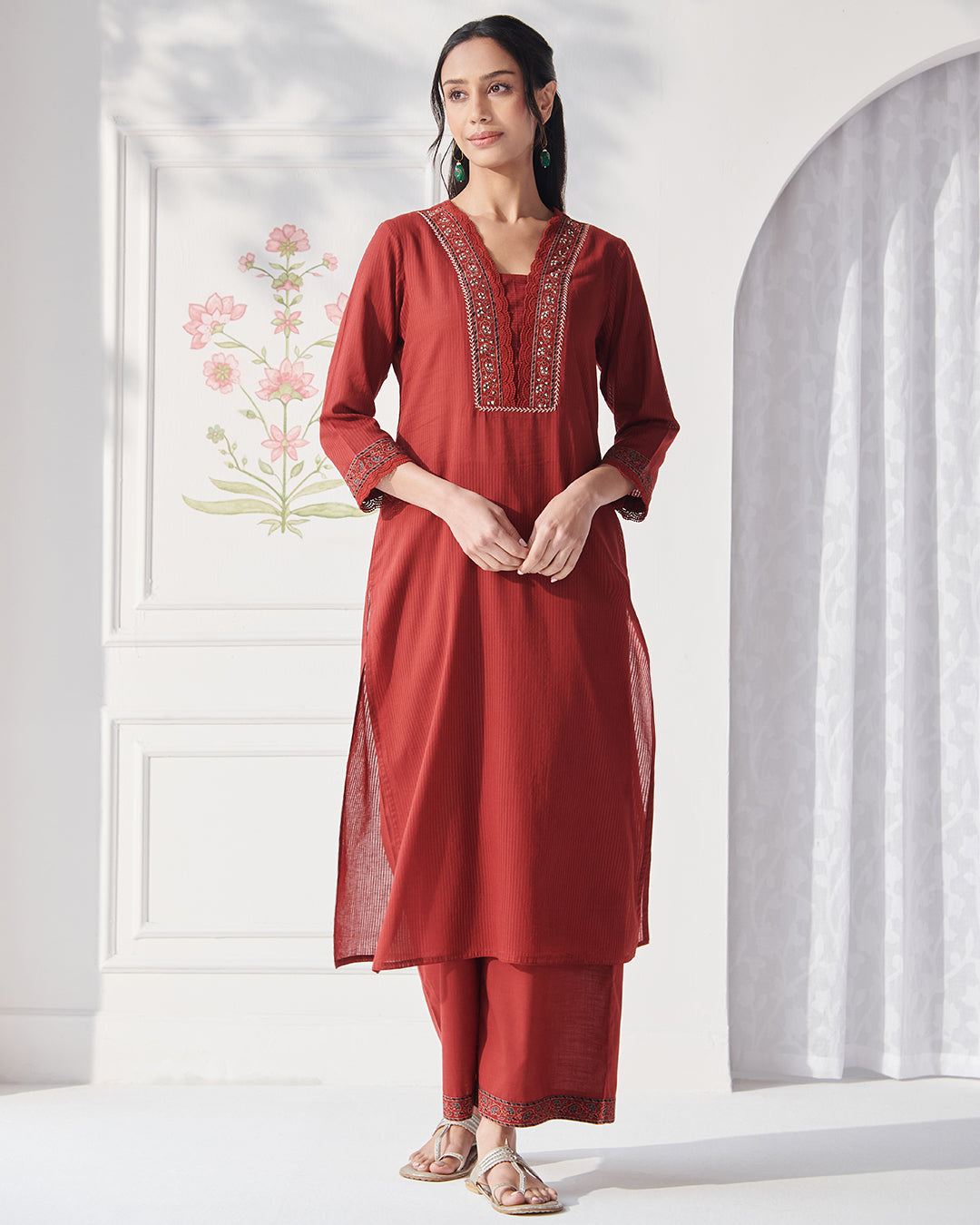
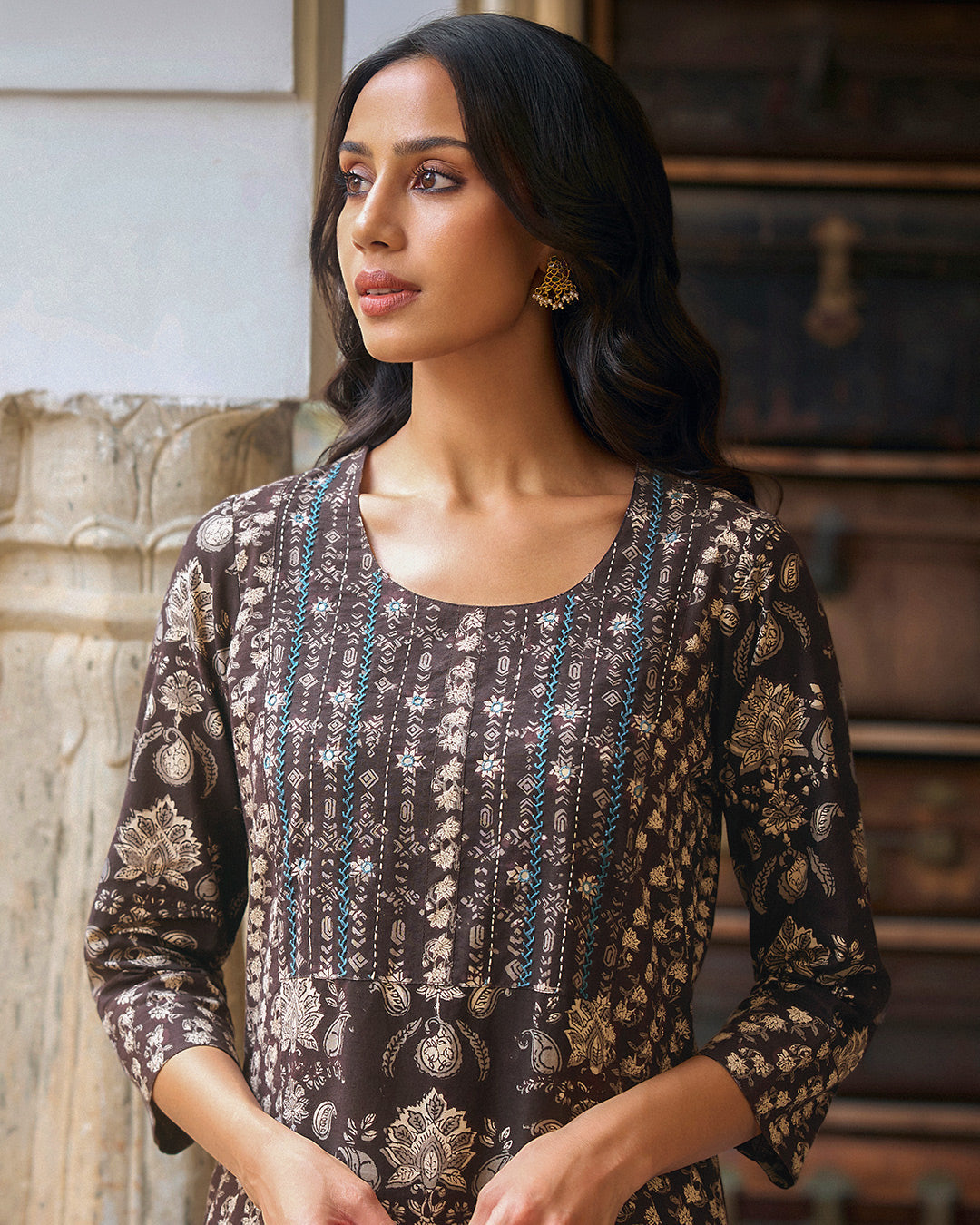
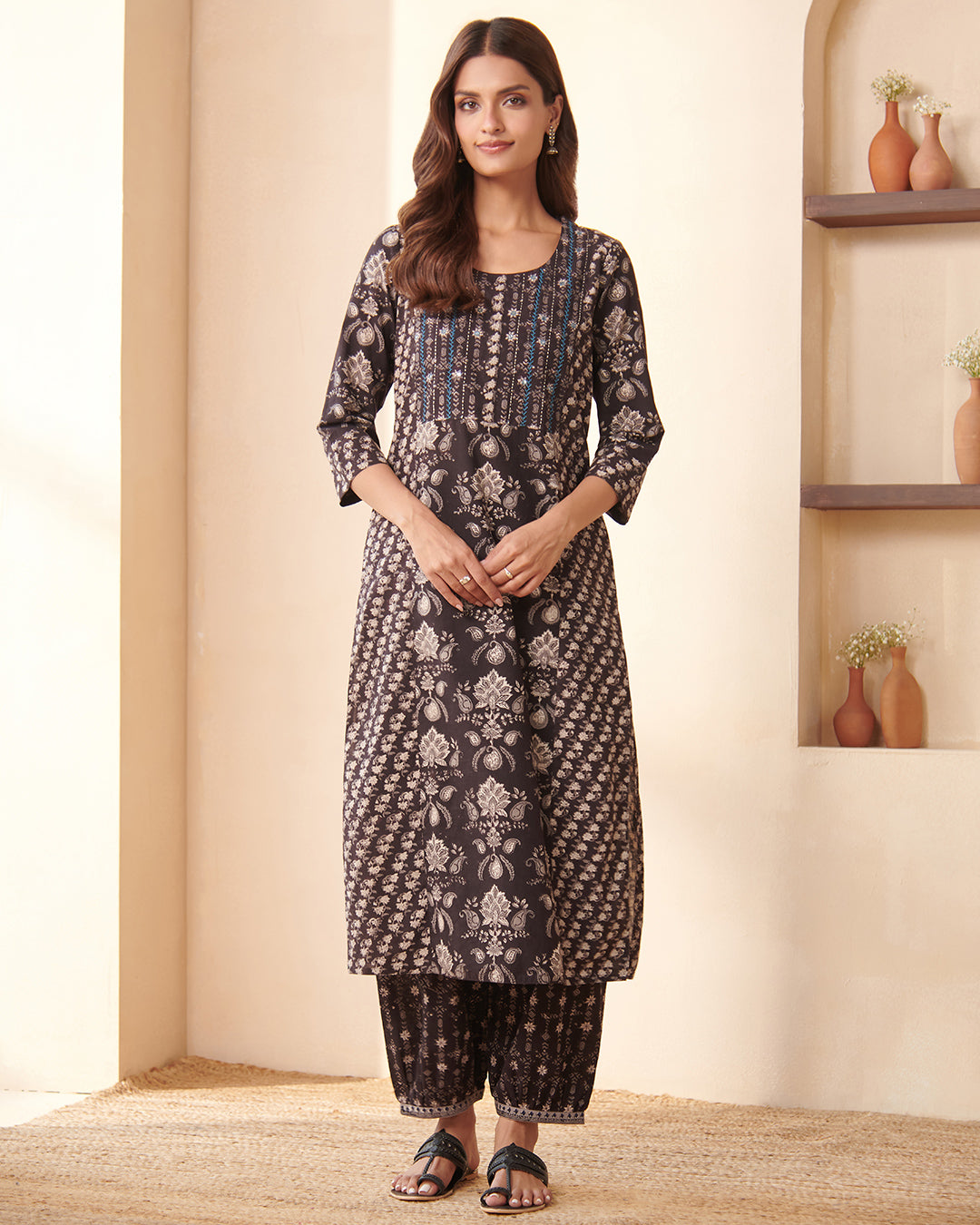
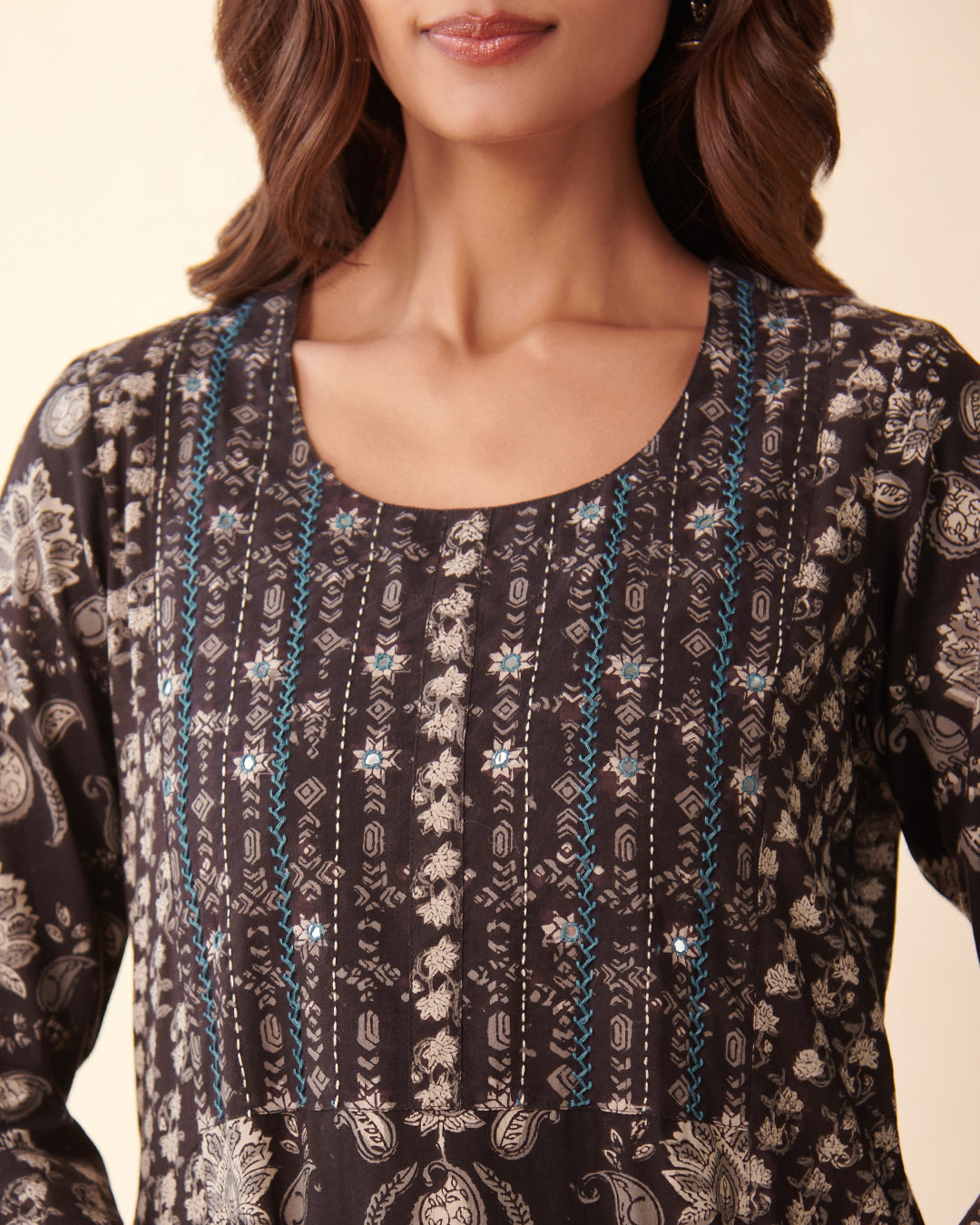
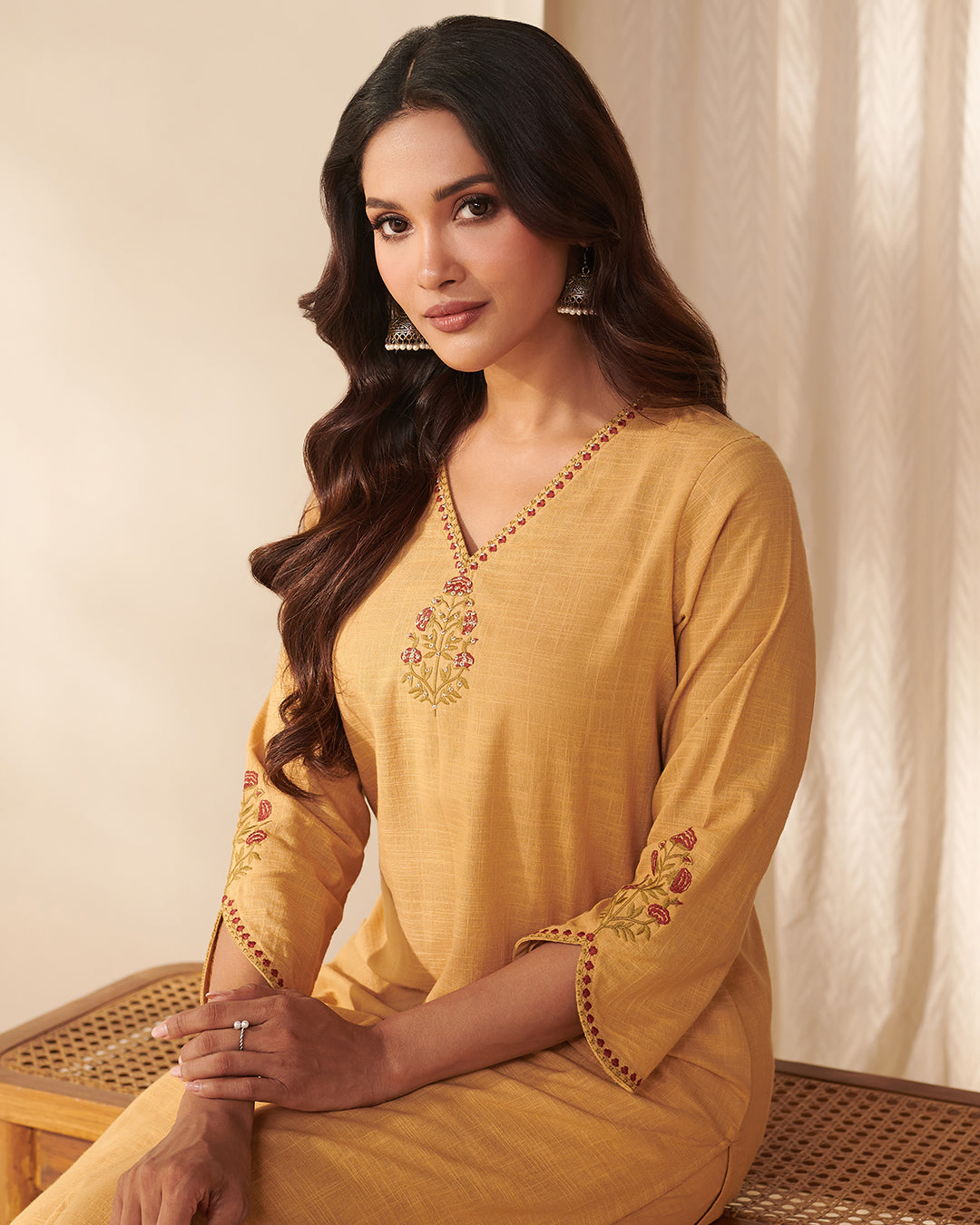
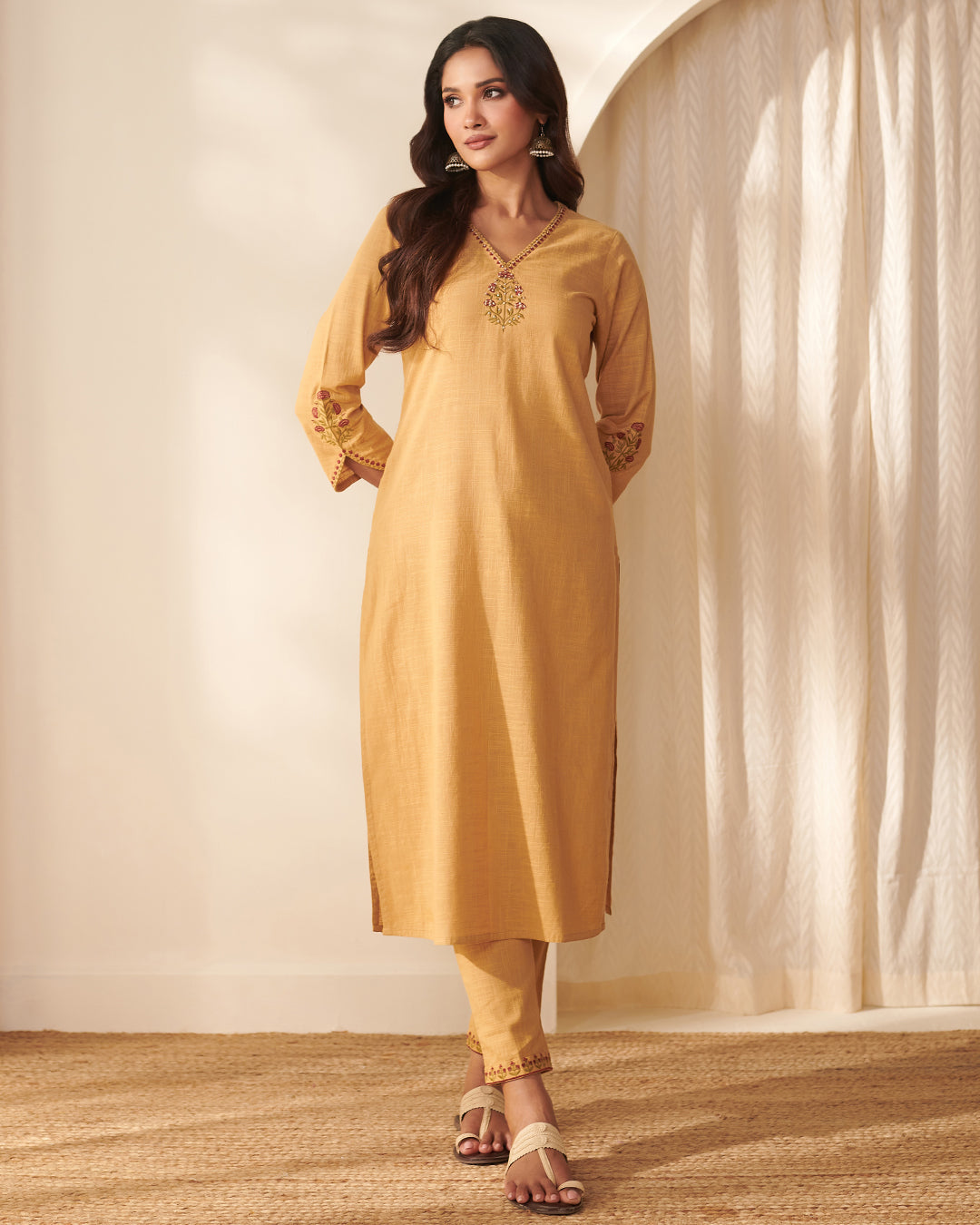
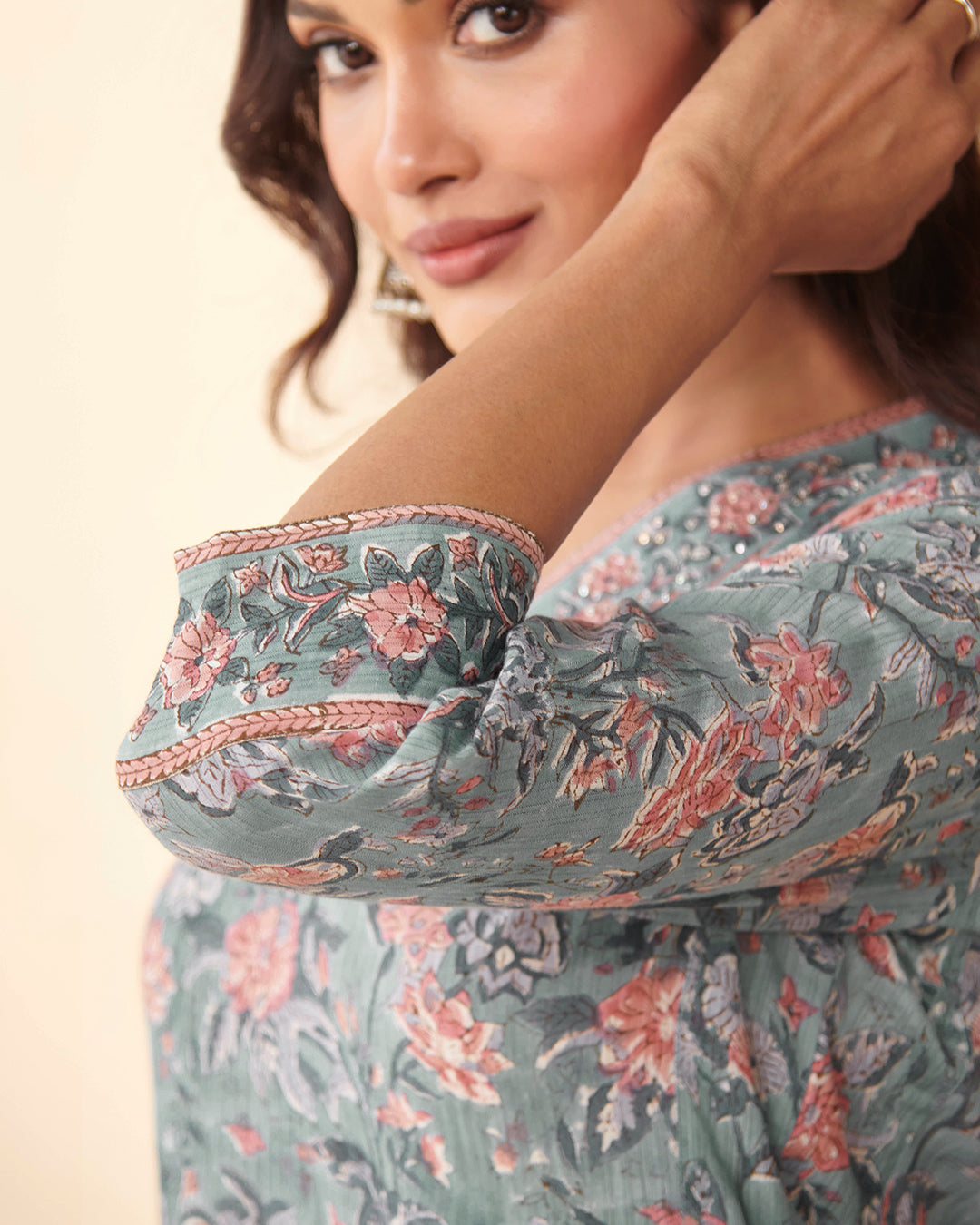
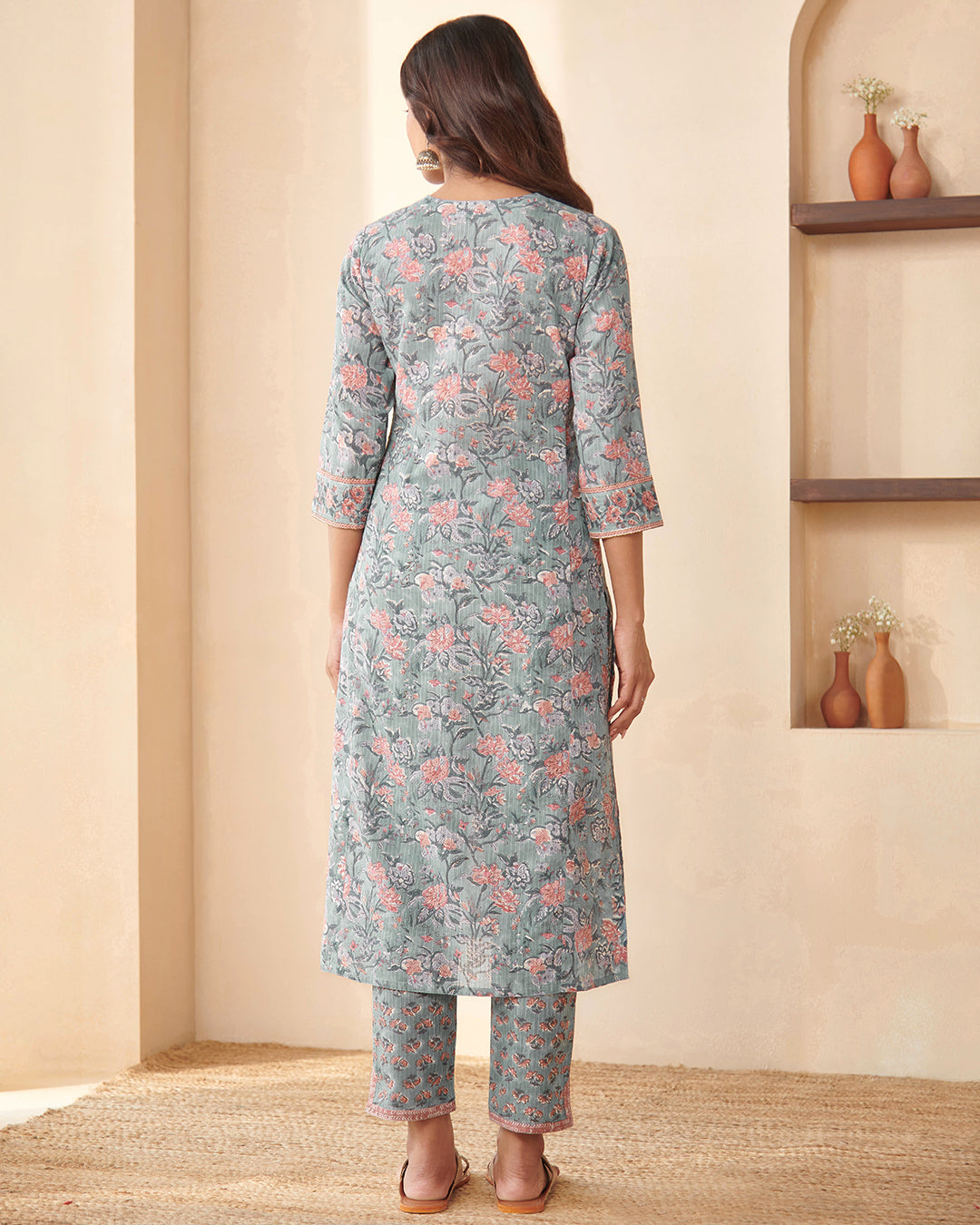
Sanganeri-inspired floral prints sit naturally within this understanding of clothing. Their delicate patterns bring character to cotton kurtas and coordinated sets, while lighter fabrics offer the comfort many women look for in their daily wear. The result is clothing that feels considered without being difficult to wear.
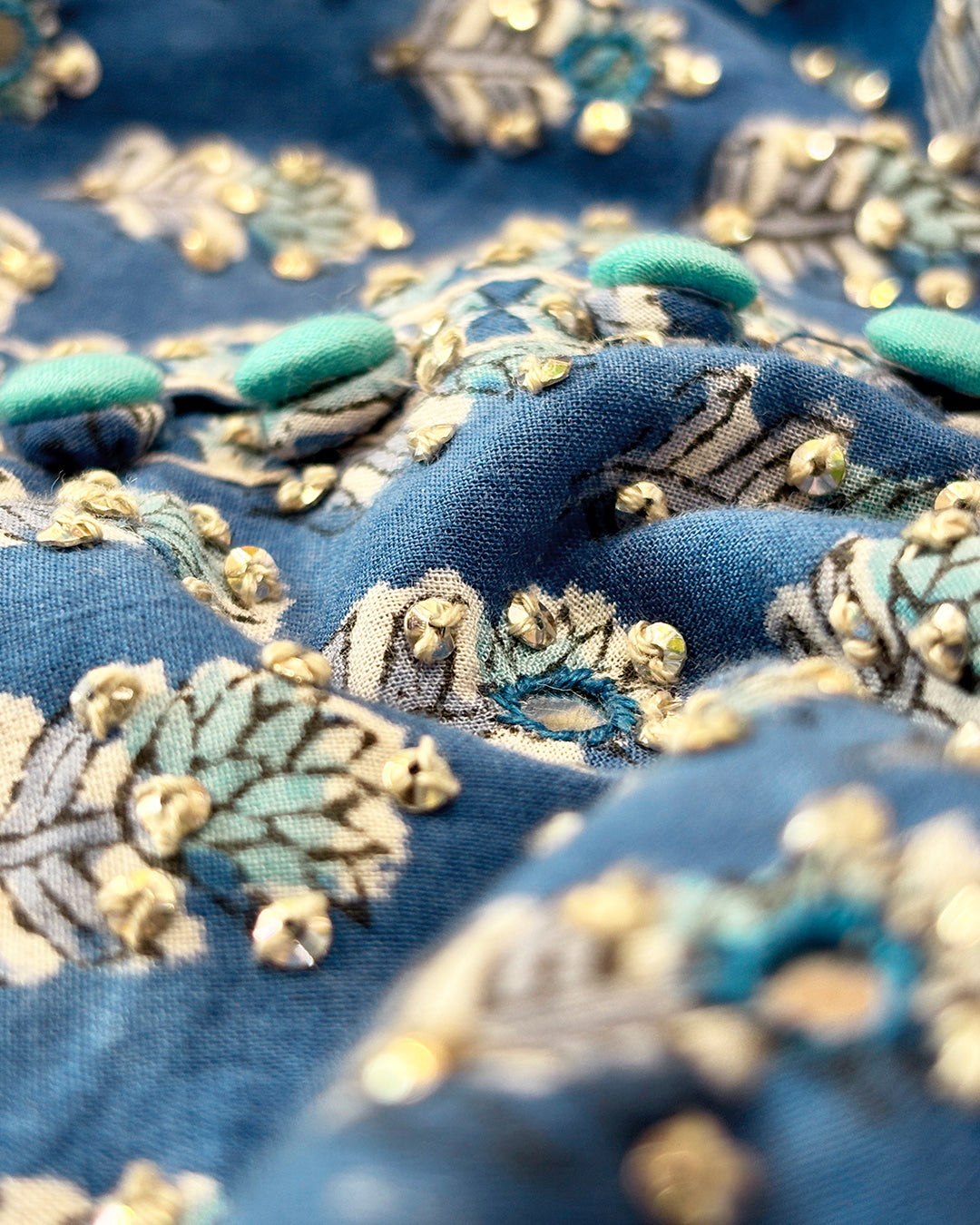
There is also a quiet elegance in allowing the print to remain the focus. Fine flowers and leafy patterns do not always need elaborate embellishment. A thoughtfully cut kurta, a well-balanced colour palette and a fabric that feels comfortable against the skin can be enough.
For a woman balancing work, family and the many rhythms of everyday life, clothing often becomes meaningful through use. A favourite printed kurta may accompany an ordinary morning, a visit to relatives or a journey home. With time, it gathers memories that have little to do with trends and everything to do with living.
This is where heritage and contemporary style meet. The intention is not to make a traditional craft feel different from what it is, but to let its beauty remain relevant to the women who wear it today. Indian prints continue to find their place in modern wardrobes because they offer something enduring, a connection to craft, comfort and a familiar sense of belonging.
Conclusion
Sanganeri block printing reminds us that the beauty of Indian textiles often lies in details that take time to notice. A flower carved into wood, a pattern repeated across cotton, a carefully chosen colour and the steady hands that bring them together all contribute to the finished fabric.
The craft has changed over the years, adapting to new materials, changing tastes and the ways women dress today. Yet its connection to Rajasthan's textile heritage remains an important part of its identity. Every printed surface offers a glimpse of the knowledge and patience that keep traditional crafts alive.
Perhaps that is why Sanganeri prints continue to feel so familiar. They do not ask for a special occasion to be appreciated. They belong just as naturally to the everyday moments that make up a life.
Because some prints are more than patterns. They are stories waiting to be worn.

